History is a discipline peculiarly impervious to high theoretical speculation: the more Theory intrudes, the father History recedes.
When I was in university, studying anthropology, I always resented the requirement that my essays have thesis statements. Can’t I just collect information and serve it up without taking some ultimate stance? Tony Judt seems to have been of the same mind, since this book is one very large serving of information, absent of any overarching thesis. As he says himself, Judt is rather like the proverbial fox than the hegdehog: he knows many things, and has many valuable observations scattered throughout the text, without any one big idea to tie them together.
There are compelling advantages to this approach. This book is one-stop shopping for many aspects of post-war European life. Economic development, intellectual fashions, architecture, film history, political movements, the Cold War, regionalism, the emergence of the European Union—all this and more is covered in impressive detail. And though multifarious, all of these pieces come together to form an astounding story: a continent nearly destroyed by war, divided by dangerous political tension, slowly emerging from American and Soviet dominance to become the most affluent, most peaceful, and most progressive place in the world.
The main disadvantage of this method is, of course, that this story remains fairly messy and haphazard. Without a thesis to guide him, Judt had to rely on a mixture of interest, instinct, and whim—the latter playing an especially significant role in some sections. What is more, though Judt is an opinionated and assertive guide, the lack of a thesis renders it difficult to point to anything distinctly “Judtean” in his analysis. What ties the narrative together is, rather, a certain mood or sensibility—most notably, Judt’s keen sense of historical irony, which he employs to great effect.
This ironic sensibility is most often directed toward Judt’s political foes. Though he is never explicitly partisan, it is easy to tell where Judt’s sympathies lie: in the center-left, socialist-democratic camp. Thus, depending on where the reader falls on the political spectrum, Judt’s comments will be either gratifying or grating. For me they were usually the former. What irked me, instead, was Judt’s relatively brief treatment of Spain—the Franco era is entirely ignored, and the transition to democracy is covered in just a few pages. But this is admittedly my own prejudice speaking.
If Postwar has one takeaway message, it is this: that Postwar Europe is the anxious construction of a generation wearied and horrified by conflict. After going through the belligerent nationalism of the First World War, the economic depression and intense ideological polarization of the interwar period, the even more gruesome Second World War and the unspeakable Holocaust—all this, coupled with the prolonged armed standoff and Soviet repression of the Cold War—Europeans were intent on creating a world where this could never happen again. Extreme ideological stances fell into disgrace; strong government social safety nets helped to prevent economic crisis and, in so doing, made people less susceptible to demagogues; and governments forged institutional ties with one another, a project that culminated in the European Union.
Without constant reminders of this catastrophe—a European civil war that began in 1914 and whose political aftereffects did not disappear until 1991, if then—we risk falling into the same errors that tore the continent apart one hundred years ago. For this, we need good historians—and Judt is certainly among the best.
(This post is continued from my posts on León and Gijón.)
After escaping the tempest in Gijón, we drove to the city of Oviedo—the capital city of Asturias. We dropped off our bags in the hotel and went out to eat. It was a cool, clear night. Though situated several miles inland, Oviedo has an oceanic climate, very similar to that of Gijón. But fortunately for us, this day the storm that hit Gijón didn’t travel so far inland.
All of us were tired and soaking wet, so we didn’t have a lot of energy to go exploring. We walked around for about ten minutes before settling on a bar near the hotel.
“Cider is the typical drink in Asturias,” D said. “Sidra.”
“Oh, okay,” I said, “let’s get some.”
The waiter came, and we got a bottle. But we couldn’t just pour it for ourselves. In Asturias they are serious about their cider, and you have to pour it in a special way: by holding the bottle high up above your head in one hand, and the glass as low as possible in the other. Then you try to aim the stream of the cider into the glass. This process is meant to aerate the cider—but I seriously doubt it noticeably affects the flavor; it just looks cool. In any case, our waiter duly performed this feat for us, taking the glass and the bottle to a special pouring station so he didn’t get the floor wet.
Cider in Spain, by the way, is quite different from cider in the United States. It is not at all sweet, but instead quite bitter. I like it.
Two fellows in the bar were watching a soccer game on the television.
“That’s the game in Gijón,” D said, pointing to the screen.
“Really?” I said, thinking about the storm we just escaped. “They’re playing in that weather?”
“Soccer fans are crazy,” D said.
I lapsed into a pensive silence as I contemplated the game on TV. I’ve never been able enjoy sports of any kind; and I have trouble understanding why other people do. In all competitive team sports, the point is to win; and you support your team just because it is “your” team. The whole affair seems to be an exercise in pointless competitiveness and mindless provincialism. All this passion for balls and nets. Admittedly, there is of course a huge degree of skill, finesse, strategy, and athleticism in sports too, which are their redeeming qualities. I can enjoy watching Olympic gymnastics, for example, since it isn’t about winning or beating the other team (at least, for me it isn’t).
Athleticism notwithstanding, aggressive displays of fandom—singing, chanting, wearing matching jerseys, even deliberately getting into fights—give me the creeps and I cannot help having misgivings about the whole thing. Doubly so, when I consider how much time and money is spent on these activities that could be spent elsewhere. When I see people looking at a TV in a bar, their mouths open, their eyes transfixed, I cannot help thinking of the countless hours they have done the same thing.And how has it benefitted them? It’s like an addiction. And when I think of the tremendous salaries paid to athletes and coaches and owners, I feel a bit ill.
Look, I know this has nothing to do with Oviedo, but part of traveling is forming your opinions about certain things in life, and this is my opinion about sports.
Well, we ate, we drank, we paid, and then we went to bed. We’d had a long day, and had another one coming up.
Our first stop the next morning was San Miguel de Lillo. This church is situated outside the city proper, elevated on the grassy Monte Naranco, a mountain that provides an excellent view of Oviedo.
At first glance, you wouldn’t think much of the building. The church is scarcely bigger than a house; and to an ignorant viewer, such as I was, it looks like it could have been built fifty years ago. But this is one of the oldest surviving churches in Spain. It was consecrated in 848, and is built in a pre-Romanesque style. It sits, rather lonesome, in a flat space by the side of a road.
As I mentioned elsewhere, Asturias was only very briefly controlled by the Muslims during the Middle Ages, and so is home to perhaps the longest continuously Christian settlement in the Peninsula. This is one reason for the excellent preservation of this Pre-Romanesque structure. (The title of the “oldest church in Spain,” however, goes to San Juan de Baños, a Visigothic church in the province of Palencia, built almost two centuries before San Miguel de Lillo—around the year 650.)
San Miguel de Lillo is relatively simple and unadorned: flat walls, right angles, and a few small windows. The visible ornamentation is confined to the lovely lattice window on the southern wall. It is arresting to think that this church could comfortably fit into the nave of the great Romanesque edifices that would be build a couple hundred years later. Technical advancement was swift and startling.
We took some pictures, wandered around, and then decided to walk along the road to see the companion of this lonesome structure: Santa María del Naranco.
Along with San Miguel de Lillo, this building once formed a part of a large palace complex commissioned by the Asturian king, Ramiro I (790 – 850). It is possible that he wanted to building his palace here, on the Monte Naranco, because of domestic disturbances and challenges to his legitimacy. In any case, it did give him a nice view.
Santa María del Naranco was originally his palace; but as the name indicates it was later turned into a church. The building is about as tall as San Miguel de Lillo, but considerably longer. Still, it is not a terribly big building; and in fact the idea that it had once served as a palace made me feel nostalgic for simpler times.
Photo by Flipao de Spain (?); licensed under CC BY-SA 2.0; taken from Wikimedia Commons
This apparently humble structure is of considerable architectural importance, partly because it presaged many of the features that came to dominate the Romanesque period—such as the barrel vault with transverse ribs, reinforced by abutments on the outside. I particularly appreciated the balconies on either side, formed by graceful rounded arches. There are more than half a dozen windows on either side, and quite large ones too. If San Miguel de Lillo struck me as claustrophobic and dark, this building was airy and light.
To enter these buildings, you need to be a part of a tour—and, according to the schedules on the doors, there wouldn’t be any tours for some hours. Thus we contented ourselves with examining and taking pictures of their fine exteriors. The view of Oviedo from here was even more photogenic—with the snowy peaks of mountains in the distance. Spain is a place of expansive vistas. Everywhere I go, I see a view worth painting.
Once done with pictures, we got into the car and drove into town.
The first thing you will notice in Oviedo are the statues. There are tons of them, sitting in every park and plaza. Most of them are metal sculptures of people: a mother nursing her baby, a young woman sitting on a bench, a scholar reading a book, a farmer with her donkey, an elegantly dressed woman of society, a traveler in a big overcoat with a pile of suitcases, a fisherwoman sitting amongst her fish, looking bored and tired.
Individually, these sculptures are no masterpieces; but the final effect is to give Oviedo an indelible charm. For me, the sculptures, with their prosaic subject matter, drew my attention to the poetry of everyday life. The statues focused my attention on all the little moments of boredom, anxiety, or tenderness that populate the day—the microscopic tugs of emotion that we push to one side as we go about our usual business.
And these statues were scattered throughout a truly lovely town. The whole aesthetic of Oviedo is intimate and joyful. No building is too big or ostentatious; everything is on a human scale. The streets twist and turn, effortlessly leading you from one plaza to another. Every time you turn a corner you are surprised by another open space, full of people. Bright colors, blues and yellows especially, give a playful atmosphere to the city. It is a pleasure just to walk around.
The artistic focus on everyday life was matched by the abundance of life I found on the streets of Oviedo. It was a warm and sunny day, and the streets were full of people—not tourists, but residents going about their day. Patrons crowded the restaurants; children ran through the streets while their parents chatted. An art gallery was open to the public, selling works by local artists—some of it quite good. Women and men of all ages filled the streets, having conversation with friends, carrying shopping bags, smoking, drinking, laughing, gossiping, sitting, standing. But most conspicuous was the market.
Tables were set up in rows, filling several plazas and streets; and on these tables was assembled every sort of thing you can buy. There were jackets, shirts, socks, pants, and a table covered in underwear.
And there was a lot more than clothes. One table was covered in tools of all sorts: pliers, saws, rakes, clamps, shears, picks, hammers, screwdrivers, levels, planes, axes, and even a meat cleaver—all of it old and rusty. It looked like the set of a horror movie. Moving on, I found electric drills and power saws, extension cords, old flower pots, metal chalices, target arrows, paint brushes, and tea kettles. There were old candelabras, sunglasses, wooden bowls, statuettes of bathing women, ceramic vegetables, floral tea cups, a bust of a woman wearing a bonnet, wooden serving spoons, hand mirrors, golden incense burners, old music boxes with handles to turn, bronze crucifixes, copper bells, tiny metal horse statues, old clothing irons. How had these people accumulated so much stuff? And who wanted to buy it? It was a flea market of the most charming kind, and every table brought to light unexpected mysteries.
Finally I got to the used books, and lost myself in their titles. There was a lot to choose from. Eventually I found something I’d long wanted to buy: a copy of Ortega y Gasset’s La rebelión de las masas, or The Revolt of the Masses—his most famous work. Happy in my purchase, I moved on, past a woman selling flowers and into a luxury food shop selling local produce. It was full of quality meats, cheese, vinegars, olive oils, and wines. GF bought herself a big thing of cabrales cheese, and D and T did the same.
Beyond this there is not much to tell. We briefly peaked inside the Church of San Juan el Real, a twentieth-century edifice built in a delightfully eclectic mixture of styles—which also so happens to be the church where Fransico Franco was married.
We did the same with Oviedo’s elegant gothic cathedral—though at the time I didn’t take the time to appreciate the Cámara Santa, or Holy Chapel. This is a pre-Romanesque structure, roughly the same age as those mentioned above, that is now adjoined to the gothic cathedral. Even today, the chamber retains its original function: to house the relics of the Kingdom of Asturias, which include the Sudarium of Oviedo, supposedly the cloth wrapped around the head of Jesus after he was crucified. The so-called Torre vieja, a pre-Romanesque tower, sits besides this chamber—built as a look-out post to detect potential Norman or Muslim raiders, hoping to steal the relics.
We also took a quick stroll around the Campo de San Francisco, Oviedo’s charming central park, which like the city itself is full of statues—not to mention turtles and birds. From there it is a short distance to the Campoamor Theater, the venue where the Princess of Asturias Awards are bestowed. Previously called the “Prince of Asturias Awards,” its name was changed when Felipe, the Prince of Asturias, became the King of Spain in 2014—thus making Felipe’s daughter, Leonor, the new Princess of Asturias. Prince or Princess, this is Spain’s most famous honor, given for achievements in the arts, sciences, or public affairs.
The city more or less explored, by now it was 3 o’clock and we were hungry. D really wanted to eat a cachopo. This is one of the most iconic dishes of Asturias. It consists of two fillets of veal, with ham and cheese sandwiched on the inside, quite like veal cordon bleu.
We tried one restaurant, but it was full; we tried another, it too was full. Restaurant after restaurant was jam-packed with people. Finally we had to give up, since it was time to check out of the hotel. Thus I didn’t get to try cachopo in Oviedo. But from my experience in Asturian restaurants in Madrid, I can confidently say that it is a delicious dish. Indeed, all the Asturian cuisine I have tried is excellent. And this is not just my opinion: Asturias is generally regarded within Spain as being one of the best provinces for eating.
Our trip was over. It was time to retrace our steps back to Madrid. The road led back up the Cantabrian Mountains, and the view was even more spectacular. Several times we stopped the car and got out to take photos. In the crisp air and the clear sunlight, you could see for dozens of miles. We arrived in Madrid after nightfall. And so we were faced, once again, with the melancholy prospect of returning to work in the morning after a great weekend of travel
This treatise has as its principal object to clarify the meaning of certain terms in the Bible.
Moses Maimonides, born in 1135, was and remains the most famous Jewish theologian in history, and this is his most influential book. Well, this is a part of his most influential book; more specifically, this is about a quarter of the whole work, the other three quarters having been pruned away by the editors of this volume. This was ideal for me, dabbler that I am, especially considering that the abridgement, so far as I can tell, was made with taste and skill.
The first striking aspect of this book is its accessibility. Maimonides writes simply and directly; indeed, sometimes I found the tone a bit pedestrian. The sentence I quoted above, the first sentence of the book, is quite typical of Maimonides. The work is written in the form of a (very long) letter to a perplexed pupil, broken into bite-sized chapters for easy comprehension. The only technical terms are those derived from Aristotle—essence, form, matter, etc.—which posed no problem for me.
The second striking aspect of The Guide is how similar Maimonides’s intellectual approach is to that of Thomas Aquinas. Indeed, the aim of both thinkers was more or less the same: to provide a rational defense and systemization of their respective faiths. Both lean heavily on Aristotle for this task, adopting his doctrines, terms, arguments, and philosophical style.
Of course this isn’t a coincidence. The attempt to harmonize Greek thought, specifically Aristotle, with religious thinking originated, I believe, with Muslim philosophers, and later spread to Europe. Maimonides himself was born in Muslim Spain (Al-Andalus), wrote in Arabic, and was clearly well read in Islamic philosophy. Later on, the works of Aristotle, translated from Greek into Arabic, entered Europe through Toledo, where they were translated from Arabic into Latin so that people like Aquinas could read them. Aquinas also read Maimonides, by the way.
Thus the three Abrahamic religions were engaged in almost the same philosophical project during this time. But of course, being of different faiths, the thinkers reached different conclusions. For example, Maimonides’s conception of God is strikingly different from Aquinas’s. Instead of expounding on all the different perfections of God, as does Aquinas—his omnipotence, omniscience, omnibenevolence, necessary existence—Maimonides holds that God’s essence cannot be described in any satisfactory way. In fact, Maimonides’s conception of God strongly reminded me of, and was perhaps influenced by, the Neo-Platonist conception of The One, the mystical, mysterious, ineffable fountainhead of all existence. Like Plotinus says of The One, Maimonides asserts that we cannot even attribute existence to God, since he holds that existing things are always composite, while there is nothing composite about God.
But for me, Maimonides’s most interesting opinion was his explanation of rituals, worship, and animal sacrifices. As he points out, “what is the purpose of His worship, since God’s perfection is not increased even if everything He has created worships Him and apprehends Him to the utmost possible degree, nor is it at all diminished if there is nothing in existence beside Him?”
For Maimonides the purpose of religious practice is not to please God through worship, but to know Him by training the mind and purifying the soul. The reason that God commanded rituals and sacrifices was only because the original Chosen People were still accustomed to idolatry, and thus they would not have accepted the true religion if they were not allowed to practice their religious customs. The rituals were, therefore, a kind of transitional device, allowing the people to turn their thoughts from idols to the true God. I found this explanation remarkable, since it anticipates the modern, historical approach to religion, while remaining within the bounds of orthodoxy.
Maimonides insists that the exterior forms of a ceremony are totally irrelevant if the practitioner is not thinking of God. It is the mental state of the worshipper, not their ritual actions, that are essential. This doctrine also reminded me of Neo-Platonic mysticism, wherein the final goal is a direct knowledge of the The One through mental discipline. But Maimonides is not so straightforwardly mystical as Plotinus, as he places much more emphasis on rational argument and the holding of the correct metaphysical and theological opinions.
This book was obviously not intended for me, since I am a nonbeliever, and Maimonides considers nonbelievers beneath contempt and not even worth responding to. Thus this book was of purely historical interest for me. This is, of course, not a bad thing, and indeed as a historical document it is rewarding. But I cannot say I found it an exhilarating read, since I not only disagreed with Maimonides’s conclusions but with his methods and his premises. Nevertheless, I am very glad to have read the book, if only because I have been intending to ever since my trip to Córdoba, his birthplace, and stood next to his statue in the Jewish district of that old city. Just like walking through those crooked, cobblestone streets, reading this book is a voyage in time.
(Photo by Selbymay; licensed under CC BY-SA 3.0; taken from Wikimedia Commons.)
(I have broken up my original post for ease of navigation. Click here for León, and here for Oviedo.)
Over the Hills
The drive to Gijón was magnificent. It was a stormy, overcast day. The sky was gray and the countryside was covered in fog. The road wended its way through green hills. The land here was grassy, a big change from the parched land of Madrid. Little towns appeared and disappeared as we went, just a few shabby buildings huddled around the road.
Running parallel to this road was the railway. It was perched a little bit above us on the hills. It must have been built long ago, for at several points it was sheltered by a concrete bunker that looked ancient. To me the bunker looked like it could collapse at any minute, and I managed to convince myself that this railway must not be used any more, for it was too dangerous. But a passing train told me otherwise. The road and the railway danced around one another through the hills; the tracks passed from our left and to our right as we drove over railroad crossings. Our radio began to flicker in and out, dissolving in a haze of static. The fog, the green hills, the tiny villages gave me that distinctly odd feeling, which I can only describe by saying it felt like I was in a movie.
Suddenly we found ourselves on the top of a mountain. That road had taken us up to 1,400 meters (about 4,500 feet) above sea level, and now we began a steep descent. Before us was an entire mountain range, their peaks covered in snow. These are the Cantabrian Mountains, a range that runs 180 miles across the north of Spain. It was these mountains that, several hundred years ago, shielded the embattled Christians during the Muslim invasion; and they still constitute a major barrier in the Peninsula, separating the plains of Castilla y León from the coastal regions of Asturias and Cantabria.
Located in these same mountains, further east, are the famous Picos de Europa (Peaks of Europe), so named because they were the first landform visible to sailors returning to Europe from the Americas. Nowadays these mountains are an iconic natural park—one of the chain of parks that occupy the entire range.
The road led down into a huge green valley. Little towns could be seen below us. In such an big space the towns looked as fragile and insignificant as ant-hills on a sidewalk—mere specks in the enormous expanse. The road twisted and turned around the mountain, into the very bottom of the valley. Horses roamed these fields, pure white and chestnut brown, grazing on the grass. The scenery was stupendously beautiful—almost overpoweringly so.
After ten minutes we stopped at a restaurant by the side of the mountain, to take pictures of the view. I tried to open the door, and immediately felt an intense pressure pushing from the other side. It was the wind. Strong gusts of cold blew constantly up there, forceful enough to make you lose your balance. The wind tore right through your clothes and chilled you in seconds. I had only felt intense wind like that once before, when I was standing on the top of Ngorongoro crater in Tanzania. I ran behind the restaurant building to escape the gusts. But there was one creature up there who didn’t seem to mind.
Sitting outside by the parking lot was an enormous dog. I don’t know what was the breed or whether it was a mutt. It had a big, slobbery face and a mottled, gray coat. He was clearly an old dog. But he was friendly. As soon as we got out, the dog raised itself on its creaky legs and started ambling towards us. All of us gave him some friendly pats on the head, and all of us were instantly covered in saliva.
I snapped some pictures and then got right back in the car. It was just too cold. But I felt bad to leave the dog: he seemed so lonesome up in that parking lot, sleeping in the cold wind.
We started driving again. But the cold had sapped my strength. I fell asleep almost as soon as I got in, and the next thing I knew I was in Gijón.
Gijón
“Nice town,” I said, after I woke up and stretched my legs in the tight space.
We were driving through the city center, turning down narrow streets.
“When do you wanna stop?” I asked.
“What do you think we’re doing?” T said. “We’re looking for parking!”
Every street we saw was packed, so finally we decided to suck it up and pay to park in a garage. Soon we were out on the street, walking along the harbor.
Gijón is a harbor city, occupying the biggest and best port of the Asturian coast, bathed in the Bay of Biscay. Though now the biggest city in the province, Gijón has historically been relatively unimportant; it was only in the nineteenth century, when it became an industrial hub, that the town started to grow into the city it became.
When we arrived it was an overcast but otherwise nice day. The harbor was full of little white boats. For the most part these boats were all of the same type: speed boats with two motors, big enough for four people at most. I suppose there is a lot of pleasure boating up here.
It was lunch time by now, and all of us were famished. We walked around aimlessly until we found a restaurant and ordered the menú del día. This came with the famous fabadas asturianas, or Asturian fabada stew. This is a stew made with pork, chorizo, and fabada beans. Curiously, nearly every region of Spain has its signature bean stew. Madrid has its cocido marileño, made with garbanzos. Segovia’s stew uses judiones, a giant white bean; and in Cantabia, right next to Asturias, the local cocido montañes uses smaller white beans. Aside from the beans, however, the ingredients are fairly standard—above all, salted, spiced, and cured pork. In any case, all of these dishes make for a very hearty, filling, delicious meal.
After lunch, we strolled into the peninsula that forms the old city center. This peninsula has quite a bulbous shape, and juts out rather impudently into the sea. The neighborhood is called the Cimadevilla, and forms the oldest part of the city, which has ruins dating back to Roman times—though I didn’t see any.
At the end of this peninsula is a park, and quite a nice one. This is the Cerro de Santa Catalina, or hill of Saint Catalina. It used to be a military fortification, but now it is a rolling, grassy hill that overlooks the ocean, where children play and senior citizens stroll. Once you walk to the top, you can see the whole town behind you, the coastline on either side of you, and the endless stretch of water in front of you.
In the center of the park is the Eulogy to the Horizon, a sculpture by Basque sculptor Eduardo Chillida. It is a large concrete construction that looks like a ring standing on two pillars. But the ring is oriented horizontally, hanging over you with little apparent support. The whole structure looks impressively precarious, as if it can totter any minute. Framed between the legs of the sculpture is the great ocean beyond. There you can sit, hanging your legs off a cliff, enjoying the view.
Photo by Roberto Sueiras Revuelta; licensed under CC BY-SA 3.0; taken from Wikimedia Commons
We walked around the park for a few minutes, and then paused to look at the other side of the harbor. It was filled with cranes, boats, and warehouses; this was the industrial port.
“What’s that?” GF asked, pointing.
I squinted, and noticed a strange dark cloud forming over the port.
“Huh,” I said. “Weird. Maybe it’s coal smoke or something.”
As we kept looking, the cloud grew bigger and darker.
“Wow, look at that,” T said, noticing the cloud. “Good thing the winds aren’t blowing towards us.”
But almost as soon as she said that, the winds changed. The cloud was moving towards us. I’ve never seen anything like it, a big, black mass of fog rushing over the open waters towards me. It was surreal and a bit terrifying.
“Let’s get out of here,” T said, and we began to walk away. The other park-goers had a similar idea, and we all started heading towards the town. But we didn’t go fast enough.
The next minute, the storm hit. Terrible winds ripped through the park, bending trees, turning clothes into balloons, making people stumble as they walked away. It felt like I was back on that mountain.
“Holy shit!” I said to GF as we hurried back towards town.
Then it started raining. In minutes it turned from a drizzle to a downpour. I couldn’t help being filled with pity when I saw a band of teenage girls struggling through the storm wearing tutus with bare legs.
The rain kept intensifying. It was obvious that there wasn’t any more fun to be had in Gijón, so we skedaddled to the car. We passed street after street, and soon I could hear the sound of human voices in the distance, accompanied by a drum. Who on earth was singing in this weather? We turned a corner and came upon a group of about 50 people, all wearing blue and white shirts. A girl was pounding a simple rhythm on a drum and the rest of the people, mostly men, were singing at the top of their lungs. It sounded like a drunken, disheveled pep rally. These were sports fans from Galicia; their team was playing against Asturias that day.
The wind and the rain continued to pick up strength—very soon becoming dangerous. The only time I have experienced comparable weather was during hurricane Sandy.
“I’ll go and get the car, you guys wait here,” D said, like a true hero, and ran off into the storm.
The rest of us took cover under the entranceway of a bank. The winds roared, traffic lights swung too and fro, and pedestrians ran for cover. After five minutes of waiting, a group of teenagers joined us in our little shelter. We talked and then lapsed into silence. More time passed. The weather only grew more vicious. It got so bad that I began to be afraid for D’s sake. What if a branch fell on him? What if he was knocked over by a gust of wind? Such questions didn’t seem unreasonable as I watched a man stumbling in the street, his hands raised to protect his eyes from the rain. And indeed, I later learned that this storm caused some significant damage to the town. It was a spectacular thing to see.
Ten minutes went by; then fifteen. Just as I began to consider going out after him, the car pulled up.
“He’s here!” we cried, as we ran to the car and hopped in.
“Let’s get out of here,” D said.
We retreated. Our next stop was our hotel in Oviedo, only 40 minutes away. By the time we arrived there, the weather had turned from a tempest to a calm night.
Addendum: Cut short by the storm, we missed the most notable sight in Gijón: the Universidad Laboral de Gijón. This is a massive building—the biggest in Spain, measured in area (270,000 m2), dwarfing even the Cathedral of Sevilla (11,520 m2) and the Monastery of El Escorial (32,000 m2).
This is no accident. Construction began shortly after the end of the Spanish Civil War, in 1940, and the building is imbued with the ethos of Spanish nationalism. In style, it is a deliberate imitation of—or homage to—Juan de Herrera’s design of the Escorial. In this way it is oddly reminiscent of the infamous Valley of the Fallen: another post-war monument on a massive scale, laden with Spanish symbols. Nowadays this massive building complex is home to a host of institutions—an art center, a music school, and as a branch of the University of Oviedo.
Just as one must protect unskilled swimmers from perilous shores, people must be shielded from reading philosophical books.
For a long time, I’ve been bothered by the tremendous gap in my philosophical reading. Most of the medieval period is simply a blank for me, an intermission that stretches from Boethius (480 – 524) to St. Thomas Aquinas (1225 – 1274). Part of the problem is that, for a variety of reasons, in most of Europe not much notable philosophy was being written in the years following the collapse of the Roman Empire; the major Christian philosophical project, scholasticism, didn’t get on its feet until St. Anselm (1093 – 1109) started writing. But another problem is that, owing to Western provincialism, most of the good philosophy written during these years isn’t read nowadays, because it was written by Muslims.
This collection was expressly put together to rectify this situation, and it does the job admirably. Now, instead of an enormous gap, I can move comfortably from Boethius to Al-Farabi (872 – 950), to Ibn-Sina, or Avicenna (980 – 1037), to Al-Ghazali (1058 – 1111), to Ibn Tufail (1105 – 1185), and finally to Ibn Rushd, or Averroes (1126 – 1198). This progression completes not only the temporal picture, but has the geographic advantage of leading from Baghdad to the Iberian Peninsula. We thus see the trajectory through which the works of Aristotle, preserved in Arabic translation, as well as copious commentary on Aristotle’s works, entered Europe, where they later gained ascendency.
The editor and translator of this volume, Muhammad Ali Khalidi, put it together for non-specialists. He made his selection with the hopes of showing the relevance of these thinkers to contemporary philosophical questions; but he also hoped to show something of the cultural significance of these philosophers. None of the selections is very long, and none is very difficult. It is a mere tasting, not a feast. For me, it was perfect, since I have only a layman’s interest in the subject.
My interest was ignited in medieval Islamic culture through my visits to Andalusia, where I was continually astounded by the beauty of Moorish architecture. If a culture was vibrant enough to build the Great Mosque in Cordoba, I figured, then they must have had some excellent thinkers too—which they certainly did.
In what follows are my brief summaries and reactions to each of the pieces in this collection. But before that, I want to add my reflections on the whole. What most struck me during my reading was how familiar were the styles and ideas. Truly, medieval Islamic philosophy does not represent some alien tradition, or a mere curiosity, nor were these philosophers mere preservers of the Greeks; rather, they should be regarded as an integral part of western philosophical history.
The fact that we still read Aquinas but seldom Maimonides and rarely Averroes has little to do with merit, and more to do with religious allegiance. All three of these traditions were engaged in similar philosophical projects—namely, the harmonization of faith with reason, relying heavily on Aristotle. Incidentally, I can’t help thinking that the persistent Islamophobia (and Anti-Semitism) in the West would be less virulent if history were not taught in such a fashion that the contributions of Jews and Muslims to European culture were not so deemphasized. But I suppose that’s another matter.
Al-Farabi. Like nearly everyone in this collection, Al-Farabi was a polymath, writing not only on philosophy, but on music, math, science, and cosmology. But he is perhaps most important for being one of the first and most prominent Muslim philosophers to elevate Aristotle as the epitome of reason. His work in this collection is taken from The Book of Letters. It puts forward a schematic philosophy of history, during which he lays out what he considers the essential stages of historical development. Most striking is Al-Farabi’s elevation of philosophy. According to him, nearly every other discipline, practical or theoretical, stems from philosophy. Even religion takes second place. In Al-Farabi’s opinion, prophets do not access supernatural knowledge, but merely transform the insights of philosophers into metaphorical garb, so that common people can understand them. Indeed, for Al-Farabi almost all religion is just popularized, allegorized, simplified philosophy—Aristotelianism for the people, you might say.
Avicenna, or Ibn Sina, is the Thomas Aquinas of Islamic philosophy, except perhaps greater. An astounding polymath, he not only wrote encyclopedias of science and philosophy, but an encyclopedia of medicine that was still being used in Renaissance Italy. Like Aquinas, and like Aristotle himself, Avicenna was a great systematizer. He had a prosaic, orderly, and remarkably capacious mind, allowing him to compose encyclopedic works in many disparate subjects. In this collection is the short work, On the Soul, which is an investigation into the capacities of the human mind, with a special emphasis on epistemology. Unlike Al-Farabi, Avicenna didn’t consider prophets to be popularizers, but a kind of super-philosopher whose intellects intuit things faster than other people’s.
Al-Ghazali probably wouldn’t like being called a philosopher. He was, rather, a mystic who wrote against philosophy. Included in this collection is his Rescuer from Errors, which is a sort of intellectual autobiography. In it, he describes a crisis of faith he experienced when he realized that his religion was mere conformity. After doubting everything, he proceeded to study theology, which he found inadequate, and then philosophy, which he found slightly better, and eventually settled on being a mystic. This was by far my favorite work in this collection. Al-Ghazali is an excellent writer, and his procedure of radical doubt can’t help but remind one of Descartes. Indeed, if you’re inclined to doubt the existence of the world, becoming a mystic might be a more rational solution than the one Descartes settled upon.
Ibn Tufail(sometimes called Abubekar) was born in Moorish Spain, near Granada. In addition to being a philosopher, he was a novelist, physician, and court official during his lifetime. (Reading the biographies of these guys makes you really mourn the rise of specialization.) He contributes the longest section to this book, in the form of Hayy bin Yaqzan. Not exactly a work of philosophy, it is rather the description of a man born and raised in social isolation on a deserted island. The titular character, using nothing but his cleverness, manages to deduce the entirety of Aristotelian thought, and eventually becomes a mystic. I suppose this story was meant to demonstrate that revealed religion wasn’t necessary to reach the truth, but that a monotheistic mysticism could be deduced from experience. I found it quite unconvincing.
Averroes, or Ibn Rushd, was born in Córdoba (the same city where Seneca and Maimonides were born), and was perhaps the greatest Muslim philosopher after Avicenna. Interestingly, Averroes’s influence was bigger in Christian Europe than in Islam, because many of his key positions were seen as heretical. After his death came the trend known as Averroism, which held, among other things, that the individual soul is not eternal, only the universal soul which every individual shares. In this collection we find his The Incoherence of the Incoherence, a work written in refutation of Al-Ghazali’s work The Incoherence of the Philosophers. Al-Ghazali attempted to demonstrate that belief in causes and natural laws was heretical; there are no laws, Al-Ghazali held, and no causes except the direct intervention of God. Averroes quotes Al-Ghazali in extenso, and then argues against him point by point. The final effect is of a real debate, since Al-Ghazali anticipated many of the rejections that Averroes brought against him.
Well, that’s it for my review. I hope I’ve at least convinced you that there is a lot of historical and philosophical value in these pages, and in Islamic philosophy generally.
(Cover photo by Timor Espallargas; licensed under CC BY-SA 2.5; taken from Wikimedia Commons.)
D is a softspoken Spaniard who works in software development. He was our only driver, poor man, because none of us could drive a stick-shift. We were on the highway going north. D was pointing out the window at a gigantic cross in the distance; this was the famous and controversial monument erected by Franco after the Spanish Civil War: the Valle de los Caídos, or the Valley of the Fallen.
“Anyone want a piece of avocado?” T asked.
T is a lively Russian émigré, who teaches English here. We had a very international car.
Our first stop was León because it was the closest. The drive there took about four and a half hours, which is quite a long time when you’re sitting in the back and have long legs and achy knees. I was going into my typical hibernation mode, which I use for all long car rides, when a thought popped into my head.
“Hey guys,” I said. “I’m pretty sure I forgot to bring underwear.”
“Too late now,” GF said.
“Yeah,” T said. “You’ll just have to buy some when we get there.”
I spent a few minutes panicking about whether any stores would be open; but the panic quickly passed, and within an hour I had fallen asleep, as I always do, with my head pressed against the glass.
León
I woke up. We had arrived. It was dark outside. My neck hurt the way it always does when I sleep sitting up, and my mouth was full of that disgusting taste I always get when I take a nap. D was trying to find a parking spot near our hostel. As we drove along, I looked out the window in the hopes of finding an open clothing store. There were several, and I tried to remember their location as the car went along.
T really had to go to the bathroom so D dropped us off near the entrance to go find a parking spot by himself. The hostel was confusing. We pressed the buzzer to get in and walked up the stairs to the first floor. There we found two doors, one right and one left, each with a sign on the side of it. T went to one of the doors and knocked. No answer. She knocked harder. Nothing.
“What the hell?” she said. “Does nobody work here?”
She knocked again and we waited, but the building was absolutely silent.
“This is ridiculous,” she said. “I’m calling them.”
She took out her phone and dialed the number of the hostel.
I couldn’t follow the conversation, but after a minute T went over to one of the doors and dialed a number on the keypad. The door clicked and we pushed it open.
We walked inside and found an empty hallway with several doors along the sides. Each door had a keypad on the side of it. The hostel was completely automated, apparently. Pretty cool.
Soon D arrived from parking the car.
“We need codes to get in,” T said.
D looked in his phone and found an email from the hostel. They’d sent it just two hours before. We typed in the codes and went into our rooms. But I couldn’t relax. I had to buy underwear.
“Hey, would you mind if I went to buy some underwear real quick?” I said to T.
“What, are you embarrassed if we come with you?”
“It will only take a minute,” I said. “I want to go before the stores close.”
“Okay, go, go,” T said.
GF and I walked out into the street and started looking. On the next corner was a Hiperasia. These are locally owned shops—most often owned by Chinese immigrants—that contain every variety of product you can imagine, from window fans to a white boards, from candelabras to Halloween costumes, from cigarette lighters to potted plants. These products are often of mediocre quality, but the stores are quite convenient—not only because of their variety, but also because they are open when most other stores are closed.
We walked inside.
“¿Hay ropa de interior para hombres?” I asked the woman standing near the door.
From the confused look on the woman’s face I could immediately tell that she couldn’t speak Spanish. It was really weird to have the shoe on the other foot, for once.
Thankfully, I soon noticed a bunch of underwear hanging nearby. I picked two of them, paid, and went back to the hostel, where D and T were waiting for us.
“Do you guys wanna go walk around and get something to eat?” D asked.
“Sure,” we said.
The four of us went down to the street and started walking. On our walk we passed a park, where there was a small metal model of a settlement.
“This is the Roman camp,” D said to me, pointing at the model. “León was originally a camp for Roman soldiers. The name comes from the word for ‘legions’.”
(According to Wikipedia, this is true; the name comes from the old Roman name Legio. This is an interesting coincidence, since león is also the Spanish word for lion.)
After about fifteen minutes we found a restaurant and went inside. All of us ordered drinks first, to see what food would be included. Our drinks came with two small plates, one of chorizo, and one of mushrooms in a sauce made from queso de cabrales.
Queso de cabrales, or goat cheese, is a type of blue cheese that is native to Asturias (the province immediately to the north of León). I was not prepared for the flavor of this cheese. I winced as soon as it touched my tongue. It did not taste sour or rank the way some blue cheeses do, but bitter and earthy. But it wasn’t the flavor that made me wince, but something else; as soon as it touched my tongue I felt an electric shock—the flavor was intense. I did not like it very much, but everyone else loved it.
We sat there and ate and drank, all of us a bit tired. After three rounds of drinks and three rounds of tapas we’d had enough and went back to bed. I stayed up for a few hours reading Anna Karenina. Anna and Vronsky had just moved abroad to Italy where they were dallying in European art, and Tolstoy was satirizing them beautifully, with the lightest and most compassionate touch. There’s nothing like traveling with a good book.
§
We woke up the next day, bright and early, ready to see León.
“Did you do a new underwear dance this morning?” T asked as we met in the hall. (I hadn’t. The underwear was a little tight but still quite comfortable, in case you’re wondering.)
Our first stop was the cathedral, but on our way there we went past the Casa Botines (see above), which is one of the few architectural works by Antoni Gaudí outside of Barcelona. It was the first work of his I had ever seen, and I have to admit it looked Disneyish to me. The style is theatrical neo-gothic. All the windows and towers are designed to be narrow, sharp, and tall; and combined with the somber grey color, the building looks like it belongs on a movie set rather than a city block. The building is now the headquarters of the bank, Caja España.
Soon we were standing in front of the cathedral. The building had that wonderful, foreboding grandeur of true gothic architecture. Two large towers flanked the central section with the rose window, flying buttresses extending from either side. So much mass is concentrated in the front of the building that the final effect, for me, is that the edifice looks like it is about to charge right at you when you’re standing in front of it. All of the architectural elements are pushing and pulling against one another, giving it a feeling of tension and poise.
We went in. It was quite dark inside. The walls and chapels seemed bare and unadorned—not that it mattered, since it was impossible to focus on anything but the cathedral’s stained glass windows. These must be the most beautiful in all of Spain. Standing in that dark room and looking up at the glass, with their deep greens and blues and reds, I felt strangely at peace. Looking back, I am reminded of a quote from Middlemarch:
It is strange how deeply colors seem to penetrate one, like scent. I suppose that is the reason why gems are used as spiritual emblems in the Revelation of St. John. They look like fragments of heaven.
Indeed these windows were more than mere fragments of heaven, but portals letting heaven shine through into interior gloom. The building—so massive when seen from the outside—is pure air and light within. How could these medieval workmen have built such massive windows in a structure made completely of stone? It is an architectural feat so amazing that I cannot get used to it. Every wall of the cathedral glowed with dancing patterns of glimmering images. I soon gave up walking around the cathedral and just sat down on the pews, lost in silent admiration.
The main altar with stained glass above
Thirty minutes passed, and we were back on the street. Suddenly the sound of drumming and singing caught my ear. I looked over and saw a procession of about a dozen strangely dressed women. Curious, I started following the little parade. The women were dressed in colorful headscarves, dresses, and black shawls. A man was beating on a little drum and all of them were singing.
“What is this?” I asked D.
“I think it’s a procession for a religious holiday celebrating women,” he said.
“Oh, neat.”
We followed the procession for a while and then cut off to visit the Plaza Mayor. There, we found a farmer’s market. Tables were set up, covered in crates of fresh vegetables. The vegetable vendors were doing good business, too; the place was buzzing. Nearby there were parked several vans, with sides that opened up to reveal red piles of meat. D and T, who love buying food from these markets, went right over to one of these meat vans.
I wasn’t particularly interested in buying anything, but the meat vendor almost convinced me. He was giving away samples left and right, giving us a taste of anything we wanted. I was chewing on some particularly good chorizo when a very short man with a big blond mustache, wearing a plastic Viking’s helmet (with the two horns) and carrying about thirty balloons, walked up and started talking with the meat vendor.
Then the balloon Viking noticed a wineskin hanging from the meat van. He walked over, grabbed the wineskin, and said “¡Mira!” (look!) as he proceeded to squirt a stream of red wine into his mouth, turning his tongue blood red and leaving scarlet specks in his blonde mustache. A true viking indeed.
We had plans to see Oviedo and Gijon that same weekend, so we couldn’t stick around all day. Thus, sadly, we had to start making our way back to the hostel.
On our way, we passed by the remains of an old wall city walls, which we climbed up. These are the original Roman walls that protected the budding city. At present they delimit the outer edge of the casco viejo, or historical center.
We got back to the hostel, paid the bill, and then got into the car. But we only got about a mile before we stopped to see something that caught our eye. This was the Hostal de San Marcos, a large, impressive building that was originally a convent, but has since been converted into a Parador de Turismo: a luxury hotel in an old historical building. Despite whatever renovations the building has suffered on its insides, the exterior retains its impressive plateresque façade. Though part of the building is off limits to visitors, since that’s where the fancy guests stay, there is a church and a small museum you can visit—with a lovely gothic interior and several fine statues, not to mention a Renaissance church.
But I was most surprised to learn that this building, one of the most important Renaissance structures in Spain, was used to intern political prisoners in the wake of the Spanish Civil War. Indeed, during and after the war, this noble building became a symbol of Fascist repression. Thousands of prisoners were sent here, and many were tortured and killed. This beautiful building is thus a fair summary of European history: from religious piety, to fascist brutality, to high-end luxury.
Out in front of the convent, in the middle of the massive plaza, there is a statue of a weary pilgrim, resting his bearded head against a crucifix, a reminder of the important role that the Camino de Santiago has played in its history.
After half an hour of peeking around, we got in the car and drove off again. This time I stayed awake, for the most part.
Addendum:I was only in the city of León a short time, and I certainly missed a lot. One thing I wish I had seen was the Interpretation Center of León’s Roman history.
But the most obvious and grave omission was the Basílica de San Isidro de León, which is considered to be one of the most important Romanesque buildings in Spain. The Royal Mausoleum is particularly noteworthy: I have heard it described as the “Sistine Chapel of the Romanesque” for its extensive, wonderful ceiling frescos. The kings buried here were not kings of Spain, but of León, which was its own small kingdom before the unification of the Spanish peninsula in the 15th century. Hopefully one day I will be able to see it for myself.
You can’t even surrender in an airplane; your opponent wouldn’t know whether you were joking or not.
I am fortunate enough to have a colleague who studies the Spanish Civil War professionally. And when he heard that I was interested in learning about the conflict, he generously lent me this book, the memoirs of an American pilot who fought during the war. Considering that this book is out of print and hard to get your hands on, this was luck indeed.
Frank Glasgow Tinker, Jr. was an American boy from Louisiana who came to Spain in 1936 to take part in the war. He had learned to fly in the US Navel Academy, and spent some time in the Navy until he was discharged for drinking and brawling (which, if you think about it, is pretty impressive). His main motivation for joining the war, it seems, was just the opportunity to fly combat missions: “When the fighting broke out in Spain in 1936, I was not quite sure which side was fighting for what. I gathered that each was slaughtering the other for being or doing something that the other side did not like.”
After sneaking in by obtaining a fake passport in Mexico, and pretending to be a Spanish citizen—despite his total innocence of the Spanish language—he spent seven months here flying and fighting. Tinker fought on the “loyalist” side, alongside Spaniards, Americans, and Russians, mainly against Italian and German pilots—which shows how international the “civil” war really was. He flew both older biplanes and more modern monoplanes, both of Russian make, against Italian Fiats and German Heinkels and Messerschmitts. And he was good. He shot down at least eight enemy planes, possibly more, making him one of the most successful pilots in Spanish aviation history.
He flew up to three flights a day—responding to alarms, accompanying bombers, strafing trenches, dive-bombing enemy targets, blowing up bridges and trains, driving off enemy bombing squads, and fighting in dogfight after dogfight. The bulk of his fighting took place in the vicinity of Madrid, but he also fought all over the north of Spain. After seven months of this he packed up his bags and went back to the States. Going back wasn’t easy, since he had arrived in Spain with a fake passport and didn’t have any identification; but eventually he succeeded in returning to the States, where he began writing and going on radio programs.
Some mystery still surrounds his death. The accepted explanation is that he suffered from PTSD and ended his own life; but some have suggested that the FBI may have been responsible. As his own tombstone says, ¿Quién Sabe?
Simply as a historical document, this book is invaluable. It contains maps of the air bases used by the government side, photographs by the reporter Robert Capa of wartime Spain, and a vivid picture of the Government Air Force, not to mention reams of information about aviation. Tinker obviously knew what he was doing when it came to flying; the book is filled with aviation jargon—altitude, weather, engines, weapons, rates of climbing and diving, difficulties of landing and taking off.
Even more impressively, this book is successful simply as a book. For somebody who was not a man of letters, Trinker is a strong writer. He sticks to the facts, and relates them with such vividness, candor, and energy that I often had trouble putting the book down. He never overwrites, he never bogs the book down with too many details, and he never uses flowery rhetoric. His time in Spain was so interesting that no embellishment is needed; the bare facts are fascinating enough.
Apart from his doings, Tinker himself is memorable. He is a uniquely American type. He brawls, he jokes, he drinks, he pranks, he gambles, he womanizes, and he drinks some more, and he flies and fights, and he betrays no ideals beyond good-natured hedonism, fierce loyalty, and a kind of warrior’s respect for bravery and skill. There is not a single political statement in this book, and not any indication that his understanding of the war’s causes ever progressed beyond the very basics. He was a soldier.
I will leave you with my favorite paragraph from the book:
Whitey had managed to get the elevator down (it was one of those automatic affairs), but after he got inside he couldn’t reach the control buttons to make it go up again. He was also unable to reopen the door to get out. After about two minutes of this a huge fellow with a mustache came along and wanted to go up on the elevator, too, but as he saw Whitey was already inside he waited awhile, expecting him to go either up or down. When Whitey failed to do either, the large stranger opened the door and asked him, in Spanish, what the hell he thought he was doing. Whitey, not understanding him, asked, in English, why in hell he hadn’t opened the door instead of standing there with his mouth full of teeth. Whereupon the stranger, in perfectly good American, answered that people shouldn’t get into strange elevators unless they were sure they could get out of them. Whitey almost fell on his face when he heard himself answered in English, but soon recovered and explained his predicament and had the stranger do his button-pushing for him. I saw the last part of this act and asked the man at the desk who the stranger was. He proved to be no other than Ernest Hemingway, the famous writer.
In Hemingway’s book, Death in the Afternoon, he mentions his favorite things to see in Madrid:
“But when you have the Prado and the bullfight season at the same time with El Escorial not two hours to the north and Toledo to the south, a fine road to Avila and a fine road to Segovia, which is no distance from La Granja, it makes you feel very badly, all question of immortality aside, to know that you will have to die and never see it again.”
All of these places I had seen, except La Granja. Naturally I had to go.
The Palace of La Granja is found in the town of San Ildefonso, in the province of Segovia, near the Guadarrama mountains. From Madrid, there isn’t a direct way to get there on public transportation. First we took a train to Segovia; from the train station we took a bus to the city’s central bus station, and from there you can take a bus to La Granja. The whole process takes well over two hours.
We went straight to the palace. When seen from the direction of the town, it is not stunning. Its main distinguishing feature is a large cupola that towers above everything else in the town. I suppose the kings who lived here were not especially concerned with awing the few citizens of the town; rather, this palace was originally a kind of royal retreat, where the kings spent their summers to go hunting in the forests nearby.
The palace itself dates from the 1720s, under the reign of the first monarch of the Bourbon dynasty, Philip V, after the chaos of the War of Spanish Succession. The war ended with a French family on the Spanish throne, and thus this palace bears the mark of French taste. Specifically, it is modeled on the palace of Versailles, built by Philip V’s grandfather, Louis XIV. Like its forebear, La Granja even has its own splendid French gardens, of which we will see more later.
Our visit began with a museum of tapestries. Now, I’ve seen my fair share of tapestries in Spain, and normally I do not find them terribly interesting. But these were magnificent. The palace had tapestries dating back to the reign of the Catholic Monarchs (the late 15th century). But the most impressive were made during the time of Charles V. They were massive, well over 12 feet tall. The surfaces were covered with elaborate, allegorical scenes, with damsels and knights, sages and demons, each personifying a virtue or a vice. There were also mythological beasts and historical figures woven into the panoply of images. There was Hercules holding up the heavens, and a representation of Boethius’s Wheel of Fortune, as well as Plato, Seneca, and Solomon the Wise. I wish photos were allowed.
Then we went into the palace proper. The first room had portraits of Philip V and his family, all of them bedecked in frilly outfits and white wigs, all of them smiling gaily. Their smile reminded me of Kenneth Clarke’s episode on the French Enlightenment, in his marvelous documentary, Civilisation. It is an ironical, bemused, dispassionate smile, a smile that Clarke dubbed the “smile of reason.” This was, after all, the Enlightenment.
As usual in palaces, the rooms were beautifully furnished: still-lifes, portraits, and religious paintings hung on the walls; delicately carved and upholstered chairs stood awaiting the royal bottoms (which, alas, do not appear nowadays); and elaborate chandeliers hung in every room. Each ceiling was covered in a large painting, usually of a mythological scene amid a heavenly background.
When I walk through the former abodes of the ultra-wealthy, I tend to feel a little queasy. It all seems so frivolous and so profligate. Nobody should be this rich. Palaces are not warm, welcoming places; they crush you under the weight of all their finery and splendor. I cannot imagine that living in a palace has a positive effect on your psychology. Every single piece of furniture, every clock and candelabra, bespeaks wealth and power. And how do you keep your head and govern a country when your entire world is a never-ending chant to yourself? How do you manage a kingdom when you live in a world apart?
Nevertheless, the royal apartments in La Granja were so tastefully decorated that my usual misgivings about palaces didn’t bother me. We walked through the bedrooms, dressing rooms, the study, the banquet hall, and then went down the stairs to the ground floor. By comparison, this floor was quite empty. The most lovely thing to be seen is a beautiful fountain full of bronze figures, with a backdrop made from seashells. Other than that, however, the ground floor is full of neo-classical statues. These were of very poor quality, I thought—bland and lifeless.
But it wasn’t long until we went through the entire floor and had gone outside to visit the gardens. Now this was the real palace. The gardens of La Granja are massive; indeed, judging from the map, the gardens are bigger than the whole town of San Ildefonso! For the most part, they consist of long, straight avenues lined with trees and bushes that connect several plazas; and in each of these plazas is a fountain. The fountains are the most impressive part, even when they are turned off (as they were during our visit). The most eye-catching is the long, terraced fountain that runs down a hill next to the palace; small statues line the walkway on both sides, and at the top are more statues in bronze. From here you can see the palace at its most impressive. Clearly, this is the facade that was meant to be seen.
Philip V must have felt quite smug with himself after having these gardens built; they represent the dominance of French royalty over Spanish affairs. But I did not feel even an inkling of the splendor that the gardens were supposed to represent. Rather, the place was cold and empty. The trees were still bare; a chilly breeze blew threw the gardens; the snow-covered peaks of the Guadarrama stood in the distance; and the fountains sat amid this wintry landscape, dry and silent.
From an anthropological perspective, I thought the gardens embodied certain unmistakable ideals of the Enlightenment: orderly rows of hedges, straight paths, circular plazas, Greco-Roman sculptures. It is easy to imagine Philip V strolling through with his ironical smile and white wig, admiring his taste and power. The garden was planned like a city, with main avenues and connecting streets. There is no Romantic love for untamed nature, no mystical communion with the chaotic. Nature is domesticated, ordered, disciplined, brought into line with the dictates of reason. The result is impressive, but it lacked what I most crave from parks: life.
We strolled around for about half an hour, and then we left. It was lunch time. I was really excited for this, because the last time I visited Segovia I had some excellent food. We had one meal in mind, the two classic dishes of Segovia: Judiones de la Granja and Cochinillo. The first is a bean stew, and the second is roast suckling pig. They are so popular that almost every restaurant offers a daily special with the two dishes, the first as an appetizer and the second as the main course. The problem is that it’s expensive. We walked around for about twenty minutes, comparing prices, before settling on one restaurant with decent prices and full with clients. (If a restaurant is full of Spaniards eating, it’s probably pretty good.)
Luckily there were seats. We ordered the special, and waited with stomachs grumbling and mouths watering. First came the Judiones. Judiones are big and tender white beans, grown locally. They are served in a stew, along with chorizo, pancetta, and morcilla (blood sausage), a combination that gives it a distinctive smoky, peppery flavor. We finished the stew, mopping up the last of the sauce with our bread. Then came the cochinillo, a huge hunk of meat served over a bed of fries. The skin was crispy, the meat was tender and juicy, and everything tasted of savory oil. I enjoyed it so much my hair stood on end. I stuffed myself and then sat back with a satisfied sigh. It was easily one of the best meals I’ve had here.
Because of the bus schedule, we had about an hour and a half to kill before the next bus to Segovia. Luckily, we happened upon the perfect solution: the Royal Glass Factory of La Granja. Originally it was a factory established by Philip V to make glass products for the La Granja palace. Nowadays it’s not a factory anymore, but a museum dedicated to all things glass.
Most surprising was simply the museum’s size. It has everything. Inside you can find historical examples of the machines used in glass manufacturing—massive metal contraptions that I did not understand. There were also fine examples of stained glass, bottles and jugs stretching back centuries, and an entire wing dedicated to modern practitioners of the art of glassblowing, with some really spectacular examples. But coolest of all, they had two (somewhat unenthusiastic) glassblowers giving demonstrations. The nonchalance with which the glassblower stuck the rod into a fiery furnace and then turned in the red-hot mass into a lovely vase was remarkable.
Indeed, the museum had so much that I wished I could have spent more time inside looking around. But, alas, the bus was coming. We left, took the bus back to Segovia, and then the train back to Madrid.
As I am slowly discovering, Madrid has an inexhaustible wealth of day trips. I have already written posts for my four favorites—Toledo, El Escorial, Salamanca, and Segovia—and another four great trips: Ávila, Chinchón, Aranjuez, and Alcalá de Henares. Now I must add to this already long list: Manzanares el Real.
Manzanares el Real is a small town north of Madrid, situated at the foot of the Guadarrama mountains. The only way to get there on public transportation is by bus line 724, which you take from the Intercambiador at Plaza de Castilla.
On the advice of a classmate, GF and I decided to spend a Sunday morning of an otherwise lazy weekend on a trip there. It was a dreary February day, cloudy and drizzling. The bus ride was unremarkable, taking us through several of those nondescript Spanish villages that always manage to disorient me, since they look so similar that I cannot tell whether I’ve seen them before. I spent most of the ride reading, anyway. To be exact, I was reading Hemingway’s famous guide to bullfighting, Death in the Afternoon, which was appropriate, since our route took us past a bullring and a statue of a matador.
In forty minutes we arrived. Our first stop was the tourist office, where a very friendly women gave us a map and marked it up with sites to see. In retrospect, I am deeply impressed with her for being so enthusiastic; there are not very many things to do in Manzanares, but she squeezed every last drop out of the possibilities.
Our first stop—and, indeed, the only reason we made the trip in the first place—was the castle. Manzanares is home to one of the best preserved and most picturesque castles in Spain, the so-called “New Castle.” (It was built in the 15th century. We will meet the “old” castle later.)
The castle is surrounded by a wall, full of narrow slits for archers, that wraps closely around the perimeter. The castle itself has a square layout, with a small appendage in the back. Tall towers stand over each corner. Its symmetrical form, gray granite façade, and curving walls combine to form a surprisingly pretty building.
After some mucking about trying to find the ticket booth, we bought tickets and went in. To be frank, I am not sure I would recommend doing this. There was not very much on the inside of the castle. In the lower level were a few panels of information; and in upper floors, there were old bedrooms and living spaces with period furniture. But neither of these were memorable. The only thing worth seeing was the view from the top of the castle. You can walk all around the roof, going from tower to tower. On one side you can see the town, and the mountains beyond; on another side, the nearby reservoir.
We were outside again in less than an hour. Now what? We looked at the map the woman at the tourist office had given us. The only thing that caught my attention was the aforementioned “Old Castle.” This is about a ten minute walk from the New Castle, across the Manzanares River that runs through the town. It would be easy to miss if you weren’t looking for it. Hardly anything remains. At first glance it is just an empty, grassy field; the only indication that there used to be a castle here is a small granite wall, no more than five feet tall.
From there, we followed a road the woman recommended, which took us out of the town and towards the reservoir; the idea was to get away from the city, so we could get a good photo of it. On the way, we passed by the town cemetery. The gate was open, nobody was standing by, so we walked in.
I had been wanting to visit a cemetery since I came to Spain, and this was the first opportunity that presented itself. I was interested in cemeteries because, before coming here, I gave a tour of the Sleepy Hollow Cemetery to a family from Madrid. During the visit, they kept remarking how different American cemeteries are from Spanish ones.
They were right. While Americans cemeteries can look like parks, their Spanish counterparts are totally devoid of vegetation. Instead, the dead are interred in stone sarcophagi that sit on top of the ground, or they occupy a slot in a large stone wall. For me, the place had a much more somber feel than its American counterparts. There was nothing alive in there except us.
We left and kept going along the road. Soon we crossed a bridge that took us over the reservoir, turned around, and admired the view. It was still a drizzly, dreary day, but the grey rainclouds brought out a special charm to the landscape. On the banks of the reservoir, amid the pools of water, white cows were grazing. Beyond was the town, nestled at the foot of a craggy mountain, a mass of jagged grey slithered up into the mist.
These strange rock formations are known as La Pedriza, and compose one of the biggest granite ranges in Europe. Aside from their bizarre and beautiful shapes, they provide excellent rock climbing opportunities—not that I would know.
We took some pictures and then headed back into town to the bus station. The surrounding area actually looked like it had some nice hiking paths; but I hadn’t brought the shoes or the willingness to go on a hike. We went to the bus stop.
While we waited for the bus to arrive, I admired some of the storks who made their nest on a tree nearby. This was the first time I heard the strange clacking noise that storks make by rapidly beating their beaks together, as they arch their heads so far back that the tops of their skulls touch the backs of their long slender necks. (Storks don’t have vocal chords, so clacking their beaks is the only way they can “call.”) I thought the sound was coming from a motorcycle engine at first, the noise is so strange and harsh. Doesn’t it damage their beaks to snap them together so forcefully? Spain is full of mysteries.
Well over a year ago, after completing my short camino, I spent some time exploring the city of Santiago de Compostela. Procrastination prevented me from doing a timely blog post. So with the benefit of hindsight but penalty of forgetting, I will complete this long overdue write-up.
Santiago de Compostela is a remote and storied city. Situated in the province of Galicia, in the north-west of the Iberian Peninsula, far from Spain’s capital and remote from the rest of Europe, it has never been the crucible of a religion nor the seat of an empire. Probably we would never have mentioned it had it not been for one shepherd who, one day, over a thousand years ago, reported seeing a light over a field. Those who followed this light found a tomb; and inside, the body of St. James the Greater.
As I discussed in my post about the Camino de Santiago, this story is an apocryphal legend. What is certain is that the Christians in the north of Spain were in trouble. During the last one hundred years, Muslims had poured into the Iberian Peninsula, conquering everything with effortless ease. These Muslims relied on irrigation for their agriculture—the combination of the crops and the technologies they brought with them forever transformed Iberian farming—so they had trouble colonizing mountainous regions. So it was these northern, rainy, and mountainous areas to which many of the Christians retreated, huddling in modern-day Galicia and Asturias.
Outmanned, disorganized, technologically and culturally outmatched, these Christians had little hope of defeating the Muslims southward. But the “discovery” of St. James’s body helped to change this situation. Suddenly, an obscure, rural, and remote area of a Christian outpost became one of the most important holy sites in Christendom, comparable with Rome or Jerusalem. Eventually, the Christians of northern Spain expanded their territory, extending their dominion along the northern coast all the way to the Pyrenees. Once linked up with France, pilgrims began to pour into the country, seeking penance and repentance through the journey.
The cultural effects of this pilgrimage could hardly be overstated. By this time, Europe had emerged from the confusion which followed Rome’s collapse, and daring new architectural styles were being developed: the Romanesque, Gothic, and later Renaissance and Baroque. The Camino de Santiago became the artery through which these styles flowed into Spain; and as a result, some of the most splendid cathedrals in the country can be found along the route: the gothic cathedrals in León and Burgos, for example, and the magnificent Romanesque cathedral of Santiago itself. And it is this cathedral that any visitor to the city must turn to first.
The Cathedral of Santiago is the end-point of the entire camino, the iconic goal of the arduous pilgrimage. And the building is worth the walk.
According to legend, the cathedral was built over the tomb of St. James. This church quickly became a potent symbol of Christianity, prompting the Moors in 997 to invade, burn down the early church, and take the bells and the gates with them back to their capital in Córdoba, where this bounty was placed—appropriately enough—in the Great Mosque. When King Ferdinand III of Castile conquered Córdoba over two hundreds years later, he had the same bells and gates transported to the Cathedral of Toledo, where they remain to this day.
The front entrance of the cathedral stands proudly above the Plaza de Obradoiro (gallego for “workshop”), a monumental square that, on any given day, is full of exhausted pilgrims and energetic street vendors. This square, and the two baroque spires of the cathedral’s façade, owe their current form to Fernando de Casas Novoa, who undertook the work in the early 18th century. Though a relatively obscure architect, Novoa achieved a stupendous result. The façade sweeps upward like an orchestral crescendo, its symmetrical ornamentation perfectly balanced between a strong upward vertical push and swelling curves, embellished at every point by intricate friezes.
This would be enough to make any cathedral notable; but the Santiago Cathedral has three more impressive façades: on the northern, southern, and eastern ends. And each of these façades overlooks plazas of almost equal grandeur. Counterbalancing the two spires at the western entrance is the clock tower, another elegant Baroque skyscraper. The pilgrim can thus walk 360 degrees around the building without ceasing to find something to attract his eye.
The Cathedral from the north
And yet the most beautiful portal of the cathedral is not visible from the outside at all. It is the Pórtico de la Gloria—which, because of the subsequently built baroque exterior, now stands on the inside of the western entrance. Designed by Master Mateo in the late 12th century, this portal is now considered to be one of the masterpieces of Romanesque sculpture. Tragically—for me—this site was closed when I arrived in Santiago, so I did not have the privilege of beholding it. But I did get a chance to see some sculptures from this portico in the Prado, where they were transported during repair-work in Santiago—and even this small sample was extraordinary.
Like so many secular pilgrims, I decided to go to a “pilgrim’s mass” in the cathedral, to take part in the religious tradition. These are held throughout the day, in multiple languages, and are abbreviated compared with the usual mass. I was hoping to see the famous botafumeiro, but it made no appearance. This is a giant censer—or incense burner—that is swung from the ceiling during masses on religious holidays. If you haven’t seen a video, I recommend it; the censer swings wildly, spilling forth perfumed smoke into the cavernous church. A team of eight men is needed to get it going; and it costs the cathedral nearly $500 every time this ceremony is performed. Swinging a giant metal object full of burning coals would seem to come with certain risks; and indeed the censer has flown off its rope many times—though I believe no one has ever been seriously hurt.
After the mass was finished, I got in line to ascend to the main altar. This is a magnificent mass of gold and smiling angels, whose lithe bodies lift the shimmering metal towards heaven. In the center of this arrangement, seated under Jesus, is a statue St. James himself; and it is considered good luck to lay one’s hand on his back. (I am not sure if this statue is a reliquary or just an icon.) This deed having been performed, I leapt down to explore the rest of the cathedral. Signs are posted on every wall, with a schedule for mass in English, French, German, Italian, Japanese…. to be held in one of the cathedral’s many attractive chapels. The cathedral’s ceiling has the characteristic rounded barrel vault of Romanesque structures; and surface after surface is adorned with the signature scallop shell of the camino.
Once you exit the cathedral, and finish your long circuit around the outside, you will end up once again in the Plaza de Obradoiro. Here there is yet another notable landmark: the Hostal de los Reyes Católicos. As you face the cathedral’s western entrance, this venerable building stands to your left. It was originally a hostel, commissioned by the Catholic Monarchs, Isabel and Ferdinand, for weary pilgrims finishing their journey. A lovely platersque façade adorns the main doors of this building; but beyond this I could not venture, for nowadays the hostel is a Parador de Turísimo: an old building refurbished into a fancy hotel for wealthy guests. The old hostel does honor its roots by offering a free meal to pilgrims—the first ten who walk in the doors, that is. I didn’t try my luck.
Monasterio de San Martín Pinario
Facing the northern façade of the cathedral is yet another landmark: the Monasterio de San Martín Pinario. This is the second largest monastery in the country, after El Escorial. The side facing the cathedral is fronted with a lovely garden, but the visitor cannot enter here; rather you must go around the corner, at the church entrance, where a sweeping staircase takes you underneath an imposing sculptural display of saints. Inside, you will find a golden altar in a high-walled church. Unlike in so many churches—since this one is no longer in use—you are allowed to walk wherever you please, onto or behind the main altar, or up into the choir, which gives you a priest’s-eye view of the church.
Like the Monasterio de Santo Tomás in Ávila, this monastery also previously served as a center of scientific research: inside there was a collection of bird specimens, a surprisingly accurate anatomical model, and a collection of old chemical containers on display. This monastery was confiscated by the central government at around the same time as the Monasterio de Piedra in Zaragoza, in 1835, during the Carlist War. Thankfully, unlike the Monasterio de Piedra it was not burned, and was finally given over to be used as a seminary, a use which it retains to this day.
The “casco viejo” (historical center) of Santiago is itself a monument. As in Toledo, Córdoba, or Cáceres, the narrow, twisting, tightly packed medieval streets have been preserved. Small squares centered around statuesque fountains, churches with their stone crucifixes sticking from the street—this was the old city, which, like everything else in Galicia, was made almost exclusively from the deep grey granite so abundant in the region. The constant presence of this somber silvery stone, juxtaposed with the cool green of the countryside, is one of the most characteristic features of this part of Spain.
One of the finest parks in the city is the Parque de Alameda, which provides some excellent relief from the occasionally claustrophobic center. This park is most notable for its lookout point, which provides the best view of the Santiago Cathedral in the city (see the headline image above). Unfortunately for me, this view was partially obscured by the scaffolding erected around one of the towers, as part of the cathedral’s extensive maintenance work. Santiago’s other notable park is the Parque de Santo Domingo de Bonival, a Romantic garden filled with stone fragments and ruins, in the grounds of a former convent. The park still preserves a cemetery—in which, quite unlike American cemeteries, the bodies are interred in shelves built into long walls.
The convent to which this cemetery belonged was possessed by the Spanish government during the same wave of confiscations that took the Monasterio de San Martín Pinario. The beautiful church still stands, and is now used for events—I briefly peeked inside, but they were performing renovations. The convent itself has also been repurposed. Nowadays it is home to the Museo de Pobo Galego. “Pobo Galego” is gallego (the language of Galicia) for el Pueblo Gallego, or the Galician People, and is without doubt one of the best museums in the city.
Compared to both the Basques and the Catalans, the Galicians have been relatively free from separatist and nationalist movements. Yet as a region, Galicia is arguably as distinct from the rest of Spain as those better-known examples. Gallego is one of Spain’s four official languages—along with Spanish, Basque, and Catalan—and is widely spoken in the region. Written down, gallego looks extremely similar to Portuguese, but I do not believe the two languages are mutually intelligible. For what it’s worth, the traveler George Henry Borrow—who was a genius in languages and could speak over twenty—reported being dumbfounded by the language, despite being fluent in Portuguese and Spanish.
Appropriately enough, gallego is abundant in the Museum of the Galician People. This museum is dedicated to preserving some of the distinct cultural traditions of the region—many of which are sinking into obscurity, due to technological innovation and the spread of mainstream Spanish culture. The museum is full of models and replicas: of buildings, costumes, fishing nets, musical instruments, farming implements, and even traditional fishing vessels, all accompanied with extensive information. To someone with an anthropological background, like me, it was enchanting. The highlight of the museum was, however, not an exhibit at all, but the picturesque double-helix staircase that was part of the erstwhile monastery.
My last stop was the Museo de las Peregrinaciones, or the Pilgrimage Museum. This turned out to be far more interesting than I expected. Not only was there a good historical overview of the Camino de Santiago—complete with examples of guidebooks from many centuries and countries, including a huge hand-drawn guidebook in Japanese—but there was also information about pilgrimage as a human phenomenon.
Europe, of course, is not the only place that has turned the simple act of moving into a religious rite. The hajj is one of the five pillars of Islam; and today the journey to Mecca is undertaken by millions every year. Aside from the Camino de Santiago, the pilgrimage routes of Kumano Kodo, in Japan, is the only UNESCO-recognized walking path—and journeys on foot have as long and venerable a history in Japan as anywhere.
And this is not to mention the examples from literature. The Odyssey is the West’s foundational and proverbial example of a transformative journey; and Chaucer’s Canterbury Tales takes place on a pilgrimage. In Japan, Matsuo Basho’s famous collection of Haiku’s, The Narrow Road to the Deep North, was written during his wanderings on foot. But naming individual works cannot do justice to the idea of pilgrimage, since nearly every iconic story involves a journey of some kind.
Why is it that humans, from around the world and across history, have discovered a spiritual significance in travel? The new sites and sounds, foreign cities and strange customs, hold an obvious appeal. The privations induced by travel reduce life to its most basic elements, perhaps reminding pilgrims of what is important and what is frivolous. The act of the journey easily lends itself as a metaphor for the transformation of the traveler, whose outlook is shifted as much as his body. The withdrawal from one’s usual surroundings gives the pilgrim time to think and reflect during the long hours on the road. And the act of throwing one’s fortune to the winds—away from the safety of one’s home, navigating unfamiliar obstacles—has obvious religious implications.
Pilgrimage represents travel at its best—the seeking of wisdom, simplicity, and community, the sense of adventure, the willingness to adapt, the striving for understanding—and Santiago de Compostela is, as I discovered, an ideal place for pilgrims of all nations.


 Postwar: A History of Europe Since 1945 by Tony Judt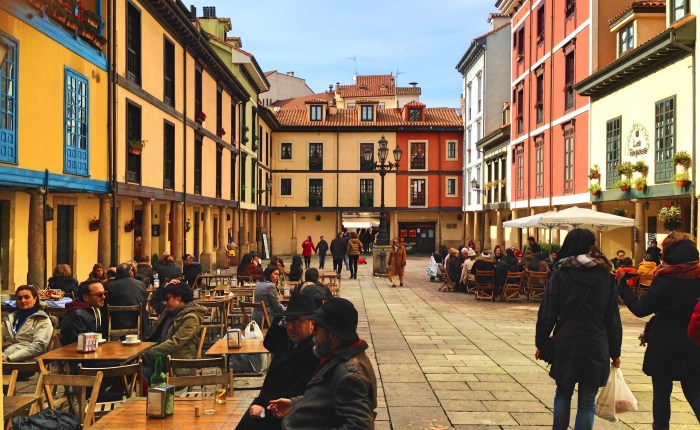


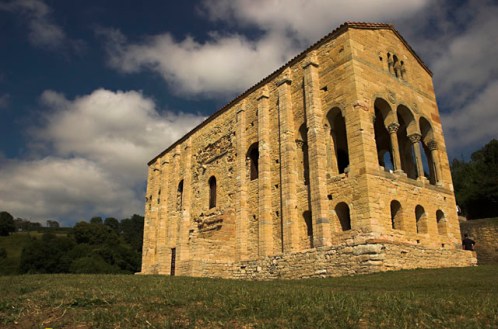
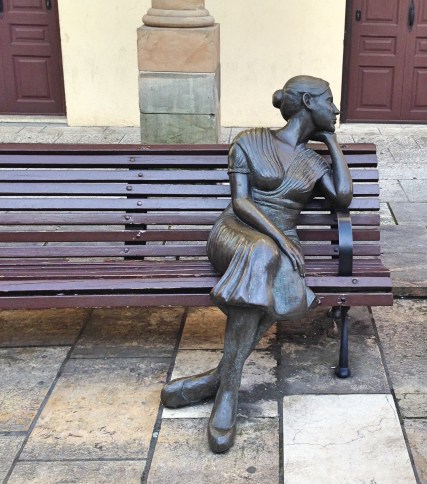


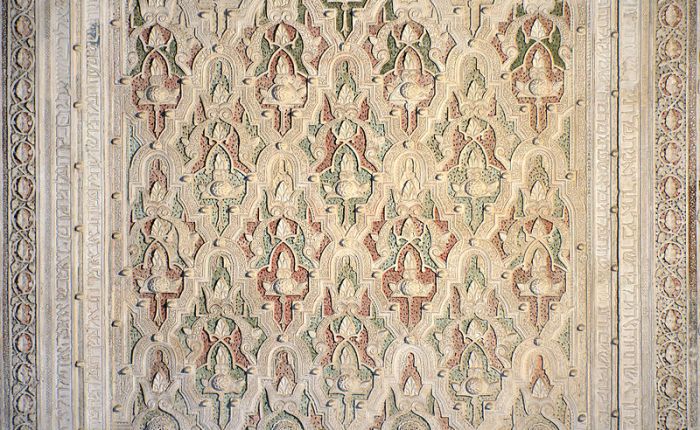
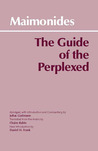


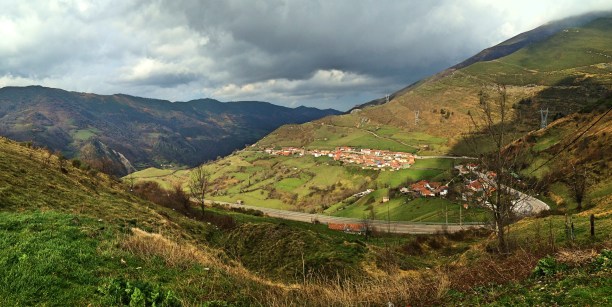
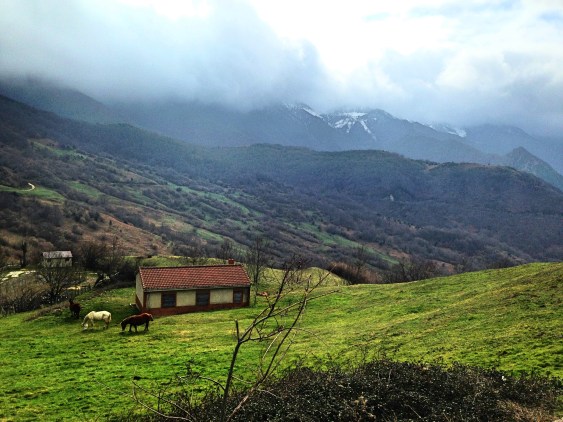
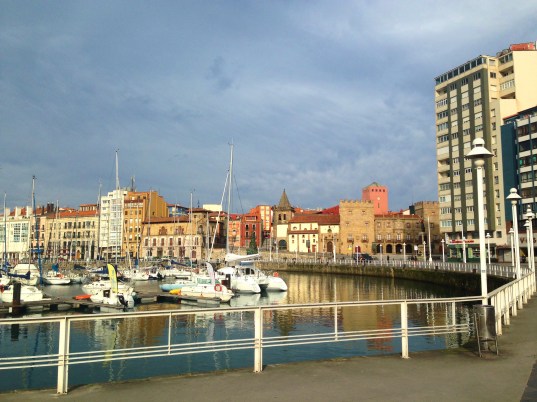
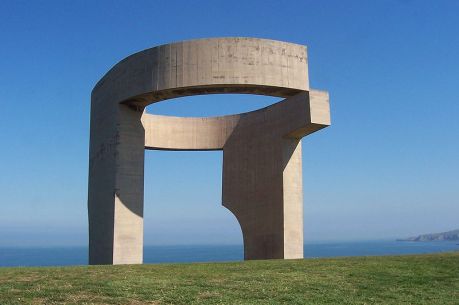
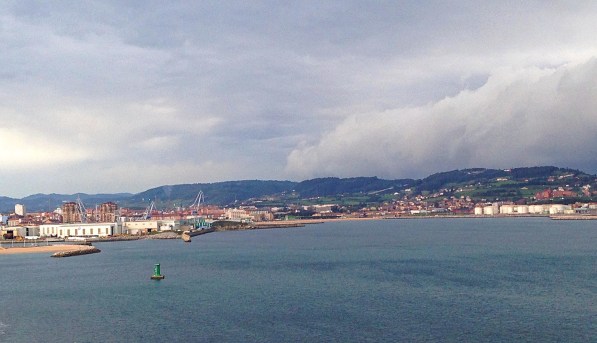
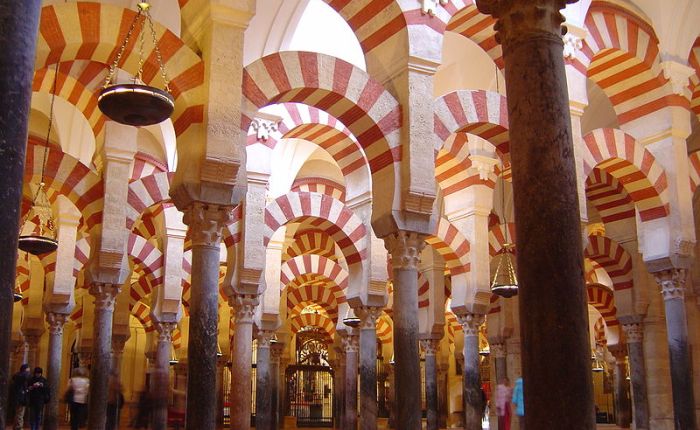

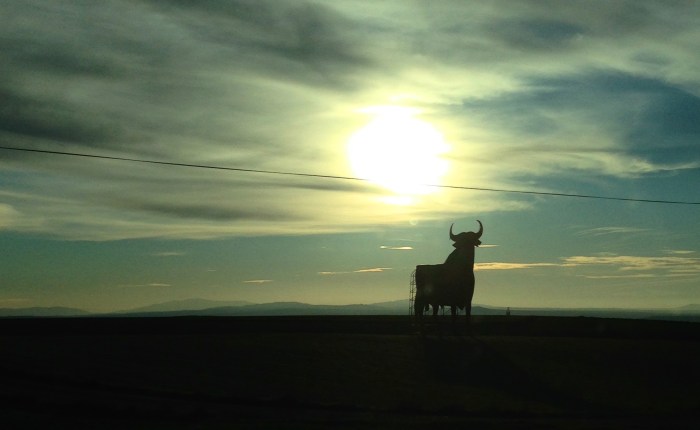
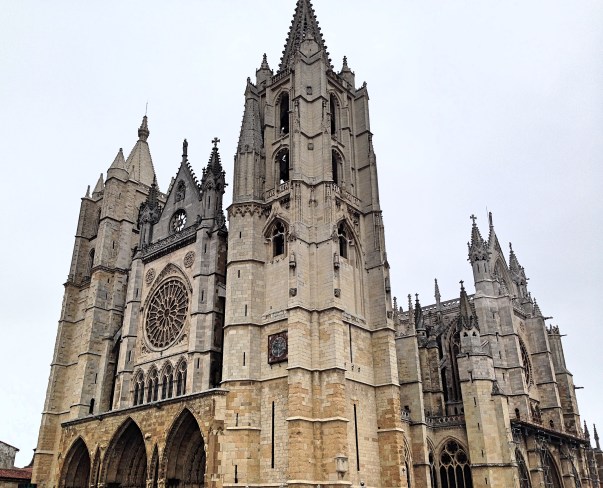 Soon we were standing in front of the cathedral. The building had that wonderful, foreboding grandeur of true gothic architecture. Two large towers flanked the central section with the rose window, flying buttresses extending from either side. So much mass is concentrated in the front of the building that the final effect, for me, is that the edifice looks like it is about to charge right at you when you’re standing in front of it. All of the architectural elements are pushing and pulling against one another, giving it a feeling of tension and poise.
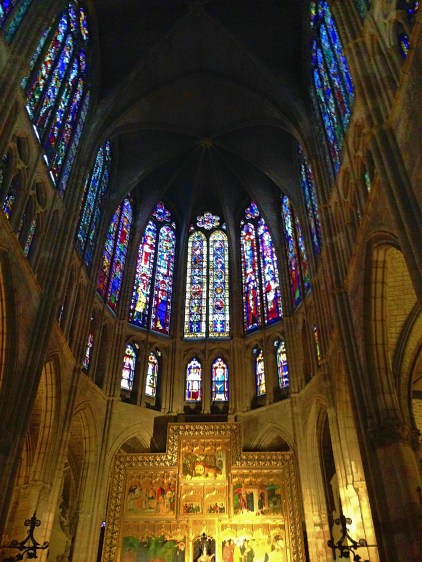
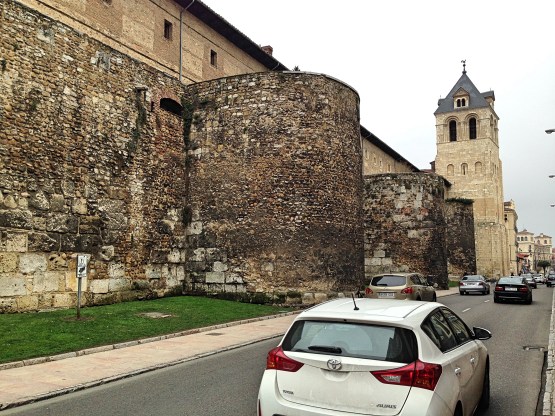


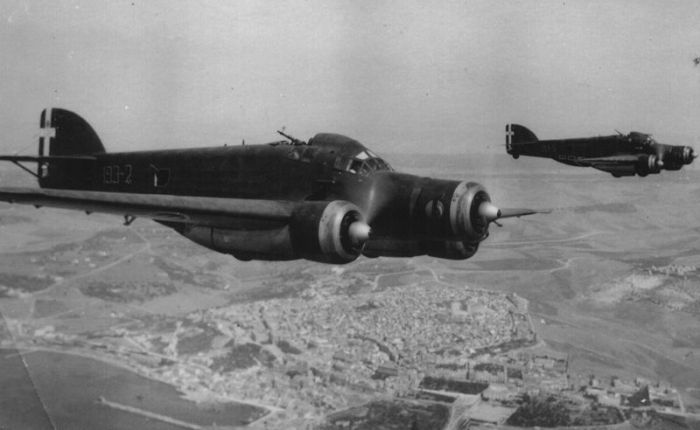


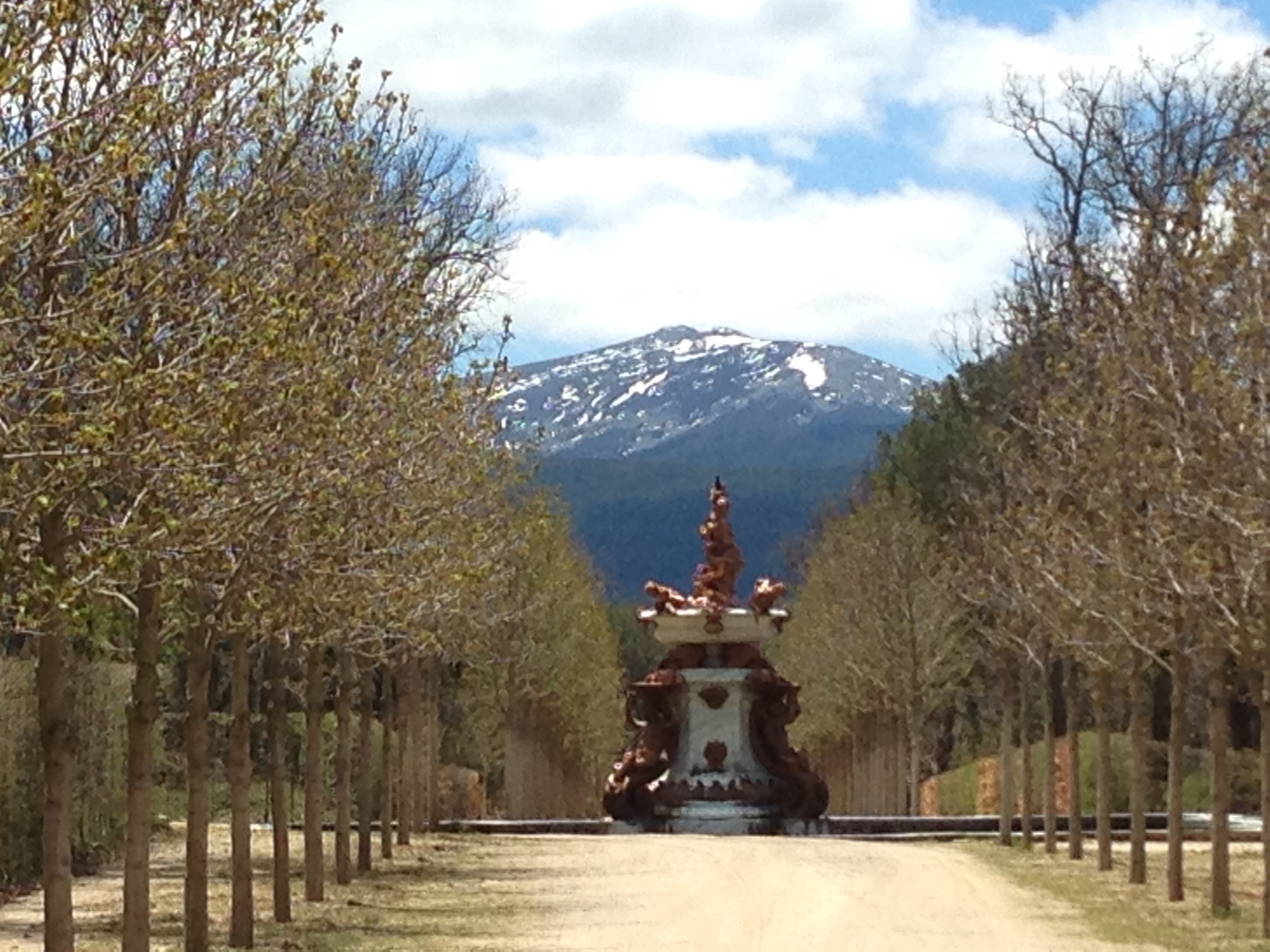
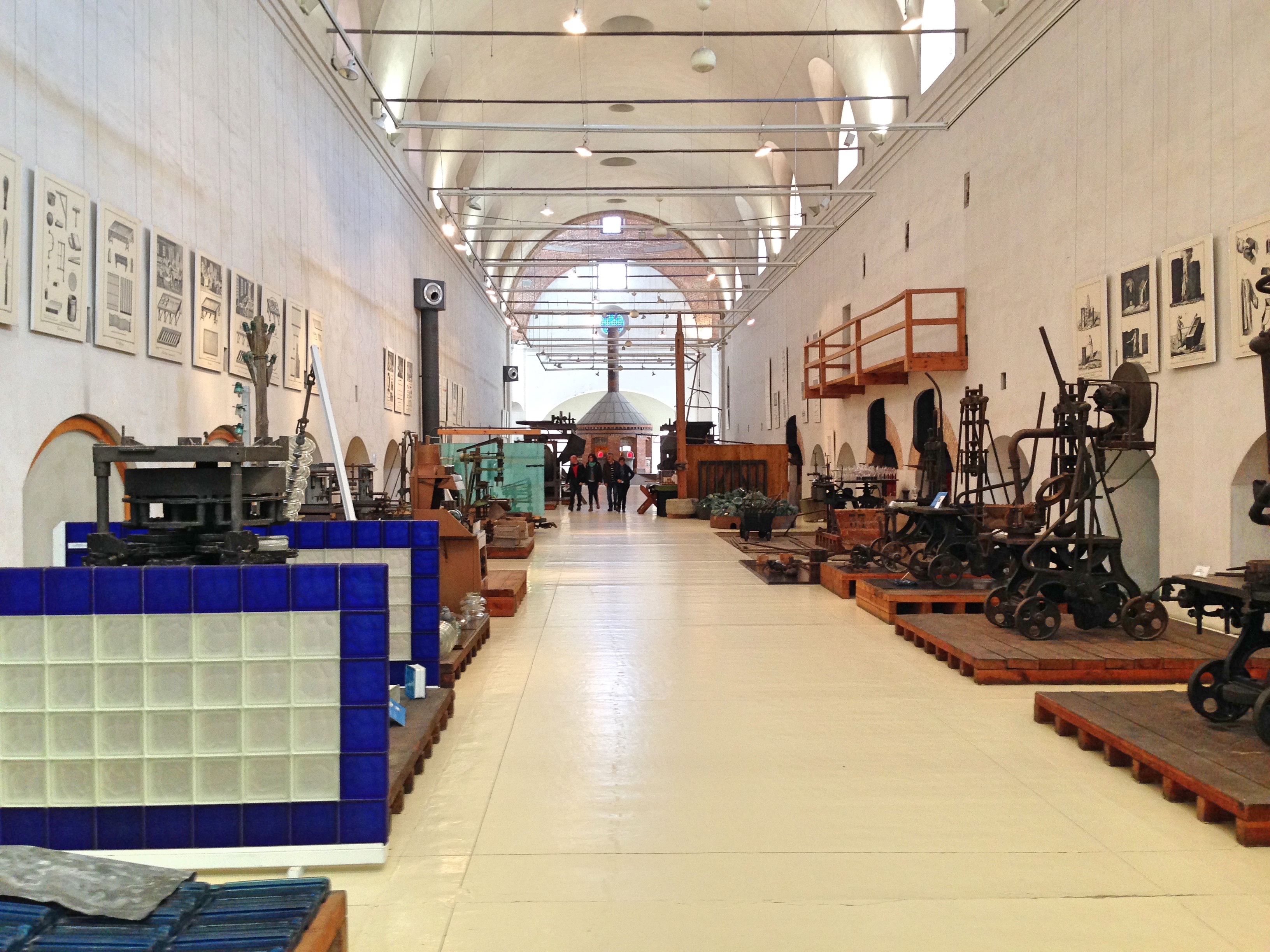


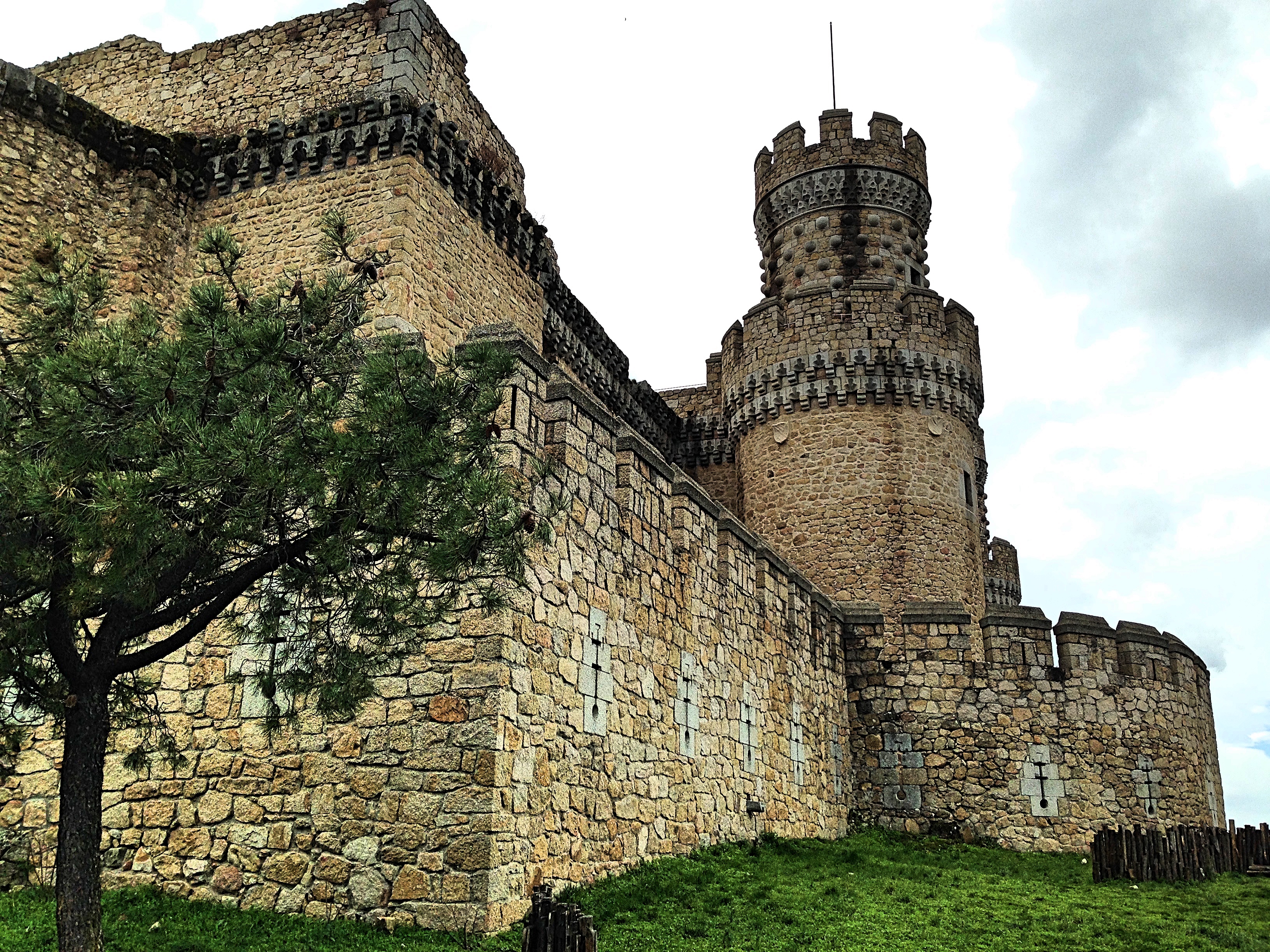


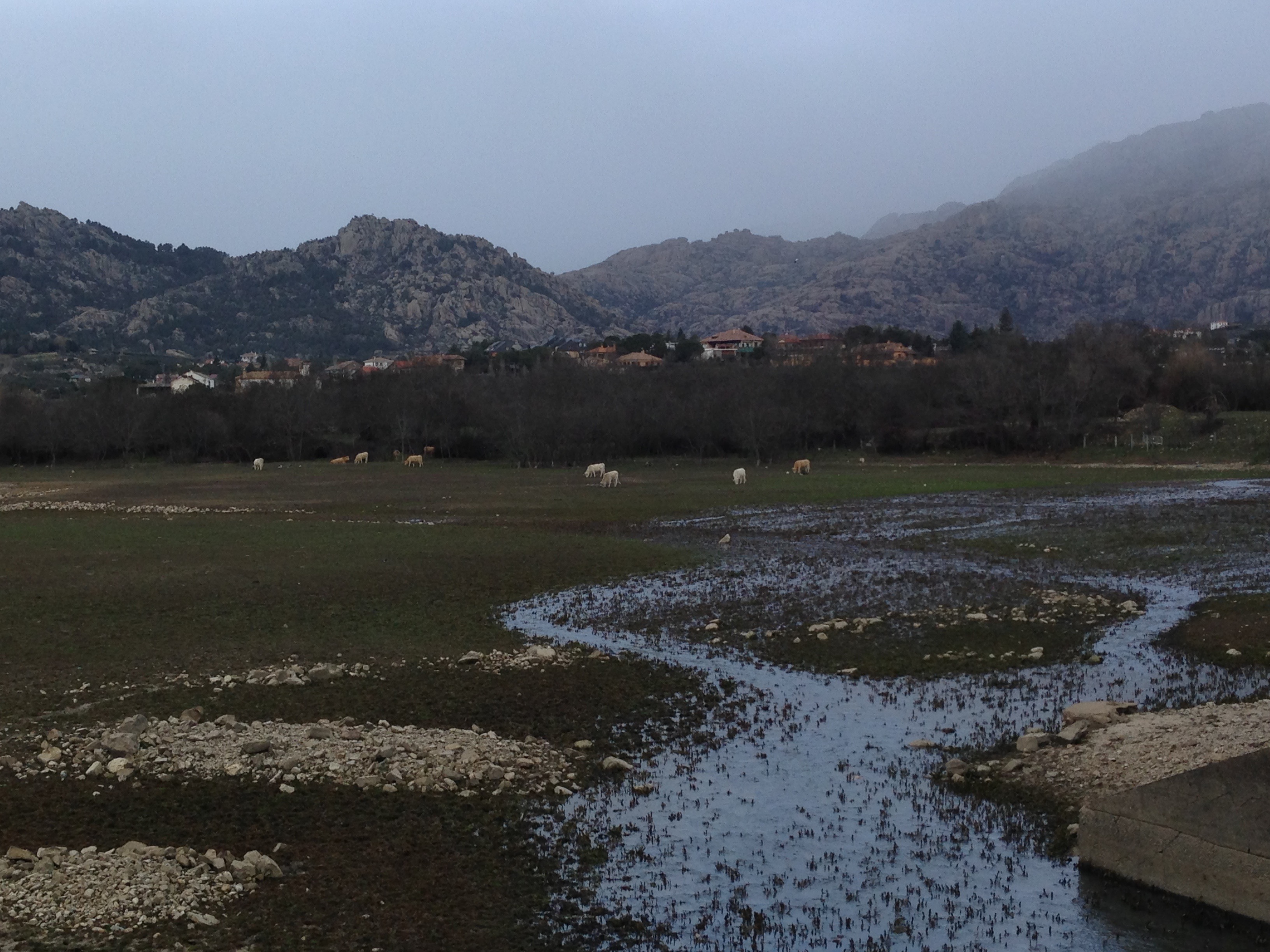
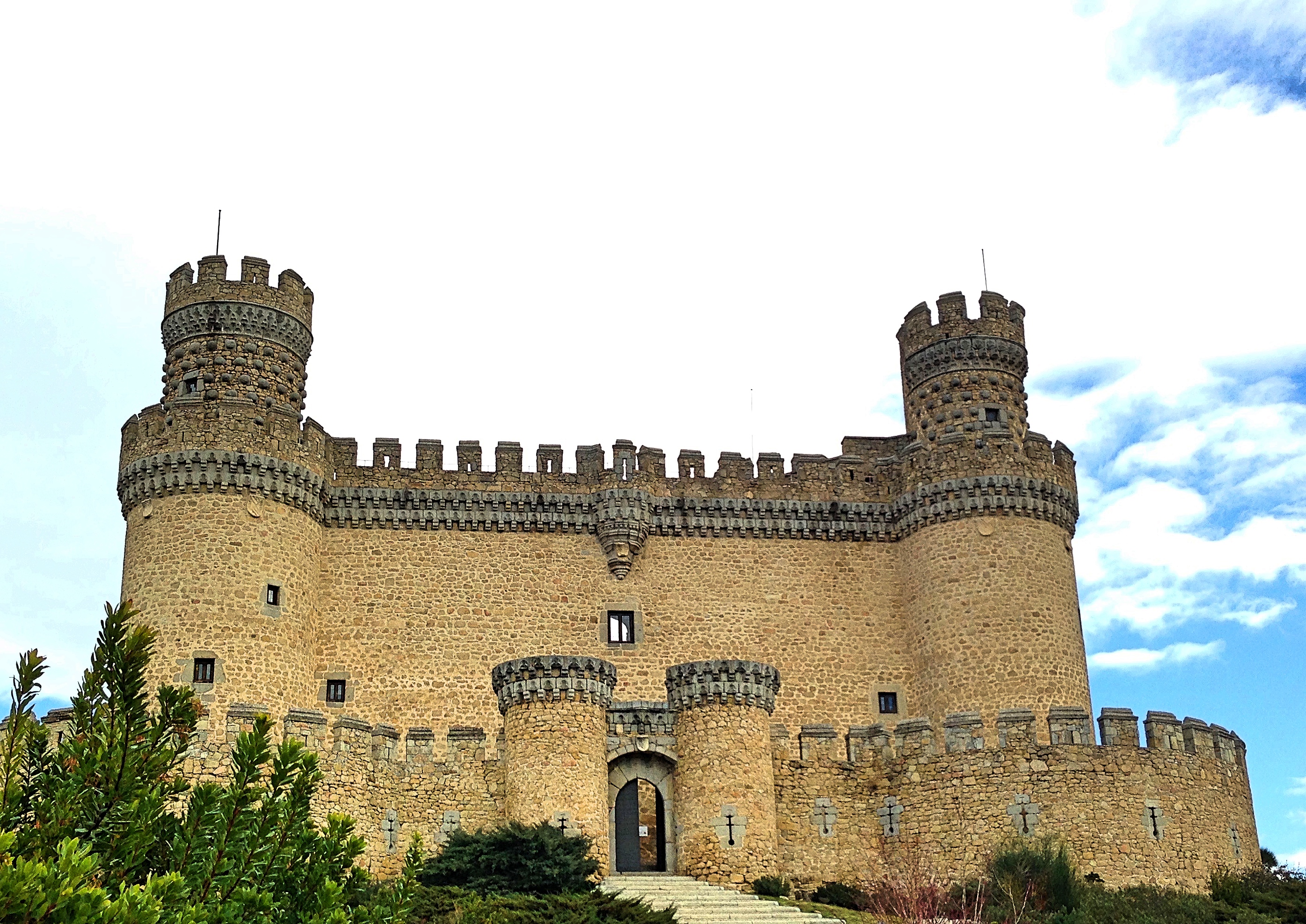


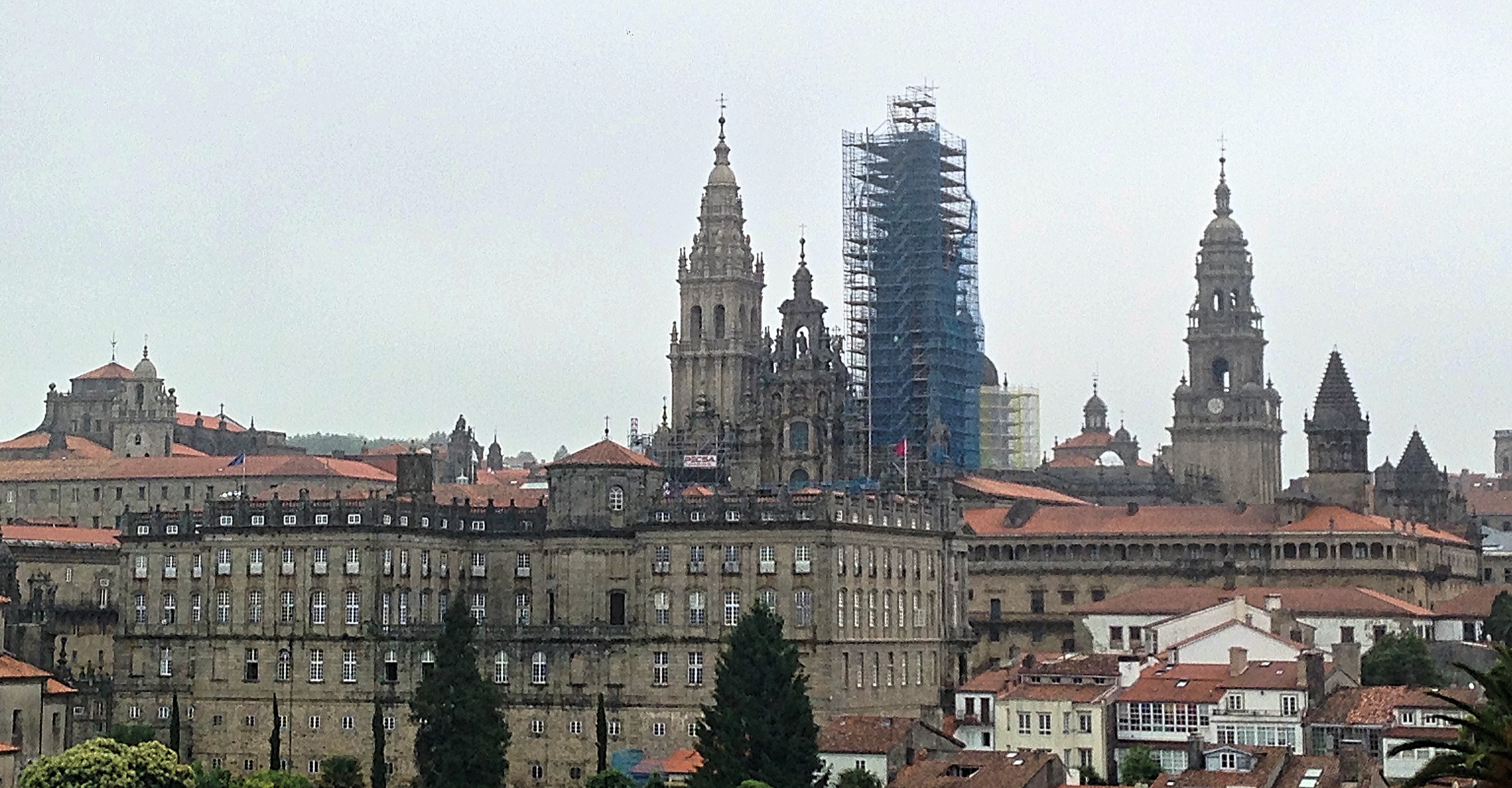
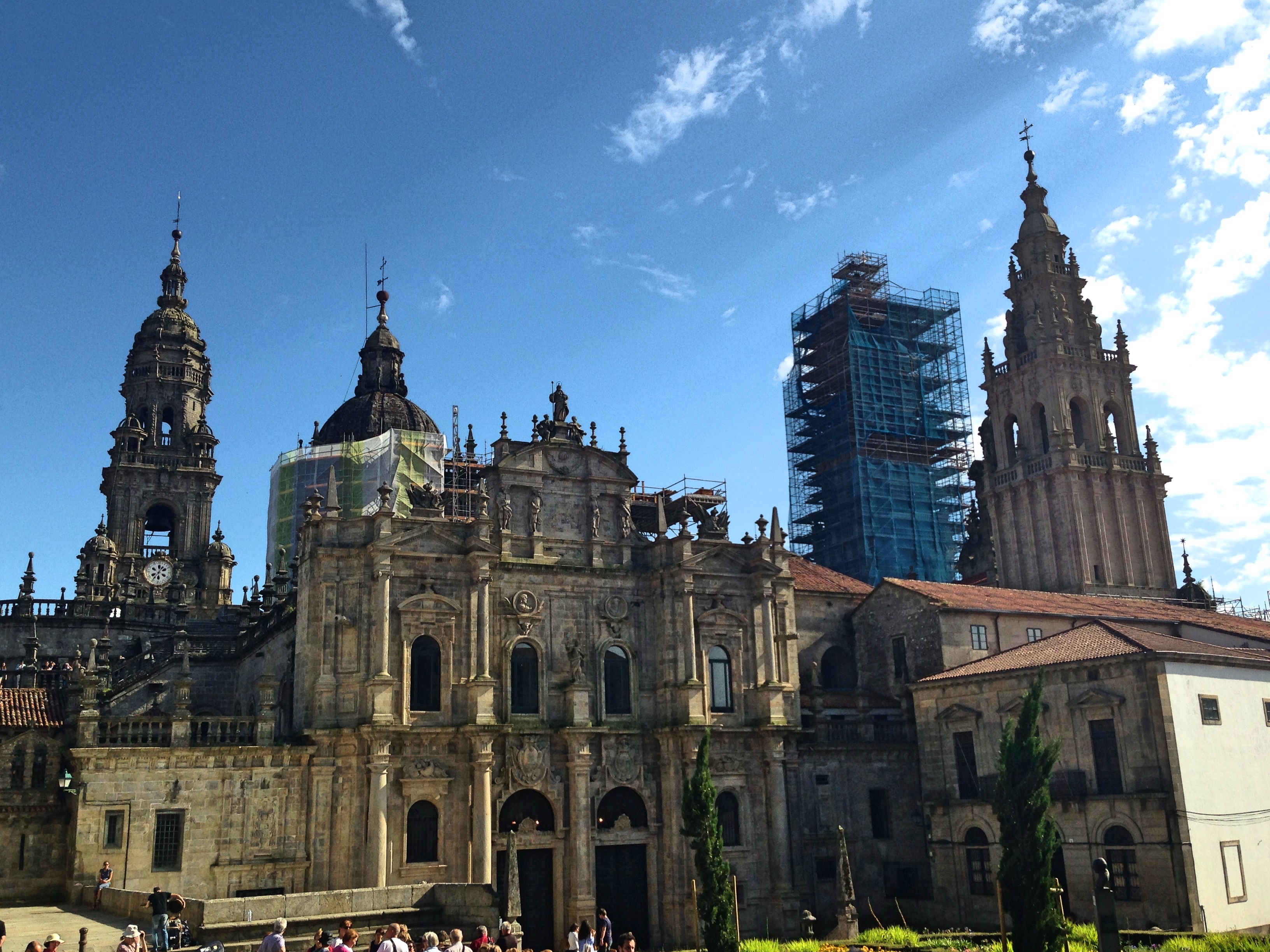


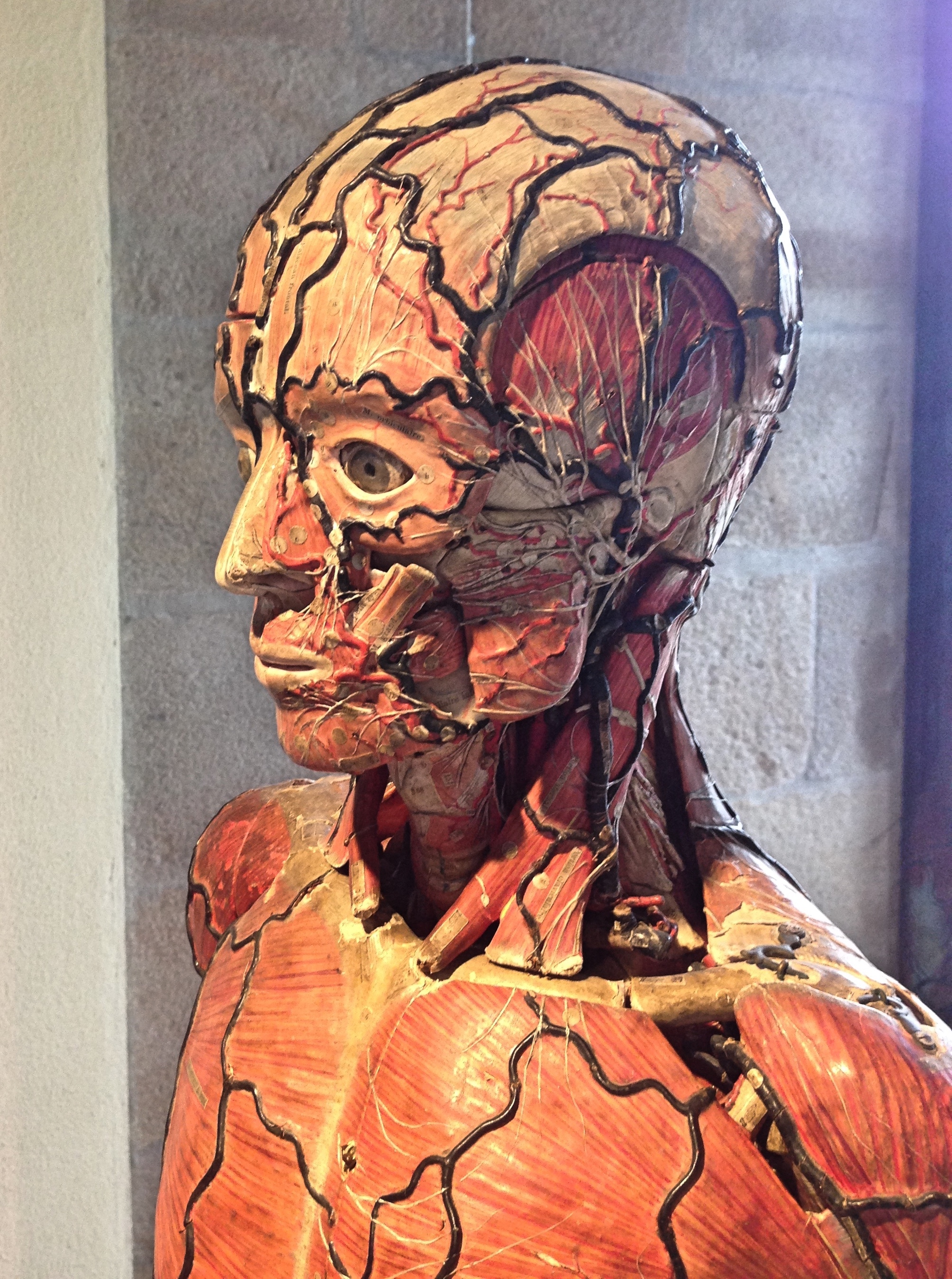

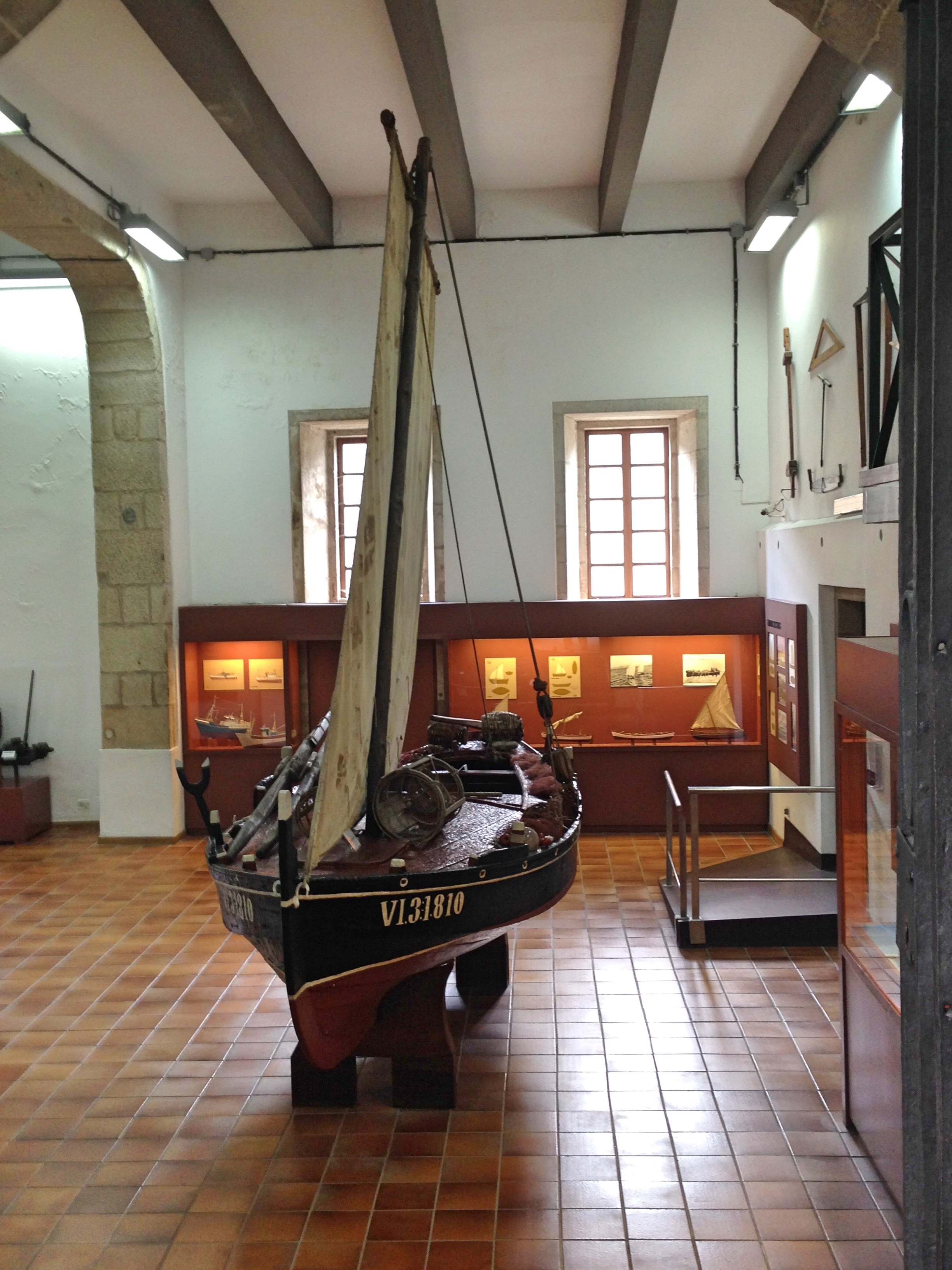


 Lotz in Translation