Review: Florentine Codex, Book 12

Review: Florentine Codex, Book 12

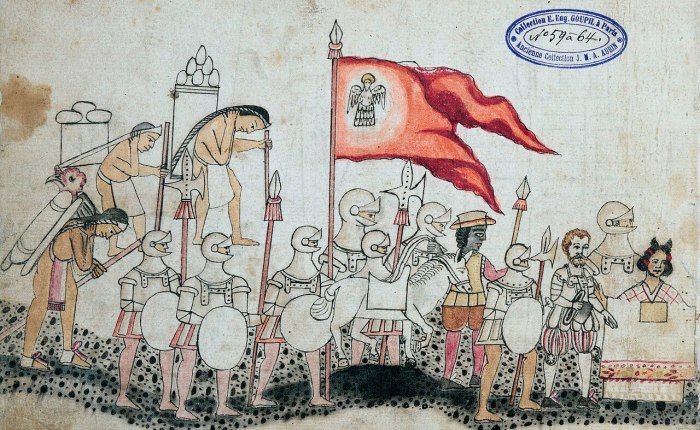
Florentine Codex: Book 12: Book 12: The Conquest of Mexico (Volume 12) by Bernardino de Sahagún

My rating: 4 of 5 stars


The more I read about the Pre-Colombian cultures of Mexico, the more I am confronted with the basic questions of historiography. Though there are many excellent sources of information—ruins, artwork, living ancestors, Spanish eyewitness accounts, pre-contact documents, indigenous stories, and later historical accounts—all of these carry with them strong limitations and biases, giving our knowledge a kind of multicolored, mosaic quality.

This book is an excellent example of this. Written by a Spanish friar using native informants, this is a kind of hybrid insider/outsider document. The knowledge collected by Sahagún was authentic and valuable, and yet it was collected as a part of a missionary effort—not just to conserve, but also to convert. Further, Sahagún wrote his enormous treatise on Aztec culture many decades after initial contact, at a time when the Mexica empire was shattered, its people subjugated, and its culture already heavily influenced by the Spaniards. While enormously valuable, then, this document cannot be read as a clear window into the past.

The strongest example of this is the beginning of the document. Here, it mentions the several ominous omens—a flame in the sky, a boiling lake—that supposedly appeared before the arrival of the Spanish, giving the conquest an almost Biblical aspect. The codex also claims that the Aztec emperor initially mistook the Spaniards for gods, thus leading to several strategic errors.

But this information is dubious for several reasons. For one, anything so highly flattering to the Christian missionaries (as if God is intervening on their behalf) should be suspect in itself. What’s more, these stories were collected from people living a generation or more after the conquest, not direct witnesses; and one can see how these stories serve a kind of defensive purpose. After all, if the heavens intervened to topple their culture, it somewhat absolves the fallible humans who were defeated. It is no wonder that modern historians have largely discarded these stories as myths.

Does that make this document valueless? Absolutely not. Apart from the specific information contained therein—much of it indeed reliable—it also preserves a sense of huge cultural disruption that the Spanish caused when they arrived. So much of the book consists of confused and desperate battles, which escalate in scope and intensity until the book has a nearly apocalyptic tone. Even now, one can feel the sense of cultural dislocation and loss in these pages. Particularly evocative, I found, was the section on the introduction of smallpox:

But before the Spaniards had risen against us, first there came to be prevalent a great sickness, a plague. It was in Tepeilhuitl that it originated, that there spread over the people a great destruction of men. Some it indeed covered [with pustles]; they were spread everywhere, on one’s face, on one’s head, on one’s breast, etc. There was indeed perishing; many died of it.

This book is also worth reading precisely because of the issue that I highlighted above. As lay readers, we are rarely confronted with the realities of actually doing history—the difficult work of piecing together coherent narratives from a variety of fragmentary and sometimes contradictory sources. Yet when a historian does this work in the background, and presents us with a neat story, we are given a false perception of how easy it is to draw conclusions about the past. In the case of the Spanish conquest of Mexico, it just so happens that our sources are particularly fraught. This period in time, then, shows in exaggerated form the problems that exist in any historical work, and is thus an education in itself.

View all my reviews

Review: History of the Conquest of Mexico

Review: History of the Conquest of Mexico

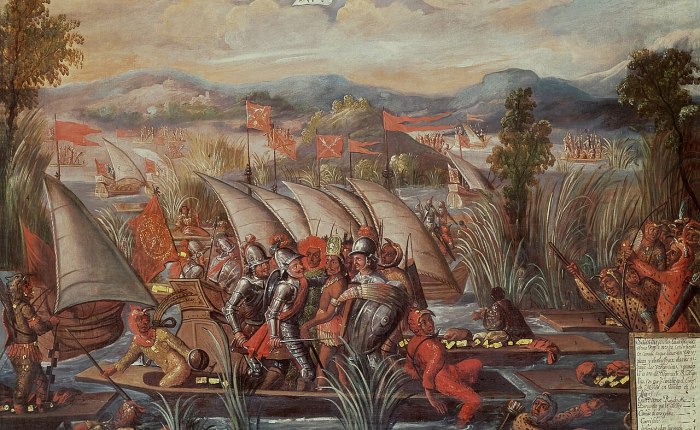
History of the Conquest of Mexico by William Hickling Prescott

My rating: 3 of 5 stars


I began this book with great expectations—cracking open its pages in the airport, on my way to Mexico City for my first ever trip to Latin America. The book seemed extremely promising: the classic work on a subject that fascinates me, written by a man who is considered to be both an excellent prose stylist and one of the founders of scientific history. Rarely does a book seem more perfectly suited to my tastes.

By the end, however, I found myself drained and unmotivated—dragging myself through the final pages. And now, I am in the strange situation of being unable to recommend this book to nearly anyone, despite seeing why it was considered a classic for so long.

I should begin by giving Prescott his due. Severely visually impaired, he could not travel to any of the places he was famous for writing about—never once stepping foot in Mexico, Peru, or Spain. Instead, he had to rely on secretaries, on copies of manuscripts sent to him, and most of all on his prodigious memory, which allowed him to gain fuller access to the primary sources than any scholar before him. And judged by the academic standards of his time, he was an extremely thorough and careful researcher. This book is extensively footnoted, and includes bibliographic essays at the end of many chapters. He did his homework.

He was also an accomplished writer. Believing that history was a genre of literature as much as a record of facts, he labored to make his narrative colorful and attractive. True, his style can seem overly verbose for modern tastes. But the book is still very readable. Indeed, the experience is often more comparable to reading a good swashbuckling novel than a serious work of history. More impressive still—considering his trouble seeing and his never having traveled there—his descriptions of the landscapes are quite lovely examples of nature writing. As both a historian and a writer, then, there is much to commend.

As James Lockhart points out in the introduction, however, there is a tension between these two sides of Prescott. While he is meticulous and skeptical in his footnotes, he is willing to take poetic license with his narrative. Facts, after all, are not always conducive to drama; and the records of history often leave unsatisfying lacunae. But Prescott was intent on writing a story that would stand on its own merits, and shows a willingness to fill in gaps or twist facts to suit his purposes. His urge to tell a good story, in other words, often overpowered his judgement.

Yet for the modern reader, this is not the most serious issue with this book. The glaring and obvious problem is Prescott’s candid sympathy for the conquering Spaniards, combined with his open disdain for those they conquered. Referring to the Aztecs as “barbarians” and “savages,” he dismisses their entire civilization as “half-civilized,” comparing their culture to “Asiatic despotism.” Now, to be fair to Prescott, these sorts of prejudices were nearly universal in his cultural milieu. But I have been alarmed to see other users on Goodreads swallow these prejudices uncritically—which I think requires some correction.

In Prescott’s hands, you see, the conquering Spaniards are romanticized to the point of unrecognizability—becoming an intrepid band of knights errant, motivated by genuine religious conviction, on a civilizing mission to free the oppressed and ignorant denizens of the New World from their tyrannical oppressors. The Aztecs are reduced to bloodthirsty savages, superstitious to the point of insanity, whose barbaric religion must be eradicated for the good of the world. This is no exaggeration. I am using his language and his phraseology here.

Now, I am certainly not going to sit here and write a defense of human sacrifice. But it is worth noting that the Spanish conquest led to a calamitous demographic collapse—one of the great mortality events of recorded history. So any notion that they somehow saved lives is absurd. It is also worth pointing out that the Spanish subjugated everyone they could, peaceful or otherwise. Further, any historian of the period will tell you that the Spanish conquistadores were motivated by one thing above all else: riches. This was obvious and openly admitted. Indeed, their actions don’t make sense in any other light.

If this book is worth reading, then, it is because it is itself a piece of history—a stirring work of literature, a contribution to the academic discipline of history, and an example of the dominant prejudices of the time. But in both its understanding of the period, and in the attitudes it reflects, this book is more than dated. It is obsolete.


View all my reviews

Review: Backrooms (Web Series)

Review: Backrooms (Web Series)

The train left Grand Central past midnight. The car was full of the normal, usually ignored sounds of train travel—clattering tracks, a mechanical hum, muffled conversation—and the city was both dark and luminescent, a dull texture of blue lights outside the window. This was just an ordinary night in the modern world.

I arrived home around two in the morning, exhausted. All I wanted to do was to watch a silly YouTube video and go to sleep. But the omniscient algorithm suggested something quite outside my usual tastes: a grainy video entitled: “The Backrooms (Found Footage).” I watched it, and was immediately hooked. I wouldn’t get to sleep until well past five.

If you don’t already know, Backrooms is a species of analog horror, a subgenre that uses grainy footage which emulates old recording equipment. It is horror based on the uncanny, on the unsettling, far more than gore or traditional jumpscares (though there is some of that, too).

The premise of the videos is rather simple: a character suddenly finds himself mysteriously transported to another space, which doesn’t seem to be used for anything, or lead anywhere. The quest to explore it, or escape from it, is the story of Backrooms.

At first, I was taken up with the question of how the film-maker had found or created such an elaborate set. But then it dawned on me: none of it was real. All of it had been painstakingly cooked up on a computer. It would have been impressive from a studio. Yet Backrooms was not the product of a professional team, or even of a single seasoned expert. It was put together by a teenager, Kane Parsons, whose prodigious ability and artistic talent from a young age has given him a nearly Mozartian reputation.

Parsons wasn’t the originator of the idea, however. He took his inspiration from a pre-existing internet fandom, a series of stories and videos that originated in a 4chan creepypasta post from 2019. It started with a rather ugly photo of a bare yellow room with an ominous caption, and bloomed into a full community.

Yet Parsons took this into quite a different direction. His version is a series of videos that create a fragmented narrative. They mainly center on the fictional company ASYNC, which opened a portal to the Backrooms and is studying it for commercial ends. His story is thus a kind of science-fiction, told through a series of internal memos, security tapes, experimental reports, as well as the found footage of the first video.

While fans of the original Backrooms idea initially rebelled at Parsons’s version, his take on the concept has since become the dominant representation. Indeed, Parsons’s Backrooms has itself spawned a whole community around it—of fan theories, parodies, and some very good imitations. Even though it is now mostly known through the work of one artist, Backrooms is still, in short, a very online phenomenon. And Parsons encourages that—reading the comments on his videos, responding to fan theories, and enjoying the parodies.

If you want a sample of the fanaticism that fans bring to the series, you can check out the many videos on the Film Theory channel, which combine obsessive attention to detail with fervent speculation. For my part, however, the appeal of the series is almost wholly disconnected from these sorts of questions (what are the monsters? what is creating the Backrooms? how can you survive in them?).

The series is more profitably viewed, in my opinion, as a kind of extended commentary on the kinds of spaces that we humans build for ourselves. Parsons is brilliant at creating rooms, hallways, and furniture that look extremely real and yet not quite right. Indeed, every new space of the Backrooms we see—apartment blocks, suburban neighborhoods, forests and cityscapes—is a kind of parody of something intimately familiar. What Parsons does is to strip these places of their familiarity; and he does that by changing subtle details, rendering them wholly dysfunctional: doors that lead nowhere, chairs too big to sit on, signs flipped backwards.

In another context, this could be funny, as many of the parody videos are. But in Parsons’s hands, it becomes extremely unsettling. These spaces are so flagrantly hostile, so completely inhospitable, that it is a challenge even to survive in them. And if this is the case, why do we keep designing our real world to look so similar? It would be risible if it weren’t tragic. The line between comedy and horror, after all, can be disturbingly thin, and depend on as little as the background music. 

Speaking of music, Parsons also deserves credit for the soundscapes he creates. His videos are not only visually stunning, but sonically rich. Clearly multi-talented, he writes and performs all of the music for the series, as well as the Foley (the footsteps, the rattle of the camera, and every other incidental noise). Yet the sounds that most stick with me are the ugly modern ones: the crackle of a radio, the hissing of static, the buzzing of machinery—and, most of all, the ominous angry hum of the electric lights.

The final effect is a horror version of the experience that I had on the train in the opening paragraph—a menacing world of artificial spaces and sounds. And the effect of viewing Parsons work, for me, has been a heightened awareness of the unnaturalness of daily life—how the sonic and visual and even tactile textures that surround us can so often be cold and repellent.

Oddly, however, Backrooms can sometimes have the exact reverse effect. Seeing all of this stripped of its human context—in the endless hallways devoid of life—we are free to notice that, if bleak and uninviting, these spaces also have a strange, almost abstract beauty to them. If it fails as a dwelling place, our modern world succeeds in creating its own aesthetic.

Theories about the nature of the Backrooms vary from it being the leftover parts of a computer simulation (implying that we live inside a giant computer), or some kind of living entity that is misremembering the real world (which doesn’t seem to clear anything up).

For my part, however, the best way to understand the Backrooms is a kind of extended metaphor for the internet: a mirror version of our reality, extending infinitely and everywhere, into which some people fall and never return. (It seems possible that Parsons is aware of this parallel, as his timeline of ASYNC’s exploration of the Backrooms roughly coincides with the development of the World Wide Web.)

All of this, from a 4chan post! Indeed, Backrooms not only symbolizes the internet, but exemplifies how it works—how it connects people, amplifies voices, and forms communities around ideas. Beginning with a single image on a forum, all of this blossomed into a whole series and (now) a major motion picture. Parsons does fit the stereotype of the solitary genius, but he is also very much at the helm of a vast, widely-dispersed community—one which he interacts with, and even collaborates with.

But the internet, like the Backrooms, is also full of monsters. For example, another internet phenomenon—a man almost exactly Parsons’s age—comes to mind, the “looksmaxxing” influencer, Braden Eric Peters, otherwise known by “Clavicular.” While spewing a version of toxic masculinity that seems to be a parody of itself, Clavicular has become immensely famous. It is an interesting case of parallel lives: two kids who, in a previous age, might have been simple misfits, finding fame and fortune by connecting with widespread communities online.

Indeed, what both figures exemplify, though in very different ways, is the central aesthetic experience of both the Backrooms and the internet: alienation. There is an obvious irony here. While more connected than ever before, the world we live in often makes us feel isolated. The internet does provide a sense of community, but it is so often just a simulacrum, ultimately unsatisfying and unhealthy—a kind of parody version of the real thing. Clavicular and the young men he represents have responded to this alienation by turning to a toxic culture of misogyny. Parsons, instead, has turned it into art.

For better or for worse, then, the internet is also a misshapen copy of the world we live in. And through its dark corridors, it connects people who otherwise might feel isolated and alone. In the case of Clavicular, as in so many other examples, this has only magnified voices which should have been left on the social margins. But in Kane Parsons, we see the original promise of the internet fulfilled—the emergence of a brilliant and distinctive voice from a community of creators. Like the Backrooms, the internet is both extremely dangerous and strangely beautiful.