After seeing everything I wanted to see in Prague, I still had a day to spare before moving on to Nuremberg. Luckily there are some excellent day trips from the Czech capital. There is Karlovy Vary, an attractive town near Prague with famous hot springs, which several people had recommended to me. There is also the Sedlec Ostuary—a world heritage site—a chapel decorated with thousands of human bones in a church in the town of Kutná Hora. But after looking over these and more options, the beer lover in me won out: I had to go to Plzeň.
With a population of about 170,000, Plzeň is the fourth-largest city in the Czech Republic. For much of its history Plzeň was significant as a trade post near the German border. But in the 19th century the city’s importance considerably grew. First, in 1842 the city’s iconic export was invented: Pilsner beer. Shortly later, the city underwent rapid industrialization, turning Plzeň from a rural outpost into a city of factories and breweries.
Getting to Plzeň from Prague is straightforward. I boarded a commuter train from the central train station, Praha hnlavní nádraží, which took me to Plzeň in around an hour. I did not give myself enough time to buy my ticket, however (there are no machines, so you need to wait in line to buy from a person), so I had to rush to catch the train. The only way up from the station to the platforms was on a slow-moving automatic walkway, which was so full of infuriatingly relaxed and immobile people that I had to wait, biting my lip, as the walkway took me forward at around 2 mph, while the train was on the verge of leaving. When I finally reached the end I bolted up the stairs to the platform, running and jumping onto the train just as the doors were closing. Indeed, I had gotten on so fast that I was not even sure it was the right train. But I was in luck.
Unfortunately for me, however, by the time I pulled my stunt all the seats in the train were taken. I had no choice but to stand. So I made my way to the dining car, ordered a coffee, and got out my Kindle to read. I was trying to get through Rousseau’s Emile, but the Romantic philosopher was quickly getting on my nerves and I had trouble paying attention. Time passed this way until, feeling peckish and needing a distraction, I decided I would try the train’s goulash. This is a type of strew, originally from Hungary but now popular throughout Central Europe, made with meat, veggies, and flavored with paprika. It was my first goulash experience; and—contrary to what you might expect from a dining car—it was actually quite good.
Once arrived, I wasted no time in going to Plzeň’s biggest attraction: the Urquell brewery. The word “Urquell” can be roughly translated as “the source,” and it is appropriate: for it is this company that invented the iconic pale lager, or pilsner beer, which has proven immensely influential. It is said that two-thirds of the beer produced in the world is an adaptation of this Czech invention. And, indeed, every country seems to have its own version of a pale lager: China’s Tsingtao, Japan’s Sapporo, Kenya’s Tusker, Mexico’s Pacífico, America’s Budweiser, Spain’s Mahou. The world cannot seem to get enough of this sour beverage.
To enter the brewery one must pass through the festive main gate, designed to look like a triumphal arch. In the ticket office there is a large display of antique brewing methods, complete with life-sized sets and dummies. I queued up and bought a ticket for the next English tour—for which, luckily, there was still a spot remaining. Soon I was in a tour group, ready to explore the birthplace of pale lager.
Our tour commenced with some elaborate ceremonial glasses, made on the occasions of visits by European monarchs to the brewery. Then, after explaining something of the history of the place, our guide took us to see some antique carts, train cars, and trucks used to transport Urquell beer back in yonder days. A bus then picked us up and drove us to the bottling plant.
I am always impressed by industrial processes like this. I think of Adam Smith and his pin factory, and marvel how such marvelously complex solutions can arise for such simple challenges. In this case the challenge is to put beer into a bottle or a can. The solution is a massive facility—noisy with mechanical racket, steamy with sweat and spillage, buzzing with electricity and life. We watched the action from an elevated platform. People in waterproof suits marches around the factory floor, while giant conveyor belts swept hundreds of bottles into metal apparatuses—rinsers, inspectors, vacuums, palletizer, depalletizers, feeders, inspectors, packets, dispatchers—each of which performs one specialized function at lightning-fast speed. To put this into numbers, the bottling line can church out 120,000 bottles per hour, and the canning line 37,000 cans per hour. We have come a long way.
From here we were transported back on the bus, herded into a large elevator—the largest in the Czech Republic, they said—and then shown a film about Pilsner Urquell’s origins, which was projected on a semicircular screen while we sat on a rotating platform. In this film we were informed that the inventor of pilsner beer, Josef Gross (a German), created the beer in response to growing dissatisfaction among the populace with the top-fermented beer. (The yeast rises to the top during fermentation, which occurs at a relatively high temperature.) In response to this, Gross developed a bottom-fermenting beer, which uses a different sort of yeast that requires a lower temperature. And so, pilsner beer was born.
Then we were shown an exhibit about the four ingredients of beer: malt, water, hops, and yeast—with examples of each. I did not know that malt is not a specific type of grain, but is instead any cereal grain (usually barley) which has been made to germinate by soaking in water, and then dried. I tried chewing on a piece of malt; it’s rather hard. But I particularly enjoyed the chance to sniff and taste the hops. As you may know, beer hops are made from crushing up the flowers of the hop plant. The final product looks an awful lot like marijuana, but smells delightful—the floral, bitter, and richly complex flavor that is most notable in strong indian pale ales, though less apparent in pale lagers.
Then we were led into the old factory, no longer in use. The brewing process, however, remains the same; and so the guide (with the help of a video) took us through the steps to make pilsner beer. First, after being mashed, the malt is put into these big copper kettles filled with water; the resultant mixture is called a ‘wort.’ The wort is gradually heated, which converts the malt’s starch into sugar. Then, to kill off unwanted bacteria, the wort is boiled through a process of siphoning off thirds, heating the portion, and then reintroducing it into the main kettle for it to be repeated.
Then this wort is siphoned off into stainless-steel drums—to filter out the solid bits of barley, I believe—and then on to the hopping kettles. Hops are put in and removed three times in 90 minutes, while the liquid is boiling. After that the liquid goes on to a fermentation tank, which is stored outside, where the yeast is finally added. (This is that “bottom-fermenting” yeast I mentioned earlier.) To achieve the right flavor, the temperature of this container must be kept within fairly strict boundaries. And controlling the temperature during fermentation is tricky, since fermentation itself generates heat. The fermentation process takes some few days, if memory serves, and the final product contains both alcohol and carbonation.
This isn’t the end of the process, however, since then yeast must be filtered out, the beer left to age in barrels, and then the final product is pasteurized to ensure longevity. All this was explained to us as we explored the old and then the current factories, both of which are impressive places. I especially liked the futuristic look of the new factory, with shiny copper kettles in a tiled room. But this wasn’t the end of the tour.
Finally we were led down into the cellars. Underneath the complex, you see, is a massive network of tunnels carved into the ground—miles and miles of them. These were used to keep the beer at a controlled temperature as it aged in barrels. Apparently a rather cool temperature is needed, so ice would be dumped into a massive room at the end of the hall, whose proximity would cool the rest of the network. It must have been chilly indeed, since even without the ice the tunnels were many degrees cooler than outside. (Nowadays the beer is aged in another way, and the tunnels are unused.)
This is where our tour ended. But not without a tasting, of course. Two bearded gentlemen poured each of us (there were around 30 on the tour) a glass of pilsner beer. It was unfiltered, meaning that the yeast was still in the beer, which gives it a cloudy look. Now, here I have to admit that I am not particularly fond of lagers, and I especially dislike pilsner beer. To me its defining flavor is sourness—lacking the sweetness of wheat beer, the bitterness of ales, and the smoothness of dark beers. But I will drink a pilsner and enjoy it, of course, since any beer is better than none.
The tour was over, having taken about 2 hours. I highly recommend it to anyone with even a slight interest in beer and brewing.
I had some time before my return train to Prague. First I ate lunch at a place called the PUB Plzeň, which has great hamburgers. Then I went to see Plzeň’s cathedral, St. Bartholomew. The church has only had cathedral status since 1993, and underwent major renovations and expansions at around that time. As it stands now, the cathedral is an attractive building, both inside and out. But the best part of the visit was ascending the hundreds of steps up to its bell-tower. One must pay a special price to do this, of course, and undergo some claustrophobia, vertigo, and exhaustion on the twisting and narrow stairs. But the view of the surrounding city and countryside is worth it. I particularly admired Plzeň’s main square, which is extremely pretty, full of brightly painted old apartment buildings and futuristic fountains.
Now it was time for me to go. Unfortunately I did not have time to see Plzeň’s Great Synagogue, the second-largest in Europe (though nowadays only about 70 Jews live in Plzeň). But at least this time I got a seat on the train, from which I could appreciate the rolling grassy countryside of the Czech Republic. It is a beautiful country.
When I arrived in Prague I wasn’t feeling too good. Flights from Madrid to Prague are normally expensive; but I had gotten lucky and had found one for quite cheap. The only problem was that it left Madrid at an inhumane hour in the morning; and since I have trouble sleeping either before or during flights, I was not exactly at my best. Sleep-deprivation, besides making me delirious, also makes me more prone to stress. I feel as though I cannot calm down; every little obstacle provokes a feeling of panic. Keep in mind that, when you buy cheap plane tickets, you pay for the flight in other ways.
Admittedly I did have two additional things to worry about this trip. The first was money. The Czech Republic does not use the euro, but the koruna (or “crown”). This alone produced in my exhausted mind a feeling of disorientation, since now I had to perform a conversion to understand how expensive something was, and my mind was in no condition for arithmetic. More stressing was my new camera. Just days before I had impulsively ordered a Canon 1300D (Rebel T6 in America) and I had hardly any idea how to use it, care for it, or store it. Fresh from the financial sting of purchasing the device, I was terrified of losing, breaking, or having it stolen. This was my state as I entered one of the most beautiful cities in Europe.
There are many options for getting from the airport to the center of Prague. I took a local bus and transferred to the metro, which took me to Prague’s central train station, Praha hnlavní nádraží, where I deposited my things in a luggage locker. Prague’s metro system is conspicuously attractive and efficient. There are only three metro lines (A, B, and C); but they have been planned so well and go so quickly that I felt that I could zip around the city. Many stations also feature appealing, even futuristic designs. It made a good first impression. Though the city of Prague has only around 1.3 million inhabitants, the metro carries 1.6 million riders a day, which gives you an idea of the level of tourism in the city.
As I emerged into the daylight from the train station—confused, panicked, disoriented—I was at a loss for where to go first. After some aimless wandering I emerged on the Václavské Náměstí (Wenceslas Square), which is more of a long open avenue than a plaza. Its name comes from St. Wenceslas, patron saint of Bohemia; and a monumental equestrian statue of the saint stands at the top of the square. Behind the statue, bookending the space, is the palatial building of the National Museum—which houses a large collection of both natural and cultural history, but which nevertheless is not a popular attraction (I didn’t go).
From there I made my way to the Old Town. (The aforementioned Wenceslas Square is in the New Town, an expansion of the city planned under Charles IV in the 14th century—very new indeed.) This led me through one of the old city gates, the Powder Tower, an attractive gothic edifice built of smoky grey stone and covered with decorative work.
Soon I found myself in the center of the city: Old Town Square. It is a very pretty place, lined with square apartment buildings painted in bright colors. Beyond them is the Church of Our Lady before Týn, whose tall, jagged gothic spires provide one of Prague’s most distinguishing sights. Tycho Brahe, the astronomer who taught Johannes Kepler, is buried here. In the center of the square is a statue of Jan Hus, an important religious reformer and predecessor of the Protestant Reformation, who believed that mass should be given in the vulgar tongue and the Bible translated into Czech—for which he was very reasonably burned as a heretic. This kicked off the Hussite Wars, in which an armed and mobilized Czech population repelled crusade after crusade sent by the Pope to squelch the heresy, an important event in Czech nationalism.
On the other side of the square is St. Nicholas Church, decorated in a pretty Baroque. Yet the most famous landmark is the extraordinary astronomical clock, or Prague orloj, affixed to the Old Town Hall. Unfortunately for me, however, the clock was under restoration when I visited, and was hidden underneath a tarp.
Standing in that expansive square, I was already beginning to see why Norman Davies, who wrote a history of Europe, named Prague the continent’s most beautiful city. But why is one of Europe’s most attractive places and most popular tourist destinations located in the Czech Republic, a country about which most Americans (myself included) know close to nothing?
It goes back to Prague’s previous title as the capital of the Kingdom of Bohemia—at first an independent kingdom, and then a central part of the Holy Roman Empire. The kings of Bohemia ruled over a vast land that extended far beyond the borders of the current Czech Republic; and some were even elected to become the Holy Roman Emperor (that is, until the Habsburgs had their way). Indeed, during the high points of the Austrian power Prague played a role nearly as important as Vienna in central Europe. So the city’s great beauty is no coincidence. And luckily the city was not bombed nearly as heavily as other Nazi-controlled cities during the Second World War, so its beauty has survived intact.
My next stop was the city’s Jewish Quarter, located in a corner of the Old Town. My original plan was just to visit one synagogue; but to visit any of the landmarks of this neighborhood one must buy a combination ticket, which is certainly worth it. My first stop was the famous Spanish Synagogue. This is the newest synagogue in the Jewish Quarter; it was completed in 1868, built over what was the oldest synagogue in Prague, which had become too small for the congregation. The synagogue is called “Spanish” because of its Neo-Mudéjar interior decoration, built in imitation of the Moorish-influenced style developed by the Sephardic Jews of Spain. It is beautiful to behold. Every inch of the space is covered in geometric designs painted in a shimmering gold.
Outside the synagogue is a monument to one of Prague’s most famous sons: Franz Kafka. Born to a Jewish family (though not exactly religious himself), Kafka spent most of his unhappy life in Prague. The statue, by Jaroslav Róna, shows the sharp-featured, diminutive writer pointing his finger (at what?) while riding on the back of a faceless and armless man—a fittingly absurd image for the great poet of the absurd. Apparently it is considered good luck to rub Kafka’s feet; but I kept my distance, since luck and Kafka do not go together. There is a Kafka Museum elsewhere in the city, which I have heard is not very impressive. But in front there is a fountain worth seeing, featuring two men urinating into a little pool of water as sections of their bodies spin around. I don’t know if the image is particularly Kafkaesque, but it is memorable.
The next synagogue on my combined ticket was the Pinkas Synagogue. This synagogue is not nearly as visually striking as the Spanish Synagogue; its interest lies, rather, in the memorials within. On the lower level of the synagogue, the name, birthdate, and date of death of every Jewish victim of the Holocaust in the Czech Republic are inscribed on the walls. On the upper floor is an even more moving tribute: drawings made by the children sent to the concentration camp of Theresienstadt. These survived because the children’s drawing teacher, Friedl Dicker-Brandeis, hid them in Theresienstadt before her deportation to Auschwitz, where she was killed. Most of the children suffered the same fate. The drawings are an extraordinary testimony of the humanity, individuality, and creativity of the children caught up in the catastrophe.
Right next to the Pinkas Synagogue is the Old Jewish Cemetery. Since Jewish custom forbids removing graves or markers once they are laid down, and since new land was difficult to acquire, the community was forced to put several graves on top of each other. As a result the cemetery is a forest of tombstones, many of them pushed to odd angles or otherwise falling down; and the ground level is higher than the surrounding streets. The graves span from the 14th to the 18th centuries, at which time Josef II (of Austria) decreed that no more burials were to take place within city walls, in order to reduce disease. Most of the markers are tombstones, though some of the more important personages have tumbas, or sarcophagi (though the body is not inside these). In some of these tumbas I observed little pieces of paper, folded up and tucked inside the nooks of the stone; and in front of one tumba—perhaps of rabbi Judah Loew ben Bezalel—I observed some people praying.
There were still more sites included on my ticket. One was the Ceremonial Hall of the Jewish Burial Society. A burial society (chevra kadisha in Hebrew) is a voluntary organization that helps to prepare the body of a deceased member of the community and prevent desecration. Nowadays the building is an exhibition space, with panels of information about the role of burial societies (of which I was entirely ignorant) as well as some ritual items on display. Nextdoor is the Old-New Synagogue, a gothic building that is the oldest active synagogue in Europe (it became the oldest when the older synagogue was knocked down to make the Spanish Synagogue). A legend tells that a golem—created by none other than the above-mentioned Judah Loew ben Bezalel, to protect the Jews of Prague from antisemites—inhabits the attic of this building. Nowadays the synagogue is filled with symbolic objects on display and explanations of Jewish customs. The last stop on this ticket was the Maisel Synagogue, an attractive neo-gothic building that houses an exposition on the history of the Jews in Prague. All of these spaces are administered by the Jewish Museum.
As all of these monuments demonstrate, Prague has long had a sizable Jewish community, which would seem to indicate that the city was relatively tolerant compared to other major European capitals. This may be true. However, even here the Jews faced serious persecution. In 1389, for example, following an accusation that Jews had desecrated the host—a common anti-semitic accusation during the Middle Ages—the city’s population was incited to fury and massacred almost every Jew in the city. In the previous century, aside from the infamous Nazi persecutions, the Jewish religion was repressed under the communists. It is, therefore, very heartening to see that a sizable community still exists in the city.
Now it was time to visit one of Prague’s most iconic monuments: the Charles Bridge. This medieval bridge is named for Charles IV (1316 – 1376), perhaps the most influential ruler in Czech history. Originally king of Bohemia, he was elected to become Holy Roman Emperor; and during his reign he oversaw several important expansions of the city, such as the aforementioned Wenceslas Square. Charles IV was also responsible for the so-called Golden Bull of 1356, which he proclaimed from the castle in Nuremberg, and which established clear procedures for electing the Holy Roman Emperor. This was important, since it helped to prevent controversies of legitimacy and succession, which threatened the continuance of the empire.
Prague Castle from the Charles Bridge
The bridge spans the river Vltava (sometimes called by its German name, the Moldau), the iconic waterway of the Czech Republic. From its opening in 1402 until 1841, the Charles Bridge was the river’s only crossing, connecting the Old City with Prague Castle. In design the bridge is not very different from Roman bridges I have seen: a relatively flat span (2,000 ft. in length) lying close to the water, suspended on a series of stone arches resting on stone foundations. Towers guard both sides of the bridge—an important defensive feature back in those days—which are not only intimidating but pleasing to the eye. The bridge is covered with statues, 30 of them, in a Baroque style depicting religious subjects.
Yet it is difficult to appreciate the statues, the bridge, the water, or the views with the huge crush of people inevitably walking across. Prague is hardly behind Venice as a European tourist destination; and so major attractions, like the bridge, attract suffocating crowds. And where tourists go, so does the rubbish—street performers, sketch artists, souvenir vendors, and all the rest. It is the bane of traveling.
Having squeezed across the bridge, it was time to ascend to Prague Castle. This is a whole building complex rather than a specific edifice. The castle sits atop a hill far above the level of the river, so getting there can be slightly exhausting if you are, like myself, not athletically inclined. The exertion is compensated, however, by lovely views of the river and the city beyond. To get inside the complex one must wait in a line and pass through security. Then one must buy a ticket at the office. There are multiple types of tickets, with different numbers of sites which can be visited, depending on the price. (True to form, I bought the cheapest one.)
Prague castle has been a seat of governance since the 9th century, making it far older than most other European capital buildings. And due to its very long tenure as a seat of power, the castle has an abundance of architectural styles on display. Having served Bohemian Kings and Holy Roman Emperors, the place retains its function as a seat of power, being the official residence of the President of the Czech Republic. Even the crown jewels are still kept here (though, unlike in Vienna, they cannot be visited). It is, in short, an important spot.
Yet the most famous building inside the castle complex is neither a palace nor a castle, but Prague’s cathedral: St. Vitus. This is one of the finest gothic cathedrals in the world, a blend of typical French gothic and special innovations particular to this church. The original head architect of the cathedral was Matthias of Arras, a Frenchman who designed a building in the prevalent French gothic. But after his death he was succeeded by Peter Parler, one of the great craftsmen of the Middle Ages. A sculptor rather than an architect, a German rather than a Frenchman, Parler introduced several idiosyncratic elements into the design of the cathedral, such as his characteristic net-vaulting, which both improve strength and create an attractive criss-crossing design on the ceiling.
I admit that, when I visited, I was mostly unable to appreciate any of these technical subtleties. Nevertheless I found the building hypnotic. From both without and within, the cathedral is pleasing to the eye—harmonious in its proportions, tasteful in its ornament, and unmistakable for any other cathedral. (It is worth noting, by the way, that Peter Parler was appointed by the unavoidable Charles VI; and it was this same architect who designed the Charles Bridge. In the history of Prague these two are unavoidable.)
Note the vaulting
The cathedral presents a striking view from every angle—inside or outside, back or front, from up close or far away, and so on. Its beauty consists in the design of the building itself rather (as in Toledo) in the artwork contained within. However, there is one chapel that stands out for special mention: the one dedicated to St. Wenceslas (which you may remember as the patron saint of the Czechs). The visitor cannot enter the room, but must be content with peering in through the doorway. The lower walls are dedicated with semi-precious stones and gothic painting depicting the passion, while the upper portion shows Renaissance-era frescos showing the life of the titular saint.
After I was finished admiring this glorious piece of religious architecture, I visited the Old Royal Palace, which was built in the 12th century. It is most notable for its Vladislav Hall, a massive ceremonial hall with an intricately vaulted ceiling that undulates like an ocean wave. It was also in this palace that the infamous Second Defenestration of Prague took place in 1618, when Czech protestants threw the catholic representatives of the Holy Roman Empire out a window, an event which helped to trigger the horrific Thirty Years’ War. (Somehow the catholics survived the 70-foot drop, which they naturally attributed to angels, and which the protestants attributed to a dunghill underneath them.) Since this event was the only thing I remembered about Prague from my AP European History class, I was elated to find this legendary window.
My next stop in the cathedral complex was the Basilica of St. George, a church with a cheerful Baroque façade that conceals a somber Romanesque interior. It was founded all the way back in 920 and preserves that ancient atmosphere even now. Then I made my way to the Golden Lane, a row of colorfully painted houses, pretty and quaint, that were originally built to house guards, and which later served as a home for goldsmiths (hence its name). Nowadays it is a row of overpriced souvenir shops. And it must be said that this progression, from guards to gold to gimmicks, encapsulates European history quite well.
Right next to Prague Castle is the Petřín Hill, an elevation covered with parks, which rises above the Vltava River. This is one of the loveliest green spaces in Prague and is a welcome respite from the crowded streets. Walking up the hill is not terribly strenuous; for the enemies of inclination, however, there is a funicular available. On top of the hill is the Petřín Lookout Tower, which was made in imitation of the Eiffel Tower. Indeed, it looks as though the top bit of the Parisian edifice had been lopped off and transported here. With the height of the hill (130 meters) added to the height of the tower (64 meters), it still falls short of the Eiffel Tower’s height (300 meters). Even so, it is the highest point for miles around. (I did not go up, since I was not in the mood for climbing stairs.) Also to be seen is the Hunger Wall, a defensive structure built during the reign of (guess who) Charles IV. Its name comes from the myth that the wall’s primary purpose was simply to provide work and food for the poor.
Nearby is the Strahov Monastery. Founded in the 12th century, it is an abbey of the Premonstratensians (the Order of the Prémontré), which means that it is inhabited, not by monks, but by Canons Regular who fulfil priestly duties. The building complex is impressive and lovely, especially the basilica (which, unfortunately, was closed to visitors when I arrived). Most famous are the monastery’s libraries. Visitors cannot enter inside, but must be content with peering in through the doorways. In the hall outside is an old cabinet of curiosities, featuring shimmering seashells, a stuffed alligator, and ancient Persian (?) armor—the sort of exotic mishmash one would expect from a curious European mind of centuries past. The two library rooms are magnificent. The Philosophical Hall is a grandiose neoclassical room filled with wooden shelves. The Theological Hall is perhaps even more impressive, featuring an elaborate stucco ceiling whose designs incorporate religious paintings. I love seeing such care lavished on libraries. Our books deserve it.
The Theological Hall. Photo by Jorge Royan; licensed under CC BY-SA 3.0; taken from Wikimedia Commons
I descended from the monastery to the riverside, and found myself in Malá Strana. Literally this name means “Lesser District”—though, as my Airbnb host said, “There’s nothing ‘lesser’ about it.” This is one of the oldest parts of the city, dating back to the Middle Ages; but wars and fires largely destroyed the original town. What stands now mainly owes its origin to the Baroque era. As a result the buildings have a more uniform look, all around the same height with the same orange tiled roofs; and the streets are wider and straighter than in the Old City It is a pleasant place to walk around, if only because it is far less crowded than Prague’s center. There are some notable buildings to be seen, such as the Wallenstein Palace, an extensive mansion originally built for a general, and which now houses the Czech Senate. And there is the monumental St. Nicholas Church, an excellent example of Baroque architecture.
After a stroll through Malá Strana I squeezed over the Charles Bridge back into the Old City. This is what Prague is famous for. I have heard this part of the city described as “Disneyland for adults,” which is not far from the truth. For the Old City is swarming with people and full of restaurants and shops catering to foreign visitors. There is everything on sale between cheap junk and expensive trinkets, everything to eat from take-away pizza to pricey sit-down establishments. All this is crammed into the narrow, winding streets of the medieval city. It would be a beautiful place to walk around in if everyone else didn’t think so, too.
Feeling peckish myself, I ducked into a kebab place, hopeful that it would offer the highest ratio of foot-to-money. But I found, after calculating the conversion (which I unwisely did post-meal), that the kebab was three times more expensive than it would have been in Madrid—and didn’t taste any better. I had a much more positive experience at Naše maso, a butcher and delicatessen with great meat dishes at low prices. I had a meatloaf sandwich that was fantastic.
Next I walked down the river. (Just to be clear, I am putting multiple days together to streamline the narrative. This would be too much for one day.) The area beside the river is picturesque on either side. On the Malá Strana side I found a dock with a series of yellow penguins walking atop it. Nearby are three giant statues of faceless babies by the Czech sculptor David Černý, who was also responsible for the urination fountain outside the Kafka museum. Similar baby statues by Černý can be found crawling up and down Prague’s massive broadcasting tower, the Zikov TV Tower. Incidentally, there is a famous work of Černý’s that I missed on my visit to Vienna: a statue of Freud hanging from a roof. No Michelangelo, perhaps; but his work is memorable.
On the Old City side of the river the walk is just as lovely, taking me on a gentle curving road with the river on my right and a row of pretty, colorful building on my left. Walking along this way, I came upon the famous Dancing House of Prague. This is a modernistic (“deconstructivist,” as the designers call it) building designed by Frank Gehry and Vlado Milunić. The name is well-chosen, since the building does give the unmistakable impression of two figures in a waltz. A tower of glass swirls up next to the concrete body of the building, whose form is equally unstable. Irregular concrete panels and pop-out windows give the edifice a funhouse effect, as if it had been squished in a trick mirror. It makes for quite a sight next to the staid forms of the baroque apartments next door. For my part, I think the apartment provides a welcome moment of contrast with the rest of the city.
Nearby is the Ss. Cyril and Methodius Cathedral, which is the principal Orthodox church in the Czech Republic. The church itself is an attractive place; but its fame does not rest on its architecture, but its history. Now, as you may know, Czechoslovakia, despite possessing formidable defenses, did not get a chance to defend itself from Nazi aggression during the Second World War. This is because Neville Chamberlain, as part of his appeasement strategy, ceded Czechoslovakia (without input from the Czechs) to Hitler in the hopes of satisfying the dictator’s expansionist threats. Thus the country was simply annexed without a fight. After the war broke out the Czechs set up a government-in-exile in England; and to establish its legitimacy and contribute towards the war effort, this government (in participation with England) planned and carried out Operation Anthropoid.
The idea was to kill Reinhard Heydrich, one of the most powerful men in Nazi Germany. A ruthless and vicious man—commander of internal security forces (such as the Gestapo), head of the Final Solution, and administrator of Nazi-controlled Bohemia—Heydrich soon earned the universal hatred he deserved. To be rid of him, seven Czech soldiers were parachuted into the country under cover of darkness on British planes. Two of these soldiers attacked Heydrich’s relatively unprotected car on his commute from his house to his office in Prague Castle. After a submachine gun jammed, the assassins threw a tank grenade which inflicted fatal wounds on the Nazi official. The assassins then made their escape and joined the rest of their team.
After the assassination, the Czech soldiers retreated to the church, a hideout for the resistance. But the betrayal of a Czech resistance fighter, Karel Čurda, led to their discovery. A huge team of SS soldiers descended on the church, determined to take the assassins alive. The soldiers defended themselves with pistols until three were killed, and the rest driven to the church’s basement, where they eventually committed suicide to avoid capture. This was not the end of the grizzly tale. On the very day of the assassination, Hitler ordered reprisals. Over 13,000 Czechs were arrested and sent to concentration camps, where 5,000 of them died. And this isn’t all. Based on false intelligence that the assassins had a connection to the small village of Lice, the Germans sent soldiers to commit a complete massacre. All the men were shot; the women and children were sent to the concentration camps, where most of them were killed. (After the war, Čurda the betrayer was hanged.)
In the basement of this church is now a permanent exposition and memorial to these soldiers. In a large circular room there are artifacts, such as weapons and parachute gear, on display; and panels of information tell the story of Operation Anthropoid. In the crypt—appropriately gloomy and grey—are busts of each of the seven soldiers, with plaques telling of their lives. Operation Anthropoid is a fascinating episode from the Second World War, equal parts uplifting and depressing; and standing before the graves of these young men who shook the world is a moving experience.
My last stop was further south along the river: Vyšehrad. The name literally means “upper castle,” and refers to the hill’s previous use as a fortress. Like Petřín Hill, Vyšehrad is an elevated green space that provides excellent views of the city. Crowning the hill is the Basilica of St. Peter and St. Paul, an imposing neo-gothic structure. I wanted to go inside but, unfortunately, they were having mass. (Isn’t it irritating when people pray in churches?) It was late in the day when I arrived, so the attractive Vyšehrad cemetery was also closed—which is a shame, since Antonín Dvořák, the most famous of Czech composers, is buried here.
The sun was setting. Without anything to do, I walked to the front of the hillside and looked out at Prague—the shimmering blue river, crossed by iron and stone bridges; the orange rooftops and pink façades of the apartments; and in the distance Prague Castle, with the grey towers of its cathedral silhouetted against a rosy sky. I can see why people like this place.
Admittedly, I am not sure if I can concur with Norman Davies in calling Prague the most beautiful city in Europe—though it is certainly in the running. For my part there is too much tourism for it to be entirely comfortable; and it must be said that the city suffers from the lack of a really top-notch museum. Even so, nobody can deny that Prague is one of the jewels of this continent. There is something for everyone here—for the history buffs, for the art-lovers, and, yes, for the aficionados of knick-knacks and beer.
If you wish to see a German Altstadt (historic center) that escaped the fire and the bombs of the Second World War, you will need to go to a smaller city than Munich and Nuremberg. For this I took a day trip to Bamberg, a city about 60 kilometers north of Nuremberg, an hour away by train. The city of 75,000 souls is wrapped around the winding river Regnitz. Like Rome the city is built upon seven hills, each one topped with a church. Thus it is a city of sweeping views and picturesque quays by the riverside.
The historic center of Bamberg has been a designated UNESCO World Heritage site since 1993, not only for its excellent preservation, but also for its historical importance. The ecclesiastical architecture and the town’s layout proved influential throughout the rest of Germany (or at least that is what the UNESCO website says); and Bamberg also played an important part in the German Enlightenment, being where the philosopher G.F. Hegel and the writer E.T.A. Hoffman spent many years. For my part, I arrived in Bamberg completely ignorant of its history and I have improved very little since then. I just wanted to take some nice photos.
The most iconic image of Bamberg is the Altes Rathaus, or the old town hall. It is built on a little island in the middle of the river, with part of the structure hanging over the water. A bridge goes through the building and out the other side, connecting the island with both sides of the land, making it look like a man holding hands with two partners. Since it proved too small for the intricate bureaucracy of the current age, the building is no longer used as a town hall, but now houses the Museum of the City of Bamberg. No doubt the town hall erected to replace this one has no charming façade or bright colors, since we have grown out of such quaint customs.
On a nearby bridge you can see Igor Mitoraj’s sculpture, Centurion, an attractive fragment of a sharp Roman visage. From here Bamberg’s “Little Venice” comes into view, a colorful row of fisherman’s houses along the riverside. They don’t have gondolas but they do have ducks. I walked a short circuit along the south side of the river, returning on the north. At this time the coffee from this morning had hit my bladder, which is one of the traveler’s most persistent distractions. Luckily I found a public restroom along the river’s northern edge. Yet like seemingly all the restrooms in Central Europe it cost 50 cents to use, which I think is rather steep for a bodily function—though in fairness, the bathroom was quite clean.
Now it was time to ascend one of Bamberg’s famous hills, for I wanted to see the city’s cathedral. After the Altes Rathaus, this is Bamberg’s most recognizable structure, with the cathedral’s four spires topping a hill like an iron crown. It is a late Romanesque edifice that reminded me somewhat of Toulouse’s Basilica of Saint-Sernin; the cathedral’s massive form lacks that ebullient pointiness of later gothic structures, instead preserving a sort of grand dignity with its symmetrical mass. The cathedral is noteworthy for being one of the few places outside of Italy where a pope is buried—in this case, Pope Clement II (1005-47). A more attractive grave is reserved for Heinrich II, Holy Roman Emperor from 1014 to 1024. The sarcophagi, which shows scenes from the emperor’s life, was carved several hundred years after his death by the German Renaissance sculptor Tilman Riemenschneider. Standing watch nearby is the famous Bamberger Reiter, an equine sculpture portraying a dashing man of uncertain identity.
By now I was hungry, so I walked to some food stands I had seen earlier in the Grüner Markt square. There I indulged in a modern classic of German cuisine, Currywurst: a pork sausage drenched in ketchup spiced with curry. It may sound strange but tastes exactly how you would expect—though for my part the curry flavor is always too mild. In any case, it is filling, sweet, and salty, and does not leave me feeling particularly well. To complete the experience I had a Bavarian Weißbier, which literally means “white beer” but is really wheat beer. It is a rather sweet and light brew, with hardly any bitterness (since few hops are used) or sourness (since more wheat than malt is used). I much prefer them to pilsners. Having topped all this off with another coffee, you can imagine that I was soon paying for the bathrooms once again.
Having got my fill of grease, alcohol, and caffeine, I went off once again to see Bamberg. As I walked aimlessly on, I happened upon a building with a commemorative plaque on the side, which announced that Hegel stayed here while writing his famous Phänomenologie des Geistes, which I had painfully read the year before. I reached out my hand and touched the building with all the reverence due to Teutonic obscurity. From there I went to see the Hoffman house, which has since been converted into a museum about the polymath’s life. I went inside but everything on the walls was written in German, and I did not feel like fighting a battle.
Next I went to the top of another hill, to see the Michaelsberg Abbey. This is no longer an abbey, but a retirement home; but the abbey church is still open—at least, it normally is. When I arrived the building was covered in a thick mass of scaffolding; the church is undergoing substantial repairs and has been closed since 2016. But the abbey is surrounded by attractive gardens; and the patio still offers a wonderful view of Bamberg. On the day I went there were several gliders floating around in the air, their long white wings difficult to see against the clouds. I imagine it would be peaceful to be in one of those, sailing around the sky.
After walking along some more, enjoying the tree-lines streets that wind up and down the hills, examining the charming stone and wood-framed buildings that make the town feel so idyllically rustic, I came upon the Alte Hofhaltung and the Neue Residenz. The former is a lovely building with a steep roof and timber balconies that acted as a sort of palace for the bishops until the seventeenth century, when they moved to the Neue Residenz, a bigger, grander, but somewhat lifeless neoclassical structure nearby. Drunk with the scenery, I continued walking up the hill away from the river, until I came upon the Jacobskirche. This church, dedicated to St. James, was located outside of the now-demolished city walls, and acted as an important stop on the Camino de Santiago, the famous pilgrimage that terminates in Spain. I was surprised and delighted to see signs of the Camino in a distant land, and I enjoyed the peacefulness of the church’s Romanesque interior.
From there it isn’t far to leave the city altogether, entering some of the lush forests that surround Bamberg. On my offline map—I was using the application maps.me to get around—I found a lookout point in a grassy field. Though much of the city center was hidden from view, I could see the whole surrounding valley, with wind turbines on a distant hillside, and the town’s industrial sector off to my left, with freight trains rumbling by. Bavaria is an astonishingly lovely place—at least in summer. The town is surrounded by an extensive system of trails, something which the residents themselves—the Germans are an outdoorsy people—amply take advantage of.
Now the hour of my return train to Nuremberg was approaching. So I walked back into town and back towards the train station. On my way I stopped at the Obere Pfarrekirche, or Upper Parish Church, also called the Church of Our Lady. This is the only purely gothic church in the city; and its altar and ceiling frescos are lovely to behold. Sadly, I missed the opportunity to visit one of Bamberg’s many breweries. In the finest Bavarian tradition, the city has its own local brews and is spotted with beer cellars. Truly, Bamberg is a garden of delights, bucolic and picturesque, and I wish I could have spent more time there.
Bavaria is a special place. Though this southern German state is full of traditions that are not shared with the rest of Germany, the image of Bavaria has, ironically enough, come to symbolize all of German culture. Giant goblets of beer, yodelling and schuhplattler dancing, jaunty brass bands and lederhosen—all this is mainly found in Bavaria. This phenomenon mirrors the situation in Spain, which is known for flamenco and bullfighting, two traditions most popular in its distinctive southern province, Andalusia, and largely absent from its north. Many of America’s stereotypes come from the south, too, such as our fried food and cowboy culture. I suppose a country is doomed to be identified by its most outlandish customs.
Though the image of Bavaria is often ridiculed—somewhat unfairly, since its silliest aspects are now mostly for the tourists—it has proven very seductive. Millions flock to Munich ever year for its annual Oktoberfest, to be served liters of beer by blonde waitresses in tight-fitting Dirndl dresses. And many millions more celebrate this extravaganza of beer and sausage in replicated festivals all across the world. Beer culture more generally owes much to Bavaria, as microbrewers set up Biergarten style establishments and serve artisanal baked potatoes. So the Bavarians have at least done some things right.
I myself am drawn to this idyllic image of jolly inebriation, which has led me to visit the region twice: First to Munich, and then to Nuremberg and Bamberg.
Munich
I was here, finally here, in the Englischer Garten of Munich.
One of my favorite stories is Thomas Mann’s Death in Venice, which opens with the novelist Gustave von Aschenbach, strained and fatigued from his writing, taking a stroll in the English Gardens to revive his spirits. And here I was, standing in the same place where that imaginary man strode, melancholy and weary from his struggle to create beauty. More than likely, Thomas Mann himself stood here, too, as he lived in Munich for forty years.
Yet I was as far as it was possible to be from those literary heroes, imaginary or real. I was carrying a bright orange backpack, dressed in a grey hoodie, feeling sleep-deprived, achy, and lightheaded from hunger. Reality often falls short of fiction—and even fact. I had some time to kill before I could check into my Airbnb, and so decided to walk here, in the gardens of my fantasy.
The English Gardens take their name from the style of landscape architecture common in eighteenth-century England, wherein whole landscapes were reshaped to create pleasing compositions. The Munich park was designed by Sir Benjamin Thompson, one of those remarkable Eighteenth century Renaissance men; he was a physicist, inventor, and an official in the Bavarian military, in addition to a prolific designer of everything from parks to battleships. You know you have led an eventful life when designing a world-famous park is only a minor episode.
As I walked through the park, feeling heavy and sweaty, I passed by a man in a wetsuit carrying a surfboard, who obviously stuck out among the tourists clad in shorts, sandals, and sunglasses. I did not know what to make of this. Then, five minutes later, an American asked me if I knew where the surfers are. Surfers in a park? It turns out that, yes, there is surfing in the Englischer Garten, at a point in the artificial river where it narrows, creating a perpetual wave, known as the Eisbach Wave.
Extreme sport aside, the most popular activities in the English Gardens are strolling and sunbathing. To my surprise, it is even legal to sunbathe nude in the Englischer Garten, specifically in the Schönfeldwiese (lit. “beautiful field meadow”), as I saw for myself while walking past. This was the second time in my life that I had come upon naked sunbathers, the first being in the Tiergarten in Berlin; and both times I was equally shocked. Public nudity in the center of a municipal park is something unheard of in the United States and in Spain. The Germans seem far more accepting of the human body—in all its hairy, flabby, and sunburned varieties—which I suppose is a good thing, though it does spoil the view a little.
Unsolicited flesh notwithstanding, the English Gardens are a delightful place to walk around. As much as I love Madrid, its dry climate makes even its parks seem sandy and bare. A boy from New York cannot help missing dark loamy soil, lush verdure, deep greens, and thick foliage, which Munich has in abundance—at least in summer. Walking paths wind under towering linden trees, which open up to reveal beautiful views, such as the distant Munich skyline or the glasslike surface of the Kleinhesseloher Lake. A massive Biergarten, the second-largest in the city, sits at the center of the park; and as I walked by I admired the giant pieces of roast pork being greedily devoured by the clients. Now here is some flesh I can appreciate.
Feeling hungry myself, I saw down to eat the lunch I had brought with me from Madrid: a salami sandwich. Life is less romantic when you’re on a budget.
§
Munich is both the capital and the largest city of Bavaria. And with a population of about 1.5 million, it is only behind Berlin and Hamburg within Germany for size. Though now one of the quintessentially Germany cities, many of Munich’s most prosperous years occured when the city was not a part of Germany. The region’s Catholic majority has always put it somewhat at odds with the Protestant north of Germany, making it a stronghold for the Counter-Reformation rather than Luther’s Reformation. After suffering Swedish and Habsburg domination, Bavaria emerged once again as an independent kingdom in 1805, with Munich as its capital. And even after Bismark unified the German states, in 1871, Bavaria retained its kingdom and special privileges. It was only the defeat of Germany in World War I that put an end to the rule of the Wittelsbach dynasty.
In the aftermath of the Great War, during the unstable Weimar Republic, Munich became the base of the rising Nazi movement. It was in this city where Hitler attempted his infamous Beer Hall Putsch of 1923—so-called because it began with the storming the Bürgerbräukeller, a beer cellar—in which the Nazis attempted to take control of Bavaria by force. The putsch was a fiasco, poorly planned and quickly put down, and it resulted in Hitler being sent to jail—though he was given an extremely light sentence by sympathetic judges. The experience taught Hitler to seek power through official channels rather than by a coup, which he did successfully ten years later. Once in power, Hitler turned the ridiculous putsch into a national myth, treating the fallen Nazi roughnecks as martyrs. History is invented by the victors. Munich played another infamous role during the leadup to World War II, being the place where Neville Chamberlain, in 1938, officially agreed to cede parts of Czechoslovakia (without consulting the Czechoslovaks) to Nazi Germany, in an attempt to appease Germany.
One of my regrets from my Munich visit was not visiting the Documentation Center, which presents this ugly history to the public. The center opened quite recently, on April 30th of 2015, on the 70th anniversary of the city’s capture by the Allies; and it looks excellent.
§
After wandering around the English Gardens for a few hours, it was time to check into my Airbnb. I was staying with a German family in the suburbs of the city. They were nothing but kind and helpful, and I had an excellent stay. But I was amused at how many rules there were in the house—when to take a shower, where to leave your shoes, what do you can on the Wifi (I had to sign a contract for the internet). The bathroom was like a museum, covered in little laminated signs that gave directions from everything from the shower to the toilet. It all struck me as very “German.” But I did not have time to be indulging in stereotypes. I had a city to explore.
Perhaps the most iconic spot in Munich is neither a palace nor a church, neither a museum nor a monument, but a brewery and beer hall: the Staatliches Hofbräuhaus. This was my first stop. As its name indicates (“Public Court Brewery”), the beer hall is state-owned and traces its origin to Bavarian nobility—specifically, to Wilhelm V, Duke of Bavaria, all the way back in 1589. Owning your own brewery is convenient, since you can brew to your taste and use legislation to create a profitable monopoly, which is exactly what the Dukes of Bavaria did. Even before the Hofbräuhaus was opened the Bavarians instituted their famous purity laws, restricting the ingredients that could be used in beer to three: water, barley, and hops. They did not know about yeast back then, so they didn’t include it; but obviously without yeast beer wouldn’t have any alcohol.
The brewery is enormous and still very successful, despite losing its lordly masters. From the outside it doesn’t look like much; but walking through the door, one finds an enormous series of rooms, filled with wooden benches and tables, with waiters running right and left and families and friends lifting enormous mugs to their mouths. In English these are mistakenly called “steins,” which properly only refers to stone mugs, and that only in English. (“Stein” means “stone” in German and doesn’t refer to mugs.) In German it is called a Maßkrug, or simply a Maß. It contains a full liter of beer, as your wrist and then stomach and then bladder will testify to.
Although I felt uncomfortable since I was traveling alone, I decided to walk in and try the famous Germanic liquid. As I made my way to the back room to find a seat, I passed the house band, an ensemble of brass instruments playing jaunty Bavarian music with polka rhythms. It suites the atmosphere. I found a seat at a bench with an older couple—it’s common to share tables. Service was surprisingly prompt, and soon I was faced with my own liter of beer. Gingerly, I sipped it, and then had a gulp: it was good but not exceptional. Feeling somewhat awkward and out of place, I did the responsible thing and downed the beer as quickly as possible in order to leave. Fortified and dizzy, I was ready to explore Munich.
The city center of Munich, like nearly all major German cities, was largely blown to smithereens during the Second World War by British and American bombs. Its reconstruction, however, was both carefully complete and faithful to the destroyed city, following the old medieval city streets. As a result Munich maintains the look and feel of a pristinely historic city. This is especially true of the Marienplatz, Munich’s central square, which is easily one of the most attractive plazas I have seen in Europe. It takes its name from the Virgin Mary, who stands on a column in the center of the square, as a shimmering golden statue. Presiding over this square is the Neues Rathaus, or New Town Hall, built in the 1870s because the old one was too small. Constructed in a glorious neo-gothic style, it is easily among the finest town-halls I have seen in Europe, only rivalled by the ones in Brussels and Vienna—which, not coincidentally, served as its inspiration.
It is a short walk from this square to the Asamkirche, the most beautiful church in the city. It takes its name from the brothers who built it as their private chapel: Egid Quirin Asam, a sculptor, and Cosmas Damian Asam, a painter. The church is wedged between their apartments; indeed Egid could look through his window at the altar. Built by themselves for their own pleasure and salvation, and with their own resources, the two brother artists had considerable creative freedom. The result was a masterpiece of design. The church is gorgeous—sumptuously decorated, harmoniously composed. Pictures do not do justice to the feeling of sitting inside the church, getting deeply absorbed in the Baroque decoration, enjoying the play of color and form that covers every surface.
The oldest church in the city is the Peterskirche, or St. Peter’s Church. Its fairly unassuming exterior gives way to a harmonious interior, with whitewashed walls and gilded statues, pleasingly pure and sweet. After being rebuffed from the church once—they were having mass—I returned to find that there was a free organ concert going on. This was the first trip in which I kept a diary, so I will include an excerpt of what I wrote as I sat there and listened to the performance:
The organ is overpowering when at full blast. Is this what it would have been like to listen to Bach? … I think I heard a tritone. Blasphemy! The organ has such a wide variety of timbres. Subdued, muted, to ringing, reedy, piercing, to clear, flutelike, to rumbling, to screeching.
The piece was the “Salve Regina” by Olivier Latry, a fairly unknown work that, nevertheless, I found to be powerfully enchanting and even otherworldly.
Munich’s Catholic cathedral is the Frauenkirche, and its two towers, topped with distinctive domes, are visible from far and wide because of the city’s regulation restricting height limits. Like the Peterskirche, the cathedral has whitewashed walls and is even more plainly decorated. The most striking object on display is the marvelous cenotaph of Louis IV, Holy Roman Emperor from 1328 to 1347, which is defended by statues of soldiers and knights. Many other members of the Wittelsbach dynasty are buried here, too—including Ludwig III, the last king of Bavaria—though their graves are not as eye-catching.
Germany, in general, is not terribly expensive. Indeed it is only slightly pricier, on average, than easygoing Spain. But Munich is an exception to this; it is a wealthy city, with a high standard of life, and so visitors must pay their tribute to the Bavarian gods. One testament to the city’s affluence are the cars on the street. Now, I am not particularly fond of cars; I don’t even like driving; so you know that the roads must have been striking for me to take notice. There were high-quality cars—mostly of German make, though not exclusively—everywhere I turned. Stranger still, 90% of these cars were either white, grey, or black—very few were an actual color. When I first noticed this, I waved it away as mere coincidence; but the more I looked, the more I became convinced that Münchners have a marked preference for grayscale locomotion.
It does make sense that Munich would have an eye-catching automobile population, considering that it is the home of one of Germany’s iconic car brands, BMW. There is even a BMW museum in Munich, near the glass tower that houses the company’s headquarters. Again, not being particularly interested in cars, I didn’t go. But you are welcome to.
Munich in general struck me—according to my diary—as a very “European city,” at times reminding me of Pisa, at times of Toulouse, at times of Avila. Old city centers all come to resemble one another after a while. But that does not mean they become any less attractive; and Munich is quite lovely to stroll around, with its medieval layout providing enough variation, and its rows of buildings tall and tasteful, with old and new styles coexisting peacefully. I saw quite a few bachelor and bachelorette parties on the streets—wearing matching hats and shirts, with the bride- or groom-to-be in a silly costume—whose presence inevitably means that you are in a major tourist center. Yet the city has a life of its own, not succumbing completely to tourist bric a brac, but maintaining a strong identity in spite of its cosmopolitan orientation.
One spot stands out for special mention as a walking area, and that is the Königplatz. It is an open green space surrounded by fine neoclassical buildings, very convincing imitations of Greco-Roman structures. Originally built by Ludwig I to house his Greco-Roman statues, this attractive group of classical structures in a big open space proved ideally suited to Hitler’s purposes, which is why he used the Königplatz to hold mass rallies, and even added two more neoclassical buildings to house the remains of the Beer Hall Putsch “martyrs.” The American army tastefully blew these up in 1947. Nearby is the Lenbachhaus, Munich’s most famous art gallery, which has an excellent collection of Der Blaue Reiter (“The Blue Rider”), Munich’s influential expressionist group of artists formed in 1911.
Munich’s role as the capital of the kingdom of Bavaria explains why the city has three palaces (of which I visited two, missing the Schleissheim). The Schloss Nymphenburg is situated somewhat outside the city, but can be gotten to easily with the tram. It was used as a summer residence by the Bavarian royals; and, indeed, the current head of House Wittelsbach, Franz, sometimes lives in this castle—though nowadays he has no power, ceremonial or otherwise. Currently 84 years old, he survived imprisonment in two Nazi concentration camps (the Wittelsbachs were anti-Nazi), and is technically a claimant to the throne of the United Kingdom, though he prefers not to talk about that.
From the outside the palace is ample though not imposing, sweeping across a wide area though not rising to any considerable height. Since I am normally not fond of palaces—all showiness and no substance—I skipped the interior and went straight to the gardens, which are vast and charming. The garden was first of Italian design, then French, and finally English. The Italian style emphasizes symmetry and order; the French style is similarly orderly, but expanded to a monumental scale and filled with ornate fountains. The English style, by contrast, is Romantic: striving to keep some of the ruggedness of nature. This last modification was planned by Friedrich Ludwig von Sckell, who also did much of the work on Munich’s English Gardens. The man was clearly brilliant, since the Nymphenburg gardens are just as enjoyable to walk around, with its long central canal flanked by forest, through which paths wend their way. It is a successful combination of planned and spontaneous design.
A significantly larger palace can be found right in the center of Munich itself: the Munich Residence. Like nearly everything in this city, the palace was badly damaged during World War II, but has been reconstructed—for the most part faithfully, though at times in simplified form. This might account for the strange sterility I sensed when I visited, feeling that the place seemed unused. Added to this, the audioguide was mainly descriptive—explaining a room’s form and function—without providing any historical context. So I toured the palace without knowing who used it, or when. But in its heyday, under the Wittelsbachs, the palace certainly was used, as even the reconstructed version proves.
Right upon entry I came upon a marvelous fountain made of shells, wonderfully bizarre and ornate. Also memorable was the hall of ancestors, with rococo decorations surroundings portraits of all the Wittelsbach heads, tracing the family back all the way back to Charlemagne himself. (Claiming to be descended from important people is an easy way to seem special.) Even grander is the Renaissance Antiquarium, whose ceiling is decorated with allegories of the seven virtues, surrounded by grotesque decorations inspired by the discoveries at Pompeii. This room was created for the very important purpose of storing and displaying classical busts, and it performs that function marvelously. I also remember a beautiful little chapel, with a blue gilded roof, and a floor and walls of the finest marble. There is also a famous theater, apparently, which I somehow missed. As for the rest, I will let my diary speak:
The royal apartments themselves, with the antechambers, dressing rooms, throne room, bed room, and so on, were exquisite, and yet produced the now-familiar feeling of disgust with so much wealth.
This is not to say that the palace is not worth visiting. To the contrary, I enjoyed the visit far more than I expected. You even get to see some of the royal jewels and treasury, and some of the ceramics produced for the royal family. The seashell fountain alone is worth the price of admission.
Although I didn’t visit it, I would be negligent if I did not mention the Neuschwanstein Castle. An almost painfully picturesque palace, sitting atop a hill and looking straight out of a children’s book, the Neuschwanstein Castle is about two hours by car from Munich and a very popular day trip.
The story of the castle’s creation is wonderful. Rather than serving any military or governmental function, the castle was the pet project of Ludwig II, King of Bavaria, who was overly fond of Wagner’s operas, and so sought to create a building that embodied the mythical world of Wagner’s heroes and vikings. Unfortunately for him, he did not have the money to see his project to completion, and so used the very convenient recourse of getting heavily into debt. This naturally upset his ministers—who also would have preferred to see him govern rather than indulge in architectural fantasies—who ultimately had the king declared insane and unfit to govern, and then arrested. Shortly after being apprehended, the deposed king took a walk with his psychologist; minutes later the two of them were found dead, floating in shallow water. It is still unclear what happened. He is buried in Munich, in St. Michael’s Church. When it is not horrifying, German history can be quite whimsical.
The train from Vigo left the station, traveled around the bay’s edge, and then turned south on its voyage to Oporto. I was vainly trying to read Hegel. Through the window I could see the Galician landscape, green and woody; then the tracks took us along the ocean shore, showing us the waves lapping the sand. It was not a high speed train and so the relatively short voyage took three hours.
The border between Portugal and Spain is almost imperceptible. In the north it follows the path of the River Miño, a relatively small waterway that could never have been a serious impediment to travel. In the south, there isn’t even a river. It makes me wonder how such a notable contrast in culture and language arose in the first place.
Immediately across the border is the Portuguese town of Valença, which is known for its baroque fortress overlooking the river, bulwarked by polygonal walls and trenches. Further on we passed by the town of Barcelos, which has a well-preserved medieval center and bridge. Finally the train creaked to a halt in its final destination:
Oporto
With around 300,000 inhabitants, Oporto is the second-largest city in Portugal and the urban center of the country’s northern half. Its real name in Portuguese is Porto. “O” is the Portuguese word for “the,” and “porto” means “port,” so that the name “Oporto” is just “the port” mistakenly transcribed. In any case, the name is appropriate, considering the city’s maritime orientation. Situated along the banks of the River Douro, the fishing and shipping industry have been important to the city since Roman times.
The most beautiful views of the city are to be found along this river, as the banks slope steeply down to the water, and the city follows like tumbling dice. Across this divide the two halves of the city are connected with a series of towering bridges. Among the newer bridges is the Arrábida Bridge, which had the biggest concrete arch in the world when it opened in 1963 (I don’t know what has surpassed it); and there is the sleekly modern São João railroad bridge, which eschews the arch for a wavy line suspended on two pillars.
But the most beautiful bridge in Oporto is the Ponte Dom Luis I. This bridge is sometimes confused with the nearby Maria Pia Bridge—a railroad bridge designed by Gustave Eiffel—and for good reason, since the two look very similar. This is not accidental, of course, since the Ponte Dom Luis I was designed by the engineer Théophile Seyrig, one of Eiffel’s disciples. The main difference between Seyrig’s bridge and Eiffel’s is the former’s lower deck; and this feature is extremely convenient, since it means that pedestrians and drivers near the river don’t have to ascend the banks to use the bridge. This was the second innovative bridge I have seen by one of Eiffel’s disciples, the first being the Vizcaya Bridge near Bilbao. Both of these, as well as Eiffel’s own bridge, are models of elegant design, combining function and style.
At the time the bridge was completed, it was the largest of its type in the world; and still today it is an impressive structure, standing 85 meters (279 feet) tall. Nowadays cars (and people) can cross the Ponte Dom Luis I on the lower deck, while the upper deck is reserved for pedestrians and the tram. The top of the bridge offers, without a doubt, the best view of the city, showing the antique city center crowded along the riverbanks, their orange roofs glowing in the sunlight, while ships cruise by in the sparkling water below. On one side of the river, a medieval wall still clings to hillside; and beyond one can see the tower of Oporto’s cathedral, and the still more impressive Clérigos Tower in the distance. The courtyard of Serra do Pilar monastery presides over the bridge’s other end, creating a satisfying symmetry.
Photo by Diego Delso; licensed under CC BY-SA 3.0; taken from Wikimedia Commons
Oporto has much to offer in the way of churches. The city’s cathedral is a sparse but elegant Romanesque structure, with a narrow nave supported by a barrel vault. Not far from here is the Church of Santo Ildefonso, with a façade of the blue tiles that are such a pleasing aspect of Portuguese architecture. The aforementioned Clérigos Church sits on a narrow block; and though its ornate Baroque decoration is impressive, it is hard to pay attention to anything but its massive bell tower on its back end, so tall as to be visible from many points of the city. But any list of churches is bound to come up short; every time I walked to a new part of town, I was surprised to find stately and grand church buildings.
One church does stick out in my memory, however, and that is the Church of São Francisco. From the outside it does not look like much: a sliver of gothic windows can be seen from the back, while the entrances of the building complex are all crowded around a little square. Nevertheless, this modest structure is the best-preserved gothic building in the city, which is one of the reasons it was designated as UNESCO World Heritage.
The church’s somewhat unassuming exterior gives way to a detonation of art once the pilgrim passes through the door. Here Baroque is triumphant, covering every surface with intricate designs and elaborate sculptures, flowering forth like spring trees. Every altar showcases a cacophony of forms, overwhelming the viewer with fine details; my favorite is the magnificent altar showing the Tree of Jesse, the family tree extending from the father of King David down to the Virgin. I can understand why some may be put off by the richness of the decoration; but I am always impressed by such excess. The eye struggles in vain to take it all in; and finally I turn away, defeated.
Another unforgettable section of the church are its crypts. Wealthy patrons of the Franciscan Order (to whom this church belonged) chose to be buried here, in catacombs accessible through an adjacent building. It is an eerie space, shadowy and cold, illuminated by fiery yellow lights. Most hair-raising are the piles of human bones visible through openings in the floor. These are the common graves of the Franciscan brothers, I believe, accumulated over hundreds of years.
The Church of São Francisco was originally part of a convent, complete with an adjoining cloisters; but during Portugal’s Liberal Wars (1828-34), a fire destroyed most of the convent. This unfortunate destruction at least allowed space for the city’s Commercial Association to build their lovely Palácio da Bolsa, or Stock Exchange Palace, in its place.
The neoclassical building that now stands is a veritable church of finance. To visit one must join a guided tour, which is no bad thing; my guide did an excellent job explaining the history and art of the structure. We began in the Patio das Nações, or the Courtyard of Nations, so-called because of the paintings of the coats-of-arms of various countries with which Portugal does business. On one wall I even spotted the eagle of the United States. As in a real palace, every room, even the stairwell, is lavishly decorated; yet unlike a palace, the iconography is calculated to glorify commercial exploits. Here we can see, manifested in stucco and stone, the wealthy bourgeois usurping royalty as the dominant force in the country.
I particularly remember the Sala das Assembleias, the merchant equivalent of the throne room, all of it decorated in fake lacquered wood (actually the “wood” is painted on) and filled with elegant furniture. Yet the most marvelous room in the building is without doubt the Arab Room, an enormous space whose walls are decorated in a Neo-Mudéjar style, imitating the stucco patterns of the Alhambra, yet adding ostentatious colors to the mix. If the Commercial Association wanted to impress visitors with their splendor, they did an excellent job.
Photo by Josep Renalias; licensed under CC BY-SA 3.0; taken from Wikimedia Commons
If you have even a passing taste for wine, it is criminal to visit Oporto without going to at least one winery. The city is, of course, the home and namesake of Port wine; and there are several well-known wineries located across the river. In case you are not familiar with Port, this is a dark, red, and sweet fortified wine—about 20% alcohol by volume—that is normally drunk with dessert.
This wine has historically been very popular in England, largely thanks to the Methuen Treaty of 1703, which lowered import tariffs on Portuguese products while war with France made French vintages an impossibility across the channel. For this reason, too, some of the most prominent Port companies are owned by British families, such as the one I visited, Taylor’s. The visit consisted of a self-guided tour, with a tasting at the end. What most sticks out in my memory were the photographs of the terraced banks of the River Douro, the mighty river whose misty climate provides the home for the grapes.
The most famous dish of Oporto is the francesihna, which must be seen to be believed. Though its name means “little Frenchie” in Portuguese, it is neither little nor French. It is a double-decker sandwich, whose bread struggles to contain ham, sausages, and roast pork. Smothered with melted cheese, and perhaps a fried egg for good measure, the sandwich is then bathed in a tomato-beer sauce and placed in a bed of French fries, where it awaits its fate. By happenstance I stumbled upon a small restaurant called Bufeta Fase, which has great reviews and correspondingly great francesihnas. When I went the place was full of Portuguese people, which is a good sign.
My belly full of port and francesihna, I felt that I had better take a long walk. I decided that I would try to go all the way from the city center to the ocean port, following the course of the river. This course led me through the most attractive neighborhood in the city, the Ribeira, full of colorful houses arranged in a jumble along the river. On the other side of the river you can see some of the old boats that were used to transport the wine in the days before technology made our lives easier and less romantic. Nowadays the main cargo transported on the River Douro are tourists on ferries.
The walk to the port is long and passes through some nondescript areas, until gradually the city simmers down into town, and the ocean begins to take shape before you. Eventually I was walking past small houses and docks full of personal fishing boats. The other side of the port is dominated by an attractive sandy bay, now a natural park. I arrived at the Carneiro beach just as the sun was dipping below the horizon, lighting up the ocean a fiery red. I walked to the lighthouse, which sits on a boardwalk that extends like a concrete arm into the water, and then turned wearily back home. Now I had to do it all in reverse.
This concluded my time in Oporto. As an afterthought, I would also like to include a note on the Portuguese language. Etymologically and grammatically, it is the closest Romance language to Spanish. For this reason any Spaniard can read basic Portuguese with little trouble. But spoken Portuguese—at least in Portugal—could hardly be more distinct. Indeed, to an untrained ear it hardly sounds like a Romance language at all, but rather Slavic, not only in its consonants and vowels, but even its spoken rhythm.
Apparently one reason for this perceived difference is because the Portuguese spoken in Portugal (as opposed to that spoken in Brazil) is stress-timed, which means that unstressed syllables are deemphasized to preserve a fairly constant gap between stressed syllables; whereas Spanish is a syllable-timed language, so every syllable, stressed or unstressed, takes up roughly the same amount of time. English is a stress-timed language, too, which perhaps helps to explain why Portuguese people are notably better than the Spanish at speaking English. I have had no trouble getting by in Portugal using English; even in small shops outside the city center people have spoken remarkably well. I have also been told that, unlike the Spanish, who often dub movies and shows, the Portuguese watch everything with the original audio—which would help explain the performance gap.
I also must note that, as soon as the you get out of the tourist center, you can still see signs of Portugal’s economic crisis. Buildings are in poor repair or entirely in ruins, and the streets are seldom buzzing with life. The recovery has been slow indeed. And when you see that, behind the numbers and charts, there are ordinary people who have suffered from the downturn, you can get a sense of the anger and despair that the institutional status quo can engender.
Aveiro
Having some extra time in Oporto I decided that I would venture out and explore a smaller town. This led me to Oporto’s central train station, São Bento, which is itself worth visiting for the tile-work in the main lobby depicting scenes from Portuguese history. My destination was Aveiro, recommended to me by a Spanish teacher.
The city of Aveiro is largely famous for its canals, which is why it has been nicknamed the “Venice of Portugal.” These waterways are a pretty sight, with colorful gondolas cruising by, each of them filled with tourists covered in baseball caps and sunglasses, snapping photo after photo. Even without the canals, the town would be attractive for its many colorful tiled building—a style called “azulejo,” which combined form and function, since the tiles decorate while helping to keep the building cool.
The Aveiro train station, an example of azulejo decoration
With a busy and beautiful port, and a thriving tourist industry, Aveiro is one of the most affluent areas in the country. The economy is quite diversified, as many locals work in salt extraction plants; and the city also contains one of Portugal’s more important universities. In many ways the city is an oasis.
Nevertheless I managed to get into a sour mood shortly after I arrived. Though I love to travel, the sight of shops selling tourist knickknacks, the sound of American families bickering as they walk by, the overpriced and inauthentic restaurants with gaudy décor, the attractions that entertain but do not instruct—in short, travel conceived of alternately as a resort or as an amusement park—makes me feel bitter and out of place. Unless I am learning something, then it is hard for me to justify going to another country; if I want fun, I might as well stay at home and have a beer.
I cannot say that this sour mood is either fair or rational; nor is it pleasant. To escape from the crowds and clear my head, I walked out towards the port. This has been divided with a series of narrow land-bridges, making the area into a kind of marsh, with pockets of water divided like fields of wheat. Frankly I don’t know the purpose of this arrangement; but the result is fascinating and beautiful.
I kept walking and walking, until I lost myself in the labyrinths of land and water. There were little buildings out in these marshes, and a few old boats floating in the water; yet nobody seemed to be around. Soon I was so far out that I could forget about Aveiro. A peaceful silence hung in the atmosphere. The air was clear, except for swarms of tiny, harmless gnats that buzzed in circles to no apparent purpose. As I rounded a bend I was surprised to find a flock of flamingos lounging in the water. They were no less surprised to find me, and soon took off, flapping their enormous wings with impressive alacrity, disappearing from sight in a matter of seconds. They are magnificent beasts.
The further out I went, the more elated I felt, savoring the joy of being alone with nature. Yet my joy turned to anxiety as I began to worry that I couldn’t find my way back. A few wrong turns led me to dead ends, where the land bridges terminated in water, forcing me to retrace my steps through the tall grass. A couple times I missed my footing and almost slipped into the water. I imagined what the news would say if I drowned in the marshes of Aveiro: “Dumb American Tourist Gets Lost in Portuguese Bay.”
After three or four moments of fear, despair, and self-reproach, I successfully retraced my own steps and found my way back to solid land. Refreshed, rejuvenated, and greatly relieved, I walked back to the train station to get back to Oporto. Do not let my sour mood dissuade you. Aveiro is a beautiful place, both the town itself and the surrounding area.
This was my final day of Holy Week vacation. The next day I flew back to Madrid, and to work, feeling more at peace than I have ever felt before or since.
I went to Toulouse because the flight was cheap. I had a long weekend in mid-May—thanks to the local fiesta—and nothing planned; so I checked Skyscanner for the cheapest flights available. Toulouse was the clear winner. Off to France I went.
One reason the flight was cheap is because Toulouse is so close to Spain, about two hours by car from the Pyrenees. Perhaps another reason is that the city is the center of Europe’s aerospace industry. Why this should be, I cannot say, but Toulouse hosts the headquarters of several prominent companies and is at the center of the so-called Aerospace Valley in southern France. The fourth-largest city in the country, Toulouse is also an administrative center, being the capital of Occitanie. This region of France has historically been quite linguistically diverse, incorporating French speakers, Catalan speakers, and also Occitan speakers (sometimes called langue d’oc). It is a city with a past and a future.
A metro helpfully connects the airport to the city center, making the journey into town painless and even pleasant. Getting to and from the airport can sometimes be a headache—either expensive, convoluted, or both—so it is a relief when the authorities remove this obstacle. From there I still had quite a walk, however, since in the interest of cheapness—my guiding angel—I booked an Airbnb far outside of the center. Admittedly, I could have taken a bus; but the weather was nice and I felt like seeing the town.
The walk led me up an attractive avenue, under a triumphal arch, and into a little park, where there is a charming fountain featuring the dashing Pèire Godolin, an Occitan poet from the sixteenth century. From here I still had a long ways to go, passing through the city center, over the lovely Garonne River, and then over a little canal. Proceeding on this way, I could see why Toulouse is called “The Pink City” by the French, since so many buildings use distinctive, pinkish bricks.
Upon arrival, I discovered that my host did not speak a word of English. As my French is similarly nonexistent, I expected conversation to be pretty stale. But with the aid of Google translate he invited me to have dinner with him and his sister. I accepted, and spent the meal eating, drinking, and smiling, while the two of them talked. It was surprisingly enjoyable. He even invited me for dinner the next day, which proceeded in a similar fashion. My initial discomfort from being unable to communicate turned into real delight in the food and company, and shame for not being able to properly express my thanks for such generosity.
When I woke up the next day, my host was in the living room watching TV. Emmanuel Macron was taking part in the inauguration ceremonies. To the world’s relief, he had just beaten Marine Le Pen and her National Front party, stemming the tide of right-wing populism. Though ignorant of his politics, I was happy to see the young man stepping up to France’s highest office. My host seemed ambivalent; he did not like Le Pen, but he wasn’t too keen on Macron either.
I first visited the city’s most iconic monument, the Basilica of Saint-Sernin. This is a massive hulk of a building; indeed it is the biggest Romanesque building in the world. For many reasons, Romanesque architectural methods are not as conducive to tall buildings as Gothic techniques. The barrel vault and the rounded arch do not distribute weight as efficiently as their Gothic counterparts; and no flying buttresses help to support the weight of the walls. Nevertheless, the Basilica of Saint-Sernin rivals any gothic cathedral in its dimensions. The bell-tower is especially impressive, standing 64 meters (over 200 feet) above the ground, on five levels of arches. Perhaps the church was built on such a large scale is because of the many pilgrims who stopped here on the Camino de Santiago, of which Toulouse was an important stop; indeed its historic connection with that pilgrimage is why the basilica was designated a UNESCO World Heritage site.
Toulouse’s cathedral is a far less majestic structure. Formed from the unification of two incomplete churches, everything about the structure is irregular. The floorplan does not follow the usual cruciform since the two axes are out of alignment. Styles juxtapose, sometimes discordantly, both inside and outside the cathedral; and the visitor is left a little puzzled. Much more pleasing is the Church of the Jacobites. Its influential design uses brick walls and central columns, which branch out like palm trees into the ribbed vaulting, to support the tall roof. Its gaping stained-glass windows provide the space with an ethereal glow. For a price the visitor can visit the peaceful cloisters next door. Though I did not know it at the time, the relics of St. Thomas Aquinas, the famous theologian, are located here.
One thing I soon noticed—and then cursed—is that food in France is notably more expensive than it is in Spain. This is true in Toulouse, even though it is so close to the border, and even though many of the ingredients in the supermarkets come from Spain. I suppose taxes must be the explanation. Indeed, it was not very far from here, at Le Boulou, where angry French vinters (perhaps inspired after having read A Tale of Two Cities) stopped trucks transporting Spanish wine and spilled it onto the highway. Spain has very low taxes on wine, and fewer restrictions regarding the production of it, which is why it is so much cheaper. The Gallic wine makers considered the competition unfair, and did what all oppressed French people do: make the streets run red. In any case, for those looking for an affordable but elegant French meal, the Restaurant Le May is the best choice that I found in Toulouse.
If you have not eaten too much, you can pass the time by walking through the Jardin des Plantes, the city’s attractive central park. Another pleasant walk is along the city’s Canal de Brienne, attractively shaded with rows of trees.
Perhaps the nicest walking area along the Garonne River, observing the pretty brick buildings and their watery reflections. I spent some time sitting on the park by the water, trying to get through Arnold Toynbee’s A Study of History; and I am happy to report that the pleasant surroundings helped to offset the boredom induced by the book’s dry tone. From the riverside you can also observe the city’s attractive Pont Neuf, or “new bridge”—which is not very new, considering it was built 500 years ago. One thing from the riverside that particularly sticks out in my memory is a public toilet that completely washed itself after every use. Once the door was shut, it would lock, and swishing and spraying sounds could be heard on the other side. After about three minutes it would unlock, and the visitor could step into a sterilized and slightly wet bathroom. The future is here.
The benefits of visiting a city that is not a major tourist destination is that you see more snatches of daily life. Walking along one day, I stumbled upon a kind of public exercises routine, with a woman on stage guiding a crowd of people through calisthenics. Such things remind me of those silly eighties dancercise videos—either that, or the scene in 1984 when Wilson has to do coordinated exercises with the telescreen. Later that day, as I walked in a park along the river, I noticed that someone had set up loudspeakers and couples were engaged in ballroom dance. Without a partner, I did not join in. At dinner with my host, as he was in the kitchen preparing lasagna, one of his friends started on a passionate declaration of her love of electronic music, and promptly turned on her music to full volume. This was fine with me, since I could barely understand what anyone said anyway.
Though I had plenty of time in Toulouse, I did not exhaust everything there is to see. My major regret is not going to the Hôtel d’Assézat, a beautiful Renaissance palace that houses the Bemberg Foundation. This is an art gallery formed from the private collection of Georges Bemberg, a wealthy so-and-so who had a fine eye in addition to a deep purse. Among the works on display are some by Titian, Tintoretto, Picasso, Braque, and Signac. If I am ever in the neighborhood again I will be sure to visit.
But I did visit one museum that far exceeded my expectations: the Musée des Augustins. Its name comes from the building’s history as an Augustine monastery. The secularizing turmoils of the French Revolution put an end to that; and shortly thereafter, in 1801, it became a museum, displaying a collection that mostly came from confiscated monasteries. While this was undoubtedly unfortunate for the monks, it has benefitted the tourist, since now there is a large museum in a historical building in the heart of the city.
The museum itself is attractive for its gothic architecture and its cloisters wrapping around green gardens. Its extensive collection consists of both sculpture and painting. Personally I found the former to be more impressive, especially the Romanesque works on display. Indeed, I would rank the Musée des Augustins along with the Museu Nacional d’Art de Catalunya, in Barcelona, for the quality and quantity of Romanesque sculpture. The Occitan and Catalan region is particularly rich in this style, it seems.
My favorite room in the museum is the one exhibiting Romanesque capitals. Each one stands on a pillar, at eye level; and over each a glass light hangs down. I spent about twenty minutes in the room, examining each one, savoring the powerful simplicity of the sculptures. Western art most closely approached Mesopotamian during this time, with stylized figures and symbolic poses, each one a blend of decoration, poetry, and architecture. There are intricate patterns made from vegetable and animal motifs; there are religious figures, like the apostles and the Virgin; and there are scenes from life—people eating, playing instruments, rowing a boat. On these capitals an entire way of life and worldview seems to be inscribed.
There are some fine gothic sculptures on display as well. My favorite is the long row of gargoyle dogs, standing along a hallway, who seem to be howling into infinity. In another room is a collection of surprisingly lifelike figures, who are dressed in typical Medieval European clothes, even though they are supposed to represent Biblical personages. In a wide room, which I believe used to hold a church, there are dozens of works on display—tombs, busts, and bronze casts. Here the Virgin sits with Christ, there St. Michael is smiting Satan, and over here Mercury is delivering a message.
After such an embarrassment of riches, I hardly expected to find such an enormous painting gallery. As in the Louvre, the paintings cover the walls up the ceilings, meaning that many are far above eye-level. This makes for an impressive first-glance, but detracts from the experience of the art. Though the collection is extensive, and includes works from Dutch, Italian, and Spanish painters, what most sticks out in my memory are the many neoclassical French paintings to be found. Typically I find these paintings charming but forgettable; though some rise beyond this, such as Jean-André Rixens’s Death of Cleopatra.
This wraps up my visit to Toulouse. The next day I woke up very early, walked through town—over the canal, through the park, down the lane—back to the metro stop to take me back to the airport. As I watched the French countryside recede from the plane window, feeling happy and satisfied, I decided that Toulouse would still be worth visiting even if the flights weren’t quite so cheap.
During my first stay in Galicia, on the Camino de Santiago, I was constantly impressed by the beauty of the landscape and the charm of the culture. Granted, in Galicia you will find little of the world advertised by Spanish postcards. Here there are no Moorish palaces or olive trees, but granite huts and rolling grass hills. Instead of scorching the earth, the sun hides behind clouds. Here the people play the bagpipes rather than flamenco.
Yet if I were forced to choose any part of Spain as my favorite—no easy task—I would decide on Galicia. For me the region has a strange romantic charm that never fails to get under my skin. The deep green of the landscape, the mild weather and overcast skies, the grey granite rock that so abounds—all this gives Galicia a lush, rugged, and ancient aspect that I find deeply appealing.
And this is not to mention the Galician culture. Despite their reputation for being a reserved people, every Galician I have met has invariably been warm and welcoming. I am even fond of the accent, which is distinguished by its throaty pitch and sing-song tone. As in all the north of Spain, the food in Galicia is rich, hearty, and delicious—with high-quality beef and seafood—and, here more than elsewhere, very affordable too. Indeed, in general Galicia is an extremely economical place in which to travel and live, which is no small thing.
Though the interior of Galicia is charming in the extreme—a seemingly endless bucolic pasture, filled with fields and farmers—the province cannot be properly appreciated without a visit to its coast. The granite geology of the region has resulted in one of the most dramatically beautiful coastlines in a country known for its beaches. So, without further ado, here are Galicia’s two biggest coastal cities: A Coruña and Vigo.
A Coruña
It is not clear where the name of A Coruña came from. It is not even clear what to call the city: officially it is A Coruña, but many Spaniards call it La Coruña. (“A” is the Gallego word for “La,” or “the.”) In Roman times the city was known as Brigantium, named after the Brigantes, one of the Celtic tribes that once populated this region.
Indeed, you may be surprised to know that, back in the foggy mists of time, the Celtic peoples dominated this grassy region. It is due to this fact that bagpipes are part of traditional Galician culture; and this is just one example of a surviving remnant of that ancient race. Galicia even officially joined the Celtic league—along with Scotland, Wales, Ireland, Cornwall, Brittany, and the Isle of Man—in 1986, only to be kicked out a year later because the Celtic language has gone extinct here.
Nevertheless, Galicia does have its own language, Gallego, which is one of the four official languages of Spain. A Romance language closely related to Portuguese, the language is widely spoken and used in daily life in Galicia, though admittedly not as much as Castilian. During the nationalizing currents of the Enlightenment the language almost went extinct, but underwent a revival, or Rexurdimento, in the nineteenth century. Not coincidently, this was also the age of Catalan’s Renaixença, as people responded to the Romantic emphasis on local, rural cultures.
I got off the night bus from Madrid in A Coruña at around seven in the morning, cramped, cold, and exhausted. It was Holy Week and at least it wasn’t rainy. After nursing a coffee and dropping off my things at the Airbnb, I walked towards the peninsula that forms the city’s old center.
Though there are no spectacular buildings to be found, I found the center of A Coruña an enchanting place to stroll about. Narrow streets open up into ocean views; seagulls constantly float past on the seaside breeze.
Most distinctive are the glass balconies, called galerías, that hang over the streets. These can be seen all around A Coruña’s central square, the Plaza de María Pita, where the stately city hall presides. Incidentally, this square is named after a local heroine, who helped to defend the city from an English attack in 1589. This brave action was rewarded with a military pension by Philip II; and her Gallego battle cry—Quen teña honra, que me siga, “Those who would have honor, follow me”—is still well-known.
The glass balconies are even more apparent on the seaside avenue, Avenida Marina, one of the most picturesque parts of the city. From there I walked to the Paseo Maritimo, one of the longest maritime promenades in Europe. Handholding couples, sweating joggers, and spandex-clad cyclist went by, while old men waited next to fishing lines for an aquatic nibble. Across the water I could see the green hills on the other side of the bay. I especially appreciated the elegant forms of the rust-colored streetlamps that adorned the street.
Walking on this way, I eventually reached the park at the end of the peninsula. Here is where A Coruña becomes truly grand. The grassy hills slope down into a craggy mound of rock, lapped by the ocean tides. Statues and megaliths dot the grass, in a playful imitation of Stonehenge amid the English countryside. A curious structure is the Casa das Palabras (House of Words), a kind of enclosed courtyard of obvious Moorish inspiration. An informational plaque declares that it was the burial ground of Muslim soldiers who died in the Spanish Civil War, whose bodies have since been relocated. According to the website, the current function of the building is to serve as a meeting point between different cultures, though it doesn’t look like it gets much use.
The star attraction, of course, is the Torre de Hércules, or the Tower of Hercules. A legend tells that the Greek hero battled a monster on this spot for three days until finally slaying the beast; then he buried the monster’s head underground, and ordered a city to be built. The coat of arms shows the severed head of the vanquished foe, upon which the Tower of Hercules shines proudly.
The tower not for defense, but is a lighthouse, probably the oldest continually functioning lighthouse in the world—a fact that earned it the status of UNESCO World Heritage in 2009. Built in the 2nd century by the Romans, it is the only Roman lighthouse to survive the centuries. Yet the graceful form that greets the eye nowadays—sprouting 55 meters, or 180 ft, into the air, making it the second-tallest lighthouse in Spain—owes far more to the Enlightenment-era reconstruction, completed in 1791 by Eustaquio Giannini. Inside the structure the Roman masonry survives, though it does not look like much to the untrained eye. In any case, the fact that the Romans would need a lighthouse on the remote northwestern edge of the Iberian peninsula speaks for itself.
The lighthouse is best appreciated from across the park’s little bay. From there you can see the dramatic rise of the rocks out of the water, like the back of some scaled beast, ascending into a gently sloping grassy hill, the cool green speckled with yellow flowers—all culminating in the tan tower standing high above the waves. After I walked over to inspect the tower, I sat myself on some of the rocks overlooking the sea in order to read a little. I was in the middle of Oswald Spengler’s The Decline of the West. In one part Spengler says that Western man’s deepest urge is to be alone with infinity; and as I sat above the crashing waves, looking out at the ocean beyond, I felt the strange peace of being a silent witness to something far bigger than myself.
The other major sight in A Coruña is the Monte de San Pedro, which is quite a walk from the city center. On the way there, I passed A Coruña’s massive beach, which sits on the northern side of the peninsula. Though technically divided into two beaches, the Orzán and Riazor, it forms one continuous spread of sand. The view from the far end, facing the peninsula, is astonishing in the vast sweep of shore curving into the distance. You may also pause to observe the hulking form of A Coruña’s football stadium.
The most stylish way to go up the hill is via the glass elevator on the northern side. The elevator ascends diagonally up the hillside, going slowly enough to give the visitor a chance to peer out of the glass ball at the ocean scenery. But I was in the mood to walk, so I took the long way around, trekking all the way around the hill before going up from the southern end.
The Monte de San Pedro sits strategically over the bay, giving a wide visibility in many directions. This is why it was made a naval fortress during the twentieth century, though it never saw any actual fighting due to Spain’s neutrality in the World Wars. Now the big bunkers and guns form part of a park, their gargantuan barrels slowly rusting away—which is the best thing a gun can do, really. The main attraction, however, is simply the view. From the western side one can see the Galician coastline, with a group of four flat, rocky islands off the shore. From the east all of A Coruña is visible, with the Tower of Hercules standing proudly from across the bay.
These are just some of my fondest memories of A Coruña. The city is easily among the finest costal cities in the north of Spain, one to which I would gladly return.
We were in Salamanca on a day trip. We had taken the fast train and arrived early on a Sunday morning to see the city. Salamanca is situated in the southern half of Castilla y León. If you head away from Madrid in a straight line, oriented north west, you will reach Salamanca after passing through Ávila.
The city has long history, having been founded by pre-Roman tribes. From the middle ages to the present day, it has remained one of Spain’s most important cultural centers. As a result, the city possesses so many fine historical structures that its entire old center was declared a UNESCO World Heritage site in 1988. And it is convenient, too, being easily accessible via train from Madrid, making it one of the best (though one of the longest) day trips from the nation’s capital.
“Where is the frog?” I repeated.
We were standing outside the Cathedral of Salamanca, looking for a frog on its façade. You see, everyone told us that ‘finding the frog’ was one of the iconic things to do here, and I would be damned if I didn’t find it.
We walked from one side of the cathedral to the other, both of us scrutinizing its complex ornamentation. No luck. Then we moved to the front entrance again. There, we observed a little girl pointing to the doorway.
“¡Astronauta!” she said.
“Oh, the astronaut!” I said.
We got closer and, indeed, there was the astronaut—something else I’d been told to find in Salamanca. He was floating in the relief of leaves that framed one of the doors, one hand gripped onto a cord so he didn’t float away.
“Let’s just go visit the cathedral,” I said to GF.
We went in. As we were paying for our tickets, I asked the ticket woman:
“Where’s the frog?”
“Oh, it’s not here,” she responded. “That’s on the university building.”
“But we do have an astronaut,” the security guard added.
We had been searching on the wrong building.
The Salamanca Cathedral is divided into two sections, the Old Cathedral and the New. The Old Cathedral was begun in the 12th century, and completed in the 14th; the New was begun in 1513 and finally consecrated in 1733. The new one was built in such a way that it sort of engulfs the older structure. They now sit side by side, connected with a doorway.
From the outside, the New Cathedral is certainly the more impressive: it is the tallest building around, towering over the many other beautiful cupolas that fill the skyline of Salamanca. It presents itself to the viewer as a monumental collection of spikes and spires; it rises upwards in three levels that sit over one another like stairs. Like so many cathedrals, it is a stylistic medley; at first glance the decoration looks gothic, but the cupola is baroque.
Our audioguides took us into the Old Cathedral first. The building is notably small—which I suppose is why it was replaced. The walls are covered with fading frescos in the stylized Romanesque style. The main altar is striking, especially the fresco of the Last Judgment that sits at its top. Jesus, with one hand raised wrathfully towards the damned, is standing above four angels who blow horns to celebrate the triumph. To His right are the saved, a multitude of figures in white robes with hands outstretched in prayer; and to His left are the damned, a cowering crowd of naked bodies, vainly trying to run.
We moved on to the new building. It must be one of the tallest cathedrals that I have seen. And yet, the structure somehow managed to seem massive but not inhuman. I didn’t feel squashed by the weight of religious intensity, as I do in some cathedrals. In fact, I felt quite comfortable as I walked around—though quite cold, as it was colder in there than outside. It was especially gratifying to stand in the center, right under the cupola, and look up at the painting of the Holy Ghost (as usual, symbolized by a dove) hundreds of feet above me.
It is lovely cathedral (and you haven’t seen the last of it in this blog post). But for now, in just under an hour, we left to find the university, once again in search of the frog.
Photo by Joseolgon; licensed under CC BY-SA 3.0; taken from Wikimedia Commons
Like any university, the University of Salamanca is composed of several buildings. The infamous amphibian is located on the façade of the historical Escuelas Mayores. If you are looking at the right building, it is not too hard to find. From afar, the frog does not look especially froglike—more like a bump sitting on top of a skull that forms part of the decoration of the ornate façade. It is said that anyone who sees this skull is destined to return one day to Salamanca. I have not yet, but I plan to.
This old historical building now serves as a sort of museum. We paid the entrance fee and went in.
Founded in 1134, granted a royal charter in 1218, and formally recognized as a university by Pope Alexander IV in 1255, the University of Salamanca is the oldest university in Spain, and the third oldest (after Bologna and Oxford) in the world that is still in operation. Throughout its history, the University of Salamanca has played an important role in Spanish intellectual life. Bureaucrats for Isabella and Ferdinand trained for their posts here; and Christopher Columbus laid out his plans for his voyage to the geographers at this university. Today the university is still one of Spain’s most important, with roughly 28,000 active students. This is why Salamanca is full of young people.
Photo by GFreihalter; licensed under CC BY-SA 3.0; taken from Wikimedia Commons
The museum building is fairly modest in size. It is designed like a cloister, with hallways surrounding a square courtyard. From this hallway, we walked from room to room, reading the information panels and peeking inside. The majority of these were lecture halls; and compared to the lectures halls in my state university in New York, they were extremely small (which is not a bad thing). The desks and chairs are themselves historical; some even had scratches from idle students, scribbling on the wood with their pens.
We walked up an ornate staircase to the second floor. On one wall were paintings of two men holding candles. A panel informed us that these were saints, and were painted here to discourage students from urinating on the walls at night. I wonder if it worked. Nearby was the old library. Since the book’s are extremely old and delicate, the visitor is only allowed to stand in a glass cube right in the entranceway. Two rows of bookshelves run around the room, full of visibly ancient tomes.
Photo by Payanes8; licensed under CC BY-SA 3.0; taken from Wikimedia Commons
This was apparently the very first university library in Europe, founded by Alfonso the Wise, of Castille, in 1254. In any case, the room is beautiful, filled with old wooden tables and chairs, with globes scattered about. It is the kind of sight that makes one want to become a monk and read Latin theology twelve hours a day.
The rest of the building was full of old pedagological relics. Old maps hung on the walls—some of them hilariously misshapen, but many impressively accurate. A small wooden figure of a man, with removable parts, stood nearby—an old anatomy doll for practicing surgery. There were stuffed birds and oversized models of flowers. Further on, we also saw a giant book of music, used by music theorist hundreds of years ago.
On our way back down we again passed the Aula Unamuno, a lecture room named after one of Salamanca’s most famous professors, the Basque philosopher, poet, and novelist Miguel de Unamuno. Not far from here, in the Paraninfo of the university, Unamuno took part in one of the most famous incidents in Spanish intellectual history. The year was 1936, the first year of the Spanish Civil War. The Francoist general José Millán-Astray was attending a ceremony in the university in celebration of the Día de la Raza. During this ceremony Unamuno dared to say a few words against the war, provoking the general to bang the desk and shout: “¡Mueran los intelectuales! ¡Viva la Muerte¡” (“Death to intellectuals! Long live death!”).
Unamuno responded to this fascist sentiment with the famous phrase, “Venceréis, pero no convenceréis” (“You will vanquish, but you will not convince”). This is one of the many reasons why this quixotic philosopher is among my intellectual heroes. There is, by the way, an excellent cubist statue to the mad Basque standing nearby; and the house in which he lived during his rectorship of the university (he was named rector three separate times) has been converted into a museum. Unfortunately I have yet to visit—I suppose the frog will compel me to return.
Photo by Pravdaverita; licensed under CC BY-SA 3.0; taken from Wikimedia Commons
Our next stop was the Roman bridge. This was built in the 1st century as part of the Vía de la Plata, or Silver Road, an old Roman road that used to connect Mérida, in Extremadura, to Astorga in the north. (Apparently it was called the “Silver Road,” not because it was for transporting silver, but because the finely made Roman road reminded people of silver.) This path is still used today, by pilgrims hiking the Camino de Santiago.
The Roman bridge spans the River Tormes, and stretches to nearly 360m (well over 1,000 ft). In style and shape, it is similar to the Roman bridge in Córdoba—short and squat, wide enough for perhaps five people abreast, resting on a series of arches. The river underneath the bridge is somewhat marshy; trees and grass stick up from the water in dense tufts.
We walked along for a while, stopping now and then to enjoy the view. Joggers went past us, dressed in their neon exercise jumpsuits, their breath leaving a trail of fog in the cold air as they huffed and panted. Couples, old and young, strode along the bridge holding hands. Some high school kids were sitting on the wall, chatting amongst themselves. Other tourists like us were taking pictures.
After we got to the end of the bridge, we turned back towards town. For a while we walked with no definite goal, since Salamanca has such an exceptionally fine historical center. The entire downtown area might as well be a museum of architecture. Cupolas fill the sky; towers and spires hang above you wherever you turn; finely ornamented facades adorn every other building.
Two buildings stand out for special mention. The Church of Saint Mark is one of the oldest buildings in the city, an eye-catching, squat, circular structure from the eleventh century. Walking into its stark and nearly windowless interior is a memorable experience. There is also the Casa de las Conchas, a gothic mansion covered in friezes of scallop shells—one of the most iconic symbols of the Camino de Santiago. It was built for a man named Rodrigo Maldonado de Talavera, who was a chair of law in the university and a member of the Order of Saint James. According to a legend, the family hid some of its most precious jewels under one of these shells.
Photo by SergioPT; licensed under CC BY-SA 3.0; taken from Wikimedia Commons
We eventually reached the Plaza Mayor of Salamanca, one of the finest in Spain. It looks quite like the Plaza Mayor in Madrid, except Salamanca’s is slightly more impressive. Both are perfectly square. Both are enclosed by a uniform building. Here, its bottom level consists of several arches, and under these are many shops and restaurants. The upper levels are rows of windows that I believe belong to apartments. (Does anybody live in these places? The constant tourists must be irritating.)
We decided to sit down at a café to rest and drink some coffee. We both ordered café con leche, one of the typical styles of coffee here in Spain.
As a side note, Spanish coffee is quite different from the American variety. Their coffee is our espresso. You can order this shot of bitter caffeine in many ways, however. One of the most common is the aforementioned café con leche, which is about one-third coffee to two-thirds milk (the milk can be steamed or cold, according to your preference). Another common style is café cortado; this is about two-thirds coffee to one-third milk (and consequently has much less liquid, since the amount of coffee is standard). You can also have café solo, straight espresso; or café largo, which is watered down espresso.
Well, today we were both in the mood for café con leche. The coffee was expensive, but was actually some of the tastiest I have had in Spain.
We got up and began wandering again. We kept walking until a building caught our eye: the Convento de San Esteban. Its façade is impressive: underneath a large arch are dozens of friezes carved into the wall. This is one most impressive examples of the plateresque style, which is only found in Spain. The name comes from “plata,” the Spanish word for silver, because the architectural ornament is supposed to mimic the embellishments of a silversmith. This is the same style that is on display on the exterior of the University of Salamanca building and on the cathedral.
The Convento de San Esteban is a Dominican monastery built during the Renaissance. This is supposedly where Columbus stayed when he came to Salamanca to dispute with the professors of the university. (Actually it was the building that was knocked down to make way for this one.) We paid the entrance fee and went in, and recommend you do the same: there is an impressive church, a cloister, and a museum, with lots of fine religious art.
Once we were back in the street, I checked my phone to see if we had missed anything. It looked like we had. Apparently, the cathedral’s bell tower, Ieronimus, is a separate visit from the cathedral itself. This promised a lovely view of the city, so we walked back to the cathedral to find the entrance.
The price paid, we began the ascent. Visits to old towers are commonly arduous. There are no elevators in these places, and the stairs can be steep and narrow. But Ieronimus was different. Each stairway led to an exhibition room, where there were artifacts and panels with information. Thus we had frequent breaks from the climb, allowing us to rest a bit, learn something about the cathedral’s history, and then keep going.
After continuing on like this for a while, we eventually reached a level where we could go outside. A walkway led onto the roof of the cathedral. To my left were the marvelous flying buttresses, bedecked with ornament; and to my right was the Romanesque tower of the Old Cathedral. Beyond I could see the river, sparkling in the sun, and the Roman bridge with its crowd of tiny people. It was fantastic. How often in life does one get a chance to walk on the roof of a cathedral?
After further ascent, we found ourselves standing on a narrow balcony, high up above the floor of the New Cathedral. In the distance, at the far end of the building, mass was being celebrated. The amplified voice of a priest boomed through the space. From here, you could really appreciate the height of this structure. I tried taking some pictures, to capture this feeling of extreme verticality, but I couldn’t fit the whole space into one frame. I tried taking a panoramic photo, sweeping my camera from the floor to the ceiling, but this caused everything to look bent and distorted.
Another door led us out into the roof; we passed under several archways in the stone (one of which I hit my head against), and then another doorway lead us to more stairs. A little sign on the wall was counting down the seconds until we would be allowed to climb up to the bell tower. (This is to avoid the chance of colliding in the stairs, because they are too narrow to ascend and descend at the same time.)
The tower has two levels. The top one was the more interesting. Inside was an old mechanism for the clock—an impressive contraption, full of gears and chains. Windows ran along the outer wall, providing for a magnificent view, though the thick netting that was stretched across every window (presumably to prevent accidents and suicides) somewhat impeded the experience.
After having our fill of the view, we waited again for the countdown clock, and began our way down. We had to go to the train station to catch our train back. I felt sad to leave, though. It was so much fun exploring this tower that I regretted having to go. If you find yourself in Salamanca, make sure to visit Ieronimus.
Once again, our trip was at an end. We boarded the train and shot off towards Madrid.
Outside the window, the day was still sunny. I later learned that this Sunday broke records in Salamanca for the warmest temperatures in January. It certainly didn’t look like January out the window. The sky was bright and blue, and the ground was covered with green. The train went past miles and miles of farmland. For mountainous and dry Spain, the landscape was incredibly verdant and flat—the flatness only occasionally broken by groups of trees, farm buildings, and metal telephone poles. Other than that, nothing but a delicious, and seemingly endless, field of green stretched out before me.
Looking out at this scene, a feeling came over me, one which I often feel when looking out the window of long train rides or car rides: A sense of my own smallness. The world is such a big place. Whole lives were lived in these fields, for generations and generations. Farmers lived and died here, practicing an ancient profession of which I know nothing. What were they like?
This is why I think sitting on a train, watching the world go by, is so valuable: We get a taste of how big the world really is, how many people are living in it, how many different jobs and towns and ways of life there are. It is one of the most edifying feelings I know.
Thus was I transported back to Madrid, gazing out the window, lost in thought, after a lovely day in Salamanca.
Toledo is one of the most beautiful cities in the country. It has everything: picturesque views, beautiful art, engrossing history, and impressive architecture. The only serious problem with Toledo is that it is so close to Madrid, which makes it a haven for tourists. Now of course every city has tourists; but no other city in Spain, not even Barcelona, is so entirely oriented toward foreign visitors.
Toledo is hardly a city anymore, but a giant museum. Nearly every restaurant and shop exists exclusively for visitors. Tour groups crowd the streets; tour buses surround the city. There is even a zip-line so that runs over the Tajo River, so that people can experience the same thrill as provided in any good amusement park. While it does look fun, the sound of zipping and screaming does disturb the pleasure of standing on the medieval San Martín bridge. It is difficult even to enjoy a peaceful walk in the city, since chances are you will be asked by some passersby to take a photo of them.
But the tourists must be tolerated. The city is worth it. So, without further ado, here are my favorite sites to visit in Toledo.
The City on a Hill
We have to start with the city itself. Seen from the iconic mirador above the river valley, the city is a sight worthy of a painting (which, of course, it was, by none other than El Greco). Toledo stands majestically on a hill, overlooking the whole surrounding area. Houses with beige walls and red roofs are jammed into a chaotic jumble, squeezed into the limited space of the hillside. No green parks can be seen in the city; just stone and tile. Below runs the Tajo River, with trees growing along its banks.
The two most prominent buildings of the skyline are the Alcázar and the Cathedral. The first is an old fortress, built during the reign of Charles V. It is a massive, severe, and merciless building, with four large spires and a cheerless grey façade. The cathedral is slightly more graceful; but the spiky, gothic tower hardly lifts the mood. In short, Toledo looks medieval.
From any direction, the approach to Toledo is impressive. You can see the old city walls, clinging to the hillside; the Puerta de Bisagra, a massive fortified gate; the Puente de Alcántra, a stone bridge that still conserves its Roman foundations; or the Puente de San Martín, an even lovelier bridge built in the 13th century. Both of these old bridges have fortifications on either end, in the event of an attack. Toledo was a well protected city.
Before entering the city, it is worth a walk around the perimeter. A wonderful park runs alongside the Tajo River, underneath both of the old bridges. There you can walk beside the rushing water, with the impressive cliffs for scenery. In some places there are old ruins—stone structures built alongside the river—that add a certain romantic charm to the walk. I kept going until I saw a stairwell leading up to the Puente de San Martín, which has one of the best views of the city.
Now you can enter the city itself. Toledo boasts arguably the finest old center in Spain. Cobblestone streets wind up and down the hills, chaotically intersecting with no apparent order or design. The streets twist and turn so much that you can get disoriented very quickly. Once I tried to walk someplace without using a map. I made three attempts, each time taking a different route; and each time I came back to where I left.
Walking up and down the hills can also be a bit exhausting, as your ankles bend on the uneven stone streets. This is unavoidable, for there is really no option but to walk; the streets are so narrow, so crowded, and so closely packed that driving a car would be impracticable (plus it would ruin the experience). But all this is worth it for the feeling that you have been transported in time to medieval Europe.
Walking through town, you will notice shop after shop selling knives and full-sized stores. The reason for this is that, during its heyday in the middle ages, Toledo was famous for the quality of its steel. Another product the city is known for is its marzipan, which is readily available for lovers of the saccharine. After a stroll about town, you can begin to visit some of the seemingly infinite monuments of Toledo.
Santa María la Blanca
Santa María la Blanca is one of the two medieval synagogues in Toledo. As its saintly name indicates, the building was later turned into a church, after Ferdinand and Isabella expelled the Jews from Spain in 1492. Built in 1190, it is one of the oldest surviving synagogues in Europe, and surely one of the most beautiful.
As in many buildings in Toledo, the synagogue has a marked Moorish influence. A wooden roof sits atop rows of crescent arches, just like in a mosque; and ornamenting these arches are unmistakably Moorish decorations, carved in stucco. The place is called “la blanca” (the white) because almost everything inside has been whitewashed. This gives the place an angelic, otherworldly aura, emphasized by the LED lights that have been installed in the floor.
The synagogue does not take very long to visit. I highly recommend it, not only because it is quick and cheap, but because the room still has a certain spiritual power. If you’re like me, you will feel calm and meditative when you stand inside.
Synagogue “El Tránsito” and the Sephardic Museum
Just nearby, in the old Judería (Jewish quarters), is Toledo’s other synagogue, El Tránsito, built in 1356. At first glance this synagogue is less impressive, consisting of a large rectangular room. But the wooden ceiling is lovely, and when you look at the walls you will quickly see what the fuss is about. There you can find exquisite Moorish-style stucco ornamentation, perhaps the finest outside of Andalucia; indeed, if you were simply shown a photo, the synagogue could be mistaken for a room in the Alhambra. It’s amazing how much Islam, Judaism, and Christianity borrowed from each other during this time.
Attached the monastery is a museum of Sephardic culture, which is worth visiting. “Sephardic” is the name given to the distinctive Jewish culture of Medieval Spain, formed from living a long time alongside Christians and Muslims. For many years, Jews had prominent places in the universities as well as the governments of Muslim and Christian rulers. Isabella and Ferdinand even had Jewish advisers; and the El Tránsito synagogue itself was financed by Samuel ha-Levi Abulafia, treasurer of the Christian king Peter of Castille. But the Sephardic Jews were forced to flee Spain or convert to Christianity in that all-important year of Spanish history, 1492, forming a diasporic community throughout the world.
Monastery of San Juan de los Reyes
Nearby both of these synagogues is the Monastery of San Juan de los Reyes. It was built during the reign of the Catholic Monarchs after their victory against Portugal in the Battle of Toro (1476). The battle was significant, since it meant that the most dangerous obstacle to Ferdinand and Isabella’s union had been overcome.
From the outside, it is an impressive gothic structure, studded with spires. If memory serves, the entrance fee is only to gain access to the monastery’s cloisters. This is no problem, since the fee is small and the cloisters are quite lovely. There are two levels, which enclose a small but attractive garden. The openings of the lower level have fine stone mullions—which showcase the medieval ability to carve rock into pretty, delicate shapes. The upper level was even more impressive, mainly because of the Mudéjar style wooden roof, which used royal insignias within a Moorish pattern of crisscrossing lines and stars—another example of cultural intermixture.
Photo by Querubin Saldaña Sanchez; licensed under CC BY-SA 3.0; taken from Wikimedia Commons
The church attached to the cloisters must be entered from another door. It is an impressive space, with tall vaulted ceilings and colorful stained glass. Unfortunately, however, I didn’t get a lot of time to look around, since by the time I went inside mass was about to start.
Church of San Ildefonso Jesuitas
In another part of town, well outside the Judería, is the impressive Church of San Ildefonso Jesuitas. Construction began on the church in 1629, continuing for over 100 years. I actually only went into the church on a whim, since the façade did not particularly interest me. Indeed, I confess that I find the church’s exterior rather ugly.
The inside, however, is a well-lit and open space, with lovely white walls. But the real treat it not inside the church, but above it. You can climb up to the second floor, pause to enjoy that view of the church, and keep ascending up a metal staircase to one of the towers. From there, you can enjoy one of the best views of Toledo.
The Church of San Román
The city’s most impressive example of cultural intermixture, even more than Santa María la Blanca, can be found in the Church of San Román. You could be forgiven for believing it was a mosque. Horseshoe arches support a typically Moorish wooden ceiling; and all along the walls runs what appears to be Arabic script. But the elongated paintings of people on the walls reveal the true nature of this building, for representational art is not found in any Mosque.
In reality, this church is a church and has always been a church. Built in the 13th century, the architects quite deliberately imitated Moorish styles, to the point of even writing fake Arabic on the walls. (It is just scribbling meant to look like Arabic.) It even has a church tower that looks like a minaret. The only off-note is a Renaissance cupola affixed to the church in the 16th century.
In order to find the church you might have to search for the “Museum of Gothic Culture” (Museo de los concilios y de la cultura visigoda), since nowadays that is what the old church is used for. Some of the information and artifacts on display are no doubt interesting, but the church itself is so much more interesting that it was nearly impossible for me to focus on the Visigoths during my visit.
The Burial of the Count of Orgaz
As befitting the former home of El Greco, two of El Greco’s finest paintings can be seen in Toledo. One of the these is The Disrobing of Christ, which you can see in the Cathedral (see below); the other is The Burial of the Count of Orgaz.
This painting is on display in its own special chapel in the Church of Santo Tomé. Originally I thought it was in the church itself, which led to me blustering in and scouring every corner for the famous painting. Don’t bother. There is a special entrance to see it, which leads into a chapel where the titular Count of Orgaz still rests. More than likely this small room will be jam-packed with people; there must have been five separate tour groups when I visited, their guides chattering away in various languages. Nonetheless, El Greco’s masterpiece is worth it.
The subject of the painting is based on a local legend. Don Gonzalo Ruíz, the erstwhile Count of Orgaz (actually, he wasn’t a count; the distinction was awarded to his family later) was a pious man who donated money for the enlargement of the Church of Santo Tomé. In thanks, when Don Gonzalo Ruíz died, Saint Augustine and Saint Stephen are said to have descended from heaven to bury him. El Greco was commissioned to paint this scene in around 1586 by the priest of the church. But the scene was not to be purely historical, for El Greco’s contract stipulated that he must include portraits of many of the well-to-do men in Toledo, for obvious pecuniary reasons.
The painting is magnificent. The shining, golden armor of Count Orgaz, the flowing, finely patterned robes of the saints, the way the dead man’s body lies limply in the arms of his holy companions—all this put to rest any doubts I had about El Greco’s technical mastery. The man could have painted with as much facility as any of the finest artists of the Italian Renaissance.
But this realism is integrated into El Greco’s characteristically unreal style. The mourners gather round the grave in an absent space with no volume or depth. Each of the men wears a frilly collar and a black shirt, and seem remarkably unsurprised by the appearance of the saints. Of course, showing shock would have spoiled the portraits that El Greco integrated into the painting; for here El Greco displays most powerfully his skill as a portrait artists. All the mourner’s faces are wonderfully individual and expressive. El Greco has snuck in an entire gallery of first-class portraits into this religious work.
Above this earthly scene flies the heavenly host, with Mary, Peter, John the Baptist, and Jesus in the center, surrounded by angels and saints.There is an interesting mix of contrast and continuity between the lower and the upper halves. The otherwordly observers glow with eternal life, while the black funeral scene below reeks of human mortality and decay; and yet all the figures seem to occupy the same continuous space. The descent of the two saints, garbed in bright yellow robes, bolsters the impression that the boundary between heaven and earth has been ruptured. And if you look long enough at this painting, you may feel this rupture all the more powerfully, as El Greco’s spiritual beauty shines into our profane world.
The Alcázar of Toledo
The largest building in Toledo is its Alcázar, a word that comes from Arabic, meaning “fortress.” Crowning the city at its highest point, it is indeed an ideal spot for a fortification, as the Romans realized thousands of years ago. Roman, Moorish, and medieval Christian ruins still lay in the basement of the building.
But the Alcázar’s most famous battle occured far more recently. During the Spanish Civil War, the Francoist colonel José Moscardó Ituarte held out in a prolonged siege against vastly superior Republic forces. Before even the end of the war, this siege became part of the Spanish fascist mythology. In particular, it was told that the colonel willingly let the Republic forces execute his son—whom they had captured—rather than give up the fortress. Whether truth or exaggeration, the fortress became an iconic symbol of Francoist Spain.
That siege almost entirely destroyed the building. It has since been rebuilt, just as splendid as ever. Though the spot has been continually occupied for hundreds of years, the building’s current design hails from Spain’s Golden Age. Juan de Herrera, who helped to design El Escorial, also contributed to this equally severe structure.
The fortress is now home to a military museum, normally free to visit. It is a mixed bag. There are life-sized models of soldiers, fully equipped; there are old cars and helicopters; there are weapons and armor from Roman times to the present day, and explanations of battles and tactics. Most unexpected was the museum’s massive collection of toy soldiers. But the building itself proved more interesting than any of these displays, continually surprising the visitor with its vastness.
An army of toy soldiers in front of a toy royal palace
The Cathedral of Toledo
By now I have seen enough cathedrals that I can say with confidence that the Toledo Cathedral has the finest interior of any in Spain, and perhaps in Europe. It is a jewel in the crown of Spain and obligatory if you visit the town.
To buy tickets, you must go to a small building across the street from the cathedral, where you will be herded through the gift shop before you can make your purchase. The ticket comes with an audioguide, with is extremely well-made. You will enter through a door in the cathedral’s side—a really ugly portal. It has four tasteless Corinthian columns built into the façade. I don’t know why this was done to the cathedral, but whoever did so should be kept away from all religious structure in the future.
Generally speaking, the Toledo Cathedral is not remarkably attractive from the outside. It has one impressive tower; but on the other side is a stumpy Renaissance cupola that throws the whole structure off balance. Certainly the cathedral cannot compare with the mountains of spires you find in Burgos. Nevertheless, the three portals in the front are truly splendid; and the building is covered with dramatic robed figures, preaching to eternity with arms outstretched.
It is the inside that is so impressive. Every inch of space is covered with decoration, in a dazzling mixture of styles, and all of it first-rate. I wish I could give a full overview of every little piece of the building but there is simply too much to see. Here are some highlights.
Like any respectable gothic cathedral, the Toledo Cathedral was built to emphasize height. The vaulted ceiling hangs more than a hundred feet above you, supported by impossibly tall columns of stone. The stained glass windows allow a dull glow to reach the interior, enough to fully illuminate the top but not the bottom of the building; thus a spooky and somber darkness pervades the whole space.
The cathedral has many portals. From the inside, the most impressive of these is the Portal of the Lions. Over the doorway, a breathtaking series of friezes have been carved in the plateresque style, the distinctive ornamental style of the Spanish Golden Age. We see the genealogy of Mary, a tree that begins with Abraham and ends with the Coronation of the Virgin in the center. Emerging from the top of this work is the organ, its pipes jutting from the wall.
After you walk around the main chapel, exploring the lovely decorations that cover both the inside and outside of the central choir and the resplendent golden central altarpiece, you will come upon the most striking and original artwork in the cathedral: El Transparente. This is a marvelous altar that incorporates both painting, stucco, and statues in marble and bronze, which stretches from the ground all the way up to the ceiling and beyond. Right behind the main altar is a marble sculpture of the Virgin Mary seated, Jesus in her lap, surrounded by white angels with bronze wings. Above her is a heavenly glow, with bronze shafts of lights emanating in all directions; and baby-faced cherubim fly around, basking happily in the sunshine. Really, there are too many figures to describe or identify. It is absolutely stunning.
But the work doesn’t stop there. A hole has been made in the thick ceiling above, allowing sunlight to shine directly onto the work. And surrounding this opening are colorful paintings and seated statues, all of them holy figures who calmly look down on you from several stories up, as the light of heaven pours in from beyond. I cannot fathom the technical challenges of such a work. The vertical arrangement of the figures, the mastery of so many different artistic media, the engineering problem involved in cutting a hole in the roof—and yet the final effect is not strained at all, but tasteful and magnificent.
All this is just a taste of the beauty you can find in the main chapel; but there is much more to see. One of the most impressive rooms in the cathedral is the Chapterhouse. This room was used for meetings with the Archbishop of Toledo, a position which has long been the most powerful religious title in Spain. The archbishop’s golden chair stands in the center of the room, opposite the door; running along the rest of the walls is a wooden bench, where everyone else would sit. The coffered roof is of gilded wood, divided into geometrical shapes. On the upper half of the wall is a series of frescos, showing scenes from the life of Jesus; above the door is an excellent portrayal of the Last Judgment. Running below this, above the wooden bench, is a series of portraits of the Archbishops of Toledo, going back to the very beginning. It is fascinating to see how the style of portraits changes throughout the many years.
Surpassing even the Chapterhouse is the Sacristy—traditionally, where the archbishop would prepare to give services. Nowadays, the huge room is used as an art museum. An enormous fresco covers the entire barrel-vaulted ceiling; it depicts a massive host of angels gathered around a heavenly light, which shines from the word “Yahweh” written in Hebrew. This style of ceiling decoration was common enough in the Spain of the 17th century, but this is the most stunning and successful example I have seen. I once caught myself drooling as I stared up at it, lost in the illusion that I was looking into heaven itself.
Excellent paintings are hung all along the walls, many by El Greco. The most notable of these is his Disrobing of Christ, which stands in the very center of the room. El Greco captures the moment right before Christ is stripped of his clothes. Jesus stands in the center, staring up into heaven, his bright red robe enveloping his body. He is looking into heaven with a serene and sad expression. His eyes seem moist with tears. A noisy, chaotic rabble surrounds him. But what is most striking is that none of them seems to be paying attention to Christ; instead they are absorbed with each other, seemingly consumed with petty argument. Thus the figure of Jesus stands isolated among the crowd, untouchable, unearthly, abandoned by humanity but not abandoning us in return. In short, it is a masterpiece of religious art.
The Toledo Cathedral also has a lovely cloister. On the outside wall is a series of frescos depicting the doings and lives of several saints from the history of Toledo. From this cloister you can access the Chapel of Saint Blaise. This is an octagonal room, built in the 14th century. Originally the walls were covered with a series of medieval frescos. But unfortunately, since the chapel was built below street level, water has destroyed many of these. This is a real shame, because the remains are utterly enchanting. In style, they strongly remind me of images I have seen of Giotto’s work, and indeed the artists (their names are unknown) may well have been directly influenced by Giotto, as they were from Florence.
This is just a taste of what you can find in the Toledo Cathedral. Inside you can find superb examples in every medium—friezes, paintings, sculptures, architecture, the decorative arts—of nearly every phase and style of Spanish art: plateresque, Mudéjar, neoclassical, renaissance, baroque, and of course gothic. But what is most miraculous is that all these disparate elements combine to form a perfect whole. It is one of the greatest artistic projects in the world, and something I will always recall with awe.
Just last week my brother and my oldest friend visited me in Madrid. I took the opportunity to show them the best Spanish food I know. We ate, and ate, and ate some more, and I still have yet to recover.
Madrid is a truly international city, with excellent restaurants of all sorts. You can find quality food from Mexico, El Salvador, Peru, or the Dominican Republic; from Vietnam, Korea, Japan, China, or the Philippines—in short, Madrid has everything. Even if you just want a juicy burger, great pasta, or a fine craft beer, Madrid can satisfy even the most gourmandizing palate.
But of course any international city has excellent restaurants of many kinds. What sets Madrid apart is not the variety of “ethnic” foods but the dishes native to the country. Spain, as is often noted, is a land deeply marked by regional differences; the south, north, east, west, and center each have their own specialties. And Madrid is perhaps the only city in the country where each can be found.
The first thing I did was to go the supermarket to buy high quality cured meats, or embutidos. We tried spicy chorizo, the archetypical Spanish sausage, filled with fat and flavored with distinctive Spanish paprika; and then lomo ibérico, or Iberian loin, tender slices of cured pork.
A store specializing in cured meats. Whole legs of cured ham are an omnipresent sight in Spain
But the most extraordinary was the Jamón de bellotas, or ham of acorns, so-called because the pigs partake of the acorns of the shrubby holm oaks that grow so abundantly in the south of the country. Spanish ham comes in many price levels, you see. Jamón Serrano is among the cheaper varieties, Jamón Ibérico considerably more expensive, and Jamón de bellotas more pricey still. But the deep, delicious, and almost woody flavor of these Spanish hams, especially of the last mentioned, is well worth the money.
We ate these slices of delight accompanied with Manchego cheese—a firm cheese with a mild yet unmistakably scrumptious flavor, made from sheep’s milk. To wash it down one could do no better than a red wine from either of Spain’s two best-know wine regions, Rioja and Ribera del Duero.
For my birthday last week, I chose to go to Café Melo’s. This is a well-known and well-loved bar in Lavapies, one of Madrid’s more famous neighborhoods, distinguished for its great Indian restaurants and jubilant nightlife. The bar’s menu is delightfully simple. They serve eight items: croquettes, empanadas, pimientos de Padrón (fried green peppers), a plate of Galician cheese, a plate cheese topped with quince jelly, grilled ham, morcilla (blood sausage), and a giant sandwich of fried ham and melted cheese that they call the “zapatilla” (literally, the “canvas shoe”). By itself, this hefty sandwich is enough to give two grown men a full belly and a guilty conscience.
The zapatilla
The croquettes are, for my money, the best in the city, crisp and crunchy on the outside, creamy and meaty on the inside. (Spanish croquettes, by the way, are balls of béchamel and bits of ham, cooled, rolled in breadcrumbs, and then fried.) The pimientos de Padrón—a very typical Spanish dish, using green peppers from Galicia—could not be simpler: fried in olive oil and spiced with salt. But they are fresh and savory. I also took the opportunity to introduce the Americans to the blood sausage, a dish many of us find exotic but which is really delightful and integral to Spanish cuisine. Spanish blood sausage comes in two varieties, made with onions or with rice (called morcilla de Burgos). The former is more flavorful while the latter has a firmer texture. Café Melo’s serves morcilla de Burgos, sliced and fried.
My friend with the cider siphon
The next day I wanted to introduce them to the food from Asturias, a region in the north that boasts many famous dishes. For this I went to El Rincón Asturiano, a fairly pricey restaurant near Atocha station. The obligatory drink is hard cider. Spanish cider is neither sweet nor bubbly; indeed the taste, though unmistakably apple, is bitter. It is aerated before serving, traditionally by pouring the cider with the bottle raised high above one’s shoulder, into a glass held below the waist. Of course such a procedure takes practice and has ample opportunity for spillage. So for us neophytes the bottle was served with a little machine that siphoned the cider up a tube and sprayed it at high velocity into the glass.
The bread was served with queso de cabrales, an extremely strong, very soft cheese from Asturias made from a mixture of cow’s, sheep’s, and goat’s milk. It is potent stuff. The flavor is sour and very bitter, and causes facial contortions when ingested. I did not like it when I first tried it, during my first year in Spain, but it has since grown on me.
Mostly eaten fabada
To begin we ordered one of the iconic dishes of Asturias, fabada asturiana, a bean stew made with chorizo, morcilla, pancetta, and white beans called fabes de la Granja (“beans of the farm”). These beans are large, white, and tender, with a high fat content that makes the stew rich and smooth. The flavor—obtained from the mixing of the cured meats—is something absolutely unique to Spain, smoky, meaty, and slightly spicy. Both my visitors told me that it was their favorite dish of the whole trip.
After that we were already quite full, and not ready to face the main course: cachopo. This is a carnivore’s delight, breaded and fried pork fillet filled with ham and cheese, like chicken cordon bleu. To up the flavor, it can be dipped in the blue cheese. The description speaks for itself. We could not even finish half of the enormous dish, and ended up taking it home to eat for dinner.
The mighty cachopo
The story continued the next day when we went to eat paella for dinner (at a truly Spanish time, 10:30 at night) at a place near Gran Vía called La Barraca. It is not the most famous paella restaurant in Madrid, and certainly not the cheapest, but I was satisfied both times I went. As a starter we ordered gazpacho, a cold soup that is one of Spain’s most typical dishes. It is made by blending raw vegetables—tomato, onion, cucumber, garlic, peppers—with bread crumbs for consistency, a bit of vinegar, and plenty of olive oil. In La Barraca the soup was served with little bits of vegetables for added texture, pleasing but not necessary. The broth is smooth and refreshing, perfect for the hot climate in which it originated (it is from the arid south).
Paella with the crisped bottom, called “socarrat.”
The main course was, of course, paella. We opted for the most “traditional” kind, paella valenciana, or Valencian paella. In addition to the usual paella ingredients—medium-grain rice, onions, garlic, tomato, paprika, saffron, rosemary—this variety is made with chicken, rabbit, flat green beans, and big butter beans. (It is also sometimes made with snails.) Few things can beat the rich, special flavor of this king of Spanish cuisine.
The next day we went to Toledo, and took the opportunity to try some migas, a dish typical of Castilla-La Mancha. Literally the name of this dish means “crumbs,” and it is appropriate. Migas are made by soaking a stale baguette in a little water, and then crumbling it. Meanwhile, in the same pot and the same oil you fry chorizo, pimientos, and garlic, which are then removed and set aside. Then the crumbs are fried in this flavored oil until dry and crispy, and finally all the ingredients are mixed. Often it is served with a runny fried egg on top. The dish certainly won’t be winning any health food awards but, when made well, it is a soul-satisfying experience.
Homemade (not by me) migas
The next day we went to the Casa Mingo. This is a famous Asturian restaurant that is a bit far from the usual tourist hangouts. But the place is worth visiting, not only for the food, but because it is next to the Hermitage of San Antonio de la Florida. This is now a small museum, free to enter, that contains the tomb of Goya. The ceiling is covered in frescos by Goya himself; the central dome depicts the legend of Saint Anthony reviving a dead man, and can be inspected without neckpain using mirrors.
Chicken in the roaster
The restaurant, founded in 1888, is itself a historical building. The walls are full of bottles of Spanish cider, and barrels of the stuff (probably empty) adorn the other side. The menu is simple: a little plastic card with Spanish and English on one side and German and French on the reverse. As an appetizer we ordered Spanish tortilla, one of my favorite Spanish dishes. Do not let the name deceive you: it has nothing to do with Mexican flour tortillas. Rather, it is a kind of omelet made with eggs and potatoes, fried into a little cake with onions and salt. Few things in life are as comforting as a well-made tortilla.
The dish that the restaurant is most famous for is the roast chicken, which is cooked in multi-level rotisserie ovens. The meat is juicy, the skin crisp and lightly seasoned—simple, hearty, and good. I should also not omit to mention the restaurant’s croquettes, which are among my favorites.
Spanish tortilla
By this time you might think that we’d had enough. But we continued the next day by eating Madrid’s classic dish: cocido madrileño, which might be translated as “Madrid stew.” For this we went to La Cruz Blanca Vallecas, perhaps the most well-known cocido restaurant in the city. It is somewhat far from the center, but very popular among Spaniards, so reservations are required.
While all part of the same dish, cocido madrileño is normally served in multiple courses. This is because the dish contains multitudes. First a variety of Spanish meats are boiled in broth: chicken, ham bones, pancetta, cured chorizo, morcilla, and lard. The concoction is boiled a long time, perhaps overnight. Indeed the dish owes this preparation to its history, for it originated among Jewish communities living in Spain, who needed long-cooking dishes in order to eat hot food during the Shabbat. In any case, as you can imagine this process instills in the broth a tremendous flavor. Later, vegetables are added to the mix—carrots, potatoes, cabbage—as well as garbanzo beans, all of which is boiled into very soft. Finally, all the ingredients are removed from the broth, and fideos (small noodles) are added to cook.
A plate of cocido next to my brother, to show the scale
The first course of the meal consists of a bowl of the broth with these noodles. Though no different, in theory, from canned chicken-noodle soup, the broth is so exquisite that the soup must be savored. Then the plate of meat and vegetables arrives. Everything is suffused with a deep, savory flavor, transforming even the cabbage into a meaty delight. We ordered for two people, but the dish had enough food for six. We barely made a dent in it and took the rest home. I still have several portions left in my fridge, which I plan to eat for lunch.
On my brother’s last day we went to El Escorial. After visiting the monastery, we went to a Spanish fusion restaurant named Ku4tro. There we ordered pulpo a la gallega, or Galician-style octopus. This is another of my favorite Spanish dishes, which I make sure to order whenever I am in that verdant province. After being properly prepared, the octopus is boiled in a copper kettle, then dried, boiled, dried, boiled, dried, until the rubbery texture is almost entirely smoothed away. Then it is served over boiled potatoes, drizzled with olive oil and topped with paprika and salt. The meat is tender and lean, and retains its oceanic freshness of flavor.
Thus concluded by week of binge-eating. I am still ready for more.
As I hope you can see from this list that Spanish food is not at all like what Americans are accustomed to. The Spanish philosophy of food is simple preparation with high-quality ingredients. Strong spices and sauces are avoided; the point is to taste the purity of the meat, fish, vegetable, or what have you. This is one reason why Spanish restaurants are not common in the United States, since it is impossible to reproduce the flavors without the right ingredients. What is fabada asturiana without real Spanish chorizo, paprika, and beans?
This is also why many Americans—myself included—are initially put off by it. The simplicity and relative mildness can strike us as unimpressive. And truth be told there are lots of very mediocre restaurants in the country, serving ill-prepared dishes. But once you know what to look for and what to order, as I hope I have finally begun to do, the country contains a wealth of gustatory delights whose textures and flavors are unlike any you can find in other parts of the world.


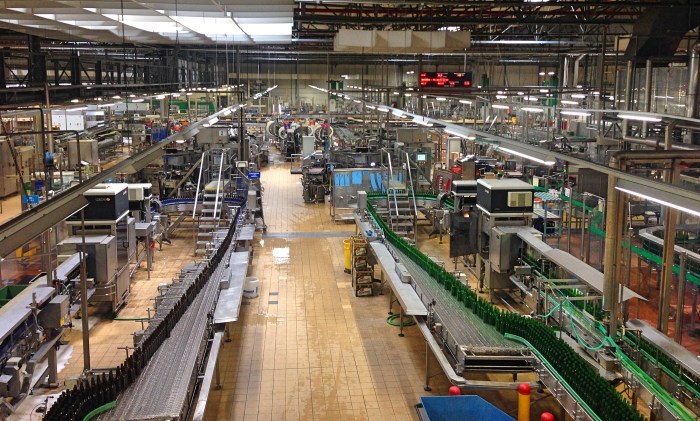


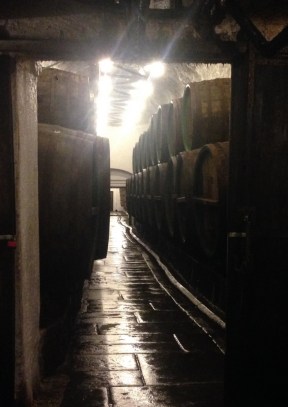


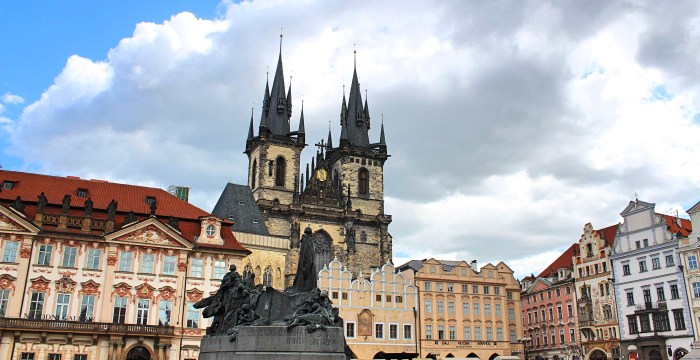


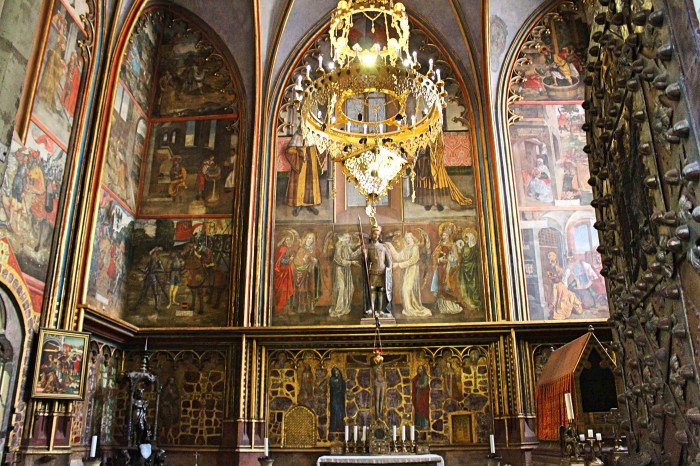
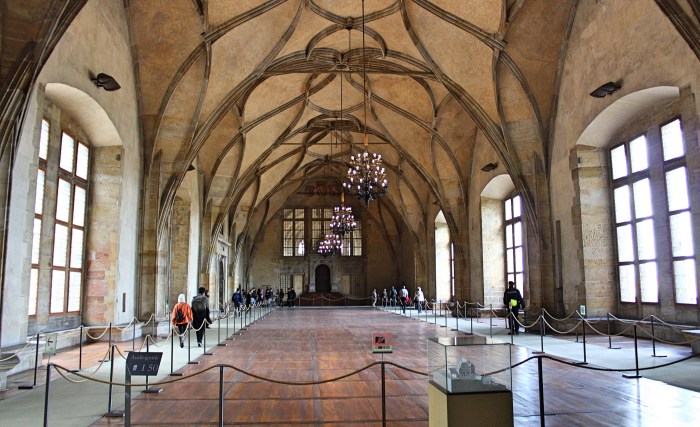
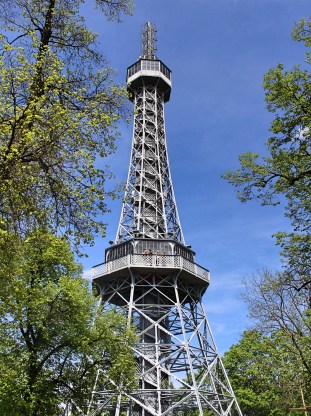


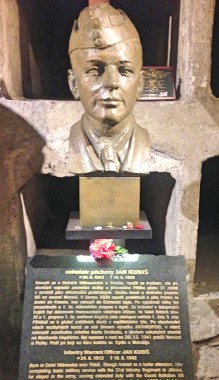
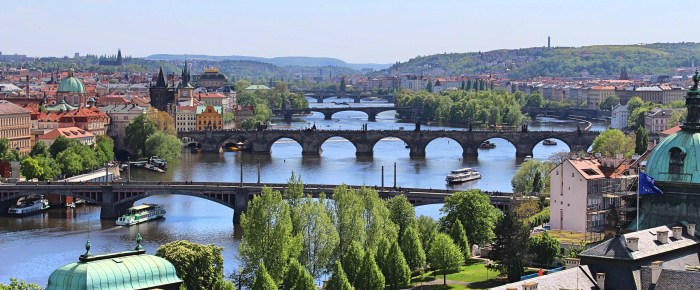
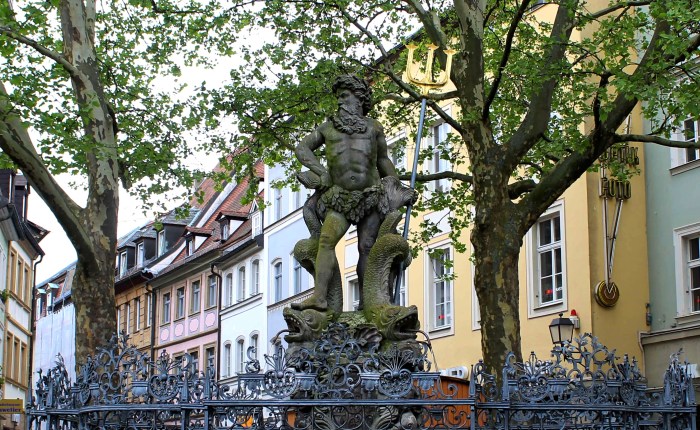

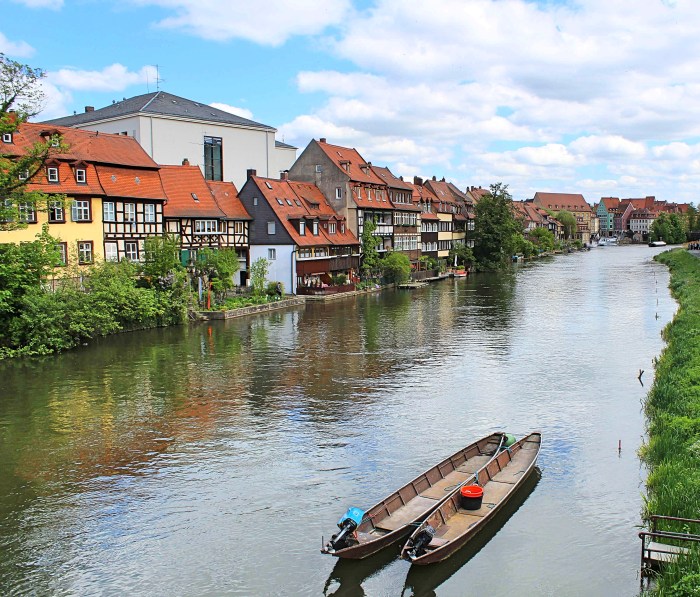
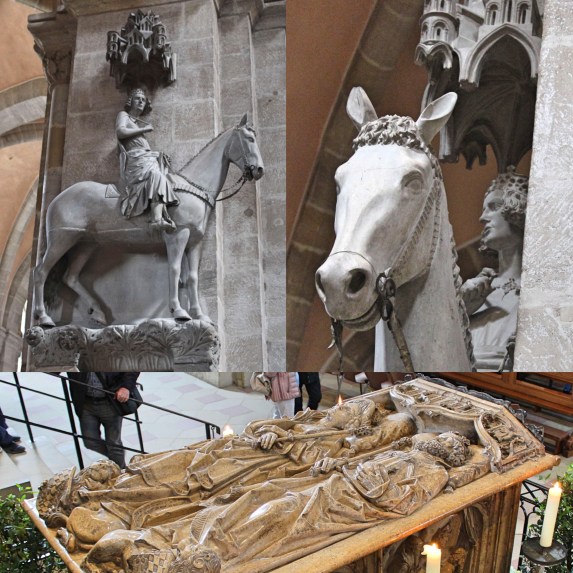
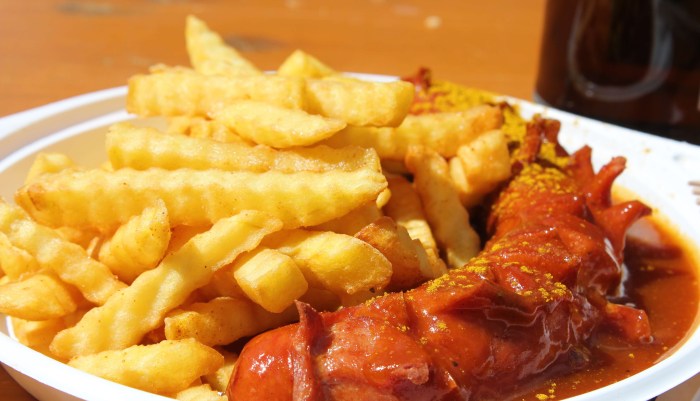


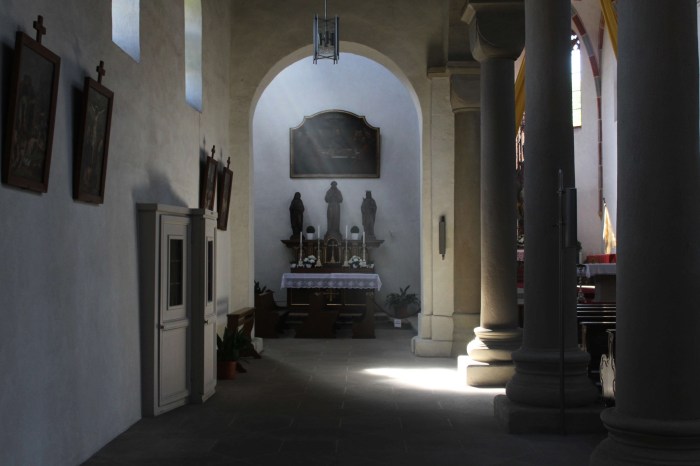

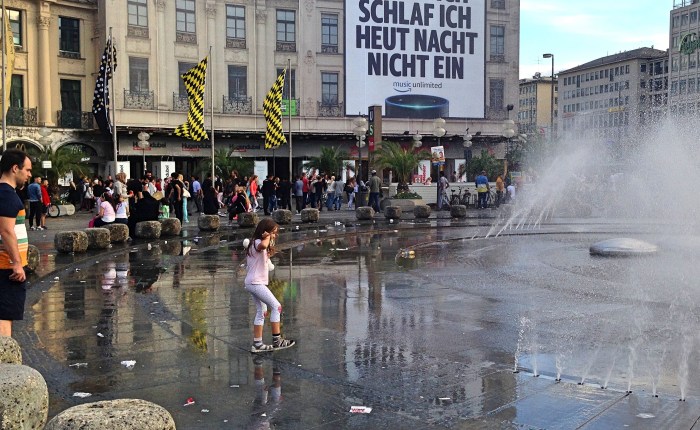

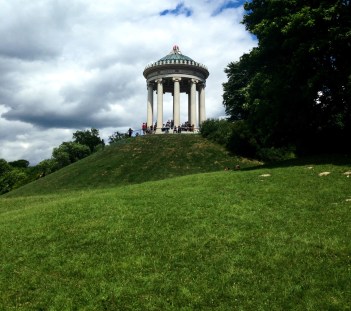

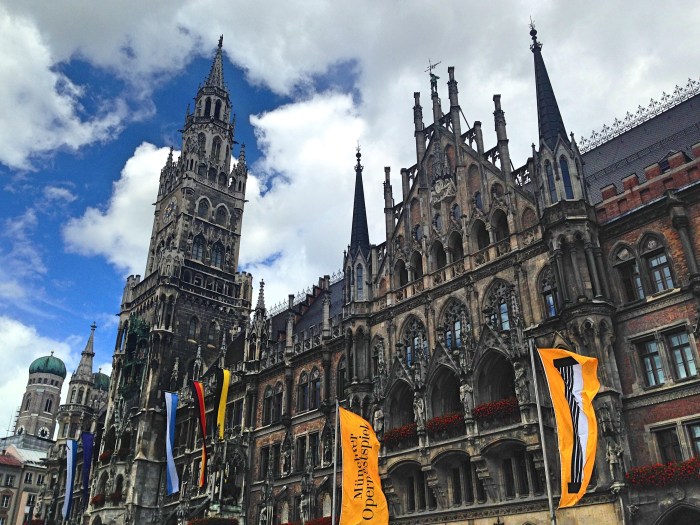


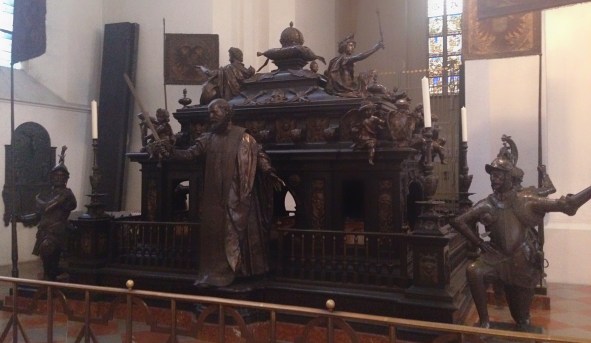

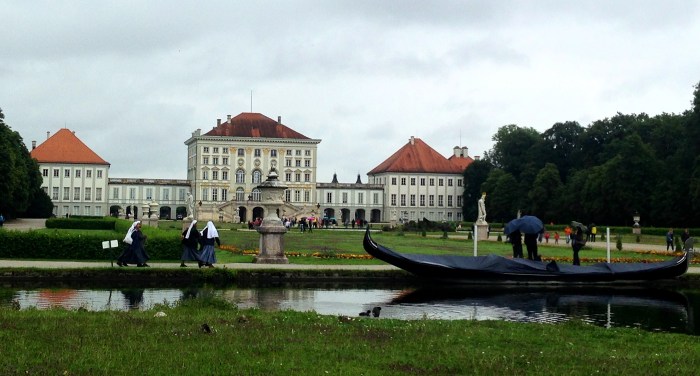

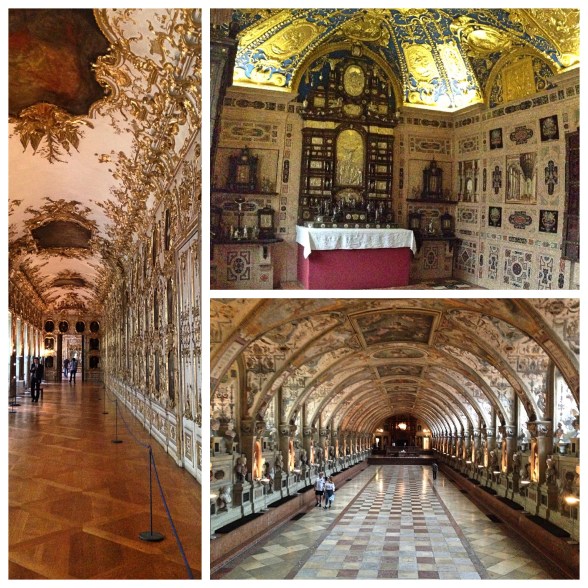

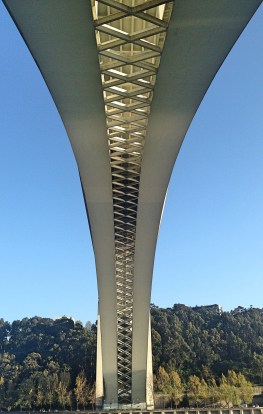
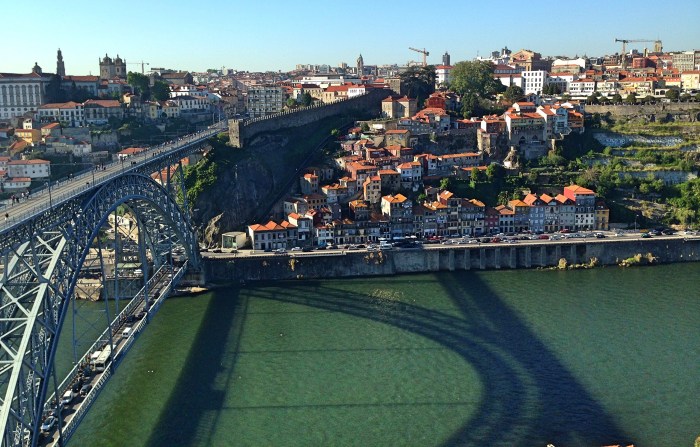


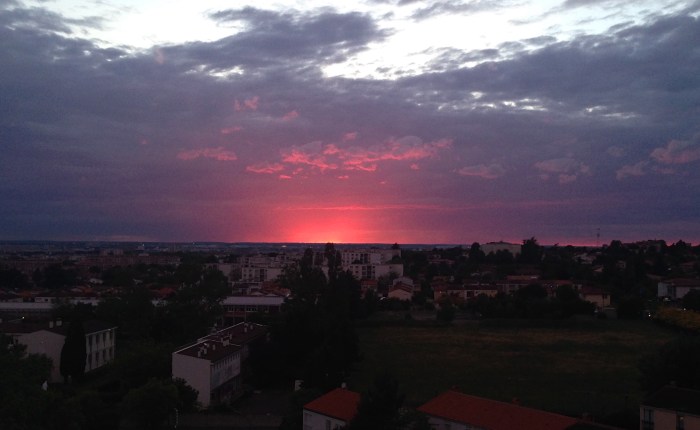

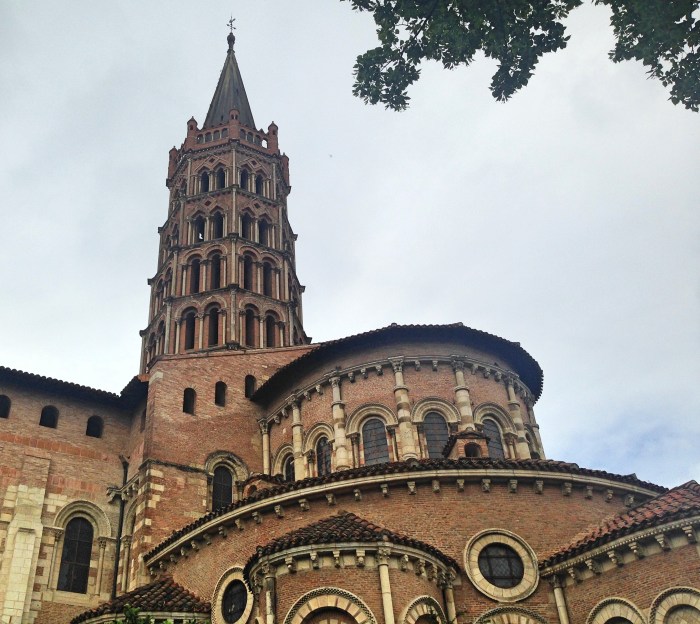

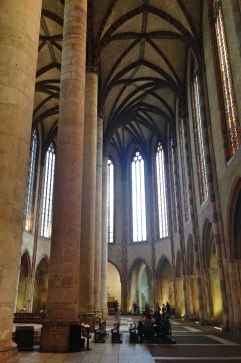
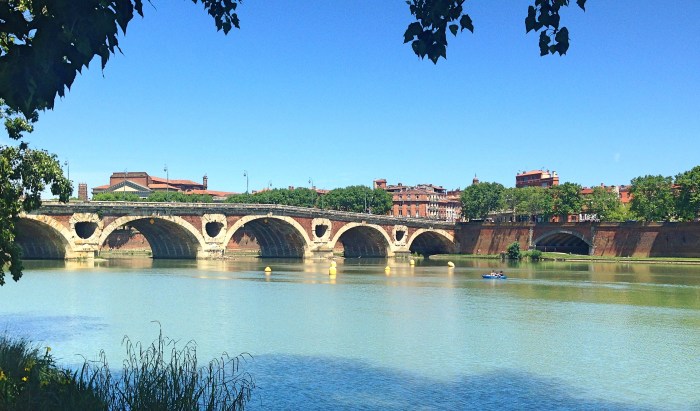
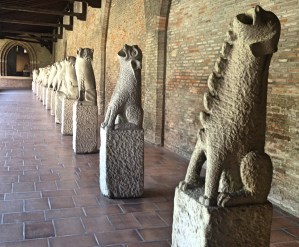
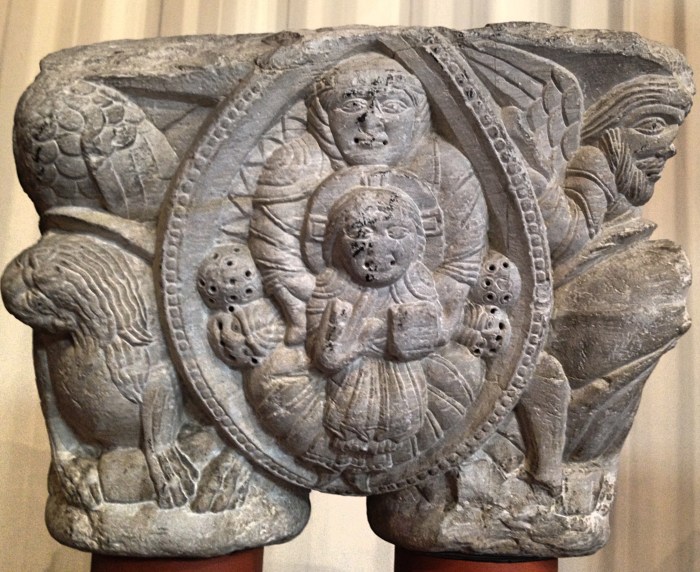


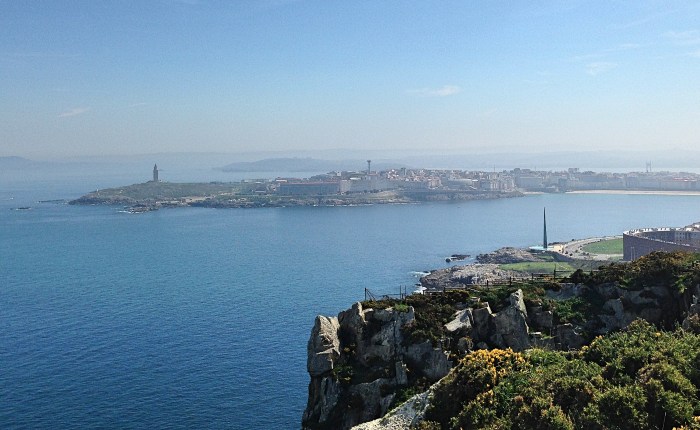
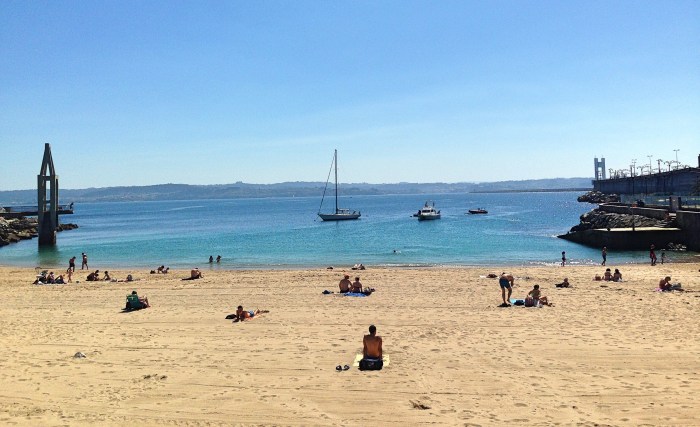


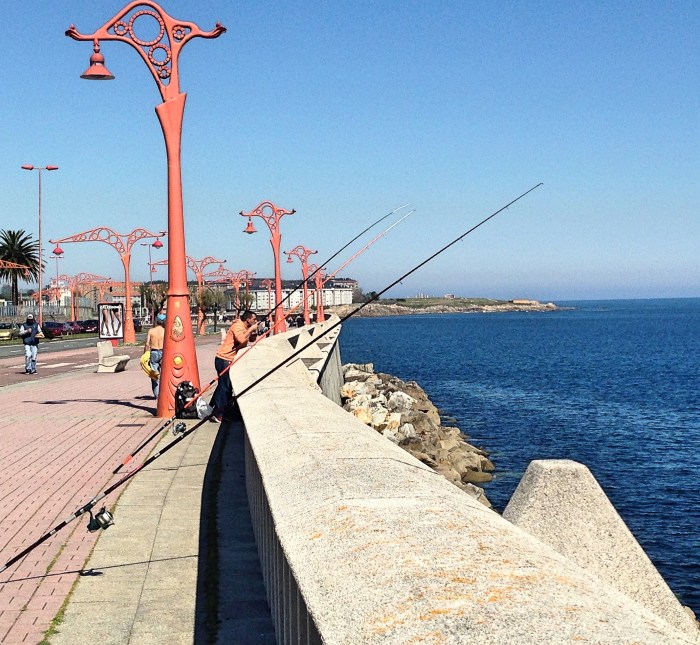


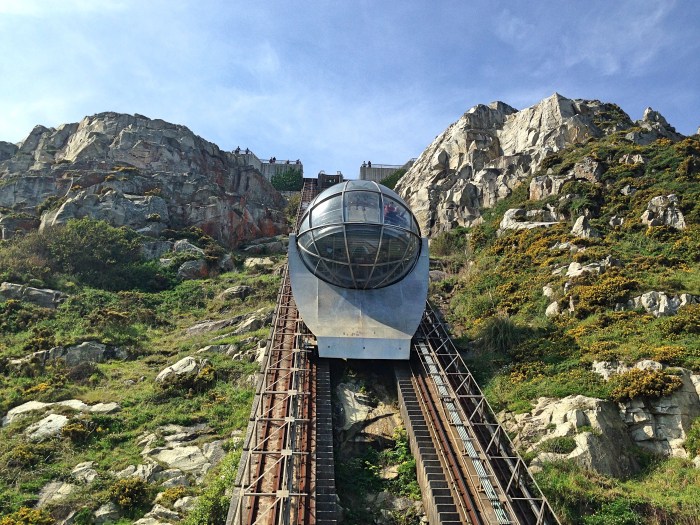

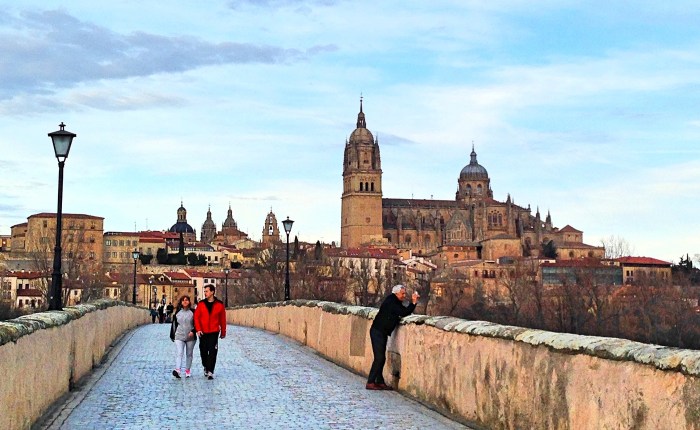

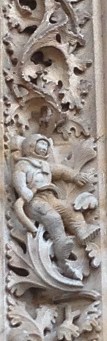

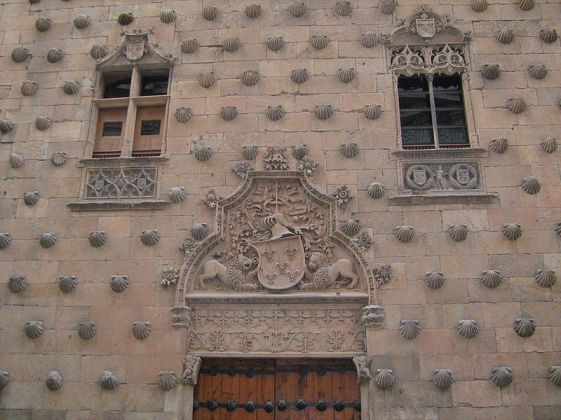

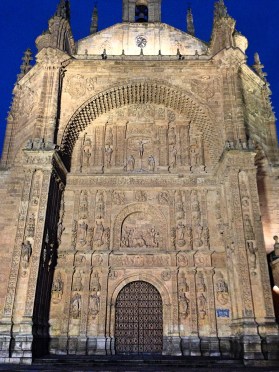
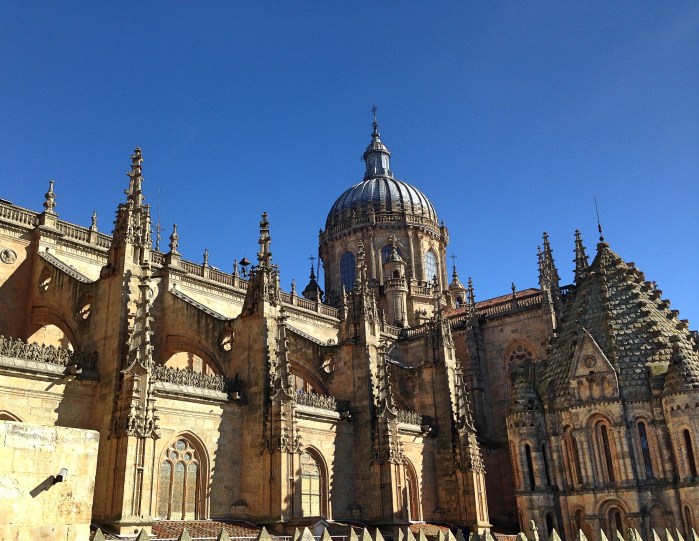
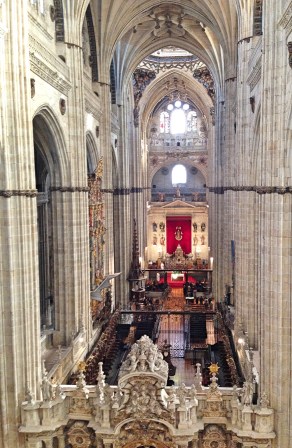


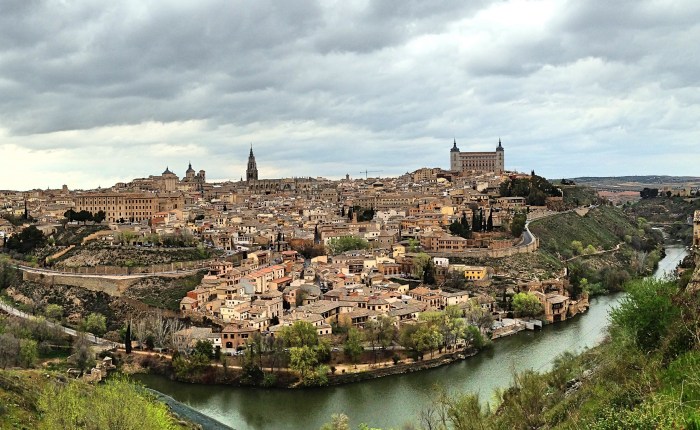
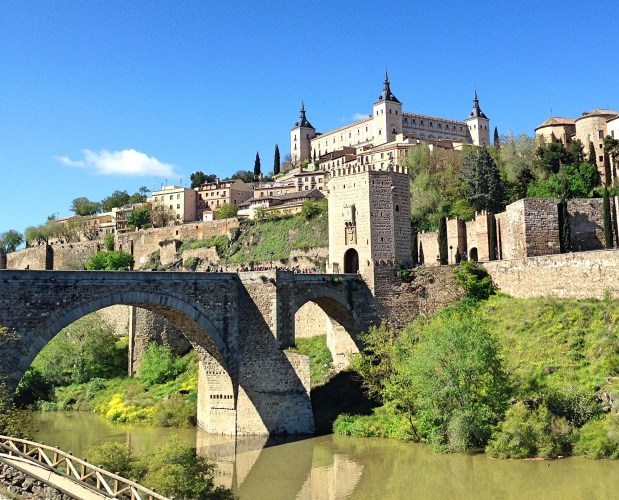

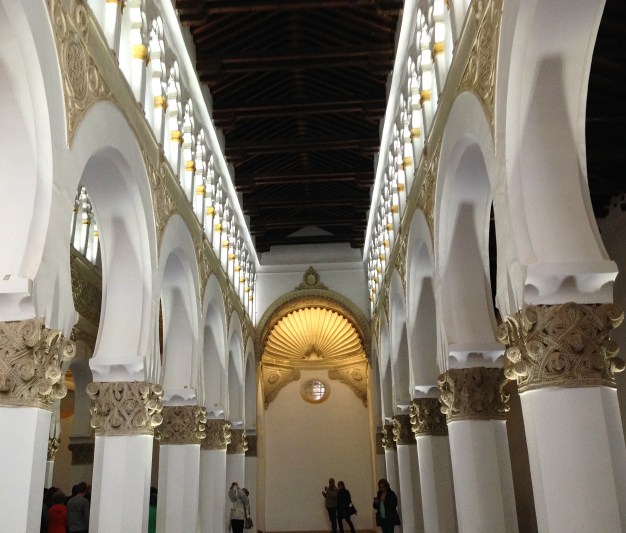
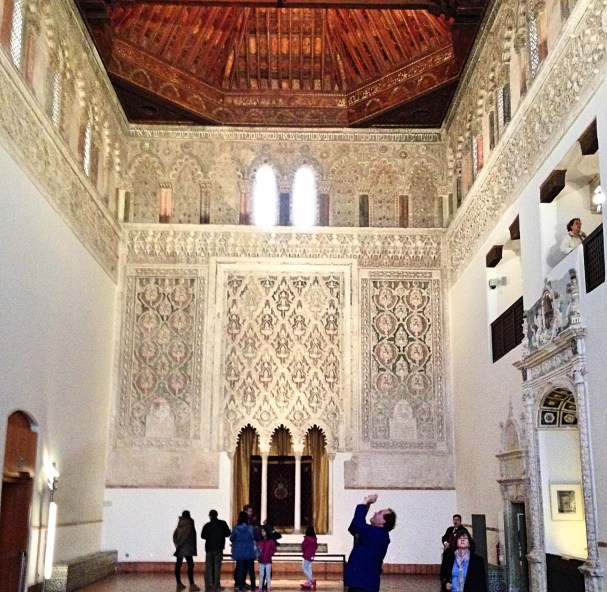

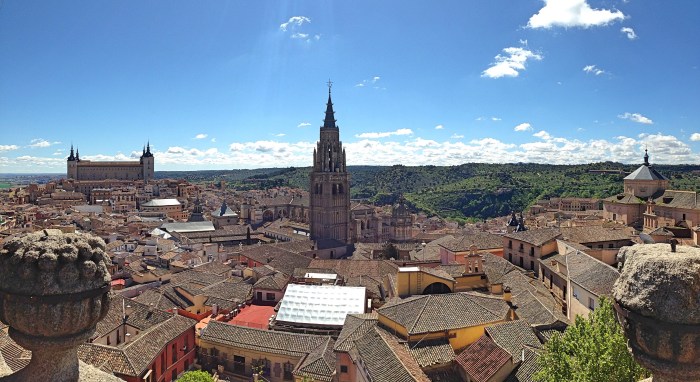


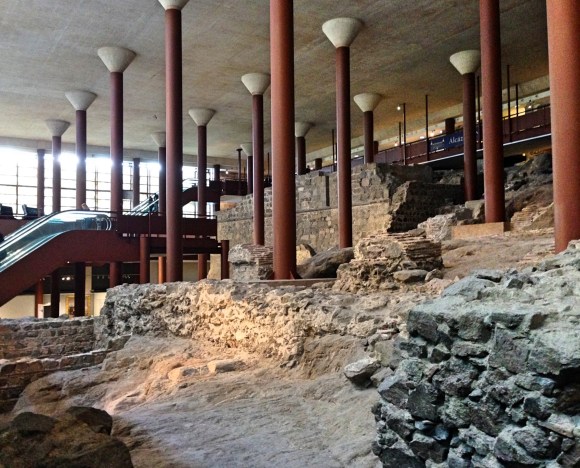
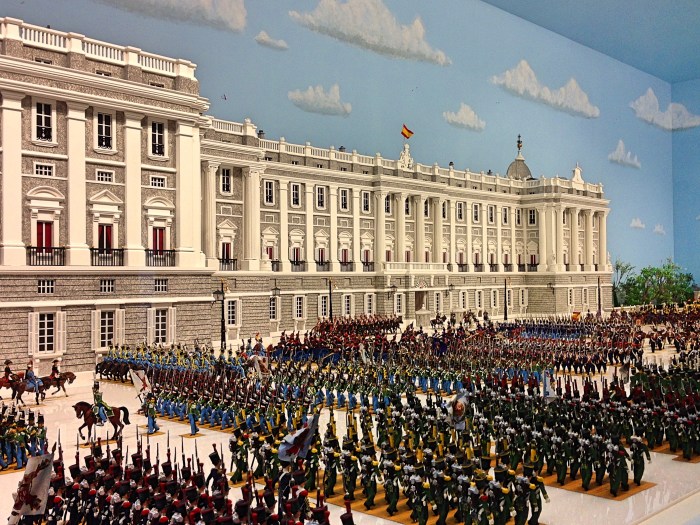
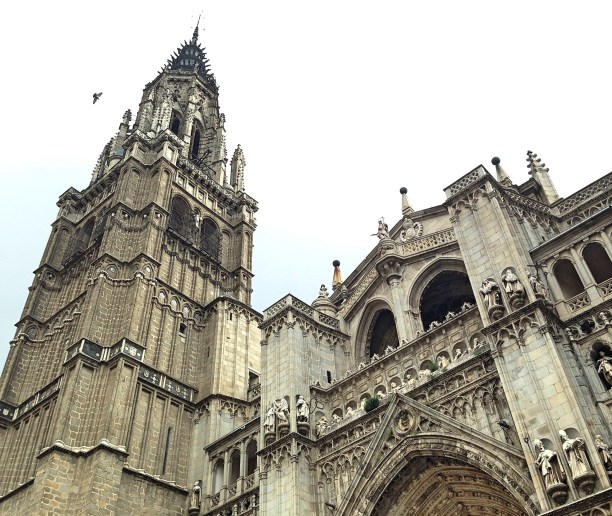


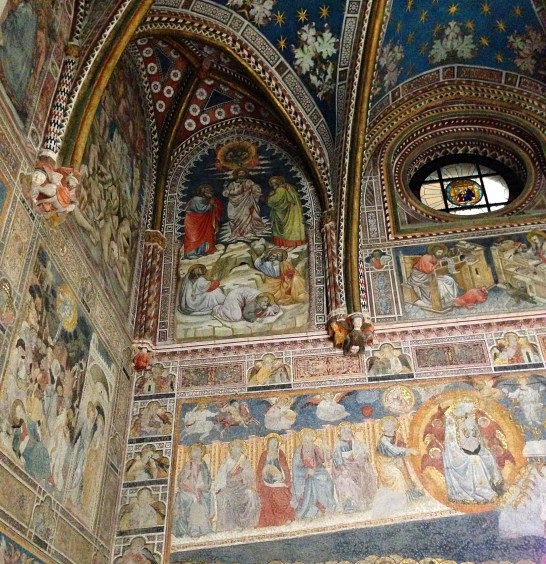
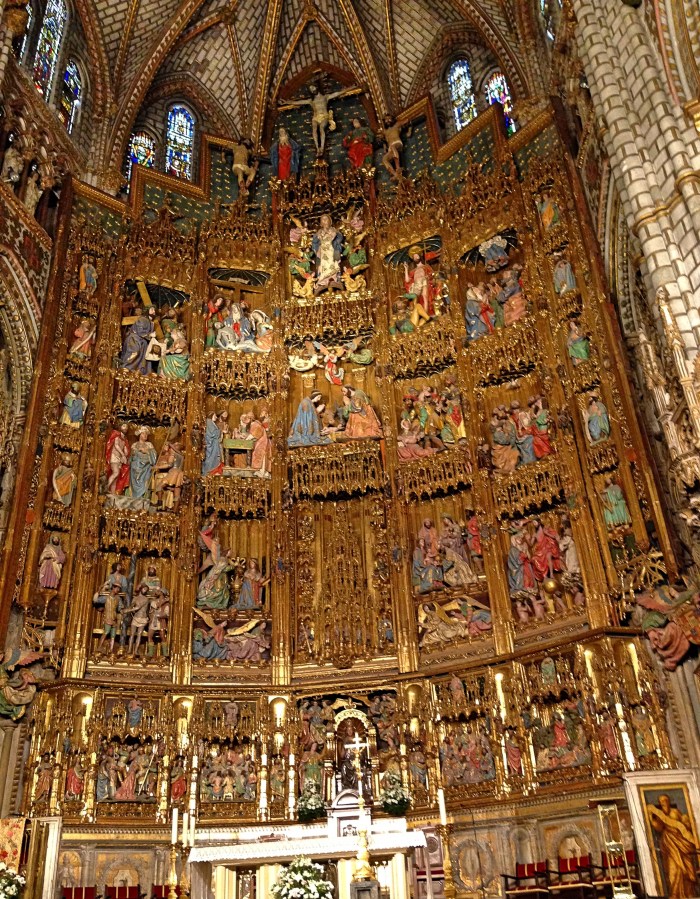
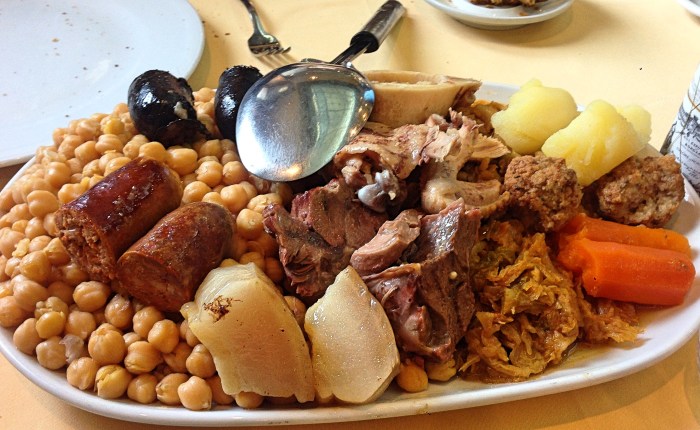
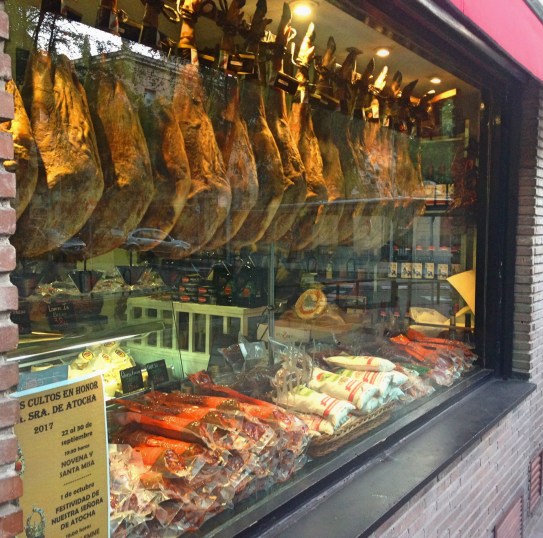







 Lotz in Translation