Early in the morning, we took a train from Madrid to this splendid city. Ávila is the capital of its eponymous province. The city sits in the south of the autonomous region of Castilla y León, and houses a population of 60,000. Of course, I didn’t know a thing about the place when I booked the trip, but by now I’m sure you’ve come to expect that.
The train ride was stunningly lovely—certainly one of the most beautiful, and least expensive, in Spain. The train made its way northwest of Madrid, passing town after town until we got to Escorial. The monastery looked inconceivably majestic in its perch among the mountains, a brooding symbol of Spanish authority.
By now we were in the Guadarrama mountains. Through the window I could see valleys far below us, green but nearly treeless. In the distance the rising sun hung above the horizon, glaring yellow. Underneath was a sea of fog sitting at ground level. Occasionally a derelict farmhouse or a stone fence could be seen, and once or twice I spotted a few cows looking tiny and delicate in the valleys below—but for the most part the view was unmarked by human habitation. We passed through several tunnels, and eventually a city could be seen up ahead, which grew nearer and nearer until the train slowed to a stop.
We were in Ávila. We walked out of the station and into the city center, and in just five minutes we were face to face with the one of the gates of the city walls. It was an impressive sight: two towers flanked the door, two rows of battlements above.
I imagined what it would have been like to be the poor soldier trying to break in these walls. Arrows, stones, and spears would rain down soon as you came near—death from above. It would be a pretty wretched day. I wonder how generals went about conquering places so well-fortified? The only safe way seems to be a siege: starve them out, rather than risk a confrontation. Then I tried imagining what it would be like to be an average citizen, stuck inside a besieged town, watching the supply of grain and fresh water gradually dwindle. War is hell for soldiers and bystanders both.
We walked around the wall until we found the entrance to climb up. A few euros exchanged hands, and soon we were standing on the walls of Ávila. They are impressively well-preserved. To my eye it seemed that they could’ve been built just last week; I saw no signs of damage or wear. But according to Wikipedia, they were constructed from the 11th to the 14th centuries. The walls are thick and tall, and seem strong enough to withstand even a cannonball—not that I’d know. We walked and walked, circumnavigating half the town. Red-thatched roofs of houses stood in the foreground, while in the background, far away, thin white clouds hovered over the mountains.
GF absolutely loved the walls. She smiled like a five year old at an amusement park as she peered through the battlements, her hair waving in the wind. I was in a bad mood again: I was hungry. I absolutely hate being hungry. I’m ashamed to say this, because it underscores how easy and prosperous my life has been, but I feel acutely miserable if I wait too long between breakfast and lunch. I get so sour that even the most interesting and joyful experiences seem dreadful.
So as soon as we had walked the kilometer of wall from start to finish, and climbed up and down our fair share of stairs, we headed to a restaurant. And for whatever reason, I decided that we would go to the top-rated restaurant in the city: El Restaurante Bococo.
We sat down for the menú del día—which was a bit pricey, but not overly so. Little did I know what awaited me.
First the wine. Two orders of the menú came with a bottle of wine included; and since GF can’t drink (it’s genetic), it was up to me to drink all of it. Granted, we didn’t have to order it in the first place; but I’ll be damned if I pass up a free bottle of wine. We didn’t have all day, so I had to drink pretty quickly. Bottoms up.
Then the food. As usual, I nibbled on the bread as soon as it was brought out. Normally, the portions in Spain aren’t that big (for an American) so I don’t worry about filling up my stomach a bit. But I knew I was in trouble when our first dishes were brought out. Each of them was big enough to share. After eating both—a soup with pork, sausage and beans, and fried eggs with pieces of foie gras over potatoes—I was comfortably full.
Then our main dishes arrived. We had both ordered steaks, and they were massive. I was determined not to let any of the food go to waste, so I started determinedly stuffing piece after piece down my throat, hoping to outrace the signals of distress emanating from my stomach. Steak, wine, steak, wine, until my stomach felt like it would burst. Then, I ate some more.
By the time all the food and wine was done, I was in misery. I stood up to go, and I was so full of food and wine that I could hardly suppress my groans as I shuffled across the room and out the door. I pride myself in being an atypical American, but in this respect I am as American as can be. Bill Bryson, in his Notes from a Small Island, put it best:
To an American the whole purpose of living, the one constant confirmation of continued existence, is to cram as much sensual pleasure as possible into one’s mouth more or less continually. Gratification, instant and lavish, is a birthright.
But I had to pay a price for this pleasure, since the rest of the day I could hardly move or think.
Still, though I was in pain, I was agreeably buzzed. This made the Cathedral of Ávila particularly moving for me. It’s a Romanesque church, built around the same time as the walls. In fact, the cathedral was built into walls, making it a fortification as well as a house of God. The cathedral itself has a square, imposing, massive quality. Its plain grey façade is hardly enlivened by decoration.
I found the gothic north door of the cathedral particularly impressive. As in many cathedrals, the doorway is surrounded by concentric arches, which are filled with figures. Long, drawn-out statues of saints sit below, each of them dressed in a robe; and above, within the arches, tiny seated and standing figures fly over you like little angels. In the center, above the door, is the Last Judgment. At this time, Jesus wasn’t conceived as the joyful, forgiving, kindhearted father figure he is today; rather, he was a powerful and vengeful deity who condemns sinners to the fire.
Another doorway was more Romanesque. Above its rounded arch floral motifs abounded. The door is flanked by two soldiers, their bodies covered in what look like fish scales, wielding shields and clubs. Statues of lions were seated on platforms to the right and left. Above the door, the window was divided into pretty swirling patterns. In a third doorway, also Romanesque, smiling demons seem to pop out of the stone, along with two curious cows heads. The Romanesque seems to have been more playful than the Gothic.
We walked inside. I was trying my best to be alert and focused, but the wine was having its effect. I kept zoning out as I walked around the cathedral, and didn’t get the proper experience. Still, I remember being very impressed by the carvings in high-relief behind the main altar. They represented scenes of intense drama. I remember one in particular that depicted what appear to be Roman soldiers massacring women and children. Their swords are drawn, and several are stabbing or slashing down at women on the ground, whose hands are uselessly raised in defense, their faces contorted in terror. It’s a gruesome scene; and the craftsmanship is superb.
Basílica de San Vicente
The rest is a blur, however, and the next thing I knew I was being whisked off to the Basílica de San Vicente. This basilica is one of the best examples of Romanesque architecture in the country. According to legend, it was built on the site where three young siblings were martyred during Roman times.
More bizarre figures stand on the capitols of the columns flanking the door—sphinxes this time; and more floral, swirling designs filled the stone. On the inside, right before the altar, is a massive, elaborate cenotaph to the three martyrs, covered in painted carvings that narrate their lives from beginning to end. I was deeply impressed. But this is the only thing that stuck in my befuddled mind, and soon we had to go.
In fact, we had run out of time. We’d spent so long at the restaurant stuffing ourselves that we gave ourselves only a few hours before our train back to Madrid. So, with much reluctance, we pulled ourselves away, passed again under the main gate of the city, and headed towards the station.
We trekked up a hill and got on the train with only a couple minutes to spare. I planned to read, but fell into a deep doze as soon as I sat down. And so my drunken body was conveyed to Madrid.
Addendum: In a later trip to Ávila, I managed to investigate some sites that I missed on my first pass through.
One of the most iconic sites of Ávila are Los Cuatro Postes, the Four Posts. This is a humilladero, or a religious sign marking the entrance to a city. The marker itself is extremely simple: just a cross standing within four posts. But the view from of the city from this spot is excellent (see the photo above). Multiple tourist buses were parked nearby, so their passengers could get out and snap a picture.
As I walked back to the city, crossing the bridge you can see in the foreground above, I found a nice walking path that runs along the river Adaja. There is also a lovely path that goes alongside the walls on the other side of the city, giving you an unimpeded view of the country beyond.
The most famous person from Avila is, without doubt, St. Teresa, the religious mystic who helped to galvanize the Spanish Counter-Reformation. She is the subject of Bernini’s iconic, and scandolously erotic, sculpture in Rome. After her death, a convent was built in her honor, supposedly over the very spot where she was born. This is the Convento de Santa Teresa de Ávila. Out front is a compelling statue of the Saint, pen in hand, eyes uplifted to heaven. Inside, you can find a shrine dedicated to her, as well as a re-creation of her infant bedroom.
Convento de Santa Teresa
Situated outside the city walls is the Real Monasterio de Santo Tomás, a gothic monastery that was founded under the reign of the Catholic Monarchs. The monastery is home to several excellent cloisters and an impressive church. Somewhat more strangely, the monastery also contains two miniature museums, one of natural history and one of Asian art. The natural history “museum” is especially odd, since it consists of little more than the stuffed and preserved carcasses of several animals, sitting behind class cases in a few little rooms. I assume that this taxidermy was performed a long time ago, when the clergy was still the leading intellectual force in the country. The museum of Asian art is, by contrast, quite nice, containing excellent samples of sculpture from many different countries.
Monasterio de Santo Tomas
Ávila is certainly one of the most romantic cities in Spain, and easily one of the best day trips from Madrid. Just don’t eat or drink too much.
(As I mention in this melodramatic post, I happened to visit Aranjuez on an inopportune day. I have subsequently visited many times; and now I think it is one of the nicest day trips from Madrid. For more, see my addendum at the end of this post.)
“Oh God, not again! Why can’t we get anything right?”
We were standing in front of the Royal Palace of Aranjuez. It was big but not imposing, perhaps because of its playful pink color. The building’s two wings seemed to stretch toward us like a man reaching for a hug. On the top of the building the Spanish flag was fitfully blowing in the wind.
“Why!?” I whined. “We managed to come the only day that it’s closed! Why didn’t I just check the hours? This always happens!”
It was Monday, the only day of the week that the palace isn’t open for visits. We’d just taken the train from Atocha station in Madrid. It was the day after our trip to Chinchón, and the weather was still gloomy and overcast. I wasn’t in a good mood.
“Shut up,” GF said. “It’s not a big deal.”
We began walking around, somewhat aimlessly. In the area surroundings the palace there is a lot of monumental architecture, with large open courtyards surrounded by stone walls. Rounded archways run along nearly every surface, which, along with the reddish color, gives the complex a unified aesthetic. But I wasn’t in the mood for appreciating architecture.
“We’ve been in this country for months,” I said. “And still we mess up even these basic things.”
“It’s not a big deal,” GF said.
By now we were standing in front of the Iglesia Real de San Antonio, the church that forms part of the palace complex, and I was still sulking.
“This sucks,” I said.
“Come on,” GF said. “Let’s go eat.”
We walked into town, found a restaurant, and sat down. The food was surprisingly good, and also cheap. By the time I finished, I was in a considerably better mood. And in that spirit, we went off to see the gardens.
It was a miserable day for this. The trees were bare and skeletal; the flowers were nowhere to be seen; the place was empty and desolate. The wind was blowing freezing air, the endless gray clouds cast a dreary shadow over everything, and in general the world looked bleak.
The only light relief from this brooding picture were the geese. At least I think they were geese, though they didn’t look much like the Canadian geese I’m used to. There were dozens of them sitting in the river. And as we passed by a few geese wandering around the park, they began honking at each other. It was a comical sight. It looked like they were having a petty argument, and perhaps they were.
With nothing much to interest me, my mind began to wander. I had just begun watching Kenneth Clark’s landmark television documentary, Civilisation; and that program had brought to the fore a question I’d long thought about.
“You know, I’ve been thinking,” I said. “It’s supposed to be good for you in some way to travel to all these famous monuments. You see these beautiful buildings and paintings, and ostensibly the experience ennobles you. But how, specifically does that work? How does it improve people to appreciate fine architecture, for example?”
“Uh, well it’s historically significant,” GF said, “and it’s important for people to understand history.”
“That’s true. But it seems that it’s something more than just history. After all, you could just read a history book. Why do people spend all this money to visit places so they can see fine architecture?”
“Because it’s nice to look at?”
“I guess. But lots of things are nice to look at. Lots of models, for example, are nice to look at, but not many people think looking at celebrities makes them ‘cultured’.”
“Right…”
“And of course, seeing beautiful art doesn’t necessarily do anything for you. If somebody is naturally uninterested in or insensitive to fine art, he won’t be improved no matter how many museums you force him through.”
“Okay…”
By now she had completely zoned out and I was talking to myself. I gave up and started turning over the question in my mind. But I didn’t make any progress, and soon my mind was someplace else.
We kept going, crossed a bridge, and found ourselves walking along a road lined with sycamore trees, their overhanging branches leafless and emaciated. To our left and right were fields of farmland—empty.
More than anything else I’ve seen in Spain, this wintry and desolate landscape reminded me of home. I felt like I was in upstate New York, taking a wintertime stroll. The wind whipped up and send a chill to my bones.
A wave of homesickness came over me as I walked. What am I doing here? Where am I headed? I didn’t know. What is my mom doing? And my brother? What’s happening with my friends? Didn’t know, either. What will happen next year? What will I do when I get back home? And when will that be? How will I be changed? And how will home be changed?
The road extended into the distance, empty and dreary. And as I looked down that road, I could imagine nothing but sadness ahead of me. This sadness wasn’t just for myself. I was seized by that tender, reflective melancholy—what Virgil calls lacrimae rerum, or “the tears of things”—when you realize that the universe is indifferent to your happiness, that all pleasure is temporary, that death is permanent, and that all your hopes and dreams, and those of the people you love, might come to nothing. It’s the realization—so painful we do our best to forget it—that tragedy is an inevitable part of life. And though this fact is unbearably sad, it is the source of beauty; for beauty is so precious because, like all things, it is doomed to pass away.
In this pensive state of mind, perhaps just a result of the weather and the new year, we walked down the long road, turned a corner, and kept on going. We talked about our plans for next year, and expressed anxiety about how we’d cope if we had to go long distance. And then we fell into silence as the leaves crunched underneath our feet and the light leaked out of the sky, and we said little as we dragged our weary feet to the train and left.
Addendum: The city of Aranjuez is located south of Madrid, easily accessible via the Cercanías trains. Situated at a lower altitude than Madrid, and at the confluence of two rivers, the Tajo and the Jarama, Aranjuéz is a verdant place. Trees grow notably taller here than in Madrid, and the city is also famous for its fields of strawberries and asparagus. These picturesque fields inspired the composer Joaquín Rodrigo to write his famous Concierto de Aranjuez, one of Spain’s most iconic musical works.
In the spring and summer, an antique train takes visitors from Príncipe Pío in Madrid to Aranjuez, traveling through the lush surrounding countryside. This is the Tren de la Fresa, or Strawberry Train, and is one of the first train lines ever opened in Madrid.
Aranjuez is most notable for its palace, which was commissioned under the reign of Philip II, and designed by the same architect who designed the Escorial, Juan Bautista de Toledo. Judged from either its exterior or interior, the palace is magnificent, one of the finest in Spain. Unlike so many palaces, the outside of the building manages to be grandiose without opulence. The same cannot be said for its interior decorations, however, which are certainly palatial.
Next to the palace is the Plaza and the Church of San Antonio, an extension of the palace complex. A big open square surrounded by brick arches, the plaza leads to the lovely baroque Church, which was built to be used by the monarchs.
Even more charming than the palace are the surrounding gardens. These are divided into multiple, interconnected sections, each of which has its own character. The royal gardens are arguably the finest in Spain, more varied and inviting than the comparatively sterile ones of La Granja, especially considering theTajo River which flows through the center. It is also worth exploring the surrounding farmland of Aranjuez, which competes even with the gardens for bucolic splendor.
The town of Aranjuez itself is notable for its grid-like street layout, a consequence of its royal planning. There are some excellent restraurants to be found here, such as De Pikoteo. In sum, it makes for a first-rate day trip—just don’t go on a Monday in winter.
(This post is a continuation of my series on Day Trips: Click here for my post on Alcalá de Henares.)
“Just once, I’d like to begin a blog post without our travel troubles!” I said to GF as we walked around, confused and lost, looking for the bus to Chinchón. We’d just walked fifteen minutes in the wrong direction, and were heading back to the metro station now.
“Shut up,” she said. “I have it here on my phone.”
Indeed she did; and we were soon standing by the appropriate bus station near Conde de Casal, waiting to go to Chinchón.
Chinchón is a small town—its population is about 5,000—just south of Madrid. It isn’t the home of any big castles or cathedrals; it isn’t the place to take the best photos or hear the best music. Rather, Chinchón is a place to sit and eat, and that’s what we planned to do.
After an hour on the bus, we arrived. Immediately we headed for the plaza mayor, the most famous place in the town, a five minute walk from the bus stop.
This was the first week of January. We had this week off for Tres Reyes, the Spanish holiday celebrating the three wise men who visited infant Jesus. Instead of giving presents on Christmas, this is the day when most gifts are exchanged. And lucky for us, the combination of Christmas, New Year’s, and Tres Reyes makes for a long, long holiday.
We’d just gotten back from our Christmas trip to Andalusia, and were thirsting to see more of Spain. Unfortunately, Madrid and its environs are a good deal colder than the south of Spain. We were freezing. Added to this, the weather was awful that day, overcast, windy, with a bit of rain. It was the kind of dull, dreary weather than can make the Taj Mahal look dreadful.
But the plaza mayor of Chinchón didn’t look dreadful at all. It looked positively cute. Identical white buildings with green balconies and tiled roofs surrounded a circular area in the center. This center was filled with sand. A few guys were selling donkey rides to kids, leading a long train of donkeys with excited children bouncing on top of them around the square, while their parents walked cautiously beside. A plastic Christmas tree decoration sat in the exact center. Every building had a restaurant or two, which was good because we were already quite hungry.
Being a man of this modern age, I looked on my phone for the restaurant with the highest rating: it was called La Villa. Of course it was expensive (for a Spanish restaurant). But it was the new year, and we felt like living high.
I’m glad to report that I absolutely stuffed myself, and then ate some more. The house red wine was also just fantastic, dangerously so, for I drank too much of it. After I ate and drank my fill, we ordered dessert—also great—and then asked for the check. This came with two complementary shots of Chinchón, which is the local liquor, apparently. Since my girlfriend can’t drink, I had to have both shots. It was strong, I tell you, and had a subtle liquorish flavor, a bit like Jägermeister. As we walked out, we noticed a bunch of black-and-white pictures hanging on the walls. Closer inspection revealed that they were of bull fights in the plaza mayor of Chinchón. Apparently, it was originally a bullring, which explains its symmetrical layout.
After this, there’s not much to tell. Stomachs painfully full, we waddled around town a bit. We found a castle, ruined and empty, which we couldn’t enter. There were several churches, closed to visitors. And then there was a view of the countryside beyond, rendered a bit dour by the weather. An hour later we were waiting at the bus stop with a bunch of chatting old ladies, and an hour after that we were sitting at home, drowsy, relaxed, ready for our next trip.
The Castle of Chinchón
Addendum: For any visitors of Madrid looking for a day trip to see a beautiful Spanish pueblo, Chinchón is perhaps the best choice. Small, intimate, easily accessible, and one of the most charming pueblos in the country, Chinchón is also famous for its gastronomy.
The liquor I mentioned above is Anís, which is simply referred to as “Chinchón” in Spanish, since this little town has long been the leading manufacturer of the drink. Chinchón is also famous for its pastries; its signature pastry has been appropriately compared to a breast, complete with a nipple on top.
The castle I mentioned above was built in the sixteenth century. Standing nearby, the visitor gets an excellent view of the surrounding countryside. Chinchón’s Plaza Mayor has not only been the site of bull fights, but also executions, comedy performances, royal proclamations, and many movie scenes. If you walk from this plaza up to the Torre Reloj, you will be rewarded with a marvelous view of the town.
(I wrote this post only a few months after my arrival in Spain, while I was still mostly ignorant of the country and its language. With the exception of Chinchón, I have visited all of these places since then, so I have appended little notes at the end of my posts about what I now know. I have also broken up my original post for ease of navigation.)
There are many advantages to living in Madrid. It’s big, it’s bustling, and it’s diverse. But one of my favorite aspects of Madrid is its location. By design, the capital of Spain is almost equidistant from every corner of the country; to drive from Madrid to Catalonia, to Andalusia, to the Basque Country, and to Galicia all take roughly the same amount of time. And transportation isn’t hard to find; the city is well connected by rail, highway, and plane to all points of the compass. Travel is cheap, easy, and fast.
As a consequence, there are a great many excellent day trips you can take from Madrid. I’ve already written about some of them: Toledo, Segovia, and El Escorial. In these posts, I want to talk about some of the perhaps lesser-known cities for day-trippers. I’ll start at the very beginning, with my first trip inside Spain.
Alcalá de Henares
As soon as I got to Spain, I blabbed to everybody I met that I had read Don Quixote. I was very proud of this, for I thought it gave me some kind of badge of honor in Spanish culture. And indeed, a few people seemed genuinely impressed—though less so when I told them I read it in English.
“Ah, so you like Cervantes?” a friend of ours said.
“Oh yes, he’s incredible.”
“You should visit Alcalá de Henares, then. It’s where Cervantes was born.”
This was only our second week in Spain, and we were still a bit disoriented by our surroundings. The prospect of taking an actual trip in Spain seemed almost Herculean, an added challenge to the day-to-day struggle of navigating our new city. But I was determined to get culture, by hell or high water; so as soon as we could, we made it to Atocha station and took the Cercanías to Alcalá de Henares. (For once in our lives, we found the train without a problem.)
The train was too full for us to sit down. We stood by the doors, both of us swaying nervously with the ever-present anxiety you feel when in a strange environment. I was looking forward to seeing the area around Madrid, but the windows were smudged and dirty; and the view, from what I could see, wasn’t much anyway—just the featureless tan wasteland of the dry foothills. Before even coming to Spain I had terrified myself by reading online stories about the ingenuity of pickpockets in Europe, and couldn’t stop casting interrogative glances at all the passengers around me, wondering whether any of them were thieves eyeing me up, waiting for the perfect moment to strike.
Station after station went by, and I was paying fierce attention to all of them, paranoid that we would miss our stop and get hopelessly lost. It’s really exhausting traveling somewhere totally new—it is for me, at least—because you can’t take anything for granted. The doors of the trains work differently; the seats are arranged differently; the automatic announcer is speaking a foreign language. Added to this, I was constantly afraid of doing something wrong by accident, breaking the train etiquette of Spain and drawing everyone’s attention to myself. It’s pretty amusing to me now, as I look back; but then it was just stressful and scary.
We arrived. After some confused mucking about, we began making our way to the center of town. Neither of us had Spanish SIM cards yet, so our phones didn’t work. We just followed the crowd, who all seemed to be walking in the same direction. The city seemed rather ordinary at first—though even this was interesting to me, since I hadn’t seen any city in Spain besides Madrid yet—but soon something caught our eye. It looked like a little castle, with a tower on one end and a tiny battlement at the top of a square structure.
But what really made it stand out was the intricate ornamentation. The façade of the tower, for example, was covered in swirls. It was quite pretty. Although we didn’t know this at the time, it’s called the Palacete Laredo, and is one of the famous monuments of Alcalá. It was originally built as a private house for Manuel Laredo, a polymath artist who served as the mayor of Alcalá de Henares. Nowadays, it serves as a museum of the Cistercian order, as well as a specialized research branch of the Complutense University.
Looking back now, I can tell that it was built in a Neo-Mudéjar style, with crescent arches and a domed minaret. The top of the main building, however, is not Neo-Mudéjar in style, but rather looks like a small copy of the Alcázar in Segovia. In fact, the more I look at my pictures, the more of a stylistic jumble the place appears, with all sorts of different Spanish architectural elements mixed together. Of course, at the time I just thought it looked weird.
We kept going, following the trickle of pedestrians into the center of town. Eventually the buildings started to look older; the streets were narrower here and paved with stone. But what most caught our attention was a big beautiful bird, sitting on top of an old church. It looked so incongruous and stood so still that we were convinced it was fake—that is, until it twitched its head. When we got a bit closer we could see it had built a big, bushy nest up high on the building.
As we moved on, following the throng of people wherever it seemed thickest, we eventually found ourselves in a dense crowd. Little shacks were set up all over the place, selling cheese, sausage, olives, nuts, spices, tea, wooden bowls, leather bags, colorful scarves, cheap jewelry. Not only that, but all the people in these shops were dressed up in funny outfits, like they were in Medieval times. Was Spain always like this on the weekends? I was both excited and terrified—excited to see a slice of Spanish life, but now scared more than ever about being pickpocketed.
We rounded a corner and came across an outdoor restaurant. Dozens of tables and chairs were gathered under a tent. Several harried men in ridiculous costumes—looking like court jesters, with striped red and white shirts and big puffy hats—were running left and right, carrying massive trays of food. Outside the tent was the cooking area, where a large circular charcoal grill was covered in sausages, meats, fish, and vegetables of all kinds. Immediately I felt very, very hungry. From the shops were hung all manner of flags and banners painted with signs from medieval heraldry—black, yellow, and red.
Every new street we entered was more packed than the last. Soon it dawned on us that this wasn’t at all normal, but was some kind of special festival. As if to confirm our suspicion, a group of men dressed up like medieval soldiers, with fake swords by their sides, paraded through the crowd while another man, dressed in rags, pretended to be a lunatic. One of the soldiers held him by a rope, while the maniac ran after people in the crowd (mostly women), gargling his throat and reaching out his dirty hands. Another soldier was beating a big bass drum, while they all shouted things that I couldn’t understand.
(As we later learned, this was the Cervantino, a medieval fair named after Cervantes, which is held in the first couple weeks of October. I have since gone back twice, and I highly recommend it.)
We wandered along this way, two bewildered Americans, absolutely intimidated by our surroundings, until eventually we were standing in front of a couple of statues. I immediately recognized these as being Don Quixote and Sancho Panza; both of them were sitting on a bench, and seemed to be having a damned good time. In between the knight errant and his square there was a space on the bench where tourist after tourist was lining up to have their picture taken. I would have had my picture taken, too, if I wasn’t so afraid that my phone would disappear as soon as I took it out of my pocket.
Behind the bench was the Cervantes House—the house where Cervantes himself was born and reared. We got on line and went right in. It’s quite a small place, actually. In the center of the house is a little courtyard, around which every room is situated. The insides of these rooms were furnished to look like they would have during Cervantes’ lifetime. I have to admit not much caught my eye, except perhaps the old kitchen equipment. It was more rewarding just to pace about, thinking that I was standing in the very place where Cervantes, that master of masters, entered into the world. This feeling was so strange to me that I’m not sure I quite took it in. This was perhaps the first appearance of “European Travel Syndrome” in my life. You simply can’t have an experience like this in New York.
The statue of Cervantes in the main square
In just half an hour, we were out in the street again. We didn’t know anything else to do except walk around, seeing as much of the city as we could. Many of the buildings were impressive; but at this early stage, we didn’t really know how to go about visiting buildings or even how to look at them. In fact, what I most remember were not the buildings themselves, but the dozens stork nests sitting snuggly on rooftops, their bushy lairs looking somehow both ridiculous and majestic.
Eventually, we decided to sit down to eat in one of those tent restaurants. The waiter ran up to us, his floppy hat thrown over to one side of his head, and asked us in a slew of Spanish words what we wanted. We ordered two things, and he was off. At this point, we were so clueless in Spanish that most of the time we didn’t even know what we were ordering in restaurants. This was a classic example: We asked for “pimientos fritos” thinking they were french fries; five minutes later, the waiter dropped a plate of fried, salted green peppers on our table. I know, I know, this is an embarrassing mistake, not least because “potato” is “patata” here—not hard to guess.
The upside of our ignorance was that we ended up learning a lot about Spanish food, since we accidentally ate a lot of it. These pimientos were a case in point: we loved them, and pimientos now are one of our staple dishes. Really, if you’re in Spain and you can’t speak Spanish, just go into a restaurant and order whatever sounds interesting. All the food is good here.
After eating the pimientos, and then following it with a plate full of chorizo and tomato sauce on bread, we began to walk around again. But I’m afraid we didn’t do much of interest; and in an hour, we were on our way back to the train station to return to Madrid.
Reading over what I just wrote, and comparing it to what I find online about Alcalá de Henares, it’s obvious to me that we left most of the main sights unseen. Oh well, next time. But it was a fantastic stroke of luck to arrive on the very weekend when they were having their famous Medieval Market. And as I look back on it, this trip seems to presage our whole time in Spain so far: we arrive clueless and unprepared, and yet everything works out marvelously. Traveling in Spain is, in fact, a lot like ordering in a Spanish restaurant: even if you have no idea what you’ll get, you can be sure it will be delightful.
Addendum: Since this initial trip, I have since learned that Alcalá de Henares has been more than simply the birthplace of Cervantes, but has played an important role in Spanish history.
The city has existed since at least Roman times, when it was known as Complutum. It was in this town that Cardinal Cisneros, one of the leading functionaries of the Catholic Monarchs, founded the University of Alcalá in 1499. Under his direction the scholars of the university undertook and completed one of the greatest intellectual accomplishments of the Spanish Golden Age, the Polyglot Bible, which contained the entire text of the Old and New Testaments in three languages: Latin, Hebrew, and Greek—and sometimes Aramaic. The University was eventually moved to Madrid, where it was renamed the Complutense (which comes from Alcalá’s Latin name); and it remains one of the major universities in the country.
The original university building still stands in Alcalá’s main square. Its frontal façade is magnificent, and for a small price you can take a guided tour to learn about the university’s history.
The Cathedral of Alcalá is also worth a visit. Although it was burned during the Spanish Civil War, thus destroying many of its decorations and altars, it remains an attractive building. The cathedral is, curiously, the unique for being the only one in the world which possess the title “Magistral Church,” which requires that all of its priests be doctors in theology.
(This post is part of my series on the Basque Country. Click here for Bilbao, here for the Vizcaya bridge, and here for San Sebastián.)
I always find public transportation a bit nerve-racking—especially in a new city, not to mention a foreign country. Every time I hop on a bus, I feel like I’m taking a leap of faith. I imagine taking the wrong bus and getting stranded in the middle of nowhere, or taking the right bus and getting off on the wrong stop—and these fears aren’t totally unfounded, as I’ve done both of these things. Thus I was filled with apprehension as we searched for the bus to Bakio, the A3518.
Probably you have never heard of Bakio, because there isn’t much to be heard about it. Bakio is a small town, with a population of about 2,500, situated about 30 kilometers from Bilbao. There is admittedly a beach there, although the damp, chilly, overcast weather of the region didn’t exactly put me in the mood for surfing. Rather, we were going to Bakio because it was the closest we could to get by bus to San Juan de Gaztelugatxe.
The town of Bakio
The bus ride to Bakio was quite pleasant, taking us through the green countryside, filled with little huts and farmhouses tucked away into the rolling hills. After 40 minutes we arrived, ate some breakfast, and then set on our way. I had found a little report online (found here), written by somebody who had walked from Bakio to Gaztelugatxe. And attached in that report is a little map, with the walking route conveniently highlighted. But for whatever reason I forgot about this map as we started walking. Instead I chose to rely on my phone’s GPS to guide me there. Please, don’t make this mistake: just follow the walking route.
GF and I soon found ourselves walking along a busy road, with no sidewalks.
“Are you sure this is the right way?” she said.
“Yeah, I’m just following my phone.”
“Okay…”
We walked further, and after a while came to a sharp curve in the road. Because there wasn’t any sidewalk, and the road was hemmed in by a rockface on one side and some trees on another, we found ourselves in the predicament that, no matter which side we chose, we would risk making ourselves invisible to an incoming car. Thankfully, the cars only came periodically, with big gaps in-between; and we hoped we’d be able hear them a ways off. Still, it was nerve-racking as we rushed around the corner, trying to minimize our time on the curve.
“I hope there aren’t any more curves like that,” GF said as we got to the other side.
“Me too,” I said.
But five minutes later, we came to another curve. And then another, and another. The entire road, it seemed, wrapped around the hills like a snake, constantly turning left and right. Meanwhile, the amount of cars on the road seemed to be steadily increasing.
“I don’t like this,” GF said. “Is there any way off this road?”
“Umm,” I said, “maybe up ahead.” (I had no idea.)
During the stretches of straight roads, I did my best to enjoy the scenery. It was a nice place, with pine trees and farmhouses all around, and the occasional view of the countryside beyond. But the whoosh of a passing cars destroyed any peace to be had; and the sight of every sharp turn ahead increased my anxiety.
There was over an hour of this, the two of us walking on through the brush and bushes by the side of the road, our feet searching for stability amid the roots and rocks, changing sides whenever it seemed more safe, pressing ourselves against the trees whenever a car went past, rushing around curves with our adrenalin racing, GF nervously complaining while I tried to keep my own fears to myself. And then, finally, just as I was at my wit’s end, the hermitage came into view.
“Yes!” GF said, filled with relief.
§
San Juan de Gatztelugatxe (recently made famous in Game of Thrones, as the location of Dragonstone) is an island off the coast of Biscay, connected to the maindland by a man-made bridge. Since at least the 10th century, a little religious building has been perched up at the top of it, though it has burnt down and been rebuilt many times, most recently in 1980.
To get there from the road we had to climb down towards the shore. The path was steep, twisting, and rocky. Even though you’re going down hill, it is exhausting because you need to be constantly on guard against falling. At last we got near the bottom, where there was a lookout point from which we could get a good view of the island.
It must be one of the most astonishing sights in Spain. The island is a mound of jagged grey rock, covered in slight patches of green. Its splayed form stretches out into the sea, wherein it is battered day and night, on all sides, by the winds and the waves. In the middle of this island, criss-crossing its way up from the bottom to the top, is a staircase—usually filled with the miniscule forms of people going up and down. And crowning the island is the hermitage, a small shack with a dull red roof.
Perhaps this image is so appealing to me because I find in it a symbol of the relationship of humanity to nature. We have carved a staircase into the rock, and erected a place of worship on the summit of the island; and in this way we can be said to have dominated the place. And yet, how feeble our dominance of nature seems when viewed from a distance—just a pile of boards, liable to be blown away by the first strong gust. This is the age-old contest of craft, cleverness, and perseverance against capricious, indifferent power. And I cannot help thinking that, however successful we are now, there will come a day when the hermitage blows down, and there won’t be anyone to build it back up again.
But these gloomy thoughts were soon gone as I huffed and puffed my way up the staircase to the top of the island. By now we had been walking over an hour next to that road, our hearts in our throats all the while; so we were understandably a bit worn out. It felt all the better, then, when we finally reached the top, and could look back towards the land.
In the distance, to our right, we could see the beach of Bakio; and to the left, nothing but steep, grey cliffs and green forests. Gigantic rocks stuck out of the ocean, the biggest one almost as big as the island itself. To one side, far off, I could see what looked like an oil drill. Apart from that, no boats, no freighters, no planes broke the endless blue of the sea beyond or the grey of the sky above. It felt like standing at the edge of the world.
We couldn’t go inside the hermitage, nor even peek through a window. This didn’t bother me, however, since judging by the looks of the plain exterior, the interior would be similarly nondescript. What we could do was ring the bell. A string hung from the bell on the roof to the ground below, and all the visitors were taking turns having a pull (one kid got a bit too enthusiastic, and his parents had to keep him away). I gripped the chord and lightly tugged, and the satisfying clang of a church bell sounded overhead.
Since neither of us had any intention of repeating that dreadful walk by the road, this time I looked up the walking path on my phone. We found the path without any trouble, which made me feel like such an idiot for not using it the first time. It was such a relief! Instead of the twisting, turning road we had a straight path, free of cars, taking us through quiet countryside. We passed through a copse of trees, and then through some fields where cows were grazing, making our way over gently rolling hills, the seaside on our right, until we were finally back in Bakio. The bus soon arrived, and then we were on our way to Bilbao, where we still had one more thing to see.
The bus crawled out of Zaragoza’s main bus terminal, Delicias, and quickly left the city limits. It was early morning. The landscape was entirely shrouded in fog. It wasn’t long before I gave up trying to see the countryside and fell asleep. When I awoke—with a headache and a nasty taste in my mouth—we had parked in Catalayud, a small town midway between Zaragoza and my destination, where we had to transfer buses. I was on my way to the Monasterio de Piedra.
I was still in a daze. That morning I had awoken at an ungodly hour to walk all the way across the misty city to catch an eight o’clock bus. I still felt chilled from the early morning air, but I couldn’t warm up, since it was nearly as cold inside the bus station as it was outside.
I looked out the station window to check if there was anything to see, but the fog acted as an impenetrable veil. This was a shame, since I had noticed Calatayud from the highway on the drive to Zaragoza, and immediately became intrigued. The town is nestled beneath towering cliffs, on top of which stands a commanding castle, whose walls look like they sprung spontaneously out of the rocks. This, it turns out, is the oldest and largest Moorish fortress still existent in Spain.
It wasn’t long before we boarded another bus. Again, I fell asleep immediately, only coming to my senses as we approached the monastery. The fog had cleared by now, and I could see that our bus was creeping along a fairly narrow road, situated above a river; red cliffs ran along the other side. This dramatic scenery was an omen of what was to come.
Finally we arrived. We all shuffled out of the bus and made our way past the walls and into the complex. I waited in line and bought a ticket, still fairly ignorant of what I was paying for. I had come here on the recommendation of friends; and as usual I hadn’t looked up any information about the place before coming.
§
The Monasterio de Piedra is situated at the confluence of the rivers Piedra (thus the name) and Ortiz, in a remote spot within the Iberian Mountains. Founded in the late 12th century by the Cistercians, the monastery was a symbol and outpost of the accelerating Reconquista, the Christian push southward against the Moors, who then controlled all of Aragon and beyond. As such, the monastery was liable to being attacked, which is why defensive wall surrounds the complex.
During the centuries of its use, as the Cistercian monks worked and prayed along the banks of the Piedra, steeped in the cool mountain air of the region. The Moors, who had so long controlled and shaped the Iberian Peninsula—it was the Moors, for example, who established the city of Catalayud that I passed through—eventually lost control, and the small Christian principalities and kingdoms were merged into larger and larger states. It wasn’t long after the “reconquest” was completed, and Castile and Aragon were unified under the “Catholic Monarchs,” that Columbus made his famous voyage to the “Indies,” thus commencing Spain’s brutal colonization of the New World. It was here, in this monastery, that chocolate was first made in Europe, after Hernán Cortes send cacao beans and an Aztec recipe to the monks here.
Three hundred years later, Spain was again divided. In 1833, the first Carlist war commenced, a war between two contending successors to the throne, Carlos de Borbón and Isabella II (who won, and was eventually deposed). Heavily in debt from the prolonged civil war, the Spanish government commenced another of its desamortizaciones, or confiscations, of Church property. Besides the financial incentive, the conservative Church hierarchy supported the reactionary Don Carlos, so this move had both financial and emotional appeal. In any case, it was during this desamortización that the Monasterio de Piedra was seized and sold, thus putting an end to its Catholic history.
For reason of pure anti-clerical fervor, I presume, the church building itself was burned. Now all that remains is a ruined shell of a building. This is a shame, since was fragments that remains give some hint of a glorious medieval edifice. Some of the ornamental friezes around the doorways, for example, are of the finest quality. Now, however, the building’s appeal is Romantic rather than Romanesque. As I’ve mentioned elsewhere, ruins have a strange power to evoke feelings of mysterious awe. Certainly I felt this as I sat facing the destroyed altar, the walls reaching up to a vacant ceiling, the sky gaping overhead. It was like stepping into one of Caspar David Friedrich’s paintings—a timeless, fossilized wreck.
If the burnt church building is unintentionally romantic, the rest of the monastery is quite intentionally so. After briefly being owned by a wealthy Catalan merchant, who mainly used it for agriculture, it passed into the hands of Juan Federico Muntadas.
A well-educated and original man—among other things, he created the first fish farm in Spain—Muntadas was born in 1826, and was thus roughly of the same generation as Gustavo Adolfo Bécquer. And, like Bécquer, he was a Romantic. If you, for example, compare the royal gardens of Aranjuez or La Granja with Muntadas’s creation in the Monasterio de Piedra, you can get some idea of the mental difference between the Enlightenment and the Romantics. Whereas the royal gardens are neat, orderly, symmetrical, with clearly delineated plots for plants and paths for people, Muntadas molded a space that creates the sensation—if not exactly the illusion—of untrammeled nature.
The walking path through the monastery grounds takes about an hour. Though it was winter, the place was still quite green. Shallow ponds reflected the twisted and bare forms of tree limbs, while the verdant underbrush was speckled with the reds of crinkled fallen leaves. Small wooden bridges led the walker through this marshy area to the main attraction: the waterfalls.
Using the diverted waters of the Piedra and the Ortiz, Muntadas created a dazzling series of cascades. Varying in size from ankle-level to the size of an apartment building, these waterfalls are some of the prettiest I have ever seen. The rocks have been carefully placed to divide the stream into several rivulets, creating a dancing pattern of sparkling, splashing streams.
The path took me up beside one of the larger waterfalls and up a staircase in the adjacent rock face. Ivy, branches, and leaves were draped around the water, as if thirsty for a drink. Once at the top, we passed over a shallow stream, and followed it down again as it accelerated into a whooshing, multi-layered cataract, the stairwell winding its way downwards beside the water. Children and parents were crowded on the slippery steps, posing for photos. Along the way I caught a glimpse of the surrounding area, whose red rocky cliffs and rolling hills stretched into the far distance. The path continued, becoming narrow as it navigated the hillside, until finally we were led into a cave.
This cave—full of stalactites and stalagmites, green with algae, the jagged rock edges worn into eerie undulations by the water—was under the largest of the waterfalls. Water poured down at its entrance, filling the place with a ceaseless mist. I had to take off my glasses since they got so covered in droplets. We came out of the cave the same way we went in; then, after a walk through a long tunnel, I found myself by the famous Lago del Espejo, or Mirror Lake.
The shallow water, only inches deep and filled with aquatic plants, was uncannily reflective. And there was plenty to reflect, since the lake is situated underneath impressive rock faces, stretching up far above us and casting imposing shadows. By this time I had completely fallen under the spell of the place. The impression created by so many manipulations of water and stone was that of deep, almost meditative calm. I felt perfectly relaxed and refreshed.
Finally I ended up where I had begun: by the old, burnt church. Quite hungry by now, I went to the restaurant near the visitor’s center, which had quite a good—and affordable—daily menu. Then, stuffed and exhausted, I boarded the bus to go back to Zaragoza.
Remote and difficult to get to using public transportation, El Monasterio de Piedra is yet another example of Spain’s seemingly inexhaustible treasures.
The British Museum is a project of the Enlightenment. It is one of the oldest—older than both the Louvre and the Prado—and the biggest museums in the world. Its collection began when Sir Hans Sloane, a doctor and naturalist, bequeathed his private collection of “curiosities” to the state. The collection grew from there, with the goal of encompassing all of human history under one roof. And because the British Empire soon came to dominate half the globe, this ambition was not so ludicrous as it may at first appear. Ironically, you can probably find finer artifacts in the British Museum than in the countries that the exhibits represent.
The museum’s massive collection is housed in an equally massive neoclassical building designed by Robert Smirke. Its collection is divided by era and area: Prehistory, the Ancient Near East, Ancient Egypt, Ancient Greece, South Asia, East Asia, the Americas, Africa, and Oceania. Wandering around the museum is like getting lost in a copy of a World History textbook brought to life. The collection is so vast and detailed that the visitor is simply overwhelmed. There is far too much information to take in and process in one visit—even in a dozen visits. Each artifact on display deserves deep study; and when each room is full of hundreds of these artifacts, there is not much you can do except dumbly gape. Likewise, there is not much a writer can do except emulate Sir Hans Sloane and collect curiosities.
I began in the Ancient Near East: Mesopotamia, the cradle of civilization. There is something sacred about the simple fact of age. Seeing ancient artifacts is the closest we get to time travel. The passing years corrode all material things, just as the gentle flowing of a stream eventually cuts through rock. The physical bodies of these ancients have long decayed; everything they knew and loved is gone. And yet, 5,000 years later, the messages they carved still preserve an echo of their voice.
Every time I look at a cuneiform tablet—its crisscrossing wedges and lines unintelligible to me, but visibly a language—I find myself profoundly moved. For all I know, the message is a record of a banal commercial exchange—so many goats for so many bushels of hay—but the simple fact of writing something down, of imprinting words indelibly, signals the beginning of that noble and doomed war against time—the war we call ‘civilization’.
Seeing these first scratches in stone is like catching a glimpse of the universe a few seconds after the big bang. It marks the commencement of something entirely new in history: the ability to transfer knowledge across generations; to develop literature, philosophy, mathematics, and science; to create unchanging codes of law to fairly govern societies; to make the shadows of thought external and permanent. Less fortunately, the beginning of writing also marks the origin of bureaucracy and accounting—indeed, this seems to have been its original purpose, as communities grew too big to be governed by word of mouth.
Perhaps the most impressive object in this section is the Standard of Ur. (This is one of the objects chosen in Neil MacGregor’s series, A History of the World in 100 Objects. You can listen to the segment here. I wish I had read the accompanying book, which looks excellent, before my visit to the museum; it’s on my list.)
Detail from the Peace side
It is called a ‘standard’, but nobody really knows what it was used for: a soundbox for a musical instrument or a box to store money for sacred projects—who can say? All we can really determine is that it almost definitely was not a standard, since the drawings are too detailed to be seen from far away. The object dates from 2,600 BCE and consists of a box whose sides depict scenes of war and peace, in three lines of images that look like a comic book. On the war side, we see an army marching off to battle, with armored footsoldiers and men in chariots; below, these charioteers trample enemies underfoot. On the reverse side, we see men seated at a banquet, drinking, while a harpist and a singer provide background music. Below, men are herding animals and carrying sacks of goods on their back, presumably to offer them in tribute to the king.
This standard was found in the site known as the Royal Cementary of Ur, along with objects seen on both the War and the Peace side. Judging from the numerous skeletons in the tomb, it seems that the Sumerians had a practice similar to the Egyptians: upon the death of kings and queens, the royal attendants were put to death to serve their master in the afterlife. I always shudder when I hear about these practices. Drinking poison to follow your king in death seems to be the height of unjust absurdity. I feel angry on behalf of the attendants who lived in oppression and who did not even find freedom in their master’s death. And yet, despite my anger, I can’t help feeling a sort of awe at the level of devotion displayed by this practice. To identify so strongly with a leader that you follow them in death seems hardly human; just as an ant or a bee colony dies with its queen, so these human groups voluntarily put themselves to death.
Violence and oppression thus form the subject-matter of this artifact and surround its discovery. On one side we see the king marching off the war and killing enemies; on the other side the king enjoys the tribute of his hard-working subjects. Nowadays it is impossible to see the society depicted on the Standard of Ur as anything but monstrous: a predatory upper-class stealing from the poor, and then sending the lower-class off to war to defend their bounty and to capture slaves.
But it is worth asking whether the beginning of civilization could have been any different. Humans had just begun farming and forming cities. For the first time in the history of our species, we were living in large, permanent settlements alongside strangers. For the first time, we had enough resources to allow some people in the community to specialize in tasks other than gathering food: priests, soldiers, musicians, administrators, rulers, and artisans. The accumulation of resources always invites raids from without and crimes from within; and fending off these attacks requires organization, leadership, and violence. A community simply couldn’t afford to be anything but authoritarian and militaristic if it hoped to survive. It is an unfortunate fact of human history that justice and security are often at odds—a fact we still confront in the question of surveillance and terrorism.
As a parting thought, I just want to note how remarkable it is that we can look at something like the Standard of Ur—a luxury product made 5,000 years ago, by people who spoke a different language, most of whom couldn’t write, who had a different religion, who lived in a different climate, a people whose experience of the world had so little in common with our own, a people who lived just at the beginning of history—we can look at this object and find it not only intelligible, but beautiful. We experience this same miracle when we read the Epic of Gilgamesh—a story still moving, 4,000 years after it was written down.
In my first anthropology class we learned that humans are cultural creatures, fundamentally shaped by their social environment. But if this were true—if our inborn nature were something negligible and our culture omnipotent—wouldn’t we expect a civilization which flourished in such different circumstances to give rise to art that we couldn’t even hope to understand? And yet, so universal is the human experience that, 5,000 years later, we can still recognize ourselves in the Standard of Ur.
This constancy of our nature is not only manifested in great works of art. For me, the most touching illustration of this are the little baubles and trinkets, the sundry domestic items that give us a taste of daily life in that faraway age. We see the universal human urge to beautify our bodies demonstrated by the jewels of Ancient Greece, Persia, and Egypt, the rings, earrings, pendants, necklaces, armlets, and bracelets which still glitter and charm today—indeed, designs inspired by ancient examples can be bought in the museum store. We see this also in one of the oldest board games ever discovered, the Royal Game of Ur, whose game-board and game-pieces are instantly recognizable by the modern visitor. A cuneiform tablet has also been found which explains the rules, allowing scholars to play the game 4,500 years after its creation (though I can’t find out whether they enjoyed it).
Yet if the continuities are striking, so are the divergences. I feel the gap that separates the present from the ancient past most poignantly whenever I look at a papyrus scroll covered in Egyptian hieroglyphics. Fewer human artifacts look more alien to me than these bits of ancient writing. Lines of simple images—eyes, storks, sparrows, hawks, snakes, scarabs, and many I can’t recognize—run up and down the papyrus, in a parade of symbolic forms. On the top and in the corner are larger drawings, depictions of mythological scenes, illustrations of dead gods and long-forgotten myths. What is most striking is how the writing is a kind of picture, and the pictures a sort of writing; the visual and the verbal are combined into a web of meaning, absolutely saturated with significance.
The thing that is so fascinating about the culture of ancient Egypt is that, for hundreds and thousands of years, through the rise and fall of dynasties and the passing away of dozens of generations, there is a unified, complete, and instantly recognizable aesthetic. It is immediately obvious to any visitor that they have entered the Egyptian section, whether in the first dynasty or the twentieth.
There is undoubtedly something terrifying about this continuity—terrifying that a society based on gross injustice persisted, with its culture nearly unchanged, for a span of time that dwarfs that of our own Western culture. But it is also easy for me to imagine the deep satisfaction enabled by such a complete mythology—a symbolic worldview that decorates every surface, imbues every hour of the day with importance, structures the year and explains the cosmos, penetrates into the depths of reality and even looks beyond the veil that separates life from death. I feel similar stirrings when I look at an illuminated manuscripts from our own Middle Ages, an artifact not so different from the Egyptian scrolls.
In any exhibition on ancient Egypt the mummies are always the stars—those shrunken, dried corpses carefully wrapped and sealed in stone sarcophagi to be sent down the eons. When I was there, a crowd was gathered around a mummy of a woman named Cleopatra, perhaps in the mistaken belief that she was Mark Antony’s famous paramour. Yet the most moving object in the Egypt section, for me, is the colossal bust of Ramesses II. (This was also featured on The History of the World in 100 Objects; you can listen to it here.)
Ramesses II was one of the most effective leaders in all of Egypt’s history. He was born about 1,300 years before the common era, and lived 90 long years, making his reign not only the most iconic, but the longest of ancient Egypt. An energetic general, statesman, and administrator, he was most of all a builder. He presided over the construction of dozens of colossal statues, temples, monuments, and palaces. It was this Ramesses who inaugurated the Abu Simbel complex, whose great temple includes four colossal statues (20 meters, or 66 feet high) of Ramesses himself, carved directly from the hillside. Ramesses was also responsible for the so-called Ramesseum, not a tomb, but a temple complex built for the worship of him, the deified Ramesses, during his reign and after his death.
The bust of Ramesses in the British Museum was taken from this Ramesseum. It is only a fragment: the base of the statue, in which the pharaoh is seated, is still in the Ramesseum. Napoleon’s troops first tried and failed to move the statue; then the British hired an Italian adventurer to do it, who used a combination of pulleys, hydraulics, and old-fashioned manpower. As Neil MacGregor notes, it is a testament to the power and ingenuity of the Egyptians that, 3,000 years later, their statues still require technical tours de forces to move. Imagine the discipline, organization, and sheer amount of sweat and backbreaking effort to move the original stone?
Cracked and battered as he is, the statue still has the effect that its creator intended: the impression of calm omnipotence. The pharaoh looks down serenely from a great height—imperturbable, immovable, eternal. Such a work is clearly the product of a culture in its prime, when artistic execution and social organization were raised to the pitch of perfection. As a mere display of technique, the statue is remarkable: the ability to transport such a massive block of stone, and then to chip away and polish the surface until all that remains is a perfect image of power. And you can imagine how effective these images were as propaganda, in a time before television or telescreens.
In life, Ramesses was as close as any human can get to complete power. In death, he was worshipped as a god. His name and his face have come down to us from over 3,000 years ago. This statue has outlasted whole kingdoms and countries; and there is a good chance it will keep persisting, even when (God forbid) the British Museum is no more. So you might say that, as propaganda, the statue has been an unmitigated success. And yet, Ramesses himself, his empire, and his entire culture—all of them have passed into memory, leaving only their stones and their bones. Impressive as the bust undeniably is, it is also undeniable that it now stands as a sample of Egyptian statuary, to be gawked at by visitors, impressed but certainly not worshipful.
All wood rots, all iron rusts, and everything human turns to dust. Shelley, upon hearing reports of this very bust of Ramesses II, put this sentiment into famous lines:
And on the pedestal these words appear: “My name is Ozymandias, king of kings: Look on my works, ye mighty, and despair!” Nothing beside remains: round the decay Of that colossal wreck, boundless and bare, The lone and level sands stretch far away.
The final irony is that those immortal lines, like Ramesses’s bust, have outlasted their makers and will likely last as long as there are humans who worry about the finitude of life.
If there is any hope of immortality, it is through the communication of our ideas—something demonstrated most poignantly by the Rosetta Stone. That ancient document—an administrative decree about taxes and tithes—now stands in the British Museum as a testament to the ability of different cultures in different places and times to understand one another. In the modern world it has become trendy to agonize about the impossibility of translation and the gulfs that separate different cultural worldviews. But humans have been translating since the beginning of history; and the very fact that we can decipher a long-dead language, written in an archaic script, using another translation of an ancient language written in another archaic script, shows that communication can transcend wide differences of perspective.
Photo includes a reflection of the writer in the glass
I have already spent far too much space describing the treasures of the British Museum. But I cannot leave off without a mention of the Elgin Marbles from the Parthenon.
The Parthenon, as everyone knows, is the most important and iconic ruin from Ancient Greece. Built during Athens’ golden age as a temple to their patron goddess, Athena, it has been both a church and a mosque in its long life. The Ottomans even decided to use the temple to store ammunition—guessing that their enemies, the Venetians, would never dare to fire at such a hallowed edifice. This guess was incorrect; in 1687 a Venetian bomb detonated the ammunition inside, causing a massive explosion that left only the building’s husk intact. Then in 1800 an art-loving British aristocrat, the Earl of Elvin, in highly dubious circumstances, excavated sculptures and friezes from the ruined Parthenon to decorated his home. But a costly divorce forced him to sell his home and his collection to the British government. As a result, the parts of the Parthenon, in the next chapter of their long and battered history, found their way into the British Museum.
Unsurprisingly, this acquisition is controversial. Imagine if a museum in England had a part of Mount Rushmore. Americans wouldn’t be happy, and neither are the Greeks. The Greek government has been trying to repossess the collection since 1983. There are many arguments averred for sending the marbles back to Greece. The most compelling is the simplest: that the Parthenon is one of the most important cultural monuments in European history, and should be as complete as possible. In any case, the legality of the original transfer has always been questioned: it’s possible that Elvin didn’t have official permission from the Ottoman Empire. In England, public opinion was divided at the time—Lord Byron famously thought it was inexcusable vandalism—and seems to be in favor of returning the collection nowadays. The British Museum is (also unsurprisingly) in favor of keeping the marbles.
For my part, it seems unquestionably just to return the Elgin marbles to Athens. I do admit, however, that I was grateful for the opportunity to see the Parthenon friezes in the British Museum. The display is excellent, allowing the visitor to clearly see the friezes and the statues. If the marbles were inserted back into their original places in the Parthenon (if this is even possible), then they wouldn’t be as clearly visible. And if the marbles were merely displayed in a museum in Athens, then I’m not sure there would be any improvement of presentation. Nevertheless, it does seem that strict justice demands that the marbles be returned.
As for the Elgin marbles themselves—the friezes, metopes, and pediments that line the wall of one enormous exhibit in the British Museum—what is there to be said? The sculptures are likely the most studied and analyzed works of art in Western history; and not only that, they are perhaps the most influential. Almost from the start these works have defined and illustrated classical taste. Indeed, the Parthenon has served as such a ubiquitous model for later artists that it is nearly impossible to respond to them as genuine works of art. They are immediately familiar; you feel that you’ve seen it all before, even if this is your first time in the British Museum.
To the modern eye, the Parthenon sculptures can appear cold, austere, and timeless—perfect human forms carved from perfect white marble. It is scandalous to imagine that these frigid sculptures were once painted with gaudy colors; and inconceivable that, once upon a time, these paragons of artistic orthodoxy were once innovative and daring works that broke every convention.
A visitor to the British Museum can catch a glimpse of the originality of these works if they visit the Babylonian and Egyptian sections first. Moving on from those precursors to the Greeks, you can see obvious continuities—heros and gods, mythological beings and legends, religious processions and rituals—but the changes are even more striking. In the Parthenon, we see a new thing in history: a confident belief in the powers of human intelligence and creativity. Unlike the static and rigid bodies of Egyptian pharaohs, sitting straight up and look straight ahead, we see bodies twisting, turning, leaping, extending, straining—in other words, we see the human body in motion, propelled by its own force. This is not a society that believes in stable order, but in ceaseless striving.
The new perspective is illustrated most clearly by the metopes depicting the centauromachy: the battle between the human lapiths and the half-human half-animal centaurs. In Egyptian mythology, many of the gods were half-animal; and Sumerian palaces were often guarded by the sphinx-like lamassus. In both of these cultures, the natural world, the world of animal life, was seen as a source of power and cosmic order. Yet in the Parthenon the half-animal creatures, the centaurs, are agents of chaos and destruction—creatures who must be conquered and vanquished. For better or for worse, this urge to conquer our own animal nature has been with us ever since.
There are so many more—thousands and thousands more—works that deserve deep contemplation in the museum’s collection, but I will stop here. Yet as I take leave of the British Museum, I want to leave you with one parting thought.
No institution I have seen better illustrates both the enormous strengths and the limitations of the Enlightenment than the British Museum. And because the Enlightenment is very much still with us, it is vital that we understand these strengths and limitations.
Its strengths are undeniable, especially in the context of history. As compared with what came before it, the conception of humanity and history embodied in the museum is undoubtedly an advance. Europeans began to be interested in non-Europeans cultures. Their sense of ancient history began to extend far beyond Ancient Greece and the tribes of Israel. Instead of focusing on their own country or their own religion, Europeans could conceive of humanity as a whole, with a single origin and a common destiny. The museum also demonstrates the democratic spirit of the Enlightenment. The knowledge is put on display for all to see and learn, not sequestered in schools or guarded by jealous academics. Just as the friezes of the Parthenon illustrate the confidence in human intelligence, so does the British Museum exemplify the new, boundless confidence in human reason—the belief that the world is intelligible, that we can communicate our knowledge to anyone, and that our knowledge is not bounded by creed, language, or nation.
But the museum also demonstrates the limitation of this universalist aim. For the idea of a museum that encompasses all of human history relies on the idea that we can create a neutral context in which to understand that history. This underlying notion is clear at a glance: each room—plain, white, full of right-angles—is filled with objects wrenched from their original context. Some of this context is restored, but only as information on panels. My question is: can a modern visitor, looking at a bracelet from ancient Egypt, reading about that bracelet on its accompanying caption, really grasp what this bracelet was to the jewel-maker who created it or the aristocrat who wore it? For comparison, imagine walking into a museum filled with objects from your room, except each object is carefully labeled and sits on its own display. Could any visitor understand what life was like for you?
My point is that there is something inescapably artificial and sterile about the museum. In attempting to create a universal history, a neutral context for information, the museum transforms its objects and imposes a new context. The original meaning of each artifact, how they were used and understood by their creators, is abolished; and instead, each artifact becomes a piece of evidence in a specifically Enlightenment story about the growth of humankind.
To put this another way, the Enlightenment attitude fails to come to grips with how our attempts to understand the world transform what we’re trying to understand. When knowledge is seen as impersonal, existing in a neutral context, simply a matter of seeing and describing, then knowledge becomes blind to its own power. And the British Museum is, among many other things, a demonstration of British power: the financial, political, and military means to scour the world and collect its most valuable objects into one location. It is also a demonstration of British intellectual power: the power to understand all of human history, to see truly and to interpret correctly, to escape provincialism into neutral universality.
I need to pause here. I sound as if I am being harshly critical of the British Museum, and indeed I am. But the truth is that my brief visit was staggering. I saw and learned so much in such a short time that I cannot possibly deny that I think the museum is valuable. The reason I level these criticisms at the British Museum is not because I think this intellectual project it represents is bankrupt or futile, but because, with all its flaws and limitations, with all its political and economic underpinnings, it seems to be the best we have yet achieved in humanity’s understanding of itself. I see these challenges not as reasons to despair—any intellectual project will have its limitations—but as spurs to creative solutions.
It was at Rome, on the 15th of October 1764, as I sat musing amidst the ruins of the Capitol, while the bare-footed friars were singing vespers in the temple of Jupiter, that the idea of writing the decline and fall of the city first started to my mind.
—Edward Gibbon
Trajan’s Column
I was stressed, sweaty, tired, and running a little late. Today was my day to visit the Vatican. I needed to get to the ticket office on time, or risk losing my entry to that sacred place. The only problem was that—because I did not trust myself with navigating Rome’s metro, especially not when so much was at stake—I had opted to walk; and this meant over an hour of trekking, at full speed, on a humid sunny day, as I followed my phone—which occasionally froze and required me to restart the map program—through the unfamiliar city.
Nothing could stop me or slow me down: not the lure of food, not the heat of the sun, not the ambling tourists that crowded the sidewalks. The only thing that could halt my steps was, as it turned out, Trajan’s Column.
I had first seen this monument in art history class; even now I can vividly remember how awed and impressed I was at the craftsmanship displayed by the Romans in this work. The column, I should explain, was made to celebrate the military victories of Trajan. It stands 30 meters (98 feet) tall, and even higher if you include the pedestal. Twisting along this length, covering the entire surface, is a series of bas reliefs depicting Trajan’s military campaigns. The detail is fine and exquisite: hundreds and hundreds of figures, legionaries, barbarians, and beasts of burden, in all varieties of poses and positions, marching and fighting up and down the column. We see Trajan laying siege, crossing rivers, celebrating victory; trumpeters blowing their horns, animals being led to the sacrifice, barbarians being tortured and trampled underfoot.
I must immediately admit, however, that all this detail was mostly invisible to me. You see, the column now sits in a parking lot—quite forlornly, I think—and it is not possible to get close enough to really appreciate the bas relief. It would be better if there were some sort of scaffold surrounding the column. As it stands now, the tourist must gape up from a distance.
There is a platform on the top, which can be reached by climbing up the steps inside the column (though this is off limits to the visitor). Originally the work was topped with a statue of an eagle, later replaced by a statue of Trajan himself. During the Renaissance, this imperial statue was, in turn, later replaced by a statue of St. Peter. Nowadays the Fords and Hondas that surround the column add an extra contemporary flavor. Thus time and changing fashions conspire to render the old glory of the Roman emperor obsolete and ridiculous. And yet, even now, there is no way to look upon Trajan’s Column without imagining that same emperor standing on the top, looking proudly out at his city and his empire, the ruler and conqueror of all within view and beyond the horizon in every direction.
The Pantheon
I turned a corner, and there it was: the Pantheon. I was not even looking for it; I had been searching for the Trevi Fountain. Only in Rome can you unintentionally stumble upon one of the most famous buildings in the world.
The exterior of the building is striking enough. In front is a portico, supported by eight Corinthian columns. Sticking out behind this portico is a somewhat bulbous mass, a circular structure made of plain, drab concrete. The surface is discolored from centuries of rain, leaving ugly water stains, and is now cheerlessly grey, even in the bright summer sun of Rome. But contained within this somewhat unpromising exterior is one of the most beautiful spaces in history.
The Pantheon’s name, which means “all the gods,” reveals its original function as a temple. (Though there is some doubt about whether all the Olympian gods were actually worshipped there.) It was built during the reign of Hadrian, in about 120 CE, and is one of the best-preserved buildings from ancient Rome. Indeed, it seems hardly fitting to include the Pantheon in my post on “ruins,” since it is a fully functioning building.
The building was mobbed when I arrived. A line extended out the door; the surrounding area was packed with people; and inside there was hardly an inch of elbow room. This is unsurprising, considering that the ancient temple is right in the center of Rome, free to visit, and one of the most famous edifices in the world.
Since the beginning of the medieval period, the Pantheon has been used as a Christian church. It was this re-consecration and repurposing that saved the building from oblivion. (The official name is the Church of St. Mary and the Martyrs.) There is an altar at the far end of the building; and statues of Mary and various Saints stand guard around the perimeter of the building. The final effect is somewhat like standing in the Mezquita in Cordova: the Christian trapping look out of place in building whose architectural language is so different from a usual church.
The real highlight of the Pantheon is its ceiling. Even today, there is no unreinforced concrete dome larger than the Pantheon’s. It is a magnificent architectural feat. To me it scarcely seems believable that the Romans, without computers or calculators or even protractors, could have designed and executed something so geometrically precise. The coffering is so clean and regular that it looks digital.
In the center of this dome is an oculus, or opening, that lets sunlight pour into the building. A bright, yellow spot of the sun’s rays illuminates the interior like a searchlight, traveling around the space as the sun moves in the sky. On the floor below this opening are drains, so that the building doesn’t flood in the rain.
I sat down on one of the pews facing the altar, and stared up at the magnificent ceiling, suspended so enchantingly above me. This temple had been built for many gods, and had been re-dedicated to One; but as I sat there, it was easy to see what that the Pantheon was really consecrating: the force of human genius.
Triumphal Arches
The architecture of Rome speaks the language of power. It has been imitated around the world, in ancient and modern times, to symbolize dominance and military might.
You can see this in the Arc de Triomphe in Paris, or the Porte Saint-Denise in the same city; you can see this in Madrid, with the Puerta de Alcalá; you can see this in London, with the Wellington Arch; you can see this in New York City, with the Washington Square Arch; and you can see this most clearly, perhaps, in Berlin, with the Reichstag Building and its neoclassical portico, the towering Berlin Victory Column inspired by Trajan’s Column, and the Brandenburg Gate, one of so many triumphal arches to be inspired by Roman examples.
One of the earlier and most influential of these Roman arches is that of Titus, located just outside the Roman Forum, on the famous Via Sacra. Built in the first century CE, it has only one arch. The inside of this arch is coffered with floral motifs. On the inner walls, on both sides, are reliefs commemorating the victories of Titus, the emperor Domitian’s older brother. I remembered from my art history class that this arch is notable for having one of the earliest depictions of a Menorah, which is pictured in the frieze celebrating Titus’s conquest of Jerusalem.
Larger and grander is the arch of Septimius Severus, which is in the Roman Forum itself. This was completed in 203 CE, and dedicated to the military victories of Septimus Severus and his sons against the Parthians. It has three arches—a large one in the center, and two smaller ones flanking it—and its façades are covered with reliefs depicting military campaigns. One of Septimius Severus’s sons, Caracalla, eventually had his brother Geta assassinated; and Geta’s name and image were removed from all monuments.
The largest of the three triumphal arches is the Arch of Constantine, completed in 315. This arch is situated between the Coliseum and the Roman Forum; originally it spanned the Via triumphalis, the road that generals and emperors traveled when they entered the city in triumph. It is an interesting stylistic jumble, since it was built out of spolia, or the remains of earlier pieces, which leads to juxtapositions of artistic periods. I cannot help but seeing this gesture—appropriating Rome’s glorious past—as a sign of the empire’s decadence. Indeed, Constantine’s arch, while the largest, was also the last triumphal arch built in Rome.
The Palatine Hill
The Palatine Hill, Roman Forum, and Colosseum are included on the same ticket. This is important to know, since it makes buying your ticket much more convenient. Most people buy their tickets at the Colosseum ticket office, which can mean quite a long wait on line. You might have better luck doing as I did, and buying your tickets at the Palatine Hill ticket office, on Via San Gregorio 30. There wasn’t a single person ahead of me; in three minutes I had my tickets and was strolling around the Palatine Hill. And this was on a Saturday.
The Palatine Hill is one of the Seven Hills of Rome; and of these seven it is the most central. According to legend, this hill was where the she-wolf, Lupa, nurtured the abandoned Romulus and Remus, and where Romulus, after killing his brother in a fit of pique, decided to found the city that bears his name. The less-mythological origins of this hill are also interesting: archaeologists have discovered settlements dating back to the Bronze Age, the remains of which you can see displayed in the Palatine Museum. Both in fable and in fact, then, the Palatine Hill is at the heart of Rome’s history.
As you stroll up the hill, a jumble of sun-baked brick strikes your eye. Arches tower over arches, in a rolling, chaotic mass of rusty red. I could not guess what any of these skeletal structures had been used for. I was first reminded of the abandoned Yonkers Power Plant, near my home in Sleepy Hollow, a similarly empty pile of brick. Yet that ruin, far younger, is somewhat ghoulish; it still echoes with the sounds of departed life. These bones of Rome had been washed by the rain of a thousand seasons, and bleached by the sun of a thousand summers. They were dead and sterile; they seemed to be part of the landscape, growing from the soil, rather than anything put there by people.
But of course people did build these structures—very powerful people. These ruins are, most of them, the remains of palace complexes of erstwhile emperors; the biggest of these is the Flavian Palace (Domus Flavia), which owes its ultimate form to Septimius Severus, but there are also temples and aristocratic houses from the Republican period. Another notable structure is the one known as the Stadium of Domitian, which looks like a hippodrome for chariot races, except that it is obviously too small to fulfill that purpose. This has led to some speculation as to its function; the most popular theory is that it was the emperor’s private gardens.
Because there were so many different buildings, from different eras, jutting up against one another and superimposed on top of one another, it was difficult for me to get a sense of what it used to look like by walking around the ruins. Instead, I was given a sense of time, of lost time; a feel for the lapsed years that disappeared into an unknown past. So many generations had come and gone on this hill, dismantling, repurposing, renovating, and expanding the work of their predecessors. These were people like me, with their own ambitions and ideologies, their own perspectives; and some were the most powerful men of their time. And now look what is left.
Aside from its ruins, the Palatine Hill is worth visiting simply for the view. Standing atop of the hill, surrounded by the remains of an ancient empire, you can see modern Rome stretch out before you. St. Peter’s stands proudly in the distance; to one side is the Circus Maximus; and standing above the enormous retaining walls, which extended the hill’s scope to accommodate the ever-growing imperial palace, you can see the whole Roman Forum.
The only thing, besides the burning Roman sun, that detracted from my visit were the art installations set up around the site. Take, for example, Mark Lulic’s piece, The Death of the Monument. This is just a large sign that says “Death of the Monument” in bright red letters. Now, in my opinion this piece obviously has no aesthetic merit, since it looks like an unimaginative advertisement. Its only purpose, then, can be conceptual. And as one might expect, accompanying this work is an explanatory caption, written in pretentious art jargon. I will quote an example:
Persuasive and seducing like in the best mass communication marketing tradition, the admonition transforms into an illogical presence of the artwork, which is a monumental negation of itself. The visual impact conveyed through a specialized and unconscious mechanism acquires instinctively a conceptual form, leading us to raise some questions: doesn’t the death of the monument coincide with its birth?
And so on in the same vein.
I find this disturbing on many levels. First, I am against any work of art that lacks both aesthetic and intellectual interest, and requires a condescending and badly written plaque in order to explain the art to the viewer. Good art should never need to be explained, only experienced. This is putting aside the sacrilege of putting such mediocre art in the middle of the Palatine Hill, turning a profound historical visit into a trip to a mediocre art gallery. The artist’s bad taste has been compounded by the bad taste of whoever let him install his art here. And this piece is only one example of many that pollute the Palatine Hill. Such art is a depressing index of our current cultural moment.
The Roman Forum
The Roman Forum (Forum Romanum) sits in a valley underneath the Palatine Hill. This forum was, for many hundreds of years, the heart of Rome; it was a center of commerce, trade, worship, and political power. Now it is center of tourism.
Looking down from that hill, you can see the Forum in its entirety. What you see is a jumble of columns with no roof to support, domes hanging over open air, fragmentary walls slowly crumbling to dust, the foundations of demolished buildings, and doorways leading nowhere; you see arches celebrating long-dead emperors, fountains sacred to long-dead heroes, temples dedicated to long-dead gods: the ruins of an entire civilization.
It would take many thousands of words to describe all of these ruins individually. I will only mention a few in passing. The Temple of Castor and Pollux, built around 500 BCE, is now little more than three towering Corinthian columns supporting the smallest bit of roof. The Temple of Saturn, built about the same time, is somewhat more complete, still possessing all of its front portico; in the old temple building, now long-gone, the Romans used to keep the official scales for weighing precious metals. The old Palace of the Vestal Virgins—where virgins lived a life of solitude, tending a sacred flame—has been lost; but several statues of the blessed women still grace the forum.
Perhaps the most impressive ruin, at least for sheer size, is the Basilica of Maxentius. This was completed during the reign of Constantine. Now only three of the basilica’s three concrete barrel vaults, coffered to save weight, remain standing. Rising to 39 meters (130 feet), it was the largest building in the Roman Forum; even now it is so large that it looks scarcely out of place amid the modern city. How on earth Romans managed to construct a building so large, with little internal support, is beyond my feeble understanding and imagination.
The most complete building in the Roman Forum might be Santa Maria Antiqua. Built in the 5th century, this is the oldest Christian monument in the forum, and one of the most important examples of early Christian art. The reason it has been so well-preserved is because an earthquake buried the church in the 9th century, and it stayed sealed under the rocks for over 1,000 years, until finally it was re-opened in the 20th century. This makes the church something of an unintentional time-capsule. What was revealed, upon its re-discovery, was a wonderful assortment of frescoes, their vivid colors preserved by the sterile air. These frescoes are especially valuable, since they provide a window into the pre-iconoclastic period of Christian art.
For my part, although I am ignorant as to their scholarly importance, I could not but be moved by these ancient, decaying portraits of angels and saints. In the dim light and dusky air, amid the faded ink and chipped plaster, the serene eyes of the first Christians stared back at me from across centuries—a triumphant victory, however temporary, against Time’s sharp tooth.
The Colosseum
Finally it was time to visit the last ruin. Blinking in the hot sun, overwhelmed by all I had seen—far too much to take in for one day—I walked away from the forum and towards the most famous building in Rome. I still remember seeing the Colosseum in pictures in my sixth grade history class. I remember learning about the gladiators, the battles between wild animals and condemned prisoners, the executions of Christians, the mock-naval battles. Now I was finally here.
Purists will insist on calling it the Flavian Amphitheater. This was its original name, which it took from the name of the dynasty who built it. Construction began in 72 under Vespasian, and was completed in 80 by Titus; then Domitian, also a Flavian emperor, could not resist making a few modifications of his own. It is known as the Colosseum—or so the theory goes—because of the colossal statue of Nero that used to stand nearby. (This statue was 30 meters, or 100 feet, tall. Now no trace of it remains, save its base. How something like that disappears is not easy to fathom.)
The Colosseum is the biggest amphitheater ever built. It could hold somewhere between 50,000 and 80,000 people. Its tall outer walls reach a height of 48 meters (157 feet). Elliptical rather than perfectly circular, it is 189 meters (615 feet) long and 156 meters (510 feet) wide; its perimeter stretches to about 550 meters (1,800 feet).
But these numbers seem pale and lifeless compared to the experience of seeing it with your own eyes. It is a mammoth structure. As you stand on the hillside facing its outer walls, the building fills up your entire field of vision. Its walls tower above you, dwarfing the hundreds of people scurrying about its edges. Circumambulating the building takes five long minutes. The tall outer wall only extends about halfway round the structure; where it has collapsed, you can see the rows of interior arches that supported the many rows of seats inside. The entire area around the Colosseum is packed with tourists, tour guides, and vendors. Selfie sticks jut out left and right; groups pose for photo after photo; aggressive guides try to sell you their services.
Even though I had a ticket, I had to wait a few minutes on a long line. The security was pretty tight; everyone had to scuttle through a pair of overworked metal detectors. When you are finally inside, the most striking thing is the place’s familiarity. I had already seen so many photos of the amphitheater that every curve of its outline was already known to me. This happens with every iconic monument. It takes an act of will to see the place as it really is, rather than as a cultural symbol. I tried to blink away my preconceptions, to see the Colosseum afresh, as a hunk of stones laden with history; but so many notions had already molded my reaction that I felt strangely disconnected.
There is nothing especially beautiful about the Colosseum’s interior. Every part of the building is the same shade of brown; and its partially collapsed state makes it seem like a rolling mass of dun-colored stones in some lonely desert. The building is so filled with windows and arches that it is practically transparent; what remains today are just the building’s bones, its vital organs having long been reduced to dust. Today there are two levels available to visitors, though in the past there must have been at least four (and many more rows of seats). As I walked in the covered corridors that circumscribe the amphitheater, I was reminded when I was in Madrid’s bull ring, Las Ventas: and in that moment I could dimly imagine how it must have felt to be a Roman bustling through a crowd, trying to find his seat, so he could watch a bloody spectacle.
Beautiful or not, the building is grand and impressive. Merely as a feat of engineering, it is enough to inspire awe. Putting aside its massive size and its thoughtful organization, allowing visitors quick exit and entry, the Colosseum also boasted a system, called the hypogeum, of trap-doors and hidden chambers that allowed gladiators and animals to enter the ring from many different spots. What remains of this elaborate system can be seen in the amphitheater’s arena.
The now-absent floor of the Colosseum was made of wood and covered with sand. The hypogeum was below this, which consisted of walls, cages, and tunnels, two levels deep. Complex pulleys, and even hydraulic equipment, were used to haul men and animals onto the stage. Animals as big as elephants could be introduced this way. Tunnels also connected the Colosseum with nearby stables and gladiator barracks, allowing the “performers” to enter into the arena unseen by the crowd. Before this hypogeum was built, the arena could be flooded with water to have mock-naval battles.
The ultimate irony of the Colosseum is, of course, that something so grand and inspiring, the result of so much knowledge and work, could be used for such barbarous purposes. Slaves condemned to kill other slaves, exotic animals brought to be butchered, prisoners mauled by lions en masse. This is only another example of the sad human truth, that our greatest gifts and capabilities, our art and our technology, can be employed in the service of the darkest side of our nature. This is why we must educate our ends as well as means.
Another view of the Roman Forum
Afterthought
Edward Gibbon decided to write his magisterial history of Rome’s decline and fall after seeing her ruins. Upon witnessing these remains of a long-dead empire, the contemporary visitor cannot help but ask the same question as did Gibbon: how did such a powerful civilization collapse and fail? How is it possible that the people who built the Pantheon and who decorated Trajan’s column could vanish?
History teaches few lessons more clearly than this: that all human order requires constant reinforcement, or it will fall into disorder. Gibbon said much the same thing when he reminded us that “all that is human must retrograde if it does not advance.” Rome’s progress from the proud conqueror who erected arches celebrating her victories, to the aging empire of Constantine that looked backward to Rome’s glory days, to the sack of Rome by Alaric in 410; her progress from the glorious marble statues you can see in the Palatine Hill Museum, to the sad faces that stare back at you from the walls of Santa Maria Antiqua; her progress from the engineers who could create the concrete dome of the Pantheon, to the middle ages when the secret of making concrete had been lost: What does all this mean for us? Are we staring into our past, or our future?
And yet, did Rome really fall? Here I am, writing in a Latinized language, in a European country whose laws and institutions were influenced by Rome’s, and whose language, Spanish, grew directly out of Rome’s. Here I am in Spain, one of the many countries of the European Union, an effort to unite the continent largely inspired by Rome’s example. Order, when neglected, may fall into disorder; and perhaps it always does. But the ideal of order persists: it persists in the memories of men and women, it persists in books and the spoken word, and it persists in monumental ruins—in broken columns, crumbling amphitheaters, and cracked foundations—that serve as a beacon for future generations.
The idea of a museum seems somewhat superfluous in Rome, a city that is itself a work of art. Monuments abound; and famous paintings and statues can be seen—for free!—in several churches and basilicas around the city. But Rome is also home to some of the finest museums in the world, and this is not even counting the Vatican museum, which I will discuss in a later post.
I only went to two museums while in Rome, but they were two of the best museums I have had the pleasure of visiting. So, without further ado:
The Borghese Gallery
The first thing you must know about the Borghese Gallery is that you need to get tickets in advance if you want to have any shot of getting inside. (Go to the website to get them.) If you do not, your only remaining option is to stand by the entrance, offering to buy tickets from passersby, like I saw a few ragged tourists doing on my way inside. This is not the strategy I would recommend.
Your ticket will come with a specific date and time. You need to collect your ticket half an hour before entering or it will be canceled (that is what it says on their website, but I am not sure this policy is enforced); and you only have about an hour and a half to see the museum. This is more than enough time, however, since the museum is fairly small.
The Borghese Gallery originated as the private collection of Scipione Borghese (1577 – 1622), a Cardinal and nephew of Pope Paul V (there was a lot of nepotism in those days), who was a Caravaggio collector and a patron of Bernini. The beautiful building did not originate as a museum, but as the Cardinal’s villa; its garden is still known as the Villa Borghese, and is now perhaps the finest park in Rome.
I arrived at the museum hungry, sweaty, and stressed out. Every time I have to be a new place on time—be it a job, a date, or a museum—I panic and arrive very early. Today was no different; by the time I got there, I still had an hour to kill.
I tried strolling around the park, which is lovely, but eventually the Roman sun and humidity overwhelmed me, so I gave up and sat down on a bench. An American family chatted on my left (about gelato, if memory serves), and a group of young Chinese people chatted on my right (probably about gelato, too, but I can’t be sure).
Finally it was time for me to go inside. It is an extremely well-organized place, with tight security. They made me check my small bag, for example, but the line to drop off and pick up my bag moved very quickly. Soon I was about to enter, congratulating myself on buying a ticket early, eager to enjoy the fruits of my rare foresight.
I nearly gasped the first time I stepped inside the museum. Like so many Italian interiors, the space is staggeringly lush. The walls, ceiling, and floor are exquisitely decorated: doorways are framed by columns of fine marble and golden capitals; a delicately carved frieze of mythological figures runs along the upper walls; the ceiling is trimmed with gold and covered in neo-classical designs inspired by Pompey’s mosaics. Everything shines and sparkles and glitters, overwhelming you with prettiness but, even more so, with opulence. Borghese was a rich man.
The museum is divided into two floors: the first is mostly for statues, the second for paintings. Each floor is not terribly large, but each room is so packed with art, great art, that you can hardly give anything the time it deserves.
Like many people who visit the gallery, I was most interested in seeing the Bernini sculptures, since he’s one of my favorite sculptors. If you have any interest in Bernini, you can’t find anyplace more rewarding to visit than the Borghese Gallery. Almost every room on the first floor has a masterpiece by Bernini sitting right in the center.
The Bernini statue that greets you upon entry is The Rape of Proserpina. Though it is incredible to believe, Bernini completed this technical tour de force when he was only 23, while I am sitting here at 25 writing this blog. It depicts the moment when Hades (Pluto), god of the underworld, abducted Persephone (Proserpina) to be his queen in the underworld.
(The myth is literally a classic: Hades rips through a hole in the ground and abducts Persephone when she’s gathering flowers. Persephone’s mother, Demeter, goddess of the harvest, seeks high and low to find her; and in her grief, she neglects her duties as goddess, letting crops wither and die. Zeus, seeing this, eventually intervenes, forcing Hades to return Persephone to her mother. Unfortunately for Persephone, however, she ate some pomegranates, fruit of the underworld, and for this reason she must return a part of each year to spend time with Hades. During these months, Demeter is so upset that she again neglects her duties as goddess of the harvest; and this is why we have winter every year.)
The sculpture depicts the moment when Hades grabbed Persephone to whisk her away into his dark underworld. Bernini, as usual, seems to transcend the limitations of sculpture, creating a scene of dramatic action rather than stable form. The bearded, crowned, and burly Hades is picking up Persephone and pulling her towards him. She is obviously not pleased with this: her body is turned violently away, her hand pushing on Hades’s forehead, her face filled with terror. For his part, Hades looks rather pleased.
The technical excellence of this sculpture is seen most impressively by looking at Hades’s hands gripping Persephone’s back and leg. Bernini has somehow rendered in stone the effect of hands pressing on soft skin. Looking closely at this, it is easy to forget that you are looking at sculpted marble, so anatomically perfect is every detail. I cannot help imaging that, if I were to touch the statue, I would feel the warmth of living flesh.
The next outstanding Bernini sculpture is his David. Here Bernini captures the moment when David is winding up his body to launch his stone at Goliath. The sculpture was, like so many of Bernini’s, a radical departure from previous efforts. Compare, for example, Michelangelo’s David. That Renaissance statue is perfect form, standing stable and erect, motionless and pure. Bernini’s statue, by contrast, is all fire and energy, drama and movement, contortion and stress.
Two aspects of the statue stick out in my impressions. First is the expression on David’s face: eyebrows knit, squinting with concentration, biting his lips. No photograph of any athlete in motion has better captured the mixture of focus and effort that all skilled physical activity requires. Next I would call your attention to the rope of David’s sling: two narrow bands of marble, floating miraculously in mid-air. How on earth did he acquire such enormous technical facility?
The last Bernini sculpture I will mention here—though there are others—is his Apollo and Daphne.
It is worth recounting the myth before seeing the work. Cupid, the eternal trouble-maker, shoots Apollo one day and causes him to fall in love with Daphne, a nymph who is repelled by men. Apollo pursues her, promising everything and more, and Daphne flees. When Apollo is about to catch her, Daphne prays to her father, the river-god Peneus, to destroy her beauty. Like any good father, he promptly turns his daughter into a tree. In Ovid’s famous poem, The Metamorphoses, this story is given as the origin of the laurel tree.
Bernini’s sculpture captures this moment, as Apollo is on the verge of capturing the nymph, and the nymph is mid-transformation. Daphne’s fingertips are sprouting leaves; branches grow from her thighs; her legs are disappearing into a tree trunk. Apollo seems to be unaware of this transformation; on his face he wears a serene, joyful expression. The nimble god’s pose is as light as a ballerina’s, almost as if he as flying. Daphne is a study in contrast. Her body is twisted violently away, struggling to escape his grasp, and on her face she wears a look of horror.
Perhaps at this point it would not be out of place to say a few words on Bernini in general. In technical facility he is unsurpassed; nobody disputes this. But what of his artistic aims? He is drawn to action rather than form, to motion rather than meditation. His statues lack classic grace but make up for it in their exuberance and vitality. True, there is something superficial about his art. Many of his sculptures seem like the Baroque equivalent of special effects, meant to dazzle but not to move the viewer; and this was in keeping with the spirit of times, when egregiously rich cardinals would vie with each other to commission the most extravagant art. And yet the surfaces of Bernini’s art are so staggering and magnificent that all misgivings about “deeper” meaning are shushes into silence.
The first level also contains several splendid paintings by Caravaggio. There is Boy with a Basket of Fruit, St. Jerome Writing, and David with the Head of Goliath. I particularly like the latter painting, since it exhibits Caravaggio’s talent for gruesome, gritty, and human depictions of Biblical scenes.
The second floor of the museum is mostly dedicated to paintings. It is a bit disappointing to move from the splendid decoration and several masterpieces of the first floor to this comparatively subdued level. This is not to say that it is not also a storehouse of riches and treasures. There are many wonderful paintings, too many to adequately view in one sitting, the most outstanding of which is Raphael’s Entombment, depicting the burial of the dead Christ.
I walked and looked and walked and looked, until my eyes hurt from squinting, and my brain, overwhelmed with art, gave up the ghost. There are few museums in the world that can compete with the Borghese Gallery for elegance and taste.
Palazzo Massimo alle Terme
The Museo Nazionale Romano (National Roman Museum) has several branches around the city. The most famous of these is the Palazzo Massimo alle Terme, located near Rome’s central Termini station, which houses an impressive collection of ancient artifacts.
I went fairly late in the afternoon on a Saturday, in the height of the tourist season. Nevertheless the museum was nearly empty; very often I was alone with the collection. This is a shame since, as I will venture to show, this is a museum well worth visiting, especially considering the modest price of admission and its central location.
The majority of the museum’s outstanding works can be found on the first floor (second floor for Americans). This floor is overflowing with portrait busts and sculptures—of gods, goddesses, heroes, emperors, senators, mythological creatures, philosophers, athletes, and everyday people—some of them larger than life, others small enough to fit in the palm of your hand.
The piece I was most excited for was Boxer at Rest. I had first seen this statue in my introductory art history class, and was lucky enough to have seen it in person at the Metropolitan Museum of Art, where it was on loan. This was the very first time it was displayed in the United States.
It is a bronze sculpture, made by the lost-wax technique out of eight separate pieces that were later joined together. Its subject matter is, unsurprisingly, a boxer at rest. This boxer does not look like he’s having a good day. He is naked except for a pair of boxing gloves, made from rope and leather. He seems to have just completed a fight. The poor man is stooped over; his face is covered in scars; his nose is broken; he has cauliflower ears; and drops of blood trickle down his arms and legs.
In this one sculpture, we can see how far the Hellenistic Greeks were from the mentality of the Golden Age Greeks and their idealized human forms. Far from calm and ideal, this athlete is battered, bruised, and ugly. His head is twisted around to one side, as if somebody had just called his name; but the pose looks so uncomfortable and unnatural that it reminds me of Rodin’s work. As I look into the shadows of his eye sockets, buried underneath is knit brows, I feel a mixture of admiration and pity for the man, for his resilience and his pain.
It is nearly impossible to believe that this magnificent sculpture was made in ancient times, before even the birth of Christ. There is a gritty, evocative, expressive quality of the work—the aging boxer, past his prime, pushing his injured body past its limits—that is strikingly modern. I suppose there really is nothing new under the sun.
Several other works are worth mentioning in passing. There are many vases, sarcophagi, and fragments of walls with wonderful sculptures in relief, including the Portonaccio Sarcophagus. There is the Aphrodite of Menophantos, the nude goddess of love shyly covering her private parts, as if embarrassed, but with a serene expression on her face. There were also busts of Socrates and Epicurus that I quite enjoyed.
Several essays could be written on any of the pieces in the collection; but here I will only pause to reflect on one more, the Discobolus. This is a Roman copy in marble of a Greek original in bronze, by the famous sculpture Myron (c. 480 – 440 BCE). The subject of the statue is an athlete, as usual nude, throwing a discus. His body is wound up to its maximum and he is about to reverse directions and release.
This sculpture dates from a much earlier period than the Boxer at Rest, and presents a striking contrast of mentality. Although the athlete’s body is doubtless under a tremendous about of strain, his face is emotionless and blank. He stares placidly at the viewer, his vacant eyes giving the impression that his mind is totally elsewhere, on a different plane, a realm of pure thought and idea. He seems to be so totally absorbed in the act of throwing that he feels no strain.
This is Greek idealization at its finest. There is not a flaw on his body. His muscles are not even tensed. Most striking, however, is the impression of stability that the sculpture conveys. Although the athlete is in mid-motion, it does not invite the viewer to imagine him coming to life and completing the throw. We are, rather, bidden to contemplate the perfection of the athlete’s body, the harmony of his pose, the calmness of his gaze. It is as if the flesh has been sublimated into pure thought.
A contrast with Bernini’s David might be appropriate here. Although both works portray a man about to launch a projectile, Bernini’s work is all fire and movement, while Myron’s is as still and lifeless as ice. The Classic Greeks are always there to remind us that passion and realism are not necessary, nor even always desirable, for great art.
The second floor of the museum is devoted to frescoes, stuccos, and mosaics. Although beautiful as works of art, these are, to me, more fascinating as windows into Roman life, since many originated as decorations in the homes of wealthy Romans. Wandering around this floor, it is easy to imagine that you stumbled into a Roman villa, full of images of sea monsters, gods, and strange beasts.
This does it for my experience of Rome’s museums; next I will discuss Rome’s ancient ruins.
Rome’s basilicas comprise one of the city’s most popular attractions, and rightly so: they are among the most beautiful examples of religious architecture in the world.
The four so-called major basilicas, so designated by the Pope, are all within the diocese of Rome. These are San Giovani in Laterano, Santa Maria Maggiore, San Paulo Fuori Le Mura, and St. Peter’s in the Vatican (which I discuss in my Vatican post). Besides these four major basilicas there are a multitude of minor basilicas to visit, which are minor in name only.
Santa Maria Maggiore
Santa Maria Maggiore is one of the few churches in Rome for which you need to pass through security to enter. In addition to the security guards manning the metal detector there are burly Italian soldiers carrying assault riffles standing outside. All these defenses should tell you that this is a precious building.
From the outside, the Basilica is hard to miss. Aside from its massive size, the basilica is notable for having the highest bell tower in Rome, a lovely 14th century construction. The inside is even more impressive. When you stand in the center, looking down the central nave, everything seems to be made of solid gold. The coffered ceiling is covered in gilded wooden flowers. Light pours in through the top row of windows, which sit above a row of marble columns. Straight ahead is the main chapel; on the apse above is a mosaic of the Virgin Mary’s coronation amid a golden background. The decoration is absolutely sumptuous.
The feature that most stuck in my memory was a sculpture of Pope Pius IX in prayer, which sits in a sunken area before the main altar. But much more important, historically and artistically, are the mosaics. Mosaics run along the nave in a row under the window, and also surround the semidome above the main altar. Unfortunately, the mosaics on the nave are difficult to see from the ground, but those around the arch are lovely works of art.
Santa Giovanni in Laterano
Bad luck again. I followed my phone to the Basilica di Santa Giovanni in Laterano, and it was not open. The gates were shut, the doors were closed.
In the plaza nearby was another Egyptian obelisk. (This is the Lateran Obelisk—the largest ancient obelisk in the world, apparently. I am embarrassed to say that I hardly took the time to look at it.)
I sat down sullenly on the surrounding barrier, determined to wait until the basilica opened. The thin metal railing was uncomfortably skinny, so I switched to one of the concrete supports. That was slightly better, but still too spherical to make a good seat. If I leaned forward or back, I would slip off; and my tail bone kept rubbing painfully against the concrete. On top of that, it looked like it was going to rain.
I sat and waited. A family of tourists walked up to the gate and then turned back, disappointed. A young couple did the same. Meanwhile, two Italian soldiers, standing beside an armored vehicle and carrying intimidating assault riffles, talked amongst themselves. Their job was not to interact with tourists; their job was to shoot anyone who did anything fishy.
An hour went by. Now it was drizzling. I began to seriously doubt whether this basilica was worth it. The outside was not terribly impressive. Maybe I could just bag it? But I’d come all this way to see it! And there’s no reason it should be closed. Idly, I checked the map on my phone. I could see that the building was quite big, occupying a whole block all by itself. Maybe there was another entrance?
With nothing to lose, I got off my perch, my bottom a bit tender, and walked around the corner. Once there, I smacked myself in the head. This was obviously the entrance. I had been waiting in the wrong place for a whole hour. But I am too used to messing up to get very frustrated when it happens.
As I lingered near the entrance, I was amused to see a young American couple being forced to tie bits of colorful cloth around their waists. They had to do this because they were both wearing shorts, and the churches in Rome have a dress code. In my brief experience, this dress code applies more stringently to women than to men; several times I observed men walking around basilicas in shorts, while women were always made to cover up their shoulders and legs. Keep this in mind on your visit.
The façade of the basilica is austere and neoclassical, full of straight lines and right angles, rising up to an impressive height. The interior is still more impressive. The main nave is cavernous and enormous. Far above hangs the gilded wooden ceiling, sectioned off into quadrilaterals and covered in armorial and floral motifs. The main altar is covered with a gothic baldachin; this is like a guard tower, with two figures (presumably saints) keeping watch inside.
The most outstanding feature of the basilica, however, is the series of statues of the twelve apostles. These are situated in niches in the columns of the main nave. Under the direction of Pope Clement XI, in the early years of the eighteenth century, seven sculptors were commissioned to make these statues. Each one larger than life-size, and each one is elegant and glorious.
Walking from one end of the basilica to the other, from the entrance to the main altar, dwarfed beneath the gilded roof, passing between these dramatic apostles with their flowing robes and outstretched hands, you can feel the gripping power of the Catholic faith—even if, like me, you do not belong to it.
San Clemente al Laterano
The Basilica of San Clement is one of the more historical and well-known minor basilicas in Rome. Unfortunately for me, my experience with this basilica is largely of frustration.
The first time I went—and I walked everywhere in Rome, so this was a major investment of time—it was closed. I do not know why it was closed, since it was the middle of the day, but it was.
The second time I went was quite late. I arrived at 5:30, just half an hour before the basilica shut its doors for the day. This normally wouldn’t have been a problem; the place is not very large, so half an hour was more than enough time to see everything.
But the Basilica of San Clement is not famous for its main floor; it is famous for what lies buried underneath. The present basilica—which I shall describe in a moment—was built around the year 1,100, over the remains of an older, smaller basilica, which had been converted from the remains of a Roman house. This house had served, at various times, as an early Christian church and as a small temple to the god Mithras. Before that, there had been a house built during the Roman Republic, destroyed in 64 AD by the Great Fire. These ruins are preserved in the lower levels of the basilica.
The “second basilica” of San Clemente in Laterano. Photo by Sixtus; licensed under CC BY-SA 3.0; taken from Wikimedia Commons
The basilica itself, like all basilicas in Rome, is free to enter; but you need to pay to go down to the basement levels to see the archaeological remains. I was more than willing to pay, since it sounded fascinating, but by the time I arrived they had stopped taking new visitors. I missed my opportunity. But I record this so you do not make the same mistake.
In any case, the current basilica was worth a visit. It is more on the scale of a church than a basilica; the roof does not tower above you, and there is no overwhelming sense of space. The semi-dome over the main altar, and the wooden roof above the central nave, are richly ornamented and glimmering with gold. The paintings and designs decorating the semi-dome have that lovely, medieval simplicity that always strikes me as noble and fresh.
San Paulo Fuori Le Mura
The only subway ride I took in Rome was to see the Basilica of Saint Paul Outside the Walls. As you might have guessed, its name derives from the fact that it was situated outside of the (now nonexistent) walls of Rome. As a consequence, the basilica is quite far from the city center, which is why I had to take a subway.
The train was absolutely covered in graffiti. It reminded me of photos I had seen of the New York City subway in the seventies. There must be very lax security if people are able to so completely cover the outside of the train cars. I always wonder: where and how graffiti artists do it? Is there a place where the trains are stored for the night, that the artists can sneak into? Maybe a railway yard in some corner of the city? For my part, I thought that the paint job was a little messy, but I appreciated the bright colors.
The walk from the metro to the basilica was instantaneous. In a second I was there, sweating like a pig in the Roman sun, facing the grand edifice. To enter, I needed to pass through military-controlled security, perhaps because the basilica, although in Italy, is technically owned by the Vatican. I was going through customs.
Before entering the basilica proper, you must pass through a courtyard. In the center is a statue of Saint Paul, sword in one hand, book in another, his bearded face staring down ominously. The courtyard is surrounded on all sides by rows of elegant columns, which makes it feel more like a Roman ruin than a Catholic church.
And indeed, this feeling is justified by the history of San Clement Outside the Walls. The basilica was founded all the way back in the reign of Constantine, and was later expanded by Theodosius in 386. Although damaged at various times in its history due to wars and earthquakes, it retained its original, ancient form until 1823. That year, a workman repairing the roof inadvertently caused a terrible fire that consumed nearly the whole structure. As it stands now, the building is almost entirely a reconstruction. It is ancient in design, but modern in appearance and execution.
When I went inside, the most lasting impression was of space. Even more than other basilicas, Saint Paul’s is vast and spacious. The paneled ceiling, covered in golden designs and decorations, glows from the light pouring in through the top row of windows. Between each of these windows is a painting of an episode from Saint Paul’s life. The ceiling is so long and wide, and the area underneath so empty, that it seems impossible it could stay suspended above you without more support. Why doesn’t the middle crack under so much weight?
The most beautiful part of the basilica, for me, was the apse mosaic. It captures wonderfully the medieval mood of simple piety that I find so appealing in religious art. Sitting underneath it, with Jesus benignly looking down upon me, I thought I could feel a trace of the comfort that believers must feel in these sacred places.
But I have not yet mentioned the basilica’s most holy treasure: the grave of St. Paul himself. In truth, there is not much to see. In a lowered section of the floor, there is a clear, plastic panel through which can be glimpsed white stone. In a wall adjacent there is another transparent screen with more white stone. I would not have had any idea what I was looking at if there hadn’t been a sign.
By chance, just when I walked down the stairs to see this tomb, an entire American football team came marching into the cathedral. They seemed to be of college age, and there must have been at least fifty. A nun with an Irish accent guided them to the tomb (I made a hasty retreat to get out of their way) and they all gathered to hear her give a brief explanation. Then, they all bowed their heads in prayer.
Perhaps I am just a cynic, but I could not help wondering how much time these burly, hormonal males spend on spiritual things compared with the time they devote to girls and sports. None of them looked particularly excited to be there.
Santa Maria in Trastevere
From Saint Paul Outside the Walls I took a long walk to Trastevere. For the most part, this walk was unexciting and unpleasant—just sweating and slogging my way past apartment buildings and parking lots in the heat and humidity. The most notable exception to this pattern of boredom was when I turned a corner and saw a pyramid.
This is the Pyramid of Cestius, and is actually one of the best-preserved ancient buildings in Rome. To me it looked as though it could have been built yesterday. Instead, it was built in around 12 BCE as a tomb for Gauis Cestius, a magistrate, when Rome was conquering Egypt and there was consequently a fad for Egyptian paraphernalia in the city. I thought it was strange that Cestius would put up a tomb in the middle of the city; but of course, back when it was built, the tomb was well outside the city walls, and the city later expanded around it.
It has since been incorporated into the Aurelian Walls. This was done to save money and materials, but it looks a little funny to see a pyramid with walls sticking out on both sides. The fortified gate near the pyramid is also well-preserved.
I did not know this at the time, but near the pyramid is the famous Protestant Cemetery, where John Keats and Percy Bysshe Shelley are buried. It is funny how fame works. Keats and Shelley have modest tombstones, no bigger than average; and yet they will be remembered at least as long as English is spoken. The name of Gaius Cestius, by contrast, is not associated with any notable words or deeds; the only reason we remember him is for his peculiar and grandiose taste in funerary architecture.
The novelist Thomas Hardy visited this area in 1887 to pay his respects to Keats and Shelley. The sight inspired him to write a poem, Rome: At the Pyramid of Cestius near the Graves of Shelley and Keats. He begins by asking: “Who, then, was Cestius / And what is he to me?” He continues:
I can recall no word
Of anything he did;
For me he was a man who died and was interred
To leave a pyramid
And so he was.
Soon I passed the pyramid, walked through the gate, and found myself in Trastevere. This is one of the most historical and most hip neighborhoods in Rome. It is attractive for tourists because of its narrow, stone-paved streets and its plentiful bars and restaurants.
The basilica of Santa Maria in Trastevere is one of the oldest churches in the city. The basic floor plan comes from the 4th century; and the building as it stands now was largely built during the Romanesque period.
The basilica is lovely from the outside. Unlike many basilicas, it is not imposing or grandiose, but humble and pleasant. Its graceful brick campanile stands above a simple, triangular roof. At the top of the bell tower, above the clock, there is a small mosaic of the Virgin and Child, easy to miss if you are not looking; and beneath the roof is another, larger mosaic of the Virgin, surrounded by women holding lamps.
The inside of the basilica is even more charming. Its paneled roof is particularly nice; it is divided into stars, crosses, and other shapely forms, and has a painting of the assumption of the Virgin in the center. The glory of the basilca, however, is its apse, covered in medieval mosaics by Pietro Cavallini. (This is the same artist who did the mosaics in Saint Peter Outside the Walls, which were destroyed in the fire.) As is fitting in a church dedicated to the Virgin Mary, these mosaics depict her life, and center on her coronation in heaven.
Before moving to Spain, I had already thought the art of medieval Europe was simpleminded and cartoonish. But the more I look at this profoundly religious style, the more I fall under its spell. There is no pretence at realism. Two-dimensional figures, hardly individualized, stand in a neutral space with a gold background. And yet it is this lack of realism that allows the artwork to be so emotionally expressive. The figures are frankly symbols of higher things, too subtle and spiritual to be realistically expressed; the sign can thus not be confused with its signifier.
I sat under the apse and thought about time. How many years had it taken to build that basilica? How long has it stood? How many have worshipped here? How many have visited? I tried to think of all the people who were somehow connected with the basilica’s existence: the men who mined the rock, who baked the bricks, who carried the materials from the quarry to the building site. The Early Christians who founded the religion amid persecution, and the later Christians who built up the Catholic Church into the most impressive institution of the medieval world. The Popes who commissioned works, the priests who gave services, the artists who painted and sculpted. The poor mother who left a donation every Sunday. The specialists who helped preserve the aging artwork. The tourist who visits and takes a picture with his phone.
I thought of all the years that went into the place, and all the people who contributed, directly and indirectly, in big ways and small, and I thought about how many more people would visit this basilica after I was dead and gone, and I grasped, just slightly, how small I am in the grand scheme of things. Now, that is some good religious architecture.


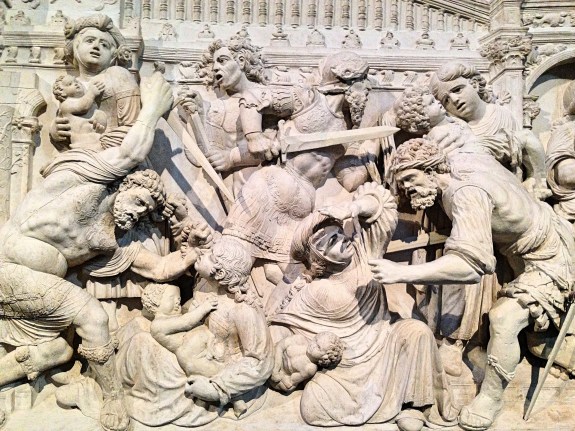
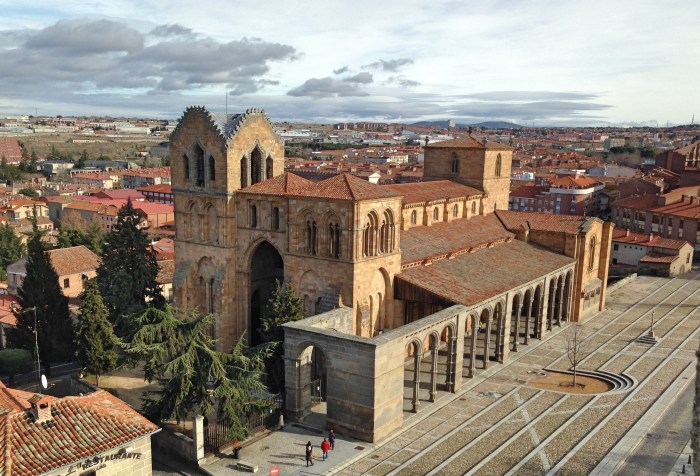
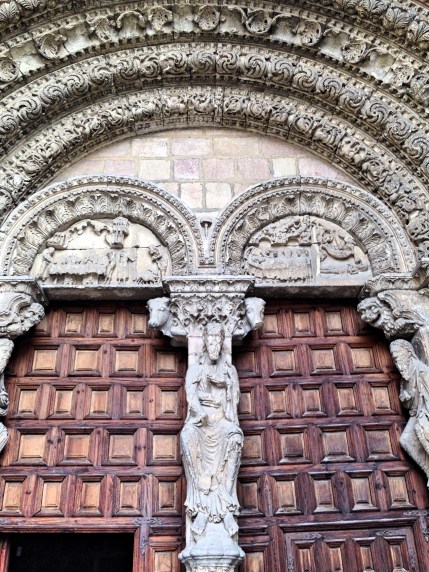
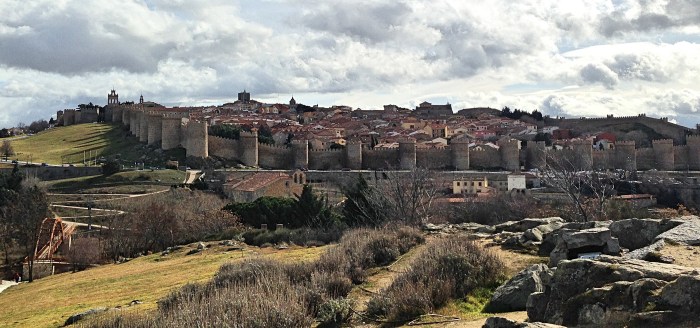
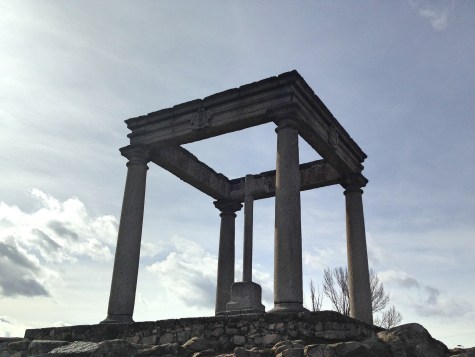
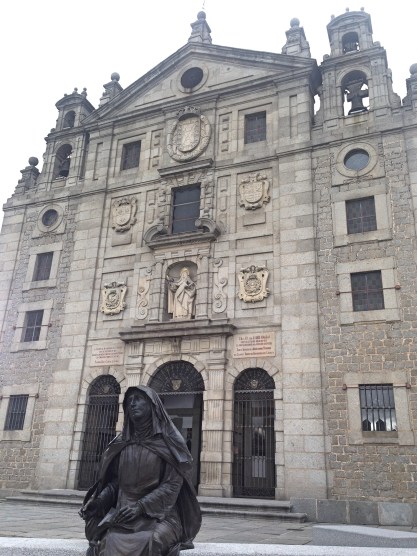
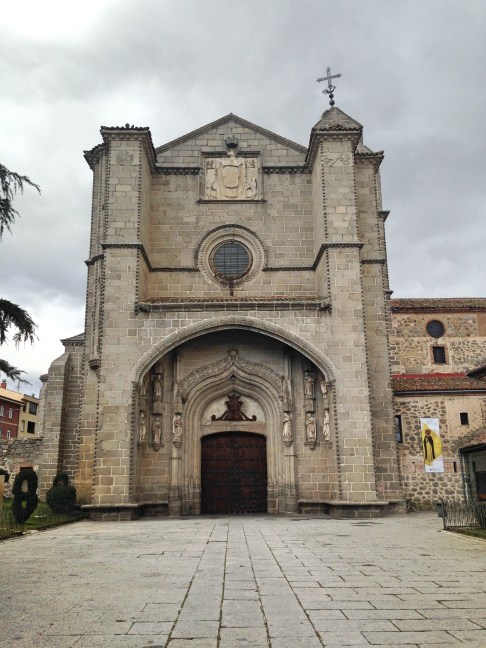

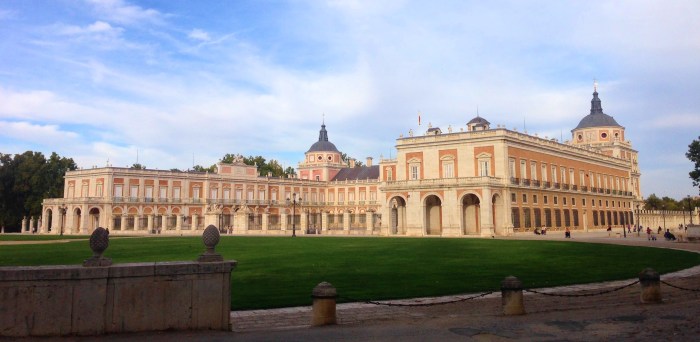


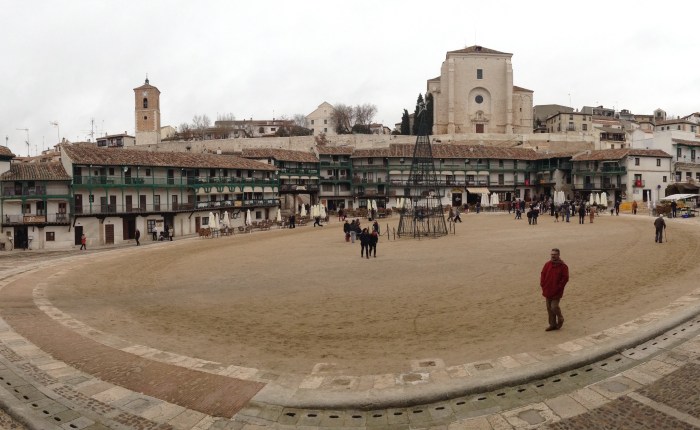


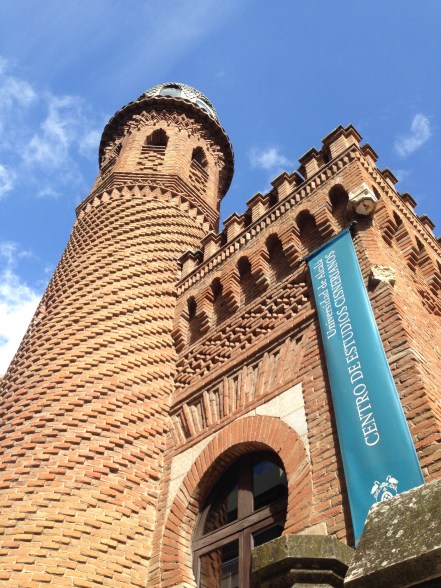
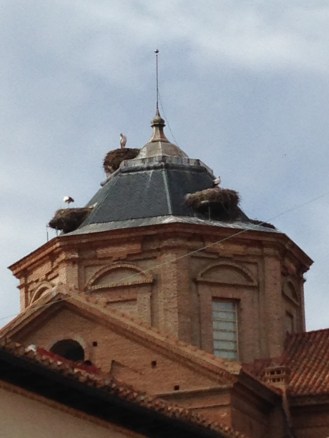
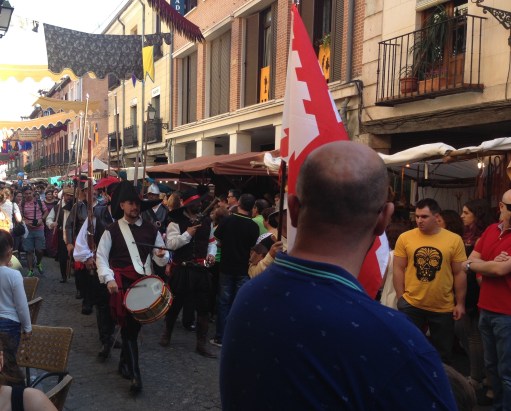


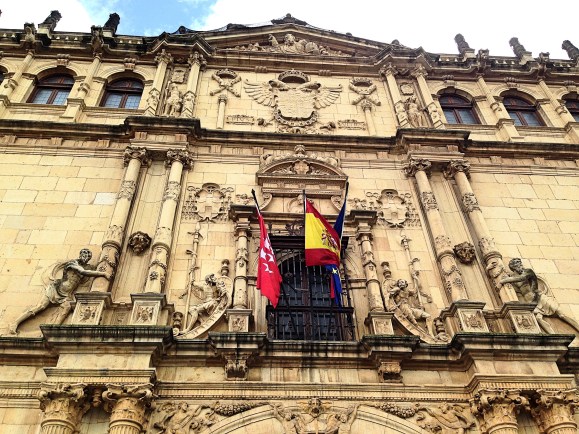


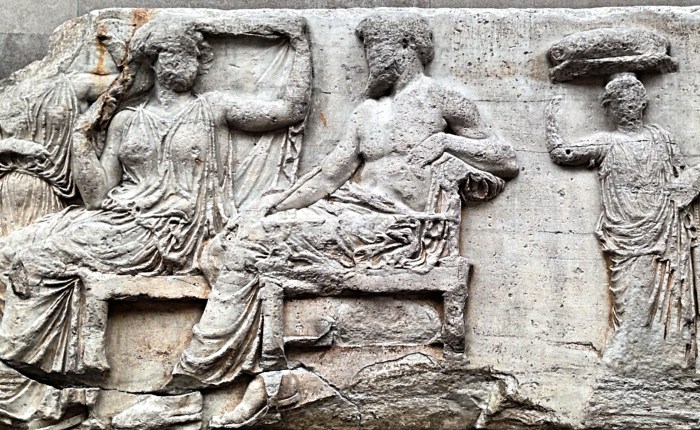
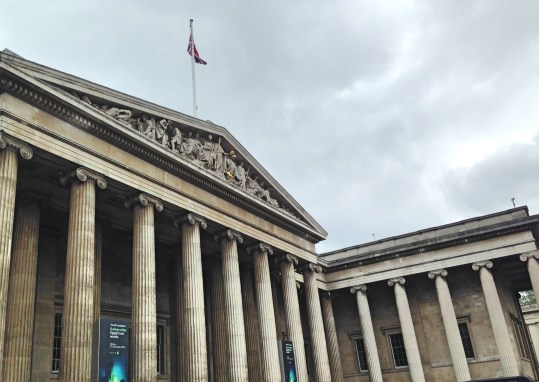
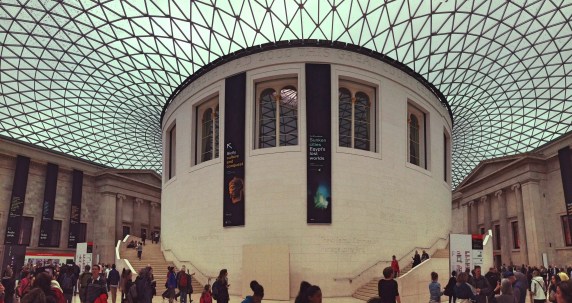

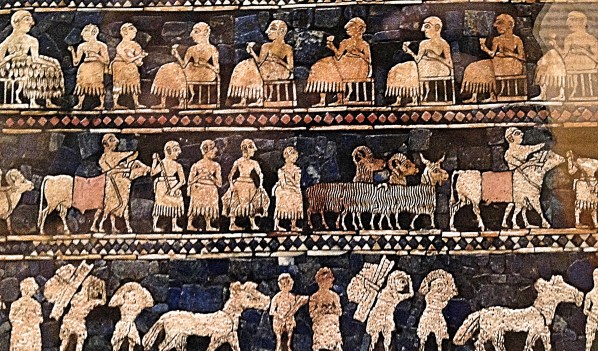
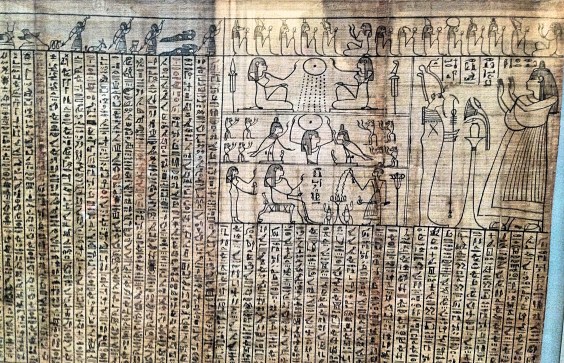


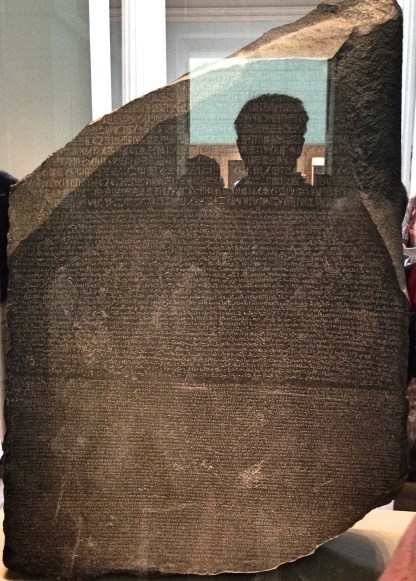
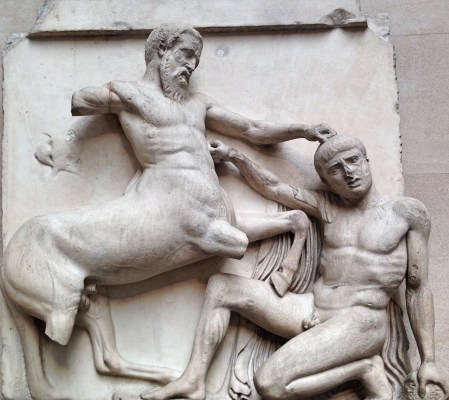


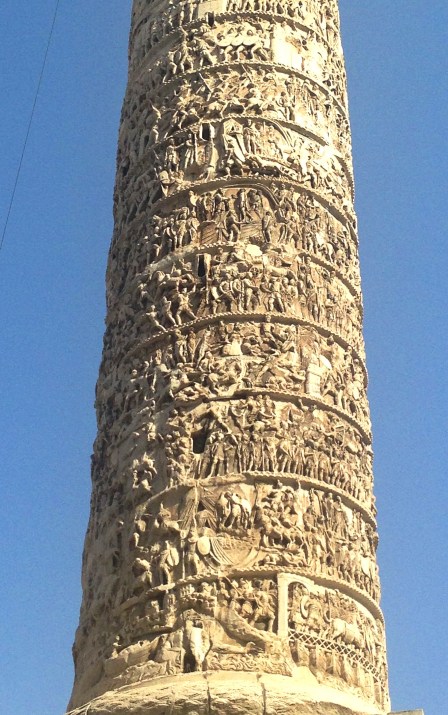


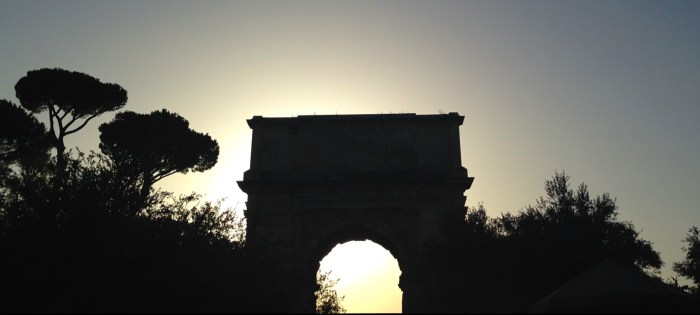

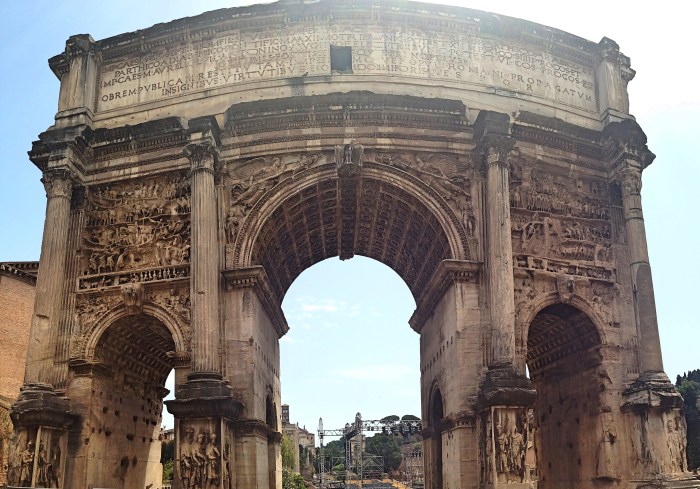

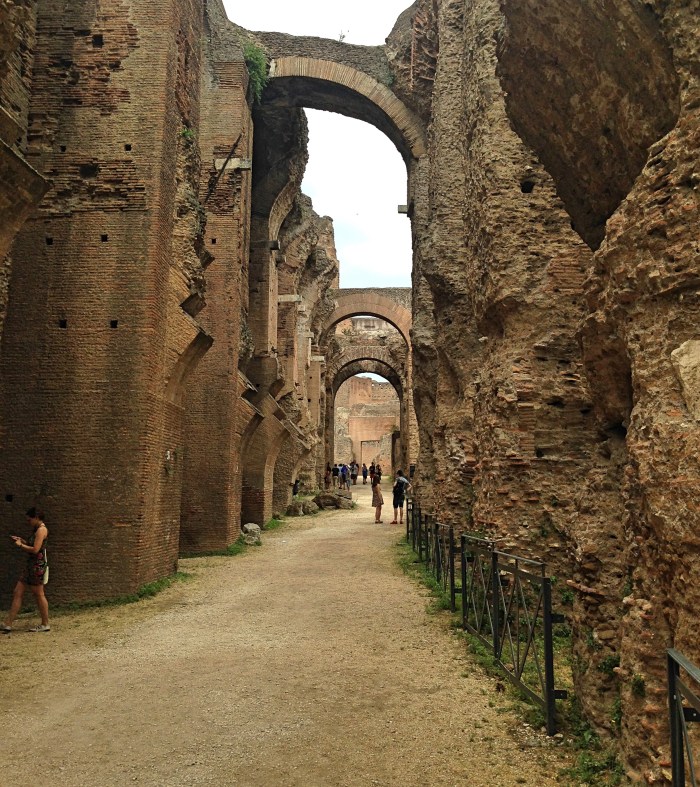

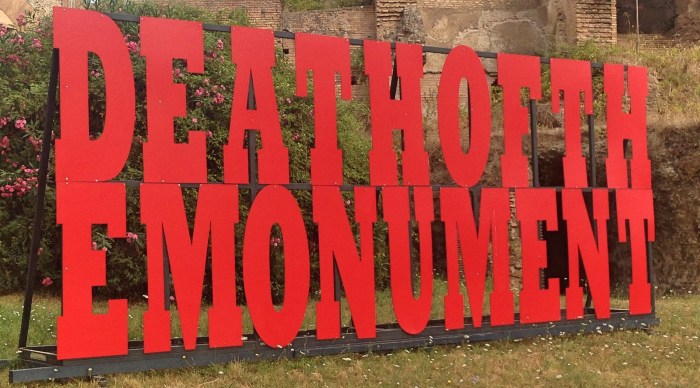


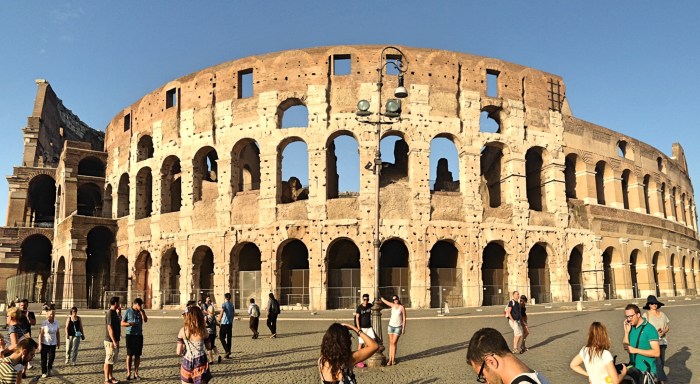



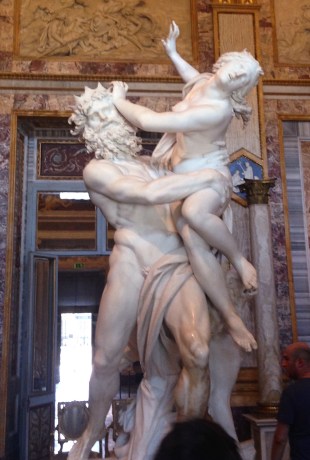


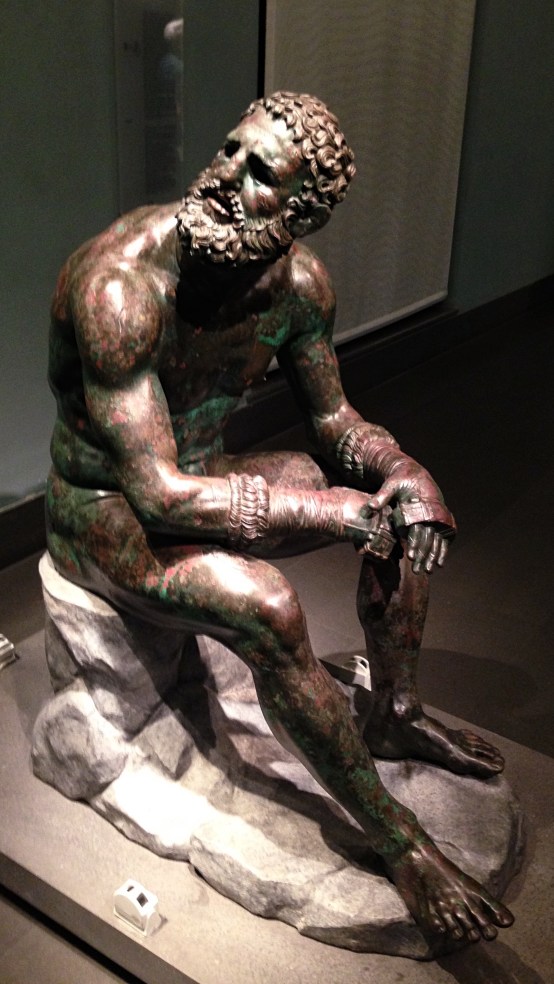
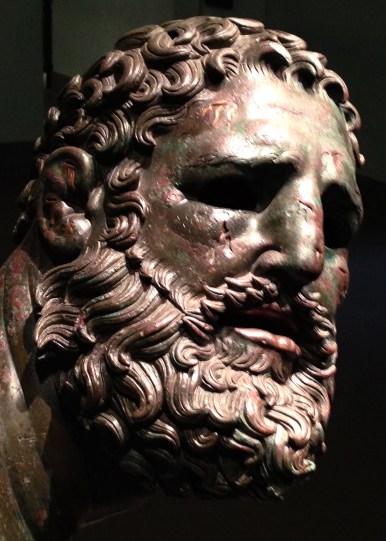
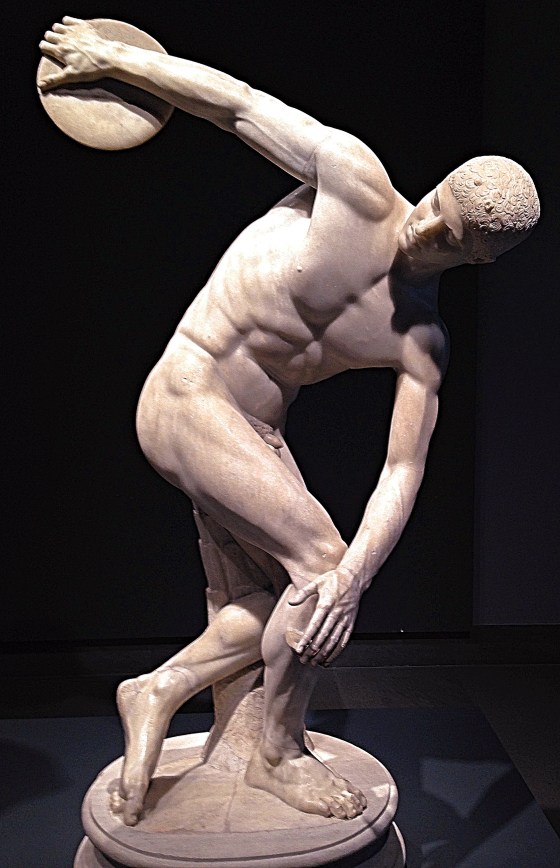
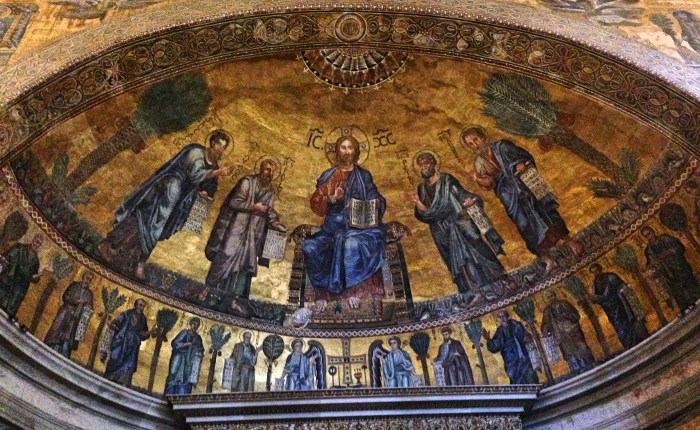
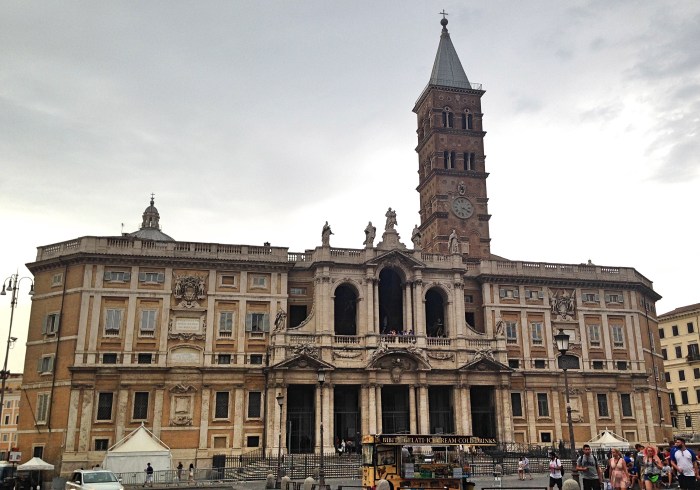
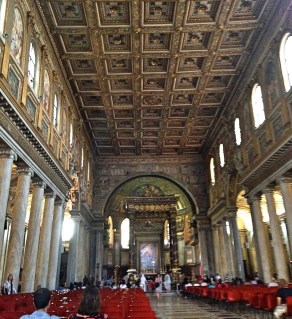

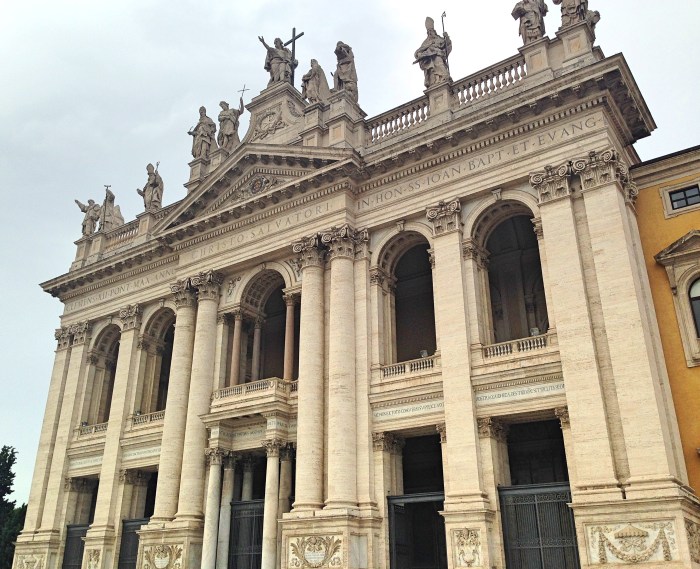
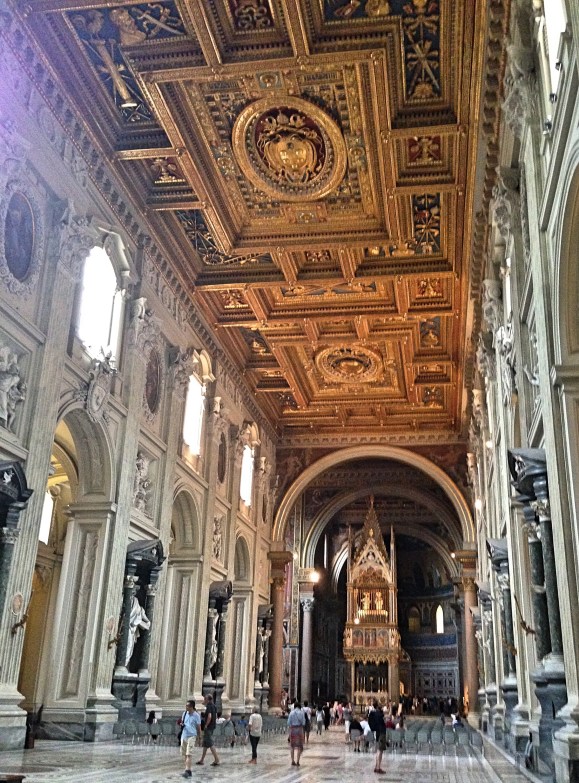
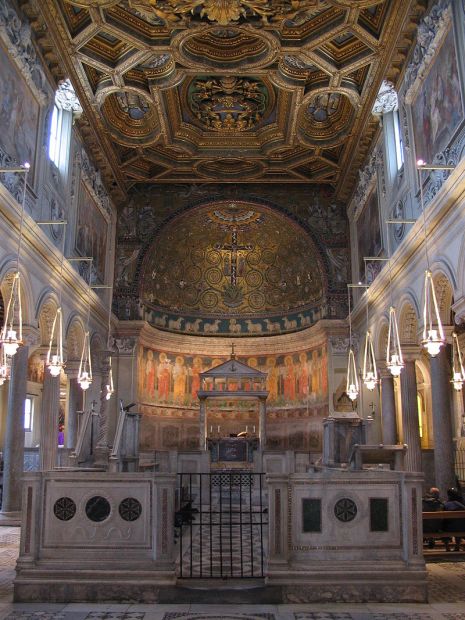
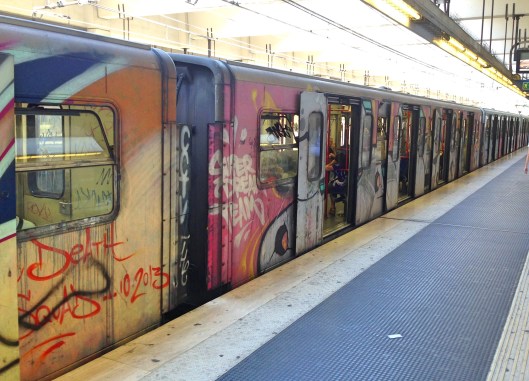
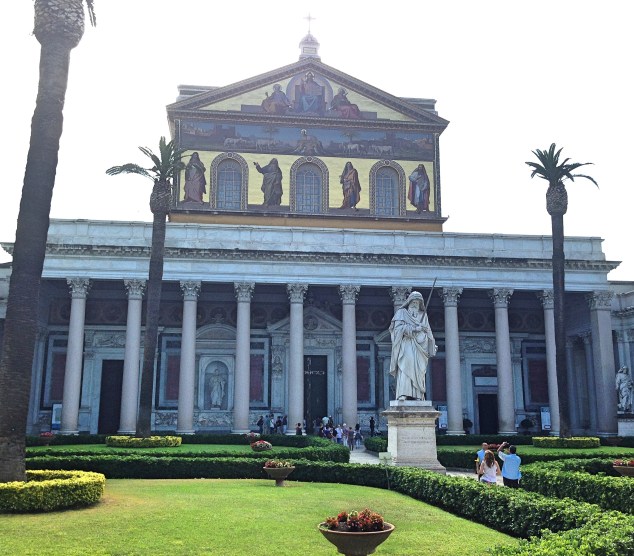
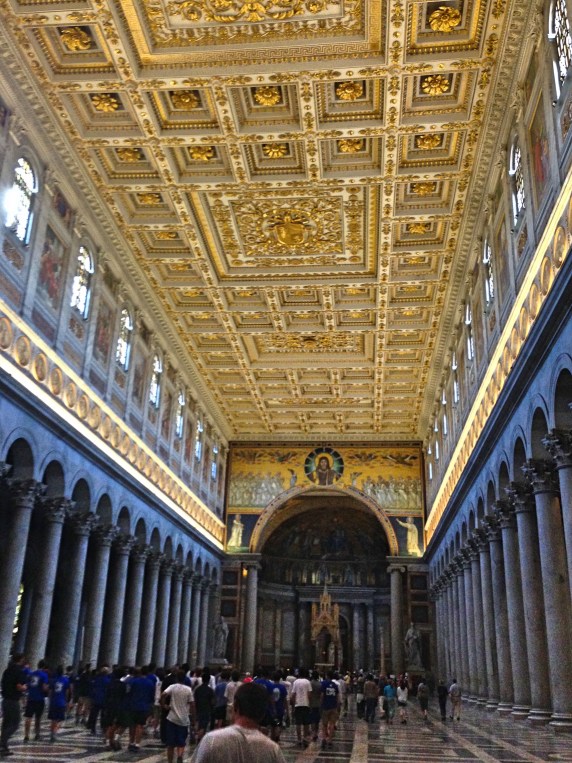
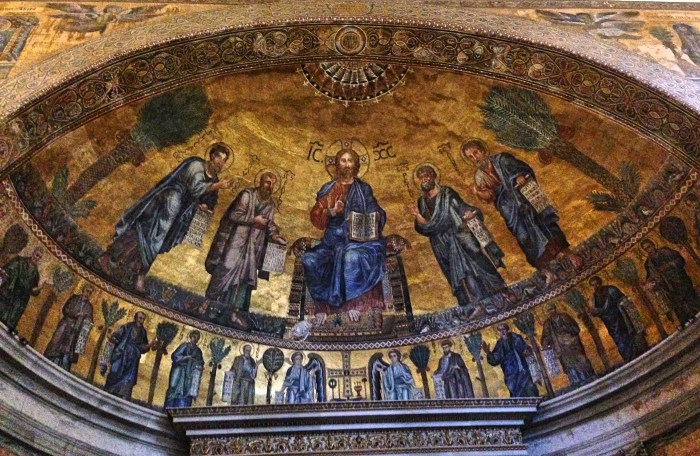
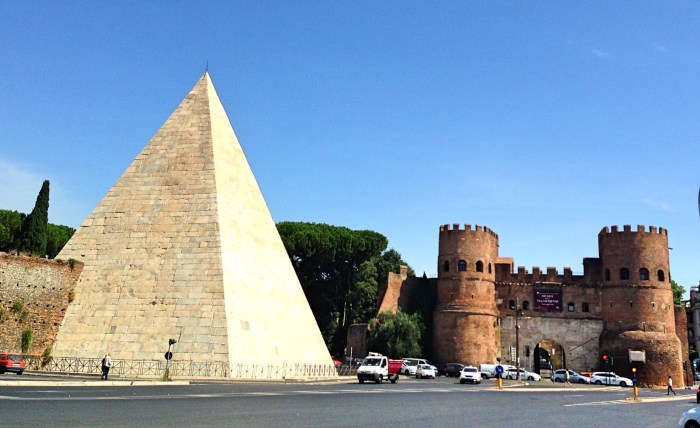


 Lotz in Translation