Reading this book is an ordeal. It is very long and very depressing. Charting the Third Reich from the birth of Hitler to the collapse of Germany, Shirer tells the whole story with the sweep of a novelist and the detail of an accountant. He wrote the book after having access to huge stores of documents captured by the Allies after the war. Diaries, schedules, testimonies from the Nuremberg trials, the minutes of meetings, and much more were the raw material marshalled to create this tome.
As is often noted, Shirer was a journalist, not a historian, a fact that helps to explain much about this book. He lived in Berlin as a foreign correspondent from 1933 to the end of 1940, reporting on the rise of Hitler and the beginnings of the war, until the threat of the Gestapo forced him to return home. This firsthand experience lent color to his narrative, but also focused his attention on readily observable events. Rather than talk of larger trends—social shifts, economic pressures, cultural developments—Shirer focuses almost exclusively on the doings of individuals in power, such as he had been reporting on.
This focus makes the narrative vivid and pleasingly concrete, but also results in a superficial analysis. A historian would naturally spend more time on the rampant inflation of the times, the institutional weakness of the Weimar Republic, the wider political trends in Europe, the mechanics of a totalitarian state, and so on. Further, Shirer’s explanation of why Germany embarked on such a destructive enterprise boils down to: because it is peopled by Germans. That is, he locates a kind of cultural essence in the German people, an essence stemming from the Reformation and especially Martin Luther, added to by Hegel and then by Nietzsche, which came to full fruition in National Socialism. But this sort of cultural essentialism is, for me, just intellectual laziness. It can be used to explain anything or everything, since these posited cultural qualities are vague and unobservable.
In any case wider historical analysis plays a very small part in this book, which is mainly a record of the decisions and actions of the leading men of the Nazi regime. That is to say that this book is a political and not a military history. The Second World War is discussed, of course, but only insofar as its developments affected or were caused by the Nazi leaders. Shirer is mainly concerned with charting the rise to power of these ruthless men: how they outsmarted the Weimar Republic leaders, fooled the international community, bullied and threatened their way to conquests, and finally instigated a war that resulted in their own ruin.
The balance of the book is tilted heavily towards the rise of the Third Reich. This can make for some dreary reading. In retrospect it is stupefying to witness how blind, inept, and spineless were Hitler’s opponents, first within Germany and then beyond its borders, until the final crisis spurred the world into action against him. Though Shirer’s sturdy prose is normally quite plain and unadorned, he has a steady instinct for the dramatic and writes several unforgettable scenes. Nevertheless the scale of detail Shirer saw fit to include sometimes weighs down the narrative into benumbing dullness. The endless, petty diplomatic maneuvers that preceded the beginning of the War—negotiations, ambassadors, threats, ultimatums, calculations, second thoughts, and so on—made it a relief when the soldiers finally started shooting.
These political dealings of the Nazis constitute the vast bulk of this book. It is a masterclass in how far a little cunning, shameless lying, and absolute ruthlessness can get you. It is also a lesson in the need to cooperate to take decisive action against common threats. In the years since Vietnam, many have concluded that the main lesson to be drawn from America’s foreign policy is the folly of interventionist wars. After the First World War, the Western powers were understantly ever more chary of violence. And yet, at least in Shirer’s telling of the history, a timely show of force could have nipped Hitler’s rise in the bud. If England and France had upheld their treaties and defended their territories and their allies, Hitler could not have amassed so much power at a time when the German military was still small. (Though it must be said that Shirer’s intellectual weakness appears here, too, since he attributes this inaction to pure cowardice.)
In any case, this does bring out an interesting dilemma in foreign policy concerning the benefits and risks of violent intervention. In the case of Hitler, timely action could have prevented a disastrous conflict. And yet in many other historical cases, such as with Saddam Hussein, the threat of non-intervention was vastly overestimated, while the cost of intervention vastly underestimated. The word “estimate” is key here, since these decisions must necessarily be based on guesses of future threats and costs—guesses which may easily be wrong. Since it is impossible to know with certainty the scale of a threat that a situation may pose if left unchecked, there is no surefire way out of this dilemma. This, of course, is just a part of a wider dilemma in life, since so many of our everyday decisions must necessarily be made based on guesses of what the future holds.
You can see that this book, though a popular account, is not lightweight in its details or its implications. Yet it does show its age. Published in 1960, it was written before many valuable sources of information became available, such as the French archives. It also shows its age in its occasional references to homosexuality, which Shirer treats as a perverted vice. This is, of course, morbidly ironic, considering the Nazi persecution of homosexuals (something that Shirer fails to mention). But all in all The Rise and Fall of the Third Reich remains a gripping popular overview of this nightmarish time.
(Cover attributed to Bundesarchiv, Bild 102-16196; licensed under CC BY-SA 3.0; taken from Wikimedia Commons.)
This book has the very modest distinction of being the only book I’ve read whose author I have interviewed. Carlos Lázaro is a history teacher at the school in which I work; and when he is not scolding students or grading reports, he is researching Spanish military aviation history. This is one of the numerous books he has published on this topic.
La aventura aeonáutica is a dual biography of two of the most important innovators in Spanish aviation history: Emilio Herrera and Juan de la Cierva. Herrera was of the same generation as the Wright Brothers. His specialty was lighter-than-air crafts—dirigibles, zeppelins, and so on—to which he made great practical and theoretical contributions. Among his many accomplishments was his participation in the first intercontinental flight of the Graf Zeppelin, which earned him a ticker-tape parade in New York City. He also designed what is considered the first spacesuit, for a planned but never realized ascension to the stratosphere. Later in life he was also important for his loyalty to the Spanish Republic in exile, even becoming its (mostly ceremonial) president.
Juan de la Cierva is mainly remembered for his invention of the autogiro, or autogyro. This was a sort of early-generation helicopter, designed to fly at speeds impossibly slow for fixed-wing aircraft. The principle of the autogyro is, however, quite different from that of a helicopter. Most notably, the rotor on top is completely unpowered. Forward thrust is provided by a small frontal propeller. This motion pushes air up into the rotor, causing it to spin—though notably, unlike in a helicopter, the air flows through the rotor upwards, not downwards. The rotor’s blades are angled so that the rotation provides lift. You may think of an autogyro as a plane whose wings rotate rather than stay fixed. For this reason autogyros cannot take off and land vertically, nor can they hover, unless there is a countervailing breeze. In any case, I hope you can see from this description that this was an ingenious and original contribution to aeronautic technology.
Like Herrera, De la Cierva was politically active; unlike Herrera, De la Cierva was a committed member of the Right, and threw his support behind Franco. His life was cut short in a plane crash—ironically a passenger plane, not any experimental flight—while trying to organize international support for the coup.
I found the lives of these two men fascinating, since I had not even known their names beforehand, much less any of their accomplishments. The book is admirably informative and concise, full of attractive photos and nifty little side-panels. Hopefully I will visit the Museo del Aire in Madrid soon, to see some of these historical craft for myself.
I have been working with Carlos Lázaro for two years now, as an assistant in his history lessons. His class is inevitably enjoyable. Students who, in other classes, are noisy and disruptive act respectfully and dutifully in Carlos’s classroom. Indeed, the students are so assiduous about taking notes that it can be hard to get them to stop.
The high school in which I work is “bilingual,” which means that some subjects, such as history, are taught in English. Carlos is the head of the school’s history department. Together we work with students in 2º ESO, which is equivalent to America’s eighth grade. The curriculum we follow is, in many ways, strikingly different from the sorts of stuff we learned in my high school in New York. Most notably (for me at least) are the lengthy units on art history—architecture, sculpture, painting. Our textbooks in the states mainly focused on social, economic, and political history.
In addition to his job as a teacher, Carlos is an accomplished academic and author, having written several books. I sat down with him one day to ask him about his work and life.
ROY: Have you ever done an interview before?
CARLOS: No.
R: Really?
C: No, no, not in English. Though I was interviewed on Spanish television, TVE1.
R: Tell me about your education. What subjects did you study?
C: I grew up in a working class neighborhood in the southwest of Madrid. A very violent neighborhood with a lot of drugs. Carabanchel Alto, it’s called. It had one of the biggest prisons in Spain. I went to a religious school for my whole primary and secondary education. But as early as middle school I was interested in history. When I was a kid I learned to read and write through history books that I got from my older schoolmates. Yes, I love history and this is the reason I was interested.
Originally, I was more interested in ancient history—Rome, Greece, Ancient Egypt. But when I got to university I changed my interest to Native American anthropology. In fact I got a PhD in this subject. My thesis was related to the tribes that refused or expelled the Spanish conquerors. I was specialized in the Chilean Mapuche. But my final book in anthropology was related with the treaties that the Spanish Crown signed with Native American tribes, covering about 200 signed agreements. I saw the original documents in the archives, both here in Spain and in the Americas.
R: How did you get interested in aviation history?
C: In the university I met former Republican fighter pilots, and it was an overwhelming experience for me. But I had been interested in aviation long before that. For 24 years I had lived near a military airfield, watching the planes take off and land. So when I met these pilots I got so excited about the histories of their lives. They had fought in the Spanish Civil War and they explained what they did afterwards. For example, some of them fled to the Soviet Union after the war. Some went to the United States or to Mexico, and also, in some cases, were in prison. It was, as I said, overwhelming for me, so from this moment onwards I began to do research about them.
R: Tell me about some of your books. What are they about? Why did you choose those topics?
The space suit designed by Emilio Herrerra
C: The book I’m working on now is a collection of memoirs of pilots—foreign and Spanish—who fought in the Civil War. But with one main goal. Our main problem in teaching history, not only aviation history but in general, is that we don’t have titles like “A Brief History of the Spanish Civil War” or “A Brief History of Aerial Warfare in the Spanish Civil War.” So I’m trying to provide people with these memoirs in order to be able to hook the public’s interest. This is the same thing I do with my teaching, to try to hook my students on history.
I have written 10 books. Three of them were about anthropology and the rest are about aviation history. My most beloved book is a biography of Emilio Herrera, a Spanish engineer who designed, in 1934, the first space suit in history, designed for a high altitude balloon flight. He was both a pilot and a scientist, and was in contact with Einstein and von Braun. I also wrote a book about a pilot, a Republican pilot. My personal goal, as I said, is to popularize aviation history and also to make it available in both Spanish and English, a bilingual version, for the many English and Americans who are interested in this history. As you know we are sitting near the battleground of the Battle of Jarama (a battle in the Spanish Civil War), and not every American knows that there were American pilots fighting in this battle.
R: What brought you to teaching?
C: Well, I like explaining and summarizing historical events—and I like history, of course—so, this is the reason that I got my PhD and also took the oposiciones (the required state exam that all public servants must take) in order to get my teaching position. My teaching definitely helps my writing, and vice versa. Every day I try to improve what I’m doing, reviewing my classes in order see what works and what doesn’t. Presenting information accessibly in my books helps me do the same in class; and my students’ reactions help me decide how to present information in my books.
R: What are some challenges of teaching history? How do you deal with them?
C: I think the most difficult challenge of teaching history is providing students with accessible information. Making it accessible. I think that history couldn’t be “unverbal,” and thus couldn’t be, in a sense, boring. You need to be patient, giving them tips, clearly organized topics. Summarize as much as possible: don’t try to fill their brains with data because they are going to erase everything when they leave the classroom. I’m trying to get my students to love something about their past.
R: What are some tips you have for history teachers?
C: Define your goals. Strive towards these goals. Provide your students with accessible information—and most of all, information that is useful in their daily lives. Old pupils have gotten in contact with me, and say they love history because it has been so useful for them—reading books, traveling, visiting museums, something like that. When I was teaching in a village in Toledo we made a trip to an old airfield that was nearby, and I explained how it was used during the war. It was an extraordinary experience for them. They had no idea it was there.
Besides giving lectures, it’s great to have the students do research and give presentations. Also different media are useful. For example today I showed them a short documentary about the Renaissance. Jokes, anecdotes, and open-ended questions are good for engaging their attention. Try not to be monotonous.
R: How do you get your students to work so well?
C: It’s a mixture of mastering them, being tough in some cases, and in other cases giving them self-confidence. Some students are not self-confident, and you need to show them that they have a lot of interesting things to work with. In the beginning of the year it’s important to go over classroom rules—sitting properly, raising your hand, taking notes. Establish very clear rules from the very beginning.
R: How is teaching history important for society in general?
C: Someone* once said, “People who forget their past are condemned to repeat it.” It’s a good way to learn about our mistakes, to think about what happened in the past, to try to avoid the same problems and avoid risks in the future.
R: Why do you think many people find history boring?
C: I think because, for them, history is repeating facts and not thinking. And of course in some cases you need to learn the names of battles and so on. But history is, fundamentally, a way of thinking, a way of organizing your brain, so that you can understand what happened in the past.
But for many students history is just a pile of dates, names, battles, events, nothing useful for their lives. I’m trying to provide them with another face of history. How could history help them? What does history teach us? Why did our ancestors face these problems? And what solutions did they find? What lessons do these have for the new problems we will face in the future?
To hook their interest it helps to explain something to do with their behavior or their language that they use in their daily lives. For example there is a Spanish word “flipado” that is like “dizzy,” which comes from the English word “flip.” This was a drink that buccaneers drank, a kind of alcoholic mixture. So this common Spanish words has this English origin, and most of my students have no idea. This is a small example of how history can explain our daily reality.
*George Santayana is the originator of the English quote, “Those who do not remember their past are condemned to repeat it.” The nearly identical Spanish phrase “Los pueblos que olvidan su historia están condenado a repetirla,” is attributed to Nicholás Avellaneda, who is said to have taken it from Cicero.
Idealism—what we call quixotic idealism, so vividly is it depicted by Cervantes—is an act of the imagination, and perhaps a doomed one, and the question on the table becomes whether this is a good thing or a bad thing.
This is a book about nostalgia, and nostalgia is a dangerous thing. It’s one of the tricks of our memory to filter the past through a sentimental lens, forgetting all the bad and magnifying the good. And when thinking about a time before we lived, we run the risk not only of twisting the truth but of inventing it.
Ostensibly the book is about Al-Andalus, Muslim Spain—from 711 to 1492—and specifically about the culture of tolerance that flourished during this period. Menocal takes her title from a remark of Hroswitha, the German canoness, who called Córdoba the “Ornament of the World” after meeting with an ambassador. Menocal does not, however, write a conventional, chronological history, but instead a series of vignettes from the time-period. Indeed, her approach is much closer to that of a journalist than a historian, picking out the most captivating personalities and focusing exclusively on them. And even though these vignettes often contain lots of interesting information, their primary aim is not to inform, but to evoke.
Menocal writes in a dreamy, wistful tone, a style that is often seductive enough to deactivate the reader’s critical facility. The land and the people she describes sound so fantastic that you want to believe her. And this, as well as the lack of almost any scholarly apparatus, makes me very suspicious.
It is hard to believe the book was written by a professor at Yale, for it is quite explicitly propagandistic, trying to counter the conventional view of the Middle Ages as backward and intolerant with a vivid portrait of an advanced, integrated civilization. Personally, I agree with both her ideals of tolerance and her desire to acknowledge the accomplishments of Muslim Spain; but this does not excuse a professor from the commitment to scholarship. All the repression and barbarism that existed during the time period is waved away by Menocal’s insistence that it was the work of foreigners, either Berbers from the south or Christians from the north; and everything positive is credited to Andalusian culture. It would be hard to be more partisan.
In short, I have many reservations about recommending this book, because I believe it wasn’t written in good faith, with scrupulous attention to facts, but rather in the effort to influence the public’s perception of Al-Andalus through storytelling. True, all scholarship is somewhat biased; but to paraphrase Stephen Jay Gould, using this fact to excuse extreme bias is like saying that, since a perfectly antiseptic operating room is impossible, we should just perform surgeries in the sewer.
Keeping the bias in mind, however, this book can be profitably read. There is a lot of fascinating information in these pages. Indeed, I recently revisited Toledo to see some of the things Menocal mentioned, such as Santa Maria la Blanca, a beautiful synagogue built in a Moorish style. And I do think that the story of syncretism, tolerance, and collaboration in Muslim Spain should be told, especially during this era of Islamophobia. It is too easy to forget how crucial the history of Islam is to the history of the “West,” if the two histories can indeed be separated at all. Menocal’s emphasis on the architecture, the poetry, and especially the translations of the Greek philosophers by Muslim and Jewish scholars, counters the common stereotypes of the Muslims as intolerant destroyers. What’s more, I fully understand how Menocal could be swept away in nostalgic awe after seeing the Mezquita in Córdoba or the Alhambra in Granada; that the people who made those amazing structures could disappear is hard to fathom.
Still, even though I agree with Menocal’s goals, I don’t agree with her means. The bright, rosy structure is built on too flimsy a foundation. Propaganda is a bad long-term strategy, because when people realize they are being manipulated they grow resentful. Much better would have been a balanced, sourced, and footnoted book, acknowledging both the good and the bad. The society Menocal so effusively praised was undeniably great; the best way to praise is simply to describe it. The worst aspect of Menocal’s approach is that it didn’t allow her to say anything insightful about how tolerance arose. And this is important to know, since creating a tolerant society is one of the omnipresent challenges of the modern world.
History is nothing but assisted and recorded memory. … Memory itself is an internal rumour…
—George Santayana
I tend to be distrustful of my own faculties.
As I mentioned in my last post, the reliability of my own senses (or lack thereof) is something that has long troubled me. It is not that my senses are themselves deficient; though I wear glasses my eyesight is not bad, and my hearing not much worse. Partially, it is my lack of attention. Most days I am in my own world and overlook what is right in front of my eyes. What use is good eyesight if the eyes are vacant?
Beyond this tendency to drift off mentally, I lack faith our ability to sense the truth. Vast regions of the electromagnetic spectrum are hidden from human sight. A dog’s nose or a cat’s ears put our primate parts to shame. And even the finest organs of sensation are inadequate to probe the finest reaches of matter, the basic building blocks of reality.
I also distrust my memory. This is not without reason. Experience after experience testifies that my memory is not to be blindly trusted.
When I was younger I had the nasty habit of stealing one of my friend’s jokes. He was much funnier than me, and the temptation to repeat what he said proved irresistible. The problem was that I would do it in his presence, and without crediting him. This may sound ungrateful; but the truth is that, in the moment, while telling the joke, I would forget that he had said it. My memory had wishfully appropriated the joke, and somehow I had convinced myself that it was I who had said it first. His complaints would destroy the illusion, and momentarily give me a sickening sense of self-doubt. Memory had played a trick on me.
Yet memory, for all its failings, is normally remarkably dependable. We remember our address, our friends’ names, our schedule, how to tie shoes and to spell words, the plots of our favorite novels and the lyrics of our favorite songs, and a thousand other things. Life as we know it would be simply impossible if we did not. Most of this remembering, it is true, is done unconsciously, in the form of habit. Indeed, the automatic responses of habit, being born of repetition, are far more dependable than our attempts to remember isolated events.
This is where Santayana’s remark, that memory is nothing but an “internal rumour,” rings most true: in trying to recall something that only happened once. In these cases, without a routine or a habit to tie it to, the lone memory must stand on its own power, with nothing to corroborate it. How can we be sure we are not mistaken? In my experience, we often are. If you have ever heard somebody narrate an event at which you were present, you may have had the same experience: the selfsame event can be completely unrecognizable in someone else’s telling.
I find these situations particularly distressing, since there is usually no way to decide which version of the event is correct, your own or the other person’s. The reason for this unreliability is not difficult to discern, I think. Memory lies on the same spectrum as imaginative fancy; and what we remember, and how we remember it, is shaped by our own constitution: what we notice in the moment, how we interpret what we notice, what we find amusing or interesting, all of this colored by our own vanity, our hobby horses, our desires, and our insecurities.
Memories are not just filed away and pulled out. Subsequent experience affects them. To pick just one example, the urge to dramatize a story—exaggerating some details, omitting others, shifting around the order of events—in the telling and retelling is, for me, impossible to resist. Yet strangely, I have found that the act of dramatizing a story actually changes my memory of it, until the warped version is all that is left.
One major problem is that good stories are memorable in a way that unadorned reality is not. Life simply flows on, a long chain of events with no beginning, middle, or end, and in itself reality has no meaning or moral. Memory selects from this tissue of events and weaves them together with its own logic. You might call this “narrative logic,” the logic of stories: with a defined setting, a discrete cast of characters, a climax and a resolution: events with human meaning and emotional resonance.
I think that narrative logic is highly artificial, a perceived order imposed on events by the wishful mind, and that its substance is pure feeling. It is true, as I have written before, that this tendency can be unhealthy. But we humans, as emotional creatures, need these narratives: they give us a sense of purpose and direction. Nearly everyone, to some extent, has their own personal mythology, a group of stories about themselves that explain who they are and where they’re going.
Narrative logic also governs politics. As Jonathan Haidt observed, every political ideology has its own narrative. The American left has a narrative based on overcoming bigotry, and the American right a narrative about oppressive government; the Nazis, the Soviets, the Spanish anarchists all had their own narratives. These narratives normally have a degree of historical validity, being based on some real events and actual facts. But the interpretation given to the events and facts is inevitably dubious; and, even more importantly, the facts and events left out, silently omitted, are what give the narrative its sense of direction and purpose. Historical forgetting is crucial to political grouping.
Santayana is, of course, correct in a general sense that history is nothing but assisted and recorded memory. Without memory, we could do nothing characteristically human—neither read nor write, much less write history. But what this quote leaves out is that memory, once catalogued and recorded in cold records rather than a living brain, changes its character.
Technology helps humans overcome our biological limitations. Just as the microscope and the microphone make our normally untrustworthy senses more dependable, so does the act of writing compensate for the failings of our memory. What is written down is no longer subject to the passions, fancies, and revisions of our imagination. Thus, by basing our records on documentation—whether it be cuneiform tablets or government records, or archeological remains—we may break the spell of narrative logic.
Of course, we may choose what records to read, and then choose what to write in our history books, and we may choose to selectively read those history books, and so on. Humans are remarkably resilient to facts that do not accord with their worldviews. Indeed, as we have seen with the proliferation of fake news and the information bubbles that partition the country ideologically, this problem is just as acute as ever. As Santayana went on to say:
History is always written wrong, and so always needs to be rewritten. The conditions of expression and even of memory dragoon the facts and put a false front on diffuse experience. What is interesting is brought forward as if it had been central, and harmonies are turned into causes. … Such falsification is inevitable, and an honest historian is guilty of it only against his will.
All of this notwithstanding, it is also true, I think, that the discipline of history makes progress in breaking the spell of these political narratives—at least enough to make them more honest, more just to the facts. This is how it should be. To fabricate the historical record, as the Nazis and the Soviets did, opens the door to extremism. But we could not live, either individually or socially, without any narrative to guide us. As long as humans look for meaning in life or group together behind a cause, they will tell stories about themselves. And these stories will inevitably rest upon the internal rumor of memory.
Both philosophy and history are, among other things, forms of criticism; and as such their function is to “surprise the soul in the arms of convention” (to use another of Santayana’s felicitous phrases). This criticism and the skepticism it entails are healthy and desirable. But we cannot remain thus untethered. The point of criticism is not to achieve pure skepticism but to give us enough mental and emotional distance to be able to consciously choose our ideals and stories, and not have them chosen for us by convention.
First there was a line. There always is—especially if you’re like us and don’t plan your trip ahead of time. The queue curved from the entrance, through the front lawn full of palm trees, and into the sidewalk.
We were waiting to get into the Alcázar de los Reyes Cristianos (Alzázar of the Christian Monarchs), yet another castle in Spain with Moorish origins.
The fortress that stands now was built in the year 1328 under the reign of Alfonso XI of Castille. By then the city of Córdoba—the erstwhile capital of Al-Andalus, the Arabic name for Muslim Spain—had been under Christian rule for 100 years. The present edifice was built over the Alcázar de los Califas, a fortress which had served as the seat of Al-Andalus’s government since the Muslims conquered Spain in the 8th century.
Córdoba and the Cathedral, seen from the Alcázar
The name of the current Alcázar stems from its use as a military base by the Catholic Monarchs during the Reconquista of Spain. Ferdinand and Isabel stayed in this castle for eight years as they directed their military campaign against Granada, the last Muslim power on the peninsula.
The “Reconquista” is the name given to the lengthy, unsystematic, and disorganized invasions of Muslim-controlled Spain by Christian forces, which took place over hundreds of years. Do not imagine that all of the Catholics up in the north of the Iberian Peninsula got together and decided to start pushing the Moors out. The reality was far more complicated. There was infighting between both the Moors and the Catholics; Muslim fought Muslim and Christian fought Christian almost as often as they fought each other. Religion was just one factor in a spectrum of conflicts of interests and ambitions as rulers jockeyed for power.
This was especially true during the so-called taifa period. A “taifa” is the name given to the small kingdoms and emirates (often little more than city-states) that divided up the peninsula after the collapse of the Caliphate of Córdoba in 1031. Until then, Córdoba had served as the center of power on the Iberian Peninsula—first as an emirate (from 759 – 929) and then as an independent caliphate (929 – 1031). Its collapse split the continent into a patchwork of warring factions, during which time the Muslims gradually lost ground to the Christians.
The last phase of Moorish Spain is called the Nasrid period—named after the dynasty that ruled Granada up until 1492, the year when the Moors were expelled. It was this dynasty that was responsible for the Alhambra.
The Ruins of a Roman Temple, only unearthed in 1950
This long period of interaction—from 711 to 1492—produced a rather different attitude towards Muslims in Spain than existed elsewhere in Europe. To get a taste of this, read The Song of Roland and then The Poem of the Cid. The first is French, the second Spanish. Both are Medieval epics that include battles between Muslims and Christians in their narratives. And both are based on historical events, but include much distortion of facts—not to mention purely fabricated material.
The French poem treats the Muslims as the incarnation of evil; they are little more human than the orcs in The Lord of the Rings. Thus the battle is a struggle between light and darkness, with the Christian protagonists Roland and Charlemagne -the champions of all that is good.
But it is obvious that whoever wrote the poem had scant knowledge of Islam, as he has the Muslims invoking the name “Apollo!” during battle—which is simply ludicrous. An added irony is that the historical event that this poem was based on didn’t even involve Muslims; rather, Charlemagne’s forces were ambushed by a bunch of Basques as they crossed the Roncevaux pass through the Pyrenees. Thus, the conflict had nothing to do with religion and everything to do with the invasion of land.
ThePoem of the Cid is hardly more factual. It tells of the exploits of Rodrigo Díaz de Vivar, otherwise known as “the Cid,” a military commander who lived in Medieval Spain. In this story, however, the Muslims, though they are sometimes enemies, are not the inhuman beasts of The Song of Roland. They are people just the same; and in one scene they even cheer as the Cid liberates their city and allows them to live in peace. The reality behind this story is even more complicated; the real Rodrigo Díaz de Vivar, a bit of a mercenary character, spent some time fighting for Muslims against Christians.
But however complicated the reality may have been, and whatever mutual tolerance may have existed, the Moors were eventually pushed out. The whole process came to a close in 1492, when the last Muslims were forced to flee, when the Jews were expelled from Spain, and when Columbus set out on his voyage across the Atlantic.
This year marks the beginning of Spain as we know it. The Middle Ages had come to a close, and the newly united country was entering its Golden Age as a global superpower. And since the Catholic monarchs directed their final military campaign from this castle, and since Christopher Columbus proposed his ocean voyage to the King and the Queen as they stayed here, the Alcázar of Córdoba can be said to be at the center of this story. Next came the infamous Inquisition, which used the Alcázar as a dungeon—converting some of the old Arab baths into torture Chambers—and the Conquistadores of the New World: two of the ugliest chapters in the country’s history.
But this long story of wars, persecutions, and conquests seemed very distant as we stood in the gardens of the Alcázar on a beautiful sunny Andalusian day, after waiting in line for an hour. A stream of light-blue water trickled down the center of a walkway lined with palm trees and green bushes. The only hint of historical significance is a statue commemorating Columbus’s visit. He is shown standing before the king and queen, a scroll of paper in his hand.
It is hard to imagine a view more picturesque than that from the back of the gardens, with the walls and the tower of the tan castle standing over the azure water, its banks lined with red and yellow flowers, little fountains sprinkling streamlets into the air, the intense blue of the cloudless sky above, and every color magnified into vivid shades by the intense sunlight. It is almost unthinkable that this space could once have been used to torture accused heretics and to plan bloody battles. And this shows how easy it is to beautify the past.
We left the Alcázar the same way we came in, passing a line which had by now grown even longer. Our next stop was the Puente Romano, or Roman Bridge.
This bridge, now reserved for foot traffic only, was built in the first century BC. Its squat and splendid form stretches across the Guadalquivir River, one of Spain’s most important waterways. And on any given day the bridge is swarming with people.
The Roman Bridge, seen from the Alcázar
It certainly was this day. A crowd of tourists strolled by in a lazy stampede, ambling along with backpacks, sneakers, cellphones, and cameras, taking turns taking photos of one another. A violinist was playing; a guitarist was strumming; a man was dressed as a Roman legionnaire. Another man had built for himself a box, so that only his head was sticking out; his face was covered in clown makeup, and he was wearing a bright, frizzy wig and a red nose. He would scream and laugh maniacally at you when you passed by. For whatever reason, I think we were expected to give him tips.
The bridge looked too new and spotless to be ancient; I certainly didn’t feel like I was walking on a monument. And, indeed, it has been repaired and restored several times. In any case it is a beautiful bridge; and from the far end you get an excellent view of the city. Siting on little islands in the river below were several of what seemed to be ruins. They did not look ancient, but their presence did give the view a slight tinge of mystery that mixed oddly well with the beautiful sunny landscape, the sparkling river, the chatting tourists, and the cackling clown-head.
The Roman Bridge, with the Mezquita in the distance
But we were hungry. So after just a few minutes, we were strolling back the way we came, past the violinist and the guitarist and the legionnaire, back through the entrance archway and up into the town. We were going to lunch.
Lucky for me, I had mentioned my impending trip to Córdoba to one of my students the week before. It turned out that he was, in fact, from Córdoba; and like everybody, everywhere, he was very anxious that I have a good time in his home town. So on the day of our trip he thoughtfully texted me a lunch recommendation. It was the restaurant where his brother worked.
Though it was December the weather was nice enough to sit outside in a T-shirt. (Córdoba has the highest summer temperatures of any town in Europe.) So we sat beneath an orange tree and had a delicious lunch: eggplant in garlic sauce and spicy paella. My student’s brother soon found me (my student texted him a photo he had taken of me in class) and we had a short—a very short—conversation, since my Spanish is still shaky, and he spoke in the staccato, machine-gun rhythm that all residents of Andalucia seem to speak in.
§
An hour later we were back on the move, this time to see something which held particular interest for me: the statue of Moses Maimonides in the old Jewish quarter of the city.
Córdoba is a wonderful city for philosophy. In 4 BCE, the Roman philosopher Seneca the Younger, a Stoic, was born in this selfsame city. He went on to tutor the infamous emperor Nero, and eventually ended his own life after that disturbed Emperor decreed his death. Much later, in 1126, the Muslim philosopher Averroes was born in this same city; and just nine years later, in 1135, the Jewish philosopher Moses Maimonides added his name to the list. Though nowadays neither Maimonides nor Averroes are much read, they are two of the most influential thinkers of their epoch.
The statues of Averroes and Seneca (pictured above) are near one another, located outside the old city walls. The statue of Maimonides is found in the Judería, the old Jewish Quarters, one of the loveliest sections of the city. Córdoba was not only home to a thriving Muslim population, you see, but to a flowering of Jewish culture. Many Jews serves as important advisors, counselors, and ministers to the Muslim rulers. Poetry flourished—in both Hebrew and Arabic—and many Jews were notable intellectuals and doctors.
Philosophy: Medieval & Modern
Maimonides himself was a doctor in addition to a theologian. And as I stood there, in the preternaturally bright Andalusian sun, contemplating the bearded face, crowned in a turban, decked in a robe, with pointy shoes to boot, I could not help feeling a certain awe at the intellectual dramas that had played out here, right here, so many years ago, back in the Age of Faith.
The sun beat down upon my back, sweat dripped from my forehead, my feet ached from all the walking. I stuck my finger into my pocket and felt the laminated edge of the ticket we had purchased earlier that morning. It was for the one place we had yet to go.
§
“No building in Europe,” says the English historian Norman Davies, “better illustrates the cycle of civilizations than the Mezquita Aljama, now the cathedral church in Cordoba.”
We walked inside and stopped in our tracks. It was incredible. Rows and rows of double arches stretched out before us, one arch atop the other, colored in candy-cane stripes of red and white. This was no gothic cathedral; this was a medieval mosque.
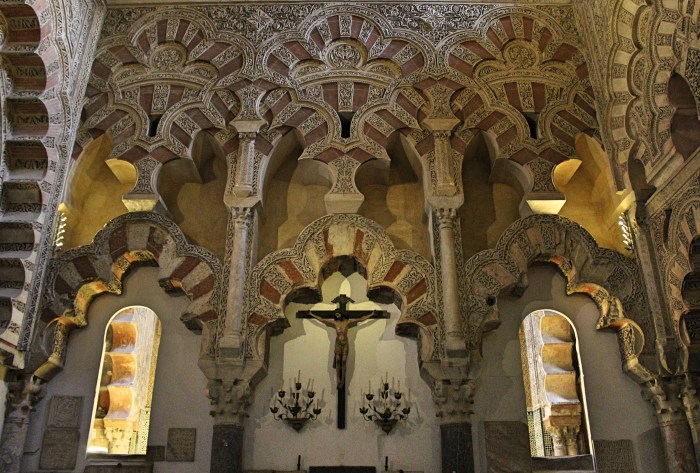
Or was it? In little nooks in the walls were Christian shines, just as in any other cathedral, barred off with a grille and containing altarpieces and religious paintings. But the catholic paraphernalia looked so oddly out of place sitting there—almost as if it had been left there by accident. Of course, this was no accident—and in fact this juxtaposition of styles and cultures, of architectures and faiths, is what constitutes the grandeur and charm of the Mezquita of Córdoba.
[The Mezquita’s] originality lies in the use of materials taken from the demolished Latin-Byzantine Basilica of St. Vincent which stood until 741 in the same site, and which had once been shared by Christian and Moslem congregations. What is more, both mosque and basilica rested on the foundations of a great Roman temple, which in its turn had replaced a Greek or possibly a Phoenician edifice. Only St. Sofia in Istanbul can match such varied connections.
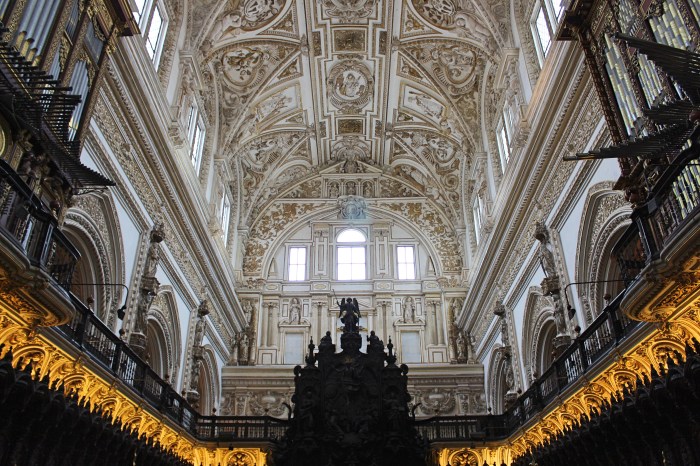
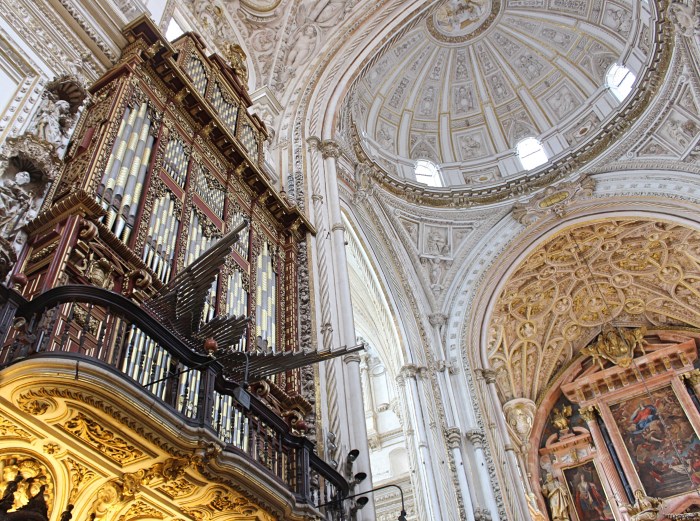
This motley heritage is easy to sense as one strolls through the building, examining a crucifix hanging on the walls between two richly decorated Moorish arches. As one proceeds, the slightly claustrophobic space suddenly opens up, revealing the gigantic dome that sits above the main altarpiece. Suddenly one is standing in a Renaissance cathedral, with colorful, naturalistic portraits of Jesus, the Virgin Mary, and the saints sitting between elegant marble columns with elaborate Corinthian capitals. Light streams in through the windows, high up above, lighting up the ivory-white ceiling so it seems to float weightlessly above one’s head.
And is not this structure a perfect metaphor in stone for the relationship between the two faiths, Christianity and Islam? They have been built on top of each other, over each other, with materials and ideas taken from one another. And although they owe such a mutual debt, they have so often—though not always—striven to burry this debt in oblivion, denying its very existence.
This even extends to the modern day. For despite a deeply shared history, Muslims are now forbidden to pray in the Mezquita; and a campaign launched by Muslims in the 2000s to change this has fallen on deaf ears and apathetic minds. The Vatican has denied their request; and now there is less mutual toleration than existed over one thousand years ago, when Muslims and Christians shared the Basilica of St. Vincent.
Of course, it was the Muslims back then who destroyed that old basilica. Humanity harbors no spotless faiths. Yet one would think that now, in our supposedly Enlightened age, we would have grown out of this petty bickering and territorialism. The Mezquita belongs to everyone; and this certainly includes Muslims.
The traces of Muslim influence are everywhere, if you cares to look. Among other things, the Muslims of Spain introduced “oranges, lemons, spinach, asparagus, aubergines, artichokes, pasta, and toothpaste, together with mathematics, Greek philosophy, and paper” into Europe. But we are apt to forget this heritage because the victors have so often striven to wipe out all traces of what came before them, giving no credit to anyone but themselves. And this process has certainly taken a toll on the Western mind, which thinks it has sprung fully formed from the land.
“When Spaniards shout ‘Olé,’” Davies says, “many don’t care to remember that they are voicing an invocation to Allah.” But it is important that we remember this, now more than ever. To forget our shared history is to open the door to the kind of intolerance, fear, and misunderstanding we see so rampant today.
G. J. Meyer set out to write this book to fill a gap in the available literature on the First World War: a popular, holistic account that covered every phase and every front, without presupposing much knowledge from the reader. In this, he was undeniably successful. A World Undone begins at the beginning, with the assassination of Franz Ferdinand, and ends at the end, with the Treaty of Versailles—signed five years to the day of the assassination of the infamous archduke.
Meyer’s scheme is simple but effective: interspersing “background” chapters between his main, military account of the war. These background chapters were inevitably more interesting for me, and provided much-needed relief from the seemingly endless string of battles, divisions, battalions, generals, troop movements, and so on that composed the military history. In these auxiliary sections, Meyer introduces us to war literature, major personalities, political traditions, economic crises, military technology, shell shock, and much else. The wealth of both historical backdrop and military history makes this book an ideal, if somewhat long, introduction to the “Great War.”
Meyer himself is an able and diligent writer, who steers a middle course between rhetorical excess and crass simplicity, keeping his prose lean and tasteful. He has the quintessential skills of the popularizer: the ability to compress information into a tight space, and to explain complex phenomenon without overwhelming the reader. He also wisely avoids speculation himself, leaving the analysis to the reader or the historian, keeping his eye focused on the surface-level events—which is desirable in an introductory text, I believe.
Even with a guide as competent as Meyer, however, the Great War is depressing and deadening. Meyer’s account, perhaps unintentionally, confirmed many stereotypes I had previously imbibed. In his telling, the beginning of the war was due to a combination of poor planning and reckless and incompetent advisors. That Germany could not mobilize its forces without invading Belgium, for example, or that Russia could not choose to mobilize only half of its troops, thus unintentionally threatening Germany—consequences of carefully-drawn plans, an arrangement that virtually guaranteed war—is difficult to believe or forgive.
As for the fighting, the impression one is left with is of remarkably courageous troops heedlessly wasted by monomaniacal generals. Offensive after ineffective offensive, with general after general trying the same tactics and achieving the same failures—leading to endless butchery. One quickly draws the conclusion that the leaders of Europe in this epoch were dim and shortsighted men.
It is this dreary and dreadful aspect that partially accounts for the First World War being overshadowed by its younger brother. The conflict was strikingly non-ideological. There are no Nazis, no Communists, no Fascists, no racial purges (except in Armenia), no freedom fighters, no Resistance—only obsolete Empires fighting for spheres of influence. The fighting, too, has none of the cinematic drama of the Second World War: only interminable shelling campaigns, repeated advances and retreats through no-man’s land, stagnant stalemates and antiquated tactics—there is nothing even vaguely romantic about the bloodshed, despite what Ernst Jünger may have thought.
But even if it is less compelling to learn about than the Second World War, the First World War arguably has even more valuable lessons to teach us. The logic of naked power confrontation is, after all, more historically common than ideological conflict. The comparatively colorless, and often incompetent, quality of the war’s leadership invites us to see the conflict in all its bare, barbaric brutality, without the distorting effects of charismatic chiefs. The manufactured hatred of whole populaces for one another—engineered through strict censorship, outright lies, and strident propaganda—is a case-study in how patriotism can be exploited for deeply cynical ends.
And most important, unlike the Second World War—a sad story that at least ends with the defeat of a genocidal maniac—the First World War has no silver lining, no comforting achievement to offset the millions of lives lost. As the vindictiveness of the victors proved, the winning side wasn’t on a clearly higher moral level than the losers; and in any case, the war didn’t even achieve a resolution to the conflicts brewing within Europe, only a partial deferment. In sum, the First World War is worth learning about because it was a calamitous, unnecessary tragedy that stubbornly resists romanticization or justification—and that is war.
History is a discipline peculiarly impervious to high theoretical speculation: the more Theory intrudes, the father History recedes.
When I was in university, studying anthropology, I always resented the requirement that my essays have thesis statements. Can’t I just collect information and serve it up without taking some ultimate stance? Tony Judt seems to have been of the same mind, since this book is one very large serving of information, absent of any overarching thesis. As he says himself, Judt is rather like the proverbial fox than the hegdehog: he knows many things, and has many valuable observations scattered throughout the text, without any one big idea to tie them together.
There are compelling advantages to this approach. This book is one-stop shopping for many aspects of post-war European life. Economic development, intellectual fashions, architecture, film history, political movements, the Cold War, regionalism, the emergence of the European Union—all this and more is covered in impressive detail. And though multifarious, all of these pieces come together to form an astounding story: a continent nearly destroyed by war, divided by dangerous political tension, slowly emerging from American and Soviet dominance to become the most affluent, most peaceful, and most progressive place in the world.
The main disadvantage of this method is, of course, that this story remains fairly messy and haphazard. Without a thesis to guide him, Judt had to rely on a mixture of interest, instinct, and whim—the latter playing an especially significant role in some sections. What is more, though Judt is an opinionated and assertive guide, the lack of a thesis renders it difficult to point to anything distinctly “Judtean” in his analysis. What ties the narrative together is, rather, a certain mood or sensibility—most notably, Judt’s keen sense of historical irony, which he employs to great effect.
This ironic sensibility is most often directed toward Judt’s political foes. Though he is never explicitly partisan, it is easy to tell where Judt’s sympathies lie: in the center-left, socialist-democratic camp. Thus, depending on where the reader falls on the political spectrum, Judt’s comments will be either gratifying or grating. For me they were usually the former. What irked me, instead, was Judt’s relatively brief treatment of Spain—the Franco era is entirely ignored, and the transition to democracy is covered in just a few pages. But this is admittedly my own prejudice speaking.
If Postwar has one takeaway message, it is this: that Postwar Europe is the anxious construction of a generation wearied and horrified by conflict. After going through the belligerent nationalism of the First World War, the economic depression and intense ideological polarization of the interwar period, the even more gruesome Second World War and the unspeakable Holocaust—all this, coupled with the prolonged armed standoff and Soviet repression of the Cold War—Europeans were intent on creating a world where this could never happen again. Extreme ideological stances fell into disgrace; strong government social safety nets helped to prevent economic crisis and, in so doing, made people less susceptible to demagogues; and governments forged institutional ties with one another, a project that culminated in the European Union.
Without constant reminders of this catastrophe—a European civil war that began in 1914 and whose political aftereffects did not disappear until 1991, if then—we risk falling into the same errors that tore the continent apart one hundred years ago. For this, we need good historians—and Judt is certainly among the best.
A traveler must be freed from all apprehension of being murdered or starved before he can be charmed by the bold outlines and rich tints of the hills.
Sir Thomas James Babington Macaulay, Baron of Rothley—more commonly known as Lord Macaulay—is yet another of those creatures of former ages who could fill volume after volume with excellent prose, seemingly without effort. He wrote reams: this work itself, in the original, runs to five volumes. And everything he wrote—from poems to essays, from speeches to history—was both instantly successful in his day and still remains a model of force and clarity. The power of his style is why Macaulay is most frequently cited nowadays. He is the only English historian (except perhaps David Hume) whose writing can be mentioned in the same breath as Edward Gibbon; indeed the two of them are grouped together as models of elegance, in much the same way as were Demosthenes and Cicero.
Brilliant stylists they both were; but quite different in their brilliance. Gibbon is stately, while Macaulay is luminescent. To borrow a phrase from Tocqueville, Gibbon tried to see history from God’s point of view: as a pure spectator, a neutral observer, emotionally unmoved but intellectually engaged. Macaulay imitated the more dramatic styles of Thucydides and Tacitus, narrating history as an enormous spectacle with heroes and villains. Here he is describing the fate of the Scottish colony of Caledonia during the failed Darien scheme:
The alacrity which is the effect of hope, the strength which is the effect of union, were alike wanting to the little community. From the councilors down to the humblest settlers all was despondency and discontent. The stock of provisions was scanty. The stewards embezzled a great part of it. The rations were small; and soon there was a cry that they were unfairly distributed. Factions were formed. Plots were laid. One ringleader of the malcontents was hanged.
Macaulay’s punchy, declarative sentences have an overwhelming effect when piled atop one another in cumulative description. Indeed, Macaulay never simply describes: he dramatizes. He pays at least as much attention to the emotional effect of his words as their literal accuracy. Granted, Macaulay is seldom as quotable or as graceful as Gibbon; but he is leaps and bounds more exciting to read.
This difference in style, as often happens, mirrors a difference in attitude. Gibbon had his fair share of prejudices, but he was not partisan. Macaulay is partisanship incarnate. He is largely responsible for popularizing what is commonly called Whig History. This is the thesis that sees English history as “the history of physical, of moral, and of intellectual improvement” caused by political reform. This thesis became historical orthodoxy for a time, until, like all orthodoxies, it bred a heresy that became the new orthodoxy.
Nowadays the idea that history is a grand progress from barbarism to civilization will strike many as terribly simplistic, mostly wrong, and nauseatingly complacent. After two world wars and the atom bomb, we are apt to view any suggestions of progress with skepticism. Nevertheless, to condemn Macaulay’s perspective for being old-fashioned would be to forget, what Hugh Trevor-Roper reminds us in the introduction, that the “severest critics themselves are generally unaware of the extent to which they depend on the achievement of their victim.”
The terms ‘Whig’ and ‘Tory’ appear with great frequency both within the book and in discussions of Macaulay; and yet these political positions can be bewildering for a non-British reader. This is in keeping with the general Britishness of this book. Macaulay’s history is a national history; it is a book written for Brits. For any British reader, I suspect this book will excite some strong emotions, positive or negative. For me it appealed mainly to my anthropological curiosity.
In fairness, Macaulay’s conception of Great Britain is wide enough to include Scotland and Ireland. And although this book is full of shocking insults against the Scots and the Irish (as a prophet of progress, Macaulay sees Scotland and Ireland during this time as hopelessly backward), Macaulay’s history was nevertheless important—or so says Hugh Trevor-Roper in the introduction—for treating those two realms as of integral importance to British history.
As Trevor-Roper also points out, Macaulay’s partisanship expresses itself most damagingly in his dealings with individuals. Macaulay is not an acute psychologist. He occasionally breaks off the narrative to engage in a lengthy description of some figure—such as his unforgettable portrait of George Jeffreys—but these descriptions are inevitably either philippics or eulogies. There are no memorable personalities in these pages; only flat heroes and villains. This tendency to choose good guys and bad guys often led Macaulay into errors or even chicanery. He deliberately misrepresents the evidence to blacken William Penn’s name, while going so far as to assert that “extirpate” is commonly understood to mean “disarm” rather than “eliminate” in order to clear William of the Glencoe Massacre.
Purists may have some misgivings about reading this abridgement. For me, I see abridgements like this as an ideal place to begin reading: it gives you a decent overview of the whole work, and allows you to decide if you’d like to commit to five volumes. Trevor-Roper did an excellent job with this edition, giving a satisfying overview of the narrative arc, providing the necessary connections between the missing parts, as well as enlivening the experience with his own cutting commentary. As a writer, Trevor-Roper is fully within the Macaulay school: sharp, direct, and unmerciful. The book is full of footnotes pointing out where Macaulay is erring or being underhanded. The introduction, too, is unsparing: “[Macaulay’s] descriptions of art, architecture, music are of a frigid, conventional pomposity if they are not positively absurd.”
To my surprise, I found this period of time to be relevant to contemporary American politics. James II—a bumbling, petty, egotistical monarch in league with a foreign ruler—couldn’t help but remind me of Trump’s Russia affair. The way that James would fill government posts with cronies, or would try to circumvent long-held traditions by browbeating his subjects in personal interviews, was eerily similar to what James Comey describes in his statement. Macaulay’s sections on the National Debt and the partisan squabbles between Tories and Whigs were also astoundingly applicable. This is curious, if not exactly meaningful.
Hopefully one day I will have the time and inclination to read the unabridged version of this masterpiece. Until then, I can say that Macaulay’s reputation is well deserved: as a stylist, and as a partisan.
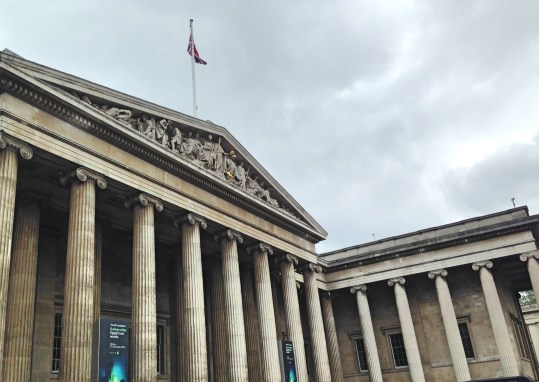
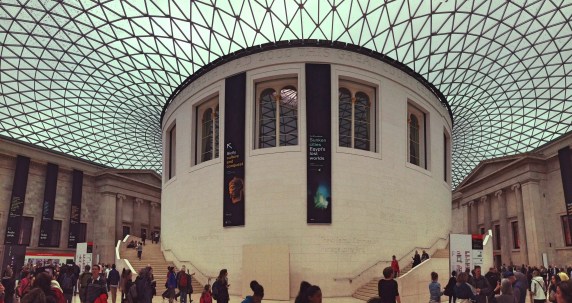
The British Museum is a project of the Enlightenment. It is one of the oldest—older than both the Louvre and the Prado—and the biggest museums in the world. Its collection began when Sir Hans Sloane, a doctor and naturalist, bequeathed his private collection of “curiosities” to the state. The collection grew from there, with the goal of encompassing all of human history under one roof. And because the British Empire soon came to dominate half the globe, this ambition was not so ludicrous as it may at first appear. Ironically, you can probably find finer artifacts in the British Museum than in the countries that the exhibits represent.
The museum’s massive collection is housed in an equally massive neoclassical building designed by Robert Smirke. Its collection is divided by era and area: Prehistory, the Ancient Near East, Ancient Egypt, Ancient Greece, South Asia, East Asia, the Americas, Africa, and Oceania. Wandering around the museum is like getting lost in a copy of a World History textbook brought to life. The collection is so vast and detailed that the visitor is simply overwhelmed. There is far too much information to take in and process in one visit—even in a dozen visits. Each artifact on display deserves deep study; and when each room is full of hundreds of these artifacts, there is not much you can do except dumbly gape. Likewise, there is not much a writer can do except emulate Sir Hans Sloane and collect curiosities.
I began in the Ancient Near East: Mesopotamia, the cradle of civilization. There is something sacred about the simple fact of age. Seeing ancient artifacts is the closest we get to time travel. The passing years corrode all material things, just as the gentle flowing of a stream eventually cuts through rock. The physical bodies of these ancients have long decayed; everything they knew and loved is gone. And yet, 5,000 years later, the messages they carved still preserve an echo of their voice.
Every time I look at a cuneiform tablet—its crisscrossing wedges and lines unintelligible to me, but visibly a language—I find myself profoundly moved. For all I know, the message is a record of a banal commercial exchange—so many goats for so many bushels of hay—but the simple fact of writing something down, of imprinting words indelibly, signals the beginning of that noble and doomed war against time—the war we call ‘civilization’.
Seeing these first scratches in stone is like catching a glimpse of the universe a few seconds after the big bang. It marks the commencement of something entirely new in history: the ability to transfer knowledge across generations; to develop literature, philosophy, mathematics, and science; to create unchanging codes of law to fairly govern societies; to make the shadows of thought external and permanent. Less fortunately, the beginning of writing also marks the origin of bureaucracy and accounting—indeed, this seems to have been its original purpose, as communities grew too big to be governed by word of mouth.
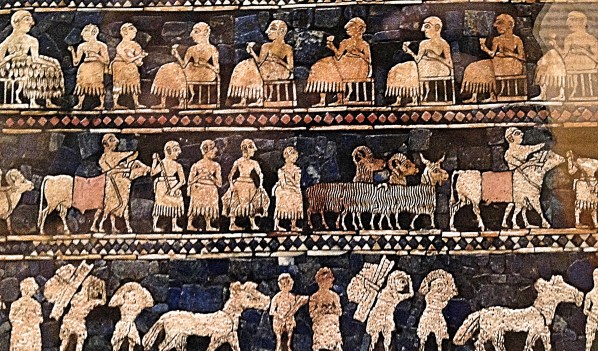
Perhaps the most impressive object in this section is the Standard of Ur. (This is one of the objects chosen in Neil MacGregor’s series, A History of the World in 100 Objects. You can listen to the segment here. I wish I had read the accompanying book, which looks excellent, before my visit to the museum; it’s on my list.)
Detail from the Peace side
It is called a ‘standard’, but nobody really knows what it was used for: a soundbox for a musical instrument or a box to store money for sacred projects—who can say? All we can really determine is that it almost definitely was not a standard, since the drawings are too detailed to be seen from far away. The object dates from 2,600 BCE and consists of a box whose sides depict scenes of war and peace, in three lines of images that look like a comic book. On the war side, we see an army marching off to battle, with armored footsoldiers and men in chariots; below, these charioteers trample enemies underfoot. On the reverse side, we see men seated at a banquet, drinking, while a harpist and a singer provide background music. Below, men are herding animals and carrying sacks of goods on their back, presumably to offer them in tribute to the king.
This standard was found in the site known as the Royal Cementary of Ur, along with objects seen on both the War and the Peace side. Judging from the numerous skeletons in the tomb, it seems that the Sumerians had a practice similar to the Egyptians: upon the death of kings and queens, the royal attendants were put to death to serve their master in the afterlife. I always shudder when I hear about these practices. Drinking poison to follow your king in death seems to be the height of unjust absurdity. I feel angry on behalf of the attendants who lived in oppression and who did not even find freedom in their master’s death. And yet, despite my anger, I can’t help feeling a sort of awe at the level of devotion displayed by this practice. To identify so strongly with a leader that you follow them in death seems hardly human; just as an ant or a bee colony dies with its queen, so these human groups voluntarily put themselves to death.
Violence and oppression thus form the subject-matter of this artifact and surround its discovery. On one side we see the king marching off the war and killing enemies; on the other side the king enjoys the tribute of his hard-working subjects. Nowadays it is impossible to see the society depicted on the Standard of Ur as anything but monstrous: a predatory upper-class stealing from the poor, and then sending the lower-class off to war to defend their bounty and to capture slaves.
But it is worth asking whether the beginning of civilization could have been any different. Humans had just begun farming and forming cities. For the first time in the history of our species, we were living in large, permanent settlements alongside strangers. For the first time, we had enough resources to allow some people in the community to specialize in tasks other than gathering food: priests, soldiers, musicians, administrators, rulers, and artisans. The accumulation of resources always invites raids from without and crimes from within; and fending off these attacks requires organization, leadership, and violence. A community simply couldn’t afford to be anything but authoritarian and militaristic if it hoped to survive. It is an unfortunate fact of human history that justice and security are often at odds—a fact we still confront in the question of surveillance and terrorism.
As a parting thought, I just want to note how remarkable it is that we can look at something like the Standard of Ur—a luxury product made 5,000 years ago, by people who spoke a different language, most of whom couldn’t write, who had a different religion, who lived in a different climate, a people whose experience of the world had so little in common with our own, a people who lived just at the beginning of history—we can look at this object and find it not only intelligible, but beautiful. We experience this same miracle when we read the Epic of Gilgamesh—a story still moving, 4,000 years after it was written down.
In my first anthropology class we learned that humans are cultural creatures, fundamentally shaped by their social environment. But if this were true—if our inborn nature were something negligible and our culture omnipotent—wouldn’t we expect a civilization which flourished in such different circumstances to give rise to art that we couldn’t even hope to understand? And yet, so universal is the human experience that, 5,000 years later, we can still recognize ourselves in the Standard of Ur.
This constancy of our nature is not only manifested in great works of art. For me, the most touching illustration of this are the little baubles and trinkets, the sundry domestic items that give us a taste of daily life in that faraway age. We see the universal human urge to beautify our bodies demonstrated by the jewels of Ancient Greece, Persia, and Egypt, the rings, earrings, pendants, necklaces, armlets, and bracelets which still glitter and charm today—indeed, designs inspired by ancient examples can be bought in the museum store. We see this also in one of the oldest board games ever discovered, the Royal Game of Ur, whose game-board and game-pieces are instantly recognizable by the modern visitor. A cuneiform tablet has also been found which explains the rules, allowing scholars to play the game 4,500 years after its creation (though I can’t find out whether they enjoyed it).
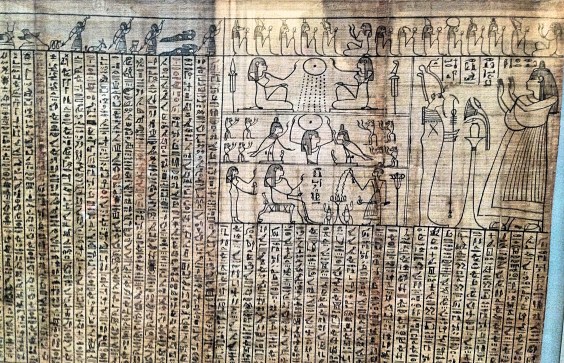
Yet if the continuities are striking, so are the divergences. I feel the gap that separates the present from the ancient past most poignantly whenever I look at a papyrus scroll covered in Egyptian hieroglyphics. Fewer human artifacts look more alien to me than these bits of ancient writing. Lines of simple images—eyes, storks, sparrows, hawks, snakes, scarabs, and many I can’t recognize—run up and down the papyrus, in a parade of symbolic forms. On the top and in the corner are larger drawings, depictions of mythological scenes, illustrations of dead gods and long-forgotten myths. What is most striking is how the writing is a kind of picture, and the pictures a sort of writing; the visual and the verbal are combined into a web of meaning, absolutely saturated with significance.
The thing that is so fascinating about the culture of ancient Egypt is that, for hundreds and thousands of years, through the rise and fall of dynasties and the passing away of dozens of generations, there is a unified, complete, and instantly recognizable aesthetic. It is immediately obvious to any visitor that they have entered the Egyptian section, whether in the first dynasty or the twentieth.
There is undoubtedly something terrifying about this continuity—terrifying that a society based on gross injustice persisted, with its culture nearly unchanged, for a span of time that dwarfs that of our own Western culture. But it is also easy for me to imagine the deep satisfaction enabled by such a complete mythology—a symbolic worldview that decorates every surface, imbues every hour of the day with importance, structures the year and explains the cosmos, penetrates into the depths of reality and even looks beyond the veil that separates life from death. I feel similar stirrings when I look at an illuminated manuscripts from our own Middle Ages, an artifact not so different from the Egyptian scrolls.
In any exhibition on ancient Egypt the mummies are always the stars—those shrunken, dried corpses carefully wrapped and sealed in stone sarcophagi to be sent down the eons. When I was there, a crowd was gathered around a mummy of a woman named Cleopatra, perhaps in the mistaken belief that she was Mark Antony’s famous paramour. Yet the most moving object in the Egypt section, for me, is the colossal bust of Ramesses II. (This was also featured on The History of the World in 100 Objects; you can listen to it here.)
Ramesses II was one of the most effective leaders in all of Egypt’s history. He was born about 1,300 years before the common era, and lived 90 long years, making his reign not only the most iconic, but the longest of ancient Egypt. An energetic general, statesman, and administrator, he was most of all a builder. He presided over the construction of dozens of colossal statues, temples, monuments, and palaces. It was this Ramesses who inaugurated the Abu Simbel complex, whose great temple includes four colossal statues (20 meters, or 66 feet high) of Ramesses himself, carved directly from the hillside. Ramesses was also responsible for the so-called Ramesseum, not a tomb, but a temple complex built for the worship of him, the deified Ramesses, during his reign and after his death.
The bust of Ramesses in the British Museum was taken from this Ramesseum. It is only a fragment: the base of the statue, in which the pharaoh is seated, is still in the Ramesseum. Napoleon’s troops first tried and failed to move the statue; then the British hired an Italian adventurer to do it, who used a combination of pulleys, hydraulics, and old-fashioned manpower. As Neil MacGregor notes, it is a testament to the power and ingenuity of the Egyptians that, 3,000 years later, their statues still require technical tours de forces to move. Imagine the discipline, organization, and sheer amount of sweat and backbreaking effort to move the original stone?
Cracked and battered as he is, the statue still has the effect that its creator intended: the impression of calm omnipotence. The pharaoh looks down serenely from a great height—imperturbable, immovable, eternal. Such a work is clearly the product of a culture in its prime, when artistic execution and social organization were raised to the pitch of perfection. As a mere display of technique, the statue is remarkable: the ability to transport such a massive block of stone, and then to chip away and polish the surface until all that remains is a perfect image of power. And you can imagine how effective these images were as propaganda, in a time before television or telescreens.
In life, Ramesses was as close as any human can get to complete power. In death, he was worshipped as a god. His name and his face have come down to us from over 3,000 years ago. This statue has outlasted whole kingdoms and countries; and there is a good chance it will keep persisting, even when (God forbid) the British Museum is no more. So you might say that, as propaganda, the statue has been an unmitigated success. And yet, Ramesses himself, his empire, and his entire culture—all of them have passed into memory, leaving only their stones and their bones. Impressive as the bust undeniably is, it is also undeniable that it now stands as a sample of Egyptian statuary, to be gawked at by visitors, impressed but certainly not worshipful.
All wood rots, all iron rusts, and everything human turns to dust. Shelley, upon hearing reports of this very bust of Ramesses II, put this sentiment into famous lines:
And on the pedestal these words appear: “My name is Ozymandias, king of kings: Look on my works, ye mighty, and despair!” Nothing beside remains: round the decay Of that colossal wreck, boundless and bare, The lone and level sands stretch far away.
The final irony is that those immortal lines, like Ramesses’s bust, have outlasted their makers and will likely last as long as there are humans who worry about the finitude of life.
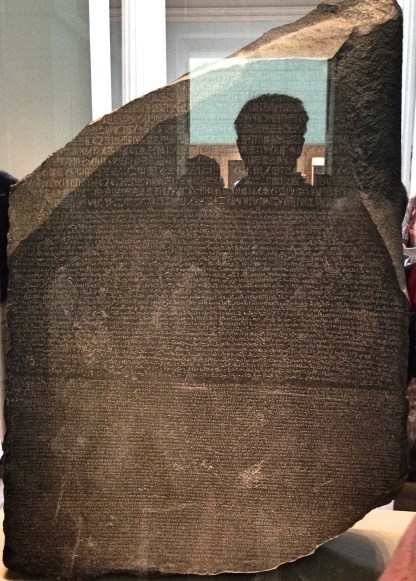
If there is any hope of immortality, it is through the communication of our ideas—something demonstrated most poignantly by the Rosetta Stone. That ancient document—an administrative decree about taxes and tithes—now stands in the British Museum as a testament to the ability of different cultures in different places and times to understand one another. In the modern world it has become trendy to agonize about the impossibility of translation and the gulfs that separate different cultural worldviews. But humans have been translating since the beginning of history; and the very fact that we can decipher a long-dead language, written in an archaic script, using another translation of an ancient language written in another archaic script, shows that communication can transcend wide differences of perspective.
Photo includes a reflection of the writer in the glass
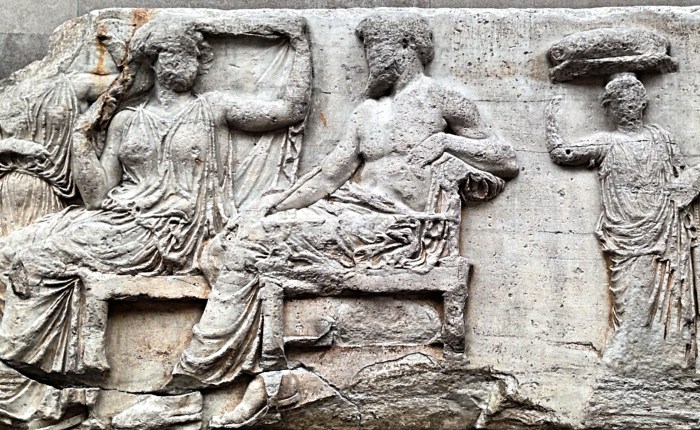
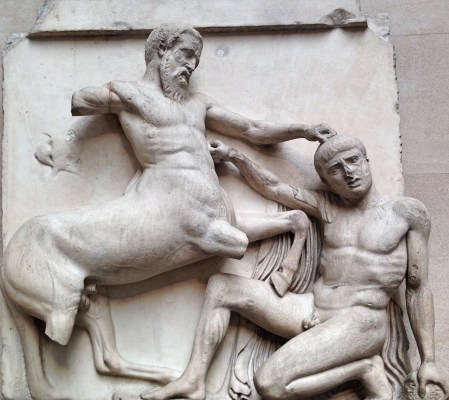
I have already spent far too much space describing the treasures of the British Museum. But I cannot leave off without a mention of the Elgin Marbles from the Parthenon.
The Parthenon, as everyone knows, is the most important and iconic ruin from Ancient Greece. Built during Athens’ golden age as a temple to their patron goddess, Athena, it has been both a church and a mosque in its long life. The Ottomans even decided to use the temple to store ammunition—guessing that their enemies, the Venetians, would never dare to fire at such a hallowed edifice. This guess was incorrect; in 1687 a Venetian bomb detonated the ammunition inside, causing a massive explosion that left only the building’s husk intact. Then in 1800 an art-loving British aristocrat, the Earl of Elvin, in highly dubious circumstances, excavated sculptures and friezes from the ruined Parthenon to decorated his home. But a costly divorce forced him to sell his home and his collection to the British government. As a result, the parts of the Parthenon, in the next chapter of their long and battered history, found their way into the British Museum.
Unsurprisingly, this acquisition is controversial. Imagine if a museum in England had a part of Mount Rushmore. Americans wouldn’t be happy, and neither are the Greeks. The Greek government has been trying to repossess the collection since 1983. There are many arguments averred for sending the marbles back to Greece. The most compelling is the simplest: that the Parthenon is one of the most important cultural monuments in European history, and should be as complete as possible. In any case, the legality of the original transfer has always been questioned: it’s possible that Elvin didn’t have official permission from the Ottoman Empire. In England, public opinion was divided at the time—Lord Byron famously thought it was inexcusable vandalism—and seems to be in favor of returning the collection nowadays. The British Museum is (also unsurprisingly) in favor of keeping the marbles.
For my part, it seems unquestionably just to return the Elgin marbles to Athens. I do admit, however, that I was grateful for the opportunity to see the Parthenon friezes in the British Museum. The display is excellent, allowing the visitor to clearly see the friezes and the statues. If the marbles were inserted back into their original places in the Parthenon (if this is even possible), then they wouldn’t be as clearly visible. And if the marbles were merely displayed in a museum in Athens, then I’m not sure there would be any improvement of presentation. Nevertheless, it does seem that strict justice demands that the marbles be returned.
As for the Elgin marbles themselves—the friezes, metopes, and pediments that line the wall of one enormous exhibit in the British Museum—what is there to be said? The sculptures are likely the most studied and analyzed works of art in Western history; and not only that, they are perhaps the most influential. Almost from the start these works have defined and illustrated classical taste. Indeed, the Parthenon has served as such a ubiquitous model for later artists that it is nearly impossible to respond to them as genuine works of art. They are immediately familiar; you feel that you’ve seen it all before, even if this is your first time in the British Museum.
To the modern eye, the Parthenon sculptures can appear cold, austere, and timeless—perfect human forms carved from perfect white marble. It is scandalous to imagine that these frigid sculptures were once painted with gaudy colors; and inconceivable that, once upon a time, these paragons of artistic orthodoxy were once innovative and daring works that broke every convention.
A visitor to the British Museum can catch a glimpse of the originality of these works if they visit the Babylonian and Egyptian sections first. Moving on from those precursors to the Greeks, you can see obvious continuities—heros and gods, mythological beings and legends, religious processions and rituals—but the changes are even more striking. In the Parthenon, we see a new thing in history: a confident belief in the powers of human intelligence and creativity. Unlike the static and rigid bodies of Egyptian pharaohs, sitting straight up and look straight ahead, we see bodies twisting, turning, leaping, extending, straining—in other words, we see the human body in motion, propelled by its own force. This is not a society that believes in stable order, but in ceaseless striving.
The new perspective is illustrated most clearly by the metopes depicting the centauromachy: the battle between the human lapiths and the half-human half-animal centaurs. In Egyptian mythology, many of the gods were half-animal; and Sumerian palaces were often guarded by the sphinx-like lamassus. In both of these cultures, the natural world, the world of animal life, was seen as a source of power and cosmic order. Yet in the Parthenon the half-animal creatures, the centaurs, are agents of chaos and destruction—creatures who must be conquered and vanquished. For better or for worse, this urge to conquer our own animal nature has been with us ever since.
There are so many more—thousands and thousands more—works that deserve deep contemplation in the museum’s collection, but I will stop here. Yet as I take leave of the British Museum, I want to leave you with one parting thought.
No institution I have seen better illustrates both the enormous strengths and the limitations of the Enlightenment than the British Museum. And because the Enlightenment is very much still with us, it is vital that we understand these strengths and limitations.
Its strengths are undeniable, especially in the context of history. As compared with what came before it, the conception of humanity and history embodied in the museum is undoubtedly an advance. Europeans began to be interested in non-Europeans cultures. Their sense of ancient history began to extend far beyond Ancient Greece and the tribes of Israel. Instead of focusing on their own country or their own religion, Europeans could conceive of humanity as a whole, with a single origin and a common destiny. The museum also demonstrates the democratic spirit of the Enlightenment. The knowledge is put on display for all to see and learn, not sequestered in schools or guarded by jealous academics. Just as the friezes of the Parthenon illustrate the confidence in human intelligence, so does the British Museum exemplify the new, boundless confidence in human reason—the belief that the world is intelligible, that we can communicate our knowledge to anyone, and that our knowledge is not bounded by creed, language, or nation.
But the museum also demonstrates the limitation of this universalist aim. For the idea of a museum that encompasses all of human history relies on the idea that we can create a neutral context in which to understand that history. This underlying notion is clear at a glance: each room—plain, white, full of right-angles—is filled with objects wrenched from their original context. Some of this context is restored, but only as information on panels. My question is: can a modern visitor, looking at a bracelet from ancient Egypt, reading about that bracelet on its accompanying caption, really grasp what this bracelet was to the jewel-maker who created it or the aristocrat who wore it? For comparison, imagine walking into a museum filled with objects from your room, except each object is carefully labeled and sits on its own display. Could any visitor understand what life was like for you?
My point is that there is something inescapably artificial and sterile about the museum. In attempting to create a universal history, a neutral context for information, the museum transforms its objects and imposes a new context. The original meaning of each artifact, how they were used and understood by their creators, is abolished; and instead, each artifact becomes a piece of evidence in a specifically Enlightenment story about the growth of humankind.
To put this another way, the Enlightenment attitude fails to come to grips with how our attempts to understand the world transform what we’re trying to understand. When knowledge is seen as impersonal, existing in a neutral context, simply a matter of seeing and describing, then knowledge becomes blind to its own power. And the British Museum is, among many other things, a demonstration of British power: the financial, political, and military means to scour the world and collect its most valuable objects into one location. It is also a demonstration of British intellectual power: the power to understand all of human history, to see truly and to interpret correctly, to escape provincialism into neutral universality.
I need to pause here. I sound as if I am being harshly critical of the British Museum, and indeed I am. But the truth is that my brief visit was staggering. I saw and learned so much in such a short time that I cannot possibly deny that I think the museum is valuable. The reason I level these criticisms at the British Museum is not because I think this intellectual project it represents is bankrupt or futile, but because, with all its flaws and limitations, with all its political and economic underpinnings, it seems to be the best we have yet achieved in humanity’s understanding of itself. I see these challenges not as reasons to despair—any intellectual project will have its limitations—but as spurs to creative solutions.

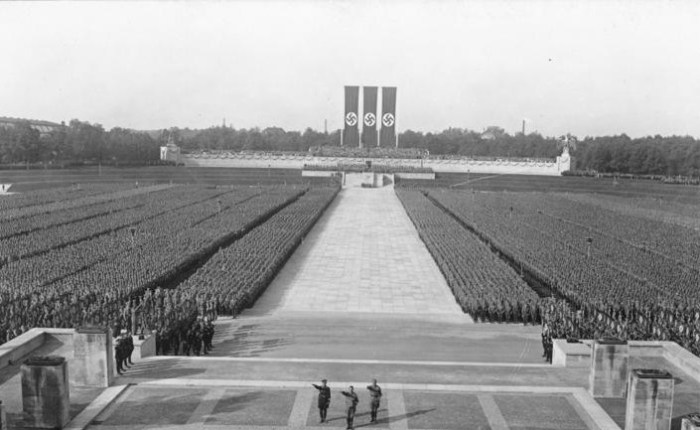
 The Rise and Fall of the Third Reich: A History of Nazi Germany by William L. Shirer

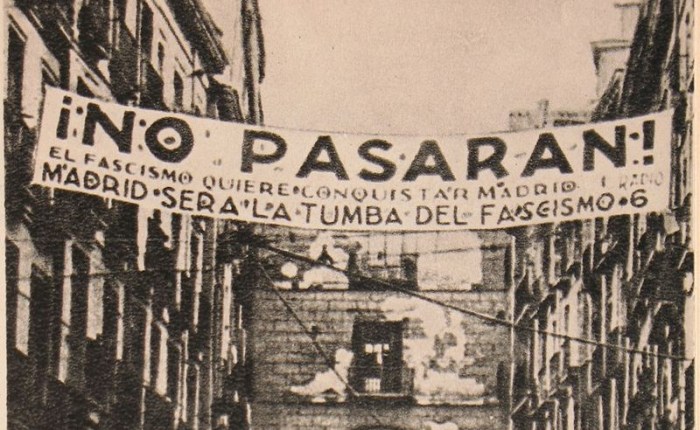
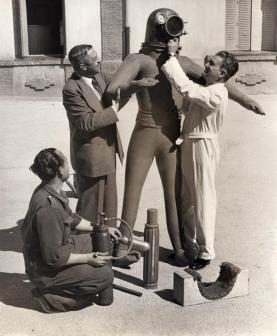


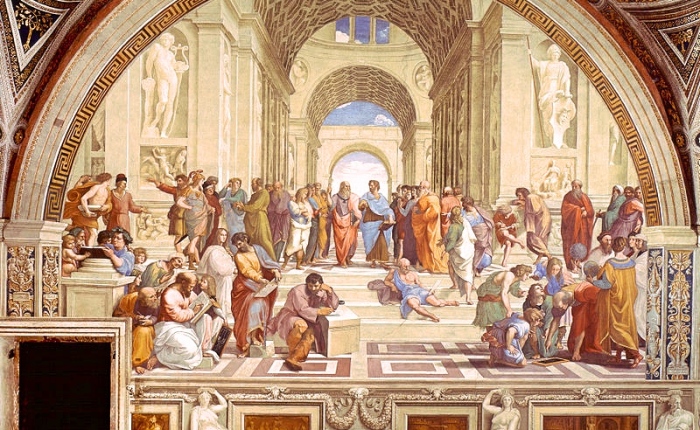
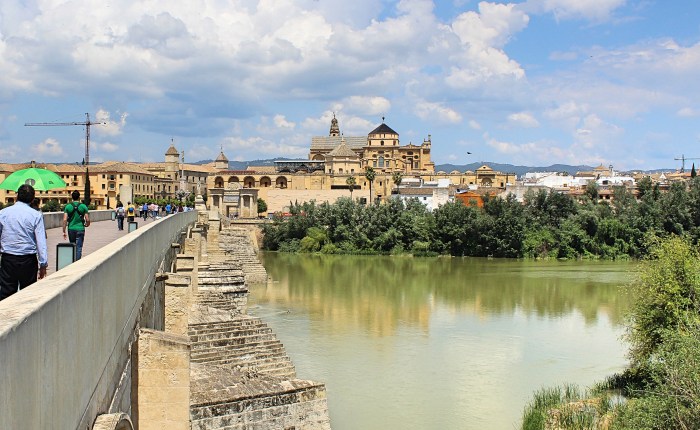


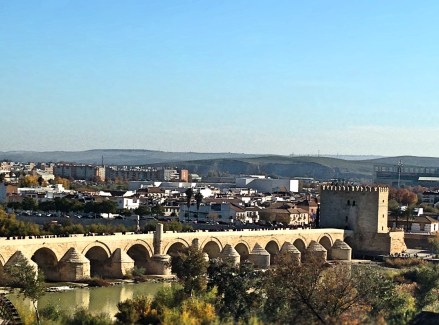
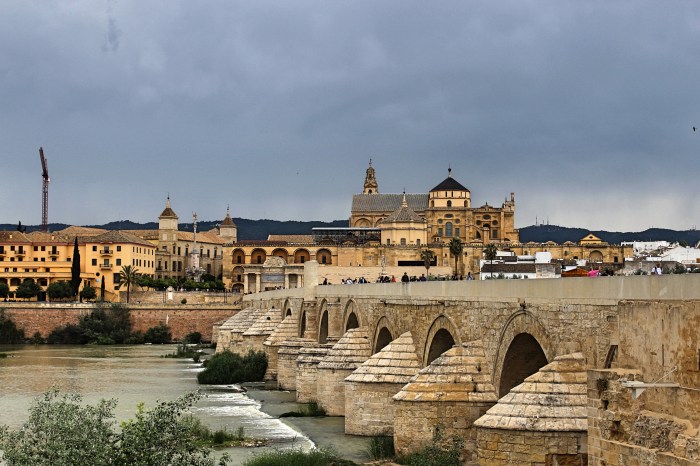


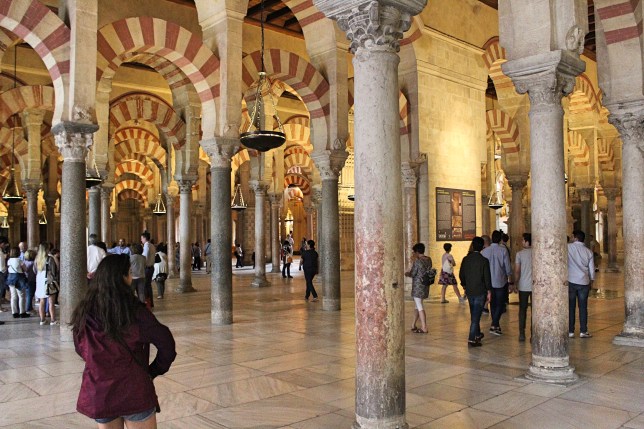
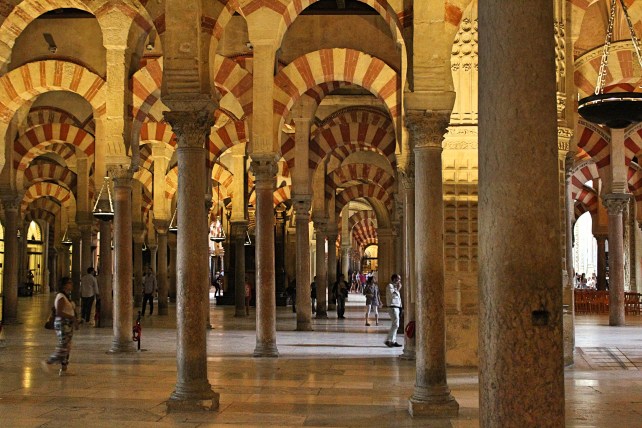 Or was it? In little nooks in the walls were Christian shines, just as in any other cathedral, barred off with a grille and containing altarpieces and religious paintings. But the catholic paraphernalia looked so oddly out of place sitting there—almost as if it had been left there by accident. Of course, this was no accident—and in fact this juxtaposition of styles and cultures, of architectures and faiths, is what constitutes the grandeur and charm of the Mezquita of Córdoba.