This is a series on my trip to Ireland. The other entries are:
- Return to Dublin
- Near Dublin: Brú na Bóinne & Glendalough
- Galway & Inishmore
- The Cliffs of Moher & the Burren
- The Rock of Cashel & Kilkenny
It is a rite of passage for every Irish American to return to the motherland and to visit their ancestral village. Sure, it is ridiculous, and deservedly makes us the butt of jokes. (There is a great SNL skit about this.) After all, it is the most tenuous of connections, a coincidence of genealogy rather than anything genuine. DNA does not remember where it’s from.
But in a country where nearly everyone is descended from immigrants, where identity is constructed out of bits and pieces, and where ancestry can feel bizarrely abstract, there is something therapeutic about going to a physical spot and connecting our genes with soil. At the very least, it gives us a story to tell when we get back.
So it was that, during our drive to Galway from Dublin, we stopped at the town of Longford, where the Farrells supposedly hail from. There were signs of our family name everywhere—literally lining the roads in the surrounding area, as property for sale signs had a Farrell’s name for the realtor. In town, there was a Farrell stationery store. And next to the main road, there was a monument to one James Farrell.
This seemed especially significant, since this is also the name of my late grandfather. But the monument is to someone who passed away before my grandfather was even born—on April 15th, 1912. You may recognize this date: the day the Titanic sank.
James Farrell was, like many of the Irish on board, travelling third class. Just 26 years old, he was bound for New York, in search of better opportunities. He is remembered today for aiding several women escape to the life boats. While the wealthier passengers were being evacuated, those in steerage were kept below deck. James reportedly said to one of the crew members: “For God’s sake man, let the girls past to the boats, at least!” He was obeyed, and several of the women were allowed up and ultimately survived.
This history was hard to fathom while the three of us—my mom, my brother, and myself—looked at the modest monument. “I bet we’re the only people to come here in years,” my brother said. As if on cue, another car pulled up, and out walked—more American tourists. Our search for roots may lead us to see more of Ireland than the Irish themselves.
Fast forward to nearly the end of our trip. Coincidentally, it was my brother’s birthday. To celebrate (perhaps morbidly) we decided to visit Cobh, the last place the Titanic docked before embarking on its fatal voyage.
Cobh is a small town—its population only slightly bigger than my native Tarrytown—located on the southern coast of Ireland. During the days of English colonial rule, it was called Queenstown. After gaining their independence, however, that name obviously would not do; and so the Irish searched for something better. They decided on “Cobh,” the Irish spelling of the English word “cove,” pronounced exactly the same. (The word has no meaning in Gaelic.)
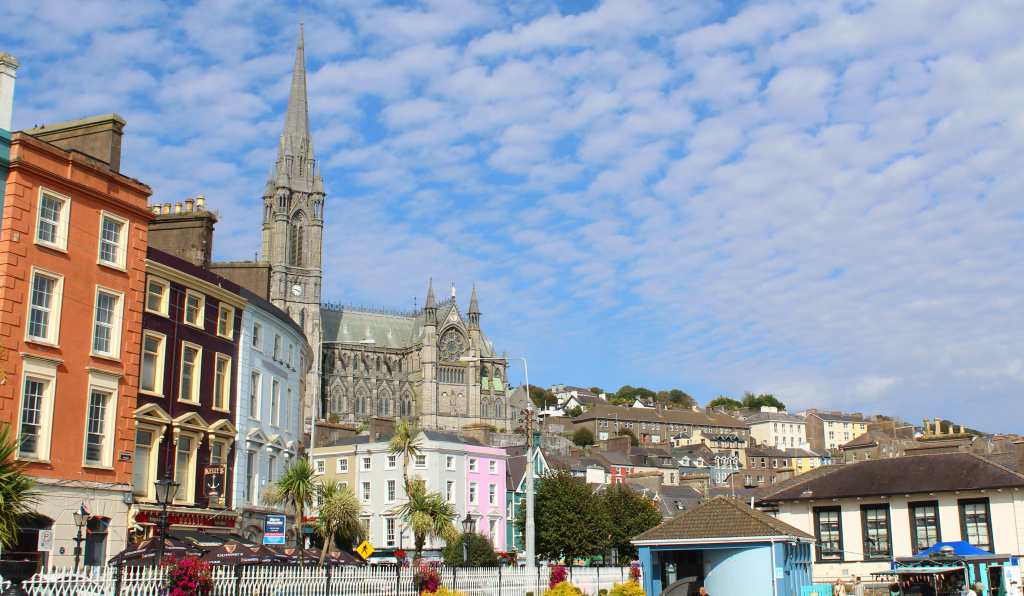
We arrived on a beautiful day, a few fat clouds hanging in the sky like overfed sheep, the water glistening in the bay. After parking the car, we were greeted by the sound of church bells. Cobh, you see, has a strangely magnificent cathedral for such a small town. Built in a neo-gothic style, its single spire soars into the air, dwarfing every other structure in the vicinity.
As we approached, we noticed a crowd was gathered around the church, listening to the bells. Strangely, every one of these people was wearing an identical red fez cap. To add to the confusion, there were also two fellows with Hitler mustaches who were dressed in old-fashioned suits and top hats. We listened, and soon realized that this wasn’t merely the tolling of bells, but a concert. Inside, we could see a video feed of a man playing on a keyboard. The church itself was acting as a kind of enormous instrument.
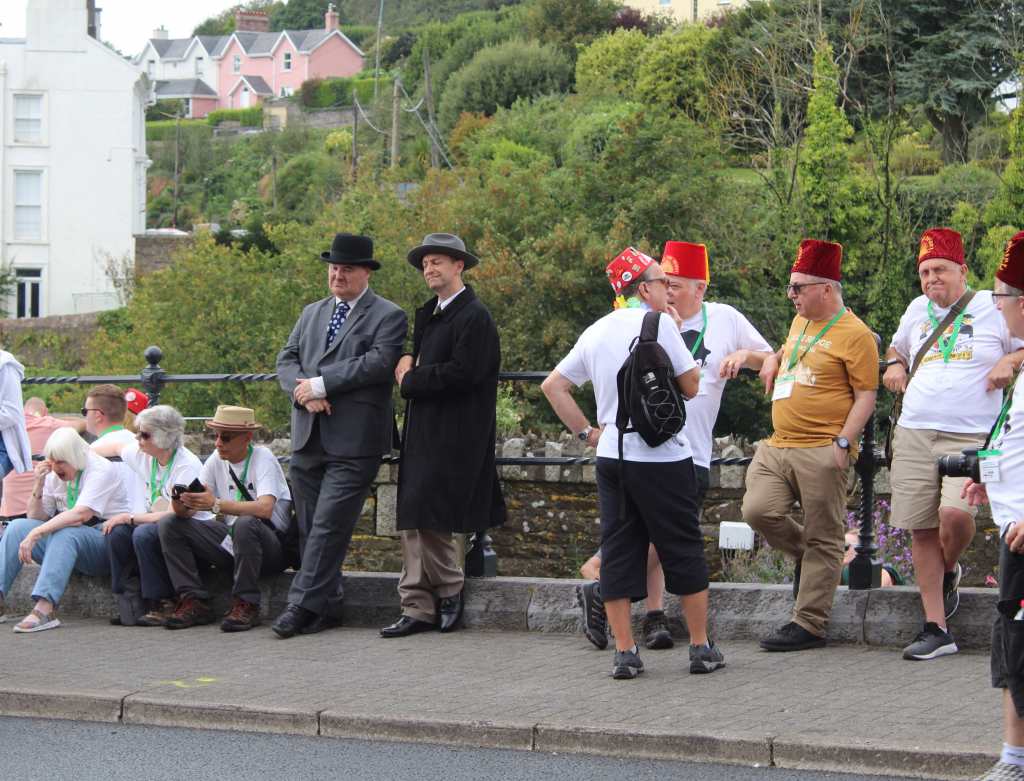
By asking around, we found out that this was all part of a conference of the Sons of the Desert. This is the official fan club of Laurel and Hardy, the legendary comedy duo. The two men with mustaches were impersonators (and quite convincing ones), while the red caps are a reference to a 1933 film, which shares a name with the organization. Even the concert was part of it: the music being played on the church bells were themes from the movies. The whole spectacle was oddly delightful. Although none of us knew anything about Laurel and Hardy, the overwhelming enthusiasm devoted to this niche bit of cinematic history was thoroughly charming.
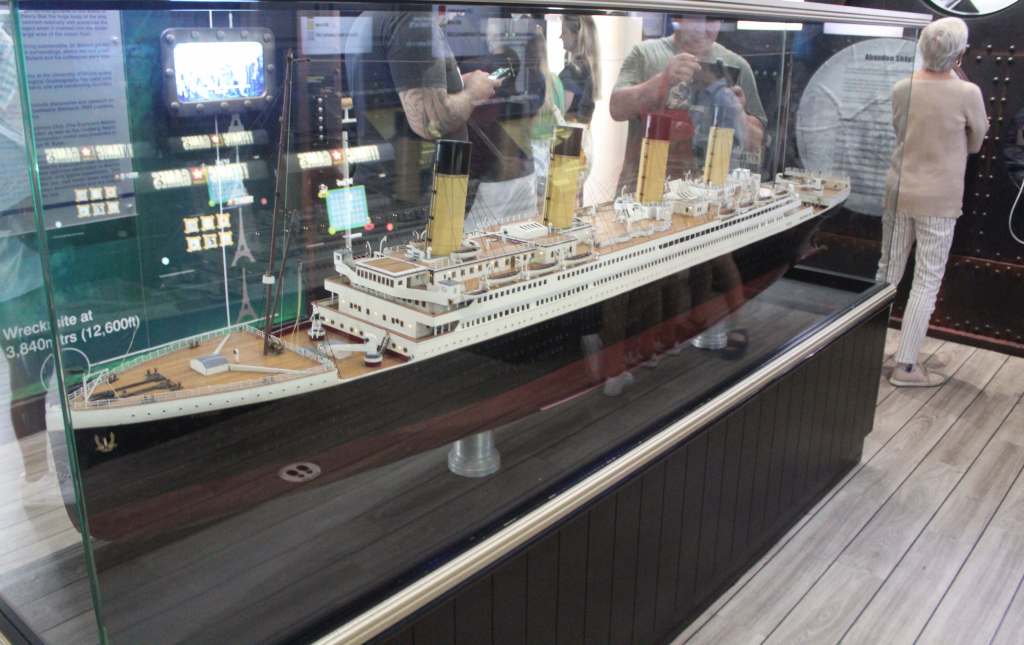
The main thing to do in Cobh is to visit the Titanic Museum—or, as they call it, “Experience.” This is located in the old White Star Line building, where the passengers bought their tickets and boarded the doomed vessel. Each ticket features a profile of one of the 123 passengers who embarked from Cobh (fewer than half survived). The visit itself is a kind of guided tour, which takes you through models of different cabins, tells stories of some individual passengers, and includes a remarkably bad CGI portrayal of the sinking. It is a bit corny and rather touristy, but still a fun way to pass an hour.
The town of Cobh itself is a lovely place—picturesque, cozy, atmospheric. A row of Victorian houses running down a hillside, all of them painted a different color, creates an image reproduced in countless post cards and screen savers. Next to the water, you can see a statue of Annie More, the first Irish immigrant to be admitted through Ellis Island. And though my own ancestors entered the United States years before Ellis Island opened its doors, they must have taken a very similar journey across the stormy, gray Atlantic—the same trip, indeed, that James Farrell was on when his vessel crashed into the ice.
On our drive back to the Airbnb to cook my brother his birthday meal, we stopped at a place we found in our trusty Rick Steves guidebook: Kells Priory.
Kells Priory is not the monastery that gave its name to the famed Book of Kells, which is located much farther north. This monastery was founded later, at the end of the 12th century; and it has a storied past. Attacked and burned on three separate occasions—notably by Edward Bruce, who tried to make himself king of Ireland in the 14th century—the monastery also has an odd connection with witchcraft.
In 1324, a wealthy and powerful woman in County Kilkenny, Alice Kyteler, was accused of heresy by her stepson. A bishop came to investigate the accusation (which unsurprisingly was based on personal resentment) and was imprisoned by the local lord, in this very monastery. Eventually, the bishop was released, but Kyteler had time to flee the country. She was never heard from again. But a poor maidservant, Petronilla de Midia, was accused of being her follower, tortured, and burned at the stake—the first known such case in Ireland.
Like so many other monasteries, Kells Priory was dissolved in 1540, under the orders of Henry VIII, who wanted to remove his kingdom from Catholic power (so as to have more leeway to decapitate his wives). Since this, it has lapsed into one of the many ruins which dot the Irish landscape.
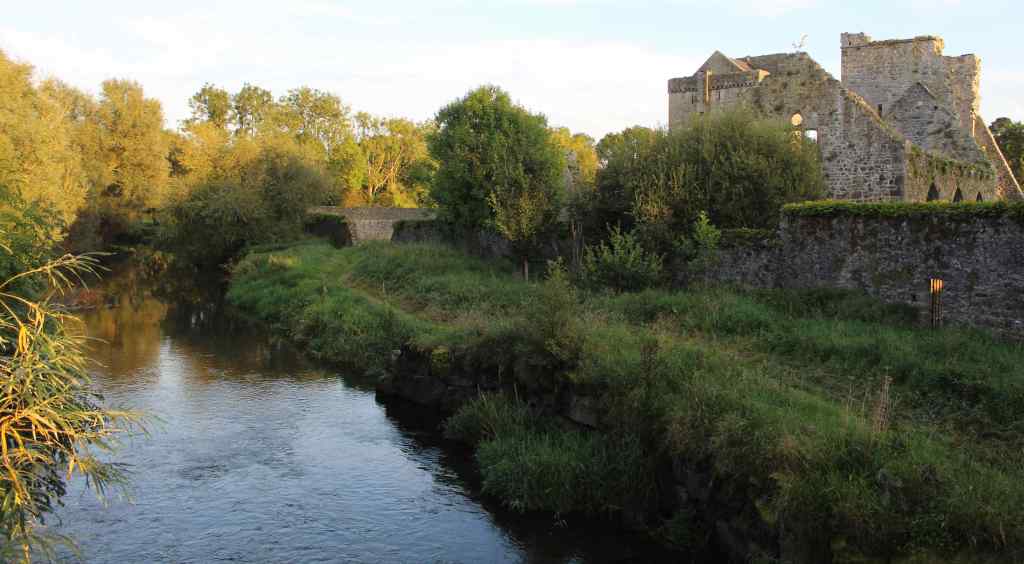
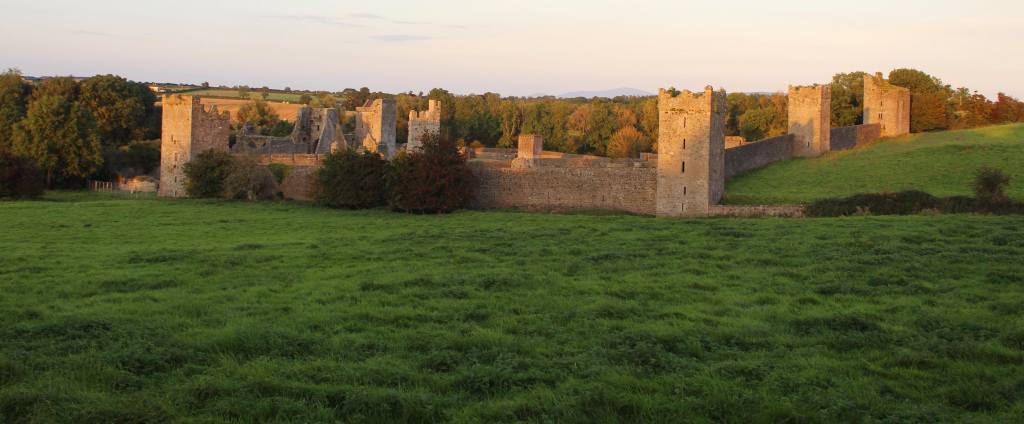
But it is an arresting ruin. Situated in an open green field, the monastery presents itself to the viewer as a collection of towers, connected by a wall. In other words, it looks more like an abandoned castle or fortress than a religious institution—perhaps unsurprising, given its conflicted past.
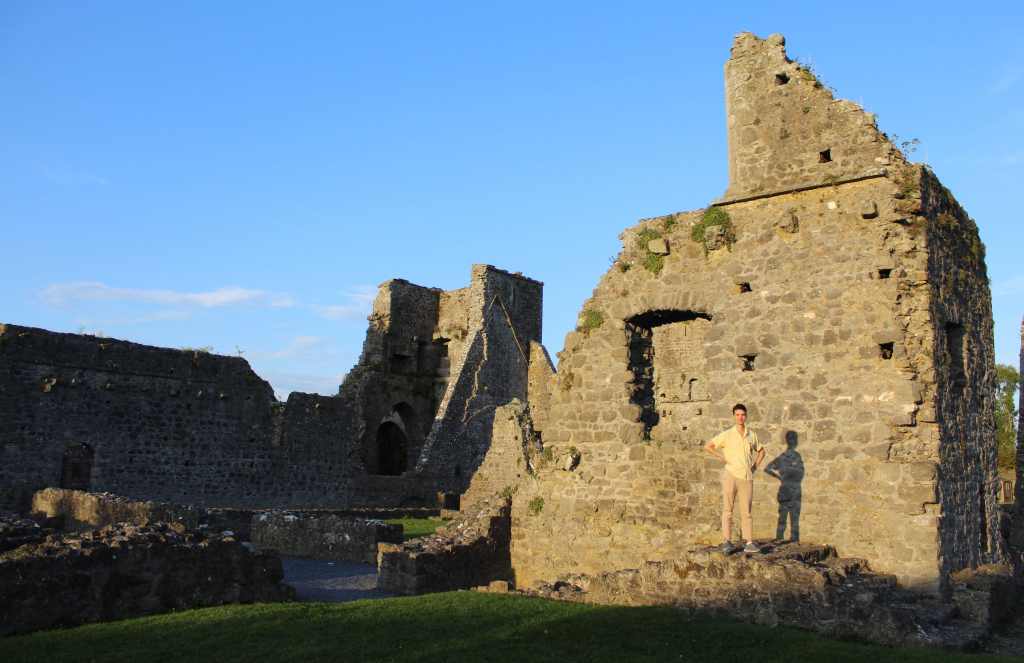
When we visited, we were the only people there. It felt like stumbling upon a secret. With the sun low in the sky, we wandered among the ruins—walking up staircases that led nowhere, balancing on demolished foundations, and passing through empty doorways. The ruins were vast, covering the whole hillside, and yet there was little if any signage. When we got to the other side, we found a river flowing quietly alongside the stony pile, where a few locals were strolling, inured by overexposure to the majesty of the ruins.
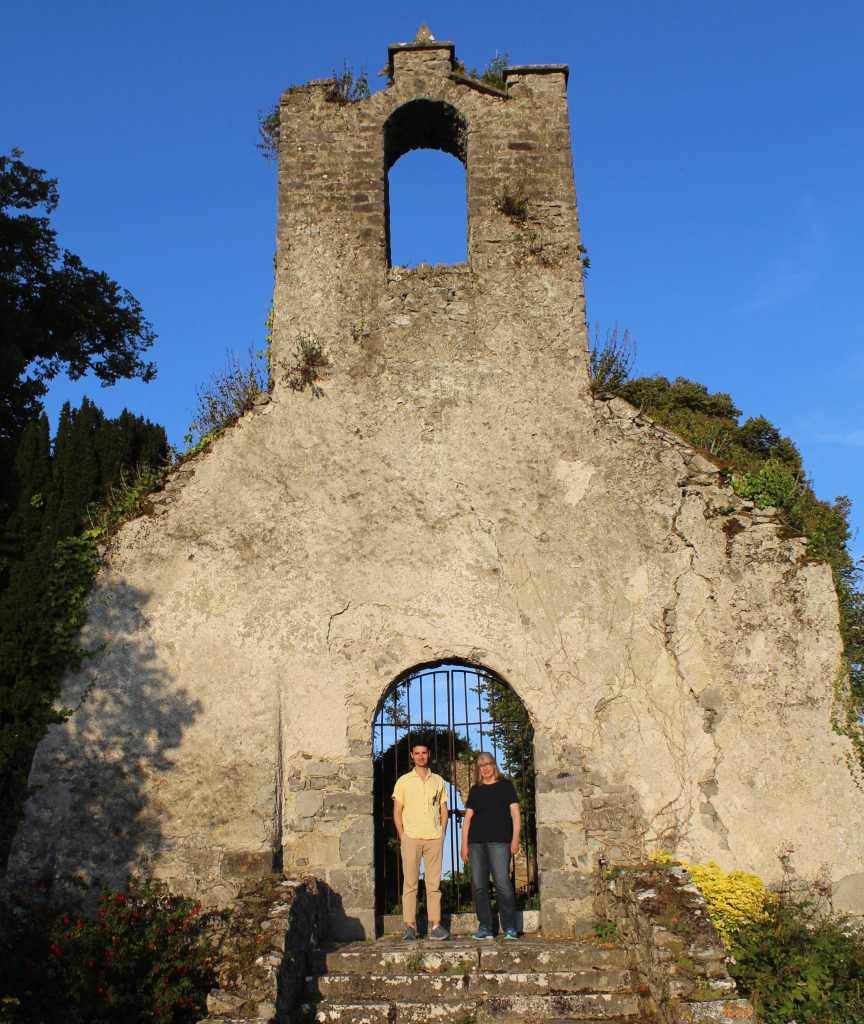
This was not to be our last glance of Irish ruins—that would be Glendalough—but it was the most evocative. To American eyes, such a place deserves to be world-famous. But in Ireland, and in Europe generally, it is a historic footnote—just one monastery among hundreds. In such a small country with such a deep past, the years seem literally piled up beneath your feet, constantly reminding you of the lives which have come and gone. Having grown up in such a place, it must have felt like a tremendous rupture for those like my ancestors to leave this land behind and step foot on a new continent.
The rest of our night was delightful. We went back to the Airbnb—a cottage in the countryside—and cooked birthday pasta for my brother. Then, we watched Irish public television. As soon as we turned it on, we were amazed to be watching Stan & Ollie, the Laurel and Hardy biopic, which features a scene in Cobh. Surely, that cannot have been a coincidence. That movie (surprisingly good) was followed by The Patriot, one of the most anti-British films of recent history. It seemed appropriate for the Republic of Ireland.
It had been a strange day, and yet oddly appropriate for the end of our trip. We had come to Ireland, in part, in order to wring a little bit of meaning out of our past. And in different ways, this is also what we did by celebrating my brother’s birthday, or what the Sons of the Desert did by visiting Cobh, or what the public television did by playing The Patriot. Ireland is, of course, far more than a landscape of ruins, or a playground for Americans to find their roots. It is, as we discovered, a thoroughly charming country—whose people, places, and past all promise a great future.


One thought on “Cobh & Kells Priory”