That it has given a new sense, that it has laid open a new organ, is the highest that can be said of any critical effort.
I had no idea what to expect from these essays. The only reason I became aware of Pater was because a copy of this book was sitting on the bathroom floor in my friend’s father’s house. Since my friend’s father is a successful painter, I naturally took note of a book about art so intimately placed. Much later, after finishing Burckhardt’s famous analysis of the Renaissance, and with my trip to Rome looming, I decided that I would finally see why a painter sought out this book for his bathroom inspiration.
Pater was an idiosyncratic fellow, and these essays certainly reflect that. Some of the topics he covers are expected: Botticelli, Michelangelo, Leonardo da Vinci. Others are more surprising: Joachim du Bellay, a Frenchman who wrote a defense of the French language; two medieval French stories about love and adventure; and Johann Winckelmann, the 18th century German classicist. Clearly, Pater’s conception of the Renaissance was far broader than Burckhardt’s, who considered the Renaissance a strictly Italian affair. Also broad is Pater’s conception of criticism: for him, it is not merely a vocation, but an entire philosophy of life.
I am referring specifically to the famous “Conclusion” that is tacked on to the end of these essays. In it, Pater puts forward a whole aesthetic philosophy of life: Everything is in flux; both matter and mind are temporary; the only thing we have is the moment; and since death may come at any time, and will come inevitably, the only rational response is to enjoy this moment as best you can. Now, some thought that Pater was advocating hedonism, but that is far from the case. He was, rather, an aesthete; and for him, “enjoying the moment” meant finding the most beautiful shade of green in a field of grass, or observing the play of light on a windowpane—that sort of thing. The ability to be constantly, delicately, indefatigably absorbed in one’s senses, and yet have the focus and taste necessary to select from these perceptions the most lovely, is what Pater meant with his famous suggestion to “burn always with this hard, gemlike flame,” which for him is “success in life.”
At times, the age of these essays showed. This was most conspicuous in Pater’s essay on Giorgione, in which he bases his whole appreciation on one painting, elevating it to the height and epitome of Giorgione’s aesthetic—a painting which is now believed to be by Titian. But for the most part, the essays have retained their force and interest. Indeed, you may not realize how original this book was, since it anticipated and shaped so many of our attitudes about art and the Renaissance. To pick just one example, Pater’s discussion of the Mona Lisa, dwelling on her mysterious smile, certainly helped spur on our fascination for that work.
Nevertheless, I am unsure whether Pater actually deepened my appreciation for the Renaissance works he discussed. This is due, I think, to his ideal of the critic: to be acutely sensitive to the power of art, and to be finely discriminating of what is more or less beautiful. Sensitive and discriminating Pater certainly is. (Several times I wondered if he passed out while writing his essays, since, judging by his breathless and insistent tone, he was always to be right on the cusp of a brilliant epiphany or a transcendent experience. It must have been exhausting.)
But notice was is lacking from his ideal of the critic: to analyze, to discuss, to inform. The critics who have most helped me appreciate art are those who taught me about the painting the artist; who showed me what to look for, how best to situated the painting within a certain context; in short, who pulled me into the world of the painting. But since Pater holds up sensitivty and discrimination as ideals, he is faced with the problem: how does one communicate those qualities, which are personal, to somebody else? To do this, he resorts to writing long rhapsodies, reveries, aesthetic ecstasies about the works under consideration. These passages are almost uniformly brilliant, often breathtaking. Nevertheless, it felt more like watching Pater look at a painting, overhearing the thoughts and associations the painting inspires in his brain, rather than learning how to appreciate the painting myself.
I cannot finish this review without discussing Pater’s prose. He is considered to be one of the great stylists, and this reputation is well deserved. The man was such a brilliant writer that it often seemed irrelevant what he was writing about; he could write an essay on the underside of a mosquito and it would be good literature.
This is not to say that he has no limitations. Most conspicuously, he has not even a trace of the epigrammatic. If a point can be made in ten words, Pater will give you fifty, though those fifty will be as finely crafted as a Baroque statue. His sentences never arrest you or stop you short, but rather overwhelm you, burying you under a pile of clauses, metaphors, images, until you’re short of breath and so dazzled that it seems someone has shone a flashlight in your eyes. Comparisons with Proust and Woolf, especially the latter, come readily to mind; but Pater has a manic insistence that makes his writing uniquely urgent.
Another limitation is that Pater seems incapable of that kind of easy grace, that effortless virtuosity, which many of the greatest writers display. Rather, his prose strains every nerve, exerts every muscle, panting and sweating as it pushes itself onward. This impression is, apparently, an accurate one: According to Wiki, he obsessively polished, tweaked, and rewrote his works, until every word, every sentence, every paragraph was just to his taste. This makes his prose like a super-ornate jewel, breathtaking in its designs, its symmetries, and its technical daring; yet for all that rather delicate and precious, and inevitably a bit ostentatious.
I will leave you with a passage from his essay on Michelangelo:
And of all that range of sentiment he is the poet, a poet still alive, and in possession of our inmost thoughts—dumb inquiry over the relapse after death into the formlessness which preceded life, the change, the revolt from that change, then the correcting, hallowing, consoling rush of pity; at last, far off, thin and vague, yet not more vague than the most definite thoughts men have had through three centuries on a matter that has been so near their hearts, the new body—a passing light, a mere intangible, external effect, over those too rigid, or too formless faces; a dream that lingers a moment, retreating in the dawn, incomplete, aimless, helpless; a thing with faint hearing, faint memory, faint power of touch; a breath, a flame in the doorway, a feather in the wind.
A question that I often ask myself, especially now during the election season, is this: What makes a society just? Specifically, what are the criteria that determine whether a law is legitimate or a government is principled? I do not intend this question to be a legal question; whether something is constitutional is for me a secondary matter. The primary matter is this: What are the values on which a constitution is based that make it a worthy document?
Justice consists of the standards by which we determine whether a society is fair.
Justice is always a meta-standard—a standard applied to other standards that allows us to determine whether these other standards are worthy. For example, our standards of justice can be applied to our standards of ethics, to determine whether they need changing. But justice deals with other things besides crime and punishment. Economic justice deals with the fairness of the distribution of economic means; and social justice deals with the fairness of the treatment different demographic groups in the society. All of these, however, deal with the fairness of certain standards, whether they are the standards for determining whether someone should go to jail, make a lot of money, or be treated differently.
The crux of the matter, of course, is what we mean by fair. This is what philosophers, politicians, and virtually everyone else disagree about. The problem is that fairness often seems like a self-evident concept, when it reality it is far from that.
To start, what seems fair or unfair can depend very much on your situation. Let us say a lion managed to grab a gazelle and is about to eat it. From the gazelle’s point of view, this situation is monstrously unfair. The gazelle didn’t do anything to the lion, nor anything to anyone else, so why should it be the one being eaten? From the lion’s point of view, on the other hand, the situation is absolutely fair. The lion was born with certain dietary needs; it has to hunt and kill to survive; it picked the gazelle it found easiest to catch. What’s unfair about that? Should the lion starve itself?
Of course, lions and gazelles have no concept of fairness, so they lack this particular problem. But we have to deal with it. Finding a standard that can satisfy everyone in a given community is, I think, impossible. Every standard of fairness is bound to disappoint and embitter some. This is the basic tragedy of life. We can mourn this, but also learn from it. Since disappointment is unavoidable, and since perspective colors our notions of fair and unfair, it is clear that emotion alone cannot be the basis of a consistent standard of justice. We need something more objective, a clear set of principles that can be applied to any situation.
Let us start, as so many philosophers have before, with people in a so-called State of Nature. By this, I only mean people living without community of any sort—without rules, laws, or government, each person looking out for themself.
In this hypothetical (and wholly imaginary) situation, every person is maximally free. The only restrictions on people’s actions exist through the necessities of life. If they want to survive, the natural people must devote time and energy to finding food and building shelter for themselves. If they choose not to kill another person, it might be because they want that person’s help or because they are afraid of vengeance; but not because of moral scruples or fear of legal persecution. If a natural person finds a loner in the forest and decides to kill him and take his stuff, there might not be consequences. It is up to each individual what to do. Their every action is thus a calculated risk.
There are clearly some advantages to this hypothetical state of affairs. Most conspicuously, each person is a master of themself and does not have to listen to anybody. They can live where they like, how they like; they can eat, sleep, and play whenever they wish. But the disadvantages are also considerable. The main problem is lack of security. Without laws or police, you would always need to fear your neighbor; without a social safety net, you would always live at the mercy of the elements. It would be a life of maximal freedom and constant danger.
To repeat, I am not saying that this ‘Natural State’ ever existed; to the contrary, I do not think humans ever existed without communities, and I am only calling it ‘natural’ in keeping with the philosophical tradition. I am merely using this scenario to illustrate what a situation of maximal freedom would look like—wherein the only checks on a person’s actions are due to natural, and not social, constraints; wherein bare necessity, and not rules, custom, or law, are what guide life.
Now let us imagine what will happen if the people decide to get together and form a little community. This will clearly entail some changes. Most relevantly for my purposes, the people will have to start developing ways of organizing their actions. This is because, as they will soon discover, their unbridled desires will inevitably come into conflict.
If, for example, there are 10 apples and 10 people, it might be the case that each person wants all ten for themself. But when each of them tries to take all the apples, they will of course start arguing. If they are going to continue living together, they need to develop a solution.
Perhaps three of them fashion spears and shields, and use their weapons to impose their will on the other seven. Thus an oligarchy emerges, in which the three masters make the seven slaves gather apples for them, leaving the slaves only the cores for meager sustenance. The masters punish disobedience, hunt down deserters, and grow fat while the others wither away.
This is the classic Might Makes Right solution to the problem of human society. Thinkers since Plato have been grappling with it, and as long as humans live together it will be a constant temptation. Nietzsche would say that a society wherein the strong dominate the weak is the fairest society of all—fairness itself, he might say, since people are being divided due to the natural law of strength and not the artificial law of custom. The devotees of Realpolitik—Thucydides and Machiavelli, to name just two—find this dominance of the strong over the weak inevitable; and the Social Darwinians go further and find it desirable.
Admittedly, the use of force does solve the problem of conflict, albeit brutally. A powerful few, by violent means, can indeed reduce infighting enough to produce a stable society. But I think most people instinctively recoil from the solution as unjust. After all, being born strong, violent, and domineering does not make you any more deserving of power than being born weak, meek, and kindhearted.
But let us a take a closer look. In my society—namely, the modern West—we have attempted (in theory) to create a meritocracy, wherein the most intelligent and innovative people are able to become wealthy. But is a meritocracy of mind any more fair than a meritocracy of muscle? Is it any better to reward the clever than the cruel? Perhaps both systems are unfair, since they reward people based on an attribute that is not within their control. After all, you can’t choose whether you’re born a genius any more than whether you’re born a warrior. Yes, rewarding the bright involves less bruising and bloodshed than rewarding the belligerent; but is it, in the strict sense, any more fair?
I think so, for the following reason. In a meritocracy of intelligence (in theory, at least) everybody possesses the same rights; whereas in a society governed by Might Makes Right, the rulers have different rights than the ruled. A simple example will suffice. If you agree to play chess with your friend, probably you won’t complain of injustice if your friend easily defeats you. Both of you are playing by the same rules, and your friend, either through practice or natural talent, simply operated within these rules more effectively than you did. But if your friend took out a knife, held it to your throat, and declared himself the winner, this would be clearly unfair, because your friend gave himself an extra dimension of power that you lacked.
Admittedly, a true advocate of Might Makes Right can, with total consistency, insist that the situation is still fair, since you could have thought of using a knife, too. Your friend had an idea you didn’t; what’s unfair about that? Using this logic, any rule-breaking can be regarded as fair, since anybody could have thought of any breach of the rules. To repeat, ‘fairness’ is a slippery concept; and some purists would insist that the only real fairness exists in the law of survival of the fittest. After all, aren’t all the rules of society just artificial contrivances used by the weak to entrap the strong? Many have thought so.
All I can say is that the advocates of Nietzsche’s Will to Power and Social Darwinism do indeed have a self-consistent worldview that cannot be refuted without begging the question. Personally, I find a world governed by Might Makes Right immoral. All moral systems, in my view, must exist between equals and benefit each individual who takes part in it. Thus a society based on violent coercion cannot be moral—at least for me—since the members abide by the rules out of fear and not self-interest. Granted, a Social Darwinian or a Nietzchean would have a very different concept of morality so again my criticism is still begging the question. All I can plead, therefore, is that I find Might Makes Right distasteful; so while acknowledging its logical appeal I will focus on other solutions to the problems of human society.
Now let us return to the problem of the ten people and their ten apples. We have considered and rejected the possibility of violent coercion, though my rejection was personal rather than philosophical. (The thorny problem with ‘justice’ is that it deals in fairness; and how do you decide if your standard of fairness is fair? Obviously you cannot without using circular logic, and thus your personal preferences come into play. As you will see shortly, we’re about to encounter this same problem again.)
We shall consider another solution: The community comes together and decides that the apple supply must always be divided equally between its members. Thus with ten apples each person gets one apple; with five apples each person gets a half, and so on. This is communism, of course, and represents another classic response to the problem of human society. Instead of the brutal law of strength, we get the perfect law of equality.
There is a certain elegance and undeniable appeal to communism. After all, what could be more fair than everyone getting the same thing? But upon closer inspection, it is easy to see how a communist system can also be considered unjust.
An obvious consideration is that every person does not have the same needs. If nine people were healthy but one person had a medical problem, would it be fair for every person to get the same amount of medical attention? Obviously that would be absurd; and even a hardliner communist would admit that perfect equality should be abandoned with regards to medical care, since different people clearly have different needs.
But if individuals differ in their needs for medical care, how else might their needs differ? Perhaps one person only feels good after nine hours of sleep, while the others feel fine after seven. Is it then fair to ask all of them to sleep eight? Perhaps not. We can give the needy sleeper a special dispensation to sleep nine hours. But then won’t this person be doing less work then the rest? Isn’t that unfair too?
A trickier problem is distinguishing a need from a desire. We distinguish between the two quite strictly in our language, but in reality the difference is not so clear. To pick a silly example, if nine of the community prefer apples but one abhors apples and loves pears, this pear-lover will be doomed to constant gustatory dissatisfaction if all decisions with regard to the food supply are taken collectively. This sounds quite trivial, but the point is that different things make different people happy; thus giving every person the same thing, while fair with regard to supply, is possibly quite unfair in terms of satisfaction.
An additional possibility of unfairness is differential contribution. In a communist community, some people may work harder, innovate more, and keep scrupulously to the rules; others may not carry their weight, or may otherwise take advantage of the system. In sum, different people will contribute different amounts to the community. Some of this difference will be due to ability, and some to personality. In any case, it is arguably quite unfair that, whatever you put into the collective, you take out the same amount.
The above criticisms are not meant to discredit communism; rather, they are only meant to show that, even in ostensibly the most perfectly fair system, unfairness still exists. (Unfortunately, unfairness of some sort always exists.) As an individualist, I am not attracted by communism because I think people have different needs, desires, and abilities, and that society should reflect these differences; but this preference of mine is obviously of emotional and not philosophical character. In any case, I do not know of any successful large-scale, long-term societies that had a truly communist character (most ‘communist’ countries being so in name only); so I feel justified in moving on from communism as a possibility.
Let us return, therefore, to our ten people with their ten apples. They tried a military oligarchy, and there was a rebellion; then they tried communism, but they grew resentful and dissatisfied. Then somebody has a bright idea: Whoever picks the apple owns it. The picker can choose to eat it, store it, or give it away; but under no circumstances can another person take it without permission; and if anyone is caught stealing the thief will have to pay a three apple penalty. Our society just invented the right to private property. Thus we see the birth of rights as a tool for organizing society.
There is nothing natural or God-given about a right. Rights are privileges agreed upon by the community, and exist by consent of the community. Rights are ways of organizing what people can and cannot do, to ensure that each person has a clearly delineated sphere of free action that does not impinge upon those of others. In other words, rights restrict people’s freedom at the point at which their freedom interferes with the freedom of their neighbors. A right to kill would thus be logically absurd, since if you killed me you would have deprived me of my right to kill. In other words, exercising your right extinguished my ability to exercise mine. This clearly will not do. This is why murder, larceny, and rape cannot be made into rights: They cannot be made universal, since they are actions that by definition involve the violation of other people’s autonomy.
Limitations on people’s actions are only justified insofar as these limitations protect the freedom of others. Anything beyond this is unnecessary and therefore unjust. Thus a law against homicide is valid, but a law forbidding the eating of sesame seeds cannot be justified, since that action does not deprive anybody else of their liberty. The aim is to secure for each individual the biggest allowable range of mutually consistent actions. To accomplish this, it is more suitable to define rights negatively rather than positively. Rights, in other words, ought to be defined as freedoms from rather than freedoms to, in order to secure the maximum amount of available action. This is consistent with the principle that freedom should only be limited at the points at which they interfere with the freedoms of others, since the rights are defined as freedom from this interference.
We return, now, to our apple community. Things are going along quite well in this new system. Then something happens: a man breaks his leg, and thus cannot pick apples any more. He begins to starve, while his neighbors continue happily along. So one night he makes a proposal of a new rule: When a member of the community is hurt, the healthy members must donate a certain fraction of their food to support the injured person during their convalescence. Since anybody can get injured, the man argued, this rule could potentially benefit any one of them. The healthy members disagree with the proposal, arguing that contributing their own food to another person is an infringement of their rights.
Which party is correct? More broadly, I want to ask how disputes like these should be resolved, when members of the community differ in their preferences of rights.
To answer this, I will introduce a Hierarchy of Rights.
Rights can, I believe, be ordered into a hierarchy from more to less fundamental. The measure of a right’s importance is the degree of autonomy that the right entails. Thus the most fundamental right is to life, since without life no other rights can be enjoyed. The right to be free from taxation is, by comparison, less important, since the loss of autonomy suffered through starvation is greater than the that suffered through taxation.
In the above case, therefore, I think the just thing to do is to impose a tax to keep the injured man alive. Contrarily, if somebody wanted to tax the population to build a gigantic statue of himself, this should be rejected, since the freedom to use one’s own money is more fundamental a right than the freedom to build giant statues. Having money appreciably increases your autonomy, while having a giant statue does not, and autonomy is the measure of a right’s importance.
Let us apply this line of thinking to a contemporary problem: Gun Control. Constitutional problems aside, I think it is clear that gun regulation is justifiable within this system. If the freedom to buy an assault riffle is interfering with another person’s freedom from violent death, obviously the first must be curtailed in some way, since it is the less fundamental right. Regulating firearms is thus justifiable in the same way as instituting taxes for welfare programs.
This same line of thinking applies to many other areas of life. We regulate car speed because the right to drive as quickly as you like is superficial in comparison with the right to life; and we regulate the finance industry because the right to speculate on the markets is less important than the right to our own money. In short, some rights are more important than others, since they entail a greater degree of autonomy; and to protect these fundamental rights it is justifiable to limit other rights of less importance.
Failing to distinguish between the importance of different rights is a mistake that I have often encountered. Once, for example, I spoke with a libertarian who argued that everybody should be able to own nuclear weapons. He argued this because, being a libertarian, he thought everybody should have as much freedom as possible. But this fails to take into account that, without limits, your autonomy will at some point interfere with mine. Maximal freedom is simply impossible in a society. The idea of allowing citizens to buy nuclear weapons is an obvious example: If one person used a nuclear weapon, in a flash they would deprive millions of people of their lives, and thus all of their rights. Thus for the sake of protecting personal liberty—not to mention human life—it is necessary to prevent individuals from possessing weapons of this kind. In other words, libertarians should be in favor of limiting access to weapons, since weapons deprive people of their liberty.
Similarly absurd was the argument that gay people should not marry because it offended people’s religious sensibilities. The right to marry is a quite fundamental, being of great social, personal, and financial importance; while the right not to be offended is not a right at all. (Anybody can potentially get offended at anything, since being offended is an emotional reaction; thus it would lead to absurdities to try to ban everything that offends.) While I am at it, polyamorous marriages should also be legal, I think, so long as all the parties consented. In general, I do not see why the love lives of consenting adults should be regulated at all.
The only justification for regulating or banning something is that it could potentially deprive somebody of their autonomy. The highly addictive and dangerous nature of drugs like cocaine and heroine give a compelling case for regulation, since it is possible that the substances compromise people’s ability to choose freely. And if you influence me to try cocaine, and I get addicted, you will have compromised my autonomy just the same as if you’d stolen from me. (This is philosophically interesting territory: Should you have a right to choose to do something that might compromise your ability to choose? It’s a tricky problem, but I think there are good grounds for banning certain substances, both because they cause people to act in ways they regret and, through their repercussions to people’s health, create a strain on the public health system.)
Likewise, I think it is the right choice to regulate, but not to ban, cigarettes and alcohol, since the addictive nature of the first and the intoxicating effects of the second can compromise a person’s autonomy. In the case of marijuana, on the other hand, I think that it is absolutely unjust that it has been made illegal and that people have been jailed for its possession. It is not a powerful drug, and does not limit people’s autonomy to the degree that an absolute ban is justified. More generally, I think many of the laws surrounding drug possession in the United States are good examples of unjust laws—some of them banning substances with insufficient justification, others imposing unduly harsh penalties for crimes of a non-violent nature. (As I wrote elsewhere, punishments are only justifiable insofar as they act as effective deterrents.) But let me return to the main subject.
This hierarchy of rights conception is obviously quite abstract, and without deliberate care will not be put into practice. In the above case of the ten people, I doubt that the one injured party would be able to prevail upon the nine healthy ones to give up a fraction of their food. The poor fellow might starve.
This is a constant danger in any community: the tyranny of the powerful. The powerful might be a majority, a race, a sex, or a class. This is one reason why I think government is a necessary institution in any large community. I do not see, in other words, how justice could be enforced in an anarchic system; and for this reason I am generally hostile to anarchism. Without a government, what would prevent the strong from preying on the weak? An anarchist will easily retort that the government is far from an ethically perfect entity, and indeed the state has often become the very thing we need protection against. This is true, and to prevent this careful measures must be taken.
The strategy used in the United States is a model example: divide up the government’s powers between different branches, with checks and balances between them. A division of powers between different levels of government and regions of the country—in other words, Federalism—is also an excellent practical measure against state tyranny. All the powers of each branch of government must be made explicit in a constitution, thus making any breaches easy to detect. Periodic elections also help to hold the government accountable to the people, as well as to prevent any one individual from accumulating too much power. Sad to say, no government and no constitution will ever be immune to totalitarian impulses, which is why a free press and an active, vigilant citizenry are necessary for a healthy state. But this is an essay on justice, not a plan of government.
The most just societies are those that keep the hierarchy of rights most clearly in view. When a just government balances the right of one person to buy thirteen private jets against the rights of a beggar to have food and shelter, it always sides with the latter. In general, the more resources, power, and privilege you have, the more justifiable it becomes to curtail your rights to your own property with the aim of redistribution. This is the justification behind welfare, food stamps, and Medicare; this is the reason why we have a graduated income tax. If you have one billion dollars, it does not appreciably affect your autonomy to be deprived of a large percentage of your income. On the other hand, government welfare programs allow worse-off people to stay alive and to find work, which are fundamental to their autonomy.
The above sketch is my preferred solution to the problem of creating a standard of justice. A system of rights, ordered into a hierarchy, allows each citizen a definite sphere of autonomy. This is important, because I think every person should be an authority over themself. Nobody knows your needs and desires better than you do; thus you are the person who best knows how to secure your own livelihood and attain your own happiness. Allowing people to order their own lives is not only good for each person individually, but is also good for the society as a whole. When people can think for themselves and reap the benefits of their own innovations, it provides both the means and motivations for a thriving society.
The medulla oblongata is a very serious and lovely object.
When I was in college, I used to get in long and rather aimless arguments with a friend about Freud. The funny thing is, both of us agreed that Freud was fundamentally wrong about most things. The argument was, rather, whether Freud was worth reading and thinking about—and was even potentially useful—in spite of his theories’ veracity. My friend said he wasn’t, and I said he was. I still think this way, which is why, every now and then, I find myself making my way through one of his books.
Probably I should have come to this book sooner. Freud’s Introductory Lectures on Psychoanalysis is his attempt to give an accessible introduction to his system, and is thus probably one of the best places to start if you’re curious about his work. The lectures, given over one academic year, are divided into three sections: the parapraxes (the “Freudian slips”), the interpretation of dreams, and the neuroses. The material is arranged this way for pedagogical purposes, beginning with the simplest and most easily observable phenomena and ending with genuine mental disorders. By necessity, the last section is both the longest and densest.
One thing that fascinates me about Freud is how a system of ideas with paltry factual support could be so seductive and gripping. For my part, I find Freud’s system remarkably attractive; thinking along his lines has an undeniable emotional appeal, at least in my case. In my review of Civilization and its Discontents, I gave a partial explanation of this by likening Freud’s system in outline to that of Christianity. But I don’t think that’s the whole story, and thus I want to explore it further.
While reading this book, it struck me that Freud’s system is comparable with the Aristotelian physics and cosmology that held sway for so long in the Western world. Both of these systems, Freud’s and Aristotle’s, are so compelling and take such hold of one’s mind because they seem to explain everything while offering very little in the way of falsifiable propositions. Aristotelians could throw around terms like matter, form, ideal, potential, perfect, nature, and soul without providing any circumstances in which these concepts could be tested and disproved.
These categories were specific enough to be rationally compelling, and yet vague enough to be applied to nearly anything. Similarly, Freud created a system that could be applied to history, religion, mythology, and literature, while never specifying how its categories—repression, unconscious, transference, libido, censor etc.—could be disproven. It thus gives the illusion of an airtight and exhaustive system while remaining safe from testability.
The main reason that Freud’s theories are untestable is that they rely on interpretation; and interpretations, by definition, cannot be falsified. Now to be fair I think Freud’s system is most plausible, as a therapeutic technique, when he has his patients interpret their own dreams and symptoms. If a patient is free-associating, it makes sense that they might be able to hit upon an emotionally resonant interpretation.
Nevertheless, I think it would still be incorrect to call even the patient’s interpretation the “true” one, since being emotionally affected by something now in no way proves that this same thing motivated a dream in the past. And this is putting to the side the fact that Freud’s explanation for how dreams are formed relies on unobservable processes and entities that he posits in the mind. But let me stop here before I get sucked down the rabbit hole.
To repeat, then, although I think it cannot be proved that any interpretation of a dream is a “true” one, I still think having patients interpret their dreams might help them to explore their own feelings. But when Freud begins enumerating a kind of “key” for dream interpretation, his system gets really unsupportable. According to Freud, certain things always symbolize other things in dreams, irrespective of the individual, their cultural background, or their experiences. And, of course, most of these symbols are representatives of sexual matters:
We have earlier referred to landscapes as representing the female genitals. Hills and rocks are symbols of the male organ. Fruit stands, not for children, but for the breasts. Wild animals mean people in an excited sensual state, and further, evil instincts or passions. Blossoms or flowers indicate women’s genitals, or, in particular, virginity. Do not forget that blossoms are actually the genitals of a plant.
There is an entire lecture like this; and personally I find it so ludicrous that it makes me deeply suspicious of Freud’s judgment. It relies on so many unsubstantiated premises—that dreams have a deeper meaning, that this deeper meaning is always a desire, that this desire is always illicit and sexual, that somehow certain symbols are universal, and that Freud is somehow privy to this information—that it boggles the mind trying to unravel it.
When Freud does offer the explanation for why one thing symbolizes another, it bears a remarkable similarity to the logic used by conspiracy theorists:
And, speaking of wood, it is hard to understand how that material came to represent what is maternal and female. But here comparative philology may come to our help. Our German word ‘Holz’ seems to come from the same root as the Greek [hule], meaning ‘stuff’ ‘raw material’. … Now there is an island in the Atlantic named ‘Madeira’. This name was given to it by the Portuguese when they discovered it, because at that time it was covered all over with woods. For in the Portuguese language ‘madeira’ means ‘wood’. You will notice, however, that ‘madeira’ is only a slightly modified version of the Latin word ‘materia’, which once more means ‘material’ in general. But ‘material’ is derived from ‘mater’, ‘mother’: the material out of which anything is made is, as it were, mother to it. This ancient view of the thing survives, therefore, in the symbolic use of wood for ‘woman’ or ‘mother’.
Clearly this sort of thing wouldn’t past muster in any scientific journal nowadays, and it’s hard to see how it could have been convincing in Freud’s day either.
The above is just one example of the un-falsifiability inherent in Freud’s thought; and this is a big part, I think, of why his system can be so seductive. But there is another reason for its appeal: It is fundamental to Freud’s system to question the motivations of its detractors. That it, the system has a built-in defense mechanism in that anyone who disagrees can be accused of being a repressed individual who can’t face the truth of his own illicit desires.
To take just one example, let’s look at Freud’s discussion of his famous Freudian slip. In these lectures, he claims that all slips of the tongue are caused by a repressed desire that is finding a distorted expression. Now to be fair, there are definitely many instances when this seems to be the case, that somebody accidentally said something they were trying to keep secret. Nevertheless, it is absurd to claim that all slips of the tongue have this origin. For one, you cannot legitimately make a universal generalization from any finite data set. You cannot, for example, claim that all apples are delicious after you’ve eaten 100 delicious apples. Moreover, and once again, finding the “deeper meaning” of a Freudian slip relies on interpretation, and interpretations can never be objectively determined.
But a more troubling problem for me is that Freud essentially asserts that it is impossible to make an innocent mistake. If you are tired and you misspeak, it cannot just be an error, but must be the expression of a deep and terrible desire of which you are not aware. And if you deny this, it only proves Freud’s point; obviously you can’t face the truth about yourself, you are too repressed. Thus there isn’t any way out. You can’t disprove Freud’s interpretation (since it’s an interpretation and can’t be disproven), and all your protestations only make you look more guilty. And this sort of double bind isn’t restricted to Freud’s theories on slips of the tongue, but apply to the interpretation of dreams and neurotic symptoms. I wouldn’t be surprised if Freud argued that any time somebody fell off a bike it was because of a latent death wish.
To be fair to Freud, none of these criticisms is unique to his system. To the contrary, they can be applied to many, if not all, religious and political ideologies. The questioning of other people’s motivation is especially destructive in the latter sphere, and can be found on both the Right and the Left. Democrats only want to expand social security because they’re communists who want to make everyone dependent on the government; they only want to expand background checks to take away everyone’s guns and make them unable to fight against the government tyranny. Meanwhile, poor whites are too dumb to vote for their own interests, those who disagree with Obama are racists, those with Hillary are sexists, and if you disagree it’s your privilege talking.
Don’t misunderstand me: I’m not saying that these accusations are necessarily incorrect, and indeed I think they are often quite compelling. Nevertheless I think you have got to be careful when you questions the motivations of your opponent, because it makes it impossible to have a reasonable debate. Probably it’s best to assume good intentions unless proven otherwise. But this brings me pretty far from Freud.
Or does it? I began by saying how useful is Freud even if one disagrees with him, and I think one way is to see how unsupported ideas can become widely accepted. But of course that’s not all.
Freud was, in my opinion, quite obviously brilliant. His ideas were so original and his thought process so novel that it is fascinating just to see him at work. What is more, even if they lack rigor in a scientific setting, Freud’s ideas, terminology, and system have undeniably enriched how we think about the human experience. That dreams can reveal a deeper meaning, that slips of the tongue can reveal hidden intentions, that desires can be repressed, that traumatic memories can be unconscious, that much of your motivation lies beyond your conscious awareness—all this and more we owe to Freud.
Two weeks ago I was walking through the Thyssen-Bornemisza in Madrid, where there is a wonderful painting by Salvador Dalí: Dream Caused by the Flight of a Bee Around a Pomegranate a Second Before Awakening. The painting, which makes no rational sense, was partly inspired by Freud’s ideas on the dream-logic, how ideas get associated in the unconscious. Thus the elements in the painting are associated, not by reason, but by other chains of association—the sounds of their names, specific memories, visual properties, sexual desires. The entire logic of the painting can thus be said to be Freudian. Now, considering this, can you argue that he didn’t enrich our culture?
It is absurd to think that we can enter Heaven without first entering our own souls
Last week I spend five days walking on the Camino de Santiago. I know, probably that doesn’t sound terribly impressive to anyone who walked all the way from France, but I still had a great time. Every morning we set out before sunrise, when the lush landscape of Galicia was still shrouded in mist and twilight. We walked on and on, guided by the conch shell signs that point the way. We reached our destination just as the heat of the day began to take hold. My back sore, my feet blistered, I dropped my backpack in the hostel and stretched out in my bunkbed. Besides walking, sleeping, and eating, the only thing I did was to read this book: St. Teresa’s book on prayer.
It seemed like an appropriate choice. Both Santiago (St. James) and St. Teresa are patron saints of Spain; and yet they represent two very different periods in Spain’s history. The cult of Santiago dates from the time of the Moors, when Christians needed a figure to rally around during the Reconquista. St. Teresa, on the other hand, lived during the Counter-Reformation. As the Catholic world was coming apart, Catholic officials were understandably skittish at even a hint of heterodoxy. Thus St. Teresa’s mysticism was first viewed with suspicion, and she was even picked up by the Inquisition. But after some investigation, it was decided that St. Teresa posed no threat to orthodoxy; to the contrary, she helped to reinvigorate the faith.
This context is necessary to understand this book, or at least half of it. This is because, although ostensibly guide for prayer, it is also a handbook for avoiding the suspicions of unorthodoxy. It is full of advice for those having mystical experiences on which visions to discount, because they are products of Satan or the imagination, and which visions to accept. Teresa also explains when you should yield to one’s prioress or confessor, and when you should stand your ground. St. Teresa was obviously acutely aware of the paranoid climate, and thus this book is as full of pragmatic counsel as religious guidance. St. Teresa even explains in the beginning that the only reason she wrote the book was because she was commanded to.
As James Michener pointed out, the most striking thing about St. Teresa is this seamless mixture of pragmatism and mysticism. For somebody who reported feeling her soul leave her body, she comes across as remarkably down to earth. Several times, she quotes or references a Biblical passage and then adds parenthetically “Well, at least I think that’s what it says,” as if she couldn’t be bothered to go look it up. She also frequently comments on how inadequate she feels to the task at hand; and a few times she says that she’s unsure whether she is repeating herself, because she wrote the last bit a while ago and she doesn’t have time to reread it. The final effect is really charming, as if she just sat down and dashed off the whole thing between breakfast and lunch.
These interior matters are so obscure to the mind that anyone with as little learning as I will be sure to have to say many superfluous and even irrelevant things in order to say a single one that is to the point. The reader must have patience with me, as I have with myself when writing about things of which I know nothing; for really I sometimes take up my paper, like a perfect fool, with no idea of what to say or of how to begin.
Ironically, but perhaps unsurprisingly, the religious content was what least impressed me. The book is divided into seven mansions within the crystalline castle that represents the soul. Each progressive mansion is one step closer to God. Despite this organization, however, I found the chapters quiet repetitive; the divisions from one stage to another didn’t strike me as very clear. The general tendency is for the mystical experiences to keep growing in intensity, which culminates in the experience of a burning mixture of pleasure and pain that seems to come from nowhere. This is the inspiration for Bernini’s famous, and famously erotic, portrayal of the Saint.
What most bothered me was that the mystical and orthodox strains in Teresa’s thought did not go easily together. Perhaps this is only my taste. One thing I enjoy about mystic writings is their grand conception of the cosmos, the notion that everything apparently opposite and contradictory is one. Thus mystic writers, in my experience, tend not to be especially preoccupied with moral injunctions, since they regard good and evil as a kind of illusion.
But in Teresa, the emphasis on wickedness, on personal shortcomings, on temptation, and in general the whole moral framework of Catholicism made her system as much about avoiding sinfulness and unorthodoxy as achieving a mystical experience. For example, I’ve heard mystics say that each person is a part of God, but Teresa councils that we should contemplate God to realize our own foulness and lowliness. This is just a matter of taste, but I don’t find that appealing.
On the fifth day after we began, at about noon, I found myself standing in front of the two towers of Santiago Cathedral. Later that day, I finished the final pages of this book. I had taken a pilgrimage of the body and soul, and hopefully I’m better for it. In any case, I enjoyed myself and learned something.
About five hundred years ago, a man named Erasmus decided to publish a book praising me. Unbelievably, no one had this idea before, and none since. Nobody has the time or the inclination—nobody besides Erasmus, that is—to sing my praises, apparently. All the other gods get their encomiums, but not me.
Well, perhaps I should take the neglect as a compliment. After all, isn’t it the height of folly not to acknowledge the role that folly plays in human life? So is not the neglect a kind of compliment, albeit backhanded?
Nevertheless, some folks need some reminding, it seems, especially after what happened the other day. Oh, you know what I’m talking about: the United Kingdom’s vote to leave the European Union. All I’m hearing left and right is how stupid, short-sighted, narrow-minded, and above all foolish it was to vote “leave.” Well, I can’t stand my name being dragged around in the dust any longer, so I’m taking this opportunity to peep up and remind you how much you owe me.
First, let’s follow in Erasmus’s footsteps and take a short trip around Europe. As you might already know, Erasmus may justly be called the first true “European,” since he was such a cosmopolitan fellow and traveled everywhere. Even now, the trans-European student-exchange program is named after Erasmus. You might already know that the most popular destination for the Erasmus program is sunny Spain, where lots of young Britons like to go and get a tan. (Guess they won’t be coming anymore!)
Spain’s a lot different now from when Erasmus was alive. Back then, the Inquisition was in full swing and anybody who wanted to hold public office had to prove his “purity of blood,” which meant he didn’t have any Jewish or Muslims ancestors. Nowadays we don’t see that kind of behavior anymore in Spain; the Spaniards decided that it wasn’t such a good idea. But the folks in England apparently disagree: one UKIP candidate, Robert Blay, got suspended after saying his rival “isn’t British enough.” You see, my foolish devotees never disappear, but only migrate!
Yes indeed, Spain is truly different now. Let’s go to the Mediterranean coast to take a closer look. It’s a veritable mini-England! We can find British pubs, British radio broadcasts, British supermarkets selling British products. We can see retired old Brits eating baked beans and drinking tea as they take in the southern sun. And we can meet some Brits who have lived here for over a decade, and who still can’t speak a word of Spanish! Yes, and in between a pint these same Brits can tell you about how terrible is the EU and how there are too many immigrants in England. Oh, my wonderful followers!
As you might recall, it was around the time Erasmus wrote this book that England decided to leave another international organization: the Catholic Church. And the reasons were, I suppose, similar enough: “We don’t want some Italian Pope telling our king which wife he can or can’t behead!” Thomas More, one of Erasmus’s friends, and to whom this book is dedicated, disagreed with this, and he got beheaded along with the wives. Lots of people didn’t like this, but honestly I can’t say it was such a bad move. Executions are decisive, at least. Some people still agree with this strategy, like the guy who killed the politician Jo Cox. It worked for Henry VIII, so it can work for us!
Let’s fast forward a bit in time, to the glorious British Empire. By Jingo, it was big! It stretched across the whole world! Look at how these colonial officers stroll around Mumbai, Nairobi, Hong Kong, Sydney! You’ve got to admire them. They don’t ask anybody’s permission to go anywhere, they just walk right in with their guns and biscuits. Doesn’t take long to subdue the native population when you’ve got the Royal Navy on your side! Sure, this approach didn’t please everybody. But, hey, it was the high point of British history. Nowadays, they’re a bit more worried about foreign immigrants colonizing them than the reverse.
Now you see what a big role I’ve played throughout history. You see how many decisions and opinions I’ve inspired! Oh, but now I hear some people saying that the world would be better off without me. Sure, Folly is important, they say, but that doesn’t mean Folly is worth praising. Fair enough, I suppose. Yes, maybe I do cause a bit of mayhem in the world. And yes, maybe I take things too far. But consider this: For every bad decision I inspire, I also provide the remedy.
For without Folly, do you think people could overcome the sheer hypocrisy necessary for their decisions? Without me, do you think people could congratulate themselves for shooting their own foot? Without my soothing balm, do you think people could go to bed with a clean conscience after doing harm to the world? Do you think British people could simultaneously praise the heroic strength of their culture while worrying that a few thousand immigrants could totally destroy their way of life?
No! Of course not! And since happiness is the goal of life, and happiness is most easily achieved through folly, I think that, despite whatever decision I inspire, I still deserve a lot of praise.
So long live Erasmus! Long live Folly! And long live Little England!
A Spanish woman was saying this to her friend as we passed by.
GF and I both laughed.
“I guess Paris has the same reputation everywhere,” GF said.
Indeed it does. It is amazing to me how many Spaniards have recited the same line to me: “The only problem with Paris is the Parisians.”
I would expect this kind of stereotype to be prevalent among tourists; but two Spaniards who lived in Paris for a long time, and who spoke French fluently, told me the same thing. Why is this image so persistent? Even now we see this stereotype reenacted in movies, television shows, and books. Bill Bryson, in his jejune travelogue of Europe, dwells on this image of the Parisians at length: the snobby, miserable, rude, pretentious Parisian.
Perhaps the person who explained it most memorably was a Blablacar driver from Barcelona who spent three years living there. He said:
“People from Madrid are cocky. But they’re at least happy. People from Paris think they’re better than everyone else, and they’re still miserable.”
In short, the Parisians have an image problem.
Paris, however, does not. Every person I’ve spoken to has praised Paris to the skies. What a strange reputation for a city to have: beautiful and full of assholes. Needless to say I was curious to see for myself.
Not that I needed any additional encouragement to visit Paris. The city’s history speaks for itself. Voltaire, the French Revolution, World War II; the Eiffel Tower, the Louvre, Versailles; the impressionists, the modernists, the existentialists; Ernest Hemingway, Ezra Pound, Gertrude Stein; the art of French cooking, the art of French life—the city has been the center of so much activity that, whatever interest you may have, whether it be painting, cooking, writing, history, philosophy, or just eating, odds are you will be led to Paris.
And I was finally going.
Unfortunately I wouldn’t be there for long. I had to squeeze my trip into a weekend. We would arrive early Friday morning, have all of Saturday to explore, and leave early Sunday.
When I say early, I mean early in the most brutal and cruel sense. In order to book the cheapest flights, GF and I fly when other people don’t. When you’re booking a flight several months in advance, it may sound reasonable to fly at 7 in the morning. But when the date of departure nears, and you realize to make it to the airport, get through security, and be on time for boarding, you have to wake up at 4, this decision may feel somewhat less sensible than it appeared at first. This decision may be especially regretted if, like me, you spend most of the week without sleeping enough, because you teach classes both in the early morning and late at night. And if you’re built like me—tall, leggy, and delicate—you will not be able to catch a wink of sleep when sitting in a cramped seat several thousand feet in the air.
Thus I arrived in Paris with red eyes, a sore neck, and that mixture of panic and mental inactivity that comes with sleep-deprivation. It was in this state that I shuffled down the line to get through customs. (I thought that people coming from Madrid didn’t have to go through customs, since it’s in the Schengen zone, but with the terrorist activity I understand border control has been tightened.)
In my best accent, I said Bonjour to the woman behind the class, as I handed her my passport. She flipped through the passport to the page with my photo and personal information. Then, she flipped to the page before that.
Immediately I felt nervous. Several years ago, on a flight to Kenya, I managed to get toothpaste on my passport (the tube exploded). Unfortunately, the stains are still visible; but fortunately, only the irrelevant first page was affected. Sure, it doesn’t look great, but it’s hardly worth the hassle and expense to get a new one.
These considerations were apparently lost on the customs official who, after turning to the afflicted page, looked up to give me the most unforgettable look. She jerked her neck back, pursed her lips into a duck-billed sneer, and raised her eyebrows with alarm. Then she stamped my passport and rolled her eyes and she handed it back to me. This hasn’t happened to me anywhere else.
I was in France.
More specifically, I was in the Beauvais-Tillé Airport. This is a small and shabby airport, handling about 4 million people annually. (For comparison, the Charles de Gaulle Airport handles about 66 million people annually.) It is marketed by Ryanair as the Beauvais-Paris airport, but this is simply a lie. The airport is 85 km away from Paris. The only way to get to Paris is by bus; the bus costs 17€ per trip, and the ride takes over an hour. Bear this in mind the next time you want to fly Ryanair to Paris.
A long line had already formed in front of the ticket machines for the bus. Apparently, the only way to get a ticket was to use one of these machines; and since everybody needed a ticket, everyone was waiting. The line moved slowly. We stood, shuffled a feet steps forward, and stood.
“I’m gonna go look at what’s going on,” GF said.
She left her bag and went to the front.
“There’s only one working machine,” she said as she returned.
There must have been at least fifty people in line. So here’s another tip: if you plan on saving money by taking an early flight on Ryanair to Paris, and justify this decision with the thought that it gives you extra time in Paris, consider that you will have to wait in line to buy tickets for a bus, and then take a bus ride that lasts 70 minutes and costs 17€. But I was too tired to be feeling regrets.
Finally an employee came out and began working on the broken machines. He pulled them apart, tinkering with the inside, and then rebooted them. As one of them started up, I noticed the operating system: Windows 97. No wonder they weren’t working.
But when the machines sprung back to life, we were able to buy our tickets and go out to the buses. And what do you know? Outside was a ticket booth with real people selling tickets, and a pretty reasonable line. Keep all this in mind for your next trip to Paris.
The countryside around Beauvais
GF slept the whole busride. I listened to an audiobook and looked out the window. The ride from the Beauvais-Tillé Airport to Paris is at least quite nice. It was a lovely, sunny day, and the French countryside rolled past—fields of green farmland with hardly a house in sight. The ride was so different from any I’d seen in Spain. For one, the landscape was flat, while Spain is persistently mountainous. What is more, the lush, glowing green of everything contrasted sharply with the dry, sandy soil near Madrid. And I didn’t even see one castle!
I was just about to drift off when we entered the city. Suddenly, I was filled with excitement. Out the window I could see several skyscrapers. And then, in the distance, I saw that famous form, so iconic and unmistakable—the silhouette of the Eiffel Tower in the distance.
Now only was I in France, but in Paris.
The first thing you will notice about Paris is that it looks like Paris.
Nothing is out of place. You can stroll along the Seine, its dirty, dark green waters flowing merrily while ferry after ferry go by. Along the river, people are selling used books, Japanese prints, and pornographic posters from shabby wooden shacks. Cafés are inescapable and immaculate. There are no gaudy plastic signs, there is no tasteless decoration. The menus are displayed in glass cases; the color scheme is a subdued mix of blacks, greys, and dark reds. The waiters are well dressed; the tables and chairs are of finished wood; the silverware, the plates, the glasses are polished and stylish. Tree-shaded boulevards lead to roundabouts with monuments in the middle. Everything looks antique and lovingly preserved. The city is elegance itself.
Our first stop was the Sainte-Chapelle. I wanted to go there, because I still have a vivid memory of seeing pictures of the Sainte-Chapelle in my art history course. We were covering the gothic, and the professor was explaining how the gothic architects managed to make buildings with ever-large windows—a very difficult feat in a stone building. The apotheosis of this tendency was the Sainte-Chapelle, a building made completely of stained glass—or at least it seems.
The Sainte-Chapelle (Holy Chapel) was completed in 1248, under the auspices of Louis IX. He had acquired some important relics from Venice (including the Crown of Thorns) and wanted a place to put them. Damaged during the Revolution and restored afterwards, nowadays the building is primarily a tourist attraction.
Except for the tall, gothic spire, you cannot see the building from the street. It is now entirely surrounded by another edifice, that wraps around the outside. This building serves as a security checkpoint, through which you must pass in order to reach the inside. This means standing on a line as person by person shuffles through a metal detector. The French are not taking any risks nowadays. Once you get through security, you’ll see burly men with assault riffles strolling around the complex, looking tough and serious. They walk by, looking both reassuring or menacing, depending on your mood, as you wait in the next line to actually purchase your ticket. You can enjoy the exterior of the building as you wait; but unfortunately you cannot see the facade very well, since the restricted area prevents you from getting far enough away.
When we finally bought our tickets, went inside, and then ascended the stairs to the upper chapel, we gasped in unison. The place is stunning. The room seems to be suspended through sorcery; how can such delicate mullions support a stone roof? This illusion is created, as in many gothic structures, by moving the main support outside and out of view, in the form of flying buttresses. But the illusion is perfect.
Light pours in from every direction, turned into a rainbow of colors by the stained glass. The more you examine the glass, the more entranced you become, for the glass is covered with scenes from the Bible. On one side is the Old Testament, and on the other side the New. The ceiling has been painted to look like the night sky; wooden sculptures of saints adorn the interior; and on the wall above the doorway, below the magnificent rose window, is a fresco of Christ enthroned, surrounded by angels. For me, the only thing that the Sainte-Chapelle lacked was the sense of spiritual power and religious awe that I often get from gothic buildings. The final effect is rather purely aesthetic—a sweet, delicious prettiness.
Our next stop was the Louvre. By now we were tired and hungry. We had been awake for a long time, hadn’t slept or ate much, and had been on our feet for much of the day. But I was determined to go. Even before I had any interest in history, art, or Paris, I had heard of the Louvre. Everyone has. It is one of the few art museums with a world-wide reputation, a name respected by connoisseurs and philistines. It was unavoidable.
The Louvre seen from the Musée d’Orsay
Originally, the Louvre was a fortress, built under Philip II in the 12th century, right in the center of Paris on the right bank of the Seine. (You can still see the castle foundations in the Louvre basement.) Many years later, in the 16th century, the building was transformed into a Renaissance palace by Francis I; the Louvre thus bears no trace of the French Gothic style, and is instead a classical construction of straight lines and clean forms. Monarchs stayed in the palace for a while, until Louis XIV decided that he preferred to live in Versailles. Then the building was given to various academies. Finally, during the French Revolution, people had the truly revolutionary idea of transforming it into a public museum to display the Royal Collection. It opened in 1793.
The Louvre is large. It contains multitudes. Its collection spans from the beginnings of Egypt to the present day. You would need several days of persistent, diligent walking to see everything, and perhaps a lifetime to properly appreciate and understand the many thousands of paintings and artifacts. We didn’t have a lifetime or several days; we had a few hours before the museum closed. Thus I only experienced a taste of the collection, and I can only offer you an echo of a taste.
Of course, there’s the Mona Lisa. The painting hangs in the center of the Louvre’s vast collection of Renaissance art. A museum employee stands on either side; a barrier prevents anyone from getting too close; and a thick plate of glass ensures that the painting would survive even if the museum went up in flames. Probably at any time of the day, there is a big crowd around the painting. When GF and I went, it was around dinner time (the Louvre is open late on Fridays), so the crowd was not terrible.
We slowly elbowed our way through the crowd, as the elusive image came into view. It is a very strange experience, seeing a famous painting with your own eyes. The Mono Lisa is perhaps the most iconic image in the world (maybe second to McDonald’s golden arches) so you’d think seeing the original would be akin to a religious experience. But many have told me that they found the painting disappointing.
The most common complaint I hear is that the painting is small. At first glance, this is an odd thing to complain about; the Mona Lisa is a portrait, and has the usual dimensions of that genre. But upon further reflection, this complaint is revealing of the way we experience art in the modern world.
Unlike people living as recently as the 19th century, you have already seen high quality images of the Mona Lisa a thousand times—on television, in movies, on billboards, advertisements, and commercials. This reproduction of the image has turned it into an icon. What makes something iconic is that it stands for more than itself. Originally, the word icon meant a devotional image, of a saint, Jesus, or the Virgin, used in prayer and religious ritual. In theory, the icon is not meant to be the object of religious worship, but merely an aid; the image allows the worshipper to focus his feelings and thoughts on the next world. Thus an icon is not meant to draw attention to itself, but help you think of something else.
The Mona Lisa performs a similar function in our own world, serving as a visual cue for all sorts of diverse associations—Leonardo, the Renaissance, Italy, the Louvre, culture, sophistication, mystery, even painting itself. This use of the image has gradually ruined our ability to really see it; we stop paying attention to the details, just as we stop paying attention to a font when we begin to read a story. Like a word in a book, we glance at the image instead of carefully scanning it. The Mona Lisa has ceased to be a thing in itself, and has become a symbol for other things. And when this is the case, the only difference between seeing a copy and seeing the original can be superficial things, like size.
It would take much patient work to be able to see the painting as it would appear to you for the first time, as a fresh work of art. And when you are standing in a crowd of people, crushed on all sides, surrounded by cameras and iPhones, separating by at least ten feet from the painting itself, it is all but impossible to give the painting justice. I stood there and did my very best; but it wasn’t long before somebody nearby asked me to take a photo of him standing in front of the painting.
“Alright,” I said, as he handed me his camera.
He smiled and then unfurled a sign that read:
“YOU SHOULD BE HERE!”
It would take a library of books to do justice to the Louvre’s collection, so I will only mention a few more famous works. A floor below the Mona Lisa is a sculpture by Michelangelo, the Dying Slave. Originally sculpted for the uncompleted tomb of Pope Julius II, the work depicts the moment of death of a supine and nearly naked man. This seems potentially spiritual and tragic, but to me the sculpture looks inescapably sexual; the figure’s pose and even his face strike me as strangely feminine. Am I alone in this?
The Louvre boasts two Greek sculptures of high repute, the Winged Victory of Samothrace and the Venus de Milo. Both of these works, made before the common era, were discovered in the 19th century. The first is an image of the goddess of victory, Nike, perhaps built to commemorate a naval victory. She seems to be standing on the brow of a ship, her silky garments flowing in the breeze. Unfortunately, the statue’s head and arms have been lost to time; she is now a winged torso on two strong legs. Despite this, the work manages to be supremely expressive, perhaps the most convincing image of triumph I know. The Venus de Milo is a sculpture of Venus, her arms missing, her chest bare, her legs wrapped in a loose robe, leaning on one leg with an arched torso.
The last work I’ll mention is the Seated Scribe. This is a small sculpture of painted limestone, depicting a man sitting cross legged, writing on a piece of papyrus that rests on his lap. Compared to a Greek sculpture, there is nothing remarkable about this work. But when you consider that it was made around 2,500 BCE in Ancient Egypt, you will be able to appreciate just how special it is. The Seated Scribe is unlike any other piece of Egyptian art I’ve seen. First, the very fact that the work depicts a scribe is significant, for Egyptian art typically portrays gods, pharaohs, or perhaps servants and soldiers. What is more, while most art from this period is highly idealized, this sculpture is quite realistic; the scribe has an individualized face and even a paunch. Instead of seeing an image of power, we are seeing a single man, imperfect, frail, and hard at work.
By the time we left, we were both utterly exhausted. We hadn’t slept more than four hours, we hadn’t eaten in about eight hours, and we had been on our feet for about ten hours. My body was a patchwork of pains: my legs were aching, my feet were blistered, my clothes were soaked with sweat, my stomach was grumbling, my eyes were bloodshot, and my head was pounding. GF wasn’t doing much better. And in that state, we dragged ourselves to eat some cheap Chinese food and go to bed. We had another long day ahead.
We awoke early, threw on our clothes, and skipped breakfast. We wanted to get to Notre-Dame right as it was opening, to avoid the extremely long line we had seen the previous day.
This was only partly successful. A line had already formed, though it was only about half as long as the line from yesterday. We dutifully got on and waited. This at least gave me a chance to observe the cathedral’s wonderful façade.
The demeanor of the great building is immediately recognizable and familiar, even to people who do not consider themselves interested in this sort of thing. To me, the cathedral, although undeniably gothic, has a certain classical elegance not found in, say, Toledo. Everything is perfectly symmetrical and harmonious. There is no jumbling of styles or mixture of motifs you so often find in other cathedrals. Although the building took almost 200 years to build, it seems to bear a unified design. (I suspect, however, that a more knowledgeable eye would detect significant differences in style that escaped me.)
Perhaps because the cathedral was recently given a cleaning, nowadays it looks fresh and even youthful. This freshness was accentuated by the beautiful sunny day, to the extent that the spiritual power I normally feel in the presence of gothic cathedrals was somehow lacking. Notre-Dame looked rather cheerful and even inviting. This might be because the building is not so angular as other cathedrals; instead of spires, such as are found in Burgos and Chartres, the towers of Notre-Dame have flat tops.
The line was moving quickly. As I approached, I was able to better see the friezes that adorned the front portals. These are perhaps the most impressive part of the cathedral; for gothic sculptures, they are remarkably naturalistic, while remaining powerfully religious. My favorite was of a man calmly holding his own decapitated head in his hands. This is St. Denis of Paris. Back in Roman times, in the third century, he was the Bishop Paris, and had the good fortune to be decapitated during a persecution of the Christians. Unperturbed by this, the good bishop calmly picked up his head and walked ten kilometers, preaching all the way. People had more pluck back then.
Finally we got inside; and to our surprise, it was free. The place was absolutely swarming with tourists. This is why I don’t enjoy visiting the cathedrals in Madrid and in Lisbon. I enjoy cathedrals not only for the art, but because they are big, quiet places that put me in a meditative mood. But in a dense crowd, watching out for pickpockets, I didn’t feel that I could properly enjoy the ambience. This is a shame, because it’s really a lovely cathedral; the stained glass is almost as marvelous as that in the Sainte-Chapelle.
We were outside in about half an hour, both of us starving by now. We sat down to an overpriced, but quite good, breakfast in a café nearby and then began walking towards our next destination: the Musée d’Orsay.
The Musée d’Orsay is one of the world’s finest art museums. Opened as recently as 1986, the museum is housed in an erstwhile railroad station, Gare d’Orsay, completed right in time for the 1900 World’s Fair in Paris. The place still looks like a train station, with a cavernous, rounded glass ceiling. Wisely, the architects of the museum decided to leave much of the upper space open; and this, combined with the plentiful natural light, makes you feel almost as if you are outside. The layout of the museum is equally tasteful. The galleries for paintings are situated symmetrically on each side, along a central corridor; and this corridor, as well as two walkways up above, has been filled with sculptures, big and tiny.
Unlike the Louvre, the Musée d’Orsay concentrates on a very specific place and time—namely, art produced in France (Paris, mostly) in the mid 19th and early 20th centuries. This may sound a bit narrow, but this was actually one of the most fertile periods in the history of art; and if you want to properly know this epoch, you’ve got to come here. The museum has paintings by Delecroix, Manet, Monet, Cézanne, van Gogh, Signac, Seurat, as well as sculptures by Gaugin and Rodin, among innumerable others. The collection has been chosen with exquisite taste. Every other painting is a masterpiece. Nothing is disappointing or out of place. And best of all, unlike the Louvre, you can see everything in three to four hours.
Walking through the Musée d’Orsay was nearly overwhelming. I have never been more entranced by a museum, nor more affected by visual art. In fact, the experience made such a deep impression on me that I will have to devote an entire post to it. Here I offer only a brief sketch.
I saw everything, drinking up each painting with desperate relish. I watched as the styles changed and evolved. First I admired the academic style of William Bourguereau, who painted mythological subjects—Greek Gods, ancient heroes, scenes from Dante—with technical mastery: carefully arranged compositions, scientific anatomy, photographic shadowing; every shape is molded, every line is deliberate, every brushstroke is concealed. The paintings are masterpieces of technique, and yet stale, because they seem to bear no relationship between the artist and the world; rather, they are monuments to a dying tradition.
In reaction to this academic style, which held sway for so long, came the impressionists. Instead of mythological scenes, the impressionists turned their eye to everyday subjects—picnics, soirées, views of the street from apartment windows. Their compositions are typically off-center and messy. Their brushstrokes are not concealed; colors and lines blur into one another. In terms of technique, it seems a step backwards from Bourguereau, but in reality the achievement is more stunning, for they had to develop their technique from scratch. The final effect is a perfect representation of that moment when, after turning your head, a new scene comes into view, all the colors still buzzing, the light playing tricks with your eyes, the forms indistinct as you try to focus. The rise of the impressionists represents a step away from the Platonic conception of knowledge—namely, a View from Nowhere, a perfect perspective that can grasp the world in its entirety—to the our more Nietzschean view of knowledge—namely, inherently subjective, bound up within a specific point of view.
But the impressionists were only the first step. After investigating the way our eyes detect light, later artists started to probe into the ways that our brains put together the data from our eyes into the world as we know it. With this came the following question: What if the way we tend reconstructed the world is completely arbitrary? Could we make sense of our sense data using a different principle, with equal legitimacy? Thus artists began tearing the world apart, sewing it back together in new or interesting ways. Some artists, like Cezánne, tried to simplify the world into more elemental shapes and colors; others, like Signac, tried using atoms of pure color; and van Gogh used curling waves, as if the world we see were only reflection in an swirling ocean of paint.
Starry Night over the Rhône
By the time I walked through the museum, I was absolutely exhausted. But we still had one more museum to see: the Musée de Rodin. This museum, opened in 1919, devoted almost solely to the French sculptor, Auguste Rodin, who was considered by none other than Kenneth Clark as the greatest sculptor since Michelangelo. The museum is situated in the former Hôtel Biron, where Rodin liked to work. When he died, he donated his sculptures and his collection of art to the French government, on the condition that they make the hotel into a museum. It was done, and is now one of the many charming places to visit in Paris.
The museum consists of an extensive garden and the old building, with Rodin’s sculptures scattered generously throughout. The garden might be the nicest part. There, you can find The Thinker thinking away, surrounded by hedges, as well as copies of almost every one of his major works.
Now, I must admit that my ability to appreciate sculpture lags far behind my ability to appreciate paintings. Even so, it is clear that Rodin was a brilliant artist. While still depicting human figures, largely with realistic anatomy, he manages to break completely from the Greco-Roman tradition. Far from representing idealized forms, Rodin’s figures are human, imperfect, and often ugly. Far from achieving a classical, timeless grace, Rodin’s figures are twisted, contorted, tortured. The Thinker is a case in point: far from a wise philosopher, calm and contemplative, the man is troubled, anguished, and brooding.
One of my favorite works was Rodin’s Gates of Hell. Originally intended to be the doorway for a Museum of Decorative Arts, until the museum was abandoned, the sculpture is now considered one of Rodin’s masterworks, perhaps his magnus opus. It is meant to be an elaborate representation of Dante’s Inferno. Many of his most famous sculptures originated as pieces of this composition, with The Thinker presiding over the entrance. Everything around the pensive man is a stew of sin and suffering, with figures emerging, half-formed, from the background, tortured, broken, their faces wracked with pain. It is a powerful and terrifying work.
But the sculpture I like best is Rodin’s Monument to Balzac. It is really an absurd statue. The writer stands, his body entirely enveloped in a robe, with his mustachioed face held high, as if snubbing the viewer. At first glance, the figure’s pose might seem totally unnatural; but the longer you look, the more you can see how the body of a paunchy man might easily look like this under a thick robe. I love the sculpture because it manages to make something so apparently unheroic into the symbol of human genius. Balzac is totally uncouth. He is ugly, fat, unshaven; his hair is messy, his robe is shabby. And yet, his inner brilliance allows him to stand completely above the world, unconcerned with conventional success, totally devoted to his personal vision. The sculpture is a monument to the outcast, eccentric, and ultimately triumphant artist.
The monument photographed in 1911 by Edward Steichen
After walking through the garden and the old hotel, enjoying not only samples of Rodin’s finished work but preparatory studies he left behind, I was done with museums. I couldn’t possibly absorb any more art. By now the day was waning; in a couple hours, the sun would set. Luckily, there was only one more thing I absolutely needed to see: the Eiffel Tower.
Luckily, it wasn’t hard to find. Standing at 1,063 ft (324 m) tall, the Eiffel Tower remains the tallest structure in Paris. Built for the World’s Fair 1889, it was criticized quite severely in its time, especially by the intelligentsia. This is amazing to me, for it is difficult to imagine how the tower could be more perfect.
For me, and perhaps many others, the Eiffel Tower represents Paris’s Golden Age. It was a time when the future could be embraced without scorning the past, when aesthetic values could be questioned without beauty being abandoned. Made of wrought iron, the structure was so daring that people thought it would be blown over by the wind. I can understand why. Even now, there seems to be so little metal per square inch that it looks like it’s made of matchsticks glued together, ready to come apart at the merest breeze.
You can no longer walk under the Eiffel Tower without passing through a security checkpoint.
There is something human about its shape. Looking at the tower dead on, with only two of its legs visible, the tower seems like a Colossus standing over the world. The tower is also, like Paris, elegance itself. The way that the legs gently curve together until they meet at the top has all the classic grace of the Parthenon. Or perhaps the Eiffel Tower can be better compared with the pyramids, as its creator did. This is the modern pyramid, equally useless, equally monolithic, equally iconic. For whatever reason, I find it tremendously inspiring that people built something so big and so ambitious for no practical benefit whatsoever. To me, this is the essence of being human.
We sat in the grass nearby for a few minutes, just taking in the sight. Men were walking around, trying to sell bottles of wine. I was really in the mood for some wine, but I didn’t feel confident about buying wine from these guys and drinking it in the park. Isn’t it illegal? After shooing away five of them, I decided to go. You can’t really enjoy a view when you’re constantly refusing a drink.
We had only one final stop, and not much time to see it: Montmartre. Montmartre is a famous neighborhood in Paris, with a similar reputation to the West Village in New York. Situated on a hill, in the past Montmartre was a haven for artists, where eccentric bohemians could live with cheap rents. Nowadays, it is mainly a tourist attraction, most notable for the gigantic Sacré-Cœur Basilica. Near Montmartre is the famous Moulin-Rouge, nestled amid countless sex shops. By the way, I wonder how so many sex shops manage to stay in business; you’d think they would all sell basically similar products, and so having so many would be unsustainable. But they manage to stay in business, apparently. I suppose enough horny tourists come to Paris to keep an entire town of sex shops above water.
We took our obligatory photo of the Moulin-Rouge, and then began to walk up the hill. On the way, we passed Les Deux Moulins, the café where the film Amélie was shot. (Great movie, by the way.) Soon we arrived at the top. The white cupola of Sacré-Cœur, lit up by spotlights, shone like a beacon amid the darkness. Gathered round where hundreds of people, tourists speaking dozens of languages, and immigrants speaking dozens more trying to sell stuff to the tourists. Inside the basilica, a mass was being held. Outside, people smoke and drank and laughed with one another. It was a wonderful night.
We walked down the stairs in front to the street below. Then suddenly I saw a flash of light.
“What was that?” I asked GF.
“Dunno,” she said. “Go look.”
I walked over to where some other people where standing.
In the distance, I could see the Eiffel Tower, its form lit up with yellow lights. On the top, a searchlight was slowly spinning, sending a powerful beam in all directions. Seconds later, the light turned towards us again, flashing like the sun itself as it passed. I looked on in wonder. And as I looked, I couldn’t help thinking that this image could represent all of Paris: elegant, mysterious, brilliant, illuminating all the world around.
Ernest Hemingway was, to put it mildly, not an animal rights advocate; but even he felt misgivings before attending his first bullfight—not for the bull, but for the horses. (More on the horses later.) He went for reasons of art; he wanted a chance to see death for himself, to analyze his own feelings about it, in order to escape what he regarded as the trap of the aspiring writer—to feel as you’re expected to feel, not as you actually feel. Much of his book on bullfighting is dedicated to persuading the reader to do the same; he enjoins us to attend at least one show, and to do so with an open mind—to see how it really affects you, instead of how it’s supposed to affect you.
I put down Death in the Afternoon and decided that I would give it a try. But I still felt uneasy about it. Not many things are more controversial in Spain than the bullfight. The country is split between aficionados and those who object on moral grounds. In several parts of Spain, including Catalonia, the bullfight has even been outlawed. It is easy for me to see why people find the custom unethical. Six animals are killed per show, and they are not killed quickly. Nevertheless, from my studies of anthropology I have retained the conviction that you ought to try to understand something before you condemn it. Thus I wanted to see a fight with my own eyes, to analyze my own reactions, before I came to any sort of verdict.
This post will follow that course, first by providing a description, and then my attempt at analysis. Probably everything I say will seem infuriatingly ignorant to the aficionado, but that is unavoidable. I’m a guiri and there’s no escaping that.
The Fight
The big time to see bullfights is in May and June, during the festival of San Isidro. A fight is held every day for eight weeks straight. The fight I saw took place in Madrid’s bullring, Las Ventas. It is a lovely stadium, built in a Neo-Mudéjar style with horseshoe arches, ceramic tiles, and elaborate ornamentation in the red-brick façade. I’d bought the cheapest tickets I could. In any bullring, the price of the ticket depends on the distance from the action, as well as whether the seat is in the sun or the shade (the seats in the shade can be twice as pricey). The seats are hardly seats, just a slap of concrete. You can rent a pillow to sit on for €1, which is probably a good idea.
Las VentasThe stadium was completely full; the vast majority of the crowd were not tourists, but Spaniards. Unlike flamenco, the bullfight has retained a strong fandom among the natives here. There were people of all descriptions: young children, teenage girls, twenty-something men, married couples, and senior citizens. Almost everyone was dressed in their Sunday best.
A bullfight is a highly organized affair. Each event has three matadors; each matador fights two bulls—not consecutively, but by turns. The matadors fight in the order of reputation, with the most famous (and presumably most skilled) matador taking the last turn. A complete fight takes less than fifteen minutes. It is divided into three parts, each announced by a trumpet blast.
First the bull runs out, charging into the arena at full speed. The bull is fresh, energetic, and haughty. It charges at anything that moves, trying to dominate its environment. This bull has hardly seen a dismounted man before in its life; it has been reared in isolation, to be both fierce and inexperienced. Before anything can be done with the bull, the bull must be tested. Thus the matador and his banderilleros begin to provoke the bull. To do this, they are each equipped with large capes, pink and yellow, which they use to attract the bull’s attention. It runs at them, and they hide for safety behind special nooks in the arena’s edge. Sometimes the bull tries to pursue them, ramming the wooden wall with his horns; but there is nothing the bull can do once they get into the nook.
Hiding from the bullThe only person who comes out and stands in the ring is the matador, who performs some passes with his cape. Really impressive capework is impossible with the bull at this stage, since it is too vigorous and belligerent. But these passes are not for show. The matador needs to see how the bull moves, the way it charges, whether the bull favors any specific area of the arena. Each bull is different. Some will charge at anything, and others need to be coaxed. Some are defensive, others offensive. Some slash their horns left and right, and others scoop down and lift up. The matador needs to know the bull to work with it.
Testing the bull(It sometimes happens that they decide the bull is unsuitable. This happened once during my show. Suddenly everyone left the ring, leaving the bull alone. Then the gates opened, and half a dozen heifers ran into the ring. The bull, seeing the heifers, immediately calmed down, and followed them out of the ring. I assume that the bull is killed in this case, since it isn’t useful for anything; a bad bull won’t be bred, and a bull cannot be fought twice, since they learn from experience.)
Next the picadores enter the ring. These are men armed with lances, riding on horseback. The horses are blindfolded and heavily armored with padding. The bull is led by the bandilleros towards the horses and provoked to attack. For whatever reason, the bull always tries to lift the horse on its horns. This doesn’t work, because the horse is significantly bigger than the bull; indeed, the horse seems hardly to react at all to the bull’s attack. Meanwhile, the picador stabs the bull in its back, jabbing his lance into a mound of neck muscle. As the bull ineffectually tries to lift the horse, it drives the spear into its own flesh. The pain is usually enough to discourage the bull after about a minute. By the end of the ordeal, the bull’s back is covered in blood.
A picador facing a bull(In the past, when Hemingway wrote his book, this part of the bullfight was considerably more gory. The horses wore no armor, and were thus often killed. There are some terrible photos of horses being impaled in Hemingway’s book. The bull would rip them apart. The picador thus had a narrow window to do his job, and would often end up on the ground, pinned under his dying horse. I am glad that this isn’t the custom anymore, though doubtless a purist like Hemingway would mourn its passing.)
The bull gives up, the picadores leave the ring. Next the bandilleros must further weaken the bull. They do this by stabbing barbs into the same area of the bull’s back. This is a really dangerous job. The bull must be running straight at them in order to drive the barbs deep enough into its muscles. The bandillero runs at an angle to the bull’s charge, holding the barbs high above his head with outstretched arms, and stab the bull right over its own horns. The pain makes the bull pause for a second—which gives the bandillero much needed time to get the out of there. Even so, the guys have to run like hell, and often end up jumping straight over the wall out of the arena in order to escape. Three pairs of barbs must be speared into the bull. These barbs, which are covered in colorful paper, don’t fall out, but hang from the bull’s back for the rest of the fight.
A bandillero preparing to attackFinally the matador enters the arena. This is the culminating phase, the part that everything else has been leading up to. By now the bull has been thoroughly weakened. It is tired, injured, and, most importantly, disillusioned of its own power. The bull does not charge at anything that moves anymore, but conserves its strength carefully; it does not heedlessly waste its energy sprinting across the field, but makes more calculated attacks. The bull also holds its head lower, and does not slash with its horns, since its neck muscles have been damaged. In this state, the matador can work with the bull.
The matadorWith a red cape in one hand and a sword in the other, the matador dominates the bull. It is incredible to see. In just a minute, the bull goes from a dangerous, wild animal to mere clay in the matador’s palm. The matador can let the bull pass within a hair’s breath of his chest; he can stand a mere footstep in front of the bull’s face; he can turn his back and walk away. The bull is completely under his control. I cannot imagine the amount of time spent around bulls necessary to achieve this seemingly mystical ability.
Working up close with the bullAfter about three minutes of capework, wherein the matador lets the bull come nearer and nearer to him, then it is finally time for the kill. The matador walks to the edge of the ring and exchanges his sword for a heavier one. (What was the first one for?) A hush comes over the ring. Hundreds of people hiss, urging all conversation and cheering to stop. The matador stands before the bull, holding the sword above his head. With his left hand, he shakes the cape. The bull charges, the matador lunges with his sword, stabbing the bull over its horns and into its back. The crowd erupts in applause. The bull begins to stagger. The bandilleros come out, sweeping their capes at the bull, who is now too weak to properly attack. Finally the bull gives up. It limps away from its harassers, making its way to the opposite corner of the ring. But soon it loses its strength; its legs collapse and it falls to the ground. A bandillero walks over and finishes it off with a dagger.
The fight is over. The bull’s body is tied to a team of mules, and dragged around the arena in triumph before being removed from the ring.
Reaction
The bullfight is not considered a sport, but an art form. This is important to note, for as a sport the bullfight would fail utterly. There is no winning or losing, only a beautiful or an ugly performance. There is also hardly any element of suspense, since every bullfight follows the same course and ends the same way.
Of course there is a certain unpredictability to a fight, since everyone who enters the ring risks his life. No matter how much you practice around bulls, you cannot eliminate the chance of being gored. During my show alone, the bulls managed to knock down two people, and probably would have killed them if the others hadn’t managed to quickly get the bull away. But the occupational hazard of being killed by the bull, while certainly integral to the fight, is not what excites aficionados. Rather, it is the skill and artfulness of the matador they enjoy.
It does not take an imaginative eye to see symbolism in a bullfight. The bull is a force of nature. It is stronger and faster than any man, a heedless, seemingly indomitable force that will indifferently trample anyone in its wake. The bull is elemental. It is fought by men in elaborate costumes, following a prescribed ritual. The bull moves with violent impulse; the men move with elaborate grace. The bull stands on four legs, his dark brown body close to the ground; the men stand on two legs, holding their brightly clad bodies rigidly erect.
The men defeat the bull because they have intelligence. The bull cannot understand the difference between the cape and the man, and thus all its strength is wasted in pointless attacks. The men use an animal they tamed—the horse—as well as tools they invented—the pike, the barb, the cape, the sword—in order to dominate and vanquish the bull. Thus the bullfight dramatizes the triumph of human intelligence over mindless power, the victory of culture over nature.
Or perhaps you can interpret the spectacle as a psychological allegory. Bulls have been a symbol of the beastly side of human nature since the story of the minotaur in the labyrinth, and probably long before. The bull thus represents unbridled instinct, the untamed animal that lurks within us, the impulses that we have but must repress in order to live in society. The matador controls and then destroys these impulses, restoring us to civilization. In this light, the bullfight represents the triumph of the ego over the id.
In any case, the spectacle is meant to be tragic. The bull is a beautiful, noble animal, who fights with tenacity and courage. The bull is feared, respected, and envied for its power and its freedom. The tragedy is that this sublime animal must be killed. But its death is necessary, for the bull represents everything incompatible with society, everything we must attempt to banish from ourselves in order to live in civilization. To be absolutely free, as free as an untamed bull, and to be civilized are irreconcilable states. Living in society requires that we give up some freedom and remove ourselves from the state of nature. Although we gain in peace and security from this renunciation, it can still be sorely regretted, for it means leaving some impulses forever unsatisfied. Thus we identify with the bull as much as with the matador; and even though we understand that the bull must be killed, we know this is terribly sad, because it means a part of ourselves must be killed.
This is how I understand the bullfight. I am sure many would find this interpretation terribly jejune. But the more important point is that the spectacle is one that can be seriously analyzed for its aesthetics. It is not a mere display of daring and skill, but an artistic performance that touches on themes of life and death, nature and culture, animal and man. It is as ritualized as a Catholic mass, and just as laden with symbolism.
But is it moral? Should it be tolerated? Is it ethical to enjoy the spectacle of an animal getting wounded and then killed? Is it wrong to cheer as a matador successfully stabs a sword into a living creature?
Ernest Hemingway had this to say about the morality of bullfighting:
So far, about morals, I only know that what is moral is what you feel good after and what is immoral is what you feel bad after and judged by these moral standards, which I do not defend, the bullfight is very moral to me because I feel very fine while it is going on and have a feeling of life and death and mortality and immortality, and after it is over I feel very sad but very fine.
If I adopt Hemingway’s view, and take my emotional reaction as the basis of my moral judgments, then I must come to a different conclusion. Of course, I had many emotions as I watched. First I was impressed by the spectacle of the bull charging across the arena. Then I admired the stoicism of the horses as they withstood the bull’s attacks; and I felt pity for the bull as the lance was driven into its back. I was again impressed by the physical courage of the bandilleros as they let the bull charge full speed towards them. And of course I was filled with awe at the skill of the matador, who sometimes seemed more god than man.
But finally I was disgusted. Hemingway described the bull’s death as a tragedy, but for me it was not sad; it was sickening. I felt weak, dizzy, and nauseated. And it was not the type of nausea that I get in long car rides. It was a feeling I’ve had only a few times before. The first time was in the sixth grade. I was performing a dissection on a pig in science class. My partner was a vegetarian, but I was the one who had to leave midway through, because I thought I would vomit.
During that dissection, I felt that I had swallowed a stone, that I was covered in filth, that my blood was rancid, that my skin was alive and crawling. I had this same feeling when I saw a goat have its throat cut open in Kenya, and I had this same feeling as I watched a bull struggle across the arena, its chest heaving, its legs shaking, blood dripping from its mouth, only to collapse into a heap of quivering pain, and die.
If I followed my emotions, I must condemn the bullfight as unambiguously immoral. But I have read enough psychology to know that emotional reactions can often be illogical. And I have read enough Nietzsche to know that moral judgments are often hypocritical and self-serving. Indeed, as somebody who eats meat, I feel odd drawing a line between a bullfight and a slaughterhouse. Does it really make such a big difference if the animal is killed painlessly or not? We do not make this distinction with humans. You simply cannot kill a human “humanely,” though we think we can kill animals that way. So if I want to condemn the bullfight, ought I to become a vegetarian?
Hypocrisy aside, I have trouble deciding how animals should be considered in a moral framework. As I have written elsewhere, I think humans can be held accountable for their actions because they can understand their consequences and alter their behavior accordingly. Bulls obviously cannot do this; a bull cannot reason “If I kill this man, I will be killed as punishment.” Thus a bull cannot be held accountable in any moral framework; and this also means that a bull cannot enjoy the protection of moral injunctions. The golden rule cannot be applied to an untamed animal—or to any animal, for that matter.
For this reason, I am not against meat eating or hunting (except endangered species, of course). But bullfighting is distinguished from those two activities by the amount of pain inflicted on the animal, and all for the sake of mere spectacle. Now, I can understand why this didn’t bother anyone in the past. Death and suffering used to be far more integral to people’s lives; infant mortality was high, childbirth was dangerous, and most people lived on farms, constantly surrounded by birth and death. But nowadays, as we have banished death to slaughterhouses and hospitals, seeing an animal stabbed and killed before our eyes is shocking and gruesome. The reason the bullfight is tolerated is because it is cloaked in ritual and hallowed by time. The tradition and aesthetic refinement stops people from seeing the bullfight as animal cruelty.
As I said before, animals cannot operate within a moral system, so they cannot be protected by moral codes. The morality of bullfighting is thus not a question of the bull, but of us. How does it affect us to watch a creature suffering without feeling compunction? How does it change us to witness a ritualized death and to cheer it on? How does it reflect upon us that we can be so desensitized to violence passing right before our eyes? The willingness to turn a creature into an object, and to use pain as a plaything, is not something I want for myself. I do not want to be so totally insensitive to the suffering of a fellow creature.
Nevertheless, I have serious misgivings about condemning the bullfight. For one, it is an art form, and a beautiful one. But more importantly, I feel remarkably hypocritical, not only because I eat meat, but because my modern, luxurious lifestyle allows me to completely banish the killing of animals into the background. Instead of having to witness it, I allow death to happen behind the scenes, as I go about my day blissfully unaware. Perhaps having to witness death is a good thing, to bring me back to reality and to prevent me from living in a kind of bourgeois fantasyland.
In conclusion, then, I have to admit that I don’t really know what to think. I would be sad to see the tradition disappear, but I also find the spectacle sickening. In any case, I’m happy I went, but I do not plan on going again.
Already by the end of the sixteenth century many Spaniards seem to have been gripped by that sense of fatalism which would prompt the famous pronouncement of a Junta of theologians in the reign of Philip IV. Summoned to consider a project for the construction of a canal linking the Manzanares and the Tagus, it flatly declared that if God had intended the rivers to be navigable, He would have made them so.
For Anglophone readers interested in the history of Spain, this book is invaluable. Elliott has here accomplished a real feat, of research, of writing, and of analysis. The book ably navigates that forbidding passage between simplifying popular accounts and unreadable scholarly monographs, managing to be both a work of serious intellectual synthesis and an absorbing account of Spain’s history.
Elliott has an astounding ability to seamlessly combine many disparate threads into the same narrative. He pays close attention to economic history: crop yields, interest rates, inflation and deflation, the debasement of currency, the balance of trade, tariffs and regulations. He incorporates social and cultural shifts: changing religious attitudes, demographic trends, class tensions, intellectual movements. And yet he also does not neglect the superlative individuals: Ferdinand and Isabella, Charles V, Philip II, the Conde Duque, among others. The only thing conspicuously absent was military history, which suited me just fine.
Although the story of Spain during this time was heavily interwoven with both the New World and the rest of Europe, Elliott’s focus doesn’t stray from the Iberian peninsula. He gives only the most cursory account of the Spanish conquest of the Americas, and only mentions the struggles of Charles V against the Protestant Reformation. For those looking for a history of Spanish colonization, this book will therefore be disappointing. I must also add that Elliott’s judgment is at its worst in his brief section on the conquistadores. He describes them as glorious conquering heroes of a barren civilization, which I cannot abide in the light of the destruction and exploitation that followed in their wake.
Keeping those exceptions in mind, this book is a superlative account of this period of Spanish history. The competing centrifugal and centralizing forces at play, the conflicting traditions of Castilian and Aragonese governments, the infinitely subtle machinations of power, the gradual emergence of a national identity, the meteoric rise of the Spanish Empire, the cruel, grinding decline that followed, the heroic and hapless individuals struggling with forces beyond their control—all this is related with brevity, insight, and power.
It is difficult not to see the whole story as a morality play writ large. What with the ruthless exploitation of the treasure mines of the New World, the expulsion of the Jews and the Moors, the obsession with purity of blood, and the alignment of religious orthodoxy with central power, it seems as if the collapse of the grand but hollow edifice was the inevitable result of intolerance and folly. But even if we can learn some valuable lessons from this history, it is important to remember that the story is not so simple, and many decisions which in retrospect seem obviously foolish were at the time fairly reasonable (though of course many weren’t).
In short, I heartily recommend this book to anyone interested in this fascinating time and place. It could hardly be better.
To this day, the most interesting research project that I’ve ever done was the very first. It was on the Homeric Question.
I was a sophomore in college—a student with (unfortunate) literary ambitions who had just decided to major in anthropology. By this point, I had at least tacitly decided that I wanted to be a professor. In my future lay the vast and unexplored ocean of academia. What was the safest vessel to travel into that forbidden wine-dark sea? Research.
I signed up for a reading project with an anthropology professor. Although I was too naïve to sense it at the time, he was a man thoroughly sick of his job. Lucky for him, he was on the cusp of retirement. So his world-weariness manifested itself as a total, guilt-free indifference to his teaching duties. Maybe that’s why I liked him so much. I envied a man that could apparently care so little about professional advancement. That’s what I wanted.
In any case, now I had to come up with a research topic. I had just switched into the major, and so had little idea what typical anthropology research projects were like. And because my advisor was so indifferent, I received no guidance from him. The onus lay entirely on me. One night, as I groped half-heartedly through Wikipedia pages, I stumbled on something fascinating, something that I hadn’t even considered before.
Who is Homer? Nobody knew. Nobody could know. The man—if man he was—was lost to the abyss of time. No trace of him existed. We can’t even pin down what century he lived. And yet, we have these glorious poems—poems at the center of our history, the roots of the Western literary canon. Stories of the Greek Gods had fascinated me since my childhood; Zues and Athena were as familiar as Little Red Riding Hood and the Big Bad Wolf. That the person (or persons) responsible could be so totally lost to history baffled me—intrigued me.
But I was not majoring in literature or the humanities. I was in anthropology, and so had to do a proper anthropological project. At the very least, I needed an angle.
Milman Parry and Albert Lord duly provided this angle. The two men were classicists—scholars of ancient Greece. But instead of staying in their musty offices reading dusty manuscripts, they did something no classicist had done before: they attempted to answer the Homeric question with field work.
At the time (and perhaps now?) a vibrant oral tradition existed in Serbo-Croatia. Oral poets (guslars, they’re called there) would tell massive stories at public gatherings, some stories even approaching the length of the Homeric poems. But what was most fascinating was that these stories were apparently improvised.
In our decadent culture, we have a warped idea of improvisation. Many of us believe improvisation to be the spontaneous outflowing of creative energies, manifesting themselves in something totally new. Like God shaping the Earth out of the infinite void, these imaginary improvisers shape their art from nothing whatsoever. Unfortunately, this never happens.
Whether you’re a jazz saxophonist playing on a Coltrane tune, a salesperson dealing with a new client, or an oral bard telling a tale, improvisation is done via a playful recombining of preexisting, formulaic elements. This was Milman and Parry’s great discovery. By carefully transcribing hundreds of these Serbo-Croation poems, they discovered that—although a single poem may vary from person to person, place to place, or performance to performance—the variation took place within predictable boundaries.
The poet’s brains were full of stock-phrases (“when dawn with her rose-red fingers shone once more”), common epithets (“much-enduring Odysseus”), and otherwise formulaic verses that allowed them to quickly put together their poems. Individual scenes, in turn, also followed stereotypical outlines—feasts, banquets, catalogues of forces, battles, athletic contests, etc. Of course, this is not to say that the poet was not original. Rather, it is to say that they are just as original as John Coltrane or Charlie Parker—individuals working within a tradition. These formulas and stereotypical scenes were the raw material with which the poet worked. They allowed him to compose material quickly enough to keep up the performance, and not break his rhythm.
But could poems as long as The Odyssey and The Iliad come wholly from an oral tradition? It seems improbable: it would take multiple days to recite, and the bard would have to pick up where he left off. But Milman and Parry, during their fieldwork, managed to put our fears at rest. They found a singer that could (and did) compose poems equal in length to Homer’s. (I actually read one. It’s called The Wedding of Smailagic Meho, and was recited by a poet named Avdo. It’s no Odyssey, but still entertaining.)
All this is impressive, but one question remained: how could the oral poems get on paper? Did an oral poet—Homer, presumably—learn to write, and copy it down? Not possible, says Alfred Lord, in his book The Singer of Tales. According to him, once a person becomes literate, the frame of mind required to learn the art of oral poetry cannot be achieved. A literate person thinks of language in an entirely different way as a non-literate one, and so the poems couldn’t have been written by a literate poet who had learned from his oral predecessors.
According to Lord, this left only one option: Homer must have been a master oral poet, and his poems must have been transcribed by someone else. (This is how the aforementioned poem by Avdo was taken down by the researchers.) At the time, this struck me as perfectly likely—indeed, almost certain. But the more I think about it, the less I can imagine an oral poet submitting himself to sit with a scribe, writing in the cumbersome Linear B script, for the dozens and dozens of hours it would have taken to transcribe these poems. It’s possible, but seems unlikely.
But according to Ruth Finnegan, Alfred Lord’s insistence that literacy destroys the capacity to improvise poems is mistaken. An anthropologist, Finnegan found many cases in Africa of semi-literate or fully literate people who remained capable of improvising poetry. So it’s at least equally possible that Homer was an oral poet who learned to read, and then decided to commit the poems to paper (or whatever they were writing on back then).
I submit this longwinded overview of the Homeric Question because, despite my usual arrogance, I cannot even imagine writing a ‘review’ for this poem. I feel like that would be equivalent to ‘reviewing’ one’s own father and mother. For me, and everyone alive in the Western world today, The Odyssey is flesh of my flesh, blood of my blood. Marvelously sophisticated, fantastically exciting, it is the alpha and omega of our tradition. From Homer we sprang, and unto Homer shall we return.
[Note: I’d also like to add that this time, my third or forth time through the poem, I decided to go through it via audiobook. Lucky for me, the Fagles translation (a nice one if you’re looking for readability) is available as an audiobook, narrated by the great Sir Ian McKellen. It was a wonderful experience, not only because Sir Ian has such a beautiful voice (he’s Gandalf, after all), but because hearing it read rather than reading it recreated, however dimly, the original experience of the poem: as a performance. I highly recommend it.]
Can one narrate time—time as such, in and of itself? Most certainly not, what a foolish undertaking that would be. The story would go: “Time passed, ran on, flowed in a mighty stream,” and on and on in the same vein. No one with any common sense could call that a narrative.
—Thomas Mann, The Magic Mountain
Personal Preface
Lately I have been thinking a lot about time. Well, perhaps thinking isn’t the right word; I’ve been worrying. Ever since I moved to Spain, time has been a problem. What’s the proper time to eat? When do people sleep here? How long will my job last? What about my visa? Multiple clocks beset me, counting down and counting up.
Beyond my petty troubles, I have been thinking about time as an experience: how monotony speeds up the clock’s hand, variety slows it down, and nothing can stop it. I have been thinking about the inexorability of time: every passing second is irretrievable, every yesterday is irrecoverable. I have been spending a lot of time remembering, connecting my past with my present, if only artificially, and wondering how much the act of remembering itself distorts my memories. And in a Proustian mood, I have wondered whether a tremendous act of remembrance is the only defense we have against the ceaseless tide of time.
In the midst of our mundane concerns, it is all too easy to forget to remember. But is it crucial to remember; otherwise life can go by without us noticing. This is why we celebrate birthdays. Logically, it is silly to think that you turn from one age to another all at once; of course we get older every day. We celebrate birthdays to force ourselves to reflect on the past year, on how we have spent our time and, more chillingly, on how much time we have left. This reflection can help us assess what to do next.
Birthdays are just one example. In general, I have been finding it increasingly important to focus on these cycles, when a milestone is reached, when a process is completed, moments when the past is forcefully juxtaposed with the present. Finishing Norman Davies’s Europe was one such moment for me, and an important one. I first heard of the book from an old copy of National Geographic; it was in an article discussing the recent introduction of the euro (in 1999), a historic step in European unity. Davies’s book had just been published the year before, and the reporter had interviewed Davies about his thoughts on the future of Europe.
I read this article right as my love of reading began to blossom. Thus I dutifully underlined the name of Davies’s book, hoping to buy and read it some time in the future. But it was years until I finally bought a copy; and still more years before I finally started reading. When I first heard of the book I would never have imagined that I would finally read it, many years later, in Europe. But here I am, and it feels great.
The Review
Norman Davies’s Europe is an attempt to write a survey history of Europe in one volume, from prehistoric times to the dissolution of the Soviet Union, covering both Western and Eastern Europe. It’s an ambitious project. As you can imagine, an enormous amount of selection and compression was necessary in order to fit all this material into one volume. Luckily, Davies is adept at both of these skills; unfortunately, the book is still too big to carry around. It is big, fat, and heavy: thick enough to stop a bullet, hefty enough to knock someone out cold.
In terms of content, the book is both longer and shorter than it appears. Of the nearly 1,400 pages, only about 1,140 are actual history; the rest is given over to his notes, the index, and a lengthy series of appendices, on subjects ranging from the standard canon of opera, to death tolls in the Second World War, to the life course of an Austrian peasant household. Nevertheless, the pages are dense with text, in small font and with narrow margins; and the pages themselves are quite big. Moreover, owing to the huge amount of territory Davies covers, the book is almost nauseatingly packed with information, every page a summary of whole books. It isn’t the sort of thing you can breeze through.
Davies begins with a pugnacious introduction, in which he denounces all of his forbearers. For him, attempts to write European history have all fallen into various traps, by focusing too much on the ‘Great Books’, by their excessive length, or by their neglect of Eastern Europe. Davies snubs his nose at specialization, and wags his finger at academic fads; he bashes both the traditionalists and the radicals. I personally found this introduction to be an interesting read, but it does seem out of place in a book for the general reader.
For all that talk, you’d think Davies’s treatment would be highly heterodox. But that’s not the case. After an obligatory chapter on prehistory, he goes into a chapter on Greece, then Rome, then the Middle Ages, and so on. And even though one of his major bones of contention is the erstwhile disregard for Eastern Europe, he generally spends far more time on Western Europe.
The chapters increase in length as they approach the future, becoming progressively more detailed. For example, Aristotle and Plato must share one measly paragraph between them, but Gorbachev is given a dozen pages. As a result, the book gets more interesting the further you read. The coverage is only so-so for the ancient world; quite good for the Medieval period; and becomes really gripping by the 19th century. Davies attempts to cover all the major developments, but of course his space is limited. He sketches the historical individuals when necessary, but this is certainly not a “Great Man” telling of history. For the most part Davies focuses on economic, political, social, and cultural history, while paying less attention to intellectual and art history. Among the arts, he is strong on music but weak on painting, sculpture, and architecture.
The main narrative is broken up by what Davies calls ‘capsules’. These are mini-essays, ranging from half a page to two pages, on a variety of topics that interested Davies; they are set aside in their own boxes, interrupting the flow of the main text. This was Davies’s attempt to give extra color to his narrative, by focusing on little parts of the story that would otherwise be ignored. But I had mixed feelings about the idea. Half of the capsules were fascinating, but I thought many were uninspiring. And it was annoying to constantly be having to put the main narrative on hold, read a little essay, and then return where I left off. I thought it would have been a much better idea if he had left the capsules out completely, developed them into full-length essays, and then released them in their own book. I’d read it.
Davies is a writer of high caliber. He can adapt his style to any subject. His prose, although largely devoid of flourish, is consistently strong. In short, he has achieved that allusive aim of popular history writers: to inform and entertain in one breath. Seldom does he come across as seriously biased; but he is not afraid to be opinionated at times, which adds a nice touch of spice to the book: “Chamberlain’s three rounds with Hitler must qualify as one of the most degrading capitulations in history. Under pressure from the ruthless, the clueless combined with the spineless to achieve the worthless.”
I did catch two errors worth noting. First, Davies says that Dante called Virgil “The master of those who know,” when that epithet was really applied to Aristotle. Second, in the same sentence Davies calls Picasso, who was born in Andalusia, a “Catalan exile,” but he calls Dalí, who was born in Catalonia, a “Spaniard.” There were probably many more errors that I couldn’t catch, but in general the information seemed reliable.
Although this book is a survey history, Davies does have one central concern: the European identity. What does it mean to be a European? Davies doesn’t give any simple answers to this question, but instead traces how the European identity evolved through time. The reason for his concern is obvious. The Soviet bloc had only recently been dismantled, and now the European Union was faced with the task of dealing with these newly freed states. Davies himself appears to be strongly pro-Union; and in that light, this history of both Western and Eastern Europe can be seen as an attempt to give the people’s of Europe a shared past, in the hopes that they might embrace a shared future.
It was a bit strange to be finishing this book now. I can still remember the hopeful, enthusiastic tone of that National Geographic article about the new euro. People must have felt that they were entering a new age of European unity. Now the United Kingdom is threatening to leave the European Union, and several other countries are grumbling. The future, as always, is in doubt.
Afterthought
I finished the book on April 23, which is Book Day here in Spain. Yesterday was the 400th anniversary of Cervantes’s death; and today is the same anniversary for Shakespeare. To celebrate, I go to the Circulo de Bellas Artes, where they are having a public reading of Don Quixote. Everyday people, old and young, are lined up in an auditorium to read a page from that great masterpiece; it will go on for 48 hours. After that, I walk to the Cervantes exhibition in the National Library, where they have dozens of old manuscripts of Cervantes and his contemporaries on display. From there, I walk to the Convent of the Barefoot Trinitarians, where Cervantes was buried.
I was celebrating the completion of a cycle, and so was Spain. The past is alive and well in Europe.

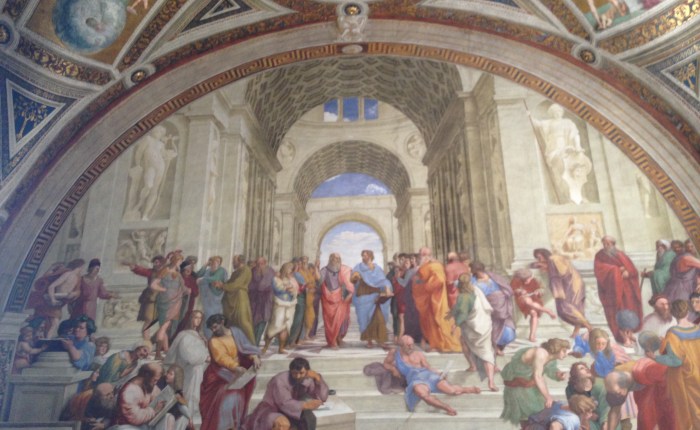
 The Renaissance: Studies in Art and Poetry by Walter Pater


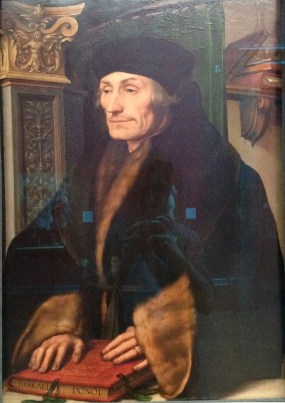

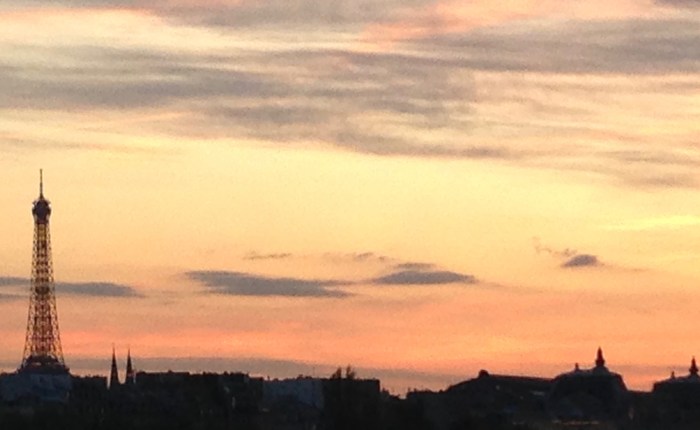
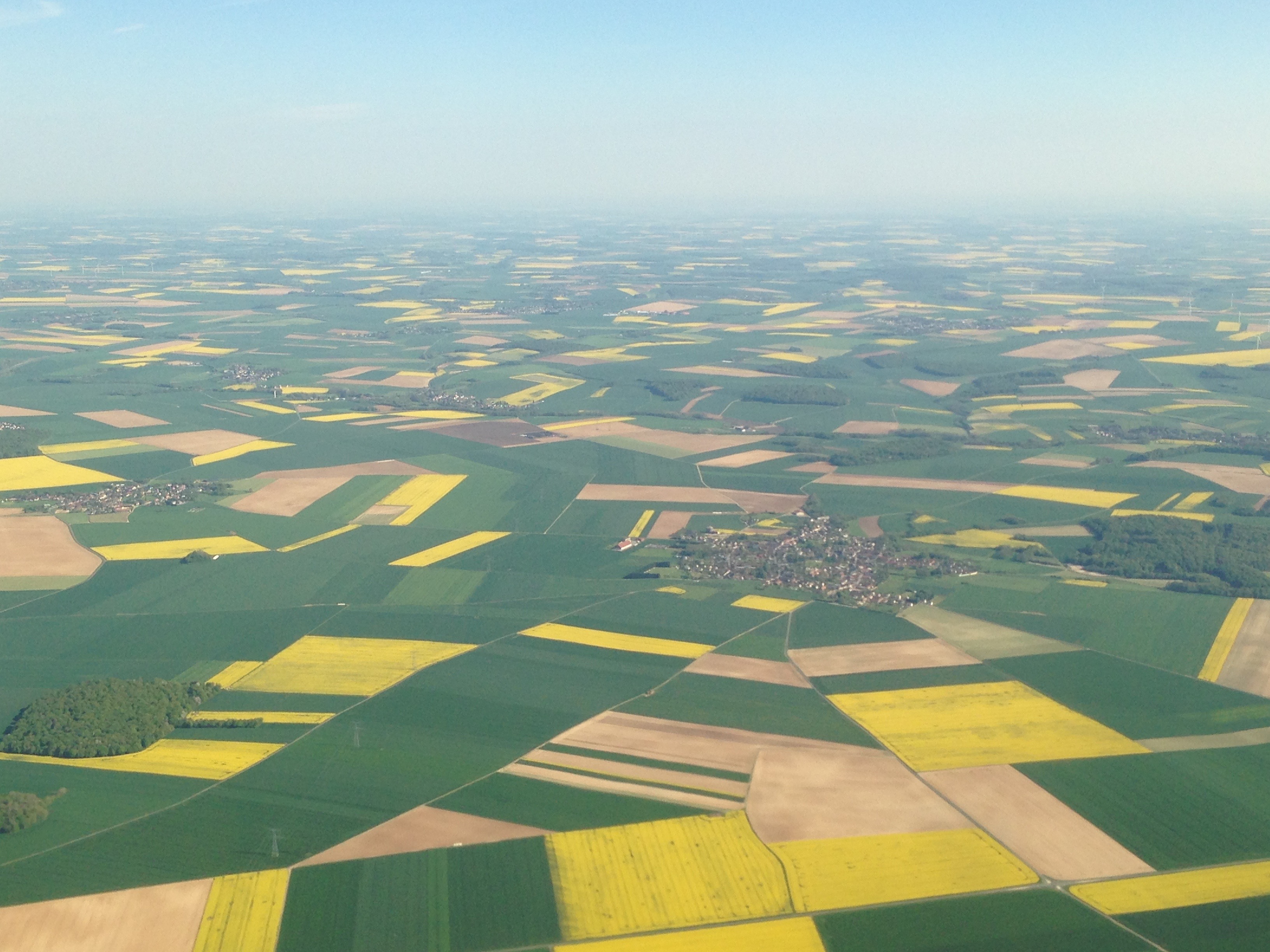
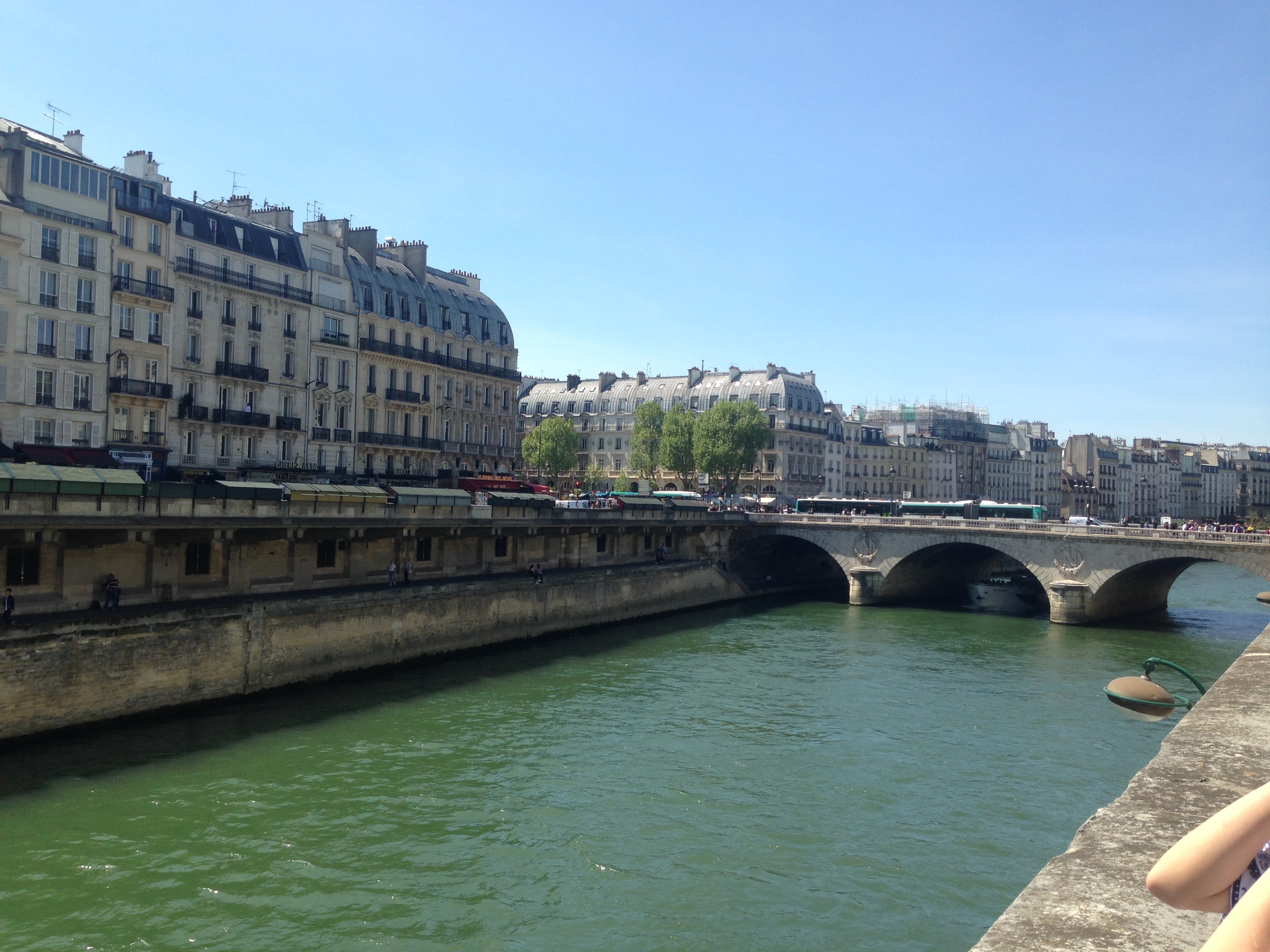
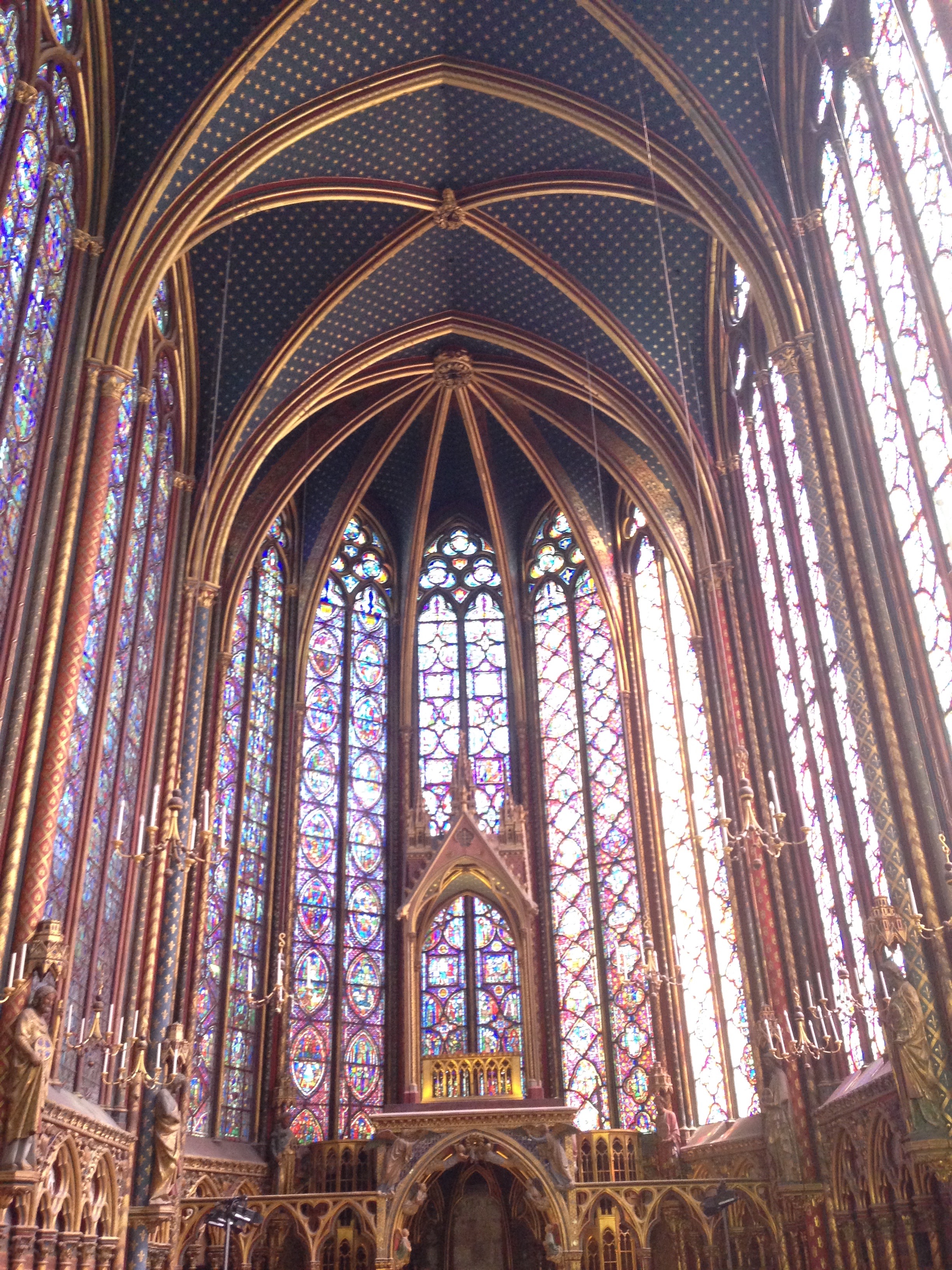


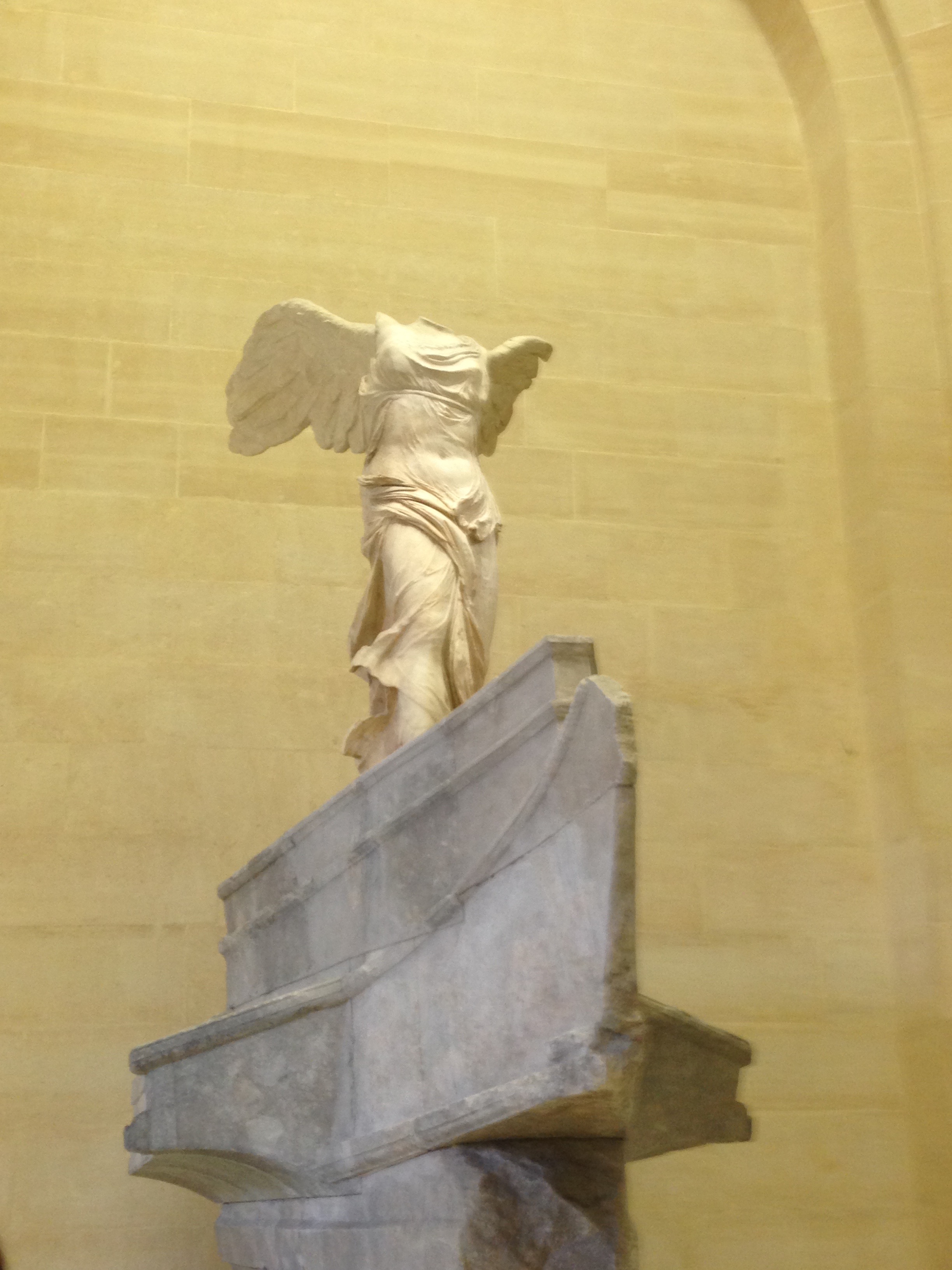

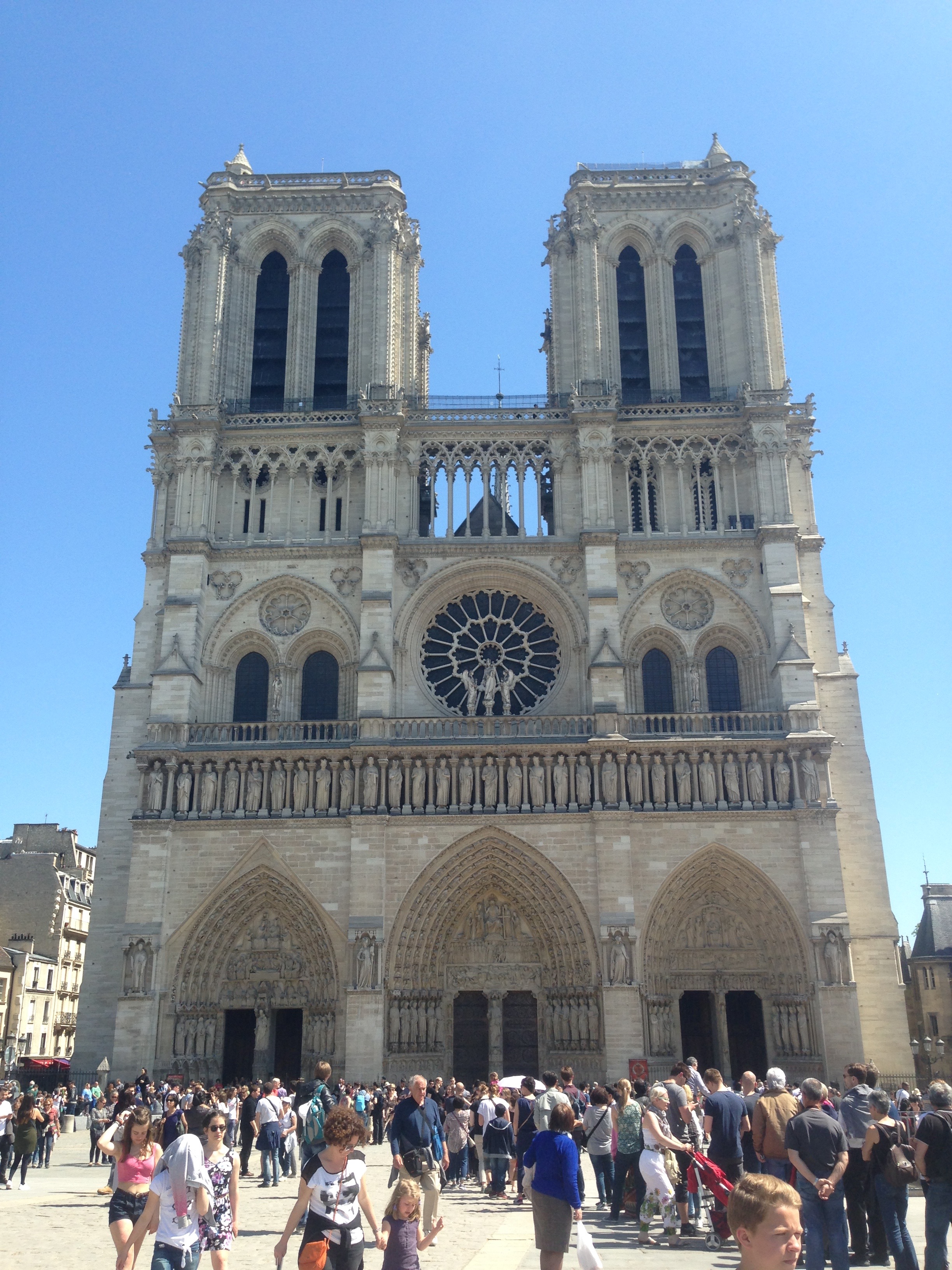

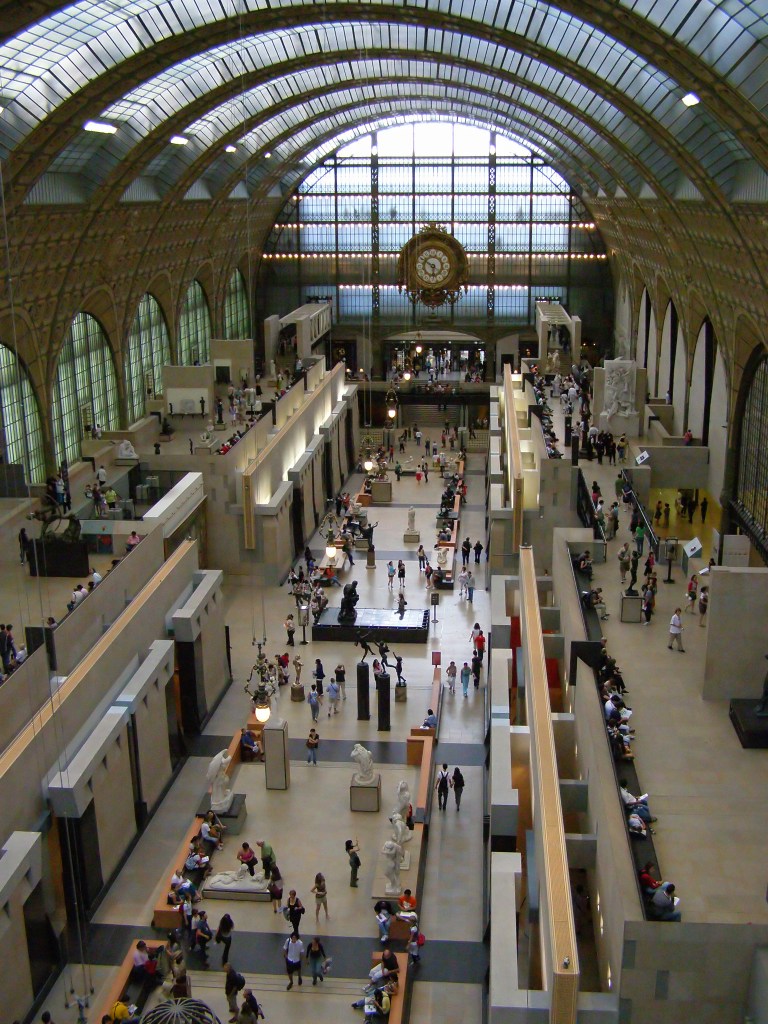
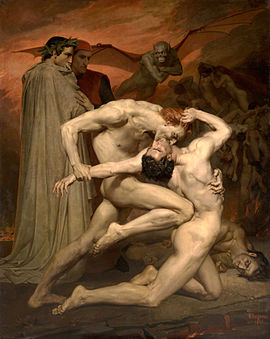
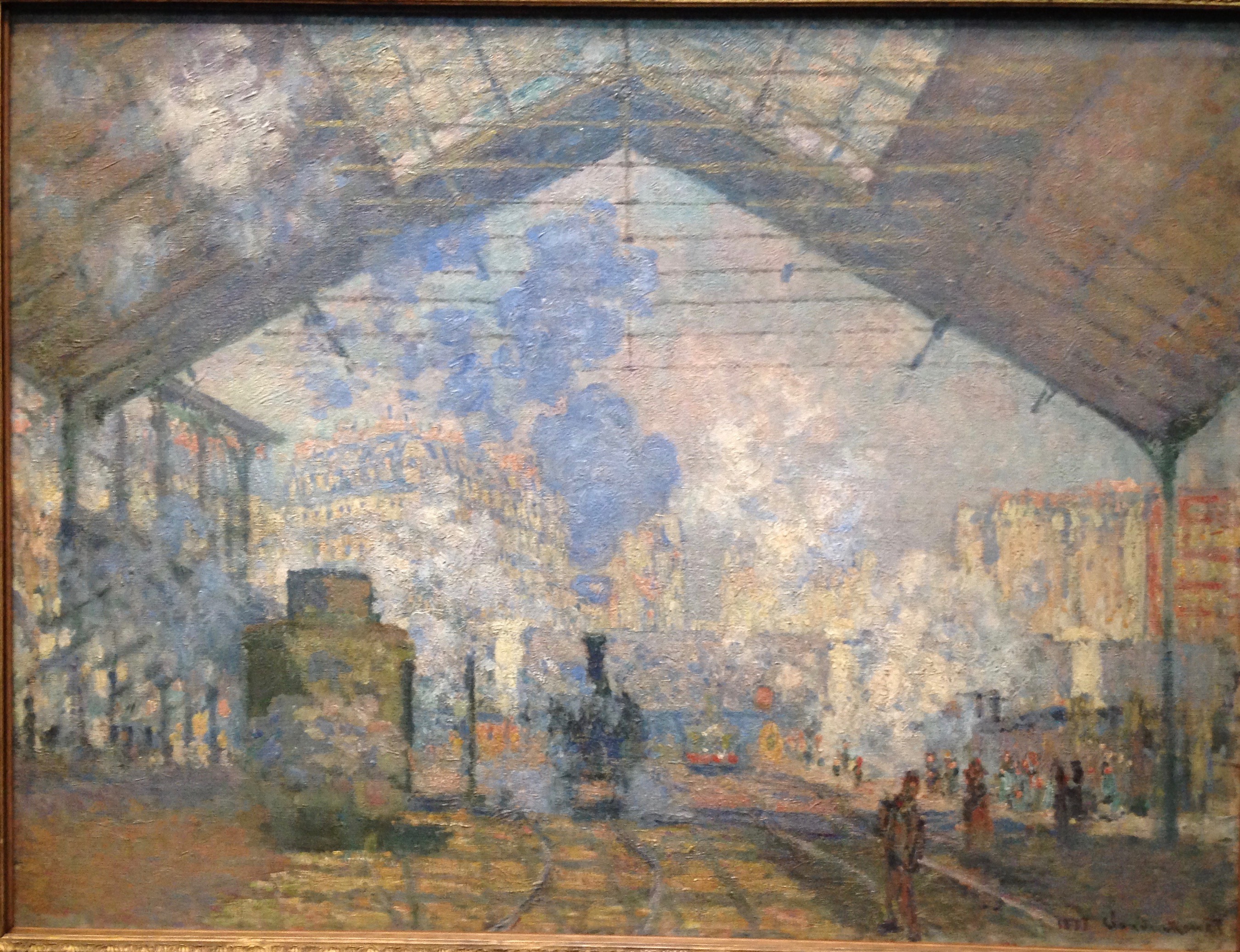
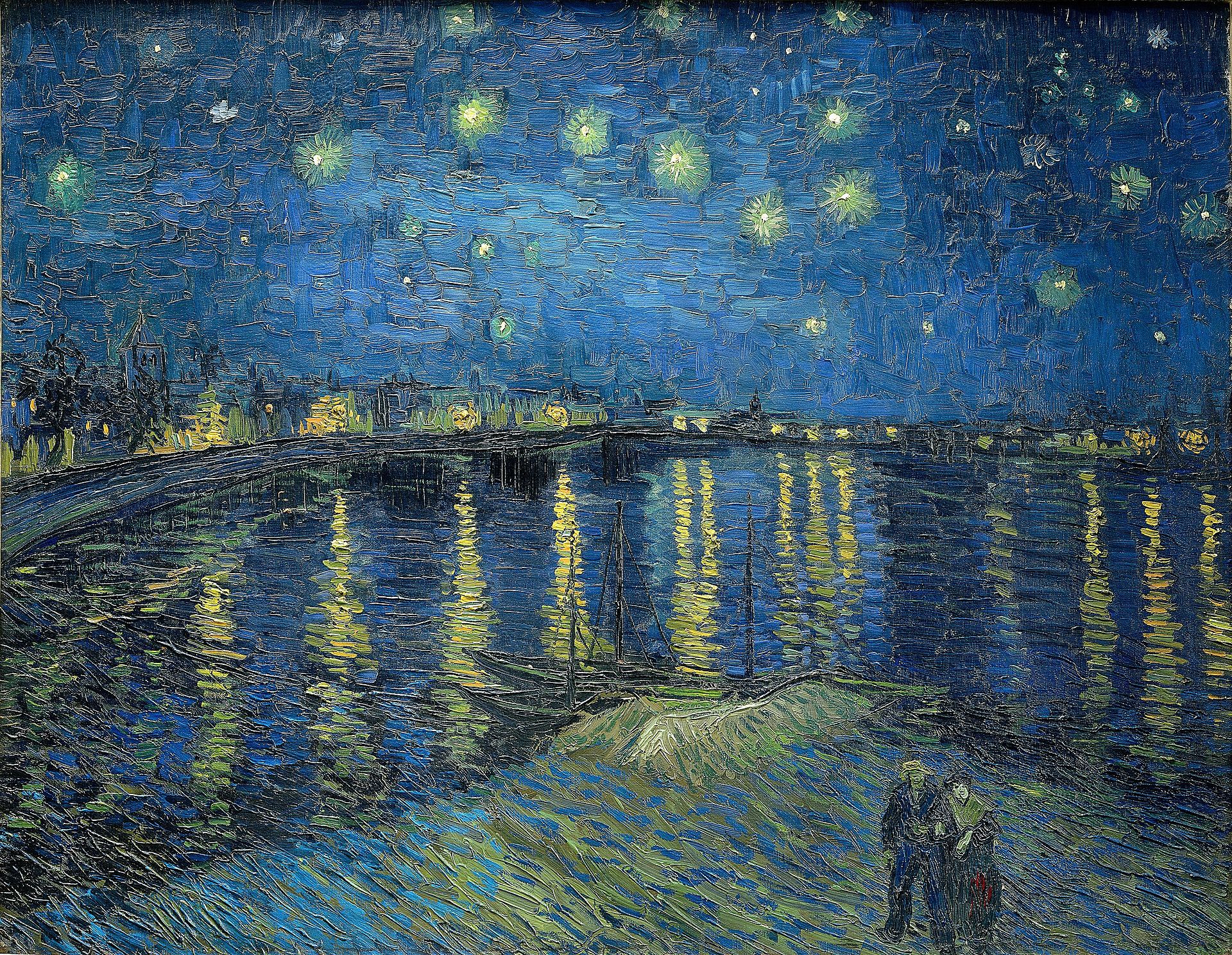
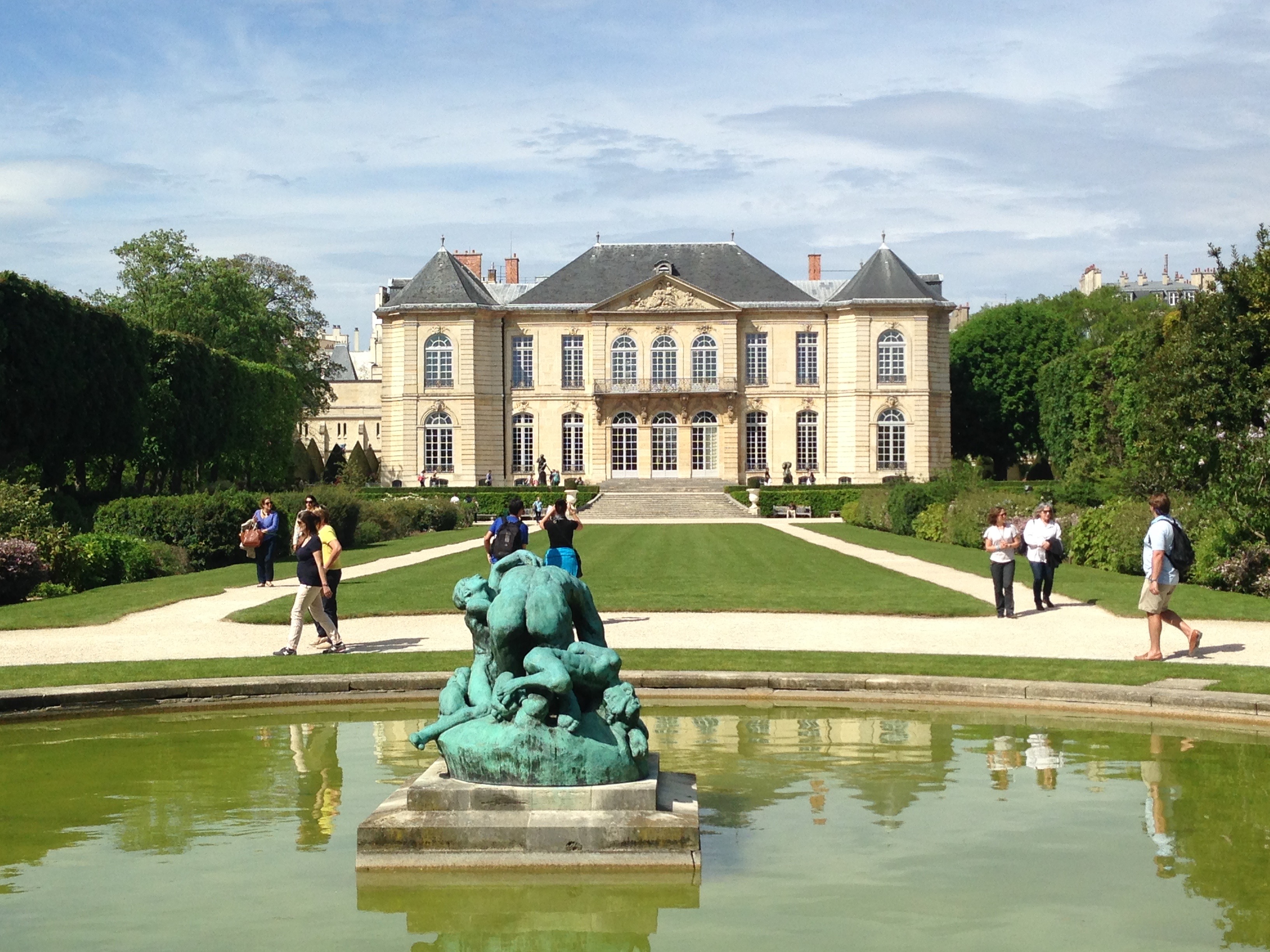
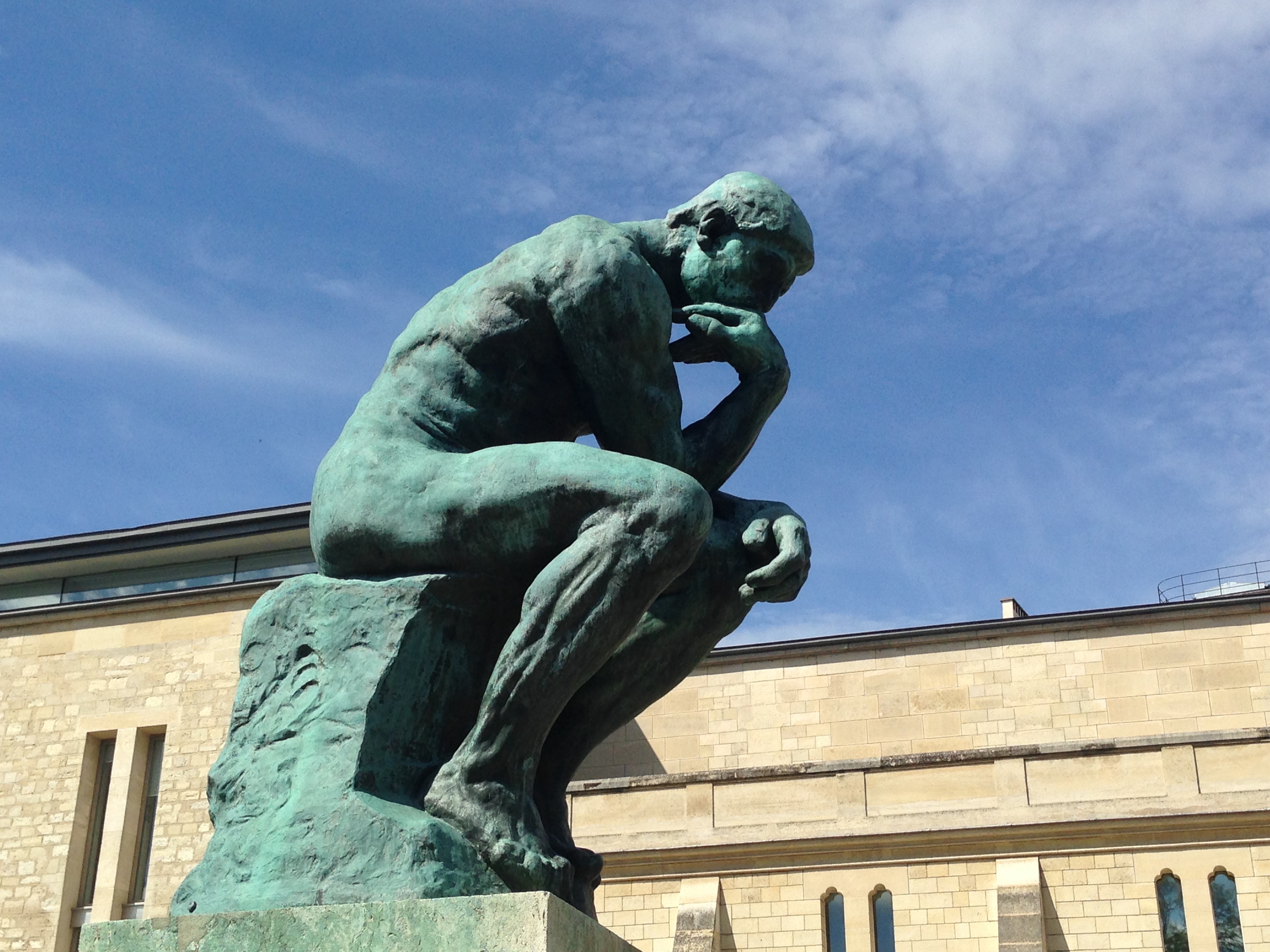
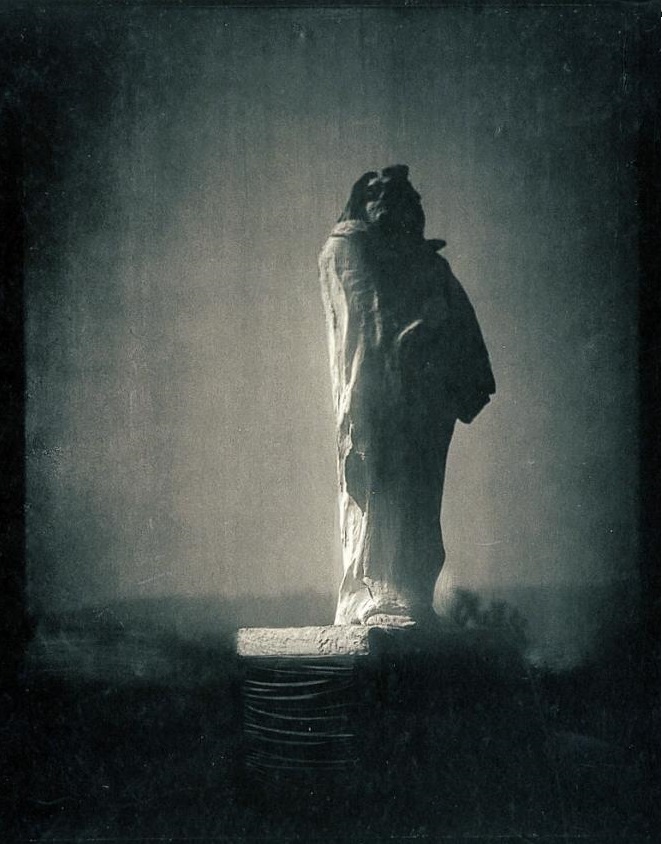
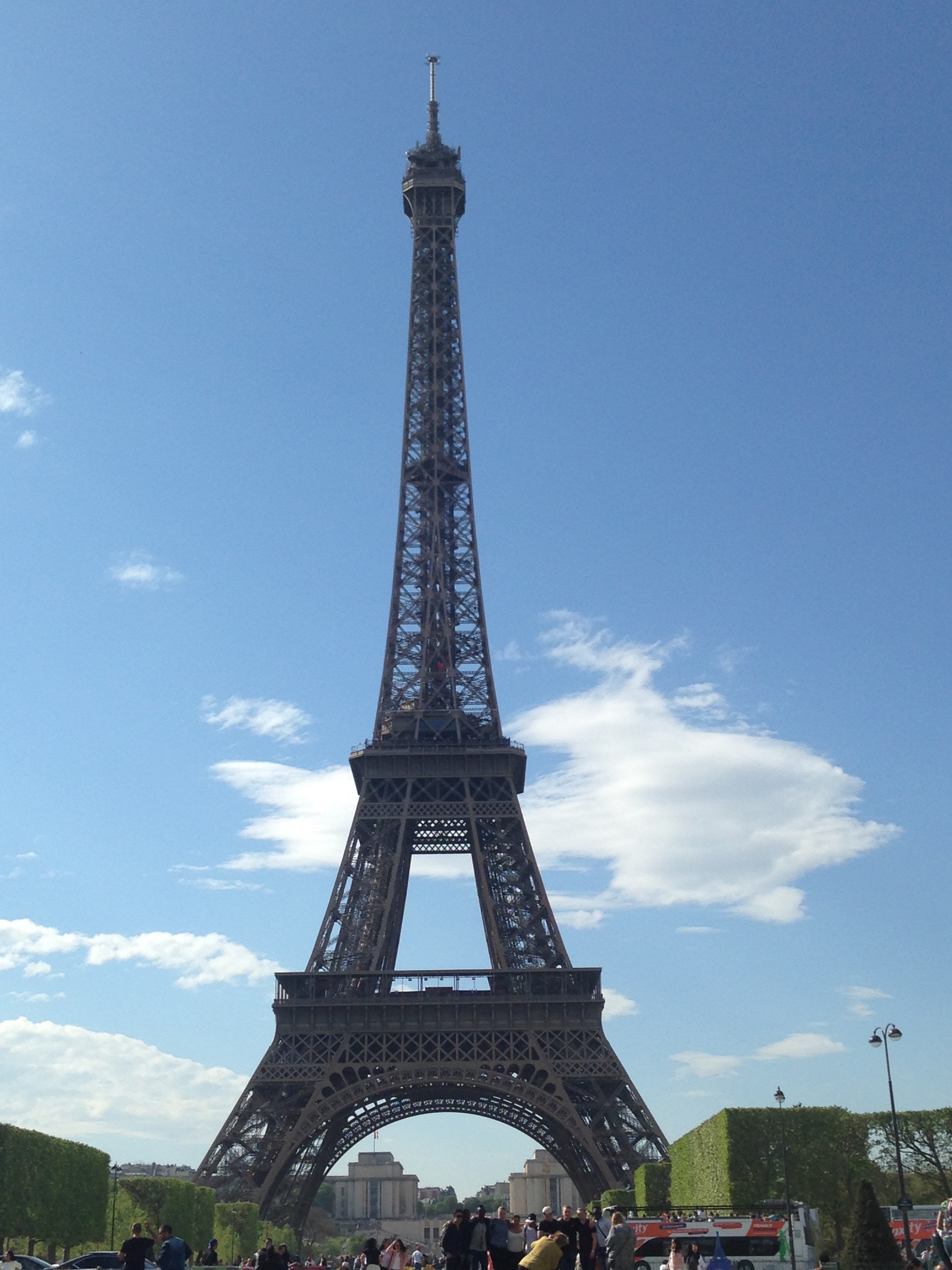


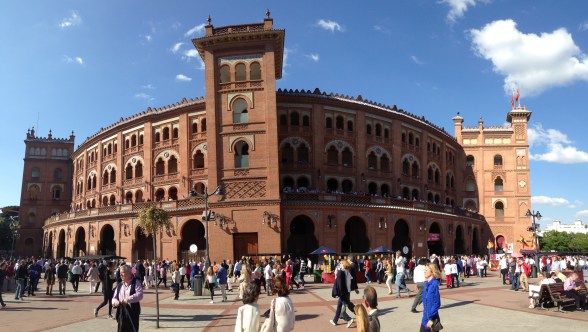
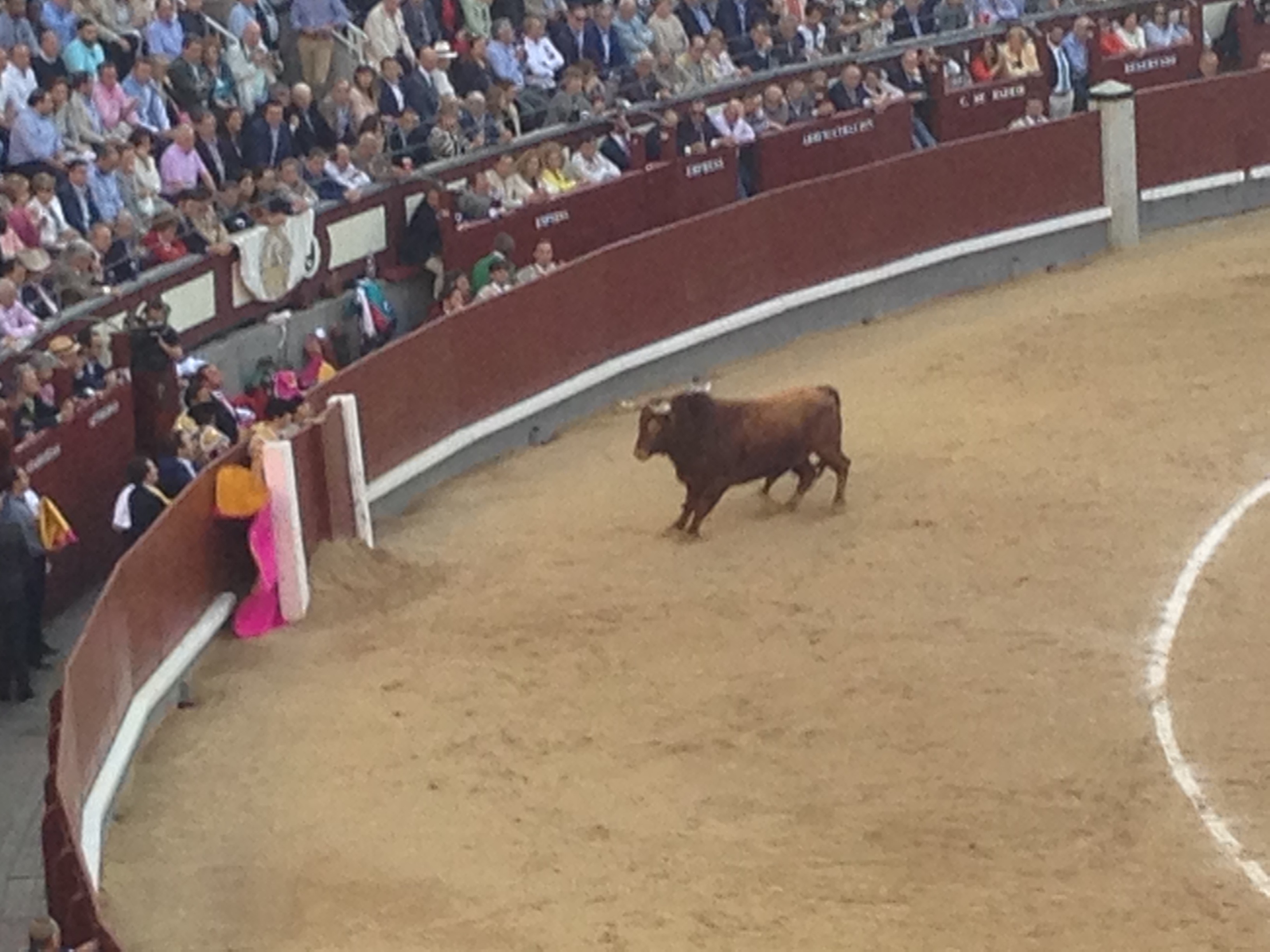
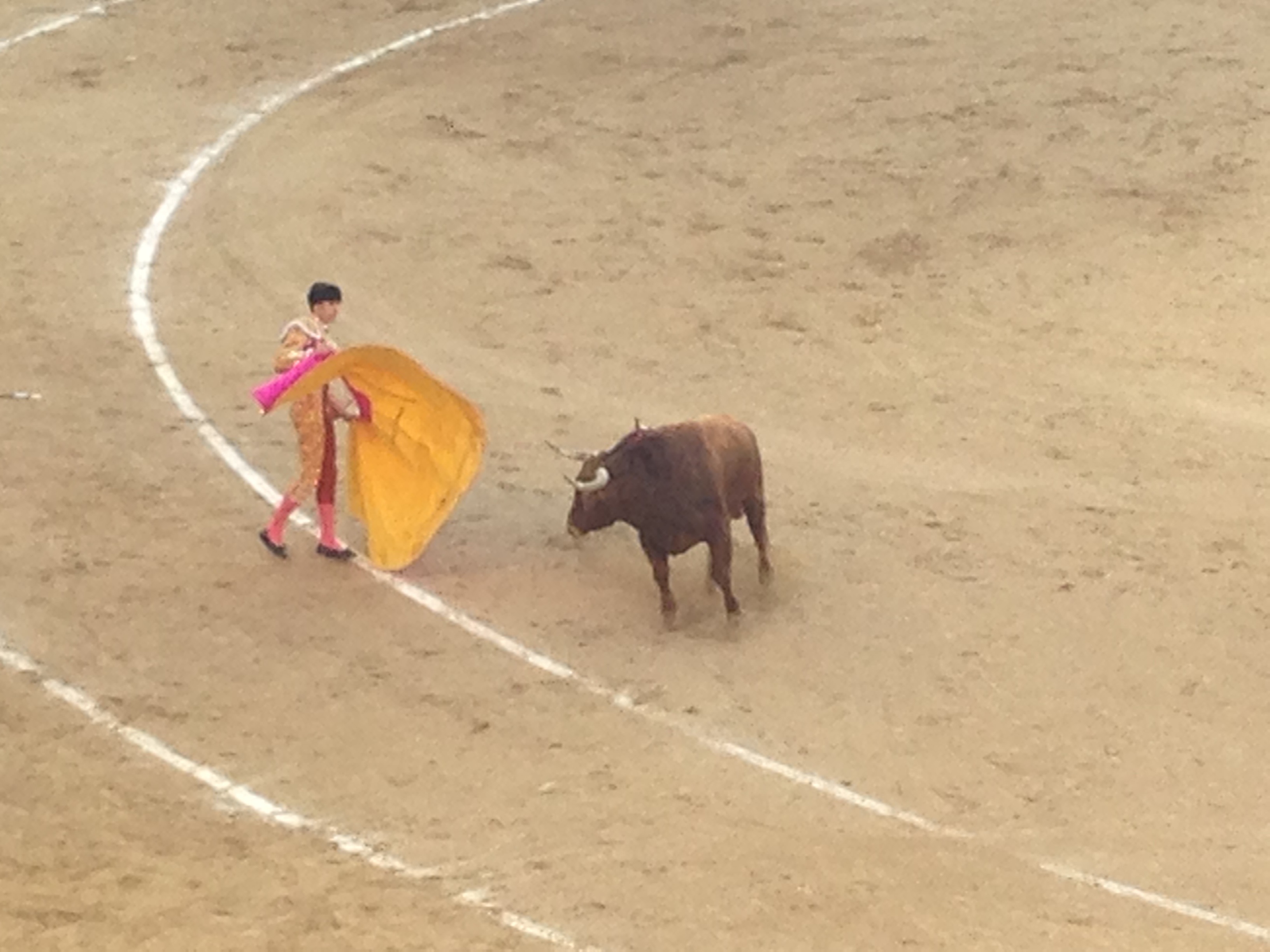
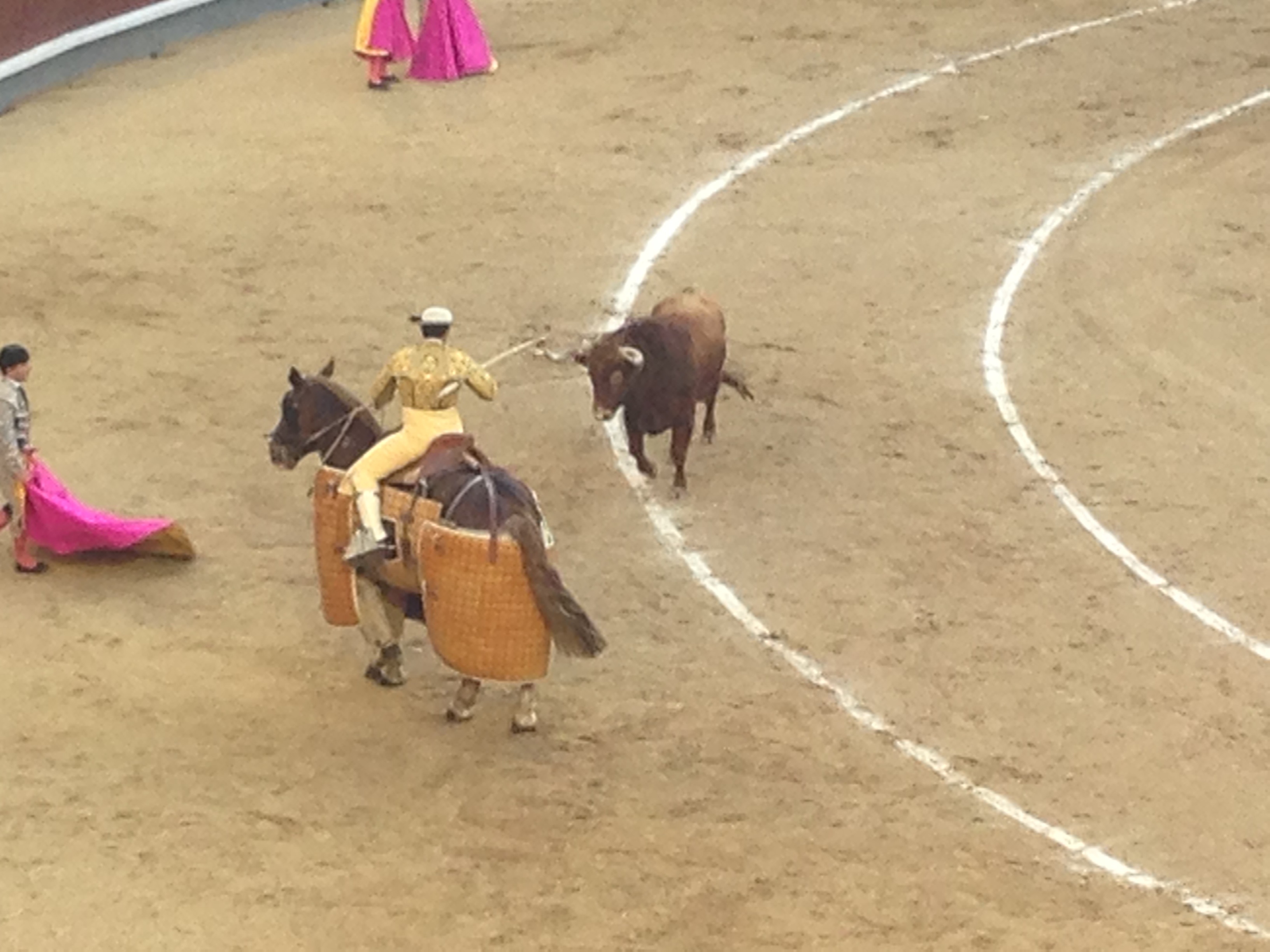
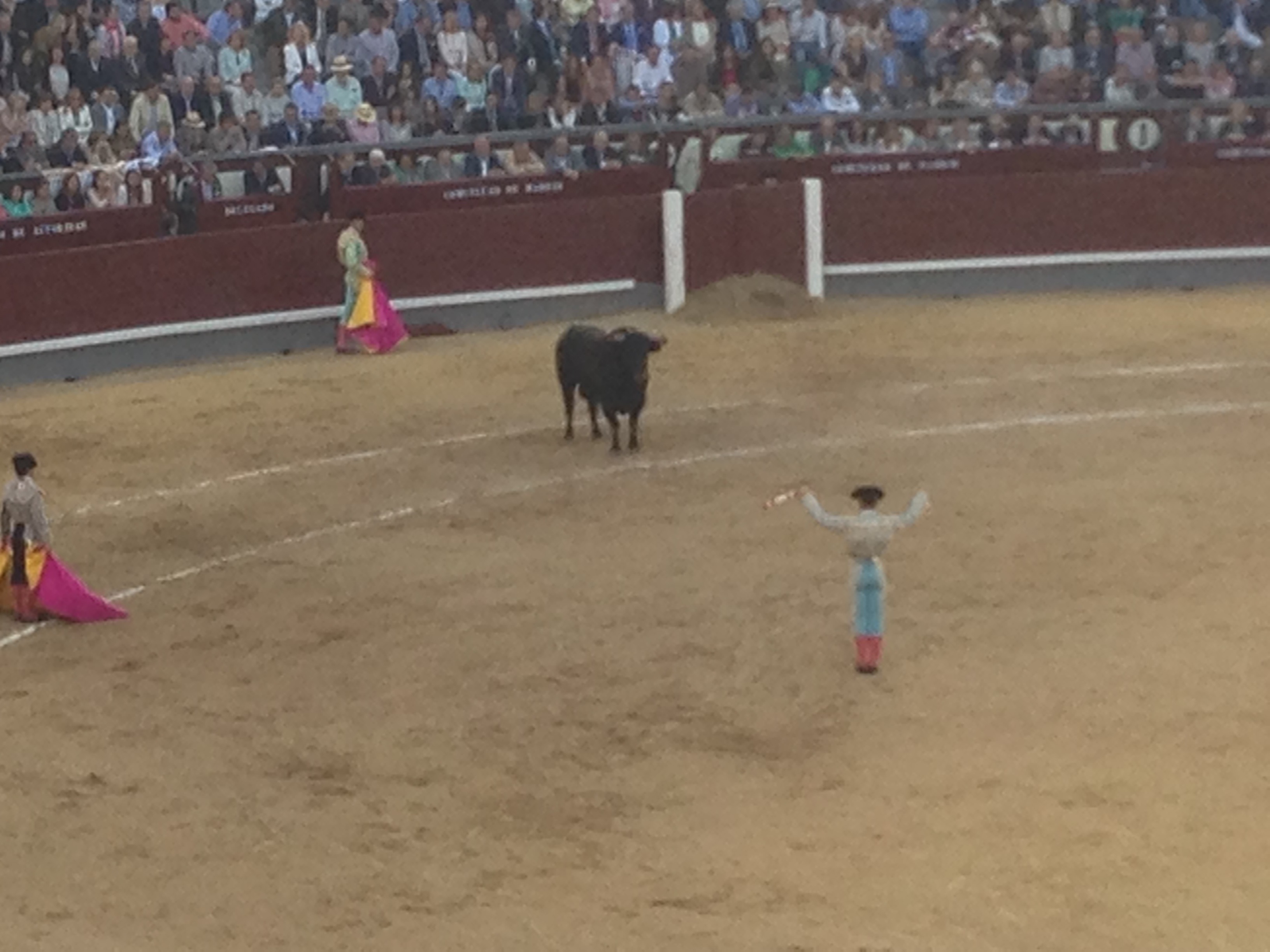
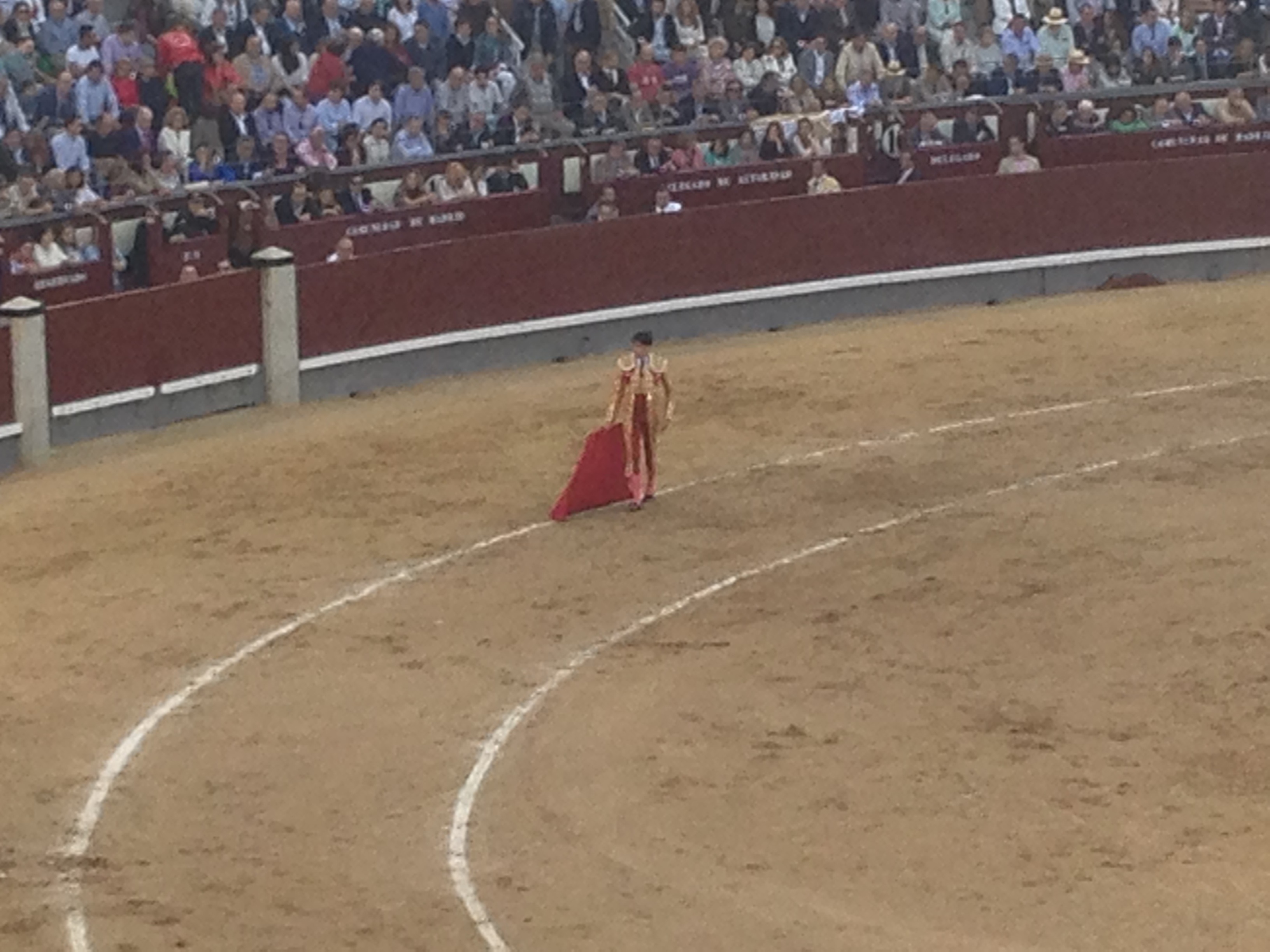
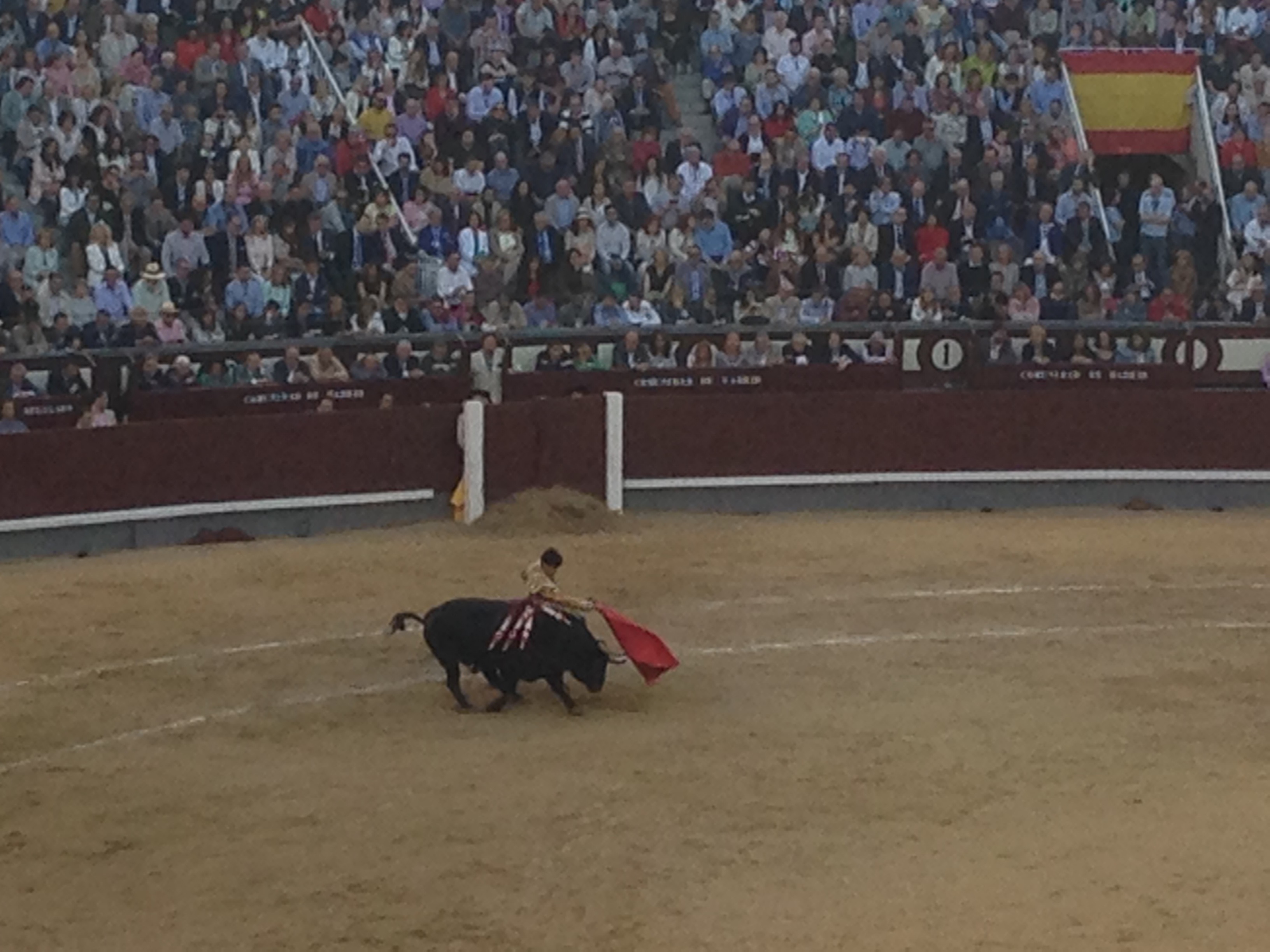


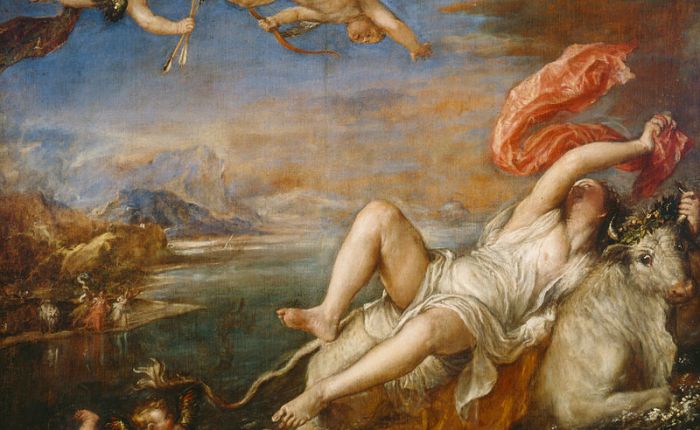

 Lotz in Translation