There are few places a New Yorker can go—especially in Europe—to find truly exotic food. Whether the cuisine is from Italy or Germany, China or Korea, Ecuador or El Salvador, chances are we have tried it—or some Americanized version of it—at least once. But, like many Americans, I was totally taken aback when I moved to Spain. The eating culture struck me as radically different; and the cuisine, if not exotic, was animated by a very divergent approach to cooking.
For a long time, I admit I was not very taken with what I discovered. Like many Americans, I am used to heavy meals with intense flavors, dishes that scorch your tongue and sit in your stomach like an iron weight, and I don’t feel satisfied unless I feel sick and slightly overwhelmed at the end of a meal. Spanish food very seldom produces that sensation. It is generally mild and relatively light. I don’t think I have ever had a dish from a Spanish restaurant I could call properly spicy, and Spanish portions are not usually large enough to produce the semi-comatose post-prandial mood that I was used to.
There are also many things that are simply not to my taste. I am not fond of tuna or hard-boiled eggs, yet nearly every sandwich in the cafeteria in my school has one—or both!—of those ingredients. And in general I cannot stomach as many carbs as the Spanish seem able to do. I am still baffled by bocadillos de tortilla—potatoes on a baguette?—even if I find them delicious; and many times I have been served a heaping plate of rice or potatoes with a side of bread (no meal in Spain is complete without bread), and wondered how Spanish people manage to stay so thin.
I am not the only American to have this reaction. Friends and family have expressed disappointment to me several times regarding the state of Spanish cookery. It is not that Spanish cuisine is bad, of course, only that Americans and Spaniards look for quite different things from food.
One major difference is that Spanish people like to be able to taste the ingredients, to savor the freshness and the quality of the individual elements of the dish, which is why Spanish cooking is often astoundingly simple and mild: both the form and the flavor of the original ingredient are preserved. Americans, on the other hand, like to transform and process ingredients beyond recognition. Another difference is that Spaniards are not so passionately fond of excess, and usually eat until they’re satisfied, not at death’s door. And this is putting aside the difference in Spanish meal times—lunch at two or three p.m., dinner at nine or ten—which I still have trouble adapting to.
Now, I should warn my American readers at this point that Spanish people are extremely proud of their food. Indeed, it seems to be the only thing about their country that Spaniards are unanimously proud of. They will freely denigrate nearly everything else—their government, their universities, their economy—but Spanish cooking is sacrosanct—¡se come bien en España!—and the quickest way to achieve good rapport is to praise the food vigorously. I would also like to mention, in self-defense, that despite some initial misgivings, I have grown to be extremely fond of Spanish cuisine—I swear!
Most cookbooks I’ve looked at—admittedly not many—don’t give an accurate idea of the food you actually encounter in Spain, presenting instead a fusion or haute-cuisine version, but this book is different. Janet Mendel is an American journalist who has been living in the south of Spain for many years now. Her cookbook is the most “authentic” book on Spanish cooking that I have come across. It begins with an overview of the different regions of Spain, moves on to Spanish ingredients, and contains over 400 recipes, as well as a glossary for food terms. The glossary is especially useful, since I’ve found that menus are more difficult to translate than poetry. (In Spanish, food words are particularly variable from country to country, or even region to region, making a Spanish-English dictionary of limited utility when faced with a menu.)
The regional overview is also valuable, for, like everything else in Spain, food can be quite specific to a location. Each major city has its own distinctive dishes; and particular cities—Seville, Logroño, San Sebastian—are famous for their food. The major axis of difference, I’ve found, is between the north and the south. Typically I prefer eating in the north—Cantabria, Asturias, Galicia, and the Basque Country—though there is excellent food to be found all over. In the south, mainly Andalusia, they tend to fry nearly everything, with the exception of the two famous liquid salads, gazpacho and salmorejo, both of which are delicious and refreshing under the brutal southern sun.
The north is far more verdant than the south, and the northern coast is at least equally as good for fishing, which means they generally have fresher ingredients. The Basque Country is the province most famous for its cuisine, and deservedly so, but I am particular to the food of Galicia. If you get a chance, perhaps when hiking the Camino de Santiago, find a pulpería, order some of the Galician octopus—seasoned with the distinctively intense local paprika—and drink the local Ribeiro wine, young and sharp red wine often served in a ceramic bowl. It is an exquisite meal.
Recipes for all these, and more—including all the Spanish classics, like my favorites, cocido, paella, cochinillo, fabadas, croquetas, and tortilla—can be found in this book, in simple and easy-to-follow recipes, along with extensive information on Spanish wines, cheeses, and produce of all kinds. Admittedly, I have not had great luck in my attempts to cook Spanish food, but this was entirely my fault. (My croquettes and my tortilla turned into mush; I am not a good chef.)
My failures notwithstanding, Mendel’s book is excellent, and almost encyclopedic in its coverage of different ingredients and types of dishes, methodically going through every type of meat and fish, including sections on snacks and desserts, with charming little vignettes along the way. She clearly knows Spanish cooking thoroughly, both the typical dishes and the meals for festive holidays, and does not dilute it or change it to cater to foreign palates.
Unfortunately, however authentic the recipe, the dish will not taste exactly right unless you buy the ingredients locally. To pick just one example, pork products play an integral role in Spanish cooking (they say it’s because eating pork differentiated the Catholics from the Jews and Muslims), and you will have a very difficult time finding true Spanish pork in New York. And this is a shame, considering that Spanish jamón is far better than prosciutto, and Spanish chorizo and morcilla (blood sausage) are wonderful flavoring agents for stews. Indeed, for my part I think Spain has the best pork products in the world, not that I would know.
As a parting piece of advice, if you go to Spain try to avoid those omnipresent tourists traps in the city center, with big yellow billboards advertising their paella. I had one of the worst meals of my life at one of these in the Plaza Mayor. You can find many excellent fine-dining establishments in Madrid. But to find more typical food, done well, look for the cheaper, less ritzy places. I can recommend the Café Melo’s—the menu has about six things, and they’re all good—and the Casa Mingo, an Asturian restaurant with famous roast chicken and Spanish cider, that’s right next to the chapel that contains Goya’s remains. And if you’re in Madrid in winter, try La Cruz Blanca de Vallecas for its famous cocido madrileño, a heavy stew of meat and garbanzos.
Well, I’m afraid that’s the best I can offer. I can only add that Spanish food may seem unpromising at first; but once you develop a taste for it and you know what to look for, it is a fascination and a delight.
I’ve just returned from visiting the new special exhibition in the Prado: Treasures of the Hispanic Society of America. It is fantastic. I had no idea that the Hispanic Society—a relatively unknown and ignored museum in uptown Manhattan—had such a vast and beautiful collection. The special exhibit adds a completely new dimension to the Prado; it is like having an entire additional museum inside the original one. It opened on April 4th and will continue until the 10th of September, and so I recommend you go see it while you can.
The Hispanic Society of America is a museum and library dedicated to Spanish and Latin American culture. It is housed in an impressive Beaux-Arts building in Audubon Terrace, situated in uptown Manhattan. (I’ve never visited or even seen the museum; and since it will be closed until 2019 for renovations, it seems as if I won’t be seeing it anytime soon.)
The museum was founded in 1904 by the exceedingly wealthy and Spain-obsessed Archer Milton Huntington, heir to the Huntington railroad fortune, who commissioned the Audubon Terrace three years later. This building complex (so named because it was built on land formerly owned by the famous naturalist), although beautiful, was not the ideal location for a museum. Being so far uptown, inconveniently distant from the tourist center of Manhattan, the Hispanic Society has attracted relatively few visitors over the years—and this, despite having the finest collection of Spanish art outside of Spain, and despite being free to visit.
The new exhibition in Madrid’s Prado has recently changed this. The Hispanic Society lent its collection to the Prado as part of a mutually beneficial exchange. The Society’s building in New York is in need of repair. Its lack of air conditioning makes it a poor environment to preserve cherished works of art; and there is not enough space to display the Society’s huge collection. The Hispanic Society also lacks the funds necessary to restore some of its priceless paintings. The Prado, in exchange for being allowed to borrow the collection, agreed to undertake these renovations at their own expense. Along with the help of the bank BBVA, the museum is even paying the transportation and exhibition costs. When interested are aligned, cooperation can accomplish marvels.
Even more important than the restoration and renovation work, the Prado’s special exhibit has already helped to make the Hispanic Society more well-known. By the end of the exhibit, 400,000 visitors are expected—and this is incredible, considering that the museum was getting only 25,000 visitors per year in New York. (I am getting most of this information from the excellent article recently published in the New York Times about the exhibit.) Considering what I’ve seen today, it is a shame that the museum languished in obscurity for so long; it certainly deserves a more ample reputation.
It is impossible to talk about the Hispanic Society without discussing its founder. Archer Milton Huntington’s fondness for all things Spanish is particularly peculiar, considering that he was active immediately after the United States fought and won the Spanish-American War in 1898. This was a period of scant respect for Spanish culture, and a period of cultural anguish in Spain (which eventually culminated in an artistic and intellectual revival by those known as the Generation of ‘98; more below).
Huntington used his vast fortune to purchase archaeological artifacts and old manuscript collections, along with works of art in nearly every medium, including several by Spanish masters. (I wonder what I would do if I were born into such a wealthy family; probably not anything nearly so admirable.) But he was careful to extend his activities to the present day as well. Huntington formed close ties with the contemporary Spanish painters Zuloaga and Sorolla, and commissioned the latter to paint several works for the Society. Indeed, what is sometimes regarded as Sorolla’s masterpiece, The Provinces of Spain—14 giant murals depicting Spanish life—was commissioned by, and remains in, the Hispanic Society.
The exhibit in the Prado is organized chronologically, from prehistoric Iberia to the early 20th century. Every object on display is fascinating. The visitor is greeted by copper-age pottery, from around 2,000 BCE, decorated with fine geometrical patterns. We then swiftly move into Roman times: a mosaic, the torso of a goddess, delicately decorated bracelets. There is an exquisite belt-buckle from the Visigothic period, and a pyxis (a small ceramic vessel) from the Ummayad caliphate period of Moorish Spain—covered in vegetable motifs of stupefying beauty. Even more stunning is the so-called Alhambra Silk, from a later period of Moorish Spain, woven with the same intricate, mathematical patterns as the tiles in that famous palace in Granada. Reliquaries, funerary statues, and, most memorably, gothic door-knockers with fantastic beasts—iron dogs, lions, and dragons snarling in wait for the visitor—give yet another intimate look into the Spanish past.
One of the Hispanic Society’s prized possessions is its extensive collection of rare books and manuscripts. There is a private letter from Carlos V to his son, the eventual Philip II, advising the young man how to govern in Carlos’s absence. Illuminated bibles and even a copy of the Torah, every inch of every page decorated with care and skill, along with official grants and royal decrees, bearing both elaborate ornamentation and the original leaden seals—all this is collected for the visitor’s pleasure. I cannot fathom how much time it would have taken to create even one of those books. Everything had to be done by hand; and since every page was beautified with elaborate drawings and designs—even documents of state, which presumably needed to be produced in some haste—I am led to imagine scores upon scores of scribes and artists in the service of the king and the church.
I was especially gratified to find the historic maps on display. It is always fascinating to see old maps; they capture so much about the worldview of the time. There is one map of Teocaltiche—a province of Mexico—drawn up, if memory serves, either by the missionary or the colonial governor stationed there. It is an extraordinary thing: instead of a useful tool for navigation, it is a cartoon featuring naked natives practicing human sacrifice, battling the Spanish invaders with bows and arrows, and in general causing all sorts of chaos. The thing is clearly the work of a European mind, horrified by the “savages” he encountered. More beautiful is the map of the world by Giovanni Vespucci, nephew of the more famous Amerigo Vespucci. This map is impressively accurate, for the most part, in addition to being attractively made. The shape of the American continents is left vague and undefined, mostly because Europeans hadn’t gotten around them yet.
The most prized items of the collection are the three paintings by Velazquez. There is one portrait of a little girl—unnamed, but perhaps a relative of the painter—which showcases Velazquez’s talent for capturing charming young faces. Even better is Velazquez’s full-length portrait of the Conde Duque, Gaspar de Guzmán, Philip IV’s most powerful minister, a kind of Spanish counterpart to Cardinal Richelieu. He stands proudly, dressed in velvety black, looking every inch the ruler. The Hispanic Society also boasts an excellent portrait by Goya of the Duchess of Alba. She is dressed as a Maja (a lower-class resident of Madrid who tended to dress splendidly; there was apparently a fashion for adopting lower-class dress at the time) and pointing proudly down at her feet, perhaps to signify that she owns the land. It is a wonderful picture; there is so much energy in the Duchess’s feature and pose.
I thought that the exhibit would end with Goya, but the Prado has dedicated another floor to the collection. After an escalator ride I found myself surrounded by even more excellent paintings. Of these, the most important and impressive is a series of portraits by Sorolla—an excellent and perhaps underrated portraitist—of notable Spanish intellectuals and artists from the time, including most of the prominent members of the Generation of ’98. This includes the novelist Pío Baroja, the philosopher Miguel de Unamuno, and the poet Antonio Machado, along with Azorín himself, the essayist who coined the name “Generation of ‘98” (the generation of artists and intellectuals whose lives were shaped by Spain’s defeat in the Spanish-American War in 1898). All of the portraits are remarkable examples of the portraitist’s ability to capture a complex personality in a gesture, a posture, and an expression.
Along with these works by Sorolla—which also includes two of his enchanting beach scenes—the collection also includes some notable works by Zuloaga. My favorite of these was his The Family of the Gypsy Bullfighter, which manages to combined startling realism of feature (I was immediately reminded of Ribera) with more modernist touches of color and shading. This blending of traditional and modernist seems to have been a persistent feature of his paintings, and allowed him to please both parties. He was particularly praised—both by Huntington and by Unamuno, at least—for his ability to capture the ‘essence’ of Spain. (This was a time when many countries were preoccupied with their ‘essences’.)
This little essay has been hastily dashed out, with enthusiasm and love, for a heretofore underappreciated cultural institution. I naturally feel a particular attachment to the Hispanic Society, since it is from New York and connected to Spain. After visiting this exhibit, it is impossible not to share, at least in part, Huntington’s passion for all things Spanish. What a wonderful breadth and depth of history is collected here.
I’ve fallen far behind in my travel posts, and now I find myself in the embarrassing position of writing about a trip I took over a year ago. It also seems that, no matter how hard I try to be brief, I end up writing more and more. Well, enough prefatory remarks; on to business.
Introduction
For an American, there is something religious about visiting London for the first time. We have been hearing about the place all our lives. Dry humor, pints of beer, red phone booths, black taxis, fish and chips, bad teeth, good tea, bad weather, good tikka masala, the British Invasion, the British Parliament, the British Empire, Queen Elizabeth, Queen Victoria, Shakespeare, Dickens, the Beatles, Monty Python, Dr. Who, Harry Potter—London is the focal point of all our stereotypes, good and bad, of England and the English.
This is important for us Americans, since England is the only other country whose media we regularly consume. English media is so important for us because of our shared language. Unlike in Spain—where English-language songs often play on the radio (and people sing these songs without understanding the lyrics), and where American shows, overdubbed in Spanish, are extremely popular—in the United States we don’t listen to music in a foreign language if we can help it, and we only watch television that was originally made in English (overdubbing looks silly). This provincial preference for English media limits our options of foreign media mainly to England and Australia, and England has been the clear favorite.
A consequence of this popularity of English media is that Americans have internalized a highly partial picture of the English character. We associate the English with sophistication, elegance, wit, good manner, royalty, and the historical past.
This is almost the polar opposite of the English reputation in Spain. You see, Spain is an excellent travel destination for English holidaymakers—cheap, close, and sunny—and as a result, lots of English tourists come to Spain looking for a good time. A “good time” entails drinking, of course, and thus there are lots of drunken English people stumbling around city centers on any given night. As a result, Spaniards think of the English, not as genteel aristocrats, but as tipplers.
(Parenthetically, the English also have very different alcohol consumption habits than the Spanish. On a Friday or Saturday night, people in Spain begin drinking in earnest after dinner—which means 11 pm at the earliest. They often don’t even leave their apartment to go to bars and clubs until 2 in the morning, and don’t return home until dawn the next day. In London, on the other hand, drinking begins as soon as people leave work, at 5 pm. This is due, in part, to an old law in London that required pubs to close down at 11. So the English stop drinking when the Spanish barely start.
(This difference in schedule is supplemented by a difference in speed and volume. Spaniards are rarely visibly drunk. I have seen very few Spanish people stumbling from alcohol; instead, they focus on maintaining a level of comfortable tipsiness for a long period of time. Compared with Brits, Spaniards sip their drinks, and eat a lot while they drink. English people, by contrast, get properly drunk, and fast, much like many Americans do. As a consequence, Brits can be very loud drinkers—in my experience, at least. This is an especially interesting contrast, I think, since in every other circumstance Brits tend to be mucher more quiet than Spaniards.)
Of course, both the American and the Spanish stereotype is an over-generalization; they are based on very partial exposures to the English character. Partial and false as they may be, however, these stereotypes did succeed in endowing England with a certain contradictory mystique—a place full of witty drunkards, elegant and boisterous, cultured and slovenly? I needed to go see London for myself, to catch a glimpse of the reality behind the reputation.
My problem was that, at the time, I was particularly low on funds. And however distorted all the other stereotypes may be about London, this one is true: London is expensive. Well, it’s expensive if you enjoy eating, sleeping indoors, using transportation, and doing any activity besides walking and sitting outside. This was a few months before the Brexit referendum, and the pound was still strong.
As a result, my short trip to London—barely 48 hours—became a frantic exercise in traveling cheaply. I didn’t buy an oyster card, and I didn’t use the Tube or the buses. I ate “meal deals”—pre-packed sandwiches at Tesco supermarkets, not terribly delicious—instead of paying for dinner in a restaurant. And I focused on visiting museums, which are free in London, instead of other popular sites.
Arrival & First Impressions
As usual, I traveled with Ryanair. My plane arrived in Stansted, the smallest of London’s airports, where I had to fill out a form and wait in a long queue to enter the country. The English, it seems, are almost as paranoid about their borders as we are in the United States. From Stansted, I took the so-called Stansted Express to London’s central Liverpool Station. The ride took about an hour, and was not cheap. This is a typical Ryanair experience: the flight is inexpensive, but uncomfortable; and you land in an unpopular airport far outside the city. I am a loyal customer.
I sat in the train—dazed from lack of sleep, filled with nervous energy, physically miserable but mentally awake—and stared out the window in disbelief. Was I really here? Was this England, the land of dry humor and wet weather? I gazed out at fleeting patches of green countryside as the train sped by, and savored the delightful names of the train stations between Stansted and London. (Of course I can’t remember any of the names now; but as I look on Google maps, I find such gems as Matching Tye, Hartfield Heath, Hastingwood, Theydon Bois.)
English novels—from Austen, to Dickens, to Rowling—have powerfully shaped the American imagination of the past; and thus, by association, English place-names strike many Americans as irresistibly charming. Each name seems to be the title of another great novel, filled with irony and romance, and written with quaint wit. Likewise, the English countryside—a neatly trimmed park, whose rolling hills are covered in a grey mist—is featured in so many films that even the snatches of green I saw out the train window filled me with delight.
These feelings of romance and fantasy are, I suspect, nearly universal for Americans visiting England, and specifically London, for the first time. England is the only foreign country we regularly see in television and movies. This gives the experience of visiting England the effect of stepping into a movie set—everything is familiar, and yet unreal. The same thing happens, I believe, to many who visit New York for the first time. Many people have independently told me that it felt like they were in a movie, since so many landmarks and features were familiar to them from films.
The train arrived, and I got out to go find my Airbnb. I was on edge. The combination of sleep deprivation (the flight was terribly early) with the usual stress of navigating a foreign city (my phone didn’t have service), plus the feeling of unreality that comes from actually being in a place which I’d been hearing about all my life—all this combined to make me edgy and oversensitive. The double-decker red buses, the black taxis, the cars driving on the wrong side of the road, the eccentric road signs (including the delightfully existential “Change Priorities Ahead”), pubs with absurd names (“Ye Old Cheshire Cheese,” on Fleet Street), the red phone booths scattered seemingly at random (apparently, the city had once sold all these phone booths, only to regret the decision and then repurchase as many as they could)—my first impressions of London did contain many of ye quaint olde stereotypes that I expected.
But one thing that, as a New Yorker, always surprises me when I visit a new city is the lack of skyscrapers. Madrid has only four buildings which can reasonably be called skyscrapers, and they’re located in the north of the city, far outside the center. London has its own share of skyscrapers, to be sure. But walking around in London has nothing of that vertiginous feeling that New York produces, the feeling of being crushed by steel and glass, the feeling of constantly craning one’s neck. I had always thought of London as being a huge and imposing place, so this lack of skyscrapers did disconcert me somewhat.
In many other respects, however, London can be easily compared with New York: the bustling streets, the flashy billboards and ever-present advertisements, the endless shopping, the infinite variety of chain restaurants, the ethnic diversity, the smell and the grime. London even has the same phony Buddhist monks trying to scam tourists into giving them money. (You can find a great story about them here; and in case you’re wondering, if someone is aggressively asking you for money, you can safely assume that they’re not a Buddhist monk.)
As I discovered when I got to my Airbnb, one way that London is incompatibly different from both my country and Spain is the style of its outlets. I had to buy a power-adaptor there; and like everything in London, it wasn’t cheap. Be wise and buy one ahead of time.
These were my first impressions, hazy and distorted, as I walked from the station to my Airbnb. Already I was running short of time. It was midday Friday, and my flight home would leave early on Sunday. So I set out to the first place on my list, the National Gallery.
A Note on Cuisine and Language
I should preface my trip to the National Gallery with a mention of a small restaurant, the Breadline, which can be found nearby. I decided to eat there because it had fish and chips—I know it’s silly, but I couldn’t leave London without eating that iconic meal—and because its prices were eminently reasonable. The food was plain and basic, but nonetheless, for me, extremely satisfying. I even returned the next day to try an English breakfast, which I quite liked.
English food has a poor reputation, and I understand why; it is hardly a cuisine designed to have universal appeal. Nevertheless, if those two meals can be trusted to give a fair representation (an open question), I can say that I am a fan. There is something about greasy fried potatoes and fried fish, covered in white vinegar, that just feels right to me. And sausage and beans for breakfast is brilliant.
While I was eating, a young British man came in and said “A small white coffee to take away.” This is an excellent example of the differences between British and American English. This sentence, uttered in New York, would produce only bafflement. You would have to translate it to “A small coffee with milk to go,” if you wanted to be understood. I run into these differences constantly as I teach English. Before coming to Spain, I thought the differences between British and American English were minor and negligible, besides the accent; but I was wrong. Working with British textbooks and materials can be extremely frustrating, since often I don’t know what certain expressions or words mean—which is embarrassing when my students ask. Not only that, but there are a few subtle grammatical differences between the dialects, such as in the use of the perfect tense. But this is a digression of a digression; now to the museum.
The National Gallery
It is immensely satisfying to simply walk into a museum, without fees or lines, like it’s your own home. The experience is even better when the museum is one of the best in the world. The National Gallery is only behind the Louvre, the British Museum, and the Metropolitan in visitors per year; and this is especially impressive considering the museum’s collection is comparatively small, easily viewable in three hours or so. But for those with any sensitivity to art, these three hours will be among the most rewarding of your aesthetic life; for the National Gallery’s collection is remarkable both for its breadth and its excellence. The only museums I’ve visited that compare in the average quality of the paintings on display are the Prado in Madrid and the Musée d’Orsay in Paris. Every room in the gallery contains a masterpiece, often many.
Indeed, there are so many wonderful paintings—paintings I had seen and loved in art history books—that I cannot even hope to mention all of them in this post, much less describe the impression each one made on me. Nevertheless, I can’t resist the temptation to dwell on some of these exquisite works of the human imagination.
The first painting which attracted my attention was the portrait of Erasmus by Hans Holbein the Younger. This is an extraordinary demonstration of the portraitist’s art; instead of a photographic image, capturing the physical surface of the famous writer, we get a glimpse of the writer’s mind. As in any excellent portrait, the inner is made manifest in the outer without compromising the realism of the portrait. His sharply angular face bespeaks cleverness; his gaunt features reveals a life dedicated to the mind and not the body; his half-closed eyes and serene expression show calm intelligence and a wisdom that sees beyond earthly troubles. We also catch a hint of Erasmus’s self-complacent vanity: he looks a little too comfortable in his fine fur robe, and his hands rest a little too easily upon a volume of his own writings. Is there a more convincing portrait of the scholar?
Erasmus
Holbein has an even more famous work on display at the museum: The Ambassadors. This is a portrait of two aristocratic ambassadors (their identity was long debated), in a room which includes an exquisitely-rendered still-life of several objects—a lute, several globes, a psalm-book, and various instruments of navigation. But the most memorable, and bizarre, feature of this painting is the giant anamorphic skull in the center. Anamorphic means that it is purposefully distorted when viewed head-on, and must be seen from a specific perspective to be seen properly. When viewed from the front, the skull is just a strange grey diagonal shape; but when you walk to the painting’s left, the skull comes into focus. I can only imagine the technical virtuosity required of a painter to pull off this trick with such consummate perfection; when seen properly, the skull is finely detailed, beautifully shaded, and anatomically accurate. Holbein painted this tour de force in 1533.
The Ambassadors
The National Gallery also possesses what is probably the most famous papal portrait in history: Raphael’s portrait of Pope Julius II. Julius was the most important of the high renaissance popes; he is responsible for the beginning of the Vatican museum, Michelangelo’s commission to paint the Sistine Chapel, and Raphael’s commission to paint the Vatican Library. Not only that, Julius originated the idea of tearing down the original St. Peter’s and building a new one. Such a man must have had enormous energy and a deep sensitivity to art. And yet in Raphael’s portrait we see him weary, worn-out, and melancholic. He is gently gripping a handkerchief in one hand and his chair in the other; his eyes are hollow, and the wrinkled skin of his face droops loosely from his skull. He seems to be just feebly holding on to the last chords of life, staring at his own end with resignation. Such terrible realism was entirely new in papal portraiture.
Julius II
Before going to the National Gallery, I didn’t look up any of the famous pictures that could be found there; so I was surprised and delighted when I found myself face to face with one of my favorite pictures, Jan van Eyck’s Arnolfini Portrait. I remember first seeing this portrait in Ernst Gombrich’s Story of Art, and being stunned. In the context of its time, 1434, the portrait is startling for its realism and its domestic subject: a marriage contract taking place in a bedroom. To a modern eye, perhaps the portrait no longer seems terribly realistic; the husband, with his pale expressionless face and his oversized clothes, always looks like he belongs in a Tim Burton film to me; but this only adds to its charm. The little toy-sized dog in the foreground—as adorable as ever—and the mirror in the background—showing us the whole scene from reverse in a distorted perspective—add to the painting’s undeniable power.
Arnolfini Portrait
There are dozens more paintings—of equal importance and beauty—that I could devote an unworthy paragraph to describing; but this would only swell this post to unartistic dimensions. Yet I cannot move on without mentioning the National Gallery’s collection of Italian Renaissance art. This includes Piero del Pollaiolo’s masterpiece, The Martyrdom of Saint Sebastian, a landmark in the realistic use of perspective, with the saint enricled by crossbowmen.
The Martyrdom of Saint Sebastian
Even more important is one of the two versions of Leonardo da Vinci’s Virgin of the Rocks. The other one is in the Louvre, and is usually considered the original; but I think the Gallery’s version, with its deeper shades and more dramatic chiaroscuro, is lovelier. Apart from its beauty, this painting is notable for its setting. Leonardo, as is typical of him, creates a carefully naturalistic background for this traditional Biblical scene. In previous eras, the background of paintings was almost entirely neglected; monochrome gold foil set off the human figures. But in Leonardo’s masterpiece, the background—a cave, which was an unprecedented choice—swallows up its subject. Such careful attention to rendering nature was something new in history.
I also cannot move on without mention of Rembrandt. The National Gallery has several of Rembrandt’s most highly regarded works, including two of his self-portraits. Looking into the eyes of a famous artist, as he stares back at you from a self-portrait, is an unnerving experience; suddenly the gap in space and time that separates your lives vanishes; the artist has transcended death, and even transcended life; his focused gaze, dry pigment on a canvas, will outlast even your own living flesh. On a less dramatic note, the Gallery also has one of Velazquez’s most famous works: The Rockeby Venus, famous for being one of the few female nudes in Spanish art (one other being Goya’s La Maja Desnuda).
I will muster my self-control and mention only two more works.
By common consent, the greatest painter in English history is Joseph Mallord William Turner; and several of his finest works can be seen at the Gallery. Of these, my favorite is Rain, Steam, and Speed—The Great Western Railway. A locomotive emerges from a tempest, a black tube bursting through grey fog. Every line and color is blurred as if seen from an out-of-focus camera. All we can see in the background are hints of blue sky, a bridge, and a lake where some people are rowing in a little boat.
In this paintings, Turner seems to have both anticipated and surpassed the impressionists in rendering momentary flashes of life. The swirl of indistinct color is absolutely hypnotic; yet the painting is not merely pretty, as are many impressionistic paintings, but a convincing symbol of the relationship between human technology and natural power. The train punches through the mist, in a confident gesture of industrial might; and yet the stormy clouds that swirl all around menace the lonely black locomotive. Both the train and its surrounding are impressive, even sublime, but also inhumanly vast and cold; and the two slight figures in the rowboat below reveal our true vulnerability in the face of these forces.
The last painting I’ll mention before forcing myself away—even remembering the Gallery is a pleasure—is Bathers at Asnières, by Georges Seurat. This painting was completed in 1884; but it was not until many years after Seurat’s death that it was recognized as a masterpiece. It depicts several middle-class Parisians relaxing by the Seine on a hot summer day. The technique Seurat used is almost pointillistic in its precise use of strokes and colors, relying mainly on bright horizontal daubs. The combination of statuesque modeling and poses—the bathers’ heavy bodies and horizontal orientation remind me of an Egyptian frieze—with Seurat’s delicate treatment of brushstrokes, makes the painting look crystal-clear from a afar and blurred from up close. The treatment really captures the feeling of heat: how everything can seem perfectly clear in the summer sun, and yet distant objects are blurred.
Complementing this tension between form and vagueness, is an emotional tension between fun and desolation. At first glance the bathers are having a wonderful day. They are at leisure, enjoying the sunshine, the smooth grass, and the cool water. But then you notice how isolated is each one of the figures. They are all in their own world; many seem lost in thought. Their expressions are emotionless; their hunching posture bespeaks weariness. The factory spewing smoke in the background adds another hint of gloom.
To me, the painting is a devastating portrait of the isolation and meaninglessness of contemporary life. We imagine the figures working 9 to 5 jobs in offices during the week, performing mechanical tasks that mean nothing to them. Then they go to their usual restaurant for a bite to eat and then to their apartment to sleep. When with their friends, they drink and talk of trivialities. On a holiday, they come here, and stare into space, unable to articulate to themselves or anyone else the strange sense of emptiness that engulfs them whenever they have a free moment. It is a comfortable world that conceives of nothing beyond wealth and luxury; and its members, when released from their usual routine, can think of nothing to do. Convention dictates that they come here to ‘relax’. The painting is the perfect complement and illustration of Albert Camus’s The Stranger: it is a painting of a world of strangers, to one another and to themselves.
The next day, I headed to one of the other great museums in London: the British Museum. Originally I planned to include my account of that great institution in this post; but I ended up writing so much that I decided that the British Museum deserved its own separate essay, which you can find here.
Brief Snatches of London Life
When I wasn’t visiting museums, I had a few spare hours to wander around the city. This allowed me to glimpse, all too briefly, most of the major sights in London—the places that must be given a mention and a respectful nod in any post about that old city.
The first landmark I insisted on seeing was Big Ben. A trip to London without seeing that venerable clocktower would be like a trip to Pisa without its leaning campanile. I was so ignorant when I visited London (and remain, despite strenuous efforts) that I didn’t even know that Big Ben was attached to the British parliament building, the Palace of Westminster. It was a delightful surprise to find these two landmarks joined together.
Although it looks gothic, the palace is of fairly recent construction. The old Westminster palace burned down in 1834 (Turner witnesses the fire, and painted several pictures of it). The new building was designed by Charles Barry, who used a Gothic revival style in his plan. I doubt there is any parliament buildings in the world so elegant, so imposing, and so charming. Few experiences in London, if any, can do a better job of creating that Hollywood sensation of being in a movie than standing on the Westminster bridge, seeing that palace and the clocktower, and hearing the ringing bells of Big Ben chime out the hour.
From there I walked away from the bridge, pausing to examine the statue of Winston Churchill (covered in pigeon droppings) in the nearby plaza, and went to Westminster Abbey. In my very limited experience, this is easily the most beautiful church building in London. I can’t say much about it, because I didn’t go inside—it was closed by the time I arrived, and in any case I didn’t want to pay the steep entry fee—but I can say that its façade is exquisite, especially the north entrance. Funnily enough, Westminster Abbey is not an abbey—at least, not anymore. Originally it was an abbey of the Benedictine monks, but after the Protestant Reformation, and after a brief stint as a cathedral, the abbey was designated a church. For the last 1,000 years it has been the site of coronations and royal weddings.
The walk from Westminster Abbey to Buckingham Palace is about 15 minutes—slightly longer if, like me, you walk through St. James’s Park. I highly recommend this, since the park is absolutely lovely.
Architecturally, Buckingham Palace isn’t much to look at; it presents itself as a cheerless, square, grey block. The building was not originally designed as a royal residence; it only became the seat of the monarchy in 1837, during the reign of Queen Victoria. The palace takes its name from the Duke of Buckingham, who originally had it built. It sits at the end of the Mall—a major road often used for processions—in a roundabout in which stands the golden Victoria Memorial, which commemorates that famous queen.
Even so, neither the monument nor the palace would attract a great deal of attention, I suspect, were it not for the Queen’s Guard. Equipping guards with antique weapons and dressing them in bright red outfits with fluffy tall hats seems to be one of those conspicuously impractical things that wealthy and powerful people do to showcase their wealth and power. Your average rich entrepreneur or politician could not afford to keep a corps of totally inefficient guards performing ceremonial movements all day (which are, naturally, supplemented by other guards using modern weapons, keeping careful watch, and wearing less conspicuous clothes). Here is an incident that demonstrates the guards’ mainly ceremonial role: in 1982 a man managed to evade the palace guard and make his way to the Queen’s bedroom, where he was apprehended by the city police.
I spent some time watching the guards march back and forth, their limbs as stiff as a wooden nutcracker. Purely as athletic performers, the soldiers are undeniably impressive: the timing, the coordination, the posture, the endurance—it must require excellent physical condition and serious training to keep up the routine, especially considering that they wear those clothes even in hot weather. The guards now mainly function as a tourist attraction and an amusing symbol of British culture; but to be fair, the Queen’s Guard aren’t the only soldiers to wear funny clothes (think of the Swiss Guard in the Vatican) or to engage in elaborate ceremony purely for show (think of the tomb of the unknown soldier in Washington D.C.).
By the time I left the British Museum the next day, I only had about 6 hours left before I’d have to go to sleep and say goodbye to London. The best way to get the most out of this time, I figured, was a free walking tour. The guide was excellent, and the tour just what I wanted. Unfortunately I don’t remember the name of the company or of our guide; he introduced himself as the only American tour guide in London—so he shouldn’t be too hard to find. (But apparently this isn’t true; a Google search reveals an American woman named Amber who also gives tours.)
The tour focused on the City of London. You may not know—I certainly didn’t—that the “City of London” refers to the original part of the metropolis, founded by the Romans way back when. This original City of London is now only a tiny fraction of the greater metropolitan area; indeed, it is quite a small place, having an area of only one square mile. This city is far older than England; it has enjoyed special privileges (or, to use the phrase of the Magna Carta, “ancient liberties”) since the Norman Conquest; and even now it retains the privilege to create many of its own regulations, independent of the greater metropolitan area or of England herself. The city has laxer building codes, which explains why so many of London’s skyscrapers are found there, and also looser financial regulations, which explains why it remains the center of London’s economic life. The City of London is home to the Bank of London, the London Stock Exchange, and Lloyd’s of London (the insurance market).
The tour began at Temple Station. Our guide took us along the river and then down Fleet Street, giving us bits of details about London’s past and present. We walked by Ye Olde Cheshire Cheese, one of the oldest and best known pubs in London, famous both for its silly name and its dark, windowless interior; and this prompted our guide to embark on a long, impassioned explanation of London pub culture. Though an American, he was clearly a convert to the pub way of life; he had strong opinions about what made a pub good or bad; and he had pub recommendations for nearly any area of the city. (I was so inspired that, after the tour, I went into a pub to get a drink; but the beer was so expensive and so mediocre that my disappointment was even more bitter than the beer.)
Soon we reached St. Paul’s Cathedral. The tour didn’t pause for us to go inside; and, in any case, the entrance fee is formidable enough to discourage penurious travelers like me. Among other things, St. Paul’s is famous for having one of the tallest domes in the world. But the present St. Paul’s replaced an older, even taller cathedral (well, it was taller before its spire was destroyed by lightning), which was badly damaged in the Great Fire of London in 1666. The present building was designed by Sir Christopher Wren, and completed in his lifetime. Wren was, if not the greatest, at least the most prolific architect in England’s history. He designed and oversaw the construction of no less than 52 churches after the Great Fire. The architect himself is buried in the crypt of the cathedral, in a modest grave that says “Reader, if you seek his monument—look around you.”
From there we moved on to the Monument to the Great Fire, also designed by, you guessed it, Sir Christopher Wren. As our guide pointed out, the monument—a tall doric column that originally rose far above its surroundings—is now hemmed in by neighboring buildings and dwarfed by modern architecture. The guide used this as an example of the tendency of Londoners to be more interested in the future than the past.
To emphasize this point, he directed our attention to the skyscraper at 20 Fenchurch Street, a bizarre, top-heavy construction, completed in 2014, whose shape quickly earned it the nickname ‘The Walkie Talkie’. This building won—and earned—an award for ugliness. (It was also discovered that the building’s concave shape focused the sun’s rays strongly enough to damage cars, ignite doormats, and fry eggs; a screen has since been installed to prevent this from happening.) But the Walkie Talkie is only one of the many skyscrapers that have sprung up in the City of London in recent memory, despite concerns that these tall monstrosities will dwarf and obstruct historic buildings.
Walkie Talkie
From the cathedral, we went down towards the river and ended up under London Bridge. Many people, including me, assume from the nursery rhyme that London Bridge is a tourist attraction; indeed, the justly famous Tower Bridge, which spans the Thames nearby (see below), is often mistakenly called the London Bridge. Sad to say, the current London Bridge is a brutalist piece of concrete and steel, a minimalistic slab of stone that stretches across the Thames, without charm, beauty, or really any distinguishing quality.
The nursery rhyme dates from a time when a different London Bridge spanned the Thames. The ‘Old’ London Bridge, built in 1209 and demolished in 1831, rested on stone arches and was covered in wooden buildings (which proved to be a fire hazard). It was famous for being the site where the severed heads of those executed for treason, dipped in tar and impaled on pikes, were displayed for passersby to take heed. William Wallace’s head was the first to play this role.
In 1831, the ‘New’ London Bridge was built to replace the crumbling medieval construction; this bridge also rested on arches, but it was taller and so allowed bigger ships to pass underneath. In the 1960s it was discovered that London Bridge was falling down (sinking into the riverbed) and had to be replaced. In true English entrepreneurial spirit, the bridge was sold; an American oil tycoon, Robert McCulloch, bought the bridge, disassembled it, shipped it to the United States, and then reassembled it in Lake Havasu City, Arizona—a little piece of English history in the American south. The current behemoth was finished in 1972.
The tour came to an end front of the Tower of London. Once again, I didn’t go inside that old castle—I am really exposing myself as a pathetic traveler, I know—but contented myself with walking around the perimeter. From the outside, the Tower of London doesn’t seem to merit the name “tower”; the White Tower, the central citadel which sits at the center of the castle complex, is less than 100 feet tall—almost invisible in the context of London. The castle is quite venerable; it was first constructed by the Normans in the 11th century, and was expanded in the preceding two centuries. At present the Tower of London is a large complex with two concentric layers of stone walls surrounding the central keep, and some additional buildings such as a chapel and a barracks. The outer wall is surrounded by a moat, now left dry. Besides the castle itself, visitors can see several historical objects on display, such as Henry VIII’s armor and—most notably—the Crown Jewels of England.
The Tower of London has played an important and often a nefarious role in English history. For a long time it served as the British version of the Bastille, as a prison for traitors and other political pests. Anne Boleyn, unfortunate wife of Henry VIII, is the most famous prisoner ever to be held and executed in the tower; legend has it that her ghost still travels through the old castle, her severed head under her arm. But as I stood there looking at that stone pile, I thought only of Thomas More, the British intellectual who dreamed of a utopia with freedom of religion, and who was imprisoned in the tower and then executed for being true to his Catholic faith (also by Henry VIII). More’s head was eventually covered in tar and displayed on a pike on the old London Bridge.
The tour guide ended with a short speech, which I will try to reproduce here:
“In this tour, we’ve seen many different types of power. We have the political and military power of the Tower of London, the religious power of St. Paul’s cathedral and the Church of England, and the economic power of the London Stock Exchange. And this, ultimately, is what the City of London has always been about: the use of power to control its own destiny. It’s a place oriented towards the future, constantly striving to master whatever is the next form of social power in order to maintain its dominance in the world’s affairs.”
And this strikes me as perfectly true.
From the Tower of London I made a quick walk to the nearby Tower Bridge. This is the iconic bridge often mistakenly called the London Bridge. It’s a pretty sight, with two neo-Gothic towers supporting two platforms, one higher and one lower. Built in the 1890s, its design, by Sir Joseph Bazalgette, was innovative: a combined suspension bridge and drawbridge. The idea (according to the tour guide) was to allow pedestrians to keep using the bridge even when the drawbridge was drawn up to allow ships to pass.
Pedestrians soon learned, however, that walking up the stairs in one of the towers, crossing the upper platform, and then walking down the stairs in the other platform, took even more time than just waiting for the drawbridge to close again. Accordingly, pedestrians hardly ever used the upper platform, which came to be frequented mainly by criminals and prostitutes; it was closed in 1910. Nowadays, you need to pay an entrance fee to go up to the upper walkway. This is just another example of a brilliant idea that doesn’t take into account basic human realities: an innovative plan for a bridge that ignores the time and effort needed to climb several flights of stairs. It is certainly pretty, though.
As my last stop I made my way to Shoreditch, a neighborhood which had been recommended to me by a Londoner in my Spanish class. Shoreditch is London’s Williamsburg: a previously working class neighborhood that has been gentrified, and is now home to trendy restaurants and technology companies. The area even looks like Williamsburg, with narrower streets and older, shorter buildings, full of colorful shops and cafes. The population, too, is almost indistinguishable from its New York counterpart: men with large mustaches, plaid shirts, and suspenders; women with half their heads shaven, nose rings, and small, tasteful tattoos—in a word, hipsters. I felt right at home. The gentrification is so extreme as to be beyond parody; there is, for example, a cafe, the Cereal Killer Cafe, that serves only breakfast cereal.
To illustrate my own complicity in the world of hipsterdom, I went to a cafe famous for its rainbow-colored bagels, the Brick Lane Beigel Bake. This little cafe is open 24 hours a day, it is cheap, and it is excellent. I didn’t order a rainbow bagel, but instead a ‘hot salt beef’ on a roll. The beef comes with pickles and strong, superb mustard. I had two (for a very reasonable price) and I was stuffed. Another positive mark for English cuisine.
My time was up. My flight was leaving at seven the following morning, which meant I had to wake up at four to give myself enough time to walk to the train station and take the train to the airport.
All told, I spent less than 48 hours in London. I was constantly tired, hungry, and physically exhausted. I ate little, I slept less, and I walked almost constantly—more than 10 hours each day. I spent as little money as I could, and still the trip was expensive. I learned as much as I could, but left the vast majority of the city unseen and unknown. The trip was a physical ordeal and a financial hardship. But in return for all this trouble, I encountered, however briefly, one of the great cities of the world.
Writing is an activity which links a person with the world of formality.
Julian A. Pitt-Rivers was, in the words of his mentor E.E. Evans-Pritchard, “in every sense a son of Oxford and an Oxford anthropologist.” Julian was the descendant of an aristocratic family. His grandfather, Augustus, the pioneering archaeologist, was along with Sir Edward Taylor a founder of the anthropology department at Oxford. (The famous anthropology museum in Oxford is named after him.*) Julian’s father, whose absurdly long name I will not write—alright, fine, it is George Henry Lane-Fox Pitt-Rivers—was enormously wealthy. A vigorous anti-Semite and Eugenics proponent, George was jailed during the Second World War. Julian himself, among his other accomplishments, was tutor to the King of Iraq.
With a pedigree like that, it’s easy to see how his book became a classic in the field.
My interest in The People of the Sierra was sparked, naturally, by it being about a village in Spain. But for those with an interest in anthropology, such as myself, the book is significant independent of your specialty. This is because this book was one of the first ethnographies published about a community in Europe. True, it was a small, poor, agricultural community, and it was in a region of Europe commonly regarded as exotic, but it is Europe nonetheless. As such, the book is a landmark in the field.
The book’s classic status is due not only to its groundbreaking subject matter, however, but also to its high quality. Julian Pitt-Rivers was a true disciple of his advisor, E.E. Evans-Pritchard. Everything from the writing style to the analysis bears the traces of EP’s influence. And this is a good thing, for EP was one of the great masters of ethnography.
The central theme of Pitt-Rivers’s analysis is the contrast between the local and the national forces that shape the pueblo. In nearly every sector of life, there are two social structures at play. The first is that of the pueblo; it is self-contained. Moral rules are enforced by the community; there are certain—unwritten but universally known—appropriate ways of acting, and infractions are punished by loss of respect. The second structure is that of the state. Its authority is derived from somewhere far outside of the pueblo. Its laws are explicit, and infractions are punished with fines or jail time.
This theme is explored from a variety of different angles. One chapter, for example, explains the practice of giving members of the town nicknames. These nicknames are never used to a person’s face, and yet everybody in the village knows them. Indeed, you might know a person’s nickname without knowing their surname. Surnames are important, most of all, in dealings with the state. Thus you can see the contrast between local and national, informal and official, even in people’s names.
Tension exists in this state of affairs, because these two systems are often out of alignment. Many things are regarded as immoral which are not illegal, and vice versa. An important concept, for example, is vergüenza, shame, which is the regard that one pays to the social norms of the pueblo. To call someone a sinvergüenza is a serious insult; to be without shame is to be almost inhuman, since it puts you beyond the realm of society; it is to be a pariah. By contrast, it’s obviously not illegal to be without shame, and many of these pariahs are employed by the state as informers.
This is the book’s theme in a nutshell. For me, however, the book’s lasting value has far more to do with its style than its substance. Pitt-Rivers’s writing is remarkable more for what it excludes than for what it includes. There is not a word of jargon in these pages; a polysyllabic word is never used when a shorter one will do; sentences are crisp and short; there is no pretentious name-dropping, no unnecessary citations.
The book itself is brief, and yet Pitt-Rivers’s writing is so economical that he manages to give a full-blooded picture of the community. The first two sentences give an adequate taste of what follows: “This book is about a Spanish town. More precisely, it examines the social structure of a rural community in the mountains of southern Spain.”
Why social scientists no longer write like this, I cannot say. So read this, if only to remember a time when clear, strong English was used in anthropology.
__________________ *Thanks to Wastrel for bringing this to my attention.
Since the day of this altercation they have not communicated; however, each serves as an excellent source of gossip about the other.
What drew me to this book was not only its subject—a village in Spain—but its author.
David D. Gilmore was my first anthropology professor. His classes were unforgettable. Standing over six feet tall, solidly built, he towered over the lecture hall. Professor Gilmore was the very picture of a professor. He had a preference for tweed jackets, complete with elbow patches; and his hair was equally professorial, an electrified shock of snowy white. His voice needed no amplification; it boomed throughout the space, keeping even the most sleep-deprived students semi-conscious.
What I remember most, however, was not his appearance, but his attitude. He had an understated ironic humor, and couldn’t help punctuating his classes with sardonic comments. After one of these comments, he would pause and grin very slightly. A few of the students, myself included, snickered; the majority scrunched up their brows, unsure if it was a joke. Unperturbed, Professor Gilmore then continued the class.
To my youthful eyes, this ironic sensibility seemed to pervade his entire attitude towards life. It was not only a sense of humor, but a philosophy, allowing him to maintain a sense of perspective and take nothing too seriously. I could not help concluding that studying anthropology—living abroad, in another culture, away from his native prejudices—engendered this witty sort of wisdom. By the end of the semester I had switched my major to anthropology, and Professor Gilmore was my advisor.*
I am delighted, therefore, upon reading his first book, to find that Professor Gilmore was an excellent anthropologist in addition to a striking professor.
As the title page indicates, and the rest of the pages make clear, this book is largely a response to Pitt-Rivers’s classic ethnography, The People of the Sierra. In that book, Pitt-Rivers maintained that the pueblos of Andalusia are governed by a powerful egalitarian ethos. Class is not acknowledged to exist, and friendships crosscut differences of wealth and power. Indeed, Pitt-Rivers considered all recognized forms of authority to be imposed from outside the pueblo, not arising within it.
The pueblo that Gilmore studied was quite different. Significantly larger, and situated on the plains rather than in the mountains, Gilmore’s village—he calls it Fuenmayor but it’s a pseudonym—is remarkably stratified. Three distinct social classes exist: the señoritos, the rich, landowning gentry; the mayetes, the middle class; and the jornaleros, the landless, working, migrant poor. These classes had existed for at least a hundred years, and their contours were engrained into the culture of the village.
The mutual isolation of the classes borders on absurdity. Friendships and marriages between members of different classes are nonexistent. Brother will shun brother if he “loses class.” There are three different seating sections in the movie theater, three different sections of pews in the church, and three different sections in the town cemetery. Señoritos are patriarchal, whereas jornalero women have far more power than men in the home. Señoritos are piously Catholic, while jornaleros rarely attend mass and openly scorn the church. The rich view the poor with contempt, and the poor view the rich as hateful oppressors. The mayetes, for their part, focus on keeping themselves afloat.
The picture that emerges is of a society strongly divided, almost bursting at the seams with social tensions, kept together only by the oppressive force of Franco’s regime. (The fieldwork was done in 1973.)
The book, although short, is stuffed with information and anecdotes. Gilmore is always careful to compare the opinions of his informants with objective data, including statistics of land ownership, crop growth, and church attendance. Thankfully these data are usually illustrated with field anecdotes (which are half the fun of any ethnography). I especially appreciated these, because his ironic sensibility shone through:
The mayete is also known occasionally to affect a broad-brimmed fedora hat, which for some reason the workers find indescribably hilarious. One day I appeared in a working-class tavern sporting a new straw fedora, purchased earlier in the city. After a moment of amused silence, one of the laborers shouted, ‘Hey, look at this new mayete we have here!’ Loud, prolonged laughter followed; yet my friends could not explain their merriment.
As an academic work about the anthropology of Andalusia, this book is therefore excellent: well-written, thoroughly researched, and original. But as a piece of personal nostalgia, it is priceless.
_________________
*This is how I introduced myself to Professor Gilmore. In this first class, we did a unit on monsters. One of these monsters was the Windigo, a cannibalistic beast from Algonquian folklore. I found this monster fascinating and wrote a silly poem about him. I believe these were the first two lines: “Oh, Windigo, Windigo / Beast of blue and indigo.” It was certainly not a masterpiece. Nevertheless, one day after class I showed Professor Gilmore a copy of the poem. He seemed genuinely amused. It was an auspicious beginning.
Those who wish to make themselves understood by a foreigner in his own language, should speak with much noise and vociferation, opening their mouths wide.
In the year 1835, George Henry Borrow, British traveler and noted eccentric, embarked upon a voyage to Spain with the purpose of making the Holy Bible available to the populace of that hoary nation, and in their native language; freeing that sacred volume from the clutches of friars and priests, who, being papists, jealously guard and keep the scriptures in a language unintelligible to the majority of men and women,—or so opined the author, a proud and uncompromising Protestant.
Mr. Borrow undertook this journey under the direction of the Bible Society, and was chosen for this work due to his previous success, persistence, and tenacity, in propagating the Bible in the vast plains of Russia, where he laboured many long years among poor peasants; and this previous experience was bolstered by Borrow’s prodigious facility in acquiring languages, being possessed, if we are to believe his report of himself, of the Latin, French, Italian, Gaelic, Russian, Arabic, Romani, German, and both the modern and ancient Greek languages,—this list may not be complete,—in addition to his fluency in Portuguese and Spanish, the two dialects on which he was to rely during his time in the Iberian Peninsula.
This book, the record of this noble errand, was pieced together from journal entries, letters, and Mr. Borrow’s apparently remarkable faculty of memory; and narrates his misadventures suffered, voyages undertaken, obstacles overcome, and successes gained, in a style verbose and tending towards the periodic sentence, with hypotaxis being his most habitual mode of expression; a style, nonetheless, of vigour and charm; its only fault, being a tendency to unfurl itself in a monotonous, seemingly endless, series, built of commas and semicolons, that, if imbibed to excess, can have the same soporific effects of opium upon the senses of the reader.
Being a book of travels, much of Mr. Borrow’s narrative, if not the majority, consists of descriptions of noble edifices, foreign cities, strange landscapes, and other vistas of entrancing beauty; as well as many stories of incompetent footmen, derelict guides, incommodious accommodations, unscrupulous innkeepers, and all of the diverse and profuse inconveniences suffered by any traveler in a foreign land; these being supplemented by several vignettes, or sketches, of striking personalities encountered by Mr. Borrow, these personages being from many different classes, creeds, and nations; all of this detail and description serving as the backdrop to Mr. Borrow’s laborious task, selling the Bible in a land generally hostile and suspicious of the Protestant religion, the opposition of the authorities more than once thwarting Mr. Borrow in his noble errand; and this is not to mention the continual fighting, and concomitant destruction of land and property, and the resultant poverty experienced by the people, putting aside the brigandage and banditry rampant across the land, occasioned by the Carlist Civil War.
For all of its merits, and these are many and conspicuous, this book, however, cannot be recommended as providing any significant insight into the culture and history of the Spanish nation, being too absorbed in Mr. Borrow’s own private worries and concerns, and too involved in the slight and superficial impressions gained by the traveler; and seeing as this, namely, gaining knowledge of the Spanish nation, was my primary object in picking up the book, I must admit that I was somewhat disappointed; this disappointment being, I should hastily add, partly counterweighted by the eccentricity and peculiarity of this book, whose style, and whose narrator, while perhaps not brilliant, nor profound, nor even greatly compelling, are, at least, so distinct, that they are impressed upon the soul of the reader, not to be erased by any subsequent experience.
(The above picture is the commemorative plaque, which is posted on Calle de Santiago, 14, in Madrid, where George Borrow stayed.)
In the year 812—or so the story goes—a hermit in the northwest of Spain saw a strange light hovering over an empty field. When he and his compatriots later went to investigate, they found an old Roman tomb; and inside, miraculously preserved, was the body of Saint James the Apostle.
There are, of course, several difficulties with this story. First, James was supposed to have been martyred by being decapitated, but his body was found intact. (This is not to mention the 800-year preservation.) Moreover, since he was killed in Jerusalem, it is difficult to explain how his body traveled hundreds of miles to Spain. According to tradition, an angel deposited the body in an empty, rudderless boat, which miraculously sailed all the way to Spain; but this requires that we invoke a legend to explain another legend.
According to another story, St. James was later seen at the Battle of Clavijo, fighting with the Christians against the Moors during the Reconquista, in which the Christians conquered the Iberian Peninsula from its erstwhile Muslim rulers. This exploit earned James the epithet “Matamoros” (Moorslayer). Unfortunately, putting aside the obvious problem of resurrection, the Battle of Clavijo is now almost unanimously believed to be a fictitious battle, invented hundreds of years after it supposedly took place.
All of these are legends that stretch credulity to the breaking point. But legends, even if they are not literally true, can often teach us valuable lessons about history. The main thing that these stories tell us is that the Christians in Medieval Spain needed a figure to rally around, a religious and yet warlike figure to provide them with inspiration.
The reason for this is not difficult to discern. In the 9th century, Moors were in control of most of the Iberian Peninsula, with the Christians pushed into a pocket in the north. Fighting an enemy with a different religion, a bigger population, more resources, and a thriving culture was probably not terribly encouraging for the Christians. Thus, Santiago (Spanish for “Saint James”) was “discovered,” an event that eventually transformed the lonely region of Galicia into one of the most important religious sites in Christendom.
Since the 9th century, people have been visiting Santiago de Compostela, a tradition that has continued, unbroken, ever since. Nowadays there are innumerable routes you can take, all of them converging on the great cathedral in Santiago de Compostela. The original route, traveled by the first pilgrims, is now called the Camino Primitivo; it starts in Oviedo and takes about two weeks. When the path to France was conquered by Christians in the 11th century, pilgrims began visiting from beyond the Pyrenees. This route, from France, is called the Camino Francés, and is now the most famous and popular of all, taking the pilgrim from Saint-Jean-Pied-de-Port in the French Pyrenees across the whole breadth of Spain to Santiago, a journey that lasts about 30 days.
During the Middle Ages, the Camino was often undertaken as a form of penance, a way to expiate some sin. Today the pilgrimage mostly attracts tourists, though there is no shortage of those whose motivation is religious or spiritual.
My motivation was, I suppose, curiosity. I had never walked a long distance on foot, I had never stayed in a hostel, and I had never been to Galicia. This is not to mention the friends, acquaintances, and strangers who had all recommended the experience. But since neither GF nor I had neither the time nor the stamina, we couldn’t dream of doing the whole 30 day trek from France. So we took a week off and decided to spend five days on camino, five days experiencing the pilgrimage. We bought boots and backpacks, and booked our Blablacar to our starting point: Lugo.
Arrival: Lugo
We arrived in the afternoon, and I was feeling nervous. I am by nature a nervous fellow, often for no good reason; but that day I felt nervous for what I thought was a legitimate cause: we didn’t have any reservations for a place to stay. This was because, as GF informed me, we could just go to the local albergue (pilgrim’s hostel) and sleep there. But we discovered on the ride up to Lugo that, this very weekend, the city was hosting its popular Roman Festival. The town would be packed with visitors. This made me fear that, due to the influx of tourists, the albergue would be totally full. By the time we arrived, I had convinced myself that we’d have to sleep on the street.
In the hopes of avoiding this fate, I was desperately trying to get us to the albergue as quickly as possible, since the beds are always provided on a first-come, first-served basis. But to get a bed, first we had to get our pilgrim’s passport. This is a little booklet that allows you to use the pilgrim’s hostels (much cheaper than normal lodgings), and is also proof of your voyage, allowing you to get your certificate of completion when you get to Santiago. It is full of blank pages, and every albergue and church you visit along the way has a special stamp to mark it.
Where you buy the passport depends on what town you’re in. We found out from the local tourist office that we had to go to the cathedral. There, a man sold us each a passport for the very reasonable sum of 2€, and then stamped it with the logo of the Lugo Cathedral. From there we rushed to the albergue and found that they had plenty of spots (as usual my panic was baseless). We got our passports duly stamped at the front desk, paid 6€ apiece—a typical price at the public albergues—and went upstairs to the sleeping area.
It was a Spartan room, with white walls and aluminum bunkbeds. The receptionist had given us both a plastic package at the front desk, which I discovered to be a thin, tissue-like covering for the mattress and pillow, for hygiene and not comfort. I put these on the bed, and then had a look around the place. The sleeping area must have had space for at least 20 people, yet the bathroom only had one shower; and the shower had no door or screen, which for me was very distressing, since I like my privacy.
Besides that, the place was lacking one more crucial thing: blankets. A quick look around told me that most of the other pilgrims were smart enough to have brought sleeping bags. Us two, we didn’t have anything. But what could we do now? Just hope it didn’t get too cold.
We had until 10pm to explore the city. If we weren’t back at the albergue by then, we’d be locked out for the night. (Most albergues have a curfew.) But this was more than enough time to see Lugo.
Both of us were very hungry by now. Luckily, because of the Roman festival, the city center was full of little stands selling food. The vendors at these stands were, as befitting a Roman festival, dressed in togas; and the labels for the food were written in Latin. We ordered empanadas gallegas, which are a kind of flat empanada typical of Galicia, cut into triangular slices like a pizza. I had the “pullum” (chicken).
When we were done eating, we took some time to explore the festival. The entire town was a scene of buzzing activities. In one square, wooden walls were built, creating a little fortress; and in front were catapults, trebuchets, and other siege weapons—all life-sized copies, if somewhat crudely made. Young men and women swaggered around in togas, tunics, capes, and armor, some of them holding fake swords. Others were dressed like barbarians, wearing fur cloaks and wielding spears. A marching band passed through, dressed in impressively realistic centurion costumes.
Little stands were everywhere, selling ribbons and garlands of flowers, scented candles and jars of honey, dried meats and cheeses, wooden mortars and pestles, silk tunics and leather-bound notebooks, plastic helmets and toy bows and arrows, fake swords and brightly painted shields. Some people walked around, dragging dozens of floating, cartoon-themed balloons, while firefighters stood on the periphery in case of emergency. It was a lovely sight.
After enjoying the festival, we went back to the cathedral to get a better look. Since the day was cloudy and overcast, the inside was quite dark. Thus the cathedral had that gloomy, mystical ambience I so enjoy in Spanish churches—the shadowy space only illuminated by the gleam of light reflecting off the gold altar-piece. There is, for me, something especially profound about Spanish Catholicism, and the Lugo Cathedral exemplified it perfectly.
Next we had a real treat: the Roman walls. Lugo is, in fact, the only city in the world still surrounded by fully intact Roman walls. Undoubtedly the walls have been repaired many times over the centuries; indeed, sections were being repaired that very day. Nevertheless, the walls are original, and they encircle the entire old section of Lugo. These walls are made of thin slabs of granite (which are ubiquitous in Galicia), and reach a height of 10 to 15 meters (about 30 to 50 feet). They are free to visit, and have many staircases and ramps to get on or off.
We got on and started walking. I didn’t appreciate how tall and thick the walls were until we got to the top. I wonder why the Romans built them this way, for they seemed unnecessarily big to me. It’s difficult for me to imagine any of the local “barbarian” tribes posing such a serious threat to the Roman military that these robust defenses would be necessary. The walls are too tall to climb, too strong to knock down. Even a modern day truck going at full speed wouldn’t be enough to break through; so what hope did the barbarians have? I suppose that fortifications like these have a psychological as well as a military purpose, demonstrating Roman might. And I also suppose that “better safe than sorry” is a principle that the Romans must have followed, too.
The circumference of the walls is more than two kilometers. We did not want to wear ourselves out before the camino even began, so we walked about half that before getting off. After this, there isn’t much to tell. We went to a supermarket to get some food, spent some time relaxing at the albergue, and went to sleep early.
Or at least, I tried to go to sleep. Laying down without a blanket, in a room full of 20 other people, some of them snoring, others whispering, others staring at the ceiling, made me feel uncomfortably exposed. I could see everyone and they could see me. Lying there, so obviously unprepared, surrounded by obviously prepared pilgrims, I couldn’t help feeling like a fool out of my depth. Maybe this camino was too much for me?
It took me about two hours to finally get to sleep; and I woke up two hours later, shivering all over from the cold. I lay there awake for some time, vainly wrapping myself in my little towel for warmth, too sleepy to think or to feel anything in particular. Then finally my body adapted to the cold and I drifted off once again, but not for long.
Day 1: Lugo to Ponte Ferreira
We woke at six in the morning.
Waking up early had been recommended to us, since, as I said before, the beds in the albergues as given on a first-come, first-served basis; and the idea of walking five hours and then not being able to find a bed sent shivers of terror down my spine. I was determined not to let that happen.
The walk did not start smoothly. We attempted to follow the signs for the camino, but quickly got lost. After some panicked walking about, GF looked up the proper route on her phone and we got ourselves on track. The morning was cool, grey, and misty. It was the time of day that seems suspended halfway between dream and reality, when everyone is asleep, when the town is silent and empty, and when the world is covered in a shroud of fog.
Or it would have seemed like this, had not Lugo been full of bedraggled partygoers. The Spanish are really intense: dozens and dozens of people had stayed out partying until six in the morning. As GF and I walked along in our boots and backpacks, groups of half-drunk and half-asleep young people—their togas in disarray and their tiaras sitting sideways on their heads—slowly made their way to their beds. It was quite a sight.
Soon we were out of the town, following the path. It was really exciting at first; following the signs felt like a scavenger hunt, deciphering clues to find a prize.
The route of the camino is marked simply and obviously. Sometimes a yellow arrow, painted onto the ground or a wall, is all the pilgrim has to go on. But the most iconic and common symbol for the camino a scallop shell, its round side facing the proper direction. Usually this symbol is placed on concrete platforms along the roadway, though sometimes the signs are stuck into city streets or the sides of buildings.
The scallop shell, by the way, is one of the most important symbols of the camino. The shape of the shell itself is a wonderful representation of the voyage, with all the lines of the shell converging on a single point, just as all the pilgrimage routes converge on Santiago. The way that scallop shells get swept up by the waves and deposited on the beach is symbolic of pilgrims getting swept up on the camino and deposited in Santiago. Despite this symbolic resonance, it is not known for sure why the scallop shell was adopted as the symbol of the camino. There are various legends surrounding the origins, but the most likely explanation seems to be that pilgrims just wanted a souvenir to take back, and scallop shells made nice keepsakes.
That first morning, the scallop-shell signs directed us on a grassy path surrounded on both sides by granite walls. Then we were led down a staircase, under a bridge, across a river—and away we went on a road into the depths of Galicia.
I was still feeling anxious. The idea of spending every night in a place with public showers and no blankets didn’t sit well with me. I imagined myself by the end of the experience—dirty, stinky, and beside myself with sleep-deprivation. But I did my best to put away these thoughts and appreciate the walk.
It was extremely charming, being led on and on by the scallop shells. The morning was still young, and the temperature was perfect: cool, misty, with a slight breeze.
It wasn’t long until we had left the suburbs and had entered the countryside of Galicia. Here I soon noticed that the province of Galicia is quite distinct from the rest of Spain. For one, it is green. Madrid is dry and up in the mountains, so the soil is sandy and the trees are sparse and scrawny. But Galicia is fairly flat and very rainy, so is covered in thick, lush vegetation. For me, this was wonderful, since one of the things I miss the most about New York is the trees and forests—the ability to get lost in the woods, with the sky covered by the canopy overhead and the tree trunks closing in around you. Thus Galicia didn’t feel foreign to me, but made me feel right at home.
Also distinct is the architecture of Galicia, which relies on their copious supplies of granite. They use granite for everything: for houses, barns, fences, statues, bridges, walls, and roofs. The way that towns are distributed in Galicia is also striking: instead of being widely spaced, with big stretches of emptiness between them (as is common in the rest of Spain), the towns are lightly spread throughout the province, with a few farms here, a few cottages there, and not many big vacant areas.
A typical Galician crucifix
The Galicians also have two signature architectural works. First are the big stone crucifixes that they like to put outside their churches. Second are the hórreos, which are raised food storage containers used to keep out rats and other vermin. They are typically built on large platforms, with a barrier on the bottom so that no rodent could climb up. The upper structure is usually made with a granite frame and wooden walls, often with a crucifix on top.
An hórreo made of brick
At the time, however, GF and I didn’t know this, so we spent many hours trying to figure out what the things were. Because of the crucifix, at first we thought they were family tombs. But then we noticed that we could see through the cracks in the wooden boards, and there was nothing inside. (Nowadays people just use refrigerators to store their food, so the hórreos stand empty.) I was wondering if it had some sort of religious significance, like a family shrine; and GF thought it might be used to keep animals.
The route alternated between country roads and forest paths. The latter were certainly preferable, not only because of the more scenic surroundings, but because it felt more comfortable to walk on dirt than asphalt. That being said, the trails were occasionally muddy, at times impassably so; and I managed to get my pants absolutely covered in dirt. A word to the wise: don’t wear white trousers on your camino.
I expected to do a lot of thinking and talking on the camino, but for the most part we went along in a thoughtless silence. Most of the time I simply got lost in the scenery, observing the Galician countryside.
We walked through countless tiny villages, maybe just a dozen houses along the road. Dogs were everywhere, barking and sniffing at us as we passed. Now and then we’d pass by a farmer, engaged in some day to day task: sitting on their tractor, rummaging around in their shed, or escorting their cows out to pasture, switch in hand, whipping and yelling to keep the animals moving. Sometimes the scenery would bore me with its monotony, but then a snatch of singular beauty would shock me out of my weariness: a glance of cows sunbathing through the trees, a granite church by the roadside, a trail lined with purple flowers.
Of course, there was some pain involved. We were sleep-deprived and hungry. We ate a light breakfast early in the morning, and didn’t eat lunch until around 3:00 pm. The only thing that kept us going was a package of mixed nuts that GF had wisely brought along. Thankfully, the path was usually flat, so we didn’t feel exhausted by the walking. But it wasn’t long before our feet began to get sore and our bulky backpacks pressed painfully on our shoulders.
In general, the early mornings were the easiest, since we were refreshed from sleep; then, after an hour, we’d begin to get tired; eventually we’d get our second wind, as we got into the rhythm of walking; and then a more complete exhaustion would begin to take hold around noon.
This first day was the toughest. We walked about 25 kilometers, which took seven hours. We arrived at the albergue hungry, exhausted, tired, sore, and covered in dirt and sweat. All I wanted was a shower and a warm place to sleep; and I was doubtful about getting either of these. But we were in luck. This time, we stayed at a private albergue. This meant that the prices were higher—10 euros instead of 6—but it also meant they had warm blankets and individual showers.
We were actually the first to arrive at the albergue, beating everyone else from Lugo. I was so nervous about not getting a bed, I didn’t allow us to take any breaks or to let up the pace. I don’t recommend this: the camino isn’t a race. Take my advice, and don’t obsess about not getting a place to stay, since it can interfere with your ability to relax and enjoy the experience.
We took our boots off our stinky and sore feet, took long showers, changed into our pajamas, and washed our dirty clothes. We had sandwiches for lunch, and then spent time relaxing in bed, reading and napping. At night we had a communal dinner with the other pilgrims, which I recommend. None of them spoke English, giving us a good opportunity to practice our Spanish. We ate seafood paella and complained about Donald Trump—a perfect dinner, if you asked me.
Then we went to bed, tired and satisfied, ready for our next leg of the journey.
Day 2: Ponte Ferreira to Melide
The next day we woke up at 6, had a communal breakfast, and hit the road.
Again, the landscape was shrouded in mist. A wonderful silence permeated the countryside. The sun was hidden behind the clouds, a cool breeze gently blew, and our voices and footsteps seemed muffled in that heavy air. The dim light and the grey fog turned everything the same liquid color and blurred the boundaries between earth and sky. Gradually the fog receded and clear sunlight poured in from above, making every leaf and flower glow with their proper shade, reestablishing the normal shapes of things.
In addition to being very bright, the sun also has the unfortunate quality of being remarkably hot. I certainly felt this was we walked on into the daylight hours, the sun beating down upon my neck. My back and shoulders were absolutely soaked in sweat, since my backpack prevented any ventilation. The water in our bottles got unpleasantly warm, and soon there wasn’t much water left.
We walked through a pocket of farmland, passing field after field, until we found ourselves in a hilly stretch of open land. On the hilltops were dozens, if not hundreds, of wind turbines spinning away. The path kept leading us closer to them, allowing me to get a better look. I enjoyed this, since I find wind turbines to be extremely pretty. They look modern, even space-age with their sleek white form; and yet they blend so bucolically with the landscape. To me, the view represents the future harmony of humans with their environment, using both technology and taste to achieve a sustainable relationship.
Our path began to take us up one of these hills, disclosing a progressively more expansive view of the countryside around us. Soon both of us were gaping and sputtering—“Wow, wow, wow, it’s so nice!”—and stopping every twenty feet to take more photos and to take it all in.
A little bit after one o’ clock, we reached our destination: Melide. This is a town with a population of about 9,000, which is actually quite large for the area. We found an albergue—with blankets!—and made ourselves at home. Already present was a Canadian woman, holding an ice pack to her leg. She was extremely talkative, and soon we learned that her son had bought her a ticket to Europe as a Christmas present, so they could walk the camino together. But about a week’s walk from the final point she hurt her knee. Also present were a couple women from Puerto Rico, one a makeup artist and one a painter. We made small talk for a while until, compelled by hunger, GF and I went out to get some food.
Melide is most well known for its pulpo (octopus), so we went to the town’s most well-regarded pulpería: A Garnacha. It’s a big place with long, wooden benches and a busy wait staff. GF and I ordered some potatoes, pimientos, and octopus. It was all delicious. Most distinctive was the strong, spicy paprika they had put on everything.
An elderly Galician couple sat next to us. I was trying to decide what to drink, so when I noticed the waiter bring them a small pitcher of wine, I asked:
“Sorry, what kind of wine is that?”
“This? This is Ribeiro. It’s good, I recommend it,” the man said.
“Oh, thanks.”
I ordered some when the waiter came by again, and quickly got a chance to taste it myself.
“Wow, it’s very good,” I said.
“Isn’t it? It’s the local specialty.”
“It tastes very young, very fruity.”
“Yes, they don’t age the wine in barrels,” the man said, “but bottle it immediately. That’s how we like it.”
“Well, cheers!” I said, and we all clinked our glasses and returned to our meals.
After we finished eating, the man leaned over and asked:
“Would you like a coffee? We invite you.” (This means he’ll pay.)
“Really? Sure we would.”
“So are you both pilgrims?”
“Yes, we walked five hours today.”
“Where did you start?”
“In Lugo, not too far away.”
“Ah, well, that’s still good. And where are you from?”
“New York, but we live in Madrid.”
“Really? What do you do there?”
“English teachers.”
“That’s lovely. I’m a Spanish teacher, myself.”
“Yeah?”
“I work for an NGO here, teaching immigrants how to speak.”
The man told us more about the local cuisine and gave us recommendations for places to see in Santiago. After coffee, he had me try a couple of the local liquors. By the time I left, I had downed two shots in addition to the wine, making me a bit tipsy. It wasn’t long before we had finished talking and parted ways; but this short conversation is one of my favorite memories from the camino. It felt wonderful to have two local people welcome us like that.
The rest of the evening we spent resting and chatting with the Canadians and the Puerto Ricans. Soon we were off to sleep, ready for our next day.
Day 3: Melide to Arzúa
A sign with information on albergues, written in Gallego, the language of Galicia
We awoke to another cool, misty morning.
By now, the walking had already begun to take a toll on us. I felt achy and apathetic. GF felt energetic enough, but her feet were beginning to blister. One of the Canadians told her that Vaseline would help, and even gave her some to put on; but even so treated, her feet felt sore and sensitive.
The trails were much more crowded now. Our route was linking up with the more popular Camino Francés, so we were seldom alone. This did ruin some of the romance of the walk, since it didn’t feel as adventurous with so many other people around. The compensating pleasure was to see all the types of people that the Camino attracts.
There were Spaniards, Americans, Brits, Germans, Chinese, Portuguese, and Italians—not to mention the Puerto Ricans and Canadians. I saw a husband and wife with two young kids, pushing them along in a sports stroller. I briefly met a man from Manchester, who was walking the camino at the impressive age of 83. There were couples, groups of friends, and loners. At a café, I spent some time talking to an American father and daughter who had walked all the way from France. And several times we passed a young, hippy couple who were walking along with a donkey, pitching a tent by the side of the road. There were many bicyclists, too, who would often zoom by in their brightly-colored, form-fitting outfits, yelling “Buen Camino!” as they passed. No matter what country you come from, what language you speak, that’s what you say to another pilgrim when you pass on the road: Buen Camino!
Seeing such a variety of people made me think of a section in The Autobiography of Malcolm X. During his pilgrimage to Mecca, as part of the hajj, Malcolm X saw people of all different races interacting as brothers and sisters; and this experience inspired him to change his pessimistic views about the coexistence of races.
This, I think, is one of the lessons of any pilgrimage. When you’re on the road, with only some clothes on your back and only your feet to push you forward, all the differences that normally loom so large—race, age, nationality, gender, and even religion—become insignificant. Everyone is equal on a pilgrimage. Everyone eats the same food, sleeps in the same beds, and walks the same road. Everyone has the same needs and the same struggles. And not only are you equals, but you are allies; your destination binds you together with common purpose. If only we could treat life more like a pilgrimage—help each other up when we fall, cheer each other on instead of envying success, and feeling our common humanity rather than our petty differences.
We arrived in Arzúa in just about four hours—quite an easy walk. Arzúa is a small town of about 6,000, mostly situated along a central highway.
We got ourselves set up in a nice albergue, and went out to lunch at the town’s best restaurant, Casa Teodora. Though it had very good reviews online, neither of us were expecting much from a restaurant in such a small town. But we were pleasantly surprised. The food was generously portioned, and absolutely scrumptious. I particularly remember the caldo gallego, or Galician soup, a simple but delicious dish of potatoes and cabbage. We left thoroughly full (and in my case inebriated, because they included a bottle of wine), and soon passed out in our albergue. By dinner time, we were still so stuffed that we could hardly eat. If you find yourself in Arzúa, make sure to eat at Casa Teodora.
Day 4: Arzúa to Pedrouzo
As I write this, my memories of our days of walking are a blur of green countryside, foresty trails, idyllic farmland, and the constant weight of my backpack pressing down upon me. Misty mornings and bright afternoons, sore feet and achy hips, the smell of dew and cow manure, the taste of mixed nuts and chocolate biscuits, the sound of chirping birds and the occasional Buen camino! and always the endless road ahead—all this forms the fabric of my recollections.
Only a few impressions stick out from this day. I remember that some people had taken it upon themselves to print out quotes of famous philosophers on orange and yellow sheets of paper, and to tape them onto the sides of garbage cans along the way. We ran into these in many different areas, which really amused me. The prank crescendoed in a so-called “Wall of Wisdom,” which was a granite wall that had been covered in hundreds of these quotes. Unfortunately I didn’t bother to take a photo, and I can’t remember any quote in particular; but I respected the dedication of the authors and their aim of spreading wisdom to pilgrims. My only other distinct memory is of a wall next to a bar that had hundreds of empty beer bottles sitting on it. Some people had a good time.
Our original plan was to stop in a small town called A Rúa, but we arrived there so early and felt so energetic that we went on to the next town, O Pedrouzo. This turned out to be a good choice, because the town was bigger and had a better selection of places to eat. Yet even though we walked farther than originally planned, we arrived before noon, when the albergue wasn’t even open. We passed the time sitting in a café, wasting time on our phones.
By chance, I found myself reading an article about travel and classism.
“Yo, I just read this article someone posted on Facebook,” I said to GF, after finishing.
“Oh yeah?” GF said, without looking up from her phone.
“Yeah, it’s about travel and privilege.”
GF gave a polite grunt.
“I’ve actually been thinking about this,” I went on. “We have this whole culture of touting travel as soul-expanding and so forth, but the author argues that this is just a form of classism.”
GF looked up, slightly more interested.
“For example, you take all these photos of cool places, you eat in all these expensive restaurants, and you interact mainly with people working in the travel industry—you know, people who speak English and you are paid to accommodate your needs. Then you go back and talk about how enriching travel is. Isn’t that just a way of flouting your privilege?”
“Yeah, I guess so,” GF said. “But, for example, I feel like we don’t do that. We interact with a lot of locals and don’t spend that much money.”
“That’s true. Although even to be here, we had to save up for a while, and probably we couldn’t have done that unless we had parents who let us live with them.”
“Yeah, I guess,” GF said. “But it still doesn’t seem right to put down traveling because it costs money.”
“I agree. I think that’s the problem with this article. To do something that requires money isn’t necessarily classist. And even if it is a sign of privilege, that doesn’t mean it isn’t good for you.”
“Word.”
I thought for a moment. GF went back to her phone.
“Though, to be fair,” I finally said, “probably most of this talk about travel is just self-aggrandizing. When people do things that genuinely make them a better person, usually they don’t immediately brag about it.”
“Eh, I don’t know about that,” GF said. “Doesn’t everybody want to look good in front of others?”
“Yeah, I think so,” I said. “But I still think that people often confuse the urge to look good with actually improving themselves.”
“Probably,” GF said. I could tell she was losing interest in the conversation.
Thankfully, it was soon time to go to the albergue. We were the first to arrive. The receptionist hadn’t even started working yet; the cleaning lady had just unlocked the door and started tidying up the place. She let us leave our stuff there, even though she wasn’t authorized to accept our money. So after staking out two beds in the enormous room, we walked into town, bought some snacks at the supermarket, and sat on a park bench.
There isn’t much else to tell about this day, except for something I overheard at dinner. GF and I went to a pizza shop and sat down. The only other people there were a middle-aged Australian couple who had finished eating and were polishing off their beers. I tried not to eavesdrop, but my ears perked up when I heard the woman mention that she had just finished reading a book about the camino. I strained to catch the title of the book, since I wanted to read a book about the camino myself. Unfortunately, I missed it. By the time I started paying attention, she was saying:
“Yeah, and you know, one of the things he says that struck me as so true, was this. The biggest lesson that the camino teaches is to pack light.”
The guy chuckled.
“That’s it?” he said. “Not very profound, I don’t think.”
“No, no, but it is,” she said. “When people start the camino, they think they need to bring all this fancy stuff. But it just slows them down and makes them tired. So they learn exactly what they need, and what they can do away with.”
“Yeah, sure.”
“But also, that’s an important lesson for life, isn’t it? You really don’t need that much. And most people load themselves down with all sorts of things that just slow them down in the long run. You can just chuck it in the trash. You really need very little to be happy.”
“Alright,” the guy said. “I’ll cheers to that.” And the two of them finished their beers.
Day 5: O Pedrouzo to Santiago de Compostela
I woke up excited. This was it: the final leg of the journey, the last day on the road, the culmination of all those miles. Barring any unforeseen disasters, by that afternoon I would be standing underneath the iconic spires of the Santiago Cathedral.
There was no mist that morning, just blue sky and sun. We quickly located the camino and began walking. Soon we were out of the town, on a forest trail. The trees curved up all around us, their branches sweeping in protective arches. For me, there is a curious mix of the static and the dynamic about trees; they seem like petrified bodies, twisting and turning as if in motion, and yet curiously still.
Soon we were running into other pilgrims; we passed some, and others passed us. A few faces were familiar, but most were strangers. We smiled regardless. But about an hour into the walk, we ran into some friends: the two women from Puerto Rico. They were walking along with a man from Andalusia. GF and I decided to join them. The Andalusian was a nice fellow—though unfortunately I had a lot of trouble understanding him. No matter how good my Spanish gets, that accent defeats me every time.
This difficulty was alleviated when, a few minutes later, the man decided to stop off at a café for something to eat. This left just us and the Puerto Ricans. I think both GF and I were craving some additional company, so we decided to stick with our friends. Walking along, we talked about everything and nothing—the roving, scatterbrained, inconsequential small talk of strangers on a long journey. They taught us some Puerto Rican expressions and told us something about their lives. We chatted about the local food, made banal observations about our surroundings, and told each other stories of other places we visited.
The hours passed swiftly as we walked. Soon we were within an hour of our destination. The Andalusian man caught up with us while we tarried at a café, and thus we began our final approach with five people. We stopped for a final rest near the Monte de Gozo, or the Hill of Joy, an elevation overlooking Santiago de Compostela. On top is a funny, modern sculpture with two metal loops and a crucifix on top. There was also small church nearby, where GF and I stamped our pilgrim’s passports. One of the Puerto Ricans offered me a fig, which I gladly accepted. It was sugary, gooey, syrupy, and scrumptious. I made a mental note to eat more figs.
Soon we were off again. We climbed down the hill, crossed a bridge over a highway, and soon began the seemingly endless walk through the outskirts of Santiago de Compostela towards the center. Slowly but steadily, we neared the heart of the city. The buildings grew bigger, the streets more crowded. Eventually I realized that the city was beginning to look medieval, with the characteristic narrow, winding streets. We passed an imposing stone church, and then a granite fountain with the bust of a man in a frilly collar. Then we found ourselves walking past a large, impressive building with the frieze of the royal insignia sculpted on the front.
“What’s that?” GF said.
“Maybe it’s a university,” I said.
“Or a convent?” said one of the Puerto Ricans.
“It’s a monastery,” said a man nearby. He was wearing long dreadlocks but no shirt.
“Oh, thanks,” I said.
“Didn’t want you guys not to know,” he said, and then shrugged.
We passed through a small tunnel. Inside was a man playing the bag pipe, a traditional instrument in Galicia. I wanted to enjoy it, but the hollering ricocheted off the walls until it became truly abrasive to listen to. But soon we were out in the open air again, this time in the Plaza del Obradoiro.
We had arrived. In the middle of the large, square plaza, lots of pilgrims were laying down on the ground, their backpacks still on their backs. Other pilgrims were taking turns posing for pictures in front of the cathedral, their walking sticks held high in the air. Merchants were selling scallop shells, others were going around advertising hostels; but most people were just smiling and enjoying the moment. The pilgrimage was over. This was it.
To our left was the famous Hostal de los Reyes Católicos, a pilgrim hostel established by Queen Isabel and King Ferdinand five hundred years ago. (Nowadays it’s way too expensive for folks like me.) Behind us was the Town Hall of Santiago, with a sculpture of Santiago himself on horseback gracing the top. And in front was the Santiago Cathedral, with its crisscrossing front staircase and two Romanesque towers. Unfortunately, the moment was not quite as picturesque as it could have been, since more than half of the cathedral’s façade was covered with scaffolding for repair work. But, damn it, we made it!
Coming to the end of any journey is always bittersweet. For five days and more, the Santiago Cathedral seemed impossibly distant. There were even times before our trip that I thought I’d never see the cathedral for myself. After all, when was I ever going to find the time and energy to hike on some old pilgrimage trail in the north of Spain? And now, here I was, seeing the thing with my very eyes. I felt fantastic, but also a bit sad. Now I had nothing to be excited about.
Indeed, it was a really bittersweet moment for me. I knew that this was the last big trip in Spain I would take with GF, since she had to go back for graduate school. At least I could say that we had a fitting end to our adventurous year, ending our travels in the most symbolic destination in the country: Santiago de Compostela. We had spent only five days walking; but we had spent eight months traveling. We had seen and done so many things since we arrived. We had tried so many foods, visited so many churches, walked so many miles. We had met so many people, had so many conversations (many in Spanish!), traveled in so many cars, buses, trains, and planes. And were we any different? Or was this all just an exercise in conspicuous consumption? Were we flaunting our privilege, or did we grow?
These questions flashed through my mind, and then I let them go. We said goodbye to our Puerto Rican friends and went to our Airbnb. Soon we had put our backpacks down and were lounging on the bed. My back, my hips, my knees, my feet—everything was sore. I was sad to finish, but also pretty happy I didn’t have to carry that backpack anymore.
There was only one more thing we had to do for our trip to be complete. After we rested for a while, we headed back towards the city center. We were going to the Pilgrim’s Reception Office to get our Compostelas—the official document showing that you completed your camino. The office is on Rúa Carretas, 33, about a five minute’s walk from the cathedral.
To get in, we had to show a security guard our pilgrim’s passports. He took some time to look them over. I’m not sure what he was checking, but I believe he was making sure that we walked at least 100 kilometers. Lugo is almost exactly 100 kilometers from Santiago, which is why we chose it. I also think he was making sure we had stamps from albergues along the way. You see, the stamps aren’t just for fun; they are to make sure you don’t just take a bus. Granted, it still wouldn’t be too difficult to fake it, but honestly who would want to do that?
Soon the security guard let us inside. We turned a corner and found ourselves in a queue. I was afraid that we’d have to wait for a long time, since our Spanish professor said that it can take hours. But there were only about ten people ahead of us, and the line moved fast. As in a government office, a monitor over the door displayed the number of an available desk.
Soon it was my turn. I walked up, said hello, and the woman handed me a short form to fill out with basic information. One of the questions was whether I had completed the camino for reasons of sport, tourism, spirituality, or religion. The truth is, probably tourism would have been the most honest answer. But a friend of ours advised us that the certificate they give to tourists is far uglier than the one they give to spiritual or religious pilgrims; so, with some misgivings, I put down spirituality. In an instant she handed me my certificate.
It was marvelous. The whole thing was written in Latin—they had even translated my name. A medieval image of Santiago sat atop the upper right corner; and across the left side was a charming, floral motif. I loved it. Soon the certificate was safely stowed away in a little tube they sold me for two euros, and we were out on the street again. We had officially, certifiably, formally walked the camino. We even had receipts to prove it.
(Click here for my post about Santiago de Compostela.)
(For ease of navigation, I have split my original post into four parts: click here for San Juan de Gaztelugatxe, here for the Vizcaya Bridge, and here for San Sebastián.)
If you travel north-east from Madrid, towards the elbow where the northern coast of Spain meets the western coast of France, you will eventually reach one of the most fascinating corners of the country: el País Vasco, or the Basque Country.
The Basques are an ethnic group indigenous to the region, and they’ve been around a long time. Their origins cannot be precisely determined, but it is thought that they represent a living lineage of the people who occupied Europe before the Roman expansion. This is believed because their language, Basque (Euskara, as they call it), is unrelated to any of the neighboring Romantic languages. That’s clear at a glance. Look at even a Basque street sign, and your eye will rebel at the confusing jumble of consonants—so thick that even German would flee in terror. The language is absolutely isolated; there is nothing similar, no dialects even remotely related. Its survival is an indication of the Basques’ remarkable toughness.
The Basque region has always been troublesome for Spain. This is understandable, considering that the Basques have a different language and culture. Basque separatism has existed since at least the time of Ortega y Gasset, who identified it in his book, EspañaInvertebrada (1922), as one of the forces of disintegration in modern Spain.
Much more recently, the Basque terrorist group ETA fought for independence. To date they have killed over 800 people, and that number rises when you include injuries and kidnapping. Thankfully there haven’t been any attacks in many years. But this antagonism between the Basques and the Spanish still exists. Just this month, while working at a summer camp, some kids from Bilbao got very angry when kids from Madrid started making fun of them for being Basque. And one of those Basque kids kept telling me “I don’t like Spain,” even though he lived in Spain and spoke Spanish far better than Euskara.
For all these reasons, I have long been interested in visiting the region; and this is not to mention all the friends who recommended going. So GF and I decided to spend a long weekend exploring the Basque Country for ourselves. Our first stop was the most populous city: Bilbao.
Bilbao
Bilbao is a city of industry. On our train ride from the suburbs to the city center, we passed dockyards, cranes, shipping containers, and factories. Bilbao is situated on an estuary; and the whole riverside, from the city center to the Bay of Biscay, is a scene of unbroken industry. Unlike many Spanish cities, Bilbao is a place bent on the future. On our way in, GF and I passed the Exhibition Center—a daring building, erected in 2004, that looks like a waiter carrying too many plates in one hand. Once you reach the center of Bilbao, a circular glass skyscraper towers overhead; and a modern bridge made of twisting metal spans the river. Even the garbage disposals look like robots.
But Bilbao also has history. The historical center of the city is the Casco Viejo, which is where we headed to first. It is a lovely area, with narrow streets and plentiful restaurants. One of the most famous things about the Basque country is the food. Instead of tapas, they have pintxos, which are more or less the same thing—small servings of food, mostly on bread.
Our Airbnb host recommended the Casco Viejo for eating; and since every restaurant was advertising pintxos, we randomly picked one and sat down. I’m sorry to say that, although good, the food did not leave a deep impression on me. Indeed, I cannot say that I found the food in Bilbao noticeably different from the food in, say, Logroño—that is to say, it seemed fairly typical of Spanish food. It’s good food, to be sure, but I expected something more distinct. Instead, we had croquetas on bread, jamón on bread, tortilla on bread, chorizo on bread, and so on. In any case, it was inexpensive and filling, so I cannot complain.
We spent some time wandering around the Casco Viejo, enjoying the medieval streets. We wanted to visit the cathedral, which is small and has a lovely façade; but it was closed, for whatever reason. So we decided to leave the old area, and walk towards Bilbao’s main attraction: the Guggenheim Museum.
The River, with Bilbao’s lovely art nouveau train station
The walk towards the Guggenheim was delightful, taking us along the riverside. In some sections I was reminded of Paris, with elegant apartment buildings and the old Santander train station, decorated in a colorful art nouveau style. Then the city began to look more modern. Rectangular glass buildings, brutally square, towered overhead; and a small white suspension bridge came into view. Soon we could see the Guggenheim itself, although its strange form was mostly hidden from view by apartment buildings and another suspension bridge. Next to this bridge, two odd, grey towers curled up towards the sky, serving no apparent function but decoration.
As we neared, I grew increasingly excited. I had heard of the Bilbao Guggenheim before I even came to Spain, and had longed to see it ever since. My anticipation growing, we walked under the bridge and turned a corner.
The Guggenheim
The sight did not disappoint. Designed by Frank Gehry, the Bilbao Guggenheim is covered in overlapping titanium strips, meant to look like the scales of a giant fish. The curling form of the building is also reminiscent of a fish, or perhaps of a massive, misshapen boat. Indeed, the building looks more at home in water than on land—a feeling reinforced both by a large pond in front and its location right next to the river. Just as in Gaudí’s work, there is hardly a straight line to be found; everything swells and curves, contracts and expands. In front, a large statue of a ghastly, nightmarish spider welcomes visitors to the museum. It is not exactly a beautiful place, but undeniably intriguing.
We found the entrance and went inside. The first thing we saw was a work by Andy Warhol. Consisting of at least fifty separate silkscreens, the work was an exploration of color and shadow. Essentially, Warhol just took the same silkscreen and made copies of it with many different colors (mostly bright neon). I enjoyed walking around the room, seeing how the image changed as I went along, but GF was deeply unimpressed with the piece. And I cannot say I found it terribly inspiring, either.
My favorite room in the museum was the largest. It housed Richard Serra’s massive installation, The Matter of Time. The work consists of long, thin metal strips, far taller than a person, arranged in geometrical patterns throughout the space. Some of these are in waves, some circles, some spirals. The feeling of walking through it is rather like being lost in a maze. Several times I lost track of GF, and had to search through the odd shapes to find her. The acoustic properties were also interesting, the metal sheets creating massive echoes, amplifying my footsteps into a loud clacking. The way that the installation warped and stretched my perception of space made it a true work of art.
The most well-represented artist in the museum was Louise Bourgeois. She is mostly known for her three-dimensional installations, which often use materials found around the house. In content, her work tends to be highly autobiographical. The aforementioned spider in front of the museum, which is her work, is meant to represent her mother. This strikes me as rather grim, but as the audioguide informed us, the spider’s weaving is supposed to represent nurturing and protection—though I’m not sure I buy that. Her relationship with her father does not seem to have been any better. One of her most famous works, Destruction of the Father, is an abstract depiction of a banquet in which the children have rebelled, killed, and eaten their father. The whole installation is made of soft materials, illuminated with red light that makes everything look like flesh; and the “children,” the “food,” and the “table” are formless blobs. In sum, I find her work a bit creepy.
The most beautiful room in the museum was the one dedicated to 20th century Parisian art. Unfortunately, while I remember being quite pleased with the paintings, the only canvases that stick out in my memory are Robert Delaunay’s portrayals of the Eiffel Tower. These are wonderful works, with the towering form of the Eiffel Tower squeezed, compressed, stretched, and twisted, standing over a trembling Paris below. There is an attractive energy and dynamism to the paintings, which fit well with the aesthetic of Bilbao, for Delaunay’s painting, the Eiffel Tower, and Bilbao are all oriented towards the technological future. More generally, I found the works in those rooms satisfied my ideal of what art should be—original, daring, personal, and yet informed by a tradition of technical competency and well-worn standards of beauty.
This does not apply to another room in the Bilbao Guggenheim, the one dedicated to “Masterpieces.” This label may have been tongue-in-cheek, for the works contained therein were, one and all, large canvasses covered in either a monochromatic shade of paint, or merely splattered haphazardly with colors. One of them, I remember, looked like someone had randomly thrown blue paint at a white canvass; but the audioguide informed me that the artist had a nude model covered in paint roll around on it. Another one (if memory serves) consisted of an amorphous blob of green, yellow, and blue, which the audioguide explained was meant to represent the countryside of the artist’s youth. It’s things like that which give modern art a bad name. True, there was a work by Mark Rothko, who I tend to enjoy. Apart from this, however, I was left cold. I spent about ten minutes doing my best to appreciate the works, and then finally gave it up.
It took us about three hours to see the whole museum, and then we were out on the street again. My final assessment of the museum’s collection is the same as my opinion of the building itself: not exactly beautiful, but intriguing. There are times when I feel that the modernist emphasis on originality and personal expression has been horrid for visual art. By jettisoning tradition they have abandoned both the technical facility and the standards of beauty that have guided the best artists for hundreds of years. But sometimes, when I see something truly strange and fascinating, I think that this search for new modes of expression, new aesthetics, new mediums, new techniques—in a word, for newness—is both necessary and good. It is, in any case, true that it is impossible to reproduce the aesthetics of earlier times without producing sterile works; great art must reflect both the times of its birth and the vision of its creator.
I wanted to see more, but our day was over. Since we had spent the morning in the car, it was already quite late. We ate dinner and went back to our Airbnb to rest. Originally we planned to spend two days exploring Bilbao, but a recommendation from our Blablacar driver made us change those plans. Instead, we would try to see the Hermitage of San Juan de Gaztelugatxe.
About five hundred years ago, a man named Erasmus decided to publish a book praising me. Unbelievably, no one had this idea before, and none since. Nobody has the time or the inclination—nobody besides Erasmus, that is—to sing my praises, apparently. All the other gods get their encomiums, but not me.
Well, perhaps I should take the neglect as a compliment. After all, isn’t it the height of folly not to acknowledge the role that folly plays in human life? So is not the neglect a kind of compliment, albeit backhanded?
Nevertheless, some folks need some reminding, it seems, especially after what happened the other day. Oh, you know what I’m talking about: the United Kingdom’s vote to leave the European Union. All I’m hearing left and right is how stupid, short-sighted, narrow-minded, and above all foolish it was to vote “leave.” Well, I can’t stand my name being dragged around in the dust any longer, so I’m taking this opportunity to peep up and remind you how much you owe me.
First, let’s follow in Erasmus’s footsteps and take a short trip around Europe. As you might already know, Erasmus may justly be called the first true “European,” since he was such a cosmopolitan fellow and traveled everywhere. Even now, the trans-European student-exchange program is named after Erasmus. You might already know that the most popular destination for the Erasmus program is sunny Spain, where lots of young Britons like to go and get a tan. (Guess they won’t be coming anymore!)
Spain’s a lot different now from when Erasmus was alive. Back then, the Inquisition was in full swing and anybody who wanted to hold public office had to prove his “purity of blood,” which meant he didn’t have any Jewish or Muslims ancestors. Nowadays we don’t see that kind of behavior anymore in Spain; the Spaniards decided that it wasn’t such a good idea. But the folks in England apparently disagree: one UKIP candidate, Robert Blay, got suspended after saying his rival “isn’t British enough.” You see, my foolish devotees never disappear, but only migrate!
Yes indeed, Spain is truly different now. Let’s go to the Mediterranean coast to take a closer look. It’s a veritable mini-England! We can find British pubs, British radio broadcasts, British supermarkets selling British products. We can see retired old Brits eating baked beans and drinking tea as they take in the southern sun. And we can meet some Brits who have lived here for over a decade, and who still can’t speak a word of Spanish! Yes, and in between a pint these same Brits can tell you about how terrible is the EU and how there are too many immigrants in England. Oh, my wonderful followers!
As you might recall, it was around the time Erasmus wrote this book that England decided to leave another international organization: the Catholic Church. And the reasons were, I suppose, similar enough: “We don’t want some Italian Pope telling our king which wife he can or can’t behead!” Thomas More, one of Erasmus’s friends, and to whom this book is dedicated, disagreed with this, and he got beheaded along with the wives. Lots of people didn’t like this, but honestly I can’t say it was such a bad move. Executions are decisive, at least. Some people still agree with this strategy, like the guy who killed the politician Jo Cox. It worked for Henry VIII, so it can work for us!
Let’s fast forward a bit in time, to the glorious British Empire. By Jingo, it was big! It stretched across the whole world! Look at how these colonial officers stroll around Mumbai, Nairobi, Hong Kong, Sydney! You’ve got to admire them. They don’t ask anybody’s permission to go anywhere, they just walk right in with their guns and biscuits. Doesn’t take long to subdue the native population when you’ve got the Royal Navy on your side! Sure, this approach didn’t please everybody. But, hey, it was the high point of British history. Nowadays, they’re a bit more worried about foreign immigrants colonizing them than the reverse.
Now you see what a big role I’ve played throughout history. You see how many decisions and opinions I’ve inspired! Oh, but now I hear some people saying that the world would be better off without me. Sure, Folly is important, they say, but that doesn’t mean Folly is worth praising. Fair enough, I suppose. Yes, maybe I do cause a bit of mayhem in the world. And yes, maybe I take things too far. But consider this: For every bad decision I inspire, I also provide the remedy.
For without Folly, do you think people could overcome the sheer hypocrisy necessary for their decisions? Without me, do you think people could congratulate themselves for shooting their own foot? Without my soothing balm, do you think people could go to bed with a clean conscience after doing harm to the world? Do you think British people could simultaneously praise the heroic strength of their culture while worrying that a few thousand immigrants could totally destroy their way of life?
No! Of course not! And since happiness is the goal of life, and happiness is most easily achieved through folly, I think that, despite whatever decision I inspire, I still deserve a lot of praise.
So long live Erasmus! Long live Folly! And long live Little England!
Ernest Hemingway was, to put it mildly, not an animal rights advocate; but even he felt misgivings before attending his first bullfight—not for the bull, but for the horses. (More on the horses later.) He went for reasons of art; he wanted a chance to see death for himself, to analyze his own feelings about it, in order to escape what he regarded as the trap of the aspiring writer—to feel as you’re expected to feel, not as you actually feel. Much of his book on bullfighting is dedicated to persuading the reader to do the same; he enjoins us to attend at least one show, and to do so with an open mind—to see how it really affects you, instead of how it’s supposed to affect you.
I put down Death in the Afternoon and decided that I would give it a try. But I still felt uneasy about it. Not many things are more controversial in Spain than the bullfight. The country is split between aficionados and those who object on moral grounds. In several parts of Spain, including Catalonia, the bullfight has even been outlawed. It is easy for me to see why people find the custom unethical. Six animals are killed per show, and they are not killed quickly. Nevertheless, from my studies of anthropology I have retained the conviction that you ought to try to understand something before you condemn it. Thus I wanted to see a fight with my own eyes, to analyze my own reactions, before I came to any sort of verdict.
This post will follow that course, first by providing a description, and then my attempt at analysis. Probably everything I say will seem infuriatingly ignorant to the aficionado, but that is unavoidable. I’m a guiri and there’s no escaping that.
The Fight
The big time to see bullfights is in May and June, during the festival of San Isidro. A fight is held every day for eight weeks straight. The fight I saw took place in Madrid’s bullring, Las Ventas. It is a lovely stadium, built in a Neo-Mudéjar style with horseshoe arches, ceramic tiles, and elaborate ornamentation in the red-brick façade. I’d bought the cheapest tickets I could. In any bullring, the price of the ticket depends on the distance from the action, as well as whether the seat is in the sun or the shade (the seats in the shade can be twice as pricey). The seats are hardly seats, just a slap of concrete. You can rent a pillow to sit on for €1, which is probably a good idea.
Las VentasThe stadium was completely full; the vast majority of the crowd were not tourists, but Spaniards. Unlike flamenco, the bullfight has retained a strong fandom among the natives here. There were people of all descriptions: young children, teenage girls, twenty-something men, married couples, and senior citizens. Almost everyone was dressed in their Sunday best.
A bullfight is a highly organized affair. Each event has three matadors; each matador fights two bulls—not consecutively, but by turns. The matadors fight in the order of reputation, with the most famous (and presumably most skilled) matador taking the last turn. A complete fight takes less than fifteen minutes. It is divided into three parts, each announced by a trumpet blast.
First the bull runs out, charging into the arena at full speed. The bull is fresh, energetic, and haughty. It charges at anything that moves, trying to dominate its environment. This bull has hardly seen a dismounted man before in its life; it has been reared in isolation, to be both fierce and inexperienced. Before anything can be done with the bull, the bull must be tested. Thus the matador and his banderilleros begin to provoke the bull. To do this, they are each equipped with large capes, pink and yellow, which they use to attract the bull’s attention. It runs at them, and they hide for safety behind special nooks in the arena’s edge. Sometimes the bull tries to pursue them, ramming the wooden wall with his horns; but there is nothing the bull can do once they get into the nook.
Hiding from the bullThe only person who comes out and stands in the ring is the matador, who performs some passes with his cape. Really impressive capework is impossible with the bull at this stage, since it is too vigorous and belligerent. But these passes are not for show. The matador needs to see how the bull moves, the way it charges, whether the bull favors any specific area of the arena. Each bull is different. Some will charge at anything, and others need to be coaxed. Some are defensive, others offensive. Some slash their horns left and right, and others scoop down and lift up. The matador needs to know the bull to work with it.
Testing the bull(It sometimes happens that they decide the bull is unsuitable. This happened once during my show. Suddenly everyone left the ring, leaving the bull alone. Then the gates opened, and half a dozen heifers ran into the ring. The bull, seeing the heifers, immediately calmed down, and followed them out of the ring. I assume that the bull is killed in this case, since it isn’t useful for anything; a bad bull won’t be bred, and a bull cannot be fought twice, since they learn from experience.)
Next the picadores enter the ring. These are men armed with lances, riding on horseback. The horses are blindfolded and heavily armored with padding. The bull is led by the bandilleros towards the horses and provoked to attack. For whatever reason, the bull always tries to lift the horse on its horns. This doesn’t work, because the horse is significantly bigger than the bull; indeed, the horse seems hardly to react at all to the bull’s attack. Meanwhile, the picador stabs the bull in its back, jabbing his lance into a mound of neck muscle. As the bull ineffectually tries to lift the horse, it drives the spear into its own flesh. The pain is usually enough to discourage the bull after about a minute. By the end of the ordeal, the bull’s back is covered in blood.
A picador facing a bull(In the past, when Hemingway wrote his book, this part of the bullfight was considerably more gory. The horses wore no armor, and were thus often killed. There are some terrible photos of horses being impaled in Hemingway’s book. The bull would rip them apart. The picador thus had a narrow window to do his job, and would often end up on the ground, pinned under his dying horse. I am glad that this isn’t the custom anymore, though doubtless a purist like Hemingway would mourn its passing.)
The bull gives up, the picadores leave the ring. Next the bandilleros must further weaken the bull. They do this by stabbing barbs into the same area of the bull’s back. This is a really dangerous job. The bull must be running straight at them in order to drive the barbs deep enough into its muscles. The bandillero runs at an angle to the bull’s charge, holding the barbs high above his head with outstretched arms, and stab the bull right over its own horns. The pain makes the bull pause for a second—which gives the bandillero much needed time to get the out of there. Even so, the guys have to run like hell, and often end up jumping straight over the wall out of the arena in order to escape. Three pairs of barbs must be speared into the bull. These barbs, which are covered in colorful paper, don’t fall out, but hang from the bull’s back for the rest of the fight.
A bandillero preparing to attackFinally the matador enters the arena. This is the culminating phase, the part that everything else has been leading up to. By now the bull has been thoroughly weakened. It is tired, injured, and, most importantly, disillusioned of its own power. The bull does not charge at anything that moves anymore, but conserves its strength carefully; it does not heedlessly waste its energy sprinting across the field, but makes more calculated attacks. The bull also holds its head lower, and does not slash with its horns, since its neck muscles have been damaged. In this state, the matador can work with the bull.
The matadorWith a red cape in one hand and a sword in the other, the matador dominates the bull. It is incredible to see. In just a minute, the bull goes from a dangerous, wild animal to mere clay in the matador’s palm. The matador can let the bull pass within a hair’s breath of his chest; he can stand a mere footstep in front of the bull’s face; he can turn his back and walk away. The bull is completely under his control. I cannot imagine the amount of time spent around bulls necessary to achieve this seemingly mystical ability.
Working up close with the bullAfter about three minutes of capework, wherein the matador lets the bull come nearer and nearer to him, then it is finally time for the kill. The matador walks to the edge of the ring and exchanges his sword for a heavier one. (What was the first one for?) A hush comes over the ring. Hundreds of people hiss, urging all conversation and cheering to stop. The matador stands before the bull, holding the sword above his head. With his left hand, he shakes the cape. The bull charges, the matador lunges with his sword, stabbing the bull over its horns and into its back. The crowd erupts in applause. The bull begins to stagger. The bandilleros come out, sweeping their capes at the bull, who is now too weak to properly attack. Finally the bull gives up. It limps away from its harassers, making its way to the opposite corner of the ring. But soon it loses its strength; its legs collapse and it falls to the ground. A bandillero walks over and finishes it off with a dagger.
The fight is over. The bull’s body is tied to a team of mules, and dragged around the arena in triumph before being removed from the ring.
Reaction
The bullfight is not considered a sport, but an art form. This is important to note, for as a sport the bullfight would fail utterly. There is no winning or losing, only a beautiful or an ugly performance. There is also hardly any element of suspense, since every bullfight follows the same course and ends the same way.
Of course there is a certain unpredictability to a fight, since everyone who enters the ring risks his life. No matter how much you practice around bulls, you cannot eliminate the chance of being gored. During my show alone, the bulls managed to knock down two people, and probably would have killed them if the others hadn’t managed to quickly get the bull away. But the occupational hazard of being killed by the bull, while certainly integral to the fight, is not what excites aficionados. Rather, it is the skill and artfulness of the matador they enjoy.
It does not take an imaginative eye to see symbolism in a bullfight. The bull is a force of nature. It is stronger and faster than any man, a heedless, seemingly indomitable force that will indifferently trample anyone in its wake. The bull is elemental. It is fought by men in elaborate costumes, following a prescribed ritual. The bull moves with violent impulse; the men move with elaborate grace. The bull stands on four legs, his dark brown body close to the ground; the men stand on two legs, holding their brightly clad bodies rigidly erect.
The men defeat the bull because they have intelligence. The bull cannot understand the difference between the cape and the man, and thus all its strength is wasted in pointless attacks. The men use an animal they tamed—the horse—as well as tools they invented—the pike, the barb, the cape, the sword—in order to dominate and vanquish the bull. Thus the bullfight dramatizes the triumph of human intelligence over mindless power, the victory of culture over nature.
Or perhaps you can interpret the spectacle as a psychological allegory. Bulls have been a symbol of the beastly side of human nature since the story of the minotaur in the labyrinth, and probably long before. The bull thus represents unbridled instinct, the untamed animal that lurks within us, the impulses that we have but must repress in order to live in society. The matador controls and then destroys these impulses, restoring us to civilization. In this light, the bullfight represents the triumph of the ego over the id.
In any case, the spectacle is meant to be tragic. The bull is a beautiful, noble animal, who fights with tenacity and courage. The bull is feared, respected, and envied for its power and its freedom. The tragedy is that this sublime animal must be killed. But its death is necessary, for the bull represents everything incompatible with society, everything we must attempt to banish from ourselves in order to live in civilization. To be absolutely free, as free as an untamed bull, and to be civilized are irreconcilable states. Living in society requires that we give up some freedom and remove ourselves from the state of nature. Although we gain in peace and security from this renunciation, it can still be sorely regretted, for it means leaving some impulses forever unsatisfied. Thus we identify with the bull as much as with the matador; and even though we understand that the bull must be killed, we know this is terribly sad, because it means a part of ourselves must be killed.
This is how I understand the bullfight. I am sure many would find this interpretation terribly jejune. But the more important point is that the spectacle is one that can be seriously analyzed for its aesthetics. It is not a mere display of daring and skill, but an artistic performance that touches on themes of life and death, nature and culture, animal and man. It is as ritualized as a Catholic mass, and just as laden with symbolism.
But is it moral? Should it be tolerated? Is it ethical to enjoy the spectacle of an animal getting wounded and then killed? Is it wrong to cheer as a matador successfully stabs a sword into a living creature?
Ernest Hemingway had this to say about the morality of bullfighting:
So far, about morals, I only know that what is moral is what you feel good after and what is immoral is what you feel bad after and judged by these moral standards, which I do not defend, the bullfight is very moral to me because I feel very fine while it is going on and have a feeling of life and death and mortality and immortality, and after it is over I feel very sad but very fine.
If I adopt Hemingway’s view, and take my emotional reaction as the basis of my moral judgments, then I must come to a different conclusion. Of course, I had many emotions as I watched. First I was impressed by the spectacle of the bull charging across the arena. Then I admired the stoicism of the horses as they withstood the bull’s attacks; and I felt pity for the bull as the lance was driven into its back. I was again impressed by the physical courage of the bandilleros as they let the bull charge full speed towards them. And of course I was filled with awe at the skill of the matador, who sometimes seemed more god than man.
But finally I was disgusted. Hemingway described the bull’s death as a tragedy, but for me it was not sad; it was sickening. I felt weak, dizzy, and nauseated. And it was not the type of nausea that I get in long car rides. It was a feeling I’ve had only a few times before. The first time was in the sixth grade. I was performing a dissection on a pig in science class. My partner was a vegetarian, but I was the one who had to leave midway through, because I thought I would vomit.
During that dissection, I felt that I had swallowed a stone, that I was covered in filth, that my blood was rancid, that my skin was alive and crawling. I had this same feeling when I saw a goat have its throat cut open in Kenya, and I had this same feeling as I watched a bull struggle across the arena, its chest heaving, its legs shaking, blood dripping from its mouth, only to collapse into a heap of quivering pain, and die.
If I followed my emotions, I must condemn the bullfight as unambiguously immoral. But I have read enough psychology to know that emotional reactions can often be illogical. And I have read enough Nietzsche to know that moral judgments are often hypocritical and self-serving. Indeed, as somebody who eats meat, I feel odd drawing a line between a bullfight and a slaughterhouse. Does it really make such a big difference if the animal is killed painlessly or not? We do not make this distinction with humans. You simply cannot kill a human “humanely,” though we think we can kill animals that way. So if I want to condemn the bullfight, ought I to become a vegetarian?
Hypocrisy aside, I have trouble deciding how animals should be considered in a moral framework. As I have written elsewhere, I think humans can be held accountable for their actions because they can understand their consequences and alter their behavior accordingly. Bulls obviously cannot do this; a bull cannot reason “If I kill this man, I will be killed as punishment.” Thus a bull cannot be held accountable in any moral framework; and this also means that a bull cannot enjoy the protection of moral injunctions. The golden rule cannot be applied to an untamed animal—or to any animal, for that matter.
For this reason, I am not against meat eating or hunting (except endangered species, of course). But bullfighting is distinguished from those two activities by the amount of pain inflicted on the animal, and all for the sake of mere spectacle. Now, I can understand why this didn’t bother anyone in the past. Death and suffering used to be far more integral to people’s lives; infant mortality was high, childbirth was dangerous, and most people lived on farms, constantly surrounded by birth and death. But nowadays, as we have banished death to slaughterhouses and hospitals, seeing an animal stabbed and killed before our eyes is shocking and gruesome. The reason the bullfight is tolerated is because it is cloaked in ritual and hallowed by time. The tradition and aesthetic refinement stops people from seeing the bullfight as animal cruelty.
As I said before, animals cannot operate within a moral system, so they cannot be protected by moral codes. The morality of bullfighting is thus not a question of the bull, but of us. How does it affect us to watch a creature suffering without feeling compunction? How does it change us to witness a ritualized death and to cheer it on? How does it reflect upon us that we can be so desensitized to violence passing right before our eyes? The willingness to turn a creature into an object, and to use pain as a plaything, is not something I want for myself. I do not want to be so totally insensitive to the suffering of a fellow creature.
Nevertheless, I have serious misgivings about condemning the bullfight. For one, it is an art form, and a beautiful one. But more importantly, I feel remarkably hypocritical, not only because I eat meat, but because my modern, luxurious lifestyle allows me to completely banish the killing of animals into the background. Instead of having to witness it, I allow death to happen behind the scenes, as I go about my day blissfully unaware. Perhaps having to witness death is a good thing, to bring me back to reality and to prevent me from living in a kind of bourgeois fantasyland.
In conclusion, then, I have to admit that I don’t really know what to think. I would be sad to see the tradition disappear, but I also find the spectacle sickening. In any case, I’m happy I went, but I do not plan on going again.

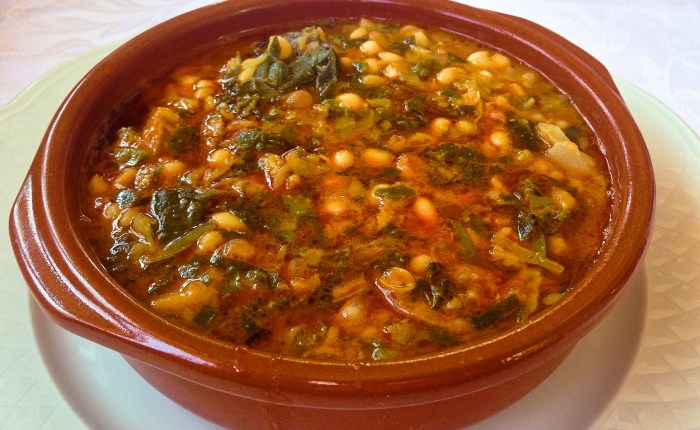
 Cooking in Spain by Janet Mendel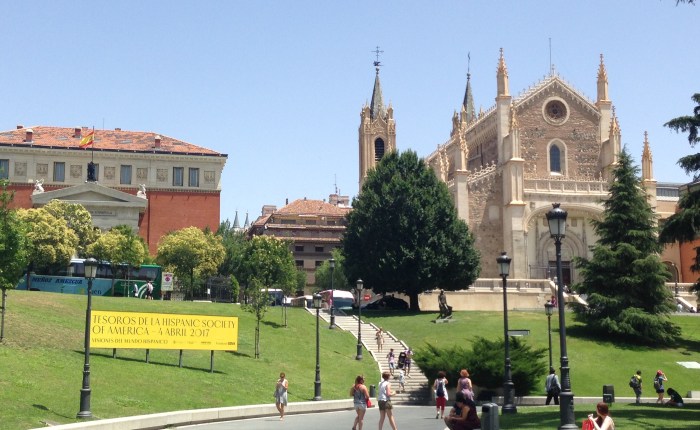
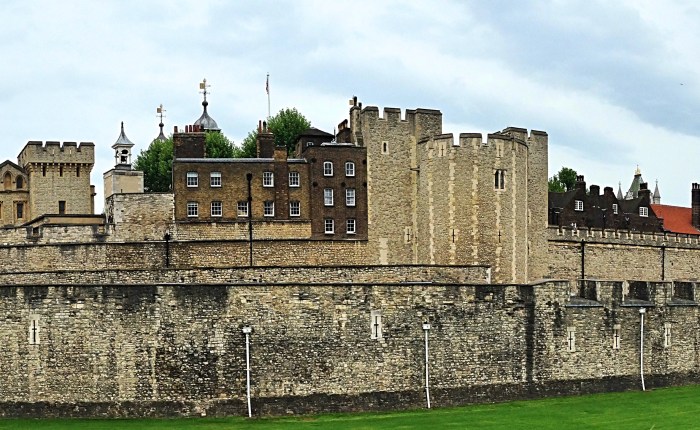

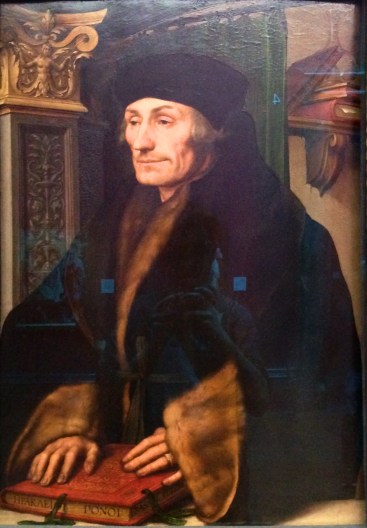
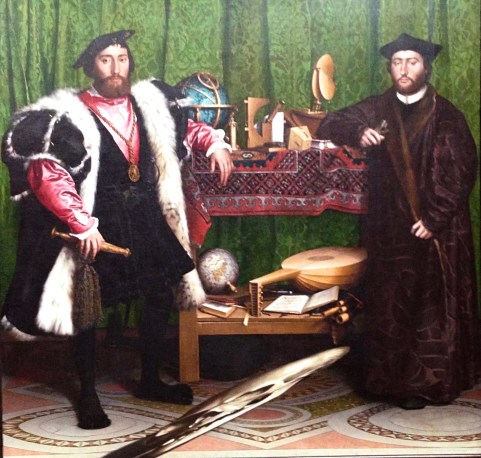
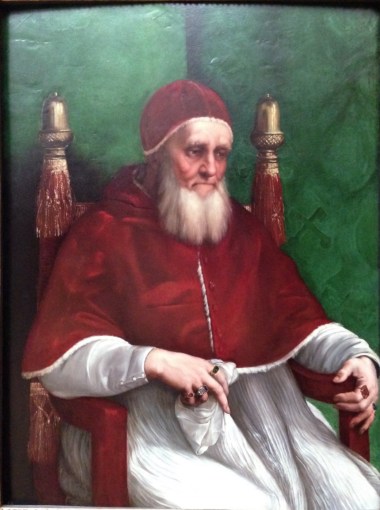
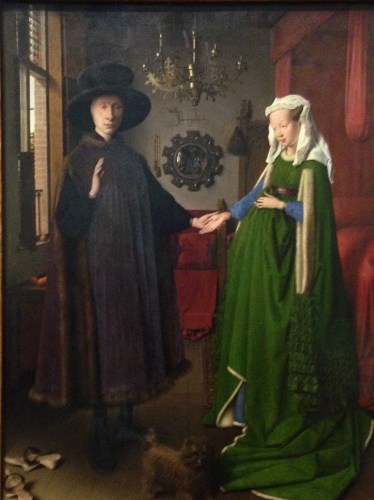


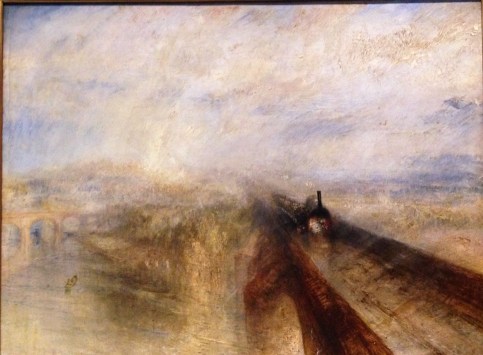
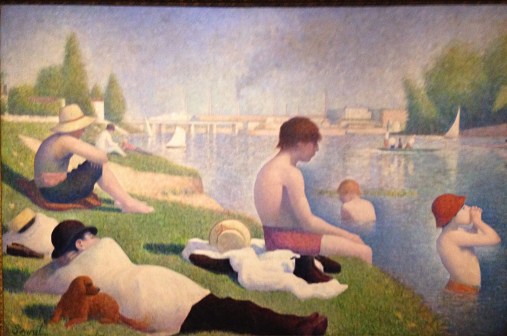


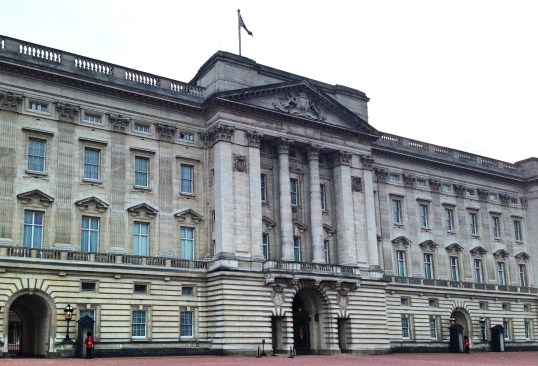

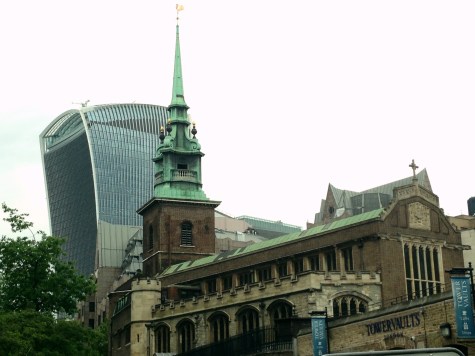
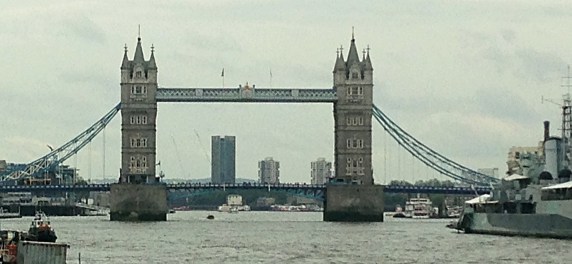


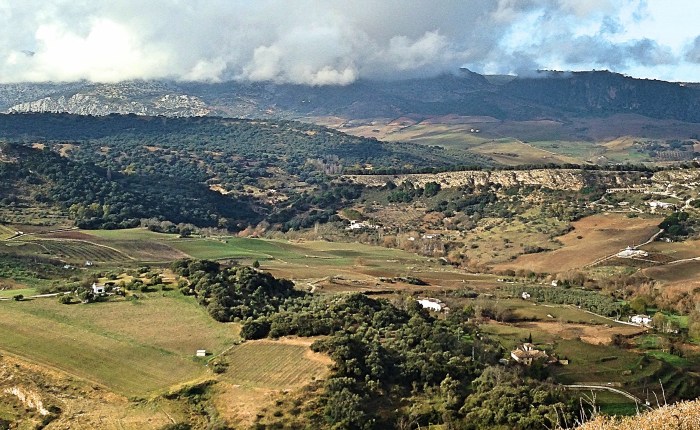


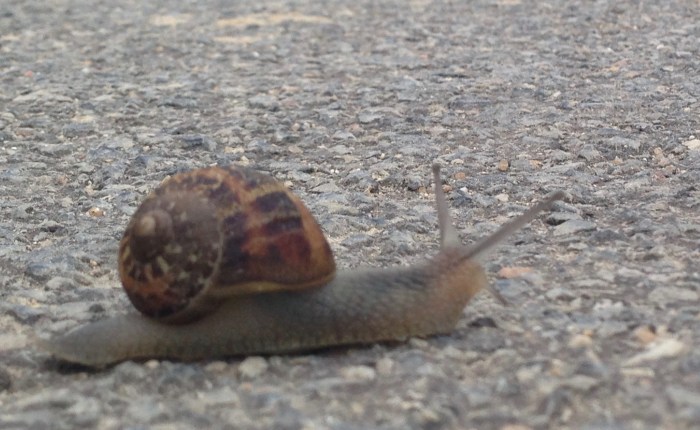
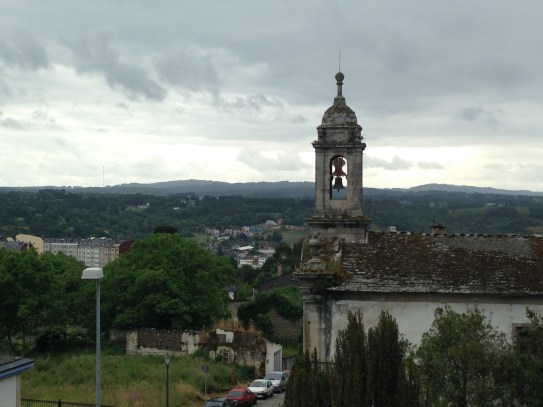
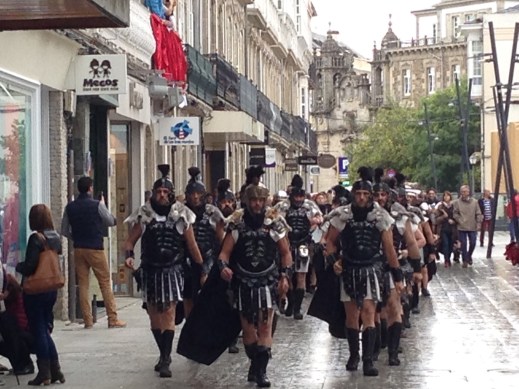
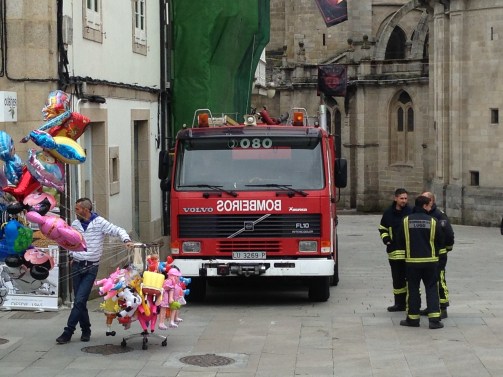


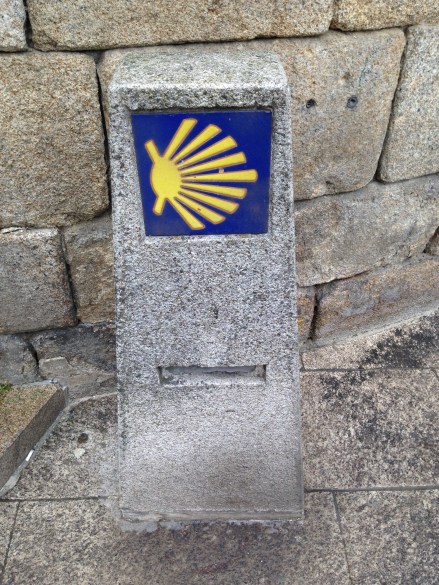
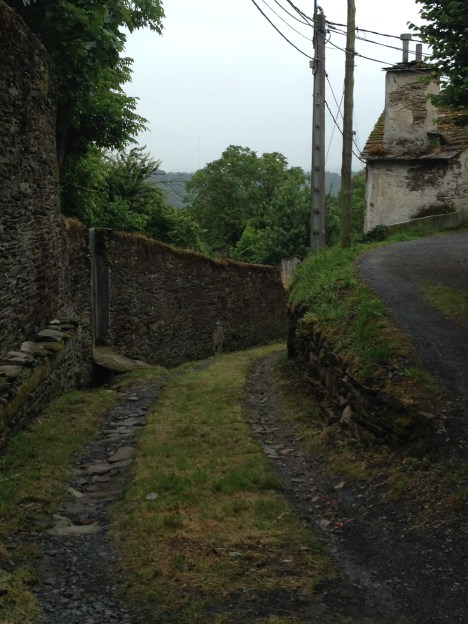
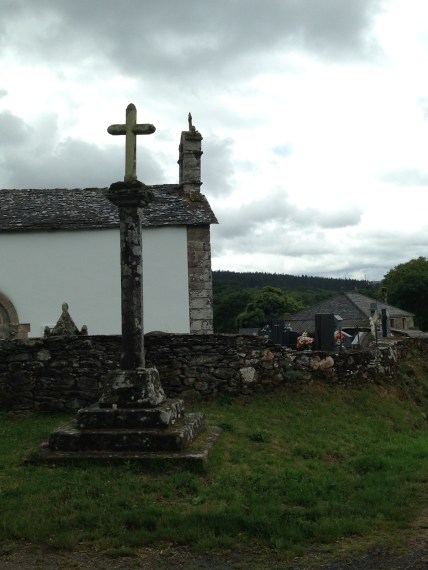


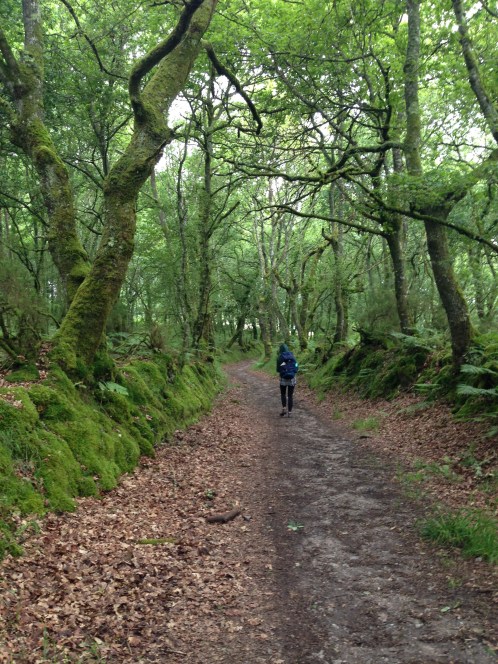

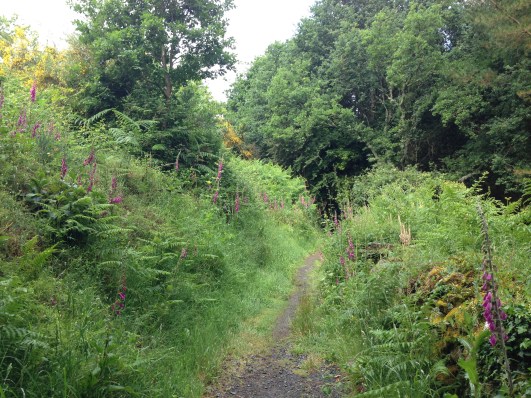
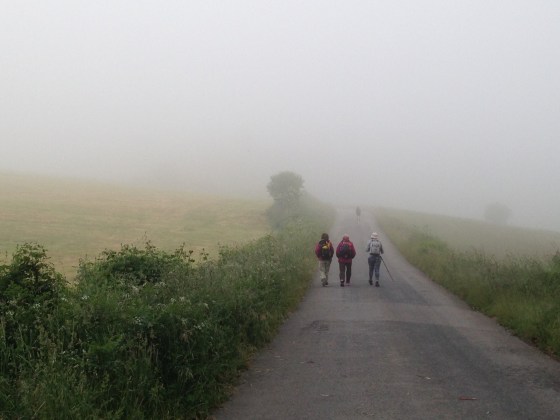
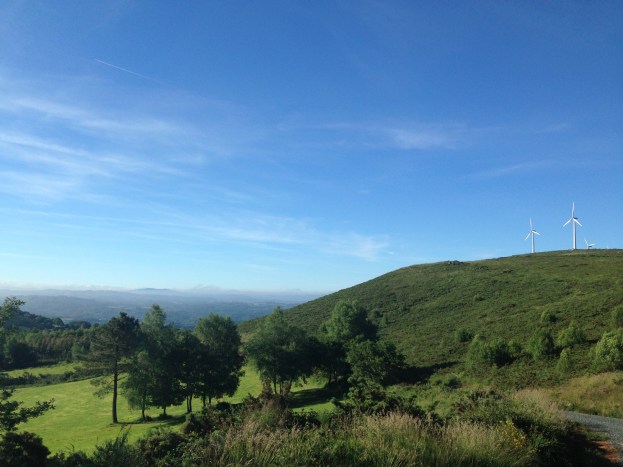
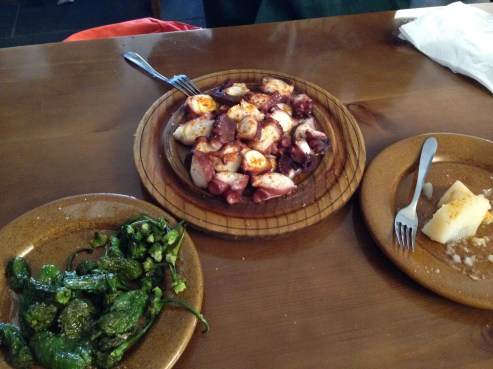

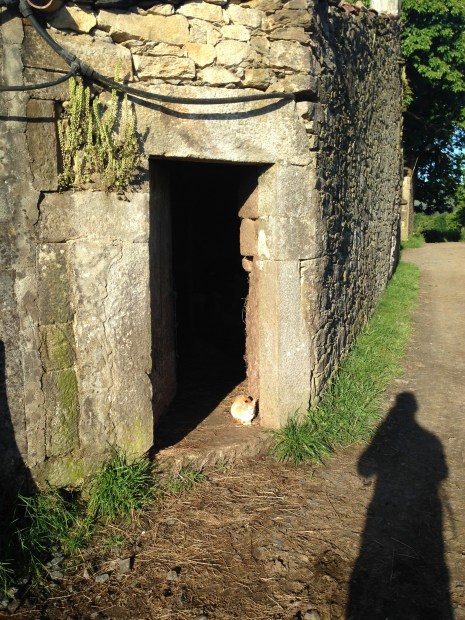
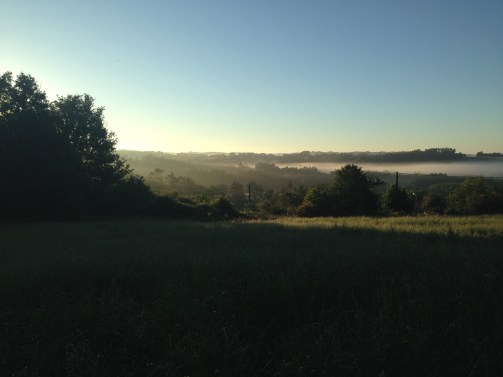
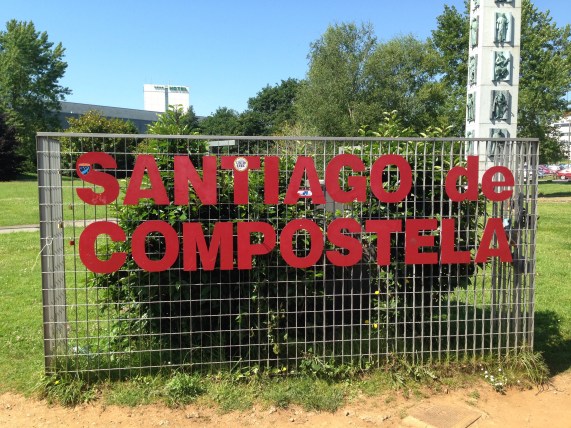
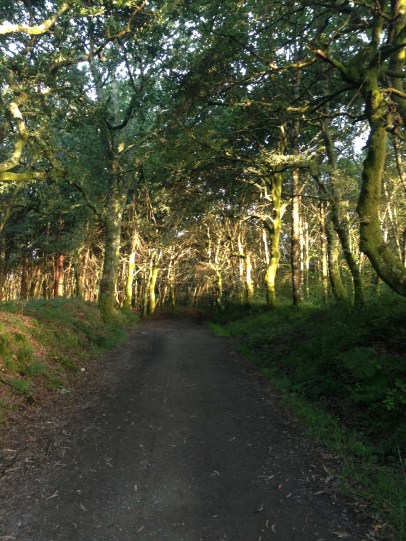
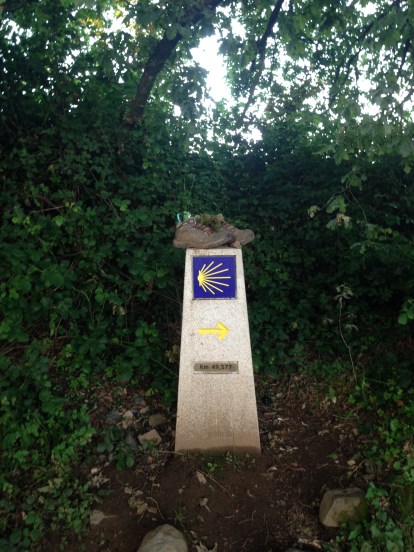

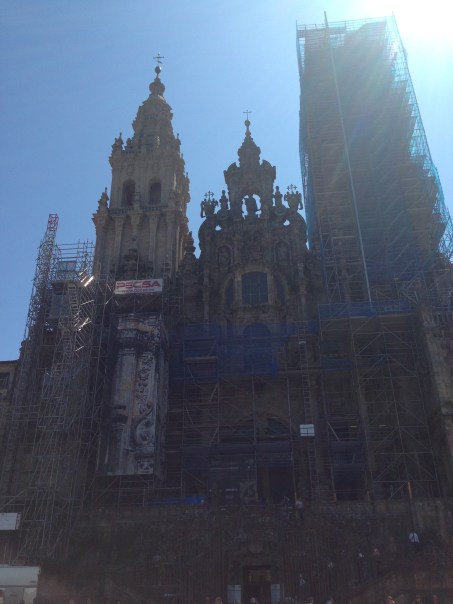
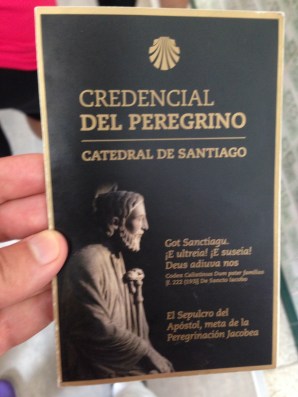
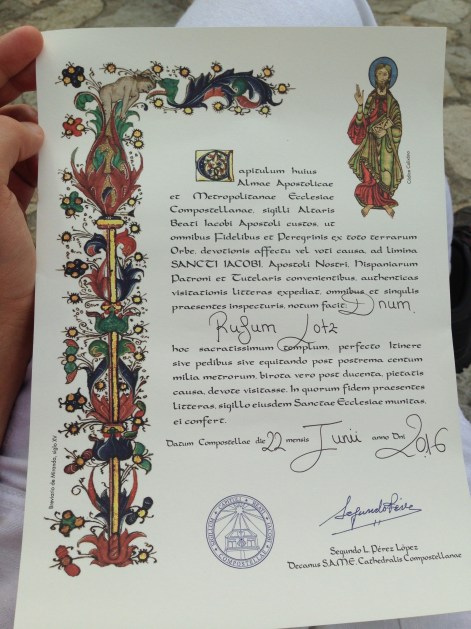
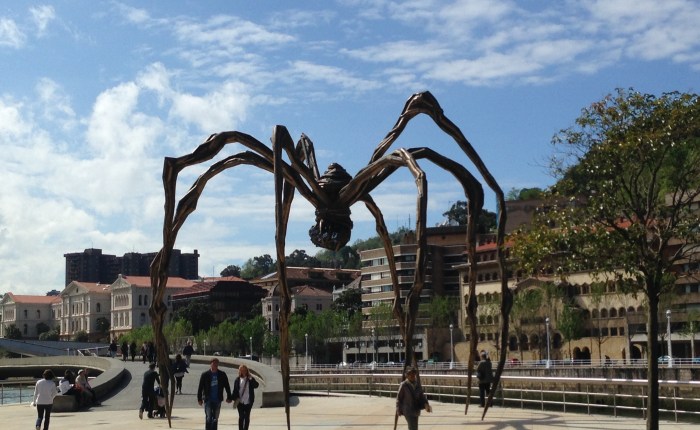
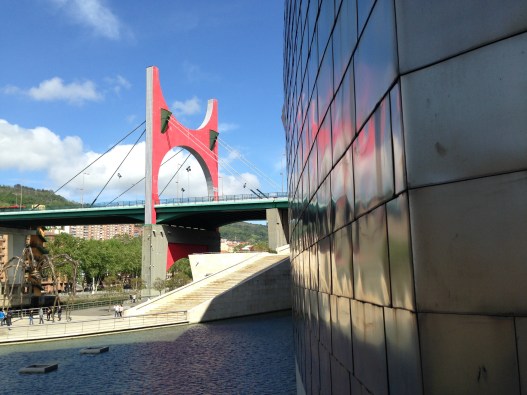


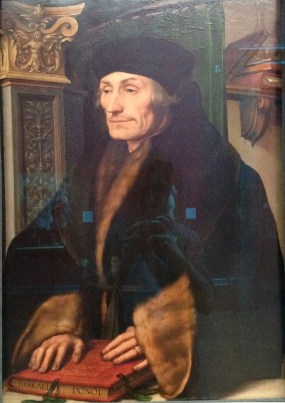


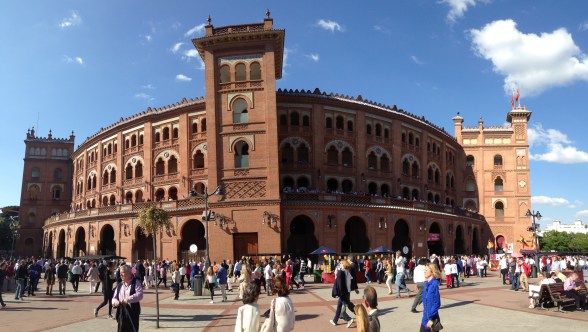



 Lotz in Translation