Early in the morning, we took a train from Madrid to this splendid city. Ávila is the capital of its eponymous province. The city sits in the south of the autonomous region of Castilla y León, and houses a population of 60,000. Of course, I didn’t know a thing about the place when I booked the trip, but by now I’m sure you’ve come to expect that.
The train ride was stunningly lovely—certainly one of the most beautiful, and least expensive, in Spain. The train made its way northwest of Madrid, passing town after town until we got to Escorial. The monastery looked inconceivably majestic in its perch among the mountains, a brooding symbol of Spanish authority.
By now we were in the Guadarrama mountains. Through the window I could see valleys far below us, green but nearly treeless. In the distance the rising sun hung above the horizon, glaring yellow. Underneath was a sea of fog sitting at ground level. Occasionally a derelict farmhouse or a stone fence could be seen, and once or twice I spotted a few cows looking tiny and delicate in the valleys below—but for the most part the view was unmarked by human habitation. We passed through several tunnels, and eventually a city could be seen up ahead, which grew nearer and nearer until the train slowed to a stop.
We were in Ávila. We walked out of the station and into the city center, and in just five minutes we were face to face with the one of the gates of the city walls. It was an impressive sight: two towers flanked the door, two rows of battlements above.
I imagined what it would have been like to be the poor soldier trying to break in these walls. Arrows, stones, and spears would rain down soon as you came near—death from above. It would be a pretty wretched day. I wonder how generals went about conquering places so well-fortified? The only safe way seems to be a siege: starve them out, rather than risk a confrontation. Then I tried imagining what it would be like to be an average citizen, stuck inside a besieged town, watching the supply of grain and fresh water gradually dwindle. War is hell for soldiers and bystanders both.
We walked around the wall until we found the entrance to climb up. A few euros exchanged hands, and soon we were standing on the walls of Ávila. They are impressively well-preserved. To my eye it seemed that they could’ve been built just last week; I saw no signs of damage or wear. But according to Wikipedia, they were constructed from the 11th to the 14th centuries. The walls are thick and tall, and seem strong enough to withstand even a cannonball—not that I’d know. We walked and walked, circumnavigating half the town. Red-thatched roofs of houses stood in the foreground, while in the background, far away, thin white clouds hovered over the mountains.
GF absolutely loved the walls. She smiled like a five year old at an amusement park as she peered through the battlements, her hair waving in the wind. I was in a bad mood again: I was hungry. I absolutely hate being hungry. I’m ashamed to say this, because it underscores how easy and prosperous my life has been, but I feel acutely miserable if I wait too long between breakfast and lunch. I get so sour that even the most interesting and joyful experiences seem dreadful.
So as soon as we had walked the kilometer of wall from start to finish, and climbed up and down our fair share of stairs, we headed to a restaurant. And for whatever reason, I decided that we would go to the top-rated restaurant in the city: El Restaurante Bococo.
We sat down for the menú del día—which was a bit pricey, but not overly so. Little did I know what awaited me.
First the wine. Two orders of the menú came with a bottle of wine included; and since GF can’t drink (it’s genetic), it was up to me to drink all of it. Granted, we didn’t have to order it in the first place; but I’ll be damned if I pass up a free bottle of wine. We didn’t have all day, so I had to drink pretty quickly. Bottoms up.
Then the food. As usual, I nibbled on the bread as soon as it was brought out. Normally, the portions in Spain aren’t that big (for an American) so I don’t worry about filling up my stomach a bit. But I knew I was in trouble when our first dishes were brought out. Each of them was big enough to share. After eating both—a soup with pork, sausage and beans, and fried eggs with pieces of foie gras over potatoes—I was comfortably full.
Then our main dishes arrived. We had both ordered steaks, and they were massive. I was determined not to let any of the food go to waste, so I started determinedly stuffing piece after piece down my throat, hoping to outrace the signals of distress emanating from my stomach. Steak, wine, steak, wine, until my stomach felt like it would burst. Then, I ate some more.
By the time all the food and wine was done, I was in misery. I stood up to go, and I was so full of food and wine that I could hardly suppress my groans as I shuffled across the room and out the door. I pride myself in being an atypical American, but in this respect I am as American as can be. Bill Bryson, in his Notes from a Small Island, put it best:
To an American the whole purpose of living, the one constant confirmation of continued existence, is to cram as much sensual pleasure as possible into one’s mouth more or less continually. Gratification, instant and lavish, is a birthright.
But I had to pay a price for this pleasure, since the rest of the day I could hardly move or think.
Still, though I was in pain, I was agreeably buzzed. This made the Cathedral of Ávila particularly moving for me. It’s a Romanesque church, built around the same time as the walls. In fact, the cathedral was built into walls, making it a fortification as well as a house of God. The cathedral itself has a square, imposing, massive quality. Its plain grey façade is hardly enlivened by decoration.
I found the gothic north door of the cathedral particularly impressive. As in many cathedrals, the doorway is surrounded by concentric arches, which are filled with figures. Long, drawn-out statues of saints sit below, each of them dressed in a robe; and above, within the arches, tiny seated and standing figures fly over you like little angels. In the center, above the door, is the Last Judgment. At this time, Jesus wasn’t conceived as the joyful, forgiving, kindhearted father figure he is today; rather, he was a powerful and vengeful deity who condemns sinners to the fire.
Another doorway was more Romanesque. Above its rounded arch floral motifs abounded. The door is flanked by two soldiers, their bodies covered in what look like fish scales, wielding shields and clubs. Statues of lions were seated on platforms to the right and left. Above the door, the window was divided into pretty swirling patterns. In a third doorway, also Romanesque, smiling demons seem to pop out of the stone, along with two curious cows heads. The Romanesque seems to have been more playful than the Gothic.
We walked inside. I was trying my best to be alert and focused, but the wine was having its effect. I kept zoning out as I walked around the cathedral, and didn’t get the proper experience. Still, I remember being very impressed by the carvings in high-relief behind the main altar. They represented scenes of intense drama. I remember one in particular that depicted what appear to be Roman soldiers massacring women and children. Their swords are drawn, and several are stabbing or slashing down at women on the ground, whose hands are uselessly raised in defense, their faces contorted in terror. It’s a gruesome scene; and the craftsmanship is superb.
Basílica de San Vicente
The rest is a blur, however, and the next thing I knew I was being whisked off to the Basílica de San Vicente. This basilica is one of the best examples of Romanesque architecture in the country. According to legend, it was built on the site where three young siblings were martyred during Roman times.
More bizarre figures stand on the capitols of the columns flanking the door—sphinxes this time; and more floral, swirling designs filled the stone. On the inside, right before the altar, is a massive, elaborate cenotaph to the three martyrs, covered in painted carvings that narrate their lives from beginning to end. I was deeply impressed. But this is the only thing that stuck in my befuddled mind, and soon we had to go.
In fact, we had run out of time. We’d spent so long at the restaurant stuffing ourselves that we gave ourselves only a few hours before our train back to Madrid. So, with much reluctance, we pulled ourselves away, passed again under the main gate of the city, and headed towards the station.
We trekked up a hill and got on the train with only a couple minutes to spare. I planned to read, but fell into a deep doze as soon as I sat down. And so my drunken body was conveyed to Madrid.
Addendum: In a later trip to Ávila, I managed to investigate some sites that I missed on my first pass through.
One of the most iconic sites of Ávila are Los Cuatro Postes, the Four Posts. This is a humilladero, or a religious sign marking the entrance to a city. The marker itself is extremely simple: just a cross standing within four posts. But the view from of the city from this spot is excellent (see the photo above). Multiple tourist buses were parked nearby, so their passengers could get out and snap a picture.
As I walked back to the city, crossing the bridge you can see in the foreground above, I found a nice walking path that runs along the river Adaja. There is also a lovely path that goes alongside the walls on the other side of the city, giving you an unimpeded view of the country beyond.
The most famous person from Avila is, without doubt, St. Teresa, the religious mystic who helped to galvanize the Spanish Counter-Reformation. She is the subject of Bernini’s iconic, and scandolously erotic, sculpture in Rome. After her death, a convent was built in her honor, supposedly over the very spot where she was born. This is the Convento de Santa Teresa de Ávila. Out front is a compelling statue of the Saint, pen in hand, eyes uplifted to heaven. Inside, you can find a shrine dedicated to her, as well as a re-creation of her infant bedroom.
Convento de Santa Teresa
Situated outside the city walls is the Real Monasterio de Santo Tomás, a gothic monastery that was founded under the reign of the Catholic Monarchs. The monastery is home to several excellent cloisters and an impressive church. Somewhat more strangely, the monastery also contains two miniature museums, one of natural history and one of Asian art. The natural history “museum” is especially odd, since it consists of little more than the stuffed and preserved carcasses of several animals, sitting behind class cases in a few little rooms. I assume that this taxidermy was performed a long time ago, when the clergy was still the leading intellectual force in the country. The museum of Asian art is, by contrast, quite nice, containing excellent samples of sculpture from many different countries.
Monasterio de Santo Tomas
Ávila is certainly one of the most romantic cities in Spain, and easily one of the best day trips from Madrid. Just don’t eat or drink too much.
(As I mention in this melodramatic post, I happened to visit Aranjuez on an inopportune day. I have subsequently visited many times; and now I think it is one of the nicest day trips from Madrid. For more, see my addendum at the end of this post.)
“Oh God, not again! Why can’t we get anything right?”
We were standing in front of the Royal Palace of Aranjuez. It was big but not imposing, perhaps because of its playful pink color. The building’s two wings seemed to stretch toward us like a man reaching for a hug. On the top of the building the Spanish flag was fitfully blowing in the wind.
“Why!?” I whined. “We managed to come the only day that it’s closed! Why didn’t I just check the hours? This always happens!”
It was Monday, the only day of the week that the palace isn’t open for visits. We’d just taken the train from Atocha station in Madrid. It was the day after our trip to Chinchón, and the weather was still gloomy and overcast. I wasn’t in a good mood.
“Shut up,” GF said. “It’s not a big deal.”
We began walking around, somewhat aimlessly. In the area surroundings the palace there is a lot of monumental architecture, with large open courtyards surrounded by stone walls. Rounded archways run along nearly every surface, which, along with the reddish color, gives the complex a unified aesthetic. But I wasn’t in the mood for appreciating architecture.
“We’ve been in this country for months,” I said. “And still we mess up even these basic things.”
“It’s not a big deal,” GF said.
By now we were standing in front of the Iglesia Real de San Antonio, the church that forms part of the palace complex, and I was still sulking.
“This sucks,” I said.
“Come on,” GF said. “Let’s go eat.”
We walked into town, found a restaurant, and sat down. The food was surprisingly good, and also cheap. By the time I finished, I was in a considerably better mood. And in that spirit, we went off to see the gardens.
It was a miserable day for this. The trees were bare and skeletal; the flowers were nowhere to be seen; the place was empty and desolate. The wind was blowing freezing air, the endless gray clouds cast a dreary shadow over everything, and in general the world looked bleak.
The only light relief from this brooding picture were the geese. At least I think they were geese, though they didn’t look much like the Canadian geese I’m used to. There were dozens of them sitting in the river. And as we passed by a few geese wandering around the park, they began honking at each other. It was a comical sight. It looked like they were having a petty argument, and perhaps they were.
With nothing much to interest me, my mind began to wander. I had just begun watching Kenneth Clark’s landmark television documentary, Civilisation; and that program had brought to the fore a question I’d long thought about.
“You know, I’ve been thinking,” I said. “It’s supposed to be good for you in some way to travel to all these famous monuments. You see these beautiful buildings and paintings, and ostensibly the experience ennobles you. But how, specifically does that work? How does it improve people to appreciate fine architecture, for example?”
“Uh, well it’s historically significant,” GF said, “and it’s important for people to understand history.”
“That’s true. But it seems that it’s something more than just history. After all, you could just read a history book. Why do people spend all this money to visit places so they can see fine architecture?”
“Because it’s nice to look at?”
“I guess. But lots of things are nice to look at. Lots of models, for example, are nice to look at, but not many people think looking at celebrities makes them ‘cultured’.”
“Right…”
“And of course, seeing beautiful art doesn’t necessarily do anything for you. If somebody is naturally uninterested in or insensitive to fine art, he won’t be improved no matter how many museums you force him through.”
“Okay…”
By now she had completely zoned out and I was talking to myself. I gave up and started turning over the question in my mind. But I didn’t make any progress, and soon my mind was someplace else.
We kept going, crossed a bridge, and found ourselves walking along a road lined with sycamore trees, their overhanging branches leafless and emaciated. To our left and right were fields of farmland—empty.
More than anything else I’ve seen in Spain, this wintry and desolate landscape reminded me of home. I felt like I was in upstate New York, taking a wintertime stroll. The wind whipped up and send a chill to my bones.
A wave of homesickness came over me as I walked. What am I doing here? Where am I headed? I didn’t know. What is my mom doing? And my brother? What’s happening with my friends? Didn’t know, either. What will happen next year? What will I do when I get back home? And when will that be? How will I be changed? And how will home be changed?
The road extended into the distance, empty and dreary. And as I looked down that road, I could imagine nothing but sadness ahead of me. This sadness wasn’t just for myself. I was seized by that tender, reflective melancholy—what Virgil calls lacrimae rerum, or “the tears of things”—when you realize that the universe is indifferent to your happiness, that all pleasure is temporary, that death is permanent, and that all your hopes and dreams, and those of the people you love, might come to nothing. It’s the realization—so painful we do our best to forget it—that tragedy is an inevitable part of life. And though this fact is unbearably sad, it is the source of beauty; for beauty is so precious because, like all things, it is doomed to pass away.
In this pensive state of mind, perhaps just a result of the weather and the new year, we walked down the long road, turned a corner, and kept on going. We talked about our plans for next year, and expressed anxiety about how we’d cope if we had to go long distance. And then we fell into silence as the leaves crunched underneath our feet and the light leaked out of the sky, and we said little as we dragged our weary feet to the train and left.
Addendum: The city of Aranjuez is located south of Madrid, easily accessible via the Cercanías trains. Situated at a lower altitude than Madrid, and at the confluence of two rivers, the Tajo and the Jarama, Aranjuéz is a verdant place. Trees grow notably taller here than in Madrid, and the city is also famous for its fields of strawberries and asparagus. These picturesque fields inspired the composer Joaquín Rodrigo to write his famous Concierto de Aranjuez, one of Spain’s most iconic musical works.
In the spring and summer, an antique train takes visitors from Príncipe Pío in Madrid to Aranjuez, traveling through the lush surrounding countryside. This is the Tren de la Fresa, or Strawberry Train, and is one of the first train lines ever opened in Madrid.
Aranjuez is most notable for its palace, which was commissioned under the reign of Philip II, and designed by the same architect who designed the Escorial, Juan Bautista de Toledo. Judged from either its exterior or interior, the palace is magnificent, one of the finest in Spain. Unlike so many palaces, the outside of the building manages to be grandiose without opulence. The same cannot be said for its interior decorations, however, which are certainly palatial.
Next to the palace is the Plaza and the Church of San Antonio, an extension of the palace complex. A big open square surrounded by brick arches, the plaza leads to the lovely baroque Church, which was built to be used by the monarchs.
Even more charming than the palace are the surrounding gardens. These are divided into multiple, interconnected sections, each of which has its own character. The royal gardens are arguably the finest in Spain, more varied and inviting than the comparatively sterile ones of La Granja, especially considering theTajo River which flows through the center. It is also worth exploring the surrounding farmland of Aranjuez, which competes even with the gardens for bucolic splendor.
The town of Aranjuez itself is notable for its grid-like street layout, a consequence of its royal planning. There are some excellent restraurants to be found here, such as De Pikoteo. In sum, it makes for a first-rate day trip—just don’t go on a Monday in winter.
(This post is a continuation of my series on Day Trips: Click here for my post on Alcalá de Henares.)
“Just once, I’d like to begin a blog post without our travel troubles!” I said to GF as we walked around, confused and lost, looking for the bus to Chinchón. We’d just walked fifteen minutes in the wrong direction, and were heading back to the metro station now.
“Shut up,” she said. “I have it here on my phone.”
Indeed she did; and we were soon standing by the appropriate bus station near Conde de Casal, waiting to go to Chinchón.
Chinchón is a small town—its population is about 5,000—just south of Madrid. It isn’t the home of any big castles or cathedrals; it isn’t the place to take the best photos or hear the best music. Rather, Chinchón is a place to sit and eat, and that’s what we planned to do.
After an hour on the bus, we arrived. Immediately we headed for the plaza mayor, the most famous place in the town, a five minute walk from the bus stop.
This was the first week of January. We had this week off for Tres Reyes, the Spanish holiday celebrating the three wise men who visited infant Jesus. Instead of giving presents on Christmas, this is the day when most gifts are exchanged. And lucky for us, the combination of Christmas, New Year’s, and Tres Reyes makes for a long, long holiday.
We’d just gotten back from our Christmas trip to Andalusia, and were thirsting to see more of Spain. Unfortunately, Madrid and its environs are a good deal colder than the south of Spain. We were freezing. Added to this, the weather was awful that day, overcast, windy, with a bit of rain. It was the kind of dull, dreary weather than can make the Taj Mahal look dreadful.
But the plaza mayor of Chinchón didn’t look dreadful at all. It looked positively cute. Identical white buildings with green balconies and tiled roofs surrounded a circular area in the center. This center was filled with sand. A few guys were selling donkey rides to kids, leading a long train of donkeys with excited children bouncing on top of them around the square, while their parents walked cautiously beside. A plastic Christmas tree decoration sat in the exact center. Every building had a restaurant or two, which was good because we were already quite hungry.
Being a man of this modern age, I looked on my phone for the restaurant with the highest rating: it was called La Villa. Of course it was expensive (for a Spanish restaurant). But it was the new year, and we felt like living high.
I’m glad to report that I absolutely stuffed myself, and then ate some more. The house red wine was also just fantastic, dangerously so, for I drank too much of it. After I ate and drank my fill, we ordered dessert—also great—and then asked for the check. This came with two complementary shots of Chinchón, which is the local liquor, apparently. Since my girlfriend can’t drink, I had to have both shots. It was strong, I tell you, and had a subtle liquorish flavor, a bit like Jägermeister. As we walked out, we noticed a bunch of black-and-white pictures hanging on the walls. Closer inspection revealed that they were of bull fights in the plaza mayor of Chinchón. Apparently, it was originally a bullring, which explains its symmetrical layout.
After this, there’s not much to tell. Stomachs painfully full, we waddled around town a bit. We found a castle, ruined and empty, which we couldn’t enter. There were several churches, closed to visitors. And then there was a view of the countryside beyond, rendered a bit dour by the weather. An hour later we were waiting at the bus stop with a bunch of chatting old ladies, and an hour after that we were sitting at home, drowsy, relaxed, ready for our next trip.
The Castle of Chinchón
Addendum: For any visitors of Madrid looking for a day trip to see a beautiful Spanish pueblo, Chinchón is perhaps the best choice. Small, intimate, easily accessible, and one of the most charming pueblos in the country, Chinchón is also famous for its gastronomy.
The liquor I mentioned above is Anís, which is simply referred to as “Chinchón” in Spanish, since this little town has long been the leading manufacturer of the drink. Chinchón is also famous for its pastries; its signature pastry has been appropriately compared to a breast, complete with a nipple on top.
The castle I mentioned above was built in the sixteenth century. Standing nearby, the visitor gets an excellent view of the surrounding countryside. Chinchón’s Plaza Mayor has not only been the site of bull fights, but also executions, comedy performances, royal proclamations, and many movie scenes. If you walk from this plaza up to the Torre Reloj, you will be rewarded with a marvelous view of the town.
(I wrote this post only a few months after my arrival in Spain, while I was still mostly ignorant of the country and its language. With the exception of Chinchón, I have visited all of these places since then, so I have appended little notes at the end of my posts about what I now know. I have also broken up my original post for ease of navigation.)
There are many advantages to living in Madrid. It’s big, it’s bustling, and it’s diverse. But one of my favorite aspects of Madrid is its location. By design, the capital of Spain is almost equidistant from every corner of the country; to drive from Madrid to Catalonia, to Andalusia, to the Basque Country, and to Galicia all take roughly the same amount of time. And transportation isn’t hard to find; the city is well connected by rail, highway, and plane to all points of the compass. Travel is cheap, easy, and fast.
As a consequence, there are a great many excellent day trips you can take from Madrid. I’ve already written about some of them: Toledo, Segovia, and El Escorial. In these posts, I want to talk about some of the perhaps lesser-known cities for day-trippers. I’ll start at the very beginning, with my first trip inside Spain.
Alcalá de Henares
As soon as I got to Spain, I blabbed to everybody I met that I had read Don Quixote. I was very proud of this, for I thought it gave me some kind of badge of honor in Spanish culture. And indeed, a few people seemed genuinely impressed—though less so when I told them I read it in English.
“Ah, so you like Cervantes?” a friend of ours said.
“Oh yes, he’s incredible.”
“You should visit Alcalá de Henares, then. It’s where Cervantes was born.”
This was only our second week in Spain, and we were still a bit disoriented by our surroundings. The prospect of taking an actual trip in Spain seemed almost Herculean, an added challenge to the day-to-day struggle of navigating our new city. But I was determined to get culture, by hell or high water; so as soon as we could, we made it to Atocha station and took the Cercanías to Alcalá de Henares. (For once in our lives, we found the train without a problem.)
The train was too full for us to sit down. We stood by the doors, both of us swaying nervously with the ever-present anxiety you feel when in a strange environment. I was looking forward to seeing the area around Madrid, but the windows were smudged and dirty; and the view, from what I could see, wasn’t much anyway—just the featureless tan wasteland of the dry foothills. Before even coming to Spain I had terrified myself by reading online stories about the ingenuity of pickpockets in Europe, and couldn’t stop casting interrogative glances at all the passengers around me, wondering whether any of them were thieves eyeing me up, waiting for the perfect moment to strike.
Station after station went by, and I was paying fierce attention to all of them, paranoid that we would miss our stop and get hopelessly lost. It’s really exhausting traveling somewhere totally new—it is for me, at least—because you can’t take anything for granted. The doors of the trains work differently; the seats are arranged differently; the automatic announcer is speaking a foreign language. Added to this, I was constantly afraid of doing something wrong by accident, breaking the train etiquette of Spain and drawing everyone’s attention to myself. It’s pretty amusing to me now, as I look back; but then it was just stressful and scary.
We arrived. After some confused mucking about, we began making our way to the center of town. Neither of us had Spanish SIM cards yet, so our phones didn’t work. We just followed the crowd, who all seemed to be walking in the same direction. The city seemed rather ordinary at first—though even this was interesting to me, since I hadn’t seen any city in Spain besides Madrid yet—but soon something caught our eye. It looked like a little castle, with a tower on one end and a tiny battlement at the top of a square structure.
But what really made it stand out was the intricate ornamentation. The façade of the tower, for example, was covered in swirls. It was quite pretty. Although we didn’t know this at the time, it’s called the Palacete Laredo, and is one of the famous monuments of Alcalá. It was originally built as a private house for Manuel Laredo, a polymath artist who served as the mayor of Alcalá de Henares. Nowadays, it serves as a museum of the Cistercian order, as well as a specialized research branch of the Complutense University.
Looking back now, I can tell that it was built in a Neo-Mudéjar style, with crescent arches and a domed minaret. The top of the main building, however, is not Neo-Mudéjar in style, but rather looks like a small copy of the Alcázar in Segovia. In fact, the more I look at my pictures, the more of a stylistic jumble the place appears, with all sorts of different Spanish architectural elements mixed together. Of course, at the time I just thought it looked weird.
We kept going, following the trickle of pedestrians into the center of town. Eventually the buildings started to look older; the streets were narrower here and paved with stone. But what most caught our attention was a big beautiful bird, sitting on top of an old church. It looked so incongruous and stood so still that we were convinced it was fake—that is, until it twitched its head. When we got a bit closer we could see it had built a big, bushy nest up high on the building.
As we moved on, following the throng of people wherever it seemed thickest, we eventually found ourselves in a dense crowd. Little shacks were set up all over the place, selling cheese, sausage, olives, nuts, spices, tea, wooden bowls, leather bags, colorful scarves, cheap jewelry. Not only that, but all the people in these shops were dressed up in funny outfits, like they were in Medieval times. Was Spain always like this on the weekends? I was both excited and terrified—excited to see a slice of Spanish life, but now scared more than ever about being pickpocketed.
We rounded a corner and came across an outdoor restaurant. Dozens of tables and chairs were gathered under a tent. Several harried men in ridiculous costumes—looking like court jesters, with striped red and white shirts and big puffy hats—were running left and right, carrying massive trays of food. Outside the tent was the cooking area, where a large circular charcoal grill was covered in sausages, meats, fish, and vegetables of all kinds. Immediately I felt very, very hungry. From the shops were hung all manner of flags and banners painted with signs from medieval heraldry—black, yellow, and red.
Every new street we entered was more packed than the last. Soon it dawned on us that this wasn’t at all normal, but was some kind of special festival. As if to confirm our suspicion, a group of men dressed up like medieval soldiers, with fake swords by their sides, paraded through the crowd while another man, dressed in rags, pretended to be a lunatic. One of the soldiers held him by a rope, while the maniac ran after people in the crowd (mostly women), gargling his throat and reaching out his dirty hands. Another soldier was beating a big bass drum, while they all shouted things that I couldn’t understand.
(As we later learned, this was the Cervantino, a medieval fair named after Cervantes, which is held in the first couple weeks of October. I have since gone back twice, and I highly recommend it.)
We wandered along this way, two bewildered Americans, absolutely intimidated by our surroundings, until eventually we were standing in front of a couple of statues. I immediately recognized these as being Don Quixote and Sancho Panza; both of them were sitting on a bench, and seemed to be having a damned good time. In between the knight errant and his square there was a space on the bench where tourist after tourist was lining up to have their picture taken. I would have had my picture taken, too, if I wasn’t so afraid that my phone would disappear as soon as I took it out of my pocket.
Behind the bench was the Cervantes House—the house where Cervantes himself was born and reared. We got on line and went right in. It’s quite a small place, actually. In the center of the house is a little courtyard, around which every room is situated. The insides of these rooms were furnished to look like they would have during Cervantes’ lifetime. I have to admit not much caught my eye, except perhaps the old kitchen equipment. It was more rewarding just to pace about, thinking that I was standing in the very place where Cervantes, that master of masters, entered into the world. This feeling was so strange to me that I’m not sure I quite took it in. This was perhaps the first appearance of “European Travel Syndrome” in my life. You simply can’t have an experience like this in New York.
The statue of Cervantes in the main square
In just half an hour, we were out in the street again. We didn’t know anything else to do except walk around, seeing as much of the city as we could. Many of the buildings were impressive; but at this early stage, we didn’t really know how to go about visiting buildings or even how to look at them. In fact, what I most remember were not the buildings themselves, but the dozens stork nests sitting snuggly on rooftops, their bushy lairs looking somehow both ridiculous and majestic.
Eventually, we decided to sit down to eat in one of those tent restaurants. The waiter ran up to us, his floppy hat thrown over to one side of his head, and asked us in a slew of Spanish words what we wanted. We ordered two things, and he was off. At this point, we were so clueless in Spanish that most of the time we didn’t even know what we were ordering in restaurants. This was a classic example: We asked for “pimientos fritos” thinking they were french fries; five minutes later, the waiter dropped a plate of fried, salted green peppers on our table. I know, I know, this is an embarrassing mistake, not least because “potato” is “patata” here—not hard to guess.
The upside of our ignorance was that we ended up learning a lot about Spanish food, since we accidentally ate a lot of it. These pimientos were a case in point: we loved them, and pimientos now are one of our staple dishes. Really, if you’re in Spain and you can’t speak Spanish, just go into a restaurant and order whatever sounds interesting. All the food is good here.
After eating the pimientos, and then following it with a plate full of chorizo and tomato sauce on bread, we began to walk around again. But I’m afraid we didn’t do much of interest; and in an hour, we were on our way back to the train station to return to Madrid.
Reading over what I just wrote, and comparing it to what I find online about Alcalá de Henares, it’s obvious to me that we left most of the main sights unseen. Oh well, next time. But it was a fantastic stroke of luck to arrive on the very weekend when they were having their famous Medieval Market. And as I look back on it, this trip seems to presage our whole time in Spain so far: we arrive clueless and unprepared, and yet everything works out marvelously. Traveling in Spain is, in fact, a lot like ordering in a Spanish restaurant: even if you have no idea what you’ll get, you can be sure it will be delightful.
Addendum: Since this initial trip, I have since learned that Alcalá de Henares has been more than simply the birthplace of Cervantes, but has played an important role in Spanish history.
The city has existed since at least Roman times, when it was known as Complutum. It was in this town that Cardinal Cisneros, one of the leading functionaries of the Catholic Monarchs, founded the University of Alcalá in 1499. Under his direction the scholars of the university undertook and completed one of the greatest intellectual accomplishments of the Spanish Golden Age, the Polyglot Bible, which contained the entire text of the Old and New Testaments in three languages: Latin, Hebrew, and Greek—and sometimes Aramaic. The University was eventually moved to Madrid, where it was renamed the Complutense (which comes from Alcalá’s Latin name); and it remains one of the major universities in the country.
The original university building still stands in Alcalá’s main square. Its frontal façade is magnificent, and for a small price you can take a guided tour to learn about the university’s history.
The Cathedral of Alcalá is also worth a visit. Although it was burned during the Spanish Civil War, thus destroying many of its decorations and altars, it remains an attractive building. The cathedral is, curiously, the unique for being the only one in the world which possess the title “Magistral Church,” which requires that all of its priests be doctors in theology.
I’ve fallen far behind in my travel posts, and now I find myself in the embarrassing position of writing about a trip I took over a year ago. It also seems that, no matter how hard I try to be brief, I end up writing more and more. Well, enough prefatory remarks; on to business.
Introduction
For an American, there is something religious about visiting London for the first time. We have been hearing about the place all our lives. Dry humor, pints of beer, red phone booths, black taxis, fish and chips, bad teeth, good tea, bad weather, good tikka masala, the British Invasion, the British Parliament, the British Empire, Queen Elizabeth, Queen Victoria, Shakespeare, Dickens, the Beatles, Monty Python, Dr. Who, Harry Potter—London is the focal point of all our stereotypes, good and bad, of England and the English.
This is important for us Americans, since England is the only other country whose media we regularly consume. English media is so important for us because of our shared language. Unlike in Spain—where English-language songs often play on the radio (and people sing these songs without understanding the lyrics), and where American shows, overdubbed in Spanish, are extremely popular—in the United States we don’t listen to music in a foreign language if we can help it, and we only watch television that was originally made in English (overdubbing looks silly). This provincial preference for English media limits our options of foreign media mainly to England and Australia, and England has been the clear favorite.
A consequence of this popularity of English media is that Americans have internalized a highly partial picture of the English character. We associate the English with sophistication, elegance, wit, good manner, royalty, and the historical past.
This is almost the polar opposite of the English reputation in Spain. You see, Spain is an excellent travel destination for English holidaymakers—cheap, close, and sunny—and as a result, lots of English tourists come to Spain looking for a good time. A “good time” entails drinking, of course, and thus there are lots of drunken English people stumbling around city centers on any given night. As a result, Spaniards think of the English, not as genteel aristocrats, but as tipplers.
(Parenthetically, the English also have very different alcohol consumption habits than the Spanish. On a Friday or Saturday night, people in Spain begin drinking in earnest after dinner—which means 11 pm at the earliest. They often don’t even leave their apartment to go to bars and clubs until 2 in the morning, and don’t return home until dawn the next day. In London, on the other hand, drinking begins as soon as people leave work, at 5 pm. This is due, in part, to an old law in London that required pubs to close down at 11. So the English stop drinking when the Spanish barely start.
(This difference in schedule is supplemented by a difference in speed and volume. Spaniards are rarely visibly drunk. I have seen very few Spanish people stumbling from alcohol; instead, they focus on maintaining a level of comfortable tipsiness for a long period of time. Compared with Brits, Spaniards sip their drinks, and eat a lot while they drink. English people, by contrast, get properly drunk, and fast, much like many Americans do. As a consequence, Brits can be very loud drinkers—in my experience, at least. This is an especially interesting contrast, I think, since in every other circumstance Brits tend to be mucher more quiet than Spaniards.)
Of course, both the American and the Spanish stereotype is an over-generalization; they are based on very partial exposures to the English character. Partial and false as they may be, however, these stereotypes did succeed in endowing England with a certain contradictory mystique—a place full of witty drunkards, elegant and boisterous, cultured and slovenly? I needed to go see London for myself, to catch a glimpse of the reality behind the reputation.
My problem was that, at the time, I was particularly low on funds. And however distorted all the other stereotypes may be about London, this one is true: London is expensive. Well, it’s expensive if you enjoy eating, sleeping indoors, using transportation, and doing any activity besides walking and sitting outside. This was a few months before the Brexit referendum, and the pound was still strong.
As a result, my short trip to London—barely 48 hours—became a frantic exercise in traveling cheaply. I didn’t buy an oyster card, and I didn’t use the Tube or the buses. I ate “meal deals”—pre-packed sandwiches at Tesco supermarkets, not terribly delicious—instead of paying for dinner in a restaurant. And I focused on visiting museums, which are free in London, instead of other popular sites.
Arrival & First Impressions
As usual, I traveled with Ryanair. My plane arrived in Stansted, the smallest of London’s airports, where I had to fill out a form and wait in a long queue to enter the country. The English, it seems, are almost as paranoid about their borders as we are in the United States. From Stansted, I took the so-called Stansted Express to London’s central Liverpool Station. The ride took about an hour, and was not cheap. This is a typical Ryanair experience: the flight is inexpensive, but uncomfortable; and you land in an unpopular airport far outside the city. I am a loyal customer.
I sat in the train—dazed from lack of sleep, filled with nervous energy, physically miserable but mentally awake—and stared out the window in disbelief. Was I really here? Was this England, the land of dry humor and wet weather? I gazed out at fleeting patches of green countryside as the train sped by, and savored the delightful names of the train stations between Stansted and London. (Of course I can’t remember any of the names now; but as I look on Google maps, I find such gems as Matching Tye, Hartfield Heath, Hastingwood, Theydon Bois.)
English novels—from Austen, to Dickens, to Rowling—have powerfully shaped the American imagination of the past; and thus, by association, English place-names strike many Americans as irresistibly charming. Each name seems to be the title of another great novel, filled with irony and romance, and written with quaint wit. Likewise, the English countryside—a neatly trimmed park, whose rolling hills are covered in a grey mist—is featured in so many films that even the snatches of green I saw out the train window filled me with delight.
These feelings of romance and fantasy are, I suspect, nearly universal for Americans visiting England, and specifically London, for the first time. England is the only foreign country we regularly see in television and movies. This gives the experience of visiting England the effect of stepping into a movie set—everything is familiar, and yet unreal. The same thing happens, I believe, to many who visit New York for the first time. Many people have independently told me that it felt like they were in a movie, since so many landmarks and features were familiar to them from films.
The train arrived, and I got out to go find my Airbnb. I was on edge. The combination of sleep deprivation (the flight was terribly early) with the usual stress of navigating a foreign city (my phone didn’t have service), plus the feeling of unreality that comes from actually being in a place which I’d been hearing about all my life—all this combined to make me edgy and oversensitive. The double-decker red buses, the black taxis, the cars driving on the wrong side of the road, the eccentric road signs (including the delightfully existential “Change Priorities Ahead”), pubs with absurd names (“Ye Old Cheshire Cheese,” on Fleet Street), the red phone booths scattered seemingly at random (apparently, the city had once sold all these phone booths, only to regret the decision and then repurchase as many as they could)—my first impressions of London did contain many of ye quaint olde stereotypes that I expected.
But one thing that, as a New Yorker, always surprises me when I visit a new city is the lack of skyscrapers. Madrid has only four buildings which can reasonably be called skyscrapers, and they’re located in the north of the city, far outside the center. London has its own share of skyscrapers, to be sure. But walking around in London has nothing of that vertiginous feeling that New York produces, the feeling of being crushed by steel and glass, the feeling of constantly craning one’s neck. I had always thought of London as being a huge and imposing place, so this lack of skyscrapers did disconcert me somewhat.
In many other respects, however, London can be easily compared with New York: the bustling streets, the flashy billboards and ever-present advertisements, the endless shopping, the infinite variety of chain restaurants, the ethnic diversity, the smell and the grime. London even has the same phony Buddhist monks trying to scam tourists into giving them money. (You can find a great story about them here; and in case you’re wondering, if someone is aggressively asking you for money, you can safely assume that they’re not a Buddhist monk.)
As I discovered when I got to my Airbnb, one way that London is incompatibly different from both my country and Spain is the style of its outlets. I had to buy a power-adaptor there; and like everything in London, it wasn’t cheap. Be wise and buy one ahead of time.
These were my first impressions, hazy and distorted, as I walked from the station to my Airbnb. Already I was running short of time. It was midday Friday, and my flight home would leave early on Sunday. So I set out to the first place on my list, the National Gallery.
A Note on Cuisine and Language
I should preface my trip to the National Gallery with a mention of a small restaurant, the Breadline, which can be found nearby. I decided to eat there because it had fish and chips—I know it’s silly, but I couldn’t leave London without eating that iconic meal—and because its prices were eminently reasonable. The food was plain and basic, but nonetheless, for me, extremely satisfying. I even returned the next day to try an English breakfast, which I quite liked.
English food has a poor reputation, and I understand why; it is hardly a cuisine designed to have universal appeal. Nevertheless, if those two meals can be trusted to give a fair representation (an open question), I can say that I am a fan. There is something about greasy fried potatoes and fried fish, covered in white vinegar, that just feels right to me. And sausage and beans for breakfast is brilliant.
While I was eating, a young British man came in and said “A small white coffee to take away.” This is an excellent example of the differences between British and American English. This sentence, uttered in New York, would produce only bafflement. You would have to translate it to “A small coffee with milk to go,” if you wanted to be understood. I run into these differences constantly as I teach English. Before coming to Spain, I thought the differences between British and American English were minor and negligible, besides the accent; but I was wrong. Working with British textbooks and materials can be extremely frustrating, since often I don’t know what certain expressions or words mean—which is embarrassing when my students ask. Not only that, but there are a few subtle grammatical differences between the dialects, such as in the use of the perfect tense. But this is a digression of a digression; now to the museum.
The National Gallery
It is immensely satisfying to simply walk into a museum, without fees or lines, like it’s your own home. The experience is even better when the museum is one of the best in the world. The National Gallery is only behind the Louvre, the British Museum, and the Metropolitan in visitors per year; and this is especially impressive considering the museum’s collection is comparatively small, easily viewable in three hours or so. But for those with any sensitivity to art, these three hours will be among the most rewarding of your aesthetic life; for the National Gallery’s collection is remarkable both for its breadth and its excellence. The only museums I’ve visited that compare in the average quality of the paintings on display are the Prado in Madrid and the Musée d’Orsay in Paris. Every room in the gallery contains a masterpiece, often many.
Indeed, there are so many wonderful paintings—paintings I had seen and loved in art history books—that I cannot even hope to mention all of them in this post, much less describe the impression each one made on me. Nevertheless, I can’t resist the temptation to dwell on some of these exquisite works of the human imagination.
The first painting which attracted my attention was the portrait of Erasmus by Hans Holbein the Younger. This is an extraordinary demonstration of the portraitist’s art; instead of a photographic image, capturing the physical surface of the famous writer, we get a glimpse of the writer’s mind. As in any excellent portrait, the inner is made manifest in the outer without compromising the realism of the portrait. His sharply angular face bespeaks cleverness; his gaunt features reveals a life dedicated to the mind and not the body; his half-closed eyes and serene expression show calm intelligence and a wisdom that sees beyond earthly troubles. We also catch a hint of Erasmus’s self-complacent vanity: he looks a little too comfortable in his fine fur robe, and his hands rest a little too easily upon a volume of his own writings. Is there a more convincing portrait of the scholar?
Erasmus
Holbein has an even more famous work on display at the museum: The Ambassadors. This is a portrait of two aristocratic ambassadors (their identity was long debated), in a room which includes an exquisitely-rendered still-life of several objects—a lute, several globes, a psalm-book, and various instruments of navigation. But the most memorable, and bizarre, feature of this painting is the giant anamorphic skull in the center. Anamorphic means that it is purposefully distorted when viewed head-on, and must be seen from a specific perspective to be seen properly. When viewed from the front, the skull is just a strange grey diagonal shape; but when you walk to the painting’s left, the skull comes into focus. I can only imagine the technical virtuosity required of a painter to pull off this trick with such consummate perfection; when seen properly, the skull is finely detailed, beautifully shaded, and anatomically accurate. Holbein painted this tour de force in 1533.
The Ambassadors
The National Gallery also possesses what is probably the most famous papal portrait in history: Raphael’s portrait of Pope Julius II. Julius was the most important of the high renaissance popes; he is responsible for the beginning of the Vatican museum, Michelangelo’s commission to paint the Sistine Chapel, and Raphael’s commission to paint the Vatican Library. Not only that, Julius originated the idea of tearing down the original St. Peter’s and building a new one. Such a man must have had enormous energy and a deep sensitivity to art. And yet in Raphael’s portrait we see him weary, worn-out, and melancholic. He is gently gripping a handkerchief in one hand and his chair in the other; his eyes are hollow, and the wrinkled skin of his face droops loosely from his skull. He seems to be just feebly holding on to the last chords of life, staring at his own end with resignation. Such terrible realism was entirely new in papal portraiture.
Julius II
Before going to the National Gallery, I didn’t look up any of the famous pictures that could be found there; so I was surprised and delighted when I found myself face to face with one of my favorite pictures, Jan van Eyck’s Arnolfini Portrait. I remember first seeing this portrait in Ernst Gombrich’s Story of Art, and being stunned. In the context of its time, 1434, the portrait is startling for its realism and its domestic subject: a marriage contract taking place in a bedroom. To a modern eye, perhaps the portrait no longer seems terribly realistic; the husband, with his pale expressionless face and his oversized clothes, always looks like he belongs in a Tim Burton film to me; but this only adds to its charm. The little toy-sized dog in the foreground—as adorable as ever—and the mirror in the background—showing us the whole scene from reverse in a distorted perspective—add to the painting’s undeniable power.
Arnolfini Portrait
There are dozens more paintings—of equal importance and beauty—that I could devote an unworthy paragraph to describing; but this would only swell this post to unartistic dimensions. Yet I cannot move on without mentioning the National Gallery’s collection of Italian Renaissance art. This includes Piero del Pollaiolo’s masterpiece, The Martyrdom of Saint Sebastian, a landmark in the realistic use of perspective, with the saint enricled by crossbowmen.
The Martyrdom of Saint Sebastian
Even more important is one of the two versions of Leonardo da Vinci’s Virgin of the Rocks. The other one is in the Louvre, and is usually considered the original; but I think the Gallery’s version, with its deeper shades and more dramatic chiaroscuro, is lovelier. Apart from its beauty, this painting is notable for its setting. Leonardo, as is typical of him, creates a carefully naturalistic background for this traditional Biblical scene. In previous eras, the background of paintings was almost entirely neglected; monochrome gold foil set off the human figures. But in Leonardo’s masterpiece, the background—a cave, which was an unprecedented choice—swallows up its subject. Such careful attention to rendering nature was something new in history.
I also cannot move on without mention of Rembrandt. The National Gallery has several of Rembrandt’s most highly regarded works, including two of his self-portraits. Looking into the eyes of a famous artist, as he stares back at you from a self-portrait, is an unnerving experience; suddenly the gap in space and time that separates your lives vanishes; the artist has transcended death, and even transcended life; his focused gaze, dry pigment on a canvas, will outlast even your own living flesh. On a less dramatic note, the Gallery also has one of Velazquez’s most famous works: The Rockeby Venus, famous for being one of the few female nudes in Spanish art (one other being Goya’s La Maja Desnuda).
I will muster my self-control and mention only two more works.
By common consent, the greatest painter in English history is Joseph Mallord William Turner; and several of his finest works can be seen at the Gallery. Of these, my favorite is Rain, Steam, and Speed—The Great Western Railway. A locomotive emerges from a tempest, a black tube bursting through grey fog. Every line and color is blurred as if seen from an out-of-focus camera. All we can see in the background are hints of blue sky, a bridge, and a lake where some people are rowing in a little boat.
In this paintings, Turner seems to have both anticipated and surpassed the impressionists in rendering momentary flashes of life. The swirl of indistinct color is absolutely hypnotic; yet the painting is not merely pretty, as are many impressionistic paintings, but a convincing symbol of the relationship between human technology and natural power. The train punches through the mist, in a confident gesture of industrial might; and yet the stormy clouds that swirl all around menace the lonely black locomotive. Both the train and its surrounding are impressive, even sublime, but also inhumanly vast and cold; and the two slight figures in the rowboat below reveal our true vulnerability in the face of these forces.
The last painting I’ll mention before forcing myself away—even remembering the Gallery is a pleasure—is Bathers at Asnières, by Georges Seurat. This painting was completed in 1884; but it was not until many years after Seurat’s death that it was recognized as a masterpiece. It depicts several middle-class Parisians relaxing by the Seine on a hot summer day. The technique Seurat used is almost pointillistic in its precise use of strokes and colors, relying mainly on bright horizontal daubs. The combination of statuesque modeling and poses—the bathers’ heavy bodies and horizontal orientation remind me of an Egyptian frieze—with Seurat’s delicate treatment of brushstrokes, makes the painting look crystal-clear from a afar and blurred from up close. The treatment really captures the feeling of heat: how everything can seem perfectly clear in the summer sun, and yet distant objects are blurred.
Complementing this tension between form and vagueness, is an emotional tension between fun and desolation. At first glance the bathers are having a wonderful day. They are at leisure, enjoying the sunshine, the smooth grass, and the cool water. But then you notice how isolated is each one of the figures. They are all in their own world; many seem lost in thought. Their expressions are emotionless; their hunching posture bespeaks weariness. The factory spewing smoke in the background adds another hint of gloom.
To me, the painting is a devastating portrait of the isolation and meaninglessness of contemporary life. We imagine the figures working 9 to 5 jobs in offices during the week, performing mechanical tasks that mean nothing to them. Then they go to their usual restaurant for a bite to eat and then to their apartment to sleep. When with their friends, they drink and talk of trivialities. On a holiday, they come here, and stare into space, unable to articulate to themselves or anyone else the strange sense of emptiness that engulfs them whenever they have a free moment. It is a comfortable world that conceives of nothing beyond wealth and luxury; and its members, when released from their usual routine, can think of nothing to do. Convention dictates that they come here to ‘relax’. The painting is the perfect complement and illustration of Albert Camus’s The Stranger: it is a painting of a world of strangers, to one another and to themselves.
The next day, I headed to one of the other great museums in London: the British Museum. Originally I planned to include my account of that great institution in this post; but I ended up writing so much that I decided that the British Museum deserved its own separate essay, which you can find here.
Brief Snatches of London Life
When I wasn’t visiting museums, I had a few spare hours to wander around the city. This allowed me to glimpse, all too briefly, most of the major sights in London—the places that must be given a mention and a respectful nod in any post about that old city.
The first landmark I insisted on seeing was Big Ben. A trip to London without seeing that venerable clocktower would be like a trip to Pisa without its leaning campanile. I was so ignorant when I visited London (and remain, despite strenuous efforts) that I didn’t even know that Big Ben was attached to the British parliament building, the Palace of Westminster. It was a delightful surprise to find these two landmarks joined together.
Although it looks gothic, the palace is of fairly recent construction. The old Westminster palace burned down in 1834 (Turner witnesses the fire, and painted several pictures of it). The new building was designed by Charles Barry, who used a Gothic revival style in his plan. I doubt there is any parliament buildings in the world so elegant, so imposing, and so charming. Few experiences in London, if any, can do a better job of creating that Hollywood sensation of being in a movie than standing on the Westminster bridge, seeing that palace and the clocktower, and hearing the ringing bells of Big Ben chime out the hour.
From there I walked away from the bridge, pausing to examine the statue of Winston Churchill (covered in pigeon droppings) in the nearby plaza, and went to Westminster Abbey. In my very limited experience, this is easily the most beautiful church building in London. I can’t say much about it, because I didn’t go inside—it was closed by the time I arrived, and in any case I didn’t want to pay the steep entry fee—but I can say that its façade is exquisite, especially the north entrance. Funnily enough, Westminster Abbey is not an abbey—at least, not anymore. Originally it was an abbey of the Benedictine monks, but after the Protestant Reformation, and after a brief stint as a cathedral, the abbey was designated a church. For the last 1,000 years it has been the site of coronations and royal weddings.
The walk from Westminster Abbey to Buckingham Palace is about 15 minutes—slightly longer if, like me, you walk through St. James’s Park. I highly recommend this, since the park is absolutely lovely.
Architecturally, Buckingham Palace isn’t much to look at; it presents itself as a cheerless, square, grey block. The building was not originally designed as a royal residence; it only became the seat of the monarchy in 1837, during the reign of Queen Victoria. The palace takes its name from the Duke of Buckingham, who originally had it built. It sits at the end of the Mall—a major road often used for processions—in a roundabout in which stands the golden Victoria Memorial, which commemorates that famous queen.
Even so, neither the monument nor the palace would attract a great deal of attention, I suspect, were it not for the Queen’s Guard. Equipping guards with antique weapons and dressing them in bright red outfits with fluffy tall hats seems to be one of those conspicuously impractical things that wealthy and powerful people do to showcase their wealth and power. Your average rich entrepreneur or politician could not afford to keep a corps of totally inefficient guards performing ceremonial movements all day (which are, naturally, supplemented by other guards using modern weapons, keeping careful watch, and wearing less conspicuous clothes). Here is an incident that demonstrates the guards’ mainly ceremonial role: in 1982 a man managed to evade the palace guard and make his way to the Queen’s bedroom, where he was apprehended by the city police.
I spent some time watching the guards march back and forth, their limbs as stiff as a wooden nutcracker. Purely as athletic performers, the soldiers are undeniably impressive: the timing, the coordination, the posture, the endurance—it must require excellent physical condition and serious training to keep up the routine, especially considering that they wear those clothes even in hot weather. The guards now mainly function as a tourist attraction and an amusing symbol of British culture; but to be fair, the Queen’s Guard aren’t the only soldiers to wear funny clothes (think of the Swiss Guard in the Vatican) or to engage in elaborate ceremony purely for show (think of the tomb of the unknown soldier in Washington D.C.).
By the time I left the British Museum the next day, I only had about 6 hours left before I’d have to go to sleep and say goodbye to London. The best way to get the most out of this time, I figured, was a free walking tour. The guide was excellent, and the tour just what I wanted. Unfortunately I don’t remember the name of the company or of our guide; he introduced himself as the only American tour guide in London—so he shouldn’t be too hard to find. (But apparently this isn’t true; a Google search reveals an American woman named Amber who also gives tours.)
The tour focused on the City of London. You may not know—I certainly didn’t—that the “City of London” refers to the original part of the metropolis, founded by the Romans way back when. This original City of London is now only a tiny fraction of the greater metropolitan area; indeed, it is quite a small place, having an area of only one square mile. This city is far older than England; it has enjoyed special privileges (or, to use the phrase of the Magna Carta, “ancient liberties”) since the Norman Conquest; and even now it retains the privilege to create many of its own regulations, independent of the greater metropolitan area or of England herself. The city has laxer building codes, which explains why so many of London’s skyscrapers are found there, and also looser financial regulations, which explains why it remains the center of London’s economic life. The City of London is home to the Bank of London, the London Stock Exchange, and Lloyd’s of London (the insurance market).
The tour began at Temple Station. Our guide took us along the river and then down Fleet Street, giving us bits of details about London’s past and present. We walked by Ye Olde Cheshire Cheese, one of the oldest and best known pubs in London, famous both for its silly name and its dark, windowless interior; and this prompted our guide to embark on a long, impassioned explanation of London pub culture. Though an American, he was clearly a convert to the pub way of life; he had strong opinions about what made a pub good or bad; and he had pub recommendations for nearly any area of the city. (I was so inspired that, after the tour, I went into a pub to get a drink; but the beer was so expensive and so mediocre that my disappointment was even more bitter than the beer.)
Soon we reached St. Paul’s Cathedral. The tour didn’t pause for us to go inside; and, in any case, the entrance fee is formidable enough to discourage penurious travelers like me. Among other things, St. Paul’s is famous for having one of the tallest domes in the world. But the present St. Paul’s replaced an older, even taller cathedral (well, it was taller before its spire was destroyed by lightning), which was badly damaged in the Great Fire of London in 1666. The present building was designed by Sir Christopher Wren, and completed in his lifetime. Wren was, if not the greatest, at least the most prolific architect in England’s history. He designed and oversaw the construction of no less than 52 churches after the Great Fire. The architect himself is buried in the crypt of the cathedral, in a modest grave that says “Reader, if you seek his monument—look around you.”
From there we moved on to the Monument to the Great Fire, also designed by, you guessed it, Sir Christopher Wren. As our guide pointed out, the monument—a tall doric column that originally rose far above its surroundings—is now hemmed in by neighboring buildings and dwarfed by modern architecture. The guide used this as an example of the tendency of Londoners to be more interested in the future than the past.
To emphasize this point, he directed our attention to the skyscraper at 20 Fenchurch Street, a bizarre, top-heavy construction, completed in 2014, whose shape quickly earned it the nickname ‘The Walkie Talkie’. This building won—and earned—an award for ugliness. (It was also discovered that the building’s concave shape focused the sun’s rays strongly enough to damage cars, ignite doormats, and fry eggs; a screen has since been installed to prevent this from happening.) But the Walkie Talkie is only one of the many skyscrapers that have sprung up in the City of London in recent memory, despite concerns that these tall monstrosities will dwarf and obstruct historic buildings.
Walkie Talkie
From the cathedral, we went down towards the river and ended up under London Bridge. Many people, including me, assume from the nursery rhyme that London Bridge is a tourist attraction; indeed, the justly famous Tower Bridge, which spans the Thames nearby (see below), is often mistakenly called the London Bridge. Sad to say, the current London Bridge is a brutalist piece of concrete and steel, a minimalistic slab of stone that stretches across the Thames, without charm, beauty, or really any distinguishing quality.
The nursery rhyme dates from a time when a different London Bridge spanned the Thames. The ‘Old’ London Bridge, built in 1209 and demolished in 1831, rested on stone arches and was covered in wooden buildings (which proved to be a fire hazard). It was famous for being the site where the severed heads of those executed for treason, dipped in tar and impaled on pikes, were displayed for passersby to take heed. William Wallace’s head was the first to play this role.
In 1831, the ‘New’ London Bridge was built to replace the crumbling medieval construction; this bridge also rested on arches, but it was taller and so allowed bigger ships to pass underneath. In the 1960s it was discovered that London Bridge was falling down (sinking into the riverbed) and had to be replaced. In true English entrepreneurial spirit, the bridge was sold; an American oil tycoon, Robert McCulloch, bought the bridge, disassembled it, shipped it to the United States, and then reassembled it in Lake Havasu City, Arizona—a little piece of English history in the American south. The current behemoth was finished in 1972.
The tour came to an end front of the Tower of London. Once again, I didn’t go inside that old castle—I am really exposing myself as a pathetic traveler, I know—but contented myself with walking around the perimeter. From the outside, the Tower of London doesn’t seem to merit the name “tower”; the White Tower, the central citadel which sits at the center of the castle complex, is less than 100 feet tall—almost invisible in the context of London. The castle is quite venerable; it was first constructed by the Normans in the 11th century, and was expanded in the preceding two centuries. At present the Tower of London is a large complex with two concentric layers of stone walls surrounding the central keep, and some additional buildings such as a chapel and a barracks. The outer wall is surrounded by a moat, now left dry. Besides the castle itself, visitors can see several historical objects on display, such as Henry VIII’s armor and—most notably—the Crown Jewels of England.
The Tower of London has played an important and often a nefarious role in English history. For a long time it served as the British version of the Bastille, as a prison for traitors and other political pests. Anne Boleyn, unfortunate wife of Henry VIII, is the most famous prisoner ever to be held and executed in the tower; legend has it that her ghost still travels through the old castle, her severed head under her arm. But as I stood there looking at that stone pile, I thought only of Thomas More, the British intellectual who dreamed of a utopia with freedom of religion, and who was imprisoned in the tower and then executed for being true to his Catholic faith (also by Henry VIII). More’s head was eventually covered in tar and displayed on a pike on the old London Bridge.
The tour guide ended with a short speech, which I will try to reproduce here:
“In this tour, we’ve seen many different types of power. We have the political and military power of the Tower of London, the religious power of St. Paul’s cathedral and the Church of England, and the economic power of the London Stock Exchange. And this, ultimately, is what the City of London has always been about: the use of power to control its own destiny. It’s a place oriented towards the future, constantly striving to master whatever is the next form of social power in order to maintain its dominance in the world’s affairs.”
And this strikes me as perfectly true.
From the Tower of London I made a quick walk to the nearby Tower Bridge. This is the iconic bridge often mistakenly called the London Bridge. It’s a pretty sight, with two neo-Gothic towers supporting two platforms, one higher and one lower. Built in the 1890s, its design, by Sir Joseph Bazalgette, was innovative: a combined suspension bridge and drawbridge. The idea (according to the tour guide) was to allow pedestrians to keep using the bridge even when the drawbridge was drawn up to allow ships to pass.
Pedestrians soon learned, however, that walking up the stairs in one of the towers, crossing the upper platform, and then walking down the stairs in the other platform, took even more time than just waiting for the drawbridge to close again. Accordingly, pedestrians hardly ever used the upper platform, which came to be frequented mainly by criminals and prostitutes; it was closed in 1910. Nowadays, you need to pay an entrance fee to go up to the upper walkway. This is just another example of a brilliant idea that doesn’t take into account basic human realities: an innovative plan for a bridge that ignores the time and effort needed to climb several flights of stairs. It is certainly pretty, though.
As my last stop I made my way to Shoreditch, a neighborhood which had been recommended to me by a Londoner in my Spanish class. Shoreditch is London’s Williamsburg: a previously working class neighborhood that has been gentrified, and is now home to trendy restaurants and technology companies. The area even looks like Williamsburg, with narrower streets and older, shorter buildings, full of colorful shops and cafes. The population, too, is almost indistinguishable from its New York counterpart: men with large mustaches, plaid shirts, and suspenders; women with half their heads shaven, nose rings, and small, tasteful tattoos—in a word, hipsters. I felt right at home. The gentrification is so extreme as to be beyond parody; there is, for example, a cafe, the Cereal Killer Cafe, that serves only breakfast cereal.
To illustrate my own complicity in the world of hipsterdom, I went to a cafe famous for its rainbow-colored bagels, the Brick Lane Beigel Bake. This little cafe is open 24 hours a day, it is cheap, and it is excellent. I didn’t order a rainbow bagel, but instead a ‘hot salt beef’ on a roll. The beef comes with pickles and strong, superb mustard. I had two (for a very reasonable price) and I was stuffed. Another positive mark for English cuisine.
My time was up. My flight was leaving at seven the following morning, which meant I had to wake up at four to give myself enough time to walk to the train station and take the train to the airport.
All told, I spent less than 48 hours in London. I was constantly tired, hungry, and physically exhausted. I ate little, I slept less, and I walked almost constantly—more than 10 hours each day. I spent as little money as I could, and still the trip was expensive. I learned as much as I could, but left the vast majority of the city unseen and unknown. The trip was a physical ordeal and a financial hardship. But in return for all this trouble, I encountered, however briefly, one of the great cities of the world.
A man is a member of a political group of any kind in virtue of his non-membership of other groups of the same kind.
—E.E. Evans-Pritchard, The Nuer
Evans-Pritchard—or “EP,” as his friends called him—was one of the great pioneers of cultural anthropology. His work among the Nuer, a Nilotic ethnic group living in modern South Suden, is now regarded as among the classics of anthropology.
I read his work when I was just a young anthropology student. After all these years, this quote has stayed vividly in my memory because, though not occupying a central position in EP’s thought, I think it says something profound about the nature of social behavior.
Consider this typical habit. If somebody from Europe asks me where I’m from, I say the United States. If an American asks me the same question, I say I’m from New York. If the person is a New Yorker, I say I’m from Westchester; and if they’re also from Westchester, I say I’m from Sleepy Hollow.
Thus, I locate my identity with increasing precision depending on the proximity of our origin. Differences between people become more important, paradoxically, the more similar you are. Freud called this phenomenon “the narcissism of small difference,” and it is memorably portrayed in EP’s book.
The Nuer, a tall, thin, pastoral, cattle-herding people, are constantly at war with the Dinka. The Dinka also speak a Nilotic language, are also characteristically tall and thin, they also herd cattle. An outsider would likely have trouble telling the two groups apart. And yet the Nuer look down upon the Dinka with disdain and disgust, regarding them are nearly subhuman, and never hesitate to inflict violent raids upon them.
This sounds ridiculous; but consider how often we do the same thing. Indeed, it is of the nature of our social identities that they are defined by the groups they are opposed to.
The phenomenon is especially visible in sports. Here in Spain, your identity is signified by the football team you support. Being a fan of any given team has political and cultural overtones. The ideological tension between Madrid and Barcelona is symbolized by the rivalry between Real Madrid and Barça (known as El Clásico). Likewise in New York the Yankees and the Mets attract different demographics.
Politics, too, is classic example. To be a Democrat means being opposed to everything the Republicans do and believe; and vice versa. To quote a recent Op-Ed article by the comedian Trevor Noah: “Either black people are criminals, or cops are racist—pick one. It’s us versus them. You’re with us, or you’re against us.” Even the minor parties are defined by their contrast to the major ones. A member of the Green Party is somebody too leftist and idealistic to be a Democrat; and a libertarian is somebody who disagrees with the Republicans on social issues and with the Democrats on economic ones. And so on.
Less apparent, though no less real, is the operation of this phenomenon in the sphere of culture. This was demonstrated by the work of Pierre Bourdieu’s classic sociological study, Distinction. There he documents how people use their taste in music and literature in order to define their position in the social scale.
Snobbishness is an attempt to distance oneself from other groups by snubbing your nose at their art and culture; and in so doing, you signal your allegiance to your own group and construct your own social identity. Just consider how much time people have spent publically complaining about Twilight or Fifty Shades of Grey. Why do people so enjoy—in the privacy of friendly conversation and the openness of social media—berating movies, shows, songs, and books? And why do we often consider a person’s taste to be such a critical factor of who they are?
In the words of Oscar Wilde (who was right about everything): “More than half of modern culture depends on what one shouldn’t read.”
I myself, I am ashamed to admit, have viciously judged others by what books they read and didn’t read—even by what books they have or hadn’t heard of. Likewise, in various circumstances I have been judged for my lack of knowledge of Buddhism, rap, postmodern philosophy, contemporary physics, and the history of the United States.
The knowledge deemed “crucial” varies from group to group. And in each case, some other reason is given for their snobbishness. Buddhism can save your life! Physics is the nature of reality! You need to know all the names of the Supreme Court justices in order to be a conscientious citizen! And so on. But the truth is that all this knowledge, while useful and interesting, also serves as a social marker, identifying your place in the complex, ever-shifting, overlapping hierarchies that we use to negotiate the public world.
Take a moment to reflect on this. How much of your own identity is constructed from this process of embracing and scorning, of judging and condemning, of critiquing and collecting, of identifying and opposing? How much of our self-image is composed of the types of movies we watch, the genres of music we listen to, the sophistication of the books we read? How much of your sense of self is a reflection, a negative definition formed by you self-consciously not belonging to a certain political party?
Personally, when I ask myself these questions, I find the answer very disturbing. Yes, to a certain extent it is inevitable if we are to live in a society. But identifying yourself by variously allying yourself with, or distancing yourself from, various pre-existing identities seems like the very definition of superficiality. After all, if we are not to be mere party members or fans or cheerleaders, we cannot put together our identity out of puzzle pieces we find laying around. A true individual is not made of legos.
At the very least, we can keep this insight of Evans-Pritchard in mind the next time we feel inclined to judge somebody for their political party, for the team they support, for the books they read, or any of the other innumerable things we use to reduce the irreducible complexity of a human being down to simple social categories. Next time you have the urge to be a snob about your musical taste, to hate somebody because of their opinion, or to crown yourself with a halo for not being a Democrat or a Republican, consider how this very act of judging is a way of defining yourself. And do you really want your self-image to be the byproduct of snobbery?
This short exclamation is one of my favorite quotes of Dostoyevsky, and I find myself saying it under my breath all the time. The quote is arresting because it condemns as bad something we normally think of as good: human adaptability.
This adaptability—and adaptability is closely tied with intelligence—is what has allowed us conquer nearly every corner of the world. We can fashion clothes for cold climates, accustom ourselves to new technologies, and retain a childlike ability to learn new things throughout our lives.
Like anything, however, adaptability has a darker side. I know this from my own experience. When you live in New York—or Madrid, for that matter—you quickly grow used to passing homeless people on the street. At first, something inside of you rebels against this state of affairs. It is unconscionable that we can live such a heartless society, where the poor are simply left behind.
But then your outrage turns into selfishness when you are accosted for money; and your heart hardens when you pass them day after day. Soon the homeless have been completely dehumanized in your eyes, and the situation is regarded as normal.
I’m not proud of admitting that this happens to me, but it does. I simply get used to it. I can’t maintain outrage or compassion forever. The feelings dissipate, and numbness comes creeping in.
This is just an illustration. People have gotten used to more horrible things than homelessness. One need only read about some of the darker periods of history to see how far this process can go. Injustice and cruelty, if practiced regularly, become expected, customary, unremarkable. Humans aren’t always scoundrels, but too often are.
The medulla oblongata is a very serious and lovely object.
When I was in college, I used to get in long and rather aimless arguments with a friend about Freud. The funny thing is, both of us agreed that Freud was fundamentally wrong about most things. The argument was, rather, whether Freud was worth reading and thinking about—and was even potentially useful—in spite of his theories’ veracity. My friend said he wasn’t, and I said he was. I still think this way, which is why, every now and then, I find myself making my way through one of his books.
Probably I should have come to this book sooner. Freud’s Introductory Lectures on Psychoanalysis is his attempt to give an accessible introduction to his system, and is thus probably one of the best places to start if you’re curious about his work. The lectures, given over one academic year, are divided into three sections: the parapraxes (the “Freudian slips”), the interpretation of dreams, and the neuroses. The material is arranged this way for pedagogical purposes, beginning with the simplest and most easily observable phenomena and ending with genuine mental disorders. By necessity, the last section is both the longest and densest.
One thing that fascinates me about Freud is how a system of ideas with paltry factual support could be so seductive and gripping. For my part, I find Freud’s system remarkably attractive; thinking along his lines has an undeniable emotional appeal, at least in my case. In my review of Civilization and its Discontents, I gave a partial explanation of this by likening Freud’s system in outline to that of Christianity. But I don’t think that’s the whole story, and thus I want to explore it further.
While reading this book, it struck me that Freud’s system is comparable with the Aristotelian physics and cosmology that held sway for so long in the Western world. Both of these systems, Freud’s and Aristotle’s, are so compelling and take such hold of one’s mind because they seem to explain everything while offering very little in the way of falsifiable propositions. Aristotelians could throw around terms like matter, form, ideal, potential, perfect, nature, and soul without providing any circumstances in which these concepts could be tested and disproved.
These categories were specific enough to be rationally compelling, and yet vague enough to be applied to nearly anything. Similarly, Freud created a system that could be applied to history, religion, mythology, and literature, while never specifying how its categories—repression, unconscious, transference, libido, censor etc.—could be disproven. It thus gives the illusion of an airtight and exhaustive system while remaining safe from testability.
The main reason that Freud’s theories are untestable is that they rely on interpretation; and interpretations, by definition, cannot be falsified. Now to be fair I think Freud’s system is most plausible, as a therapeutic technique, when he has his patients interpret their own dreams and symptoms. If a patient is free-associating, it makes sense that they might be able to hit upon an emotionally resonant interpretation.
Nevertheless, I think it would still be incorrect to call even the patient’s interpretation the “true” one, since being emotionally affected by something now in no way proves that this same thing motivated a dream in the past. And this is putting to the side the fact that Freud’s explanation for how dreams are formed relies on unobservable processes and entities that he posits in the mind. But let me stop here before I get sucked down the rabbit hole.
To repeat, then, although I think it cannot be proved that any interpretation of a dream is a “true” one, I still think having patients interpret their dreams might help them to explore their own feelings. But when Freud begins enumerating a kind of “key” for dream interpretation, his system gets really unsupportable. According to Freud, certain things always symbolize other things in dreams, irrespective of the individual, their cultural background, or their experiences. And, of course, most of these symbols are representatives of sexual matters:
We have earlier referred to landscapes as representing the female genitals. Hills and rocks are symbols of the male organ. Fruit stands, not for children, but for the breasts. Wild animals mean people in an excited sensual state, and further, evil instincts or passions. Blossoms or flowers indicate women’s genitals, or, in particular, virginity. Do not forget that blossoms are actually the genitals of a plant.
There is an entire lecture like this; and personally I find it so ludicrous that it makes me deeply suspicious of Freud’s judgment. It relies on so many unsubstantiated premises—that dreams have a deeper meaning, that this deeper meaning is always a desire, that this desire is always illicit and sexual, that somehow certain symbols are universal, and that Freud is somehow privy to this information—that it boggles the mind trying to unravel it.
When Freud does offer the explanation for why one thing symbolizes another, it bears a remarkable similarity to the logic used by conspiracy theorists:
And, speaking of wood, it is hard to understand how that material came to represent what is maternal and female. But here comparative philology may come to our help. Our German word ‘Holz’ seems to come from the same root as the Greek [hule], meaning ‘stuff’ ‘raw material’. … Now there is an island in the Atlantic named ‘Madeira’. This name was given to it by the Portuguese when they discovered it, because at that time it was covered all over with woods. For in the Portuguese language ‘madeira’ means ‘wood’. You will notice, however, that ‘madeira’ is only a slightly modified version of the Latin word ‘materia’, which once more means ‘material’ in general. But ‘material’ is derived from ‘mater’, ‘mother’: the material out of which anything is made is, as it were, mother to it. This ancient view of the thing survives, therefore, in the symbolic use of wood for ‘woman’ or ‘mother’.
Clearly this sort of thing wouldn’t past muster in any scientific journal nowadays, and it’s hard to see how it could have been convincing in Freud’s day either.
The above is just one example of the un-falsifiability inherent in Freud’s thought; and this is a big part, I think, of why his system can be so seductive. But there is another reason for its appeal: It is fundamental to Freud’s system to question the motivations of its detractors. That it, the system has a built-in defense mechanism in that anyone who disagrees can be accused of being a repressed individual who can’t face the truth of his own illicit desires.
To take just one example, let’s look at Freud’s discussion of his famous Freudian slip. In these lectures, he claims that all slips of the tongue are caused by a repressed desire that is finding a distorted expression. Now to be fair, there are definitely many instances when this seems to be the case, that somebody accidentally said something they were trying to keep secret. Nevertheless, it is absurd to claim that all slips of the tongue have this origin. For one, you cannot legitimately make a universal generalization from any finite data set. You cannot, for example, claim that all apples are delicious after you’ve eaten 100 delicious apples. Moreover, and once again, finding the “deeper meaning” of a Freudian slip relies on interpretation, and interpretations can never be objectively determined.
But a more troubling problem for me is that Freud essentially asserts that it is impossible to make an innocent mistake. If you are tired and you misspeak, it cannot just be an error, but must be the expression of a deep and terrible desire of which you are not aware. And if you deny this, it only proves Freud’s point; obviously you can’t face the truth about yourself, you are too repressed. Thus there isn’t any way out. You can’t disprove Freud’s interpretation (since it’s an interpretation and can’t be disproven), and all your protestations only make you look more guilty. And this sort of double bind isn’t restricted to Freud’s theories on slips of the tongue, but apply to the interpretation of dreams and neurotic symptoms. I wouldn’t be surprised if Freud argued that any time somebody fell off a bike it was because of a latent death wish.
To be fair to Freud, none of these criticisms is unique to his system. To the contrary, they can be applied to many, if not all, religious and political ideologies. The questioning of other people’s motivation is especially destructive in the latter sphere, and can be found on both the Right and the Left. Democrats only want to expand social security because they’re communists who want to make everyone dependent on the government; they only want to expand background checks to take away everyone’s guns and make them unable to fight against the government tyranny. Meanwhile, poor whites are too dumb to vote for their own interests, those who disagree with Obama are racists, those with Hillary are sexists, and if you disagree it’s your privilege talking.
Don’t misunderstand me: I’m not saying that these accusations are necessarily incorrect, and indeed I think they are often quite compelling. Nevertheless I think you have got to be careful when you questions the motivations of your opponent, because it makes it impossible to have a reasonable debate. Probably it’s best to assume good intentions unless proven otherwise. But this brings me pretty far from Freud.
Or does it? I began by saying how useful is Freud even if one disagrees with him, and I think one way is to see how unsupported ideas can become widely accepted. But of course that’s not all.
Freud was, in my opinion, quite obviously brilliant. His ideas were so original and his thought process so novel that it is fascinating just to see him at work. What is more, even if they lack rigor in a scientific setting, Freud’s ideas, terminology, and system have undeniably enriched how we think about the human experience. That dreams can reveal a deeper meaning, that slips of the tongue can reveal hidden intentions, that desires can be repressed, that traumatic memories can be unconscious, that much of your motivation lies beyond your conscious awareness—all this and more we owe to Freud.
Two weeks ago I was walking through the Thyssen-Bornemisza in Madrid, where there is a wonderful painting by Salvador Dalí: Dream Caused by the Flight of a Bee Around a Pomegranate a Second Before Awakening. The painting, which makes no rational sense, was partly inspired by Freud’s ideas on the dream-logic, how ideas get associated in the unconscious. Thus the elements in the painting are associated, not by reason, but by other chains of association—the sounds of their names, specific memories, visual properties, sexual desires. The entire logic of the painting can thus be said to be Freudian. Now, considering this, can you argue that he didn’t enrich our culture?
Ernest Hemingway was, to put it mildly, not an animal rights advocate; but even he felt misgivings before attending his first bullfight—not for the bull, but for the horses. (More on the horses later.) He went for reasons of art; he wanted a chance to see death for himself, to analyze his own feelings about it, in order to escape what he regarded as the trap of the aspiring writer—to feel as you’re expected to feel, not as you actually feel. Much of his book on bullfighting is dedicated to persuading the reader to do the same; he enjoins us to attend at least one show, and to do so with an open mind—to see how it really affects you, instead of how it’s supposed to affect you.
I put down Death in the Afternoon and decided that I would give it a try. But I still felt uneasy about it. Not many things are more controversial in Spain than the bullfight. The country is split between aficionados and those who object on moral grounds. In several parts of Spain, including Catalonia, the bullfight has even been outlawed. It is easy for me to see why people find the custom unethical. Six animals are killed per show, and they are not killed quickly. Nevertheless, from my studies of anthropology I have retained the conviction that you ought to try to understand something before you condemn it. Thus I wanted to see a fight with my own eyes, to analyze my own reactions, before I came to any sort of verdict.
This post will follow that course, first by providing a description, and then my attempt at analysis. Probably everything I say will seem infuriatingly ignorant to the aficionado, but that is unavoidable. I’m a guiri and there’s no escaping that.
The Fight
The big time to see bullfights is in May and June, during the festival of San Isidro. A fight is held every day for eight weeks straight. The fight I saw took place in Madrid’s bullring, Las Ventas. It is a lovely stadium, built in a Neo-Mudéjar style with horseshoe arches, ceramic tiles, and elaborate ornamentation in the red-brick façade. I’d bought the cheapest tickets I could. In any bullring, the price of the ticket depends on the distance from the action, as well as whether the seat is in the sun or the shade (the seats in the shade can be twice as pricey). The seats are hardly seats, just a slap of concrete. You can rent a pillow to sit on for €1, which is probably a good idea.
Las VentasThe stadium was completely full; the vast majority of the crowd were not tourists, but Spaniards. Unlike flamenco, the bullfight has retained a strong fandom among the natives here. There were people of all descriptions: young children, teenage girls, twenty-something men, married couples, and senior citizens. Almost everyone was dressed in their Sunday best.
A bullfight is a highly organized affair. Each event has three matadors; each matador fights two bulls—not consecutively, but by turns. The matadors fight in the order of reputation, with the most famous (and presumably most skilled) matador taking the last turn. A complete fight takes less than fifteen minutes. It is divided into three parts, each announced by a trumpet blast.
First the bull runs out, charging into the arena at full speed. The bull is fresh, energetic, and haughty. It charges at anything that moves, trying to dominate its environment. This bull has hardly seen a dismounted man before in its life; it has been reared in isolation, to be both fierce and inexperienced. Before anything can be done with the bull, the bull must be tested. Thus the matador and his banderilleros begin to provoke the bull. To do this, they are each equipped with large capes, pink and yellow, which they use to attract the bull’s attention. It runs at them, and they hide for safety behind special nooks in the arena’s edge. Sometimes the bull tries to pursue them, ramming the wooden wall with his horns; but there is nothing the bull can do once they get into the nook.
Hiding from the bullThe only person who comes out and stands in the ring is the matador, who performs some passes with his cape. Really impressive capework is impossible with the bull at this stage, since it is too vigorous and belligerent. But these passes are not for show. The matador needs to see how the bull moves, the way it charges, whether the bull favors any specific area of the arena. Each bull is different. Some will charge at anything, and others need to be coaxed. Some are defensive, others offensive. Some slash their horns left and right, and others scoop down and lift up. The matador needs to know the bull to work with it.
Testing the bull(It sometimes happens that they decide the bull is unsuitable. This happened once during my show. Suddenly everyone left the ring, leaving the bull alone. Then the gates opened, and half a dozen heifers ran into the ring. The bull, seeing the heifers, immediately calmed down, and followed them out of the ring. I assume that the bull is killed in this case, since it isn’t useful for anything; a bad bull won’t be bred, and a bull cannot be fought twice, since they learn from experience.)
Next the picadores enter the ring. These are men armed with lances, riding on horseback. The horses are blindfolded and heavily armored with padding. The bull is led by the bandilleros towards the horses and provoked to attack. For whatever reason, the bull always tries to lift the horse on its horns. This doesn’t work, because the horse is significantly bigger than the bull; indeed, the horse seems hardly to react at all to the bull’s attack. Meanwhile, the picador stabs the bull in its back, jabbing his lance into a mound of neck muscle. As the bull ineffectually tries to lift the horse, it drives the spear into its own flesh. The pain is usually enough to discourage the bull after about a minute. By the end of the ordeal, the bull’s back is covered in blood.
A picador facing a bull(In the past, when Hemingway wrote his book, this part of the bullfight was considerably more gory. The horses wore no armor, and were thus often killed. There are some terrible photos of horses being impaled in Hemingway’s book. The bull would rip them apart. The picador thus had a narrow window to do his job, and would often end up on the ground, pinned under his dying horse. I am glad that this isn’t the custom anymore, though doubtless a purist like Hemingway would mourn its passing.)
The bull gives up, the picadores leave the ring. Next the bandilleros must further weaken the bull. They do this by stabbing barbs into the same area of the bull’s back. This is a really dangerous job. The bull must be running straight at them in order to drive the barbs deep enough into its muscles. The bandillero runs at an angle to the bull’s charge, holding the barbs high above his head with outstretched arms, and stab the bull right over its own horns. The pain makes the bull pause for a second—which gives the bandillero much needed time to get the out of there. Even so, the guys have to run like hell, and often end up jumping straight over the wall out of the arena in order to escape. Three pairs of barbs must be speared into the bull. These barbs, which are covered in colorful paper, don’t fall out, but hang from the bull’s back for the rest of the fight.
A bandillero preparing to attackFinally the matador enters the arena. This is the culminating phase, the part that everything else has been leading up to. By now the bull has been thoroughly weakened. It is tired, injured, and, most importantly, disillusioned of its own power. The bull does not charge at anything that moves anymore, but conserves its strength carefully; it does not heedlessly waste its energy sprinting across the field, but makes more calculated attacks. The bull also holds its head lower, and does not slash with its horns, since its neck muscles have been damaged. In this state, the matador can work with the bull.
The matadorWith a red cape in one hand and a sword in the other, the matador dominates the bull. It is incredible to see. In just a minute, the bull goes from a dangerous, wild animal to mere clay in the matador’s palm. The matador can let the bull pass within a hair’s breath of his chest; he can stand a mere footstep in front of the bull’s face; he can turn his back and walk away. The bull is completely under his control. I cannot imagine the amount of time spent around bulls necessary to achieve this seemingly mystical ability.
Working up close with the bullAfter about three minutes of capework, wherein the matador lets the bull come nearer and nearer to him, then it is finally time for the kill. The matador walks to the edge of the ring and exchanges his sword for a heavier one. (What was the first one for?) A hush comes over the ring. Hundreds of people hiss, urging all conversation and cheering to stop. The matador stands before the bull, holding the sword above his head. With his left hand, he shakes the cape. The bull charges, the matador lunges with his sword, stabbing the bull over its horns and into its back. The crowd erupts in applause. The bull begins to stagger. The bandilleros come out, sweeping their capes at the bull, who is now too weak to properly attack. Finally the bull gives up. It limps away from its harassers, making its way to the opposite corner of the ring. But soon it loses its strength; its legs collapse and it falls to the ground. A bandillero walks over and finishes it off with a dagger.
The fight is over. The bull’s body is tied to a team of mules, and dragged around the arena in triumph before being removed from the ring.
Reaction
The bullfight is not considered a sport, but an art form. This is important to note, for as a sport the bullfight would fail utterly. There is no winning or losing, only a beautiful or an ugly performance. There is also hardly any element of suspense, since every bullfight follows the same course and ends the same way.
Of course there is a certain unpredictability to a fight, since everyone who enters the ring risks his life. No matter how much you practice around bulls, you cannot eliminate the chance of being gored. During my show alone, the bulls managed to knock down two people, and probably would have killed them if the others hadn’t managed to quickly get the bull away. But the occupational hazard of being killed by the bull, while certainly integral to the fight, is not what excites aficionados. Rather, it is the skill and artfulness of the matador they enjoy.
It does not take an imaginative eye to see symbolism in a bullfight. The bull is a force of nature. It is stronger and faster than any man, a heedless, seemingly indomitable force that will indifferently trample anyone in its wake. The bull is elemental. It is fought by men in elaborate costumes, following a prescribed ritual. The bull moves with violent impulse; the men move with elaborate grace. The bull stands on four legs, his dark brown body close to the ground; the men stand on two legs, holding their brightly clad bodies rigidly erect.
The men defeat the bull because they have intelligence. The bull cannot understand the difference between the cape and the man, and thus all its strength is wasted in pointless attacks. The men use an animal they tamed—the horse—as well as tools they invented—the pike, the barb, the cape, the sword—in order to dominate and vanquish the bull. Thus the bullfight dramatizes the triumph of human intelligence over mindless power, the victory of culture over nature.
Or perhaps you can interpret the spectacle as a psychological allegory. Bulls have been a symbol of the beastly side of human nature since the story of the minotaur in the labyrinth, and probably long before. The bull thus represents unbridled instinct, the untamed animal that lurks within us, the impulses that we have but must repress in order to live in society. The matador controls and then destroys these impulses, restoring us to civilization. In this light, the bullfight represents the triumph of the ego over the id.
In any case, the spectacle is meant to be tragic. The bull is a beautiful, noble animal, who fights with tenacity and courage. The bull is feared, respected, and envied for its power and its freedom. The tragedy is that this sublime animal must be killed. But its death is necessary, for the bull represents everything incompatible with society, everything we must attempt to banish from ourselves in order to live in civilization. To be absolutely free, as free as an untamed bull, and to be civilized are irreconcilable states. Living in society requires that we give up some freedom and remove ourselves from the state of nature. Although we gain in peace and security from this renunciation, it can still be sorely regretted, for it means leaving some impulses forever unsatisfied. Thus we identify with the bull as much as with the matador; and even though we understand that the bull must be killed, we know this is terribly sad, because it means a part of ourselves must be killed.
This is how I understand the bullfight. I am sure many would find this interpretation terribly jejune. But the more important point is that the spectacle is one that can be seriously analyzed for its aesthetics. It is not a mere display of daring and skill, but an artistic performance that touches on themes of life and death, nature and culture, animal and man. It is as ritualized as a Catholic mass, and just as laden with symbolism.
But is it moral? Should it be tolerated? Is it ethical to enjoy the spectacle of an animal getting wounded and then killed? Is it wrong to cheer as a matador successfully stabs a sword into a living creature?
Ernest Hemingway had this to say about the morality of bullfighting:
So far, about morals, I only know that what is moral is what you feel good after and what is immoral is what you feel bad after and judged by these moral standards, which I do not defend, the bullfight is very moral to me because I feel very fine while it is going on and have a feeling of life and death and mortality and immortality, and after it is over I feel very sad but very fine.
If I adopt Hemingway’s view, and take my emotional reaction as the basis of my moral judgments, then I must come to a different conclusion. Of course, I had many emotions as I watched. First I was impressed by the spectacle of the bull charging across the arena. Then I admired the stoicism of the horses as they withstood the bull’s attacks; and I felt pity for the bull as the lance was driven into its back. I was again impressed by the physical courage of the bandilleros as they let the bull charge full speed towards them. And of course I was filled with awe at the skill of the matador, who sometimes seemed more god than man.
But finally I was disgusted. Hemingway described the bull’s death as a tragedy, but for me it was not sad; it was sickening. I felt weak, dizzy, and nauseated. And it was not the type of nausea that I get in long car rides. It was a feeling I’ve had only a few times before. The first time was in the sixth grade. I was performing a dissection on a pig in science class. My partner was a vegetarian, but I was the one who had to leave midway through, because I thought I would vomit.
During that dissection, I felt that I had swallowed a stone, that I was covered in filth, that my blood was rancid, that my skin was alive and crawling. I had this same feeling when I saw a goat have its throat cut open in Kenya, and I had this same feeling as I watched a bull struggle across the arena, its chest heaving, its legs shaking, blood dripping from its mouth, only to collapse into a heap of quivering pain, and die.
If I followed my emotions, I must condemn the bullfight as unambiguously immoral. But I have read enough psychology to know that emotional reactions can often be illogical. And I have read enough Nietzsche to know that moral judgments are often hypocritical and self-serving. Indeed, as somebody who eats meat, I feel odd drawing a line between a bullfight and a slaughterhouse. Does it really make such a big difference if the animal is killed painlessly or not? We do not make this distinction with humans. You simply cannot kill a human “humanely,” though we think we can kill animals that way. So if I want to condemn the bullfight, ought I to become a vegetarian?
Hypocrisy aside, I have trouble deciding how animals should be considered in a moral framework. As I have written elsewhere, I think humans can be held accountable for their actions because they can understand their consequences and alter their behavior accordingly. Bulls obviously cannot do this; a bull cannot reason “If I kill this man, I will be killed as punishment.” Thus a bull cannot be held accountable in any moral framework; and this also means that a bull cannot enjoy the protection of moral injunctions. The golden rule cannot be applied to an untamed animal—or to any animal, for that matter.
For this reason, I am not against meat eating or hunting (except endangered species, of course). But bullfighting is distinguished from those two activities by the amount of pain inflicted on the animal, and all for the sake of mere spectacle. Now, I can understand why this didn’t bother anyone in the past. Death and suffering used to be far more integral to people’s lives; infant mortality was high, childbirth was dangerous, and most people lived on farms, constantly surrounded by birth and death. But nowadays, as we have banished death to slaughterhouses and hospitals, seeing an animal stabbed and killed before our eyes is shocking and gruesome. The reason the bullfight is tolerated is because it is cloaked in ritual and hallowed by time. The tradition and aesthetic refinement stops people from seeing the bullfight as animal cruelty.
As I said before, animals cannot operate within a moral system, so they cannot be protected by moral codes. The morality of bullfighting is thus not a question of the bull, but of us. How does it affect us to watch a creature suffering without feeling compunction? How does it change us to witness a ritualized death and to cheer it on? How does it reflect upon us that we can be so desensitized to violence passing right before our eyes? The willingness to turn a creature into an object, and to use pain as a plaything, is not something I want for myself. I do not want to be so totally insensitive to the suffering of a fellow creature.
Nevertheless, I have serious misgivings about condemning the bullfight. For one, it is an art form, and a beautiful one. But more importantly, I feel remarkably hypocritical, not only because I eat meat, but because my modern, luxurious lifestyle allows me to completely banish the killing of animals into the background. Instead of having to witness it, I allow death to happen behind the scenes, as I go about my day blissfully unaware. Perhaps having to witness death is a good thing, to bring me back to reality and to prevent me from living in a kind of bourgeois fantasyland.
In conclusion, then, I have to admit that I don’t really know what to think. I would be sad to see the tradition disappear, but I also find the spectacle sickening. In any case, I’m happy I went, but I do not plan on going again.
In a sense no visitor can ever be adequately prepared to judge a foreign city, let alone an entire nation; the best he can do is to observe with sympathy.
Travel writing is like love poetry. All travelers and lovers are convinced that their experiences are unique, and therefore worth writing about; while in reality most travel stories and love poems express nearly the same basic sentiment, over and over, with only minor variations. Both genres are easy to write and hard to read, which is why far more travel blogs and love poems are written then read. Even brilliant writers sometimes make fools of themselves.
James Michener is not a brilliant writer, but he has done a fine job in this book. And for once in my life, I think I am actually qualified to judge, since I have been to about 80% of the major places he visited. Not only that, but I myself have written about my travels in Spain.
As I said before, Michener is not a brilliant writer; but he is a highly competent one. There are very few parts of this book that are memorably good, but very few that are memorably bad. The best thing that can be said for his prose is that you can read him for hours without getting tired or bored. The only parts that stuck out as bad were in some of his descriptions of churches. For example, I got completely lost in his description of the Toledo Cathedral, even though I’ve been to it—which is a bad sign.
His approach to travel writing is not very different from that of Bill Bryson: go someplace, find an interesting tidbit from the history, and then describe a few nice buildings or whatever. Apart from this, however, the two men are quite different. Michener is very much preoccupied with what in earlier times was called ‘culture’: painting, literature, architecture, music, and so on. Thus much of this book consists of descriptions and appraisals of Spain’s artistic and intellectual life. He covers flamenco, zarzuela, the music of Tomás Luis de Victoria, the paintings of Velazquez and El Greco, romanesque, gothic, and modernist architecture, the philosophy of Seneca, Maimonides, and Averroes, and much else.
But most of all, Michener is concerned with history. For him, Spain is a kind of window into the past, and he spends many pages on his so-called ‘speculations’. Mainly, these speculations deal with the following question: Why was Spain once so great and is now not so great? Personally, I found him to be a pretty mediocre historian, academically speaking; but he knows how to find a good story and how to tell one. And it is true that you learn quite a bit about Spain’s history in the course of this book.
Michener spent about thirty years traveling in Spain, on and off. As a result, he is able to cast a wide net, covering almost every major city in the country. Most of the chapters are centered around one city—Barcelona, Madrid, Salamanca, Seville, Santiago, Córdoba, Toledo—but Michener inevitably ends up leaving the city and touring the surrounding areas. (The exceptions to this are his chapters on the Guadalquivir Marshes and bullfighting.) Not only that, but Michener is very digression-prone, so he will often pause to tell you some bit of history that interests him. Thus in the course of these 900 pages he travels through nearly all of the country, the only noticeable exception being the Basque Country. It is an encyclopedic travel book.
Some people have said this book is outdated. To a certain extent this is true. Michener first came to Spain as a young man, which must have been in the late 1920s or early 1930s, and then continued his visits until the books publication in 1968. Thus you obviously can’t find anything here about the great transformations and dramas of post-Franco Spain. Apart from this, however, the book has kept its relevance. Every time he visited somewhere that I had been, I found little to no discrepancy between his description and my experience. All the beautiful cathedrals and churches and plazas are still standing today, just as lovely as when Michener saw them.
The only section where the book’s age really made itself felt was in the chapter on Madrid. In one section, Michener adds excerpts from several conversations he had about what would happen when Franco died. What is most fascinating is that nobody saw what was coming. In fact, many people insisted that democracy could never work in Spain and that Juan Carlos was just a weak little boy. A mere seven years after this book’s publication, Franco would die, Juan Carlos would take over, and then the new king would effect a masterful transition from fascism to liberal democracy. Of course, Michener can’t be faulted for missing this.
I am not sure whether this book can be enjoyed by somebody who is not at least planning on visiting Spain. It’s simply too long and too detailed. For those who are planning a trip, the book can be profitably skimmed, and indeed that might be the best way to read it. But frankly this may not a great travel guide, if only because it can make you feel inadequate and envious. You see, Michener was a successful novelist with plenty of time and disposable income on his hands. As a result he went everywhere he pleased, stayed in whatever hotel he wanted, spent months driving around eating, drinking, seeing bullfights. Every time he goes to a new town the local professor comes to talk to him about the local history. He gets private tours of every monument. In short, he has many experiences that aren’t available for the rest of us.
On the whole this book is a very well-done piece of work. It is not poetic, not profound, but it covers a lot of ground in a highly readable way. But the book suffers from several faults. First, it is simply too big and sprawling. Michener needed a better organizing principle than “Hey, this is all the stuff I liked in Spain!” This lack of an overarching organization really wore on me by the end of the book. There are only so many buildings I can hear described in agonizing detail, there are only so many times I can hear him say “This is one of Spain’s finest plazas,” or “This was one of the best meals I had in Spain.”
This is related to another flaw. For travel not to be frivolous, I think it must change you in some way, if only subtly. Well, Michener is certainly not a superficial person, and I think he was deeply affected by Spain. Nevertheless, at times I wondered whether all this travel—all this eating and music and art loving—was just another, more sophisticated version of consumer culture. Of course this is a bigger question than this book; and in fact it can be asked about all modern travel. At what point does the itch to go to a new city and to see all the sights become just as frivolous as the itch to buy the newest iPhone? At what point does travel stop being a rewarding experience and start becoming a consumption of experience? And by the way, this question can be asked of books too, especially on Goodreads: at what point does reading stop being a form of self-learning and start being a form of conspicuous consumption? Probably there is no clear line, but in any case there were several times during the course of this book that Michener’s urge to see and know everything about Spain struck me as the urge to consume the country.
The third flaw was Michener’s preoccupation with authenticity. He often talks about finding the ‘real’ Spain, and I find this grating. He goes from place to place, finding each one more ‘authentic’ and more ‘Spanish’ than the last. I admit that I have had experiences in which I couldn’t help saying to myself “This is so incredibly Spanish.” Just the same, I am deeply suspicious about this idea of authenticity in travel. Every tourist looks for something that is unique to the area they are visiting. This unique thing—whether it’s a dish or a genre of music—becomes profitable and then becomes commodified very quickly by locals hoping to earn some money. Thus a kind of arms-race ensues, with tourists trying to find out where the locals go and locals trying to find out where the tourists go. The whole thing is silly. And the silliest part is that often the locals are not fond of the ‘authentic’ local attraction. I know Spaniards who dislike flamenco, and I’ve met Germans who insisted that the best food in Germany is Döner Kebab.
These flaws are all certainly applicable to myself. I offer them in the spirit of comradeship and not of spite. All things considered, this book is really a marvelous tour of Spain. Michener did a fine job in a difficult task. If you read it, you will learn a lot, and you’ll get many good ideas for trips too. Michener is a clear writer, a knowledgeable guide, and a genial companion. More than that, this book has a special significance for me, since we are two writers with similar experiences, similar flaws, and roughly the same interests. This book spoke to directly to me in a way that few other books have, so I am sad to be putting it down.


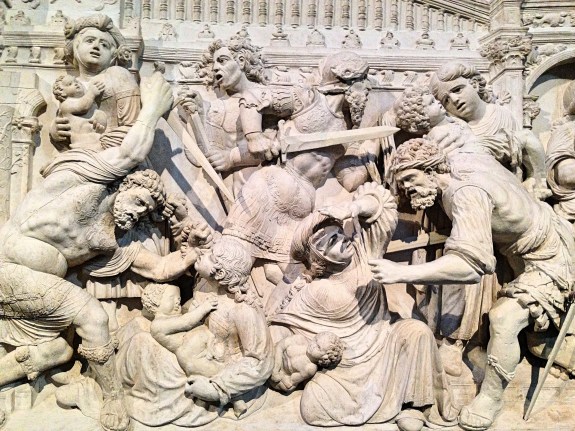
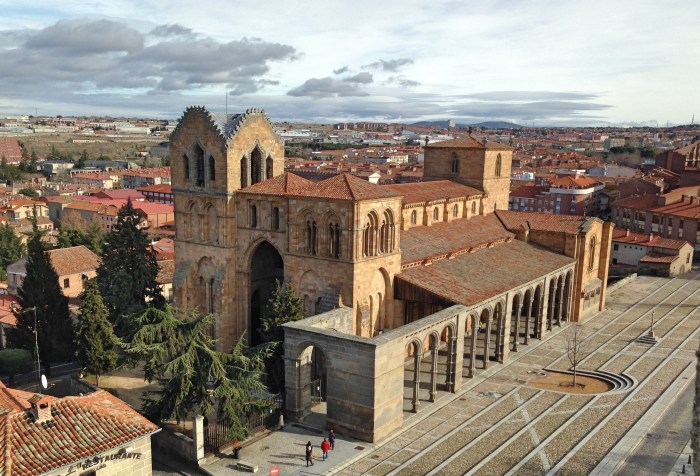
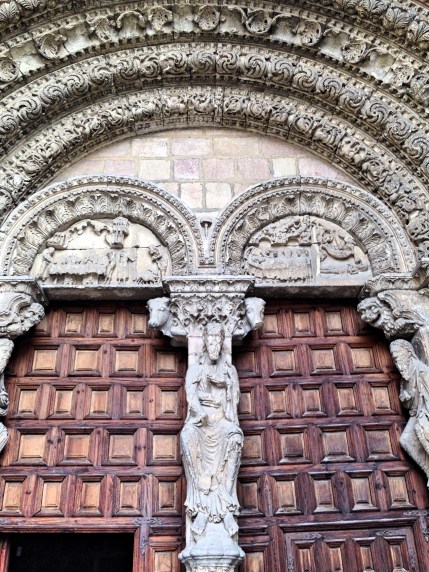
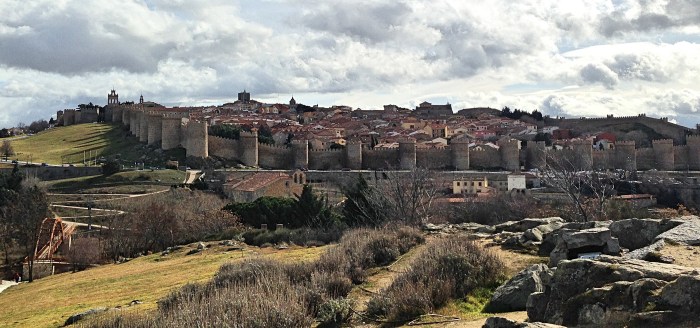
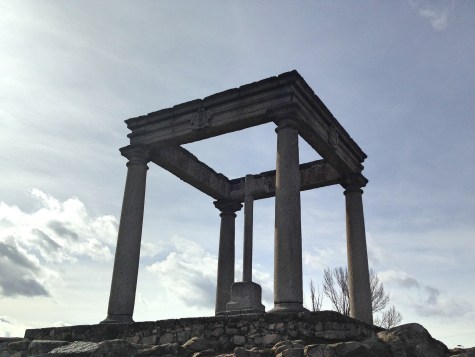
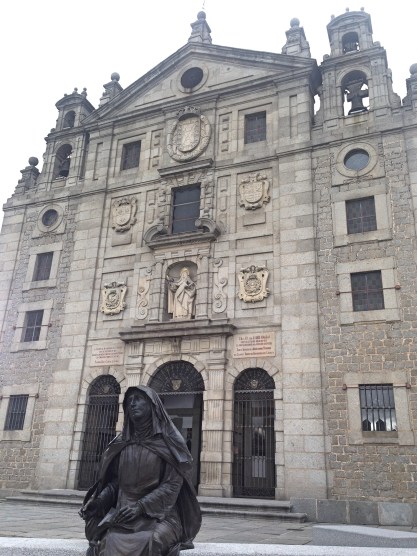
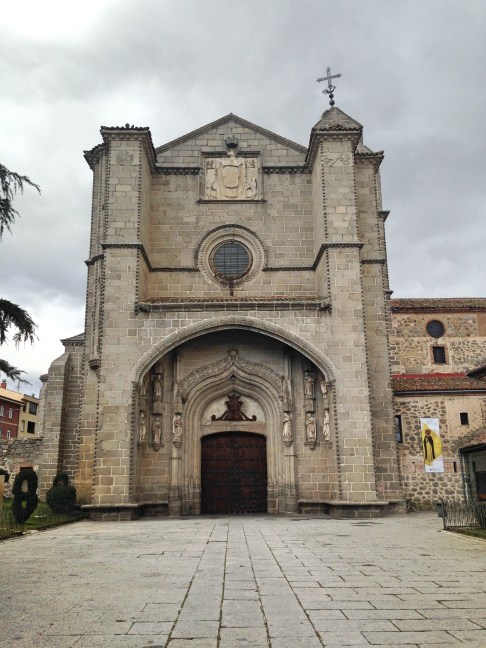

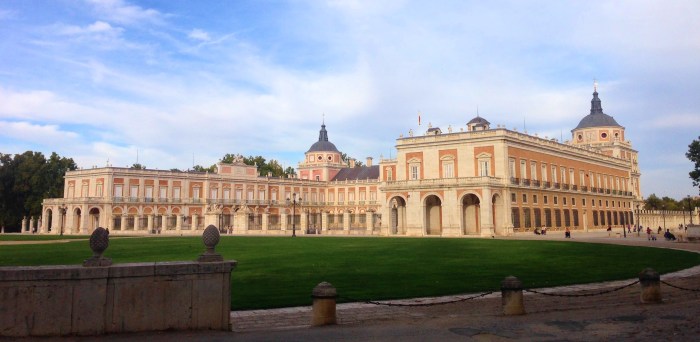


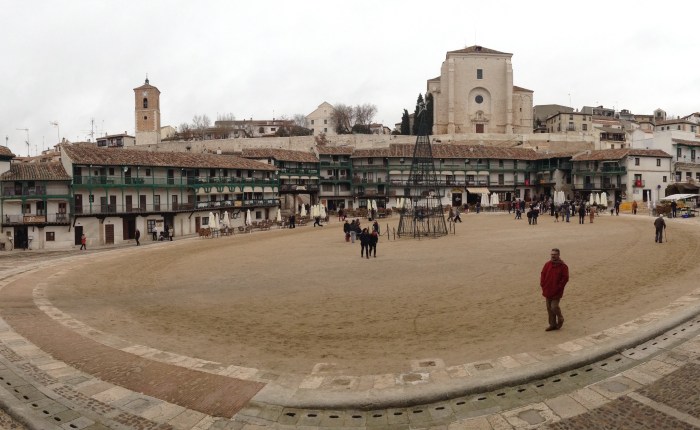


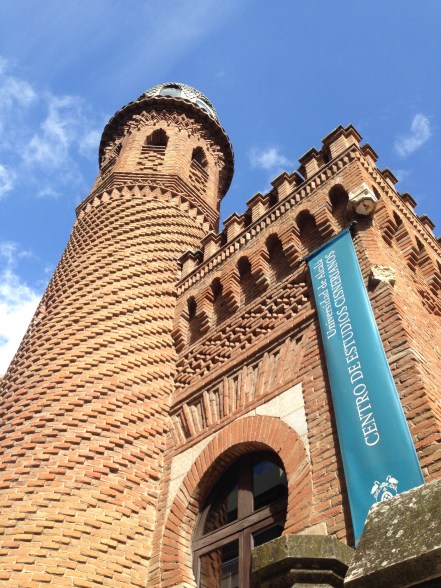
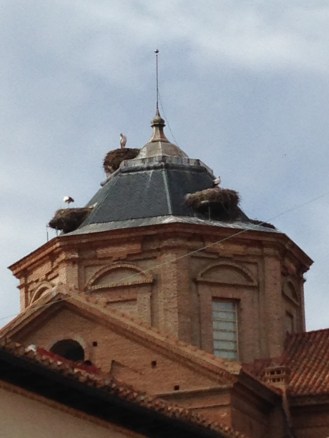
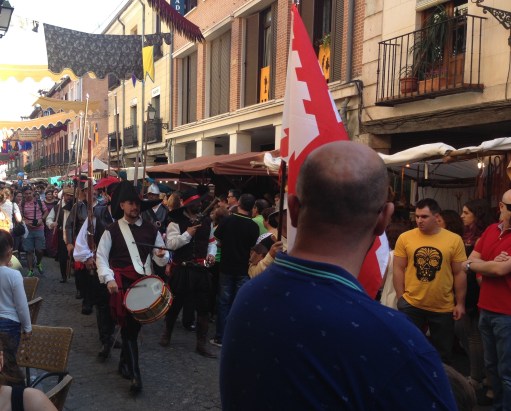


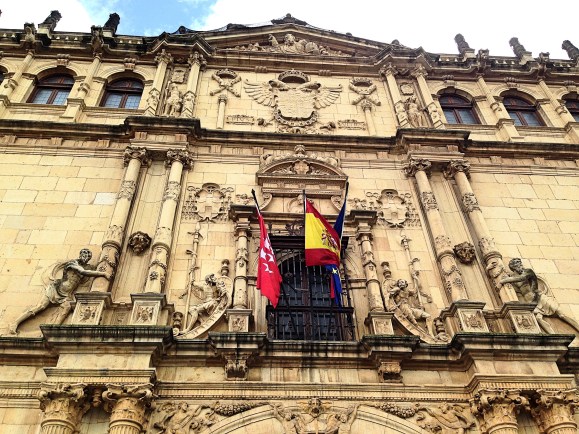

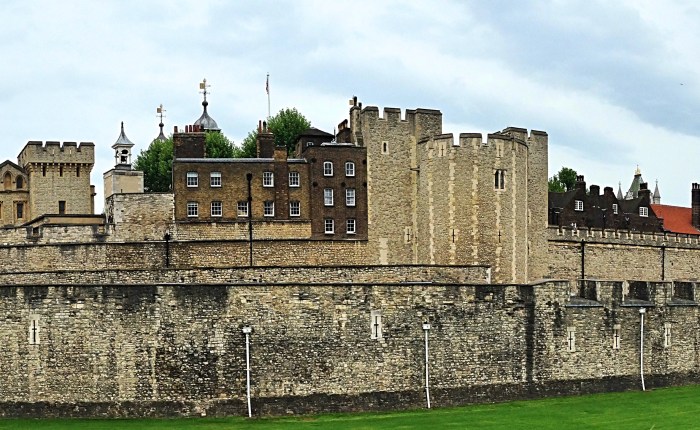

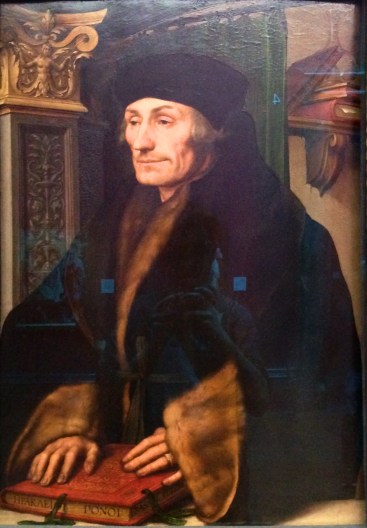
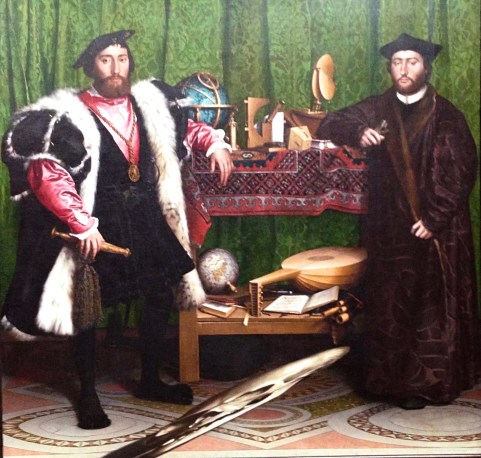
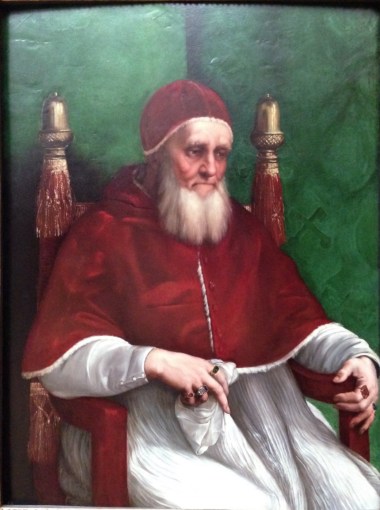
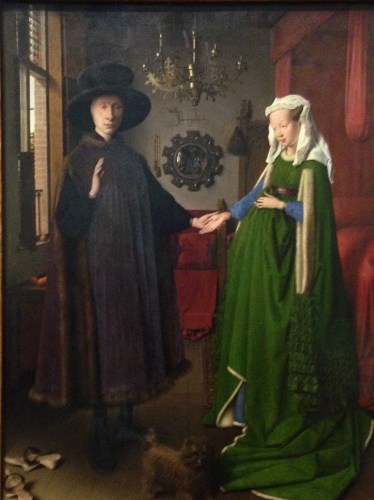


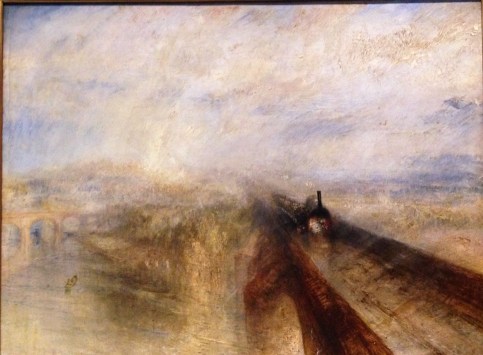
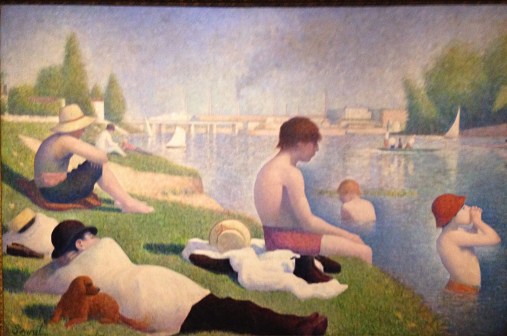


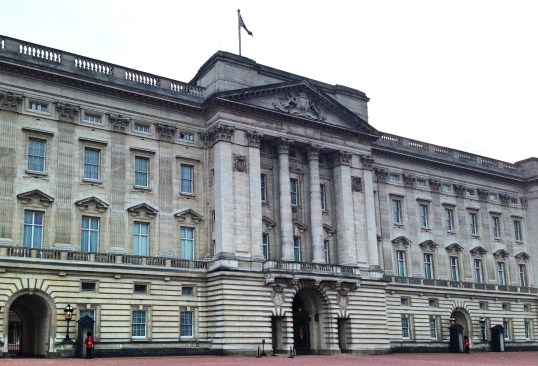

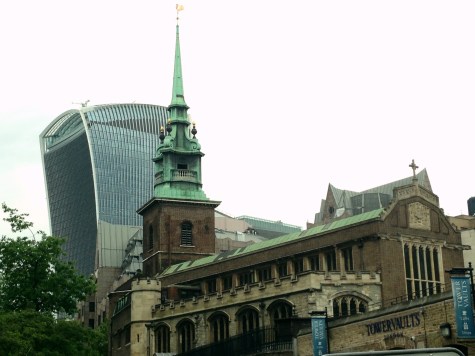
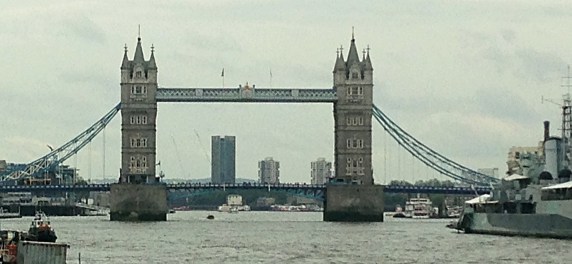
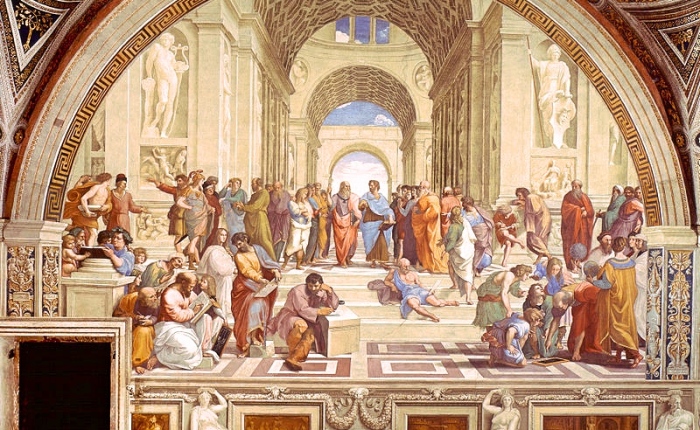


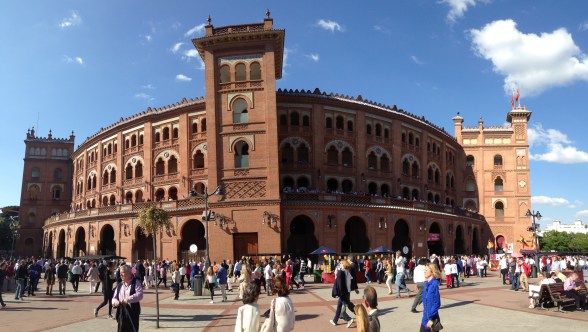



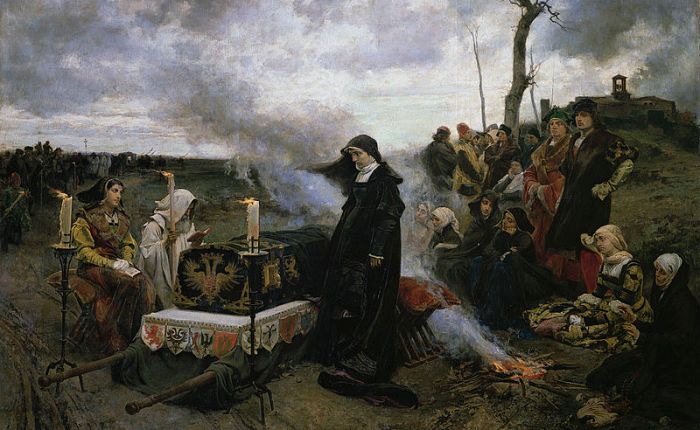

 Lotz in Translation