Today I went on a school trip to learn more about the Battle of Jarama, an important and bloody battle of the Spanish Civil War, which took place near my high school. We went with a group of Spanish and Dutch students, who are visiting for the week in an exchange program.
It was, incidentally, amusing to see the students side-by-side—the blond northerners and the dark-haired Mediterraneans. It was one of the first nice days of the year. The Dutch, for whom it was as hot as summer, were wearing bright colors and short sleeves, while the Spaniards felt fine in long-legged pants and dark colors. Climate does make a difference. Another contrast I noticed was how the two groups spent their time. The Spaniards sang together on the bus rides, while the Dutch took every opportunity to play games involving touching their hands and feet together in a rhythm; the boys played slap and the girls a game like patty cake.
Our first stop was at the Arganda Bridge, now called the Puente de la paz by residents of the town. It is an old steel bridge that runs over the Jarama River. In the past it formed part of the highway between Madrid and Valencia; but now it sits, alone and unused, near the Rivas lagoons, while cars buzz by on the new highway in the distance.
To understand the importance of the bridge, a little historical background is required. After the commencement of the military coup, in 1936, the government of the Republic relocated to Valencia in order to get away from the front lines of the fighting. Franco’s forces soon almost entirely surrounded Madrid, hoping to take the city. The highway to Valencia then became the city’s only lifeline. Thus the road was heavily defended by Republic forces. The Jarama River, which ran alongside the highway, formed an important natural barrier that could be used in its defense. In this area only three bridges crossed the water, of which the Arganda Bridge is one.
The Arganda Bridge. Photo by 2pac; licensed under CC BY-SA 3.0; taken from Wikimedia Commons
To illustrate how crucial was this crossing, it suffices to know that it was over this modest bridge that the paintings of the Prado were carried during their evacuation to Valencia. According to our guide, the trucks couldn’t even fit on the bridge, so the paintings had to be taken out and moved by hand. Later on, during the Battle of Jarama itself, the Republican forced tried to destroy the bridge; but their explosives failed to break or dislodge the structure. As a result, on February 11th Nationalist forces successfully crossed and established a bridgehead.
From this bridge we went to the Cerro Melero, a hill near the Hospital Universitario del Sureste. There you can find an open-air museum that preserves some of the trenches used in the Republican line. These trenches formed the second line of defense, in case of a Nationalist attack on the city of Arganda del Rey. The eminence offers a commanding view of the valley below; standing there, you can almost see the enemy forces scrambling underneath you. To protect from aerial attacks (both German and Italian fighter pilots participated in the battle), the trenches were built with an air raid shelter 32 meters long. Standing on other side of the hill is a sculpture of a cube split in two, symbolizing the Civil War. On its base is inscribed a fragment of Pablo Neruda’s famous poem, España en el corazón, lamenting the war.
Our next stop was the memorial to Suicide Hill. This morbid name comes from the brigade of British soldiers who sustained heavy loses defending the hill. According to our guides, these volunteer fighters were barely trained and poorly equipped; and they were up against seasoned veterans of Spain’s wars in the north of Africa. Nevertheless, they fought stoutly, holding off the enemy forces from taking the nearby village of Morata while losing over half of their 600 men. A stone cairn was the only thing to mark this spot for many decades, formed spontaneously by visitors piling up rocks. Yet repeated vandalism—a problem for any monument to the war, since it is still deeply controversial in this country—prompted some locals to invest in permanent masonry, so that it at least cannot be easily knocked over.
Not far from here the American volunteers, called the Lincoln Brigades, fought and also suffered heavy losses. One of the survivors, Alex MacDage, wrote lyrics to the tune of “Red River Valley” commemorating the event; and some years later Woody Guthrie recorded the song, which begins thus:
There’s a valley in Spain called Jarama It’s a place that we all know so well It was there that we gave of our manhood And there that our brave comrades fell.
We walked from this point to the Cota 700, a hill named for its height of 700 meters above sea-level. There we found some stone fortifications still standing from the Republican front line. The guide explained that the machine gunners were stowed in chambers separated by strong stone walls, so that if a bomb struck one of them it would not take out the rest.
Across the valley we could see the hill of Pingarrón, which was controlled by the Nationalist forces. After the halt of the Nationalist advance (largely thanks to the brave fighting of the International Brigades), the Republican forces repeatedly tried to counterattack and take this hill. Yet the lack of cover between the two lines—only a few scrubby olive trees—and the strong Nationalist artillery made it impossible.
Not far from here, surrounded by fields of olive trees used as hunting grounds, is another monument. Standing on a stone base is a sculpture of two giant hands, one covering the other. This is the work of Martín Chirino, a sculptor from the Canary Islands. It represents the open palm of the fascist salute united with the communist fist, symbolizing the unity of the opposed sides. As with everything related to the war, it has proven controversial. Its base is frequently vandalized with spraypaint, so that somebody must come regularly to paint over the political graffiti. The statue is certainly not calculated to please many, since supporters of neither side are inclined to see each other with sympathy. After all, by now both have felt the sting of defeat, the Republicans after the war itself, the Nationalists after the fall of Franco’s regime.
Our last stop was in the little town of Morata de Tajuña, in a charming restaurant and inn called the Mesón El Cid. Apart from the restaurant, terrace, and pool, the establishment has two free museums: one dedicated to the ethnography of local agricultural ways, the other dedicated to the Battle of Jarama. These are both the work of Gregorio (Goyo) Salcedo, a mustachioed man, now over seventy, who is from this area. His interest in history was sparked by necessity. Growing up in the harsh and scarce times after the war, when the economy was in the doldrums and hunger was common, he and his father and brothers would collect old guns, shells, and equipment from these battlegrounds to sell for scrap. “If the war was hard, so was the postwar,” he said in a newspaper interview; “it was another war.”
The Museum of the Battle of Jarama. This sculpture was made using shrapnel from the battle, incorporating about three thousands bullets and casings of different calibres
Soon he became interested in these artifacts for their own sake, and began collecting them. As his collection grew, so did his network, as former soldiers and their relatives got in contact with him. Eventually he converted an old garage into a museum, and quite an impressive one. There are thousands of photos, along with stories of individuals who fought and died in the battle. There are pieces of artillery and anti-aircraft, helmets, shells, uniforms, gas masks, guns, knives, flags, and every other manner of war paraphernalia. There is even a reconstruction of a Civil War-era schoolroom. That all this was collected, catalogued, and displayed by one man, is a testament to how much a private citizen can do for the sake of history. It is by far the best and most complete exhibition related to the Civil War that I have seen in Spain.
Like the sculptor Chirino, Salcedo strives for neutrality. As he says in that same interview: “Here there are no sides; all were human beings who fought, suffered, and died. We cannot forget that in war we are all victims, we all lose.”
Like so many battles, the Battle of Jarama was as inconclusive as it was bloody. Despite thousands of casualties on both sides and weeks of fierce fighting, the Nationalists did not break through and the Republican forces did not retake their lost ground. The war shifted elsewhere in the country, and the front largely held until the conflict’s final stages. Yet the soldiers who gave their lives to prevent the nationalists from cutting off Madrid—especially the foreign soldiers, poorly trained and equipped, who chose to come to Spain to fight against fascism—cannot but inspire the visitor with their example of moral and physical courage.
A memorial to Charles Donnelly, an Irish poet who died during the battle, in Rivas-Vaciamadrid. Shortly before his death, he was heard to say: “Even the olives are bleeding.”
Just last week my brother and my oldest friend visited me in Madrid. I took the opportunity to show them the best Spanish food I know. We ate, and ate, and ate some more, and I still have yet to recover.
Madrid is a truly international city, with excellent restaurants of all sorts. You can find quality food from Mexico, El Salvador, Peru, or the Dominican Republic; from Vietnam, Korea, Japan, China, or the Philippines—in short, Madrid has everything. Even if you just want a juicy burger, great pasta, or a fine craft beer, Madrid can satisfy even the most gourmandizing palate.
But of course any international city has excellent restaurants of many kinds. What sets Madrid apart is not the variety of “ethnic” foods but the dishes native to the country. Spain, as is often noted, is a land deeply marked by regional differences; the south, north, east, west, and center each have their own specialties. And Madrid is perhaps the only city in the country where each can be found.
The first thing I did was to go the supermarket to buy high quality cured meats, or embutidos. We tried spicy chorizo, the archetypical Spanish sausage, filled with fat and flavored with distinctive Spanish paprika; and then lomo ibérico, or Iberian loin, tender slices of cured pork.
A store specializing in cured meats. Whole legs of cured ham are an omnipresent sight in Spain
But the most extraordinary was the Jamón de bellotas, or ham of acorns, so-called because the pigs partake of the acorns of the shrubby holm oaks that grow so abundantly in the south of the country. Spanish ham comes in many price levels, you see. Jamón Serrano is among the cheaper varieties, Jamón Ibérico considerably more expensive, and Jamón de bellotas more pricey still. But the deep, delicious, and almost woody flavor of these Spanish hams, especially of the last mentioned, is well worth the money.
We ate these slices of delight accompanied with Manchego cheese—a firm cheese with a mild yet unmistakably scrumptious flavor, made from sheep’s milk. To wash it down one could do no better than a red wine from either of Spain’s two best-know wine regions, Rioja and Ribera del Duero.
For my birthday last week, I chose to go to Café Melo’s. This is a well-known and well-loved bar in Lavapies, one of Madrid’s more famous neighborhoods, distinguished for its great Indian restaurants and jubilant nightlife. The bar’s menu is delightfully simple. They serve eight items: croquettes, empanadas, pimientos de Padrón (fried green peppers), a plate of Galician cheese, a plate cheese topped with quince jelly, grilled ham, morcilla (blood sausage), and a giant sandwich of fried ham and melted cheese that they call the “zapatilla” (literally, the “canvas shoe”). By itself, this hefty sandwich is enough to give two grown men a full belly and a guilty conscience.
The zapatilla
The croquettes are, for my money, the best in the city, crisp and crunchy on the outside, creamy and meaty on the inside. (Spanish croquettes, by the way, are balls of béchamel and bits of ham, cooled, rolled in breadcrumbs, and then fried.) The pimientos de Padrón—a very typical Spanish dish, using green peppers from Galicia—could not be simpler: fried in olive oil and spiced with salt. But they are fresh and savory. I also took the opportunity to introduce the Americans to the blood sausage, a dish many of us find exotic but which is really delightful and integral to Spanish cuisine. Spanish blood sausage comes in two varieties, made with onions or with rice (called morcilla de Burgos). The former is more flavorful while the latter has a firmer texture. Café Melo’s serves morcilla de Burgos, sliced and fried.
My friend with the cider siphon
The next day I wanted to introduce them to the food from Asturias, a region in the north that boasts many famous dishes. For this I went to El Rincón Asturiano, a fairly pricey restaurant near Atocha station. The obligatory drink is hard cider. Spanish cider is neither sweet nor bubbly; indeed the taste, though unmistakably apple, is bitter. It is aerated before serving, traditionally by pouring the cider with the bottle raised high above one’s shoulder, into a glass held below the waist. Of course such a procedure takes practice and has ample opportunity for spillage. So for us neophytes the bottle was served with a little machine that siphoned the cider up a tube and sprayed it at high velocity into the glass.
The bread was served with queso de cabrales, an extremely strong, very soft cheese from Asturias made from a mixture of cow’s, sheep’s, and goat’s milk. It is potent stuff. The flavor is sour and very bitter, and causes facial contortions when ingested. I did not like it when I first tried it, during my first year in Spain, but it has since grown on me.
Mostly eaten fabada
To begin we ordered one of the iconic dishes of Asturias, fabada asturiana, a bean stew made with chorizo, morcilla, pancetta, and white beans called fabes de la Granja (“beans of the farm”). These beans are large, white, and tender, with a high fat content that makes the stew rich and smooth. The flavor—obtained from the mixing of the cured meats—is something absolutely unique to Spain, smoky, meaty, and slightly spicy. Both my visitors told me that it was their favorite dish of the whole trip.
After that we were already quite full, and not ready to face the main course: cachopo. This is a carnivore’s delight, breaded and fried pork fillet filled with ham and cheese, like chicken cordon bleu. To up the flavor, it can be dipped in the blue cheese. The description speaks for itself. We could not even finish half of the enormous dish, and ended up taking it home to eat for dinner.
The mighty cachopo
The story continued the next day when we went to eat paella for dinner (at a truly Spanish time, 10:30 at night) at a place near Gran Vía called La Barraca. It is not the most famous paella restaurant in Madrid, and certainly not the cheapest, but I was satisfied both times I went. As a starter we ordered gazpacho, a cold soup that is one of Spain’s most typical dishes. It is made by blending raw vegetables—tomato, onion, cucumber, garlic, peppers—with bread crumbs for consistency, a bit of vinegar, and plenty of olive oil. In La Barraca the soup was served with little bits of vegetables for added texture, pleasing but not necessary. The broth is smooth and refreshing, perfect for the hot climate in which it originated (it is from the arid south).
Paella with the crisped bottom, called “socarrat.”
The main course was, of course, paella. We opted for the most “traditional” kind, paella valenciana, or Valencian paella. In addition to the usual paella ingredients—medium-grain rice, onions, garlic, tomato, paprika, saffron, rosemary—this variety is made with chicken, rabbit, flat green beans, and big butter beans. (It is also sometimes made with snails.) Few things can beat the rich, special flavor of this king of Spanish cuisine.
The next day we went to Toledo, and took the opportunity to try some migas, a dish typical of Castilla-La Mancha. Literally the name of this dish means “crumbs,” and it is appropriate. Migas are made by soaking a stale baguette in a little water, and then crumbling it. Meanwhile, in the same pot and the same oil you fry chorizo, pimientos, and garlic, which are then removed and set aside. Then the crumbs are fried in this flavored oil until dry and crispy, and finally all the ingredients are mixed. Often it is served with a runny fried egg on top. The dish certainly won’t be winning any health food awards but, when made well, it is a soul-satisfying experience.
Homemade (not by me) migas
The next day we went to the Casa Mingo. This is a famous Asturian restaurant that is a bit far from the usual tourist hangouts. But the place is worth visiting, not only for the food, but because it is next to the Hermitage of San Antonio de la Florida. This is now a small museum, free to enter, that contains the tomb of Goya. The ceiling is covered in frescos by Goya himself; the central dome depicts the legend of Saint Anthony reviving a dead man, and can be inspected without neckpain using mirrors.
Chicken in the roaster
The restaurant, founded in 1888, is itself a historical building. The walls are full of bottles of Spanish cider, and barrels of the stuff (probably empty) adorn the other side. The menu is simple: a little plastic card with Spanish and English on one side and German and French on the reverse. As an appetizer we ordered Spanish tortilla, one of my favorite Spanish dishes. Do not let the name deceive you: it has nothing to do with Mexican flour tortillas. Rather, it is a kind of omelet made with eggs and potatoes, fried into a little cake with onions and salt. Few things in life are as comforting as a well-made tortilla.
The dish that the restaurant is most famous for is the roast chicken, which is cooked in multi-level rotisserie ovens. The meat is juicy, the skin crisp and lightly seasoned—simple, hearty, and good. I should also not omit to mention the restaurant’s croquettes, which are among my favorites.
Spanish tortilla
By this time you might think that we’d had enough. But we continued the next day by eating Madrid’s classic dish: cocido madrileño, which might be translated as “Madrid stew.” For this we went to La Cruz Blanca Vallecas, perhaps the most well-known cocido restaurant in the city. It is somewhat far from the center, but very popular among Spaniards, so reservations are required.
While all part of the same dish, cocido madrileño is normally served in multiple courses. This is because the dish contains multitudes. First a variety of Spanish meats are boiled in broth: chicken, ham bones, pancetta, cured chorizo, morcilla, and lard. The concoction is boiled a long time, perhaps overnight. Indeed the dish owes this preparation to its history, for it originated among Jewish communities living in Spain, who needed long-cooking dishes in order to eat hot food during the Shabbat. In any case, as you can imagine this process instills in the broth a tremendous flavor. Later, vegetables are added to the mix—carrots, potatoes, cabbage—as well as garbanzo beans, all of which is boiled into very soft. Finally, all the ingredients are removed from the broth, and fideos (small noodles) are added to cook.
A plate of cocido next to my brother, to show the scale
The first course of the meal consists of a bowl of the broth with these noodles. Though no different, in theory, from canned chicken-noodle soup, the broth is so exquisite that the soup must be savored. Then the plate of meat and vegetables arrives. Everything is suffused with a deep, savory flavor, transforming even the cabbage into a meaty delight. We ordered for two people, but the dish had enough food for six. We barely made a dent in it and took the rest home. I still have several portions left in my fridge, which I plan to eat for lunch.
On my brother’s last day we went to El Escorial. After visiting the monastery, we went to a Spanish fusion restaurant named Ku4tro. There we ordered pulpo a la gallega, or Galician-style octopus. This is another of my favorite Spanish dishes, which I make sure to order whenever I am in that verdant province. After being properly prepared, the octopus is boiled in a copper kettle, then dried, boiled, dried, boiled, dried, until the rubbery texture is almost entirely smoothed away. Then it is served over boiled potatoes, drizzled with olive oil and topped with paprika and salt. The meat is tender and lean, and retains its oceanic freshness of flavor.
Thus concluded by week of binge-eating. I am still ready for more.
As I hope you can see from this list that Spanish food is not at all like what Americans are accustomed to. The Spanish philosophy of food is simple preparation with high-quality ingredients. Strong spices and sauces are avoided; the point is to taste the purity of the meat, fish, vegetable, or what have you. This is one reason why Spanish restaurants are not common in the United States, since it is impossible to reproduce the flavors without the right ingredients. What is fabada asturiana without real Spanish chorizo, paprika, and beans?
This is also why many Americans—myself included—are initially put off by it. The simplicity and relative mildness can strike us as unimpressive. And truth be told there are lots of very mediocre restaurants in the country, serving ill-prepared dishes. But once you know what to look for and what to order, as I hope I have finally begun to do, the country contains a wealth of gustatory delights whose textures and flavors are unlike any you can find in other parts of the world.
I have been teaching music classes with José Ramón since October. As a teacher, he really takes advantage of the available time: dividing the class between performance and theory. In the performance section we accompany the kids on guitar as they play songs on Glockenspiels, such as Gary Jules’s “Mad World.” In the theory section we learn about how music works—key signatures, meters, dynamics, instruments, and so on. Last week JoseRa (as people call him) sat down with me to tell me more about music education in Spain.
ROY: Tell me about your background. What did you study in university?
JOSERA: I got a bachelor’s degree in the history of music (musicology) and in the philology of Romance languages. I also got a professional degree from a conservatory, in classical guitar and music theory, harmony, counterpoint, and so on. And I have a masters in comparative literature.
R:So you have four degrees, in musicology, philology, guitar performance, and comparative literature?
JR: That’s right.
R: What kind of literature?
JR: The masters was focused on Mediterranean literature, specifically in the Iberian Peninsula—Catalan, Basque, Gallego—and their connections with the wider Mediterranean culture. I did this degree because I wanted to diversify my CV. I’m very interested in the humanities in general. For example I studied quite a bit of philosophy, too.
R: How did you get interested in music originally?
JR: It was because of my neighborhood. I came from a working-class area, and in my neighborhood there were a lot of young boys and girls who played guitar. And we were very interested in underground music. I started to play guitar, and I tried to play Lou Reed, the Velvet Underground, David Bowie. That was very hard here. We didn’t have any video recordings available. In those days Spain was a very closed country. It was the last years of Franco. We couldn’t see the musicians, we could only listen to the music and try to imitate how it sounded.
R: Why weren’t there videos? Was it censored?
JR: No, it wasn’t illegal. There just weren’t a lot available and it was too expensive for us. For example we commonly listened to pirated versions of cassettes. In my high school, when I was around fourteen years old, if one student had a record everyone else in class had a copy too. We also used to listen to the radio station. But if you tried to imitate the music by just listening, it was very hard. I would go to concerts and try to stand in front of the guitarist, look at their hands, and try to do the same. But when I got home I didn’t know. It was hard.
R: Were there any bands or musicians that really caught your attention?
JR: Oh yes. For example, The Velvet Underground, Lou Reed, and some Spanish bands, like Leño, La Banda Trapera del Río, which is a punk band from Cataluña. And Sex Pistols, Bowie, and new bands like Chameleon. Psychedelic music, punk rock.
R: How old were you when you started playing guitar?
JR: I was twelve, more or less. But I started playing seriously when I was fourteen. My first guitar was my brother’s guitar, a Spanish guitar (with nylon strings). To buy my first electric guitar I had to save money for four years. It was very expensive to buy a guitar here. Very difficult.
R: Now that you’re a teacher, do you still play and perform?
JR: Yes, nowadays I play with a band. But I can’t play classical music because I don’t have enough time. It’s very depressing. Because you know how to play but you don’t have enough time to play it how you want to. In my rock band we play covers of Spanish, English, and American bands, like the Strokes, Sex Pistols, Thin Lizzy, the Rolling Stones, and a song by Judas Priest. There are five of us in the band. We’re called “Disorder” (Desorden in Spanish).
R: Can you give me some idea of music classes in Spain. What is the curriculum like?
JR: We have a problem because, in Spain, there isn’t a tradition of learning music in public schools. And it’s very difficult, because the students don’t think that music is important. In primary school there are only 45 minutes per week, and the teacher can’t do a lot of things in that time. Here in high school, in the second year [American eighth grade], we try to explain musical terminology, and play recorders and xylophones. In third year we study the history of music and listen to some pieces of classical music. In the fourth year music is not compulsory, it’s an elective. For me it’s more attractive for them; we learn about rock ‘n’ roll, jazz, musicals—modern music.
R: In the United States, schools often have many performing groups. For example, in my high school we had at least five separate performance groups (band, orchestra, chorus, etc.). Why isn’t this the case in Spain?
JR: It’s impossible here, because we don’t have this kind of tradition. If you want your children to do an activity like this, you need to pay a private academy to do it after school. Instruments and other resources are very expensive. And our national policy is not in favor of such programs. Of course, it would be a good thing to have these performance groups, but here it’s impossible. It’s strange because Spain is a country that has exported great musicians. But people here don’t think that music is an important skill.
R: Why do you think we have music classes in high school? Is it really necessary?
JR: I think it’s an important subject, and not just because it’s my subject. Music helps you to concentrate, work together… It is holistic knowledge. So on the one hand it teaches general skills. On the other hand music itself is very important. Everyone listens to a lot of music. But many people don’t want to learn it. They think that music is just for entertainment. This is a mistake.
R: In my case I think that music classes helped me to become a more dedicated and focused person. Music requires a lot of practice.
JR: Yes, music has a lot of benefits.
R: What are some of the challenges of teaching music to adolescents?
JR: Oh, to maintain their attention. Nowadays they are very narrow-minded. They don’t know a lot of things about modern pop music, and they don’t want to learn more about it. You play punk rock and they think it’s very strange. Another challenge is to convince them that music is important in itself. Music has the magic touch, so to speak, that allows you to discover more things. It is a sentimental education, important in the development of your emotions. Music can take you out of your comfort zone. Arts in general do this. And many people don’t like to study music and the arts for this reason. Art changes your life; and people don’t want their lives changed.
R: Some people insist that they have “no talent” for music. Do you think that’s true?
JR: I don’t agree with this idea. I think you can discover your place in music. We have this idea from the Romantic age of the musical genius. If you are going to do law, medicine, economics, you don’t think you need to be a genius in these fields. But people that start studying music think they have to be geniuses. This is wrong. Amateurs are the base of any artform. All people can play some instrument. They just need to discover which one. Maybe not everyone can be Mozart, Beethoven, or Miles Davis, but they can do it.
R: Do you think music classes benefit society in general?
JR: Yes. The upper classes always try to keep music for themselves. And this is because music helps us to develop our skills, our emotions, our culture, and this can be dangerous.
R: Would you recommend any Spanish musicians, styles, or bands that Americans might not know of?
JR: Nowadays Spanish pop has a good level. There are some bands that I think are quite good, with well-written lyrics. People can be very demanding with the meaning and poetry of lyrics in Spain. Bands like El Columpio Asesino, León Benavente, Mucho, Perro, Leño, Radio Futura… In classical music one of the best musicians of the twentieth century is Andreś Segovia, the famous guitarist, or Jośe Luis Turina, who composes atonal music. A philosophy teacher here sings in a good indie band, Ornamento y Delito. Check it out.
The Royal Monastery of San Lorenzo de El Escorial is by far the largest monastery in the country. Indeed it is one of the grandest buildings period. The whole structure of El Escorial is so grandiose that it seems to take up more space than the little town that surrounds it (which is also called El Escorial). Though ensconced in this village, the monastery sits isolated and alone, cordoned off by official buildings that separate it neatly from rest of the town. It is a world unto itself.
El Escorial is perched up in the Madrid Sierra—the same mountain range as Rascafría and Cotos—surrounded by the beautiful forest of La Herrería. It can be easily visited in a day-trip from the center of Madrid, either by bus (line 661 or 664 from Moncloa) or by train.
As one approaches the entrance of the monument, the mountains comes into view, looming beyond, with clouds hovering menacingly over their peaks. The building’s massive form and commanding position high up in the mountains, overlooking the surrounding plains, reveals its origin and function. Though a monastery, the primary purpose of El Escorial has from the first been as a Royal Residence. It was built during the reign of Philip II, one of the most powerful rulers in Spain’s history and indeed the history of the world. For this was the apex of Spain’s might, both on the European continent and worldwide as a colonial superpower.
Nevertheless, such a wild, gloomy, and isolated place (for there was no village here when construction began) is not an obvious spot for a palace. El Escorial seems to exemplify Philip II’s reputation as a dour, dedicated, and antisocial ruler, the personification of the Counter-Reformation. Yet for my part I can see why such a busy and harried man—he ruled over a considerable slice of the world, after all—would want a peaceful place to which he could retreat and focus.
Construction of El Escorial began in 1563. The monastery owes its design to Juan Bautista de Toledo, whose death prevented him from seeing through its completion. That was left to his more famous pupil, Juan de Herrera, whose style has since become synonymous with the Spanish Golden Age, and which has since been imitated in many modern Spanish buildings. The gargantuan heap of stone was completed in 1583, having taken less than 21 years to complete.
Visitors of El Escorial follow a prescribed route through the old hulk. Exploring the monastery for the first time can feel like getting lost in a labyrinth, so many twists and turns does the path take. The visit can also be rather overwhelming, since there are so many things to see: famous works of art, royal apartments, an emormous basilica, the royal mausoleum, and more.
The first stop on the itinerary was a chamber dedicated to a single painting: El Calvario by Dutch painter Rogier van der Weyden. (In English, the painting is simply called The Escorial Crucifixion.) The painting is kept in a darkened room, surrounded by information about its history and the costly restoration needed to rehabilitate the time-worn work. As one would expect from a Van Der Weyden crucifixion scene, the painting is a masterpiece. It fully exemplifies the painter’s talent for creating solid, voluminous forms. The work does not so much convey movement and passion, but calm resignation, quiet tragedy, and somber stillness.
Near this room is the stairwell that leads into the Bourbon apartments. For me this is the least interesting part of the monument, looking for the most part like generic palace rooms. But there are some excellent tapestries on display, some of whose designs were drawn by Goya.
Philip II
The next stop is the palace of Philip II himself. Though ornate, these rooms are more tasteful and bare than the Bourbon palace. Some items deserve special mention. There is a clock in the study with a little torch attached to the front of it, so you could see the time at night—the original version of a backlit watch. Yet perhaps the most scientifically significant item on display is Philip II’s wheelchair. The king had a bad case of gout, you see, which caused severe swelling and arthritic pain in his feet and legs. The chair has both arm- and leg-rests to elevate his sore limbs, but would require attendants to move it. History aside, the chair is a rather pathetic reminder that nobody, not even kings, are immune from sickness.
A drawing of the king’s wheelchair
There were portraits and paintings adorning every wall: some depict members of the Hapsburg dynasty (each equipped with their distinctive chins); some are religious paintings; several are maps; and some are paintings of palaces in Spain, including El Escorial itself. In two of the rooms there is a sun dial, a metal strip on the floor, marked at intervals, with a little hole in the ceiling above. I think one would have to close all the windows to use it.
But the most beautiful objects in those apartments, for me, are the wonderfully ornate wooden doorways that connected room to room. Without paint, the designer has inlaid scenes and decorations in the surface—floral designs and landscapes—by using lighter and darker pieces of wood. Every square inch of the doorways is meticulously detailed. Just trying to fathom how much time it would take to put something like this together takes my breath away.
By Quenoteam; licensed under CC BY-SA 3.0; taken from Wikimedia Commons
Near the apartments, up a flight of stairs, is the Sala de Batallas, or the Room of Battles. It is a hallway with an arched ceiling, almost two hundred feet long. It takes its names from the gigantic and elaborate frescos depicting notable Spanish battles. Here we see charging cavalry, marching infantry, men fighting with pikes, guns, and swords; cities are besieged, ships attacked and sunk. The frescos, which are more figurative than realistic, are the handiwork of Niccolò Granello, an Italian painter who worked in Spain.
The room is a brilliant piece of propaganda, a monument to the military triumphs of Golden Age Spain. One scene depicts the Battle of La Higueruela, fought in 1431 between the forces of Juan II of Castile and the Muslim Nasrid dynasty. We also see the naval battle of Ponta Delgada, fought off the coast of the Azores islands between Spanish and French troops, in 1582. There are also numerous scenes from the Italian War of 1551, fought between Holy Roman Emperor (and Spanish king) Charles V and the French king Henry II. All of these battles were, of course, won by Spanish forces.
After leaving this room, one enters a dark hallway that leads down a very forbidding set of stairs, deep into the basement of the building. At the bottom the visitor finds one of the most remarkable rooms in the whole country.
This is the Panteón de Reyes, or the Mausoleum of Kings. Here is buried nearly every king and queen of Spain since Charles V (Charles I of Spain), Philip II’s father. (The two exceptions to this are Philip V, who is buried in the palace at La Granja, and his son Ferdinand VI, who is buried in the Church of the Monastery of the Salesas Reales, in Madrid.)
The mausoleum is so extravagantly ornate that it is almost oppressive. Gold is everywhere, the walls, the ceiling, the chandelier, the window-panes, the columns, the angelic candle-holders, and the sarcophagi. These sarcophagi line the eight walls of the octagonal room from the floor to the ceiling, even above the door. They are made of dark Toledo marble and each has a gold plate on the front with the name inscribed.
For most of her history, Spain has followed the French tradition of only allowing male monarchs. The only exception to this is Isabel II (who reigned 1833 – 1868), whose accession to the throne caused a war, partly because of her sex. Thus, the women buried in this chamber are, for the most part, Queen consorts—the wives and mothers of kings. Another notable exception is Juan, Count of Barcelona, and his wife Maria de las Mercedes, whose remains will occupy the remaining two sarcophagi above the door. Though son of Alfonso XIII, Juan himself was prevented from ever becoming king by the Spanish Civil War, though his son did. What will be done with the remains of the Juan Carlos I (who is living, but has abdicated) and his wife Sofia, or current and future kings of Spain, has yet to be decided. It seems that Philip II did not anticipate the kingdom lasting this long.
Looking at the marble sarcophagi I wondered why all the monarchs of Spain were so short, since the tombs measure scarcely five feet. The answer to this puzzle is that the bodies are allowed to fully decompose before they are placed in the royal receptacle. This decaying is done is a special chamber called the pudridero, which lay somewhere deep in El Escorial. Only monks can visit these chambers, though presumably they do so infrequently, considering that it takes fifty years for bodies to fully decompose. This is where Juan, Count of Barcelona, and Maria de las Mercedes are now.
Few places in Spain, if any, contain such an overwhelming sense of history as this mausoleum. Some of the most powerful men and women in history lie here, dust and ashes. Rulers from the sixteenth to the nineteenth century lay side by side, one atop the other.
Right next to this mausoleum is the Panteón de Infantes. The Infantes were the sons and daughters of monarchs who did not themselves become monarchs. There are six or seven different chambers, with sixty available spaces, of which thirty-seven are occupied. The most recent burial was in 1992, of Juan Carlos I brother Alfonso, who was shot in 1956 (he had been decomposing in the meantime; the Infantes have their own pudridero).
The most notable and impressive tomb in this mausoleum is that of John of Austria. He was the “natural” (read “illegitimate”) son of one of Carlos V. This Infante was one of the commanders of the Christian forces (composed of Spanish and Venetian galleys) against the Ottoman Turks in the Battle of Lepanto. (Miguel de Cervantes also served in this battle, in which he permanently lost the use of his left hand.) The commander’s tomb is excellent: John is laying down in death, his head resting on an exquisitely sculpted pillow, with a serenely peaceful and noble expression on his mustachioed face. He is dressed neck to toe in fine armor, and is holding a real metal sword.
The other tomb which impressed me was hardly a tomb at all, but an ornate mass grave. It was the collective coffin for the numerous sons and daughters of the king who had died before puberty. The tomb is a regular polygon with twenty sides and two levels, which makes for forty slots—forty young bodies. This richly decorated tomb, with the emblems of royalty painted on every side, is a monument to the advance of medical technology. For every Spanish parent nowadays is better off than were those kings and queens, buried in tombs of marble and gold, who could afford the best doctors money could buy and power could persuade.
Next I ascended another staircase and found myself in a large hallway with an arched ceiling, covered in ornamental painting. This is El Escorial’s art museum. Tastefully arranged throughout this hallway were paintings by Titian, Tintoretto, José de Ribera, Velazquez, Bosch, and El Greco—among others. Every one of these paintings has a religious theme. There were pictures of saints in the wilderness, contemplating crucifixes; of saints being martyred, a knife to their throat; of saints contemplating heaven, face upturned; of the Last Supper and the Crucifixion, and more. The famously pious Philip II was responsible for most of this collection.
The highlight of the museum is likely El Greco’s Martyrdom of Saint Maurice, which Philip II apparently disliked since the painter relegated the scene of the actual martyrdom to the background.
The museum leads into the richly decorated cloister, with its walls decorated with brightly colored frescos of the life of Jesus. From here you can see the principle stairwell, whose ceiling is covered in a magnificent fresco of a heavenly scene.
Nearby is a room called the “old church,” though I admit I am not sure why. In any case, it is a bare room, the only decoration being a few paintings on the walls. The most notable of these is by Titian: The Martyrdom of Saint Lawrence. According to tradition, St. Lawrence was killed by being roast alive on a gridiron; and while he was being killed, he supposedly called out to his torturers “I’m well done! Turn me over!” (This is part of the reason why he’s the patron saint of comedians.) Titian’s considerably grimmer version was first made at the behest of the Church of the Jesuits, in Venice. When he saw it Philip II liked it so much he asked the painter to make a copy, which still stands in the Escorial.
Saint Lawrence (San Lorenzo in Spanish) is obviously an important saint for El Escorial, he being its namesake. According to legend, the very floor-plan of the El Escorial monastery was based on the interlocking bars of a gridiron, in honor of St. Lawrence. This is untrue, apparently, though the floorplan is notably grid-like.
After seeing all this—which does not even constitute the half of the massive building—I still had not even broached the largest and grandest space in El Escorial: its central basilica.
It is as large as many cathedrals. The stone ceiling towers high overhead, covered in frescos that are difficult to clearly observe in the dim light from so far away. Paintings hang in little niches all throughout the space: including ones by Titian, Ribera, El Greco, and Zubarán. The main altar is an elegant piece that stands over 90 feet tall. False columns divided it into a dozen niches, in which are either paintings or sculptures. In the very center, below Jesus and the Virgin Mary, was another painting of St. Lawrence being burned, this one by Pellegrino Tibaldi. (The Titian painting was originally destined for this space, but it was too dark in the dim light of the basilica).
The most distinctive aspect of the basilica’s decoration are the statues flanking the main alter. These are shimmering golden sculptures of two royal families, knelt in prayer. To the left of the altar (as the viewer faces towards it) is Carlos V, his wife, and children; to the right is Philip II, two of his wives (not simultaneous), and a son. These sculptures are marvelously rich, each figure wearing finely detailed armor or ornate dress, each one draped in a cape or a robe—and the capes of the kings are painted with the royal insignia.
Licensed under CC BY-SA 3.0; taken from Wikimedia Commons (Author not shown)
And yet the most notable artistic work to be found in the cathedral is in a little chapel to the left of the door (again, facing towards the altar). Here you can find a life-sized, white marble crucifix sculpted by the famous Renaissance artist Benvenuti Cellini. It is here because it was given as a gift to Philip II by the Grand Duke of Tuscany. The finely made crucifix is one of the few in the world that depicts Christ as fully nude; as such, it is displayed with a white clothe hanging around its waist.
After exiting the Basilica the visitor enters the Patio de los Reyes, or the Courtyard of the Kings, where one can see the basilica’s façade. The courtyard takes its name from the monumental statues of the Kings of Jerusalem, wielding scepters and wearing crowns of gold, who stand above the entrance. From here there is only one more stop on the itinerary: the Royal Library.
This was one of the greatest libraries of the Renaissance, whose presence here contradicts the dour and anti-intellectual reputation of Philip II’s Spain. Yet the choice to put the library here in the mountains, far from any established university, was not without its controversy. Whatever the library lacks in convenience to would-be scholars, however, it makes up with its beauty.
Photo by Xauxa Håkan Svensson; licensed under CC BY-SA 3.0; taken from Wikimedia Commons
Like the Sala de las Batallas, the main room of the library is rectangular, with a vaulted ceiling, stretching to well over 150 feet in length. The decorated barrel vault is undoubtedly the main attraction: for here we have a allegorical representation of the liberal arts: the Trivium (Grammar, Rhetoric, and Dialectic), and the Quadrivium (Arithmetic, Music, Geometry, and Astrology), not to mention Philosophy and Theology. I particularly like the representation of Philosophy, since it shows the Muse convening with Socrates, Plato, Aristotle, and Seneca. Also to be found are Virgil, Livy, Cicero, Demosthenes, Euclid, and many other intellectual heroes of antiquity.
But it is a library, so there are also books to be found. There are no labels or explanatory plaques, so it is difficult for me to give an account of them. A fire destroyed some of the collection in 1671, and Napoleon’s troops carried off some more after they conquered Spain. (This, by the way, is why the National Gallery in London has a famous painting of Philip IV by Velazquez. It originally hung in this library, but Joseph Bonaparte snatched it, and the painting eventually made its way to England.) Paintings of Carlos V and Philip II still hang here; and the library still boasts an important collection of Latin, Greek, Arabic, Hebrew, and early Castilian manuscripts. Some of these volumes are opened, revealing the beautiful illustrations that accompany these hand-made books. In the center of the room runs a corridor, in which are displayed scientific and astronomical instruments. It is a veritable temple of learning.
From all this, I hope you can see why El Escorial is arguably the most extraordinary building in a country full of extraordinary buildings. It has the royal mausoleum, a historical library, a palace (actually two), a painting gallery, including several famous works, a massive basilica, and a monastery—and all of this contained within a single magnificent building. If you are like me, when you are finished you will have that museum-goers headache that one gets from trying to absorb too much information.
But once you exit the monastery there is still more to see. For the town of El Escorial itself is attractive. If you visit during Christmas you can see the town’s famous Belén (nativity) display in the main square. Every Christmas, the people erect life-sized plaster sculptures of the Virgin and Child, the three kings, as well as a whole scene with villagers, donkeys, horses, pigs, chickens, and even an elephant and a giraffe. These sculptures are not incredible works of art, you understand, but they are a comical reminder that the very same culture which had given rise to the monastery lives on.
The town itself is built of the same stern granite as the monastery itself; and its twisting, steeply inclined streets are home to many fine restaurants. From the Parque Felipe II, near the bus stop, on a clear day you can see the foothills of the mountains spread out before you, with Madrid in the distance. There are also two excellent parks, the Park of the Casita del Principe and of the Casita del Infante, the latter of which offers a great view of the monastery. Every time I visit El Escorial I discover something new to appreciate. It is one of the jewels of Spain.
“I think that was the train,” I said to GF as the train accelerated away from the station and into the distance.
“Oh.”
“Maybe we should have ran for it.”
“Oh well,” she said. “I bet there’ll be another one soon.”
“Yeah.”
The two of us were standing on a platform in the Chamartín train station in Madrid, trying to get to Cercedilla. A friend of ours, a local, had told us that we could see mountains there. But unfortunately for us—and all too typically—we hadn’t checked any sort of schedule before attempting the journey.
“I guess we just gotta wait,” I said, and pulled out my Kindle to read.
We sat on a bench and I began distractedly reading, glancing up at the sign board every few minutes. Ten minutes passed; then twenty. Finally, the name “Cercedilla” appeared on the glowing sign board: the next train wouldn’t come for another hour.
“We really should have ran for it,” I said, and began to sulk. We gave up and went home.
One week later: Round Two.
This time we looked up the schedule beforehand, and had gotten to the station with half-an-hour to spare. Nothing could stop us now.
The ride to Cercedilla lasts a little more than an hour. This was two years ago, shortly after arriving in Spain, and so it was one of my first times seeing the countryside around Madrid. Most striking, for me, was how parched is the environment. The soil is tan and sandy; the trees are short and shrubby; and rolling brown fields stretch out towards the horizon, with a sierra beyond. To a New Yorker accustomed to towering trees and even taller skyscrapers, the easy visibility across so many miles is startling.
Stop after stop swept by, until eventually we reached our destination: Cercedilla. I have since gone back to Cercedilla a few times. It is an attractive town, popular as a cool getaway during the hot summer months; it sits up in the Madrid Sierra, not far from El Escorial and Rascafría. There are some very pretty hiking trails immediately outside the city.
But I didn’t have much time to look around, for soon I felt GF tugging on my arm.
“What’s that?” she said, pointing to small train nearby.
“Dunno.”
“The sign says Los Cotos,” she said. “I think those are the trains to the mountains.”
“But I thought that was the train to the mountains,” I said, pointing to the train we just got off.
“I’m pretty sure this is right,” she said.
Three minutes later we were sitting on a quaint old wooden train, much smaller than the one that took us here, with plush red seats which faced each other.
The train creaked into motion. Immediately we were heading steeply uphill; and we remained slanted this way the whole trip, as the train crept up the mountainside. We went by the backyards of houses, passing pools and patios, and kept climbing until we left all signs of the town behind. We were in a pine forest now, a uniform sea of green thorns and pine cones and grey bark.
I couldn’t shake the feeling that I was in a movie, the trip was so dreamy and picturesque. As the train wound its way up, making wide, concentric circles—each successive circle decreasing in radius—we were given a more expansive view of the mountains nearby, their sides covered in the same uniform sea of pine trees that surrounded us.
The train to Cotos makes only one stop on the way there, at Navacerrada, which is a small town that mainly serves as a base for hikers and campers. Along with Cercedilla, it is also one of the stops along the Camino de Santiago from Madrid.
Finally the train reached Cotos. Neither of us had any idea what to expect when we got out. There was an old, derelict station building, and a road leading away from the station and up a hill. But whatever curiosity I had for my surroundings evaporated when I walked out of the train and into the cold.
“Man!” I said. “It’s freezing here!”
“You didn’t bring a jacket or something?”
“No.”
“You only brought your t-shirt?”
“Yeah…”
“What were you thinking?!”
“But it was warm in Madrid!”
We wandered around, noticing that we had wandered into a national park. But the cold was overwhelming. I tried to warm myself by rubbing my arms and bouncing around, but it was al in vain.
“We really have to go,” I finally said to GF. “Sorry.”
“Are you kidding? We got up early and spent two hours in the train, on a Sunday, and we’ve gotta go back?”
“I can’t stay here. I’m so cold.”
“Ugh!”
And so, thanks to a small but very stupid choice on my part, we made the long trip down the mountain, back to Cercedilla, and then back to Madrid. We had been defeated a second time.
Two months later: Round Three
We’d figured out the public transportation; I’d bought sneakers, a winter jacket, a scarf, and a hat. In short, we were ready for our third attempt to scale the mountain.
Once again, we took the train from Chamartín; once more, we went through the countryside to Cercedilla; again I was treated to the beautiful sights of the nearby mountains and pine forest as the train wound its way up, climbing to Cotos. And I breathed a sigh of relief in the cold air when, looking out towards the mountain, I saw another cloud gnawing on the same mountain. We were back; and this time I wasn’t shivering.
But before we began to hike, we decided to eat in the café near the station. We both ordered tortillas—which, in Spain, is not the flour-based wrap of Mexican cuisine. A Spanish tortilla is an omelet with potatoes, cooked in the shape of a thick cake and cut into slices. They are gooey, hearty, and delicious—easily one of my favorite Spanish dishes. But I found it so absurd, and so typically Spanish, when our generous slices of tortilla were served on top of generous portions of bread. Potatoes on bread, carbs on carbs. I really have no idea how the Spanish stay so thin. (Nowadays I eat tortilla with bread every day, and I haven’t gained a pound.)
This done, we began. We followed a dirt path up into the forest, towards what I gathered was the top of the mountain. But almost immediately I felt winded, as if somebody had hit me in the stomach.
“I can’t breathe,” I said, loosening my scarf around my neck. “The air here—it’s so thin!”
“Really? I feel fine,” GF said.
“What?” I said between gasps. “How?”
“Just relax.”
I felt strangely winded, perhaps from the altitude, but more probably it was all in my head. Yet I’m a stubborn person, and occasionally my stubbornness is a virtue—like when I’m trying to force my weak, flabby body up a mountain. So we pressed on. The path zigzagged its way up, from left to right, from right to left, gently leading us up and up.
We were on Peñalara, the tallest mountain of the Guadarrama range, otherwise known as the Madrid Sierra. These are the mountains that bound Madrid’s northern edge, separating the province from Segovia, and which provide some of the best hiking and most picturesque sights in the country. Peñalara itself rises about 3,600 feet (1,100 m) from its surroundings, and at its peak is 8,000 feet (2,500 m) above sea-level. Coincidentally, 8,000 feet is also the altitude at which people begin to be susceptible to acute mountain sickness (AMS). But I knew exactly none of this at the time.
It wasn’t long before I noticed the trees getting smaller and stumpier. We were nearing the tree-line. By now the restaurant below looked like a toy house, and I was getting used to the air; soon I was comfortable enough to start walking at a good pace. Every foot we advanced made the view that much more stunning. I’d never seen anything like it. The mountainous horizon seemed to roll, like an undulating sea; and the head of every mountain was buried in a cloud, which sat like fluffy top-hats over the peaks.
Soon the trees had all but disappeared. The only vegetation left was dry tufts of grass, forcing its way up through the rocky soil, and a few shrubs here and there. The rocks had interesting patches of neon-green on them, which I took to be lichen. Now we were ourselves just a few hundred feet away from a cloud.
We took a break on a big rock to eat some snacks, and noticed a strange little round hut in the distance with a blue door. This is the Refugio Zabala, an open refuge that was built in 1927 by the members of the Guadarrama Society. The door is always open and unmonitored, though two people could hardly fit in the available space (the rest of the building is taken up by material storage and weather-monitoring equipment).
We pressed on. I was tired now, too tired for conversation, too tired even for my usual complaining. But as my mind wandered, I found myself thinking of my copy of Nietzsche’s Thus Spoke Zarathustra, which has a picture of Caspar David Friedrich’s famous painting, Wanderer Above a Sea of Fog on it, an iconic painting of the Romantic period. A brilliant idea struck me.
“Hey hold on,” I said to GF. “I want to take a picture.”
“Okay.”
“Take my phone. I’m gonna go stand on that rock over there.”
So I clambered over a pile of jagged rocks off the path, and carefully positioned myself to recreate, as best I could, Wanderer Above a Sea of Fog, one leg raised, one hand on my hip, looking out towards the mountains. I felt somehow both extremely cool and unbelievably lame as I did this. But it came out pretty good.
We kept going. There wasn’t much distance now between the clouds and us. The view was so grand it was almost painful to look at. I didn’t feel tired any more, not cold, not winded. All of my senses felt supernaturally acute; the sun seemed nearer, the air clearer, the light more vivid. There was hardly any sound except my own breathing, the crunching of rocky soil beneath my feet, and the breeze going by my ears.
Finally we were there. The view disappeared behind a veil of gray clouds; we were standing in the sky. I could see my breath now. Some patches of snow were laying here and there on the bare ground. A couple of hikers passed us, going the other direction, obviously much better prepared than we were, with poles and those futuristic-looking synthetic jackets. Meanwhile, I was wearing a cheap coat and a hat with a little fluffy bun on the top. But it didn’t matter: we made it.
The peak of Peñalara
We walked around a bit, though there wasn’t much to see. In fact, there wasn’t anything to see; we were completely surrounded by fog, which was so thick that the sun was dim enough to look at directly. We walked perhaps three hundred feet before deciding to turn around.
But as we began to head back, a strange feeling started to take hold of me. I looked in the direction which, I was sure, we had come from; but it looked completely unfamiliar. Suddenly I felt lost; I began to feel dizzy. What was going on? Why didn’t I recognize the path? Was I suffering altitude sickness or something? Was I disoriented? Was it safe for me to try to navigate back?
My thoughts jumped to a scene from Bill Bryson’s A Walk in the Woods, when Bryson himself was climbing a mountain. Being the nervous man that he is, he’d read up about altitude sickness beforehand, learning about how the lack of oxygen had made some climbers hallucinate and act erratically, sometimes making stupid decisions that got themselves killed. So when Bryson got up in a mountain himself, he began doubting his own mental state, suspecting that he may have come unwound without noticing.
Was something like this happening to me? It’s an interesting paradox, trying to determine your own sanity. If I was losing my judgment, how could I judge whether I had lost my judgment?
Terrible scenarios began to pop in and out of my consciousness, wherein we get ourselves totally, hopelessly lost and are eventually eaten by a bear—if there are bears around here—or simply starve or freeze in the vast national park. Nobody knew we were here; nobody would notice if we got lost.
“Want a carrot?” GF asked. She’d brought a plastic bag full of carrots in her backpack, and was holding out an orange stick for me to take.
“Oh, thanks.”
I took a bite of the carrot; and the crunch, crunch, crunching in my skull snapped me out of it. I took a deep breath; I was completely fine. The path began to be recognizable, and in just five minutes we were stumbling and slipping down the mountain.
When I visited another day, I improbably found horses grazing near the peak
We had a train to catch. So, exhausted and hungry, we both made our way past the rocks with the bright lichen, past the dry grass and the stumpy shrubs, until we were again surrounded by tall pines. It took us three tries, but we had conquered the mountain.
We were standing by a bike rack outside a metro station, waiting for our Blablacar driver to pick us up. He was late.
We were going to Cuenca for a day trip. Cuenca is a small city east of Madrid, about halfway on the road to Valencia. The Spanish word cuenca literally means “basin,” a fitting name for a town known for its gorges. Several of my students had recommended it, so on a weekend when we didn’t have anything else to do we impulsively booked a Blablacar to go there, without even bothering to look for a way back. The drive takes between 1.5 to 2 hours. For those looking to travel with greater comfort and speed, there is a high-speed train that runs to Cuenca several times daily.
Incidentally, there is a vulgar Spanish expression connected to this city: To “ponerle a alguien mirando a Cuenca” (literally to “put somebody looking at Cuenca”). It means to bend somebody over. But clearly the expression makes no sense for those in Cuenca. What do the cuencanos say? To put somebody looking at Aranjuez.
Soon the driver arrived with his girlfriend in tow, and we started off towards Cuenca. They were studying tourism and spoke English very well. GF and I did our best to keep the conversation in Spanish, but in general a group will always take the path of least resistance and speak the language easiest for everybody. (This was two years ago, when my Spanish was still quite basic.)
As we neared Cuenca, the driver said:
“Before going to the city we’re going to see the torcas. Want to come?”
“What are torcas?” I asked.
“They’re like big holes in the ground. You’ll see.”
We passed fields and farms and then headed up into some hills into a pine forest. We kept going until we reached a parking lot and then got out. A path led into the forest and further up the hill.
The first torca came into view. The driver was correct: they are big holes in the ground. They were formed by ancient lakes, I believe, but are now completely dry. The biggest ones are over 500 meters, or 1,600 feet, in diameter. These torcas are just one of the natural points of interest in the vicinity of Cuenca. The most famous is the Ciudad Encantada, a geological park filled with weird rocks formed by the limestone deposits of an ancient sea. It is a thirty-minute drive from the city itself and the pictures look marvelous. But there is an entry fee (5€), which made my driver not wish to visit.
We got back in the car and started driving to the Ventano del Diablo, a popular lookout point about 20 minutes outside the city. By now I was getting kind of sick of sitting in the car. We had spent about 2 hours driving so far and I have long legs and achy knees so sitting in cars is very uncomfortable for me. But the view was well worth it.
The lookout point is inside a hollowed out cliff. Standing there, buffeted by the wind, one sees the tan-colored precipices on all sides and the Júcar river whose greenish water flows down below. This is the same river that runs through the city of Cuenca itself, and is responsible for wearing away the deep gorges for which the city is famous. It was also this river which, in 1982, flooded and overran the Tous Dam, damaging several towns and killing 30 people. The flood was so bad that it was even given its own name, the Pantanada de Tous, or the “Marshing of Tous.”
We enjoyed the view until the wind forced us to retreat. In fifteen minutes we’d arrived, parked, and split up. Our driver had kindly agreed to give us a ride back to Madrid, since we hadn’t arranged anything else.
On our walk up to the city we passed over the Huécar, a much smaller river that bounds the southern edge of Cuenca’s old city. The old city center of is even higher than the rest of the town, perched up on a rocky hill 1,000 meters (3,280 feet) above sea level. This is why Cuenca can get chilly.
We were quite hungry by now and were looking forward to lunch. But we got distracted almost immediately by the view. From almost every side of the town there is an excellent vista of the surrounding area. And because the town is squished onto a hill, with very uneven ground, the streets are charmingly narrow and twisting; and several times we had to climb staircases in the street.
The streets were indeed so twisty that we got confused and ended up overshooting the restaurants and going to the other end of town, where we found a lovely iron bridge. Built in 1902, this is the Bridge of Saint Paul, which replaced an older bridge that was built in the 16th century. The bridge gets its name from the Convent of Saint Paul, built on a hill across a gorge opposite the town itself.
From this bridge we could see the famous Casas Colgadas, or the Hanging Houses of Cuenca. These are buildings that are situated right on the edge of the cliff and which have balconies that hang off, giving them their name. It seems dangerous to me, but I suppose you have to use all the real estate you have when you’re confined to the top of a hill.
The Bridge of Saint Paul, with the Convent in the background
We took some pictures, fended off a scam artist, and then went up to Plaza Mayor to find a restaurant. I really wanted to eat inside because I was uncomfortably cold, but the best deals were for restaurants that had seats outside, so I decided to suck it up and sit down in the plaza.
The benefit of eating in the Plaza Mayor was that I got a chance to take a good look at the cathedral’s façade, which is particularly pretty. This façade was actually rebuilt after it was destroyed in 1902 by a lightning strike—the same year, coincidentally, as the Bridge of Saint Paul—so the surface that greets visitors today is neo-gothic, though no less attractive for that. The cathedral itself is, along with the Ávila Cathedral, the oldest gothic building in Spain, though succeeding years have wrought their changes.
Photo by Der pepe; licensed under CC BY-SA 3.0; taken from Wikimedia Commons
We paid the bill at the restaurant and then went inside the cathedral. In one chapel there was a colorful statue of a monk standing over a demon; and in the dim light the demon’s eyes deemed to follow me as I walked past. The experience gave me the willies. I can see how such realistic sculptures, combined with dim and flickering light, could have terrified people of a less skeptical disposition.
After that I walked outside to the courtyard and there discovered that there was a kind of patio with a wonderful view of the countryside beyond. There was an air of ruin about the place, filled with cracked stone and damaged statues. But by now the cold was becoming unbearable. I had spent over an hour eating outside and this cathedral wasn’t any warmer. I wanted to go somewhere with heat.
So I convinced GF to visit the Museum of Spanish Abstract Art. This museum is in one of the Hanging Houses and is one of the most notable attractions in Cuenca, but I was mainly interested in the heat.
The Museum of Spanish Abstract Art
This museum was founded in 1966 by the Spanish Filipino artist Fernando Zóbel, displaying works that the artist had previously collected. The museum is free to enter and, most importantly, nice and warm inside. Unfortunately, I derived very little pleasure from the artwork on display. At the time I was fairly ignorant of modern art and normally disliked it. If I visited again I would, perhaps, have different opinion.
After wandering around the museum and staring blankly at blank canvases, we left to explore the city some more. The sun was setting now and it was getting dark quickly. We walked up past the Church of St. Peter towards the Barrio del Castillo, so-called because a castle once occupied this hill. Indeed, ruins of a castle wall can be found there still. One can climb up to the top of one of the old turrets for an excellent view of the city and the surrounding countryside.
From here we could see the whole city center below us, the bridge, the valley, and the landscape beyond. In the distance the sun had just set behind the horizon, turning the skyline a bright red. The lights of the town were coming on, and in just a few minutes everything was twilight and the town was aglow with artificial light. On a large hill nearby, the Cerro de Socorro, there is a large statue of Jesus atop a tall pedestal; and now spotlights had been turned out and it glowed bright yellow against the darkness of the surrounding hill.
It was completely dark now and nothing would be open. So GF and I finally gave up and decided that we could go sit in a café until 9:00, when we would meet up with the driver. Eventually the driver and his girlfriend wandered in and sat down with us. Talk turned to politics and, predictably, they asked us about Donald Trump, with that air of horrified bafflement that all Europeans (and many Americans) contemplate the man.
We got back to Madrid at 11:30—over 14 hours after we left. It was a long day. We all said goodbye, and really I was sad to do so. I have had many excellent experiences with Blablacar, but this stands out as by far the best.
The most famous monastery in the community of Madrid is, undoubtedly and deservedly, El Escorial—the grandest monastery in the country. Nevertheless, that building’s primary function was never to be a home for monks, but a seat of power. To see a proper monastery without leaving the bounds of Madrid, one can go to Las Descalzas or La Encarnación, two historic and lovely monasteries in the center.
More impressive than either of these, however, is El Paular, which is located near a small village, Rascafría, in the Madrid mountains. Getting there on public transportation is not easy, especially on the weekend. Bus 194 leaves the Plaza de Castilla every Sunday at 8 am. The trip lasts well over two hours, mostly because the indirect route travels over local roads, making frequent stops. And since the only viable return bus leaves Rascafría at 6:30 pm, going there is an all-day commitment. (Admittedly there is a return bus at 3:00 pm, but if you visit the monastery and take the tour you won’t make it.)
Let me pause here for a linguistic lesson. When we wish to make a compound word out of a noun and a verb in English, we normally put the noun first and add “-er” to the verb. Thus we get “skyscraper.” Spanish follows the opposite procedure, with the verb first and the noun second, which is plural. The word for “skyscraper” in Spanish is rascacielos (lit. “scrape skies”). Learning this principle was invaluable to me, since it makes trips to hardware stores infinitely easier. Can-opener is abrelatas and pencil-sharpener is sacapuntas. At first glance the toponym Rascafría follows this principle, rasca being from “scrape” (although “fría” as a noun isn’t known to me). This appearance is entirely illusory, it seems, since the name derives from rocas frías, or cold rocks.
The bus deposited me in this cold and rocky place at around 10:30 in the morning, on a chilly November day. The walk to the monastery took about twenty minutes. I arrived in time to be there when the gates opened at 11:00. Before going inside, I retreated a little from the entrance so as to see the monastery amid its surroundings. The best place to see El Paular is from the Puente del Perdón, a picturesque stone bridge (built in the 1700s) that runs over the river Lozoya. From here you can see the monastery’s tall spire presiding over a square building, adjoining a series of domes and semi-domes on the right. With the looming mountains serving as a backdrop, the monastery is quite a quaint sight.
El Paular was founded around the year 1390 as a Carthusian monastery, a purpose which it served until, in 1835, like so many monasteries in Spain, it was confiscated by the state. Bereft of purpose, the monastery suffered the effects of time and neglect. In the twentieth century there was an ineffectual attempt to incorporate it into the national park of the Guadarrama Mountains. Later on, the monastery was converted into a sort of artist residence for landscape painters—a task for which, due to its surroundings, the monastery was admirably well-suited. Finally, in 1954, the monastery became, once again, a monastery, this time for the Benedictine order; and it remains so to this day.
I paid the entrance and went inside. They were having mass in the church when I entered, so I proceeded directly to the cloister. Here I discovered an unexpected delight. Lining the walls of the cloister is a series of 52 oil paintings by Vicente Carducho, a contemporary of Diego Velazquez. These paintings tell the story of the Carthusian Order from its founding to the present day. Thus the series begins with the Carthusian founder, St. Bruno, and ends with the closure of the monasteries during the English Reformation. Individually, these paintings are masterful works of Golden Age realism, telling stories of miracles, martyrs, and myths with a dynamic flair worthy of Carducho’s friend, Lope de Vega. (Indeed, the two of them can be seen in one of the paintings.) But together they have a cumulative effect that goes far beyond their technical merits.
Lope de Vega is the grey, bearded man on the left; Carducho himself is immediately to the right of the writer.
And we must count ourselves extremely fortunate to be able to see the series all together, since after the monastery’s 1835 confiscation the paintings were acquired by the Prado, and for many years were loaned out to various museums around the country. During this time two of the paintings were lost (there were originally 54) in the confusion of the Spanish Civil War. It was only in 2006 that they were restored and finally reunited in their original home.
Once I finished appreciating the paintings—which took the better part of an hour—I wandered over the entrance of the church for the scheduled tour. Mass soon finished; and about a dozen people, mostly elderly, shuffled out of the elaborately decorated church door. A short, rotund man wearing a monk’s habit—a plain dark robe in this case—appeared and shepherded us inside. The church itself is a plain, clean, white space, mostly devoid of elaborate decoration. The exception to this is the magnificent main altar, which contains 17 Biblical scenes in finely detailed alabaster.
In a jovial and bouncing voice, the monk explained all about the monastery and its history. Then we moved further into the monastery, passing through the vestry and the chapter house, while the monk rapidly rattled off the dates, styles, and provenance of the art work to be seen. Finally we reached the Capilla del Sagrario, or the Chapel of the Sanctuary.
This chapel is undoubtedly one of the greatest works of Baroque art to be found in Spain. The colors are regal and soothing: silver, pink, and sky blue. Every surface is covered with extremely intimate ornament, in a style the monk called “Churrigueresque,” a Baroque manner of decoration native to Spain. Floral designs squirmed up the walls; silver curled and bloomed; columns twisted and angels burst from walls. The chapel comprises several separate nooks, each one dedicated to a different saint. In the central chamber a hexagonal tabernacle rises up several meters off the ground, constructed of colored marble taken from all over Spain. It is an extraordinary work. Even the floor is impressive, made from interlocking triplets of diamonds that, together, form the image of a cube.
The monk then led us to the refectory, where the monks eat their meals in silence, while somebody reads scripture aloud. Finally we reached the church and concluded the tour.
I now had about three hours to kill before my bus left back to Madrid. Thankfully, aside from the monastery, Rascafría is itself a lovely place. Madrid’s northern mountains provide some of the best hiking in the country. Rascafría is no exception to this. Even on this chilly winter day the place was full of men, women, and children in windbreakers carrying pointed walking sticks. I joined them, crossing the Puende del Perdón and turning to walk alongside the river Lozoya. Unknowingly I had entered the Bosque finlandes, or the Finnish Forest, an attractive natural park formed by importing trees and vegetation from that Scandinavian country. Though at the time I did not know this, I did notice that the trees were strikingly tall and straight.
I walked on, passing by ruined farms, masticating cows, and once again over the shallow river. Eventually I came upon a sign about the local trails. There was a short caption about an old legend pertinent to the area, which told of a beautiful Moorish girl who fell in love with a young man, and every day washed her face in the river while waiting his return (from where, it didn’t say). It is said that she waits still in a cave somewhere. Well, I certainly did not find any beautiful enchanted lasses, Moorish or otherwise, on my walk; but I did take some nice pictures of the scenery. Eventually I wandered onto the route of the Cascada del Purgatorio (everything seems to have a religious name in Spain), named after a nearby waterfall that the hiker can visit.
As the hour of my departure neared, I went back to the town to eat something. Though small, Rascafría is itself a charming sight, with the Artiñuelo Stream passing its center. There are also many attractive restaurants, though they are strangely expensive, due to the many visitors of the trails and the monastery, I suppose. I ate a delicious chocolate cake with raspberry dressing and then got on the bus, to doze during the long ride back to Madrid.
The most spectacular day trips from Madrid are also, fortunately, some of the easiest. Toledo, Segovia, and El Escorial can all be reached in under an hour from the center, and Ávila isn’t much further away. But once these more convenient options are exhausted there is still much to see.
Granted, with Spain’s high-speed trains even faraway cities like Seville and Barcelona can be visited in a day (though they deserve far more time). And with a car you will have no trouble getting around. But if, like me, you are looking to travel cheaply, on public transportation, then some destinations are difficult.
One of these difficult day trips is Consuegra. This is a little town, of about 10,000 inhabitants, in the region of Castilla La-Mancha, further south from Toledo. Getting there from Madrid takes time. The only option for public transportation is a bus. It departs from Madrid’s Estación del Sur, near the Mendez Álvaro metro station. The journey lasts 2.5 hours each way, which means a day trips involves 5 hours on the bus.
I had planned to get some good reading in but, as often happens, the lack of sleep (I left Madrid early) and the shifting and rocking of the bus soon lulled me into a deep doze. My kindle rested in my lap, while my head rested against the window. The drive was thus passed in the uneasy limbo between unconsciousness, vivid dreams, and semi-wakefulness. Eventually I stirred, groggy yet refreshed, in Consuegra before lunch time.
Allow me to pause here for a linguistic lesson. The word consuegra itself means the mother-in-law of your son or daughter. In other words, she is the mother of whoever your child marries. In English we have no word for this, of course. We just lazily affix “in-law” to our names for blood-relations. But in Spanish there is a distinct name for parent-in-law (suegro/a), daughter-in-law (nuera), son-in-law (yerno), and brother/sister-in-law (cuñado/a), in addition to the parent-in-law of your child (consuegro/a). Curiously, these terms are nowadays applied to the family of boyfriends and girlfriends who are not yet married. Indeed the term for boyfriend/girlfriend (novio/a) was originally adapted from the Spanish word for groom/bride. It seems that, when dating became widely practiced and accepted, lacking the vocabulary for non-marital relationships, the words for married couples were simply transferred to this new situation.
The town of Consuegra itself, though charming, is not especially remarkable. It is a destination because of the hill that rises above the center. On this modest eminence, the Cerro Calderico, the visitor will see why Consuegra is a site of pilgrimage for Quixote followers. For this hill in La Mancha is crowned with twelve windmills, perhaps the very same that the Knight of the Sad Countenance thought were an army of giants.
Though the wind still blows, the mills no longer grind grain. (Indeed, the wind in this area stills blows so hard that, the first of March, they sustained heavy damage from hurricane-force gales, nearly destroying many of them. Repairs are underway.) Many of the windmills house specialized stores for local products, like wines and cheese—and Castilla-La Mancha makes the best cheese in all of Spain. But they are worth visiting just for the tremendous view of these slumbering giants.
A craggy stone wall, a dilapidated pile now, still crosses over the hill. Weeds and wildflowers spring up from the dry soil. Though the hill is not especially tall, it provides a commanding view of the surrounding countryside. Castilla-La Mancha is one of the only non-mountainous parts of Spain. Instead of peaks, empty fields spread out before the visitor, spotted with roads and farmland. Consuegra and its environs have maintained their agricultural character, you see. Not nearly enough tourists pause here to have transformed the economy.
The Cerro Calderico does not only provide a platform for windmills, but is also the site of one of Castilla-La Mancha’s greatest castles: El Castillo de la Muela (which literally means the “castle of the molar”). The hill is a logical place for a fortress, with its steep sides and commanding view; and indeed it has been used for this purpose since Roman times. More recently, the castle was the squabbled over during the confusion of the Middle Ages, when Spain was populated by various small kingdoms, Christian and Muslim.
From the outside the castle presents itself as little more than a vertical heap of stones. To enter one had to pay a small fee. I considered it, even though in my experience the insides of castles are fairly uninteresting. But then I heard screaming, shouting, and riotous laughing coming from within. I assumed that a gaggle of drunkards were wandering around inside, and decided to skip the experience. I later learned, however, that the castle gives guided tours with historical reenactments, which doubtless was the source of the shouting I heard.
After taking my fill of the terrific view I descended back into town for lunch. For this I went into the first attractive bar I found, ordering some beer and tapas. Here I had one of those experiences that make me love this country. Unlike in the United States, whole families are welcomed into bars. A young couple with a newborn in a cradle were standing at the bar, eating and chatting. Next to them a group of senior citizens did the same, and at a table another married couple sat with their two children. Everybody was huddled close and talking loud. The bartenders joked with the customers, all of whom (except me) seemed to be regulars. There was an incredible feeling of effortless bustle, as drinks and food were served with speed but no stress, as Spaniards spoke in loud tones and made sweeping gesticulations, and easy laughter sounded all around.
More and more people packed into the bar, which only improved the atmosphere. Spaniards are far less shy than Americans when it comes to close physical contact; and unlike in American bars, there was no loud music to drown out conversation. The result is a lively but easygoing mood of all-embracing social life. Though alone, I instantly felt as if I were part of the community.
I left the bar in high spirits, intending to go straight for the bus station. But soon my attention was caught by a large tent that had been set up in one of the central squares. Investigation revealed that a wine festival was taking place. I paid three euros to enter, which came with three tickets, each of which I could trade for a glass of wine. Local vintners had set up stalls all around tent. In the center was a giant table, already littered with paper plates and plastic cups. The place was packed. I had to elbow my way to each glass of wine.
I quickly became curious about the strange cardboard boxes, filled with small holes, that so many people were carrying around. In the back of the tent I discovered the reason for this. In an open cage, dozens of little chicks were waddling. For a small price the customer could scoop up one of these chicks to take home. This was a big hit with the children, you may imagine. Yet I doubt that any of these chicks will be allowed to grow up and become useful, for eggs or meat. And using baby chickens as for the amusement of children does not strike me as kosher.
The wine drunk, I tipsily made my way back to the bus to return to Madrid. It had been a truly excellent day. And, best of all, I had 2.5 hours to sleep off the wine on the way home.
In Hemingway’s book, Death in the Afternoon, he mentions his favorite things to see in Madrid:
“But when you have the Prado and the bullfight season at the same time with El Escorial not two hours to the north and Toledo to the south, a fine road to Avila and a fine road to Segovia, which is no distance from La Granja, it makes you feel very badly, all question of immortality aside, to know that you will have to die and never see it again.”
All of these places I had seen, except La Granja. Naturally I had to go.
The Palace of La Granja is found in the town of San Ildefonso, in the province of Segovia, near the Guadarrama mountains. From Madrid, there isn’t a direct way to get there on public transportation. First we took a train to Segovia; from the train station we took a bus to the city’s central bus station, and from there you can take a bus to La Granja. The whole process takes well over two hours.
We went straight to the palace. When seen from the direction of the town, it is not stunning. Its main distinguishing feature is a large cupola that towers above everything else in the town. I suppose the kings who lived here were not especially concerned with awing the few citizens of the town; rather, this palace was originally a kind of royal retreat, where the kings spent their summers to go hunting in the forests nearby.
The palace itself dates from the 1720s, under the reign of the first monarch of the Bourbon dynasty, Philip V, after the chaos of the War of Spanish Succession. The war ended with a French family on the Spanish throne, and thus this palace bears the mark of French taste. Specifically, it is modeled on the palace of Versailles, built by Philip V’s grandfather, Louis XIV. Like its forebear, La Granja even has its own splendid French gardens, of which we will see more later.
Our visit began with a museum of tapestries. Now, I’ve seen my fair share of tapestries in Spain, and normally I do not find them terribly interesting. But these were magnificent. The palace had tapestries dating back to the reign of the Catholic Monarchs (the late 15th century). But the most impressive were made during the time of Charles V. They were massive, well over 12 feet tall. The surfaces were covered with elaborate, allegorical scenes, with damsels and knights, sages and demons, each personifying a virtue or a vice. There were also mythological beasts and historical figures woven into the panoply of images. There was Hercules holding up the heavens, and a representation of Boethius’s Wheel of Fortune, as well as Plato, Seneca, and Solomon the Wise. I wish photos were allowed.
Then we went into the palace proper. The first room had portraits of Philip V and his family, all of them bedecked in frilly outfits and white wigs, all of them smiling gaily. Their smile reminded me of Kenneth Clarke’s episode on the French Enlightenment, in his marvelous documentary, Civilisation. It is an ironical, bemused, dispassionate smile, a smile that Clarke dubbed the “smile of reason.” This was, after all, the Enlightenment.
As usual in palaces, the rooms were beautifully furnished: still-lifes, portraits, and religious paintings hung on the walls; delicately carved and upholstered chairs stood awaiting the royal bottoms (which, alas, do not appear nowadays); and elaborate chandeliers hung in every room. Each ceiling was covered in a large painting, usually of a mythological scene amid a heavenly background.
When I walk through the former abodes of the ultra-wealthy, I tend to feel a little queasy. It all seems so frivolous and so profligate. Nobody should be this rich. Palaces are not warm, welcoming places; they crush you under the weight of all their finery and splendor. I cannot imagine that living in a palace has a positive effect on your psychology. Every single piece of furniture, every clock and candelabra, bespeaks wealth and power. And how do you keep your head and govern a country when your entire world is a never-ending chant to yourself? How do you manage a kingdom when you live in a world apart?
Nevertheless, the royal apartments in La Granja were so tastefully decorated that my usual misgivings about palaces didn’t bother me. We walked through the bedrooms, dressing rooms, the study, the banquet hall, and then went down the stairs to the ground floor. By comparison, this floor was quite empty. The most lovely thing to be seen is a beautiful fountain full of bronze figures, with a backdrop made from seashells. Other than that, however, the ground floor is full of neo-classical statues. These were of very poor quality, I thought—bland and lifeless.
But it wasn’t long until we went through the entire floor and had gone outside to visit the gardens. Now this was the real palace. The gardens of La Granja are massive; indeed, judging from the map, the gardens are bigger than the whole town of San Ildefonso! For the most part, they consist of long, straight avenues lined with trees and bushes that connect several plazas; and in each of these plazas is a fountain. The fountains are the most impressive part, even when they are turned off (as they were during our visit). The most eye-catching is the long, terraced fountain that runs down a hill next to the palace; small statues line the walkway on both sides, and at the top are more statues in bronze. From here you can see the palace at its most impressive. Clearly, this is the facade that was meant to be seen.
Philip V must have felt quite smug with himself after having these gardens built; they represent the dominance of French royalty over Spanish affairs. But I did not feel even an inkling of the splendor that the gardens were supposed to represent. Rather, the place was cold and empty. The trees were still bare; a chilly breeze blew threw the gardens; the snow-covered peaks of the Guadarrama stood in the distance; and the fountains sat amid this wintry landscape, dry and silent.
From an anthropological perspective, I thought the gardens embodied certain unmistakable ideals of the Enlightenment: orderly rows of hedges, straight paths, circular plazas, Greco-Roman sculptures. It is easy to imagine Philip V strolling through with his ironical smile and white wig, admiring his taste and power. The garden was planned like a city, with main avenues and connecting streets. There is no Romantic love for untamed nature, no mystical communion with the chaotic. Nature is domesticated, ordered, disciplined, brought into line with the dictates of reason. The result is impressive, but it lacked what I most crave from parks: life.
We strolled around for about half an hour, and then we left. It was lunch time. I was really excited for this, because the last time I visited Segovia I had some excellent food. We had one meal in mind, the two classic dishes of Segovia: Judiones de la Granja and Cochinillo. The first is a bean stew, and the second is roast suckling pig. They are so popular that almost every restaurant offers a daily special with the two dishes, the first as an appetizer and the second as the main course. The problem is that it’s expensive. We walked around for about twenty minutes, comparing prices, before settling on one restaurant with decent prices and full with clients. (If a restaurant is full of Spaniards eating, it’s probably pretty good.)
Luckily there were seats. We ordered the special, and waited with stomachs grumbling and mouths watering. First came the Judiones. Judiones are big and tender white beans, grown locally. They are served in a stew, along with chorizo, pancetta, and morcilla (blood sausage), a combination that gives it a distinctive smoky, peppery flavor. We finished the stew, mopping up the last of the sauce with our bread. Then came the cochinillo, a huge hunk of meat served over a bed of fries. The skin was crispy, the meat was tender and juicy, and everything tasted of savory oil. I enjoyed it so much my hair stood on end. I stuffed myself and then sat back with a satisfied sigh. It was easily one of the best meals I’ve had here.
Because of the bus schedule, we had about an hour and a half to kill before the next bus to Segovia. Luckily, we happened upon the perfect solution: the Royal Glass Factory of La Granja. Originally it was a factory established by Philip V to make glass products for the La Granja palace. Nowadays it’s not a factory anymore, but a museum dedicated to all things glass.
Most surprising was simply the museum’s size. It has everything. Inside you can find historical examples of the machines used in glass manufacturing—massive metal contraptions that I did not understand. There were also fine examples of stained glass, bottles and jugs stretching back centuries, and an entire wing dedicated to modern practitioners of the art of glassblowing, with some really spectacular examples. But coolest of all, they had two (somewhat unenthusiastic) glassblowers giving demonstrations. The nonchalance with which the glassblower stuck the rod into a fiery furnace and then turned in the red-hot mass into a lovely vase was remarkable.
Indeed, the museum had so much that I wished I could have spent more time inside looking around. But, alas, the bus was coming. We left, took the bus back to Segovia, and then the train back to Madrid.
As I am slowly discovering, Madrid has an inexhaustible wealth of day trips. I have already written posts for my four favorites—Toledo, El Escorial, Salamanca, and Segovia—and another four great trips: Ávila, Chinchón, Aranjuez, and Alcalá de Henares. Now I must add to this already long list: Manzanares el Real.
Manzanares el Real is a small town north of Madrid, situated at the foot of the Guadarrama mountains. The only way to get there on public transportation is by bus line 724, which you take from the Intercambiador at Plaza de Castilla.
On the advice of a classmate, GF and I decided to spend a Sunday morning of an otherwise lazy weekend on a trip there. It was a dreary February day, cloudy and drizzling. The bus ride was unremarkable, taking us through several of those nondescript Spanish villages that always manage to disorient me, since they look so similar that I cannot tell whether I’ve seen them before. I spent most of the ride reading, anyway. To be exact, I was reading Hemingway’s famous guide to bullfighting, Death in the Afternoon, which was appropriate, since our route took us past a bullring and a statue of a matador.
In forty minutes we arrived. Our first stop was the tourist office, where a very friendly women gave us a map and marked it up with sites to see. In retrospect, I am deeply impressed with her for being so enthusiastic; there are not very many things to do in Manzanares, but she squeezed every last drop out of the possibilities.
Our first stop—and, indeed, the only reason we made the trip in the first place—was the castle. Manzanares is home to one of the best preserved and most picturesque castles in Spain, the so-called “New Castle.” (It was built in the 15th century. We will meet the “old” castle later.)
The castle is surrounded by a wall, full of narrow slits for archers, that wraps closely around the perimeter. The castle itself has a square layout, with a small appendage in the back. Tall towers stand over each corner. Its symmetrical form, gray granite façade, and curving walls combine to form a surprisingly pretty building.
After some mucking about trying to find the ticket booth, we bought tickets and went in. To be frank, I am not sure I would recommend doing this. There was not very much on the inside of the castle. In the lower level were a few panels of information; and in upper floors, there were old bedrooms and living spaces with period furniture. But neither of these were memorable. The only thing worth seeing was the view from the top of the castle. You can walk all around the roof, going from tower to tower. On one side you can see the town, and the mountains beyond; on another side, the nearby reservoir.
We were outside again in less than an hour. Now what? We looked at the map the woman at the tourist office had given us. The only thing that caught my attention was the aforementioned “Old Castle.” This is about a ten minute walk from the New Castle, across the Manzanares River that runs through the town. It would be easy to miss if you weren’t looking for it. Hardly anything remains. At first glance it is just an empty, grassy field; the only indication that there used to be a castle here is a small granite wall, no more than five feet tall.
From there, we followed a road the woman recommended, which took us out of the town and towards the reservoir; the idea was to get away from the city, so we could get a good photo of it. On the way, we passed by the town cemetery. The gate was open, nobody was standing by, so we walked in.
I had been wanting to visit a cemetery since I came to Spain, and this was the first opportunity that presented itself. I was interested in cemeteries because, before coming here, I gave a tour of the Sleepy Hollow Cemetery to a family from Madrid. During the visit, they kept remarking how different American cemeteries are from Spanish ones.
They were right. While Americans cemeteries can look like parks, their Spanish counterparts are totally devoid of vegetation. Instead, the dead are interred in stone sarcophagi that sit on top of the ground, or they occupy a slot in a large stone wall. For me, the place had a much more somber feel than its American counterparts. There was nothing alive in there except us.
We left and kept going along the road. Soon we crossed a bridge that took us over the reservoir, turned around, and admired the view. It was still a drizzly, dreary day, but the grey rainclouds brought out a special charm to the landscape. On the banks of the reservoir, amid the pools of water, white cows were grazing. Beyond was the town, nestled at the foot of a craggy mountain, a mass of jagged grey slithered up into the mist.
These strange rock formations are known as La Pedriza, and compose one of the biggest granite ranges in Europe. Aside from their bizarre and beautiful shapes, they provide excellent rock climbing opportunities—not that I would know.
We took some pictures and then headed back into town to the bus station. The surrounding area actually looked like it had some nice hiking paths; but I hadn’t brought the shoes or the willingness to go on a hike. We went to the bus stop.
While we waited for the bus to arrive, I admired some of the storks who made their nest on a tree nearby. This was the first time I heard the strange clacking noise that storks make by rapidly beating their beaks together, as they arch their heads so far back that the tops of their skulls touch the backs of their long slender necks. (Storks don’t have vocal chords, so clacking their beaks is the only way they can “call.”) I thought the sound was coming from a motorcycle engine at first, the noise is so strange and harsh. Doesn’t it damage their beaks to snap them together so forcefully? Spain is full of mysteries.

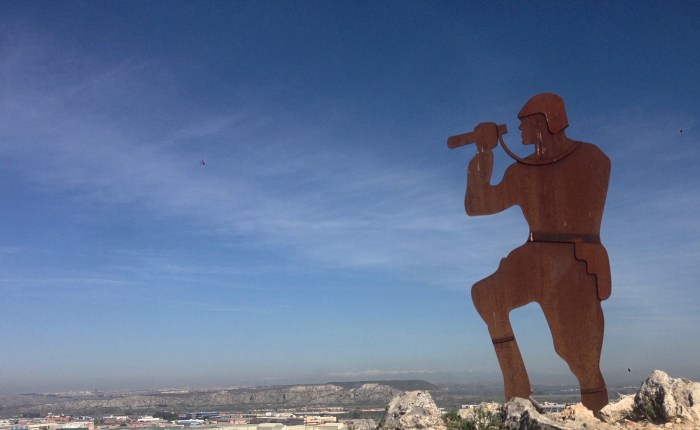

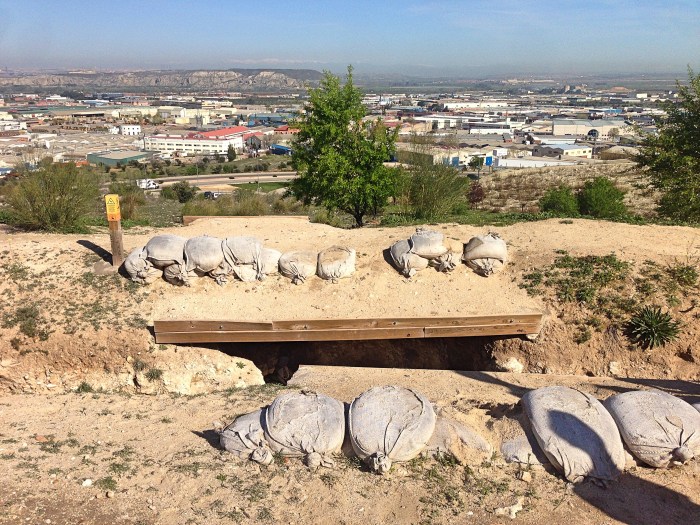
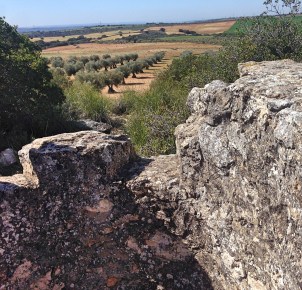

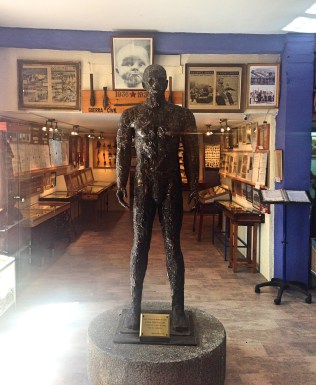
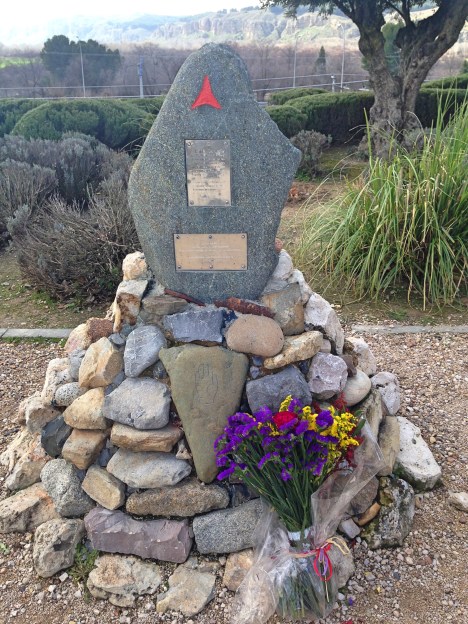
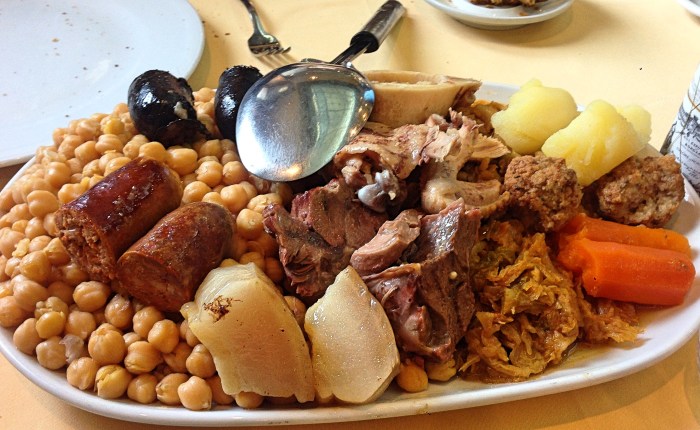
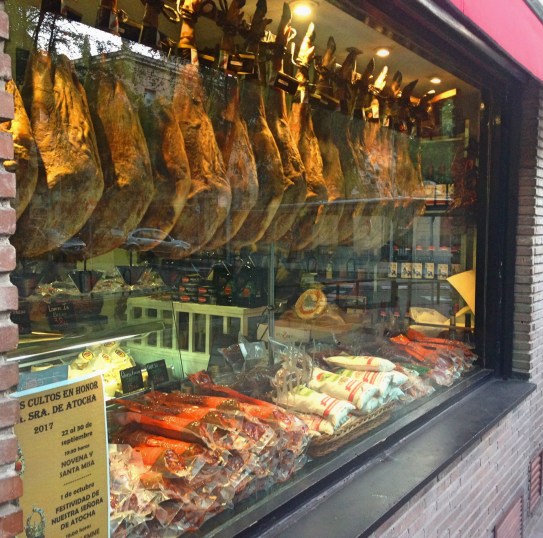

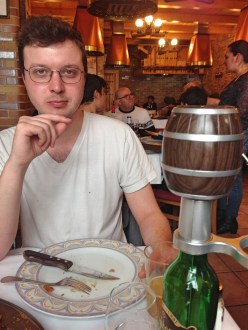


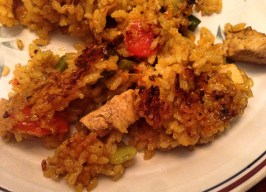
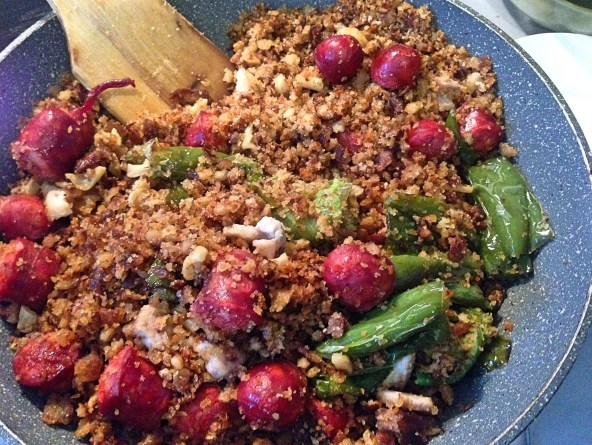
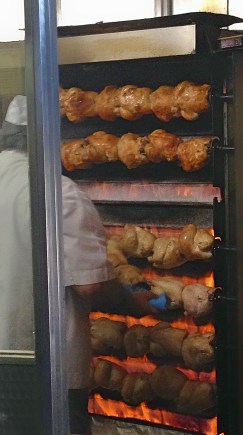
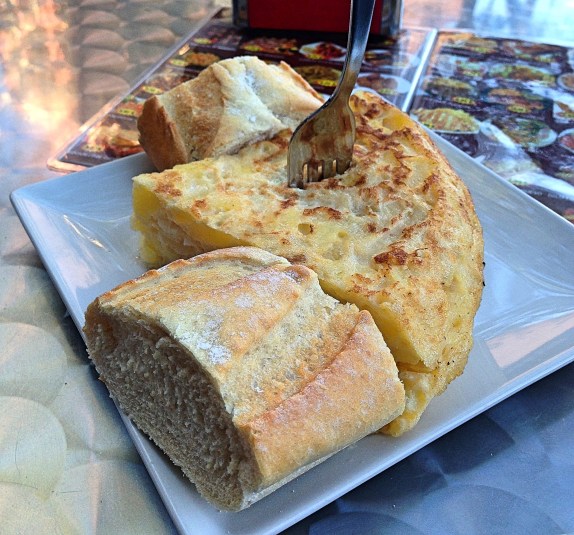


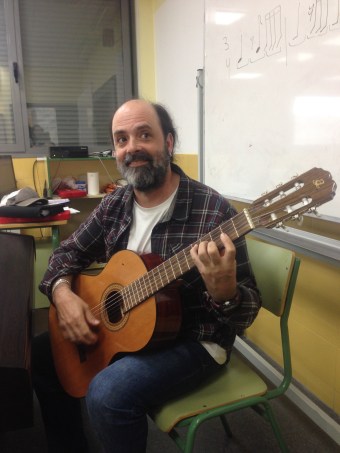


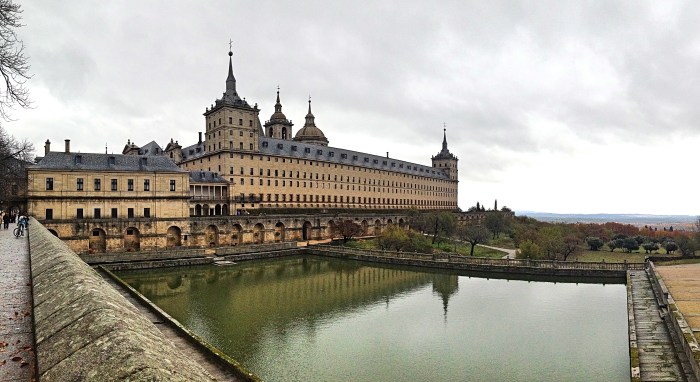
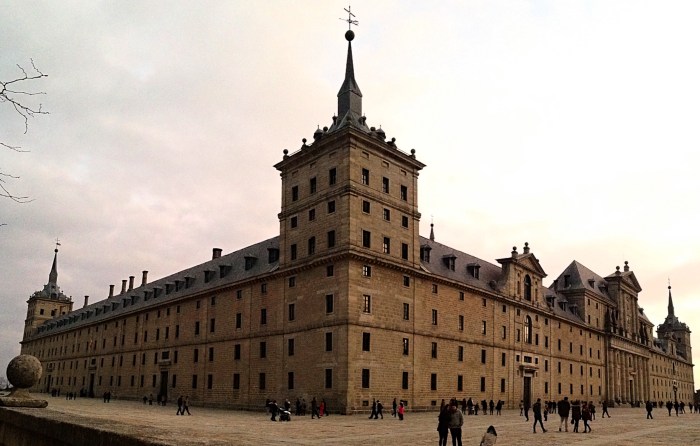
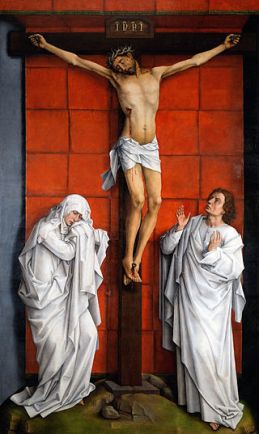
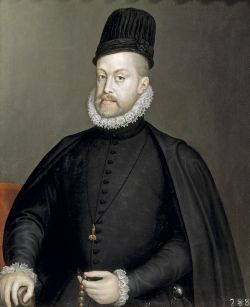
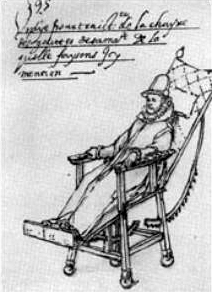

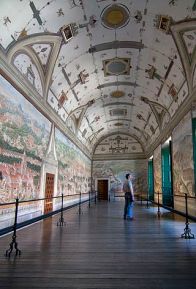
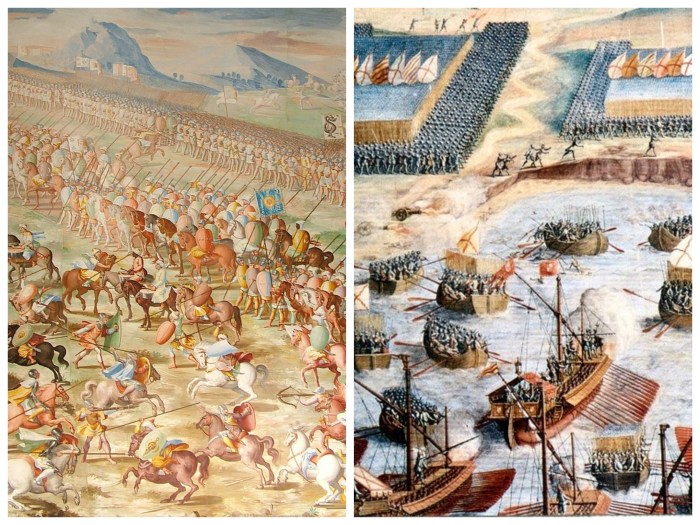


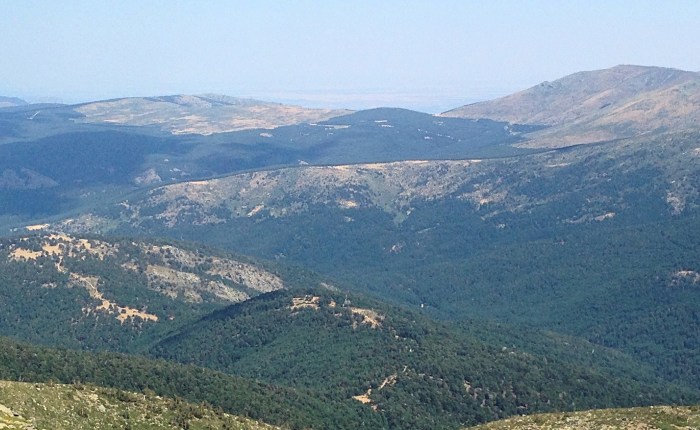
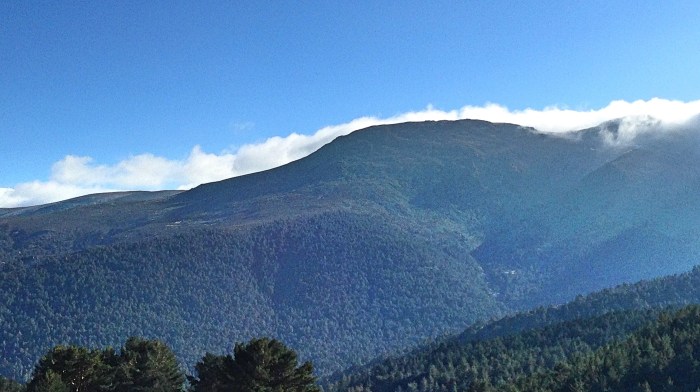
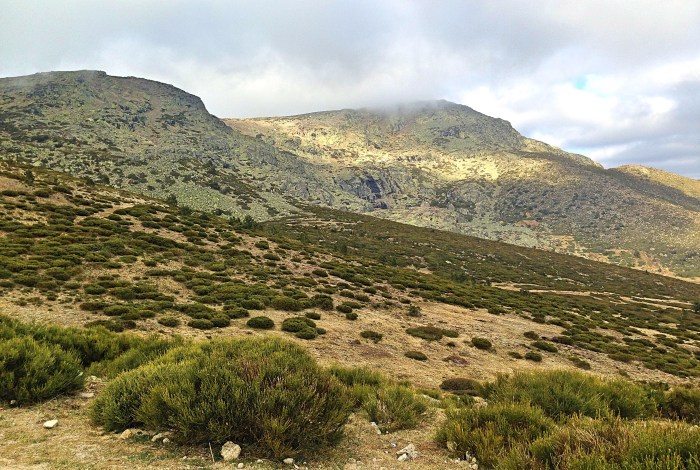
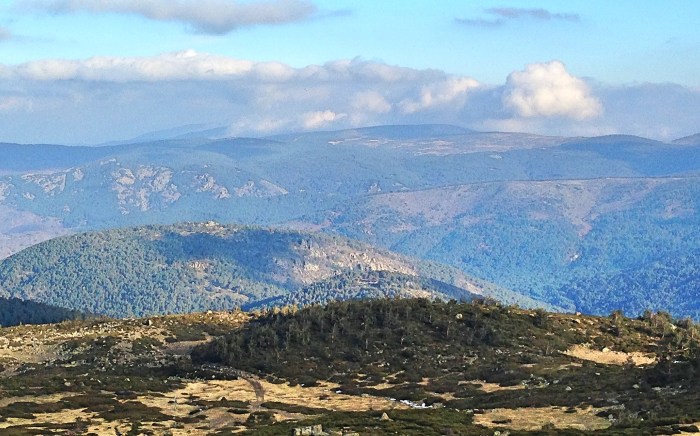
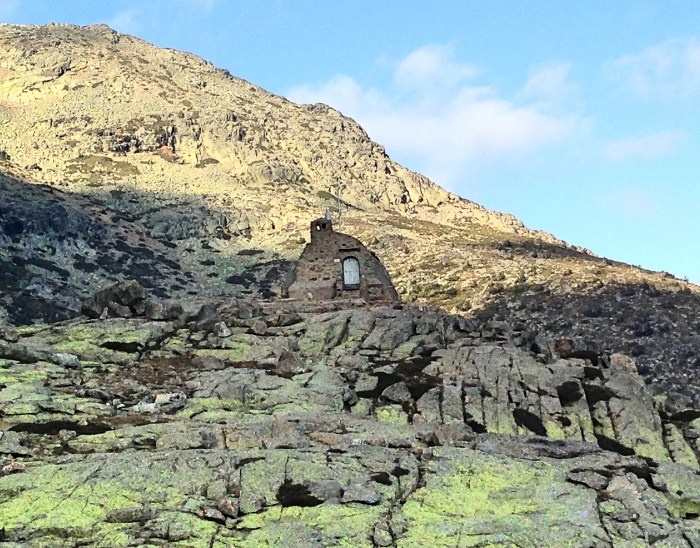
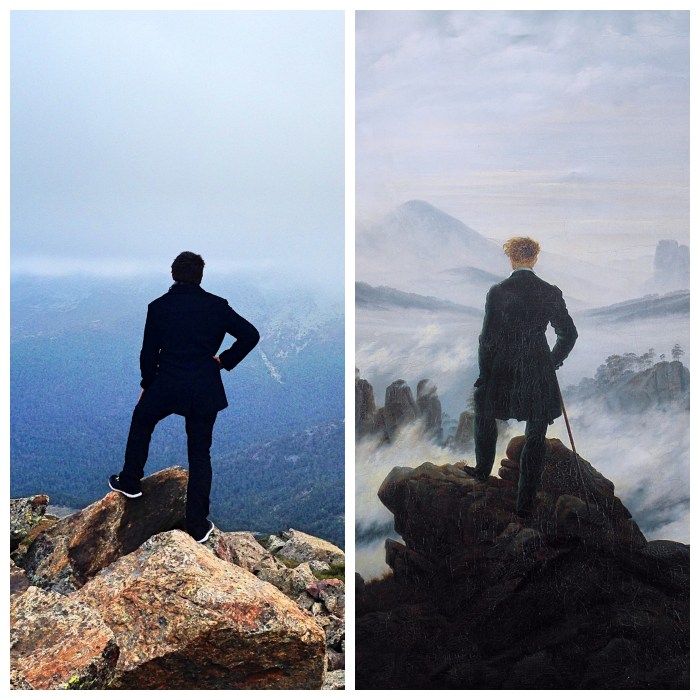
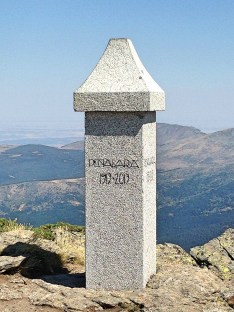
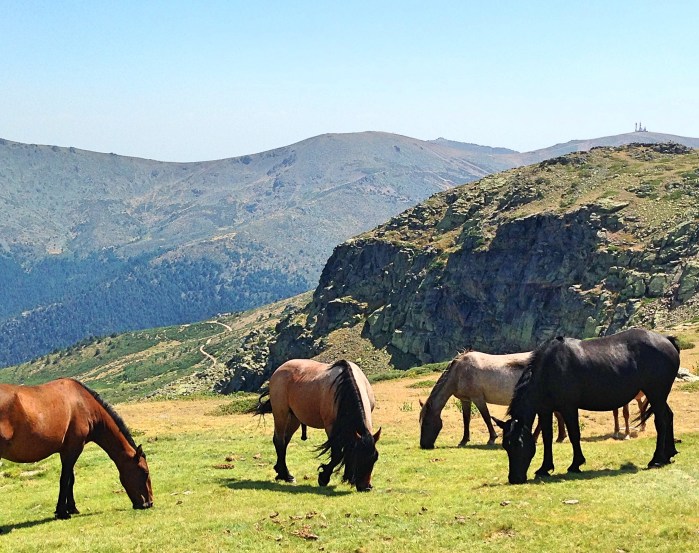
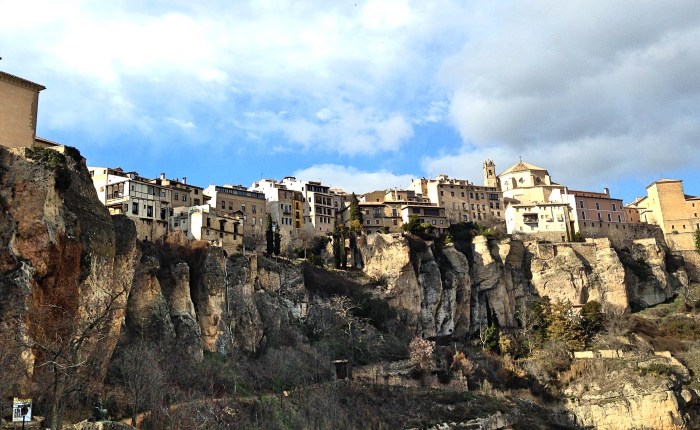

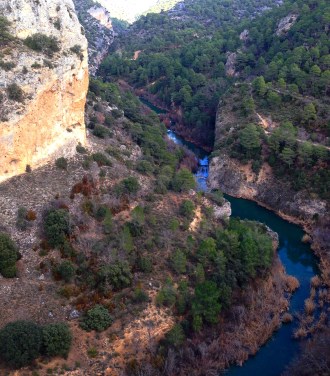
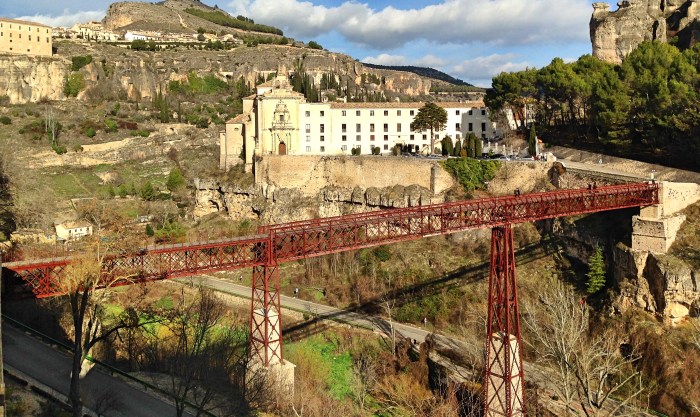
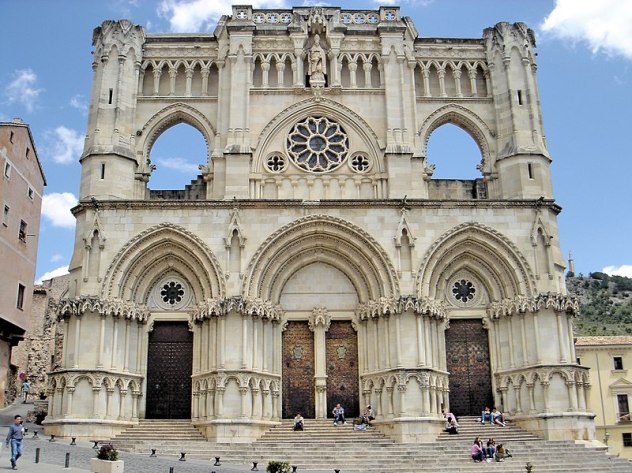

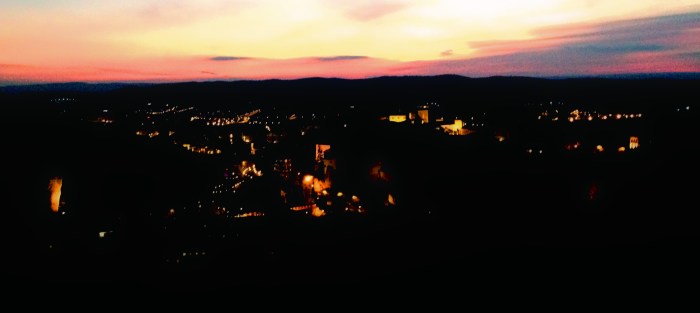
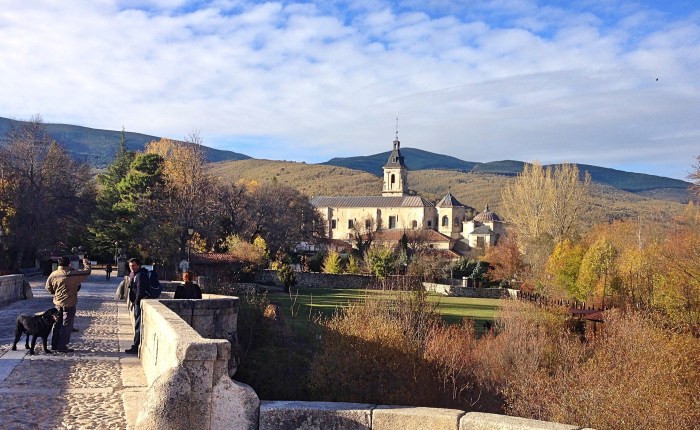
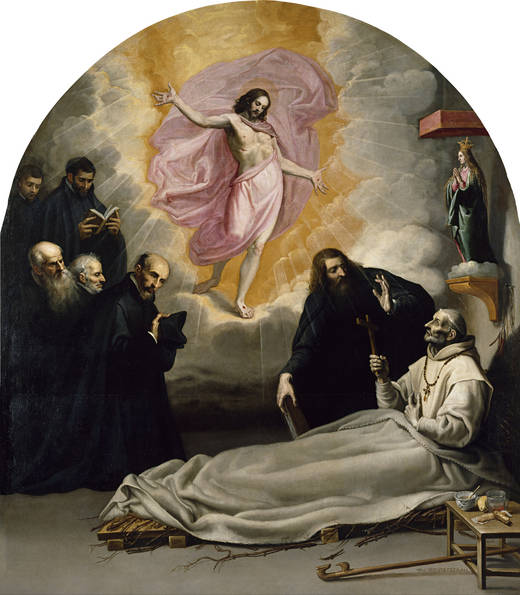
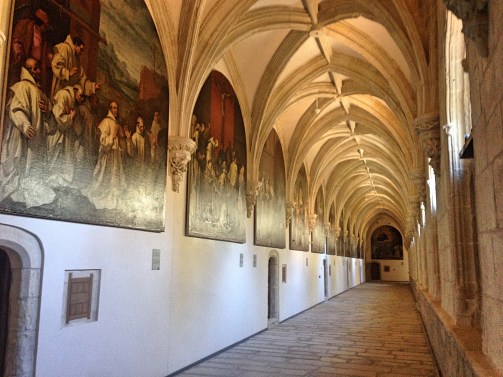

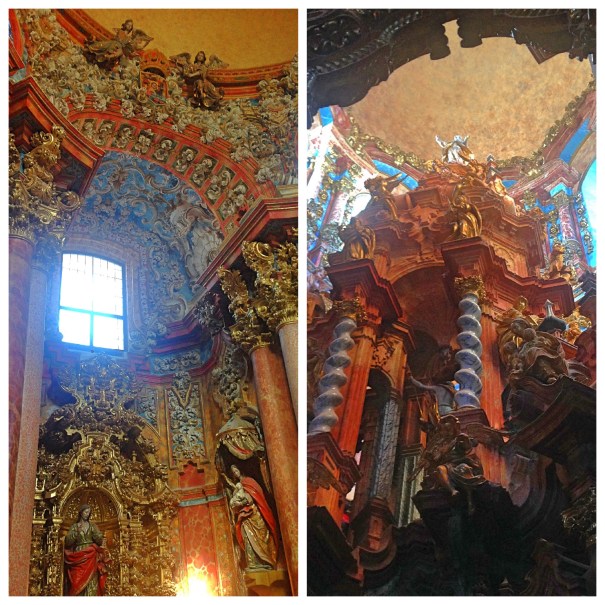
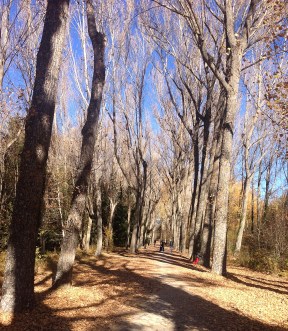

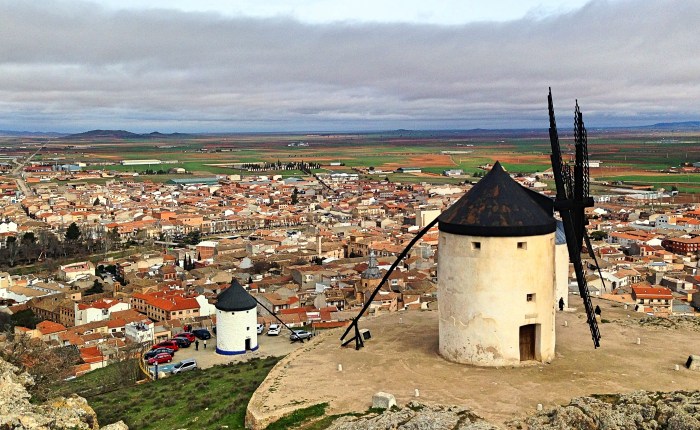
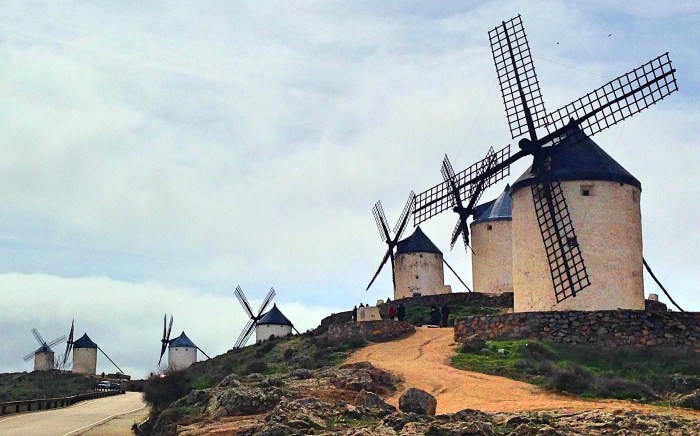

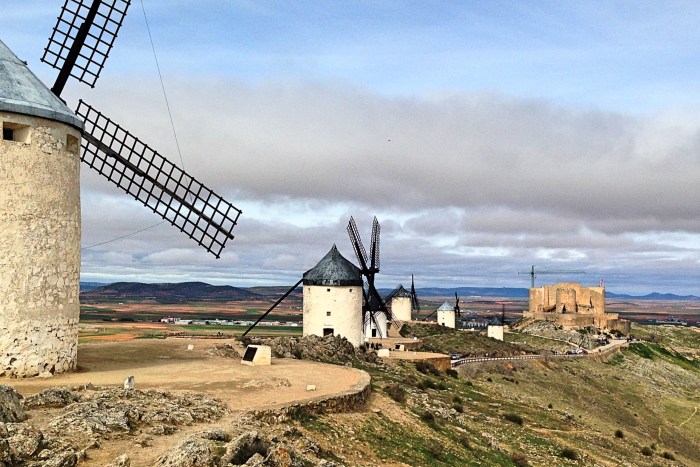


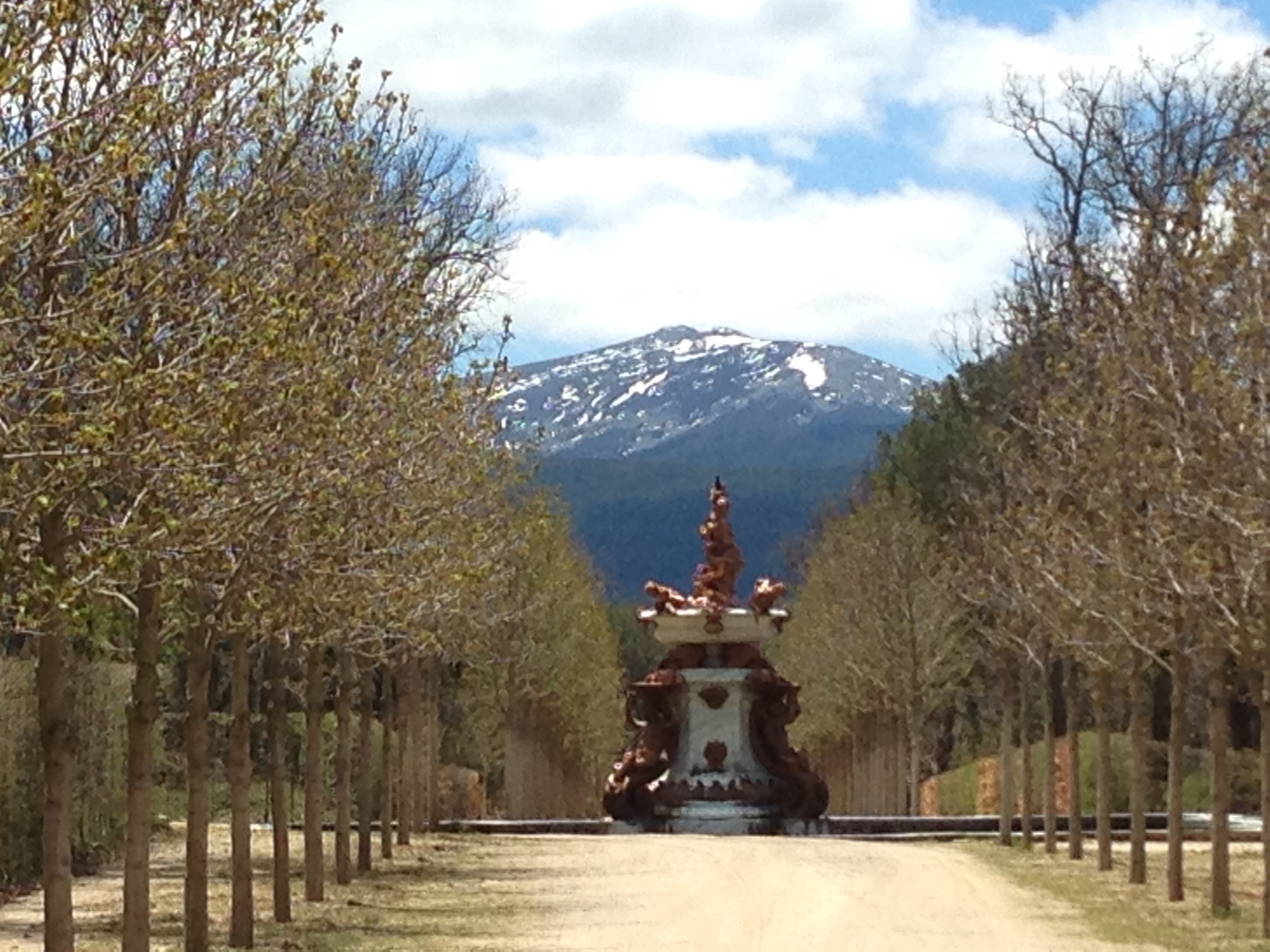
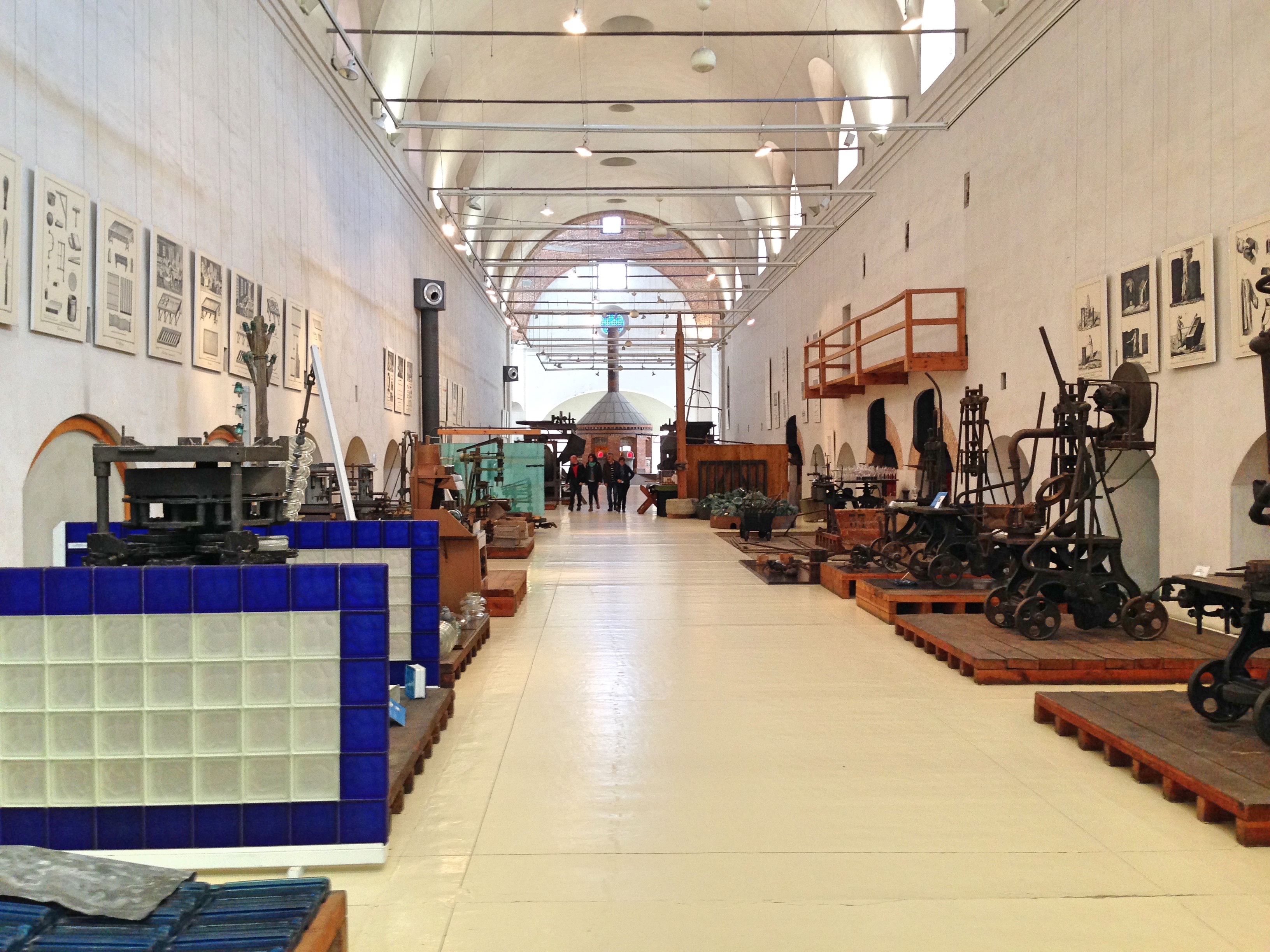


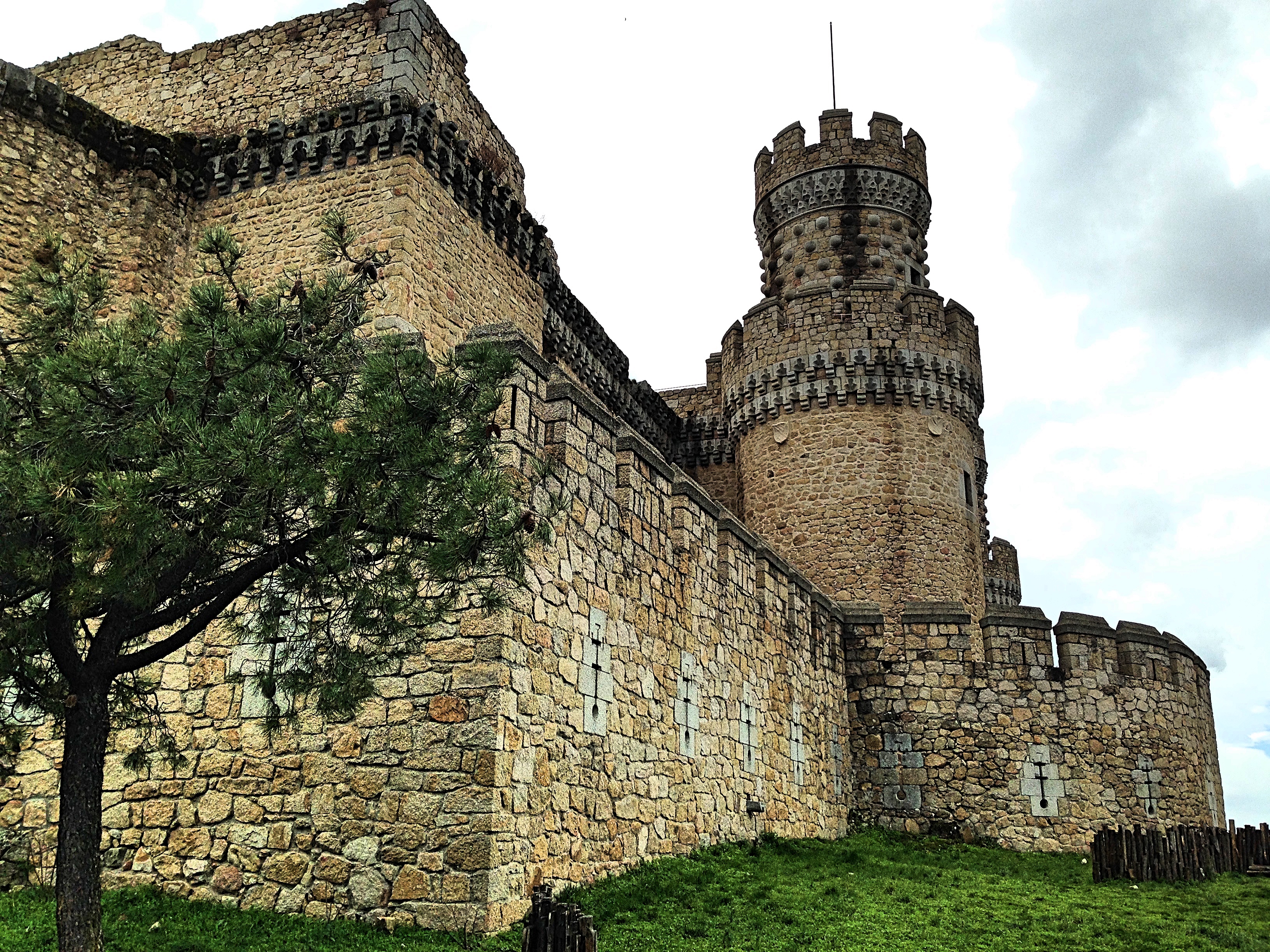


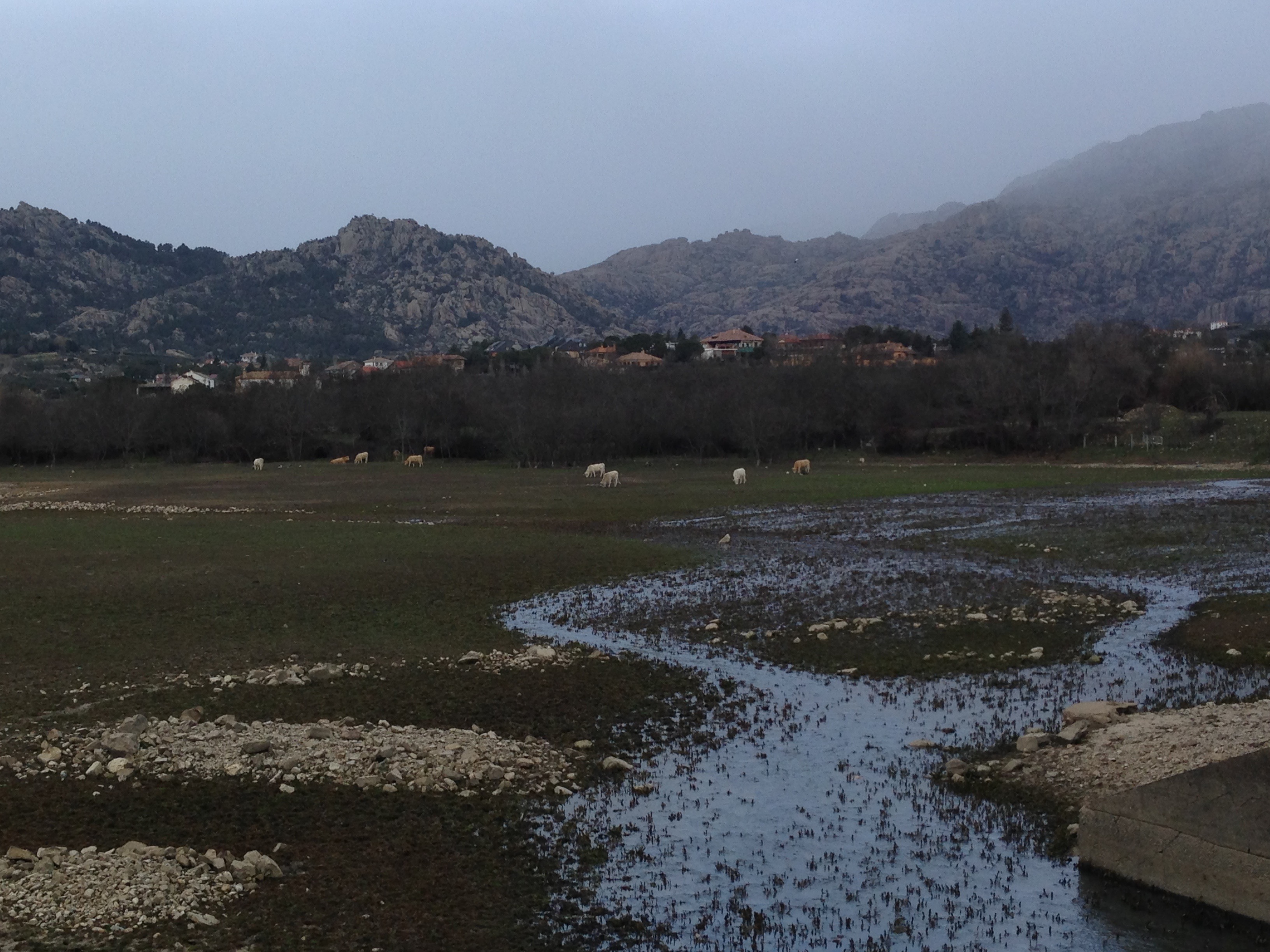
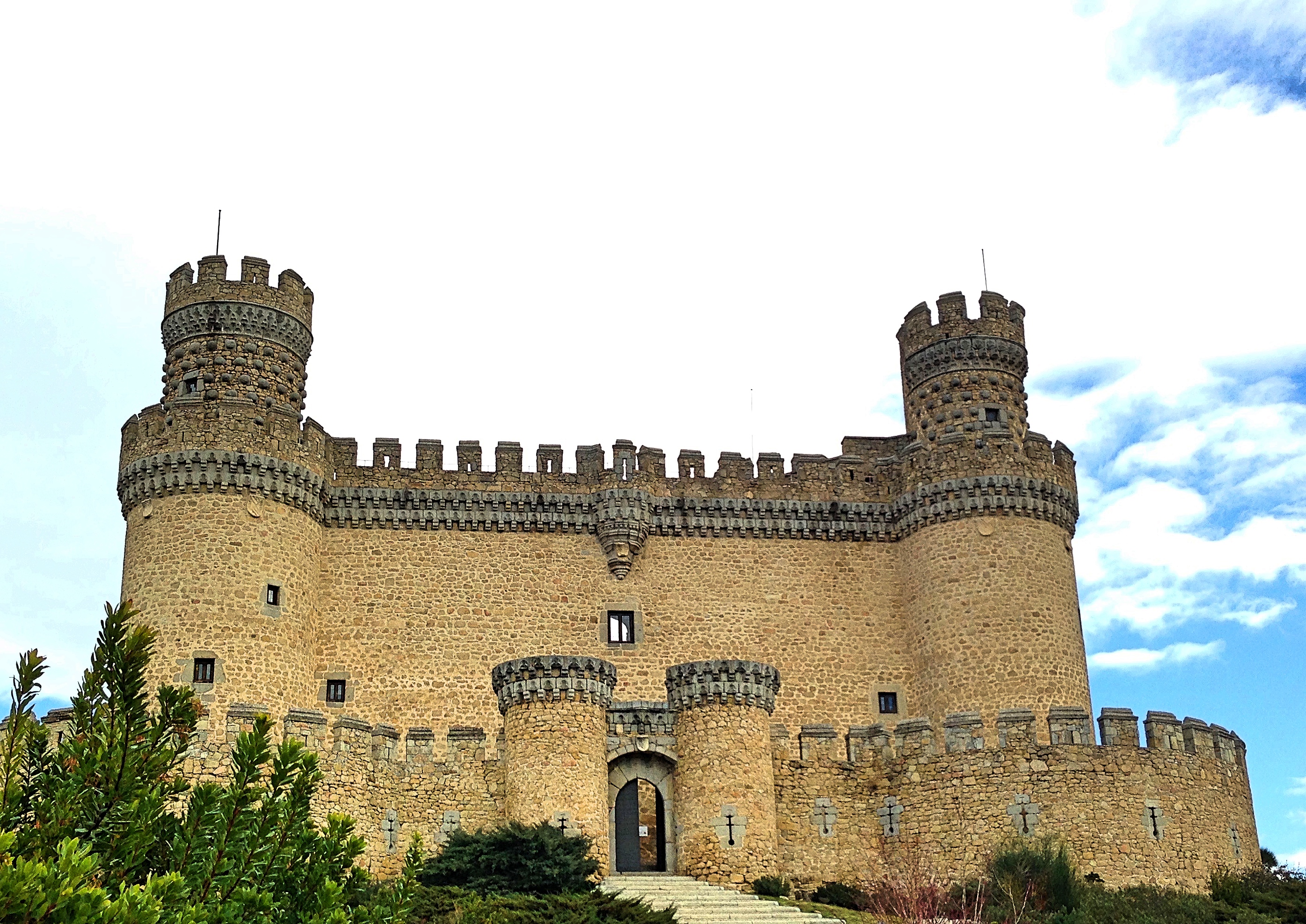
 Lotz in Translation