As I wrote in my review of the standard music history textbook, writers of survey material find themselves in an uneviable position: threading the needle between technical description and subjective response. In other words, a textbook writer must somehow discuss the music objectively, but with an absolute minimum of specialized vocabulary. As a result, even the best writers are bound to fall a little short of perfection.
But Robert Greenberg resolves this dilemma by avoiding writing altogether. Indeed, the audiobook format is arguably a far better medium than paper for a survey course on music. Rather than resort to scores or diagrams, Greenberg can simply play a recording of the music; and if he needs to break it down, he can play sections on his piano. The result is more integrated and more satisfactory than the textbook approach. What is abstract on the page—motivic development, thematic contrast, timbrel coloring—can be clear as sunlight when heard.
If the format is ideally suited to the subject, the man is ideally suited to the occasion. Robert Greenberg is a wild ball of energy—joking, screaming, whispering, laughing, and blabbing—all while waving and jabbing his arms about. Seeing him lecture is a performance in itself, as he goes the whole forty-five minutes without a single misspoken word. While some might find him grating, and others merely hokey, his animating presence helps to make this most abstract of all art forms into something eminently approachable.
But Greenberg would be little more than a clown if he were not, as well, an extremely knowledgeable and passionate musician. His examples are all well-chosen to illustrate his chosen lessons, and his explanations are both insightful and easy to follow. The lectures work so well because he can immediately exemplify any point simply by playing the relevant bit of music, thus sharpening our ears. Of course, this being a survey course, he does not go into great detail in any one area, and there are many omissions. But considering the time constraints, I think it would be hard to improve upon these lectures.
After finishing the aforementioned music textbook, I wondered whether language might have something to do with music development. I am gratified to find that Greenberg, at least, thinks that it does. The dominance of German-language composers in these lectures is overwhelming. After German, the composers’ languages by frequency are Italian, French, Latin, Russian, and English. Personally, I found it striking that there was not a single Spanish composer even alluded to in the course. Certainly you could not do a survey of visual art or literature with the same omission.
I am not subscribing to some kind of linguistic determinism (though the idea that linguistic patterns influencing musical patterns is intriguing); I am only remarking on the strangeness that one culture, even one city—Vienna—could be so dominant, and another equally affluent culture so comparatively minor.
This is all rather beside the point. I am very glad to have listened to these lectures, and even a little sad to be done with them. Luckily for us, Greenberg is an extremely prolific teacher, and has seemingly endless courses on every area of Western concert music. Where does he find the time to conduct, compose, and play his own music?
This podcast includes my review of Thomas Kuhn’s The Copernican Revolution. It will likely be my last book-review podcast for a little while. I hope to begin a new series of podcasts about life in Spain next week.
Ancient Egypt, like dinosaur bones and outer space, is one of those things which seem to attract universal curiosity. It certainly did in my case. I remember visiting the Egyptian section in the Met, as a young boy, and marveling over the mummies and the massive sarcophagi, the mysterious hieroglyphs and monumental statues.
There is something curiously foreign, even inhuman, about Egyptian artifacts. For one, they are old beyond anything we are accustomed to think about. To cite one oft-repeated fact, there is more time between construction the Great Pyramid and the life of Julius Caesar, than between Julius Caesar and our own time. Even ancient history seems like yesterday by comparison. Aside from mere time, Egypt’s culture is strikingly unlike our own. God-kings who marry their sisters to keep the blood-line pure, mummified bodies interred in graves full of gold, jackal-headed gods and hieroglyphic script—it is alien indeed.
Yet it is beautiful. Egyptian art is undoubtedly one of the great art traditions in the world—as anyone knows who has examined the bust of Nefertiti in Berlin, the seated scribe in Paris, or the statue of Hatshepsut in New York. It is a unified and coherent aesthetic, permeating everything from the smallest objects to the greatest temples, and lasting for thousands of years with only minor change. Even if it is enchanting, however, the art of Egypt also evokes this sensation of distance. Every image is so stylized, every human form is so rigid and unrealistic, every aesthetic choice pre-determined by tradition, that it is difficult to get a sense of real people behind these objects.
This sense of distance, of foreignness, of mystery, is what makes Egypt so exciting to study. (It is also why people talk about ancient aliens.) And Bob Brier is an ideal guide. I have never loved anything or anyone as much as Brier loves Egypt. This enthusiasm is infectious, and makes his series of lectures a real pleasure. He describes how he climbed into the Bent Pyramid—an early, failed attempt to create a pyramid—and how he traveled to the turquoise mines used by Egyptians themselves. He narrates Napoleon’s conquest of Egypt and explains how the Rosetta Stone was translated. He even describes in detail how to make a mummy—and he should know, since he made one himself.
Apart from these entertaining asides, Brier takes the listener through the whole history of Ancient Egypt, from prehistory to the death of Cleopatra. It is a fascinating story, and Brier is a wonderful storyteller. A lifelong resident of the Bronx, his verbal mannerisms may remind one—pleasantly or unpleasantly—of the man in the White House; yet he knows how to dramatize the relevant details enough to make them effortlessly stick in the memory. His love of a good story does lead him astray, at times. For my part, his two lectures on the Biblical stories, Joseph and Exodus, were somewhat too credulous of their veracity. He is similarly generous when it comes to Herodotus. And his theory of Tutankhamun’s murder has now been disproven.
Aside from these mild criticisms, I should note that the series does show its age. Recorded in 1999, a lot has happened in the world of Egyptology since then, notably the advances in DNA and medical technology which allow us to know more about the lives of Egyptians. For example, we now know far more about Tutankhamun’s many physical ailments, and we also know that he was not the son of Nefertiti.
Nevertheless, these lectures remain a wonderful introduction to the times. I cannot emphasize enough how enjoyable they are. They convert you into an Egypt fanatic. Now I want teach myself hieroglyphics and to go to Egypt myself. It must be incredible to see all of this in person. For now, however, I will have to be content with Brier’s virtual tour and whatever museums I can visit.
As I have lately been making my way through Aristotle’s physical treatises, I have often observed that many of Aristotle’s errors stem from his tendency to see the physical world as analogous to a biological organism. So it is a pleasure to finally see Aristotle back on his home territory—living things. While Aristotle’s work in proto-physics and proto-chemistry is interesting mainly from a historical perspective, this work is interesting in its own right; in just a hundred pages, Aristotle manages to assemble a treatise on the fundamentals of life.
The first thing the modern student will notice is that Aristotle means something quite different by ‘soul’ than how we normally understand the word. The word ‘soul’ has come to mean an immaterial, specter-like wraith, the spiritual core of one’s personality—trapped, only temporarily, in a body; and this view has, over the years, caused problems for philosophers and theologians alike, for it remains to be explained how an immaterial spirit could move a material body, or how a material body could trap an immaterial spirit. Aristotle avoids these awkward questions. What he means is quite different.
Aristotle begins by observing that all forms of behavior, human or animal, require a body. Even supposedly ‘mental’ states, such as anger, love, and desire, all have concomitant physical manifestations: an angry man gets red in the face, a man in love stares at his beloved, and a man who desires alcohol tries to get it. From this, Aristotle quickly concludes that all the Pythagorean and Platonic talk of the transmigration of souls is silly; a soul needs a body, just as a body needs a soul. Furthermore, a specific soul doesn’t need just any body, but it needs its specific body. Soul and body are, in other words, codependent and inseparable. In Aristotle’s words, “each art must use its tools, each soul its body.”
This still leaves the question unanswered, what is a soul? Aristotle answers that the soul is the form of the body. Alright, what does that mean? Keep this in mind: when Aristotle says ‘form’, he is not merely talking about the geometrical shape of the object, but means something far more general: the form, or essence, of something is that by which it is what it is. Here’s an example: the form of a bowl is that which makes a bowl a bowl, as opposed to something else like, say, a plate or a cup. In this particular case, the form would seem to be the mere shape of the object; isn’t the thing that makes a bowl a bowl its shape? But consider that there is no such thing as a disembodied bowl; for a bowl to be a bowl, it must have a certain shape, be within a certain size range, and be embodied in a suitable material. All of these qualifications, the shape, size, and material, Aristotle would include in the ‘form’ of an object.
So the soul of living things is the quality (or qualities) that differentiate them from nonliving things. Now, the main difference between animate and inanimate objects is that animate objects possess capacities; therefore, the more capacities a living thing has, the more souls we must posit. This sounds funny, but it’s just a way of speaking. Plants, for Aristotle, are the simplest forms of living beings; they only possess the ‘vegetative soul’, which is what makes them grow and develop. Animals possess additional souls, such as that which allows them to sense, to desire, to imagine, and—in the case of humans—to think. The ‘soul’, then, is a particular type of form; it is a form which gives its recipient a certain type of capability. Plants are only capable of growth; animals are capable of growing, of moving, and of many other things.
Aristotle sums up his view in a memorable phrase: “From all this it is obvious that the affections of soul are enmattered formulable essences.” These capacities cannot be ‘enmattered’ in just anything, but must be embodied in suitable materials; plants are not made of just anything, but their capacities for growth always manifest themselves in the same types of material. Aristotle sums up this point with another memorable phrase: “soul is an actuality or formulable essence of something that possesses the potentiality of being besouled.”
So an oak tree is made of material with the potentiality of being ‘besouled’, i.e., turned into a living, growing oak tree. Conversely, a life-sized statue of an oak tree made of bronze would still not be an oak tree, even if it shared several aspects of its form with a real oak tree. It isn’t made of the right material, and thus cannot possess the vegetative soul.
I have given a somewhat laborious summary of this because I think it is a very attractive way of looking at living things. It avoids all talk of ‘ghosts in the machine’, and concentrates on what is observable. (I should note, however, that Aristotle thought that ‘mind’, which is the faculty of reason, is immaterial and immortal. Nobody’s perfect.)
I also find Aristotle metaphysical views attractive. True to his doctrine of the golden mean, he places equal emphasis on matter and form. He occupies an interesting middle-ground between the idealism of Plato and the materialism of Democritus. In order for a particular thing to be what it is, it must both have a certain form—which is embodied in, but not reducible to, its matter—and be made of the ‘right’ types of matter. Unlike Plato’s ideals, which reside in a different sphere of reality, existing as perfect essences devoid of matter, Aristotle’s forms are inherent in their objects, and thus are neither immaterial nor simply the matter itself
The treatise ceases to be as interesting as it progresses, but there are a few gems along the way. He moves on to an investigation of the five senses, and, while discussing sight, has a few things to say about light. Aristotle defines light as the quality by which something transparent is transparent; in other words, light is the thing that can be seen through transparent things. I suppose that’s a respectable operational definition. Aristotle also considers the idea that light travels absurd; nothing could go that fast:
Empedocles (and with him all others who used the same forms of expression) was wrong in speaking of light as ‘traveling’ or being at a given moment between the earth and its envelope, its movement being unobservable by us; that view is contrary both to the clear evidence of argument and to the observed facts; if the distance traversed were short, the movement might have been unobservable, but where the distance is from extreme East to extreme West, the draught upon our powers of belief is too great.
Aristotle also has a few interesting things to say about sense:
By a ‘sense’ is meant what has the power of receiving into itself the sensible forms of things without the matter. This must be conceived of as taking place in the way in which a piece of wax takes on the impress of a signet-ring without the iron or gold; we say that what produces the impression is a signet of bronze or gold, but its particular metallic constitution makes no difference: in a similar way the sense is affected by what is colored or flavored or sounding, but it is indifferent what in each case the substance is; what alone matters is what quality is has, i.e. in what ratio its constituents are combined.
So we don’t take in the matter of a bowl through our eyes, but only its form. All of our senses, then, are adapted for observing different aspects of the forms of objects. Thus, Aristotle concludes, all knowledge consists of forms; when we learn about the world, we are mentally reproducing the form of the world in our minds. As he says: “It follows that the soul is analogous to the hand; for as the hand is a tool of tools [i.e. the tool by which we use tools], so the mind is the form of forms [i.e. the form by which we apprehend forms].” (Notice how deftly Aristotle wields his division of everything into matter and form; he uses it to define souls, to define senses, and then to define knowledge. It is characteristic of him to make so much headway with such seemingly simple divisions.)
For a long time, I was perplexed that Aristotle was so influential. I was originally repulsed by his way of thinking, put off by his manner of viewing the world. His works struck me as alternately pedantic, wrongheaded, or obvious. How could he have exerted such a tremendous influence over the Western mind? Now, after reading through much more Aristotle, this is no longer perplexing to me; in fact, I often find myself thinking along his lines, viewing the world through his eyes. It takes, I believe, a lot of exposure in order to really develop a sympathy for Aristotle’s thought; but with its emphasis on balance, on growth, on potentiality, it succeeds in being a very aesthetically compelling (if often incorrect) way of viewing things.
This piece represents, to me, Aristotle at his best. It is a grand synthesis of philosophy and biology, probably not matched until William James’s psychological work. Unlike many gentlemanly philosophers who shut themselves in their studies, trying to explain human behavior purely through introspection, Aristotle’s biologically rooted way of seeing things combines careful observation—of humans and nonhumans alike—with philosophical speculation. It is a shame that only the logic-chopping side of Aristotle was embraced by the medievals, and not his empirical outlook.
This is quite a charming little book. In it, one can find the description of an entire way of viewing the natural world. Aristotle moves on from the abstract investigations of the Physics to more concrete questions: Is the earth a sphere or flat? What are the fundamental constituents of matter? Why do some things fall, and some things rise? Is the earth the center of everything? Aristotle’s answers, I’m afraid, have not stood the test of time; such, it appears, is the risk of all science—obsolescence.
The reader is immediately presented with a beautiful piece of Aristotelian reasoning. First, the good philosopher reminds us that “the perfect is naturally prior to the imperfect, and the circle is a perfect thing.” Circular motion, therefore, is more perfect than simple up-and-down motion like we see on earth; and since we do not find bodies whose natural motion is circular on earth, and since nature always strives towards perfection, it follows that there must be bodies not on earth which naturally move in a circular fashion. Again, since none of the earth-bound elements—fire, water, air, and earth—exhibit natural (i.e. unforced) circular motion, it follows that the heavenly bodies must be composed of something different; and this different substance (let us call it aether), since is exhibits the most perfect motion, must be itself perfect.
In Aristotle’s words:
… we may infer with confidence that there is something beyond the bodies that are about us on this earth, different and separate from them; and that the superior glory of its nature is proportionate to its distance from this world of ours.
Everything below the moon must be born and pass away; but the heavenly bodies abide forever in their circular course. Q.E.D.
In his physical investigations, it seems that Aristotle was not especially prescient. For example, he argues against “the Italian philosophers known as the Pythagoreans… At the centre, they say, is fire, and the earth is one of the stars, creating night and day by its circular motion about the centre.” Not so, says Aristotle; the earth is the center. He also argues against Democritus’s atomic theory, which posits the existence of several different types of fundamental particles, which are intermingled with “void,” or empty spaces in between them.
To be fair, Aristotle does think that the earth is round; he even includes an estimation of the earth’s circumference at 400,000 stadia, which is, apparently, somewhere around 40,000 miles. (The current-day estimate is about 24,000 miles.) Aristotle also thinks that “heavy” objects tend toward the earth’s surface; but puzzlingly (for the modern reader), he doesn’t think this has anything to do with the pull of the earth, but instead thinks it has something to do with earth’s position in the center of all things. In his words: “If one were to remove the earth to where the moon now is, the various fragments of earth would each move not towards it but to the place in which it now is.”
Then Aristotle launches into his investigation of the elements. As aforesaid, Aristotle posits four sublunary elements: earth, water, fire, and air. Earth is the heaviest, followed by water, and then air; and fire is the lightest. Aristotle believes that these elements have “natural” motions; they tend toward their proper place. Earth tries to go downward, towards the center of the planet. Fire tries to go upward, towards the stars. Aristotle contrasts this “natural” motion with “unnatural” or “violent” motion, which is motion from an outside source. I can, of course, pick up a piece of earth, thereby thwarting its natural tendency towards its proper place on the ground.
The elements naturally sort themselves into order: we have earth on the bottom, then water floating on top, then the air sitting on the water, and fire above the air. (Where all that fire is, I can’t say.) There are some obvious difficulties with this theory. For example, how can boats float? and birds fly? This leads Aristotle to a very tentative definition of buoyancy, with which he ends the book:
… since there are two factors, the force responsible for the downward motion of the heavy body and the disruption-resisting force of the continuous surface, there must be some ratio between the two. For in proportion as the force applied by the heavy thing towards disruption and division exceeds that which resides in the continuum, the quicker will it force its way down; only if the force of the heavy thing is the weaker, will it ride upon the surface.
The more one reads Aristotle, the more one grasps just how much his worldview was based on biology. The key word of his entire philosophy is entelechy, which simply means the realization of potential. We can see this clearly in his definition of motion: “The fulfillment of what exists potentially, in so far as it exists potentially, is motion.” That’s a mouthful, but think of it this way: the act of building a house can be thought of as the expression of the potential of a house; the physical house in progress is the partially actualized house, but the building itself is the potential qua potential.
It is easy to see how Aristotle might get interested in the expression of potentialities from investigating living things. For what is an egg but a potential chicken? What is a child but a potential man? This idea of fully realizing one’s potential is at the basis of his ethics and his physics; just as fire realizes its potential for moving upwards, so do citizens realize their potential through moderation. Aristotle’s intellectual method is also heavily marked by one who spent time investigating life; for it is the dreary task of a naturalist to catalogue and to categorize, to investigate the whole by looking at the parts.
While this mindset served him admirably in many domains, it misled him in the investigation inanimate matter. To say that chickens grow from eggs as an expression of potential is reasonable; but to attribute the downward motion of rocks as an expression of their potential sounds odd. It is as if you asked somebody why cars move, and they responded “because it is the nature of the vehicle”—which would explain exactly nothing. But it is difficult not to be impressed by Aristotle; for even if he reached the wrong conclusions, at least he was asking the right questions.
I did not enjoy this book. But my opinion might not be entirely fair, since it is colored by having read biographies of Alexander Hamilton and John Adams—two of Jefferson’s political foes—right before this, by two authors (Chernow and McCullough) whom I vastly prefer. This meant that I brought some strong preconceptions to the experience.
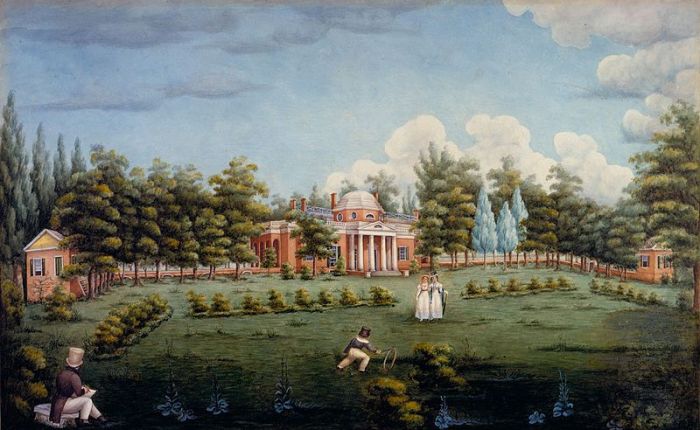
Nevertheless, I came to this book with a great deal of hope. Jefferson had come off rather badly in the two above-mentioned biographies. I wanted to see the other side of the man, the side that so many have admired. In fact, I played the audiobook recording of this book on a family trip down to Virginia, on our way to visit Jefferson’s home, Monticello, thinking that Meacham’s biography would whet our thirst for Jefferson history.
The effect was the opposite. All of us came away with a strong distaste for Jefferson, as well as dissatisfaction for Meacham’s apologetic treatment of the man. But before getting into differing opinions of Jefferson—of which there are endless—I shall talk about the writing, of which there may be more agreement.
To do justice to Jefferson the man would require a great deal of psychological subtly. Jefferson was reserved, withdrawn, even sphinx-like, a man full of contradictions. In the hands of an acute writer, Jefferson would make for a fascinating character-study. Yet Meacham is almost wholly uninterested in psychology. Jefferson is painted more vividly in his cameos in the Hamilton and Adams biographies than he is here.
To my mind, Jefferson was a man whom one could never take at face value, yet Meacham is often content to do just that. To pick just one example, in the exchange between Jefferson and Abigail Adams on the scurrilous writings of James Callender, Meacham is content to repeat Jefferson’s bland and disingenuous excuses of his support for Callender’s vilifications of John Adam’s character (that he bailed Callender out of jail merely because they held similar political views). Such instances are repeated throughout the book, with Meacham accepting as honest what I often read as intentionally misleading or simply duplicitous.
In any case, even if Jefferson is put to one side, no other personage in this book comes alive, as do so many in the above-named biographies. John Adams—a raging personality of epic proportion—is hardly more exciting than the taciturn George Washington. I was particularly disappointed at the lack of attention paid to Jefferson’s close and important relationship with James Madison, who is absent far too often in these pages, and who leaves hardly any impression whatever.
Meacham also lacks interest in drama. Good biographies can pull you into the historical moment, and make you feel how contingent the outcome of important events was on the quirks of personality or even simple chance. Yet in this book everything is a fait accompli. Difficult and arduous accomplishments, moments of danger and discord, are all summarized and narrated with a kind of mellow assurance that these events were destined to come to pass. The result is a book that is emotionally flat.
I would have excused these faults if Meacham had dug deep into the historical background or the political issues. But these, too, are given only a superficial treatment. Not nearly enough context is given, for example, for the reader to understand exactly why the Declaration of Independence was such a revolutionary document at that time. The same can be said for the Virginia Statute of Religious Liberty.
Instead, Meacham prefers to resort to strings of vague, Latinate adjectives and to draw grand-sounding conclusions. This is his habitual mode. The following passage, from the Prologue, gives a taste of this tone:
In pursuit of his ends, Jefferson sought, acquired, and wielded power, which is the bending of the world to one’s will, the remaking of reality in one’s own image. Our greatest leaders are neither dreamers nor dictators: They are, like Jefferson, those who articulate national aspirations yet master the mechanics of influence and know when to depart from dogma.
This tendency often leads him to substitute clichés for insight:
America has always been torn between the ideal and the real, between noble goals and inevitable compromise. So was Jefferson. In his head and in his heart, as in the nation itself, the perfect warred with the good, the intellectual with the visceral. In him as in America, that conflict was, and is, a war without end.
To me, this is neither good prose nor does it provide any valuable information. You could say all of the same things about virtually any nation or political leader. And in any case I do not think it is even true. Were all of Jefferson’s goals “noble”? Is compromise “inevitable”? Is the “war” between the “ideal and the real” actually similar to the conflict between “the intellectual” and “the visceral”? What does this even mean? This passage is hardly even valid as a platitude.
This leads me to what is my core criticism of the book: Jon Meacham’s understanding of Jefferson. Meacham’s central point is that Jefferson was a man of high ideals, but someone who was willing to compromise on his ideals in order to be an effective politician. This is the “Art of Power.” Thus, all of Jefferson’s pronouncements of principle are taken at face value, and all of his actions that do not align with his stated valued are excused as shrewd maneuvering.
Yet there is a difference between compromising on one’s vision and doing just the opposite. Consider Jefferson’s presidency. After having spent the last twelve years whipping up fears of overbearing central power, Jefferson signed the Louisiana Purchase and instituted a trade embargo—two huge expansions of federal power. Meacham would have us see these moves as capitulations to circumstances. But I think Jefferson’s tendency to flout the dictates of his own pen are too numerous to excuse. To pick another example, although he often styled himself above politicking and libel, Jefferson frequently employed others to write attacks on his enemies (as in the case of James Callender).
Here is another example. After stoking fear of a national army, and after his strong advocacy of the separation of the legislative and executive powers, once in office Jefferson himself asked a senator to introduce a bill approving military force—a direct contradiction of his stated principles on both counts. Characteristically, Jefferson also requested that the senator burn his note to him, so as not to appear to be meddling in the legislature. This is what Meacham has to say on the subject: “His adversaries might see such maneuvers as hypocritical and underhanded, but in Jefferson’s mind he was doing the right thing the right way. To seize power grandly would threaten the democratic ethos of the country—an ethos he thought essential.”
As an apology for Jefferson’s actions, this makes little sense to me. First, it hardly matters whether Jefferson thought he was doing the right thing in his mind. We all are, always. Second, to consider the mere ethos of democracy important while seizing power is certainly not democratic in any meaningful sense. This is typical of the whole book: where Meacham sees a flexible and enlightened politician, I see a person totally unwilling to live by the principles that he professes.
This is, of course, most flagrantly true in the case of slavery—an area in which Jefferson is inexcusable. To do Meacham credit, he does not attempt to justify Jefferson’s life of slaveholding. Nevertheless, I think he paid far too little attention to Jefferson’s domestic situation, which was totally dominated by slaves: as workers, servants, a sexual partner, and even his own children.
I see the issue of slavery as the most telling fact of Jefferson’s psychology, showcasing his ability to compartmentalize his thoughts. None of his actions were self-consistent. He wrote that slavery was evil and must end one day. But he did nothing to end it. At the same time, he thought that blacks could never co-exist with whites, all while having a life built upon the backs of slaves, living in constant contact with them. If he really believed that slaves were genetically inferior, as he wrote, how could he have had children with Sally Hemings, one of his slaves? Could he really believe that his own children with Hemings were naturally inferior? And if he did not, how could he totally relegate these children, his own blood, to a subservient or an invisible role in his life?
These questions leave me with a rather disturbing image. Meacham, however, sees Jefferson as a flawed hero—whose vision of artful politics has much to teach us. Jefferson did likely leave the world better than he found it. And, believe me, I find many aspects of Jefferson extremely admirable. In many ways I aspire to Jefferson’s wide interests and his intellectual greatness. But I think that any honest reckoning of the man will have to deal with these darker shades of his character. The vision of politics that Meacham offers, where high principles exist mostly as rhetoric or ethos, is not for me.