Since the day of this altercation they have not communicated; however, each serves as an excellent source of gossip about the other.
What drew me to this book was not only its subject—a village in Spain—but its author.
David D. Gilmore was my first anthropology professor. His classes were unforgettable. Standing over six feet tall, solidly built, he towered over the lecture hall. Professor Gilmore was the very picture of a professor. He had a preference for tweed jackets, complete with elbow patches; and his hair was equally professorial, an electrified shock of snowy white. His voice needed no amplification; it boomed throughout the space, keeping even the most sleep-deprived students semi-conscious.
What I remember most, however, was not his appearance, but his attitude. He had an understated ironic humor, and couldn’t help punctuating his classes with sardonic comments. After one of these comments, he would pause and grin very slightly. A few of the students, myself included, snickered; the majority scrunched up their brows, unsure if it was a joke. Unperturbed, Professor Gilmore then continued the class.
To my youthful eyes, this ironic sensibility seemed to pervade his entire attitude towards life. It was not only a sense of humor, but a philosophy, allowing him to maintain a sense of perspective and take nothing too seriously. I could not help concluding that studying anthropology—living abroad, in another culture, away from his native prejudices—engendered this witty sort of wisdom. By the end of the semester I had switched my major to anthropology, and Professor Gilmore was my advisor.*
I am delighted, therefore, upon reading his first book, to find that Professor Gilmore was an excellent anthropologist in addition to a striking professor.
As the title page indicates, and the rest of the pages make clear, this book is largely a response to Pitt-Rivers’s classic ethnography, The People of the Sierra. In that book, Pitt-Rivers maintained that the pueblos of Andalusia are governed by a powerful egalitarian ethos. Class is not acknowledged to exist, and friendships crosscut differences of wealth and power. Indeed, Pitt-Rivers considered all recognized forms of authority to be imposed from outside the pueblo, not arising within it.
The pueblo that Gilmore studied was quite different. Significantly larger, and situated on the plains rather than in the mountains, Gilmore’s village—he calls it Fuenmayor but it’s a pseudonym—is remarkably stratified. Three distinct social classes exist: the señoritos, the rich, landowning gentry; the mayetes, the middle class; and the jornaleros, the landless, working, migrant poor. These classes had existed for at least a hundred years, and their contours were engrained into the culture of the village.
The mutual isolation of the classes borders on absurdity. Friendships and marriages between members of different classes are nonexistent. Brother will shun brother if he “loses class.” There are three different seating sections in the movie theater, three different sections of pews in the church, and three different sections in the town cemetery. Señoritos are patriarchal, whereas jornalero women have far more power than men in the home. Señoritos are piously Catholic, while jornaleros rarely attend mass and openly scorn the church. The rich view the poor with contempt, and the poor view the rich as hateful oppressors. The mayetes, for their part, focus on keeping themselves afloat.
The picture that emerges is of a society strongly divided, almost bursting at the seams with social tensions, kept together only by the oppressive force of Franco’s regime. (The fieldwork was done in 1973.)
The book, although short, is stuffed with information and anecdotes. Gilmore is always careful to compare the opinions of his informants with objective data, including statistics of land ownership, crop growth, and church attendance. Thankfully these data are usually illustrated with field anecdotes (which are half the fun of any ethnography). I especially appreciated these, because his ironic sensibility shone through:
The mayete is also known occasionally to affect a broad-brimmed fedora hat, which for some reason the workers find indescribably hilarious. One day I appeared in a working-class tavern sporting a new straw fedora, purchased earlier in the city. After a moment of amused silence, one of the laborers shouted, ‘Hey, look at this new mayete we have here!’ Loud, prolonged laughter followed; yet my friends could not explain their merriment.
As an academic work about the anthropology of Andalusia, this book is therefore excellent: well-written, thoroughly researched, and original. But as a piece of personal nostalgia, it is priceless.
_________________
*This is how I introduced myself to Professor Gilmore. In this first class, we did a unit on monsters. One of these monsters was the Windigo, a cannibalistic beast from Algonquian folklore. I found this monster fascinating and wrote a silly poem about him. I believe these were the first two lines: “Oh, Windigo, Windigo / Beast of blue and indigo.” It was certainly not a masterpiece. Nevertheless, one day after class I showed Professor Gilmore a copy of the poem. He seemed genuinely amused. It was an auspicious beginning.
It was at Rome, on the 15th of October 1764, as I sat musing amidst the ruins of the Capitol, while the bare-footed friars were singing vespers in the temple of Jupiter, that the idea of writing the decline and fall of the city first started to my mind.
—Edward Gibbon
Trajan’s Column
I was stressed, sweaty, tired, and running a little late. Today was my day to visit the Vatican. I needed to get to the ticket office on time, or risk losing my entry to that sacred place. The only problem was that—because I did not trust myself with navigating Rome’s metro, especially not when so much was at stake—I had opted to walk; and this meant over an hour of trekking, at full speed, on a humid sunny day, as I followed my phone—which occasionally froze and required me to restart the map program—through the unfamiliar city.
Nothing could stop me or slow me down: not the lure of food, not the heat of the sun, not the ambling tourists that crowded the sidewalks. The only thing that could halt my steps was, as it turned out, Trajan’s Column.
I had first seen this monument in art history class; even now I can vividly remember how awed and impressed I was at the craftsmanship displayed by the Romans in this work. The column, I should explain, was made to celebrate the military victories of Trajan. It stands 30 meters (98 feet) tall, and even higher if you include the pedestal. Twisting along this length, covering the entire surface, is a series of bas reliefs depicting Trajan’s military campaigns. The detail is fine and exquisite: hundreds and hundreds of figures, legionaries, barbarians, and beasts of burden, in all varieties of poses and positions, marching and fighting up and down the column. We see Trajan laying siege, crossing rivers, celebrating victory; trumpeters blowing their horns, animals being led to the sacrifice, barbarians being tortured and trampled underfoot.
I must immediately admit, however, that all this detail was mostly invisible to me. You see, the column now sits in a parking lot—quite forlornly, I think—and it is not possible to get close enough to really appreciate the bas relief. It would be better if there were some sort of scaffold surrounding the column. As it stands now, the tourist must gape up from a distance.
There is a platform on the top, which can be reached by climbing up the steps inside the column (though this is off limits to the visitor). Originally the work was topped with a statue of an eagle, later replaced by a statue of Trajan himself. During the Renaissance, this imperial statue was, in turn, later replaced by a statue of St. Peter. Nowadays the Fords and Hondas that surround the column add an extra contemporary flavor. Thus time and changing fashions conspire to render the old glory of the Roman emperor obsolete and ridiculous. And yet, even now, there is no way to look upon Trajan’s Column without imagining that same emperor standing on the top, looking proudly out at his city and his empire, the ruler and conqueror of all within view and beyond the horizon in every direction.
The Pantheon
I turned a corner, and there it was: the Pantheon. I was not even looking for it; I had been searching for the Trevi Fountain. Only in Rome can you unintentionally stumble upon one of the most famous buildings in the world.
The exterior of the building is striking enough. In front is a portico, supported by eight Corinthian columns. Sticking out behind this portico is a somewhat bulbous mass, a circular structure made of plain, drab concrete. The surface is discolored from centuries of rain, leaving ugly water stains, and is now cheerlessly grey, even in the bright summer sun of Rome. But contained within this somewhat unpromising exterior is one of the most beautiful spaces in history.
The Pantheon’s name, which means “all the gods,” reveals its original function as a temple. (Though there is some doubt about whether all the Olympian gods were actually worshipped there.) It was built during the reign of Hadrian, in about 120 CE, and is one of the best-preserved buildings from ancient Rome. Indeed, it seems hardly fitting to include the Pantheon in my post on “ruins,” since it is a fully functioning building.
The building was mobbed when I arrived. A line extended out the door; the surrounding area was packed with people; and inside there was hardly an inch of elbow room. This is unsurprising, considering that the ancient temple is right in the center of Rome, free to visit, and one of the most famous edifices in the world.
Since the beginning of the medieval period, the Pantheon has been used as a Christian church. It was this re-consecration and repurposing that saved the building from oblivion. (The official name is the Church of St. Mary and the Martyrs.) There is an altar at the far end of the building; and statues of Mary and various Saints stand guard around the perimeter of the building. The final effect is somewhat like standing in the Mezquita in Cordova: the Christian trapping look out of place in building whose architectural language is so different from a usual church.
The real highlight of the Pantheon is its ceiling. Even today, there is no unreinforced concrete dome larger than the Pantheon’s. It is a magnificent architectural feat. To me it scarcely seems believable that the Romans, without computers or calculators or even protractors, could have designed and executed something so geometrically precise. The coffering is so clean and regular that it looks digital.
In the center of this dome is an oculus, or opening, that lets sunlight pour into the building. A bright, yellow spot of the sun’s rays illuminates the interior like a searchlight, traveling around the space as the sun moves in the sky. On the floor below this opening are drains, so that the building doesn’t flood in the rain.
I sat down on one of the pews facing the altar, and stared up at the magnificent ceiling, suspended so enchantingly above me. This temple had been built for many gods, and had been re-dedicated to One; but as I sat there, it was easy to see what that the Pantheon was really consecrating: the force of human genius.
Triumphal Arches
The architecture of Rome speaks the language of power. It has been imitated around the world, in ancient and modern times, to symbolize dominance and military might.
You can see this in the Arc de Triomphe in Paris, or the Porte Saint-Denise in the same city; you can see this in Madrid, with the Puerta de Alcalá; you can see this in London, with the Wellington Arch; you can see this in New York City, with the Washington Square Arch; and you can see this most clearly, perhaps, in Berlin, with the Reichstag Building and its neoclassical portico, the towering Berlin Victory Column inspired by Trajan’s Column, and the Brandenburg Gate, one of so many triumphal arches to be inspired by Roman examples.
One of the earlier and most influential of these Roman arches is that of Titus, located just outside the Roman Forum, on the famous Via Sacra. Built in the first century CE, it has only one arch. The inside of this arch is coffered with floral motifs. On the inner walls, on both sides, are reliefs commemorating the victories of Titus, the emperor Domitian’s older brother. I remembered from my art history class that this arch is notable for having one of the earliest depictions of a Menorah, which is pictured in the frieze celebrating Titus’s conquest of Jerusalem.
Larger and grander is the arch of Septimius Severus, which is in the Roman Forum itself. This was completed in 203 CE, and dedicated to the military victories of Septimus Severus and his sons against the Parthians. It has three arches—a large one in the center, and two smaller ones flanking it—and its façades are covered with reliefs depicting military campaigns. One of Septimius Severus’s sons, Caracalla, eventually had his brother Geta assassinated; and Geta’s name and image were removed from all monuments.
The largest of the three triumphal arches is the Arch of Constantine, completed in 315. This arch is situated between the Coliseum and the Roman Forum; originally it spanned the Via triumphalis, the road that generals and emperors traveled when they entered the city in triumph. It is an interesting stylistic jumble, since it was built out of spolia, or the remains of earlier pieces, which leads to juxtapositions of artistic periods. I cannot help but seeing this gesture—appropriating Rome’s glorious past—as a sign of the empire’s decadence. Indeed, Constantine’s arch, while the largest, was also the last triumphal arch built in Rome.
The Palatine Hill
The Palatine Hill, Roman Forum, and Colosseum are included on the same ticket. This is important to know, since it makes buying your ticket much more convenient. Most people buy their tickets at the Colosseum ticket office, which can mean quite a long wait on line. You might have better luck doing as I did, and buying your tickets at the Palatine Hill ticket office, on Via San Gregorio 30. There wasn’t a single person ahead of me; in three minutes I had my tickets and was strolling around the Palatine Hill. And this was on a Saturday.
The Palatine Hill is one of the Seven Hills of Rome; and of these seven it is the most central. According to legend, this hill was where the she-wolf, Lupa, nurtured the abandoned Romulus and Remus, and where Romulus, after killing his brother in a fit of pique, decided to found the city that bears his name. The less-mythological origins of this hill are also interesting: archaeologists have discovered settlements dating back to the Bronze Age, the remains of which you can see displayed in the Palatine Museum. Both in fable and in fact, then, the Palatine Hill is at the heart of Rome’s history.
As you stroll up the hill, a jumble of sun-baked brick strikes your eye. Arches tower over arches, in a rolling, chaotic mass of rusty red. I could not guess what any of these skeletal structures had been used for. I was first reminded of the abandoned Yonkers Power Plant, near my home in Sleepy Hollow, a similarly empty pile of brick. Yet that ruin, far younger, is somewhat ghoulish; it still echoes with the sounds of departed life. These bones of Rome had been washed by the rain of a thousand seasons, and bleached by the sun of a thousand summers. They were dead and sterile; they seemed to be part of the landscape, growing from the soil, rather than anything put there by people.
But of course people did build these structures—very powerful people. These ruins are, most of them, the remains of palace complexes of erstwhile emperors; the biggest of these is the Flavian Palace (Domus Flavia), which owes its ultimate form to Septimius Severus, but there are also temples and aristocratic houses from the Republican period. Another notable structure is the one known as the Stadium of Domitian, which looks like a hippodrome for chariot races, except that it is obviously too small to fulfill that purpose. This has led to some speculation as to its function; the most popular theory is that it was the emperor’s private gardens.
Because there were so many different buildings, from different eras, jutting up against one another and superimposed on top of one another, it was difficult for me to get a sense of what it used to look like by walking around the ruins. Instead, I was given a sense of time, of lost time; a feel for the lapsed years that disappeared into an unknown past. So many generations had come and gone on this hill, dismantling, repurposing, renovating, and expanding the work of their predecessors. These were people like me, with their own ambitions and ideologies, their own perspectives; and some were the most powerful men of their time. And now look what is left.
Aside from its ruins, the Palatine Hill is worth visiting simply for the view. Standing atop of the hill, surrounded by the remains of an ancient empire, you can see modern Rome stretch out before you. St. Peter’s stands proudly in the distance; to one side is the Circus Maximus; and standing above the enormous retaining walls, which extended the hill’s scope to accommodate the ever-growing imperial palace, you can see the whole Roman Forum.
The only thing, besides the burning Roman sun, that detracted from my visit were the art installations set up around the site. Take, for example, Mark Lulic’s piece, The Death of the Monument. This is just a large sign that says “Death of the Monument” in bright red letters. Now, in my opinion this piece obviously has no aesthetic merit, since it looks like an unimaginative advertisement. Its only purpose, then, can be conceptual. And as one might expect, accompanying this work is an explanatory caption, written in pretentious art jargon. I will quote an example:
Persuasive and seducing like in the best mass communication marketing tradition, the admonition transforms into an illogical presence of the artwork, which is a monumental negation of itself. The visual impact conveyed through a specialized and unconscious mechanism acquires instinctively a conceptual form, leading us to raise some questions: doesn’t the death of the monument coincide with its birth?
And so on in the same vein.
I find this disturbing on many levels. First, I am against any work of art that lacks both aesthetic and intellectual interest, and requires a condescending and badly written plaque in order to explain the art to the viewer. Good art should never need to be explained, only experienced. This is putting aside the sacrilege of putting such mediocre art in the middle of the Palatine Hill, turning a profound historical visit into a trip to a mediocre art gallery. The artist’s bad taste has been compounded by the bad taste of whoever let him install his art here. And this piece is only one example of many that pollute the Palatine Hill. Such art is a depressing index of our current cultural moment.
The Roman Forum
The Roman Forum (Forum Romanum) sits in a valley underneath the Palatine Hill. This forum was, for many hundreds of years, the heart of Rome; it was a center of commerce, trade, worship, and political power. Now it is center of tourism.
Looking down from that hill, you can see the Forum in its entirety. What you see is a jumble of columns with no roof to support, domes hanging over open air, fragmentary walls slowly crumbling to dust, the foundations of demolished buildings, and doorways leading nowhere; you see arches celebrating long-dead emperors, fountains sacred to long-dead heroes, temples dedicated to long-dead gods: the ruins of an entire civilization.
It would take many thousands of words to describe all of these ruins individually. I will only mention a few in passing. The Temple of Castor and Pollux, built around 500 BCE, is now little more than three towering Corinthian columns supporting the smallest bit of roof. The Temple of Saturn, built about the same time, is somewhat more complete, still possessing all of its front portico; in the old temple building, now long-gone, the Romans used to keep the official scales for weighing precious metals. The old Palace of the Vestal Virgins—where virgins lived a life of solitude, tending a sacred flame—has been lost; but several statues of the blessed women still grace the forum.
Perhaps the most impressive ruin, at least for sheer size, is the Basilica of Maxentius. This was completed during the reign of Constantine. Now only three of the basilica’s three concrete barrel vaults, coffered to save weight, remain standing. Rising to 39 meters (130 feet), it was the largest building in the Roman Forum; even now it is so large that it looks scarcely out of place amid the modern city. How on earth Romans managed to construct a building so large, with little internal support, is beyond my feeble understanding and imagination.
The most complete building in the Roman Forum might be Santa Maria Antiqua. Built in the 5th century, this is the oldest Christian monument in the forum, and one of the most important examples of early Christian art. The reason it has been so well-preserved is because an earthquake buried the church in the 9th century, and it stayed sealed under the rocks for over 1,000 years, until finally it was re-opened in the 20th century. This makes the church something of an unintentional time-capsule. What was revealed, upon its re-discovery, was a wonderful assortment of frescoes, their vivid colors preserved by the sterile air. These frescoes are especially valuable, since they provide a window into the pre-iconoclastic period of Christian art.
For my part, although I am ignorant as to their scholarly importance, I could not but be moved by these ancient, decaying portraits of angels and saints. In the dim light and dusky air, amid the faded ink and chipped plaster, the serene eyes of the first Christians stared back at me from across centuries—a triumphant victory, however temporary, against Time’s sharp tooth.
The Colosseum
Finally it was time to visit the last ruin. Blinking in the hot sun, overwhelmed by all I had seen—far too much to take in for one day—I walked away from the forum and towards the most famous building in Rome. I still remember seeing the Colosseum in pictures in my sixth grade history class. I remember learning about the gladiators, the battles between wild animals and condemned prisoners, the executions of Christians, the mock-naval battles. Now I was finally here.
Purists will insist on calling it the Flavian Amphitheater. This was its original name, which it took from the name of the dynasty who built it. Construction began in 72 under Vespasian, and was completed in 80 by Titus; then Domitian, also a Flavian emperor, could not resist making a few modifications of his own. It is known as the Colosseum—or so the theory goes—because of the colossal statue of Nero that used to stand nearby. (This statue was 30 meters, or 100 feet, tall. Now no trace of it remains, save its base. How something like that disappears is not easy to fathom.)
The Colosseum is the biggest amphitheater ever built. It could hold somewhere between 50,000 and 80,000 people. Its tall outer walls reach a height of 48 meters (157 feet). Elliptical rather than perfectly circular, it is 189 meters (615 feet) long and 156 meters (510 feet) wide; its perimeter stretches to about 550 meters (1,800 feet).
But these numbers seem pale and lifeless compared to the experience of seeing it with your own eyes. It is a mammoth structure. As you stand on the hillside facing its outer walls, the building fills up your entire field of vision. Its walls tower above you, dwarfing the hundreds of people scurrying about its edges. Circumambulating the building takes five long minutes. The tall outer wall only extends about halfway round the structure; where it has collapsed, you can see the rows of interior arches that supported the many rows of seats inside. The entire area around the Colosseum is packed with tourists, tour guides, and vendors. Selfie sticks jut out left and right; groups pose for photo after photo; aggressive guides try to sell you their services.
Even though I had a ticket, I had to wait a few minutes on a long line. The security was pretty tight; everyone had to scuttle through a pair of overworked metal detectors. When you are finally inside, the most striking thing is the place’s familiarity. I had already seen so many photos of the amphitheater that every curve of its outline was already known to me. This happens with every iconic monument. It takes an act of will to see the place as it really is, rather than as a cultural symbol. I tried to blink away my preconceptions, to see the Colosseum afresh, as a hunk of stones laden with history; but so many notions had already molded my reaction that I felt strangely disconnected.
There is nothing especially beautiful about the Colosseum’s interior. Every part of the building is the same shade of brown; and its partially collapsed state makes it seem like a rolling mass of dun-colored stones in some lonely desert. The building is so filled with windows and arches that it is practically transparent; what remains today are just the building’s bones, its vital organs having long been reduced to dust. Today there are two levels available to visitors, though in the past there must have been at least four (and many more rows of seats). As I walked in the covered corridors that circumscribe the amphitheater, I was reminded when I was in Madrid’s bull ring, Las Ventas: and in that moment I could dimly imagine how it must have felt to be a Roman bustling through a crowd, trying to find his seat, so he could watch a bloody spectacle.
Beautiful or not, the building is grand and impressive. Merely as a feat of engineering, it is enough to inspire awe. Putting aside its massive size and its thoughtful organization, allowing visitors quick exit and entry, the Colosseum also boasted a system, called the hypogeum, of trap-doors and hidden chambers that allowed gladiators and animals to enter the ring from many different spots. What remains of this elaborate system can be seen in the amphitheater’s arena.
The now-absent floor of the Colosseum was made of wood and covered with sand. The hypogeum was below this, which consisted of walls, cages, and tunnels, two levels deep. Complex pulleys, and even hydraulic equipment, were used to haul men and animals onto the stage. Animals as big as elephants could be introduced this way. Tunnels also connected the Colosseum with nearby stables and gladiator barracks, allowing the “performers” to enter into the arena unseen by the crowd. Before this hypogeum was built, the arena could be flooded with water to have mock-naval battles.
The ultimate irony of the Colosseum is, of course, that something so grand and inspiring, the result of so much knowledge and work, could be used for such barbarous purposes. Slaves condemned to kill other slaves, exotic animals brought to be butchered, prisoners mauled by lions en masse. This is only another example of the sad human truth, that our greatest gifts and capabilities, our art and our technology, can be employed in the service of the darkest side of our nature. This is why we must educate our ends as well as means.
Another view of the Roman Forum
Afterthought
Edward Gibbon decided to write his magisterial history of Rome’s decline and fall after seeing her ruins. Upon witnessing these remains of a long-dead empire, the contemporary visitor cannot help but ask the same question as did Gibbon: how did such a powerful civilization collapse and fail? How is it possible that the people who built the Pantheon and who decorated Trajan’s column could vanish?
History teaches few lessons more clearly than this: that all human order requires constant reinforcement, or it will fall into disorder. Gibbon said much the same thing when he reminded us that “all that is human must retrograde if it does not advance.” Rome’s progress from the proud conqueror who erected arches celebrating her victories, to the aging empire of Constantine that looked backward to Rome’s glory days, to the sack of Rome by Alaric in 410; her progress from the glorious marble statues you can see in the Palatine Hill Museum, to the sad faces that stare back at you from the walls of Santa Maria Antiqua; her progress from the engineers who could create the concrete dome of the Pantheon, to the middle ages when the secret of making concrete had been lost: What does all this mean for us? Are we staring into our past, or our future?
And yet, did Rome really fall? Here I am, writing in a Latinized language, in a European country whose laws and institutions were influenced by Rome’s, and whose language, Spanish, grew directly out of Rome’s. Here I am in Spain, one of the many countries of the European Union, an effort to unite the continent largely inspired by Rome’s example. Order, when neglected, may fall into disorder; and perhaps it always does. But the ideal of order persists: it persists in the memories of men and women, it persists in books and the spoken word, and it persists in monumental ruins—in broken columns, crumbling amphitheaters, and cracked foundations—that serve as a beacon for future generations.
Those who wish to make themselves understood by a foreigner in his own language, should speak with much noise and vociferation, opening their mouths wide.
In the year 1835, George Henry Borrow, British traveler and noted eccentric, embarked upon a voyage to Spain with the purpose of making the Holy Bible available to the populace of that hoary nation, and in their native language; freeing that sacred volume from the clutches of friars and priests, who, being papists, jealously guard and keep the scriptures in a language unintelligible to the majority of men and women,—or so opined the author, a proud and uncompromising Protestant.
Mr. Borrow undertook this journey under the direction of the Bible Society, and was chosen for this work due to his previous success, persistence, and tenacity, in propagating the Bible in the vast plains of Russia, where he laboured many long years among poor peasants; and this previous experience was bolstered by Borrow’s prodigious facility in acquiring languages, being possessed, if we are to believe his report of himself, of the Latin, French, Italian, Gaelic, Russian, Arabic, Romani, German, and both the modern and ancient Greek languages,—this list may not be complete,—in addition to his fluency in Portuguese and Spanish, the two dialects on which he was to rely during his time in the Iberian Peninsula.
This book, the record of this noble errand, was pieced together from journal entries, letters, and Mr. Borrow’s apparently remarkable faculty of memory; and narrates his misadventures suffered, voyages undertaken, obstacles overcome, and successes gained, in a style verbose and tending towards the periodic sentence, with hypotaxis being his most habitual mode of expression; a style, nonetheless, of vigour and charm; its only fault, being a tendency to unfurl itself in a monotonous, seemingly endless, series, built of commas and semicolons, that, if imbibed to excess, can have the same soporific effects of opium upon the senses of the reader.
Being a book of travels, much of Mr. Borrow’s narrative, if not the majority, consists of descriptions of noble edifices, foreign cities, strange landscapes, and other vistas of entrancing beauty; as well as many stories of incompetent footmen, derelict guides, incommodious accommodations, unscrupulous innkeepers, and all of the diverse and profuse inconveniences suffered by any traveler in a foreign land; these being supplemented by several vignettes, or sketches, of striking personalities encountered by Mr. Borrow, these personages being from many different classes, creeds, and nations; all of this detail and description serving as the backdrop to Mr. Borrow’s laborious task, selling the Bible in a land generally hostile and suspicious of the Protestant religion, the opposition of the authorities more than once thwarting Mr. Borrow in his noble errand; and this is not to mention the continual fighting, and concomitant destruction of land and property, and the resultant poverty experienced by the people, putting aside the brigandage and banditry rampant across the land, occasioned by the Carlist Civil War.
For all of its merits, and these are many and conspicuous, this book, however, cannot be recommended as providing any significant insight into the culture and history of the Spanish nation, being too absorbed in Mr. Borrow’s own private worries and concerns, and too involved in the slight and superficial impressions gained by the traveler; and seeing as this, namely, gaining knowledge of the Spanish nation, was my primary object in picking up the book, I must admit that I was somewhat disappointed; this disappointment being, I should hastily add, partly counterweighted by the eccentricity and peculiarity of this book, whose style, and whose narrator, while perhaps not brilliant, nor profound, nor even greatly compelling, are, at least, so distinct, that they are impressed upon the soul of the reader, not to be erased by any subsequent experience.
(The above picture is the commemorative plaque, which is posted on Calle de Santiago, 14, in Madrid, where George Borrow stayed.)
One firm takeaway from all our interviews with women is that most dudes out there are straight-up bozos.
My introduction to modern romance was abrupt and unexpected. I was back in New York for the holidays, drinking with a few friends, sipping and gulping the wonderful IPAs that I miss when I’m here in Spain.
Sometime deep into the night, one of my friends, who is a gay man—this is relevant to the story; you should also know that I’m a straight guy—asked if anyone wanted to go on his Tinder. “I do!” I said, and soon found myself face to face with the infamous app for the first time in my life.
Now, for the three remaining people who don’t know how Tinder works, it’s very simple: You look at pictures of people, and swipe left if you don’t want to talk to them, right if you do. (In this respect it’s like the Last Judgment.) If someone you’ve approved of also approves of you, then you are both given the option to send messages.
My friend was obviously a stud, because I was getting matches left and right (well, only right). One of these matches was a young man who I’ll call Woodrow Wilson. With permission from my friend, I sent Woodrow a message. The conversation went something like this:
Me: What’s your favorite tree?
Woodrow Wilson: Uh, White Pines are pretty cool I guess.
Me: White Pines? So cliché.
Woodrow Wilson: You’re right, I was only testing the waters. I’m really fond of Quaking Aspens. You?
Me: Now we’re talking. I’ve always been fond of the Shagbark Hickory.
The conversation proceeded like this for about four days, by which time it was clear that I had found my soul mate through my gay friend’s Tinder. Unfortunately, many barriers stood in the way—I’m straight, I was going back to Spain, and I was basically deceiving him—so I didn’t meet Woodrow Wilson. (If you ever read this—hello, and sorry!) But the experience was enough to make me curious about the opportunities and hazards of romance in the modern world.
Being a reluctant single, a very reluctant millennial, and a very, very reluctant member of the modern world, you can imagine I was, well, reluctant to tackle this topic. This book enticed me, not because it was written by Aziz Ansari—I didn’t consider myself a fan, and in college I even passed up the opportunity to see him live on campus—but because he teamed up with a sociologist, Eric Klinenberg, to write it. I listened to the audiobook, nasally narrated by Aziz.
The most striking thing about this book is that, despite its lighthearted tone and frequent funny asides, it is basically a serious and even an earnest book. Sociological statistics, psychological studies, and anthropological analyses are mixed with anecdotes and interviews and a bit of humor to give a quick but surprisingly thorough tour of romance in the contemporary world.
Aziz begins by pointing out that dating in today’s world is strikingly different from dating in my grandparents’ or even my parents’ generation. This is not only because of advances in technology but, more importantly, because of shifts in values. We now have developed what you might call a perfectionistic attitude towards finding a partner. We want to find a “soul mate,” “the one,” somebody who fulfills us and thrills us. Aziz contrasts this with what he calls the “good enough” marriages of yesteryears—finding a partner that satisfies some basic criteria, like having a job and a shiny pocket watch
I myself have noticed this shift from studying anthropology and history. In cultures all around the world—and in the West until quite recently—marriages were considered a communal affair. Aziz’s own parents had an arranged marriage, and according to him have had a long, successful relationship. (To be honest the idea of an arranged marriage has always been strangely appealing to me, since I don’t think any decision of such importance should be left in my hands. But the rest of my generation disagrees, apparently, so now I’m left to rummage through apps.)
Connected to this rise in the “soul mate” marriage is a rise in our preoccupation with romantic love. According to the biological anthropologist, Helen Fisher, there are two distinct types of love in the human brain: romantic, and companionate. Romantic love is the kind that writes bad poetry; companionate love is the kind that does the dishes. Romantic love hits early in a relationship and lasts up to a year and a half; companionate love grows slowly over time, perhaps over decades. This division accords well with my own experience.
(Parenthetically, I have long been skeptical, even morbidly suspicious, of romantic love: that kind of idealizing, gushing, delicious, walking on air feeling. To me it seems to be a form of self-deception, convincing yourself that your partner is perfect, even divine, and that nobody else in the world could make you so happy—when the truth is that your partner is a flawed person, only one of many flawed people who could induce the same delirious sensation. Wow, I sound really bitter in this paragraph.)
This cultural shift has been bolstered by our new dating technology. Now we do not only have the expectation that we can find the perfect partner, but we have the tools to do the searching. I can, and sometimes do, scroll through hundreds of faces on my phone per day. All this is very exciting; never before could I have so many romantic options at my fingertips.
But there are some major drawbacks to this. One is what the psychologist Barry Schwartz called the “paradox of choice.” Although you’d think having more options would make people more satisfied, in fact the reverse occurs. I remember watching TV was a lot more fun when I was a kid and I only had a few dozen channels; when we upgraded to hundreds of channels, it became stressful—what if there was something better on? Similarly, after spending three months in a camp in Kenya, eating whatever I was given, I found it overwhelming to go to a pizza place and order. How could I choose from so many toppings?
Along with these broader observations is a treasure trove of statistics and anecdotes that, if you’re like me, you’ll be quoting and misquoting for weeks. I found the little vignettes on the dating cultures in Japan, where there’s a sex crisis, Buenos Aires, where there’s a machismo crisis, and Paris, where there’s lots of infidelity but apparently no crisis, to be particularly memorable.
These anecdotes are not just for mental titillation, but are used to support several tenets of dating advice. Here are just a few takeaways. Check your punctuation before you send a text. When you ask someone out on a date, include a specific time and location, not “wanna hang out some time?” vagueness. Texting people is not a reliable way to gauge if you’ll like them in person; it’s best to ask them out sooner and not prolong a meaningless texting conversation. Take the time to get to know people; rarely do you see the more interesting side of someone’s personality on a first date.
As you can see, this book is quite a rare hybrid: part social science, and part self-help, and part comedy. And yet the book rarely feels disorganized or scatterbrained. Aziz keeps a tight rein on his materials; the writing is compact, clever, and informative. With the notable limitation that this book deals only with heterosexual couples, and covers no topic in serious depth, I can say that it’s hard for me to imagine how any such short book could give so complete a picture of modern romance.
Most impressive is the human touch. What could have potentially been a mere smattering of facts and stories, Aziz makes into a coherent whole by grounding everything in the day-to-day frustrations and realities of the dating world. Aziz knows firsthand how much dating can suck, how tiresome, uncomfortable, and stressful it can be. Yet, for all this, the book is ultimately hopeful.
Beneath all these shifts in values and demographics, all the innovations in dating technologies and changes in romantic habits, all the horror stories and the heartbreaks, beyond the lipstick and the cologne, below the collared shirts and high heeled shoes, above the loud music and the strong liquor, pushing every button and writing every text, is the universal human itch to connect.
This itch has always been with us and always will be. Each generation just learns to scratch it in new and interesting ways.
(If interested in setting something up, please direct all inquiries to my mom.)
The idea of a museum seems somewhat superfluous in Rome, a city that is itself a work of art. Monuments abound; and famous paintings and statues can be seen—for free!—in several churches and basilicas around the city. But Rome is also home to some of the finest museums in the world, and this is not even counting the Vatican museum, which I will discuss in a later post.
I only went to two museums while in Rome, but they were two of the best museums I have had the pleasure of visiting. So, without further ado:
The Borghese Gallery
The first thing you must know about the Borghese Gallery is that you need to get tickets in advance if you want to have any shot of getting inside. (Go to the website to get them.) If you do not, your only remaining option is to stand by the entrance, offering to buy tickets from passersby, like I saw a few ragged tourists doing on my way inside. This is not the strategy I would recommend.
Your ticket will come with a specific date and time. You need to collect your ticket half an hour before entering or it will be canceled (that is what it says on their website, but I am not sure this policy is enforced); and you only have about an hour and a half to see the museum. This is more than enough time, however, since the museum is fairly small.
The Borghese Gallery originated as the private collection of Scipione Borghese (1577 – 1622), a Cardinal and nephew of Pope Paul V (there was a lot of nepotism in those days), who was a Caravaggio collector and a patron of Bernini. The beautiful building did not originate as a museum, but as the Cardinal’s villa; its garden is still known as the Villa Borghese, and is now perhaps the finest park in Rome.
I arrived at the museum hungry, sweaty, and stressed out. Every time I have to be a new place on time—be it a job, a date, or a museum—I panic and arrive very early. Today was no different; by the time I got there, I still had an hour to kill.
I tried strolling around the park, which is lovely, but eventually the Roman sun and humidity overwhelmed me, so I gave up and sat down on a bench. An American family chatted on my left (about gelato, if memory serves), and a group of young Chinese people chatted on my right (probably about gelato, too, but I can’t be sure).
Finally it was time for me to go inside. It is an extremely well-organized place, with tight security. They made me check my small bag, for example, but the line to drop off and pick up my bag moved very quickly. Soon I was about to enter, congratulating myself on buying a ticket early, eager to enjoy the fruits of my rare foresight.
I nearly gasped the first time I stepped inside the museum. Like so many Italian interiors, the space is staggeringly lush. The walls, ceiling, and floor are exquisitely decorated: doorways are framed by columns of fine marble and golden capitals; a delicately carved frieze of mythological figures runs along the upper walls; the ceiling is trimmed with gold and covered in neo-classical designs inspired by Pompey’s mosaics. Everything shines and sparkles and glitters, overwhelming you with prettiness but, even more so, with opulence. Borghese was a rich man.
The museum is divided into two floors: the first is mostly for statues, the second for paintings. Each floor is not terribly large, but each room is so packed with art, great art, that you can hardly give anything the time it deserves.
Like many people who visit the gallery, I was most interested in seeing the Bernini sculptures, since he’s one of my favorite sculptors. If you have any interest in Bernini, you can’t find anyplace more rewarding to visit than the Borghese Gallery. Almost every room on the first floor has a masterpiece by Bernini sitting right in the center.
The Bernini statue that greets you upon entry is The Rape of Proserpina. Though it is incredible to believe, Bernini completed this technical tour de force when he was only 23, while I am sitting here at 25 writing this blog. It depicts the moment when Hades (Pluto), god of the underworld, abducted Persephone (Proserpina) to be his queen in the underworld.
(The myth is literally a classic: Hades rips through a hole in the ground and abducts Persephone when she’s gathering flowers. Persephone’s mother, Demeter, goddess of the harvest, seeks high and low to find her; and in her grief, she neglects her duties as goddess, letting crops wither and die. Zeus, seeing this, eventually intervenes, forcing Hades to return Persephone to her mother. Unfortunately for Persephone, however, she ate some pomegranates, fruit of the underworld, and for this reason she must return a part of each year to spend time with Hades. During these months, Demeter is so upset that she again neglects her duties as goddess of the harvest; and this is why we have winter every year.)
The sculpture depicts the moment when Hades grabbed Persephone to whisk her away into his dark underworld. Bernini, as usual, seems to transcend the limitations of sculpture, creating a scene of dramatic action rather than stable form. The bearded, crowned, and burly Hades is picking up Persephone and pulling her towards him. She is obviously not pleased with this: her body is turned violently away, her hand pushing on Hades’s forehead, her face filled with terror. For his part, Hades looks rather pleased.
The technical excellence of this sculpture is seen most impressively by looking at Hades’s hands gripping Persephone’s back and leg. Bernini has somehow rendered in stone the effect of hands pressing on soft skin. Looking closely at this, it is easy to forget that you are looking at sculpted marble, so anatomically perfect is every detail. I cannot help imaging that, if I were to touch the statue, I would feel the warmth of living flesh.
The next outstanding Bernini sculpture is his David. Here Bernini captures the moment when David is winding up his body to launch his stone at Goliath. The sculpture was, like so many of Bernini’s, a radical departure from previous efforts. Compare, for example, Michelangelo’s David. That Renaissance statue is perfect form, standing stable and erect, motionless and pure. Bernini’s statue, by contrast, is all fire and energy, drama and movement, contortion and stress.
Two aspects of the statue stick out in my impressions. First is the expression on David’s face: eyebrows knit, squinting with concentration, biting his lips. No photograph of any athlete in motion has better captured the mixture of focus and effort that all skilled physical activity requires. Next I would call your attention to the rope of David’s sling: two narrow bands of marble, floating miraculously in mid-air. How on earth did he acquire such enormous technical facility?
The last Bernini sculpture I will mention here—though there are others—is his Apollo and Daphne.
It is worth recounting the myth before seeing the work. Cupid, the eternal trouble-maker, shoots Apollo one day and causes him to fall in love with Daphne, a nymph who is repelled by men. Apollo pursues her, promising everything and more, and Daphne flees. When Apollo is about to catch her, Daphne prays to her father, the river-god Peneus, to destroy her beauty. Like any good father, he promptly turns his daughter into a tree. In Ovid’s famous poem, The Metamorphoses, this story is given as the origin of the laurel tree.
Bernini’s sculpture captures this moment, as Apollo is on the verge of capturing the nymph, and the nymph is mid-transformation. Daphne’s fingertips are sprouting leaves; branches grow from her thighs; her legs are disappearing into a tree trunk. Apollo seems to be unaware of this transformation; on his face he wears a serene, joyful expression. The nimble god’s pose is as light as a ballerina’s, almost as if he as flying. Daphne is a study in contrast. Her body is twisted violently away, struggling to escape his grasp, and on her face she wears a look of horror.
Perhaps at this point it would not be out of place to say a few words on Bernini in general. In technical facility he is unsurpassed; nobody disputes this. But what of his artistic aims? He is drawn to action rather than form, to motion rather than meditation. His statues lack classic grace but make up for it in their exuberance and vitality. True, there is something superficial about his art. Many of his sculptures seem like the Baroque equivalent of special effects, meant to dazzle but not to move the viewer; and this was in keeping with the spirit of times, when egregiously rich cardinals would vie with each other to commission the most extravagant art. And yet the surfaces of Bernini’s art are so staggering and magnificent that all misgivings about “deeper” meaning are shushes into silence.
The first level also contains several splendid paintings by Caravaggio. There is Boy with a Basket of Fruit, St. Jerome Writing, and David with the Head of Goliath. I particularly like the latter painting, since it exhibits Caravaggio’s talent for gruesome, gritty, and human depictions of Biblical scenes.
The second floor of the museum is mostly dedicated to paintings. It is a bit disappointing to move from the splendid decoration and several masterpieces of the first floor to this comparatively subdued level. This is not to say that it is not also a storehouse of riches and treasures. There are many wonderful paintings, too many to adequately view in one sitting, the most outstanding of which is Raphael’s Entombment, depicting the burial of the dead Christ.
I walked and looked and walked and looked, until my eyes hurt from squinting, and my brain, overwhelmed with art, gave up the ghost. There are few museums in the world that can compete with the Borghese Gallery for elegance and taste.
Palazzo Massimo alle Terme
The Museo Nazionale Romano (National Roman Museum) has several branches around the city. The most famous of these is the Palazzo Massimo alle Terme, located near Rome’s central Termini station, which houses an impressive collection of ancient artifacts.
I went fairly late in the afternoon on a Saturday, in the height of the tourist season. Nevertheless the museum was nearly empty; very often I was alone with the collection. This is a shame since, as I will venture to show, this is a museum well worth visiting, especially considering the modest price of admission and its central location.
The majority of the museum’s outstanding works can be found on the first floor (second floor for Americans). This floor is overflowing with portrait busts and sculptures—of gods, goddesses, heroes, emperors, senators, mythological creatures, philosophers, athletes, and everyday people—some of them larger than life, others small enough to fit in the palm of your hand.
The piece I was most excited for was Boxer at Rest. I had first seen this statue in my introductory art history class, and was lucky enough to have seen it in person at the Metropolitan Museum of Art, where it was on loan. This was the very first time it was displayed in the United States.
It is a bronze sculpture, made by the lost-wax technique out of eight separate pieces that were later joined together. Its subject matter is, unsurprisingly, a boxer at rest. This boxer does not look like he’s having a good day. He is naked except for a pair of boxing gloves, made from rope and leather. He seems to have just completed a fight. The poor man is stooped over; his face is covered in scars; his nose is broken; he has cauliflower ears; and drops of blood trickle down his arms and legs.
In this one sculpture, we can see how far the Hellenistic Greeks were from the mentality of the Golden Age Greeks and their idealized human forms. Far from calm and ideal, this athlete is battered, bruised, and ugly. His head is twisted around to one side, as if somebody had just called his name; but the pose looks so uncomfortable and unnatural that it reminds me of Rodin’s work. As I look into the shadows of his eye sockets, buried underneath is knit brows, I feel a mixture of admiration and pity for the man, for his resilience and his pain.
It is nearly impossible to believe that this magnificent sculpture was made in ancient times, before even the birth of Christ. There is a gritty, evocative, expressive quality of the work—the aging boxer, past his prime, pushing his injured body past its limits—that is strikingly modern. I suppose there really is nothing new under the sun.
Several other works are worth mentioning in passing. There are many vases, sarcophagi, and fragments of walls with wonderful sculptures in relief, including the Portonaccio Sarcophagus. There is the Aphrodite of Menophantos, the nude goddess of love shyly covering her private parts, as if embarrassed, but with a serene expression on her face. There were also busts of Socrates and Epicurus that I quite enjoyed.
Several essays could be written on any of the pieces in the collection; but here I will only pause to reflect on one more, the Discobolus. This is a Roman copy in marble of a Greek original in bronze, by the famous sculpture Myron (c. 480 – 440 BCE). The subject of the statue is an athlete, as usual nude, throwing a discus. His body is wound up to its maximum and he is about to reverse directions and release.
This sculpture dates from a much earlier period than the Boxer at Rest, and presents a striking contrast of mentality. Although the athlete’s body is doubtless under a tremendous about of strain, his face is emotionless and blank. He stares placidly at the viewer, his vacant eyes giving the impression that his mind is totally elsewhere, on a different plane, a realm of pure thought and idea. He seems to be so totally absorbed in the act of throwing that he feels no strain.
This is Greek idealization at its finest. There is not a flaw on his body. His muscles are not even tensed. Most striking, however, is the impression of stability that the sculpture conveys. Although the athlete is in mid-motion, it does not invite the viewer to imagine him coming to life and completing the throw. We are, rather, bidden to contemplate the perfection of the athlete’s body, the harmony of his pose, the calmness of his gaze. It is as if the flesh has been sublimated into pure thought.
A contrast with Bernini’s David might be appropriate here. Although both works portray a man about to launch a projectile, Bernini’s work is all fire and movement, while Myron’s is as still and lifeless as ice. The Classic Greeks are always there to remind us that passion and realism are not necessary, nor even always desirable, for great art.
The second floor of the museum is devoted to frescoes, stuccos, and mosaics. Although beautiful as works of art, these are, to me, more fascinating as windows into Roman life, since many originated as decorations in the homes of wealthy Romans. Wandering around this floor, it is easy to imagine that you stumbled into a Roman villa, full of images of sea monsters, gods, and strange beasts.
This does it for my experience of Rome’s museums; next I will discuss Rome’s ancient ruins.
There is really no way for a man to put his arms around a big house plant and still remain a gentleman.
E.B. White’s name, along with Will Strunk’s, is now synonymous with good style. If that isn’t a compliment to a writer, I don’t know what is.
My first encounter with the duo was in my high school English class of junior year. My teacher was old-fashioned enough to believe that we should learn how to use punctuation. This came as a shock, since none of her predecessors had spared so much as a moment on a semicolon. It was with bewilderment and wonder, then, that I opened up The Elements of Style and encountered this sentence: “The colon has more effect than the comma, less power to separate than the semicolon, and more formality than the dash.” How often is so much instruction packed into so few words?
In college I picked up the habit of rereading Strunk and White at least once a year. Probably I should do so more often, since verbal profligacy—Strunk’s sworn enemy, the capital sin of writing—is something that I can’t seem to shake, no matter how often I try. One of the reasons I picked up this book was the hope that, by observing White at work, his example might serve where his precepts failed.
With White, the style is the man; and any discussion of his works inevitably becomes an analysis of his prose. To begin with, White is not what I’d call a vocal writer. A vocal writer is one whose writing seems to come alive and speak, whose writing cannot be read in your own voice, only in the author’s own accent. White’s writing, while personable, charming, and full of feeling, does not leap from the page into your living room. It is writerly writing.
His style is conversational, not aphoristic. His sentences are not pointed, his wit is not barbed, his lines are not militantly memorable. His writing is loose; it breathes like a cotton shirt; it is drafty like an old wooden cabin. You might say that his essays are a controlled ramble, a balancing act that looks like a casual stroll. They take their time. Like a scatterbrained errand boy, they pause in a thousand places for momentary rendezvous and covert dalliances before reaching their destinations.
White seldom speaks in abstractions, and hardly makes an argument. His writing is held together not by the logic of ideas but by the tissue of memory. This is partly why the style is unfilterable from the content. There is no thesis to take away. He is not trying to make a point, but to communicate his perspective, to encapsulate a piece of his personality.
White’s personality is delightful. Modest and gently humorous, he is animated by a curiosity for the little things that comprise his world. He can study a train schedule with avidity, he can spend hours gazing at a spider’s web, he can write poetry on the life-cycle of a pig. This is what makes him such a consummate essayist. In the humdrum facts and quotidian occurrences of life he hears music and meaning, and spiderlike weaves his own web to stitch them into a delicate structure:
As I sat at table, gnawing away at a piece of pie, snow began falling. At first it was an almost imperceptible spitting from the gray sky, but it soon thickened and came driving in from the northeast. I watched it catch along the edge of the drive, powder the stone wall, and whiten the surface of the dark frozen pond, and I knew that all along the coast from Kittery on, the worst mistakes of men were being quietly erased, the lines of their industrial temples softened, and U.S. 1 crowned with a cold, inexpensive glory
There is not much to be said against these essays, except what can be said against all stylists. Since what White says is less important than the way he says it, upon finishing the reader is left with nothing but echoes and aftertastes. Yet it is a delicious aftertaste, tart and tangy with a touch of smoke, and it whets my appetite for more.
It is impossible to extricate oneself from the questions in which our age is involved. You can no more keep out of politics than out of the frost.
—Ralph Waldo Emerson
I suppose Emerson wrote this at a time when insulation was far less robust, since nowadays it is perfectly possible to keep out of the frost. Or perhaps he meant that the only way to keep out of politics was to shut oneself up like a hermit. In any case, though the comparison has aged, the sentiment certainly has not.
Lately I have been reading some of Orwell’s essays, which called this quote to mind. It was Orwell’s essay on Dickens—in which he utters his famous dictum, “All art is propaganda”—that specifically made me think of Emerson.
Is it really true that all art contains political preaching? Is it true that it is impossible to extricate oneself from controversial questions?
To these answers I would give a qualified “yes.” I do not think it possible to create art that is politically neutral, since our thoughts about personality, philosophy, nationality, morality, sexuality, human nature, society, and so forth, all have political ramifications, even if the author has not thought through these ramifications. Every artistic choice—the characters, the setting, the plot—carries ideological baggage, even if this baggage is unintended.
Even if we attempted to create “art for art’s sake”—purely formal art, devoid of any identifiable content—this, too, would have political consequences, since it takes a stance, a very particular stance, on the role of art and the artist in society.
Before I go on, I will try to define what I mean by “politics.” To me, politics is the struggle between demographic groups for resources and power. Politics isn’t politics without controversy, since it necessarily involves a zero-sum game. This controversy is typically carried on in highly charged, stringently moral language; but the fundamental motive that animates political struggle is self-interest.
Where I disagree is that I think the political content of art is usually uninteresting, and plays little role in the art’s quality. There is no contradiction in saying that a great novel may embody backwards political principles, or noting that a movie that champions progressive values may be boring and amateurish.
Dante’s Divine Comedy, for example, it stuffed to the brim with the politics of his age; and these political passages are, in my opinion, inevitably the weakest and most tiresome of the poem. The Divine Comedy is great in spite of, not because of, its politics. Likewise, the political implications of Milton’s Paradise Lost are chiefly of historical interest, and for me neither add to nor subtract from the poem’s artistic force. Nothing ages faster than politics, since politics is always embroiled in transitory struggles between factions.
Orwell’s essay itself, ironically enough, also illustrates the limitations of seeing art as propaganda. Orwell attempts to treat Dickens as a sort of social philosopher—trying to furrow out Dickens views on the state, on the economy, on education, on the good life—only to repeatedly hit a wall. Dickens was not a reformer, and not a revolutionary; he was, if anything, a moralist, as Orwell himself admits. But above all Dickens was a novelist, something that should not need pointing out. His books are far more interesting as novels than as sermons.
Do not mistake my meaning. I am not arguing for “art for art’s sake.” Some art cannot be properly appreciated without noting its political message. I am, however, arguing that the political implications of a work of art do not exhaust its meaning, nor do they even constitute its most valuable meaning.
The aesthetic is as valid a category as the political and the moral. And by categorizing something as “art,” we implicitly acknowledge that its aesthetic qualities are its most important traits, and determine its ultimate value. Even if we insist otherwise, the very fact that we differentiate between polemical cartoons and portraits, between political pamphlets and plays, between national anthems and symphonies, belies the fact that we consider art a special category.
How anyone chooses to interpret a piece of art is, of course, up to them. Great art is distinguished by its ability to inspire nearly infinite reactions. But I do believe that every interpretation, if it wishes to respect the work in question, ought to increase our appreciation of it, or at least to try.
When somebody reads a novel solely for its political content, and then evaluates it solely on the extent to which it agrees or disagrees with the interpreter’s beliefs, the work of art is turned into a mere weapon of political struggle. In other words, to treat art merely as propaganda is not to respect it as art.
I have heard many movies and television shows denounced for their political implications; nowadays there are endless controversies about representation in media. Now, I believe the question of interpretation is undoubtedly important. But to condemn or champion works of art purely on this criterion is, I think, just as narrow-minded as ignoring the question of representation altogether.
Art speaks in different languages to different people. This is its magic and its lasting value. And anybody who thinks that they unequivocally “know” the meaning of a work of art, and is so politically self-righteous that they think they can pronounce eternal judgement on its worth, is acting tyrannical, even if they are mouthing sentiments of egalitarianism.
***
Parenthetically, it is worth noting that this anxiety about representation and political values in art, so common nowadays, is grounded in a certain, tacit theory of human behavior. This is the belief that our media exerts a decisive influence over our values and actions. Indeed, I’m sure this proposition would hardly be regarded as controversial in some circles.
But isn’t it equally possible that our media is just a reflection of our values and actions? And doesn’t the very fact that people are often politically dissatisfied with their media prove that we are not under their control? For, if the influence of media were decisive over our political perspective, how could we ever be dissatisfied with it?
Artists and art critics tend to be intellectuals. Intellectuals are naturally prone to believing that humans are motivated by ideas, since that’s what motivates intellectuals. Thus they can be expected to pay too much attention to art as a social force, and not enough to the other things that drive human behavior, like economic trends or political institutions, since art operates on the level of symbols.
And since much of our discourse is framed by intellectuals—people tend to become politically conscious in college, under the influence of professors—it seems likely that paying too much attention to the political power of art would be a pervasive error, which I believe it is.
The test of civilization is the power of drawing the most benefit out of cities.
—Ralph Waldo Emerson
Cities are improbable. For most of our history we lived in little roving bands: Groups held together by personal relationships, of blood, marriage, or friendship, scattered lightly over the landscape, not tied to any particular spot but moving in accordance with their needs.
Agriculture changed that. You cannot raise crops without tending them throughout the year; thus you need a permanent settlement. Crops can also be grown and gathered more efficiently the more people there are to help; and a stable food supply can support a larger population. Cities grew up along with the crops, and a new type of communal living was born.
(I remember from my archaeology classes that early farmers were not necessarily healthier than their hunter-gatherer peers. Eating mostly corn is not very nutritious and is bad for your teeth. Depending on a single type of crop also makes you more sensitive to drought and at risk for starvation should the crops fail. This is not to mention the other danger of cities: Disease. Living in close proximity with others allows sickness to spread more easily. Nevertheless, our ancestors clearly saw some advantage to city life—maybe they had more kids to compensate for their reduced lifespan?—so cities sprung up and expanded.)
The transition must have been difficult, not least for the social strain. As cities grew, people could find themselves in the novel situation of living with somebody they didn’t know very well, or at all. For the vast majority of humankind’s history, this simply didn’t happen.
New problems must be faced when strangers start living together. In small groups, where everyone is either related or married to everyone else, crime is not a major problem. But in a city, full of strangers and neighbors, this changes: crime must be guarded against.
There is another novel problem. Hunter-gatherers can retreat from danger, but city dwellers cannot. And since urbanites accumulate more goods and food then their roving peers, they are more tempting targets for bandits. Roving nomads can swoop down upon the immobile city and carry off their grain, wine, and women. To prevent this, cities need defenses.
As you can see, the earliest denizens of cities faced many novel threats: crime from within, raids from without, and the constant danger of drought and starvation.
Government emerges from need to organize against these threats. To discourage crime the community must come together to punish wrongdoers; to protect against attacks the community must build walls and weapons, and fight alongside one another; to protect against starvation, surplus crops must be saved for the lean times.
Hierarchy of power, codes of law, and the special status of leaders arise to fill the vacuum of organization. Religion was also enlisted in this effort, sanctifying leaders with titles and myths, reinforcing the hierarchy with rituals and customs and taboos, and uniting the people under the guardianship of the same divine shepherds.
Despite these unpropitious beginnings, the city has grown from an experiment in communal living, held together by fear and necessity, into the generic model of modern life. And I have the good fortune to live near one of the greatest cities in history.
* * *
Whenever I am alone in New York City, I wander, for as many miles as time allows. The only way to see how massive, chaotic, and remarkable is New York, is by foot. There’s no telling what you might find.
I like to walk along the river, watching the freighters with their bright metal boxes of cargo, the leviathan cruise ships carrying their passengers out to sea, the helicopters buzzing overhead, giving a few lucky tourists a glimpse of the skyline. Bridges span the water—masses of metal and stone suspended by wire—and steam pours forth from the smokestacks of power plants.
I pass through parks and neighborhoods. Elderly couples totter by on roller blades. A lonely teenager with a determined look practices shooting a basketball. The playground is full of screaming, running, jumping, hanging, falling, fighting kids. Their mothers and fathers chat on the sidelines, casting occasional nervous glances at their offspring.
Soon I get the United Nations building. The edifice itself is not beautiful—just a grey slab covered in glass—but what it represents is beautiful. The ideal of the United Nations is, after all, the same ideal of New York City. It is the ideal of all cities and of civilization itself: that we can put aside our differences and live together in peace.
The city is not just the product of political organization and economic means; it is an expression of confidence. You cannot justify building walls and houses without the belief that tomorrow will be as safe and prosperous as today. And you cannot live calmly among strangers—people who dress different, who speak a different language, people you have never seen before and may never see again—without trust.
It is that confidence in tomorrow and that trust in our neighbors on which civilization is built. And New York City, that buzzing, chaotic, thriving hive, is a manifestation of those values.
Each soul is a soul or an individual by virtue of its having or I may say being a power to translate the universe into some particular language of its own.
—Ralph Waldo Emerson
What does it mean for something to be subjective? This means that it depends upon a perspective to exist.
Pleasure and pain are subjective, for example, since they cannot exist independently of an observer; they must be felt to be real. Mt. Everest, on the other hand, exists objectively—or at least we think it does—since that hunk of rock and snow would persist even if there were no humans left to climb it and plant flags on its summit.
Humans, of course, can never get out of their own perspectives and know, for good and certain, that anything exists objectively. Thus “objective” facts are really inter-subjective; that is, they can be verified by other observers.
Contrary to common belief, facts cannot be verified purely through experience, since experience is always personal and therefore private. This is why we are justified in disbelieving mystic visions and reports of miracles.
Two things must happen for raw experience to be turned into objective knowledge.
First the experience must be communicated to another observer through language. Language is a bridge between observers, allowing them to compare, in symbolic form, the reality they perceive. Language is a highly imperfect bridge, to be sure, and much information is lost by turning our raw experience into symbols; nevertheless it is the best we have.
Second, another observer must try to have an experience that matches the experience of the first one. This verification is, again, constrained by the vagueness of language.
Somebody points and says “Look, a helicopter!” Their friend looks up into the sky and says “I see it too!” This correspondence of experience, communicated through words, is the basis for our notion of the objective world.
(There is, of course, the thorny Cartesian question: How can we know for certain that both the helicopter and our friend aren’t hallucinations? We can’t.)
Subjective and objective knowledge share this quality. Our knowledge of the external world—whether a fleeting sensation of a chilly breeze, or a scientific doctrine repeatedly checked—is always symbolic.
A symbol is an arbitrary representation. All words are symbols. The relationship between the word “tree” and actual trees is arbitrary; we could also say arbol or Baum and accomplish the same end. By saying that knowledge is symbolic, I mean that the relationship between the objective facts and our representation of those facts is arbitrary.
First, the relationship between the external stimulus and our private sensation is an arbitrary one.
Light in itself is electromagnetic radiation. In other words, light in itself doesn’t look like anything; it only has an appearance when photosensitive eyes evolve. Our visual cortex represents the photons that strike our eyes as colors. There is only a symbolic connection between the objective radiation and the internal sensation. The red I experience is only a symbol of a certain wavelength of light that my eyes pick up.
As Santayana said, the senses are poets and only portray the external world as a singer communicates his love: in metaphors. This is the basis for the common observation that there is no way of knowing whether the red I experience is the same as the red you experience. Since the connection between the objective stimulus and the subjective representation is arbitrary, and since it is only me who can observe the result, we can never know for certain how colors look to other individuals.
When we communicate our experiences to others, we translate our direct experience, which is already a symbolic representation of the world, into still more general symbols. As I said above, much information is lost during this second translation. We can, for example, say that we’re seeing the color red, but we cannot say exactly what it looks like.
Modern science, not content with the vagueness of daily speech, uses a stricter language: mathematics. And it also uses a stricter method of confirmation: controlled experiments through which rival hypotheses are tested. Nevertheless, while stricter, scientific knowledge isn’t any less symbolic. To the contrary, modern physics is distinguished for being abstract in the extreme.
To call knowledge symbolic is not to discredit it; it is merely to acknowledge the arbitrariness of our representations of the natural world. Nature can be understood, but first we must translate her into our language. The truth can be spoken, but always with an accent.
The good writer seems to be writing about himself, but has his eye always on that thread of the universe which runs through himself, and all things.
—Ralph Waldo Emerson
While there have been many great writers who never wrote of themselves—Shakespeare comes to mind, of whom we know very little—it is certainly true that Emerson wrote reams about his cosmic self. His greatest book is his diary, an exploration of self that rivals Montaigne’s essays in depth and eloquence.
Writing about oneself, even modestly—and Emerson was not modest—inevitably involves self-mythologization. Emerson was the Homer of himself. He looked ever inward, and in his soul he found deities more alluring than Athena and battles more violent than the Trojan War. From this tumultuous inner life he created for himself a persona, a literary character, who both incorporated and transcended Emerson the man.
Everyone does this, to a certain extent. Identity is slippery, and the self is a vanishing figment of thought. As Hume pointed out, we are really just a floating observer embroiled in bundles of sensations. Each moment we become a new person.
Our past only exists in our memory, which is just an internal rumor that we choose to believe. And our feeble sense of history, itself always in flux, is the only thing that ties together the confused mass of colors, sounds, and textures, the swirling indistinct thoughts, the shadowy images and daydreams, that make up our mental life.
Your identity, then, is more like the water flowing down a stream than anything solid. The self is a process.
This groundlessness, this ceaseless change, makes people uncomfortable. So much of our lives consists of building solid foundations for our insubstantial selves. Culture can be thought of as a response to this existential uncertainty; we constantly try to banish the ambiguity of identity by giving ourselves social roles, roles that tell us who were are in relation to everyone else, and who everyone else is in relation to us.
Each moment of the day carries its own ritual performance with its concomitant roles. In trains we become passengers, in cars we become commuters on our way to work, at work we become a job title, and at home we become a husband or wife.
The ritual of marriage, for example, is performed to impose an identity on you. But in order for this imposed identity to persist, the community must, in a million big ways and small, act out this new social role. Being married is a habit: a habit of acting, of thinking about yourself, and a habitual way of treating you that friends, family, acquaintances, and even the federal government pick up.
A common way of reinforcing one’s identity is to attach it to something apparently solid, objective, and permanent. Thus people learn to equate their self-esteem with success, love, money, with their marriage or their job title. But these strategies can backfire. Marriages fail and jobs end, leaving people feeling lost. And if you identify your worth with your fame, skill, or with the size of your wallet, you doom yourself to perpetual envy, since there will always be those above you.
People also position themselves demographically; they identify themselves with their age, nationality, ethnicity, race, or gender. These strategies have the merit of at least pointing to something substantial. I know, for example, that my behavior is influenced by the fact that I am an American; and by being cognizant this identity, I understand certain behaviors of mine.
Nevertheless this too can be taken too far, specifically when people reduce themselves to members of a group, and attribute all their behaviors to the groups to which they belong. Your demographic identity influences your behavior, by shaping the pattern of your actions and thoughts, but it does not comprise your identity, since identity can never be pinned down.
Those with strong wills and forceful personalities, like Emerson, wrestle with this problem somewhat differently: they create a personal mythology. This is a process by which they select moments from their past, and omit others, and by this selection create for themselves a story with a definite arc.
At the end of this arc is their persona, which is a kind of personal role, a character they invented themselves rather than adopted from society, formed by exaggerating certain qualities and downplaying others. This persona, unlike their actual, shifting identity, is stable and fixed; and by mentally identifying with this persona of theirs, they manage to push aside, for a time, the groundlessness of self.
I can’t help admiring these self-mythologizers, these artists of the literary self, the Emersons, Montaignes, and Nietzsches, who put themselves together through force of will. This procedure does carry with it some dangers, however, the most notable being the risk that you may outgrow or tire of your persona.
I can only speak from my own experience. Many times in my life I have acted out a sort of character in social situations, either from shyness of showing my real self, or an attempt to impress others; and although this strategy worked for a time, it ended by being highly unsatisfying.
In effect I trained those around me to respond to me in certain ways, to consider me in a certain light, and when I got tired of this character I was left with friends who didn’t know me. They knew a part of me, to be sure, since any character I can invent for myself will always have some of my qualities, but they didn’t know the full range of my traits.
Emerson was well aware of this danger, which is why he made it a point to be changeful and inconsistent. As he repeatedly said, he had no system. He considered himself an experimenter who played continually with new ideas. This itself was a sort of persona—the mercurial prophet, the spontaneous me—but it gave him the flexibility to expand and shift.
To me, there is nothing wrong with mythologizing yourself. The important thing is to recognize that your persona is not your self, and not to let a fixed conception of your own character constrain your actions. A personality is nothing but a pattern of behavior, and this pattern only exists in retrospect. You as you exist now are a bubble of awareness floating down a stream of sensation, a bubble that forms and reforms every passing moment.

 The People of the Plain by David D. Gilmore

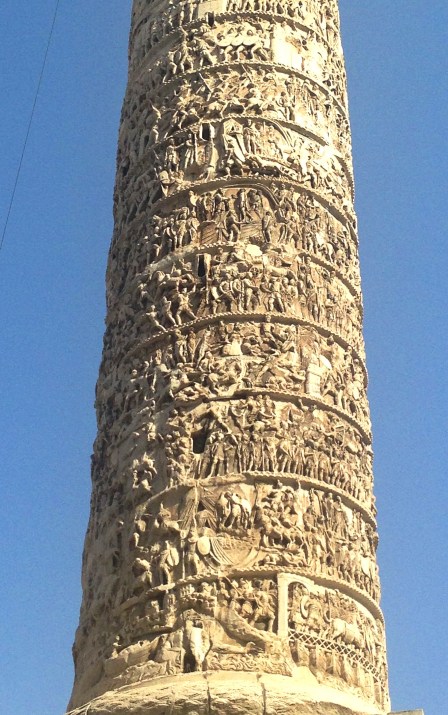


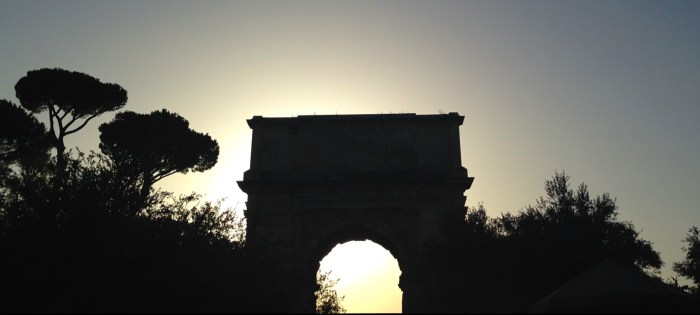

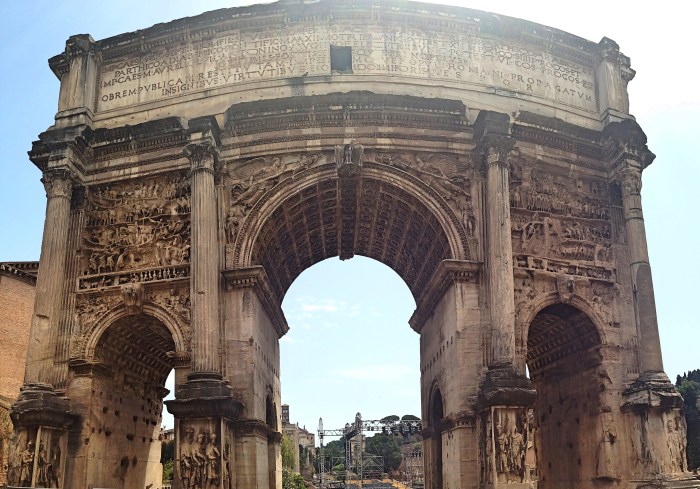

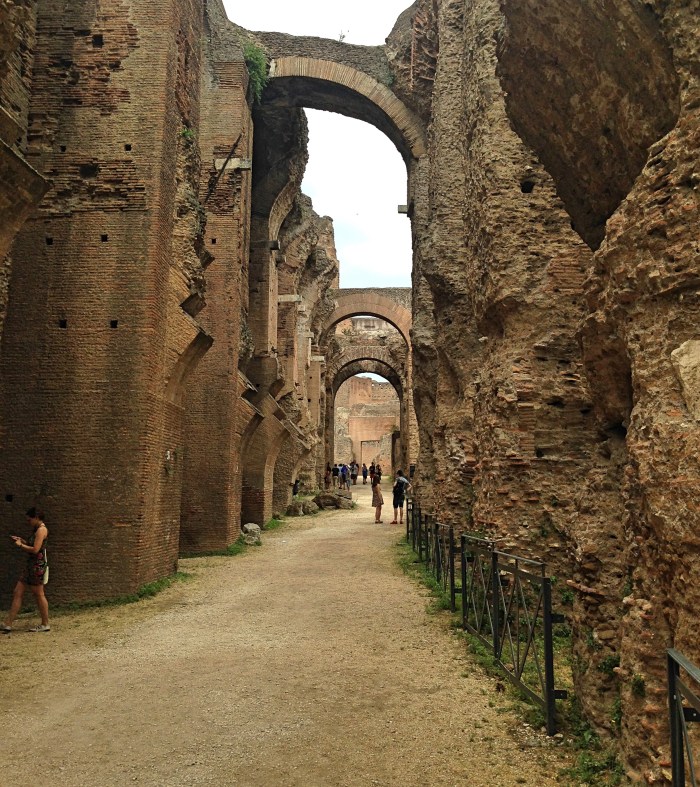

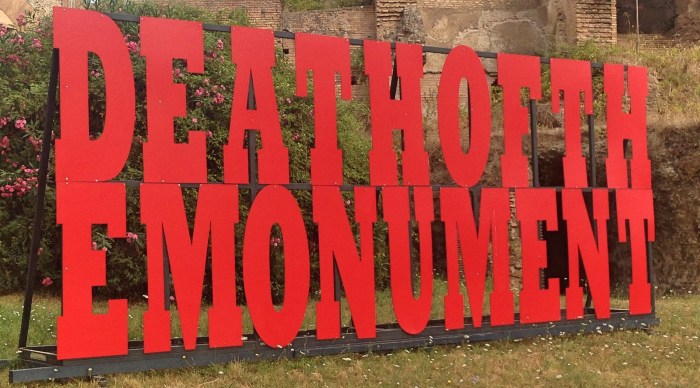


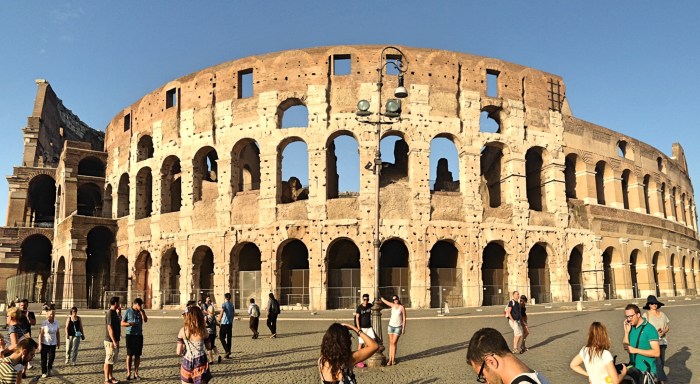



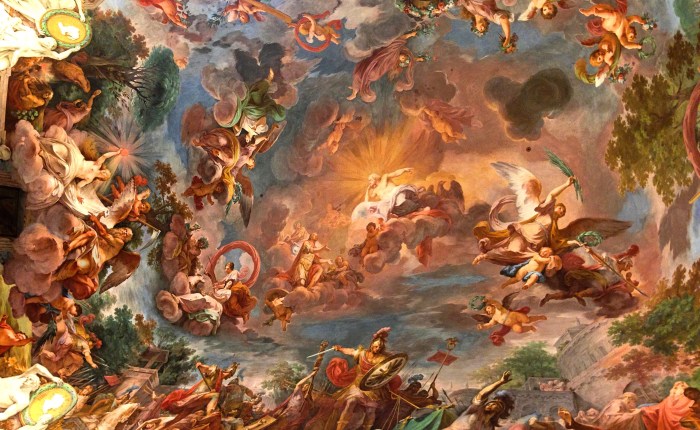

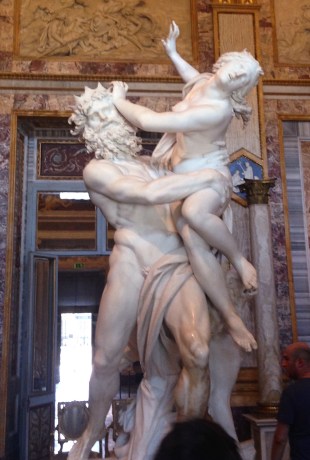


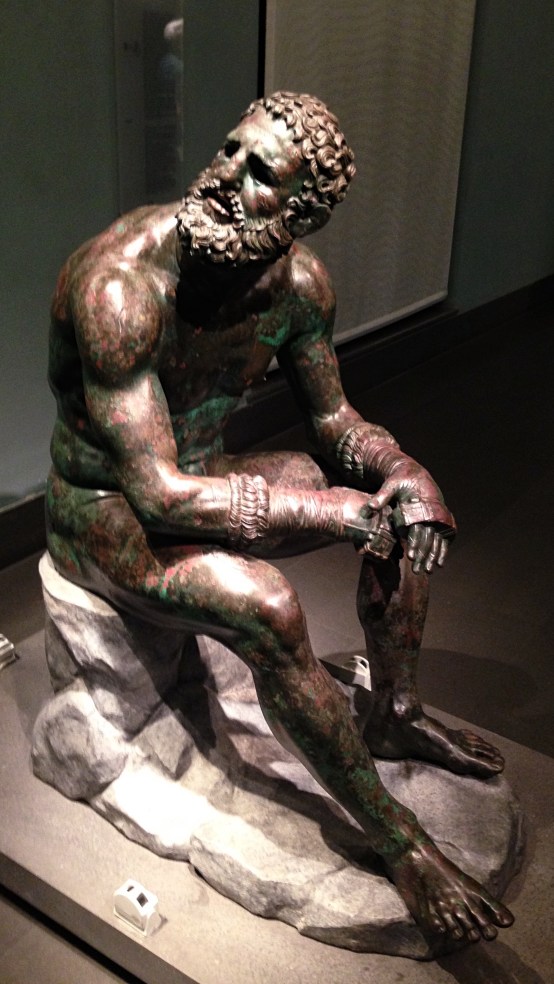
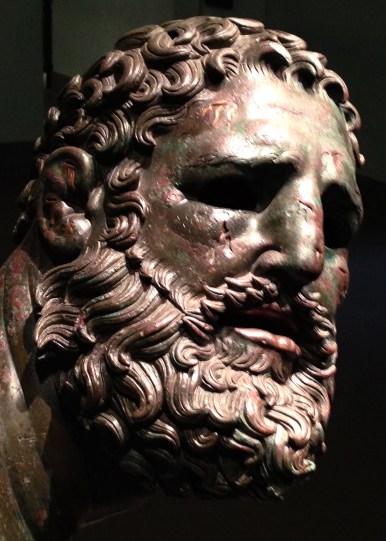
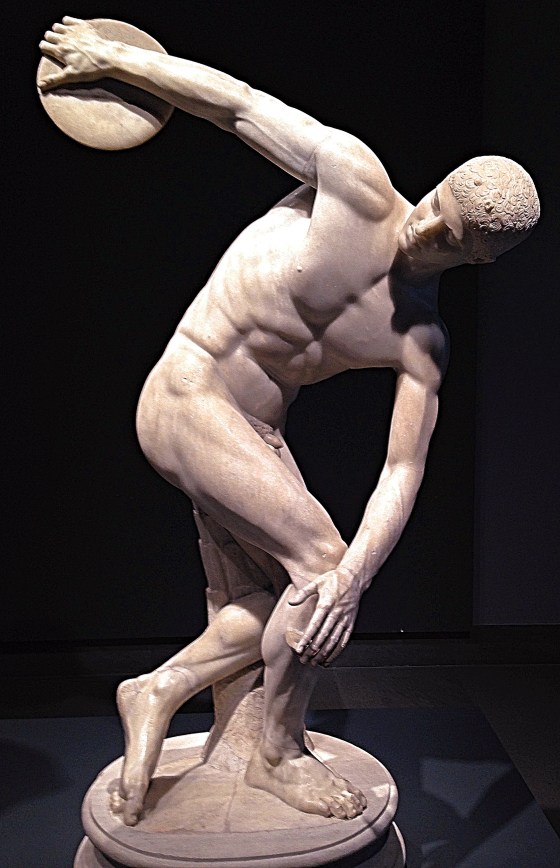


 Lotz in Translation