Through some combination of chance and circumstance, some little places become fulcrums of history. This is certainly true of Concord, Massachusetts.
Boasting a population a little south of twenty thousand, and of no obvious geographical significance, this town nevertheless became the setting of our War of Independence. A detachment of British troops was sent to Concord to confiscate or destroy weapons that they believed were being stockpiled here. But they were met by the nascent American militia. After a brief shootout, the redcoats retreated, demonstrating that the British army was not invincible. This was the battle of Lexington and Concord (there was an earlier skirmish in the nearby town of Lexington), and it took place at the Old North Bridge, which spans the Concord River.
Being the site of the “Shot heard round the world”—as it was later dubbed, somewhat self-importantly—would satisfy most towns the size of Concord. But in the 19th century, this modest municipality once again attracted outsized importance by becoming the center of one of the most important movements in American literature and philosophy: Transcendentalism. This was largely due to the presence of Ralph Waldo Emerson, who moved into town in 1835.
Ralph Waldo Emerson
The son and grandson of ministers, Emerson was very much a preacher himself, though of a new religion. Transcendentalism was perhaps the original back-to-nature movement, a celebration of self-reliance and the simple life. The time was ripe for such ideas, and Emerson was its most articulate voice. He attracted a circle of friends and admirers, among whom was Amos Bronson Alcott, a fellow philosopher who sadly lacked Emerson’s gift for expression. Alcott’s most notable venture was an experiment in Utopian living, called the Fruitlands, a kind of agricultural commune whose members adhered to a vegan diet. It soon imploded, and Alcott returned to Concord to live in the now-famous Orchard House with his wife and four daughters. One of those daughters was Louisa May Alcott, who fictionalized her girlhood to create the classic, Little Women. Her literary ability kept the family financially afloat.
Louisa May Alcott
The Fruitlands was not the only Transcendentalist experiment in communal living. Another was Brook Farm, also in Massachusetts, and also an attempt to live off the land in perfect equality. The novelist Nathaniel Hawthorne took part in this venture, though he did not stay for long (and Brook Farm did not survive for very long, either) before he, too, moved to Concord. Indeed, he moved into the Emerson family home, the Old Manse, which stands near the famed Old North Bridge. Emerson, meanwhile, moved into a larger house, now an eponymous museum, where he continued to serve as the center of the town’s intellectual life.
Nathaniel Hawthorne
A frequent guest was a young and very earnest man named Henry David Thoreau. Thoreau must have seemed to be an eccentric and marginal character compared to the likes of Emerson. But it was Thoreau who came to epitomize Transcendentalism better than anyone, and Thoreau who immortalized Concord more completely than any writer (with the possible exception of Louisa May Alcott). His fame largely rests upon a single book, Walden, named after a small lake in Concord. In 1845, the young Thoreau decided on an entirely novel experiment: to attempt to live independently in the woods beside Walden Pond. The land was owned by Emerson, who let the young vagrant use it. In Thoreau’s own words:
“I went to the woods because I wished to live deliberately, to front only the essential facts of life, and see if I could not learn what it had to teach, and not, when I came to die, discover that I had not lived.”
Henry David Thoreau
So Thoreau used some recycled materials to build a little cabin with some furniture and commenced an experiment that would last two years, two months, and two days. Later, when he wrote up the experience, he compressed this into an imaginative year, weaving memories into reflections to make an original work of literature. Walden is an odd book by any standard—meandering, prickly, pompous, but also thoroughly original and beautifully written—and it did not find a large audience in Thoreau’s lifetime. In the years since his death in 1862, however, Walden has become one of the most beloved American classics, and Walden Pond has become a site of pilgrimage.
It was certainly in the spirit of a pilgrim that I visited Walden Pond, once in summer, once in winter, both times passing through the town of Concord on my way to someplace else. On my first visit I was filled with anticipation, as though I was about to step into the Sistine Chapel or walk along the Great Wall of China, though in retrospect it is hard to say what I was expecting. Walden Pond is just that—a pond: a body of water, surrounded on all sides by trees. In fact, it is not even treated very reverently by the locals. Now a state park, when I visited in summer there were many locals lounging on the sand, and a few in the water. It is a place for recreation as much as reverence.
Admittedly, the geology of Walden Pond is interesting. A kettle hole lake, it was formed by retreating glaciers during the end of the last ice age, when a hunk of ice broke off the glacier and got lodged underground. As a result, the lake is surprisingly deep: over 100 feet, or 30 meters. But ninety-nine out of a hundred visitors (if not more) would likely not find anything memorable or special about Walden Pond had it not been made famous by Thoreau. And, I realized, this is precisely the message of Thoreau’s book: that anyplace can be made special through focus, attention, and work. With the right eyes, a mundane pool could be just as inspiring as a gothic cathedral.
On my first visit, I walked around the lake to the spot where Thoreau had built his little cabin. It does not stand today, though the spot is marked by concrete pillars. Nearby is a large cairn, where visitors have been pilling pebbles for decades. Before it stands a sign on which Thoreau’s famous battlecry is painted (see above). Once again, rather than any grand monuments, we are confronted only with the woods, the water, and Thoreau’s words.
An old photo of the site of Thoreau’s cabin
Not long before my first visit to Walden Pond, I visited the Morgan Library in Manhattan, where I was lucky enough to find a special exhibit on Thoreau. It was extraordinary: the museum had Thoreau’s walking stick, surveying gear, and writing desk. They even had the many volumes of Thoreau’s journals—and he was a prolific diarist, recording both his philosophical thoughts and his observations of the natural world—which served as the basis for his published books. I believe that the bulk of these items were on loan from the Concord Museum, where they normally reside.
During my second stop in Concord, we also stopped by the Sleepy Hollow Cemetery. The reader may recognize this name from the legend of Sleepy Hollow, which of course takes place in a cemetery—though not the one in Concord, Massachusetts. The burying ground of Washington Irving’s story is in Westchester, New York: my home town. It seemed very strange to me that two famous cemeteries would bear the same name; and I assumed that the Concordians had copied the Westchesterites. But apparently this is not the case. The Westchester cemetery was formerly called the Tarrytown Cemetery, and only changed its name to honor a posthumous wish of Washington Irving, who died in 1859. The Concord cemetery was established in 1855, and the place had been called Sleepy Hollow before anybody even thought of burying the dead here. So the names are a complete coincidence.
The cemeteries in Westchester and Concord do not only share a name; they were established at almost the same historical moment, and were shaped by the same intellectual currents. Washington Irving was a notable proponent of romantic gardening, wherein the landscape is modified to appear as if it were just a product of nature—albeit a particularly pleasing product. Ralph Waldo Emerson, too, believed that nature should be emulated, not suppressed; and as the designers of Concord cemetery were followers of his, the cemetery incorporates the natural topography—and some original vegetation—into its design. Both places can thus be classed as “garden cemeteries,” far more open and green than what came before.
Emerson’s tomb, in the center
Luckily for the visitor, most of the famous graves in Sleepy Hollow Cemetery are concentrated in one spot: Author’s Ridge. Here you will find Ralph Waldo Emerson, Nathaniel Hawthorne, Louisa May Alcott, and Henry David Thoreau. Emerson’s grave is by far the most conspicuous: an enormous marble boulder to which a plaque has been fastened. I suppose it symbolizes Emerson’s love of nature to have an unhewn tombstone. Hawthorne’s grave is far simpler: a standard headstone, about a foot high. Thoreau’s and Alcott’s are even humbler; but theirs inspired the most devotion. Alcott’s was covered in old pens and pencils—presumably to honor Jo, Alcott’s writer heroine—while Thoreau’s was adorned with feathers, pine cones, and a bird’s nest. The two of them are still beacons for young minds.
Before we go, another resident of the Sleepy Hollow Cemetery must be mentioned: Ephraim Wales Bull. Not a writer, nor even a Transcendentalist, Bull was responsible for developing the Concord grape, now a ubiquitous varietal. This cultivar was special because, unlike other grape species, it could survive the brutally cold winters of Massachusetts. It was also robust and sweet, making it perfect to eat by itself or to turn into juice and jelly (though not great for wine). Unfortunately for Bull, his grapes were stolen and sold, meaning that he did not profit from his hard word. This is why his tombstone says: “He sowed, others reaped.”
Bull’s tomb is on the right.
I have gone on and on about the historical importance of Concord, but I must end by noting that it is simply an attractive place. In my all-too-brief time in the town, I was enchanted by the antique houses and churches, so quaint and picturesque. Even if you have little interest in the Revolutionary War or Transcendentalism, and just want to visit a thoroughly charming place, then I propose a visit to Concord and Walden Pond.
Thomas Jefferson is an American icon. Virtually every American can recite (or at least recognize) the immortal lines penned by Jefferson, declaring our independence: “We hold these truths…” His face graces the nickel, and his likeness scowled from the now-defunct $2 bill. A veritable Greek temple stands devoted to his form and memory in the nation’s capital; and, in the Black Hills of South Dakota, Jefferson is chiseled into a mountain-side. And yet, if you really want to pay tribute to this foundational father, you must make your way toward the Blue Ridge Mountains of Virginia, to Charlottesville.
In the summer of 2019, my family did exactly that. On the drive down from New York, we even decided to listen to Jon Meacham’s worshipful biography of the man. Unfortunately for us, the book failed to make a good impression; and, as it so happened, Jefferson similarly failed. But I am getting ahead of myself.
This was my first time in Virginia. The summer sun beat down hard, making the rolling fields of grass glow an iridescent green. A friend of my father owns an alpaca farm in the nearby town of Gordonsville, which we visited before dinner, giving me the briefest taste of farm life—new to me.
That night, after dinner, my brother and I wandered into downtown Charlottesville. As we did not wish to visit a bar, there was little to do but walk. But we did happen upon the statue of Robert E. Lee, which has been the center of so much controversy. A 2016 proposal to remove this Confederate monument sparked the now-infamous Unite the Right rally—in which one counter-protester died, and which Trump refused to condemn. After this, the City Council voted to remove the statue; but the state government overrode this decision, and the strange commemoration of a rebel racist stands to this day.
If I had been more aware at that moment, perhaps I would have realized that this embattled statue was only the most visible manifestation of the region’s contested history. The Confederacy may have been defeated, and slavery long abolished; but in Charlottesville, history is still an active warzone. And nowhere is this struggle more apparent than in the town’s most famous resident, Thomas Jefferson.
We parked the car in the garage and walked onto campus. Charlottesville is, above all, a college town, and that college is the University of Virginia. This university was founded by Thomas Jefferson himself, in 1819, and the place still bears his distinct thumbprint. Jefferson designed the buildings—now a UNESCO World Heritage site—and designed the curriculum and sat on the original Board of Visitors. Indeed, the university is arguably the most complete expression of Jefferson’s intellectual vision.
As it happened, we arrived in the university’s central building—the Rotunda—right at the commencement of a free guided tour. Naturally, our guide told us a little bit about this building first. A dedicated Neoclassicist, Jefferson modeled his design after the Parthenon, as well as works by the Renaissance architect Andrea Palladio. But Jefferson’s use of red brick gives the building a distinctly American stamp. Just as significant as the building’s form is its function: it housed the original university library. This is an obvious and significant deviation from the traditional, medieval model of a university, centered on a church. Indeed, Jefferson’s plan was so insistently secular that he did not even want theology or divinity taught to his pupils. This elegant building was severely damaged by a fire in 1895, during which a group of enterprising students saved a marvelous life-sized statue of Jefferson by pushing it onto a table and carrying it out together. Jefferson’s spirit would have thanked them if he had believed in the afterlife.
Extending outward from both sides of the Rotunda, like two arms, are the parallel rows of buildings that enclose the Lawn. These are the ten Pavilions (five per side), where faculty reside and teach. Nowadays, professors only live in these Pavilions for three to five years, and rotate to allow for fresh faces; but in Jefferson’s original idea, the faculty would stay here long-term and live among the students. Even now, the resident faculty are expected to socialize with the students, 54 of whom stay (during their senior year) in the prestigious “Lawn rooms” that flank the Pavilions. On the other side of the Pavilions are gardens; and beyond that, the Range, for graduate students. The idea is both idealistic and charming: Jefferson imagines a kind of open-air community of scholars, living amid architecture that inspired the mind. Indeed, each of the ten Pavilions bears a distinct, Neoclassical design, the idea being that the ensemble would be a kind of visual catalogue of architectural styles.
On the whole, I found the Academical Village to be greatly appealing. I would love to wake up in one of those quaint little rooms, sit outside on my rocking chair, under the colonnade, reading some book, and waving casually to my passing professors. Few places I have been so perfectly evoke the gentile life of the mind—the elevation of beauty, truth, and goodness over all petty practical concerns. This picture contains a large dose of fantasy, unfortunately. The first batches of scholars were rowdy, spoiled, wealthy boys, who drank and partied and played pranks on their professors. More significantly, it is worth remembering that these buildings, gardens, and manicured lawn—not to mention the entire economical system—was built by slave labor. And though students could not bring their own slaves, professors could and did. To the rosy image of intellectual freedom, then, we must add the violence of human bondage.
Just as our tour of the university was coming to a close, our tour of Monticello, Jefferson’s old plantation, was about to begin. Now, Monticello literally means “little mountain,” and the name is perfectly sensible, as the house stands on a hill overlooking the surrounding area. We drove up to the visitor’s center (which has a café and a gift shop), and then hopped on the shuttle bus up to the house for our tour. Monticello can only be visited on a guided tour, which took around two hours. No photos are allowed inside, but the website includes a wonderful virtual tour, which is far better than this measly blog post.
Both the statue and myself are life-sized. Jefferson was 6’2”
I will hardly bother to describe the exterior of Monticello, since if you have seen a nickel you know what it looks like. Suffice to say that it is built in the same Neoclassical style, with the same red brick, as the buildings of the university. Indeed, Monticello could be transported to the center of the University of Virginia and look perfectly at home.
The house is entered, logically enough, through the front door, which leads directly into the entrance hall. This room is decorated with all sorts of artifacts from Lewis and Clarke’s epochal journey into the American wilderness—horns, antlers, Native American artifacts, and even the mandible of a mastodon. (According to Meacham, Jefferson’s attitude towards Native Americans was only slightly more enlightened than his contemporaries, thinking them not racially but culturally inferior. In any case, he still had no qualms about taking their land.) There are also many busts on the wall—including one of Voltaire, and another of Jefferson’s rival and nemesis, Alexander Hamilton. I suppose Jefferson liked his enemies close.
Most conspicuous of all might be Jefferson’s Great Clock. It has two faces, one facing outward, which only shows the hour (accurate enough for slaves, Jefferson thought), and another facing inward, with a minute and a second hand. It is quite a contraption. The clock is connected to a gong outside, which chimes out the hour loud enough for the whole plantation to hear. It works via a series of weights, which look like cannon balls. The clock is wound up at the beginning of the week (Sunday), and the falling weights mark the day as well as keep the hour. Unfortunately, the clock was designed for a somewhat more ample space, and so the last day of the week (Saturday) is located in the basement.
As one moves through Monticello, the visitor gets a greatly paradoxical impression of Jefferson. He was, for example, both provincial and cosmopolitan. Not remarkably well-traveled himself, he read voraciously about other lands (such as in the journals of Captain James Cook), and kept up a correspondence with contemporary explorers like Alexander von Humboldt and Meriweather Lewis. On the other hand, he was himself something of a homebody, keeping close to Monticello (after his return from France) and even founding his pet university in his backyard. In terms of taste, Jefferson improbably wants to combine a kind of rural simplicity with an enormous mansion and French style, making the house seem both luxurious and homely.
Another contradiction is between Jefferson’s genius and his dilettantism. His library spans dozens of academic disciplines, and yet his manner of organizing books, plants, and correspondence is entirely homespun. Monticello is a work of architectural brilliance; but the windows awkwardly span both the first and the second floor, meaning that they do not align with eye level. The clock may epitomize this contradiction best: an ingenious device for which Jefferson had to bore a hole through his own floor. The biggest contradiction of all, of course, is that the self-proclaimed champion of freedom lived in a slave plantation. But I will return to that.
From the entrance hall, the visitor quickly moves to Jefferson’s living quarters. His working life centers upon his library and his “cabinet” (or, study), which are filled with dusty volumes, the busts of famous men (like his frenemy, John Adams), and scientific instruments, such as his telescope, barometer, or theodolite (a surveying instrument). Both rooms overlook Jefferson’s greenhouse, where he grew exotic plants. The quaint quality of Jefferson’s mind is quite apparent here. He had a five-sided writing stand commissioned and built, so that he could display different documents and books (though a simple table seems more practical to me). On his desk stands a bygone innovation, the polygraph, which uses a mechanical arm holding a pen in order to duplicate letters (and Jefferson was a prolific correspondent). Jefferson did not invent the device, but he tinkered with it, and was quite enthusiastic about its use. The most idiosyncratic touch may be Jefferson’s bed, which is built into the wall between his study and bed chamber. The arrangement does save space; though for a man of 6’2’’, the bed seems quite snug.
My favorite room in the house was perhaps the parlor, where Jefferson did much of his entertaining. The room has a high ceiling and an unusual geometry. Opposite the main doors (hooked up, under the floor, so that both sides open and close in tandem), there are two pairs of tall windows and a single glass door, all looking out at the back garden, which serve to make the room sunny and bright. Two pianos and a zittern (similar to a lute) sit ready for music-making; Jefferson himself took part on the violin. Most attractive, for me, were the many portraits covering the walls. A somewhat unusual painting of George Washington stands near the famous Mather Brown portraits of John Adams and Thomas Jefferson, made while the two men were overseas, with Jefferson looking distinctly more foppish than usual in his big white wig. On another wall hang three portraits of Jefferson’s intellectual heroes: Francis Bacon, John Locke, and Isaac Newton—all unabashed champions of empiricism.
I do not wish to get bogged down in a room-by-room description of Monticello, but I must mention some highlights. One of Jefferson’s innovations were double windows, which let in light but provide for more insulation, since the air between the glass acts as a buffer. The dining room is equipped with a dumbwaiter to bring up wine from the cellar (Jefferson liked French wine), to minimize the number of servants (read “slaves”) needed for his guests. An octagonal bedroom on the ground floor—with another alcove bed—is called the “Madison room,” since this was where that other founding father stayed on his frequent visits. Upstairs (and the stairs are very steep and narrow, another oddity of Jefferson’s design) there are mainly bedrooms, for Jefferson’s sister, daughter, and grandchildren. The tour culminates with the dome room—also octagonal, as apparently Jefferson loved the shape—on the third floor, which provides a commanding view of the surrounding area.
Me and my dad in the dome room.
But now we must leave the house of Monticello itself, and explore the grounds of the estate. For here is where the history of Monticello becomes decidedly less charming. Monticello was not simply a residence, but a plantation, wherein enslaved men and women worked to enrich Jefferson. This was done by growing and selling crops—tobacco and wheat, notably—as well as by producing goods for sale, such as nails. On the road running past the house, dubbed Mulberry Row, stood the small residences of these enslaved workers, many of whom labored alongside white contract laborers to construct the house. Some of these still stand, or have been reconstructed. One of the latter is the cabin of John Hemmings, a literate carpenter who was one of the few enslaved people to be freed by Jefferson.
The reconstructed quarters of the enslaved cook.
The contrast between elegant finery of the mansion, and this simple little dwelling, is almost gut-wrenching. That the man who declared that liberty was an inalienable right, that all men were created equal, could own fellow human beings and live by the violent coercion of their labor—it is simply too paradoxical to swallow. One naturally at least hopes that Jefferson was an especially “good” or “enlightened” slave-owner, whatever that would mean. But even that is not the case. Jefferson owned 600 different people during the course of his life—about 100 at any one time—and he treated them much as his neighbors did: namely, by giving them the choice between work or physical punishment. Husbands and wives were separated, as were mothers and children; and Jefferson ordered his overseers to beat enslaved people on multiple occasions. This should hardly need stating: Slavery requires violence to exist, and is itself a form of violence. There is no nice way to own a person.
One cannot even take comfort in the fact that Jefferson was distant from the real management of his estate, like some dreamy philosopher absorbed in his pursuits. Slavery was at the core of his life. After his wife passed away, Jefferson began a sexual relationship with his wife’s half-sister, an enslaved woman named Sally Hemings. Indeed, this “relationship”—if that is what it should be called—likely began when Hemings was still an adolescent. And while we do not have much notion of how the young Hemings felt, it is difficult to call such sex “consensual,” considering that Jefferson was much older, not to mention her legal owner, as well as the owner of much of her family. Sally Hemings had six children by Jefferson, whom he owned until his death, freeing them in his will. Evidently, slavery could not have been a more intimate part of Jefferson’s life.
The tour ends with a walk down back to the visitor’s center. On the way, you pass by the Monticello Graveyard, where Jefferson himself is buried along with many members of his family. His own tombstone—tall, but not grandiose—bears an epitaph he wrote himself, mentioning three accomplishments: that he wrote the Declaration of Independence and the Statue of Virginia for Religious Freedom, and that he founded the University of Virginia. Anyone familiar with his life will immediately notice that it omits arguably his greatest accomplishment: serving as President. But Jefferson was very mindful of his image, and strove hard to preserve his aura of the humble, unworldly intellectual; and so I think the epitaph is very much in keeping with this persona.
Further on, down near the parking lot, is a fenced off area. This was a burying ground where at least 40 of the enslaved people of Monticello were buried, though you would never know it if not for the sign, as there is not a tombstone to be seen. Once again, the contrast speaks for itself.
Though Jefferson is buried on the property, his family soon lost it after his death. For all of his brilliance as an intellectual and a politician, Jefferson was not a good businessman, and died hopelessly in debt. The house—including the vast majority of the enslaved workers—was sold after his death to pay off these debts. Luckily for posterity, the property was bought by an admirer of Jefferson, Uriah P. Levy, who preserved the house. Monticello is now owned and run by the Thomas Jefferson Foundation, which I think does an excellent job in telling the story of this place. Every aspect of this complex man—from his scientific pursuits to the reality of slavery—was explained with honesty and care.
The Thomas Jefferson Foundation does not attempt to resolve the conflicts inherent in the life and legacy of the third president. Nor will I. Indeed, there is no way to resolve the paradox: Jefferson was a champion of freedom and a slave-owner. He was a man of life-enhancing brilliance who participated in one of history’s most monstrous institutions. His words epitomized some of our finest aspirations, while his actions embodied our basest impulses. I do not think penning the Declaration of Independence can somehow cancel out the violence inflicted on 600 human beings. Morality does not work like that. If he were brought back from the dead, we would have to award him the Nobel Prize and then throw him in prison for the rest of his life.
For this reason, we left Monticello just as appalled as inspired by Thomas Jefferson’s life. His legacy is perhaps most valuable, then, as a reminder that high ideals on paper can and do coexist with ugly realities in the world. This, after all, is just as true of the story of America as it is that of Jefferson. We should not make the same mistake as Jefferson in thinking that we can politely express our disapproval of an oppressive and unsustainable system while profiting by it and doing nothing to change it. Even now, almost two centuries after Jefferson’s death, there is still much work to be done.
Processing…
Success! You're on the list.
Whoops! There was an error and we couldn't process your subscription. Please reload the page and try again.
Needless to say, 2020 was not an ideal year to be accomplishing goals out in the real world. But in my blog world, it was not so bad. I read a lot of good books, wrote a fair bit, and even succeeding in publishing a short story. Best of all, my novel is set to be released in February!
Even though I did not do much traveling this year, I still have a fair backlog of destinations to cover. Here’s the short list:
Aside from this, my major goal of 2021 is to finish at least a couple drafts of the novel I am currently working on, with maybe a few short stories thrown in. In an ideal world, I will also finally wrap up Don Bigote and continue with my Quotes & Commentary, two long-stalled projects.
Apart from that, I am grateful simply to have survived intact. My social life got narrower but deeper. I did not exercise as much as I wanted to, but I did improve as a cook. I learned a great deal, though not what I planned to learn. There are now so many books I want to read—about history, science, math, politics, music, art—that I cannot even make a list. But I have come to the conclusion that one must always have too many books to realistically read. Life is too dreadful otherwise.
With a new man (and woman) in the White House, and several effective vaccines, I am optimistic about this coming year. Cheers to that!
I began by reading the latest release of one of my favorite authors, Bill Bryson, about the human body. I devoured this book—a Christmas present—with the kind of rapacious glee that comes over me whenever I discover an untapped well of unfamiliar facts. It had never even occurred to me that the human body could be so strange and so mysterious, or that there was still so much we do not know about our organic vessels. One particular moment sticks in my memory: The section on infectious diseases ends with a warning that another 1918-type pandemic is very possible, and that we are little better prepared to deal with it. I remember this because I actually scoffed at it, thinking the notion alarmist.
Life went on as planned, at least for a while. My big idea was to continue reading about economics, mathematics, and the history of science. I listened to several Great Courses, struggled through the works of Archimedes, and beat my head against a biography of John Maynard Keynes. Unfortunately, I remain much unimproved; but at least I finally read Daniel Kahneman’s fascinating work on the psychology of decision-making (another Christmas present), which has quite serious ramifications for economics.
Then the coronavirus hit, derailing my reading as well as the rest of my life. While many used reading as a means of escapism, I felt extremely frustrated by my lack of understanding of what was happening, and so I embarked on a series of books about diseases. This began with Micheal Osterholm’s book about infectious illness, Deadliest Enemy, which is a kind of all-purpose primer about the threats posed by different sorts of germs. I recommend it. Another all-purpose analysis is William McNeill’s speculative book on the impact of infectious diseases on human history. This was followed by John Barry’s history of the 1918 pandemic (also recommended), Richard Preston’s account of Ebola, Andrew Spielman’s summary of mosquito-borne illness, and Daniel Defoe’s fictional narrative of the bubonic plague. The best book of the lot was And the Band Played On, Randy Shilts’s devastating report of the AIDS epidemic in America, which unfortunately has many parallels in the handling of the pandemic by the current administration.
In June, the pandemic restrictions were mostly lifted in Spain. Meanwhile, Black Lives Matter exploded across the world, and the American elections came into focus. This prompted another reading adventure. I had the idea of reading at least one book about each major problem facing my beloved and beleaguered country. This began with David Wallace-Wells dire warning about climate change (potentially much worse than a pandemic!), Uwe Reinhardt’s mordant criticism of the abysmal American health system, and Sara Goldrick-Bar’s study on the difficulties of paying for higher education. Alex Vitale made the case for defunding our militarized police force, Angela Davis urged for decarceration, and Michelle Alexander—in perhaps the most eye-opening book of my year—compellingly argued that mass-incarceration was just another chapter in American racism.
Economics looms large in any diagnosis of societal ills. Andrew Yang, William Julius Wilson, and the co-authors Nicholas Kristoff and Sherlyn WuDunn all came to similar conclusions: that good jobs are disappearing from many parts of the country, with devastating social consequences. David Harvey,Thomas Piketty, and the co-authors Abhijit Banerjee and Esther Duflo analyzed this same worrisome trend on a macro-scale, and came to essentially the same conclusion: that the rich are getting richer and the poor poorer, in part thanks to neo-liberal economic ideas (“trickle-down economics”) which have failed quite abysmally in delivering on promised growth. But as an analysis of economic woes, no book was more revelatory than Matthew Desmond’s book on eviction—easily one of the best, and most depressing, books of my year. Before leaving politics, I should also mention David Hemenway’s analysis of gun violence, Herman and Chomsky’s critique of the mainstream media, and two veryupsetting works of journalism about the presidency of you-know-who.
Since I devoted so much energy to all this nonfiction, my fiction reading was necessarily limited, though I did get around to many books which had long been on my list: Henry James’s The Ambassadors, D.H. Lawrence’s Sons and Lovers, Thomas Mann’s Buddenbrooks, Lord Byron’s Don Juan, Gabriel García Márquez’s Cien años de soledad, John Williams’s Stoner, and Louisa May Alcott’s Little Women. To a certain extent, I liked all of these books, some of them very much; but I cannot say that any of them were the gut-wrenching literary experiences I was hoping for. My year in philosophy was even less impressive, consisting only of Schopenhauer’s The World as Will and Representation, which mostly left me cold.
But I did learn some new things. I revisited college chemistry with lectures by Ron B. David, Jr., and I also make some clumsy attempts at learning to draw. My biggest accomplishment was probably my German. Lockdown provided me with a lot of time to regain all the proficiency I had lost since switching my focus to Spanish, and I think I am now better than ever before. And of course there were many books that did not fit into any of the above categories, some of them quite excellent, like McCullough’s history of the Wright brothers or Murakami’s essays on running.
On the whole, then, I think I must rate this year very highly, if only because I learned so many things—about history, disease, politics, economics, science—that I had not even considered learning before. Somehow, my main coping mechanism (read a book about whatever it is that is giving me anxiety) served me well during this whole, 365-day ordeal. I do hope, however, that I will not have to use it so much in the year ahead.
Thanks to you all for being a part of this great community. This year would have been worse without you.
It was a thoroughly muggy day in mid-August when I boarded a boat in Battery Park.
My destination was the most famous statue in the United States, if not the world. And I was willing to pay to get up close. Now, if you merely wish to take a good picture of the statue against the New York City skyline, then no financial transaction is necessary. The Staten Island Ferry—a gratuitous vaporetto—passes quite near Liberty Island, allowing its parsimonious passengers an excellent vantage point from which to gawk and snap photos. But I was in no mood for drive-by glances; I wanted to see the statue from dry land, which requires a certain amount of money.
In the time before COVID-19, the ferry company had no qualms with herding us through a large security tent and then packing us into the boat like salted fish. I opted to stand on the deck. Despite the summer heat and the humidity, the sea wind whipped up soon after we set off, giving me goosebumps. But this was compensated by anticipation. Even a short ferry ride partakes, however modestly, in the romance of travel by sea. And as a good friend of mine once said (well, he said it repeatedly): “The best way to see a city is by boat.” This is certainly true regarding New York City, at least. Seen from the harbor, the Manhattan skyline is at its most vertiginously dramatic. The Statue of Liberty is not bad, either.
In about twenty minutes the boat docked at Liberty Island. Now, this was not always the name of this little piece of earth. Before Europeans came to dominate the land, the Canarsie people called it Minnisais. Since then, however, the island has been dubbed Love Island, Great Oyster Island, and Bedloe’s Island, among other appellations. It had many uses before being made home to an enormous copper goddess. Food was grown, men were hanged, garbage was dumped, and Tories waited here to be extracted to England. The island was even used as a kind of lazaretto for those suspected of harboring smallpox. Its last function before being turned into a monument was as a fortified battery; and the star-shaped remains of Fort Summer still sit below Liberty’s green heel.
I pushed my way down the boarding ramp and headed straight for the statue. This was not my first visit. Many years ago, when I was still in middle school, I visited the island with my Californian cousins, who wanted to see some of the main sights of New York. At the time I was inclined to see any sort of cultural excursion as a monumentally boring waste of time. Video games were infinitely more entertaining, and I resented my family for dragging me away from my computer. Nothing I saw made much of an impression on me: not the Empire State Building, not Wall Street, not Battery Park. It was wholly unexpected, then, when I found myself entranced by the Statue of Liberty. I could not take my eyes off it. I even felt inspired. Somehow the statue had broken through the many layers of youthful apathy and juvenile ignorance to touch a hitherto unknown part of myself.
This second visit was not quite as stupendous, if only because by this time I had grown accustomed to visiting monuments and the feelings that they evoke. This is not to say that I was uninspired. The towering lady is not as dynamic in composition or as beautiful in form as, say, Michelangelo’s David; and the sickly green color (caused from the oxidation of the copper) is not the most aesthetically pleasing shade imaginable. (Like the oxidized patina itself, however, it grows on you.) But statues of this size have different engineering constraints, not to mention serving a different purpose. As a synecdoche of the nation, as a grandiose welcome to those arriving by sea (many of them immigrants), and as an artwork that represents the Enlightenment values that (nominally, at least) set this nation apart, Liberty Enlightening the World could hardly be more successful. Granted, Bartholdi probably only intended some of this in his design; yet the mark of any great work of art is that it goes beyond even the vision of its creator.
I had opted for the cheapest ticket, which only allowed me to gaze at the statue from without. Paying more would have given me access to the pedestal, and still more would have allowed me to ascend to the seven-pronged crown. (Visits to the torch have been prohibited since 1916, for a somewhat obscure reason.) But even the most basic ticket seemed pricey to me. So after I had taken my fill of the statue, and walked around her a few times, I wandered over to the other end of the island to see the museum. The visit begins with a strange cinematic experience, wherein visitors are led into a big, empty room, shown an informational video about the statue’s history, and then led into another room where the video continues, and then yet another. I suppose they screen the film this way so that more visitors can be shown it at once, though I did wish there were seats available.
The museum in general was surprisingly good. There are models of the statue and its innards, a great deal of information about its construction and inspiration, and even real models and former parts. But rather than try to narrate the museum, I will use it as an opportunity to tell something of the statue’s history:
Given that Lady Liberty is one of the most quintessentially images of America, it is somewhat ironic, then, that the statue was designed and built entirely by the French, and given to us in an act of international generosity. I can think of no other major monument with such an origin.
The idea for a celebratory dedication to the United States evidently originated with Édouard René de Laboulaye, a prominent French abolitionist, who wished to celebrate the Union victory in the Civil War, and the end of American slavery. This proposal was taken up by his friend, the artist Frédéric Bartholdi, who liked the idea, if only because it would have provided an indirect rebuke to the repressive regime of Napoleon III. But such projects are seldom conceived and completed on schedule; and by the time the statue was finally built, in 1885, Napoleon III had been deposed.
It was difficult enough for the cities of Brooklyn and New York (when they were formally separate) to work together to plan, fund, and execute the Brooklyn Bridge across the East River. Imagine, then, the nightmare of coordinating an international project across the Atlantic. To build the statue, Bartholdi had to personally come to the United States, scout out a good location, meet with the president (Ulysses S. Grant at the time), and then cross the young nation trying to drum up support. Batholdi also had to come up with a design. That the theme should be liberty was obvious; but freedom can take many forms. It can be a bare-chested woman leading troops into battle, à la Delecroix; yet that seemed too violent or revolutionary. Instead, Bartholdi opted for a neoclassical design, staid and solemn, robed in a Roman stella (togas are for men), crowned with a diadem, and holding a torch rather than a sword.
In 1875 Bartholdi and Laboulaye set to work raising money for the statue. It was to be a long slog, combining a difficult PR campaign with a vast logistical challenge. Building material was needed, talent had to be recruited, and the public interest maintained at a high enough level to keep funds flowing. As an engineering task, the statue was daunting enough. Standing 46 meters tall, the statue had to support 91 tonnes of metal without crumpling or toppling over. The thin copper skin simply would not bear that much weight, and so Gustave Eiffel was contracted to design an internal steel skeleton. This internal work is a magnificent achievement in itself, since it could be easily assembled and disassembled, and also because Eiffel designed it in such a way as to allow the metal to expand and contract in the changing weather without cracking the skin. Were the copper exterior removed, then, New York would have her own Eiffel Tower.
While the French were busy with the statue, the Americans had to make the pedestal. This proved to be quite a challenge, for the simple reason that nobody wanted to cough up the money. Grover Cleveland—who was then the governor of New York—vetoed funding for the statue, which left the project lingering in unfunded purgatory. (Cleveland, as president, later presided over the dedication of the statue, which seems terribly unfair.) The task to fund the project fell, instead, to private industry and the good people of New York. Specifically, Joseph Pullitzer led a funding drive in his newspaper, The New World, promising to publish the name of every single contributor. Thus the pedestal was built with spare nickels, dimes, and pennies, mailed in from children, widows, and alcoholics. Even so, it took longer than expected to raise the required sum, and the pedestal was still incomplete by the time the statue arrived by steamboat.
The assembly and disassembly of the statue, transportation across the seas, and then reassembly in its new home, was yet another massive engineering challenge for the designers. Eiffel’s steel beams arrived with Bartholdi’s hand-beaten copper, and teams of workers had to put it all together, like an enormous erector set. The statue’s completion was celebrated by the city’s first ticker-tape parade, which culminated in a yacht trip to the island for a private dedication ceremony, attended only by politicians, dignitaries, and other officials. Ironically, in a fête for an enormous female, few women were permitted to attend. The values of the Enlightenment have their limits, after all.
My sojourn on the land of liberty had come to close; but I still had more to see. Tickets to visit the Statue of Liberty come included with a trip to Ellis Island, just a few minutes away. Like Liberty Island, this island used to be called Oyster Island, for the very logical reason that it was a shallow tidal flat where oysters liked to live. As such, it was used as an important food source by the Lenape people, but they called it “Kioshk” for the many seagulls which liked to rest there. Much later, when an island was needed to process the increasing tides of immigrants, the government started dumping sand, rocks, and soil (taken from the subway tunnels) in order to create something fit for permanent habitation. (This had very unfortunate results for the oysters, which scientists are now trying to revive in the Billion Oyster Project.) Ellis Island was not even originally a single island, but three separate ones which were gradually merged. The current landmass is shaped like a fat “C,” and ships dock in the space between the northern and southern halves.
Ellis Island has come to serve as a symbol of American immigration, but of course this particular institution represents only one chapter of the story. Ellis Island was never the only port of entry into the United States for immigrants, and it was active for only about thirty years, from 1892 to 1924. Most of these immigrants coming through Ellis Island were, naturally, from the other side of the Atlantic, specifically Europe. This includes Germans, Irish, Scandinavians, a great many Italians, Eastern European Jews escaping pogroms—and many more, to the tune of 12 million souls. It has been calculated that 40% of the United States population can trace at least one ancestor to Ellis Island (though I do not know if that includes me).
The basic visit is to the island’s Main Building. This is a large and surprisingly beautiful structure, built in a French Renaissance style. Your visit is meant to replicate the journey of an arriving immigrant to the island. You begin in the baggage room, complete with real period suitcases and trunks, where you pick up your audioguide. Then you advance to the registry hall, a cavernous open room topped with Guastavino tiles, which shimmer and sparkle in the indirect light. But I doubt that an arriving immigrant would have been in the mood to admire architecture, since this room was the scene of fateful decisions.
While the hall is now open and luminous, during the heyday of Ellis Island it would have been full with queues upon queues of incoming immigrants, awaiting their turns on long benches to talk with a customs official. While they entered and waited, doctors would inspect and examine the hopeful immigrants for any signs of ill health. Those presenting a worrisome sign would be marked with chalk and more thoroughly examined. If the problem was grave, or the disease highly contagious (like trachoma, an eye affliction), the poor soul might be sent all the way back—a fate of a small minority (about 2%), but a very crushing fate indeed after spending one’s savings and crossing an ocean in the hopes of a new life. If the problem was less severe, then the migrant may be in for a stay at the Ellis Island Immigrant Hospital (more on that later).
In any case, even for the well in body in mind, the experience must have been extremely stressful. For the most part, the rich are not the ones who emigrate; it is the poor, with little money to spend. Consequently, then, the voyage aboard the steamers crossing the Atlantic was abysmally uncomfortable—cramped, cold, dark, seasick and poorly fed. Then the storm-tossed travelers were thrown into a hall echoing with unintelligible languages to be handled by unfeeling officials.
Thankfully, for the majority of those arriving on Ellis Island, the affair was quite short, lasting only a matter of hours before they were allowed through. Laws regarding immigration were, after all, far more lenient back in the day, especially in the decades leading up to World War I. Stefan Zweig, for example, remembers traipsing around Europe without even possessing a passport. But that war initiated a period of nationalism and xenophobia on both sides of the Atlantic. A literacy test was mandated in 1917 (in the immigrant’s native language), and by the 1920s quotas were imposed, thus ending the period of mass immigration.
From the registry hall, you move from room to room, each one used to process the immigrant in a different way—further health inspections, mental aptitude tests, literacy tests, legal processes, money exchanges, bus tickets, and so on. A courtroom was busy hearing cases of immigrants suspected of being professional paupers or contract laborers (oh, the horror!); luckily, immigrant aid societies paid for lawyers to help appeal cases, and 80% of the immigrants on trial were accepted. Particularly fascinating to me were the examples of IQ tests, meant to weed out those considered to be mentally infirm or deficient. This was a challenge, since the tests had to be applicable to anyone, regardless of their national background. Even a simple task, like drawing a diamond, was not a fair measure, since a large portion of immigrants had never even held a pencil. The psychologists thus settled on visual tests, like identifying faces or distinguishing between images. Still, the whole attempt seems rather silly in retrospect.
To repeat, for the majority of immigrants, Ellis Island was only a brief stopover. But a sickly minority required a longer stay—days, weeks, or even months—in the Ellis Island Immigrant Hospital. For some, this meant a stay to “stabilize” their condition before being sent back, but for others successful treatment was an entry ticket to another life.
The hospital is on the other half of the island, and off limits to the casual visitor. To go, one must sign up for a guided hard-hat tour, as the buildings are nowadays in a quite dilapidated condition, empty and overgrown. But at one time this was one of the biggest public health hospitals in the world, complete with separate words for infectious diseases. Nowadays, in the midst of the coronavirus pandemic, we can appreciate the role of border control in controlling contagious illness. This idea was old even by the time Ellis Island was built (there are islands for isolation in the Venetian lagoon, for example), though of course it was never a fool-proof way of controlling epidemics—such as the waves of cholera that arrived from the Old World. Still, Ellis Island was an important line of epidemiological defense for the United States.
Taken together, the Statue of Liberty and Ellis Island are the country’s greatest monuments to the immigrant—symbols of the country’s open-armed embrace of anyone willing to come. At a time when anti-immigrant sentiment is once again raising its ugly head, these monuments are more important than ever, for they remind us that the majority of us are descended from immigrants, most of them poor, most of them uneducated, and all of them looking for a better life. How were those Hungarians or Italians, unable to write or even to hold a pencil, any different from the people now at our southern border, who fill us with so much fear?
Economists may show us, again and again, that immigrants do not steal jobs; and historians may demonstrate that xenophobia is used, again and again, as a scapegoat for other social ills. But no argument is as profoundly moving as that lady of oxidized copper, herself an immigrant, holding out her torch towards the vast and windy seas, inscribed with the words of Emma Lazarus:
“Keep, ancient lands, your storied pomp!” cries she With silent lips. “Give me your tired, your poor, Your huddled masses yearning to breathe free, The wretched refuse of your teeming shore. Send these, the homeless, tempest-tost to me, I lift my lamp beside the golden door!”
Processing…
Success! You're on the list.
Whoops! There was an error and we couldn't process your subscription. Please reload the page and try again.
Some capitals are far older than the countries to which they belong. This includes Lisbon, Paris, London, and Rome—all ancient settlements which survived the rise and fall of many states. We have very little idea how these cities were founded, who exactly founded them, or when exactly they first came into being. None of this is true in regards to America’s capital city. Washington D.C. is younger than its country (by one year), and we know nearly everything about its creation.
When George Washington was inaugurated as the first president of the United States, in 1789, it was not, of course, in the city that now bears his name, but in New York City. Many in his cabinet—including, most notably, Alexander Hamilton—would have been quite happy to have left the capital right there, in the nation’s largest and most cosmopolitan city. But a powerful contingent from the south feared that this would give the northern moneyed interest too much sway over the nascent country. Therefore, Thomas Jefferson and James Madison pushed to have the nation’s capital established in the south.
Although Hamilton did not get along with the two Virginians, they somehow managed to come to an agreement, in what we now dub the Compromise of 1790. (The details of the negotiation are impossible to pin down, since it took place at a private dinner.) In return for allowing the federal government to assume the states’ war debts—thus helping to establish the new country’s credit—Hamilton agreed to have the capital established along the banks of the Potomac. Thus, even before the ground was surveyed, Washington D.C. was marked by backroom political haggling.
Though most everyone is aware that the city is named for our first president, there are fewer, perhaps, who know that “Columbia” was a kind of highfalutin name for America. The city was built on land donated from Maryland and Virginia—though in the tensions leading up to the Civil War, Virginia cordially decided to take its land back. The city owes much of its shape to a foreigner, the Frenchman Pierre Charles L’Enfant, a Revolutionary War veteran who came up with the basic grid layout. His original plan for a presidential mansion five times the size of the White House was, however, mercifully not put into action.
The original L’Enfant Plan
Washington D.C. has grown into a medium-sized city, with about 700,000 residents. But when its entire metropolitan area is included, the population rises to 6 million, making Washington D.C. the sixth-biggest urban center in the country. Yet the city still retains the artificial character of its origin. A friend of mine once described D.C. as having “all the hospitality of the north, and all the efficiency of the south.” Though perhaps a bit too hard on the capital, this description does capture the strange lack of personality that struck me as I first stepped foot D.C. It is a place of many monuments and little life.
But I do like a good monument.
The taxi left us—my dad and my brother, plus me—at the National Mall. It was a muggy day in early September, and the blue sky was heavy with clouds. The only structure breaking the sky was the familiar form of the Washington Monument.
This was the first time I had seen the famous tower since I was in middle school, and I was surprised by its height. Indeed, the Washington Monument is fairly massive: standing over 500 ft. (150 m), it is simultaneously the tallest obelisk, the tallest structure made of stone, and, for five glorious years, it was the tallest structure in the entire world. (The Eiffel Tower put an end to its brief reign in 1889.) It is also curiously discolored, as a result of using marble from two different sources during its construction—which in turn was a result of a long hiatus in construction, caused by a lack of funds and the American Civil War. As the ancient Egyptians could have told us, building obelisks is not as simple as it seems.
You can clearly see where the stone type changes.
Our first stop was the National Museum of African American History and Culture, which is one of the many Smithsonian museums along the National Mall. Housed in a decidedly futuristic building—like a step pyramid that had been turned over—the main collection is displayed underground. This museum was only opened in 2016, a shocking fact, considering that the Holocaust museum opened almost two decades earlier. It is always easier to deal with the crimes of others, I suppose. Considering how important it is for the country to come to terms with African American history, it pains me to criticize this museum. However, I must admit that I was disappointed by the visit, partly because there was a great deal of text to read in the poorly lit, underground rooms, and also because I found the history presented to be almost the identical story that was taught to me in high school, and thus already familiar. Such a museum should not feel like a textbook but a reckoning.
We emerged, blinking, back into the hazy D.C. summer day. To our right was the grand obelisk, and all around us were grass and trees. This was the famous National Mall, a green area stretching from the Lincoln Memorial, to the east, to the Capitol building, to the west. (While it does seem appropriate that the center of American power is a mall, the name derives from an older version of the word, meaning a sheltered promenade.) The entire area from the Washington Monument to the Capitol is dotted with enormous museums, all administered by the Smithsonian Institute.
Strangely enough, the name of this august body comes from a man named James Smithson, an Englishman and a bastard in the technical sense, who spent much of his life running around Europe performing scientific research. A bachelor, he left his estate to his nephew, with the stipulation that, were his nephew to also die without an heir, the money be used to set up an “establishment for the increase and diffusion of knowledge among men” in Washington D.C. The nephew did duly die childless, and so the Smithsonian was born. It is rather strange that Smithson chose Washington for this bequest, since he never visited the United States. And so our most prestigious center of knowledge bears the name of an aloof English bastard.
The statue is of Joseph Henry, first secretery of the Smithsonian
The Smithsonian, as it exists today, is beyond the bounds of even the most eccentric English scientist. All told, the Smithsonian administers 50 institutions—including museums, research centers, libraries, and even a zoo—and its collection is numbered in the tens of millions of items. Much of the money used to fund this vast edifice of knowledge comes from the humble tax-payer, who is rewarded by being allowed free entry into any and all of the Smithsonian museums. The headquarters is quite conspicuous among the enormous buildings of the National Mall. Nicknamed “The Castle,” it is built in a kind of flamboyant medieval revival style out of red sandstone. This eye-catching design, by the way, was the work of James Renwick, Jr., who is also responsible for the even more resplendent St. Patrick’s Cathedral in NYC.
We had many museums to choose from. Besides the previously mentioned, there was the Museum of American History, the National Gallery of Art, the Museum of Natural History, the Museum of the American Indian, the Hirshorn, the Renwick Gallery, the Museum of African Art… All wonderful museums, I am sure, and all within close walking distance. But, for my part, if you are in Washington D.C. and hoping to rekindle your patriotism and American pride, the best place to go is the Air and Space Museum.
If you retain even one iota of the childhood wonder of human flight, then the Air and Space Museum will be a delight. It is exactly what you would expect: room upon room full of fighter jets, propeller planes, gliders, rockets, missiles, satellites, space shuttles, and landing craft. So many of these vehicles are connected with American firsts—the first airplane, the first transatlantic flight, the first man on the moon—that a visiting citizen cannot help but feel a mixture of pride and also nostalgia, since these great achievements now seem so very distant. Indeed, the Cold War still hangs over this museum like a stubborn ghost, as it was this conflict which spurred us to the furthest reaches of the atmosphere and beyond.
My favorite part of the museum was the exhibit on the Wright Brothers, which has the original Wright Flyer on display. The exhibit was conspicuously well-written; indeed, its tone was so highly reminiscent of the historian David McCullough, that it made me wonder if he had written the plaques himself. After this exhibit, I was so impressed by the Wrights that I decided to pick up McCullough’s book on the inventors, which I highly recommend. The brothers were far more than idle tinkerers, as I had assumed; they were brilliant mechanics and dogged problem-solvers, who accomplished something many people thought impossible. Seldom has a single invention so entirely changed modern life as the airplane; and its inventors were bike mechanics.
The 1903 Wright FlyerMy brother and I in Armstrong’s helmet
After taking in our fill of space suits, cockpits, engines, wings, slats, spoilers, and flaps, we went back out into the mall for a bite to eat. There were plenty of food trucks around, so this was quite easily accomplished. A few dollars bills exchanged, a few chunks of greasy meat swallowed, and we were ready for the next museum: the National Gallery of Art.
This is the Smithsonian’s enormous homage to Western culture. The central building has a façade and dome made in imitation of the Pantheon in Rome; and its spacious wings are full to the brim with paintings from Spain, France, Italy, England, and the Netherlands (not to mention the United States). Stretching from the middle-ages to the twentieth century, the collection is remarkably high-quality. There are self-portraits by Rembrandt and Van Gogh, studies of light by Monet, atmospheric symphonies by Turner, dancers by Degas, landscapes by Cezanne, and portraits of all the founding fathers. El Greco’s magnificent Laocoön is to be found here, as well as a breath-taking full-length portrait of Napoleon by Jacques-Louis David. Most spectacularly of all, the National Gallery has the only work of Leonardo da Vinci to be found in the country: Ginevra de’ Benci. In sum, I think the American National Gallery is fully the rival of its counterpart in London, which is high praise indeed.
While we were about halfway through the visit, my brother slipped off to meet a friend of his in the area. The two of them visited the National Portrait Gallery, where, among other works, there hangs the iconic presidential portrait of Barack Obama, by Kehinde Wiley. I wish I had gone to see it, too.
Now, at this point my visit to D.C. became somewhat jumbled—what with going out to eat, rendezvous with family, returning to the hotel, meeting local friends, and so forth—and so I will forego any pretext of narrating my own visit in order to round out this portrait of the National Mall.
At the eastern end of the Mall stands the most impressive structure in the entire city: the Capitol Building. Its majestic form is so iconic that, I have found, many foreigners actually confuse the Capitol Building for the White House. But with 13 times the floor area, and 4 times the height, the Capitol Building is far grander. It is also far more approachable. The curious visitor can walk right inside to the visitor’s center of our legislative palace, without the worry that a secret service sniper will open fire. The name “Capitol,” by the way, apparently derives via Jefferson from the Capitoline Hill, in Rome—though the connection between American democracy and Jupiter Optimus Maximus remains obscure to me. Jefferson did, however, manage to give everyone a headache when it came time to spell capital and capitol.
The original Capitol Building, in 1800
The Capitol was not always such a grandiose structure. The original building, completed in the year 1800, was a fairly modest affair, roughly the size of the present White House. But as the country grew in wealth, population, and number of states, so did the building have to be enlarged and expanded. The current dome—88 meters high, and 96 in diameter—was built between 1855 and 1866 (Lincoln insisted that construction continue right through the Civil War), and is actually made of iron painted to blend in with the white stone of the main structure. The two legislative chambers are now housed in the expansive wings to the north (Senate) and south (House of Representatives).
The Capitol Dome under construction, during Lincoln’s Inauguration
As one approaches from the west—passing the monument to Ulysses S. Grant, which marks the end of the National Mall—the Capitol presents a grandiose but inviting appearance, with two winding staircases leading up to the entrance. If one approaches from the east, however, one can see the faux-Greek temple façades, complete with sculpted pediments, such as the Apotheosis of Democracy above the entrance to the House of Representatives. The Capitol Building is also, naturally, decorated with plentiful patriotic art in its interior. Beneath the dome is the painting, The Apotheosis of Washington—a kind of heavenly scene, common in European palaces, that I always find rather silly—and below that, the Frieze of American History, a trompe-l’œil (as in, a painting that pretends to be a frieze), whose colonial imagery did not age particularly well. Both of these are the work of the Italian-American painter Constantino Brumidi, who famously fell off the scaffold and had to hold on for dear life for 15 whole minutes, until someone noticed the poor hanging artist.
The Capitol from the north-east.
But most of the people who worked on this resplendent structure were not eccentric European immigrant artists. In large part, the manual labor was performed by slaves, and the same is true of the White House. Racism runs very deep, indeed, in our democracy.
Right across the street from this most democratic branch of our government is the least: the judiciary. The current Palace of Justice is not as old as one might expect, having been completed as recently 1935. Before that, the Supreme Court had no residence to call its own, but instead had to find space within the Capitol Building. What is now called the Old Supreme Court Chamber served as the seat of constitutional law from 1810 to 1860, and the court moved to the Old Senate Chamber (itself replaced when the Capitol was expanded) until the construction of the current building. Finally, under the impetus of William Howard Taft (the only person to serve as both president and chief justice), a separate structure was built for the court.
Designed by Cass Gilbert, a friend of Taft, the Supreme Court Building is a testament to the American pretension for fancying ourselves heirs of Greco-Roman culture. The building takes the form of a Greek temple, with columns, pediment, and walls made of white marble. Two brooding statues, the Authority of Law (masculine) and the Contemplation of Justice (feminine), flank the staircase leading up to the main entrance. Above, in the pediment, is a frieze with the great theme: “EQUAL JUSTICE UNDER LAW” (they spell it out in case you miss it).
The humble visitor does not ascend these great steps to enter the court, however, but walks in through a little door at ground level, with the obligatory metal detectors. Inside the visitor center, one is presented with a monumental sculpture of John Marshall, who is often considered the greatest Supreme Court Justice ever. There are also plentiful little plaques and exhibits, and of course busts of many other justices, past and present, and a very beautiful marble spiral staircase. The visitor is permitted to ascent to the first floor, and peek into the courtroom. (The only way to actually enter, when court is not in session, is to sign up for a lecture.) Then, the visit is capped off by exiting out of the enormous, bronze doors.
We could peak into the courtroom, where a lecture was being given.
As impressive as all this was, the cold dictates of justice did not touch me so nearly as the warm thrill of literature from right next door: the Thomas Jefferson Building of the Library of Congress. This is but one of three library buildings in the capital, the other two being the John Adams and the James Madison memorial buildings (to deal with the overflowing collection). As an institution, the Library of Congress is impressive. With a collection of over 170 million items, in 470 different languages, the Library of Congress plausibly claims to be the largest in the world. Like any famous library worth the name, it has an ample collection of rare books and manuscripts, including one of the three perfect versions of the Gutenberg Bible still in existence. Thomas Jefferson amply deserves to be the namesake of this library, as he personally sold his collection of 6,487 books to the federal government after the invading British burned the previous collection during the War of 1812. (A subsequent fire unfortunately destroyed many of Jefferson’s books as well.)
I am a sucker for books, of course, and rather fond of ornate architecture as well. So I was absolutely delighted with the Thomas Jefferson Building. The visitor is first confronted with the busts of literary giants, from left to right: Demosthenes, Emerson, Irving, Goethe, Franklin, Macaulay, Hawthorne, Scott, and Dante. Some of these choices do seem questionable to me, however. Why a Greek orator, an Italian poet, a German dramatist, a Scottish novelist, and an English historian? And why, in this great diverse nation, no women or minorities? I propose, then, that we replace old Demosthenes with Emily Dickinson, Goethe with Louisa May Alcott, Macaulay with Frederick Douglass, Scott with Herman Melville (a white man, yes, but for my money the greatest American novelist), and Dante with Walt Whitman (another white man, though at the very least sexually adventurous). I think we have quite enough native talent here to occupy all of the busts on our own national library, thank you very much!
The interior of the building is even more richly decorated than its façade. The Great Hall is covered in an elaborate program of murals, friezes, and sculptures, created by an enormous team of artists. It is a kind of secular cathedral, with personifications of the arts, sciences, and civic life. Little cherubins adorn the grand staircases leading up to the upper deck, while heroic figures in flowing robes masquerade as abstract concepts. The names of great writers—Cervantes, Shakespeare, Milton—with accompanying quotes are worked into the decorative program, preserving something of the taste of Ainsworth Rand Spodoff, who was the Librarian of Congress at the time. All of the decoration, abstract and figurative, is lovely. The room has a light and buzzing energy, not at all oppressive in its finery. The rare books on display complete the impression of a temple of knowledge.
From the upper level of the Great Hall the visitor can peak down into the equally vast Reading Room. I must confess that, at this point, the first thing that came to mind was the second National Treasure movie. I must further confess that I was feeling slightly annoyed, as I had mixed up the Library of Congress with the National Archive, and assumed that the Declaration of Independence was displayed here. In any case, the Reading Room is quite gorgeous—filled with concentric circles of reading desks, all beneath a towering dome. Here, too, allegorical women and Great Men stand guard, including statues of Beethoven, Homer, Plato, and Newton to keep the busy scholars company. (The statue of Columbus may be somewhat less welcome nowadays, however.) Even if I were looking up the number of hairs on the underside of a flea, I think I would feel quite wise and important while doing so in such a room.
As much as I love the idea of a national library serving as an enormous intellectual resource for the nation’s lawmakers, I wonder how often members of congress nowadays make use of this temple of knowledge. One suspects it is a lot less than ideal.
I want to mention here an institution in the neighborhood that I regret not visiting: the Folger Shakespeare Library. This is an independent research organization, dedicated to the bard. Its name may be familiar from the high-quality editions of Shakespeare’s works published by the library. For any Shakespeare fans, this is the nearest thing to a mecca in the United States, as the library has the largest collection of the bard’s printed plays, as well as a theater where his immortal works are performed. Admittedly, it does seem a little strange that an institute dedicated to an Elizabethan playwright is located in the heart of our nation’s capital; but I suppose we have never been able to shake off a bit of our ancestral anglophilia.
Well, we have visited two of the branches of the federal government, so it is high time we make our way over to the third: the executive. To get to the White House from the Capitol Building by foot means walking along the most famous stretches of road in the country, a section of Pennsylvania Avenue called “America’s Main Street.” The walk takes about half an hour, and leads past a few notable monuments. One is the National Archive—which, again, I regret not visiting—and another is the monumental Old Post Office building, designed in a castle-like Romanesque Revival style. I must say, however, that Washington D.C. is not a pleasant city to stroll about, even on its most famous avenue.
Unless you contact your Member of Congress to request an official tour, chances are you will be seeing the White House from the outside, as I did. Your choice, then, is to see the presidential residence from the north or the south. The southern route takes you to The Ellipse, a large clearing in President’s Park; and from the north the spectator must gaze from Lafayette Square. This last park is the scene of much recent controversy. Presiding over the green space is an equestrian statue of Andrew Jackson, a populist and a racist, which Black Lives Matter protesters attempted to remove during the 2020 protests. The police not only thwarted the demolition, but forcibly removed all of the protesters from the area with chemical irritants, in order to give the president photo opportunity with the nearby St. John’s Church. I will let Christians decide on the righteousness of this course of action.
The White House was completed in 1800, which means that John Adams, not George Washington, was the first president to occupy this iconic seat of American power. The building owes its design to the Irish Architect James Hoban, who himself was deeply influenced by the Italian Renaissance architect Andres Palladio, who himself was deeply influenced by the Roman architectural writer Vitruvius. In consequence, the style of the White House is thoroughly neoclassical. As with the Capitol Building, the White House has two distinct façades. The northern one, facing Lafayette Square, features four columns and a triangular pediment, while the southern façade consists of six columns on a semicircular bow. It is worth pointing out that, compared with either the Capitol or the Supreme Court buildings, the White House is conspicuously unadorned. There are no statues or allegorical friezes, which I think gives the building a certain gravitas.
As presidential power gradually expanded, and the president’s entourage grew, so did the White House. The West Wing was added during the presidency of Teddy Roosevelt, in order to deal with this influx of personnel, to which William Howard Taft later added the now iconic Oval Office. The East Wing was added a few decades later, thus giving us the symmetrical structure we have today. Having toured many palaces in Europe, I must say that the White House is, at least, refreshingly small by comparison. Charles L’Enfant envisioned a palace more along the lines of Versailles; but I agree with Jefferson in thinking that such a monstrous residence would be out of keeping with a democracy. The White House is not meant to be the domain of some distant, all-powerful ruler, but our house—the seat of the people’s power.
As late as 1901, Frederick Owen proposed turning the White House into this monstrosity.
But let us leave this fraught symbol of national power and return, once again, to the National Mall. Whereas the eastern half of the mall is dominated by museums, the western half is given over to memorials. The grandest of these is, without a doubt, the Lincoln Memorial. The memorial takes the form of a Greek temple, situated at the end of a long reflecting pool. A staircase leads the visitor past two rows of columns and into this presidential shrine, where, instead of finding an enormous Athena, we are greeted with the equally august Abraham Lincoln. He sits, regal and somewhat world weary, on a kind of throne; and the text of two of his speeches—the Gettysburg Address, and his second inaugural address—adorn the walls on either side of this national hero. Though I cannot help a little irreverence in my description, in truth I found the memorial—and especially the statue of Lincoln, designed by Daniel Chester French—to be both beautiful and inspiring. It is rare that a monumental sculpture of a politician is so compellingly human.
Standing at the other end of the reflecting pool is the World War II Memorial, which was opened as recently as 2004. Perhaps the least famous of the mall memorials, it consists of a series of granite slabs in two opposed semicircles, one per each state and U.S. territory (56 in all). The Korean War Memorial, to the south of the pool, is rather more striking in design. 19 stainless steel soldiers, in full gear, bedecked in ponchos, make their way through what is doubtless muddy ground. For my part, the sculptures strike a difficult balance between portraying the horrors of war and capturing the determination of the soldiers.
The most iconic memorial, however, is that devoted to the Vietnam War, which stands north of the pool. In design, it could hardly be simpler: a black wall that cuts a triangle into the earth, inscribed with the names of all the servicemen (and, later, some women) who died in the conflict. At the time, this design was controversial, both for its simplicity and also because its designer was an Asian woman, Maya Lin. As a compromise, a more traditional sculpture, The Three Soldiers, was placed nearby. But history has vindicated Lin’s design. Even the casual visitor cannot help but sense the trauma left by the war. Indeed, the sculpture itself was conceived as a kind of wound in the earth, which opens and then closes as the visitor makes their way from end to end. Friends and family and old comrades still leave flowers and photos besides the names of their loved ones.
Before we leave the mall, I have to mention some memorials that I did not have the opportunity to visit. They are located around the Tidal Basin, the reservoir between the National Mall and the Potomac River. One is that dedicated to Martin Luther King, Jr., which was completed in 2011. It is centered around a monumental sculpture of the civil rights leader, called The Stone of Hope (a line from King’s most famous speech), in which he emerges from a partially carved block of granite. (I should also mention that the spot from which King gave his “I Have a Dream” speech is also marked, on the steps to the Lincoln Memorial.) Further on is the Franklin Delano Roosevelt memorial, which features an open, spread out design, commemorating the 32nd president with a series of scenes from his eventful tenure. But the memorial to Thomas Jefferson undoubtedly occupies the pride of place. Like that of Lincoln, Jefferson’s shrine is a pseudo-Greek temple, with a statue of Jefferson at the center, surrounded by some notable quotes of his. Though I think the building itself is impressive, I must say that I do not care for the bronze statue of Jefferson at the center.
Well, at this point I wish I could say, “Enough with dead presidents and old wars!” But our next destination has plenty more of both: the Arlington National Cemetery. To get there, the visitor will have to leave D.C. entirely, traveling across state lines to Virginia, via the Arlington Memorial Bridge. (The bridge had been proposed since at least Andrew Jackson’s presidency, but it was not built until 100 years later. It was conceived as a kind of symbolic reunification of North and South.) Though I cannot say the walk is especially scenic, at least you get a good view of the Potomac.
Arlington National Cemetery is a graveyard with an odd history. After the Revolutionary War, the land was bought by an adopted son of George Washington, whose daughter eventually married Robert E. Lee—a man who was, himself, the leading general of the secessionists during the Civil War. In a decision that was equal parts whimsical and spiteful, the land was then confiscated to be used as a resting place for the Union soldiers who died fighting against Lee’s forces. The Supreme Court eventually decided that this confiscation was not legal, and awarded Lee’s son a very large chunk of money for the land. It does seem ironic for the government to pay someone who wanted to secede from the country for use of their land, but I suppose even rebels deserve due process.
Arlington is a military cemetery. There are very strict rules for being interred on the grounds, most of which involve having served in the military (or being the family of someone who has). With 400,000 already buried, space is naturally limited. But one can immediately see why Arlington is such a coveted spot to inter one’s earthly remains. Even if this land had not been the residence of a rebellious general, it would still be ideally suited for the task. Consisting of rolling hills that rise up above the Potomac, the cemetery provides a commanding view of the surrounding area, including the Pentagon (which sits just to the south). In fact, Lee’s old house still stands on the property, an enormous neoclassical building that was, unfortunately, closed during my visit.
The most famous person buried in Arlington National Cemetery is John Fitzgerald Kennedy. His tomb is marked by a simple black slab, which stands before an endlessly burning torch, the “eternal flame.” Nearby are buried John’s two brothers, Edward and Robert, who lay under simple crosses. Another often-visited tomb is that of Audie L. Murphy, one of America’s most decorated soldiers from the Second World War, who went on to be a movie star in later life. But most of the landmarks in this cemetery are dedicated to groups of people—mostly men—who died in tragic circumstances.
There is, for example, the tomb to the unknown soldiers of the Civil War, which stands near Lee’s old mansion. Also notable is the tombstone dedicated to the crew of the space shuttle Challenger—a moving monument, unfortunately marred by quite ugly portraits of the crewmembers on the tombstone. Most monumental of the monuments is that devoted to those who died aboard the USS Maine, which exploded off the coast of Havana, sparking the Spanish-American War. (Most likely the Spanish had nothing to do with it, but the explosion was used as a pretext for hostilities.) The monument incorporates the main mast of the ship, likely making it the tallest structure in the cemetery.
The unknown soldiers of the Civil War.
More famous, perhaps, than even the tomb of John F. Kennedy, is the tomb of the Unknown Soldier. This is a large marble vault in the courtyard of the cemetery’s amphitheater, where the unidentified remains from four American wars are interred—World War I, World War II, the Korean War, and the Vietnam War. Well, since 1998 that number has been 3, since the remains of the Vietnam soldier were identified via mitochondrial DNA and disinterred.
In any case, the bodies inside the actual tomb are meant more as symbols of the many thousands of soldiers whose remains have been lost in the fog of war. As such, they are symbolically guarded by soldiers in the United States Army, around the clock, since the year 1937. These soldiers perform an elaborate ritual of pacing back and forth, snapping their rifle from soldier to soldier, in a series of actions so precisely timed and coordinated that it seems scarcely human. It is hypnotic to watch; one wonders at the amount of training that must have been necessary. Every hour or half-hour (depends on the month), the guard is relieved of duty in an equally elaborate ritual, known as the Changing of the Guards, in which the rifle is presented to the next guard on duty.
Now, here I am, at the end of a long post about the capital of the United States of America. And I am afraid that it has all been rather stuffy and dreary. Virtually all that makes Washington D.C. notable has to do with politics or war (which is, of course, just politics by other means). In other words, it is a city given over to monuments, memorials, and museums—beautiful, grandiose, and dead. Apart from these attrctions, the city center is mostly comprised of governmental offices, filled to the brim with bureaucrats, lawyers, administrators, clerks, officials, aides, and of course politicians (aside from all the tourists). This gives the city a curiously alien feel, as if it exists for nobody in particular—like an office full of disaffected workers. Even the shops and restaurants reinforce this impression, as the vast majority are chains and franchises, equally devoid of character.
So, to end this post, I would like to focus on a bastion of life in our nation’s great capital, a little takeout place called the Greek Deli, located right in the center of D.C. Its owner, Kostas Fostieris, has been working in this cramped little shop for over 30 years, beginning his workday at 3 in the morning. He was still going strong when we visited, September of last year. The deli serves an assortment of typical Greek staples: gyros, soups, hummus, salads, feta cheese, and so on. What makes the place so special—aside from the food being so very delicious—is that it is absolutely unpretentious. There is nothing trendy about the place; there is little outdoor seating, and there is no way to order via an app. Indeed, the deli is not even open on the weekends. Instead, the visitor must queue up, order from Fostieris himself, and then hope there is a spot to eat in one of the tables outside.
Explained in such a way, perhaps the deli does not sound so appealing. But in a city like D.C., it is a godsend. This was the one time during my whole visit that I felt like I was in a real place, filled with living people, people who were laboring, loving, and growing old in this chosen spot. This is the feeling one gets from any genuine community—and it is a feeling horribly lacking from the capital, or at least the city’s center. And, let me add, the story of a Greek immigrant struggling night and day to make his little shop a miniature institution is just as American as the Lincoln Monument. For my part, Kostas Fostieris is an American hero. At the very least, he has likely brought more joy into the world than many who have served inside the Capitol Building.
I am sure that is a lot more to D.C. than what I saw during my short visit. My only hope that there are enough pockets of life like the Greek Deli to help compensate for the sterile deserts of jingoistic vainglory that so dominate Washington. During my visit, I felt that the entire city epitomized the emotional distance between the ordinary citizen and those at the country’s helm—as if our politicians were the equivalent of the guard of the Tomb of the Unknown Soldier, enacting a stiffly ritual preservation of the illustrious dead. But, as Jefferson noted, “The earth belong always to the living generation.” This is why politics, at its best, shares the same goal as any great human endeavor: to touch people. And I cannot think of any better way of doing that than a delicious lamb gyro.
Processing…
Success! You're on the list.
Whoops! There was an error and we couldn't process your subscription. Please reload the page and try again.
Back in June, I was interviewed for the radio station Santa María de Toledo. The host, Teresa Martín Tadeo, apparently enjoyed the interview enough to ask me to do another one. This time we talked about Thanksgiving traditions (the holiday isn’t celebrated here, so Spaniards are always curious), as well as the recent elections. I hope you enjoy!
This book is among the class I call ‘Goodreads Books,’ because so many of my friends here have read the book, whereas nobody I know in the real world has even heard of it, much less read it. Among a certain niche of readers, this book is quite highly regarded; some have even gone so far as to dub it the ‘perfect novel.’ I would hate to be the dissenting voice in this chorus of praise; so I am happy to report that I liked the book, even if I did not find it ‘perfect.’
The novel follows the life, from birth to death, of William Stoner, a farm boy turned man of letters. It tracks the few successes and many disappointments in his long and fairly undistinguished earthly career. What makes the novel special is not the character of Stoner—a rather bland and colorless fellow—nor anything that happens to him. Rather, it is the tone with which Williams narrates Stoner’s life—a sort of tender melancholy, searching for the beauty and sadness in ordinary things.
For me, the strongest parts of this book were the beginning and the end (which are very good parts for a book to be strong). We first see Stoner emerging from his drudging life of farm work into the halls of academe, and witness his discovery of literature. Any devoted reader will naturally appreciate this. The book ends with a striking narration of Stoner’s confrontation with his own mortality, and his acceptance of his deeply flawed life.
The middle parts of the book were dominated by a series of interpersonal conflicts, and I enjoyed these somewhat less. The dominant relationship of this novel is that between Stoner and his wife, Edith. Shortly after the marriage, it becomes clear that Edith has been emotionally (and perhaps physically?) abused, and is traumatized from this abuse, which turns her into an abuser. This makes the marriage hellish for Stoner; and the dynamics of a dysfunctional relationship are described quite expertly. However, I was frustrated by Williams’s portrayal of Edith, which is almost entirely without sympathy. As a character, she has no interiority, no real perspective, but is merely a kind of wounded automaton that goes on wounding. As a result, I found her actions incomprehensible and even unbelievable.
I would lodge a similar complaint about the novel’s other villain, Hollis Lomax. Stoner’s academic rival and eventual boss, he is possessed by a kind of vindictiveness that is never fully explained, or even investigated. The third major relationship in the book—the affair between Stoner and Katherine Driscoll—is far more sympathetic. Still, I was baffled by its eventual end. (Spoilers here.) Lomax threatens to have Driscoll fired, so Driscoll quits? Stoner ends the relationship to preserve his non-existent family life? This did not square.
It is fair to say that the only character granted interiority is Stoner himself. Judging from the reviews, many readers seem to have found in Stoner a certain nobility—seen him as a fundamentally decent man borne down by circumstances—and thus interpret this book as a tragedy of a good man in a bad world. And while I agree that Stoner is decent enough, I read this book as a case study of the pathetic man. To say this in a slightly more cultivated way, I interpreted Stoner as a prime example of what the existentialists call ‘bad faith.’
By that I mean that Stoner never seems to consciously choose what he wants from life. Even in the book’s beginning, when Stoner switches from studying agriculture to literature, this is narrated not as a conscious choice but as a kind of instinctual impulse. The same goes for his marriage, and for virtually everything else. Very often, Stoner seems hardly aware of what is happening, and most often he decides to simply go along with the current. The only time he really goes against the prevailing wind was in his attempt to prevent a bad student from obtaining a Ph.D., and even then he frames this decision as an attempt to defend the university from the world ‘out there.’ Indeed, Stoner’s whole attitude towards the university is that of a diver’s towards a shark cage. It is a shield from life.
My point is that Stoner is largely responsible for the way his life turned out. He could have divorced his wife, or have tried far more vigorously to have protected his daughter from his wife’s abuse. After Lomax decided to torture him, Stoner could have simply left the university and gone to another one. He could have eloped with Katherine Driscoll—why not? In each of these instances, Stoner simply did nothing, staying in a bad marriage, relinquishing his daughter to his wife’s power, bowing to Lomax’s schemes, and cutting it off with the only person he ever loved.
The best example of Stoner’s decision making may have been his refusal to enlist to fight in World War I. When it finally dawns on him that he would have to decide, for himself, whether to fight, he seems absolutely dumbstruck. He asks the people in his life to tell him what to do. And then, he does nothing, merely continuing on with his routine—not because he is against war, and not even because he is afraid of dying on the battlefield, but simply because it is the null choice. This, to me, is bad faith.
Now, all this is not to say that I did not like the book, or that I did not find any value in reading it. To the contrary, I think there is a great deal of value in exploring such a character. But I do not blame the world for Stoner’s problems.
Stylistically, I could not make up my mind whether I liked or disliked Williams’s writing. There were times when the prose swelled into beautiful lyricism, but mostly the narration is deadpan, often dreary, and occasionally even dirge-like—a kind of funeral procession for Stoner’s life. As for the story, I wish Williams had focused far more on Stoner’s relationship with literature, rather than simply narrating it from a distance. We never experience Stoner, say, savoring a poem; most of his energy is expended in rather dry academic work—though this, again, accords with his use of literature as an existential shield rather than a way of enhancing his life.
Regardless of one’s take on Stoner, or William’s prose, or the untapped veins in the story, it is evident that this book evokes strong reactions from its readers, some negative and mostly positive. And that, if anything, is a mark of a good book.
To truth only a brief celebration of victory is allowed between the two long periods during which it is condemned as paradoxical, or disparaged as trivial.
Arthur Schopenhauer is possibly the Western philosopher most admired by non-philosophers. Revered by figures as diverse as Richard Wagner, Albert Einstein, and Jorge Luis Borges, Schopenhauer’s influence within philosophy has been comparatively muted. True, Nietzsche absorbed and then repudiated Schopenhauer, while Wittgenstein and Ryle took kernels of thought and elements of style from him. Compared with Hegel, however—whom Schopenhauer detested—his influence has been somewhat limited.
For my part, I came to Schopenhauer fully prepared to fall under his spell. He has much to recommend him. A cosmopolitan polyglot, a lover of art, and a writer of clear prose (at a time when obscurity was the norm), Schopenhauer certainly cuts a more dashing and likable figure than the lifeless, professorial, and opaque Hegel. But I must admit, from the very start, that I was fairly disappointed in this book. Before I criticize it, however, I should offer a little summary.
Schopenhauer published The World as Will and Representation when he was only thirty, and held fast to the views expressed in this book for the rest of his life. Indeed, when he finally published a second edition, in 1844, he decided to leave the original just as it was, only writing another, supplementary volume. He was not a man of tentative conclusions.
He was also not a man of humility. One quickly gets a taste for his flamboyant arrogance, as Schopenhauer demands that his reader read his book twice (I declined), as well as to read several other essays of his (I took a rain check), in order to fully understand his system. He also, for good measure, berates Euclid for being a bad mathematician, Newton for being a bad physicist, Winckelmann for being a bad art critic, and has nothing but contempt for Fichte, Schlegel, and Hegel. Kant, his intellectual hero, is more abused than praised. But Schopenhauer would not be a true philosopher if he did not believe that all of his predecessors were wrong, and himself wholly right—about everything.
The quickest way into Schopenhauer’s system is through Kant, which means a detour through Hume.
David Hume threw a monkey wrench into the gears of the knowledge process with his problems of causation and induction. In a nutshell, Hume demonstrated that it was illogical either to assert that A caused B, or to conclude that B always accompanies A. As you might imagine, this makes science rather difficult. Kant’s response to this problem was rather complex, but it depended upon his dividing the world into noumena and phenomena. Everything we see, hear, touch, taste, and smell is phenomena—the world as we know it. This world, Kant said, is fundamentally shaped by our perception of it. And—crucially—our perception imposes upon this observed world causal relationships.
This way, Hume’s problems are overcome. We are, indeed, justified in deducing that A caused B, or that B always accompanies A, since that is how our perception shapes our phenomenal world. But he pays a steep price for this victory over Hume. For the world of the noumena—the world in-itself, as it exists unperceived and unperceivable—is, indeed, a world where causal thinking does not apply. In fact, none of our concepts apply, not even space and time. The fundamental reality is, in a word, unknowable. By the very fact of perceiving the world, we distort it so completely that we can never achieve true knowledge.
Schopenhauer begins right at this point, with the division of the world into phenomena and noumena. Kant’s phenomena become Schopenhauer’s representation, with only minimal modifications. Kant’s noumena undergo a more notable transformation, and become Schopenhauer’s will. Schopenhauer points out that, if space and time do not exist for the noumena, then plurality must also not exist. In other words, fundamental reality must be single and indivisible. And though Schopenhauer agrees that observation can never reveal anything of significance about this fundamental reality, he believes that our own private experience can. And when we look inside, what we find is will: the urge to move, to act, and to live.
Reality, then, is fundamentally will—a kind of vital urge that springs up out of nothingness. The reality we perceive, the world of space, time, taste, and touch, is merely a kind of collective hallucination, with nothing to tell us about the truly real.
Whereas another philosopher could have turned this ontology into a kind of joyous vitalism, celebrating the primitive urge that animates us all, Schopenhauer arrives at the exact opposite conclusion. The will, for him, is not something to be celebrated, but defeated; for willing leads to desiring, and desiring leads to suffering. All joy, he argues, is merely the absence of suffering. We always want something, and our desires are painful to us. But satisfying desires provides only a momentary relief. After that instant of satiety, desire creeps back in a thousand different forms, to torture us. And even if we do, somehow, manage to satisfy all of our many desires, boredom sets in, and we are no happier.
Schopenhauer’s ethics and aesthetics spring from this predicament. The only escape is to stop desiring, and art is valuable insofar as it allows us to do this. Beauty operates, therefore, by preventing us from seeing the world in terms of our desires, and encouraging us to see it as a detached observer. When we see a real mountain, for example, we may bemoan the fact that we have to climb it; but when we see a painting of a craggy peak, we can simply admire it for what it is. Art, then, has a deep importance in Schopenhauer’s system, since it helps us towards the wisdom and enlightenment. Similarly, ethics consists in denying the will-to-live—in a nutshell, asceticism. The more one overcomes one’s desires, the happier one will be.
So much for the summary; on to evaluation.
To most modern readers, I suspect, Schopenhauer’s metaphysics will be the toughest pill to swallow. Granted, his argument that Kant should not have spoken of ‘noumena’ in the plural, but rather of a single unknowable reality, is reasonable; and if we are to equate that deeper reality with something, then I suppose ‘will’ will do. But this is all just a refinement of Kant’s basic metaphysical premises, which I personally do not accept.
Now, it is valid to note that our experience of reality is shaped and molded by our modes of perception and thought. It is also true that our subjective representation of reality is, in essence, fundamentally different from the reality that is being represented. But it strikes me as unwarranted to thus conclude that reality is therefore unknowable. Consider a digital camera that sprung to life. The camera reasons: “The image I see is a two-dimensional representation of a world of light, shape, and color. But this is just a consequence of my lens and software. Therefore, fundamental reality thus must not have any of those qualities—it has no dimensions, no light, no shape, and no color! And if I were to stop perceiving this visible world, the world would simply cease to exist, since it is only a representation.”
I hope you can see that this line of reasoning is not sound. While it is true that a camera only detects certain portions of reality, and that a photo of a mountain is a fundamentally different sort of thing than a real mountain, it is also true that cameras use real data from the outside world to create representations—useful, pleasing, and accurate—of that world. If this were not true, we would not buy cameras. And if our senses were not doing something similar, they would not help us to navigate the world. In other words, we can acknowledge that the subjective world of our experience is a kind of interpretive representation of the world-in-itself, without concluding that the world-in-itself has no qualities in common with the world of our representation. Besides, it does seem a violence done to language to insist that the world of our senses is somehow ‘unreal’ while some unknowable shadow realm is ‘really real.’ What is ‘reality’ if not what we can know and experience?
I also think that there are grave problems with Schopenhauer’s ethics, at least as he presents it here. Schopenhauer prizes the ascetics who try to conquer their own will-to-live. Such a person, he thinks, would necessarily be kind to others, since goodness consists in making less distinction between oneself and others. Thus, Schopenhauer’s virtue results from a kind of ego death. However, if all reality, including us, is fundamentally the will to live, what can be gained from fighting it? Some respite from misery, one supposes. But in that case, why not simply commit suicide? Schopenhauer argues that suicide does not overcome the will, but capitulates to it, since its an action that springs from the desire to be free from misery. Be that as it may, if there is no afterlife, and if life is only suffering punctuated by moments of relief, there does not seem to be a strong case against suicide. There is not even a strong case against murder, since a mass-murderer is arguably riding the world of more suffering than any sage ever could.
In short, it is difficult to have an ethics if one believes that life is necessarily miserable. But I would also like to criticize Schopenhauer’s argument about desires. It is true that some desires are experienced as painful, and their satisfaction is only a kind of relief. Reading the news is like that for me—mounting terror punctuated by sighs of relief. But this is certainly not true for all desires. Consider my desire for ice cream. There is absolutely nothing painful in it; indeed, I actually take pleasure in looking forward to eating the ice cream. The ice cream itself is not merely a relief but a positive joy, and afterwards I have feelings of delighted satisfaction. This is a silly example, but I think plenty of desires work this way—from seeing a loved one, to watching a good movie, to taking a trip. Indeed, I often find that I have just as much fun anticipating things as actually doing them.
The strongest part of Schopenhauer’s system, in my opinion, is his aesthetics. For I do think he captures something essential about art when he notes that art allows us to see the world as it is, as a detached observer, rather than through the windows of our desires. And I wholeheartedly agree with him when he notes that, when properly seen, anything can be beautiful. But, of course, I cannot agree with him that art merely provides moments of relief from an otherwise torturous life. I think it can be a positive joy.
As you can see, I found very little to agree with in these pages. But, of course, that is not all that unusual when reading a philosopher. Disagreement comes with the discipline. Still, I did think I was going to enjoy the book more. Schopenhauer has a reputation for being a strong writer, and indeed he is, especially compared to Kant or (have mercy!) Hegel. But his authorial personality—the defining spirit of his prose—is so misanthropic and narcissistic, so haughty and bitter, that it can be very difficult to enjoy. And even though Schopenhauer is not an obscure writer, I do think his writing has a kind of droning, disorganized quality that can make him hard to follow. His thoughts do not trail one another in a neat order, building arguments by series of logical steps, but flow in long paragraphs that bite off bits of the subject to chew on.
Despite all of my misgivings, however, I can pronounce Schopenhauer a bold and original thinker, who certainly made me think. For this reason, at least, I am happy to have read him.
Racism was not a singular one-dimensional vector but a pandemic, afflicting black communities at every level, regardless of what rung they occupied.
Ta-Nehisi Coates has turned what could have been a routine re-publication of old essays into a genuine work of art.
The bulk of this book consists of eight essays, all published in The Atlantic, one per year of the Obama presidency. But Coates frames each one with a kind of autobiographical sketch of his life leading up to its writing. The result is, among other things, a surprisingly writerly book—and by that I mean a book written about writing—a kind of Bildungsroman of his literary life. Even on that narrow basis, alone, this book is absorbing, as it shows the struggles of a young writer to hone his craft and find his voice. And that voice is remarkable.
But this book is far more than that. Though the essays tackle diverse topics—Bill Cosby, the Civil War, Michelle Obama, mass incarceration—they successfully build upon one another into a single argument. The kernel of this argument is expressed in the finest and most famous essay in this collection, “The Case for Reparations”: namely, that America must reckon with its racist past honestly and directly if we are ever to overcome white supremacy. Much of the other essays are dedicated to criticizing two principal rivals to this strategy: Respectability Politics, and Class-Based Politics.
First, Respectability Politics. This is the notion—popular at least since the time of Booker T. Washington—that if African Americans work hard, strive for an education, and adhere to middle-class norms, then racism will disappear. Though sympathetic to the notion of black self-reliance, Coates is basically critical of this strategy—first, because he believes it has not and will never work; and second, because it is deeply unjust to ask a disenfranchised people to earn their own enfranchisement.
His portraits of the Obamas—both Barack and Michelle—are fascinating for Coates’s ambivalence towards their use of respectability politics. Coates seems nearly in awe of the Obamas’ ability to be simultaneously black and American, and especially of Barack Obama’s power to communicate with equal confidence to the black and white communities. And he is very sympathetic to the plight of a black president, since, as Coates argues, Obama’s ability to take a strong stance regarding race was heavily constrained by white backlash. Coates is, however, consistently critical of Obama’s rhetorical emphasis on hard work and personal responsibility (such as his many lectures about black fatherhood), rather than the historical crimes perpetrated against the black community.
Coates’s other target is the left-wing strategy of substituting class for race—that we ought to help the poor and the working class generally, and in so doing we will disproportionately benefit African Americans. The selling point of this strategy is that, by focusing on shared economic hardships, the left will be able to build a broader coalition without inflaming racial tensions. But Coates is critical of this approach as well. For one, he thinks that racial tension runs far more deeply than class tension, so that this strategy is unlikely to work. What is more, for Coates, this is a kind of evasion—an attempt to sidestep the fundamental problem—and therefore cannot rectify the crime of racism.
The picture that emerges from Coates’s book is rather bleak. If the situation cannot be improved through black advancement or through general economic aid, then what can be done? The only policy recommendation Coates puts forward is Reparations—money distributed to the black community, as a way of compensating for the many ways it has been exploited and disenfranchised. But if I understand Coates correctly, it is not that he believes this money itself would totally solve the problem; it is that such a program would force us to confront the problem of racism head-on, and to collectively own up to the truth of the matter. Virtually nobody—Coates included—thinks that such a program, or such a reckoning, will happen anytime soon, which leaves us in an uncomfortably hopeless situation.
The easy criticism to make of Coates is that his worldview is simplistic, as he insists on reducing all of America’s sins to anti-black racism. But I do not think that this is quite fair. Coates does not deny that, say, economic inequality or sexism are problems; indeed, he notes that these sorts of problems all feed into one another. Furthermore, Coates reminds us that racism is rarely as simple as a rude remark or an insult; rather, it is as complex, diffuse, and widespread as an endemic disease. Coates’s essential point, then, is that racism runs far more deeply and strongly in American life than we are ready to acknowledge—mainly, because persistent racism undermines most of our comfortable narratives or even our policy ideas, not to mention our self-image.
For a brief moment, after Obama’s election, we dreamed of a post-racial America. But, as Coates shows, in the end, Obama’s presidency illustrated our limitations as much as our progress. This was apparent in the sharp drop in Obama’s approval ratings after he criticized a police officer for arresting a black college professor outside of his own house. This was shown, more dramatically, in the persistent rumors that Obama was a Muslim, and of course in Trump’s bigoted birtherism campaign. And this was shown, most starkly, by the fact that Barack Obama—a black man entirely free of scandals, of sterling qualifications, fierce intelligence, and remarkable rhetorical gifts —was followed by Donald Trump—a white man with no experience, thoughtless speech, infinite scandals, and who is quite palpably racist.
As so many people have noted, it is impossible to imagine a black man with Trump’s resumé of scandals, lack of experience, or blunt speaking style approaching the presidency. Even if we focus on one of Trump’s most minor scandals, such as his posing with Goya products after the CEO praised Trump’s leadership, we can see the difference. Imagine the endless fury that Obama would have faced—and not only from the Republican Party—had he endorsed a supporter’s product from the Resolute Desk of the Oval Office! Indeed, as Coates notes, Trump’s ascension is the ultimate rebuke to Respectability Politics: “Barack Obama delivered to black people the hoary message that in working twice as hard as white people, anything is possible. But Trump’s counter is persuasive—work half as hard as black people and even more is possible.”
Whether Obama’s optimism or Coates’s pessimism will be borne out by the country’s future, I do think that Coates makes an essential point: that racism is deeply rooted in the country, and will not simply disappear as African Americans become less impoverished or more ‘respectable.’ Communities across America remain starkly segregated; incarceration rates are high and disproportional; the income, unemployment, and wealth gaps are deep and persistent; and we can see the evidence of all of these structural inequalities in the elevated mortality suffered by the black community during this pandemic. The intractability of this problem is bleak to contemplate, but an important one to grapple with. And it helps that this message is delivered in some of the finest prose by any contemporary writer.


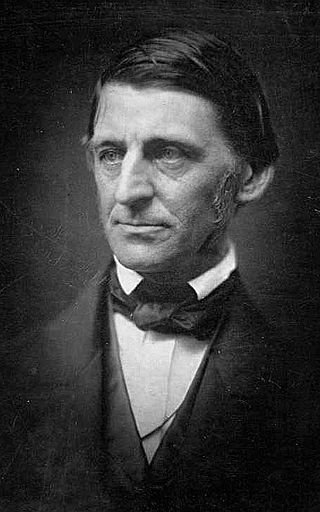


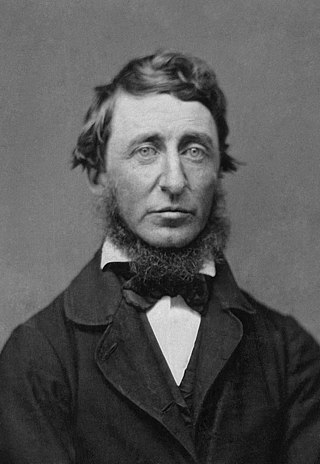


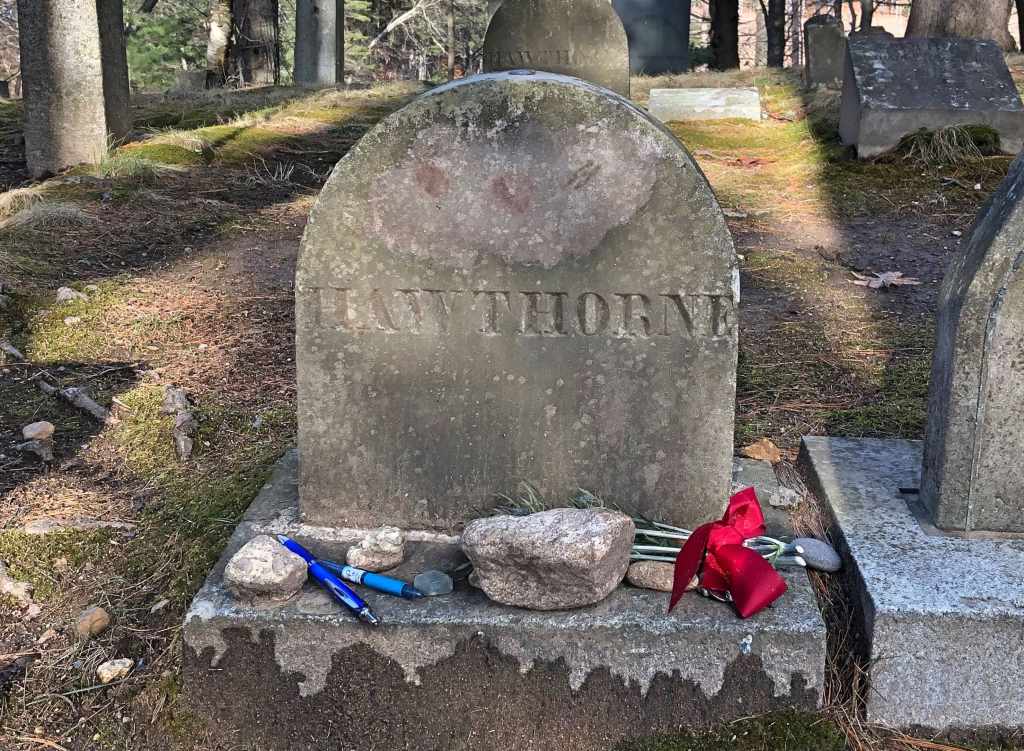



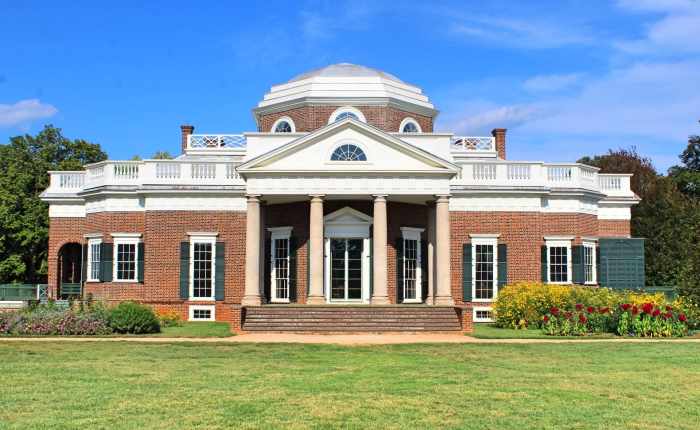

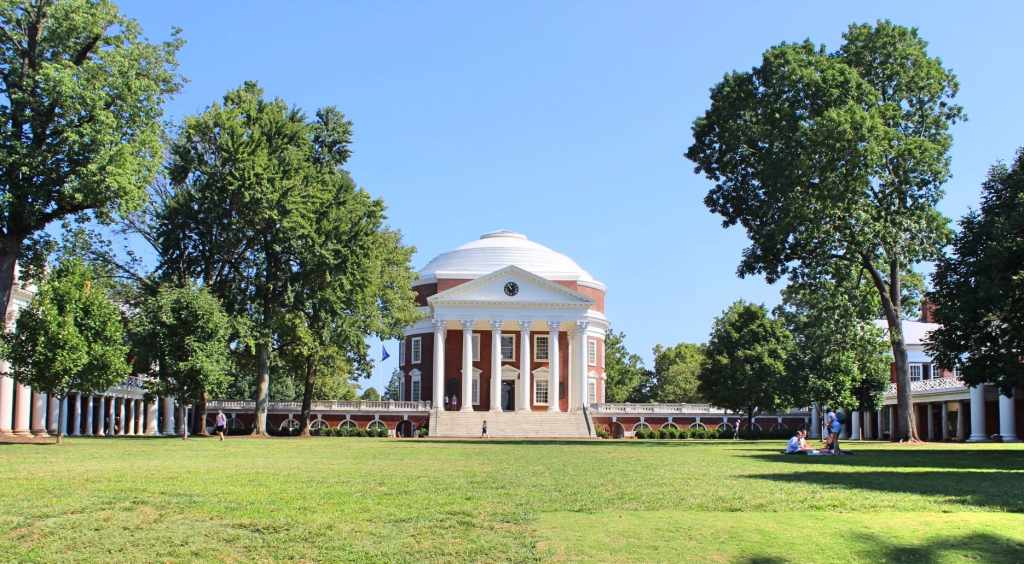

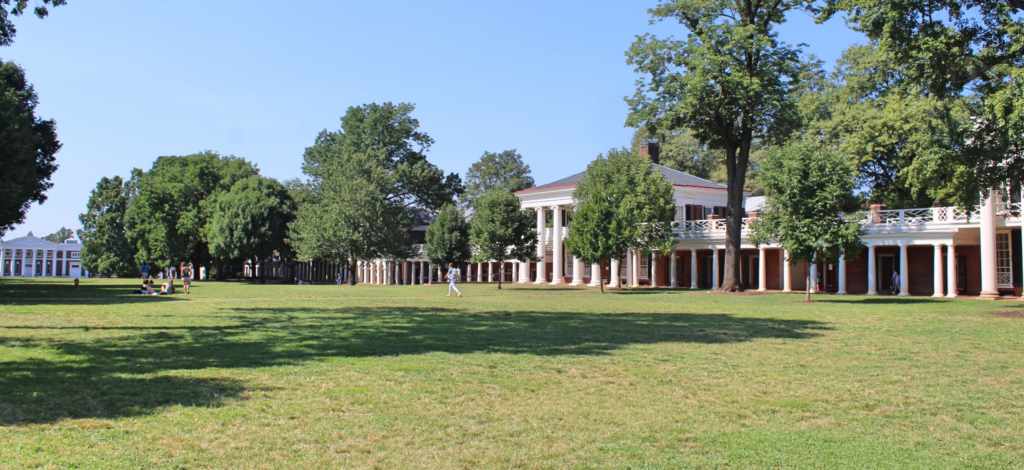
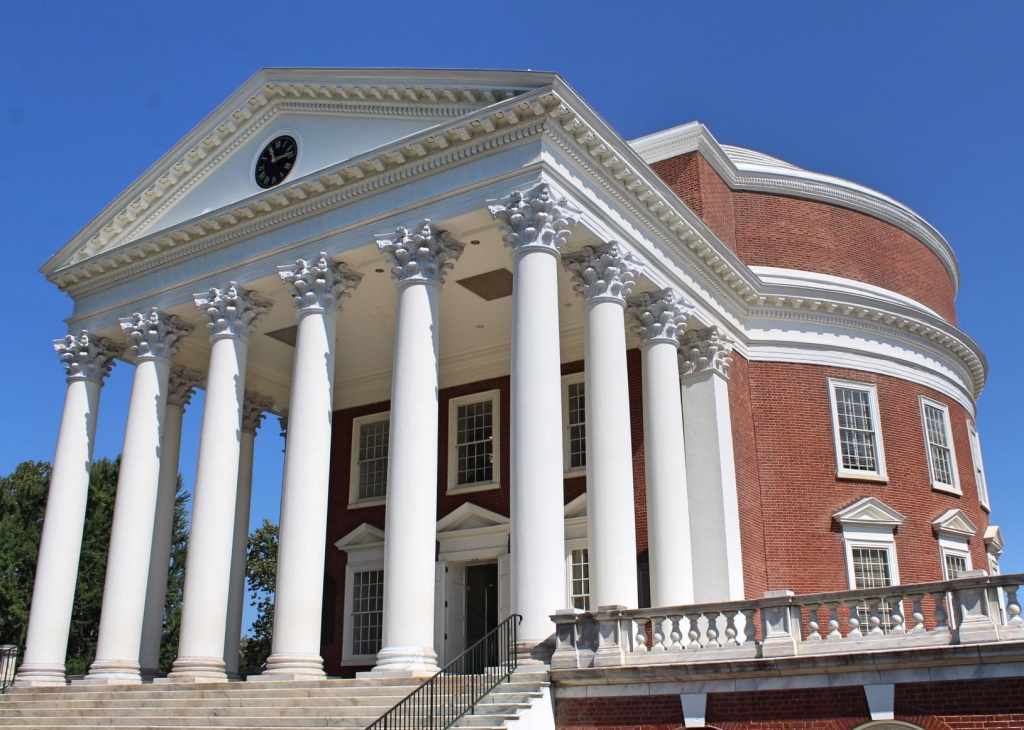

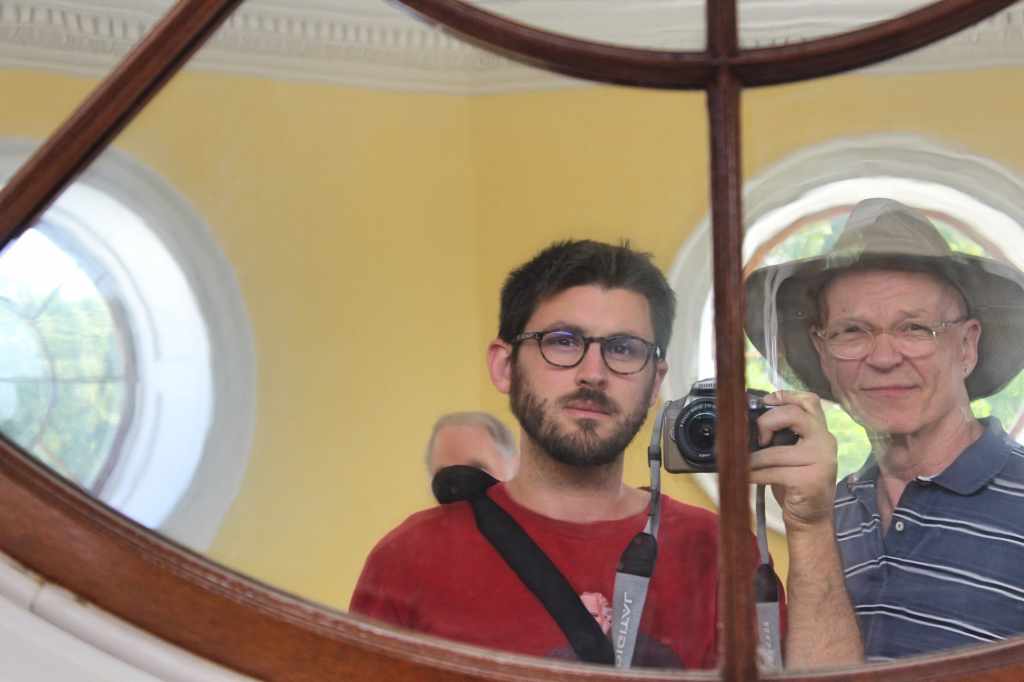


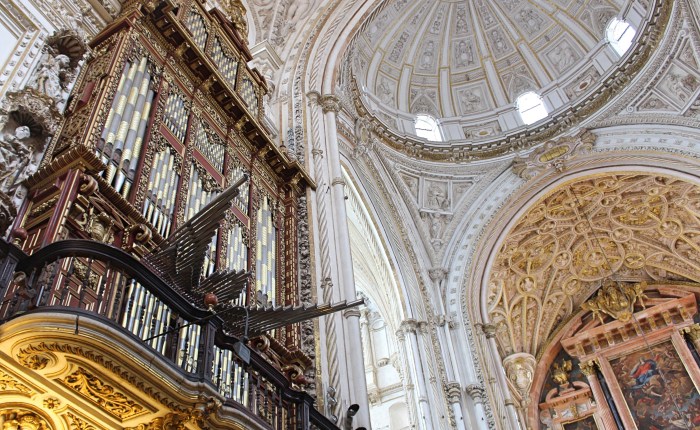
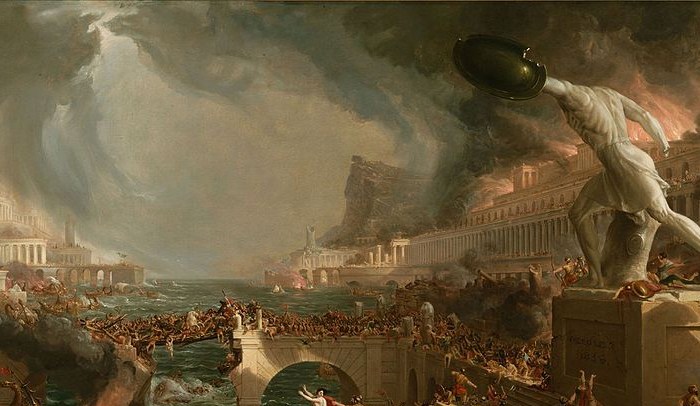
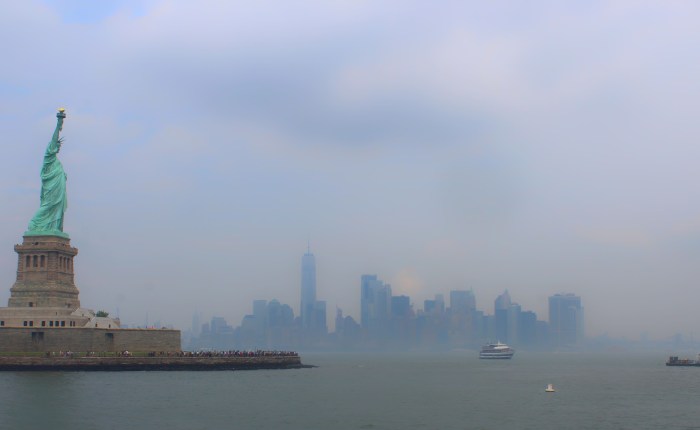

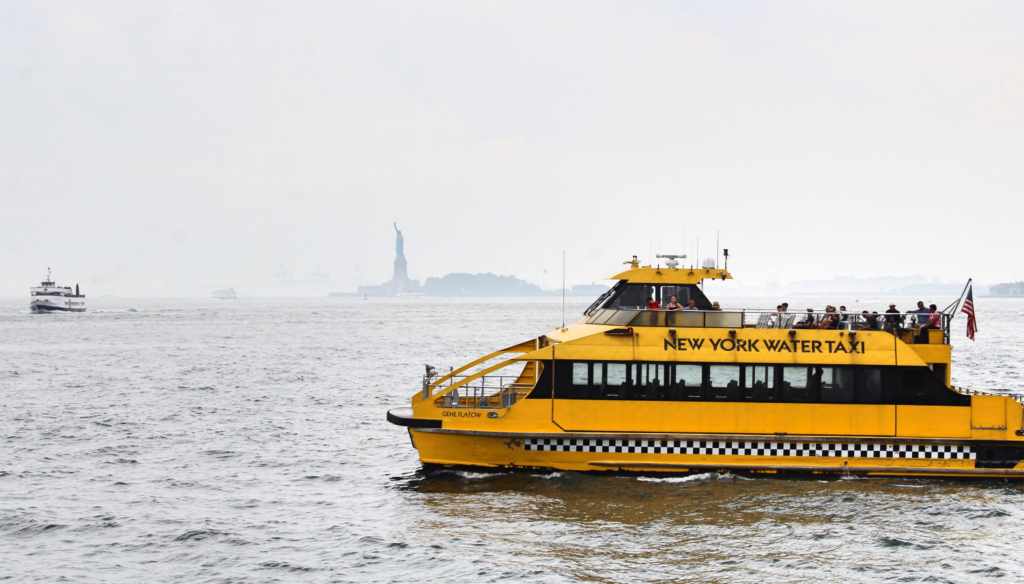
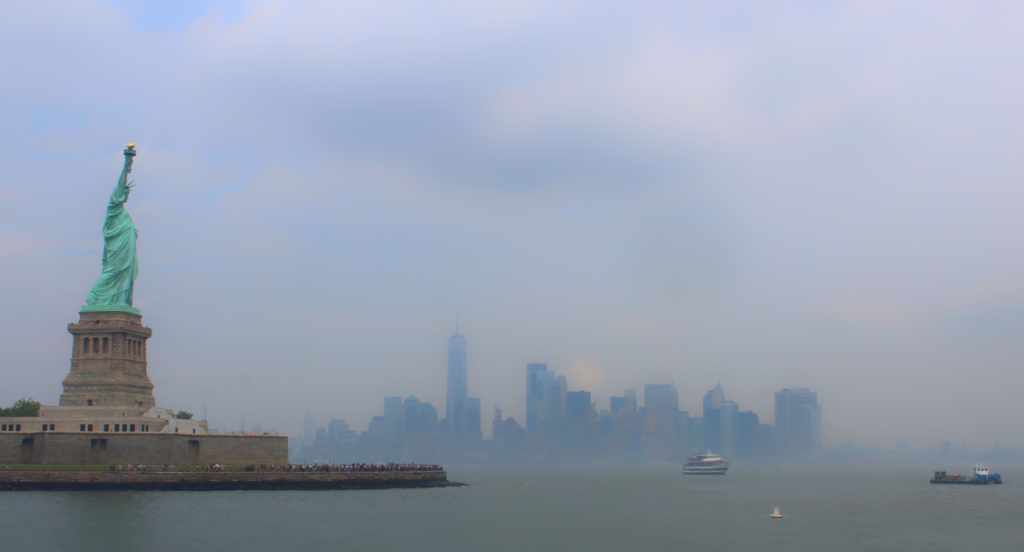
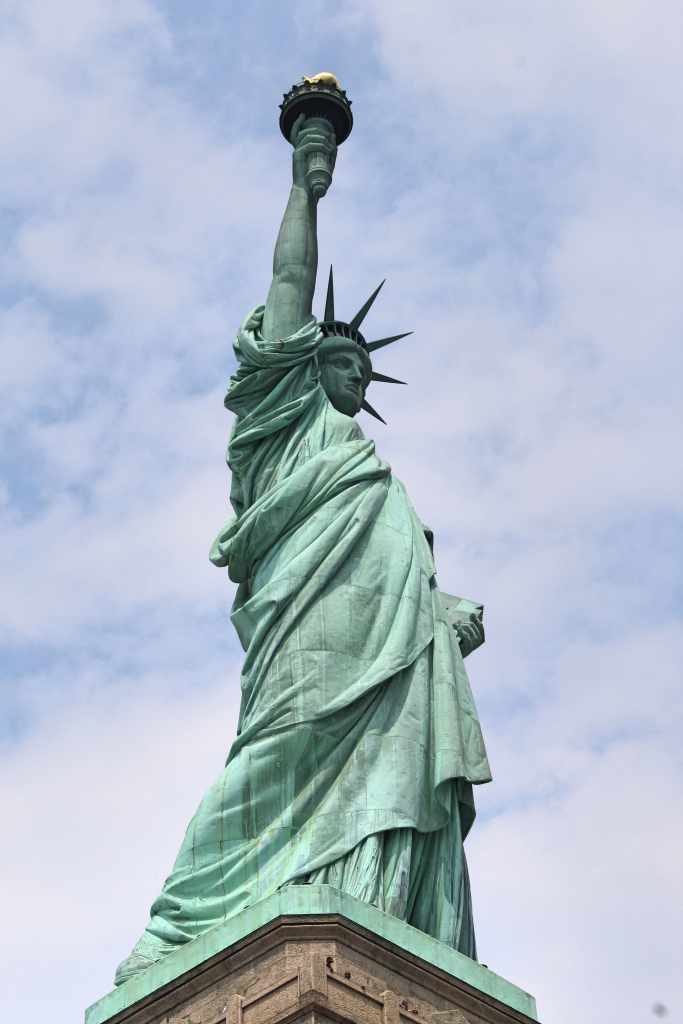
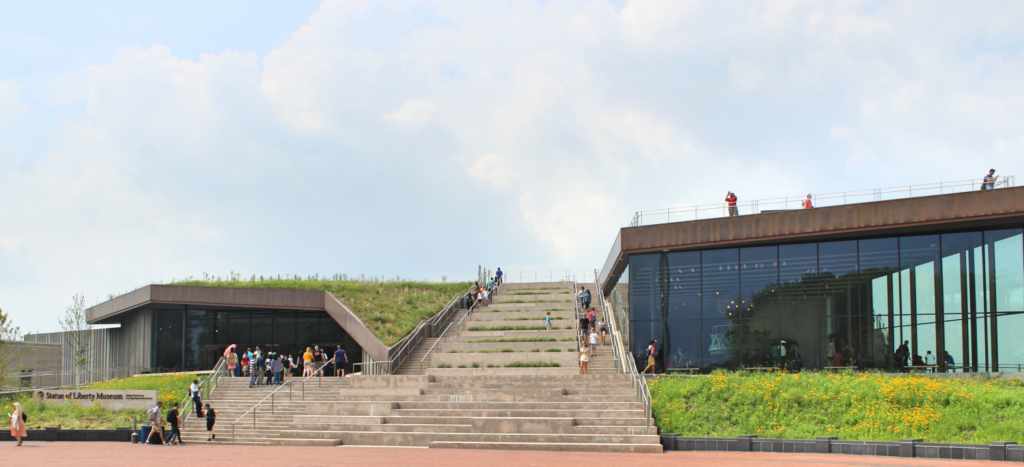

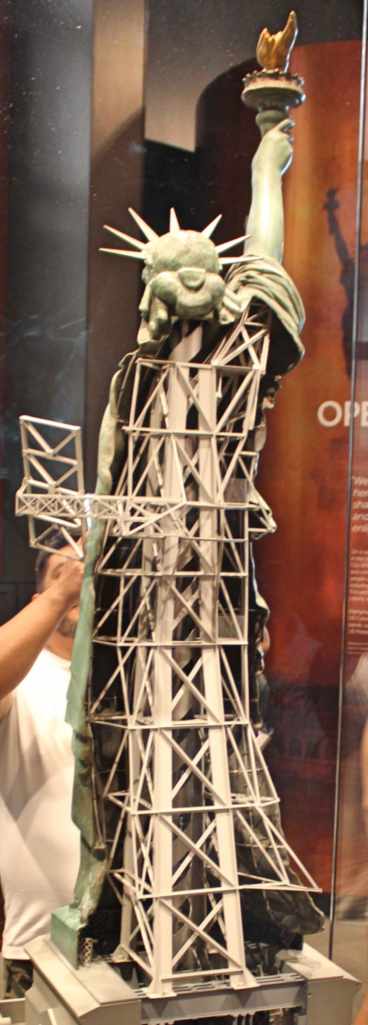
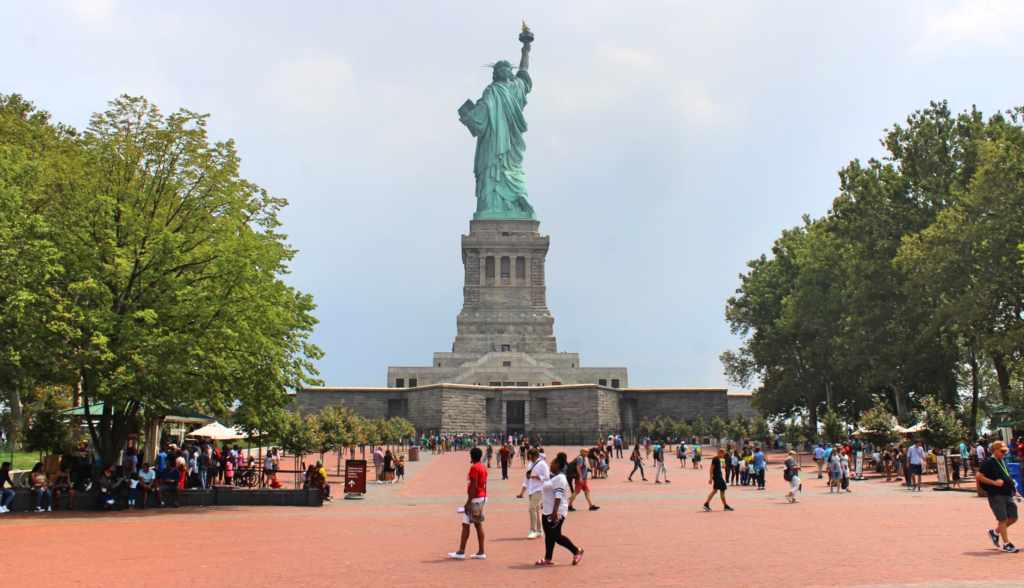
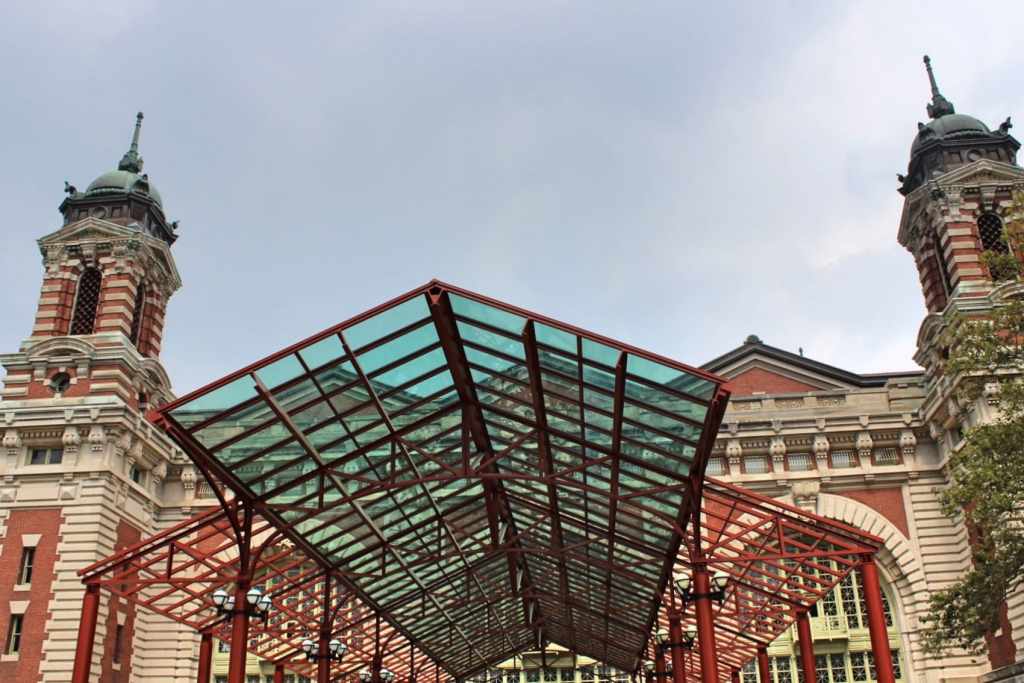
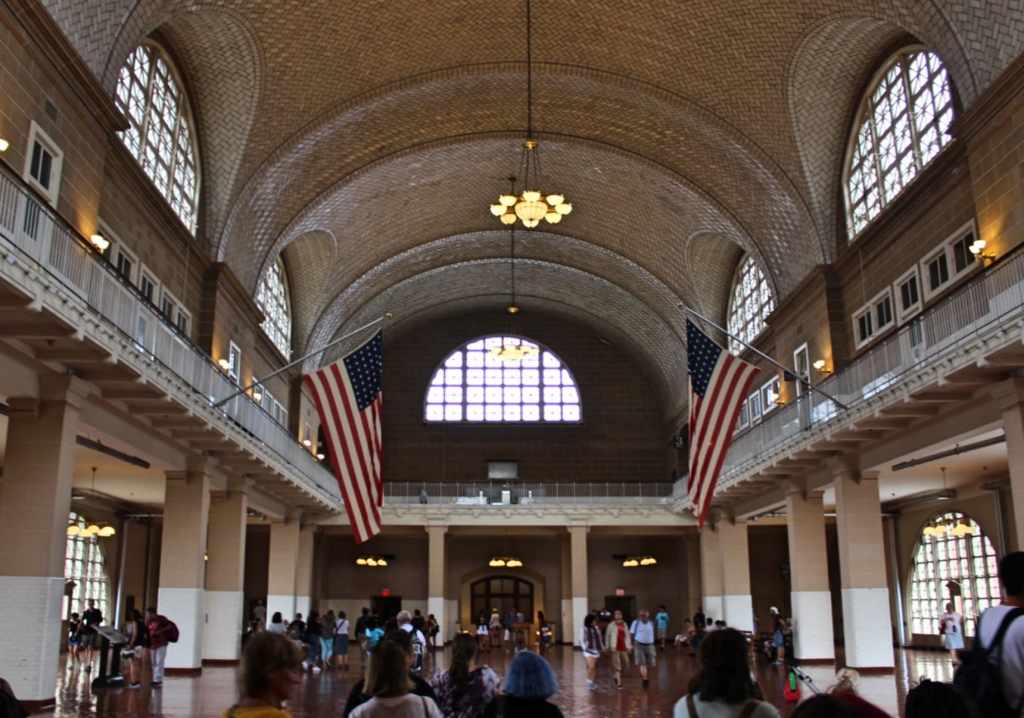
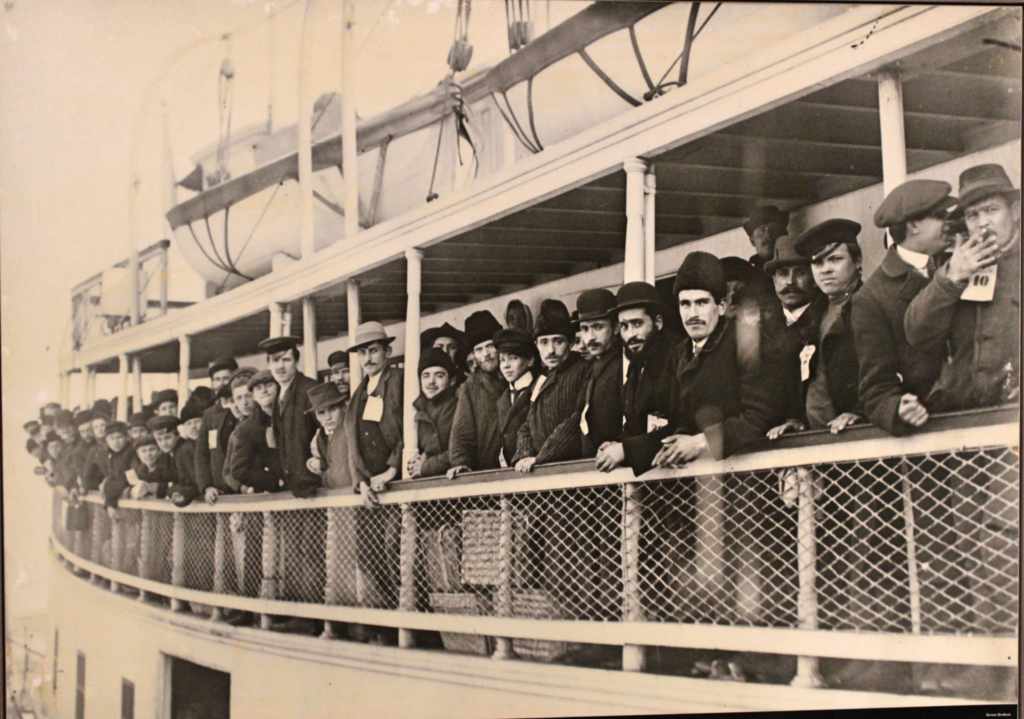
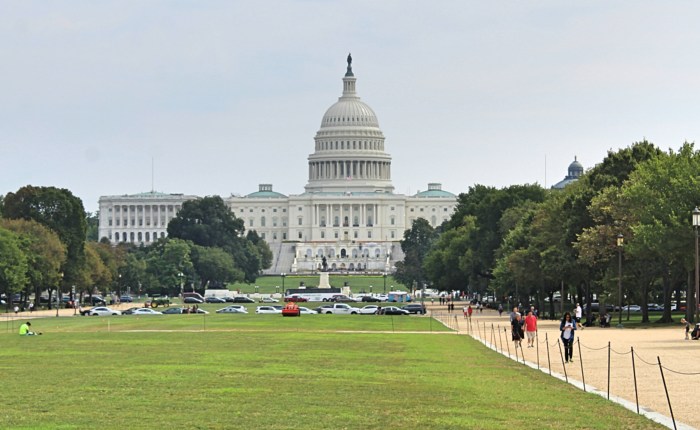

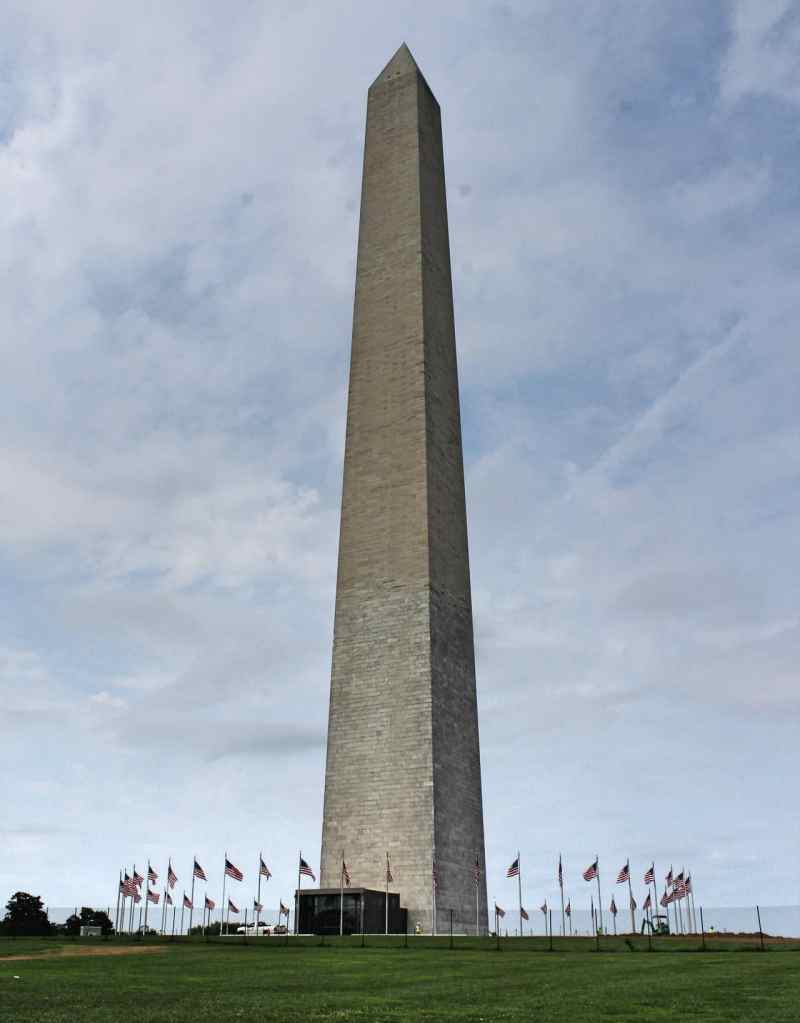
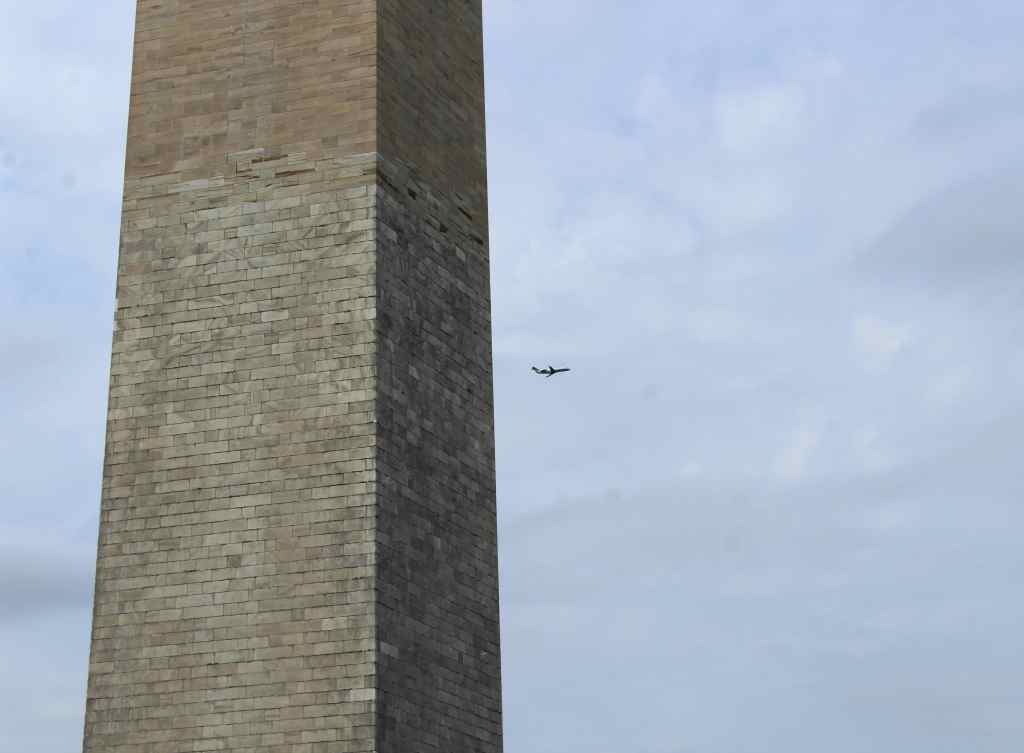


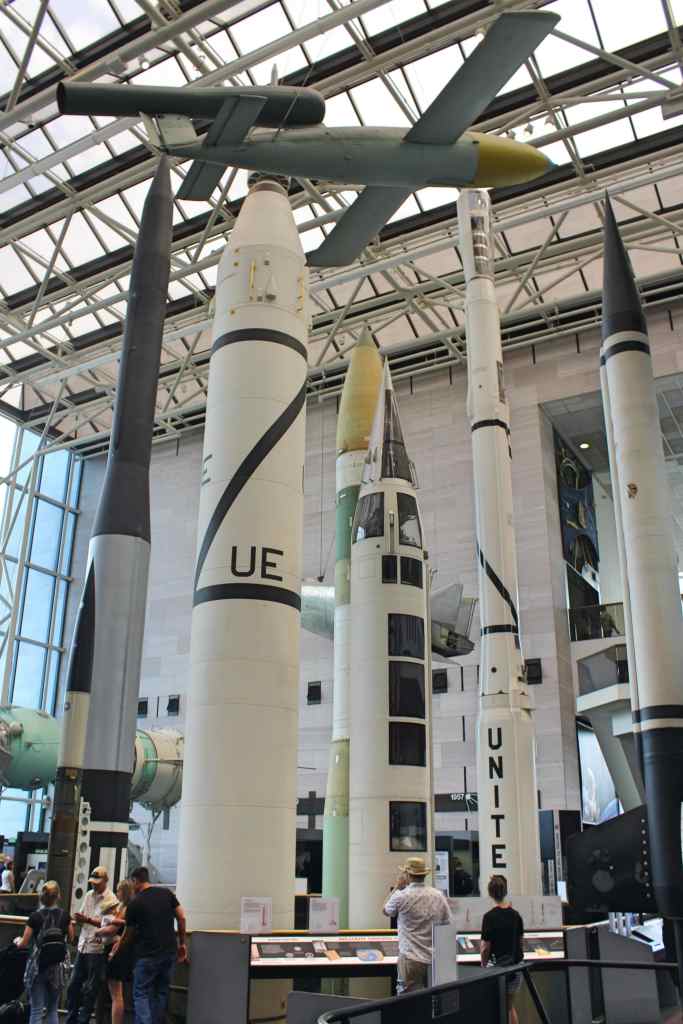
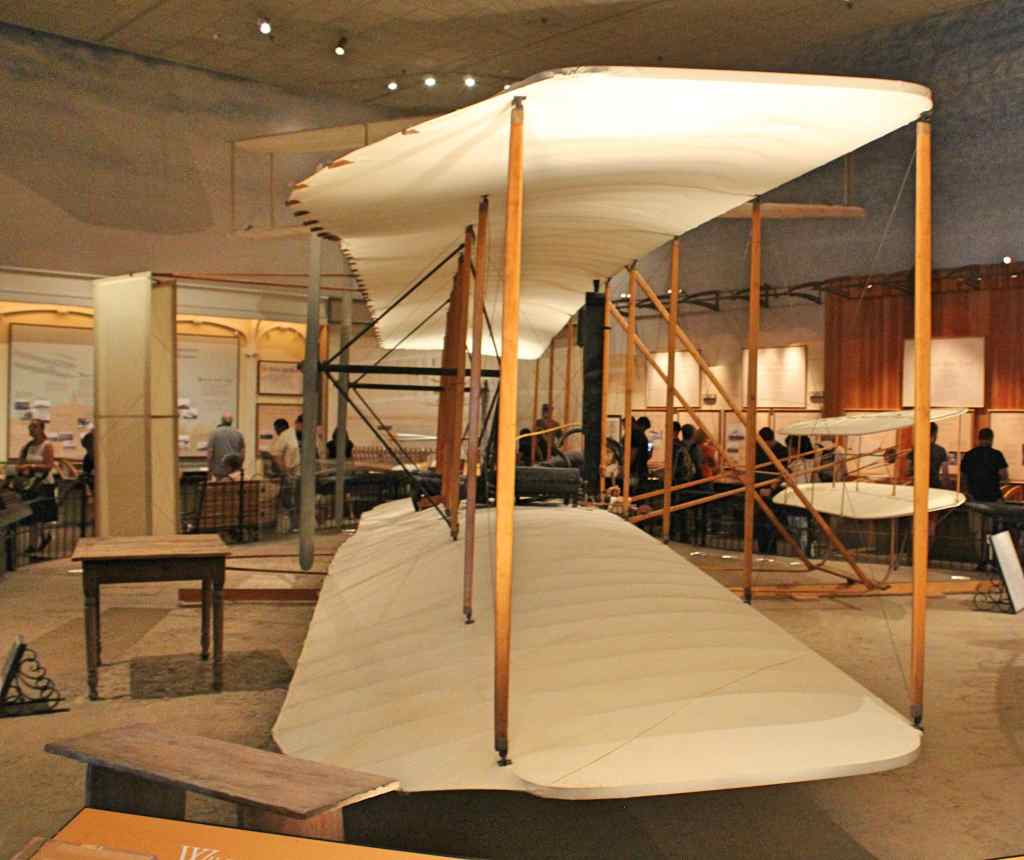

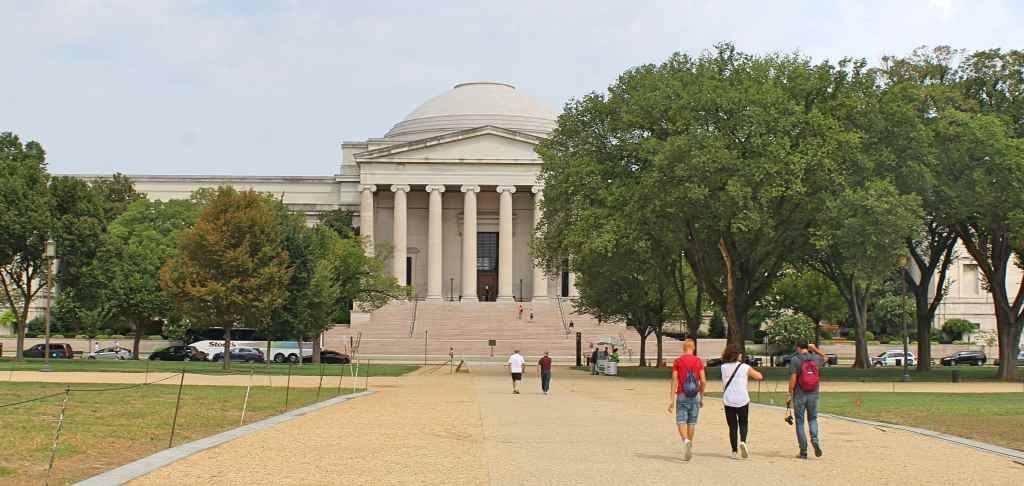
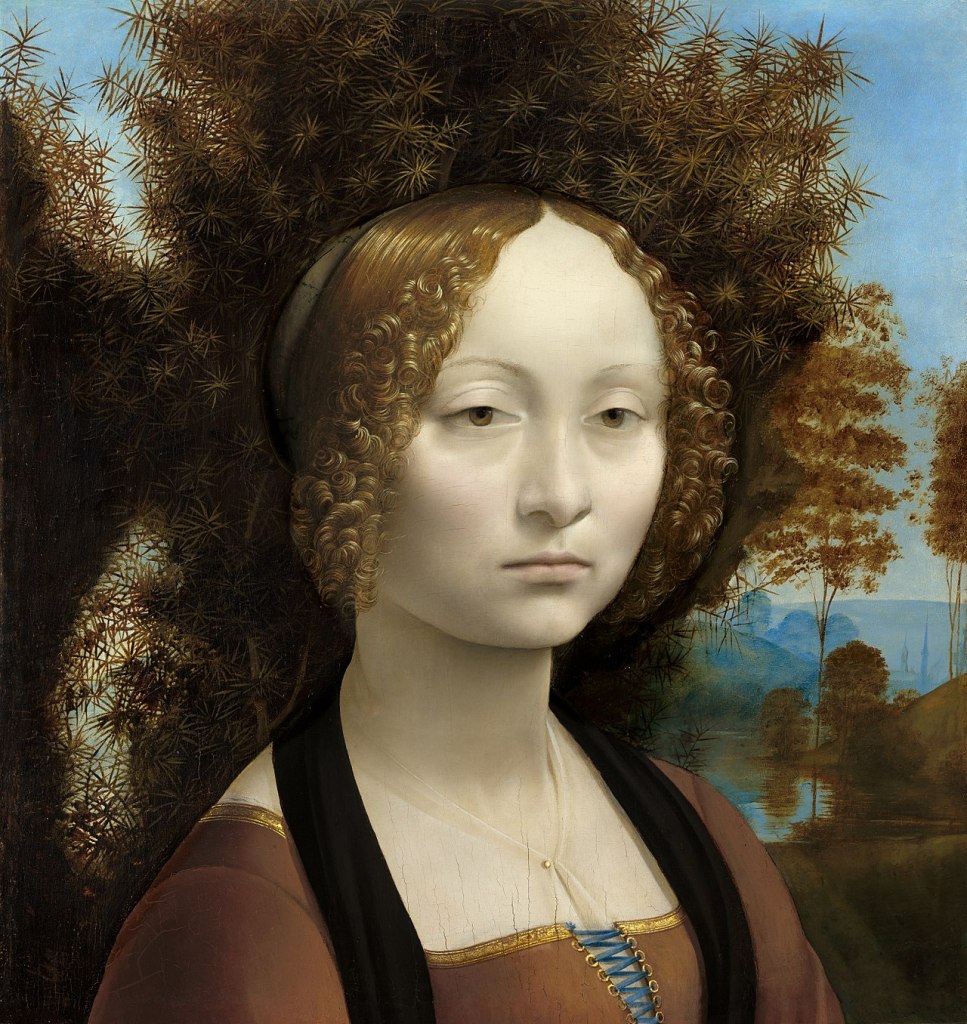

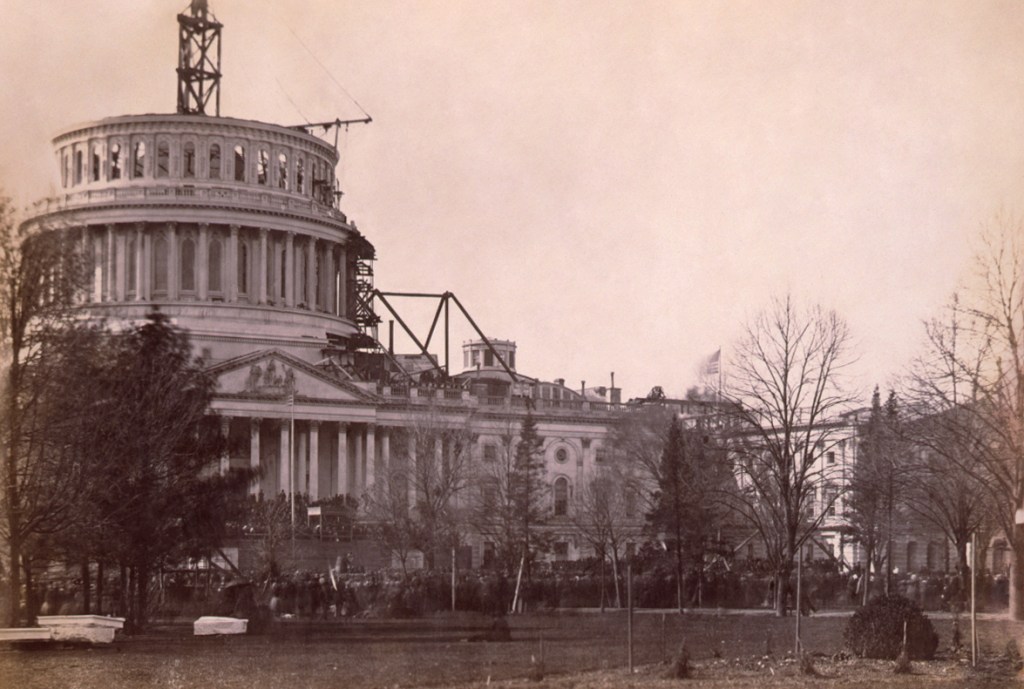


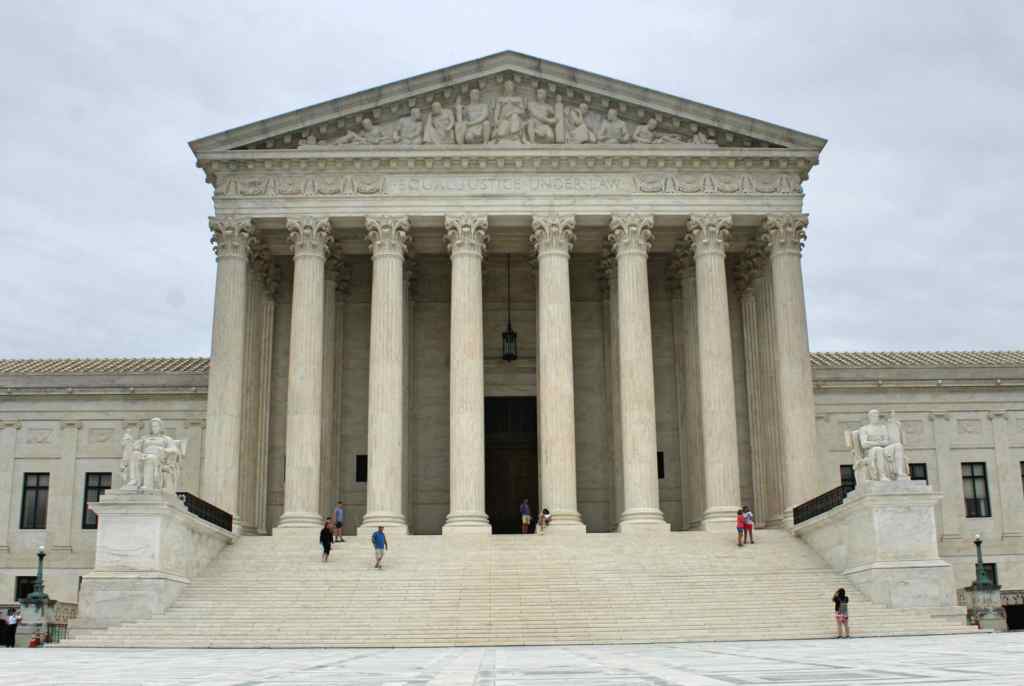


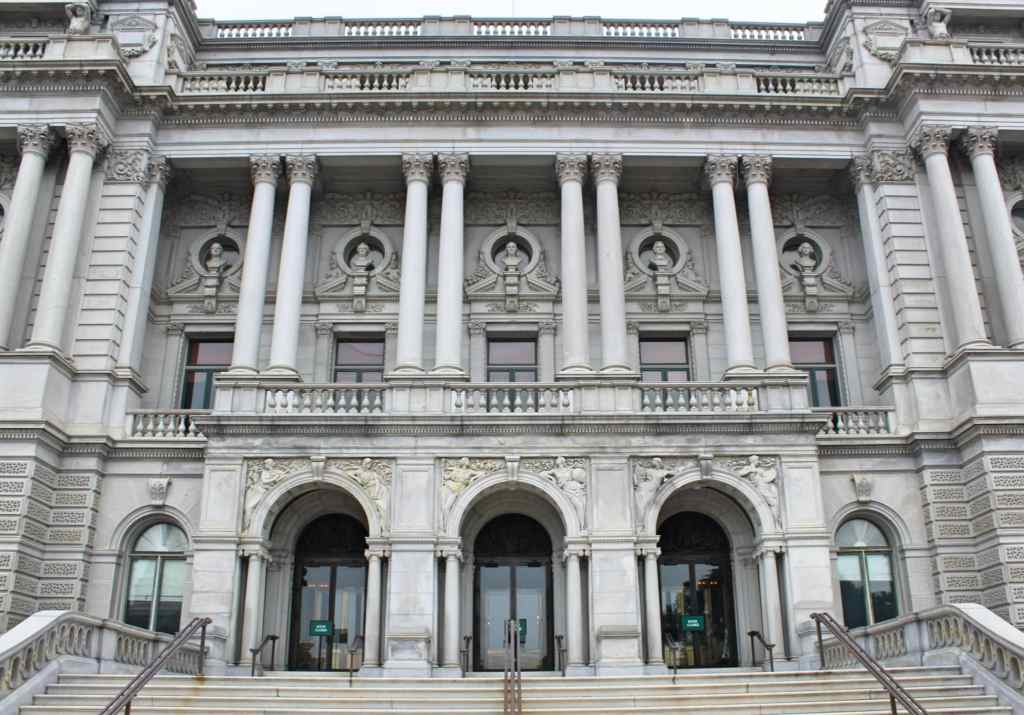
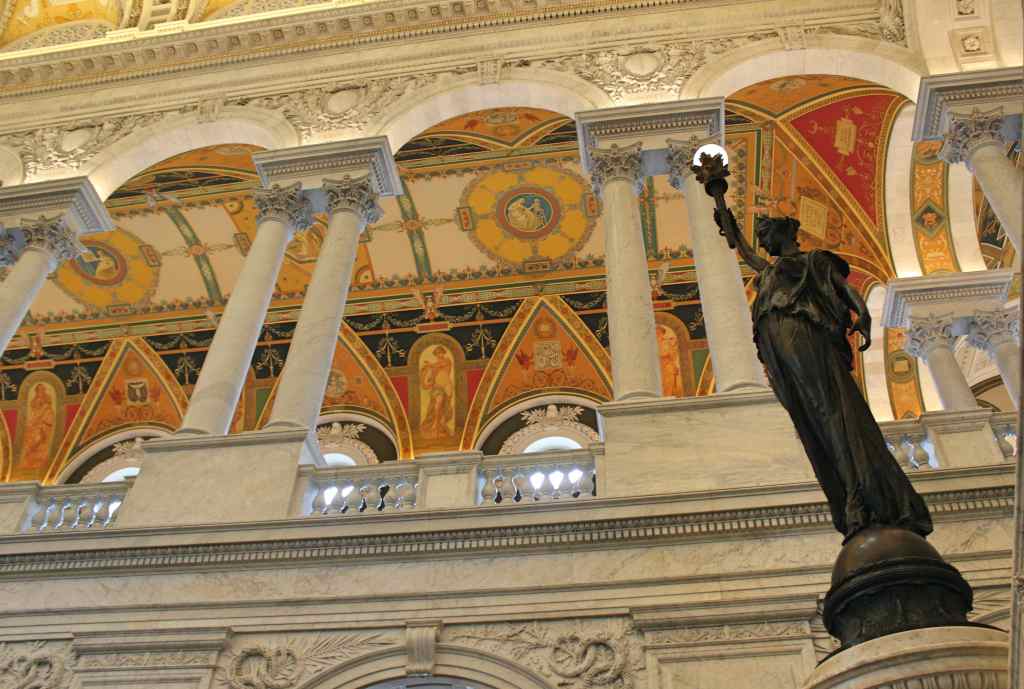
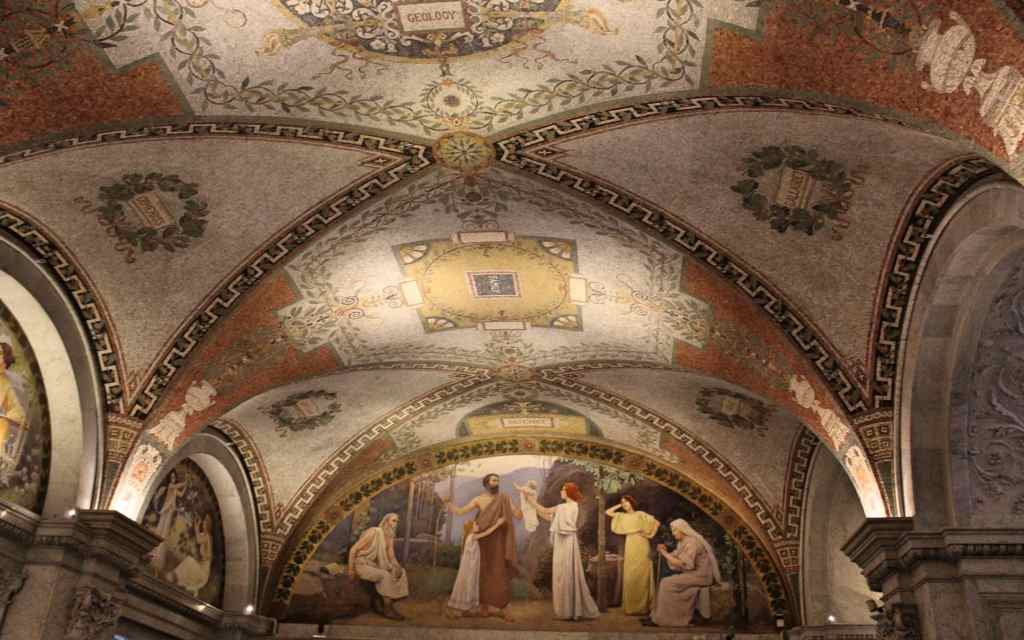
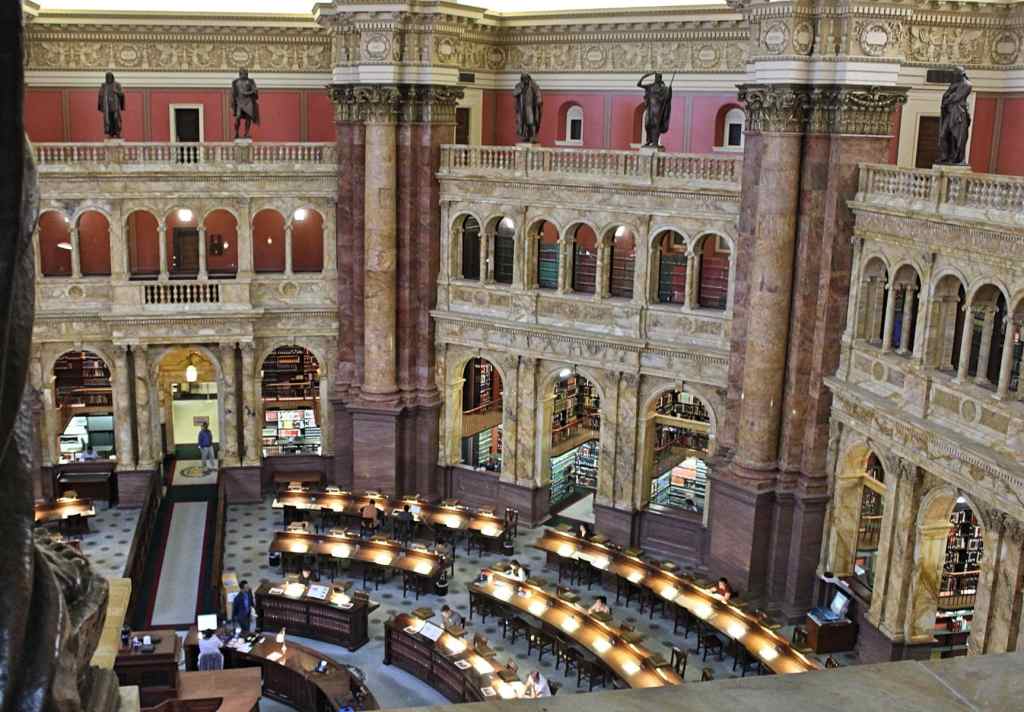
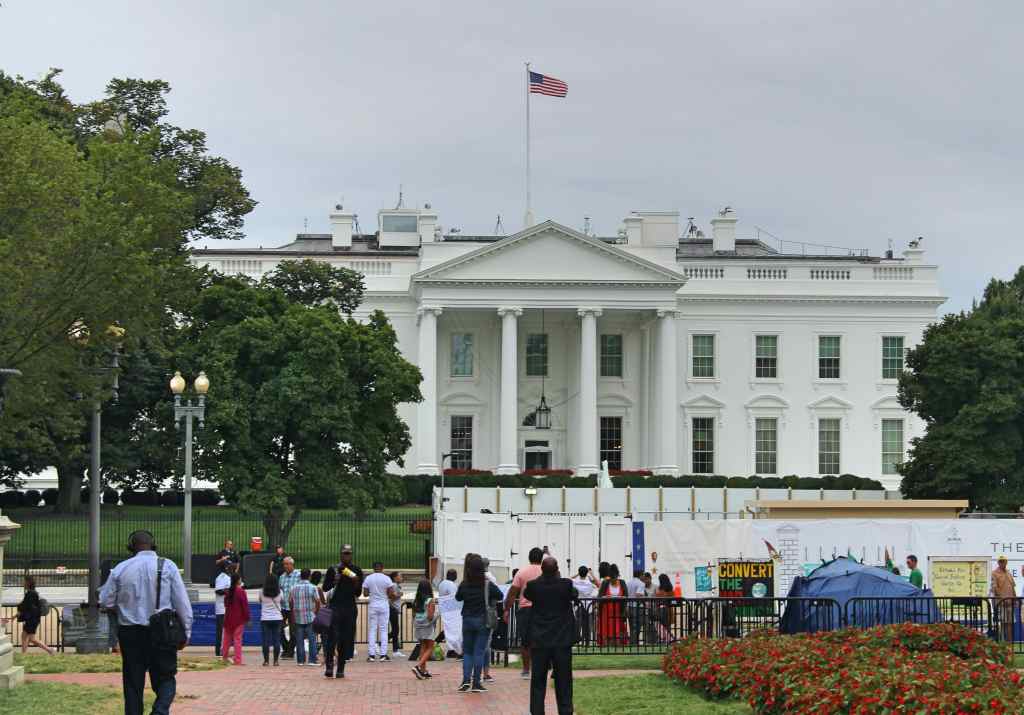


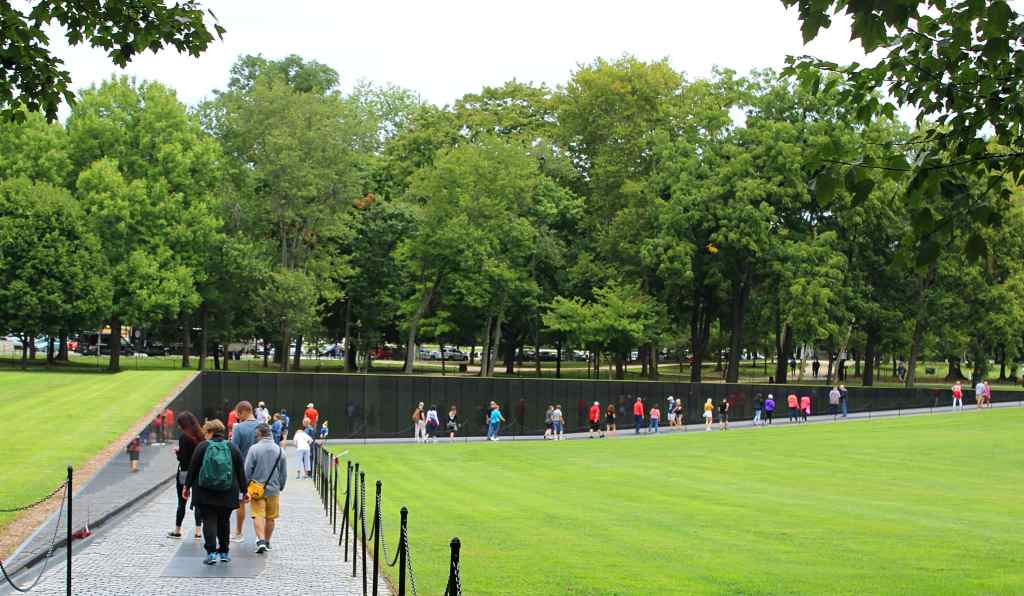

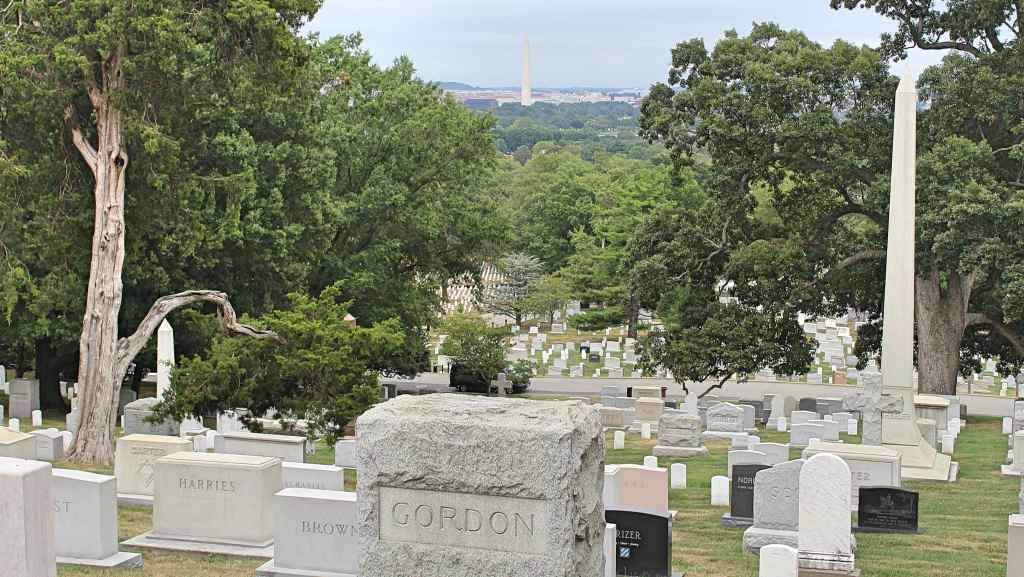
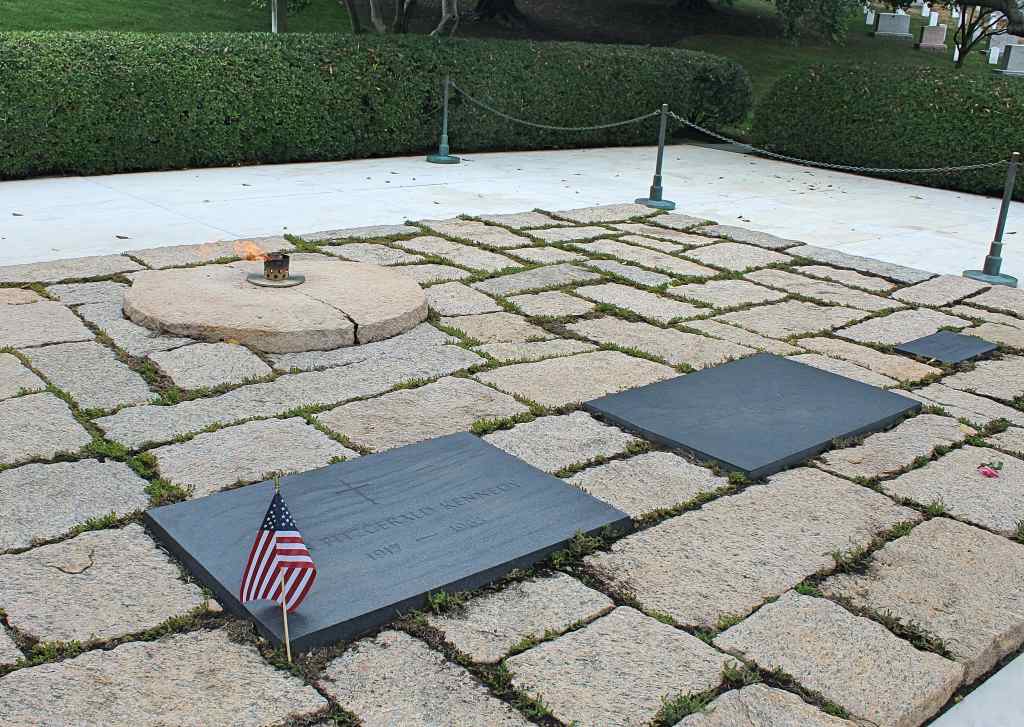
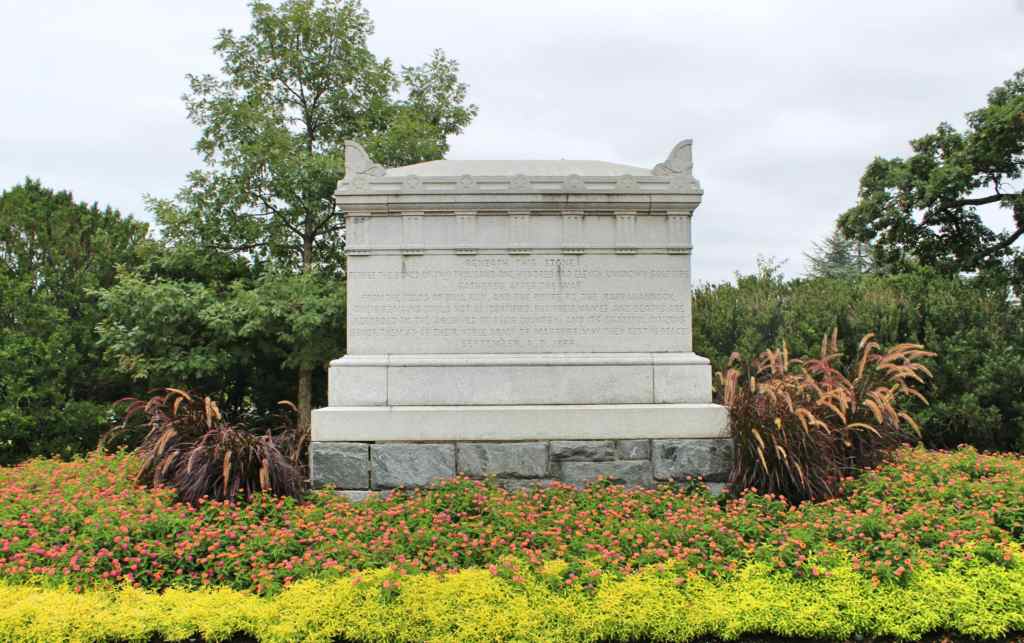



 Lotz in Translation