By common consent, the richest man in modern history was John D. Rockefeller. At his peak he was worth at least three times more than the world’s current richest man, Jeff Bezos—over $300 billion to Bezos’s $112 billion. In a world before income taxes or antitrust laws, it was possible to amass fortunes which (one hopes) would be impossible today. Strangely, however, this living embodiment of Mammon did not have extravagant tastes. To the contrary, for a man of such unlimited resources Rockefeller was known for his simple, even puritanical, ways. According to Ron Chernow, a recent biographer, Rockefeller had a habit of buying homes and keeping the original decoration, even if it was absurdly out of keeping with his own taste, just to avoid an unnecessary expense.
Thus when John decided to buy a property near his brother William’s estate (Rockwood), near the Hudson River, he simply stayed in the pre-existing houses. (William’s Rockwood mansion has since been torn down, but the property has been transformed into a wonderful park.) The spot Rockefeller chose occupies the highest point in the Pocantico Hills overlooking the Hudson; it is named Kykuit from the Dutch word kijkuit, which means “lookout.” Likely enough Rockefeller would have been satisfied indefinitely with a fairly modest dwelling, had not his loyal son, John D. Rockefeller, Jr., decided to take charge of a manor house to be built for his father.
Junior and his wife, Abby Aldrich, set to work on an ambitious, architecturally eclectic design. They worried about every detail, as they knew how exacting and finicky the paterfamilias could be; the planning and construction took six painstaking years; the couple even took the precaution of sleeping in every room in the house, just to be sure that it was perfect. Nevertheless, John the father was unsatisfied; and he could not conceal his dissatisfaction. He was disturbed, for example, that the servants’ door was right underneath his bedroom window, so he could hear it clapping all day. Eventually (and doubtless to his son’s dismay) Rockefeller concluded that the house needed to be completely remodeled; and thus the current, Classical Revival form of the house came into being.
(An amateur landscape designer, Rockefeller was also dissatisfied with the work of Frederick Law Olmsted, whom you may remember as the designer of Central Park. Senior decided to do the landscaping himself.)
As in Sunnyside, tours are given by the Historic Hudson Valley. But you cannot go directly to the Kykuit property. To visit, you must buy a ticket in the gift shop of Philipsburg Manor, another historic site (a 17th century farm) in Sleepy Hollow, right across from the Cemetery. After you sign up for a tour, you board a small bus, which transports you on the 10 minute ride to the property. A cheesy informational audio clip plays during the trip, giving some brief background information about the family and the property. This sets the scene for the tour guide. I have, incidentally, heard that the content of the tour can vary significantly depending on the guide’s interests.
As the bus rolls in, through the gates and beyond the walls—passing by a “play house” still used by the Rockefeller family (many of whom still live somewhere on the massive estate)—one gets a sense of the private, exclusive, and isolated world inhabited by the world’s richest man. Widely known and, for a time, almost universally hated, Rockefeller needed to create his own refuge. My favorite detail was the tunnel underneath the mansion that was used to make deliveries without disturbing Rockefeller’s rest.
The bus deposited us in front of the house, near an impressive Oceanus fountain, copied from a fountain in Florence. Ivy crawls up the stone facade, all the way up to the neoclassical tympanum. An eagle crowns the top, displaying the family crest. From there the guide led us up onto the porch, where two strikingly modern statues stand flank the doorway. This is a constant feature in Kykuit: the juxtaposition between classic and contemporary tastes. John D. Rockefeller himself had very little taste in art, conservative or otherwise; his son, Junior, was enamored of the past—Greek, Medieval, even classical Chinese. Meanwhile, Junior’s wife, Abby, and his son, Nelson, were important patrons of modern art. Thus the house is an, at times, uneasy incorporation of these divergent tastes.
As a case in point, there are beautiful examples of Chinese porcelain on display throughout the house, protected by plexiglass cases. (The guide explained the glass was installed to protect them from playing children.) In a room used by Nelson Rockefeller there is also the vice-presidential flag, commemorating his term under Gerald Ford. Nelson wanted to be president himself, and he had the experience to do it—he was the governor of New york from 1959-72—but according to Ron Chernow, his divorce made him an unpalatable candidate. (How times have changed!) There were also portraits of the Rockefellers, and a phenomenal bust of the bald, decrepit, and yet mesmerizing John D. Rockefeller Senior—whom I was excited to meet, since I had just read a book about him.
After this, our guide led us into the gardens. The most notable feature of these are the modernist statues scattered about—gruesome metal bodies amid neat hedgerows. Unsurprising for such a commanding spot, the view is excellent. On a tolerably clear day you can see all the way to Manhattan from the back porch. I imagined lounging on an easy chair, sipping some very posh drink—for some reason a mint julep comes to mind—and contemplating the Hudson. But of course the Rockefellers were Baptist stock, and teetotallers all, so the drink is pure fantasy. Beyond view (and beyond the scope of the tour) was the reversible nine-hole golf course that Rockefeller used with Baptist scrupulousness; after God and Mammon, golf was his top priority. Likely Rockefeller Senior would have been shocked and appalled by the massive modernist statue (resembling an alien squid) that was airdropped by helicopter into place on the property during his grandson’s tenure.
Then we made our way inside to visit the art gallery in the basement. This includes original works by many modern artist, the most famous being Andy Warhol; but the best works on display are undoubtedly the Picasso tapestries. These were commissioned by Nelson Rockefeller, to be made by Madame de la Baume Dürrbach, for the purpose of making his works easier to display. The biggest of these tapestries was a copy of Guernica, now on display at the United Nations building. Of the ones in this private gallery, my favorite is of Picasso’s Three Musicians (the original hangs in the MoMA). Even when I toured Kykuit as a child, tired, hungry, and very bored with all this old-people nonsense, I was impressed that a person could have Picassos in his basement; and my opinion has not changed.
To speed through the tour somewhat, we eventually boarded the bus again to go back to Philipsburg Manor. However, we did stop at the stables on the way back, which was filled with antique horse carriages and old luxury automobiles. In addition to being an avid golfer, you see, Rockefeller Senior also loved to go riding in his carriage and, in later life, to take fast drives in his fancy cars. (A strange detail from the biography is that, in later life, the upright and conservative Rockefeller would grope women during these rides. He was a man of many contradictions.)
This fairly well sums up my visit to Kykuit. It is an impressive place—six floors, forty rooms, and twenty bedrooms. Even so, considering Rockefeller’s vast fortune, and considering the kinds of monstrous mansions that other rich families—most notoriously the Vanderbilts—built for themselves, it is a restrained edifice. One can see the old Baptist tastes coming through, even amid all this wealth and splendor. Even so, I cannot imagine living in such a private world, so far removed from pesky neighbors and city noise. But the Rockefellers apparently had no trouble with the house. Nelson Rockefeller lived in it up until his death in 1979, when it was donated for use as a museum.
Before ending this post, I should also mention two nearby Rockefeller monuments.
The first is the Union Church. This is one of two non-denominational churches (the other being Riverside Church in Manhattan) commissioned by John D. Rockefeller, Jr. It is an attractive and modest building, made of cut stone with a steeply slanting roof. Though the church does have an active congregation, most of the time its main use is as a tourist attraction, also administered by Historic Hudson Valley. The church is notable for its stained glass. The rose window was designed by the modernist pioneer Henri Matisse; according to the guide (I was the only one on the “tour”), it was the last work the artist ever completed. It is a simple, abstract pattern, yet subtly interesting to look at. More memorable, however, is the series of stained-glass windows completed by Marc Chagall, using Biblical scenes to commemorate deceased members of the Rockefeller family. Though I am normally not greatly fond of Chagall’s work, I must say that the strong, simple colors of Chagall’s windows created a pleasant—if not exactly religious—atmosphere.
Stone Barns
The second Rockefeller institution is Stone Barns, a center for sustainable agriculture established by David Rockefeller (Junior’s youngest son). (Sharing the Rockefeller talent for long life, David passed away just last year, at the age of 101.) The center lies on the edge of the Rockefeller State Park, alongside Bedford Road, surrounded on all sides by rolling farmland. It is a very pleasant place for a stroll. The buildings of the complex are completed in a style reminiscent of Union Church, as well as of the Cloisters museum in Manhattan: deep-grey cut stone. The farm is dedicated to growing high-quality produce and livestock without using anything “artificial.” Some of its products are served in the famous Blue Hill restaurant on the property—a place so absurdly fancy and expensive that, judging by the way things are going, I doubt I will ever get an opportunity to try. The menu, which costs $258 per person, consists of many different courses of artisanal dishes using esoteric ingredients. I have bought cheaper transatlantic plane tickets.
Processing…
Success! You're on the list.
Whoops! There was an error and we couldn't process your subscription. Please reload the page and try again.
Washington Irving haunts my corner of Westchester like a beneficent ghoul. As a quintessential New Yorker, and the first American writer to gain international prominence, he left monuments to his memory scattered about everywhere. In my native town of Sleepy Hollow, he is inescapable: our municipal statue, our high school football team, and our most famous landmark, the cemetery—not to mention postcards, ghost tours, haunted hayrides, and all our other identifying symbols. Irving was clearly a generous person, as he donated his own name to the town next door, Irvington, where his house still remains as a tourist attraction.
Washington Irving
In the grand scheme of the universe, Sunnyside is quite close to my own domicile. Yet when, like me, you lack a car; and also, like myself, you enjoy walking places, the journey can take a long while. Luckily the walk there is very pleasant, since Sunnyside is right next to the Aqueduct trail that extends from NYC all the way to Croton. The path took me through the heart of Tarrytown, across Route 9, and then past Lyndhurst mansion—another historic Hudson home, an extravagant neo-gothic castle once owned by Jay Gould. After that I passed by a large property owned by the Belvedere Family Community (otherwise known as Unificationists), who have chosen this picturesque spot to bring about world peace.
By the time I reached Sunnyside I was tired and very sweaty. But paying customers, even smelly ones, are seldom turned away. Sunnyside is run by the Historic Hudson Valley, an organization which administers several other sites along the river (such as the subject of my next post, Kykuit). To visit you must sign up for a guided tour, which you do in the gift shop (as you are conveniently surrounded by overpriced books and paraphernalia); the price is a little more then $20. As I waited for the tour to start, I was tempted to buy a copy of Irving’s History of New York, his breakthrough piece of social satire; but I remembered I already have a copy on my Kindle. For all its social ills, technology does occasionally save us from gift-shop prices.
An artist’s rendering
In minutes, the tour commenced. Our pleasant guide, who was dressed in period costume, took us to our first stop: a ripe old sycamore tree, planted in the heart of the property. It has been growing there since 1776—respectably middle-aged for a tree but not exactly venerable. Our guide then directed our attention to the property itself. Apparently Irving was an amateur gardener and landscape designer, and helped to mold his property according to his romantic tastes. Here there are no French gardens, with neat hedgerows and grid-like walking paths, but something more akin to the English Gardens in Munich: a blend of planning and nature.
Of course, the property was originally much nicer, since it extended all the way to the Hudson River. But when the Hudson Line railroad was completed in 1849, it cut off his property from the water; and I cannot imagine the country-loving writer had much affection for the noisy, screeching, fuming locomotives chugging before his windows. Even today, the whooshing of the Metro-North disturbs the peace of this hitherto isolated spot. In fairness, the Metro-North has compensated by naming a few of their train cars after the famous writer and his creations—Headless Horseman, Knickerbocker, Ichabod Crane, Rip Van Winkle, and so on. I should also note that the observant rider on the Hudson Line can catch a glimpse of Sunnyside between the Irvington and Tarrytown stations, somewhat south of the Tappan Zee Bridge.
The West Façade. Photo by Beyond My Ken; licensed under CC BY-SA 4.0; taken from Wikimedia Commons
The building of Sunnyside itself is arrestingly modest—indeed, hardly bigger than my own suburban home. Its exterior bears the whimsical and fanciful humor of its maker. Most obvious is the Dutch stepped-gable, which shows how fascinated Irving was with the original Dutch inhabitants of this region. (His most famous characters, and even his own pseudonym, Knickerbocker, bear testimony to this interest.) On the river-facing side of the house he put the date 1656—a date which only roughly corresponds to the first cottages build on this land by Dutch settlers (in the 1690s), and which shows Irving’s love for mixing fact and fiction heedlessly together (as he did in his history of New York and his biography of Columbus). And last we come to the so-called Spanish tower, whose sharply swooping roof is modeled after Spanish golden age architecture (such as the El Escorial). Irving, you see, spent a good many years in Spain as the American ambassador (I cannot even escape him here!), so he was naturally interested in Iberian architectural styles.
The Spanish Tower. Photo by Beyond My Ken; licensed under CC BY-SA 4.0; taken from Wikimedia Commons
My memory of the interior is necessarily more vague, since you cannot take pictures. In any case, there are few surprises—a study filled with books, a living room with a piano for social events, a bedroom (where Irving happened to die), and so on. My favorite object on display was a little watercolor, apparently by Irving himself, depicting his legendary meeting, as a boy, with his namesake George Washington. (According to our guide, it cannot be determined whether this meeting actually took place.)
Irving had little more than twenty years to enjoy his cottage, from its construction in 1835 to his own demise (he died of a heart attack in the bedroom upstairs) in 1859; and this was interrupted by his long stay in Spain. Though he chose the spot for its picturesque isolation, considering it a kind of writerly escape from the noise of Manhattan, he seldom had peace: besides the railroads, he had to contend with many visitors, both invited and uninvited. If we had to look for a modern parallel to the fame Irving enjoyed, we would have to choose a figure such as Stephen King or George R.R. Martin. Both he and his house were a sort of American monument, gracing the covers of magazines and attracting tourists. Besides this public attention, the bachelor Irving shared his house with his brother Peter, and Peter’s daughters, whom had fallen on hard times. Irving’s very presence transformed this country escape into a center of American culture.
Washington Irving meeting George Washington
There is little more to add. After Irving’s death the family lived on in the house for several generations, only finally parting with it in 1945. For its preservation we must thank a man who is quickly becoming one of the heroes of this blog: John D. Rockefeller, Jr., who bought up the house and turned it into a museum. For any lovers of literature or history in the Hudson Valley, it is well worth a visit.
Sitting atop one of the highest points on the island of Manhattan, overlooking the palisades of the Hudson Valley stretching northwards, is the most convincing slice of Europe in New York—perhaps in the country. This is the Cloisters, a branch of the Metropolitan Museum, specializing in medieval art and architecture.
Like any great museum, the story of the Cloisters begins with a person and his vision. In this case we have George Grey Barnard, a European-trained sculptor and collector, who managed to acquire a large collection of medieval sculptures, pillars, and and tombs during his time in France. He did this by focusing on stones that had been the victims of pillage and war—often repurposed by local populations for mundane needs. This was an especially amazing feat, considering that Barnard—an exuberant and impulsive man—was not wealthy to begin with, and had terrible spending habits which often landed himself on the verge of financial ruin.
John D. Rockefeller, Jr.
It was during one of his periodic pecuniary crises that he was forced to sell his collection to John D. Rockefeller, Jr., a man who could hardly have been more different—puritanical, reserved, prudent. But the two men shared a love for medieval art; and Barnard’s collection was the first step towards Junior’s dream of opening a museum in this romantic niche of Manhattan.
Things moved rather swiftly with the world’s wealthiest man financing the project. After the acquisition of Barnard’s collection in 1925, Junior had Fort Tyron Park built around the chosen site (designed by the descendants of the designer of Central Park); then, he had substantial sections from abbeys in Catalonia and France shipped to New York, where they were incorporated into a single structure. The museum was then donated to the Metropolitan Museum, and the park to the city. The result is an oasis of medieval Europe in uptown Manhattan.
It is interesting to compare this museum to the one founded by Junior’s wife, Abby Aldrich: the MoMA. They are a study in contrast. The MoMA sits right in the center of the city, surrounded by activity and noise; its design is sleek and modern, with a vertical orientation and sterile white walls. The Cloisters is situated far from the city center; indeed it is somewhat inconvenient to visit the museum, since it is so out of the way. The surrounding park is quiet and bucolic, a haven from the noise and stress of city life. The museum building itself is an attempt to recreate the past: using traditional materials and techniques to mimic a bygone age. If the MoMA tries to break with tradition, the Cloisters tries to break with modernity. It is a wonder that Junior and Abby got along so well, since they had such diametrically opposed attitudes to art.
The Cloisters is exceptional in that the building itself is one of the main attractions. Whenever possible, the original materials have been integrated into the structure, creating a faux-monastery, complete with quasi-churches and pseudo-cloisters, where imaginary monks perform invisible rituals. There are several ornamented doorways, with sculptures climbing up the sides and crowning the top. Some walls display decorative friezes—Biblical scenes and medieval bestiaries—and the windows shine with colorful stained glass. The cloisters have authentic columns, complete with Romanesque capitals; and there are three gardens where rare plant species pertinent to the medieval mind are grown. (Apparently, the madonna lily is associated with love and fertility.)
As for the museum’s collection, on display are fine examples of every type of medieval plastic art: paintings, altars, carvings, sculptures, reliquaries, sarcophagi, illuminated manuscripts, stained glass, and tapestries. For the most part these are not organized by medium or style, but by their architectural setting: they are placed to create a harmonious and authentic experience. Thus walking around the Cloisters is akin to exploring a great cathedral, whose every chapel contains distinct works of art, organized by religious themes rather than academic categories. The final effect is not an emphasis on any one piece in the collection, but on the collection as a gestalt: an integrated, aesthetically captivating space.
Nevertheless some pieces to stand out for special comment. One is the Mérode Altarpiece, whose central panel depicts the annunciation. It is a wonderful example of Dutch realism, showing a celestial scene taking place in a modest Dutch living room. I particularly like the Virgin’s round, plump face, and her carefree expression as she idly reads a book, not even bothering to look up at the angel bearing news of universal significance. In general the interior is convincingly painted—filled with fine detail, especially the book lying open on the table—but the perspective is a little uneven, as you can clearly see when comparing the table to the room. The kneeling figures of the donors are on the left-hand panel, looking appropriately wan and penitent. On the right, Joseph (looking considerably older than his wife) is busy at work as a carpenter; and behind him, through the window, we can see what is obviously a lovely Netherlandish town. (Biblical scholarship was not highly advanced in those days.)
Besides Rockefeller Junior, an important early donor to the museum was J.P. Morgan, who contributed a few items from his incomparable collection of rare manuscripts (most of which, however, he kept for his own museum downtown). Among these are the Cloisters Apocalypse, the Psalter of Bonne de Luxembourg, and the Hours of Jeanne d’Evreux. This last is particularly impressive. A “book of hours” is a prayer book, usually made for wealthy patrons, containing prayers appropriate for different times of the day. In this case, Jeanne d’Evreux was the third wife of king Charles IV of France (reigned 1325-28); and the book was executed by the Parisian artist Jean Pucelle, who was a witty inventor of drolleries (the little designs that frame the text in an illuminated manuscripts). In any case, the book is a terrific example of gothic illumination.
Yet my favorite work—and I suspect the favorite of many others—is the famed Unicorn Tapestries. This is a series of seven tapestries, depicting the hunt, capture, and (possible) rebirth of a unicorn. Its provenance is mysterious: First recorded in the possession of La Rochefoucauld family many years after their creation, then looted during the French Revolution (reputedly used to cover potatoes), the tapestries were ultimately acquired by Rockefeller Junior, who adored them and could scarcely bear donating them to the museum. But eventually his charity prevailed over his aesthetic greed, and now the tapestries hang in the museum for all to see.
What is immediately striking is the quality of their workmanship and preservation. I have seen a fair number of tapestries by now, and most are not nearly as detailed nor as vibrant. Scholars debate nearly everything about the works—their meaning, their relationship to paganism and Christianity, and even the order in which they should be seen. Nevertheless some basic narrative is obvious. A group of hunters sets out in the forest; they encounter the unicorn by a well, surrounded by other beasts; they attack; the unicorn defends itself, killing a dog with its horn and kicking a man; but the unicorn is surrounded, killed, and brought back to the castle (apparently with its horn missing). But there is one tapestry that is difficult to account for, showing a unicorn standing inside a fenced enclosure, alive and with horn intact. Where does this image fit in? Should it go first or last? Does the unicorn come back to life?
This last interpretation makes some sense, considering that the unicorn was used as a symbol for Christ during the Middle Ages. Still, the metaphor of hunting a unicorn seems odd for symbolizing the path to Christian salvation. Are the hunters supposed to be those seeking Christ’s wisdom, or is this rather a metaphor for the passion and death of Christ? I can hardly give a coherent answer; but the ambiguity only adds to the tapestry’s magnetic power. Yet even as images alone, the series is compelling: the lush forest, the atmosphere of fantasy, the dynamic encounters with the unicorn.
I am spilling words on these exceptional works, yet I feel I am failing to do justice to this museum—whose effect is never dependent on the excellence of a single piece. Indeed you might say that the building itself is the greatest work on display. Despite being a melange of elements—incorporating churches and monasteries from different eras and different regions—the Cloisters convincingly brings the visitor into the Medieval mindset: of chivalry, romance, nobility, and, most importantly, Christianity. Indeed, arguably the architectural eclecticism of the museum accurately captures the feel of medieval religious structures, which were often built over hundreds of years and incorporated several different mediums and styles.
So if you have any interest at all in the Middle Ages, I highly recommend taking the A train uptown (190th street station) to visit this shrine to a bygone age.
I have always been prone to conservative tastes in music, literature, and art. I remember having long discussions in high school about the emptiness of contemporary music and the inanity of modern art (at the time, I knew close to nothing about visual art, ancient or modern). Every painting I encountered from the 20th century only confirmed my prejudices—using a minimum of technical skill to create images that were either incomprehensible or simply dull. At the ripe age of eighteen I mourned the decline in standards and the decadence of our culture.
Luckily, my tastes have broadened somewhat since then (though not as much as could be desired), and I have come to cherish the Museum of Modern Art as one of the great museums in New York—indeed, of the world.
Like many New York landmarks, the MoMA is a product of the Rockefeller family. Specifically, it was conceived and funded by Abby Aldrich Rockefeller, along with two of her friends.
Abby was the wife of John D. Rockefeller, Jr., who himself had a great love of art. However, he and his wife had diametrically opposed tastes. Junior was fond of Chinese porcelain and medieval art (which led him to develop the Cloisters Museum, uptown), while his wife was enamored with modern art. This occasioned not a few marital squabbles, since the straight-laced and puritanical Junior considered modern art to be degenerate and scandalously uninhibited. To add insult to injury, Abby wanted to demolish their old home to make way for the museum. Nevertheless, Junior offered the requisite financial support for his wife’s project, and so the MoMA was born. It opened in 1929, just a few days after the financial crash (while Junior was busy dealing with Rockefeller Center); and this opening marks a watershed in the institutional acceptance of modern art.
Upon entering the MoMA, the visitor should go all the way to the top, the fifth floor (American style), and then work her way down. Nearly all of the museum’s most famous paintings are to be found in this gallery, so it is best to go with fresh eyes.
Almost immediately you will find the most famous painting in the collection: Starry Night. Like La Gioconda in Paris or The Birth of Venus in Florence, Starry Night is always surrounded by a swarm of buzzing tourists. Predictably, this detracts from the viewing experience. Much of the pleasure of a great painting consists in minute observation; and this is doubly true of Van Gogh’s works, which are so thick with paint that they are nearly tactile. In any case, I need hardly say that Starry Night is one of the great images of Western Art, as instantly recognizable as Guernica or the Sistine Chapel ceiling. The swirls in the night sky have been as overanalyzed as Mona Lisa’s famous smile: as turbulent manifestations of the artist’s epileptic visions, or as a profound insight into the physics of nebular star formation, or as an allegorical representation of Christ.
While I think Starry Night is undeniably among Van Gogh’s best, I admit that overexposure has diminished my enjoyment of the painting. It is like hearing a song played one hundred times on the radio: even if it is a great song, it will lose interest eventually. In any case, the painting is exceptional in many respects. Unlike the majority of Van Gogh’s mature work (characterized by the artist’s strong commitment to observation), it contains several imaginative elements. For one, the village in the distance is an invention: it was not visible from his window at the monastery in which he was staying. More striking, the swirls in the sky seem to be a purely imaginative detail—not only invented, but fantastical. Are they clouds, wind, or a spiral galaxy? Nothing quite seems to fit, which is strange in a painter so obsessed with working from nature.
Starry Night Over the Rhône
The final result is a painting whose effect is somewhat different from Van Gogh’s other mature work. The Starry Night Over the Rhône, for example, is typical of the artist in that, despite not being “realistic,” it evokes the sensation of an actual starry night. The Starry Night in the MoMA, however, evokes a quite different feeling: that of a cryptic, quasi-mystical utterance.
Another famous painting in this gallery is Henri Rousseau’s The Dream. It features a nude European woman reclining on a couch, in a reclining pose reminiscent of many European female nudes, such as Titian’s Venus of Urbino or Goya’s The Naked Maja. But she is not in a living room, but deep in the jungle, surrounded by exotic birds, tropical plants, two lions, and an African person playing the flute. The style is exaggerated and cartoonish, not exactly dreamlike but heavily stylized. The woman’s portrayal, for example, is almost Egyptian in its perspective: her body facing forward but her head entirely in profile, with both of her braids somehow in front of her chest. My favorite aspect of the painting are the large, hypnotic eyes of the lions, which serve to make the animals seem terrified rather than terrifying.
However, I must admit that, on the whole, I do not find the painting terribly captivating to look at. I do appreciate it as a kind of satire of bourgeois dreams of the exotic: the gentile French woman, dozing in her salon, lost in daydreams of the lush forests of the Africa. And perhaps the snake tail sticking out from the bushes, and the fruit hanging on the tree above, tell us that this imaginary Eden is liable to implode when faced with actual knowledge.
In the next room there are several works by Picasso, including what I consider to be, after Guernica, his greatest: Les Demoiselles d’Avignon. (In this case, Avignon refers to a street in Barcelona where prostitutes would congregate, not to the city in France.) It is a brutal, disturbing work. Picasso painted it in 1907, when he was still relatively obscure and was embroiled in a rivalry with the older Henri Matisse. At the time there was widespread interest in so-called “primitive” art, such as that of sub-Saharan Africa, Oceania, and pre-Roman Iberian sculpture. The painter Gauguin (who died in 1903) also contributed to this interest, since he had spent the last ten years of his life on the island of Tahiti, and had cultivated a “primitive” style in his late works. (This can be seen in Gauguin’s The Seed of Areoi, also at the MoMA.) Picasso combined this interest in the exotic with his admiration of Cézanne, whose daring landscapes pioneered the geometrical simplification that would become the basis of Picasso’s mature style. (The MoMA features several excellent works by Cézanne, including The Bather.)
The result is a painting utterly unlike any other in Western art. Five nude prostitutes gaze at the viewer, who is supposed to be a potential customer in their brothel. But there is not a hint of sensuality about these ladies of the night. Indeed, the extreme distortions of their bodies, and the mask-like form of their faces, transforms them into threatening monsters—particularly the two women on the right, whose faces bear the obvious influence of African art. The women have been literally objectified: reduced to distorted, two-dimensional placards. But the objectification turns them into objects of fear rather than desire; their curves are sharpened into knife-blades, their frontal gazes—traditionally a sign of invitation—are instead frightening blanks, devoid of any discernible emotion.
Compare this work with Matisse’s Le bonheur de vivre (The Joy of Life), completed just the year before; it shows us a colorful landscape full of voluptuous nudes, luxuriating in sensual pleasure. This is the ever-beguiling fantasy of sex. Picasso shows us the reality beneath the fantasy, the ugliness that we push into the shadows. For the relationship between the viewer as client, and the prostitutes gazing back, is dehumanizing for both parties. The women are visibly dehumanized—turned into thin masks, which perform their sexual function without pleasure or pain, without lust or hatred, but only a blank apathy. For his part, the client’s desire for sex becomes yet another financial transaction, performed mechanically—without enthusiasm and even without real desire—to fulfill mundane biological urges.
Perhaps I am reading too far into the painting, but for me the image represents the consequences of a repressive sexual morality: wherein a single man’s only opportunity for sex is the brothel, which in turn fuels a market that preys upon vulnerable women, pulling them into a cycle of poverty and abuse. Yet this is only one of an endless list of interpretations, as the helpless critic struggles to make sense of this pitiless image.
It was not a long way from these distorted forms to Picasso’s major breakthrough: cubism. Several cubist works of his hang nearby, as well as those of his partner in cubism, Georges Braque. I must admit that these works of “high” cubism always leave me cold: they are monochromatic and chaotic images, with at most the purely intellectual interest of a crossword puzzle. But there is no denying that cubism was the most influential movement of the period; through the painters’ experiments with perspective and abstraction, a new idiom was developed, a pictorial language that Picasso (among others) would later use to great effect.
Not far from here is a room mostly dedicated to works by Marcel Duchamp. Now, Duchamp is one of the most influential figures in 20th century art; in his program, The Shock of the New, Robert Hughes dedicates ample time to his work, and most of what he says is quite positive. For my part, I have been unable to penetrate this artist’s work, in part because he seems to represent what I generally dislike about modern art: namely, its abandonment of aesthetic qualities for intellectual games or self-involved irony.
An example of this is his piece To Be Looked at (From the Other Side of the Glass) with One Eye, Close to, for Almost an Hour. It consists of two panes of glass with a magnifying lens mounted in the middle. On the glass is a geometrical design of a three-dimensional pyramid. The glass was unintentionally cracked during transport, which greatly appealed to Duchamp’s sense of random creation. I can see that the piece is a sort of ironic comment on science and perspective; the design and the lens suggest the meticulous representation of space, and yet it is a mere parody—the image through the lens is distorted and fuzzy. It is also a sort of ironic comment on the act of seeing in a gallery, since the viewer must dedicate a frankly unrealistic amount of time to experience the visual distortions induced by the lens. In other words, the whole point of this work, which uses symbols of seeing scientifically, is to see badly. Yet is it interesting to look at?
Another example of Duchamp’s work is Three Standard Stoppages. He made this by dropping a meter-long thread onto sheets of glass, so they it fell in haphazard shapes, and then gluing the threads to the glass. Afterwards, he made wooden “rulers” (whose length is less than a meter, since the thread is curved) using these shapes. The idea (or so the MoMA audioguide explains) is to show the arbitrariness and the boringness of the standard meter, as opposed to the spontaneous naturalness of these shapes. This is a fine idea; but again I do not see the point of creating a work of art which only serves as the prop for an argument. I remain old-fashioned enough to think that it should be beautiful in itself; this is one of my many intellectual shortcomings.
A room nearby is dedicated to the work of Giorgio de Chirico. Indeed, the MoMA has perhaps the world’s greatest collection of this elusive artist’s work, including his most famous painting: The Song of Love. Like so many of Chirico’s paintings, it is a baffling image: a rubber glove hangs from a wall, next to a beautiful antique bust (of Apollo?), with a green ball on the ground in front—all of this in a cartoonish urban landscape. Like many, I can only hazard a guess of what this all means. I suppose that the powerful juxtaposition of the bust and the rubber glove is suggestive of different interpretations of the human body—one a unique idealized image, another a prefabricated utilitarian object—indicative of the many cultural manifestations of the same underlying reality. But, really, whatever interpretation we choose to impose, the image persists; and it is memorable.
Another memorable image is Dance (1) by Henri Matisse. The work in the possession of the MoMA is a preliminary work for a decorative panel in the Heritage Museum, Saint Petersburg. If you keep in mind that this naive image was created in 1909, you can get an idea of how revolutionary it must have been. For there is not a hint of realism in the work; not only do the figures lack detail, but their postures are impossible—anatomically and perspectively. The landscape consists of two blobs of color, slashed across the canvass. And yet it is an utterly convincing image of joyous celebration. The freedom from realism is transformed into a freedom of all restraint, a kind of basic delight in movement and release. The painting is also a convincing demonstration that childlike can produce lasting art.
I have a much more negative opinion of another so-called childish piece in the collection, White on White, by Kazimir Malevich. Malevich was the creator of the Suprematist movement, which emphasized the use of basic geometrical shapes—squares, circles, lines, and so on—with a black-and-white color scheme. White on White consists of an off-white square positioned diagonally in a white canvass. Neither this painting nor any other of the Suprematist works on display produce even the slightest iota of emotion in me; they are not visually interesting or intellectually stimulating.
But I should not pause to cast aspersion, but should dwell on the paintings that I do like. Among these is, naturally, Claude Monet’s wonderful painting of water lilies, stretched out on an enormous canvass (well, actually three canvasses). In the later part of his life, Monet retreated into his own estate; here following Voltaire’s advice, he cultivated his own garden. This became his artistic haven, where he would sit for hours, working. The most famous and stunning results of this aesthetic quest are these enormous representations of the surface of his lily pond. (Monet made several of these; most are collected in the Musée de l’Orangerie in Paris.) The work is unmoderated aesthetic bliss: the swirling colors are so inherently peaceful and pleasant that they induce a sort of meditation, an artistic absorption in color and light.
I see that I am rattling on and on, as I tend to do, so I will restrict myself to two more paintings. But be advised that this list is only representative of my tastes, and does not adequately reflect the wealth of beauty on display.
As a somewhat begrudging fan of Dalí, I was delighted to finally see his Persistence of Memory. This image is so famous that it requires no description. Nevertheless, I think it is worth pausing to savor this painting’s brilliance. For no painting I know is such a convincing depiction of time. Contrast this work with another whose subject is time: The Ages and Death, by Hans Baldung. This painting, which hands in the Prado, represents time by showing its effect on the female body. It is an exceptional painting, well executed and well conceived; but it has none of the haunting power of Dalí’s work. For here time itself ages—it melts and droops pathetically. In Baldung time is universal, inescapable, and adamantine; but for Dalí time itself takes place in a larger environment—that suggested by the rocky landscape—and is itself subject to change. This leads us to ask: what is ultimate, after all?
The last painting I will mention is Jackson Pollock’s One: Number 31, 1950. Admittedly, giving the name of a certain Pollock seems silly, since I at least would be at a complete loss to pick one out of a slideshow. Nevertheless I do want to single out this painting, and Pollock’s work generally, for its extraordinary energy. Though superficially random, any amount of inspection will reveal that, in fact, Pollock exerted an extreme level of control over his paint drippings. The result is a sort of explosion of human movement, an exploration of gesture, a kind of visual dance, where the overlapping colors create a rhythmic sensation, and the blobs of paint sticking out of the canvass make it nearly tactile.
If she is at all like me, the visitor will be quite exhausted by the end of this gallery. Yet this floor, although it contains the majority of the MoMA’s most famous works, is only a small fraction of its total exhibitions. On the next floor down are the more contemporary works, from 1940 to 1980. I will pass over this gallery in silence since, for me, visual art after the Second World War is hit or miss—and usually the latter. Below this, on the third floor, is a rotating special exhibition on architecture. When I went last year it was a fascinating exposition dedicated to Frank Lloyd Wright; this year it is dedicated to communist Yugoslavian architecture. On the second floor (European first floor) the collection continues from 1980 up to the present. Finally, on the ground floor is the Abby Aldrich Rockefeller sculpture garden, a peaceful place full of bizarre statues, plants, and benches, which is perfect for having a short rest.
This does it for my virtual tour of the MoMA. It is well worth a visit, not only because of its wonderful collection, but because it is one of the most significant institutions that governed artistic taste in the 20th century. Next, I will examine a museum founded by Abby Aldrich’s conservative husband: the Cloisters.
Just as royalty and nobles have played a crucial role in Europe’s art, providing money and stability to artists, in American history very rich patrons have played an equally important role in the establishment of cultural institutions. From Carnegie, to Frick, to the Rockefellers, great business tycoons have used their enormous wealth to bring culture to the masses; and in this respect J.P. Morgan is no exception.
Unlike the above-mentioned robber barons, Morgan was not an industrialist; his specialty was money itself. A son and eventually a father of a banker, finance was in Morgan’s blood. He had dealings with every major player in business and government of the age, and was instrumental in the creation of the era’s major conglomerates: General Electric (which hailed from Thomas Edison), United States Steel (from Carnegie, Schwab, and Frick), and AT & T (from Alexander Graham Bell)—to name just a prominent few. A large man with a deformed nose, he struck the unflappable John D. Rockefeller as moody and impulsive. But this iconic money-changer and pharaonic materialist was not bereft of an appreciation of higher things.
The Morgan Library & Museum sits right in midtown Manhattan, on Madison Avenue and 36th street. The main building looks quite similar to the Frick: a severe, grey, neoclassical structure. Adjoining this is an attractive brownstone building; and the complex is completed with a sleekly modern—and rather discordant and tasteless—box of an entryway, built in 2006 to help organize the space. This is where the contemporary visitor enters and pays.
No photos are allowed inside the complex, so I am forced to rely on my paltry memory.
John Pierpont Morgan
As one would expect, the house is richly furnished. The original entrance hall is gorgeously decorated, with Renaissance-style wall frescos and Pompeian motifs; even the floor is attractively patterned. Anyone visiting the banker would know immediately that this was financial royalty. Morgan’s study, where he made decisions that shaped the economy, is a deep shade of scarlet—the rug, the wall paper, the furniture. Morgan himself, with his handlebar mustache sitting under his bulbous nose, presides over the fireplace in the form of a portrait. Few rooms give such an indelible impression of power.
The next room accessible from the entrance hall was, I believe, previously the librarian’s office; now it contains a fine sampling of Morgan’s impressive collection of Babylonian cylinder seals. These are small circular objects made of hard stone, about an inch long, inscribed with delicately carved reliefs. They were used as a sort of signature or official seal, by rolling the seal over soft clay to create a horizontal image. Dozens of these seals were on display in the room. Since the seals themselves do not look like much, they were shown alongside an impression made with the seals, wherein the images can be clearly seen. These typically involve scenes of gods and royalty, and are quite beautiful works of art. Certainly it is a much more elegant way of indicating ownership and approval than illegibly scribbling our names.
This image is from the Louvre. It is in the public domain, taken from Wikimedia Commons
From here I went to the central attraction of the museum: the library itself. Even if it had no books at all, it would be a beautiful space—the ceiling as richly decorated with allegorical friezes as El Escorial’s royal library. Three floors of oaken bookcases line every wall up to the ceiling, each one filled with venerable volumes covered by a protective screen. On the ground level there are display cases that showcase some of the library’s treasures. And these are beyond anything I had expected.
A page from the University of Texas copy of the Gutenberg Bible (public domain)
Here is the finest collection of manuscripts and rare books that I had ever hoped to see. To begin with, there are three Gutenberg Bibles, the first book published with moveable type in Europe, one of the most iconic books in history. While the invention of printing was, no doubt, a great advance in the history of our species, it must be admitted that the Gutenberg Bibles look rather plain next to the older, handmade ones nearby. The most famous example of these is the Morgan Bible, or Crusader Bible, a brilliantly illuminated Bible showing scenes from the Old Testament, but depicted as if it had occurred in medieval France. (Thus it is easy to mistake the images for depictions of the crusades.) The images are chaotic and violent, but no less compelling for being so; and seeing it such vivid illustrations between the cover of a book does make one a little nostalgic for the days when books were handmade.
The most ornate book in the collection—and the first in the Morgan Library catalogue, MS M.1—is a book of the gospels from the 9th century, around the reign of Charlemagne. (I admit that I cannot remember if I actually saw this book in person, but I did see it in a documentary that mentioned the library.) The cover is a mass of ornately decorated gold, encrusted with precious jewels. The amount of material wealth devoted to this single volume beggars belief—though it does seem a little ironical to decorate a book about Jesus of Nazareth, arch-enemy of the money-changers, so resplendently. While I am on the topic of ironies, I must also add a point made by the journalist Alistair Cooke, that while these super rich tycoons—Carnegie, Frick, Morgan—were buying up the treasures of Europe, they were benefiting from waves of European immigrants willing to work long hours for low wages. And so these robber barons exploited the huddled masses of Europe to buy up its treasures.
But it is difficult to be indignant for very long when you are looking at such beautiful books. The Morgan Beatus, for example, is a brilliantly illuminated copy of the Commentary on the Apocalypse by Beatus of Liébana, with bright yellows and reds and oranges, showing us a world redeemed and a world aflame. Then there is the Hours of Catherine of Cleves, a wonderful example of gothic illumination. As with so many other illuminated manuscripts, the mind boggles at the amount of time it would have taken to paint a single one of these ornate pages, much less a whole book of them. An example of this is the Farnese Hours, illuminated by Giulio Clovio over a period of nine years. Clovio was a friend of the young El Greco, during his early years in Italy, and the Greek painter created a portrait of the old Italian master, pointing to this masterpiece of Renaissance illumination. The book was completed in 1546, 100 years after the Gutenberg Bible was printed, already the waning years of the art of illumination.
Still more exciting than these beautiful books, for me, were the original manuscripts on display. These are the notebooks and pieces of paper where authors and composers first wrote down their masterpieces. Among these is Dickens’s A Christmas Carol, with his edits still preserved, as well as nine novels by Sir Walter Scott, including Ivanhoe. Honoré de Balzac, Émile Zola, Lord Byron, and William Makepeace Thackeray also are in attendance; and in music there are handwritten examples from Beethoven, Brahms, Mozart, and even Bob Dylan (the latter obviously not acquired during Morgan’s lifetime). It is thrilling to see the preserved handwriting of these men (and yes, they are mostly men), since they can appear so unreal behind the printed page. The artists become living, working, fallible souls when you can see them scribbling and scratching out. Even the most iconic works of art were the process of trial and error.
I must say that I was stupefied by the end of my visit. The collection had exceeded my every expectation. Few places are as inspiring as a beautiful library. The museum is a magnificent tribute to the ways that we have preserved and transmitted our culture—in all its manifold facets. From the Babylonian cylinder seals to Bob Dylan’s “Blowin’ in the Wind,” humans continue to scribble, print, draw, paint, and inscribe our art and ideas for the benefit of people in distant times and faraway places.
But there was still one more thing to see. The Morgan has a temporary exhibition space, and when I visited this was dedicated to an exhibit on Henry David Thoreau. This was a stroke of luck, since I had recently finished rereading Walden.
Considering the scanty possessions that Thoreau left behind, the exposition was astonishingly complete. There was Thoreau’s writing desk, over a dozen volumes of Thoreau’s diaries, and Thoreau’s walking stick (notched so that he could measure things on his walks). Also present was every original photograph (there are only two, admittedly) taken of the man. The exhibit was filled with information about his life and extracts of his journals. Seeing his humble collections gathered all in a heap—his scribbled and illegible handwriting, his beat up desk, his pocket-sized images—spoke more eloquently of his life’s project than all the fanciful phrases he ever assembled. And just as with the original manuscripts, seeing his original possessions helped to turn Thoreau from a distant voice into a living, breathing person.
New York is a city bent on the future. Every new generation overtops the next, in the relentless march skyward. This is especially apparent when we compare two of the cities landmarks which are right across the street from one another: St. Patrick’s Cathedral and Rockefeller Center.
St. Patrick’s Cathedral
St. Patrick’s is not the first Catholic cathedral in the city of New York. It replaced a building that is now called St. Patrick’s Old Cathedral (nowadays merely a church), which is still standing, further down town. It is easy to see why the authorities wanted the old structure replaced: it has none of the grandness and grandiosity that the cathedrals of great cities are supposed to have. Construction began on the current cathedral (the land had long been owned by the church) in 1858, and was completed twenty years later. When it was finished the towering spires must have dominated the landscape from miles around—since what is currently midtown Manhattan is far north of the former population center. Nowadays, of course, the gothic spires look almost dainty compared to the highrises nextdoor.
The cathedral presents an impressive face to passersby on the sidewalk below. Designed in a resplendent neo-Gothic style, where pointed arches hold everything up, its orientation is entirely vertical. This is the classic aim of gothic architecture: to draw the looker’s gaze towards heaven. But now, ironically, the cathedral has the opposite effect: it provides relief from the relentlessly vertical structures of midtown Manhattan. The city block on which the cathedral stands is a breath of air in an otherwise claustrophobic space, a note of contrast in an otherwise monotonous wall of buildings. And besides what it gains from its surroundings, the cathedral’s façade is lovely in itself—dense with decoration and design, so very different from the walls of concrete and glass that normally encase the sidewalk.
Visiting the cathedral is free. To enter, you must only let the people in front check your bags. The interior is no less impressive and harmonious as the exterior. Indeed, it is almost too harmonious. Much of the loveliness of European cathedrals consists, for me, in the fact that they were built over a long period of time. The buildings were shaped by several generations of workers and artisans, using different materials, in different styles, with different techniques. As a result the visitor can really feel the time that has gone by in the cathedral, can sense how the building played an integral part in the community’s life for hundreds of years.
The visitor to St. Patrick does not get this sensation, since the whole aesthetic is unified. The same materials, the same styles, and the same techniques were used throughout the space. The decoration on the chapels, the walls, the choir, the altar, and the stained glass is all of a piece—very well done, but somehow sterile when added together. Another element that adds to this sensation is that the builders of St. Patrick had modern tools and technology to work with; and as a result, much of the artwork has a kind of manufactured perfection that is simply not seen in old cathedrals. Of course this is the trouble with any revivalist art: in seeking to replicate the artwork of the past, without going through the trouble needed in those days to make it, the revivalists produce only a sort of empty copy: superficially perfect and yet lacking in emotional power.
If I am being harsh on St. Patrick’s, it is only because I am comparing it with some of the great cathedrals I have had the pleasure of seeing: Toledo, Prague, Chartres. But this is an unreasonable comparison, since St. Patrick’s was not made in analogous circumstances. And even the harshest critic must admit that, all told, it is a lovely building—pure, bright, balanced. I feel refreshed every time I visit, and grateful every time I walk by on the street.
Rockefeller Center
Across from St. Patrick’s Cathedral is another New York landmark: Rockefeller Center. This building complex—19 distinct buildings in all—is centered around a plaza, made famous by the massive Christmas tree placed there every year. Thousands of workers commute here every day—to clean, to sell, to sit behind a desk—and thousands more tourists come to experience one of the best views of New York, on top of 30 Rockefeller Plaza, the tallest building in the center.
Though I have lived in or near New York City my whole life, I had not visited the Top of the Rock until this very year. This is a common occurrence: residents neglect the great monuments and attractions of their own cities, only to seek them abroad. It is a little strange, since seeing the sights of one’s own city is cheaper and easier than going elsewhere; what’s more, it provides an opportunity to learn about local history, which enriches the experience of living in a place. Yet there are good reasons that residents stay away. Tourist attractions are crowded and expensive. The Top of the Rock is a case in point: it costs $36 for a visit that will likely last under an hour; and the visitor will likely be elbowing crowds half the time. A certain mindset is necessary to justify the expense with the experience, a mindset that is common enough while traveling but rare during workaday life.
But my time spent living abroad has turned New York City into a quasi-foreign town, which I can enjoy like any other tourist. So even though I was put off by the price, I decided to visit.
I bought my ticket online, which comes with an entrance time. At the designated hour I walked through the doors, went up the stairs, passed through a metal detector, and got in the line for the elevators. On the walls were images and panels of information, explaining some of the history of Rockefeller center. The line moved too quickly to really delve into the story, but I happened to know some of the from reading Ron Chernow’s biography of the Rockefeller paterfamilias. Rockefeller was not a project of the Oil magnate, however, but of his son, John D. Rockefeller, Junior. A man deeply involved in charity, with the world’s largest fortune at his disposal, Junior wished to help the Metropolitan Opera relocate. Thus he bought this plot of land from Columbia University in 1928.
Unfortunately for everyone involved, the stock market crashed a year later and the Great Depression ensued. The Metropolitan Opera could not relocate, so Junior was stuck with a massive development in a sinking economy. To avoid going bankrupt himself, Junior had to compromise on his principles. A hater of modern art, a lifelong teetotaler, and certainly a prude, Junior nevertheless approved designs for an Art Deco building complex complete with Radio City Music Hall, where patrons could enjoy alcohol while they contemplated dancing girls. Thus there are some notable artistic works on display, such as the Atlas statue across from St. Patricks and the Prometheus statue in the Plaza’s fountain. Despite this and other adornment, however, the buildings themselves are quite plain and brown.
After I passed these information displays I was herded to the elevator. The employees did a good job in keeping the crowds moving and organized, but even the best crowd control is not a pleasant experience. Admittedly, they tried to alleviate the discomfort: the woman who operated the elevator drummed on the walls and told jokes. The elevator itself was also memorable. It shot up to the top floor sixty-fifth floor in under a minute; and as we were elevated, images were projected onto the clear glass ceiling, while sound effects played. It was an audiovisual experience.
Once at the top, I found myself in an enclosed space with balconies. By following the signs I ascended up to the outdoor observation decks. And there it was—New York City, for miles all around. It was a typical summer day in the city: hot, muggy, overcast. The humidity in the air diminished the visibility somewhat, making things in the distance appear vague and grey. Still, the view was astonishing.
432 Park Avenue
If I looked north I could see Central Park, with the Great Lawn, the Reservoir, and the Metropolitan Museum. On the left flowed the Hudson, with the George Washington Bridge in the far distance; and on the right I could see the Harlem and the East rivers. This view must have been more impressive in the past, since lately a spate of skyscrapers have been constructed in the space between Rockefeller Center and Central Park. The tallest of these, at 432 Park Avenue, is a residential apartment building that is even taller than the Empire State Building. Indeed, if you discount the antenna on top of the One World Trade Center, it is the tallest building in New York. Its huge height (1,398 feet, 550 feet taller than 30 Rock) is accentuated by its thinness, which looks almost unsafe. Two similarly tall and skinny buildings are going up directly north of 30 Rock, which will not improve the view.
The view south is even more impressive. Front and center is the Empire State Building, towering over its surroundings. The ability to see this iconic structure from a level height is why 30 Rock, and not the Empire State Building itself, is the best view of New York. (30 Rock is not nearly so pretty from the Empire State observatory.) Beyond, down near Wall Street, the One World Trade Center stands like a ceramic blade; and if I squinted I could just make out the Statue of Liberty in the harbor. On a clear summer day, or better yet on a clear summer night, the view would be perfect. (But sunset tickets costs extra.) The views to the east and west are not quite so interesting: On one side is Queens and Brooklyn, and on the other is New Jersey.
One thing that becomes immediately apparent from up high are the centers of real estate development. The tall buildings of New York are concentrated mainly at the southern tip of Manhattan and in midtown, from about 36th street upwards, with a notable gap in between these two areas that stretches from the Village to the Empire State Building. The newest concentrations of skyscrapers are, as I said before, between Rockefeller Center and Central Park, and also in the new Hudson Yards developments on the west side. Proceeding further north, the building size abruptly drops off in the area next to, and north of, Central Park.
I stayed on the roof for about an hour, enjoying the new perspectives. Pedestrians were nearly invisible on the sidewalks below, and the cars looked smaller than toys. Even St. Patrick’s Cathedral, directly underneath, looked dainty and delicate. The steady hums of air conditioners on the tops of neighboring buildings was clearly audible, as they fought against the summer heat. Helicopters flew by, traveling up and down the rivers, almost at eye level. I could not regret spending almost $40 to get up here. It is refreshing to see familiar things from a new perspective. Suddenly an imposing and monolithic place was turned into an oversized jungle gym.
Writing my series of posts on Rome, back in 2016, was an educational experience for me. It was the first time that I tried to break up a single city into multiple installments, and the first time that I tried to be as brief and as useful as possible (a practice I have since abandoned). Nevertheless the posts’ photographs and formatting were a little rough compared to my later posts. To rectify this, I have given these original posts a makeover. You can see the results below:
On Spain’s northern coast, sandwiched between Asturias and the Basque Country, is a little slice of land that makes up the province of Cantabria. Like the rest of Spain’s northern coast, influenced by the Oceanic climate blowing down from the Bay of Biscay, it is a lush and verdant region that gets plenty of rain. Though somewhat less popular as a tourist destination than its neighboring provinces, the region’s capital, Santander, is widely recognized for the eponymous international bank, Banco Santander—Spain’s biggest bank and second-largest company.
And it seems that the capital is bound to receive new visitors, thanks in part to the recently opened Botín Center. This building takes its name from the family that owns the bank (and who financed the project), and is designed to rival the Guggenheim in Bilbao, just a couple hours east by car. Like that Basque museum, designed by Frank Gehry, the Botín Center is a museum of modern art housed in a striking modern edifice, in this case designed by the Italian architect Renzo Piano. I happened to visit Santander in April of 2017, when the building was complete but had yet to open its doors to the public. From the outside the museum looks like an alien spacecraft which has been neatly bifurcated. It is in a beautiful area, right on the water, a fact which has irritated some local critics, but which undoubtedly adds to its charm. Though I haven’t been inside, I read online that there is a room dedicated to drawings by Goya (on loan from the Prado) and another room dedicated to installations by contemporary artists. I hope to visit someday.
This center—looking incongruously futuristic against the serene waters of the bay, surrounded by fishermen—was, by chance, one of my first glimpses of the city. My Blablacar driver had dropped me off nearby. I was, as usual, disoriented and ragged, from having gotten up so early; and I still had several hours to kill before I could drop off my bag at my Airbnb. So I had little choice but to trek heavily around the city for several hours.
Santander is a maritime city, perched on a peninsula wrapped around a beautiful bay. The walk along the water is wonderfully picturesque, with stately building on one side and green mountains across the blue water—and it was especially nice since, when I visited, the sidewalk was the site of a street fair. Proceeding upwards this way, I walked by the memorable Palacio de Festivales, a municipal event space, and then the Maritime Museum, which has an aquarium and some impressive fishy fossils on display. I also saw the monument to the raqueros, or beachcombers, a whimsical group of faceless statues about to dive into the water. Continuing onwards, I got to the end of the peninsula, which consists of a lovely park area. There were several families having a picnic, and I am sure I looked fairly ridiculous as I strode by with my disheveled grey hoodie and my bulging green suitcase.
Walking on in this tiresome manner, I got to the Palacio de la Magdalena, Santander’s royal residence. This was actually built by popular subscription (the royal family was more popular in those days) and gifted to the king, in 1911. The royals did not have very many years to enjoy it, however, since the Second Spanish Republic (1931) and then the Civil War (1936) put an end to their annual peregrinations. The palace is built in a gaudy eclectic style, heavily indebted to the English; but it has an undeniably nice view of the sea. Nowadays it is used for conferences and suchlike things. Looking out from the tip of the peninsula, I saw the azure bay filled with little sailboats. My Santanderino friend, who himself has a sailing permit, informs me that this maritime pastime is very popular in the city. Certainly it is a good place for it.
As I walked on westward, more and more of the Cantabrian coast opened up into view, a rugged rocky coast bathed by serene waves (though I am sure it gets rather stormy sometimes). I walked by an open-air museum, grandly named the Museum of Man and the Sea, but which consists of three reconstructions of old galleons. I believe they were meant to represent the three ships which sailed with Columbus to the New World, the Niña, Pinta, and Santa María, though to my eyes they looked too small. A little further I encountered an open-air zoo, with walkways overlooking a pool in which seals were restlessly swimming.
Finally I reached Santander’s major beach: the Sardinero. This is about as nice a beach as anyone can ask for: with golden sand and ample space. Hotels and restaurants hemm in the coast, of course, while sailboats float out in the distance. In the summer I imagine the place is crawling with people; but when I arrived, a few months before proper swimming weather, the beach was charmingly empty, even peaceful. Looking back from the beach toward the palace, I was struck by how jagged and natural the coast appeared, despite being in the center of a city.
Now it was time to drop off my things. As usual, I had booked the cheapest Airbnb I could find, which was far outside the city center, deep in the industrial part of the city. Also as usual, I did not want to pay for a cab. So I walked an hour and a half, through the city, under the sun, sweating and stumbling, across highways and past strip malls, until finally reaching my destination. By saving money, I also stay thin.
Returning to the city was far less painful, not only because I wasn’t dragging around my bag, but also because my Airbnb host told me which bus to take. Thus in less than half an hour I was back in the center, ready to see more.
Though Santander’s history stretches back to medieval times—its position on the bay is a natural spot for settlements—the visitor will not notice any of the chaotic, jumbled, narrow streets characteristic of old cities. This is largely due to the great fire of 1941, which destroyed most of the old center and left thousands homeless. The conflagration occurred during the lean years following the Spanish Civil War, when the resultant poverty occasioned many accidents around the country. As a result of this catastrophe, the center is crisscrossed with wide, perpendicular streets and full of modern buildings. There is a monument to the blaze—several human figures, looking hopeless and lost—in the park near the Botín Center.
One of the buildings damaged in the blaze was Santander’s medieval Cathedral. What stands today is largely a reconstruction. The cathedral struck me as rather odd, with its stark, white exterior almost wholly devoid of ornament. To go inside one must climb a flight of stairs, for the cathedral is not level with the street. I remember going through one door, only to find it full of a congregation midway through mass. This was the crypt, which is used as an independent church, La Iglesia del Cristo. The cathedral stands on top of this crypt-church; this is why the space is so claustrophobic and full of thick supports. Though finely vaulted, the cathedral’s interior was not any more richly adorned than its exterior. I admit that I left the building feeling rather baffled, since at the time I did not know that the original church had mostly burned down, or that there were two separate churches in the same building.
Quite nearby is the original building of Banco Santander, a stately edifice that projects conservative dignity, very appropriate for a bank. You can pass through the central arch of this building to the other side, and then make your way to the Pedro Velarde Square. The plaza was named after a Spanish soldier who was involved in the much-mythologized uprising of May 2nd against Napoleon’s invading troops (a scene immortalized by Goya). A statue of this fierce patriot stands guard over the entrance to the square. The plaza is surrounded by a uniform row of attractive apartment buildings, much like the Plaza Mayor in Salamanca, making it an excellent spot for photos. I should also note that there are many fine restaurants nearby.
One of the city’s most intriguing sites is right next to this plaza, the air raid shelter, or refugio antiaéreo. As one might expect, this is not very conspicuous from the street, merely consisting of a stairwell. I was fortunate in being able to visit, since you normally need to reserve a spot in advance, and I had not done so. What is more, all visits to the tunnels are guided, which meant I would have to hitch a spot with another group. But by chance, as I approached the entrance to the shelter, another visiting couple (from Madrid) was inquiring about tours, too, so I was able to join theirs. Being a third wheel has seldom proven so educational.
The shelter was built during the Spanish Civil War. Though Santander was not of paramount strategic importance and was not the scene of major fighting, the city was nevertheless the target of bombing raids by the fascist forces. In Madrid, metro stations were refitted to be used as bomb shelters; but lacking a metro system, the people of Santander had to build shelters from scratch—and quickly. This shelter is not very big (maybe 100 people could have squeezed into it, briefly) and consisted of several interconnected concrete passageways. Our tour guide gave us some of the context of the war and the history of the tunnel’s construction. There were a few video clips, examples of uniforms worn by the fascist (many of them Germans) and Republican pilots, and sound clips designed to reproduce the feeling of being underground during a bombing. Although the shelter did not get much use, since Santander was taken by Franco’s forces fairly early on during the war, it remains a moving artifact of the new horrors of aerial warfare, dropping death indiscriminately on enemy cities—something the world had never seen before.
After this, I decided to visit the Prehistory and Archaeology Museum of Cantabria, which is just down the road from the shelter. This was good to save for last, since it is open quite late—until 8 pm during the summer. Here I found myself descending underground once again, for the museum’s collection is below street level. Intentionally or not, the sun-less, cave-like interior of the museum adds to the evocative power of its exhibitions about early humans. I was in the right mindset to learn about stone tools and extinct bears. Even so, I did not expect to encounter such a fine museum. Somehow, I imagined that it would be mainly geared towards children; yet within minutes I was spellbound by the quality of the displays. It is superbly made.
Admittedly I was predisposed to be interested, since I studied archaeology in college and even tried my hand at making stone tools once. Even so, I think anyone can appreciate the scope of information and the skill in presentation to be found there. On display are hundreds of stone tools—choppers, knives, arrowheads—arranged chronologically, showing the increasing sophistication of human ancestors over time. There are also recreations of tools made from wood and antler (which normally do not survive the ages), accompanied by videos of people making and even using these tools. This was not all. There was a recreation of a shellfish midden, a refuse pile left by generations of ancient shellfish-eaters; there were fossils of extinct animals, many of them massive; there were stone megaliths covered with decorative carvings; and there were even some Roman artifacts. When I visited I was the only person there, and stayed until it closed. It was an enchanting experience.
The evolution of tools, from oldest (top) to youngest (bottom)
Though this did not happen on the same day, for the sake of continuity I will mention my visit to the Hermitage of La Virgen del Mar. This is quite far from the city; I was only able to visit thanks to my aforementioned Santanderino, who kindly drove me there. The building of the hermitage itself is quite bare and basic. But its location, like that of San Juan de Gaztelugatxe, is exquisite, standing atop an island (very close to shore) next to a rocky, windswept beach. It is a gorgeous, romantic place that preserves its peaceful, natural beauty, despite the constant trickle of tourists.
This fairly does it for my time in Santander. I was dividing my limited time—a single weekend—between this city and Altamira (which I will describe next), so I did not get to know Santander as well as I should have liked. Even so, I was left with fond memories. Both the city itself and its location on the shore make it one of the great cities of northern Spain, reminding me most nearly of La Coruña in Galicia—one of my favorite places in the country. The rugged coast, oceanic weather, attractive center, and cultural monuments make the city one more delightful stopping-place in the Spanish panorama. And as you will shortly see, Cantabria has much more to offer.
Altamira
The cave paintings of Altamira are perhaps only behind those of Lascaux in renown. Luckily, the site of their discovery is quite close to Santander, making it an easy daytrip. In a car the trip is around half an hour. And there are fairly frequent buses (every two hours) that run from the city center to town nearest the caves, Santillana del Mar.
I arrived in this town on a Saturday morning, shivering with excitement. Ever since I saw Werner Herzog’s transfixing documentary on the caves of Lascaux—Caveof Forgotten Dreams—I have been fascinated by the artistic power of our early ancestors. As a child I wondered at the enormous antiquity of the artifacts from Egypt in the Metropolitan Museum of Art. Yet the span of time between us and the people who painted these caves is far vaster. That an image created from a human hand could survive so many years—that it could speak to us from an age when strange extinct animals roamed the earth, when the stars in the sky were shifted, when the climate was altered and cold winds blew down from nearby glaciers—and not only speak to us, but entrance us with its beauty—it seemed too miraculous to believe. And thus it seemed even more stupendous that I could, with my own eyes, witness this temporal miracle.
I should stop my melodrama to note at this point that I was not going to see the actual paintings. These are much too precious and delicate to be casually seen by the general public. The organization has a lottery that they hold on Fridays in the museum, to select five lucky people to visit the caves. Since I was visiting on a Saturday, this left me with scant hope. But after closing the caves to public visits in 2002, the authorities have constructed a replica (called the “neocueva,” or “neo-cave”) that can be visited freely. This is what I was going to see.
The bus dropped me off in the center of town. I had bought my ticket ahead, which had a timed entrance to see the neo-cave. (Because of restricted space, smallish groups are allowed in at staggered times.) My entrance was in less than an hour, so I had little time to spare. Without pausing to catch a glimpse of the town, I strode out into the countryside towards the hill of Altamira. Even through my anxiety and morbid determination, however, I could not help noticing that the countryside was absolutely lovely. Gentle rolling hills, green with grass, dotted with trees, crisscrossed with plots of farmland, spread out ahead of me. White mist clung to the distance, as black-and-white cows grazed before a lonely church; and to my right were the tiled roofs of Santillana del Mar. Spain has seemingly boundless reserves of beauty.
I arrived at the museum with 20 minutes to spare (of course). This was hardly a problem, since the neo-cave comprises only a part of the display. There are dioramas of ancient peoples, skulls of ancestral species, piles of stone tools, and smaller replicas of cave art. Not bad for three euros—a modest price which includes the neo-cave, too. I particularly liked the examples of shapes made on the cave wall by blowing pigment against a hand, thus creating a reverse hand-print. There is something elemental about this gesture, allowing us to shake hands with someone from a different epoch. Perhaps all culture is rooted in the attempt to cheat death—sometimes literally, as with weapons and medicine, and sometimes figuratively, as with art. These cave-dwellers lived short and difficult lives compared to us; but will we leave any art that survives half so long?
Finally it was time for me to visit the neo-cave. I joined a small group of waiting tourists, while a placid employee scanned our tickets. Finally, like the heavy gates to an ancient city, the doors of the neo-cave slid open. I could scarcely have been more excited if the caves had been real.
A single footpath leads down through the neo-cave, into the main chamber, and out again. Some introductory panels of information are posted along the way; and a glass screen projects a cave-dwelling family into the artificial cave—the Jetsons meet the Flintstones. All of this is got through in five minutes. The rest of the time is spent gazing up at the ceiling of the main chamber. Photos are not allowed, which is likely a good thing, since the combination of lighting, angle, and surface texture would make it difficult to capture the chamber. In any case, the paintings are reproductions anyway, so why reproduce them once over?
The main chamber consists of a roughly square space with a low, uneven ceiling, which has been covered with paintings. Most of these consist of hooved animals, most prominently bison. These are executed using charcoal and red ochre. The round bodies of the bison crowd around each other, sometimes overlapping, and conform to the bumpy, bulging surface of the cave. As a rough estimate, the average size of these figures is three feet across; and there must be several dozen individual figures. As is inevitable with prehistoric art, many mysteries remain as to the origin and function of these paintings. We know that they were completed during the last ice age, before the cave was sealed by a rockslide 13,000 years ago; but beyond that there is a wide range of possible dates. We may safely surmise that the bison were prey animals, and tentatively guess that these paintings were involved in some kind of ritual to ensure plentiful food. But we do not know if they were painted all at once—perhaps by a few brilliant painters—or over the course of generations, perhaps even used successively by distinct cultural groups. However we may guess, we do not know what these paintings meant to their creators. We cannot even rule out the possibility that they were made by neanderthals, not humans.
The neo-cave is lit up by discrete LED lights in the built into the floors, walls, and ceilings. It is tastefully done; but no electric light can replicate how these caves must have looked when seen by firelight. In the weak, quivering glow of the flames, these bison may have been terrifying apparitions, seeming to run and dance in the unsteady light. Given the location of these paintings and the light-sources available to people at the times, it seems unlikely that the creators saw them the way that we are inclined to: as works of visual art, to be contemplated for their great aesthetic beauty. But that does not mean that we are not free to view them this way. The bison are somehow both stylized and realistic. They represent the lumbering form of the animal—powerful, meaty, muscular—with relatively few, bold strokes, reducing the animals to their most essential features. Yet this does not render them to caricature, but turns them into elemental monsters, like fire or rain. Clearly these artists had carefully observed real bison, and fully understood the animals’ essential role in their survival.
After I emerged from the neo-cave, blinking and exhausted, I was left with that sense of empty purposelessness that accompanies the doing of any long-awaited thing. Now what? I strolled around the museum some more, but I had already had my fill of prehistory museums in Santander. Then the idea struck me to see if I could find the entrance of the cave.
This is very easy to do, for the cave stands within five minutes of the museum compound. You cannot get very close, since it is closed off with an ample fence (I bet vandals and thrill-seekers occasionally try to break in); and in any case, there is not much to see, just a little doorway covered with a barred gate. It was hard to believe that beyond that small portal lay one of the most remarkable finds in the history of art.
After being sealed by a rockslide around 13,000 years ago, the cave became a natural time capsule. Apparently the cave’s entrance had become revealed by the 19th century, since by then it was visited by locals. One of these locals was Marcellino Sanz de Sautuola, a well-to-do Spaniard who both happened to own the land and have an interest in archaeology—a fortunate coincidence. After being led into the cave by his young daughter and realizing the importance of the paintings, Sautuolo cooperated on the original publication announcing their existence. Sadly, academics dismissed his claim of the paintings’ great antiquity, and he died before the truth was realized—an unfortunate coincidence.
Now I was absolutely famished, so I descended the Altamira hill back to Santillana del Mar, once more passing through the delicious countryside. Contrary to what you might expect, Santillana del Mar is not actually on the sea, only somewhat near it (15 minutes by car). I had assumed that there was another Santillana somewhere in Spain, but I cannot find any, which leaves me wondering why they thought it necessary to add “del Mar” to their name. In any case, this pueblo is routinely included in lists of beautiful Spanish villages, and for good reason. Long before the Altamira caves were discovered, it was a stopping point on the Camino de Santiago, which meant that a fair amount of monied pilgrims travelled through these streets. The result is an extremely handsome village, well worth visiting even if you do not, for some insane reason, visit the Altamira site.
For lunch, I went to a restaurant whose name I unfortunately did not write down. It was one of the best meals I have had in Spain. I sat on a balcony overlooking some of the surrounding countryside, drinking an ice-cold red wine, with a brash, fruity flavor. Because I was alone, and had ordered the daily menu, they gave me a full bottle of wine all to myself (which I mercifully decided not to finish). For the main course I was served cocido montañés, the typical stew of Cantabria. Now, many regions of Spain have their own type of stew; and they are all broadly similar, consisting of beans and cured meat. This particular variety is made with white beans and collard greens, making it somewhat lighter than other cocidos. With wine, cocido, a salad, and a slice of cake in my belly, I waddled back to the bus stop to return to Santander.
I left Cantabria thinking of the mysterious power of shelter. The cramped church underneath the cathedral, the air raid shelter underneath the street, and the caves of Altamira—all of them created a similar emotional atmosphere, at once safe and unsafe. These spaces protect us from what is outside; and yet the claustrophobic darkness within is unnerving, and even frightening. A Jungian might say the visitor delves into a deeper layer of the unconscious, while a Freudian might be content by pointing out that caves remind us of a mother’s womb. Leaving psychoanalyzing to one side, I will only point out that, thousands of years ago, our ancestors were driven into caves to hide from the elements and to make contact with spirits; and now, thousands of years later, we are making caves for the same reasons—to hide and to pray.
Marie-Henri Bayle, who is better known by his pseudonym, Stendhal, visited Florence in the year 1817. He reports being so strongly affected by the art and the tombs that he became dizzy and nearly fainted. The term ‘Stendhal syndrome’ has since entered popular parlance, referring to lightheadedness induced by powerful art. If any city in the world is beautiful enough to endanger one’s health, it is most certainly Florence.
I imagine Stendhal riding through the Italian countryside on horseback, or being pulled in a leisurely carriage, giving the author time to observe the city’s surroundings and to savor its distant profile as he came near. The modern traveler seldom has such an experience. My first sight of the city was of the Firenze train station, whose cavernous interior, supported by metal girders and filled with tourists and ticket machines, was just as bland and anonymous as any other train station. We pay a price for the convenience of rapid transport.
Exactly 200 years after Stendhal fainted in Florence, I arrived early in the morning, having come from Pisa, where I was staying. Though it is admittedly inconvenient to take a train into Florence, I recommend this procedure to anyone traveling on a budget. Flights to and from Pisa are very cheap; and Pisa itself is far more economical than Florence. The trains run frequently between the two cities, and the ride takes around an hour. For my part I appreciated the chance to glimpse the Tuscan countryside through the train’s window: a bucolic tapestry of rolling green and brown hills, patched with farms and dotted with towns.
One day is all I had in Florence—absurd, I know—so I had to use my time effectively. My first stop was the Galleria dell’Accademia di Firenze, the museum famous for being the home of Michelangelo’s David. It does not look like very much from the street, so I almost missed the entrance. I was afraid that, due to the statue’s fame, I would have to wait in a dreadful line to get in; but perhaps because it was still early in the day, I was inside in minutes.
Once inside, a long hall opens up to reveal, standing at the far end under a brightly lit dome, the iconic form of the Biblical hero. My first reaction was surprise at its size. I had imagined the statue to be slightly larger than life-sized; but it is fully 17 feet tall—roughly three times larger than life—and stands on a pedestal which adds to its grandeur. I tried to examine some of the other paintings and statues on display, thinking it would be wise to leave David to the end. But I was so entranced by the statue that I soon gave up and went straight over to admire it.
I was reminded of a trip I had taken when I was a teenager to see the Statue of Liberty. Since I had seen the iconic statue thousands of times in photographs, I assumed that it would be underwhelming to see it up close. Yet I found that, once confronted with the behemoth, I could not turn away; I was drawn to it as with a magnetic force. Michelangelo’s David had the exact same effect on me. My eyes were fixed to the statue. Gazing at it, I felt my body tingle with a strange, excited energy. All the sleepiness of the morning was swept away; all my travel anxieties were quieted. The statue filled up my consciousness with a thrilling sensation of heroic beauty. Its effect is so powerful that it seems beguilingly new when seen in person, despite the overexposure it suffers in popular media.
Even more than other iconic works of art, Michelangelo’s David brings to mind the epithet “perfect.” The face, stance, and body are so convincingly conceived that we cannot imagine Michelangelo making any other choice. A well-known story, related by Giorgio Vasari (the famous art historian), tells how the politician Soderini criticized the statue’s nose for being too fat:
Michelangelo, noticing that the Gonfalonier was standing beneath the giant and that from where he was he could not see the figure properly, to satisfy him climbed on the scaffolding by the shoulders, seized hold of a chisel in his left hand, together with some of the marble dust lying on the planks, and as he tapped lightly with the chisel let the dust fall little by little, without altering anything. Then he looked down at the Gonfalonier, who had stopped to watch, and said: ‘Now look at it.’
To which Soderini replied: “Ah, that’s much better.”
This story is delightful in part because it captures how final, inalterable, and complete is the statue’s form—so perfect that any perceived flaw must be a mistaken apprehension. However, close inspection does reveal some deviations. The statue’s hands are noticeably too big, most obviously the right hand—which reminds me of a puppy who has yet to grow into his paws. The figure’s head is also, you will notice, too big for its slender body. Indeed if we saw a flesh-and-blood man who matched this statue’s form, I think we would be more shocked than impressed.
It is also worth noting that the statue is not exactly a convincing representation of the Biblical David. For one, the sling is so de-emphasized—just a barely visible line going over his shoulder and behind his back—that it is easy to overlook completely. And why would David be going into battle completely nude? Besides, it seems downright incongruous to make David, the famous giant-slayer, into a giant himself—a towering muscular warrior. Earlier representations of David, such as Donatello’s, had portrayed him as an impish boy; Michelangelo deviates from this tradition so far in his statue that the story is almost entirely forgotten as we gaze upon the work.
Yet, like any work of great art, what would normally be defects become, in Michelangelo’s statue, perfections. Nobody sees that glorious right hand, massively curling around the minuscule sling, and wishes it were otherwise. Nobody sees the towering muscular figure and wishes it were reduced to the stature of a boy. Nobody, in short, wishes the statue were anything other than what it is.
And yet, what is it? And why does this statue make such a deep, lasting impression? It is tempting to consider the David as something like the Venus de Milo, an ideal representation of human form. Yet, as I have pointed out, the statue is not anatomically correct—and quite intentionally so, since Michelangelo was not the man to make such an elementary mistake. And in any case the David’s muscular body, though impressive, does not differentiate it from one hundred other idealized nudes.
The viewer’s eyes can seldom pause on the statue’s torso, however fine, but inevitably stray up to the statue’s face. There we encounter something wholly unlike the serene, placid, empty expression of ancient statues. Rather, we find a face full of character—confident, defiant, supreme. The anonymous perfection of the ancient world—statues which unite the qualities of many into one ideal being—has become the individual perfection of the High Renaissance, the completeness of the single man.
As we are told in countless books, the Renaissance was a time when the mind of Europe shook off its sense of being powerless in the hands of divine forces, and developed a self-confidence in the power of humanity—and more than humanity in general, confidence in a few, select, great men. The ultimate expression of this occurred during the High Renaissance, when eminent artists were not merely regarded as brilliant craftsmen or genius creators, but in the words of Giorgio Vasari “mortal gods,” who strode about the earth like colossi, reshaping unformed chaos into perfect form like God Himself.
Everything about the David bespeaks this sense of power. His stance is the perfect combination of stability and mobility. He is rooted to the spot, and yet his gentle lean shows how easily he may shift himself. (This stance, which looks so natural in the statue, is actually quite difficult to reproduce—I’ve tried.) Even more than his muscles or his stance, however, the statue’s oversized head and hands are what give it the sense of force. For it is exactly these organs—giving us our ability to conceive the world differently, and to manipulate it into our prefered forms—that makes humans special, which makes us into “mortal gods.” The David is thus a symbol of humanity’s ability to subjugate matter to mind, to dominate the world with our will.
It is humbling to learn that Michelangelo completed this statue while he was still in his twenties. The original commission was for a statue to adorn the top of Florence’s cathedral; but since the work is obviously much too big to be hoisted up so high (it took three days to move it just a few blocks), a committee had to decide on a new location. Eventually it was agreed to put it in the plaza outside the Palazzo Vecchio, where it stayed until 1873, when it was finally moved into this museum in order to protect it from the elements. A copy now resides in the square—which, though apparently identical, fails completely to make the same impression as the original. Why this should be so is not something I can easily explain. The slight deviations in form and color are apparently enough to totally rid the statue of its mesmerizing majesty. A master’s touch is not so easily replicated.
Though there is nothing to compare to Michelangelo’s masterpiece, the Galleria dell’Accademia has a fine collection that is worth visiting on its own merits. Of particular note are the series of Prisoners originally sculpted by Michelangelo for Pope Julius II’s unrealized tomb. The most famous of these unfinished sculptures, the Dying Slave, is one of the prizes of the Louvre.
The pieces in Florence are, by comparison, rough and unformed—mere suggestions in stone. And yet I think they possess an eloquence all their own, providing snapshots of Michelangelo midway in the process of creation. The human forms emerge from the stone—the twisted bodies at once languid and dolorous, as if suffering from a nightmare. And like a dream they are themselves confused and only half-real. When the visitor compares these rough limbs, trapped in marble, to the smooth skin and living frame of the David, she can sense the tremendous act of imagination required to create these works—seeing the finished whole buried within unformed chaos, choosing the true alternative from infinite possibilities.
To me, this is the great theme in all of Michelangelo’s works: the act of creation which can make us into “mortal gods.” It was he, after all, who gave us the most poignant image of divine creation in Western art, on the roof of the Sistine Chapel.
The rest of the museum has some excellent paintings from the late gothic and the early Renaissance, but what most sticks out in my memory is the room full of sculptures by Lorenzo Bartolini. These are all plaster works, and range from busts, to funerary monuments, to friezes, to full-size sculptures. Though their technical execution is impressive, what impresses more is simply the proliferation of works on display—every wall and surface is covered, and there is hardly space for the visitor to walk through. I must admit, however, that the final effect of all this is of a frigid academic correctness.
Now it was time to see something of the city. Florence has a well-preserved historic center and maintains the look and feel of a medieval city. The narrow streets are not, however, so chaotic and claustrophobic as other old European cities I have visited, such as Toledo, making it a very pleasant city to stroll about in. But I only had a day—less, in fact—so I was in that rushed, anxious state of mind of having far too much to do in too little time. Aimless strolls and meditative people-watching were beyond me.
Soon I arrived in the Piazza della Signoria, the heart of the city. This iconic square is presided over by the Palazzo Vecchio, Florence’s city hall. This building has been the capital building of the city for hundreds of years, and has been called various names over its history, mostly corresponding to which political power was ascendant—Popolo, Priori, Signoria, Ducale. Nowadays it is simply called “old”—perhaps to acknowledging the power of time, which rules us all. It is an extremely attractive structure. The brown, square body of the building flowers into a decorative battlement, whose crenellated walls hang out over the edge. Stretching high up above is the clock tower, which mimics the main structure in its blooming parapet. Its slender form reminds me of a swan’s neck, and gives the whole building a lovely gentleness.
Note the David and Bandinelli’s Hercules and Cacus in the foreground
This building has been at the center of Florence’s history—and all its many factional disputes and power squabbles—for hundreds of years. It was also the scene of one of the most famous art contests in history. Leonardo da Vinci and the much younger Michelangelo Buonarroti (who disliked one another) were both commissioned to paint vast panoramas of battles from Florentine history. Both of them prepared full-sized preliminary cartoons that were hung in the Palazzo Vecchio for all to see and admire. Giorgio Vasari and Benvenuto Cellini both singled out these works for their surpassing excellence, the latter even saying: “So long as they remained intact, they were the school of the world.” Unfortunately, neither of these works survived: Leonardo’s shoddy paint deteriorated, and Michelangelo never even got around to painting it. The only survivors are some partial copies made while they were extant. Nowadays the spot they would have occupied is covered by paintings by Vasari, which few people care for.
The inside of the building is, of course, richly decorated; and it is one of my many regrets of my visit that I did not have time to go inside. But I was on the clock, and had to prioritize.
At one end of this square is one of the many treasures of Florence: the Loggia del Lanzi. This is a covered area, open to the public, filled with sculptures—a miniature, open-air museum. Two of my favorite sculptures on display were created by Jean Boulogne, a Flemish mannerist sculptor better known by his Italianized name Giambologna. One of these depicts Hercules fighting the centaur Nessus. The hero has the beast by the hair, and is bending its back painfully over his knee. The writhing, almost insect-like form of the centaur—prostrate and helpless—contrasts wonderfully with Hercules, who bends his body like a Roman athlete in preparation to strike the fatal blow.
Even more impressive is Giambologna’s Rape of the Sabine Women. The name hardly explains the action of the work (who is the man crouching underneath?), which is to be expected, since Giambologna originally crafted this as a demonstration of his prowess and only came up with the name afterwards. It is a sculptural tour de force, with no true front or back, no beginning or end. The writhing bodies twist upwards, revealing themselves in different aspects as the viewer walks around the work. The final effect is brilliant—pressing upwards with a desperate energy, seeming to stretch towards the sky. The work has proven very popular and is much reproduced; just recently I spotted a copy in the gardens of Versailles.
Yet the undoubted star of this group of sculptures is Benvenuto Cellini’s Perseus. Now, I admit I am prone to being partial to Cellini, since I read and loved his autobiography (see link above). In that book he describes the strain of constructing the statue:
The labour was more than I could stand; yet I forced myself to strain every nerve and muscle. To increase my anxieties, the workshop took fire, and we were afraid lest the roof should fall upon our heads; while, from the garden, such a storm of wind and rain kept blowing in, that it perceptibly cooled the furnace. … Battling thus with these untoward circumstances for several hours, and exerting myself beyond even the measure of my powerful constitution, and a sudden fever, of the utmost possible intensity, attacked me.
This was not the end of Cellini’s troubles, however. He was using a lost-wax technique to cast the statue out of one solid piece of bronze—something that was extremely novel and risky in Cellini’s age. After retiring to bed to recover from his sudden fever, and tossing and turning there for two hours, he was called back by an assistant who told him that the bronze was “caking,” which meant that the fire wasn’t hot enough to melt it. Cellini solved this by adding oak logs to the fire. But then the fire got so hot that the furnace exploded, forcing Cellini to pour the molten metal into the cast before it boiled out. But he found that the high temperature had burnt away the alloyed metals, thus preventing the bronze from pouring properly. He solved this crisis by throwing in his pewter dishes and cutlery, whose addition gave the metal the correct consistency. From this chaos his Perseus was born.
Cellini was a goldsmith, not a sculptor, by training; and his background helps to explain the peculiar excellence of his sculpture. The statue does not awe with its monumental grandeur, but rather delights in its fine detail. The base of the sculpture (which he designed as well) is as delicate as Cellini’s salt cellar in Vienna, and forms an integral part of the work. The statue itself is no less detailed: the viewer can almost smell the entrails dripping from Medusa’s severed head. This grisly detail is matched by the limp, crumpled, and beheaded body of Medusa laying underfoot; and all this combines to make Cellini’s Perseus a much more strikingly violent statue than we are accustomed to seeing. The realism makes the striding Greek hero, with his winged sandals and helmet, look both glorious and menacing; he has done a great deed but has also bathed himself in blood.
The sculptures in the Loggia del Lanzi are not the only ones to be seen in the Piazza. I have already mentioned the copy of Michelangelo’s David, which stands in the original position. Nearby is Baccio Bandinelli’s statue of Hercules and Cacus. The victorious hero holds the fire-breathing monster by the hair, his other hand clutching a club. What most sticks out for comment is Hercules’ gigantic frame; every inch of his skin is rippling with bulging muscles. The statue was famously mocked by Cellini (who was a rival for patronage and so not exactly a fair judge), who said “his sprawling shoulders are like the two pommels of an ass’ pack-saddle; his breasts and his the muscles of the body are not portrayed from a man, but from a big sack full of melons set upright against the wall.” And indeed, his skin does look unnaturally bumpy—especially his back. But the final impression is effective: conveying invincible physical strength.
Another prominent feature of the Piazza is the Fountain of Neptune, designed by Bartolomeo Ammannati. Unfortunately, however, I was unable to see the fountain, since it is undergoing restoration. It has been the repeated target of vandalism, and so nowadays it is covered by a thick scaffolding. Even Florence cannot be perfect.
Now it was time to go to Florence’s other famous square: the Piazza del Duomo, where the visitor can find Florence’s iconic cathedral. (Though the word “cattedrale” exists in Italian, the word “duomo” is commonly used to designate cathedrals. I had assumed it meant “dome” but I was wrong; it derives from the Latin word for house, “domus,” as in “house of God.”)
If any building in Florence is capable of inducing Stendhal syndrome, it is this. The cathedral is magnificent. The exterior of the building is a sublime work of abstract decoration, constructed using differently colored marble from various parts of Italy. It took centuries to complete, and must have cost a fortune. When combined with its decorative paintings, statues, and friezes, along with its monumental size and noble form, its harmonious geometrical arrangement, the impression is similar to that created by the interior of St. Peter’s in the Vatican—and, indeed, many Italian churches—an overwhelming sense of aesthetic pleasure, delightful on every scale. There is a wonderful brilliance to Italian architecture that, even if it does not reach the profundity of the gothic, compensates with its pure visual joy.
I waited on line to take a walk inside, which did not take half so long as I expected. Compared with its glorious façade, the inside is something of a let down, being surprisingly unadorned. There is, however, a famous painting of Dante by Domenico di Michelino, in which the Florentine poet stands before the city of Florence and gestures towards Hell, Purgatory, and Heaven in the background. This is but one of the many tributes that Florence paid to Dante posthumously, after its infamous banishment of the poet during his lifetime. There is also a 24-hour clock decorated by Paolo Uccello, whom Vasari criticizes in his Lives for dedicating his time to useless technical problems of perspective. Uccello was also responsible for the funerary monument to Sir John Hawkwood, an English mercenary. Yet the most memorable work is the decoration on the inside of the massive dome, completed by none other than Giorgio Vasari (who had help), depicting the Last Judgment. From the ground the viewer cannot see the details very well, but the various figures combine to make a harmonious image.
This dome is, of course, the most famous element of the cathedral. At the time it was built, it was an engineering feat without parallel. Its architect, Filippo Brunelleschi, studied several surviving Roman domes, such as the Pantheon, in order to conceive it; but he was at an engineering disadvantage to the Romans, since the formula for concrete had long been lost. Thus Brunelleschi was forced to use brick as a substitute lightweight material. His designs were so radical at the time that he had a difficult time getting the authorities to believe him. For one thing, since he realized that scaffolding would require an exorbitant amount of wood, he created a design that could be constructed without it. To his contemporaries, this sounded like madness. When he was asked to reveal his plans (for he had many rivals, and had to compete to gain creative control) Brunelleschi was unwilling to do so, and instead responded with a challenge:
… he suggested to the other masters, both the foreigners and the Florentines, that whoever could make an egg stand on end on a flat piece of marble should build the cupola, since this would show how intelligent each man was. So an egg was procured and the artists in turn tried to make it stand on end; but they were all unsuccessful. Then Filippo was asked to do so, and taking the egg graciously he cracked its bottom on the marble and made it stay upright. The others complained that they could have done as much, and laughing at them Filippo retorted that they would also have known how to vault the cupola if they had seen his model or plans.
This was not the end of his troubles, however. The commission, responding to a rival faction, soon appointed the artist Lorenzo Ghiberti to be Brunelleschi’s partner. Yet Ghiberti had little idea of the architect’s plans and no relevant experience. This greatly irked Brunelleschi, since he would have to share the glory with somebody who contributed nothing. Thus to reveal his partner’s incompetence, Brunelleschi pretended to be sick and unable to work; and since Ghiberti could not direct the work himself, the project came to a standstill. This made it sufficiently obvious that Brunelleschi was the driving force behind the construction.
The final result is glorious. Octagonal rather than circular, the dome has two shells, inner and outer, and is crowned with a lantern that is accessible via a stairwell in the dome itself. I admit that I am baffled by how Brunelleschi accomplished this feat. Without a wooden support, how did he keep the bricks in place as the mortar dried? It seems impossible. And how did he transport the bricks up so high without scaffolding? In addition to his architectural innovations, Brunelleschi also created influential contraptions to hoist and move the building materials; and it is possible that the young Leonardo da Vinci saw some of these, which would have obviously appealed to the young omnivore.
Nowadays a statue of Brunelleschi, by Luigi Pampaloni, stands in the plaza, a compass one hand and his plans in the other, the architect gazing anxiously up towards his creation. He was, without doubt, one of the great geniuses of the Italian Renaissance, and his dome remains one of history’s great examples of the combination of science and art.
Standing next door to the cathedral is its bell-tower, called Giotto’s Campanile since it owes its gothic design to that iconic Italian painter. Its colorful marble exterior, covered in decorations and sculptures, matches that of the cathedral; yet its vertical design is more obviously gothic in origin. Facing the cathedral is Florence’s baptistery, the Baptistery of St. John, where none other than Dante was dunked into the faith. Having just seen the sparse baptistery in Pisa, I did not feel inclined to go inside; but now I regret it, seeing that the building’s roof is decorated with a beautiful Romanesque mosaic.
The most famous element of the baptistery is, however, on the outside: the Gates of Paradise. These are monumental doors designed by Lorenzo Ghiberti, aforementioned as Brunelleschi’s unwelcome partner. He may have not been much of an architect, but he was a brilliant sculptor. He received the commision to make the doors after winning a famous competition, in which all the best Florentine artists participated. Here is the story from Vasari’s Life:
Altogether there were thirty-four judges, each one an expert in his particular art, and although opinions varied considerably, some of them liking the style of one man and some that of another, they all agreed none the less that Filippo Brunelleschi and Lorenzo di Bartoluccio had composed and finished their scenes better, and with a richer variety of figures, than had Donatello, even though his also showed great qualities of design. The figures in Jacopo della Querci’a scene were good, but they lacked delicacy despite all the care and design that had gone into them. Francesco di Valdambrino had made some good heads and his scene was well finished, but the composition was confused. …. Only the scene which Lorenzo offered as a specimen … was absolutely perfect in every detail: the whole work had design, and was very well composed; the finely posed figures showed the individuality of his style and were made with elegance and grace; and the scene was finished so carefully that it seemed to have been breathed into shape rather than cast with iron tools.
(Donatello did not actually participate in this competition, as he was too young at the time.)
The original doors have been moved into the Duomo Museum for restoration. What stands in the baptistery now is a modern copy. Nevertheless it is a stunning work, shimmering with gold and covered with detail. Upon seeing the exuberance of microscopic detail and delicate craftsmanship, one is not surprised to learn that the door took over twenty years to make. It was, however, somewhat difficult to appreciate, since it is removed with a fence and is usually surrounded by a crowd of onlookers. Ideally one would be able to get close and examine the door panel by panel. Its name was given it by Michelangelo several decades later, who, when asked his opinion of the doors, said they were fit to serve as the entrance to paradise; and Vasari seconded the opinion by calling the doors “perfect in every particular, the finest masterpiece in the world.”
Now it was time for another museum. I was saving the Uffizi for last, since it is open relatively late (until 18:50). Instead I went to the Bargello. This is an excellent art museum (if it were in any other city it would be more well-known) housed in the oldest civic building still standing in Florence. It is a somewhat severe structure, with high crenellated walls that make it look like a fortress, which was once occupied by the chief of police (“bargello” in Italian) and used for executions. Nowadays its medieval courtyard and expansive rooms are used for far more pacific purposes.
I had little expectations from this museum, so I was delighted to find several masterpieces that I had heard of before. One of these was yet another work by Michelangelo, his Bacchus. The statue was apparently made to emulate classical works; and for my part Michelangelo accomplished his task all too well. Though expertly made, with a convincingly off-center pose suggestive of drunkenness, the statue’s final effect is somewhat unpleasant. This is due, I think, to the antique face, which is stiff and inexpressive—hardly even human. Nevertheless I think it is astounding the degree to which the young artist recaptured the spirit of Greco-Roman art, especially considering how far beyond it Michelangelo could go.
Also on display are the panels used to judge of the competition for the baptistery doors. The two finalists, Brunelleschi and Ghiberti, both created a panel depicting the sacrifice of Isaac. It is fascinating to see how these two masters interpreted this traditional scene differently. For my part I can see why Ghiberti’s work was preferred. His figures are more supple and dramatic than Brunelleschi’s, whose seem stiff and unnatural by comparison. Another gem is Giambologna’s Mercury, one more of his much-copied figures. The extraordinary lightness, balance, and grace of the statue does justice to the fleet-footed messenger god.
Cellini is also represented here, for the museum has a small bronze model for his statue of Perseus, as well as the original base of the statue (I believe the one outside is a copy). I was even more delighted to find Gian Lorenzo Bernini’s bust of Costanza Bonarelli, the wife of one of his rich patrons, a woman with whom the artist fell madly in love. The intensity of his passion is easily visible in the work, which portrays his beloved with electrifying realness, his muse wearing an expression somewhere between ferocity and tenderness—the strange space is where all love affairs reside.
Yet my favorite pieces were found in the large hall on the first floor (second floor for Americans). Here can be found some of Donatello’s greatest works. Two statues of David are on display, an early one in marble and a later one in bronze. Of these the second is by far the greater. This was the first free-standing bronze statue made in Europe since antiquity. Here the Hebrew king is depicted nude, in a pose that can only described as sassy. Indeed, as many have remarked, the young warrior is astonishingly feminine, which have prompted some commentators to see it as intentionally homoerotic. Certainly, the solemnities of religion or the glories of battle do not come to mind when viewing the statue. One is instead drawn in by the beauty of the androgynous figure—his smooth skin, relaxed pose, and oversized hat and sword. The severed head of Goliath lying at his feet seems like an afterthought. Less beguilingly ambiguous, yet just as masterful, is the artist’s St. George, whose heroic pose and gaze prefigure the power displayed in Michelangelo’s David.
In this same room is yet another famous statue of David in Florence, this one by Andrea del Verrocchio. Here David is portrayed as even younger than in Donatello’s version, a boy in his early teens. The sensuality of Donatello is entirely absent from this version; yet Verrocchio maintains the impish defiance of the lithe figure. The boy is very handsome, which has caused some to speculate that Verrocchio modeled the work after his young pupil Leonardo da Vinci, known for his physical beauty. Apart from its aesthetic appeal, the statue is valuable for revealing the development of the Italian Renaissance. In Donatello’s we see the triumph of humanism and realism, in Verrocchio’s (made a generation later) the dominance of refinement, elegance, and delicacy, and in Michelangelo’s (made another generation later) the monumental grandeur of the High Renaissance.
Indeed, I would say that the Bargello’s collection, aside from its intrinsic worth, is valuable for its ability to reveal the development of Florence’s artists, both historically and biographically. It is one of the many jewels of the city.
But now I could not put it off any longer. I had to go see the greatest art museum on the Italian peninsula: the Uffizi.
The building of the Uffizi Gallery was designed by none other than Giorgio Vasari, who has already featured so prominently in this post. While Vasari may not have excelled in any field, he was certainly adept in many. The original idea was to make new government offices (hence the name “Uffizi”), but from the start (during the 16th century) the Medici rulers used at least a part of the building to display some of their massive art collection. As such, the Uffizi is one of the oldest museums in Europe, though it did not officially become a public museum until the 18th century, when the Medici family donated their art collection to the people of Florence. Nowadays it is the most-visited museum in Italy, and for good reason.
Vasari built a loggia, or an open courtyard, into his design; and this is now where visitors line up to buy a ticket, surrounded by street vendors selling their watercolors, posters, and other art paraphernalia, and heavily-armed military men look around with menaces and machine guns. In the 19th century sculptors added statues of famous Florentines into the walls of this courtyard; and the effect is a powerful reminder of how crucial this small city—with a population of just 70,000 during the High Renaissance—has been to Europe’s cultural history. Aside from great artists such as Benvenuto Cellini, Leonardo da Vinci, and Michelangelo, Florence has given us great writers such as Dante, Petrarch, and Boccaccio, and great thinkers like Machiavelli and Galileo. Imagine how different European history would be without these men! If brilliance were just the product of genetic chance, then it would boggle the mind that so many geniuses were born at around the same place and time; it seems that Florentine culture contained a vital spark that set these minds afire. If only we could figure out how to reproduce this cultural vitality.
After examining the eminent Florentines, I took my place on the line. I was sandwiched between American families. In general I dislike overhearing conversations. For every interesting tidbit there are nine stupidities. It is not that people are so foolish—at least, not so many of them—but that, when speaking freely among friends, almost everyone utters banalities, absurdities, or frankly foolish things at an alarming rate. The mind, when unchecked, generates a near-constant stream of nonsense. That is just the way we are built. This is why I so appreciate traveling alone in a foreign country. Without other people around to provoke me, and when all the ambient conversation is unintelligible, my mind calms down into a blank silence. Then, I can at least pretend that I am not an average dullard.
But, as I said, I was sandwiched between two American families; so that despite my earphones in and an audiobook playing (it was Bleak House) I could not help overhearing some of what was said. The majority was the usual sort of bickering and complaining that goes on during any family vacation—impatient whining, microscopic arguments, and so on. But at some point the families noticed each other, and started up a conversation, I suppose to pass the time as the line slowly inched forward. I learned that one group was from Tennessee, the other from Texas, and both had the accent to prove it. I remember hearing one of them say, “Ah, ya’ll are southerners, too. Ya’ll get it. Those Northerners look down on us.” And I must admit that it is true, at least as far as New Yorkers are concerned: we are very sure of our cultural superiority. Living in Europe has not helped to erase this tendency in myself.
Finally, after much waiting and more complaining from the Americans—the anxious impatience that people display is what really makes waiting in lines terrible—I entered the iconic gallery.
One of the Uffizi’s best qualities is its layout. A single, unbroken path can take the visitor from the start of the gallery to its end, in a satisfying chronological sequence. This, by the way, is one of the primary disadvantages of enormous collections such as the Louvre or the Metropolitan: the visitor must wander around, double back, scan a map; and even after all that, there is a very good chance of missing something. Not so in the Uffizi. An ornate hallway leads along the interior of the building—overlooking the aforementioned courtyard—filled with busts and sculptures. Leading outwards from the hallways are a series of rooms filled with paintings, giving the visitor a panoramic view of the Renaissance.
As always with museums, I am at serious risk of losing myself in descriptions of artworks, swelling this post beyond its already bloated proportions. To begin, I will only mention a few exemplary works. There is work by that celebrated founder of the Renaissance, Giotto: The Madonna Enthroned. At a glance it is clear that Giotto was still very much working within the gothic tradition; yet the symmetrical composition, realistic drapery of the clothing, and voluminous bodies show that Giotto had pushed art towards realism. This is especially apparent if we compare Giotto’s work with that of his (reputed) master, Cimabue, who also has a painting of the enthroned Virgin on display. Although Cimabue’s is excellent in its own way, it certainly seems stiff and stylized next to Giotto.
The Uffizi also has Gentile de Fabrio’s famous Adoration of the Magi, one of the high points of gothic art. It is a busy composition, with a multitude of figures arranged without respect for perspective. A further departure from naturalism are the costumes, which are plainly of the Renaissance and not of the ancient near east. Nevertheless it is a beautiful work—harmoniously arranged and full of tantalizing detail.
Skipping ahead a few centuries, the Uffizi also has the most iconic work of the mannerist period: Parmigianino’s Madonna with the Long Neck. The title more or less says it all. The painting seems to break, and very deliberately, all of the strictures of Renaissance art. The titular Virgin is flagrantly misproportioned: as in a gothic work, she is notably taller than everyone who surrounds her, and of course her neck is swan-like in its extension. Likewise, the infant Jesus appears massive; and in his sprawled pose on the Virgin’s lap, I cannot help thinking that the poor babe has had too much to drink. The work is glaringly unsymmetrical, with all the attendant angels crammed to one side; on the other, a prophet holding a scroll appears so ludicrously tiny that we fear the Madonna may squash him underfoot. For my part I think it is a beautiful painting, although it completely fails to evoke anything resembling religious sentiments.
Caravaggio also has some notable works on display. One is his imagined portrait of Bacchus, who reclines in a white robe, appropriately surrounded by grapes and wine. The final effect is not of classical grace, however, as Caravaggio’s realism transforms the god into a smug and self-satisfied boy. There is also a painting of Medusa’s severed head by the painter, which quite rivals Cellini for ghastliness. His most powerful work, however, must be his Sacrifice of Isaac. As is often remarked, Caravaggio had a genius for turning Biblical scenes—represented in highly stylized images for centuries—into strikingly realistic works. The detail that most distinguished this painting is Isaac’s face, distorted with fear and desolation—exactly how one would imagine a son to feel who was about to be killed by his own father.
The Uffizi also has an impressive collection of works from artists across the seas and beyond the alps. There are paintings by the Spanish triumvirate, El Greco, Goya, and Velazquez (an excellent self-portrait). Dürer, van Dyck, van der Weyden, and Rembrandt are also in attendance. I should also not neglect to mention some of the wonderful statues on display. In one room the sons and daughters of Niobe are displayed, all distressed and in agony due to Artemis and Apollo’s arrows. (Niobe boasted that she was superior to the goddess Leto, because she had more sons and daughters, and accordingly suffered divine punishment.) There are busts of famous Romans, such as Seneca and Marcus Aurelius. One niche contains a finely sculpted wild boar, of ancient date. Another pair of statues depict a mythological figure (Prometheus?) bound and hanging by his hands, no doubt suffering divine justice, which was very harsh back in those days.
I go on and on, and have not yet gotten to the stars of the Renaissance. Though not a Florentine, Raphael de Urbino is welcomed into the collection with his Madonna of the Goldfinch. As in many Raphael works, a very pretty Madonna sits in a lush field, while the infant Jesus and John the Baptist play at her knees (this time, cradling a goldfinch). The cool colors and symmetrical composition create the typical Raphael effect: a soothing, delightful harmony. There is also a version of Raphael’s iconic portrait of Julius II; long believe to be the original, nowadays that title is given to a version in the National Gallery, London.
Never one to be shown up, Michelangelo also contributes a version of the holy family, the Doni Tondo. This is actually the only finished and mature panel painting by that master which survives. (Two lesser works are kept at the aforementioned National Gallery.) The colors are extremely vibrant and bright, which is partially due to Michelangelo’s voluminous style, using stark contrasts in color to create a statuesque effect. As is often remarked, the great artist was first and foremost a sculptor, and his mature paintings look like an attempt to create sculptures in pigment. While I love the monumental grandeur of the painting, I must admit that I miss the bucolic sweetness of Raphael; and the nude figures in the background (which scholars have struggled to explain) only make matters worse. Michelangelo was not an artist for small scales.
I have cheated somewhat by viewing the gallery out of order, so as to discuss its two most paintings last: Sandro Botticelli’s Birth of Venus and Primavera. They are both in the same room, surrounded by other works by the Florentine master.
The Birth of Venus is just as stunning in person as I expected it to be. Few images in the history of Western art are comparably famous. We have seen it so many times that the painting has become an integral part of our visual culture. And yet, when you examine the painting, you will see that it is odd in several respects. First, like Michelangelo’s David, Botticelli’s Venus is conspicuously misproportioned: her long neck and sloping shoulders are even reminiscent of Parmigianino’s swan-like Madonna. Besides this, her stance, so apparently relaxed, would be impossible for a real person to hold. Noting these deviations reminds us that it is partly the effect of familiarity that we accept these images as “realistic” depictions of ideal beauty. We are so used to the image of David and Venus that our brains do not even scrutinize them.
The paintings attract crowds
Another oddity is that Botticelli obscures the narrative of the painting through the arrangement of his figures. Venus is supposed to be blown from the sea to the shore, where the hora (a minor goddess) is waiting to robe her. Yet all the figures are on the same, two-dimensional plane; and Venus’s gaze (as well as her conch shell) is unnaturally oriented perpendicularly towards the viewer rather than towards her destination. Indeed, the longer the painting is gazed at, the further from reality it appears. The female companion of the wind god, Zephyr, is knotted around his body in an impossible posture; the hora’s feet are levitating off the ground; and a consistent light source is difficult to identify. This is not the stereotypical realism of the Renaissance.
The paintings irrealism may partly be explained by noting Botticelli’s classical sources. He based the pose of Venus on an ancient Roman copy of a classical Greek statue, of Venus modestly covering herself—an idealized depiction of the female form. Botticelli may also have seen Greek vase paintings, which would explain the two-dimensional orientation of this work, as well as its unnatural orientation. Yet to these ancient influences Botticelli combines the emotional frankness of gothic paintings with the technical sophistication of the Renaissance. The result is a work so original that it can hardly be grasped on its own terms.
The final result is supremely convincing: the cool blues contrasting with the warm greens, the symmetrical composition of the zephyr and the mona, and the supreme beauty of the newly-born Venus. For my part, no image of the divine feminine is more convincing than Botticelli’s Venus—her graceful face, lithely bending body, flowing hair, playful modesty, and knowing smile. All the statues of Venus that have survived from antiquity seem like petrified dolls in comparison. The more I look at the painting, the more enchanting I find it. Botticelli achieves something quite unlike what we expect from the Renaissance—a deeply otherworldly work, symbolizing the harmonies of the natural world, the fertility of nature, and the profound mystery of creation.
The Birth of Venus, though daringly innovative, does not present a great challenge to the would-be art historian. But Botticelli’s other masterpiece certainly does: Primavera. This is another visually arresting work, although it does lack something of the triumphant harmony of The Birth. Yet it makes up for this with its mystery; for nobody seems quite sure what Botticelli was trying to represent.
Eight figures stand in an orange grove. Clearly identifiable are the Three Graces dancing in a circle. Beside them, Mercury (wearing his winged sandals) is poking at a cloud, looking rather intrigued. In the center is a woman normally identified as Venus (though I don’t know why); and above her Cupid, blindfolded, aims his little bow, apparently at the Three Graces (which does not make good mythological sense). To the right of Venus is the personification of Spring, dressed in a floral dress, busy gathering flowers. Here we instantly recognize the enchanting face of Venus from The Birth. To her right, a woman is being abducted by a flying man: This latter is the god of wind, zephyr (also in The Birth, although here he is blue); and the pursued woman is Clovis, a nymph whom he carries off and marries, which magically transforms her into the goddess of Spring. This suggests that the painting should be seen as a narrative from right to left, with the abduction immediately leading to Spring, at Clovis’ left. But the story falls apart from there.
As in The Birth, here all the figures more or less occupy the same two-dimensional plane. Admittedly, Venus is higher up on the panel, which would normally indicate depth; but this is disrupted by Venus’ size—she is, if anything, bigger than the other figures. Botticelli had a genius for creating beautiful faces—classical in their symmetry, and yet possessing a sweet simplicity I normally associate with medieval painting—with which he endows each of his figures (except Cupid). The background, too, is remarkably lush: full of different species of plant and flower, a botanical cornucopia.
As far as interpretation goes, it is easy to see that Botticelli wanted to suggest the fertility and beauty of Spring. The viewer can also discern a general sequence, with springtime beginning at the right with wind and ending with Mercury banishing the clouds. But beyond this, many questions remain—the exact identities of the Graces, why Cupid is aiming his arrow at one of them, their symbolic relationship with Mercury and Spring, and so on—which makes this painting, among other things, a great gift to art historians around the world. Scholars would be out of work if every painting were easy to interpret.
You may be interested to learn that these paintings have only fairly recently come into artistic vogue. Vasari hardly pauses to mention The Birth and Primavera in his short (barely 10 page) biography of Botticelli, half of which is taken up with disapproving anecdotes about how the painter squandered his talents in later life. For centuries Botticelli was neglected and ignored. His personal style—idealized, stylized, figurative—was difficult to accommodate with popular views of the Renaissance, and so he received scant attention. It was partly due to the Pre-Raphaelites, a group of painters, poets, and critics devoted to the Early Renaissance, that his renown increased. Nowadays, The Birth of Venus is scarcely less famous than the Sistine Chapel, which shows how fickle a thing is fame.
The majority of Botticelli’s works were not of mythological subjects, of course, but of Christian ones; and many of these are on display too. What is striking is that Botticelli used the same face—unmistakably pretty and graceful—for his Virgins as for his Venus. Did he use the same female model throughout his working life, or was the iconic face his own invention? Partly as a result of this, his works can be identified at a glance. Though the two above-mentioned works are undoubtedly his masterpieces, I enjoyed all of his paintings; they are suffused with a refreshing sweetness that never fails to charm me.
I left the Uffizi as it was about to close and daylight was on the wane. With little time to spare, I made my way to my next destination: the Ponte Vecchio, or old bridge. This is by far the most famous bridge to span the river Arno, which it does at its narrowest point. Like the Ponte Rialto in Venice, the Roman Bridge in Córdoba, and the Charles Bridge in Prague, the Ponte Vecchio is bound to be flooded with tourists on any given day. There is not much of a view from the bridge in any case, since it is boxed in by little stalls for jewelers, goldsmiths, and souvenir shops, making it a kind of miniature mall. One notable feature is the Vasari corridor—designed by Vasari, of cours—a covered walkway that extends from the Palazzo Vecchio, through the Uffizi, over the Ponte Vecchio, and on to the Palazzo Pitti on the other side of the river. It was designed so that the Grand Duke could walk from his residence to the seat of government with ease and safety.
The corridor was damaged in 1993 when a car-bomb exploded near the Uffizi gallery, killing five people and destroying some works of art. The Sicilian Mafia detonated several of these car bombs around Italy, in an attempt to retaliate against the Italian government for its measures against the organization. There are few things more evil than blowing up a museum.
After crossing the bridge I trekked up the hill to the Piazzale Michelangelo. The walk up was very pleasant, taking me alongside rose gardens under a tree-shaded path. I was somewhat disappointed with the square itself, however: it little more than a vast, open parking lot, filled with tourists and stands selling paraphernalia. The only exception to this is the bronze copy of Michelangelo’s David, which similarly fails to recapture any of the magic of the original, not least because of its sickly green color. But the Michelangelo Square is nevertheless one of the great spots in Florence, because of the incomparable view of the city it offers.
Standing there, the entire old center is laid out before you. The river, crossed by the Ponte Vecchio, frames the bottom of the picture; and the rolling brown hills and mountains of Tuscany extend into the distance. The town lays flat in the valley, and the brightly-painted buildings are covered in rust-colored tiled roofs. Two buildings break the monotony: the Palazzo Vecchio and the Cathedral, which stand proudly over their surroundings. The sheer scale of Brunelleschi’s dome—by far the largest structure in the city—can be grasped from this distance. The view is one of the most picturesque views of a city I have ever seen, showing that the city of art is itself a work of brilliance.
Now I was running out of time. So I descended the hill, crossed back over the Ponte Vecchio, and went to wander around the city one last time before I took the train back to Pisa. I had had an incredibly full day, and could had seen what I most wanted to see. Yet even the fullest day in Florence cannot but leave the visitor full of regrets. What I most regret are the basilicas I missed. There is San Miniato al Monte, a beautiful Romanesque structure atop a hill, near the Michelangelo Square. Then there is the Basilica of San Lorenzo, a massive earth-colored building (it served as a cathedral before the Duomo) that became the burial-place for the Medici family, whose patronage played such an important role in the artistic life of Florence. Nextdoor is the Laurentian Library, one of Michelangelo’s most celebrated works of architecture. But my keenest regret is not visiting the Basilica di Santa Croce, a lovely church that is known as the Temple of Italian Glories. It was here that Stendhal had his famous fit of aesthetic pleasure, as he was overwhelmed by being near the tombs of Machiavelli, Galileo, and Michelangelo.
I only got to see this basilica from the outside, unfortunately, for it was closed for the day. Nextdoor is a statue of Dante, Florence’s most famous banished son, who is buried far away in Ravenna. Now that I had seen Florence, I could understand why Dante was so bitter about his banishment. It is one of the great cities of the world.
A couple months ago I took a quick trip down to Córdoba. I had gone before, but this time around I had a new camera. Luckily for me, very little skill is needed to take nice photos in Córdoba. It is a thoroughly pretty city; and the Andalusian sun lights up every shape and makes every color glow. Here are some of the pictures I took.
(If you would like to more about the city of Córdoba, you can see my post—now with updated pictures.)
My first goal was to photograph the statues of all three Cordoban philosophers: Maimonides, Averroes, and Seneca:
MaimonidesAverroesSeneca
Next I wanted to get photos of Córdoba’s Mezquita, the Great Mosque of the Spanish Moors:
The mihrab, which marks the qibla, the direction of MeccaReligious juxtaposition
After the Christians conquered Córdoba, they fortunately did not destroy this wonderful piece of architecture. But they did modify it. Most controversially, a Renaissance-style cathedral—with a chorus, nave, and altar—was built into the middle of the old mosque. For my part, though I regret the destruction of a part of the historic building, I think the effect is wonderful:
I also saw something new on this trip. As you may know, one of Córdoba’s most famous attractions are its patios, which are decorated with flowers every May as part of a city-wide competition. Visitors can enter these patios for free and can vote for their favorites. This charming custom has been added to UNESCO’s list of Intangible Cultural Heritage in 2012, and is now more popular than ever.
Unfortunately for me, I visited after the competition had wrapped up. But the museum of the Palacio de Viana—an old aristocratic residence—has a year-long display of Cordobese patios. I highly recommend a visit.
One need not pay to enter a monument to be surrounded by beauty in Córdoba, however, as the well-preserved city center is itself a monument:
And here is the Roman bridge, with the Mezquita in the distance:
Though I missed the patios, I did make it in time for Córdoba’s annual festival. The cities were filled with horses pulling carts filled with men and women in elaborate costumes. The men wore suits with broad-brimmed hats, and the women wore frilly, brightly colored dresses. Outside of the center an amusement park had been set up—creating an odd juxtaposition between the traditional Cordobese costumes and the Coney Island atmosphere.
As I hope you can see, Córdoba is one of the loveliest cities in a country full of conspicuously lovely cities. I highly recommend a visit

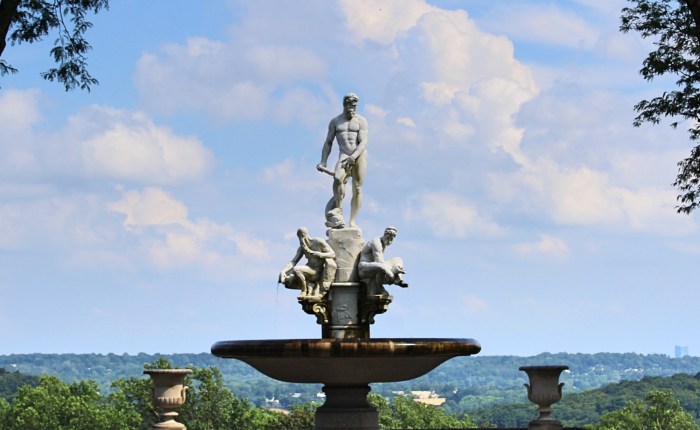


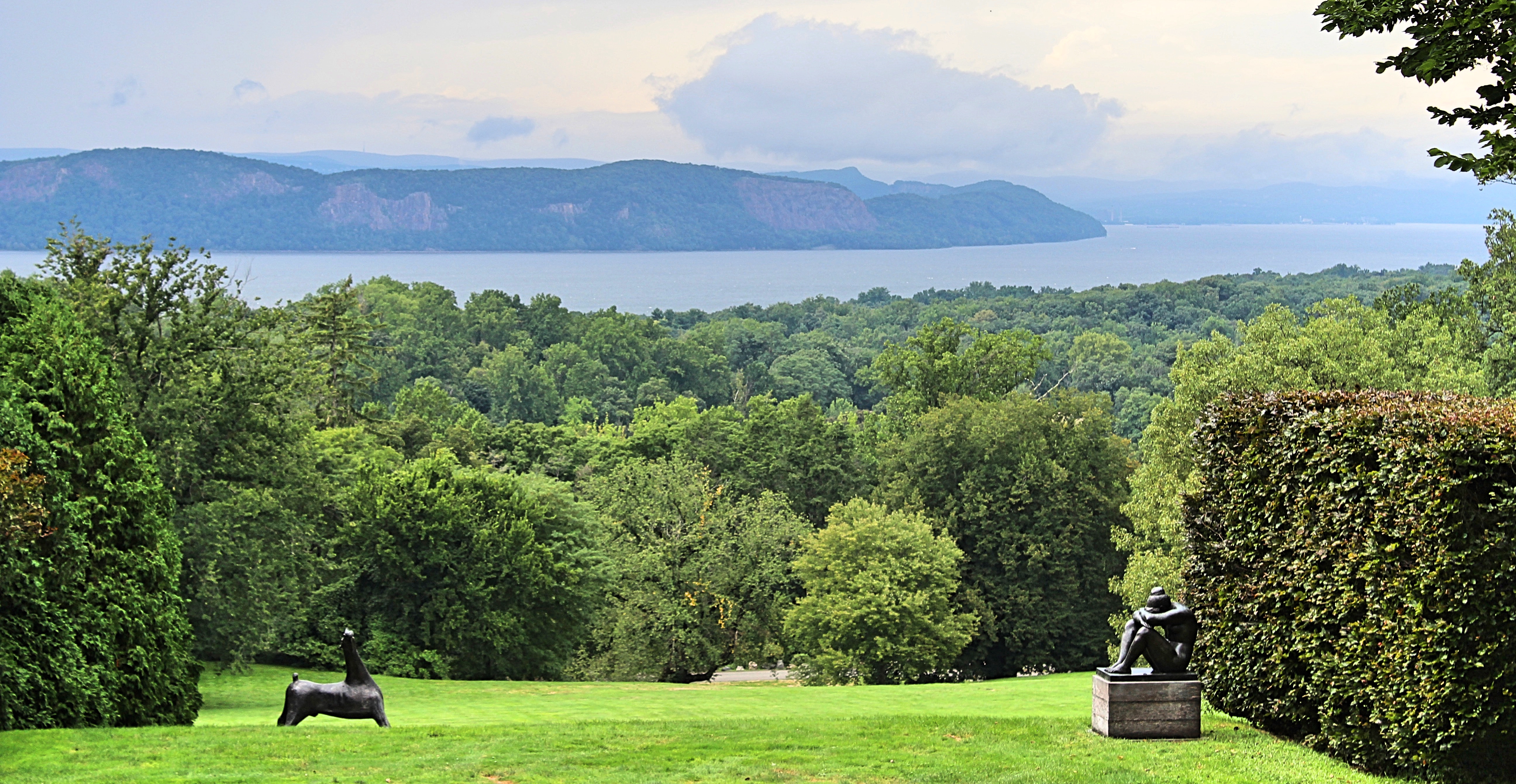
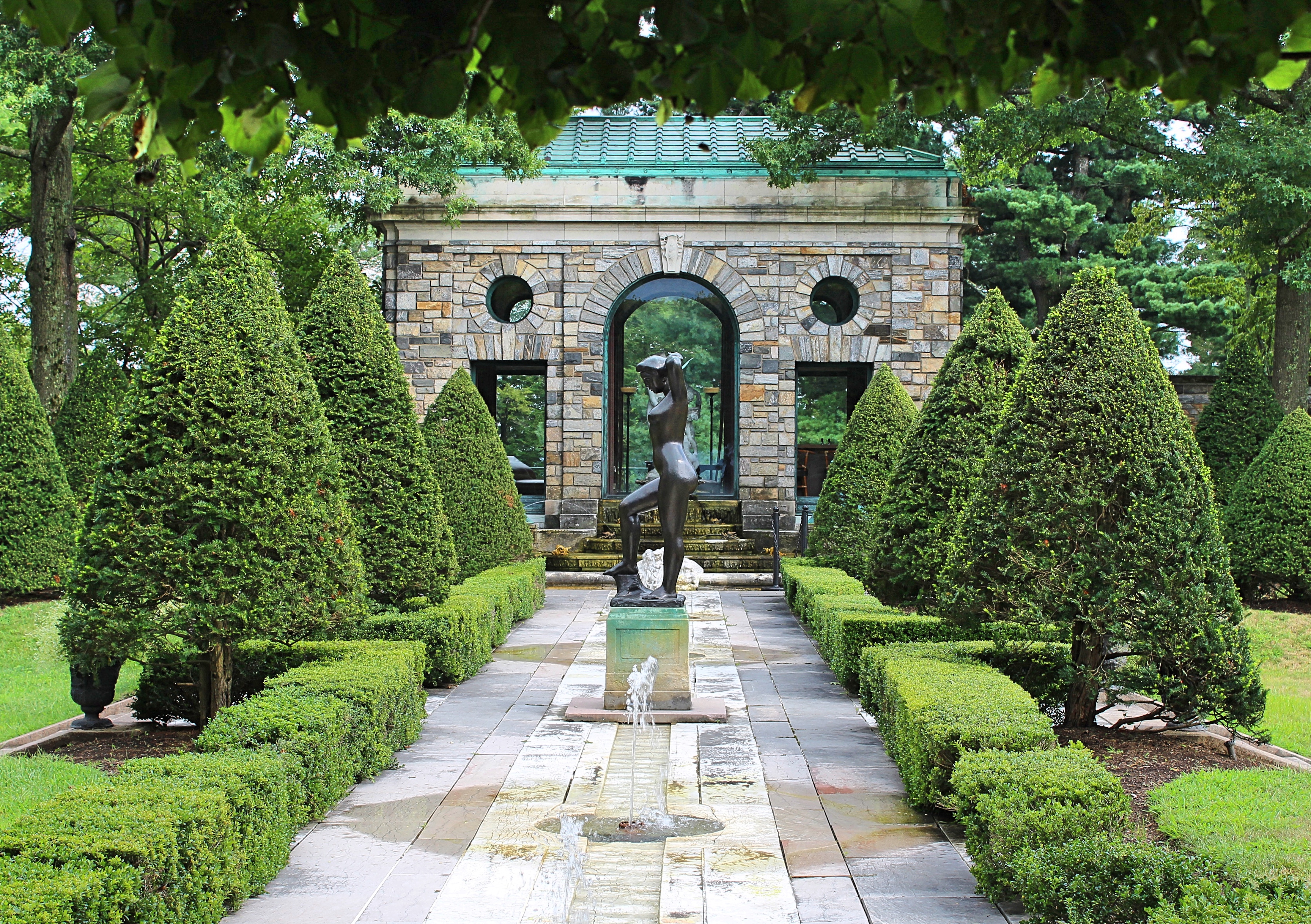
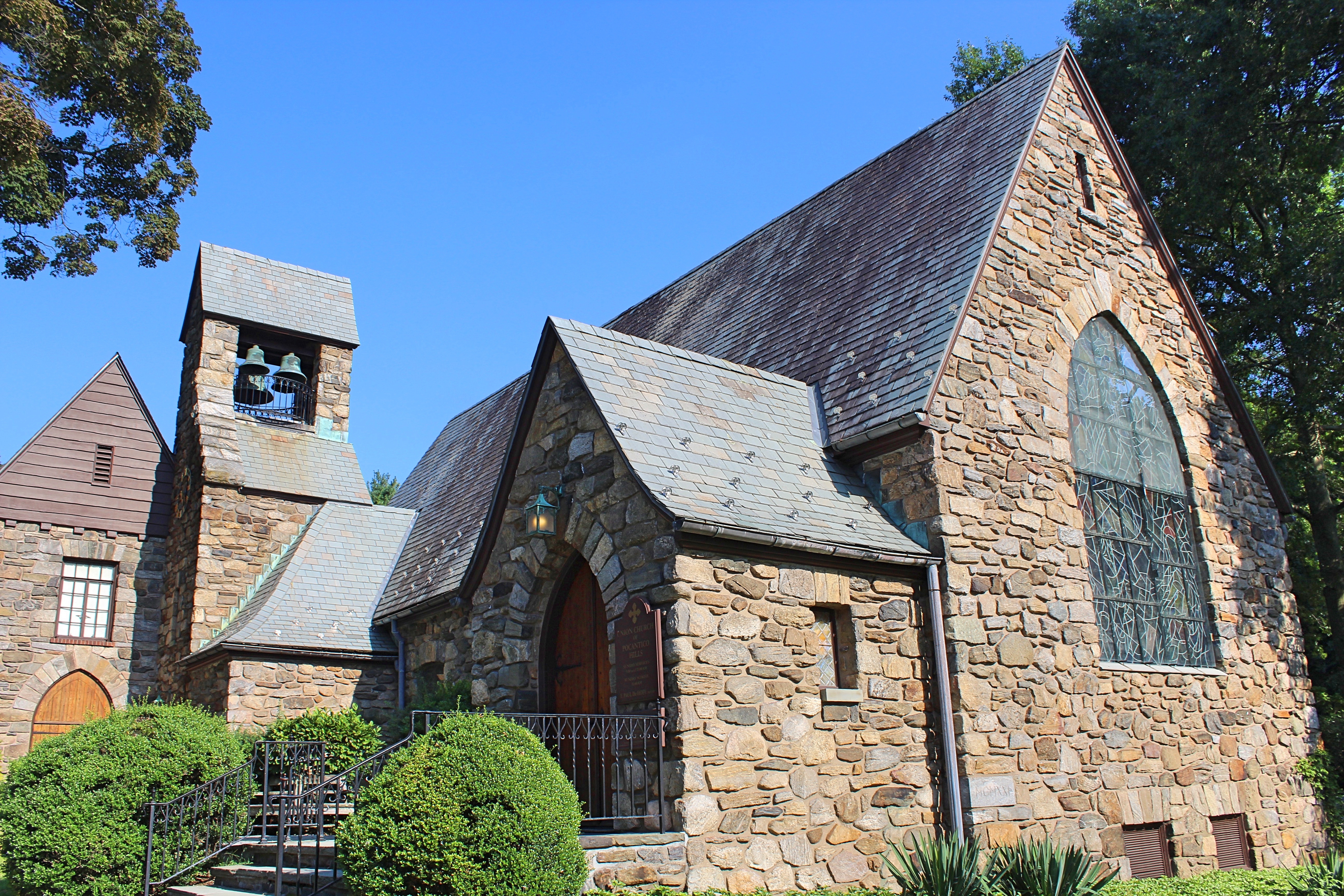

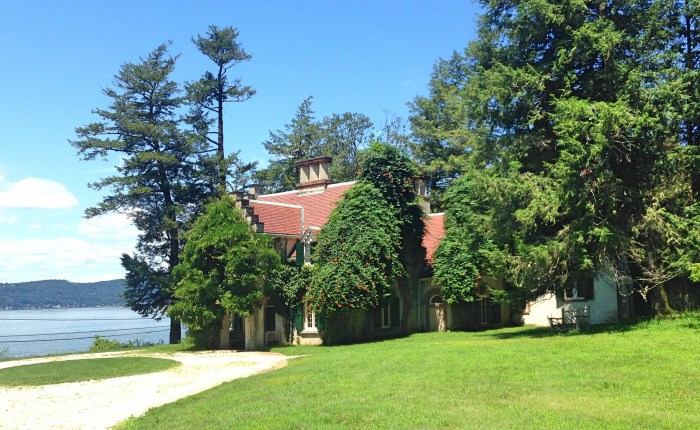
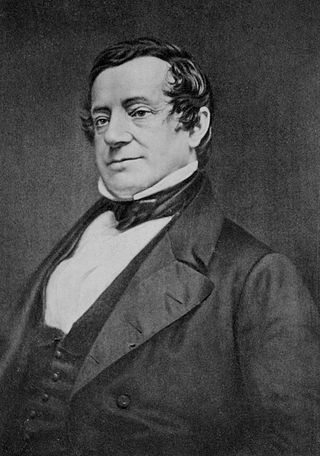

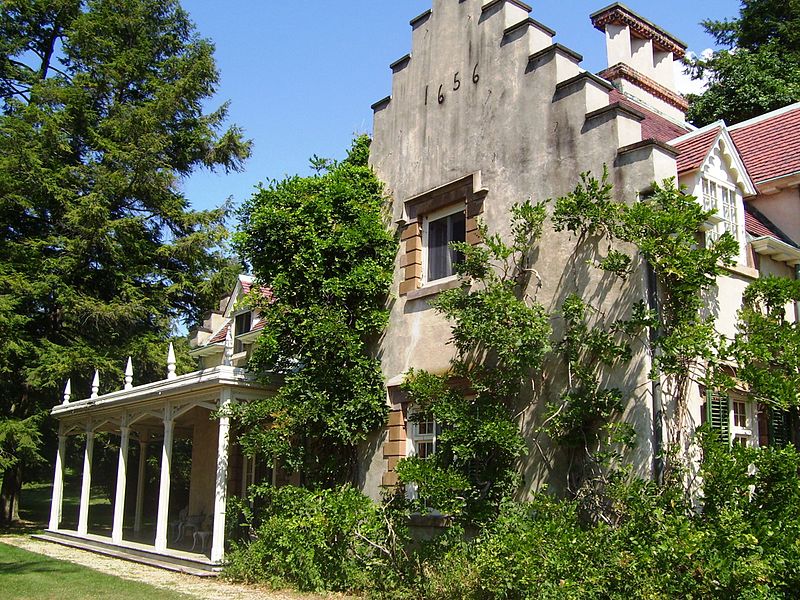

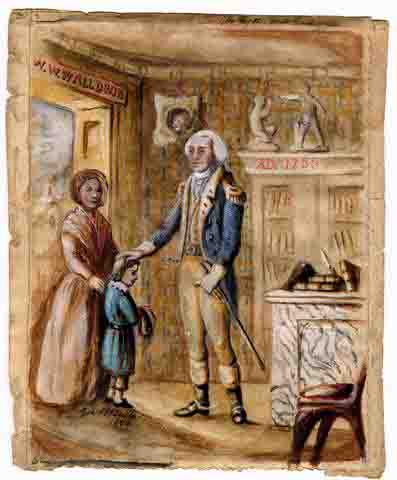
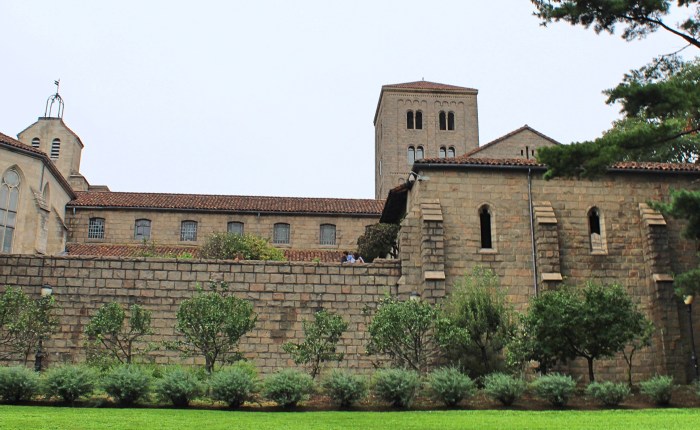
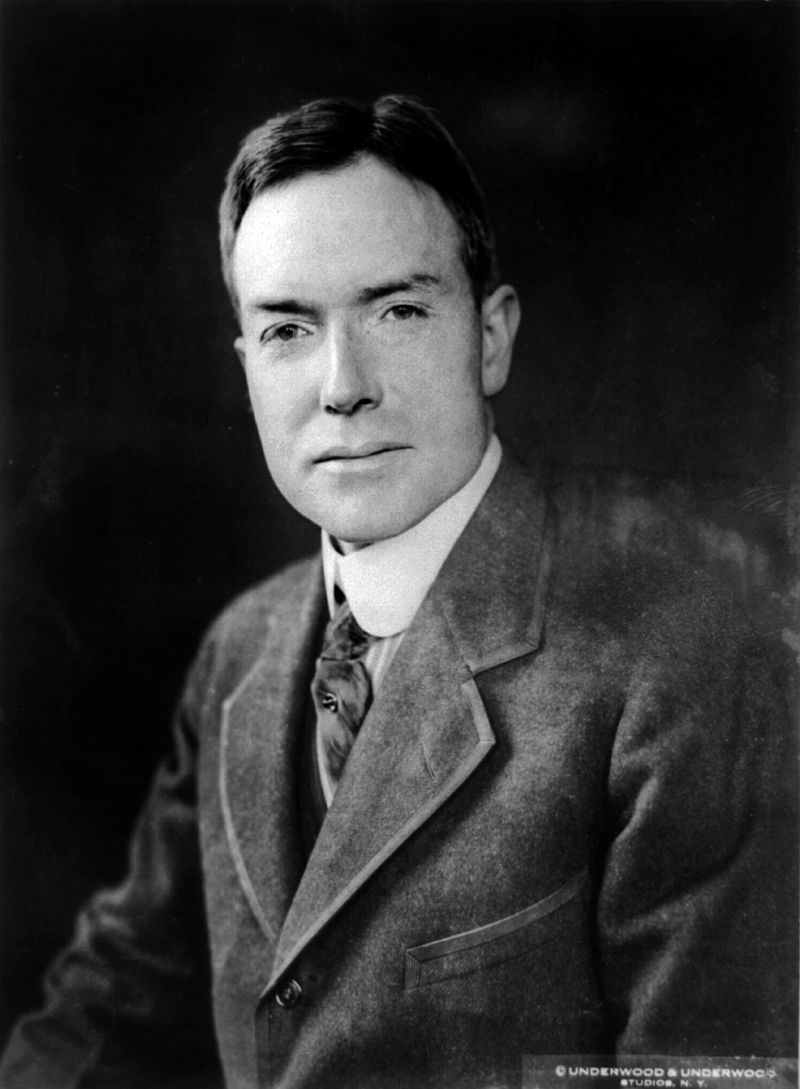
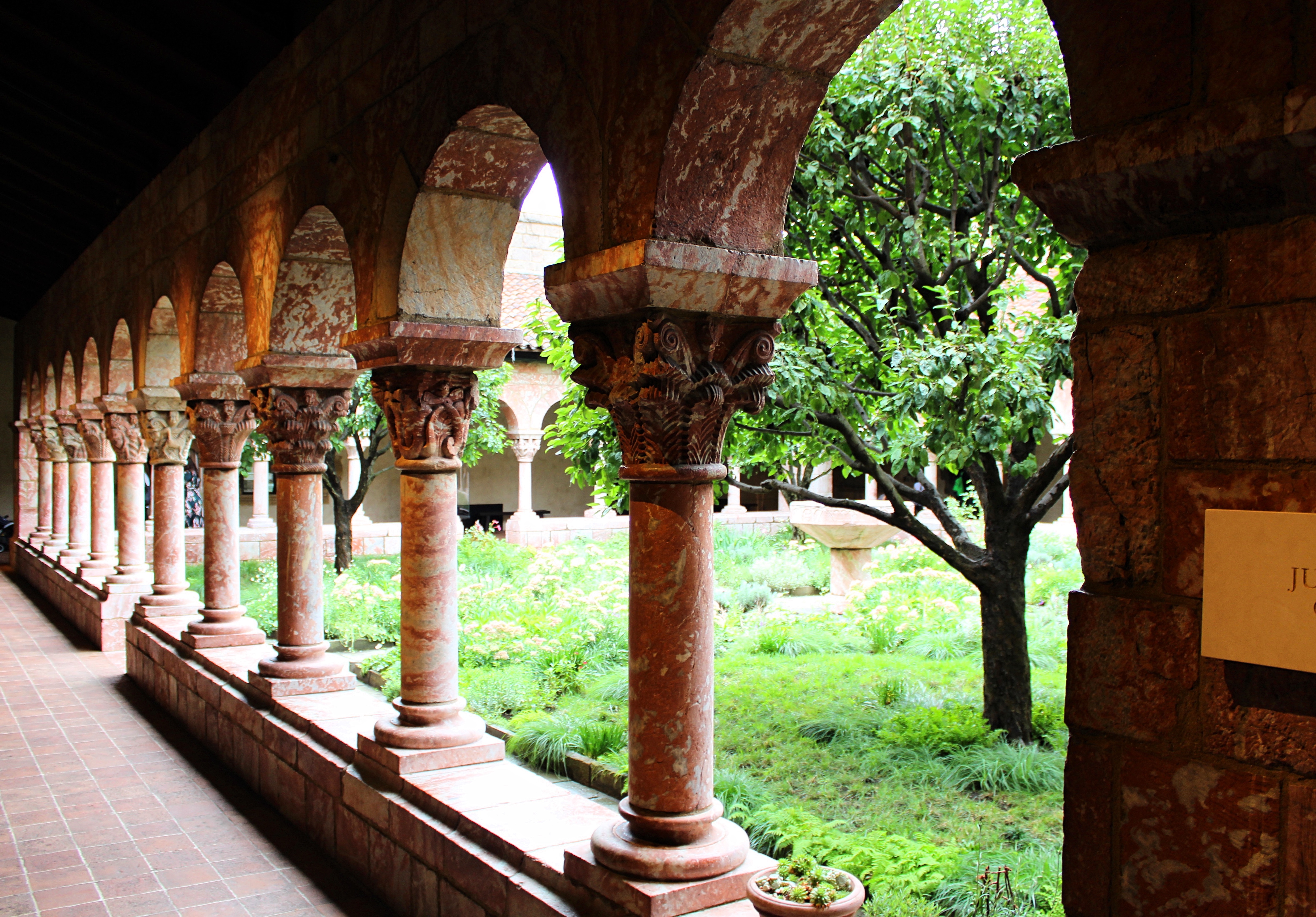
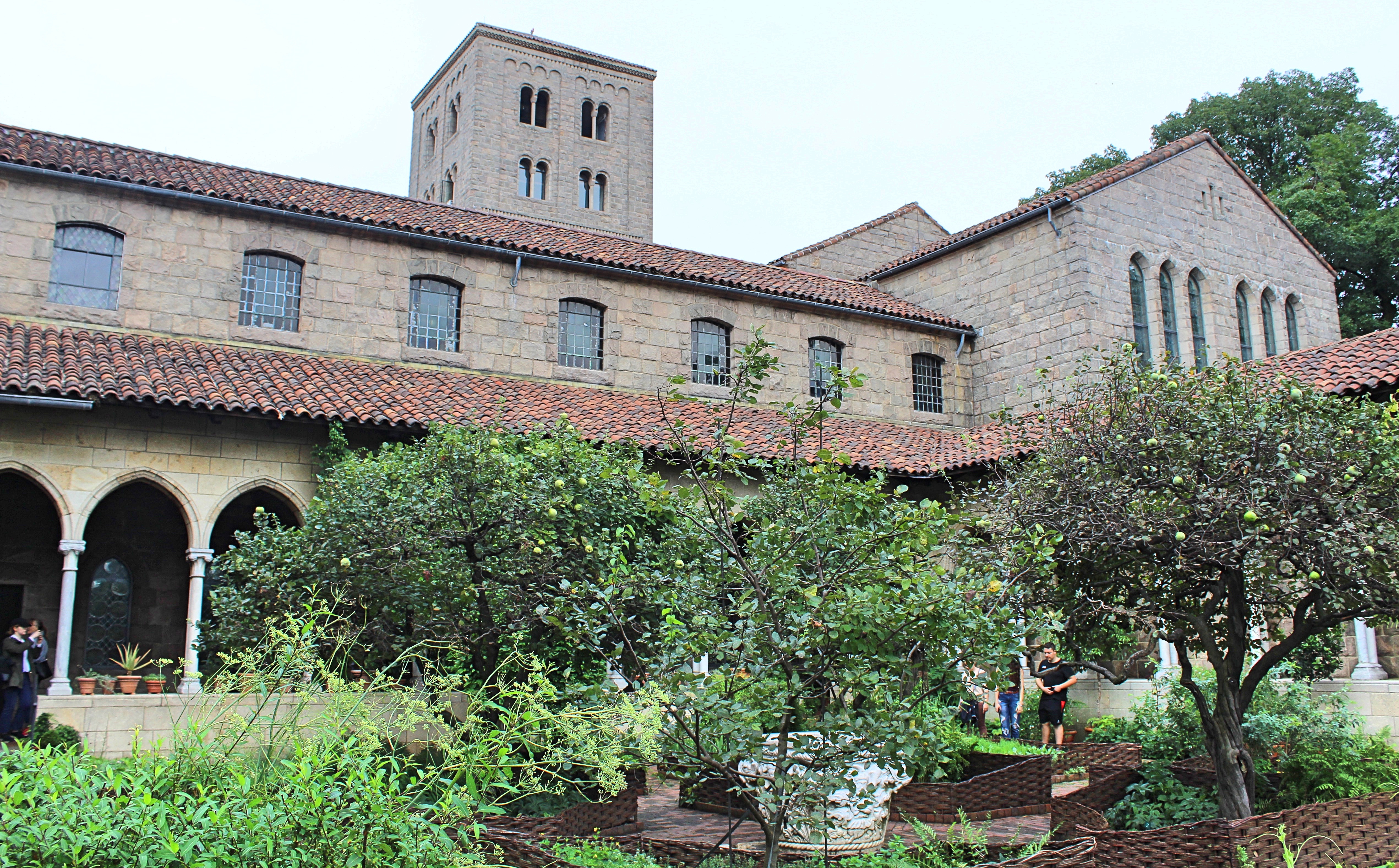

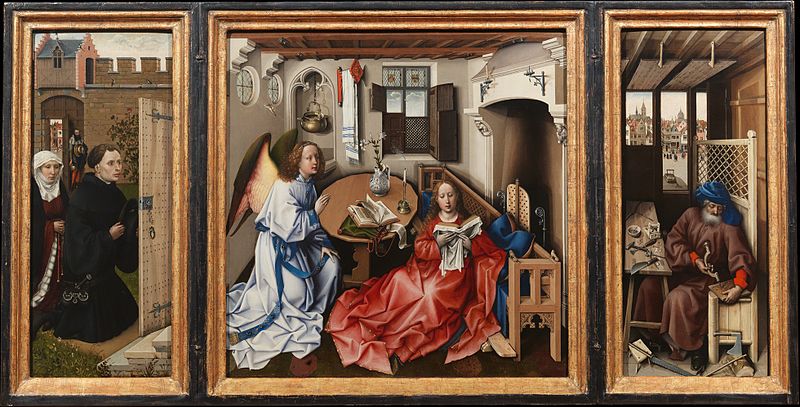
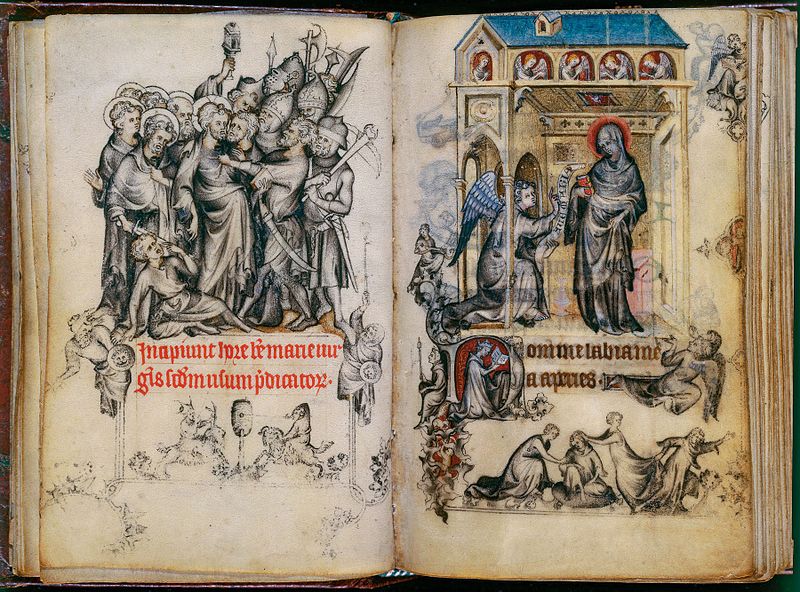
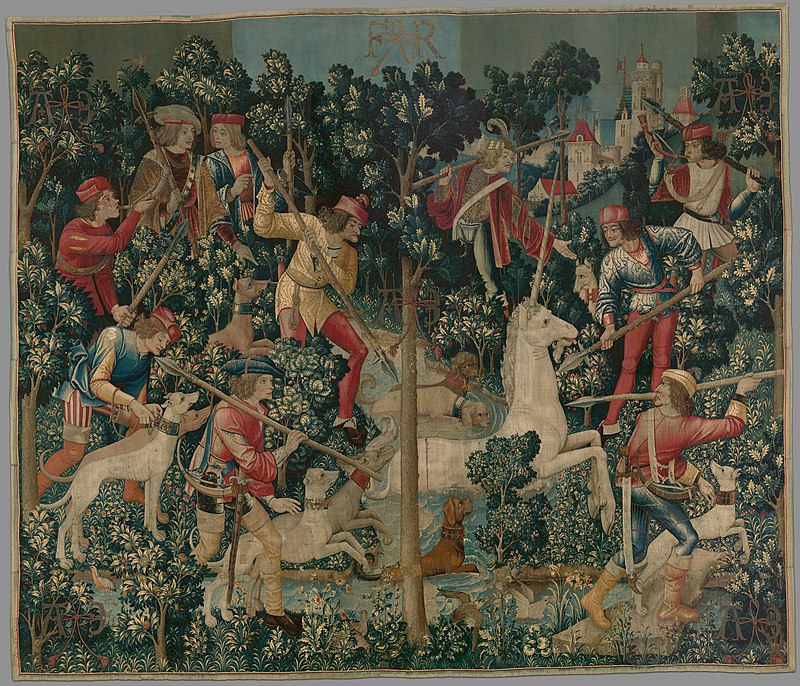

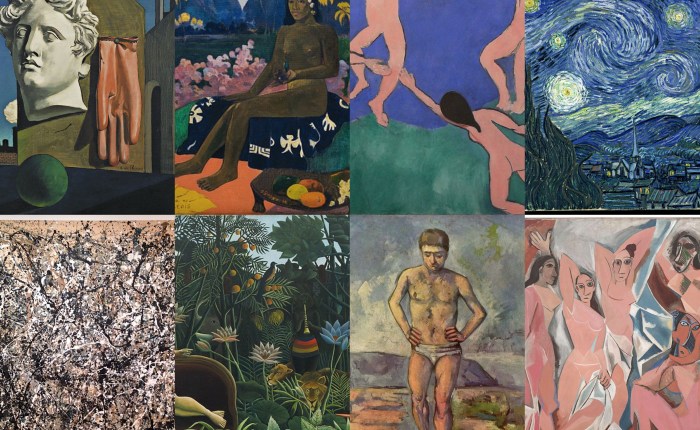
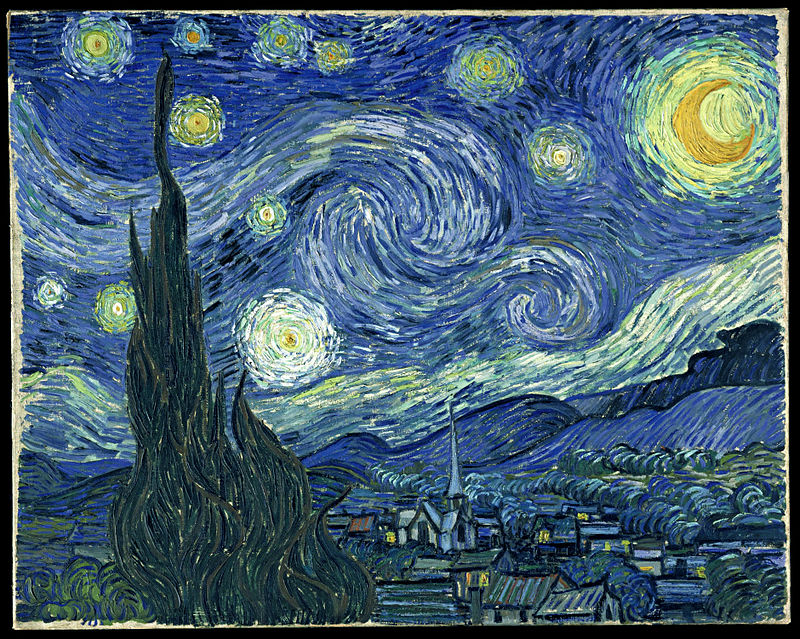

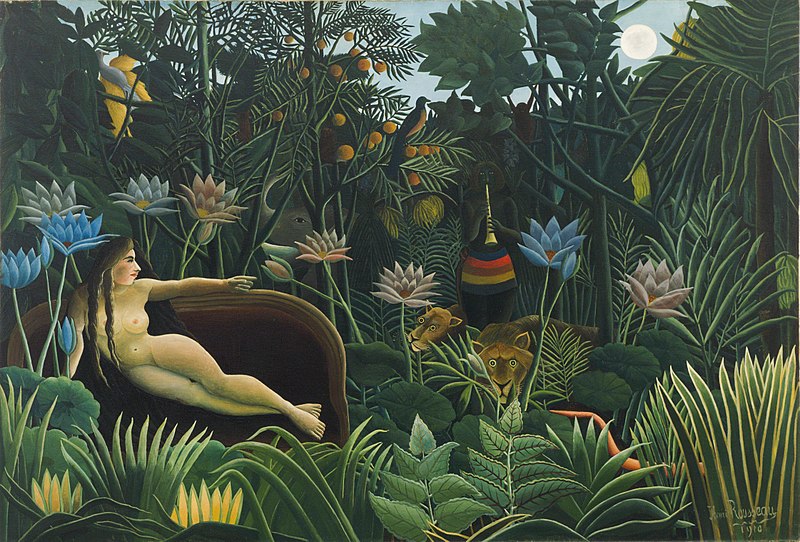

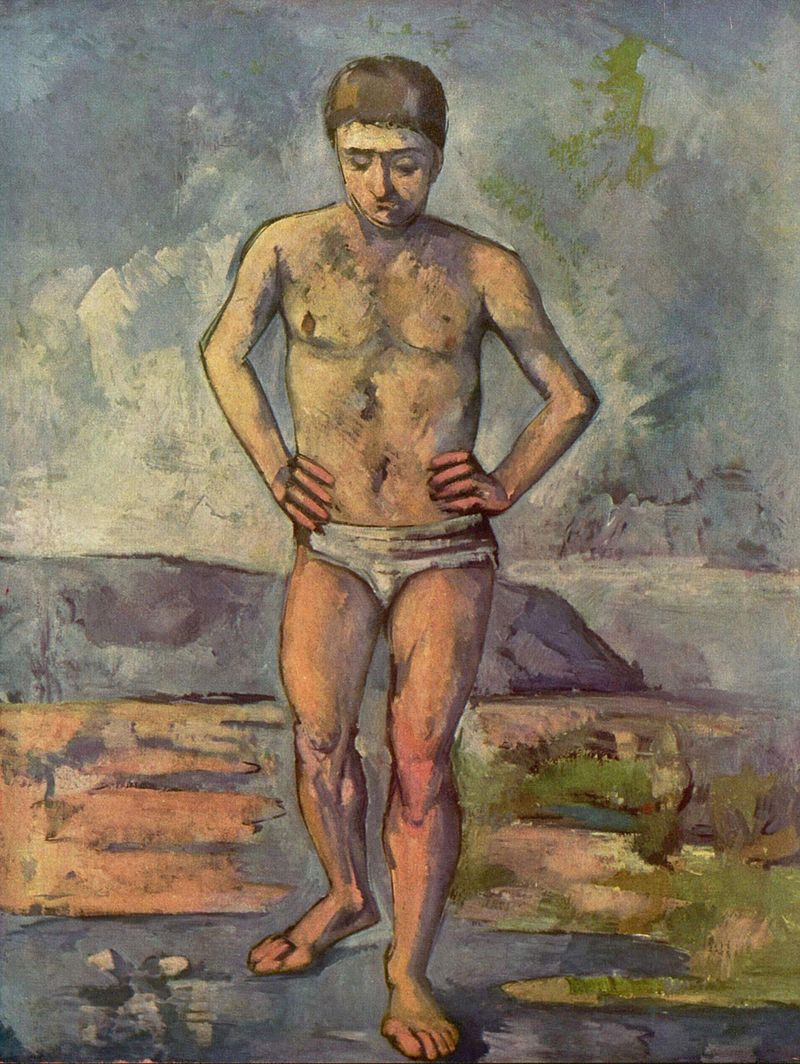

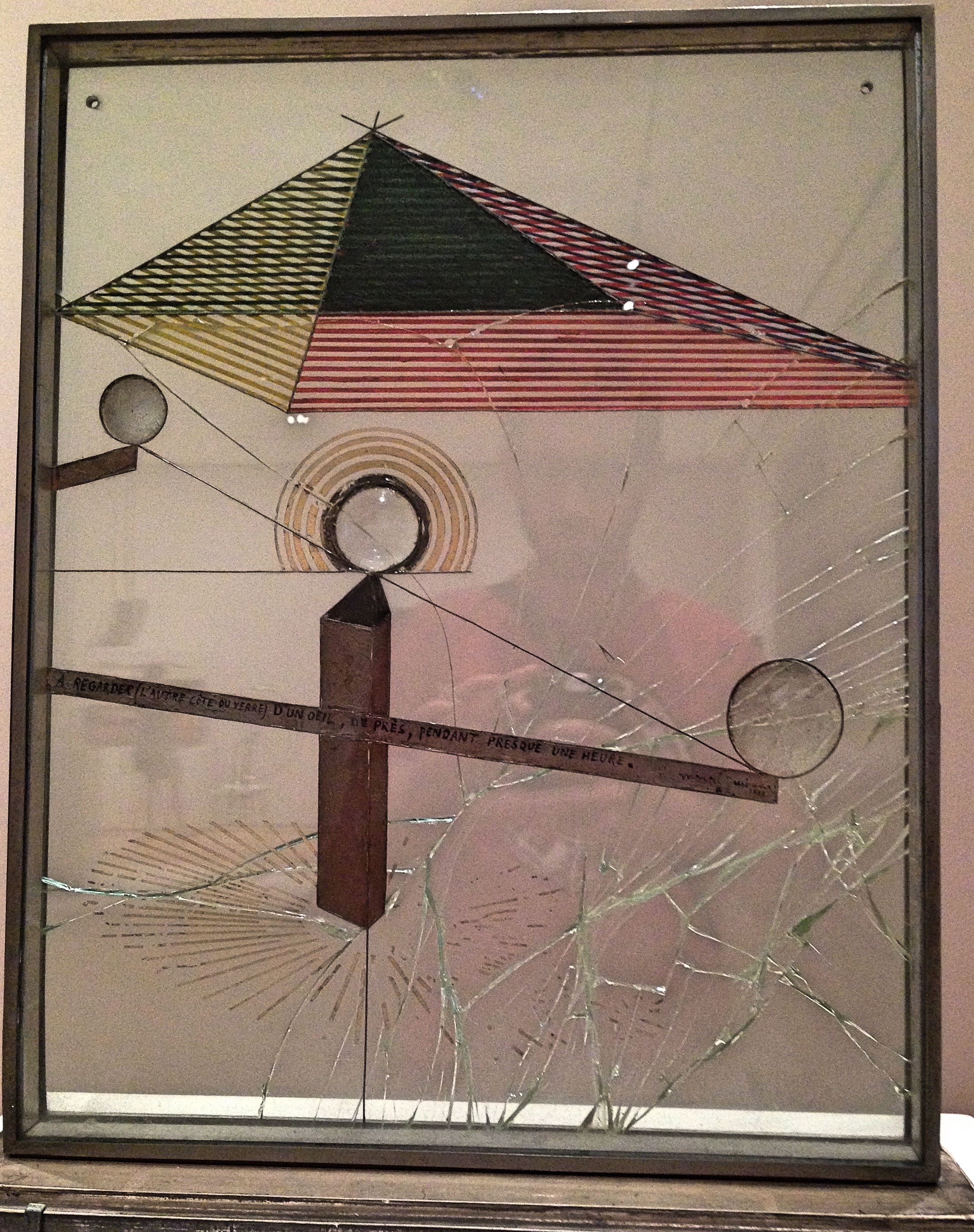
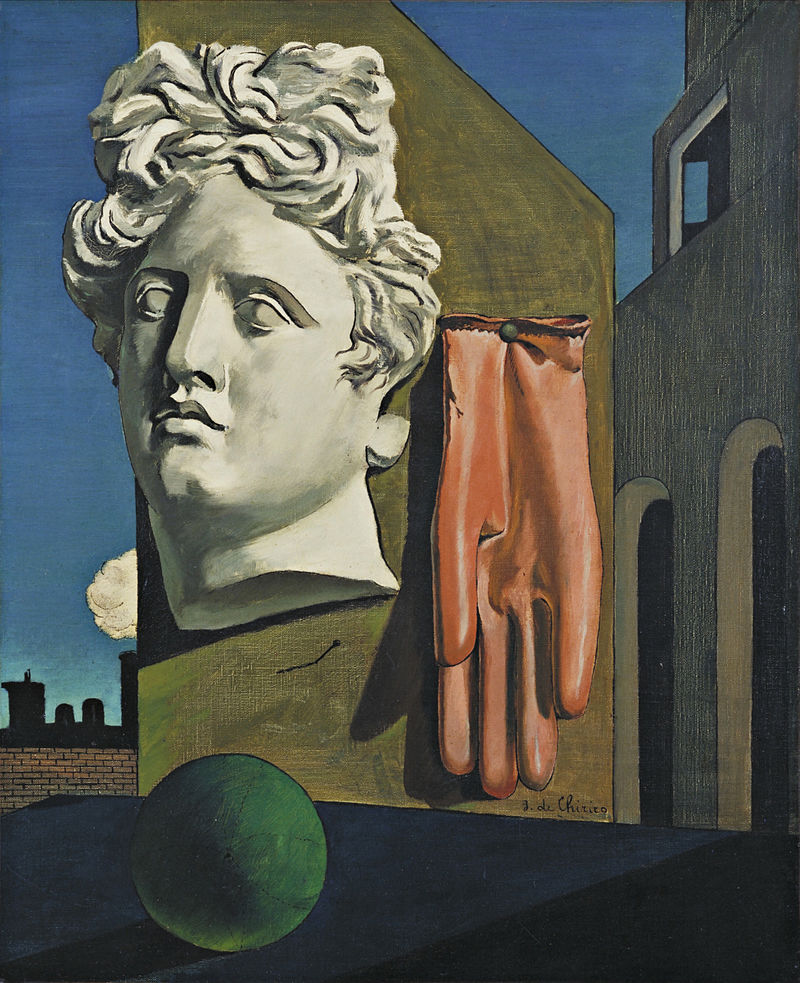


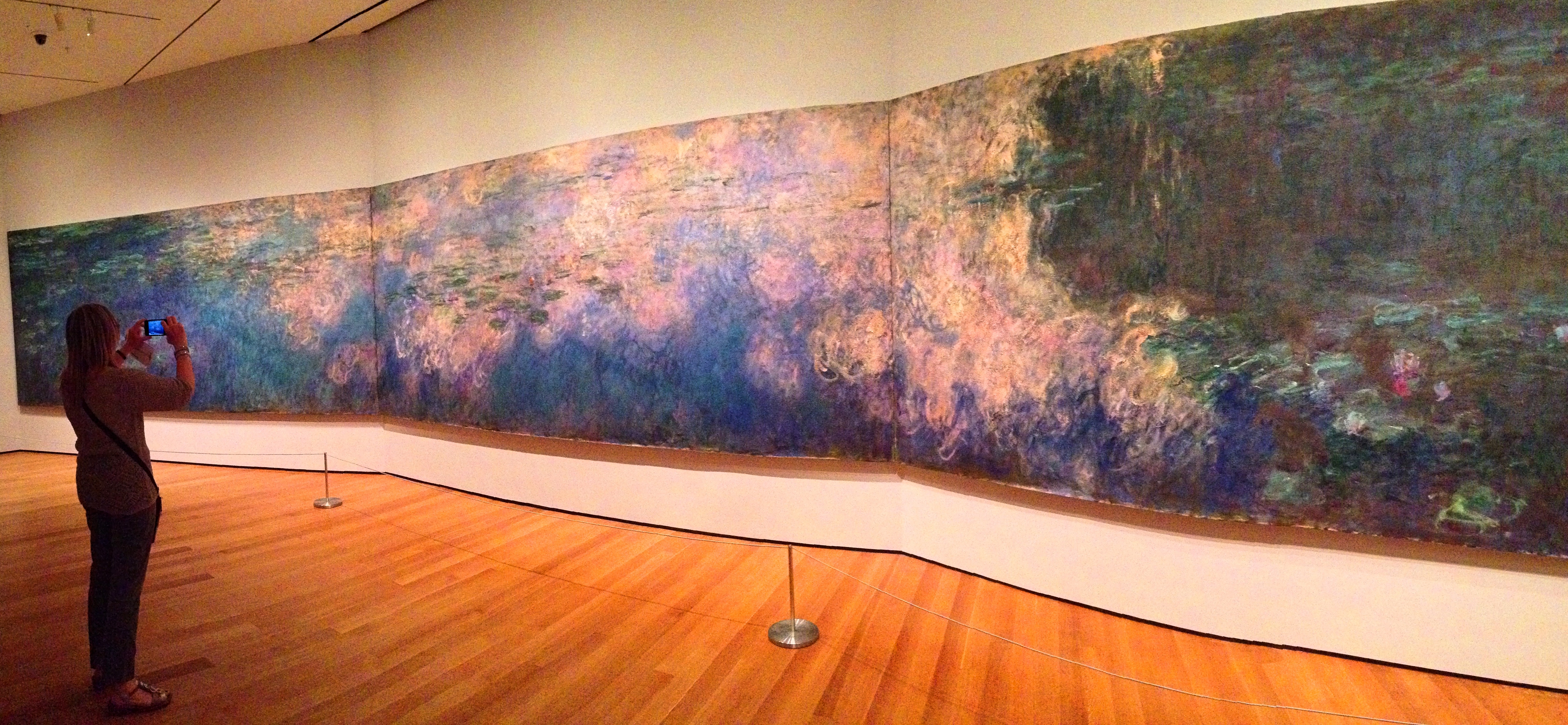
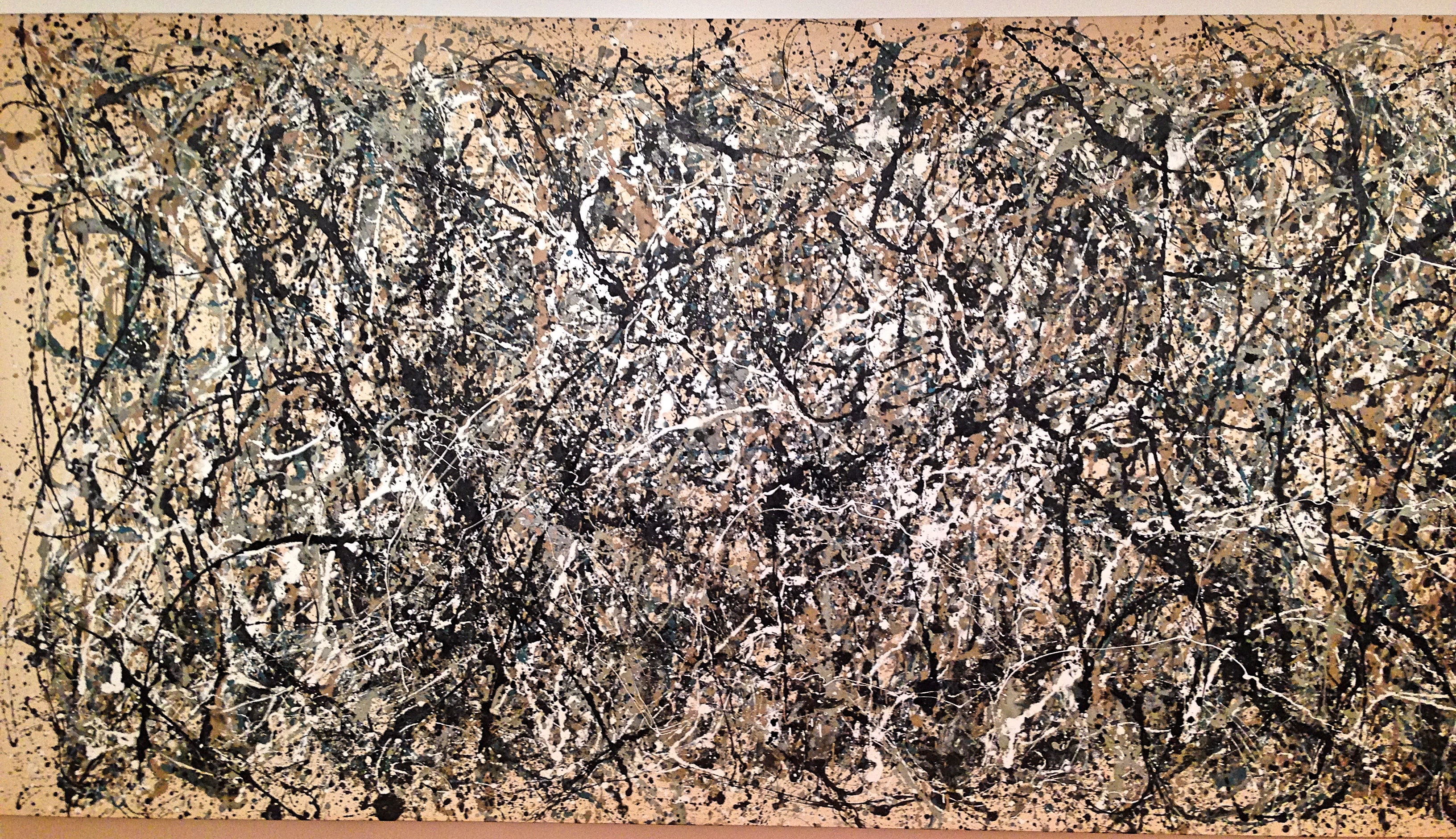



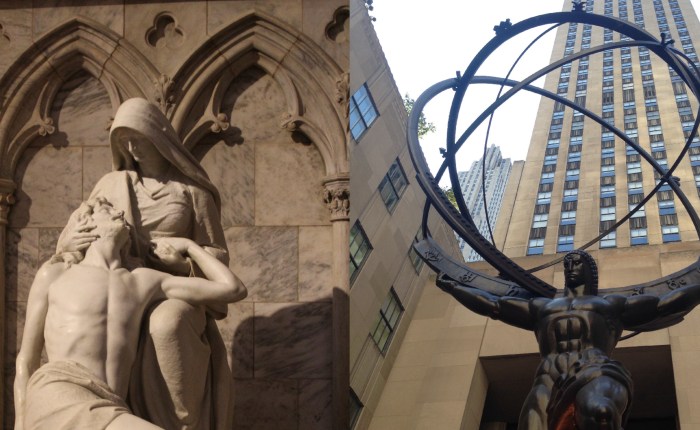


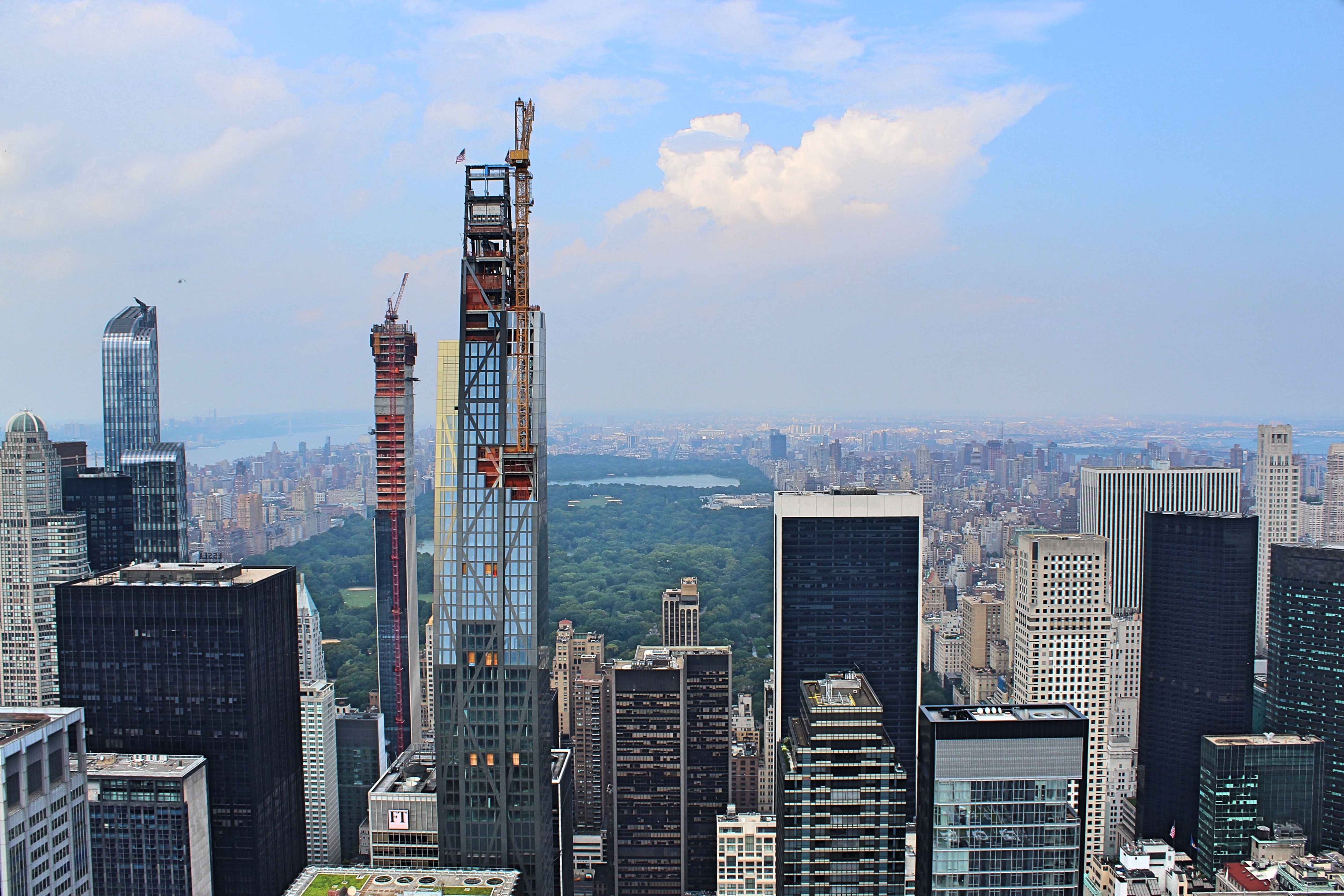


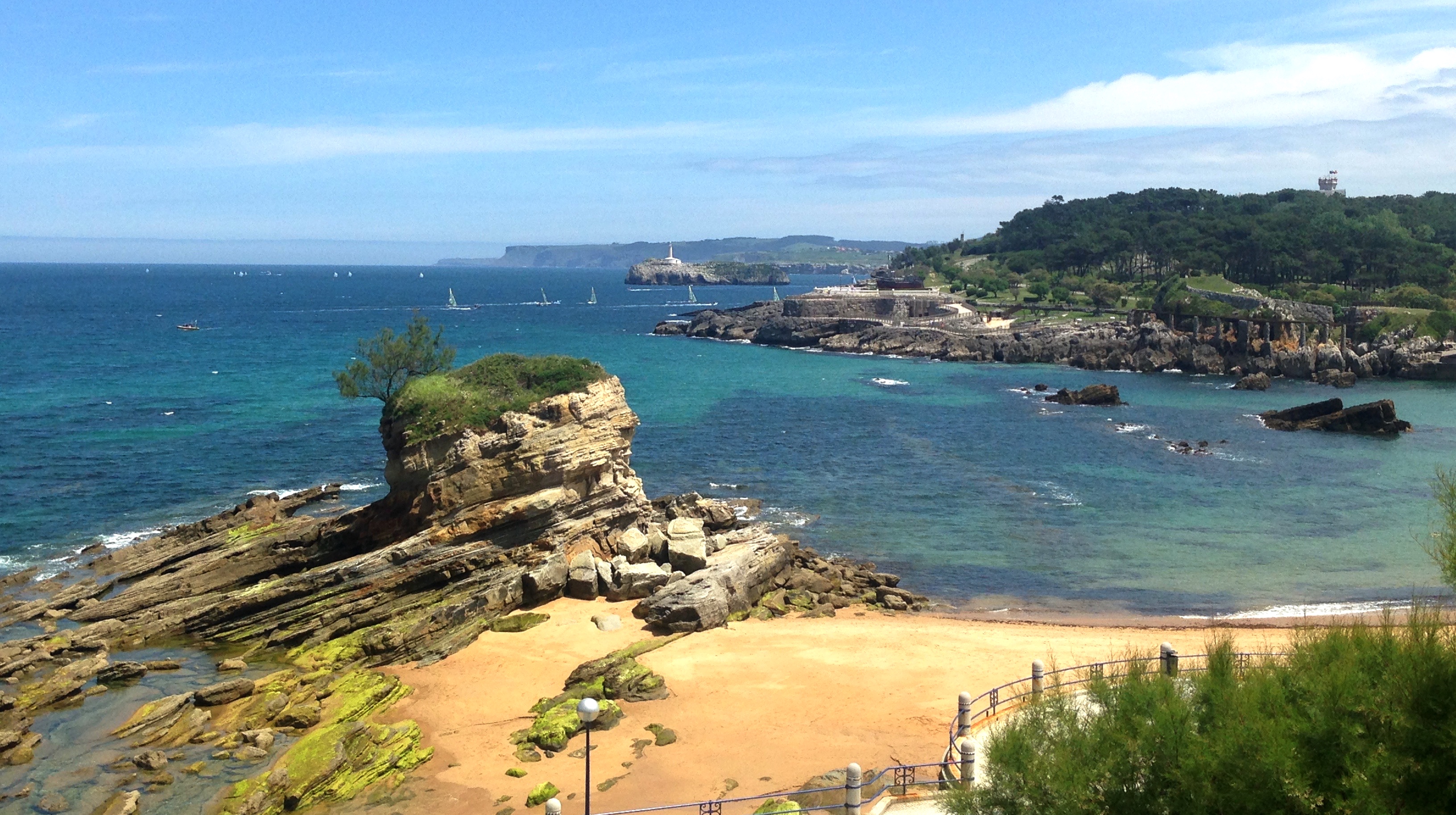
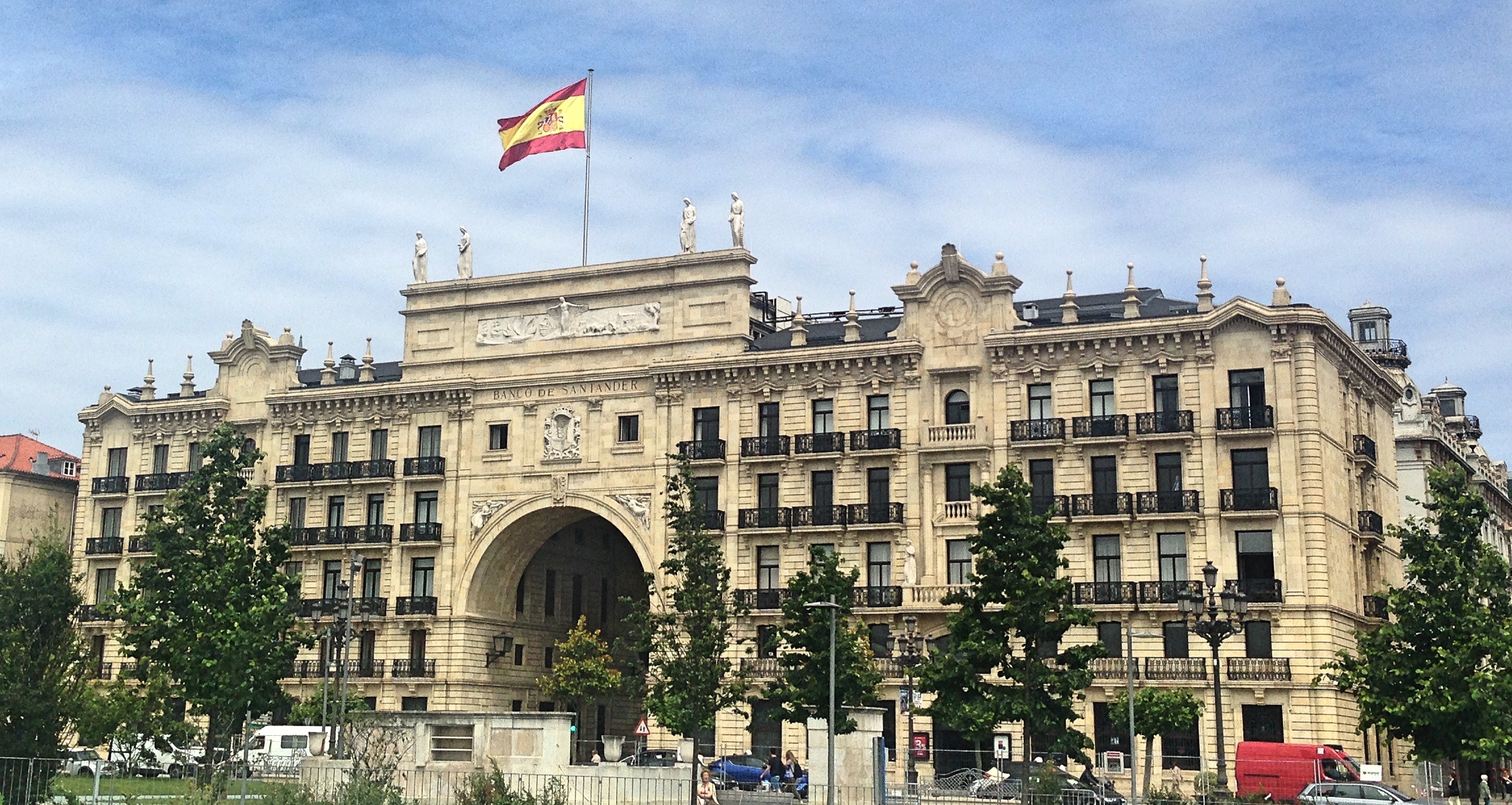
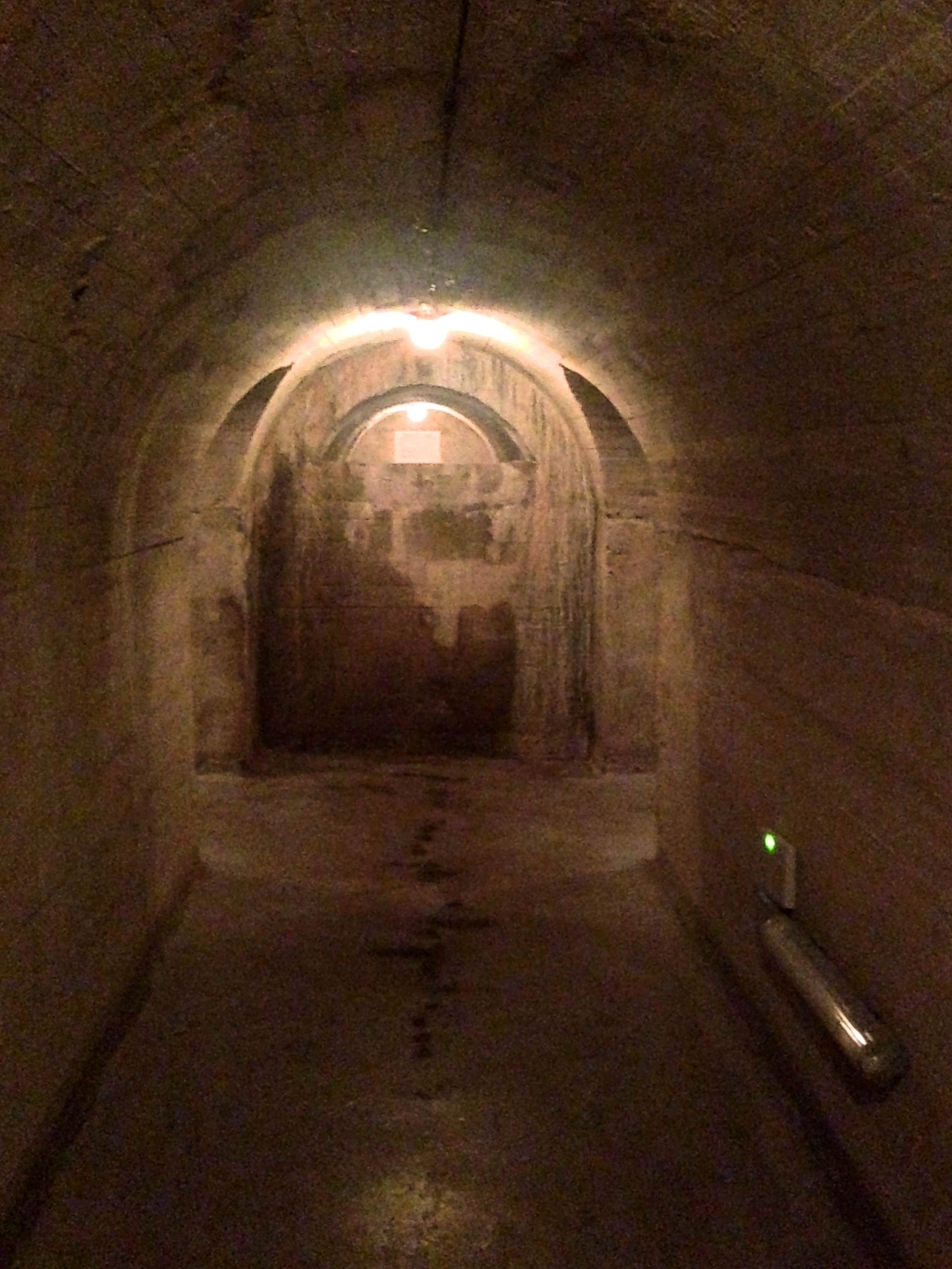
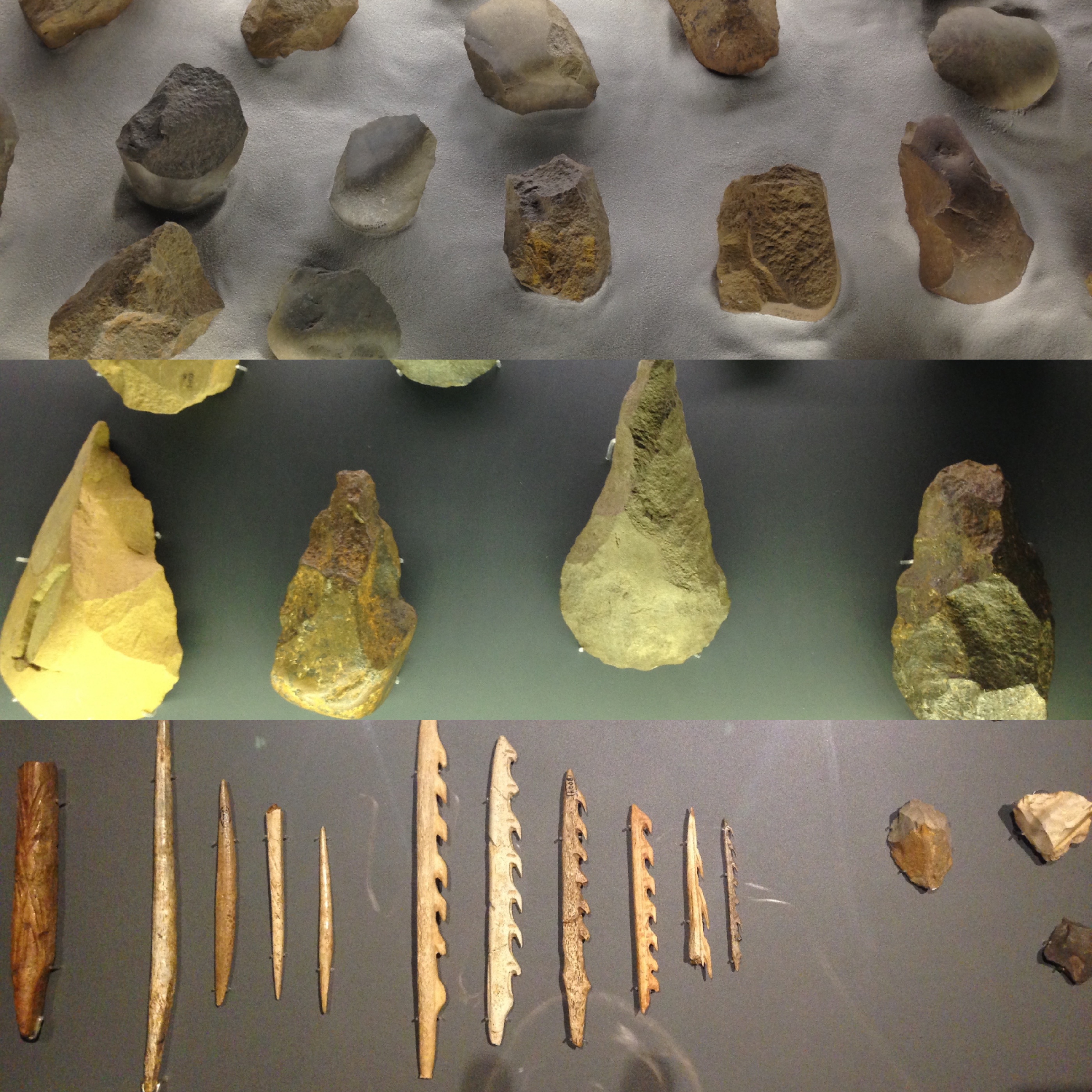

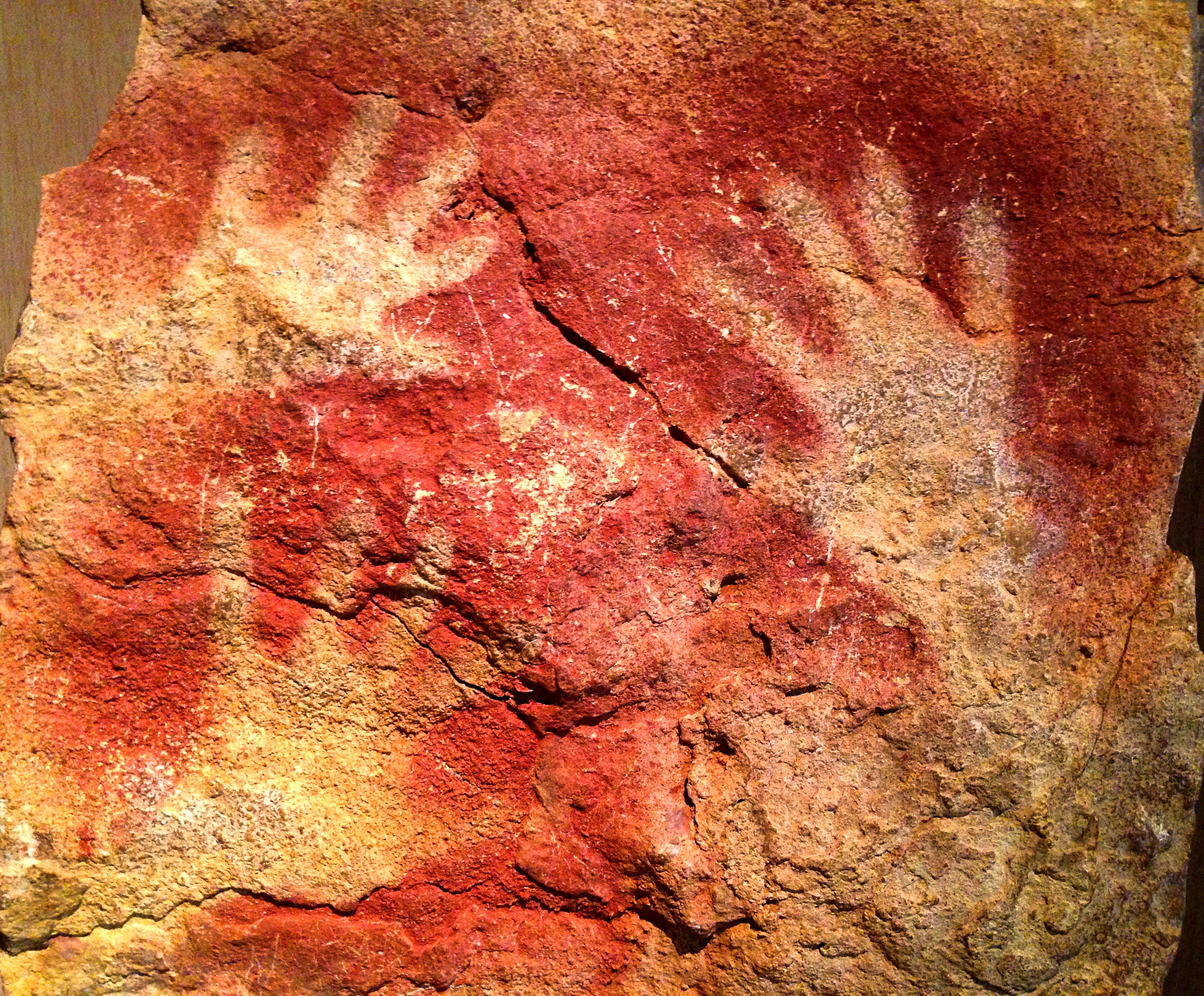
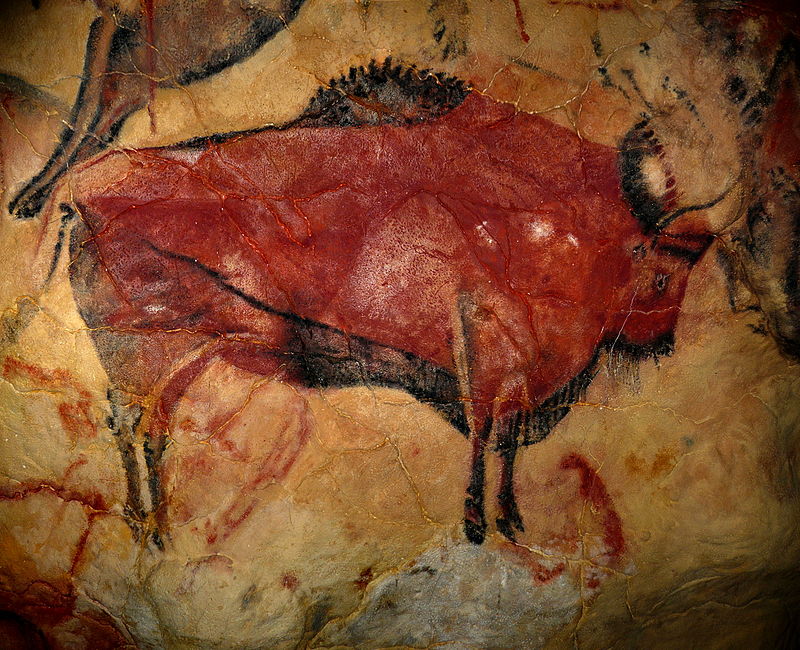
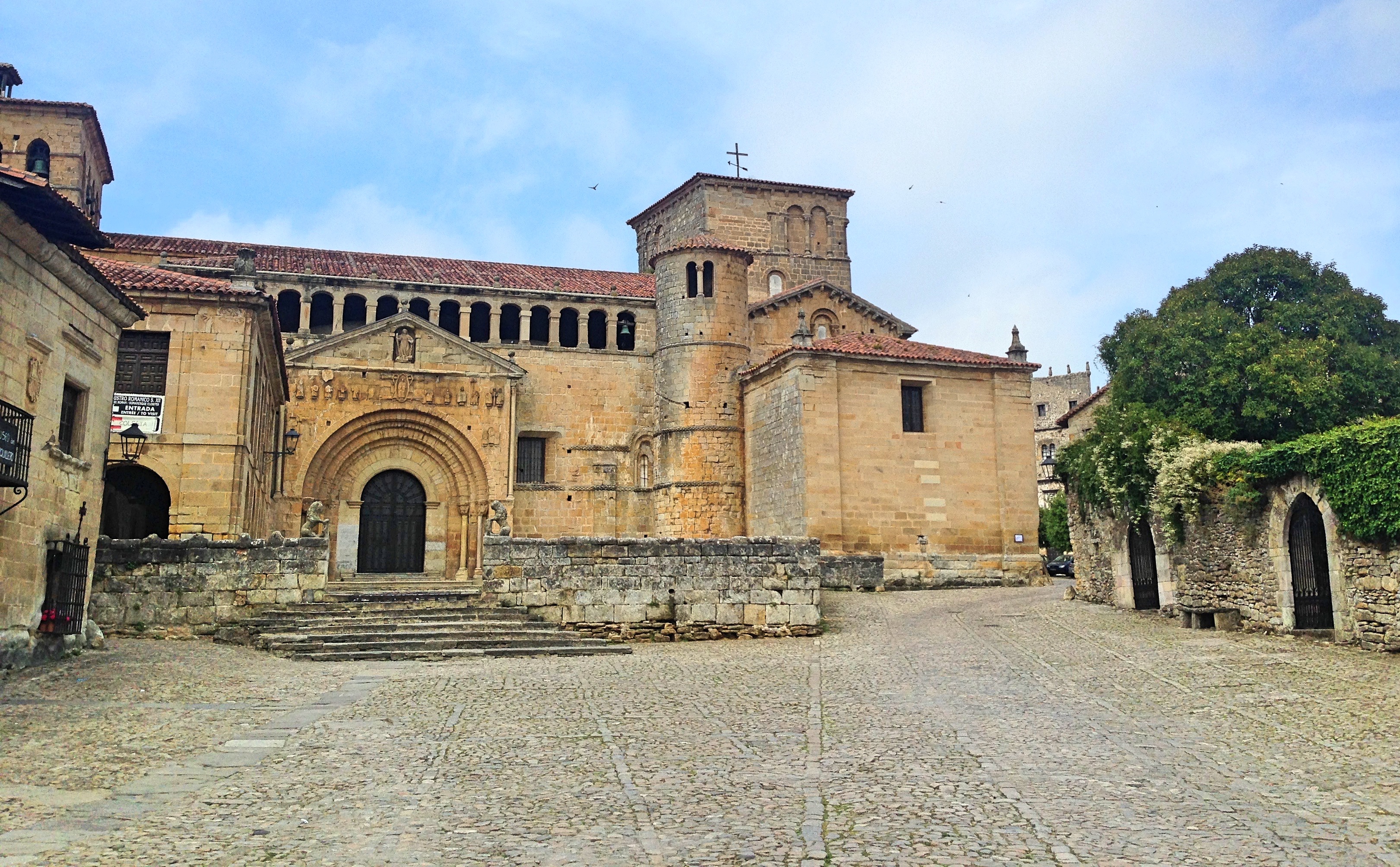

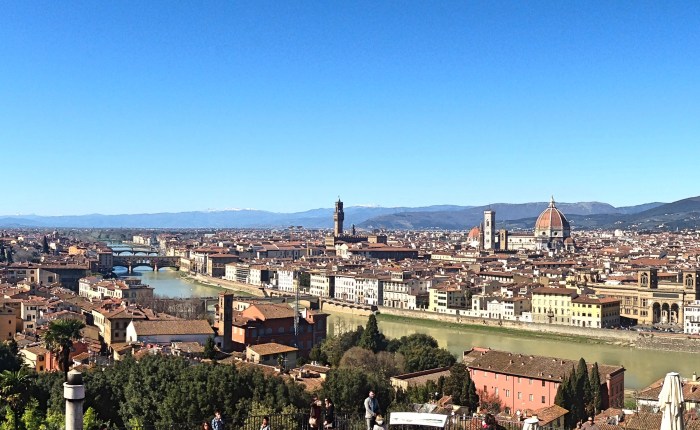
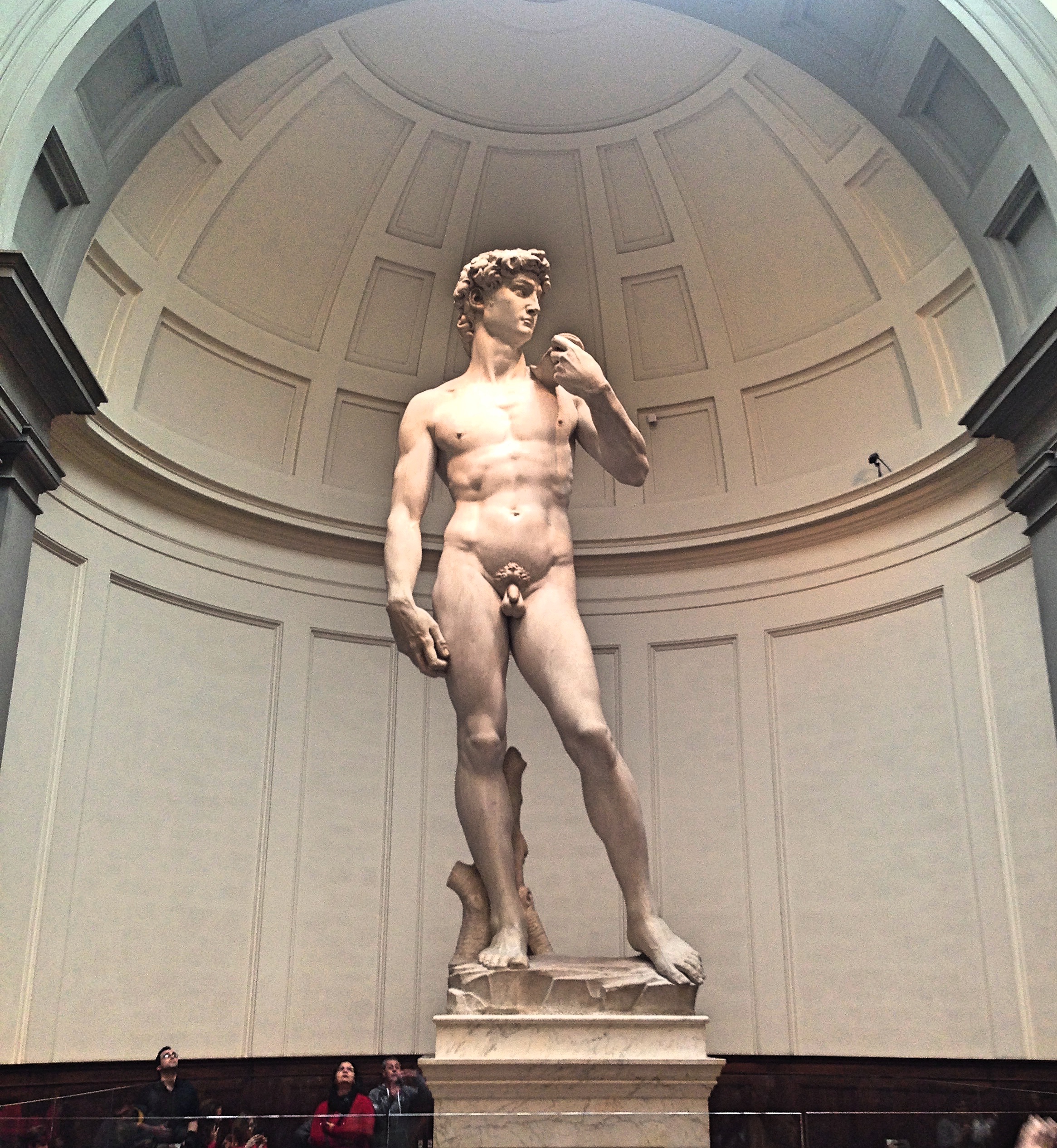
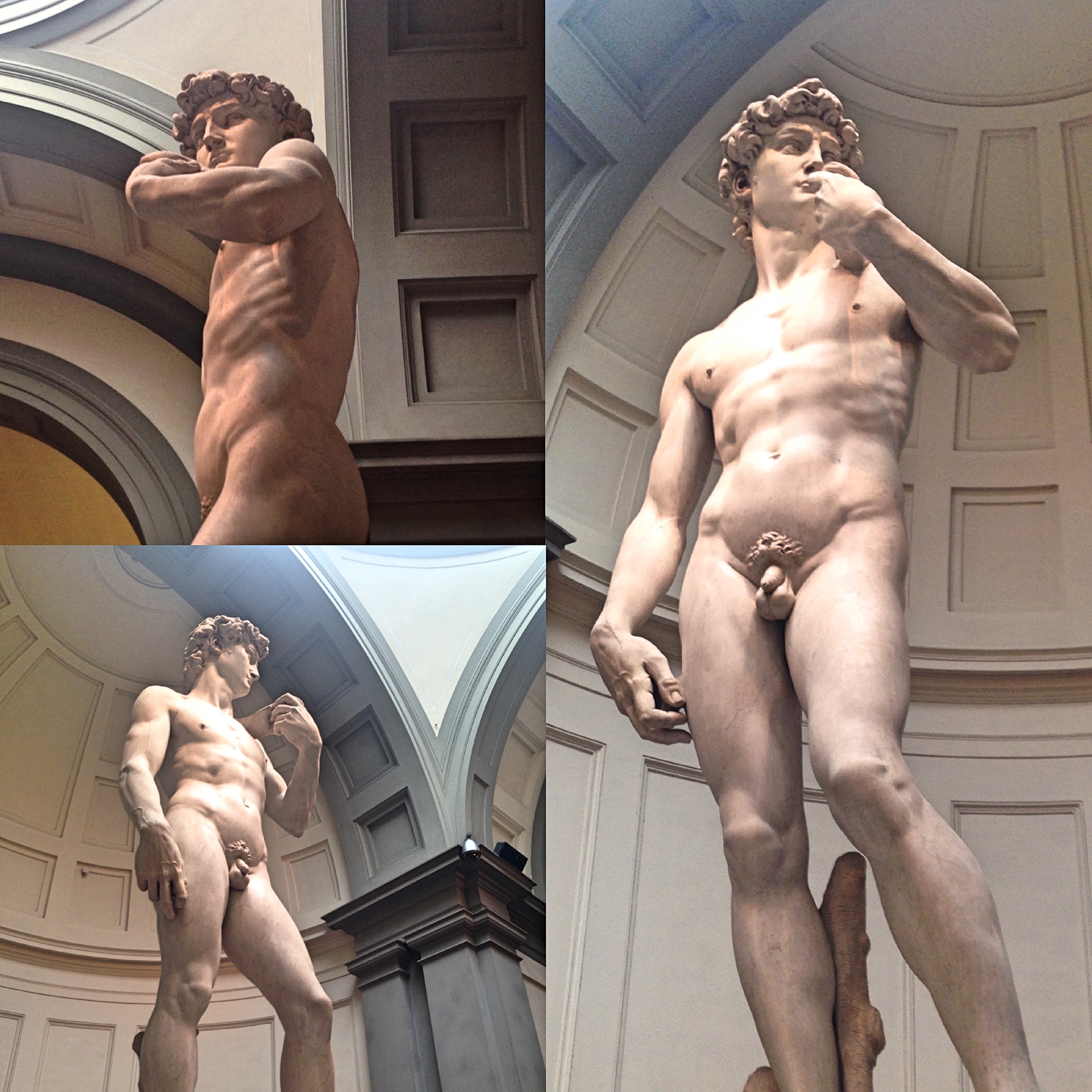


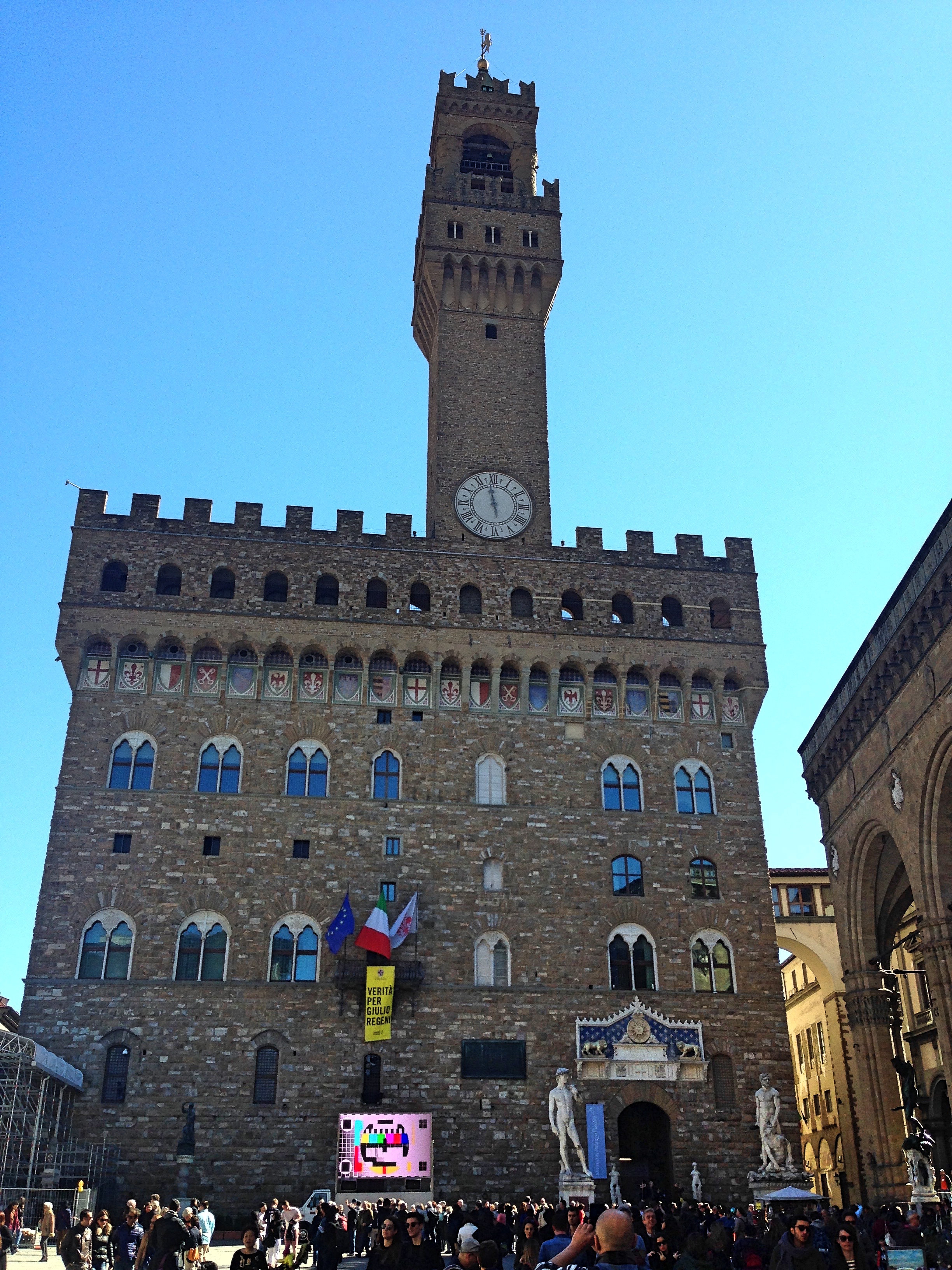





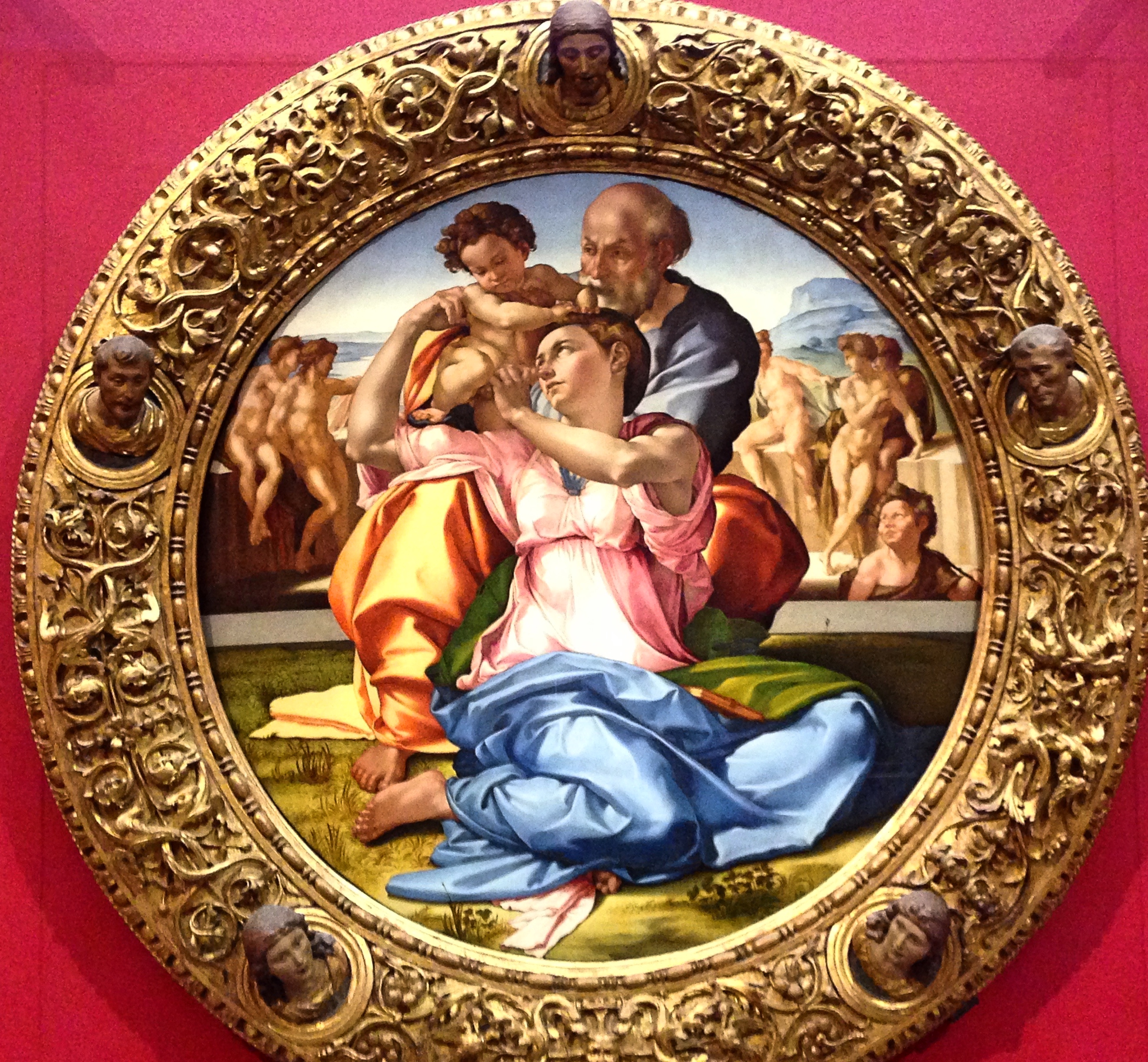
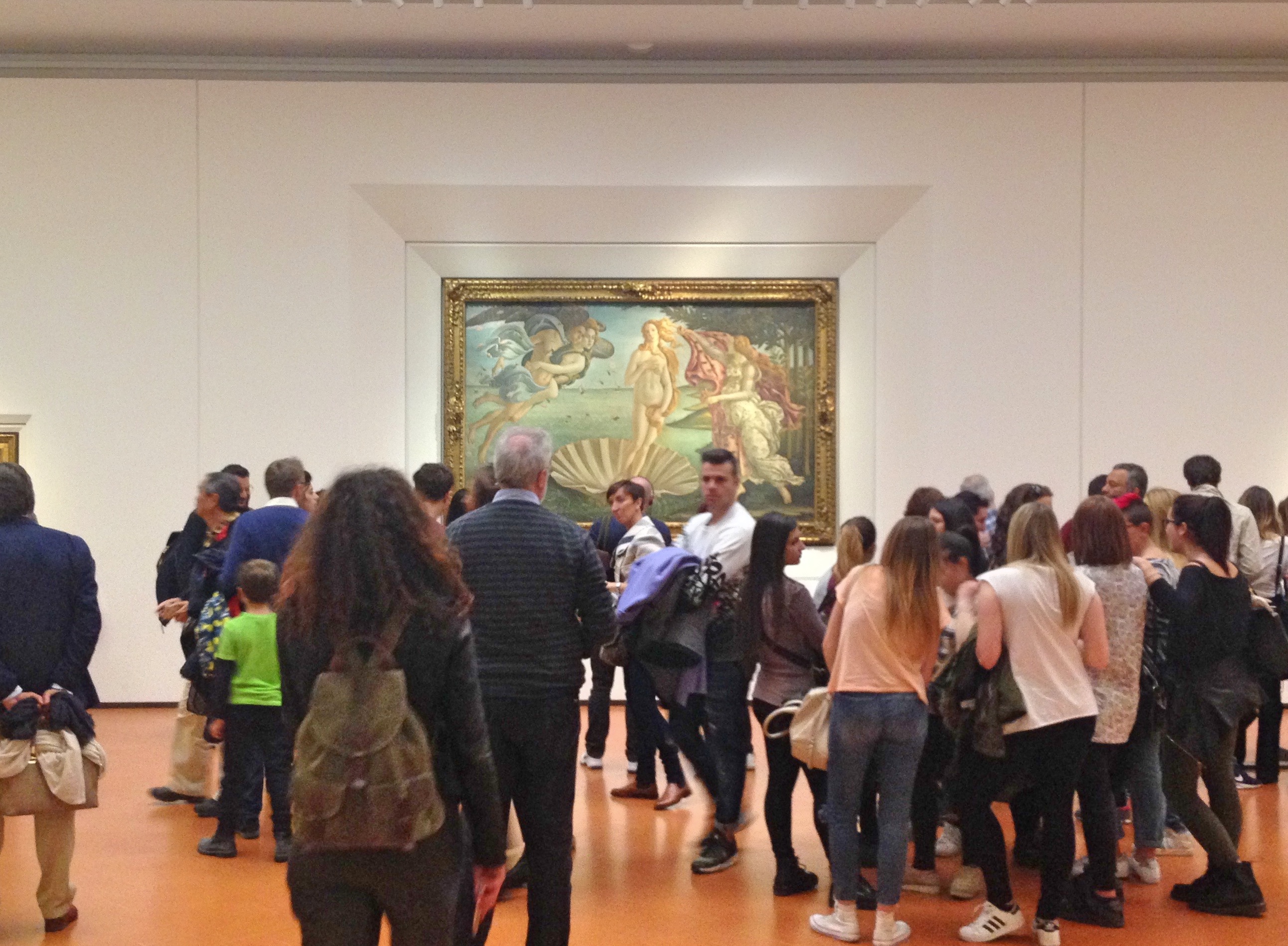


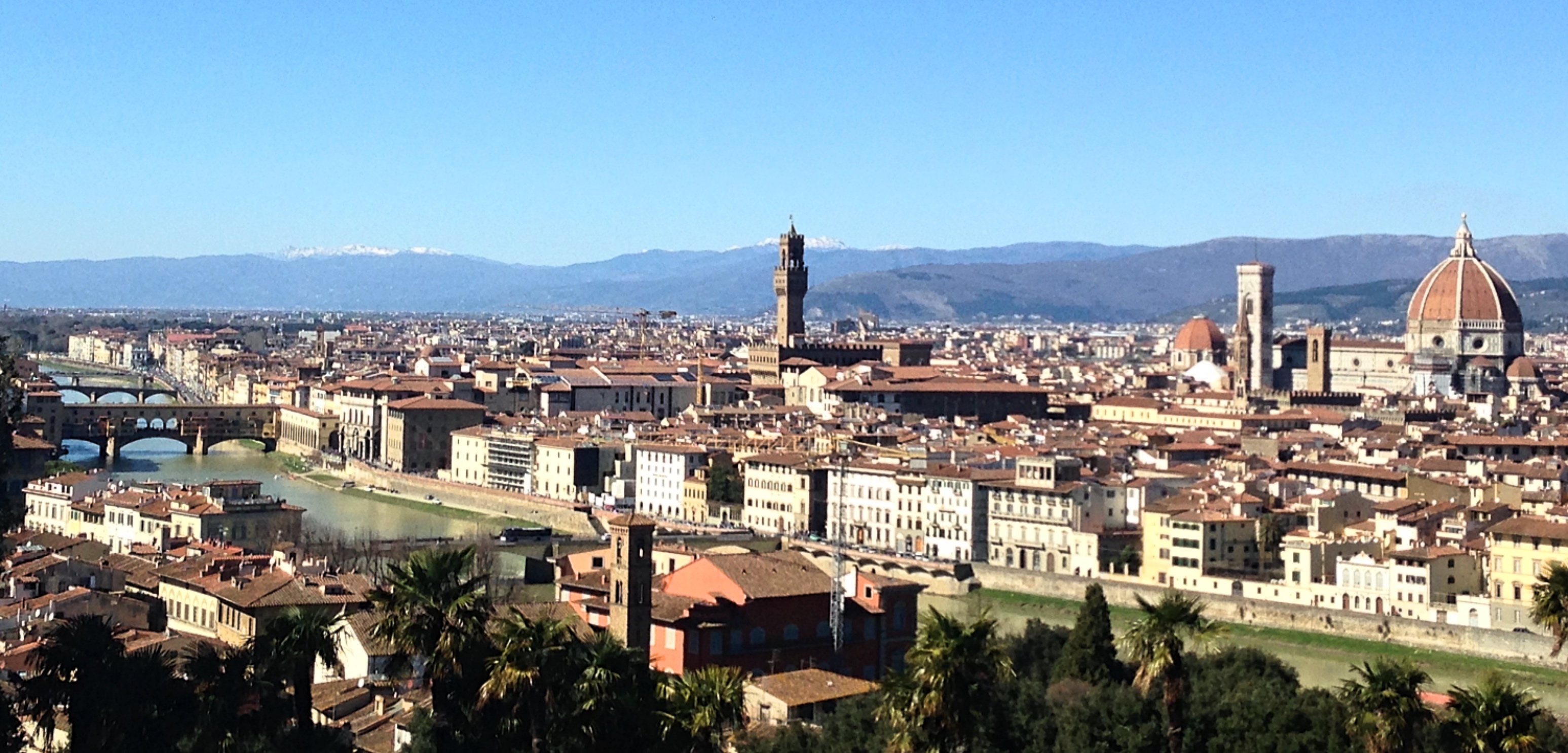
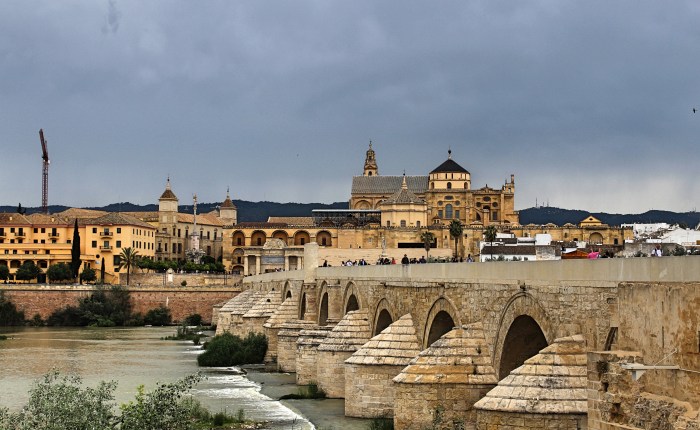






 Lotz in Translation