Leipzig: Bach & Battle

Leipzig: Bach & Battle

Dresden is the capital of Saxony, but it is not its largest city. That distinction belongs to Leipzig, which is just a short train-ride away. Though not the most beautiful nor the most historic city in Germany—not even close—it has long been on my list, if only for its connection to one of the great figures of history: Johann Sebastian Bach.

Only modestly well-known during his lifetime, Bach has come to be regarded as equalled only by Beethoven and Mozart in the history of European classical music. His developments in harmony, in counterpoint, in compositional form—all of this helped create both the vocabulary and the grammar of his successors—all while leaving us a body of music that is still a source of fascination and delight. And it was his music, more than any other, that fostered my early appreciation for the art of composition.

I remember taking long walks in the forest behind my house, during the summer between junior and senior year of high school—listening to Heifetz play the violin sonatas, to Casals play the cello suites, to Glenn Gould playing the Goldberg Variations. Noticing my interest, my band teacher lent me a copy of a biography of Bach, which I eagerly devoured. Later, in college, I took a course on the composer’s life and music—and read the same biography again. I even tried to compose a flute sonata in his style (terrible, obviously).

Because of this, the first thing I did when I stepped off the train was to visit the St. Thomas Church. This is where the great composer worked and taught for the last 27 years of his life, and it is where he was ultimately buried. The great figures of the past can often seem to be as unsubstantial as the characters of a novel. This is why I find it so important to visit places physically connected with these people, as it is only then that they become, psychologically, real. One of the great benefits of travel, in other words, is to make the past come alive.
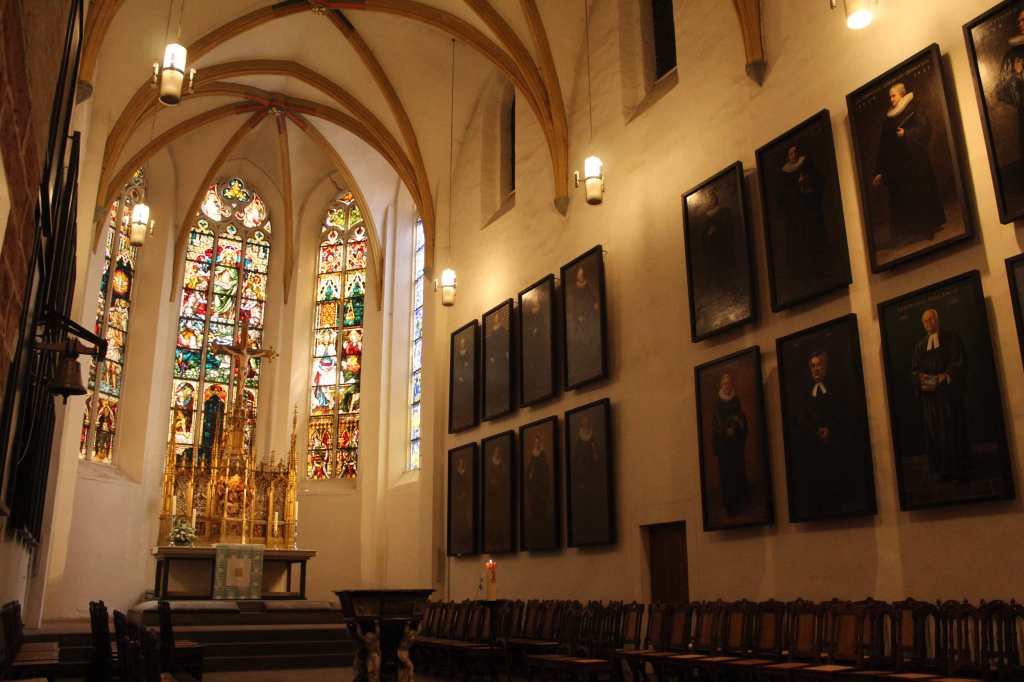
Bach certainly felt alive as I took my first tentative step into the church. Architecturally, St. Thomas Church is a lovely late-gothic construction—though this did not explain the feeling of reverence with which I crept about the space. Bach himself is buried near the altar, in a cordoned off area. Peeking at it from an angle, I gazed in awe at the bronze plaque on the ground.
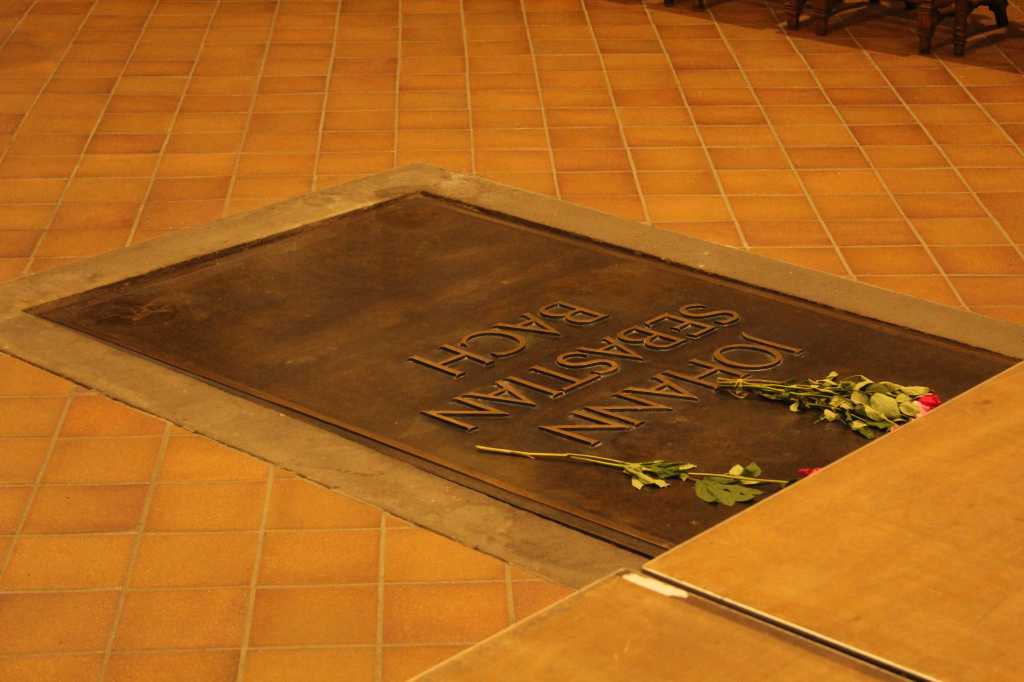
History, however, is not without a sense of irony. While I looked on, full of artistic devotion, I did not know that Bach’s bones had only been here for less than a century. After his death in 1750, following unsuccessful eye surgery, the 65-year-old composer was originally interred in the graveyard of the nearby Johanniskirche. By the time of his death, he was considered something of an old fogey, whose music was out of fashion; and despite his respectable career, he was buried in an unmarked grave.

It took his successors more than a century to realize the full importance of his music, and to finally commission a doctor to locate his bones among the human remains. Once found, they were separated and reinterred in a more ornate sarcophagus, in the basement of the church. Yet his bones suffered yet another indignity when the church above it was destroyed by Allied bombs during the war. Five years after that war concluded, his remains (if, indeed, they really are his bones) were moved here—permanently, we hope.

Yet an artist does not live on through his tomb, but his works. And while I was in the church, I was electrified to hear the reedy sigh of an organ begin to breathe through the space. It was a piece by the man himself. And it was a fitting tribute, as Bach was just as well-known for his virtuosic organ-playing as for his composing (indeed, probably more so). Hearing his work in a space where he himself could have heard it was, in a quiet way, one of the culminating moments in my time in Europe.

My visit to this site of pilgrimage was followed, appropriately, by a visit to the Bach-Museum, right across the square. Opened in 1985, the museum is situated in the Bosehaus, an apartment building owned by the Bose family, acquaintances of the Bachs. (Bach’s own house has not survived the ravages of time.) Inside is a series of exhibits about the man’s life and music.
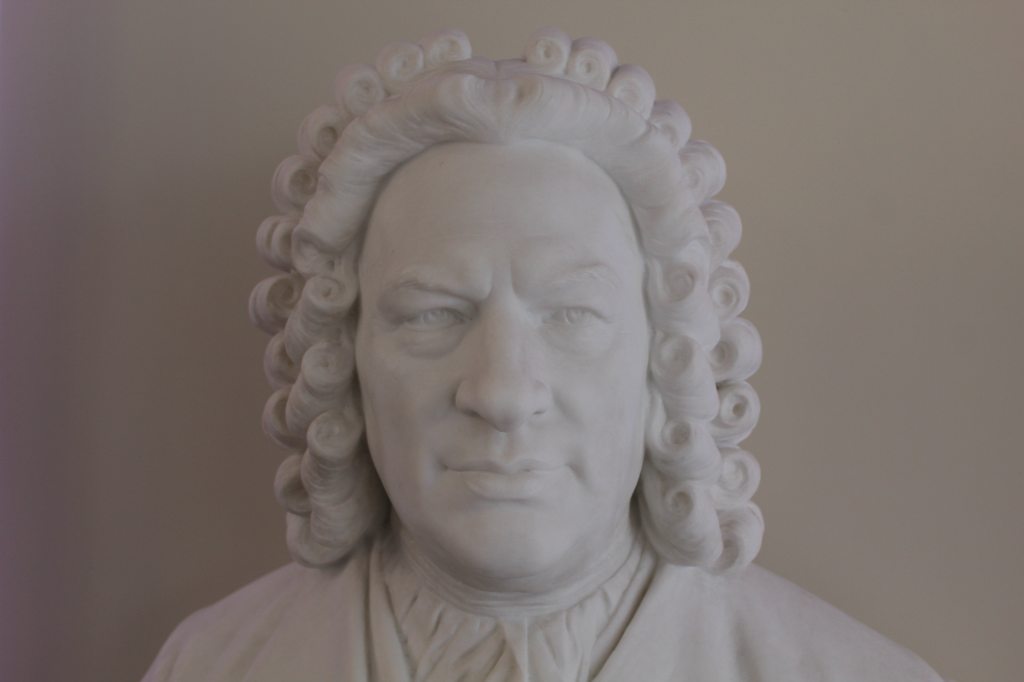
It should be admitted that Bach did not have an especially dramatic life. Indeed, he comes across as a relatively conservative and conventional man—pious, industrious, upstanding (if sometimes prickly and irate). Born into a large musical dynasty, Bach himself was a family man—marrying twice, and having a total of 20 children. Sadly, only ten of these survived into adulthood, and nearly half of them became composers themselves—two of them a great deal more famous and successful than the paterfamilias himself, at least at the time.

In short, his life presents a kind of study in contrast with the typical romanticized image of the artist—the tortured Beethovens and solitary Van Goghs. Bach wrote for the church and supported his large family by teaching, performing, and testing out organs. Indeed, as I mentioned before, by the end of his life Bach’s heavily contrapuntal music was considered passé amid the rising taste for simpler and sweeter melodies. And yet, underneath the apparently conventional form, Bach had created a body of work which would dwarf anything written by his sons, and inspire generations of artists for centuries to come. It is an interesting corrective to our conventional view of artistic genius.

Unlike a visual artist (who naturally leaves behind a trove of attractive artifacts) it is somewhat difficult to make a museum about a musician, whose work is abstract. But the curators of the museum did a fine job. There are displays about Bach’s life—his family, his ancestors, his progeny, his travels throughout Germany—and examples of antique instruments (which were often quite different from contemporary concert instruments). My favorite room was full of interactive exhibits, which allowed the listener to isolate specific instruments in a concert piece—an especially interesting exercise in music as intricately woven as Bach’s. Yet the highlight of the museum is undoubtedly the “treasure room,” which has original Bach manuscripts as well as the most famous portrait of the great composer.

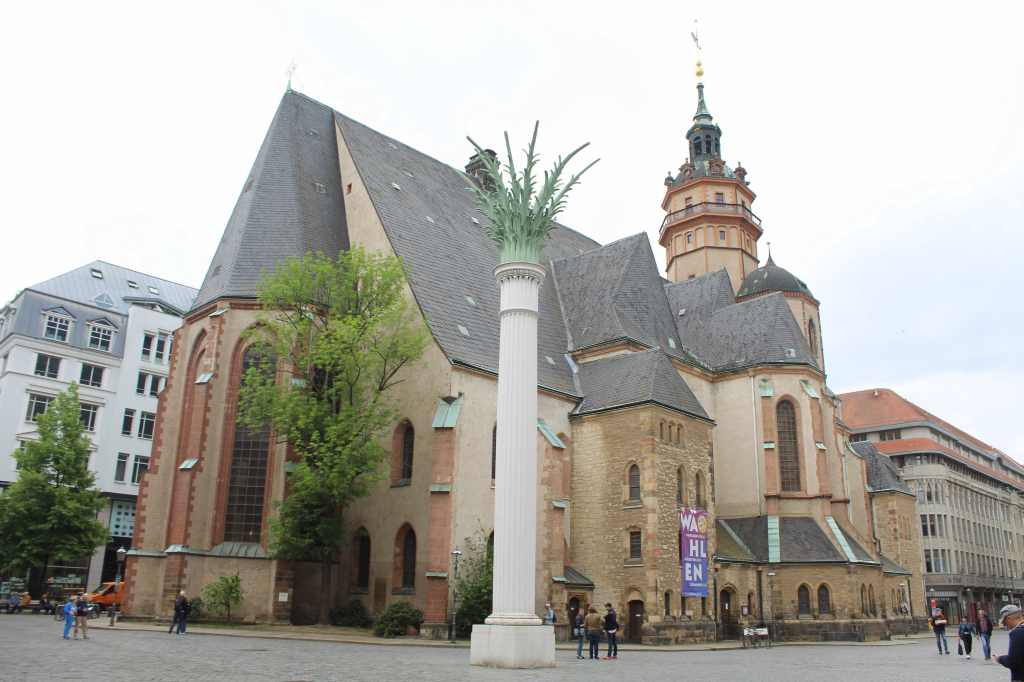
After this, I wanted to see something of the town. Time was tight—I had to catch my evening train back to Dresden—so my impressions of the city were necessarily shallow. Still, I had time to appreciate the splendor of the St. Nicholas Church, an enormous gothic building that is famous for being the epicenter of the 1989 Monday Demonstrations, which precipitated the collapse of communism in East Germany. A church may seem an odd place for a political protest; this was because—in the context of the official atheism of the government—prayer was a subversive act.
As I wandered around the city center, I bumped into a monument to another famous German composer, Felix Mendelssohn. The greatest child prodigy since Mozart, Mendelssohn had a strong connection to Leipzig, as he moved there as an adult and dedicated himself to improving its musical life. This not only included performances of his own works (many of which entered the classical canon), but the promotion of the work of other composers, both living and dead. Notably, Mendelssohn was a key figure in the revival of interest in Bach’s music, conducting a landmark performance of Bach’s St. Matthew Passion. We owe much to him.

Leipzig clearly has had an august musical past. Yet history was not always so kind to the city. After enduring the ethnic cleansing of the Nazis, and then Allied bombing, the city fell under the influence of the Soviet Union. As part of their central economic plan, the city was directed towards heavy industry—shrinking the cultural sector and polluting the skies into the bargain. Things got even worse in the wake of German reunification, as the city’s factories could not compete with their Western counterparts, and soon closed. All told, from the start of the First World War to the end of the Cold War, the city’s population shrunk by around a third.

But things are looking up for Leipzig. Partly this is due to the revitalization of Leipzig University, one of the oldest and most important centers of higher learning in the country. The university’s daring new main building—looking like an enormous glacier had slid into the Augustplatz—symbolizes this embrace of the future. Indeed, with tens of thousands of university students thrown into the population, the city has been looking especially youthful these days.
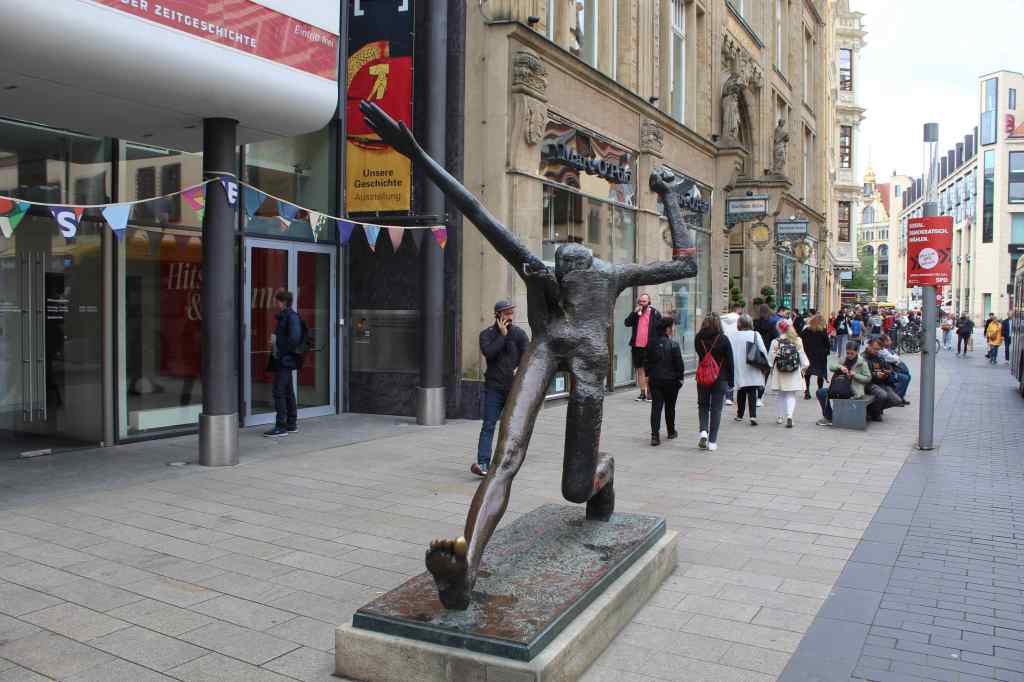
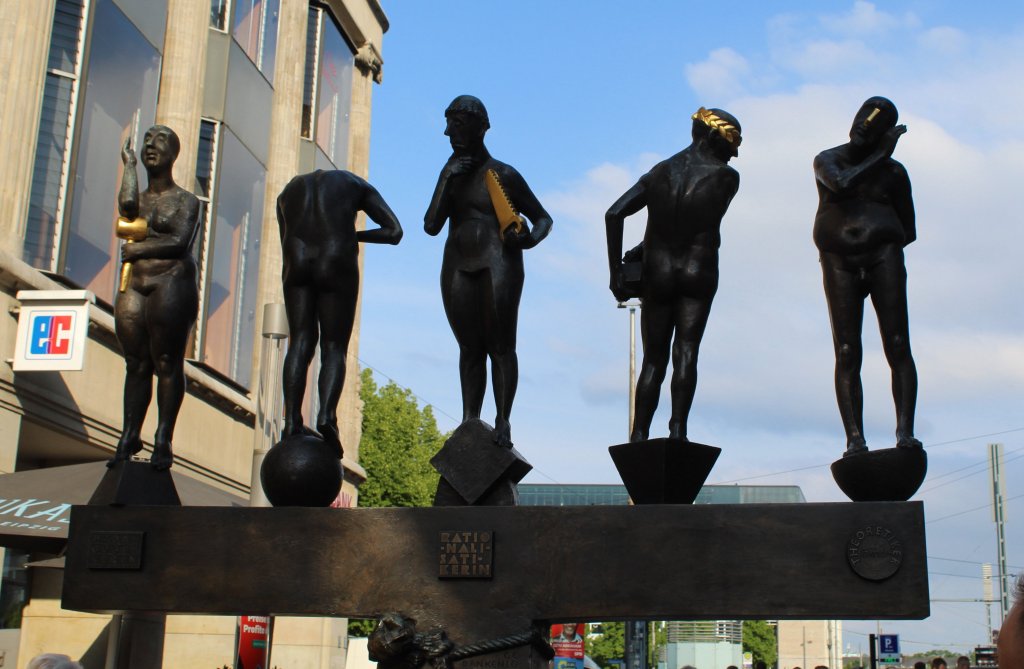
The city’s past still looms large. We can see this in the public sculpture, The Step of the Century, by Wolfgang Mattheuer, depicting a goosestepping man with one hand in a Nazi salute, and another holding up a communist fist. His head is, appropriately, beaten down by these competing and extreme ideologies. Another notable sculpture is Untimely Contemporaries (the pun works better in German), by Bernd Göbel, which consists of five nude figures on an iron crossbeam. These five figures—a teacher, a diagnostician, a rationalizer, an art theorist, and a city planner—all embody, in Göbel’s view, the overreach of cold reason in the GDR. The city planner, for example, points to a university church that was demolished by the authorities in 1968.
Yet if you really want to step into what conditions were like under communism, the best place to visit is the Runde Ecke, the city’s Stasi museum. Its name (Round Corner) comes from the building’s design, which juts out into the surrounding ring road. It was here that the Stasi, the country’s forbidding secret police, conducted their state-wide surveillance, interrogation, and repression.

Once a place of fear and loathing, protestors forcibly occupied this building during the fall of the GDR, in order to prevent the destruction of files. Now, the lower floor is a history museum, while the upper floors are used by the Stasi Records Agency—a federal program which manages the old Stasi files, making them accessible to anyone who may wish to see their own. (This, as it happens, is a painful decision to make, since you may discover that a loved one informed on you.)
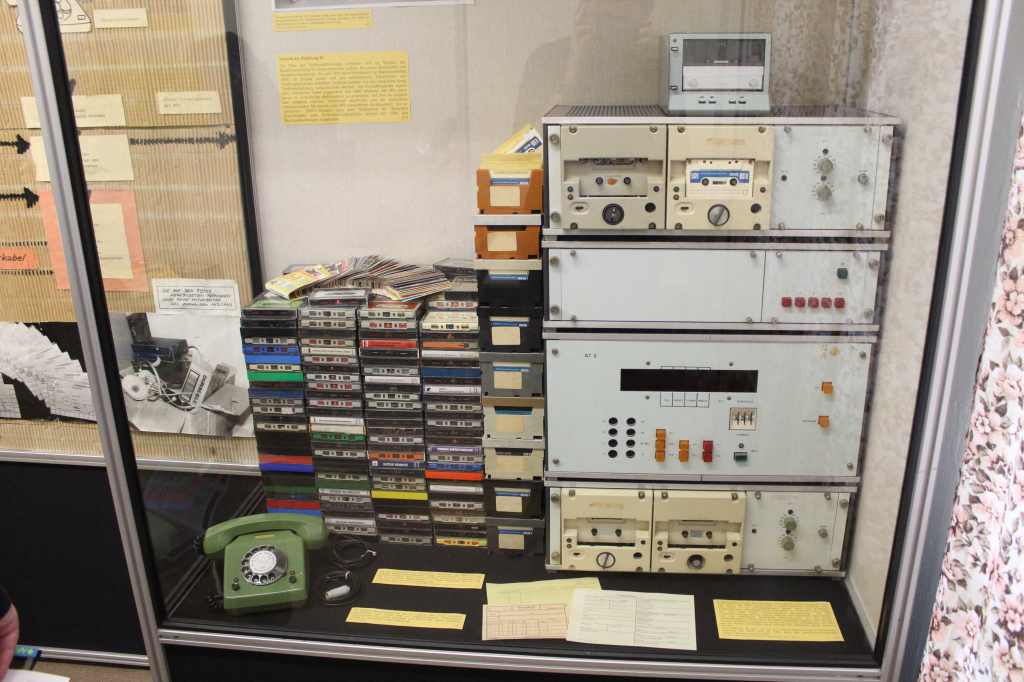
The museum at the Runde Ecke is terrifying for its ordinariness—indeed, for its drabness. The visitor walks through an old office space, complete with ugly furniture and a musty smell. The exhibits themselves, made shortly after the fall of the GDR, consist of fading printed posters (exclusively in German), which gives the museum a charming amateurishness. There is information about the history and organization of the Stasi; but the best parts of the museum are the tools and artifacts on display.
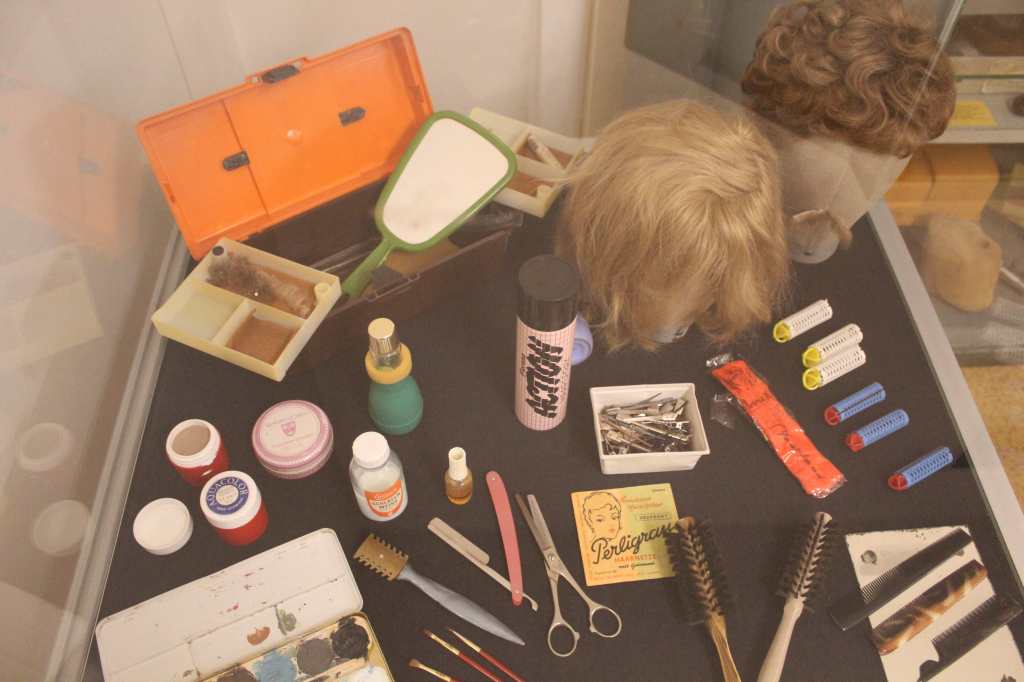
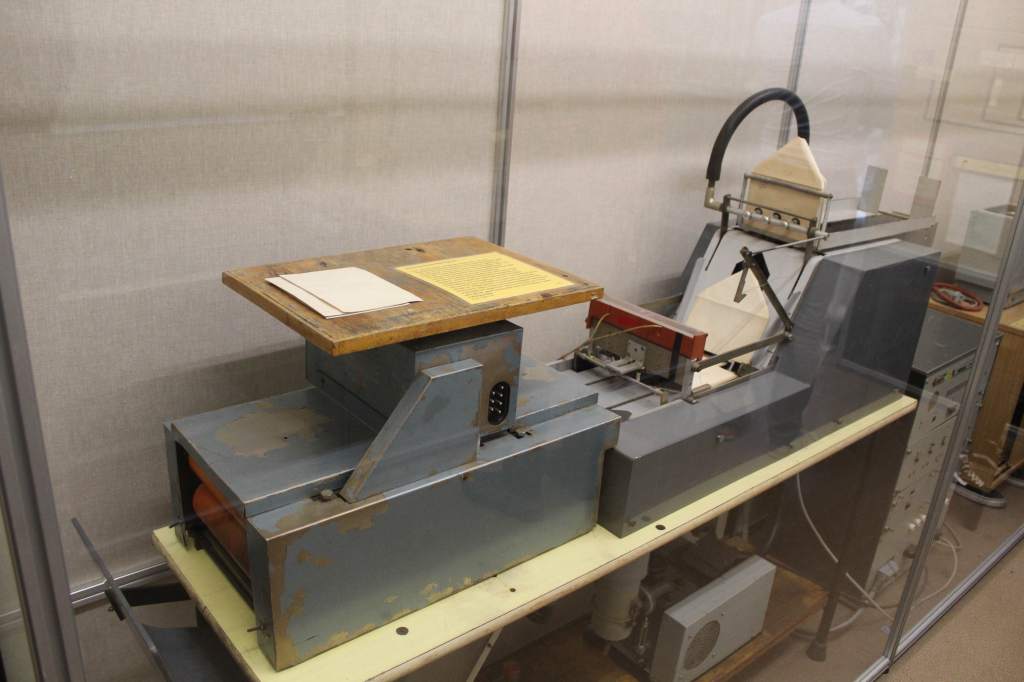
There are wigs, disguises, and prosthetic noses; all sorts of hidden cameras and microphones; and even a large letter-opening device—so that correspondence could be read and re-sealed without detection. We can see, of course, the endless filing cabinets used for their records, and setups used for interrogations. There is also a recreation of a prison cell. One of the strangest activities of the Stasi was collecting “scent samples,” which they got from old clothes or upholstery, and sealed in glass jars. Apparently, this was to be used for sniffer dogs. Nevertheless, as with so much bureaucratic activity, one suspects that data collection became an end unto itself for the Stasi—a kind of official mania that confused information with security. 
Even now, the environment inside the sunless, soulless place is draining. So it was a relief to walk back outside, into a beautiful day of late spring. It was time to eat. For this, I made my way to a place recommended by Rick Steves, the Bayerische Bahnhof. As its name suggests, this Biergarten is in what used to be a train station, with ample seating both inside and out. I ordered a schnitzel with potato salad, and chased it down with the restaurant’s famous (and quite sour) Gose beer. I needed fuel for the final push.

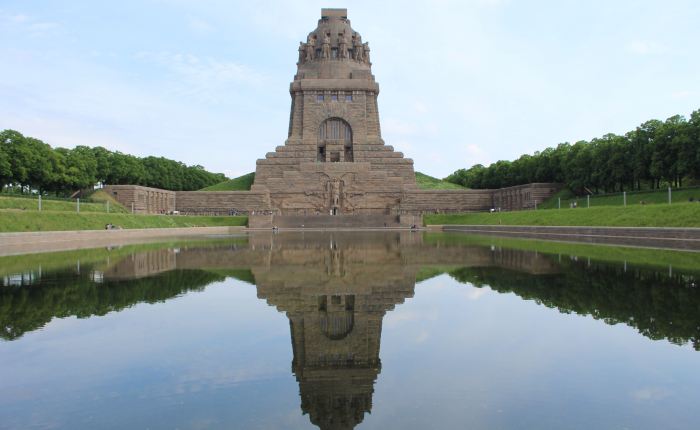
I walked from the restaurant, further away from the city center, into a large green space—until a large brown monument came into view. Soon enough, from across a large reflecting pool, the grand, weird form dominated the scene. This was the Völkerschlachtdenkmal, the Monument to the Battle of the Nations.

This monument takes us back to the Napoleonic era, and one of the biggest and bloodiest battles ever waged—at least, before the World Wars. I am speaking of the Battle of Leipzig, which took place in 1813. This pitted the forces of Napoleon against the combined armies of Austria, Prussia, Sweden, and Russia, involving over half a million combatants and 100,000 casualties. It was a decisive defeat for the French conqueror, leading to his initial fall from power and exile in Elba.

This victory also became a symbol of German pride and unification (even though, ironically, German soldiers fought on both sides of the battle). For years, suggestions and plans for a monument were proposed, until finally construction began in 1898. It was completed fifteen years later, in 1913, just in time for the 100th anniversary. Designed by Bruno Schmitz, the monument is unusual in taking its inspiration from Egyptian and Mesopotamian architecture, rather than the typical Greco-Roman style. It is a work of pharaonic proportions.
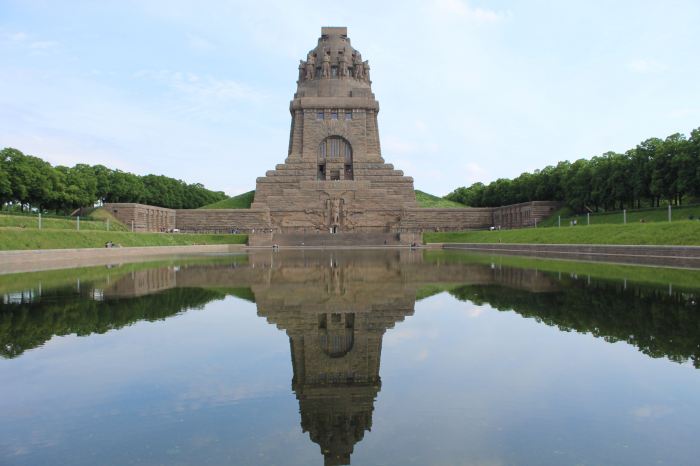
I can give you the dimensions of the monument, but no number can capture the sense of massiveness it conveys. The enormous pile of concrete is designed to make the human feel small and insignificant. The tourists seem like insects compared to the enormous figures molded into the surface; and these figures are themselves dwarfed by the structure. Once inside, the space seems to extend endlessly upward, culminating in the encasing dome, covered in a frieze of horsemen riding to glory.
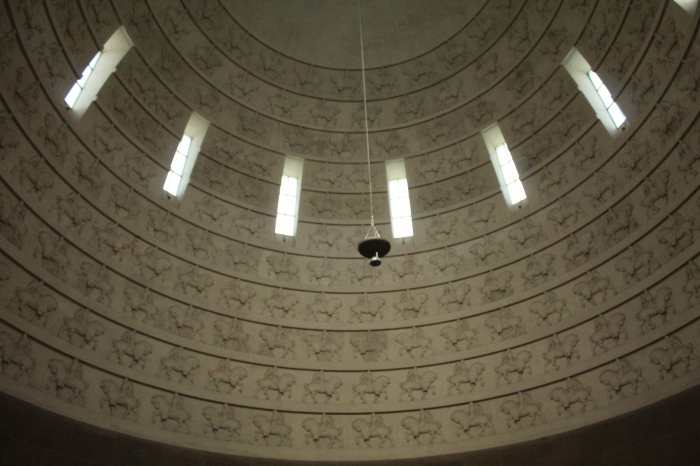
The aesthetic impression of the Völkerschlachtdenkmal is strange. On the one hand, it is an obvious piece of bombastic propaganda, of an almost childish worship of the Fatherland. And yet, the overblown sombreness of the art—mostly consisting of Teutonic knights—reminded me strongly of the Valley of the Fallen, that great monument to Spanish Fascism. Indeed, that this structure was completed just one year before the outbreak of World War I seems strangely prophetic, as the monument embodies the glorification of dying for one’s country—a kind of religion of the state. The subsequent history of the monument—used by everyone from the Nazis to the Soviets—confirms this suspicion. 
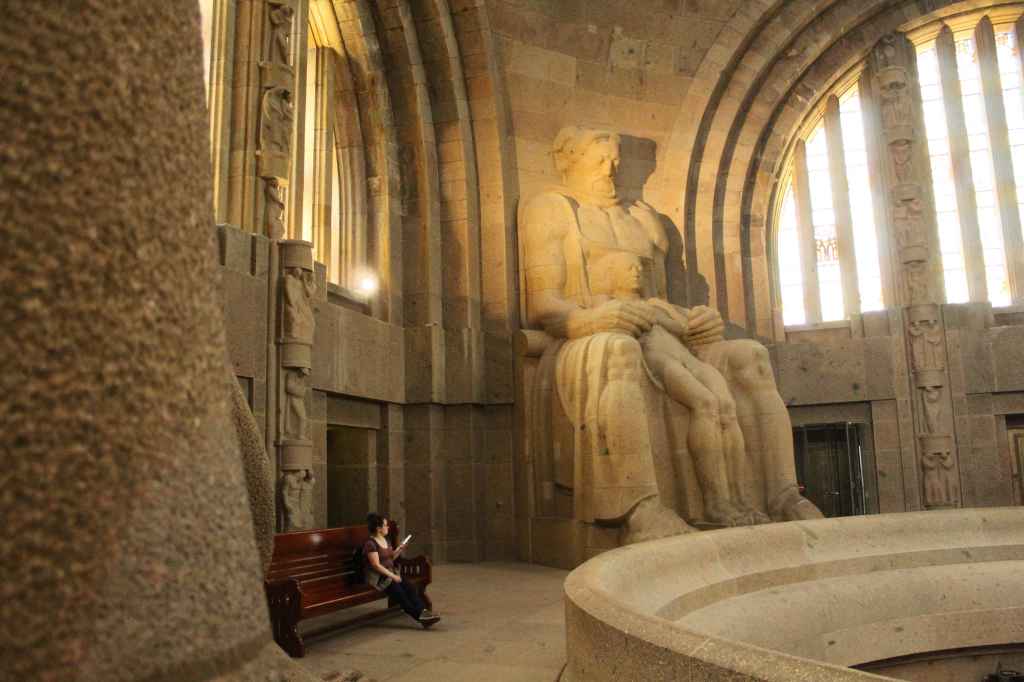
And yet, I must admit that there is something strangely beautiful about the Völkerschlachtdenkmal. Its artwork, while jingoistic, is also a wonderful example of Art Nouveau, and reminded me (quite discordantly) of Rockefeller Center. Indeed, despite its ridiculousness and its questionable ideology, it must be admitted that the monument succeeds in its purpose. From the outside, it is absolutely imposing; from the inside, it is dark, grave, and meditative.

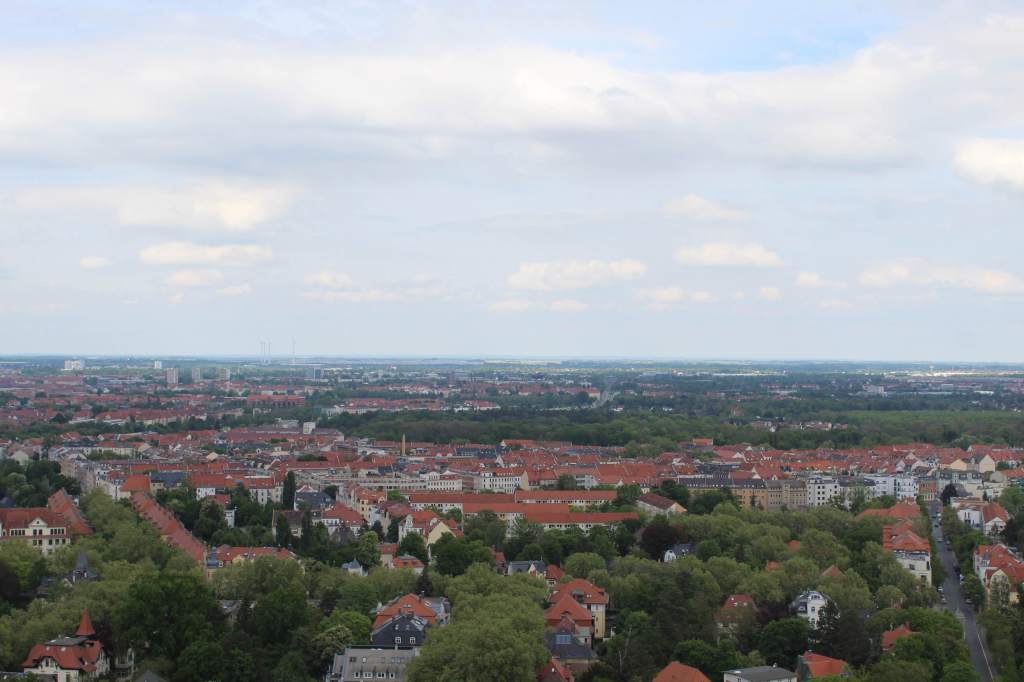
After much straining and many stairs, I finally reached the top viewing platform and looked out. The surroundings were flat and green, the land lying low beneath the close gray sky. There was nothing remarkable about it, nothing dramatic or noteworthy. It was hard to believe that such a plot of earth was the home to one of the greatest musicians of history, was the site of a battle that changed the destiny of Europe, was marked by nationalism, fascism, communism, and the struggle for freedom. All this, and more, fit into the story of this mid-sized German city.
Life and Death in Berlin — Part 2, Death

Life and Death in Berlin — Part 2, Death

This is a continuation on my first post about life in Berlin, focusing on the darker side of the city’s history.


Historical Memory

Memory is not passive—either in a person or in a country. We choose what we remember; we can shape how we remember it; and our memories, in turn, shape how we act. History is messy, the truth is neither plain nor simple, and in human affairs there is no such thing as an apolitical fact. Opposing groups emphasize different episodes of history, interpret (or misinterpret) those episodes incompatibly, and sweep aside inconvenient episodes that do not fit their narratives. These narratives are not just background; they provide groups with their identity, giving them a historical trajectory and a goal to strive for. Thus it is not just for the dead, but the living, that we must attend to how history is remembered.

Nowhere is this need more apparent than in Berlin; nowhere can we see more clearly what power historical memory can wield. It is said that knowledge is power, but in history we had better say narrative is power. For the past is past, and not around to refute politicians who twist it to their advantage. The historical past is, to a large extent, a creation of the present; and it is recreated every time a book is written, a speech is delivered, or an article is published in the newspaper. The past that the Nazis created was of a mythic Germany, of a virtuous and heroic people, unduly hampered by foreign elements and racial impurities. The past that the Soviets conjured was of a dark night of bourgeois repression only recently lifted by the liberating proletariat army. As we all know, these narratives gave rise to atrocities—atrocities which, if the narratives had triumphed, we would remember as victories—and thus we are now faced with the task of remembering differently.

For this reason, a trip to Berlin is both horrifying and heartening—horrifying because of the crimes committed there, heartening because those crimes are not being ignored or swept aside. I have mentioned elsewhere that you can visit Madrid and never guess that, less than a hundred years ago, there was a horrendous civil war that ended with mass executions. The same cannot be said of Berlin. Indeed I think Berlin is a model of how historical atrocities should be framed and memorialized. The city has every reason to be proud.


Monuments of Death

The first of these somber monuments I visited was the rather cheerfully named Checkpoint Charlie. The name is really just Checkpoint C (Charlie is the NATO phonetic marker for “C”). Checkpoint Charlie is the most famous border crossing between East and West Germany.

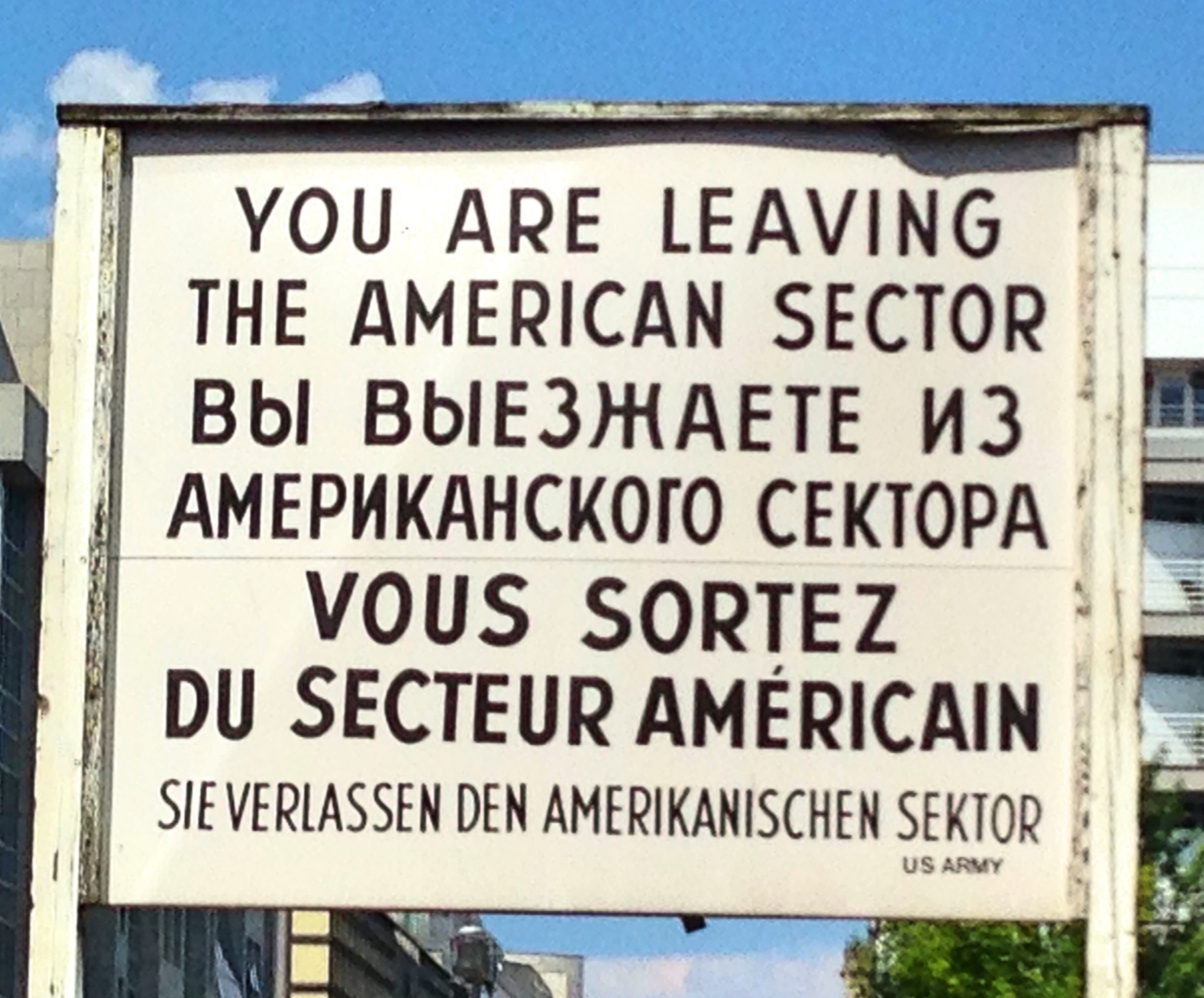
Checkpoint Charlie Sign

As you may know, defection from East to West was high during the postwar years, particularly among the young and well-educated (not population most countries want to lose). To prevent this, the border between East Germany and West Germany was sealed off, and strict regulations put in place about leaving the country. But for many years the border crossings in Berlin remained much easier to get through (this was because the city was jointly controlled by the four occupying powers), making Berlin a kind of gateway to freedom for many hoping to flee the Soviet Union. All this ended in 1961 with the erection of the Berlin Wall. By that time, East Germany had lost 20% of its population.

In truth the checkpoint isn’t much to look at. It’s a small, white guardhouse with some sandbags sitting out front. There were two men in uniform carrying American flags. I was unsure whether they were actual American soldiers or enterprising men in costume accepting money to pose with tourists. In any case, the most memorable image of Checkpoint Charlie is the sign that says “YOU ARE LEAVING THE AMERICAN SECTOR” in four languages—English, French, Russian, and German. On the other side of the sign, for those entering the American Sector, we are kindly reminded to “OBEY TRAFFIC RULES.”

The official Checkpoint Charlie Museum is nearby. I didn’t go, since I heard mixed reviews. I don’t have anything more to add about this famous landmark, other than that it was strange to be standing in that otherwise entirely ordinary road, and imagine tanks rolling in, diplomats being escorted by soldiers, and the fate of the world hanging on the de-escalation of tensions surrounding this border crossing. In politics, small flames can set off very large explosions. Seen with un-political eyes, Checkpoint Charlie is a shack on a road. Seen with historical eyes, it is one of the axes of world history.

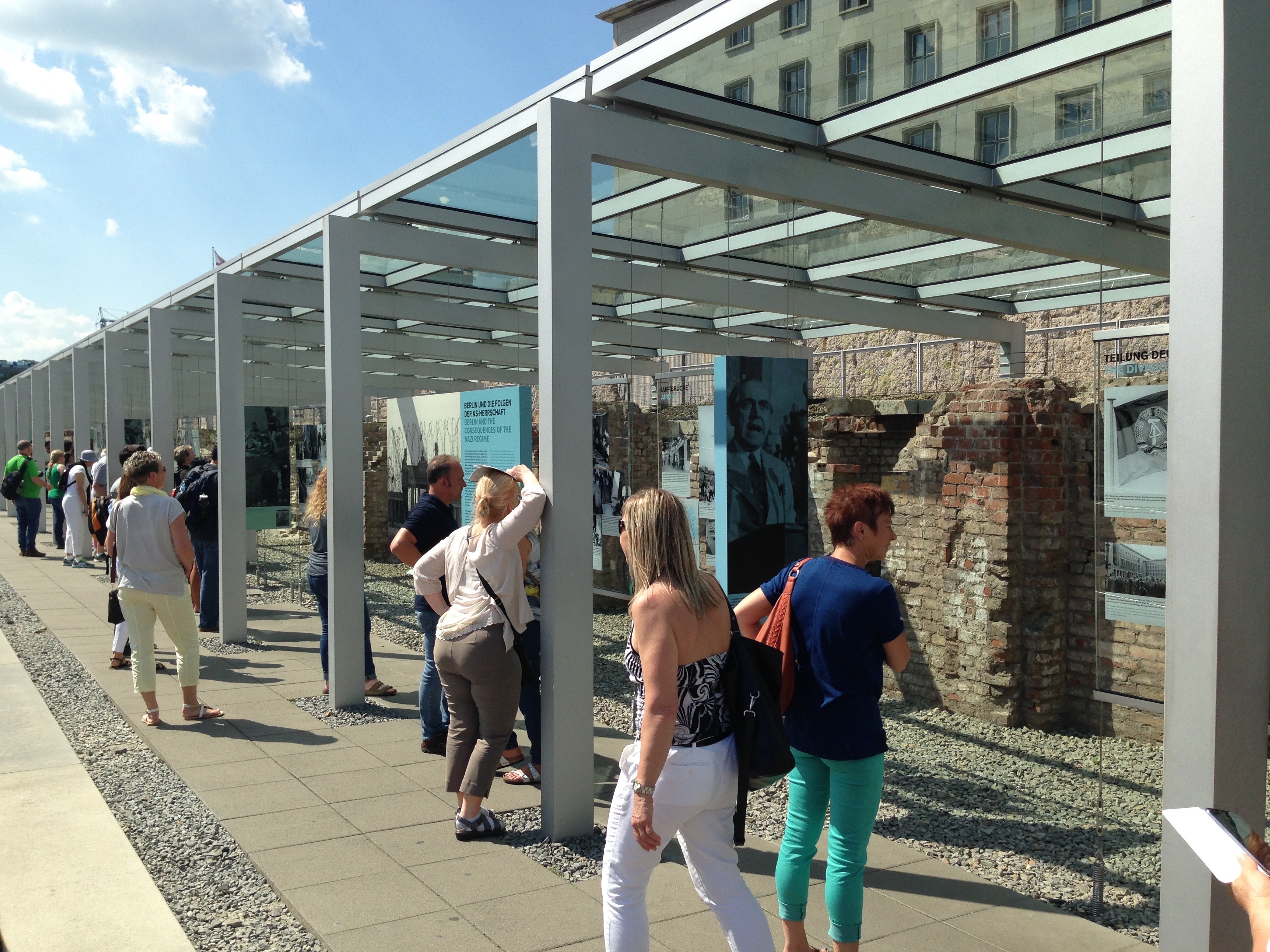
From Checkpoint Charlie it is a five-minute walk to my next monument, the Topographie des Terrors. This is a fairly new exhibit—opened only in 2010—built on the ruins of the old Gestapo headquarters, where their prisoners were tortured and killed. As befitting its name, The Topography of Terrors is an open-air museum dedicated to the history of Nazi atrocities. This history is arranged as a timeline, with plentiful pictures and information panels giving examples and details of the National Socialist regime.

Topography of Terror

Most of this information will not be new to anyone with a basic knowledge of the Holocaust or the Nazi movement—although familiarity hardly dulls the sickening horror of it all. The museum is more valuable for its ability to convey the atmosphere of the time, especially with the numerous Nazi propaganda posters on display. Nothing sums up an ideology with the stark simplicity of a propaganda poster. We see a hardworking German Aryan worker struggling to work, while weighted down by the lazy inferior races; we see bald-faced incitements to hatred against Jews; we see rallies for the workers at home to fight as hard as the soldiers in the field; and then there are the usual posters warning citizens to black out their lights during air raids and to watch out for spies.

Propaganda

Scattered among the posters are profiles of the fallen. One profile which struck me was of a man with epilepsy, Otto Mathewes, who was put into a sanatorium by his family, sterilized by the Nazis, and ultimately sent to a death camp to be killed. I knew that the Nazis targeted those they deemed racially impure—Jews and Roma—as well as homosexuals; but I did not know that the Nazis would put to death somebody with epilepsy—a treatable disease, or at the very least one that could be managed. For me, as for many, the most perplexing thing about the Nazi movement is how an entire population could be goaded into cooperating with their murderous policies. Most populations, it seems, can be persuaded to go to war, which involves killing outsiders. Yet the Nazis didn’t only wage war, but killed citizens of their own country. Why wasn’t there widespread resistance? Hannah Arendt’s phrase about the “banality of evil” comes to mind; but I suppose this question is not one to be answered with a phrase.

Hitler Chart

Among the propaganda posters, I found a chart showing the different paths for Nazi youths to follow to become full-fledged Nazi adults—for women, from Jungmädel (young girls) to Mütter und Hausfrauen (mothers and housewives), for military boys from the Hitler youth to the military. Looking at that chart, I feel a mixture of disgust and amusement. Such a regimented society, with caste-like roles and ranks for everyone, is repressive in the extreme. And yet, for all its nefarious intent, this organization strikes me as hopelessly juvenile. Indeed it is even campy, as if the whole country is to be organized like the Boy Scouts. Considering this chart, it is easy to see why many Germans did not consider Hitler a serious threat before he rose to power. His mind was packed full of this stuff—juvenile, campy plans designed to appeal to a boyish desire for ritual, hierarchy, and order. The line between the notions of an oaf and the ideas of an autarch is disturbingly fine—perhaps ultimately just access to power.

The exhibition also includes a model for Welthauptstadt Germania, “World Capital Germania,” the proposed city to be constructed over Berlin after Germany won the war. This plan, drawn up by Albert Speer, is discussed by Robert Hughes in his documentary The Shock of the New as an example of the architecture of power. Everything about the design is meant to provoke awe. The scale is enormous; the proposed dome of the Volkshalle would easily dwarf St. Peter’s and the Pantheon. Again, we see here the big imaginations of little minds. It is the same mixture of a juvenile yearning for order and a boyish admiration of strength that we see in the chart.

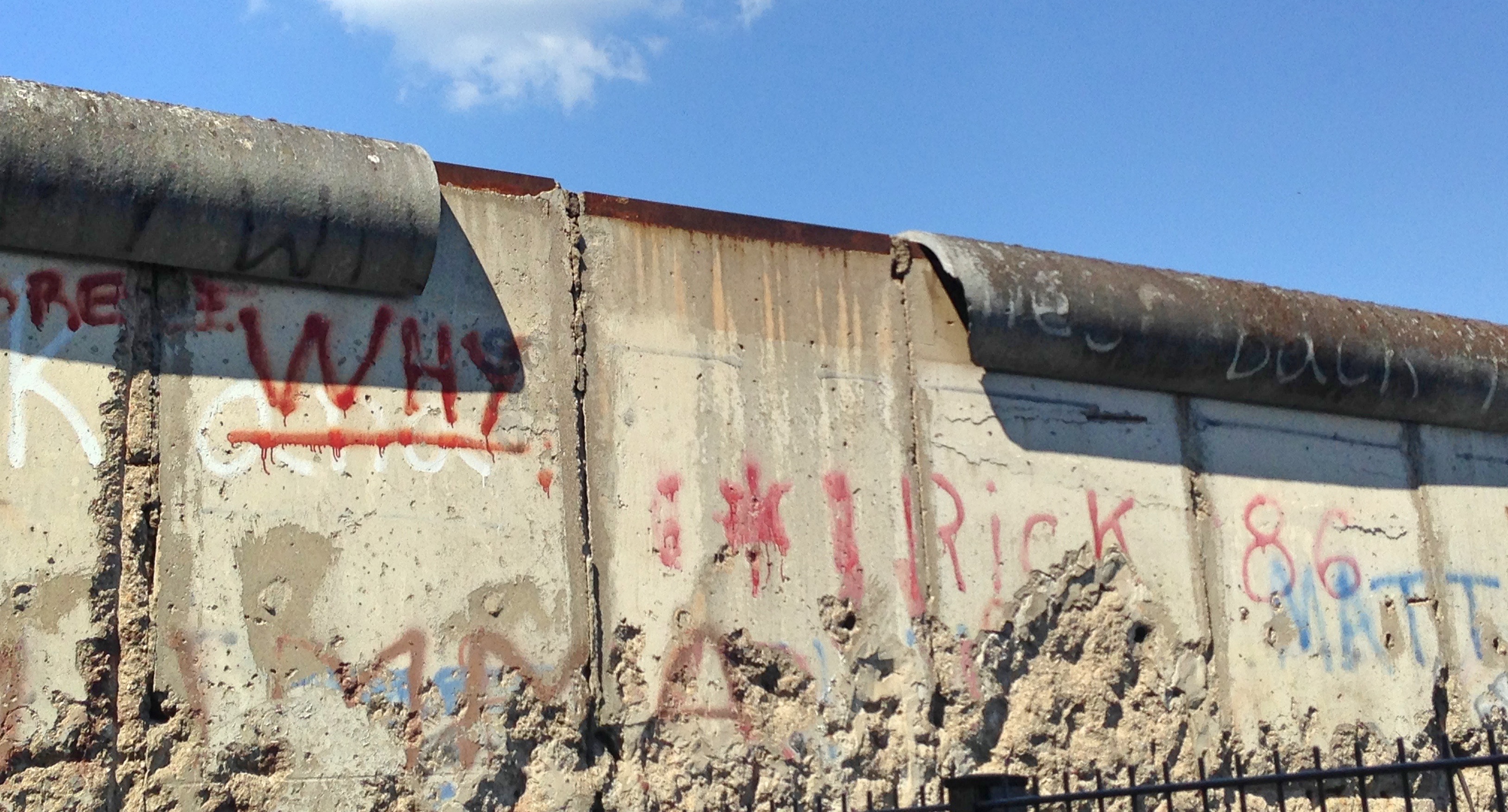
Coincidentally, the Topography of Terror is located right next to the longest extant stretch of the outer Berlin Wall. It is little more than a wreck now, so full of holes you can see right through it. That ruin completes the picture of atrocities, giving the visitor a glimpse of what came after the Nazis were defeated.

Berlin Wall

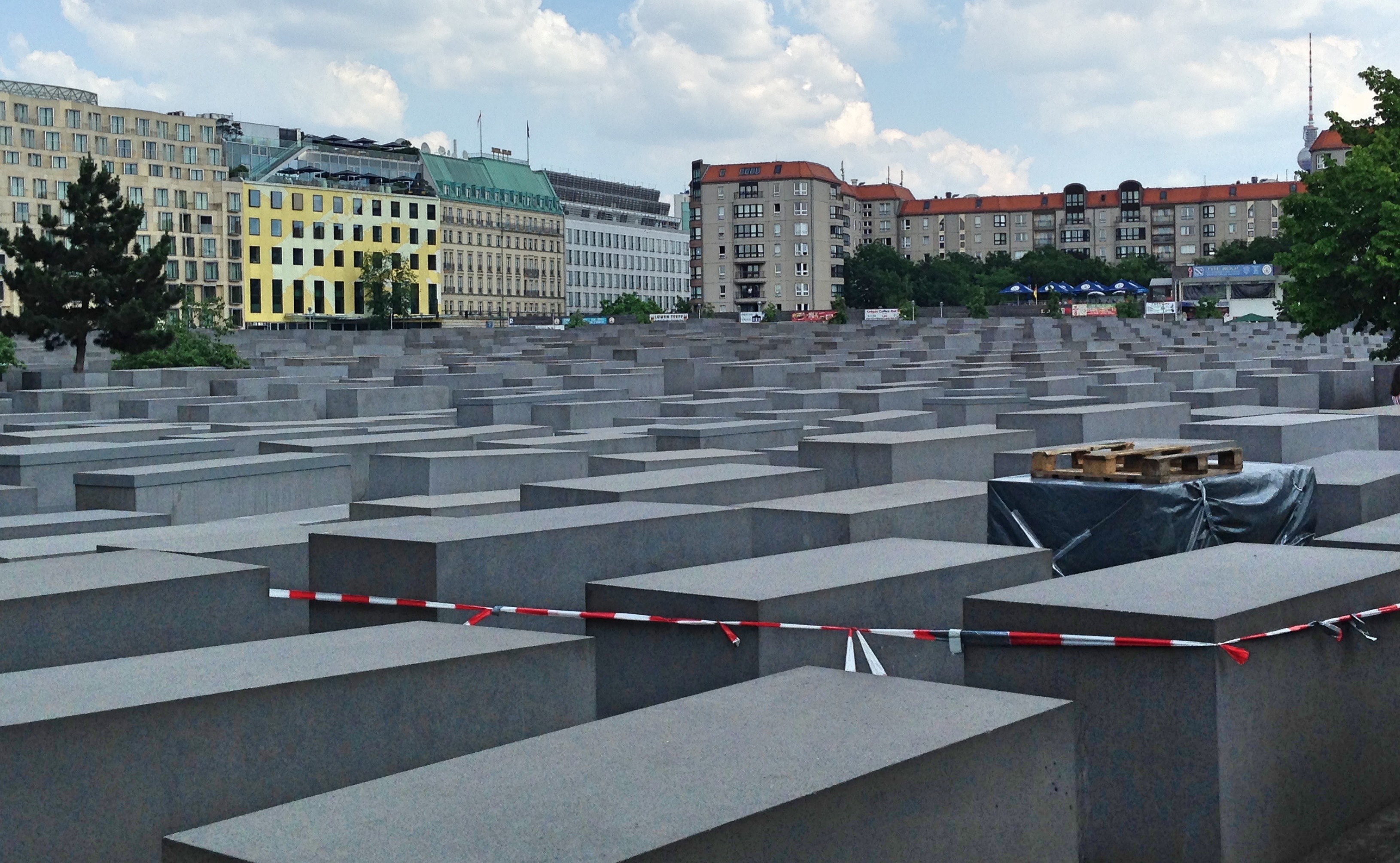
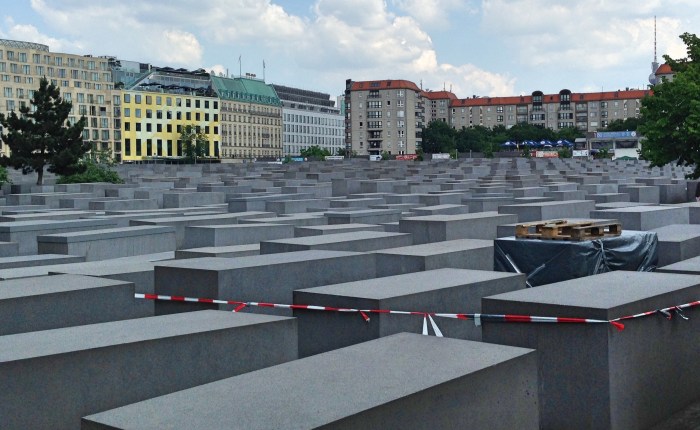
It is a short walk from the Topography of Terror to the Holocaust Memorial, more properly called the Memorial to the Murdered Jews of Europe. Designed by the American architect Peter Eisenman, it opened in 2005, and is situated near the Brandenburger Tor. The memorial is strikingly abstract. There is no information to be found, no names of victims, no sculptures or symbols, nothing that can provide the visitor context. Instead, the visitor finds a field of concrete slabs, 711 of them, ranging in height from 8 inches to over 15 feet. These slabs are arranged in rows and columns, slightly askew, and the monoliths grow as the visitor enters into the monument.

Holocaust Memorial

I admit that my first impression was one of disappointment. There just isn’t much to look at—just identical grey blocks, stretching out like a miniature city. Is the meaningless abstraction of contemporary art really appropriate for commemorating the Holocaust? But I revised my opinion as soon as I walked into the memorial. The blocks slowly grow until they encompass you and limit your line of sight to four narrow passageways. I felt uncomfortable, even unnerved. It is easy to get separated from friends, and difficult to find them once lost. There is no telling who you will see if you turn a corner. Muffled voices come from all directions. I am not prone to this, but I felt a kind of crushing claustrophobia in the monument, a sense of being hopelessly lost and in danger, and I hurried to get out.

Holocaust Memorial Interior

As many have noted, the memorial lends itself to many interpretations. The concrete slabs are shaped like coffins, and the rows of blocks strike many as a graveyard. The gradual increase in the slabs’ height as you walk into the memorial, rising until all lines of vision are cut off, is symbolic of the gradual limiting of the Jews’ options as the Nazis stripped them of rights, property, liberty, and life. The mechanical regularity of the slabs suggests the inhuman efficiency of the Nazi killing machine. But more important than these interpretations is the feeling evoked by the monument, the uncomfortable, suffocating feeling of being trapped. It is a cold and comfortless place, although kids are often found playing hide-and-seek within. Indeed the monument invites use as a playground, and it is easy to imagine people skipping from block to block and dashing through the columns. And perhaps this, too, forms an essential part of the monument, showing us that children can turn even bleak concrete into innocent fun.

The monument does not impress everyone; it has been controversial from the beginning. Richard Brody wrote a piece in The New Yorker criticizing the memorial for being too vague and for not including the names of the victims. (As he notes, the names on display in an information center under the slabs, along with other documents about the atrocity. But this information is not well marked, and both Brody and myself missed it.) More recently there was a social media story about Shahak Shapira, who took pictures of tourists taking selfies in the memorial, and juxtaposed them with images of the holocaust—terming it the ‘yolocaust’. I admit that it doesn’t surprise me that people take selfies at the memorial. Nowadays, people will take a selfie with the murderer who just broke into their house, and spend their final moments counting likes.

For my part, I thought it was a moving and effective work of art, even though I was skeptical at first. While I can see why some criticize the lack of names or context, I think the silence of the memorial is what gives it such emotional power; it is a silence that invites us to contemplate the absence of all those men, women, and children, those who were taken and can never return.

Berlin’s other famous memorial is not within easy walking distance. The Berlin Wall Memorial (Gedenkstätte Berliner Mauer) is located to the north, next to another surviving section of the wall. It was opened to the public in 1998, within a decade of the reunification. It is much more “traditional” than the Holocaust Memorial, with explicit messages, historical recreations, and information about the victims. Nearby is the Chapel of Reconciliation, an oval-shaped church made of thin strips of wood—you can see through the walls from the inside—built over the foundations of an older church demolished to make way for the wall. A statue of a man and woman in a desperate embrace reminds us how many families were split by that barrier.

Berlin Wall Memorial

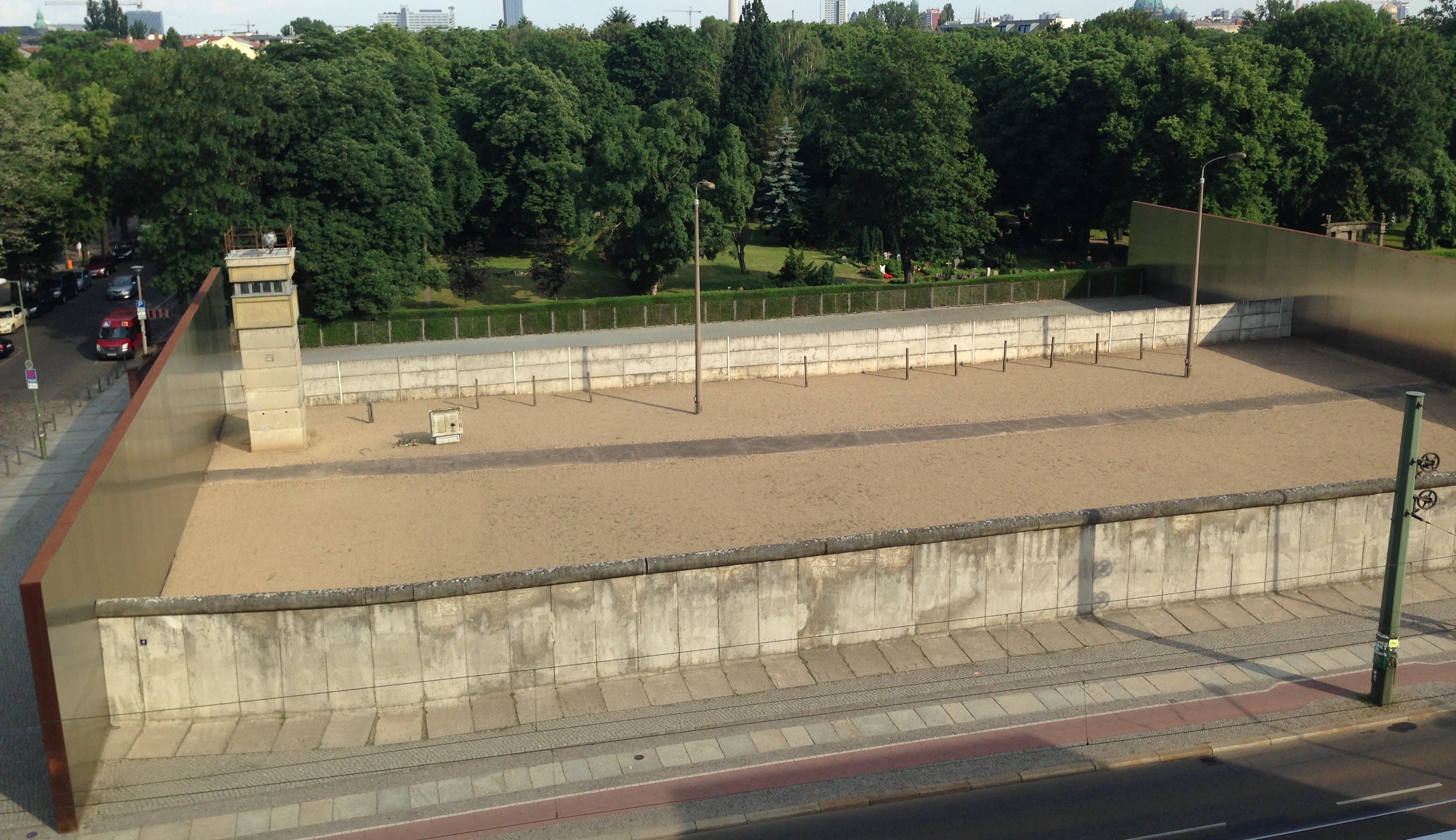
The main attraction of the memorial is a section of the wall reconstructed to look as it would have when it was dividing the city in two. This recreation is bounded by two high steel walls, preventing visitors at ground level from looking inside. The viewer needs to climb a tower across the street, right next to the memorial building, and look down from above. From there you can see that the Berlin Wall was really two walls, an exterior and an interior, both of the same drab gray appearance. It is steel-reinforced concrete, too tall to climb easily, too strong to ram with any normal car. Between the two walls is what was called the “death strip,” an empty area full of gravel raked smooth, with a small road running through the center so that army vehicles could quickly move to different sections. This strip was deadly because any potential escapees would be totally exposed there, easily visible to those in the guard tower nearby. There is no cover from searchlights or from firearms. Street lights kept it constantly illuminated. Caught there, you would be a sitting duck.

Although it was a beautiful sunny evening, and although it is surrounded by green parks and bushy trees, the wall section struck me as inhuman, dreary, and squalid. It is the picture of homicidal efficiency—a barrier designed with intelligence and foresight to accomplish immoral ends. The same question occurs to me here as occurred to me at the Topography of Terror: How could people—presumably normal, neighborly people—be persuaded to build something like this? The sheer absurdity of building a wall to keep people in rather than out, to stop an exodus of people fleeing from their own country, must have struck everyone involved. And yet the wall was built, construction crews dragged the concrete into place, soldiers manned the watchtowers, and government officials devoted time and energy to its maintenance and improvement.

Inside the memorial center are old letters, recorded interviews, and information panels about those whose lives were affected by the wall. There are stories of people fleeing, being caught in the attempt, and getting shot down by guards. One famous escape story is of Wolfgang Engels, who stole an armored personnel carrier and rammed it through the wall, getting shot in the process but making it out alive. East German Soldiers at the wall were instructed to shoot anyone attempting to cross, even women and children. Nevertheless, about 5,000 people successfully escaped; well over 100 were killed in the attempt. Some of the escapees dug tunnels, some even flew balloons—indeed, the last casualty of the wall, Winfried Freudenberg, died in 1989 when he fell from his homemade balloon. Guards on the Western side could not help anyone on the death strip, or they risked being fired on by the East German guards. This led, most famously, to the death of Peter Fechter, who was shot in the death strip and left to bleed to death, as hundreds looked on from both sides.

The last place I visited was the Berlin-Hohenschönhausen Memorial, an old Soviet and then Stasi prison. This is situated far away from the other major sites, in the east of the city. But it is well worth the trip. The only way to visit the prison is on a guided tour. My tour guide, a young woman, was excellent—extremely knowledgeable and compelling. According to her, some of the guides are actually former inmates in the prison. In any case, I can say that it was one of the best guided tours of my life. My visit was both informative and moving, and I hope you get a chance to go.

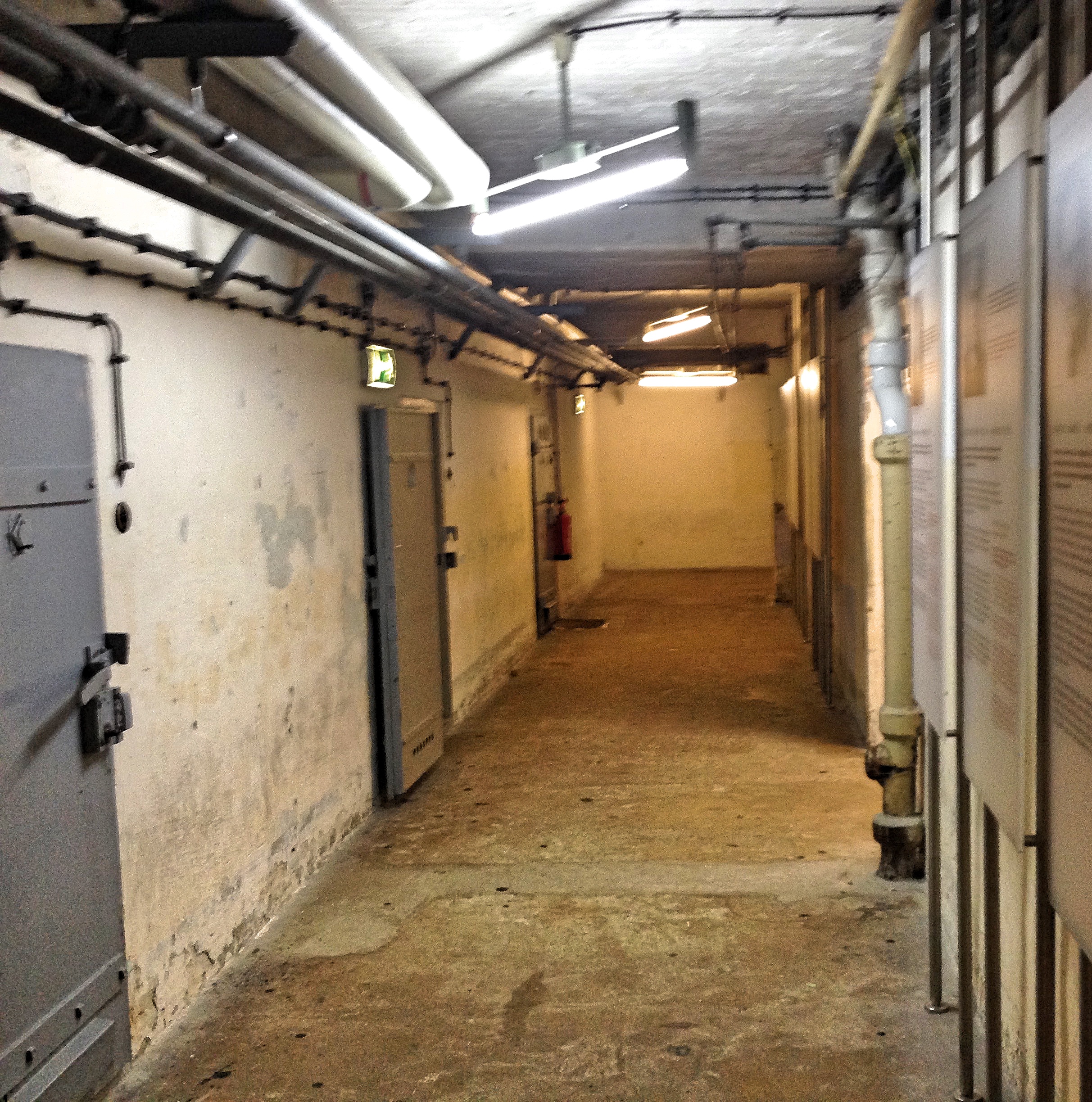
As I said, the Berlin-Hohenschönhausen is a prison formerly used by the Soviets and the Stasi. Before that, it was used by the Nazis as a communal kitchen. When the Soviets conquered Berlin, the building was used hold prisoners—accused Nazi collaborators. The building was not designed for this. The Soviets put their prisoners in the food cellars in the basement—big subterranean rooms with no windows. Conditions for prisoners were atrocious. The cells were unheated and terribly cold in the winter. The Soviets did not distribute clothing to the prisoners, so if they were unlucky enough to be thrown in without a coat, they had no recourse but to freeze. The cells had no bathroom, only a single chamber pot—without even a lid, so the place constantly reeked—that was seldom emptied. Soldiers had no showers, and no medical attention. If memory serves, the guide said they were fed once a day, and poorly. Death from starvation, cold, and sickness were common. Beatings and other forms of torture were used to extract confessions. Conditions were so inhumane that many attempted suicide; but since there was nothing in the cell, no sharp objects or chords, even this was difficult.

Prison Hall

Conditions improved somewhat when, in 1951, the Stasi took over. Instead of using the old food cellars, they built an actual prison building. The cells were above ground, with windows, and had a toilet, a sink, and a mirror. The guards didn’t carry guns, for fear that the prisoners might steal one. In the hallway outside the cells, running along the wall, is a chord that, if tugged, sets off an alarm. Prisoners were not allowed to speak to each other, or even exchange glances, outside the cells. According to the guide, the Stasi used psychological forms of torture more often than beatings. Interrogators would try to gain the prisoner’s confidence, to use a mixture of threats and friendliness to get what they were after. Sometimes more stringent forms of torture was used, like sleep deprivation. In any case, prisoners had to sleep with their arms outside the blanket; and guards would come several times a night to shine a light inside the cell, checking that their arms were in view. The only outside recreation they were allowed was in what was called the ‘tiger cage,’ a small enclosure with high walls and a caged roof.

Incredibly, the prison was completely unknown to the public while it was in use, even though it is a large compound in the capital. This is partly why it remains standing in such pristine condition. Almost nobody knew about it; so after the fall of the Berlin Wall, angry demonstrators didn’t come pouring in the gates. Part of the tour included the unmarked van used to pick up prisoners without detection. According to the guide, after the wall fell, former prisoners sometimes bumped into their erstwhile interrogators. In one anecdote she recounted, the interrogator refused to apologize; but in another, the interrogator said he was sorry for what happened.

I have recounted the tour as best as I remember it; but this brief summary does not capture the feeling of standing in those dark cells, seeing the interrogation rooms—eerily office-like—and thinking of all the people who suffered and died here while their loved ones waited in total ignorance of their whereabouts. The whole environment was designed to be dehumanizing, to make life as uncomfortable and as fearful as possible for the inmates.


This completes my short experiences with the somber memorials of Berlin. There is not much more to be said. I left Berlin with a keen awareness of the terrors that took place within recent memory, and with a deep respect for the citizens’ commitment to remembering these terrors. These monuments are built to commemorate crimes, crimes that reveal the lowest depths of our nature. That these monuments were built—in the very heart of the country where these crimes took place—shows us the heights we can rise to.