
After Spain, the country that I got to know best during my time in Europe was Germany. This was, in part, because I was studying the language. But I also came to love Germany because, in some ways, it reminded me of home. Perhaps it was the climate (very similar to New York), or perhaps it was the modern style of architecture, or perhaps it was certain aspects of the culture—more reserved and pragmatic than Spaniards. For whatever reason, I felt very much at home whenever I was in the country, which is why I visited at least once a year.
Yet I was not feeling particularly good on a bright May morning in 2024, as I set foot in Dresden. After enduring a very early flight, a layover in Munich, and then another cramped airplane seat, I felt sleep-deprived and dehydrated. More than that, I realized—with horror—that I was getting sick. But I was not going to let any physical ailment impede my vacation. Resolutely, I dropped off my bags and marched off to the center of Dresden.
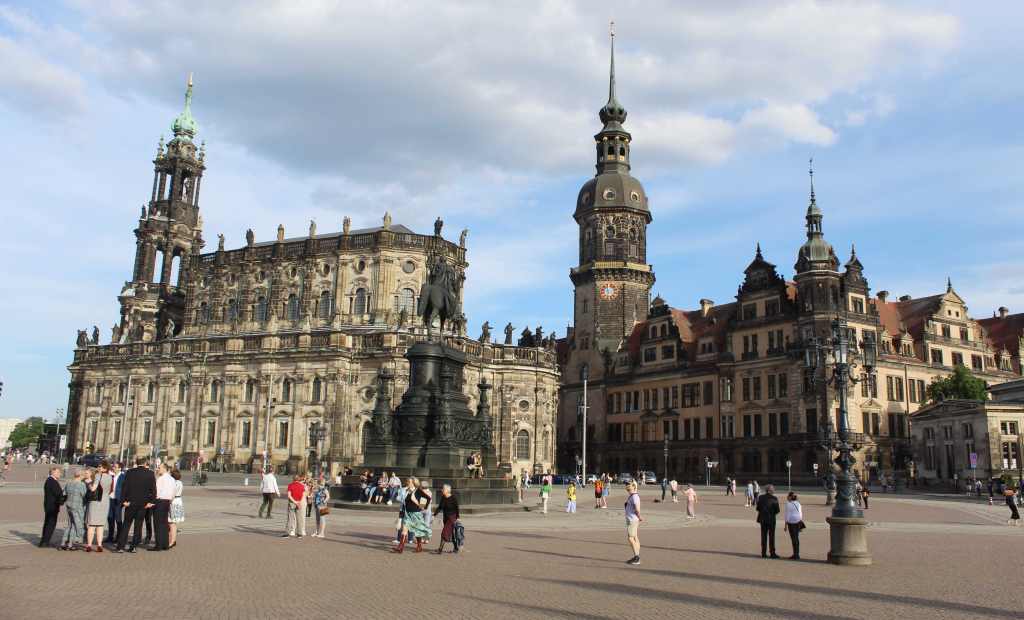
Dresden presents itself to the visitor as a landscape of royalty, where stately buildings tower over cobblestone streets. In many ways, it reminded me of Vienna—a place where “high” culture (opera, theater, ballet, the fine arts, and so on) went hand in glove with the ruling class. And the architecture of the old town—refined, ornate, stately—makes this exceptionally clear. Of course, what the modern viewer sees today is a kind of illusion. Virtually every building has been rebuilt since the Second World War. But it is a very convincing illusion.
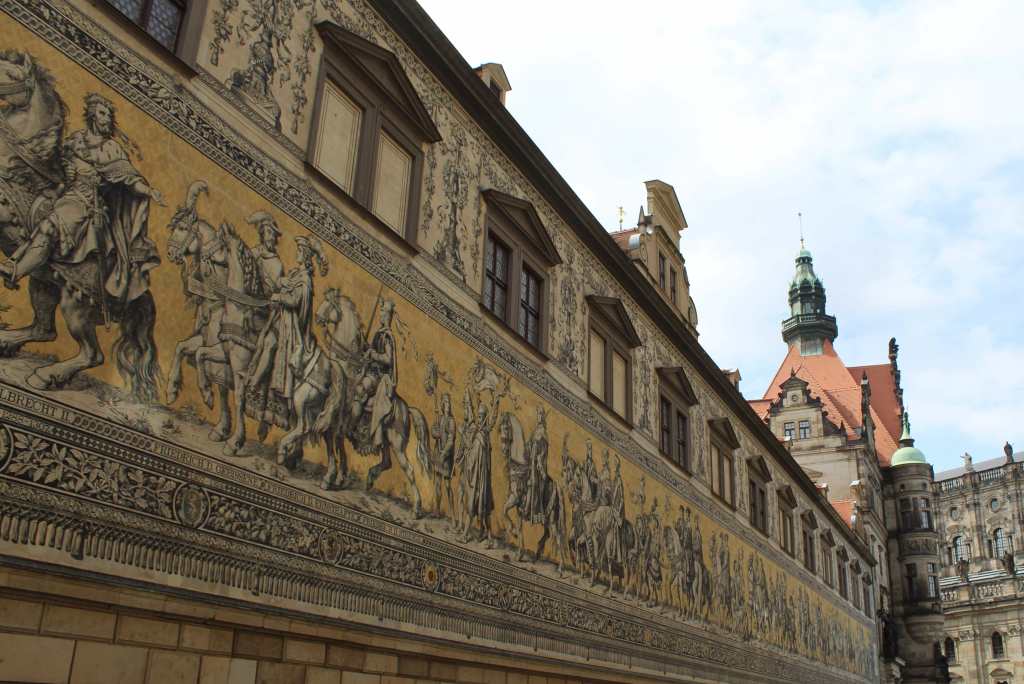
Though Dresden has not been an important center of power in modern times, historically it has served as the seat of the Saxon kings, who ruled over this part of Germany (as well as Poland, for a time). To get an idea of this long and distinguished history, the visitor can do no better than to visit the Fürstenzug (or the Procession of Princes). This is a massive porcelain mural—the largest in the world—that depicts all of the heads of the ruling house of Wettin for nearly one thousand years. Stretching over 100 meters (or over 330 feet) on the Augustusstraße, the mural depicts 35 rulers chronologically from left to right—and gives the viewer a visual representation of Saxony’s long and rich history.
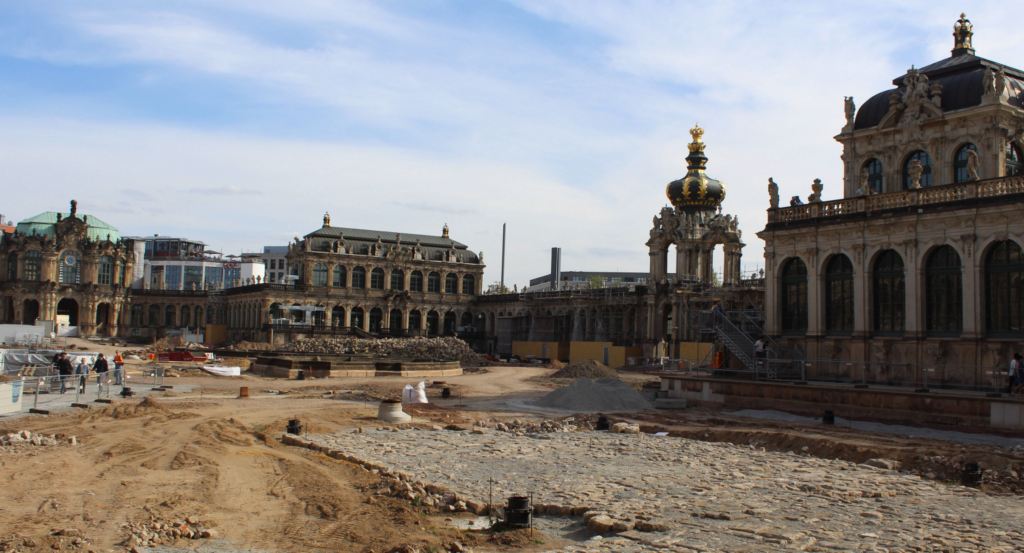
As a mark of royal power, Dresden has historically been a center of the fine arts. This was illustrated by my first visit, to the Gemäldegalerie Alte Meister (The Old Master’s Picture Gallery). This is exactly what it sounds like. And it is housed in an appropriately ornate edifice—indeed, a literal palace. This is the Zwinger, one of the most important baroque buildings in Germany. Admittedly, what stands today is a reconstruction of what was destroyed during the Allied bombing; and when I was visiting, some of the inner courtyards were undergoing heavy restoration. Still, from the exterior the building maintains an impressive grandiosity, especially seen from the other side of its watery moat.
After climbing up the monumental stairway, I found myself surrounded by room after room of masterful paintings. It never ceased to amaze me how even lesser-known cities (nobody I know has been to Dresden, for example) can have first-rate museums. As a case in point, here you can find works by Rembrandt, Titian, and Vermeer.
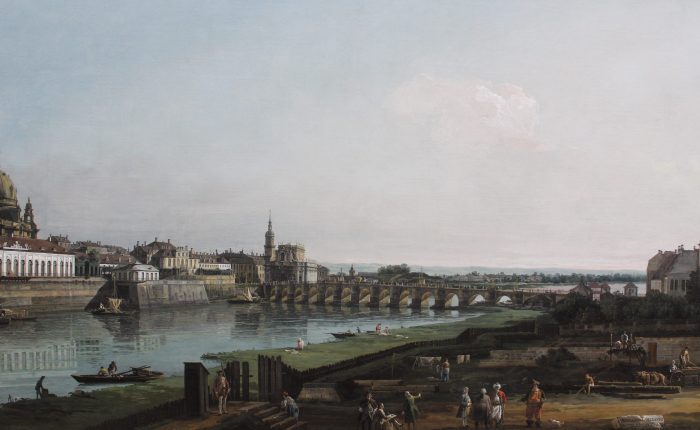
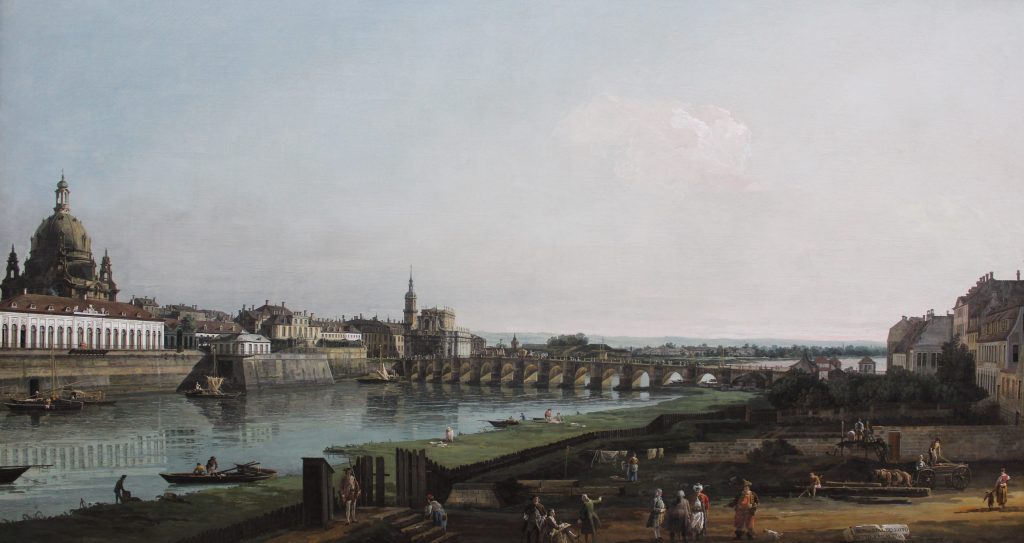
I was particularly interested in the monumental paintings of Bernardo Bellotto. This Italian artist was the nephew of the famous Canaletto—who made such iconic images of Venice—and followed in his uncle’s footsteps with his own careful renderings of cityscapes. Indeed, Bellotto’s paintings of Dresden have an added historical importance, as (notoriously) the old city was almost entirely destroyed by Allied firebombing in the Second World War. But more on that later.
The most famous piece in the museum’s collection is, without a doubt, Raphael’s Sistine Madonna. It is classic Raphael—perfectly graceful, harmonious, and beautiful. But like many viewers, I find the “putti” (the little angels) at the bottom to be the most charming part of the composition. They are so very human—with expressions mixed with curiosity and boredom, so discordant in the triumphant heavenly scene above. One wonders what Raphael, a pious man, was thinking when he painted them.

My ticket to the Gemäldegalerie Alte Meister also included an entrance to the Mathematisch-Physikalischer Salon (yes, the Germans are snappy with names). This is in another wing of the Zwinger palace, and it is a museum devoted, not to art, but to science. I do tend to think that the history of science is unduly neglected in wider culture. We tend to encounter science as a finished product, with all the trappings of modern technology. But in the days before science was so strictly divided from the humanities, it was more approachable and, arguably, a more aesthetically sensitive venture.
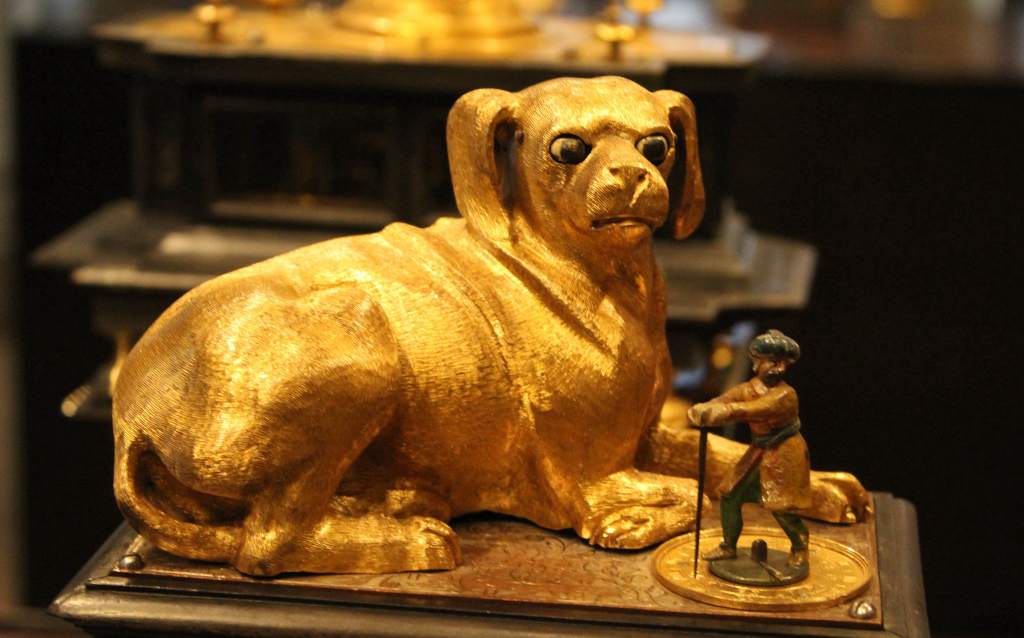
This scientific salon goes back to the early 18th century, and has been housed in this palace since 1728. The collection consists of historical—and quite beautiful—scientific instruments, divided into four categories: mathematical devices, clocks & automatons, telescopes, and globes. Every section is full of wonders. The calculating devices (which use mechanical means to do complex operations) are the forerunners of computers, while the automatons—such as a bear that plays the drums—are the first attempts at robots. Both the globes (made before much of the earth was mapped) and the telescopes are evidence of what may be our species’s finest quality: curiosity.
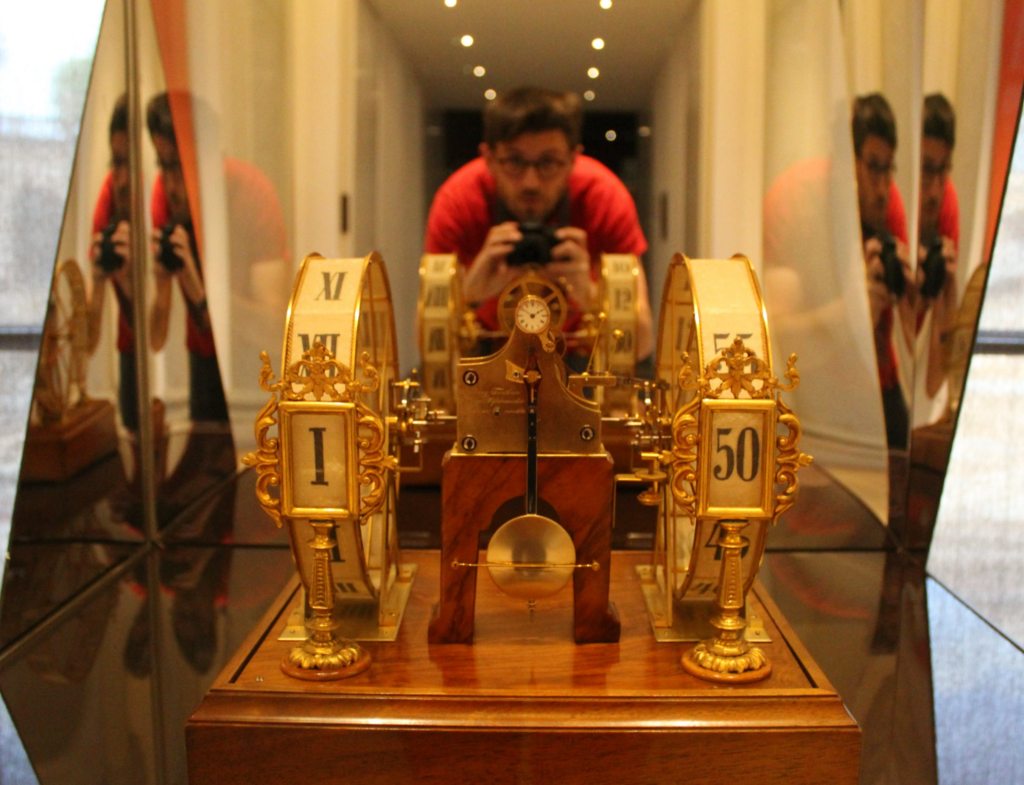
I did my best to feel wonder and awe as I gazed at these artifacts of human genius. But I was really feeling sick by now, and it is hard to be moved in such a state. So I walked back to the Airbnb, ate an early dinner of Vietnamese pho—absolutely the right choice—and went right to bed. Nothing, not even a microbe, was going to ruin this vacation.
The next morning, after over 10 hours of sleep, I woke up feeling fit as a fiddle. To celebrate, I decided to see a little nature. After a trip on the S-Bahn line one, I got off in a little town called Kurort Rathen. From there, I caught the ferry that crosses the Elbe River. There, it was a short distance to the Sächsische-Schweiz national park.
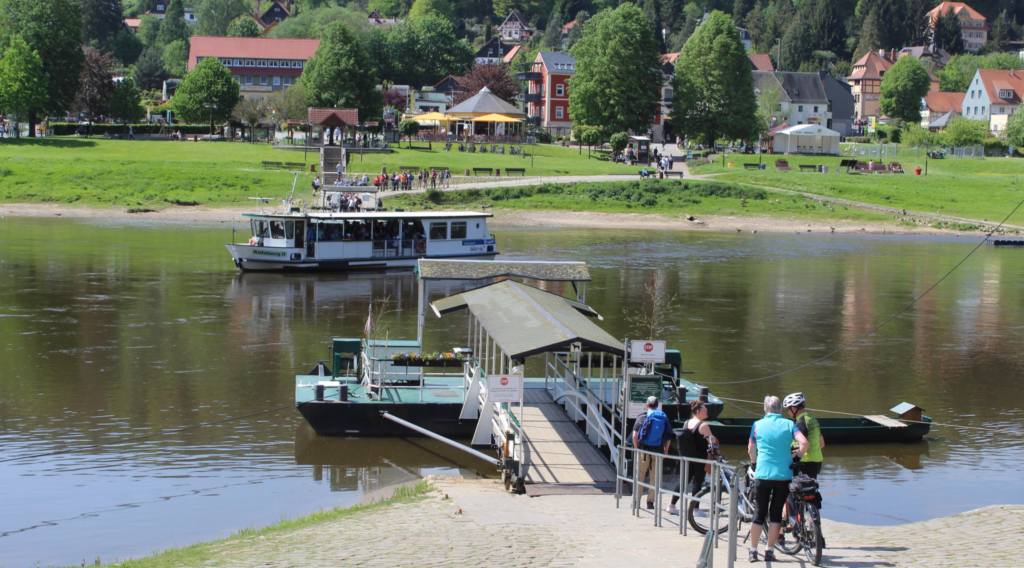
The name translates to Saxon Switzerland, as the Germans—whose country is quite flat in the north—have a tendency to call any hilly area “Switzerland.” In truth, the rocky mounds that I encountered here had little resemblance to the snow-covered alps. Still, it was a beautiful May day and the forest was green and inviting.
I climbed up a path, navigating hordes of picnicking Germans and busloads of all sorts of tourists—Chinese, American, French—to eventually get to the main attraction: the Basteibrücke. This is a monumental sandstone bridge that connects the several peaks of the Bastei, which is an otherworldly assortment of stone spindles, formed over millennia of erosion. Even amid the crowd, the strangeness of these rock formations was absorbing.
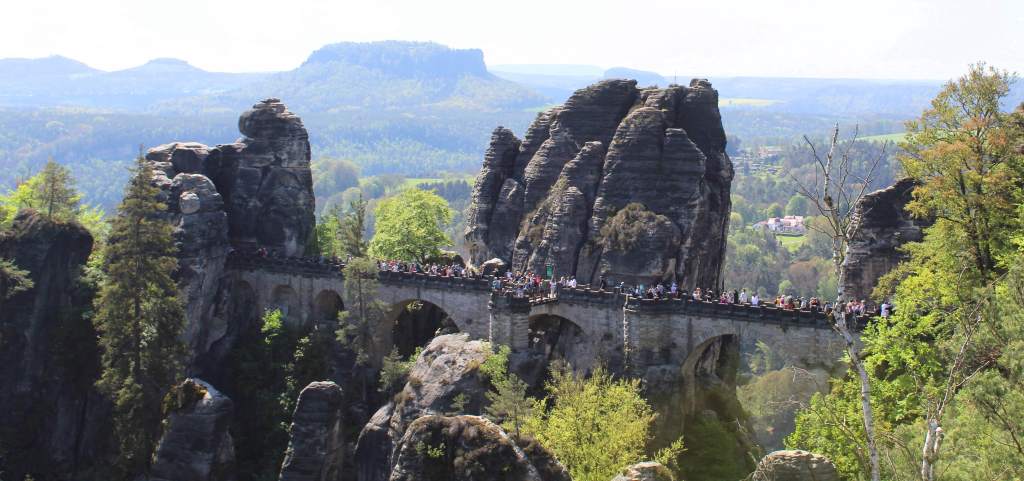
Further on, I reached a rest area with a food stand and a viewpoint, where I could eat a sausage while I contemplated the Elbe valley. The countryside was almost pastoral, and reminded me very much of the Rhine Valley in the far corner of the country. “Is this just what Germany is like?” I wondered. A tall German beer aided my ruminations; and that, after some mulling about, I was barreling down the hill back towards the ferry.
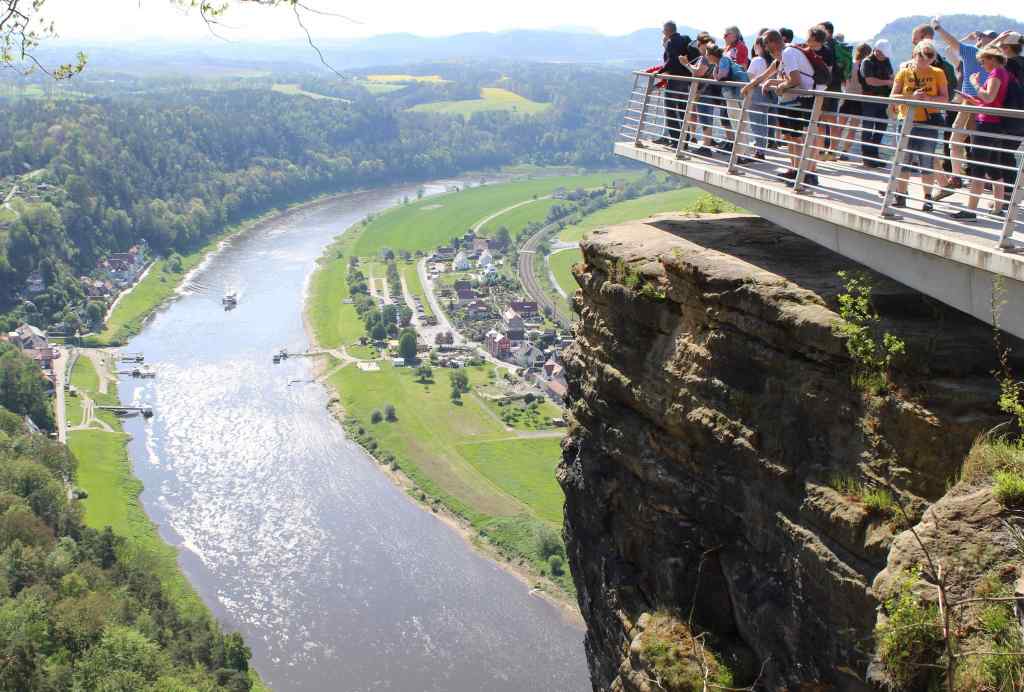
However brief, this dip into the forest was refreshing. Madrid, though beautiful in so many ways, is never lush or woodsy in the way that I crave. Once again, Germany managed to remind me very strongly of the landscapes of the Hudson Valley, where I grew up. In other words, once more I felt strangely at home in this country.
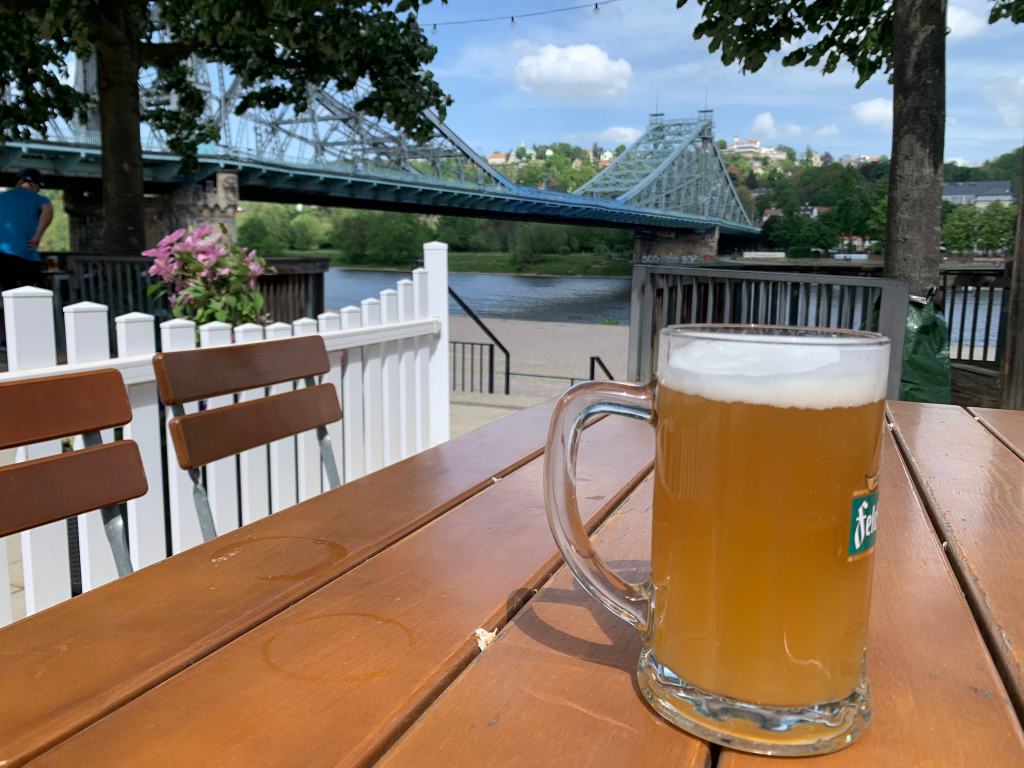
After a return trip on the ferry, I got back on the S-Bahn. But I did not take it all the way back to the center of Dresden. Rather, I got out early to visit another attraction along the Elbe: the Blaues Wunder. This is the pet name for the Loschwitz Bridge, a cantilever bridge connecting both sides of the river. Constructed in 1893, it was considered something of a technological marvel at the time (thus its name).
Nowadays, it is beloved more for being one of the few things that survived the destruction of the Second World War. Set to be blown up by the retreating SS, two ordinary citizens reportedly took it upon themselves to cut the detonation wires. I did not know that historical infrastructure could be so inspirational. In any case, as I stood on the bridge contemplating the river, I cannot say that I found it especially blue nor especially wondrous.
I was more taken with the SchillerGarten. This is a nearby Bier Garten, one of the best in the city. And this was the setting for my next beer/sausage combination—which I enjoyed as I idly watched the river flow by. As a side note, while it is not fine dining by any means, I have to admit that I always enjoy the fare at German restaurants. Simple and hearty, it pairs admirably with their beer—which is, of course, world-class. Indeed, in subsequent days I would spend quite a bit of time at other beer gardens overlooking the river, most notably the Augustgarten closer to the center. Nothing is more pleasant on a sunny day.
Needing to work off this meal, I decided to walk the rest of the way into the center of the city. This took me along a region of the Elbe Valley that was once considered a UNESCO World Heritage site. This designation—granted for its mixture of natural meadows and the many historical buildings alongside the river—was sadly revoked in 2009, as a result of the construction of the Waldschlösschen Bridge. Ironically, this bridge had to be built to relieve traffic on the aging and (by modern standards) narrow Blaues Wunder. History is rich in ironies.
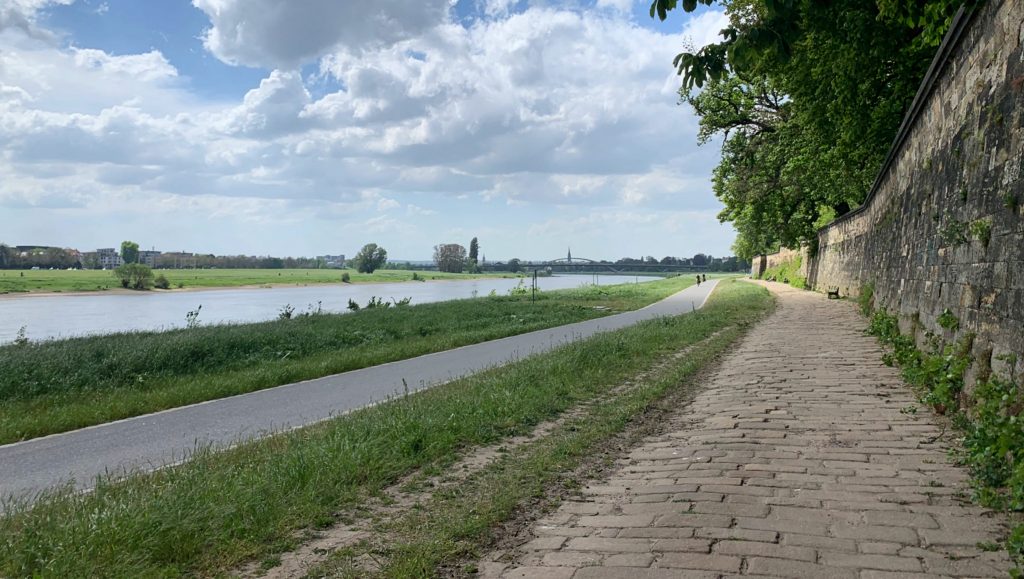
As I walked along the meadow, I hardly felt that I was going anywhere at all—so flat and green was the landscape around me. But I did not follow the course of the river until the familiar profile of the historic city center came into view. Instead, I turned north, walking through the newer part of the city, until I reached a strange building that looked like it had been pierced with a sharp object. This was the Bundeswehr Military History Museum.
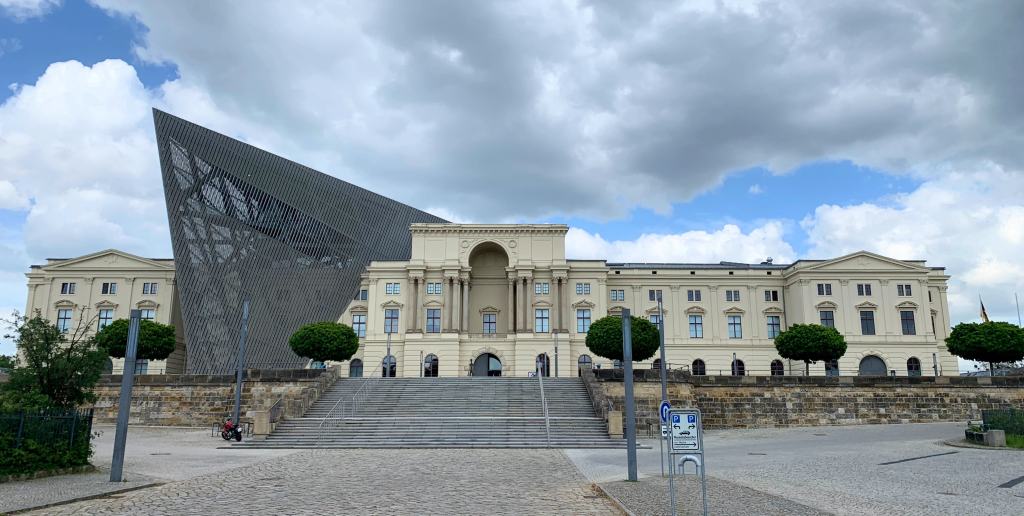
The building has a telling history. Beginning its life as an armory in 1876, it has since served as a museum for the Nazis, the Soviets, as well as East Germany. Closed during reunification, it was eventually decided to re-open the museum, but with an important redesign. This is the aforementioned sharp object—a transparent arrowhead, designed by Daniel Libeskind, a Jewish architect—is meant to symbolize the museum’s new role in a democratic society.
Even so, the idea of visiting a military history museum in Germany of all places may not seem especially appealing. But this one has taken pains to distance itself from traditional military museums, which are often a celebration of the machines of war. Rather, here the visitor can walk through exhibits that explore war from a variety of angles—not just technological or strategic, but also political, social, and historical. There is even an exhibit on the use of animals in war.
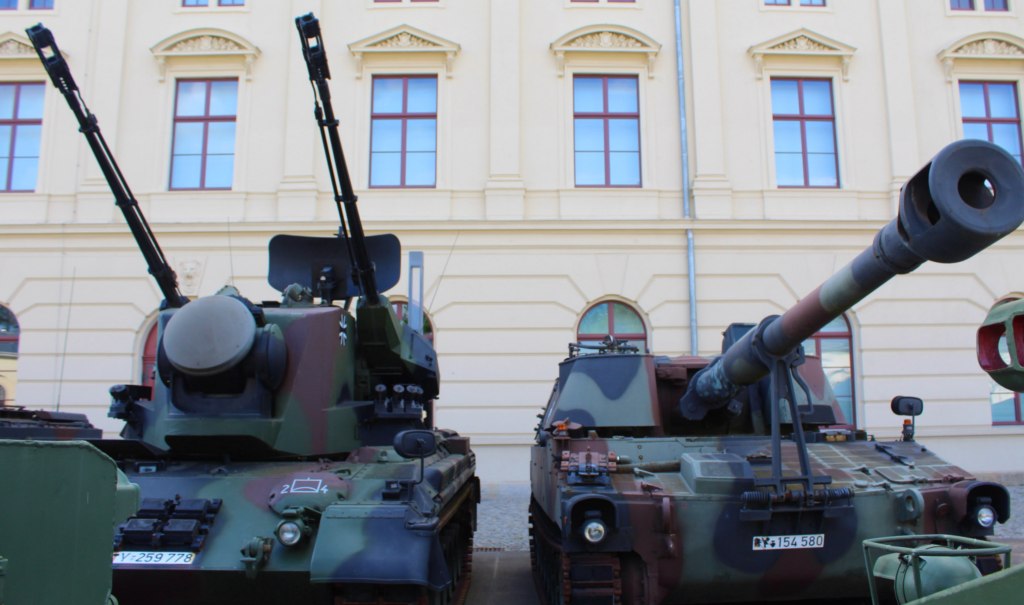
Indeed, the museum is gigantic, filling up the entire historical armory—and even stretching outside, where the visitor can see several military vehicles parked on the lawn. I should admit that, after the long walk along the river, I probably did not see all there was to see. And I must also admit that I have a limited ability to engage with military insignia, medallions, and uniforms (especially when there are thousands of them). But I was impressed at the massive and earnest attempt to see warfare in such a holistic way, as something humans have done for all of recorded history, without attempting to celebrate, condemn, or reduce it.
As a case in point, my visit culminated in the large transparent arrowhead that sticks out of the front of the building. This was designed to point to the area of Dresden where the firebombing began. Inside, apart from a commanding view of the surrounding neighborhood, you can see relics and ruins of the burnt-out city.
The 1945 fire-bombing of Dresden has become notorious in popular culture, in part thanks to Kurt Vonnegut’s classic novel Slaughterhouse-Five. (Vonnegut himself was a witness to the destruction, having been a prisoner of war in the city.) After Hiroshima and Nagasaki, Dresden is arguably the best-known example of Allied atrocity. In short, heavy bombing by British and American forces killed thousands of civilians and obliterated the city’s historical core—one of the finest in Europe.
This blog post is certainly no place to re-litigate this event—condemned, justified, polemicized, used in Nazi and Soviet propaganda, among much else. The museum itself presents the bare facts of the event, with little editorializing. I will only point out that, during the so-called “Good War,” which most people nowadays would say was justified—the Allied war against fascist world-domination—there were still actions that caused the leaders and believers in that fight to pause and recoil. But what makes a war justifiable? And can a justifiable war be won with unjustifiable means? These are not easy questions to answer, but they are worth pondering.
This was heavy stuff. And by now, I was both mentally and physically exhausted. So I decided that it was time for a kebab. The humble Turkish kebab has become a kind of pan-European fast food, available from Portugal to Poland. But the best ones, in my experience, are to be found in Germany—largely thanks to the sizable population of Turkish immigrants. And while the one that I had that day in Dresden (at the nearest shop I could find) wasn’t the best, it did revive my flagging spirits. And with a couple German beers, this capped off my second day in Dresden.
One of the best parts of my stay in Dresden was the neighborhood of the hotel: the so-called Neustadt. While this translates to “New City,” this is ironically the most authentically historical part of Dresden, as it largely escaped the Allied bombing.
New, of course, is a relative term; and what is new in Europe may be quite old. This neighborhood is called “new” because it was rebuilt after a 1732 fire. The neighborhood was rebuilt on a regular plan, giving it a more tidy and uniform appearance than many old European cities. Yet it retains an important collection of Baroque architecture.
But for locals, the Neustadt is more important for being a center of nightlife and counterculture. This is important in a city like Dresden, which in modern times is known as a conservative bastion (in part a reaction against the communist years of the DDR). The Neustadt has a punkish vibe, full of graffiti and dive bars. Each night, the streets were full of people—young and old—exercising their legal right to drink in public. A little metal shed for street urination is a nod to decency.
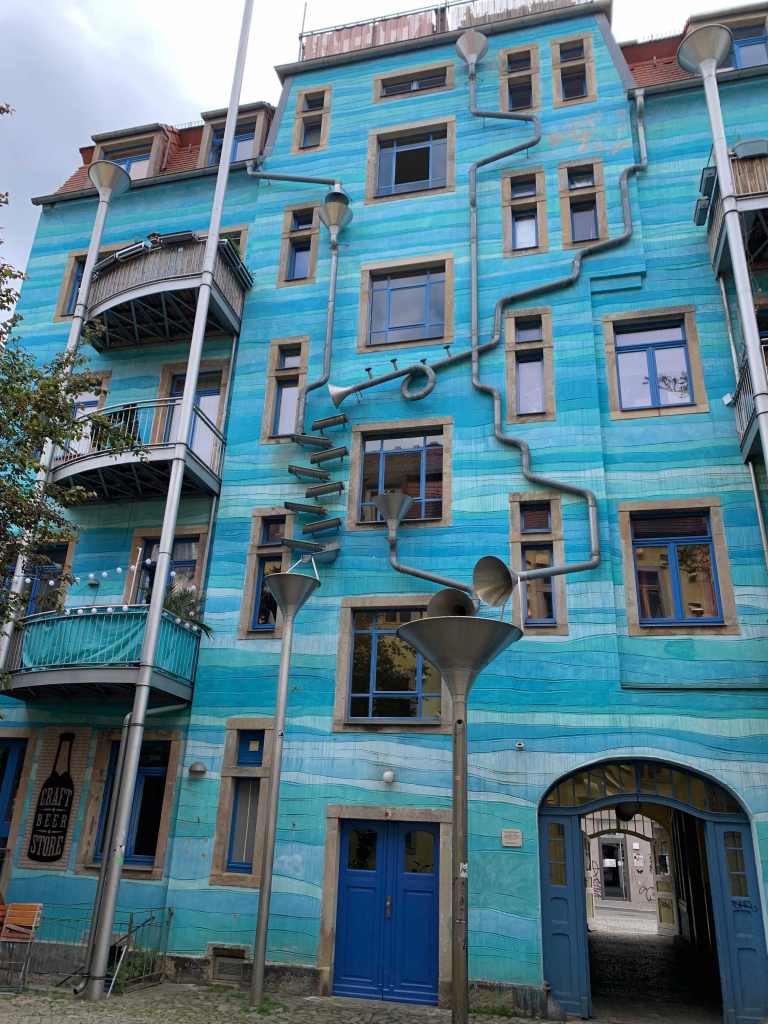
One of the most characteristic attractions in this part of town is the Kunsthof-Passage. This is a kind of inner courtyard, surrounded by whimsically-decorated apartment buildings. This is, in a way, the Neustadt counterpart to the historic city’s Fürstenzug—not a celebration of royal power, but of local artists. Dresden would be a dull city without this dichotomy.
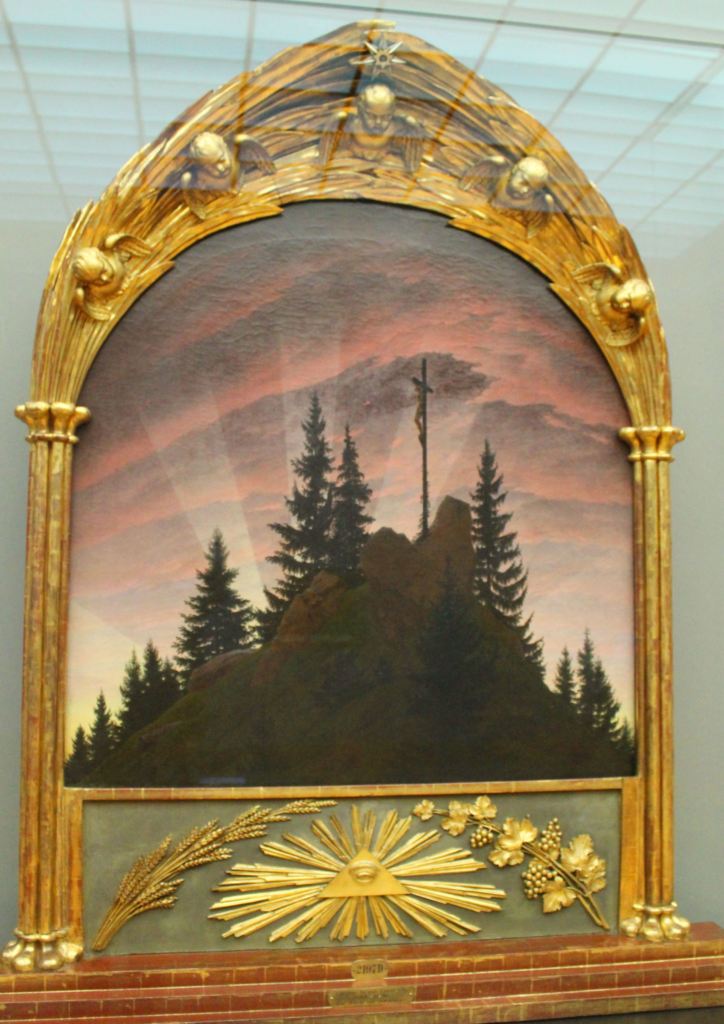
You can see a further illustration of this by visiting the Albertinum. This is the other major art gallery of Dresden, picking up where the Old Masters Gallery leaves off. Its collection of paintings is equally impressive, including works by Monet, Munch, and Van Gogh. However, I was more excited to see work by the German artist, Caspar David Friedrich. The quintessential romantic painter, he was unparalleled when it came to depicting the smallness of humanity when faced with the bleak power of nature.
Nothing illustrates this better than the Tetschen Altar. Painted in 1808, early in the painter’s career, the altar depicts the crucifixion from a far distance, as a silhouette at the top of a mountain. Rather than centering Christ’s suffering, therefore, the altar emphasizes its smallness amid the surrounding landscape. Needless to say, this proved to be a controversial choice.
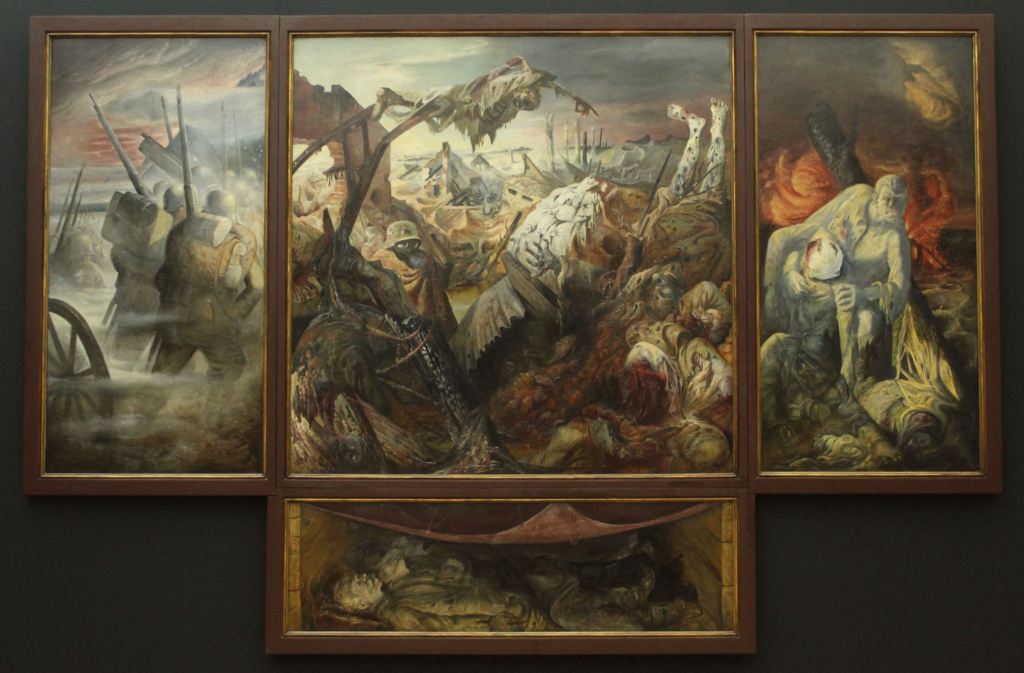
Another standout work is the Dresden Triptych, by Otto Dix. Himself a veteran of World War I, fighting for the German Army, he later became a prolific anti-war artist (which led his art to be condemned as “degenerate” by Hitler). This work, titled The War, is a prime example of his grim vision. Like Caspar David Friedrich, Dix here uses a religious format, but he does so ironically. War is here nothing but carnage and chaos—the furthest thing from the glorious struggle that leaders have so often claimed it to be.
Indeed, the collection of this museum is marked by war in several respects, as 196 paintings were destroyed during the firebombing. War and art are, so often, opposing poles in human history.
The Albertinum is also the home of the city’s excellent collection of sculptures. This is immediately apparent when you walk into the museum, as there is a room jam-packed with plaster casts of famous statues, including a full-sized replica of Michelangelo’s David (which, when I visited, was holding a Ukrainian flag). The museum’s collection ranges from antique Greco-Roman sculptures—some of them quite excellent—to modern works, by Degas or Rodin.
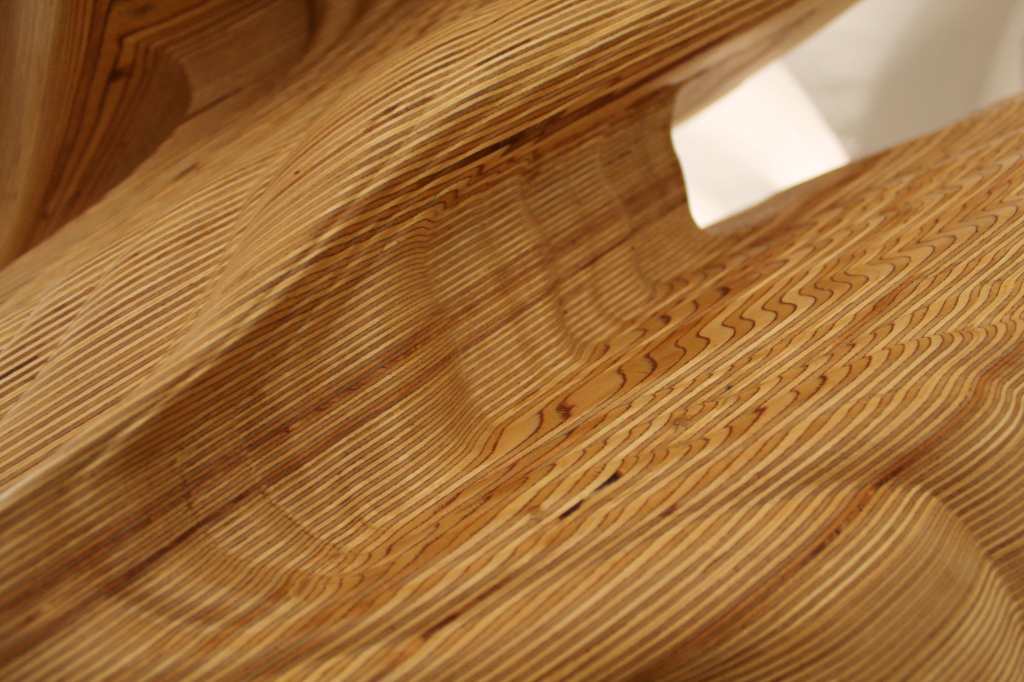
Yet for me, the highlight of this collection was the contemporary gallery. Housed in an expansive room on the lower level, these statues ranged from hyperrealistic portrayals of the human body to geometrically arranged heaps of junk. Indeed, although I cannot say I am normally a huge fan of the avant-garde, I found these works to be more exciting than still another white marble statue. My personal favorite was a work by Tony Cragg—a huge piece of wood that has been carved into an amorphous, otherworldly undulation.
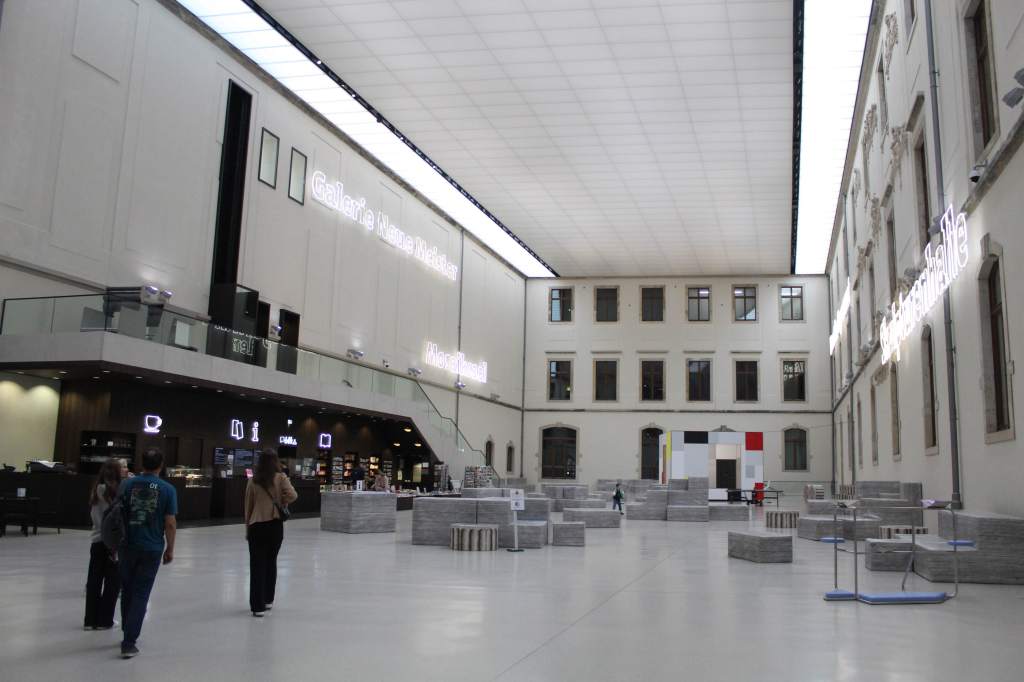
Indeed, as I sat in the enormous atrium, sipping on a coffee from the museum cafe, I decided that I liked this museum even more than the exceptional Old Master’s Gallery. Far from being an interesting secondary city, I had found that Dresden is, in fact, one of the great cultural centers of the country—and, perhaps, of Europe.
When I exited the museum, however, I felt that I’d had my fill of the fine arts for the day. So I opened Google Maps and searched for something different. Soon, I’d found it: the Transparent Factory. This is a working Volkswagen manufacturing plant, designed to be “transparent” in several respects—literally, because the walls are made of glass, but figuratively, because the factory can be visited, and their entire process is on display. In other words, it is kind of a marketing stunt, but still an interesting opportunity to visit a working factory.
I walked in and asked (in German) to be put on the next tour. The clerk, hearing my accent, informed me that the tours were only available in German. Bravely, I said alles gut. Soon I found myself being whisked around the assembly line, listening intently to an explanation that I found almost entirely unintelligible. Still, I had never been in a factory like that before, so it was interesting simply to watch.
Sadly, the factory ceased operations in 2025, the year after my visit. But it is still owned by Volkswagen, and can still be visited.
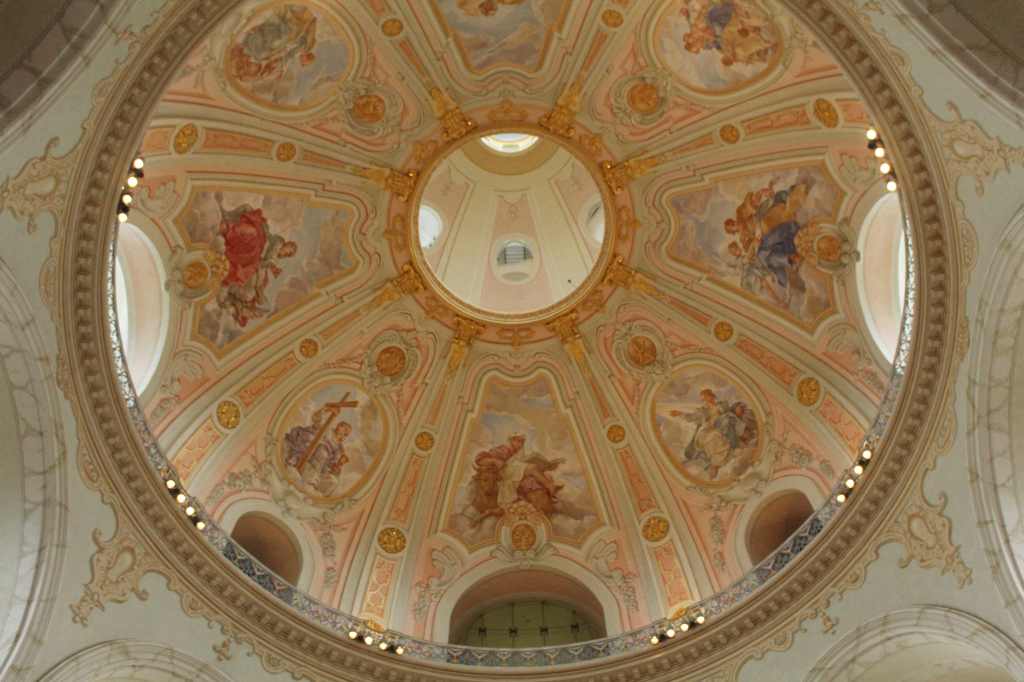
My last stop for the day was, perhaps, the most ironic building in the city: the Frauenkirche. This is the towering Protestant church at the heart of the city. Architecturally, it is interesting—eschewing the usual construction of three naves that culminate in an altar. Instead, it is more of an amphitheater, with the seating surrounding the pulpit—all of this underneath the resplendent dome above (one of the largest in the world).
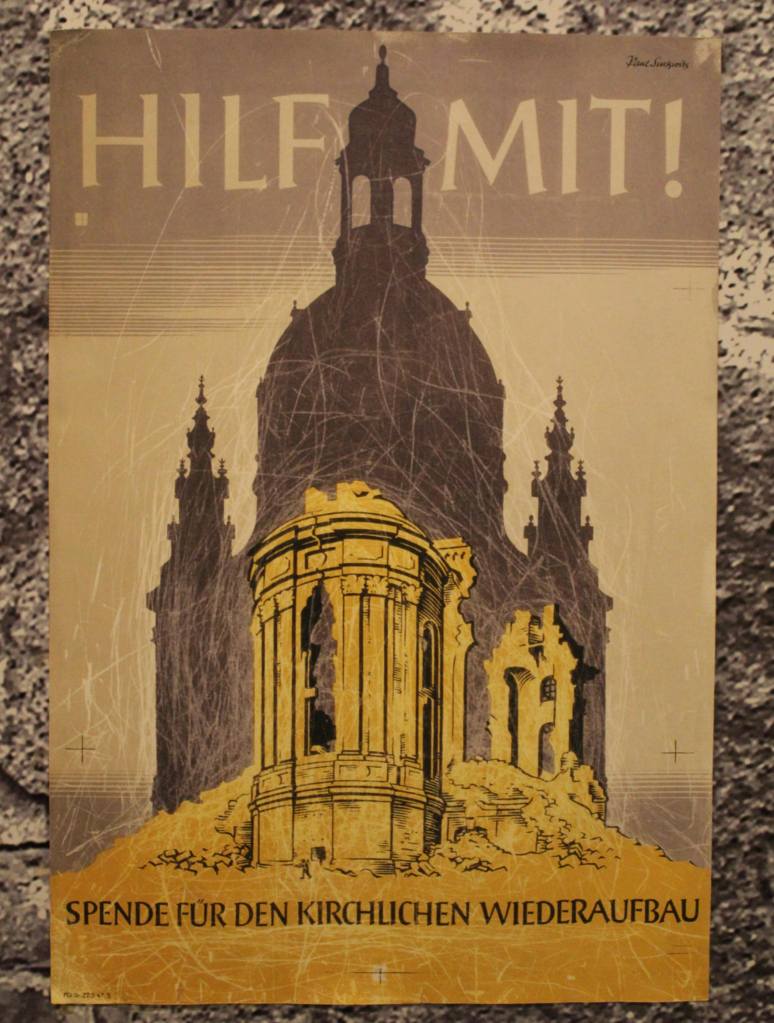
Like so much of the city, however, this iconic structure was reduced to rubble in 1945. As Dresden was incorporated into the communist (and officially atheist) DDR after the war, there was little political will to invest in the reconstruction of the church; and the pile of rubble was eventually cordoned off and declared a “memorial against war” (rather a lazy choice, if you ask me).
After the reunification of Germany, however, it was finally decided to revive the church and reincorporate it into the newly reconstructed city. The old materials were sorted and cataloged, and a massive funding campaign—with many individual donors—raised the necessary euros. Finally, in 2005, the new church was completed—in time for the 800-year anniversary of the city’s founding. Nowadays, the Frauenkirche, rather than a memorial of war, is a symbol of the city’s phoenix-like rebirth from the flames.
Now, I must skip ahead to my last day. My flight back to Madrid was leaving late in the day, giving me the morning for a last bit of sightseeing. Thankfully, I had saved one of the highlights of Dresden for this: the Dresden Castle.
This is more of a palace than a castle, serving as the seat of power for over four centuries. Of course, like most of the historic city, this too is a reconstruction of what used to be.
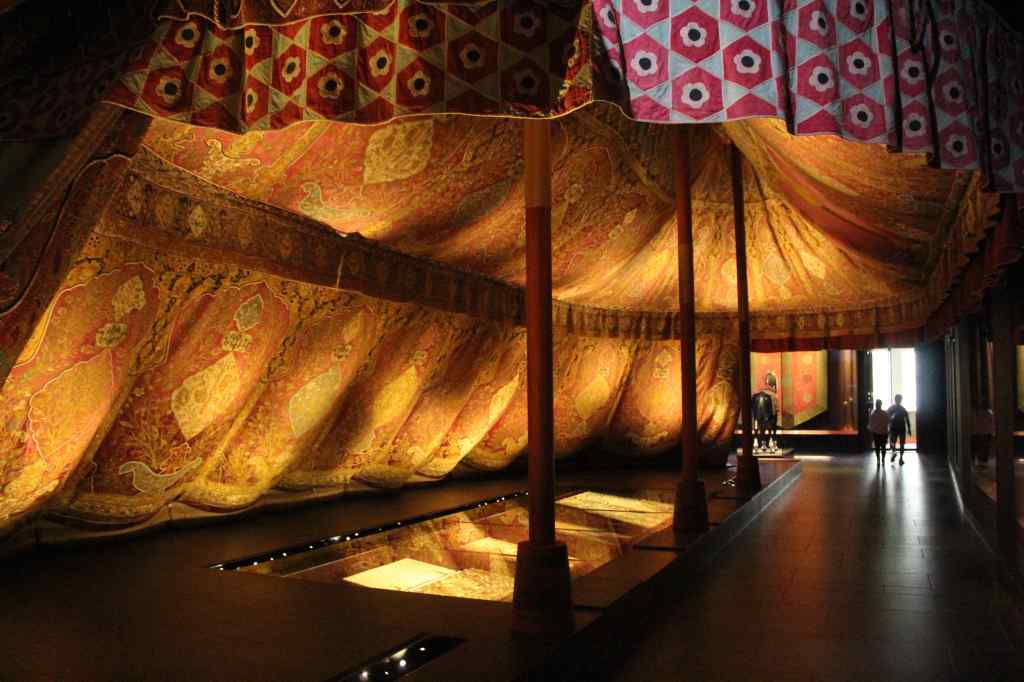
Nowadays no royals live here. Instead, the great structure serves as a museum complex, with five separate sections to visit. There is a wing devoted to prints and photographs, and another one to historic coins (numismatics). More memorable was the Armoury, full of historic weapons and armor. This includes the so-called Turkish Chamber, which displays objects from the Ottoman Empire—notably, a huge and resplendent three-mast tent.
But the highlight of the visit is, without a doubt, the Green Vault. Space is limited; so when you buy your ticket, it comes with an entrance time. It also comes with extra security, as the Green Vault is the home of Europe’s largest collection of precious objects.
The Vault is divided into two spaces, New and Historic. In the New Green Vault, the focus is on the objects themselves. And they are exquisite.
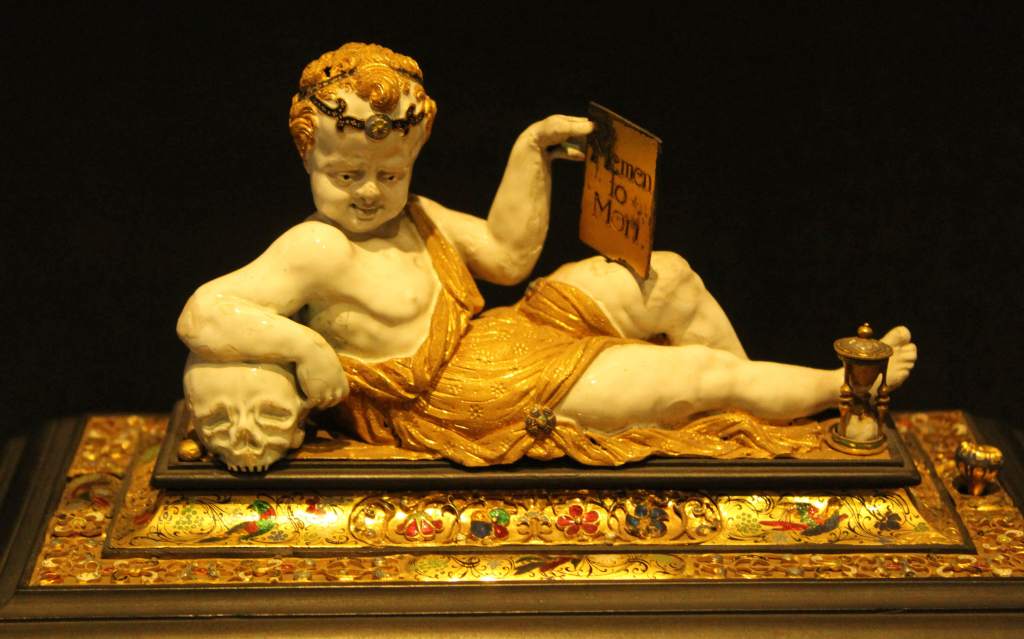
Now, I am normally not such a big fan of jewels and finery. While the craftsmanship is impressive, such objects usually exhibit the wealth of their owners rather than the artistry of their makers. However, the objects in this space were so wildly ornate, and made of such outlandish and rare materials, that I could not help but be impressed. Gold, silver, emeralds, sapphires, rubies, ivory, enamel, amber, marble, pearl, tortoiseshell, coconuts… The amazing attention to detail, the sheer ingenuity of the designs, could captivate even my most cynical mind.
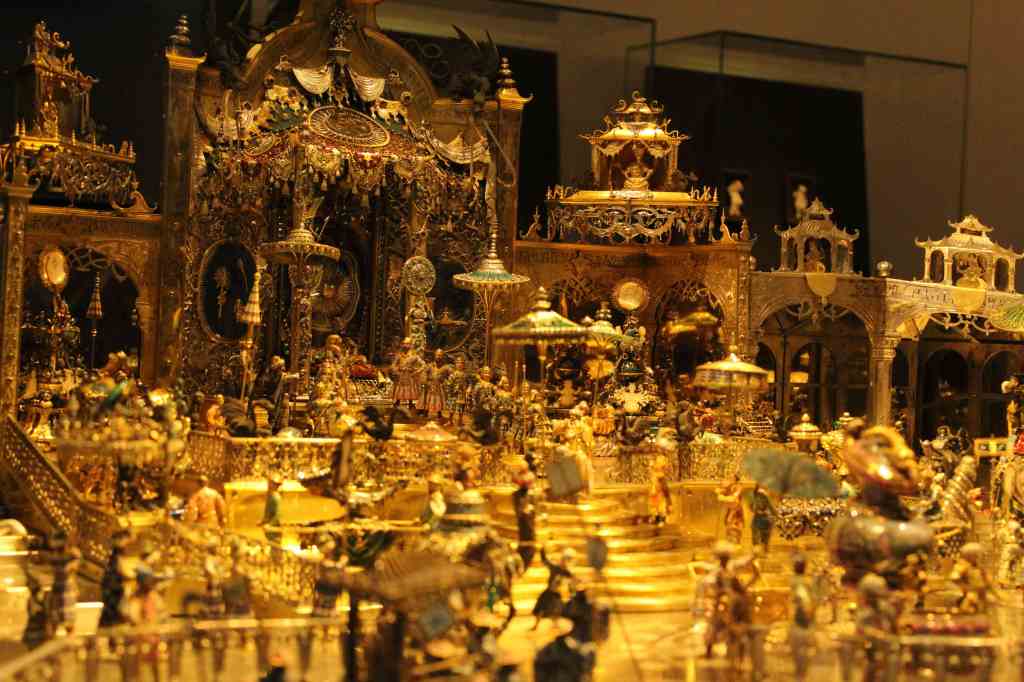
The Historic Green Vault is also full of such delightful treasures, though here the focus is on the total decoration of the rooms. Here you can see the maximalist impulses of the High Baroque in their fullest splendor, as each room bursts with finery. These rooms were put together in the early 1700s under Augustus the Strong, as physical manifestations of his power. But they have been through a lot. Like so much of the city, the rooms were severely damaged—and, in some cases, completely destroyed—in the 1945 bombing. They were also the scene of a famous heist.
In November of 2019, in the wee hours of the morning, a small fire on the nearby Augustus Bridge caused a power outage in the museum, deactivating the security system. While it was down, thieves cut a hole in the window bars and climbed inside the vault—smashing the protective glass and stealing hundreds of jewels.
Amazingly, despite the power outage, the CCTV kept working—which eventually allowed the German authorities to identify and apprehend the thieves (who were all members of the same family). Even better, most of the jewels were eventually recovered, and were returned to the display in August of 2024 (a few months after my visit).
This dazzling display of wealth and power was my final impression of the city. Afterwards, I had time for one last meal (and beer) and the Augustgarten across the river. It was sad to go.
My return flight to Madrid had a connection in Frankfurt (there were no direct flights). Now, layovers tend to produce a certain amount of anxiety in me, since any delay in the first flight can cause you to miss the second. This has happened to me before, and I was afraid it was about to happen again, since my flight was delayed by an hour.
Indeed, by the time I arrived, I had resigned myself to spending an uncomfortable night in Frankfurt. But I was astounded to find that my second flight was also operating with a delay—giving me a 15-minute window to catch it. “You can make it,” the flight attendant told me as I was leaving the plane. “But you’ve got to run. The airport is big!” It was. With my big orange hiking backpack on my back, dressed in jeans and a hoodie, I found myself sprinting down a seemingly endless hallway until, miraculously, I arrived at my gate and, at the last moment, caught the flight to Madrid.
It was an exciting end to what had been a thoroughly enjoyable vacation. And now, unlike everyone else I knew, I could say that I had been to Dresden. And it is a city well worth visiting.

