Review: City of God

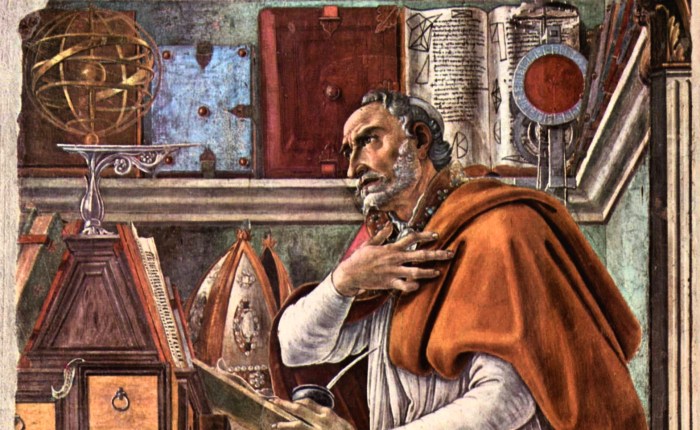
Review: City of God

City of GodCity of God by Augustine of Hippo

My rating: 4 of 5 stars

Once on the beach at Utica, I saw with my own eyes—and there were others to bear me witness—a human molar tooth so big that it could have been cut up, I think, into a hundred pieces each as big as one of our modern teeth.

I’m trying to think of books that might be equal to this one in importance to Western history: Plato’s Republic? the works of Aristotle? Euclid’s Elements? Homer’s epics? There aren’t many. This book arguably set the tone for the entire Middle Ages that followed. It is a vast, sweeping, powerful, and cockamamie book; it is a true classic.

Augustine wrote The City of God over a period of 13 years. He began the work when he was 59, and finished it when he was 72. The work was occasioned by the capture of Rome in 410 by the ‘barbarian’ leader Alaric, king of the Visigoths. It was a brutal defeat for the Romans, with much destruction, rape, pillage, and death. More than that, it was a symbolic defeat, the first time Rome had been taken by a foreign enemy in hundreds of years. Unsurprisingly, the remaining pagans blamed the newly ascendant Christians for this calamity. If the old gods were worshiped, the critics argued, this never would have happened. Rome was never taken when Jupiter was praised and when Nike, goddess of victory, was gracing the Curia of the Roman Senate. (The statue of Nike, the Altar of Victory, had been removed from the Curia by Constantius II, briefly reinstalled by Julian the Apostate, and then removed again.) In short, the Roman Empire was collapsing and it was all the Christians’ fault.

These accusations were what prompted Augustine to begin this work; but as the book grew, so did Augustine’s ambitions. By the middle, the beginning has been forgotten; and by the end, the middle is a distant memory. Because Augustine frequently interrupts his main points to indulge in lengthy digressions, the reader is often mired in pages and pages of side-issues and curiosities. Yet there does remain one vital central idea. It is therefore quite tough to give a fair impression of this book’s contents. To paraphrase Bertrand Russell, if I focus only on Augustine’s main thesis, then it will make this chaotic jumble seem too unified and focused; yet if I lose myself in the details, then I’ll omit its most lasting contribution. I even have it easier than most readers, since I read an abridgment—meant to cut out much of the extraneous material. Even so, there is a new topic on almost every page. So I think I’ll follow Russell’s approach in his History of Western Philosophy and give you a taste of some digressions before tackling Augustine’s more major themes.

Early on in the book, Augustine considers whether virgins who were raped in the sack of Rome have lost their virginity. He argues that, as long as they did not consent and did not enjoy it, they are still virgins. Augustine even argues that being raped might have been a good thing for some of them, since it taught them not to be haughty about their virginity. (It’s frightening that, at the time, this opinion was considered quite progressive.) He considers whether the extremely long lifespans reported of some Biblical figures (such as Adam’s purportedly 900-year long life) should be interpreted literally, or whether, as some argued, 10 years back then was equivalent to 1 of our years, thus arriving at a more realistic figure for Adam’s age, 90. (Augustine thinks Adam did live 900 years.) In resolving this question, Augustine notes that there are several discrepancies in the ages reported of certain people in different versions of the Bible; specifically, the original Hebrew Bible said one thing, and the Septuagint said another. (For those who don’t know, the Septuagint was a Greek translation of the Bible, done by 70 Jewish scribes in the 3rd or 2nd century BCE at the behest of the Egyptian king, Ptolemy II. The legend says that all 70 scribes completed their translations separately, only comparing them at the end, and they turned out to be all miraculously identical.) Augustine concludes that, though the Septuagint was indeed divinely inspired, where it differed from the original Hebrew, the original should be trusted.

In a lengthy section, Augustine attempts to correlate secular history with biblical history, doing his best to place the events of the Old Testament in the context of Greek and Roman history. He even speculates on the possibility that Plato might have read parts of the Old Testament, since parts of Plato’s Timeaus are so similar to the Book of Genesis. Augustine is against judicial torture, thinking it vile and illogical to torture witnesses and the accused. He anticipates Descartes’s cogito ergo sum: “In the face of these truths, the quibbles of the skeptics lose their force. If they say; ‘What if you are mistaken?’—well, if I am mistaken, I am. For, if one does not exist, he can be no means be mistaken. Therefore, I am, if I am mistaken.” (By the by, Augustine also anticipated Kant’s subjective theory of time, which Augustine put forth in the eleventh book of his Confessions.) Augustine attempts to prove that living, physical bodies can, indeed, be tortured endlessly in the fires of hell, since, as everyone knows, salamanders live in fire, and peacock meat never putrefies. So what’s so miraculous about human bodies endlessly burning in the flames?

I actually can’t resist including a bit more about the peacock meat. Apparently, having heard from someone else that peacock meat never spoils, Augustine set aside a piece of roasted peacock meat when he was served it at a friend’s house. He observed this piece of meat for a whole year, noting that even after all that time it never began to stink; it only got dry and shriveled. Now, presumably the piece of meat had been thoroughly cooked and salted, so make of that what you will. While I’m at it, I also want to include a story Augustine tells about a friend of his who had hemorrhoids and had to have surgery. As the man was fearful of going under the knife, Augustine and several other friends had a loud and fervent prayer session before the surgery. (If I had to get surgery back then, I’d be praying too.) And the surgery was a success!

Now for some more meaty issues. Augustine formulates here the idea of original sin, arguing that Adam’s fall changed the nature of humankind, filling us with sinful desires and causing death to enter the world. Augustine thinks, for example, that before the fall, Adam and Eve could choose to have sex without any feeling of sexual desire; all of the physiological prerequisites for intercourse (to use a polite expression) were under just as much control as our arms and legs. In short, Adam could just choose to have an erection without feeling horny. But now, in order to reproduce, we are at the mercy of our desires, which we cannot directly control and which threaten to overwhelm our rational minds. Thus is the sorry state of fallen man. As a consequence of this belief, Augustine also argues that unbaptized infants go to hell; not being cleansed of original sin, they simply must. By the way, there are several memorable passages in Augustine’s extraordinary autobiography, his Confessions, where he chastises his infant self for being so greedy of food and drink, and so selfish of love and attention.

Several other ideas are connected to Augustine’s conception of original sin. Since humankind is fallen, it is impossible for us without God’s aid to do good deeds and to achieve salvation; salvation is granted from God, it is a gift of divine grace, not something we earn. Augustine also believed in predestination. God, being omniscient, foreknew which people would end up saved, and which would end up damned. So in addition to anticipating Descartes and Kant, Augustine also anticipates Calvin. (From what I hear, a lot of the Protestant Reformation involved a return to Augustine’s teachings, but I’m not so knowledgeable about this.) I should point out that these ideas weren’t commonly accepted at the time. Just the reverse: many people argued vociferously against these doctrines. Notably, Pelagius, an ascetic from England, argued that humans were not born already damned (or, in other words, there was no ‘original sin’ in the Augustan sense); that humans had absolute free will, and thus were not predestined to be saved or damned; and that the grace of God was not necessary to do good works. Augustine combated Pelagius’s ideas with his typical intolerant zeal, considering them heresies, and succeeded, after a long fight, in making his own opinions orthodox for a long time to come.

As befitting a great Christian thinker, Augustine also tackles some of the perennial problems of Christian philosophy. One of these is free will. Now, without free will, the entire worldview of Christianity collapses, since then there is no fair basis of separating people into the saved and the damned. Yet God is omnipotent and omniscient; this means that when He created the world, He knew exactly what was going to happen. So how can we reconcile these attributes of God with free will? Augustine does so by noting that, although God knows what you will do and whether you will be saved, His knowing doesn’t cause you to make the choices you make.

Augustine also addresses the so-called problem of evil. This is another classic paradox of Christianity, which results from trying to harmonize the undeniable existence of evil in the world with God’s omnipotence and His infinite goodness. If God was truly all-powerful and purely good, why is there evil in the world? Augustine makes several classic replies.

First, he notes that, by allowing some evil in parts of creation, the whole might be, by consequence, even better, as the resulting goodness outweighs the evil. In short, goodness is cheap unless it is tested with temptation; so the presence of some evil is necessary for the existence of good. Augustine also notes that God never causes evil directly, since it is only His creatures that choose evil. For Augustine, as for many others, evil doesn’t really exist; evil is a lack of existence, the same way darkness is a lack of light and cold a lack of heat. Thus, God never created anything evil; all existence, as existence, is good; His creatures, through their own perversity, have sometimes chosen evil. So even Satan himself, insofar as he exists, is good; though his nature has been corrupted by his wicked ways (this corruption presumably being some sort of deficiency in his existence). Augustine even plays with Aristotelian terminology, saying that evil never has an efficient cause (the direct, or proximate, cause of something), but only a deficient cause.

I know that my opinion is not worth nearly as much as Augustine’s in this matter, but I do want to include my thoughts. I don’t find Augustine’s answer to the problem of evil satisfactory. And this is because, even if God is not indeed the proximate cause of evil, He would still be the ultimate cause, since He created the universe with full knowledge that evil would result from His action. It’s like this: If I am a leader of a country, and choose to go to war with another country, I am not the direct cause of people dying—that was presumably the guns and other weapons. And arguably the soldiers on both sides do have some share in the responsibility, since each of them chose to participate, to fight, to kill, to risk their lives, and so on. Yet ultimately it was my decision to send all these people into battle, and I think I would share a large portion of the responsibility and (if the action were unjust) the guilt. If the war was indeed justified and necessary, and the result was good for the world, that would make the action excusable, but it would not negate all of the pain and suffering inflicted on the soldiers, nor would it make me any less responsible for their fate.

Besides, I find this whole business of balancing good and evil, as if weighing a scale, quite absurd. If an innocent person suffers, if a single child is abused or crippled by sickness, how can any amount of goodness elsewhere make that okay? Here’s an example. Imagine there are ten people on an island with very limited food. There is only enough food for each person to stay alive, but not enough to make them energetic and happy. So when all ten people are living there, eating the food available, the total satisfaction-level is around 40%. Now, if nine of them ganged up on the last one, and killed and ate him, it’s possible that, even though there would be a lot of pain inflicted on that one man, the joy experienced by the remaining nine of having real meat, and the extra resources freed up on the island by having one less person, might in the long run make the general satisfaction-level higher—perhaps 60%. Does that justify killing the man? I think not. My point is that the happiness of the many cannot be balanced against the misery of the few, like an accountant balancing an earnings report.

Now, I know this review is already extremely long, but I haven’t even gotten to Augustine’s main thesis—the City of God. Augustine divides up humankind into two metaphorical cities: the City of Man and the City of God. Members of the City of Man are swollen with pride; they think that they can achieve happiness in this life, through satisfying their bodily desires or by practicing human virtue; by creating peaceful cities and just laws; by trade, wealth, power, fame, and wisdom. Yet, noble as some of them may be, this goal is pure vanity. In this life, we are too beset with troubles and uncertainties to have real happiness. States try to create justice, but their laws are frail human creations, constantly failing to attain their goal of absolute justice—since so many sinners go unpunished and so many innocents are unduly condemned—with the result that the laws are always being changed, updated, reformed, and differ from country to country, from place to place, all without getting any closer to their goal. The Stoics attempt to achieve happiness through virtue alone, without any hope of heaven; and yet how often do painful disease, the loss of a loved one, the failure of a scheme, the unquenchable passions in our breast overwhelm our reason and cast us into abject misery? Members of the City of God are not exempt from any of these miseries. However, they know that they are mere pilgrims on this earth. They place their hopes, not in this life, but in the life to come. Thus they are not misled by the vanities of earthly happiness, but act in harmony with God’s will to achieve salvation.

This doctrine, though simple enough, proved to be immensely influential. Augustine not only separates church and state, but subordinates the state to the church. Temporal authority is just the product of consensus, while the authority of the church comes from God. The resultant history of the Middle Ages, with the rising political power of the Catholic Church, owes much to Augustine for its intellectual justification and formulation. Again, the importance and influence of this book could hardly be overestimated.

After spending so much energy reading, summarizing, and responding to this book, I am almost at a loss for how to make a final evaluation. Augustine is obviously a genius of the highest order, and even now it is difficult for me to avoid be sucked into the endless labyrinths of his mind. This is especially impressive to me when I consider that I am not a Catholic, not even a Christian, and disagree with almost everything he says. More than that, although I have immense admiration for his originality and his brilliance, I often find his perspective unhealthy, intolerant, dogmatic, and generally unappealing. Perhaps what I like least about Augustine is his incredible, I would even say his morbid, sense of sin.

In his Confessions, there is a famous section where he berates his child-self for stealing a peach from a peach tree. From his rhetoric, you would think that he committed a genocide; even after all these years, he seems wracked with guilt and filled with shame. To me, as I suspect to many others nowadays, this is absurd, even a bit childish. I admit a part of me wants to admire him for feeling so bad for his misdeeds; but when I really think it over, I do not even find this admirable. The sense of sin is, in my opinion, an unrealistic and unhealthy way of thinking. I think the whole idea of sin is wrong-headed. Sins are not mere bad deeds or mistakes, but, in Augustine’s view, the byproduct of our ‘fallen’ and ‘sinful’ nature, with the power to actively corrupt and taint our immortal souls. In other words, sin is a reflection of our ‘true self’, or at least a part of it, and acting out these evil impulses makes us unworthy human beings, fit for eternal torture.

This makes no sense to me. Sometimes people commit bad actions; but, to me, it is more sensible to focus on why the action was bad, rather than how the person is evil for committing this action. For example, if I get angry and say something hurtful to my friend, I can respond to it by isolating what I said, figuring out why I said it, determining why my friend thought it was hurtful—which requires empathy—and then apologizing to my friend and trying to learn from this experience. Or I might, as Augustine would, start thinking about how I have done an evil thing, pray incessantly, beg God for forgiveness, and for years afterward torment myself with the thought of this wrong action. The first is adult and responsible, the second is self-obsessed and self-absorbed. To me, this endless chastisement for bad actions is immature on many levels.

First, the sin is attributed to your ‘sinful nature’, rather than to a habit of yours or to a mistaken assumption, which I think is plain hogwash, and which also doesn’t help you focus on what really caused the problem; nobody is inherently evil or good: we have bad or good habits, and can change them if we want. Second, since the sense of sin makes people obsess about whether they will be damned or saved, it makes people think about their actions through an intensely selfish lens—their own fate—rather than promoting good behavior through empathizing with those around you. So in summary I find the idea of sin to be counterproductive to living a happy and ethical life.

This is what I find most intensely unattractive about Augustine’s personality. Yet, if I am to practice what I preach, I must not condemn Augustine the man for this behavior, but only a bad habit of thinking he developed. And if I am to weigh everything lovable and unlovable in the scales of my affection, I must admit that I find Augustine to be one of the most compelling personalities and extraordinary thinkers in all of history. This is not a book for just Catholics, or even just for Christians. This is a book for everyone, for all of time. So to repeat the words that lead to Augustine’s conversion to the faith, Pick up and read, pick up and read, pick up and read.
View all my reviews

Review: Aristotle’s Physics

Review: Aristotle’s Physics

PhysicsPhysics by Aristotle

My rating: 4 of 5 stars

Of all the ancient thinkers that medieval Christians could have embraced, it always struck me as pretty remarkable that Aristotle was chosen. Of course, ‘chosen’ isn’t the right word; rather, it was something of a historical coincidence, since Aristotle’s works were available in Latin translation, while those of Plato were not.

Nonetheless, Aristotle strikes me as a particularly difficult thinker to build a monotheistic worldview around. There is simply nothing mystical about him. His feet are planted firmly on the ground, and his eyes are level with the horizon. Whereas mystics see the unity of everything, Aristotle divides up the world into neat parcels, providing lists of definitions and categories wherever he turns. Whereas mystics tend to scorn human knowledge, Aristotle was apparently very optimistic about the potential reach of the human mind—since he so manifestly did his best to know everything.

The only thing that I can find remotely mystical is Aristotle’s love of systems. Aristotle does not like loose ends; he wants his categories to be exhaustive, and his investigations complete. And, like a mystic, Aristotle is very confident about the reach of a priori knowledge, while his investigations of empirical reality—though admittedly impressive—are paltry in comparison with his penchant for logical deduction. At the very least, Aristotle is wont to draw many more conclusions from a limited set of observations than most moderns are comfortable with.

I admit, in the past I have had a hard time appreciating his writing. His style was dry; his arguments, perfunctory. I often wondered: What did so many people see in him? His tremendous influence seemed absurd after one read his works. How could he have seemed so convincing for so long?

I know from experience that when I find a respected author ludicrous, the fault is often my own. Seeking a remedy, I decided that I would read more Aristotle; more specifically, I would read enough Aristotle until I learned to appreciate him. In the words of Stephen Stills, “If you can’t be with the one you love, love the one you’re with.” I decided I would stick with Aristotle until I loved him. I still don’t love Aristotle; but, after reading this book, I have a much deeper respect for the man. For this book really is remarkable.

Hardly a sentence in this book can be accepted as accurate. In fact, from our point of view, Aristotle’s project was doomed from the start. He is investigating physical reality, but is doing so without conducting experiments; in other words, his method is purely deductive, starting from a few assumptions, most of which are wrong. Much of what Aristotle says might even seem silly—such as his dictum that “we always assume the presence in nature of the better.” Another great portion of this work is taken up by thoroughly uninteresting and unconvincing investigations, such as the definitions of ‘together’, ‘apart’, ‘touch’, ‘continuous’, and all of the different types of motions—all of which seem products of a pedantic brain rather than qualities of nature.

But the good in this work far outweighs the bad. For Aristotle commences the first (at least, the first, so far as I know) intellectually rigorous investigations of the basic properties of nature—space, time, cause, motion, and the origins of the universe. I find Aristotle’s inquiry into time particularly fascinating, for I am not aware of any comparatively meticulous investigations of time by later philosophers.

I was particularly impressed with Aristotle’s attempt to overcome Zeno’s paradoxes (a series of thought experiments which ‘prove’ that motion and change is impossible). Aristotle defines and re-defines time—struggling with how it can be divided, and with the exact nature of the present moment—and tries many different angles of attack. What is even more interesting, Aristotle fails in his task, and even falls into Zeno’s intellectual trap by unwittingly accepting Zeno’s assumptions.

Aristotle’s attempts to tackle space were almost equally fascinating. Once again see the magnificent mind of Aristotle struggling to define something of the highest degree of abstractness. In fact, I challenge anyone reading this to come up with a good definition of space. It’s hard. The paradox (at least, the apparent paradox) is that space has some qualities of matter—extension, volume, dimensions—without having any mass. It seems, at first sight at least, like empty space should be simply nothing, yet space itself has certain definite qualities—and anything that has qualities is, by definition, something. However, these qualities only emerge when one imagines a thing in space, for we never, in our day to day lives, encounter space itself, devoid of all content. But how could something with no mass have the quality of extension?

Aristotle does also display an admirable—though perhaps naïve—tendency to trust experience. For his refutation of the thinkers who argue that (a) everything is always in motion, and (b) everything is always at rest, is merely to point out that day-to-day experience refutes this. And Aristotle at least knows—since it is so remarkably obvious to those with eyes—that Zeno must have committed some error. Even if his attacks on the paradoxes do not succeed, therefore, one can at least praise the effort.

To the student of modern physics, this book may present some interesting contrasts. We have learned, through painstaking experience, that the most productive questions to ask of nature begin with “how” rather than “why.” Of course, the two words are often interchangeable; but notice that “why” attributes a motive to something, whereas “how” is motiveless.

Aristotle seeks to understand nature in the same way that one might understand a friend. In a word, he seeks teleological explanations. He assumes both that nature works with a purpose, and that the workings of nature are roughly accessible to common sense, with some logical rigor thrown in. On its face, this is not necessarily a bad assumption. Indeed, it took a lot of time for us humans to realize it was incorrect. In any case, it must be admitted that Aristotle at least seeks to understand far more than us moderns; for Aristotle seeks, so to speak, to get inside the ‘mind’ of nature, understanding the purpose for everything.

Perhaps now I can see what the medieval Christians found in Aristotle. The assumption that nature works with a purpose certainly meshes well with the belief in an omnipotent creator God. And the assumption that knowledge is accessible through common sense and simple logical deductions is reasonable if one believes that the world was created for us. To the modern reader, the Physics might be far less impressive than to the medievals. But it is always worthwhile to witness the inner workings of such a brilliant mind; and, of all the Aristotle I have so far read, none so clearly show Aristotle’s thought process, none so clearly show his mind at work, as this.

View all my reviews

Review: Dialogue Concerning the Two Chief World Systems

Review: Dialogue Concerning the Two Chief World Systems

Dialogue Concerning the Two Chief World SystemsDialogue Concerning the Two Chief World Systems by Galileo Galilei

My rating: 4 of 5 stars

I should think that anyone who considered it more reasonable for the whole universe to move in order to let the earth remain fixed would be more irrational than one who should climb to the top of your cupola just to get a view of the city and its environs, and then demand that the whole countryside should revolve around him so that he would not have to take the trouble to turn his head.

It often seems hard to justify reading old works of science. After all, science continually advances; pioneering works today will be obsolete tomorrow. As a friend of mine said when he saw me reading this, “That shit’s outdated.” And it’s true: this shit is outdated.

Well, for one thing, understanding the history of the development of a theory often aids in the understanding of the theory. Look at any given technical discipline today, and it’s overwhelming; you are presented with such an imposing edifice of knowledge that it seems impossible. Yet even the largest oak was once an acorn, and even the most frightening equation was once an idle speculation. Case in point: Achieving a modern understanding of planetary orbits would require mastery of Einstein’s theories—no mean feat. Flip back the pages in history, however, and you will end up here, at this delightful dialogue by a nettlesome Italian scientist, as accessible a book as ever you could hope for.

This book is rich and rewarding, but for some unexpected reasons. What will strike most moderns readers, I suspect, is how plausible the Ptolemaic worldview appears in this dialogue. To us alive today, who have seen the earth in photographs, the notion that the earth is the center of the universe seems absurd. But back then, it was plain common sense, and for good reason. Galileo’s fictional Aristotelian philosopher, Simplicio, puts forward many arguments for the immobility of the earth, some merely silly, but many very sensible and convincing. Indeed, I often felt like I had to take Simplicio’s side, as Galileo subjects the good Ptolemaic philosopher to much abuse.

I’d like to think that I would have sensed the force of the Copernican system if I were alive back then. But really, I doubt it. If the earth was moving, why wouldn’t things you throw into the air land to the west of you? Wouldn’t we feel ourselves in motion? Wouldn’t canon balls travel much further one way than another? Wouldn’t we be thrown off into space? Galileo’s answer to all of these questions is the principal of inertia: all inertial (non-accelerating) frames of reference are equivalent. That is, an experiment will look the same whether it’s performed on a ship at constant velocity or on dry land.

(In reality, the surface of the earth is non-inertial, since it is undergoing acceleration due to its constant spinning motion. Indeed the only reason we don’t fly off is because of gravity, not because of inertia as Galileo argues. But for practical purposes the earth’s surface can be treated as an inertial reference frame.)

Because this simple principle is the key to so many of Galileo’s arguments, the final section of this book is trebly strange. In the last few pages of this dialogue, Galileo triumphantly puts forward his erroneous theory of the tides as if it were the final nail in Ptolemy’s coffin. Galileo’s theory was that the tides were caused by the movement of the earth, like water sloshing around a bowl on a spinning Lazy Susan. But if this was what really caused the tides, then Galileo’s principle of inertia would fall apart; since if the earth’s movements could move the oceans, couldn’t it also push us humans around? It’s amazing that Galileo didn’t mind this inconsistency. It’s as if Darwin ended On the Origin of Species with an argument that ducks were the direct descendants of daffodils.

Yet for all the many quirks and flaws in this work, for all the many digressions—and there are quite a few—it still shines. Galileo is a strong writer and a superlative thinker; following along the train of his thoughts is an adventure in itself. But of course this work, like all works of science, is not ultimately about the mind of one man; it is about the natural world. And if you are like me, this book will make you think of the sun, the moon, the planets, and the stars in the sky; will remind you that your world is spinning like a top, and that the very ground we stand on is flying through the dark of space, shielded by a wisp of clouds; and that the firmament up above, something we often forget, is a window into the cosmos itself—you will think about all this, and decide that maybe this shit isn’t so outdated after all.

View all my reviews

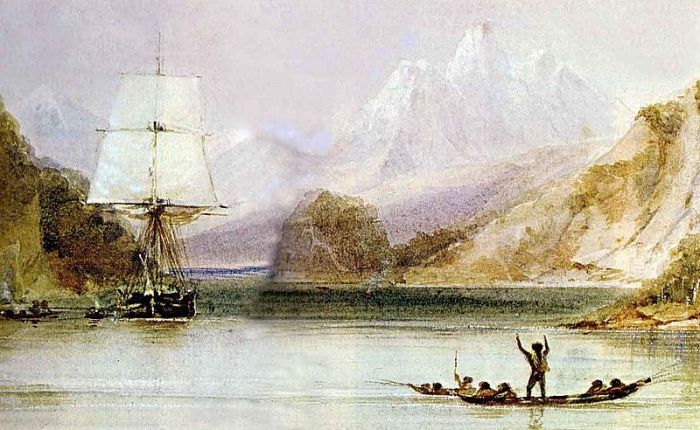
Review: Voyage of the Beagle

Review: Voyage of the Beagle
Voyage of the Beagle

Voyage of the Beagle by Charles Darwin

My rating: 4 of 5 stars

This book is really a rare treasure. Is there anything comparable? Here we have the very man whose ideas have revolutionized completely our understanding of life, writing with charm about the very voyage which sparked and shaped his thinking on the subject. And even if this book was not a window into the mind of one of history’s most influential thinkers, it would still be entertaining on its own merits. Indeed, the public at the time thought so, making Darwin into a bestselling author.

I can hardly imagine how fascinating it would have been for a nineteenth-century Englishman to read about the strange men and beasts in different parts of the world. Today the world is so flat that almost nothing can surprise. But what this book has lost in exotic charm, it makes up for in historical interest; for now it is a fascinating glimpse into the world of 150 years ago. Through Darwin’s narrative, we both look out at the world as it was, and into the mind of a charming man. And Darwin was charming. How strange it is that one of today’s most vicious debates—creationism vs. evolution, religion vs. science—was ignited by somebody as mild-mannered and likable as Mr. Darwin.

His most outstanding characteristic is his curiosity; everything Darwin sees, he wants to learn about: “In England any person fond of natural history enjoys in his walks a great advantage, by always having something to attract his attention; but in these fertile climates, teeming with life, the attractions are so numerous, that he is scarcely able to walk at all.”

As a result, the range of topics touched upon in this volume is extraordinary: botany, entomology, geology, anthropology, paleontology—the list goes on. Darwin collects and dissects every creature he can get his hands on; he examines fish, birds, mammals, insects, spiders. (Admittedly, the descriptions of anatomy and geological strata were often so detailed as to be tedious; Darwin, though brilliant, could be very dry.) In the course of these descriptions, Darwin also indulged in quite a bit of speculation, offering an interesting glimpse into both his thought-process and the state of science at that time. (I wonder if any edition includes follow-ups of these conjectures; it would have been interesting to see how they panned out.)

In retrospect, it is almost unsurprising that Darwin came up with his theory of evolution, since he encounters many things that are perplexing and inexplicable without it. Darwin finds fossils of extinct megafauna, and wonders how animals so large could have perished completely. He famously sees examples of one body-plan being adapted—like a theme and variations—in the finches of the Galapagos Islands. He also notes that the fauna and flora on those islands are related to, though quite different from, that in mainland South America. (If life there was created separately, why wouldn’t it be completely different? And if it was indeed descended from the animals on the mainland, what made it change?)

Darwin also sees abundant examples of convergent evolution—two distinct evolutionary lines producing similar results in similar circumstances—in Australia:

A little time before this I had been lying on a sunny bank, and was reflecting on the strange character of the animals in this country as compared with the rest of the world. An unbeliever in everything but his own reason might exclaim, ‘Two distinct Creators must have been at work; their object, however, has been the same & certainly the end in each case is complete.’

More surprisingly, Darwin finds that animals in isolated, uninhabited islands tend to have no fear of humans. And, strangely enough, an individual animal from these islands cannot even be taught to fear humans. Why, Darwin asks, does an individual bird in Europe fear humans, even though it is never been harmed by one? And why can’t you train an individual bird from an isolated island to fear humans? My favorite anecdote is of Darwin repeatedly throwing a turtle into the water, and having it return to him again and again—because, as Darwin notes, its natural predators are ocean-bound, and it has adapted to see the land as a place of safety. Darwin also manages to walk right up to an unwary fox and kill it with his geological hammer.

You can see how all of these experiences, so odd without a theory of evolution, become clear as day when Darwin’s ideas are embraced. Indeed, many are still textbook examples of the implications of his theories.

This book would have been extraordinary just for the light it sheds on Darwin’s early experiences in biology, but it contains many entertaining anecdotes as well. It is almost a Bildungsroman: we see the young Darwin, a respectable Englishman, astounded and amazed by the wide world. He encounters odd creatures, meets strange men, and travels through bizarre landscapes. And, like all good coming of age stories, he often makes a fool of himself:

The main difficulty in using either a lazo or bolas, is to ride so well, as to be able at full speed, and while suddenly turning about, to whirl them so steadily about the head, as to take aim: on foot any person would soon learn the art. One day, as I was amusing myself by galloping and whirling the balls round my head, by accident the free one struck a bush; and its revolving motion being thus destroyed, it immediately fell to the ground, and like magic caught one hind leg of my horse; the other ball was then jerked out of my hand, and the horse fairly secured. Luckily he was an old practiced animal, and knew what it meant; otherwise he would probably have kicked till he had thrown himself down. The Gauchos roared with laughter; they cried they had seen every sort of animal caught, but had never before seen a man caught by himself.

At this point, I am tempted to get carried away and include all of the many quotes that I liked. Darwin writes movingly about the horrors of slavery, he includes some vivid description of “savages,” and even tells some funny stories. But I will leave these passages to be discovered by the curious reader, who, in his voyage through the pages of this book, will indulge in a voyage far more comfortable than, and perhaps half as fascinating as, Darwin’s own. At the very least, the fortunate reader need not fear exotic diseases (Darwin suffered from ill health the rest of his days) or heed Darwin’s warning to the potential traveler at sea: “If a person suffer much from sea-sickness, let him weigh it heavily in the balance. I speak from experience: it is no trifling evil which may be cured in a week.”

View all my reviews

Review: Letters from a Stoic

Review: Letters from a Stoic

Letters from a Stoic (a selection)Letters from a Stoic by Seneca

My rating: 4 of 5 stars

Philosophy is good advice; and no one can give advice at the top of his lungs.

One of the most persistent criticisms made of modern philosophy is that it isn’t useful. The critics have a point. Modern philosophy largely concerns itself with a variety of theoretical problems. Even though many of these problems do have practical ramifications, many do not; and regardless, the debates can often get so technical, so heated, and so abstract, that it is difficult to see modern philosophy as the path to wisdom it once professed to be. People don’t have time or patience for logic-chopping; they want useful advice.

Those of this persuasion will be happy to find a forerunner and a sage in Seneca. As the opening quote shows, he conceived philosophy to be, above all, the giving of good advice. Seneca thus finds a perfect vehicle for his thought in the form of the letter. Although this book apparently consists of the private correspondence between Seneca and his friend Lucilius, it is obvious from the first page that these were expressly written for publication and posterity. This book should rather be thought of as a collection of moral essays and exhortations.

Even in translation, Seneca is a master stylist. He is by turns intimate, friendly, self-deprecating, nagging, mundane, and profound. He has an enormous talent for epigram; he can squeeze a lifetime into a line, compress a philosophy into a phrase. He is also remarkably modern in his tolerant, cosmopolitan, and informal attitude. Indeed I often found it difficult to believe that the book was written by a real Roman. Montaigne and Emerson obviously learned a great deal from Seneca; you might even say they ripped him off. The only thing that marks Seneca as ancient is his comparative lack of introspection. While Montaigne and Emerson are mercurial, wracked by self-doubt, driven by contrary tides of emotion, Seneca is calm, self-composed, confident.

Perhaps because of his professed aversion to abstract argument, Seneca is not a systematic thinker. Emerson wrote “A foolish consistency is the hobgoblin of little minds,” and Seneca apparently would agree, for there are many inconsistencies to be found in these pages. Sometimes God is conceived of as an impersonal order of the universe, and at other times a personal deity; sometimes Lucilius is advised not to take the opinions of friends and family into account, other times to do so. Seneca’s metaphysical arguments are weak and confused affairs; he is not one for disputation. But for all this, there is a core of good sense contained within these pages, which Seneca himself summarizes:

No man is good by chance. Virtue is something which must be learned. Pleasure is low, petty, to be deemed worthless, shared even by dumb animals—the tiniest and meanest of whom fly towards pleasure. Glory is an empty and fleeting thing, lighter than air. Poverty is an evil to no man unless he kick’s against it. Death is not an evil; why need you ask? Death alone is the equal privilege of mankind.

Like Marcus Aurelius, a prominent statesman in troubled times, Seneca is very concerned with how to be happy in spite of circumstances. There is no satisfaction to be had through external goods, like fame and riches, because these cannot be gotten unless fortune is kind, and fortune is notoriously fickle. Even in good times, this can only lead you into an empty, meaningless competition, valuing yourself for something that isn’t really yours, causing you to ceaselessly measure yourself against others. You must rather become content with yourself, taking pleasure in life whether fortune smiles or frowns: “We have reached the heights if we know what it is that we find joy in and if we have not placed our happiness in externals.”

Of course, this is easier said than done, and Seneca does not have a fully worked-out system for reaching this state. He offers, instead, an unsystematic mass of advice. It is here that Seneca is most charming and helpful, for most other philosophers would not deign to offer such workaday recommendations and observations. Here is Seneca on negative thinking:

The mind at times fashions for itself false shapes of evil when there are no signs that point to evil; it twists into the worst construction some word of doubtful meaning; or it fancies some personal grudge to be more serious than it really is, considering not how angry the enemy is, but to what lengths he may go if he is angry.

It is in these sections, of plain, friendly advice, that I think Seneca is at his best. Certainly not all of his advice is good; every reader will pick and choose what suits them best. But much of Seneca’s advice is timeless, and phrased in deathless prose. Most refreshing is Seneca’s insistence that his advice is for action and not reflection. This is more than slightly ironic, considering that Seneca is often accused of being a hypocrite whose lifestyle was far removed from his doctrines; but, to quote a modern philosopher, “There is no contradiction, or even paradox, in describing someone as bad at practising what he is good at preaching.” So preach on, Seneca.

View all my reviews

Review: A Comedy of Errors

Review: A Comedy of Errors

The Comedy of ErrorsThe Comedy of Errors by William Shakespeare

My rating: 3 of 5 stars

A Comedy of Errors holds a special place in Shakespeare’s oeuvre. It is believed to be his first play; it is one of two Shakespeare plays that observe the “classical unities”; and it is Shakespeare’s shortest play. You can add to this list, Shakespeare’s silliest play, since A Comedy of Errors amply merits this superlative.

To enjoy this work, the viewer must be an expert in suspending disbelief. That there be two sets of twins, bestowed with the same names, who happened to be dressed in the same clothes on the same day—it does not even approach credulity. Added to this is the capstone absurdity that the mother was in the city the whole time, but did not choose to reveal herself to her son for years.

The reward for accepting this improbable premise is hilarity. The humor is low and occasionally crude, but no less brilliant for that. Shakespeare manipulates the simple device of mistaken identity like a virtuoso, squeezing out every bit of drama and every fleeting giggle from this ancient gag. Shakespeare is always witty and amusing, of course, but seldom was he such an expert conjurer of belly-laughs. The scene in which Dromio of Syracuse compares the kitchen-maid to a globe, describing where all the countries can be found on her rotund body, is a pinnacle of comedy.

If this play was, indeed, his first, it certainly augurs Shakespeare’s coming greatness. To make a slapstick farce such as this, the writer need not endow the characters with anything resembling a round personality. But Shakespeare does, and brilliantly. Antipholus of Syracuse is appealing speculative, comparing his search for his long-lost brother to “a drop of water / That in the ocean seeks another drop,” and repeatedly questioning his own identity. His twin brother of Ephesus is decidedly more bourgeois and extroverted; and his wife, Adriana, is touching in her scorned devotion. But of course the real star of the play is Dromio—played by none other than Roger Daltrey in the version I saw—who’s relentless good nature and nonstop wordplay render him irresistibly endearing.

In sum, though certainly not “deep,” this play is both expert and original—a piece of juvenilia that, even by itself, would have secured Shakespeare a modest place in the Western canon, if only as the most perfect example of a staged farce.

View all my reviews

Review: Rimas y Leyendas

Review: Rimas y Leyendas

Rimas y leyendasRimas y leyendas by Gustavo Adolfo Bécquer

My rating: 4 of 5 stars

I know a hymn, giant and strange, that announces an aurora in the soul’s night; and these pages are from that hymn: cadences which expand in the overshadowed air.

Bécquer is an example of that species of national writers, almost universally known in their own countries, almost universally obscure elsewhere. Here in Spain he is the second most commonly assigned author in schools, only bested by Cervantes himself. But how many readers—even avid readers—outside of Hispanophone countries even know his name?

For an iconic Spaniard, Gustavo Adolfo Bécquer has a curiously Germanic name; change a few letters and you have Gustav Adolf Becker. Indeed, “Bécquer” wasn’t the name he was born with, but one he adopted later in life. (It was his father’s mother’s last name, of Flemish origin.) To me this Germanic tinge is singularly appropriate, since Bécquer was a prophet of Romanticism, an intellectual movement I most strongly associate with German authors.

Notwithstanding this Teutonic whiff, the writer who, in many ways, most closely resembles Bécquer is Edgar Allen Poe: both of them are authors of creepy tales and charming verses. Romantic writers to the bone, they both died relatively young (Bécquer at 34, Poe at 40), although Bécquer perhaps beats Poe by never having achieved widespread fame during his lifetime. This book, Bécquer’s most famous, is a collection of his most popular short stories (“Legends”) and several dozen short poems (“Rhymes”). Poetry was his first and truest love. Yet, as befalls so many of us, penury forced him into prose.

I read the Legends before the Rhymes. These are distinguished, most of all, by their atmosphere. The plot, the dialogue, the characters, the description—everything is subordinate to a certain mood, a mood of mystery and foreboding. The characters wander, wide-eyed and wondering, through haunted glades, enchanted monasteries, and cursed dens. And as is so common in literature written by men, beautiful women are mixed up with these demonic haunts; and Bécquer’s women are always surpassingly beautiful—with pure white skin and pure black hair. Added to this medieval twilight is a strong dose of Spanish Catholicism: beautiful Jewish and Moorish maids are whisked away by their Christian paramours, saved from their heathen fathers.

Some examples might illustrate these tales. In “El Rayo de Luna,” a wandering poet, who walks aimlessly from dawn to dusk in his aesthetic quest, encounters a beautiful woman, chases her until she mysteriously disappears, and then spends the rest of his life comparing everything to “a moonbeam.” In “Tres Fechas,” the Narrator spends most of his time in extended descriptions of old buildings in Toledo, only to be interrupted, three times, by a fleeting vision of a beautiful woman—with ivory-white skin, of course—until finally he encounters her taking the vows of a nun. In “Creed en Dios,” a young atheist kills a priest, gets lost in a forest, is overwhelmed by a cosmic vision, and suddenly awakens to find that generations have gone by—a sort of Catholic Rip Van Winkle. You get the idea.

Although I enjoyed the overwrought atmosphere of these legends, I must say I was surfeited by the end. The Rhymes, on the other hand, are absolutely charming from first to last. The poems seem to have been especially written for Spanish students, since they are surprisingly simple and easy, while maintaining a high quality throughout. In form they are as simple as can be, rhyming couplets or alternating ABAB patterns, sometimes with a refrain. In subject matter they concern themselves with the usual holy trinity of poetry: death, immortality, and love:

“What is poetry?” you ask while
You fix in mine your eyes of azure
What is poetry! And you ask me this?
Poetry… is you

It is light and airy, and appeals to the teenager in all of us—sometimes even to the wistful adult. For any students of Spanish, I cannot recommend this book highly enough.

View all my reviews

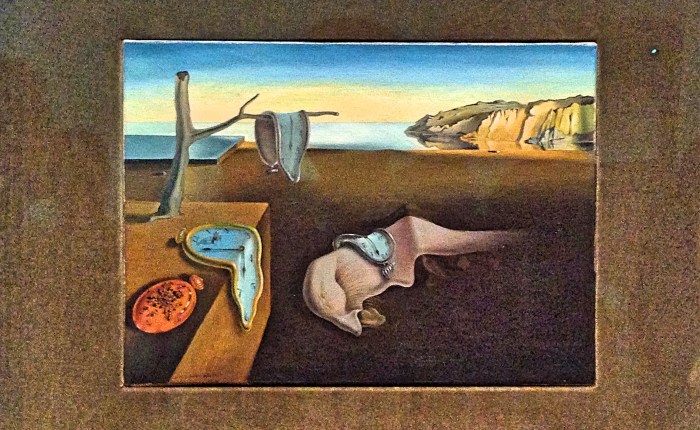
Review: In Search of Lost Time

Review: In Search of Lost Time

In Search of Lost Time  (À la recherche du temps perdu #1-7)In Search of Lost Time by Marcel Proust

My rating: 5 of 5 stars

In reality, every reader is, while he is reading, the reader of his own self. The writer’s work is merely a kind of optical instrument which he offers the reader to enable him to discern what, without this book, he would perhaps never have perceived in himself.

I struggled with Proust, on and off, for three years. I read these books sitting, standing, lying down, in cars and on trains, waiting in airports, on commutes to work, relaxing on vacation. Some of it I read in New York, some in Madrid, Lisbon, Vienna. By now this book functions as my own madeleine, with different passages triggering memories from widely scattered places and periods in my life.

I am surprised I reached the end. Every time I put down a volume, I was sure I would never pick up another; each installment only promised more of the same and I had already had more than enough; but then the nagging sense of the incomplete overcame my aversion and, with mixed feeling, I would pick up the next one and repeat the experience.

Throughout this long voyage, my response to Proust has been consistent—I should say consistently inconsistent—alternately admiration and frustration. There are times when I fall completely under Proust’s spell, and times when I find his writing intolerable. Probably this mixture has much to do with what Harold Bloom called the “anxiety of influence,” since almost as soon as I finished the first volume, I started working on a novel, a novel which very clearly bears the traces of Proust’s influence. It may be that, with Proust, I have something of an Oedipal complex, and I need to lodge criticism at his work in order to clear the air for my own—though I don’t know. What I do know is that my reactions to this book have proven tempestuous and I have yet to spur myself to write a fair review.

When approaching a novel of this size and complexity, it is difficult to know where to start. Can In Search of Lost Time even be called a novel? In a writing class my instructor told us that any story needs to have a protagonist, an objective, a series of obstacles, a strategy for overcoming these obstacles, a sequence of failures and successes, all of it culminating in a grand climax that leads directly to a resolution. If you look carefully, you can, indeed, make out the bare outline of this dramatic pattern in Proust’s work. But, like the slender skeleton of a peacock buried under a mountain of feathers, this outline serves as a vague scaffold over which are draped colorful ornament; and it is the ornament that attracts our attention.

In most novels, any given passage will serve some dramatic purpose: characterization, description, plot. However, there are times when the author will pull back from the story to make a more general comment, on society, humanity, or the world. These comments are, very often, pungent and aphoristic—the most quotable section of the whole book, since they do not depend on their context. Some authors, like Dickens, very infrequently make these sorts of remarks; others, like George Elliot, are full of them: “Will not a tiny speck very close to our vision blot out the glory of the world, and leave only a margin by which we see the blot? I know of no speck so troublesome as self.”

Elliot’s masterpiece, Middlemarch, is distinguished for being simultaneously didactic and dramatic, equal parts analysis and art. Proust goes even further in the direction of analysis, totally overwhelming every other aspect of the book with his ceaseless commentary. No event, however insignificant, happens without being dissected; the Narrator lets no observation go unobserved, even at the cost of being redundant. This endless exegesis, circling the same themes with relentless exactitude, is what swells this book to its famously vast proportions. Tolstoy, no laconic writer, used less than half the length to tell a story that spanned years and encompassed whole nations. The story Proust tells could have been told by, say, Jane Austen in 400 pages—although this would leave out everything that makes it worth reading.

Different as the two authors are, the social milieu Proust represents is oddly reminiscent of Jane Austen’s world, being populated by snobby aristocrats who jostle for status and who never have to work, a world of elegant gatherings, witty conversation, and artistic dilettantism. Austen and Proust also share an affinity for satirizing their worlds, although they use different means for very different ends. In any case, both Austen’s England and Proust’s France are long gone, and it can be very difficult for the modern reader to sympathize with these characters, whose priorities, manners, and lifestyle are so distant from our own. Why should we care about soirées and salons, dukes and duchesses, who do nothing but gossip, pursue petty love affairs, and pontificate ignorantly in their pinched world?

Yet this narrow social milieu, though always in focus, only forms the backdrop for Proust’s real purpose; and this purpose is suitably universal: to create a religion of art. A new religion was needed. Proust was writing at a turbulent time in European history: in the aftermath of the Death of God, as the fin de siècle high society of his youth was shattered by World War I, as new notions of psychology overturned old verities of human behavior, as every convention in art, music, and literature was being broken. Even the physical world was becoming unrecognizable—populated by quantum fields and bending space-time. It was the world of Freud’s unconscious, Einstein’s relativity, and Picasso’s cubism, when new theories about everything were embraced. Granted, Proust may have been only peripherally aware of these historical currents, but he was no doubt responsive to them, as this novel amply proves.

In this book, Proust sets out to show that our salvation lays in art. This means showing us that our salvation does not lay in anything else. Specifically, Proust must demonstrate that social status and romantic love, two universal human aspirations, are will-o’-the-wisps. He does this subtly and slowly. First, as a young man, the Protagonist is awed by high society. The names of famous actresses, writers, composers, and most of all socialites—the aristocratic Guermantes—hold a mysterious allure that he finds irresistible. He slowly learns how to behave in salons and to hold his own in conversation, eventually meeting all the people he idolized from afar. But when he finally does make the acquaintance of these elite socialites, he finds that their wit is exaggerated, their knowledge superficial, their opinions conventional, their artistic taste deficient. In short, the allure of status was empty.

And not only that, temporary. In the final volume, Proust demonstrates that status waxes and wanes with changes of fashion, often in unforeseen ways. By the end of the book, Rachel, who began as a prostitute, is a celebrated actress; while Berma, who began as a celebrated actress, ends as a broken down old women, still respected but no longer fashionable. The Protagonist’s friend, Bloch, who is a flatfooted, stupid, and awkward man, ends the book as a celebrated author, despite a total lack of originality or wit. The Baron de Charlus, an intensely proud man, ends up doffing his hat to nearly anyone he runs into in the street, while the rest of society ostracizes him. Status, in other words, being based on nothing but mass whim, is liable to change whimsically.

Proust’s views of love are even more cynical. The Protagonist does have a genuine affection for his mother and grandmother; but these are almost the only genuine bonds in the entire long novel. When Proust looks at romantic love, he sees only delusion and jealousy: an inability to see another person accurately combined with a narcissistic urge to possess and a paranoia of losing them. The archetypical Proustian relationship is that between Swann and Odette, wherein Swann, a figure in high-society, has a casual dalliance with Odette, a courtesan, and despite not thinking much of Odette, Swann nearly loses his mind when he begins to suspect she is cheating on him. He marries Odette, not out of romantic passion, but in order to gain some measure of peace from his paranoid jealousy.

Summarized in this way, Proust’s views seem, if somewhat disenchanted, hardly radical. But the real thrust of Proust’s thinking depends on a truly radical subjectivism. This book, as Harold Bloom points out, is wisdom literature, firmly rooted in the introspective tradition of Montaigne. But Proust is more than introspective. A true Cartesian, Proust is solipsistic. And much of his rejection of worldly sources of happiness, and his concomitant embrace of art, depends on this intensely first-person view of the world.

In his emphasis on the subjective basis of reality, Proust’s thought is often oddly reminiscent of Buddhism. Our personalities, far from being stable, are nothing but an endless flux that changes from moment to moment; each second we die and are born again. What’s more, we perceive other people through the lens of our own desires, knowledge, opinions, and biases, and therefore never perceive accurately. There are as many versions of you as there are people to perceive you. Thus we never really know another person. Our relationships with friends and lovers are really relationships with mental constructions that have only a tenuous connection with the real person:

The bonds between ourselves and another person exist only in our minds. Memory as it grows fainter loosens them, and notwithstanding the illusion by which we want to be duped and with which, out of love, friendship, politeness, deference, duty, we dupe other people, we exist alone. Man is the creature who cannot escape from himself, who knows other people only in himself, and when he asserts the contrary, he is lying.

You might think that this is a shockingly cynical view, and it is; but Proust adheres to it consistently. Here he is on friendship:

… our friends being friends only in the light of an agreeable folly which travels with us through life and to which we readily accommodate ourselves, but which at the bottom of our hearts we know to be no more reasonable than the delusions of the man who talks to furniture because he believes that it is alive…

And love, of course, comes off much even worse than friendship:

Almost everyone was surprised at the marriage, and that in itself is surprising. No doubt very few people understand the purely subjective nature of the phenomenon we call love, or how it creates, so to speak, a supplementary person, distinct from the person whom the world knows by the same name, a person most of whose constituent elements are derived from ourselves.

In the dissolving acid of Proust’s solipsism, one can see why he considers both social status and romantic love as vain pursuits, since they are not, and can never be, based on anything but a delusion.

Of course, status and love do bring people happiness, at least temporarily. But Proust is careful to show that all happiness and sadness caused by these things have nothing to do with their reality, but only with our subjective understanding of that reality. Depending on how we interpret a word or analyze an intention; depending on whether we hold someone in esteem or in contempt—depending, in short, on how we subjectively understand what we experience—we will be happy or sad. The source of all suffering and bliss is in the mind, not the world, but we are normally blind to this fact and thus so on mistakenly trying to alter the world: “I had realized before now that it is only a clumsy and erroneous perception which places everything in the object, when really everything is in the mind…”

As you can see, we are moving in a strikingly mystical direction, where love and success are just egotistic delusions, hypostatized mental artifacts that we mistake for solid reality. Proust’s answer to this predicament is also mystical in flavor. Normally we are trapped by our perspective, thinking that we are viewing reality when we are actually just experiencing our own warped mental apparatus. To break us out of this trap we must first experience unhappiness: “As for happiness, that is really useful only in one way only, by making unhappiness possible.” And unhappiness results when something we mistook to be solid—reputation, love, even life itself—is shown to be fleeting and unreal, that our everyday reality is based on nothing but lies, mistakes, and misunderstandings. You might say this is Proust’s version of Christian consolation. For in the despair that opens up during these crises, we can give up our fantasies and partake in Proustian mysticism.

This mysticism consists in reconnecting with our basic sensations. To do this, Proust does not, like the Buddhists, turn to meditation on the present moment. Instead, he relies on art and memory. Normal language is totally inadequate to this task. Our words, being universally used, only convey that aspect of experience that is common to everyone; all the individual savor of a perception, its most essential quality, is lost. But great artists—like the fictitious Vinteuil, Bergotte, or Elstir—can use their medium to overcome the usual limits of discourse, transmitting the full power of their perspectives. Even so, this artistic communication can only act as a spur for our own introspective quest. Shorn of illusory happiness, inspired by example, we can probe our own memory and experience the bliss of pure experience.

Memory is essential in this, for Proust thinks that it is only by juxtaposing one experience with another that we can see the perception in its pure form, without any reference to our conventional reality. This is why moments of involuntary memory, like the madeleine episode, are so important for Proust: it is in these moments, when a present experience triggers a long-buried memory, that we can re-visit the experiences of our past, free from delusion, as a pure impartial spectator. The final Proustian wisdom is essentially contemplative, passive, aesthetic, able to see the ironies of human life and to appreciate the recurring patterns of human existence.

Proust’s goal, then, is to do for the reader what Bergotte, Elstir, and Vinteuil did for his Narrator: to create art that acts as a window to the self. And his style is exactly suited to this purpose. In my review of a book on meditation, I noted what I called the “novelistic imagination,” which is our tendency to see the world as a setting and ourselves as the Protagonist, beset by trials and tribulations. Meditation aims to break out of this rather unrealistic mindset by focusing on the present moment. Proust’s aim is similar but his method is different. He takes the narrative tendency of the novelistic imagination, and stretches and stretches, pulling each sentence apart, twisting it around itself, extending the form and padding the structure until the narration is hardly narration at all, until you are simply swimming in a sea of sounds.

By doing so, Proust allows you to feel the passage of time, to make time palpable and real, and to feel our memory processing and being activated over and over again in response to passing sensations. This way, Proust hopes to bring us in contact with reality: “An hour is not merely an hour, it is a vase full of scents and sounds and projects and climates, and what we call reality is a certain connection between these immediate sensations and the memories which envelop us simultaneously with them…”

This is my attempt to elucidate Proust’s aesthetic religion. Of course, like any religion of art, it is objectionable for manifold reasons: it lacks any moral compass, it is elitist, it is purely passive. Not only that, but Proust connects with his religion a solipsism that is questionable on philosophic grounds, not to mention cynical in the extreme. It is a cold, antisocial, unsympathetic doctrine, with appeal only to disenchanted aesthetes. But of course, this is ultimately a work of art and not of philosophy; and so In Search of Lost Time must be judged on literary grounds.

When it comes to the criteria by which we judge a usual novelist—characterization, dialogue, plot—I think Proust is somewhat weak. There is, of course, little plot to speak of. And although Harold Bloom thought that Proust was a rival of Shakespeare when it came to characterization—a judgment that baffles me—I felt very little for any of the people in this novel. They all speak in Proust’s longwinded voice, and so never came alive for me. It always seems as if I am overhearing Proust describe someone rather than meeting them myself.

But of course one cannot appraise Proust using these standards. This novel is, above all, audacious. It is a modernist tour de force, which turns nearly every novelistic convention on its head. More than that, it is a novel of ideas, which puts forward a radical view of the human predicament and its own answers to the perennial questions of life. It is wisdom literature rooted deeply in tradition, while being absolutely original and uncompromising in its newness. It is both intensely beautiful and intensely ugly—hideously sublime. For anyone who can pull themselves through all its pages, it will leave them deeply marked. I know I have been.

View all my reviews

Review: A People’s History of the United States

Review: A People’s History of the United States

A People's History of the United StatesA People’s History of the United States by Howard Zinn

My rating: 4 of 5 stars

In a country famous for its historical ignorance, Howard Zinn sold two million copies of a 700-page history book. In a country famous for its allergy to the left, Howard Zinn wrote a best-seller from a staunchly left-wing perspective. Every evaluation of his book must begin and end with this achievement. Whatever you like or dislike about Zinn, clearly he did something right.

As you set out to judge this book, you must first decide whether it is a work of inquiry or of advocacy. This distinction has worn thin in our postmodern age, as we have become hyper-aware of the inescapability of bias. Nevertheless I think the distinction holds good in theory, however blurred it may be in practice.

An inquirer searches for the truth, even if the truth contradicts her original opinion; an advocate attempts to motivate people, to bring about some action, even if the action is somewhat vague or far-removed. An inquirer will risk dense and dry writing to get her point across; an advocate will risk simplification and generalization to get her point across. An inquirer will highlight information that her thesis doesn’t account for, and will include counterarguments and consider their merits; an advocate will minimize inconvenient information and will knock down strawmen of counterarguments.

This book is clearly a work of advocacy. And it is important to remember this, since as a work of inquiry A People’s History of the United States has almost no merit whatsoever. Zinn mostly relies on secondary sources, and makes no attempt at addressing counterarguments or at accommodating different viewpoints. His aim is not to explain American history, but to use American history to spark outrage.

Granted that this book is advocacy, we must then ask two more questions: whether it is responsible or irresponsible, and whether it is altruistic or selfish. Responsible advocacy uses careful research, seeks out unbiased sources, and acknowledges those sources; irresponsible advocacy uses lies or severe distortion of facts, or simply lies by omission. Altruistic advocacy acts on behalf of a wide swath of people, not just a narrow interest; selfish advocacy does the opposite. As an example of responsible, altruistic advocacy, Rachel Carson’s Silent Spring addresses an issue of broad concern using careful research. On the other hand, the cigarette industry’s fight against the researchers who uncovered the negative health effects of smoking was an example of irresponsible, selfish advocacy, fighting on behalf of a small group using outright lies.

It is worth noting, by the way, that these two values can come into conflict. In these situations the advocate is faced with a choice: What is better, to distort the truth for a worthy cause, or to tell the truth at the expense of that cause? You might say that, if dishonesty is required, the cause can’t be worthy; but the fact remains that careful scholarship is often at odds with popular success—and popular success is what advocates aim for.

I think Zinn faced just this dilemma in this book, forced to choose between a work that would satisfy academics and would sell well, and he chose popularity. Granted, given the constraints of a popular book, I think he is decently honest with his sources. And it is worth noting that Zinn is frank about his political biases and goals. Nevertheless, I think it is obvious that he relies on books—again, mostly secondary sources—that are broadly sympathetic with his views; that he selectively quotes those who aren’t; and that he questions the motivations of any who disagree with him. What we must ask, then, is this: Does Zinn’s moral aim excuse this approach?

I think, on the whole, it does. At the time Zinn first wrote this book, history books used in public schools were unabashedly nationalistic, omitting labor movements, women’s movements, civil rights movements, and pushing aside the atrocities committed against the Native Americans. In other words, the history commonly taught and known was a history of presidents and elections, wars and victories, a history that ignored large swaths of underprivileged people. Of course Zinn didn’t change this single-handedly; he was the beneficiary of an entire academic movement. But his book, by its popularity, played an important role in changing the status quo. By the time I went to school, we had units on women’s movements, labor movements, and the barbarous mistreatment of blacks and Native Americans. It is also largely thanks to Zinn, I believe, that there is a growing movement against the celebration of Columbus Day (a person who I don’t think we ought to celebrate).

It is eminently right that the injustices and oppressions and inequities of American history be laid before the public. For history is never a neutral series of facts. Every political ideology relies on some historical narrative. Thus, systematically omitting episodes of history is equivalent to squelching certain political views. And even though I am not always in agreement with its ideology, I think that the United States suffers from its lack of a strong leftist movement.

Just recently, the political power of history has been dramatically demonstrated through the conflict over Civil War statues. More and more people are coming to the conclusion, I think rightly, that having statues of Confederate generals is not politically neutral. Of course we must learn and commemorate history. But it is impossible to remember and commemorate everything. We are always faced with a choice; and this choice is shot through with ideological questions. What we choose to remember, and how we choose to remember it, is a moral issue; and I think Zinn is right to remind us of the struggles of the unprivileged and powerless against the privileged and powerful—not for their sake, but for ours.

This, in brief, is why I generally approve of this book. But I do have many criticisms.

Most superficially, I think this book suffers from a lack of organization. Many chapters feel like hasty cut-and-paste jobs, jumping from topic to topic, summarizing and quoting from different sources, without anything more than a sense of outrage to tie it together. In this way, the book is bizarrely reminiscent of a a Bill Bryson work: a hodgepodge of stories, thrown together in a loose jumble. I also think that Zinn should have highlighted more individual stories and condensed some tedious lists of movements, if only for dramatic effect.

More seriously, I think that Zinn commits the moral error of many on the left: by holding people to a stringent standard, the important moral differences between groups are minimized. This was most noticeable on his chapters on the Civil War and World War II, in which Zinn goes to lengths to undermine the moral superiority of the North and of the United States. I absolutely agree with Zinn that the North was hardly a utopia of freedom and equality (racism was almost universal), and that the United States was hardly a shinning beacon on a hill (think of the Japanese internment camps, the Dresden bombing, or the nuclear bombings). Nevertheless, I think that, with all their inequities and injustice, the Union and the United States were clearly preferable to the slave-owning Confederate or Nazi Germany. Minimizing this difference is dangerous.

I also object to the way that Zinn makes it seem as though the United States is controlled by a vast conspiracy, or that all the elements of power work together in one seamless ‘system’ (one of Zinn’s favorite words). He does, at one point, acknowledge that this system arose unconsciously, through necessity and in stages, and is not, for the most part, used intentionally by the powerful. But this, then, leads to the question: What is the difference between an unconsciously developed and unintentionally used system of control, and no ‘system’ at all?

Or consider this paragraph:

The American system is the most ingenious system of control in world history. With a country so rich in natural resources, talent, and labor power the system can afford to distribute just enough wealth to just enough people to limit discontent to a troublesome minority. It is a country so powerful, so big, so pleasing to so many of its citizens that it can afford to give freedom of dissent to a small number who are not pleased.

Zinn’s message is clear: that this is an unjust situation created by powerful people. But think about what he is saying: The United States is a country where most people are content and where the discontented are allowed to express themselves. Phrased like this, the observation looses its outraged and semi-conspiratorial edge; indeed it doesn’t seem so bad at all. I cite this only as an example of Zinn’s use of rhetoric and insinuation to make political points, a dishonest habit. Another bad habit is his tendency to question the motivation of the people he intends to criticize. Every reform or government action aimed at equality is, for Zinn, just a concession aimed at promoting the long-term stability of ‘the system.’ Again, this leads to the question: What, in practice, is the difference between a self-interested concession and an honest attempt at reform?

I also want to note that Zinn’s effort to write a “people’s” history became, at times, a thin pretense. This was obvious whenever the general opinion didn’t match his own. Zinn was not simply chronically “the people”; he consistently chooses to focus on those who shared his ideals, whether they represented the majority or a small minority. This was most obvious in the chapter on the Second World War, which focuses on the small group of people who disapproved of it. But it was a tendency throughout. Here is a typical passage:

After the bombing of Iraq began with the bombardment of public opinion, the polls showed overwhelming support for Bush’s action [Bush Sr.], and this continued through six weeks of the war. But was it an accurate reflection of the citizen’s long-term feelings about war? The split vote in the polls just before the war reflected a public still thinking its opinion might have an effect. Once the war was on, and clearly irreversible, in an atmosphere charged with patriotic fervor … it was not surprising that a great majority of the country would declare its support.

This is special pleading at its worst. The people’s opinion, when it disagrees with Zinn’s opinion, is of course not really their opinion; it is just manipulation. But when the people do agree with Zinn, it is of course their “true” opinion.

This, by the way, is another nasty habit of the left: a pretense to knowing the true interests of the unprivileged, even if the unprivileged themselves disagree with the left and among each other. Thus all the differences that divide the unprivileged—racism, sexism, xenophobia, and homophobia among the poor—are both excused and then dismissed as being superficial differences that mask a true unity, perhaps even instilled by the powerful to divide the poor. In a way this is a disrespectful view of “the people,” since Zinn apparently thinks that most people are far more easily manipulated than he is himself, and thus should be judged by a more lenient standard than the crafty powerful.

I am heaping a lot of criticism on Zinn; but I do think that, despite all this, Zinn is almost always on the morally right side: for equality, for pacifism, for democracy. And even though, largely thanks to Zinn, many of the episodes he covered in this book have made their way into school curriculums and the national awareness, I still learned a great deal from reading this. Both the Mexican-American War (which, to protest, Thoreau spent a night in jail) and the Spanish-American War (which resulted in prolonged, brutal fighting in the Philippines), two American power-grabs, still receive scant coverage in classrooms. And the long, ignominious history of U.S. intervention throughout the world, propping up dictators and plotting to topple governments, is still not widely known—and it should be.

I think Zinn has already been quite successful in changing people’s perception of history. But is this book inspiring or motivational? On the one hand, Zinn is a powerful writer whose every line carries a sense of justified outrage; and outrage, as Zinn shows, is what motivates many to fight for change. On the other, Zinn portrays movement after movement trying and failing—only about one in ten even partially succeeds, it seems—which can easily create a fatalistic cynicism. I was often reminded of the Onion article: “Humanity Surprised It Still Hasn’t Figured Out Better Alternative to Letting Power-Hungry Assholes Decide Everything.

It’s a joke, I know, but I do wonder about this. In a way this is the issue raised by—heaven help us—Game of Thrones: Is it really better, morally speaking, to be an idealist like Ned Stark, if that leads to your defeat at the hands of less scrupulous parties? This is one of the oldest questions in politics; and the way you answer it determines, to some extent, where you fall on the political spectrum. Zinn represents one answer, and I think it is one we too often forget in our cynical age.

View all my reviews

Review: The Stranger

Review: The Stranger

The StrangerThe Stranger by Albert Camus
My rating: 5 of 5 stars


In Search of Lost Time

The Stranger is a perplexing book: on the surface, the story and writing are simple and straightforward; yet what exactly lies underneath this surface is difficult to decipher. We can all agree that it is a philosophical novel; yet many readers, I suspect, are left unsure what the philosophical lesson was. This isn’t one of Aesop’s fables. Yes, Camus hits you over the head with something; but the hard impact makes it difficult to remember quite what.

After a long and embarrassingly difficult reread (I’d decided to struggle through the original French this time), my original guess as to the deeper meaning of this book was confirmed: this is a book about time. It is, I think, an allegorical exploration of how our experience of time shapes who we are, what we think, and how we live.

Time is highlighted in the very first sentence: Meursault isn’t quite sure what day his mother passed. Then, he makes another blunder in requesting two days off for the funeral, instead of one—for he forgot that the weekend was coming. How old was his mother when she died? Meursault isn’t sure. Clearly, time is a problem for this fellow. What sort of a man is this, who doesn’t keep track of the days of the week or his mother’s age? What does he think about, then?

For the first half of the book, Meursault is entirely absorbed in the present moment: sensations, desires, fleeting thoughts. He thinks neither of the past nor of the future, but only of what’s right in front of him. This is the root of his apathy. When you are absolutely absorbed in the present, the only things that can occupy your attention are bodily desires and passing fancies. Genuine care or concern, real interest of any kind, is dependent on a past and a future: in our past, we undergo experiences, develop affections, and emotionally invest; and these investments, in turn, shape our actions—we tailor our behavior to bring us closer to the things we care about. Without ever thinking of the past or the future, therefore, our life is a passing dream, a causeless chaos that dances in front of our eyes.

This is reflected in the language Camus uses. As Sartre noted, “The sentences in The Stranger are islands. We tumble from sentence to sentence, from nothingness to nothingness.” By this, Sartre merely wishes to highlight one aspect of Meursault’s thought-process, as mirrored in Camus’s prose: it avoids all causal connection. One thing happens, another thing happens, and then a third thing. This is why Camus so often sounds like Hemingway in this book: the clipped sentences reflect the discontinuous instants of time that pass like disjointed photographs before the eyes of Meursault. There is no making sense of your environment when you are residing in the immediate, for making sense of anything requires abstraction, and abstraction requires memory (how can you abstract a quality from two separate instances if you cannot hold the two instances in your mind at once?).

Now, the really disturbing thing, for me, is how easily Meursault gets along in this condition. He makes friends, he has a job, he even gets a girlfriend; and for quite a long time, at least, he didn’t get into trouble. Yet the reader is aware that Meursault is, if not a sociopath, at least quite close to being one. So how is he getting along so well? This, I think, is the social critique hidden in this book.

Meursault lives a perfectly conventional life; for a Frenchman living in Algeria during this time, his life could hardly be more ordinary. This is no coincidence; because he’s not interested in or capable of making decisions, Meusault has simply fallen into the path provided for him by his society. In fact, Meursault’s society had pre-fabricated everything a person might need, pre-determining his options to such an extent that he could go through life without ever making a decision. Meursault got along so well without having to make decisions because he was never asked to make one. Every decision was made by convention, every option conscribed by custom. If Meursault had not been locked up, chances are he would have simply married Marie. Why? Because that’s what one does.

So Camus lays out a problem: custom prevents us from thinking by circumscribing our decisions. But Camus does not only offer a diagnoses; he prescribes a solution. For this, we must return to the subject of time. When Meursault gets imprisoned, he is at first unhappy because he is no longer able to satisfy his immediate desires. He has been removed from society and from its resources. This produces a fascinating change in him: instead of being totally absorbed in the present moment, Meursault begins to cultivate a sense of the past. He explores his memories. For the first time, he is able, by pure force of will, to redirect his attention from what is right in front of him to something that is distant and gone. He now has a present and a past; and his psychology develops a concomitant depth. The language gets less jerky towards the end, and more like a proper narrative.

This real breakthrough, however, doesn’t happen until Meursault is forced to contemplate the future; and this, of course, happens when he is sentenced to death. His thoughts are suddenly flung towards some future event—the vanishing of his existence. Thus, the circle opened at the beginning is closed at the end, with a perfect loop: the novel ends with a hope for what will come, just as it began with ignorance and apathy for what has passed. Meursault’s final breakthrough is a complete sense of time—past, present, and future—giving him a fascinating depth and profundity wholly lacking at the beginning of the book.

In order to regain this sense of time, Meursault had to do two things: first, remove himself from the tyranny of custom; second, contemplate his own death. And these two are, you see, related: for custom discourages us from thinking about our mortality. Here we have another opened and closed circle. In the beginning of the book, Meusault goes through the rituals associated with the death of a family member. These rituals are pre-determined and conventional; death is covered with a patina of familiarity—it is made into a routine matter, to be dealt with like paying taxes or organizing a trip to the beach. Meusault has to do nothing except show up. The ceremony he witnesses is more or less the same ceremony given to everyone. (Also note that the ceremony is so scripted that he is later chastised for not properly playing the part.)

At the end of the book, society attempts once again to cover up death—this time, in the form of the chaplain. The chaplain is doing just what the funeral ceremony did: conceal death, this time with a belief about God and repentance and the afterlife. You see, even on death row, society has its conventions for death; death is intentionally obscured with rituals and ceremonies and beliefs.

Meursault’s repentance comes by penetrating this illusion, by throwing off the veil of convention and staring directly at his own end. In this one act, he transcends the tyranny of custom and, for the first time in his life, becomes free. This is the closest I can come to an Aesopian moral: Without directly facing our own mortality, we have no impetus to break out of the hamster-wheel of conventional choices. Our lives are pre-arranged and organized, even before we are born; but when death is understood for what it is—a complete and irreversible end—then it spurs us to reject the idle-talk and comforting beliefs presented to us, and to live freely.

This is what Camus would have all of us do: project our thoughts towards our own inescapable end, free of all illusions, so as to regain our ability to make real choices, rather than to chose from a pre-determined menu. Only this way will we cease to be strangers to ourselves.

(At least, that is the Heideggerian fable I think he was going for.)

View all my reviews