It is redundant to speak of the “Venetian Islands,” since the entire city is composed of islands. Yet when people speak of “Venice” they are most commonly referring to the cluster of small islands, connected with bridges, that compose the historical city center. This is only a fraction of the Venetian lagoon, however. There are a great many larger islands, further away, that require a boat to get to. That is what this post is about.
If you are standing near the Doge’s Palace, looking out towards the Mediterranean Sea, you will immediately notice the basilica of San Giorgio Maggiore. This is one of the bigger church buildings in the city, and its magnificent shape forms a wonderful profile in the sunset light. None other than Monet immortalized this image in a series of paintings. This basilica sits on an eponymous island, which is not much bigger than the church itself.
One of Monet’s many paintings of the island
The island of San Giorgio Maggiore sits at the far end of a much longer island, Giudecca. This island has served many functions through Venice’s history—as a residence for the wealthy, as a center of industry, and now as a mainly residential area. The most important structure on this island is Il Redentore, another grandiose church (Europe is so full of them). This one was built in the late 16th century, as a way of showing thanks to god for the end of a bad outbreak of the plague. It was designed by none other than Andrea Palladio, who is perhaps the most influential architect of the Italian Renaissance. This church is entirely typical of his style: an elegant blend of Greco-Roman models and Christian influences. During the Festa del Redentore, a pontoon bridge is built between the city center and Il Redentore, so that pilgrims can fill this historical church.
One of Canaletto’s portrayals of Il Redentore
Moving further away from the center, we come to the Lido. Along with the Pellestrina further south, the Lido is one of Venice’s barrier islands—an island formed by the tide, which protects the Venetian lagoon from harsher weather. Historically the Lido has often been used for defense, as it is the ideal place for fortresses. But my image of the island comes from much later in its history, when it became a center for tourism in the late 19th century (partly fueled by the notion that bathing in the waters was therapeutic). The German writer Thomas Mann stayed in the Grand Hotel des Bains, a large luxury resort that later became the setting for his novella Death in Venice. This is how Mann describes the atmosphere:
The gray and even ocean was enlivened by wading children, swimmers, garish figures, others, who were laying on sandbanks with their arms folded under their heads. Some were rowing small boats in red and blue without a keel, capsizing with roaring laughter. In front of the row of beach huts, whose platforms were like little verandas, there was playful motion and lazy rest, visits and chattering, careful early morning elegance but also nudity, which perfectly took pleasure in the freedom of the place.
It quite reminds me of a painting by Sorolla.
One of Sorolla’s many beach scenes (though it is not from a Venetian beach).
This little list hardly scratches the surface, of course. After all, there are literally hundreds of islands in the Venetian lagoon, some of them quite large. But I will focus on the islands that tourists most often go out of their way to visit.
Murano
Like the historical center of Venice, Murano is not a single island but a cluster of islands connected by bridge. Several vaporetto lines (3, 4.1, 4.2, and 12) can get you to this island from many different points in Venice, and the trip is around ten minutes. Architecturally speaking, Murano is certainly not among the most impressive parts of Venice. It is worth the trip, rather, for being the seat of Venice’s legendary glass-making industry.
A Venetian vaporetto
Glass has been made in Venice for well over a millennium. And for centuries Venice was incontestably the source of the finest glass products in Europe. Products ranged from bowls and jars to chandeliers and mirrors. The technique and formula used by the Venetians was a closely-guarded secret. When Louis XIV of France persuaded some Venetian glass-makers to work on the palace of Versailles, agents were sent to poison the defectors. But like all good things, the golden age of Venetian glass faded into history, as the ability to make high-quality glass products became more widespread.
Photo by Naturpurr; licensed under CC BY 4.0; taken from Wikimedia Commons
Although the industry is much shrunken, Murano is still the site of world-class glassmaking. It is also a popular tourist destination, thanks in no small part to places like the Murano Glass Factory, which displays some of the finest historical examples of Venetian glass. Another popular attraction is to see glass being blown by experts. One popular place to do this is Vetreria Murano Arte, which I visited during my class trip in 2007. I highly recommend it. Glass-blowing is an art and a science; it requires careful temperature control, a trained eye, a steady hand, and a deep knowledge of the structural properties of different materials. The assurance with which the artisans handle the flaming-hot glass is wonderful to see.
San Michele
Significantly closer to the city center than Murano is the little island of San Michele. For centuries, the only residents of this island were monks in a small monastery. But now the only residents are the dead. During the Napoleonic invasions, the monastery was suppressed, and the island was turned into a municipal cemetery. The island is easily recognizable for the brick wall going around its perimeter.
Though not a particularly big cemetery, San Michele is the final resting place of some big names. The two biggest are Igor Stravinsky and Ezra Pound. Part of the reason Stravinsky chose this little island is because Sergei Diaghilev—the famous impresario of the Russian ballet—was already buried there. Ezra Pound had lived in Italy since the 1920s, and after the Second World War was forcibly removed to the United States because of his openly fascist views. After his eventual release from a lunatic asylum, Pound made his way back to Italy, where he died in 1972. He is buried near Stravinsky and Diagheliv.
It would be harder to find any three people buried together who exerted a greater influence on the art of the previous century than these two Russians and one American.
Burano
Burano lies significantly further off, past both San Michele and Murano, at the northern corner of the lagoon. To get there, just take the line 12 vaporetto, which will deliver you in under an hour. Or if you prefer spending over 100 euros, you can take a private water taxi. But I do not recommend that route.
Burano from Torcello
Like Murano, Burano was also the home to a fine-arts industry, in this case lacemaking. The island is full of touristy shops selling lace products, though certainly not all of it is made in the time-consuming traditional way. La Scuola del Merletto is a small museum dedicated to this historical art. The fine lace was used in everything from clothes, to furniture, to church decorations, until demand fell off in the 18th century. Eventually, somebody is always going to figure out how to make a cheap and convincing imitation.
Most tourists do not, however, come for the history. They do not even come from the church of San Martino, which has a leaning campanile. Burano is, rather, a heaven for amateur photographers, thanks to its many canals and its brightly colored houses. No two adjacent houses have the same color; and the municipality even regulates what color residents may paint their houses, in order to maintain the aesthetic. Considering that the island’s only industry nowadays is tourism, this is certainly in their self-interest.
While I enjoyed the pretty colors, I have to admit that I lost interest rather quickly. I wanted something more historical. Thankfully, the next island had just that.
Torcello
Like many islands in the Venetian lagoon, Torcello has a long history, dating back at least to Roman times. Torcello is particularly important in the history of Venice, as the first cathedral in the area—before St. Mark’s—was built here. Indeed, for many years Torcello was a more important center of trade than Venice itself. This is not true anymore, of course. Though thousands used to live on this little island, in recent years that number is probably much less than 100. Aside from tourism, Torcello seems to be a place where locals gather to relax. There were dozens of private boats moored to the canal, and several large outdoor restaurants filled to the brim.
The environment of Torcello is quite beautiful. Here you really feel as though you are in a lagoon. Aquatic birds fly overhead, and the tall reeds are abuzz with insects. I took some time to walk along some of the rugged paths in the island, relieved to finally be in a natural space (something that Venice entirely lacks). Eventually I stumbled upon “Attila’s Throne,” an old stone chair that now sits exposed to the elements. Almost undoubtedly, this throne has nothing to do with Attila, and probably belonged to a local political or religious leader. Still, it is an impressive piece of furniture. This chair is located right outside the island’s museum, which displays some of the antique ruins that have been found there.
Torcello’s main attraction is the Church of Santa Maria Assunta, which is sometimes simply called Torcello Cathedral (though it is a cathedral no longer). This is a truly ancient church, dating back to the 7th century, when Torcello still had strong ties to the Byzantine Empire, and when it was still more powerful than Venice itself. The building’s age is quite apparent from a single glance. A relatively simple construction of faded brick, the church is mostly unadorned on the outside. The inside, however, is another story. Here you will find some extremely fine examples of Byzantine mosaics. Unlike the mosaics in St. Mark’s, these retain their original form, and so have all of that naïve charm and grace of early medieval art. The portrayal of the Last Judgment is particularly masterful—a cosmic vision against a gold background.
A public domain image of the church’s mosaic. (Photography is not allowed inside.)
This fairly well wraps up my experience with the islands of Venice. But of course this list leaves out several dozens. There is San Servolo, which once housed a Benedictine monastery (and now is home to a museum). In San Francisco del Deserto, Franciscan monks still pray amid the cloisters and the cypress trees. And this is not all. There is also San Lazzaro degli Armeni, an island where Mekhitarist monks (a type of Armenian Catholic sect) go about their daily rituals. Lord Byron famously stayed at this island, using the time to translate Armenian into English and to author textbooks on the language. This island is still one of the world’s most important centers of Armenian culture.
And there are still more. The biggest island in the lagoon is Sant’Erasmo, which is mainly agricultural nowadays. Two islands have served as quarantine stations, Lazzaretto Vecchio and Lazzaretto Nuovo (named after the Biblical figure with leprosy). During outbreaks of the plague, any incoming ships were required to dock here and wait a mandatory minimum number of days.* And everything aboard was disinfected through fumigation. Aside from this function, these islands also functioned as leper colonies, where those afflicted with leprosy (a bacterial infection) were isolated. But many islands have more cheerful functions, such as the exclusive hotels and resorts scattered throughout the lagoon.
(*The word “quarantine” actually comes from the Venetian dialect, which means “forty days.” This is the time from infection to either death or recovery in the bubonic plague.)
Considering all of this great, unexplored variety, it appears that, one day, I will once again have to return to Venice. Hopefully that day will be soon.
Processing…
Success! You're on the list.
Whoops! There was an error and we couldn't process your subscription. Please reload the page and try again.
My first footsteps in Europe were in the airport in Venice. It was in 2007, when I was a sophomore in high school, some time before my sixteenth birthday. Typical of that age, I was awkward, hormonal, pubescent, immature. During this trip, I was exposed to the most beautiful things that I had ever seen, and was largely unimpressed. Teenagers are too wrapped up in themselves to care much for the outside world. I had a digital camera that my mom had lent me; but over half of the photos I brought back from the trip are of my friends, or cats, or other nonsense. The only thing that roused me to enthusiasm was the food, which was quite excellent.
Eleven years later, I finally returned to the city, to see what I had missed. It was quite a lot.
Me in 2007Me in 2018
As usual, I was travelling on a budget. This pretty much ruled out the possibility of staying on the island of Venice itself. Small, antique, and exclusively devoted to tourism, accommodations are not cheap. Thankfully, there is the Mestre—the mainland of Venice (not the old city), which is generally quite a bit more reasonably priced. I stayed at an Airbnb in a quiet neighborhood and very much enjoyed the experience.
Frankly, I think staying in Mestre was better than staying in Venice itself, partly because I could get away from the crowds at night. And unlike the island of Venice, this quiet neighborhood had a real community of locals, which certainly improved the atmosphere. I had some beautiful mornings sipping coffee at a corner café, while I watched senior citizens come in for their morning glass of wine. And being close to affordable restaurants and supermarkets was also quite nice.
My memories of my first day in Venice, in 2007, are all a blur. We arrived early in the morning, all of us disoriented and jetlagged. Our hotel was right in the city center. Since virtually all of the buildings on the island are old, the rooms were tiny and the elevator only fit for one or two people. Most amusingly, our bathroom fan made a screeching, wailing noise that I will never forget. All of us badly wanted to take a nap, but our Irish tour guide insisted that we stay awake all day in order to adjust to the jet lag. By the time we had dinner, kids were falling asleep at the table. I nearly did the same.
Coming from Spain, at least I did not have to deal with jet lag this time.
The Mestre is very well connected to the city center with public transportation. In my case, all I needed was about a twenty-minute bus ride. Soon I arrived at the train station, stepped off, and confronted the new but strangely familiar profile of Venice.
Now, I have called the center of Venice “an island,” but that is not accurate. Rather, it is a collection of small islands—over 100—which are connected with bridges. The city occupies a lagoon between two rivers. This oddity of location is what gives the city its charm. Though Amsterdam and even New York may have more individual bridges, no city I know of is more dominated by the presence of water. But of course, having a city built on a lagoon entails unique challenges. The foundation of the city has been sinking, partly as a result of settling, and partly as a result of pumping groundwater (causing buildings to sink further into the ground). This, combined with climate change-induced rises in sea-levels, have worsened the periodic floods suffered by the city. Already, many ground floors are uninhabitable.
(In 2003, a massive engineering project was initiated, called MOSE, but it stalled because so much money had been siphoned off due to corruption. Work seems underway again, as global warming exacerbates the flooding problem. The flooding in 2019 was the worst in fifty years, causing widespread damage to the city’s cultural heritage.)
Building a city on a lagoon also entails unique transportation challenges. The lagoon is far too unstable for a subway, and the city is too cramped for either trains or buses; so the only option within the old center is by boat. The Venetian equivalent to a bus is the vaporetto, or water taxi, fair sized ferries that patrol the city in 19 lines. Line 1 is popular with tourists, since it goes down the Grand Canal. The other famous option for water transport is the gondola—operated by a single gondolier, pushing the elegant boat through the water with an oar. Nowadays the gondola exists exclusively for tourists, and the price reflects that: 80 euros for about half an hour, and more at night.
As I walked through the city, I have to admit that my first impressions were rather mixed. Venice is obviously and undeniably beautiful; indeed, judged purely in terms of its buildings, I believe it has a claim to being the most beautiful city in Europe. But the atmosphere of Venice is odd and empty. Keep in mind that I was visiting during the high tourist season, in July, when many locals go on holiday (about 55,000 live in the old center). This meant that whatever local life that Venice may have was largely dead. Instead, the streets were dominated by people carrying cameras, and others dragging suitcases. It felt like being in the world’s most beautiful airport. Or perhaps Venice is better compared to an enormous, open-air museum. This meant that one of the chief charms of travel—taking part in local life—was off the table.
Venice is probably at its most lively in the weeks leading up to carnival. During this time, people dress up in beautiful masks and elaborate costumes, now famous throughout the world. You may be surprised to learn that this is a modern tradition, though it has historical roots. Masks were banned in Venice for about two hundred years, from the 18th to the 20th century. It was only in the 1970s that the tradition was revived. When I visited in 2007 it was mid February, and the streets were full of these disguised Venetians. For the most part these seemed to be street performers, however, who only dressed up so that tourists would pay to take photos with them.
If you look at the old center from the air, you will see an S-shaped gash running through the city. This is the Grand Canal, the largest canal in the city. For many years it was the main artery of Venice, since there was only one bridge which crossed it (the Rialto). As a result, it became something like Fifth Avenue in New York City: a place for the wealthy of the city to flaunt their success. As the canal was the central thoroughfare, the magnificent façades of private palaces face the water, displaying a variety of different architectural styles from the city’s history. The Ponte de Rialto is the oldest of the four bridges that cross the Grand Canal. It provides a lovely view as well as being quite attractive in itself. However, like the Ponte Vecchio in Florence, it is covered in shops, which makes it rather cramped. (For centuries the bridge in this spot was a wooden construction; but multiple collapses convinced the authorities to rebuild it in stone.)
After crossing the bridge, and taking the obligatory photo, I continued making my way to the central square: the Piazza San Marco. This is easily the most famous area of the city. For the most part the plaza is dominated by long buildings composed of many levels of arcades. At the far end is St. Mark’s Cathedral (which I will describe later) and its marvelous campanile, or bell tower. At nearly 100 meters, this tower is the tallest structure in the old city, and quite attractive in spite of its simple form.
Not far off is the clocktower (Torre dell’Orogio), another of the city’s landmarks. Two bronze shepherds with hammers ring the bell on the top, while a winged lion (the symbol of St. Mark) holds an open book below them. (A statue of the Doge once accompanied these lions, but Napoleon had him removed.) Below the lion sits the Virgin and child; and twice a year (on Epiphany and Ascension) mechanical figures of the three wise men emerge from the adjacent door and make their bows as they pass. For the time it was created—during the Renaissance—this was an impressive engineering feat.
The face of the clock itself is also a marvel. The sun travels along the twenty-four hours of the day, against the background of the zodiac. In accordance with Ptolemaic astronomy, the earth sits right at the center of the clock, while the sun, moon, and stars rotate around it. Bad science aside, the clock’s combination of blue and gold is quite pleasing on the eyes.
If you are standing at the end of the square, with the clock tower to your left and the basilica directly ahead, you will see the space open up to your right. This is called the Piazzetta, and it leads directly to the sea. The view is framed by two columns topped with statues—one of St. Theodore (who was one of Venice’s patron saints) and the lion of St. Mark.
Proceeding forward, you arrive at yet another iconic area of the city, the Riva degli Schiavoni, a waterfront promenade. At almost any time of year (except during a pandemic) this place is extremely crowded. Gondolas bounce up and down in the waves, while people sell all sorts of knick knacks from stalls. The waters around this area are typically quite busy, with ferries going back and forth, as this is near one of the mouths of the Grand Canal. The view is characterized by the distant form of San Giorgio Maggiore, an enormous basilica that sits on an eponymous island across the waters. Its campanile looks quite like the San Marco’s, creating a pleasing symmetry.
Now the first major stop on our tour has arrived: the Doge’s Palace. If you are looking out at the water, this palace will be right behind you, though you may not have paid it much attention. In the context of Venice, the building’s exterior is not immediately eye-catching (though I will return to it later). But within is a palace of quite astonishing dimensions. I recommend going early, as there can be long lines to enter. I arrived at around ten in the morning and was basically able to walk right inside. The visit began with a small exhibition space, where I was delighted to find some drawings by John Ruskin. The famous art critic was also a talented draughtsman, and he made dozens of meticulous sketches of the city in preparation for his monumental book, The Stones of Venice. As I happened to be reading the book at the time, this seemed to bode well for my visit.
On display were also the forty-two original capitals of the stone pillars on the palace’s exterior. (Those there now are replacements.) Ruskin considered these capitals—which most of us overlook—to be the most significant artistic statement of the palace, and devoted much attention to their analysis. I will leave my own commentary for the end, and will instead embark now on the palace interior.
But before moving on, it is worth asking: What is a “doge”? This title, sometimes translated as “duke,” is unique to Venice. It is a cross between a king and a president: a ruler given royal prerogatives who was elected for life. The political organization of Venice was somewhat complicated, but suffice to say that it was an aristocracy with a touch of republicanism. The ruling class was basically hereditary; but they were divided into governing bodies—councils, parliaments, senates—and held elections (within their own ranks); and there were some checks on arbitrary power.
If the cases of Athens, Amsterdam, and England can be trusted, there seems to be some connection between a maritime, mercantile orientation and democratic forms of government. This is the case of the Republic of Venice as well, which rose to wealth and power through sea trade rather than conquest (though it was not averse to war). This, perhaps, is one reason why the city’s government—with its separation of powers and its checks on authority—developed the way it did. This also explains the moderate degree of intellectual freedom allowed in Venice, where the censors of the Catholic world could not reach. Venice also had a degree of religious autonomy, as its highest religious figure was the Patriarch of Venice, who himself was elected by the senate (from among its own ranks, of course).
From Venice’s beginnings in the 8th century, as a satellite of the Byzantine Empire, the city-state gradually rose in power and influence. It was a major staging ground during the crusades and profited enormously from trade with Asia along the Silk Road. By the Renaissance, the Republic had the wealth and the means to compete with the Ottomon Empire for control of the Mediterranean. But the “discovery” of America by Europe spelled the end of Venice’s high-point, as trade gradually shifted away from the Mediterranean to the Atlantic. Thus began a long, gradual period of decline which ended in 1797, when Napoleon conquered the city and formally ended the rule of the Doge. All told, the Republic of Venice survived some thousand years.
With this brief history lesson out of the way, let us see how this humble Doge lived. After passing the courtyard (enclosed on the far side by St. Mark’s Basilica), and ascending a flight of stairs, the visitor enters into a succession of brilliantly decorated rooms. The rooms are so ornate, in fact, that it even impressed my fifteen-year-old self. The second time around, I was stunned. Every ceiling is covered with carved engravings and panelling, and every wall is adorned with enormous paintings. Though the palace was built in the 14th century, and thus owes its form to the Venetian gothic, several fires required the interior rooms to be redecorated. Luckily, the great painter Tintoretto was on hand to provide much of the new decoration. The painters Veronese and Tiepolo, and the architect Andrea Palladio, also contributed; so there was no shortage of talent.
A courtyard in the palace
The palace contains some rooms that you would expect to find in any palace: luxuriant apartments for the ruler and antechambers where ambassadors could cool their heels. (Unfortunately, the Doge’s apartments were closed for renovation when I visited.) But there are also many sorts of rooms that you will not find in any other European palace. There is a Council Chamber, a Senate Chamber, a chamber for the Council of Ten, and rooms for the administration of justice. Judging from the size of the room’s alone, they were not built for a single ruler, but for hundreds. This did not stop them from decorating like kings.
There are simply too many rooms and too much decoration to enter into too much detail. I will let the photos do the talking:
One chamber does, however, stand out for special comment. This is the Grand Council Chamber, which is not only the biggest room in the palace, but one of the biggest rooms in all of Europe. It is simply massive: 1325 square meters (over 14,200 square feet!). The room had to be big because the Grand Council included all of the patrician males over age 25 into its ranks, which amounted to well over one thousand men. This may not sound inclusive to us, but for its day this was radical. One of this council’s tasks was the election of the Doge, who sat on the podium at the far end of the room. Behind this podium is one of the largest oil paintings in the world: El Paraiso, by Tintoretto (though largely executed by his son). The painting stretches over 25 meters and includes many dozens of figures. Ruskin thought that it was an artistic masterpiece, though I found its sheer size more impressive than its artistic quality.
The other noteworthy aspect of the room are the portraits of the first 76 Doges running around the top of the room. These, too, were commissioned to Tintoretto, but were mostly done by his son (the painter was quite old at the time). Each of the Doges is present along with a scroll, on which are written their most important achievements. The one exception to this is Marino Faliero, a Doge who attempted a coup d’etat and was beheaded. In place of a portrait, there is a black cloth for this tratorious duke. History is not kind to the subverters of democracy. (Well, perhaps Julius Caesar is a partial exception to this. Napoleon as well, I suppose.)
Note the black shroud
After the grand tour of the regal rooms used by the Venetian government, I entered the prison. This dreary space has been known as the Pozzi (the wells) and the Piombi (lead), and it deserves both names, as it is a damp space with a leaden atmosphere. (You can tell that the Venetians were concerned with laws and their efficacy, since they built the major prison next to the center of government.) The “old” prison is connected to the “new” prison (built several hundred years apart) via the “Bridge of Sighs,” which was so known because it was the last place a prisoner could see a bit of sunlight and utter a weary sight before his long confinement. In 1756, the infamous Giacomo Casanova effected a daring escape from these prisons by climbing onto the roof.
Thus ended my tour. But before moving on, I ought finally to address the columns on the outside of the building. John Ruskin was extremely fond of the sculptures carved into the capitals of these columns, and devoted ample space to them in his book on Venice. Indeed, by common consent they are masterpieces of gothic sculpture. Inspired by Ruskin, I spent a good thirty minutes examining these columns in detail, and I was glad I did (even though, as mentioned before, the columns currently outside the palace are copies of the originals inside). They generally consist of figures interspersed within vegetable patterns, usually demonstrating some allegorical significance. Rather than launching on a giant Ruskinian rant myself, I will be content with a few photos:
Thus ended my tour of the Doge’s Palace. But I did not have time for a break. After all, St. Mark’s Basilica is right next door.
No monument in Venice better illustrates the city’s role as a conduit between the Catholic and Byzantine worlds. St. Mark’s embodies both influences. Neither wholly gothic nor wholly byzantine, the church is an alluring hybrid structure, unlike anything else in the world. At a first glance, the basilica (it is also a cathedral, though more commonly called a basilica) presented a chaotic forest of towers, domes, and semi-domes. It bears very little resemblance to the towering gothic spires that are so common elsewhere in Europe. Rather than awe the viewer with harmony or height, the basilica is profuse in details of decoration. Mosaic scenes from the life of Jesus—quite lovely in its bright colors and gold backgrounds—adorn the surface, while statues of saints stand guard above.
The most famous figures on the cathedral are the four bronze horses that adorn the roof, right above the entrance. They are Roman copies of Greek originals, supposedly designed by the famed Greek sculptor Lysippos (more probably they adorned a Roman triumphal arch). Certainly they are wonderful works of art. The reason they are here is because the Fourth Crusade went sour, and culminated in the sacking of Constantinople (a Christian city) by the Catholic forces. Napoleon had the horses taken to Paris in 1797, but they were eventually returned after his defeat, in 1815.
The other famous decorations are the tetrarchs. This is a rather odd and unsettling sculpture, made in the fourth century and, like the horses, taken from Constantiple during the Fourth Crusade. By the time this work was made, the Roman Empire was in disarray, and the Emperor Diocletian decided that he needed to divide power between three additional co-rulers in order to maintain order. This sculpture represents the co-dependence of these four rulers. But the four men do not seem like confident allies; rather, they seem scared out of their wits. Certainly it is not a work that inspires confidence—they clutch each other in fearful desperation. The sculpture is also remarkable for the degree of abstraction. The great Roman tradition of realistic sculpture (as epitomized by the horses) had already been lost by this time.
Saint Mark’s owes its name to a Venetian trick. According to the story, two wily Venetian merchants smuggled the saint’s body from Alexandria to Venice in the 9th century. (Supposedly, they covered the body with pork to prevent Muslims from investigating.) The story is extremely difficult to believe, if only because the body would have already been nine centuries old and unrecognizably decayed. However, standards of evidence were not very high in the Middle Ages; and in any case the city had much to gain by being the home of the evangelist’s relics. The story seemed doubly dubious when one considers that, according to legend, the saint’s relics could not be found when construction began on the basilica; Mark himself had to appear to direct the Venetians to his mortal remains.
Well, eternal resting place of St. Mark or not, the basilica is an immortal work of art. Entrance to St. Mark’s is free. All one has to do is stand in a long line and wait. Once inside, you will find yourself in a space quite unlike any other European cathedral. The floorplan is a Grecian rather than a Latin cross, meaning that the building is as wide as it is long. But St. Mark’s is not like a gothic cathedral, which impresses with its architectural majesty. Rather, basilica’s outstanding feature is its decoration. The overwhelming impression is of light, gold, and color. Every inch of the interior is covered in mosaics with gilded backgrounds. Unfortunately, many of these have been retouched or restored, most often with a definite loss in quality. Even so, the whole has a power greater than the sum of its parts—hypnotic in its use of color.
My next stop was the Scuola Grande di San Rocco. Even though this building is called a “school,” it is really the historical seat of a powerful religious confraternity. (A confraternity is essentially a private club that promotes a religious cause. San Rocco—”Saint Roch”—was a saint commonly invoked against the plague.) Though magnificent enough, the façade of this building does not attract attention in the context of Venice. But the inside is special indeed. As in the Doge’s Palace, there are several enormous rooms, all of them richly decorated. Unlike the Doge’s Palace, however, much of the decoration in the Scuola Grande was provided by one man: Tintoretto.
After Titian, Tintoretto is probably the most highly-regarded painter of the Venetian school. Nicknamed “il furioso” for the energy of his brushwork, he was known for working fast and rough. He was no perfectionist. By general consent, the quality of his work is highly uneven. But his style was very well-suited to the semi-darkness of these enormous rooms, where his figures could dazzle with their suggestiveness rather than their perfection of form. His paintings are notable for the drama and movement of their subject, rather than the typical Renaissance solidity and harmony. I would be lying if I ranked Tintoretto among my own personal favorites, though Ruskin was quite wildly fond of him. For me, the wooden carvings in the seats along the walls were, if anything, more charming than Tintoretto’s great pictorial spread. But I do admire his productivity.
After this I made my way to one of Venice’s many museums: the Gallerie dell’Accademia. This museum is the Venetian equivalent of the Uffizi in Florence: housing a massive collection of Italian art, from the medieval period to the 19th century. It is housed in another former confraternity building, this one the Scuola della Caritá. When I visited, parts of the museum were undergoing restorations, and so were unavailable. Even so, the museum has an impressive collection.
As usual, I was most captivated by the works of Hieronymous Bosch. There are three major works by this Dutch painter to be seen. One is the triptych The Hermit Saints, which shows three saints resisting temptation in the wilderness. In keeping with his typical, bizarre style, Bosch represents these temptations in a series of absurd little figures—monsters, skeletons, nun’s heads—that surround these simple, pious men. Another triptych is The Crucifixion of St. Julia, which shows us a bearded woman nailed to the cross. Christians explained the beard with a story about a woman who prayed to God to make her repulsive (and thus protect her virginity); but probably the historical reason involves images of Christ from Eastern Europe, in which Christ’s dress was misinterpreted by Westerners as being that of a woman.
My favorite work, however, is a series of four paintings called Visions of the Hereafter. Here, as usual, Bosch sets his vivid imagination to work picturing the world beyond our own. The most captivating of these images is the Ascent of the Blessed, which shows us the infinite white light that leads to paradise. To our modern eyes, the image cannot but remind us of some space exploration movie. We have used the same sort of image to represent portals to other dimensions or accelerations to speeds beyond light. Bosch proves himself, once again, to be one of the modern age’s visual godfathers.
The museum has works by Titian and Tintoretto, of course. But a more elusive Venetian painter is also on display: Giorgione. A few years older than Titian, Giorgione is normally regarded as one of the great innovators of Venetian painting. The trouble is that it has historically been difficult to definitively attribute works to him. Indeed, an air of mystery seems to surround Giorgione, which is apparent in his painting The Tempest. It shows a young woman suckling a baby, while a traveller looks on with a curious expression. In the background we can see an Italian village, while a storm rages overhead (thus the title).
The execution is quite beautiful indeed. Its meaning, however, is difficult to decipher. To my eye it looks like a depiction of the “rest on the flight from Egypt,” when the Virgin Mary escaped Egypt with the infant Jesus, and stopped to suckle him on the road. But the woman—almost completely naked, and staring rather boldly at the viewer—is unlike any other depicting of the Virgin. Contemporaries referred to her as a “gypsy” and the man as a “shepherd,” but art historians, straining for cohesion, have proposed obscure stories from classical mythology and fanciful allegorical meanings. Yet none of these interpretations sheds light on the particular power of this painting, in which the heavy and humid atmosphere of a storm, the grey, shadowy light through the clouds, is so palpable. I can see why it was Lord Byron’s favorite.
I cannot leave the museum without mentioning, if not the greatest, than the painter who did the most to show Venice to the world: Canaletto. This was not his real name, of course; he was called “little canal” because his paintings were so often focused on Venice’s many waterways. His paintings are consistently impressive, capturing the city with photographic accuracy. Personally I cannot fathom how much time it would take in order to create such a scrupulously detailed image. But in a world before photography, this was the only way that wealthy nobles could catch a glimpse of the city from afar. Canaletto was more than a mere technician of monumental patience, however. His paintings have a very charming, wistful emotion running through them, a kind of atmospheric joy. They are absorbing and refreshing works.
My next stop was another church: Santa Maria Gloriosa dei Frari (normally just called the “Frari”). After St. Mark’s itself, this is perhaps the most important church building in Venice. If you only saw the exterior, however, you would be excused for not thinking so. The basilica’s brick façade and relatively plain decoration do not make it stand out in the context of Venice. Nevertheless, it is certainly worth a visit. From the inside, the basilica looks like unlike any church building I have seen. It is an incongruous mixture of dark materials and open windows, of plain surfaces and rich decorations. The entire building does not come together as an organic whole; rather it seems like a warehouse for art and monuments. But it is a beautiful warehouse.
Among the artwork, the best may be the large-scale paintings by Titian. I found the Pesero Madonna especially beautiful for the shimmering effect of the brightly-colored robes. Titian is also responsible for the painting in the main altarpiece, a wonderful depiction of the Assumption of the Virgin. But what really caught my attention were the funerary monuments. The Frari is the resting place of many Doges, as well as some of the city’s most gifted artists. Titian himself is buried here, commemorated by an enormous marble sculpture by Antonio Canova—erected centuries after the artist’s death. Canova himself (arguably the greatest neoclassical sculptor) is buried here, in a stunning pyramidal cenotaph—my favorite work in the whole basilica. I also found myself captivated by the monument to the Doge Giovanni Pesaro (not the same Pesaro as in Titian’s painting). This gruesome monument features black skeletons emerging between African servants, who support the monument’s upper half. It is disturbing for many reasons.
It is worth mentioning another of Venice’s many basilicas, Santi Giovanni e Paolo. In appearance it is quite similar to the Frari, and it likewise is the final resting place of many Doges. However, I think the most impressive thing to see is not inside, but next to this old structure: the equestrian statue of Bartolomeo Colleoni. This was done by Andrea del Verrochio, most famous for being Leonardo da Vinci’s mentor. But he was a great artist in his own right, as this sculpture proves. It is really a marvelous work: the horse is rippling with muscle, and confidently striding forward. The condottiero is both heroic and ruthless: his face is ugly and yet compelling, and his pose one of unquestionable command. It is one of the finest depictions of a military leader.
After all of this glorious art and all of these magnificent monuments, my last stop is rather depressing: the Venetian Ghetto. This is the neighborhood where Jews were forced to live for hundreds of years. In fact, the word “ghetto” itself comes from this area of Venice. The derivation of the word remains rather difficult to pin down. It may come from a German word for street (many of the Venetian Jews spoke a German dialect), or a diminutive form of an Italian word (“borghetto,” or little town), or perhaps from a Hebrew word. We visited the Venetian Ghetto on my school trip, back in 2007; and I still remember our guide explaining that the buildings were taller in this area because the Jews did not have room to build anywhere else.
The Venetian Ghetto is split into two sections, the Ghetto Nuovo and the Ghetto Vecchio (the “new” and “old” ghettos), though this classification refers to when the area was used as foundries, not as a place of Jewish residence. (Indeed, one hypothesis for the word “ghetto” is that it comes from the Italian “getto,” which means to pour molten metal into a mold. Many foundries existed in this area.) Two bridges connect this part of Venice to the surrounding area; and Jews had to be sure to return to the ghetto before the nightly curfew, or face a stiff fine.
One of the two bridges leading into the Venetian Ghetto
Even in my brief time walking through the ghetto, I noticed that there was still a significant Jewish presence here. There are several synagogues, cultural centers, and even a kosher restaurant. There is also several monument to the victims of the holocaust. Fortunately, the Jewish community largely escaped Nazi percesution in Venice, and this was thanks to the heroism of Giuseppe Jona. Jona was a Jewish physician who, like many Jews, was deprived of his profession during the Nazi occupation. He took it upon himself to stay in Venice and to help organize the Venetian Jewish community. In 1943 the Nazis ordered him to help them locate the Jews in the city. Instead of cooperating, Jona burned every document in his possession that could be used, and took his own life. He is memorialized in the Venetian Ghetto, and certainly deserves it.
As I walked through this distinct corner of the city—so strangely marked by tragedy and hope—I reflected on the long history of anti-Semitism in Europe. The Nazis were merely the last and worst in a long line of Jew-haters. Even great works of art are marred by this sentiment. The most obvious example of this is, perhaps, Shakespeare’sThe Merchant of Venice, which reflects many of the worst stereotypes of Jews. (Because Shylock is so compelling a character, some have argued that the play is not actually anti-semitic; however, I think the work is incoherent if you consider Shylock the real hero rather than, as I believe Shakespeare intended, the villain.) It is depressing to think that even a man with as free a mind as Shakespeare’s could not entirely escape prejudice. But prejudice runs very deep. The ramshackle buildings of the Venetian Ghetto are a testimony to this lasting hatred and also to the community’s lasting resilience.
This does it for my return to Venice. But listing the monuments does not do justice to the real experience of visiting the city. Venice is one gigantic work of art. Virtually every angle of the old city is picturesque—from the impressive works of architecture to the forgotten corners of run-down buildings. Venice is palpably an abandoned city, a floating relic, which gives it a kind of romantic charm. But the city is also refreshing—for the ocean breeze that blows through it, for the ever-present sight of water. Admittedly, for all of its beauty, Venice does lack the most charming part of any city: street-life. I cannot say it is my favorite European destination. Even so, the memories Venice evokes—of awkward pubescence, of my first window into a wider world—will always make the city special for me.
Before my flight home, I found a café and sat outside sipping grappa, the strong Italian brandy. I have to admit that I actually had no idea what grappa was. I thought it was some sort of wine, and I winced when I took my first taste (I normally do not drink liquor). Even so, sitting outside in the sunshine, sipping on this flaming beverage, I could not help but feel rather satisfied with the way that my life had turned out. When I visited Venice in 2007, I could never have guessed that I would be living in Europe ten years later.
If you know anything about Venice, you will know that this post has left out virtually everything beyond the city center itself. There are many smaller islands that are also worth visiting. But that will have to wait for another post.
Processing…
Success! You're on the list.
Whoops! There was an error and we couldn't process your subscription. Please reload the page and try again.
Europe is full of cathedrals. Some people weary of them quickly. After all, you get the basic idea after a couple visits: In front there is an impressive façade, with several magnificent doors; then the inside is composed of a nave and the two aisles that lead to the main altar; and of course you have the choir, the transept, and all the little chapels on the periphery. It is the same layout every time, with only minor exceptions and variations. And, of course, the artistic styles are fairly uniform, too. There are the Romanesque and the Gothic styles, and all of the standard tropes of Christianity: Jesus, Mary, the prophets, the evangelists, and all the various angels and saints.
But there are those, such as myself, who only grow more fascinated the more cathedrals they see. In fact, I think that it is only possible to appreciate a cathedral once you have acquired a certain background. Even if styles are fairly uniform across Europe, the level of execution certainly is not; and it takes some experience to tell the difference. But cathedrals are more than mere exercises in art, of course. They represent the greatest monuments of Europe’s most deeply spiritual age. Each one is suffused with a sensibility that is almost entirely foreign to the modern world: a pervading sense of the nothingness of this life in comparison with the life to come. Unlike the palace of Versailles—a building devoted to earthly power and splendor—a cathedral uses earthly art to evoke something otherworldly. Thus, while I find the effect of most palaces to be rather deadening, I always find a visit to a cathedral uplifting. Nowhere is this more the case than at Chartres.
Chartres is a fair-sized town in the vicinity of Paris. Trains leave several times a day from the capital’s Montparnasse station, and the ride takes a little over an hour. For whatever reason, I had to struggle with the ticket machine, which did not seem to wish to give me a ticket. My uncle told me that he also needed help buying a ticket to Chartres, but none of the French people could understand him when he said “Chartres.” (I had the exact same situation with my Airbnb host. French people can be very particular when it comes to pronunciation. And “Chartres” is not easy to say correctly.) In any case, all of us ended up getting to the city in time.
Though doubtless once a beautiful medieval town, most of Chartres was sadly destroyed during the Second World War. The cathedral’s survival and preservation is little short of miraculous, considering the circumstances. Even if most of Chartres’s medieval architecture was burned or blown away, the town still has a robust memory of their heritage. When I arrived the people were having their annual medieval festival. There were archery contests, parades of drummers and flag-twirlers, a concert of period music, and even obstacle courses for the children. All the vendors were dressed in the appropriate medieval rags and caps. It was a lovely time.
But unfortunately my train tickets did not leave me with much time to appreciate the life of the town. I wanted to spend as much time in the cathedral as possible. My hope was to get a tour from the great Malcolm Miller, a famous scholar of the cathedral who has been giving tours since the late 50s, but that was not to be. When I walked in the cathedral, I had just missed an assembling tour group (not with him), and I decided to settle on the standard audioguide.
I am getting ahead of myself, however. First I should describe the cathedral’s distinctive profile. Chartres is immediately recognizable for its two non-matching towers. The north tower (on the left, facing the building) is quite notably taller than the south tower; and its style is also quite different. This is because a fire necessitated the rebuilding of the north tower, which was completed in the early 1500s. Stylistically, then, it is more recent, partaking of the flamboyant gothic. While superficially more resplendent, it is actually the less interesting of the two towers, as it is rather like that of many other cathedrals. The right tower, on the other hand, is an architectural marvel in its own right. It features a sloping octagonal stone spire, constructed without any interior framework to hold it up. This is quite an amazing feat, when you consider that it was completed in 1150. Even now, there is not a bigger stone spire anywhere.
The first impression, upon walking into the cathedral, is rather stark. Compared with the great Spanish cathedrals—Toledo, Seville, or Santiago—the cathedral of Chartres can seem, at first glance, disappointingly empty. Toledo’s cathedral, for example, is stuffed to the brim with every sort of artwork. The cathedral also lacks the ostentatious splendor of so many Italian churches—shimmering with color and gold. Chartres’ appeal is quite different. It is the beauty of form, line, and light. It is the architecture of purity. The walls, arches, and vaults are arranged with such exactitude that the final effect is like that of a brilliant mathematical proof: the manifestation of divine logic.
Admittedly, this sensation of purity is partly a result of a thorough cleaning that the cathedral underwent about ten years ago. Centuries of soot had accumulated on its walls, turning them a dusky gray. During the restoration, the walls and even the statues were cleaned, making everything appear an ethereal white. This cleaning was not without its controversy. Part of the romance of visiting old buildings, after all, is the overpowering sensation of age, the palpable weight of time. Making the buildings look as good as new does radically alter the effect. However, the decision was defended as being necessary to the building’s preservation. For my part, the restoration did bring out the extreme lightness of the structure.
The audio guide first asks you to step back outside to examine the front portal. As with so many cathedrals, it consists of three doorways—one large one in the center, flanked by two smaller ones—lushly decorated with biblical figures. Appropriately enough, Christ sits enthroned in the center of the affair, surrounded by representations of the four evangelists. The most charming sculptures are not in the tympanums above the doors, however, but in the jambs separating the doorways. These elongated men and women are some of the sculptural masterpieces of the gothic age: they possess a certain majesty, mixed with a naive charm that I find difficult to describe. Even the decorative carvings between the human figures are varied and beautiful.
It is worth taking a closer look at these sculptures to spot the tiny personifications of the seven liberal arts (the trivium with the quadrivium). This marks the epoch when Chartres was at the forefront of European intellectual life. Before the time of universities, cathedrals were major intellectual centers; and the School of Chartres played a major role in shaping the scholastic thought that would dominate the European mind for centuries. The School of Chartres was distinct for its great emphasis on natural science, which was not always highly valued at the time. Indeed, you can see the scholars’ interest in both science and antiquity in one tiny figure, believed to represent the Greek philosopher Pythagoras. As Lawrence M. Principe said in his history of science, the middle ages are unfairly maligned as benighted.
Notice the personification of the liberal arts in the lower corners.
As soon as you walk inside, you must turn your attention to the windows. The stained-glass windows of Chartres are simply extraordinary. The quality of craftsmanship and art is excellent; and there is just so much of it. Normally, only a few windows receive the lavish treatment of elaborate pictorial representations, the rest being taken up with basic patterns. Not in Chartres: every window is bursting with detail. Describing even a fraction of these windows would be an enormous task. The audio guide had me walk around the entire length of the building, pausing before each set of windows, pointing out the most distinctive features. Each one merited close examination; but there are so many that you must budget your time and energy.
Some windows deserve special mention. The three rose windows—enormous circular panels above the three entrances—are magnificent, if difficult to see in detail from the ground. Indeed, many of the panels contain so many scenes—such as the Life of Christ, or the entire genealogy of Mary—that they overwhelm the viewer with information. One exception to this is the so-called Blue Virgin, a large representation of the Virgin with the Christ child. It is a wonderful piece of work, with Mary enshrouded in a glowing blue robe, while angels fly all about her. Though a difficult and expensive medium, Chartres shows that stained glass is quite the equal of painting or sculpture in its power.
My favorite windows were those around the aisles. These feature several different panels, typically with a Biblical story occupying the main panel, with secondary scenes in the periphery. Curiously, many of these windows show craftsmen and laborers of different professions in the lower panel, such as shoemakers or blacksmiths. This is unusual in gothic art, and the guide explained that it was because the local guilds financed the windows. Recent research has thrown doubt upon this explanation, however, since it is unlikely that the guilds had nearly enough money. These scenes were perhaps included more as a gesture on behalf of the church, as a way of symbolizing its universal nature. Either way, it does give the cathedral a curiously democratic aspect.
Notice the craftsman on the bottom.
The windows deserve far more attention than this. But I will let the images do the talking. Let us move on.
Chartres’s main altar would be glorious in another setting, but it seems somewhat out of place in the heavily gothic atmosphere of Chartres. It is an ornate, neoclassical sculpture in white marble of the assumption of Mary. It is clearly the work of a different age: the figures are carefully realistic and engaged in a dramatic action. The choir stall is another product of a later age (having been made in the 16th to 18th century), but it fits the aesthetic of the church rather better. It is beautifully carved with an endless number of details, providing a sculptural counterpoint to the complex windows above.
One of Chartres’s most recognizable features is the labyrinth. This takes the form of a circle, with one single path running from the beginning to the end point. It is meant as a symbol of the Christian’s path from sin to salvation, one long, winding road from the periphery to the center, a kind of miniature pilgrimage. (And the cathedral is, of course, part of the network of pilgrimagepaths that lead to Santiago de Compostela, in Spain.) Simply as a design the labyrinth is quite lovely; and the more one examines it, the longer it seems. I wonder how long it would take to walk the entire distance.
The last stops on my visit were the north and south portals. The first is dedicated to the Virgin and the second to Christ’s crucifixion. In another context, virtually all of the sculptures in both doorways would be considered masterful by itself; in Chartres they are further extensions of the cathedral’s majesty. I was particularly taken with a group of Christian martyrs in the south portal, each of them holding a symbol of their identity. (I could not hope to identify the vast majority.) Though rather stiff by the standards of Renaissance sculpture, the bodies have a certain tension and dynamism, as if they are all on the lookout, that I found very appealing.
Thus concluded my audioguide’s visit to Chartres. Aware of the cathedral’s reputation, I was fully prepared to be awed; and I was not disappointed. But there were still a few delights in store for me. Right as I was about to walk out of the cathedral for the last time, a man began to give a lecture on organ music. He was seated high up above, in front of the keyboard, and speaking to an audience via a microphone; his image was projected onto a screen. I could not understand anything he said, since it was French, but it was obvious that he was giving some sort of a lecture on organ music, since every now and then he would demonstrate his point by playing the organ. It sounded fantastic. There are few more powerful feelings than hearing the ancient pipes of an organ resounding through the cavernous cathedral.
As I emerged onto the street, I was treated to another kind of music. Set up right in front of the cathedral, a group of four men were performing medieval songs on period instruments—simple jigs, mostly, with bouncing rhythms. It was quite a contrast to the somber and magnificent sound of the organ from a moment ago; yet it was a charming way to leave the atmosphere of the cathedral. Cathedrals exist to touch us in special moments, when we are able to see our own lives as very small in relation to something enormous that is above and all around us. This feeling engenders a sense of calm and even of detachment. Yet we cannot live our lives this way. We need rhythm, emotion, passion, too, if we want the full range of the human experience. The fullest life of all will contain moments of both passion and calm. And this is just what I experienced during my visit to Chartres.
Processing…
Success! You're on the list.
Whoops! There was an error and we couldn't process your subscription. Please reload the page and try again.
Europe is full of palaces. There are so many, in fact, that the persistent traveler can grow a little weary of them. After all, each palace tends to offer the same sorts of attractions: fine furniture, richly decorated rooms, expansive architecture. You get the idea. But even if you are quite uninterested in the pomp of power or the fineries of royal life, there is one palace that must be visited: Versailles. Built for Louis XIV, the so-called Sun King, it is the prototype of virtually all of the palaces built afterwards. From Spain to Austria, Versailles has been scrupulously imitated. It is, in other words, the palace of palaces.
The palace of Versailles is not within the city of Paris itself, but situated in the suburbs. Like Philip II with El Escorial, Louis XIV wanted to be away from the city, in an environment completely under his control. This decision did make the palace slightly inconvenient for the modern traveler to visit. Fortunately, Versailles is well-connected by all forms of public transportation. The cheapest and easiest way to get to Versailles from Paris is on the RER (Regional Express Trains), which stops quite close to the palace. This was not an option when I visited, however, as there was a train strike that day (hardly a rare occurrence in France). Yet this strike only affected these local trains. Long-distance trains from Montparnasse station also have a stop in Versailles (Versailles – Chantiers). This is the option I used.
Even though the walk from Versailles – Chantiers is slightly longer than from the RER stop, the strike worked to my advantage. There were significantly fewer people in the palace than usual. This is not to say that I had the place to myself. Versailles is typically packed; many visitors complain that the crowds ruin the experience. When I visited there were quite a lot of visitors (aside from the visitors by trains, there are dozens of tour buses lined up in the parking lot outside the palace), but not enough to make the place suffocating or claustrophobic. The palace was just mildly stuffy.
If you spend a few minutes to walk around the town of Versailles, you will notice that it looks rather different from the center of Paris. Partially this is because the streets follow a grid layout—a dead giveaway of the Versailles’ past. Before Louis XIV decided to move his court to this spot, the only thing on the land was a small village and a royal hunting lodge. In other words, it was mainly wilderness. The town took shape quickly around the palace; and like the royal gardens, it has been meticulously planned. This is not unusual for palace towns. The town of Aranjuez in Spain, for example, also follows a grid plan—a striking exception to the normal chaos of Spanish towns.
As you approach the enormous palace, several things come into view. There is Louis XIV heroically mounted on a stallion, sporting appropriately regal headwear. Immediately beyond this image of royal power are the tour buses, which give an even greater image of the power of international tourism. Then there is the line. When I visited, it was several hundred feet long, spanning almost the entire length of the palace’s front. Beyond this impatient mass of humankind there is the ornate fence and the even more ornate façade. Both are bright and gold; Louis XIV did not want to leave any of his wealth to the imagination. On the molded gateway, under a floating crown, there is the sun himself, the French king’s favored symbol. As you can see, he was a flagrantly powerful man. But as I had bought a timed entry ticket—thus allowing me to skip the line—I was feeling flagrantly powerful myself.
Before we go inside, I should give you some of the most basic information about the palace and its maker. Though not always successful in his foreign wars, Louis XIV was arguably the most successful monarch in French history at consolidating power within France itself. At the time, simply being king was not enough by itself. Early in Louis XIV’s long reign, when the monarch was only a boy, the nobles of France attempted a rebellion, called the Fronde. The rebellion was eventually put down; but the threat of unruly aristocrats must have sunk deep within Louis’s consciousness. As soon as he was old enough to take control for himself, Louis set about centralizing the state and making his authority as absolute as possible. Unlike his predecessors, for example, he did not rely on ministers to carry out the real duties of governing, but insisting on acting himself,
The palace of Versailles was part of his scheme. Situating the palace outside of Paris allowed the king to escape many of the conventional pressures of both the populace and the wealthy. Instead, anyone who wished to pay their respects at court had to do so on Louis’s territory. And this meant submitting oneself to a byzantine set of rituals and etiquette that Louis established, which governed everything from what to wear to when to speak to how to eat. Louis’s whole routine was a spectacle. Aristocrats watched as the king dined and dressed, biding their time until, with any luck, they had their chance to access the monarch’s ear. It was a ritual perfectly devised to keep underlings in their place.
Considering this historical background, it is wise to view the palace for what it is: a monumental piece of propaganda. Louis XIV wanted Versailles to send an unambiguous message to every visitor: that he occupies the center of France. Thus, the palace’s architectural scheme irresistibly draws the visitor’s eye to the center of the building, where all of the lines meet. It is here that I began my tour.
The first space which caught my eye was the royal chapel. This is a tall and narrow space; greek columns are supported by a row of arches, leading up to a richly decorated ceiling. Once again, the architecture here is perfectly calculated to convey a message. The narrow width of the space makes the ceiling seem especially tall, seeming to squeeze and dwarf the visitor; and the repeating columns and arches unmistakably communicate a sense of orderliness. We are entering a world where even prayer is subservient to the state, and where even religious worship itself is part of the pomp of power.
Next we enter into the State Apartments. These are sumptuously decorated rooms, used by the king for receiving courtiers and visitors. The walls and ceilings of these rooms are covered with designs and paintings. The most notable of these may be the Meal at the House of Simon the Pharosee, by Veronese—a lovely work of the high Italian renaissance. The color gold is everywhere in these rooms, and the ceilings are full of cherubs, clouds, and crowns. The king himself is ever-present, not least in the magnificent bust by Bernini, which manages to make the king into a truly heroic figure. Next in the visit come the royal apartments, where we can see the luxuriant beds where the king and the queen slept. As usual, no matter the luxury, I did not find envying these places of rest. I would not want to sleep in an enormous, empty room—even if it was on the finest silk.
Note the Veronese painting at the far end.An example of the ornate ceilings.
Then we come to the so-called Grand Gallery, the most opulent rooms in a building full of opulent rooms. In the War Salon we see Louis XIV yet again, in a relief by Antoine Coysevox, looking martial and kingly on his horse. This leads directly to the most famous space of all: the Hall of Mirrors. Nowadays, of course, mirrors are nothing special; but at the time they were extremely expensive, largely because Venice had a monopoly on their production. Louis XIV was committed to using products made in France, but he actually enticed some glass-makers to defect from Venice to France to work for him (whom the Venetians later tried to poison for their betrayal). This hallway served Louis XIV in his endless courtly rituals as a place where he could stroll back and forth, giving underlings a chance to make requests as he passed. Many years later, the Treaty of Versailles—which put an end to WWI, and set the stage for WWII—was signed in this room.
The king presiding over the War Room.Expensive or not, the mirrors do not work very well.
The visit next brings you to a newer part of the palace: the Galerie des Batailles. This was built during the reign of Louis Philip I (1830 – 1848), and it replaced several apartments in the original design. It is modelled on the Grand Gallery of the Louvre (to which it looks remarkably similar), and is full of busts and portraits of famous French military men. Unsurprisingly, Napoleon dominates the scene, as painting after painting represent his martial glories. Unless you are an intensely patriotic Frenchman, this room will likely not excite profound emotions. Yet propaganda is seldom more glorious and more impressive that this display.
This pretty well completes the basic visit to the palace. But the best part of Versailles is still to come: the gardens. Now, gardens come in many varieties; and a major split is between English and French gardens. English gardens are romantic in spirit, seeking to evoke the wildness and grandeur of nature. French gardens are the exact opposite: they represent humanity’s dominance over the natural world. Thus, one finds neat hedge-rows, straight aqueducts, and heroic sculptures. The gardens of Versailles are the most perfect example of this type. Standing at the back of the palace, one sees an entire landscape laid out in perfect symmetry, a harmonious composition that meekly submits to the visitor’s glance. As usual, the environment bespeaks centralized power.
While I normally dislike French gardens (I prefer natural parks to these monuments to neatness), I must admit that walking through the gardens of Versaille is an absolute delight. At every turn there is yet another charming fountain to see, yet another sculpture to please the eye. Most of the imagery used in these gardens comes from ancient Greece and Rome, drawing apparent links between the reign of Louis XIV and these sources of Western culture. Louis XIV seems to invite comparison with Augustus himself. The perfect musical accompaniment to a walk in these gardens is, undoubtedly, the compositions of Jean-Baptise Lully—Louis’s court composer. Like the palace and the gardens, the music conveys pomp and power; it is trim, ornate, and grandiloquent.
This is my alley.
Eventually, the walker comes across the Grand Trianon. This is a chateau that served as a kind of getaway for the king, much as the Generalife served as a getaway for the residents of the Alhambra. The idea of having a smaller, secondary palace within a fifteen-minute walk from the central palace may seem a little silly; certainly it does not seem like much of a vacation. However, the Grand Trianon served an important function for the kings of France: as a place to be with their mistress. Famed for being the country with the highest tolerance of infidelity, the kings have France have long enjoyed the privilege of supplementing their marriage. (This tradition has, apparently, continued into modern times; Françoise Hollande—Macron’s predecessor—made little effort to hide his own dalliances.) The Grand Trianon would be a resplendent residence in another context, and yet when compared with the monstrous Versailles it appears positively humble.
The Grand Trianon.
Nearby is the Petit Trianon, another supplementary palace. This was built during the reign of Louis XIV’s successor, Louis XV, for his mistress and advisor, Madame Pompadour. Unfortunately, that great woman died before she could move in, and so it was used by her own successor as the head mistress, Madame du Barry. Its most famous resident, however, is undoubtedly Marie Antoinette—not a mistress, but a queen. (Louis XVI was one of the few faithful French monarchs.) Like the kings before her, she came here to escape the demands of court life. As such, the palace was designed for as little interaction as possible between the young queen and the servants. As its name suggests, the building itself is fairly small—though, of course, carefully decorated.
The Petit Trianon
Directly next door is the Hameau de la Reine (the Queen’s Hamlet). This is a kind of artificial village, built to give the illusion that the Petit Trianon lay deep in the countryside. Thus, there is a farm, a barn, a dovecote, a watermill, and all the other trappings of country life. The architects succeeded in their design, for the little village is quite beautifully rustic. The gardens surrounding this area are quite distinct from those in the rest of Versailles. The influence of Romanticism is clearly marked here: instead of neat hedgerows, trees are scattered about naturalistically, sheep and cows graze in the grass, and the pond is full of hungry fish. It was quite a visual relief after the relentless parallel lines of Versailles and its gardens.
This brings us to perhaps the most famous scene in the history of the palace. It was in these gardens that, on October 5th, 1789, Marie Antoinette became aware of the crowd approaching the palace. This was the Women’s March, a crowd of Parisians who had walked all the way to Versailles, driven by hunger and scarcity of bread. The king and his ministers ultimately proved unable to pacify the crowd; and a violent confrontation between the citizens and the guards led to the royal family being led away to Paris, where they spent the remainder of their lives as virtual prisoners. It is a myth, by the way, that Marie Antoinette said “Let them eat cake” in response to the demands for bread. (The quotation comes from a passage in Rousseau’s Confessions, which he wrote long before the Revolution.) But she was an unpopular queen in any case, partly because of her taste for extravagant luxury, and partly being a foreigner (she was Austrian by birth).
The mirrors in the Grand Trianon work better.
The revolution proved a major turning-point in the history of Versailles. The monarchy would never return. In the following years, parts of the palace fell into disrepair. Indeed, the cost of maintaining the palace, and supplying the water needed for all of its gardens, is enormous by any standard—a testament to the power wielded by Louis XIV. History has shown, however, that the power was ultimately fragile, since it was not enough to keep the people of France happy.
At present, the palace of Versailles stands as a monument to a dead idea: that one single man should occupy the center of a state. It is an impressive and even a beautiful place. Its beauty, however, is that which can be bought wealth and power; it is the beauty of fine materials, unlimited resources, and exquisite craftsmanship. Lacking anything beyond naked self-aggrandizement to animate it, the palace and its gardens have a certain sterility, as if the glorious exteriors have little of value within. Compare this stone behemoth to the Alhambra, which looks like hardly anything from the outside, but whose interior possesses an otherworldly beauty. Perhaps this is because, instead of having images of a king on its walls, the Alhambra has a line of text: “There is no victor but God.”
My first time in Paris was a whirlwind affair. I took a horribly early Ryanair flight and had barely 48 hours to see the major sites. Every waking moment was spent on my feet—and it was easily one of the most impressive travel experiences of my life. Yet such a breakneck tour naturally left me curious. What had I missed as I marched through the city? Thankfully, my second trip to Paris was far more leisurely.
In this post, I want to talk about a particular interest of mine: burial sites. For me, visiting cemeteries is oddly comforting. It is tragic, of course, that we all must die. But it does help to put things in perspective. Recalling that the greatest artists, scientists, and emperors have all succumbed to the same fate can ease our own existential anxiety. And being reminded of our universal destiny can also help us to savor the experiences that make life really worthwhile. This is how I feel, and this is why I went out to explore some of the most famous graves in Paris.
Père-Lachaise
Père-Lachaise is located somewhat outside the city-center, and that is for a reason. As in many major cities in the 19th century, there was less and less room for more and more bodies. Overcrowding in municipal cemeteries was both unattractive and unhygienic. So in 1804, shortly after Napoleon’s ascent to the throne, several “garden cemeteries” were opened on the outskirts of the city. This same process played out in New York City, leading to the creation of beautiful cemeteries like Woodlawn or Green-Wood, among others. In Paris, the biggest cemetery established was Père-Lachaise—built on a hill outside the city, and named for a royal confessor who used to live on the site.
In appearance, Père-Lachaise is somewhere intermediate between the solid stone cemeteries of Spain and the park-like cemeteries of New York. Tree-shaded walkways lead past rows and rows of gravestones, most of them large and ornate. As soon as I walked inside I felt refreshed. After the bustle and noise of Paris, the dead make welcome company. And there are many of them to choose from. Over one million souls lie interred in Père-Lachaise—half the population of modern-day Paris. The cemetery is still active, though burial is expensive and the waiting-list is long. Because of overcrowding, the cemetery actually engages in space-saving measures, such as burying family members together or digging up bodies whose leases have expired. In Paris, even the departed get evicted.
Even though the cemetery is only two-hundred years old—quite young in a European context—it contains bodies that are far older. The most conspicuous example of this is the iconic couple: Abelard and Heloïse. Abelard was one of the finest intellectuals of the Middle Ages, whose philosophical contributions to theology are still fascinating. But among laypeople, he is most famous for his tumultuous love-affair with Hélöise, documented in a series of passionate letters that have become literary classics. Their bodies—supposed bodies, I should say—were moved to Père-Lachaise as part of a marketing ploy to boost the cemetery’s reputation, and now lay interred in an elaborate psuedo-gothic tomb, where the two lovers—whose religious vows made their love rather difficult—can now enjoy eternal rest together.
Two more celebrities were dug up and re-buried here as part of the same marketing push: the dramatist Molière and fabulist Jean de la Fontaine, who both died in the 17th century. I was especially happy to find Molière, who is one of my favorite dramatists of any kind. His comedies are uniformly profound and delightful. The two iconic writers lie interred next to one another, in fairly simple stone sarcophagi raised above the ground. I am not sure about the ethics of relocating bodies for reasons of profit; but I was very glad to see Molière.
Gertrude Stein
There are many other famous writers to be found, and not all of them French. Gertrude Stein—who wrote innovative, complex books—lies under a simple, traditional grave. The playwright Oscar Wilde’s tomb is significantly more elaborate. It is an enormous statue carved by the sculptor Jacob Epstein, featuring a kind of winged messenger. To my eyes, however, the sculpture appears a bit stiff and awkward, certainly not suggestive of flight. But it at least catches one’s attention. Somehow, the tradition of kissing the statue with bright red lipstick got underway. Nowadays there is a plexiglass barrier to prevent this. A writer I prefer to either Stein or Wilde has a less-visited tomb: Marcel Proust. After having slogged my way through all of his enormous novel, In Search of Lost Time, I was moved to see the great artist’s modest tombstone. For an artist so obsessed with remembrance, he has an inconspicuous grave.
Edith Piaf
Père-Lachaise also has its share of musicians. The body of Fréderic Chopin, the great piano composer, is close to the entrance. Further on, one comes across Edith Piaf, that star of French singers. It was impossible to look down on her grave without unconsciously hearing her distinctive voice. Yet the most famous musician buried in Père-Lachaise is not a European, but Jim Morrison, the American singer who died at age 27. His may be the most-visited grave in the entire cemetery. So many people visit and vandalize it, in fact, that the cemetery has taken to placing a barrier around the tombstone, so that nobody can get too close.
Oscar Wilde’s tombstone
Apart from these personal monuments to the illustrious dead, there are several more general monuments in Père-Lachaise. The most general is the monuments aux morts, a sculptural complex unveiled in 1899 commemorating all of the dead in the cemetery (and presumably beyond). Père-Lachaise has more specific commemorations, too, such as the monument to the victims of the Mauthausen concentration camp. For me this is an extremely moving piece. It shows us a gaunt and haggard figure sprawled across impossibly steep steps. This is meant to evoke the “stairs of death,” 186 steps in which inmates were forced to carry granite up to the top of a quarry. Owing to my own background, I was also pleased to find a monument to the Spaniards who fought in World War II and the French who served in the International Brigades in the Spanish Civil War. Francisco Largo Caballero, one of the leaders of the Republic during this tragic time in Spanish history, is also interred nearby.
The Monument to the Dead
One could go on endlessly listing famous bodies in this cemetery. But since life is short, we must move on to the next one.
Montparnasse
Montparnasse is situated in the south of the city. It was established around the same time as Père-Lachaise, and for the same reasons: overcrowding in municipal cemeteries. It is the second-largest cemetery in Paris, with 300,000 bodies. While not quite as beautiful as its more famous cousin, Montparnasse is home to almost as many icons.
Of special interest for me were the two most famous philosophers of 20th-century France: Simone de Beauvoir and Jean-Paul Sartre. Simone de Beauvoir is usually remembered nowadays as a feminist, and her book The Second Sex is still widely read. She deserves to be remembered for far more, however, as she was an extremely versatile writer and thinker. During her lifetime she published important works of philosophy, best-selling novels, and many memoirs that have become classics. She spent most of her working life in an open relationship with Jean-Paul Sartre, the patron saint of existentialism. Sartre was just as versatile as de Beauvoir, writing plays, novels, pamphlets, treatises, biographies, and much else. Though controversial, Sartre was extremely popular during his lifetime, and his funeral was attended by tens of thousands of mourners. I can think of no writer alive today who could compare with this pair.
There are still more writers to be found. Charles Baudelaire—one of the most important French poets of the 19th century—lies peacefully under a modest tombstone, after having thrown the world of literature into disarray. And Emile Durkheim, who helped to found sociology as a discipline, lies similarly inconspicuous among the tombs. I was surprised to find Julio Cortázar, as well, who was regarded as one of the outstanding Latin American novelists of any time. Finding Susan Sontag, the influential American essayist, only added to my surprise. Finally I must mention Samuel Beckett, the Irish writer who was one of the pioneers of the absurd. I knew that Paris attracted writers, but I did not know its appeal was so everlasting.
Les Invalides
You will recognize that Les Invalides looks an awful lot like “the invalids,” and that gives you a clue as to its history. Les Invalides originates as a huge hospital and home for military veterans who had been wounded in war, built under Louis XIV. It is a sprawling complex of long halls separated by ample courtyards, covering an enormous area in central Paris.
The majority of the complex is now given over to its use as a military museum. Thus, as you stroll through the seemingly endless halls, you see knights in armor, crossbows, muskets, cannons, machine guns, and tanks. Not being especially fond of military history, I made my way through this area rather quickly; but I am sure it would hold many delights for aficionados.
I was mainly there to see the tomb of one of the most important men in history: Napoleon Bonaparte. Napoleon the man was a paradox: power-hungry but idealistic, republical but imperial, egotistical but patriotic, heroic but despotic—the list goes on. This is why he is so fascinating. Indeed, I have heard that Napoleon is the subject of more books than any other historical figure apart from Jesus. It seems only fitting that his tomb be resplendent.
Napoleon lies interred under the central dome of Les Invalides, which originated as a royal chapel for Louis XIV. One wonders whether a church is the most appropriate place for the remains of the dictator—who was not, after all, especially religious—but at least the space is appriopriately grand. A painted dome ceiling hangs far above the space, which opens up to reveal the magnificent sarcophagus of the little emperor. Carved from red quartzite, the sarcophagus emerges from the floor, with its curved lid seeming to break upon the space like a wave. The sarcophagus is surrounded by statues and friezes depicting Napoleon’s glorious reign. Many of them depict the French emperor as the second coming of Alexander the Great—crowned in laurels, sitting as a god among men. It is a bit hard to stomach if you are not an admirer.
As you may know, Napoleon spent his final days on the tiny island of St. Helena, far away from France. It was only during the reign of Louis Philippe (who was trying to curry favor with Napoleon supporters) that the emperor’s bones were brought to France and interred in such grandiose style. As with all funerary displays, the pomp can seem rather empty. Napoleon died a defeated man, after all; and no matter how glorious he was, he is gone for good. But on the other hand, it is humbling to think that somebody born into ordinary circumstances could acquire such a hold over his adopted country (Napoleon was born in Corsica).
The tomb of Joseph Bonaparte
Well, the great Bonaparte is not the only one to be buried here. His son, Napoleon II, is also in attendance, though he died quite too young (21) to have anything but a minor role in French history. I was more interested in finding Joseph Bonaparte, Napoleon’s brother, who held the title as the King of Spain for a few years before being forced to flee. After abdicating, Joseph spent much of his remaining life in the United States, living off the jewels he took from Spain. This is basically my plan, too.
The Panthéon
The last time I visited Paris was in May of 2018—about a year before Notre-Dame burned. Nowadays, I suspect, it is impossible to look at the charred building without feeling a bit melancholy. Yet normally the area around Notre-Dame is one of the prettiest parts of Paris. The cathedral is situated on the Île de la Cité, a small island in the Seine. Crossing the bridge southwards, you could see the cathedral’s monumental form standing above calm waters of the river, and marvel at the elaborate iron spire.
Just across the bridge you will come across Shakespeare and Company, the famous book store frequented by Anglophone expatriots like James Joyce and Ernest Hemingway. This is not the original location of the store, however; nor was it ever affiliated with the store’s original owner, Sylvia Beach. This store is more like an homage to Beach’s. Original or not, it has an excellent selection of English-language books, so I decided to walk inside. I emerged with a used copy of Giogio Vasari’s Lives of the Most Excellent Painters, Sculptors, and Architects, a book that I had wanted to read for some time.
Moving further south, you come to Saint-Étienne-du-Mont, another of Paris’s beautiful churches. Its façade is a rather strange and cluttered jumble of styles, which nevertheless manages to be quite charming. Unfortunately for me, both times I tried to visit, the church was closed; so I have not seen its interior. From what I have read, it is quite a lovely space.
But I was not there to see cathedrals, churches, or bookstores. I was there was the Panthéon, Paris’s great temple to its illustrious dead. It is an enormous neoclassical building, with a towering dome highly reminiscent of America’s Capitol Building (which is not surprising, since the Panthéon was a direct influence). Originally, however, this grandiose building was not built for France’s secular heros, but as a church to Saint Genevive, the patron saint of Paris. But during the atheistic years of the French Revolution, it was decided to deconsecrate the space and use it to honor heroes of the Enlightenment.
Every inch of the structure is richly decorated. The visitor walks under the peristyle, through the flowering Corinthian columns, and past elaborate friezes of religious scenes. The interior of the building is expansive and just as ornate. Any list of the sculptures and paintings would be tedious, but the interplay between Enlightenment and Church decorations is immediately noticeable. The great battle for Europe’s soul is played out on the walls.
Under the magnificently painted dome, which shows us the apotheosis of Saint Genevieve, there hangs a celebration of human science: Foucault’s pendulum. This is a simple device, consisting of a bob hanging down on a long wire. The back and forth motion of the pendulum undergoes a precession around a circle, directly illustrating earth’s motion. Behind this tribute to the human mind is a celebration of democracy: François-Léon Siccard’s sculptural portrayal of the National Convention. We see a martial female figure (liberty?) surrounded by politicians and soldiers, where underneath it states: “Vivre libre ou mourir” (Live free or die).
Foucault’s pendulumTwo Frances: The monument to the National Convention, with Jesus in the background.
As interesting as is the temple itself, the crypt was why I was there. If you have any love for classic books, it is a holy place. After descending a small staircase, you suddenly find yourself standing between two of the most influential writers of any place and time: Voltaire and Jean-Jacques Rousseau. Voltaire was the first Enlightenment hero to be interred here. At first denied a Christian burial, his remains were first interred in secret in an Abbey in Champagne. But in 1791, during the heady days of the Revolution, it was decided that Voltaire deserved the secular equivalent to canonization, and his remains were moved here. The procession was enormous: reportedly a million people came out to celebrate the late hero, with music, ritual, and fanfare.
The philosopher Jean-Jacques Rousseau was moved here three years later, in 1794, after it was decided that he too was a hero of the Revolution. For my part, it is rather strange to find these two men sharing the same vault. They are opposed in both thought and temperament. Voltaire was an enemy of tyranny but he was no democrat; his writings stressed the importance of civilization and rationality. Rousseau, on the other hand, was a champion of the “general will” in politics; and he emphasized the importance of nature and feeling. The two writers sparred several times in life, each finding the other brilliant but repugnant. Somehow, the ideals of the Revolution were able to accomodate them both.
Voltaire’s tomb is the more impressive of the two, if only because of the wonderfully lifelike statue of the wry old philosopher standing before it. Rousseau’s coffin celebrates the man’s accomplishments in inscriptions on both sides, and on one end we see a hand reaching out, bearing a torch. I got goosebumps as I stood there.
Moving further into the crypt, one finds many little chambers branching off the central corridor. Many of these are filled with officers and generals, most of whom served under Napoleon. This had little interest for me. Instead, I made my way straight to the chamber containing the mortal remains of three giants of French literature: Alexander Dumas, Victor Hugo, and Emile Zola.
Victor Hugo was the first to be buried here. Few writers have ever been so beloved by their country. His ceremony was even more elaborate than that for Voltaire, with over two million people in attendance. Emile Zola, another liberal writer, was next to enter the Parthéon, although the ceremony was disturbed by an assassination attempt on the life of Alfred Dreyfus. (Dreyfus was a Jewish officer falsely accused of a crime, whom Zola publicly defended. Proust writes much about the case in his enormous novel. Dreyfus is now buried in Montparnasse.) Finally, as recently as 2002, Alexander Dumas was relocated here, in recognition of his enormous popularity.
As usual with the tombs of icons, standing in their presence is both humbling yet exalting. But what I most like about such visits, perhaps, is that it helps to make a historical figure—a person who can seem impossibly distant—seem real and concrete. These people are no longer just names on a page, but just as real as I am.
So ended my visit to Paris’s tombs. If you can believe it, I managed to visit all of these illustrious graves in the span of a single day. It was a modern, secular pilgrimage.
The Catacombs
Though I have never visited the catacombs myself, I feel that I cannot end this post without at least making mention of this popular spot. As I mentioned in the beginning of this post, by the end of the 18th century Paris was having a problem with making room for its ever-multiplying dead. It is difficult for an American to quite realize the scope of this problem, since our country’s history is so comparatively shallow. Paris has been around a long time: inhabited since at least the Roman times, it has been a major settlement for over 1,000 years. In short, there are an awful lot of bones to bury, and the city’s space is limited.
By the late 1700s, the situation was getting serious. In the largest municipal cemetery, Saints-Innocents, so many people were buried on top of one another that the ground was piled up to six feet (or two meters) high. In some areas, this proved to be so heavy that it caused the ground to collapse. Also, as you can imagine, having such a huge pile of bodies is not good for the water supply, not to mention for the air quality. Luckily, however, a solution was at hand. Much of the ground in this area of the city—the Left Bank, close to Montparnasse—was riddled with tunnels and holes, widely used in previous years to mine limestone. Thus, beginning in the 1780s, wagons carried these ancient bones into their new resting-place, under the streets of Paris.
I admit that it does make me feel a bit ethically uneasy to imagine disturbing the eternal rest of so many citizens. Then again, I suppose many of the bones belonged to people who had lived centuries ago, and who were buried in mass graves anyway. Now these skulls and femurs compose one of the most popular tourist attractions in the city. The skeletal remains are arranged into patterns on the walls, creating a kind of grim aesthetic charm. I suppose I should visit; but the thought does make me slightly queasy.
Processing…
Success! You're on the list.
Whoops! There was an error and we couldn't process your subscription. Please reload the page and try again.
One of my favorite places in Spain is Mérida. If you have never heard of Mérida, then this illustrates my point: it is one of Spain’s lesser-known gems, which means that it is not overly crowded nor overly expensive. But it is an extraordinary place. Very few cities in the world can compare with Mérida for the breadth and quality of its Roman ruins. The city was one of the capitals of Hispania (Roman Spain) and had all of the comforts of provincial Roman life.
Most of the major sites in Mérida can be visited on a combination ticket, which you can purchase for 15 euros. I recently had a chance to visit Mérida and to experience anew the impressive monuments. The two stars are the amphitheater and theater. They are both enormous and well-preserved—especially the latter—and give you a good sense of what it would have been like to be a Roman having a day of entertainment. Ironically, the architectural monuments may have more lasting value than what the Romans actually consumed inside—gory violence and farcical comedies.
Ancient comedies and tragedies are still performed in this theater, during Mérida’s anual theater festival
There are several ruins to be seen right in the center of town, free of charge. One of these is the so-called Temple of Diana, which was actually dedicated to the emperor. It is especially interesting because of the Renaissance house that has been incorporated into the remaining pillars (which you can see in the background). Nearby is the old Roman forum, where some fragments and columns still stand.
The temple of DianaA detail from the Roman forum
Apart from its many monuments, Mérida has an excellent museum of ancient Rome. The building itself is lovely—made of brick, with a high ceiling help up by Roman-style arches, and skylights that illuminate the space. There are artifacts of all kind inside: statues, pillars, mosaics, gravestones, pottery, jewelry, coins, and more. On the ground floor you can see a preserved section of a Roman road, and marvel at their extraordinary engineering. And in the museum’s basement still more artifacts are displayed, which were uncovered during construction.
The National Museum of Roman ArtA Roman interior, with wall paintings and a floor mosaicA Greek-style vaseA model of how the ancient city may have lookedThe impressive Roman road, a section of the Via de la Plata, an which connected the north and south of Roman Spain
Fairly close-by to the museum is the Casa del Mitreo, the excavation of a Roman villa. Whoever lived here must have been extremely wealthy, since there are three separate patios and many interiors are richly decorated. The Romans had taste. Another interesting site is below the Church of Santa Eulalia, were still more ruins have been uncovered. Probably there are rooms, walls, pillars, and shards of pottery under every inch of the place.
The Casa del MitreoThe crypt of the Church of Santa Eulalia
But some of the most beautiful ruins are located well outside of the city center. One is the Acueducto de los Milagros, a towering aqueduct dominating a grassy field. And it really is miraculous that something so seemingly delicate could survive two thousand years, exposed to the elements. Only slightly less impressive is the Acueducto de San Lázaro, which is near the old Circus Romano.
On the other side of town is the Roman bridge, which is connected to the Moorish fortress overlooking the Guadiana River. It is amazingly long—almost a kilometer in length, making it the longest surviving bridge from antiquity. And this is not the only Roman bridge in Mérida: there is another one near the Acueducto de los Milagros.
But perhaps the most impressive feat of Roman technology is the Embalse de Proserpina, a Roman dam. The Romans were extremely skilled hydraulic engineers, you see, and created their own reservoir to feed the town. The dam a lot more complicated than what meets the eye. There are deep chambers underground that the Romans used to divert the water into pipes, which eventually directed the water to the Aqueducto de los Milagros, which in turn brought it right into the center of the city.
The dam’s retaining wallThe exposed structure of the dam
As I hope you can see, Mérida has many sites for such a small and relatively obscure city. But this is how it always is in Spain: in every corner of the country, treasures await.
Every child should have someplace wild nearby. For me it was the Rockefeller State Park Preserve. I was fortunate enough to have the entire sprawling forest right behind my house, accessible through the back fence. So much of my childhood is connected with that place. I remember searching for ghosts with a polaroid camera, playing make-believe with the neighbors, and taking a winter walk with my family. When it snowed we would sled down the hill behind our house (and my unfortunate brother split his lip this way, when his sled collided with a tree).
I really came to cherish the forest when we got a dog. Dogs need to be walked, of course, and the forest was the perfect place to do it. Most dogs would love to be walked somewhere with so many plants, animals, and other dogs. But my dog was rather special. She was only mildly interested in chasing squirrels; she was even apathetic towards other dogs. There were really only two things that mattered to her: humans and food. The forest had the former in abundance—people out for a walk or a jog—and every time I passed another person I had to wrap the leash around my wrist and hold it tight to prevent her from jumping all over her new friends. The forest also had things to eat, in the form of dog and deer droppings; but I tried to discourage that, too.
Jenny loved the snow.
My dog’s life came and went, but the forest remained. The many years of walking her instilled the habit in me so deeply that I continued to take walks in the forest just for myself. In fact, I started to walk much further than I ever could with my poor girl, since she had hip dysplasia (a common malady among purebreds). The forest was bigger than I had ever known. There were so many paths left to explore, stretching for miles and miles behind my house. It has been the work of years to know them all; and even now I am missing a few corners of the map. The park is so big that I reached its most distant corners when I took up running as regular exercise. That is the only way (besides horseback) to go from one end of the park to the other in a comfortable span of time. (Cycling is not permitted in the park, though it is allowed on the Aqueduct Trail.)
In this post, then, I would like to tell you everything I have learned about this park over the years. I have done my best to be as thorough as possible, describing the geography, climate, topography, history, flora, and fauna of the park. But I am not a scientist or a naturalist, or even a particularly knowledgeable amateur. Indeed, this post would have been impossible without the resources compiled by experts and nature-lovers alike, many of which are free online. Technology, for all of its ravages, does have its perks.
We shall begin at the beginning: with the formation of the earth. According to the geological maps I have been able to find—available on a superb application called Rockd—the bedrock of this area is composed of Fordham gneiss. The gneiss was formed between four billion and one billion years ago, which makes it one of the oldest rock formations in the world. Gneiss is a metamorphic rock (made by transforming other types of rock, such as granite in this case) created under high pressure and temperatures. This gives it a characteristic and rather attractive banding pattern that you can find on some of the exposed boulders in the area.
An exposed rock formation
According to what I have been able to find (and the American Museum of Natural History’s exhibition on the New York State environment is the best resource I have come across), gneiss tends to form only a thin layer of fertile humus on the surface, making such areas ill-suited for agriculture. Further, gneiss tends to weather into “massive rough surfaces” (to quote the AMHN), which again is not ideal for planting and harvesting. You can see some of the exposed gneiss at various points in the park, most notably in the high elevations between the Aqueduct Trail and the Big Tree Trail. I suppose that this gneissic bedrock is why the land was mostly left alone by previous farmers. (Admittedly, the Stone Barns Center for Food and Agriculture is situated on the same bedrock, and they seem to have no trouble with their agriculture.)
Note the banding pattern
The landscape also bears the traces of the previous ice age, which ended around 12,000 years ago. This is most obvious in the glacial erratics (large boulders left by the receding glaciers) that are scattered about. One of these is Spook Rock, a fairly nondescript rock with an obscure scary story attached to it, after which a trail is named. Then there is the nameless glacial erratic, which is tucked into a detour off of Nature’s Way, one of the park’s smallest trails. According to a story in the New York Times from 1987, this massive rock is perhaps the biggest glacial erratic in the country, and certainly the biggest in the Hudson Valley. It stands about 20 feet high and is over 60 feet in diameter, which means that it must weigh several tons. Just imagine such a thing being budged, bit by bit, by frozen water. Nowadays, benches are set up around the rock, where I assume educators give presentations to students.
The glacial erratic
On the subject of rocks, I ought to mention Raven’s Rock. This is not a glacial erratic, but a large exposed rock formation. As usual in these parts, a couple ghost stories have been attached to this place, too. In fact, Raven’s Rock is referenced in Washington Irving’s The Legend of Sleepy Hollow: “Some mention was made also of the woman in white, that haunted the dark glen at Raven Rock, and was often heard to shriek on winter nights before a storm, having perished there in the snow.” Of course, there is some question as to whether the rock was named after this episode in the story, or vice versa.
The topography of the park is not especially dynamic. New York in general is geologically inactive. A mild earthquake in 2011 was enough to send people running from tall buildings, and made front-page news. A lack of tectonic activity makes for relatively flat landscapes, and consequently this area is hilly rather than mountainous. Rockefeller’s own house, Kykuit, occupies the highest point in the Pocantico Hills, just 500 feet above sea level. According to my running app, even the hilliest paths barely exceed 500 feet in elevation over several miles of trail. As discussed below, the paths were originally laid out for horse-drawn carriages, which require a relatively flat surface.
The view from my back window, several winters ago
The Rockefeller State Park Preserve partakes in the climate of the lower Hudson River Valley, which is classified as humid continental. This means that there are quite dramatic seasonal changes in temperature, from well below freezing in winter to upwards of 90°F (or 32°C) in summer—both of which can be uncomfortable and even dangerous if you do not take proper precautions. Rainfall is heavy and steady. The yearly average is over 50 inches (or 130 cm) per year—for comparison, London gets less than half that amount—and it rains in all seasons. The typical Hudson Valley sky is low and grey, a consequence of the ever-present stratus clouds.
Even when it is not rainy, humidity is typically quite high, which can make summer days unpleasant. Even so, summer is my favorite time in the park, since the leaves shine with an intense greenness that I rarely see in Europe. It usually snows in the winter months, though how often and how much can vary quite a lot from year to year. The park can take on an ethereal beauty after a good snowfall. All of this snow, rain, cloudiness, and humidity can be somewhat depressing; but it does allow for a verdant landscape, full of plants and all the animals that they support. Fall is perhaps the most comfortable and certainly the most beautiful season in the park, when the trees turn bright shades of red, orange, and yellow. This effect is far more pronounced in the United States than in Western Europe, which is due to the much greater variety of tree species in America (a byproduct of the ice age).
A snow-less winter day
The Hudson River is the most important geographic feature in the area. The river is unusual for having waters that alternately flow north and south, depending on the ocean’s tide. This alternating current is due to the river being, in its southern portion, a tidal estuary, intimately connected with New York’s harbor. For this same reason, the Hudson’s waters are brackish (a mixture of salt and fresh water), are thus not potable. The Hudson also marks a divide in the area’s geography, as the rock formations on either side of the river are vastly different in age and type. The rocks directly across from the Rockefeller State Park, in Nyack, were formed in the Late Triassic, and have been found to contain dinosaur fossils. That is a difference of at least half a billion years in age.
But the Hudson is not the only relevant water feature in the park. Several smaller rivers and brooks—tributaries of the Hudson—wind their way through the park’s confines, having long ago carved out a channel within the topography. The most important of these is the Pocantico River (whose name is derived from its indigenous appellation). It is normally between ten and twenty feet across, and usually not much deeper than your knee. Normally the current is gentle enough to allow you or your dog to walk right in, though strong rains cause the river to swell and flood, washing over the bases of neighboring trees. Even smaller and gentler are the little Rockefeller and Gory Brooks, which connect with the Pocantico and which all eventually flow into the Hudson. As charming as are these little rivers, it is worth noting that they are quite contaminated—more so, in fact, than the Hudson River itself—and this from sewage leakage. Do not be tempted if you are thirsty.
The Pocantico River
The biggest water feature in the park is Swan Lake, with an area of 24 acres. This is one of the most picturesque areas in the park, as well as one of the best spots to see many of the local bird species. Quite nearby, though technically not within the park itself, is Pocantico Lake. This lake used to be used as a reservoir, and ruins of the old waterworks building still stand next to the dam. Every year, the lake is stocked with hundreds of brown trout, which swim down the Pocantico River into the Hudson. Other native fish include perch and suckers; and if you have the relevant license you are free to cast your line into the waters—though I do not think I have ever actually seen somebody do so. (Judging from observation, the fishing seems to be better in the nearby Tarrytown Lakes.)
Swan Lake
Human habitation in this area goes back far before Henry Hudson sailed up his eponymous river in 1609. Back then, the land of the park was occupied by the Wecquaesgeek people, a subgroup of the Wappinger. They spoke an Algonquin language closely related to the Lenape (the people who were living on the island of Manhattan), and lived as hunter-gatherers, dressing themselves in the skins of deer and beaver. When the Dutch began to settle in large numbers, in 1624, thus commenced a series of treaties, epidemics, and battles, all of which resulted in the Wecquaesgeek being pushed off their land. I do not know if any native artifacts have ever been found on the grounds of the park, or if anyone has ever looked.
Nowadays, the only things that may vaguely remind the visitor of this history are the lean-tos, situated in the forest near Spook Rock. Technically, they are not lean-tos, but “survival shelters,” made by leaning sticks against the base of a tree; and I very much doubt that they actually resemble anything that was built by the Wecquaesgeek. I believe they are made as demonstrations for boy scouts, judging by the little benches that have been set up nearby. If you find yourself lost in the middle of the woods for an extended period of time, I suppose that knowing how to build one of these may come in handy. Perhaps the very oldest surviving human constructions in the park are the stone walls that can be seen in many areas. These were built well over a century ago by yankee farmers, and they accomplished several purposes. The fields had to be cleared of stones to allow for planting; and the stone barriers helped to mark boundaries and keep livestock from escaping.
A survival shelter
The history of the park as it exists today begins with one of the most controversial men in American history: John D. Rockefeller, Sr., a man whose very name has become synonymous with wealth. In 1893, Rockefeller purchased the land for what was to become his new home, Kykuit, on the Pocantico hills overlooking the Hudson. Part of the reason he chose this spot was because his brother, William, had already built a mansion for himself fairly closeby, called Rockwood.
Rockefeller was a man of few pleasures, among which was to ride in his elaborate horse-drawn carriages. Thus, he made sure to buy up huge tracts of lands adjacent to his new home, which he turned into a kind of paradise for scenic rides. This explains the peculiar characteristic of the park’s trails: they are quite wide and usually have a gentle inclination—both of which are necessary for horse-drawn carriages. Rockefeller was something of an amateur landscape designer, and many of the trails were laid out by the tycoon himself, along with his son. You can still occasionally see carriages being driven along the trails of the park, presumably owned by the descendents of the Rockefeller family, who still live closeby. (One friend of mine claims to have seen Martha Stewart riding around.) Another reminder of the continuing Rockefeller influence are the helicopters that sometimes fly overhead, presumably ferrying scions of this noble family over their domains.
The visitor center
In the 1980s, this enormous swath of land—almost 1,800 acres of land (over twice as large as Central Park), with over 50 miles of trails—was donated to New York to be used as a park and nature preserve. Nowadays it is overseen by the state of New York, which maintains a visitor center off of Route 117. Here you can park your car, see a bit of art in a small gallery, take a map, use the bathroom, and learn about the wildlife.
When I was younger, as I walked alone through the tall woods, I imagined that the park was as close to pure nature as I was likely to see. But of course this is not true: the park is a managed environment, even if that land management is done with a light touch.
The most obvious human intervention are the trails. Topped with crushed rock, they are quite wide, smooth, and easy to walk on. The trails are carefully maintained. At some points in the park, stone retaining walls prevent a neighboring hill from spilling onto the trails. More subtle is the drainage system, visible as a series of ditches and gutters running besides the paths, which work to redirect rainwater away from the trails. Without simple systems such as this, I am sure that the trails would be washed away in a short while.
The sycamoreslining Canter Alley
The park staff also work to control certain types of invasive species. One of these is a vine called mile-a-minute (Persicaria pertofoliata), so named because of its rapid growth rate—about six inches a day. This plant is indigenous to India, and its accidental introduction to NY has put native species in jeopardy, since the thorny plant grows so fast that it can literally smother its competition. The park staff is currently engaged in a battle to stop this vine from spreading, and is asking for volunteers to help in the fight. (If you would like to help, call 914-631-3064.)
You can see the vine’s characteristic leaves all around
Another obvious human intervention are the many areas of the park which are kept as grassland rather than forest. The staff maintain this area in several ways. The grass is cut down at the end of spring with a tractor and gathered into bundles, to be given to livestock. The staff also bring in livestock—goats, sheep, and cows, guarded by a few wary dogs—to graze the land in summertime. Personally I find it quite charming to come across a group of these farm animals on a walk. And the animals are certainly effective. They eat all day from dawn to dusk, and they leave hardly a stalk untouched.
Livestock maintaining the fields
In layout, the park is massive and sprawling. The furthest reaches of the park are bounded by the Hudson River to the west and the Saw Mill River Parkway to the East. But between these two boundaries the park’s extent is uneven. Bits of the park jut out past Route 117 to the north or Route 9 to the West. One major artery through the park is the Old Croton Aqueduct trail, which runs parallel to Route 9 and across it into William Rockefeller’s old estate. Another major division is Bedford road, which cuts the park into two fairly distinct areas: the part to the east of Bedford road tends to have fewer visitors than the part to the west.
The view from the bridge over Route 117
Virtually every one of the park’s dozens of trails has its own personality. I am biased, of course, but for me the area closest to my house (between the Sleepy Hollow Cemetery and Sleepy Hollow Road) is easily one of the most beautiful sections of the park. There are three stone bridges that span the Pocantico River. These are the clearest signatures of the Rockefeller family: for the bridges would certainly have been costly to build, and they perfectly evoke the kind of European antiquity that the Rockefellers enjoyed. For my part, I think they are lovely constructions, totally in keeping with the primeval aesthetic of the park. When I was a child, I could not help but imagine legions of centurions marching over these apparently ancient viaducts.
The largest stone bridge, spanning the Pocantico River
Some of the most beautiful trails—especially in summer—are in the area surrounding the Stone Barns Center for Food and Agriculture. (Stone Barns is a non-profit, sustainable farm founded by David Rockefeller.) Here the forest gives way to rolling hills shaded by rows of oaks, and the stone buildings and fields of crops create a bucolic picture. Just as lovely is Rockwood, located right on the Hudson River. There, several paths leads up a hill to what appears, superficially, to be a kind of stone fortress overlooking the river. This is actually the foundation for William Rockefeller’s mansion, long since demolished. Here you can sit on the wall and contemplate the new Tappan Zee bridge, and even spot Manhattan in the far distance. (For some reason, flies love to buzz around these rocky walls in summer.)
The view from RockwoodA colorized photo of the destroyed Rockwood mansion
One of my favorite places to run is the Thirteen Bridges Trail, so named for the many little bridges that lead the wanderer criss-crossing over Gory Brook. Once you finish this loop, you can cross back over Route 117 on one of the two metal bridges. Turning in one direction takes you on the Pocantico River Trail, which (you will be surprised to learn) runs parallel to the Pocantico River. Turning the other way can bring you to the Big Tree Trail. This trail runs along a lower-lying part of the park, and is noted (as you may have guessed) for its large trees. If you walk along the trail on a quiet afternoon, as the sunlight drifts through the canopy, and the sounds of birdsong echo from above, the enormous columns of trees can create the impression of being in a natural cathedral.
Big Tree Trail
This brings me to the flora of the park. By my count, the park is home to well over fifty species of tree. The tallest to be found is the tulip tree, which is so named because of its yellow spring flowers. The trunk is as straight as an arrow, and the tree can grow upwards of 150 feet (or 45 meters). In general, the tallest trees are found in lower-lying areas, often near the river. Erosion causes soil to fall from the higher areas and accumulate here. Apart from the tulip tree, the park contains a mixture of beech, maple, and oak, along with shrubbier trees such as sassafras and witch hazel. There are relatively few conifers—mostly spruces—and they seem to prefer the areas close to the rivers. The park also has some non-indigenous species, too, such as the beautiful European beech—with red leaves—overlooking Canter Alley. My favorite may be the (non-native) Shagbark Hickory on Douglas Hill Loup.
The view from the base of a tulip tree
In the fall, most trees lose their leaves. They accumulate on the ground as a thick, brownish, rust-colored matting. Even by late summer, this bed of dead leaves is still noticeable everywhere. It seems that all of the insects, fungi, and bacteria present in the park’s soil have their hands full with such a superabundance of nutrients; but sooner or later, the dead leaves decompose and enrich the soil. We must pause here to acknowledge the kings of the park, and indeed of all life: bacteria. They are the most abundant organisms in the park and absolutely essential to each vital process. This is most obvious with the case of diazotrophs, which are the bacteria that convert nitrogen gas into a form (ammonia) that plants can use. Without these helpful microorganisms, plants could not grow, and the rest of us would be out of luck, too.
When it comes to shrubs, ferns, grasses, vines, and other sorts of plants, the species-count goes up into the hundreds. I could not hope to identify even a significant chunk of these plants. Using the application Plantsnap, however, I have collected a list of some of the more common vegetation. Claytosmunda (or interrupted fern) is intermixed with sensitive fern and spikenard, forming a thick underbrush of low, leafy plants in summer. In some areas there are thick masses of wild blackberry bushes, whose fruits are delicious and safe to eat, but whose vines are covered with painful spikes. In the more open grasslands one can find reeds and grass, as well as wild carrot.
The bark of a Shagbark Hickory
(The application, iNaturalist, allows visitors to log any sightings of a species—be it bird, bush, or bear—within the park. This list, available here, has been a great aide to me.)
The most hazardous plant is poison ivy, which is quite common in the area. Rubbing up against this plant can cause painful rashes that last well over a week. (Lucky for me, I seem to be among those who have no allergic reaction to the plant, so I have never learned to identify it.) Another plant to avoid is the wood nettle, whose leaves are covered with little stinging hairs. Once I rode my bike through a patch of this stuff, and my skin erupted into painful red bumps. Fortunately, the effects from a wood nettle sting wear off in under an hour.
The park also has a robust fungus population. Identifying mushrooms is a skill that I lack entirely; but visitors to the park have registered about two dozen species. The mushroom I most often notice is a Stereum, I believe, which grows on the sides of decaying trees. Indeed, saprotrophic mushrooms (which feed on decaying organic matter) play an essential role in the park’s ecosystem, allowing dead trees and plants to be broken down and returned to the soil. To name just a few of the mushrooms identified by park-goers, there is the dryad’s saddle, chicken of the woods, turkey-tail, resinous polypore, and honey mushroom. Some of these may be edible, but I would not take my chances.
Fungus growing on a decaying tree
The park’s fauna is even more diverse than its flora. We may start with the arthropods—specifically, my least favorite animal in the park: the tick. There are two main species of tick in this area: the dog tick (Dermacentor variabilis) and the deer tick (Ixodes scapularis). Do not let these names mislead you, for both are happy to bite dogs, deer, or humans. The dog tick is bigger and is completely black, while the deer tick is smaller, with a brown body and black legs. Getting bitten by either is not fun, but it is really the deer tick that you should watch out for, since it can transmit Lyme disease. My dog would inevitably get a few ticks every summer (and got Lyme disease twice), and I have found three or four ticks on myself over the years. It is a good idea to check both yourself and your pets after a walk, especially if you went through a woody area. If you have been bitten, it is wise to watch out for any signs of Lyme disease, which can include a circular rash around the bite.
Coming in second for hazardous bugs are the mosquitos, which can also carry diseases. People in the area have been concerned about West Nile Virus for years now, and more recently there has been worry regarding Eastern Equine Encephalitis. Fortunately, the mosquitoes normally come out around dusk, and are mostly absent during the day. I ought also to mention the possibility of a wasp sting. Once, while walking on the Aqueduct Trail in the park, I accidentally stepped onto a wasp’s nest in the path. The angered insect flew out and stung my legs several times before I could run away—quite painful. But I think the chances of this happening are very low. More annoying than dangerous are the gnats that can sometimes be found swarming, particularly in low-lying areas of the park. Though they are completely harmless, some of them seem to be attracted to the secretions produced by your eyes, and so you can end up endlessly swatting away curious little bugs.
The park is also home to some beautiful insects. My favorites are the fireflies, which come out around dusk in summertime. They fly low to the ground, hovering slowly in search of prey. The light, created with chemicals in the abdomen, is used to attract small insects. Without this lure, the firefly would be quite an ineffective predator, since it is clumsy and ponderous in flight. Indeed, fireflies would be the perfect snack for any insectivorous birds—the easiest bugs in the world to find and catch—if they were not filled with bad-tasting chemicals. Thus they float around in security, lighting up the evening forest like little stars.
A monarch butterfly on the flower of a wild carrot
Also lovely are the many species of butterfly that flap about, including the majestic monarch butterfly. The best place to see them, in my experience, is the area around Bedford Road, in the fields of Buttermilk Hill. There the butterflies congregate in the hundreds, floating from flower to flower. Another attractive insect is the blue dasher dragonfly, which normally prefers watery areas like Swan Lake. They are graceful fliers, now hovering in place, and now darting forward at great speed—their long blue bodies flashing in the sunlight. A personal favorite of mine are the grasshoppers, which sometimes jump along the paths, their razor-like bodies cutting through the air.
Sugar maple leaves
Insects are not merely seen everywhere, but they generate the loudest noises of the park. In the evening the crickets chirp with their wings, creating that comforting chorus of summertime. (Aside from these chirping crickets, however, there is the so-called camel cricket, which is a large, wingless species of cricket. Lacking wings, this species cannot chirp, and it is mostly known for accidentally invading basements.) The big noise makers, however, are the cicadas. The park is home to both the annual and the periodical varieties. The former are responsible for most of the daytime noise in summer, creating a kind of sonic sheet with their buzzing wings. Though constantly heard, cicadas are seldom seen, at least not in my experience. Both cicadas and crickets will stop chirping if you get too close; and in general their sounds are difficult to track down. The periodical cicadas hatch in enormous broods every 13 or 17 years (prime numbers make it difficult for predators to synchronize) and are quite a presence when they appear.
Rather inconspicuous to most park-goers, but fundamental to the park’s ecosystem, are the bees. According to a guide compiled by Sharp-Eatman Photography, over 100 species of bee have been found in the park. Most people, I suspect, will be surprised to learn that there are 100 species of bees in the world, much less in a relatively small area in New York. But bees are an incredibly diverse group. There are several species of bumble bees, carpenter bees, leaf-cutter bees, digger bees, and mining bees, to name just a few common groups. The bees are attracted by the many species of wildflowers found within the park, which include (to quote the guide) “wild azaleas, countless spring woodland bulbs, American white water lilies, four varieties of milkweed and large swatches of dogbane and meadow flowers.” European honey bees are also kept at the Stone Barns, where they help to pollinate the plants on the farm and in the surrounding park.
I have reached the limit of my knowledge of the park’s arthropod life, and yet this short description only scratches the surface. I am sure the park is home to a great many species of ants, spiders, and beetles; but it just so happens that I hardly ever see these creatures. They live their little lives in a small-scale world, vitally important to life in the park, but mostly invisible to people having a nice stroll.
Most visitors, I suspect, are far more interested in the birds. The Rockefeller State Park is also a wonderful place for birdwatching; indeed, it is recognized as an Important Bird Area by the Audubon Society. Over 180 species of bird have been identified within the park’s confines, which is well over twice as many birds as I could probably name. I should admit that I am not myself a skilled birdwatcher; I lack the patience and the good binoculars. But even a casual visitor will likely see a great many interesting avians.
Starlings flying over the foliage
The most common bird in the park may be the humble house sparrow. This bird is not even native to New York, but is an invasive species from Europe. Apparently it was first introduced into New York in an attempt to control the linden moth, and since then the bird has become ubiquitous. This is a shame, since the sparrow is not particularly pretty and its call is a tuneless chirp. The common starling is another species imported from Europe. Now extremely widespread across the continent, the bird was first brought to the United States in the 1890s; it was introduced into Central Park by a group of Shakespeare fans who sought to import every species mentioned by the Bard. This whimsical idea has cost the United States billions in damaged crops, and untold more in damage to native ecosystems.
The starling is—to my eyes at least—a rather ugly bird with a mangy look to it; and its song is not very pleasant either. But the bird does have its delights. In the autumn months, the starlings flock together in massive formations, shifting shape in the air like an ethereal wave. I have watched them take off, swarm, divide, rejoin, twist and turn, and then land—all perfectly in sync. It is wonderful to see.
The smallest stone bridge
But now we should discuss some of the park’s native species. My childhood favorite was the American robin, which was named after (but completely unrelated to) the European robin. These are the only birds which can commonly be found on the paths, where they like to look for worms. Also common is the red-winged blackbird, whose few scarlet feathers contrast sharply with its jet-black body. Its song is one of the most distinctive in the park, a tripartite raspy trill. (Describing bird calls in words is always tricky.) Even more brilliant is the cardinal, whose bright red plumage (among the males, at least) is impossible to miss. The blue jay is superficially similar to the cardinal, with its bright color and distinctive head crest. But jays are only distantly related to cardinals, and really belong to the crow family. The beautifully colored eastern bluebird is also unrelated to the blue jay, and is actually in the same family as the American robin.
One of the prettiest birds in the park is the American goldfinch, a petite yellow bird normally found in the more open areas of the park. Even smaller, and even harder to find, are the hummingbirds. In fact, the only reason I know they live in the park is that my brother set up hummingbird feeders in my backyard, and I have seen them fly in to have a snack. Few things in nature as are charming as a hummingbird; they way they move through the air is not quite birdlike (and not quite buglike, either), and the low-pitched hum from their wings is unmistakable.
Among the more tuneful residents of the park is the black-capped chickadee, a small bird (about the size of a sparrow) with a complex and varied song. Its very name (“chickadee”) comes from one of its many calls, and is an immediately recognizable sonic signature. The tufted titmouse is a cousin of the chickadee, somewhat bigger more graceful in appearance, though lacking the chickadee’s elaborate melodies. (Why some birds develop elaborate calls while others stick with simple chirps? Does a chickadee have that much more to communicate than a titmouse? I will let the biologists ponder this one.)
The last of the three stone bridges
The eastern towhee—a pretty mixture of red, white, and black—has a musical call, with three notes that sound somewhat like an augmented triad. Even more alluring is the call of the wood thrush. Indeed, many have considered the thrush’s song the most beautiful in the country, and I agree. Henry David Thoreau had this to say about this small brownish bird: “The thrush alone declares the immortal wealth and vigor that is in the forest. … When a man hears it, he is young, and Nature is in her spring.” To my ears, the thrush’s song has an odd auditory quality to it, sounding almost like water echoing in a closed chamber, or even like some digital effects on a sound editing program. It is wonderfully soothing, like the soft babbling of a river.
If the thrush is the most beautiful melodist, the mockingbird is the most virtuosic musician of the area. As its name indicates, this bird can imitate a seemingly infinite range of sounds, from the calls of other birds to the whining of car alarms. I should mention that the mockingbird is probably more commonly found in the suburbs surrounding the park than in the park itself, owing to its preference for short grass and open areas. In reasonably short doses the mockingbird’s endlessly shifting song is enchanting; but when one is keeping you awake in the middle of the night, the charm wears off. Strangely, mockingbirds accumulate a repertoire of mimicked bird calls, not in order to trick other birds—who are not easily fooled—but instead to impress potential mates. Evolution is a wonderous thing.
It is quite an impressive construction
One of the most charming sounds of the forest is not a call, but a rhythmic tapping or rattle. This is caused by the pileated woodpecker, whose large size and red crown make it easy to recognize. This tapping noise is not a byproduct of the woodpecker’s feeding, but is instead created intentionally as a display; the bird raps its beak against a resonant piece of wood, like a hollow log, in order to proclaim its territory. The woodpecker feeds by drilling into the sides of trees with its beak and gobbling up the ants and beetles living within the living wood.
We cannot depart from the world of birds without considering the humble raven. While no beauty, it is the raven that participates in one of my favorite animal spectacles in the park. Ravens are vigorous defenders of their nests, and do not hesitate to attack birds much larger than themselves. Thus, any red-tailed falcons that get too close—whether they are going for the raven’s young, or simply by chance—are likely to be harrassed by one or two angry ravens snapping after them. It is amusing to see the formidable profile of a hawk in flight from the pugnacious ravens, like a F-16 being driven off by a couple Cessnas.
The red-tailed hawk is one of the park’s apex predators. They can be startlingly big—big enough to be mistaken for an eagle (that is, until you see a real eagle). Red-tailed hawks are carnivores whose diet mostly consists of rodents, particularly squirrels, though I do wonder if they ever try to attack stray cats or small dogs. Their call is a high-pitched screech that sounds like a war-cry. Much smaller is the American kestrel, a petite little hawk with muted coloration, which likes to eat large insects and small mammals. Intermediate between these two is the Cooper’s hawk, which in my experience is significantly less common. There may be owls in the park, too—either barred owls or the great-horned owl—but I confess I have never knowingly laid eyes on one.
Cows in wintertime
The park is home to many water birds as well. If you are at Rockwood, looking out at the Hudson, you may be lucky enough to catch a glimpse of a bald eagle. But normally the best place to see water-loving birds is, unsurprisingly, Swan Lake. There you can find the modest duck—in many varieties, including the common mallard duck, with its charming emerald head. The pestilent Canada goose is sometimes present as well, though in mercifully small numbers in the park. (Perhaps the presence of so many carnivores makes the park unsafe for the goose’s young, and so they prefer more human-dominated areas.) Out in the middle of the lake I have seen the black profile of a double-crested cormorant as it dove for fish and then reappeared on the surface.
More graceful avians include the great egret and the great blue heron. Both of these slender creatures tend to stand still in shallow water, waiting to snatch an animal with their long beaks. Coming across a heron—waiting motionless in a river—is one of my favorite moments in the park. It is stunning to see one stretch is long wings and take off. According to the website, the lake is home to “large-mouth bass, crappie, pumpkinseeds, bluegills, and bullhead catfish,” and this is not to mention the brown trout that are stocked every year. And this is not all: the egrets and herons also feast on some of the local amphibians, such as the common snapping turtle or the painted turtle.
As you can see, there are an awful lot of birds in the park. I ought to stop now before this post becomes truly unreadable. And yet I cannot leave off without mentioning the biggest bird of all, bigger than the bald eagle or the great blue heron. This is the wild turkey. They are rather reclusive creatures, and so catching sight of one is not easy. Indeed, I cannot say whether they are often in the park, or only very occasionally. I have only seen a wild turkey once, many years ago, as I walked on a quiet winter day. The startled birds ran off (surprisingly quickly) through the forest and out of sight.
The park has a few reptile and amphibian inhabitants, too, though thankfully they are not normally very visible. We have already mentioned the turtles, who like the water. The park is also home to several varieties of frogs and toads. Visitors have spotted and identified several: the bullfrog, the wood frog, the pickerel frog, the spring peeper, and the American toad. There are even salamanders. Snakes crawl among the underbrush, though thankfully no dangerous ones (well, not dangerous to humans, but lethal to the frogs). There are garter snakes, water snakes, milk snakes, and the tiny brown snake. I have never seen one of these snakes, and I am not particularly anxious to. (Technically, the park lies within the range of the timber rattlesnake, which is venomous, though I have never heard of any sightings.)
Now we come to the mammals of the Rockefeller State Park. We begin with the very smallest, the chipmunk. These adorable little creatures are most commonly seen scurrying about near the ground, usually at the base of a tree. They climb just as well as their larger squirrel brethren, but their burrows and much of their food is located at ground level, so it is not usual to see them in the tree-tops. The grey squirrel, one of the most common species of the park, is over twice as large as the chipmunk. Though so often seen as to be nearly invisible, the gray squirrel is quite an impressive animal. Not many mammals can climb and jump so ably; indeed the gray squirrel is one of the few mammals who can climb down a tree head-first. And if you try to prevent the squirrels from eating from your bird-feeders or fruit trees, you will find them to be wily and clever adversaries. Their name notwithstanding, a significant portion of grey squirrels are entirely black.
Before moving to Europe, I did not know how distinctive chipmunks and grey squirrels are to America. One does sometimes see gray squirrels in Spain, but there they are invasive. In the United Kingdom they have largely displaced the native red squirrel. Another of the squirrel species—an American icon—is the groundhog, which are also called woodchucks. (The name woodchuck has nothing to do with chucking wood, but comes from an Algonquin word.) These normally stay earth-bound, and live in underground burrows. Unlike the grey squirrel, which stores food away and is active all winter, the groundhog gorges itself and hibernates during the lean times. The chipmunk takes a middle road, and falls into a non-hibernative torpor (which is my winter strategy as well).
One of my favorite views, on Douglas Hill
There are some other rodents to be seen. The meadow vole (more often called a field mouse) makes it home in the park, though it is normally difficult to find. The eastern cottontail rabbit can sometimes be spotted at a distance; they are rather skittish, too. I suppose these rodents must be careful, considering the number of predatory birds circling overhead. Almost all nocturnal animals are not seen in the park, if only because it gets so dark that virtually nobody wishes to be there. Thus we miss the possum, a comically ugly creature that looks like an oversized rat. It is not a rodent at all, however, but a marsupial, the only one to live north of Mexico. This means that the young are born very small (the size of a dime) and reside in their mother’s pouch, just like kangaroos.
Mammals do not just inhabit the trees and undergrowth; they compete with birds for the air. Several species of bats are endemic to the area, and they can be spotted in the waning light of summer evenings. The most common types are the little brown bat and the northern long-eared bat. Personally I like bats, since they help to control mosquito populations; but they can also transmit diseases to humans. The most deadly of these is rabies. Once, when a bat was discovered in—and chased out of—my house, my whole family had to go several times the hospital for the rabies vaccine, just as a precautionary measure. At present, bat populations all over the United States and Canada are threatened by a virulent fungus that colonizes the bat’s skin, a condition called white-nose syndrome. This has had a devastating effect on many bat populations, reducing some by over 90%. It remains to be seen how they will recover from this blight.
One of the most common—and hazardous—animals of the area is the striped skunk. I know they live in the park, since my poor dog was sprayed twice. The smell is powerful and rancid. From far away it can smell vaguely like marijuana smoke, though from up close it is harshly chemical. If you keep your distance, however, skunks are harmless animals who mainly eat insects. Slightly more of a pest is the common raccoon. Once I was surprised when, seemingly out of nowhere, a group of raccoons appeared, pushed over a nearby garbage can, and then carried off their loot into the forest. They are very dextrous and intelligent animals, and able climbers. During a rainstorm I witnessed a raccoon climb to the top of an electricity pole and huddle their for well over an hour. Raccoons, like skunks, are only really dangerous if they are infected with rabies. A police officer shot a rabid raccoon at the top of my street some years ago. If you are unlucky enough to get bitten, you will need to get the vaccine immediately.
A snowy day
The park is also home to many predators. By their nature, these carnivores are quite expert at sneaking around unheard and unseen, and so catching sight of one is an uncommon experience. The red fox prowls around the park, eating pretty much anything it can find, be it bird, amphibian, reptile, or mammal, as well as some seeds and grasses. I have heard of bobcats occasionally appearing in Westchester county, but I believe there are not many; competition with coyotes often drives them away. And the Rockefeller State Park Preserve definitely has coyotes. Some nights, you can hear their high-pitched yelps and howls echoing through the forest. It can be very loud, and quite eerie.
I have only seen a coyote on three or four occasions—always at a distance, and always briefly. The only exception to this was one odd sighting, right in the middle of Tarrytown, of a coyote chasing a domestic cat. The cat escaped by clawing its way up a tree. Coyotes are bigger than foxes—though smaller than most dogs—and are more ferocious hunters. Close cousins of the gray wolf, coyotes prefer fresh meat and are capable of taking down animals as big as deer (but they normally go after immature animals). They are very effective predators, and can kill porcupines and rattlesnakes, as well as many species of birds, including wild turkeys. Coyotes are not pack animals, but instead form pair-bonds, which are probably more stable than most human relationships. Unless they are rabid, they pose no threat to humans.
Coyotes became top dog after gray wolves were hunted out of the region, which was done over 100 years ago to protect livestock. Now the biggest canines in the park are domestic dogs. Another predator that has been eliminated from the area is the cougar (or mountain lion, or catamount—it has many names), which became locally extinct about 200 years ago. Black bears have occasionally been sighted in Westchester County, though I have not heard of any within the park. The lack of predators may make the area a little safer, for humans and for cows, but it did greatly upset the ecosystem.
The most apparent evidence of this is the huge profusion of deer. The white-tailed deer is the biggest animal in the park (that is, not counting the domestic cows); big bucks can get even heavier than most adult humans. They are everywhere, and often they are not particularly skittish around people. Many will not even bother to run away when you walk by. The most flighty seem to be the males with fully-grown antlers, which can be seen starting in late spring. Perhaps they are nervous because the park does allow some limited bow-hunting of deer in one section of the preserve. This is done as a needed control over the deer’s explosive population.
This description, long as it is, does not even come close to fully capturing all of the manifold forms of life within the park. Language is linear, so we must go through these many species as a long list. But life is not a list, not even a long one. Every level and layer is intimately bound up with every other, creating a dense web too complex for us to wrap our minds around. This is the problem of organized complexity. We can readily understand things that are complex but disorganized (like the motions of gas particles) or simple but organized (like the orbit of a planet); but when there are so many variables, all influencing one another in precise and specific ways, we find ourselves grasping in the dark. This partially explains why humans so persistently disrupt ecosystems. We cannot tweak them by simply eliminating the parts we do not like—such as wolves or mosquitos—since every change has ripple effects through the whole system.
The European beech near Canter Alley
To see all of these particulars as one enormous whole is the challenge of the naturalist. But it is also what comprises the real beauty of a natural place. Organized complexity, after all, is what separates a forest from a botanical garden or a zoo, wherein species are divided and labeled. And this is also, I think, why natural spaces are so refreshing to us. Every human-made environment is composed of simple shapes—lines, circles, rectangles—all arranged simply enough for us to easily navigate them. From a suburban neighborhood to the inside of a cathedral, this holds true. Natural spaces betray no such simple geometry or geography. By comparison, nature can appear chaotic or disorganized; and yet if it were truly so we would not find nature so aesthetically pleasing. Rather, natural spaces are highly organized, but along non-intuitive lines; and this lack of obvious arrangement is why, I believe, it can feel so refreshing for us to take a walk in a forest. Sensually and cognitively, it is a richer experience.
Henry David Thoreau famously went into nature and found the meaning of life—or at least, the meaning of his life. I cannot say that the Rockefeller State Park Preserve has been to me what Walden Pond was to him. Yet the park has been a constant, comforting presence in my life, a place of beauty and continuing wonder. Even now, there are still some corners I have yet to explore, and so many plants and animals I have yet to know. Like all of nature, the park can teach many lessons, provided you are a willing pupil. The principles which shaped the park are the same as those which have shaped the entire earth; and so understanding one small plot of land may be the best way to come to grips with the cosmos. If the park has any moral lessons to teach, it is the lesson of all nature: that life goes on. I do find a sort of comfort in the thought that, whatever happens to me, this buzzing, blooming world will continue.
A free-standing oak tree
But the park has another lesson, too, and that is the value of cooperation. The Rockefeller State Park Preserve would not exist without the generosity, care, and work of thousands of people—from the original donors of the land, to the volunteers who help to combat invasive species, to the casual visitor who takes care not to litter. Wild places do not simply exist nowadays, but must be actively maintained. It is one of the ironies of our history that we only really began to savor wilderness when much of it had already been destroyed. Now, without places of refuge like the park, we will be condemned to wander among asphalt landscapes of endless surburbia. For our own sake—if for nothing else—we must fight to protect it.
Processing…
Success! You're on the list.
Whoops! There was an error and we couldn't process your subscription. Please reload the page and try again.
Even though Halloween is not nearly as popular in Spain as it is in my own country, it is still a time of celebration. For the day after Halloween, November 1st, is All Saints’ Day. and this means that we have a long weekend. I took the opportunity to visit one of the lesser-known regions of Spain: Extremadura. This is the area that lies to the Southwest of Madrid. Known for its relative poverty (the area is mostly agricultural, with hardly any industry), Extremadura nevertheless produces some of the country’s finest cured meats. Its cuisine is delightful.
Our first stop was the town of Trujillo. This is a small town (with less than 10,000 inhabitants) famous for being both beautiful and historically significant. The town owes its beauty partly to its location. Situated atop a granite knoll, the town has a commanding view of the surroundings, and the plentiful local rock has been quarried and used to give all the buildings a uniform appearance. The whole place is stone—from the pavement stones, to the restaurants, to the churches, to the city walls.
The town is also known for being the home of several Conquistadores (the Spaniards who conquered the New World), most notably Francisco Pizarro, the man who conquered the Incan Empire. Nowadays, of course, we are more likely to feel uneasy at this “accomplishment” of destroying a whole civilization. Even so, he is a historical character of immense importance. Pizarro’s statue stands in the main square, looking properly triumphant. (Hernan Cortés, the conquirer of the Aztecs, was from a small village not so far off. I wonder why Extremadura was a breeding-ground for these characters.)
The city walls.The town cemetery. Many families were gathered inside, busy leaving flowers and cleaning the tombs of their ancestors. This is a common tradition on All Saints’ Day.The main square, with the statue of Pizarro.The church of Santa María la Mayor, which is both beautiful in itself and which has excellent views of the city and the surrounding countrysideThe view from the church tower.
Later that day we went to Cáceres, the second-largest city in the whole province. Cáceres also has a beautifully-preserved historical center, making it a lovely place to walk around. But perhaps even more important, Cáceres has an excellent food scene. There are many superb restaurants in the city.
The Church of San Francisco Javier, in the Plaza of San Jorge. Nearby a musician was playing flamenco guitar and singing—and he was excellent at both.The view from the tower of the Church of San FranciscoThe Arch of the Star, a gateway in the main square, made at an angle to allow carriages to pass through from the nearby street.
The next morning we left Cáceres early to go to the National Park of Monfragüe. This is a beautiful area of green hills around the valley of the Tajo River. Humans have been drawn to this area for a long time. In the center of the park, high up on a hill, are the remains of a medieval fortress. In a cave on that same hill, cave paintings have been found, dating from thousands of years ago.
Nowadays tourists mostly come for the birds. A massive rock formation, called the Salto del Gitano (or the “gypsy’s jump”), sits at the river’s edge, creating a persistent updraft. For whatever reason, predatory birds—most notably vultures, but eagles as well—enjoy coasting in this pillow of air. This has made the park one of the best places for bird-watching in all of Europe.
During our last Easter Vacation, my brother and I took a trip up to Galicia for a few days. I had been to Galicia many times before, but this time I wanted to do something different. My plan was to rent a car and see some of the less accessible parts of the province, away from the big cities.
Well, this went mostly to plan. The main source of anxiety was the car. I was totally inexperienced in car rentals, so I was caught off guard at the office when they told me that I would have to pay more on top of what I had already paid to reserve the car—a lot more. What many rental agencies do is bundle together their gasoline and their insurance policies. So, basically, if you do not want the insurance they charge you a huge “administrative fee” for filling up the car’s tank with gas, and this makes it cheaper to actually get the insurance. As a result, we paid over twice as much in the office as we had paid online to get the car.
Personally I think this practice should not be allowed, since it is transparently a way of squeezing money from customers. But, I must admit, by the end of the trip I was glad I had bought the insurance, since I managed to scratch the side of the car in an underground parking lot.
But getting a car had many positives. One of them was in allowing us to rent an Airbnb out in the middle of the countryside. It was unlike any place I had ever stayed in: a stone cottage where an old Belgian woman lived with her dogs and chickens. If you can find the listing, I highly recommend a stay. (The cottage is quite near the town of Xuño, in the province of Pontevedra.) The surrounding landscape is gorgeous, and the cottage is near many things worth visiting—as I hope to show.
Our little car and our Airbnb, with my brother in the backgroundThe Airbnb had a great mirror
First we headed to the town of O Grove, on the recommendation of a friend. This is a popular destination for local tourism, and it is easy to see why. The town itself is quite pleasant, right on the coastline and filled with good restaurants. We stopped and had some of Galicia’s delicious seafood. (The bad part of driving is that I cannot have wine with lunch.) Across a bridge is the island of A Toxa, which is filled with resorts and hotels. It is worth visiting, however, if only for the hermitage, whose walls are covered in cockle shells.
A fisherman in O GroveThe Hermitage of A Toxa
Closer to our Airbnb was the Miradoiro da Curota, which it a lookout point on the top of one of the tallest hills in the area. Some have called this mirador the best view in Spain, if only because all of the region’s famous island national parks are visible from it. It is an extremely impressive sight. Personally I find the Galician landscape intoxicating, with its mixture of lush green, deep greys, and shimmering waters.
My brother pointing to something in the distance.
Next we went down towards the town of Xuño, to visit the local beach: As Furnas. This beach is famous for being the place where the writer Ramón Sampedro dove from the rocks and broke his neck, turning him into a paraplegic. Unhappy with his life of immobility, he tried for many years to be euthanized, taking his case all the way to the highest court in the land. In the end he lost the case, but he convinced his friends to give him cyanide.
This tragic story was turned into an iconic film—Mar Adentro, or The Sea Inside—by Alejandro Amenábar, with Javier Bardem playing Sampedro.
I was thrilled. You see, as usual I had hardly looked up anything before booking the trip, so virtually everything we saw was done on the spur of the moment. So it was a very fortunate coincidence to come across this beach: The Sea Inside was one of the first movies I watched in the hopes of improving my Spanish. Travelling in Spain is often like this. The country is so jam packed with treasures that you trip over them wherever you go.
This is where Ramón Sampedro jumped and became paralyzed. He misjudged the depth of the water; it is safe to jump at high tide.A bust ofSampedro
Even if you do not care about the movie, the beach is worth visiting on its own merits. Skeletal granite formations jut into the water, creating fascinating patterns of pools and polished rock.
My brother looking out at the sea.
All of this was great. But the best was yet to come. After doing some searching on my phone, we drove north to the Castro of Baroña. To be honest I had little idea what to expect. It turned out to be one of the coolest things that I have seen in Galicia—or in all of Spain, for that matter.
Situated on a little peninsula, with roaring waves all around, is an ancient fort. Settlement of the land probably dates back centuries before the common era, and the fort was finally abandoned in the first century. This is what is called a “castro,” which loosely means a fortress. It was built by the (appropriately named) Castro Culture—a group of Celtic peoples living in the north. Though the Celtic language has disappeared from the Iberian Peninsula, its ruins (and some aspects of its culture) have remained.
The builders dug a little moat into the isthmus of land connecting the island to the mainland, and built two circular walls around the area. All that remains of the buildings inside the fortress are stone circles, the bases of former constructions. I imagine it would have been very difficult to attack such a place, since the only access is by sea (and there is no good place to land a boat) or across the narrow strip of land. But I doubt that the defenders could have stored enough food for a prolonged siege.
Not only are the ruins intriguing, but the site is beautiful in itself, like so much of the Galician coast.
For my money, the combination of the landscape, the excellent seafood, and the welcoming people makes this region perhaps my favorite in the entire country. And that is saying quite a lot.
In a city full of famous art museums, the Metropolitan is undoubtedly the queen. The institution is a behemoth. With a collection containing millions of objects—objects which come from every corner of the world, from ancient times to the present day—the museum has nary a rival in the world for range. And the objects comprising this encyclopedic collection are, inevitably, of the finest quality that money can buy. By now I have seen enough of the great European museums to say confidently that the Met can compete with any of them.
The museum was conceived as a kind of sister institution to the American Museum of Natural History. It was an age when the rich and educated sought to “civilize” the less privileged. Both museums are located near Central Park, a place which itself was designed as a civilizing project—a kind of pastoral refuge from the ills of city life, where the people could learn to appreciate more refined recreational activities: Sunday strolls, picnics, birdwatching, and so on. The Museum of Natural History would bring the light of knowledge to the uneducated, while the Met would show the unsophisticated the value of high art.
The museum’s founders were embarking on a pathbreaking project. There were already plenty of examples of great European museums to learn from. But what would an American art museum be like? When the museum opened in 1872, its collection was modest. Indeed, many of the works it displayed were either prints or reproductions of famous European works. Yet this quickly changed. New York was emerging as the financial capital of the world. Andrew Carnegie, John D. Rockefeller, and J.P. Morgan were among the city’s residents. Since Europe was still considered the cultural epicenter of the West, these newly-minted super-rich naturally spent their piles of gold in buying up as much European artwork as they could.
The Metropolitan benefited immensely from this confluence of money and ostentatious display. Not only did the museum itself have the budget to purchase high-quality works, but it also increased its collection from gifts and bequests. After all, donating beautiful art to a public museum is a good way to demonstrate wealth and civic-mindedness at once. We ought not to criticize, however. There are times when the vanities of the world manage to produce genuine treasures. And the Met is certainly such a treasure.
At present, the museum’s holdings are so vast and varied that no single person, however knowledgeable, could hope to do justice to it all. It would take a team of professional art historians working for years on end to complete even a basic catalogue of the museum’s works, much less an appreciation along aesthetic grounds. And I am no art historian. So in this post I hope only to give you a superficial tour through this enormous institution. (Much of the information and many of the images come from the Met’s website, which is quite well-made. The people at the museum have done the world a service by publishing high-quality public domain images of their collection.)
We begin at the entrance on Fifth Avenue. The museum is difficult to miss. The building stretches out along several city blocks. Fountains shoot and sprinkle outside, and the sidewalk is always thick with crowds. The building is neoclassical in form, its façade a kind of pale white decorated in a pseudo-Roman style. The steps leading up to the main entrance, lined with imposing double columns, are one of the most iconic spots in New York. There are always food stands parked right below these steps, and usually a street performer—a dancing saxophonist, perhaps—plays for the amusement of those sitting on the steps.
We enter the building, and are faced with a choice: right or left. There are ticket stands on either side. To the left there is a graceful Greek statue of woman, and to the right a stiff Egyptian man seated on a throne. These statues are informative, since the respective galleries for these cultures are located in these directions. For the purpose of getting a ticket, the choice is immaterial: the lines on either side are normally about the same, and usually move pretty quickly.
Now, there was recently a significant change in the museum’s admissions policy. For the past few decades, visitors could pay any amount they liked. Just last year, however, the museum changed its recommended prices to mandatory payments—for everyone except residents of New York State, that is. (Lucky for me, I am still a resident.) Another change, by the way, was the switch from using metal clips to using stickers to identify visitors. I am sure that the Metropolitan has increased its budget by making these changes. But I admit I miss the old, pay-as-you-wish, metal clip Metropolitan. A man from China could pay a dollar, and leave with a nice little keepsake from his visit. I still have some of the old clips in my room.
Anyways, let us now enter the museum proper. I like to begin with the Egyptian section, not just because it is near the entrance, but also because it represents the chronological beginning of the museum’s collection. Here we can ground ourselves in one of the world’s oldest civilizations before we examine anything else.
The Egyptian section is massive and labyrinthine. Unlike the other departments of the museum, the Egyptian department displays everything in its collection—almost 30,000 objects. To make room for all of this, the halls double around one another, making it sometimes confusing to navigate the collection. But it is a worthwhile use of one’s time to get lost in the art. If you proceed carefully through the department, you can take a very satisfying chronological journey: beginning near the entrance, in prehistoric Egypt, and ending up in the same spot, having gone through the Old, Middle, and New Kingdoms, and finishing in the Roman era.
Now, I love this department, because it has everything. Walking through it, the visitor gets a very complete picture of life in this ancient civilization. Of course there are sarcophagi and mummies, along with amulets, jewelry, and ceramics. Among the most famous of the smaller pieces in the museum is William the Hippopotamus, a beautiful figurine made of faience, which is a ceramic type specific to Egypt. It has a radiant blue color that is delightful to look at.
The museum also has a wealth of larger statues, ranging from the size of a child to the size of a giant. For me, the most beautiful of these is a statue of the pharaoh Hatshepsut. As you may know, Hatshepsut was the only woman to officially become the pharaoh. This presented a challenge for Egyptian artists. The art of Ancient Egypt is distinguished for its astonishing conservatism, preserving the same stylistic features through centuries. A single glance is all we need to know that something is Egyptian. But portraying a woman required innovation, and the artists rose to the challenge. Rather than making her appear masculine, as they did in other works, in this seated statue Hatshepsut appears both feminine and even feline. There is a smooth grace and delicacy to the sculpture which is rare in the usually rigid forms of Egyptian art, and I find it enchanting.
Though not, perhaps, especially beautiful, some of the most illuminating artifacts on displays are sets of models. Made around 1900 BCE, the models were found in the 1930s in a tomb in the Memphite region of Egypt. They show us rare scenes of daily life in Egypt. We can see several boats travelling along the Nile, one of them transporting a mummy, another for hunting. There are also models of more cotidian scenes: a granary, a garden, a house. These models are wonderful little things, since it is as if they were made by the Egyptians for a museum exhibit about Egypt. It is difficult to identify with the people who sculpted enormous statues of god kings, but very easy to see oneself gardening.
The centerpiece of the collection is the Temple of Dendur. The Met actually has large sections of several temples in its collection, from different periods of Egypt’s history, but this is the only complete, free-standing temple in the museum. It is in the center of a large room, surrounded by a little water moat where visitors like to throw coins. Statues of crocodiles and lion-headed gods surround the space. The temple itself is of a fairly modest size, and is from the end of Egyptian civilization. It was built after the conquest of Egypt by the Romans, and commissioned by Augustus himself. While the temple is a lovely work of architecture, what most stuck in my memory were the many graffiti carved into the walls.
When you complete your circuit through the Egyptian section, you will be where you began, right by the entrance. From there, I like to go across the hall and then into the section on Ancient Greece. This part of the museum looks very different. Whereas the Egyptian section is twisting and jam-packed, the Greek section is open and clear. The visitor enters a large hall with a vaulted roof. Free-standing statues are scattered through the space, while friezes line the walls. For any lovers of classical art—with its flowing robes, idealized forms, and restrained emotion—there are dozens of works to admire. While I greatly enjoy the statues, I find myself even more interested in the friezes. Some of these come from Athenian tombs, such as a touching portrayal of a little girl cradling a dove.
The collection contains many excellent examples of art from Classical Athens—art that we readily identify as quintessentially Greek. Besides the statues and freizes, there are many examples of Greek vase art. But the collection also contains works that do not fit this description. Among these are the many sculptures from pre-Classical Greece, which to our eyes can seem more Egyptian than anything. The museum has an excellent example of one of these kouroi: A young man, standing with one foot extended forward. I like the work, since it is an interesting example of a midpoint between Egyptian stylization and Greek realism. The young man is manifestly unreal, and yet the musculature in his limbs and torso is well done. An even older work—from around 750 BCE—is a terracotta vase. Its decoration is very much unlike the red, white, and black images of gods and heroes we normally associate with Greece. Rather, it is covered in a thick pattern of geometrical shapes and tiny like stick-like figures. I quite like it.
The collection of Roman art is perhaps even better than that devoted to Greece. There are several excellent busts of Roman Emperors. I have a long, personal attachment to a bust of Marcus Aurelius in the collection, which to me is the perfect image of a philosopher—calm, wise, detached. I use it as my own symbol now. A much more amusing work is a statue of Trebonianus Gallus. It is a rare example in the Met of art gone wrong. Clearly, whoever made it was not a master. The whole figure is awkward, with a bulging stomach and a head that is manifestly too small. Maybe Rome was not doing so well in the year 250 CE, when it was made.
Statues, being made of metal or rock, naturally preserve very well. But painting is another story. Even though the Greeks had a developed tradition of painting, nothing has survived the ravages of time. That is not the case for Rome, from which we have many well-preserved wall paintings. The Met has an entire room, the bedroom of P. Fannius Synistor, which was buried in the eruption of Vesuvius in 79 CE. The art on the walls is really wonderful, showing several architectural and natural scenes. It shows us how the Romans gave a realistic impression of space without using the technique of perspective. Having seen my fair share of Roman wall frescoes and mosaic floors, I must say that they had wonderful taste in interior decoration.
As you can see from this example and the Egyptian temple, the Met is big on re-creating interiors. This is a theme throughout the whole institution, and one of the Met’s most distinguishing features: The visitor is allowed to walk into history.
Before moving on to the next department, I want to mention the wonderful collection of Etruscan art (from Italy before the Roman period) on the balcony above the Roman section. One of the most outstanding pieces in this section is a bronze chariot from around 550 BCE. Having a preserved chariot is quite rare, so it is a treat to be able to see one so exquisitely decorated.
The Greek and Roman section leads direction to the collection of art from Africa, Oceania, and the Americas. Of course, one can tell at a glance that this grouping is a kind of mishmash of art from non-Western cultures, which in previous days was called “primitive.” In reality the arts of these three continents have nothing to do with each other; and, of course, the amount of geographical space supposedly represented in these galleries is incomparably more vast than that of Greco-Roman or Egyptian art. That being said, at least the Metropolitan has a fine collection of art from these parts of the world, which are too often ignored.
For my part, it is a great refreshment to go from the world of Greece and Rome to this gallery. Our culture has so internalized those classical forms that they charm us more for their “perfections” than for any surprises they contain. Thus it is a pleasure to sample some of the other great visual cultures from around the world, which really do contain surprises for Western eyes.
The grand hall of the collection (gallery 354) is one of the most spectacular in the museum. From the ceiling hangs an enormous collection of shields from Oceania, arranged into a kind of meta-shield formation. I am always reminded, incongruously, of a spaceship. Large sculptures fill the space below the shields. There are some slit gongs from the island of Vanuatu, which double as huge musical instruments and works of visual art. There are funerary sculptures from Papua New Guinea; called malaga carvings, they are beautiful and highly intricate wooden carvings meant to be used only temporarily to celebrate the dead, and then disposed of. (This certainly goes against the grain of Western thinking, wherein we want our art to be eternal.) The bis poles of the Asmata people, another culture in New Guinea, are used for a similar purpose, and are also beautifully carved and then disposed of.
The adjacent section on African art is equally captivating. During my last visit I was particularly attracted to a small wooden carving of a man, called a Power Figure, made by the Kongo peoples. Bent forward slightly, standing with arms akimbo, the statue has a real intensity when seen in person—the exaggerated form only magnified by the many steel nails emanating from the man’s body. More famous is the Benin ivory mask, a real masterpiece, made by the Edo people of Nigeria—one of the great pre-colonial states in sub-saharan Africa. The mask, which represents a powerful queen mother, is clearly the work of experts working within a vibrant tradition. The mask has an elegance and a graceful polish that make it very satisfying on the eye: each detail is finely crafted, and yet they all work together to make a perfect form.
During my last visit, I was especially interested in the section on pre-colonial American art, since I had just finished listening to an audio course on the peoples of North America. I was delighted to find beautiful examples of geometric pottery from the Ancestral Pueblo culture (fascinating to compare to the geometrical designs from pre-Classical Greece). Among the many sculptures on display, one of the most iconic is a ceramic baby from the Olmec culture, made around 1,000 BCE. It is a wonderful piece, surprisingly lifelike despite its stylized face. The folds of fat and the hand placed idly in the mouth serve to make this sculpture a far more realistic depiction of babyhood than the many portraits of the infant Jesus made over 2,000 years later in medieval Europe.
Moving on in our rapid tour, we come next to the museum’s Department of Modern and Contemporary art. The very fact that the Met has this department is a testament to its uniqueness. I can think of no other museum in the world that has significant holdings of ancient and non-Western art as well as “modern” art. But the Met is devoted to a vision of total universality—the art world’s equivalent of the Museum of Natural History—and so has it all.
The collection as the Met is almost as impressive as that in the MoMA—and that is saying a lot. Though there are so many great works on display, I will restrict myself to mentioning my favorite painting, which is also perhaps the most famous painting in the whole collection: Pablo Picasso’s portrait of Gertrude Stein.
It is an extraordinary portrait, arguably the greatest of the previous century. The painting is revolutionary. Gertrude Stein sits in a kind of abstract, unfinished space. She is not surrounded by her papers and books, but instead sits alone. While previous portraits in European art showed us the heroic and cultured male, handsome and lithe, Stein is hunched-over, short, and tick. Yet her body—mostly concealed under her heavy clothes—has a kind of elemental power on the canvass, even a monumental grandeur. But her face is what attracts the most attention. Rather than faithfully reproducing Stein, Picasso turns her face into a kind of mask. Thus her eyes and nose do not obey the normal rules of perspective and anatomy. Ironically, though this technique necessarily makes Stein’s face blank and inexpressive, the result is a convincing representation of the writer’s presence, of her indomitable energy. There is a charming story that, when told that Stein did not look anything like this portrait, Picasso responded “She will.” He was right: this portrait has helped to define Stein’s image far more than photographs of her.
I will also mention the largest work on display in this Department: America Today, a mural by Thomas Hart Benton. It consists of ten canvasses, and shows in visual form the America of the 1930s. The work was commissioned by the New School of Social Research—a kind of progressive think tank. I quite like the mural, as I do much of the public art created during the Great Depression and the New Deal. Looking at this work, one feels that we modern Americans were successfully creating our own visual language with which to decorate our public monuments—much like the Egyptians and the Greeks. The inclusion of this large mural is also keeping with the Met’s proclivity for immersive artistic experiences.
Next we come to the massive Department of European Sculpture and Decorative Arts. Once again, the Met excels when it comes to the re-creation of historical spaces. One of the most beautiful rooms in the Met is an entire patio taken from a Renaissance Spanish villa—the Castle of Veléz Blanco. Not only are the carvings on the arches and columns beautiful, but the space is filled with quite lovely statues of mythical, historical, and religious figures. Just as astounding is a study from the Ducal Palace of Gubbio. Every surface is covered in images made using the technique of wood inlay (intarsia, or marquestry), which consists of piecing together little bits of colored wood in order to make a complex image. The amount of time it must have taken to assemble a whole room this way is frankly stupefying. The result is an extraordinary work of immersive art, whose walls symbolize different areas of human activity. I am sure the room itself is a greater accomplishment than whatever happened inside it.
These two rooms only scratch the surface of the department’s holdings of decorative arts. There is everything one would expect to find in the homes of aristocrats and royalty, from elaborate coffee pots to ornate globes. I admit that, however fine these products are, they are generally less interesting to me than the sculptures.
Some of the museum’s best sculptures can be found in gallery 548, which takes the form of a large atrium. On one side of the space, you can even see the brick façade of the museum’s original building (which is mostly buried in the later constructions). There are two outstanding statues in this space. The first is Perseus with the Head of Medusa, by Antonio Canova. It is an extremely fine work of Neoclassicism, achieving the idealized grace of the Greeks and Romans. Simply as a composition, the statue works marvelously, with the gruesome head balanced by the peculiarly barbed sword, making a strong diagonal. The other great statue (in my opinion) is Ugolino and his Sons, by Jean-Baptise Carpeux. This depicts a story taken out of Dante of an Italian count who—along with his sons and grandsons—was imprisoned and starved to death. We see the count, driven almost to insanity through starvation and despair, surrounded by the tortured forms of his progeny.
Continuing on through the museum, the visitor will next reach the museum’s section of Medieval Art. Now, I feel justified in mostly passing over this department, since the bulk of the museum’s medieval art resides in the Cloisters Museum, uptown (an enchanting branch of the Met). Even so, it must be said that the central room of the Medieval Department is a beautiful space, with a high ceiling and high windows, like a cathedral. An ornate grill (from the Valladolid Cathedral, in Spain) stretches most of the way to the ceiling, and charming examples of sculptures, tapestries, and stained glass give the space a properly church-like atmosphere. This last time around I was particularly impressed with the museum’s small collection of Byzantine art.
From here it is appropriate to go straight to the Department of Arms and Armor. As you can imagine, this was my favorite section to visit when I was a young kid, and did much to fuel my youthful obsession with swords and guns. Even now, I admit I find this section extremely impressive, and I have never seen any collection of historical weapons even half as good. The presentation is excellent. The visitor enters a large hall, where medieval flags are hanging from the ceiling. A group of mounted knights ride through the center, while other armored knights stand guard all around the periphery. One feels that one has entered a jousting tournament.
The suits of armor are fascinating and, often, strangely beautiful. They are like abstract sculptures of human forms, or a kind of proto-machine with moving parts. Though you naturally would think that a metal suit would be extremely cumbersome, you can see innumerable little joints made into the armor, giving the wearers a surprising range of movement. The most beautiful of these many suits on display is that made for Emperor Ferdinand I (brother of Charles V). Every piece of metal is covered in ornate designs. Just as wonderful are the Japanese suits of armor on display. Rather than turning their wearers into metallic turtles, this armor is clearly designed for a different sort of fighting—one requiring more lightness and flexibility. The monstrous grimaces on the helmets would be genuinely terrifying if someone was coming at you wearing this.
Right next to this department is the American Wing. This is one of the areas where the Met is really untouchable. Other museums may have finer paintings or sculptures or what have you, but I do not think any museum has such a complete and rich collection of American art. Indeed, the American Wing could be cut off and moved to a different spot, and it would still be one of the finest museums in the country. Its collection is vast, and it is so wonderfully presented. The visitor enters an enormous courtyard full of benches and statues. The glass wall and roof flood the space with light, making the department a welcome relief from the dark medieval section. Bright, colorful stained glass, and an equally colorful fountain, line the walls; and a beautiful bronze statue of Diana, lightly resting on one foot, occupies the center.
The visitor enters the main collection through a kind of pseudo-façade, as if this is an entirely different building. And, indeed, the visitor suddenly finds herself thrown into a richly-furnished home. In keeping with the museum’s penchant for interior spaces, there are a great many recreations of American interiors from different points in the country’s history. Surely, we have not invented anything as close to time travel as this. Proceeding onward, the visitor next finds a strange sort of room. It is in the shape of a large oval, and on the walls there is an enormous painting of the palace and the gardens of Versaille. When standing in the center of the room, the curving panoramic does create a satisfying illusion of actually standing in France. Just as the study in the Ducal Palace of Gubbio, this painting (by John Vanderlyn) must have taken a nauseating amount of time.
I walked up the stairs, and then found myself in what is called “open storage.” These are the chairs, tables, paintings, lamps, and everything else that the museum has but did not have the space to use. So they hang here, in transparent cases. I recommend a visit to this, if only because it gives you an idea of the enormous amount of material any major museum must be holding in storage.
Proceeding onward, we come to the painting gallery. There are far too many excellent works to name. I was particularly happy to see a portrait of Alexander Hamilton and George Washington—both of which used to hang in Hamilton’s home, up in Harlem. More conspicuously, there is the iconic painting of Washington Crossing the Delaware—almost ludicrously heroic. I was also happy to find Frederic Edwin Church’s painting, In the Heart of the Andes. Church was inspired by the naturalist, Alexander von Humboldt, and included as much scientific detail as he could in this painting. Just as famous is John Singer Sargeant’s painting, Madame X, an intentionally risque (at the time) portrait of a society beauty (her real name was Madame Pierre Gautreau).
I was most delighted to learn that the museum has an entire room designed by Frank Lloyd Wright. I am no expert in the design of houses or in interior decoration, but I must say that it is both a welcoming and an animating space. It is easy to imagine myself reading a good novel within, while watching the snow fall out the windows.
This completes our long circuit around the museum’s massive ground floor. If we continue on, we reach the Egyptian section again. So now let us return once again to the Great Hall, and then ascend the grand staircase to the museum’s first floor (or second floor, in America).
Finally we come to the museum’s collection of European Paintings. Now, I must be careful here to avoid getting pulled into an endless catalogue of the museum’s excellent works. Like the American Wing, the Met’s Department of European Paintings could be a self-standing museum, and still be one of the best in the nation. Whether you like Dutch, Italian, French, or Spanish art, you will not leave the gallery disappointed (though German painting is fairly absent).
As you might expect, I am most interested in the Spanish paintings on display. The Met has excellent examples of the three great Spanish masters: Velázquez, El Greco, and Goya. The outstanding work of Velázquez is a portrait of Juan de Pareja, an enslaved man of African descent, which the artist executed in Italy. You will be pleased to hear that the great painter freed Juan de Pareja, who went on to become a skilled painter himself (there is a work of his hanging in the Prado). In any case, when you look at this painting, you do not see a man in bondage. To the contrary, Juan de Pareja appears almost regal with dignity. The painting is beautiful and startlingly realistic. To depict a man of African descent in such a way was a radical gesture on Velazquez’s part.
Goya’s contribution is a portrait of Manuel Osorio Manrique de Zuñiga, a very young aristocrat. As usual with Goya, the figure has an odd stiffness, and the face is inexpressive. The viewer’s eye is naturally drawn to the scene at the boy’s feet, where two cats hungrily eye a magpie on a leash. This is a strangely morbid scene for a portrait of a youth, and it becomes all the more eerie when one considers that the boy died only a few years later, at the age of eight. El Greco’s outstanding work is his View of Toledo, the best of the artist’s few landscape paintings. As always, the artist’s signature style is immediately apparent: deep, rich colors combined with a dramatic verticality. This style is perfect for the city of Toledo—which is built on a hill overlooking a river, and filled with sharp towers. El Greco manages to imbue this wholly secular and inanimate scene with a burning spiritual intensity.
The number of excellent French painters in attendance dwarfs the representatives of any other nation. My personal favorite is Jacques Louis David. There is a charming portrait of the French chemist Antoine Lavoisier, who was executed during the French Revolution under false accusations. This is quite a historic loss, considering that Lavoisier is normally considered to be the father of modern chemistry. David’s more famous painting is his The Death of Socrates, a historical scene showing the great philosopher’s final moments. Socrates, who was very ugly and was quite old at the time, is shown as a partially nude Greek hero—with a muscular torso to boot. While I am not sure the painting captures the spirit of Plato’s dialogues, it is a brilliantly theatrical image.
On the subject of French painters, I must also mention The Love Letter, by Jean Honoré Fregonard, a delightfully coquettish image of a young woman receiving a note from her secret admirer. (I use this image in my blog’s newsletter.) I would love to keep going—since paintings speak to use in a modern language, easy for us to appreciate—but I will content myself with a short list of the artists in attendance: Rembrandt, Van Gogh, Vermeer, Ingres, Canaletto, Tiepollo, Turner, Klimt, Monet, Manet, Guaguin, Cézanne, Dürer, Memling, Rubens… Really even the list gets too long. The museum’s holdings of 19th century European paintings is so big, in fact, that the collection is held in a different section of the building.
To get there, you must pass a little hallway devoted to drawings, prints, and photographs. Now, you may be surprised to learn that, counted by individual works, this department is by far the biggest in the museum. But only a fraction of the drawings and prints in the museum’s holdings are on display at any given time. Sometimes they are taken out for special exhibitions, such as one on Michelangelo a few years ago. There, I got to see some of Michelangelo’s schematic drawings for fortresses, when he was briefly hired as a military engineer. Besides being innovative designs, the drawings themselves are beautiful works of abstract art.
Continuing on through the paintings of 19th and early 20th century Europe—where you can admire the great impressionists and post-impressionists—you get to the Department of Islamic Art. During my time in Spain I have come to admire Islamic art for its intricate designs, its geometrical sophistication, and its sense of divine calm. Wonderfully creative patterns decorate everything from tiles, to carpets, to pages of the Qur’an. As an example of the last, there is a stunning illuminated Qur’an from Turkey, whose decoration is just as intricate as the Book of Kells in Dublin.
Representational art is relatively uncommon in the Islamic world, as it is explicitly forbidden by the religion, but there are still some examples in the gallery. A particularly beautiful one is a tile panel from Iran, executed in a style that looks to my ignorant eye as if it could be Indian. A seductively posed woman is being courted by a man wearing a European hat. I wonder who made object, for whom, and where it would be placed, since it seems to so flagrantly flout the strictures of Islamic religion.
In keeping with the museum’s love of historical spaces, this section has the Damascus Room. This is a winter reception room from a palace in Damascus, Syria, made around the year 1700. It is a beautiful space. Shelves display ornate ceramics and the gilded covers of Qur’ans. Panels of lovely calligraphy (bearing messages from the Qur’an) and floral designs decorate the walls, and the floor is covered with geometrical tiles. The ceiling is perhaps the most stunning of all, composed of elaborate woodwork. It is such a sophisticated, elegant space; it must certainly have set the tone for any conversations which took place within.
Next we come to the museum’s relatively small section on the Ancient Near East (Mesopotamia). For the most part these halls are filled with wonderful little objects from long ago, like cylinder seals, jewelry, incense burners, and small-scale statues. Among this last category is a small statue of Gudea, made around 2,000 BCE. It is a work of skilled craftsmanship, showing us a Sumerian king in a rather humble pose. His robe bears an inscription in cuneiform about his accomplishments (typical propaganda). What is striking is the thoughtfulness and even the humility of the king’s gaze and pose. He strikes us as more of a monk than a fearsome ruler. Another outstanding work is the bronze head of an unknown ruler, made between 2300 and 2000 BCE. Though not exactly realistic, I think this work is remarkable for the degree of individualization in the ruler’s features. We are not looking at a generic, stylized male head, but a particular man from 3,000 years ago.
But the real stars of this department are the lamassu: colossal sculptures of human-headed winged lions that flank the hallways. These were made in Assyria, around 850 BCE. Walking through this hallway, flanked by these mythical figures, feels like walking into the past. One detail I particularly like is that the creatures have five legs, as a result of a bit of illusionism. The front two legs are parallel, as if the creature is standing still; yet from the side, an extra leg is added (invisible from the front) to make it look as though the creature is mid-stride when seen from the side. The walls surrounding these stone guardians are covered with friezes in low relief, depicting other mythological scenes. For me, this Assyrian art is as lovely anything in the Egyptian section.
You emerge from ancient times onto the balcony overlooking the Great Hall. Here you can walk across and enter into the Department of Asian Art. This is one of my favorite areas of the museum, partly because of the art itself, and partly for the way that this department is laid out. Clever planning makes the department seem much bigger than it actually is, and walking through it the first time feels like exploring an old palace or temple.
The viewer enters the department by walking into a grand gallery, filled with enormous works of Chinese Buddhist art. There are large stele, bearing inscriptions and carvings, and a huge sculpture of a Bodhisattva. This may, in fact, be the biggest statue in the museum. It is 13’9’’ tall (over 4 m) and must weigh thousands of pounds. It is also quite beautiful, with richly decorated robes. On the wall is an even bigger paintings of the Buddha of Medicine, seated among a large retinue. It is a magnificent way to enter Asia.
From this large hall, one can either further explore Chinese art, on the left, or enter the arts of India, on the right. For the sake of consistency, we can begin with China. The Met’s collection of Chinese Buddhist sculpture is the largest outside of Asia, and more examples can be seen in Gallery 208. There are so many lovely sculptures. One I particularly like is a ceramic sculpture of an Arhat (or a Luohan, as they are known in China), which is a person who has achieved an advanced state of enlightenment. The sculpture is lifesize; and the man’s tired and worn expression is extremely compelling. His robes are still brightly colored, even though this was made over 1,000 years ago.
The Met also has a wonderful collection of Chinese drawings, calligraphy, pottery, and much else. But the most stunning room is the so-called Astor Court: a recreation of a Ming Dynasty-era courtyard. This is just another example of the stunning interiors from around the world collected at the Met. Finished in 1981, this installation was built by hand, using traditional methods; and besides being a beautiful work of art, it represented a landmark in cultural exchange between communist China and the United States. You enter through a round doorway guarded by two stone beasts (one is reminded of the lamassu in the Ancient Near East). Immediately you find yourself in a different world. A sheltered walkway surrounds a garden filled with oddly shaped rocks. These are called Taihu stones; they are formed via water erosion at the foot of a particular mountain in China (Dongting), and they are abstract sculptures in their own right.
At the end of the garden is a large room, designed to be used as a study, I believe. Unlike the great European interiors of the Met, this room does not appear at all ostentatious. Rather it is spare, restrained, and tasteful. As in the Damascus Room, it is impossible not to be awed by the high degree of sophistication and elegance of the room and the adjoining garden. I cannot but help imagining myself as a Ming Dynasty scholar, sitting in the garden and contemplating some intellectual puzzle. The space seems to invite contemplation.
Next we shall enter India and Southeast Asia. But before that, I ought to mention the Met’s small but delightful collection of Korean art. It is all in one room, Gallery 233, and I quite like the space. All of the objects are diminutive, and many have a kind of geometrical simplicity and elegance which gives the space its own distinct aesthetic. But we have no time to stop and savor. We walk from China, through Korea, and into India.
For me, the standout objects in these galleries are the many small figurines of gods. Indian sculpture enchants me for the kind of whimsical energy it often possesses. Though magnificent, the many gods do not seem remote or beyond reach, but rather quite approachable and inviting. These galleries are arranged chronologically, so we begin at around 2,000 BCE—about as old as anything in the Egyptian or the Ancient Near East sections—and move towards the present. To pick just a few of my favorite examples, there is an Avalokiteshvara Padmapani from the 7th century, a Bodhisattva who seems to be coyly beckoning. Or there is a statue of Shiva as the Lord of Dance, wherein the god is shown mid-stride, dancing within a fiery circle.
Another favorite is Yashoda with the Infant Krisha, who is suckling the young diety at her breast. This sculpture is especially resonant for Westerners, since we also have a tradition of representing the sacred mother suckling the divine child. But the style is here so very different. Whereas Mary is de-sexualized as much as possible, Yashoda is nearly naked and her breasts are almost comically large (of course, I am looking at this sculpture as a Westerner). Indian art is, after all, famous for its erotic content. An excellent example of this is a sculpture of a loving couple in a passionate embrace, made in the 13th century. You may be surprised to learn that this was part of the decoration of a temple. Certainly you would never see anything similar on a gothic cathedral!
The last work I will mention is a statue of Ganesha from the 12th century. This elephant-headed god is the bestower of good fortune, and it is customary to make an offering before doing anything important. When I visited a few years ago, I was delighted to find that this practice extended into the museum: there were coins left at the base of the statue.
We still have Japan to cover, but first we must take a little detour. Standing near the end of the section on India and Southern Asia is a beautiful wooden ceiling. This comes from a Jain temple built in the late 16th century. The staircase underneath this roof leads up to a small gallery on the floor above, this one devoted to the arts of Tibet and Nepal. For my part, this is some of the coolest art that I have ever seen. Though thematically related to art in both the Chinese and the Indian sections, the art here has a peculiar intensity not found anywhere else. An example of this is the painting of Walse Ngampa, a wrathful deity of Tibetan Buddhism. The figure has an electrifying intensity, with two arms wrapped around a terrified victim about to be devoured, while its many other arms are outstretched, holding symbolic objects.
When we descend, we can finally make our way to the section of Japanese art. Here, too, we can find some excellent statues. I particularly like the wooden guardian figures, which flank a statue of the Dainichi Nyorai, or the Cosmic Buddha. These guardian figures are formidable. I am always drawn to their fearsome grimaces. Even more wonderful is Ogata Korin’s ink drawing of waves on a folding panel. Here we can see a non-Western tradition of drawing that is intensely sophisticated. The waves do not occupy any kind of realistic space, but instead seem to emerge from nowhere and engulf everything. The lines of the waves are nothing like the blurry colors of Turner’s seascapes, which gives these waves a disturbing sense of solidity; the leading edge of the water appears sharp and even claw-like. It is a wonderful image.
We have already spent hours and hours in this museum, and yet there is still more to see. From the Japanese Department we can move on to the Department of Musical Instruments. This is housed in two galleries overlooking the section of Arms and Armor. I have never seen a collection of musical instrument that even comes close to the Met’s collection. There are superb examples of instruments from around the world: Italian harpsichords, Chinese pipas (similar to a lute), Native American rattles, Congolese horns, and Japanese drums. Seeing them in this context reminds us that instruments can be very beautiful simply as objects. To pick just one extravagant example, there is an Indian taus (a bowed lute) in the form of a peacock. And, of course, we must not neglect to mention the Stradivarius violins.
This gallery also has paintings with musical subjects hanging on the walls. My favorite is Dancing in Columbia, by Fernando Botero, if only because a copy of it has been hanging in my mother’s living room as far back as I can remember. Two balconies connect the two halves of the instrument department. On one of these is a charming old organ, and on the other is a fantastic assortment of wind instruments, arranged as if they are exploding from a central point. It is an evocative representation of a fanfare.
By now we have made our way through most of the major sections of the museum. There is only one place left on our tour: the Robert Lehman Collection.
Robert Lehman was a banker who owned one of the biggest and best private art collections in history. Active for a long time on the Metropolitan Board of Directors, he bequeathed his extraordinary collection to the Met, but on the condition that it not be mixed in with the other departments. Thus, the Met built a special space, attached at the back of the building, almost like a spaceship taking off from the main building. The rooms of the department are furnished to vaguely evoke a private home. Personally, I do not like having this department separate, since I do not see any good reason to do so other than vanity. If Lehman wanted his collection separate, he could have done what Frick or Morgan did, and established his own museum. But, in any case, there are some extraordinary works of art to be found, so it cannot be missed.
Robert Lehman seems to have been most interested in European paintings, and that is what we find in abundance. One of my favorites is The Creation of the World and the Expulsion from Paradise, by Giovanni di Paolo. I love the color palette of the paintings, filled with rich dark hues. But I am most drawn to the representation of the creation of the world: with God holding a series of concentric circles surrounding an image of Eden. Most famous, perhaps, is a portrait by Ingres of the Princesse de Broglie. Ingres’s technique is masterful, brilliantly capturing the rich fabric of her dress and furniture. It is also psychologically subtle, as it shows us a woman poised between shy reserve and self-assuredness.
There are dozens of other great paintings in this collection, and thousands upon thousands of great works in the museum, but this is where our tour must end. I have already written far too much. But the Met is endless—or, at least, it might as well be.
Confronted with such an enormous mass of culture and beauty from all around the world, it is difficult to know how to react. Part of me wonders whether all of these objects really should be here. With the financial resources that the Met possesses, the museum has been able to get nearly anything. But should they? And were all of the objects collected in ways that we would now approve of? Admittedly, the museum is trying to address this last question with their Provenance Project, paying particular attention to works that may have been looted by the Nazis and not restituted to their rightful owners. Personally I wonder about many of the objects in the Department of Oceanic, African, and American arts.
On the other hand, I think it is important that we do have spaces where we can see the human experience as one enormous tapestry. Traveling from Egypt, to China, to Turkey, to Senegal—in short, to nearly every inhabited corner of the world—and seeing these different traditions unfold through centuries of time: one would hope that this might lead to some insight into our human condition. There are some very obvious lessons, the most obvious one being that humans really like to make art. Other common themes are the relationships between art and power, or art and religion. It is all too much to really digest everything. But I hope every visit provides just a little bit more to chew on.
To conclude rather lamely, the Met is a uniquely excellent museum. Not only does it have vast and high-quality collections, but the museum is unique in many respects. As often mentioned, there is the museum’s emphasis on interior decoration and the arts of daily life. More important is the museum’s attempt to be all-inclusive: incorporating art from all over the world, and from every historical period. The Met’s view of art is expansive, incorporating not only paintings and sculptures, but swords, helmets, harpsichords, photographs, and dresses (the Costume Institute is downstairs). It is a kind of universal storehouse of human activity. I will surely keep going as long as my legs will take me.

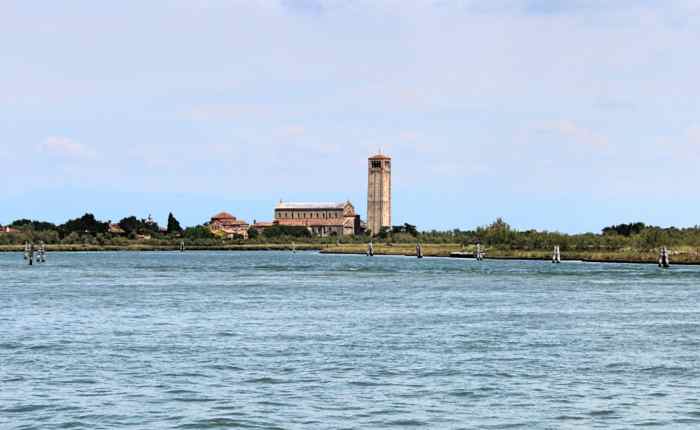
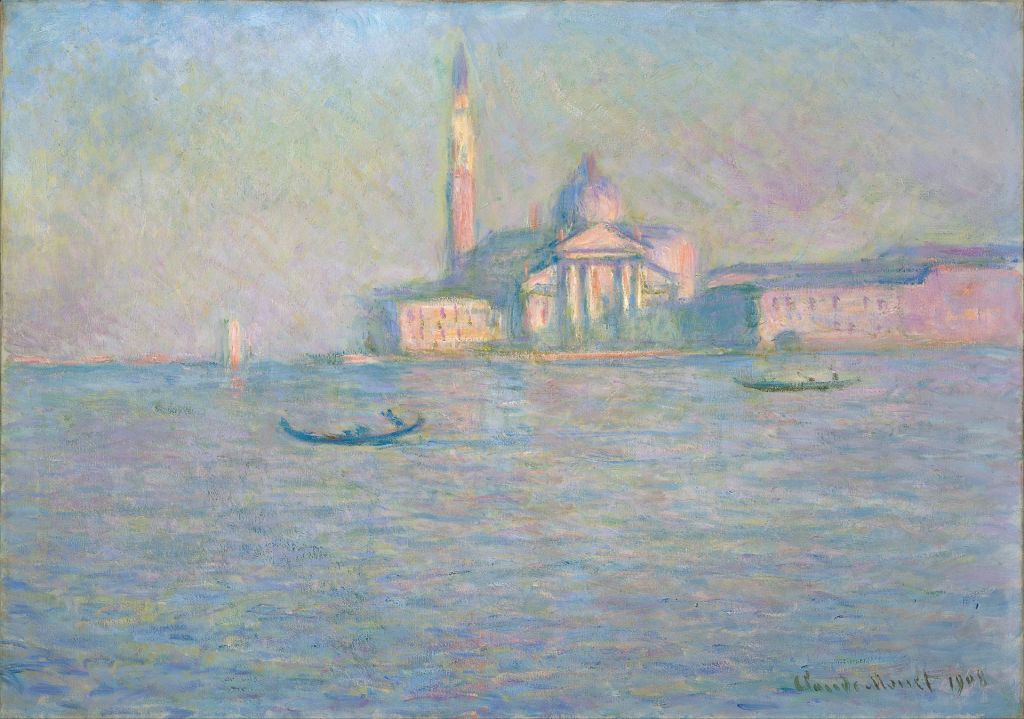


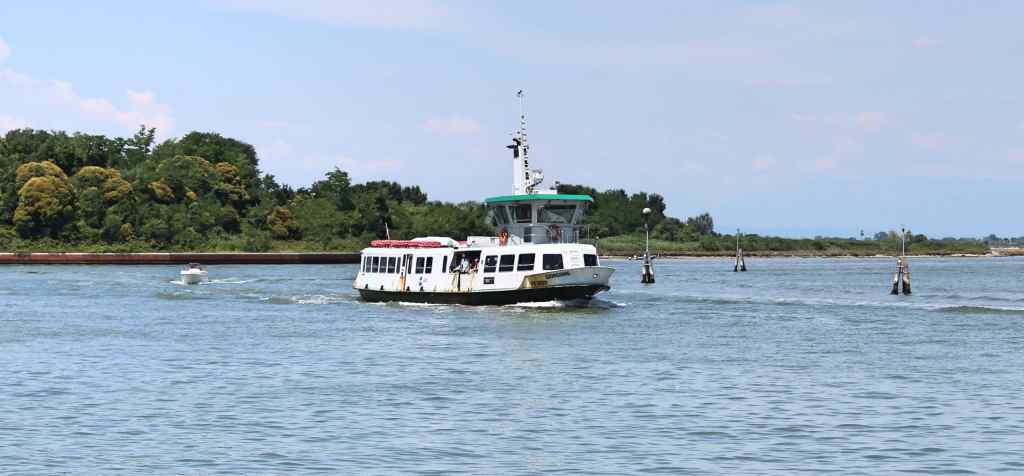
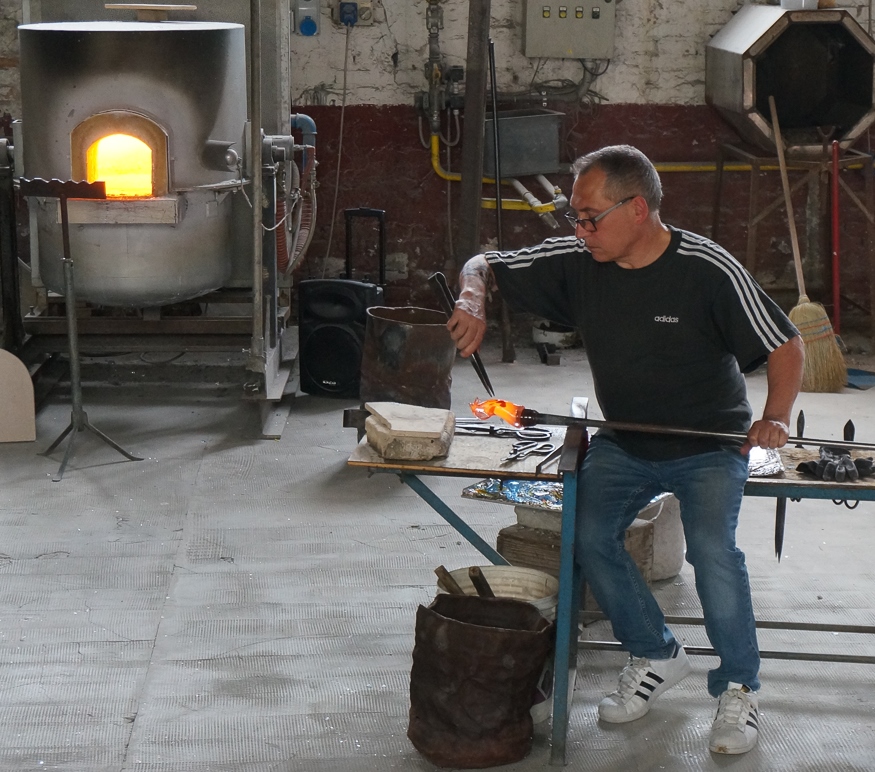

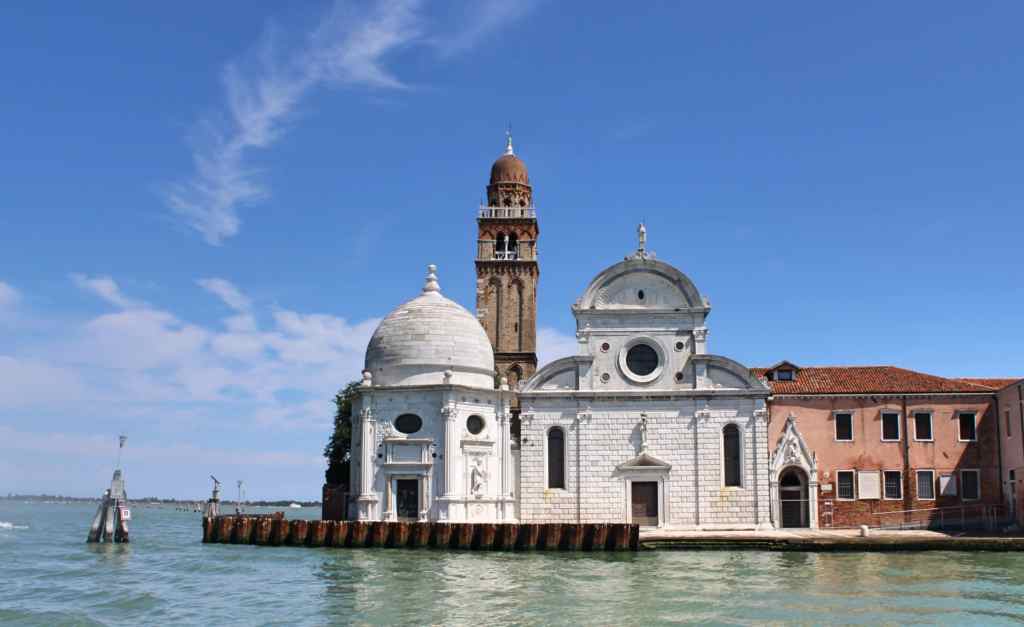
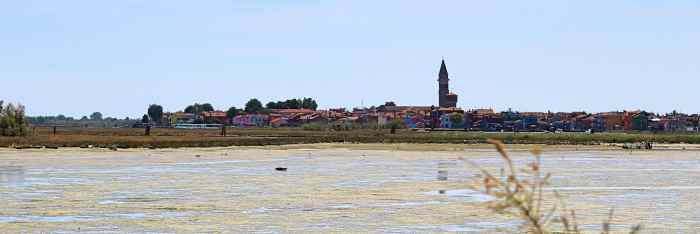
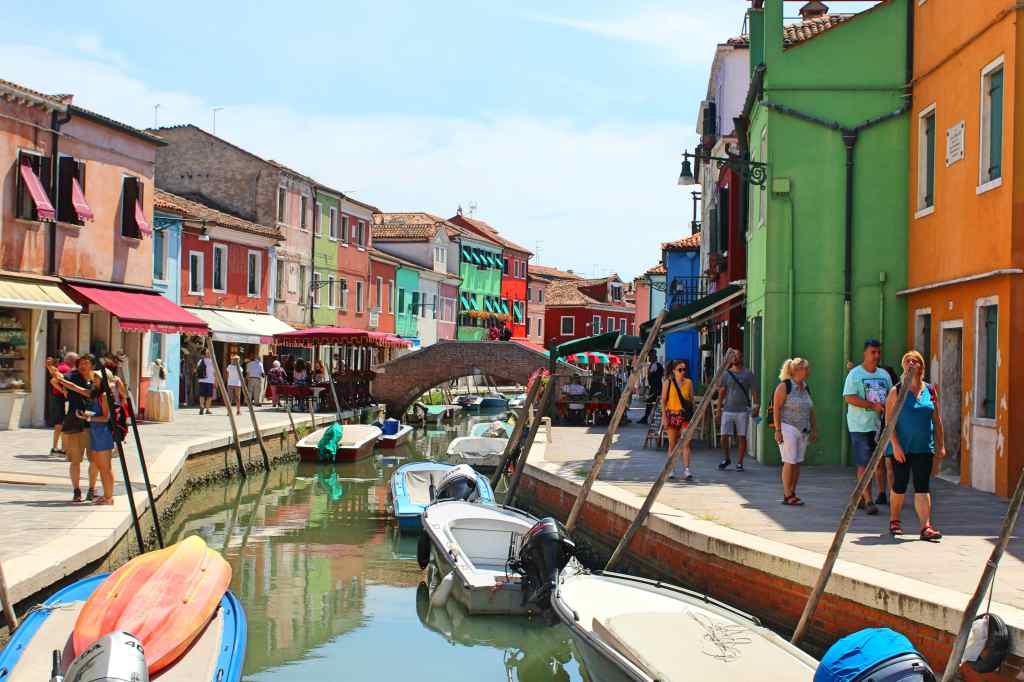

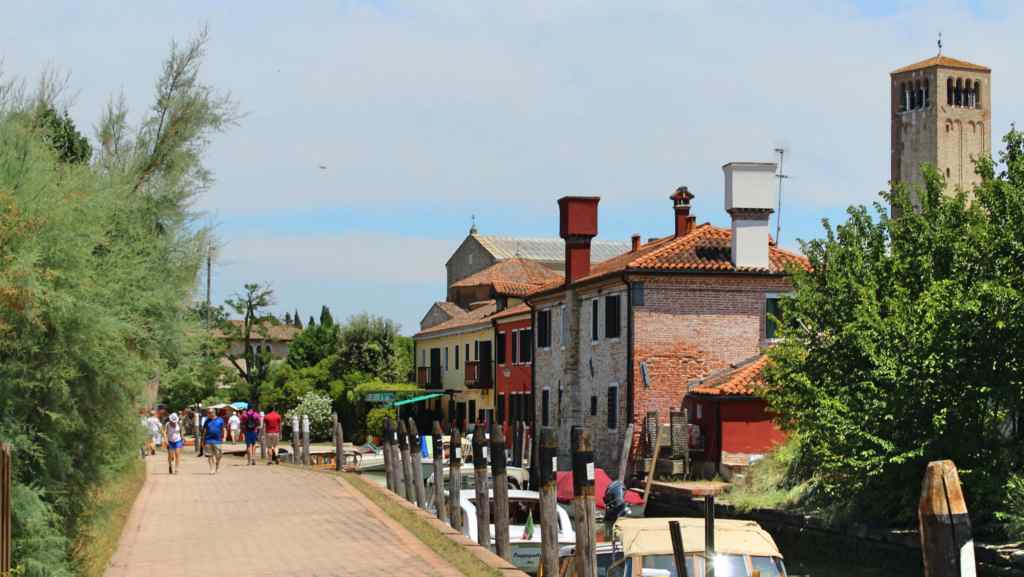

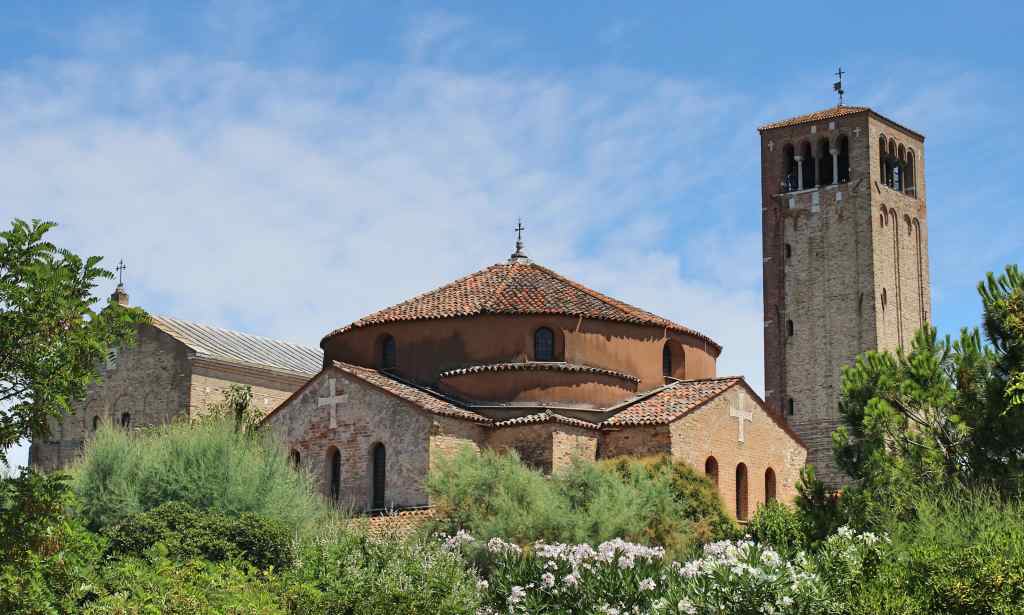
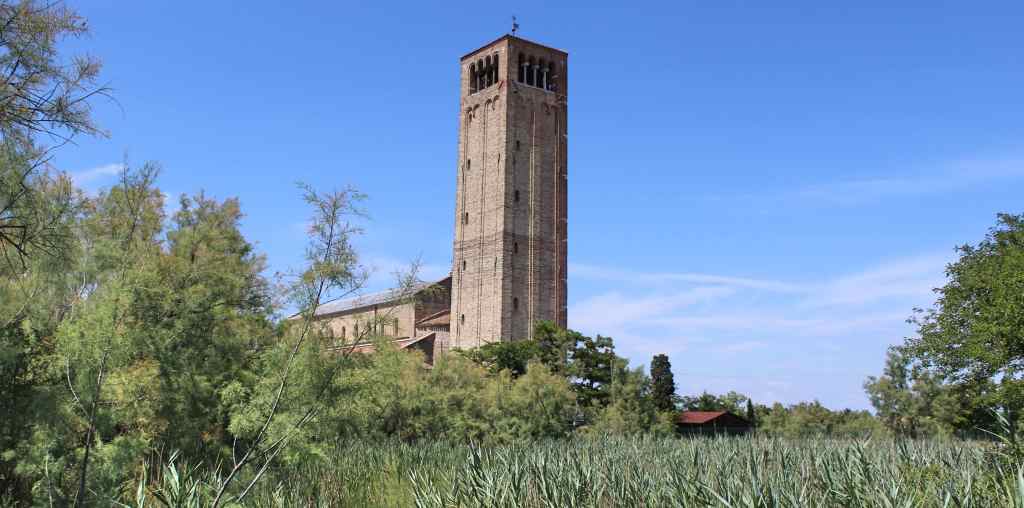
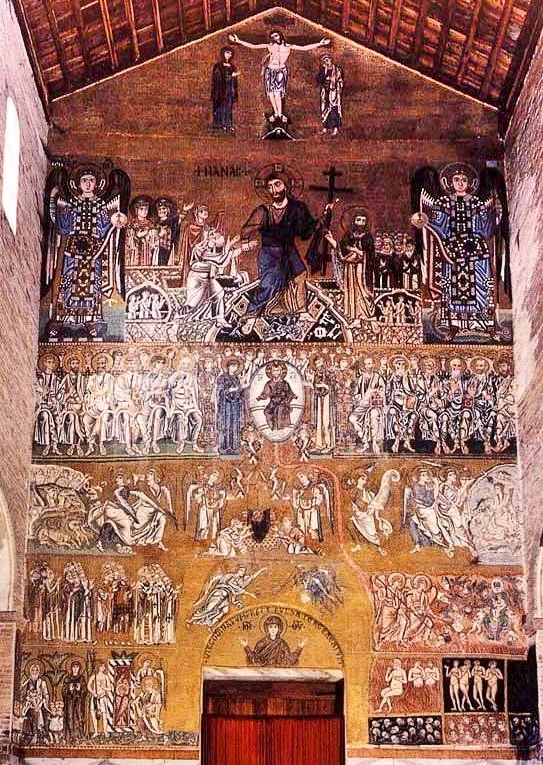


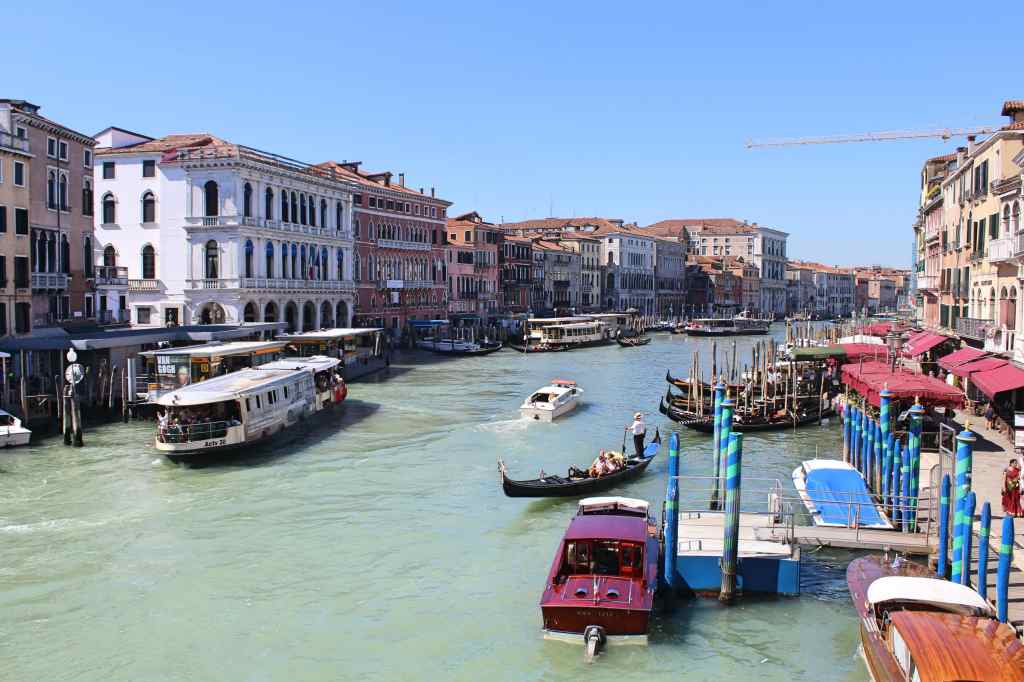


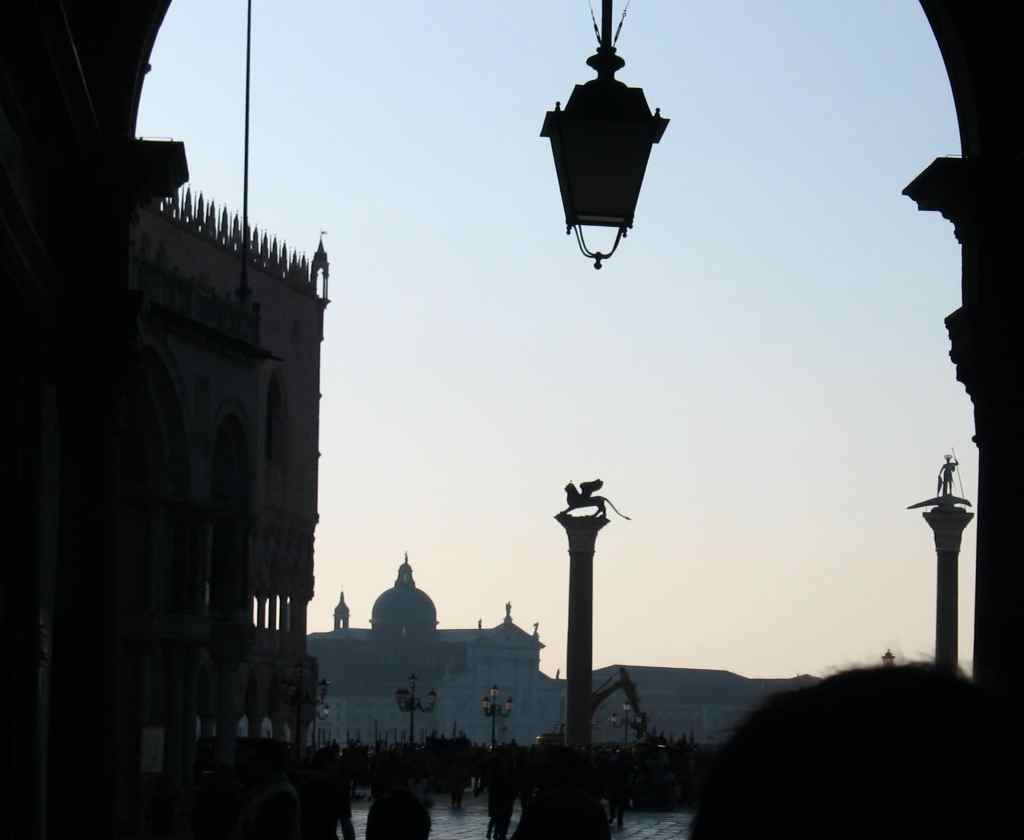


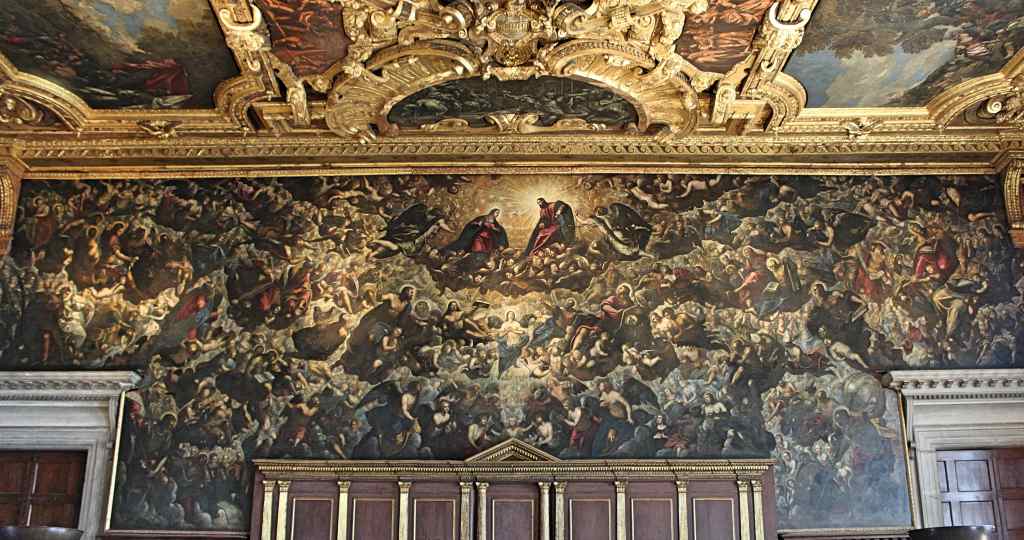


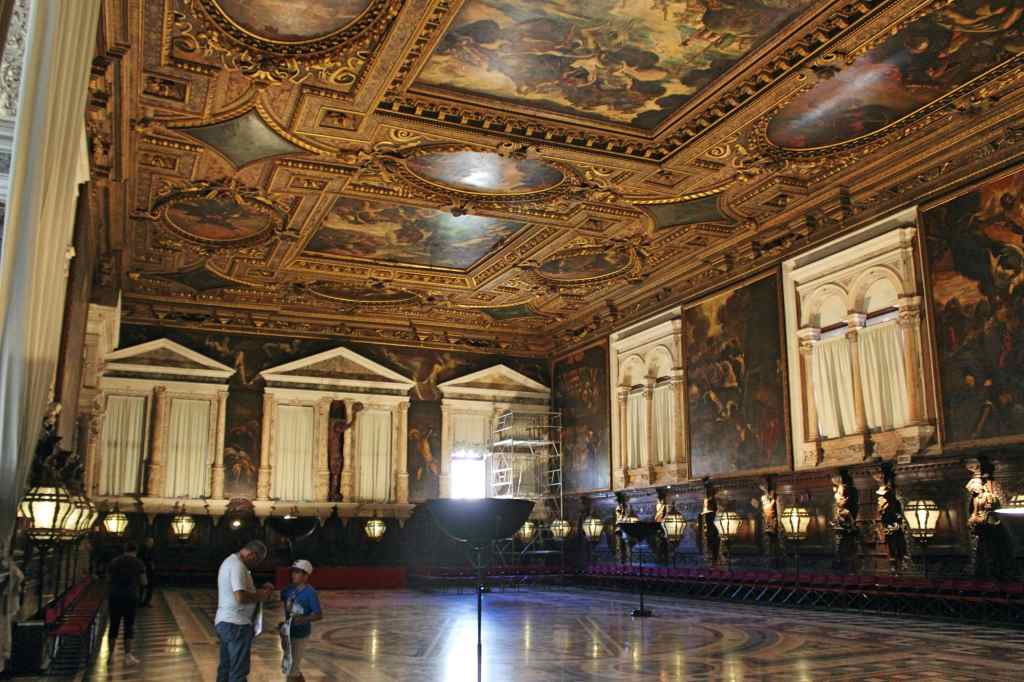


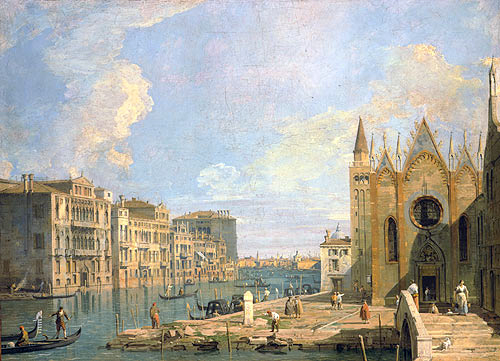
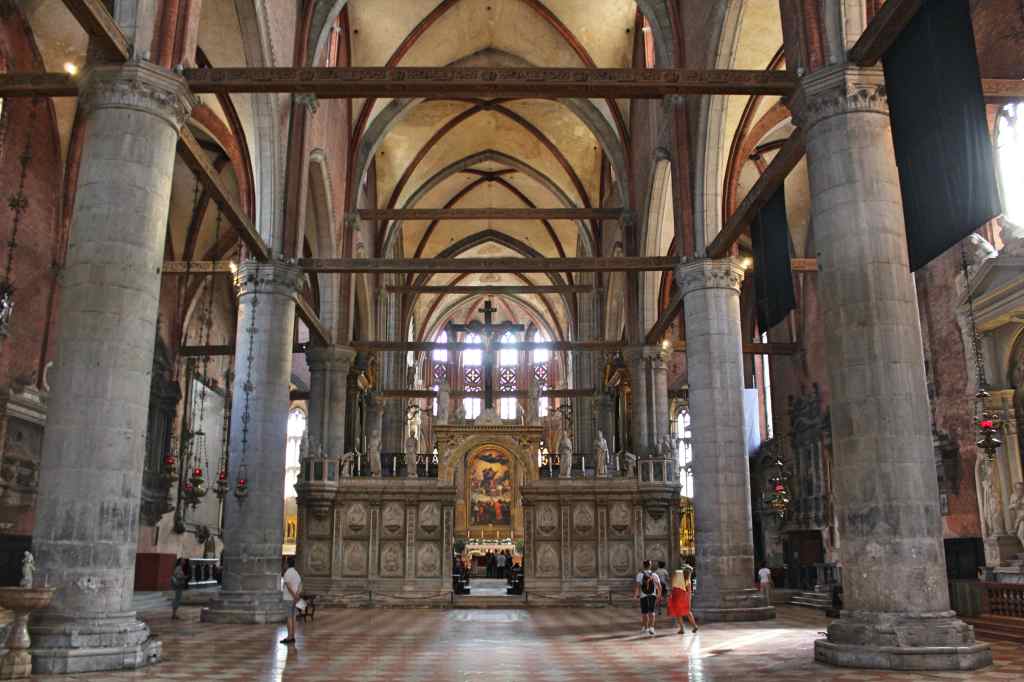


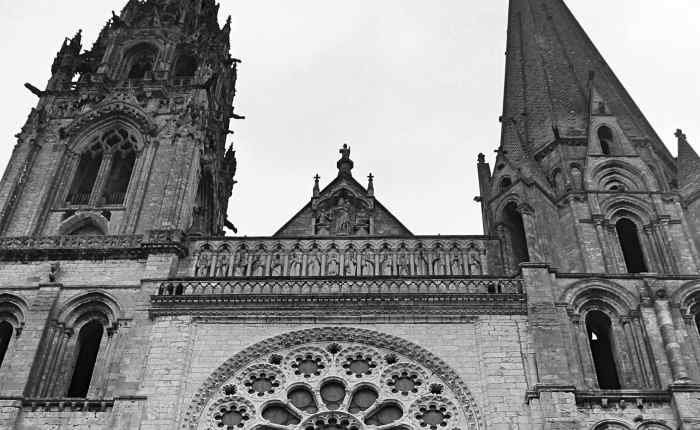
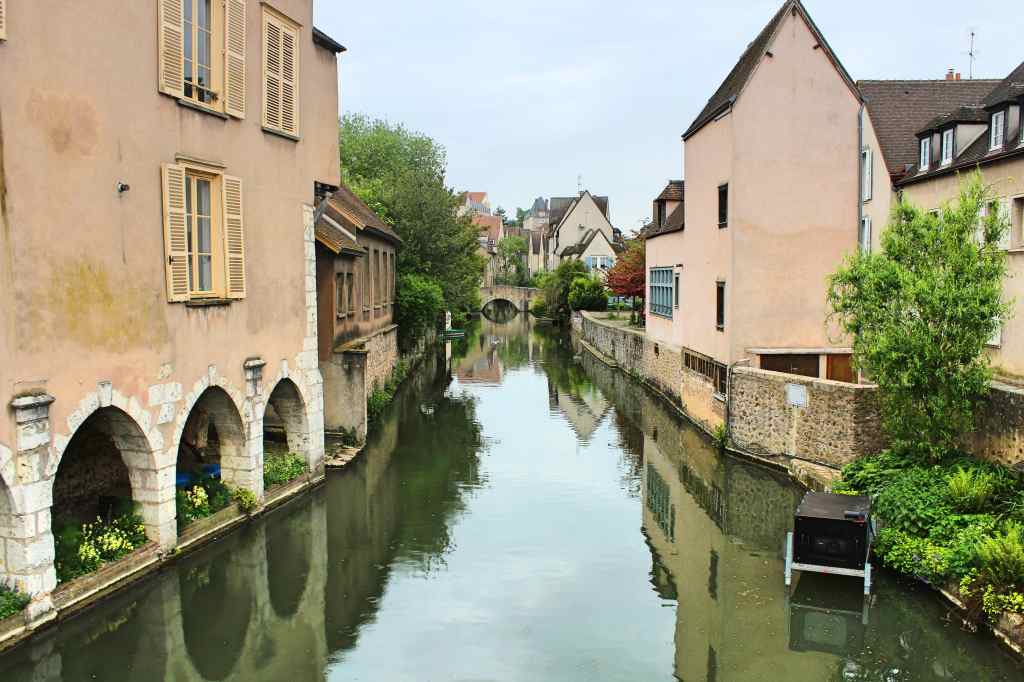
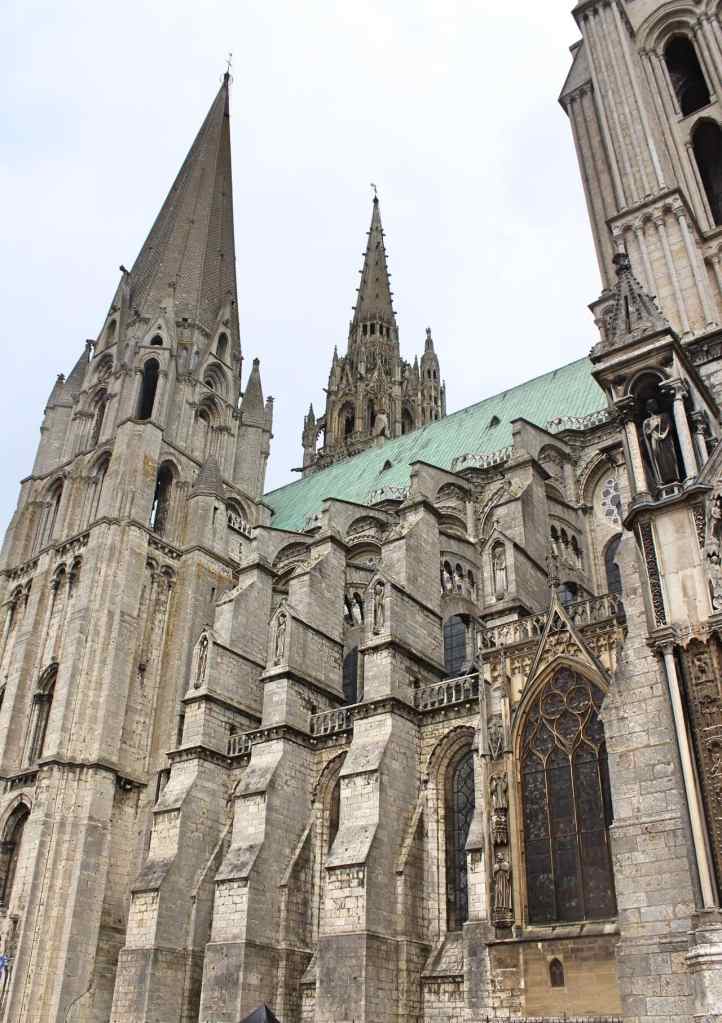


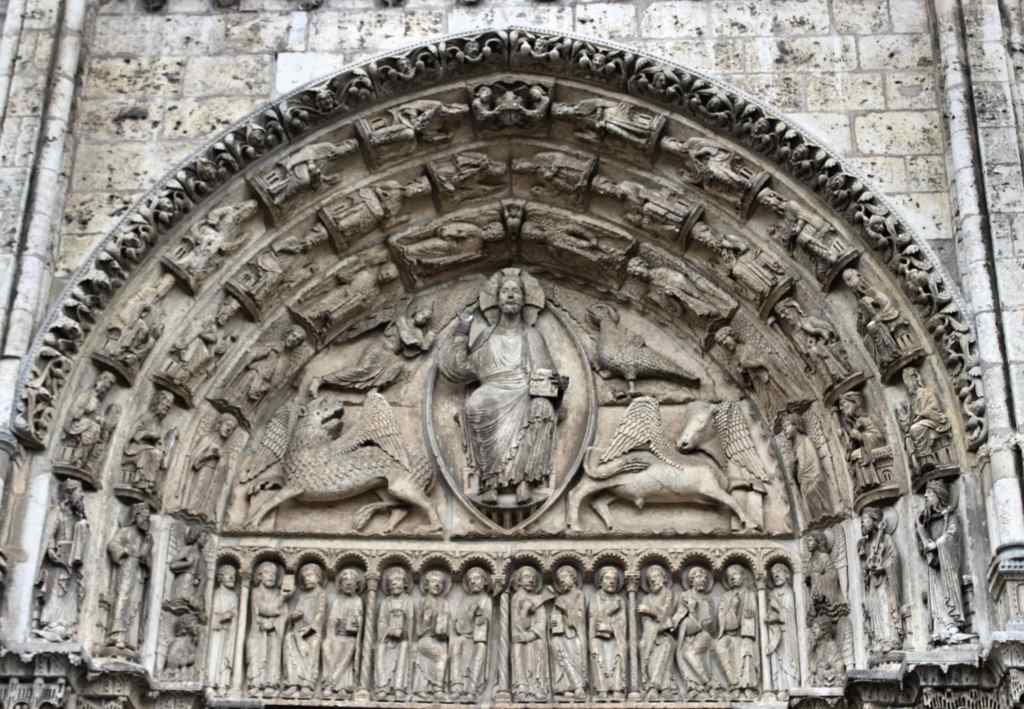
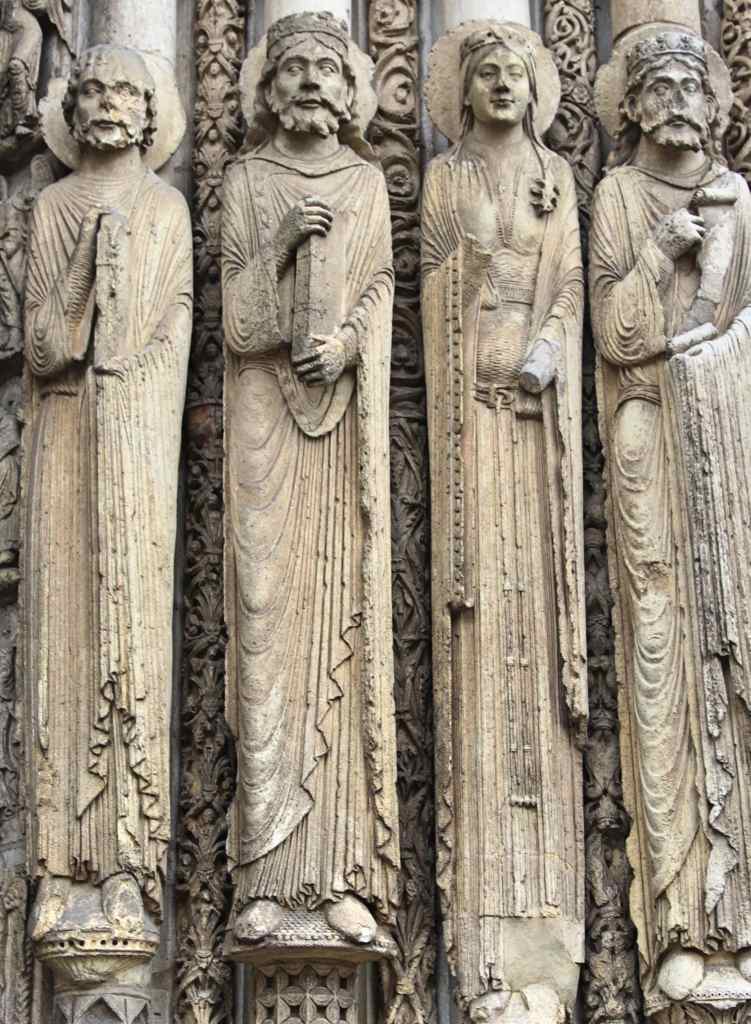

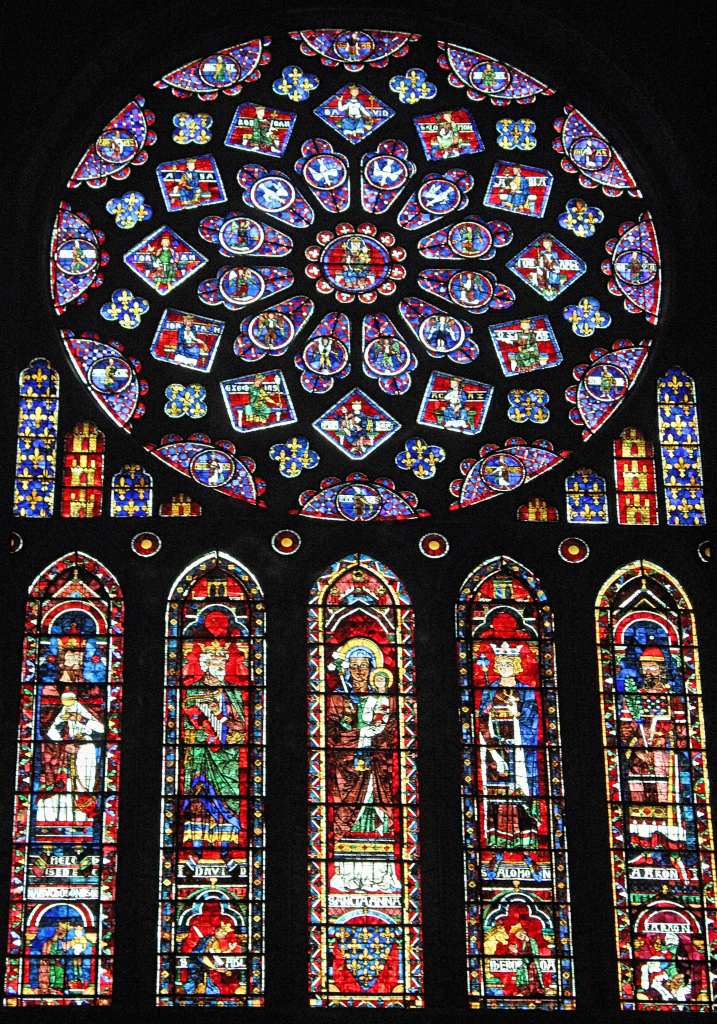
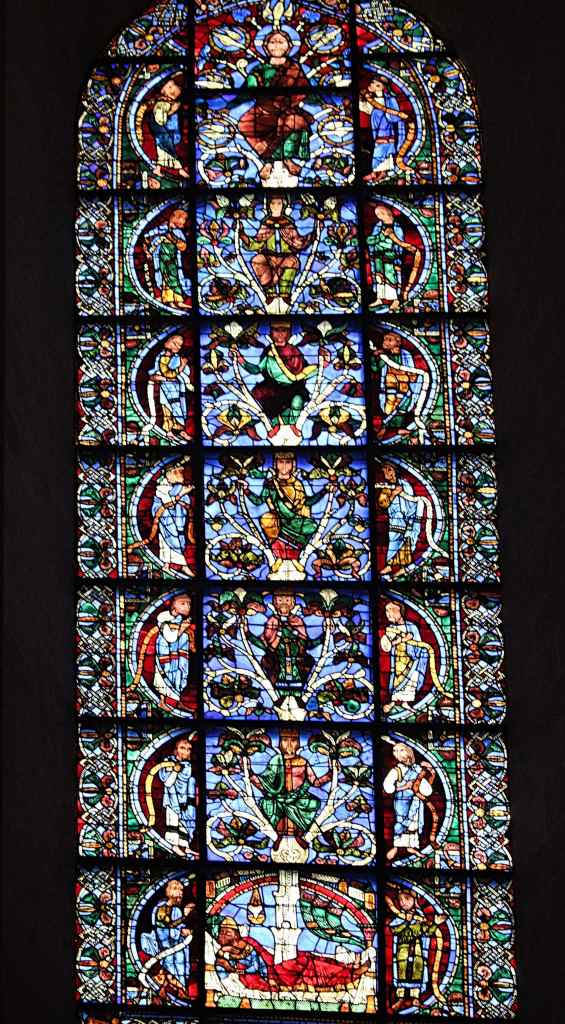


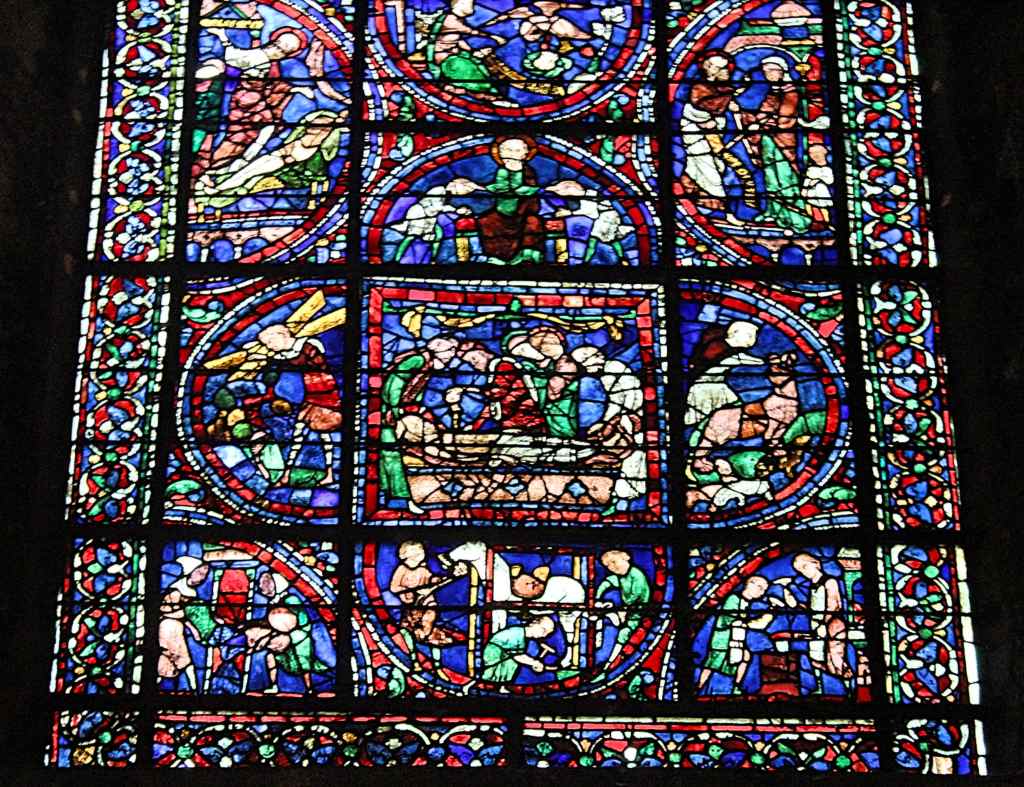
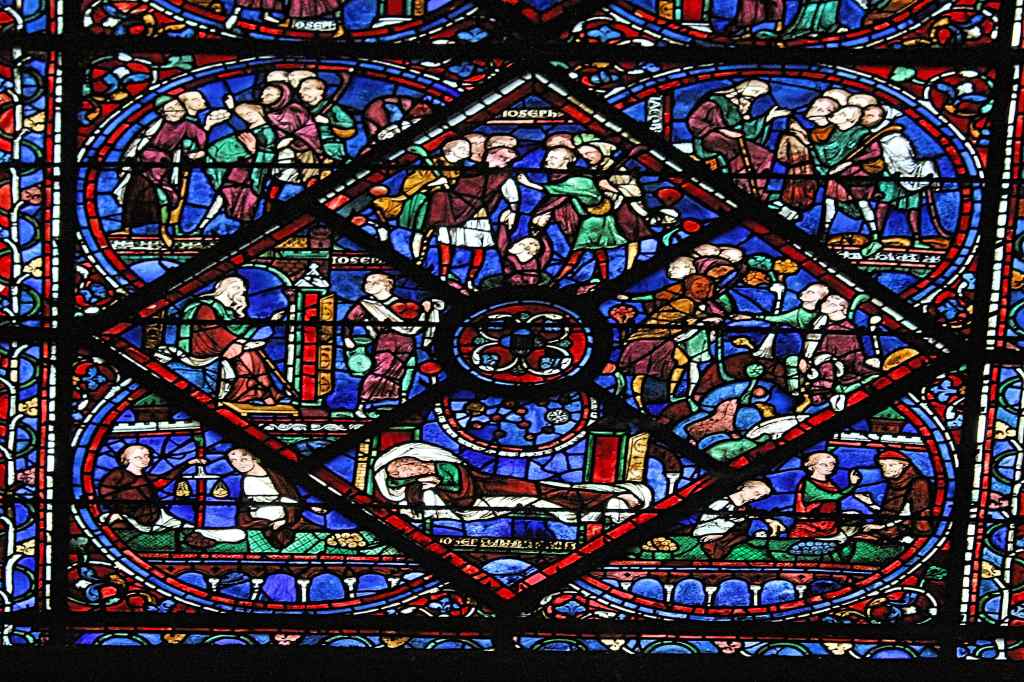


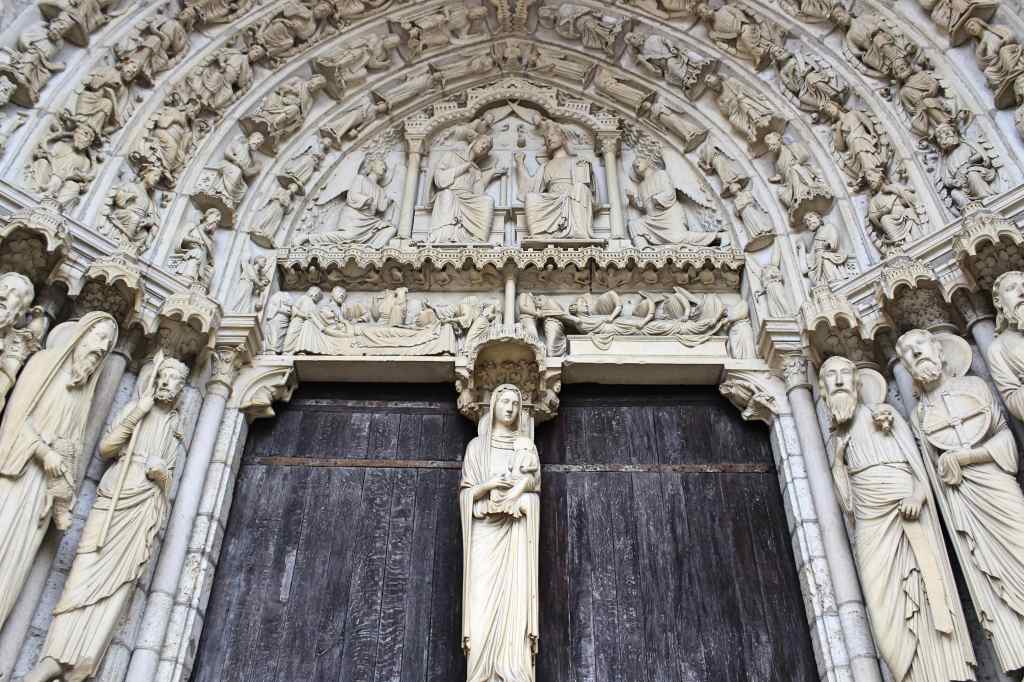
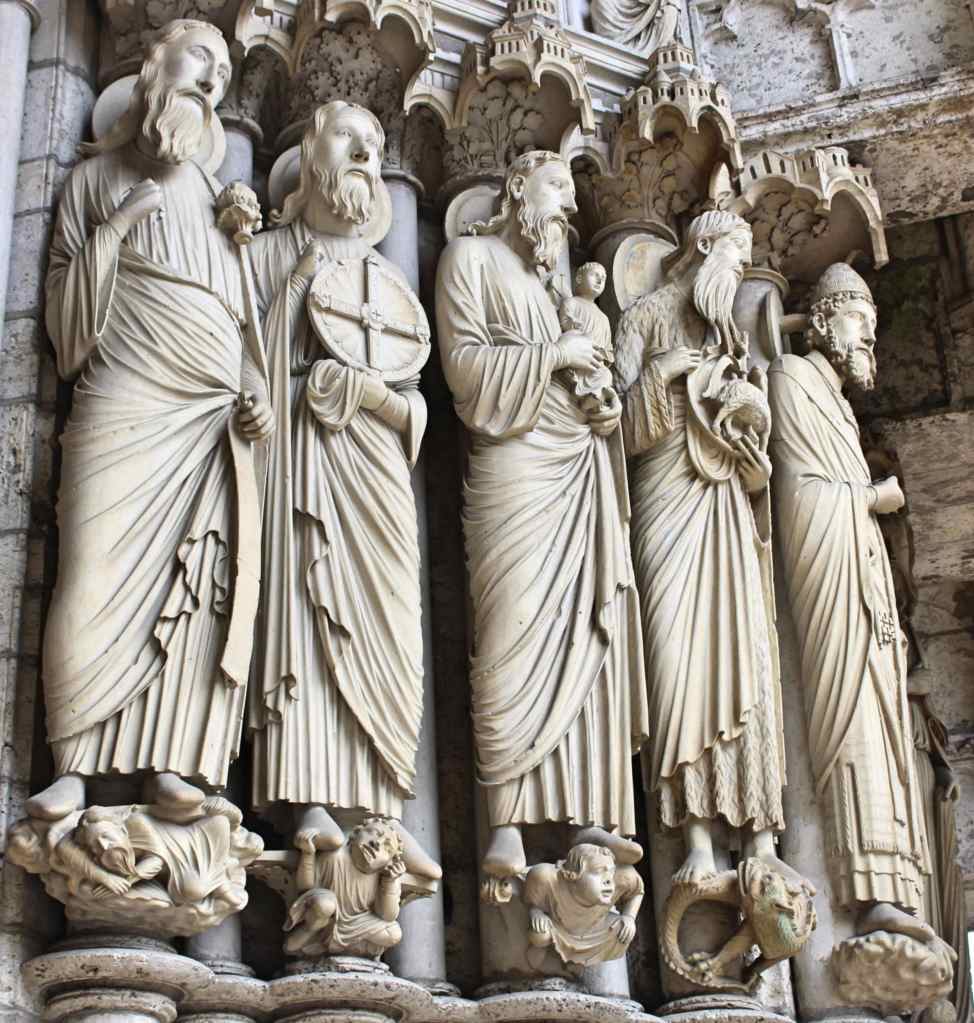

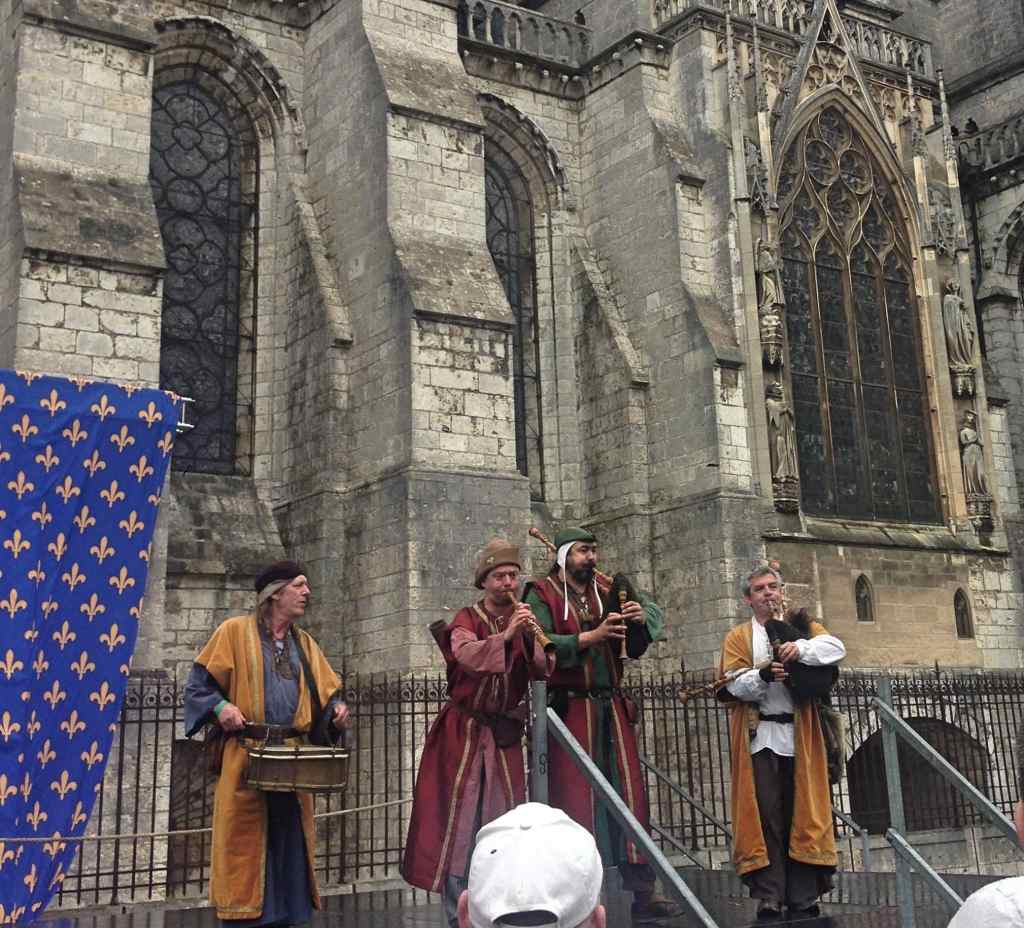

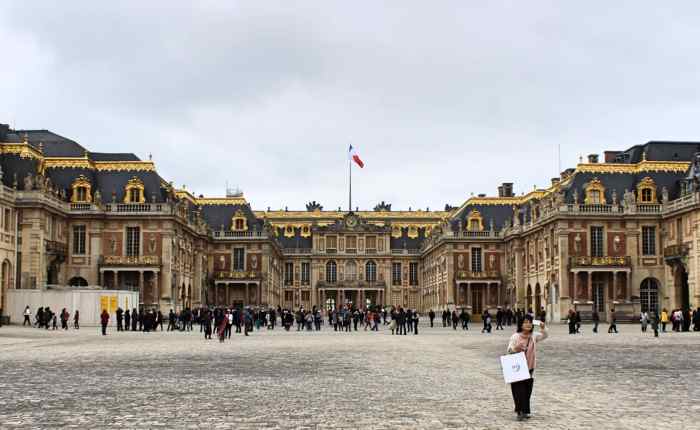

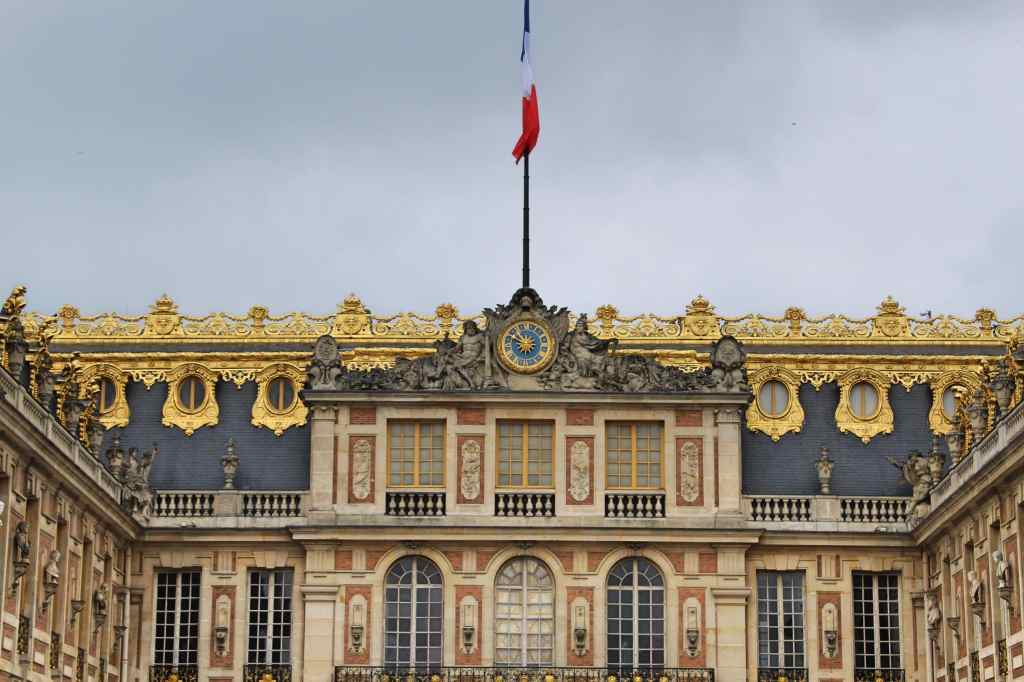
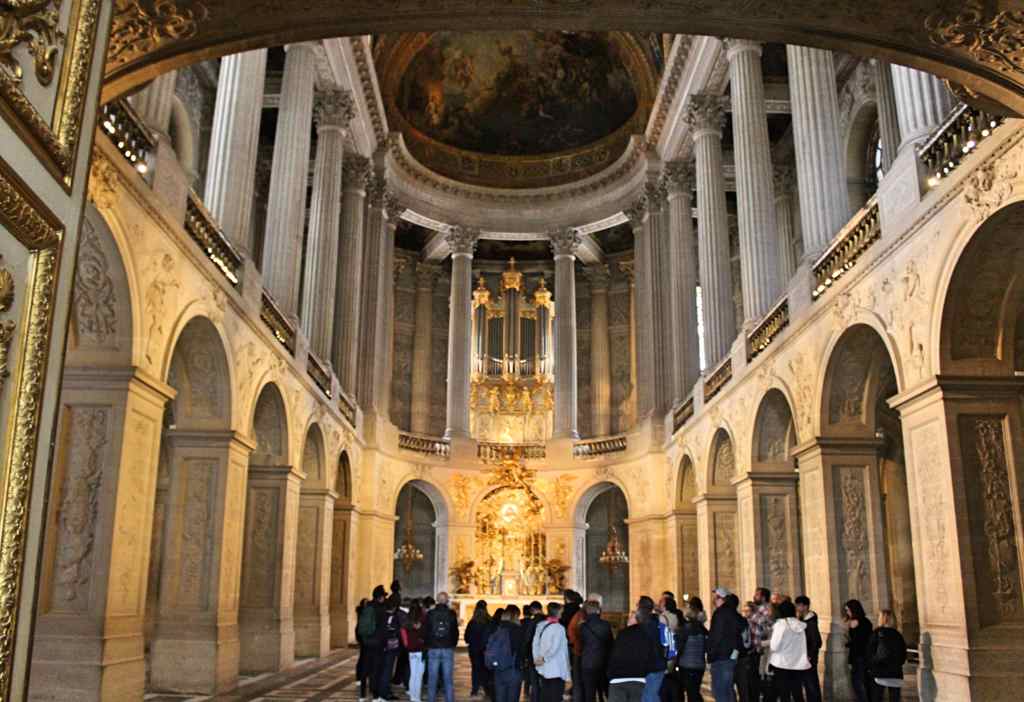
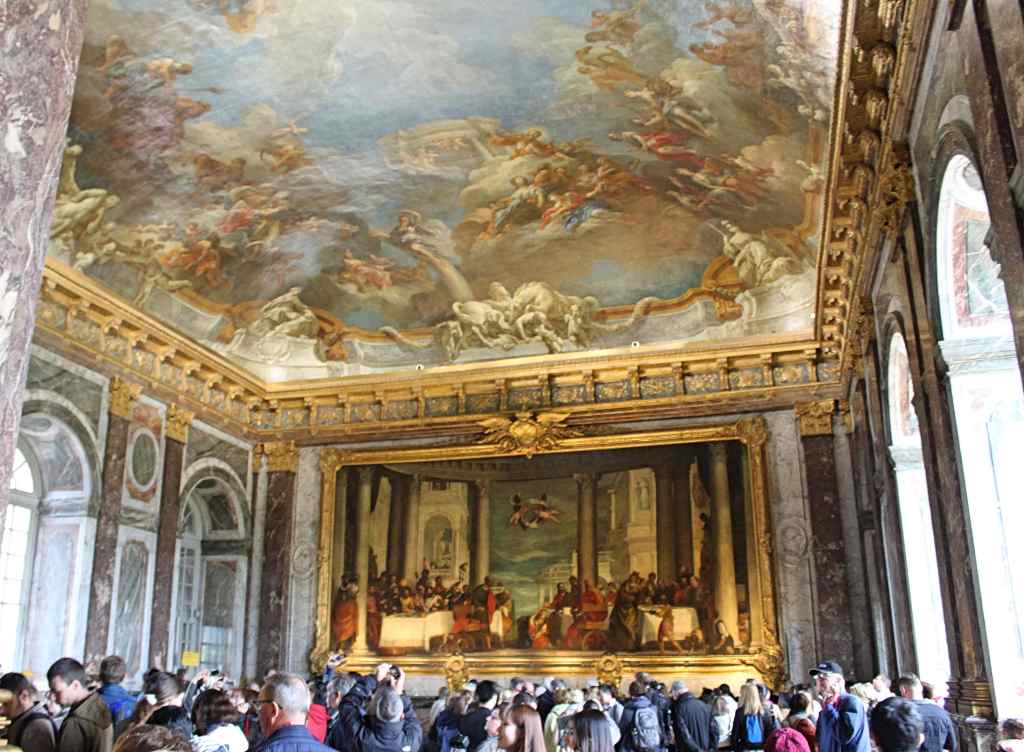

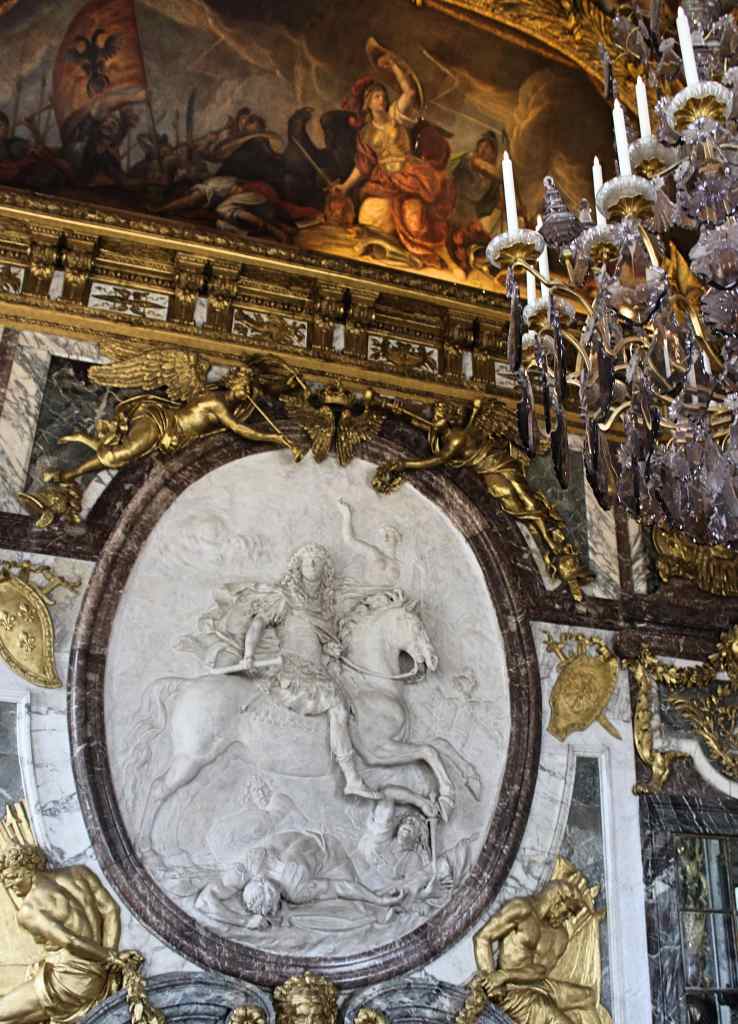




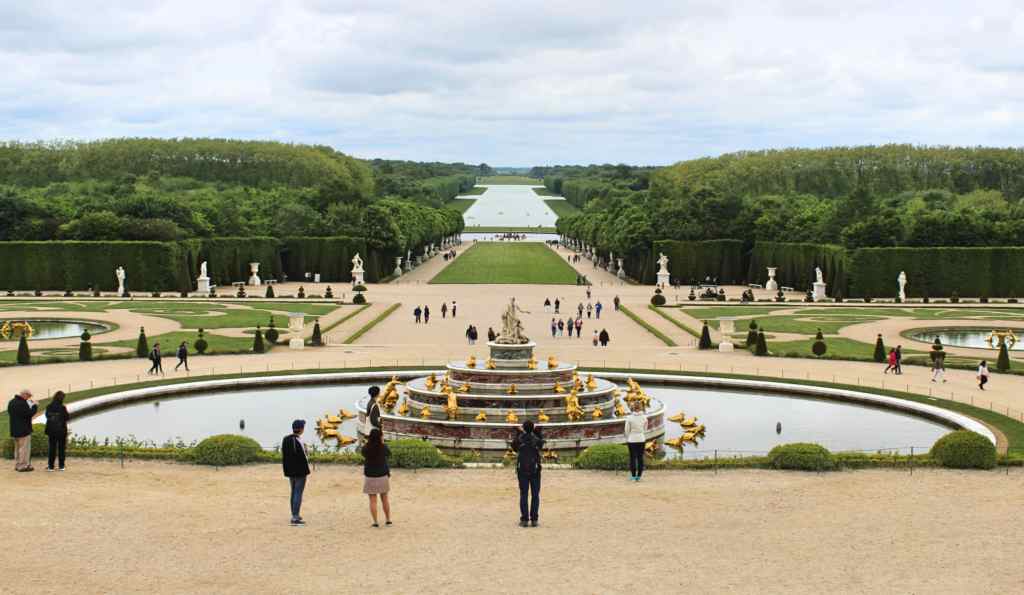
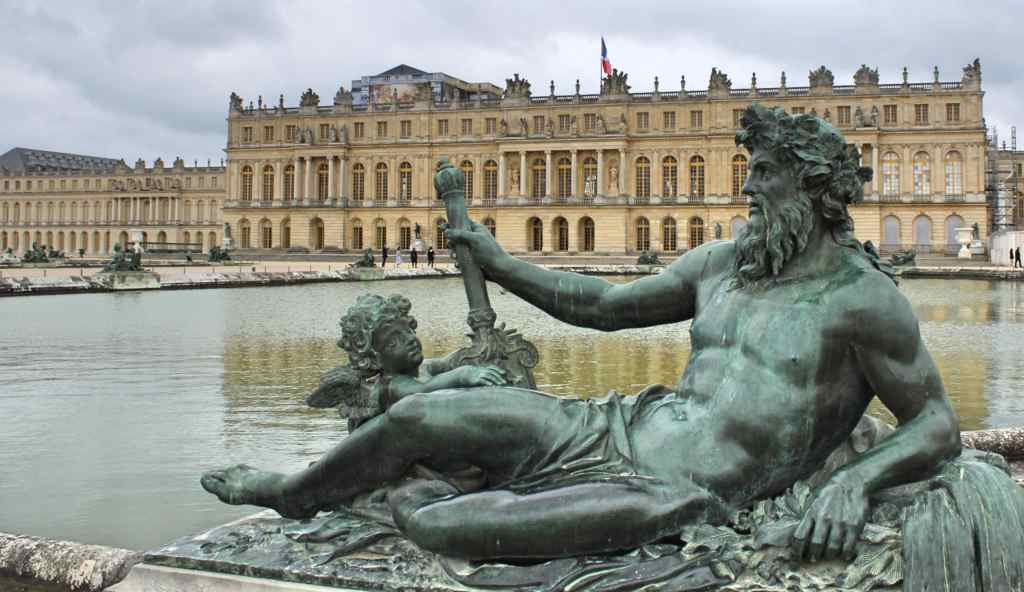
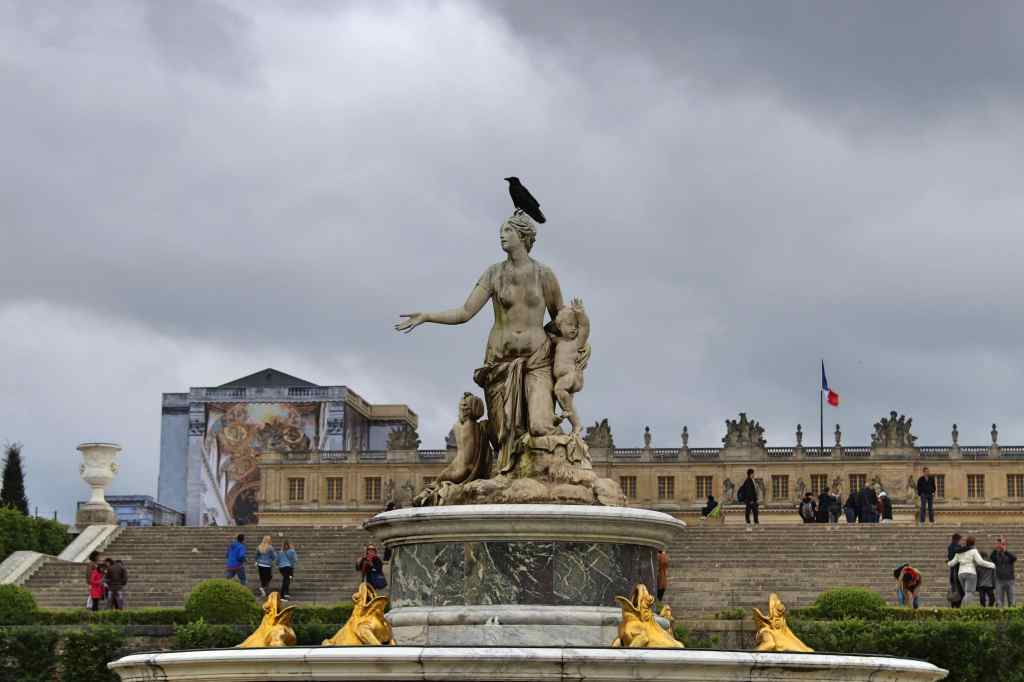

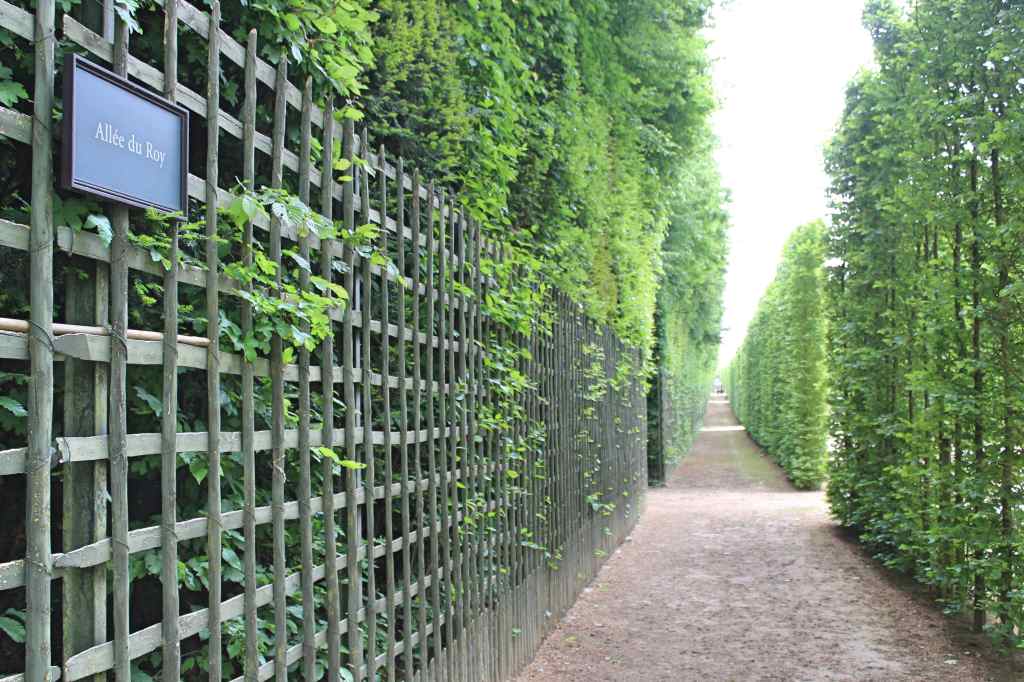
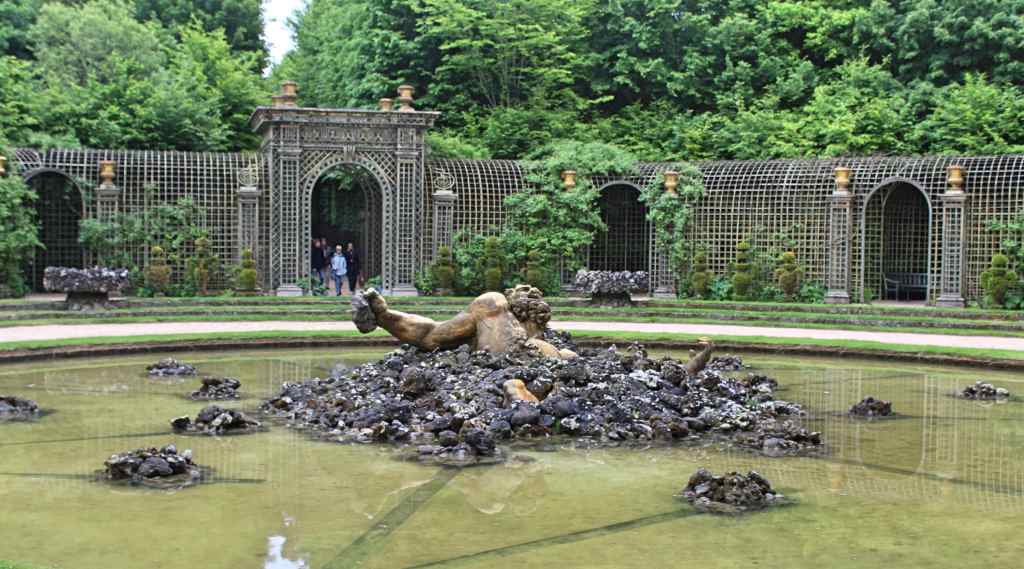
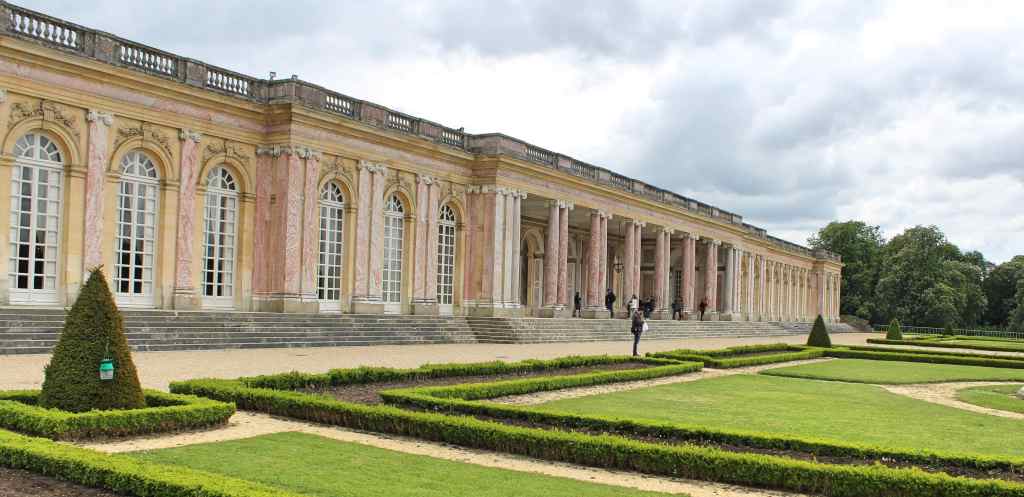
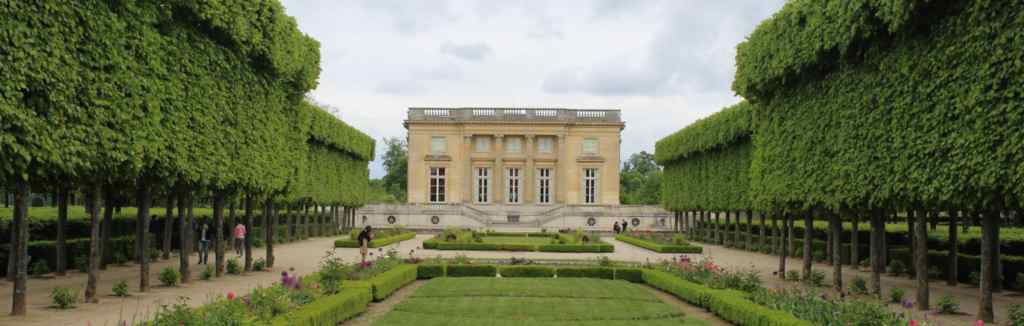
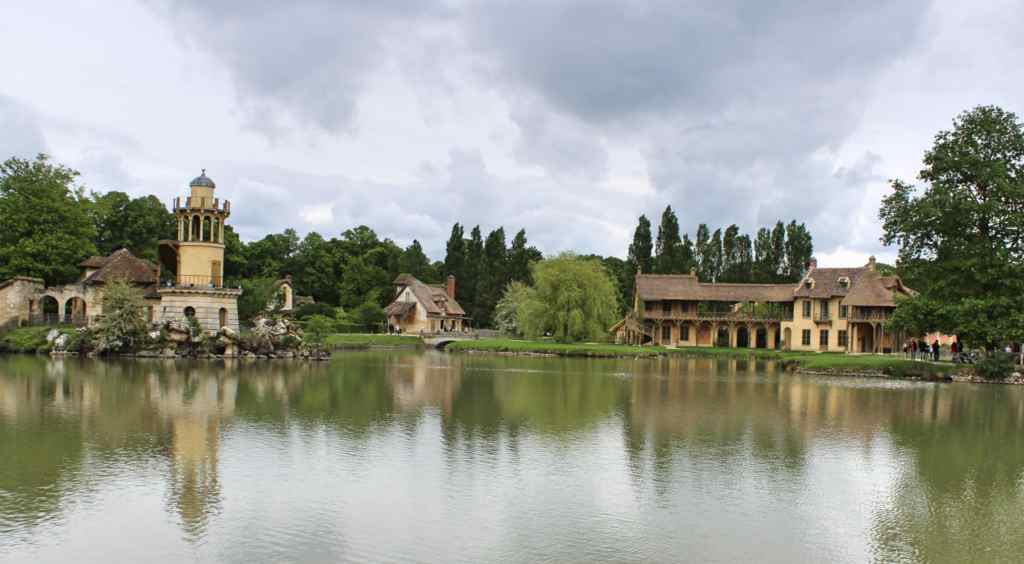
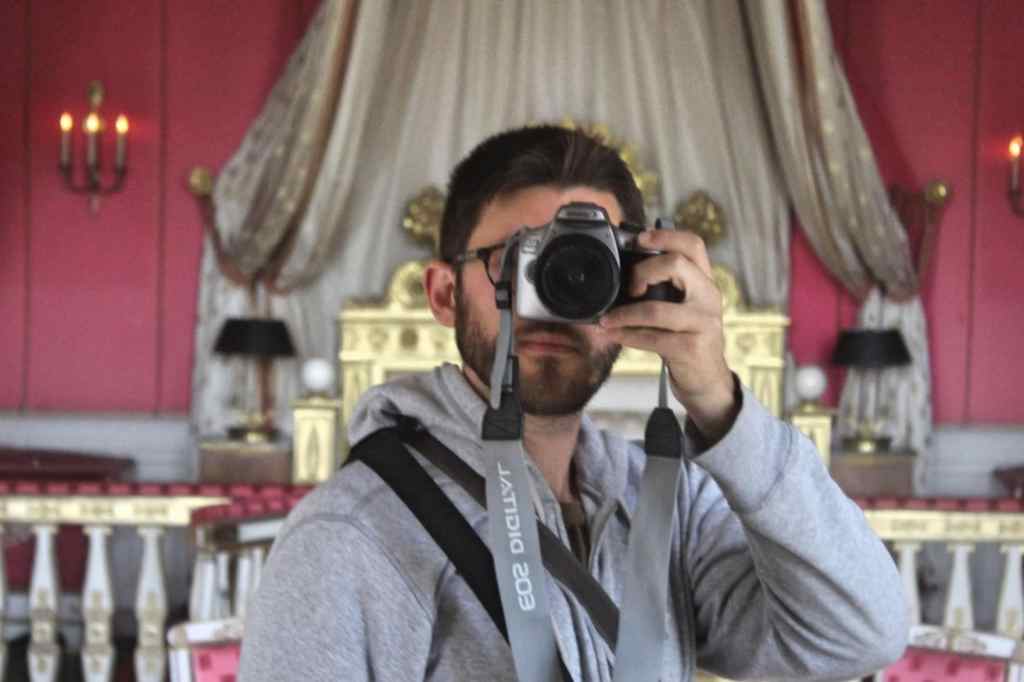

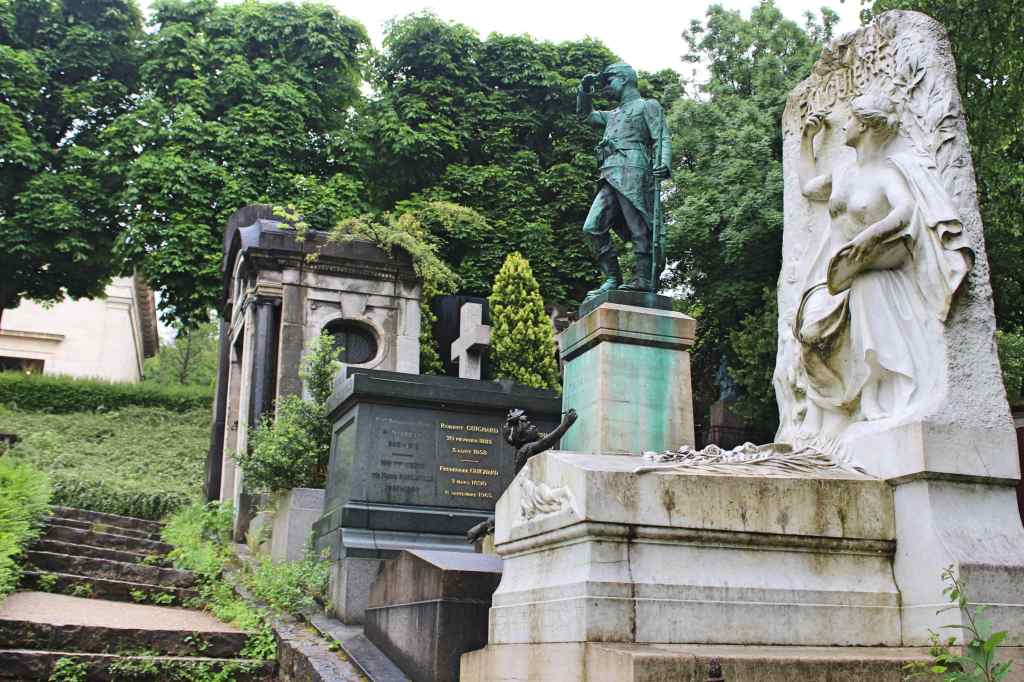
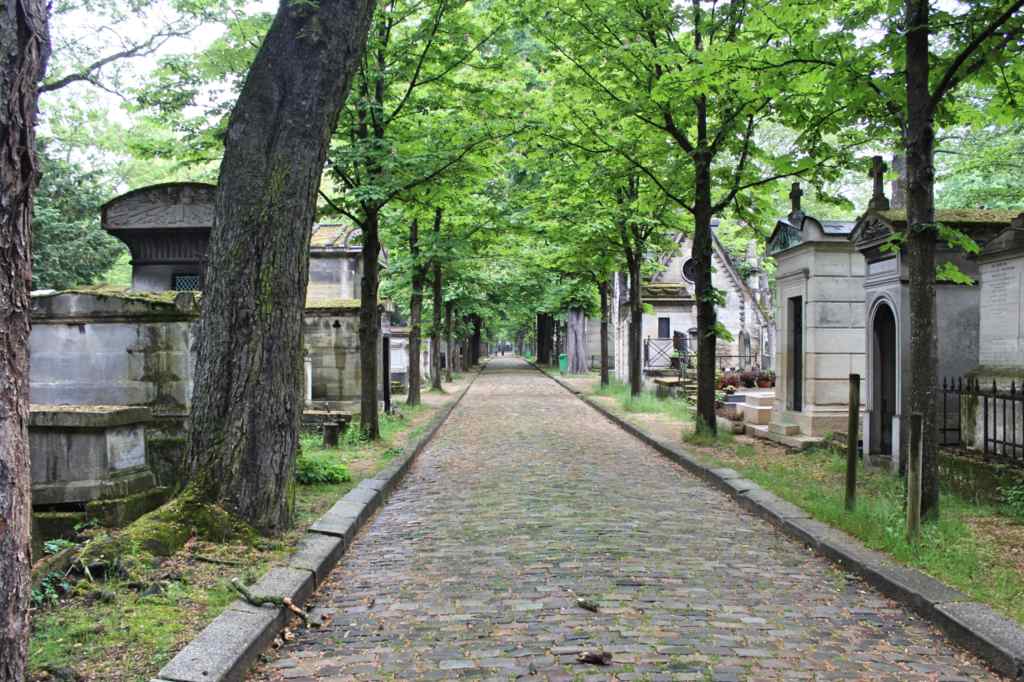

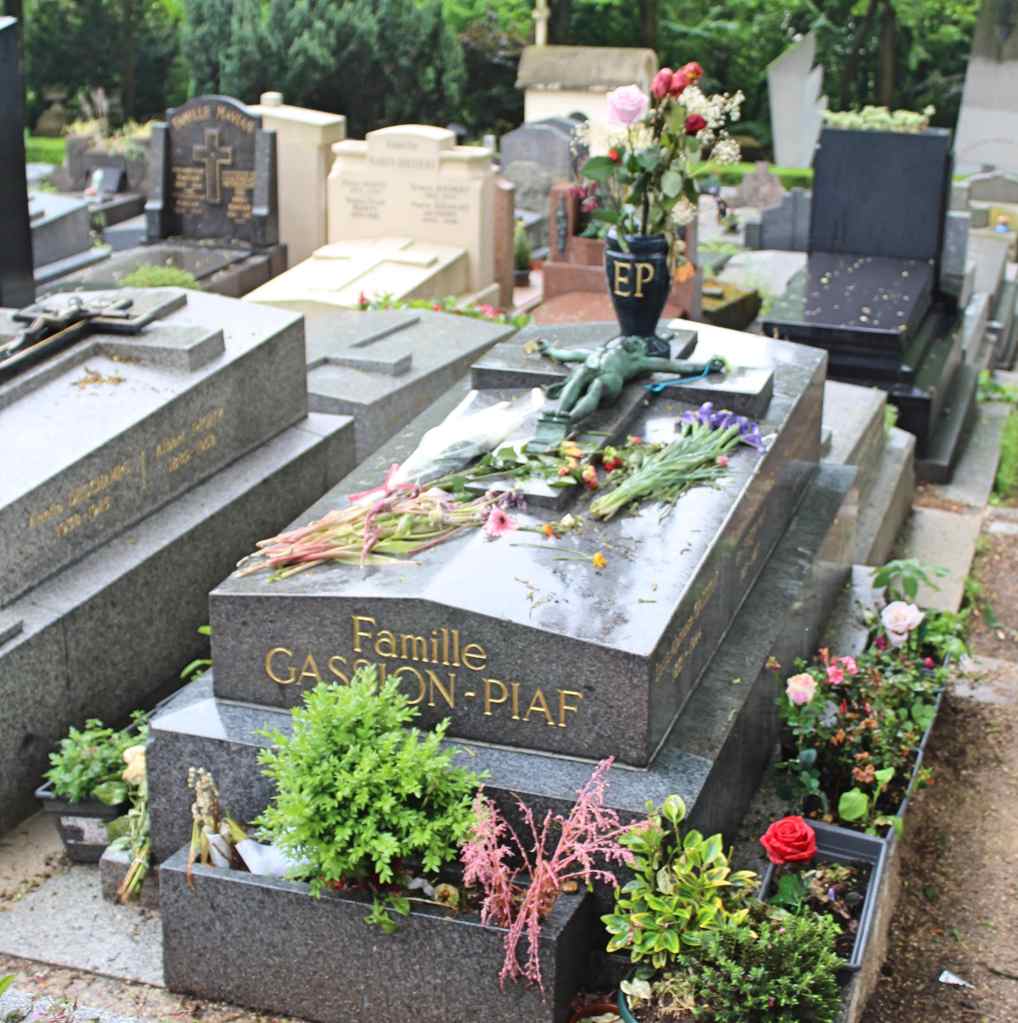
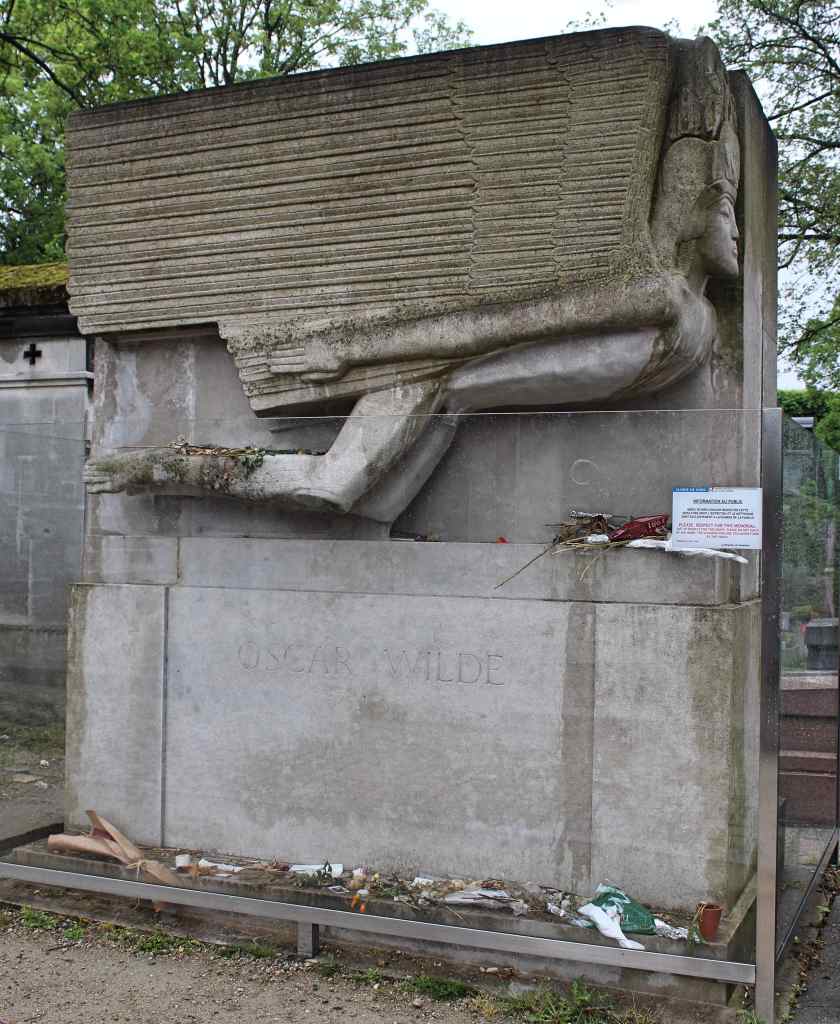
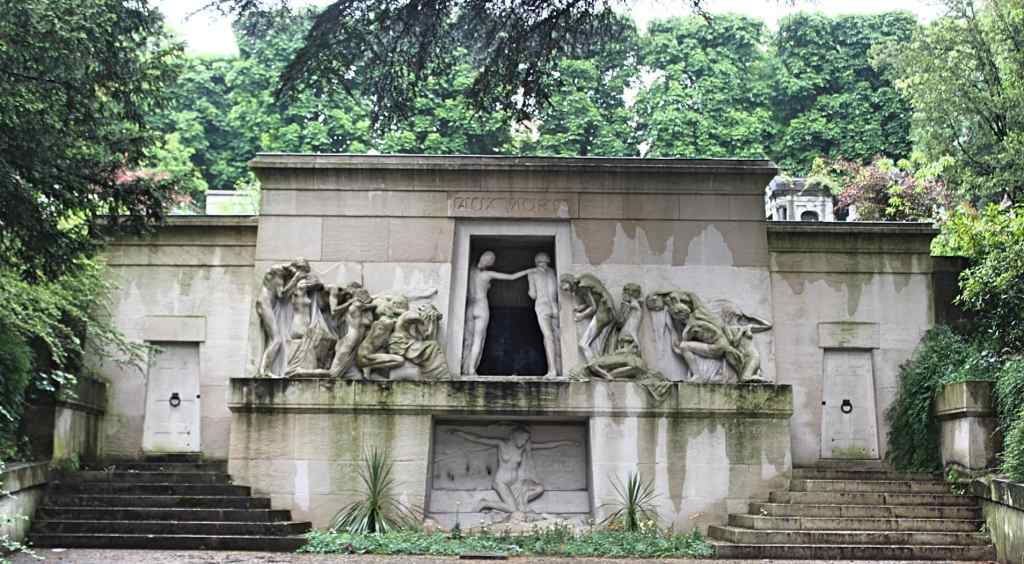

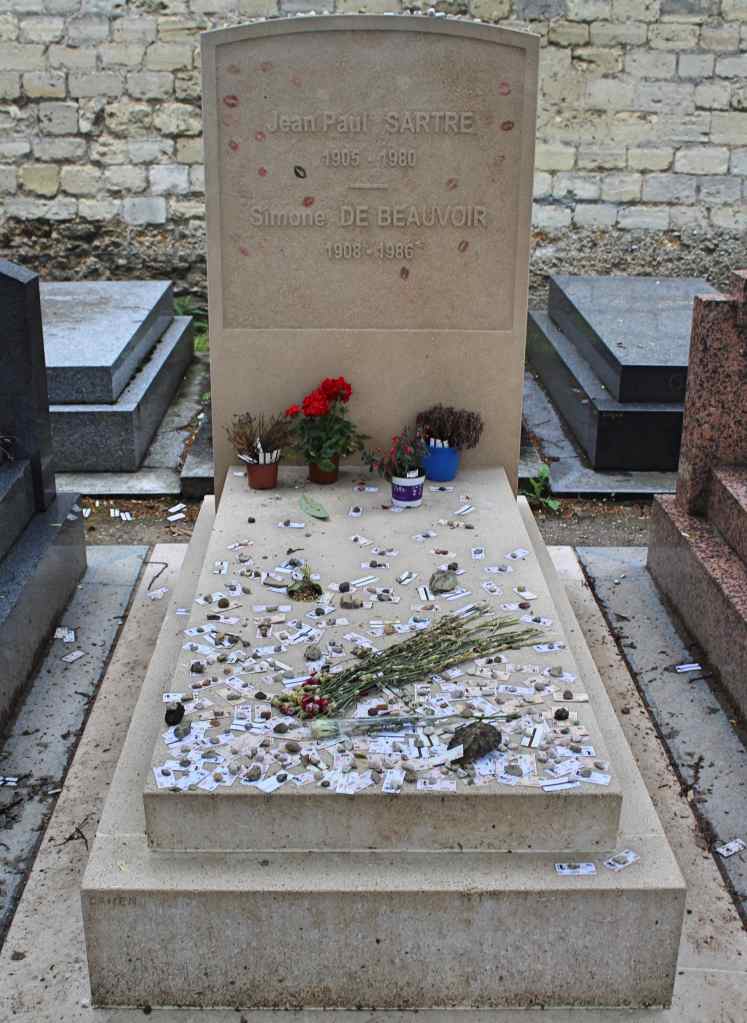
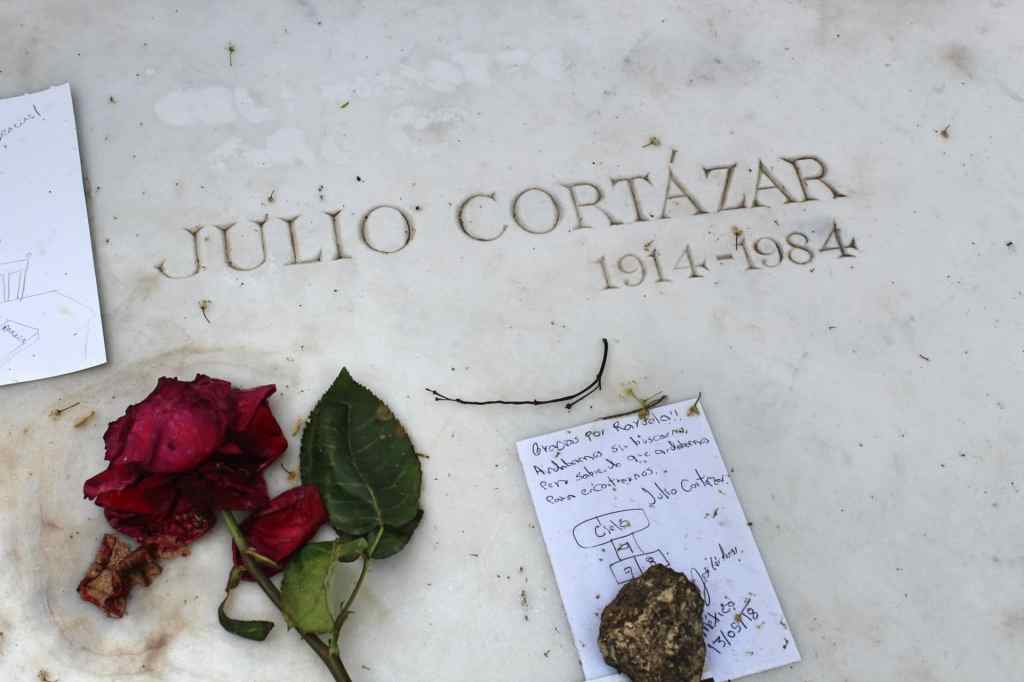

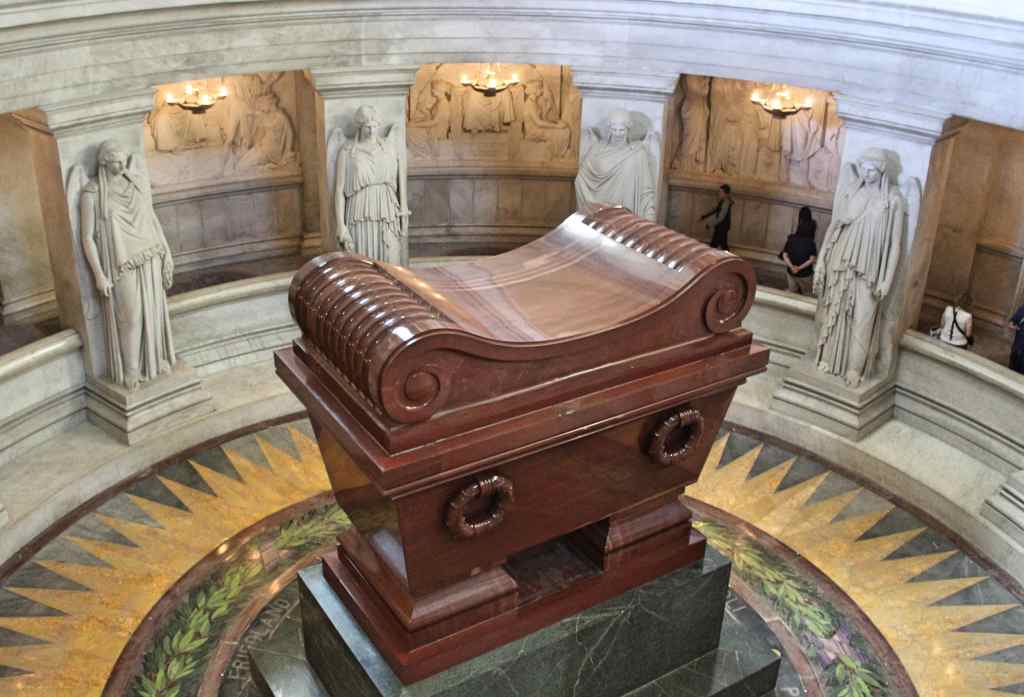
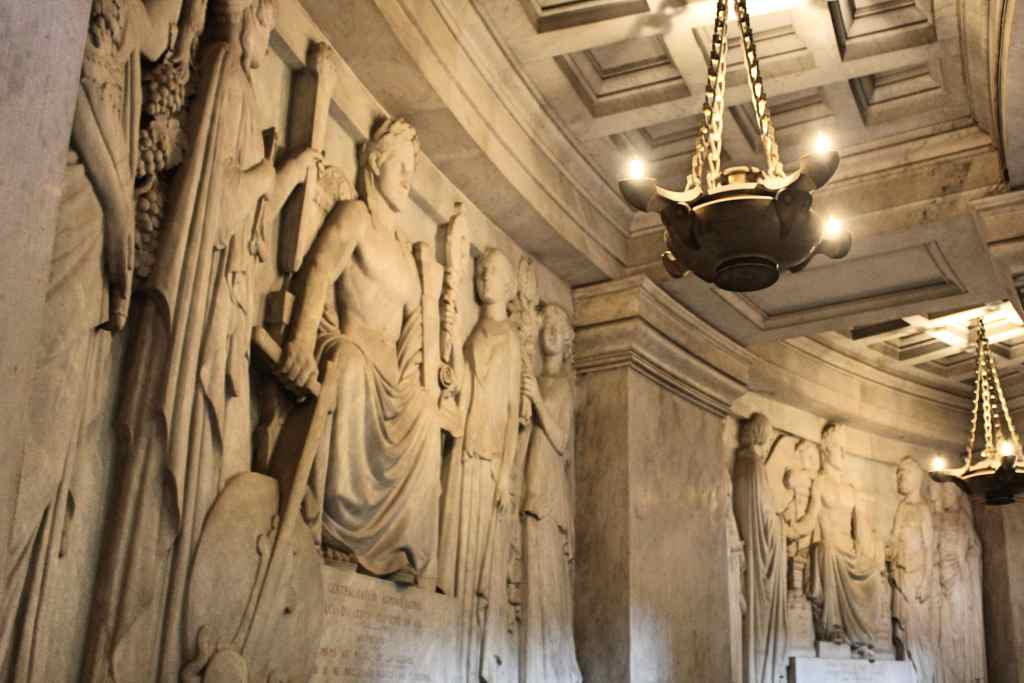

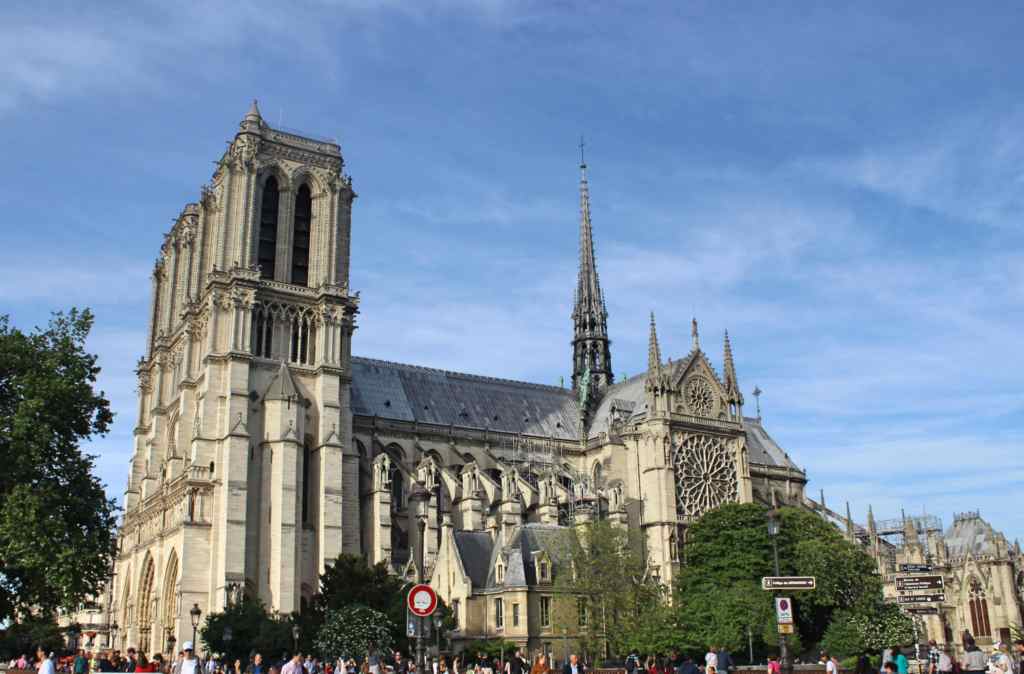

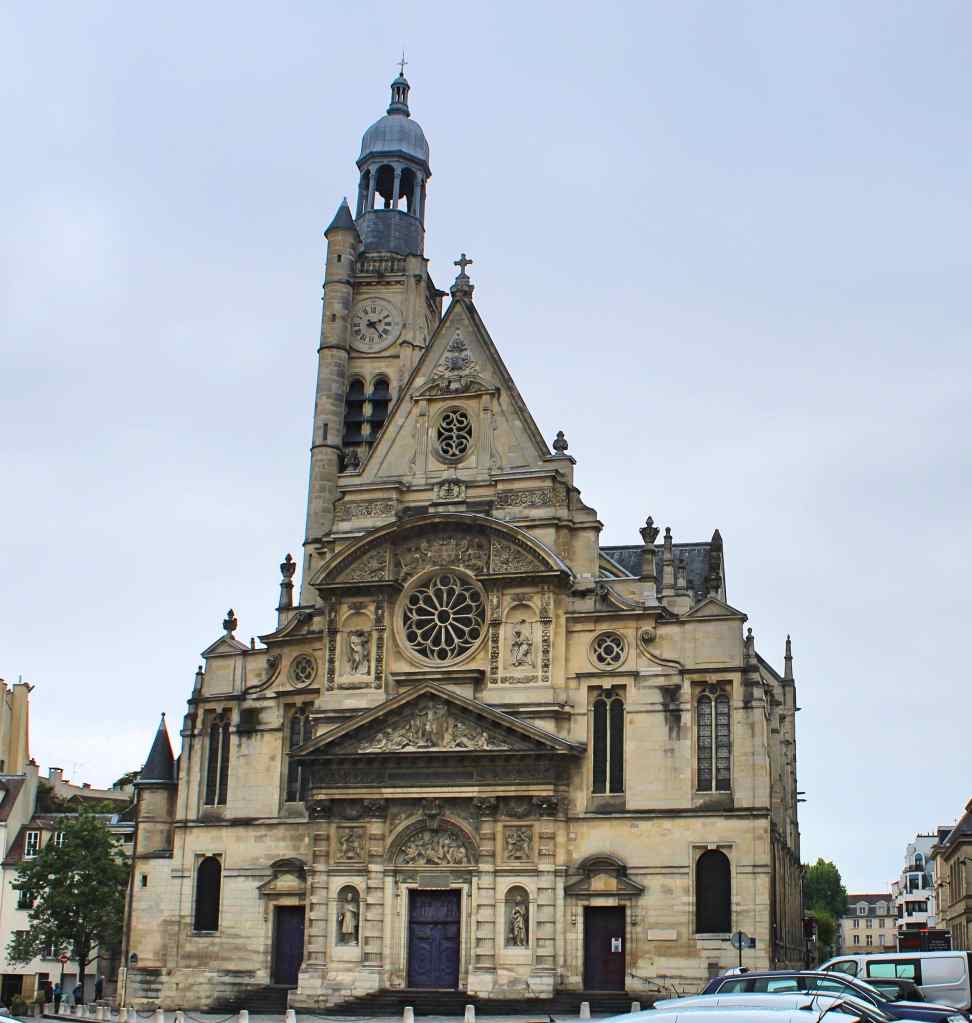

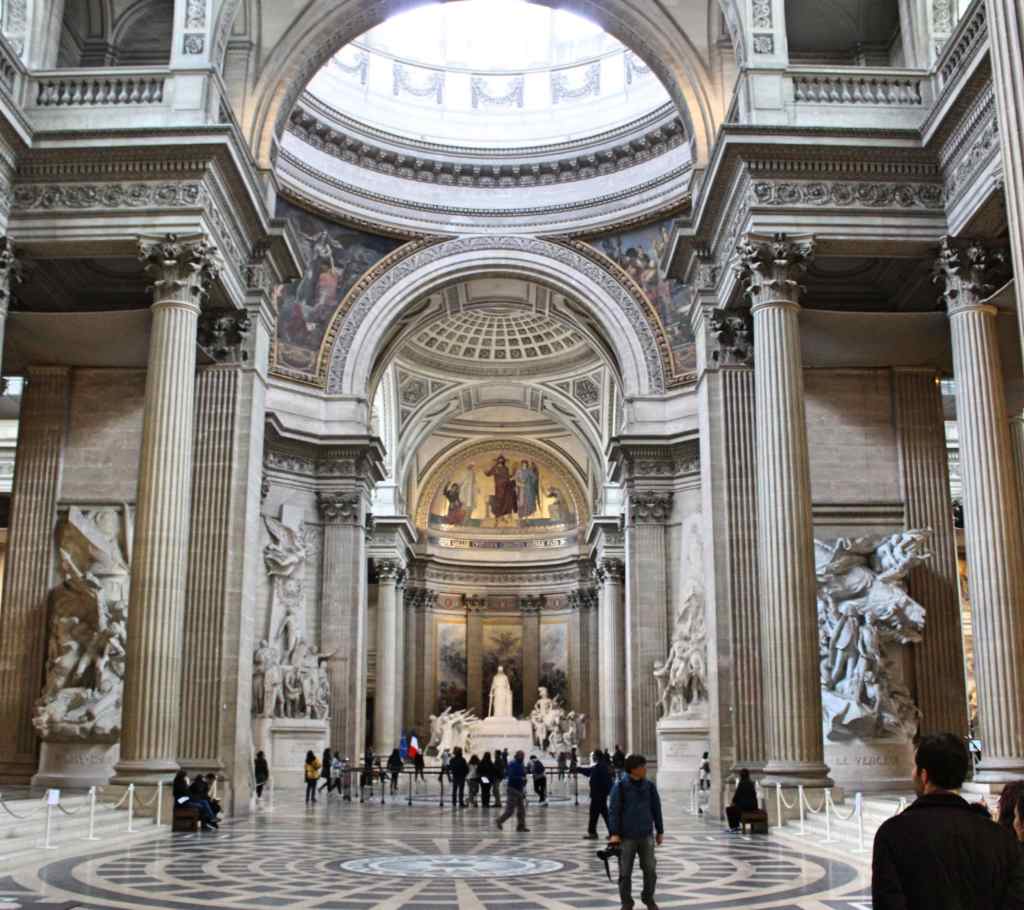
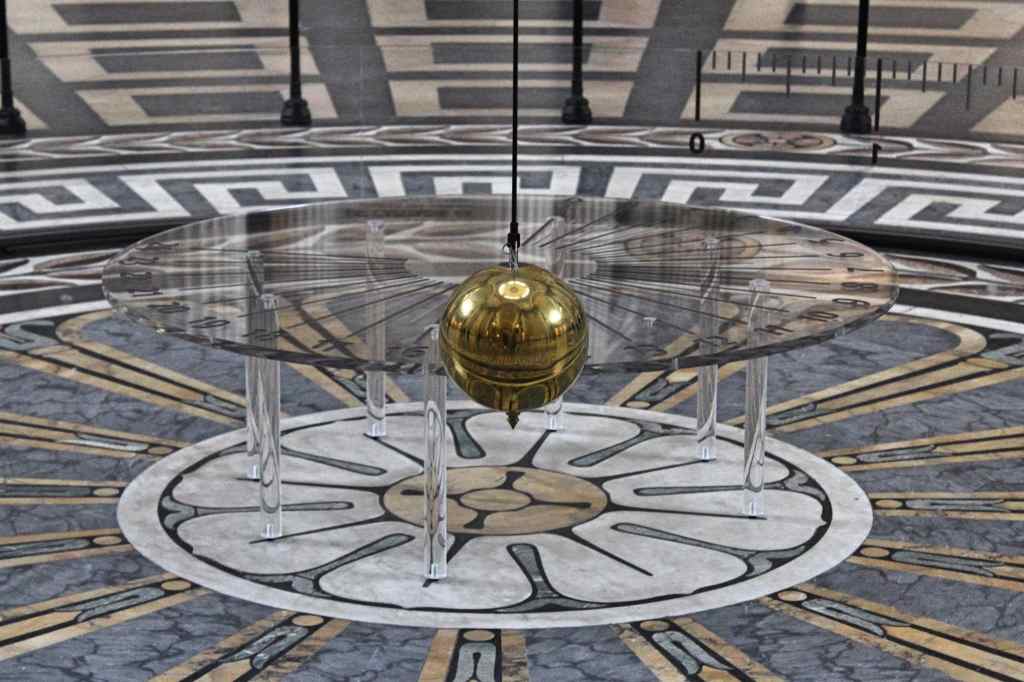

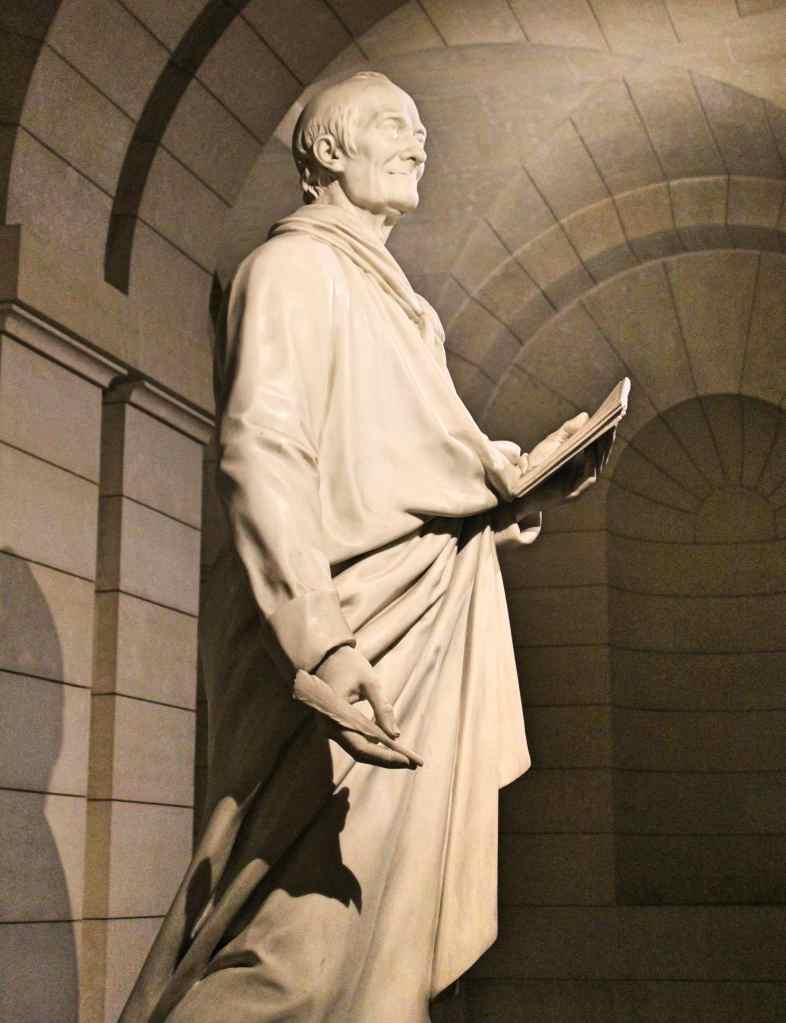
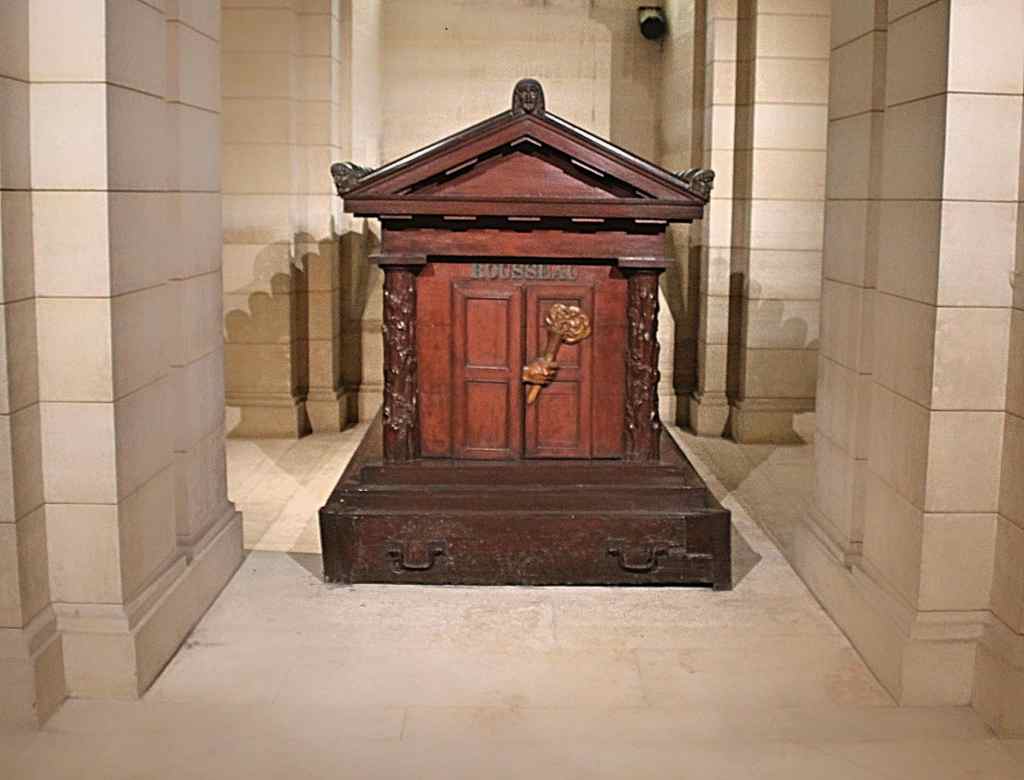

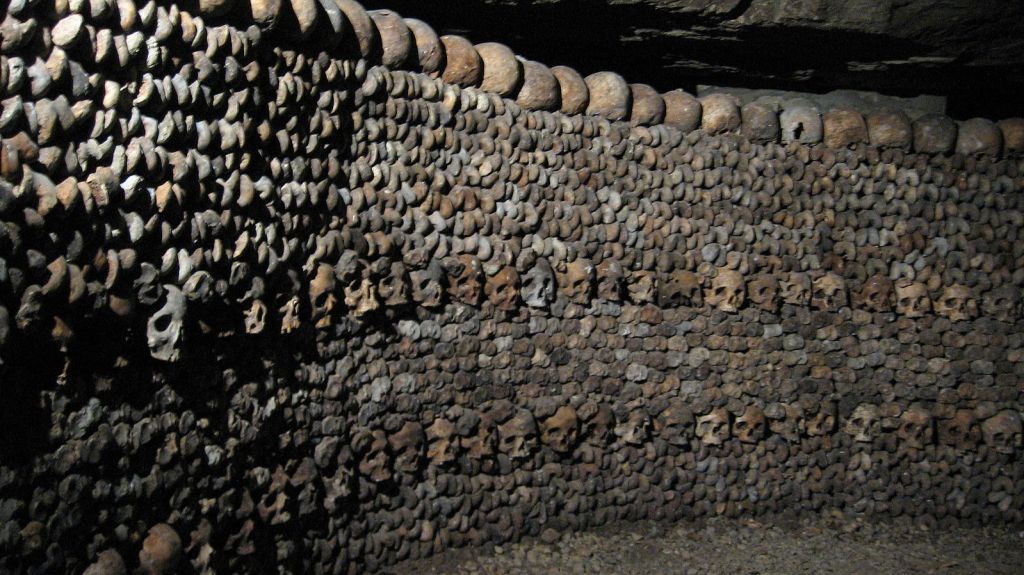

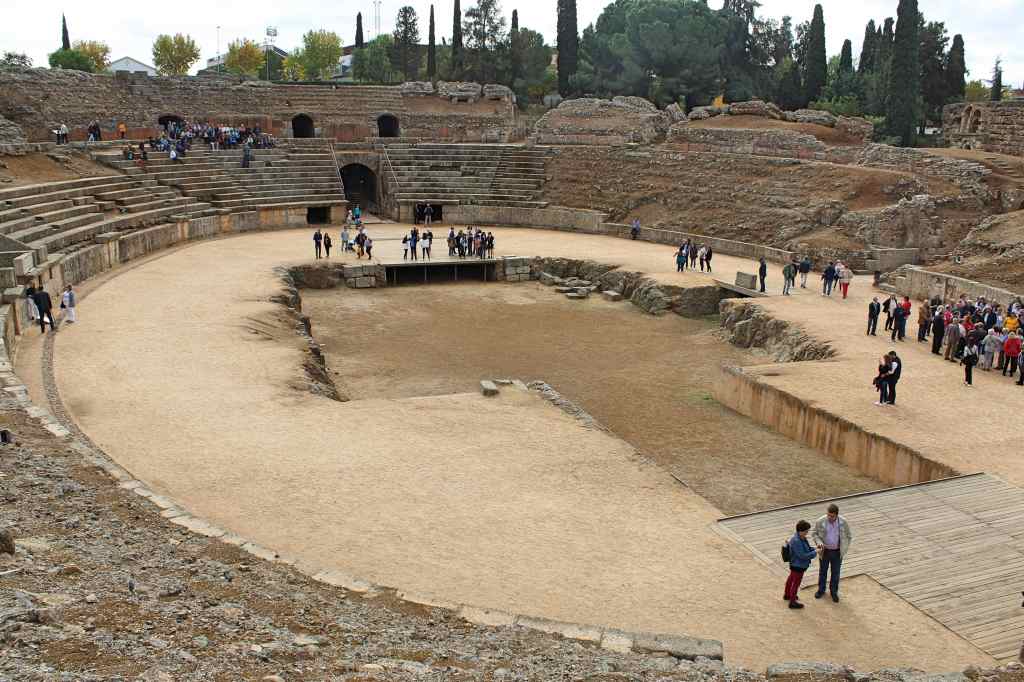




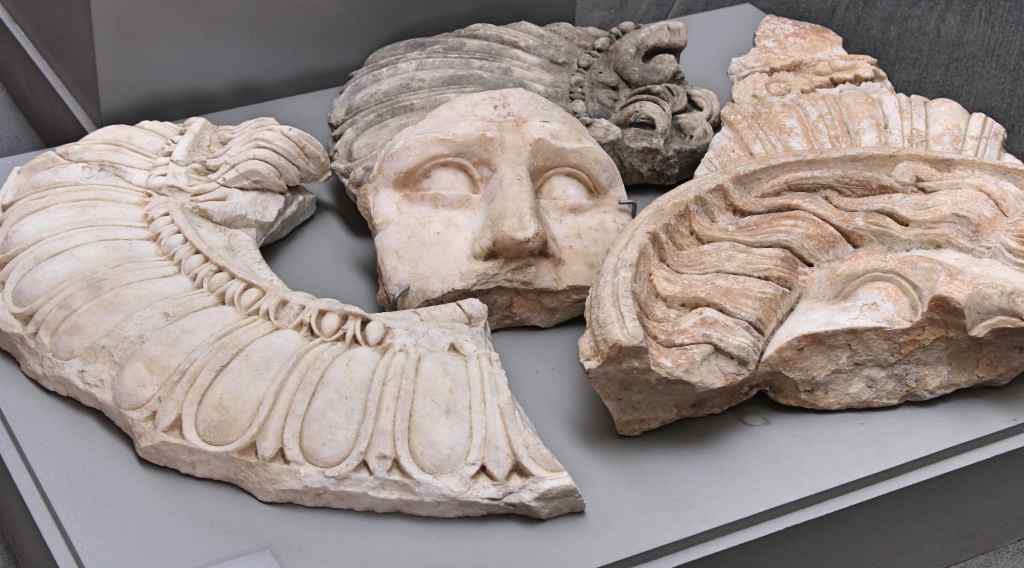


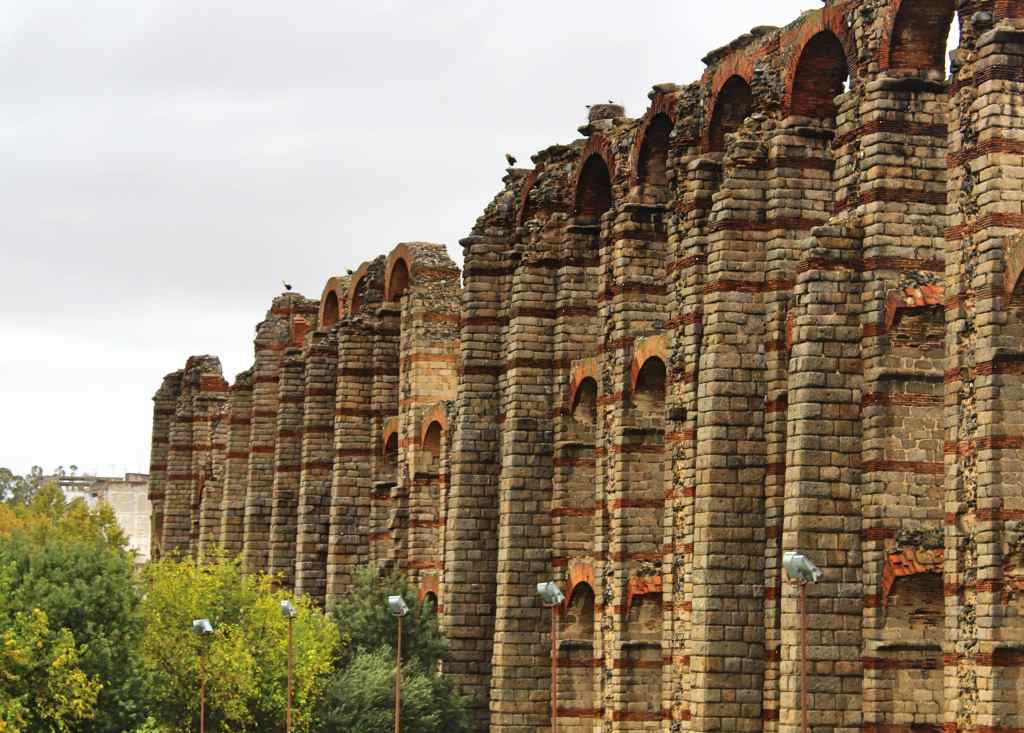




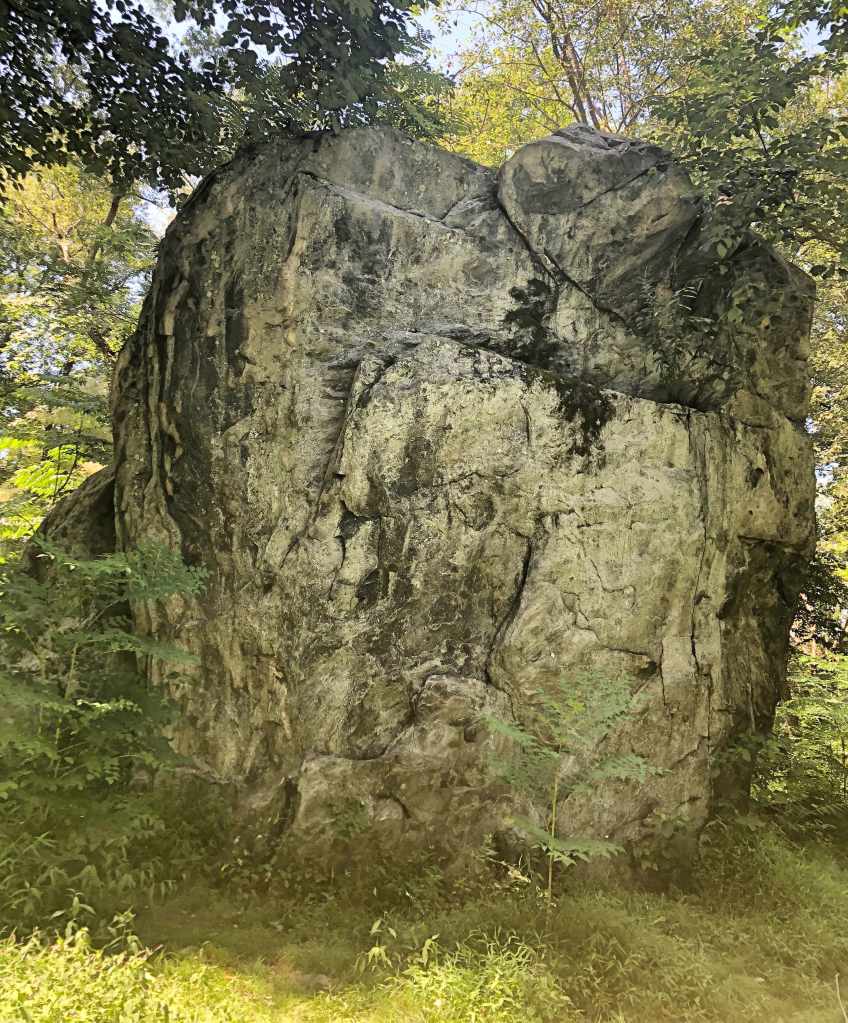









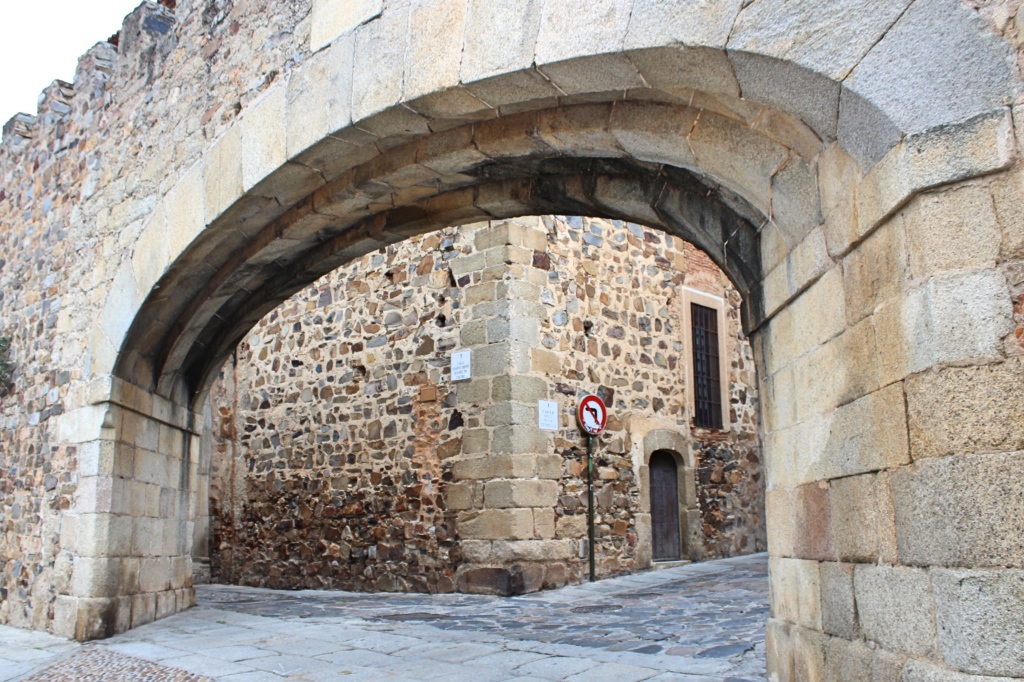
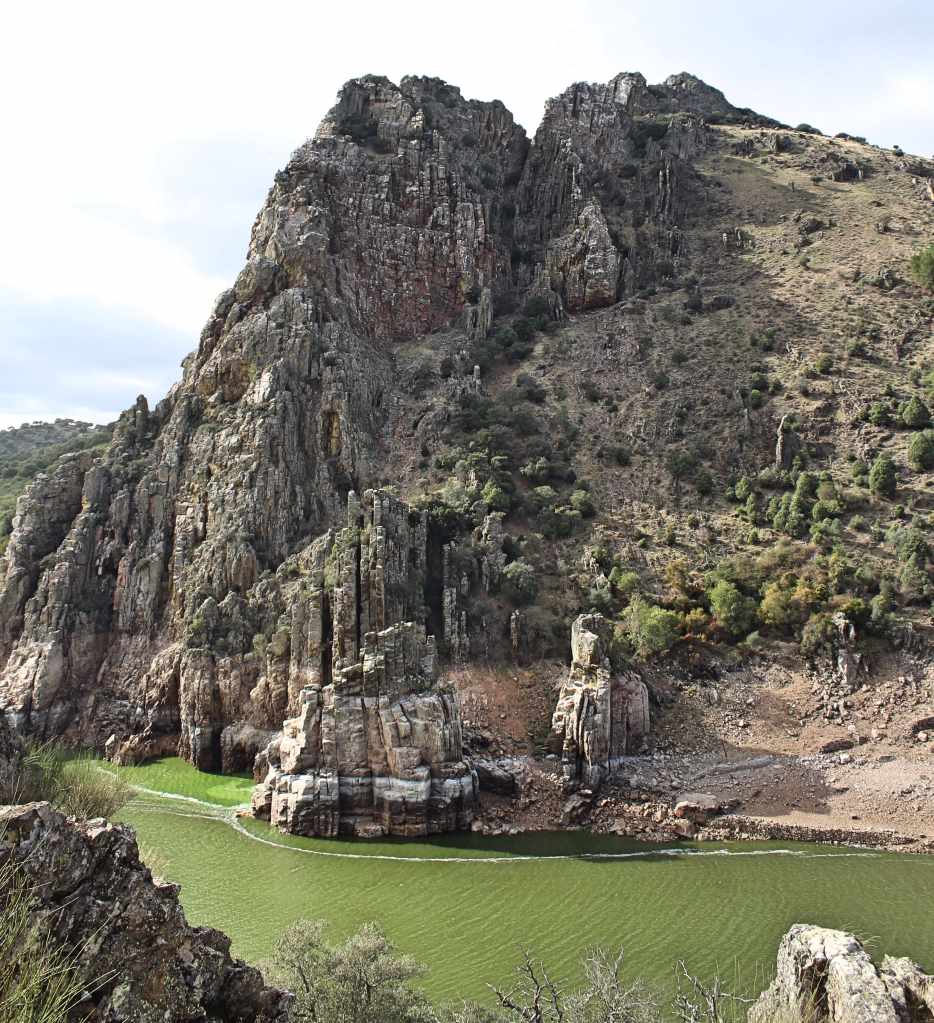




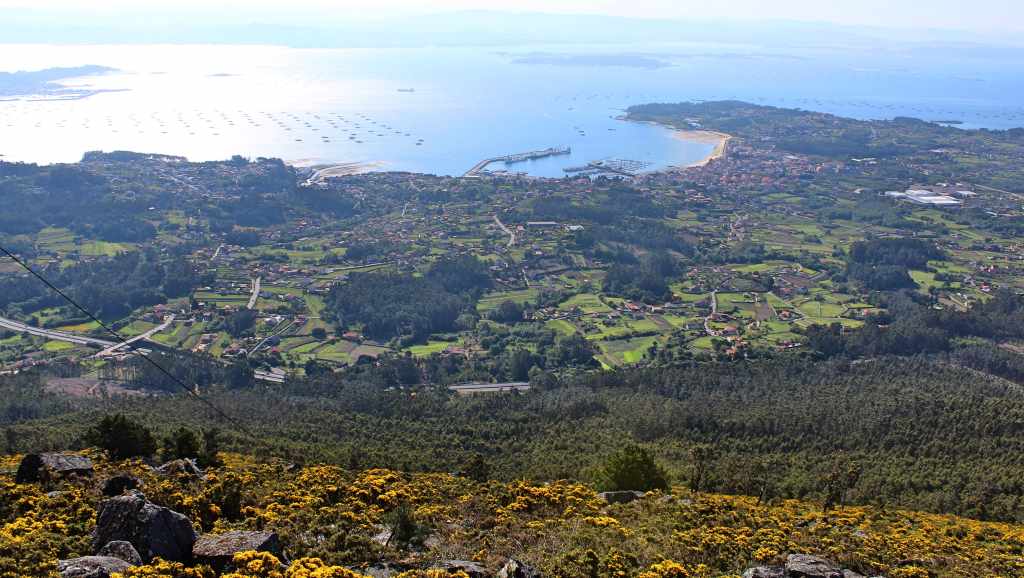

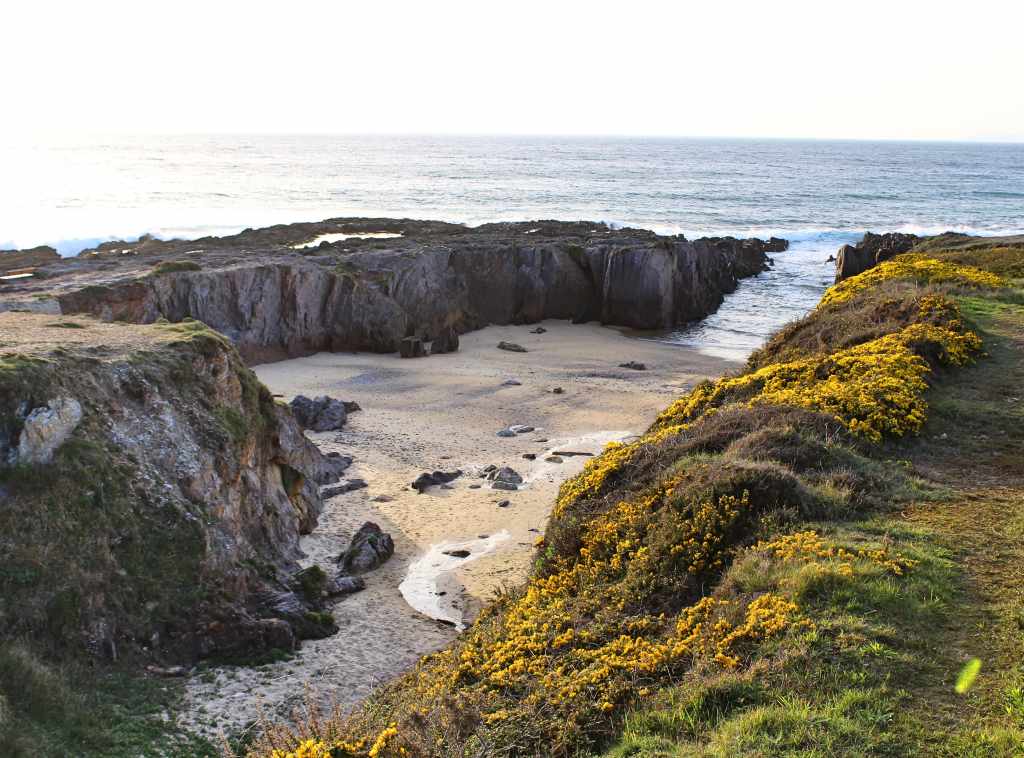
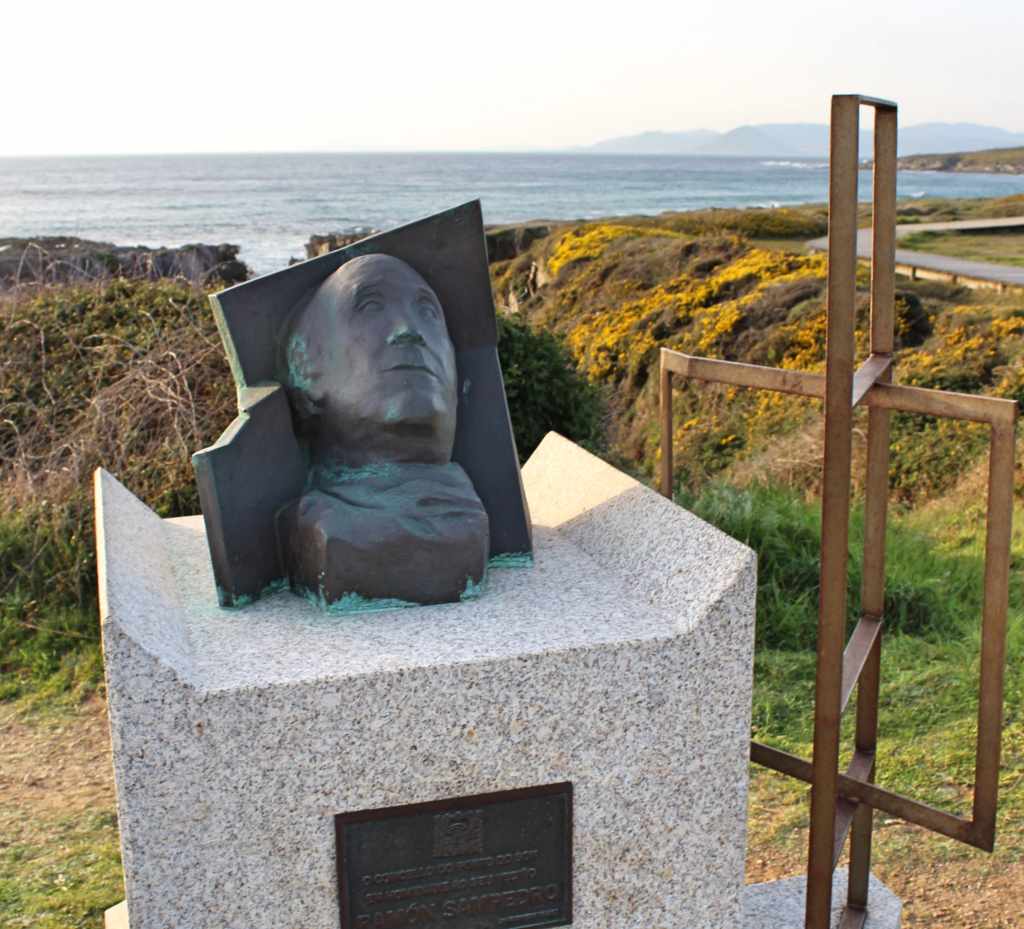
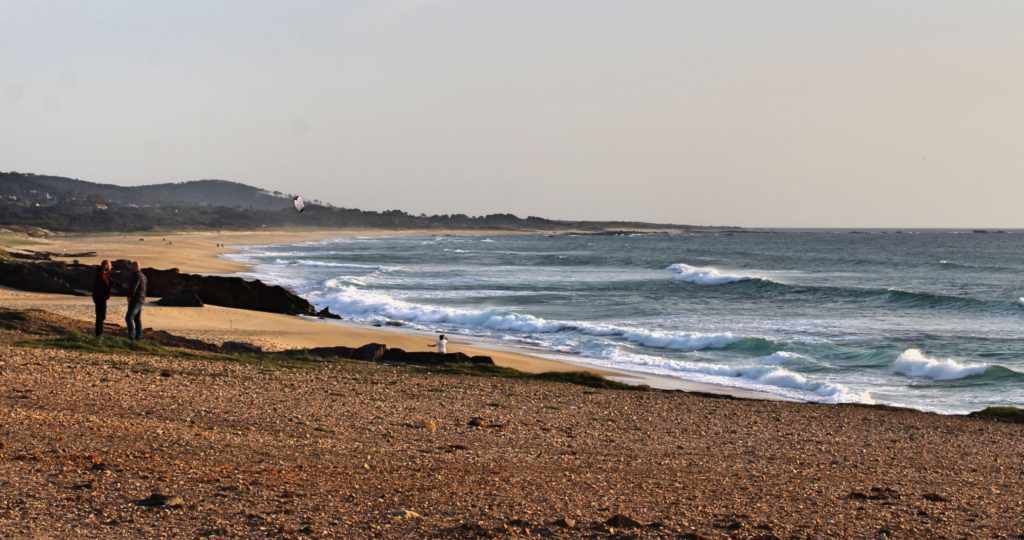






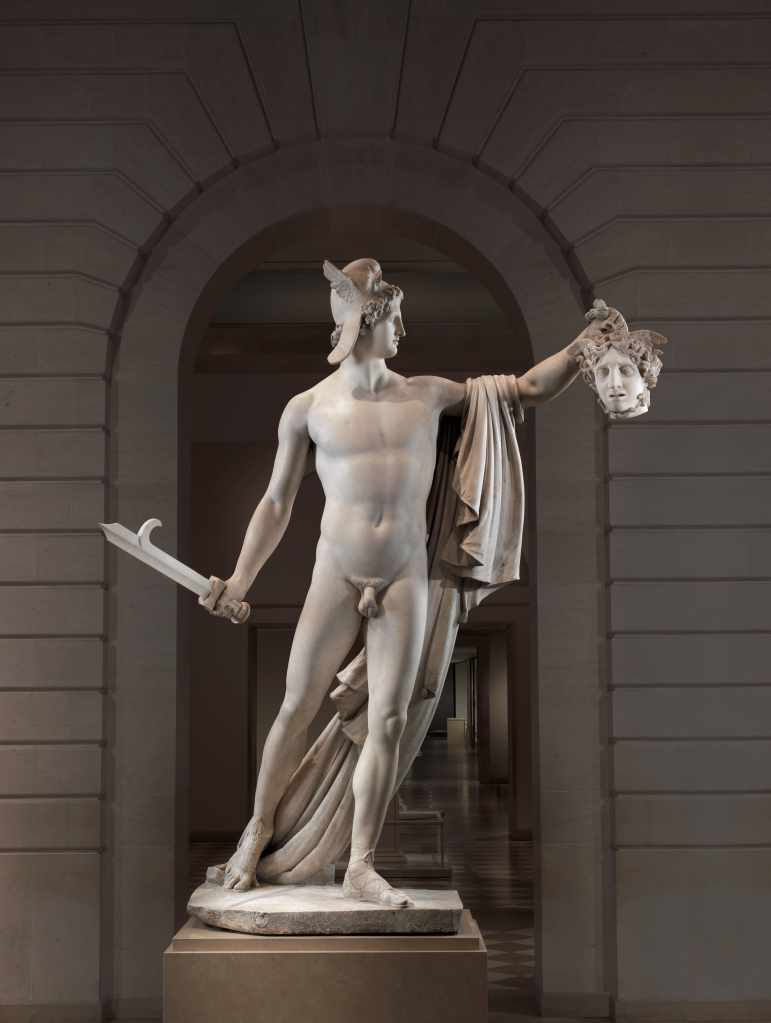
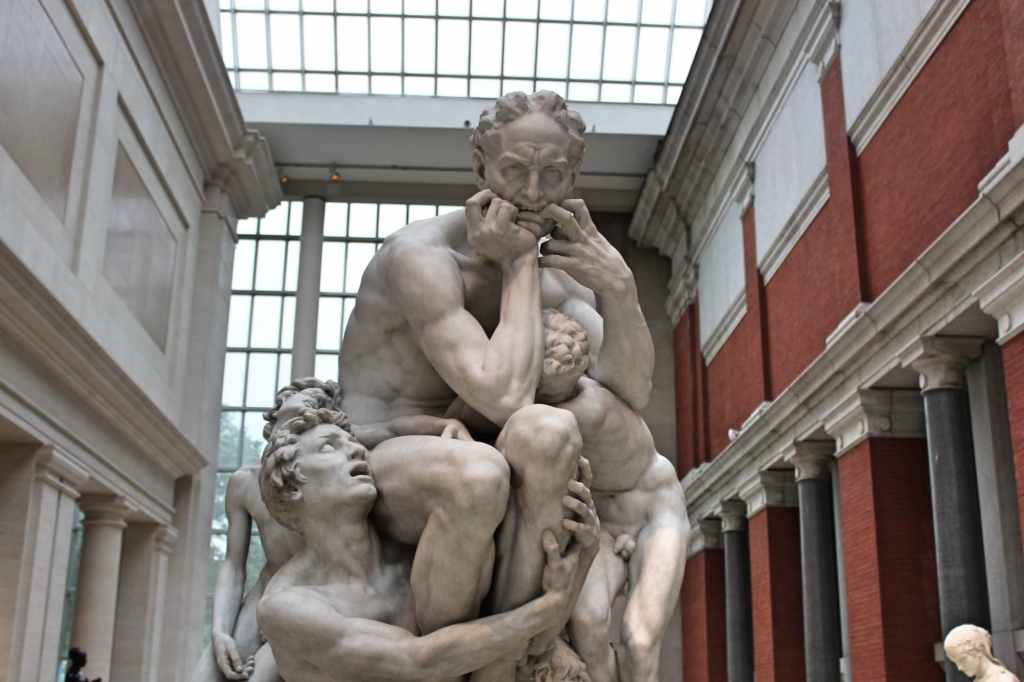
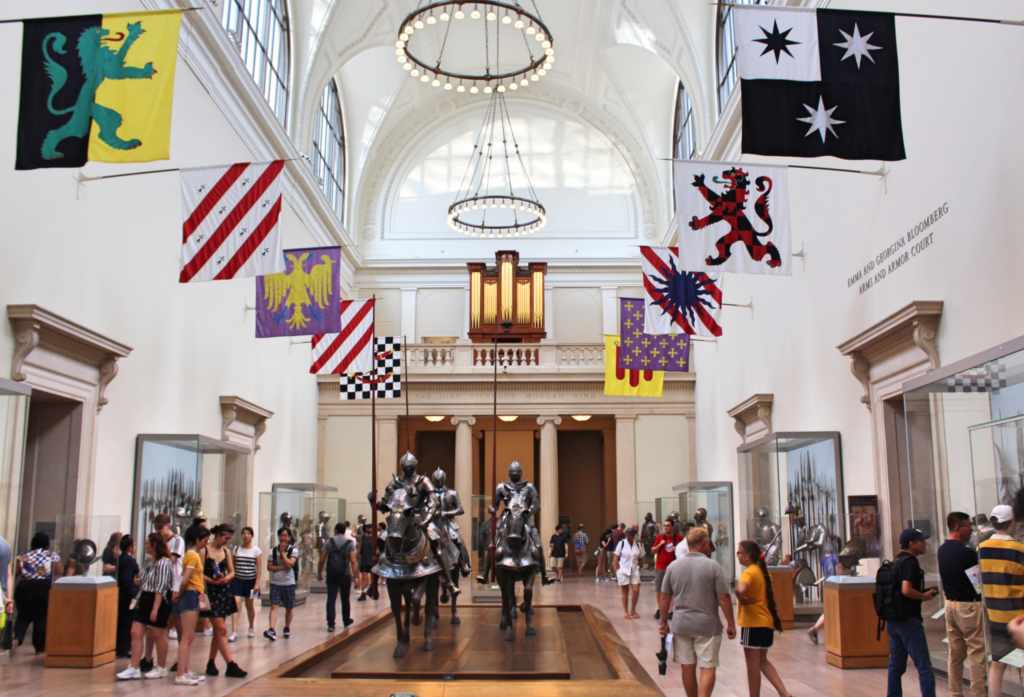
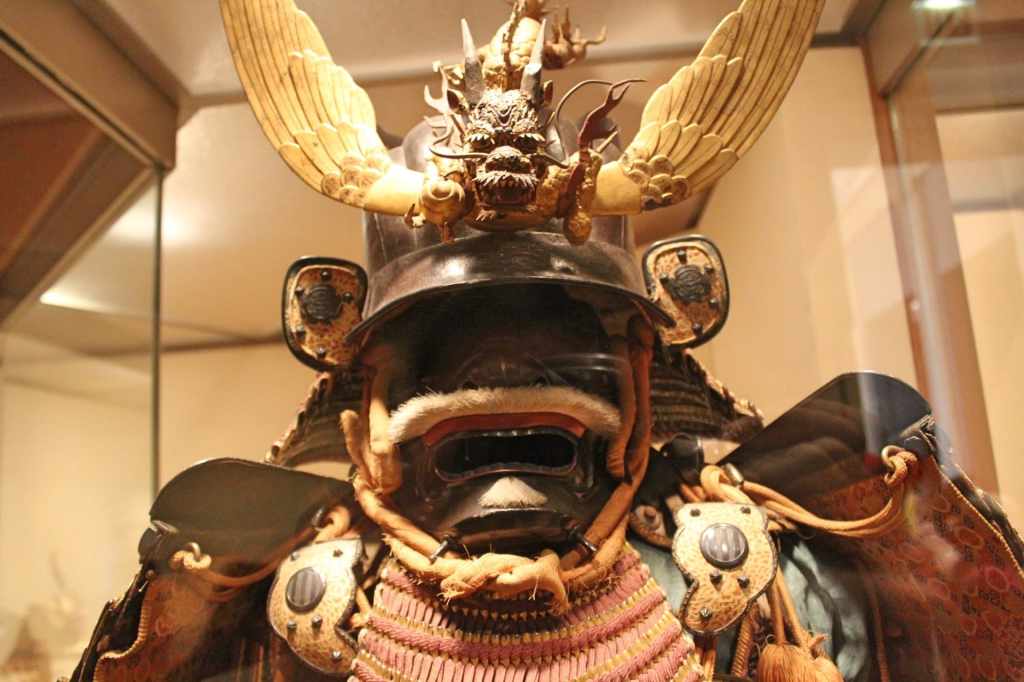


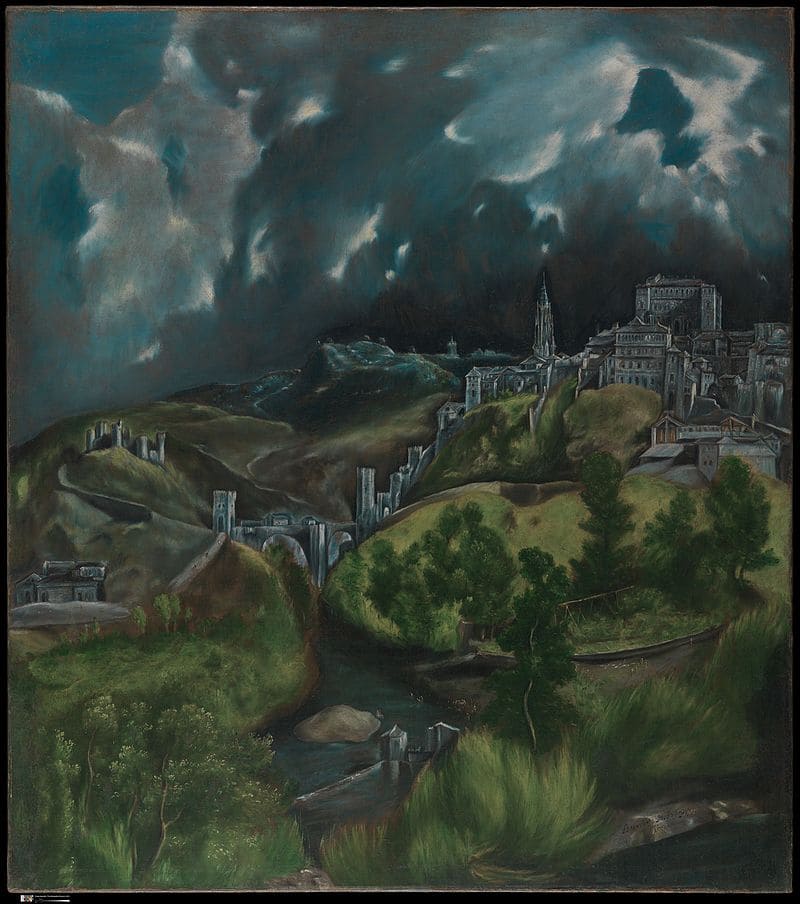




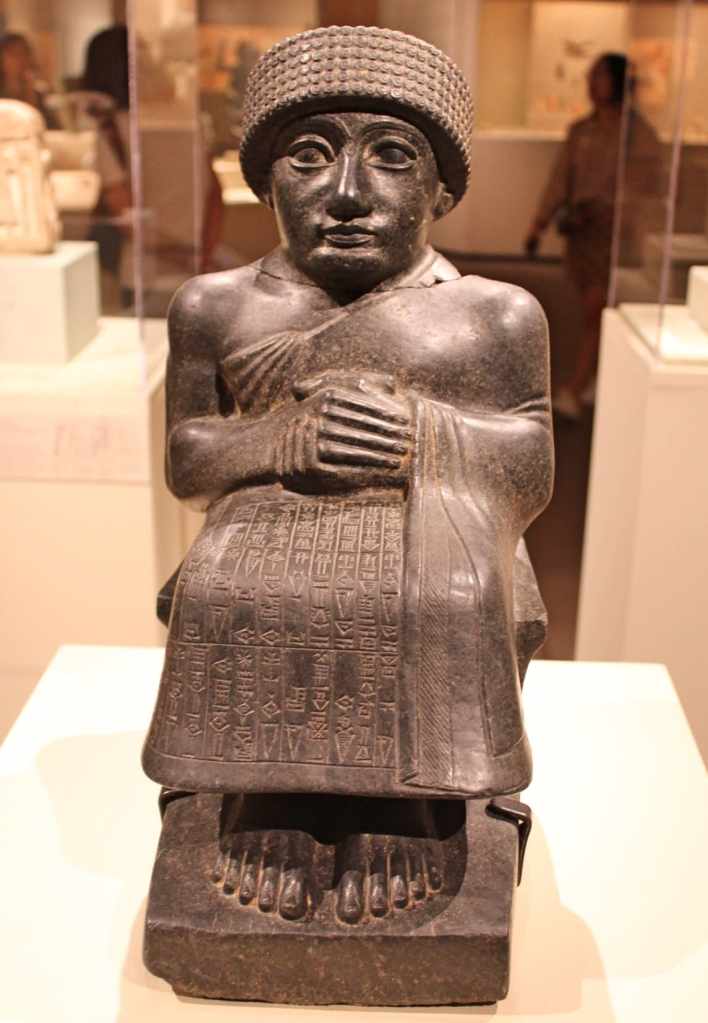
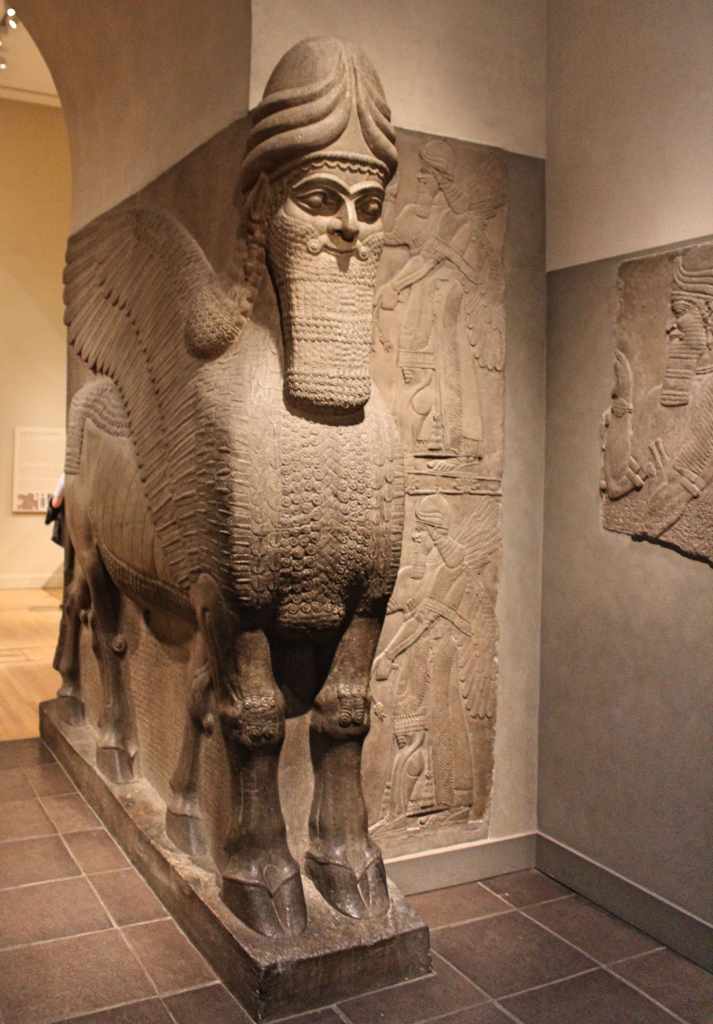
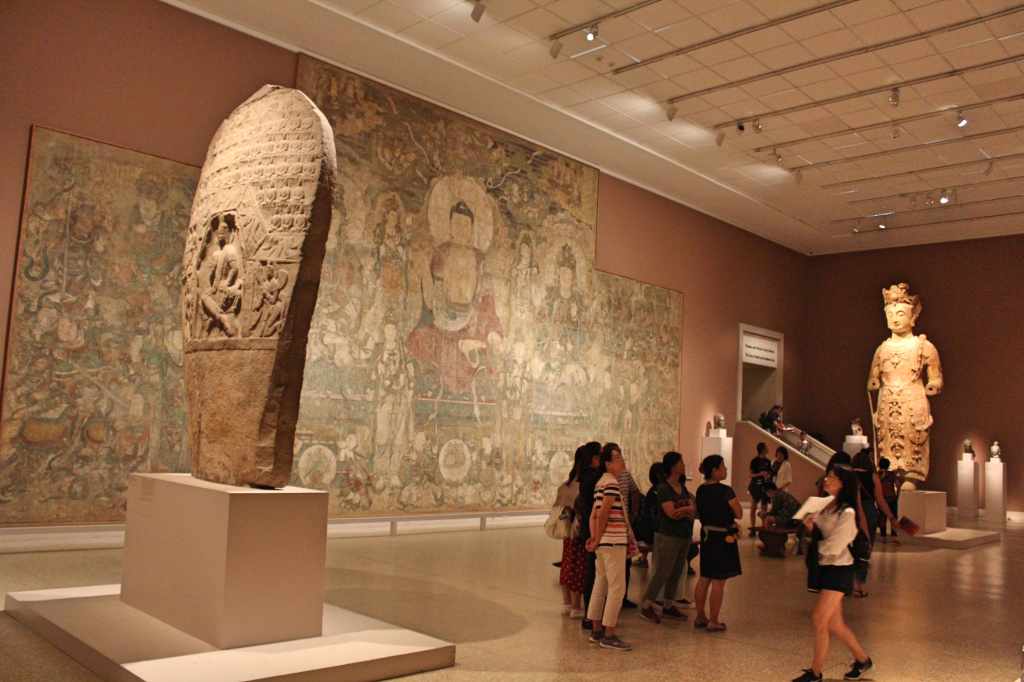




 Lotz in Translation