Review: Excellent Sheep

Review: Excellent Sheep

Excellent Sheep: The Miseducation of the American Elite and the Way to a Meaningful LifeExcellent Sheep: The Miseducation of the American Elite and the Way to a Meaningful Life by William Deresiewicz
My rating: 4 of 5 stars

I still remember my first exposure to Deresiewicz. I had recently dropped out of graduate school—full of disgust and indignation—and as a form of self-therapy I was busy reading everything I could find about the flaws of higher education. Naturally, I jumped on Deresiewicz’s essay in The American Scholar: The Disadvantages of an Elite Education. It seemed to put into words so many things I’d been thinking.

A few days later, I was in the car with my mom and my brother (we were dropping my brother off at his elite university), bitterly complaining, and at great length, about the evils of the system. My mom turned on the radio.

This book is an odd jumble. While barely more than 200 pages, it attempts to be a manifesto, an exposé, a path to tranquility, a work of cultural criticism, and a philosophy of education. Needless to say the book fails to be every one of these things, but this doesn’t mean it fails to be any of them.

Deresiewicz’s first section, wherein he talks about the flaws in the system, is the most successful, since it is what he knows about. In a nutshell, the problem with American higher education is that there is an enormous amount of pressure and prestige for precious little substance.

Young people have more hoops than ever to jump through: if they want to go to Harvard, they must be super students. They can’t afford to stop for one moment. They need to get excellent grades, take all the toughest subjects, be leaders in extra-curriculars—at least six!—maybe found a few clubs themselves, outcompete their peers in the SAT, and in general tick off all the rights boxes.

The problem, of course, is that the things that look good to the college admission office often have dubious educational value, and are most often the product of privilege as much as talent. The vignette that most stuck with me was about the “college enrichment programs” that took young people on carefully choreographed trips, so they would have some good stories for their college essays. (This is not to mention the writing assistance, sometimes bordering on ghost-writing, that the wealthy can afford.)

The ironic part is that all of this stress and effort does not lead to social mobility, since the wealthy already start with such a big advantage. Each cohort of students at elite universities is disproportionally upper or upper-middle class. This is no coincidence, since universities need a sizable number of “full-freighters”—students whose parents can afford to pay the enormous tuition costs—in order to stay afloat.

Even more ironic is that it doesn’t even lead to an excellent education. As the university becomes increasingly reliant on wealthy students, the students increasingly get treated like customers. The university cannot afford to fail them; it cannot even afford to make them uncomfortable, which is arguably a prerequisite to genuine learning. Grade-inflation is rampant. Universities focus on hiring a few research professors, because these professors bring more prestige. Though experts, these professors are often not especially good teachers; and besides, there aren’t very many of them. The bulk of the teaching gets done by contingent faculty, chronically underpaid, always underappreciated, who come and go, without the time or resources to teach to their potential.

Instead of education, these universities focus on ranking. The problem is that the ranking is not based on quality of instruction, but on things like admission rates: the more selective, the better. It benefits elite colleges to advertise to students who have a very low chance of getting in, since if they apply and get rejected, the school looks better.

The result is a system obsessed with prestige at the expense of learning. From the moment students arrive to their final graduation speech, students are praised for being the best, the brightest, the most wonderful. And yet they are enmeshed in an educational system that encourages them to put themselves into boxes for admissions, that rarely challenges their fundamental beliefs, and that leaves them with a sense of entitlement, a sense that they deserve all of the nice things their elite education will give them.

So what should an education do? This brings us to part two and three of Deresiewicz’s book, which I thought were much weaker. He has a lot to say about the value of a liberal education, about self-discovery, taking risks, questioning beliefs, developing a philosophy, finding your real passion, and lots of other nice clichés. To be fair, these are clichés for a reason: in some form or another, they are the goal of a true education. Nevertheless, I didn’t find Deresiewicz’s prescriptions particularly insightful or inspiring.

Finally, Deresiewicz aims his sights at society as a whole. What has this educational model done to our country, and how can we fix it? All the recent presidents, as products of “the system,” come in for a good bashing—especially Barack Obama, who Deresiewicz finds to be arrogant, condescending, technocratic, while totally blind to genuine ideological differences. The book ends with a widespread, sweeping, universal condemnation of the entire upper and upper-middle class. Their time has passed, he thinks, and they must be removed from the stage of history, just as the old, aristocratic WASP class had before them.

What are we to make of all this? It’s clear that the book bites off far more than it can chew. Ambition is certainly not a problem; but when ambition so far outpaces execution, it certainly is.

One weakness is that this book is so personal. By his own admission, Deresiewicz—the offspring of upper-middle class, Jewish parents, a former professor at Yale—is bitter about his experience in elite education, and it shows. For many years, it seems, he was dissatisfied and unfulfilled, consumed by feelings of envy and empty accomplishment, which accounts for both the self-help and the invective.

But emotion is a perilous guide. While at his best he is sardonic and witty, at his worst he is alternately whiney and preachy. His torrents of feeling often blow his vessel into strange waters—like the psychology of achievement addiction, or the dysfunction of government—where he thrashes about ineffectually.

This thrashing led to some tiresome writing. He has a tendency to write in epigram after epigram—none very clever—pounding and hammering his opinions into your head, while supplying few particulars and little evidence. He makes sweeping generalizations, all written in antitheses: “Everybody is doing this, and nobody is doing that,” “All of us care about this, and none of us pays attention to that,” and so on. He rarely qualifies his points, he does not address counterarguments, he does not betray even the least doubt of his righteousness and the system’s evilness. (The book’s condescending title is indicative of its fervor.) If I were his writing teacher, I would tell him it needs more work.

This book could really have been a long essay, focusing exclusively on the flaws of elite universities. The rest feels like self-indulgence and padding, an excuse to air his views and sell a book.

But for all his shortcomings, I think that Deresiewicz is making a vital point. All of his complaints boil down to one insight: meritocracy is insidious.

Now, how can this be? Isn’t meritocracy good? Isn’t is the only fair and just system? Well, there are several obvious problems. For one, what is ‘merit’? Any meritocracy must begin with some notion of worth; and this notion will always be shaped by cultural and economic pressures. You simply cannot measure the inherent ‘worth’ of a person, so you end up measuring people against some arbitrary standard—like analytical intelligence or academic pedigree—imposed by the outside.

But even if we could agree on a universal measure of ‘merit’ (which is impossible), there would be no guarantee that we could measure it perfectly. Some people will be lucky, others unlucky. And even if we could agree on a standard and measure it perfectly—two impossible conditions—we are still left with the question of reward. If somebody is in the top fifth percentile, how much wealth do they ‘deserve’? This will also be arbitrary, and whatever decision will likely not satisfy everyone.

So you see, first a meritocracy imposes an arbitrary standard, and then denies the existence of luck, and then distributes rewards along this standard arbitrarily. A meritocratic system is not necessarily fair—since people’s worth cannot be measured—nor is it necessarily effective—since chance will always play a role—nor is it necessarily just—since meritocratic systems can still be highly unequal. The most insidious part is that it makes people believe they deserve their rewards: the rich deserve their wealth, the poor their poverty.

This is essentially what Deresiewicz is complaining about. The American elite educational system tends to reward certain qualities that are not necessarily desirable (and which are usually associated with wealthy families), and then treat this unequal distribution as justified. But when you think about it, is it really fair that educational resources and prestige be concentrated in very few, very expensive institutions, instead of distributed more evenly throughout the system?

I agree with this fundamental critique. However, I am far from sure that I know how to fix it. For his part, Deresiewicz puts his faith in the old tradition of the liberal arts education.

While I am naturally very sympathetic to this idea, I always ask myself: Are the liberal arts compatible with big institutions? Can a tradition predicated on free thought, on questioning authority, and on open enquiry—a tradition that is not oriented towards job skills or economic gain—be made compatible with an organization of power and wealth? Can we really expect students to pay enormous tuitions to induct them into the life of the mind? Or can we expect tax-payers to support universities that do the same?

To me is seems that, in the United States, by asking our universities to be both liberal arts colleges and pre-vocational training, we are asking the impossible. The first tradition teaches us how to live, while the second teaches us how to work. The problem, it seems to me, is that in the United States we have come to identify so fully with our jobs that we can’t see the questions as separate. Deresiewicz definitely falls into this error, which he exemplifies by his endorsement of the “follow your passion” advice for a better life.

As I finish, I am left with more questions than when I started. And, as cliché as that sounds, that is still the sign of a good book.

View all my reviews

Review: Tools for Teaching

Review: Tools for Teaching

Tools for Teaching: Discipline, Instruction, Motivation.  Primary Prevention of Classroom Discipline ProblemsTools for Teaching: Discipline, Instruction, Motivation. Primary Prevention of Classroom Discipline Problems by Fredric H. Jones
My rating: 5 of 5 stars

Have you ever looked at the work kids turn in these days and wondered, “What will happen to this country in the next 50 years?” When you watch Larry sharpen his pencil, you know that the future is in good hands. It’s inspirational.

Last year I switched from teaching adults to teaching teenagers. Though I’m still teaching English, the job could hardly be more different. With adults, I could focus entirely on content; my students were mature, intelligent, and motivated, so I could think exclusively about what to teach them, and how. With kids, I am dealing with a classroom full of energetic, distracted, unruly, loud, and sometimes obnoxious humans whose main motivation is not to fail the upcoming exam. They’re not there because they want to be, and they would always inevitably rather be doing something else.

This probably makes me sound jaded and disenchanted (and I hasten to add that I actually have a lot more fun teaching kids, and my students are great, I swear!); but the fact is inescapable: when you’re teaching in a school setting, you need to worry about classroom management. Either you will control the kids, or they will control you.

It is the hope of every beginning teacher, myself included, to manage through instruction. We all begin with the same dream: to create lessons so dynamic, so enriching, so brilliant, and to teach with such charisma and compassion, that misbehavior isn’t a problem. But this doesn’t work, for two obvious reasons. For one, we don’t have unlimited control of the curriculum; to the contrary, our room to maneuver is often quite limited. And even with complete autonomy, having interesting lessons would be no guarantee of participation or attention, since it only takes one bored student to disrupt, and only one disruption to derail a lesson.

Even if you’re Socrates, disruptions will happen. When they do, in the absence of any plan, you will end up falling back on your instincts. The problem is that your instincts are probably bad. I know this well, both from experience and observation. Our impulsive reaction is usually to nag, to argue, to preach, to bargain, to threaten, to cajole—in other words, to flap our mouths in futility until we finally get angry, snap, yell, and then repeat the process.

But no amount of nagging creates a motivated classroom; and no amount of speeches—about the value of education, the importance of respect, or the relevance of the lesson to one’s future—will produce interested and engaged students. In short, our instinctual response is inefficient, ineffective, and stressful for both teacher and students. (Again, I know this both from experience and observation.)

Some strategies are therefore needed to keep the kids settled and on task. And since teachers are chronically overworked as it is—the endless grading and planning, not to mention the physical strain of standing in front of classes all day—these strategies must be neither too complex nor too expensive. To the contrary, they must be relatively straightforward to implement, and they must save time in the long run.

This is where Fred Jones comes in. Fred Jones is the Isaac Newton of classroom management. This book is nothing less than a fully worked out strategy for controlling a room full of young people. This system, according to him, is the result of many hundreds of hours of observing effective and ineffective teachers, trying to analyze what the “natural” teachers did right and the “unnatural” teachers wrong, and to put it all together into a system. And it really is systematic: every part fits into every part, interlocking like the gears of a bicycle.

This makes the book somewhat difficult to summarize, since it is not a bag of tricks to add to your repertoire. Indeed, its main limitation—especially for me, since I’m just assistant who goes from class to class—is that his strategies cannot be implemented piecemeal. They work together, or they don’t work. As a pedagogical nomad who merely helps out, I am not really in a position to put this book into practice, so I cannot personally vouch for it.

Despite this, Jones manages to be utterly convincing. The book is so full of anecdotes, insights, and explanations that were immediately familiar that it seemed as if he was spying on my own classrooms. Unlike so many books on education, which offer ringing phrases and high-minded idealism, this book deals with the nitty-gritty reality of being a teacher: the challenges, frustrations, and the stress.

The main challenge of classroom management—the problem that dwarfs all others—is to eliminate talking to neighbors. Kids like to talk, and they will talk: when they’re supposed to be listening, when they should be working, whenever they think they can get away with it. This is only natural. And with the conventional classroom approach—standing in the front and lecturing, snarling whenever the kids in the back are too loud—talking to neighbors is inevitable, since the teacher is physically distant, and the kids have nothing else to do.

Jones begins by suggesting board work: an activity that each student must start at the beginning of class, something handed out or written on the board, to eliminate the usual chaos that attends the beginning of the lesson. He then goes into detail about how the classroom should be arranged: with large avenues to the teacher can quickly move around. Movement is key, because the most important factor that determines goofing off is physical proximity to the teacher. (This seems certainly less true in Spain, where people are more comfortable with limited personal space, but I imagine it’s quite true in the United States.)

This leads to the lesson. Jones advocates a pedagogical approach that only requires the teacher to talk for five minutes or less at a time. Break down the lesson into chunks, using visual aids for easy understanding, and then immediately follow every concept with an activity. When the kids are working, the teacher is to move around the classroom, helping, checking, and managing behavior, while being sure not to spend too much time with the students he calls “helpless handraisers”—the students who inevitably raise their hands and say they don’t understand. (To be clear, he isn’t saying to ignore these students, but to resist the impulse to re-teach the whole lesson with your back turned to the rest of the class.)

This leads to one of the main limitation of Jones’s method: it works better for math and science than for the humanities. I don’t see how literature or history can be broken down into these five-minute chunks without destroying the content altogether. Jones suggests frequent writing exercises, which I certainly approve of, but it is also hard for me to imagine teaching a lesson about the Spanish Reconquest, for example, without a lengthy lecture. Maybe this is just due to lack of imagination on my part.

When it comes to disruptions, Jones’s advice is refreshingly physical. The first challenge is remaining calm. When you’re standing in front of a crowd, and some kids are chuckling in the back, or worse, talking back to you, your adrenaline immediately begins to flow. Your heart races, and you feel a tense anxiety grip your chest, intermediate between panic and rage. Before doing anything, you must calm down. Jones suggests learning how to relax yourself by breathing deeply. You need to be in control of your emotions to respond effectively.

Then, Jones follows this with a long section on body language. The way we hold our bodies signals a lot about our intentions and our resolve. Confidence and timidity are things we all intuitively perceive just from looking at the way someone holds herself. How do you turn around and face the offending students with conviction? How do you signal that you are taking the disruption seriously? And how do you avoid seeming noncommittal or unserious?

One of the most brilliant sections in this book, I thought, was on dealing with backtalk. Backtalk can be anything, but as Jones points out, it usually takes a very limited number of forms. Denial is probably the most common; in Spanish, this translates to “Pero, ¡no he hecho nada!” Then there is blaming; the student points her finger at her neighbor, and says “But, she asked me a question!” And then there is misdirection, when the offending student says, “But, I don’t understand!” as if they were in a busy intellectual debate. I see all these on a daily basis. The classic mistake to make in these situations is to engage the student—to argue, to nag, or to scold, or to take their claim that they “don’t understand” at face value. Be calm, stay quiet, and if they keep talking move towards them. Talking back yourself only puts you on the same level.

The penultimate section of the book deals with what Jones calls Preferred Activity Time, or PAT. This is an academic activity that the students want to do, and will work for. It is not a reward to hold over their heads, or something to punish the students with by taking it away, but something the teacher gives to the class, with the opportunity for them to earn more through good behavior. This acts as an additional incentive system to stay on task and well behaved.

The book ends with a note on what Jones calls “the backup system,” which consists of the official punishments, like suspension and detention, that the school system inflicts on misbehaving kids. As Jones repeatedly says, this backup system has been in place for generations, and yet it has always been ineffective. The same small number of repeat offenders account for the vast majority of these reprimands; obviously it is not an successful deterrent. Sometimes the backup system is unavoidable, however, and he has some wise words on how to use it when needed.

Now, if you’ve been following along so far, you’ll have noticed that this book is behaviorist. Its ideas are based on control, on incentive systems, on input and output. As a model of human behavior, I think behaviorism is far too simplistic to be accurate, and so I’m somewhat uncomfortable thinking of classroom management in this way. Furthermore, there are moments, I admit, when the job of teaching in a public school feels more like working in a prison than the glorious pursuit of knowledge. Your job is to keep the kids in a room, keep them quiet and seated, and to keep them busy—at least, that’s how it feels at times. And Jones’s whole system can perhaps legitimately be accused of perpetuating this incarceration model of education.

But teachers have the choice of working within an imperfect system or not working. The question of the ideal educational model is entirely different from the question this book addresses: how to effectively teach in the current educational paradigm. Jones’s approach is clear-eyed, thorough, intelligent, insightful, and eminently practical, and for that reason I think he has done a great thing. Teaching, after all, is too difficult a job, and too important a job, to do with only idealism and instinct as tools.

View all my reviews

Review: Bleak House

Review: Bleak House

Bleak HouseBleak House by Charles Dickens
My rating: 4 of 5 stars

Call it by any name Your Highness will, attribute it to whom you will, or say it might have been prevented how you will, it is the same death eternally—inborn, inbred, engendered in the corrupted humours of the vicious body itself, and that only—Spontaneous Combustion, and none other of all the deaths that can be died.

For better or for worse, I read this novel through the lens of two critics: Harold Bloom and George Orwell.

In The Western Canon, Bloom calls Bleak House Dickens’s finest achievements; and he considers the novel to be among the central novels in the titular canon. This opinion is based, in part, on Esther Summerson’s narrative (which comprises half of the book; the other half is told from an omniscient narrator).

Bloom agrees with the conventional opinion that Dickens’s modus operandi is to create static and cartoonish characters, far removed from the constantly changing and evolving characters of, say, Tolstoy or Shakespeare. But in Esther, Bloom thought Dickens had transcended his art: he had created a genuinely Shakespearean self, a narrator who could overhear her own narration, and who engaged in a constant dialogue with herself—a mercurial and growing consciousness.

This opinion is far from popular. I’m not sure I agree with it; certainly she doesn’t strike me as “Shakespearean,” and she would not be at home in any of Tolstoy’s works. Unlike a Shakespearean or a Tolstoyan character, it is difficult to see myself in her. This isn’t just me. Esther has irked critics from the beginning. She is too good for her own good. She is passive, forgiving, unconditionally loving, self-negating, dutiful, hardworking, dreadfully kind, painfully virtuous, devoid of malice, thankful to a fault—someone who lives exclusively for others. It’s hard to like her, because it’s so hard to identify with somebody like that, and such a selfless ideal of feminine behavior strikes us nowadays as both sexist and untenable.

And yet, for me, she is ultimately sympathetic, at least from a distance. I think this is due to her resilience. Her childhood as an orphan is harsh and loveless; she is so thirsty for affection that every slight kindness reduces her to tears. As she grows, she is formed by an ethos of feminine subservience and duty, modesty and virtue, an ethos which she embodies as perfectly as possible.

In Esther, however, this is not a sign of passivity and weakness, but of independence and strength. She does not let the world, so often cruel and unfair, make her spiteful; she does not become bitter and resentful from the blows of misfortune. She is determined to be happy; and she realizes that happiness cannot be achieved through selfishness, but requires generosity, forgiveness, and identifying oneself with others. She realizes, in short, that selflessness is the wisest and best form of selfishness, since it leads to the greatest fulfillment.

Nevertheless, I should immediately add that this ethical ideal is so tinged by Dickens’s patriarchal worldview and sickly sweet sentimentality that Esther becomes more of a fairytale heroine than a religious figure. It is hard to admire her, since she is so painfully self-effacing; it is hard to imagine being her friend, since she always puts others above herself, and friendship is based on equality. She is independent and strong, but only in the context of a world where women are expected to be passive to the point of invisibility.

On second thought, perhaps it is wrong to attribute this irksome self-sacrificing nature purely to sexism; for Dickens also gives us a masculine embodiment of this virtue in the form of Mr. Jarndyce. Jarndyce is almost equally self-sacrificing and self-effacing; his one selfish act is his marriage proposal to Esther, which he eventually retracts; everything else he does for the good of his kith and kin. Granted, he is far more active than Esther, being the masculine patriarch; but this activity is oriented exclusively to the good of others.

All this notwithstanding, I found Jarndyce far less sympathetic than Esther, because his personality is nothing but a benign vacuum. A person—at least for me—is partly defined by what he or she wants; and someone who only wants what other people want is not a person, but a kindly automaton. With Esther, selflessness is made to seem, if not desirable, at least viable; but with Jardynce it is neither. He is palpably a figure of the infantile imagination, a kind of idealized father, protective, caring, loving, and in the end such a fantasy that he vanishes altogether into a ray of sunlight.

Esther’s foil is Mrs. Jellyby. She is a picture of selfish selflessness. Mrs. Jellyby abuses her family, neglects her children, and ignores her husband, subordinating everything to her plans for a small tribe in Africa. On the surface, she is an immensely charitable person, living purely for the sake of this tribe. Her “charity,” however, is manifestly an implement of extreme egoism, reducing everyone else in her house to servants and assistants, directing all attention to herself and her own seeming goodness. She talks incessantly about helping others but never actually does.

In his essay on Dickens, Orwell divides up do-gooders into moralists and reformers. Moralists try to improve people’s behavior and values, and see society’s ills as flowing from personal failings. Reformers take the opposite view; they try to improve the structure of society, seeing individual moral failings as products rather than causes of social ills. Dickens is a classic moralist, and Mrs. Jellyby is his portrait of a misguided reformer.

For Dickens, all goodness is personal—flowing from one individual to another—while reformers, like Mrs. Jellyby, mistakenly believe that goodness is impersonal, which is why she concerns herself with the lives of people she has never met. She cannot make society better because she herself is full of vices; while Esther improves society without even trying, by her every virtuous action and her inspiring example.

Again, it must immediately be said that Dickens’s portrayal of Mrs. Jellyby is also tinged with sexism. Aside from a rash reformer, Mrs. Jellyby is a meddling woman—a woman who thinks she can be a man, a woman who doesn’t know her place, a woman who fails to be a wife and a mother. It is impossible to imagine Dickens using the same tone with a male character. This sexism is something to keep in mind, of course; but it does not, for me, negate his wider point about charity and goodness.

Perhaps Orwell’s best insight into Dickens is this: “The outstanding, unmistakable mark of Dickens’s writing is the unnecessary detail.” This novel is long; it is unnecessarily long. For the first four hundred or so pages, it seems to be still trying to get going; the plot clanks and clunks into motion like an old steam engine. A partial explanation for this is that the book was at first a serial, the 19th century equivalent of a sitcom, spinning out plots and subplots to fill episodes and seasons, entertaining its readers piecemeal. But it is also due to Dickens’s perspective. He sees life always in the concrete, never in the abstract, and with a vividness of vision and a relish for daily life that fill his novels with energy and color. The plot serves the detail rather than the reverse; the story is just a conveyance for brilliant particulars.

Many things irked me about this book. Dickens’s sentimentality is often nauseating and sometimes comes across a cheap trick, like the overwrought string music playing in the background of a bad soap opera. The transition from an omniscient narrator to Esther’s narration was a brilliant device, but also made the book a bit difficult for me to follow, and easy to put down. Dickens’s characters are always exciting, but his descriptive language can be soporific. He has a tendency to let himself get carried away into prose poetry, all written in the passive voice. Occasionally, these are masterful, such as the famous beginning paragraphs of this novel; but just as often they make me drowsy.

What is miraculous about Dickens is that his books are so apparently simple and straightforward, and yet they can be endlessly analyzed. Perhaps this is because he effortlessly combines so many contradictory elements: social realism with imaginative fancy, sentimental prettiness with grotesque horror, moral preaching with biting satire, advocacy with art, propaganda with poetry. Dickens’s flaws leap to the eye—his inability to create three-dimensional characters, his lack of intellectual curiosity, his superficial view of the world, his inability to appreciate the sublime, his clumsy plots, his mountains of petty details, his soporific prose style—and yet his appeal is nearly universal. That the same writer could entrance both Harold Bloom, the enemy of political art, and George Orwell, the champion of political art, is a sign of his genius. And in the end, when faced with somebody as universal and powerful as Dickens, all analysis can do is reveal the limitations of its method.

View all my reviews

Review: Orwell’s Essays

Review: Orwell’s Essays

A Collection of EssaysA Collection of Essays by George Orwell

My rating: 5 of 5 stars

What I have most wanted to do throughout the past ten years is to make political writing into an art.

George Orwell is one of the inescapable writers of the last century. Far from becoming irrelevant, his works seem to become more significant with each passing year (as most recently evidenced by the present administration’s strained relationship with the truth). Orwell himself said that the “final test of any work of art is survival,” and his works seem on track to pass this final test. His dystopian novel recently became a surprise best-seller, almost seventy years after its initial publication. That is more than mere survival.

And yet it isn’t for his political insights that I opened this collection of essays. It was rather—and I feel somewhat silly saying this—for his writing style. Orwell’s writing is, for me, a model of modern prose. His style can accommodate both the abstract and the concrete, the homely and the refined, the pretentious and the vulgar; his prose can satisfy both the academic and the artist, the intellectual and the layperson, the Panurge and the parish priest. It is unmistakably modern, even sleek, while obviously informed by the tastes and standards of the past. It is fiery, angry, and political, while remaining intimate, human, and honest.

Something that repeatedly struck me while reading this collection was an inner conflict in Orwell’s worldview. There are two sides of the man, sometimes in harmony, and sometimes at odds: the writer and the activist. Orwell the writer is captivated by the rhythms of words, the sounds of sentences; he loves ruminating on a strange personality or a memorable story; he is enchanted by the details of daily life. Orwell the activist is outraged at injustice and uncompromising in his moral sense; he sees people as a collection of allies and enemies, taking part in a grand struggle to bring about a better society.

Orwell himself discusses this tension in his little essay, “Why I Write.” In a more peaceful age, he thinks, he could have been an entirely aesthetic writer, perhaps a poet, not paying much attention to politics. It was his firsthand experience of imperialism, poverty, and fascism that activated his political conscience. Specifically, it was the Spanish Civil War that “tipped the scale” for him: “Every line of serious work that I have written since 1936 has been written, directly or indirectly, against totalitarianism and for democratic socialism.”

Be that as it may, Orwell seems to have repeatedly struggled to reconcile this aim with his more humanistic side. In his brilliant essay on Dickens, for example, he spends page after page trying to analyze Dickens as a kind of social philosopher, examining Dickens’s views on work, on the state, on education, and so on. Since Dickens was anything but a philosopher—as Orwell himself admits—this repeatedly leads to frustrating dead ends, and fails completely to do justice to Dickens’s work. It is only in the last section, where Orwell drops this pretense and treats Dickens as a novelist, that the essay becomes deeply insightful. Indeed, it soon becomes clear—it seems clear to me, at least—that Orwell likes Dickens for his writing, and not his activism, however much he may wish to think otherwise.

Other essays exhibit this same tension. In his essay on vulgar postcard art, for example, he notes how backward is the social worldview expressed in the cards; but he is obviously quite fond of them and even ventures to defend them by likening their humor to Sancho Panza’s. His essay on boy’s magazines follows an identical pattern, exposing their conservative ideology while betraying a keen interest, even a warm fondness, for the stories. In his appreciative essay on Rudyard Kipling’s poems, he even goes so far as to defend Kipling’s political views, at least from accusations of fascism.

It is largely due to Orwell’s influence, I think, that nowadays it is uncontroversial to see the political implications in a movie cast or a Halloween costume. In all of these essays, Orwell worked to undermine the naïve distinction between politics and everyday life, showing how we absorb messages about standards, values, and ideologies from every direction. He did not merely state that “All art is propaganda,” but he tried to show it, both in his analyses and his own works. At least half the time, he is utterly convincing in this. (And indeed, Orwell was such a brilliant man that, even when I think he’s involved in a pointless exercise, he makes so many penetrating observations along the way— incidentally, parenthetically—that his writing fully absorbs me. )

We owe a tremendous debt to Orwell for this insight. Nevertheless, I can’t help thinking that there is something terribly limiting about this perspective. All art may be propaganda, but it is not only propaganda; it is not even primarily so. There needs to be room in criticism, as in life, for the non-political. We need to be able to enjoy a novelist because of his characters and not his views on the state, a poet for his lines rather than his opinions, a dirty joke or a trashy magazine just because we want a laugh and a break. Orwell would agree with me up to a point, I think, but would also say that every decision to be “non-political” implicitly accepts the status quo, and is therefore conservative. This may be true; but it is also true that such “non-political” things are necessary to live a full life.

Where I most disagree with Orwell is his conviction that the media we consume—magazines, post cards, popular novels, television—nefariously and decisively shape our worldview. For my part, I suspect that people absorb their opinions more from their community, face-to-face, and then seek out media that corresponds with their pre-existing views: not the reverse. Media may reinforce these views and give them shape and drive, but I don’t think it generates them.

All this is besides the point. I admire Orwell, for his fierce independence, for his sense of outrage and injustice, for his facility with words, for his attempt to blend art and truth. In sum, I admire both the writer and the activist, and I think his work should be read until judgment day.

View all my reviews

Review: A Guide to the Good Life

Review: A Guide to the Good Life

A Guide to the Good Life: The Ancient Art of Stoic JoyA Guide to the Good Life: The Ancient Art of Stoic Joy by William B. Irvine

My rating: 3 of 5 stars

There will be—or already has been!—a last time in your life that you brush your teeth, cut your hair, drive a car, mow the lawn, or play hopscotch.

In my review of Feeling Good, a self-help book, I noted the lack of practical philosophies in the modern world. Far from an original insight, I now see that this idea is a relatively common criticism of contemporary education and modern philosophy. The other day, for example, I stumbled upon a YouTube channel, the School of Life, an educational project that tries to teach life lessons rather than academic knowledge. This book, an attempt to revive ancient Stoicism, is part of the same loose movement.

William B. Irvine set himself the task of making Stoicism viable and palatable in today’s world. To put it bluntly, this meant rummaging through the Stoic classics to make a self-help book. Whereas the classic Stoic authors—Marcus Aurelius, Seneca, and Epictetus—dispensed practical advice without much order, Irvine tries to create a systematic practice that any reader can follow.

Irvine’s system consists of several mental exercises, or tricks, that the novice Stoic can use to gain tranquility. The most important of these is negative visualization: take a moment to imagine how things could go wrong, how you could lose what you have—your health, job, or spouse—and how everything you take for granted might never have existed at all. This will counteract what Irvine calls “hedonistic adaptation,” which is when we get used to the good things in our lives and lose the ability to enjoy them. Hedonistic adaptation is the real enemy of tranquility, because it forever enchains us to desire—as soon as one desire is satisfied, we have another one, and the process repeats without us getting any happier.

Another Stoic exercise is the internalization of goals. First, determine the extent to which you can control the outcome of any situation; then, make sure you only worry about that part which you can control, and don’t trouble yourself about the rest. If you are going on a first date, for example, don’t make it your goal to impress the person—since you can’t directly control whether someone likes you or not—but make it your goal to try your best. In the language of self-help, that is, focus on the process and not the product, the effort and not the outcome.

The last major technique can be better described as an attitude rather than an exercise. This is to take a fatalistic attitude towards the past. Since what happened in the past is beyond your power to alter, don’t trouble yourself with “if-onlys” or fill up your mind with regrets. Instead, try to cultivate amor fati, love of fate; learn to appreciate the good in what has happened, rather than think of all the ways it could have been better.

The general attitude that a Stoic wishes to cultivate is a mixture of enjoyment and detachment: the ability to enjoy all of the little pleasures of daily life without becoming so attached to anything that you are incapacitated without it. It is rather like the attitude of a spectator at a play: heartily enjoying the show, while keeping in mind that all the action is staged and not worth getting upset over. With this mentality you could, in theory, be satisfied with anything, and maintain your tranquility under any circumstances.

These, in nutshell form, are the book’s major pieces of advice. The rest of the book is divided into a brief historical sketch of Stoicism, a series of short chapters about applying Stoicism to specific challenges, and a broader cultural criticism from a Stoic perspective. The latter of these was the most interesting—Irvine isn’t a fan of political correctness or of grief counseling. He also has a lot of advice about responding to insults, some of which I thought was obvious, some of which I thought was wrong, and most of which made me wonder: Why is he talking so much about insults? Is poor Irvine getting insulted all the time?

My main criticism of this book is its style. Perhaps because Irvine was trying to appeal to a popular market, the prose is painfully simple, and filled with unnecessary clarifications and wearying redundancies. “Repetitive” is a charitable description. Added to that, I often got the feeling that he was purposefully avoiding delving deeply into any topic, for fear of losing any novice readers, which irked me.

The important question is: Do the techniques work? I have been having some fun imagining my life going horribly wrong: my metro being crushed underground in an earthquake, my computer bursting into flames and blinding me—getting struck by lighting on my walk to work, all of my friends leaving me en masse, and so on. Somehow, this exercise does tend to put me in a cheerful mood. I also agree with Irvine about desire—why hedonism doesn’t produce contentment, why connoisseurship is counterproductive, why it’s wise to accustom oneself to some disappointment and discomfort.

At the very least, this book is an interesting experiment: trying to revive a dead philosophy of life for the twenty-first century. Now, to put Stoicism into practice, I’m going to imagine this review not getting any likes.

View all my reviews

Review: History of Western Music

Review: History of Western Music

A History of Western MusicA History of Western Music by Donald Jay Grout

My rating: 4 of 5 stars

The audience for “serious” music—art music of a certain complexity that requires some effort to understand—has never been more than a small fraction of the population.

What seems like a long time ago, I worked in a university music department as a professor’s office assistant. At the time, I was trying to improve my meager understanding of art history by reading E.H. Gombrich’s excellent Story of Art. Seeing art as an integral part of civilized society, in the context of historical change—rather than as decontextualized globs of color on canvass—really helped me to appreciate it in a way I could not before; and I wondered if the same might not be possible with music.

One day I asked my boss if there was a book similar to Gombrich’s about music, and he responded with one word: “Grout.” Finally I’ve gotten around to following up his recommendation.

A History of Western Music is the standard music history textbook in use on college campuses, at least in the United States. Its first edition was written by Donald Jay Grout; later editions were revised, first by Claude V. Palisca, and then by J. Peter Burkholder. I bought the fifth edition, mainly because it was cheap. Between the previous edition and this one, Palisca had entirely rewritten the book, removing the last remaining traces of Grout’s prose. So in this review I’ll being talking about Palisca.

Any author of a general music history textbook deserves some sympathy. First, it is proverbially difficult to write about music. The poor writer is forced to choose between a vague string of adjectives, metaphors, and images, discussing the music’s subjective effects; or he can resort to the technical language of music analysis, which at least allows him to be precise and objective, but at the cost of being inaccessible to music newbies.

Somewhere between these two extremes is the narrow path that Palisca tries to tread, sometimes precariously—veering too much in one direction, and then too much in the other—but for the most part ably. Even so, this middle path carries its own cost: dryness. Since Palisca can neither describe his own tastes and aesthetic responses, nor make any incisive analyses with music theory, he is forced to be a somewhat unexciting guide—the fate of most textbook writers.

The other major challenge is compression. How do you fit 2,000 years of music history into 800 pages? How do you give a decent overview of medieval plainchant, Italian opera, German romanticism, and American minimalism, while also providing the names, biographies, and accomplishments of the major composers, as well as integrating the relevant cultural history—all in enough time to teach it in two semesters? The obvious answer is that you can’t, and Palisca doesn’t. There is simply too much material to do justice to it all. But he does succeed in giving his reader a generous spoonful of all the main dishes.

If I measure this book by my own progress, I must deem it a success. Beforehand, I had only a scattered and incidental knowledge of the major composers. I could rattle off a few names, but I didn’t know who influenced whom, who lived when, who was part of what movement; and I could only name about two composers who lived before J.S. Bach. Now, not only do I feel much more knowledgeable, but the chronological framework will make it easier to learn more.

One of my most pleasant discoveries was the wealth of wonderful music that was written before J.S. Bach even took his first breath, in 1685. There was Leonin and Perotín, Guillaume de Mauchaut, Guillaume Dufay, John Dunstable, Henry Purcell, Claudio Monteverdi, and Arcangelo Corelli, to name just a few of my favorites. Most surprising for me was how much I enjoy sacred music. Like the shadowy interior of a gothic cathedral, the music is tranquil, meditative, and otherwordly—pregnant with tragedy and hope.

So this book does its job. What prevents it from being as great as, say, E.H. Gombrich’s history of art, Kenneth Clarke’s history of civilization, or Bertrand Russell’s history of philosophy, is the lack of authorial personality. In all three of those works, the author is not afraid to opine and speculate. Palisca, by contrast, rarely offers his own judgment, and does not venture to make any theories. His writing is neutral and plain, simply serving up information. There is nothing wrong with this, of course; and many would think that it’s the correct approach. But I think that when you’re dealing with an art form, it is neither possible nor even desirable to be “objective.” Gombrich, Clarke, and Russell are experts, and thus have refined taste. Seeing how they think about their subject, and how they feel about it, is as much an education as the information they present.

As I went through this book, I downloaded and listened to most of the representative pieces discussed in each chapter. I ended up with a long playlist (which you can see here), which I replayed over the course of few weeks before writing this review. I recommend that any curious listener do the same. Several historical trends seem apparent when you do this.

First is the obvious rise of instrumental music, as music shifts from purely vocal, to vocal with instrumental accompaniment, to mainly instrumental. The second is the rise in the prestige associated with secular music, and the attendant fall in the importance of sacred music. The composer becomes increasingly important as time goes on, exerting ever more control over the performance, while the performer becomes merely an executor rather than a collaborator. With many notable exceptions, art music also seems to grow in harmonic and rhythmic complexity, at least in the time since Haydn and Mozart, until the traditional rules of harmony break down entirely.

Something strange happens in the twentieth century, especially in the second half. Music—along with literature and art—seems to split into a dichotomy: erudite and inaccessible, and popular and oversimplified. The first camp, represented most perfectly, perhaps, by Milton Babbitt, write music that does not make sense to the untrained human ear, while popular songwriters make catchy tunes with little depth. This division seems to correspond to sources of income: the university patronizes experimental music; while popular music is obviously commercial. To me it seems that neither of these extremes are desirable, but I don’t know a way out of this dilemma.

Now that I know more about European history than ever before, I can’t help drawing connections between composers’ styles and their cultural moment. The impish, dancing, and perfectly balanced melodies of Mozart now remind me of Voltaire’s prose, suffused with Enlightenment ideals of harmony and wit. I also mentally associate the fall of religious vocal music, and the concomitant rise of secular instrumental music, with widespread changes in attitude towards nature: Nature went from being conceived as animated by intelligence and oriented around humankind, to an impartial force, indifferent to humanity, driven only by mechanical laws.

I also wonder why so many first-rate composers—Bach, Mozart, Haydn, Beethoven, and Brahms, to name only some—are from German-speaking countries? (And I might also ask why relatively few first-rate painters have arisen from these same countries.) Is this something to do with language? With the Protestant Reformation? I’m sure there are a few monographs about this, somewhere.

To bring this review back to its purported subject, I think that this book is a competent, well-researched, and intelligent overview of the history of western music. And with this rather bland statement, and with this song, I will make my final bow.

View all my reviews

Review: How to Live, a Life of Montaigne

Review: How to Live, a Life of Montaigne

How to Live: Or A Life of Montaigne in One Question and Twenty Attempts at an AnswerHow to Live: Or A Life of Montaigne in One Question and Twenty Attempts at an Answer by Sarah Bakewell
My rating: 4 of 5 stars

It had the perfect commercial combination: startling originality and easy classification.

With the state of the world—especially of the United States—growing more unsettling and absurd by the day, I felt a need to return to Montaigne, the sanest man in history. Luckily, I had Bakewell’s book tucked away in the event of any crisis of this kind; and I’m happy to report it did take the edge off.

How to Live is a beguiling mixture. While purportedly a biography of Montaigne, it is also, as many reviewers have noted, a biography of Montaigne’s Essays, tracking how they have been reread and reinterpreted in the centuries since their publication. This double-biography is structured as a series of answers to the question: How to live? In the hands of a less able writer, this organizationing principle could easily have become a cheap, tacky gimmick; but Bakewell’s skill and taste allow the book to transcend biography into philosophy—or, at the very least, into self-help.

Bakewell herself is hardly a Montaignesque writer. Her prose is disciplined and controlled; and though she must weave philosophy, history, literary criticism, and biography into a coherent narrative, she keeps her material on a tight rein. While Montaigne serves as the “massive gravitational core” of his own essays, holding all the disparate topics together by the force of his personality, Bakewell herself is mostly absent from these pages. Instead, she gives us a loving portrait of Montaigne—the man, his times, and his book. And this was especially interesting for me, since Montaigne, despite writing reams about himself, never manages to give his readers a coherent picture of his life or his society. Bakewell’s book is thus most recommended as a compliment to Montaigne’s Essays, providing a background for Montaigne’s rambles.

Montaigne himself was interesting enough. Best-selling author; modern-day sage; dissatisfied lawyer; literary executor for his deceased friend, Étienne de la Boétie; translator of the obscure theologian, Raymond Sebond; and the reluctant mayor of Bordeaux: Montaigne wore many hats, and most of them well. He even played an important role in the negotiations and maneuverings that took place after the death of Henri III over the question of succession. Today, however, Montaigne is remembered more for his painful descriptions of his kidney stones than his political accomplishments.

The career of Montaigne’s reception was, for me, even more interesting than the story of his life. At first, he was interpreted as a later-day Stoic sage, a Seneca for the sixteenth century. In the next generation, both Pascal and Descartes didn’t like him, the former because Montaigne was too cheerful, the latter because he was too comfortable with uncertainty. The philosophes were fond of Montaigne’s secularism, though they had a very different conception of good prose. Rousseau and the romantics liked Montaigne for his praise of naturalness, his fondness for exotic customs, and his exploration of his own personality. Later, more puritanical generations chided Montaigne for his open attitude towards sex and his detached attitude toward society. Nowadays Montaigne is seen as a prophet of the postmodern, with his emphasis on shifting perspectives and the subjectivism of truth.

As far as Montaigne’s pieces of advice go, I’m happy to report that I was already putting most of them into practice. I don’t worry too much about death (no. 1), I like to travel (no. 14), and, to the best of my knowledge, I have been born (no. 3). I am particularly adept at number 4, “Read a lot, forget most of what you read, and be slow-witted,” though I’m still working on number 13, “Do something no one has done before.” Well, as much as I’d like to be original, I’m happy following in Montaigne’s footsteps; indeed, I agree with Bakewell in thinking that Montaigne’s example is more useful now than ever. I will let her have the final word:

The twenty-first century has everything to gain from a Montaignean sense of life, and, in its most troubled moments so far, it has been sorely in need of a Montaignean politics. It could use his sense of moderation, his love of sociability and courtesy, his suspension of judgment, and his subtle understanding of the psychological mechanisms involved in confrontation and conflict. It needs his conviction that no vision of heaven, no imagined Apocalypse, and no perfectionist fantasy can ever outweigh the tiniest of selves in the real world.

View all my reviews

Review: People of the Sierra

Review: People of the Sierra

The People of the SierraThe People of the Sierra by Julian Alfred Pitt-Rivers
My rating: 4 of 5 stars

Writing is an activity which links a person with the world of formality.

Julian A. Pitt-Rivers was, in the words of his mentor E.E. Evans-Pritchard, “in every sense a son of Oxford and an Oxford anthropologist.” Julian was the descendant of an aristocratic family. His grandfather, Augustus, the pioneering archaeologist, was along with Sir Edward Taylor a founder of the anthropology department at Oxford. (The famous anthropology museum in Oxford is named after him.*) Julian’s father, whose absurdly long name I will not write—alright, fine, it is George Henry Lane-Fox Pitt-Rivers—was enormously wealthy. A vigorous anti-Semite and Eugenics proponent, George was jailed during the Second World War. Julian himself, among his other accomplishments, was tutor to the King of Iraq.

With a pedigree like that, it’s easy to see how his book became a classic in the field.

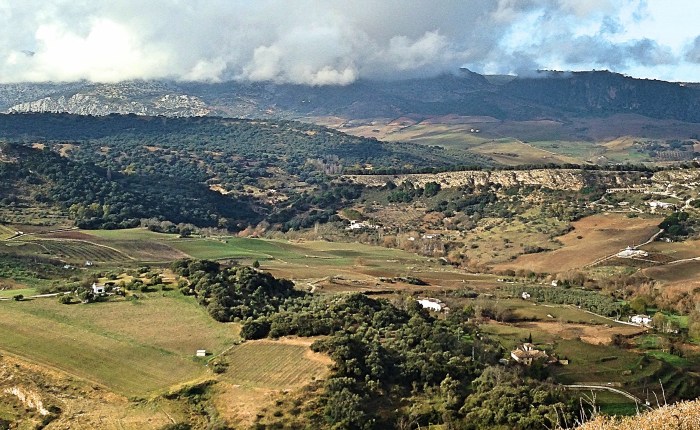
My interest in The People of the Sierra was sparked, naturally, by it being about a village in Spain. But for those with an interest in anthropology, such as myself, the book is significant independent of your specialty. This is because this book was one of the first ethnographies published about a community in Europe. True, it was a small, poor, agricultural community, and it was in a region of Europe commonly regarded as exotic, but it is Europe nonetheless. As such, the book is a landmark in the field.

The book’s classic status is due not only to its groundbreaking subject matter, however, but also to its high quality. Julian Pitt-Rivers was a true disciple of his advisor, E.E. Evans-Pritchard. Everything from the writing style to the analysis bears the traces of EP’s influence. And this is a good thing, for EP was one of the great masters of ethnography.

The central theme of Pitt-Rivers’s analysis is the contrast between the local and the national forces that shape the pueblo. In nearly every sector of life, there are two social structures at play. The first is that of the pueblo; it is self-contained. Moral rules are enforced by the community; there are certain—unwritten but universally known—appropriate ways of acting, and infractions are punished by loss of respect. The second structure is that of the state. Its authority is derived from somewhere far outside of the pueblo. Its laws are explicit, and infractions are punished with fines or jail time.

This theme is explored from a variety of different angles. One chapter, for example, explains the practice of giving members of the town nicknames. These nicknames are never used to a person’s face, and yet everybody in the village knows them. Indeed, you might know a person’s nickname without knowing their surname. Surnames are important, most of all, in dealings with the state. Thus you can see the contrast between local and national, informal and official, even in people’s names.

Tension exists in this state of affairs, because these two systems are often out of alignment. Many things are regarded as immoral which are not illegal, and vice versa. An important concept, for example, is vergüenza, shame, which is the regard that one pays to the social norms of the pueblo. To call someone a sinvergüenza is a serious insult; to be without shame is to be almost inhuman, since it puts you beyond the realm of society; it is to be a pariah. By contrast, it’s obviously not illegal to be without shame, and many of these pariahs are employed by the state as informers.

This is the book’s theme in a nutshell. For me, however, the book’s lasting value has far more to do with its style than its substance. Pitt-Rivers’s writing is remarkable more for what it excludes than for what it includes. There is not a word of jargon in these pages; a polysyllabic word is never used when a shorter one will do; sentences are crisp and short; there is no pretentious name-dropping, no unnecessary citations.

The book itself is brief, and yet Pitt-Rivers’s writing is so economical that he manages to give a full-blooded picture of the community. The first two sentences give an adequate taste of what follows: “This book is about a Spanish town. More precisely, it examines the social structure of a rural community in the mountains of southern Spain.”

Why social scientists no longer write like this, I cannot say. So read this, if only to remember a time when clear, strong English was used in anthropology.

__________________
*Thanks to Wastrel for bringing this to my attention.

View all my reviews

Review: People of the Plain

Review: People of the Plain

The People of the PlainThe People of the Plain by David D. Gilmore

My rating: 4 of 5 stars

Since the day of this altercation they have not communicated; however, each serves as an excellent source of gossip about the other.

What drew me to this book was not only its subject—a village in Spain—but its author.

David D. Gilmore was my first anthropology professor. His classes were unforgettable. Standing over six feet tall, solidly built, he towered over the lecture hall. Professor Gilmore was the very picture of a professor. He had a preference for tweed jackets, complete with elbow patches; and his hair was equally professorial, an electrified shock of snowy white. His voice needed no amplification; it boomed throughout the space, keeping even the most sleep-deprived students semi-conscious.

What I remember most, however, was not his appearance, but his attitude. He had an understated ironic humor, and couldn’t help punctuating his classes with sardonic comments. After one of these comments, he would pause and grin very slightly. A few of the students, myself included, snickered; the majority scrunched up their brows, unsure if it was a joke. Unperturbed, Professor Gilmore then continued the class.

To my youthful eyes, this ironic sensibility seemed to pervade his entire attitude towards life. It was not only a sense of humor, but a philosophy, allowing him to maintain a sense of perspective and take nothing too seriously. I could not help concluding that studying anthropology—living abroad, in another culture, away from his native prejudices—engendered this witty sort of wisdom. By the end of the semester I had switched my major to anthropology, and Professor Gilmore was my advisor.*

I am delighted, therefore, upon reading his first book, to find that Professor Gilmore was an excellent anthropologist in addition to a striking professor.

As the title page indicates, and the rest of the pages make clear, this book is largely a response to Pitt-Rivers’s classic ethnography, The People of the Sierra. In that book, Pitt-Rivers maintained that the pueblos of Andalusia are governed by a powerful egalitarian ethos. Class is not acknowledged to exist, and friendships crosscut differences of wealth and power. Indeed, Pitt-Rivers considered all recognized forms of authority to be imposed from outside the pueblo, not arising within it.

The pueblo that Gilmore studied was quite different. Significantly larger, and situated on the plains rather than in the mountains, Gilmore’s village—he calls it Fuenmayor but it’s a pseudonym—is remarkably stratified. Three distinct social classes exist: the señoritos, the rich, landowning gentry; the mayetes, the middle class; and the jornaleros, the landless, working, migrant poor. These classes had existed for at least a hundred years, and their contours were engrained into the culture of the village.

The mutual isolation of the classes borders on absurdity. Friendships and marriages between members of different classes are nonexistent. Brother will shun brother if he “loses class.” There are three different seating sections in the movie theater, three different sections of pews in the church, and three different sections in the town cemetery. Señoritos are patriarchal, whereas jornalero women have far more power than men in the home. Señoritos are piously Catholic, while jornaleros rarely attend mass and openly scorn the church. The rich view the poor with contempt, and the poor view the rich as hateful oppressors. The mayetes, for their part, focus on keeping themselves afloat.

The picture that emerges is of a society strongly divided, almost bursting at the seams with social tensions, kept together only by the oppressive force of Franco’s regime. (The fieldwork was done in 1973.)

The book, although short, is stuffed with information and anecdotes. Gilmore is always careful to compare the opinions of his informants with objective data, including statistics of land ownership, crop growth, and church attendance. Thankfully these data are usually illustrated with field anecdotes (which are half the fun of any ethnography). I especially appreciated these, because his ironic sensibility shone through:

The mayete is also known occasionally to affect a broad-brimmed fedora hat, which for some reason the workers find indescribably hilarious. One day I appeared in a working-class tavern sporting a new straw fedora, purchased earlier in the city. After a moment of amused silence, one of the laborers shouted, ‘Hey, look at this new mayete we have here!’ Loud, prolonged laughter followed; yet my friends could not explain their merriment.

As an academic work about the anthropology of Andalusia, this book is therefore excellent: well-written, thoroughly researched, and original. But as a piece of personal nostalgia, it is priceless.

_________________

*This is how I introduced myself to Professor Gilmore. In this first class, we did a unit on monsters. One of these monsters was the Windigo, a cannibalistic beast from Algonquian folklore. I found this monster fascinating and wrote a silly poem about him. I believe these were the first two lines: “Oh, Windigo, Windigo / Beast of blue and indigo.” It was certainly not a masterpiece. Nevertheless, one day after class I showed Professor Gilmore a copy of the poem. He seemed genuinely amused. It was an auspicious beginning.

View all my reviews

Review: The Bible in Spain

Review: The Bible in Spain

The Bible in Spain; or, the journeys, adventures, and imprisonments of an Englishman, in an attempt to circulate the Scriptures in the PeninsulaThe Bible in Spain; or, the journeys, adventures, and imprisonments of an Englishman, in an attempt to circulate the Scriptures in the Peninsula by George Borrow

My rating: 3 of 5 stars

Those who wish to make themselves understood by a foreigner in his own language, should speak with much noise and vociferation, opening their mouths wide.

In the year 1835, George Henry Borrow, British traveler and noted eccentric, embarked upon a voyage to Spain with the purpose of making the Holy Bible available to the populace of that hoary nation, and in their native language; freeing that sacred volume from the clutches of friars and priests, who, being papists, jealously guard and keep the scriptures in a language unintelligible to the majority of men and women,—or so opined the author, a proud and uncompromising Protestant.

Mr. Borrow undertook this journey under the direction of the Bible Society, and was chosen for this work due to his previous success, persistence, and tenacity, in propagating the Bible in the vast plains of Russia, where he laboured many long years among poor peasants; and this previous experience was bolstered by Borrow’s prodigious facility in acquiring languages, being possessed, if we are to believe his report of himself, of the Latin, French, Italian, Gaelic, Russian, Arabic, Romani, German, and both the modern and ancient Greek languages,—this list may not be complete,—in addition to his fluency in Portuguese and Spanish, the two dialects on which he was to rely during his time in the Iberian Peninsula.

This book, the record of this noble errand, was pieced together from journal entries, letters, and Mr. Borrow’s apparently remarkable faculty of memory; and narrates his misadventures suffered, voyages undertaken, obstacles overcome, and successes gained, in a style verbose and tending towards the periodic sentence, with hypotaxis being his most habitual mode of expression; a style, nonetheless, of vigour and charm; its only fault, being a tendency to unfurl itself in a monotonous, seemingly endless, series, built of commas and semicolons, that, if imbibed to excess, can have the same soporific effects of opium upon the senses of the reader.

Being a book of travels, much of Mr. Borrow’s narrative, if not the majority, consists of descriptions of noble edifices, foreign cities, strange landscapes, and other vistas of entrancing beauty; as well as many stories of incompetent footmen, derelict guides, incommodious accommodations, unscrupulous innkeepers, and all of the diverse and profuse inconveniences suffered by any traveler in a foreign land; these being supplemented by several vignettes, or sketches, of striking personalities encountered by Mr. Borrow, these personages being from many different classes, creeds, and nations; all of this detail and description serving as the backdrop to Mr. Borrow’s laborious task, selling the Bible in a land generally hostile and suspicious of the Protestant religion, the opposition of the authorities more than once thwarting Mr. Borrow in his noble errand; and this is not to mention the continual fighting, and concomitant destruction of land and property, and the resultant poverty experienced by the people, putting aside the brigandage and banditry rampant across the land, occasioned by the Carlist Civil War.

For all of its merits, and these are many and conspicuous, this book, however, cannot be recommended as providing any significant insight into the culture and history of the Spanish nation, being too absorbed in Mr. Borrow’s own private worries and concerns, and too involved in the slight and superficial impressions gained by the traveler; and seeing as this, namely, gaining knowledge of the Spanish nation, was my primary object in picking up the book, I must admit that I was somewhat disappointed; this disappointment being, I should hastily add, partly counterweighted by the eccentricity and peculiarity of this book, whose style, and whose narrator, while perhaps not brilliant, nor profound, nor even greatly compelling, are, at least, so distinct, that they are impressed upon the soul of the reader, not to be erased by any subsequent experience.

(The above picture is the commemorative plaque, which is posted on Calle de Santiago, 14, in Madrid, where George Borrow stayed.)

View all my reviews