Review: A World Undone

Review: A World Undone

A World Undone: The Story of the Great War, 1914 to 1918A World Undone: The Story of the Great War, 1914 to 1918 by G.J. Meyer

My rating: 4 of 5 stars

G. J. Meyer set out to write this book to fill a gap in the available literature on the First World War: a popular, holistic account that covered every phase and every front, without presupposing much knowledge from the reader. In this, he was undeniably successful. A World Undone begins at the beginning, with the assassination of Franz Ferdinand, and ends at the end, with the Treaty of Versailles—signed five years to the day of the assassination of the infamous archduke.

Meyer’s scheme is simple but effective: interspersing “background” chapters between his main, military account of the war. These background chapters were inevitably more interesting for me, and provided much-needed relief from the seemingly endless string of battles, divisions, battalions, generals, troop movements, and so on that composed the military history. In these auxiliary sections, Meyer introduces us to war literature, major personalities, political traditions, economic crises, military technology, shell shock, and much else. The wealth of both historical backdrop and military history makes this book an ideal, if somewhat long, introduction to the “Great War.”

Meyer himself is an able and diligent writer, who steers a middle course between rhetorical excess and crass simplicity, keeping his prose lean and tasteful. He has the quintessential skills of the popularizer: the ability to compress information into a tight space, and to explain complex phenomenon without overwhelming the reader. He also wisely avoids speculation himself, leaving the analysis to the reader or the historian, keeping his eye focused on the surface-level events—which is desirable in an introductory text, I believe.

Even with a guide as competent as Meyer, however, the Great War is depressing and deadening. Meyer’s account, perhaps unintentionally, confirmed many stereotypes I had previously imbibed. In his telling, the beginning of the war was due to a combination of poor planning and reckless and incompetent advisors. That Germany could not mobilize its forces without invading Belgium, for example, or that Russia could not choose to mobilize only half of its troops, thus unintentionally threatening Germany—consequences of carefully-drawn plans, an arrangement that virtually guaranteed war—is difficult to believe or forgive.

As for the fighting, the impression one is left with is of remarkably courageous troops heedlessly wasted by monomaniacal generals. Offensive after ineffective offensive, with general after general trying the same tactics and achieving the same failures—leading to endless butchery. One quickly draws the conclusion that the leaders of Europe in this epoch were dim and shortsighted men.

It is this dreary and dreadful aspect that partially accounts for the First World War being overshadowed by its younger brother. The conflict was strikingly non-ideological. There are no Nazis, no Communists, no Fascists, no racial purges (except in Armenia), no freedom fighters, no Resistance—only obsolete Empires fighting for spheres of influence. The fighting, too, has none of the cinematic drama of the Second World War: only interminable shelling campaigns, repeated advances and retreats through no-man’s land, stagnant stalemates and antiquated tactics—there is nothing even vaguely romantic about the bloodshed, despite what Ernst Jünger may have thought.

But even if it is less compelling to learn about than the Second World War, the First World War arguably has even more valuable lessons to teach us. The logic of naked power confrontation is, after all, more historically common than ideological conflict. The comparatively colorless, and often incompetent, quality of the war’s leadership invites us to see the conflict in all its bare, barbaric brutality, without the distorting effects of charismatic chiefs. The manufactured hatred of whole populaces for one another—engineered through strict censorship, outright lies, and strident propaganda—is a case-study in how patriotism can be exploited for deeply cynical ends.

And most important, unlike the Second World War—a sad story that at least ends with the defeat of a genocidal maniac—the First World War has no silver lining, no comforting achievement to offset the millions of lives lost. As the vindictiveness of the victors proved, the winning side wasn’t on a clearly higher moral level than the losers; and in any case, the war didn’t even achieve a resolution to the conflicts brewing within Europe, only a partial deferment. In sum, the First World War is worth learning about because it was a calamitous, unnecessary tragedy that stubbornly resists romanticization or justification—and that is war.

View all my reviews

Review: Postwar

Review: Postwar

Postwar: A History of Europe Since 1945Postwar: A History of Europe Since 1945 by Tony Judt

My rating: 4 of 5 stars


History is a discipline peculiarly impervious to high theoretical speculation: the more Theory intrudes, the father History recedes.

When I was in university, studying anthropology, I always resented the requirement that my essays have thesis statements. Can’t I just collect information and serve it up without taking some ultimate stance? Tony Judt seems to have been of the same mind, since this book is one very large serving of information, absent of any overarching thesis. As he says himself, Judt is rather like the proverbial fox than the hegdehog: he knows many things, and has many valuable observations scattered throughout the text, without any one big idea to tie them together.

There are compelling advantages to this approach. This book is one-stop shopping for many aspects of post-war European life. Economic development, intellectual fashions, architecture, film history, political movements, the Cold War, regionalism, the emergence of the European Union—all this and more is covered in impressive detail. And though multifarious, all of these pieces come together to form an astounding story: a continent nearly destroyed by war, divided by dangerous political tension, slowly emerging from American and Soviet dominance to become the most affluent, most peaceful, and most progressive place in the world.

The main disadvantage of this method is, of course, that this story remains fairly messy and haphazard. Without a thesis to guide him, Judt had to rely on a mixture of interest, instinct, and whim—the latter playing an especially significant role in some sections. What is more, though Judt is an opinionated and assertive guide, the lack of a thesis renders it difficult to point to anything distinctly “Judtean” in his analysis. What ties the narrative together is, rather, a certain mood or sensibility—most notably, Judt’s keen sense of historical irony, which he employs to great effect.

This ironic sensibility is most often directed toward Judt’s political foes. Though he is never explicitly partisan, it is easy to tell where Judt’s sympathies lie: in the center-left, socialist-democratic camp. Thus, depending on where the reader falls on the political spectrum, Judt’s comments will be either gratifying or grating. For me they were usually the former. What irked me, instead, was Judt’s relatively brief treatment of Spain—the Franco era is entirely ignored, and the transition to democracy is covered in just a few pages. But this is admittedly my own prejudice speaking.

If Postwar has one takeaway message, it is this: that Postwar Europe is the anxious construction of a generation wearied and horrified by conflict. After going through the belligerent nationalism of the First World War, the economic depression and intense ideological polarization of the interwar period, the even more gruesome Second World War and the unspeakable Holocaust—all this, coupled with the prolonged armed standoff and Soviet repression of the Cold War—Europeans were intent on creating a world where this could never happen again. Extreme ideological stances fell into disgrace; strong government social safety nets helped to prevent economic crisis and, in so doing, made people less susceptible to demagogues; and governments forged institutional ties with one another, a project that culminated in the European Union.

Without constant reminders of this catastrophe—a European civil war that began in 1914 and whose political aftereffects did not disappear until 1991, if then—we risk falling into the same errors that tore the continent apart one hundred years ago. For this, we need good historians—and Judt is certainly among the best.

View all my reviews

Review: The Guide of the Perplexed

Review: The Guide of the Perplexed

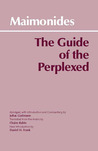
The Guide of the PerplexedThe Guide of the Perplexed by Maimonides

My rating: 3 of 5 stars

This treatise has as its principal object to clarify the meaning of certain terms in the Bible.

Moses Maimonides, born in 1135, was and remains the most famous Jewish theologian in history, and this is his most influential book. Well, this is a part of his most influential book; more specifically, this is about a quarter of the whole work, the other three quarters having been pruned away by the editors of this volume. This was ideal for me, dabbler that I am, especially considering that the abridgement, so far as I can tell, was made with taste and skill.

The first striking aspect of this book is its accessibility. Maimonides writes simply and directly; indeed, sometimes I found the tone a bit pedestrian. The sentence I quoted above, the first sentence of the book, is quite typical of Maimonides. The work is written in the form of a (very long) letter to a perplexed pupil, broken into bite-sized chapters for easy comprehension. The only technical terms are those derived from Aristotle—essence, form, matter, etc.—which posed no problem for me.

The second striking aspect of The Guide is how similar Maimonides’s intellectual approach is to that of Thomas Aquinas. Indeed, the aim of both thinkers was more or less the same: to provide a rational defense and systemization of their respective faiths. Both lean heavily on Aristotle for this task, adopting his doctrines, terms, arguments, and philosophical style.

Of course this isn’t a coincidence. The attempt to harmonize Greek thought, specifically Aristotle, with religious thinking originated, I believe, with Muslim philosophers, and later spread to Europe. Maimonides himself was born in Muslim Spain (Al-Andalus), wrote in Arabic, and was clearly well read in Islamic philosophy. Later on, the works of Aristotle, translated from Greek into Arabic, entered Europe through Toledo, where they were translated from Arabic into Latin so that people like Aquinas could read them. Aquinas also read Maimonides, by the way.

Thus the three Abrahamic religions were engaged in almost the same philosophical project during this time. But of course, being of different faiths, the thinkers reached different conclusions. For example, Maimonides’s conception of God is strikingly different from Aquinas’s. Instead of expounding on all the different perfections of God, as does Aquinas—his omnipotence, omniscience, omnibenevolence, necessary existence—Maimonides holds that God’s essence cannot be described in any satisfactory way. In fact, Maimonides’s conception of God strongly reminded me of, and was perhaps influenced by, the Neo-Platonist conception of The One, the mystical, mysterious, ineffable fountainhead of all existence. Like Plotinus says of The One, Maimonides asserts that we cannot even attribute existence to God, since he holds that existing things are always composite, while there is nothing composite about God.

But for me, Maimonides’s most interesting opinion was his explanation of rituals, worship, and animal sacrifices. As he points out, “what is the purpose of His worship, since God’s perfection is not increased even if everything He has created worships Him and apprehends Him to the utmost possible degree, nor is it at all diminished if there is nothing in existence beside Him?”

For Maimonides the purpose of religious practice is not to please God through worship, but to know Him by training the mind and purifying the soul. The reason that God commanded rituals and sacrifices was only because the original Chosen People were still accustomed to idolatry, and thus they would not have accepted the true religion if they were not allowed to practice their religious customs. The rituals were, therefore, a kind of transitional device, allowing the people to turn their thoughts from idols to the true God. I found this explanation remarkable, since it anticipates the modern, historical approach to religion, while remaining within the bounds of orthodoxy.

Maimonides insists that the exterior forms of a ceremony are totally irrelevant if the practitioner is not thinking of God. It is the mental state of the worshipper, not their ritual actions, that are essential. This doctrine also reminded me of Neo-Platonic mysticism, wherein the final goal is a direct knowledge of the The One through mental discipline. But Maimonides is not so straightforwardly mystical as Plotinus, as he places much more emphasis on rational argument and the holding of the correct metaphysical and theological opinions.

This book was obviously not intended for me, since I am a nonbeliever, and Maimonides considers nonbelievers beneath contempt and not even worth responding to. Thus this book was of purely historical interest for me. This is, of course, not a bad thing, and indeed as a historical document it is rewarding. But I cannot say I found it an exhilarating read, since I not only disagreed with Maimonides’s conclusions but with his methods and his premises. Nevertheless, I am very glad to have read the book, if only because I have been intending to ever since my trip to Córdoba, his birthplace, and stood next to his statue in the Jewish district of that old city. Just like walking through those crooked, cobblestone streets, reading this book is a voyage in time.

(Photo by Selbymay; licensed under CC BY-SA 3.0; taken from Wikimedia Commons.)

View all my reviews

Review: Medieval Islamic Philosophical Writings

Review: Medieval Islamic Philosophical Writings

Medieval Islamic Philosophical WritingsMedieval Islamic Philosophical Writings by Muhammad Ali Khalidi

My rating: 4 of 5 stars

Just as one must protect unskilled swimmers from perilous shores, people must be shielded from reading philosophical books.

For a long time, I’ve been bothered by the tremendous gap in my philosophical reading. Most of the medieval period is simply a blank for me, an intermission that stretches from Boethius (480 – 524) to St. Thomas Aquinas (1225 – 1274). Part of the problem is that, for a variety of reasons, in most of Europe not much notable philosophy was being written in the years following the collapse of the Roman Empire; the major Christian philosophical project, scholasticism, didn’t get on its feet until St. Anselm (1093 – 1109) started writing. But another problem is that, owing to Western provincialism, most of the good philosophy written during these years isn’t read nowadays, because it was written by Muslims.

This collection was expressly put together to rectify this situation, and it does the job admirably. Now, instead of an enormous gap, I can move comfortably from Boethius to Al-Farabi (872 – 950), to Ibn-Sina, or Avicenna (980 – 1037), to Al-Ghazali (1058 – 1111), to Ibn Tufail (1105 – 1185), and finally to Ibn Rushd, or Averroes (1126 – 1198). This progression completes not only the temporal picture, but has the geographic advantage of leading from Baghdad to the Iberian Peninsula. We thus see the trajectory through which the works of Aristotle, preserved in Arabic translation, as well as copious commentary on Aristotle’s works, entered Europe, where they later gained ascendency.

The editor and translator of this volume, Muhammad Ali Khalidi, put it together for non-specialists. He made his selection with the hopes of showing the relevance of these thinkers to contemporary philosophical questions; but he also hoped to show something of the cultural significance of these philosophers. None of the selections is very long, and none is very difficult. It is a mere tasting, not a feast. For me, it was perfect, since I have only a layman’s interest in the subject.

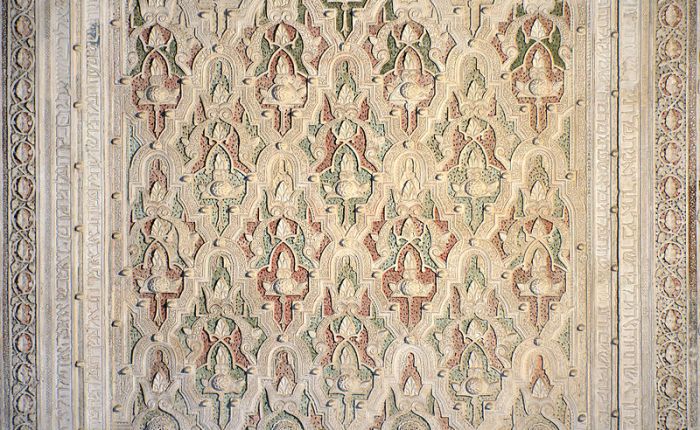
My interest was ignited in medieval Islamic culture through my visits to Andalusia, where I was continually astounded by the beauty of Moorish architecture. If a culture was vibrant enough to build the Great Mosque in Cordoba, I figured, then they must have had some excellent thinkers too—which they certainly did.

In what follows are my brief summaries and reactions to each of the pieces in this collection. But before that, I want to add my reflections on the whole. What most struck me during my reading was how familiar were the styles and ideas. Truly, medieval Islamic philosophy does not represent some alien tradition, or a mere curiosity, nor were these philosophers mere preservers of the Greeks; rather, they should be regarded as an integral part of western philosophical history.

The fact that we still read Aquinas but seldom Maimonides and rarely Averroes has little to do with merit, and more to do with religious allegiance. All three of these traditions were engaged in similar philosophical projects—namely, the harmonization of faith with reason, relying heavily on Aristotle. Incidentally, I can’t help thinking that the persistent Islamophobia (and Anti-Semitism) in the West would be less virulent if history were not taught in such a fashion that the contributions of Jews and Muslims to European culture were not so deemphasized. But I suppose that’s another matter.

Al-Farabi. Like nearly everyone in this collection, Al-Farabi was a polymath, writing not only on philosophy, but on music, math, science, and cosmology. But he is perhaps most important for being one of the first and most prominent Muslim philosophers to elevate Aristotle as the epitome of reason. His work in this collection is taken from The Book of Letters. It puts forward a schematic philosophy of history, during which he lays out what he considers the essential stages of historical development. Most striking is Al-Farabi’s elevation of philosophy. According to him, nearly every other discipline, practical or theoretical, stems from philosophy. Even religion takes second place. In Al-Farabi’s opinion, prophets do not access supernatural knowledge, but merely transform the insights of philosophers into metaphorical garb, so that common people can understand them. Indeed, for Al-Farabi almost all religion is just popularized, allegorized, simplified philosophy—Aristotelianism for the people, you might say.

Avicenna, or Ibn Sina, is the Thomas Aquinas of Islamic philosophy, except perhaps greater. An astounding polymath, he not only wrote encyclopedias of science and philosophy, but an encyclopedia of medicine that was still being used in Renaissance Italy. Like Aquinas, and like Aristotle himself, Avicenna was a great systematizer. He had a prosaic, orderly, and remarkably capacious mind, allowing him to compose encyclopedic works in many disparate subjects. In this collection is the short work, On the Soul, which is an investigation into the capacities of the human mind, with a special emphasis on epistemology. Unlike Al-Farabi, Avicenna didn’t consider prophets to be popularizers, but a kind of super-philosopher whose intellects intuit things faster than other people’s.

Al-Ghazali probably wouldn’t like being called a philosopher. He was, rather, a mystic who wrote against philosophy. Included in this collection is his Rescuer from Errors, which is a sort of intellectual autobiography. In it, he describes a crisis of faith he experienced when he realized that his religion was mere conformity. After doubting everything, he proceeded to study theology, which he found inadequate, and then philosophy, which he found slightly better, and eventually settled on being a mystic. This was by far my favorite work in this collection. Al-Ghazali is an excellent writer, and his procedure of radical doubt can’t help but remind one of Descartes. Indeed, if you’re inclined to doubt the existence of the world, becoming a mystic might be a more rational solution than the one Descartes settled upon.

Ibn Tufail (sometimes called Abubekar) was born in Moorish Spain, near Granada. In addition to being a philosopher, he was a novelist, physician, and court official during his lifetime. (Reading the biographies of these guys makes you really mourn the rise of specialization.) He contributes the longest section to this book, in the form of Hayy bin Yaqzan. Not exactly a work of philosophy, it is rather the description of a man born and raised in social isolation on a deserted island. The titular character, using nothing but his cleverness, manages to deduce the entirety of Aristotelian thought, and eventually becomes a mystic. I suppose this story was meant to demonstrate that revealed religion wasn’t necessary to reach the truth, but that a monotheistic mysticism could be deduced from experience. I found it quite unconvincing.

Averroes, or Ibn Rushd, was born in Córdoba (the same city where Seneca and Maimonides were born), and was perhaps the greatest Muslim philosopher after Avicenna. Interestingly, Averroes’s influence was bigger in Christian Europe than in Islam, because many of his key positions were seen as heretical. After his death came the trend known as Averroism, which held, among other things, that the individual soul is not eternal, only the universal soul which every individual shares. In this collection we find his The Incoherence of the Incoherence, a work written in refutation of Al-Ghazali’s work The Incoherence of the Philosophers. Al-Ghazali attempted to demonstrate that belief in causes and natural laws was heretical; there are no laws, Al-Ghazali held, and no causes except the direct intervention of God. Averroes quotes Al-Ghazali in extenso, and then argues against him point by point. The final effect is of a real debate, since Al-Ghazali anticipated many of the rejections that Averroes brought against him.

Well, that’s it for my review. I hope I’ve at least convinced you that there is a lot of historical and philosophical value in these pages, and in Islamic philosophy generally.

(Cover photo by Timor Espallargas; licensed under CC BY-SA 2.5; taken from Wikimedia Commons.)

View all my reviews

Review: Some Still Live

Review: Some Still Live

Some Still LiveSome Still Live by Frances Smith McCamic Tinker

My rating: 4 of 5 stars

You can’t even surrender in an airplane; your opponent wouldn’t know whether you were joking or not.

I am fortunate enough to have a colleague who studies the Spanish Civil War professionally. And when he heard that I was interested in learning about the conflict, he generously lent me this book, the memoirs of an American pilot who fought during the war. Considering that this book is out of print and hard to get your hands on, this was luck indeed.

Frank Glasgow Tinker, Jr. was an American boy from Louisiana who came to Spain in 1936 to take part in the war. He had learned to fly in the US Navel Academy, and spent some time in the Navy until he was discharged for drinking and brawling (which, if you think about it, is pretty impressive). His main motivation for joining the war, it seems, was just the opportunity to fly combat missions: “When the fighting broke out in Spain in 1936, I was not quite sure which side was fighting for what. I gathered that each was slaughtering the other for being or doing something that the other side did not like.”

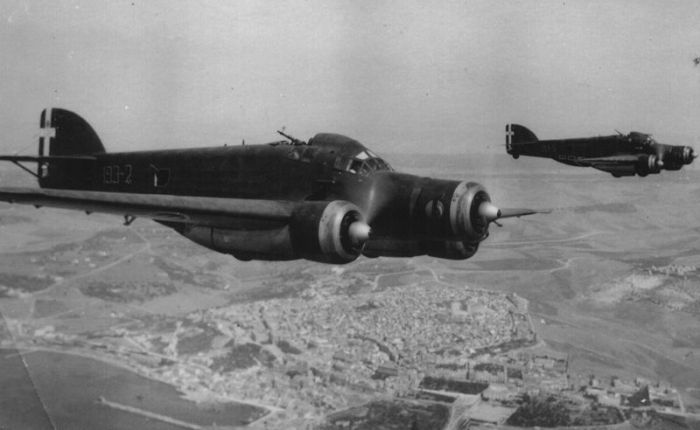
After sneaking in by obtaining a fake passport in Mexico, and pretending to be a Spanish citizen—despite his total innocence of the Spanish language—he spent seven months here flying and fighting. Tinker fought on the “loyalist” side, alongside Spaniards, Americans, and Russians, mainly against Italian and German pilots—which shows how international the “civil” war really was. He flew both older biplanes and more modern monoplanes, both of Russian make, against Italian Fiats and German Heinkels and Messerschmitts. And he was good. He shot down at least eight enemy planes, possibly more, making him one of the most successful pilots in Spanish aviation history.

He flew up to three flights a day—responding to alarms, accompanying bombers, strafing trenches, dive-bombing enemy targets, blowing up bridges and trains, driving off enemy bombing squads, and fighting in dogfight after dogfight. The bulk of his fighting took place in the vicinity of Madrid, but he also fought all over the north of Spain. After seven months of this he packed up his bags and went back to the States. Going back wasn’t easy, since he had arrived in Spain with a fake passport and didn’t have any identification; but eventually he succeeded in returning to the States, where he began writing and going on radio programs.

Some mystery still surrounds his death. The accepted explanation is that he suffered from PTSD and ended his own life; but some have suggested that the FBI may have been responsible. As his own tombstone says, ¿Quién Sabe?

Simply as a historical document, this book is invaluable. It contains maps of the air bases used by the government side, photographs by the reporter Robert Capa of wartime Spain, and a vivid picture of the Government Air Force, not to mention reams of information about aviation. Tinker obviously knew what he was doing when it came to flying; the book is filled with aviation jargon—altitude, weather, engines, weapons, rates of climbing and diving, difficulties of landing and taking off.

Even more impressively, this book is successful simply as a book. For somebody who was not a man of letters, Trinker is a strong writer. He sticks to the facts, and relates them with such vividness, candor, and energy that I often had trouble putting the book down. He never overwrites, he never bogs the book down with too many details, and he never uses flowery rhetoric. His time in Spain was so interesting that no embellishment is needed; the bare facts are fascinating enough.

Apart from his doings, Tinker himself is memorable. He is a uniquely American type. He brawls, he jokes, he drinks, he pranks, he gambles, he womanizes, and he drinks some more, and he flies and fights, and he betrays no ideals beyond good-natured hedonism, fierce loyalty, and a kind of warrior’s respect for bravery and skill. There is not a single political statement in this book, and not any indication that his understanding of the war’s causes ever progressed beyond the very basics. He was a soldier.

I will leave you with my favorite paragraph from the book:

Whitey had managed to get the elevator down (it was one of those automatic affairs), but after he got inside he couldn’t reach the control buttons to make it go up again. He was also unable to reopen the door to get out. After about two minutes of this a huge fellow with a mustache came along and wanted to go up on the elevator, too, but as he saw Whitey was already inside he waited awhile, expecting him to go either up or down. When Whitey failed to do either, the large stranger opened the door and asked him, in Spanish, what the hell he thought he was doing. Whitey, not understanding him, asked, in English, why in hell he hadn’t opened the door instead of standing there with his mouth full of teeth. Whereupon the stranger, in perfectly good American, answered that people shouldn’t get into strange elevators unless they were sure they could get out of them. Whitey almost fell on his face when he heard himself answered in English, but soon recovered and explained his predicament and had the stranger do his button-pushing for him. I saw the last part of this act and asked the man at the desk who the stranger was. He proved to be no other than Ernest Hemingway, the famous writer.

View all my reviews

Review: City of God

Review: City of God

City of GodCity of God by Augustine of Hippo

My rating: 4 of 5 stars

Once on the beach at Utica, I saw with my own eyes—and there were others to bear me witness—a human molar tooth so big that it could have been cut up, I think, into a hundred pieces each as big as one of our modern teeth.

I’m trying to think of books that might be equal to this one in importance to Western history: Plato’s Republic? the works of Aristotle? Euclid’s Elements? Homer’s epics? There aren’t many. This book arguably set the tone for the entire Middle Ages that followed. It is a vast, sweeping, powerful, and cockamamie book; it is a true classic.

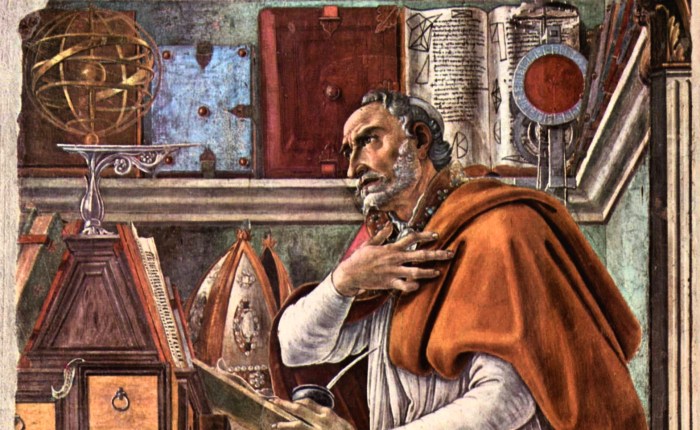
Augustine wrote The City of God over a period of 13 years. He began the work when he was 59, and finished it when he was 72. The work was occasioned by the capture of Rome in 410 by the ‘barbarian’ leader Alaric, king of the Visigoths. It was a brutal defeat for the Romans, with much destruction, rape, pillage, and death. More than that, it was a symbolic defeat, the first time Rome had been taken by a foreign enemy in hundreds of years. Unsurprisingly, the remaining pagans blamed the newly ascendant Christians for this calamity. If the old gods were worshiped, the critics argued, this never would have happened. Rome was never taken when Jupiter was praised and when Nike, goddess of victory, was gracing the Curia of the Roman Senate. (The statue of Nike, the Altar of Victory, had been removed from the Curia by Constantius II, briefly reinstalled by Julian the Apostate, and then removed again.) In short, the Roman Empire was collapsing and it was all the Christians’ fault.

These accusations were what prompted Augustine to begin this work; but as the book grew, so did Augustine’s ambitions. By the middle, the beginning has been forgotten; and by the end, the middle is a distant memory. Because Augustine frequently interrupts his main points to indulge in lengthy digressions, the reader is often mired in pages and pages of side-issues and curiosities. Yet there does remain one vital central idea. It is therefore quite tough to give a fair impression of this book’s contents. To paraphrase Bertrand Russell, if I focus only on Augustine’s main thesis, then it will make this chaotic jumble seem too unified and focused; yet if I lose myself in the details, then I’ll omit its most lasting contribution. I even have it easier than most readers, since I read an abridgment—meant to cut out much of the extraneous material. Even so, there is a new topic on almost every page. So I think I’ll follow Russell’s approach in his History of Western Philosophy and give you a taste of some digressions before tackling Augustine’s more major themes.

Early on in the book, Augustine considers whether virgins who were raped in the sack of Rome have lost their virginity. He argues that, as long as they did not consent and did not enjoy it, they are still virgins. Augustine even argues that being raped might have been a good thing for some of them, since it taught them not to be haughty about their virginity. (It’s frightening that, at the time, this opinion was considered quite progressive.) He considers whether the extremely long lifespans reported of some Biblical figures (such as Adam’s purportedly 900-year long life) should be interpreted literally, or whether, as some argued, 10 years back then was equivalent to 1 of our years, thus arriving at a more realistic figure for Adam’s age, 90. (Augustine thinks Adam did live 900 years.) In resolving this question, Augustine notes that there are several discrepancies in the ages reported of certain people in different versions of the Bible; specifically, the original Hebrew Bible said one thing, and the Septuagint said another. (For those who don’t know, the Septuagint was a Greek translation of the Bible, done by 70 Jewish scribes in the 3rd or 2nd century BCE at the behest of the Egyptian king, Ptolemy II. The legend says that all 70 scribes completed their translations separately, only comparing them at the end, and they turned out to be all miraculously identical.) Augustine concludes that, though the Septuagint was indeed divinely inspired, where it differed from the original Hebrew, the original should be trusted.

In a lengthy section, Augustine attempts to correlate secular history with biblical history, doing his best to place the events of the Old Testament in the context of Greek and Roman history. He even speculates on the possibility that Plato might have read parts of the Old Testament, since parts of Plato’s Timeaus are so similar to the Book of Genesis. Augustine is against judicial torture, thinking it vile and illogical to torture witnesses and the accused. He anticipates Descartes’s cogito ergo sum: “In the face of these truths, the quibbles of the skeptics lose their force. If they say; ‘What if you are mistaken?’—well, if I am mistaken, I am. For, if one does not exist, he can be no means be mistaken. Therefore, I am, if I am mistaken.” (By the by, Augustine also anticipated Kant’s subjective theory of time, which Augustine put forth in the eleventh book of his Confessions.) Augustine attempts to prove that living, physical bodies can, indeed, be tortured endlessly in the fires of hell, since, as everyone knows, salamanders live in fire, and peacock meat never putrefies. So what’s so miraculous about human bodies endlessly burning in the flames?

I actually can’t resist including a bit more about the peacock meat. Apparently, having heard from someone else that peacock meat never spoils, Augustine set aside a piece of roasted peacock meat when he was served it at a friend’s house. He observed this piece of meat for a whole year, noting that even after all that time it never began to stink; it only got dry and shriveled. Now, presumably the piece of meat had been thoroughly cooked and salted, so make of that what you will. While I’m at it, I also want to include a story Augustine tells about a friend of his who had hemorrhoids and had to have surgery. As the man was fearful of going under the knife, Augustine and several other friends had a loud and fervent prayer session before the surgery. (If I had to get surgery back then, I’d be praying too.) And the surgery was a success!

Now for some more meaty issues. Augustine formulates here the idea of original sin, arguing that Adam’s fall changed the nature of humankind, filling us with sinful desires and causing death to enter the world. Augustine thinks, for example, that before the fall, Adam and Eve could choose to have sex without any feeling of sexual desire; all of the physiological prerequisites for intercourse (to use a polite expression) were under just as much control as our arms and legs. In short, Adam could just choose to have an erection without feeling horny. But now, in order to reproduce, we are at the mercy of our desires, which we cannot directly control and which threaten to overwhelm our rational minds. Thus is the sorry state of fallen man. As a consequence of this belief, Augustine also argues that unbaptized infants go to hell; not being cleansed of original sin, they simply must. By the way, there are several memorable passages in Augustine’s extraordinary autobiography, his Confessions, where he chastises his infant self for being so greedy of food and drink, and so selfish of love and attention.

Several other ideas are connected to Augustine’s conception of original sin. Since humankind is fallen, it is impossible for us without God’s aid to do good deeds and to achieve salvation; salvation is granted from God, it is a gift of divine grace, not something we earn. Augustine also believed in predestination. God, being omniscient, foreknew which people would end up saved, and which would end up damned. So in addition to anticipating Descartes and Kant, Augustine also anticipates Calvin. (From what I hear, a lot of the Protestant Reformation involved a return to Augustine’s teachings, but I’m not so knowledgeable about this.) I should point out that these ideas weren’t commonly accepted at the time. Just the reverse: many people argued vociferously against these doctrines. Notably, Pelagius, an ascetic from England, argued that humans were not born already damned (or, in other words, there was no ‘original sin’ in the Augustan sense); that humans had absolute free will, and thus were not predestined to be saved or damned; and that the grace of God was not necessary to do good works. Augustine combated Pelagius’s ideas with his typical intolerant zeal, considering them heresies, and succeeded, after a long fight, in making his own opinions orthodox for a long time to come.

As befitting a great Christian thinker, Augustine also tackles some of the perennial problems of Christian philosophy. One of these is free will. Now, without free will, the entire worldview of Christianity collapses, since then there is no fair basis of separating people into the saved and the damned. Yet God is omnipotent and omniscient; this means that when He created the world, He knew exactly what was going to happen. So how can we reconcile these attributes of God with free will? Augustine does so by noting that, although God knows what you will do and whether you will be saved, His knowing doesn’t cause you to make the choices you make.

Augustine also addresses the so-called problem of evil. This is another classic paradox of Christianity, which results from trying to harmonize the undeniable existence of evil in the world with God’s omnipotence and His infinite goodness. If God was truly all-powerful and purely good, why is there evil in the world? Augustine makes several classic replies.

First, he notes that, by allowing some evil in parts of creation, the whole might be, by consequence, even better, as the resulting goodness outweighs the evil. In short, goodness is cheap unless it is tested with temptation; so the presence of some evil is necessary for the existence of good. Augustine also notes that God never causes evil directly, since it is only His creatures that choose evil. For Augustine, as for many others, evil doesn’t really exist; evil is a lack of existence, the same way darkness is a lack of light and cold a lack of heat. Thus, God never created anything evil; all existence, as existence, is good; His creatures, through their own perversity, have sometimes chosen evil. So even Satan himself, insofar as he exists, is good; though his nature has been corrupted by his wicked ways (this corruption presumably being some sort of deficiency in his existence). Augustine even plays with Aristotelian terminology, saying that evil never has an efficient cause (the direct, or proximate, cause of something), but only a deficient cause.

I know that my opinion is not worth nearly as much as Augustine’s in this matter, but I do want to include my thoughts. I don’t find Augustine’s answer to the problem of evil satisfactory. And this is because, even if God is not indeed the proximate cause of evil, He would still be the ultimate cause, since He created the universe with full knowledge that evil would result from His action. It’s like this: If I am a leader of a country, and choose to go to war with another country, I am not the direct cause of people dying—that was presumably the guns and other weapons. And arguably the soldiers on both sides do have some share in the responsibility, since each of them chose to participate, to fight, to kill, to risk their lives, and so on. Yet ultimately it was my decision to send all these people into battle, and I think I would share a large portion of the responsibility and (if the action were unjust) the guilt. If the war was indeed justified and necessary, and the result was good for the world, that would make the action excusable, but it would not negate all of the pain and suffering inflicted on the soldiers, nor would it make me any less responsible for their fate.

Besides, I find this whole business of balancing good and evil, as if weighing a scale, quite absurd. If an innocent person suffers, if a single child is abused or crippled by sickness, how can any amount of goodness elsewhere make that okay? Here’s an example. Imagine there are ten people on an island with very limited food. There is only enough food for each person to stay alive, but not enough to make them energetic and happy. So when all ten people are living there, eating the food available, the total satisfaction-level is around 40%. Now, if nine of them ganged up on the last one, and killed and ate him, it’s possible that, even though there would be a lot of pain inflicted on that one man, the joy experienced by the remaining nine of having real meat, and the extra resources freed up on the island by having one less person, might in the long run make the general satisfaction-level higher—perhaps 60%. Does that justify killing the man? I think not. My point is that the happiness of the many cannot be balanced against the misery of the few, like an accountant balancing an earnings report.

Now, I know this review is already extremely long, but I haven’t even gotten to Augustine’s main thesis—the City of God. Augustine divides up humankind into two metaphorical cities: the City of Man and the City of God. Members of the City of Man are swollen with pride; they think that they can achieve happiness in this life, through satisfying their bodily desires or by practicing human virtue; by creating peaceful cities and just laws; by trade, wealth, power, fame, and wisdom. Yet, noble as some of them may be, this goal is pure vanity. In this life, we are too beset with troubles and uncertainties to have real happiness. States try to create justice, but their laws are frail human creations, constantly failing to attain their goal of absolute justice—since so many sinners go unpunished and so many innocents are unduly condemned—with the result that the laws are always being changed, updated, reformed, and differ from country to country, from place to place, all without getting any closer to their goal. The Stoics attempt to achieve happiness through virtue alone, without any hope of heaven; and yet how often do painful disease, the loss of a loved one, the failure of a scheme, the unquenchable passions in our breast overwhelm our reason and cast us into abject misery? Members of the City of God are not exempt from any of these miseries. However, they know that they are mere pilgrims on this earth. They place their hopes, not in this life, but in the life to come. Thus they are not misled by the vanities of earthly happiness, but act in harmony with God’s will to achieve salvation.

This doctrine, though simple enough, proved to be immensely influential. Augustine not only separates church and state, but subordinates the state to the church. Temporal authority is just the product of consensus, while the authority of the church comes from God. The resultant history of the Middle Ages, with the rising political power of the Catholic Church, owes much to Augustine for its intellectual justification and formulation. Again, the importance and influence of this book could hardly be overestimated.

After spending so much energy reading, summarizing, and responding to this book, I am almost at a loss for how to make a final evaluation. Augustine is obviously a genius of the highest order, and even now it is difficult for me to avoid be sucked into the endless labyrinths of his mind. This is especially impressive to me when I consider that I am not a Catholic, not even a Christian, and disagree with almost everything he says. More than that, although I have immense admiration for his originality and his brilliance, I often find his perspective unhealthy, intolerant, dogmatic, and generally unappealing. Perhaps what I like least about Augustine is his incredible, I would even say his morbid, sense of sin.

In his Confessions, there is a famous section where he berates his child-self for stealing a peach from a peach tree. From his rhetoric, you would think that he committed a genocide; even after all these years, he seems wracked with guilt and filled with shame. To me, as I suspect to many others nowadays, this is absurd, even a bit childish. I admit a part of me wants to admire him for feeling so bad for his misdeeds; but when I really think it over, I do not even find this admirable. The sense of sin is, in my opinion, an unrealistic and unhealthy way of thinking. I think the whole idea of sin is wrong-headed. Sins are not mere bad deeds or mistakes, but, in Augustine’s view, the byproduct of our ‘fallen’ and ‘sinful’ nature, with the power to actively corrupt and taint our immortal souls. In other words, sin is a reflection of our ‘true self’, or at least a part of it, and acting out these evil impulses makes us unworthy human beings, fit for eternal torture.

This makes no sense to me. Sometimes people commit bad actions; but, to me, it is more sensible to focus on why the action was bad, rather than how the person is evil for committing this action. For example, if I get angry and say something hurtful to my friend, I can respond to it by isolating what I said, figuring out why I said it, determining why my friend thought it was hurtful—which requires empathy—and then apologizing to my friend and trying to learn from this experience. Or I might, as Augustine would, start thinking about how I have done an evil thing, pray incessantly, beg God for forgiveness, and for years afterward torment myself with the thought of this wrong action. The first is adult and responsible, the second is self-obsessed and self-absorbed. To me, this endless chastisement for bad actions is immature on many levels.

First, the sin is attributed to your ‘sinful nature’, rather than to a habit of yours or to a mistaken assumption, which I think is plain hogwash, and which also doesn’t help you focus on what really caused the problem; nobody is inherently evil or good: we have bad or good habits, and can change them if we want. Second, since the sense of sin makes people obsess about whether they will be damned or saved, it makes people think about their actions through an intensely selfish lens—their own fate—rather than promoting good behavior through empathizing with those around you. So in summary I find the idea of sin to be counterproductive to living a happy and ethical life.

This is what I find most intensely unattractive about Augustine’s personality. Yet, if I am to practice what I preach, I must not condemn Augustine the man for this behavior, but only a bad habit of thinking he developed. And if I am to weigh everything lovable and unlovable in the scales of my affection, I must admit that I find Augustine to be one of the most compelling personalities and extraordinary thinkers in all of history. This is not a book for just Catholics, or even just for Christians. This is a book for everyone, for all of time. So to repeat the words that lead to Augustine’s conversion to the faith, Pick up and read, pick up and read, pick up and read.

View all my reviews

Review: Aristotle’s Physics

Review: Aristotle’s Physics

PhysicsPhysics by Aristotle

My rating: 4 of 5 stars

Of all the ancient thinkers that medieval Christians could have embraced, it always struck me as pretty remarkable that Aristotle was chosen. Of course, ‘chosen’ isn’t the right word; rather, it was something of a historical coincidence, since Aristotle’s works were available in Latin translation, while those of Plato were not.

Nonetheless, Aristotle strikes me as a particularly difficult thinker to build a monotheistic worldview around. There is simply nothing mystical about him. His feet are planted firmly on the ground, and his eyes are level with the horizon. Whereas mystics see the unity of everything, Aristotle divides up the world into neat parcels, providing lists of definitions and categories wherever he turns. Whereas mystics tend to scorn human knowledge, Aristotle was apparently very optimistic about the potential reach of the human mind—since he so manifestly did his best to know everything.

The only thing that I can find remotely mystical is Aristotle’s love of systems. Aristotle does not like loose ends; he wants his categories to be exhaustive, and his investigations complete. And, like a mystic, Aristotle is very confident about the reach of a priori knowledge, while his investigations of empirical reality—though admittedly impressive—are paltry in comparison with his penchant for logical deduction. At the very least, Aristotle is wont to draw many more conclusions from a limited set of observations than most moderns are comfortable with.

I admit, in the past I have had a hard time appreciating his writing. His style was dry; his arguments, perfunctory. I often wondered: What did so many people see in him? His tremendous influence seemed absurd after one read his works. How could he have seemed so convincing for so long?

I know from experience that when I find a respected author ludicrous, the fault is often my own. Seeking a remedy, I decided that I would read more Aristotle; more specifically, I would read enough Aristotle until I learned to appreciate him. In the words of Stephen Stills, “If you can’t be with the one you love, love the one you’re with.” I decided I would stick with Aristotle until I loved him. I still don’t love Aristotle; but, after reading this book, I have a much deeper respect for the man. For this book really is remarkable.

Hardly a sentence in this book can be accepted as accurate. In fact, from our point of view, Aristotle’s project was doomed from the start. He is investigating physical reality, but is doing so without conducting experiments; in other words, his method is purely deductive, starting from a few assumptions, most of which are wrong. Much of what Aristotle says might even seem silly—such as his dictum that “we always assume the presence in nature of the better.” Another great portion of this work is taken up by thoroughly uninteresting and unconvincing investigations, such as the definitions of ‘together’, ‘apart’, ‘touch’, ‘continuous’, and all of the different types of motions—all of which seem products of a pedantic brain rather than qualities of nature.

But the good in this work far outweighs the bad. For Aristotle commences the first (at least, the first, so far as I know) intellectually rigorous investigations of the basic properties of nature—space, time, cause, motion, and the origins of the universe. I find Aristotle’s inquiry into time particularly fascinating, for I am not aware of any comparatively meticulous investigations of time by later philosophers.

I was particularly impressed with Aristotle’s attempt to overcome Zeno’s paradoxes (a series of thought experiments which ‘prove’ that motion and change is impossible). Aristotle defines and re-defines time—struggling with how it can be divided, and with the exact nature of the present moment—and tries many different angles of attack. What is even more interesting, Aristotle fails in his task, and even falls into Zeno’s intellectual trap by unwittingly accepting Zeno’s assumptions.

Aristotle’s attempts to tackle space were almost equally fascinating. Once again see the magnificent mind of Aristotle struggling to define something of the highest degree of abstractness. In fact, I challenge anyone reading this to come up with a good definition of space. It’s hard. The paradox (at least, the apparent paradox) is that space has some qualities of matter—extension, volume, dimensions—without having any mass. It seems, at first sight at least, like empty space should be simply nothing, yet space itself has certain definite qualities—and anything that has qualities is, by definition, something. However, these qualities only emerge when one imagines a thing in space, for we never, in our day to day lives, encounter space itself, devoid of all content. But how could something with no mass have the quality of extension?

Aristotle does also display an admirable—though perhaps naïve—tendency to trust experience. For his refutation of the thinkers who argue that (a) everything is always in motion, and (b) everything is always at rest, is merely to point out that day-to-day experience refutes this. And Aristotle at least knows—since it is so remarkably obvious to those with eyes—that Zeno must have committed some error. Even if his attacks on the paradoxes do not succeed, therefore, one can at least praise the effort.

To the student of modern physics, this book may present some interesting contrasts. We have learned, through painstaking experience, that the most productive questions to ask of nature begin with “how” rather than “why.” Of course, the two words are often interchangeable; but notice that “why” attributes a motive to something, whereas “how” is motiveless.

Aristotle seeks to understand nature in the same way that one might understand a friend. In a word, he seeks teleological explanations. He assumes both that nature works with a purpose, and that the workings of nature are roughly accessible to common sense, with some logical rigor thrown in. On its face, this is not necessarily a bad assumption. Indeed, it took a lot of time for us humans to realize it was incorrect. In any case, it must be admitted that Aristotle at least seeks to understand far more than us moderns; for Aristotle seeks, so to speak, to get inside the ‘mind’ of nature, understanding the purpose for everything.

Perhaps now I can see what the medieval Christians found in Aristotle. The assumption that nature works with a purpose certainly meshes well with the belief in an omnipotent creator God. And the assumption that knowledge is accessible through common sense and simple logical deductions is reasonable if one believes that the world was created for us. To the modern reader, the Physics might be far less impressive than to the medievals. But it is always worthwhile to witness the inner workings of such a brilliant mind; and, of all the Aristotle I have so far read, none so clearly show Aristotle’s thought process, none so clearly show his mind at work, as this.

View all my reviews

Review: Dialogue Concerning the Two Chief World Systems

Review: Dialogue Concerning the Two Chief World Systems

Dialogue Concerning the Two Chief World SystemsDialogue Concerning the Two Chief World Systems by Galileo Galilei

My rating: 4 of 5 stars

I should think that anyone who considered it more reasonable for the whole universe to move in order to let the earth remain fixed would be more irrational than one who should climb to the top of your cupola just to get a view of the city and its environs, and then demand that the whole countryside should revolve around him so that he would not have to take the trouble to turn his head.

It often seems hard to justify reading old works of science. After all, science continually advances; pioneering works today will be obsolete tomorrow. As a friend of mine said when he saw me reading this, “That shit’s outdated.” And it’s true: this shit is outdated.

Well, for one thing, understanding the history of the development of a theory often aids in the understanding of the theory. Look at any given technical discipline today, and it’s overwhelming; you are presented with such an imposing edifice of knowledge that it seems impossible. Yet even the largest oak was once an acorn, and even the most frightening equation was once an idle speculation. Case in point: Achieving a modern understanding of planetary orbits would require mastery of Einstein’s theories—no mean feat. Flip back the pages in history, however, and you will end up here, at this delightful dialogue by a nettlesome Italian scientist, as accessible a book as ever you could hope for.

This book is rich and rewarding, but for some unexpected reasons. What will strike most moderns readers, I suspect, is how plausible the Ptolemaic worldview appears in this dialogue. To us alive today, who have seen the earth in photographs, the notion that the earth is the center of the universe seems absurd. But back then, it was plain common sense, and for good reason. Galileo’s fictional Aristotelian philosopher, Simplicio, puts forward many arguments for the immobility of the earth, some merely silly, but many very sensible and convincing. Indeed, I often felt like I had to take Simplicio’s side, as Galileo subjects the good Ptolemaic philosopher to much abuse.

I’d like to think that I would have sensed the force of the Copernican system if I were alive back then. But really, I doubt it. If the earth was moving, why wouldn’t things you throw into the air land to the west of you? Wouldn’t we feel ourselves in motion? Wouldn’t canon balls travel much further one way than another? Wouldn’t we be thrown off into space? Galileo’s answer to all of these questions is the principal of inertia: all inertial (non-accelerating) frames of reference are equivalent. That is, an experiment will look the same whether it’s performed on a ship at constant velocity or on dry land.

(In reality, the surface of the earth is non-inertial, since it is undergoing acceleration due to its constant spinning motion. Indeed the only reason we don’t fly off is because of gravity, not because of inertia as Galileo argues. But for practical purposes the earth’s surface can be treated as an inertial reference frame.)

Because this simple principle is the key to so many of Galileo’s arguments, the final section of this book is trebly strange. In the last few pages of this dialogue, Galileo triumphantly puts forward his erroneous theory of the tides as if it were the final nail in Ptolemy’s coffin. Galileo’s theory was that the tides were caused by the movement of the earth, like water sloshing around a bowl on a spinning Lazy Susan. But if this was what really caused the tides, then Galileo’s principle of inertia would fall apart; since if the earth’s movements could move the oceans, couldn’t it also push us humans around? It’s amazing that Galileo didn’t mind this inconsistency. It’s as if Darwin ended On the Origin of Species with an argument that ducks were the direct descendants of daffodils.

Yet for all the many quirks and flaws in this work, for all the many digressions—and there are quite a few—it still shines. Galileo is a strong writer and a superlative thinker; following along the train of his thoughts is an adventure in itself. But of course this work, like all works of science, is not ultimately about the mind of one man; it is about the natural world. And if you are like me, this book will make you think of the sun, the moon, the planets, and the stars in the sky; will remind you that your world is spinning like a top, and that the very ground we stand on is flying through the dark of space, shielded by a wisp of clouds; and that the firmament up above, something we often forget, is a window into the cosmos itself—you will think about all this, and decide that maybe this shit isn’t so outdated after all.

View all my reviews

Review: Voyage of the Beagle

Review: Voyage of the Beagle
Voyage of the Beagle

Voyage of the Beagle by Charles Darwin

My rating: 4 of 5 stars

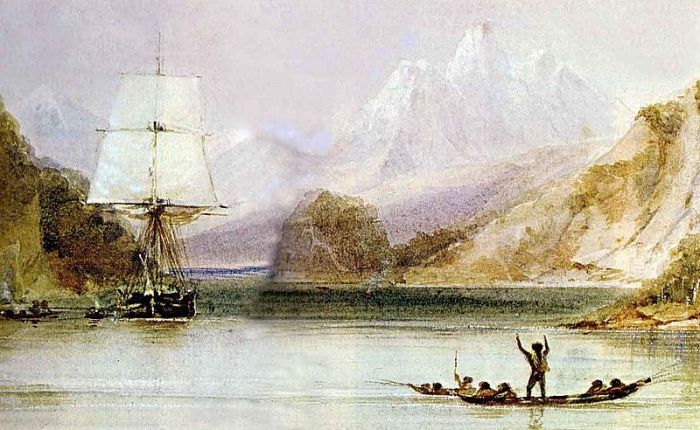
This book is really a rare treasure. Is there anything comparable? Here we have the very man whose ideas have revolutionized completely our understanding of life, writing with charm about the very voyage which sparked and shaped his thinking on the subject. And even if this book was not a window into the mind of one of history’s most influential thinkers, it would still be entertaining on its own merits. Indeed, the public at the time thought so, making Darwin into a bestselling author.

I can hardly imagine how fascinating it would have been for a nineteenth-century Englishman to read about the strange men and beasts in different parts of the world. Today the world is so flat that almost nothing can surprise. But what this book has lost in exotic charm, it makes up for in historical interest; for now it is a fascinating glimpse into the world of 150 years ago. Through Darwin’s narrative, we both look out at the world as it was, and into the mind of a charming man. And Darwin was charming. How strange it is that one of today’s most vicious debates—creationism vs. evolution, religion vs. science—was ignited by somebody as mild-mannered and likable as Mr. Darwin.

His most outstanding characteristic is his curiosity; everything Darwin sees, he wants to learn about: “In England any person fond of natural history enjoys in his walks a great advantage, by always having something to attract his attention; but in these fertile climates, teeming with life, the attractions are so numerous, that he is scarcely able to walk at all.”

As a result, the range of topics touched upon in this volume is extraordinary: botany, entomology, geology, anthropology, paleontology—the list goes on. Darwin collects and dissects every creature he can get his hands on; he examines fish, birds, mammals, insects, spiders. (Admittedly, the descriptions of anatomy and geological strata were often so detailed as to be tedious; Darwin, though brilliant, could be very dry.) In the course of these descriptions, Darwin also indulged in quite a bit of speculation, offering an interesting glimpse into both his thought-process and the state of science at that time. (I wonder if any edition includes follow-ups of these conjectures; it would have been interesting to see how they panned out.)

In retrospect, it is almost unsurprising that Darwin came up with his theory of evolution, since he encounters many things that are perplexing and inexplicable without it. Darwin finds fossils of extinct megafauna, and wonders how animals so large could have perished completely. He famously sees examples of one body-plan being adapted—like a theme and variations—in the finches of the Galapagos Islands. He also notes that the fauna and flora on those islands are related to, though quite different from, that in mainland South America. (If life there was created separately, why wouldn’t it be completely different? And if it was indeed descended from the animals on the mainland, what made it change?)

Darwin also sees abundant examples of convergent evolution—two distinct evolutionary lines producing similar results in similar circumstances—in Australia:

A little time before this I had been lying on a sunny bank, and was reflecting on the strange character of the animals in this country as compared with the rest of the world. An unbeliever in everything but his own reason might exclaim, ‘Two distinct Creators must have been at work; their object, however, has been the same & certainly the end in each case is complete.’

More surprisingly, Darwin finds that animals in isolated, uninhabited islands tend to have no fear of humans. And, strangely enough, an individual animal from these islands cannot even be taught to fear humans. Why, Darwin asks, does an individual bird in Europe fear humans, even though it is never been harmed by one? And why can’t you train an individual bird from an isolated island to fear humans? My favorite anecdote is of Darwin repeatedly throwing a turtle into the water, and having it return to him again and again—because, as Darwin notes, its natural predators are ocean-bound, and it has adapted to see the land as a place of safety. Darwin also manages to walk right up to an unwary fox and kill it with his geological hammer.

You can see how all of these experiences, so odd without a theory of evolution, become clear as day when Darwin’s ideas are embraced. Indeed, many are still textbook examples of the implications of his theories.

This book would have been extraordinary just for the light it sheds on Darwin’s early experiences in biology, but it contains many entertaining anecdotes as well. It is almost a Bildungsroman: we see the young Darwin, a respectable Englishman, astounded and amazed by the wide world. He encounters odd creatures, meets strange men, and travels through bizarre landscapes. And, like all good coming of age stories, he often makes a fool of himself:

The main difficulty in using either a lazo or bolas, is to ride so well, as to be able at full speed, and while suddenly turning about, to whirl them so steadily about the head, as to take aim: on foot any person would soon learn the art. One day, as I was amusing myself by galloping and whirling the balls round my head, by accident the free one struck a bush; and its revolving motion being thus destroyed, it immediately fell to the ground, and like magic caught one hind leg of my horse; the other ball was then jerked out of my hand, and the horse fairly secured. Luckily he was an old practiced animal, and knew what it meant; otherwise he would probably have kicked till he had thrown himself down. The Gauchos roared with laughter; they cried they had seen every sort of animal caught, but had never before seen a man caught by himself.

At this point, I am tempted to get carried away and include all of the many quotes that I liked. Darwin writes movingly about the horrors of slavery, he includes some vivid description of “savages,” and even tells some funny stories. But I will leave these passages to be discovered by the curious reader, who, in his voyage through the pages of this book, will indulge in a voyage far more comfortable than, and perhaps half as fascinating as, Darwin’s own. At the very least, the fortunate reader need not fear exotic diseases (Darwin suffered from ill health the rest of his days) or heed Darwin’s warning to the potential traveler at sea: “If a person suffer much from sea-sickness, let him weigh it heavily in the balance. I speak from experience: it is no trifling evil which may be cured in a week.”

View all my reviews

Review: Letters from a Stoic

Review: Letters from a Stoic

Letters from a Stoic (a selection)Letters from a Stoic by Seneca

My rating: 4 of 5 stars

Philosophy is good advice; and no one can give advice at the top of his lungs.

One of the most persistent criticisms made of modern philosophy is that it isn’t useful. The critics have a point. Modern philosophy largely concerns itself with a variety of theoretical problems. Even though many of these problems do have practical ramifications, many do not; and regardless, the debates can often get so technical, so heated, and so abstract, that it is difficult to see modern philosophy as the path to wisdom it once professed to be. People don’t have time or patience for logic-chopping; they want useful advice.

Those of this persuasion will be happy to find a forerunner and a sage in Seneca. As the opening quote shows, he conceived philosophy to be, above all, the giving of good advice. Seneca thus finds a perfect vehicle for his thought in the form of the letter. Although this book apparently consists of the private correspondence between Seneca and his friend Lucilius, it is obvious from the first page that these were expressly written for publication and posterity. This book should rather be thought of as a collection of moral essays and exhortations.

Even in translation, Seneca is a master stylist. He is by turns intimate, friendly, self-deprecating, nagging, mundane, and profound. He has an enormous talent for epigram; he can squeeze a lifetime into a line, compress a philosophy into a phrase. He is also remarkably modern in his tolerant, cosmopolitan, and informal attitude. Indeed I often found it difficult to believe that the book was written by a real Roman. Montaigne and Emerson obviously learned a great deal from Seneca; you might even say they ripped him off. The only thing that marks Seneca as ancient is his comparative lack of introspection. While Montaigne and Emerson are mercurial, wracked by self-doubt, driven by contrary tides of emotion, Seneca is calm, self-composed, confident.

Perhaps because of his professed aversion to abstract argument, Seneca is not a systematic thinker. Emerson wrote “A foolish consistency is the hobgoblin of little minds,” and Seneca apparently would agree, for there are many inconsistencies to be found in these pages. Sometimes God is conceived of as an impersonal order of the universe, and at other times a personal deity; sometimes Lucilius is advised not to take the opinions of friends and family into account, other times to do so. Seneca’s metaphysical arguments are weak and confused affairs; he is not one for disputation. But for all this, there is a core of good sense contained within these pages, which Seneca himself summarizes:

No man is good by chance. Virtue is something which must be learned. Pleasure is low, petty, to be deemed worthless, shared even by dumb animals—the tiniest and meanest of whom fly towards pleasure. Glory is an empty and fleeting thing, lighter than air. Poverty is an evil to no man unless he kick’s against it. Death is not an evil; why need you ask? Death alone is the equal privilege of mankind.

Like Marcus Aurelius, a prominent statesman in troubled times, Seneca is very concerned with how to be happy in spite of circumstances. There is no satisfaction to be had through external goods, like fame and riches, because these cannot be gotten unless fortune is kind, and fortune is notoriously fickle. Even in good times, this can only lead you into an empty, meaningless competition, valuing yourself for something that isn’t really yours, causing you to ceaselessly measure yourself against others. You must rather become content with yourself, taking pleasure in life whether fortune smiles or frowns: “We have reached the heights if we know what it is that we find joy in and if we have not placed our happiness in externals.”

Of course, this is easier said than done, and Seneca does not have a fully worked-out system for reaching this state. He offers, instead, an unsystematic mass of advice. It is here that Seneca is most charming and helpful, for most other philosophers would not deign to offer such workaday recommendations and observations. Here is Seneca on negative thinking:

The mind at times fashions for itself false shapes of evil when there are no signs that point to evil; it twists into the worst construction some word of doubtful meaning; or it fancies some personal grudge to be more serious than it really is, considering not how angry the enemy is, but to what lengths he may go if he is angry.

It is in these sections, of plain, friendly advice, that I think Seneca is at his best. Certainly not all of his advice is good; every reader will pick and choose what suits them best. But much of Seneca’s advice is timeless, and phrased in deathless prose. Most refreshing is Seneca’s insistence that his advice is for action and not reflection. This is more than slightly ironic, considering that Seneca is often accused of being a hypocrite whose lifestyle was far removed from his doctrines; but, to quote a modern philosopher, “There is no contradiction, or even paradox, in describing someone as bad at practising what he is good at preaching.” So preach on, Seneca.

View all my reviews