Review: Battle Cry of Freedom

Review: Battle Cry of Freedom

Battle Cry of Freedom by James M. McPherson

My rating: 5 of 5 stars

It is amazing how ignorant one can be without knowing it. As a product of the American school system, and a veteran of all 11 and a half hours of Ken Burns’s iconic documentary, I thought that I was in for few surprises when I began this book. But because of deficiencies in either my education or my memory—probably a bit of both—I was constantly surprised throughout this telling of the war, and became absolutely riveted.

Though I am certainly not in a position to judge, I would venture to say that this book simply must be the best one-volume account of the war. It is a remarkable performance on every level. Despite the relatively limited amount of space that McPherson can devote to any one subject, the reader never feels that he is offering a superficial or a cursory account. On the contrary, as in the best overviews of historical events, the whole is greater than the sum of its parts, as each element in the story sheds light on every other.

McPherson shows himself to be a skilled and flexible author. Whether he is analyzing the Confederate economy, or examining the Northern political situation, or explaining the advances in naval technology, or narrating battles and troop movements, McPherson’s prose is steady, clear, and engaging. His grasp of the subject is so strong, and his vision so clear, that the chaos of politics and war plays out on the page with the orderliness of a Victorian novel. The simple act of taking such a huge mass of information and rendering it into something comprehensible—while remaining nuanced and enlightening—is, in my opinion, a great literary accomplishment.

As might be expected, the comforting notion that the war was somehow about states’ rights—and not slavery—does not hold up to even a moment of scrutiny. It is true that the Confederate states, in general, did place a high value on the autonomy of individual states. Yet these states’ support of the Fugitive Slave Act before the war—a huge extension of federal power, allowing the national government to overrule individual state laws to return escaped slaves—shows that slavery trumped this concern. In any case, whenever the states’ rights argument is made, it immediately leads to the question: their right to do what, exactly? (Answer: maintain slavery.)

As a final irony, after vociferously denouncing the use of black troops by the Union Army, and refusing to treat captured blacks as soldiers (either summarily executing them or selling them into slavery), in its final months, the Confederacy considered the use of slave soldiers. This idea was so totally contradictory to their stated values that it produced anger, shame, and confusion among the Confederates. Some preferred simply to give up to the North than to resort to this horrible betrayal of their values. Others admitted that, if blacks could make good soldiers, their entire way of life was based on a lie. Politicians wrangled with the implications of slave soldiers: If they were to fight, shouldn’t they be promised their freedom as a reward? In any case, this handwringing came to nothing, as the Confederacy collapsed before they could put this desperate—and hopelessly contradictory—idea into practice.

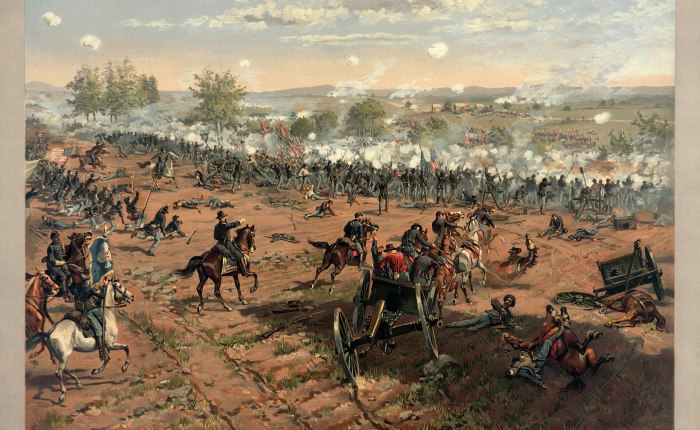
On a purely military level—admittedly, perhaps the most superficial way a war can be judged—the American Civil War is as thrilling and fascinating as any war in history. There were brilliant generals on the Union and Confederate sides whose campaigns are still studied today by would-be commanders. In McPherson’s telling, the main lesson of the war is the wisdom of an aggressive strategy. The first two years of the war, from 1861-63, are marked by defeat after Union defeat under generals (particularly McClellan) who shied away from confrontation, while Southern generals took the initiative. However, when Grant and Sherman—as aggressive as they come—finally took control on the Union side, the carnage of battle went from horrible to simply nauseating, and I began to have some sympathy for McClellan’s reluctance to subject his troops to such slaughter.

In many ways, the American Civil War seems to prefigure the terrible conflicts of the following century. By the end of the war, the basic tactics of the infantry resembled those of the First World War—massed troop attacks against entrenched positions, with predictably horrible casualty rates. The invention of iron-clad ships reminds one of the first tanks, while the Union use of a subterranean mine to break the enemy line in the siege of Petersburg prefigured what became a common strategy in the Great War. On the other hand, the horrible conditions of prisoners of war—particularly in the Confederate camp, Andersonville—are an unsettling forerunner of the German camps in World War II. The photographs of emaciated Union soldiers will look very familiar nowadays. And this is not to mention the millions of enslaved blacks forced to aide in the war effort of their enslavers, another omen of things to come.

And yet, there is a certain horror peculiar to civil wars. I am now, for example, making my way through interviews of civilians and soldiers who lived through the Second World War, and a common thread is how easy it was to hate and fight someone alien—someone who lives far away, speaks a different language, and maybe even looks different. But in a Civil War, neighbors fight neighbors, friends fight friends, and family fight family—not metaphorically, mind you, but literally. It is difficult to understand how a country could devolve to such a point that a boy from Maine is willing to stick a bayonet in the guts of a teenager from North Carolina.

What is even more remarkable, perhaps, is that the country was able to come together after such a vicious conflict. Though the hysterical and uncompromising tone of many of the politicians prior to the war now sound distressingly familiar, I suppose I should derive some hope from the fact that the country survived intact—indeed, became stronger than ever before—after this murderous episode.

Historians are averse to counterfactuals, and perhaps rightfully so. After all, how could you possibly know what might have happened in some imagined parallel timeline? However, I do think it worthwhile to consider these questions, even if precise answers elude us. What would have happened, then, if the South had successfully seceded? In a rapidly industrializing world, in which all of the major powers had abolished slavery or serfdom, how long would the “peculiar institution” have lasted in an independent Confederacy? As valuable as was their cotton, it is difficult for me to resist the idea that they would quickly have ended up an agricultural backwater, increasingly shunned by the rest of the world.

I am getting off track. This is a review of the book, not the war itself. But it is a mark of McPherson’s accomplishment that I cannot stop thinking about this defining conflict. Lately, I have even found myself watching long video tours of the great Civil War battlefields (either a great testament to the book’s value or to my own need to get a life). Of course, in any single-volume work of this kind, there will inevitably be omissions and shortcomings. I would have liked more on the experience of being a common soldier, for example. Yet such criticisms are easy to make, and seem very petty when compared to everything that McPherson has accomplished here. It is a great achievement.


View all my reviews

Review: Means of Ascent

Review: Means of Ascent

Means of Ascent by Robert A. Caro

My rating: 5 of 5 stars


Robert Caro sets his own standard for political biographies, and if this volume was at all lacking for me it was only in comparison to the masterful first volume in this series. But even this is not exactly a fair comparison, as The Path to Power covered Johnson’s formative years—delving into his family history, his marriage, his schooling, his environment, his first working experience, and finally his rise to the House of Representatives. Its scope, in other words, is quite broad.

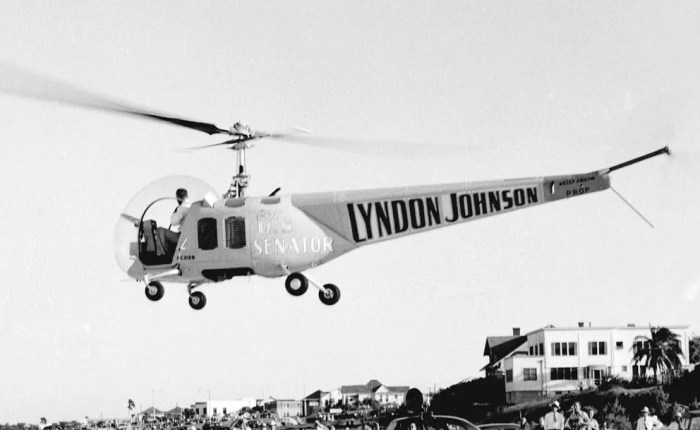
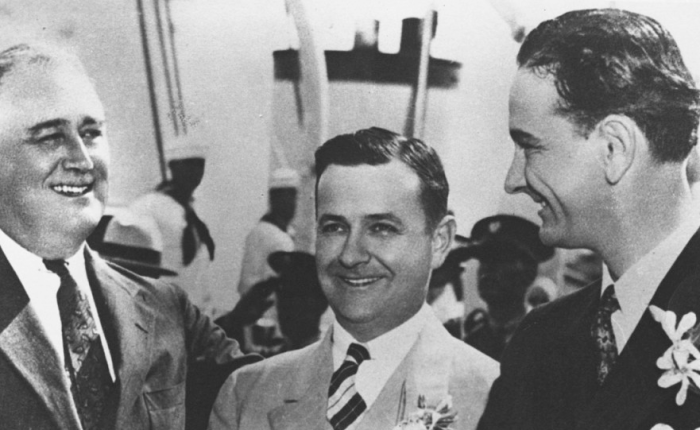
Means of Ascent is a very different book, covering only seven years (1941-48). It is significantly shorter (though still hefty enough), and most of these pages are dedicated to Johnson’s 1948 Senate race. This corresponds to what Winston Churchill called his “wilderness years,” in which Johnson was directionless and cut off from the main arteries of power. He spent some of this time in a non-combat role in the military (and spent the rest of his life shamelessly exaggerating his minimal exploits), some of this time using his connections to get rich through a radio station—and finally got back onto the path to power by stealing a Senate election.

As Caro says repeatedly, Johnson is a complex personality with a strange admixture of the despicable and the admirable—and this book contains precious little of the latter. As a result, whereas in the first volume one could sometimes feel sympathetic for the young man from Texas, here he is little more than a power-grasping villain. Caro himself obviously came to feel disgusted with Johnson’s personality, and his feelings seep through in his descriptions of Johnson’s ample transgressions: his blatant mistreatment—indeed, verbal abuse—of anyone he considers inferior (including receptionists, waiters, his own staff, and his poor wife), his absolute amorality regarding even basic ideals (such as democracy itself), and his willingness to stop at nothing to obtain power.

Caro contrasts Johnson’s personality with that of his opponent in the 1948 Senate election, Coke Stevenson—a man Caro portrays as honest and honorable. And here the esteemed biographer got into a little bit of trouble. While Stevenson may indeed have been upstanding in the sense that he was true to his word, did not bow to lobbyists, did not attack political opponents, and did not seek political office in order to satisfy a lust for power—while all this may have been true, Stevenson was also certainly a reactionary and a racist.

These rather unflattering qualities are given only a passing mention in the book, which may leave the reader with a skewed impression of Stevenson. Caro was roundly criticized for this, and in an article in the New York Times, published in 1991, he responded some of these criticisms. Yet his defense—that the subject of race played little role in the election—while valid as far as historical explanation goes, still does not quite excuse the glowing portrait he painted. Upon finishing the book, it is difficult to resist the impression that Caro himself came to admire Stevenson.

Even so, as abhorrent as I find Stevenson’s views to be, I would still prefer such a man to the Johnson of 1948, who seems to have had no political philosophy, no political aspirations beyond his desire to control people, and—worst of all—no respect for the institution of democracy. Throughout all of the legal battles and maneuvers which allowed him to keep his stolen election victory, Johnson never once betrayed the slightest hint that he might have had misgivings about betraying the will of the people. Indeed, as Caro makes clear, he seems to have been proud of it, virtually boasting of the “victory” in later years.

Now, at this point I will do something very brave—or cowardly, perhaps—and venture a slight criticism of Caro. After so many pages, his writing style is beginning to ware on me. This is because, I think, his primary rhetorical technique is that of superlatives. What I mean is that, for Caro, everything is as extreme as possible. Johnson is not just a sleazy politician, but unprecedentedly amoral; Stevenson is not just a popular governor, but a Texan hero; and so on, and so on. Caro relentlessly emphasizes how extreme every event and experience was—so much so that, by the end, you are begging for something totally ordinary and unremarkable to happen (and no, not superlatively ordinary).

That said, the book is eminently readable and highly enjoyable. Here Caro creates such a memorable portrait of an amoral, power-crazed politician that, had this book been written by anyone else, it would by itself be considered an enduring classic of American political writing. It is only when compared to his other books that this one may seem somewhat light.


View all my reviews

Review: Columbus (Laurence Bergreen)

Review: Columbus (Laurence Bergreen)

Columbus: The Four Voyages by Laurence Bergreen

My rating: 4 of 5 stars


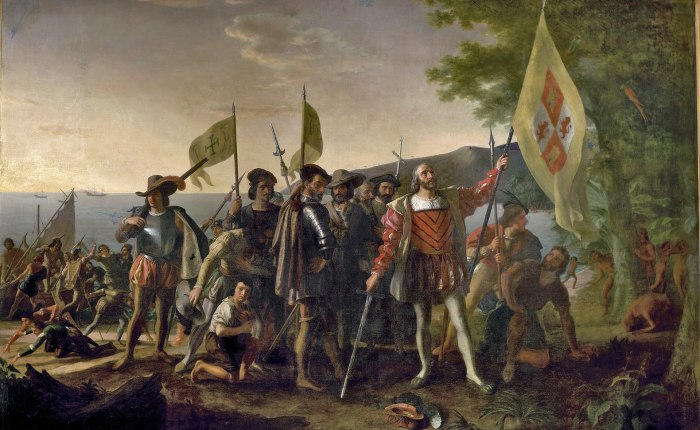
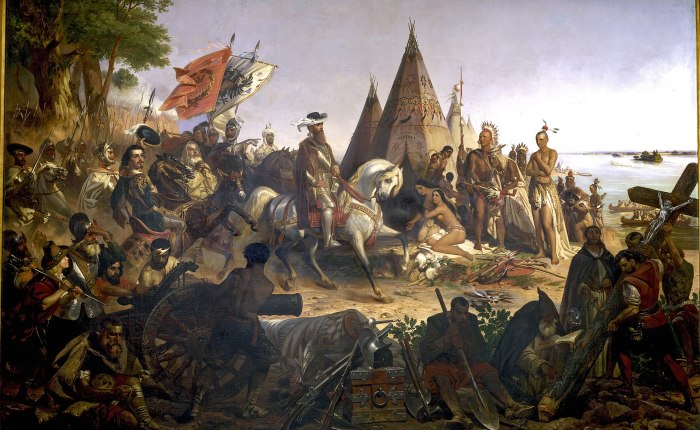
I remember learning about Columbus when I was in elementary school. The story was simple: he was a daring, visionary man who set out to prove that the earth was round, heroically defeating the nay-sayers who thought that he would sail right over the edge of the earth. To the mind of a child, it is a compelling tale. It is also, of course, complete fantasy (to use a polite word). Since those Edenic days of unproblematic national heroes, Columbus has become a much more divisive figure. So I decided I ought to get the real story, hopefully from somebody without an ideological axe to grind.

As I knew from his books on Marco Polo and Magellan, Bergreen is in the business of writing popular histories of famous explorers. This book is up to his usual standards, though the raw material he had to work with is naturally somewhat messier. Both Polo and Magellan were famous for one iconic voyage, while Columbus travelled to the “New World” on four separate occasions. Instead of one grand adventure, then, we get a series of expeditions, each one drearier than the last. By the fourth voyage, I was quite ready to be done with the Genoese explorer.

But I did learn. For example, Bergreen makes it clear that the competing narratives of Columbus have existed from almost the very beginning. There were rumors and accusations regarding his cruelty and incompetence during his lifetime (which resulted in his imprisonment); and not long after his death the great Spanish anti-colonialist, Bartolomé de las Casas, skewered Columbus for his role in the destruction of the native peoples. In short, he was never a universally beloved hero.

Furthermore, Columbus only became a cornerstone of patriotic ideology centuries later. He started to be celebrated in North America, for example, after the Revolutionary War, as the young nation searched for a founding myth that wasn’t so tied to England. In Spain, October 12th (when Columbus “discovered” the New World) did not become a holiday until 1892, as part of the conservative restoration of the Bourbon monarchy. In the United States, it was not made a holiday until 1937.

So, should Columbus Day be celebrated? Insofar as celebrating Columbus is merely a way of celebrating European colonization of the Americas (which certainly seems to be the case), then I think the answer must be a clear no. I don’t think it is possible to learn about the cataclysm that engulfed the native peoples of the Americas—which resulted in millions dead and the disappearance of so many cultures and languages—and think that worth celebrating. Granted, there is a kind of paradox for European Americans in this, since if there had not been a Columbus we would not exist; and it is difficult to wish oneself out of existence. Even so, celebrating the enslavement and elimination of whole peoples does not seem quite right.

Yet what about celebrating Columbus himself? Well, he does not exactly make a good impression in these pages. Certainly he was a bold and determined man, willing to risk his life for an idea (as well as for gold and glory). And his talent as a navigator is impressive. But these positive qualities seem rather pale when compared with his narrow-mindedness, his incompetence as an administrator, his cruelty to others, and his messiah complex. In the course of these voyages he combats several mutinies (with varying degrees of success), strands his own men (to be used as a bargaining chip), and has untold numbers of people enslaved. And even if you focus exclusively on his role as a “discoverer,” it is difficult to celebrate a man who steadfastly refused to acknowledge the truth of what he, in fact, had stumbled upon.

The truth is that Columbus, contrary to what the legend says, did not have a more accurate notion of the earth than the experts of the time. Precisely the reverse: Columbus’s voyage was based on a profound underestimate of the size of the earth. Indeed, it was pure luck that there was an unsuspected continent in the middle of the ocean. If America did not exist, and there were nothing but open sea between Europe and Asia—as he thought—Columbus would almost certainly have died in the enormous expanse of water. And he never even had the good grace to admit his mistake, insisting to the end that he had found a route to Asia, despite the very clear evidence to the contrary.

Of course, the fact remains that Columbus thought to do something that nobody (to his knowledge) had ever done before, and in the process inaugurated a new period of history. Indeed, given the tremendous importance of his voyage, we ought to do our best to understand both the man and the colonial undertaking he stands for. And I don’t think that is accomplished with myths and unreflecting celebration.


View all my reviews

Review: The Gathering Storm

Review: The Gathering Storm

The Second World War, Volume I: The Gathering Storm by Winston S. Churchill

My rating: 4 of 5 stars


When I first learned, many years ago, that Winston Churchill had written a history of the Second World War, I knew that I would have to read it. After all, I grew up watching documentary after documentary about the conflict (before the History Channel was all about aliens, it was mainly Hitler content). Finally, this summer, I found the complete set, cheap, at the Strand bookstore in New York. Looking at the six fat volumes on my bookshelf, I knew that I was in for a long campaign.

The book is, indeed, long (over 700 pages in this edition), but it is a surprisingly fast read. It was written in haste—if “written” is the right word, for most of the book was either dictated or excerpted from official documents—and reads like a series of dispatches or field reports. This is simultaneously the book’s weakness and its great strength. For Churchill does not attempt to give a universal, impartial overview of the war, but rather recreates what it was like for him to be in the thick of it. And although his perspective does impose serious limitations and distortions on the material, it also makes the narrative far more thrilling. The rush of events is palpable.

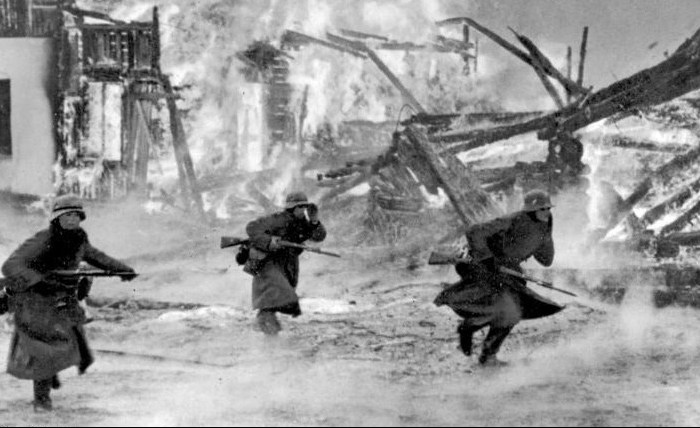
Half of this book is devoted to the buildup of the war. Churchill, to his credit, saw the Nazi threat coming from miles away, and tried again and again to rouse his country into action. Unfortunately, his warnings go unheeded, and Germany is allowed time and space to rebuild its military unmolested. It is truly maddening to contemplate all of the lost opportunities. When Germany invaded the Rhineland, for example—clearly violating the Treaty of Versailles—the French and English could have taken decisive action at a time when the German military was miniscule. But nothing can compare with the infamous Munich Agreement, in which a country capable of defending itself was given away to the Germans, which only further strengthened their military for the inevitable war.

One can imagine how such a book could devolve into a series of self-congratulatory told-you-sos. But Churchill, at least in print, is quite generous to his political opponents. In particular, Chamberlain, the architect of appeasement, comes off rather well in Churchill’s telling—portrayed a resolute, peace-loving man who made some very bad decisions. Indeed, I found Churchill’s narrative voice to be rather odd. He has a kind of boyish fascination with war and weapons, and a jingoistic faith in the British people and their empire. Indeed, although he was so very right about Nazi threat, I can easily imagine myself dismissing such a strong believer in king and country as a war-mongering kook.

But he was not a kook, at least not in this regard. Indeed, in his great attention to detail regarding military matters, and his ability to strike a brave, defiant note at a difficult hour, he proved that he was the right man for the moment.


View all my reviews

Review: American Colonies

Review: American Colonies

American Colonies: The Settling of North America by Alan Taylor

My rating: 5 of 5 stars


This is an exceptional volume of popular history. Few periods, I reckon, are as mythologized and misunderstood as the European colonization of the United States. In my public school, for example, I learned that the heroic Columbus proved the earth wasn’t flat, and that the Pilgrims lived in joyful harmony with the Wampanoag. To be fair, in high school, this ridiculously rosy picture was brought back to earth somewhat. Still, I think that many Americans (and I may still fall into this category) hold onto many misconceptions about our early history.

Taylor begins with Columbus and ends with the Russian and Spanish colonization of North America’s west coast. On the way, he discusses the Spanish conquistadores, the French fur traders, the main islands of the Caribbean, the slave trade, and of course the English colonies along the east coast. Even Captain James Cook and his fateful exploration of Hawaii gets a section. Taylor shows what dynamics in Europe motivated expansion—both the large-scale political and economic considerations, and the push and pull factors that made people want to leave. And, of course, Taylor mentions the many Native American groups who cooperated with and resisted, fought for and against, exploited and were exploited by the incoming Europeans.

This history begins with a calamity on a scale difficult for us even to imagine. European diseases ravaged the indigenous population of the United States, causing a population collapse so dramatic that it makes the bubonic plague seem mild by comparison. There is no way to exaggerate the loss this represents, both in terms of people and their lifeways. However, while Taylor does not minimize this tragedy, he also avoids falling into the opposite error of portraying the natives as innocent nature people. To the contrary, he shows how different groups adapted to European presence, often becoming essential allies and trading partners to the new colonists.

Taylor also gives ample space to that other original sin of America: slavery. It is not pleasant reading. His relatively brief coverage of the conditions aboard a slave ship, for example, is deeply disturbing. But even in this case, he does not ignore the agency of his subjects. He describes, for example, how slaves would subtly resist their overseers by feigning misunderstanding or working inefficiently. I also appreciated his explanations of how slavery operated differently in the Caribbean and on the continental United States, according to climate and economic pressures.

In sum, what emerges from these pages is a vivid portrait of a rapidly changing continent—a complicated story to which innumerable groups contributed. While Taylor does demolish the patriotic myth of heroic and benevolent European colonizers, this book is not simply a hit job. Rather, it is a rich, well-written, and dispassionate account of a one of history’s most consequential periods.


View all my reviews

Review: The Emperor of All Maladies

Review: The Emperor of All Maladies

The Emperor of All Maladies: A Biography of Cancer by Siddhartha Mukherjee

My rating: 5 of 5 stars


I do not consider myself a superstitious person—not even remotely—but somehow I felt a deep reluctance to pick up this book. It may have taken us a long time to figure out the germ theory of diseases, yet the psychology of contagion runs deep. I had the irrational fear that even learning about cancer would somehow unleash it into my life.

But turning away from frightful things is not a good way to live. And, anyway, even though there is a lot of sadness in this book, and a lot to stoke your fears (perhaps it is best to avoid if you have a tendency toward hypochondria), but this is basically a story of innovation.

Mukherjee moves through surgery, radiation therapy, chemotherapy, cancer prevention, and modern targeted drugs, showing how each arose and developed in response to different sorts of cancer and out of the science and technology of the moment. It is a vast story, which includes the development of anasthesia and antibiotics, the discovery of genes and chromosomes, the first research into radioactivity, and the campaign against smoking. To use the obvious metaphor, it is a war waged on multiple fronts.

The challenges are manifold. I had naively thought that all cancer was basically the same disease, with its subtypes just minor variations. But it turns out that there is enormous genetic and chemical variety among cancers, so that a treatment effective for one may do little for another. Indeed, even for a single type—breast cancer, say—treatment can be unpredictable. This is what makes the story of doctor’s attempt to treat the disease so riveting, as it feels like a battle between two equally wily antagonists. At several points in this history, doctors attempt extreme cures—radical surgeries, or nearly fatal doses of chemotherapy—only to be defeated. Meanwhile, the victories can be as modest as a remission of just a few months.

It is probably best not to philosophize about a fatal disease, but there does seem to be a lot of irony in our quest to defeat cancer. For one, it has only become so prevalent in the modern period, because we have started living so long. Its appearance as the great killer, then, is a kind of perverse mark of progress. Further, there is the irony of trying to fight what is, in essence, a corrupted version of ourselves—a group of renegade cells which have figured out how to replicate and survive even better than our own body. There is great scope for metaphor here, but if there is a moral to cancer then I don’t think it is a simple one.

Mukherjee does an admirable job weaving a potentially chaotic and depressing story into something coherent and even hopeful. Though the book is composed of history, science, and his own experience as a doctor, these different threads reinforce one another rather than clash. The clinical anecdotes are sparing—just enough to connect the past to the present—and his thumbnail explanations of science are lucid and illuminating. But, most important, despite the many tragic deaths which litter these pages, the final impression is of how much can be accomplished when a researcher’s diligence, a doctor’s pledge to save life, and a patient’s will to live work together, generation after generation.


View all my reviews

Review: The Path to Power

Review: The Path to Power

The Path to Power by Robert A. Caro

My rating: 5 of 5 stars


Last winter, I went to the Film Forum in Manhattan with some friends to see the new documentary about Robert Caro and his famous editor, Robert Gottlieb. It was a wonderful experience on many levels. The documentary was fascinating and inspiring—the story of two people who, in quite different ways, have lived fully dedicated to literature—and it was the perfect place to see it, in the heart of Caro’s and Gottlieb’s city, surrounded by other New Yorkers.

Gottlieb comes across as a lovable and brilliant person (he has, sadly, since passed away at the age of 92), but Caro comes across as something superhuman, an embodied intellectual force. The name of the documentary, Turn Every Page, aptly summarizes what makes Caro so special: the meticulous, obsessive, even demented attention to detail—the determination to get to the heart of every aspect of every story, to never be satisfied with half-truths or empty explanations. And then, once he has gathered together his facts, this relentless attention is focused on the writing. For Caro is not satisfied with merely presenting us with his (always impressive) research. He is determined—again, maniacally so—to make us understand on a deep emotional level what each of these facts mean.

All of these qualities are fully on display in this, the first book of Caro’s monumental biography of the 36th president of the United States. As a political biography—a record of the accumulation and use of power—the book is peerless. Caro traces how Johnson, by sheer force of his personality, went from a rural boy with little education and less money to a member of Congress in just a few years. His chapters on Johnson’s elections alone—his campaign strategies, his fundraising, his advertising—are a goldmine for any political historian, and eye-opening for even the most cynical of readers.

Yet everybody knows that Caro is a master of political biography. What surprised me most was how brilliant this book was in other respects. His descriptions of the Texas Hill Country, for example—its climate, its soil, its weather—often rise to such a level of poetry that I was reminded of John Steinbeck. And his chapter on life in the Hill Country before electrification—the difficulty of even simple chores like washing and ironing—is so empathetic that it brings this experience to life as powerfully as even the most gifted novelist could manage.

Aside from this wonderful scene-setting, and aside from the incisive history, this book is of course the study of a personality. And it is a peculiar one. Indeed, underneath all of the historical detail, I think there is a very basic moral conundrum at the heart of this book. It is, in short, that Johnson is successful and effective—indeed, often a force for good—while being personally unlikeable and morally vacuous.

Caro goes to great lengths to illustrate the uglier sides of Johnson’s character. His urge for power is so great that it trumps every other consideration in his life: love, loyalty, ideals, friendship, ethics. When he is stealing elections, betraying friends and allies, and cheating on his wife, not once does he give evidence that he even possesses a conscience. And yet, in his quest for power, he educates children, helps the unemployed find jobs, secures money for veterans, and electrifies his district, among much else.

This paradox is illustrated in Johnson’s treatment of his secretaries. While he worked as a congressional assistant, Johnson went to great lengths to help the constituents of his district—far more than any ordinary assistant could or would. But this unusual effectiveness was achieved by working his own secretaries to such a degree that they could not have any life outside of work, and one had a nervous breakdown and fell into alcoholism. This is a consistent pattern: the specific people close to Johnson are used as tools for his own advancement, while the abstract people out in the world benefit from his obsessive work ethic.

To put the matter another way, Johnson seems to violate every ethical precept I know regarding the treatment of others, and lives in total contradiction of every piece of advice I know regarding wise and good living. Johnson comes across as a miserable person destined to share his misery with the world. But it becomes clear that Johnson’s personality type is perfectly suited for politics, and he achieves almost instant success when he enters that field. Indeed, one gets the impression that everyone else in Washington D.C. is just a toned-down version of Johnson—equally as power-hungry, but not as effective.

Somehow, we seem to have a system designed to elevate people whom most of us would find repulsive. Maybe this is inevitable, as the people who most desire power are the ones most likely to get hold of it. Perhaps the best thing to do, then, is to hope that the institutions are set up in such a way that, as in the case of Johnson, these driven individuals end up having beneficent effect on society. And yet, this does seem like an awfully risky strategy.

In any case, as I hope you can see, this is a superlative book, excellent on many levels. It is, in fact, among the select class of books that can forever change your outlook.


View all my reviews

Review: The Story of Civilization

Review: The Story of Civilization

The Complete Story of Civilization by Will Durant

My rating: 5 of 5 stars


I have finally done it. Eight years, eleven volumes, nearly 15,000 pages and millions of words. It is certainly the longest thing I have ever read as well as the most educational. I have already left a review of every individual volume. Some are stronger than others—I would rank Volume 1, on Asia, as the worst, and possibly Volume 4, on the Middle Ages, as the best—but in general the quality is consistent and the books have the same strengths and weaknesses.

(Though half of the books are credited to both Will and Ariel Durant, I think it is clear that Will did most of the actual writing, so I will be referring to him. However, I do not mean to diminish the great contributions of Ariel to this project.)

First, I want to emphasize that these books are not a history in the conventional sense, as an attempt to understand the past on its own terms and explain why it developed in the way it did. Judged as such, the books are certainly a failure. And, in any case, Durant did not do any primary research for this work and makes no pretentions to original findings. Yet whatever might be his professions to the contrary, Durant is really writing as a popularizer—specifically, as a popularizer of European capital-C Culture. Enough political, economic, and military history is given to serve the reader as a basic background. But the central figures of the book are artists, writers, poets, musicians, scientists, historians, philosophers, as well as the rulers who directly or indirectly promoted these creators of Culture.

Judged as a popularizer of these figures—from Plato to Voltaire, from Homer to Lord Byron, from Palestrina to Beethoven, from Giotto to Goya, from Pythagoras to Newton—Durant is remarkably successful. And this is due as much to his strong mind as to his fluent prose. His books, though long, are well-organized and well-written. His prose is urbane without ever being taxing to read, and each page has at least one unexpected detail, one memorable anecdote, or one amusing aside. He is, in a word, companionable. While he often veers into abstruse territory his writing is never dense, yet neither does he give the impression—as so many current popularizers do—of writing in a dumbed-down style.

And, somehow, Durant’s writing is also extremely easy to remember. I have gone over sections long after reading them to find that I had retained a great deal of the information. Thus, reading this books gives one the pleasant sensation of downloading information directly into one’s brain.

Durant is also versatile. The number of topics covered in these books is innumerable—architecture, fashion, music, war, the list goes on—but Durant always succeeds in making the subject interesting and transparent. And he is reliably amusing when writing of the eccentricities and personalities of the legions who march through these pages. This, indeed, is what makes the books so readable: it is not a series of processes, epochs, or events, but of individuals actively shaping their own lives. (This is also, of course, what makes the books questionable history, as the wider social, cultural, and economic forces at play are given little consideration.)

Durant begins the series by examining what he regards as the elements of “Civilization.” His list is not surprising (or entirely convincing): writing, morals, government, religion, laws, etc. Yet for most of the series, his main theme—if he can be said to have one—is the conflict of religion and reason. As the thinkers of the series gradually lose their respect for organized religion, Durant continually wonders whether society can function if the populace loses their belief in hell, since the basis of morals will be removed. To me this seems somewhat insulting and, in any case, rather uninteresting. As a general rule, the most secular countries enjoy relatively low levels of crime, so the idea seems to be obviously untrue.

There are some other peculiarities of Durant’s writing. He often discusses “sexual morality,” and takes care to note how frequently this or that person committed adultery. True, the many tales of unfaithfulness to add the only dash of scandal in these otherwise staid pages. Even so, I found Durant’s tendency to judge his subjects based on their love lives to be rather distasteful—and ironic, considering that Durant’s own marriage would certainly not be considered “moral” nowadays. (He married Ariel when she was 15 and he was 28. She had been his student.)

The series has other shortcomings, of course. The most glaring is that it is Eurocentric; and, besides, it is a classic example of a “great man” history (the vast majority of the protagonists are men).

Even so, I do think that, read in the right spirit, The Story of Civilization is a tremendous resource for those, like me, who were not taught any of these things—the history of art, literature, philosophy, among much else—in school. It is a kind of remedial education, and a very good one.

Durant is not the same sort of writer as Gibbon, Burkhardt, or Thucydides—a scholar who shines new, unexpected light on the past. He is, strangely, far more akin to Rick Steves. This may sound slightly insulting, and the writer certainly provides more breadth and depth that the tour guide. But the two of them have the same mission: to allow people (mainly Americans) to appreciate the wealth of Western culture. Indeed, The Story of Civilization was extremely useful to me as I traveled around Europe, just as it helped in my journeys through literature and philosophy. Durant will not make you an expert but he will at least point you in the right direction.

In this way, these books were created in the same spirit as art museums or public classical music radio: to bring Culture to the people. The idea does seem somewhat antiquated now. Collectively, we have lost faith in Culture. And I can see why. Highly cultivated men have committed atrocities, while the most ignorant have led saintly lives. And, in any case, our definition of what counts as Culture has widened so much—has been so thoroughly democratized—that it hardly specifies anything now.

Even so, it is worth remembering that everything we enjoy today is the product of a long and rich tradition. And even if it seems stuffy or snobby to say so, I think it is still very much worth it to acquaint oneself with this heritage. Not to become “better” people, but to fill our lives with beauty.


View all my reviews

Review: Hiroshima

Review: Hiroshima

Hiroshima by John Hersey

My rating: 5 of 5 stars


This is certainly one of the great books of the previous century. It is superlative in many respects. Most obvious is the book’s historical value, which needs no further elaboration. Hiroshima is also a stylistically innovative and influential book, pioneering the dramatic writing techniques that would come to characterize some of the best journalistic writing after the war. And Hersey also deserves praise for his stylistic restraint. Virtually no event could have been more liable to evoke overwrought prose or vain attempts to capture the broad sweep of the tragedy. Hersey’s decision to focus on only six survivors, and to narrate what they saw with simple directness, was an act of great authorial self-control.

But this book is great for more important reasons than these. The power of atomic weapons is such that most of us can barely imagine it, much less picture ourselves their victims. Thus, as with many historical atrocities, the stories of survivors bridge the gap between imagination and experience, and allow us—at least dimly—to grasp the extent of the horror. Merely being faced with the reality of the bomb is enough to make a point. Without any explicit preaching, Hiroshima utterly convinces us that weapons which wreak such indiscriminate violence and widespread destruction have no possible rational use, even in war.

Last, the book is a wonderfully humanistic document. The people in this book were struck with a weapon they did not even suspect existed. They lost their homes, churches, and businesses, and they lost parents, children, spouses, and friends. And yet Hersey shows how these ordinary people often proved capable of extraordinary heroism and resilience, not only in the immediate aftermath, but in the years that followed. I found this especially moving, as I am often ashamed of my own inability to deal calmly with petty frustrations and minor setbacks. Books like this may not make me any wiser, but they at least leave me with a little hope—for myself, and for us all.


View all my reviews

Review: Over the Edge of the World

Review: Over the Edge of the World

Over the Edge of the World: Magellan’s Terrifying Circumnavigation of the Globe by Laurence Bergreen

My rating: 5 of 5 stars


I am a sucker for books like this—stories of survival and exploration—and this one must be among the best. It has everything: wild orgies, bloody battles, mutinies, shipwrecks, torture, disease, treasure—and all of this excitement is woven into a historically significant tale. Indeed, aside from being just a darn good story, Magellan’s voyage provides an insightful window into its time: the state of navigation, of European politics, and of global trade, as well as a snapshot of early European encounters with other cultures (it did not go well).

Magellan was arguably a victim of the same misconception that misled Columbus: namely, that the earth was significantly smaller than it really is. Just as Columbus believed that he could make it to Asia simply by heading straight across the Atlantic, so did Magellan believe that the spice islands would be within a few days or, at most, weeks sail beyond South America. Both were mistaken, though for Magellan’s crew the consequences were significantly more dire.

In the 99 days at sea between the strait which now bears the explorer’s name, and their first landfall at Guam, nineteen sailors died of scurvy, and many others fell gravely ill. (Of the 270 sailors who set out on the voyage, 173 would die, 55 would desert, 12 would be taken prisoner, and only 30 would successfully complete the circumnavigation.)

In retrospect, it is difficult to believe that Europeans could remain so ignorant for so long about the causes of the disease (vitamin C deficiency). Somehow, it did not even cross the sailors’ minds that their diet of biscuits and dried meat could be the cause of their ill health. Even seemingly obviously sources of evidence—such as their quick recovery upon eating fresh fruit, or the seeming immunity from the disease of all those (like Magellan) who were eating preserved quince—did not provoke any sort of epiphany. Instead, the sailors vaguely chalked up the disease to “bad air.” This is an illustrative moment in the history of science, for it shows how background assumptions and beliefs shape the sorts of things we are inclined to view as pertinent evidence.

Indeed, many aspects of this voyage strike the modern reader as absurd. For one, the expedition’s main objective was the acquisition of spices—namely, cloves, nutmeg, and cinnamon. Considering that virtually anyone can now obtain each of these spices in a supermarket for a pittance, it beggars belief that so many sailors would risk their lives for such a purpose. At the time, these “exotic” spices were only grown in a few islands in the Pacific Ocean, and were thus rarer and more valuable than gold. Nowadays, in the age of factory farming, this is obviously not the case—a vivid lesson in supply and demand. What used to be the quintessential marker of extreme wealth are now the standard components of a pumpkin spice latte.

Another absurdity is that Magellan never intended to circumnavigate the globe. Thinking that the spice islands (the Moluccas) were not very far from South America, his plan was to return the way he came. Instead, he proved that his new route to Asia was entirely impractical, with virtually no commercial prospects whatsoever. The Pacific Ocean (which he named) proved to be both far too big and not at all “pacific.” Ironically, the main accomplishment of the voyage was intellectual—proving, for example, that the earth was far larger than previously thought—which had nothing to do with its original purpose. Certainly, Magellan himself was the furthest thing from a scientist.

If I have one criticism of the book, it is that Bergreen is far too laudatory of Magellan, using words like “heroic” to describe him and his men. The man was undoubtedly impressive: brave to the point of foolhardiness, determined to the point of stubbornness, and a highly skilled navigator. However, he was hardly an exemplary leader. Brutal, cruel, highhanded, he did not inspire any loyalty among his armada. He was almost the victim of a popular mutiny (and, in any case, one ship did sneak back to Spain), and he was possibly abandoned by the bulk of his men during the battle that claimed his life. One can clearly see the shape of European colonization to come in his attempts at mass conversion and his willingness to kill and enslave those he comes across.

It is yet another irony that the man most famous for circumnavigating the globe only got about halfway before dying in an ill-advised and unnecessary battle. Interestingly, though in Spain Juan Sebastián Elcano—the captain who led the survivors back to Spain after Magellan’s death—is almost as famous as Magellan himself, the Basque mariner does not feature prominently in this book. Elcano, for his part, is certainly a less colorful character than the Portuguese commander, though he must have been a skilled leader to have successfully completed the voyage. (He later died of scurvy on another expedition.) In celebration of the 500th anniversary of the voyage (completed on September 6, 1522), there was even a cantata written in Elcano’s honor and performed at the National Spanish Auditorium. Unfortunately, there were no more tickets available, and I missed it.

Yet if this strange and terrible voyage had a true hero, I would argue it was neither Magellan nor Elcano, but the Venetian nobleman, Antonio Pigafetta. A gentleman scholar, he kept a diary of the voyage that has proven to be a trove of information. He was endlessly curious, and made genuine attempts to understand the language and culture of some of the places they visited. It is largely thanks to him that we have such a vivid account of the voyage. And I think a good story is worth all the tea in China—or all the cloves in the Moluccas.


View all my reviews