There are few places a New Yorker can go—especially in Europe—to find truly exotic food. Whether the cuisine is from Italy or Germany, China or Korea, Ecuador or El Salvador, chances are we have tried it—or some Americanized version of it—at least once. But, like many Americans, I was totally taken aback when I moved to Spain. The eating culture struck me as radically different; and the cuisine, if not exotic, was animated by a very divergent approach to cooking.
For a long time, I admit I was not very taken with what I discovered. Like many Americans, I am used to heavy meals with intense flavors, dishes that scorch your tongue and sit in your stomach like an iron weight, and I don’t feel satisfied unless I feel sick and slightly overwhelmed at the end of a meal. Spanish food very seldom produces that sensation. It is generally mild and relatively light. I don’t think I have ever had a dish from a Spanish restaurant I could call properly spicy, and Spanish portions are not usually large enough to produce the semi-comatose post-prandial mood that I was used to.
There are also many things that are simply not to my taste. I am not fond of tuna or hard-boiled eggs, yet nearly every sandwich in the cafeteria in my school has one—or both!—of those ingredients. And in general I cannot stomach as many carbs as the Spanish seem able to do. I am still baffled by bocadillos de tortilla—potatoes on a baguette?—even if I find them delicious; and many times I have been served a heaping plate of rice or potatoes with a side of bread (no meal in Spain is complete without bread), and wondered how Spanish people manage to stay so thin.
I am not the only American to have this reaction. Friends and family have expressed disappointment to me several times regarding the state of Spanish cookery. It is not that Spanish cuisine is bad, of course, only that Americans and Spaniards look for quite different things from food.
One major difference is that Spanish people like to be able to taste the ingredients, to savor the freshness and the quality of the individual elements of the dish, which is why Spanish cooking is often astoundingly simple and mild: both the form and the flavor of the original ingredient are preserved. Americans, on the other hand, like to transform and process ingredients beyond recognition. Another difference is that Spaniards are not so passionately fond of excess, and usually eat until they’re satisfied, not at death’s door. And this is putting aside the difference in Spanish meal times—lunch at two or three p.m., dinner at nine or ten—which I still have trouble adapting to.
Now, I should warn my American readers at this point that Spanish people are extremely proud of their food. Indeed, it seems to be the only thing about their country that Spaniards are unanimously proud of. They will freely denigrate nearly everything else—their government, their universities, their economy—but Spanish cooking is sacrosanct—¡se come bien en España!—and the quickest way to achieve good rapport is to praise the food vigorously. I would also like to mention, in self-defense, that despite some initial misgivings, I have grown to be extremely fond of Spanish cuisine—I swear!
Most cookbooks I’ve looked at—admittedly not many—don’t give an accurate idea of the food you actually encounter in Spain, presenting instead a fusion or haute-cuisine version, but this book is different. Janet Mendel is an American journalist who has been living in the south of Spain for many years now. Her cookbook is the most “authentic” book on Spanish cooking that I have come across. It begins with an overview of the different regions of Spain, moves on to Spanish ingredients, and contains over 400 recipes, as well as a glossary for food terms. The glossary is especially useful, since I’ve found that menus are more difficult to translate than poetry. (In Spanish, food words are particularly variable from country to country, or even region to region, making a Spanish-English dictionary of limited utility when faced with a menu.)
The regional overview is also valuable, for, like everything else in Spain, food can be quite specific to a location. Each major city has its own distinctive dishes; and particular cities—Seville, Logroño, San Sebastian—are famous for their food. The major axis of difference, I’ve found, is between the north and the south. Typically I prefer eating in the north—Cantabria, Asturias, Galicia, and the Basque Country—though there is excellent food to be found all over. In the south, mainly Andalusia, they tend to fry nearly everything, with the exception of the two famous liquid salads, gazpacho and salmorejo, both of which are delicious and refreshing under the brutal southern sun.
The north is far more verdant than the south, and the northern coast is at least equally as good for fishing, which means they generally have fresher ingredients. The Basque Country is the province most famous for its cuisine, and deservedly so, but I am particular to the food of Galicia. If you get a chance, perhaps when hiking the Camino de Santiago, find a pulpería, order some of the Galician octopus—seasoned with the distinctively intense local paprika—and drink the local Ribeiro wine, young and sharp red wine often served in a ceramic bowl. It is an exquisite meal.
Recipes for all these, and more—including all the Spanish classics, like my favorites, cocido, paella, cochinillo, fabadas, croquetas, and tortilla—can be found in this book, in simple and easy-to-follow recipes, along with extensive information on Spanish wines, cheeses, and produce of all kinds. Admittedly, I have not had great luck in my attempts to cook Spanish food, but this was entirely my fault. (My croquettes and my tortilla turned into mush; I am not a good chef.)
My failures notwithstanding, Mendel’s book is excellent, and almost encyclopedic in its coverage of different ingredients and types of dishes, methodically going through every type of meat and fish, including sections on snacks and desserts, with charming little vignettes along the way. She clearly knows Spanish cooking thoroughly, both the typical dishes and the meals for festive holidays, and does not dilute it or change it to cater to foreign palates.
Unfortunately, however authentic the recipe, the dish will not taste exactly right unless you buy the ingredients locally. To pick just one example, pork products play an integral role in Spanish cooking (they say it’s because eating pork differentiated the Catholics from the Jews and Muslims), and you will have a very difficult time finding true Spanish pork in New York. And this is a shame, considering that Spanish jamón is far better than prosciutto, and Spanish chorizo and morcilla (blood sausage) are wonderful flavoring agents for stews. Indeed, for my part I think Spain has the best pork products in the world, not that I would know.
As a parting piece of advice, if you go to Spain try to avoid those omnipresent tourists traps in the city center, with big yellow billboards advertising their paella. I had one of the worst meals of my life at one of these in the Plaza Mayor. You can find many excellent fine-dining establishments in Madrid. But to find more typical food, done well, look for the cheaper, less ritzy places. I can recommend the Café Melo’s—the menu has about six things, and they’re all good—and the Casa Mingo, an Asturian restaurant with famous roast chicken and Spanish cider, that’s right next to the chapel that contains Goya’s remains. And if you’re in Madrid in winter, try La Cruz Blanca de Vallecas for its famous cocido madrileño, a heavy stew of meat and garbanzos.
Well, I’m afraid that’s the best I can offer. I can only add that Spanish food may seem unpromising at first; but once you develop a taste for it and you know what to look for, it is a fascination and a delight.
This is a continuation on my first post about life in Berlin, focusing on the darker side of the city’s history.
Historical Memory
Memory is not passive—either in a person or in a country. We choose what we remember; we can shape how we remember it; and our memories, in turn, shape how we act. History is messy, the truth is neither plain nor simple, and in human affairs there is no such thing as an apolitical fact. Opposing groups emphasize different episodes of history, interpret (or misinterpret) those episodes incompatibly, and sweep aside inconvenient episodes that do not fit their narratives. These narratives are not just background; they provide groups with their identity, giving them a historical trajectory and a goal to strive for. Thus it is not just for the dead, but the living, that we must attend to how history is remembered.
Nowhere is this need more apparent than in Berlin; nowhere can we see more clearly what power historical memory can wield. It is said that knowledge is power, but in history we had better say narrative is power. For the past is past, and not around to refute politicians who twist it to their advantage. The historical past is, to a large extent, a creation of the present; and it is recreated every time a book is written, a speech is delivered, or an article is published in the newspaper. The past that the Nazis created was of a mythic Germany, of a virtuous and heroic people, unduly hampered by foreign elements and racial impurities. The past that the Soviets conjured was of a dark night of bourgeois repression only recently lifted by the liberating proletariat army. As we all know, these narratives gave rise to atrocities—atrocities which, if the narratives had triumphed, we would remember as victories—and thus we are now faced with the task of remembering differently.
For this reason, a trip to Berlin is both horrifying and heartening—horrifying because of the crimes committed there, heartening because those crimes are not being ignored or swept aside. I have mentioned elsewhere that you can visit Madrid and never guess that, less than a hundred years ago, there was a horrendous civil war that ended with mass executions. The same cannot be said of Berlin. Indeed I think Berlin is a model of how historical atrocities should be framed and memorialized. The city has every reason to be proud.
Monuments of Death
The first of these somber monuments I visited was the rather cheerfully named Checkpoint Charlie. The name is really just Checkpoint C (Charlie is the NATO phonetic marker for “C”). Checkpoint Charlie is the most famous border crossing between East and West Germany.
As you may know, defection from East to West was high during the postwar years, particularly among the young and well-educated (not population most countries want to lose). To prevent this, the border between East Germany and West Germany was sealed off, and strict regulations put in place about leaving the country. But for many years the border crossings in Berlin remained much easier to get through (this was because the city was jointly controlled by the four occupying powers), making Berlin a kind of gateway to freedom for many hoping to flee the Soviet Union. All this ended in 1961 with the erection of the Berlin Wall. By that time, East Germany had lost 20% of its population.
In truth the checkpoint isn’t much to look at. It’s a small, white guardhouse with some sandbags sitting out front. There were two men in uniform carrying American flags. I was unsure whether they were actual American soldiers or enterprising men in costume accepting money to pose with tourists. In any case, the most memorable image of Checkpoint Charlie is the sign that says “YOU ARE LEAVING THE AMERICAN SECTOR” in four languages—English, French, Russian, and German. On the other side of the sign, for those entering the American Sector, we are kindly reminded to “OBEY TRAFFIC RULES.”
The official Checkpoint Charlie Museum is nearby. I didn’t go, since I heard mixed reviews. I don’t have anything more to add about this famous landmark, other than that it was strange to be standing in that otherwise entirely ordinary road, and imagine tanks rolling in, diplomats being escorted by soldiers, and the fate of the world hanging on the de-escalation of tensions surrounding this border crossing. In politics, small flames can set off very large explosions. Seen with un-political eyes, Checkpoint Charlie is a shack on a road. Seen with historical eyes, it is one of the axes of world history.
From Checkpoint Charlie it is a five-minute walk to my next monument, the Topographie des Terrors. This is a fairly new exhibit—opened only in 2010—built on the ruins of the old Gestapo headquarters, where their prisoners were tortured and killed. As befitting its name, The Topography of Terrors is an open-air museum dedicated to the history of Nazi atrocities. This history is arranged as a timeline, with plentiful pictures and information panels giving examples and details of the National Socialist regime.
Most of this information will not be new to anyone with a basic knowledge of the Holocaust or the Nazi movement—although familiarity hardly dulls the sickening horror of it all. The museum is more valuable for its ability to convey the atmosphere of the time, especially with the numerous Nazi propaganda posters on display. Nothing sums up an ideology with the stark simplicity of a propaganda poster. We see a hardworking German Aryan worker struggling to work, while weighted down by the lazy inferior races; we see bald-faced incitements to hatred against Jews; we see rallies for the workers at home to fight as hard as the soldiers in the field; and then there are the usual posters warning citizens to black out their lights during air raids and to watch out for spies.
Scattered among the posters are profiles of the fallen. One profile which struck me was of a man with epilepsy, Otto Mathewes, who was put into a sanatorium by his family, sterilized by the Nazis, and ultimately sent to a death camp to be killed. I knew that the Nazis targeted those they deemed racially impure—Jews and Roma—as well as homosexuals; but I did not know that the Nazis would put to death somebody with epilepsy—a treatable disease, or at the very least one that could be managed. For me, as for many, the most perplexing thing about the Nazi movement is how an entire population could be goaded into cooperating with their murderous policies. Most populations, it seems, can be persuaded to go to war, which involves killing outsiders. Yet the Nazis didn’t only wage war, but killed citizens of their own country. Why wasn’t there widespread resistance? Hannah Arendt’s phrase about the “banality of evil” comes to mind; but I suppose this question is not one to be answered with a phrase.
Among the propaganda posters, I found a chart showing the different paths for Nazi youths to follow to become full-fledged Nazi adults—for women, from Jungmädel (young girls) to Mütter und Hausfrauen (mothers and housewives), for military boys from the Hitler youth to the military. Looking at that chart, I feel a mixture of disgust and amusement. Such a regimented society, with caste-like roles and ranks for everyone, is repressive in the extreme. And yet, for all its nefarious intent, this organization strikes me as hopelessly juvenile. Indeed it is even campy, as if the whole country is to be organized like the Boy Scouts. Considering this chart, it is easy to see why many Germans did not consider Hitler a serious threat before he rose to power. His mind was packed full of this stuff—juvenile, campy plans designed to appeal to a boyish desire for ritual, hierarchy, and order. The line between the notions of an oaf and the ideas of an autarch is disturbingly fine—perhaps ultimately just access to power.
The exhibition also includes a model for Welthauptstadt Germania, “World Capital Germania,” the proposed city to be constructed over Berlin after Germany won the war. This plan, drawn up by Albert Speer, is discussed by Robert Hughes in his documentary The Shock of the New as an example of the architecture of power. Everything about the design is meant to provoke awe. The scale is enormous; the proposed dome of the Volkshalle would easily dwarf St. Peter’s and the Pantheon. Again, we see here the big imaginations of little minds. It is the same mixture of a juvenile yearning for order and a boyish admiration of strength that we see in the chart.
Coincidentally, the Topography of Terror is located right next to the longest extant stretch of the outer Berlin Wall. It is little more than a wreck now, so full of holes you can see right through it. That ruin completes the picture of atrocities, giving the visitor a glimpse of what came after the Nazis were defeated.
It is a short walk from the Topography of Terror to the Holocaust Memorial, more properly called the Memorial to the Murdered Jews of Europe. Designed by the American architect Peter Eisenman, it opened in 2005, and is situated near the Brandenburger Tor. The memorial is strikingly abstract. There is no information to be found, no names of victims, no sculptures or symbols, nothing that can provide the visitor context. Instead, the visitor finds a field of concrete slabs, 711 of them, ranging in height from 8 inches to over 15 feet. These slabs are arranged in rows and columns, slightly askew, and the monoliths grow as the visitor enters into the monument.
I admit that my first impression was one of disappointment. There just isn’t much to look at—just identical grey blocks, stretching out like a miniature city. Is the meaningless abstraction of contemporary art really appropriate for commemorating the Holocaust? But I revised my opinion as soon as I walked into the memorial. The blocks slowly grow until they encompass you and limit your line of sight to four narrow passageways. I felt uncomfortable, even unnerved. It is easy to get separated from friends, and difficult to find them once lost. There is no telling who you will see if you turn a corner. Muffled voices come from all directions. I am not prone to this, but I felt a kind of crushing claustrophobia in the monument, a sense of being hopelessly lost and in danger, and I hurried to get out.
As many have noted, the memorial lends itself to many interpretations. The concrete slabs are shaped like coffins, and the rows of blocks strike many as a graveyard. The gradual increase in the slabs’ height as you walk into the memorial, rising until all lines of vision are cut off, is symbolic of the gradual limiting of the Jews’ options as the Nazis stripped them of rights, property, liberty, and life. The mechanical regularity of the slabs suggests the inhuman efficiency of the Nazi killing machine. But more important than these interpretations is the feeling evoked by the monument, the uncomfortable, suffocating feeling of being trapped. It is a cold and comfortless place, although kids are often found playing hide-and-seek within. Indeed the monument invites use as a playground, and it is easy to imagine people skipping from block to block and dashing through the columns. And perhaps this, too, forms an essential part of the monument, showing us that children can turn even bleak concrete into innocent fun.
The monument does not impress everyone; it has been controversial from the beginning. Richard Brody wrote a piece in The New Yorker criticizing the memorial for being too vague and for not including the names of the victims. (As he notes, the names on display in an information center under the slabs, along with other documents about the atrocity. But this information is not well marked, and both Brody and myself missed it.) More recently there was a social media story about Shahak Shapira, who took pictures of tourists taking selfies in the memorial, and juxtaposed them with images of the holocaust—terming it the ‘yolocaust’. I admit that it doesn’t surprise me that people take selfies at the memorial. Nowadays, people will take a selfie with the murderer who just broke into their house, and spend their final moments counting likes.
For my part, I thought it was a moving and effective work of art, even though I was skeptical at first. While I can see why some criticize the lack of names or context, I think the silence of the memorial is what gives it such emotional power; it is a silence that invites us to contemplate the absence of all those men, women, and children, those who were taken and can never return.
Berlin’s other famous memorial is not within easy walking distance. The Berlin Wall Memorial (Gedenkstätte Berliner Mauer) is located to the north, next to another surviving section of the wall. It was opened to the public in 1998, within a decade of the reunification. It is much more “traditional” than the Holocaust Memorial, with explicit messages, historical recreations, and information about the victims. Nearby is the Chapel of Reconciliation, an oval-shaped church made of thin strips of wood—you can see through the walls from the inside—built over the foundations of an older church demolished to make way for the wall. A statue of a man and woman in a desperate embrace reminds us how many families were split by that barrier.
The main attraction of the memorial is a section of the wall reconstructed to look as it would have when it was dividing the city in two. This recreation is bounded by two high steel walls, preventing visitors at ground level from looking inside. The viewer needs to climb a tower across the street, right next to the memorial building, and look down from above. From there you can see that the Berlin Wall was really two walls, an exterior and an interior, both of the same drab gray appearance. It is steel-reinforced concrete, too tall to climb easily, too strong to ram with any normal car. Between the two walls is what was called the “death strip,” an empty area full of gravel raked smooth, with a small road running through the center so that army vehicles could quickly move to different sections. This strip was deadly because any potential escapees would be totally exposed there, easily visible to those in the guard tower nearby. There is no cover from searchlights or from firearms. Street lights kept it constantly illuminated. Caught there, you would be a sitting duck.
Although it was a beautiful sunny evening, and although it is surrounded by green parks and bushy trees, the wall section struck me as inhuman, dreary, and squalid. It is the picture of homicidal efficiency—a barrier designed with intelligence and foresight to accomplish immoral ends. The same question occurs to me here as occurred to me at the Topography of Terror: How could people—presumably normal, neighborly people—be persuaded to build something like this? The sheer absurdity of building a wall to keep people in rather than out, to stop an exodus of people fleeing from their own country, must have struck everyone involved. And yet the wall was built, construction crews dragged the concrete into place, soldiers manned the watchtowers, and government officials devoted time and energy to its maintenance and improvement.
Inside the memorial center are old letters, recorded interviews, and information panels about those whose lives were affected by the wall. There are stories of people fleeing, being caught in the attempt, and getting shot down by guards. One famous escape story is of Wolfgang Engels, who stole an armored personnel carrier and rammed it through the wall, getting shot in the process but making it out alive. East German Soldiers at the wall were instructed to shoot anyone attempting to cross, even women and children. Nevertheless, about 5,000 people successfully escaped; well over 100 were killed in the attempt. Some of the escapees dug tunnels, some even flew balloons—indeed, the last casualty of the wall, Winfried Freudenberg, died in 1989 when he fell from his homemade balloon. Guards on the Western side could not help anyone on the death strip, or they risked being fired on by the East German guards. This led, most famously, to the death of Peter Fechter, who was shot in the death strip and left to bleed to death, as hundreds looked on from both sides.
The last place I visited was the Berlin-Hohenschönhausen Memorial, an old Soviet and then Stasi prison. This is situated far away from the other major sites, in the east of the city. But it is well worth the trip. The only way to visit the prison is on a guided tour. My tour guide, a young woman, was excellent—extremely knowledgeable and compelling. According to her, some of the guides are actually former inmates in the prison. In any case, I can say that it was one of the best guided tours of my life. My visit was both informative and moving, and I hope you get a chance to go.
As I said, the Berlin-Hohenschönhausen is a prison formerly used by the Soviets and the Stasi. Before that, it was used by the Nazis as a communal kitchen. When the Soviets conquered Berlin, the building was used hold prisoners—accused Nazi collaborators. The building was not designed for this. The Soviets put their prisoners in the food cellars in the basement—big subterranean rooms with no windows. Conditions for prisoners were atrocious. The cells were unheated and terribly cold in the winter. The Soviets did not distribute clothing to the prisoners, so if they were unlucky enough to be thrown in without a coat, they had no recourse but to freeze. The cells had no bathroom, only a single chamber pot—without even a lid, so the place constantly reeked—that was seldom emptied. Soldiers had no showers, and no medical attention. If memory serves, the guide said they were fed once a day, and poorly. Death from starvation, cold, and sickness were common. Beatings and other forms of torture were used to extract confessions. Conditions were so inhumane that many attempted suicide; but since there was nothing in the cell, no sharp objects or chords, even this was difficult.
Conditions improved somewhat when, in 1951, the Stasi took over. Instead of using the old food cellars, they built an actual prison building. The cells were above ground, with windows, and had a toilet, a sink, and a mirror. The guards didn’t carry guns, for fear that the prisoners might steal one. In the hallway outside the cells, running along the wall, is a chord that, if tugged, sets off an alarm. Prisoners were not allowed to speak to each other, or even exchange glances, outside the cells. According to the guide, the Stasi used psychological forms of torture more often than beatings. Interrogators would try to gain the prisoner’s confidence, to use a mixture of threats and friendliness to get what they were after. Sometimes more stringent forms of torture was used, like sleep deprivation. In any case, prisoners had to sleep with their arms outside the blanket; and guards would come several times a night to shine a light inside the cell, checking that their arms were in view. The only outside recreation they were allowed was in what was called the ‘tiger cage,’ a small enclosure with high walls and a caged roof.
Incredibly, the prison was completely unknown to the public while it was in use, even though it is a large compound in the capital. This is partly why it remains standing in such pristine condition. Almost nobody knew about it; so after the fall of the Berlin Wall, angry demonstrators didn’t come pouring in the gates. Part of the tour included the unmarked van used to pick up prisoners without detection. According to the guide, after the wall fell, former prisoners sometimes bumped into their erstwhile interrogators. In one anecdote she recounted, the interrogator refused to apologize; but in another, the interrogator said he was sorry for what happened.
I have recounted the tour as best as I remember it; but this brief summary does not capture the feeling of standing in those dark cells, seeing the interrogation rooms—eerily office-like—and thinking of all the people who suffered and died here while their loved ones waited in total ignorance of their whereabouts. The whole environment was designed to be dehumanizing, to make life as uncomfortable and as fearful as possible for the inmates.
This completes my short experiences with the somber memorials of Berlin. There is not much more to be said. I left Berlin with a keen awareness of the terrors that took place within recent memory, and with a deep respect for the citizens’ commitment to remembering these terrors. These monuments are built to commemorate crimes, crimes that reveal the lowest depths of our nature. That these monuments were built—in the very heart of the country where these crimes took place—shows us the heights we can rise to.
Prose writers are voluminous and unwieldy; their pages crowded with commonplaces, and their thoughts expanded into tediousness.
I am a child of Sleepy Hollow, New York, and I have lived in Irving’s shadow almost as long as I can remember.
Every Halloween, this town is inundated with tourists, who come to wander around the lovely old cemetery where the legend is set, and where Irving himself is buried. Behind my house is where they put on the “haunted hayride.” I went every year as a kid. A pickup truck drags groups of twenty in a trailer through a stretch of forest, where volunteers dressed in masks jumped out and scared the kids half to death. And of course no hayride was complete without the headless horseman himself, riding out of the shadows on a black horse with a jack-o’-lantern on his knee.
The town nextdoor is called ‘Irvington’ in Washington Irving’s honor, and it is there that his old house, Sunnyside, is situated. The house is a delightful little dwelling, a small jumble of architectural styles—gothic, Dutch, Spanish—overlooking the Hudson River. Irving was an amateur architect and landscaper, very much of the Romantic school, and re-made the old farm he bought into a charming park, with a little pond, a babbling brook, and paths that wind through the forest nearby. On the property is a sycamore tree that has been growing since 1776, seven years before Irving himself was born.
When Irving bought the property, he had unimpeded access to the river; but that changed when, ten years later, the Hudson Line railroad was built at the river’s edge. Nowadays, trains rattle by every ten minutes or so. All the old train cars have names printed on their sides; and as I sat there on a recent visit, I saw that one of the cars on the passing Amtrak was named “Washington Irving.” He is simply everywhere. There is a statue of Rip Van Winkle outside the Irvington Town Hall Theater. On the walk back to my house I passed by the Washington Irving Middle School, which I attended, the Tarrytown High School, where our football team is the Horsemen, and the Christ Episcopal Church, where Irving himself worshiped, and where his pew is still preserved.*
Right outside Philipsburg Manor—an old colonial farm that now serves as a historical site—is an ugly metal sculpture of the Headless Horseman. Right next to it is where the old bridge stood where Ichabod Crane met his fate. There is not much to see now, just a modern concrete construction. But if you keep walking into the Sleepy Hollow Cemetery you can see the Old Dutch Church, and, a little farther on, you will come across the man’s tombstone. Like his house, his grave is neither ostentatious nor grandiose, just a simple stone that lays in a family plot.
The man’s influence is inescapable. It was Washington Irving who originated the nickname ‘Knickerbockers’ (after an imaginary Dutch historian he used as a nom de plume) for the denizens of New York. The New York Knicks owe their name to Irving, and the word ‘knickers’ also derives, through devious channels, to this writer. It was Irving who popularized the myth that Christopher Columbus thought the earth was flat, which he included in a biography of Columbus that Irving wrote while living in Spain. It was Irving, too, who originated the nickname ‘Gotham’ for New York City.
We even owe our holiday celebrations to Irving, since it was he, along with Charles Dickens, who helped to make Christmas into the secular holiday of gift-giving and merry-making that it is today. Irving played a hand in the creation of Santa Claus, too, with a story about St. Nicholas in his first book. With his love of ghost stories, Irving is also one of the architects of Halloween—and thousands still make the pilgrimage to visit his tombstone in that ghoulish time of the year. I cannot even escape his influence in Spain, since it was Irving who helped to spread the exotic, enchanted image of Andalusia, and who thus helped make Spain a tourist destination; and it was also thanks to his book of stories about the Alhambra that people began taking an interest in restoring that old ruin.
Washington Irving was named after George Washington, and was born just a few weeks before the Revolutionary War was officially concluded. He was a new man for a new land. An often-told story—difficult to verify—has it that he was taken by his maid to visit George Washington when he was just six years old; there’s a watercolor drawing, still hanging in Irving’s hold house, of the old general patting the young boy on the head. Whether it happened or not, the story seems symbolic of the role that Irving would play in American literature—exactly analogous to George Washington in politics—as a pioneering leader. For it was Washington Irving who was the first American writer to be respected by his English peers. He showed that these unruly savages overseas could aspire to eloquence too.
This book is often marketed as The Legend of Sleepy Hollow and Other Stories; but its original title is The Sketchbook of Geoffrey Crayon, Gent., and was published under that pseudonym rather than Irving’s own name. The book, often merely called The Sketchbook, is a sort of parody of the sketchbooks that other wealthy American travelers made on their visits to Europe. It is framed as a travel book, and contains many vignettes about places Irving visited. But Irving does not stick to this theme very diligently. The book also contains some short pieces about Native Americans; and the two most famous stories, “The Legend of Sleepy Hollow” and “Rip Van Winkle,” are both set in New York, and purport to be found among the old papers of Diedrich Knickerbocker, another of Irving’s pseudonyms.
Although the collection is miscellaneous, Irving was not a writer of great breadth, and his distinctive style is consistent throughout. Thematically, Irving was a purebred Romantic. He has a taste for quaint customs, forgotten ruins, exotic places, and old yarns—in short, everything antique, out-of-the-way, and foreign, everything that allows his imagination to run wild with conjecture. These preoccupations lead him to investigate old English Christmas customs in the country, and to rail against their disappearance. It also leads him to treat the Native Americans as noble savages, the pure emblems of a disappearing culture, as well as to focus his eye on the old Dutch lore lingering about his native New York.
In truth there is not much substance to his writing. The closest he ever gets to philosophy is the Romantic, Ozymandian sentiment that all things yield to time. Rather, Irving is a stylist. His prose is fluent and easygoing—indeed, remarkably easy to read considering its age—so effortless that the prose practically reads itself. The subject-matter is usually a description of some kind—of what someone is wearing, of a farm or a tavern, of a funeral or a wedding—and he steers clear of all argument and dialogue, maintaining the fluid rhythm of his pen as it flies forward. When he is not describing a gothic ruin, an old curiosity, or a picturesque landscape, he is involved in some ghost story or traveler’s anecdote. Some of these, indeed many, involve love affairs between gallant soldiers and young women who possess “that mysterious but impassive charm of virgin purity in whose hallowed sphere no guilty thought can live”—it’s quite revolting.
But if Irving nowadays strikes one as lightweight and Romantic to the point of silliness, one should remember that he was a pioneer and an innovator—the first American man of letters, and one of the champions of Romanticism when that movement had hardly reached this country. And if he seems more style than substance, one should also remember that Irving wrote to amuse, not to instruct; and it is by that goal that he should be measured. Even now, Irving is a champion amuser; and even if he has some unfashionable tastes, he it still fresh and good-natured after all these years:
If, however, I can by any lucky chance, in these days of evil, rub out one wrinkle from the brow of care or beguile the heavy heart of one moment of sorrow; if I can now and then penetrate through the gathering film of misanthropy, prompt a benevolent view of human nature, and make my reader more in good-humor with his fellow-beings and himself—surely, surely, I shall not then have written entirely in vain.
Surely, surely, he has not.
*I recently went to visit this church. As luck would have it, I was about to knock on the door just as the rector, Susan, was on her way out of the building. When I asked about Irving’s pew, she very kindly gave me a quick tour. The old pew sits in a corner now, set aside to preserve it. The church also has Irving’s bible and prayer book—tattered old things in a glass case—as well as a copy of the 1859 issue of Harper’s Magazine that carried a front-page story about Irving’s funeral. “So many people came in, they were worried the floorboards would break,” Susan said.
King Lear, along with Hamlet, forms the pinnacle of Shakespeare’s art. As such, the play seems beyond criticism, or even analysis. The greatest artists set their own standards; they can only be measured against themselves; and as Shakespeare is a giant among giants, his masterpieces are doubly beyond reckoning. Even Harold Bloom, who has something to say about everything, insists that these two plays “baffle commentary”—although it doesn’t stop him from trying. I have difficulty even doing that. Hamlet is among my favorite works of literature, one I have read and seen many times, and yet I cannot think of a single thing to say about it.
Silence is probably the wisest and best course in these situations. But I will stick my neck out a little and try to digest the indigestible, and write a little something about Lear.
This play opens with Lear dividing his kingdom among his daughters. From the first, we are both attracted and repelled by Lear. He is foolish, vain, egotistical, irritable, rash, and imperious. He is clearly not fit to govern a house, much less a kingdom. The transparent flattery of Regan and Goneril, and the equally transparent sincerity of Cordelia, produce the exact opposite response that they should in Lear. Such a poor judge of character, coupled with such a quick temper and a dogmatic devotion to his own impulses—evidenced by his disinheritance of Cordelia and his banishment of Kent—can be neither loved nor respected.
But Lear demands the viewer’s love. He cannot be simply dismissed as a bumbling old man. He is a bumbling old man, yes, but he is also charismatic beyond measure. Every utterance of his is supercharged with passion. He is histrionic, even hysterical; and yet his wounded pride, his kingly dignity, is utterly persuasive. He is every inch a king. Nothing but lifelong power and command could produce a man so totally unable to control his impulses, and so regally disdainful of everything that opposes his will. What is perhaps most lovable about Lear is his directness. Those whom he loves, he loves unstintingly; and unstinting is his pain and disenchantment when his love is not returned. There is nothing dispassionate about Lear; he lacks completely the ability to be calculating and shrewd. And this is both a weakness and a mark of nobility; it makes him vulnerable, but it also makes him loveable.
His foil in this is Edmund. Edmund is pure calculation. He feels nothing for nobody—not for his brother, nor his father, nor his two lovers. It is his total lack of sentiment that allows him to shrewdly manipulate others, much like Iago does. Gloucester, Edgar, Goneril, and Regan all assume that Edmund would not betray them, since he is seemingly tied to them by emotional bonds, and they are all deceived. This description makes Edmund sound psychotic; and yet, for many, he is the most likable character in the play. It is such a relief when he comes on stage. His cool cynicism and dry wit are a necessary reprieve from the ceaseless torrents and whiplashing anger of Lear. Indeed, I couldn’t help thinking that Edmund, so stealthy, so cunning, so self-controlled, would make a far better king than Lear ever did.
Aside from passion and placidity, another theme in this play is sanity and madness, wisdom and folly. The Fool, despite his name, is perhaps the wisest characters in the play, constantly upbraiding Lear for his mistakes. Although dressed like a jester, he lives like a sage, abiding simply and apart from the machinations of power. He bestows his love on the worthiest characters, Lear and Cordelia, and is the loyalest of friends and servants. Edgar, disguised as a madman, is hailed by Lear as a philosopher; and Edgar himself, upon witnessing Lear’s descent into madness, notes that Lear’s ravings have some strange sense: “O matter and impertinency mixed! Reason in madness!” Meanwhile, all the sober plans of Edmund eventually come to naught. Is Shakespeare implying that true wisdom and reason cannot be expressed in ordinary language, but must take the form of poetic ravings or lewd jokes?
Few scenes in literature, if any, are as tragic as when Lear walks out with Cordelia’s corpse in his arms. There is no silver lining in the tragedy. He loses everything—and then dies. Audiences in previous ages thought that this was too harsh, and the play was often performed with a happy ending. We moderns have re-acquired a taste for the bleak. Yet the play is still heartrending. Gloucester in particular attracts my sympathy. Fooled into betraying his loyal son, and betrayed in turn by his disloyal son, blinded for showing kindness to Lear, cast out a broken man intent on ending his own life—it’s a torture to watch. Lear’s story is even darker, for at least Gloucester dies of a happy shock. With Lear we witness a noble and kingly soul, who loves and is loved by many, who is reduced to a babbling fool, who is stripped of everything he owned, even his senses, and who finally dies of heartbreak.
Well, there’s my meager attempt at a review. At least now I can say that I’ve tried.
More than a year has intervened between my reading of the last volume and this one; and yet I find that my reaction to Proust has remained constant. Constant, yes, and complicated.
I have this relentless back and forth, tug-of-war reaction to Proust, a mixture of the most intense admiration and absolute disgust. My thinking and writing bear the scar of his influence; it is a scar I wear proudly, but which still stings if I poke at it. Whenever I read Proust, I feel so irritated and sometimes so dreadfully bored—a palpable and suffocating boredom—that I want to tear my hair out by the roots; and when I finish I have the mad desire to yell vulgarities at the top of my lungs, both as a celebration and a way to vent pent up anger. But I keep coming back, I keep rolling the rock patiently up the hill, and I keep watching it tumble back down.
I have had difficulty identifying why I’ve had this reaction. In previous reviews I’ve attributed it to Proust’s Cartesianism: his entrapment in his own ego, his relentless subjectivity. But the fact that this book is so deeply rooted in the first-person does not adequately explain the Proustian effect. There are plenty of autobiographies and memoirs that do not produce this same sensation of being trapped in the writer’s head and buried alive by their cogitations. No, it is not the subjectivism alone. Although you wouldn’t guess it from Proust’s elegant, smoothly drifting prose, or his perpetually calm narrative voice, the upshot of his reams of analysis is not only Cartesian, but deeply cynical. This passage perhaps sums up the cynicism better than any other.
The bonds between ourselves and another person exist only in our minds. Memory as it grows fainter loosens them, and notwithstanding the illusion by which we want to be duped and with which, out of love, friendship, politeness, deference, duty, we dupe other people, we exist alone. Man is the creature who cannot escape from himself, who knows other people only in himself, and when he asserts the contrary, he is lying.
For Proust, the essential error of human life is forgetting this essential subjectivity. This error is most obvious with love. We think we fall in love with other people; but we really fall in love with creatures of our own fancy. The person we love has only an oblique reference to the real person, and is mostly a collection of desires, hopes, fantasies, fears, memories, and other sundry emotions—a jumble of mental propensities only associated, by chance, with another person. Indeed, our beloved is not even singular; we have as many beloveds as we have moods. Proust goes even further. His bleak conclusion is that love not only has very little to do with the other person, but that love, far from a tender emotion, is just an expression of sexual jealousy.
In his Cartesian worldview, there is literally no action, however apparently generous and kind, that is not ultimately selfish. That is inevitable, since we can only ever know ourselves, and all our ideas of other people are just veiled ideas of ourselves. And can we even know ourselves?
Time is constantly stripping our identity away. Our thoughts can never stand still, but ceaselessly rush downstream, and the refuse is swept down the drain. We are trapped in our own perspective; and there is no stable point from which to even come to grips with that perspective. The mind reacts to this existential instability by imbuing its environment with meaning, and then trying to control it. We fall in love—thus imbuing a specific person with all the magic charm of our thoughts—and then do our best to keep our beloved near us. Sexual jealousy is just this attempt to control the beloved; and love, for Proust, is just the anguished feeling that our beloved, whose presence helps to define us, might break away. This is why love evaporates for Swann after marriage, and for the Narrator after Albertine’s death; they no longer feel jealous.
Without going into tedious argument, I will say that I disagree with this intense subjectivism. If you begin, like Descartes and like Proust, with the ego and then try to build the world back up again, you will find, like Proust, that you can’t and that you’re stuck with your own ego. But far from being the most solitary of animals, humans are the most social. And the very fact that the world doesn’t make sense when you take your solitary ego as the starting point—which Proust’s Narrator continually finds—is why you ought not to. Yes, we see other people through the distorting lens of our own personality—as any mortal creature must—but experience so often shows that we are much better judges of other people than they are of themselves, and even, in a way, we know them better than they know themselves—something impossible in Proust’s world.
This is not to say that there isn’t a great deal of truth in Proust’s perspective. Specifically, I think he is brilliant at showing how our happiness depends on our interpretation of events rather than events themselves. Like any patient historian, he catalogues all the ways that the Narrator interprets, misinterprets, and re-interprets Albertine’s words and actions; and he shows again and again that the Narrator’s emotional state depends exclusively on these interpretations, not on the words or actions themselves. He is happy when he thinks Albertine loves him, desparing when he thinks she is cheating (but did she ever love him, and did she cheat?); and he begins to get over her when he stops defining himself in reference to her.
As you might have guessed, art plays a large role in Proust’s worldview. For it is only through art that we can, just barely, break out of our perspectives and reveal ourselves to others. The phrase from Vinteuil’s sonata is the prime example of this, which reappears in Vinteuil’s septet, transformed, in a different context, with different emotional overtones, and yet unmistakably the same basic phrase of music. This phrase communicated the stamp of Vinteuil’s mind so unmistakably because, being the product of focused and impassioned artistic creation, it carries with it something of the composer’s unchanging soul, an identity impossible to discern using formal analysis but which is immediately recognizable nevertheless. (Proust was, you see, no advocate of the death of the author.)
It is only through this artistic communion that we can transcend, however briefly, the limitations of our perspective: “the harmony of a Wagner, the colour of an Elstir, enable us to know that essential quality of another person’s sensations into which love for another person does not allow us to penetrate.” The reference to love is crucial here, since for Proust love is the false idol that leads most people astray. It is only through art, not love, that we really get to know another person; it is only through art that the boundaries that separate mind from mind are bridged; and this, presumably, is why Proust is writing this in the first place. Here is Proust putting this into his own inimitable words:
… is it not true that those elements—all the residuum of reality which we are obliged to keep to ourselves, which cannot be transmitted in talk, even from friend to friend, from master to disciple, from lover to mistress, that ineffable something which differentiates qualitatively what each of us has felt and what he is obliged to leave behind at the threshold of the phrases in which he can communicate with others only by limiting himself to externals, common to all and of no interest—are brought out by art, the art of a Vinteuil like that of an Elstir, which exteriorises in the colours of the spectrum the intimate composition of those worlds which we call individuals and which, but for art, we should never now? A pair of wings, a different respiratory system, which enabled us to travel through space, would in no way help us, for if we visited Mars or Venus while keeping the same senses, they would clothe everything we could see in the same aspect of things of Earth. The only true voyage, the only bath in the Fountain of Youth, would be not to visit strange lands but to possess other eyes, to see the universe through the eyes of another, of a hundred others, to see the hundred universes that each of them sees, that each of them is; and this we can do with an Elstir, with a Vinteuil; with men like these we really do fly from star to star.
Notice how intense is Proust’s subjectivism here. Even if we go visit another planet, he thinks, we really only see ourselves. The exterior world has almost nothing to do with what we observe, think, or feel, and it is only through art, which opens up other perspectives, that we have a window to something new, a temporary escape from ourselves.
At present, I am not sure I agree with Proust about the ability of art to transcend the boundaries that separate consciousness from consciousness; and I certainly do not agree with his cynical views on love, or his subjectivist vision of human life. As a writer of prose, in short bursts I find him extraordinarily eloquent, and in longer sittings I find him soporific and tedious. His books simply wear you out. Proust himself died at 51 while completing the last volume; and his English translator, Scott Moncrieff, died at 40 midway through the same volume. I myself feel as if every page of Proust ages me internally. Time is not only a theme of this book, but an essential aspect of reading it. In The Magic Mountain, Thomas Mann says:
Can one narrate time—time as such, in and of itself? Most certainly not, what a foolish undertaking that would be. The story would go: “Time passed, ran on, flowed in a mighty stream,” and on and on in the same vein. No one with any common sense could call that a narrative.
But Proust comes perilously close to narrating time. His prose never changes pace, never speeds up nor slows down, but slides by like time itself, uniformly moving along, flowing, drifting, with the same mannerisms repeated again and again, the same sorts of observations, the same themes that repeatedly return—a placid voice narrating a story that makes me neither laugh nor cry, only yawn on occasion—and yet, and yet, you cannot make your way through these pages without being transformed, however subtly, in the process. Just as Proust’s Narrator feels as if great artists and musicians allow him to see the world with a hundred eyes, I feel as if I have lived several lives so far; when I put down Proust my bones ache and I feel weary, I feel weak and dizzy as if I were just breathing a thin atmosphere. And yet, and yet, who would change a word, who would alter a line, and who would consider any time spent in these pages to be lost?
All men of whatsoever quality they be, who have done anything of excellence, or which may properly resemble excellence, ought, if they be persons of truth and honesty, to describe their life with their own hand
Why we like or dislike someone, why we admire or despise them, why we are happy or annoyed by their conversation, are questions more difficult than they look. After reading this book, for example, I have grown quite enamored of Benvenuto Cellini, even though he had many ugly sides to his character—besides being criminally immoral. These flaws were unmistakable and impossible to ignore; and yet he had one quality that allowed me, and has allowed many others, to grow fond of him nevertheless: charisma.
Born in Florence in 1500, Benvenuto Cellini was a goldsmith and a sculptor, considered one of the most important artists of Mannerism. During his lifetime he traveled all around Italy and France, making rings, necklaces, salt shakers, statues, fountains, buttons, lapels, and coins for rich and powerful patrons. Perhaps his most famous work is the statue of Perseus standing over the body of Medusa, her bloody head held aloft in his hand, which can be found in Florence. As far as I know, the only work of his I have personally seen is his fine crucifix in the Escorial near Madrid. But despite Cellini being, to quote his book, “the greatest artist ever born in his craft,” he is nowadays mostly remembered for his autobiography, which is without doubt the most important work of its kind from the Renaissance.
Cellini wrote his autobiography in a simple, matter-of-fact style. His main focus was on his development and career as an artist, but he also relates many stories from his personal life along the way. And from this narration emerges a remarkable portrait of the man himself.
The most conspicuous part of Cellini’s character is his arrogance. He says near the beginning “in a work like this there will always be found occasion for natural bragging,” but occasional is hardly a fitting description of his boasting. Every page is stuffed with self-praise. He compliments himself for his robust constitution, his strong body, his keen mind, his kind nature, his skill in combat, and most of all his artistic prowess. The only artist he thinks equal to himself is Michelangelo, and with few exceptions he considers his rivals to be incompetent dunces, or worse.
It does not take shrewd judgment to read between the lines of this autobiography. Cellini only admits to being in the wrong once in his life. (After taking sexual advantage of one of his models, he viciously beat her. He felt guilty because the day before he had forced her at gunpoint to marry her lover. The next day, he beat her up again.) Other than this, Cellini would have you believe he is a decent, honest, respectful man and that all his enemies were motivated by jealousy or pure wickedness. And yet, the speed and consistency with which he finds himself surrounded by enemies, and the frequency with which he gets into disputes and fights, makes it painfully clear that he must have been a bellicose and infuriating fellow.
The degree to which Cellini was blind to his faults is both terrifying and oddly endearing. That someone could be so unconcerned with the morality of his actions or with the justice of his behavior is an instructive lesson in human nature. (And that he is still likable is another lesson.) Cellini narrates the vilest deeds in such a mundane tone that you almost forget what he is talking about. Here is Benvenuto’s forth murder, the killing of Pompeo, a rival goldsmith:
I drew a little dagger with a sharpened edge, and breaking the line of his defenders, laid my hand upon his breast so quickly and coolly, that none of them were able to prevent me. Then I aimed to strike him in the face; but fright made him turn his head round; and I stabbed him just beneath the ear. I only gave two blows, for he fell stone dead by the second. I had not meant to kill him; but as the saying goes, knocks are not dealt by measure.
(Besides the tone of that passage, the most amazing thing for me is that he aimed for Pompeo’s head but professed he didn’t mean to kill him. The guy was seriously nuts.)
When I reread the above excerpt, I think I ought to loathe such a man, who can both commit a murder and then talk about it so coolly. But Cellini’s ego and his personality are so exaggerated that I have trouble thinking of him as a real person. With all his misadventures, crimes, vanities, boasts, and disputes, he seems more like a character invented by Dickens or Cervantes than a man I can identify with. In this, I couldn’t help being reminded of Trump, who is relentlessly egotistical and cruel, but who escapes normal consequences because he seems more like a caricature than a human being.
Because Cellini is focused on his own doings, the world of the Renaissance stays mostly in the background. Sometimes it is easy to forget the setting entirely, since Benvenuto is one of those rare, timeless personalities. But at other times, the great difference between his world and mine was simply alarming.
One night during dinner, for example, his friend brought a prostitute; out of respect for his friend, Benvenuto refused her advances; but after those two went to bed, Benvenuto seduced the prostitute’s 14-year-old serving girl. The next morning he woke up with the bubonic plague. Another time, when he was sick, the best doctors in Rome instructed him that he couldn’t drink any water. His condition got worse and worse—doubtless due to dehydration—until finally, disobeying their orders, he drank a pitcher of water and felt immediately better. The doctors were stunned. The doctors had better luck on another occasion, though. When Benvenuto got a metal splinter in his eye, a doctor successfully flushed it out by slicing open live pigeons and letting their blood rush into his eye.
These are just a taste of some of Benvenuto’s anecdotes. His life was enviously exciting—indeed it’s rather amazing he lived so long, since he had many close calls with death. When he wasn’t being poisoned or fighting off highway bandits, he was suffering illness, injury, and imprisonment. And amidst all this, he managed to attain the highest reputation and skill as an artist, and also to write the most important autobiography of his century. If being a Renaissance Man means living life to the fullest, Cellini is a prime example.
If you are planning on taking a trip to Italy, or just want to learn more about the Renaissance, I cannot recommend this book highly enough. I listened to the audiobook version while I was in Rome. Cellini was narrating the time he defended the Castel Sant’Angelo during the 1527 sack of Rome. As Cellini boasted about his heroic deeds—he would have you believe he defended the castle single-handedly—I turned a corner and found myself face to face with that very castle (see above). It was one of the most memorable moments of my reading life.
In practice each Spaniard thinks his own province or town the best in the Peninsula, and himself the finest fellow in it.
Few countries have been the subject of as much travel writing as Spain; and much of it has been perpetrated by Englishmen and Americans. As far as I can tell, both Spanish tourism and travel writing really got underway in the 19th century, when a triumvirate of authors published their accounts of their travels: Washington Irving’s Tales of the Alhambra, George Henry Borrow’s The Bible in Spain, and Richard Ford’s Handbook for Travellers in Spain. The latter may have had the biggest impact on Spanish tourism, since Ford not only published a popular book about Spain, but a detailed guide for would-be travelers.
Ford’s Handbook was, I believe, the most-important work of the pioneering travel-guide series, Murray’s Handbooks for Travellers, published and largely written by John Murray III. (Many of these can be found for free online.) Ford’s book, a massive, two-volume tomb that I can’t imagine anyone lugging around on vacation, nevertheless became extremely popular. The very next year, a condensed version was published, Gatherings from Spain, which also sold well.
This was, apparently, a time when Spain was seldom visited by Brits or Americans. Ford, Borrow, and Irving all treat Spain as a remote, unknown, and exotic land. To quote Ford: “The country is little better than a terra incognita, to naturalists, geologists, and all other branches of ists and ologists.” The typical thing to do was to visit France and Italy—on the so-called Grand Tour, undertaken by aristocratic graduates to see Renaissance paintings and Roman ruins, to learn French and Italian, and to generally have a lovely time—passing over Spain as too poor, backward, and dangerous to merit visiting. When Irving visited the Alhambra in the 1830s, it was a forgotten, unrepaired wreck. But all this changed as a result of these books; and soon then country became, and still remains, flooded with Brits and Americans looking for exotic adventure.
Ford’s works must be one among the best travel books ever written. That someone of such intelligence and literary skill spent his time writing guide books boggles the mind. Ford seems to know everything and can write about it all in excellent, witty prose that dances across the page. His knowledge of Spanish proverbs rivals Sancho Panza’s, and he sprinkles a good deal of Latin and French for good measure. There is never a dull moment in this book. Whether he is discussing Spanish cooking, wine, cigars, bullfights, inns, horses and mules, geography, the weather, the stock market, the post office—no matter what, he can make the subject fascinating and funny. Here he is warning the investor against buying Spanish bonds:
Beware of Spanish stock, for in spite of official reports, documentos, and arithmetical mazes, which, intricate as an arabesque pattern, look well on paper without being intelligible; in spite of ingenious conversions, fundings of interest, coupons—some active, some passive, and others repudiatory terms and tenses, the present excepted—the thimblerig is always the same; and this is the question, since national credit depends on national good faith and surplus income, how can a country pay interest on debts, whose revenues have long been, and now are, miserably insufficient for the ordinary expenses of government? You cannot get blood from a stone; ex nihilo nihil fit.
Yes, the prose is a little dated now, and more than a little involved in needless intricacies; but that is exactly the charm of this book: it simultaneously illuminates both the Spain of the 1830s and the English attitude at that time. This attitude—insofar as it is manifest in Ford—is one of extraordinary condescension, and an obsession with comfort, luxury, and money. This book is full of information about Spain—hiring servants, traveling by rail and horseback, where to eat and sleep (all of this, of course, far outdated and fascinating)—but contains virtually nothing on why Spain is worth visiting in the first place. Maybe Ford saved all of Spain’s attractions for the Handbook, since this book can read like one long denunciation:
The principal defects of Spanish servants and of the lower classes of Spaniards are much the same, and faults of race. As a mass, they are apt to indulge in habits of procrastination, waste, improvidence, and untidiness. They are unmechanical and obstinate, easily beaten by difficulties, which their first feeling is to raise, and their next to succumb to; they give the thing up at once. They have no idea of grappling with anything that requires much trouble, or of doing anything as it ought to be done, or even of doing the same thing in the same way—accident and the impulse of the moment set them going.
Passages like these are typical. Ford does his best to reinforce the stereotype that Spaniards are a lazy, superstitious, bungling, idling, arrogant, prideful, and incompetent people. He goes on to deprecate Spanish food, wine, roads, railways, hotels, music, and asserts that “Madrid itself is but an unsocial, second-rate, inhospitable city.” Even the climate doesn’t escape criticism: “the interior is either cold and cheerless, or sunburnt and wind-blown.” He dwells at length on the lack of comfortable accommodations and the difficulty of finding adequate service, which I think says far more about English fastidiousness than Spain itself. For example, back then most English didn’t like garlic, and Ford writes of the Spanish predilection for that ingredient with horror, although he notes that it is tolerable in small amounts.
One thing I noticed is that Ford shares with Irving the habit of calling Spain “Oriental” and of comparing Spaniards with Arabs. This is presumably because of Spain’s Muslim past. I don’t know if either author had ever gone to Asia or the Middle East, but these comparisons inevitably struck me as pure exoticizing nonsense, depicting Spain as a mysterious foreign land with age-old customs and alien manners, an enchanted Arabia just next-door, the East readily available for curious English travelers. To a certain extent this exoticizing has continued down to the present day; Spain is often treated as a more adventuring destination than France or Italy. Ford certainly bears a part of the blame for perpetrating these old stereotypes and misconceptions; but I’m sure it helped him sell more books.
I don’t write all this as a criticism of Ford, who is long-dead and whose guide is two-hundred years outdated. Indeed, I think the value of this book—aside from its historical interest and literary merits—is that it is now an amusing compendium of prejudices and chauvinism. One both laughs with Ford and at him, since he is genuinely amusing, and also, for all his travels and wide-reading, very much a man of his time and place. For all his criticizing and fault-finding, Ford is a good-natured guide and writes of the subject with palpable enthusiasm and affection. I was constantly delighted by this book, and hope one day to tackle the massive Handbook—that is, unless my Spanish habit of procrastination prevents me.
Memoires often make the best travel books. I began this book in preparation for a short trip to Vienna, and quickly discovered that I had chosen well. Whatever your opinion of Zweig, The World of Yesterday is worth reading simply for the wealth of information it contains. Few history books paint so rich and full a picture of European culture during these transformative years—above all, in Paris, Berlin, and Zweig’s original home of Vienna—from the peaceful span preceding the First World War, to the Indian Summer of the interwar years, to the terrible hardships that led to the second great conflagration.
The last two autobiographies I read were of Benvenuto Cellini (whose beautiful salt-cellar is on display at the Vienna Art History Museum) and Jean-Jacques Rousseau, two very different men alike in their narcissism. Whatever faults Zweig may have had, he was not a narcissist. This is the least personal of autobiographies, almost never mentioning Zweig’s so-called “personal life”—his marriages, private disappointments, and intimate friendships. Instead Zweig focuses his gaze outward, at the world around him, the cultural milieu, the slowly shifting tides of history.
By being so self-effacing, Zweig succeeds in producing a surprisingly insightful look at his world. A delicate, sensitive, and intelligent man, Zweig was extremely well-read, and knew virtually everybody—every famous European, at least—and so was in a uniquely advantageous position to write the history of his times. To give you some idea of his social circle, Zweig knew Sigmund Freud and Salvador Dalí (he even facilitated a meeting between the two when Freud was in London), he met Auguste Rodin, James Joyce, Thomas Mann, H.G. Wells, George Bernard Shaw, and was friends with Richard Strauss, Benedetto Croce, Rainer Marie Rilke, Romain Rolland, and Maxim Gorky, just to name the names that come to mind.
Zweig’s history is largely one of tragic loss, as he repeats again and again. He begins his life in an affluent home, the son of a successful industrialist, in a period of calm stability and cultural efflorescence in Europe. He hones his writing skill, quickly gains success, meets several famous contemporaries, travels and sees the world, and then witnesses the body of European civilization tear itself apart for the flimsiest and most fatuous of reasons during the First World War. The war eventually comes to its bloody end, Austria and then Germany suffer terribly, Zweig meanwhile becomes one of the world’s most famous and most translated authors (although the English never liked him), and then Hitler’s rise begins, forcing Zweig to flee. The book ends just as the Second World War is commencing.
Despite the tragedy that Zweig lived through (and committed suicide during), it is impossible for me not to have life-envy. Here was have a man born into wealth, who had the time and resources to dedicate his whole self to his art, who could travel wherever he pleased whenever he pleased, who achieved instantaneous success seemingly without effort, who was able to meet and befriend all of his contemporary heroes, and who was even wealthy enough to collect manuscripts of his deceased idols—in short, it would be hard to imagine circumstances more favorable to the creation of a writer than those Zweig enjoyed. If you had asked me, before reading this book, to give my prescription for creating a first-class writer, I don’t think the result would be far off.
Yet for all his cultural capital, Zweig does not come across as pretentious or pompous. He is timid, uncharismatic, and even mundane. It is easy to imagine bumping into him on the street. (Though, as Hermann Kesten wrote, the Zweig of reality was far more eccentric than than Zweig of this book.) As a writer, he is skilled, consistent, and accessible. In a word, his prose is fluent: easy to read and digest, even in large doses. He is always interesting and never overpowering, like an excellent dinner guest. The one quality he lacks is humor—a serious deficiency, but not a fatal one. Perhaps the best way to describe Zweig is that he is a sophisticated middle-brow author, which might be why the high-brow world has had trouble accepting him; unlike Milton, Zweig intended to soar a middle flight.
It is hard to criticize Zweig—the champion of European solidarity, whose message is especially important now—who asks so little and never imposes his views. But I must say that he had several blindspots.
First, I think that his narrative of events is deeply colored by his affluence. Zweig—a rich, successful, cosmopolitan intellectual—simply cannot imagine why anyone would do something so insane as to start a war. How is he to travel to Paris or to attend the theater festival in Brussels if men are fighting? His explanation of the conflict—which comes down to thoughtless stupidity—is historically unsatisfactory. And even though I, of course, agree with his anti-war ideals, I couldn’t help thinking that his social status prevented him from understanding why less fortunate people might be dissatisfied with his wonderful world.
More generally, I think that Zweig’s life demonstrates why art should not be made into a religion. Zweig did not only love art, he worshipped it. His intense focus on the objects that artistic geniuses have touched—their manuscripts and notebooks and even their furniture—reminded me of the reliquaries of Catholicism. Every time he introduces one of his famous acquaintances, he writes a mini-hagiography, obsequiously describing even his subject’s face, manners, and expressions, as if artistic skill sanctified one’s mortal frame.
I personally found it all very distasteful—how, for example, Zweig fetishized every item that was in Beethoven’s room when he died. There is nothing intrinsically wrong with this, of course; but it makes it very easy to confuse aesthetic with ethical values. This confusion leads to the kind of political apathy Zweig succumbed to. When the beautiful is all that matters, why worry about tawdry things like social welfare?
Zweig had the attractive, but ultimately vain, notion that he could live aloof from politics. He never mentions anything even remotely political in his fiction; he didn’t even vote. Then he is surprised and dismayed that politics follows him everywhere. Granted, he does have a political stance: he is a pacifist, a humanist, and an internationalist. But this stance is not the product of reasoned consideration; it is the stance that allows him to continue his life as a traveling author unmolested. To steal a phrase from Michael Hoffman’s scorchingly hostile review, he is more a passivist than a pacifist. What Zweig wants from politics, in other words, is what would be necessary for him not to bother with politics.
Now, it is worth asking whether we ought to live in a world where we have no choice but to pay attention to the dreary doings of politicians. Be that as it may, Zweig certainly didn’t have a choice, which led to the irony of this most apolitical of authors structuring his autobiography according to political events.
All these criticisms notwithstanding, I think most people will find here a fundamentally sane, humane, and liberal book. For my part, Zweig supported the right causes, if not always for the right reasons. One thing, however, is left unclear: the relation of this book to Zweig’s suicide. Zweig, along with his wife, ended his own life not long after finishing this book. One might expect this to be his final message to the world; but as the translator notes, it is difficult to read this as a long suicide note. Zweig talks of a future, his future, with more books to write and years to live. The book even ends with a paean to life.
Whatever reason Zweig ended his life, one thing was certain: the Vienna of his youth, the Vienna he so lovingly describes here, is mostly vanished. If I can judge from my short visit, the city is entirely changed: Vienna nowadays is a city of tourism. Instead of the music-loving, critical, and discerning audiences Zweig describes in theaters and concerts, the city is now full of tourists who will pay periwigged salesmen to attend generic Mozart concerts, which run identical programs of greatest-hits that tireless musicians perform nightly. In the streets, English and Chinese are more commonly heard than German. Of course, Vienna is still lovely and full of cultural treasures; but these cultural treasures are of the past now, not the living present.
Did Zweig sense this change coming? Maybe not in so many words, but I think he knew that his world had forever passed into memory. There was no putting Europe back into the same postwar shape after so much destruction and death. That past now exists only in museums, grand old buildings, and books like this.
ANTONY: It is shaped, sir, like itself, and is as broad as it hath breadth. It is just so high as it is, and moves with its own organs. It lives by that which nourisheth it, and, the elements once out of it, it transmigrates.
LEPIDUS: What color is it?
ANTONY: Of its own color too.
This is Shakespeare’s most exiting play. The many and rapid changes of scene function like the shaky, shifting camera angles in a Jason Bourne movie: both accelerating the pace, and showing us a variety of perspectives from which to view the action, all the while keeping some angles carefully hidden from view. We see too much and not enough. The play is exhausting to read or watch, a constant torrent of development and action; and yet, by the end, it is terribly difficult to decide what stance to take towards the principle characters.
Antony cuts a poor figure in this play. Unlike the persuasive and savvy politician of Julius Caesar, here he is a bungler past his prime. In this he reminded me most strongly of Macbeth, another ruler who botches everything he tries to do (Antony even botches his own suicide). The two of them are charismatic, independent, and powerful personalities who, nevertheless, are much too susceptible to suggestion. I should say, rather, that they are too apt to ignore good and to follow bad advice. Antony illustrates this even more than Macbeth: all the play long, he is continually waving away his best counselors to follow the unruly impulses of his heart. He has no ability to put aside pleasure for practicality. It is impossible not to sympathize with him—the play would be tedious and dreary if he were totally unsympathetic—but it was, for me, also impossible to root for him.
Octavius is the perfect foil for this passionate hero. I admit that I like Octavius perhaps more than Shakespeare intended. He is so wonderfully efficient and commanding. In every scene he is issuing orders, rapid-fire, and every one of these orders is calculated and shrewd. He takes in all the essential facts of every situation at a glance, and at once his mind hits upon the correct course of action. He is unbending and unrelenting in his pursuit of his goal. Compared with Antony’s agonizing indecision about whether he wants to be a Roman commander or an Egyptian paramour, this is terribly refreshing. There is no question—in my mind at least—that he should and must be the ruler of Rome, since Antony is so manifestly unfit for the role. And yet, for all his single-minded pursuit of his aims, there is an undercurrent of pity and tenderness—his love of his sister and his outrage at her betrayal, and his tears for Antony’s death—that makes him a complete, sympathetic character.
Cleopatra is the most complex character in this play. Like Antony, she is passionate and mercurial; but unlike Antony, there always seems to be a part of herself that is unconquered by her impulses, a more calculating awareness that allows her to cast a spell over everyone in her presence. Like Iago, she is always acting, playing the part of herself, although to what end is not always clear. Unlike Iago, we never see Cleopatra in private, and have no windows into her solitary consciousness. Also unlike Iago, Cleopatra is constantly overwhelmed by her circumstances; the play she is trying to write never goes according to plan, usually thanks to Octavius. Indeed, the only person impervious to her is Octavius, whose cold, stiff demeanor wards off her dramatic performance. That being said, Cleopatra is the only character whom Octavius can neither understand nor conquer. His silver-tongued messengers to her end up getting manipulated, ignored, or conquered themselves (as in the case of Dolabella).
By chance, I watched this play while making my way through Alexandre Kojève’s interpretation of Hegel, much of which focuses on the famous Master-Slave dialectic. Whatever the applicability of Kojève’s thesis to Hegel’s ideas (that’s for another review), it strikes me that this scheme sheds some light on this play. The Master, in Hegel’s famous chapter, is stuck in a paradoxical situation. He craves the recognition of another self-consciousness, and will risk his life for this recognition; and yet his desire leads him to subjugate the Other to the role of Slave, whose recognition cannot satisfy the Master, since the Slave is not supposed to have any perspective whatever.
Now, it seems that Antony and Cleopatra’s erratic and passionate behavior is shaped by this paradox. The two of them are the masters of the world, surrounded by servants and slaves. They command, and are obeyed. But—unlike Octavius, who is comfortable with the role of impersonal master—neither can be satisfied with this obedience. They are bored by it. The two of them do not wish to be recognized simply as “masters,” but as individuals: as Antony and as Cleopatra. Yet this recognition can only come from an equal, from another master: from each other. This is why, in every scene, they always seem to be performing for each other. They are the only suitable audience for each other’s performance, the only audience that can give the satisfaction of individual recognition.
I think this is why critics have disagreed about whether they truly “love” one another. They seem to be using one another, intimately but self-interestedly, to achieve the full feeling of selfhood. They are like two mirrors reflecting each other’s light. This recognition is so vital that they will risk power, fortune, even life itself, only to sustain it one moment longer. Octavius cannot play this role for either of them. He wishes only to be obeyed; his personality, his private feelings and sympathies, are ruthlessly repressed in order to be the ideal master. Likewise, neither Antony nor Cleopatra can give Octavius what he wants: unconditional obedience. Octavius quite literally wants to reduce them to slavery, dragged in chains in a triumphal procession. This would be a fate worse than death for these two actors.
It is only in the final act, after Antony’s death, that Cleopatra seems to discover that she does not need Antony: she can be an audience to herself, she can recognize her own individuality. This is what makes her performance in Act V so overwhelming. She emerges from the circumstances that constantly thwart her plans, she breaks free of the need to be seen to feel complete. At this moment, the only action which will preserve her autonomy and her individuality is her self-destruction, since Octavius will reduce her to the level of a trophy if she allows herself to live. Her death is not wholly tragic, therefore, but has the pathos of self-transcendence.
Then Octavius strides in, and true to form he begins issuing orders for their burial and mourning. (I wonder what percentage of his lines are direct orders.) This is the play’s emotionally ambiguous end. We miss the passionate intensity of Antony and Cleopatra. Octavius may be compelling in his way, but he is certainly not charismatic. And yet we can’t helping feeling—or I can’t, at least—that the self-destructive, wasteful, and egotistical love affair between these two mortal gods had to end, for the world’s sake if not for theirs.
Here goes another travel post delayed by a year. Now, however, I don’t feel quite so bad, since I learned that the famous travel writer, Patrick Leigh Fermor, wrote his account of his youthful travels over 40 years after the trip itself. So maybe I’m not such a nincompoop after all. (For part 2 of this post, about the ugly history of Berlin, click here.)
Germany in Mind
Germany: The very word looms over my whole conception of the world.
Like so many of my bewildered generation, when I was in high school I spent a lot of time watching television. The problem, then as now, was that nothing was on. In desperation my brother and I often turned to the History Channel. If we were unlucky, Modern Marvels would be on—a show about the history of automobile manufacturing, or how screws evolved from nails, or something similarly dry. (This was before the History Channel became the Conspiracy Theory Channel, and had no programs about ancient aliens.)
The good stuff were the World War II documentaries. Grainy footage of soldiers marching across barren landscapes, the whistling of bombs released from bombers, stupendous explosions and the bright streaks of tracer bullets fired from fighter planes—all these scenes of battle, so captivating to young boys, were mixed up with footage of one man: Hitler. Every documentary was sure to feature that stiff, stern, mustachioed man yelling shrilly, punctuating his pronouncements with jerky gestures.
It is an injustice to the German language that so many people are exposed to it through the oratory of that execrable man. Naturally, the language in that tyrant’s mouth is violent, aggressive, ugly, shrieking, garbled—as were his thoughts. But the abuse of one man ought not to cast aspersions on a whole language. Spoken well, German can be gentle, sweet, and tender.
I fell under its spell from my very first exposure. In the sixth grade we had a language survey, covering bits of Italian, Spanish, French, and German, to see which language we wanted to study. At the end of the term we were asked to rank our favorites. For me there was no question. It had to be German. The language was strangely akin to English, and yet so different in spirit: purer, stronger, more elemental. I put German as my first choice; and because I was required to list a second and third choice, I absently put down Italian and French. This decision came to haunt me later, for it was soon revealed that there wasn’t a German teacher. I took Italian as my main language—which exposed me to lots of excellent food, but which held no appeal to my immature mind.
These vague childhood impressions were soon supplemented by more definite knowledge. In a college literature class I was exposed to Thomas Mann, who soon became my first literary passion, a model of erudition and eloquence that simply dazzled me. Shortly after that, by a complete coincidence, somebody in my a capella group mentioned that he was teaching himself German using tapes; and when I showed an interest, he offered to lend them to me. I snatched at the opportunity; and from the first tape, the long-dormant passion for German was reawakened.
Once again I found myself enamored of the language—the magnificent German tongue, which combines rustic roughness with intensity of thought, earthiness with cerebral density, not to mention seriousness with silliness. (Click here to experience the silliness.) The next semester I enrolled in a German class, even though it had little to do with my major. For my twenty-first birthday I went to a German restaurant in New York City, Hallo Berlin, and ate sausages and sauerkraut and drank Weißbier, and felt absolutely stuffed and happy; and my fondness for the country has continued unabated ever since.
And all this still leaves out the dozens of the figures from Germany’s history—musicians, poets, philosophers, and scientists—who have puzzled my mind and saturated my spirits. From Bach to Beethoven, from Goethe to Nietzsche, from Kant to Heidegger, from Einstein to Weber, the Deutscher Geist has dominated my intellectual and my artistic interests. The horny grammar and spiky consonants of the German language, the labyrinthine fugues of Bach and the devious arguments of Kant, spiced with sour mustard and cooled with foamy beer—all this had combined, since I was in university, to form an impression of the Germans as somehow special. I wanted—no, I needed—to go see Germany for myself. And I finally did, however briefly, with my trip to Berlin.
First Impressions of Berlin
You might say that all this expectation could only lead to disappointment. This is half true. Nothing could possibly match the absurd image of Germany I had built up over the years: a city dominated by high-tech robots giving every citizen hours of leisure, a society of engineers who philosophize in their free time, every one of them relaxing in a beer hall downing Schnapps and singing Lieders in group harmony—it’s absurd, I know, but I really couldn’t imagine Germany being any other way.
The aspect that Berlin first presented to me was rather ordinary. I took a bus from the airport to the city center (Berlin is very well-connected) and I remember looking out the window and seeing: a city. That’s it—not a space-age colony, not a rustic paradise—a city, comparable to Madrid or Rome. But there was no doubt that I was in Germany. The people on the bus couldn’t be anything but German.
It is always a shock coming from Spain to Northern Europe. By and large, Spaniards are shorter, with slightly darker skin, and blacker hair. The Germans are the opposite in every respect: pale, tall, and blonde. (I’m speaking in generalities of course.) Even at a glance, there is no mistaking a bus-full of Spaniards for a bus-full of Germans.
There is also a striking difference in dress. Spanish people—despite their generally open attitude towards public displays of affection (Americans are often shocked by the kissing that goes on in metros and restaurants)—on the whole dress somewhat conservatively. Clothes tend not to be very revealing, either on men or women. (I have reason to believe, however, that this is slowly changing.) If you wear shorts and sandals before June, you will be stared at. What’s more, Spanish people tend to dress more formally than Americans; you can see women wearing elegant dresses on any day in the week—even among friends—and Spanish offices are seas of suits and ties.
Germany, from what I could see in Berlin, is quite different. Indeed I’d say the German attitude towards fashion is far closer to ours in the United States: tank-tops, belly shirts, short-shorts, flip-flops, and every other type of skimpy clothing under the sun is embraced. But there is one major respect in which the Germans differ from Americans: they are not puritans.
Not a Puritan
You see, compared to Europeans, Americans are prudes when it comes to the body. Flip open a German magazine—not a pornographic one, but any old magazine—and you can see exposed breasts. Advertisements in Berlin feature, not only scantily clad women, but also the exposed male body—hairy, bulging, and thick (see the two examples above). This feature of their culture was revealed to me, in the most literal sense, when I was strolling through the Tiergarten (the central park of Berlin), and found myself suddenly surrounded by naked men lounging on the grass in broad daylight. Part of me was scandalized (think of the children!), but another part was very amused.
Now, I honestly have no idea why Spaniards dress more conservatively but kiss in public, why Germans dress skimpily and sun themselves naked in parks, and why Americans dress skimpily but avoid both kissing in public and public nudity. But I imagine the explanation has a lot to do with religious history.
The city of Berlin apparently has a reputation among Germans. I spoke to a couple of German students a few months before my trip, who told me that Berlin was the poorest region of the country. The city was dubbed “poor but sexy” by its own mayor. According to what I can find, Berlin is heavily in debt and is subsidized by the rest of the country, with the worst education in the country and an abnormally high crime rate. My Airbnb host explained that the city attracted a lot of artists and bohemian types because it’s bad economy made it a cheap place to live. The whole city gives off a hipstery vibe, with lots of street art, outdoor markets, and nifty stores; and like many aspiring artists, the city of Berlin is financially supported by its family.
Berlin Street Art
Aside from its grungy aspect, Berlin is notable for its layout. The city has no discernable center. All the major monuments seem scattered about at random. The city stretches out in every direction without any obvious plan or natural boundary. I believe this lack of apparent center or scheme is due to two major factors: that the city was pummeled into rubble during the Second World War, and that it was rebuilt while it was divided into different zones, each controlled by different countries. (Yet I have just read in Stefan Zweig’s autobiography that Berlin lacked a center even before the First World War, so I can’t say.) The longstanding division between East and West has left a permanent mark on the city.
I said above that my elevated expectations of Berlin could only lead to disappointment. But this was only half true. For everything Berlin lacked in space-age technology and opera-singing metaphysicians, the city made up for with unexpected charm. I felt immediately comfortable in Berlin, in a way that I rarely feel in foreign cities. Everyone I spoke to was friendly; the city felt safe and even cozy, like one giant neighborhood. Hipsters drank beer in the streets and friends bounced a balls in the park. There was a sense of intimacy, of familiarity, which I could not explain but which I nevertheless felt. (I have a friend who tells me he hated every minute of being in Berlin, so clearly this feeling is not universal.) Aside from this feeling of general contentment, I also found that Berlin is full of fascinating history; and this is what I’m here to tell you about.
A Note on Food, Immigration, & Transport
You may be interested to learn that, outside of Turkey itself, Berlin is the city with the highest population of Turks.
This, indeed, was the immigration ‘problem’ German people worried about before the Syrian Refugee Crisis: that there were so many immigrants coming from Turkey, and many of them were not integrating as fast as most people desired. They weren’t learning German and mixing in German society, but living in Turkish neighborhoods speaking Turkish. This was regarded as an alarming development.
Parenthetically, this is an interesting illustration of the different attitudes towards immigration in the United States and continental Europe. For all the xenophobia that has raged in the United States—and now more than in any decade of recent memory—Americans, at least in cities with high immigrant populations, are far more comfortable, on average, with immigrants keeping their language, dress, diet, and so on, than are Europeans. The controversy in France over the burkini, for example, simply could never happen in the United States. We have more than enough islamophobes, thank you very much, but lawmakers wouldn’t even contemplate passing legislation about acceptable forms of swimwear.
Note that this is not because Americans generally have a more positive opinion of Islam than French people do. To the contrary, I think the reverse is probably the case. But in America we do not have such a strong sense of “Culture”—traditional ways of dressing, eating, dating, speaking, and so on, that pervade every aspect of daily life—as exists in, say, France or Germany. Rather, in keeping with our traditional individualism, Americans conceive of choices in dress, diet, love, and speech as based on individual preference rather than having much to do with tradition. There are traditional sectors of American society, of course; but they are traditional by free choice. And no single tradition (except perhaps vague notions of “freedom” and “democracy”) would be accepted by any large fraction of the population.
Now, I should clarify that I am not denying that there is no such thing as American Culture; nor that the French and Germans are not individualistic; all I’m saying is that Americans don’t like to think of ourselves as living in accordance with any culture except the one we choose through our own free will. And if somebody wants to mess with that decision, they can go read the Constitution!
I am getting off track here. Well, the point is that Berlin has a lot of Turkish people. As a result, Turkish food has become wildly popular, and justly so. I once listened to two German students describe in raptures all their favorite kebab spots. The best kebab spot in any city is, apparently, a source of hot dispute among the locals.
If I can join in on this argument, I’d like to advocate for Mustafa’s Kebab. It is not even a restaurant, but a food stand selling different types of kebab. Trust me: go there and order one. All the ingredients are fresh: the crispy cucumbers and carrots, the refreshing feta cheese, the perfectly grilled meat—it is marvelous, simultaneously delicious and surprisingly wholesome, not to mention affordable, which is why there is always a long line. I ate there the first day and then went back the next.
Apart from this heavenly experience, the other famous dish in Berlin is the Currywurst. This is just sausage and fries with a creamy curry sauce. The combination of sausage and curry did not strike me as particularly promising, but I trust the Germans, and I had the meal twice. Both times I thought that, indeed, curry on sausage was odd; but I like curry, and I like sausage, and fries are always welcome. I enjoy it; but it is a greasy, heavy meal, not ideal for physical activity of any kind.
Speaking of avoiding physical activity, I should add a note about public transportation. Unlike in either New York or Madrid, the transport system in Berlin uses the honor code. You are trusted to buy a ticket and to verify it before every trip. But there is no barrier, gate, or turnstile preventing you from getting on. Bus drivers don’t check; the metro and the tram are hop-on, hop-off. It took me three trips on the transport system to figure out that, yes, I was expected to pay (I watched a few dutiful Germans verify their transport cards before boarding).
This prompted me to look up if it was common to avoid paying, since I had already taken three free trips by accident and nobody had noticed. This brought me to this fascinating article. Apparently there is a relatively small but dedicated band of Berliners who daringly ride the metro without a ticket. This is known in German as schwarzfahren (literally, “black going”—what a wonderful language!). But there are risks. Plainclothes officers, known as Kontrolleurs, ride metros and trams all day, randomly checking if people have a valid ticket. If you are caught without a ticket you can get fined for 40€ as a first-time offense. Granted, there is a chance of escaping the car once you see the agents begin checking, but this is far from assured. I took eleven or twelve trips while I was there and never witnessed any check. But for those intrepid souls looking to fight the man and seek perilous thrills by schwarzfahren, be warned.
Monuments of Life
I made one major mistake when visiting Berlin: I didn’t book a tour of the Reichstag building ahead of time. The Reichstag building (the word Reichstag, which means parliament, literally means “kingdom day”) is the current parliament building. It was originally constructed back in the 1890s, when Germany was an Empire, to house the Imperial Diet; it then burned down in mysterious circumstances in 1933, giving the ascendant Nazi party a convenient excuse to start jailing political enemies. After that, the building lay unrepaired and unused during the Nazi era and the Cold War; and it wasn’t until the reunification in 1990 that the building was finally refurbished and put back into use by the current parliament, the Bundestag (Bundestag literally means “federation day”).
Whatever the building’s history, I couldn’t visit it, since you need to book your tour in advance. (Follow this link.) I went up and asked if there were any free spots available, but there weren’t any until Tuesday, the day after I was going to leave. From the outside the building is impressive: a grand palatial edifice in neoclassical style. As I’ve mentioned in my post about Rome, Roman architecture has been adopted worldwide as the architecture of power; and nowhere is this on greater display than in Berlin. The front pediment of the Reichstag building features a Parthenon-esque frieze of Grecian gods surrounds the German coat of arms, an eagle derived from Roman military standards. Under all this is written Dem Deutschen Volk (literally, “The German People,” but the use of the dative “Dem” implies “To the German People”). Apparently, Kaiser Wilhelm II found the democratic ring of these words distasteful. Considering that he was the last Kaiser, I suppose the joke is on him.
The Reichstag building stands near the equally famous Brandenburg Gate (Brandenburger Tor). This is another example of Roman-inspired architecture, modeled after the triumphal arches in that ancient city. Its construction was ordered by the Prussian King Frederick William II, to celebrate the defeat of the Batavian Revolution; and like any worthwhile piece of political propaganda, it commemorates a victory that never happened: the revolution was only momentarily delayed, and eventually succeeded.
The gate originally replaced an older, fortified gate in the city walls. (At this point in history, the walls had become obsolete anyway.) Much later, during the Cold War, the Brandenburg Gate came to serve a far more nefarious purpose: to keep the citizens of East Germany in rather than to keep invaders out.
The Brandenburger Tor stands on the erstwhile border of East and West Berlin; formerly, the Berlin Wall encircled the gate in a sinister embrace. During this time, the dual symbolism of a gate, as a barrier or a portal, as a something can divide or connect, gave the monument a special meaning. Reagan gave his famous plea to “tear down this wall” standing before the Brandenburger Tor; and now, after the breakup of the Soviet Union, the gate is an enduring symbol of European unity.
Atop the Brandenburg Gate is a quadriga, a statue of Victory being drawn in a chariot by four horses. This statue has its own political history. After Napoleon defeated Prussia in the Battle of Jena (which Hegel famously overheard while completing his opus, The Phenomenology of Spirit), the French marched into the city through the gate, and then Napoleon took the quadriga back with him to Paris. (Rather petty, I think.) The quadriga was returned to Berlin after Napoleon’s eventual defeat. Then, during the Second World War, the gate was smashed up in the fighting, and the original quadriga was almost entirely destroyed; only one horse’s head survived, now on display somewhere in a museum.
Proceeding through the Brandenburg Gate, you reach the Tiergarten (literally “animal garden,” since the park originated as a private hunting grounds for the king), which is the central park of Berlin. The park is huge: at 210 hectares, it is one of the biggest parks in Germany. It is also absolutely enchanting. The paths wind lazily through the park, under overhanging trees, across green fields, past perfectly reflective lakes and the occasional statue or monument, with bikers riding by and friends playing catch (and older German men sunning their naked bodies)—it’s all lovely (except for the nudists). Somehow the Tiergarten combines the unplanned beauty of a nature reserve with the comfort and charm of English gardens; the park is at once wild and tamed. Without a doubt, it is the finest park I have visited in Europe.
(I do admit, however, that the sight of people practicing sports and exercising often puts me in a foul mood. I have never liked sports or exercise; and the thought that people would defile a beautiful park like this with activity aimed only at physical fitness or pleasure, fills me with despair. Parks should be for quiet contemplation and for reading—for improving the mind and achieving tranquility—not for bulking up the body and for inducing meaningless excitement! I know I’m being silly here, but it’s hard to contemplate the meaning of existence with the constant sound of people kicking a soccer ball and yelling at each other. This is not a criticism of the Tiergarten, but of humanity.)
In the center of the Tiergarten is yet another notable Roman-inspired construction: the Berlin Victory Column. Like all victory columns, this one takes its inspiration from Trajan’s Column in Rome. The Berlin Victory Column was commissioned during the 1860s to commemorate Prussia’s victory over Denmark; and when Prussia went on to defeat Austria and France, the commissioners decided to top the column with a shining bronze statue of Victory for good measure. The Berlin Victory Column is truly a tower; the combined height of the statue and the pillar is 67 meters, or 220 feet. (For comparison, the Statue of Liberty, base included, is 93 meters.) It was moved to its current location by the Nazis, in anticipation of their plan to turn Germany into Welthauptstadt Germania (World Capital Germania—more on this in my next post). You can climb the more than 200 stairs to the top if you pay a fee. I wasn’t tempted.
Although this qualifies as a monument to death rather than life, I should mention here the Soviet War Memorial that sits in the Tiergarten. It is a monument to the 80,000 Soviet soldiers who died during the Battle of Berlin, during the Second World War. As luck would have it, the monument was constructed in what later became West Germany; as a result, during the Cold War honor guards from East Germany came every day to stand watch; and civilians from East Germany were prevented by the Berlin Wall from visiting the monument that commemorates their “liberation.” History’s can be rather droll. The monument is yet another example of Roman-inspired architecture, taking the form of a gently curving Stoa. Two howitzer artillery pieces and two T-34 tanks flank the monument, and a striding statue of a soldier—unmistakably Soviet in his heroic pose—caps off the display. It is hard to know what to feel about all this. While I was there, a German man began yelling at a couple of teenagers and threatening to call the police; this only added to my confusion.
From this memorial it is a 25 minute walk to our next site: Museum Island. This is a complex of five state-owned museums on an island in the Spree river.
The most famous and most visited of these is the Pergamon Museum. This museum was opened in 1930 to display some of the large-scale archaeological discoveries recently made by German researchers. I have a habit of running into lengthy, ecstatic descriptions when I write about museums, as displayed in my post about the British Museum, so I will attempt to limit myself to a brief comment.
The Pergamon Museum is named after its most famous exhibit: the Pergamon Altar, a beautifully preserved temple from the Ancient Greek city of Pergamon. Unfortunately, the exhibit was closed in 2014 for remodeling, and won’t be open against until 2019 or 2020; so I did not get to see it.
Ishtar Gate detail
I did, however, get to see the Ishtar Gate, which might be even more beautiful. This is a gate constructed in the walls of Babylon during the reign of King Nebuchadnezzar II, in the sixth century BCE. Its function is as decorative as defensive. Made of bricks glazed with lapis lazuli, the gate must have shone like cobalt in the sun; and its azul surface is covered in exquisite bas-reliefs of dragons and bulls. As it stands, the gate in the museum is not entirely original: some bricks were created using the original technique to complete the structure. In any case, I think the Ishtar Gate is easily among the most beautiful works of art from the ancient world: I was stunned when I saw pictures of it in Art History class, and stunned when I saw it in Berlin.
Ishtar Gate
Beside the Pergamon Altar and the Ishtar Gate, the museum has two more monumental exhibitions: the Market Gate of Miletus and the Mshatta Facade.
Market Gate of Miletus
The Market Gate of Miletus was built by the Romans in the second century and destroyed by an earthquake a few hundred years later. In 1900 the insatiably curious German archaeologists found the destroyed gate, excavated it, and transported the pieces to Berlin. Its reconstruction involved the use of many new materials, which was controversial; then World War II inflicted further damage on the old ruin, requiring further reconstruction. For something with such a violent past, so often rebuilt, the gate is convincingly ancient and absolutely impressive. It is a two-store facade with rows of columns, rather like the backdrop of the amphitheater I saw in Mérida, Spain.
Mshatta Façade
The Mshatta façade is perhaps even more impressive. It is a section from a wall of an Ummayad Palace, excavated in present-day Jordan, built in the eighth century. The wall is exquisitely decorated with fine animal and vegetable motifs carved into the surface. This monument, like seemingly everything in this city, was also damaged in World War II. The Mshatta façade is the largest, though perhaps not the most beautiful, exhibition in the museum’s section on Islamic art. There were decorated Korans, luxurious rugs, sections of columns, roofs, and walls covered in wonderful geometrical arabesques. No culture in history, I suspect, has developed the art of ornamentation to such a pitch of perfection as in Muslim culture: every surface, every nook and cranny, every piece of furniture and written word, is executed with care and taste.
It is possible to buy a combined pass for all the museums on Museum Island—the Pergamon Museum, the Bode Museum, the Old National Gallery, the New Museum, and the Old Museum—but I had neither the time nor the money for that. After the Pergamon Museum, I could realistically only visit one more, and I chose the Old National Gallery. But this was a hard choice to make. The Neues Museum has the iconic bust of Nefertiti, still gorgeous and regal after three millennia. The Altes Museum looked even better, with an impressive and extensive collection of Greco-Roman statues—not to mention the lovely neoclassical building itself. But after the Pergamon Museum—and after seeing the British Museum a few weeks earlier—I’d had enough of the ancient world.
Alte Nationalgalerie
The building of the Alte Nationalgalerie yet another stately neoclassical construction; and the visitor, upon ascending the front steps, is greeted by equally stately neoclassical sculptures and busts of famous Germans. The pure white marble and technical finish of these sculptures immediately struck me as cold and academic, as does most art that imitates a dead culture.
Hegel
The paintings inside—which mostly consist of portraits, landscapes, and still lifes from the 18th to the 19th centuries—ranged from the forgettable to the truly excellent. Of particular interest, for me, were the portraits of Hegel (stern old metaphysician), the brothers Grimm (as skeletal as their stories), and Alexander von Humboldt (a dashing dandy).
The finest paintings on display were those by Caspar David Friedrich, whose portraits of humanity dwarfed and mocked by nature—silhouetted figures under glowing suns, buffeted by tides and rain, or lonely men solemnly contemplating a vast expanse or the desiccated ruins of some dead culture—capture and express the same sentiment as Shelley does in “Ozymandias”: the overwhelming awareness of human finitude. Other than these works, however, I mostly enjoyed the few impressionist and post-impressionist works on offer.
The Abbey in the Oakwood, by Caspar David Friedrich
The courtyard outside the Nationalgalerie is one of the most peaceful and pleasant spots I found in Berlin. The river flows nearby, with barges carrying tourists drifting past, and on the far bank are still more tourists basking in the sun. From here it is a very quick walk to Berlin Cathedral. This stands at the end of an equally picturesque plaza, full of Germans and foreigners lounging in the grass and kids playing with the central fountain.
At a glance you can tell that Berlin Cathedral is not particularly old. The central dome and the four smaller domes which surround it are all made of copper, I believe, and have the same pale green color as the Statue of Liberty. The statues of saints and angels surrounding the front portal are tinted this same algae-green. This creates an odd effect when combined with the fine neo-Renaissance building, like parts of an old ship welded onto a resplendent bank; but for all that, the cathedral is an impressive sight.
Originally built in the early 1900s, as a kind of Protestant version of St. Peter’s, it was damaged and partially destroyed, like everything, during the Second World War. Situated in East Germany, it was unsure whether the government—officially hostile to religion—would reconstruct the cathedral. Eventually they did, but the cathedral’s most famous and beautiful wing, the Denkmalkirche was destroyed, as a symbol of the Hohenzollern dynasty. Political pettiness has always been with is.
It is worth the fee to visit the Berlin Cathedral. The interior is finely decorated and cheerfully bright. Of particular interest to me—since I had just finished reading a book about the Reformation—were the sculptures of Luther, Calvin, Zwingli, and Melanchthon standing high up above the main altar. The visitor can, if she so wishes, climb all the way up to the dome of the cathedral to see Berlin. I enjoyed the climb; but I must say that the view—ugly apartment buildings and construction sites—did not make me feel inclined to wax poetic or to fall into raptures about the beauties of the city.
Isn’t it glorious?
In any case, you can also visit the crypt in the basement, where several members of the Hohenzollern dynasty are buried. Compared with, say, the royal crypt in Spain’s El Escorial, this one struck me as simple and subdued. Some of the coffins are quite plain and unremarkable. A few are elaborately carved, gilded, and decorated. As in the El Escorial, there are quite a few coffins for young children and infants. Before the age of vaccines and modern medicine, even the most powerful of the world couldn’t keep their children safe. But this brings me to the second part of this post: death.


 Cooking in Spain by Janet Mendel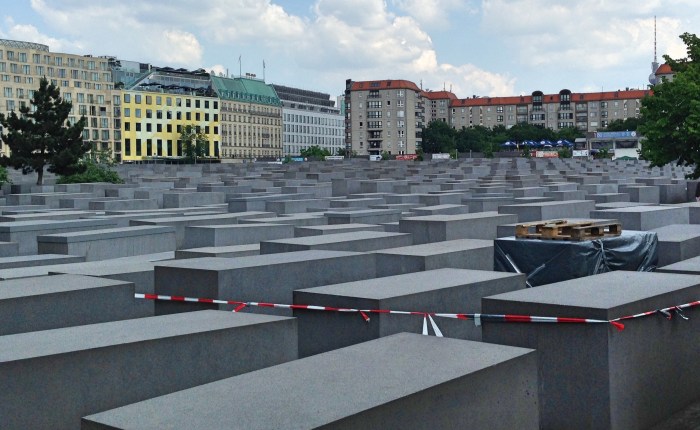


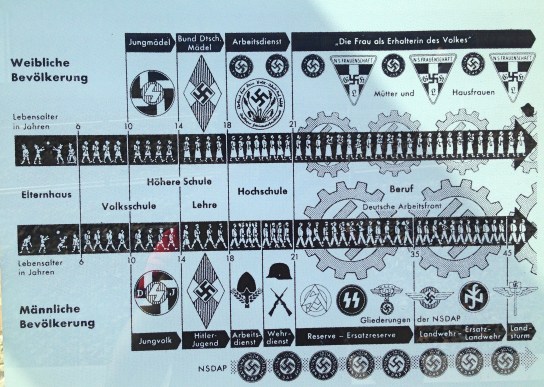



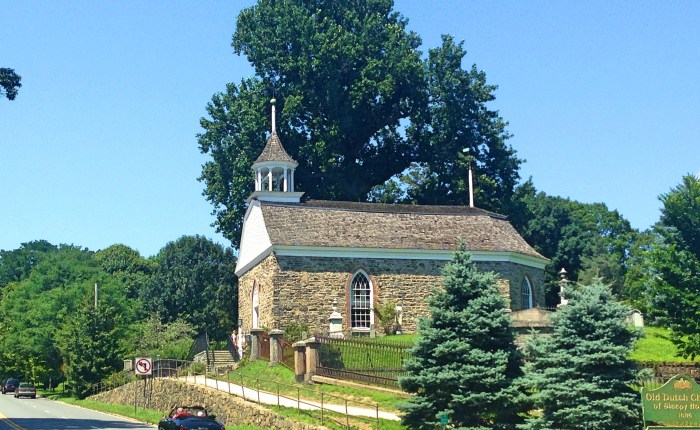


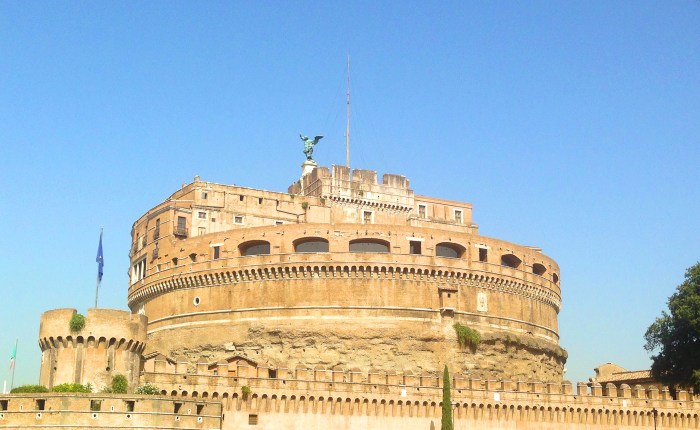

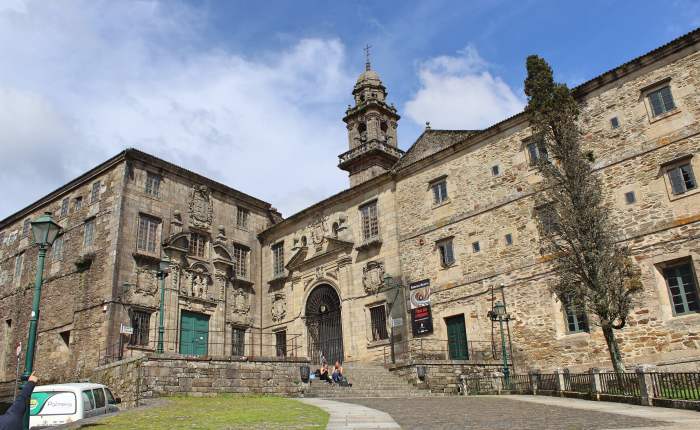


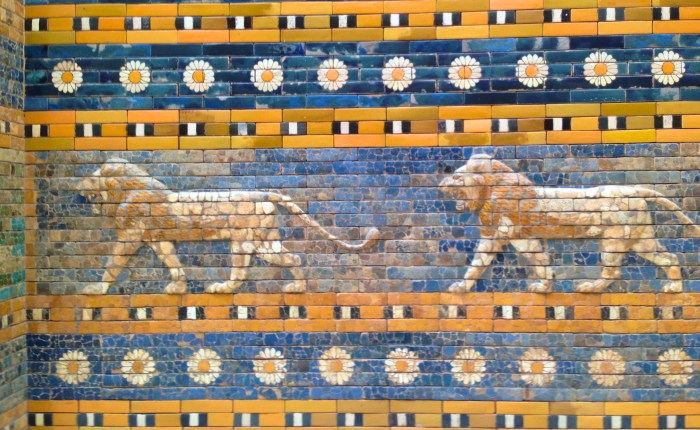

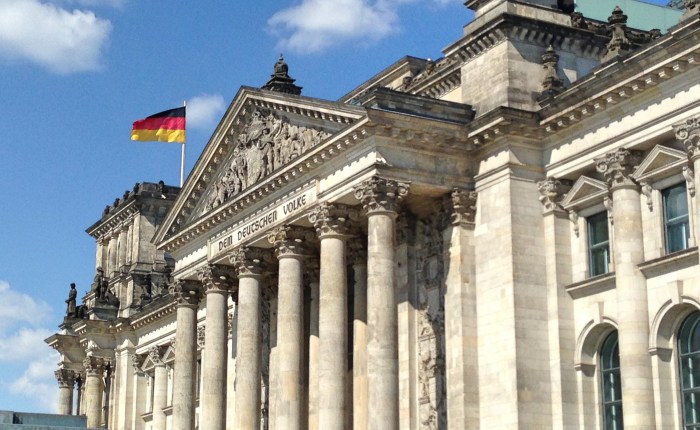


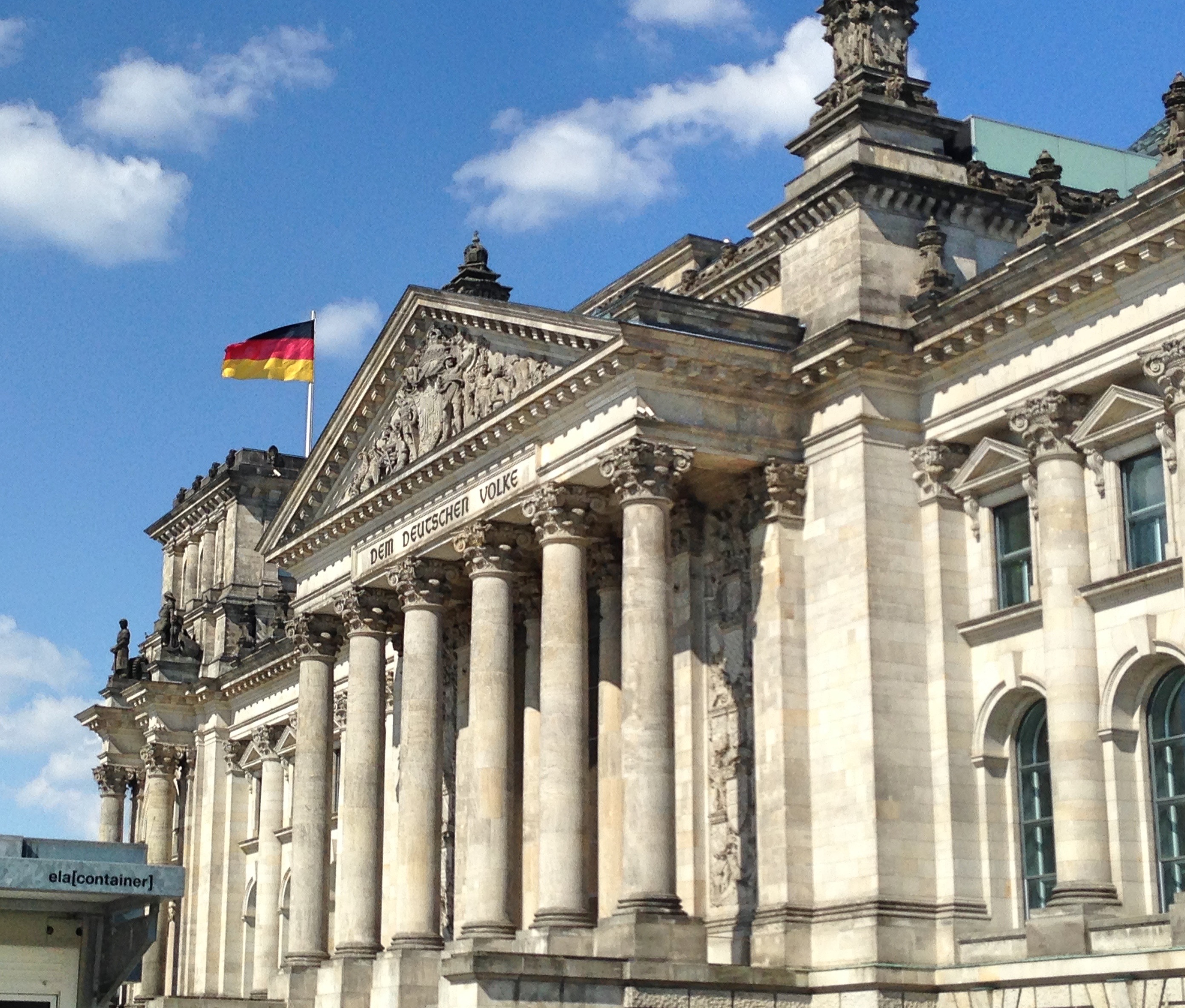

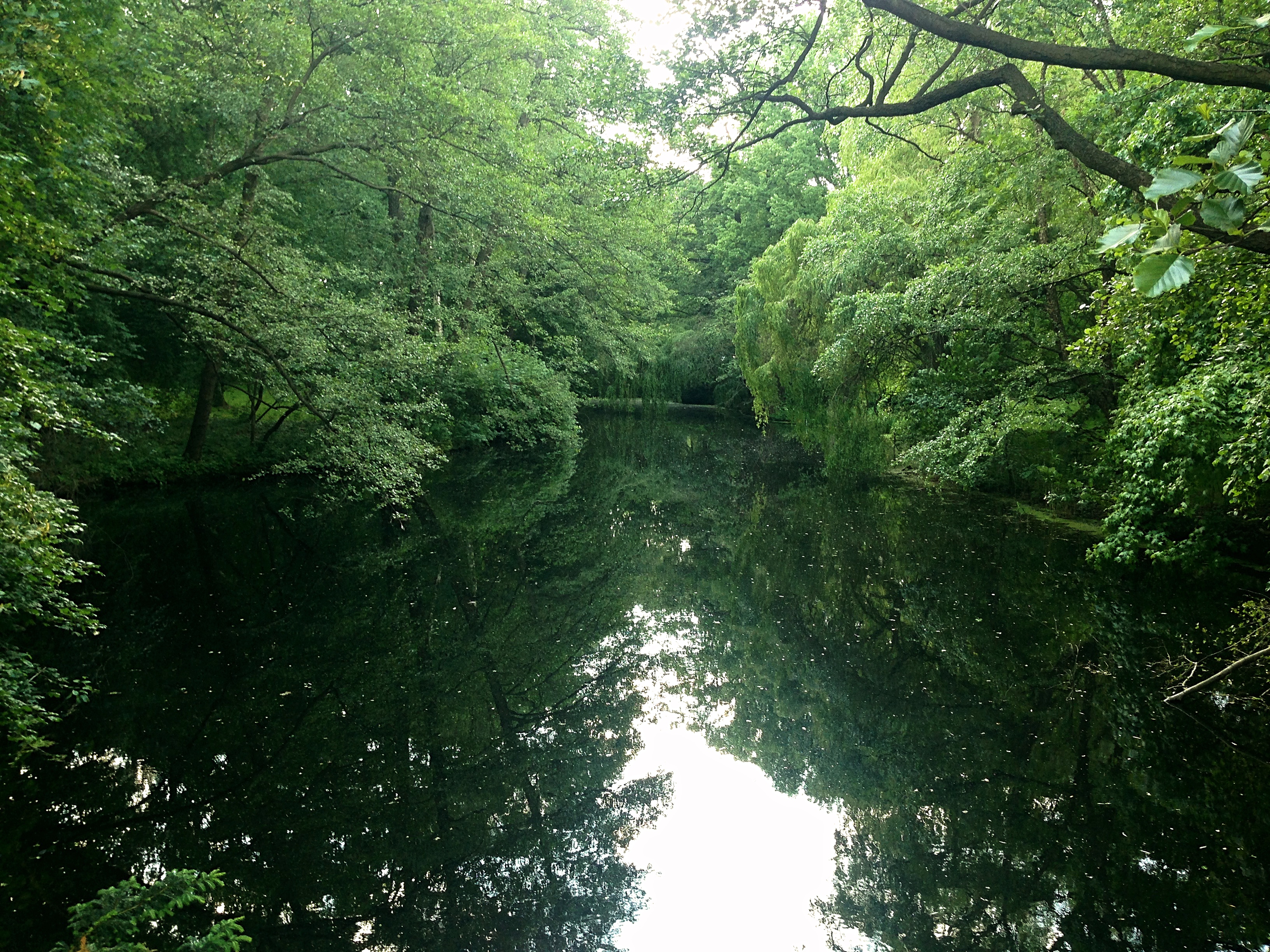
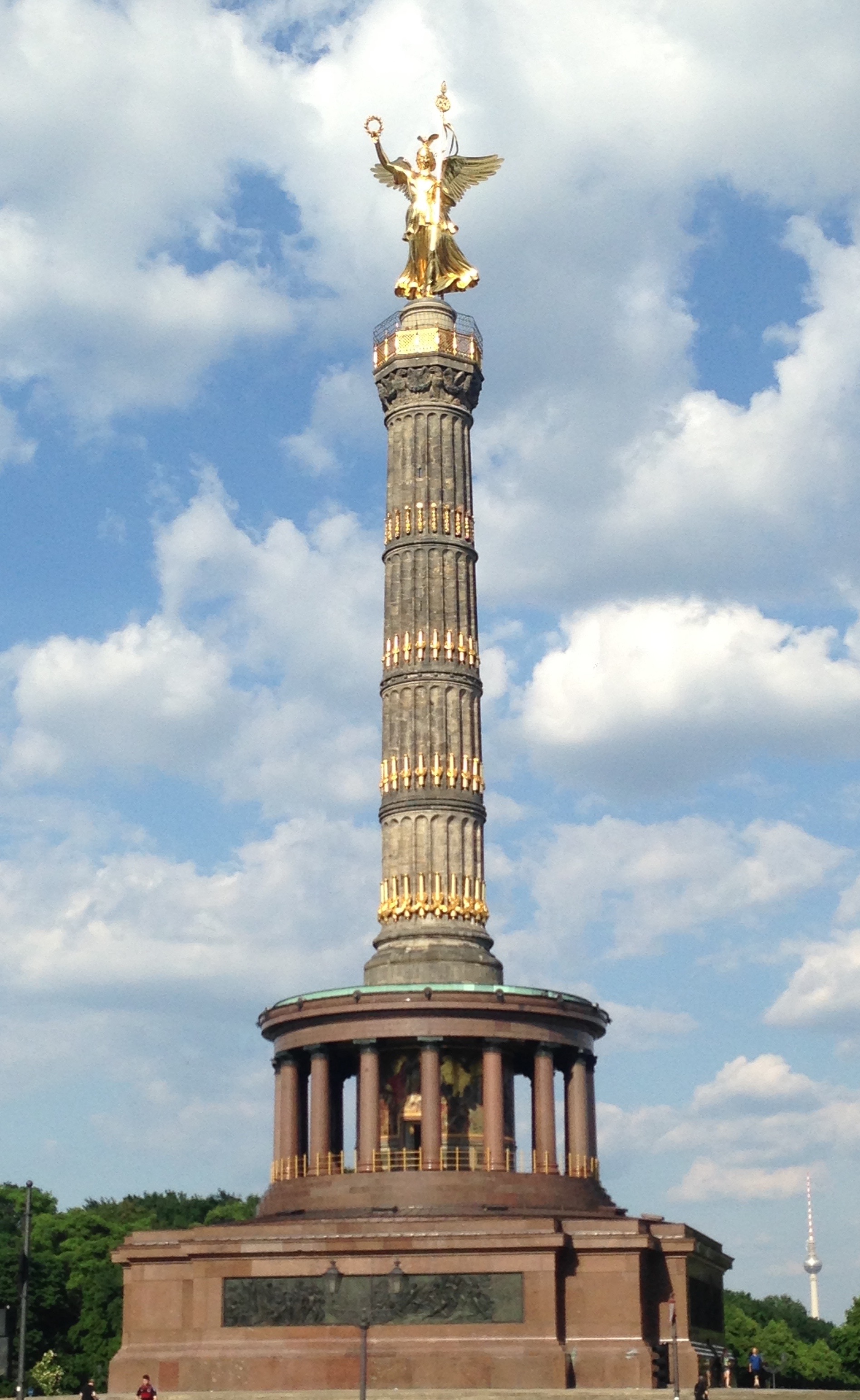
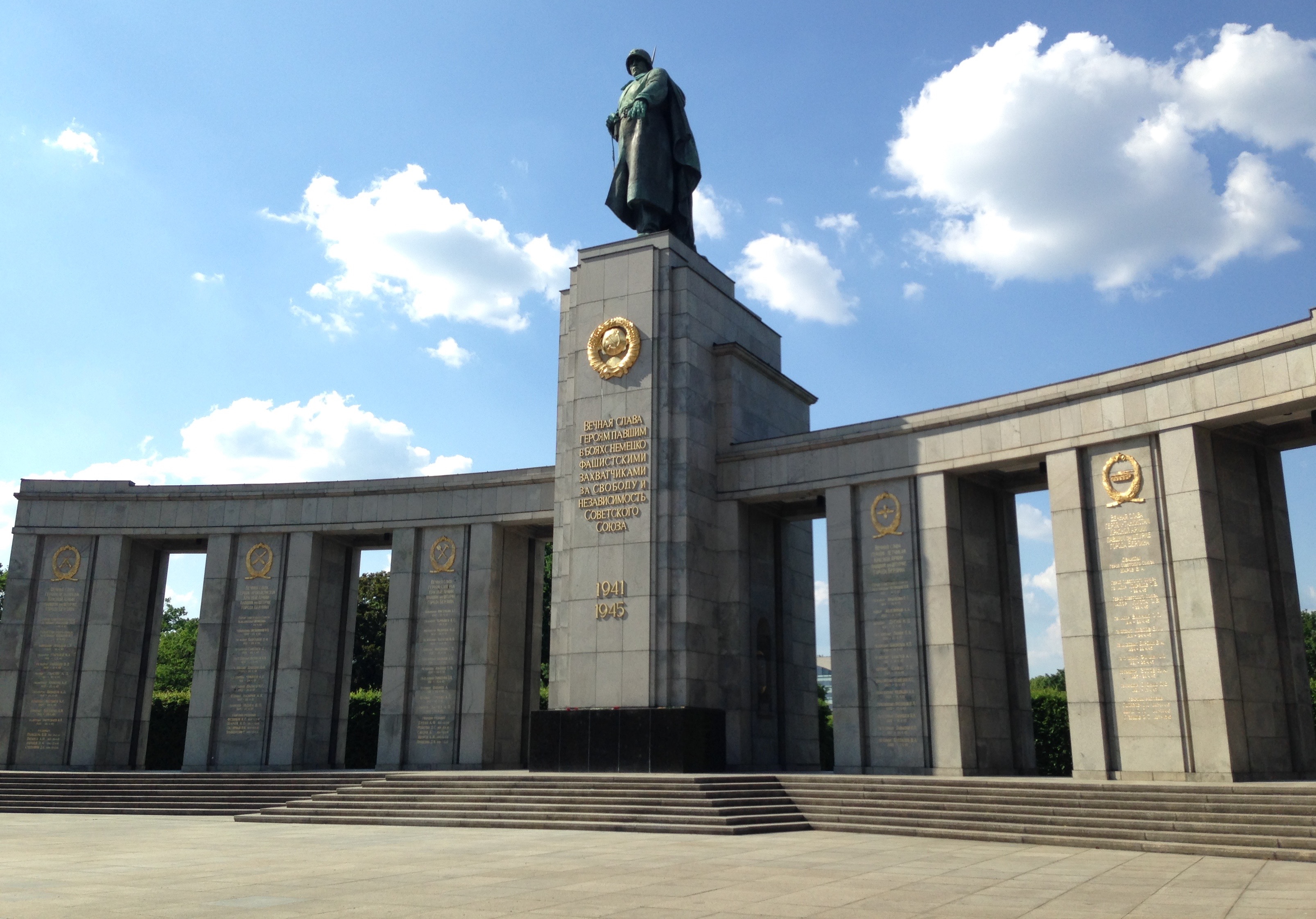

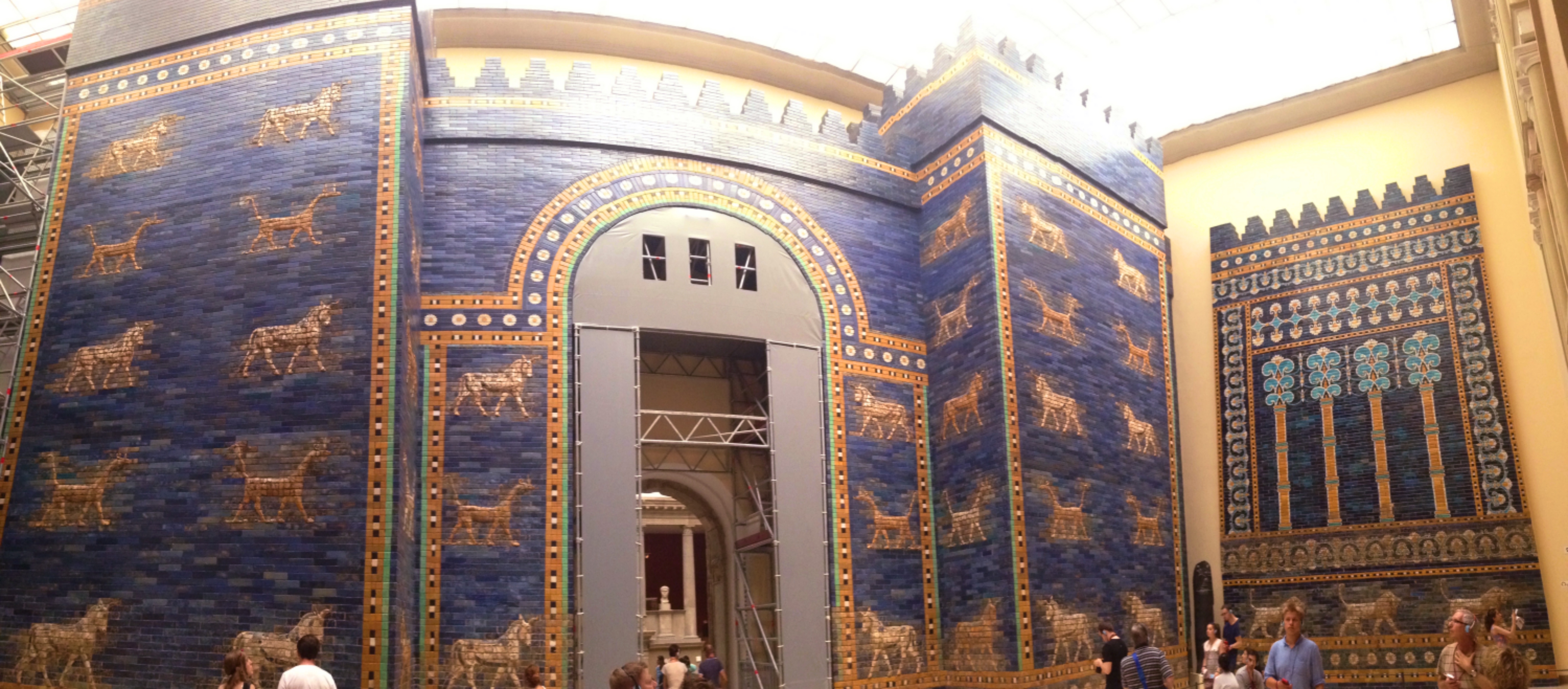
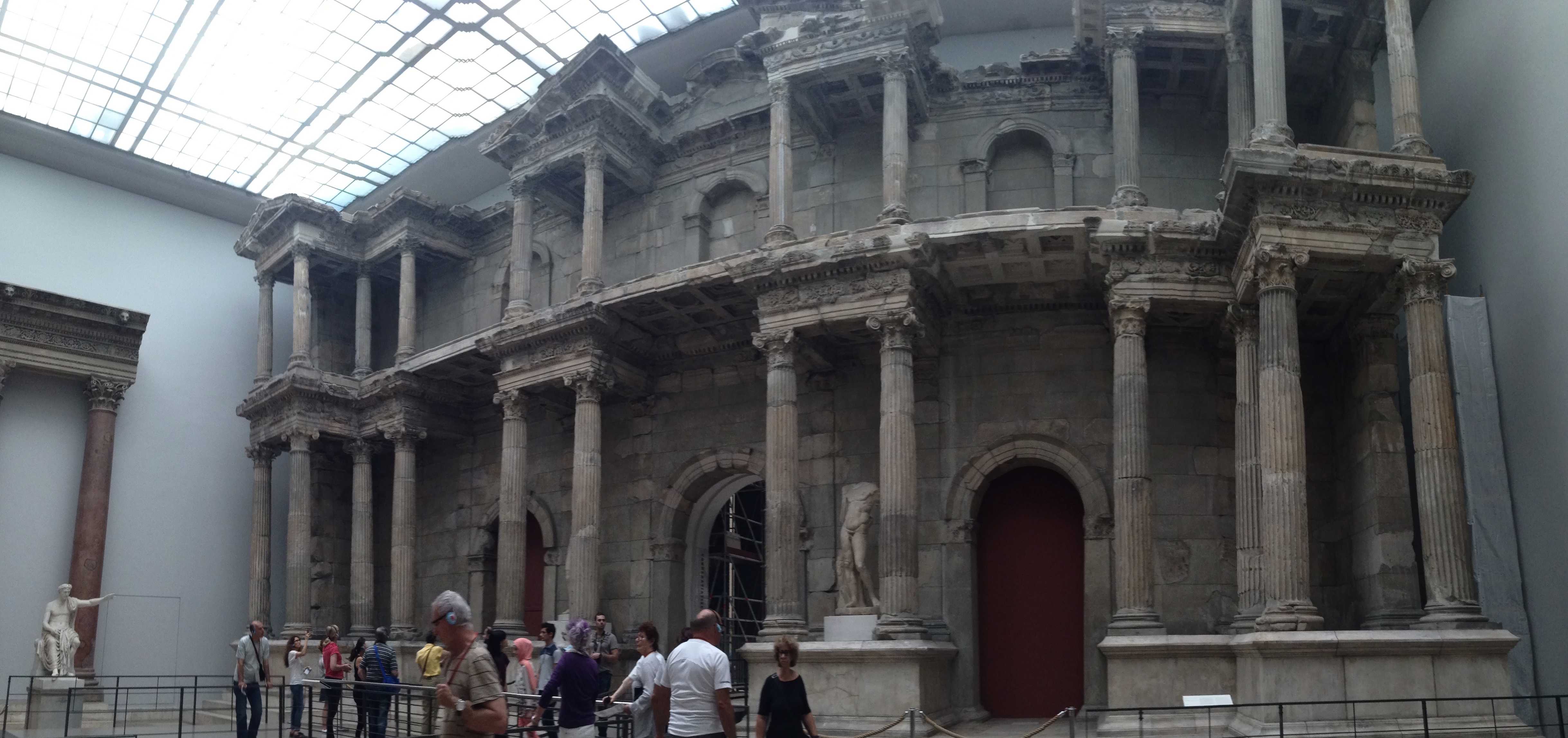

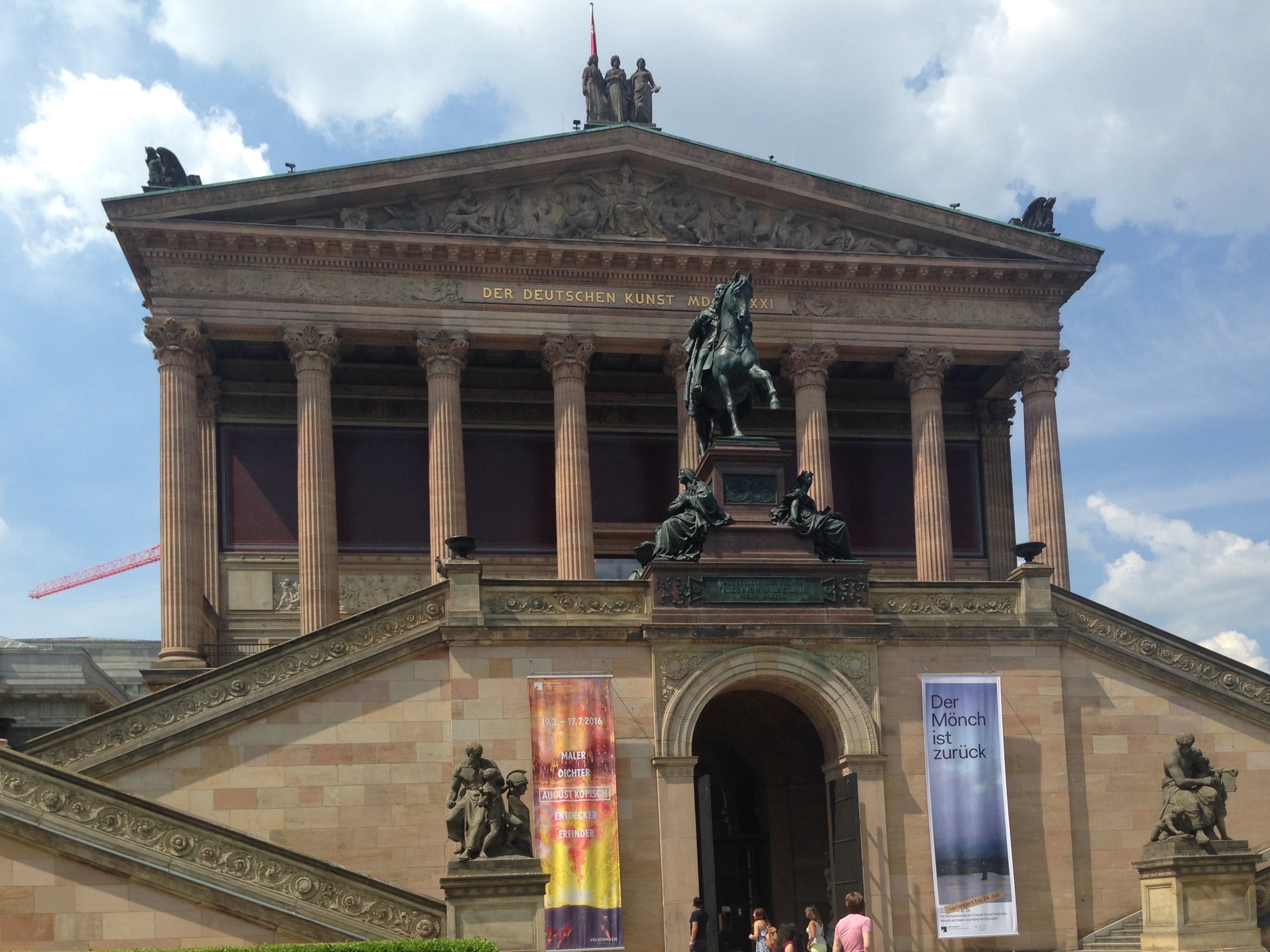
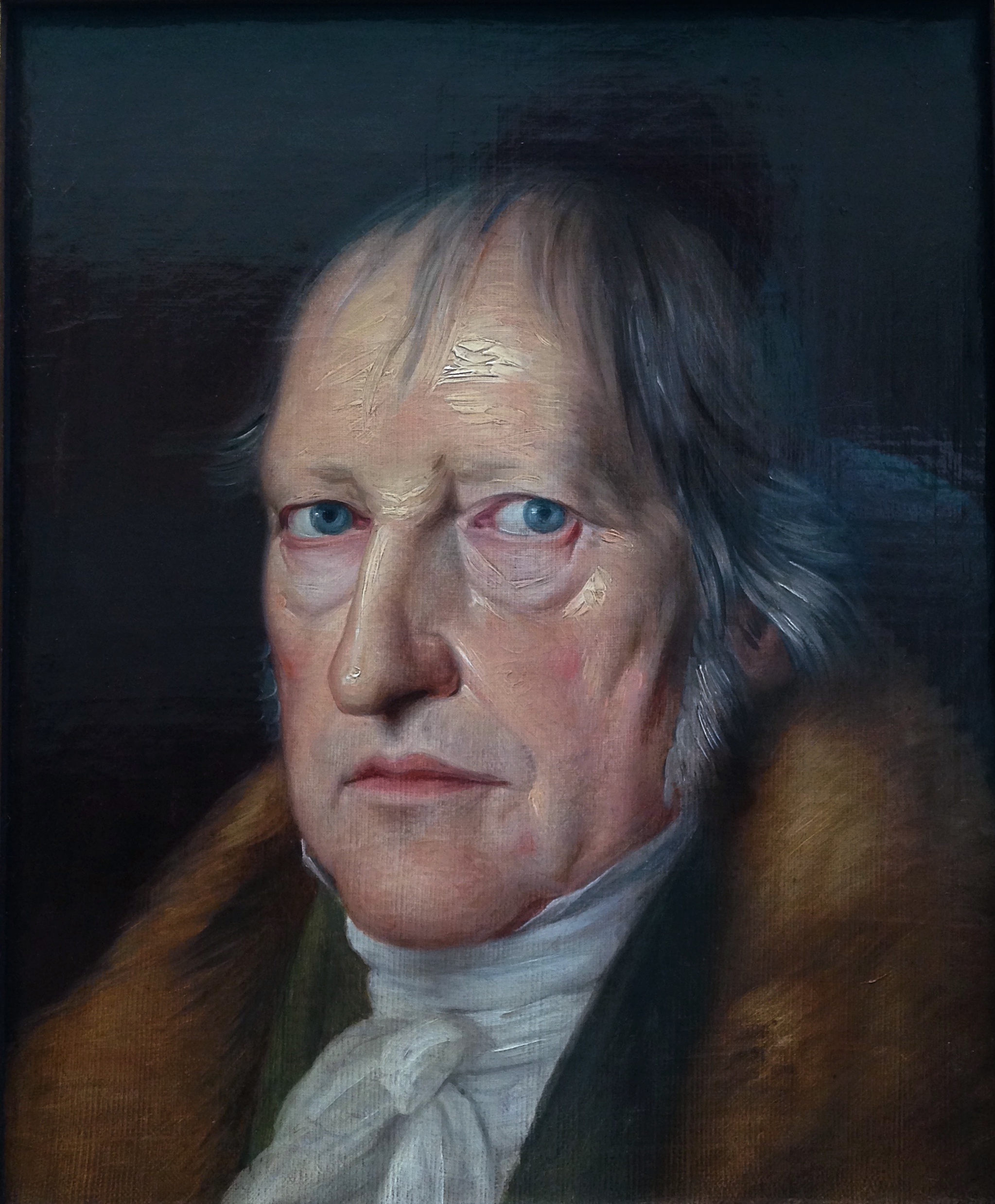
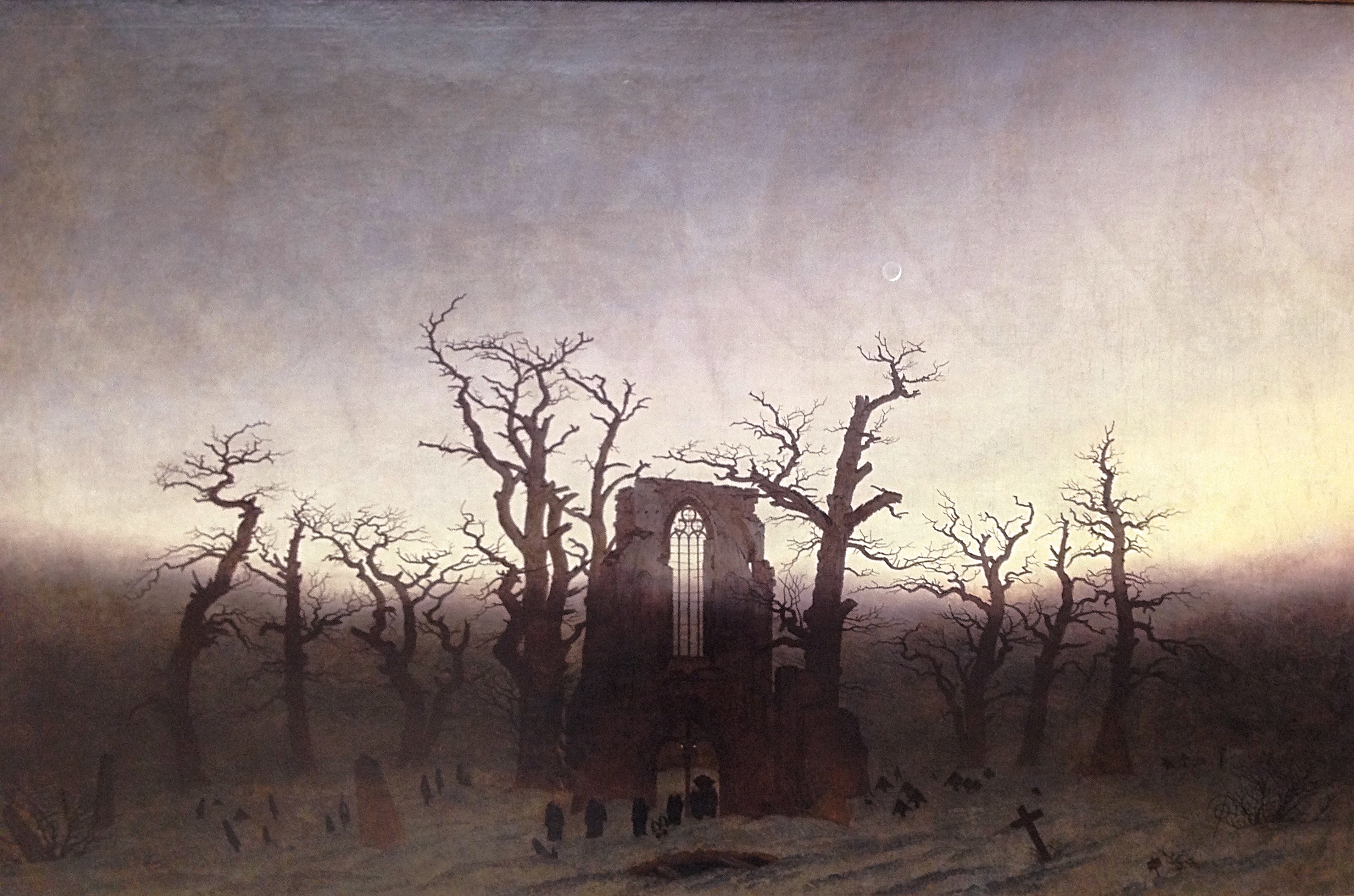
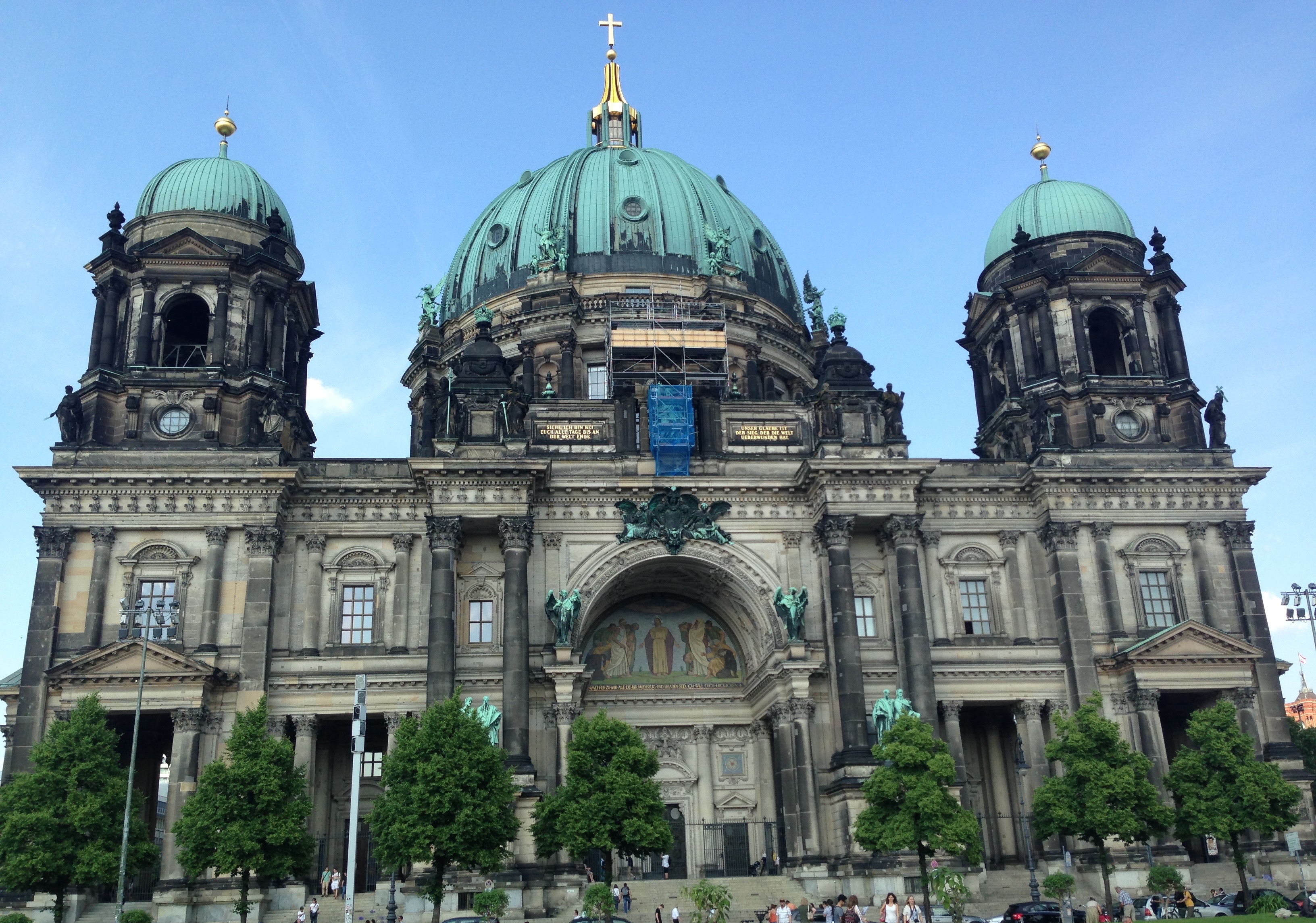

 Lotz in Translation