In 1974 a woman called Connie Converse got into her car, drove away, and was never heard from again. This was not noticed by the press. She was fifty and a failed musician, an eccentric and hermit-like woman who never caught her big break. But she left behind recordings of her songs—songs which, belatedly, have finally led to her getting a modicum of the recognition she deserved.
This is another of those stories of the misunderstood genius. Completely obscure during her career, she is nowadays recognized as a musician ahead of her time, one of the first practitioners of the so-called singer-songwriter genre. Her recordings remained unavailable to the public until 2004 when she was featured on WYNC’s “Spinning on Air.” Five years later, in 2009, an album of her homemade recordings was released—How Sad, How Lovely—which secured her place in the hearts of hipsters across Brooklyn.
In this essay I am, however, not primarily interested in analyzing her music. This is not because there isn’t much to discuss. Converse blends American popular styles—blues, folk, jazz, country—into a sophisticated personal style. Her songs are masterful on many levels: with piquant lyrics, sophisticated harmonies, and creative guitar arrangements. Deep originality, keen intelligence, and a fine literary sensibility make her posthumous album an excellent listen.
All this is beside the point. I want to use Converse’s music as the jumping-off point to discuss an essential question of aesthetics: Are there such things as aesthetic emotions?
In a previous essay on aesthetics, I tried to analyze the way that art alters our relation with the natural and cultural world. But I left unexamined the way that art changes our relationship with ourselves. For art does not only affect our stance towards our assumptions, habits, sensations, perceptions, and social conventions. Art also changes our relationship with our emotions.
The very title of Converse’s album invites us to consider aesthetic emotions: How Sad, How Lovely. She herself did not choose this title for the album; but it is well-chosen, since this feeling—the feeling of delightful melancholy—always comes over me when I listen to her music.
But how can sadness be beautiful? When tragedy actually befalls us—a career failure, a break up, a death—we are little disposed to find it beautiful. And long-term, grinding depression is perhaps even less lovely. Yet we so often find ourselves watching sad movies, reading depressing books, enjoying tragedies on stage, and listening to tearful ballads. Converse’s songs are full of heartbreak, yet many people enjoy them. We do our best to avoid sadness in life, but often seek it out in art. Why?
This leads me to think that the melancholic emotion we experience in sad art is not the same as “real” sadness. That is, when a beloved character dies in a novel we feel an entirely different emotion than when a friend passes away. Can that be true?
Perhaps, instead, it is just a question of degree: sadness in art affects us less than sadness in life. But this explanation does not do. For we do not enjoy even small amounts of sadness in real life; so why would we in art? And besides, anyone artistically sensitive knows that one can have intense reactions from art—quite as intense as any experience in life—so that it is clearly not a question of degree.
The explanation must be, then, that aesthetic sadness is categorically different from actual sadness. Yet we recognize an immediate and obvious affinity between the two feelings: otherwise we would not call them both “sad.” So it seems as if they are alike in one sense and yet different in another.
To pinpoint the difference, we must see if we can isolate the feeling of beauty. In novels, paintings, and songs, aesthetic reactions are hopelessly mixed up with a riot of other considerations: artistic intentions, subject-matter, moral judgments, and so forth. But when contemplating nature—in my experience, at least—the feeling of beauty stands out cold and pure.
In the forest of New Brunswick my family owns a property on a lake, where we go every summer to relax. Out there, far away from the light pollution of cities, the Milky Way appears in all its remarkable brilliance. Except for the ghostly calls of loons echoing across the lake, the woods are deathly still. Gazing up at the stars in the silence of the night I come closest to experiencing pure beauty.
Looking at the starry night I feel neither sad, nor happy, nor frightened, nor angry. The word that comes closest the feeling is “awe”: gaping wonder at the splendor of existence. I become entirely absorbed in my senses; everything except the beautiful object drops away. I am solely aware of the sensory details of this object, and perpetually amazed that such a thing could exist.
An important facet of this experience, I think, is disinterestedness. I want nothing from the beautiful object. I have no stake in its fate. Indeed, my absorption in it is so great that the feeling of distinction—of subject and object—dissolves, and I achieve a feeling of oneness with what I contemplate. Thus this feeling of disinterest extends to myself: I no longer have a stake in my own life, and I can accept with equanimity come what may. Beauty is, for this reason, associated in my mind with a feeling of profound calmness.
Using this observation, I believe we can see why sad art can be pleasant. My hypothesis is that the feeling of beauty—which brings with it a calming sense of disinterest—denatures normally painful emotions, rendering them relatively inert.
Real sadness involves the painful feeling of loss. To feel loss, you must feel interested, in the sense that you have a stake in what is happening. But experiencing sadness in the context of a work of art, while our aesthetic sense is activated, numbs us to this pain. We see sadness, rather, as a kind of floating, neutral observer in the scene; and this allows us to savor the poignant and touching experience of the sentiment without the drawbacks of emotional trauma.
And herein lies the therapeutic potential of art. For art allows us to see the beauty in normally painful emotions. By putting us into a disinterested state of mind, great art allows us to savor the sublime melancholy of life. We see that sadness is not just painful, but lovely. In this, too, consists art’s ability to help us achieve wisdom: to look upon life, not as a person wrapped up in his own troubles, but as a cloud watching from above.
Here I think it is useful to examine the difference between art and entertainment. In my first essay, I held that the differences is that art reconnects us to the world while entertainment lures us into fantasy. But the emotional distinction between art and entertainment cannot be described thus.
Rather, I think herein lies the difference: that art allows us to contemplate emotions disinterestedly, while entertainment provokes us to react empathetically. That is to say that, with entertainment, the difference between aesthetic emotions and everyday emotions is blurred. We react to an entertaining tale the same way we react to, say, our friend telling us a story.
Some observations lead me to this conclusion. One is that Shakespeare’s tragedies have never once brought me anywhere close to tears, while rather mediocre movies have had me bawling. Another is that drinking alcohol, being stressed, feeling sentimental, or being otherwise emotionally raw tend to make me more sensitive to blockbuster movies and pop music, and less sensitive to far greater works. Clearly, provoking strong emotions requires neither great sophistication in the work nor great appreciation in the audience; indeed, it requires a childlike innocence from both.
I believe the explanation for this is very simple. Crude art—or “entertainment” in my parlance—does not strongly activate our aesthetic sense, and thus our emotions are unfiltered. We feel none of the disinterest that the contemplation of beauty engenders, and so react in an unmediated naturalness. This makes entertainment the opposite of calming—rather, it can be very animating and distressing.
This may be the root of Plato’s and Aristotle’s ancient dispute about the role of poetry in society. Plato famously banished poets from his ideal republic, fearing poetry’s ability to disrupt social order and discompose men’s minds. Aristotle, on the other hand, thought that poetry could be cathartic, curing us of strong emotions and thus conducive to calmness and stability. In my scheme, entertainment is destabilizing and true art therapeutic. In other words, Plato should only have banished the entertainers.
This also leads to an observation about singer-songwriters. Unlike in other genres of music—musicals, operas, jazz—there is a pretense among singer-songwriters to be communicating directly with their audience; that their songs are honest and related to their daily lives. It is this intentional blurring of art and life that leads many fans to get absorbed in tabloid stories of celebrity personal lives.
I think this is almost inevitably a sort of illusion, and the “honest” self on display to the public is a sort of persona. But in any case this pretense serves the purposes of entertainment: If we think the musicians are giving us honest sentiments, we will react empathetically and not disinterestedly.
Connie Converse, on the other hand, creates no illusion of direct honesty. Her lyrics are literary, picturesque, and impersonal. This is not to say that her songs have nothing to do with her personality. Her preferred themes—unrequited love, most notably—obviously have some bearing on her life. And the sadness in her music must be related with the sorrow in her life, feeling isolated and unrecognized. But in her songs, the stuff of her life is sublimated into art—turned into an impersonal product that can be contemplated and appreciated without knowing anything about its maker.
I believe all true art is, in this sense, impersonal: its value does not depend on knowing or thinking anything about its maker. Art is not an extension of the artist’s personality, but has its own life. This is why I am against “confessional” art: art that pretends to be, or actually is, an unfiltered look into somebody’s life and feelings. Much of John Lennon’s work after the Beatles broke up falls into this category. By my definition, “confessional” art is always inevitably entertainment.
This is not to say that art must always scorn its maker’s life. The essays of Montaigne, for example, are deeply introspective, while being among the glories of western literature. But those essays are not simply the pouring forth of feelings or the airing of grievances. They transform Montaigne’s own experiences into an exploration of the human condition, and thus become genuine works of art.
In my previous essay I described how art can help us break out of the deadening effects of routine, thus revivifying the world. But art can also pull us from the opposite direction: from frenetic emotionality to a detached calmness. While contemplating beauty, we see the world, and even ourselves, as calm and sensitive observers, with fascination and delight. We rediscover the childlike richness of experience, while shunning the childlike tyranny of emotion. We can achieve equanimity, at least temporarily, by being reminded that beauty and sadness are not opposed, but are intimately intertwined.
On the left back of the Seine, in an old Beaux-Arts train station, is one of Europe’s great museums: the Musée d’Orsay. Its collection mainly focuses on French art from the mid-nineteenth to the early-twentieth century. This was a fertile time for Paris, as the museum amply demonstrates. Rarely can you find so many masterpieces collected in one place.
The museum is arranged with exquisite taste. In the middle runs a corridor, filled with statues—of human forms, mostly. They dash, reach, dance, strain, twist, lounge, smile, laugh, gasp, grimace.
On either side of this central corridor are the painting galleries, arranged by style and period. There were naturalistic paintings—with a vanishing perspective, careful shadowing, precise brushstrokes, scientifically accurate anatomy, symmetrical compositions. There were the impressionists—a blur of color and light, creamy clouds of paint, glances of everyday life. There was Cézanne, whose precise simplifications of shape and shade lend his painting of Mont Sainte-Victoire a calm, detached beauty. Then there were the pointillists, Seurat and Signac, who attempted to break the world into pieces and then to build it back up using only dabs of color, arranged with a mixture of science and art.
Greatest of all was van Gogh, whose violent, wavy lines, his bright, simple colors, his oil paint smeared in thick daubs onto the canvas, make his paintings slither and dance. It is simply amazing to me that something as static as a painting can be made be so energetic. Van Gogh’s paintings don’t stand still under your gaze, but move, vibrate, even breathe. It is uncanny.
His self portrait is the most emotionally affecting painting I have ever seen. Wearing a blue suit, he sits in a neutral blue space. His presence warps the atmosphere: the air seems to be curling around him, as if in a torrent. The only colors that break the blur of blue are his flaming red beard and his piercing green eyes. He looks directly at the viewer, with an expression impossible to define. At first glance he appears anxious, perhaps shy; but the more you look, the more he appears calm and confident. You get absolutely lost in his eyes, falling into them, as you are absorbed into ever more complicated subtleties of emotion concealed therein. Suddenly you realize that curling waves of air around him are not mere background, but represent his inner turmoil. Yet is it a turmoil? Perhaps it is a serenity too complicated for us to understand?
I looked and looked, and soon the experience became overwhelming. I felt as if he were looking right through me, while I pathetically tried to understand the depths of his mind. But the more I probed, the more lost I felt, the more I felt myself being subsumed into his world. The experience was so overpowering that my knees began to shake.
Consider this reaction of mine. Now imagine if a curious extraterrestrial, studying human behavior, visited an art museum. What would he make of it?
On its face, the practice of visiting art museums is absurd. We pay good money to gain entrance to a big building, so we can spend time crowding around brightly colored squares that are not obviously more interesting than any other object in the room. Indeed, I suspect an alien would find almost anything on earth—our plant and animal life, our minerals, our technology—more interesting than a painting.
In this essay I want to try to answer this question: Why do humans make and appreciate art? For this is the question that so irresistibly posed itself to me after I stared into van Gogh’s portrait. The rest of my time walking around the Musée d’Orsay, feeling lost among so many masterpieces, I pondered how a colorful canvas could so radically alter my mental state. By the end of my visit, the beginnings of an answer had occurred to me—an answer hardly original, being deeply indebted to Walter Pater, Marcel Proust, and Robert Hughes, among others—and it is this answer that I attempt to develop here.
My answer, in short, is that the alien would be confused because human art caters to a human need—specifically, an adult human need. This is the need to cure ennui.
§
Boredom hangs over human life like a specter, so pernicious because it cannot be grasped or seen.
The French anthropologist Claude Lévi-Strauss knew this very well. As a young man he ejoyed mountain scenes, because “instead of submitting passively to my gaze” the mountains “invited me into a conversation, as it were, in which we both had to give our best.” But as he got older, his pleasure in mountain scenery left him:
And yet I have to admit that, although I do not feel that I myself have changed, my love for the mountains is draining away from me like a wave running backward down the sand. My thoughts are unchanged, but the mountains have taken leave of me. Their unchanging joys mean less and less to me, so long and so intently have I sought them out. Surprise itself has become familiar to me as I follow my oft-trodden routes. When I climb, it is not among bracken and rock-face, but among the phantoms of my memories.
Dostoyevsky put the phenomenon more succintly: “Man grows used to everything, the scoundrel!”
These two literary snippets have stuck with me because they encapsulate the same thing: the ceaseless struggle against the deadening weight of routine. Nothing is new twice. Walk through a park you found charming at first, the second time around it will be simply nice, and the third time just normal.
The problem is human adaptability. Unlike most animals, we humans are generalists, able to adapt our behavior to many different environments. Instead of being guided by rigid instincts, we form habits.
By “habits” I do not only refer to things like biting your nails or eating pancakes for breakfast. Rather, I mean all of the routine actions performed by every person in a society. Culture itself can, at least in part, be thought of as a collection of shared habits. These routines and customs are what allow us to live in harmony with our environments and one another. Our habits form a second nature, a learned instinct, that allows us to focus our attention on more pressing matters. If, for whatever reason, we were incapable of forming habits, we would be in a sorry state indeed, as William James pointed out in his book on psychology:
There is no more miserable human being than one in whom nothing is habitual but indecision, and for whom the lighting of every cigar, the drinking of every cup, the time of rising and going to bed every day, and the beginning of every bit of work, are subjects of express volutional deliberation. Full half the time of such a man goes to the deciding, or regretting, of matters which ought to be so ingrained in him as practically not to exist for his consciousness at all.
Habits are, thus, necessary to human life. And up to a certain point, they are desirable and good. But there is also a danger in habitual response.
Making the same commute, passing the same streets and alleys, spending time with the same friends, watching the same shows, doing the same work, living in the same house, day after day after day, can ingrain a routine in us so deeply that we become dehumanized.
A habit is supposed to free our mind for more interesting matters. But we can also form habits of seeing, feeling, tasting, even of thinking, that are stultifying rather than freeing. The creeping power of routine, pervading our lives, can be difficult to detect, precisely because its essence is familiarity.
One of the most pernicious effects of routine is to dissociate us from our senses. Let me give a concrete example. A walk through New York City will inevitably present you with a chaos of sensory data. You can overhear conversations, many of them fantastically strange; you can see an entire zoo of people, from every corner of the globe, dressed in every fashion; you can look at the ways that the sunlight moves across the skyscrapers, the play of light and shadow; you can hear dog barks, car horns, construction, alarms, sirens, kids crying, adults arguing; you can smell bread baking, chicken frying, hot garbage, stale urine, and other scents too that are more safely left uninvestigated.
And yet, after working in NYC for a few months, making the same commute every day, I was able to block it out completely. I walked through the city without noticing or savoring anything. My lunch went unappreciated; my coffee was drunk unenjoyed; the changing seasons went unremarked; the fashion choices of my fellow commuters went unnoticed.
It isn’t that I stopped seeing, feeling, hearing, tasting, but that my attitude to this information had changed. I was paying attention to my senses only insofar as they provided me with useful information: the location of a pedestrian, an oncoming car, an unsanitary area. In other words, my attitude to my sensations had become purely instrumental: attending to their qualities only insofar as they were relevant to my immediate goals.
This exemplifies what I mean by ennui. It is not boredom of the temporary sort, such as when waiting on a long line. It is boredom as a spiritual malady. When beset by ennui we are not bored by a particular situation, but by any situation. And this condition is caused, I think, by a certain attitude toward our senses. When afflicted by ennui, we stop treating our sensations are things in themselves, worthy of attention and appreciation, but merely as signs and symbols of other things.
To a certain extent, we all do this, often for good reason. When you are reading this, for example, you are probably not paying attention to the details of the font, but are simply glancing at the words to understand their meaning. Theoretically, I could use any font or formatting, and it wouldn’t really affect my message, since you are treating the words as signs and not as things in themselves.
This is our normal, day-to-day attitude towards language, and it is necessary for us to read efficiently. But this can also blind us to what is right in front of us. For example, an English teacher I knew once expressed surprise when I pointed out that ‘deodorant’ consists of the word ‘odor’ with the prefix ‘de-’. She had never paused long enough to consider it, even though she had used the word thousands of times.
I think this attitude of ennui can extend even to our senses. We see the subtle shades of green and red on an apple’s surface, and only think “I’m seeing an apple.” We feel the waxy skin, and only think “I’m touching an apple.” We take a bite, munching on the crunchy fruit, tasting the tart juices, and only think “I’m tasting an apple.” In short, the whole quality of the experience is ignored or at least underappreciated. The apple has become part of our routine and has thus been moved to the background of our consciousness.
Now, imagine treating everything this way. Imagine if all the sights, sounds, tastes, textures, and smells were treated as routine. This is an adequate description of my mentality when I was working in New York, and perhaps of many people all over the world. The final effect is a feeling of emptiness and dissatisfaction. Nothing fulfills or satisfies because nothing is really being experienced.
This is where art comes in. Good art has the power to, quite literally, bring us back to our senses. Art encourages us not only to glance, but to see; not only to hear, but to listen. It reconnects us with what is right in front of us, but is so often ignored. To quote the art critic Robert Hughes, the purpose of art is “to make the world whole and comprehensible, to restore it to us in all its glory and occasional nastiness, not through argument but through feeling, and then to close the gap between you and everything that is not you.”
Last summer, while I was still working at my job in NYC, I experienced the power of art during a visit to the Metropolitan. By then, I had already visited the Met dozens of times in my life. My dad used to take me there as a kid, to see the medieval arms and armor; and ever since I have visited at least once a year. The samurai swords, the Egyptian sarcophagi, the Greek statues—it has tantalized my imagination for decades.
In my most recent visits, however, the museum had lost much of its power. It had become routine for me. I had seen everything so many times that, like Levi-Strauss, I was visiting my memories rather than the museum itself.
But this changed during my last visit. It was the summer right before I came to Spain. I had just completed my visa application and was about to leave my job. This would be my last visit to the Met for at least a year, possibly longer. I was saying goodbye to something intimately familiar in order to embrace the unknown. My visit became no longer routine, but unique and fleeting, and this made me experience the museum in an entirely new way.
Somehow, the patina of familiarity had been peeled away, leaving every artwork fresh and exciting. Whereas on previous visits I viewed the Greco-Roman and Egyptian statues are mere artifacts, revealing information about former civilizations, this time I began to become acutely sensitive to previously invisible subtleties: fine textures, subtle hues, elegant forms. In short, I had stopped treating the artwork as icons—as mere symbols of a lost age—but as genuine works of art.
This experience was so intense that for several days I felt rejuvenated. I stopped feeling so deeply dissociated from my workaday world and began to take pleasure again in little things.
While waiting for the elevator, for example, I looked at a nearby wall; and I realized, to my astonishment, that it wasn’t merely a flat plain surface, as I had thought, but was covered in little bumps and shapes. It was stucco. I grew entranced by the shifting patterns of forms on the surface. I leaned closer, and began to see tiny cracks and little places where the paint had chipped off. The slight variations on the surface, a stain here, a splotch there, the way the shapes seemed to melt into one another, made it seem as though I were looking at a painting by Jackson Pollock or the surface of the moon.
I had glanced at this wall a hundred times before, but it took a visit to an art museum to let me really see it. Routine had severed me from the world, and art had brought me back to it.
§
Reality is always experienced through a medium—the medium of senses, concepts, language, and thought. Sensory information is detected, broken down, analyzed, and then reconfigured in the brain.
We are not passive sensors. While a microphone might simply detect tones, rhythms, and volume, we hear cars, birds, and speech; and while a camera might detect shapes, colors, and movement, we see houses and street signs. The data we collect is, thus, not experienced directly, but is analyzed into intelligible objects. And this is for the obvious reason that, unlike cameras and microphones, we need to use this information to survive.
In order to deal efficiently with the large amount of information we encounter every day, we develop habits of perceiving and thinking. These habits are partly expectations of the kinds of things we will meet (people, cars, language), as well as the ways we have learned to analyze and respond to these things. These habits thus lay at the crossroads between the external world of our senses and the internal world of our experience, forming another medium through which we experience (or don’t experience) reality.
Good art forces us to break these habits, at least temporarily. It does so by breaking down reality and then reconstructing it with a different principle—or perhaps I should say a different taste—than the one we habitually use.
The material of art—what artists deconstruct and re-imagine—can be taken from either the natural or the cultural world. By ‘natural world’ I mean the world as we experience it through our senses; and by ‘cultural world’ I mean the world of ideas, customs, values, religion, language, tradition. No art is wholly emancipated from tradition, just as no tradition is wholly unmoored from the reality of our senses. But very often one is greatly emphasized at the expense of the other.
A good example of an artform concerned with the natural world is landscape painting. A landscape artist breaks down what she sees into shapes and colors, and puts it together on her canvass, making whatever tasteful alteration she sees fit.
Her view of the landscape, and how she chooses to reconstruct it on her canvass, is of course not merely a matter between her and nature. Inevitably our painter is familiar with a tradition of landscape paintings; and thus while engaged with the natural landscape she is simultaneously engaged in a dialogue with contemporary and former artists. She is, therefore, simultaneously breaking down the landscape and her tradition of landscape painting, deciding what to change, discard, or keep. The final product emerges as the an artifact of an exchange between the artist, the landscape, and the tradition.
Landscape by van Gogh
The fact remains, however, that the final product can be effectively judged by how it transforms its subject—the landscape itself. Thus I would say that landscape paintings are primarily oriented towards the natural world.
By contrast, many religious paintings are much more oriented towards a tradition. It is clear, even from a glance, that the artists of the Middle Ages were not concerned with the accurate portrayal of individual humans, but with the evoking of religious figures through idealizations. The paintings thus cannot be evaluated by their fidelity to the sensory reality, but by their fidelity to a religious aesthetic.
From the Bamberg Apocalypse
It is worth noting that artworks oriented towards the natural world tend to be individualistic, while artworks oriented towards the cultural world tend to be communal. The reason is clear: art oriented towards the natural world reconnect us with our senses, and our senses are necessarily personal. By contrast, culture is necessarily impersonal and shared. The rise of perspective, realistic anatomy, individualized portraits, and landscape painting at the time of the Italian Renaissance can, I think, persuasively be interpreted as a break from the communalism of the medieval period and an embrace of individualism.
Music is an excellent demonstration of this tendency. To begin with, the medium of sound is naturally more social than that of sight or language, since sound pervades its environment. What is more, music is a wholly abstract art, and thus totally disconnected from the natural world.
This is because sound is just too difficult to record. With only a pencil and some paper, most people could make a rough sketch of an everyday object. But without some kind of notational system—and even then, maybe not—most people could not transcribe an everyday sound, like a bird’s chirping.
Thus, musicians (at least western musicians) take their material from culture rather than nature, from the world of tradition rather than the world of our senses.
(In an oral tradition, where music does not need to be transcribed, it is possible that music can strive to reproduce natural sounds; but this has not historically been the case in the west.)
To deal with the problem of transcribing sound, rigorous and formal ways of classifying sounds were developed. An organizational system developed, with its own laws and rules; and it is these laws and rules that the composer or songwriter manipulates.
And just as your knowledge of the natural world helps to make sense of visual art, so our cultural training helps us to make sense of music. Just as you’ve seen many trees and human faces, and thus can appreciate how painters re-imagine their appearances, so have you heard hours and hours of music in your life, most of it following the same or similar conventions.
Thus you can tell (most often unconsciously) when a tune does something unusual. Relatively few people, for example, can define a plagal cadence (an unusual final cadence from the IV to the I chord), but almost everyone responds to it in Paul McCartney’s “Yesterday.”
As a result of its cultural grounding, music an inherently communal art form. This is true, not only aesthetically, but anthropologically. Music is an integral part of many social rituals—political, religious, or otherwise. Whether we are graduating from high school, winning an Oscar, or getting married, music will certainly be heard. As much as alcohol, music can lower inhibitions by creating a sense of shared community, which is why we play it at every party. Music thus plays a different social role than visual art, connecting us to our social environment rather than to the often neglected sights and sounds of everyday life.
The above descriptions are offered only as illustrations of my more general point: Art occupies the same space as our habits, the gap between the external and the internal world. Painters, composers, and writers begin by breaking down something familiar from our daily reality. This material can be shapes, colors, ceramic vases, window panes, the play of shadow across a crumpled robe in the case of painting. It can be melodies, harmonies, timbre, volume, chord progressions, stylistic tropes in the case of music. And it can be adjectives, verbs, nouns, situations, gestures, personality traits in the case of literature
Whatever the starting material, it is the artist’s job to recombine it into something different, something that thwarts our habits. Van Gogh’s thick daubs of paint thwart our expectation of neat brushstrokes; McCartney’s plagal cadence thwarts our expectation of a perfect cadence; and Proust’s long, gnarly sentences and philosophic ideas thwart our expectations of how a novelist will write. And once we stop seeing, listening, feeling, sensing, thinking, expecting, reacting, behaving out of habit, and once more turn our fill attention to the world, naked of any preconceptions, we are in the right mood to appreciate art.
§
Yet it is not enough for art to be simply challenging. If this were true, art would be anything that was simply strange, confusing, or difficult. Good art can, of course, be all of those things; but it need not be.
Many artists nowadays, however, seem to disagree on this point. I have listened to works by contemporary composers which simply made no sense for my ears, and have seen many works of modern art which had no visual interest. We are living in the age of “challenging” art; and beauty is too often reduced to confusion.
But good art must not only challenge our everyday ways of seeing, listening, and being. It must reconstitute those habits along new lines. Art interrogates the space between the world and our habits of seeing the world. It breaks down the familiar—sights, harmonies, language—and then builds it back up again into the unfamiliar, using new principles and new taste. Yet for the product to be a work of art, and not mere strangeness, the unfamiliar must be rendered beautiful. That is the task of art.
Thus, Picasso does not only break down the perspectives and shapes of daily life, but builds them back up into new forms—fantastically strange, but sublime nonetheless. Debussy disintegrates the normal harmonic conventions—keys, cadences, chords—and then puts them all back together into a new form, uniquely his, and also unquestionably lovely. Great art not only shows you a different way of seeing and understanding the world, but makes this new vista attractive.
Pretentious art, art that merely wants to challenge, confuse, or frustrate you, is quite a different story. It can be most accurately compared to the relationship between an arrogant schoolmaster and a pupil. The artist is talking down to you from a position of heightened knowledge. The implication is that your perspective, your assumptions, your way of looking at the world are flawed and wrong, and the artist must help you to get out of your lowly state. Multiple perspectives are discouraged; only the artist’s is valid.
And then we come to simple entertainment.
Entertainment is something that superficially resembles art, but it’s function is entirely different. For entertainment does not reconnect us with the world, but lures us into a fantasy.
Perhaps the most emblematic form of pure entertainment is advertizing. However well made an advertisement is, it can never be art; for its goal is not to reconnect with the world, but to seduce us. Advertisements tell us we are incomplete. Instead of showing us how we can be happy now, they tell what we still need.
When you see an ad in a magazine, for example, you are not meant to scan it carefully, paying attention to the purely visual qualities. Rather, you are forced to view it as an image. By ‘image’ I mean a picture that serves to represent something else. Images are not meant to be looked at, but glanced at; images are not meant to be analyzed, but instantly understood. Ads use images because they are not trying to bring you back to your senses, but lure you into a fantasy.
Don’t misunderstand me: There is nothing inherently wrong with fantasy. Indeed, I think fantasy is almost indispensable to a healthy life. The fantasies of advertisements are, however, somewhat nefarious, since ads are never pure escapism. Rather, the ad forces you to negatively compare your actual life with the fantasy, conclude that you are lacking something, and then of course seek to remedy the situation by buying their product.
Most entertainment is, however, quite innocent, or at least it seems to me. For example, I treat almost all blockbusters as pure entertainment. I will gladly go see the new Marvel movie, not in order to have an artistic experience, but because it’s fun. The movie provides two hours of relief from the normal laws of physics, of probability, from the dreary regularities of reality as I know it. Superhero movies are escapism at its most innocent. The movies make no pretenses of being realistic, and thus you can hardly feel the envy caused by advertisements. You are free to participate vicariously and then to come back to reality, refreshed from the diversion, but otherwise unchanged.
The prime indication of entertainment is that it is meant to be effortless. The viewer is not there to be challenged, but to be diverted. Thus most bestselling novels are written with short words, simple sentences, stereotypical plotlines stuffed full of clichés—because this is easy to understand. Likewise, popular music uses common chord progressions and trite lyrics to make hits—music to dance to, to play in the background, to sing along to, but not to think about. This is entertainment: it does not reconnect us with our senses, our language, our ideas, but draw us into fantasy worlds, worlds with spies, pirates, vampires, worlds where everyone is attractive and cool, where you can be anything you want, for at least a few hours.
Some thinkers, most notably Theodor Adorno, have considered this quality of popular culture to be destructive. They abhor the way that people lull their intellects the sleep, tranquilized with popular garbage that deactivates their minds rather than challenges them. And this point cannot be wholly dismissed. But I tend to see escapism in a more positive light; people are tired, people are stressed, people are bored—they need some release. As long as fantasy does not get out of hand, becoming an goal in itself instead of only a diversion, I see no problem with it.
This, in my opinion, is the essential different between art and entertainment. There is also an essential different, I think, between art and craft.
Craft is a dedication to the techniques of art, rather than its goals. Of course, there is hardly such a thing as a pure craft or a pure art; no artist completely lacks a technique, and no craftsman totally lacks aesthetic originality. But there are certainly cases of artists whose technique stands at a bare minimum, as well as craftsmen who are almost exclusively concerned with the perfection of technique.
Here I must clarify that, by technique, I do not mean simply manual things like brush strokes or breath control. This includes more generally the mastery of a convention.
Artistic conventions consists of fossilized aesthetics. All living aesthetics represent the individual visions of artists—original, fresh, and personal. All artistic conventions are the visions of successful artists, usually dead, which have ceased to be refreshing and now have become charmingly familiar. Put another way, conventional aesthetics are the exceptions that have been made the rule. Not only that, but conventions often fossilize only the most obvious and graspable elements of brilliant artists of the past, leaving behind much of its living fibre.
This can be exemplified if we go and examine the paintings of William-Adolfe Bourgeureau in the Musée d’Orsay. Even from a glance, we can tell that he was a masterful painter. Every detail is perfect. The arrangement of the figures, the depiction of light and shadow, the musculature, the perspective—everything has been performed with exquisite mastery. My favorite painting of his is Dante and Virgil in Hell, a dramatic rendering of a scene from Dante’s Inferno. Dante and his guide stand to one side, looking on in horror as one naked man attacks another one, biting him in his throat. In the distance, a flying demon smiles, while a mound of tormented bodies writhes behind. The sky is a fiery red and the landscape is bleak.
I think it is a wonderful painting. Even so, Dante and Virgil seems to exist more as a demonstration than as art. For the main thing that makes painting art, and the main thing this painting lacks, is an original vision. The content has been adopted straightforwardly from Dante. The technique, although perfectly executed, shows no innovations of Bourgeureau’s own. All the tools he used had been used before; he merely learned them. Thus the painting, however impressive, ultimately seems like a technical exercise. And this is the essence of craft.
§
I fear I have said more about what art isn’t than what it is. That’s because it is admittedly much easier to define art negatively than positively. Just as mystics convey the incomprehensibility of God by listing all the things He is not, maybe we can do the same with art?
Here is my list so far. Art is not entertainment, meant to distract with fantasy. Art is not craft, meant to display technique and obey rules. Art is not simply an intellectual challenge, meant to shock and frustrate your habitual ways of being. I should say art is not necessarily any of these things, though it can and often is all of them. Indeed, I would contend that the greatest art entertains, challenges, and displays technical mastery, and yet cannot be reduced to any or all of these things.
Here I wish to take an idea from the literary critic Harold Bloom, and divide up artworks into periodpieces and great works. Period pieces are works that are highly effective in their day, but quickly become dated. These works are too specifically targeted at one specific cultural atmosphere to last. In other words, they may be totally preoccupied with the habits prevalent at one place and time, and become irrelevant when time passes.
To pick just one example, Sinclair Lewis’s Babbitt, which I sincerely loved, may be too engrossed in the foibles of 20th century American culture to be still relevant in 500 years. Its power comes from its total evisceration of American ways; and, luckily for Lewis, those ways have changed surprisingly little in its essentials since his day. The book’s continuing appeal therefore depends largely on how much the culture does or does not change. (That being said, that novel has a strong existentialist theme that may allow it to persist.)
Thus period pieces largely concern themselves with getting us to question particular habits or assumptions—in Lewis’s case, the vanities and superficialities of American life.
The greatest works of art, by contrast, are great precisely because they reconnect us with the mystery of the world. They don’t just get us to question certain assumptions, but all assumptions. They bring us face to face with the incomprehensibility of life, the great and frightening chasm that we try to bridge over with habit and convention.
No matter how many times we watch Hamlet, we can never totally understand Hamlet’s motives, the mysterious inner workings of his mind. No matter how long we stare into van Gogh’s eyes, we can never penetrate the machinations of that elusive mind. No matter how many times we listen to Bach’s Art of Fugue, we can entirely never wrap our minds around the dancing, weaving melodies, the baffling mixture of mathematical elegance and artistic sensitivity.
Why are these works so continually fresh? Why do they never seem to grow old? I cannot say. It is as if they are infinitely subtle, allowing you to discover new shades of meaning every time they are experienced anew. You can fall into them, just as I felt myself falling into van Gogh’s eyes as he stared at me across space and time.
When I listen to the greatest works of art, I feel like I do when I stare into the starry sky: absolutely small in the presence of something immense and immensely beautiful. Listening to Bach is like listening to the universe itself, and reading Shakespeare is like reading the script of the human soul. These works do not merely reconnect me to my senses, helping me to rid myself of boredom. They do not merely remind me that the world is an interesting place. Rather, these works remind me that I myself am a small part of an enormous whole, and should be thankful for every second of life, for it is a privilege to be alive somewhere so lovely and mysterious.
George Santayana, in both his life and mind, was the embodiment of several contradictions. He was a European raised in America; a Spaniard who wrote in English; a philosopher who despised professional philosophy. He was an atheist who loved religion, a materialist who loved ideals. His writings seem somehow both strangely ancient and strikingly modern; he cannot be comfortably assimilated into either the analytic or continental traditions, nor dismissed as irrelevant. He stands alone, an intellectual hermit—like an embarrassing orphaned child that history can’t decide what to do with.
What is, at first, most conspicuous about Santayana is his writing style. His prose is elegance and balance itself. His style is, in fact, so supremely balanced that it seems to stand stock-still; the reader, instead of being drawn from sentence to sentence by the usual push and pull of connectives, must guide her own eye down the page, just as one might guide one’s eye across a painting. Will Durant summed this up quite nicely when he called Santayana’s writing “statuesque”; I can think of no better word it. Yet if his prose be a statue, it is a beautiful one; like a Greek nude, Santayana’s writing seems to both represent something real, as well as to capture the ideal essence hidden within—and this, you will see, is a feature of his mind as well as pen.
A dream is always simmering beneath the conventional surface of speech and reflection. Even in the highest reaches and serenest meditations of science it sometimes breaks through. Even there we are seldom constant enough to conceive a truly natural world; somewhere passionate, fanciful, or magic elements will slip into the scheme and baffle rational ambition.
This book, his most influential, is about the Life of Reason. It is a simple idea. We all know from experience that every desire we possess cannot and will not be satisfied. Even the richest and most powerful are saddled with unrealizable dreams. And these dreams and desires, Santayana notes, are not in themselves rational; in fact, there is no such thing as a rational or irrational desire. All desires, taken on their own terms, are simply givens.
Rationality comes in when we must decide what to do with our various wishes and wants. The Life of Reason consists in selecting a subset of our desires, and pruning off all the rest; more specifically, it consists in selecting the subset of our desires that consists in the greatest number that do not thwart one another. No single desire is itself rational, but a combination of desires may be:
In itself, a desire to see a child grow and prosper is just as irrational as any other absolute desire; but since the child also desires his own happiness, the child’s will sanctions and supports the father’s. Thus two irrationalities, when they conspire, make one rational life.
This is what we all already do—at least, to a certain extent. The key is to think of everything we desire, and to select those desires which go harmoniously together, neglecting all discordant impulses; and this harmony is our ideal towards which we strive. There is, indeed, a certain tragedy in this, for the Life of Reason requires that we choke off all incompatible desires, and thus eliminate a part of ourselves; yet this tragedy is unavoidable. All life, even exceedingly happy life, has some tragedy; our lives are too short and the universe too indifferent to satisfy our every whim:
Injustice in this world is not something comparative; the wrong is deep, clear, and absolute in each private fate.
All this seems very commonsensical, and it is. But note that this commits you to a certain type of moral relativism: relativism of the individual. Santayana is in agreement with Aristotle in thinking that happiness is the aim of life: “Happiness is the only sanction of life; where happiness fails, existence remains a mad and lamentable experiment.”
And since happiness is achieved by satisfying certain desires—somatic, sensual, or spiritual—and since desires spring from irrational impulses that we cannot control, every person’s happiness will, or at least might, be different. What would be the ideal Life of Reason for one man is a living nightmare for another. We can only prune and harmonize the desires we are given; we cannot manufacture desires and change our natures. We are given a set of propensities and potentialities, and it is the task of a reasonable life to realize them as best we can.
This, I think, is the core of this book; yet it is far from being the only attraction. Santayana’s mind is curious and roving, and in this volume he covers a huge territory. Just as Santayana’s style transforms imperfect bodies into perfect statues, so his mind is concerned with finding the ideal form in all things human. He commences a survey of governments, and concludes that a timocracy (or meritocracy) is the best form. Santayana would have total equality of opportunity, not in order to establish a perfect communism, but to select those whose natures are the best fitted to advance. Thus, he advocates a kind of natural aristocracy. (Not being a very practical man by nature, Santayana doesn’t speculate how such a perfect state could be realized.)
Santayana explores the history of morals and the morals of history; he discusses science and its purported rivals. He is an ardent naturalist, and espouses a rather pragmatic view of truth: “Science is a bridge touching experience at both ends, over which practical thought may travel from act to act, from perception to perception.” Yet I think Santayana is most refreshing when he discusses religion.
When Santayana wrote this book, he was living in a time that was, in one respect at least, very similar to our own: there was a bitter clash between science and religion. Like now, there were several thorny atheists ridiculing and dismissing religion as nonsense; and, like now, there were dogmatists who took their myths literally. Santayana is at home in neither camp; he thinks both views miss the point entirely.
Religious rituals and myths should be treated like poetry; they do not represent literal truths, but moral ones. To mistake the story in the Book of Genesis for a scientific hypothesis would be as egregious as mistaking Paradise Lost for a phonebook. The myths and stories of religions are products of culture, which express, in symbolic guise, deep truths about one’s history, society, and self. Thus, both the bilious atheists and the doctrinaire devotees were overlooking what was beautiful in religion:
Mythical thinking has its roots in reality, but, like a plant, touches the ground only at one end. It stands unmoved and flowers wantonly into the air, transmuting into unexpected and richer forms the substances it sucks from the soil.
This brings me to my original point: that Santayana was the embodiment of several contradictions. He holds no supernatural beliefs, yet admires religions for their deep artistic power. He is a materialist, yet thinks that life must be organized around an ideal. He is a naturalist in thinking that science is the key to truth; but he holds that science is a mere efficacious representation of reality, not reality itself. He seems antiquated in his love of aristocracy, yet modern in his relativism. He seems, from a modern point of view, analytic in his pragmatic attitude to truth and his emphasis on reason; yet he is, unlike analytic philosophers, greatly preoccupied with aesthetics, ethics, and history.
Certainly, Santayana is not without his shortcomings. Although his prose is beautiful, his concern for beauty often leads him to select a phrase for being tuneful rather than clear; the reader often expresses the half-wish that Santayana would write with less prettiness and more directness. His concern for beauty affects the content as well; he very seldom puts forward careful arguments for his positions, but more often resorts to putting them forth as attractively as possible. But I cannot help forgiving him for his faults.
For me, reading this book was a sort of thoughtful meditation; one must read it slowly and with great attention, carefully unwrapping the germinal thoughts from the flower petals in which Santayana enfolds them, so that they may bloom in your mind’s soil. Santayana may indeed be a hermit of history; yet because of his solitude, reading him is an escape from the bustle and noise of the world, a reprieve from the normal tired controversies and paradoxes, a diversion as refreshing and revitalizing as cool water.
This sentence, taken by itself, is somewhat ambiguous. By “highest,” Santayana means most exalted; and by “love of fame,” he is mainly thinking of posthumous fame. The rest of the passage makes this clear:
It is a passion easy to deride but hard to understand, and in men who live at all by imagination almost impossible to eradicate. The good opinion of posterity can have no possible effect on our fortunes, and the practical value which reputation may temporarily have is quite absent in posthumous fame. The direct object of this passion—that a name should survive in men’s mouths to which no adequate idea of its original can be attached—seems a thin and fantastic satisfaction, especially when we consider how little we should probably sympathise with the creatures that are to remember us.
The wish to achieve “immortality”—not literal deathlessness, but the enduring survival of one’s name and works—is one of the oldest and most grandiose human urges. We see it from Homer to Ovid to Shakespeare, in the statues of Egypt and the symphonies of Vienna. And yet, is this passion rational?
The fear of death is universal and powerful; it has dreamed up afterlifes and constructed monumental tombs. But the notion that one’s book will be read in 1,000 years is of very little consolation. Whether you are in heaven, hell, or have disappeared completely, being worshipped by posterity will not do you any good. This seems doubly true when you consider, as Santayana reminds us, that your future audience will likely have the most inaccurate and incomplete idea of who you were.
Yet I admit that the possibility—exceedingly remote, to say the least—that my writings will survive, that my name will be known by perfect strangers hundreds of years from now, that something I created will endure and become part of our heritage—this fills me with fascinated delight. And to write something so powerful that I could confidently believe in its longevity strikes me as the highest goal to which a writer can aspire.
All this sounds exceedingly quaint, even contemptible, nowadays. John McPhee, in his book on writing, shudders at the thought of “writing for the ages.” And, indeed, self-consciously writing for future generations may be a very poor compositional strategy.
Nevertheless, I think that there is a core of sense in this apparently senseless urge for immortality. The true test of any work is survival. Case after case has shown that something intensely popular in its day can quickly fade, and even become unreadable by the next generation. And, conversely, something ignored in its generation may go on to become immensely successful.
Arnold Toynbee is one such example of an intellectual who was universally respected in his lifetime, and who was confidently predicted to pass the test of time, but who is nowadays unrespected in academic circles and little read elsewhere. Born just six years earlier, Franz Kafka was almost entirely obscure during his lifetime, but subsequently went on to become one of the most influential writers of his century. Examples can be multiplied indefinitely.
Survival is the ultimate test of a piece of art because it demonstrates that its worth does not rest merely on good fortune or passing fashion. For there is a great deal of luck involved in achieving fame; and fame, once achieved, may be due to the most superficial trendiness. Provincial political considerations, a striking but facile newness, the whims of popular taste—all of these contribute to hoist some works to public knowledge, and to pass others by in silence.
Great works transcend these transitory factors of fame. They do so by touching on some enduring aspect of human experience—and giving this aspect a wholly original portrayal and interpretation. Nobody had ever so deeply considered the problems of human knowledge before Plato, and nobody’s investigations have proven so memorably unique. Nobody before Shakespeare had given such a convincing representation of the ebb and flow of human passions and the inner dialectic of thought.
Thus to strive for “immortal fame,” while irrational in itself, is rational insofar as achieving immortal fame is the test of the greatest art: art that adds to our heritage, expands our faculties, and captures some basic aspect of the human condition.
When any two young people take it into their heads to marry, they are pretty sure by perseverance to carry their point, be they ever so poor, or ever so imprudent, or ever so little likely to be necessary to each other’s ultimate comfort.
While reading Jane Austen my first and final impression, and the most constant sensation throughout, is of a keen intelligence. Her mind is like a rapier, sharp and graceful; and with this implement she needles and probes our mortal frame.
Austen’s concise novels explode with meaning; they can be read on so many levels. We see Austen the anthropologist, explaining and mocking the customs of her English countryside; Austen the moral philosopher, searching for the keys to human conduct; Austen the formal innovator, pioneering new techniques in fiction; and Austen the humorist, the Romantic poet, the psychologist, and so on.
In many ways Persuasion is the mirror image of Emma. Whereas Emma Woodhouse is young, beautiful, and immature, Anne Elliot makes her appearance as a poised woman past her prime. Emma is vain and silly, while Anne is the maturest and wisest character in the book. Thematically, too, the two novels are opposite. Emma, as Gilbert Ryle observed, is primarily concerned with influencing other people. When is is beneficent, when is it egotistic, and when is it mere meddling to involve oneself in another’s affairs? Persuasion, as its name implies, tackles the opposite problem: Under what circumstances should we yield to advice, and allow ourselves to be persuaded?
As usual with Austen, the social world her characters inhabit is the pinched life of the country gentry. Modern readers cannot help finding the dictates of manners and the demands of politeness to be harsh and constraining. If it were only more socially acceptable to speak one’s mind—or, God forbid, to engage in some form of romance without marriage—then the plots of the books would fall apart, as with so many other classic novels.
What makes it tolerable is Austen’s often wry lampooning of the social order. This is especially sharp in Persuasion. Anne’s father, Sir Walter Elliot, is a contemptible baronet who prides himself in his looks and cannot manage his estate. Anne’s relation, Lady Dalrymple, is a viscountess with no charms, mental or physical, whom Anne’s father and sister nevertheless slavishly follow for her rank. The Royal Navy serves as the foil to these exalted oafs, a true meritocracy that allows young men with talent, but no birth, to make their way in the world.
On a formal level I found the novel interesting for its dearth of dialogue. Instead, Austen employs her technique of “free indirect discourse,” a kind of mixture of dialogue and reported speech. The result is that we see the world filtered through the narrator’s understanding—and in this book, this understanding is almost identical with Anne Elliot’s, Austen’s only character who is almost as intelligent as herself. This creates some interest effects.
Normally, characters in novels know somewhat less than the audience. We can, for example, immediately see that Emma Woodhouse’s schemes are ill-conceived, while she remains ignorant. But in Persuasion, Anne figures things out just as fast as we do; and her actions are consistently well-considered. What is more, while in most novels the character must undergo some change before the end—Emma must swear off her meddling ways—Anne Elliot’s challenge is to stay absolutely constant to the same good impulse that guided her eight years earlier. She begins the book wise, and remains so throughout.
The final result of these elements—indirect discourse, the stability of Anne’s character, as well as some clumsiness in pacing and plot—makes Persuasion a somewhat less exciting read than other Austen novels. But this lack of excitement is more than compensated by the wealth of interesting questions posed by the text. Jane Austen was an artist of the highest order, with a mind that would put many philosophers to shame.
Indeed, the enlightenment common to young wits and worm-eaten old satirists, who plume themselves on detecting the scientific ineptitude of religion—something which the blindest half see—is not nearly enlightened enough: it points to notorious facts incompatible with religious tenets literally taken, but it leaves unexplored the habits of thought from which those tenets sprang, their original meaning, and their true function.
—George Santayana
This little passage contains multitudes. Santayana’s attitude towards religion is refreshingly balanced. An atheist himself, he nevertheless finds much to value in religion. He has the admirable ability—so rare, apparently—to balance an awareness of religion’s irrationality with its nobler impulses.
I am tempted to agree with Santayana in dismissing those who “plume themselves on detecting the scientific ineptitude of religion,” ridiculing their dogmas and disproving their tenets, such as the so-called New Atheists do. For one, it is very easy. Every shred of evidence and convincing argument is on the side of the naturalistic, scientific worldview. Indeed, no thinking person could fail to note the huge part played by hopeful emotion, unchecked by the cold light of reason, in religious belief. As Santayana goes on to say:
The only truth of religion comes from its interpretation of life, from its symbolic rendering of that aspiration which it springs out of and which it seeks to elucidate. Its falsehood comes from the insidious misunderstanding which clings to it, to the effect that these poetic conceptions are not merely poetical, but are literal information about experience or reality elsewhere—an experience and reality which, strangely enough, supply just the defects betrayed by reality and experience here.
The last remark of this passage is key to my skepticism of all religious belief. For it always seems that the promises of belief—blessings, good fortune, an afterlife—all coincidentally compensate precisely for the defects we find in our lives here and now. In other words, it is almost naked wishful thinking, thinly disguised as a supernatural promise.
In any case, the lack of logical cogency of supernatural beliefs, combined with the obvious emotional motivation of such beliefs, would seem to render it superfluous to argue with or disprove them. They fail every test of reasonable belief, and thus do not merit reasonable rejoinder. Nevertheless, the huge prevalence of such supernatural beliefs—present in the majority of our species, their absurdity apparently not “something which the blindest half can see”—and their concomitant influence on human behavior, would seem to make it necessary to lay out the case against religious belief.
Of course, such a rejoinder need not be done with vituperation and bitterness—qualities guaranteed to make any listeners unreceptive. And, in any case, explaining why religious belief is unreasonable leaves untouched the far more mysterious question: If it is manifestly unreasonable, why do so many people believe?
Theories abound. James Frazer thought that superstition and religious belief were just proto-science. Sigmund Freud thought religion an illusion motivated by psychological drives, and Emile Durkheim thought religion a tool of social cohesion. Daniel Dennett put forward the idea that religion was a kind of mental virus. Jonathan Haidt largely agrees with Durkheim, though he puts his own Darwinian twist on the idea. And this is only a small sampling.
All of these theories may have their grain of truth. But I think any explanation will be incomplete if it does not take into account what Santayana was so acutely aware of: religion’s poetry. Indeed, for Santayana religion was itself a kind of poetry:
Thus religion has the same original relation to life that poetry has . . . The poetic value of religion would initially be greater than that of poetry itself, because religion deals with higher and more vital themes, with sides of life which are in greater need of some imaginative touch and ideal interpretation than are those pleasant or pompous things which ordinary poetry dwells upon. But this initial advance is neutralised in party by the abuse to which religion is subject, whenever its symbolic rightness is taken for scientific truth.
Poetry allows us to dwell on the too often overlooked beauty of life, to savor the ironies and tragedies of the day, to pinpoint and express fleeting emotions. Religion does this, too, but on an altogether grander scale. Rather than imbuing life with a personal aesthetic sensibility, the aesthetics of a religion are impersonal, belonging to a whole community. Not only that, but the subjects that religions concern themselves with—birth, marriage, suffering, death—belong to nobody and everybody, being the most universal and critical of the human condition.
The beneficent social role that such communal poetry can play should not be underestimated. Religions allow us to see the meaning of times of crisis, prompts us to feel the significance of life’s transitions, and gives us a common emotional language that binds us together. Like any sublime poetry, religion can raise our eyes above humdrum concerns, and point our gaze to things of lasting importance.
From this description I hope you can see that I am not wholly insensitive to the value of religion. Believe me, the trivial pursuits of modern life, with all its squalid materialism and narrow selfishness, make me all the more acutely aware of the role that religion can play in a society. The prosaic world of today is in desperate need of poetry.
The problem, as Santayana points out, is that religions insist that their poetry be taken literally. And in the process, the poetry is destroyed. Religion then ceases to be a sublime poetry and becomes a vulgar superstition. And the more that these traditional beliefs clash with our scientific understanding of the world, the more it drives a wedge into the fabric of society, forcing people to choose between faith and reason. Indeed, in such circumstances religions can lose their moral superiority completely, becoming just as worldly as the rest of the world.
Is it possible to maintain the benefits of religious belief—its ability to guide us through times of crisis, its source of common values and a common language, its ability to remove us from vulgar materialism—with the benefits of rationalism? Can we have a communal poetry that we acknowledge to be poetry—not truth? Looking around the world, the answer seems to be no.
I include what interests me and exclude what doesn’t interest me. That may be a crude tool but it’s the only one I have.
I came to this book from an odd angle. Neither a reader of The New Yorker (where McPhee has published the lion’s share of his work), nor a reader of John McPhee’s books, nor even aware of his existence until a few months ago, I was nonetheless gifted this book for Christmas. It was an intelligent choice. McPhee is a kindred spirit, a nonfiction writer who loves nature, science, and the written word; whose rapacious curiosity for apparently prosaic subjects—oranges, rocks, the merchant marine—is only matched by his rapacious attention to the craft of writing.
Among a certain crowd of readers and writers McPhee is worshipped this side of idolatry. In this way he strongly resembles another writer for The New Yorker, E.B. White, whose style has become synonymous with good taste. The two men, very unlike in many ways, share something more: an odd mixture of down-home folksiness and slick sophistication. Their tone is frank and unpretentious, their subjects far removed from the shibboleths of high culture, and yet their writing is polished, refined, and consummate.
This book is presented as the written version of McPhee’s famous class on creative nonfiction at Princeton, which he has been teaching for over 40 years. This class is a part of the McPhee legend, since so many of its students went on to become highly regarded writers themselves. (There does seem to be a problem of cause-and-effect in attributing this success to the class, however, since to join the class you need to submit a writing sample, and only the best 16 are admitted.) As such, I opened this book expecting to find something like a style manual or a writing guide.
But Draft No. 4 is only peripherally concerned with giving advice. It is primarily a series of essays on his experience writing, researching, editing, fact-checking, and publishing. I admit that I was disappointed with this at first, since I was hoping for a focused series of tips and exercises, something along the lines of William Zinsser’s On Writing Well; but McPhee writes so charmingly that these misgivings were soon forgotten. Indeed, I had trouble putting the book down, and in short order finished it.
The most memorable chapter of the book is “Structure,” in which he illustrates some of the organizational schemes he has employed. McPhee, you see, is deeply concerned with the structure of his writing, in ways that I didn’t even imagine possible. In writing I tend to think of structure linearly, as an unbroken arc of meaning; but McPhee has the mind of a modern architect, and his arrangements are far more intricate. He illustrates these arrangements with idiosyncratic diagrams—incomprehensible to all but him. The diagram for Encounters with the Archdruid, for example, consists of the letters A, B, and C over a line, with D underneath. What does this mean?
In the rest of the book we are given several snapshots of his career. We see him interviewing Woody Allen (“a latent heterosexual”), learning to use Kedit (an arcane software program that he uses to organize his material), inventing bad puns as a young writer for Time, working with (and sometimes against) The New Yorker’s famously assiduous fact-checking department, negotiating the perils of editors, house-styles, and publishing deals, and other adventures in the life of a nonfiction writer.
The writing advice interspersed between these anecdotes, collected together, would likely not amount to a page and a half. And I must say the advice did not grab me. After long enough, all council on the craft of writing begins to sound the same: omit, condense, search for the right word, start with a strong lead, etc., etc. John McPhee’s emotional guidance is also in line with a noble tradition: writing is herculean, writers are masochists, writer’s block is the seventh layer of hell, and so on. Parenthetically, I think writers ought to stop complaining about writing or wallowing in its struggles. To me it always comes across as shamelessly melodramatic.
All carping aside, I thoroughly enjoyed this book. McPhee has clearly earned his reputation as a master of the craft. Each line of every essay exhibits intelligence, taste, and care. He is full of stories and knows how to tell them; and, true to form, he knows how to weave these stories into a satisfying whole. I look forward to reading more of McPhee, particularly Annals of the Former World, and in the meantime will hope that some of his obsessive care for the art of writing has rubbed off.
History is nothing but assisted and recorded memory. … Memory itself is an internal rumour…
—George Santayana
I tend to be distrustful of my own faculties.
As I mentioned in my last post, the reliability of my own senses (or lack thereof) is something that has long troubled me. It is not that my senses are themselves deficient; though I wear glasses my eyesight is not bad, and my hearing not much worse. Partially, it is my lack of attention. Most days I am in my own world and overlook what is right in front of my eyes. What use is good eyesight if the eyes are vacant?
Beyond this tendency to drift off mentally, I lack faith our ability to sense the truth. Vast regions of the electromagnetic spectrum are hidden from human sight. A dog’s nose or a cat’s ears put our primate parts to shame. And even the finest organs of sensation are inadequate to probe the finest reaches of matter, the basic building blocks of reality.
I also distrust my memory. This is not without reason. Experience after experience testifies that my memory is not to be blindly trusted.
When I was younger I had the nasty habit of stealing one of my friend’s jokes. He was much funnier than me, and the temptation to repeat what he said proved irresistible. The problem was that I would do it in his presence, and without crediting him. This may sound ungrateful; but the truth is that, in the moment, while telling the joke, I would forget that he had said it. My memory had wishfully appropriated the joke, and somehow I had convinced myself that it was I who had said it first. His complaints would destroy the illusion, and momentarily give me a sickening sense of self-doubt. Memory had played a trick on me.
Yet memory, for all its failings, is normally remarkably dependable. We remember our address, our friends’ names, our schedule, how to tie shoes and to spell words, the plots of our favorite novels and the lyrics of our favorite songs, and a thousand other things. Life as we know it would be simply impossible if we did not. Most of this remembering, it is true, is done unconsciously, in the form of habit. Indeed, the automatic responses of habit, being born of repetition, are far more dependable than our attempts to remember isolated events.
This is where Santayana’s remark, that memory is nothing but an “internal rumour,” rings most true: in trying to recall something that only happened once. In these cases, without a routine or a habit to tie it to, the lone memory must stand on its own power, with nothing to corroborate it. How can we be sure we are not mistaken? In my experience, we often are. If you have ever heard somebody narrate an event at which you were present, you may have had the same experience: the selfsame event can be completely unrecognizable in someone else’s telling.
I find these situations particularly distressing, since there is usually no way to decide which version of the event is correct, your own or the other person’s. The reason for this unreliability is not difficult to discern, I think. Memory lies on the same spectrum as imaginative fancy; and what we remember, and how we remember it, is shaped by our own constitution: what we notice in the moment, how we interpret what we notice, what we find amusing or interesting, all of this colored by our own vanity, our hobby horses, our desires, and our insecurities.
Memories are not just filed away and pulled out. Subsequent experience affects them. To pick just one example, the urge to dramatize a story—exaggerating some details, omitting others, shifting around the order of events—in the telling and retelling is, for me, impossible to resist. Yet strangely, I have found that the act of dramatizing a story actually changes my memory of it, until the warped version is all that is left.
One major problem is that good stories are memorable in a way that unadorned reality is not. Life simply flows on, a long chain of events with no beginning, middle, or end, and in itself reality has no meaning or moral. Memory selects from this tissue of events and weaves them together with its own logic. You might call this “narrative logic,” the logic of stories: with a defined setting, a discrete cast of characters, a climax and a resolution: events with human meaning and emotional resonance.
I think that narrative logic is highly artificial, a perceived order imposed on events by the wishful mind, and that its substance is pure feeling. It is true, as I have written before, that this tendency can be unhealthy. But we humans, as emotional creatures, need these narratives: they give us a sense of purpose and direction. Nearly everyone, to some extent, has their own personal mythology, a group of stories about themselves that explain who they are and where they’re going.
Narrative logic also governs politics. As Jonathan Haidt observed, every political ideology has its own narrative. The American left has a narrative based on overcoming bigotry, and the American right a narrative about oppressive government; the Nazis, the Soviets, the Spanish anarchists all had their own narratives. These narratives normally have a degree of historical validity, being based on some real events and actual facts. But the interpretation given to the events and facts is inevitably dubious; and, even more importantly, the facts and events left out, silently omitted, are what give the narrative its sense of direction and purpose. Historical forgetting is crucial to political grouping.
Santayana is, of course, correct in a general sense that history is nothing but assisted and recorded memory. Without memory, we could do nothing characteristically human—neither read nor write, much less write history. But what this quote leaves out is that memory, once catalogued and recorded in cold records rather than a living brain, changes its character.
Technology helps humans overcome our biological limitations. Just as the microscope and the microphone make our normally untrustworthy senses more dependable, so does the act of writing compensate for the failings of our memory. What is written down is no longer subject to the passions, fancies, and revisions of our imagination. Thus, by basing our records on documentation—whether it be cuneiform tablets or government records, or archeological remains—we may break the spell of narrative logic.
Of course, we may choose what records to read, and then choose what to write in our history books, and we may choose to selectively read those history books, and so on. Humans are remarkably resilient to facts that do not accord with their worldviews. Indeed, as we have seen with the proliferation of fake news and the information bubbles that partition the country ideologically, this problem is just as acute as ever. As Santayana went on to say:
History is always written wrong, and so always needs to be rewritten. The conditions of expression and even of memory dragoon the facts and put a false front on diffuse experience. What is interesting is brought forward as if it had been central, and harmonies are turned into causes. … Such falsification is inevitable, and an honest historian is guilty of it only against his will.
All of this notwithstanding, it is also true, I think, that the discipline of history makes progress in breaking the spell of these political narratives—at least enough to make them more honest, more just to the facts. This is how it should be. To fabricate the historical record, as the Nazis and the Soviets did, opens the door to extremism. But we could not live, either individually or socially, without any narrative to guide us. As long as humans look for meaning in life or group together behind a cause, they will tell stories about themselves. And these stories will inevitably rest upon the internal rumor of memory.
Both philosophy and history are, among other things, forms of criticism; and as such their function is to “surprise the soul in the arms of convention” (to use another of Santayana’s felicitous phrases). This criticism and the skepticism it entails are healthy and desirable. But we cannot remain thus untethered. The point of criticism is not to achieve pure skepticism but to give us enough mental and emotional distance to be able to consciously choose our ideals and stories, and not have them chosen for us by convention.
Santayana has long attracted my curiosity. He just has so many things going for him.
For one, his background is interesting: a Spanish citizen who grew up in Boston, and whose professional career was spent at Harvard during its golden age, alongside William James and Josiah Royce. Like Nabokov, he learned English as a second language; also like Nabokov, he was a fantastic writer of English prose. His philosophy is as unique as his background: a personal statement far removed from the technical problems of his discipline. And in addition to authoring several influential philosophical works, he was also a man of letters, penning a best-selling novel and autobiography. He belonged to no country and no philosophical school. He was an individual.
Seeking an entry point into the writings of this half-forgotten sage, I picked up this book: Scepticism and Animal Faith. This is meant to be a critical introduction to a longer work that Santayana later wrote on metaphysics, The Realms of Being. But nowadays this book is more often read than its hefty sequel. It is a rich text. Santayana manages to compress an epistemological argument into just over 300 pages.
The first thing the reader will notice is Santayana’s writing style, which is elegant, humane, and often poetic:
Here is one more system of philosophy. If the reader is tempted to smile, I can assure him that I smile with him… My endeavor is to think straight in such terms as are offered to me, to clear my mind of cant and free it from the cramp of artificial traditions; but I do not ask any one to think in my terms if he prefers others. Let him clean better, if he can, the windows of his soul, that the variety and beauty of the prospect may spread more brightly before him.
He also has a knack for aphorisms. “Scepticism is the chastity of the intellect, and it is shameful to surrender it too soon or to the first comer.”
But lurking underneath this melodious stream of words is quite a sophisticated philosophical argument. Ironically, Santayana’s eloquence actually makes him harder to understand than other, less literary, writers. He takes pains to clothe his thoughts in fine words, when more cumbersome and less artful language would actually make his point easier to grasp. By the time that I got halfway through this book, I felt uncertain that I was following his argument.
Seeking guidance, I picked up John Lachs’s On Santayana, which is a marvelous little book that I recommend to anybody struggling. For what it’s worth, I put my own attempted summary in this review.
Santayana in a Nutshell
Santayana was a realist, a materialist, a naturalist, and an epiphenomenalist. By realist I mean that he believed that reality existed independently of it being perceived. He is a materialist in that he thinks that matter, not mind, is the fundamental stuff of nature. He is a naturalist in that he thinks scientific investigation is the only valid explanation for the universe; that natural laws, not supernatural principles, are what govern reality.
Epiphenomenalism is just a fancy word indicating the view that mind is distinct from matter, but fully and totally dependent on matter. Someone who holds this view believes that mental events cannot possibly influence or affect material events. For example, you see a bear; the sight of the bear triggers a flight-or-flight mechanism in your limbic system; you run away. Subjectively you have the experience of seeing, of feeling fear, and of deciding to run away. But your body performs this action because of things happening in your brain, which fully determine the things that happen in your mind; not the reverse.
Think of foam on the top of an ocean wave. The foam only appears if the wave is tall and fast enough. The presence of this foam has no effect on the height or speed of the wave; it is a byproduct of certain conditions. This is what an epiphenomenalist thinks of the body (the wave) and the mind (the foam).
These are his general conclusions; so how does he arrive at them?
Santayana’s Epistemology
Like Descartes, Santayana starts the book by doubting everything that can be doubted. But Santayana finds—to his and our astonishment—that he can doubt himself out of existence. He doesnt get himself down to just a transcendental ego, like Descartes or Husserl; instead, at the end of Santayana’s doubting, all that remains is pure appearance.
Perhaps ‘doubt’ isn’t quite the right word for this kind of radical skepticism, since the word is too active; a better term would be ‘letting go.’ Santayana’s ultimate skeptic is completely and totally engrossed by pure appearance. Like a sage having a mystical vision, the experience absorbs him entirely—so entirely that the idea of him somehow being a distinct entity, or somehow possessing a quality called ‘existence’, couldn’t even be thought.
There’s no logical or philosophical way to return from this kind of skepticism. There is no argument that can be made; no kind of being that can be posited. The ultimate skeptic exists in a timeless, egoless ecstasy of images.
The thrust of this argument is that the Cartesian method of arguing outward from a condition of doubt can’t work; it’s an insoluble puzzle.
But clearly most people—including most philosophers—don’t doubt themselves senseless. They eat, drink, go to the bathroom, and fall in love. Idealists (who think all is mental) still enjoy eating spaghetti; anti-realists (who don’t think anything exists independently of perception) still run out of the way of oncoming traffic. Underneath all of the varied customs in history and around the world, in spite of all the different philosophies concerning the nature of reality, certain fundamental assumptions are constant to human behavior. And these assumptions, taken together, Santayana calls animal faith.
For example, one influential idea in the history of philosophy is phenomenalism. This is the view of knowledge which holds that, since we can never experience something that isn’t a perception, it is illogical to posit something that is ‘behind’ or ‘responsible for’ the perception, which in itself cannot be perceived. No such unperceivable object is necessary, they argue; the perception is self-sufficient. Imagine an apple. Now remove the color; now remove the texture; now remove the shape; now remove the taste; now remove the smell. What’s left? Nothing. Therefore (argue phenomenalists) an apple is merely a collection of sensations; nothing more.
Santayana responds by saying, of course we can never perceive something that isn’t perceivable; that much is obvious. And of course we can’t have evidence for something we didn’t observe; that would be a contradiction. But nobody acts on the phenomenalist assumption; nobody acts as though sensations constitute all reality; we all assume that substance exists. Now, Santayana uses the word ‘substance’ to indicate the thing that exists independently of it being perceived. He doesn’t mean that substance is metaphysical, distinct from physical objects; to the contrary, Santayana thinks that substance is a name for the fundamental constituents of matter—whatever they might be.
It is a tenet of animal faith that things are more than mere sensations. Nobody thinks that, if they were standing in front of an oncoming trolley, closing their eyes and plugging their ears would make it disappear. And we all consider children to be the same individuals as the adults they eventually become—a gratuitous assumption, in the phenomenalist view, since the sensations associated with the person have changed entirely. If you left your house to go to work, and returned to find that a large tree had fallen and crushed it, I bet you wouldn’t conclude that the house was a certain set of sensations when you left, and is now a different set of sensations. Rather, we all assume that the tree which fell in the forest did make a sound (or at least made vibrations travel through the air) and did destroy your house—even though you weren’t around to hear and see it.
Santayana’s point is that we believe in substance not for logical reasons, nor for experiential reasons; in fact, as far as logic and experience go, the phenomenalist argument is quite compelling. But we can’t help believing in substance. It is an assumptions that is inescapable. All attempts to doubt substance presuppose it. And any philosophical criticisms of substance are bound to be hypocritical, since the philosopher who offers the criticism also operates via animal faith.
So the task of epistemology, Santayana argues, is merely to describe these fundamental beliefs that make up animal faith. We all already assume and act as if knowledge is possible; that experience can be trusted; that reality is more than sensation or ideas. So all epistemological inquiries into the possibility of knowledge are bloodless, academic exercises—the wild play of the imagination when sophistry is embraced. These arguments are as far removed from reality as the wildest myths.
Santayana’s realization that he must believe certain things in order to function, regardless of their logical cogency, leads him to his materialism, his naturalism, and his realism.
This more or less sums up Santayana’s epistemological argument. What is his metaphysical argument? I confess that I found this aspect of his thinking both harder to understand and to accept. But I’ll do my best to explain it.
Santayana’s Metaphysics
Santayana thinks that there is not one simple type of being, but four distinct types of being: matter, essence, truth, and spirit. His conceptualizations of truth, matter, and spirit are hardly touched upon in this volume. Santayana spends most of his time explaining his notion of essence. His definition of essence, however, I find puzzling.
Before I muddle things up, here are some of the ways Santayana defines essence:
The realm of essence is not peopled by choice forms or magic powers. It is simply the unwritten catalogue, prosaic and infinite, of all the characters possessed by such things as happen to exist, together with the characters which all different things would possess if they existed. It is the sum of mentionable objects, of terms about which, or in which, something might be said.
Later, he says “distinction, infinitely minute and indelible distinction from everything else, is what essence means.” I don’t know about you, but I’m still confused. Is an essence a potential object of experience? Is essence an adjective that isn’t necessarily attached to a noun? A disembodied quality? But Santayana thinks that essences exist independently of both mind and matter; they are eternal and infinite. But how could a quality exist independently of a perceiving mind to take note of it?
This quote made it more clear to me: “Substance is the speaker and substance is the theme; intuition is only the act of speaking or hearing, and the given essence is the audible word.” Let us recall Santayana’s view of the mind. Santayana thinks consciousness is an inner myth; that our experiences are quite literally fiction. But it is fiction that allows us to operate in the world.
When we see the color red, for example, we see a completely arbitrary mental representation of a certain wavelength of electromagnetic radiation. This representation is neither true nor false; it is a sort of visual symbol that indicates to you that something is in your environment. It is confirmed in experience when you point to a stop sign and say “that’s red,” and your friends agree with you. Similarly, the smell of spaghetti and meatball is an arbitrary mental representation of the atoms and molecules that are buzzing through the air and hitting your nostrils. Whether this is the ‘true’ smell of the spaghetti is besides the point; what matters is that this smell reliably indicates the presence of delicious food that makes your belly feel full and doesn’t poison your body. In summary, sensations are signposts that tell you what to do and where to go; they aren’t the things themselves.
Words are also arbitrary signs. The word ‘red’ is normally not printed in red ink; and the words ‘spaghetti and meatballs’ don’t smell like spaghetti and meatballs.
Now imagine there’s somebody near you speaking a foreign language. At least you think it’s a foreign language. For all you know, it could be meaningless gibberish. The only thing you know for sure is that it’s speech. You listen to the speech; but instead of listening as you usually do—interpreting the audible sounds into various meanings—you listen to the pure sound of it. In other words, instead of paying attention to the significance of the sign, you pay attention to the qualities of the sign itself.
The pure qualities of sensations are, I think, what Santayana is getting at with his term ‘essence’. The pure experience of red; the pure smell of spaghetti and meatballs. By ‘pure’ I mean the qualities of the sensation as a sensation—not purporting to signify something beyond the sensation. They are the qualities that differentiate one sensation from another. The visual qualities that make the letter A what it is are its essence. Every shade of red has its own essence. Every possible object of experience has its own essence—often multiple.
Parting Thought
In case you haven’t already guessed from this laborious summary, I found this book extremely engrossing. I must wait until I read his Realms of Being to pronounce on his metaphysics. But as an epistemological notion, I find “animal faith” extremely useful—and worth revisiting.
One of the things I most like about Santayana is his constant concern with the lived ramifications of philosophy:
My criticism is not a learned pursuit, though habit may sometimes make my language scholastic; it is not a choice between artificial theories; it is the discipline of my daily thoughts and the account I actually give to myself from moment to moment of my own being and of the world around me.
But to this humane and classical conception of philosophy, Santayana adds a considerable amount of dialectical sophistication. Thus in the same breath his system is convincing and vital.
When I was very young I acutely felt the isolation of consciousness. I have always been naturally unathletic; so in gym class I tired out very quickly. Reflecting on this, I wondered if the pain and fatigue I felt were somehow more intense than that experienced by my classmates. If, somehow, the consciousness of a more athletic student were projected into my body, would they feel my pain sensations as unbearably agonizing compared with what they were used to?
Reflections like this naturally led me to other questions. My father is colorblind; what does the world look like to him? And for that matter, how can we know what the world looks like to anybody? Does the red I see look the same as the red my brother sees? Without the ability to check our experiences against each other’s, we can never know, it seems, whether our experiences are truly similar or whether we simply use the same names for things.
Thinking along these lines, I tried to imagine what it would be like for another consciousness to inhabit my body. Would they recognize the world through my sensations, or would it be entirely alien to them? More chillingly, I sometimes wondered whether other minds existed at all. Certainly I never saw any. And what of the world? If reality could look different to any perceiving mind, how did it look “in itself”? Could all of us be deeply mistaken about the world we live in?
The suspicion that our senses are limited and untrustworthy was bolstered from my early interest in science. From books I learned that the fundamental organization of matter—molecules and elements and electrons—is only intelligible on a scale far beyond the finest reaches of our eyesight. I learned that the earth and everybody on it were a mere speck in the universe, and that our vision and even our imaginations were inadequate to the task of comprehending the true scales of things, large and small.
All this adds up to Santayana’s image of consciousness as a hermit: connected to reality through our unreliable sensations, fundamentally cut off from other minds, forever at a distance and in the dark, like a goldfish in a movie theater.
It was Descartes who initiated this solipsism with his famous skeptical method. And philosophers have been struggling with this set of problems ever since.
Santayana saw no rational way out of skepticism, and instead cut the gordian knot with his notion of “animal faith,” the irresistible animal impulse to act, survive, and socialize. This impulse notwithstanding, Santayana considered our knowledge of other minds to be purely speculative—a kind of guessing game in which one person imputes their thoughts onto another, blindly trusting that their friend’s basic constitution is similar enough to make their own reactions a good guide.
Proust was even more extreme in his views. For him all human relationships were just vain illusions, a tissue of self-delusion based on mutual misunderstanding. Indeed, for him it was impossible to really understand somebody else, at least through conventional means, and the path to reality lay through introspection alone.
Nowadays I am not so inclined to see humans as so inevitably isolated. We are social creatures to our cores. As Ludwig Wittgenstein and Gilbert Ryle persuasively argued, language—and significance more generally—is intrinsically public. For communication to be possible there must be a community of like-minded speakers.
By nature, too, we are open to the public. It takes effort to teach children to read silently; and indeed silent reading did not become habitual, historically speaking, until quite recently. This is just one example of a more general phenomenon: public behavior is the rule, private the exception.
Though it may be possible to doubt other minds in the speculative privacy of one’s study, doing so while looking into somebody’s eyes is another matter. Subtle movements of muscle—the crinkling of the eyes, the knitting of the brow, the pursing of the lips, and a thousand other things that normally escape conscious attention—tell us, immediately and exactly, how other people are feeling.
Of course it is possible to be mistaken; and of course the exact situation motivating the emotional response might be impossible to guess. But in general I think that most people, most of the time, are sufficiently aware of other people’s emotional states.
Indeed, the natural tendency to display emotions is so strong that it takes years of social training to allow citizens of dense urban civilizations to suppress these signals enough to get along in society. Our modern world, in which we must daily interact with strangers and acquaintances, requires that we leave unexpressed many passing emotions. But this situation is, evolutionarily speaking, extremely recent, and one which is not “natural” to our species.
To put this another way, I think that Santayana greatly underestimated the degree to which we are fundamentally similar, and did not fully grasp the strength of our unmediated, instinctive social behavior. This was natural for him, since Santayana was known for being himself a born hermit—aloof and solitary. So although we can never know whether another person’s experiences are the same as our own, we have good reason to believe they are not fundamentally different.

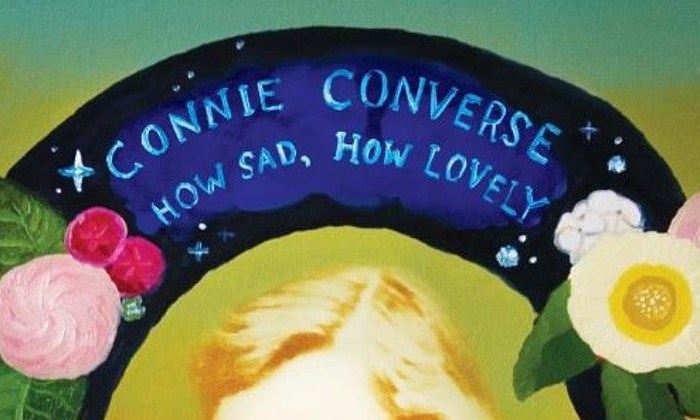


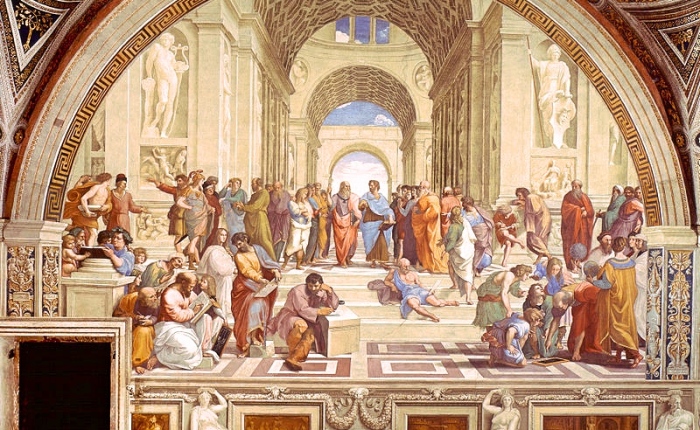
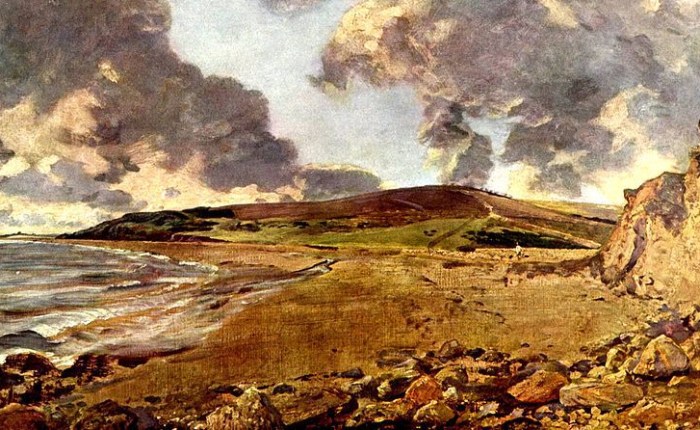


 Lotz in Translation