Alicante & the Island of Tabarca

Alicante & the Island of Tabarca

Alicante

Though I have, by now, spent years exploring Spain—having seen most of the major sights, done most of the deeds, eaten most of the comestibles, and drunk most of the potables—there still remain some corners of the country that have escaped my notice. In the summer of 2021, one of these was Alicante, the second largest city in the province of Valencia. With a bit of spare time on my hands, I set about to remedy this.

The fast train from Madrid deposited me in Alicante early in the morning. My first impression of the city was rather uninspiring. Like many Spanish cities—particularly great tourist destinations on the Mediterranean, of which there are many—the city had a generic look, consisting of medium-sized white or gray apartment blocks looming over streets full of cafés.

I made my way to one of these establishments for a much-needed coffee, and quickly fell under the charm of a busy Spanish café, full of chattering abuelas and well-dressed abuelos reading their newspapers. This older generation was accompanied, as is usual, by several grandchildren, who sat in the chairs with their legs hanging off the ground, their mouths stained with chocolate pastries.

After killing some time this way, I went to the Airbnb, which was a spare room in the apartment of a retired British man. It is quite common (or it was, before Brexit) for English retirees to move to Spain. It is considerably cheaper than the UK, to say nothing of the weather. This particular Brit struck me as very happy in his new home. He mentioned a local girlfriend, and his apartment was full of large photographs he had taken on his travels around the world. I particularly remember one of a mountain he had climbed in China.

“Of course, I’m not stupid,” he said. “I used the proper equipment to climb it.”

I do not think even the most generous traveler could argue that there is very much to do in Alicante. Indeed, sightseeing struck me as contrary to the spirit of the city. It is, rather, a place to relax—preferably, on the beach, or perhaps sitting at a nice café and eating ice cream. But I am not very good at that sort of thing. Besides, I have found that sitting on the beach by yourself—as I was—can invite melancholic thoughts. So I resolved to keep myself reasonably busy.
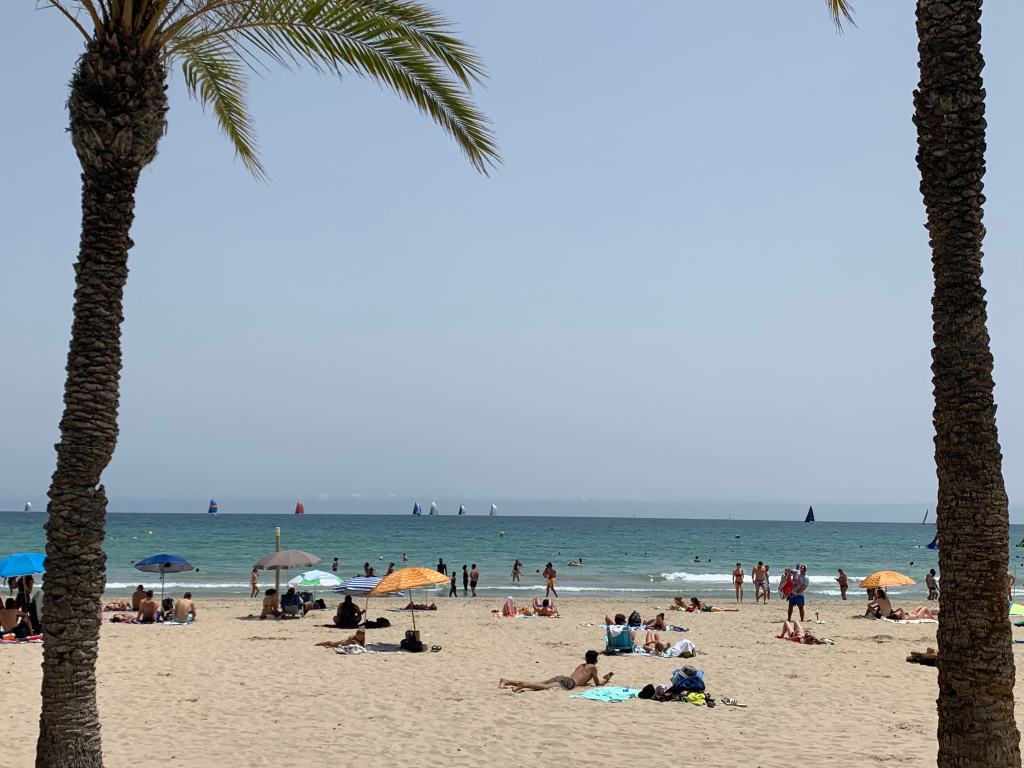
As with many Spanish cities, Alicante was built around a naturally defensible location. In this case, it was Mount Benacantil (the name comes from Arabic), a rocky hill that looms over the city. This elevation has proven to be such an advantageous feature that humans have been inhabiting it since at least the bronze age. But the castle, as it currently exists, has its roots in the Moorish period of Spanish history. It was captured by Christian forces in 1248 and thereafter dubbed Santa Bárbara, and during the many wars since that time it has been bombarded by the French and occupied by the English—not to mention, used as a concentration camp by Franco.

Approaching the Castle of Santa Bárbara

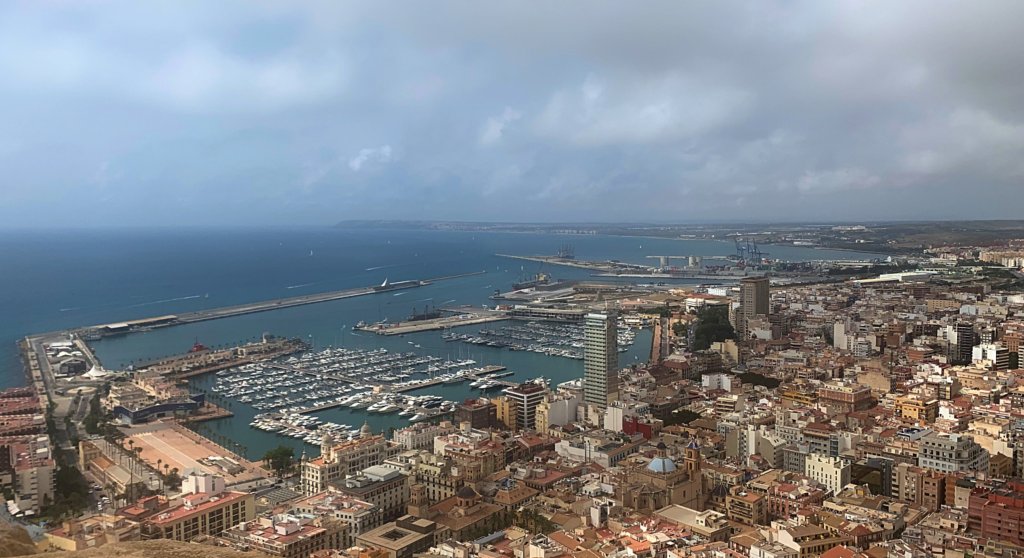
The walk up to the castle was a bit tiring, but it takes you through the small historical center of Alicante—where the generic streets below give way to the intimate sprawl of medieval living. Despite its bloody past, the castle struck me as a tranquil place. There really is not much to see aside from the old walls; but the views of Alicante and the sea beyond are worth the trek.
Now, at this point I must mention something which has absolutely nothing to do with Alicante. On my way up to the castle I started to feel a sharp pain in my left ear. The sensation was not emanating from deep within my ear, as in an earache. Instead, the outer part of my ear was throbbing as if somebody had hit it. It hurt to turn my head and to touch it. I had to take out my headphones, and wearing a mask (this was 2021, after all) was agonizing.

I was naturally afraid that I had gotten an ear infection. But my symptoms did not seem to fit. Thankfully, the pain subsided after about an hour. In the years since this trip, however, my left ear has periodically flared up with this same painful sensation. There are weeks when it hurts almost constantly, and months when it doesn’t bother me at all. I’ve been to four doctors, but none of them have been able to shed light on the matter. They’ve mostly just assured me that there doesn’t seem to be anything wrong with any part of my ear. Still, it is rather annoying. If anybody reading this perchance has any idea what it might be, let me know.

With my ear still aching, I decided to visit the Archaeological Museum. I was immediately struck by the size and grandeur of the building, which seemed almost excessive for a regional museum. This large, multi-winged structure was actually first constructed as a hospital with multiple wards. The archaeology museum, though founded back in 1932, was not moved here until the year 2000, by which time the hospital had been shut down. (Before this, the museum occupied a space in the Provincial Palace.) As a result of this architectural inheritance, Alicante’s Archaeological Museums is among the largest museums in the country—at least in terms of floorspace.
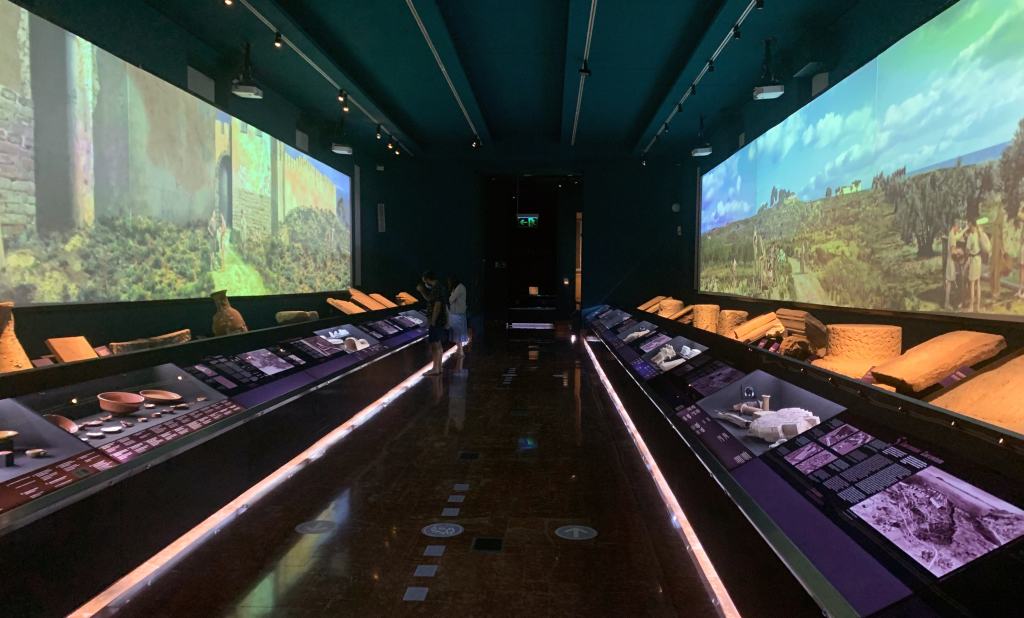
Once I walked inside, I found that the museum’s collection was also quite impressive—both in terms of quality and quantity. With more than 80,000 pieces, the collection spans prehistory to the modern period; and this extensive treasury is displayed in a series of attractive exhibits, along with audiovisual supplements. There are even a series of large-scale models of major archaeological sites that you can walk through. As I have said before, provincial museums in Europe can often be surprisingly good—and this is yet another example of this general rule. My ear even felt better by the time I finished my visit. 

By now it was lunch time, and I wanted to try that most iconic of Valencian dishes: paella. Luckily, quite near the museum is a well-known restaurant called Racó del Pla which specializes in the savory rice. I believe that the place is normally booked solid. Fortunately for me, however, I was given a seat at a high table near the door. I was disheartened to find the smallest amount of paella on the menu was to share between two people. But some skillful begging on my part convinced the waiter to let me order a personal paella. It was among the best I’ve ever had.

This fairly well does it for my sightseeing in Alicante. But before I move on to Tabarca, I wanted to include a note on language. If you know any Spanish, you will probably notice that there are many signs and advertisements in Alicante which don’t seem to be in Castilian. Indeed, the very name of the city is sometimes written as Alacant. This is the Valencian language—more commonly known as Catalan. It is curious to note that, although the same language is spoken here, and although there is a strong regional culture, there is virtually no talk of Valencian separation. Regional Spanish politics is complicated.


The Island of Tabarca

The most popular day trip from Alicante is to the island of Tabarca, which is an hour away by ferry. Tabarca is rather small, with a permanent population of about 50. Most of the year, the primary activity is fishing; but in summer the island is overrun with tourists.

That included me. After booking my ferry ticket online, I walked along the attractive promenade beside the Mediterranean until I got to the dock. The ferry was medium-sized (maybe big enough for 120 people), with two decks. I decided that I would enjoy the views from the top.

The boat rumbled into life and we began our journey.

My attention was immediately arrested by a massive wooden boat that was moored in the city port. This is actually a replica of the famous Spanish galleon, the Santísima Trinidad—the biggest ship of its time, which held 130 canons. It was called the Escorial of the Sea, and was understandably the pride of the Spanish navy. But it was so large that it could not effectively sail during the Battle of Trafalgar (fought between the English fleet and a combined French and Spanish force), and was captured and eventually sunk near Cádiz.
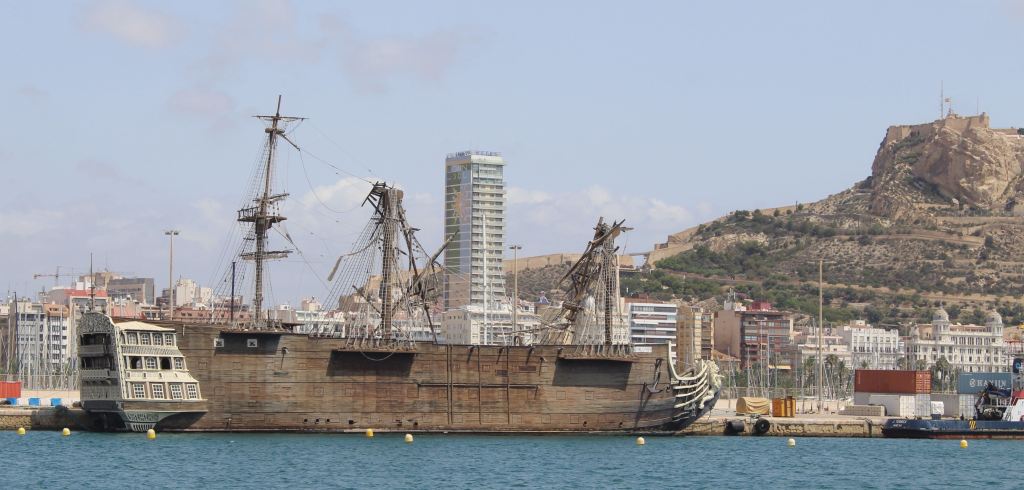
The Santísima Trinidad, with the Castle of Santa Bárbara in the background.

This replica is even more cumbersome than its namesake, since it was never designed to sail at all. Rather, it was meant as a kind of floating tourist attraction—complete with a museum and a restaurant. It was moored in the port of Málaga from 2006 to 2011, when the owner decided that an offer from the city of Alicante seemed more profitable. It was a major attraction in this city until 2017, when the ship suffered a reverse of fortune. That year, it was bought by a company which planned on bringing it to Benidorm. But for whatever reason the entrepreneurs thought better of the idea, and ultimately left this floating hulk to rot in a corner of the port. It was still there in 2021 when I visited.

So much for the flagship of the Spanish armada. Meanwhile, my little ferry did not seem to be faring much better. As soon as the boat reached the open waters, we began to rock side to side from the current. I was surprised by this, since it was hardly a windy day and the seas did not look at all choppy. The problem was that we were traveling south, while the tide was coming in from the east, thus turning the hull into a kind of sail.

The constant swaying, while at first merely annoying, began to be truly distressing about half an hour into the journey. My stomach began to protest at the churning. I did my best to focus on something else, which helped a little. But when people around me began to vomit, this became understandably fairly difficult. By the time that Tabarca came into view, I was covered in sweat and doubled over in pain. My first step onto dry land filled me with relief.
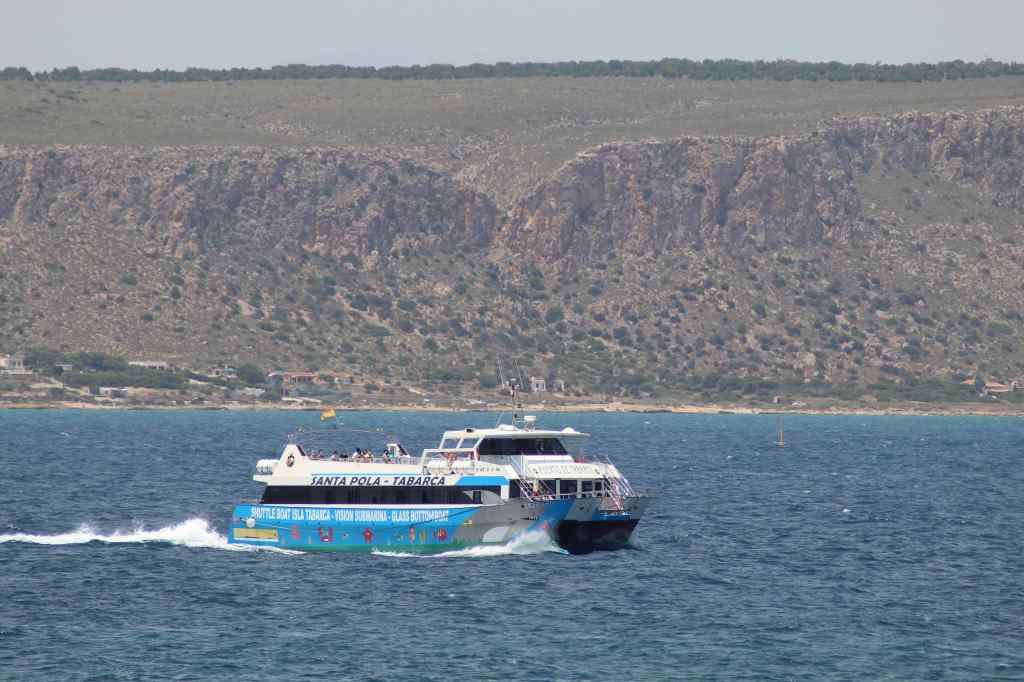
One of the many ferries approaching the island.

But the trauma of the journey faded quickly when confronted with the beauty of this small Mediterranean island. Tabarca has the profile of a melted dumbbell, the two parts connected by a narrow strip of beach in the middle. Virtually all of the human dwellings are on the smaller of these parts. It is quite an attractive little town, though one would be hard pressed to say there is very much to see or do. I contented myself with wandering around and enjoying the different views of the sea and the coast of Spain, until it was time for lunch. This was, of course, seafood—something the Spanish can be relied upon to do well.

After this, I decided to walk around the other, uninhabited half of the island. This is a strangely beautiful and barren landscape of rocks and grass, seagulls perpetually flying overhead. With no obstacles to break the wind, I was buffeted by strong gusts that almost made me shiver on the hot summer day. Yet there is something both exciting and calming about the roar of waves and the rush of wind. I spent an hour just sitting on a rock and enjoying it.

One of the few structures to be found in this part of the island is an imposing square building, called the Tower of San José. This is just one of the many defensive structures which have been built on the island over the centuries. A plaque in the city informed me that this was the site of the execution of 19 Carlist sergeants in 1838, during the so-called Carlist Wars (between factions supporting different claimants to the Spanish throne). They were executed, apparently, as a reprisal for a similar execution of prisoners on the Carlist side.

In any case, I was surprised at the tone of the commemorative plaque, which calls them “martyrs” and proclaims Don Carlos V the “legitimate” king of Spain. For one, Carlos lost the war and never became king. What is more, Carlism is associated with the most fanatically conservative parts of the political spectrum. Pretty heavy stuff for 1996, which is when the plaque was installed.

When you are lucky enough to travel to a place as lovely as Tabarca, it is pretty rich to say that you have “regrets.” Nevertheless, I do wish I had tried snorkeling in the crystalline waters around the island. This area is a “marine reserve” and is considered to be one of the best places for both snorkeling and scuba diving in the country. As somebody who has never done anything similar, I can only imagine how fun it must be to swim amongst the sea life.
Now it was time for the ferry ride back. Dreading the seasickness, this time I figured that I would stay on the lower level, as close to the middle of the boat as possible. My thinking was that this would be the part of the boat which would experience the least movement, in the same way that the best place to avoid turbulence on an airplane is over the wings.

The boat began its journey and my confidence quickly evaporated. If anything, the swaying was worse than before, and this time I had no view to distract me. Instead, I put on an audio book (one by David Attenborough) and stared at the floor. My own physical discomfort was manageable this way—at least for about twenty minutes. But I began to feel real distress when the vomiting started. It was, to say the least, difficult to ignore. The ship’s crew were running back and forth with white paper bags, as the people two rows up, to my left, to my right, and finally right next to me, all began to wretch into these bags. By about 45 minutes into the ride, over half of the passengers had lost their lunch. In retrospect, it was amazing that I did not smell anything.

But the sight alone of all this sickness was strangely contagious. My stomach twisted itself into a tighter knot. Sweat covered my whole body. I curled my fingers into fists and buried my head in my arms, trying to block out my surroundings. When I could not see anything, the swaying actually did not seem too bad. Yet I did not have the discipline to remain like that. I would look up and, when I did, would inevitably witness another victim.

Finally, I decided to get up and walk up to the prow. Here the wind felt like ice and water continually splashed up onto the deck. This cold air was, however, exactly what I needed: I snapped out of the sick feeling and was able to enjoy the final approach to Alicante.

You may think that after such an ordeal, the last thing I would want to do was eat. Yet I had seen a ramen shop that intrigued me that morning, and I arrived back in Alicante just in time to get a table (there was a queue forming even before it opened). Thus, I concluded my final day exploring Alicante hunched over a bowl of hot noodles. And that is certainly the mark of a good vacation.

Escape to Valencia

Escape to Valencia

Our long delicious winter vacation was coming to a close, but we still had one weekend left. Originally, we planned to stay home and relax; but traveling so much had gotten us addicted. After returning from Ávila, we hastily arranged and booked a trip to Valencia to savor the last gasp of our holiday.

Valencia is the third largest city in Spain after Madrid and Barcelona. It is situated on the Eastern coast of the Iberian Peninsula (a three hour drive from Madrid); and its port has long been, and remains, one of the busiest on the Mediterranean. The city has a deep history; Romans have been mucking around here since well before Christ. The city, as well as the surrounding province, even has its variant of the Catalan language: Valenciano. This language is not just spoken by the people, but it’s officially used; streets are called carrer and not calle here, which confused as we tried to look up the address of our Airbnb.

Our Blablacar driver was a native of that city, and spoke with their characteristic accent. Our fellow passenger was a gato, literally a “cat,” which is the slang term for people whose parents are both from Madrid. This is a lot less common than you might think; most people, if they didn’t themselves move into the city, have at least one parent who did.

Both of them were swell fellows. I tried keeping up with their conversation, but a question I asked inadvertently led them into a deep, energetic political discussion. This was just after the election in Spain, and obviously both of them had a lot to say on the subject. It’s interesting to me how much Spaniards enjoy talking about politics, even among people they hardly know. Americans usually avoid political discussions at all cost, even (or perhaps especially) among family. But these two guys, who had just met, seemed to be having a very deep conversation on the subject.

I wish I understood them. The political situation now in Spain (this was back in early 2016) strikes me as similar in certain respects to that in the States. Particularly, there seems to be a widespread dissatisfaction with the establishment, and this dissatisfaction expressed itself in the formation of two new parties, Podemos and Ciudadanos—something that is unsual for Spain, which has been a two-state country since the establishment of democracy. In the States, this anti-establishment ethos is expressing itself as new candidates rather than new parties, which I think is a consequence of our political system, but I believe the dissatisfaction is the same.

Valencia_Graffiti2

We got to Valencia at around dinner time (for Americans), checked in to our Airbnb—with another welcoming host and another comfortable apartment—and went out to eat. Although we’d only been in the car for three hours, it was about thirty degrees (Fahrenheit) warmer here. We went from winter jackets, scarves, and hats to light sweaters. It was even warm enough to eat outside, underneath a fruit tree laden with the famous Valencian oranges. Partially because of its mountainous terrain, Spain is a land of striking climatic contrasts. Still, it’s hard for me to get used to it. All these climatic zones seem jammed next to one another. In the States, we keep our hot and cold zones far apart.

Valencia_Graffiti

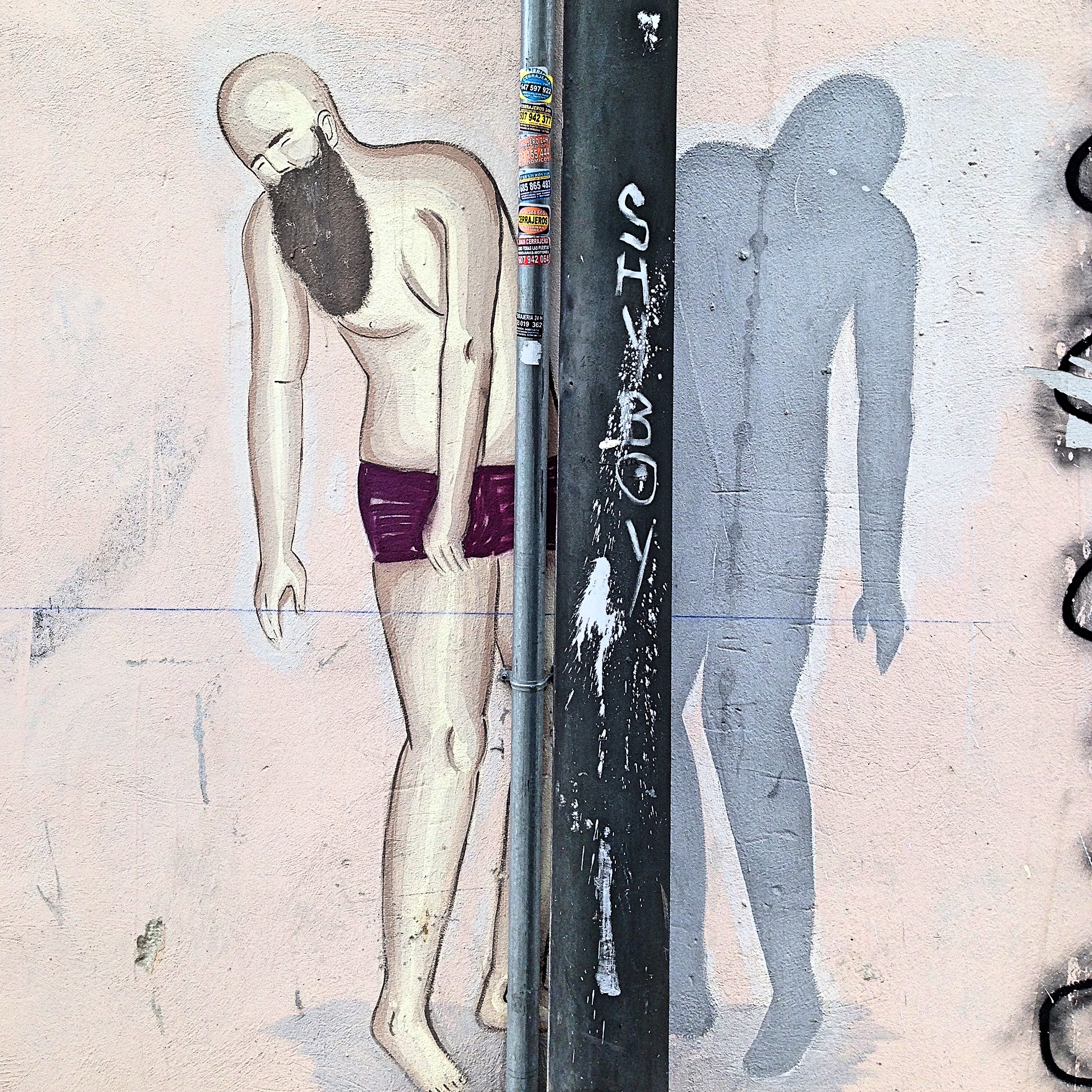
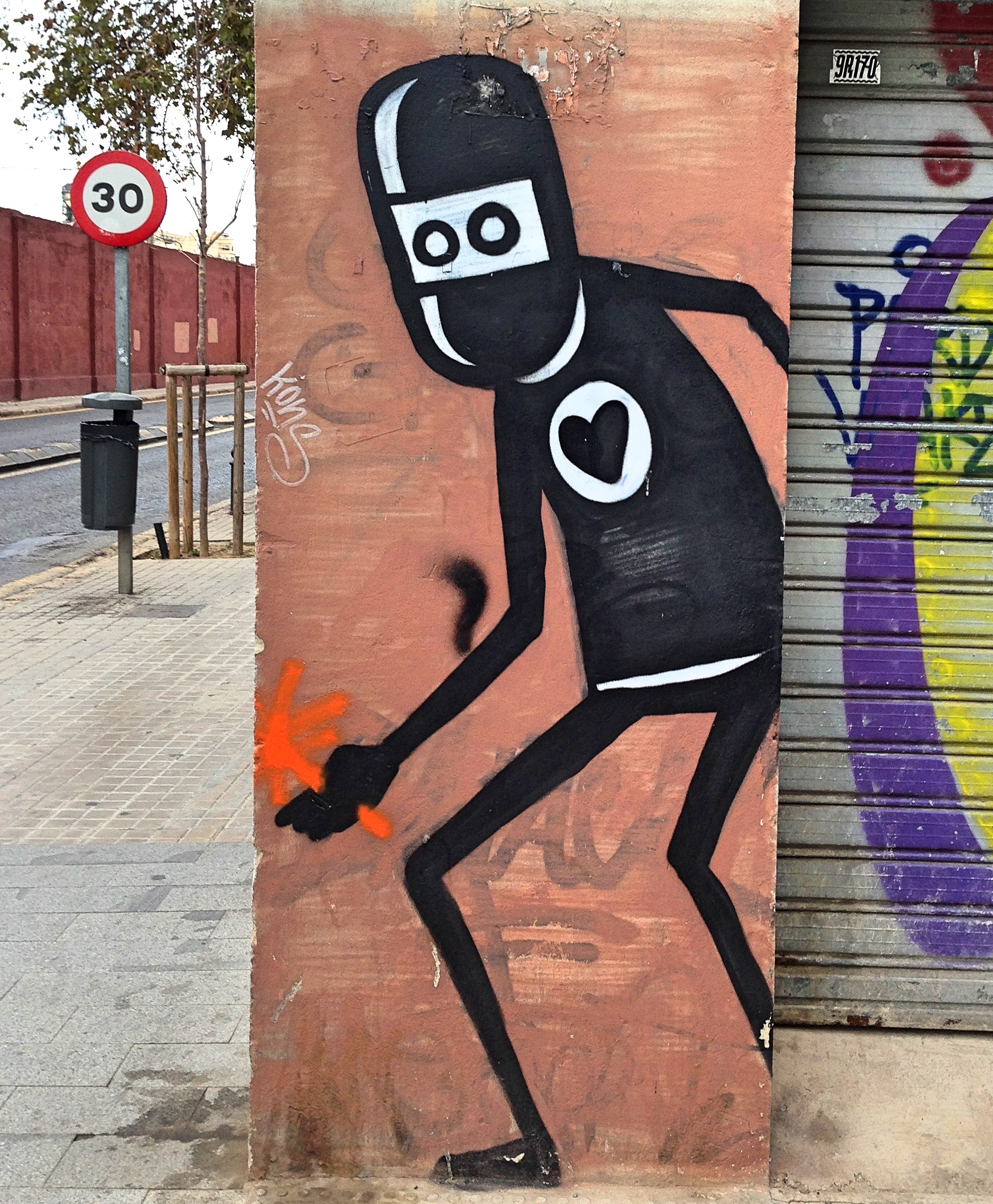
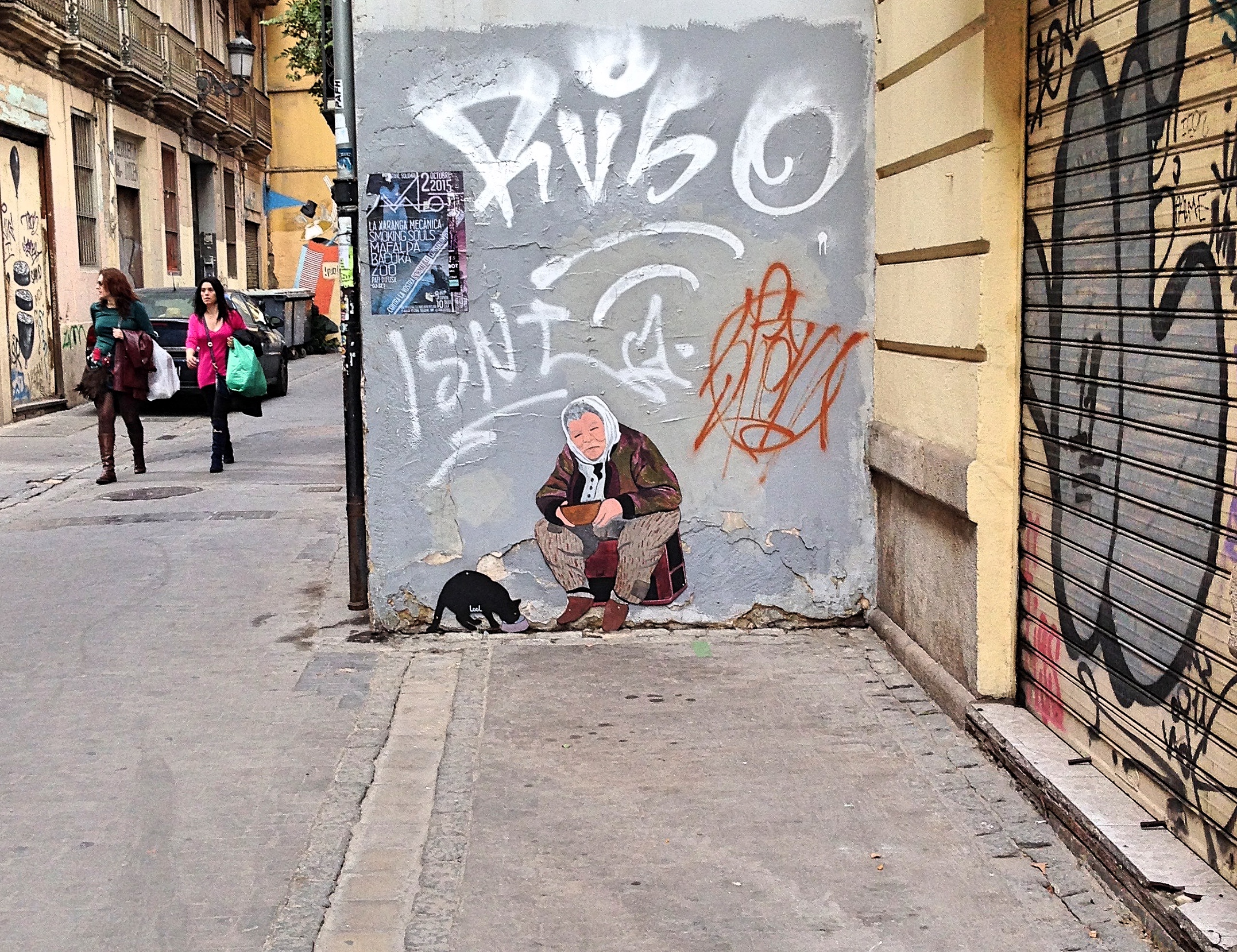
We woke up the next day ready to experience Valencia. As per our usual routine, we visited the cathedral first. But on the walk there, we couldn’t help noticing the graffiti on the walls. Much of it was the usual stuff, but some of it was really excellent. There were abstract pictures of colored squares, detailed images of batman, and several grotesqueries I can’t adequately describe. Most interesting, though, was the image of a ninja that was painted all over the city, on walls, parking machines, in entrances to stores. I couldn’t help thinking that this ninja had some mysterious significance, that it had been drawn by some shadowy organization as a sign, or perhaps as a clue—but to what?

Valencia_Ninja

But perhaps the conspiratorial part of my brain was overactive from seeing the spray-painted slogans of anarchists all over the city. “No king, No God, No Owner. Revolution,” they said, under the symbol of anarchy: an “A” inscribed in a circle.

We got to the cathedral. I have to admit that my memories of this cathedral are pretty hazy; after a while, all cathedrals start blending into one another. The façade was the most pretty and distinctive part. At one entrance, the door is connected to a round wall with three levels; it looks like a section from a Roman amphitheater was just stuck on the side.

Valencia_Grafitti3

Outside the cathedral, in the surrounding plaza, high school boys were skateboarding, a fact that GF found particularly amusing.

“Can you imagine just skateboarding in front of something like this?” she said. “Europe is crazy, man.”

We went inside. Skipping the descriptions of the usual beautiful stuff—the altar, the stained glass windows, and so on—I’ll only mention that the Valencia Cathedral holds the best candidate for the true Holy Grail. Of course, there are many other chalices in Europe which are claimed to be this blessed object, but the opinion of most Christian thinkers and historians is apparently that this one in Valencia is most likely to be the real deal. It’s displayed in one of the cathedral’s chapels, somewhat external to the main area.

I sat in a pew for some minutes looking at it, without having any idea what it was supposed to be. All I saw was a shining gold object, nothing more. It was only after we left and GF looked up the cathedral on her phone that we found out. As often happens, admission came with audioguides; but lately, to practice Spanish, we have been asking for these to be set in Castellano. A consequence of this is that the majority of the time we have no idea what we’re looking at.

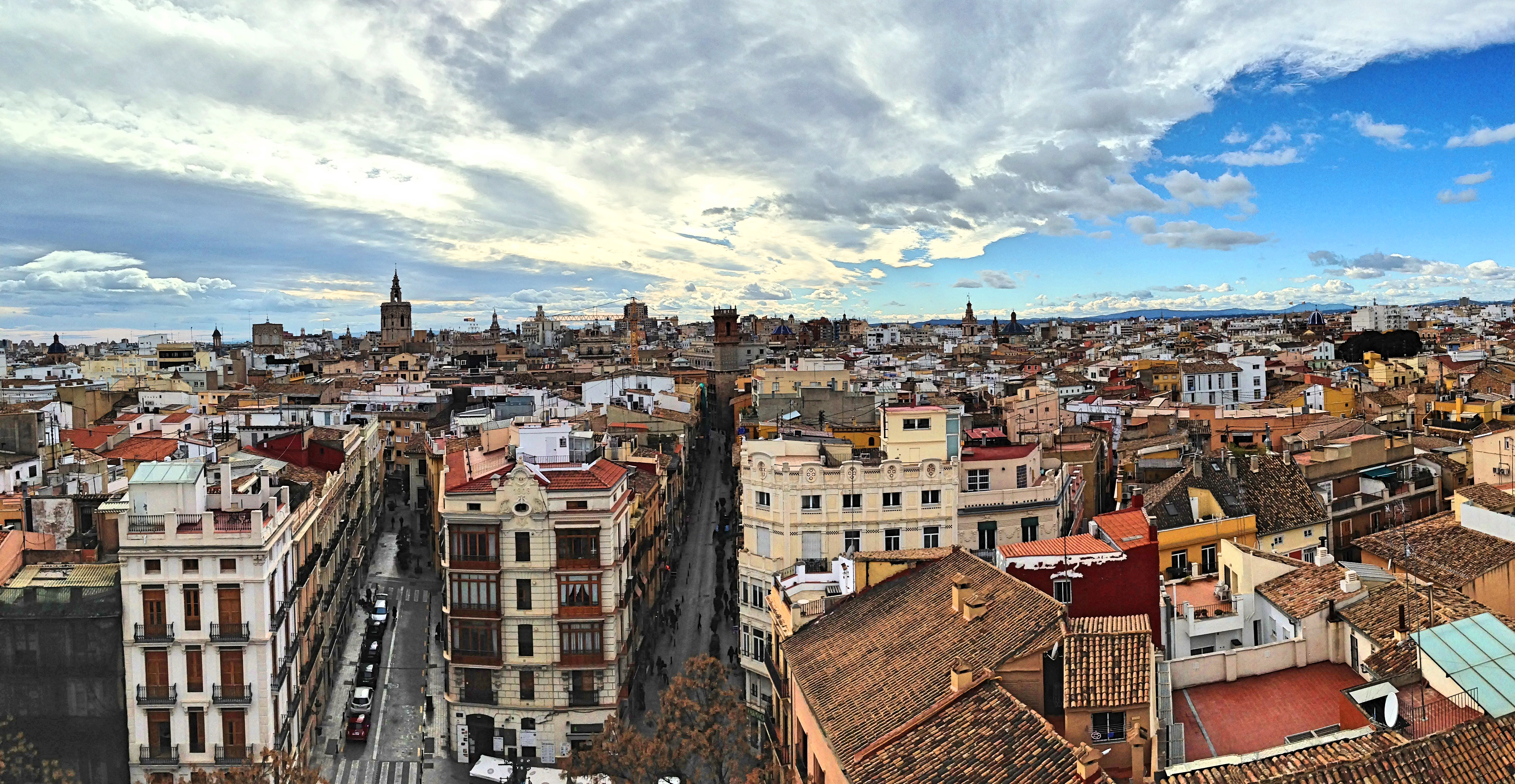
Next was the Torre de Serranos, an old fortified gate at the north end of town. Valencia used to be completely surrounded by walls (as were most major cities), but now only a few gates remain. What surprised me most was its height. Compared to the gates of Ávila, this one was absolutely massive. The visit was quick: Pay the fee, climb some stairs, and enjoy the view of Valencia. Perhaps since we’d just visited the castle walls in Ávila a few days before, standing on this tower wasn’t especially engaging. But the view is certainly nice. Valencia, like Madrid, is an interesting mixture of modernity and history. For the most part, it looks like any city in the twenty-first century, with concrete and glass buildings, except for the odd medieval tower popping up here and there.

Valencia_City

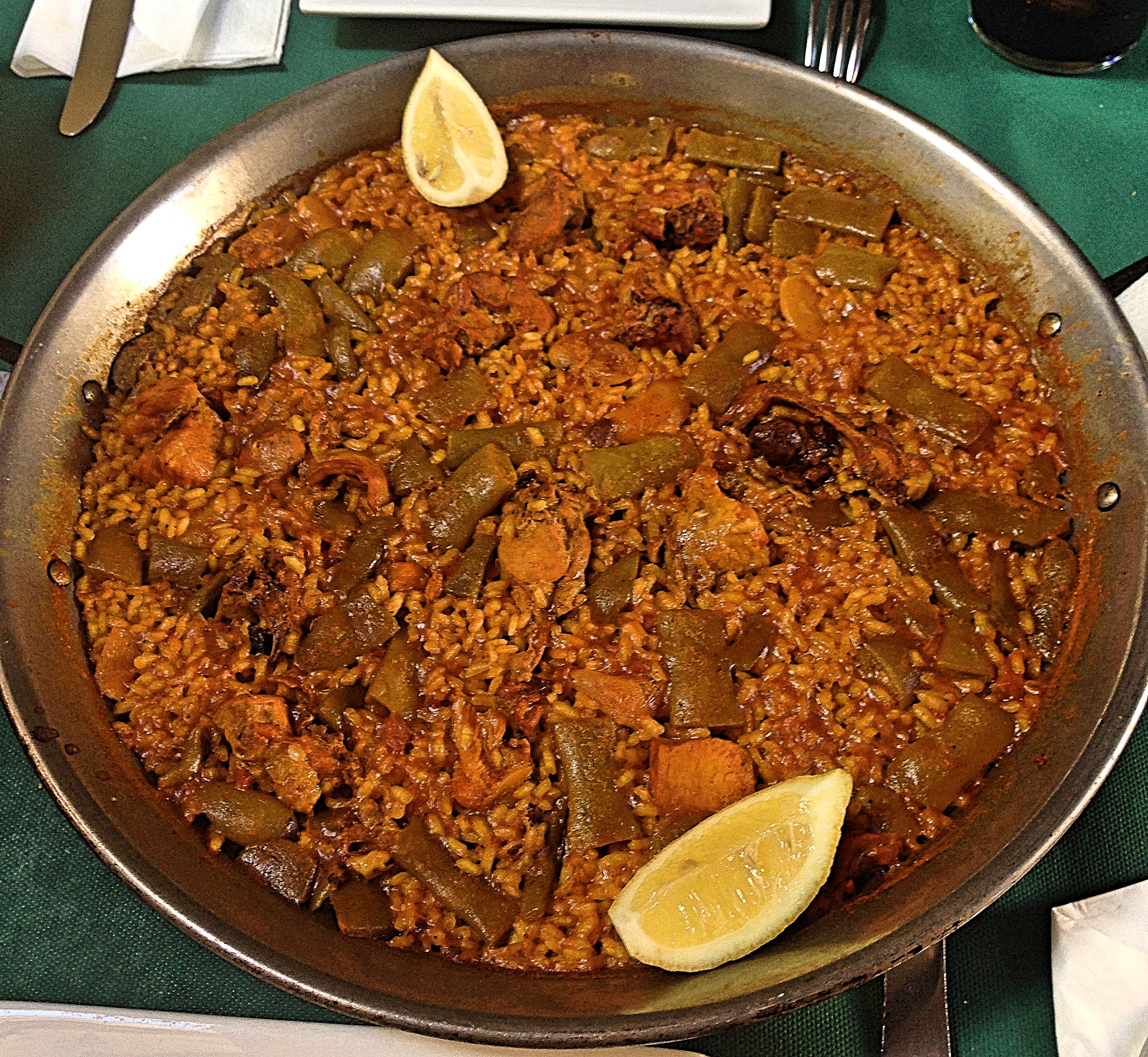
We descended. It was lunch time now, and we knew what we had to eat: Valencian paella. That most famous of Spanish dishes, paella, originated in this city. Paella is often made with seafood—prawns and oysters and so forth—but, as I was informed by my Valencian Spanish teacher, “paella” with seafood is not true paella at all. To be traditional, it has to made with chicken, rabbit, and vegetables. So that’s what we would eat.

(The Spanish can be very finicky with their food; indeed, they are more puritanical than the Inquisition when it comes to paella. Thus the British chef, Jamie Oliver, got into trouble when he posted a photo of paella he made with chorizo. For whatever reason, this is blasphemous in Spain, and Oliver is dragged over the coals by Spaniards on social media. Ironically, however, according to this article, historically chorizo was used in paella. Personally I like it that way.)

Lucky for us, we usually get hungry for lunch a whole hour before most Spaniards, so we had no trouble getting a seat at a good restaurant. In fact, we were the only two people sitting outside. (As our Airbnb host explained to us, the Valencians have a different view of hot and cold; what was a beautiful day for us was a bit chilly for them.) The food was prompt, the waiter friendly, and the paella delicious.

Valencia_Paella

Stomachs full, we went back towards the Torre de Serranos, and then to the Jardines del Real. The name (Royal Gardens) comes from the royal palace of the erstwhile kings of Valencia that used to occupy the area. The palace was demolished in 1810 during the Napoleonic wars in order to prevent the French from occupying it—a move that had no military justification whatsoever, and was partly motivated by bourgeois resentment of kingly privilege.

But I didn’t know that at the time. All I remembered from my conversation with our Airbnb host was that he said the word “palacio” when he recommended it, which led me to believe that there was still a palace to visit.

“Where’s this damn palace?” I said to GF.

“What palace?”

“I thought there was supposed to be a palace here.”

“Iunno.”

We went from one end of the gardens to the other.

“Maybe it’s outside the gardens?” I said. “Think it’s that thing?” I pointed to a tall building.

“Could be.”

We walked over to the building and looked up. It was a bank.

“Where is it?”

“Just forget it,” GF said. “Let’s go back to the gardens.”

At least the gardens were lovely. Most memorable was a big bird cage in the center, filled with a dozen or so different species of bird, including one lonely rooster. I thought it curious that all the birds congregated in their own corner with their own species.

We sat in a bench for a few minutes to enjoy the Valencian sun. The weather was perfect, though I was having some trouble appreciating it owing to my bitterness from failing to find that damned palace.

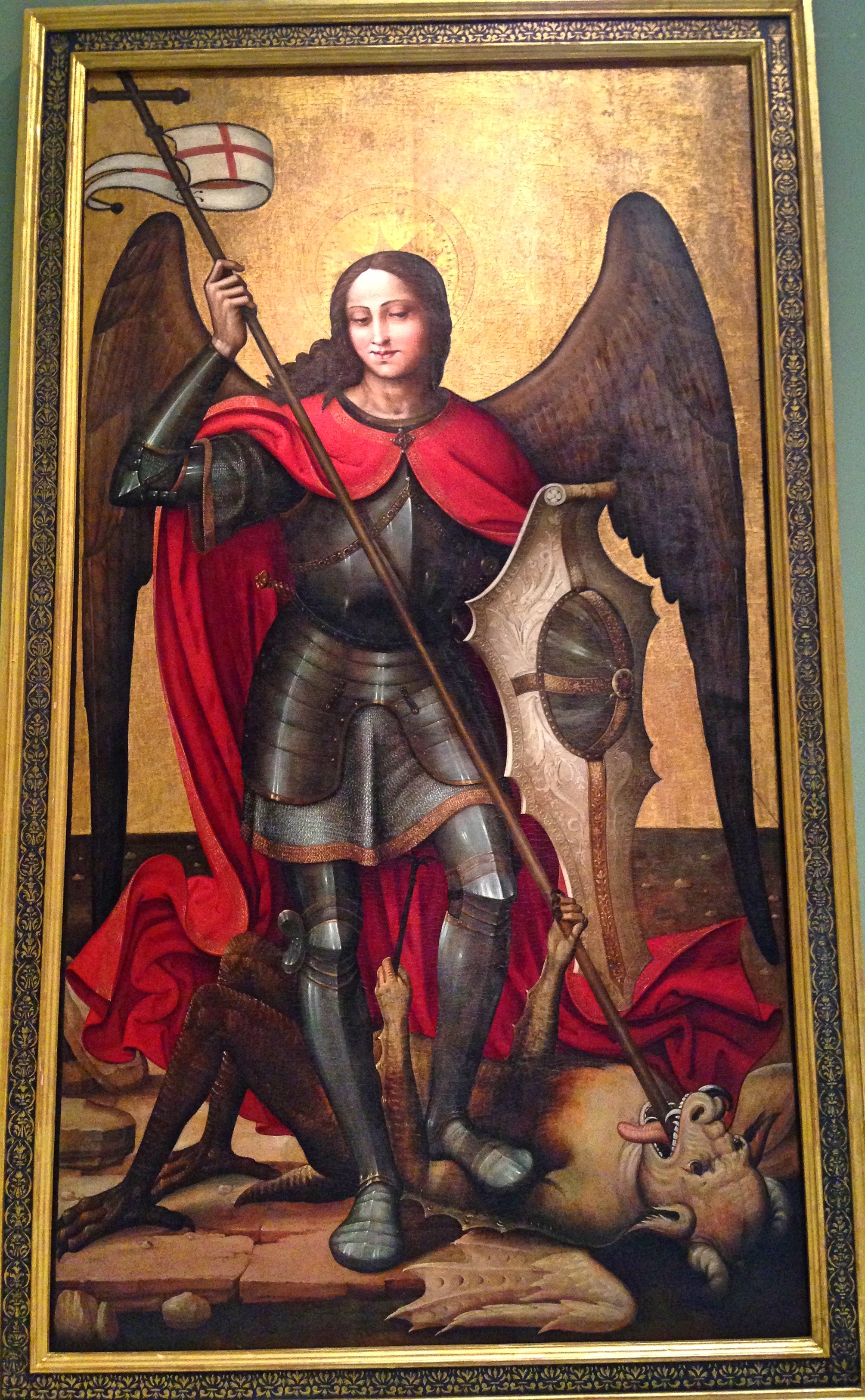
Next we went to the Museo de Bellas Artes, also recommended by our Airbnb host. In turn, I’d like to recommend this museum to you, for it was excellent. It’s free to enter; and the collection, though small, is tasteful and impressive. The art is arranged chronologically, with the oldest works near the entrance on the first floor and the most recent by the exit on the second. I enjoyed the older paintings the most. There’ is something about Medieval art, a certain simple tenderness, almost naïveté, that I find especially moving. No attempt is made at realism. The often disproportionate figures, with heads and bodies turned at unnatural angles, stand in an flat space with a gold background.

Valencia_Museum

What’s more, the scenes depicted are often bizarre. One typical example is a portrait of Luke the Evangelist seated before the Virgin, writing his Gospel. The only reason you can tell it’s Luke (the faces are hardly individualized) is because there is a little, tiny bull, the symbol of Luke, pointing with his hoof at the page; the bull even has a halo. Apparently, to the Medieval mind this was not at all strange.

Upstairs there was some masterful Renaissance paintings, including one by El Greco and Velazquez. The difference between the gothic and the Renaissance era paintings is stark. Faces are individualized, bodies are solid, shadow is used to create a sense of space, and perspective transforms the two-dimensional flatland into a three-dimensional world. Medieval paintings are symbols, whereas these are representations. What happened to the European mind to create this huge shift?

We had seen nearly everything in an hour or so, and decided to leave. On our walk out, I noticed a painting of Jesus pouring blood out of the wound into a golden bowl, from which two lambs were drinking. Now, I’ve seen morbid Catholic art before, but this gives me goosebumps.

By the time we walked outside, the sun was setting. We decided that we’d walk down the Jardín del Turia. This is a long park that runs through the center of Valencia. It sits built in a riverbed of the river Turia. Like many major cities, such as Zaragoza and Seville, Valencia grew up along the banks of a river. But unlike those cities, Valencia’s river no longer exists. It was diverted from its course after it flooded in 1957, causing major damage to Valencia. Now the riverbed is home to a park, and quite a pretty one.

It winds its riverine way through town, below street-level, filled with trees, gardens, and ponds. Bridges transport cars and pedestrians overhead. The park was beautiful, but quite long—or at least we thought so, having by now been walking all day. We walked and walked, our feet sore, hoping to get to the end of the park so we could see the sunset on the beach. But we didn’t have enough time, or else underestimated the distance, and the sun had almost totally set before we reached the end.

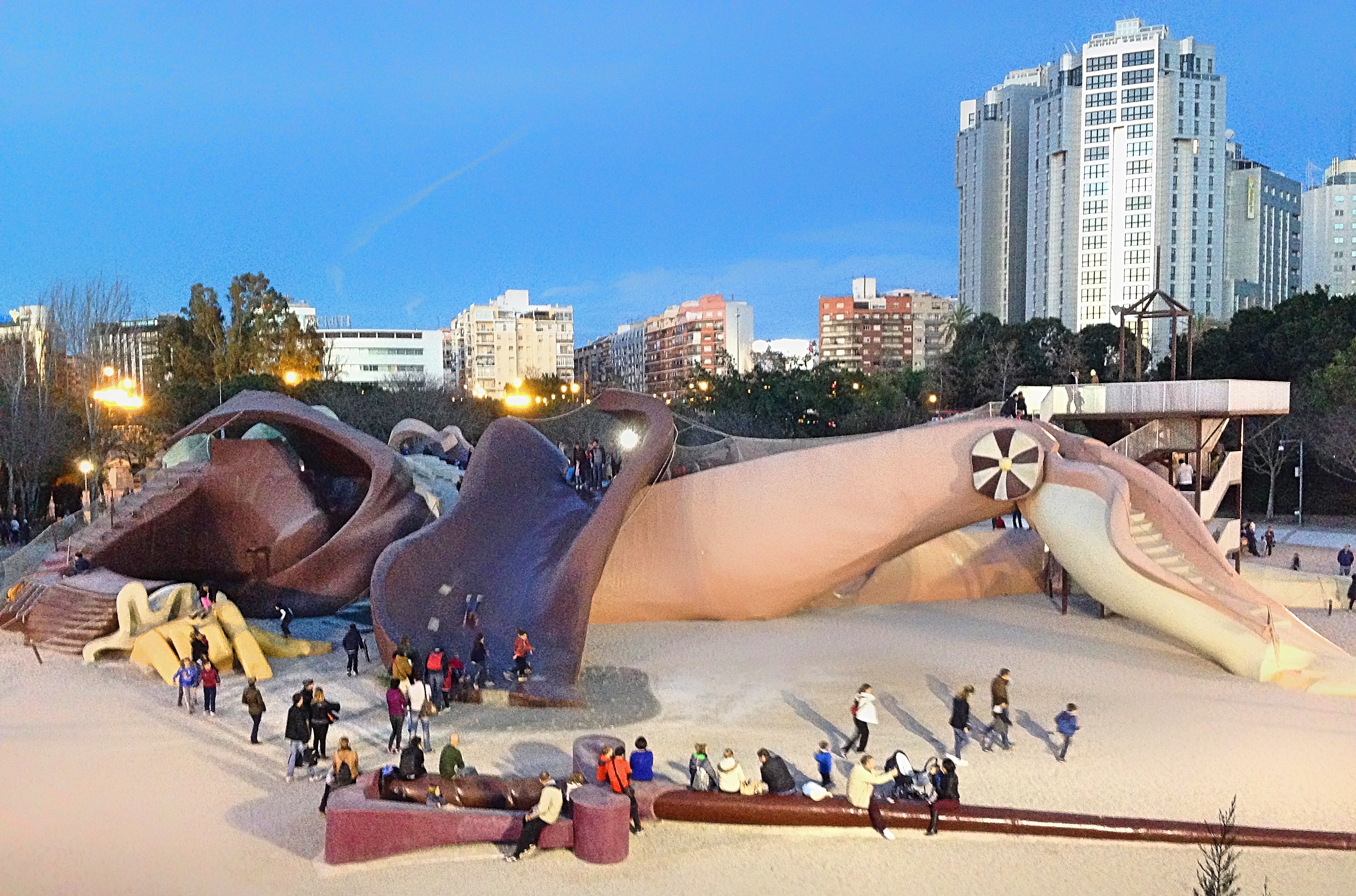
This didn’t matter so much, for the park was nice enough. Garden after garden went by; palm trees swayed gently above. Pedestrians crowded the sidewalk; kids were skateboarding; adults were bicycling. Eventually we walked through a gate and into a gigantic playground. It must be the biggest playground I’ve ever seen. Instead of a jungle-gym, swings, a slide, or any of that, there was a massive plastic statue of Gulliver, tied down to the ground by the Lilliputians. His body was the playground; kids slid down his stomach, climbed up his cheeks, jumped on his belly button.

Valencia_Playground

There’s something almost sacred about playgrounds. It’s a space that the community devotes purely to enjoyment. Kids from all backgrounds, rich and poor, natives or immigrants, are equal (or nearly so) in this plastic wonderland. They are happy just to run around and feel their legs, to shout and hear their voice. Only the severest misanthrope could remain cold at the sight.

Now it was dark; the day was over. Completely exhausted by now, we walked back to our apartment, had dinner at a burger place, and slept. We still had another half-day in Valencia.

§

Valencia_Aquarium2

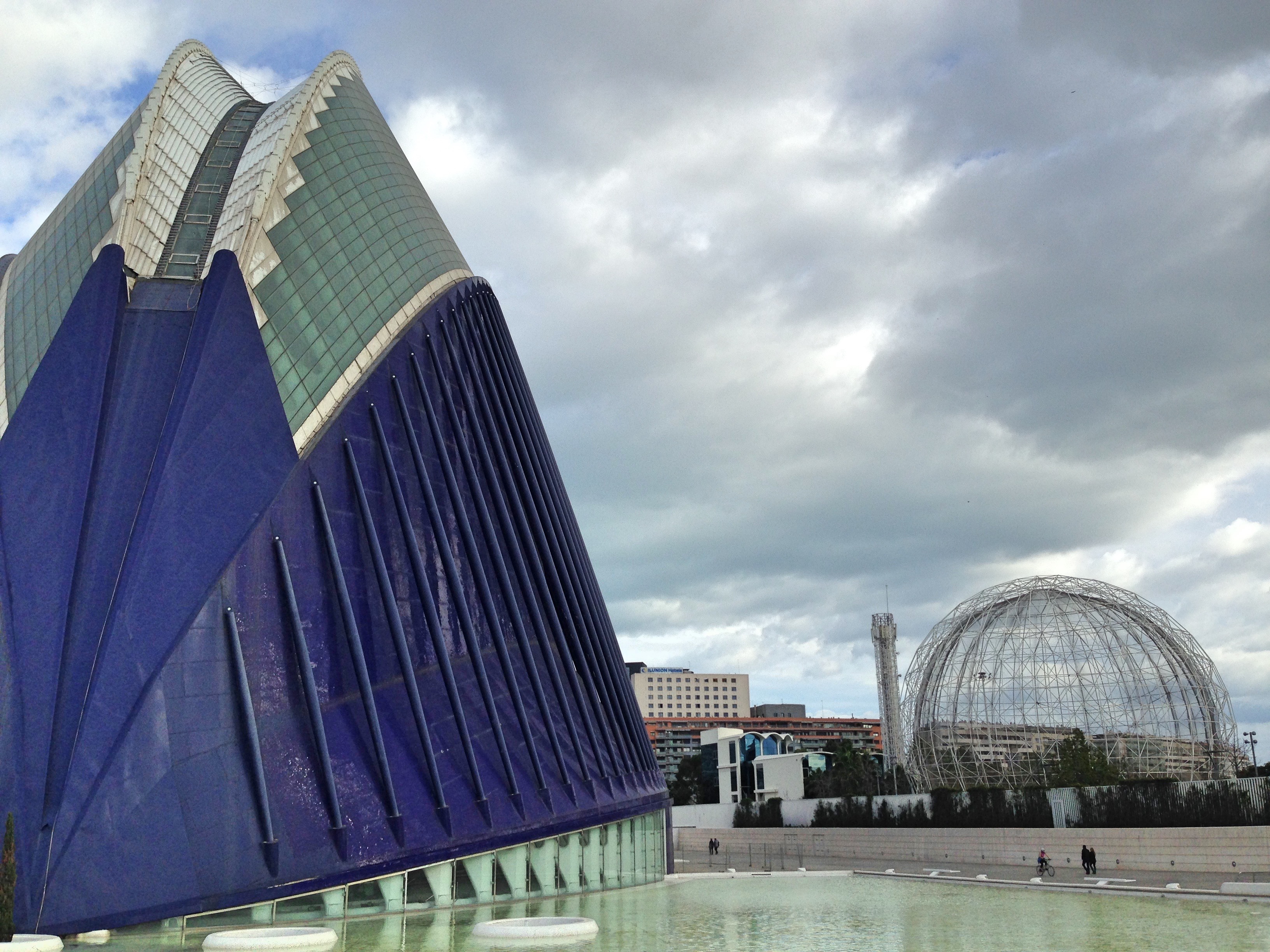
Our first and only stop for Sunday was the Oceanographic, the largest aquarium in Europe. (TripAdvisor ranks it as the fourth best aquarium in the world; the best is in Lisbon.) It sits at the end of the Jardín del Turia, one of the buildings in the Ciudad de las Artes y las Ciencias, the City of Arts and Sciences, a collection of museums, galleries, and other high-minded institutions.

Valencia_Aquarium

This complex is one of the biggest tourist attractions in Valencia, and for good reason. Here, the Spaniards’ flair for modern architecture is on full display. Every building is given a futuristic design, looking like sea shells, tulip bulbs, shark fins, and other shapes too difficult to describe. The buildings are sleek and shiny, covered in reflective glass and girded with bands of metal. There is a planetarium, a science museum, a theater, and of course the oceanographic—which was designed to have the layout of a water lily.

The only bad part of our visit was paying the entrance fee, which was surprisingly steep. I suppose it costs a lot to maintain all these animals. It hurt to fork over the money, but in retrospect it was well worth it.

Our tickets came with a dolphin show; and the next one was starting almost immediately. We headed to the dolphin theater and found seats, high up so we didn’t get splashed. The show began, and immediately became very cheesy. Dance music started playing, and the announcer’s tone and manner were so exaggerated it felt like a WWE commercial.

Dolphin_Show

The show began. It was exactly what I expected. Dolphins flipped, jumped, did backflips, swam backwards, and then towed around their trainers in the water like little speed boats. Simply for their physical ability, dolphins are impressive animals. Imagine how much force it takes to accelerate a dolphin fast enough to shoot straight out of the water to snatch a fish dangling from a fifteen foot ladder. Their whole body must be one giant muscle.

Two things bothered me as I watched the show. First, I had just re-watched the movie version of The Hitchhiker’s Guide to the Galaxy, a pretty mediocre adaptation, but which does start with a musical version of “So Long, and Thanks for all the Fish,” and now I couldn’t get it out of my head. Then, I remembered this quote from the book:

For instance, on the planet earth, man had always assumed that he was more intelligent than dolphins because he had achieved so much—the wheel, New York, wars, and so on—whilst all the dolphins had ever done was to muck about in the water having a good time. But conversely, the dolphins had always believed they were far more intelligent than man—for precisely the same reasons.

Second, I kept thinking that there was something morally questionable about the whole affair. As evinced by the show, dolphins are smart—very smart. Consider this: A dolphin can watch a human spin around on land, and then translate that movement to its own quite different body in the water. Monkey see, monkey do is not a sign of stupidity, but of intelligence. Imitation is a sophisticated cognitive task. And dolphins are not only smart, but highly social; like dogs and humans, they live in groups with their own hierarchies.

What’s the morality of keeping a creature like this in an aquarium? Do they get bored swimming around their pools? Do they get listless and depressed being isolated from the ocean? Does the loud music and the applause of the show bother them? I don’t know. The strongest argument I know in favor of keeping intelligent mammals in zoos is utilitarian: Yes, maybe they’re less happy here, but they’re safe; and besides, the publicity and good-feeling generated from zoos and aquariums makes people more likely to donate to charities and to set up nature reserves. So maybe the benefits outweigh the drawbacks. And perhaps the dolphins enjoy the exercise of performing and the bonds with their trainers? Still, I couldn’t shake the feeling that this show was questionable.

This led me to a deeper question: What is intelligence, anyway? How do you define it? Is it a measure of the complexity of tasks the brain can perform? Yet spider webs are enormously complex, yet we don’t think of spiders as intelligent. A spider does not need to be a chemical genius to synthesize silk. Perhaps intelligence is the ability to learn? This seems like a better definition. Humans, the smartest of animals (we think), are also the most adaptable; we can learn to make new technology, and then use this technology to live in new environments. Chimps can learn to use tools and even to use sign language; dolphins can be trained to perform like this.

The show ended, and we left to see the rest. The aquarium is divided into ten sections, each one a different natural habitat. Here are some of the highlights

One of the tanks was for the seals. They are lovely creatures, so dog-like that you can imagine keeping one in your backyard pool. As I looked at the seals, though, the same pang of unease shot through me as when I saw the dolphin show. They must be bored swimming around that cage all day and all night long. And having people point and gawk can’t be pleasant. Case in point, a little girl next to me began throwing a yellow toy—one of those minions from that Pixar movie—up and down, and a curious seal on the other side of the glass began following it. The seal even tried to snap at the toy, like it was a fish; though of course his teeth just bounced off the glass. The kid’s parents thought this was cute and neat, and I admit it was kind of cute. But it also seemed a bit cruel, adding insult to injury.

Of course, there were lots of fish. I like looking at fish, but not especially. Have you ever looked into the eyes of a fish? Nothing seems to look back at you. The same goes for birds, for the most part. In one section, under a big netted area which I believe was the wetland habitat, were lots of birds standing about. They were very pretty; but if I spend too much time looking at one I get unsettled. I try imagining what’s going on in their brain, and get nothing.

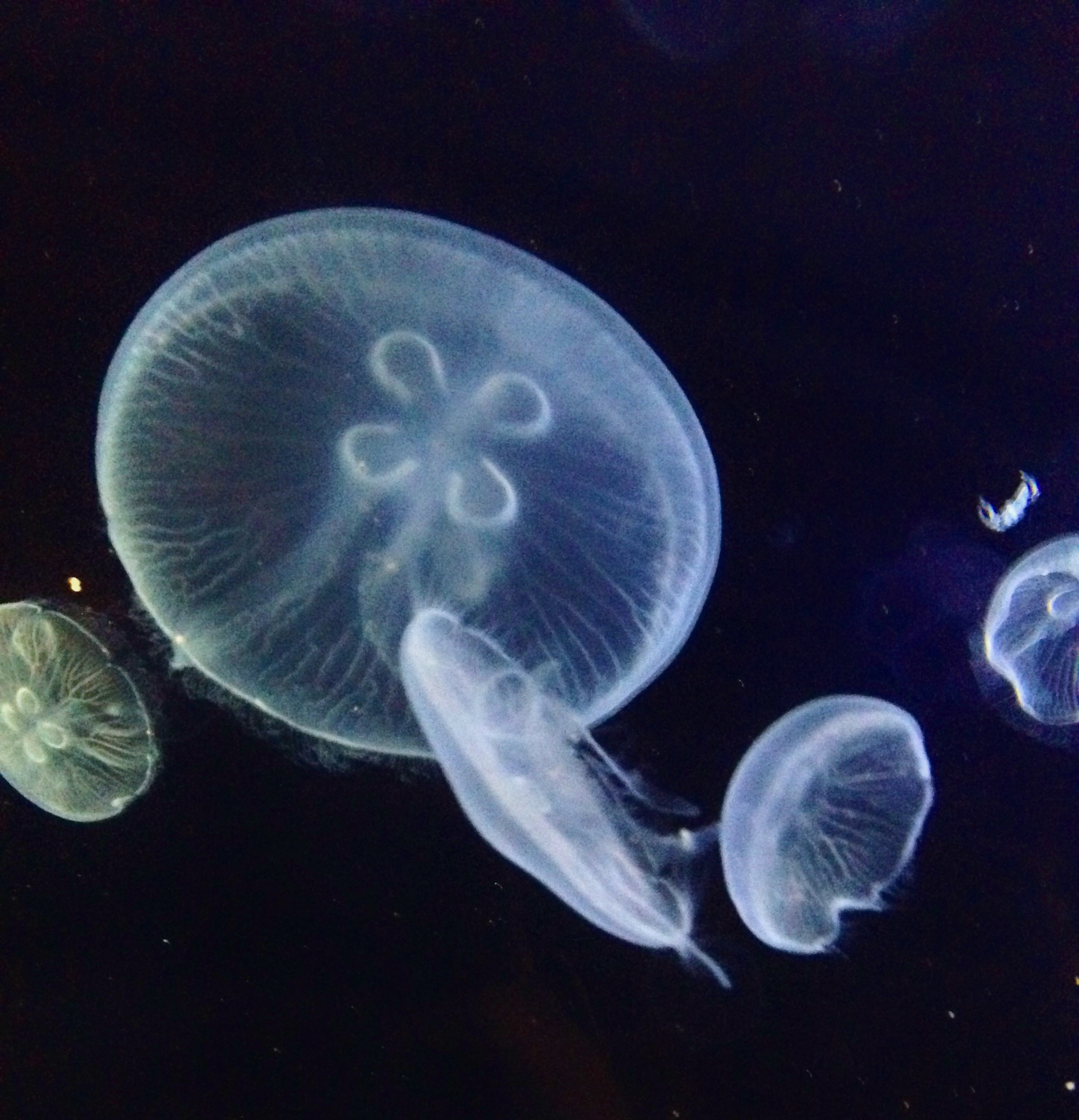
Also in abundance were lots of strange sea creatures. There were sea horses, those surreal beauties that look like fantasy intruding upon reality. Jellyfish also give me this impression, floating in their tank like plastic wrap, lit up like neon signs against the black background. How bizarre is it that something like this—something I can literally see through—can be alive?

Valencia_Jellyfish

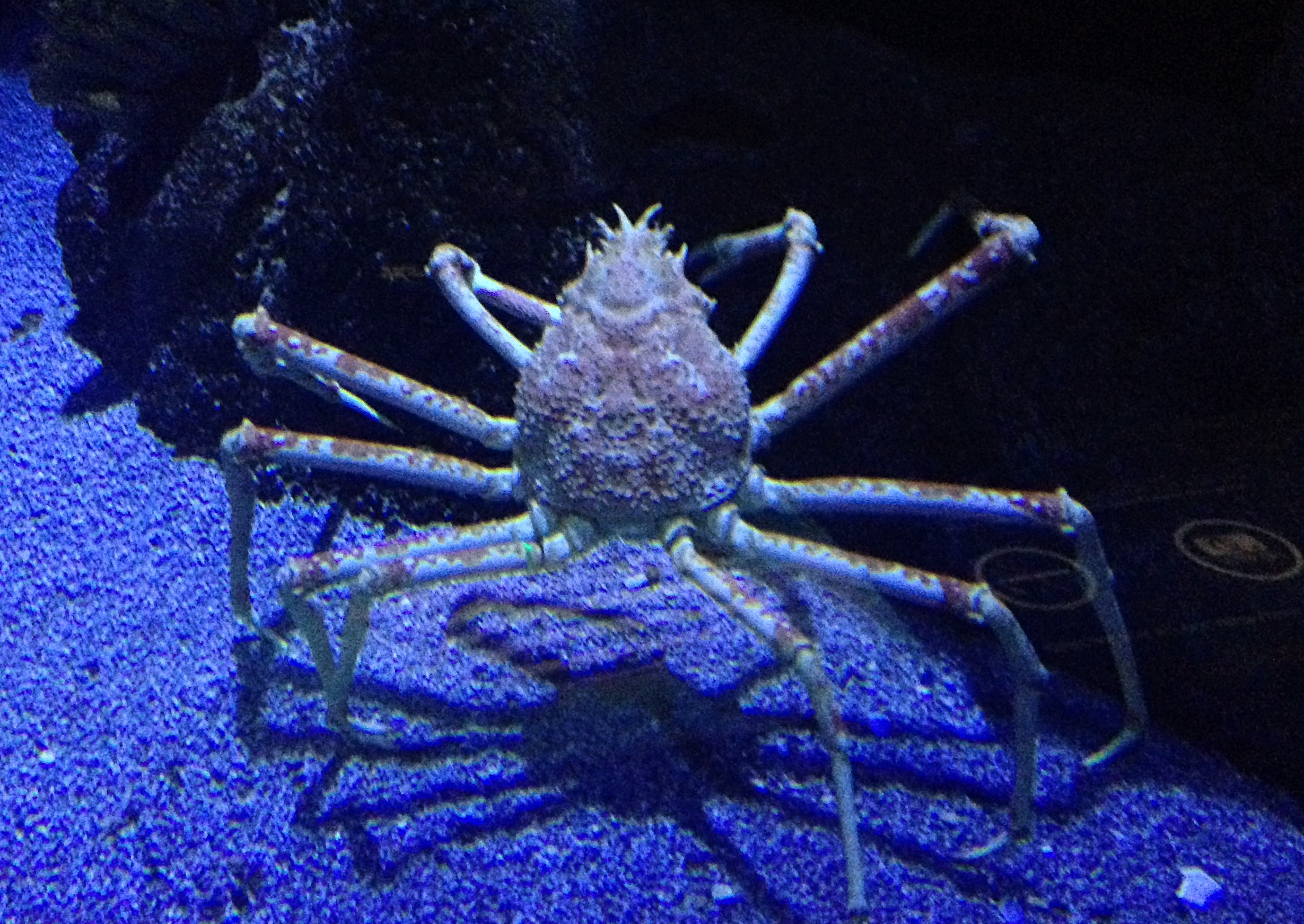
In one cage were two spider crabs. I could hardly believe my eyes, they were so big. And according to the audioguide, they weren’t even fully grown. The two crabs leisurely made their way across the bottom, their thin, spindly legs—perhaps three feet long—supporting their armored body. Their shell must be tough; it seems such a slow-moving, easily visible animal would make easy prey. Less mobile animals also occupied the tanks, star fish and anemones. I find anemones particularly fascinating, since they as immobile as plants but are just as animal as you and me.

Valencia_Crab

More impressive than the individual tanks were the tunnels. The Valencia Oceanographic boasts not one but two display tunnels, through which visitors can walk, surrounded on all sides by ocean creatures. The first tunnel was the more modest, consisting mostly of fish. There was, however, a beautiful bright green monstrous eel, swimming about in one corner. It opened and closed its mouth repeatedly, giving me a close up glimpse of its impressive row of teeth. The audioguide explained that the eel did this to breath better, not as a threat; but I still felt intimidated.

The second tunnel was many times more impressive. This was the deep ocean. It was filled with sharks of all kinds, with long, saw-like snouts, with flattened bodies, and of course the classical, recognizable form, an aquatic death machine swimming above your head. I don’t know anything about sharks except that they are terrifying and strangely beautiful. Also present were sting rays, looking angelic as they glided through the water, flapping their wings.

This brings me to a question: Why don’t the sharks in these tanks eat the fish? Why don’t the big fish eat the little ones? Are aquarium keepers just good at grouping animals in the right way? Or do they keep them well-fed, thus suppressing their instinct to hunt? There must be some art or science to it, since I’ve not once seen a shark even attempt a nibble. And I find this impressive, because if I was a big, mean shark floating around a tank all day with a slow, juicy fish, eventually my self-control would fail me.

As great as this shark-tunnel was, the most impressive section of the aquarium was the arctic region. It was there I saw the first living walrus I’ve ever seen—two of them. For such fat, fleshy creatures, they’re astonishingly graceful in the water, like mustachioed ballerinas. Even more astonishing were the belugas. These white whales are midway in size between dolphins and orcas—which means they’re quite large, dwarfing even the walruses. They’re cute, too, seeming to have a constantly inquisitive smile on their faces.

The chubbiness of both animals, walrus and beluga, is visible evidence of the harsh, freezing environment they’ve adapted to. It boggles my mind that these two huge creatures, which doubtless require enormous amounts of food to survive, have managed to arise in such an apparently barren environment. Natural selection works wonders.

Now, we were done. We had a Blablacar to catch. We ate some overpriced food from one of the aquarium cafes, and scrammed.

I can’t end this post without a description of our ride back to Madrid. We traveled with three others—the driver and two of his friends. All of them were Spaniards. The driver spoke excellent English. He had learned English from serving in Eurocorps, where he used English to communicate with his fellow soldiers from Poland. As a consequence, he spoke with an absurd and hilarious Polish accent, even using Eastern European mannerisms.

“Yes, yes, you speak English, very good!” he yelled back at us, as we spoke with one of his friends. “You make friends! A’right!”

This friend of his, who sat in the back with us for the ride, was a professional bodybuilder. The poor guy had to constantly be on a special diet, which I think gave him a food obsession. He couldn’t stop talking about how he wanted to go to Chicago to try the deep dish pizza.

“Oh my God!” he said, showing us a picture of the pizza on his phone. “Can you believe this? We have to go!”

“Oh, you like pizza?”

“Like pizza? I love it!”

“Have you ever been to New York?”

“Yes, it was magical. And there I had the best pizza of my life. It was from Dominoes. Amazing!”

The poor man.

Now our vacation really was over. Next morning, we would have to drag ourselves back to work, after not working for three whole weeks. It was an awful shock. But in the meantime, we had visited nine fantastic Spanish cities. I’ve never had a better break.