Most obviously, and least importantly, Halloween is coming up. Though the origins of Halloween are properly European—hailing from the Celtic ‘Samhain,’ or summer’s end, and related to the Catholic All Saints’ Day—the holiday nowadays is quite justly considered to be an American invention. Geniuses of marketing that we Americans are, we have turned Halloween into a commercial extravaganza. And when money is to be made, people quickly follow suit.
Thus the so-called “Chinese” shops fill up with Halloween paraphernalia: costumes, masks, plastic weapons, and grisly makeup. (These shops, by the way, are somewhat similar to American dollar stores, and are often owned by Chinese immigrants—thus the name.) Pumpkins and witches can be spotted in the windows of bakeries and cafés, and the supermarket is selling giant tubs of gummies in the shapes of spiders and skeletons.
In a way, Halloween is a more sensible holiday in Spain than in the United States, since the following day, November 1st or All Saints’ Day, is always a holiday. (Most of the holidays in Spain are still Catholic.) But for most Spaniards, Halloween is totally unremarkable. College students don’t go to costume parties, adults don’t watch scary movies, and few people buy candy for trick or treaters. Indeed, Halloween’s main importance is in primary schools, where the holiday is embraced as a way of teaching American culture, not to mention giving teachers and students a fun event.
I dutifully went myself to the shop this past weekend and bought a costume for school, as I prepared myself for the rush of Halloween activities that this week will bring.
But, to repeat, Halloween is probably the least important event in Spain during these past weeks. In fact, I was amused the other day to see a sign in my local supermarket saying that “Christmas is finally here.” In America, we have Halloween, Thanksgiving, and Black Friday to slow down the approach of Christmas season; but in Spain, Christmas is already in the air in late October. Much to my delight, they are already selling the typical Spanish Christmas sweets. I love turrón with chocolate.
The most important event from this last week has to do with Spain’s past. The government made history this last Thursday by exhuming the remains of dictator Francisco Franco from his burial place in the Valley of the Fallen. As you may recall, after winning the Spanich Civil War in 1939, Francisco Franco ruled Spain for 36 years until his death in 1975—a dictator of a repressive, reactionary regime. The Valley of the Fallen is a tourist destination for many foreigners, but for Spaniards it remains deeply controversial. The place is undeniably impressive. Situated in the pine-covered mountains north of Madrid, it is a basilica built into the base of a granite outcropping, topped with a 150 m (or nearly 500 ft) tall cross.
The Valley of the Fallen was ostensibly built as a place of reconciliation after the Civil War. But it is difficult to accept it as a truly neutral monument. For one, part of the labor that went into building it was performed by prisoners of war. Moreover, a great many of the over 33,000 fallen soldiers buried in the crypt of the basilica were moved there without the families’ permission. They lie entombed in an enormous vault, unmarked and inaccessible to visitors. The only two marked graves in the Valley belong to José Antonio Primo de Rivera, a leader of the proto-fascist Falangist party whose murder helped to trigger the Civil War, and Francisco Franco himself.
The exhumation was the fruit of a long and bitter legal struggle between the socialist government and Franco’s family. When the courts finally decided in the government’s favor, the exhumation was quickly scheduled to proceed. The authorities were wisely afraid of sparking a violent protest—Spain has had enough of that in recent weeks, with the riots in Barcelona—and so took pains to make the event as quiet as possible. The body, housed in a coffin draped with a cloth and crowned with a wreath, was born by his relatives to a hearse waiting at the foot of the stairs. A priest sprinkled holy water on the remains, before the car drove a short distance to a helicopter waiting nearby. This mode of transport was thought convenient, so as to avoid and disturbances along the way. It flew the dictator’s bones to a cemetery north of Madrid, where Franco was re-interred next to his wife in a private ceremony.
All things considered, the event was surprisingly calm. About 500 Franco supporters appeared outside of the gates of the basilica, but there was no violence. The Civil War is still quite a touchy subject in Spain. It is very much an open wound in the country’s psyche, since naturally people are divided on the topic. Virtually every Spaniard alive has relatives who fought and died on one side or another, and the conclusion that Franco was an evil man is far from universally accepted.
As an American, I can sympathize with this situation. Our own Civil War, almost one hundred years older than Spain’s, is still the cause of political tension in our country. And the removal of Franco’s body from the basilica is very much akin to our own removal of Confederate flags and statues of Southern generals from our public spaces. Now, it is easy to be jaded about this. After all, such symbolic victories are good publicity for politicians—cheap, easy, and ultimately involving no real change for living people. Franco’s bones were not hurting anyone. That being said, I do think that the heroes a country chooses to honor constitute a tacit statement of values. If we publically honor men who fought for slavery, or men who trampled democracy underfoot, we condone these actions.
A sophist might respond that Jefferson owned slaves, and that king Philip II of Spain was also against democracy. So where do we draw the line? First, it is worth noting that the answer to that question is always: somewhere. The necessity of making a decision is not an argument against decisions. Where we collectively choose to draw this line will inevitably be a matter of debate for every generation to come. But I hope that we can agree not to publicly honor men who deliberately fought against their own country with the aim of limiting human freedom. That statement applies just as readily to General Custer as it does to the Generalisimo Franco.
Thanks to its Civil War, and the deep code of silence which followed, Spain remains (after Cambodia) the country with the most mass graves in the world. The Valley of the Fallen is the largest mass grave of them all. The country has a long way to go in dealing with this legacy, and this basilica is at the epicenter of this question. My own vote is to deconsecrate the place and to preserve it as a museum. But if that ever happens, it is many years off. For now, the exhumation is a historical step in the right direction, painful as it may have been.
Processing…
Success! You're on the list.
Whoops! There was an error and we couldn't process your subscription. Please reload the page and try again.
In light of Francisco Franco’s recent exhumation, I am updating and republishing this post, which I originally published in February of 2017.
Any tourist to Berlin will soon be reminded of its ugly past. Monuments to the Nazi movement, to the Holocaust, to the Berlin Wall, and to the Stasi secret police are everywhere. This abundance of tragic memorials might be shocking at first, even depressing; but the very fact that they exist is an encouraging sign. The conflict, persecution, oppression, and violent terror that killed so many and ripped Germany apart—it is not hidden away, but openly discussed, commemorated, taught to children, so that it is not forgotten and never repeated.
A tourist in Madrid, by comparison, can be forgiven for never guessing that there was ever a Spanish Civil War at all. The most notable monument to that bloody conflict hangs in the Reina Sofia: Picasso’s Guernica. But there are no museums, no educational centers, no memorials. Why? Perhaps it is all too recent; after all, Franco died in 1975, and he had supporters right until the end. And yet the Berlin Wall fell even more recently, in 1989, and Berlin is full of references to its famous barrier. So mere historical proximity is not the answer
This question is taken up in Giles Tremlett’s excellent book, Ghosts of Spain. Spaniards, he says, are still so divided on the issue of Franco that it is impossible to present the Spanish Civil War in any kind of neutral way. Any mention of the war is bound to upset one side or the other, threatening to reopen old wounds, to aggravate societal tensions that once ripped the country in half.
The only solution that seems to satisfy nearly everyone is—silence. For a long time, both sides abided by a pact of forgetting, pacto de olvido, pushing the war into the half-forgotten background, letting it collect dust in the basement. As we will see later, this is becoming less and less true recently, but is still very much the norm.
With the political situation in my own country becoming more alarming by the day, I cannot afford to be a part of this pact of forgetting. I do not think it is wise to forget, nor to remain silent, especially now. We cannot indulge in historical ignorance. Averting our eyes away from painful events only makes it more likely that they will reoccur. With this in mind, I traveled to the most imposing monument to Facist Spain, El Valle de los Caídos, to hear distant echoes of Spain’s silent past.
El Valle de los Caídos, or the Valley of the Fallen, is situated about an hour’s drive outside the city of Madrid, in a valley called Cuelgamuros in the Guadarrama mountains. It is a Catholic basilica tunnelled into a rocky outcropping, its main altar deep underground. The basilica is situated in a natural preserve that covers over 13 square kilometers, in a picturesque area among pine forests and granite boulders.
The Valley is not exactly easy to get to using public transportation. The best option, I think, is to take either the 664 or the 661 to El Escorial. From there, you can take a special bus that leaves every day at 3:15 pm, and drops you off right in front of the monument. This bus returns at 5:30 to El Escorial (two hours is more than enough time to visit), and from there you can return to Madrid.
The Valley took nineteen years to complete; construction lasted from 1940 to 1959, and cost over one billion pesetas. (I do not know how much that would be in euros.) The two principal architects were Pedro Muguruza Otaño and Diego Méndez, who consciously built the monument in a Neo-Herrerian style—a revival of the architectural style of Juan de Herrera, the architect of El Escorial. But according to the official guide book
… in large part, the Valley is a personal creation of Francisco Franco, since it was his idea to have the monument crowning the rock where the sepulchral crypt would open that contains the remains of the fallen; his is the Program of the Abbey and the Center of Social Studies, after overruling the original idea that there would be a military barracks; his the choice of the site; his the decisions about thousands of little details throughout the construction and, finally, his the choice of the various projects of the Cross and the architects.
(My translation from the Spanish edition.)
The Valley took so long and cost so much money to build because of the massive engineering challenge of building it. The mountain had to be hollowed out, and careful calculations had to be made regarding the vertical and lateral stability of the rock. The rock that was excavated to make the basilica is the same rock that paves the large terrace out front.
Aside from the feat of engineering, the Valley is impressive simply for its size. If part of its interior had not intentionally been left unconsecrated—to avoid competition with the mother church—it would be a bigger Basilica than St. Peter’s in Rome. Even more striking is the cross atop the monument, which is the largest cross in the world; it stretches to 150 meters (500 feet) in height, and is visible from a distance of 32 kilometers (20 miles). A funicular—which wasn’t working when I was there—takes visitors up to the base of the cross. Inside the cross is an elevator and a stairway, which lead up to a hatch in the top. But tourists are not allowed here.
The Valley is officially meant to commemorate the fallen combatants of both sides in the Spanish Civil War. On the opposite side of the mountain from the basilica is a Benedictine Abbey, where the monks hold a perpetual mass to the dead. (I’m not sure if this abbey can be visited.) Interred somewhere within the complex—I think in chambers connected to the side chapels—are the fallen soldiers. There are 33,872 combatants buried there, all unmarked, making the Valley of the Fallen the biggest mass grave in Spain.
When I walked off the bus, I was surprised to see snow on the ground. This was the first time I had seen snow from up close in Spain. The atmosphere was dense with fog, a mist that seemed to suffocate all sound, leaving the surroundings in an eerie silence. There were about twenty of us on the bus, mostly younger people, mostly Spanish.
We followed the signs towards the monument, walking down a simple road, passing a café, towards a large hill that loomed overhead; its top was totally shrouded in the mist. The scene gave me a sense of foreboding—the jagged rocks jutting from the hillside, the pine trees laden with snow, the opaque air, the absence of sound.
I walked on, and suddenly a form emerged through the fog: a concrete arch, about thirty feet high. This was the front of the monument. Soon the path opened up into a large empty space, a flat terrace covered with snow. I walked into the middle of this terrace, my feet crunching in the snow, leaving a lonely trail of footprints. From there I could see the monument’s façade. A semicircular row of arches curved around me in a massive embrace. In the middle was the door, and above that a pietá, or lamentation, showing the Virgin Mary bent down over the dead Christ’s body.
There was something cold and sterile about those concrete arches, lifelessly repeating in perfect order like a row of tombstones in a military cemetery. They impressed at first, but had nothing behind them: doorways leading nowhere, meaning nothing. The dreary grey of concrete was only drearier in the fog. I moved towards the door and looked up at the statue. The Virgin looked so absolutely alone out here in the wilderness, up on the mountain amid the rocks and snow: petrified grief, forever mourning.
I passed through the door, decorated with bas reliefs of the Life of Christ, and went inside. This was the basilica, built in the mountain’s belly. A long tunnel stretched out before me, dimly lit. I could hear the soft mechanical hum of ventilation. Footsteps and conversation softly echoed in the cavernous space. A sign on the wall told me to be silent, for I was entering a “sacred place.”
Through another doorway, and I was standing in another tunnel, this one much larger. In the hallway, yellow bulbs glowed like torches; their light was reflected on the polished surface of the floor, making every surface shimmer with a pallid glimmer. I was deep in the earth now, buried under a mountain of rock, far from the sun’s rays and the cool breeze.
Along the walls, tapestries were hung. I looked and saw scenes of chaos: warriors on horseback attacking crowds, multi-headed hydras trampling people underfoot, angels with swords held aloft, fire and smoke and rays of light, battles and beatific visions, and always God, enshrined with light, watching from above. This was the apocalypse, depicted in eight sequential images along the hallway: the Antichrist, the four horsemen, the beast, and the final judgment. In small nooks, underneath giant bas reliefs, altars hung from the walls, telling the story of the Virgin Mary: the annunciation, the visitation, the adoration of the Magi.
Photo by Sebastien Dubiel; licensed under CC BY-SA 3.0; taken from Wikimedia Commons
My phone was in my hand and I was busy taking pictures, when a woman dressed in black walked by and yelled “No fotos, caballero.” I continued on, pausing here and there to examine a tapestry and an altar, but feeling somehow distracted, maybe even drained. There was something oppressive about the space. Like the façade outside, this hallway seemed sterile, lifeless, inhuman. The perfect symmetry of the decoration—the tapestries and altars arranged in exactly regular intervals, opposite one other, repeating and repeating—and the mathematical precision of every line and angle: there was no warmth in it, no life, only calculation and design.
I ascended a staircase, and found myself among rows of pews. Overhead, on platforms along the walls, were four statues of shrouded figures. Before me was the main altar. Christ hung from a crucifix made from tree trunks, staring up at the ceiling in merciful agony. Now I stared at the ceiling, too, as I stepped into the center of the basilica.
Over me was an enormous dome, golden and flooded with light. It was magnificent. Christ sat enthroned in the center, by far the largest figure, while dozens of believers ascended up towards him in a mountain of men and women. I walked around the circular space, agape at the sight, slowly making my way to where I began. Then I walked around again, this time pausing to investigate the small chapels on either side. They were dedicated to “the fallen.” In one chapel, a man was kneeling in prayer.
Photo by Merce; licensed under CC BY-SA 2.0; taken from Wikimedia Commons
In my third pass around the space, I noticed something on the ground. I approached and saw these words written on a concrete slab: Francisco Franco. So this was it; this was the dictator’s tomb. I paused for a long while and stared down at the grave. Here he was, the man who kept Spain under his boot for forty long years. And what was he now? A pile of dust underneath a concrete slab. But he was not forgotten. A bouquet of white and red flowers sat above his name, neatly arranged. The flowers looked fresh.
As I stood there, looking down at the grave, a strange feeling began to take hold of me. An icy hand gripped my insides and twisted; my knees felt weak; sweat ran down my back. Suddenly a sound snapped me out of the trance. “¡NO FOTOS!” yelled the woman in black at a tourist—her words echoing harshly in the cavernous space and breaking, for a moment, the suffocating silence.
I walked around the room once more, and then I fled—walking through the tunnel, through the door, and back into the open air. I went down the front stairs and into the courtyard. In a corner, someone had built a snowman. The poor fellow was already starting to melt.
I turned to look at the monument once again. The fog had receded somewhat, giving me a better view of the mountainside. Up above, breaking through the mist like a ship pushing through stormy waves, was the cross. It was just an outline, a faint silhouette in the semi-darkness, standing far up above everything in the surroundings.
The Valley of the Fallen is popular: it is the third-most visited monument under the direction of the Patrimonio Nacional, the governmental caretaker agency. But it is also intensely controversial. Indeed, how can it not be? Whatever Franco may have said or thought about its ostensible purpose—commemorating both sides of the war indifferently—the Valley is an obvious monument to Spanish Fascism: nationalistic, Roman Catholic, Falangist, megalomaniac.
Added to this is the uncomfortable fact that part of the labor that went into the Valley’s construction was done by Spanish prisoners of war of the defeated side. Granted, from what I can find, it seems that these prisoners constituted a rather small percentage of the workforce; what is more, the labor allowed prisoners to commute their sentences. Nevertheless, the thought that Republican soldiers contributed their sweat and toil to a monument celebrating their defeat, cannot help but inspire discomfort.
More controversial still are the burials. I mentioned above that nearly 34,000 people are buried in the Valley. But it is important to note that many of these burials were not performed with the consent of the families. To the contrary, Franco’s men dug up soldier’s graves in huge numbers, carting them off to the Valley to be a part of Franco’s grandiose gesture of reconciliation. To this day, families are trying to retrieve their loved ones from the massive vaults of the basilica, where they are interred without name or marking of any kind.
This is not to mention Franco’s tomb. Francisco Franco is the only person interred in the Valley who did not die in the Civil War. More problematically, Franco is buried as a hero: right in the center of the Basilica, still carefully adorned with flowers. There are many who think his remains should be removed,* and others who think they should at least be moved to the mausoleum on an equal footing with the rest of the deceased. The Right counters that this gesture would be pointless, purely symbolic, and would needlessly disturb the populace. So his remains remain.
[*His remains have, of course, been removed, as I discuss at the end of this post.]
I should also mention the only other marked grave in the basilica, that of José Antonio Primo de Rivera. Little known nowadays, Primo de Rivera was the leader of the proto-fascist Falangist party in the Spanish Republic. Due to his revolutionary activities as a politician, he was imprisoned before the Civil War, and was executed after the outbreak of the conflict. He is buried in the center of the Basilica, right across from Franco. Though his political career was marked with some contradictions, his death in prison allowed the Francoist forces to turn him into a martry for the cause. Thus his presence.
In his book, Ghosts of Spain, Tremlett describes a Falangist rally that he witnessed inside the Mausoleum. The flag and symbol of Franco’s party were proudly waved, and Franco’s daughter was even in attendance. These rallies were formally outlawed in 2007, as part of the Historical Memory Law. In 2009 and 2010, when Spain was in control of the socialist party, the monument was closed several times. This was ostensibly for safety reasons, though the Right saw it as a sign of suppression. When the socialists were voted out of power in 2011, masses resumed in the Basilica.
The most pressing question, it seems to me, is what should be done with the monument? At present, the Valley of the Fallen is presented as just another historic Catholic Basilica, like El Escorial, with informational plaques about its artwork and design. A visitor, totally innocent of Spanish history, can conceivably visit the monument and never guess that it was connected with a Fascist government. I think this is not an acceptable situation.
In 2011, an “expert commission” was formed under the socialist government to give advice on the future of the monument. They proposed setting up an interpretive center, to explain to visitors why it exists. They also suggested that remains of the soldiers be identified, and their names inscribed on the terrace outside, and that Franco’s remains should be removed completely. These seem like sensible and good suggestions to me, but the conservative government, upon their ascension to power, announced that they had no intention of following them.
I think this situation needs to change, and soon. As one of my students said, if you see the monument with “non-political eyes,” it is a beautiful and astonishing work. But there is no separating the Valley from its politics; and any attempt to do so is itself a political act—one that tacitly approves of what the monument stands for. History cannot be swept under the rug, especially now; it must be confronted, interpreted, understood, and taught. Reframing the Valley will be a challenge, but it is also an opportunity for Spain to come to grips with its past
Update, October 2019: The Remain’s of Francisco Franco have, at long last, been removed from the Valley. It was the fruit of a long legal struggle between the socialist government and Franco’s family, among other conservative forces. The relocation of Franco’s body was purposefully quiet, dignified, and private—all the better to prevent violent outbreaks.
For my part, I think that this is certainly a step in the right direction, though much work remains to be done. The remains of the dead must be identified and, if the family desires, removedfrom the basilica. Moreover, information should be available on the site, telling of the monument’s past and not just of its architecture. This will be no easy task, of course, and is certainly many years off. But the removal of Franco’s body gives me hope that Spain is now readier to confront its past.
Processing…
Success! You're on the list.
Whoops! There was an error and we couldn't process your subscription. Please reload the page and try again.
Evil breeds, and the good are annihilated in sterility.
Here is a real masterpiece of Spanish literature, one of the seemingly endless landmark novels of the nineteenth century. Benito Pérez Galdós, an intensely prolific author by any standard, cranked out this enormous work in two year’s time. This was a long time for Galdós. The vast bulk of Galdós’s dozens of other novels are not even half as long as this work, and many are not even a quarter in length. He went to such lengths because his creative ambition had been spurred on by the publication of Leopoldo Alas’s La Regenta, another enormous novel, in 1885. By 1887, Galdós was ready with his reply: this book.
As the title indicates, the story is basically a love triangle, consisting of the respectable Jacinta, the poor Fortunata, and the privileged cad, Juanito Santa Cruz (called “el Delfín”). The main outline of the story is familiar: Santa Cruz marries the wealthy Jacinta, but has a dalliance with the lowly but beautiful Fortunata. Scandal ensues. This could easily be a trite and uninteresting story. Yet Galdós turns this basic plot into a lens, focused on the middle-class life in Madrid. Galdós documents this life with extraordinary finesse. We meet so many different sorts of people—pharmacists, priests, saintly nuns, military men, café intellectuals, chatty maids, arrogant housewives—each of them with their own quirks of speech and their own peculiar forms of mild insanity. It is a thorough and relentless dissection.
Galdós’s portrait of this world is not flattering. Like so many novels of this time, the plot focuses on the impossible plight of women. But Galdós is quite different from any of his English, French, or even Russian counterparts in his remarkable frankness. He is merciless in portraying the moral hypocrisy of this world, which basically leaves no option open for happiness to the lowly Fortunata. Here there are no dramatic heroes who fight duels, no heroines who throw themselves in front of trains or swallow poison. Instead Galdós gives us the crushing weight of custom, slowly grinding down the characters trying to navigate the morally bankrupt social conventions. In this way, the novel is rather more frightening than the operatic stories of Dickens, Tolstoy, or Flaubert—since it requires no suspension of belief to be believed.
Casting about for a comparison, the writer closest in style may be the great realist, Balzac. Galdós is also a realist of a high order. His endlessly animated prose is heavy with quotidian detail, making every scene photographically vivid. This also makes his novel feel rather modern and easy to read. There are no philosophical asides or extended descriptions of scenery: just action. In fact, if there is one main shortcoming of this book, it is that there is simply too much of it. Galdós is brilliant in the small scale; but at times one feels that he has been carried away with his loving portrayals of various Spanish types, his fascination with certain mannerisms, or his obsession with extreme realism. There are times that one wishes the book to swell into a crescendo, but Galdós stays at a steady volume.
The real star of this book is, undoubtedly, Fortunata. The title notwithstanding, Jacinta disappears for much of the story, only really the protagonist during the first quarter. The shameless lover, Santa Cruz, is also surprisingly absent from these pages. Jacinta and her unfaithful husband serve as the background for the tragedy of Fortunata, an unfortunate woman of high spirit and deep passion—a woman who, in other circumstances, could have become a saint, but whose actual circumstances forced her to become a scandal. Sharing in her tragedy is Maximiliano Rubín, a well-meaning, idealistic, and extremely naïve young medical student who falls in love with Fortunata. He, too, may have become a saint, if not for the ridiculous ideas of female honor holding sway at that time.
As the openning quote shows, a major theme of this work is fertility and sterility. Jacinta, the faultlessly faithful wife, is unable to have children; Rubín, the idealist obsessed with honor, is also sterile. Only Fortunata, the disgraced woman, and Santa Cruz, the philanderer, are capable of bringing life into the world. I cannot help but be reminded of The Departed, wherein only the good men can father children. The situation in Galdós’s novel is ostensibly the reverse. His point, however, is not that evil is somehow more fecund, but that the societal conventions of marriage virtually guarantee that people end up in disfunctional marriages (with divorce illegal, of course). It is society itself, then, that is sterile, and this respectable society would implode if not for the constant breaking of its social code—moral lapses that are ignored or excused in the men and ruthlessly punished in the women.
It is a brilliant metaphor, in a brilliant book briming over with vitality. Certainly the novel is too long and, at times, messy and rambling. But as a portrait of life at this time, it can hardly be surpassed; and as a portrayal of societal hypocrisy, it is definitive.
October in Madrid has pretty well run its course, and by now I know what that means. The weather has turned on a dime from gorgeous sunny days to bitterly cold rain, and the trees look more decrepit by the hour. Nature is preparing to hibernate, and yet my year is just beginning.
For the fifth time, I made my way to the Mercado Cervantino in Alcalá de Henares. Alcalá de Henares, by the way, is a smallish historical city on the outskirts of Madrid. This was the very first trip I took inside Spain. I had just barely arrived to the country, and I was still in a constant state of mild panic. Not counting university, my move to Spain was my first move away from home. I was convinced that disaster loomed everywhere. Specifically, I had a paranoid fear that somebody was going to steal my wallet, and I would end up homeless on the Spanish streets.
Anyways, I passed the short train ride to Alcalá obsessively checking my pockets and scanning everyone around me, afraid of the strangers, afraid of missing my stop, afraid of everything. But when I got off the train, all the fear left me. Now, I need to preface this description by admitting that my first impressions of Madrid were slightly disappointing. Madrid is a modern city; and to a person trying to escape New York, this is not a mark in its favor. But Alcalá—now here was the true old Spain, the Europe I had been looking for.
The city is home to one of Spain’s most historically important universities, and so it is filled with beautiful old buildings. Soon I noticed the big bushy nests of storks atop these old buildings, which struck me as almost unbelievably quaint and attractive. I elbowed my way through the thick crowds, my hands stuck into my pockets, until I arrived at my goal: the childhood home of Miguel de Cervantes, which is now a museum right in the center of the city.
Standing there, in that admittedly unremarkable piece of architecture, I felt for the first time what I later came to call “European Travel syndrome.” This is the uncanny feeling that something absolutely remote and perhaps even mythical is actually as real as you and me. Cervantes, for example, has been just real in my mind as his creation, Don Quijote. But when you visit the house where he was raised, and imagine him in diapers, crying for milk, being rocked to sleep, the amazing author of the world’s first novel becomes quite a different sort of creature in your mind.
This is one of the great differences between Americans, even cultured Americans, and Europeans. On this side of the Atlantic, history is tangible, visible, and as omnipresent as air, while for Americans learning solely through books and pictures, history is inevitably something quite fantastic, impossibly distant, and irretrievably dead.
Not that Spaniards are immune from the kind of historical romanticizing that we practice at home in Renaissance Fairs, as the Medieval Market of Alcalá proves. Here the vendors wear pseudo-medieval costumes and sell plastic swords and toy shields. Imaginary knights do battle while unlookers eat grilled meat. And so on. The main difference, in fact, is that here the festival takes place in a genuinely medieval city.
This celebration begins around October 9th, the day Cervantes was baptized in 1547. Three days later comes another October fixture, the Día de la Hispanidad, or the national day of Spain. This takes place on October 12, which you may recognize as the day Christopher Columbus landed in the New World. This historical event marked the beginning of the Spanish Golden Age, during which Spain became the most powerful country in the world, dominating half the globe. Interestingly, however, all reference to Columbus has been deliberately removed from the holiday’s official name; and, in my experience, hardly anyone talks about Columbus, positively or negatively, during this holiday.
Rather, the focus is on a grand military parade through the center of Madrid. Military aircraft fly overhead, trailing colorful smoke, while columns of troops march past followed by rolling tanks. Presiding over this (largely empty) show of military might is the king, Felipe VI, attended by dozens of generals and politicians. The whole thing has a stuffy, conservative air, only lightened by the rather farcical nature of the military demonstration. This year, for example, the parachutist who was supposed to grandly descend from the sky, trailing an enormous Spanish flag, got caught on a streetlight and was knocked unconscious. Two years ago, a fighter pilot crashed and died in Albacete.
Like so many European countries—and, indeed, maybe every country—Spain is caught uncomfortably between is past and its future. It celebrates on Columbus Day, but does not mention Columbus. The country has not been a major military power since God knows when, but they must have a military parade. And though the king has very little real power in the government, he is the central focus of the event. In my experience, most Spaniards gladly accept the holiday and pay little attention to the history, the parade, or the king.
But Spaniards (and tourists) do care about the next event: Tapapiés. This is an annual food festival held every October in one of Madrid’s liveliest neighborhoods, Lavapiés. This year the event goes from the 17th to the 27th, and every year it is the same deal. A restaurant prepares a special tapa—a small plate of food, typically only a few bites—and sells it with a beer for two euros fifty. The streets and bars are usually packed, with a mostly young crowd, and musicians set up here and there to perform. As the night progresses, the results are predictable: you eat too little, drink too much, and spend more money than you ought But it is a good time.
This year, however, was slightly pathetic. For one, nobody could accompany me except my brother, and he’s my roommate. Then, when we arrived, it immediately began to rain—hard. As the weather got worse, we ducked for cover inside a mostly empty Turkish restaurant that was not participating in the event. Just then, we heard a kind of muffled bang, and a crowd of people began running away from the plaza. It didn’t sound anything like a gunshot to me, but several people mentioned a gun and a gunshot as they fled the scene. Meanwhile, I stood in the doorway of the restaurant, and watched.
After the street cleared out, a few men wearing hoods and bandannas around their faces ran up. I recognized them as being rioters. You see, some politicians in Catalonia had just been sentenced to prison for organizing an illegal referendum on the region’s independence, two years ago. Independence movements are one of Spain’s eternal problems, you see, flaring up repeatedly throughout its history, as I am sure I will discuss in another podcast. Here I only wish to say that these men were among the same demographic as the football hooligans who beat up fans of opposing teams, and with about as much brains.
The man in front of me overturned garbage cans into the road, trying vainly to slow down the police, and then ran off. A minute later, he was followed by a column of police in riot gear—with truncheons and clear plastic shields—who paved the way for an entire convoy of armored police vehicles. I assume they were making their way towards Callao, the plaza which was the epicenter of the rioting. I later learned that three officers were injured that night, one of them stabbed. Considering the rain and all this commotion, my brother and I decided to stay in the restaurant and eat a kebab.
The next morning I saw something I had never seen before: the Fiesta de la Transhumancia, or the Transhumance Festival. This is a yearly event. Shepherds take their flocks of sheep and goats down from Asturias on the historical paths set aside by King Alfonso the tenth (so-called “the wise”) in 1273 for their use. One of these paths (called cañadas reales) cuts right through Madrid, and so the shepherds enter in grand array, wearing their traditional garb, singing songs, dancing, playing bagpipes, and leading their sheep from Casa de Campo to the Plaza de Cibeles. The shepherds were charming, but their sheep were exhilerating—a swarming ocean of white fleece. The whole scene could not have looked more out of place in the normally busy intersection.
This, in a nutshell, has been my October in Madrid. Certainly it lacks much of what makes Autumn in New York so charming. This time of year, I particularly miss the extraordinary fall foliage of my home state. But it must be admitted that Madrid has some compensating joys.
Every October in Madrid something peculiar happens: the streets around the center flood with about 1,800 sheep and 200 goats. This is the Fiesta de la Transhumancia, a festival celebrating the history of shepherding in Spain. By the time the sheep arrive in Madrid, they have already had quite a journey. Beginning in the north of the country, in the Picos de Europa, they make their way south for the winter on the cañadas reales, one of which passes through Madrid.
These “royal ravines,” as you might translate the term, were set aside in 1273 by Alfonso X (so-called “the wise”) to support Spain’s wool industry, and it seems that the shepherds have retained their ancient right. I have heard it said that this focus on producing merino wool ultimately damaged Spain’s economy by directing resources away from agriculture. In any case, it has given rise to this colorful tradition.
The sheep enter the city through Casa de Campo, and eventually make their way to the Plaza de Cibeles, passing through the Puerto de Sol during their trek. My brother and I scoped out spot near the bottom of Gran Vía to catch the sheep on the final leg of this journey.
The sheep are preceded by their masters, dressed in traditional garb, singing old songs, and playing historic instruments.
They are followed by a flood of sheep, punctuated by a few brown goats wearing tinkering bells. Alert sheep dogs and shepherds wielding cane sticks kept the animals moving in line. For somebody raised on or near a farm, such a sight would likely not evoke any strong reaction. But for me, it was exhilarating.
The sheep were followed by a team of oxen pulling a card—absolutely enormous beasts—and then a crew of street sweepers, to deal with the mass of urine and excrement left on the pavement.
I recently started on a new podcast project, Letters from Spain, where I hope to document my life in Madrid, and to reflect on some of the differences between Spain and the United States.
But I should begin with some reservations. Talking about other cultures is a dangerous enterprise. A major risk is exoticizing the culture—making it seem altogether unusual and even nonsensical. From there, it is a short step to dismissing the culture completely, treating it as an illogical accident of humankind, a bizarro land where nothing is as it should be. On the other extreme we may normalize the culture by focusing exclusively on the ways in which it is not so very different. This way we treat the other culture as we treat ourselves, which is partly good; however, this way we may fail to recognize how a culture is genuinely special.
This is only the beginning of our troubles. To talk about something, we must ourselves have a point of view; and that is formed, of course, by our own culture. For me that culture is American, specifically from New York, specifically from Westchester County, specifically from the town of Sleepy Hollow. For me, that is ‘normal,’ and this sense of normality shapes my perspective. I cannot help but compare Spain to this culture, my culture, and to see everything Spanish as, in a sense, a deviation. Is it possible to talk about a culture in purely objective terms? I doubt it; and even if it were possible, I doubt that it would be worth listening to. Culture is, among other things, a system of values, and you cannot understand it without having values of your own.
I am going on, listing difficulties, and yet there are still more risks. An obvious one is the use of stereotypes. Now, what is a stereotype? It is not merely a generalization, but a widely known and popularly believed generalization, usually with positive or negative ramifications. Each country has its share of stereotypes—the Spanish dance flamenco, go to bullfights, and sleep siestas, while Americans eat hamburgers and live in big houses. And so on. Now, some people say that stereotypes are problematic because they are generalizations. I don’t think that’s true. All knowledge consists of generalizations. And some generalizations are perfectly true. It is true, for example, that Spanish people tend to eat dinner later than Americans.
The problem with stereotypes, then, is not that they are generalizations, but that they are misapplied or untrue generalizations. Most Spanish people don’t like flamenco, or go to bullfights, or have time in the middle of the day for a nap. And, besides, these stereotypes are troublesome because they project a kind of fantasy version of Spain, where the people are living passionate, dangerous lives under the scorching Mediterranean sun. Don’t get me wrong, these things do exist in Spain, and they are interesting facets of Spanish culture. But to characterize the whole country that way is highly inaccurate, to say the least.
Considering all of these risks, then, what am I here to do? In this podcast, I hope to use my own experience in Spain to consider some of the subtler differences between life here and life back in the United States. To tell you something about myself, my name is Roy. I am a 28-year-old English teacher, living in Madrid. I decided to move here over four years ago, when I was working in Manhattan in an office job that, shall we say, did not fulfill my dreams of post-college life. I wanted an escape, to see the wider world, to go on an adventure; and Europe seemed to be the answer. I had been reading about European history for years. In undergrad, I studied cultural anthropology, and my advisor did his research in the south of Spain. Dreams of castles and philosophers’ graves beguiled me, and soon I found myself on a plane to Madrid.
You may ask, why Spain? Well, the answer is not very inspiring. Simply, Spain is one of the easiest countries to legally work in for Americans. It was an entirely opportunistic move. But, it was a fortunate one, since I became enamored of the country within months. My backstory explains my own bias. Like many people, I suspect, I came to Spain seeking an escape from the dreary world of American adulthood, and I found one. Thus, for me, Spain is tinged with a kind of rosy hue, as a place of refuge and adventure. I have lived here long enough for some of this to have worn off, but still I am predisposed to see all things Spanish as good. Still, I do hope I will avoid idealizing this country, since such a romanticized image would have little value.
So in this podcast I want to explain what I have come to learn and appreciate about this place, and why I have chosen to stay year after year. And I will do this from an inescapably American perspective. The differences between Spanish and American culture goes far beyond flamenco and siestas, and I think these subtler differences have much to teach us. I hope do to this without either collapsing the differences between these two cultures, and without making Spain seem impossibly exotic. Let us see if I can thread the needle.
A year had passed since my last trip the Canary Islands. Now it was time to go back—for this trip, to the island of Lanzarote. This time, however, I was traveling on someone else’s dime. Rebe had bought me this weekend trip as my birthday present. Relationships sometimes do pay off.
The view of the Madrid mountains from the plane window
Lanzarote is the fourth largest Canary Island by area, and the third largest by population. It sits at the northeast extreme of the archipelago, its form like a squiggly oval in the sea. The main thing that I had been told about the island is that it is Martian: bone dry, bereft of vegetation, and covered in red volcanic soil.
As with last time, we would have to rent a car to traverse the island. I was only slightly less nervous about driving than I had been last year. The added time had not added to my experience. I had been behind the wheel remarkably little in the intervening months. At least the car was cheap, and came with insurance. Once again, we rented with PlusCar, and got a Honda Prius with automatic transition (I can’t drive a stick) for about sixty euros, with everything included.
Soon we were on the road. My informants had been right: the island looked like another planet. Misshapen mountains swelled out of the flat red desert, where scarlet soil alternated with fields of black igneous rocks. As in Andalusia, nearly all of the buildings were whitewashed—a recourse against the sun and the total lack of shade. These low-lying dwellings nestled within the wide space, connected by roads that cut through the land at arbitrary angles, there being almost no obstacles in the topography. Though the landscape gave every impression of being inhospitable, the weather was almost perfect: warm but not hot, with a gentle cooling breeze.
Why is Lanzarote’s bone-dry climate so different from the verdant Tenerife’s, which is only a few hundred kilometers away? I suppose the answer must be elevation. The high peak of Teide, Tenerife’s central volcano, captures the mist rolling in from the clouds and channels it downwards to the valleys below; while Lanzarote is quite flat by comparison.
Human habitation on these islands goes back a surprising way. As I mentioned in my previous post, the islands were inhabited by an ethnic group known as the Guanches before the Spanish arrived. But before the Guanches established themselves, the islands were visited by several ancient peoples, most notably the Romans, who left archaeological remains near the pueblo of Teguise. The great geographer Ptolemy even gave the islands’ exact locations. It is a wonder that it did not become a popular vacation spot sooner.
Our plane landed in the afternoon, so our first order of business was, naturally, to have some lunch. We stopped in a place called El Moreno, which specializes in grilled meat (though, again, one wonders where the animals are living). Both of our dishes were delicious. Canarian food has so far never disappointed me in its richness and its simplicity.
From there it was a very short drive to our first stop: the Fundación César Manrique.
Few architects are as emblematic of a place as César Manrique is of Lanzarote. The only comparison I can think of is Gaudí’s relationship with Barcelona. Manrique was a prolific Spanish architect who spent much of his career in New York. Indeed, Nelson Rockefeller—a lover and patron of modern art—paid for Manrique’s apartment. Upon his return, Manrique set about transforming the landscape of his native island. It is largely thanks to him that there are no high-rise buildings or ugly billboards obstructing the natural beauty. He also helped to implement building codes that insured that all buildings have a traditional look. That the island is so well-composed is largely thanks to him.
But Manrique also built his own works of art, scattering them on every corner of the island. The building which serves as the headquarters of his foundation, called the “Volcano House,” was his own home for twenty years.
Anyone expecting the architectural exuberance of a Gaudí will be disappointed. Rather, Manrique’s style is made to highlight and complement the island’s natural beauty. Thus, upon entrance the visitor finds herself in a courtyard filled with exotic plants and little ponds. The only explicitly artistic touch is the mural running across the back wall—which, to my eye, bears the obviously traces of Miró’s style. The low walls also afford a glimpse at the landscape beyond, which rises up into red hill in the distance. It is a charming and comfortable space; yet I found myself slightly disappointed at the simplicity.
But this feeling disappeared when I descended to the lower level. Manrique put his house on land still scarred by volcanic eruptions. Several craters pockmarked the terrain, which Manrique turned into subterranean rooms—a posh living room, a dance floor, a lounge, a spot for grilling, and a small swimming pool: all decorated with sleek furniture. Manrique carved out tunnels to connect these five spaces, and the feeling is that of being in a high-class nature resort. In the main building some of Manrique’s drawings, paintings, and ceramic work were on display.
Even after this performance, however, I admit to being somewhat less than awed by Manrique’s work. It is admirably simple, and it complements the landscape remarkably well. However, I thought that it lacked a forceful personality behind it, and that it well beholden to a vision of tropical paradise which I did not share. But this was only the beginning of my acquaintance with Manrique’s architecture. For, as I soon learned, there is not a single corner of the island that does not bear his fingerprints.
I should also mention that we met one of Rebe’s friends at the Fundación. He’s from another Canary Island, and had met Rebe during a camping trip. Unfortunately for me, I found his Canary accent to be so thick that I could hardly understand a word he said. It is a very different sort of Spanish.
Now it was finally time to check into our Airbnb. Our bags had been sitting in the car the whole time. Rebe had rented a room in a house a little bit outside the town of San Bartolomé. Like so many places on the island, the neighborhood seemed to be in the middle of nowhere. We parked the car and went inside. Already I marvelled at the total lack of parking regulations. “We don’t care about that kind of stuff here,” our host explained. The house was entirely typical: whitewashed, with a tile roof, and surrounded by a fence enclosing a small garden. The interior was of a piece with the outside: mostly empty, with white ceilings, white walls, and full of viny plants.
The beauty of Lanzarote was already beginning to get under my skin. It is the beauty of barrenness, of emptiness, of the desert. It is the beauty of wide open nothingness. What few structures there are—trees, houses, hills—stand out amid the cloudless sky and even terrain, presented as in a minimalist work of art. It is a place that I could get used to.
Since we arrived relatively late, it was already evening when we had settled into our Airbnb and were ready to leave again. Inevitably, we decided to visit another work of Manrique, the Jameos del Agua.
The road there took us across the entire length of the island. When we got into the car the sun was already setting; in half an hour it was quite dark. So far I had been doing decently well in my driving. But piloting in the dark unnerved me. I had hardly any experience with it. On the highways it wasn’t bad, since there were many other cars illuminating the roads, as well as some street lights. And many of the main roads off the highway were lined with reflective plastic.
But our route took us through local roads with no luminescent resources whatsoever. I was driving blind, only able to see the next twenty feet of road in front of me. There were not even any natural contours to the landscape to help orient me; the road was a flat surface surrounded by a flat plain—a line of black asphalt imposed over black volcanic rock. Needless to say I did not find it especially relaxing, and I slowed down to a crawl.
Eventually we reached our destination. It was around eight in the evening and the large parking lot was mostly empty. From the outside the place didn’t look like much—a few nondescript buildings in the middle of nowhere. We paid the entrance fee and went inside, and a winding staircase led us down into a large crater. There we found a restaurant: elegant tables, chatting guests, and a well-stocked bar.
A kind of manufactured “cool” music was pumping through the sound system—a mixture of wavy atmospheric synth and insistent drums, with a woman’s ethereal voice intermittently crying over the ruckus. Such music immediately set the tone of the place: loudly expensive. I did not like it. Though we had not eaten, we did not even consider ordering something from the restaurant, since even a beer was sure to be twice its usual price. Instead, we moved towards the central tunnel.
This is easily the highlight of the Jameos del Agua: a volcanic tube connecting a crater on either end. In the tunnel is a salt-water pond, where a strange species of indigenous lobster lives: the Munidopsis polymorpha. In size it is closer to a shrimp than a lobster, indeed even smaller; and its color is albino white. This diminutive create is blind, and is only found in Lanzarote, for which reason it has become the island’s symbol.
Nearby signs advised us not to throw any coins into the water, since this pale lobster depends on a fragile environment. Meanwhile, shifting lights on the ceiling and bottom of the tunnel silhouetted the jagged rocks. I tried to photograph it but the effect proved too delicate for my camera’s light settings. After admiring the cave for a good while—trying to ignore the irritating music—we moved through the tunnel to the other side. Here we climbed a staircase to another crater.
This space resembled a resort: with lawn chairs, a bar, umbrellas, and a pool in the center. The water glowed neon blue in the darkness. Further on I discovered a concert hall. This was by far my favorite part of the Jameos. The hall was beautiful—built into the cliff side, with rows of seats underneath the amorphous igneous rock. Here the bad mood-music could be heard no more; the space was sonically isolated. It must have had motion sensors, too, for when I entered the lights turned on and music began to play on the hall’s speaker system. It was a medieval motet. Ghostly voices reverberated throughout the hall, slowly ascending and descending in Latin syllables. It was gorgeous. And I was there, alone, to appreciate it: the sounds of heaven under the earth.
Despite the place’s commercial and even tacky aspect, I enjoyed the Jameos del Agua. In the stillness and blackness of the night, with very few people around, it had the mystery of an abandoned place.
With another ride through the night, and a quick dinner at a pizza place, we were already finished with our first day at Lanzarote. The next day was our last.
Our first stop the next day was the island’s national park: Timanfaya.
The drive there took us into a landscape that was even more barren than usual. The soil glowed red in the morning sun as the car passed miles of flat terrain. It was hard to believe that we were going anywhere, as the terrain was so rhythmically monotonous. But the voice of the GPS directed us forward, until we were instructed to turn off the road, towards a statue of a little devil that said “Timanfaya.” (This demon, the symbol of the park, was designed by—you guessed it—César Manrique.)
There, a man in a little shack took our money—it was cash only—gave us tickets, and allowed us to go on. The ground here was no longer red and sandy, but dark brown, rough, and arranged in messy piles. The road took us up a slight hill and towards the visitor’s center, where we were waved into a parking spot. Timanfaya has no trails, only roads; and you are not permitted to drive around it yourself, but must take one of the park’s bus tours.
We boarded the bus, along with about twenty other visitors, and set off to see the UNESCO biosphere reserve. I had little idea what to expect as the bus lurched into motion. A recording began to play on the bus’s sound system, giving us information about the park in three languages: English, Spanish, and German (more languages are available on the park’s app). The bus crawled into the volcanic landscape; and I was repeatedly amazed at the driver’s skill, for it must not be easy to maneuver a large tour bus on the narrow, twisting, uneven road.
The devil statue is an appropriate symbol for Timanfaya, for it is a hellish landscape. The audio guide informed us that it was formed during the island’s most recent volcanic eruptions, in the 1700s. Indeed, the guide even included readings of some eyewitness testimony of the cataclysm. (I believe there were no human casualties.) The ground writhed and churned like a storm-tossed sea. The rock itself had grains, like the wood of a tree that had grown around some impediment. Hardly a speck of vegetation was in sight. I found it impossible to capture the impression by taking photographs through the bus’s windows. The tortured mounds of black and red rock created the nearly nauseating sensation that the ground was alive.
This is the closest that I have ever been to a volcanic eruption, and it was a powerful experience. Since I have lived in seismically inactive areas all my life, the idea of the earth moving—or, more radically, of the earth spitting up more earth—is difficult for me to even imagine. But in Timanfaya, the evidence of volcanism is so perfectly visible that it is impossible to forget the perpetual burning which boils beneath our feet.
The visit was, however, surprisingly short. In about forty minutes we were back in the parking lot. Near the visitor there are some pits and holes in the ground. There, a park worker was demonstrating the still-active volcanism of the area. He did this by pouring water down one of the holes, only to have it shoot up in a geyser of steam moments later. I almost had a heart attack the first time. He also stuffed some straw into one of the pits, which promptly caught fire due to the escaping heat.
After witnessing these marvels of nature, Rebe bought some knicknacks at the visitor’s center, and we were on our way again. We next wanted to see Lanzarote’s capital: Arrecife.
The city first presented itself as rather ordinary and unremarkable—a collection of whitewashed buildings and crowded streets. But the prospect considerably improved once we walked to the shore. Arrecife is Spanish for “reef,” and it takes its name from the rock reef that lines the coast. The water was blue and shimmering; and even though we were at the port, it was full of swimmers. Further down we saw Arrecife’s beach, the Playa del Reducto—a typically idyllic combination of sand, sunbathers, palm trees, and resorts.
Soon we came upon the city’s most historic landmark: the Castillo de San José, a small fortress built in the 1700s. It is on an island attached to the mainland by a stone walkway, much like the Castillo de San Sebastián in Cádiz, only more diminutive. Crystal water lapped both sides of the walkway, and the wind whipped up once we reached the halfway point. Two old canons stand guard before the weatherbeaten castle, two hollow tubes before a now obsolete edifice. The fortress now houses a small art museum, but I did not know this at the time, so I did not pay the entry fee to go inside.
Looking back towards the shore, we could see the Church of San Ginés, perhaps the most notable house of worship on the island. The current structure owes its form to the 17th and 18th centuries; but it was built over the first hermitage on the island, which was established in 1574 to house an image of the island’s patron saint. A flood swept away this original building in the 1600s. Nearby is the Charco de San Ginés. Charco is Spanish for “puddle,” but this is a man-made bay where fishermen moor their colorful skiffs. Needless to say that it was designed by César Manrique.
Our next stop was, of course, yet another of that indefatigable artist’s work: the Mirador del Río. This is on the north-eastern side of the island, somewhat close to the Jameos del Agua, so it took a little time to get there. Thankfully we weren’t driving at night. The road took us up above the sea, passing little villages and some scattered wineries. From the outside the Mirador doesn’t look like much. The parking lot is adorned with one of Manrique’s mischievous statues, but the building itself has been disguised by being built into the cliffside.
We walked in and prepared to pay the entrance fee.
“You don’t want to go in,” the ticket man said. “There’s lots of fog. You can’t see anything.”
“Really? Uh… thanks,” I said, and we began to walk back to the car.
“Now what?” Rebe said to me, rather disappointed that we had come all this way for nothing.
“Don’t listen,” we heard a voice say. It was a Spanish woman walking out of the Mirador. “Even with the fog, it’s nice.”
“Oh… thanks!” we said, and went back inside.
“You sure?” the ticket man said, seeing us again.
Only in Spain does the man selling tickets try to dissuade you from paying.
Like nearly everything Manrique built, the Mirador del Río has a parking lot, a gift shop, and a café. The man may not have been a groundbreaking architect, but he understood tourism. As usual, the interior is sleek and chic, with curving walls and hand-made metal chandeliers. The space opens up through two enormous windows, revealing the famous view.
Unfortunately, the ticket vendor was right: it was a foggy day. Normally one should be able to see the neighboring island, La Graciosa, and the narrow channel of water between them (called el río, or “the river”). But this sight could only be snatched at intermittently, when gusts of wind blew the insistent fog away. It was impressive nonetheless. The overlaying mist, which smelt of moisture and ocean, lent a mysterious grandeur to the distant island, only visible in stolen moments. And, true to form, Manrique did a wonderful job in integrating the structure into its surroundings; even the gift shop did not seem out of place.
A glimpse of the famous view
Daylight was waning; our time in Lanzarote was coming to an end. For a last stop we went to the nearby Famara Beach, one of the island’s best-known beaches. The sand stretches for miles, and the cliffs of Famara make a picturesque backdrop to the coastline. However, the current was strong and the wind was cold, so there was not a soul in the water. Volcanic rocks were scattered amidst the sand, trapping pools of water here and there. Very carefully, I placed my camera on one of these rocks and set the timer. We had to have at least one photo together on the trip.
After our fill of salt and sand, we got back into the car to go home. But we decided to make a quick stop to the nearby pueblo of Teguise on the way back. It is certainly one of the more charming villages on the island, with several historic church buildings, old cobblestone streets, and a view of the beach below. In the pale blue light of the dusk, the white buildings had an almost ghostly glow. Here, again, was that spare beauty of the desert, which I had quickly come to cherish.
The next morning we dropped off the car, boarded the plane, and returned to Madrid. (I should mention that we used PlusCar once again and it was just as cheap and convenient as before.) Just as in Tenerife, I wished that I could have spent more time on the island—far more. Both of the islands were pleasant in the extreme: friendly people, fresh food, temperate weather, and intoxicating natural beauty. I envy the people who live there.
I spent the entire plane ride in a panic. The sleep deprivation didn’t help. As usual, I had bought tickets for an early flight in order to save money; and, as often happens, I was too nervous to sleep well the night before. Several seats in front of me, Rebe was contentedly snoozing. I tried putting my hood down over my eyes and drifting off; but every time the plane dipped or turned, I was jolted awake. The art of sleeping on airplanes still escapes me.
Our destination was Tenerife, the largest of the Canary Islands. This is a group of volcanic islands off the Western coast of Morocco. Including Tenerife, there are seven main islands in the archipelago, along with many minor ones. These islands have been controlled by Spain since the late middle ages. They were conquered as a kind of prelude to the colonization of the New World—during which they were used as a jumping off point to cross the Atlantic.
Before the Europeans came to establish themselves, the islands were populated by indigenous peoples known as Guanches, who had originally came from Northern Africa. Their culture was either totally destroyed or absorbed by the invading Spaniards, so that nowadays only slight traces remain, along with tantalizing archaeological evidence. Today the islands are a kind of offshore European vacation spot.
Considering that I was heading to a tropical island with my girlfriend, it would be logical to assume that I was in a good mood. I was miserable—gripped by anxiety. You see, the Canary Islands are unlike peninsular Spain in at least one crucial respect: the lack of public transportation. You simply must rent a car. Luckily, in my experience car rental prices in the Canary Islands are often very low. Unfortunately, however, I was not very good at driving.
Having grown up with good public transit, I had spent my entire life without serious need of driving. Consequently, I got my license quite late: at the age of 21. And even then, I rarely used it. Moving to Madrid—a place extremely well-connected by trains, buses, and subways—did nothing to remedy the situation. Indeed, I had driven so rarely since getting my license that, before taking this trip to Tenerife, I had probably gone less than 100 miles in total—a few dozen miles a year, here or there.
What is more, I had never driven without the company of a more experienced driver. Rebe certainly did not fall under this category. She did not have her license; she had barely even touched a steering wheel. In short, she would not be any help. I was on my own.
When we arrived at the airport, I insisted on taking a few minutes to have a coffee and relax. But it was no use. As I stared down into the milky brown of the coffee, I felt sure that this was to be the last coffee I would ever taste. My mind flooded with images of gruesome crashes—a head-on collision, careening off a cliff, spinning out of control. This was it: the end.
Finally it was time to go down to the parking garage and pick up the car. We found the desk and got in line. Behind us a loud bachelorette party also got in line—the women occasionally chanting and singing. I hardly noticed them, however, as I shuffled towards my doom. I was shivering and covered in a cold sweat. Then—suddenly—I felt a sharp pressure in my abdomen.
“I have to go,” I said to Rebe, and ran back upstairs—to the bathroom. Strong anxiety tends to upset my bowels.
Ten minutes or so later, I re-entered the line. Now it was our turn to do the paperwork. I could hardly pay attention to the man’s explanation. As I signed the paper, I felt as though I were signing the order for my own execution. We walked out to the car—a Smart car, tiny and cute. Do these things have good crash safety ratings?
Failure confronted us immediately.
“How do you open this thing?” I said, trying to get the back door opened.
“Wait,” Rebe said, and tried herself to find the handle—also with no luck.
In shame, I had to ask the rental car guy to open it for us. Not a good omen.
We got in. I adjusted the seat. I adjusted the mirrors. I checked and rechecked my seatbelt. I turned on the car and braced myself. My head pounded, my vision narrowed, my veins felt like they were flooded with fire. And despite doing my best to not let any of this show, my voice quivered when I said:
“Ok, ready?”
The car was ignited and put into drive. Very gingerly, I pressed the gas. Nothing happened. I pressed a bit harder; still nothing.
“What’s going on?” I said. “The car isn’t moving. Why won’t it move?”
“The emergency brake is on,” Rebe informed me.
“Oh, shit.” Another bad omen.
I switch off the brake, and the car begins to move. All of my senses are focused on the vehicle. I try to remember my training—rules of the road, blind spots, when to signal. After a couple spins around the parking lot it is time to get to our Airbnb.
“Ok, what do I do?”
Rebe turns on the GPS and lets the automated voice do the rest. Soon I am merging onto the highway. Nothing difficult so far. None of the cars are going particularly fast. I just have to follow the road for a dozen kilometers or so until we reach our exit. Meanwhile, every slight adjustment of the car provokes a crisis of indecision in me. What is the proper distance to maintain? Should I pass? What is the safest way to pass? What’s the speed limit anyway? Is that guy too close? Am I going too slow?
Finally our exit appears. After negotiating a roundabout, we are speeding down the center of a Santa Úrsula, a small town on the northern shore of the island.
“The Airbnb is right over there,” Rebe says.
“So should I park?”
“Yes.”
“But where? Where?”
“Anywhere.”
“Jesus.”
We drive about a mile down the street before I manage to pull off the road and into a parking spot. By now, I am totally shaken.
Luckily, the Airbnb calmed me down. I had splurged and gotten us an entire apartment. It was magnificent—a kitchen, a couch, a television, and a balcony with a view of the ocean. Perhaps this vacation in a tropical paradise wouldn’t be so bad after all.
The big division in Tenerife is between the northern and southern shores. From what I hear, the south shore—full of golden beaches and massive resorts—caters mainly to foreigners, while Spaniards tend to prefer the northern shore. No lover of sunbathing or swimming in the ocean, I figured that I would stick to the north.
Our first stop was a little town called Icod de los Vinos. We arrived at lunch time. Still very uncertain about my driving, I parked in the first available spot I could find. It just so happened that this spot was very far away from both the restaurant and the city center.
“Are you serious?” Rebe said. “We have to walk half an hour?”
“Listen, I can’t drive anymore right now.”
“Ugh.”
In retrospect, it is absurd that I was so shaken up. The driving could not have been easier. Hardly anybody speeds, and nobody drives aggressively. And if I had not been frantically monitoring the road, I would have noticed that it was a beautiful day. Unsurprisingly, Tenerife looks nothing like Madrid. Far from the arid climate and sandy soil of Spain’s capital, Tenerife looks properly tropical—filled lush greenery, with the ocean rarely out of sight.
I was happy because I was out of the car. Now it was Rebe’s turn to suffer, since she doesn’t like to walk. The way to the restaurant took us up a sizable hill. At the top we had an excellent view of the town—spread out on the slope, with patches of fields (presumably for wine) interspersed between the houses—not that Rebe was in the mood to appreciate it.
Photo by Rebeca López. She brought her fancy new Nikon D3400. This was, as it happens, the longest my beard has ever grown.
We went to a restaurant called (if memory serves) El Frenazo, which specializes in grilled meat. This is quite common in the Canary Islands, though I don’t know where they keep all the livestock. We ordered a parrillada—which is a huge platter of meat. When it arrived, we were stunned—it was an absurd amount of food, with sausages, chicken, panceta, pork chops, ribs, as well as salad and french fries. We ate as much as we could and then saved the rest for dinner.
Photo by Rebeca López
Icod de los Vinos is most famous for the Drago Milenario. This is a massive dragon tree that is supposedly one thousand years old (though nobody knows for sure), which has become one of the most recognizable symbols of Tenerife. Dragon trees, a species native to the Canary Islands, are typically small, even bush-like. This specimen, however, rises to the height of a proper tree. It is a beautiful sight: with the single, massive trunk splitting into a tangle of knotty branches.
The famous Drago Milenario. Photo by Rebeca LópezRebe with a halo of palm tree.
The old center of the town is charming, too. There is a certain architectural style typical of Canary villages: squat buildings of whitewashed granite lining plazas filled with palm trees. It is a strange combination of Latin America and medieval Europe. The local accent furthers this impression. Canarian Spanish is unmistakably different from that of the Peninsula. To me it sounds like the Spanish from Andalusia—clipped, shorn of endings, slurred together—but with a kind of jolly lilt that sounds Caribbean to my ears. I find it very pleasant, even if it is sometimes difficult to understand.
Photo by Rebeca López.
After a very long walk to the car (complicated by me not remembering exactly where it was) we were ready to see more of the island. Though I was still nervous while driving, the island’s beauty began to work on me. Every turn on the highway revealed another impressive view. Unfortunately, I could not properly enjoy these views, since my eyes were frantically fixed on the road. Rebe, meanwhile, sat in the passenger’s seat, blissfully ignorant of my mental state, taking photos through the window with her nice camera.
The Orotava Valley, with Teide in the distance. Photo by Rebeca López.
In half an hour we arrived at our next destination: La Orotava. This is a medium-sized town known for its well-preserved historical center. But anyone who has lived in Europe knows that driving in beautiful historical centers is seldom a quaint experience. The twisting, narrow, and steep streets made my already elevated blood pressure spike up to concerning heights.
“Where do I park? Where do I park?”
“I dunno, somewhere around here,” Rebe said.
On impulse, I turned down a nearby street. But a pedestrian immediately started waving at me and, in a moment, I realized that I was going the wrong way down a one-way street. Luckily, a parking space was miraculously available nearby, so I avoided a head-on collision (even though it took me about seven attempts to double park my tiny Smart car).
The center of La Orotava vaguely reminded me of Toledo, both for its antique layout and for its sharp changes in elevation. The town sits splayed out on a steep hillside, making it the most uneven municipality in Spain. As in any historical Spanish town, there are many churches to see. The most noteworthy is the Church of the Holy Conception—a looming structure whose wide façade rises into a series of gentle curves. From the inside the visitor can tell that it is a properly historical edifice, with elaborately carved altars, columns, and pulpits. It is no wonder that the locals affectionately call it a basilica and a cathedral, though it is neither of the two.
A section of the Church of the Holy Conception. Photo by Rebeca López.
Yet my usual strategy of hunting down historical buildings was inappropriate to visiting Canarian towns. It is far more pleasurable to simply stroll about, admiring the many beautiful angles that opened up into the dramatic ocean beyond—palm trees, church spires, and tiled roofs foregrounding the blue-grey mist of the atlantic.
However, the sun was already on its way towards the horizon; and I was nervous about driving at night. So we went back to the apartment, eating the remainder of our massive meat platter for dinner. The next day was our only full day in Tenerife. We had to make it count.
Photo by Rebeca López
Our first stop after breakfast was Tenerife’s most historically significant city: San Cristóbal de la Laguna (usually just called La Laguna). The city was designated a UNESCO World Heritage site in 1999 for being an excellently preserved example of a Spanish colonial city. Indeed, La Laguna was a model city for many of the major Spanish colonial capitals that followed—such as Havana.
The city is located on relatively flat ground, far from the shore. The wide streets are arranged in a grid-like pattern—not strict, as in New York, but still orderly and logical. This is strikingly different from most other historical Spanish cities. Also striking is the city’s complete lack of defensive structures. A wall has never enclosed the historical city center—probably because, after overwhelming the natives, there were few conceivable enemies to defend the city from. As a result La Laguna has a pleasingly open atmosphere.
Photo by Rebeca López
After a stroll through the town—full of locals, tourists, clothing shops, and restaurants—we peeked into the city’s cathedral. It is a rather recent construction, built in the early 1900s. Like Madrid’s cathedral, it is a stylistic mismatch: neoclassic on the outside and neogothic within. Still, it is a pleasing space: open, balanced, well-lit, and filled with altars, statues, and floats used in processionals. The Royal Sanctuary is a far more ancient house of worship, having been built in the 16th century, which houses a famous devotional figure of Christ (thus the name). The most beautiful work of religious architecture in the city is the bell tower of the Church of the Immaculate Conception (the first parish to be established in Tenerife), built in 1511.
Rebe found a wall that she thought was a good background.
Yet the best of the visit was the street life. We ate an early lunch in a kebab place and listened to a couple of street performers do a decent rendition of some blues classics.
But we did not have long to dawdle. Today was the day that we ascended the volcano: Teide. We had to leave ourselves enough time to properly savor the experience. I had a concern, though. Friends had told me that it was very cold at the top of the volcano, and I hadn’t brought anything warmer than a light sweatshirt. When I told Rebe this, she made me even more concerned.
“Do you want to get to the top and be freezing? It’s not even warm down here.”
She was right. It was a surprisingly mild day for a tropical island. I figured that it was better to be safe than sorry, so we walked into a nearby sportswear store, where I bought a thermal t-shirt.
“I hope this is enough,” I said at checkout.
We got back in the car and, after several unsuccessful attempts, we navigated out of the town and towards the mountain. A Canarian friend of mine had suggested the route up the towns of La Esperanza and Las Rosas (basically from east to west), and it was an excellent recommendation. The road took us through bucolic countryside, with tree-shaded roads crossing grassy fields. Rebe put her camera on the dashboard and took photo after photo, while I stole sidelong glances at the scenery.
Photo by Rebeca López
The road up was long. Teide is simply massive: rising over 3,700 m (or over 12,000 ft) above sea level. The volcano is at the historical, cultural, and geological heart of the island. Most obviously, it is evidence of the cataclismic volcanic eruptions that formed the island to begin with. But the volcano has taken on additional significance.
The peak was worshiped by the indigenous Guanches as a god who held up the heavens. And I admit that I, too, am willing to worship the massive hunk of volcanic rock, if my pleas can postpone any further eruptions. One wonders what would happen to the island’s one million inhabitants if the long-dormant volcano should re-awaken.
The German scientist and explorer, Alexander von Humboldt—a pioneer in the study of how altitude affects the distribution of life—climbed the mountain on his way to South America. And the volcano is featured on Tenerife’s coat of arms. Nowadays Teide is the most-visited natural site in all of Spain—and, indeed, all of Europe.
As we approached and then entered the national park, the environment gradually changed. The trees shifted from deciduous to evergreen, and the fields were replaced by dense forest. The road led up and up, on a seemingly endless gradual ascent, gently turning as it went. Soon we were passing little stopping-points by the side of the road, each one offering a progressively better view of the island.
Photo by Rebeca López
In less than an hour we were above the clouds. It was beautiful. A sea of white drifted in from the ocean, bathing the base of the mountain in mist. I was astonished at how high we were. The road up had not been very steep, but already the coastline below was swallowed into the far distance. And we were not even halfway to the top!
Now, I am very inexperienced with mountains; indeed, the only one that I have climbed is Peñalara, near Madrid. But I would guess that there are few eminences which give such dramatic views of their surroundings. Teide may not be the biggest; but it is surrounded by clear air and open sea; so the full extent of its height can be easily appreciated.
The peak. Photo by Rebeca López
A few signs were set up at the resting points, explaining some of the geological history of the islands. According to them, the valleys below—such as La Orotava and Icod de los Vinos—had been formed in the space of a moment, by massive landslides breaking off from a larger volcanic structure. A sign also had information about the coronal forest, and the conservation efforts to restore it after damage inflicted by severe windstorms.
Gradually the forest shrank and all but disappeared, leaving a barren landscape, reminiscent of Mars. Now driving became truly nerve-racking. The road kept snaking left and right, with a sharp drop off at least one side at any time. If somehow I lost control, no trees would have broken the fall. We would have tumbled a long, long way. I kept my eyes glued to the road, doing my best to keep the car within the lines as we turned this way and that. Meanwhile, Rebe sat contentedly snapping pictures and oohing and aahing at the natural beauty.
Photo by Rebeca López
Eventually we came to a rest stop. We had been driving for well over an hour already, and we were only halfway up. To actually reach the top, you must take the funicular, which is called the “teleférico.” But the price for non-residents is 27€, and that seemed too steep for us. (After reading a biography of Alexander von Humboldt, who famously ascended to the peak, I slightly regret my stinginess. Maybe next time.) Instead, we decided to have a coffee and then head back towards the north shore.
We sat outside, eating syrupy torrijas (the Spanish version of French toast) and sipping café con leche and hot chocolate. And I noticed something: it was considerably warmer than it was back down in La Laguna. My thermal T-shirt was not necessary after all.
If we had continued our ascent, we could have seen the Teide Observatory. This is an important array of telescopes that have been set up because of the island’s favorable astronomical seeing conditions. (Apparently, across the earth there is a good deal of variation in the degree to which atmosphere blurs stars and planets.) Brian May, the lead guitarist of Queen, did his PhD research on interplanetary dust here. Thus, from Humboldt to the present day, Teide has maintained a scientific significance.
The road down was just as winding and perilous as the road up. But it was shorter. In just half an hour we were in our next destination: Puerto de la Cruz.
This place was one of the first tourist centers on the island. Alexander von Humboldt himself stayed here during his visit to the island. It remains a place of hotels and resorts—tall white buildings huddled around the beach. The city itself is, thus, not especially noteworthy (though there are many good places to eat and drink). What draws attention is the beach of black, volcanic sand right in the center.
Photo by Rebeca López
We stood for some time admiring the jagged black rock that forms the surrounding coastline. The rich blue of the waters turned a creamy white as it churned and frothed in the waves, battering against the shore and jettisoning into foamy sprays. Rebe spent about ten minutes trying to photograph it. Then, we headed towards the beach. On the way we encountered a strange sort of monument: thousands of little piles of black stones. A lot of man-hours had been spent in making this natural stone garden. It is a local tradition?
The beach was beyond. For a Saturday evening, it was not too crowded. The weather was not quite hot enough for sunbathing or swimming—at least, I thought so. However, it was beautiful. I had never seen a black sand beach before. The sand was courser than normal sand, with a smoother texture. I imagine it gets very, very hot in the summer months. Exhausted, I sat down on the beach while Rebe walked along the water. Her figure was silhouetted in the intense yellow reflection of sunlight on the waves. If I had had a good camera, it would have made an excellent photograph.
We hung out on the beach, had a drink (well, Rebe did), and went back to the apartment. Our short time in Tenerife was almost spent. We spent the night drinking a bottle of the local wine, which was surprisingly good. I suppose the mild climate and the volcanic soil are well-suited for viticulture.
The view from our apartment. Photo by Rebeca López.
The next morning we drove to the airport. But there was a problem. The whole time we had been driving, there had been yellow warning light in the dashboard, saying “neumático presión.” I panicked when I first saw it, of course, since I assumed that this had something to do with our suspension. But when I asked the rental car agent, he said it was no problem. It had stayed yellow the entire weekend. But on Sunday morning, as we prepared to return to the airport, it turned a bright red and said “urgente.”
At this point I asked Rebe what “neumático” meant.
“You don’t know?” she said, alarmed.
“I’m not sure…”
“It means tires,” she said.
“Seriously?” I said. “Oh, shit.”
Now, to reiterate, I did not know the first thing about car maintenance. I still don’t. So I was at a loss. I had Rebe call the rental car company, who told us to take it to a gas station and use the free tire pressure gauge. We did. It took us about ten minutes to figure out how to use the machine; we must have looked like two bumbling idiots. When we checked, we found that one tire had considerably less pressure than the rest. With five minutes of pumping, balance was restored, and the warning light turned off. Soon the car was returned to the airport parking lot, and my adventure in automobiling had come to a close.
I should mention that the car rental experience in Tenerife was excellent. I used PlusCar, and I would recommend them to any who wish to travel to the Canary Islands. The price was cheap and included insurance. The company also had a surprisingly relaxed attitude. There was little paperwork, no deposit, no threats of being held responsible for damages, and no attempt to sell us anything extra. And when we returned the car, we just left the keys under the dashboard and walked away. If only renting a car were always like that.
My last image of Tenerife was magnificent. The plane began to accelerate down the runway, taking off and ascending away from the ground. In five minutes the windows were covered with the white of clouds. Moments later, as we broke through the layer of mist, I looked out to see Teide, with its crown breaking through the sea of fog. I could hardly believe it: the peak was still above us! This was the first time I had looked up at the ground from a plane window.
I wish that I had spent more time in Tenerife. It was one of my best trips in Europe. The landscape is beautiful, the people are charming, the food is delicious—and, best of all, the price is reasonable. I would go back.
Despite my constant terror, I also relished the experience of having a car. The prospect of car ownership has never had much appeal to me. But renting a car made me understand: a car means freedom. True, it also means having to take care of the car, as I also learned. Still, I loved the feeling of being able to go wherever I pleased, whenever I pleased. And it is always a relief to conquer one’s fears. I had driven, and I had survived—something I never thought possible.
Of course, it was also very nice to be able to travel with Rebe. It was our first vacation together, and we managed not to kill each other. It turns out that spending a weekend on a tropical island with your girlfriend is, indeed, as enjoyable as it sounds.
I went out of my way last week to praise Madrid’s excellent metro system. Yet this is only a part of the city’s generally superb transport network. Aside from municipal and intercity buses—of which there are many, even at night—the city has a great train network.
Madrid, the political, economic, and geographic center of the country, is naturally the country’s train hub. Many of the long-distance trains run at nearly 200 mph (over 300 km/h). These high-speed trains run north, south, east, and west, to nearly every corner of the country. Indeed, Spain has the most miles of high-speed rail in Europe, and the second in the world after China. They are affectionately referred to as AVE (literally “bird,” but short for Alta Velocidad Española), and they leave from Madrid’s two biggest train stations: Atocha and Chamartín. The trains are extremely convenient and are certainly more comfortable than flying; however, they are often more expensive than a flight.
Atocha Cercanías on a typical day
But no resident of Madrid could long survive without the city’s Cercanías, or short-distance trains. These service the city and the surrounding community, covering 370 km and stopping at 89 stations. There are 10 lines, and each of them stops in Atocha before separating off into a different direction. This is the best way to visit Aranjuez, Alcalá de Henares, and El Escorial—three UNESCO World Heritage sites in the outskirts of Madrid. It is also this network which takes you up into the mountains, to the Guadarrama National Park. For those without a car, it is a lifesaver.
The Cercanías map
The trains are not only useful for tourism, however; they are an essential part of basic city transport. The trains are oftentimes quicker than the metro for certain inter-city trips, such as from Atocha to Chamartín, or Nuevos Ministerios to Príncipe Pío. I rely on the Cercanías every time I need to re-enter bureaucratic hell for my visa, since the office is located down south; and I take the trains whenever I have a flight from the Airport’s Terminal 4. They are, in short, extremely useful—especially because the same transport card works for the trains, the metro, and the bus. For a New Yorker used to paying separately for a monthly rail pass and a monthly subway card, it is extraordinary.
An abandoned station building, near the Méndez Álvaro station
For those who wish to learn more about the country’s railroad history, there is the Museo del Ferrocarril. This is a very reasonably priced museum located near the Delicias Cercanías station. Indeed, the museum is located in the old Delicias station building, which was opened in 1880 to serve as the Madrid hub for the trains to Ciudad Real. It is a typical station building—a huge, cavernous space filled with platforms and tracks. And it is still filled with trains, though all of these are antiques nowadays.
What first caught my attention was a massive steam locomotive. Half of the engine car has been cut away, to reveal the curious arrangement of valves, tubes, and chambers inside. I have been cursed with a rather unmechanical mind, so the enormous intricacy of machinery tends to leave me respectfully silent. However, the basic principle behind steam power is easy to grasp: A fire in one chamber heats the water in an adjacent chamber, which evaporates into steam, which is then channeled down to a piston near the wheels, where a valve lets in the steam at intervals, pushing the wheels forwards. Yet for such a relatively simple process, the mechanical design of the cutaway train seemed extremely complex. The sign revealed that this was one of the latest models of steam-power locomotives, constructed in 1960.
Most of the other steam locomotives on display are much older, and considerably smaller—some dating from the 19th century. To a modern eye, many of these ancient, chimneyed contraptions can seem exceedingly quaint and romantic; they are filled with gritty personality, and remind me of movies of the Wild West and of Old Europe. Still, I am glad we have evolved past these clunking, crawling machines, which had a bad habit of exploding (before the invention of reliable pressure valves). Even so, one must admire such an innovative and durable design. The steam locomotive is a landmark in the history of the Industrial Revolution.
The rest of the trains on display (and there are several dozen) are diesel or electric, and more or less approach the sleek, rocket-like aspect that we associate with trains today. The visitor can enter a few of these to experience an echo of train travel from the past. One of these is an old dining car, apparently made of wood. The tables are set with elegantly folded napkins and fancy silverware. Yet unless the train was going quite slowly on a straight path, it is difficult for me to imagine the dining experience was free of sliding silverware, clanging dishes, and sloshing drinks. Still, it must have felt civilized to glide through the countryside while enjoying an expensive meal.
Though the wide variety of trains are undoubtedly the main attraction—the hulking, slumbering beasts that fill up the space—the museum has much else on display. There is a great deal of railroad infrastructure, such as switchboards (mechanical, hydraulic, and electronic), a central control panel, and a little pushcart which was used for repairs. There is also a room dedicated to train models, hundreds of them, as well as models of certain trajectories. I was particularly gratified to find a model of the route that runs from León to Gijón, through the mountains of Asturias—a beautiful line that I had seen in person.
Henry David Thoreau, the great luddite, famously said: “We do not ride on the railroad; it rides upon us.” What he meant is that the technology we construct to make our lives more convenient ends up dominating us. He was prescient. Nowadays, how many modern luddites speak of our phones the same way that Thoreau spoke of the railroad that ran behind Walden Pond?
Nobody can deny that this occurs. Nevertheless, who would argue nowadays that our lives are dominated by trains? To my eye, they are marvelous inventions: both beautifully designed and eminently functional. They use space and resources efficiently; and the tracks and bridges they ride upon blend in far more harmoniously with the landscape than our cars, asphalt roads, and parking lots. Who knows but that, in one hundred years, visitors with cerebral implants might be visiting a Museum of Smartphones, waxing nostalgic about a simpler time.
Air travel in Europe can be startlingly cheap. And since my job blesses me with ample vacation days (thanks to the Spanish school schedule) I find myself waiting in the airport more than is probably healthy.
Airports are not famous for being comfortable places. The lines are long, the food is overpriced, the atmosphere is completely anonymous. At times airports can be sad places, totally empty of intimacy or human warmth; at other times they can be exciting, the portal to exotic domains; but most often they are simply dreary—filled with tacky commercial trash, listless and sleep-deprived passengers waiting on rows of seats, or nerve-wracking encounters with security personnel or border-control officers.
All of this being said, I think that Madrid’s airport is one that the city can be proud of. Confusingly, its full name is the Adolfo Suárez Madrid-Barajas Airport. Adolfo Suárez was Spain’s first post-Franco president; and it is called Madrid-Barajas because the airport is actually outside the city of Madrid, in the suburbs called Barajas.
In any case, the airport is easily accessible from the city center. A ride in a taxi takes only about fifteen minutes, depending on traffic and your exact destination. I typically avoid this option, however, since the taxis charge a flat rate of €30. Instead, I either rely on the metro or the Cercacías. Metro Line 8 leaves from Nuevos Ministerios and arrives at Terminals 1-2-3 in about 25 minutes. Meanwhile, the Cercanías Line 1 or 10 leaves from Atocha Station and reaches Terminal 4 in about 45 minutes. Both options are covered with my transport card, though people without a transport card will need to buy a special supplement.
Apart from these options, there are also buses. One municipal bus leaves from Avenida de América and requires no additional cost. And a special Airport Bus leaves from either Atocha Station or the Plaza de Cibeles (depending on the time of day), and costs €5 to ride—a good option if you’re going to the airport very early, before the metro or the trains start working. In short, Madrid’s airport is extremely well-connected.
Once you arrive, you have four terminals to choose from. Terminals 1, 2, and 3 were built at around the same time, and are all next to one another. As buildings they are nondescript: functional, clean, and efficient. Terminal 4 was built considerably later, in the early 2000s, and for that reason it is somewhat isolated from the other terminals—2 kilometers distant. It also looks entirely different: support beams jut out at angles and spread leaves the branches of trees, holding up the undulating roof that hangs over the open space. It’s not exactly worthy of Gaudí, but it is an attractive airport.
I have had nothing but good experiences at the Madrid Airport. Even so, every time I am there I find myself edge. Despite having flown almost monthly since my arrival in Spain, I still find the process unsettling. I worry about checking in, getting through security, weighing my bags—even though none of this has ever been a problem. Yet more frightening is the simple prospect of flying. Planes may be quite safe, statistically speaking; but I still feel that I am risking my life every time I take a flight. I look out the glass windows at the aerodynamic machines waiting on the runway, and I think of all the things that could go wrong. It just goes my intuition to think that I should get on a box of metal that uses explosions to accelerate into the air.
To combat this persistent fear of flying, I set out to learn more about the history of aviation. Luckily, Madrid has an excellent—and free—aeronautics museum: the Museo del Aire. It is located in the south of Madrid, near the Cercanías stop Cuatro Vientos. To get there you must walk about twenty minutes along the highway from the train station, and then cross a bridge over the tracks. On your left you will see another of Madrid’s airports, the Aeropuerto de Madrid-Cuatro Vientos. Opened in 1911, this is the oldest airport in the country. Originally it was used as a military air base, though nowadays it is mainly used for light civil aircraft and flight classes. As a result, the air surrounding the museum is full of small propeller planes circling around. It is a wholly appropriate setting for an aviation museum.
(This is not the only other airport in Madrid, by the way. There are military air bases in Getafe and in Torrejón de Ardoz, to name just two. I have been told that when foreign leaders come to Spain on state visits they land in these bases, not in Madrid-Barajas.)
The Museo del Aire used to be a part of the old airport. The original brick buildings of the air force base still sit next to rows of hangers. And military aircraft are still present in abundance, though nowadays it is all obsolete and, presumably, out of commission. Still it is an impressive sight. Dozens and dozens of aircraft are on display in the museum—helicopters, fighter jets, bombers, water planes—from every era, stretching back to the beginning of Spanish aviation. I admit that I arrived with low expectations, if only because the museum is free and seldom talked about. But it ended up becoming one of my favorite museum experiences in the city.
No short description could give an adequate summary of the museum’s contents. But here are some highlights. The biggest plane on display—a massive defiance of the law of gravity—was for mid-air refueling. In one corner were about ten helicopters, ranging from bare skeletons of metal encasing a clear plastic bulb to intimidating hunks of metal used for transport and evacuation. Planes specialized for water landings had bodies shaped like boats, with the wings elevated on a little platform. On the far end the fighter jets were on display. Of these the most noteworthy was the F-4 Phantom II, an American fighter that was extensively used during the Vietnam War. I simply cannot imagine what it is like to fly one of those things: it is little more than a pair of wings, a jet engine, and several tons of explosives.
The hangers also had much of interest. The first one contained an extensive and expertly made exhibition on the history of aviation. There are replicas of early flying devices, including the Wright brothers’ Flyer. The museum also has a copy of one of the lesser-known paintings of the Prado. It is a depicting of the ascent of the Montgolfier hot air balloon in Aranjuez, in 1784. This was a major event. The Montgolfier brothers were the Wright brothers of lighter-than-air travel, and pioneered the first piloted hot air balloons.
The museum also has informative panels on the earliest forerunners of air travel. Leonardo da Vinci is mentioned, of course, with his imaginative sketches in his notebooks. But I had not previously heard of Abbas ibn Firnas, a polymath from Moorish Spain who, in the 9th century, attempted flight by covering himself in feathers, holding onto wings, and jumping off a high building—and he lived, at least according to the story.
The rest of the hangers were no less interesting, containing all sorts of flying paraphernalia, from radios to helmets. I was particularly captivated by the many jet engines on display. As I said above, I have a rather unmechanical mind; so I tend to stare in uncomprehending awe at these intricate machines. But more than anything I wanted to see the museum’s many examples of Autogyros.
The autogyro is a rather strange combination of a plane and a helicopter, designed by the Spanish engineer Juan de la Cierva. Like a helicopter, it has a rotating blade on top; but the air moves up through the blade as the vehicle goes forward, causing the blade to generate lift on its own (without power). This seems quite impossible to my untrained physical intuition; but it worked. And Juan de la Cierva (of whom my coworker wrote a biography) is undoubtedly one of Spain’s great engineers.
An autogyro
This concluded my visit to the Museo del Aire. And, surprisingly, I did feel somewhat better about the prospect of air travel. Our species has been trying to invade the air for about 1,000 years. For most of that time we have, admittedly, been highly unsuccessful. But in the last 100 years we have made such great strides that, nowadays, a man can board a plane, fall asleep watching a movie, and then get off on the other side, excited to see some old buildings—the entire engineering miracle of flight hardly registering.
It is curious that in both the Museo del Ferrocarril and the Museo del Aire most of the visitors are young children. They play excitedly among the antique machines, dragging their parents this way and that, pointing and asking questions. Most adults, on the other hand, are bored even by the mention of a museum dedicated to the history of transport. We are so used to efficient transportation that it is invisible and uninteresting to us. And yet if we were to bring Plato or Aristotle back to life, I suspect they would be more amazed at our metros, trains, and planes, than at any of the things they connect us to.
Once again, the December puente was coming around: a long weekend, the first one of the school year. I was exhausted from the last few months of Global Classrooms. I wanted to go somewhere quiet and cheap—somewhere that was not much of a tourist destination and did not have much to see. Thus, after some false starts, I settled on Ourense, one of the most overlooked cities in Galicia.
Galicia has become my favorite corner of Spain. The people are friendly, the landscape is beautiful, the tourists are scanty, the food is delicious, and the cost is low. My plan was, in essence, to go to Ourense with my girlfriend and—apart from stuffing my face with the harty local cuisine—to do as little as possible. In one major respect my plan failed. After eating dozens of unwashed grapes (long story), I got food poisoning during our excursion to Santiago de Compostela, which made eating difficult.
I also failed in my attempt to pick a city without anything to see. Spain is so dense with history that it pervades even its remotest corners. You can’t walk a mile without tripping over a ruin. And, of course, Ourense is not remote; it is the third-largest city in the region, larger than Santiago de Compostela; and its history stretches back to Roman times. This was a fortunate mistake for someone with a travel blog.
As I soon discovered upon leaving our Airbnb, Ourense has maintained an impressive medieval center. The streets are narrow and meandering; and the buildings are appropriately grey and granite, with arcades running underneath. We soon passed by the Igrexa de la Santísima Trindade, or the Church of the Holy Trinity, which is an impressive, almost castle-like gothic church with an enclosed courtyard. In minutes we were in the Plaza Mayor, which had been decorated for Christmas with a giant tree-shaped light.
The Lantern
Right next to the plaza is the city’s cathedral, its most important historic site. From the outside it has none of the towering grandeur of the cathedral in Santiago. Indeed, the cathedral presents a heavy, fortified look, like the above-mentioned church. The inside is far more attractive. Apart from the impressive gothic nave and the beautiful central lantern, letting in light from eight sides, the cathedral is full of splendid decoration. The main altar, which sides under the octagonal lantern, is an explosion of flamboyant gothic, somewhat reminiscent of the enormous altar in Seville. In the center is a panel depicting St. Martin of Tours, to whom the cathedral is dedicated.
By far the most arresting chapel is the Capilla del Santo Cristo. One moves from the stark simplicity of gothic to the extravagant flourish of the Baroque. As befitting that era’s horror of empty space, every inch of the chapel is covered in decoration—shadowy paintings surrounded by delicately carved and gilded wood. In the center a realistic Christ with long flowing hair hangs from the cross. The chapel also contains the Renaissance choir stalls which once stood in the main nave. The final effect is one of extravagance. I am not sure that it is beautiful, but it is certainly impressive.
Yet the most famous work of art in the cathedral is the Pórtico del Paraíso. This is an elaborately carved tripartite doorway, which once served as the main entrance to the cathedral (but has since been engulfed by the growing cathedral). It was designed by students of the legendary Master Matteo, who is responsible for the more famous Pórtico da Gloria in Santiago. According to the audio guide the two cities, Ourense and Santiago, had something of a rivalry; and this doorway was an attempt to keep up with the neighboring city. Having seen both doorways, I can confidently say that Matteo’s is the superior. Even so, the Pórtico del Paraíso is an extremely fine piece of sculpture, which has been well preserved (or restored). The pigments of the paint still shine invitingly, filling the entire ensemble with a joyful glow.
I should not neglect to mention the cathedral museum, which is included in the ticket. There relics, treasures, paintings, altars, sculptures, and illuminated manuscripts on display, as well as a few Roman ruins unearthed during excavations and repairs.
Two large churches stand quite near the cathedral. One is the Igrexa de Santa Eufemia, a monumental Baroque church with a concave façade. The other is the Igrexa de Santa María Nai, another fine Baroque church which now stands, it is believed, on the foundation of the original cathedral. However, I mention these churches, not for their beauty, but because I always find it amusing that large churches are placed so close to each other, within a five minute walk of the city’s cathedral. Being a church artisan was a good career in those days; the demand was endless.
After ascending a staircase up to the hill overlooking the cathedral, I came to my favorite part of the city: the Cemetery of San Francisco. This cemetery goes back to the gothic period, and maintains many beautiful tombs and mausoleums. As usual, I felt a deep sense of calm as I walked through the cemetery, a repose from the temporary and trivial concerns that usual occupy my attention. (Rebe, on the other hand, found it creepy.) The hill also provided an excellent view of the city, the cathedral, and the countryside beyond.
The cemetery used to be attached to an eponymous monastery, which has long since been confiscated and shut down. (For two centuries it was used as a nursery.) However, some artwork from the monastery is on display in a free gallery. And right next-door is the old cloister, the Claustro de San Francisco—now detached and homeless. This is without a doubt one of the great sights in Ourense: the cloister is decorated in the finest gothic fashion, a delicate and harmonious space that transmits the meditative peace of monastic life.
Now it was time to cross the river Miño, which runs through the center of the city. The most convenient walking bridge is the iconic Ponte Vella, or old bridge. The origins of this bridge go back to Roman times, though little remains but some foundation stones from that epoch. The current form of the bridge is medieval. It is an elegant construction, resting on a series of arches that stretches 208 meters (almost 700 feet) from end to end, and rises 33 meters (100 feet) over the water. The bridge has proven so important in the history of Ourense that it is featured on the city’s coat of arms.
Yet this is not the only attractive bridge in Ourense. Also lovely is the Ponte do Milenio, a strikingly modern construction distinguished by the floating metal outline of a ship, which hangs suspended from the two slanted support beams. This is actually a walkway, on which you can dip down below the main section of the bridge to get closer to the water, or ascend to the top for a view of the river valley. Normally I am not very keen on modern design; but I was very much taken by this bridge, which combines functionality with an unconventional use, while maintaining an attractive overall form.
I have come all this way but I have yet to mention the greatest attraction in Ourense: the thermal baths. Ourense is highly geothermically active; thus the city is filled with steaming pools of water, many of which are free to visit. I admit that I am unclear on the science of this heating; though since Ourense is not volcanically active, I suppose that the water gets heated by the decay of radioactive elements deep underground. The water, however, is perfectly safe; and it reaches the surface at pleasant temperatures—warm, but not dangerous. This, by the way, is why the bath-loving Romans came to Ourense.
Most of the baths are situated outside of the city center, alongside the river Miño. However, one important bath sits right in the heart of Ourense: As Burgas. This bath has been used since Roman times, and it was believed to have both religious and curative properties. The baths were maintained into the Christian epoch, in part because it provided a welcome comfort to weary pilgrims on the Camino de Santiago. Also, according to what I can find, the heat was harnessed by artisans and bakers (though I can’t imagine how).
However, I felt uncomfortable at the prospect of taking a bath right in the center of the city, with pedestrians passing by on every side. So, we headed toward the river to visit the baths of A Chavasqueira. The walk there led us across the Ponte Vella to a path alongside the Miño. The place seems designed as a peaceful escape. There are no crowds and no cars, just the quiet murmuring of the river. Still, I felt apprehensive. I had never been to a thermal bath, and I did not much like the idea of sharing a hot tub with strangers. But, I have a blog to write, and this means I have to experience the typical attractions.
A Chavasqueira thermal baths. Image from Wikimedia Commons; photo by Roberto Chamoso G; licensed under CC BY-SA 3.0
A Chavasqueira, like the other thermal baths, is public and completely free. The baths consisted of four medium sized, shallow pools, rimmed with stone; and each bath is a different temperature. When we arrived, at mid-day, they were moderately full. Now, when it comes to public nudity, Spain is relatively conservative as far as European countries go; you will never encounter naked sunbathers on a stroll around Madrid’s Retiro Park, for example, as you might while exploring Berlin’s Tiergarten. However, they are still less conservative than prudish Americans. It is acceptable for women to be topless; and most people change with a towel rather than retreating to the public bathrooms, as I did. My natural timidity immediately flared up: I felt uncomfortable.
Still, I had come this far, and could not turn back now. Before going into the baths, it is customary to rinse off with the nearby shower. Seldom do I feel more pathetic and exposed than when I am being doused with cold water out in the open. This done, I lowered myself into the least populated pool. The water was quite warm but not scalding. Nearby an older bald man with a potbelly was determinately soaking, his face a serene grimace. I waited to be suffused with the blissful calm of hot mineral water, but felt… quite normal. In fact, I felt a strange combination of anxiety and boredom. The heat made my heart beat more quickly, and I felt my veins flood with adrenaline. What was I doing here? I could be taking a nice hot shower in the comfort and privacy of my own home.
Meanwhile, Rebe was splashing around quite contentedly, seeming to be properly relaxed. I tried to relax, to wait, to adjust. But I felt silly. What was I supposed to be doing, just sitting in water? After ten minutes I gave up, got out, and changed back into my clothes. Rebe wanted to stay longer, so I took a walk further down the Miño. Now, this was relaxing: solitude, cool air, movement, and nature. After thirty minutes I felt properly calmed after enduring the trauma of the hot springs.
After this all-to-typical failure to enjoy myself, I tried the hot springs again on the following day, and had a moderately better experience. Still, I admit that I do not see the appeal and do not find it especially relaxing. Clearly, I am not made for spa life.
But do not let my experience dissuade you. The vast majority of human beings seem to love thermal baths. And, in any case, Ourense is a charming city. Despite my food poisoning, I even managed to stuff myself with delicious Galician food. That is a successful vacation.

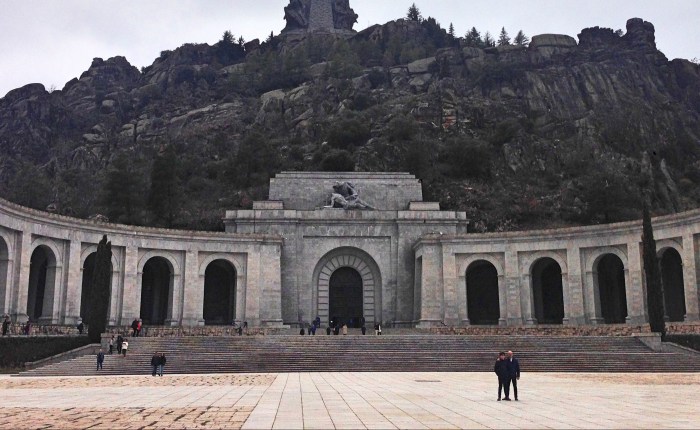

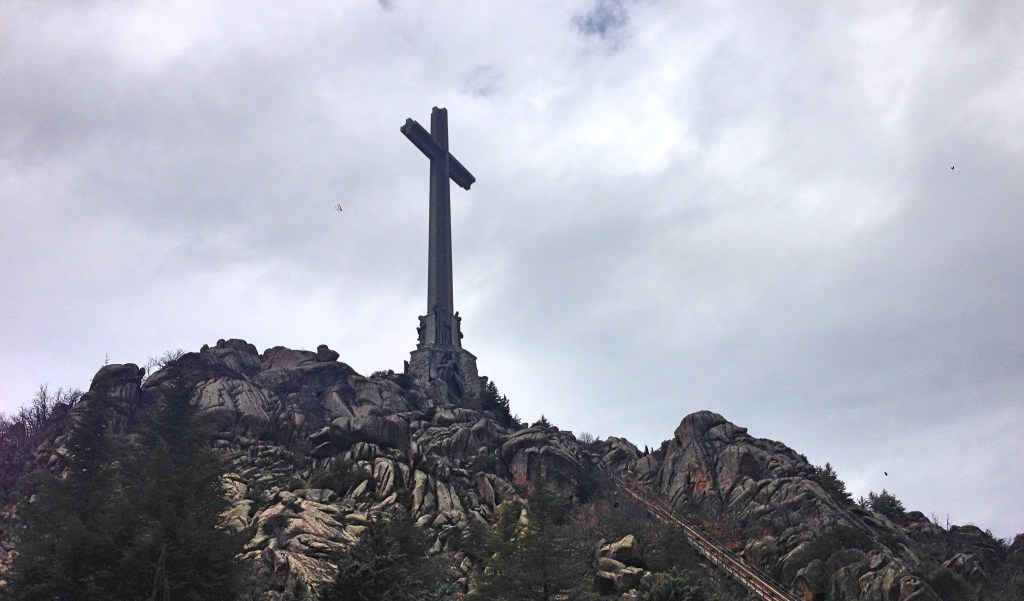
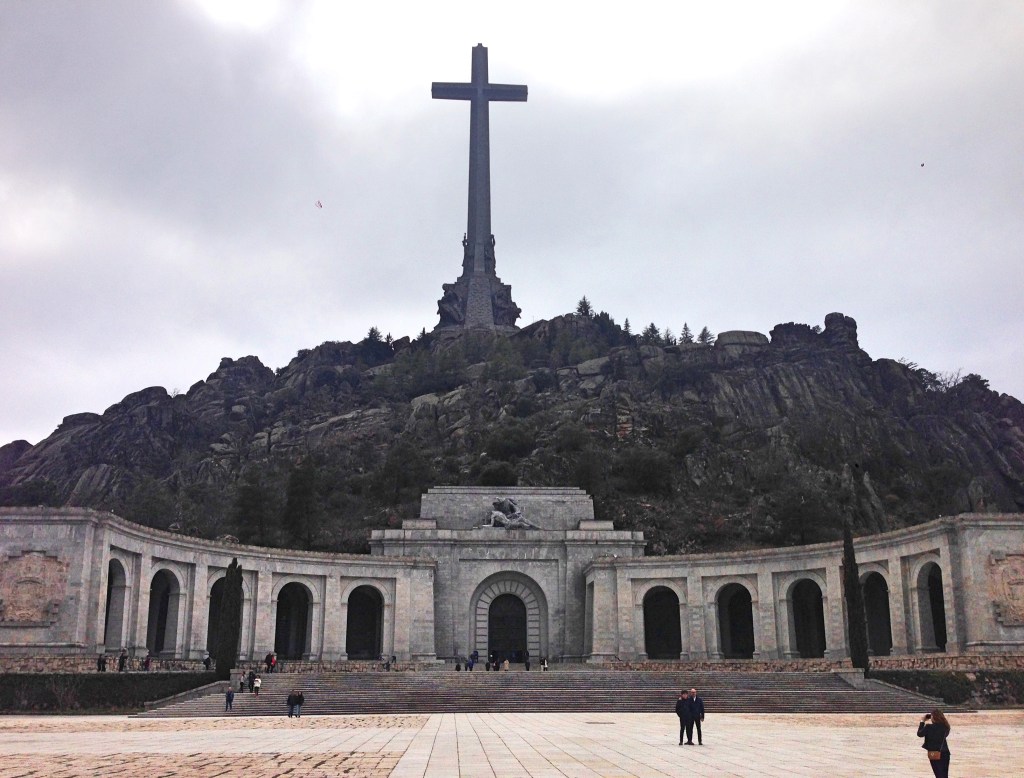
_01.jpg)
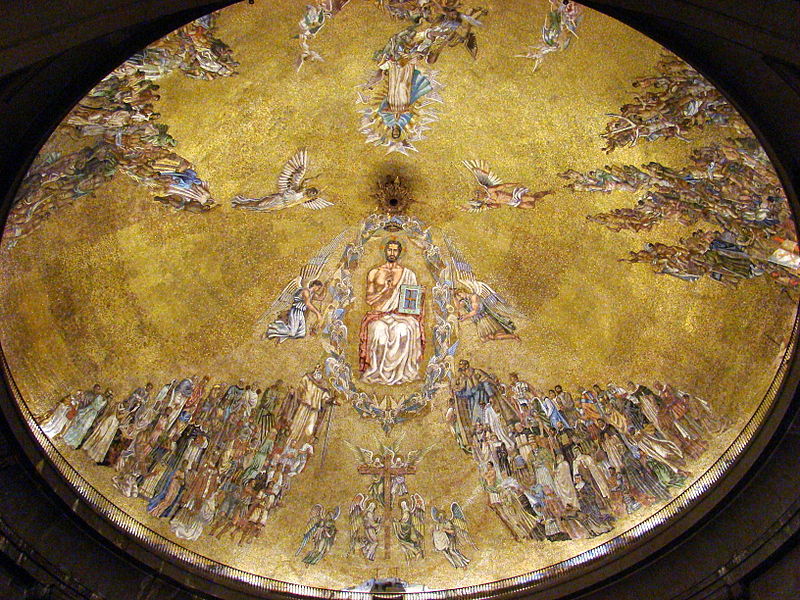
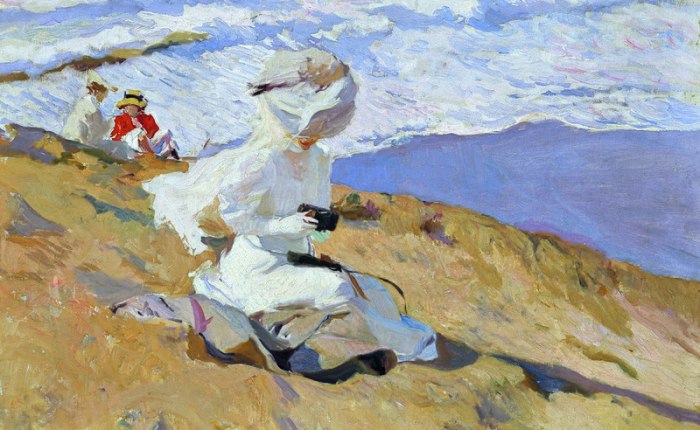


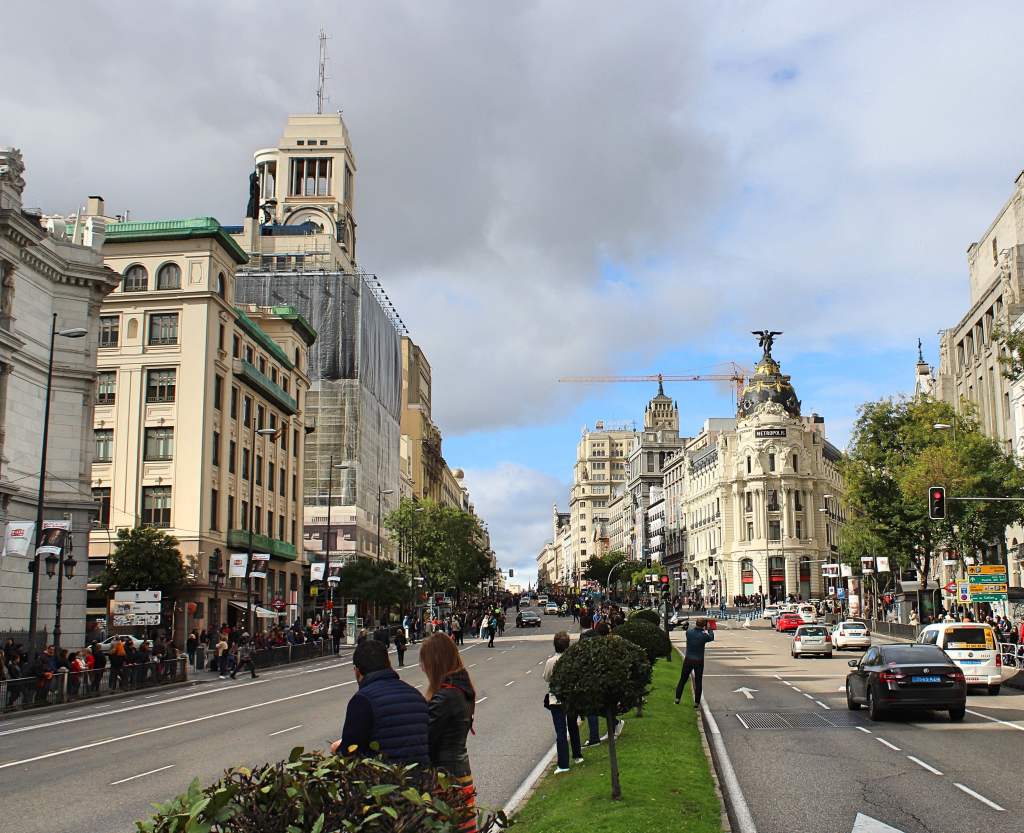


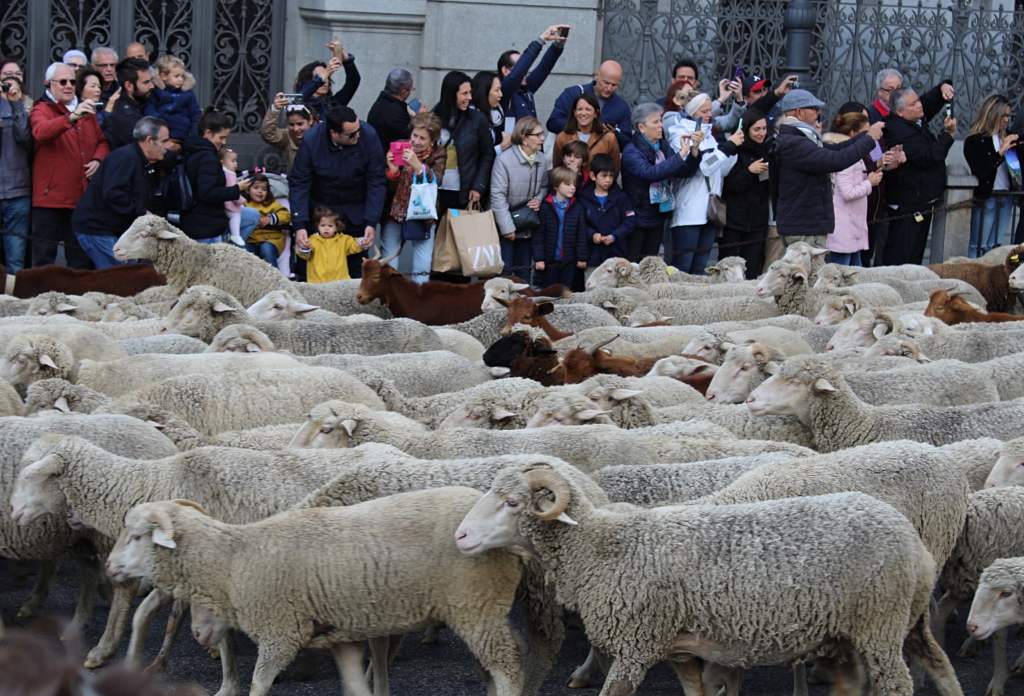
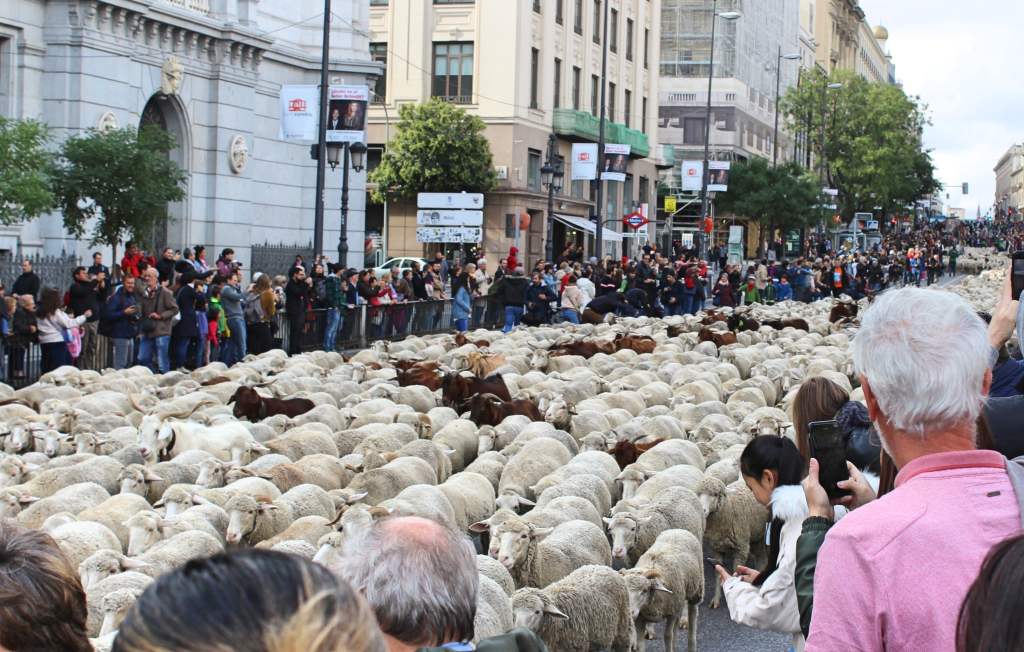
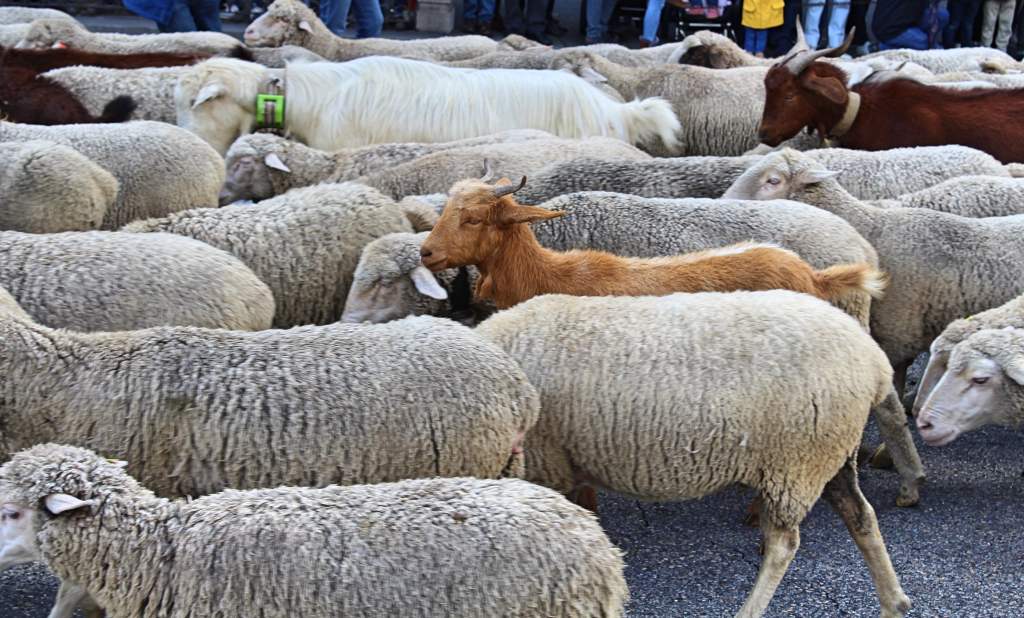
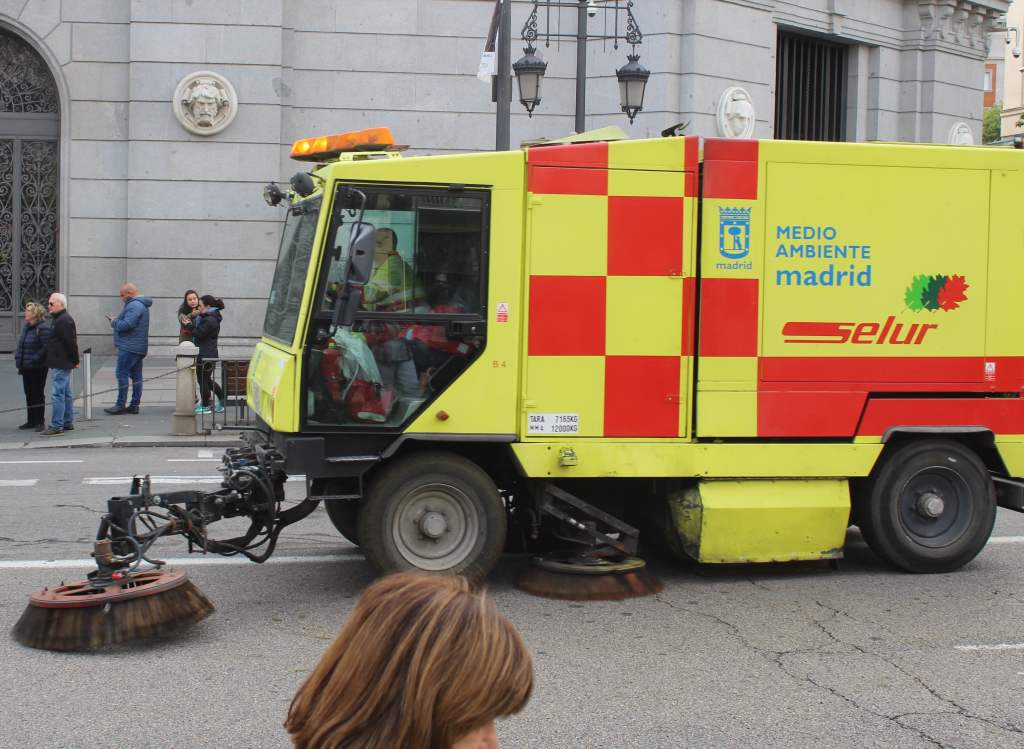


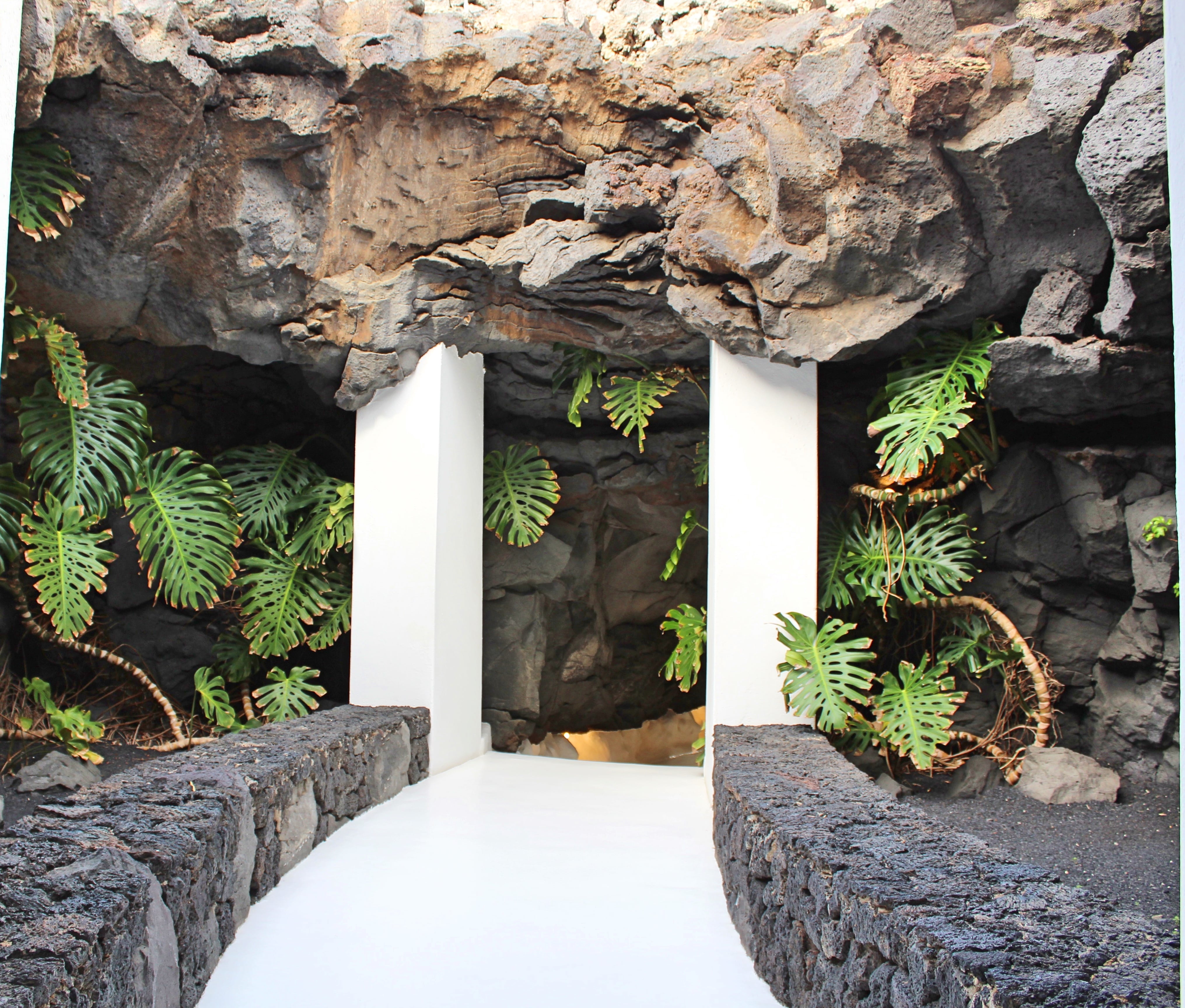
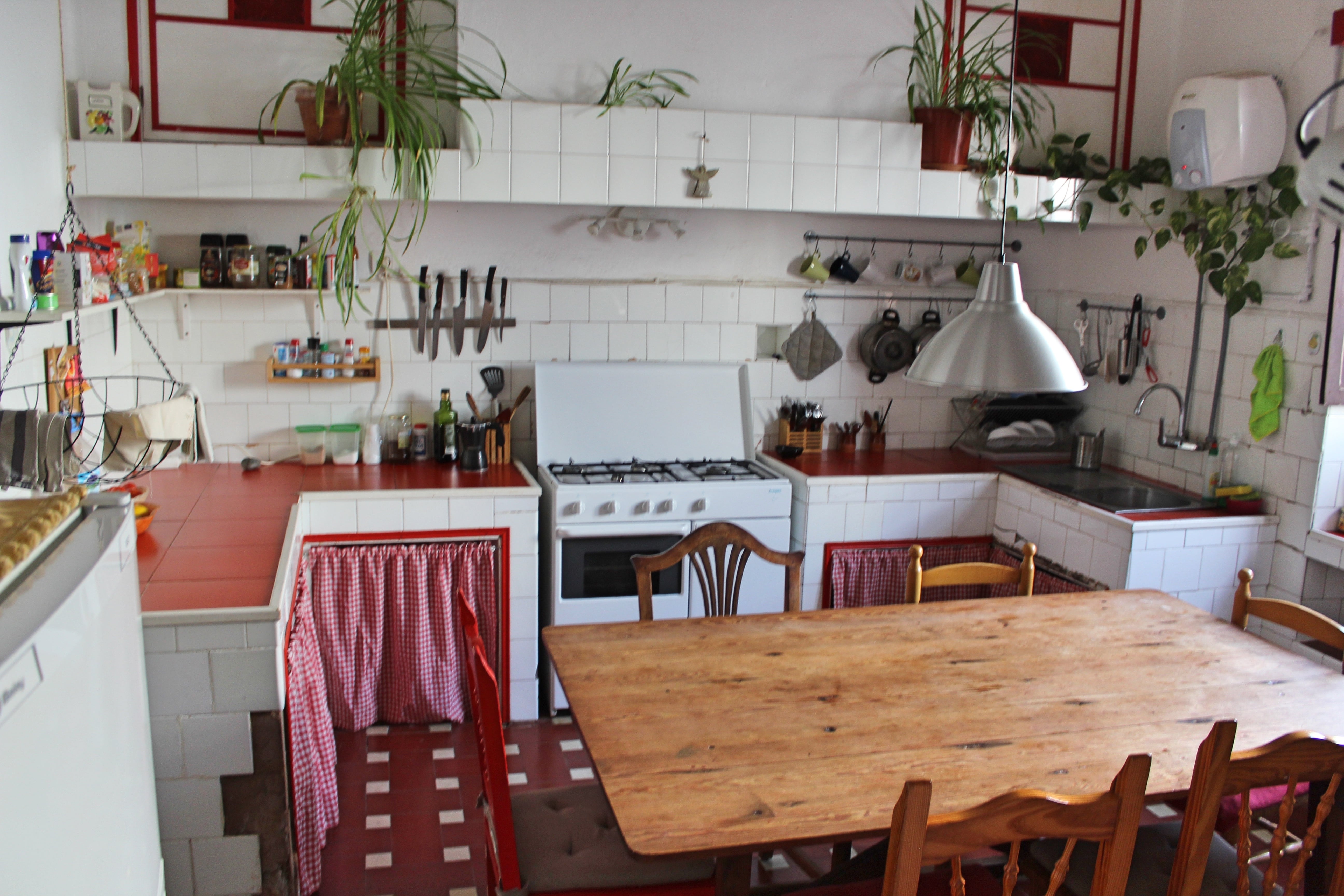

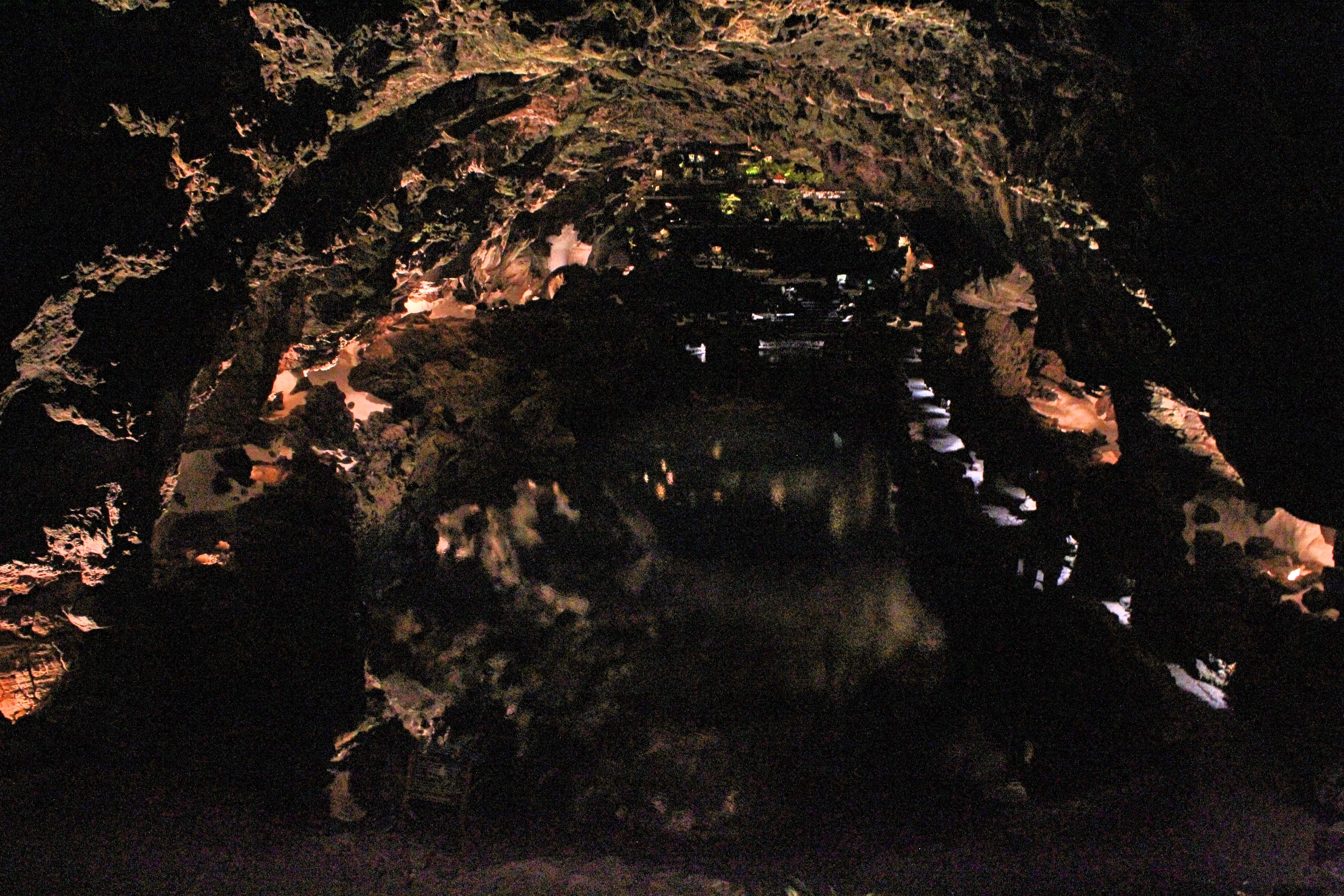


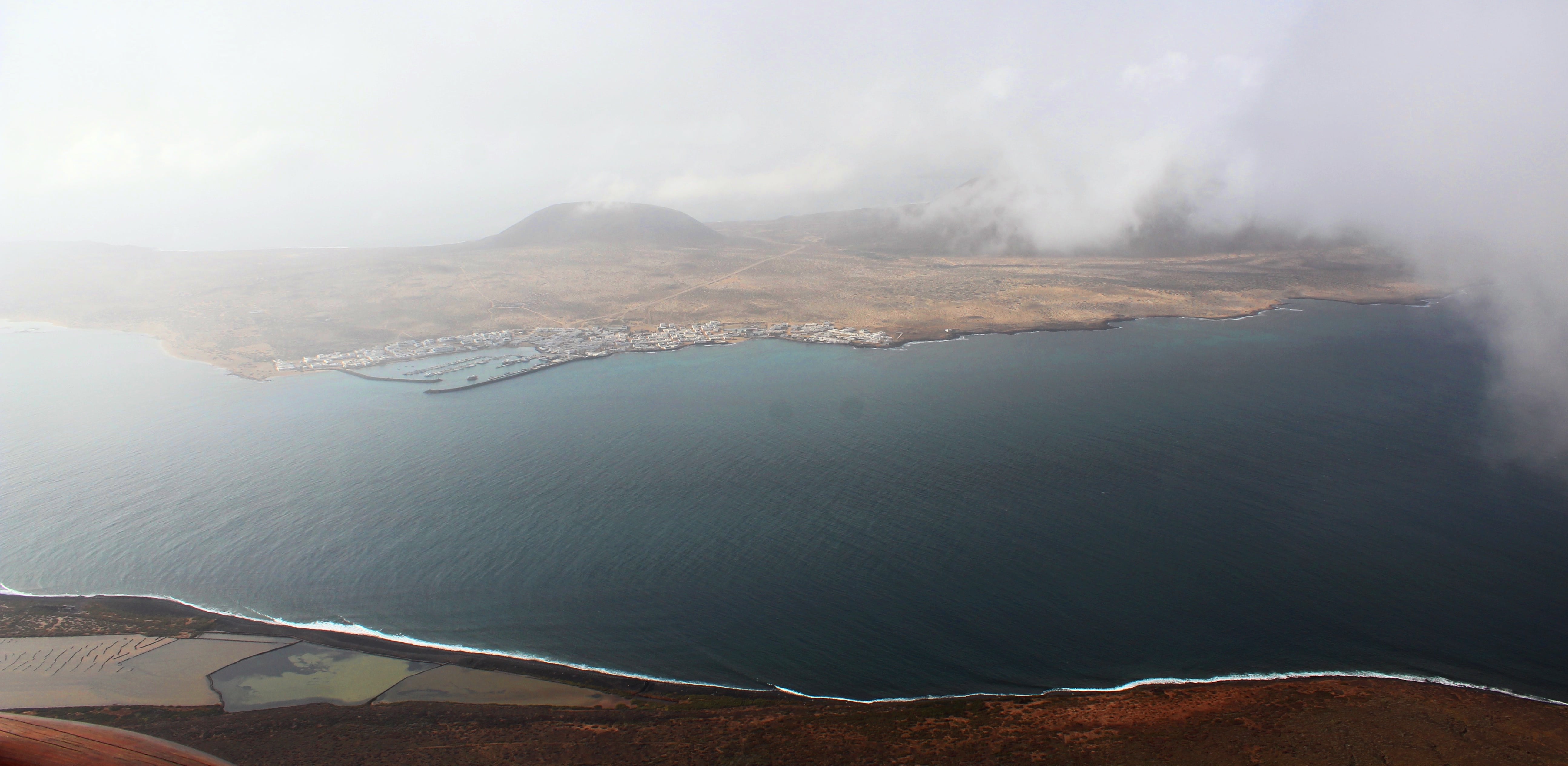

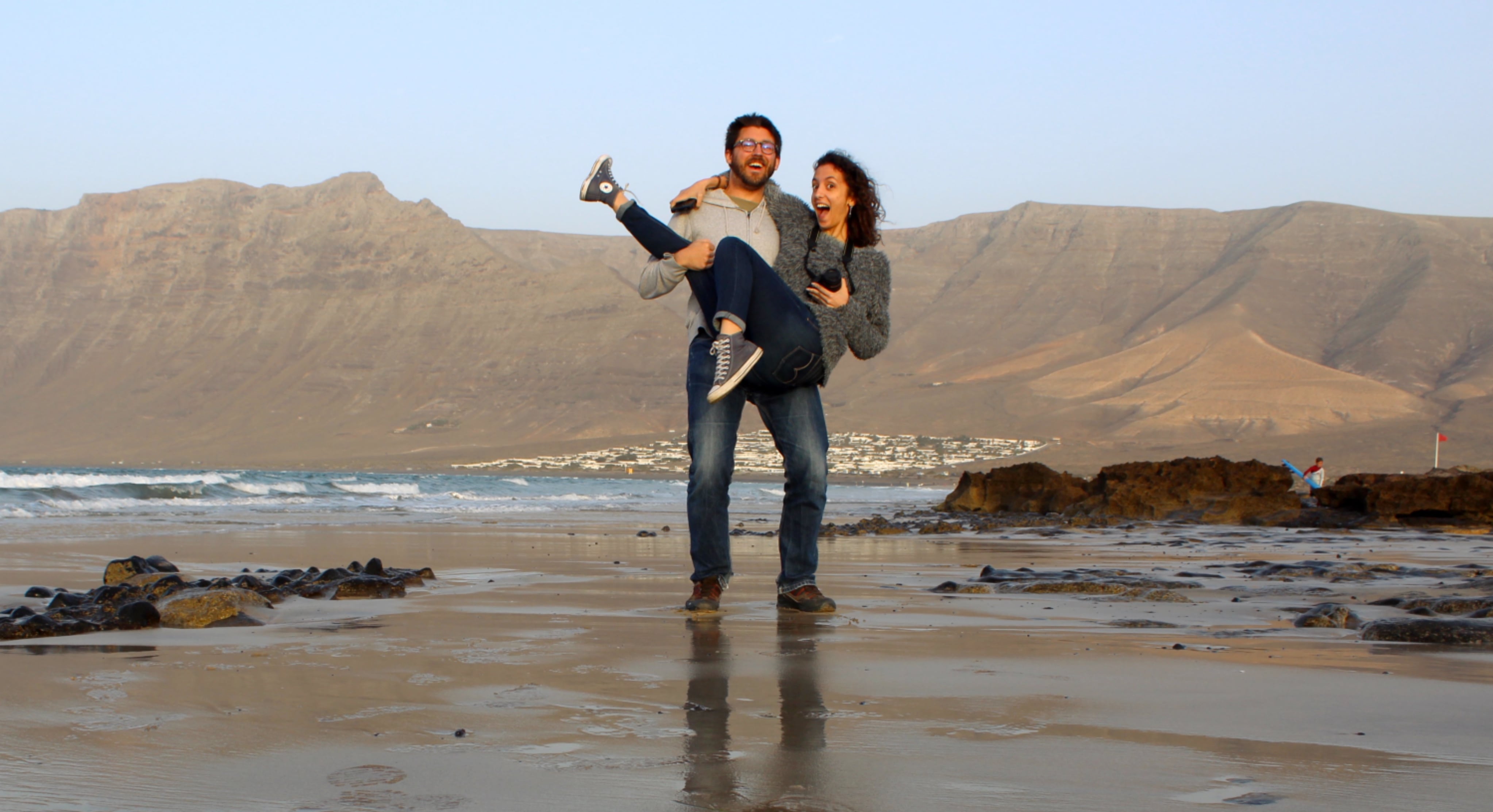


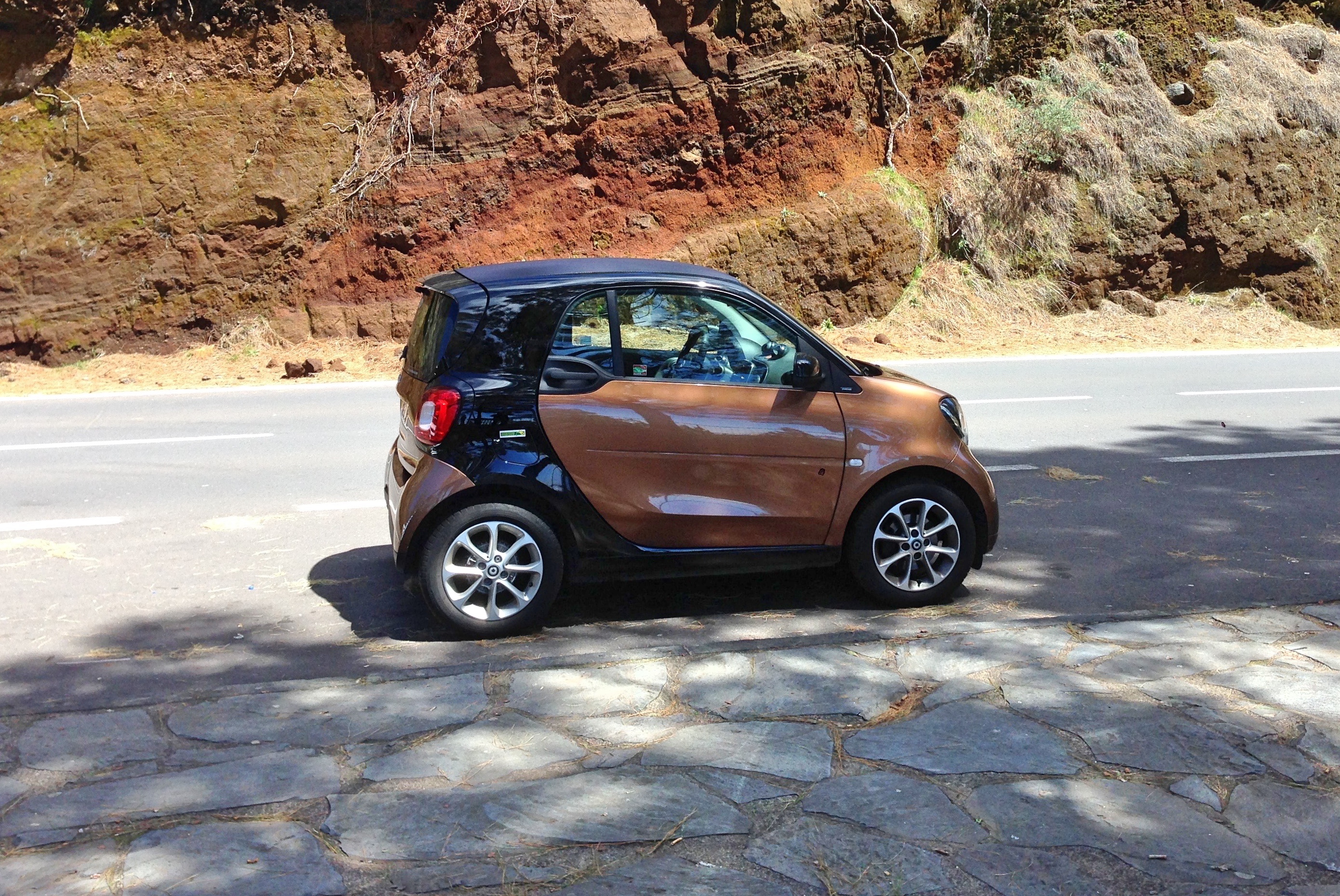

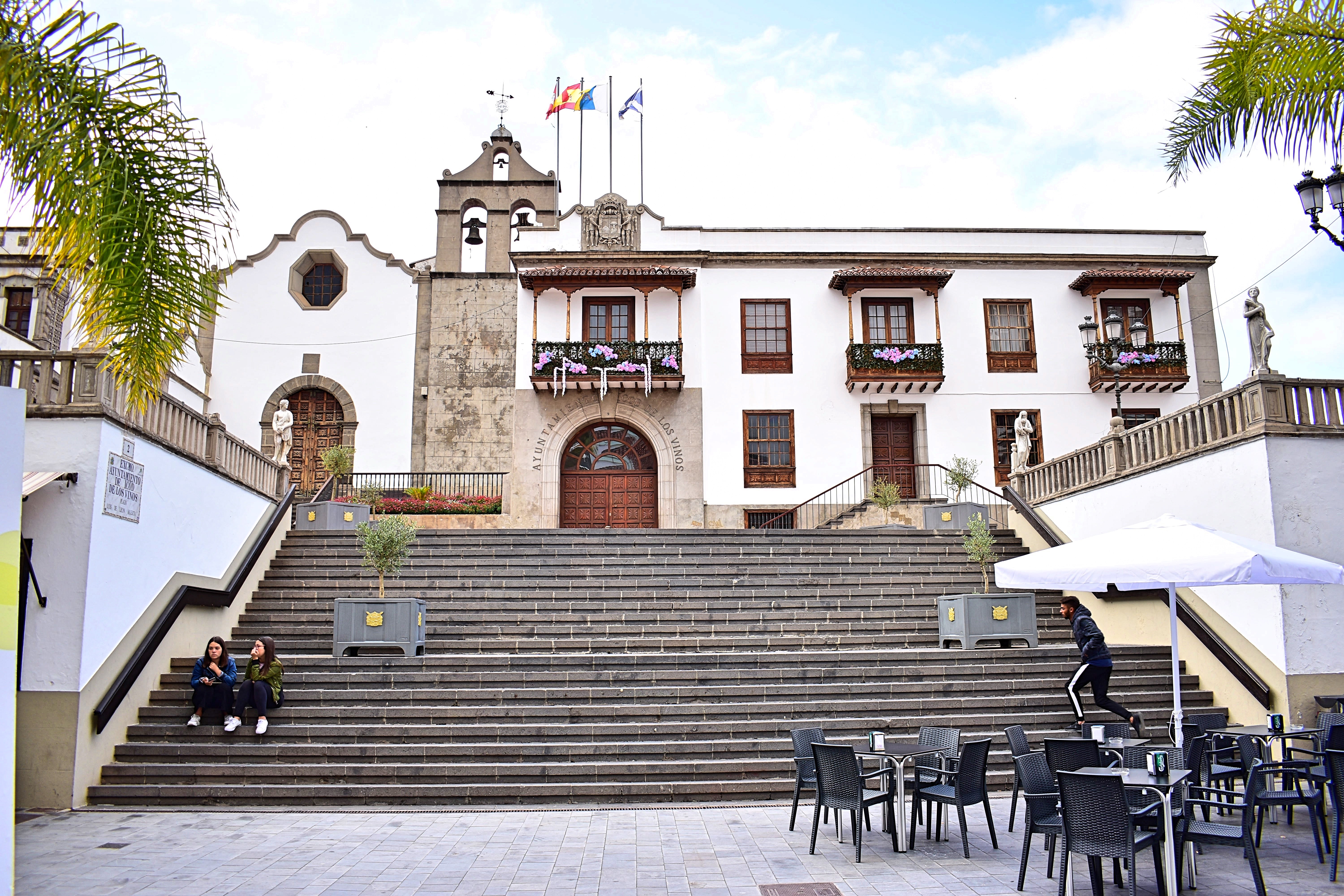
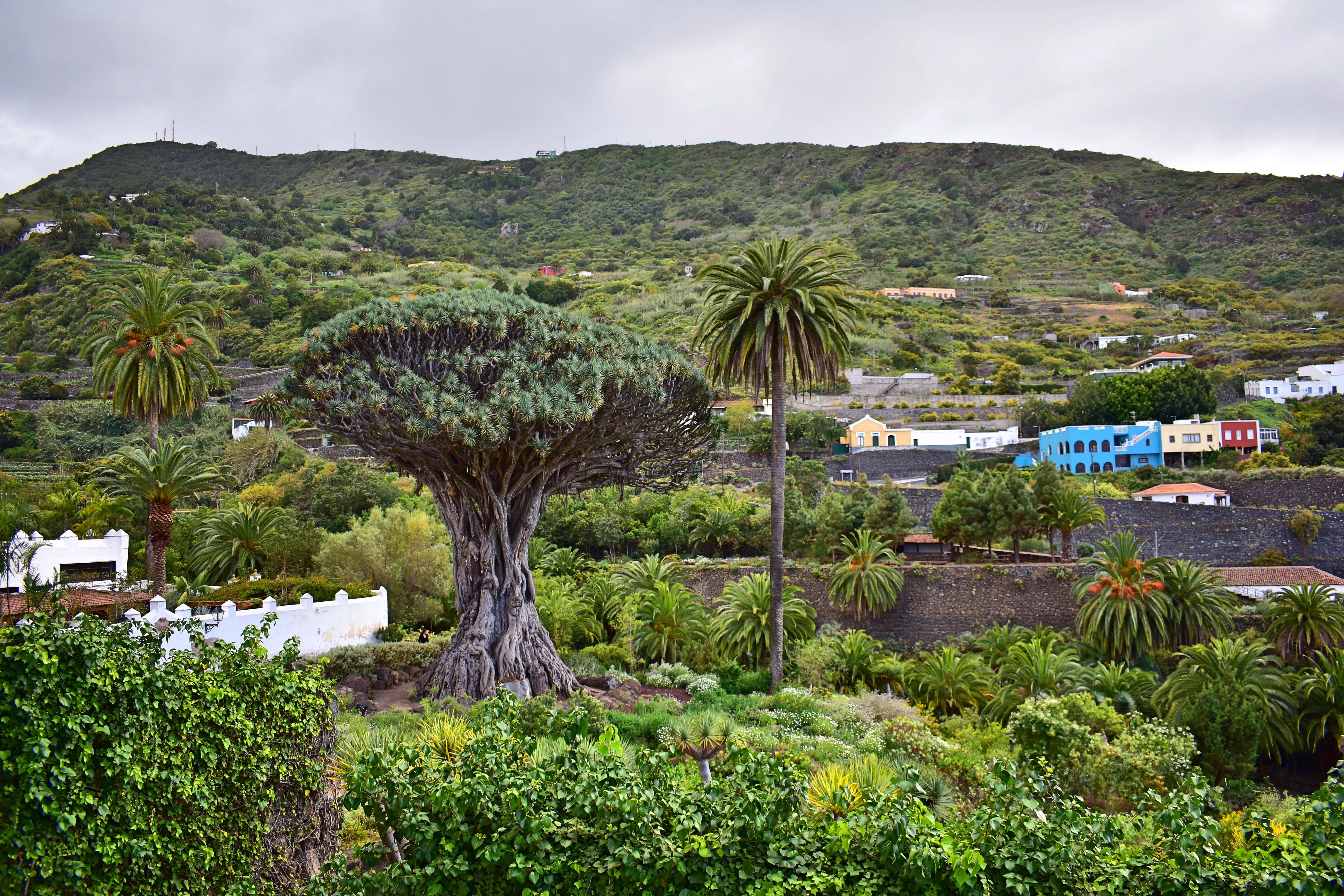

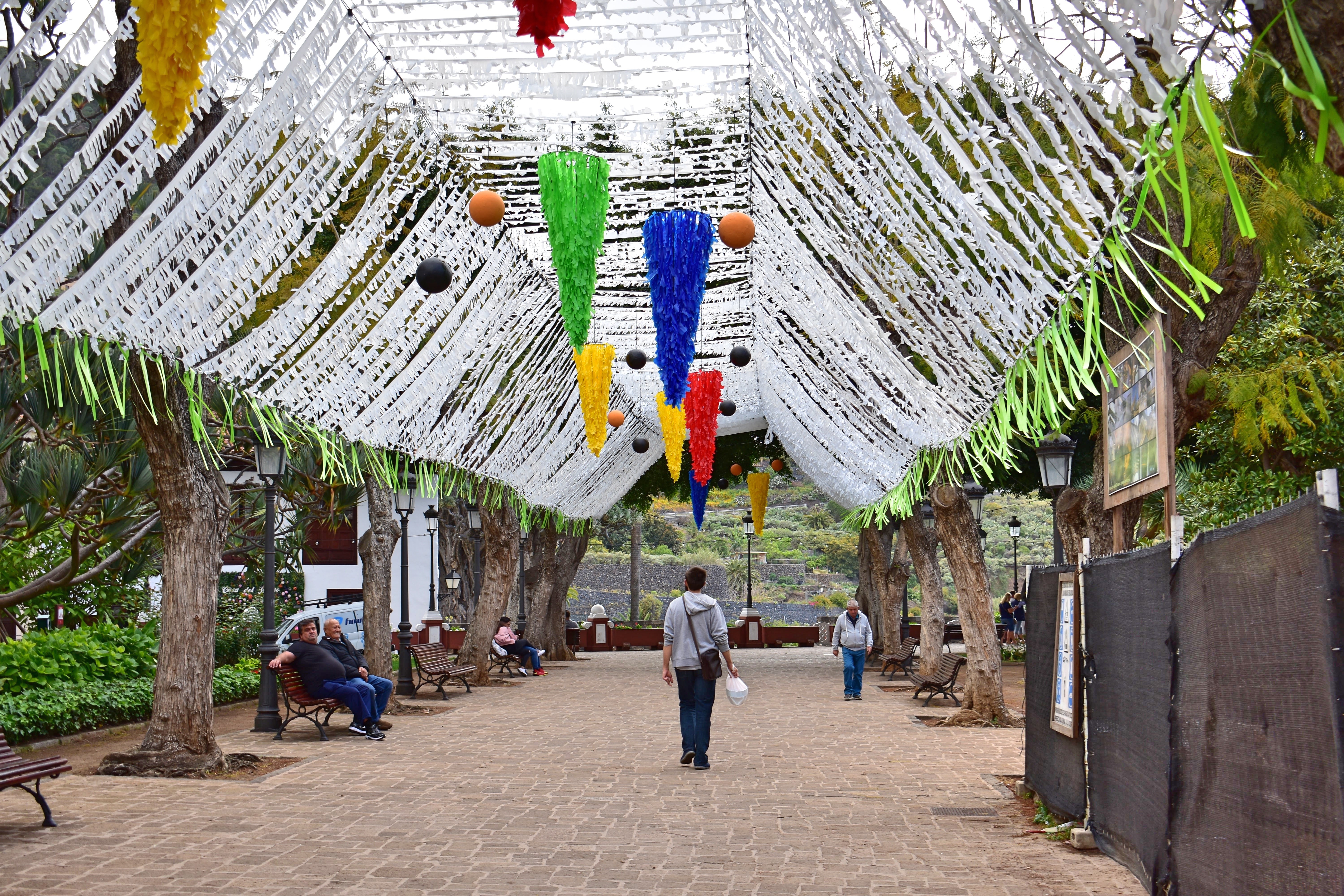
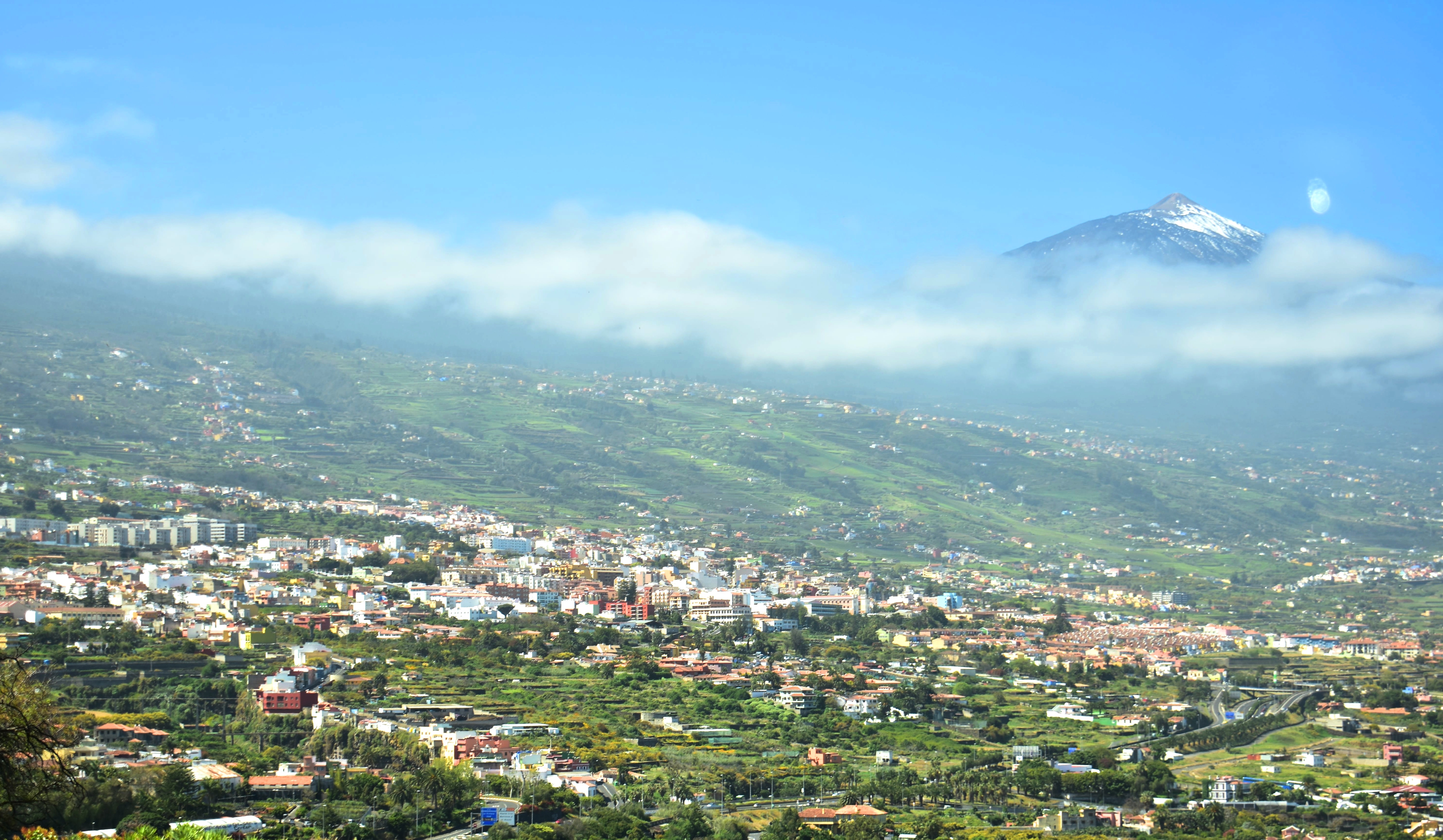
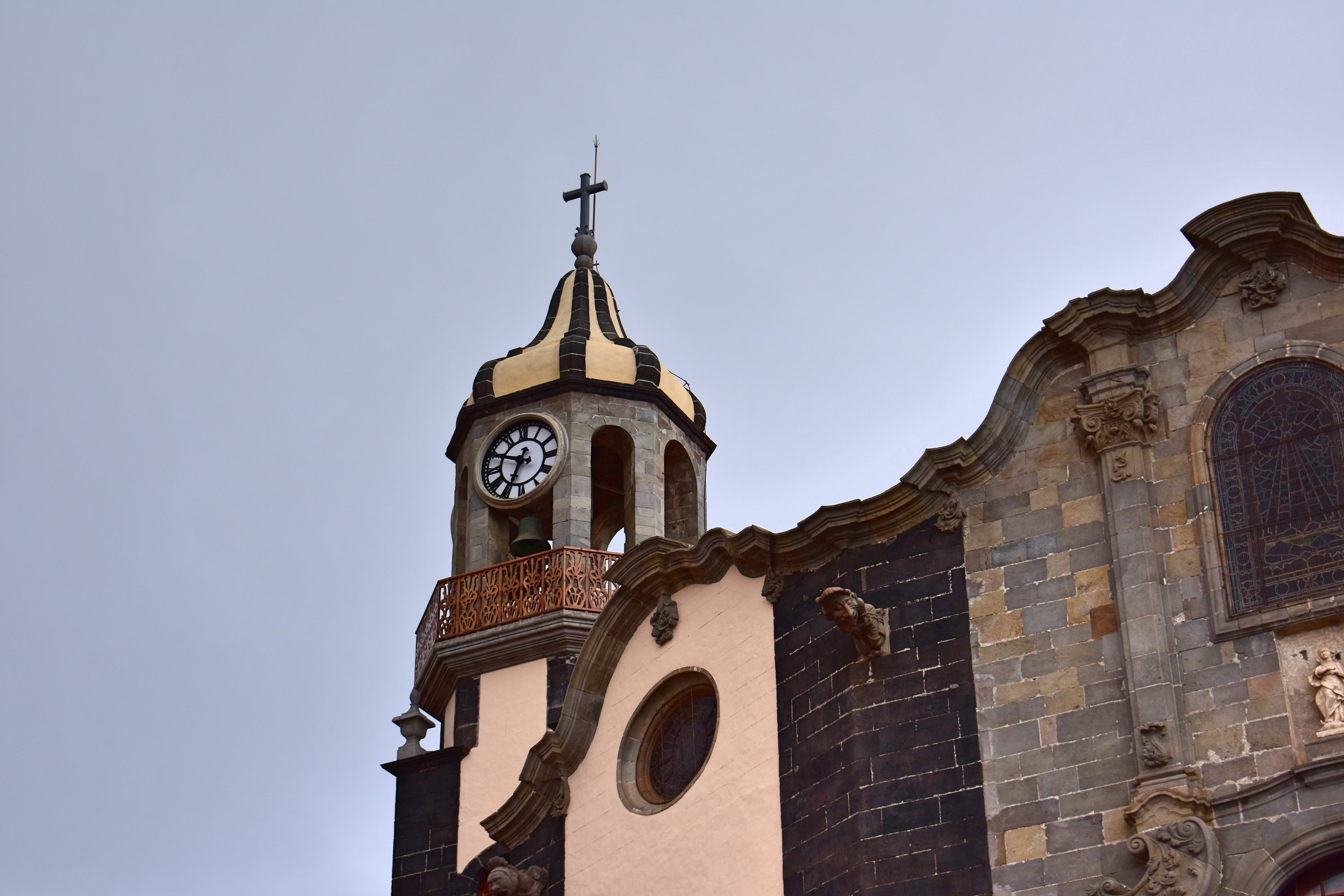
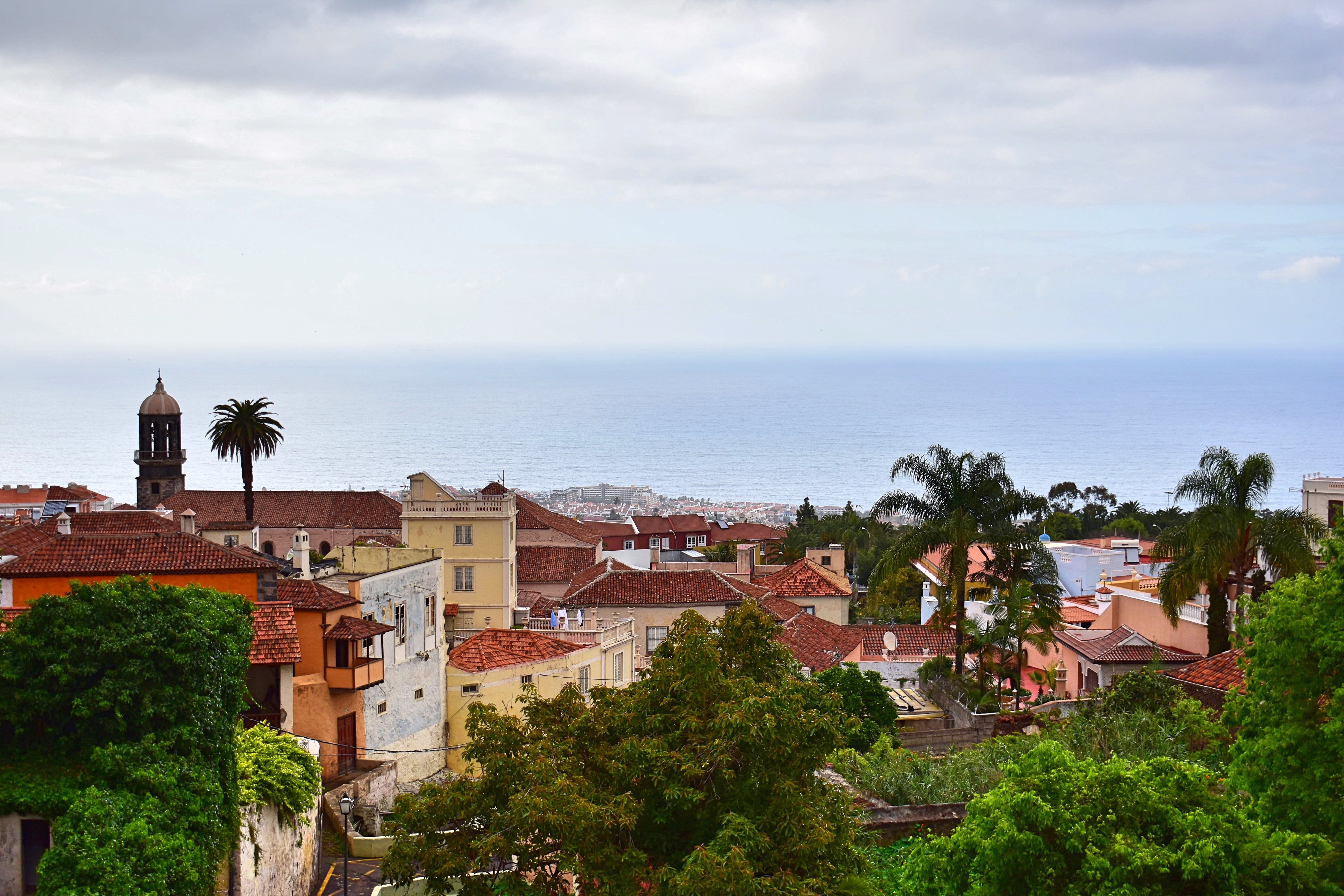
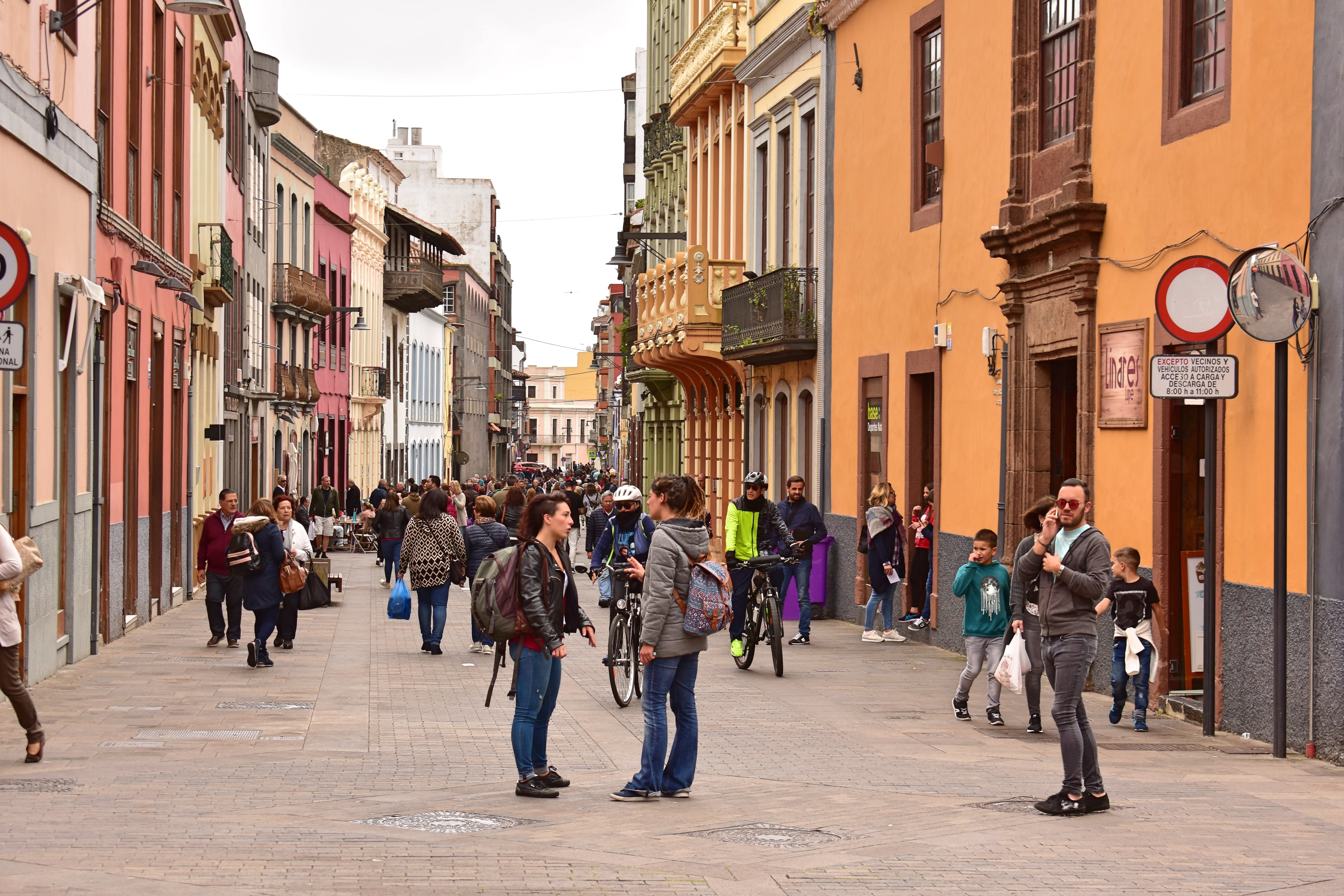

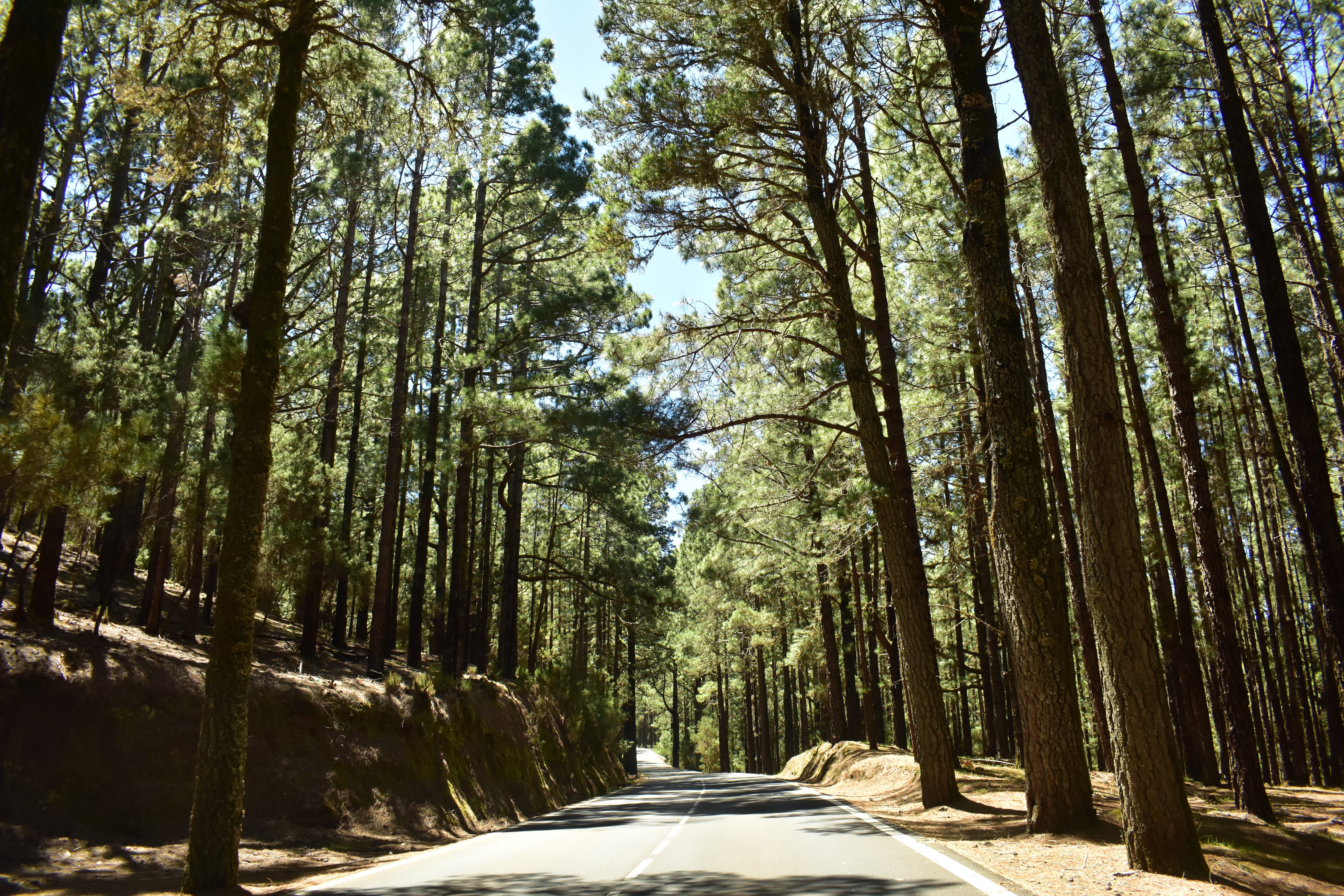
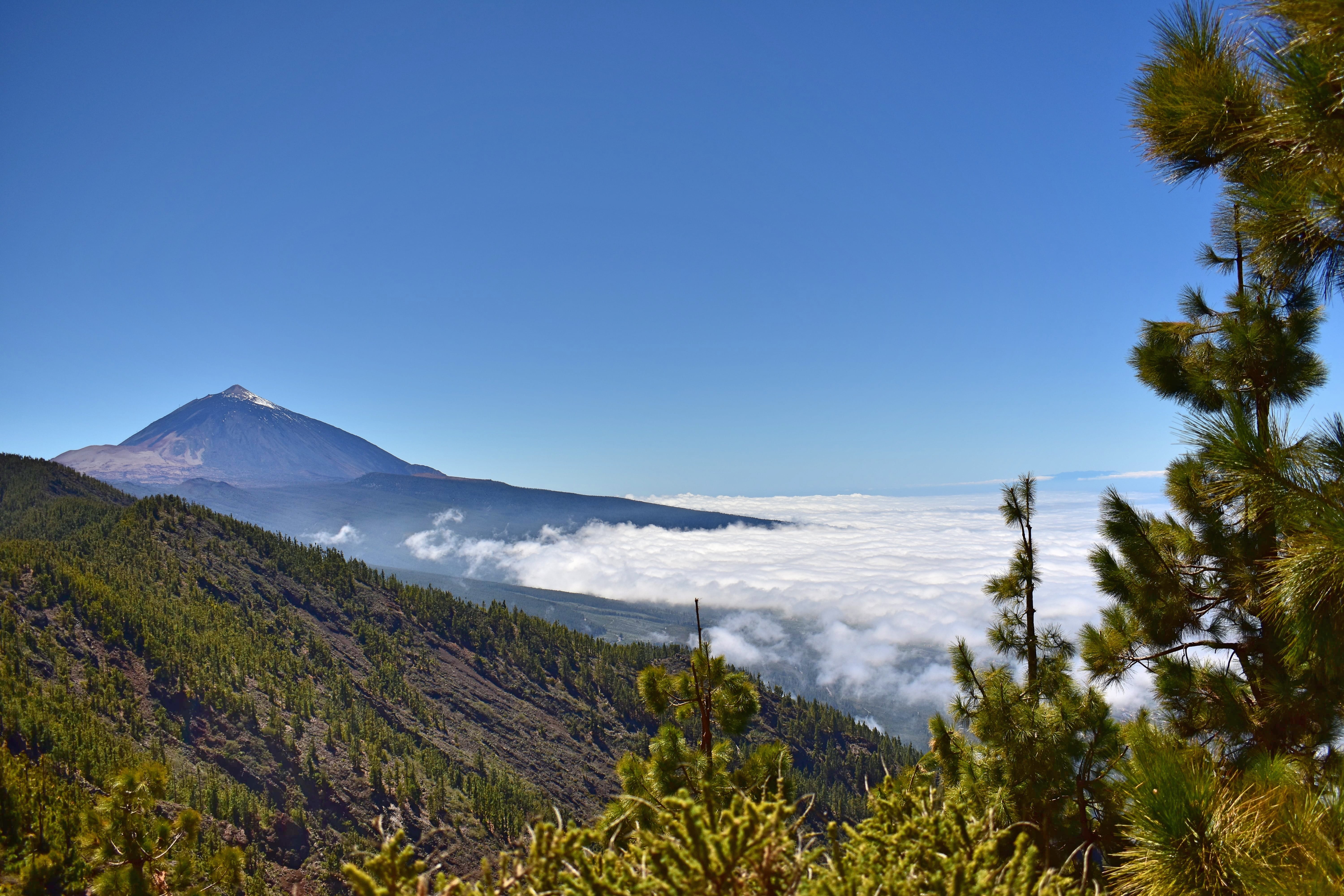
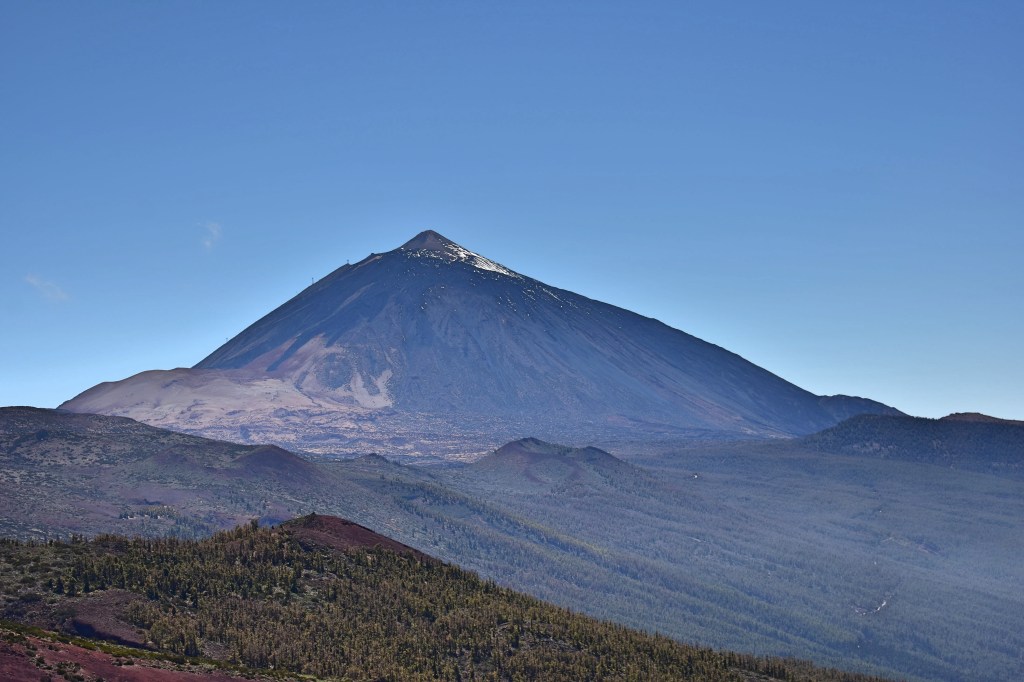
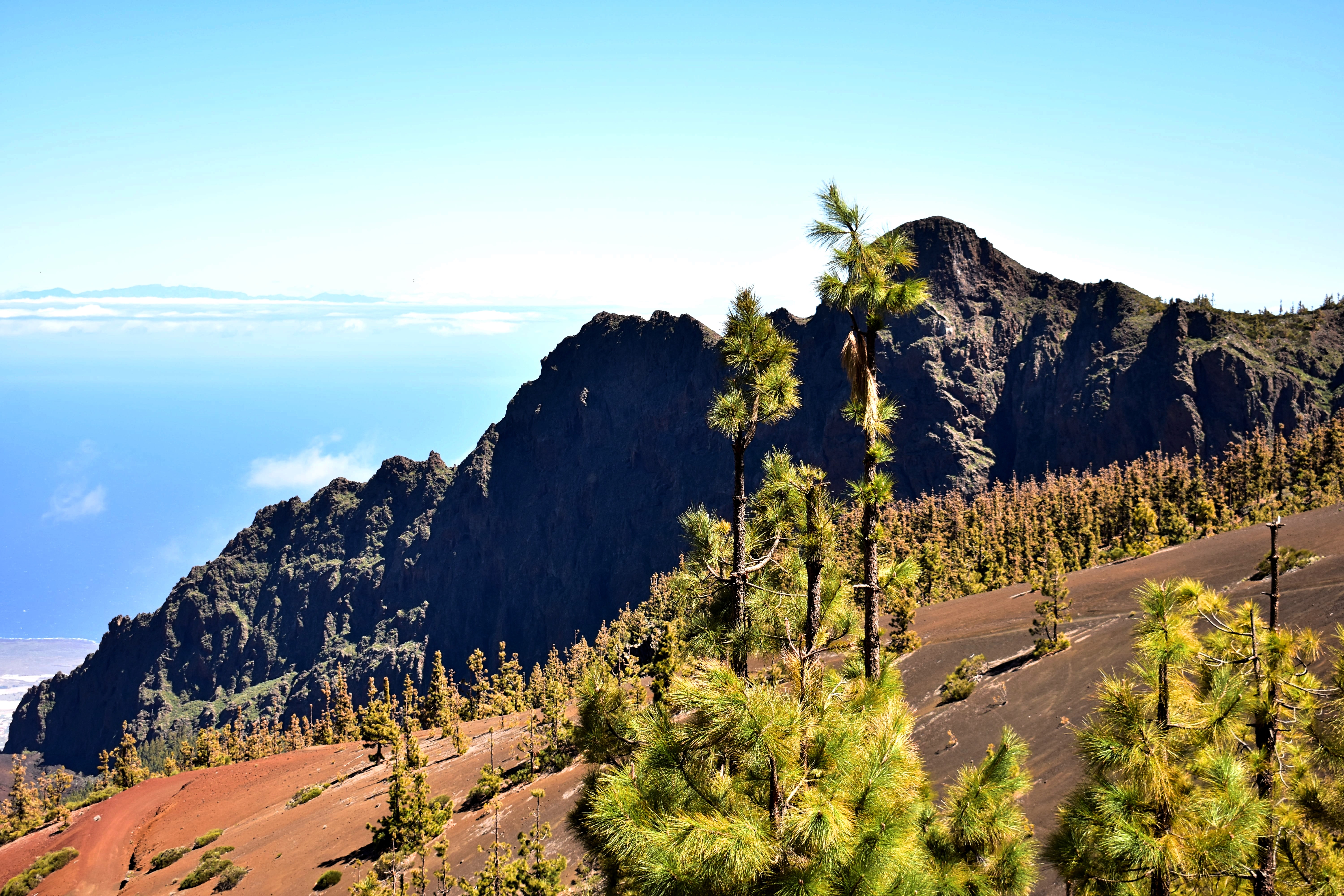
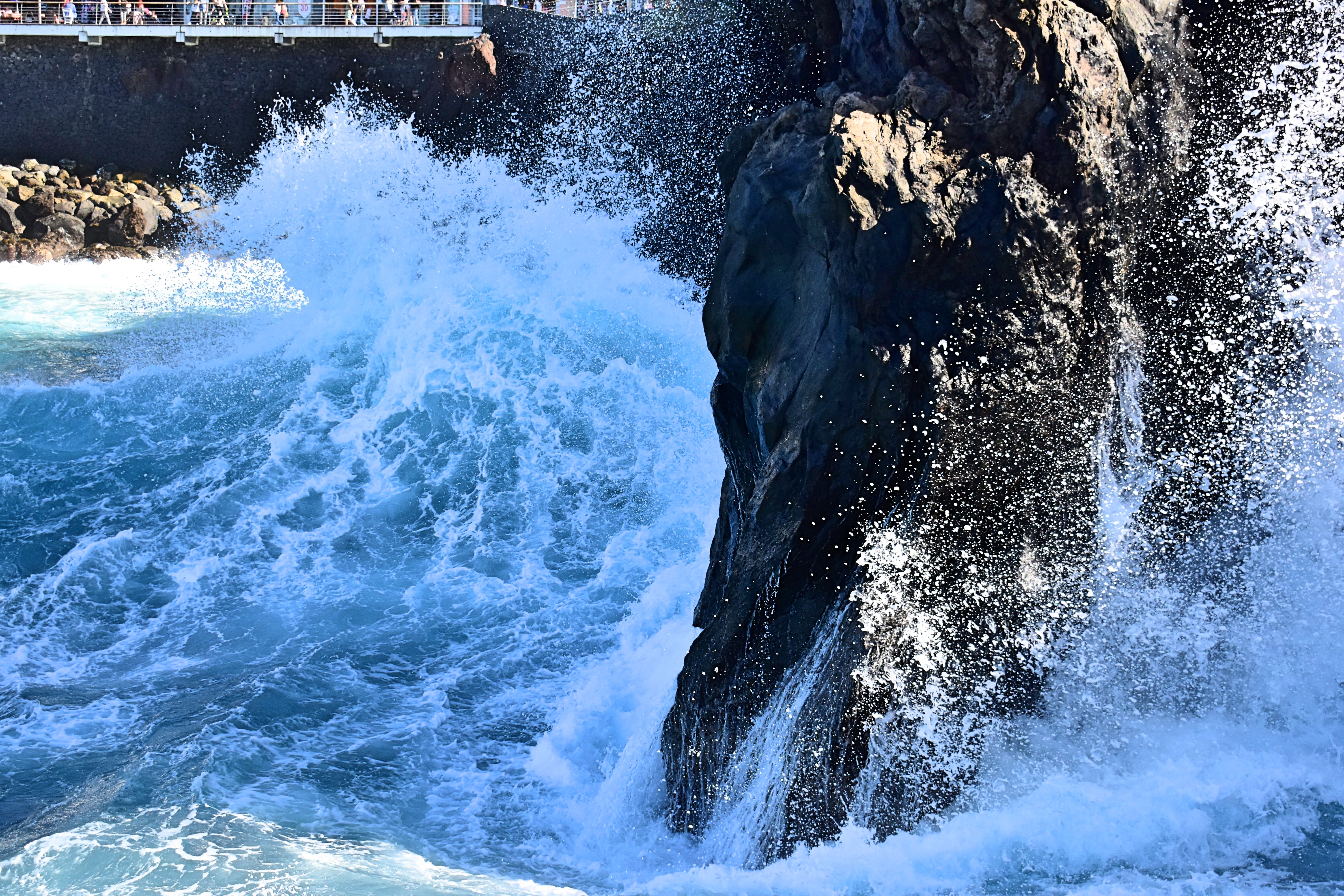
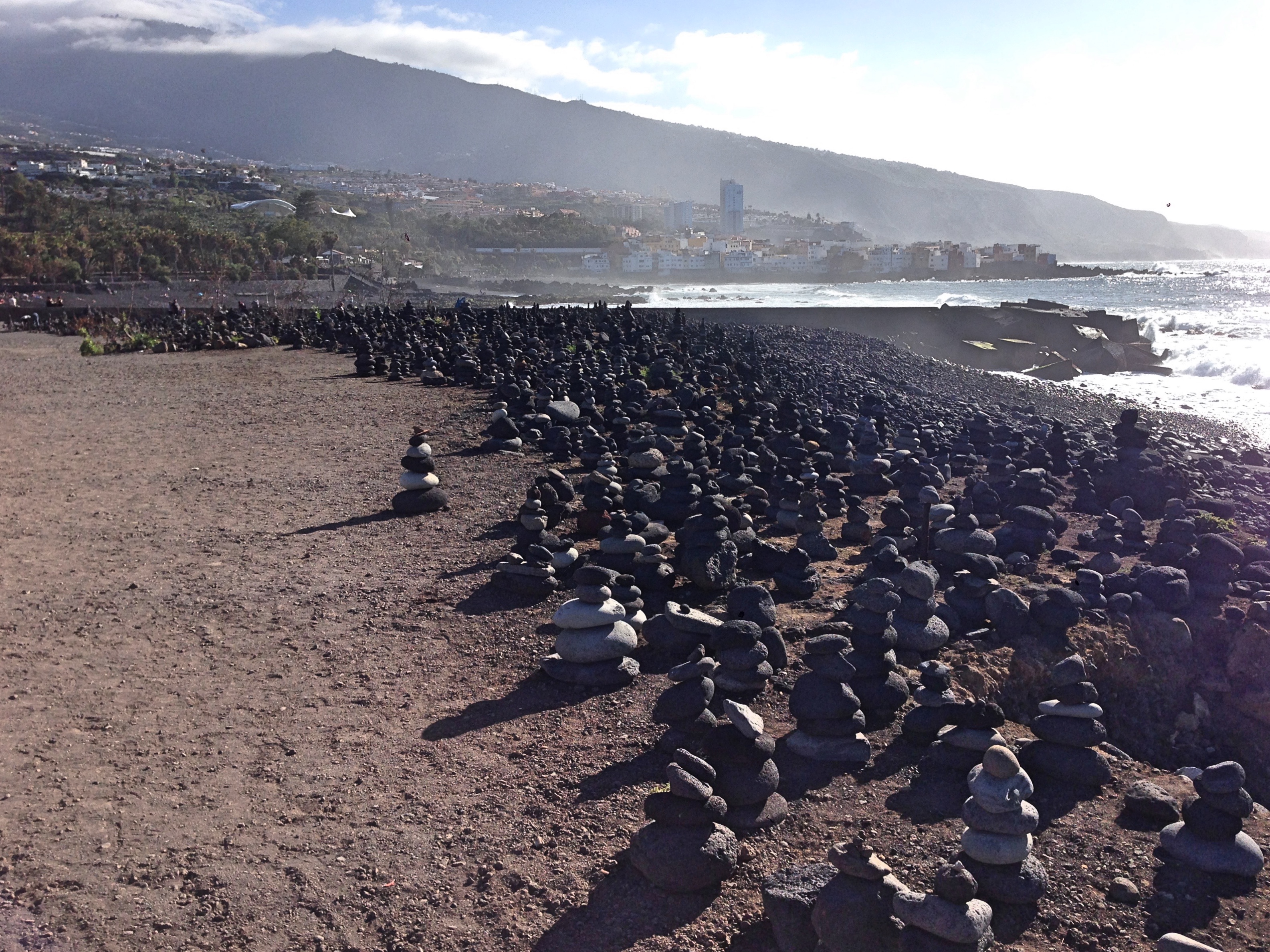

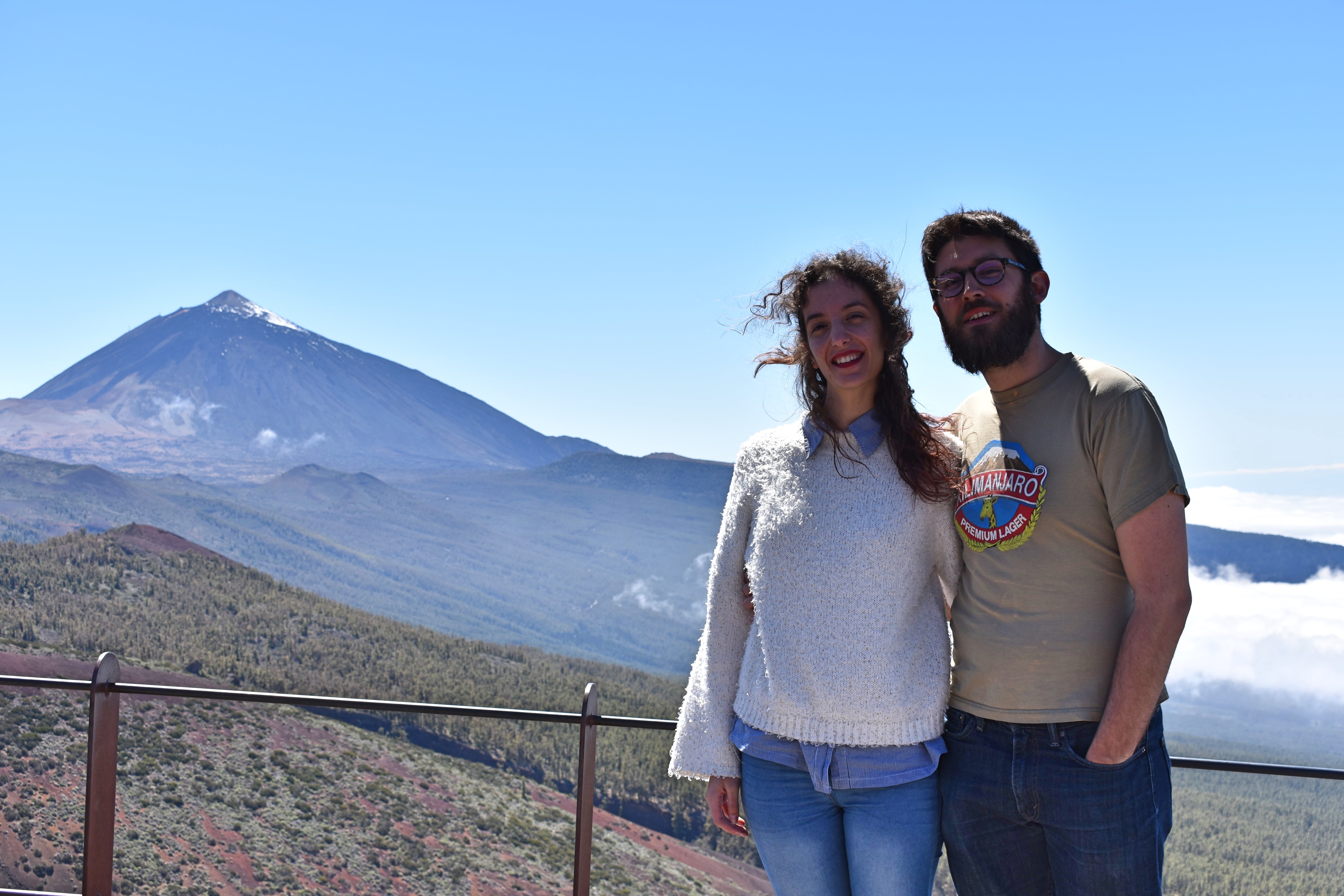

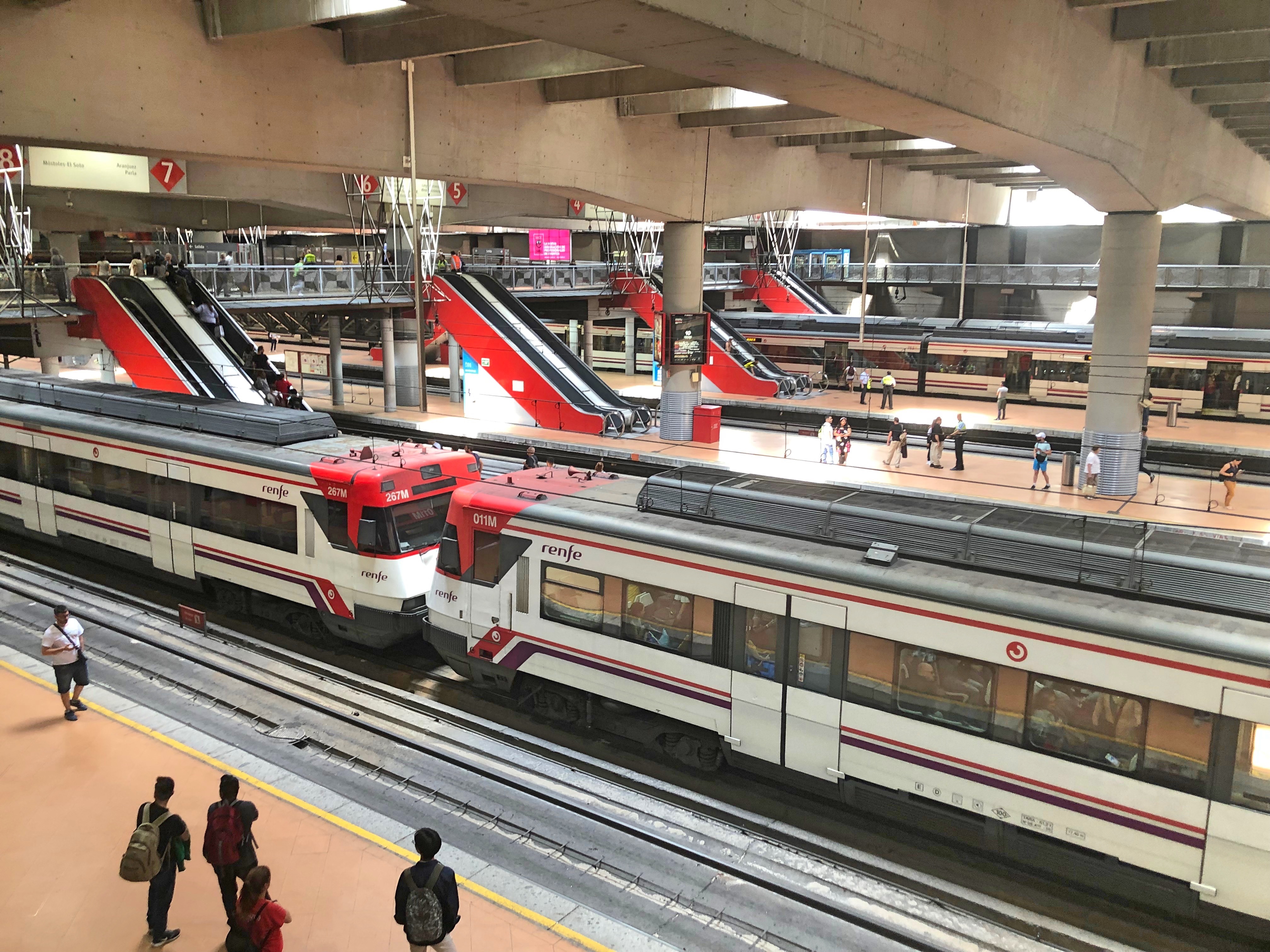


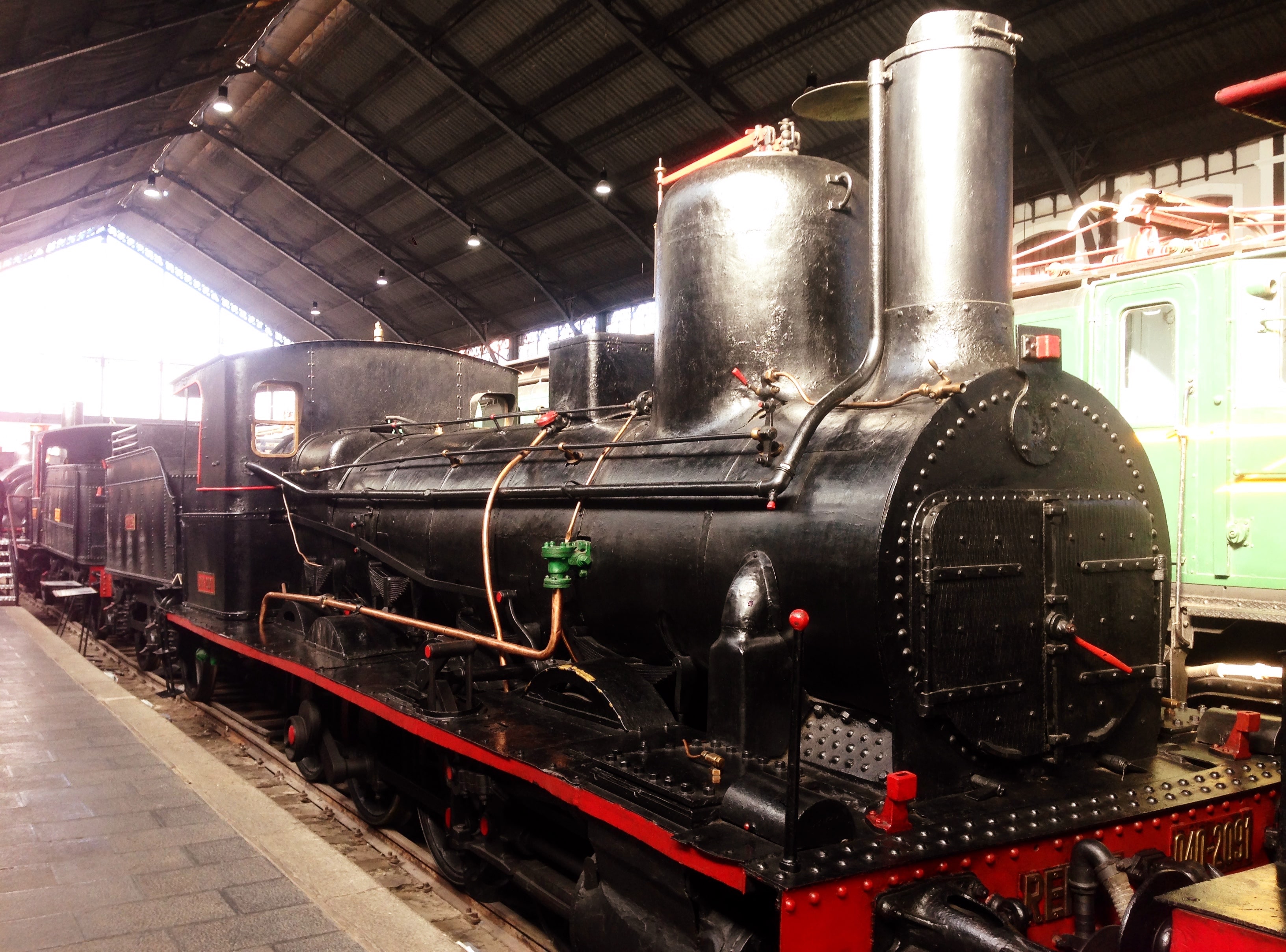
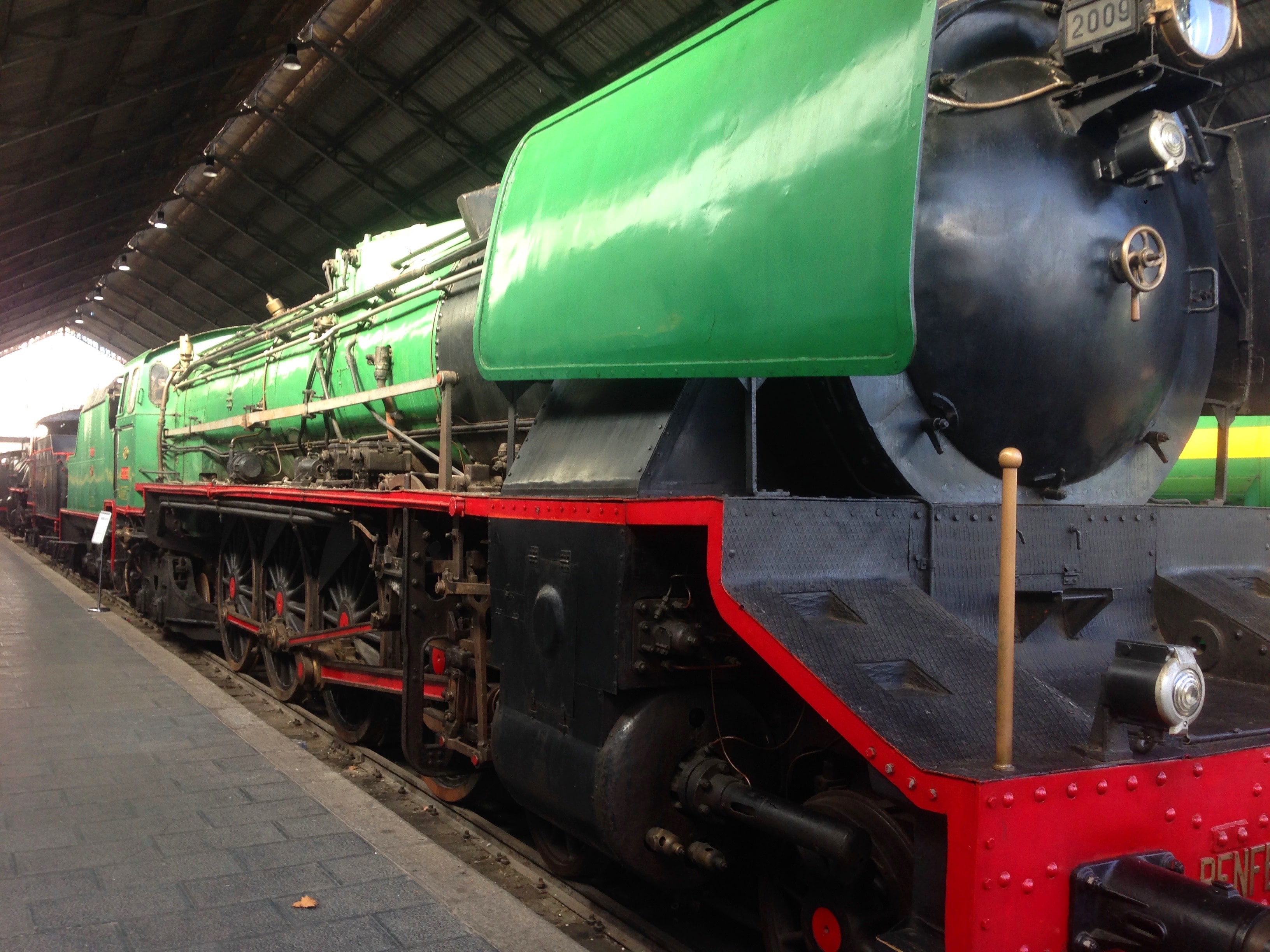







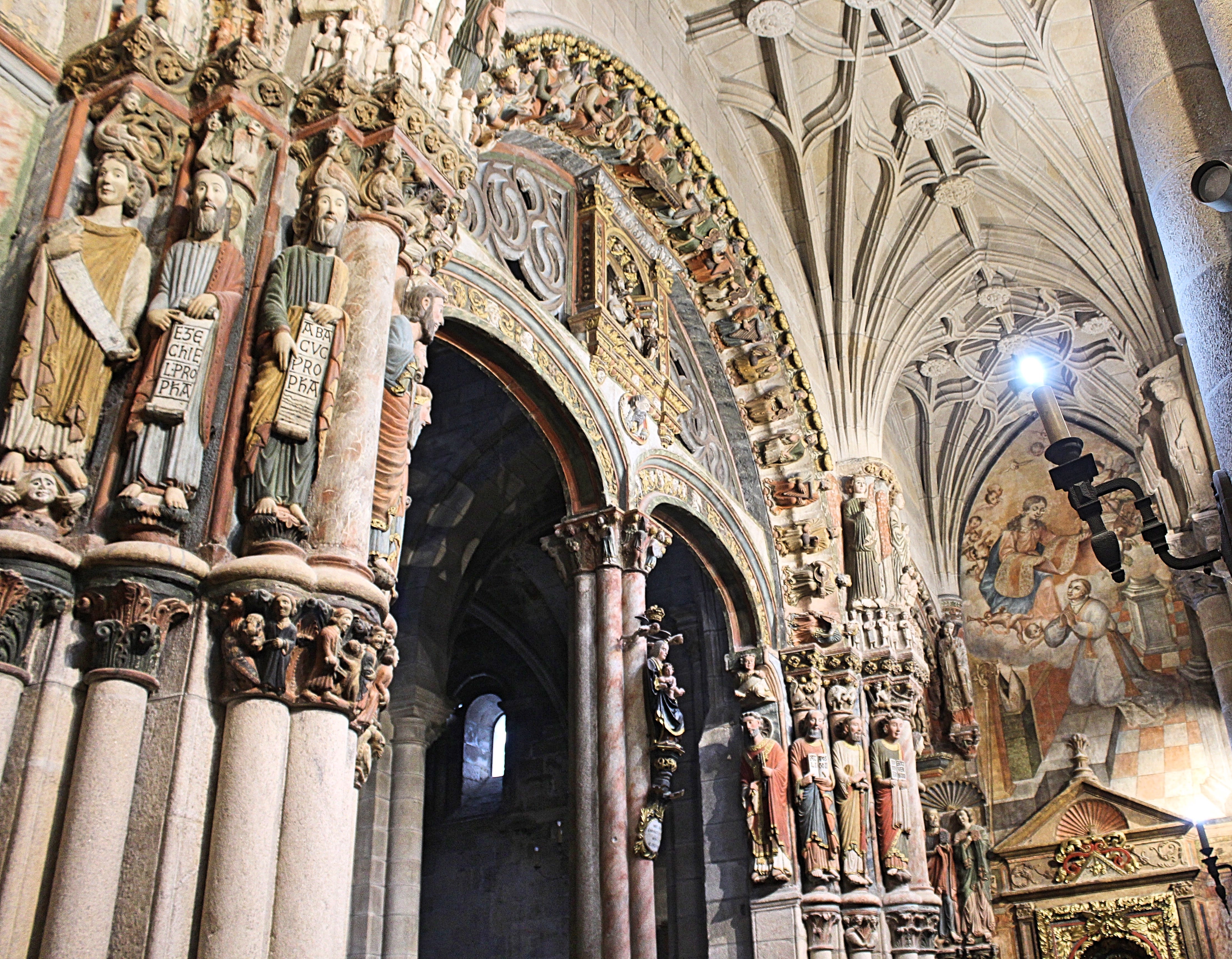
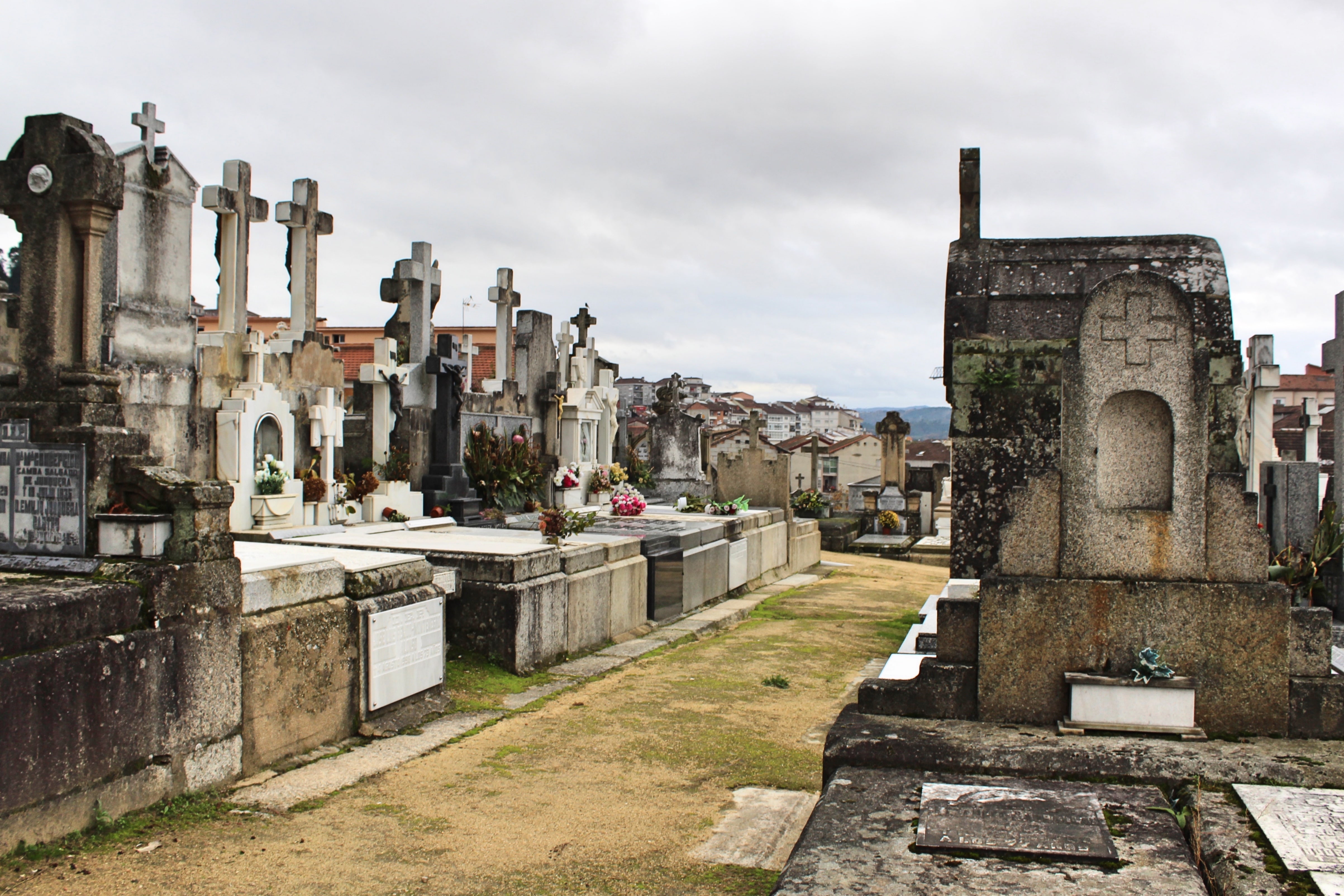
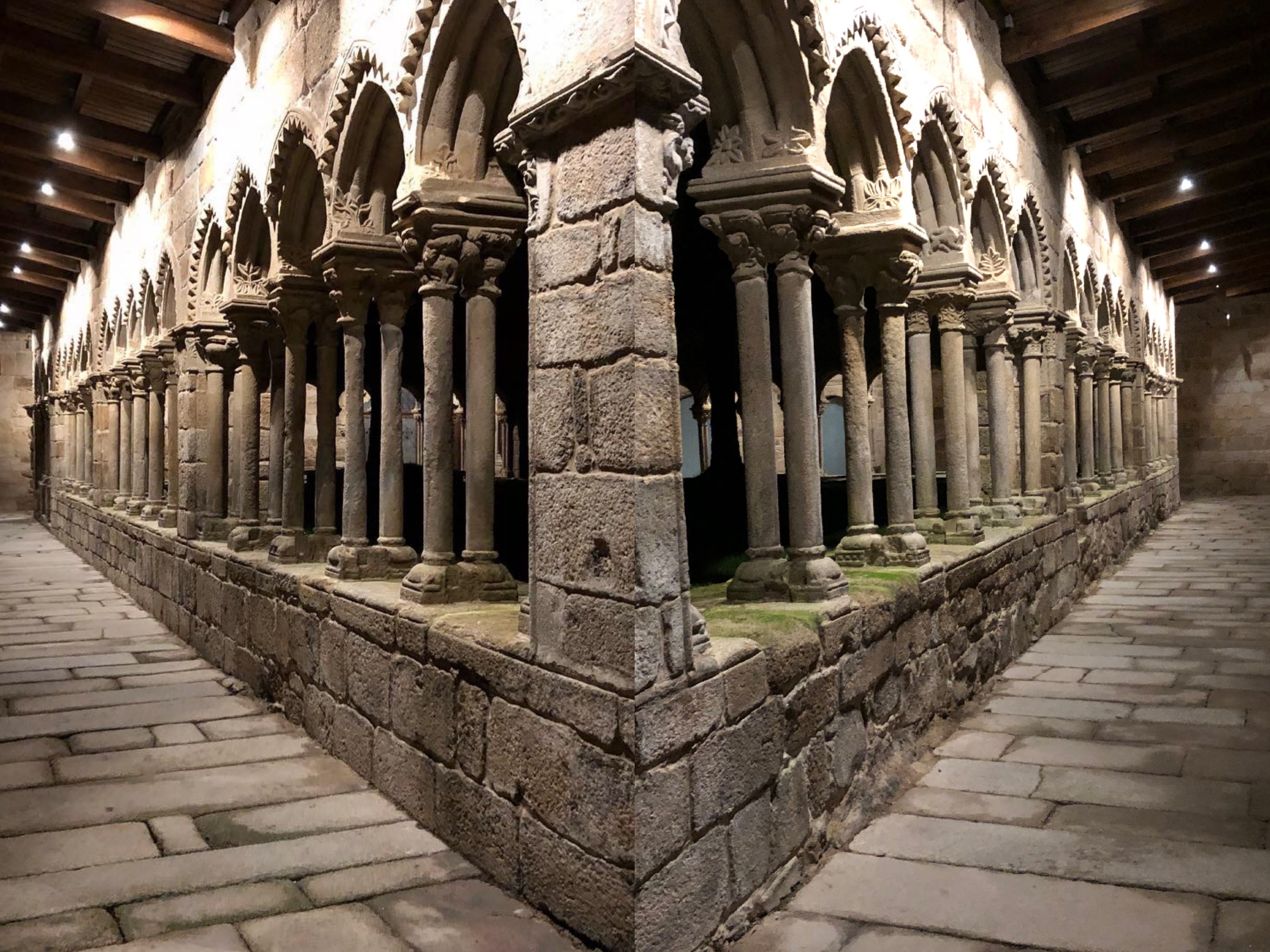
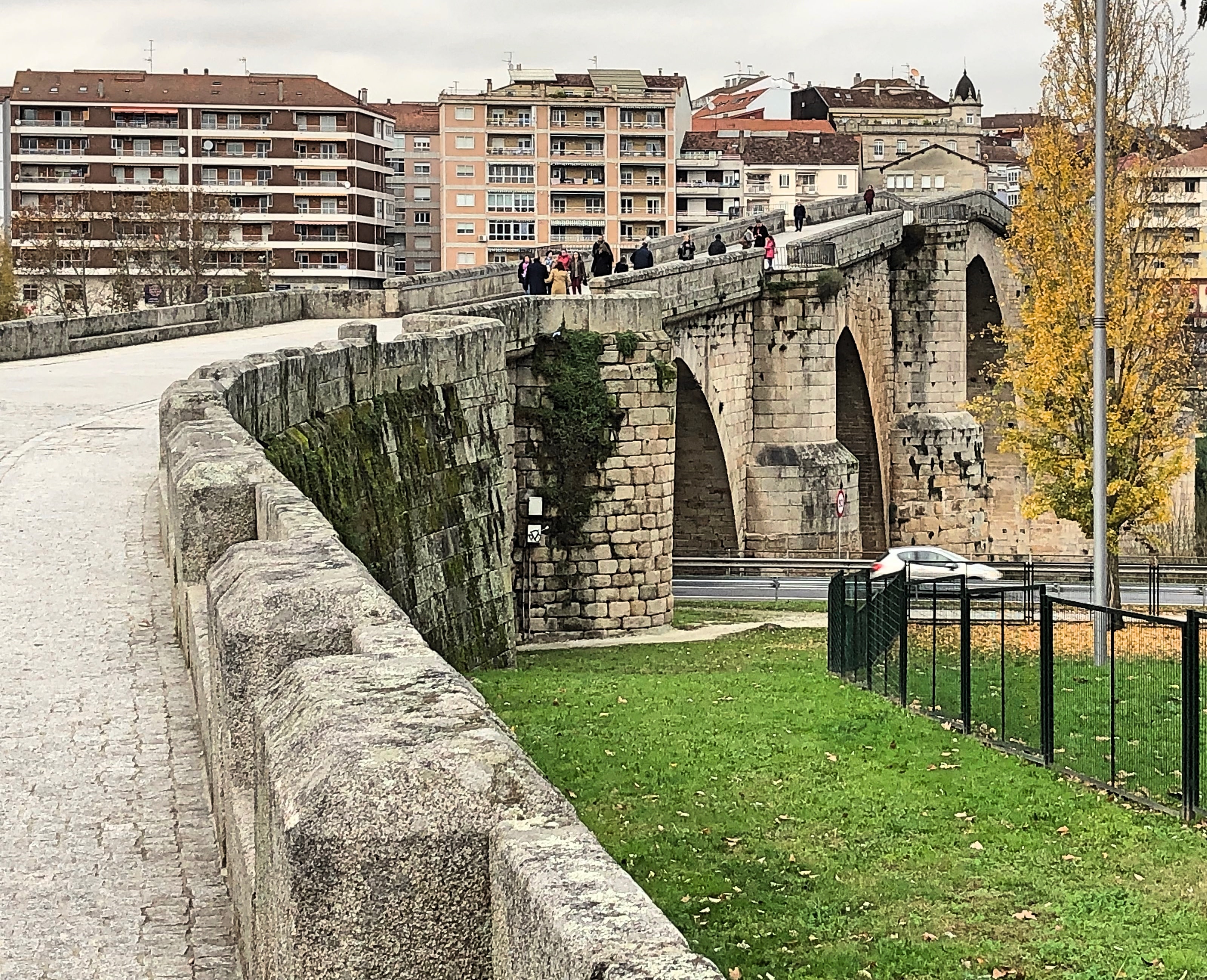


 Lotz in Translation

