Review: Two Brecht Plays

Review: Two Brecht Plays

Mother Courage and Her Children by Bertolt Brecht

My rating: 4 of 5 stars

The poor need courage. Why? They’re lost. That they even get up in the morning is something.

It is surprising to read, from such a famously doctrinaire thinker, a work of art that is so rich in moral ambiguity. The titular character is enormously compelling, despite being neither hero nor villain. Mother Courage has moments of courage, of course, but also of capitulation, moments wherein she is admirable and when she is despicable. She is, on the one hand, a war profiteer, a kind of jackal gnawing at the scraps of human carnage. But can a person living on the edge of poverty, with hardly any other viable option to make a living, be condemned?

The world that Brecht presents is as hopeless and absurd as in any work from the previous century. It is a world where both morality and immorality are rewarded with cruelty. Two of Mother Courage’s children are killed as a direct consequence of their attempts to do the right thing, whereas her oldest son is killed for his crimes (the same crimes, ironically, that were praised in wartime). Mother Courage herself, who at least survives, is moral within the bounds of practicality. Even when life and death are on the line, she is always a business woman first and foremost, unwilling to make any sacrifice that will jeopardize her ability to make a living.

Considering Brecth’s Marxism, I am tempted to view Mother Courage as a kind of embodiment of the evils of capitalism—or, at least, as a portrait of how capitalism degrades us. And certainly she is far from ennobled by her ceaseless dealings and negotiations. In perhaps the pivotal scene in the play, she convinces a soldier that protests against the powers that be are useless. Her worldview, in other words, is materialistic and cynical.

And yet it is the war, not the economy, that is the defining element of the setting. And it is a war of religion. Is Brecht showing us, then, how capitalists lack the moral ability to oppose war? Certainly Mother Courage’s attempts to profit from the conflict ultimately destroys her family; but there doesn’t seem to be any other option open to her besides starvation.

Rather than a condemnation of capitalism or even of war, then, my final impression was of a cry of despair for the entire human race, written at one of the darkest moments of the previous century. Not cunning, nor cruelty, nor selfishness, nor martyrdom, nor religion, nor anything else can save the characters of this play from ruin. It is a portrait of an entire world gone mad.


Galileo by Bertolt Brecht

My rating: 4 of 5 stars

The evidence of your eyes is a very seductive thing. Sooner or later everybody must succumb to it.

This play succeeds as a drama while failing as history, at least as a history of science. Galileo here is presented as a kind of anti-religious working-class hero—who wants to liberate the toiling masses through knowledge. However, the idea that his philosophy of the heaven’s would naturally lead to atheism and, thus, political disquiet—an argument put against him at various points in the play—would have seemed very foreign to the seventeenth century. To my knowledge, those who censured Galileo were far more afraid of the Protestant Reformation than the Proletariat Revolution.

And as Eric Bentley’s astute introduction points out, the terms of the debate are also not fairly portrayed. True, when Galileo was looking through his telescope and merely reporting what he saw, this was a case of raw observation overturning established doctrine. But in the more important case—Galileo’s advocacy of the Copernican system—it is simply not true that the heliocentric astronomy was manifestly superior to the geocentric.

On the contrary, arguments for its adoption were in the realm of abstract mathematics, far removed from the realm of simple observation. Ironically, then, Galileo was indeed not simply asking the doctrinaire philosophers to accept the evidence of their senses. He was, in a real sense, asking them to disregard it—since, as we all know, what we experience every day is the sun rising and setting, not the earth in motion.

Also, the argument that the Copernican astronomy is a blow to human vanity is also rather anachronistic. Readers of Dante’s Divine Comedy will recall that, although Earth is regarded as the center, it is hardly a privileged place in the cosmos. On the contrary, each of the heavenly spheres is the more divine the further it is from earth, with God himself furthest of all. Thus, for Galileo to place earth among the heavenly spheres was rather flattering to humanity’s stature.

Yet this is a play, not history, and must be judged as such. Written at nearly the same moment as Mother Courage and Her Children, this play—though apparently quite different—shares the central feature of a morally ambiguous hero in compromising circumstances. At various points, particularly at the end, Brecht seems to want to condemn the famous scientist, just as Brecht judges Mother Courage rather harshly. And yet, in both plays, the cowardly behavior of the protagonists is their only real option, the alternatives being a pointless martyrdom.

The ambiguous nature of Galileo—hero and coward, genius and bungler (scientifically astute and yet politically inept)—is what gives him his authentic humanity as a character, as somebody we can readily identify with. That is not to deny his greatness. For Brecht here has portrayed a truly great figure, even an authentically tragic figure, whose flaws form an integral part of his virtues. The play succeeds, then, in spite of its historical inaccuracies, through a compelling portrayal—all too rare in drama—of an intellectual struggling against his surroundings.


View all my reviews
Review: Coriolanus

Review: Coriolanus

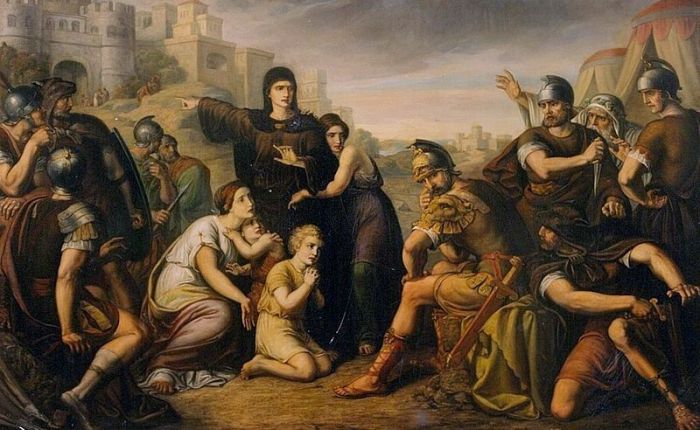
Coriolanus by William Shakespeare

My rating: 3 of 5 stars

In my review of Plutarch’s Lives, I noted the stark difference between that ancient author’s conception of personality, and our own. For Plutarch, character was static and definable—an essence that is manifested in every decision and remark of a given person. Compare this with Montaigne’s or Shakespeare’s portrayal of personality: fluctuating, contradictory, infinitely deep, and ever fugitive. To borrow a metaphor from Oswald Spengler, the Plutarchian self is statuesque, while the Shakespearian self is more like a work of music. The first is a self-contained whole, while the second is abstract, fleeting, and morphs through time.

It is fascinating, therefore, to see Shakespeare handle a story right out of Plutarch. Shakespeare adapts his art to the subject-matter, and creates a character in Caius Marcius Coriolanus that is remarkably opaque. I say “remarkably” because Shakespeare had just finished with his five greatest tragedies, each of which has a character notable for its depth. Caius Marcius, by contrast, is a man almost in the Plutarchian mode: with a enumerable list of vices and virtues, who acts and speaks predictably, with little self-reflection. Next to Hamlet, Iago, or Macbeth, the Roman general seems almost childlike in his restriction.

Like Julius Caesar, this play is interesting for a certain amount of moral ambiguity. It is difficult to side with any of the major players. The plebeians of Rome are certainly not a mindless rabble, but they are somewhat vain and narrow-minded, not to mention easily influenced by empty words. Coriolanus himself is a superb soldier but ill-suited to anything else, whose capital vice is not exactly pride, but a certain smallness of mind. His mother, Volumnia, is scarcely less warlike than her son. Even if her counsels are good, it is difficult to see the mother-son relationship as perfectly healthy. She comes across, rather, as a kind of Roman helicopter mom, bringing up her son to be a killing machine for the glory of the state.

For me, the tragedy was not quite successful, simply because Coriolanus was such an unsympathetic protagonist—belligerent, scornful, reactionary, and often a great fool. It is a testament to Shakespeare’s art that he is not altogether hateful. As Harold Bloom says, this play is technically brilliant: in its pacing, language, and plotting. Shakespeare was certainly a professional. But if you come to Shakespeare seeking grand personalities, the work is a barren field.


View all my reviews

Review: Henry V

Review: Henry V
Henry V

Henry V by William Shakespeare

My rating: 4 of 5 stars

Men of few words are the best men.

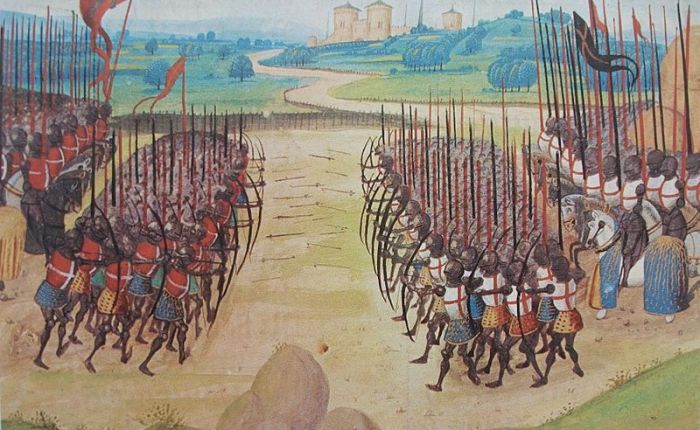
This is a masterful play, likely one of Shakespeare’s most effortlessly enjoyable. Aided by the chorus, the story moves quickly; and there is none of the artificial machinery of Shakespeare’s comedies and tragedies—mistaken identities, secret plots, and the like—but, instead, a story focused on one man’s glorious ascent. This is Henry; and his character is undoubtedly one of the greatest portrayals of a charismatic leader we have. He is the play. Just as he dominates everyone on the stage, so he dominates us, the audience.

The result is a mesmerizing patriotic spectacle. Even if you have grave reservations about the justice of invading France, and even if you can see through Henry’s rhetoric, it is impossible to resist his call to follow him. But how did Shakespeare himself feel about the hero king? One cannot be sure. Nevertheless, there is enough irony in the play to suggest that the playwright entertained his own doubts. Most telling, for me, was the conversation between the disguised Harry and the soldier Williams. After the soldier expands upon the horrors of war—limbs chopped off, men crying for a surgeon, wives and children left alone—he concludes that the king will be responsible for a great evil if the cause be not just. Harry then responds with a fine bit of extremely specious reasoning:

So, if a son that is by his father sent about merchandise do sinfully miscarry upon the sea, the imputation of his wickedness, by your rule, should be imposed upon the father that sent him. Or if a servant, under his master’s command transporting a sum of money, by assailed by robbers and die in many irreconciled iniquities, you may call the business of the master the author of the servant’s damnation.

Anyone, I suspect, can see the clear difference between a misfortune befalling a servant and a wound suffered by a soldier sent into battle. And this is just one example of Henry’s refusal to consider the ethical ramifications of his decisions. Later on, when Henry discovers that the baggage train has been attacked, the noble king orders his soldiers to cut the throats of every prisoner. He is, in short, remorseless in the pursuit of what he considers his birthright.

The central question that the play asks, then, is whether Henry’s brilliant, charismatic leadership in some measure excuses all of the bloodshed that results from his choices. Now that the idea of monarchy has lost its hold on our imaginations, the argument that any land belongs to a king “by right” sounds barbaric. It thus seems difficult to justify the invasion of France on any reasonable ethical grounds. After all, France is not ruled by a cruel tyrant; and the people of France will likely be no happier under Henry than under Charles VI.

Nevertheless, it is difficult not to root for the young king. And this is true of many historic conquerors, from Alexander the Great to Napoleon. They cloak themselves in glory and promise to inaugurate a new world, if only you follow them through the breach. Indeed, Fluellen explicitly compares Henry to Alexander, noting how the latter killed one of his best friends while drunk, just as Henry rejected his friend and mentor Falstaff. (And Mistress Quickly’s narration of Falstaff’s lonely death is one of the more affecting moments of this play.) It seems strange that these military conquerers have commanded so much praise throughout the ages. Plutarch’s Lives is little more than a compendium of so many Henrys. Yet as Voltaire said:

Not long since the trite and frivolous question was debated in a very polite and learned company, viz., Who was the greatest man, Caesar, Alexander, Tamerlane, Cromwell, etc.? Somebody answered that Sir Isaac Newton excelled them all. The gentleman’s assertion was very just; … those politicians and conquerors (and all ages produce some) were generally so many illustrious wicked men. That man claims respect who commands over the minds of the rest of the world by force of truth, not those who enslave their fellow-creatures: he who is acquainted with the universe, not they who deface it.

All this being said, it must be noted in favor of these conquerors that their less charismatic counterparts are not necessarily better in terms of the common good. In Richard II, the beginning of this tetralogy, Shakespeare gives us a portrait of just such an ineffectual king, a man who has the sensibility of a poet but not the strong will of a commander, and whose poor decisions result in a civil war. Historically, peace at home has often been kept at the cost of war abroad, and vice versa. Conquered land is seldom kept, but the state is strengthened in the meantime; and a country united against an enemy may be preferable to one divided by faction.

Clearly, a country at peace at home and abroad is preferable to either alternative. But historically speaking, this option has not often existed. I do not think this excuses the bloodshed of conquests, but perhaps it goes some way in explaining why these warlike men have so often been treated as heroes, when nowadays we are apt to see them as villains. That, and a play about Isaac Newton would likely not be as entertaining.

View all my reviews

Review: Henry IV

Review: Henry IV
Henry IV, Part 1

Henry IV, Part 1 by William Shakespeare

My rating: 4 of 5 stars

Food for powder, food for powder. They’ll fill a pit as well as better.

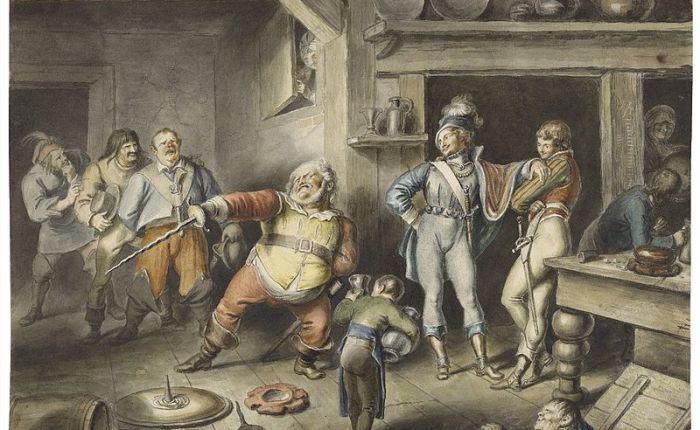
This is undoubtedly one of Shakespeare’s strongest plays. In tone and atmosphere it is far more varied and naturalistic than its predecessor, Richard II. The scenes with Hal amid the low-life of London are fetching, and do much to alleviate the stiff and stuffy courtly atmosphere of some of Shakespeare’s histories. The comedy also helps; and this play contains some of Shakespeare’s highest and lowest comedy, both of which are embodied in the corpulent Falstaff.

Most readers will, I suspect, concur with Harold Bloom in deeming Falstaff one of the bard’s great creations—though we may not go so far as to put him on a level with Hamlet. Bloom is correct, however, in seeing one’s opinion of Falstaff as a defining fact in one’s interpretation of the play. There are those who see in Falstaff the spirit of carnival—the ecstatic embrace of all the pleasures of life and the total rejection of all the hypocrisies of society Others see Falstaff as a corrupter and a lout—a lazy and selfish fool.

For my part I vacillate between these two attitudes. There is no denying Falstaff’s wit; and his soliloquy on the futility of honor is wonderfully refreshing, puncturing through all of the political nonsense that motivates the bloody clashes. Still, I cannot help thinking that, if the Falstaffian attitude were embraced too widely, society itself would be impossible. Some social restraint on our pleasure-loving instincts is necessary if we are not to end up fat drunken thieves. On the other hand, a generous dose of the Falstaffian attitude can be a great antidote to the self-righteous nonsense that leads us into war.

In any case, Falstaff is not the only great character in this play. Hotspur is a mass of furious energy, an electrifying presence every time he is on stage. Prince Hal, though less charismatic, is more complex. From the start, he already has an ambivalent relationship with Falstaff, a kind of icy affection or warm disregard. Indeed, Hal holds everyone at a distance, and one senses a skeptical intelligence that is wary of committing until the circumstances are just right. It is hard to read his character’s evolution as that of a wayward youth who learns to embrace his identity. His actions seem far too deliberate, his timing too perfect. Was he hoping to learn something by keeping company with Falstaff and his lot?

Henry IV, Part 2

Henry IV, Part 2 by William Shakespeare

My rating: 3 of 5 stars

Presume not that I am the thing I was.

Compared with Part 1, this sequel is significantly weaker as a stand-alone play. There is no antagonist to compare with Hotspur. Falstaff wanders about in pointless merrymaking, mostly separated from Hal; and unfortunately his wit is not nearly so sharp outside of his young companion’s company. The same can be said for Hal, whose youthful liveliness fades into a chilling uprightness. And the plot can be frustratingly meandering and abrupt.

The main drama of this play is the progression of Hal from prodigal son to the ideal young king. This transformation is apt to cause some misgivings. On the one hand, I found it genuinely admirable when Hal commends the Justice and bids him to do his work. And even if one loves Falstaff, it is difficult to wish that the King of England would keep such a lawless fellow around, much less lend him influence. On the other hand, the newly-ascended king’s rejection of his former friend and mentor is deeply sad. Perhaps he should have turned Falstaff away, but it need not have been with such cold scorn.

Again, there is a moral conflict here. Falstaff may best be described as amoral: uninhibited, pleasure-loving, devoid of both cruelty and rectitude. He feels no scruples whatsoever at dishonesty and robbery, and acknowledges no ideal as worth pursuing or even respecting. Hal, by contrast, is a moral creature: he wishes to uphold the moral order, but for him this may mean murder or bloody conquest. So one must ask: Which is better, to be a drunken pickpocket or to lead your country on an invasion? Neither the socially subversive nor the socially upstanding can be fully embraced, which is why Hal’s rejection of Falstaff causes such complex reactions.


View all my reviews
Review: Much Ado About Nothing

Review: Much Ado About Nothing
Much Ado About Nothing

Much Ado About Nothing by William Shakespeare

My rating: 3 of 5 stars

Much Ado About Nothing is generally held to be one of Shakespeare’s lighter comedies, as the title seems to indicate. Its plot is generally ridiculous—full of meaningless intrigues and manufactured drama—again, as the title seems to indicate. It survives through the charming story of Beatrice and Benedick, whose dueling wit evolves into antagonistic love, preserving all of the fire and (almost) none of the misogyny of Petruchio and Katherina from The Taming of the Shrew. The plot involving Hero and Claudio is silly stuff, and only maintains interest through providing a context for Beatrice and Benedick to further woo and war.

It is difficult to read much Shakespeare without coming to the conclusion that he was a hopeless cynic when it came to love. Both plots in the play reinforce this conclusion. Beatrice and Benedick are fooled into love through appeal to their self-love; they agree to wed without any romantic illusions; indeed, Benedick ends the play with a crude cuckoldry pun. Meanwhile, Claudio is ready to drive his beloved to suicide at the thought that she is not a virgin, and then is ready to marry anyone, even “an Ethiope,” to repent when he finds out she was falsely accused. If only more romantic comedies has such a saving touch of nihilism.


View all my reviews

Review: A Midsummer Night’s Dream

Review: A Midsummer Night’s Dream

A Midsummer Night's DreamA Midsummer Night’s Dream by William Shakespeare

My rating: 3 of 5 stars

The forms of things unknown, the poet’s pen,
Turns them to shapes and gives to airy nothing
A local habitation and a name.

Both times that I have encountered this play, it has failed to make much of an impression on me. I fear that I am insensitive to the atmosphere of enamorment and enchantment that so pervades this work. A Midsummer Night’s Dream is one of the few of the bard’s plays whose plot he himself wrote. The result shows that, while brilliant in nearly every other dramatical ability, plot was not one of Shakespeare’s gifts. The play is a whimsical tapestry, a historically absurd mélange, a jury-rigged skeleton on which to hang his romantic poetry.

As is typical of Shakespeare, his lovers are mostly devoid of intrinsic interest. There is not much that allows the reader to distinguish Helena from Hermia, Lysander from Demetrius; their love-sick pinning all blends together into an impassioned monotony. This, of course, is wholly intentional; the farcical scheme of the love potion reveals that the lovers’ choice is wholly arbitrary—even random—and that the passions are due entirely to the lover and not the beloved. This is standard Shakespeare fare, even if it is spiced up with the device of the fairies.

The standout character is, as so often happens, not a lover at all, but a jester: Bottom. He is the liveliest and most loveable character in the play, a thoroughly upright and decent man. His most striking feature is his imperturbability. Being transformed into a monster hardly phases him; and meeting the fairies of the enchanted world strikes him as no special cause for alarm. Also notable is his apparent indifference to the amorous advances of the fairy queen. Being so lauded and desired does not augment his ego one bit, nor does it prompt him to

View all my reviews

Review: The Merchant of Venice

Review: The Merchant of Venice

The Merchant of VeniceThe Merchant of Venice by William Shakespeare

My rating: 3 of 5 stars

I can easier teach twenty what were good to be done, than be one of the twenty to follow mine own teaching.

In my first review of this play I agonized over whether it was truly anti-Semitic or not. Now I am not unsure: this play is undoubtedly anti-Semitic. The plot is simply incoherent if Shylock is to be regarded as anything but a villain. Sympathetic as we may be to a man so mistreated, we cannot sympathize with someone so single-mindedly bent on material gain and bloody vengeance. No playgoer can conscientiously hope, in the trial scene, that Shylock is successful in fulfilling his bond. And Shakespeare does not allow us to suspect that Shylock is bluffing: he is prepared to cut out a man’s flesh and weigh it on a scale (a traditional anti-Semitic image) simply because “it is my humour.” If Shakespeare was trying to be slyly subversive, he did a very poor job.

What provokes audiences into sympathy with Shylock is the end of the trial, in which, aside from being denied his money, he is forcibly converted to Christianity, on pain of death. To us this seems such an obvious mockery of justice, such an undeniable outrage, that we assume Shakespeare must have felt the same way, and to have written the scene to undermine all the Christian talk of mercy. Yet I do not think Shylock’s fate would have provoked anything like this reaction in Shakespeare’s England, where anti-Semitism was taken for granted. To the contrary, that such a greedy and bloodthirsty Jew should be spared some of his fortune and accepted into Christianity might have been seen as wholly just, even merciful.

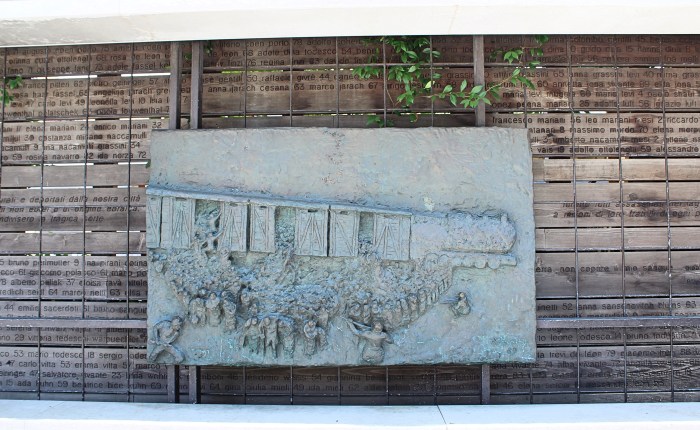
The final result of this—Shylock’s villainy and the play’s anti-Semitism—made the trial scene literally sickening for me. One man, mistreated and spiteful, is trying to legally kill another man for defaulting on a debt, and he is in turn stripped of his property, his identity, and his honor—humiliated, kicked, and spat upon. And all this is delivered as the denouement of a romantic farce, complete with cross-dressing ladies and a playful love story. I admit that I was in no mood to overlook or excuse the anti-Semitism, having recently stood in the Ghetto Vecchio in Venice, and seen the monuments to the deported Jews there. Even so, I think anyone must admit that the play’s dramatic coherence is seriously compromised, even destroyed, by the decline of anti-Semitism.

It speaks to the power of Shakespeare’s art that, even in such an obviously anti-Semitic play, which uses so shamelessly anti-Jewish stereotypes, and which so joyfully persecutes the play’s Jewish villain—even despite all this, we still read and stage this play. As often happens in life, charisma can deaden our moral senses; and Shylock is nothing if not charismatic. He is one of dozens of Shakespeare’s characters whose dialogue reveals a complete personality, a shifting mind whose depths we can only guess at, whose roving interior life extends into parts unknown. Somehow Shakespeare has conjured a character that embodies all of the negative Jewish stereotypes, yet who nevertheless is a believable and fully individual human. This is dramatically admirable and, in retrospect, morally reprehensible. For, as Harold Bloom said, Shylock’s very plausibility is why the play has been such a potent inspiration for anti-Semites.

I am not sure what conclusion to draw from all this. The play is without doubt one of Shakespeare’s stronger efforts. And yet, by the end, I felt little more then distress.

View all my reviews

Review: The Rural Trilogy (Lorca)

Review: The Rural Trilogy (Lorca)

Bodas de sangreBodas de sangre by Federico García Lorca

My rating: 4 of 5 stars

Bodas de Sangre, or Blood Weddings, is an odd combination of the ancient and the modern. The story could not be more elemental: the conflict of love and duty, the tragedy of death. And yet the style is pure Lorca—symbolic, surrealistic, modern. The play is effective, not for any subtlety or refinement, but for the sheer amount of force that Lorca brings to bear on the main themes. The characters are nameless archetypes, whose speech is poetic passion. Lorca’s use of naturalistic imagery in his poetry—animals, trees, rivers, the moon—reinforces the primeval quality of the story, as if tragedy were a law of the universe. I am excited to read the other two plays of Lorca’s so-called rural trilogy.


La casa de Bernarda AlbaLa casa de Bernarda Alba by Federico García Lorca

My rating: 4 of 5 stars

This is the second of Lorca’s “rural trilogy” I have read, and if anything I liked it even more than Bodas de Sangre. In form and theme the two are quite similar. Like a Greek tragedy, the plot is simplicity itself, with one obvious conflict and one calamitous resolution. Again, Lorca’s power as a dramatist comes, not from subtlety or wit, but from pure passion. The incompatibility between traditional values and human impulses, with all its tragic implications, is laid bare by Lorca, who shows us a culture whose religious mores and gender norms oppress women and deprive them of a fulfilling life. Strikingly, the cast of characters is entirely female, even though the conflict revolves around a male who is always offstage. This allows Lorca to focus on a side of life that was often swept aside, while maintaining an atmosphere of tension and constraint that makes the play so riveting. I am excited for Yerma.


YermaYerma by Federico García Lorca

My rating: 4 of 5 stars

I have enjoyed each play of Lorca’s rural trilogy more than the last. He is such a heartrending writer. Even on the page, the emotion of the play is raw and deeply affecting. He had an acute ear for dialogue, and could write as naturalistically as anyone; and when this naturalism is supplemented by his poetic gifts—at times surrealistic, at times pastoral—the language becomes electric with meaning. The word I keep coming back to is “elemental,” since the plays dramatize basic and timeless tragedies of human life.

In this play the tragedy is the anguish caused by being childless in a time when women were valued as mothers and mostly confined to the house. As in the other two plays in the so-called “trilogy” (they all have distinct plots), the basic conflict is between conservative, religious traditions and spontaneous human impulses. Lorca seems to have felt deeply the suffering caused by an uncompromising Catholic morality, and convincingly shows how it doomed people to lifelong unhappiness. It is fittingly tragic that this same moral code contributed to Lorca’s own death.

View all my reviews
Sorolla-9

Review: King John

Review: King John

King JohnKing John by William Shakespeare

My rating: 3 of 5 stars

And oftentimes excusing of a fault
Doth make the fault the worse by the excuse

King John is normally regarded as one of Shakespeare’s earliest and weakest history plays. The plot mainly concerns the king’s conflict with France over his legitimacy, since John inherited the throne from his brother, Richard the Lionheart, even though the late king’s son, Arthur, was alive and well. This leads to a rather silly confrontation between the two powers, in which they try to get the town of Angiers to recognize one of them as the true king, which the townsfolk resolutely refuse to do. The warring factions finally decide to just destroy Angiers—presumably for the satisfaction—until they receive the timely recommendation to marry the prince of France to the princess of England, thus uniting their houses. This is done, and succeeds in suppressing the conflict for about five minutes, until a Cardinal stirs up the war again (which leads to some notable anti-Catholic blasts from Shakespeare).

Compared to Shakespeare’s more mature works, the characters in this play are mostly stiff and lifeless, with far less individualizing marks than we expect from the master of characterization. As Harold Bloom says, at this point Shakespeare was very much under the influence of Christophe Marlowe, and follows that playwright in his inflated, bombastic speeches. I admit that the swollen rhetoric often had me laughing, especially during the first confrontation between the English and French parties. The pathetic and spiteful King John is somewhat more interesting, if not more lovable, than the rest, but the real star is Philip Faulconbridge (later Richard Plantaganet), the bastard son of Richard the Lionheart, and the only immediately recognizable Shakespearean character. As with Launce in Two Gentlemen of Verona, it is a relief and a delight whenever Philip appears onstage.

As far as notable quotes go, this play is the source of our phrase “gild the lily,” though it misquotes the play, which goes: “To gild refined gold, to paint the lily.” Also notable is this description of grief for a lost child, which many surmise expressed Shakespeare’s grief for his own deceased son, Hamnet, though this is pure speculation:

Grief fills the room up of my absent child
Lies in his bed, walks up and down with me,
Puts on his pretty looks, repeats his words,
Remembers me of his gracious parts,
Stuffs out his vacant garments with his form

View all my reviews

Review: Two Gentlemen of Verona

Review: Two Gentlemen of Verona

The Two Gentlemen of VeronaThe Two Gentlemen of Verona by William Shakespeare

My rating: 2 of 5 stars

I think Crab, my dog, be the sourest-natured dog that lives.

Two Gentlemen of Verona is usually grouped with A Comedy of Errors and The Taming of the Shrew as one of Shakespeare’s early comedies. I am inclined to see it as the earliest, if only because it is by far the least compelling. Whereas Shakespeare is rightly known for the depth of his psychological insight and the realism of his characters, the personages of this play are shallow and implausible creatures.

The two titular gentlemen are anything but. Proteus is a cad, a lout, and finally a monster, while his friend Valentine is a nincompoop. The women who capture their hearts are rather more compelling—especially Silvia, who sees right through Proteus—and yet their attraction to these unscrupulous airheads dims their stature as well. The final scene is the culmination of everything wrong with this play: after banishing his friend and lying through his teeth, Proteus tries to rape Silvia, and is then immediately forgiven by Valentine (note: not Silvia), in an ambiguous line that, at first glance, seems to mean that Valentine is gifting him his paramour Silvia. The scene could almost be funny if it were played as a farce, but the straight version I saw was sickening

The real heroes of this play are Proteus’s servant Launce and Launce’s dog Crab—a mutt who, despite having no lines, is better-realized than any of the protagonists. Now with Launce we have the real Shakespearean magic: a living, breathing, fully human character, immediately relatable and deeply compelling. His hilarious monologues are the jewels of this play, which does not deserve him. Other than this pair, the play is only interesting for prefiguring many of the themes Shakespeare would later explore with greater clarity and depth.

View all my reviews