But you cannot buy the wares of knowledge and carry them away in another vessel; when you have paid for them you must receive them into the soul and go your way, either greatly harmed or greatly benefited
In style the Protagoras is intermediate between the questioning Socrates of the early dialogues and the doctrinizing Socrates of the Gorgias. Here, Socrates is not only concerned in revealing the confusion of common notions, but also in advancing his own theories; yet the dialogue ends on an inconclusive note and, what is more, the ideas that Socrates advances are not the ones we recognize as Plato’s own mature philosophy.
As in the Gorgias, Socrates enters a gathering of sophists and their admirers, with the intent of questioning the practice of Sophism. Unlike Gorgias the rhetorician, however, Protagoras the sophist proves himself to be a formidable opponent. Indeed, in the beginning of the dialogue Protagoras has the upper hand, effectively resolving Socrates’ doubts regarding the teachability of virtue.
Socrates questions whether virtue can be taught, because, if virtue is teachable, then why do good men have bad sons? And why are their no specialists in virtue, as there are specialists in medicine and carpentry? Protagoras counters, first, with a myth about the origin of virtue, explaining that it was a gift of Zeus to all humans. Thus everyone is capable of virtue, and everyone is a teacher of virtue according to her ability; indeed you might say that virtue is taught all the time every day, just like Greek is. To illustrate the point, Protagoras uses a thought experiment involving a society where everyone played the flute. In such a society, some good men would likely have sons who were subpar flute players; but even the worst player in that society would likely be adept relative to a non flute-based society.
To drive home the point, Protagoras observes that punishment would be unreasonable if virtue were not teachable. For to punish as pure retribution is irrational and beastly—naked vengeance, which may satisfy anger but which will not undo any past wrongs. Punishment can only be rational if it is directed towards the future: to correct the wrongdoer and to discourage any others from following her example. The fact that the Athenians punish therefore proves that they believe that virtue can be taught.
Socrates uncharacteristically declares himself wholly satisfied and convinced by this answer. But one doubt remains: Are the parts of virtue, such as wisdom, courage, or piety, all independent, or are they all different names for the same basic thing? Protagoras at first asserts them to be different; a person may be courageous but impious, for example. However, Socrates trips him up with a question about opposites. Does everything have only one opposite? Yes, says Protagoras. So everything that is not wise is foolish? Of course. Then it is possible for piety to be foolish? At this Protagoras hesitates, and attempts to stop the conversation. Meanwhile, Socrates puts forth his doctrine that virtue is knowledge, specifically knowledge of pleasure and pain; and that this knowledge allows us to accurately estimate the pleasant and painful consequences of actions, and to make the best choice. (Plato would not persist with this position.)
In the course of this argument, Socrates and Protagoras have a dispute about the length of their responses. After Protagoras gives a little speech in answer to a question, Socrates professes himself too forgetful to follow long utterances, and requests that Protagoras stick with short answers. (This request is made to Gorgias, too.) Protagoras bristles at this and wants to quit; it takes the surrounding party to convince him to carry on. This seems to have been one of Socrates’ (and Plato’s) main complaints against the sophists, namely that they conceal poor reasoning in extended eloquent speeches. Plato also takes the opportunity to poke fun at those who argue by quoting and interpreting poems, putting a long and wholly implausible interpretation of a poem in Socrates’ mouth, thus illustrating that with sufficient ingenuity any meaning can be extracted from any poem.
The combatants disperse as friends and Socrates lives to argue another day.
And how will you enquire, Socrates, into that which you do not know? What will you put forth as the subject of enquiry? And if you find what you want, how will you ever know that this is the thing which you did not know?
Reading this dialogue immediately after reading the Protagoras confronts the reader with the mystery of Plato. For here are two dialogues, both about the same questions—What is virtue? Can it be taught?—and coming to opposite conclusions. And this leads to still more questions: Was Plato’s own opinion changing? Or was he representing Socrates’ opinions in one dialogue and his own opinions in another? Or did Socrates’ own opinion change? Or is it some other mixture of reported and original thought? It is impossible to know the answer—but that has never stopped philosophers.
The Meno is a fine example of Plato’s economy. Not a word is wasted in this dialogue. We begin with the inquiry and jump straight into difficulties. Can virtue be taught? Well, what is virtue? Meno says that each type of person has their own virtue—women, men, slaves, citizens, children, adults, and so on. To which Socrates responds that these virtues, qua being virtues, must all have at least one quality in common. (Here Wittgenstein would interject.) Then Meno throws up his hands, declares himself stunned, and offers his famous paradox (quoted above).
Socrates weasels his way out of this with the Platonic doctrine of remembrance. What if we are born (rather, reborn) already filled with true knowledge, and must merely remember what our souls learned during their sojourns in heaven. He demonstrates by leading one of Meno’s young slaves through a mathematical demonstration of square roots. By making the correct deductions, the boy is able to find the right conclusions, from which Socrates concludes that the boy “knew” the information all along. (Though this conclusion will likely strike most of us as absurd, one must keep in mind that, for Plato, all empirical knowledge—knowledge gained through the senses—was not truly knowledge at all, since the observed world changes, but the Truth remains forever eternal.)
The slave boy retreats, enlightened but not emancipated (depressingly, not even great thinkers had scruples about slavery back then), and Socrates and Meno return to the original question. Anytus the politician then appears, whom Socrates uses to prove that the sons of great men are often rather ordinary as far as virtue is concerned, which prompts Anytus to warn Socrates not to slander citizens (he would later be an accuser of Socrates during his trial). There are two possible explanations for this: Either virtue cannot be taught, in which case it is not knowledge; or these great men did not themselves possess the knowledge of virtue.
This second option is pursued by Socrates, who makes a delicate division between “knowledge” and “true opinion.” These may sound identical, but for Socrates the latter is distinguished by not being properly justified. If, for example, I guess that a book of poetry is under the table, and it is under the table, I have true opinion, since I was correct, but not knowledge, since my being correct was fortuitous. Socrates concludes that these great men acted virtuously from true opinion—vouchsafed by the gods—and not real knowledge, since they could not transmit their virtue.
As a teacher myself, I cannot help being interested in the questions of this dialogue. For me, the fundamental paradox was aptly summed up by Gibbon: “the power of instruction is seldom of much efficacy, except in those dispositions where it is almost superfluous.” That is, teaching will most benefit those who least need teachers, since they are motivated to learn on their own, and vice versa. This seems to apply as much to mathematics as it does to virtue. Can a virtuous Hadrian whip a vicious Commodus into shape? I am skeptical. And yet, it is this quixotic task I have set before me.
This is perhaps the most iconic of Plato’s works, the closest thing that philosophy has to a Sermon on the Mount. And just as with our Biblical narratives, the dialogue presents a historical difficulty. To what extent is this speech fact, and to what extent invention? The only other record we have of the trial is from Xenophon, who wasn’t even there. Plato was there—or at least he asserts that he was—and yet it beggars belief that the young, would-be amanuensis could retain the entire speech in his mind after one hearing, or that he could write it down with tolerable accuracy as the events unfolded. It seems far more likely (to me at least) that this speech is more or less a fabrication made well after the fact, attempting to preserve the flavor and impression of Socrates’ final speech but not the exact words themselves.
All speculation notwithstanding, the essential facts are preserved: Socrates was accused of denying the gods and of corrupting the youth, made a bold and waggish defense of himself, was convicted, refused to mitigate the consequences, and triumphantly accepted the death penalty. Yet what really emerges from this speech is not a record of events but the portrait of a man.
Here Plato reveals himself to be a writer of the highest order. Fact or fiction, Plato’s Socrates is one of the great characters of literature. Though Socrates’ life is at stake, he does not falter for a moment. He treats the accusations with amusement, dismissing them with playful arguments that reveal his absolute indifference to the outcome. Far from bowing and scraping to preserve his life, Socrates flaunts his superiority to his accusers, couching his boasts in an ironical humility. He is a man in perfect control of himself and in perfect peace with the world.
Even if the real Socrates was truly this remarkable, it would have taken a writer of exquisite talent to effectively render him in prose. And if this is largely Plato’s invention, we must rank him along with Shakespeare, for Socrates utters now-famous phrases nearly as quickly as Hamlet. Western philosophy could not have asked for a more rousing beginning.
The saga of Socrates’ trial and death continues. This time his friend, Crito, visits him in his cell to try to persuade him to escape into exile. Socrates is true to form, insisting that nothing—not the reputation of himself or his friend, nor concern for his own life—ought to be considered except reason. Crito must attempt to persuade Socrates to escape. The dialogue ends with the famous personification of the Laws of Athens, in the course of which Plato hits upon one of the earliest formulations of the social contract: by living in Athens, Socrates implicitly agrees to be bound by her laws. Since Socrates’ enjoyed the benefits of the laws, he must accept their penalties.
More so than in the Apology, one feels here that this is Plato’s invention and not something that actually occurred. The dialogue seems especially crafted to rehabilitate Socrates’ reputation, portraying the old philosopher as a dutiful citizen with a patriotic love of Athens. As a piece of drama the dialogue is one of Plato’s finest. It has considerable philosophic importance, too, for its aforementioned prefiguring of the social contract. Nevertheless I confess that I find Socrates’ reasoning extremely thin. Surely laws may be unjust; and a law may be just in itself and yet unjust or mistaken in its execution. If that is so, should the citizen passively accept it simply because it is the law? One senses the fine Socratic irony here, too, arguing playfully rather than sincerely. Socrates surely had compelling reasons to accept his death—but one doubts that pure patriotic regard of law was the whole of it.
This is one of the early inconclusive Socratic dialogues. Socrates, just come back from fighting in the Peloponnesian War, meets two of Plato’s relatives, Critias and Charmides. The latter of these is portrayed as a handsome youth, graceful of form and pure of mind. (Ironically enough, after the disastrous defeat of Athens in the war, both Critias and Charmides went on to become members of the Thirty Tyrants.) Socrates takes the opportunity to question Charmides about a Greek term that is rather unsatisfactorily translated into English as “temperance.”
The conversation takes many twists and turns, following the normal Socratic procedure: a definition is proposed (in this case, living quietly), an exception to the definition is found, a new one is proposed, and the process continues. As often happens in these early dialogues, the conversants seem to only get further from the point the longer they speak, getting hopelessly lost in the weeds of dialectic. Here we also see a quality that commonly irks readers of Plato, the tendency of Socrates’ interlocutors to give their unwavering assent to whatever rhetorical question, thought experiment, or logical distinction that Socrates poses, even when obviously fallacious. We also see Plato’s early tendency to get wrapped up in merely verbal confusions that hardly make sense when translated.
In any case, the dialogue takes an interesting turn when Critias proposes that temperance is a kind of meta-knowledge, the knowledge of knowledge. But how could we know for sure whether we knew something or not? And besides, how would that knowledge be useful? Merely knowing that we knew the art of medicine, for example, would be inconsequential compared to the knowledge of medicine itself. But how could temperance be inconsequential knowledge, if it is an important and noble attribute? The dialogue proceeds thus, seeming to intentionally confuse the issue through its series of involutions. But Plato will return to these questions with a vengeance.
Here is another of the inconclusive dialogues. Socrates is asked by a couple of older men, Lysimachus and Melesias, whether to educate their sons in the art of fighting in armor. Socrates characteristically shifts the theme to a more abstract inquiry: What is courage? Commonsense definitions—such as “to stand and fight” or “to endure”—are quickly eliminated as admitting of exceptions. Nicias, a well-educated general, then proposes that courage is a certain kind of knowledge: that of future good and evil. After further dialectical maneuvering, the conversants find that they have gotten too general and have defined all of virtue and goodness, while leaving the specific nature of courage undefined. Socrates shrugs his shoulders and they break for lunch.
Though the question of courage is of somewhat limited philosophical interest, I do think that Plato hits upon the oft-overlooked role of knowledge (or lack of knowledge) in this seemingly physical or emotional virtue. This is characteristic of Plato, of course, for whom knowledge and goodness are tightly linked. Argument aside, the well-drawn characters of this dialogue are yet another example of Plato’s talent as a dramatist.
This dialogue is normally grouped along with Laches and Charmides as an early, inconclusive dialogue. They are also alike in providing amusing portraits of life in Athens. This dialogue, for example, has a humorous beginning. Ctesippus complains to Socrates that Hippothales is always going on about his great love for the beautiful youth, Lysis, and composing horrid love poems in honor of his beloved. Socrates chides Hippothales and professes to demonstrate the correct way to speak to a beloved. What commences from this, however, is a rather ordinary Socratic interrogation—this time about the relationship of privilege to knowledge—which I doubt was very useful to the would-be wooer.
The topic of the dialogue then abruptly shifts to the nature of friendship. My general impression from reading Ancient Greek writings it that friendship was a far more important institution for the Greeks than it is for us. In any case Socrates and his interlocutors make little headway with this seemingly obvious problem. Is friendship the attraction of like to like? of like to unlike? of good to good? of neutral to good?—and so on, until they call it quits. I do think that the nature of friendship, which we are wont to take for granted, is an interesting topic to explore. But this dialogue contains, at best, only suggestions for future investigation.
This work hardly merits the term “dialogue,” being mainly taken up by a lengthy speech. Socrates professes to have learned a funeral oration from a woman named Apia, who was Pericles’ consort. Plato seems to have been simultaneously parodying the practice of giving these speeches, but also proving his superiority to other writers of the genre, particularly Thucydides. If it was Plato’s goal to best the historian, he fell far short; and nowadays the speech reads like a silly rhetorical exercise, albeit of some historic importance.
This lovely little dialogue, one of Plato’s shortest works, involves Socrates and the rhapsode, Ion. Ion is a rhapsode, which means that he recites, embellishes, and interprets poetry. In Ion’s case he is specialized in Homer, and admits that he knows nothing about any other poet. Socrates pounces upon this. How is it possible to master the best and most difficult of something, and leave the rest untouched? Also, how can Ion give sensible interpretations of the events of Homer’s poetry, when he does not have any of the skills—fishing, sailing, leading armies, and so on—mentioned in the poems?
Ion is not the brightest fellow, and is not able to give any sensible answer to these questions.
Socrates presses his point that Ion has no real knowledge and instead practices his art through inspiration. This, of course, is a famous Platonic assertion, which reappears many times throughout his works. However, I find his reasoning supremely unconvincing here. There is no absurdity in only understanding Homer and no other poet; poetry is not mathematics, with the more complex manifestations derived from the simpler. Further, there is no absurdity in being able to interpret a poetic passage about fishing while knowing fairly little about fishing itself. These ideas apparently did not occur to Ion (or Plato). But the simplicity of Ion, who is oblivious to Socrates’ irony, is winsome enough to make this a delightful read.
Euthyphro begins the story of the trial and death of Socrates. It is one of Plato’s best known and, I think, best executed pieces. Here we see the Socratic dialogue form stripped to its bare essentials, with only two speakers, one problem, and minimal framing. Socrates is on his way to his trial; he has been accused, among other things, of impiety. He meets Euthyphro, a soothsayer, who is on his way to his own trial; he is prosecuting his father for murder, after his father’s negligence led to the death of a worker who had, himself, killed a slave. Socrates asks Euthyphro how he can be sure that this prosecution is the right thing to do, which leads to a discussion of piety.
The argument takes many turns, of course, but boils down to the famous Euthyphro dilemma: Is an action pious because it is beloved by the gods, or beloved by the gods because it is pious? While this may seem like mere sophistry, the implications of this question are immensely destructive to theistic ethical codes. For if morality exists independently of God (or, in other words, if we can know what is right or wrong without consulting the divine will) why consider God the fountain of good? And if morality is defined by the will of a God, how can we know what that will is? Perhaps via revelation: but then how distinguish legitimate and fake revelation? For if morality had no existence except the will of God, then no revelation, however apparently abominable, could be discounted. And since eyewitness testimony is nefariously unreliable, virtually no test would be able to unequivocally determine which “revelation” was to be followed. The only way out of the dilemma is to accept that good and bad can be distinguished without any supernatural considerations.
Euthyphro is, thus, of immense philosophical interest. It is also a dramatic masterpiece. Socrates’ ironic demeanor in dealing with the dense Euthyphro is delicious. Perhaps in no other work has Plato so convincingly shown the contrast between the reflective and the non-reflective mind. I continually found myself chuckling as I read. Yet again I am amazed that Plato, who started the Western philosophic tradition, remains its most able writer.
… for philosophy, Socrates, if pursued in moderation and at the proper age, is an elegant accomplishment, but too much philosophy is the ruin of human life.
Gorgias is easily one of Plato’s best stand-alone dialogues. Indeed, as others have mentioned, it often reads like a germinal version of the Republic, so closely does it track the same themes. A transitional dialogue, the early know-nothing Socrates of unanswered questions is already gone; instead we get Socrates espousing some of Plato’s key positions on truth and morality.
Socrates descends on a party of rhetoricians, seemingly determined to expose them. He questions Gorgias, a well-known teacher of rhetoric, in the attempt to pinpoint what, exactly, rhetoric consists of. We get the usual Socratic paradoxes: if we ought to be convinced by knowledgeable people—a doctor when it comes to medicine, an architect when it comes to buildings—how can somebody who lacks this knowledge teach the art of convincing?
Gorgias insists that rhetoric is used to accomplish justice. But is Gorgias an expert on justice? No. Are his pupils already just? Neither. And cannot rhetoric be used for unjust ends? Of course. This effectively trips up the old rhetorician. Gorgias’ energetic young pupil, Polus, steps up to defend the old master. He denies what Gorgias said about rhetoric being used to accomplish justice, and instead claims that it is used to gain power.
This brings Socrates to another one of his paradoxes: that powerful orators are actually to be pitied, since inflicting injustice is worse than suffering injustice. Though Polus laughs, Socrates trips him up just as they did his mentor, by getting him to assent to a seemingly unobjectionable proposition and then deducing from them surprising conclusions. (Socrates was not, you see, without his own rhetorical tricks.) Polus finds himself agreeing that tyrants are to be pitied.
At this, Callicles enters the fray, not a rhetorician but an Athenian gentleman and a man of affairs, who plays the same role that Thrasymachus plays in the Republic. He scorns philosophy and insults Socrates. All this highfalutin’ talk of justice and truth and such rubbish. Doesn’t Socrates know that what is right is a mere convention and justice is simply whatever the strong wish? Socrates then embarks on his usual procedure, trying to get Callicles to assent to a proposition that is incompatible with Callicles’ position. Callicles eventually gets confused and tired and gives up, allowing Socrates to finish with a grand speech and a Platonic myth about the judgment of souls.
To the modern reader very little in this dialogue will be convincing. Plato is no doubt right that rhetoric is, at best, neither bad nor good, but is akin to cosmetics or cooking rather than exercise or medicine—the art of pleasing rather than improving people. Yet since we have learned that we cannot trust people to be selfless, disinterested seekers after the truth—as Socrates repeatedly claims to be—we have decided that it’s best to let self-interested parties compete with all the tools at their disposal for their audience’s attention. Heaven knows this procedure is far from perfect and leaves us vulnerable to demagogues. But the world has proven depressingly bereft of pure souls like Socrates.
Also unconvincing is Plato’s moral stance—namely, that those who commit injustice are to be pitied rather than envied. He proves, of course, that the unjust are more deserving of punishment than the just; this was never in doubt. But he does not, and cannot, prove that the unjust are less happy—since a single jolly tyrant would refute his whole chain of reasoning. Indeed, by establishing a moral precept that is so independent of happiness, Socrates falls into the same plight as did Kant in his categorical imperative. This is a serious difficulty, since, if acting justly can easily lead to unhappiness, what is the motivation to do so? The only way out of this dilemma, as both thinkers seemed to realize, was to hypothesize an afterlife where everyone got their just desserts—the good their reward and the bad their castigation. Needless to say I do not find this solution compelling.
Yet you can disagree with all of Plato’s positions and still relish this dialogue. This is because, as usual, the most charming thing about Plato is that he is so much bigger than his conclusions. Though Socrates is Plato’s hero and mouthpiece, Plato also seems to be aware of Socrates’ (and his own) limitations. Callicles is not a mere strawman, but puts forward a truly consistent worldview; and Plato leaves it in doubt whether his own arguments prevailed. He even puts some good comebacks in Callicles’ mouth: “Yes, by the Gods, you are literally always talking of cobblers and fullers and cooks and doctors, as if this had to do with our argument.” By the Gods, he is!
(Cover photo by Jebulon; licensed under CC0; taken from Wikimedia Commons.)
If all the philosophers in the world should prove that I am wrong, and you feel that I am right, that is all I ask.
My reaction to Rousseau is very similar to my reaction to Thoreau, whose back-to-nature ethic owed much to Rousseau’s philosophy. Though constantly impressed with the breadth of their vision and the force of their rhetoric, I find the personalities of these two men—at least as manifested in their books—to be grating and unpleasant. When I am not underlining brilliant passages, I read Rousseau through gritted teeth and with frequent interruptions to roll my eyes.
I see much in common between these two Romantic devotees of nature. While Thoreau’s dour and stern demeanor is not comparable to Rousseau’s sentimental imagination, the two of them are self-involved, prickly, and vain. Both praise wild isolation at the expense of society because neither seemed to fit into the latter. Though the two of them were brilliant in the extreme, neither of them seemed to have reached the level of intellectual maturity that allows feelings to be submitted to reasons and other perspectives to be considered. Both of them fire off opinions with wild abandon, saying what feels good, without taking the trouble to thoroughly argue their points, to consider competing ideas, or even to make their own thoughts consistent.
To pick just one example of this last tendency in Rousseau, at one point he says: “Amid the uncertainty of human life, let us shun that false prudence which seeks to sacrifice the present to the future; what is, is too often sacrificed to what will never be. Let us make man happy at every age lest in spite of our care he should die without knowing the meaning of happiness.” And yet, almost immediately after this pronouncement, he insists that his titular pupil, after having fallen in love and proposed marriage, postpone the delight of union for two years—leaving his beloved to go travel—in order to learn to master his feelings. The book is rife with such inconsistency. And not only that but, as in Thoreau’s case, Rousseau’s manner of life was notoriously inconsistent with the principles he espoused, adding hypocrisy into the bargain. That a man who sent his own children to an orphanage should write a manifesto of education is rich indeed.
But Rousseau must be read and praised, this book above all, since he—as well as his American disciple—contributed a great deal to our common stock of ideas and the expansion of our cultural faculties. Under the guise of a treatise on education, Rousseau has written a universal reflection on human life, comparable to Plato’s Republic or The Brothers Karamazov for its omnidirectional scope. The novelistic device of describing himself as a tutor educating a child allows Rousseau to illustrate his philosophy of society, ethics, government, love, history, travel, religion, literature, and much else along the way, besides to his groundbreaking views on education.
Rousseau begins with his famous dictum that nature makes everything good, and it is human society corrupts our natural goodness into evil. His stated purpose is to illustrate how natural goodness can be preserved in a growing boy destined for life in society—that is, without Thoreau’s recourse of reverting to a state of nature. With this principle in mind, Rousseau blasts mothers for hiring wet nurses to breastfeed their children rather than doing it themselves. And though Rousseau’s reasons are fallacious, this advice probably did the world much good, since, in addition to the emotional bonding, breastfeeding allows important antibodies to be transferred from the mother to the infant.
After infancy gives way to childhood, Rousseau’s real educational work begins. Here he made another important contribution to child-rearing, by insisting that children’s minds are not suited to adult ideas and methods. A child is a different creature altogether and education must be suited to a child’s capacities and predilections. Lectures, sermons, and catechisms must be avoided; and using punishment and reward only corrupt the child. Instead the tutor must find ways to motivate the child to learn without ever seeming to do so. Rousseau the tutor is constantly devising tricks and schemes to get his imaginary pupil, Emile, to learn valuable lessons in a “natural” way—that is, relying on the child’s intrinsic motivation and using no explicit instruction. Everything in Rousseau’s model must simulate life and the child must work on his own conclusions following his own curiosity. The tutor is much more a guide—and, behind the scenes, an impresario—than a real teacher.
Following this procedure, lessons on magnetism and morality are woven into a magician’s act. Geography is taught by getting lost in the forest. Geometry is taught by attempting to draw and map. Botany and agriculture are taught through gardening. And so on, covering sciences, arts, and moral lessons. This way, Emile grows up into a competent, strong, and thoroughly honest boy with no social pretensions and no vanity whatsoever. At least, Rousseau assures us that this would be the result. By the time Rousseau takes Emile into Paris, as a young man, the student is disgusted at the foppery of the men, the arrogance of the philosophes, and the affected manners of the women.
More contentiously, Rousseau would not teach his pupil anything about God or religion until the age of eighteen, considering such subjects too abstruse and profound for a child to understand. He would not even teach Emile to read until shortly before that. And this is not all that occasioned scandal. Rousseau famously interrupts the story of Emile’s education to include the Profession of Faith of a Savoyard Vicar, the most well-known, influential, and controversial section of the book. Though couched in the language of philosophy, the Profession is essentially an argument against both organized religion and atheism in favor of deism, based on feeling alone. Voltaire, a deist himself, considered this the book’s only worthwhile section, only lamenting that it has been written by “such a rascal.” It was largely this trenchant criticism of organized religion that led to the book getting banned and burned in Paris and Geneva. And yet, ironically enough, the idea that inner conviction is a surer basis for faith than logic was to become a pillar of religious thought in the coming centuries.
The last section of the book consists in finding a mate for Emile. This is by far the most unpleasant part of the book. Rousseau’s view on women and their upbringing is reactionary and sexist to the utmost, not to mention unpleasantly marred by Rousseau’s own sentimental (and sexual) fantasies regarding women. Rousseau’s ideal companion for his pupil is named Sophie, and her education differs markedly from Emile’s. Sophie is to be a kind of passive doll, a creature not fit for reason or art, whose job is to caress Emile and to make his life easier. Rousseau describes their courtship with the drama of a novelist and the passion of an onanist. Both the principles and the writing are revolting.
Finally, after enduring a forced separation for his beloved—a very unnatural thing for Rousseau to recommend!—Emile settles down happily in blissful union with Sophie, and prepared to educate his own children along Rousseau’s lines.
This summary does not exactly do justice to Emile, since it omits all of the manifold digressions that Rousseau yields to in the book’s wandering course. Some of these are among the best sections of the work; others are pointless rambling. Even when he is not off in the bushes, Rousseau can be very repetitive, giving us five sentences where one would do, spending three paragraphs harping on a minor point. The final result is a book much longer than it has to be. This is Rousseau’s most conspicuous stylistic flaw, which he excuses in typical Rousseau fashion: “If this book is to be well written, I must enjoy writing it.” Unfortunately the author’s pleasure is often gotten at the expense of the reader’s. Yet the book’s best moments are masterful, rising to heights of power and lyricism that cannot be forgotten. Immanuel Kant famously had to read the book twice, the first time just for the style, the second for the content.
The flaws in Rousseau’s ideas are many and grave. Most obviously, Rousseau’s educational program is impractical in the extreme, relying on a perfectly wise tutor to devote twenty years of his life to a perfectly malleable pupil. This may be excused, however, by treating the arrangement as an explanatory device and not a real proposal to be emulated. More seriously, Rousseau’s conviction that nature is intrinsically good is, I think, incorrect and even incoherent. Natural disasters, such as the Lisbon Earthquake in Rousseau’s own lifetime, demonstrate that nature can be cruel and merciless; and in any case, how can you know what nature is, or where nature ends and human culture begins? Besides, doesn’t Rousseau advocate many “unnatural” things? The level of control exercised by his tutor over his pupil’s reality is far greater than any real parent or teacher.
Yet even when strictly viewed as an educational treatise, there is much to be praised in the book. Rousseau’s emphasis on experiential rather than theoretical learning was quite valuable. And his conviction that education must take into account the child’s development and maturity was a revolution. I also share his suspicion towards using external rewards and punishments to motivate children, since the bad is avoided and the good is sought for artificial, rather than instrinctic, reasons.
Of course the book’s merits extend much further than education. Taken together, Rousseau’s philosophy touched on every aspect of society, from philosophy to fashion, from labor to love. For all his naïveté, Rousseau seemed to have correctly sensed that his society was artificial and could not last. Thirty years before the revolution, he says: “The crisis is approaching, and we are on the edge of a revolution.” And he then goes on in a footnote: “In my opinion, it is impossible that the great kingdoms of Europe should last much longer. Each of them has had its period of splendor, after which it must inevitably decline.” Like Thoreau, Rousseau was a prophet and a true original, embittered by being misunderstood, isolated, and ostracized, whose all-too-obvious faults concealed the revolutionary reach of his vision.
Mind was not created for the sake of discovering the absolute truth.
George Santayana wrote the four volumes of The Realms of Being over a period of about twenty years. The first volume, The Realm of Essence, was published in 1927 after several years of work; and the last volume did not appear until 1942. When published together, the work fills some 850 dense pages, making it comparable in bulk and bearing with The Phenomenology of Spirit, Being and Time, Being and Nothingness, and other metaphysical monsters. And yet the book received a lukewarm reception during Santayana’s lifetime and has not found a more receptive audience since. So what is in here that Santayana found worthy to devote his final years to?
On the surface The Realms of Being is a metaphysical system. Like a philosopher king, Santayana divides up Being into four territories: Essence, Matter, Truth, and Spirit. Each book is devoted to one of these lands, attempting to delineate its borders and chart its geography. Santayana begins with “essence.” For my part I think this term poorly chosen, since his doctrine has nothing to do with essentialism. Rather, Santayana means “form” in the Aristotelian sense. An essence is any form at all—whether given in sensation, defined in thought, or manifested in the universe. Essence is just pure distinction, any and every quality that differentiates one thing from another. So the look of the Mona Lisa under bright lighting is one essence; the look of the same painting under dim lighting is another essence; and so on, for every distinction imaginable.
According to Santayana, essence does not and cannot “exist”—that is, be a part of the physical universe. Yes, an essence can be temporarily manifested in the universe; but its real being consist purely in its qualities, purely in the fact that it can be distinguished. Mathematics and logic, for Santayana, are just systems of essences; they have no existence save their defined qualities. Since essence consists in pure distinction, the realm of essence is infinite and eternal. Form must be possible before any real thing manifests form. Thus essence logically precedes existence, and is unaffected by existence. And since the vast majority of possible forms will neither be manifested nor imagined, the realm of essence is mostly unexplored and unguessed at.
Matter is precisely the opposite. Matter is the very thing that an essence cannot capture, since it consists of substance, change, and duration. Matter takes up space and morphs through time. Matter is not controlled or guided by any essence, though some essences—such as the equations of physics—may help us to understand how matter behaves, at least locally. But why matter exists in the first place is inexplicable; and whether matter might behave otherwise in other circumstances is unknowable. If the realm of essence is like a shop full of empty dresses, matter is like an impatient child who tries on every dress in an unpredictable order, thus momentarily bringing the essence to life. Matter is the principle of existence.
The historical path that matter charts through essence is Santayana’s realm of truth. It is all the essences that have been, are, and will be manifested in the material universe. Again, Santayana’s choice of term is puzzling, since most philosophers would call this “reality,” reserving the name “truth” for the quality of being correct about reality. But Santayana thought it important to use historical terminology, which is why he called his last realm “spirit,” when his meaning is far closer to “consciousness.” Spirit is the awareness of any creature alive in the universe. Now, for Santayana consciousness has no function in the survival of an organism, since spirit is entirely impotent. Thus the task of spirit is merely to observe and enjoy the world.
This is Santayana’s system in a nutshell. I consider the above paragraphs a fair summary of the basic facets of his realms, and they took me about half an hour and barely a page of writing. So why did Santayana need twenty years and 800 pages? This is because the book is not quite what it at first purports to be—that is, a metaphysical system. Santayana himself disavows having written an ontology of the world: “I am not concerned in these Realms of Being with alleged separate substances or independent regions. I am endeavoring only to distinguish the types of reality that I encounter; and the lines of cleavage that I discern are moral and logical, not physical, chasms.”
Putting aside for the moment whether this can be accepted, let us look at what else The Realms of Being might be. Santayana’s style is certainly not that of a Kant expounding his system. As always, he is suave, eloquent, and cultured. The organization of the book is also not exactly systematic—one part building on the other, with appropriate subdivisions and appendixes—but thematic, tackling different subjects chapter by chapter. All together, The Realms of Being seems more like a series of humanistic essays on metaphysical themes rather than a system of ontology itself. Seen in that light, the book has considerable merits. Santayana was a penetrating cultural critic, and here serves as a sort of critic on the highest planes of abstraction.
Aside from the metaphysical and the humanistic, there is a third aspect to this book: the spiritual. In this way, Santayana’s book is comparable to the Enneads of Plotinus, an ontology that serves as the backbone for meditative or mystical practices. Santayana’s own system is entirely secular and naturalistic. For him, spirituality consists in the mind’s absorption in the realm of essence—in the pure contemplation of form. Remember that, for Santayana, consciousness is entirely impotent; consciousness itself has no power to change anything, but is just a kind of byproduct of the brain. Thus all the suffering we go through in our way through the world, and all the worrying and fretting we do about ourselves, is just a waste. Santayana’s solution to this predicament has much in common with Proust’s—the appreciation of essence, stripped of all attachment to the material world—although Santayana does not consider memory vital for this task.
Here are three ways that this book can be read. Yet, though it is rich with ideas and pungent with wit, The Realms of Being is not wholly satisfying either as a metaphysical treatise, a humanistic critique, or a spiritual guide. First, Santayana is difficult to take seriously as a philosopher because he never deigns to argue: “Technical philosophy abounds in unnecessary problems, which the truly wise will not trouble about, seeing that they are insoluble or solved best by not raising them.” While I fully agree with Santayana that the disputatious tone and nit-picking arguments of philosophy can be wearisome, I also think that mere assertion is hardly less irritating. Indeed, for all his literary excellence, Santayana failed to understand the rhetorical purpose of an argument. To give reasons for an opinion is not pure quarrelsomeness. By understanding the author’s reasons for believing something and for finding it worth writing about, the reader better understands both the what and the why of the point.
Santayana seemingly wants to play an impossible double game by writing metaphysics and then disclaiming metaphysics. He scorns professional philosophers and their subject; and yet who else could be interested in this book? And what does he mean by saying that his realms of being are mere logical or moral categories? The definitions that he gives of his realms are undeniably metaphysical in the traditional sense. Thus I see no way that he can escape from the necessity of arguing his points, unless Santayana escapes into pure subjectivism, claiming only to describe his own experience of reality. But then what would be the point of the book, aside from autobiography? And as a spiritual guide, the book hardly fares better. For Santayana’s main insight—to live absorbed in the moment—is widely preached, without all of the ontological baggage Santayana attaches to it.
The Realms of Being is most successful when read as a collection of critical essays. For Santayana does bring an unusual perspective to bear on many traditional problems of philosophy—the nature of logic, truth, mind, and so on—and writes with the polished elegance that is his trademark. As I hope my updates of the book have shown, these pages brim with epigrams and ideas, touching on a vast intellectual territory.
And yet it must be said that, even here, Santayana is not beyond criticism. Bertrand Russell summed up Santayana’s defect as a writer by comparing his style to a river so wide and so placid that you cannot tell you are moving. This is to say that, when reading Santayana, it can be easy to lose track of where he is going or why he is going there. Partly because of the lack of argument, his train of thought is never obvious; and so elegant sentence follows elegant sentence without apparent direction or design. The final result is that it is easy to put the book down without being able to remember what it was about.
For these reasons I would rank this book behind Santayana’s Scepticism and Animal Faith, which was intended as a critical introduction to The Realms of Being but which adequately sums up the system as well as provides an epistemological argument. Nevertheless, I do not regret reading this book. Santayana’s writing is suffused with a kind of infectious calm, bordering on languor, as if he is an ambrosia-sipping god looking down from Olympian heights. It is invigorating to see somebody so sure of himself, so willing to think in his own terms, so careless of approval. I envy his detachment and his self-assurance even if I do not adopt his system.
On the left back of the Seine, in an old Beaux-Arts train station, is one of Europe’s great museums: the Musée d’Orsay. Its collection mainly focuses on French art from the mid-nineteenth to the early-twentieth century. This was a fertile time for Paris, as the museum amply demonstrates. Rarely can you find so many masterpieces collected in one place.
The museum is arranged with exquisite taste. In the middle runs a corridor, filled with statues—of human forms, mostly. They dash, reach, dance, strain, twist, lounge, smile, laugh, gasp, grimace.
On either side of this central corridor are the painting galleries, arranged by style and period. There were naturalistic paintings—with a vanishing perspective, careful shadowing, precise brushstrokes, scientifically accurate anatomy, symmetrical compositions. There were the impressionists—a blur of color and light, creamy clouds of paint, glances of everyday life. There was Cézanne, whose precise simplifications of shape and shade lend his painting of Mont Sainte-Victoire a calm, detached beauty. Then there were the pointillists, Seurat and Signac, who attempted to break the world into pieces and then to build it back up using only dabs of color, arranged with a mixture of science and art.
Greatest of all was van Gogh, whose violent, wavy lines, his bright, simple colors, his oil paint smeared in thick daubs onto the canvas, make his paintings slither and dance. It is simply amazing to me that something as static as a painting can be made be so energetic. Van Gogh’s paintings don’t stand still under your gaze, but move, vibrate, even breathe. It is uncanny.
His self portrait is the most emotionally affecting painting I have ever seen. Wearing a blue suit, he sits in a neutral blue space. His presence warps the atmosphere: the air seems to be curling around him, as if in a torrent. The only colors that break the blur of blue are his flaming red beard and his piercing green eyes. He looks directly at the viewer, with an expression impossible to define. At first glance he appears anxious, perhaps shy; but the more you look, the more he appears calm and confident. You get absolutely lost in his eyes, falling into them, as you are absorbed into ever more complicated subtleties of emotion concealed therein. Suddenly you realize that curling waves of air around him are not mere background, but represent his inner turmoil. Yet is it a turmoil? Perhaps it is a serenity too complicated for us to understand?
I looked and looked, and soon the experience became overwhelming. I felt as if he were looking right through me, while I pathetically tried to understand the depths of his mind. But the more I probed, the more lost I felt, the more I felt myself being subsumed into his world. The experience was so overpowering that my knees began to shake.
Consider this reaction of mine. Now imagine if a curious extraterrestrial, studying human behavior, visited an art museum. What would he make of it?
On its face, the practice of visiting art museums is absurd. We pay good money to gain entrance to a big building, so we can spend time crowding around brightly colored squares that are not obviously more interesting than any other object in the room. Indeed, I suspect an alien would find almost anything on earth—our plant and animal life, our minerals, our technology—more interesting than a painting.
In this essay I want to try to answer this question: Why do humans make and appreciate art? For this is the question that so irresistibly posed itself to me after I stared into van Gogh’s portrait. The rest of my time walking around the Musée d’Orsay, feeling lost among so many masterpieces, I pondered how a colorful canvas could so radically alter my mental state. By the end of my visit, the beginnings of an answer had occurred to me—an answer hardly original, being deeply indebted to Walter Pater, Marcel Proust, and Robert Hughes, among others—and it is this answer that I attempt to develop here.
My answer, in short, is that the alien would be confused because human art caters to a human need—specifically, an adult human need. This is the need to cure ennui.
§
Boredom hangs over human life like a specter, so pernicious because it cannot be grasped or seen.
The French anthropologist Claude Lévi-Strauss knew this very well. As a young man he ejoyed mountain scenes, because “instead of submitting passively to my gaze” the mountains “invited me into a conversation, as it were, in which we both had to give our best.” But as he got older, his pleasure in mountain scenery left him:
And yet I have to admit that, although I do not feel that I myself have changed, my love for the mountains is draining away from me like a wave running backward down the sand. My thoughts are unchanged, but the mountains have taken leave of me. Their unchanging joys mean less and less to me, so long and so intently have I sought them out. Surprise itself has become familiar to me as I follow my oft-trodden routes. When I climb, it is not among bracken and rock-face, but among the phantoms of my memories.
Dostoyevsky put the phenomenon more succintly: “Man grows used to everything, the scoundrel!”
These two literary snippets have stuck with me because they encapsulate the same thing: the ceaseless struggle against the deadening weight of routine. Nothing is new twice. Walk through a park you found charming at first, the second time around it will be simply nice, and the third time just normal.
The problem is human adaptability. Unlike most animals, we humans are generalists, able to adapt our behavior to many different environments. Instead of being guided by rigid instincts, we form habits.
By “habits” I do not only refer to things like biting your nails or eating pancakes for breakfast. Rather, I mean all of the routine actions performed by every person in a society. Culture itself can, at least in part, be thought of as a collection of shared habits. These routines and customs are what allow us to live in harmony with our environments and one another. Our habits form a second nature, a learned instinct, that allows us to focus our attention on more pressing matters. If, for whatever reason, we were incapable of forming habits, we would be in a sorry state indeed, as William James pointed out in his book on psychology:
There is no more miserable human being than one in whom nothing is habitual but indecision, and for whom the lighting of every cigar, the drinking of every cup, the time of rising and going to bed every day, and the beginning of every bit of work, are subjects of express volutional deliberation. Full half the time of such a man goes to the deciding, or regretting, of matters which ought to be so ingrained in him as practically not to exist for his consciousness at all.
Habits are, thus, necessary to human life. And up to a certain point, they are desirable and good. But there is also a danger in habitual response.
Making the same commute, passing the same streets and alleys, spending time with the same friends, watching the same shows, doing the same work, living in the same house, day after day after day, can ingrain a routine in us so deeply that we become dehumanized.
A habit is supposed to free our mind for more interesting matters. But we can also form habits of seeing, feeling, tasting, even of thinking, that are stultifying rather than freeing. The creeping power of routine, pervading our lives, can be difficult to detect, precisely because its essence is familiarity.
One of the most pernicious effects of routine is to dissociate us from our senses. Let me give a concrete example. A walk through New York City will inevitably present you with a chaos of sensory data. You can overhear conversations, many of them fantastically strange; you can see an entire zoo of people, from every corner of the globe, dressed in every fashion; you can look at the ways that the sunlight moves across the skyscrapers, the play of light and shadow; you can hear dog barks, car horns, construction, alarms, sirens, kids crying, adults arguing; you can smell bread baking, chicken frying, hot garbage, stale urine, and other scents too that are more safely left uninvestigated.
And yet, after working in NYC for a few months, making the same commute every day, I was able to block it out completely. I walked through the city without noticing or savoring anything. My lunch went unappreciated; my coffee was drunk unenjoyed; the changing seasons went unremarked; the fashion choices of my fellow commuters went unnoticed.
It isn’t that I stopped seeing, feeling, hearing, tasting, but that my attitude to this information had changed. I was paying attention to my senses only insofar as they provided me with useful information: the location of a pedestrian, an oncoming car, an unsanitary area. In other words, my attitude to my sensations had become purely instrumental: attending to their qualities only insofar as they were relevant to my immediate goals.
This exemplifies what I mean by ennui. It is not boredom of the temporary sort, such as when waiting on a long line. It is boredom as a spiritual malady. When beset by ennui we are not bored by a particular situation, but by any situation. And this condition is caused, I think, by a certain attitude toward our senses. When afflicted by ennui, we stop treating our sensations are things in themselves, worthy of attention and appreciation, but merely as signs and symbols of other things.
To a certain extent, we all do this, often for good reason. When you are reading this, for example, you are probably not paying attention to the details of the font, but are simply glancing at the words to understand their meaning. Theoretically, I could use any font or formatting, and it wouldn’t really affect my message, since you are treating the words as signs and not as things in themselves.
This is our normal, day-to-day attitude towards language, and it is necessary for us to read efficiently. But this can also blind us to what is right in front of us. For example, an English teacher I knew once expressed surprise when I pointed out that ‘deodorant’ consists of the word ‘odor’ with the prefix ‘de-’. She had never paused long enough to consider it, even though she had used the word thousands of times.
I think this attitude of ennui can extend even to our senses. We see the subtle shades of green and red on an apple’s surface, and only think “I’m seeing an apple.” We feel the waxy skin, and only think “I’m touching an apple.” We take a bite, munching on the crunchy fruit, tasting the tart juices, and only think “I’m tasting an apple.” In short, the whole quality of the experience is ignored or at least underappreciated. The apple has become part of our routine and has thus been moved to the background of our consciousness.
Now, imagine treating everything this way. Imagine if all the sights, sounds, tastes, textures, and smells were treated as routine. This is an adequate description of my mentality when I was working in New York, and perhaps of many people all over the world. The final effect is a feeling of emptiness and dissatisfaction. Nothing fulfills or satisfies because nothing is really being experienced.
This is where art comes in. Good art has the power to, quite literally, bring us back to our senses. Art encourages us not only to glance, but to see; not only to hear, but to listen. It reconnects us with what is right in front of us, but is so often ignored. To quote the art critic Robert Hughes, the purpose of art is “to make the world whole and comprehensible, to restore it to us in all its glory and occasional nastiness, not through argument but through feeling, and then to close the gap between you and everything that is not you.”
Last summer, while I was still working at my job in NYC, I experienced the power of art during a visit to the Metropolitan. By then, I had already visited the Met dozens of times in my life. My dad used to take me there as a kid, to see the medieval arms and armor; and ever since I have visited at least once a year. The samurai swords, the Egyptian sarcophagi, the Greek statues—it has tantalized my imagination for decades.
In my most recent visits, however, the museum had lost much of its power. It had become routine for me. I had seen everything so many times that, like Levi-Strauss, I was visiting my memories rather than the museum itself.
But this changed during my last visit. It was the summer right before I came to Spain. I had just completed my visa application and was about to leave my job. This would be my last visit to the Met for at least a year, possibly longer. I was saying goodbye to something intimately familiar in order to embrace the unknown. My visit became no longer routine, but unique and fleeting, and this made me experience the museum in an entirely new way.
Somehow, the patina of familiarity had been peeled away, leaving every artwork fresh and exciting. Whereas on previous visits I viewed the Greco-Roman and Egyptian statues are mere artifacts, revealing information about former civilizations, this time I began to become acutely sensitive to previously invisible subtleties: fine textures, subtle hues, elegant forms. In short, I had stopped treating the artwork as icons—as mere symbols of a lost age—but as genuine works of art.
This experience was so intense that for several days I felt rejuvenated. I stopped feeling so deeply dissociated from my workaday world and began to take pleasure again in little things.
While waiting for the elevator, for example, I looked at a nearby wall; and I realized, to my astonishment, that it wasn’t merely a flat plain surface, as I had thought, but was covered in little bumps and shapes. It was stucco. I grew entranced by the shifting patterns of forms on the surface. I leaned closer, and began to see tiny cracks and little places where the paint had chipped off. The slight variations on the surface, a stain here, a splotch there, the way the shapes seemed to melt into one another, made it seem as though I were looking at a painting by Jackson Pollock or the surface of the moon.
I had glanced at this wall a hundred times before, but it took a visit to an art museum to let me really see it. Routine had severed me from the world, and art had brought me back to it.
§
Reality is always experienced through a medium—the medium of senses, concepts, language, and thought. Sensory information is detected, broken down, analyzed, and then reconfigured in the brain.
We are not passive sensors. While a microphone might simply detect tones, rhythms, and volume, we hear cars, birds, and speech; and while a camera might detect shapes, colors, and movement, we see houses and street signs. The data we collect is, thus, not experienced directly, but is analyzed into intelligible objects. And this is for the obvious reason that, unlike cameras and microphones, we need to use this information to survive.
In order to deal efficiently with the large amount of information we encounter every day, we develop habits of perceiving and thinking. These habits are partly expectations of the kinds of things we will meet (people, cars, language), as well as the ways we have learned to analyze and respond to these things. These habits thus lay at the crossroads between the external world of our senses and the internal world of our experience, forming another medium through which we experience (or don’t experience) reality.
Good art forces us to break these habits, at least temporarily. It does so by breaking down reality and then reconstructing it with a different principle—or perhaps I should say a different taste—than the one we habitually use.
The material of art—what artists deconstruct and re-imagine—can be taken from either the natural or the cultural world. By ‘natural world’ I mean the world as we experience it through our senses; and by ‘cultural world’ I mean the world of ideas, customs, values, religion, language, tradition. No art is wholly emancipated from tradition, just as no tradition is wholly unmoored from the reality of our senses. But very often one is greatly emphasized at the expense of the other.
A good example of an artform concerned with the natural world is landscape painting. A landscape artist breaks down what she sees into shapes and colors, and puts it together on her canvass, making whatever tasteful alteration she sees fit.
Her view of the landscape, and how she chooses to reconstruct it on her canvass, is of course not merely a matter between her and nature. Inevitably our painter is familiar with a tradition of landscape paintings; and thus while engaged with the natural landscape she is simultaneously engaged in a dialogue with contemporary and former artists. She is, therefore, simultaneously breaking down the landscape and her tradition of landscape painting, deciding what to change, discard, or keep. The final product emerges as the an artifact of an exchange between the artist, the landscape, and the tradition.
Landscape by van Gogh
The fact remains, however, that the final product can be effectively judged by how it transforms its subject—the landscape itself. Thus I would say that landscape paintings are primarily oriented towards the natural world.
By contrast, many religious paintings are much more oriented towards a tradition. It is clear, even from a glance, that the artists of the Middle Ages were not concerned with the accurate portrayal of individual humans, but with the evoking of religious figures through idealizations. The paintings thus cannot be evaluated by their fidelity to the sensory reality, but by their fidelity to a religious aesthetic.
From the Bamberg Apocalypse
It is worth noting that artworks oriented towards the natural world tend to be individualistic, while artworks oriented towards the cultural world tend to be communal. The reason is clear: art oriented towards the natural world reconnect us with our senses, and our senses are necessarily personal. By contrast, culture is necessarily impersonal and shared. The rise of perspective, realistic anatomy, individualized portraits, and landscape painting at the time of the Italian Renaissance can, I think, persuasively be interpreted as a break from the communalism of the medieval period and an embrace of individualism.
Music is an excellent demonstration of this tendency. To begin with, the medium of sound is naturally more social than that of sight or language, since sound pervades its environment. What is more, music is a wholly abstract art, and thus totally disconnected from the natural world.
This is because sound is just too difficult to record. With only a pencil and some paper, most people could make a rough sketch of an everyday object. But without some kind of notational system—and even then, maybe not—most people could not transcribe an everyday sound, like a bird’s chirping.
Thus, musicians (at least western musicians) take their material from culture rather than nature, from the world of tradition rather than the world of our senses.
(In an oral tradition, where music does not need to be transcribed, it is possible that music can strive to reproduce natural sounds; but this has not historically been the case in the west.)
To deal with the problem of transcribing sound, rigorous and formal ways of classifying sounds were developed. An organizational system developed, with its own laws and rules; and it is these laws and rules that the composer or songwriter manipulates.
And just as your knowledge of the natural world helps to make sense of visual art, so our cultural training helps us to make sense of music. Just as you’ve seen many trees and human faces, and thus can appreciate how painters re-imagine their appearances, so have you heard hours and hours of music in your life, most of it following the same or similar conventions.
Thus you can tell (most often unconsciously) when a tune does something unusual. Relatively few people, for example, can define a plagal cadence (an unusual final cadence from the IV to the I chord), but almost everyone responds to it in Paul McCartney’s “Yesterday.”
As a result of its cultural grounding, music an inherently communal art form. This is true, not only aesthetically, but anthropologically. Music is an integral part of many social rituals—political, religious, or otherwise. Whether we are graduating from high school, winning an Oscar, or getting married, music will certainly be heard. As much as alcohol, music can lower inhibitions by creating a sense of shared community, which is why we play it at every party. Music thus plays a different social role than visual art, connecting us to our social environment rather than to the often neglected sights and sounds of everyday life.
The above descriptions are offered only as illustrations of my more general point: Art occupies the same space as our habits, the gap between the external and the internal world. Painters, composers, and writers begin by breaking down something familiar from our daily reality. This material can be shapes, colors, ceramic vases, window panes, the play of shadow across a crumpled robe in the case of painting. It can be melodies, harmonies, timbre, volume, chord progressions, stylistic tropes in the case of music. And it can be adjectives, verbs, nouns, situations, gestures, personality traits in the case of literature
Whatever the starting material, it is the artist’s job to recombine it into something different, something that thwarts our habits. Van Gogh’s thick daubs of paint thwart our expectation of neat brushstrokes; McCartney’s plagal cadence thwarts our expectation of a perfect cadence; and Proust’s long, gnarly sentences and philosophic ideas thwart our expectations of how a novelist will write. And once we stop seeing, listening, feeling, sensing, thinking, expecting, reacting, behaving out of habit, and once more turn our fill attention to the world, naked of any preconceptions, we are in the right mood to appreciate art.
§
Yet it is not enough for art to be simply challenging. If this were true, art would be anything that was simply strange, confusing, or difficult. Good art can, of course, be all of those things; but it need not be.
Many artists nowadays, however, seem to disagree on this point. I have listened to works by contemporary composers which simply made no sense for my ears, and have seen many works of modern art which had no visual interest. We are living in the age of “challenging” art; and beauty is too often reduced to confusion.
But good art must not only challenge our everyday ways of seeing, listening, and being. It must reconstitute those habits along new lines. Art interrogates the space between the world and our habits of seeing the world. It breaks down the familiar—sights, harmonies, language—and then builds it back up again into the unfamiliar, using new principles and new taste. Yet for the product to be a work of art, and not mere strangeness, the unfamiliar must be rendered beautiful. That is the task of art.
Thus, Picasso does not only break down the perspectives and shapes of daily life, but builds them back up into new forms—fantastically strange, but sublime nonetheless. Debussy disintegrates the normal harmonic conventions—keys, cadences, chords—and then puts them all back together into a new form, uniquely his, and also unquestionably lovely. Great art not only shows you a different way of seeing and understanding the world, but makes this new vista attractive.
Pretentious art, art that merely wants to challenge, confuse, or frustrate you, is quite a different story. It can be most accurately compared to the relationship between an arrogant schoolmaster and a pupil. The artist is talking down to you from a position of heightened knowledge. The implication is that your perspective, your assumptions, your way of looking at the world are flawed and wrong, and the artist must help you to get out of your lowly state. Multiple perspectives are discouraged; only the artist’s is valid.
And then we come to simple entertainment.
Entertainment is something that superficially resembles art, but it’s function is entirely different. For entertainment does not reconnect us with the world, but lures us into a fantasy.
Perhaps the most emblematic form of pure entertainment is advertizing. However well made an advertisement is, it can never be art; for its goal is not to reconnect with the world, but to seduce us. Advertisements tell us we are incomplete. Instead of showing us how we can be happy now, they tell what we still need.
When you see an ad in a magazine, for example, you are not meant to scan it carefully, paying attention to the purely visual qualities. Rather, you are forced to view it as an image. By ‘image’ I mean a picture that serves to represent something else. Images are not meant to be looked at, but glanced at; images are not meant to be analyzed, but instantly understood. Ads use images because they are not trying to bring you back to your senses, but lure you into a fantasy.
Don’t misunderstand me: There is nothing inherently wrong with fantasy. Indeed, I think fantasy is almost indispensable to a healthy life. The fantasies of advertisements are, however, somewhat nefarious, since ads are never pure escapism. Rather, the ad forces you to negatively compare your actual life with the fantasy, conclude that you are lacking something, and then of course seek to remedy the situation by buying their product.
Most entertainment is, however, quite innocent, or at least it seems to me. For example, I treat almost all blockbusters as pure entertainment. I will gladly go see the new Marvel movie, not in order to have an artistic experience, but because it’s fun. The movie provides two hours of relief from the normal laws of physics, of probability, from the dreary regularities of reality as I know it. Superhero movies are escapism at its most innocent. The movies make no pretenses of being realistic, and thus you can hardly feel the envy caused by advertisements. You are free to participate vicariously and then to come back to reality, refreshed from the diversion, but otherwise unchanged.
The prime indication of entertainment is that it is meant to be effortless. The viewer is not there to be challenged, but to be diverted. Thus most bestselling novels are written with short words, simple sentences, stereotypical plotlines stuffed full of clichés—because this is easy to understand. Likewise, popular music uses common chord progressions and trite lyrics to make hits—music to dance to, to play in the background, to sing along to, but not to think about. This is entertainment: it does not reconnect us with our senses, our language, our ideas, but draw us into fantasy worlds, worlds with spies, pirates, vampires, worlds where everyone is attractive and cool, where you can be anything you want, for at least a few hours.
Some thinkers, most notably Theodor Adorno, have considered this quality of popular culture to be destructive. They abhor the way that people lull their intellects the sleep, tranquilized with popular garbage that deactivates their minds rather than challenges them. And this point cannot be wholly dismissed. But I tend to see escapism in a more positive light; people are tired, people are stressed, people are bored—they need some release. As long as fantasy does not get out of hand, becoming an goal in itself instead of only a diversion, I see no problem with it.
This, in my opinion, is the essential different between art and entertainment. There is also an essential different, I think, between art and craft.
Craft is a dedication to the techniques of art, rather than its goals. Of course, there is hardly such a thing as a pure craft or a pure art; no artist completely lacks a technique, and no craftsman totally lacks aesthetic originality. But there are certainly cases of artists whose technique stands at a bare minimum, as well as craftsmen who are almost exclusively concerned with the perfection of technique.
Here I must clarify that, by technique, I do not mean simply manual things like brush strokes or breath control. This includes more generally the mastery of a convention.
Artistic conventions consists of fossilized aesthetics. All living aesthetics represent the individual visions of artists—original, fresh, and personal. All artistic conventions are the visions of successful artists, usually dead, which have ceased to be refreshing and now have become charmingly familiar. Put another way, conventional aesthetics are the exceptions that have been made the rule. Not only that, but conventions often fossilize only the most obvious and graspable elements of brilliant artists of the past, leaving behind much of its living fibre.
This can be exemplified if we go and examine the paintings of William-Adolfe Bourgeureau in the Musée d’Orsay. Even from a glance, we can tell that he was a masterful painter. Every detail is perfect. The arrangement of the figures, the depiction of light and shadow, the musculature, the perspective—everything has been performed with exquisite mastery. My favorite painting of his is Dante and Virgil in Hell, a dramatic rendering of a scene from Dante’s Inferno. Dante and his guide stand to one side, looking on in horror as one naked man attacks another one, biting him in his throat. In the distance, a flying demon smiles, while a mound of tormented bodies writhes behind. The sky is a fiery red and the landscape is bleak.
I think it is a wonderful painting. Even so, Dante and Virgil seems to exist more as a demonstration than as art. For the main thing that makes painting art, and the main thing this painting lacks, is an original vision. The content has been adopted straightforwardly from Dante. The technique, although perfectly executed, shows no innovations of Bourgeureau’s own. All the tools he used had been used before; he merely learned them. Thus the painting, however impressive, ultimately seems like a technical exercise. And this is the essence of craft.
§
I fear I have said more about what art isn’t than what it is. That’s because it is admittedly much easier to define art negatively than positively. Just as mystics convey the incomprehensibility of God by listing all the things He is not, maybe we can do the same with art?
Here is my list so far. Art is not entertainment, meant to distract with fantasy. Art is not craft, meant to display technique and obey rules. Art is not simply an intellectual challenge, meant to shock and frustrate your habitual ways of being. I should say art is not necessarily any of these things, though it can and often is all of them. Indeed, I would contend that the greatest art entertains, challenges, and displays technical mastery, and yet cannot be reduced to any or all of these things.
Here I wish to take an idea from the literary critic Harold Bloom, and divide up artworks into periodpieces and great works. Period pieces are works that are highly effective in their day, but quickly become dated. These works are too specifically targeted at one specific cultural atmosphere to last. In other words, they may be totally preoccupied with the habits prevalent at one place and time, and become irrelevant when time passes.
To pick just one example, Sinclair Lewis’s Babbitt, which I sincerely loved, may be too engrossed in the foibles of 20th century American culture to be still relevant in 500 years. Its power comes from its total evisceration of American ways; and, luckily for Lewis, those ways have changed surprisingly little in its essentials since his day. The book’s continuing appeal therefore depends largely on how much the culture does or does not change. (That being said, that novel has a strong existentialist theme that may allow it to persist.)
Thus period pieces largely concern themselves with getting us to question particular habits or assumptions—in Lewis’s case, the vanities and superficialities of American life.
The greatest works of art, by contrast, are great precisely because they reconnect us with the mystery of the world. They don’t just get us to question certain assumptions, but all assumptions. They bring us face to face with the incomprehensibility of life, the great and frightening chasm that we try to bridge over with habit and convention.
No matter how many times we watch Hamlet, we can never totally understand Hamlet’s motives, the mysterious inner workings of his mind. No matter how long we stare into van Gogh’s eyes, we can never penetrate the machinations of that elusive mind. No matter how many times we listen to Bach’s Art of Fugue, we can entirely never wrap our minds around the dancing, weaving melodies, the baffling mixture of mathematical elegance and artistic sensitivity.
Why are these works so continually fresh? Why do they never seem to grow old? I cannot say. It is as if they are infinitely subtle, allowing you to discover new shades of meaning every time they are experienced anew. You can fall into them, just as I felt myself falling into van Gogh’s eyes as he stared at me across space and time.
When I listen to the greatest works of art, I feel like I do when I stare into the starry sky: absolutely small in the presence of something immense and immensely beautiful. Listening to Bach is like listening to the universe itself, and reading Shakespeare is like reading the script of the human soul. These works do not merely reconnect me to my senses, helping me to rid myself of boredom. They do not merely remind me that the world is an interesting place. Rather, these works remind me that I myself am a small part of an enormous whole, and should be thankful for every second of life, for it is a privilege to be alive somewhere so lovely and mysterious.
George Santayana, in both his life and mind, was the embodiment of several contradictions. He was a European raised in America; a Spaniard who wrote in English; a philosopher who despised professional philosophy. He was an atheist who loved religion, a materialist who loved ideals. His writings seem somehow both strangely ancient and strikingly modern; he cannot be comfortably assimilated into either the analytic or continental traditions, nor dismissed as irrelevant. He stands alone, an intellectual hermit—like an embarrassing orphaned child that history can’t decide what to do with.
What is, at first, most conspicuous about Santayana is his writing style. His prose is elegance and balance itself. His style is, in fact, so supremely balanced that it seems to stand stock-still; the reader, instead of being drawn from sentence to sentence by the usual push and pull of connectives, must guide her own eye down the page, just as one might guide one’s eye across a painting. Will Durant summed this up quite nicely when he called Santayana’s writing “statuesque”; I can think of no better word it. Yet if his prose be a statue, it is a beautiful one; like a Greek nude, Santayana’s writing seems to both represent something real, as well as to capture the ideal essence hidden within—and this, you will see, is a feature of his mind as well as pen.
A dream is always simmering beneath the conventional surface of speech and reflection. Even in the highest reaches and serenest meditations of science it sometimes breaks through. Even there we are seldom constant enough to conceive a truly natural world; somewhere passionate, fanciful, or magic elements will slip into the scheme and baffle rational ambition.
This book, his most influential, is about the Life of Reason. It is a simple idea. We all know from experience that every desire we possess cannot and will not be satisfied. Even the richest and most powerful are saddled with unrealizable dreams. And these dreams and desires, Santayana notes, are not in themselves rational; in fact, there is no such thing as a rational or irrational desire. All desires, taken on their own terms, are simply givens.
Rationality comes in when we must decide what to do with our various wishes and wants. The Life of Reason consists in selecting a subset of our desires, and pruning off all the rest; more specifically, it consists in selecting the subset of our desires that consists in the greatest number that do not thwart one another. No single desire is itself rational, but a combination of desires may be:
In itself, a desire to see a child grow and prosper is just as irrational as any other absolute desire; but since the child also desires his own happiness, the child’s will sanctions and supports the father’s. Thus two irrationalities, when they conspire, make one rational life.
This is what we all already do—at least, to a certain extent. The key is to think of everything we desire, and to select those desires which go harmoniously together, neglecting all discordant impulses; and this harmony is our ideal towards which we strive. There is, indeed, a certain tragedy in this, for the Life of Reason requires that we choke off all incompatible desires, and thus eliminate a part of ourselves; yet this tragedy is unavoidable. All life, even exceedingly happy life, has some tragedy; our lives are too short and the universe too indifferent to satisfy our every whim:
Injustice in this world is not something comparative; the wrong is deep, clear, and absolute in each private fate.
All this seems very commonsensical, and it is. But note that this commits you to a certain type of moral relativism: relativism of the individual. Santayana is in agreement with Aristotle in thinking that happiness is the aim of life: “Happiness is the only sanction of life; where happiness fails, existence remains a mad and lamentable experiment.”
And since happiness is achieved by satisfying certain desires—somatic, sensual, or spiritual—and since desires spring from irrational impulses that we cannot control, every person’s happiness will, or at least might, be different. What would be the ideal Life of Reason for one man is a living nightmare for another. We can only prune and harmonize the desires we are given; we cannot manufacture desires and change our natures. We are given a set of propensities and potentialities, and it is the task of a reasonable life to realize them as best we can.
This, I think, is the core of this book; yet it is far from being the only attraction. Santayana’s mind is curious and roving, and in this volume he covers a huge territory. Just as Santayana’s style transforms imperfect bodies into perfect statues, so his mind is concerned with finding the ideal form in all things human. He commences a survey of governments, and concludes that a timocracy (or meritocracy) is the best form. Santayana would have total equality of opportunity, not in order to establish a perfect communism, but to select those whose natures are the best fitted to advance. Thus, he advocates a kind of natural aristocracy. (Not being a very practical man by nature, Santayana doesn’t speculate how such a perfect state could be realized.)
Santayana explores the history of morals and the morals of history; he discusses science and its purported rivals. He is an ardent naturalist, and espouses a rather pragmatic view of truth: “Science is a bridge touching experience at both ends, over which practical thought may travel from act to act, from perception to perception.” Yet I think Santayana is most refreshing when he discusses religion.
When Santayana wrote this book, he was living in a time that was, in one respect at least, very similar to our own: there was a bitter clash between science and religion. Like now, there were several thorny atheists ridiculing and dismissing religion as nonsense; and, like now, there were dogmatists who took their myths literally. Santayana is at home in neither camp; he thinks both views miss the point entirely.
Religious rituals and myths should be treated like poetry; they do not represent literal truths, but moral ones. To mistake the story in the Book of Genesis for a scientific hypothesis would be as egregious as mistaking Paradise Lost for a phonebook. The myths and stories of religions are products of culture, which express, in symbolic guise, deep truths about one’s history, society, and self. Thus, both the bilious atheists and the doctrinaire devotees were overlooking what was beautiful in religion:
Mythical thinking has its roots in reality, but, like a plant, touches the ground only at one end. It stands unmoved and flowers wantonly into the air, transmuting into unexpected and richer forms the substances it sucks from the soil.
This brings me to my original point: that Santayana was the embodiment of several contradictions. He holds no supernatural beliefs, yet admires religions for their deep artistic power. He is a materialist, yet thinks that life must be organized around an ideal. He is a naturalist in thinking that science is the key to truth; but he holds that science is a mere efficacious representation of reality, not reality itself. He seems antiquated in his love of aristocracy, yet modern in his relativism. He seems, from a modern point of view, analytic in his pragmatic attitude to truth and his emphasis on reason; yet he is, unlike analytic philosophers, greatly preoccupied with aesthetics, ethics, and history.
Certainly, Santayana is not without his shortcomings. Although his prose is beautiful, his concern for beauty often leads him to select a phrase for being tuneful rather than clear; the reader often expresses the half-wish that Santayana would write with less prettiness and more directness. His concern for beauty affects the content as well; he very seldom puts forward careful arguments for his positions, but more often resorts to putting them forth as attractively as possible. But I cannot help forgiving him for his faults.
For me, reading this book was a sort of thoughtful meditation; one must read it slowly and with great attention, carefully unwrapping the germinal thoughts from the flower petals in which Santayana enfolds them, so that they may bloom in your mind’s soil. Santayana may indeed be a hermit of history; yet because of his solitude, reading him is an escape from the bustle and noise of the world, a reprieve from the normal tired controversies and paradoxes, a diversion as refreshing and revitalizing as cool water.
History is nothing but assisted and recorded memory. … Memory itself is an internal rumour…
—George Santayana
I tend to be distrustful of my own faculties.
As I mentioned in my last post, the reliability of my own senses (or lack thereof) is something that has long troubled me. It is not that my senses are themselves deficient; though I wear glasses my eyesight is not bad, and my hearing not much worse. Partially, it is my lack of attention. Most days I am in my own world and overlook what is right in front of my eyes. What use is good eyesight if the eyes are vacant?
Beyond this tendency to drift off mentally, I lack faith our ability to sense the truth. Vast regions of the electromagnetic spectrum are hidden from human sight. A dog’s nose or a cat’s ears put our primate parts to shame. And even the finest organs of sensation are inadequate to probe the finest reaches of matter, the basic building blocks of reality.
I also distrust my memory. This is not without reason. Experience after experience testifies that my memory is not to be blindly trusted.
When I was younger I had the nasty habit of stealing one of my friend’s jokes. He was much funnier than me, and the temptation to repeat what he said proved irresistible. The problem was that I would do it in his presence, and without crediting him. This may sound ungrateful; but the truth is that, in the moment, while telling the joke, I would forget that he had said it. My memory had wishfully appropriated the joke, and somehow I had convinced myself that it was I who had said it first. His complaints would destroy the illusion, and momentarily give me a sickening sense of self-doubt. Memory had played a trick on me.
Yet memory, for all its failings, is normally remarkably dependable. We remember our address, our friends’ names, our schedule, how to tie shoes and to spell words, the plots of our favorite novels and the lyrics of our favorite songs, and a thousand other things. Life as we know it would be simply impossible if we did not. Most of this remembering, it is true, is done unconsciously, in the form of habit. Indeed, the automatic responses of habit, being born of repetition, are far more dependable than our attempts to remember isolated events.
This is where Santayana’s remark, that memory is nothing but an “internal rumour,” rings most true: in trying to recall something that only happened once. In these cases, without a routine or a habit to tie it to, the lone memory must stand on its own power, with nothing to corroborate it. How can we be sure we are not mistaken? In my experience, we often are. If you have ever heard somebody narrate an event at which you were present, you may have had the same experience: the selfsame event can be completely unrecognizable in someone else’s telling.
I find these situations particularly distressing, since there is usually no way to decide which version of the event is correct, your own or the other person’s. The reason for this unreliability is not difficult to discern, I think. Memory lies on the same spectrum as imaginative fancy; and what we remember, and how we remember it, is shaped by our own constitution: what we notice in the moment, how we interpret what we notice, what we find amusing or interesting, all of this colored by our own vanity, our hobby horses, our desires, and our insecurities.
Memories are not just filed away and pulled out. Subsequent experience affects them. To pick just one example, the urge to dramatize a story—exaggerating some details, omitting others, shifting around the order of events—in the telling and retelling is, for me, impossible to resist. Yet strangely, I have found that the act of dramatizing a story actually changes my memory of it, until the warped version is all that is left.
One major problem is that good stories are memorable in a way that unadorned reality is not. Life simply flows on, a long chain of events with no beginning, middle, or end, and in itself reality has no meaning or moral. Memory selects from this tissue of events and weaves them together with its own logic. You might call this “narrative logic,” the logic of stories: with a defined setting, a discrete cast of characters, a climax and a resolution: events with human meaning and emotional resonance.
I think that narrative logic is highly artificial, a perceived order imposed on events by the wishful mind, and that its substance is pure feeling. It is true, as I have written before, that this tendency can be unhealthy. But we humans, as emotional creatures, need these narratives: they give us a sense of purpose and direction. Nearly everyone, to some extent, has their own personal mythology, a group of stories about themselves that explain who they are and where they’re going.
Narrative logic also governs politics. As Jonathan Haidt observed, every political ideology has its own narrative. The American left has a narrative based on overcoming bigotry, and the American right a narrative about oppressive government; the Nazis, the Soviets, the Spanish anarchists all had their own narratives. These narratives normally have a degree of historical validity, being based on some real events and actual facts. But the interpretation given to the events and facts is inevitably dubious; and, even more importantly, the facts and events left out, silently omitted, are what give the narrative its sense of direction and purpose. Historical forgetting is crucial to political grouping.
Santayana is, of course, correct in a general sense that history is nothing but assisted and recorded memory. Without memory, we could do nothing characteristically human—neither read nor write, much less write history. But what this quote leaves out is that memory, once catalogued and recorded in cold records rather than a living brain, changes its character.
Technology helps humans overcome our biological limitations. Just as the microscope and the microphone make our normally untrustworthy senses more dependable, so does the act of writing compensate for the failings of our memory. What is written down is no longer subject to the passions, fancies, and revisions of our imagination. Thus, by basing our records on documentation—whether it be cuneiform tablets or government records, or archeological remains—we may break the spell of narrative logic.
Of course, we may choose what records to read, and then choose what to write in our history books, and we may choose to selectively read those history books, and so on. Humans are remarkably resilient to facts that do not accord with their worldviews. Indeed, as we have seen with the proliferation of fake news and the information bubbles that partition the country ideologically, this problem is just as acute as ever. As Santayana went on to say:
History is always written wrong, and so always needs to be rewritten. The conditions of expression and even of memory dragoon the facts and put a false front on diffuse experience. What is interesting is brought forward as if it had been central, and harmonies are turned into causes. … Such falsification is inevitable, and an honest historian is guilty of it only against his will.
All of this notwithstanding, it is also true, I think, that the discipline of history makes progress in breaking the spell of these political narratives—at least enough to make them more honest, more just to the facts. This is how it should be. To fabricate the historical record, as the Nazis and the Soviets did, opens the door to extremism. But we could not live, either individually or socially, without any narrative to guide us. As long as humans look for meaning in life or group together behind a cause, they will tell stories about themselves. And these stories will inevitably rest upon the internal rumor of memory.
Both philosophy and history are, among other things, forms of criticism; and as such their function is to “surprise the soul in the arms of convention” (to use another of Santayana’s felicitous phrases). This criticism and the skepticism it entails are healthy and desirable. But we cannot remain thus untethered. The point of criticism is not to achieve pure skepticism but to give us enough mental and emotional distance to be able to consciously choose our ideals and stories, and not have them chosen for us by convention.
Santayana has long attracted my curiosity. He just has so many things going for him.
For one, his background is interesting: a Spanish citizen who grew up in Boston, and whose professional career was spent at Harvard during its golden age, alongside William James and Josiah Royce. Like Nabokov, he learned English as a second language; also like Nabokov, he was a fantastic writer of English prose. His philosophy is as unique as his background: a personal statement far removed from the technical problems of his discipline. And in addition to authoring several influential philosophical works, he was also a man of letters, penning a best-selling novel and autobiography. He belonged to no country and no philosophical school. He was an individual.
Seeking an entry point into the writings of this half-forgotten sage, I picked up this book: Scepticism and Animal Faith. This is meant to be a critical introduction to a longer work that Santayana later wrote on metaphysics, The Realms of Being. But nowadays this book is more often read than its hefty sequel. It is a rich text. Santayana manages to compress an epistemological argument into just over 300 pages.
The first thing the reader will notice is Santayana’s writing style, which is elegant, humane, and often poetic:
Here is one more system of philosophy. If the reader is tempted to smile, I can assure him that I smile with him… My endeavor is to think straight in such terms as are offered to me, to clear my mind of cant and free it from the cramp of artificial traditions; but I do not ask any one to think in my terms if he prefers others. Let him clean better, if he can, the windows of his soul, that the variety and beauty of the prospect may spread more brightly before him.
He also has a knack for aphorisms. “Scepticism is the chastity of the intellect, and it is shameful to surrender it too soon or to the first comer.”
But lurking underneath this melodious stream of words is quite a sophisticated philosophical argument. Ironically, Santayana’s eloquence actually makes him harder to understand than other, less literary, writers. He takes pains to clothe his thoughts in fine words, when more cumbersome and less artful language would actually make his point easier to grasp. By the time that I got halfway through this book, I felt uncertain that I was following his argument.
Seeking guidance, I picked up John Lachs’s On Santayana, which is a marvelous little book that I recommend to anybody struggling. For what it’s worth, I put my own attempted summary in this review.
Santayana in a Nutshell
Santayana was a realist, a materialist, a naturalist, and an epiphenomenalist. By realist I mean that he believed that reality existed independently of it being perceived. He is a materialist in that he thinks that matter, not mind, is the fundamental stuff of nature. He is a naturalist in that he thinks scientific investigation is the only valid explanation for the universe; that natural laws, not supernatural principles, are what govern reality.
Epiphenomenalism is just a fancy word indicating the view that mind is distinct from matter, but fully and totally dependent on matter. Someone who holds this view believes that mental events cannot possibly influence or affect material events. For example, you see a bear; the sight of the bear triggers a flight-or-flight mechanism in your limbic system; you run away. Subjectively you have the experience of seeing, of feeling fear, and of deciding to run away. But your body performs this action because of things happening in your brain, which fully determine the things that happen in your mind; not the reverse.
Think of foam on the top of an ocean wave. The foam only appears if the wave is tall and fast enough. The presence of this foam has no effect on the height or speed of the wave; it is a byproduct of certain conditions. This is what an epiphenomenalist thinks of the body (the wave) and the mind (the foam).
These are his general conclusions; so how does he arrive at them?
Santayana’s Epistemology
Like Descartes, Santayana starts the book by doubting everything that can be doubted. But Santayana finds—to his and our astonishment—that he can doubt himself out of existence. He doesnt get himself down to just a transcendental ego, like Descartes or Husserl; instead, at the end of Santayana’s doubting, all that remains is pure appearance.
Perhaps ‘doubt’ isn’t quite the right word for this kind of radical skepticism, since the word is too active; a better term would be ‘letting go.’ Santayana’s ultimate skeptic is completely and totally engrossed by pure appearance. Like a sage having a mystical vision, the experience absorbs him entirely—so entirely that the idea of him somehow being a distinct entity, or somehow possessing a quality called ‘existence’, couldn’t even be thought.
There’s no logical or philosophical way to return from this kind of skepticism. There is no argument that can be made; no kind of being that can be posited. The ultimate skeptic exists in a timeless, egoless ecstasy of images.
The thrust of this argument is that the Cartesian method of arguing outward from a condition of doubt can’t work; it’s an insoluble puzzle.
But clearly most people—including most philosophers—don’t doubt themselves senseless. They eat, drink, go to the bathroom, and fall in love. Idealists (who think all is mental) still enjoy eating spaghetti; anti-realists (who don’t think anything exists independently of perception) still run out of the way of oncoming traffic. Underneath all of the varied customs in history and around the world, in spite of all the different philosophies concerning the nature of reality, certain fundamental assumptions are constant to human behavior. And these assumptions, taken together, Santayana calls animal faith.
For example, one influential idea in the history of philosophy is phenomenalism. This is the view of knowledge which holds that, since we can never experience something that isn’t a perception, it is illogical to posit something that is ‘behind’ or ‘responsible for’ the perception, which in itself cannot be perceived. No such unperceivable object is necessary, they argue; the perception is self-sufficient. Imagine an apple. Now remove the color; now remove the texture; now remove the shape; now remove the taste; now remove the smell. What’s left? Nothing. Therefore (argue phenomenalists) an apple is merely a collection of sensations; nothing more.
Santayana responds by saying, of course we can never perceive something that isn’t perceivable; that much is obvious. And of course we can’t have evidence for something we didn’t observe; that would be a contradiction. But nobody acts on the phenomenalist assumption; nobody acts as though sensations constitute all reality; we all assume that substance exists. Now, Santayana uses the word ‘substance’ to indicate the thing that exists independently of it being perceived. He doesn’t mean that substance is metaphysical, distinct from physical objects; to the contrary, Santayana thinks that substance is a name for the fundamental constituents of matter—whatever they might be.
It is a tenet of animal faith that things are more than mere sensations. Nobody thinks that, if they were standing in front of an oncoming trolley, closing their eyes and plugging their ears would make it disappear. And we all consider children to be the same individuals as the adults they eventually become—a gratuitous assumption, in the phenomenalist view, since the sensations associated with the person have changed entirely. If you left your house to go to work, and returned to find that a large tree had fallen and crushed it, I bet you wouldn’t conclude that the house was a certain set of sensations when you left, and is now a different set of sensations. Rather, we all assume that the tree which fell in the forest did make a sound (or at least made vibrations travel through the air) and did destroy your house—even though you weren’t around to hear and see it.
Santayana’s point is that we believe in substance not for logical reasons, nor for experiential reasons; in fact, as far as logic and experience go, the phenomenalist argument is quite compelling. But we can’t help believing in substance. It is an assumptions that is inescapable. All attempts to doubt substance presuppose it. And any philosophical criticisms of substance are bound to be hypocritical, since the philosopher who offers the criticism also operates via animal faith.
So the task of epistemology, Santayana argues, is merely to describe these fundamental beliefs that make up animal faith. We all already assume and act as if knowledge is possible; that experience can be trusted; that reality is more than sensation or ideas. So all epistemological inquiries into the possibility of knowledge are bloodless, academic exercises—the wild play of the imagination when sophistry is embraced. These arguments are as far removed from reality as the wildest myths.
Santayana’s realization that he must believe certain things in order to function, regardless of their logical cogency, leads him to his materialism, his naturalism, and his realism.
This more or less sums up Santayana’s epistemological argument. What is his metaphysical argument? I confess that I found this aspect of his thinking both harder to understand and to accept. But I’ll do my best to explain it.
Santayana’s Metaphysics
Santayana thinks that there is not one simple type of being, but four distinct types of being: matter, essence, truth, and spirit. His conceptualizations of truth, matter, and spirit are hardly touched upon in this volume. Santayana spends most of his time explaining his notion of essence. His definition of essence, however, I find puzzling.
Before I muddle things up, here are some of the ways Santayana defines essence:
The realm of essence is not peopled by choice forms or magic powers. It is simply the unwritten catalogue, prosaic and infinite, of all the characters possessed by such things as happen to exist, together with the characters which all different things would possess if they existed. It is the sum of mentionable objects, of terms about which, or in which, something might be said.
Later, he says “distinction, infinitely minute and indelible distinction from everything else, is what essence means.” I don’t know about you, but I’m still confused. Is an essence a potential object of experience? Is essence an adjective that isn’t necessarily attached to a noun? A disembodied quality? But Santayana thinks that essences exist independently of both mind and matter; they are eternal and infinite. But how could a quality exist independently of a perceiving mind to take note of it?
This quote made it more clear to me: “Substance is the speaker and substance is the theme; intuition is only the act of speaking or hearing, and the given essence is the audible word.” Let us recall Santayana’s view of the mind. Santayana thinks consciousness is an inner myth; that our experiences are quite literally fiction. But it is fiction that allows us to operate in the world.
When we see the color red, for example, we see a completely arbitrary mental representation of a certain wavelength of electromagnetic radiation. This representation is neither true nor false; it is a sort of visual symbol that indicates to you that something is in your environment. It is confirmed in experience when you point to a stop sign and say “that’s red,” and your friends agree with you. Similarly, the smell of spaghetti and meatball is an arbitrary mental representation of the atoms and molecules that are buzzing through the air and hitting your nostrils. Whether this is the ‘true’ smell of the spaghetti is besides the point; what matters is that this smell reliably indicates the presence of delicious food that makes your belly feel full and doesn’t poison your body. In summary, sensations are signposts that tell you what to do and where to go; they aren’t the things themselves.
Words are also arbitrary signs. The word ‘red’ is normally not printed in red ink; and the words ‘spaghetti and meatballs’ don’t smell like spaghetti and meatballs.
Now imagine there’s somebody near you speaking a foreign language. At least you think it’s a foreign language. For all you know, it could be meaningless gibberish. The only thing you know for sure is that it’s speech. You listen to the speech; but instead of listening as you usually do—interpreting the audible sounds into various meanings—you listen to the pure sound of it. In other words, instead of paying attention to the significance of the sign, you pay attention to the qualities of the sign itself.
The pure qualities of sensations are, I think, what Santayana is getting at with his term ‘essence’. The pure experience of red; the pure smell of spaghetti and meatballs. By ‘pure’ I mean the qualities of the sensation as a sensation—not purporting to signify something beyond the sensation. They are the qualities that differentiate one sensation from another. The visual qualities that make the letter A what it is are its essence. Every shade of red has its own essence. Every possible object of experience has its own essence—often multiple.
Parting Thought
In case you haven’t already guessed from this laborious summary, I found this book extremely engrossing. I must wait until I read his Realms of Being to pronounce on his metaphysics. But as an epistemological notion, I find “animal faith” extremely useful—and worth revisiting.
One of the things I most like about Santayana is his constant concern with the lived ramifications of philosophy:
My criticism is not a learned pursuit, though habit may sometimes make my language scholastic; it is not a choice between artificial theories; it is the discipline of my daily thoughts and the account I actually give to myself from moment to moment of my own being and of the world around me.
But to this humane and classical conception of philosophy, Santayana adds a considerable amount of dialectical sophistication. Thus in the same breath his system is convincing and vital.
Philosophy is good advice; and no one can give advice at the top of his lungs.
One of the most persistent criticisms made of modern philosophy is that it isn’t useful. The critics have a point. Modern philosophy largely concerns itself with a variety of theoretical problems. Even though many of these problems do have practical ramifications, many do not; and regardless, the debates can often get so technical, so heated, and so abstract, that it is difficult to see modern philosophy as the path to wisdom it once professed to be. People don’t have time or patience for logic-chopping; they want useful advice.
Those of this persuasion will be happy to find a forerunner and a sage in Seneca. As the opening quote shows, he conceived philosophy to be, above all, the giving of good advice. Seneca thus finds a perfect vehicle for his thought in the form of the letter. Although this book apparently consists of the private correspondence between Seneca and his friend Lucilius, it is obvious from the first page that these were expressly written for publication and posterity. This book should rather be thought of as a collection of moral essays and exhortations.
Even in translation, Seneca is a master stylist. He is by turns intimate, friendly, self-deprecating, nagging, mundane, and profound. He has an enormous talent for epigram; he can squeeze a lifetime into a line, compress a philosophy into a phrase. He is also remarkably modern in his tolerant, cosmopolitan, and informal attitude. Indeed I often found it difficult to believe that the book was written by a real Roman. Montaigne and Emerson obviously learned a great deal from Seneca; you might even say they ripped him off. The only thing that marks Seneca as ancient is his comparative lack of introspection. While Montaigne and Emerson are mercurial, wracked by self-doubt, driven by contrary tides of emotion, Seneca is calm, self-composed, confident.
Perhaps because of his professed aversion to abstract argument, Seneca is not a systematic thinker. Emerson wrote “A foolish consistency is the hobgoblin of little minds,” and Seneca apparently would agree, for there are many inconsistencies to be found in these pages. Sometimes God is conceived of as an impersonal order of the universe, and at other times a personal deity; sometimes Lucilius is advised not to take the opinions of friends and family into account, other times to do so. Seneca’s metaphysical arguments are weak and confused affairs; he is not one for disputation. But for all this, there is a core of good sense contained within these pages, which Seneca himself summarizes:
No man is good by chance. Virtue is something which must be learned. Pleasure is low, petty, to be deemed worthless, shared even by dumb animals—the tiniest and meanest of whom fly towards pleasure. Glory is an empty and fleeting thing, lighter than air. Poverty is an evil to no man unless he kick’s against it. Death is not an evil; why need you ask? Death alone is the equal privilege of mankind.
Like Marcus Aurelius, a prominent statesman in troubled times, Seneca is very concerned with how to be happy in spite of circumstances. There is no satisfaction to be had through external goods, like fame and riches, because these cannot be gotten unless fortune is kind, and fortune is notoriously fickle. Even in good times, this can only lead you into an empty, meaningless competition, valuing yourself for something that isn’t really yours, causing you to ceaselessly measure yourself against others. You must rather become content with yourself, taking pleasure in life whether fortune smiles or frowns: “We have reached the heights if we know what it is that we find joy in and if we have not placed our happiness in externals.”
Of course, this is easier said than done, and Seneca does not have a fully worked-out system for reaching this state. He offers, instead, an unsystematic mass of advice. It is here that Seneca is most charming and helpful, for most other philosophers would not deign to offer such workaday recommendations and observations. Here is Seneca on negative thinking:
The mind at times fashions for itself false shapes of evil when there are no signs that point to evil; it twists into the worst construction some word of doubtful meaning; or it fancies some personal grudge to be more serious than it really is, considering not how angry the enemy is, but to what lengths he may go if he is angry.
It is in these sections, of plain, friendly advice, that I think Seneca is at his best. Certainly not all of his advice is good; every reader will pick and choose what suits them best. But much of Seneca’s advice is timeless, and phrased in deathless prose. Most refreshing is Seneca’s insistence that his advice is for action and not reflection. This is more than slightly ironic, considering that Seneca is often accused of being a hypocrite whose lifestyle was far removed from his doctrines; but, to quote a modern philosopher, “There is no contradiction, or even paradox, in describing someone as bad at practising what he is good at preaching.” So preach on, Seneca.

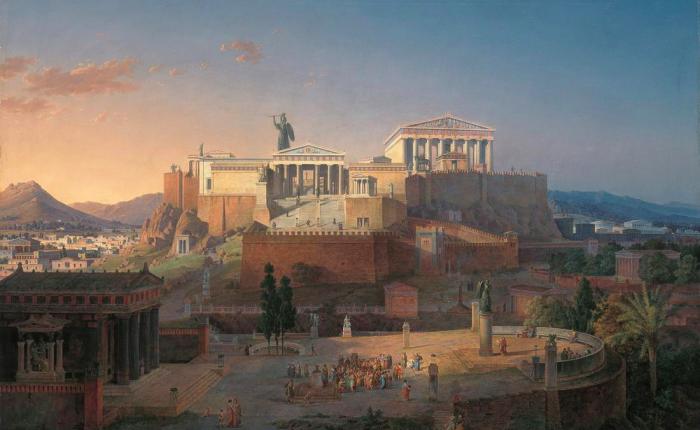
 Protagoras by Plato


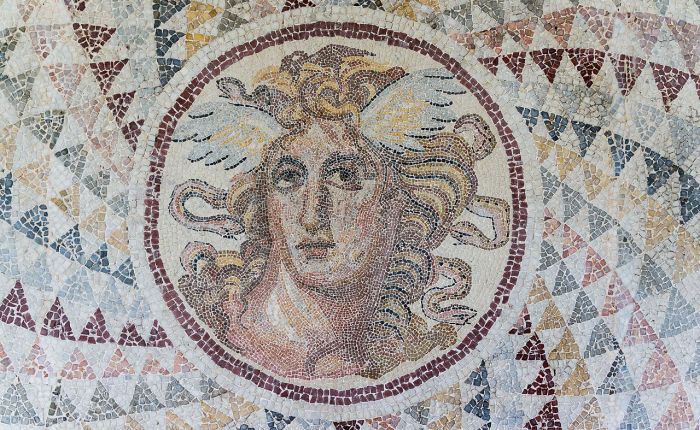


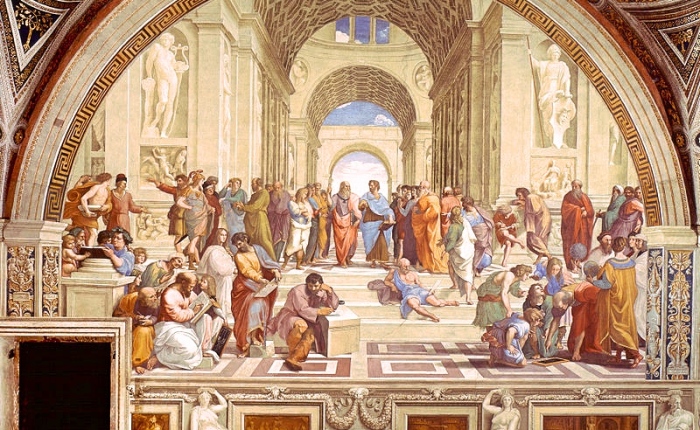


 Lotz in Translation