For years I had been beguiled by images of Las Cárcavas—a crazy undulation of land, tucked away in the sierra of Madrid. Photos made the place seem otherworldly; and I was dying to see it for myself. Unfortunately, however, there did not seem to be any good way to get there on public transport. Studying the bus routes and the map, I found that the closest that I could get was a tiny village that I’d visited once before: Patones de Arriba.
So early one Saturday morning, I took the metro to Plaza de Castilla, and caught the 197 bus to a small village called Torrelaguna. From there, I caught the 913 bus—a mini-bus, which followed the winding path up a hill to the old and picturesque village of Patones de Arriba. I was the only passenger on board that day. And by the time I arrived, it was still so early that the streets were virtually empty.
Patones de Arriba (unlike its modern cousin, Patones de Abajo down the hill) is a time capsule of a place. It seems to have survived virtually unchanged since antiquity. Stone huts cover an otherwise barren hillside—the town hidden among the foothills of the sierra, in a place that would be naturally defensible should any dare to attack it.
The architecture is a prime example of what the Spanish call arquitectura negra: all of the buildings made out of the distinctive black slate of the area, which naturally breaks off into thin plates. This gives the town a striking uniformity—both between its buildings, and with the landscape. The tallest building is the old church, though nowadays it is used for the tourism office. Indeed, I am not sure that anyone actually lives in Patones de Arriba these days—it is a kind of living museum attached to the modern settlement below.
The town is full of relics of its agricultural past. There are stone threshing floors (for separating the wheat from the chaff), pig pens, and cattle sheds. We can also see signs of village life, in the form of ovens, wine cellars, and laundry basins, all made from the local slate. But the real pleasure of visiting the village is simply enjoying the ambience of the past—and, perhaps, a good lunch. On my first visit, years prior, we went into one of the restaurants and had a hearty meal of good Spanish mountain fare—bean stews and red meat.
But by the time I arrived, there was nothing open and, apparently, nobody there. So I walked through the town and then out into the surrounding hills, on my way to Las Cárcavas.
The countryside here is, like much of the interior of Spain, windswept and bare. In the best of times, the soil and rain could not support luxuriant vegetation; and, in any case, centuries of human habitation have destroyed a large portion of the old forests. The result is that much of Spain, though dramatic in its vistas—the view extending until the horizon—unwinds itself in a patchy surface of rocky ground covered with low shrubs.
The walk was long, winding, and somewhat monotonous—going up and down hill after hill. The only thing to attract the eye were the many pieces of water infrastructure. Large tubes shot out of the hillside, down into valleys and back up again. Further on, stone aqueducts crossed from elevation to elevation. Finally, the explanation for all this came into view: the Pontón de Oliva.
This mammoth construction was the first dam built under the auspices of the Canal de Isabel II, the organization responsible for Madrid’s water supply. And this brings me to a small detour in our hike. Like New York City, you see, Madrid has long struggled to supply its citizenry with clean, safe drinking water. And this is due to the location of both cities: New York is surrounded by brackish, dirty, ocean water, while Madrid has virtually no natural water sources to speak of.
When Madrid was still a relatively small city, local wells and streams were enough to solve this problem. But by 1850, with the city’s population nearing a quarter of a million, the lack of water was becoming a serious issue. The engineers in both NYC and Madrid hit upon the identical solution: dam the rivers in the mountains to the north, and transport the fresh mountain waters to the thirsty city. The Pontón de Oliva was the first step taken in this effort.
It was constructed during the reign of Isabel II, who became the first (and, so far, the only) ruling queen of modern Spain after a succession dispute, which involved a rebellion by her uncle, don Carlos. These wars, called the “Carlist wars,” ended in her victory. This left the new queen with quite a few prisoners of war, whom she put to use building this dam under extremely gruelling conditions. (I tried to look up the number of prisoners who died during the construction, but I couldn’t find it.) To make matters worse, the engineers who designed the dam had chosen a bad location of the river Lozoya, making it all but useless. Today, it stands as a kind of monument of wasted effort—something for hikers and history buffs to appreciate, but dry as a bone.
Just beyond this dam, I finally arrived at my goal: Las Cárcavas. Now, “cárcava” is just the Spanish word for “gully” (though it certainly sounds more attractive); and this one is just a particularly big example of a common phenomenon—namely, water erosion. Though the details are complex, the principle is quite simple: intermittent water flow down steep terrain causes rivulets to form, creating a distinctive undulating pattern as they wear their way through the landscape.
I stood on the lip of this gully and sat down, absolutely exhausted. I had been walking for several hours by then, up and down hills, with no shade from the punishing June sun. Now it was past noon, and the temperature was climbing. I ate my packed lunch (a tuna empanada and a small bottle of gazpacho) as I observed a column of ants make their way through the dusty earth, and amused myself by tossing them little bits of fish. Then, after getting my fill of this alien world, I drained my water bottle and got wearily to my feet.
Water, I have discovered, is a powerful thing. It can move landscapes and determine the destiny of cities. And I found now that I hadn’t brought enough of it. I had well over an hour before I could make my way to civilization, all of it under the merciless Spanish sun. And I was already thirsty. The only choice was to press on. Attempting to distract myself with an audiobook, I walked down the hill, past the dam, and onto a local road.
At just the point when I was risking heat stroke, I arrived in Patones de Abajo and stumbled into the nearest bar. There, I ordered the biggest “clara” they had (beer mixed with lemon soda), and then ordered another one. Then, after another long bus ride back to Madrid, I enjoyed glass after glass of the city’s fine tap water—water that had itself been on a journey from the sierra—which, I found, tasted especially good that day.
I met John Dapolito at the Antón Martín metro stop on a cold autumn night. He was smoking a cigarette and scanning the crowd, and when he recognized me he told me to follow him to a nearby bar. I was nervous, as this was a kind of interview. He was looking for writers to contribute to a new volume, a collection of mini-memoirs of people who have moved to Madrid from elsewhere. He wanted them to answer three questions: How has Madrid changed since you moved here? How have you changed? And how has Madrid changed you?
“Nine years?” he said, mulling over my time in Madrid. “Nine years…” his voice trailing off. To many Americans in Madrid, this is quite a long time. But compared to John’s twenty-five, it seemed rather paltry. So we talked about how I could write my essay, what angle I could take, what I could emphasize about my experience to differentiate from everyone else’s. The next day, I started writing a draft of my essay long-hand, in a notebook—something I seldom do—and now it is a pleasure to see it in print in this collection.
Ironically, in the months since I sent off the final draft to John, I’ve grown to love Madrid more than ever. While I used to feel the need to escape into the sierra every couple of weeks, craving a bit of nature, lately I’ve been content to just stroll around the city, exploring its nooks and crannies, and getting ever-more integrated into its peculiar form of life. In short, now that my nine years are nearing ten, I am finally beginning to feel like a proper madrileño, fully at home in this great Spanish metropolis. And now that I have my story of Madrid in print, I feel now more than ever that I’ve really made a home here.
The stories in this volume have many common themes: learning the language, enjoying the nightlife, resenting the gentrification, and so on—themes that would have appeared had this book been written about Budapest or Bangkok. But beneath these superficial commonalities are what make the essays worth reading—insights into Madrid and, more often, into the person writing about it. And these essays are illustrated by black-and-white photos by the editor, John. I remember him opening a binder of them at the bar, during our first meeting, and admiring their atmosphere, how they really captured an aspect of the beauty of this city. And I thought to myself: “I want to be a part of this project.”
When I first came to Europe I was, like any good American, in search of the very old. We have skyscrapers and Jackson Pollocks in my country, but we don’t have cathedrals, castles, or El Greco. Yet to see Europe as merely a repository of its history is to forget that its residents are just as keen as anyone to advance into the future. And so I recommend any visiting Americans to make time to experience a bit of the more modern side of Spain.
Segovia, for example, is justly famous for its Roman aqueduct and its elegant cathedral. But tucked away in its winding streets is the Museo de Arte Contemporáneo Esteban Vicente. This small museum would be worth your time even if it weren’t free to visit. It is named after an important but lesser-known artist from the 20th century, a member of the famous Generation of 1927 (which also included Lorca and Dalí), who spent time in Paris alongside Picasso, and finally moved to New York City in the wake of the Spanish Civil War. There, he became one of the main representatives of abstract expressionism.
The museum is housed in what used to be a hospital; and the large rooms and austere architecture contrast starkly with the art. Though he began as a figurative painter, Vicente quickly moved into the kind of abstract art that many people turn up their noses at—atmospheric blobs and swirls of color on canvas. I must admit that it isn’t usually my cup of tea, either. Nevertheless, in the context of Segovia, a city of narrow streets, hard angles, and gray stone, his art was wonderfully refreshing—light and playful, almost ethereal in its vagueness.
When I visited, there was a temporary exhibit by the contemporary artist Hugo Fontela—another Spaniard working in the abstract vein, living in New York. He worked in a very restrained color pallet, just green on a white canvas. Yet with the rhythm and intensity of his brush strokes, he managed to evoke clouds, waves, wind, and whole landscapes. It was an impressive performance.
Even deeper into Old Castile is the city of Valladolid. Though often overlooked by tourists, it is a city well worth visiting, especially as it is easily accessible by fast train from Madrid. Among the curiosities of the city is its huge and rather ugly cathedral—a massive pile of stone that looks oddly unfinished. This is because, when it was conceived, Valladolid was serving as the capital of Spain, and so its church was meant to be the biggest in the world. When the capital was moved to Madrid, however, the construction stopped, and now the building trails off into nothingness.
The most famous museum in the city is the Museo Nacional de Escultura, a collection of sculptures from the middle ages onward (mostly religious), housed in an old monastery. However, during my brief time in Valladolid, I found my visit to another museum far more enjoyable: the Museo Patio Herreriano.
The museum is located in the remains of the former monastery of San Benito el Real. Though its name pays homage to the great Spanish architect Juan de Herrera, it was really designed by one of his followers, Juan de Ribero Rada. However, the building was in such disrepair by the time it was decided to create a museum that substantial renovations were necessary. The building now is thus a strange Frankenstein mixture of old and new sections.
The museum’s collection is huge and extensive, containing works by Joan Miró, Salvador Dalí, and even our friend Esteban Vicente, as well as contemporary artists such as Azucena Vieites. I wandered around rather aimlessly, having neglected even to pick up a map, doing my best despite being sleep-deprived and dehydrated to appreciate the art. I would be insincere if I pretended that I liked everything. Indeed, contemporary art often leaves me scratching my head and even vaguely bored.
But any kind of art is largely hit and miss; and contemporary art even more so. Going to a modern art museum, therefore, requires a certain suspension of judgment, a certain amount of patience, until you discover something that pulls you in.
For me, this was an exhibit on Delhy Tejero, a Spanish artist I had never heard of before. What immediately struck me about her work was how varied it was, in both style and content. She could do realistic, figurative drawings or highly abstract paintings; her work can be cartoonish, dreamy, or serious; she can focus on folklore or lose herself in the purity of geometric shapes. Perhaps none of the works on display was a surpassing masterpiece, but taken as a whole her work exemplified such a degree of curiosity, open-mindedness, and fine sensibility that it left me deeply impressed.
These are just two examples of the fine, lesser-known modern art museums to be found all over Spain. And I think that, especially for the weary traveller, traversing the scorched soil of the central Castilian plains, besieged by castles, cathedrals, and ruins of bygone civilizations, a bit of absurdity, playfulness, and abstraction can do much to clear the palette.
The city of Madrid is divided into 21 “districts,” which are further divided into 131 neighborhoods. Pacífico belongs to the Retiro district, so named for the iconic park which it encompasses. This neighborhood—along with its sister barrio, Adelfas—composes the southernmost part of this district, where some 50,000 reside. And for the last seven years, I have been one of them.
Pacífico is central without being in the center. Extremely well-connected by public transport—the Méndez Álvaro bus station is to the south, Atocha station to the west, the bus hub of Conde de Casal to the north, and two of the most important metro lines running through it—Pacífico is nevertheless quiet and residential, with no tourism to speak of.
I have had occasion to write about my neighborhood before. The beautiful (but obscure) Pantheon of Illustrious Men is located here, along with the Basílica of Atocha, where traditionally the royal family are baptized. Nearby is the Real Fabrica de Tápices, another fascinating place that most visitors overlook. This was built as a “royal factory” in the 18th century to make luxurious tapestries and carpets for the palaces; and it maintains this function to this day, though it is now privately owned. If you reserve in advance, you can visit the factory and see the workers painstakingly assembling enormous and intricate tapestries by hand, thread by thread.
As it is close to Atocha, the neighborhood is also rich in transport history. At the extreme western edge of Pacífico is the Museo La Neomudéjar, a modern art museum with rotating exhibits in a former train workshop. It is still full of decaying industrial ambience and abandoned equipment. Closer to where I live, you can visit the Nave de Motores, where the massive original power generators of the Madrid Metro are stored.
The administrative heart of the neighborhood, where the government offices are located, has a curious history. The building complex was first constructed as warehouses to store goods imported from abroad, for which it was known as “Los Docks” (yes, in English). This business soon failed, and it was turned into a military barracks, a function it maintained until 1981. After its acquisition by the municipal government, however, several historical buildings were demolished to make room for modern offices—a move widely criticized. The surviving original buildings have since been turned into a huge public sports center, with a gym, football and basketball courts, and a gigantic pool.
This sounds quite sunny and uplifting. Yet this sports center—named Daoíz y Velarde, after the Spaniards who instigated the uprising against Napoleon’s invading troops—has been touched by tragedy. For it was very near here, in 2004, where one of the bombs went off in the infamous March 11th terrorist attack (the train tracks run right by the buildings), and the sports center had to be used as a field hospital for the victims. 250 victims were treated there, of whom 10 lost their lives. A commemorative plaque marks the event.
More recently, the Daoíz y Velarde Center has acquired an important music venue: the Real Teatro de Retiro. This is an offshoot of Spain’s royal opera house, where shows are tailored for a younger audience, with the aim of involving a new generation in classical music.
As interesting as all this history may be, it is not the reason I like to live here. Apart from being (for the moment) reasonably affordable and quite well connected by public transport, Pacífico is attractive for the wide variety of small businesses. Indeed, as an American, I am constantly surprised at the number of small, family-owned shops in Madrid. If you want to buy groceries, shoes, sports equipment, or whatever else in the United States, chances are you will find yourself at a strip mall, shopping at one of a small number of chains. Not so here.
Some locals, dressed as chulapos, celebrating San Isidro
My impression over all these years—though, I admit, it is little more than a vague one—is that the business landscape in Spanish cities resembles how American cities were ten or twenty years ago, before gentrification and consolidation took a toll on small business. However, I certainly do not know enough about the economy to argue the point.
Regardless, I think that these sorts of small, family-run neighborhood shops are a precious resource in any city, something worth preserving in the face of economic pressure. Thus, I set out to learn more about some of my favorite local businesses.
My first stop was my local ferretería (a hardware store and not, what some English speakers might think, a store specializing in ferrets). The Ferretería Pacífico has been around since 1995, and—judging by the constant flow of customers that made it difficult to ask questions—it is still going strong. I am a frequent customer myself, as the store sells everything from frying pans to drying racks to power tools. But my favorite service they offer is to sharpen knives.
The staff at the store are knowledgeable and friendly. And when I asked their secret to staying in business, they offered me an explanation that, though cliché, seems quite true: they offer customers personal attention. I have experience of this. When I was ineptly trying to install a curtain in my apartment, they talked me through the process and sold me everything I needed. When I asked what struggles they have remaining afloat as a business, I was given just one word in reply: “taxes.”
Somewhat further up the hill that leads to Retiro Park is my barber, Almudena. She works in the Pelúqueria Félix, a tiny barber shop on a quiet street. The shop is named after her father, who opened the business in 1966. Almudena learned her craft from him. She gives excellent haircuts, mostly eschewing the buzzer and working with a comb and scissors. When I asked about challenges, she also complained about taxes. The IVA (value-added tax) is 21%, meaning that a fifth of what is paid to her is for the government.
In addition, as somebody who is self-employed, Almudena must pay the “autónomo” tariff. This is a flat-rate fee that people who own their own businesses must pay in order to be legitimate. Strangely, this fee is relatively standard, varying only slightly depending on your income. Certainly I am in no position to judge the Spanish tax code, but as a general rule flat taxes are usually harder on the less fortunate.
The heart of the neighborhood, as far as shopping is concerned, is the traditional market—the Mercado de Pacífico. There are mercados del barrio all over the city, and they all have the same basic design: small stands selling high-quality products, often on a subterranean level. (I believe the reason that markets are often relegated to basements is to minimize the smell; fishmongers and pickled products are often present.)
There, while doing some shopping, I spoke with Francisco. He runs a fruit stand in the market, and has been at it for a long time. That’s an understatement: he is 70 now and started working in the market at the age of 13. I was delighted to notice that his scale was not in euros (adopted in 1999), but pesetas! When I offered to email Francisco this article, he showed me his old flip phone and told me that he didn’t use the internet. What a blissful existence!
Down the street is the oldest shop I was able to find, Zapatos San Román. It was opened in 1959 (as a certificate hung on the wall proudly states) by the father of the current owner, José. He has been working in the shop for 40 years, and still mans the cash register. The store is characterized by its giant “escaparate,” or old-fashioned display window. This is not limited, as in most stores, to a small cabinet out front; rather, the escaparate occupies fully half the store, wrapping around the visitor, creating a miniature landscape of shoes.
Down the street is another store devoted to footwear: Reparación de Calzado Alfaro. To be honest, I didn’t know that there were still professional cobblers in the world. The word itself, in English, calls to mind Victorian novels. But Rafael has been there for his whole professional life, following in his father’s footsteps, who opened the store in 1985. And he is doing very good business. When I visited him, so many customers came in that I had to retreat and return at a less busy time. But he does not only serve the locals, and not only the city of Madrid. Indeed, his business is not even limited to Spain. While there, he showed me an order that he had gotten from Belgium!
When I asked why he was doing so well, he said that his was a disappearing profession; and so anyone who needs a shoe fixed must search far and wide for a good cobbler. That search will, apparently, only get harder. Though Rafael inherited his business from his father, who himself learned from his own father, there will be no fourth generation of his shoe repair business. “It ends with me.” In response to my (perhaps silly) question of why people bother to get their shoes repaired, he told me a Spanish saying:“Te quiero más que a mis zapatos viejos.” That is, I love you more than my old shoes. And a pair of well-worn shoes are, indeed, something to cherish.
A bit up the block from my former apartment, on Calle de Cavanilles, there is a shop that holds a special place in my heart. It is Deportes Periso, a small sporting goods store. And it is special to me because, shortly before the Coronavirus Lockdown, I bought a pair of gray sweatpants there that got me through the isolation. Considering its size, the store has a lot of merchandise on offer—tennis rackets, sports jerseys, and lots of running shoes.
It was opened in 1978 by the current owner, Ana, and her father. As it happened, while I was there interviewing for this article, her father walked in. He’s in his 90s now and very personable. He told me about how the neighborhood had changed. Physically, he said, it has remained quite the same as it was decades ago.* But the demographics have changed. Since the 1980s, the neighborhood has gone from being mostly young to predominantly old. And of course there are more immigrants.
(*This isn’t exactly true. The big and unsightly Pedro Bosch bridge, which connects Pacífico with Méndez Álvaro, over the train tracks, was recently shortened and pedestrianized. And in general the neighborhood has become more bike friendly, with special bike lanes installed on Calle Doctor Esquerdo. However, there is still much progress to be made in that department, as evidenced by the death, just last month, of a bike delivery rider around the corner from my apartment. He was hit by a taxi in the early morning.)
But there are signs of encroaching gentrification. Across the street from Deportes Periso, for example, is an artisanal olive oil store; and considering how much the price of even store-brand olive oil has risen in the past year (well over 100%), one can imagine that people must have expendable income if they’re buying the fancy stuff.
Perhaps the most interesting small business I came across was that of Javier Pascual. He owns a merry-go-round that is parked in a small lot on the Avenida del Mediterráneo. He has been at it a long time, having established himself in the neighborhood in 1981. He comes from a family of carnival ride owners. Indeed, in the past, he owned more rides, but now operates just his “tiovivo” (as the Spanish call it, for some reason).
I have to admit that I was surprised that he could stay in business with a single carousel. Certainly it is hard for me to imagine anyone in my country making a living out of a merry-go-round. But again my expectations were disproven, as so many children came during my visit that I had to call off the interview and return later. (I didn’t have a ride myself, but it looked fun.) Javier works very hard. He’s open seven days a week, even Sundays. In the slow season, when Madrid empties out during the unbearable summer months, he packs up and goes to the fair in Cuenca. Then, he has his contraption repaired in August, ready to get back to work in September.
To round out this piece, I thought it right that I interview some of the more recent arrivals to my neighborhood. So I went to Union Frutas, a fruit stand near my house owned by a Chinese immigrant couple. I am a frequent customer, as the shop has very long hours (especially on Sunday, when so many stores close) and has extremely affordable prices. It has been open for 12 years. The husband, Diego (he goes by a Spanish name), moved to Spain in 2003 as a young man, following in the footsteps of his father, who lived in the Canary Islands. His wife, Li Fang, followed a few years later. When I asked Diego about the differences between work in Spain and his homeland, he replied that he had never had a job in China, so he couldn’t compare the experiences.
All of these stores have survived so long, in the face of competition from chains, by forging connections with the locals—something I witnessed in every shop I visited. It is small shops like these that give a neighborhood its flavor and personality, and which make Pacífico a wonderful place to live. And this is not even to mention the bars!
Death is unsanitary. Yet it was not until the nineteenth century that urban planners in Europe and the United States connected overstuffed cemeteries with public health. For centuries, the same small church burying grounds of the inner cities had been used for the local dead. Bodies were buried upon bodies, until the ground was piled high above street level, and a good rainstorm would leave rotting limbs exposed. One can only imagine the stench.
It was clear that something had to be done. Carlos III of Spain, for example—a relatively “enlightened” monarch—wanted the cemeteries transferred to the outskirts of Madrid. Yet this policy conflicted with the practice of the Catholic church, in which parishioners were tended to by their local priests and buried in the corresponding consecrated ground. It took the violent arrival of José Bonaparte to the throne of Spain to overcome the resistance of the clergy and establish the first cemeteries on the outskirts of the city, just as Napoleon himself was responsible for the construction of Père Lachaise in the outskirts of Paris.
The most beautiful of these far-flung cemeteries is, undoubtedly, that of San Isidro. Well, I ought to give its full, official title: El Cementerio de la Pontificia y Real Archicofradía Sacramental de San Pedro, San Andrés, San Isidro y la Purísima Concepción.
This snappily named cemetery is located on the far side of the Manzanares River, between the Toledo and the Segovia Bridges, in what used to be a remote area. Indeed, there is a famous cartoon (a design for a tapestry) by Goya, La pradera de San Isidro, which shows almost the exact same area where the cemetery stands now. It was painted in 1788, just 23 years before the cemetery was opened, and the area was visibly absent of any human construction. Of course, the ever-growing city of Madrid has since swallowed up the cemetery in its greedy embrace. Even so, the place is not exactly easy to get to, at least on public transportation. It does not help that it is only open until 2 pm.
The cemetery takes its name from the patron saint of Madrid, San Isidro Labrador. (“Labrar” means to till the soil, as he was a poor farmer in life.) Isidro lived in Madrid almost 1,000 years ago, when it was a small town of little importance. Last year, 2022, marked the centenary of this saint’s canonization, and thus it was deemed a year of special celebration. But regardless of the year, every May 15th the adjacent San Isidro park fills up with revelers as a celebration of the saint’s day.
As with many catholic saints, a variety of miracle stories are told about San Isidro, one of which is that of a fountain he created by striking his staff on the ground, in order to slake his master’s thirst. This miraculous spring quickly became known for its curative properties, and it still occupies a place of honor in the cemetery.
Times have changed somewhat. To accommodate the pandemic, a motion-sensor has been added to make the fountain more sanitary. Thus, one can partake of the miraculous healing water without touching any germs. The fountain itself, though not large, is interesting for the long inscription that covers the wall. This text boasts, among much else, of having cured various types of fevers, urinary and kidney problems, erysipelas (a bacterial infection), vomiting, sores, leprosy, wounds, and even of restoring a blind person to sight. An impressive record, indeed—though I think I will stick with my current physician. Yet the fountain’s longevity is palpable, considering that it also bears an inscription of a short poem by Lope de Vega (1562 – 1635) praising the water’s power.
This fountain is right next to the Chapel of San Isidro. This is no coincidence, as the chapel was built on this spot in the 16th century on the orders of the Empress Isabel of Portugal, who believed that the blessed waters had cured her son, the future Felipe II. (This did not prevent poor Felipe from developing severe gout later in life.) Though a chapel has been here on this spot a long while, its current form is from the 18th century, when it was rebuilt. Thus, when Goya painted the chapel in 1788 (in another sketch for a tapestry, on display at the Prado), it looked very much as it does today. Even so, this is something of an illusion, as the chapel was—like much else in Madrid—totally destroyed during the Civil War, and only reconstructed to appear as it did in Goya’s day.
The Hermitage in Goya’s Day
The Hermitage Today
This quiet, peaceful cemetery was in the news last year as the site of a fascist demonstration. About two hundred Falangists (the Spanish fascist party) gathered to protest, hold up signs, and wave the Nazi salute. This was occasioned by the re-interment of the remains of one José Antonio Primo de Rivera (1903 – 1936), the founder of the Falangist party.
Ironically, Primo de Rivera became more important in death than he had ever been during his short political career. The Falangists were never a major electoral force during the Second Republic, and José Antonio did not help plan or execute the military coup which eventually resulted in Franco’s dictatorship. Rather, he became something of a martyr when he was imprisoned and then executed by the Republicans during the first year of the Civil War. After Franco emerged victorious, he found it convenient to treat Primo de Rivera as a kind of John the Baptist to his Messiah, and had Primo de Rivera’s body transported from Alicante to Madrid in a massive funeral parade.
After this, Primo de Rivera was temporarily laid to rest under the altar in El Escorial. But when Franco’s enormous symbol of fascist power—The Valley of the Fallen—was completed in 1959, Franco had the body moved once again, to serve as the symbolic centerpiece to his monument to the Civil War dead. For decades, Primo de Rivera slumbered underneath the mosaic dome of the underground basilica, directly opposite Francisco Franco’s own body.
Yet having such ghastly figures entombed in such a place of honor naturally bothered a lot of people, for the same reason that having statues of Confederate generals disturbs many Americans. The Valley of the Fallen was argued over for years until, in 2019, Franco’s body was dug up and moved to a cemetery in El Pardo. In 2023, the job was finished when Primo de Rivera’s body was also removed (the third time this embattled body has been re-buried, if you’re counting). Indeed, the official name of the site is no longer the Valley of the Fallen, but the Valley of Cuelgamuros.
Such is the hold of fascist propaganda on people’s minds that, decades after the fall of Franco’s dictatorship, and nearly a century after Primo de Rivera’s death, people still showed up to protest for the sake of these old bones.
Enough politics! It is finally time to enter the cemetery itself. As the map by the entrance informs us, the cemetery is divided into several “patios.” The first three are located on a level with the chapel and are rather like church cloisters, without much decoration. The most interesting part of the cemetery is, without doubt, the large, semi-circular fourth patio.
A walkway, lined with cypress trees—the traditional tree of mourning—leads up a hill to the upper level. It is obvious at a glance that this used to be a very fashionable place to decompose. The place is covered in elaborate tombs, mausoleums, and monuments—clearly not a burying ground for the penny-pinched. Look behind you, and you can see part of the reason for its popularity: The views of the city are quite wonderful from here (presumably why it was popular for picnics back in Goya’s day).
There are many eye-catching sculptures on display. But the first I want to discuss is a rather puzzling monument.
In a previous post, I explored the often-overlooked Pantheon of Illustrious Men, located near Atocha. The Cemetery of San Isidro has what can only be described as an aborted first attempt at that same monument. Also called the Pantheon of Illustrious Men, it consists of a tall stone pillar, upon which an angel stands with his trumpet. At the bottom of this column there is an ornate base with carved reliefs of the extremely distinguished bodies which rest beneath it. Three of these four are people the reader is unlikely to have heard of (illustriousness notwithstanding), but the fourth is none other than Francisco Goya, a person who is famous indeed.
The painter’s posthumous presence here is puzzling for two reasons. For one, this monument was not completed until 1886, while Goya died almost sixty years before that, in 1828. Second, I happen to know that Goya is certainly buried in a different chapel, not far off, called San Antonio de la Florida.
This mystery has a clear—if not exactly a logical—explanation. Goya was first buried in Bordeaux, France, where he died in exile. His body rested there, unharassed, for several decades until it was chanced upon by the Spanish diplomat to France, whose wife was coincidentally buried in the same cemetery. Obviously, the glorious Aragonese painter could not be left to decay on foreign soil, so he was relocated to his native land, and taken to this cemetery. However, because of all the bureaucratic hassle of transporting a body, Goya’s bones did not arrive until 1899, by which time the original idea of the Pantheon had lost its luster. Thus, he was instead buried in the aforementioned chapel of San Antonio de la Florida, which he had decorated with his own hand.
(To make the matter even more confusing, this chapel was eventually deconsecrated and turned into a museum, while an identical chapel was built just across the street—to the delight of many potential visitors, I am sure. And, to top it all off, Goya’s skull was lost at some point during this process, never to be found again. To add to the mystery, there is a painting in the Museum of Zaragoza of what is supposed to be Goya’s skull, made in the year 1849, before any of this tomb switching went on. It is possible it was stolen by curious admirers.)
The supposed skull of Goya
We have spent a lot of time on this odd cenotaph, but there is a great deal more to see in the cemetery. Indeed, I have seen enough cemeteries so that I can confidently proclaim that the Cementerio de San Isidro is among the most beautiful in Spain—perhaps in all of Europe. The finest artists and sculptors of the time were hired to turn a place of mourning into a wonderful open-air gallery. Of course, this was not an act of public service. This was done to preserve and glorify the names of the rich and famous—who wanted their final resting places to reflect the splendor of their lives.
It would be impossible to review every notable tomb and name in the cemetery. The following is only a brief sampling of what you may find there.
By the standards of the cemetery, a relatively modest grave belongs to Cristobal Oudrid, an important composer of zarzuelas (the distinctively Spanish version of light opera). His mustachioed face, carved into the stone, keeps watch over his earthly remains. Not far off is the resting place of Consuelo Vello Cano, better known by her stage name Fornarina. She performed a genre of song called cuplé, considered somewhat risquée, which was normally sung by women (or men in drag) for an all-male audience. Her grave is presided over by the torso and wings of an angel. An extremely modest grave belongs to Ventura de la Vega, an Argentinian playwright who lived and worked in 19th century Spain. He is buried in a niche in the encircling walls of the patio.
But what naturally attracts the casual visitor are the big tombs. Perhaps the most eye-catching is the Panteón Guirao, a massive sculptural tour de force by Augustín Querol. Querol is also responsible for a monumental tomb in the Panteón de Hombres Ilustres in Atocha, and this work displays his ability to create dramatic, fluid, and even ghostly textures out of hard stone. This tomb—which occupies the center of the patio—was made at the behest of Luis Federico Guirao Girada, who was a lawyer and a politician during his life, but who is now principally remembered for his photography.
An extraordinary tomb is that which belongs to the Marquis of Amboage, an aristocratic family. This is an enormous neo-gothic chapel, bristling with prongs and complete with a metal spire, much like that of Notre-Dame de Paris. It could be a church if it did not have permanent tenants. But my favorite tomb is that of Francisco Godia Petriz. Petriz had a successful import-export business but was also an avid art collector. His mausoleum is unlike any I have ever seen. A stone sarcophagus hangs suspended by heavy chains from a large rectangular frame. The frames are held by miniature angels, who are ready to literally and figuratively carry the dead businessman up to heaven. Even if it is a bit tacky, I think the design is so original that I am surprised its architect, José Manuel Marañon Richi, is not better known.
Some of the jewels of the cemetery are only available for those taking the official guided tour. These are offered only every so often and are all in Spanish. If you do manage to get one, however (they are reserved by emailing the cemetery), then you may be taken inside some of these impressive tombs. In the tomb of the Dukes of Denia, for example, there are two statues by the Spanish sculptor Mariano Benlliure, who vividly depicts the Duke and Duchess lying in deathly repose. Even more stunning is what awaits the visitor of the tomb of the Marquis of la Gándara. Inside, sitting atop a sarcophagus, is an angel wistfully looking into the beyond. This is a work of the Italian sculptor Giulio Monteverde, and it is quite wonderful. Standing in front of this heavenly being, it is easy to forget that she is made of inanimate rock, so subtly lifelike is the work in every detail.
If I am dwelling on this cemetery for so long, it is because it was a revelation to me that such a beautiful place was to be found in the city, virtually overlooked as a tourist destination. If Pére Lachaise Cemetery deserves to be on every Parisian tourist’s itinerary, then the Cementerio de San Isidro merits the same—both as an important link to Madrid’s history, and a place beautiful in itself.
Let us avoid like death itself the ugly example of others, and go to live in a more dignified fashion in our country houses (of which we all have several), and there let us take what enjoyment, what happiness, and what pleasure we can, without in any way going beyond the bounds of reason. There we can hear the birds sing, and we can see the hills and the pastures turning green, the wheat fields moving like the sea, and a thousand kinds of trees; and we shall be able to see the heavens more clearly, the heavens which, though they still may be cruel, nonetheless will not deny to us their eternal beauties and which are much more pleasing to look at than the deserted walls of our city.
—Giovanni Boccaccio
There are many famous historical examples of plagues, pestilences, and pandemics. The most famous in European history is the Black Death, which killed somewhere between one- and two-thirds of the population. Boccaccio describes the symptom of that disease in grisly detail, noting the “swellings either in the groin or under the armpit,” followed by “black or livid spots,” which very often resulted in death. The characters in Boccaccio’s Decameron—ten young nobles—have the resources to leave the city and retire to an isolated country spot, where they pass the time by telling one hundred stories.
I never thought that I would be in even a vaguely similar situation. But beginning on Monday morning, everyone in Spain—in every region of the country—will be confined to their house, and only allowed to leave to buy medicine or groceries. It will be a complete lockdown, in other words, which will put us in a situation very much like Italy now, and even like that of Boccaccio’s young nobles. That is, we will have an awful lot of time on our hands while we wait out the winter. And we will need to be artistic in passing the time. Already in Italy, the people are playing instruments and singing from their balconies, making impromptu bands. Just a few minutes ago, in Spain, everyone came to the balcony to applaud the efforts of the doctors and nurses—and we are not even in lockdown yet.
It will be a long couple weeks—if, indeed, it ends in a couple weeks. As if the whole society is sick, we all must take to our beds. The future is looking increasingly uncertain. Just last Monday was a normal work day for me. Every day, the virus has accelerated, and the government’s response has struggled to keep up. Now, hopefully, events will begin to slow down with the coming emergency measures. We will have an awful lot of time to sit and think—a maddening amount, perhaps, if we do not know what to do with it. What is even more maddening is the huge deal of uncertainty that has been injected into all of our lives. Apart from the health consequences, which are grave enough, there will almost certainly be economic ramifications that will affect everyone. It is frightening to think of what the worst case scenario might look like. In retrospect, we may see it as a historical turning point.
Well, then, we shall just have to hope that we avoid a worst case scenario, while we count the hours until we can re-emerge from our dens. My own room is comfortable but quite small; and it is internally situated meaning that I have no view of anything but whitewashed walls. It is certainly no Italian villa. Now it is Saturday—only three days of serious disruption so far—but I already miss my old routine; and I know that, in a couple days, I will desperately miss taking long runs and walks. There is a surreal feeling to this whole affair, as if we have somehow been transported back one hundred years or more, when infectious diseases were sources of mysterious dread.
Considering these circumstances, it is tempting to panic or to wallow in despair. From the present moment, it is difficult to see how this crisis can end. But one way or another it will end. And now that all of the governments of the world are coming to realize the scale of the danger, we will hopefully avoid the worst. We humans have already weathered much worse pandemics (though of course not without some horrible consequences in the interim). In the meantime, like those ten noble Italians, we have to contend with two undramatic foes: boredom and uncertainty. And like them, one of our best allies will be our creativity. We can tell stories, write poetry, practice cooking, or improve our chess game. My main goal is to finally get some drawing done.
And, of course, there are always books to read. Boccaccio himself might be a good place to start. For Boccaccio had an abundance of another one of our major allies in this struggle: humor. I am going to be needing a lot of it in the weeks ahead. All of us will.
Here is the eighth episode of my podcast about life in Spain. In this one, I talk about the UN Climate Conference that’s being held here in Madrid, as well as the process of working legally in Spain as an American.
Today I want to talk about two things that cause a lot of anxiety, climate change and immigration. (Though, they tend to cause different sorts of people anxiety.)
Well, we have a short week here in Madrid—thanks to the Day of the Constitution, on December 6th—but still quite an eventful one. As far as the news is concerned, the biggest event is the COP25: the 25th United Nations Climate Conference. It is being held in Madrid, in a place called IFEMA, which consists of a bunch of big empty glass buildings for holding big events. For example, this is where I had to go to register for the Madrid half marathon. They also have a special travelling exhibition about the tomb of Tutankhamun there now.
Brazil was originally supposed to host the event, but the election of Jair Bolsonaro—a version of Donald Trump—mooted that plan. Chile then offered to host the event; but political unrest in that country forced them to pass the torch to Spain. The highest profile guest at this climate talk will, no doubt, be Greta Thunberg, the 16-year-old activist from Sweden. She hasn’t quite arrived in Madrid yet, since she had to come all the way from New York, and she chose to cross the Atlantic in a boat rather than a plane in order to reduce her carbon footprint. It took her 21 days to make the crossing (she was slowed down by adverse weather), and has just arrived hours ago in Lisbon. (I wrote this yesterday on December 3rd.) She was in New York to participate in the 2019 UN Climate Action Summit, which was in September. So it seems like she’s following me around.
The main goal of this Madrid conference is to hammer out Article 6 of the Paris Agreement. Basically, this is an attempt to create a kind of global emissions market, wherein low-emissions countries will be able to sell their excess allowable emissions to other countries. I think it is a good idea. But I have to admit that, as the years go by, I get more and more depressed when it comes to climate change. Yesterday at the conference, Spain’s president, Pedro Sánchez, said: “Today, fortunately, only a handful of fanatics deny the evidence.” Unfortunately, one of those fanatics is in the White House, which has caused the United States—the second-biggest producer of greenhouse gases—to pull out of the agreement entirely. Meanwhile, most other countries have not been able to reduce their emissions sufficiently to stay within the goal (which is a 1.5 degree Celsius rise in global temperatures). China, for example, which is the world’s biggest greenhouse gas contributor, is still increasing rather than decreasing its emissions.
I remember when global warming was considered to be something we had to solve for our grandchildren’s sake. But as the years have gone by, and governments have continued to sit on their hands, the problem has become increasingly acute—not a problem for future generations, but for us. Unfortunately, by their very nature, these huge international agreements take a lot of time. And even if the U.N. does pass sweeping resolutions, these laws must still be hammered out and enacted in all of these different member states. Democracy is an awfully slow form of government, while climate change keeps accelerating.
As far as Spain is concerned, I think the country is doing decently well. There is a robust public transport system. If you go up north, especially to Galicia, you can see dozens upon dozens of wind turbines, which supply a sizable proportion of the country’s power. And if you go south, it is not hard to find solar panels baking in the Meditteranean sun. Near Seville, from the highway, you can see the PS10 solar power plant—which uses hundreds of mirrors to focus light onto a central point elevated on a tower. It looks quite cool, and somehow reminds me of Sauron’s tower from Lord of the Rings. Last year, in 2018, renewable energy accounted for 40% of the energy produced in Spain. The comparable figure for the United States is 17%. To pick a more humble example, I was happy to find that the little vegetable bags in my supermarket are biodegradable.
In any case, while climate change is threatening and occupying the world, my little world has been occupied by issues of immigration—namely, my own immigration. For the fifth time, I had to go and renew my visa in order to stay in Spain. So I thought that I’d take a little opportunity to walk you through the process of legally working as a language assistant in Spain as an American.
You start off in America, obviously. Now first you need to secure a job as a language assistant. The most popular way to do that is through the Ministry of Education program, but there are several others in Spain. You apply online and, assuming that you’re accepted into the program, you will be emailed an official letter stating the details of your job. This letter can sometimes take a distressingly long time to arrive, and some years it takes longer than others; but once you have that letter you are ready to apply for your visa. To do this, you need to locate your nearest consulate. I am lucky to live near New York City, where there is one, but for many people the nearest Spanish consulate is hours away.
To apply for the visa, you need to gather several things. There are easy things like writing a check for the fee and filling out a form. And then you have the official letter with your job details. But then there are more difficult things. You need a doctor’s note saying that you’re in good health, and this means a visit to your doctor. You need proof of financial means, which you can do either with a bank statement or with a notarized statement from a parent. The most difficult thing is the background check. You need to get this from the FBI. And since the FBI itself takes a long time in doing background checks, probably you’re going to have to use a ‘channeler,’ which is a third-party company that speeds it up. To do this you’ll need to go get your fingerprints taken. Now, once you get your background check back (and let’s assume you have a clean record) you’re still not done. Now you need to get what’s called an apostille, which is a document certifying the background check for international use. To get this in a reasonable amount of time, you need to pay another channeling service.
Ok, so we gather all of these documents together. When I got my visa, all I had to do was to mail my documents in with my passport, and they would send my passport back with the relevant stamp in a few weeks. But that system worked a little too well for the Spanish government, so they decided to change it. Now you need to book an appointment and physically bring all your documents into the consulate office. This wouldn’t be so much of a problem if there were appointments, but when my brother had to do it, all of the appointments were booked solid for months. (Lucky for him, they gave him an “emergency” slot.)
Well let’s say you go through all of these hoops and they give you back your visa in your passport. Hurray! But wait, you’re not done. This visa only lasts about three months. It’s really just to get you into the country and settled. Once you get in, you have to apply for your real identity card. And this, of course, is another long process. You need to make an appointment at a special police station (in Madrid it is in a place called Aluche) and then get a bunch of documents in order: the form, photocopies of your passport, new passport photos, your official job letter, and proof that you paid the fee. (Paying the fee is usually the most annoying part, since you need to do it in a bank, and the banks are not cooperative.) You show up on the appointed day at the appointed hour, wait a long time in a line, and then give your bundle of papers to a person behind a desk, who then scans the fingerprints of your two index fingers.
Oh, I also need to mention a document called an empadronamiento (a little hard to say). This is basically a registry of where you live. To get this, you need to make an appointment, fill out a form, and then go to the office on the appointed day with your rental contract and a recently paid bill (and copies, of course). You need to do this before the fingerprint appointment, so be careful!
If this goes well, you still have a little task to do, since it takes them about a month to print your identity card. So you need to take a little receipt and come back in 40 days to pick up the card. Now, something interesting happens if you, say, want to go back to America for Christmas break, but you don’t have your identity card yet (and this is fairly common). In that case you need another special piece of paper called the Autorización de Regreso. This allows you to exit and enter Spain without needing a visa for a period of ninety days. To get this, you need to get a whole bunch of other papers together, etc., etc., etc.
What I just described to you is what may be called an ideal process. It can, of course, go wrong in all sorts of interesting ways. I already mentioned that the appointments at the Spanish consulate in New York City fill up so fast that it can be impossible to get anything within three months. My brother would have been in a bad situation if they had not made a so-called “emergency” appointment for him, and they only did this because he has a government job. A slight error can also totally upset the process. When you pay the fee, for example, the person at the bank gives you back two receipts of payment: one for the government, and one for you to keep. They look absolutely the same except for some fine print on the bottom. Once, without either of us noticing, the man at the bank only gave me one of these back. So when I went to my appointment, the bureaucrat wouldn’t accept my application because I only had the receipt for me and not for the government. Nevermind that either receipt equally proves that I paid the fee, the fine print on the bottom is different. So I had to make a new appointment, go back a month later, and do it all again.
My worst experience was with the regreso document. In the past, the regreso was given out to anyone who showed up with the proper forms. All you really needed to say is that you had a flight soon, and it wouldn’t matter if you had an appointment. I thought this was very nice, since there are many situations when you might need to leave the country on short notice. But this system was too convenient for the Spanish government, so they changed it last year, requiring that everyone have an appointment. Nevermind that the appointments are not available within a short timeframe and are sometimes not available at all.
Well, suffice to say that I wasn’t aware of this rule change. So one summer I went to get my regreso before going back to America, and found to my horror that they wouldn’t give me it. This, despite being there, sitting in the desk with all of the requisite papers. The woman refused to accept them and I was sent packing. I ended up buying an entirely new flight. And the irony was that I wasn’t even asked for my regreso document upon getting back to Spain—something that very often happens. Indeed, I have found that it’s much easier for me to get into Spain than into my own country, since the Spanish are in general a lot less paranoid when it comes to foreigners.
So that’s my immigration story. After all this, I get a little green card that is valid for about six months. As a language assistant, you get a student visa for some reason, which is why you need to renew it every year. I am sure it could be much worse. I bet it is worse in my own country. But I do wonder what, if anything, all of this bureaucracy is really accomplishing. For example, with every application I need to include scans of my passport, which has all of my basic information. Then I need to put my basic information on a form. And all my basic information on the bank fee. And my information is also in my job letter. So, considering all the applications for various things, the Spanish government has dozens and dozens of documents with my basic information, all stored away in God knows where.
To me, it seems that this huge process only guarantees that people fill out the right forms and pay the right fees. I have a very hard time believing it keeps anybody safe. Think about it. If I was really up to no good, I would just enter Spain on a tourist visa, overstay it (which a lot of people do), and live off the grid. And think about how much all of this unnecessary bureaucracy is contributing to global warming? So here’s my proposal: open the borders, eliminate all of these petty and useless processes, and then put everyone to work building solar panels or something. I am sure the world would be a better place.
Winter is in the air here in Madrid. It’s not just the cold that lets you know, but the smell. The churro trucks have now taken their positions in the city, selling that most wonderful of Spanish junk foods. I was surprised, when I first came to Spain, to learn that churros, by themselves, are not particularly sweet. In fact, if anything they’re a little salty. The secret is chocolate. Spaniards dip their churros in a thick liquid chocolate. And when they’re done with the churro, they drink the chocolate. At first I could not understand how old women managed to chug down such a viscous, heavy drink. The first time I tried it, I thought I would choke—the chocolate is nothing like our American hot chocolate, which is so milky. But, now I can happily have two or three of those chocolates.
The other staple of Spanish streets in wintertime are the chestnuts. Vendors roast chestnuts on charcoal grills, creating a wonderful aroma that spreads everywhere. It’s fantastic.
Well, another week has rolled around. And it has been an eventful one. Most notably, this last Sunday, the tenth of November, Spain has had its elections. Now, there is nothing that makes me feel quite so much like a foreigner as when there are elections. Of course, not being a Spanish citizen, I cannot vote. And even though I live in Spain, I don’t have very much to gain or to lose by the results of the elections. So I feel very left out. Besides all that, like many Americans I have had trouble understanding how a foreign country’s government—Spain’s government—works.
I will try not to bore you with the details—which I don’t even know anyways—but here’s what I have learned so far. Spain’s democracy is quite young, since it only began in 1978 with the death of Franco. The country has had literally dozens of constitutions throughout its history, beginning with the Napoleonic invasions, but the current constitution is only the second fully democratic one. (The first one, of 1931, lasted only five years until the Spanish Civil War and ended when Franco took power.) Before his death, Franco groomed the prince of Spain, Juan Carlos, to be his dictatorial heir. But the young monarch surprised everyone after Franco died by moving resolutely in the direction of democracy. And so, to make a long story short, the current government was born.
Like many countries around the world, Spain has a parliamentary system. This is confusing for Americans. In America we vote separately for the legislature—our representatives and senators—and for the president. In Spain, on the other hand, the president is not directly chosen by the people (or even the electoral college), but instead by the legislature. So basically, if one party achieves a majority in the parliament, the leader of that party will become the president. This means that you can’t have the president be of one party and then the congress controlled by the opposing party, which so often happens in America. For this reason, parliamentary systems are often more decisive than the American model, since there aren’t so many checks and balances between the legislature and executive, and the two are much more closely involved.
Now, the situation is more complicated if no single party achieves a majority. This is what happened in the recent elections. Then, the government must be run by a coalition, which usually means that the party with the most votes needs to cut a deal with a smaller party (or two…) in order to achieve the necessary majority. To be specific, the country’s socialist party, PSOE, won the most votes this last election, but not enough to have an absolute majority. To achieve a majority, they teamed up with a party called Podemos, a left-wing populist party. Pedro Sánchez, the leader of the socialists, is therefore now the president, and the leader of Podemos, Pablo Iglesías, is the vice president. So Spain, unlike many European countries nowadays, has a leftist government. But to maintain power these two parties not only need to work with each other—which has been difficult for them recently—but to work with several smaller, regional parties, most notably those Catalonian parties that favor independence. We’ll see if they can work it out.
I should mention another curious aspect of parliamentary systems, at least from the perspective of an American. In Spain, there is no fixed timing for elections. The Spanish don’t, like us, automatically vote every four years, even though politicians do have term limits. Rather, elections happen when there are special circumstances. For example, a government may call a snap election in the hopes of bolstering its majority—this is what happened this past April, which was the last election. (So the last election was just a few months ago.) Or elections may be held if the current parliament fails to form a working majority or coalition, maybe because one party is holding out in the hopes of better election results. This is what recently happened. (It didn’t pan out for the socialists.)
Oh, and I should mention that Spain is still technically a monarchy, even though the king does not have any real power. King Felipe VI is the head of state in Spain. From what I can tell, though lots of Spaniards don’t like having a monarchy, and though some Spaniards are die-hard monarchists, most people don’t seem to pay the monarchy much mind. It’s not like England, where the royal family are tabloid celebrities.
Anyways, anyways, I don’t want to bore you with a treatise on Spanish government. Even Spanish people don’t talk that much about Spanish politics, at least compared to how much we Americans talk about American politics. Ironically, however, the voter turnout in Spain is higher than it is in America! This can be hard for us Americans to believe, since we like to think we invented democracy, and in any case we spend so much energy on politics. But most of Europe has us beat in that regard. Maybe it helps that elections in Spain are on Sundays, and not Tuesdays.
The funny thing about the recent elections is that, from what I can tell, most Spaniards aren’t talking about who won, but rather but who lost. During the rise of Trump and the whole Brexit fiasco—not to mention similar right-wing populist movements in Europe—many commentators noted Spain’s seeming immunity from this phenomenon. Commentators said, “Oh, they remember Franco.” But that is no longer the case. A new, far-right party, Vox, surprised everyone by winning more seats in congress than either Podemos or Ciudadanos (a centrist party that used to be a major player), making it the third-largest party in the country, after the socialists and the old conservative party. Vox conforms to many of the far-right stereotypes: anti-European Union, anti-Islam, anti-femminist, anti-LGBT, and so on. One would have hoped that this strain of Spanish politics had died with Franco. But history is never so tidy.
Well, I’ve given you this whole spiel about the Spanish government, and yet this was not the most interesting part of my weekend. Not by a long-shot. I recently discovered that Madrid’s opera house, the royal theater—a massive building right next to the royal palace—offers discount tickets for people under thirty. This, for the moment, includes me! So this last Sunday I went to the box office two hours before the show, and got myself a good seat for only nineteen euros. Keep in mind that this could have cost me five times as much if I were older. The opera was L’elisir d’Amore, by Donizetti—a kind of farcical Romantic comedy. Let me tell you, I have seldom felt both so fancy and so shabby as when I went to see an opera in a red t-shirt.
Opera is only the tip of the performance iceberg in Madrid. Largely thanks to my girlfriend—who is a theater maniac—I have discovered that Madrid is extremely rich in theater of every kind. To name just a few of the city’s excellent theaters, there is the Teatro Lara, the Teatro del Canal, the Teatro de la Comedia, the Teatro Español, and so on. Dozens and dozens of theaters, some of them small holes in the wall, and some of them elaborately decorated spaces. I have seen Shakespeare’s Othello performed as a sado-masochistic dystopian work, and I have seen classic plays from the Spanish Golden Age performed with perfect correctness. Besides being simply fun, visiting the theater is a wonderful way to practice my Spanish and to immerse myself in Spanish culture.
Like the Opera, many theaters—particularly the fancier ones—offer generous discounts to young people. This is common all over Europe. If you are 26 or under (unfortunately not me, at the moment), you can visit many of Europe’s famous monuments for cheap or even for free. The Prado in Madrid, for example, is free if you are under 27. You can even get discounts on public transportation. Up until the age of 26, you can get a transit pass that includes all of the trains, metros, and buses in the entire Madrid metropolitan area—going all the way to Toledo—for only twenty euros a month. Although I am obviously biased, I think this is a wonderful idea. It certainly helps to encourage young people to take advantage of all of the available cultural experiences they can. My girlfriend, for example, could never have developed such a terrible addiction to the theater if it weren’t so cheap for her.
The idea of a “youth discount” is one of the many small ways that life in Europe can seem so much more accessible and accommodating than life in the United States. It is certainly difficult to imagine the New York Subway letting you ride the entire network for only 20 bucks a month. And imagine if the Metropolitan Opera offered 19 dollar tickets to anyone under thirty! Now that I’ve discovered these youth tickets, maybe I’ll take the opportunity to become an opera addict. It’s certainly better than being addicted to politics.
In light of Francisco Franco’s recent exhumation, I am updating and republishing this post, which I originally published in February of 2017.
Any tourist to Berlin will soon be reminded of its ugly past. Monuments to the Nazi movement, to the Holocaust, to the Berlin Wall, and to the Stasi secret police are everywhere. This abundance of tragic memorials might be shocking at first, even depressing; but the very fact that they exist is an encouraging sign. The conflict, persecution, oppression, and violent terror that killed so many and ripped Germany apart—it is not hidden away, but openly discussed, commemorated, taught to children, so that it is not forgotten and never repeated.
A tourist in Madrid, by comparison, can be forgiven for never guessing that there was ever a Spanish Civil War at all. The most notable monument to that bloody conflict hangs in the Reina Sofia: Picasso’s Guernica. But there are no museums, no educational centers, no memorials. Why? Perhaps it is all too recent; after all, Franco died in 1975, and he had supporters right until the end. And yet the Berlin Wall fell even more recently, in 1989, and Berlin is full of references to its famous barrier. So mere historical proximity is not the answer
This question is taken up in Giles Tremlett’s excellent book, Ghosts of Spain. Spaniards, he says, are still so divided on the issue of Franco that it is impossible to present the Spanish Civil War in any kind of neutral way. Any mention of the war is bound to upset one side or the other, threatening to reopen old wounds, to aggravate societal tensions that once ripped the country in half.
The only solution that seems to satisfy nearly everyone is—silence. For a long time, both sides abided by a pact of forgetting, pacto de olvido, pushing the war into the half-forgotten background, letting it collect dust in the basement. As we will see later, this is becoming less and less true recently, but is still very much the norm.
With the political situation in my own country becoming more alarming by the day, I cannot afford to be a part of this pact of forgetting. I do not think it is wise to forget, nor to remain silent, especially now. We cannot indulge in historical ignorance. Averting our eyes away from painful events only makes it more likely that they will reoccur. With this in mind, I traveled to the most imposing monument to Facist Spain, El Valle de los Caídos, to hear distant echoes of Spain’s silent past.
El Valle de los Caídos, or the Valley of the Fallen, is situated about an hour’s drive outside the city of Madrid, in a valley called Cuelgamuros in the Guadarrama mountains. It is a Catholic basilica tunnelled into a rocky outcropping, its main altar deep underground. The basilica is situated in a natural preserve that covers over 13 square kilometers, in a picturesque area among pine forests and granite boulders.
The Valley is not exactly easy to get to using public transportation. The best option, I think, is to take either the 664 or the 661 to El Escorial. From there, you can take a special bus that leaves every day at 3:15 pm, and drops you off right in front of the monument. This bus returns at 5:30 to El Escorial (two hours is more than enough time to visit), and from there you can return to Madrid.
The Valley took nineteen years to complete; construction lasted from 1940 to 1959, and cost over one billion pesetas. (I do not know how much that would be in euros.) The two principal architects were Pedro Muguruza Otaño and Diego Méndez, who consciously built the monument in a Neo-Herrerian style—a revival of the architectural style of Juan de Herrera, the architect of El Escorial. But according to the official guide book
… in large part, the Valley is a personal creation of Francisco Franco, since it was his idea to have the monument crowning the rock where the sepulchral crypt would open that contains the remains of the fallen; his is the Program of the Abbey and the Center of Social Studies, after overruling the original idea that there would be a military barracks; his the choice of the site; his the decisions about thousands of little details throughout the construction and, finally, his the choice of the various projects of the Cross and the architects.
(My translation from the Spanish edition.)
The Valley took so long and cost so much money to build because of the massive engineering challenge of building it. The mountain had to be hollowed out, and careful calculations had to be made regarding the vertical and lateral stability of the rock. The rock that was excavated to make the basilica is the same rock that paves the large terrace out front.
Aside from the feat of engineering, the Valley is impressive simply for its size. If part of its interior had not intentionally been left unconsecrated—to avoid competition with the mother church—it would be a bigger Basilica than St. Peter’s in Rome. Even more striking is the cross atop the monument, which is the largest cross in the world; it stretches to 150 meters (500 feet) in height, and is visible from a distance of 32 kilometers (20 miles). A funicular—which wasn’t working when I was there—takes visitors up to the base of the cross. Inside the cross is an elevator and a stairway, which lead up to a hatch in the top. But tourists are not allowed here.
The Valley is officially meant to commemorate the fallen combatants of both sides in the Spanish Civil War. On the opposite side of the mountain from the basilica is a Benedictine Abbey, where the monks hold a perpetual mass to the dead. (I’m not sure if this abbey can be visited.) Interred somewhere within the complex—I think in chambers connected to the side chapels—are the fallen soldiers. There are 33,872 combatants buried there, all unmarked, making the Valley of the Fallen the biggest mass grave in Spain.
When I walked off the bus, I was surprised to see snow on the ground. This was the first time I had seen snow from up close in Spain. The atmosphere was dense with fog, a mist that seemed to suffocate all sound, leaving the surroundings in an eerie silence. There were about twenty of us on the bus, mostly younger people, mostly Spanish.
We followed the signs towards the monument, walking down a simple road, passing a café, towards a large hill that loomed overhead; its top was totally shrouded in the mist. The scene gave me a sense of foreboding—the jagged rocks jutting from the hillside, the pine trees laden with snow, the opaque air, the absence of sound.
I walked on, and suddenly a form emerged through the fog: a concrete arch, about thirty feet high. This was the front of the monument. Soon the path opened up into a large empty space, a flat terrace covered with snow. I walked into the middle of this terrace, my feet crunching in the snow, leaving a lonely trail of footprints. From there I could see the monument’s façade. A semicircular row of arches curved around me in a massive embrace. In the middle was the door, and above that a pietá, or lamentation, showing the Virgin Mary bent down over the dead Christ’s body.
There was something cold and sterile about those concrete arches, lifelessly repeating in perfect order like a row of tombstones in a military cemetery. They impressed at first, but had nothing behind them: doorways leading nowhere, meaning nothing. The dreary grey of concrete was only drearier in the fog. I moved towards the door and looked up at the statue. The Virgin looked so absolutely alone out here in the wilderness, up on the mountain amid the rocks and snow: petrified grief, forever mourning.
I passed through the door, decorated with bas reliefs of the Life of Christ, and went inside. This was the basilica, built in the mountain’s belly. A long tunnel stretched out before me, dimly lit. I could hear the soft mechanical hum of ventilation. Footsteps and conversation softly echoed in the cavernous space. A sign on the wall told me to be silent, for I was entering a “sacred place.”
Through another doorway, and I was standing in another tunnel, this one much larger. In the hallway, yellow bulbs glowed like torches; their light was reflected on the polished surface of the floor, making every surface shimmer with a pallid glimmer. I was deep in the earth now, buried under a mountain of rock, far from the sun’s rays and the cool breeze.
Along the walls, tapestries were hung. I looked and saw scenes of chaos: warriors on horseback attacking crowds, multi-headed hydras trampling people underfoot, angels with swords held aloft, fire and smoke and rays of light, battles and beatific visions, and always God, enshrined with light, watching from above. This was the apocalypse, depicted in eight sequential images along the hallway: the Antichrist, the four horsemen, the beast, and the final judgment. In small nooks, underneath giant bas reliefs, altars hung from the walls, telling the story of the Virgin Mary: the annunciation, the visitation, the adoration of the Magi.
Photo by Sebastien Dubiel; licensed under CC BY-SA 3.0; taken from Wikimedia Commons
My phone was in my hand and I was busy taking pictures, when a woman dressed in black walked by and yelled “No fotos, caballero.” I continued on, pausing here and there to examine a tapestry and an altar, but feeling somehow distracted, maybe even drained. There was something oppressive about the space. Like the façade outside, this hallway seemed sterile, lifeless, inhuman. The perfect symmetry of the decoration—the tapestries and altars arranged in exactly regular intervals, opposite one other, repeating and repeating—and the mathematical precision of every line and angle: there was no warmth in it, no life, only calculation and design.
I ascended a staircase, and found myself among rows of pews. Overhead, on platforms along the walls, were four statues of shrouded figures. Before me was the main altar. Christ hung from a crucifix made from tree trunks, staring up at the ceiling in merciful agony. Now I stared at the ceiling, too, as I stepped into the center of the basilica.
Over me was an enormous dome, golden and flooded with light. It was magnificent. Christ sat enthroned in the center, by far the largest figure, while dozens of believers ascended up towards him in a mountain of men and women. I walked around the circular space, agape at the sight, slowly making my way to where I began. Then I walked around again, this time pausing to investigate the small chapels on either side. They were dedicated to “the fallen.” In one chapel, a man was kneeling in prayer.
Photo by Merce; licensed under CC BY-SA 2.0; taken from Wikimedia Commons
In my third pass around the space, I noticed something on the ground. I approached and saw these words written on a concrete slab: Francisco Franco. So this was it; this was the dictator’s tomb. I paused for a long while and stared down at the grave. Here he was, the man who kept Spain under his boot for forty long years. And what was he now? A pile of dust underneath a concrete slab. But he was not forgotten. A bouquet of white and red flowers sat above his name, neatly arranged. The flowers looked fresh.
As I stood there, looking down at the grave, a strange feeling began to take hold of me. An icy hand gripped my insides and twisted; my knees felt weak; sweat ran down my back. Suddenly a sound snapped me out of the trance. “¡NO FOTOS!” yelled the woman in black at a tourist—her words echoing harshly in the cavernous space and breaking, for a moment, the suffocating silence.
I walked around the room once more, and then I fled—walking through the tunnel, through the door, and back into the open air. I went down the front stairs and into the courtyard. In a corner, someone had built a snowman. The poor fellow was already starting to melt.
I turned to look at the monument once again. The fog had receded somewhat, giving me a better view of the mountainside. Up above, breaking through the mist like a ship pushing through stormy waves, was the cross. It was just an outline, a faint silhouette in the semi-darkness, standing far up above everything in the surroundings.
The Valley of the Fallen is popular: it is the third-most visited monument under the direction of the Patrimonio Nacional, the governmental caretaker agency. But it is also intensely controversial. Indeed, how can it not be? Whatever Franco may have said or thought about its ostensible purpose—commemorating both sides of the war indifferently—the Valley is an obvious monument to Spanish Fascism: nationalistic, Roman Catholic, Falangist, megalomaniac.
Added to this is the uncomfortable fact that part of the labor that went into the Valley’s construction was done by Spanish prisoners of war of the defeated side. Granted, from what I can find, it seems that these prisoners constituted a rather small percentage of the workforce; what is more, the labor allowed prisoners to commute their sentences. Nevertheless, the thought that Republican soldiers contributed their sweat and toil to a monument celebrating their defeat, cannot help but inspire discomfort.
More controversial still are the burials. I mentioned above that nearly 34,000 people are buried in the Valley. But it is important to note that many of these burials were not performed with the consent of the families. To the contrary, Franco’s men dug up soldier’s graves in huge numbers, carting them off to the Valley to be a part of Franco’s grandiose gesture of reconciliation. To this day, families are trying to retrieve their loved ones from the massive vaults of the basilica, where they are interred without name or marking of any kind.
This is not to mention Franco’s tomb. Francisco Franco is the only person interred in the Valley who did not die in the Civil War. More problematically, Franco is buried as a hero: right in the center of the Basilica, still carefully adorned with flowers. There are many who think his remains should be removed,* and others who think they should at least be moved to the mausoleum on an equal footing with the rest of the deceased. The Right counters that this gesture would be pointless, purely symbolic, and would needlessly disturb the populace. So his remains remain.
[*His remains have, of course, been removed, as I discuss at the end of this post.]
I should also mention the only other marked grave in the basilica, that of José Antonio Primo de Rivera. Little known nowadays, Primo de Rivera was the leader of the proto-fascist Falangist party in the Spanish Republic. Due to his revolutionary activities as a politician, he was imprisoned before the Civil War, and was executed after the outbreak of the conflict. He is buried in the center of the Basilica, right across from Franco. Though his political career was marked with some contradictions, his death in prison allowed the Francoist forces to turn him into a martry for the cause. Thus his presence.
In his book, Ghosts of Spain, Tremlett describes a Falangist rally that he witnessed inside the Mausoleum. The flag and symbol of Franco’s party were proudly waved, and Franco’s daughter was even in attendance. These rallies were formally outlawed in 2007, as part of the Historical Memory Law. In 2009 and 2010, when Spain was in control of the socialist party, the monument was closed several times. This was ostensibly for safety reasons, though the Right saw it as a sign of suppression. When the socialists were voted out of power in 2011, masses resumed in the Basilica.
The most pressing question, it seems to me, is what should be done with the monument? At present, the Valley of the Fallen is presented as just another historic Catholic Basilica, like El Escorial, with informational plaques about its artwork and design. A visitor, totally innocent of Spanish history, can conceivably visit the monument and never guess that it was connected with a Fascist government. I think this is not an acceptable situation.
In 2011, an “expert commission” was formed under the socialist government to give advice on the future of the monument. They proposed setting up an interpretive center, to explain to visitors why it exists. They also suggested that remains of the soldiers be identified, and their names inscribed on the terrace outside, and that Franco’s remains should be removed completely. These seem like sensible and good suggestions to me, but the conservative government, upon their ascension to power, announced that they had no intention of following them.
I think this situation needs to change, and soon. As one of my students said, if you see the monument with “non-political eyes,” it is a beautiful and astonishing work. But there is no separating the Valley from its politics; and any attempt to do so is itself a political act—one that tacitly approves of what the monument stands for. History cannot be swept under the rug, especially now; it must be confronted, interpreted, understood, and taught. Reframing the Valley will be a challenge, but it is also an opportunity for Spain to come to grips with its past
Update, October 2019: The Remain’s of Francisco Franco have, at long last, been removed from the Valley. It was the fruit of a long legal struggle between the socialist government and Franco’s family, among other conservative forces. The relocation of Franco’s body was purposefully quiet, dignified, and private—all the better to prevent violent outbreaks.
For my part, I think that this is certainly a step in the right direction, though much work remains to be done. The remains of the dead must be identified and, if the family desires, removedfrom the basilica. Moreover, information should be available on the site, telling of the monument’s past and not just of its architecture. This will be no easy task, of course, and is certainly many years off. But the removal of Franco’s body gives me hope that Spain is now readier to confront its past.
Processing…
Success! You're on the list.
Whoops! There was an error and we couldn't process your subscription. Please reload the page and try again.
Every October in Madrid something peculiar happens: the streets around the center flood with about 1,800 sheep and 200 goats. This is the Fiesta de la Transhumancia, a festival celebrating the history of shepherding in Spain. By the time the sheep arrive in Madrid, they have already had quite a journey. Beginning in the north of the country, in the Picos de Europa, they make their way south for the winter on the cañadas reales, one of which passes through Madrid.
These “royal ravines,” as you might translate the term, were set aside in 1273 by Alfonso X (so-called “the wise”) to support Spain’s wool industry, and it seems that the shepherds have retained their ancient right. I have heard it said that this focus on producing merino wool ultimately damaged Spain’s economy by directing resources away from agriculture. In any case, it has given rise to this colorful tradition.
The sheep enter the city through Casa de Campo, and eventually make their way to the Plaza de Cibeles, passing through the Puerto de Sol during their trek. My brother and I scoped out spot near the bottom of Gran Vía to catch the sheep on the final leg of this journey.
The sheep are preceded by their masters, dressed in traditional garb, singing old songs, and playing historic instruments.
They are followed by a flood of sheep, punctuated by a few brown goats wearing tinkering bells. Alert sheep dogs and shepherds wielding cane sticks kept the animals moving in line. For somebody raised on or near a farm, such a sight would likely not evoke any strong reaction. But for me, it was exhilarating.
The sheep were followed by a team of oxen pulling a card—absolutely enormous beasts—and then a crew of street sweepers, to deal with the mass of urine and excrement left on the pavement.

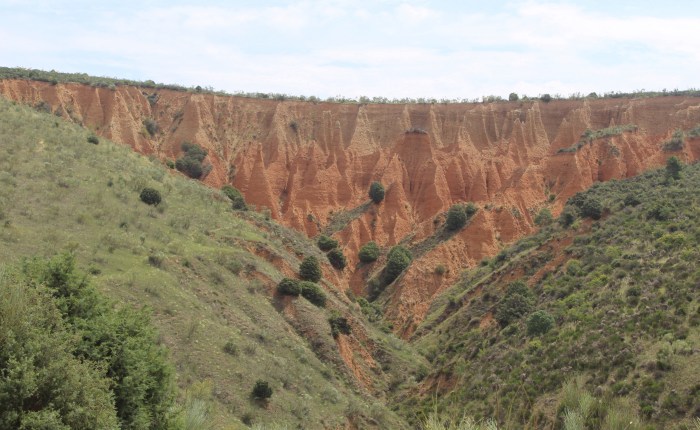
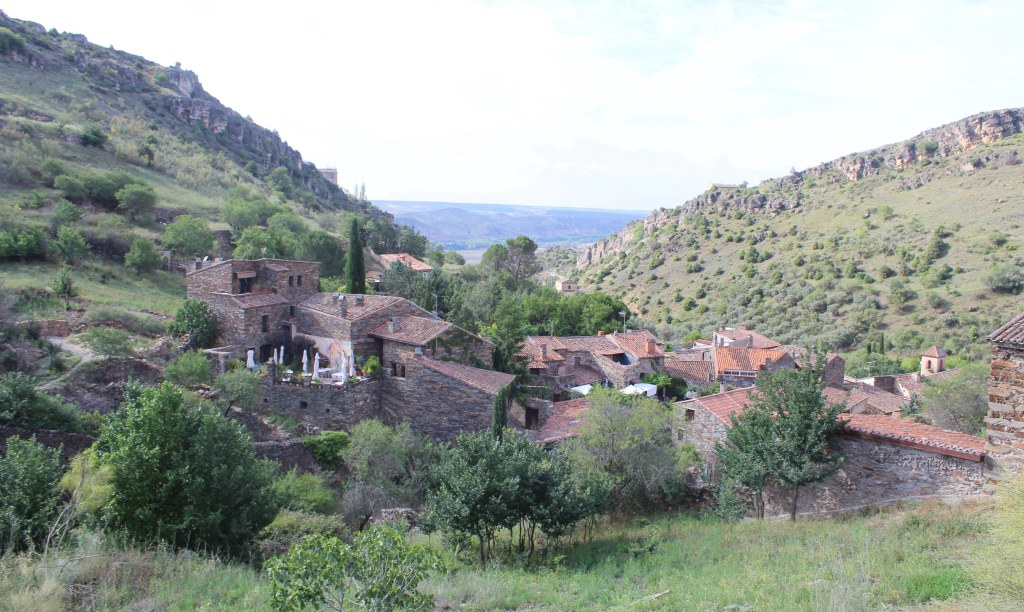
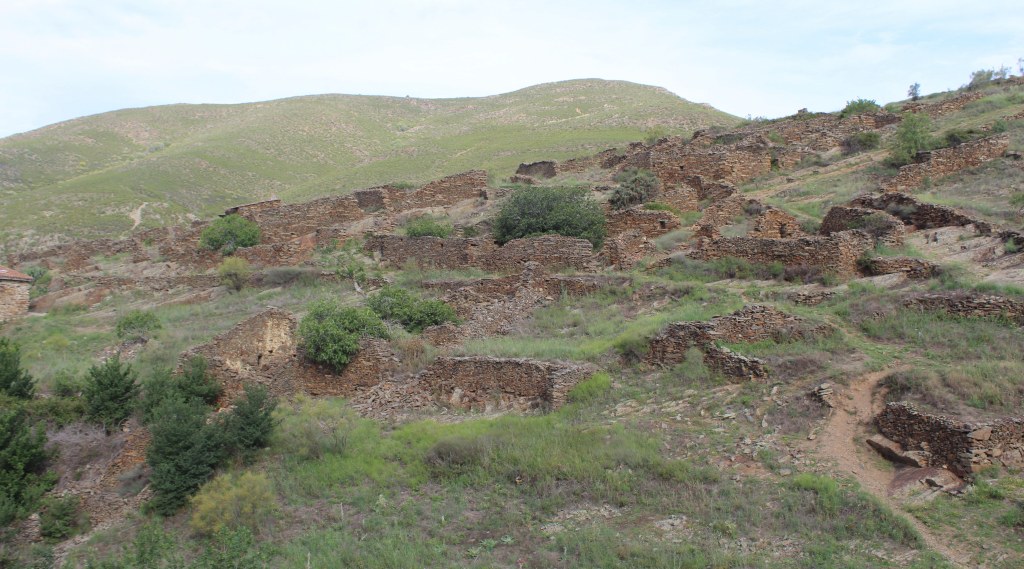
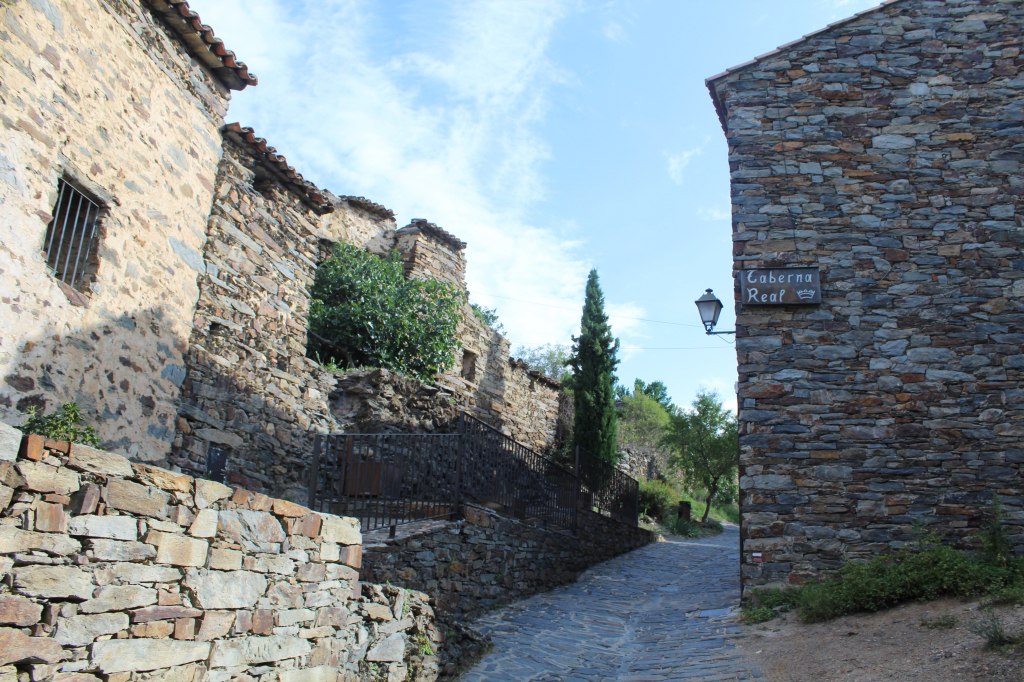
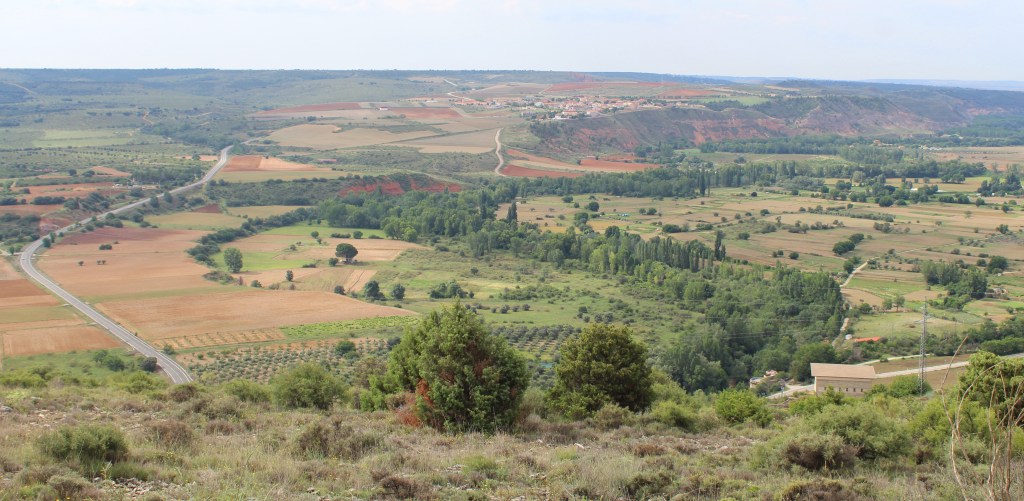
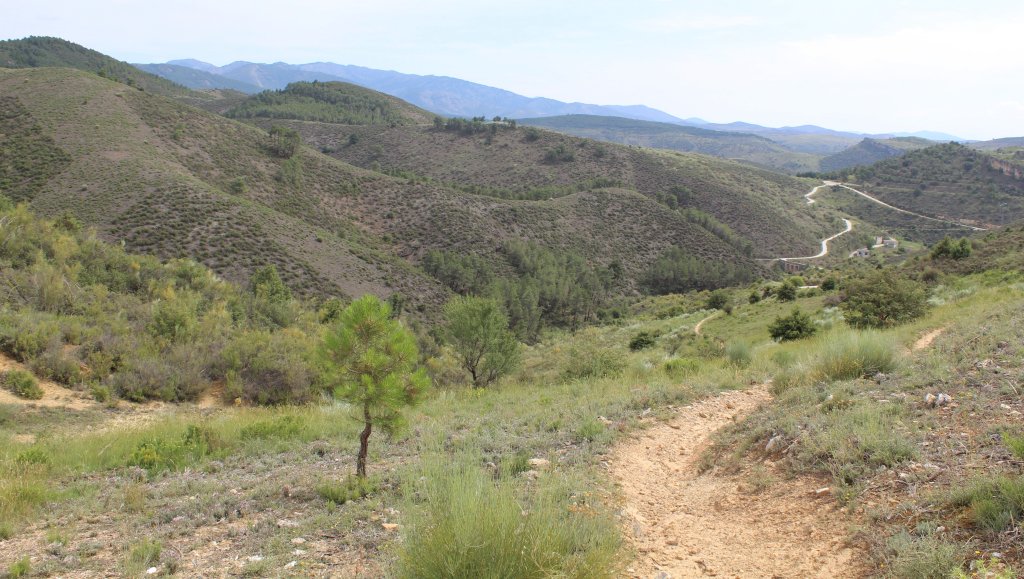
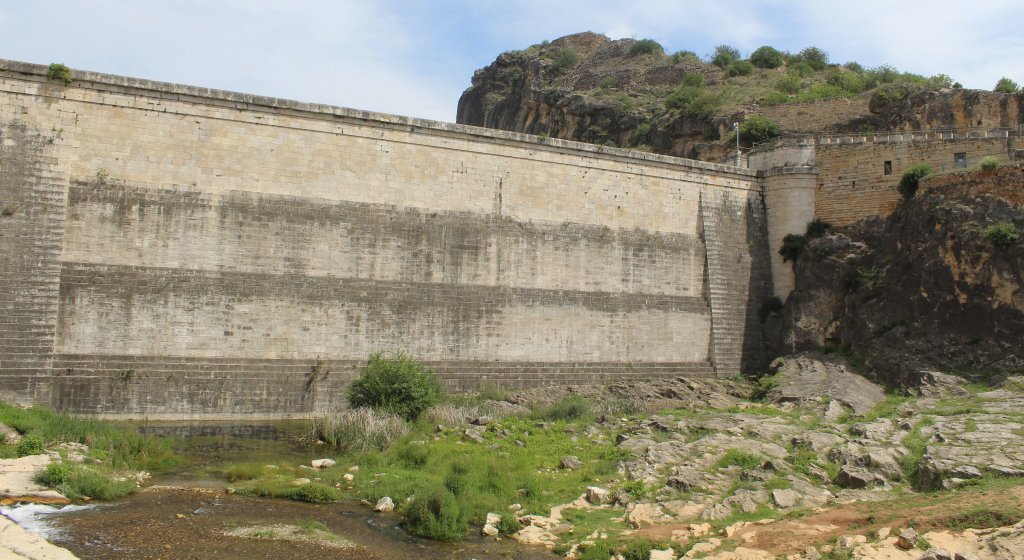
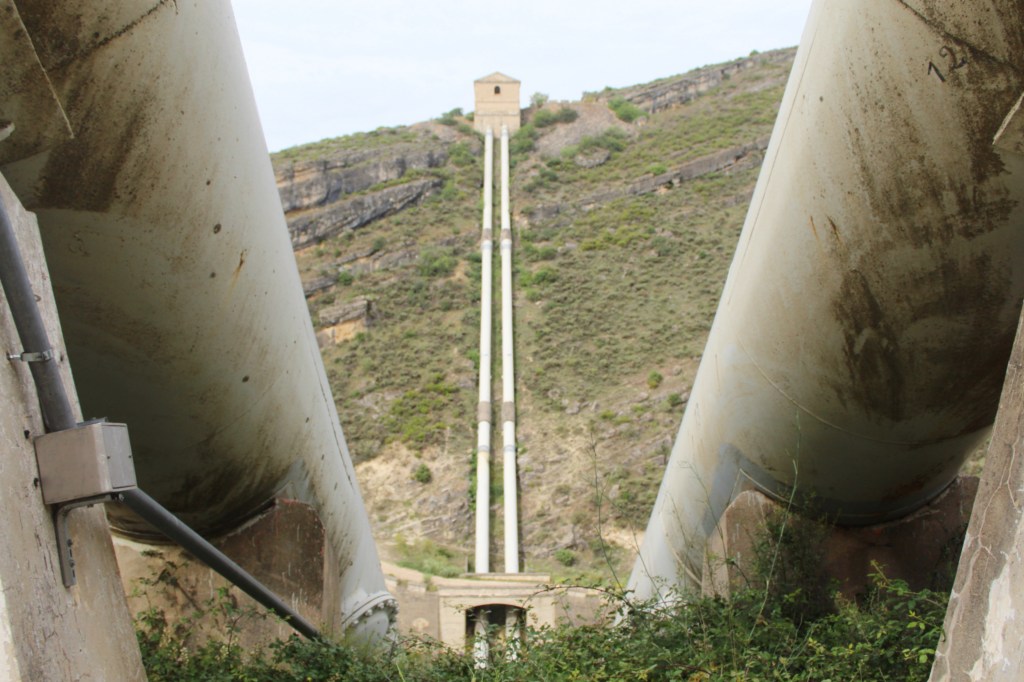
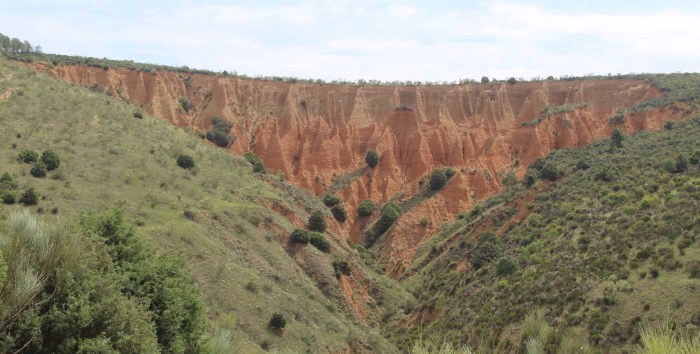
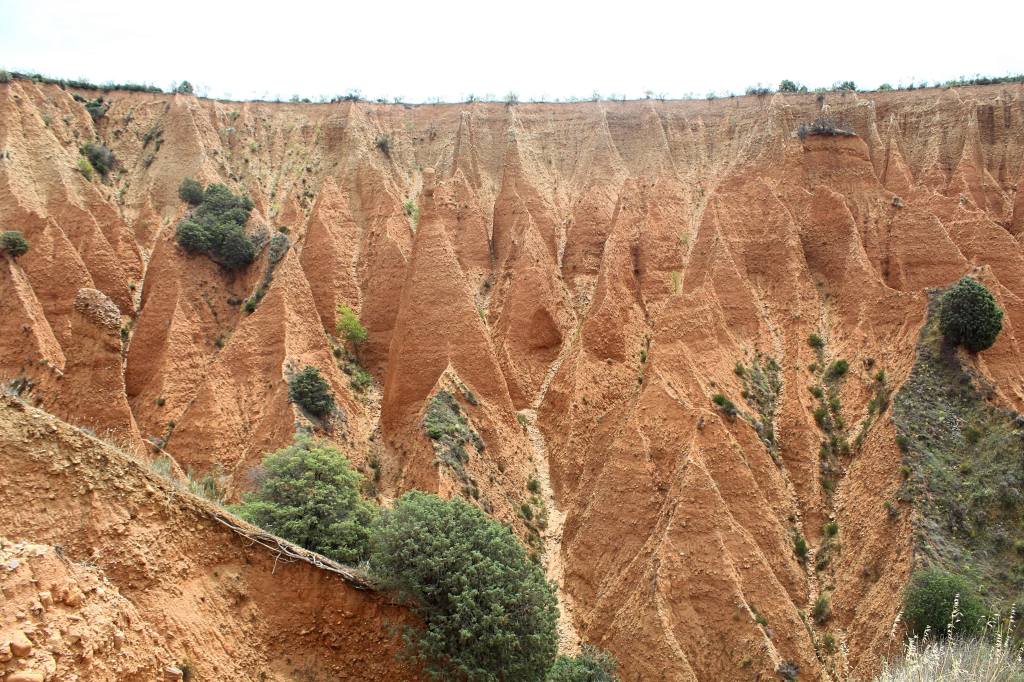
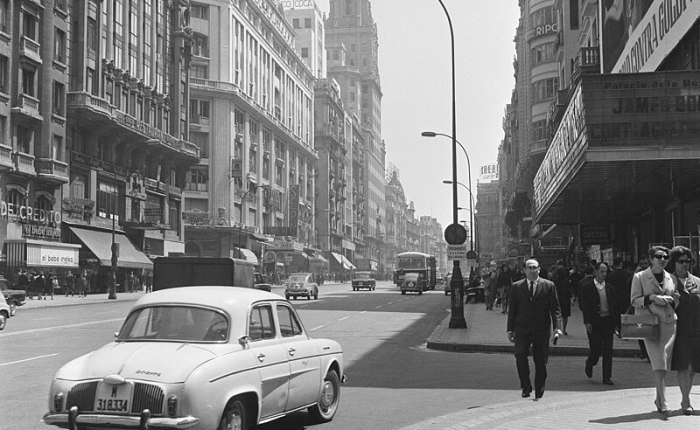
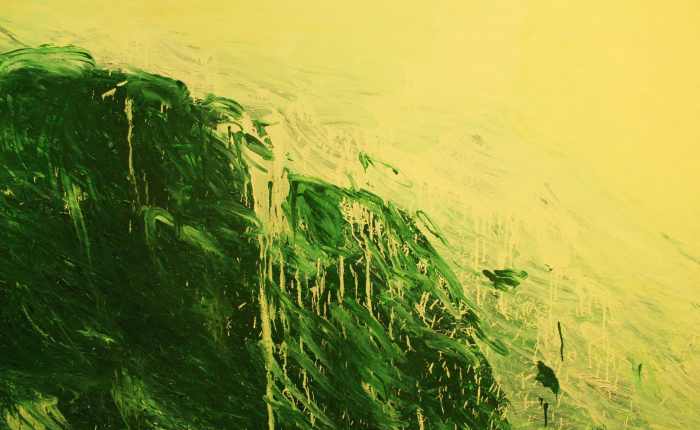
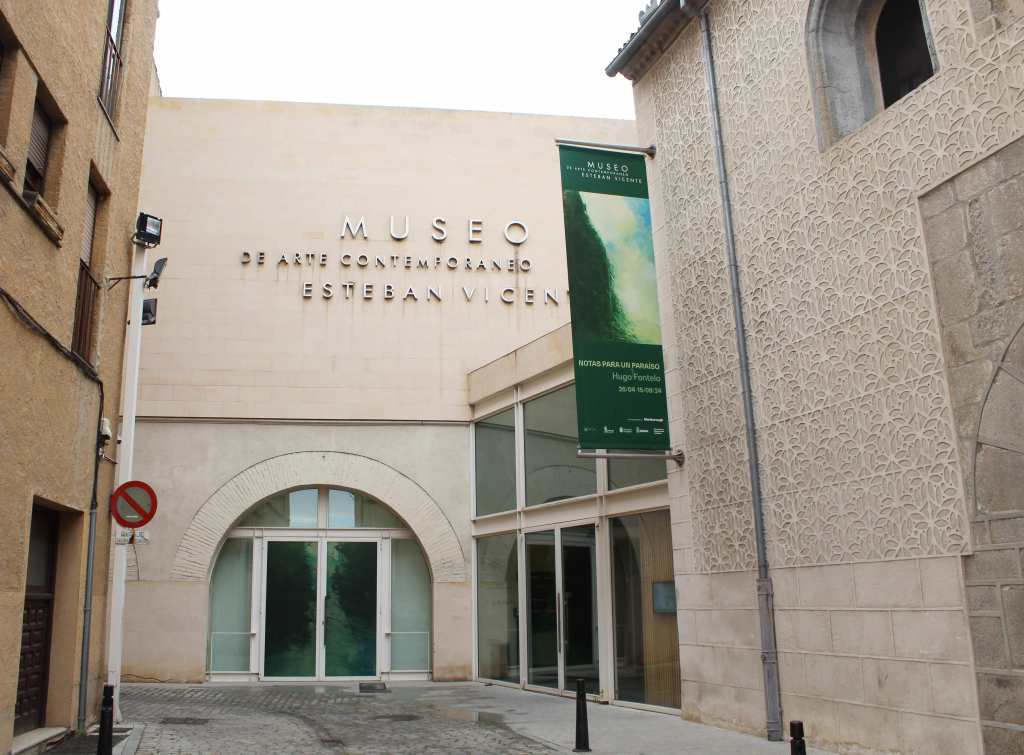
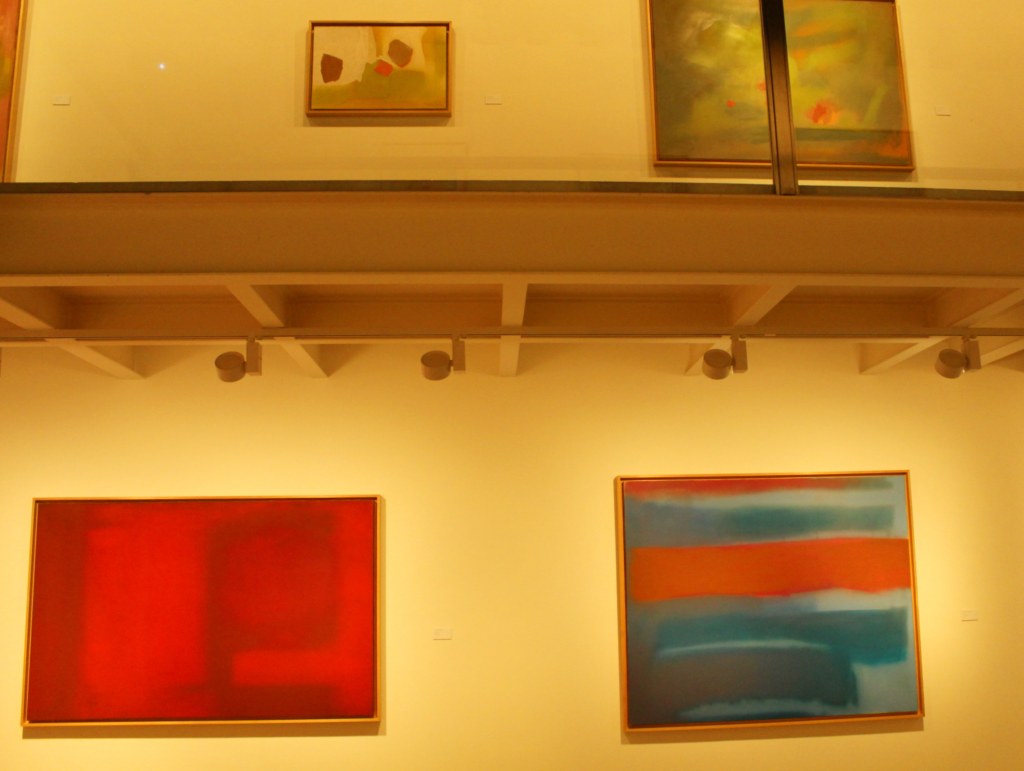
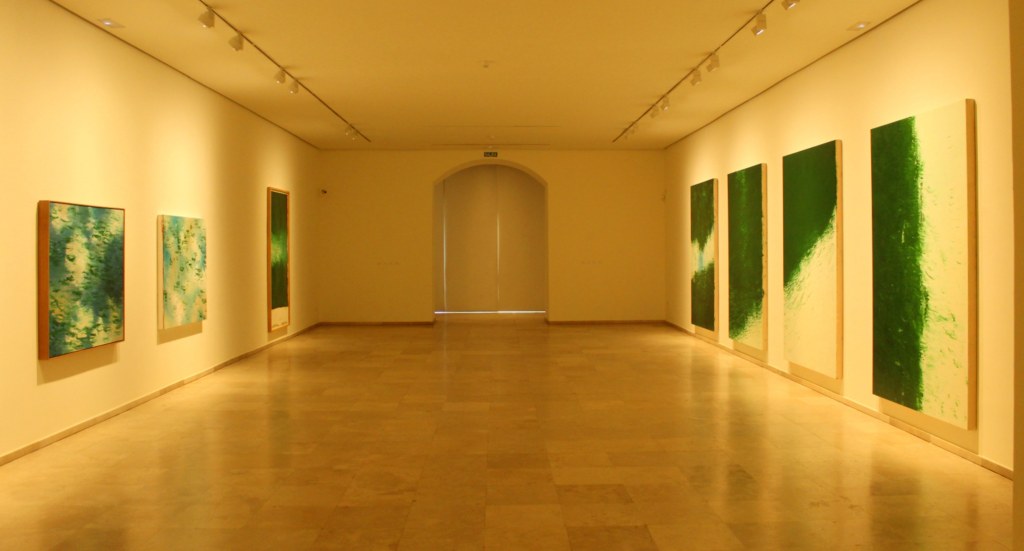
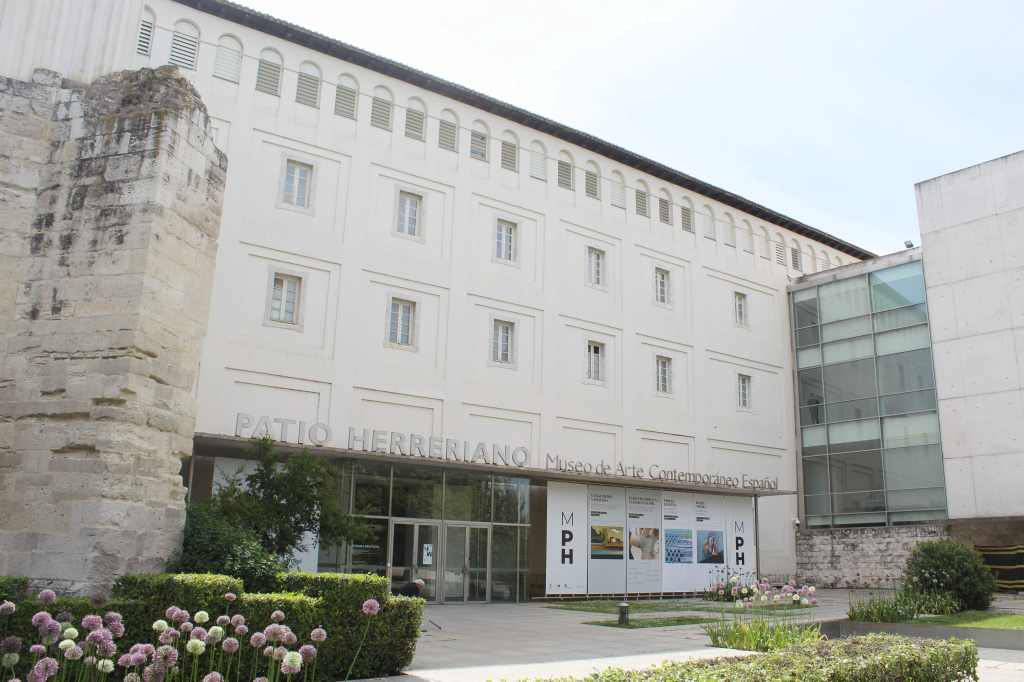
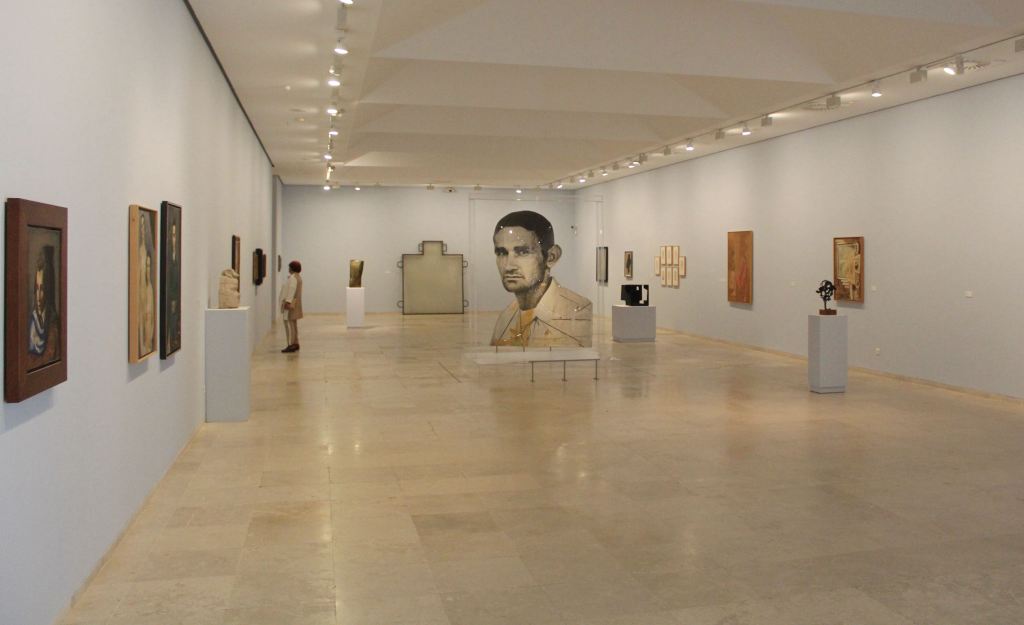
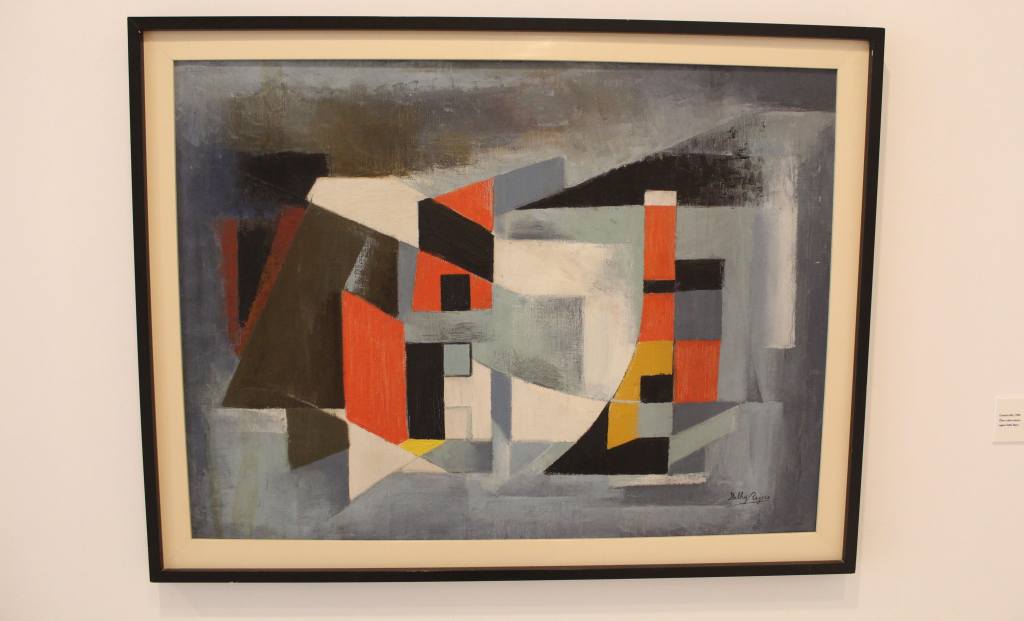

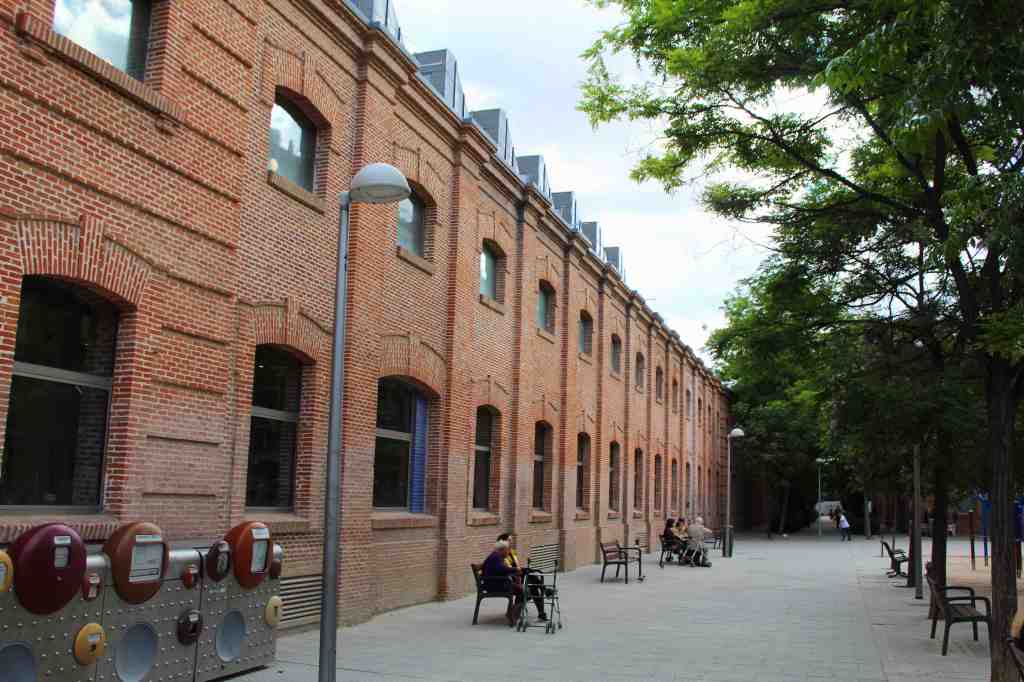
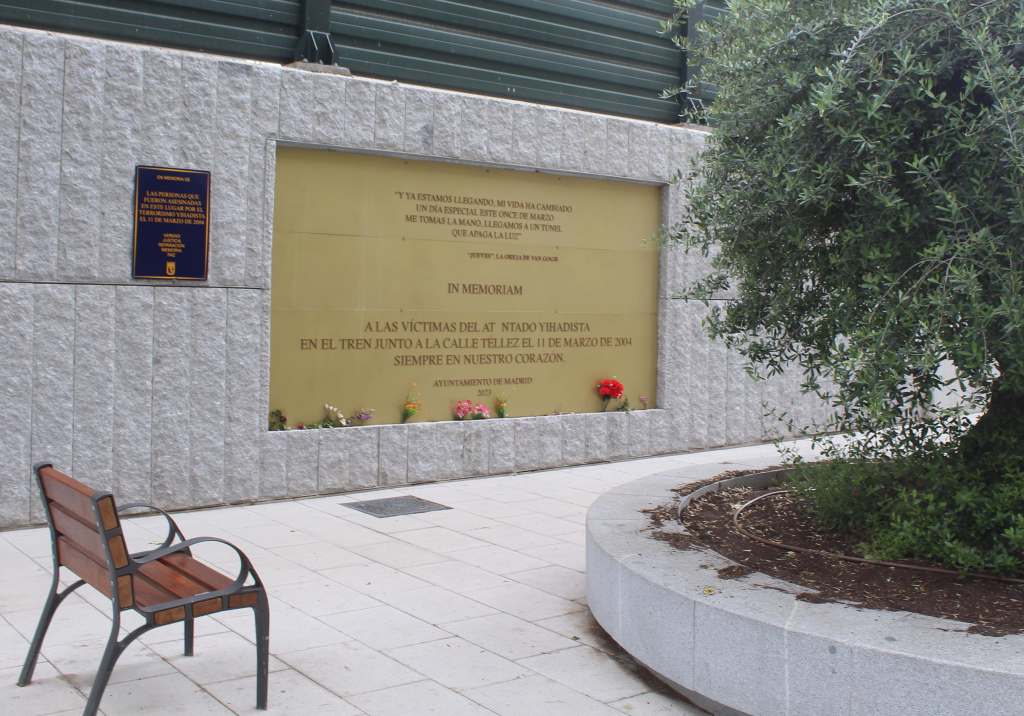

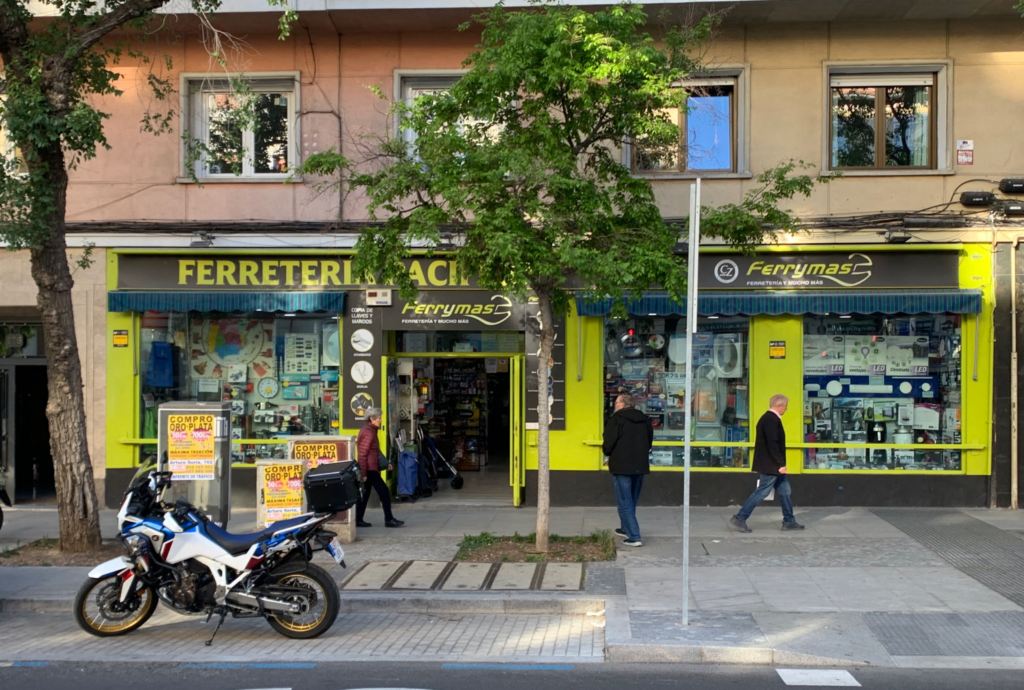
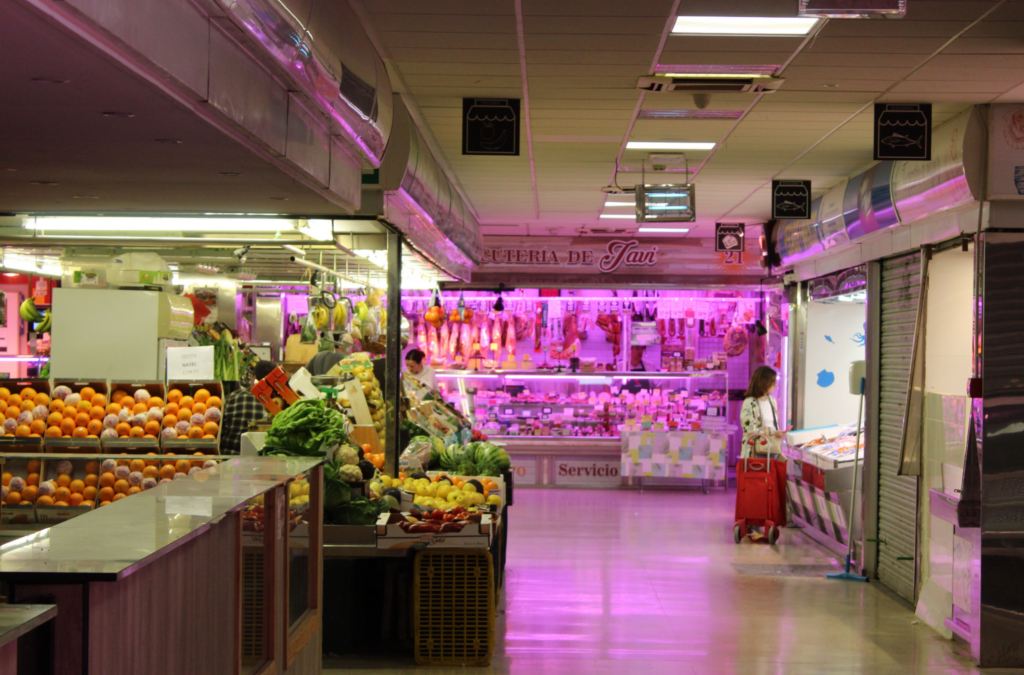
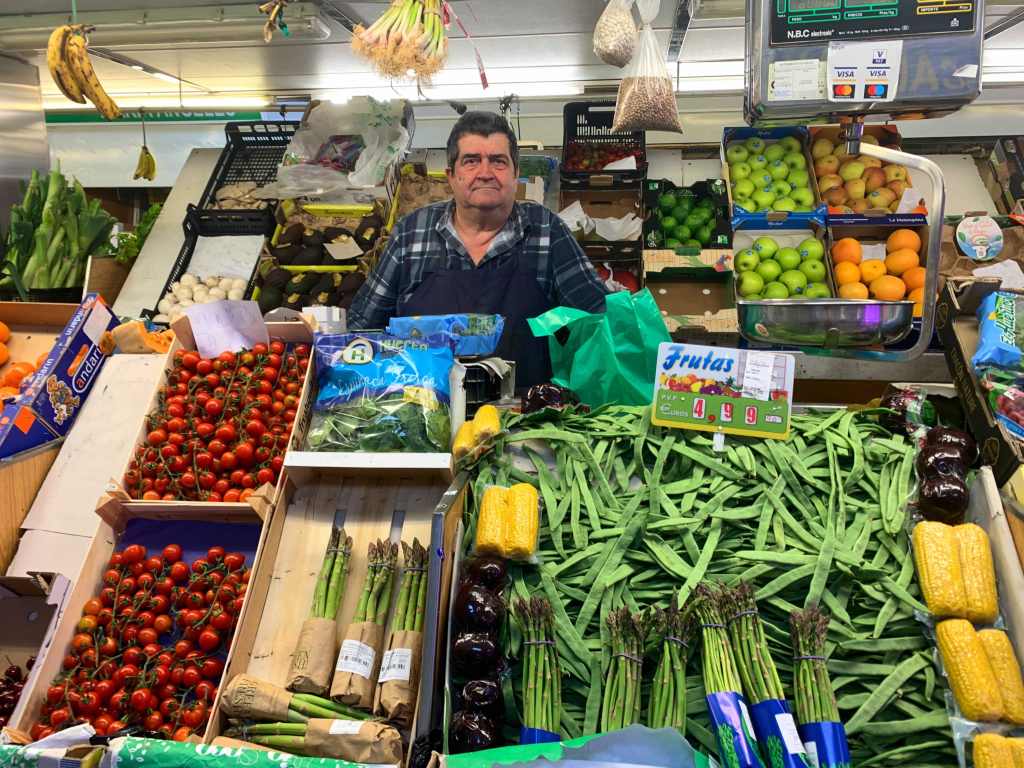



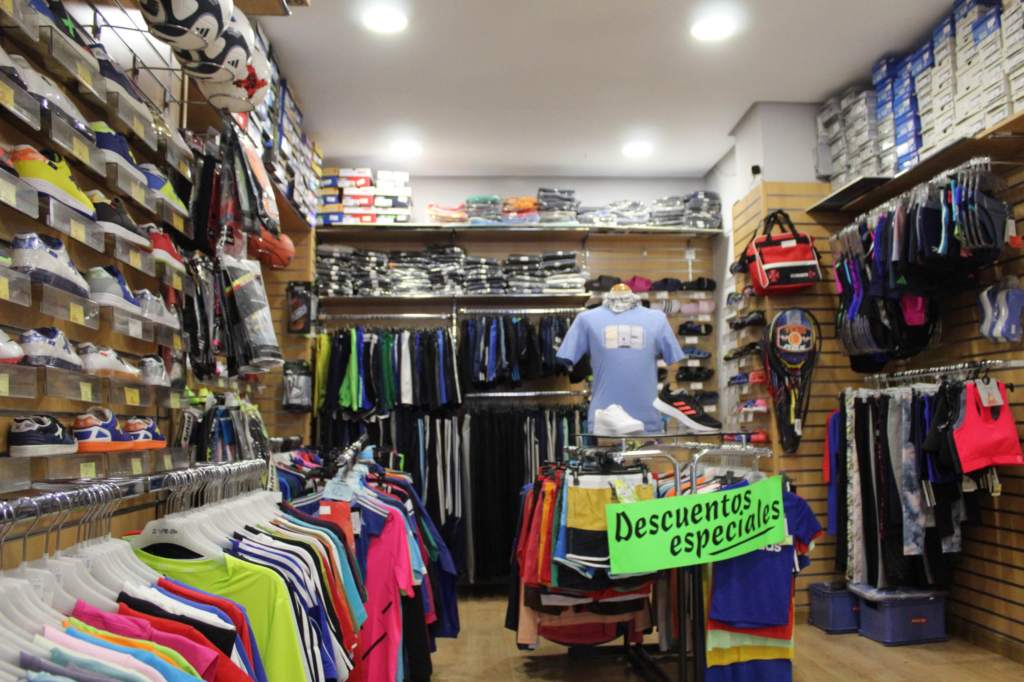


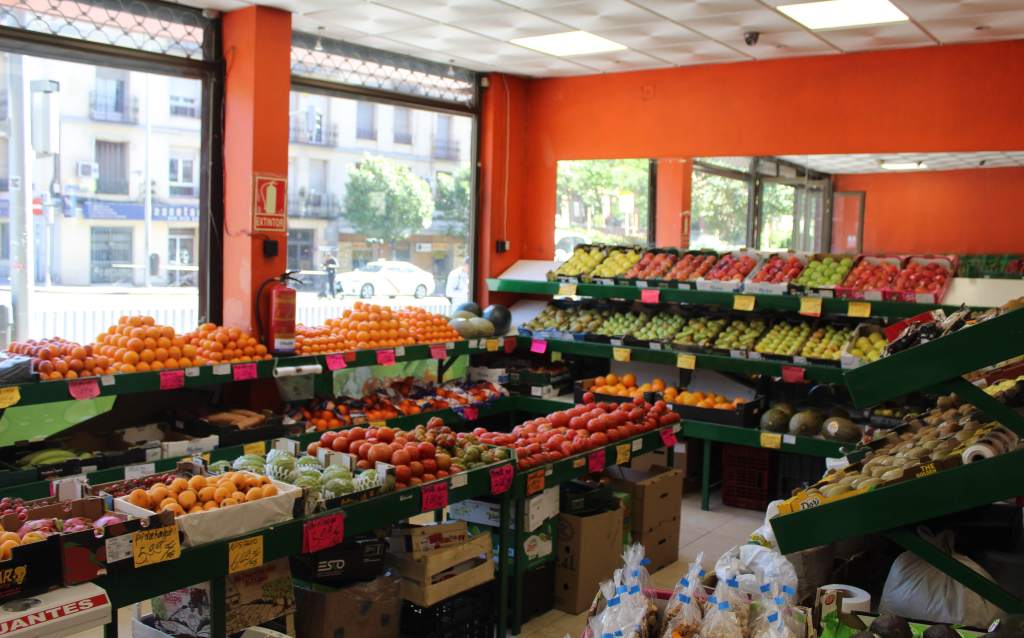
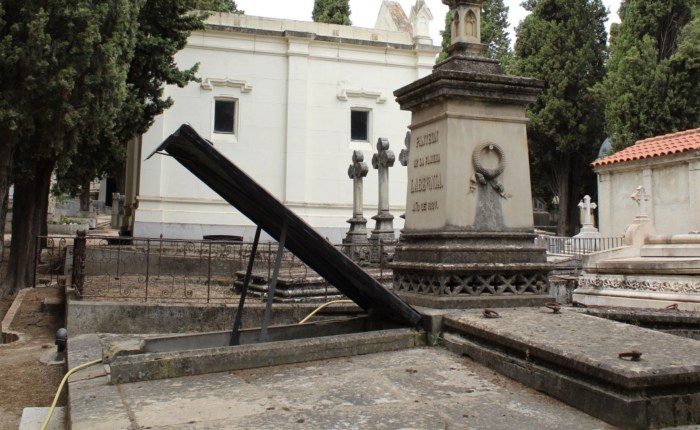
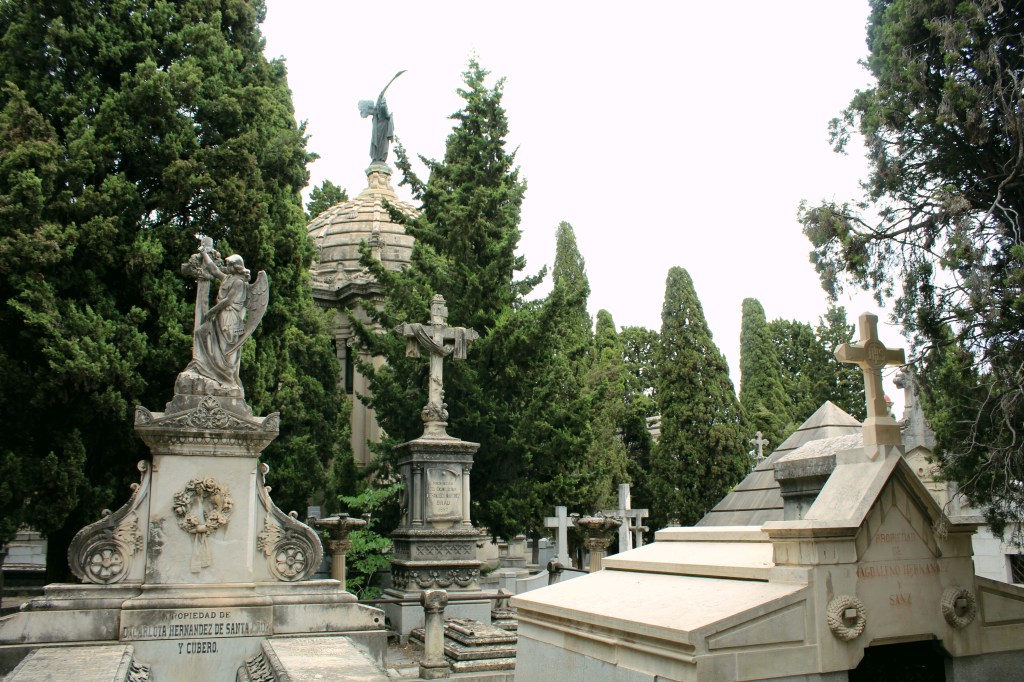
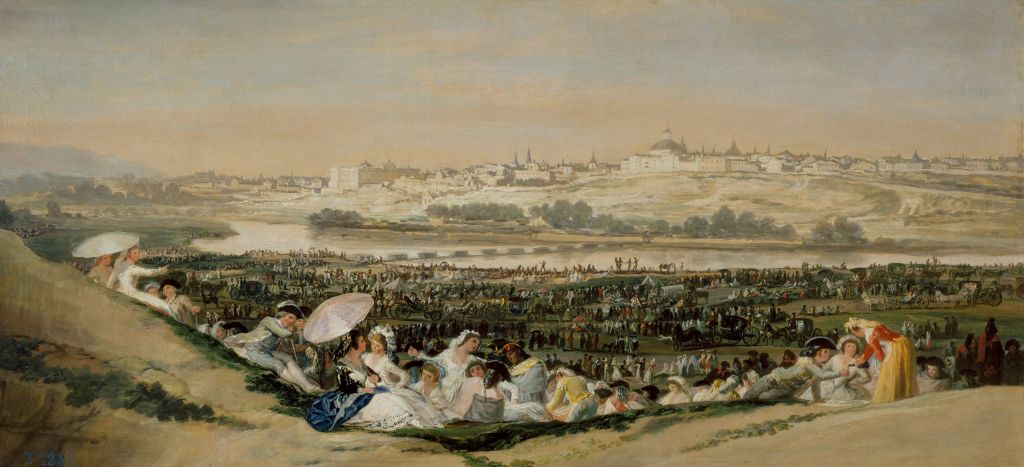
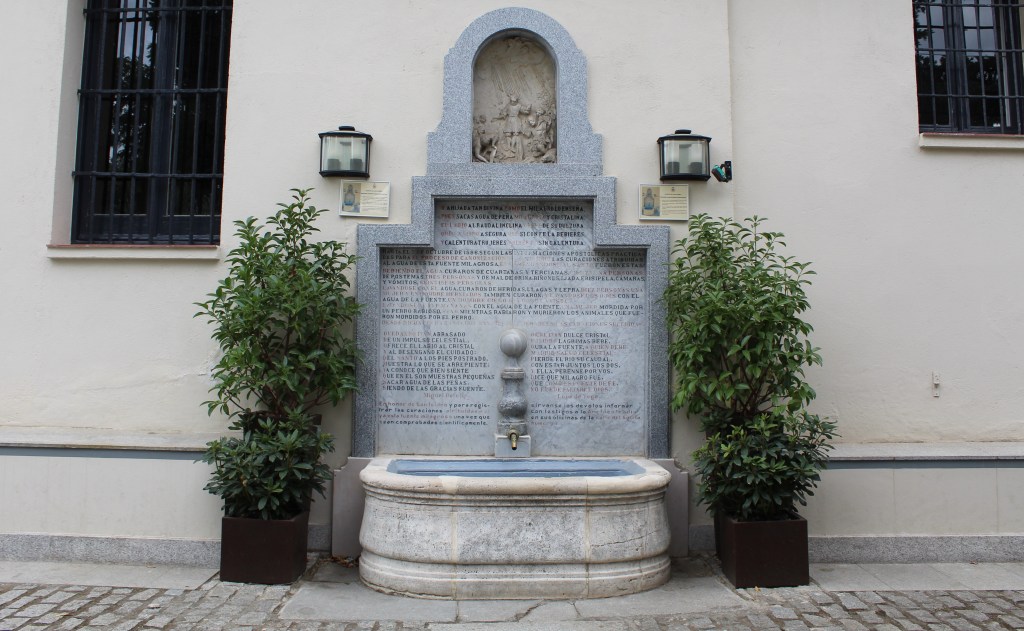

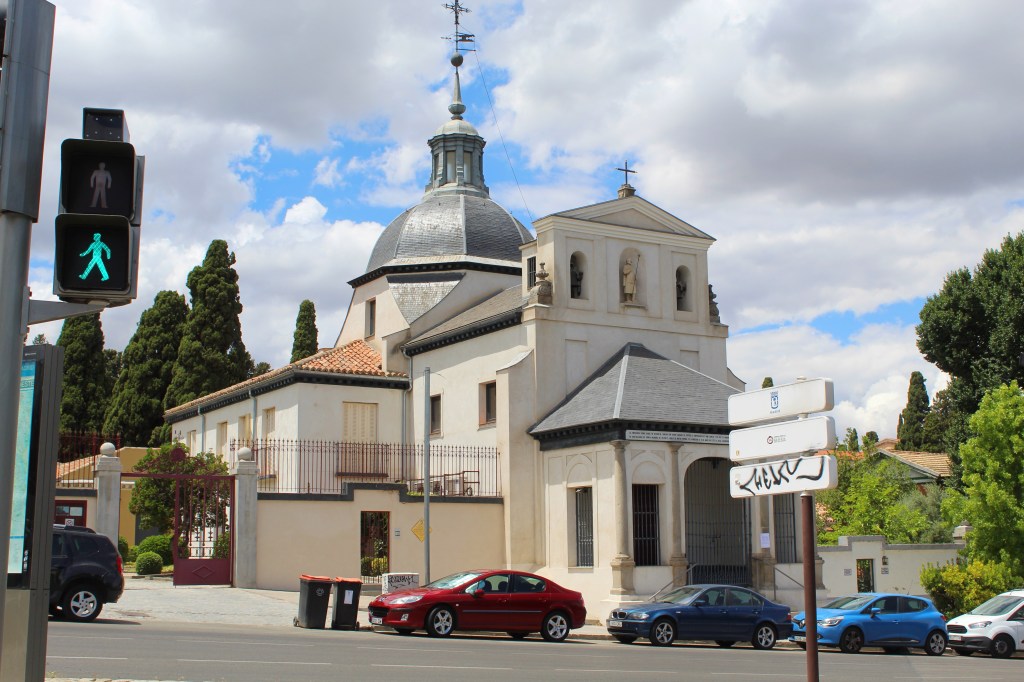
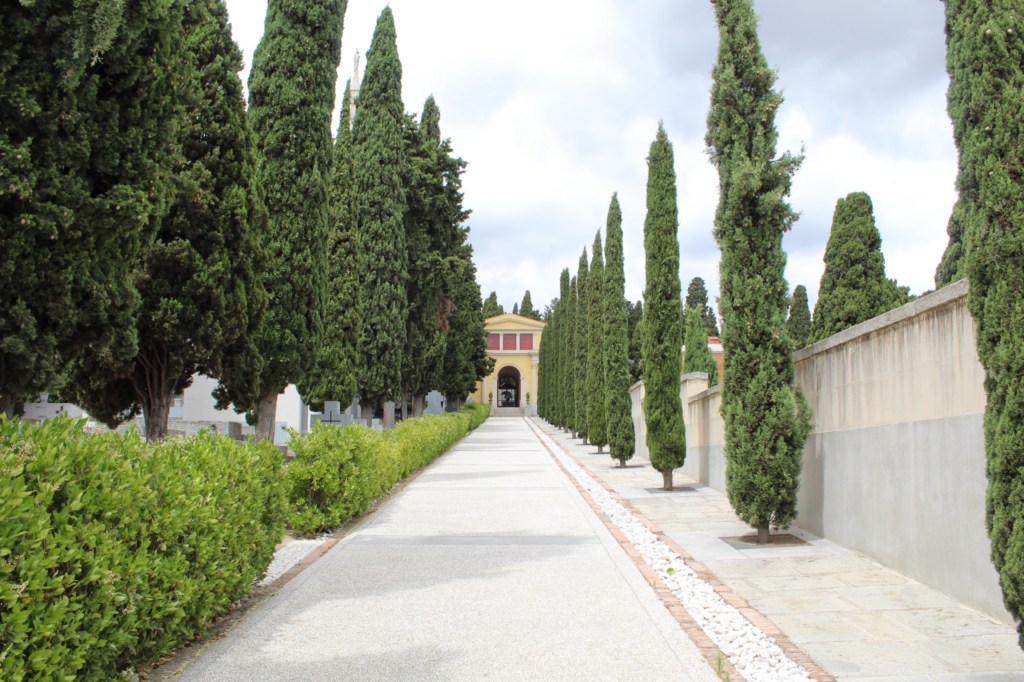
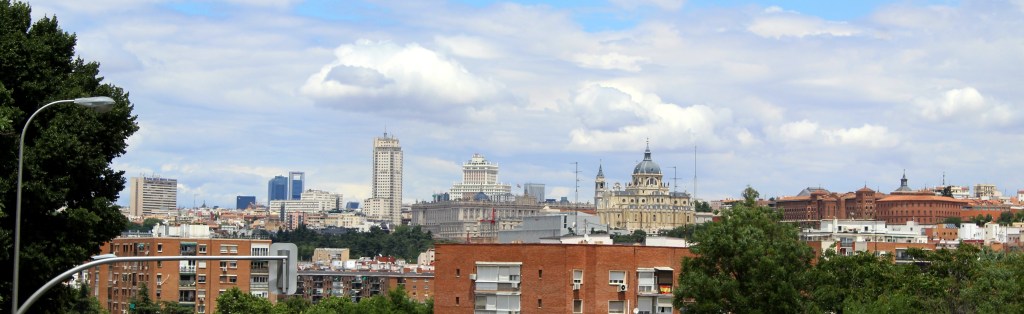
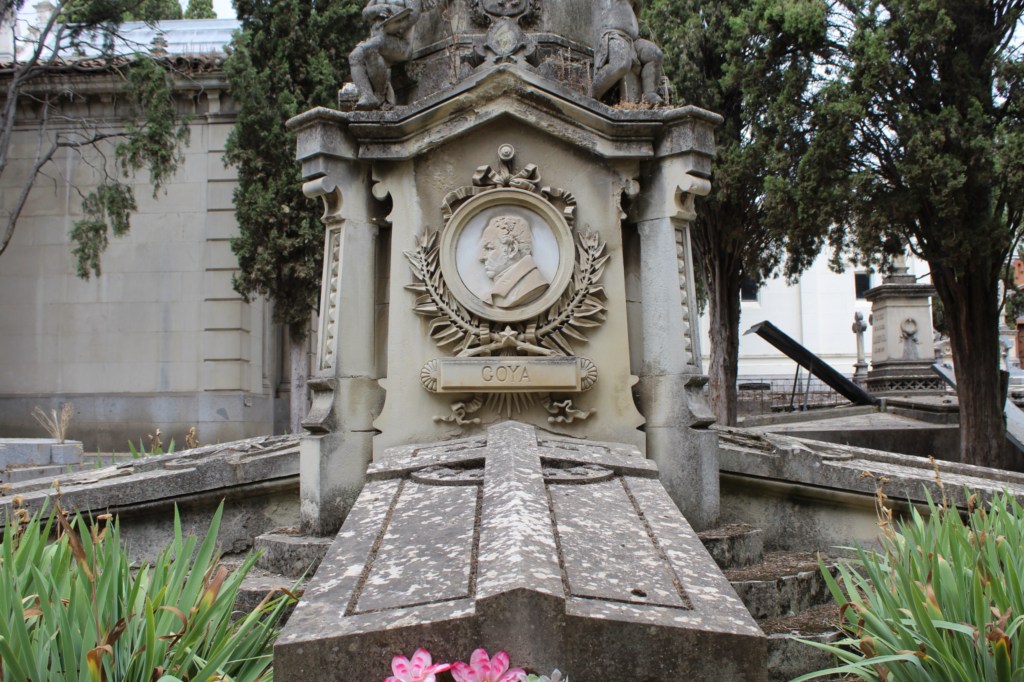
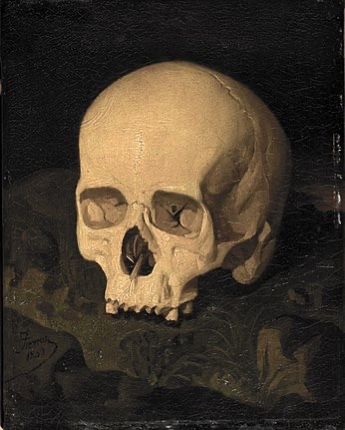

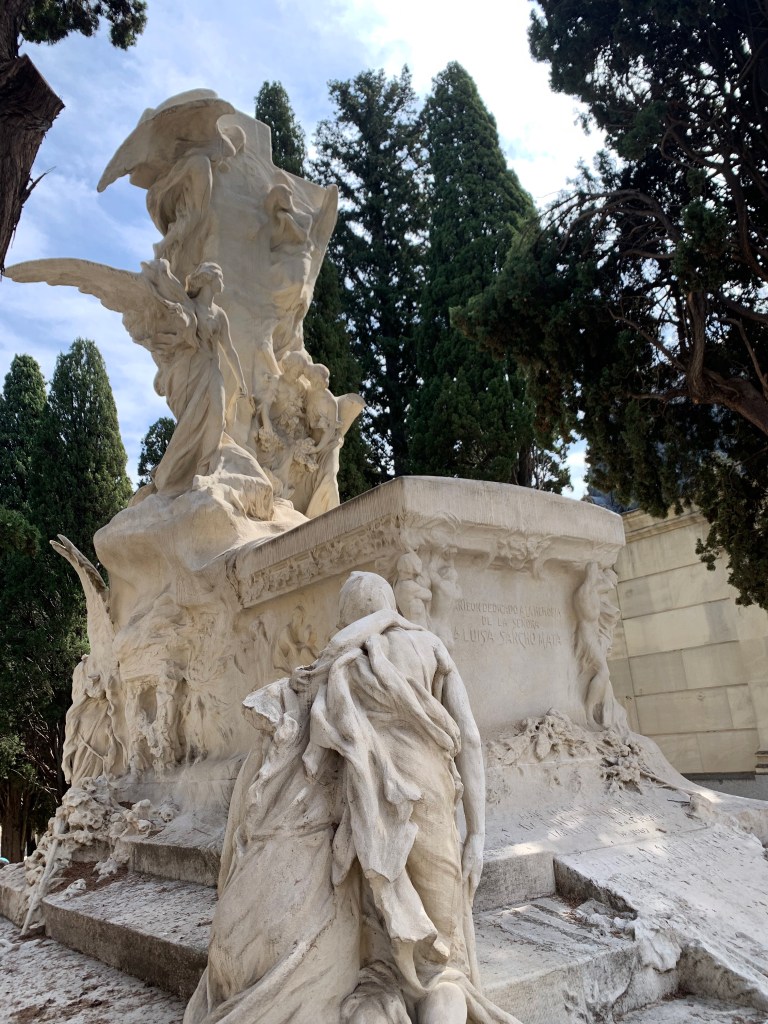

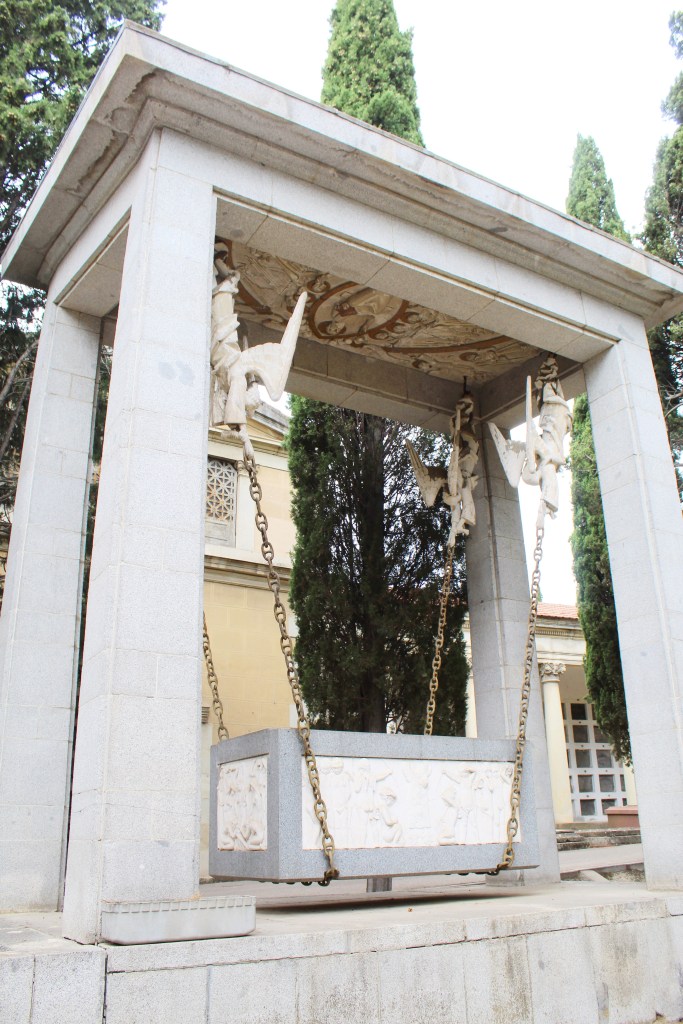
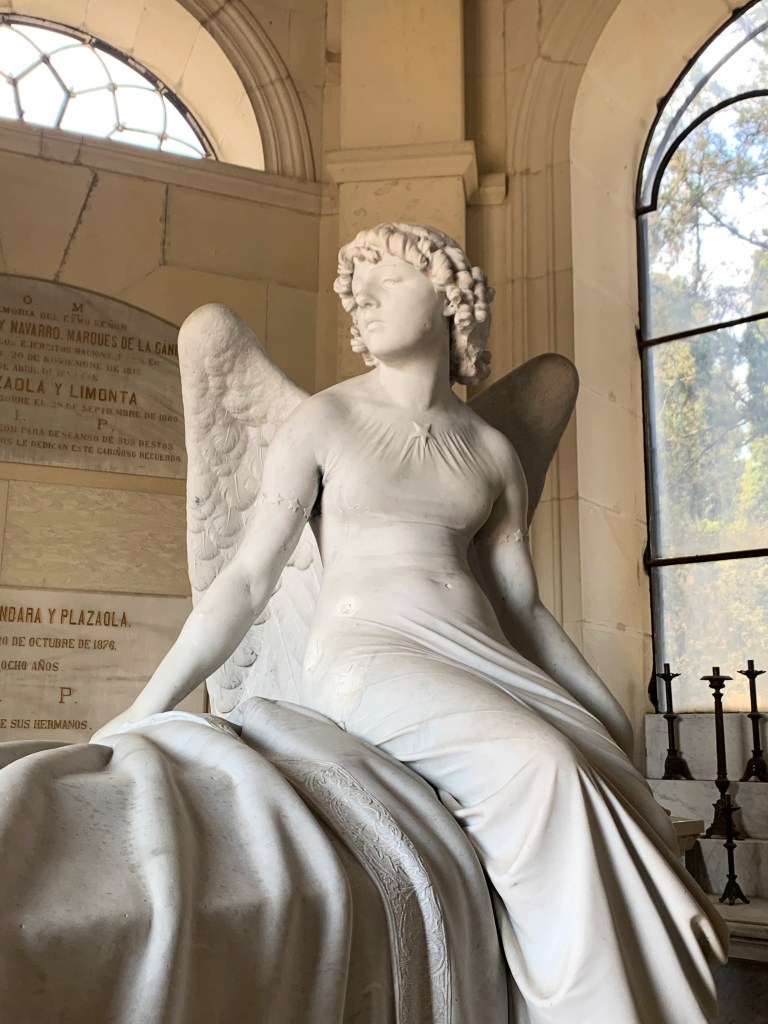
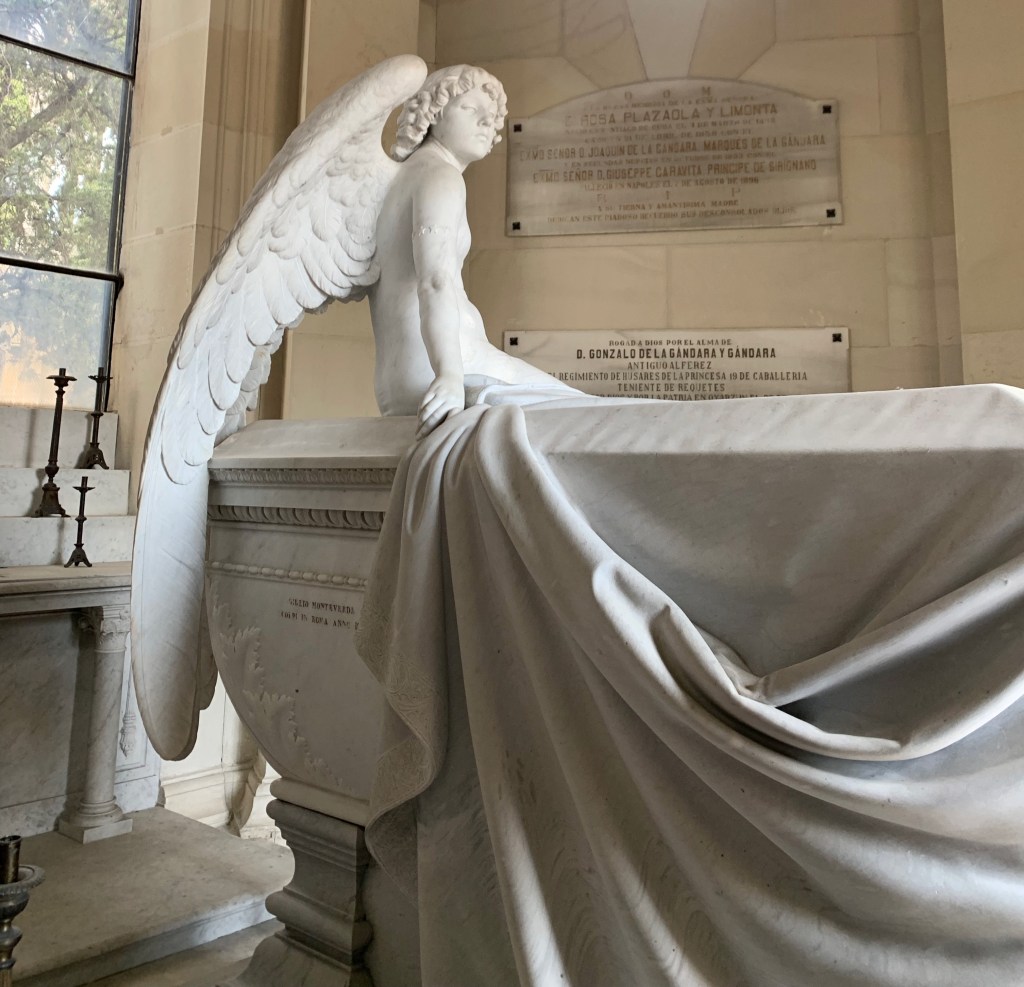

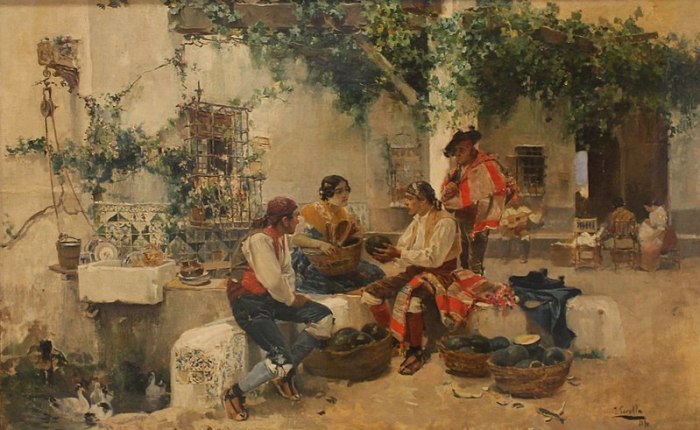
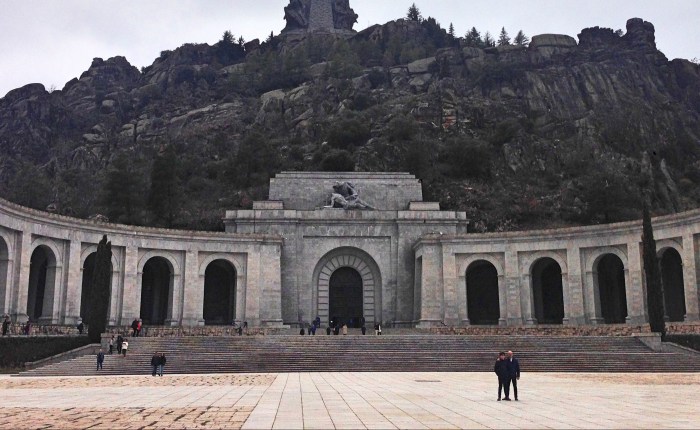

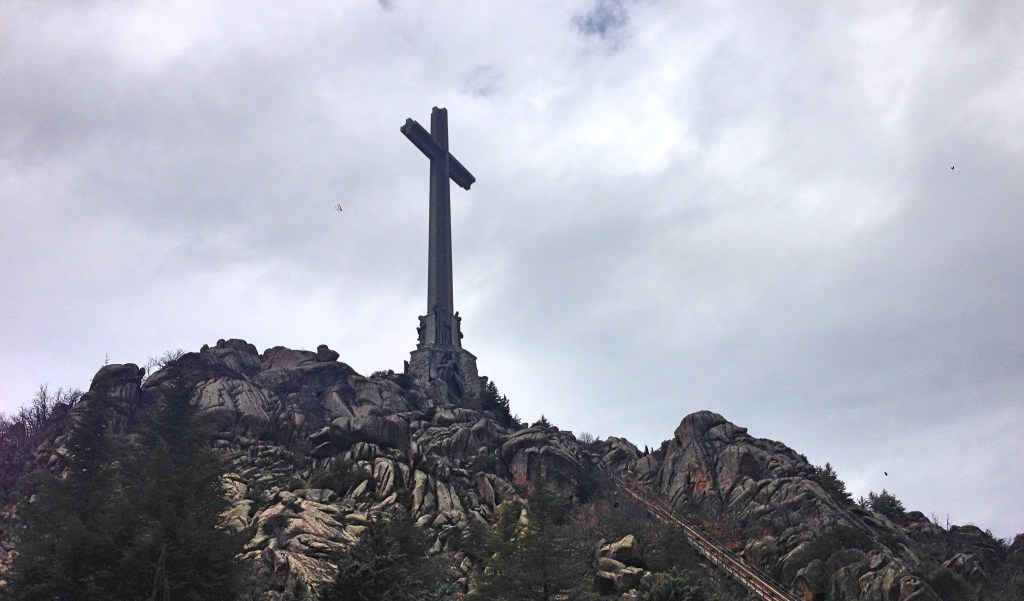
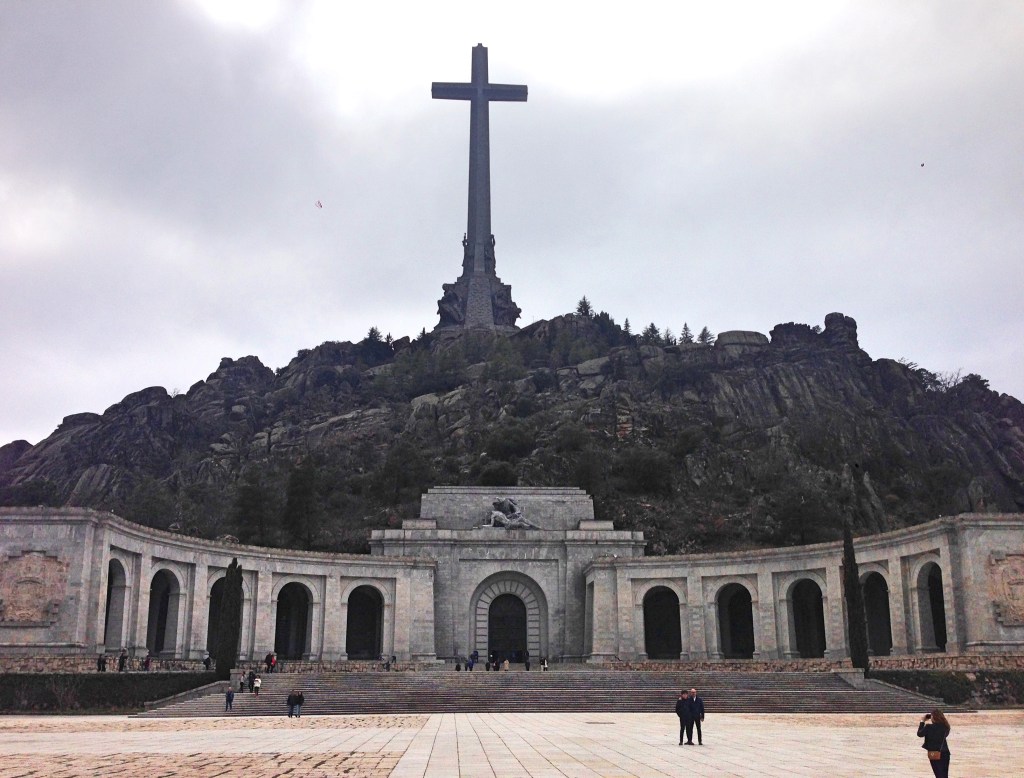
_01.jpg)
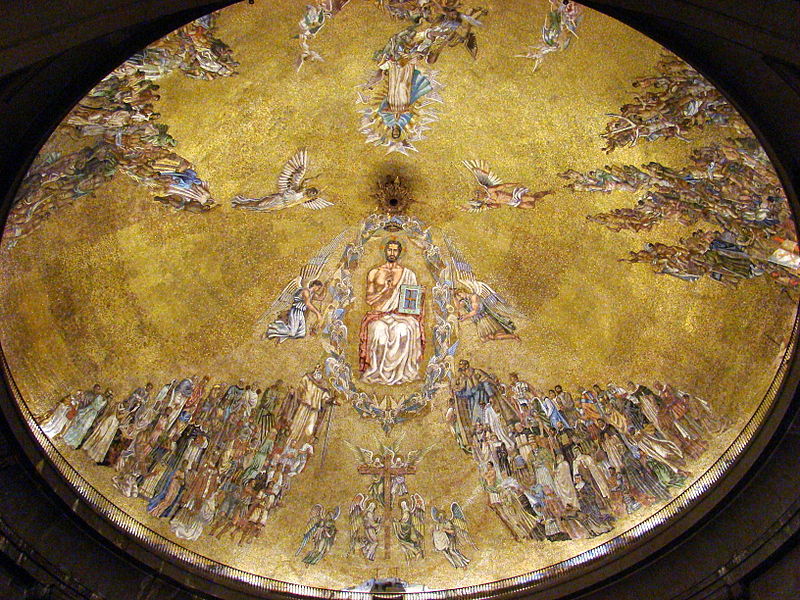

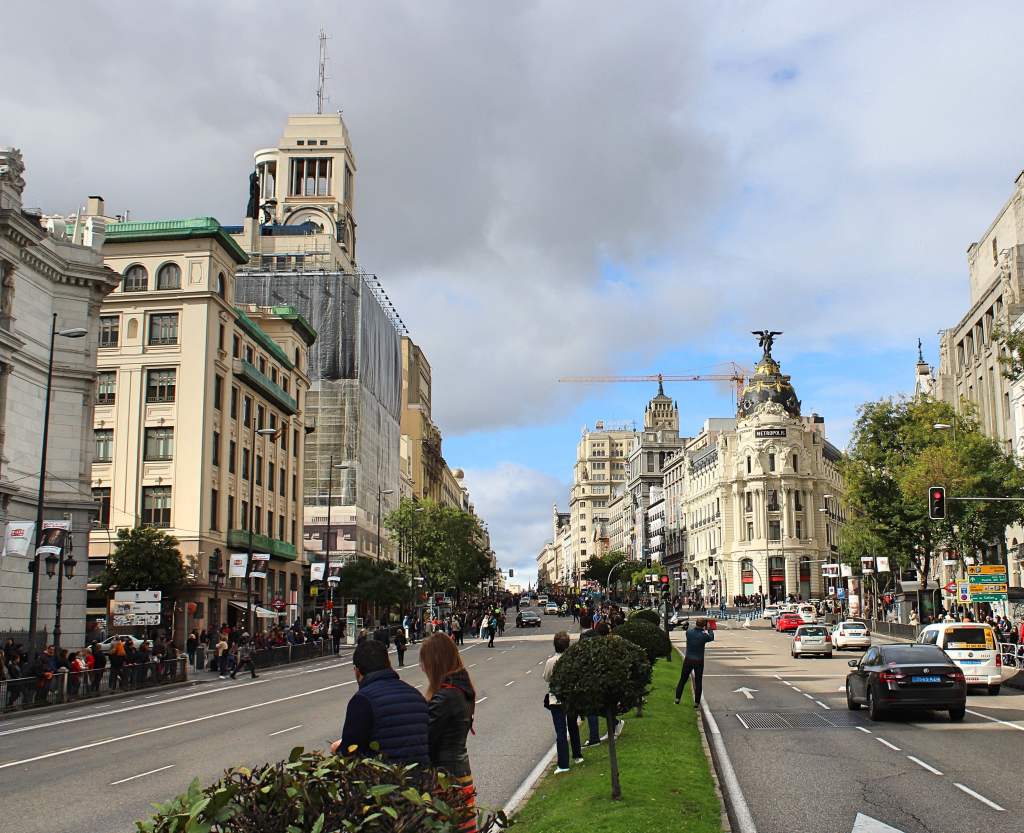


 Lotz in Translation