
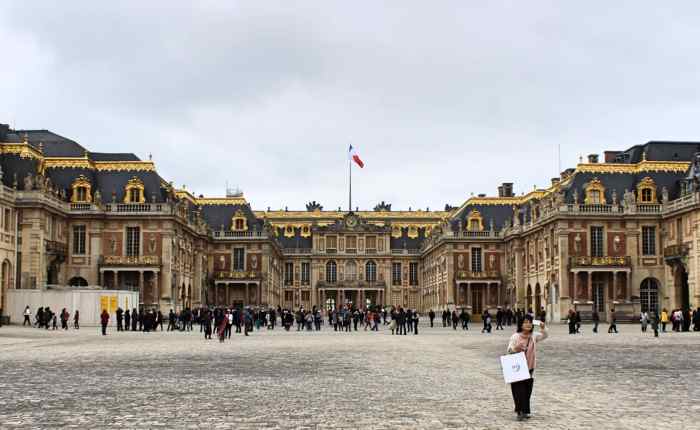
Europe is full of palaces. There are so many, in fact, that the persistent traveler can grow a little weary of them. After all, each palace tends to offer the same sorts of attractions: fine furniture, richly decorated rooms, expansive architecture. You get the idea. But even if you are quite uninterested in the pomp of power or the fineries of royal life, there is one palace that must be visited: Versailles. Built for Louis XIV, the so-called Sun King, it is the prototype of virtually all of the palaces built afterwards. From Spain to Austria, Versailles has been scrupulously imitated. It is, in other words, the palace of palaces.
The palace of Versailles is not within the city of Paris itself, but situated in the suburbs. Like Philip II with El Escorial, Louis XIV wanted to be away from the city, in an environment completely under his control. This decision did make the palace slightly inconvenient for the modern traveler to visit. Fortunately, Versailles is well-connected by all forms of public transportation. The cheapest and easiest way to get to Versailles from Paris is on the RER (Regional Express Trains), which stops quite close to the palace. This was not an option when I visited, however, as there was a train strike that day (hardly a rare occurrence in France). Yet this strike only affected these local trains. Long-distance trains from Montparnasse station also have a stop in Versailles (Versailles – Chantiers). This is the option I used.
Even though the walk from Versailles – Chantiers is slightly longer than from the RER stop, the strike worked to my advantage. There were significantly fewer people in the palace than usual. This is not to say that I had the place to myself. Versailles is typically packed; many visitors complain that the crowds ruin the experience. When I visited there were quite a lot of visitors (aside from the visitors by trains, there are dozens of tour buses lined up in the parking lot outside the palace), but not enough to make the place suffocating or claustrophobic. The palace was just mildly stuffy.
If you spend a few minutes to walk around the town of Versailles, you will notice that it looks rather different from the center of Paris. Partially this is because the streets follow a grid layout—a dead giveaway of the Versailles’ past. Before Louis XIV decided to move his court to this spot, the only thing on the land was a small village and a royal hunting lodge. In other words, it was mainly wilderness. The town took shape quickly around the palace; and like the royal gardens, it has been meticulously planned. This is not unusual for palace towns. The town of Aranjuez in Spain, for example, also follows a grid plan—a striking exception to the normal chaos of Spanish towns.
As you approach the enormous palace, several things come into view. There is Louis XIV heroically mounted on a stallion, sporting appropriately regal headwear. Immediately beyond this image of royal power are the tour buses, which give an even greater image of the power of international tourism. Then there is the line. When I visited, it was several hundred feet long, spanning almost the entire length of the palace’s front. Beyond this impatient mass of humankind there is the ornate fence and the even more ornate façade. Both are bright and gold; Louis XIV did not want to leave any of his wealth to the imagination. On the molded gateway, under a floating crown, there is the sun himself, the French king’s favored symbol. As you can see, he was a flagrantly powerful man. But as I had bought a timed entry ticket—thus allowing me to skip the line—I was feeling flagrantly powerful myself.

Before we go inside, I should give you some of the most basic information about the palace and its maker. Though not always successful in his foreign wars, Louis XIV was arguably the most successful monarch in French history at consolidating power within France itself. At the time, simply being king was not enough by itself. Early in Louis XIV’s long reign, when the monarch was only a boy, the nobles of France attempted a rebellion, called the Fronde. The rebellion was eventually put down; but the threat of unruly aristocrats must have sunk deep within Louis’s consciousness. As soon as he was old enough to take control for himself, Louis set about centralizing the state and making his authority as absolute as possible. Unlike his predecessors, for example, he did not rely on ministers to carry out the real duties of governing, but insisting on acting himself,
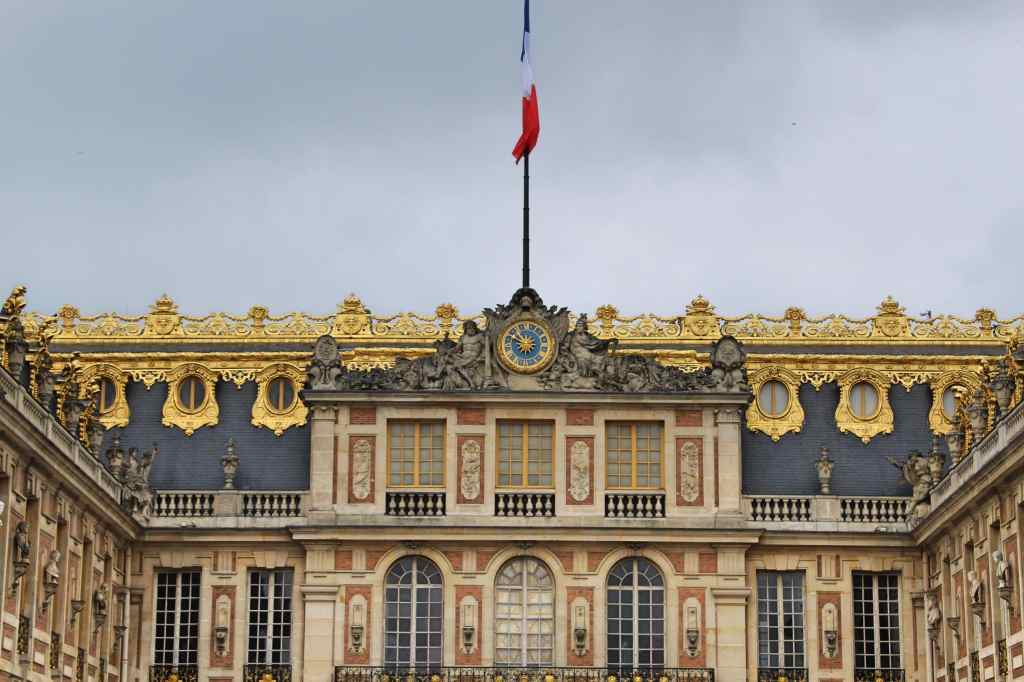
The palace of Versailles was part of his scheme. Situating the palace outside of Paris allowed the king to escape many of the conventional pressures of both the populace and the wealthy. Instead, anyone who wished to pay their respects at court had to do so on Louis’s territory. And this meant submitting oneself to a byzantine set of rituals and etiquette that Louis established, which governed everything from what to wear to when to speak to how to eat. Louis’s whole routine was a spectacle. Aristocrats watched as the king dined and dressed, biding their time until, with any luck, they had their chance to access the monarch’s ear. It was a ritual perfectly devised to keep underlings in their place.
Considering this historical background, it is wise to view the palace for what it is: a monumental piece of propaganda. Louis XIV wanted Versailles to send an unambiguous message to every visitor: that he occupies the center of France. Thus, the palace’s architectural scheme irresistibly draws the visitor’s eye to the center of the building, where all of the lines meet. It is here that I began my tour.
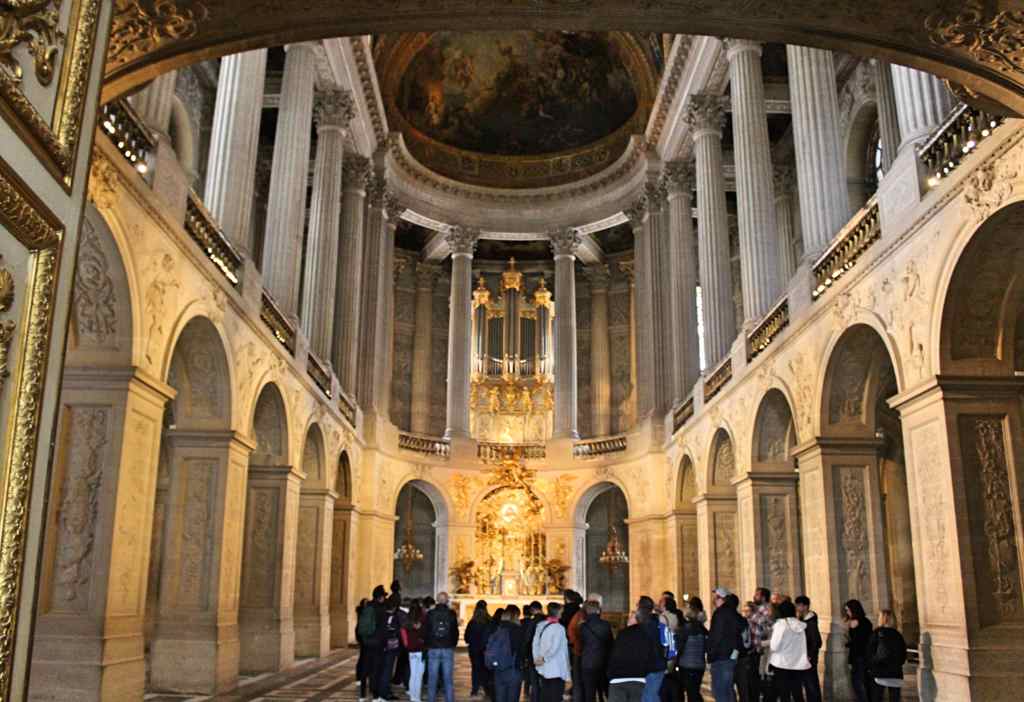
The first space which caught my eye was the royal chapel. This is a tall and narrow space; greek columns are supported by a row of arches, leading up to a richly decorated ceiling. Once again, the architecture here is perfectly calculated to convey a message. The narrow width of the space makes the ceiling seem especially tall, seeming to squeeze and dwarf the visitor; and the repeating columns and arches unmistakably communicate a sense of orderliness. We are entering a world where even prayer is subservient to the state, and where even religious worship itself is part of the pomp of power.
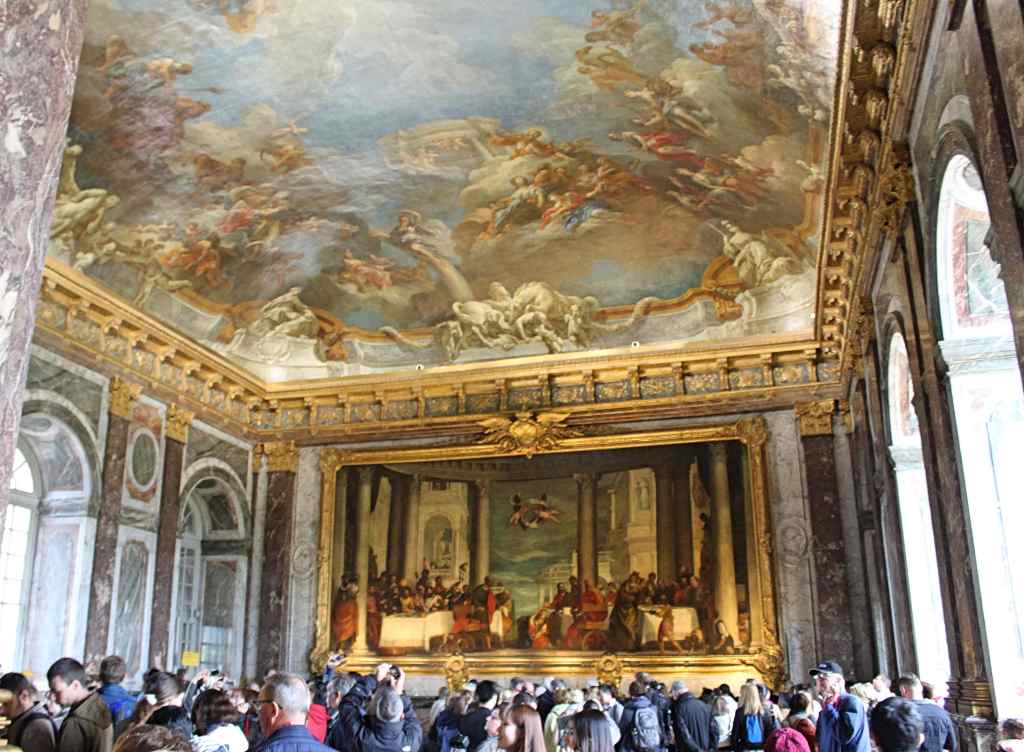
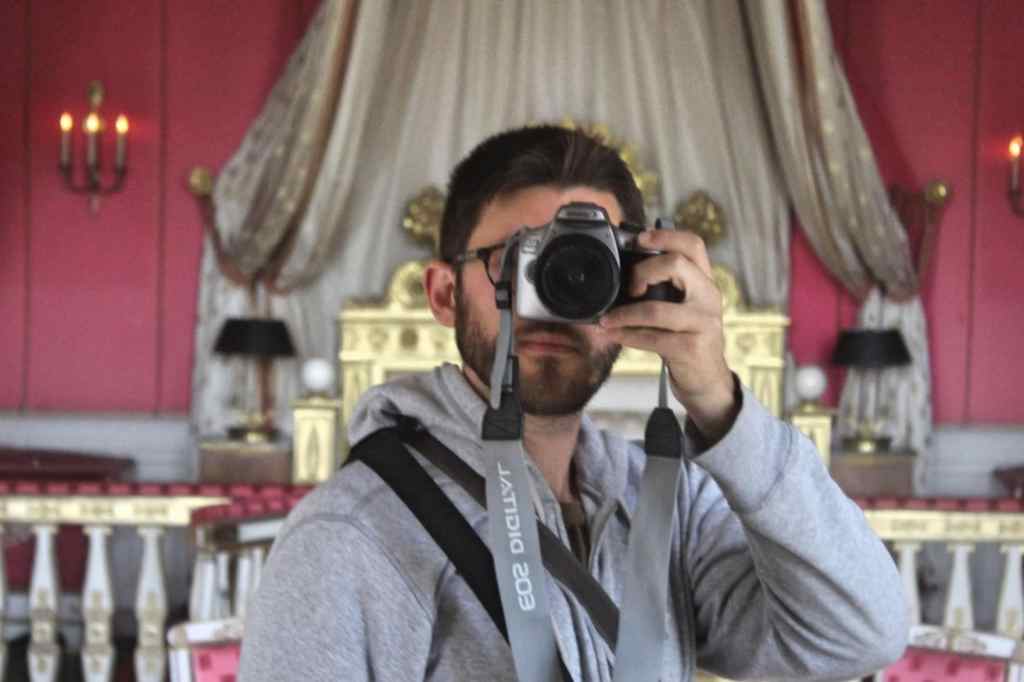
Next we enter into the State Apartments. These are sumptuously decorated rooms, used by the king for receiving courtiers and visitors. The walls and ceilings of these rooms are covered with designs and paintings. The most notable of these may be the Meal at the House of Simon the Pharosee, by Veronese—a lovely work of the high Italian renaissance. The color gold is everywhere in these rooms, and the ceilings are full of cherubs, clouds, and crowns. The king himself is ever-present, not least in the magnificent bust by Bernini, which manages to make the king into a truly heroic figure. Next in the visit come the royal apartments, where we can see the luxuriant beds where the king and the queen slept. As usual, no matter the luxury, I did not find envying these places of rest. I would not want to sleep in an enormous, empty room—even if it was on the finest silk.

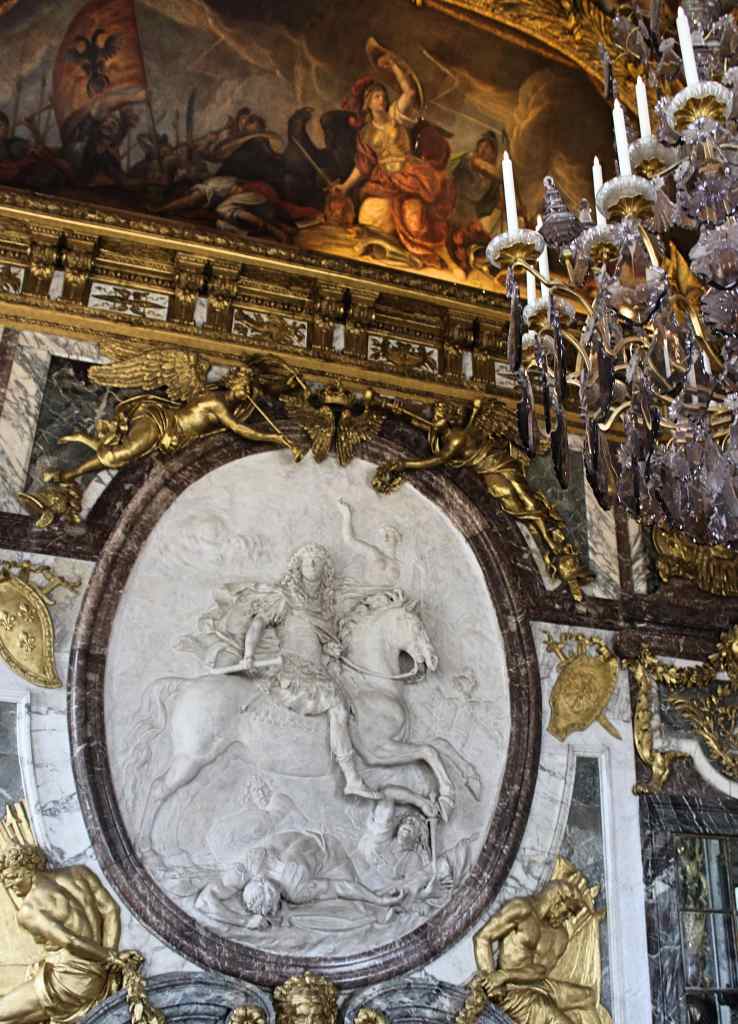
Then we come to the so-called Grand Gallery, the most opulent rooms in a building full of opulent rooms. In the War Salon we see Louis XIV yet again, in a relief by Antoine Coysevox, looking martial and kingly on his horse. This leads directly to the most famous space of all: the Hall of Mirrors. Nowadays, of course, mirrors are nothing special; but at the time they were extremely expensive, largely because Venice had a monopoly on their production. Louis XIV was committed to using products made in France, but he actually enticed some glass-makers to defect from Venice to France to work for him (whom the Venetians later tried to poison for their betrayal). This hallway served Louis XIV in his endless courtly rituals as a place where he could stroll back and forth, giving underlings a chance to make requests as he passed. Many years later, the Treaty of Versailles—which put an end to WWI, and set the stage for WWII—was signed in this room.


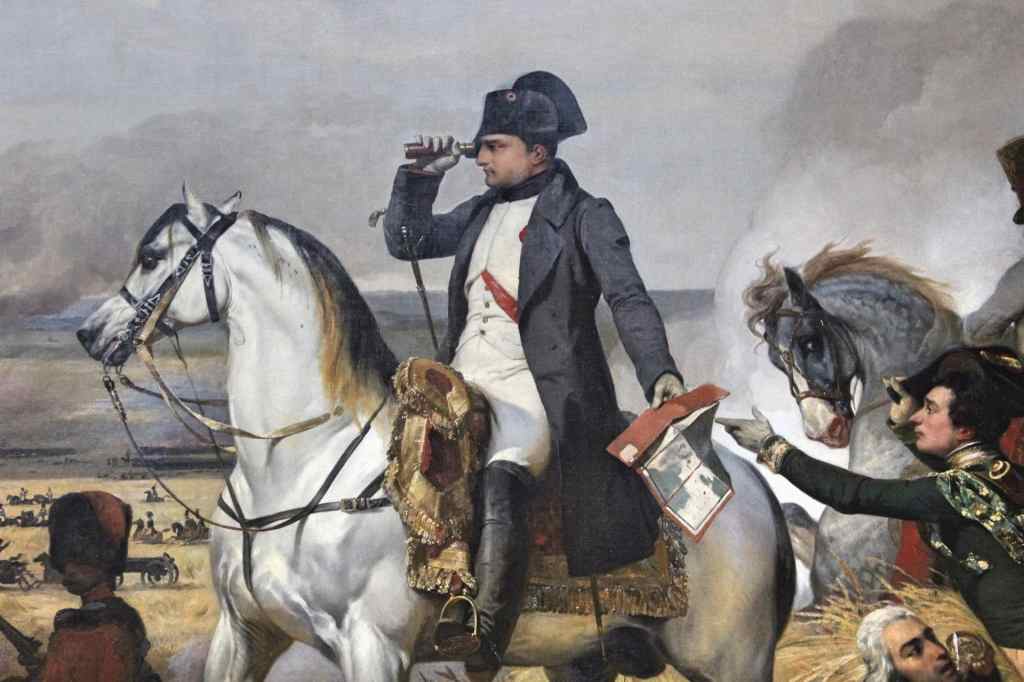
The visit next brings you to a newer part of the palace: the Galerie des Batailles. This was built during the reign of Louis Philip I (1830 – 1848), and it replaced several apartments in the original design. It is modelled on the Grand Gallery of the Louvre (to which it looks remarkably similar), and is full of busts and portraits of famous French military men. Unsurprisingly, Napoleon dominates the scene, as painting after painting represent his martial glories. Unless you are an intensely patriotic Frenchman, this room will likely not excite profound emotions. Yet propaganda is seldom more glorious and more impressive that this display.


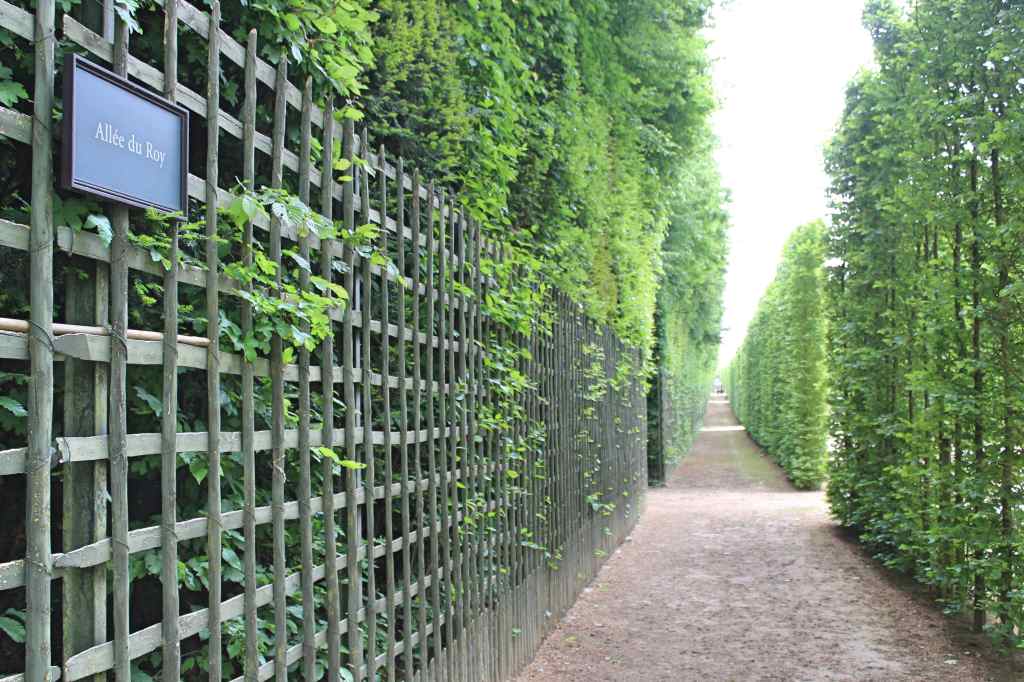
This pretty well completes the basic visit to the palace. But the best part of Versailles is still to come: the gardens. Now, gardens come in many varieties; and a major split is between English and French gardens. English gardens are romantic in spirit, seeking to evoke the wildness and grandeur of nature. French gardens are the exact opposite: they represent humanity’s dominance over the natural world. Thus, one finds neat hedge-rows, straight aqueducts, and heroic sculptures. The gardens of Versailles are the most perfect example of this type. Standing at the back of the palace, one sees an entire landscape laid out in perfect symmetry, a harmonious composition that meekly submits to the visitor’s glance. As usual, the environment bespeaks centralized power.
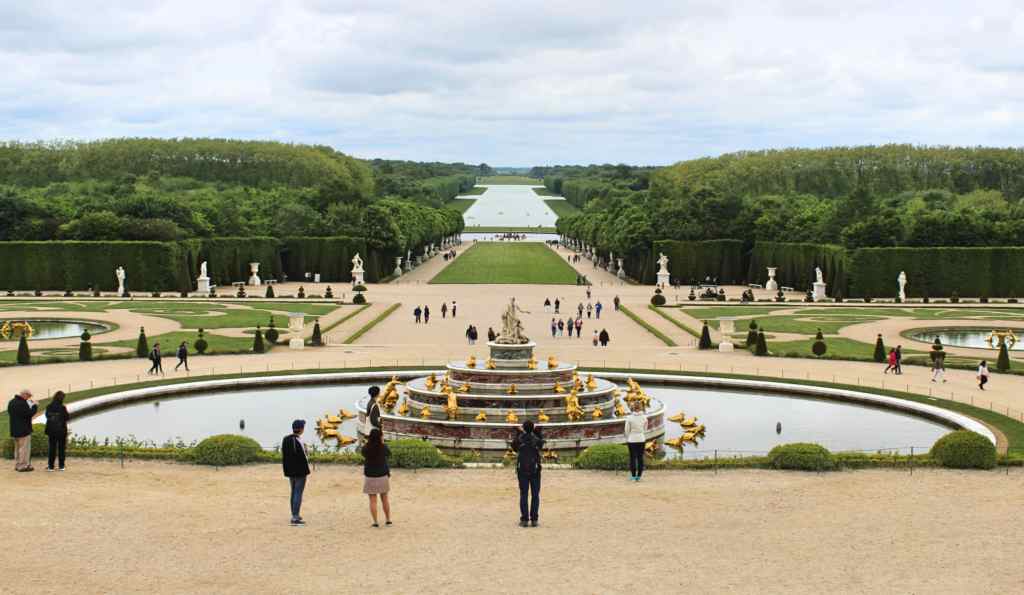
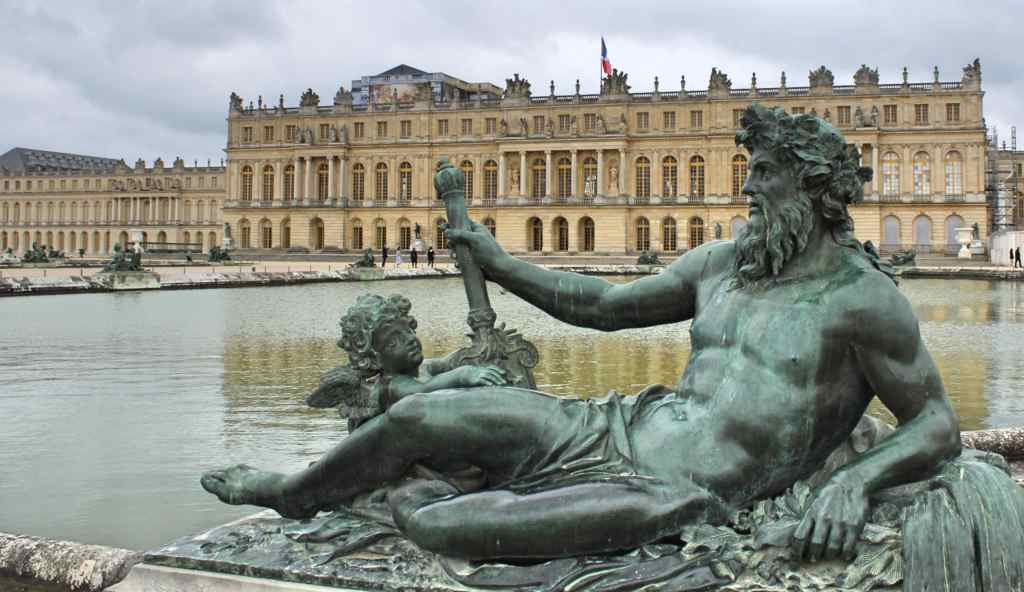
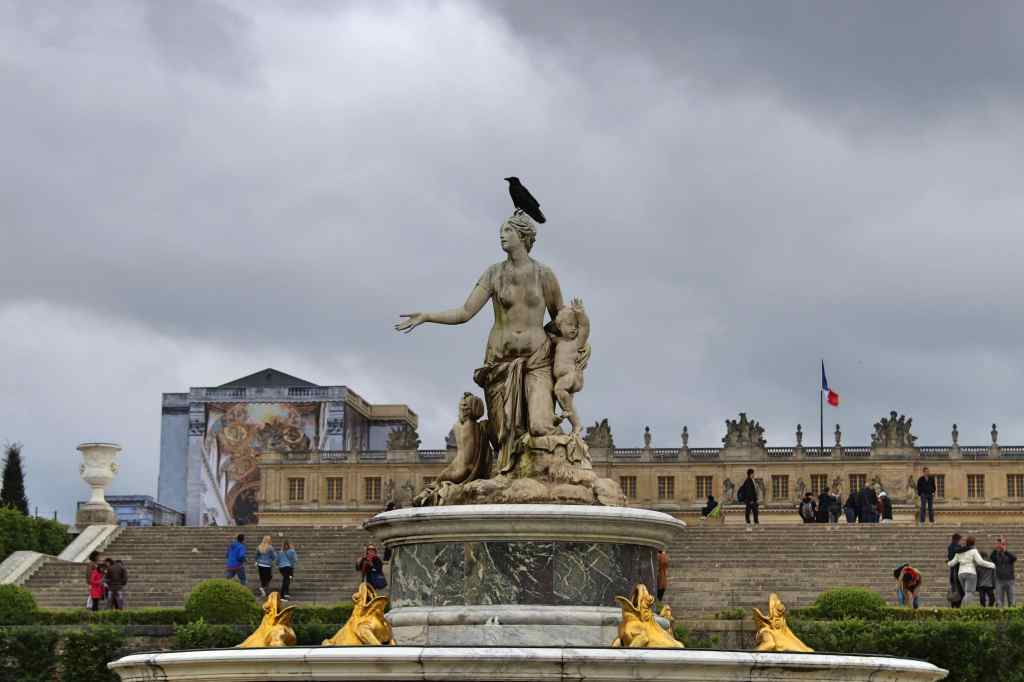
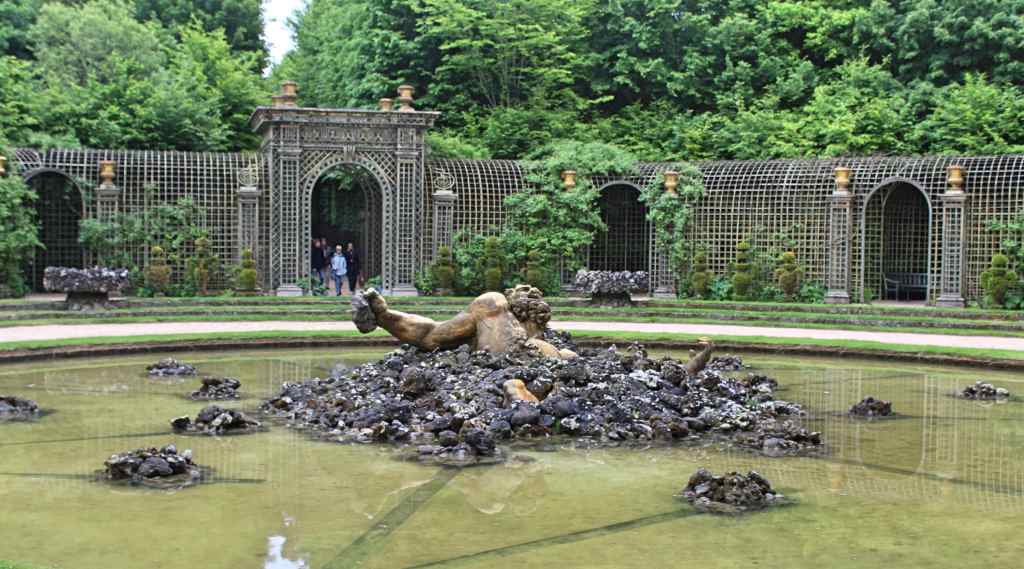
While I normally dislike French gardens (I prefer natural parks to these monuments to neatness), I must admit that walking through the gardens of Versaille is an absolute delight. At every turn there is yet another charming fountain to see, yet another sculpture to please the eye. Most of the imagery used in these gardens comes from ancient Greece and Rome, drawing apparent links between the reign of Louis XIV and these sources of Western culture. Louis XIV seems to invite comparison with Augustus himself. The perfect musical accompaniment to a walk in these gardens is, undoubtedly, the compositions of Jean-Baptise Lully—Louis’s court composer. Like the palace and the gardens, the music conveys pomp and power; it is trim, ornate, and grandiloquent.

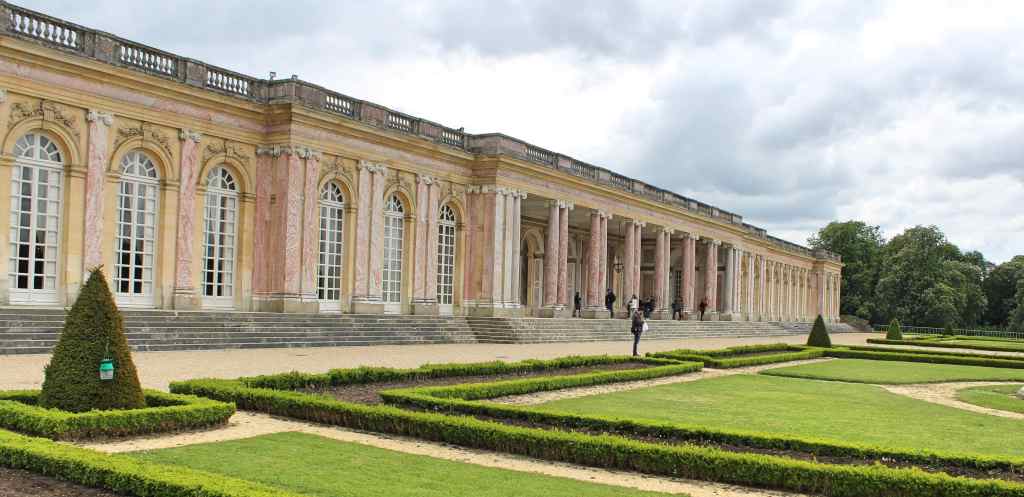
Eventually, the walker comes across the Grand Trianon. This is a chateau that served as a kind of getaway for the king, much as the Generalife served as a getaway for the residents of the Alhambra. The idea of having a smaller, secondary palace within a fifteen-minute walk from the central palace may seem a little silly; certainly it does not seem like much of a vacation. However, the Grand Trianon served an important function for the kings of France: as a place to be with their mistress. Famed for being the country with the highest tolerance of infidelity, the kings have France have long enjoyed the privilege of supplementing their marriage. (This tradition has, apparently, continued into modern times; Françoise Hollande—Macron’s predecessor—made little effort to hide his own dalliances.) The Grand Trianon would be a resplendent residence in another context, and yet when compared with the monstrous Versailles it appears positively humble.
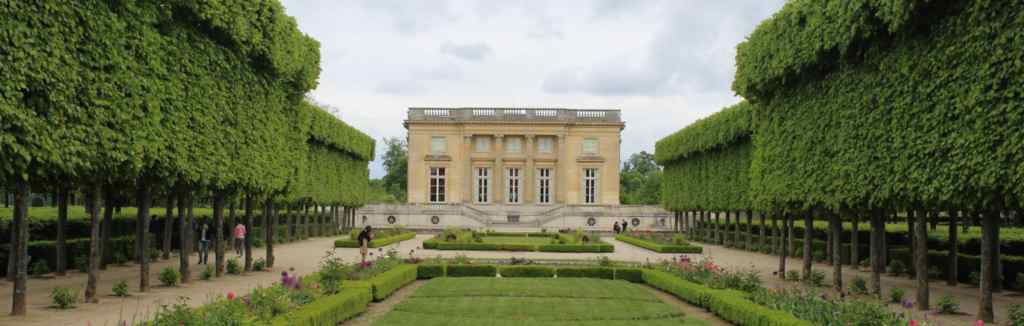
Nearby is the Petit Trianon, another supplementary palace. This was built during the reign of Louis XIV’s successor, Louis XV, for his mistress and advisor, Madame Pompadour. Unfortunately, that great woman died before she could move in, and so it was used by her own successor as the head mistress, Madame du Barry. Its most famous resident, however, is undoubtedly Marie Antoinette—not a mistress, but a queen. (Louis XVI was one of the few faithful French monarchs.) Like the kings before her, she came here to escape the demands of court life. As such, the palace was designed for as little interaction as possible between the young queen and the servants. As its name suggests, the building itself is fairly small—though, of course, carefully decorated.
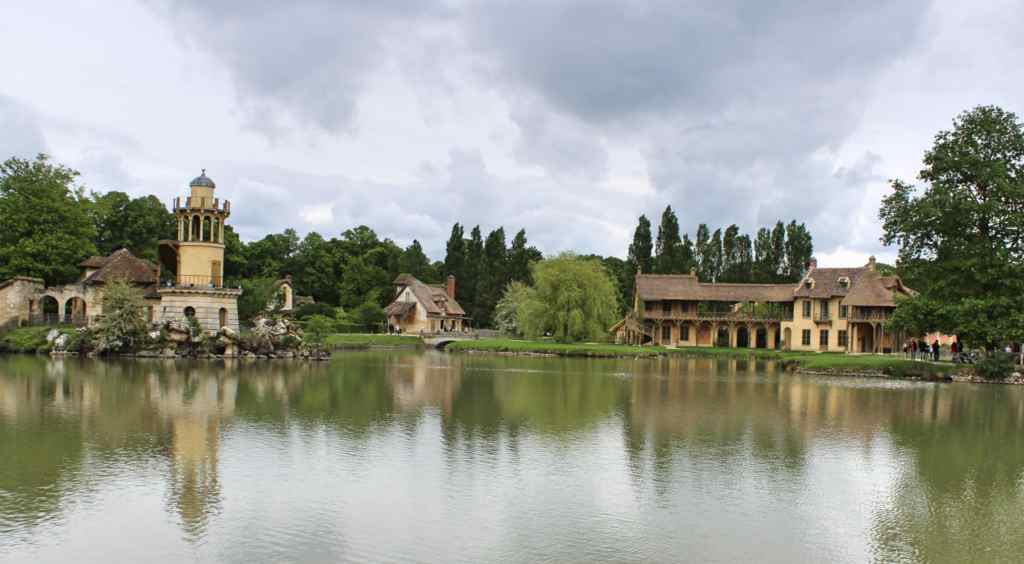
Directly next door is the Hameau de la Reine (the Queen’s Hamlet). This is a kind of artificial village, built to give the illusion that the Petit Trianon lay deep in the countryside. Thus, there is a farm, a barn, a dovecote, a watermill, and all the other trappings of country life. The architects succeeded in their design, for the little village is quite beautifully rustic. The gardens surrounding this area are quite distinct from those in the rest of Versailles. The influence of Romanticism is clearly marked here: instead of neat hedgerows, trees are scattered about naturalistically, sheep and cows graze in the grass, and the pond is full of hungry fish. It was quite a visual relief after the relentless parallel lines of Versailles and its gardens.
This brings us to perhaps the most famous scene in the history of the palace. It was in these gardens that, on October 5th, 1789, Marie Antoinette became aware of the crowd approaching the palace. This was the Women’s March, a crowd of Parisians who had walked all the way to Versailles, driven by hunger and scarcity of bread. The king and his ministers ultimately proved unable to pacify the crowd; and a violent confrontation between the citizens and the guards led to the royal family being led away to Paris, where they spent the remainder of their lives as virtual prisoners. It is a myth, by the way, that Marie Antoinette said “Let them eat cake” in response to the demands for bread. (The quotation comes from a passage in Rousseau’s Confessions, which he wrote long before the Revolution.) But she was an unpopular queen in any case, partly because of her taste for extravagant luxury, and partly being a foreigner (she was Austrian by birth).
The revolution proved a major turning-point in the history of Versailles. The monarchy would never return. In the following years, parts of the palace fell into disrepair. Indeed, the cost of maintaining the palace, and supplying the water needed for all of its gardens, is enormous by any standard—a testament to the power wielded by Louis XIV. History has shown, however, that the power was ultimately fragile, since it was not enough to keep the people of France happy.
At present, the palace of Versailles stands as a monument to a dead idea: that one single man should occupy the center of a state. It is an impressive and even a beautiful place. Its beauty, however, is that which can be bought wealth and power; it is the beauty of fine materials, unlimited resources, and exquisite craftsmanship. Lacking anything beyond naked self-aggrandizement to animate it, the palace and its gardens have a certain sterility, as if the glorious exteriors have little of value within. Compare this stone behemoth to the Alhambra, which looks like hardly anything from the outside, but whose interior possesses an otherworldly beauty. Perhaps this is because, instead of having images of a king on its walls, the Alhambra has a line of text: “There is no victor but God.”
 Lotz in Translation