The bus from the airport dropped us off in front of a monster of a building. We were in Milan, and this was the city’s Centrale train station. Its enormous stone facade looms over the viewer, the pile of stone seemingly poised to crush you. It is, in a word, rather an aggressive structure—with ferocious eagles and lions staring malignantly from its walls. It should come as no surprise, then, that this grandiose design was willed into existence by the Duce himself, who wanted it to represent the power of Fascist Italy.
Rebe and I had come for a little break. It was May—international worker’s day—and the weather was sunny and warm. The first thing we did was to eat some pizza. Within five minutes of walking, we saw a place that looked good and went in. I have no idea if it was special by Italian standards, but the pizza was better than the best you can find in Madrid. Yes, we were in Italy.
This was my second time in Milan. My first had been in high school, on a class trip, when we had seen The Last Supper. Of course, I was too young to appreciate anything about the art (I was far more interested in the airlocks that controlled the atmosphere inside the room than the fresco itself). A decade and a half later, the city looked entirely unfamiliar to me. Not even a shadow of memory remained.
We had a little time to kill before we could check into the Airbnb, so we decided to visit the Castello Sforzesco. This is a lovely Renaissance fortification made of brick, which is free to visit. The castle is named after Francesco Sforza I, an important ruler of the city, who turned the erstwhile medieval castle into the palace we see today. One of his sons, Ludovico, was a great lover of the arts and contributed to the palace’s further beautification—notably, by calling on artists like Bramante and Leonardo da Vinci. Today, this castle is home to several museums, notably the city’s painting gallery.
But we did not have time to visit any museums. Instead, we took a stroll around the lovely Parco Sempione, a large landscaped park. And as it was quite warm, we helped ourselves to some gelato. (Since we had traveled with Ryanair, which charges for carry-on luggage, we only had small backpacks and didn’t need to find a luggage locker.)
After some time relaxing on the grass, it was time to go. Our Airbnb was not in the city of Milan. We only had three days to spend in Italy, and I decided that it would be more fun to explore the nearby Lago di Como rather than stay in the city of Milan. So we walked over to the Cadorna train station and took a commuter train north. Soon, we were all checked in, and exploring the city of Como, at the southern point of the lake.
It was a relief to be outside of a big city. A cool breeze blew off the lake and green hills rose up above us. As if hypnotized, we began to walk along the water.
Perhaps I was just sleep deprived and delirious, but I remember this walk with a strange intensity. Everything seemed colorful, new, and interesting. The ferries in the harbor, the blue hangar full of sea planes, the colorful concession stand selling gelato and panini with Italian flags waving on the top… Soon, we came across a large, classical building. This was the Tempio Voltiano, a temple dedicated to Como’s most famous son, Alessandro Volta. It contains some of the great scientist’s devices, including his voltaic piles—the first ever batteries. (Unfortunately, by the time we arrived it was closed.) Nearby is the War Memorial, a large concrete tower dedicated to those who fought and died in World War I. Built in 1933, the memorial looks remarkably more modern than that, perhaps because it was based on a sketch by the Italian futurist Antonio Sant’Elia, who himself was a casualty of the war.
We continued to wander along the lake. With every step, more of the landscape came into view. It seemed too pretty to be real. The deep blue of the water, the dramatic hills, the unobtrusive architecture of the structures, all of it combined to make a kind of living postcard. It is no wonder that this lake has been a favorite resort since Roman times. But it is a minor miracle, at least, that after so many centuries of human habituation the environment seems so pristine, and the human presence remains tasteful and discreet. Sometimes one really has to hand it to the Italians. They may seem stubborn and stuck in their ways, but they know what they’re doing.
Eventually, we came upon the Villa Olmo, one of a seemingly endless number of lovely mansions that dot the lakeside. Now, I normally have scant interest in the ostentatious residences of the very rich; but this villa and its garden—like everything else—fit so perfectly the aesthetic of the lake that I could not possibly object. It was especially charming because, just as we arrived, a troop of people in period costumes walked by. I have no idea what they were doing.
It was getting late now and we needed to find a place for dinner. We decided that we would take the funicular up to Brunate, a small village on top of the nearby hills, and try our luck there. We had to wait in a queue for about ten minutes for it to arrive—a time that was rendered almost intolerable by the presence of a bunch of Erasmus students talking loudly in front of us. (One student, after professing to know “some Spanish,” proceeded to butcher the conjugation of a basic verb in a way I did not think possible.) Finally, the machine arrived and we boarded (as far away as possible from the students). It was a lovely, if crowded, ride, and soon enough we were in the sleepy town of Brunate.
It seemed like a ghost town after Como. Very few people were in the streets, and the light was fading fast. We hadn’t eaten in hours and were starving by now. We had to find a restaurant. After a quick search online, I guided us to the Trattoria del Cacciatore, crossing my fingers that the place wouldn’t be packed. Indeed, we had the opposite problem: the restaurant was completely empty and they hadn’t even opened up the kitchen yet. I suppose Italians dine as late as the Spanish. We were told we would have to wait half an hour, but were invited into the restaurant’s large backyard to have a drink. The view was shockingly nice—the lake and the mountains stretching out before us, the sky red from the setting sun. I drank an aperol spritz before being called in to enjoy a fine meal. It had been a wonderful day in Italy.
Rebe posing at the restaurant. The view extends into Switzerland.
The next day we woke up early and returned to Como. This was our big day to explore the lake. The Lago di Como is shaped like an inverted Y, with the city of Como at the southern end of the western branch. Our first destination was Bellagio, which sits right at the center, where the three branches connect. To get there, we had to take a ferry. There are several routes on the lake, some local, and others express. To save time, we elected to take one of the express ferries that go there directly—making the trip in about 40 minutes, instead of over twice that much time.
The trip had a few hiccups. For one, even though surgical masks were acceptable for traveling on trains and planes in Italy (oh, the COVID times!), for some odd reason the ferry company demanded that we use the heavy-duty N95 mask. Unprepared for this requirement, we bought some masks from some entrepreneurs selling them on the street (for a significant mark-up, of course).
Because of this scramble to cover our breathing holes, we were among the last to board the ferry, meaning we had to take a seat below deck. This was quite frustrating, since we knew the views of the lake must be gorgeous. Rebe decided to take matters into her own hands and marched up the stairs to take pictures. I attempted to follow, but was immediately told by an attendant to return to my seat. I went back downstairs feeling defeated—frustrated that Rebe was enjoying the scenery while I had a view of a wall. After about ten minutes I made a second attempt, only to be told by the same young Italian man to go back to my seat. I was flabbergasted by this, since I was standing right next to Rebe, who was entirely ignored by the attendant. Was this Italian machismo, or just chivalry? (Maybe it comes to the same thing.)
We arrived in Bellagio in good time. Like everything on this lake, but even more so, it was picture-perfect—a kind of Platonic ideal of a lakeside town. If you try to imagine a place where a world-weary Romantic poet would go to recuperate his spirits, or a disenchanted millionaire would go to discover the charms of the simple life, Bellagio is what comes to mind. It is, in short, a gorgeous town. We walked first to the end of the peninsula, which had a wonderful view of the lake with snow-capped mountains beyond. There, a woman was selling a private boat rental, which we briefly considered before we looked at the price. Then, we walked through the center of town. It was crowded with tourists and full of the expected shops selling gelato and trinkets.
The main site to see in Bellagio is the Villa Melzi d’Eril and its gardens. Melzi, the man, is principally known to history for his brief stint as the Vice President of Italy under Napoleon. But he was also an art collector who was determined to make his villa one of the greatest on the lake. He succeeded. Though we didn’t enter the villa itself, the gardens are as beautifully arranged as any in the world—full of statues, excellent viewpoints, and exotic plants, trees, and flowers. As with everything on the lake, the overall effect was of overwhelming beauty—to the extent that your eyes can hardly take it in. I wonder if the residents of the lake long for brutalist concrete structures and piles of garbage, if only for a contrast.
We went back to the dock to get on the ferry to our next destination: Varenna, which is just across the water. While Bellagio, with a population of about four thousand, feels relatively compact, Varenna is positively tiny: with 800 souls calling it home. And as tiresome as it must be to hear by now, it is another jewel. Indeed, I found myself thinking on the ferry ride that the residents of this place, from Roman times onward, had collectively turned it into a kind of communal work of art—a living landscape painting that they gradually composed.
The view as we left Bellagio
The village of Varenna
There is really nothing to do in Varenna, which is the best thing about it. There is a kind of plaza that drops off into the water, and at any given time is covered with dazed tourists gazing at the scenery. After our own bit of gazing, we wandered inland, eventually ending up at what we would call in New York a “deli,” but which I believe the Italians would refer to us a salumeria. There, we got a couple sandwiches and then wandered into the local church, Chiesa San Giorgio. This modest bit of sightseeing done, we retreated to a nearby bar for campari sodas.
The main square in Varenna
A local Italian deli
The Chiesa San Giorgio
We had had an altogether lovely day on the lake. But the voyage back to Como was perhaps my favorite part. Instead of taking the express ferry, we took the local, which took nearly three hours in its meandering voyage from Varenna back to Como. If I felt deprived of lake scenery on the voyage out, I was absolutely saturated with it by the time we got back. The only thing that would have made it more enjoyable was if the ferry’s bar had been open. A nice glass of wine would have been ideal. But we were still in COVID times, and so I had to get drunk on pure aesthetic pleasure.
Our short vacation was coming to a close. The next day, we had a late flight back to Madrid. This did not leave us much time to explore Milan.
I had a great time on the ferry back.
Milan is the second largest city in Italy. A capital of finance and fashion, it does not exactly fit the stereotype that many hold of Italy—neither quaint and full of art, nor chaotic and rugged. Old women aren’t shouting from their balconies and old ruins aren’t dotted the cityscape. It is, rather, a clean and rather posh place.
Our time was extremely limited, so we went to the symbol of the city: the Duomo. When we visited (and this may still be the case) you had to buy a timed ticket in order to go onto the roof. We selected a time two hours hence, and then set about to see something of Milan.
To start, the Duomo is ringed by important buildings. There is the Palazzo dell’Arengario, for example, which now houses the Museo del Novecento (museum of the 1900s). Right nextdoor is the old Royal Palace, which now serves as a cultural center. And across the piazza is the magnificent Galleria Vittoria Emanuele II. This is a beautiful shopping gallery, consisting of two arcades that intersect at a huge glass dome. The place is full of restaurants and shops that we could hardly afford even to look at, but it was a pleasure just to explore this piece of 19th century splendor. The floor mosaic in the center—representing the regions of Italy—is especially lovely. Rome is, of course, represented by a she-wolf, while Florence is a lily. Turin, meanwhile, is a much-abused bull, whose delicate parts have been worn away by visitors spinning on their heel over them. Supposedly, this brings you good fortune. Perhaps I ought to have tried it!
That poor bull!
Then, we visited San Bernadino alle Osso, a church nearby famous for its ossuary. This is a small side-chapel that has been extensively decorated with human bones (apparently the cemetery got too full). It is free to visit and is certainly worth your time if you have any taste for the morbid.
Finally it was time for the Duomo. My first impression was of its sheer size. It is the third largest church in the world, narrowly beating the gargantuan cathedral in Seville. Stylistically, it struck me as odd. Unlike the other great Italian churches, this one is a medley of styles, owing to the ungodly long time it took to complete—from 1386 to 1965. The proliferation of spikes and spires indicates gothic (unusual in Italy, to say the least, where the Renaissance dominates), but the Milan Cathedral does not have the exuberance, the spiritual riot, of a true gothic creation. It is, rather, quite stiff and almost formalistic, the lines in its facade intersecting at right angles, ascending up in a straight line without giving a great impression of height. This sterility is due, I think, to its facade being actually neo-gothic (after all, it was completed in the 19th century).
Stepping inside, I was once again astonished by its size. I also thought the interior of the church more restrained and tasteful. The same cannot be said, however, for the cathedral’s most famous statue, Marco d’Agrate’s Saint Bartholemew Flayed. Here we can see the unfortunate saint posing like a Roman senator, his skin wrapped around him like a toga, his muscles, veins, and nerves exposed. It is a kind of tour de force of anatomy, and obviously executed with a great deal of skill. But it is hard to call such a gruesome display a masterpiece.
Next, we took an elevator up to the roof. Though it was somewhat expensive (over 30 euros a person, I believe), the visit to the roof proved to be a worthwhile experience. What was nothing but a tangle of statues hanging in the air when viewed from the ground became, from up close, a kind of stone forest. While the decorative statues, judged individually, were rather generic and unremarkable, the sensation of being surrounded by so many floating figures was genuinely uplifting. The visit culminated (pardon the pun) at the top of the roof, where visitors were stretched out on the stone as if it were just another beach.
Old and new skylines in Milan
This was it for us. After a quick lunch (more pizza), we made our way to the Centrale train station and caught a bus to the airport. It had been a wonderful trip, though we had left much undone. I was particularly disappointed that we hadn’t had time to visit the Cimetière Monumentale—the city’s massive and beautiful burying ground—or the Pinacoteca di Brera, Milan’s world class art museum. But after having seen so much beauty, it was impossible to have any regrets. Italy never disappoints.
A special thanks to Rebe, who took some of the photos in this post
The train was boarding in Budapest’s Keleti station. An elderly Hungarian woman, speaking broken German, asked me to help her with her bags. I did so, and then took a seat on the train. We were bound for Vienna.
The ride was not quite as uneventful as I had hoped. For one, I soon discovered that the ticket I purchased online (for a very reasonable price) did not come with a seat number. Thus, anytime the train made a stop, there was a chance that I would be booted by someone who did have a reserved seat. This made the trip considerably less relaxing than it could have been. Then, the train stopped at the Austro-Hungarian border, and—surprising in Europe, where borders are so permeable—a troop of armed border agents got in and started systematically checking people’s passports. We were also instructed to put on our special N95 masks, mandated at that time by Austrian law for indoor spaces. Everybody complied, though it did seem rather silly to be putting on a mask after breathing in the air for well over an hour.
(I think somebody should examine the relative COVID rates between Hungary, which had no restrictions at all, and Austria, which not only had a mask mandate, but required the heavy-duty N95 masks. It is a natural experiment.)
A little after noon, the train pulled into the Vienna Hauptbahnhof. I took a metro into the city center, deposited my luggage in one of the many storage lockers, and then set out to re-discover Vienna. My first priority was lunch. For this, I headed to a Viennese staple, Buffet Trzesniewski (the name is Polish, I believe) for some of their tiny little open-faced sandwiches. I got five—with various combinations of egg, fish, mayonnaise, and bacon—and every one was delightful. Indeed, I admit that the description of the food did not sound at all appetizing to me, but each sandwich was scrumptious. I particularly liked the small glass of beer, called a “pfiff,” to wash it down.
I later returned and had a glass of wine.
Reinforced, I was ready for Vienna’s cathedral. The last time I had visited, which was in 2018, I had balked at the entry fee for the grand church, and contented myself with a peak inside. This time, I resolved not to be so cheap. The ticket comes with the option of an audio guide. But at the time of my visit, I was in the throes of an obsession with Rick Steves, and instead elected to use his free audio guide. I’m sure it comes to the same thing, although my choice allowed me to enjoy the nasal strains of his high-pitched voice.
The roots of St. Stephen’s Cathedral go back to the Romanesque period, though the church, as it stands today, is mostly gothic in design. The visitor will likely notice two things immediately: first, the majestic south tower—a classic gothic skyscraper—and second, the colorful roof tile mosaic. Perhaps the colors are so vibrant because it was installed after a great fire gutted the cathedral and destroyed its roof in 1945. The retreating German commander actually disobeyed orders to destroy the building, but a fire caused by looting nearly did the job, anyway.
This fire also destroyed many of the bells in the cathedral, including the famous Pummerin, which had been cast from the canons of defeated Turkish invaders in 1705. Thankfully, a replacement was cast and installed in the shorter, but stabler, north tower. This new Pummerin clocks in at over 20,000 kg, the third largest bell in Europe. (For context, the Liberty Bell weighs just 940 kg, not even half of a tenth as much.) It can only be heard on special holidays and other festive occasions, so I was not lucky enough to be the person for whom the bell tolls.
(On the topic of big bells, even though it has nothing to do with Vienna, I cannot help mentioning the story of the largest bell ever made, the Great Bell of Dhammazedi. It was cast in present-day Myanmar and weighed an unbelievable 300,000 kg—or, if you’re American, over 300 Liberty Bells! The great bell was stolen in 1608 by the Portuguese “adventurer” Filipe de Brito, who hauled it by elephant to a raft, hoping—of all things—to melt it down to make cannons. His scheme unwound when his raft sank, taking his flagship with it, as the incredibly heavy bell proved to be too… well, incredibly heavy. De Brito was captured and executed by being impaled on a stick. There have been many attempts to find the bell under the river, but so far it has eluded detection. In any case, I have no idea how it could be lifted.
Anyway, back to the cathedral.)
There are several highlights on the tour around the cathedral. In one corner of the cathedral is the stately tomb of Frederick III, Holy Roman Emperor. Like so many kingly sarcophagi in Europe, this one contains the bones of a Hapsburg. Another is the beautiful Neustädter altar, a massive, folding wooden piece that is a pentaptych rather than the traditional triptych. When it is fully opened, it reveals a marvelous series of reliefs; but when folded up—and it often is—the altar reveals only an uninspiring series of paintings.
The tomb of Frederick III
Unluckily, I was there on a day when the altar was closed.
The pulpit, thankfully, is always on display, and it is marvelous. It is a perfect example of the Gothic style—gorgeous, meticulous, intricate, and heavily symbolic. As in so much Catholic art, the entire worldview seems to be represented using a panoply of saints and signs (many of them animals).
The architect of this stony florescence must have known that he had created a masterpiece, as he included a self-portrait below. You can see him peering from an open window, his compass in hand. This is known in German as the Fenstergucker (window-looker), and it is one of the most winsome self-portraits I can think of. Nearby, on a wall, is a similar figure. This time he is holding a compass and a framing square. And, like the builder himself, he symbolically holds up the cathedral at the base of an arch. By the way, it is not known who exactly this master builder was. The two prime candidates are Anton Pilgram and Niclaes Gerheart van Leyden.
It was getting late now, so I decided to visit the Weltmuseum Wien, which was open until 7pm on the day I visited. This is a large and rather miscellaneous museum located in one wing of the Hofburg Palace. The collection includes a great deal of medieval arms and armory—some of it quite beautiful, though the signs were only in German so I couldn’t learn much—as well as a smattering of objects of “anthropological” interest (meaning, from cultures outside of Europe). But I spent virtually all of my time in the collection of musical instruments.
This must be one of the greatest collections of this sort in the world. For one, there is an assortment of famous instruments—either because of who made them, or who played them. There is an Amati violin, for example, and a piano that was played by both Robert and Clara Schumann, as well as Johannes Brahms. But there are also many instruments special for their particular beauty or unusual design. After all, there is nothing inherently special about the design of a flute or a violin; anything that makes noise can be an instrument. Thus, there are bizarrely twisting horns and oddly shaped stringed contraptions. The collection goes even beyond instruments. There is a table specially designed to hold music for a string quartet; and another table, belonging to the bishop of Passau, is decorated with musical notation.
This visit put me in the ideal mood for my next destination: the Wiener Staatsoper (Vienna State Opera). Now, it is possible to buy standing-room only tickets a few hours before a performance. But I doubted that I could stand through an entire performance, and so opted to buy a cheap seat (for about $15). This price would have been worth it just to be given the privilege of exploring this fine building—a beautiful neoclassical construction fit for the Austro-Hungarian Emperor himself. Lucky for me, Carmen was playing during my visit, and I was able to see (or, rather, hear, since my seat had limited visibility) that marvelous opera performed with great panache.
In short, though I had arrived around midday, I managed to have quite a wonderful day in the Austrian capital.
As my Airbnb was nearby, I decided to start off my next day by visiting the great Schönbrunn Palace. According to Rick Steves—who would know—this is the one palace in Europe that can rival Versailles. But you would not think it from the outside. Whereas Versailles’s exterior is vast and resplendent, the Schönbrunn is, by palatial standards, relatively modest—painted plain yellow, with few frills. But if you pay the (somewhat steep) entry, you will see that the interior is indeed as sumptuous as could be desired. Even so, if you ask me, the best part of the visit is a (free) stroll through the palace gardens, which are vast and lush
Two figures loom over the Schönbrunn: Franz Joseph I and his wife, Elisabeth. Franz Joseph, the longest-reigning emperor of Austria, was born in this palace; and it is also here that he died, in 1916, at the age of 86. His wife, Elisabeth—affectionately known as “Sisi”—was quite a colorful figure. Highly neurotic and hugely dissatisfied with court life, she spent much of her time traveling around, unaccompanied by her husband. But when she was in Austria, she often retreated to this palace. Like so many public figures during this time, she was assassinated by an anarchist in 1898, making her the longest-reigning Austrian empress.
(Though it is not directly related to the palace, I cannot help inserting a little story. The marriage of Franz Joseph and Sisi produced only one son, Rudolph. This made him heir apparent to the throne; but in 1889, he died in gruesome murder-suicide pact with his lover, the 17-year old Mary Vetsera. Rudolph’s motivations are still unclear, but his marriage was very unhappy. This led to his cousin, Franz Ferdinand, becoming the new heir apparent. And, of course, his murder at the hands of Serbian nationalists kicked off the First World War, which eventually brought down the whole Empire.)
Palaces, even beautiful ones, tend to put me in a foul mood. (I suppose they bring together too many things I detest—obscene luxury, arbitrary power, and huge crowds of tourists.) To recover my spirits, I went to another of Vienna’s world class museums, the Albertina.
Located in another erstwhile palace (Vienna is full of them), the museum is named after Duke Albert, a Hapsburg Prince and art collector who used to live here. A visit to the Albertina is a complete experience. You begin by walking into an ornate foyer and exploring some of the palace rooms. Then, you get to the core of the museum: the collection of prints and drawings. Few, if any, museums in the world can rival the quality of these works. There is Dürer’s exquisite watercolor of a rabbit, Da Vinci’s study of the last supper, and a monstrous fish disgorging its insides by Pieter Bruegel the Elder. A study for Hieronymous Bosch’s Garden of Earthly Delights is on display, as is a muscular male nude from Michelangelo.
This riot of brilliant draftsmanship would be more than enough for any art lover. But the museum also has a substantial collection of Impressionist and Post-impressionist paintings. Indeed, with works by Picasso, Monet, Cézanne, and Magritte, this collection alone would also make a fine museum. I was particularly interested in the Munch exhibit that was on display during my visit. Aside from his famous Scream, I had known close to nothing about the Norwegian painter, and it was a pleasure to witness his artistic development.
I like to take closeup shots of paintings.
Right next to this museum is another classic Viennese attraction: the Wurst stand. It is recognizable from the large green rabbit on top (modeled after the Dürer painting). There, you can order from a range of delicious sausages for a quick and filling meal. Vienna is, of course, full of sausage vendors, though this one is the most famous.
My next destination was far outside the city center. To get there, I took the metro to the Wien-Heiligenstadt station, in the north.
Though Vienna is a beautiful city, it was a relief to be in a more humble, ordinary neighborhood, with no crowds to speak of. Vienna is so grand, so stately, and so full of tourists that it can feel like one big, outdoor palace. Now, at least, it felt like I was in a place where ordinary people lived. I wandered around a little, stumbling upon a little park named for Beethoven, and eventually decided to have lunch in a place called Mayer am Pfarrplatz. Though the place had seats for upwards of 100, it was mostly empty, and I was put at a table in the patio. I ordered the cordon bleu with the Austrian potato salad (that means vinegar and no mayo), and found it to be delicious beyond belief. The white wine was also stupendous.
While I ate, the waitress informed me that Beethoven used to live in the adjoining house. I later learned, however, that Beethoven lived in dozens of different apartments throughout his life, so this might not be such a claim to fame. Still, thinking of Beethoven did improve my dining experience.
I left in a satisfied stupor and continued to climb up the hill into the vineyards beyond the city. In no time, I was completely surrounded by fields of grape vines, and soon I came upon one of the famous wine stands. It was an Edenic vision: picnic tables full of happy people, all holding glasses of crisp white wine. I bought myself a glass and sat down. The view of the Danube and the city beyond was nearly as intoxicating as the drink; and the wine was scrumptious—light, dry, and refreshing. Indeed, I think I enjoyed those couple hours just sipping wine outside an order of magnitude more than I enjoyed visiting the palaces and museums. I highly recommend it.
This pretty much did it for my day, as far as sightseeing was concerned. After drinking so much wine, I went back to my Airbnb and had a short nap. Then, as a form of repentance, I put on my running shoes and went to the Donauinsel.
Much like Budapest, you see, Vienna has its own island park. Unlike Budapest’s Margaret Island, however, Vienna’s island is artificial. It was originally created as a form of flood control, but accidentally became the most popular recreational area in the city. The island is narrow and long. If you ran from the southern to the northern tip, and then back again, you would complete a full marathon. Yet it only takes a few minutes to go from one side to the other. When I went, the park was full of cyclists, joggers, and people out for a stroll. And for my part, I quite enjoyed running along the gravelly paths with the cool breeze coming off the water.
I woke up in a melancholy mood, as it was the last day of my trip. Lucky for me, however, my flight back was quite late in the day, so I had time to do some sightseeing. In cases like these, luggage lockers are an essential resource. I checked out of my Airbnb, stowed my bag, and was first in line at the Café Demel to get breakfast.
Now, Vienna is famous for its cafés, and justly so. They maintain the old musty smell of the Austrian Empire—with ritzy decorations, bow-tied servers, and a rack of newspapers. Demel is particularly attractive, filled as it is with sweets wrapped up in gift boxes. For breakfast, I ordered the obligatory Viennese classic: Sachertorte. This is a kind of dense chocolate cake with a bit of apricot jam in the center. To drink I ordered a “melange,” which is what the Viennese call a cappuccino for some reason. It was quite good—though, I must say, rather pricey.
From there, I got on a tram. My destination: Vienna Central Cemetery. This is an enormous cemetery which, its name notwithstanding, is on the outskirts of the city. With three million buried, it is one of the most populous cemeteries in the world. Though not as beautiful as Père Lachaise, this burying ground is an essential place of pilgrimage for music lovers. For it is here that the esteemed bodies of Beethoven, Brahms, Schubert, Strauss, and Salieri are interred.
Now, at first glance it may seem strange that Beethoven, who died in 1827, or Schubert, who died the following year, should be buried in Vienna Central—which, after all, opened in 1863. Their presence is due to a kind of marketing ploy. The cemetery was originally unpopular because of its distance from the city center, so they decided to relocate some revered corpses to make it more of a “destination.” Clearly, it worked.
Luckily for the visitor, all of these famous composers are right next to one another. For me, it is a subtly powerful experience to stand before the graves of such legendary figures. Their reputation is so enormous that they hardly seem real. But when you are standing above their bones, their humanity is palpable; and their achievements become all the more impressive for being made by somebody no different, in essence, from myself.
Aside from the musical greats, this cemetery is also interesting because of its interdenominational nature—not so common in Europe. There are sections for Catholics, Protestants, Greek Orthodox, Jews, Muslims, and even Buddhists. I was interested to find a large section devoted to Soviet soldiers who died during the Second World War.
After taking the tram back to the center, I only had a short time before I had to head to the airport. Since I was then in the throes of a Rick Steves addiction, I decided to follow his walking tour of the city. This proved to be a good choice, as it led me past a few interesting things I had missed. For example, I took some time to admire the enormous and bulbous Plague Column, which was erected in 1679 after a terrible epidemic. Strangely, the Baroque monument does capture (though perhaps unintentionally) something of the horror of a deadly pestilence.
I also was shown something I had overlooked before: the Memorial against war and fascism. This is in the Albertinaplatz, right near the museum. Designed by Alfred Hrdlicka, it consists of several free-standing sculptures made using rock quarried in the Mauthhausen mine. The monument commemorates victims of the Holocaust, as well as the innocent victims of all wars. In this spot used to stand a residential building that was struck by an Allied bomb in 1945, killing many hundreds of people—many of whom are still buried under the ground.
The “tour” ended at the Hofburg palace, the main residence of the Habsburgs. (The Schönbrunn was a summer palace.) It was strange to contemplate such a vast and monumental building which now serves no purpose except tourism. Like Vienna itself, the palace is a kind of head without a body—the wreck of foregone imperial grandeur.
But you cannot feel bad for the Viennese. After all, their city is consistently rated the most livable in the world. After just a few days, I could see why.
I have never met a person who has traveled to Budapest and didn’t like it. Though the city was not even on my travel radar when I arrived in Europe—not featuring prominently in any of the history I was familiar with—one glowing review after another was enough to convince me to pay the city a visit. “Not every city has a vibe,” one of my friends told me one day. “Budapest definitely has a vibe.”
I arrived in Budapest one day in early April, fully ready to be vibed (or whatever the verb might be). A variety of things immediately pleased me: the plentiful restaurants (I ate Chinese noodle soup), the convenient trams and buses, and the well-designed transport app that allowed me to buy every ticket I needed on my phone. And all of it was cheap! Perhaps I am overly attached to lucre, but when I am in a reasonably-priced place I feel immediately better than when I am somewhere expensive. Rather than having to guard my wallet with my life—which means continually fighting my impulses to do pleasurable things—I can relax and simply enjoy the experience. I was, in short, already vibing.
After my bags were dropped off, I first headed to the Hungarian National Museum. This actually wasn’t in my original plans, but by chance it was very close to my Airbnb, so I figured: why not? It was a good choice. The Hungarian National Museum covers the history of the country from prehistory to the present. It is a story that I was hardly acquainted with. To simplify matters greatly, one theme in Hungarian history is the preservation of their very distinct identity in the face of foreign domination and in spite of being at a natural crossroads between Europe and Asia. Hungary was a part of the Roman Empire, the Ottoman Empire, and the Austro-Hungarian Empire, the Third Reich, and the Soviet Union; and yet their culture remains highly distinct.
Apparently this is a real skull, deliberately compressed like this.
For example, the Hungarian language is, as you may know, unrelated to its Slavic or Germanic neighbors. Indeed, it is not even in the same Indo-European language tree that includes everything from English to Sanskrit—meaning that the Hungarians resisted even prehistoric invasions and expansions. Hungarian is, rather, a Uralic language, which means that it is more closely related to Finnish than it is to Russian. This is why it looks so strange to foreign visitors. I did not manage to pick up a single Hungarian word.
(I should also mention that the name for Hungary has nothing to do with appetite, but rather is a latinized form of an old Byzantine Greek name for the area. The Hungarians, for their part, call their country Magyarorszag, or “Land of the Magyars.” Their language is called “Uralic” because it is believed that the Magyars originated in the Urals, in present-day Russia.)
A detail of the museum ceiling.
He looks so friendly.
In any case, it was a wonderful museum, with Roman ruins in the basement, archaeological treasures on the ground floor (including an elongated skull), and beautiful medieval artwork on the top floor. One of the gems of the museum is a piano that once belonged to Beethoven and Hungarian virtuoso, Franz Liszt. And I was particularly gratified to learn the story of the American general, Harry Hill Bandholtz, who personally prevented Romanian forces from looting the museum in the aftermath of the First World War. The exhibit ends with the Soviet period; you walk out saying goodbye to Stalin.
After this, I was rather hungry (pun unintended but unavoidable), so I made my way to the Great Market Hall. This is exactly what it sounds like: an enormous food market in the center of the city. Opened in 1897, it was the brainchild of the first mayor of Budapest, Károly Kammermayer, and it was designed with flair. An enormous steel structure, it is big enough to be an airport hanger, and almost attractive enough to be a church. The roof is covered in colorful tiles, much like the Cathedral of Vienna, and the inside is full of all sorts of decorative touches in its steelwork. Like the Eiffel Tower, completed just ten years earlier, this is a monument of the industrial age.
It is also just a fun place to be. The basement is stinky: full of pickled products and fishmongers. The ground floor has fruit and vegetable stands, wine for sale, butchers (with delicious Hungarian sausages), and lots of vendors selling Hungarian paprika. This spice is, of course, the culinary signature of the country, though you may be surprised to learn that it became popular in the country as recently as the 1800s. (The Spanish, by contrast, have been using it since the 1600s.) Hungarian paprika may not have the deepest historical roots, then, but its fame is justified by its deep flavor. You can trust me on this, since I bought some at the market, took it home, and cooked with it.
The best part of the market is the upper floor, which is full of lots of tourist junk and, much more importantly, restaurants. I stopped at one food stand selling Hungarian staples and got a plate of chicken paprikash with a side of nokedli (Hungarian dumplings). It was phenomenal—so phenomenal that I didn’t mind sitting on the floor (the seats were occupied) and eating it from a flimsy paper plate. I ought to mention that, the following day, I returned to this market and got a Hungarian sausage with potatoes, which was also scrumptious.
Now, a few paragraphs ago, perceptive readers may have noticed the oddity that Budapest had its first mayor in the late 19th century. Isn’t it a much older city? The explanation for this is simple. Budapest was officially created in 1873, when the cities of Buda and Pest (and Óbuda) were joined. There remain significant differences between the two formerly separate cities, however: Pest is older, more touristy, and very flat, whereas Buda—which sits across the Danube—is hillier, quieter, and more residential.
My next destination was right in the center of Budapest: St. Stephen’s Basilica. Compared to many of the grand churches of Europe, this one is rather young, having been completed in 1905. Yet even if it lacks the historical interest of some other buildings, it is still worth visiting for the beautifully decorated interior, which is illuminated with golden light. The basilica is named for the first king of Hungary, who was a pious Christian at a time when many of his fellow Hungarians were pagans. His mummified hand is preserved in an ornate reliquary; and the royal appendage has had, in the words of the placard, an “adventurous fate”—having been kept in Transylvania, Dubrovnik, Vienna, and “carried west” during the Second World War. Despite all this, the best part of visiting the basilica may be the view from the top.
The rest of my first day was uneventful. I walked around the city, ate some goulash and lángos (Hungarian fried bread), and tried some Hungarian wine (very nice). I needed to build up some strength for the morrow.
I woke up early the next day and got ready in a rush. I had booked a tour in the city’s most famous and iconic landmark: the Hungarian Parliament Building. Thankfully, with the help of the excellent trams, I arrived with time to spare, and so could take a moment to enjoy the small exhibit on the building’s architecture located on its northern side. This was a kind of tunnel filled with gargoyles and spires and other stone fragments used in the building. Seeing it all up close did help me realize just how much work went into the design of this monument.
Soon it was time for the tour, and I approached the building. Of course, I had seen it in photos, but its scale is only appreciable from up close. Indeed, it is so big that I almost missed my tour by simply not being able to find the entrance. (One of the guards helped me.) I had to run, but I made it.
I should mention that tours to the Parliament Building fill up fast, so it is worth booking them well in advance. In my case, I had to sign up for a Spanish tour since there weren’t any English ones available when I looked. Occasionally it pays to be bilingual.
The tour lasted about an hour and took us through just a fraction of the building (it is, after all, the biggest building in the country). But it was a beautiful fraction. Built in 1902, the Hungarian Parliament Building is the soaring, majestic symbol of the country’s sovereignty and democracy. Every inch of it is ornately furnished, with gilded arches, stained-glass windows, and more statues than a cathedral. One highlight is the Assembly Hall, which must be among the most ostentatious settings for a legislative body in the world. The views are stunning, but I can imagine that it gets a little cramped with 199 Members of Parliament and their aides. Another showpiece of the building is the main staircase, which makes the entrances of royal palaces seem tiny by comparison. Right below the central dome is a glass case containing the Holy Crown of Hungary, which tradition states was first worn by St. Stephen himself. It may not be quite that old, but it is a beautiful example of Byzantine craftsmanship. Four liveried soldiers guard the crown, performing an elaborate changing of the guards ceremony every hour.
You cannot take a picture of the actual crown jewels, but a replica is on display in St. Mattias (see below)
Assembly Hall
It is a great shame, to say the least, that a country with such a glorious temple of democracy should be experiencing a backsliding into autocracy under the presidency of Viktor Orbán. Indeed, the danger of dictatorship was starkly obvious during my visit, as it happened just a few months into Putin’s invasion of Ukraine (which shares a border with Hungary). In addition to myself, a Ukrainian mother and child were staying in the Airbnb, refugees of the war. On a lamppost I noticed a satirical sticker linking Orbán to Putin, and I wondered if Hungarians would heed the warning of this war.
Hungary certainly has had its fair share of tyranny. Examples are not far to seek. Right in front of the Hungarian Parliament is the Shoes on the Danube Bank memorial. This is a sculpture depicting just that: empty shoes, right on the edge of the river. This memorializes the Jews and other victims who were executed by the Arrow Cross party—the Hungarian equivalent of the Nazis, who took control of the country late in the war. Victims were first told to remove their shoes (potentially valuable) and then shot into the Danube.
Quite nearby is a less depressing monument, the Széchenyi Chain Bridge. This was the first bridge to permanently unite the Buda and Pest sides of the river. When it opened, in 1849 (for context, 34 years before the Brooklyn Bridge), it was considered a kind of marvel of engineering. More importantly for the tourist, the bridge has a lovely, classical design that forms an iconic part of the Danube panorama. Unfortunately for me, however, the bridge was completely closed when I visited. It had been closed since March of 2021, and is supposed to reopen sometime this year. The bridge is named, by the way, for a politician and reformer—revered by his fellow Hungarians for his progressive ideals—István Széchenyi.
But I am afraid I must return to the topic of tyranny, for my next visit was to the House of Terror. This is a building that was used by both the aforementioned Arrow Cross as well as the ÁVH (Államvédelmi Hatóság), the secret police of the communist regime. No photos are allowed inside, so memory will have to do. The entry came with an audio guide, which gave historical context to the photos and images on display. The story was familiar, if depressing: secret police “disappearing” political dissidents and enforcing the most stringent political orthodoxy. The visit culminated in a long, slow elevator ride to the lower level, which had been used as a prison where suspects were detained, tortured, and executed.
The wall is covered with the faces of the victims.
I next paid a visit to the Dohány Street Synagogue, more commonly called the Great Synagogue. Its name is due to its size as much as its beauty—it is the largest synagogue in Europe, with seating for about 3,000 worshipers. To visit, you take a guided tour; these are available in many languages and at frequent intervals. The architecture is rather peculiar, combining elements of European churches and Islamic decoration. Yet the synagogue’s history is more compelling than its design. During the Holocaust, the Jewish ghetto was right next to the synagogue; and as a result there is a cemetery for those who died in the brutal conditions. There is also an adjoined museum of Jewish culture, in the former house of Theodor Herzl, a famous activist and journalist, considered to be one of the fathers of Zionism.
The most moving part of the visit is to Raoul Wallenberg Memorial Park, which is on the site of the aforementioned cemetery. Wallenberg, I should mention, was a Swedish diplomat who managed to save thousands of Hungarian Jews from the Nazis (though ironically, he seems to have been killed by the Soviets). His name, and those of others who helped to rescue Jews from the Holocaust, are inscribed on leaves of a statue of a weeping willow designed by Imre Varga. Yet the vast majority of these leaves bear the names of the many thousands of victims of the Nazi terror. In total, over 400,000 Hungarian Jews were killed during the Holocaust, many of them at Auschwitz. Today, there are only about 10,000 Jewish people residing in the country.
(Though I did not manage to visit it myself, I wish I had gone to the Holocaust Memorial Museum while I was there. It was the first state-sponsored Holocaust museum in Europe, and is located in a former synagogue.)
This was a lot of heavy history for one day. So after a quick dinner, I was glad to have a triumphal finale in the Hungarian State Opera House. The building was opened in 1884, just a few years after the slightly more famous Wiener Staatsoper; and from the outside the two look almost identical. The inside is marvelous, as I discovered when I arrived for an evening performance of Richard Strauss’s Die Frau Ohne Schatten. I walked up the marble staircase, below the frescoed ceilings and gilded arches, to sit in my nose-bleed seat high above the stage. The view may not have been great, but I had only paid about $10 for my ticket and felt that it was an amazing deal, all things considered.
That particular opera is known as an extremely difficult work for its many soloists, complex music, and other pyrotechnics demanded by the mythological plot. Its performance was thus a testament to the skill of everyone involved. The particular opera is also quite long, so long that it had to be broken up by three intermissions. I highly recommend any visitors to Budapest to give opera a try, even if you don’t think you like the music. The combination of the fine architecture, elegant dresses, champagne during intermission, and of course the elaborate music, make for an oddly intense experience. Nevertheless, I should admit that I left during the third break, as I didn’t want to be there until midnight.
So far, everything I have described is more or less in the center of old Pest. But Budapest is a far-flung city, with things to see and do in many of its remote corners. This may sound like a negative, but with the city’s excellent public transportation system it is easy to get anywhere. This is why, I think, Budapest does not get as claustrophobically crowded as places like Prague or Munich, which have very focused centers of activity.
Now, to explain the next group of landmarks, you need to know a date: 1896. This is the year of the great Millennium Exhibition, a celebration of the 1000-year anniversary of Hungary. That is, in the year 896, a man named Árpád, leader of the Magyars, was made prince of the newly-created Principality of Hungary. Obviously, the Hungarians of the late 19th century had to celebrate their longevity, and to do so they staged an event similar to a World’s Fair.
Especially created for this event was the first metro on the European continent, and the third in the world (after London and Liverpool). This metro line is still in operation, known simply as Metro Line M1. It was made to ferry Hungarians to and from the fairgrounds. Unlike more modern metros, this one is extremely shallow, just a few feet below Andrássy Avenue, one of Budapest’s principal thoroughfares. The journey from street to metro is almost instantaneous. The metro is also a joy to ride, with attractive cars and stations along the way.
The line ends near Heroes’ Square, the centerpiece of the Millennium Exhibition celebrations. This is a big, open plaza with a sweeping assemblage of statues in two colonnades depicting (as you might expect) heroes from Hungary’s past. The square was obviously built to accommodate masses of people, though for the solo traveler it is almost annoyingly vast. Right in the center is the Memorial Stone of Heroes (often mistaken for a tomb of the unknown soldier), which is a monument to those fallen in war defending the country. Flanking this glorious stone poem to the country’s greatness are two art museums: the Museum of Fine Arts and the Hall of Art. (Unfortunately I didn’t give myself time to visit either.)
Beyond Heroes’ Square is City Park (not very creative names, these), one of the finest parks in Budapest. As you might have guessed, this park was also created for the Millennium Exhibition, and signs of that epochal celebration are not far to seek. The most obvious is Vajdahunyad Castle, a full-scale replica of Corvin Castle, which is now in Romania. This castle was originally built of wood and cardboard and meant to be temporary, but the Budapestians liked it so much that it was rebuilt in stone. Yet aside from these architectural fantasies, the park is also simply a nice place to be. I bought a glass of steaming mulled wine from a street vendor and walked around, enjoying the sight of Hungarians at play.
One thing I did not do, but probably should have, was to visit the Széchenyi Baths. This is a massive thermal bath complex where you can go and soak in water that ranges from warm to scalding. It is one of the most distinctive and famous attractions in the city, but I felt uncomfortable going by myself. To make up for my own cowardice, I recommend you, dear reader, to give it a try.
The other park I visited in Budapest was neither on the Pest nor the Buda side, but right in the middle of the Danube. This is Margaret Island, the green oasis in the center of the city. It is named for a Hungarian Saint, and in the past was covered with churches and monasteries. But the nuns and monks fled during the Turkish invasion. Now there are only a few ruins left to remind visitors of this history. Mostly, it is just a nice place to take a walk. But I was training for a half-marathon, so I decided that I would visit at a faster pace. I soon discovered that Margaret Island is a wonderful place to run. A track—made of special, bouncy material—runs along the edge of the island, allowing you to run with a view of the Danube and the city beyond. Perhaps it was the cool breeze coming off the water, or the thrill of running in a new city, or the competition from the other runners, but I was significantly faster than usual.
So far I have covered a great many monuments on the Pest side. But there remains the other half of the city to explore—the hilly, more sedate Buda.
Perhaps the most famous attraction on the Buda side is Fisherman’s Bastion. It is a place made for Instagram. Constructed around the turn of the 20th century, it is a kind of neo-medieval fantasy castle, whose ornate walls provide an iconic view over Budapest. Its name is due to the fact that the fish market used to be nearby.
Right next door is Mattias Church, perhaps the most beautiful house of worship in the city. Though a church has been here for over 1,000 years, the building as it stands now is gothic in style. It has been through a lot. Among other tribulations, during the Ottoman period, the church was converted into a mosque; then, it was extensively remodeled for the Millennium Exhibition of 1896; and finally it was severely damaged during the Second World War. In any case, the church is absolutely lovely, both inside and out. The imposing gothic exterior—softened by the colorful tilework—yields to a playful explosion of polychrome patterns inside.
Right next door to these two monuments is Buda Castle, an enormous palace that sits on top of castle hill. The original Baroque palace was probably quite remarkable. Unfortunately, however, it was almost completely destroyed during World War II, and the rebuilt castle is not nearly as charming. Or so I hear, since I decided not to visit for myself.
A photo showing the destruction wrought by the Second World War. In the foreground is the SzéchenyiBridge, and Buda Castle is in the background.
My next stop was Gellért Hill, which is one of the highest points in Budapest. I was unlucky, however, as I discovered that the top was closed off for some sort of construction work. I had to content myself with a visit to the Garden of Philosophers. This is a bizarre park a little ways down the hill, which features an assemblage of statues of major religious leaders: Jesus, Abraham, Buddha, Laozi, and Akhenaten (the Egyptian Pharaoh who created a monotheistic cult). Also present are Gandhi, the Bodhidarma, and Saint Francis of Assissi. (Notably absent is a representative of Islam; but of course depicting Muhammad would be, to put it mildly, controversial.) All of them are gathered around a small metallic ball, which represents their common goal. This was the work of a Hungarian sculptor, Nándor Wagner, who wanted to symbolize the commonalities between different faiths. While the idea that the various religions are striving after the same thing is certainly appealing, I think the sculptures are quite compelling in themselves as human figures.
I don’t know why Akhenaten looks like an alien.
Another popular attraction on the Buda side is the Hospital in the Rock. This is exactly what it sounds like: a hospital built into the side of a hill, using a previously existing network of tunnels. These tunnels had been used for centuries by locals as food cellars. In the leadup to the Second World War, the tunnels were equipped with medical equipment and staffed with doctors. But the casualties overran the hospital’s capacity by over 600%. The guide (and you have to visit with a guide) explained that doctors had so few materials that they had to reuse bandages, with predictably grizzly results. After the war, the hospital was repurposed as a kind of nuclear shelter, though it was never used in any emergency situation again. (The guide also said that it couldn’t have withstood a nuclear attack, anyway, as it is not deep enough.) Now the tunnels are filled with hundreds of wax dummies and old equipment, providing a graphic (if silly) illustration of the hospital’s history.
All of this was wonderful enough. But my favorite thing on the Buda side—maybe in the entire city—was Memento Park.
Getting there is not easy. Located on the city limits, it is only accessible by bus. I complicated matters by taking the right bus in the wrong direction; but I realized soon enough, got out, crossed the street, and was soon on my way.
Memento Park is the dustbin of history, a place where all of the Soviet statues were put after Hungary became independent. It is located in a suburban neighborhood, but you can’t miss it: there is an enormous brick platform topped with the boots of Joseph Stalin. The complete statue was actually destroyed during the Soviet Union. In 1956, the Hungarians attempted to throw off the Soviets. The Red Army crushed the uprising in a matter of days, but not before the Hungarians had a chance to destroy this hated symbol of Soviet Rule. I went inside the base of this statue, and discovered a room full of busts of Stalin and Lenin.
Next to the entrance is one of the best statues in the park: a cubist rendition of Marx and Engels, made from granite taken from the Mauthausen Concentration Camp. The little kiosk where you buy your tickets is an attraction in itself—full of old Soviet knicknacks. You can, for example, buy a real Soviet passport or postcard, or even a CD with old Soviet anthems. With my ticket, I also purchased a little booklet that explained each of the statues on display. I was glad I had it, since otherwise there was little signage.
Walking around the park is a surreal experience. Dramatic and triumphant statues sit decaying in a field, almost as Washington D.C. would appear after a disease wiped away humanity. The bulk of these statues are in the recognizable Soviet social-realist mode—heroic soldiers, stolid workers, and the occasional full-bodied woman. As works of art, they rarely rise above propaganda, though they are wonderfully evocative of that era. And some are indeed memorable.
One favorite of mine (for obvious reasons) was a monument to the Hungarians who fought in the Spanish Civil War. Three rather frighteningly abstract soldiers stand saluting next to a pile of rocks, on which are inscribed the names of battles during that war. Another highlight is the Martyrs’ Monument, created by Kalló Viktor, which shows a barefoot man reaching out towards the sky as he collapses (presumably from being shot). Just as dramatic is the Republic of Councils monument, which shows a victorious worker rushing forward.
But my absolute favorite is the Béla Kun Monument. Kun’s life illustrates the ups and downs of the communist movement. He fought in the First World War for the Austro-Hungarian empire, was taken prisoner by the Russians, became a communist, returned to Hungary, and led a revolution in his native country. Then, when the Hungarian Soviet Republic collapsed, he escaped to Soviet Russia and participated in political purges. But he reaped what he sowed, as he was himself eventually accused of Trotskyism and executed. It was only after Stalin died that he was rehabilitated and made into an official hero, as depicted in this posthumous monument. This is unlike any statue I have ever seen. Kun stands on a platform, pointing with his hat, while a mass of soldiers march to war beneath him. The chrome plating on the soldiers and their odd, compressed dimensions made them look like toys. It is so silly that it parodies itself.
Everything I had seen and read—not least the Béla Kun Monument—indicated that communism was not a happy time for Hungary (or the Soviet Union, for that matter). Nevertheless, I admit I found it touching that ordinary workers were held in such high esteem. It may have just been propaganda, but even paying lip service to workers is better, in my opinion, than our worship of the super-rich.
All philosophizing aside, the final exhibit made it very clear what the Soviet Union was actually about. Showing in the adjacent exhibition center was a film by Gábor Zsigmond Papp, in which he had edited together films used to train the secret police. Consisting of four parts—hiding bugs, searching houses, recruiting, and networking—the film was a shocking illustration of the strategies that secret police would use to search out political dissidents. I remember scenes of agents sneaking into a gym locker room to plant a listening device, or picking a lock in an apartment when somebody wasn’t home, in order to search it. (The agents were careful to put everything back where it was, so the suspect wouldn’t know they were there. Apparently, some people would leave small objects, like a hair, stuck in a closed door, so that they would know if the house had been entered.) Clearly, privacy was not a priority during this time. If ordinary people were celebrated openly, they were persecuted secretly.
This was my final stop in Budapest. I wandered back into the bright spring day, walked into the suburbs, and caught a bus back to the city center. It had been a wonderful visit. Budapest is convenient, comfortable, cheap, and full of art and history. And it certainly does have a vibe.
One of the best parts of living in Spain is the restaurant scene. The country is exceptional simply for the number of dining establishments. If I had to guess, I would say that there must be more bars and cafés per capita here than in any other country in the world. And though you may not think so, this alone is quite a wonderful thing, since you really never have to worry about where you are going to eat or drink. Chances are, there will be something close.
But in this post I want to focus, not on the quantity, but on the special quality of Spanish restaurants. And to do this, I think it will be better to discuss one exemplary bar rather than to speak in abstractions. For this, I went across the street to one of my favorite local bars, Los Gauchos, and interviewed them. These are my discoveries.
Gauchos is located in the Pacífico neighborhood, which is fairly central but which doesn’t attract much tourism. It is in many respects a typical Spanish bar—or, as the Spanish say, “un bar de toda la vida” (a lifelong bar). That is, it is the sort of establishment you might find in the north or the south, the east or the west, and which retirees and children would both recognize.
An example of a vitrina, one of the most characteristic features of a Spanish bar.
According to Javier—the son of the owner—Gauchos has been open for about thirty years. It was purchased from previous owners, who had run the bar for fifteen years before that. A lifelong bar indeed. (It was the previous owners who named the bar after the famous “gauchos,” who were something like South American cowboys.)
The bar has been around so long that the neighborhood has changed around it. According to Javier (who has worked here since he was 16) and the jovial bartender Melchor (who has worked here since it opened 30 years ago), Pacífico has become more residential in recent years. In past decades, the area was full of offices and industry, and consequently was a ghost town on the weekends when nobody had to work. Lately, they’ve noticed that rising rents are pushing younger people out of the neighborhood, further into the peripheries of the city.
Now, my country has dive bars and local restaurants aplenty. But I think the closest thing the United States has to this sort of restaurant is, perhaps, a diner—a privately-owned restaurant which nevertheless has a recognizable aesthetic and a fairly standard menu. However, the Spanish “bar de toda la vida” is quite different in being, well, a bar. There is simply no place in my country where you can get a coffee and toast in the morning, eat a multiple-course meal at lunch, and have a gin tonic with your friends until late at night. The typical Spanish bar is an all-in-one experience.
This makes Gauchos, and other bars like it, a kind of de facto neighborhood gathering place. In the morning it attends to the mad rush of commuters on their way to work. Around lunchtime, besuited office workers might sit down for a leisurely lunch. And at night, the sidewalk is full of neighbors having a drink. Partly because apartments in Madrid are often small, friends tend to meet in bars rather than in one another’s houses. The neighborhood bar thus plays an important role as the communal living room.
Many times I have witnessed a grandpa or a grandma come after picking up their nieto from the nearby school. The other night, three generations of a family came in to hang out. Meanwhile, a man with a guitar sat down to drink peppermint tea and read a comic book. The most raucous nights are when there is an important football match, and the bar and even the pavement fill up with people watching the game on the large TVs, screaming in triumph or agony at every development. In short, the clientele is a cross-section of the neighborhood itself.
As I mentioned, the typical Spanish bar is similar to the American diner in having a standard menu. Just as the latter will have pancakes, hamburgers, and milkshakes, so the former will have bocadillos, tostadas, and tortilla de patata. If Gauchos’s menu is exemplary, it is in having even more reasonable prices than usual. You can order a full plate of food for about 5 euros. The lunch menu—which includes two courses, a drink, and dessert—costs ten euros and fifty cents.
The low prices are not incidental, but essential to any neighborhood Spanish bar. It is a place for anyone and everyone to come. This is a major contrast with most bars and restaurants in the United States, which are seldom cheap (especially after tipping), and which normally try to distinguish themselves with ornate decorations or unusual food options. By contrast, you can buy a cup of coffee in Gauchos and sit there for hours without anyone bothering you.
The contrast goes deeper. Neighborhood bars in Spain are essentially public, open spaces, where anyone can come in and feel at home, whereas bars in the United States are very different. Gauchos, for example, is bright inside and there is never any music playing. (Hemingway would call it a “clean well-lighted place.”) You don’t have to shout to have a conversation and you don’t have to squint to read. By contrast, I often find the darkness and loudness of American bars to be sort of oppressive. You can seldom forget that the bar is private property and that you are not the owner.
The aesthetic of Gauchos is extremely simple. The walls are white, and the chairs and tables are completely plain. As is common in Spain, the bar itself has a large glass display cabinet that is even refrigerated, where the customer can see the various options for tapas,* or even raw meat and pickled fish to be used later. The sign outside consists of simple plastic lettering against a white background. Below this is the iconic toldo verde (green canopy), where the patrons gather to escape either the sun or the (rare) rain.
(*There seems to be some confusion among Americans as to what tapas are. In Madrid, a tapa is just a small bit of food included with your drink. This is normally just a few olives or some mixed nuts. But in a good place like Gauchos, you might get a mini sandwich, some fried chorizo, or a plate of patatas bravas.)
Some tapas waiting to be deployed. The fish on the right are boquerones, anchovies pickled in vinegar. (They’re good!)
There is, in short, hardly any decoration to speak of, which is why British journalist Leah Pattem, in her popular blog, has coined the term “no-frills” for this sort of establishment. It is an apt description, and I think she deserves much credit for bringing this sort of bar—so common as to be taken for granted by many—into the spotlight.
Indeed, for my money the neighborhood bars of Spain are a cultural resource as precious, in their own way, as the Alhambra or the Sagrada Familia. And I think that the people who run them deserve a great deal of credit. It is very hard work—long hours, few days off, both physically and emotionally taxing. So I think we all owe a debt of gratitude to the people who form the backbone of the neighborhood’s social life.
Bartender Melchor, hard at work.
In Spain, as elsewhere, the existence of local restaurants is threatened by ongoing gentrification and the spread of corporate restaurant chains. These trends, if they continue, threaten to turn every city corner into the soulless copy of every other—where identical freeze-dried food can be purchased at identical prices from identically uniformed workers. But if the large crowds that gather around Gauchos every evening are any indication, the Spanish have not lost their taste for their bares de toda la vida—and I hope they never do.
When you live in Europe, you notice that certain destinations come up in conversation with surprising frequency. Porto, Budapest, and Normandy are among those which are highly-praised among the well-traveled. Edinburg is another. So although I had no special reason to go—I had not even found an especially cheap flight—I decided that I would use my February vacation to take a little trip up north and see what all the fuss was about.
The plane broke through the gray clouds and touched down in Scotland on a cold, drizzly morning. I found the bus indicated by my Airbnb host and got on the top floor. The double-decker bus afforded me a commanding view of a not-very-exhilarating urban landscape as we traveled from the airport to the suburb where I was to stay. Though there really was nothing interesting to see, the combination of the dreary skies and the (in my eyes) quaint domestic architecture made a powerful contrast with the usual Spanish scenes of sun and walled-in houses.
Soon enough, I was at my destination. It was a rather odd Airbnb experience. My host told me that she had been repeatedly trying to contact me, only to realize that she was thinking of another guest (she managed various properties). Then, I was told, among other things, that the shower was set to the absolute perfect temperature and ought not be changed; also, she insisted that Scotland was just as humid as Florida, so that I ought to leave my window open for a certain amount of time every day to prevent mold. (Unless I am mistaken, the amount of moisture that air can hold is dependent on its temperature, so that cold Scottish breeze can’t hold nearly as much humidity as the scorching soup that is Florida’s atmosphere.) But this sort of thing is par for the course when staying in somebody else’s place. At least it was cheap.
With my bag dropped off, I caught the bus to the city center. I really appreciated the double-decker bus now, as it allowed me a wonderful way to enjoy Edinburgh’s Old Town. But by the time I stepped onto the cobblestone street, I was tired, thirsty, and extremely hungry. The daylight was fading now, and I desperately wanted dinner. This did not put me in the best mood to appreciate the lovely city which now opened up before me. Yet I was sentient enough to notice that the architecture formed a kind of coherent whole, all of the buildings made of the same grayish-brown stone, and constructed in the same heavy style, which seemed somehow suited for this clime.
I wandered up the venerable streets feeling rather sorry for myself, as I peered into window after window to see family and friends having dinner. I did not have the heart or the stomach to walk into a restaurant by myself and eat at a lonely table. I wanted something fast and anonymous, and my prayers were answered when I discovered a quiet kebab shop. I sat down at one of few chairs and, within minutes, my meal was ready. Better than any kebab I had in Spain, and this was not even a well-known spot. And as I ate, I reflected on the stark difference between what I had just observed of Scottish eating culture, huddled up inside, and that of Spain—where patios are overflowing onto every sidewalk. Of course, the weather is the explanation, though I also found it curious that nobody else was in this kebab shop on a Friday night. In Spain, it would have been full to the brim with drinkers.
It was, by now, too late to see any attractions. But it was not too late to enjoy a drink. For this, one of my friends had suggested the famous pub, Sandy’s Bell. Though I was somewhat buoyed by the food, I still felt nervous when I looked through the cloudy windows to see a bar filled with a rowdy crowd. But after pacing back and forth on the frigid street, I mustered enough courage to barge in. The barman immediately asked me for a drink and, like an idiot, I just said “beer.” (In Spain one often just orders “cerveza” and you’re given the only beer on tap.) He wasn’t satisfied with that, and asked me to choose a beer, and I scarcely helped matters when I said “an ale.” One of the regulars at the bar—an older man—took matters into his own hands and said “Try this!” while holding his own drink up to my lips. Too surprised to refuse, I drank a gulp and said, “That one!” The barman returned shortly with a pint of the dark ale.
My troubles were hardly over. The place was packed and every chair and barstool was occupied. I found a corner of the wall I could lean on and sipped my beer rather awkwardly, trying not to be noticed. This was my first Scottish pub experience, and somehow I found it very intimidating. I tried to slow down and enjoy the beer (which was quite good), but I found myself drinking faster and faster, as a part of me was eager to leave. When I realized that I was failing to enjoy the pub, I got rather down on myself—all these years of traveling had not cured me of feeling like a misplaced high school student—but slowly resolved to cut my losses.
Just as I had taken the last sip of beer and I was ready to pay and head out, a man got up to leave from the bar and, like an angel from heaven, offered me his seat. (I really must have looked conspicuously uncomfortable.) I thanked him from the bottom of my heart and got ready for another beer, this time from the commanding position of the bar. A drink sitting down is incomparably better than one standing up, and I felt quickly at ease. The experience was made even better with the purchase of a bag of crisps (salt and vinegar, my favorite flavor, which is rarely available in Spain), which persuaded me that I ought to have a third beer.
Time slowly ticked by. Eventually I remembered that the bar is famous for its live music. I asked a nice young fellow to my left, and he told me that it started at nine. I looked at my watch: about 45 minutes to go, and no beer left. My better judgment told me that I should just stop and come back another night; but my tempting demons—rather convincing, usually—told me that I ought to just tough it out until I heard some music. The decision was instantly made when I spotted a bottle of Laphroaig on an upper shelf. This is my dad’s favorite type of whiskey, and I felt duty-bound as a son to have a glass in his honor. This was ordered, and I could have sworn that I could feel a wave of respect pass over my fellow patrons.
Laphroaig is, you see, not an especially popular single-malt scotch. A single taste will let you know why. Coming from the island of Islay (pronounced “eye-luh”), this scotch is normally described by whisky enthusiasts as “peaty,” though the first words that come to mind of most ordinary people are considerably less kind. It tastes, to me, how I imagine a strong iodine solution would taste (though admittedly I have never tasted iodine). In other words, Laphroaig is harsh—almost chemically harsh. And yet, strangely, the taste grows on you. If you can get past your initial revulsion you will find it has a sort of complex smokiness beneath the initial shocking acrimoniousness. In short, I actually managed to enjoy my glass of Laphroaig.
And luckily for me, the music began right as I was finished. It was a small group of three people, two on guitars and one on violin, playing lively tunes. I took it in for a while, and then caught the bus back to my Airbnb. I had a big day ahead.
I will begin by mentioning the things I did not decide to see. Perhaps most notably, I did not visit Edinburgh Castle. This is probably the most famous and popular monument in the city—perhaps in all of Scotland—and, even from the outside, you can see why. It is an impressive and imposing fortress which towers over the city. However, from what I read about the castle, there was nothing on the inside which I thought merited the steep entry fee. But I did enjoy the sculptures of Scottish heroes Robert the Bruce and William Wallace that adorned the entryway.
Next on my list of negative tourism is the Holyrood Palace. This palace is actually connected to the castle with a broad avenue known as the Royal Mile (though it is really a little longer than a mile). Holyrood is the official residence of the British monarch in Scotland, still used whenever the king or queen is in town. The rest of the year, it is open to tourism. I actually think that Holyrood is likely a rewarding place to visit, but palaces tend to put me in a bad mood.
But I did enjoy seeing the ruins of Holyrood Abbey behind the palace. While I assumed that it had been gutted in a fire, the story of its destruction is quite a bit more interesting. The abbey played an important role in Scottish history for several centuries after its construction in the 12th century. But when its old timber roofs were replaced by stone vaults seven-hundred years later, this proved to be the end of the old church. Its walls could not support the added weight and the roof eventually collapsed. It does make a fine ruin, though.
Photo taken from Wikimedia Commons; taken by Kaishu.
Another major attraction that I did not visit was Her Majesty’s Yacht, Britannia. As its name suggests, this yacht was used by the British royalty from 1954 to 1997, and is now a kind of museum showcasing royal pomp and luxury. Needless to say, this would have put me in a bad mood, too.
An example of a close.
The last attraction I missed was Mary King’s Close. Now, a “close” is just another term for an alley, and there are a lot of alleys in Edinburgh. The historic center used to be enclosed by a wall, requiring high density, and so these closes are highly claustrophobic spaces—hemmed in by neighboring buildings. This particular close (named after a merchant) was, well, closed as neighboring construction both partially destroyed and buried the little alleyway. Nowadays the abandoned close has something of a reputation among ghost hunters and other seekers after the paranormal. But tourists enjoy the tours about daily life in 17th-century Edinburgh. Perhaps I ought to have gone to this one.
So where did I go? My first visit was to the National Museum of Scotland. This is an enormous museum with a collection of virtually anything you might imagine. And best of all, it is free to visit. The central hall is immediately impressive—a large area, full of light, modeled on the original Crystal Palace. There, I was immediately attracted by the skull of a sperm whale (“Moby”) who had washed up on Scottish shores and who, despite rescue attempts, unfortunately perished. Moby was not an especially large male (indeed, slightly below average), but even so, his skull alone is longer than two tall men lying end-to-end.
As I said, the museum has a vast and varied collection. There is an exhibit on space, animals, geography, fashion, Ancient Egypt… But I figured that, if I was in Scotland, I ought to visit the Scottish History wing. This is housed in a separate and rather futuristic building, and it makes for an excellent visit. You are led, chronologically, from the stone age on the ground floor to the industrial revolution at the top. Though Scotland is a small and rather remote country, this exhibit encapsulates all of the glory and interest of its history. As I traveled from a medieval greatsword to James Watt’s steam locomotive, I found myself almost awed by how much had transpired in this soggy northern country.
Right next to the museum is another popular attraction: Greyfriars Kirkyard, a historical cemetery. But before you enter, you might notice the small metal statue of a terrier with a polished nose. This is Bobby, a semi-legendary dog who—according to the story—spent 14 years guarding the grave of his deceased owner, John Gray. The story is understandably quite popular, and Bobby (or his statue) is undeniably cute. But I have to admit that I feel skeptical. Not that I deny the nobility and loyalty of our canine friends, but the story does seem too perfectly calculated to attract tourists. And there are many reasons (free food?) that a dog might be found in a graveyard.
Well, whether or not the Bobby story is perfectly accurate, Greyfriars is worth visiting. I must admit that my knowledge of Scottish history is so spotty that I did not recognize a single name. Yet the grandeur of the tombs is enough to impress upon the visitor the importance of this burying ground. While I strolled around, I noticed two Americans who seemed to be walking with determined step to a particular grave. Thinking that they must know something I didn’t, I followed them as they made their way to the edge of the graveyard. There, I was disappointed to find that they were visiting the grave of a man named Tom Riddle. Now, I have no idea who this man really was, and I am sure my American guides did not either. They were visiting because this name was used by J.K. Rowling as an alias for Voldemort. (Indeed, I think there is quite a lot of Harry Potter tourism to Edinburgh.)
Though I did not know this story at the time, this is the perfect moment to mention one of the more macabre episodes in Edinburgh’s history. There was a time in Scottish history when the medical demand for human cadavers—which doctors used in their lectures—far outpaced the supply, mainly because of strict laws regulating which bodies could be used for such a purpose (paupers and prisoners, mainly). This led to the grotesque practice of “body snatching,” in which grave robbers would dig up the recently buried and sell them to a doctor for a handsome profit. Indeed, this was such a problem that several anti-robbery devices were developed, such as the mortsafe, which is basically a cage placed over the body. (You can see examples of these in Greyfriars.)
But in 1828, two men decided to take this practice one step further, and began murdering people in order to sell their bodies. The men had a very simple system: get a person very drunk, and then smother them to death by laying on top of the victim. After sixteen such murders, they were discovered. One of them, Hare, was inexplicably given a light sentence, while the other, Burke, was hanged for his crimes. With poetic justice, Burke’s body was then dissected before a group of medical students. His skeleton is still on display at Surgeon’s Hall in Edinburgh (I wish I had gone!), as well as—and this strikes me as a tad overboard—a notebook bound with Burke’s skin.
While I am on this morbid topic, I should mention two other tombs I visited during my time in Edinburgh. One was of the great economist Adam Smith, who is buried in the graveyard of Canongate Kirk. The grave is neither big nor particularly elaborate, but its inscription gets right to the point: “Here are deposited the remains of Adam Smith, author of the Theory of Moral Sentiments and the Wealth of Nations.” Nothing more need be said, as those two works will last longer than any tombstone. Next I visited the tomb of the other great pillar of the Scottish Enlightenment, David Hume. This is in Old Calton Cemetery, which is located on Calton Hill, one of the high points of the city. His tomb is slightly more monumental, consisting of a kind of hollow tower, but there is no memorable inscription. Yet merely being close to the mortal remains of this most skeptical of philosophers was a thrill (though he would likely say I was irrational).
Curiously, right next to this tomb is a statue of one of my countrymen, Abraham Lincoln. He stands over a monument to the Scottish American soldiers who died in the American Civil War. The Scottish are an international bunch.
Very close to Hume’s final resting place, right at the crest of the hill, is a park. In addition to providing excellent views over the city, there are a few curiosities to be found here. The most obvious, perhaps, is the Nelson Monument—an enormous tower, dedicated to the memory of the admiral who helped defeat Napoleon (and, thus, a very British memorial).
But I much preferred the other massive stone construction, the National Monument of Scotland. This was intended to be a glorious monument to the Scottish soldiers who died during the Napoleonic wars, modeled after the Parthenon in Athens. (This idea, by the way, was owed to the notorious Earl of Elgin, who stole the Parthenon frieze from Greece and brought it to the British Museum, where it remains to this day.) The final result, however, is comic and slightly pathetic. The campaign ran out of funds when just the portico had been completed, and it has remained that way ever since. Now it is just a collection of massive columns over a base—columns holding up nothing, a glorious doorway leading to nowhere. But it is great fun to climb on.
Even more fun to climb was Arthur’s Seat. This is a hill, formed by an ancient volcano, which looms over the city, and which is to Edinburgh what Central Park is to New York. Nobody quite knows why it is called Arthur’s Seat, as it seems highly unlikely that King Arthur—if he even existed—built Camelot here. Thinking that I ought to maximize my time in Edinburgh, I climbed the hill in a mad rush and got to the top in less than an hour. (What are vacations for, if not to anxiously hurry through?) Once there, I got a taste of the famous Scottish wind—or, as they might say, it was a wee bit blowy. The view of the city and the sea beyond was wonderful. The landscape was impressively rugged and wild. Somehow, for a park right next to the capital of Scotland, Arthur’s Seat transports you instantly to the middle of nowhere.
The Nelson Monument with Arthur’s Seat in the background
I should mention that observation of the geology of Arthur’s Seat helped James Hutton develop his scientific ideas. And this is no small thing, as Hutton is known as the “Father of Modern Geology,” whose work basically initiated the modern discipline. This influential Scot is buried in Greyfriars Kirkyard.
The view from Arthur’s Seat
Now, this does it for my first complete day in Edinburgh, which was long and exhausting. However, as the rest of my sightseeing was done in snatches around a daytrip (mentioned below) and before my flight back, I will mention the remaining sights here without attempting a narrative.
If you walk around Edinburgh, you will undoubtedly notice an infinity of shops selling scarfs and sweaters with what we call, in the US, a plaid design. In Scotland, this is a tartan, and they are often organized according to family names, or “clans.” I was rather excited to find a scarf with the design of my own “clan,” the Johnstons (through my mother’s mother). However, I really did not need a scarf and so decided not to buy one. I am glad I didn’t, as it turns out that this tartan-clan typology is a prime example of what the historian Eric Hobsbawn called an “invented tradition”—as it only goes back to the 19th century and was an intentional way of shaping perceptions of Scottish history. In other words, it is not true that “clans” were proudly displaying their colors back when William Wallace was slicing through Englishmen. Oh well.
John Knox with a friendly greeting card.
If you are in the center of the city, it is certainly worth your while to step into St. Giles’ Cathedral. This is the mother church of Scotland, where John Knox—the Scottish Martin Luther—acted as minister. Now, I must say that I am far too ignorant to give you any more information about this church, so I will only add that it is both beautiful and central to Scottish history. For example, proudly on display is the National Covenant, a document signed in opposition to the king’s attempt to meddle with Scottish religion. If that isn’t a symbol of Scottish independence, then I don’t know what is.
Nearby is a monument to David Hume. The handsome philosopher lounges in a chair, dressed in a toga, and holding a large book. When I visited, however, he was also wearing a Ukrainian flag. This was February 28, 2022, and the Russian invasion of Ukraine had begun just four days earlier. Most commentators had assumed that the battle would be over within the week, perhaps in just three days. So it is stunning to me that, as I sit here over a year later, the war is showing no signs of stopping. I am sure that Hume would have something incisive to say about the folly of mankind in this regard.
There are, of course, monuments and statues all over the capital of Scotland (I’ve already mentioned many), but I think that the grandest is easily that of Walter Scott. It is something of a monstrosity: a neo-gothic spire that ascends 200 feet (60 meters) into the air. This stone needle is covered with statues: 64 characters from Scott’s novels, 8 kneeling druids, and 16 busts of other Scottish poets and writers. Walter Scott and his dog, life sized, sit in the center of this stone carbuncle, almost comically small by comparison. As you may well imagine, an enormous number of stonemasons had to be recruited to put this together; and apparently the hewing came at a steep human cost, as many masons were fatally inflicted with silico-tuberculosis from breathing in the stone dust.
Considering Scott’s fairly modest place in the Western literary canon nowadays, this huge effort seems disproportionate to say the least. But during his lifetime, he was among the most famous and influential authors in the world. As it happens, when I visited, I had just finished reading Ivanhoe; and I think that the monument’s faux-medieval grandeur is quite in keeping with Scott’s style.
I cannot wrap up my time in the Scottish capital without mentioning some Scottish food. Now, when I was younger, my friends and I used to joke (for some reason) about haggis, treating it as an epitome of a disgusting dish. Certainly a description of the food—minced sheep innards cooked in its stomach—does not sound particularly appetizing. But when I ordered a plate of haggis with “neeps and tatties” (rutabaga and mashed potatoes) at the appropriately-named Haggis Box, I found that it was absolutely inoffensive—not only that, but tasty. The meat is minced with onions, oatmeal, and a generous amount of black pepper, and to me was quite reminiscent of Spanish morcilla (blood sausage) in both flavor and texture. In any case, when you stop to consider what goes into an ordinary sausage, then haggis ceases to appear exotic.
Another Scottish classic is the Full Scottish Breakfast. This is rather similar to the English Breakfast, though it is even richer and heavier. Standard components include: bacon, sausage, haggis, eggs, toast, fried tomatoes, mushrooms, baked beans, and potato scones. I had one of these at the Southern Cross Café before my flight back to Madrid, and did not have to eat anything the rest of the day. A wonderful experience.
This pretty well does it for my time in the city of Edinburgh. But I cannot leave off writing without an overview of the whiskey—or, as the Scottish write it, “whisky.” For this, I went to the Scotch Whisky Experience, which is located quite near Edinburgh Castle. It is certainly a touristy place, though I quickly found that it was a worthy visit.
The first part consists of a silly “ride” on a whiskey barrel, during which an animated Scottish ghost (“animated” in both senses) explains the process of making this distilled spirit. In short, this consists of fermenting malted barley, distilling it until the alcohol content is at least 40%, and then aging the result in an oak barrel. The second part was a kind of virtual tour of the Scottish whisky regions, which are: Upland, Lowland, Speyside, Campbeltown, and Islay. We were each given a scratch-off with the distinct aromas of each whisky type—and, sure enough, the Islay sample smelled like Laphroiag.
Along with these single malt types (which must be made from malted barley), there is blended whisky, which is usually both cheaper and milder, and thus comprises most of the market. Blended whisky is made from a mixture of grain alcohol (usually corn) with a bit of single-malt. The grain alcohol is fairly neutral in flavor, so any personality is derived from the single malt that is added.
I was then given a tasting of four single-malt scotches, and thought the Islay whisky was the most interesting (if not necessarily the most drinkable). Indeed, I found the “Experience” to be surprisingly rewarding. Perhaps this is just a romantic notion, but I felt as though Scotland itself was palpable—indeed, tasteable—in each glass. The harsh and smoky flavors somehow called to mind the soggy, grassy, and rocky landscape that I had glimpsed on Arthur’s Seat. Just as it is difficult to imagine such a robust and unforgiving liquor being cultivated in sunny Spain, so is it equally impossible for the rugged landscape of Scotland to yield up anything gentler than this spirit.
During my time writing book reviews on Goodreads, I have “met” many interesting people. One of these is a woman named Karen, who is from Scotland but who has lived in Germany most of her adult life. By chance, she was in Scotland during my visit, and so we agreed to actually, physically meet, as she kindly offered to show me a few sites near Edinburgh.
The drive itself was slightly disorienting, as Karen had brought over her German car but we were driving on the opposite side of the road. Everything was as in a mirror (you pass on the right), but thankfully, Karen did not seem flummoxed. I began to reflect that, even while walking on a sidewalk, an American or a Spaniard will naturally keep to the right side. Do British people naturally keep to the left on the pavement? Somebody must study this.
Our first stop was the Falkirk Wheel. This is a rather odd contraption, designed to unite two canals built at different levels. The Forth and Clyde Canal was opened in 1790, and the Union Canal 32 years later, in 1820. Together they provided a water route between the two major cities of Scotland, Glasgow and Edinburgh; but the problem was that the canals are built at different heights, with the Union Canal 115 feet (35 meters) higher than the Forth and Clyde. This height difference was originally overcome with a series of eleven locks—which is the standard solution. But locks are also expensive and slow, as they take a long time to fill and empty, and require a lot of water and energy for pumps. In any case, the age of canals was soon superseded by the age of the railway, and the canals fell into disuse. Eventually the locks became inoperable and were taken apart, and the canals became rather useless watery ditches.
But as the new millennium approached, the authorities decided that this waterway should be reopened—if not for commercial, at least for symbolic reasons. This beautiful piece of infrastructure was the result. The wheel consists of two troughs of water balanced around a central spoke. By just slightly adjusting the amount of water in each trough, gravity can be used to help turn the wheel and take ships up and down. As such, it is both faster and more efficient than a traditional canal lock, though I am not sure if it could work on a larger scale (such as on the Panama Canal). It is also simply a sleek design.
Karen and I took the canal “cruise,” though to call it a cruise is like calling a walk in the park a “safari.” This is not to say that it was uninteresting. About twenty people got into a boat and we were (very slowly) lifted up to the Union Canal, while a guide explained some of the history of the canal.
I was especially entertained because the guide had a wonderful, classic Scottish accent. Though every word he spoke was recognizable, it was as if he had put a different vowel between the same consonants. (Sance ya can rad a santance wath all the vawals changed, ya can andarstand wan taa.) While on the subject, it is worth noting that Scottish people have a habit of pronouncing names in surprising ways. For example, though Edinburgh seems obviously meant to be pronounced “eh-din-burg,” the Scottish say “eh-din-bruh.” There are also a few characteristic bits of Scottish English I noticed. “Kirk,” for example, is a local word for “church; and on one traffic sign, the reader was instructed not to park “outwith the line”—the preposition meaning “outside of.” A useful word, that.
Our next stop was, for me, wholly unexpected. Karen informed me that we were going to see a big sculpture, but when I laid eyes on The Kelpies I was stunned by their scale. This is a work by Andy Scott and was completed just ten years ago, in 2013. Two horse’s heads—98 feet, or 30 meters, high—emerge from the ground near a section of the Forth and Clyde Canal. A “kelpie” is, apparently, a kind of water spirit that takes the form of a horse. But Scott has stated that the statue was meant more as an homage to the work horses who played an important role in Scottish history, not least by pulling barges on the canals. The sculptures are made of steel and, for something so large, are remarkably dynamic and lifelike. I think it is a wonderful work of public art.
After that, we headed to a little town called Culross (pronounced “coo-riss,” for some reason). This is a little town across the bay from Edinburgh. Our first order of business was lunch, for which we found a serviceable—if rather slow—taco truck. Then we ambled into town, where we found that there was a little market set up. I took the liberty of buying some fudge and coffee, and had yet another experience of Scottish friendliness. Everyone there was talkative and pleasant. Karen and I walked around the town for a bit, enjoying the lovely village architecture and peeking into the abbey, which was closed when we were there.
Our final stop was in the town of North Queensferry, in order to see the bridges which span the Firth of Forth. “Firth” is yet another example of Scottish English; it means an estuary. The Firth of Forth is, as you may expect, on the river Forth, which reaches the ocean near Edinburgh. At this particular junction in the river, three huge bridges span the division.
We parked the car, ascended a staircase, and soon found ourselves on one of these bridges—the Forth Road Bridge. This is perhaps the least visually interesting of the bridges, but it is the only one open to pedestrian traffic. Indeed, there is little else on the bridge. Opened in 1964, it was in service until 2017, when it was replaced by the adjacent Queensferry Crossing Bridge. Since that time, it has only been open to pedestrians, buses, and taxis. Karen and I thus had the bridge almost all to ourselves. I found it to be a wonderful idea, and now I wish the same was done with the old Tappan Zee Bridge, in New York, which was demolished to make way for the new one. (To be fair, the new one does have a pedestrian walkway.)
That’s the Forth Road Bridge in the background.
The Queensferry Crossing Bridge is an attractive piece of infrastructure. But the real star is the original Forth Bridge. Completed in 1890, this railway bridge is a monument to Scottish engineering. Its design was innovative and was especially noteworthy in using steel—a relatively new material for large constructions at the time. The pictures of the bridge do not do it justice. You need to see it up close to get a sense of its massive scale.
Apparently, the bridge was built so robustly because of an earlier disaster. In 1879, the Tay Bridge (spanning the nearby Firth of Tay) collapsed while a train was passing over, killing everybody onboard. This had the effect of scrapping the original plans for the Forth Bridge, as it was designed by the same architect, Thomas Bouch. (Bouch died less than a year after the disaster, his reputation in ruins.) This tragedy is also notable for being the subject of one of the worst poems ever written in English, by the iconic bad poet, William McGonagall. His poem begins:
Beautiful Railway Bridge of the Silv’ry Tay!
Alas! I am very sorry to say
That ninety lives have been taken away
On the last Sabbath day of 1879
Which will be remembered for a very long time.
(He is buried in Greyfriars, if you would like to pay your respects.)
After we finished admiring the bridges, Karen kindly dropped me back off in Edinburgh. My time there, I have already described, so I will bring this long post to a close. As I hope I have conveyed, I had a wonderful time in the Scottish capital. It is a beautiful and fascinating city, and I hope to return one day, and to see even more of Scotland.
In the September of 2020, Rebe and I attempted to visit the Pyrenees. I have already written a post about what a disaster it turned out to be, so I will not repeat the story here. But suffice to say, we did not make it to our destination.
It was now December 2021. Over a year had passed, and we decided to make a second attempt. Our plan was to explore the Pyrenees region by car. For our home base, we chose the city of Jaca, which is close to the major sites while still large enough to be a good place to spend the evenings (“large” being a relative term: the population is about 13,000). The car was rented, and we made the four-hour drive up to Jaca on a Friday evening, arriving just before sundown.
We had just enough time to settle into the Airbnb and have dinner. Worn out from working that morning and the trip up, we fell asleep early.
One of the few photos we have of Jaca before the snow. Note the brooding clouds in the background.
“Oh my god!” I said, looking out the window when I woke up.
“What? What?!” Rebe said, still in bed.
“It’s snowing!”
“Oh.” She rolled over, annoyed at being woken up for something like snow.
She may not have been impressed, but I looked out the window completely amazed—and not a little nervous. The snow was raining down in great globs of white. I had seen the previous day that some snow was forecast, but this was a genuine blizzard. And we were not prepared.
Friends had warned me about this. I was told by every Spaniard I knew that I ought to bring chains for the tires. But being perfectly ignorant about cars, I assumed that this would be easy to procure. Indeed, I expected the car to come with chains, or at least the rental agency to have some available. This was not the case, however.
Well, no problem, I figured that we would buy some on the way up to Jaca. When we stopped at an automotive store near Zaragoza, however, I realized that this was going to be more complicated than anticipated. I had reserved a normal-sized car from the agency, but for whatever reason we had been given a Toyota RAV 4—in other words, an SUV, with big tires. The automotive store informed us that, for a car of that size, the tire chains would cost well over 100 euros. With only light snow predicted, and for a vacation of just three days, this seemed to be a waste of money.
Not anymore. The snow was coming down in sheets and I knew there was no way we would be able to use the car that day. The only thing to do was to explore Jaca.
The city had been transformed. Whereas yesterday there had not been a bit of snow on the ground—the grass was green and the surroundings mountains visible—now everything was covered in white, and the air was so thick was snow that you could hardly see 100 meters.
The effect of a winter hat on my hair.
It had been years since I had seen snow like this (probably not since I was in college, in New York), and I was completely transfixed. Rebe and I bundled up and waddled around the city taking photos of everything. But we could tell that snow was a matter of course for the locals, as the shops and cafés were opening up as usual.
Indeed, we were surprised to find the city’s largest monument open for visits: the Ciudadela. As its name indicates, this is a citadel, which sits right in the center of the city. It was constructed in the 17th century as a defensive outpost against the French. (Nearby, just outside the city, there’s another fortress built for the same purpose: Fuerte Rapitán.) The citadel did not perform its function satisfactorily, however, as when the French invaded in 1809 they captured the citadel (without resistance!) and held onto it for five years. Later, as with many fortresses, castles, and other monuments in the country, this citadel was used to hold prisoners during the Civil War—in this case, by Franco’s forces. Apparently the conditions were awful.
Compared with many of the ruined castles scattered over Spain, this fortress is visibly a modern construction. Designed by an Italian (Tiburcio Spanocchi), it was built with a series of low, thick walls arranged concentrically in a star pattern. The tall, flat walls of castles are almost useless against cannon-fire, you see. With this design, it is difficult to hit the walls at a right angle. Further, this design allows the separate corners to defend one another, since the guns can be aimed at the fortress itself.
One of Spain’s elite donkey regimine.
Yet I really can’t say that military history was on my mind as I walked over the defensive ditch and up onto the walls. Rather, the fortress just served as yet another stage for the falling snow to dance across. But we did make it into a few of the building’s exhibitions. The Ciudadela now houses a local military museum. There was information about the history of different military units, special mountain forces, different badges and ranks, and so forth. These exhibits passed briefly through my awareness as I stomped through the halls with my wet boots. It just did not seem like a day to be visiting a museum.
Rebe and I soon finished the visit and were off exploring the town again. I wanted to do a bit of hiking, so we walked the edge of town. Children were building snowmen, families were hurling snowballs, friends were skiing across parks, and plows would occasionally scrape by. Every time a car slowly made its way down the streets, its tires slipping pitifully on the ice, I observed with a pit in my stomach. Unless we could find tires, this was our fate.
But I wanted to enjoy the morning, at least, before we worried about driving. So we made our way through a park and down a path to the Aragón River. With so much snow on the ground, the going was slow and tiring. We decided not to press our luck and turned back at the bridge, returning to town thoroughly worn out from climbing the small hill that leads up from the river. To recover our energy, we went into the nearest café, where I did something I hadn’t done in years: drink a hot chocolate. It was so warm and delicious that I instantly decided I ought to do it more often.
This was the only “eventful” part of the day. We had lunch in some place or other in town and then decided we ought to try to get tired for the car. First, we tried a gas station on the edge of town. Of course, we were out of luck. Half the city was out looking for chains that day and they were completely sold out. We were advised to try a store on the edge of town called Merca Asia. Now, it seems very odd to an American, but there is a type of general goods store in Spain which is usually called some variation of “something-asia,” most commonly “Hiperasia.” The proprietors are normally Chinese immigrants and the enormous stores have virtually anything you can imagine in them.
So Rebe and I walked along the old Jaca Highway, our boots soaked through, wind whipping through our coats, to this store. We were disappointed but not surprised to find it already full of people asking for the exact same thing: tire chains. Without much hope, I asked the man if he had any chains in our size. He said no, but more were soon on the way, and he asked for my number to call me when they arrived. This did not seem very promising but, just in case, I gave him my number anyway. Then we walked back into town, ate dinner, and went to sleep.
The next day we, unfortunately, had plans. Rebe had booked us a ride on a zip-line in a nearby town, and we had to get there by noon. This meant driving. At least the roads were considerably better than they were the previous day, but that is not saying much. There was still ice everywhere. The Spanish do not salt the roads as aggressively as we do in New York, apparently.
We found the car where we had left it after the drive up. It was covered with a thick layer of snow. We needed 10 minutes to clear everything off. Then there was the question of getting out of the parking lot. Unlike the roads, it had not been plowed, and it was not covered with a thick layer of ice. I was really not sure whether the car would be able even to get out of the parking lot.
I should mention at this point that this was my first time driving in snowy or icy conditions, so I had absolutely no idea what I was doing. But I did manage to back up and get on the road. Going slowly, already in a panic, we followed the GPS out of the city. It directed us up a steep hill. But as soon as we began to drive up, I slammed on the breaks. The hill was also covered in a thick layer of ice and I was not sure whether the car would even be able to make it up on road tires. Already half crazed with fear, I slowly backed the car off the hill and got back on the highway, which at least was quite clear.
The problem was that the highway did not lead in the right direction. We had to turn around. The GPS directed us to a place where we could easily make the maneuver. But we had another problem. The little exit ramp where we were instructed to go had been left unplowed, and we ran straight into a snowbank. Now I had to free the car from the snow and merge back onto the highway, with traffic coming from both directions. To make matters worse, cars started appearing behind me, waiting to make the turn.
When the coast was clear I stepped on the gas. The wheels turned but nothing happened. We were absolutely stuck. I tried again, pumping the pedal, with zero result. At this point my panic and shame was extreme. I was convinced that I would either be killed in an accident, killed by angry fellow-motorists, die of a heart attack, or get arrested for incompetent driving. (Rebe, meanwhile, was extremely calm.) When the man in the car behind me stepped out and started walking towards us, I expected the worst.
But he was politeness itself, and he offered to push us out of the snowbank. With just a slight shove, we were freed, and my heart soared in gratitude for this everyday hero. Soon enough, we were on the highway driving toward Hoz de Jaca. The landscape was beautiful in the snow, which made every hill and rocky outcropping look like a mountain in the distance. We took the exit and began to drive on local roads, which were both more crowded and snowier than the highway. Several signs warned that chains were required by law on the road ahead, warning of fines for non-compliant vehicles. I got so nervous that I pulled over and had Rebe call the zipline place. They assured us that chains were unnecessary and, moreover, that there was plenty of parking.
Their assurance did not make the drive any less stressful. The road narrowed and narrowed until—as often happens in rural Spain—it was only about one and a half lanes wide, though it was for both directions of traffic. In normal circumstances, this is managed by having one car pull off into the shoulder, though when the road was hemmed in with snow banks this proved difficult. I nearly had a heart attack when we had to drive over a narrow dam and then through an equally narrow tunnel (I kept wondering how the locals deal with these roads), but finally we arrived in Hoz de Jaca.
Yet the promise of parking was exaggerated. There was, indeed, a parking lot, but it had not been plowed and was completely useless. Instead I drove up a side street, hoping to find something there. This was a poor decision. This road was also not plowed, and after about 50 meters it was completely impassable. I realized that I had to go back down the hill in reverse. This was not easy, as the road was full of parked cars and it twisted around houses and trees. Luckily, another savior appeared at this moment, in the form of an old man from the town. He stood behind us and yelled instructions, allowing us to navigate the treacherous street (though I still bumped into a tree). I thanked the man from the bottom of my heart as he guided us into a parking spot.
We got out and prepared ourselves for a high-adrenaline experience. Rebe went inside to inform the zipline folks we had arrived. She emerged a few minutes later—angry.
“They say there’s too much wind,” she said. “And they don’t know if they’ll be able to do it today.”
“So what do we do?”
“Let’s just go.”
That seemed wise. The thought of waiting around in the cold for an undefined amount of time was not appealing. And our money would be refunded.
Defeated, we got back in the car and made the harrowing drive through the tunnel and over the dam to the highway. Our next destination was the National Park of Ordesa and Monte Perdido. This is perhaps best described as the Spanish Yosemite: a beautiful valley ringed by epic mountains. It is both a national park and a UNESCO World Heritage site, and is doubtless one of the major attractions of the area.
The drive there was fairly easy until, at a turn-off, there was a sign flashing that chains were required past that point. Right beside the exit was a gas station, so we pulled over to have some time to think. I went inside and asked the attendant whether chains were really necessary. He said yes: the road to the park was pretty rough. Surprisingly, the gas station had chains in the correct size for our SUV. But again they cost well over 100 euros, and could not be returned. Rebe and I thought it over and decided, again, that it wasn’t worth it to buy chains for a car that wasn’t ours, for such a short amount of time.
In retrospect, we probably should have just bought the chains we were offered on the way up, and saved ourselves all this hassle. To be fair, however, I think that the Ordesa National Park is best in Fall and Spring, and that visiting after a heavy snowfall would have been difficult and disappointing. But this could easily be a case of sour grapes.
Defeated once again, we got back in the car and decided to call it a day and return to Jaca. Indeed, we felt so discouraged by the turn of events that we decided to cut short our vacation early. This was actually the official advice. All along the highway, lights were flashing, warning everyone to “return home early,” as another big snowstorm was set to hit on the last day of the long weekend (i.e., the day when everybody would be on the road). We decided, after everything we had been through so far, not to tempt fate further.
This just left one evening in Jaca. I took a walk around the city in the waning light, enjoying the distant vistas of snow on the mountains, and then I decided to visit the Cathedral and the attached Diocesan Museum. Both were surprisingly excellent. Indeed, as I have often mentioned on this blog, local museums in Europe can be of astonishingly high quality, and this is yet another example of this principle. Though small, the collection of Romanesque art is of astonishingly high quality, featuring many beautifully-painted naves. If an American museum had this exhibit, it would be justly famous. Yet I was alone as I appreciated the art.
We had our final dinner in Jaca and prepared to leave early the next morning. I should say that I found Jaca to be quite a congenial place to be stuck in. There are plenty of bars and good restaurants and, though small, the center of the city is very attractive. Indeed, for such a small place, the number of interesting places to eat and shop is impressive. There was even an Iranian-Spanish restaurant (Nadali) and a local brewery (Borda). So it really did not feel very disappointing to have to spend so much time in Jaca.
But it did feel somewhat disappointing to be leaving with our metaphorical tail between our legs, without having really seen the Pyrenees. I suppose Rebe and I will have to make yet another attempt to visit this part of the country.
Epilogue: El Monasterio de Piedra
We began driving early, hoping to squeeze in some last-minute sightseeing. First, we took the road north, towards France, hoping for some good views of the mountains. But we were not rewarded with any dramatic vistas, as the highway passed through a relatively flat area. So we turned around and headed back towards Madrid. The weather was brooding and threatening. As the highway led up over a range of hills it began to pour rain. Many other cars were on the road with us, doubtless heeding the same warning about the incoming storm.
By midday we had gone by Zaragoza and soon we arrived at our main stop: El Monasterio de Piedra. I have already written a long post about this place and its history, so I will only say here that it is a kind of romantic landscape garden that is well worth a visit if you are anywhere in the neighborhood. I think the pictures speak for themselves.
Rebe for scale.
After touring the place and having a quick lunch, we got back in the car to complete the drive. The driving conditions soon got significantly worse than before. As darkness fell, we entered a mass of dense fog, making it impossible to see anything except the lights of the other cars on the road. It was quite a dizzying and even a slightly dreamlike experience to be driving without being able to see the road—just intuiting where it must be by the location of the cars in front of me. About halfway through this ordeal, Rebe informed me that cars in Europe are required to have fog lights. We switched them on and they did help quite a bit.
I felt a great sense of relief when we returned the car. Now I would not have to even think about snow chains for the foreseeable future. And despite the many obstacles, it did not have a scratch on it. The next day—our planned day of return—we slept in.
I was feeling rather good about our decision to come back early, until one of my coworkers told me that he had taken a skiing trip to the French Pyrenees, and had no trouble driving back on the day of the storm. Indeed, there was hardly any snow to speak of. Defeated again!
During my trip to Alicante, I decided to visit a part of Spain which I had never been to before: Murcia.
Now, aside from the two cities still under Spanish control in northern Africa (Ceuta and Melilla), Murcia is probably the least popular province in the country—for domestic and international tourism, both. Indeed, I would say that the place has a rather unfortunate reputation. Students of mine used to joke that “nadie vive en Murcia” (“nobody lives in Murcia”). Every time I expressed an interest in visiting, the Spaniards around me would shoot me a look of puzzlement and concern. Needless to say, this only strengthened my resolve to go.
And as luck would have it, the train from Alicante passed through another town which has long been on my list: Elche. I thus had a full and rewarding day trip with hardly any planning required.
The Vinapoló running through Elche.
Elche
With a population of around 200,000, Elche is a medium-sized city, only slightly smaller than nearby Alicante. The vast majority of Spanish cities are built around an obvious geographical landmark—a river, a bay, or a mountain—but Elche seems to be in the middle of nowhere. There is a tiny trickle of a creek (the Vinapoló) that passes through the city, and that is all. Perhaps this is because the city is 10 km distant from its original location to the south (nearer the coast). This was an ancient city of considerable importance, founded by the Greeks and occupied by the Carthaginians and Romans. But, for whatever reason, Elche was moved north to its current location during the Moorish period and has since languished in moderate obscurity.
A replica of the Dama de Elche, on display at the Casino of Murcia (more below).
But Elche remains famous for two reasons. (Well, three if you count its sizable shoe industry.) One is the so-called Lady of Elche, a stone bust discovered near the city. This is one of the most spectacular ruins found in the country, though it is not exactly known who made it nor whom it is supposed to represent. The standard interpretation is that it was made by the ancient Iberians (though not a whole lot is known about them), and it may represent a Carthaginian goddess. In any case, I recommend a trip to the National Archaeology Museum, in Madrid, in order to see it. The workmanship is of astoundingly high quality. And it is so stylistically different from Greco-Roman sculpture that one cannot help but wonder about this ancient people.
Of course, I was not in Elche to see this bust. I was there to visit the Palmeral, or Palm Grove. This is exactly what it sounds like: a collection of palm trees. However, in the case of Elche it is both very large and very old. The tradition of cultivating date palms in the area goes back to Roman times, was greatly expanded during Muslim rule, and was preserved into the Christian period. Today, there are about 70,000 palm trees in the city of Elche with many more just outside the city limits. What is more, this tradition of palm cultivation and water management (mustering enough water in such an arid area is quite the challenge) was deemed historically important enough for UNESCO to declare the Palm Grove a World Heritage Site.
I arrived in Elche early, at around 10 in the morning. But it was already hot. I could tell that it was not a day to be outside. Indeed, the temperature was set to ascend above 40 degrees (well over 100 Fahrenheit) by lunch-time.
The Palm Grove is just a few minutes away from the local train station and, in no time, I was immersed in the thicket. I am not sure exactly what I had been expecting—an enormous, dense jungle of palm trees, perhaps—but the Palmeral appeared to be just a municipal park with all of the trees replaced by palms. Legions of pigeons were hanging around, and geese sat silently in a little pond. Apart from me, there were just a dozen or so people present. It was hard to believe that this was a World Heritage Site.
At the time of my visit, I did not really grasp why so many palms had been planted here. I assumed that it was just for the aesthetic effect (which I found questionable). But of course these palm trees were originally cultivated as a crop.
Dates, as you may know, are an important ingredient in North African cuisine. Indeed, the date has a symbolic importance in Islam. The prophet Muhammad was said to have broken his own Ramadan fast by eating a date, and this has become a common tradition. (Wine can also be made from dates, though this is expressly prohibited in the Quran.) Palm trees also have a significance in Christianity, of course; and the leaves from Elche are still used in Palm Sunday celebrations today. I should also mention that other parts of the tree—the seeds, the sap, and the leaves—also have various uses, such as animal feed or material for baskets. The date palm is, in short, quite a versatile crop.
But I knew virtually none of this as I strolled through the grove, sweaty, thirsty, and snapping the occasional picture. If you are going to visit, read up a little bit on the history first. And don’t go during the hottest part of summer.
Murcia
My train arrived in Murcia at around one o’clock in the evening. The weather by now was blazing. Not having done any research into the main sites of the city, I had no idea what to expect. But my immediate impression was disappointment. The train station itself was undergoing repairs. The area looked like an open construction zone, and the stairway leading to the different tracks was a mere scaffold. What is more, the area immediately around the train station was not particularly welcoming. The streets were dirty, the buildings shabby, and there were many drunkards lolling about. If this was Murcia, I could understand why nobody wanted to come here.
Yet I decided to suspend judgment until I got into the center of town. The walk quickly took me into more seemly parts of the city. I soon passed by an attractive park (La Floridablanca) and arrived at the Segura river. The area surrounding the river was quite lovely, though sadly I felt little inclination to stay and soak in the sights, as by now the sun’s rays were like laser beams on the back of my neck. Rather, I had to get inside, drink some water, and eat something.
For this, I went to Bodegón Los Toneles, a well-rated tapas bar. I was surprised to find the menu full of dishes which I had never heard of (I thought I knew Spanish cuisine pretty well). To order, I had to trust the wisdom of the waiter, who directed me to order three separate dishes. The first was called “michirones,” and it is a bean stew made with fava beans. Next I had zarangollo, which is just scrambled eggs with zucchini and onion. Last was a dish called chapinas, which consisted of little bits of lamb cooked in oil and garlic. All three are typical of Murcia, and all three were extremely delicious. Suddenly I began to feel much better about my choice to visit Murcia.
Murcia, I should mention, is among the larger cities in the country, with a population of almost half a million. Its name goes back to its Muslim heritage, originally being called Mursiyah. Indeed, unusual among Spanish cities, the visitor can find a statue of the city’s Moorish founder, Abd ar-Rahman. Though Murcia is extremely hot, it occupies a fertile valley that has made it a major exporter of produce. This is also partly why the food is so good.
My first visit was to the city cathedral (pictured above). Like many cathedrals in Spain—especially in the south—this one was built over what had been the principal mosque before Christian “reconquest.” Also, like many of the great European cathedrals, this one took quite a long time to build: the better part of a century, from 1394 to 1465. And this does not count the impressive bell tower, which took an additional two centuries—1521 to 1791. Naturally, during such a large span of time, many styles were incorporated: the interior is mainly gothic, while the outside is a mixture of Baroque and Neoclassical.
A detail of a reliquary in the cathedral.
More importantly, however, all of these styles are well done. The cathedral is imposing and impressive from the outside—dominating the entire center of the city—while being quite attractive within. As usual, the church is full of paintings, friezes, sculptures, and other works of art. I was especially impressed with the choir stalls, though these are not gothic originals. The cathedral was gutted by a fire in the 19th century, requiring the organ and the stalls to be replaced. Thankfully, the repair job was done with beautiful taste in a neo-gothic style in keeping with the rest of the cathedral. In short, by the time I concluded my visit, I was convinced that the Murcia Cathedral is among the most beautiful in the country—and that is no small thing.
My next stop was the Casino de Murcia. Now, I normally have no interest in casinos. Indeed, to the best of my knowledge, this was the first time in my life that I stepped foot in such an establishment in my life.
A room imitating the Alhambra.
Yet this casino is not simply a sordid place of gambling. It is, in fact, one of the most beautiful buildings in the city. The self-guided audio tour took me from room to elaborate room, each one fitted out with luxurious decorations. And each of these rooms seemed to be a kind of homage to a Spanish architectural style—with one room fitted out like the Alhambra, another like the Royal Palace, and another like the library in the University of Salamanca. I could not help but picture a posse of paunchy, cigar-smoking men dressed in tuxedos, waddling through these rooms while they casually placed bets and discussed their (legally dubious) business dealings. It is, in short, an evocative space.
The central hallway of the casino.
My next stop was the Museo Salzillo. This is a museum dedicated to the work of the esteemed Murciano, Francisco Salzillo (1707–83), one of the great (though lesser-known) artists of the Baroque period. If you have some sensitivity to language, it may have struck you that his name is not especially Spanish. His father was the Italian artist, Nicolás Salzillo, who moved to Murcia during one of the high points of the city’s history, in the 1700s. The son surpassed the father in both fame and ability. Indeed, Francisco’s work is considered so important that his museum occupies what used to be a large church, as well as some neighboring buildings.
Like his father, Francisco was a sculptor, working in the medium of polychromed wood. The bulk of the museum is given over to his nativity figurines. Now, I normally have little interest in this sort of thing. Spain is absolutely full of nativity figurines around Christmas, and I cannot say I have ever derived much enjoyment from the examination of any of them. But the works of Salzillo are of another order: the level of craftsmanship is so superlative that the tiny scenes become genuine works of art—moving human dramas played out in miniature. The visit culminates in the aforementioned church, where Salzillo’s Holy Week floats are stored. These are just as striking and dramatic as his nativity figures. I emerged onto the street convinced that Salzillo deserves a much larger reputation.
It was around four in the afternoon now, and the temperature was truly unbearable. I had to count every minute I spent outside, wary of dehydration and sunburn. The streets were basically deserted—since the locals are smart enough not to tempt fate with this weather.
My last stop in the city was for an iced coffee. For this, I stepped into a large coffee shop called Cafélab; and although I normally do not go in for fancy coffee, I must admit that it was delicious. But I was originally attracted to the establishment because a (much smaller) café in my hometown has almost the same name: Coffee Labs. It was—nonsensically, perhaps—like a little taste of home. But the baristas seemed very amused when I told them about the coincidence.
Now my visit was over. Sweaty and exhausted, I walked the 20 minutes back to the train through what felt like an actual desert. Even the area around the train station was mostly empty by the time I arrived. There is really no way to exaggerate how punishing a Spanish summer day can be. Stepping onto the train was a sweet relief, and I dozed during the journey back to Alicante. After so many years, I had finally stepped foot in Murcia. And I am sure I will return.
Though I have, by now, spent years exploring Spain—having seen most of the major sights, done most of the deeds, eaten most of the comestibles, and drunk most of the potables—there still remain some corners of the country that have escaped my notice. In the summer of 2021, one of these was Alicante, the second largest city in the province of Valencia. With a bit of spare time on my hands, I set about to remedy this.
The fast train from Madrid deposited me in Alicante early in the morning. My first impression of the city was rather uninspiring. Like many Spanish cities—particularly great tourist destinations on the Mediterranean, of which there are many—the city had a generic look, consisting of medium-sized white or gray apartment blocks looming over streets full of cafés.
I made my way to one of these establishments for a much-needed coffee, and quickly fell under the charm of a busy Spanish café, full of chattering abuelas and well-dressed abuelos reading their newspapers. This older generation was accompanied, as is usual, by several grandchildren, who sat in the chairs with their legs hanging off the ground, their mouths stained with chocolate pastries.
After killing some time this way, I went to the Airbnb, which was a spare room in the apartment of a retired British man. It is quite common (or it was, before Brexit) for English retirees to move to Spain. It is considerably cheaper than the UK, to say nothing of the weather. This particular Brit struck me as very happy in his new home. He mentioned a local girlfriend, and his apartment was full of large photographs he had taken on his travels around the world. I particularly remember one of a mountain he had climbed in China.
“Of course, I’m not stupid,” he said. “I used the proper equipment to climb it.”
I do not think even the most generous traveler could argue that there is very much to do in Alicante. Indeed, sightseeing struck me as contrary to the spirit of the city. It is, rather, a place to relax—preferably, on the beach, or perhaps sitting at a nice café and eating ice cream. But I am not very good at that sort of thing. Besides, I have found that sitting on the beach by yourself—as I was—can invite melancholic thoughts. So I resolved to keep myself reasonably busy.
As with many Spanish cities, Alicante was built around a naturally defensible location. In this case, it was Mount Benacantil (the name comes from Arabic), a rocky hill that looms over the city. This elevation has proven to be such an advantageous feature that humans have been inhabiting it since at least the bronze age. But the castle, as it currently exists, has its roots in the Moorish period of Spanish history. It was captured by Christian forces in 1248 and thereafter dubbed Santa Bárbara, and during the many wars since that time it has been bombarded by the French and occupied by the English—not to mention, used as a concentration camp by Franco.
Approaching the Castle of Santa Bárbara
The walk up to the castle was a bit tiring, but it takes you through the small historical center of Alicante—where the generic streets below give way to the intimate sprawl of medieval living. Despite its bloody past, the castle struck me as a tranquil place. There really is not much to see aside from the old walls; but the views of Alicante and the sea beyond are worth the trek.
Now, at this point I must mention something which has absolutely nothing to do with Alicante. On my way up to the castle I started to feel a sharp pain in my left ear. The sensation was not emanating from deep within my ear, as in an earache. Instead, the outer part of my ear was throbbing as if somebody had hit it. It hurt to turn my head and to touch it. I had to take out my headphones, and wearing a mask (this was 2021, after all) was agonizing.
I was naturally afraid that I had gotten an ear infection. But my symptoms did not seem to fit. Thankfully, the pain subsided after about an hour. In the years since this trip, however, my left ear has periodically flared up with this same painful sensation. There are weeks when it hurts almost constantly, and months when it doesn’t bother me at all. I’ve been to four doctors, but none of them have been able to shed light on the matter. They’ve mostly just assured me that there doesn’t seem to be anything wrong with any part of my ear. Still, it is rather annoying. If anybody reading this perchance has any idea what it might be, let me know.
With my ear still aching, I decided to visit the Archaeological Museum. I was immediately struck by the size and grandeur of the building, which seemed almost excessive for a regional museum. This large, multi-winged structure was actually first constructed as a hospital with multiple wards. The archaeology museum, though founded back in 1932, was not moved here until the year 2000, by which time the hospital had been shut down. (Before this, the museum occupied a space in the Provincial Palace.) As a result of this architectural inheritance, Alicante’s Archaeological Museums is among the largest museums in the country—at least in terms of floorspace.
Once I walked inside, I found that the museum’s collection was also quite impressive—both in terms of quality and quantity. With more than 80,000 pieces, the collection spans prehistory to the modern period; and this extensive treasury is displayed in a series of attractive exhibits, along with audiovisual supplements. There are even a series of large-scale models of major archaeological sites that you can walk through. As I have said before, provincial museums in Europe can often be surprisingly good—and this is yet another example of this general rule. My ear even felt better by the time I finished my visit.
By now it was lunch time, and I wanted to try that most iconic of Valencian dishes: paella. Luckily, quite near the museum is a well-known restaurant called Racó del Pla which specializes in the savory rice. I believe that the place is normally booked solid. Fortunately for me, however, I was given a seat at a high table near the door. I was disheartened to find the smallest amount of paella on the menu was to share between two people. But some skillful begging on my part convinced the waiter to let me order a personal paella. It was among the best I’ve ever had.
This fairly well does it for my sightseeing in Alicante. But before I move on to Tabarca, I wanted to include a note on language. If you know any Spanish, you will probably notice that there are many signs and advertisements in Alicante which don’t seem to be in Castilian. Indeed, the very name of the city is sometimes written as Alacant. This is the Valencian language—more commonly known as Catalan. It is curious to note that, although the same language is spoken here, and although there is a strong regional culture, there is virtually no talk of Valencian separation. Regional Spanish politics is complicated.
The Island of Tabarca
The most popular day trip from Alicante is to the island of Tabarca, which is an hour away by ferry. Tabarca is rather small, with a permanent population of about 50. Most of the year, the primary activity is fishing; but in summer the island is overrun with tourists.
That included me. After booking my ferry ticket online, I walked along the attractive promenade beside the Mediterranean until I got to the dock. The ferry was medium-sized (maybe big enough for 120 people), with two decks. I decided that I would enjoy the views from the top.
The boat rumbled into life and we began our journey.
My attention was immediately arrested by a massive wooden boat that was moored in the city port. This is actually a replica of the famous Spanish galleon, the Santísima Trinidad—the biggest ship of its time, which held 130 canons. It was called the Escorial of the Sea, and was understandably the pride of the Spanish navy. But it was so large that it could not effectively sail during the Battle of Trafalgar (fought between the English fleet and a combined French and Spanish force), and was captured and eventually sunk near Cádiz.
The Santísima Trinidad, with the Castle of Santa Bárbara in the background.
This replica is even more cumbersome than its namesake, since it was never designed to sail at all. Rather, it was meant as a kind of floating tourist attraction—complete with a museum and a restaurant. It was moored in the port of Málaga from 2006 to 2011, when the owner decided that an offer from the city of Alicante seemed more profitable. It was a major attraction in this city until 2017, when the ship suffered a reverse of fortune. That year, it was bought by a company which planned on bringing it to Benidorm. But for whatever reason the entrepreneurs thought better of the idea, and ultimately left this floating hulk to rot in a corner of the port. It was still there in 2021 when I visited.
So much for the flagship of the Spanish armada. Meanwhile, my little ferry did not seem to be faring much better. As soon as the boat reached the open waters, we began to rock side to side from the current. I was surprised by this, since it was hardly a windy day and the seas did not look at all choppy. The problem was that we were traveling south, while the tide was coming in from the east, thus turning the hull into a kind of sail.
The constant swaying, while at first merely annoying, began to be truly distressing about half an hour into the journey. My stomach began to protest at the churning. I did my best to focus on something else, which helped a little. But when people around me began to vomit, this became understandably fairly difficult. By the time that Tabarca came into view, I was covered in sweat and doubled over in pain. My first step onto dry land filled me with relief.
One of the many ferries approaching the island.
But the trauma of the journey faded quickly when confronted with the beauty of this small Mediterranean island. Tabarca has the profile of a melted dumbbell, the two parts connected by a narrow strip of beach in the middle. Virtually all of the human dwellings are on the smaller of these parts. It is quite an attractive little town, though one would be hard pressed to say there is very much to see or do. I contented myself with wandering around and enjoying the different views of the sea and the coast of Spain, until it was time for lunch. This was, of course, seafood—something the Spanish can be relied upon to do well.
After this, I decided to walk around the other, uninhabited half of the island. This is a strangely beautiful and barren landscape of rocks and grass, seagulls perpetually flying overhead. With no obstacles to break the wind, I was buffeted by strong gusts that almost made me shiver on the hot summer day. Yet there is something both exciting and calming about the roar of waves and the rush of wind. I spent an hour just sitting on a rock and enjoying it.
One of the few structures to be found in this part of the island is an imposing square building, called the Tower of San José. This is just one of the many defensive structures which have been built on the island over the centuries. A plaque in the city informed me that this was the site of the execution of 19 Carlist sergeants in 1838, during the so-called Carlist Wars (between factions supporting different claimants to the Spanish throne). They were executed, apparently, as a reprisal for a similar execution of prisoners on the Carlist side.
In any case, I was surprised at the tone of the commemorative plaque, which calls them “martyrs” and proclaims Don Carlos V the “legitimate” king of Spain. For one, Carlos lost the war and never became king. What is more, Carlism is associated with the most fanatically conservative parts of the political spectrum. Pretty heavy stuff for 1996, which is when the plaque was installed.
When you are lucky enough to travel to a place as lovely as Tabarca, it is pretty rich to say that you have “regrets.” Nevertheless, I do wish I had tried snorkeling in the crystalline waters around the island. This area is a “marine reserve” and is considered to be one of the best places for both snorkeling and scuba diving in the country. As somebody who has never done anything similar, I can only imagine how fun it must be to swim amongst the sea life.
Now it was time for the ferry ride back. Dreading the seasickness, this time I figured that I would stay on the lower level, as close to the middle of the boat as possible. My thinking was that this would be the part of the boat which would experience the least movement, in the same way that the best place to avoid turbulence on an airplane is over the wings.
The boat began its journey and my confidence quickly evaporated. If anything, the swaying was worse than before, and this time I had no view to distract me. Instead, I put on an audio book (one by David Attenborough) and stared at the floor. My own physical discomfort was manageable this way—at least for about twenty minutes. But I began to feel real distress when the vomiting started. It was, to say the least, difficult to ignore. The ship’s crew were running back and forth with white paper bags, as the people two rows up, to my left, to my right, and finally right next to me, all began to wretch into these bags. By about 45 minutes into the ride, over half of the passengers had lost their lunch. In retrospect, it was amazing that I did not smell anything.
But the sight alone of all this sickness was strangely contagious. My stomach twisted itself into a tighter knot. Sweat covered my whole body. I curled my fingers into fists and buried my head in my arms, trying to block out my surroundings. When I could not see anything, the swaying actually did not seem too bad. Yet I did not have the discipline to remain like that. I would look up and, when I did, would inevitably witness another victim.
Finally, I decided to get up and walk up to the prow. Here the wind felt like ice and water continually splashed up onto the deck. This cold air was, however, exactly what I needed: I snapped out of the sick feeling and was able to enjoy the final approach to Alicante.
You may think that after such an ordeal, the last thing I would want to do was eat. Yet I had seen a ramen shop that intrigued me that morning, and I arrived back in Alicante just in time to get a table (there was a queue forming even before it opened). Thus, I concluded my final day exploring Alicante hunched over a bowl of hot noodles. And that is certainly the mark of a good vacation.
These three villages all lay on the road between Málaga and Cádiz, and make for very easy and pleasant stops along the drive.
Ronda
Of all of the beautiful villages in the south of Spain, Ronda may be the most famous. This is due to its dramatic location—perched high over the edge of a cliff.
Improbably, the two sides of this small town are separated by a massive gulf. For centuries, they were only connected by a relatively small bridge, built at a point where the height and width of the chasm are manageable, but far from the town center. It was only in 1793, after forty-two years of construction, that the massive “New Bridge” was completed, which spans the canyon at its tallest point. This was a major engineering challenge. A previous bridge, built in 1735, had collapsed just six years later, killing fifty people in the process. When the New Bridge was finished, it was the tallest in the world (98 meters, or 322 feet). Even for somebody used to skyscrapers, its dimensions are stupefying to behold in person.
More importantly, the bridge is beautiful. Made of the same rock as the surroundings, it seems to emerge from the landscape, as ancient as the cliffs themselves. The Guadalevín River flowing underneath it seems almost pathetic in comparison to so much towering rock—but, of course, it was the action of this patient little stream which cut this chasm in the first place.
My brother and I took the path down into the gully. The way down is relatively easy, the afternoon sun notwithstanding, and recommended if you want to get a real sense of the size of the bridge. I was disappointed to find that the path leading under the bridge and into the canyon had been closed off. On my previous visit, this was not the case. Once we had gone all the way back up to town, we were thirsty, sunburned, and exhausted, and decided to continue our drive towards Cádiz.
Jay, with mustache and bridge.
Me, with beard and bridge.
But Ronda has more to offer besides its iconic bridge. For one, the oldest bullring in Spain is in the city, and you can visit even if you do not want to see any animals slaughtered. There are ruins dating back to the town’s Muslim past, and lovely views of the surrounding landscape. Even without all of this, the town itself is a charming example of a whitewashed pueblo. No wonder that Orson Walles, Rainer Maria Rilke, and Ernest Hemingway were so fond of the place. Indeed, Hemingway set a major scene in his novel For Whom the Bell Tolls in Ronda; and though he embellished, it is actually true that prisoners were thrown into the canyon during the Civil War.
On that grim note, let us turn our attention to the next pueblo.
Arcos de la Frontera
We visited Arcos de la Frontera on our return journey to Málaga, when we did not have very much time to stay. Even so, it was a memorable visit.
The beginning was harrowing. My brother had innocently set the GPS to take us straight to the center of the village. However, this quickly appeared to be a bad idea as the road narrowed, twisted, and turned, leading us in a crazy labyrinthine path that was constantly diverted due to construction. Convinced I was either going to hit a pedestrian or scrape the side of a building, I was in a panic as we tried to navigate the tiny medieval streets. Finally, with some relief, I saw a sign informing us that only local cars were permitted to park in the center. We escaped the maze and parked the car in a grassy lot right on the edge of town.
The arches of Arcos.
A monument with figures dressed in Holy Week garb.
The walk up was considerably more pleasant than the drive had been. The center of Arcos de la Frontera is impossible, located as it is at the top of a large hill. In just a few minutes we had arrived at the church that crowns the entire village, the Basílica de Santa María de la Asunción. As commonly happens in Spain, this church seems unnecessarily large and ornate for a village of some 30,000 people. The façade is ornately decorated, culminating in an elegant neoclassical tower. Unusually, the building’s massive buttresses extend over the adjacent street. The inside is just as elaborate as the exterior, with several fine altars and beautiful vaulted ceilings.
The plaza in front of the basilica is taken up, rather prosaically, by a parking lot. Next door is the local “parador,” which is the term for a historical building which has been converted into a state-run hotel (normally on the pricier side). Across the square is the town hall and, right behind it, the castle, at the highest point of the city. This castle is not open for visits; but the lookout point at the end of the parking lot is fully satisfying. As in Ronda, you are treated to a wonderful view of the Andalusian landscape—fields of crops, rolling hills, and not a modern building in sight.
As we had to drop the car off and catch our train back to Madrid, our time was limited. I can say with confidence, however, that Arcos de la Frontera is worth a much longer stay.
Zahara de la Sierra
Our next visit was the briefest of all. Indeed, we had not even planned on stopping to see any more pueblos. But the sight of Zahara de la Sierra—perched, like so many Spanish villages, on a rocky hill, presiding over a sapphire-blue reservoir—convinced us to at least stop for lunch.
A rather touching sign, made by a child during the lockdown.
This little town (population just shy of 1,400) is known for its meat stews, and that is what we ordered. Indeed, we had time to do little else. But I think any visitor who is not in a rush ought to climb to the top of the ridge and see the old castle, which still stands guard over the village. And it would not be a Spanish village without a beautiful and historical church—in this case, Santa María de la Mesa, a rather joyful-looking Baroque temple.
Unfortunately for us, we only had time to glance at the main attractions before we got back in the car and kept driving. Yet the drive itself—on the rural highways which connect Jerez de la Frontera with Málaga—was extremely lovely, and a wonderful way to close our long trip to Andalucía.
The view during our drive.
Taken together, this was a special trip in many ways. For one, it was an amazing relief to travel after being trapped in our tiny Madrid apartment for months. And this was probably one of the few times in recent decades that such iconic sites such as the Alhambra, the caves of Nerja, and the beaches of Cádiz could be visited with hardly any crowds. This was also the last trip I took with my brother in Spain, before his return to the United States to study law. As such, it was a little sad—but only just a little, since we really had a wonderful time.
After our stays in Granada and Málaga, our next base of operations was Jerez de la Frontera.
If you know some Spanish, you may recognize that this name translates literally into “Sherry of the Border.” But this has an explanation. For one, sherry wine is named after Jerez, not vice versa; the original name “Jerez” goes all the way back to Phoenician times. And the place is referred to as occupying a “border” because, during the middle ages, this town was on the border between Christian- and Muslim-controled areas.
After dropping off our things, the first thing we did was to visit the city’s Alcázar. Now, there are “alcázars” all over the country. The name—like most Spanish words beginning with “al”—comes from Arabic, in this case from al-Qasr, meaning a castle or a fortress. This one was built in the 11th century, when Jerez was part of a small Muslim kingdom. The conquering Christians added to the fortress. Even so, the fortress—with its horseshoe arches and baths with star-shaped vents—is an excellent example of Moorish architecture. And the walls provide an excellent view over the city.
An ant in the alcázar
Next we visited the city’s cathedral. This is quite a grand building. But if you are used to the scale of European cathedrals, it may strike you as on the smaller side. This is because it was not originally built as a cathedral, but as a collegiate church which was later “promoted” to the status of cathedral in 1980. In any case, it is a lovely building with gothic flying buttresses and baroque decorations on its façade. Even lovelier might be the Church of San Miguel. If memory serves, the opening hours of this church are rather limited (and they aren’t posted online). But if you manage to get in, you will be rewarded with striking gothic vaults and richly-carved altarpieces.
A detail of the cathedral.
Jay navigating a staircast in the cathedral.
A detail from an altarpiece in the Church of San Miguel.
Another detail.
But the highlight of Jerez is not, in my opinion, any monument. Rather, it is the wine. We happened to arrive on a Sunday and most of the major wineries were closed. But after calling several in a row (getting through to a janitor in one of them), I finally reached a man who seemed rather surprised on the phone. He said he had a totally flexible schedule and that we could come any time we liked. Like an ignorant American, I suggested five o’clock, but he quickly told me that it would be too hot then, and that seven would be far better.
We arrived punctually at Bodegas Faustino González. An older man with white hair was waiting for us. He introduced himself as Jaime, and led us inside. It quickly became apparent that this tour was just for the two of us. And it was also quickly apparent that we had inadvertently chosen a beautiful bodega. (In Spain, a “bodega” is a winery, not a corner store.) In a simple white warehouse there were long rows of barrels, stacked three barrels high. Jaime explained that this is the standard way of aging sherry. The bottom barrel is known as the “solera,” from the word for floor (“suelo”). This is the basis for the wine, as the solera is never entirely emptied. Thus, it preserves the distinct character of any particular winery. Then the sherry is moved up to the next barrel, a “criadera” (literally a “breeding ground”), and finally to the last one. This process takes at least two years, often far longer.
(The barrels, by the way, are made of American oak. Once they are too old for sherry, they can be sold to Scottish Whiskey makers, where they continue to age fine spirits.)
Jaime took a device known as a “venencia”(basically, a cup on the end of a stick), stuck it into a barrel, and let us taste the fresh wine. It was fresh and quite tart. He explained that dry sherry is normally made with palomino grapes, which are white. There are several varieties of the wine, which can be divided into two main groups: manzanilla and fino (white, clear, plain), and amontillado, palo cortado, and oloroso. These latter three kinds are oxidized during the aging process, giving them a dark, rusty color and a far more aromatic flavor. (For my money, oloroso is consistently the best.)
The venencia in action.
Many exported sherries are basically sold as cooking wine, and taste like finos with added sugar. But if you really want to taste a sweet sherry, you’ve got to try Pedro Ximenez. This wine is made from the grapes of the same name, which are left to dry into raisins before they are turned into wine. This makes the final product almost black in color and incredibly sweet. The flavor is intense—almost too intense to drink, like maple syrup. In fact, I used the bottle I bought from the winery to pour over vanilla ice cream, and found it to be extravagantly delicious.
As you can probably tell, my brother and I were delighted by the visit. We emerged, about two hours later, very satisfied and quite drunk (we had been given about six glasses of sherry), and wandered off to find something for dinner. I have subsequently bought sherry from Jaime and can attest to its excellent quality.
During our time in Jerez, we managed to visit another winery: González Byass. Its name comes from its founder, Manuel María González, and his English agent, Robert Blake Byass. (There is a charming statue of Manuel near the cathedral.) This is possibly the biggest and certainly the most famous producer of sherry. The iconic Tío Pepe fino sherry—whose mascot is a bottle dressed in a red sombrero and jacket, holding a guitar—is from this company. Any visitor to the Puerta del Sol, in Madrid, will recognize it: an advertisement which has been elevated to a symbol of Spain. (An even more famous symbol of Spain, the Osborne Bull, also originated as an advertisement—for sherry brandy.)
The tour lasted about an hour and was with a group of about twenty people. I imagine that it is more difficult to secure a spot on a tour during normal times. Right after the lockdown, we were given a spot on the very next group. Compared to Faustino González—an artisanal producer, with a single warehouse—this winery was enormous. It is also, obviously, famous. There were bottles dedicated to heads of state and signed by celebrities (notably, Orson Wells). Indeed, according to our guide, the most attractive of the warehouses, La Concha, was designed by none other than Gustave Eiffel, on the occasion of a queen’s visit. (It appears, after looking it up, that this is not really true. Though commonly attributed to Eiffel, “La Concha” was designed by an English firm.)
La Concha
Finally we were ushered into a posh bar for a tasting. Though I can hardly be called an expert in this ancient art, the difference between the handcrafted sherry of the previous visit and this industrially-produced wine was immediately apparent. The sherry from González Byass tasted simple and even bland by comparison. In fairness, the GB products are significantly cheaper and easier to find. And I certainly would not turn down a glass of their oloroso.
The dark one on the right is Pedro Ximénez. The rust-colored one further down is Oloroso. One of the two clear ones is a dry fino, and the other is a sweet one.
Cádiz
Jerez de la Frontera is a delightful city by itself. But one of its best qualities is its close proximity with Cádiz. Indeed, aside from Venice, I would rank Cádiz as the prettiest city in Europe. And unlike that Italian icon, Cádiz is a place where people actually live.
Cádiz is located on a small peninsula that juts out into the Atlantic ocean. It is an extremely old place, inhabited since at least the 7th century BC. Arriving from Jerez is a breeze: the local train takes you right there in about 45 minutes—treating you to some arresting views of the landscape and the ocean along the way.
The first thing any visitor to Cádiz ought to do is to simply walk around. The buildings form a coherent color palette: made of tan stone or painted pastel colors. The inner streets are narrow and winding, like those of any city with a long pedigree. But go too far in any direction and you emerge onto the open sea. Even on a hot day, the breeze makes it tolerably cool, and if it is sunny the ocean shines a kind of delirious turquoise. (You can probably gather that I am fond of Cádiz.)
One of the most attractive parts of the city are the Gardens of Alameda Apodaca, which is located alongside the water on the Northern side of the peninsula. It is a kind of garden walkway, with flowers hanging from trellises. At the end of this garden you reach two strange and enormous trees. These are Australian Banyans, which have special supporting structures known as “buttress roots,” which spread over the ground to support the enormous canopy. An equally lovely park is the Parque Genovés, which is full to the brim with exotic plants, such as a Drago tree (from the Canary Islands), a Metrosideros (from New Zealand), and a Norfolk Island Pine (from Australia).
As you can perhaps tell from these exotic trees, Cádiz is (or was) well connected with foreign lands. Indeed, the city owes its wealth to being the primary port of trade between Spain and her American colonies for several centuries. Of course, this source of revenue abruptly ended when Spain lost her empire in the 19th century, which is one reason the city is still so quaintly beautiful. If that had not happened, then doubtless Cádiz would be full of modern glassy skyscrapers.
After a stroll around, my brother and I were in the mood for lunch. For the hungry or the morbidly curious, the Mercado Central is worth a visit. On the inside you can see an enormous collection of freshly-caught seafood, still covered in ocean brine. There are piles of squids and shrimp, and tuna as heavy as a person. If this whets your appetite, you can get something to eat in any of the dozens of food stalls running along the outside. I would certainly recommend sampling the seafood. Local specialties include tortillitas de camarones (shrimp fritters) and cazón en adobo (marinated dogfish)—both quite tasty, in my opinion.
After our meal, we visited the Cádiz Museum. Normally, this institution has exhibits which range from prehistory to the 20th century. But when we visited, it was under renovation, and the upper floors were closed. This was fine with me, however, as the section on ancient history was still open, and this is what I especially wanted to see.
As I mentioned before, Cádiz has a very long history, and the museum has artifacts dating from well before the era of Socrates and Confucius. But the two most famous artifacts are two Phoenician sarcophagi, carved in the form of a man and a woman, made some time around the year 400 BC. The male sarcophagus was discovered all the way back in 1887, with a well-preserved skeleton still inside. The corresponding female was found almost an entire century later—coincidentally just outside the former home of a museum director—during a routine construction job. The two tombs are quite lovely works of art, showing possible Greek influences but still unlike any Greek statue I have ever seen.
Perhaps the best way to get a tour of Cádiz is to visit the Torre Tavira. This is a former lookout tower, now the second-tallest structure in the city (after the cathedral). The views from the top are worth the fee to go up. But your visit also includes a kind of remote tour using a camera obscura, reflecting light from outside onto a large dish, while a guide points out all of the major landmarks in the city. It is certainly a touristy experience, but one I do not hesitate to recommend.
(The cathedral, I should mention, is also certainly worth a visit. Unfortunately, it had yet to reopen after the lockdown when my brother and I visited.)
The next site I want to mention did not figure on our itinerary. But as I visited two years later, with Rebe, I think it worth including here for the sake of information. This is the Gadir Archaeological Site. Gadir is the original, Phoenician name for the city, and this site takes you directly into the ancient past. As fate would have it, the site is located under a puppet theater. Visits are conducted by guided tour only, which means you must reserve at least a little bit in advance. During my visit, the tour was conducted by one of the archaeologists who actually did work on the site, which made for an especially interesting experience. The ruins are not visually impressive (consisting of the outlines of buildings and streets), but the information revealed about ancient lifeways was fascinating.
But of course, I cannot end a post about Cádiz without mentioning the beach. There is an extremely long beach—Playa de la Cortadura—running along the road that connects Cádiz with the mainland. Far more beautiful and iconic, however, is La Caleta, which is at the very end of the peninsula. My brother and I spent two evenings lounging under the shade of an old spa and taking dips in the ocean, from which I can conclude that it is a thoroughly lovely spot. (This spa building, by the way, is itself an icon of Cádiz. It was built in 1926 with long, sweeping arms suspended over the sand. The spa went out of business, however, and nowadays it is the headquarters of the Underwater Archaeology Center.)
The white structure is the former Balneario de Nuestra Señora de la Palma y del Real (a spa).
Under the spa, looking a little ragged.
La Caleta is made especially picturesque by being flanked by two castles. On the right is the Castle of Santa Catalina, built around the year 1600. There is a small exhibition center inside and a good view of the beach. (I also think there is a hotel somewhere in the castle.) On the left side is the Castle of San Sebastián, which is located on a small island off shore, and connected by a thin walkway to the beach. It is possible that a Greek temple occupied this spot millennia ago, but the castle was built around the year 1700. The last two times I visited Cádiz the castle was closed, though the very first time I went I could go inside (and there was not much to see). In any case, the walkway is attractive enough to merit a visit.
That does it for our trip to Jerez and Cádiz. As great as were Granada, Málaga, and the little towns we visited, these two cities were easily the highlights of the trip. There is little that can compete with a cold glass of exquisite sherry followed by a swim.


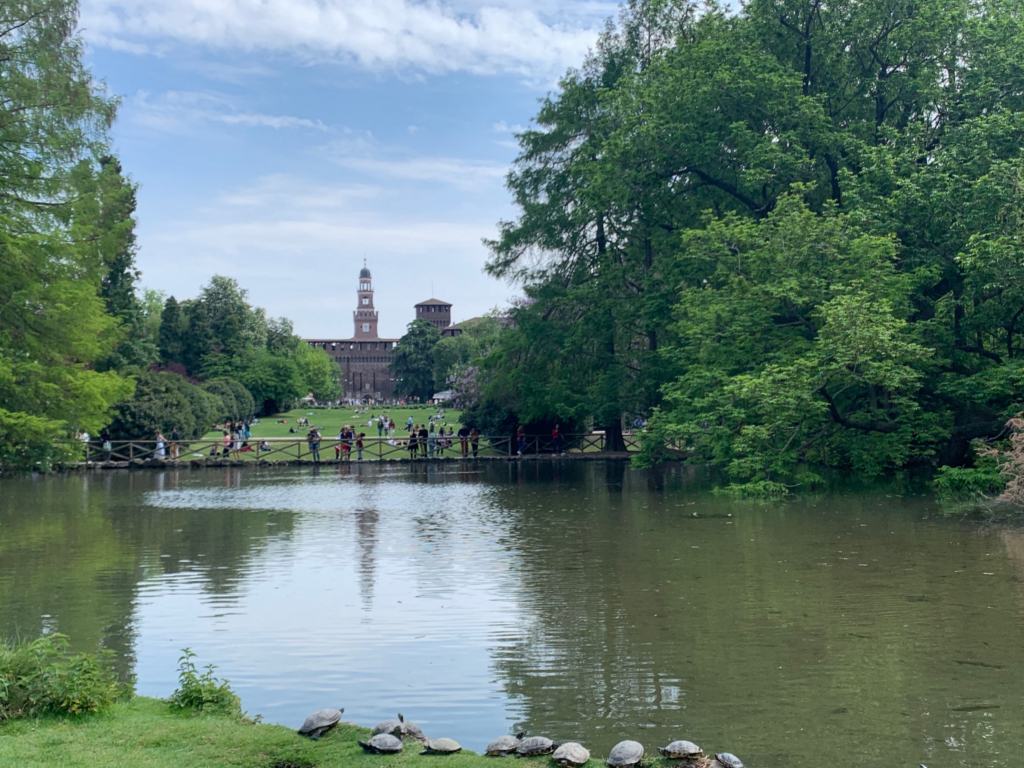
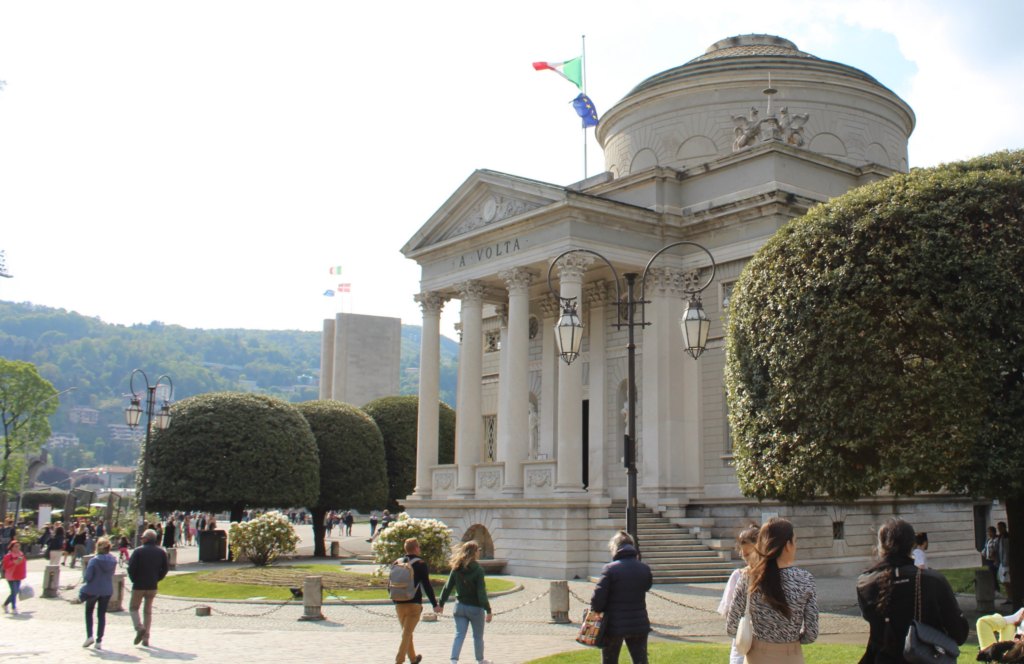


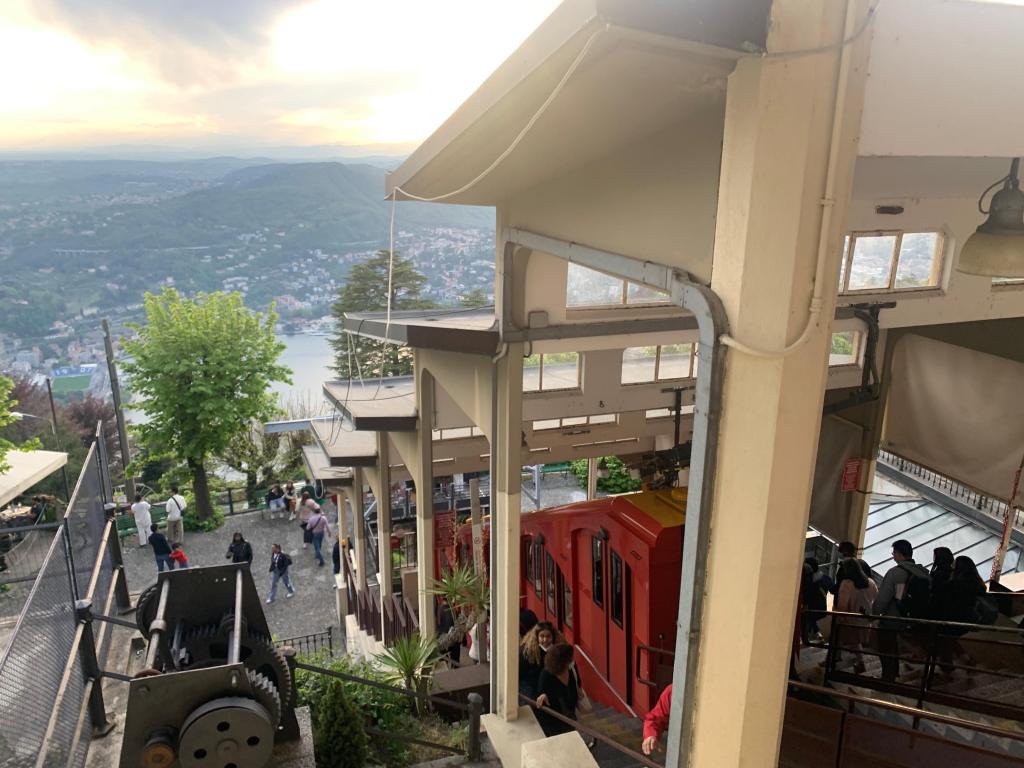
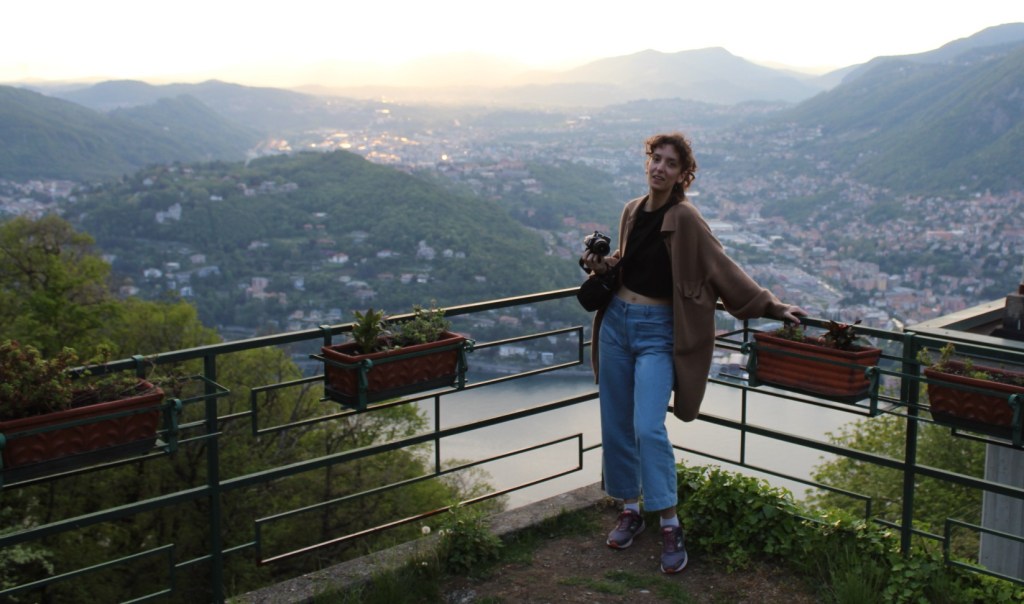
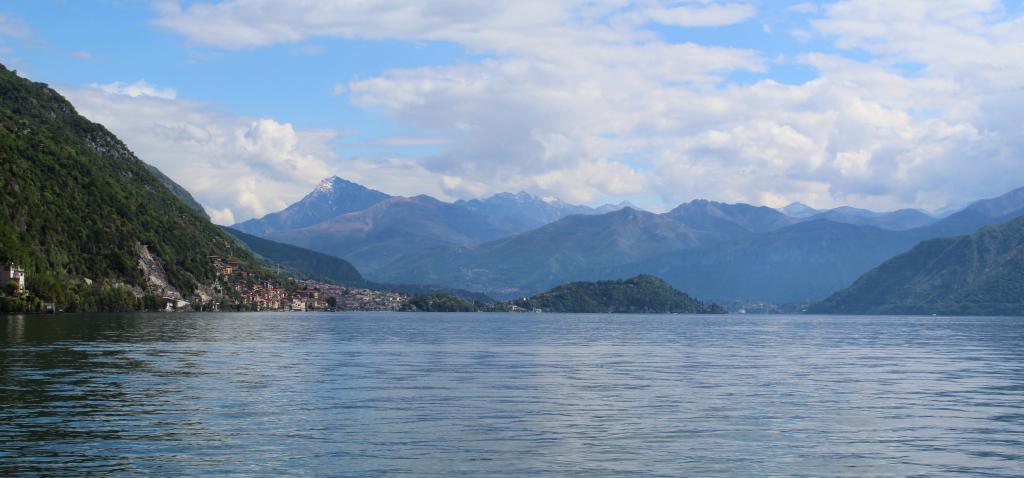
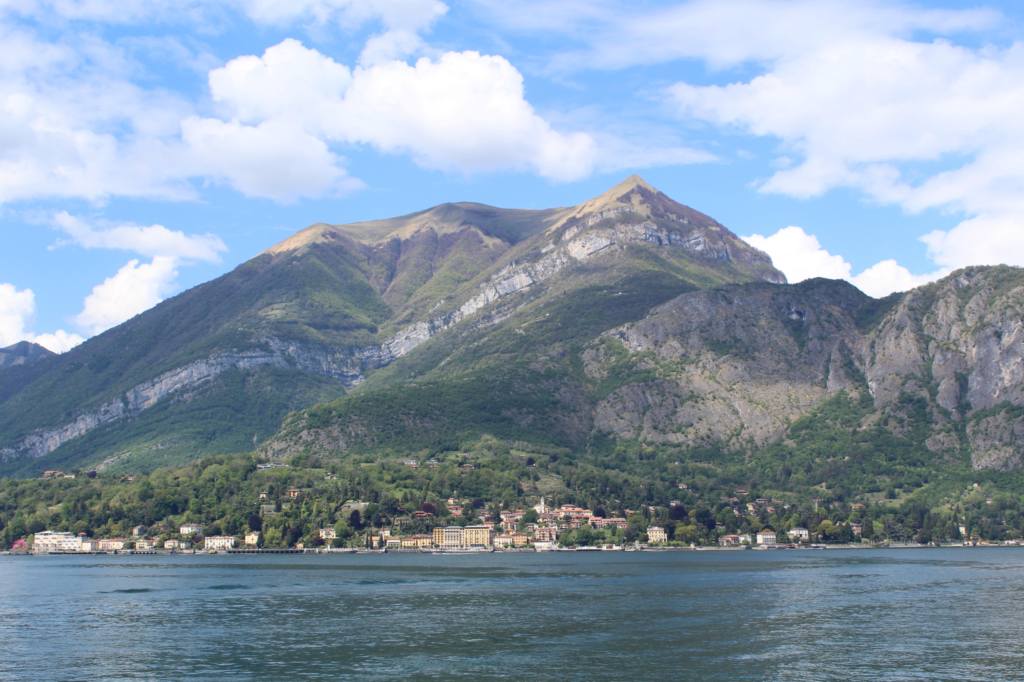
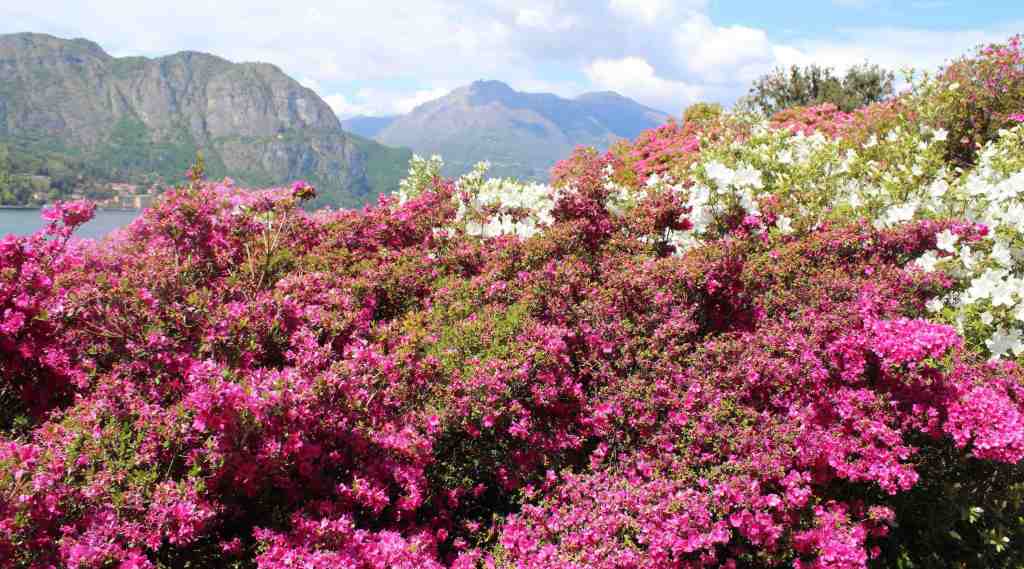

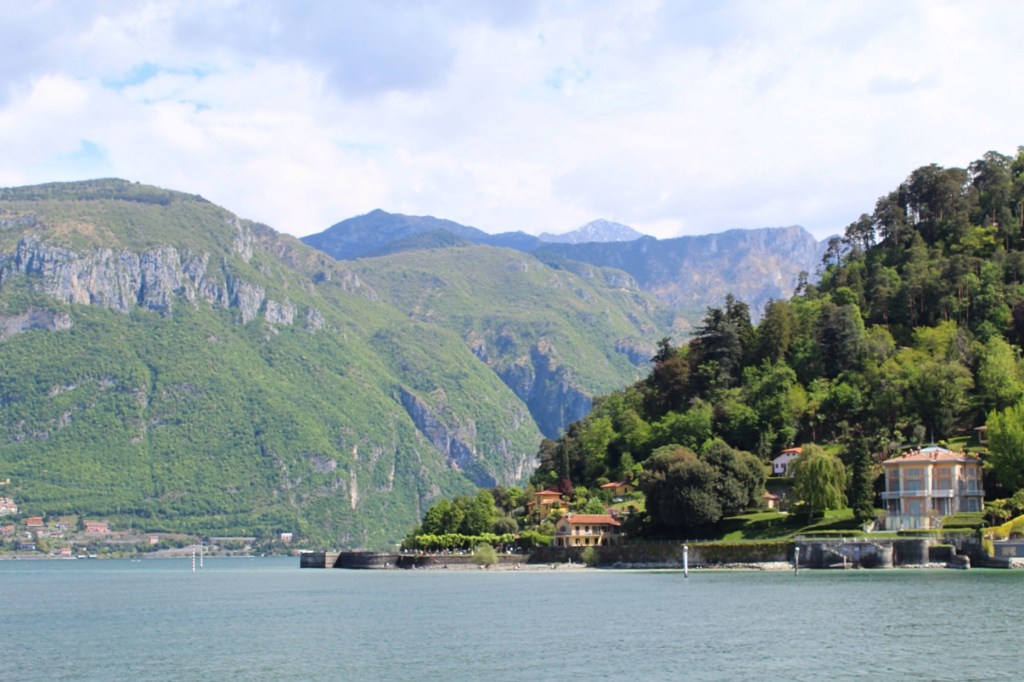
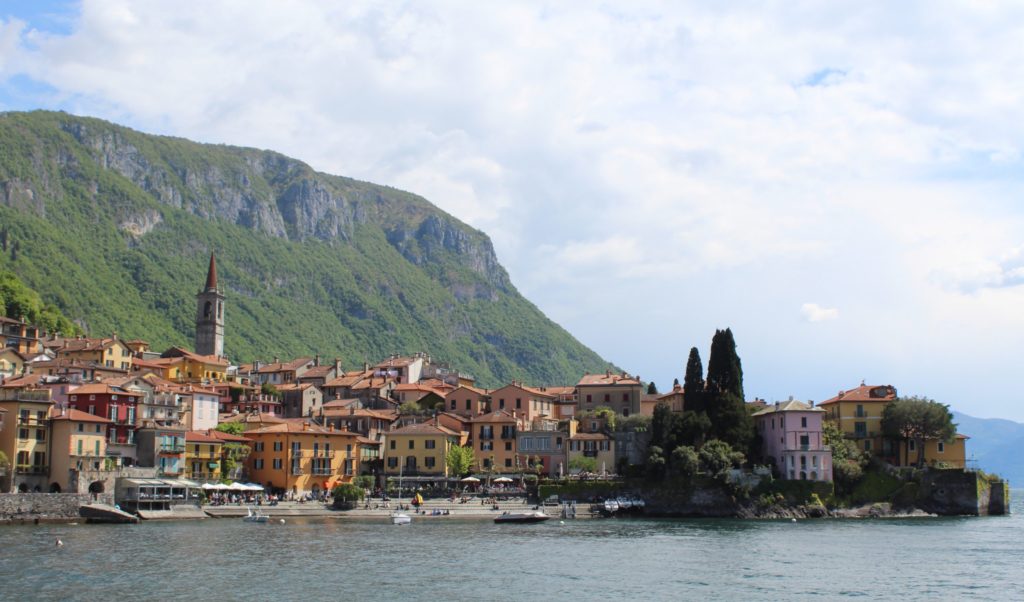
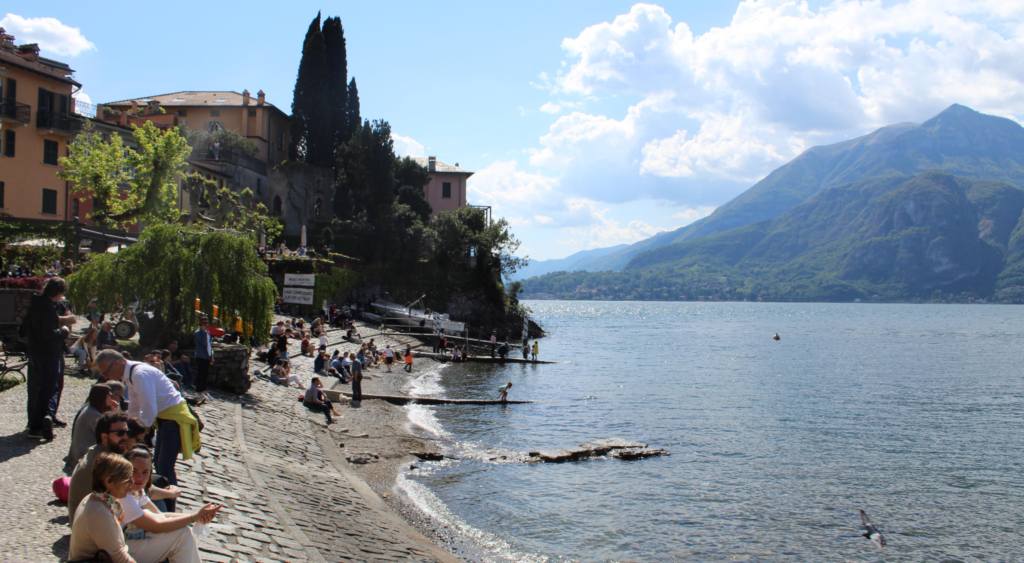
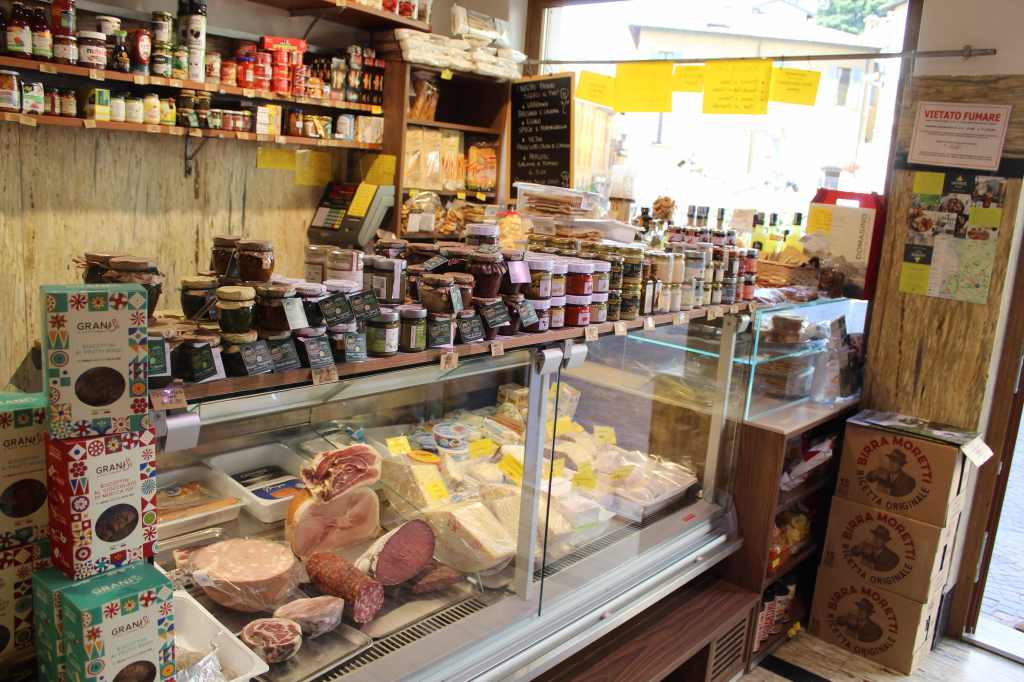


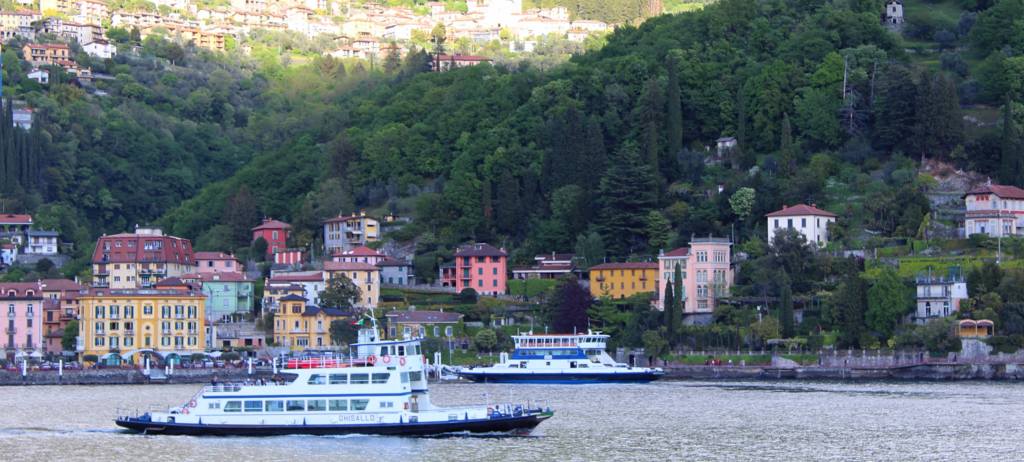
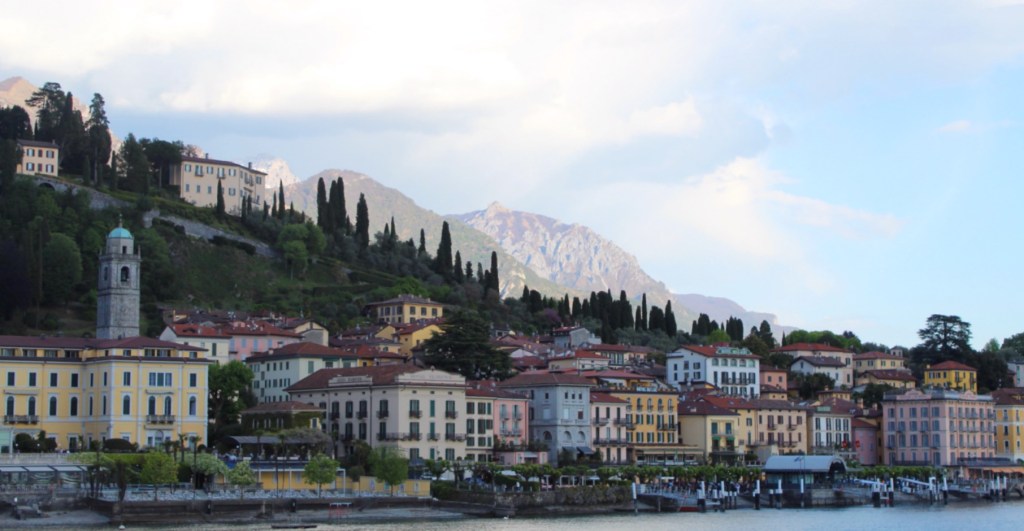
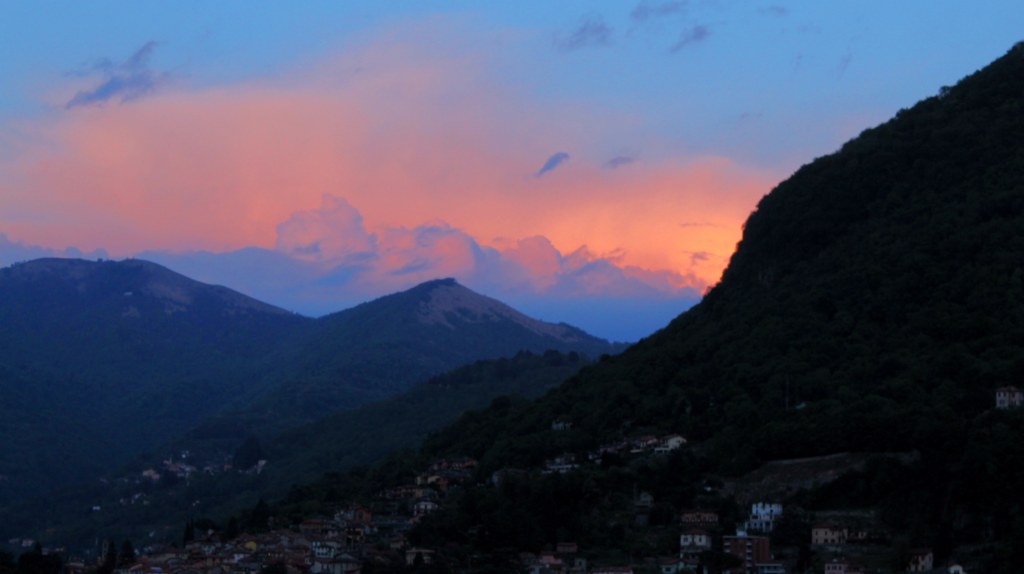
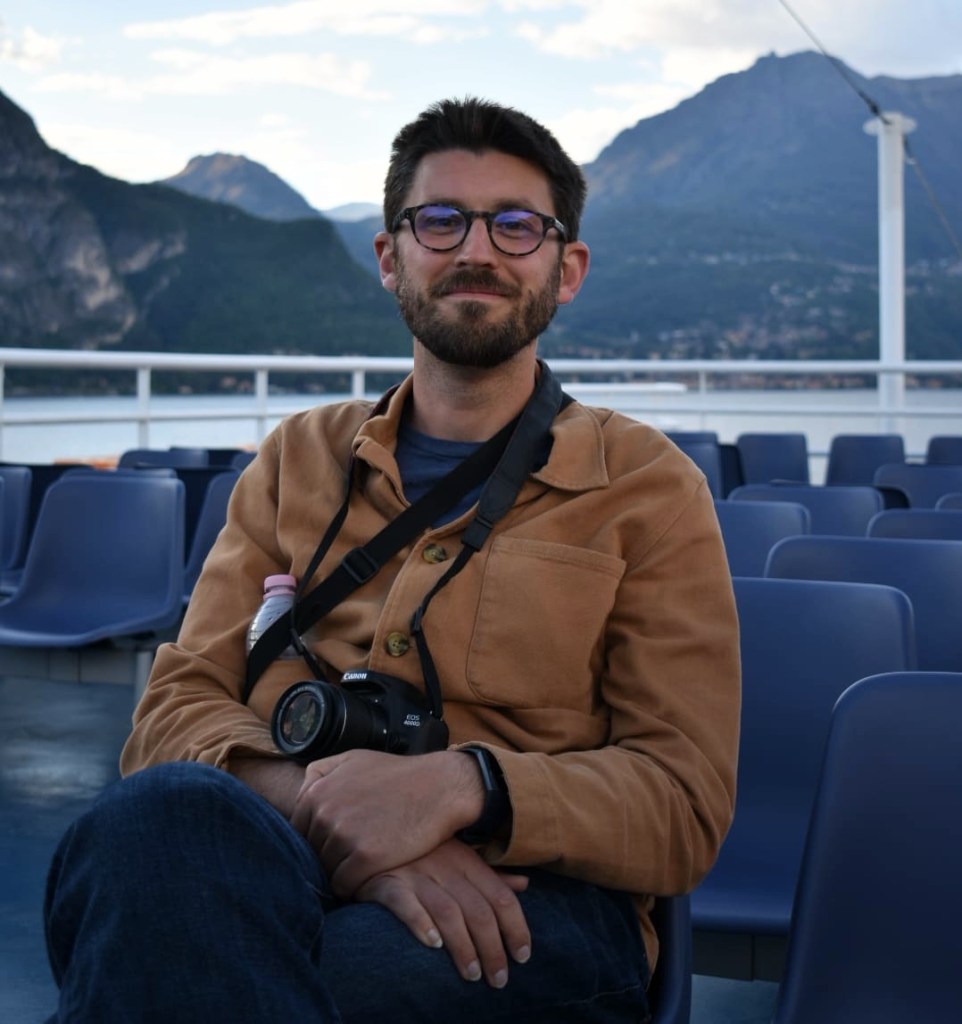
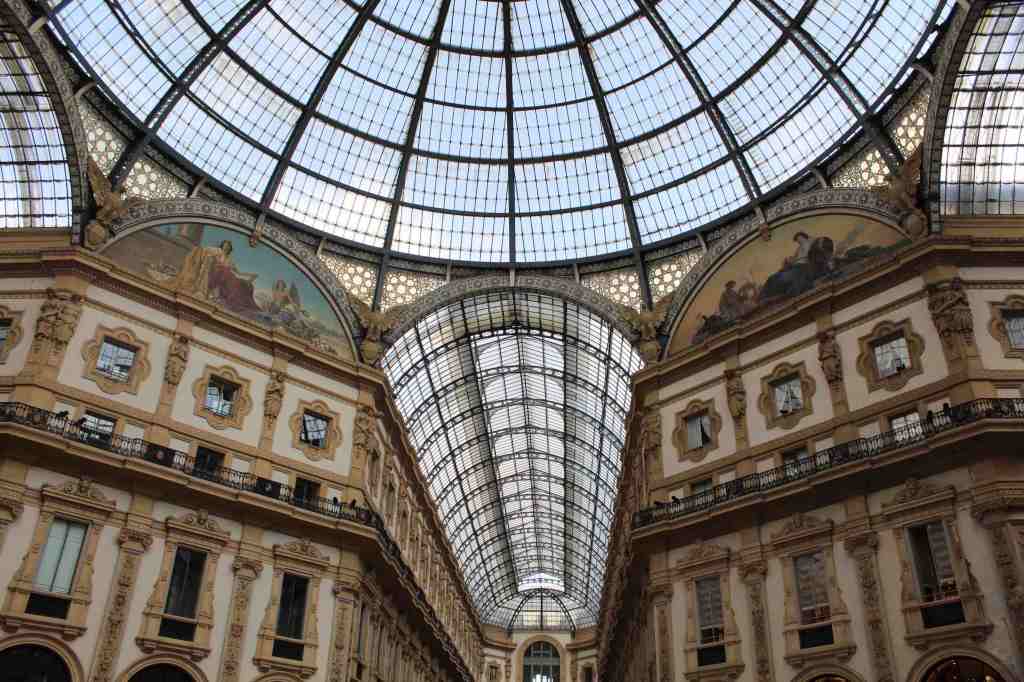

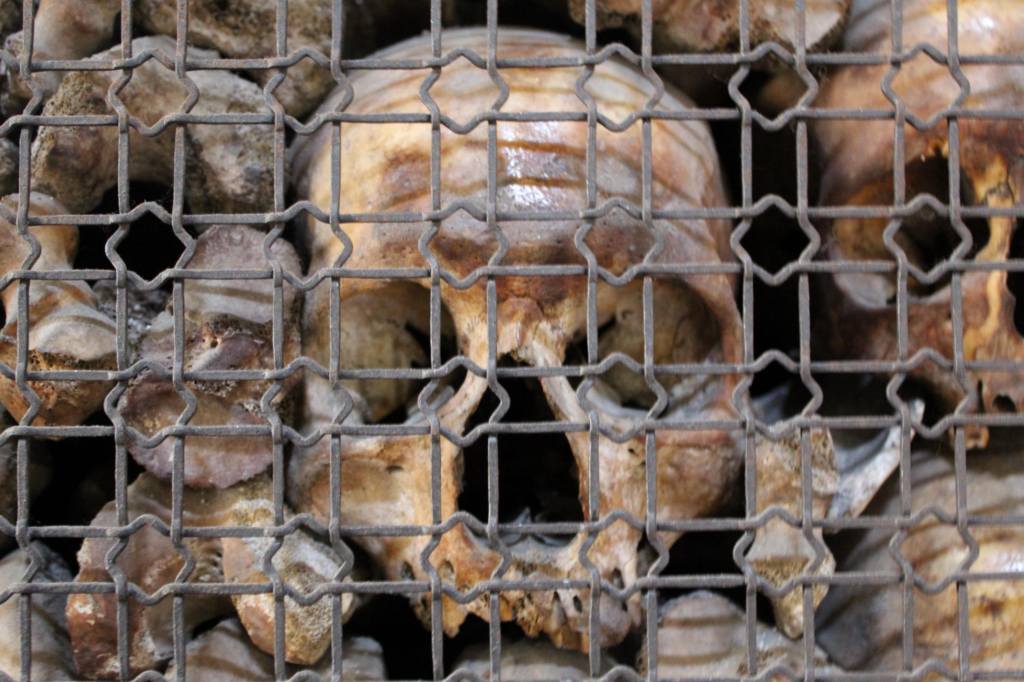
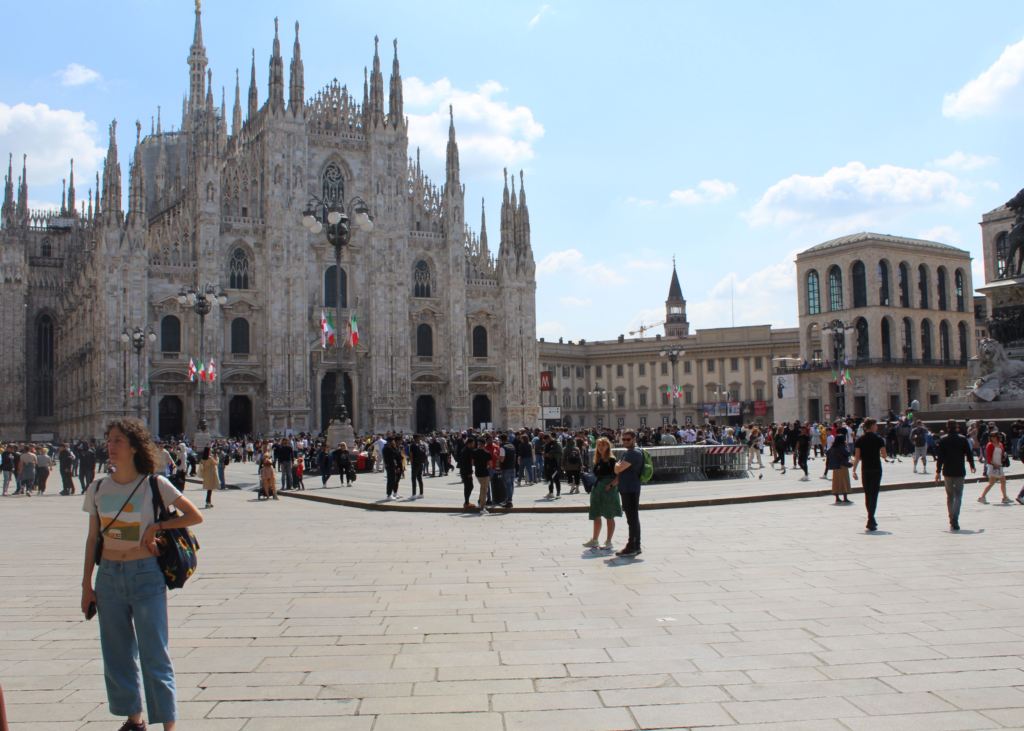
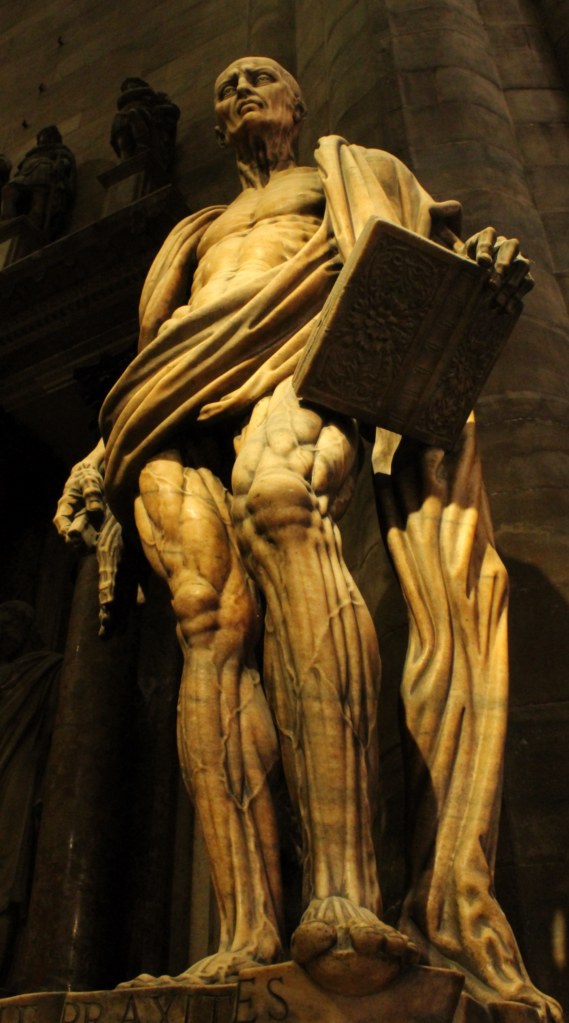
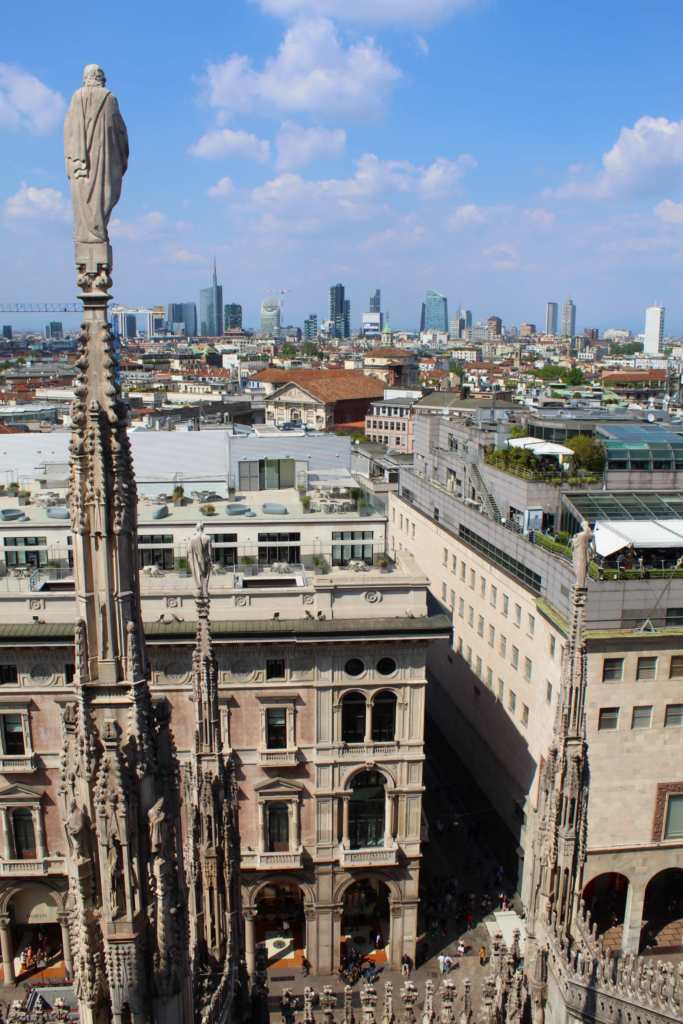
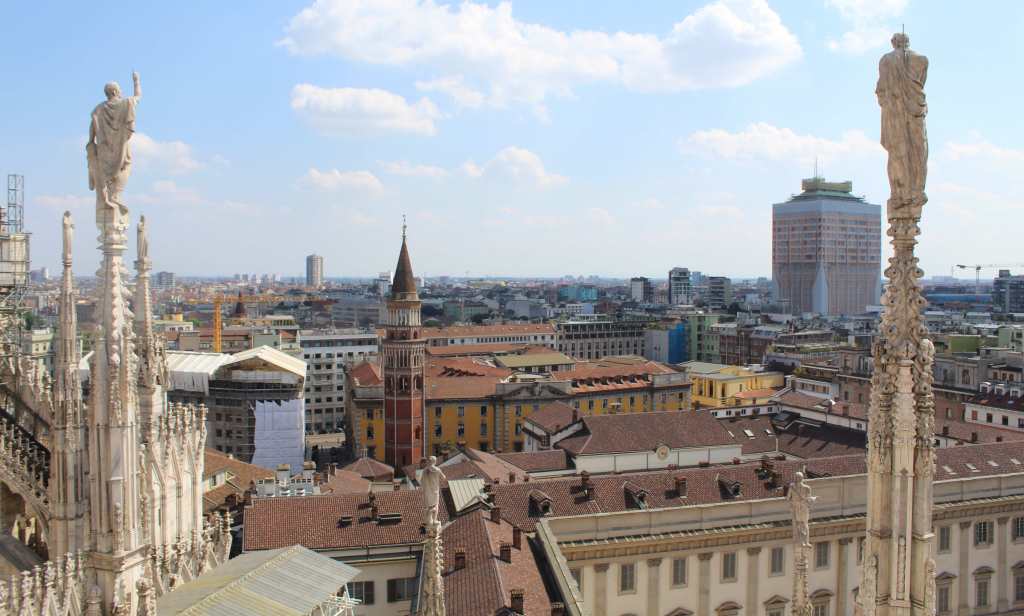
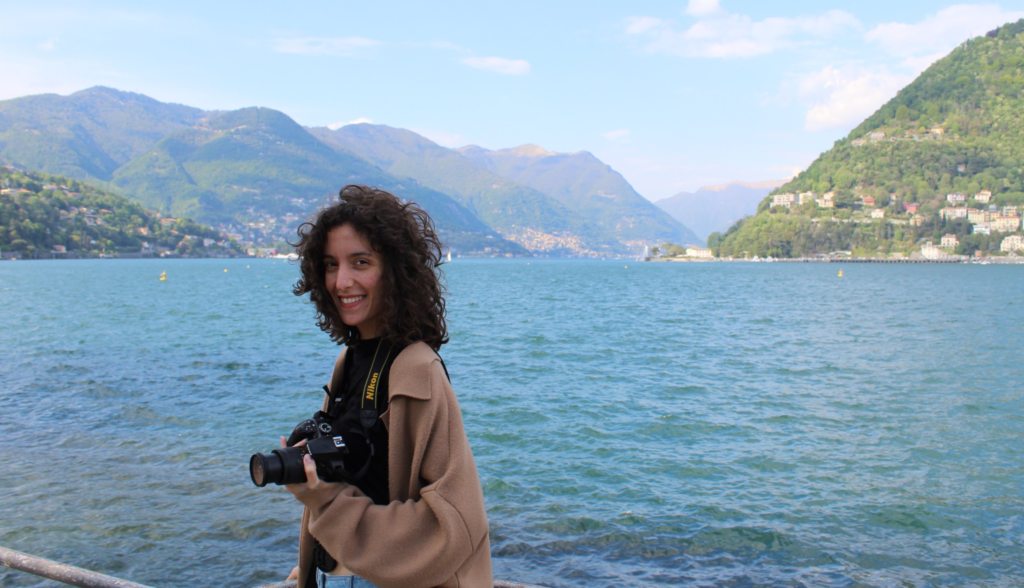
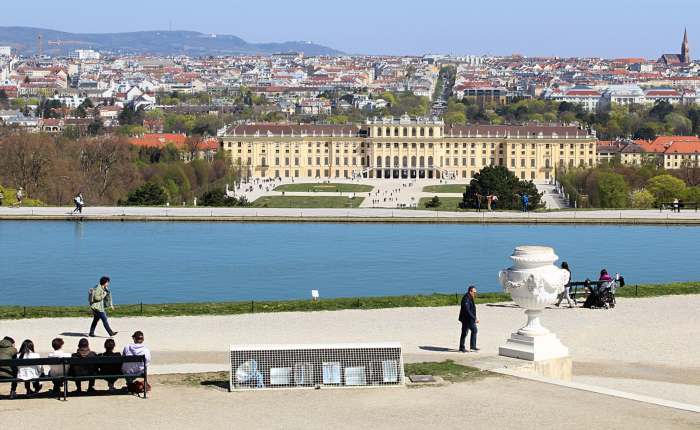


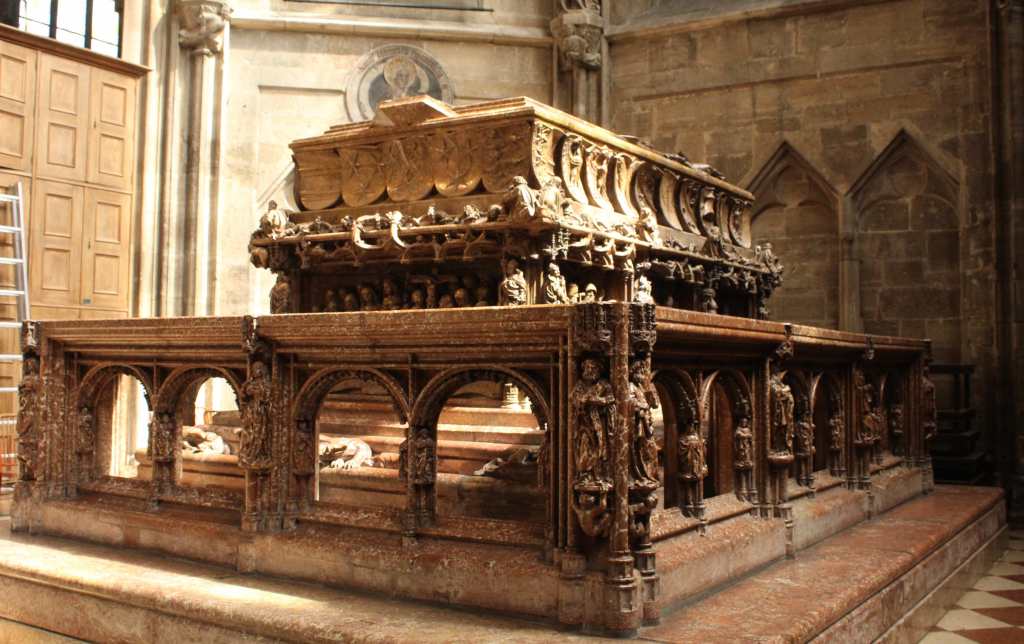


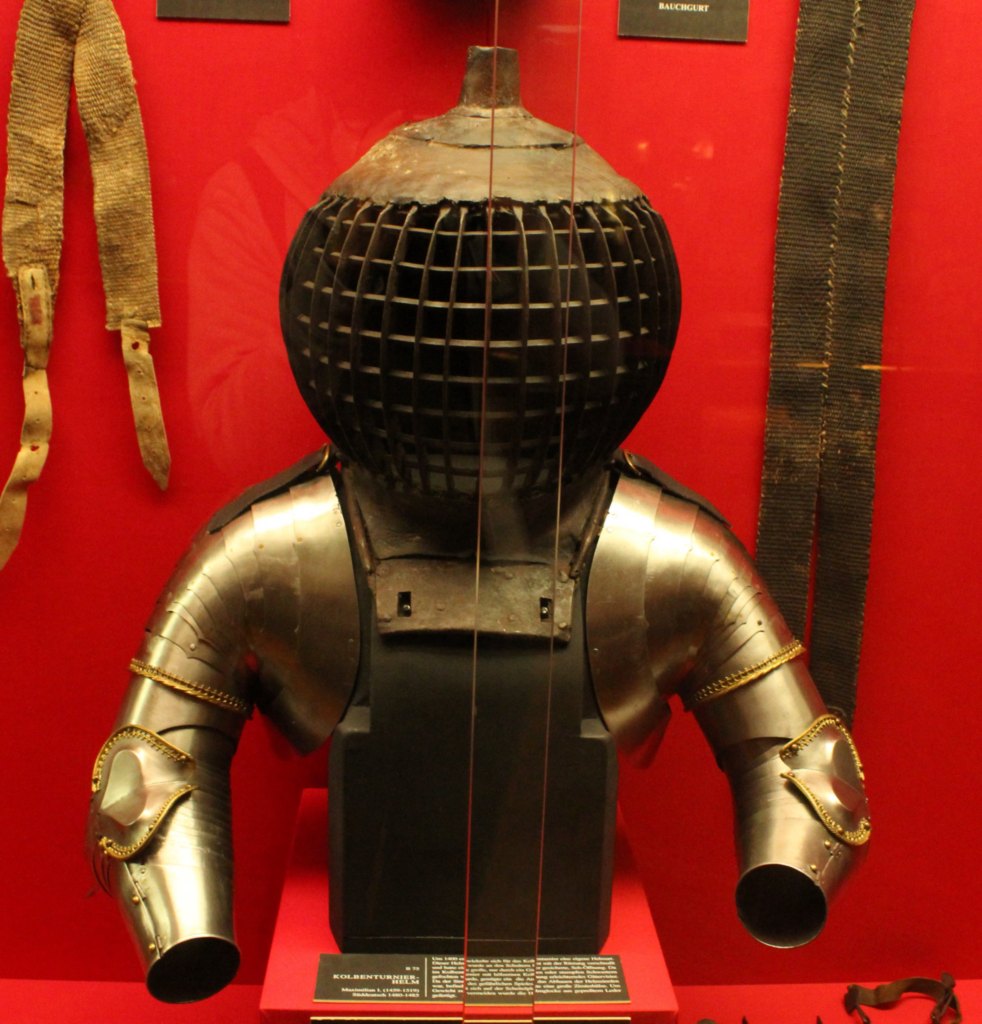
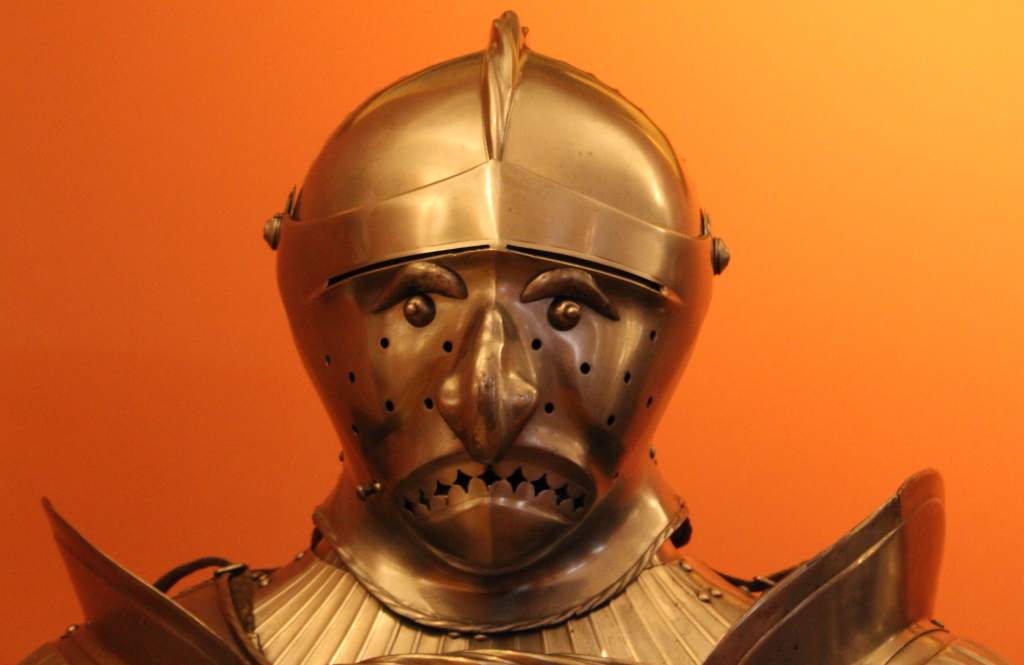

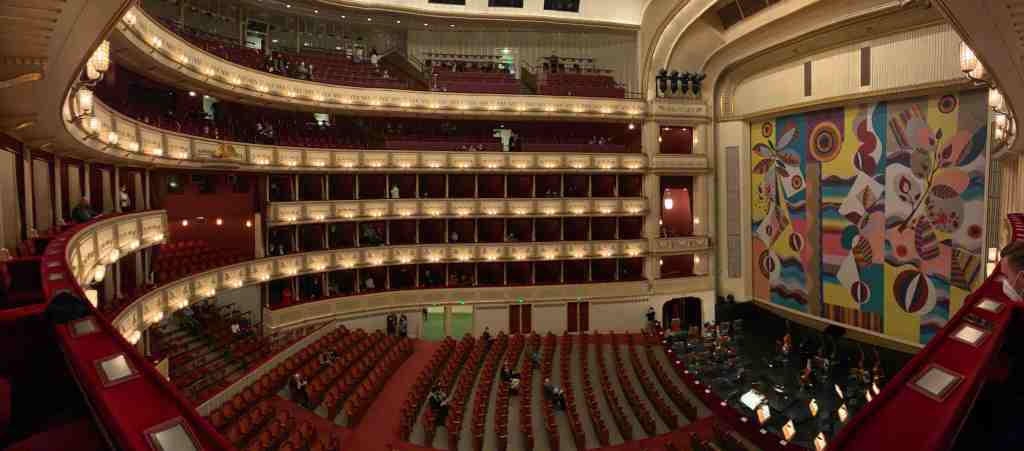

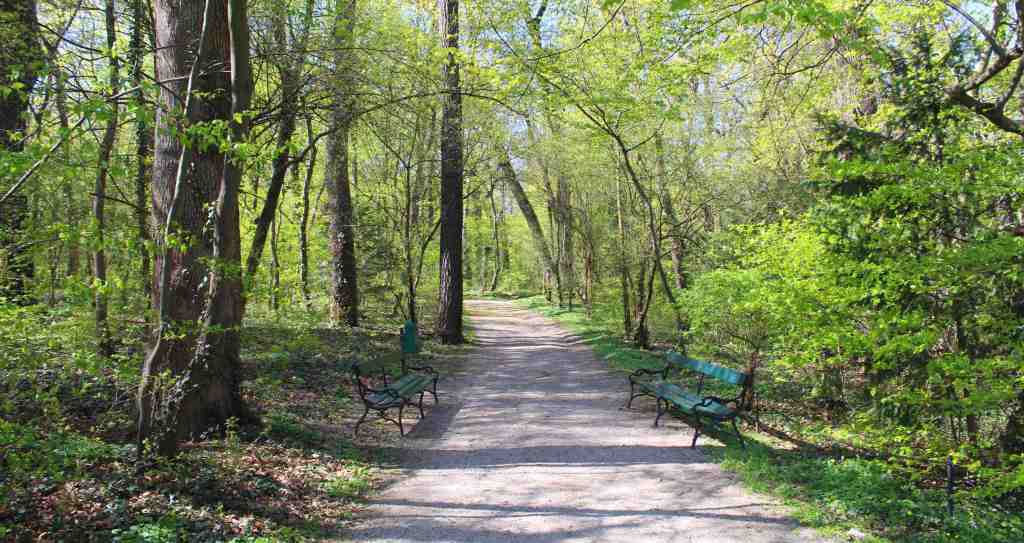

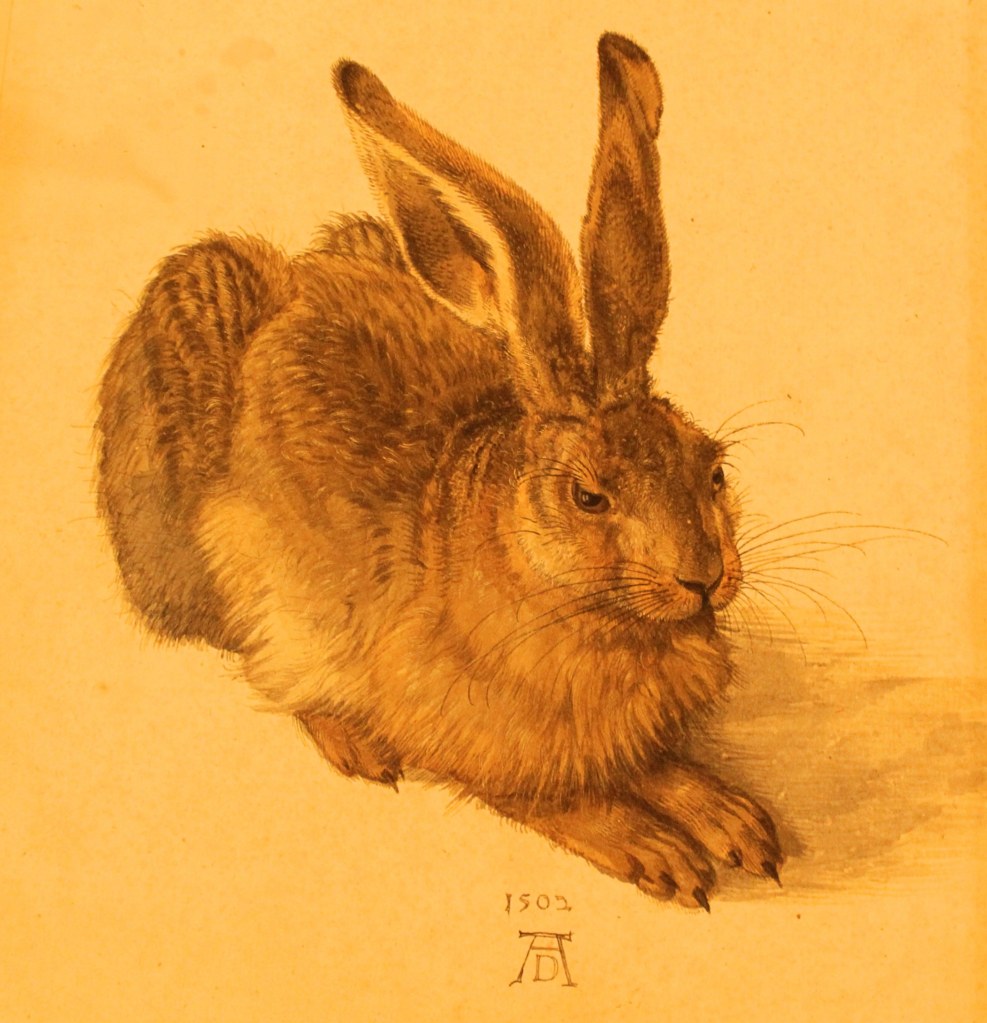

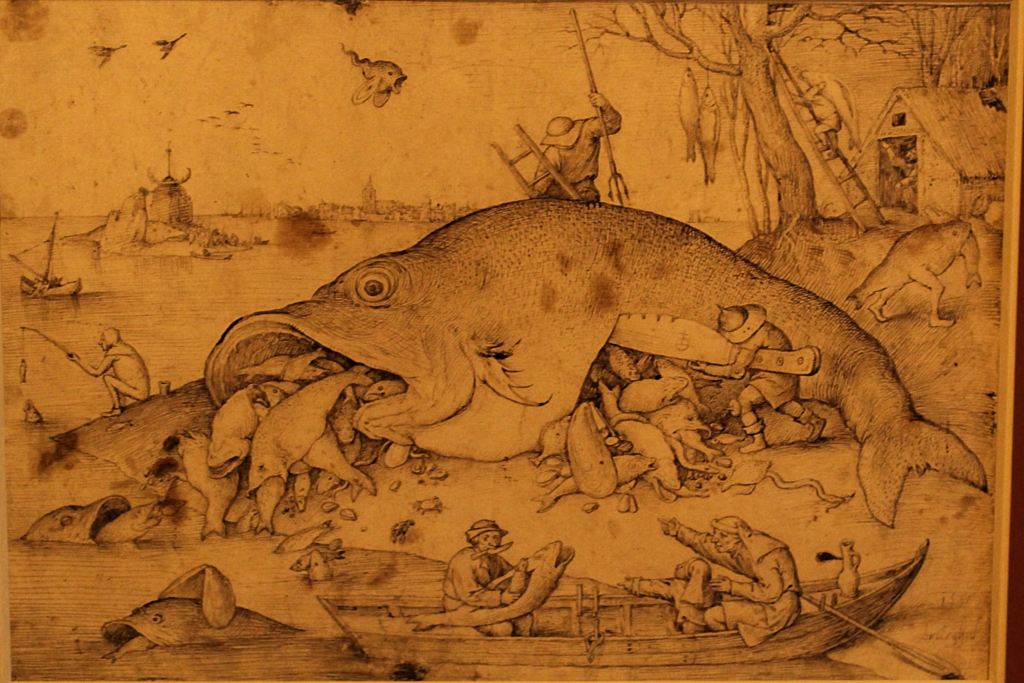
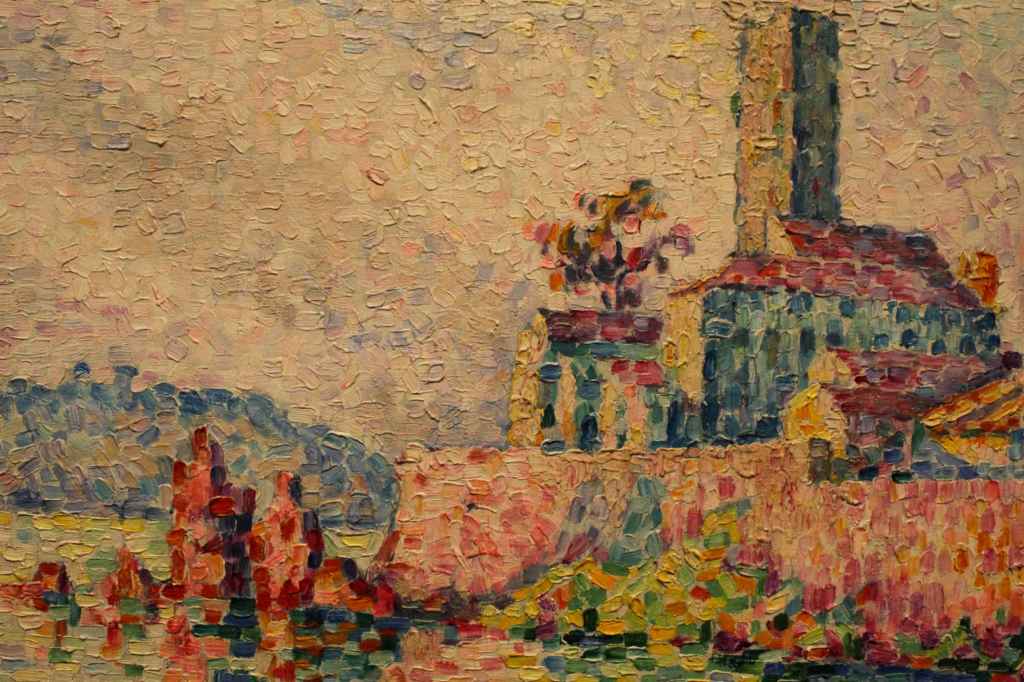
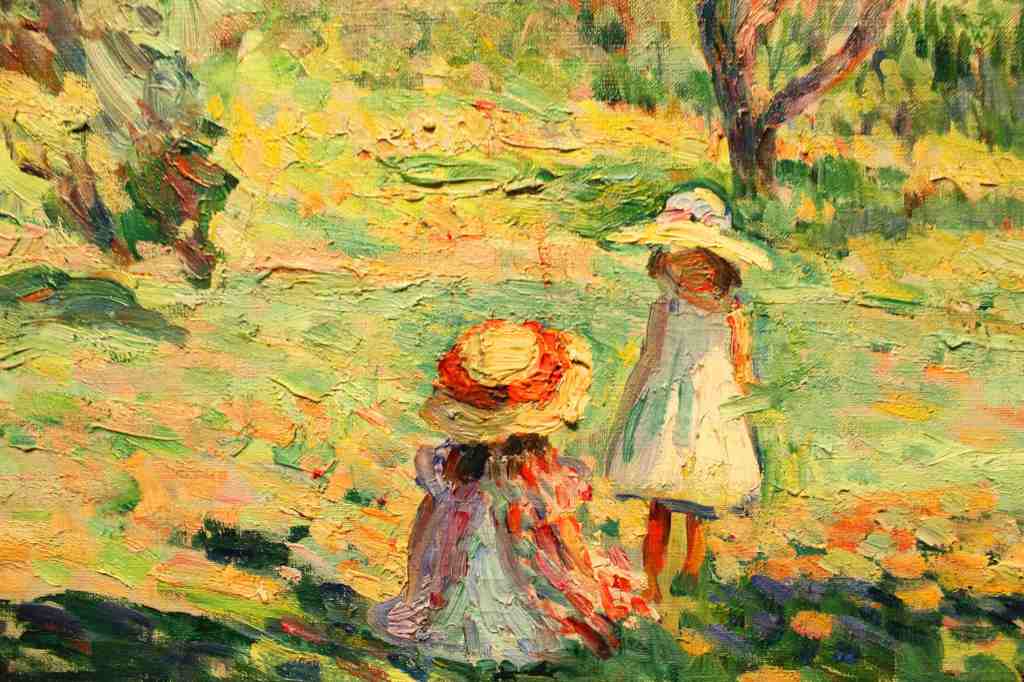

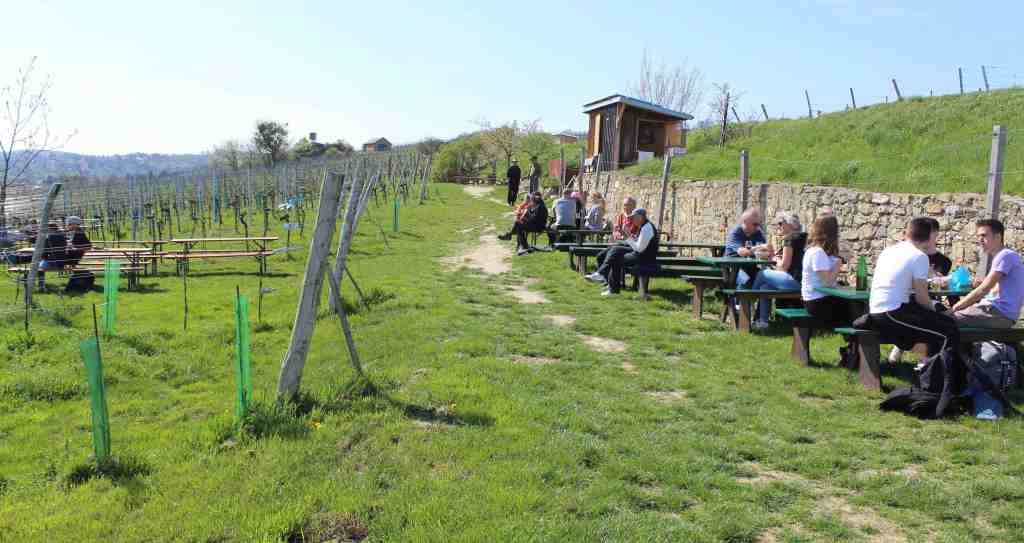
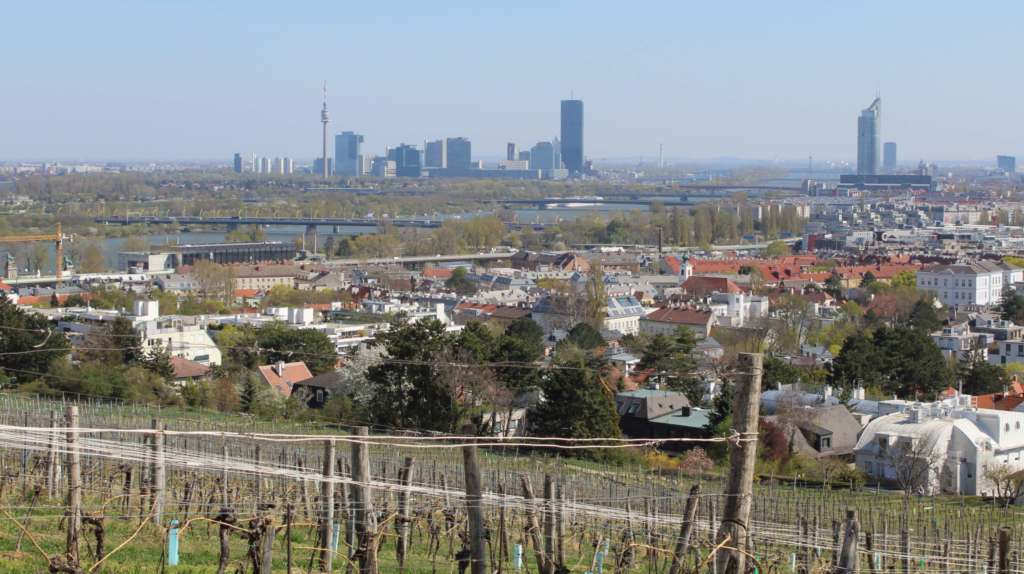
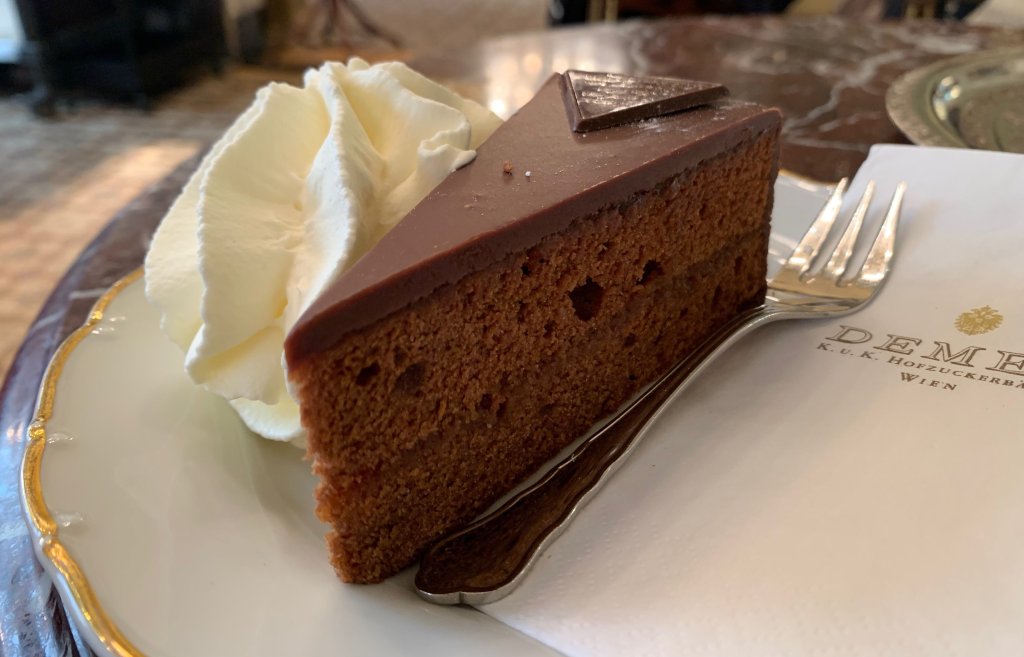
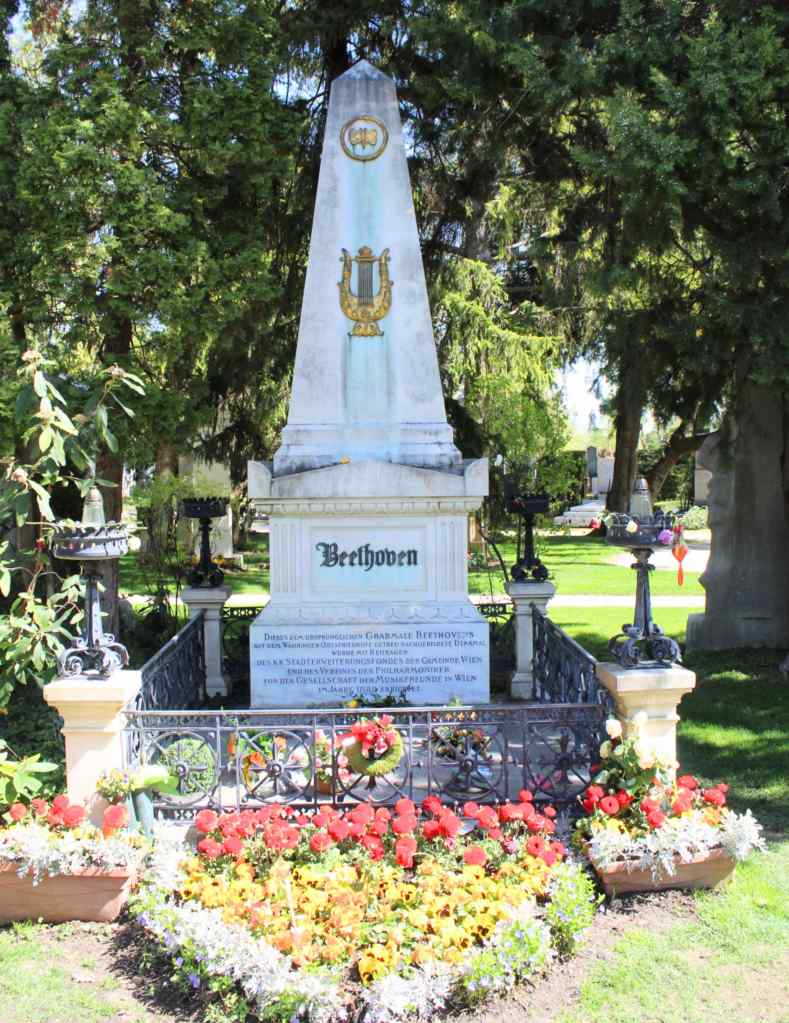
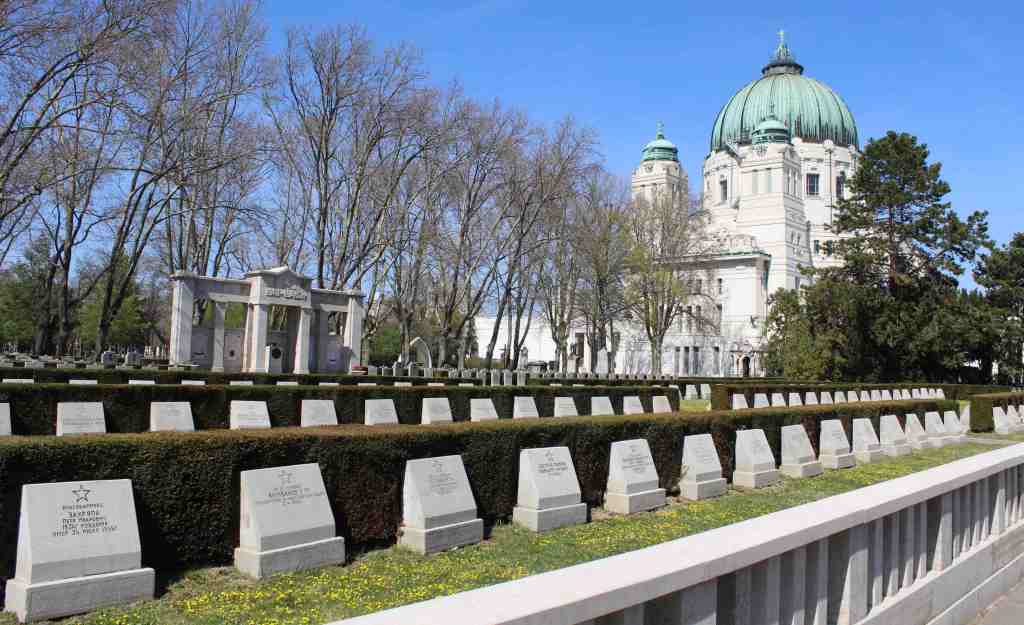


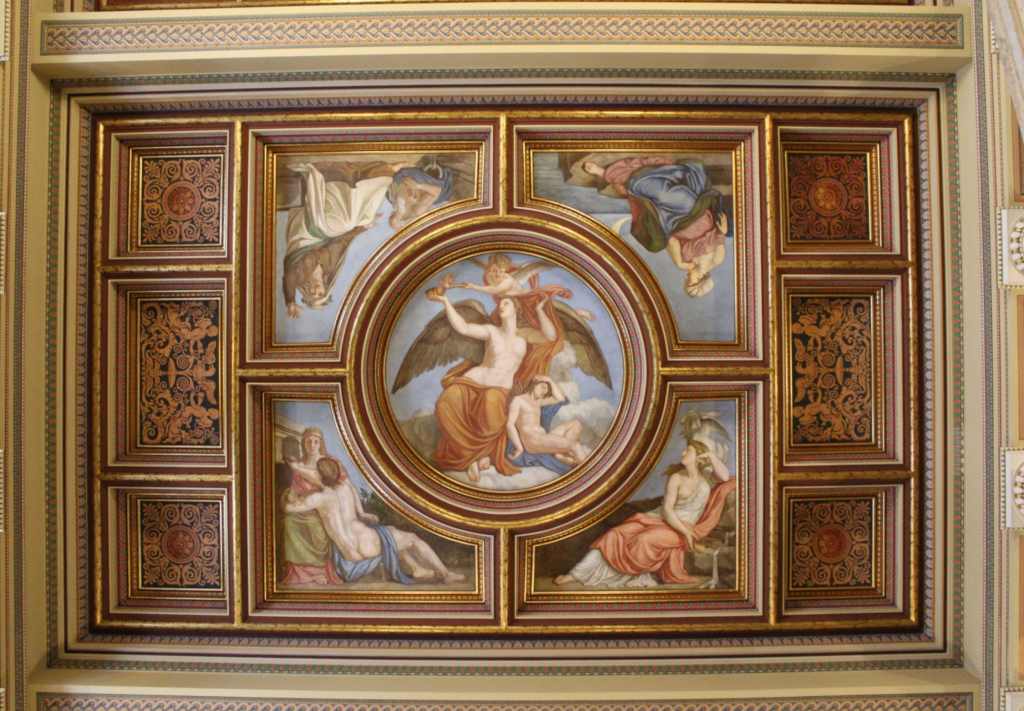
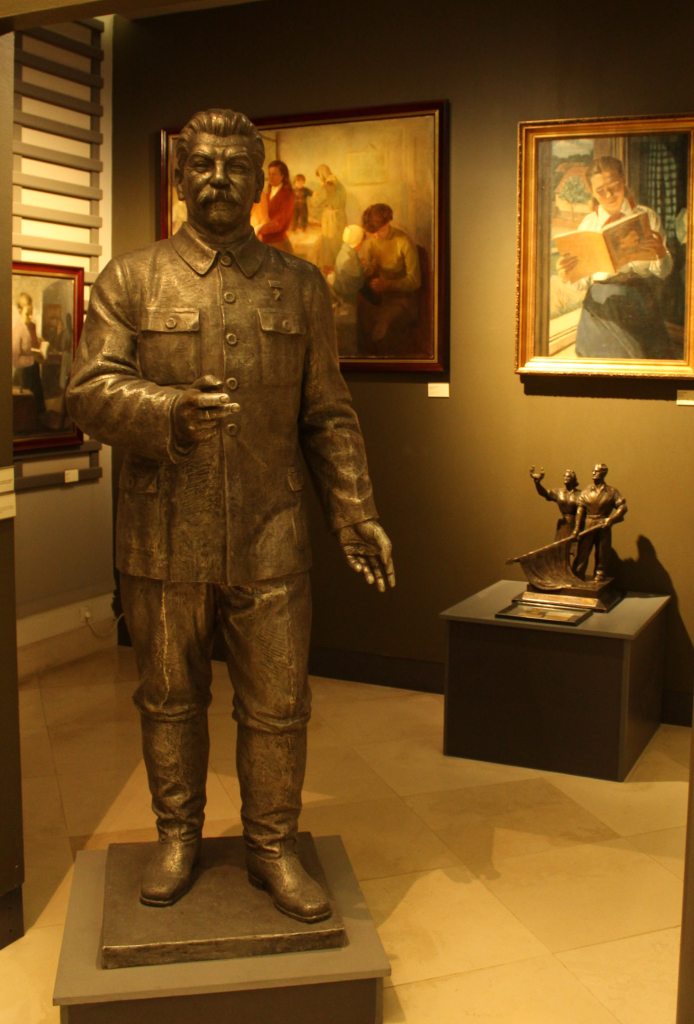


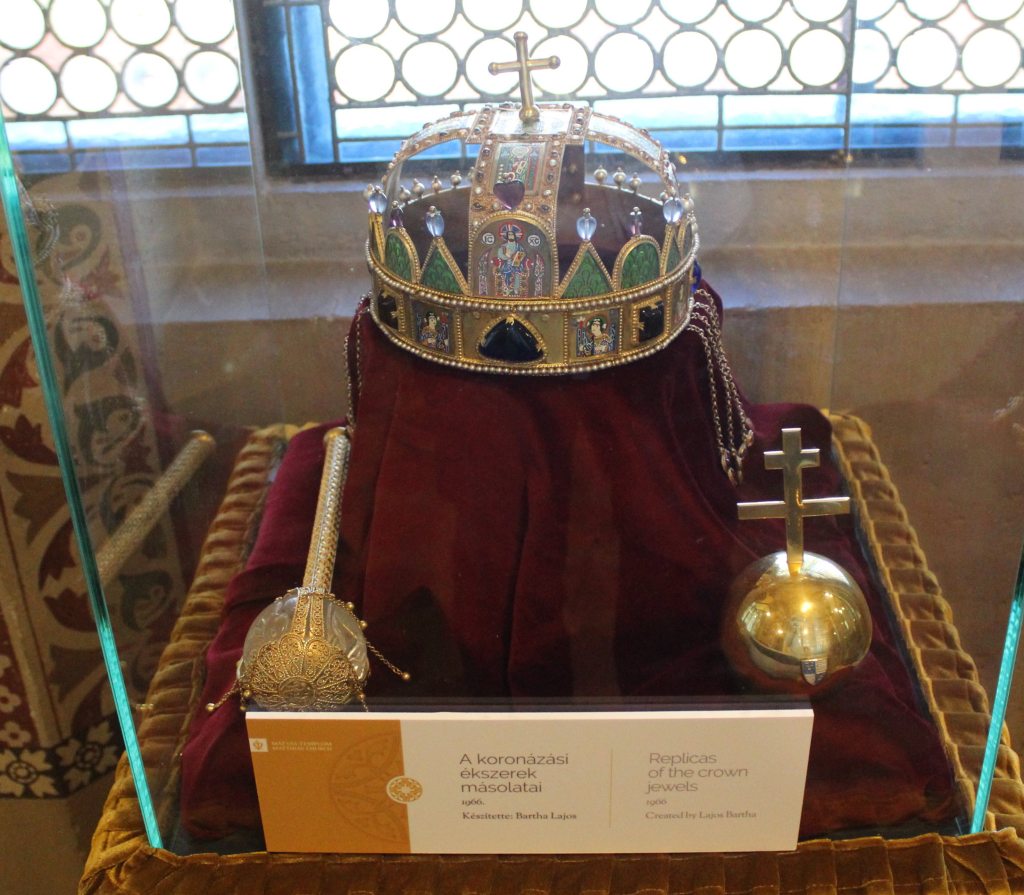
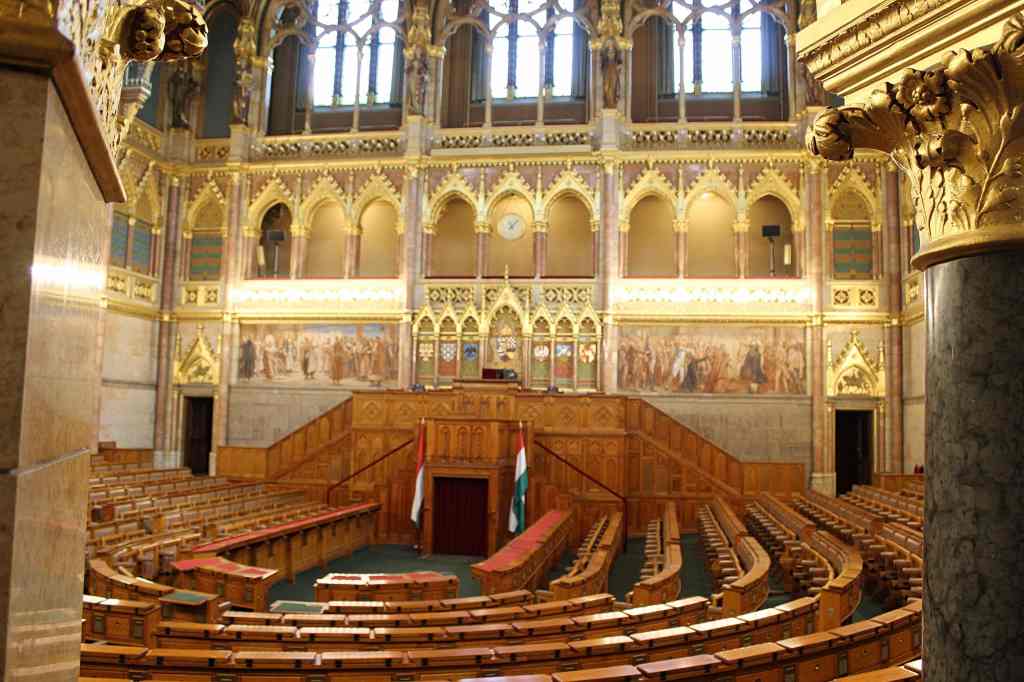
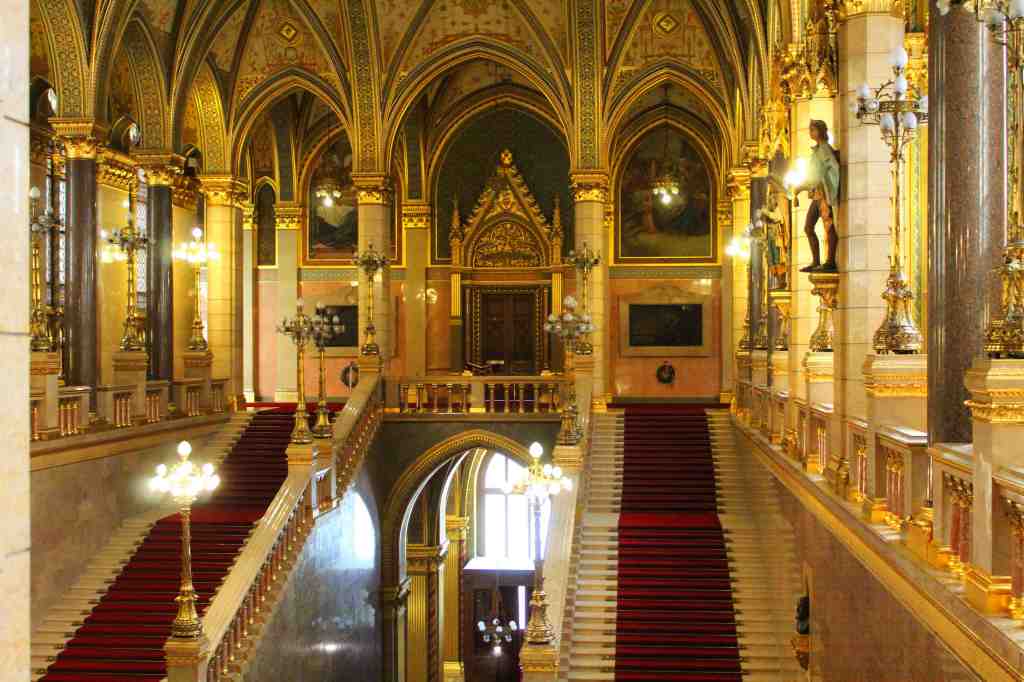

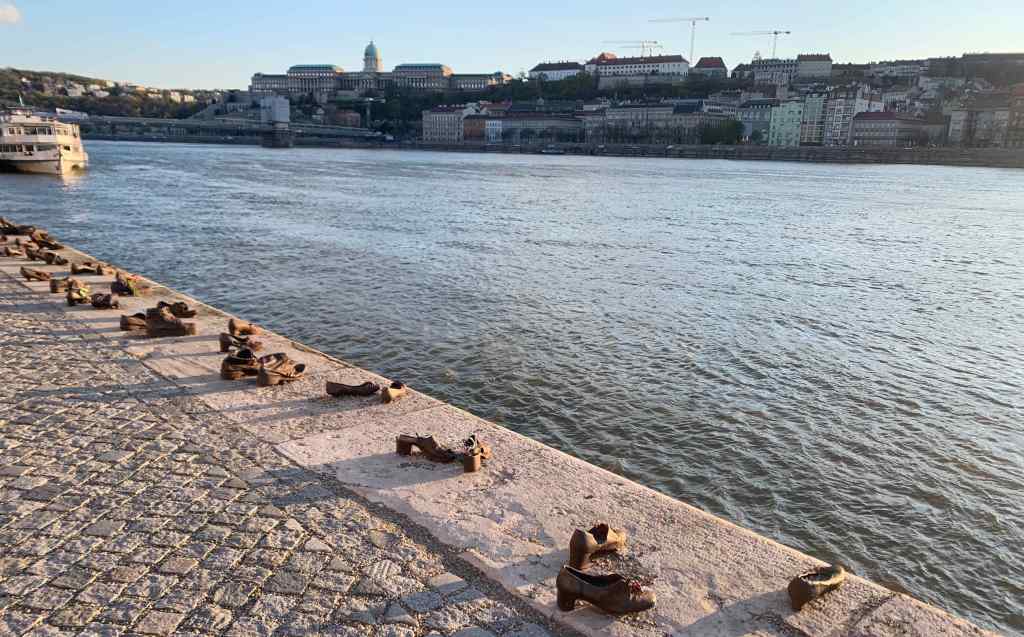


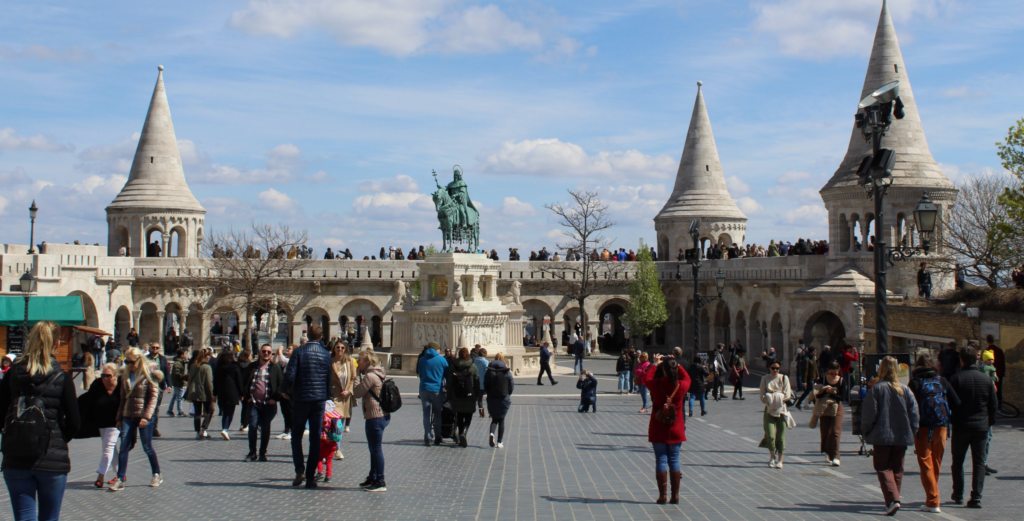

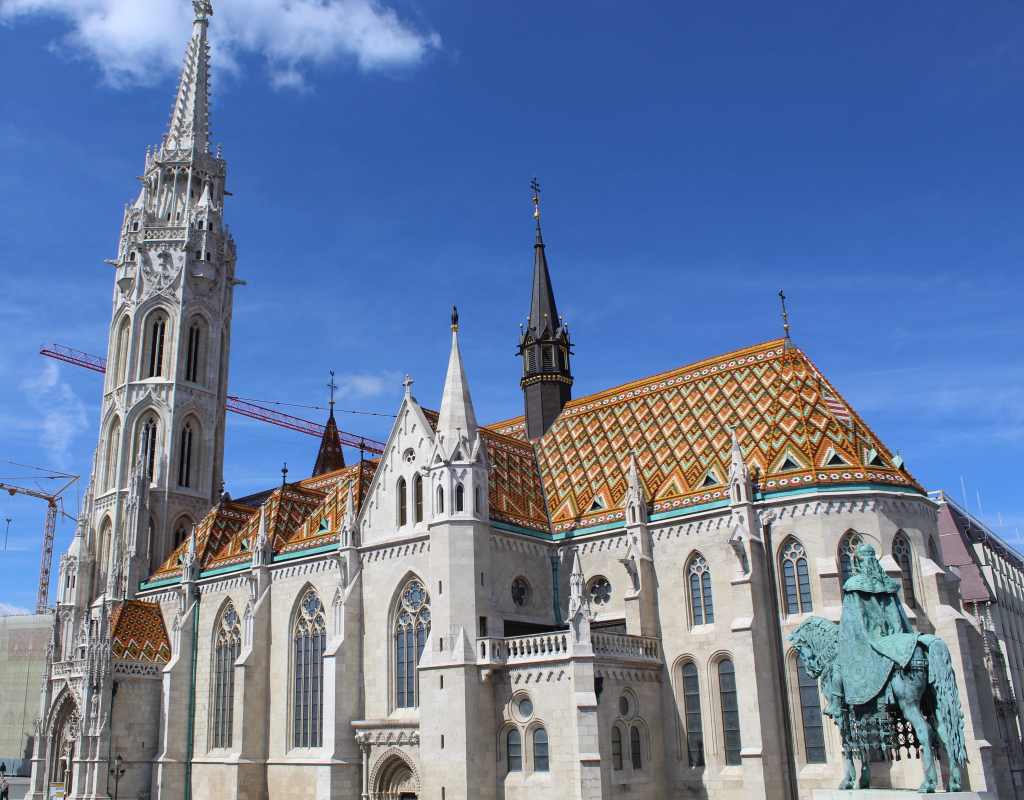


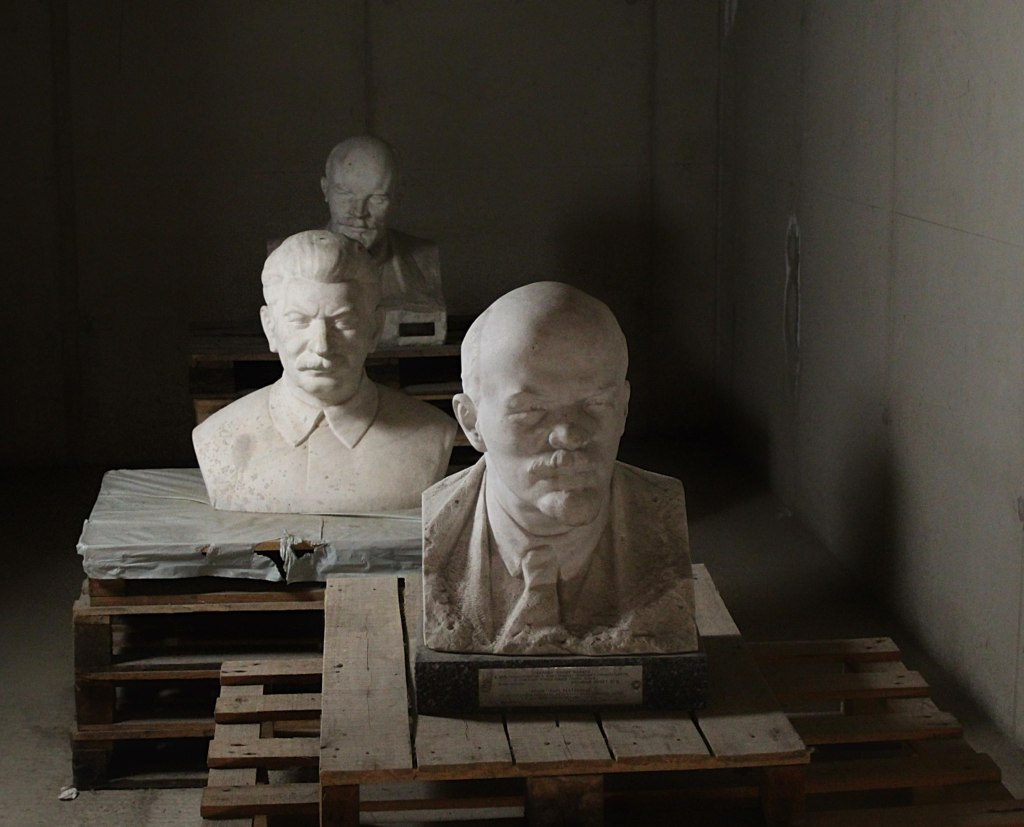

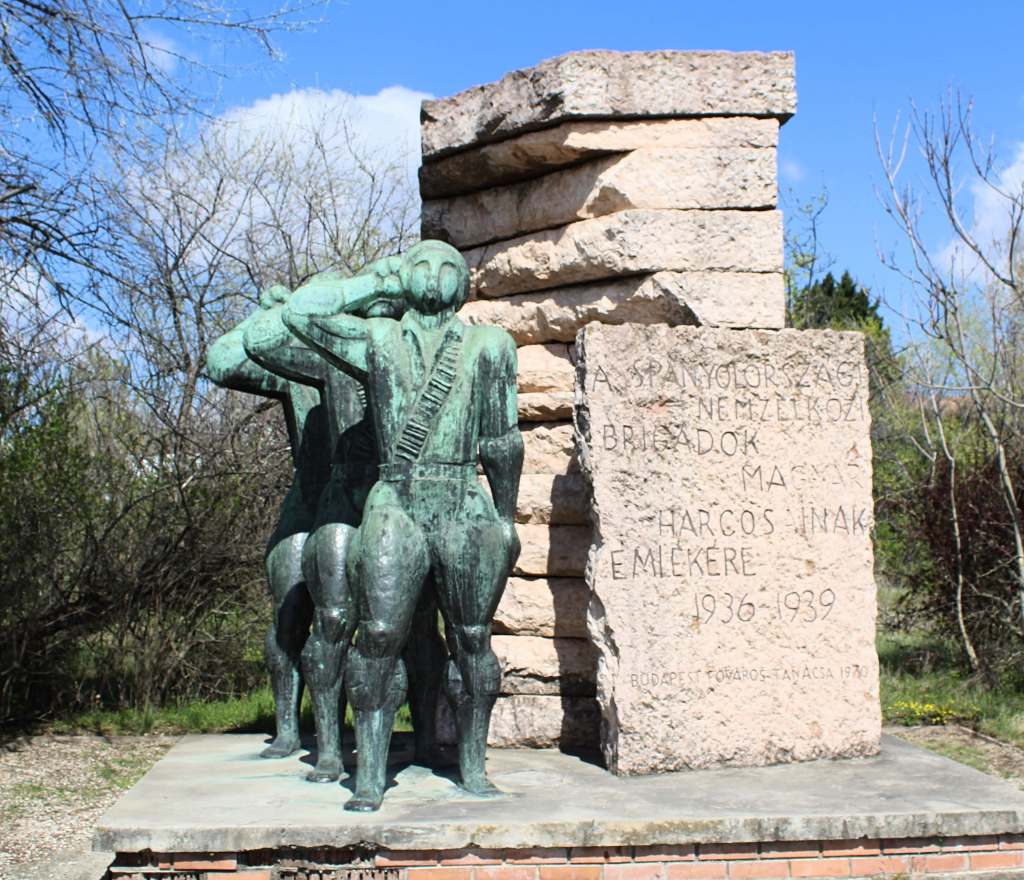


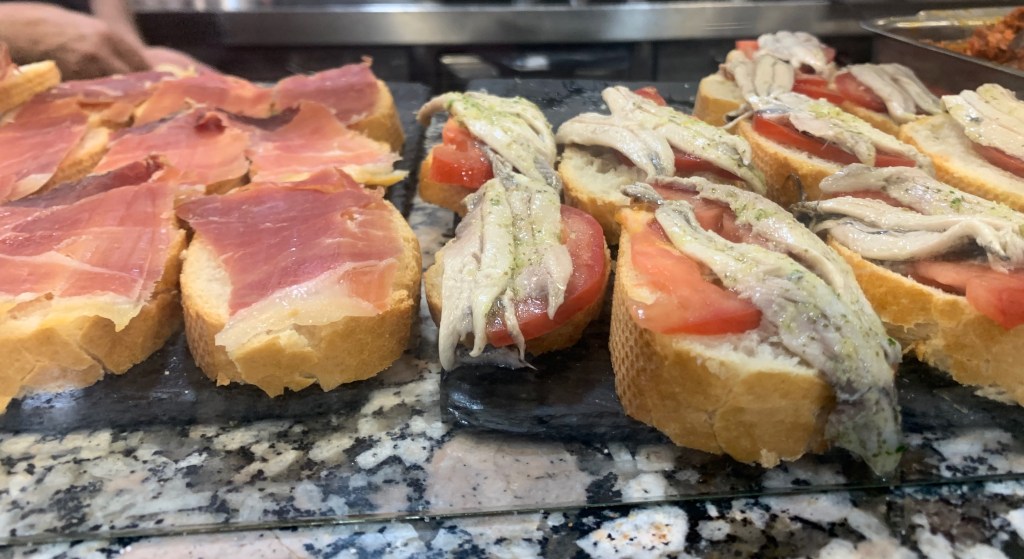


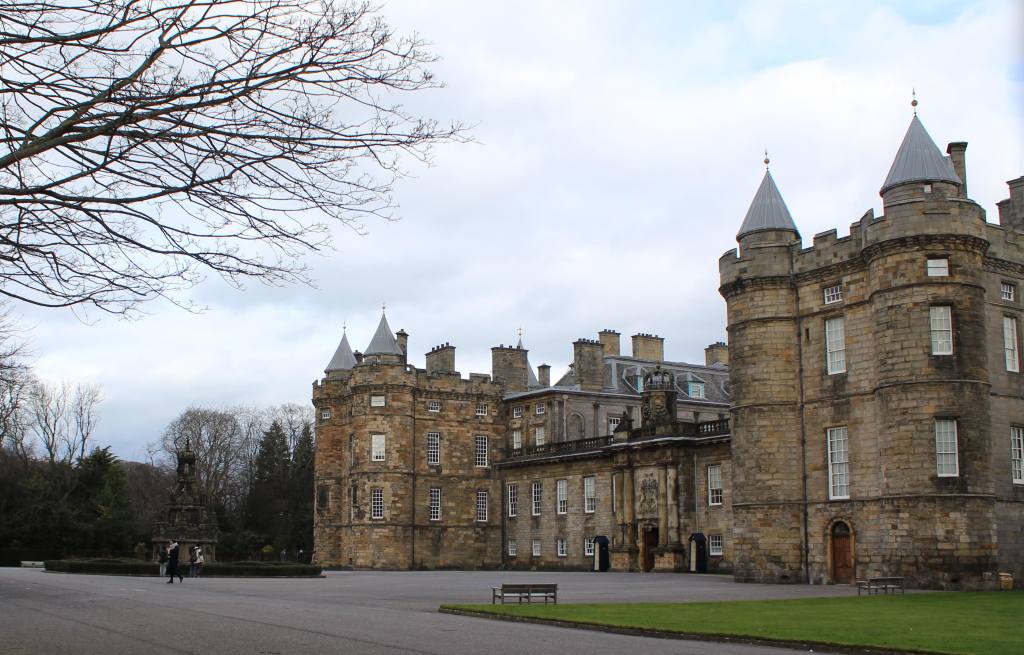
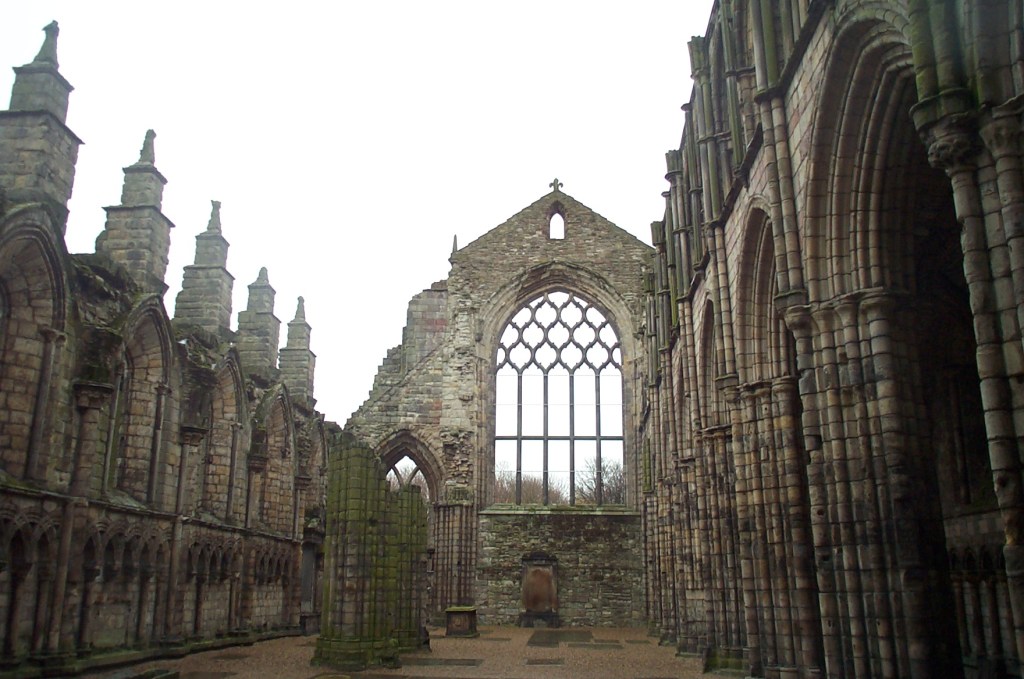
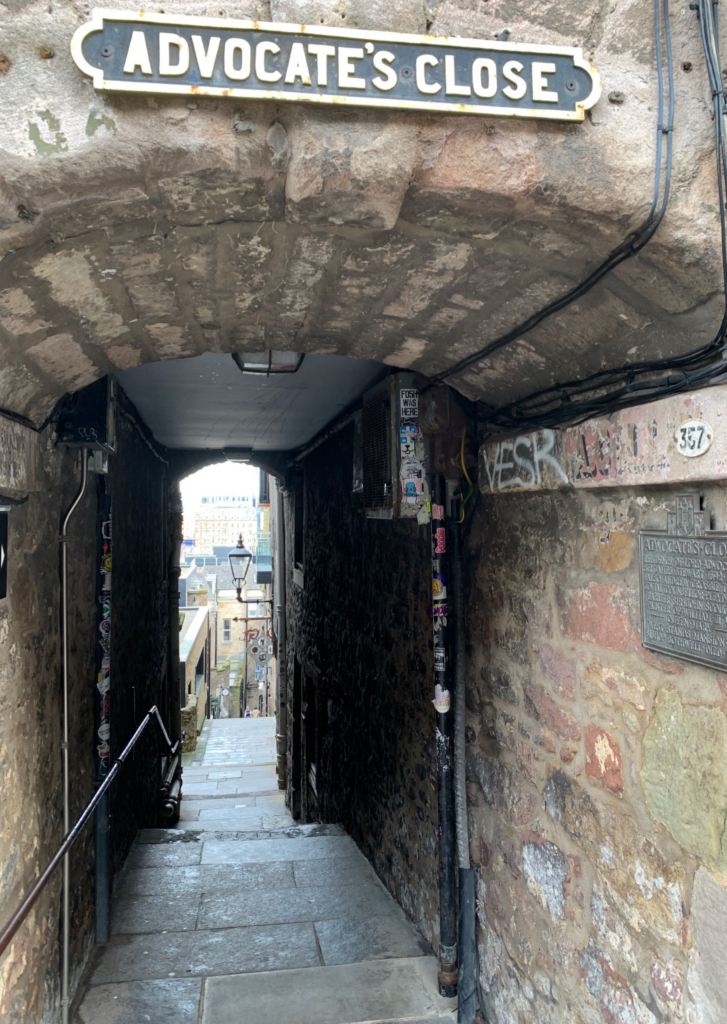
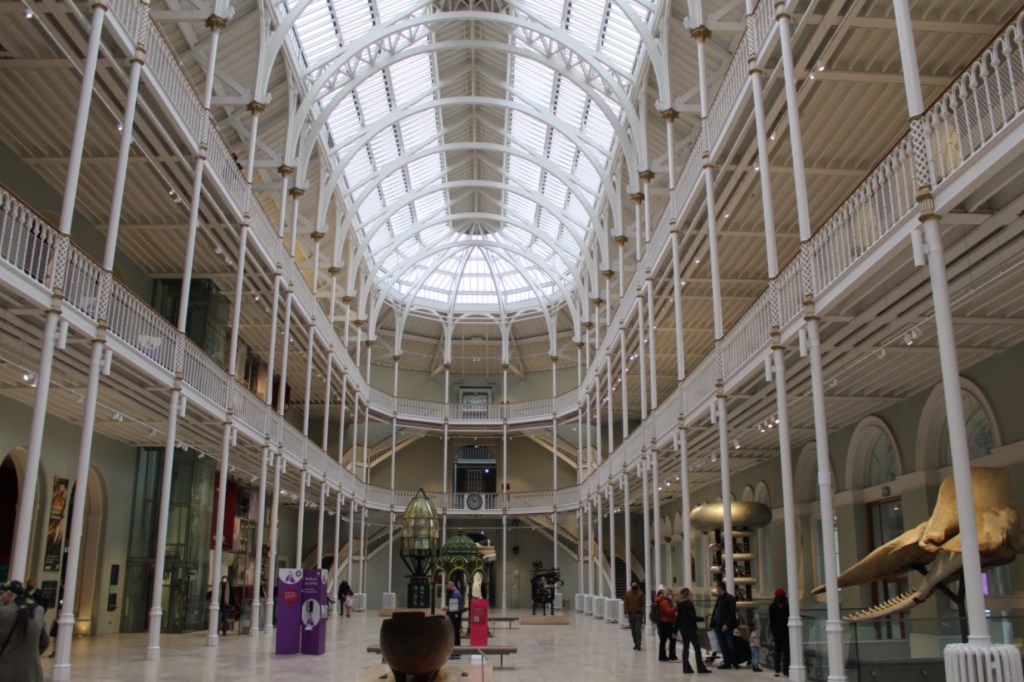


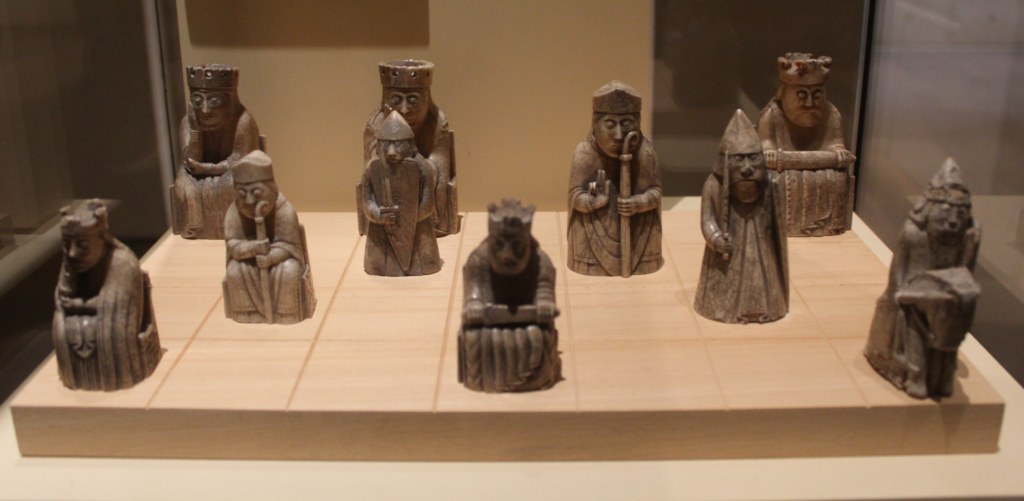
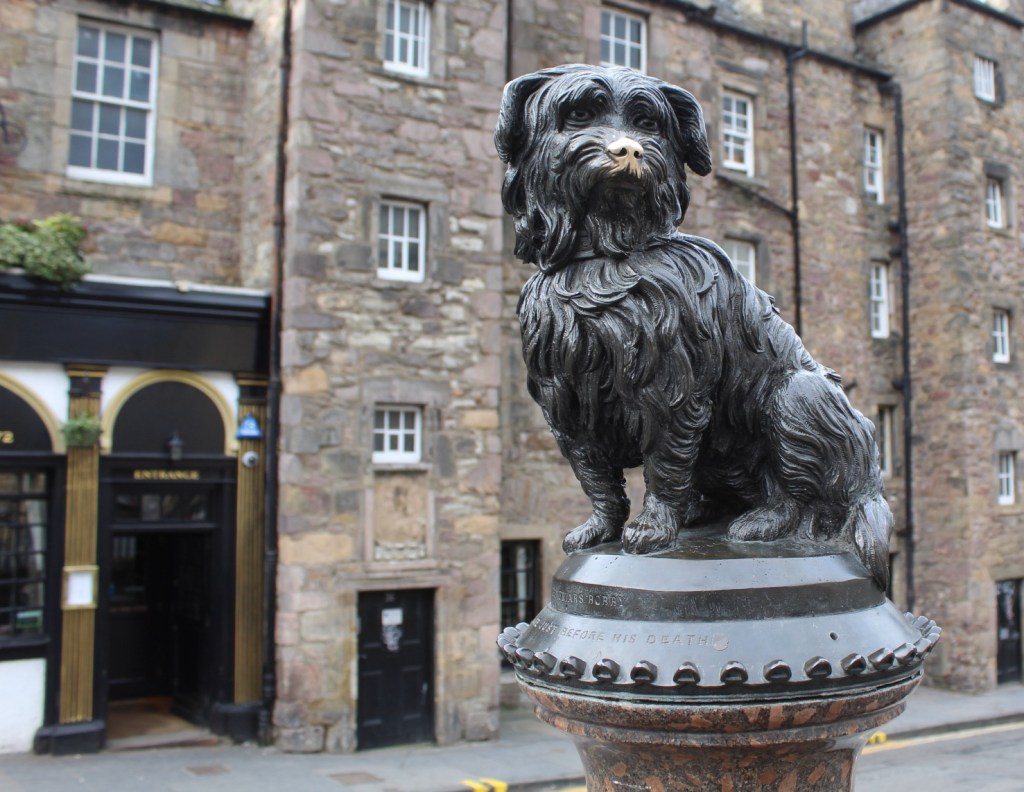

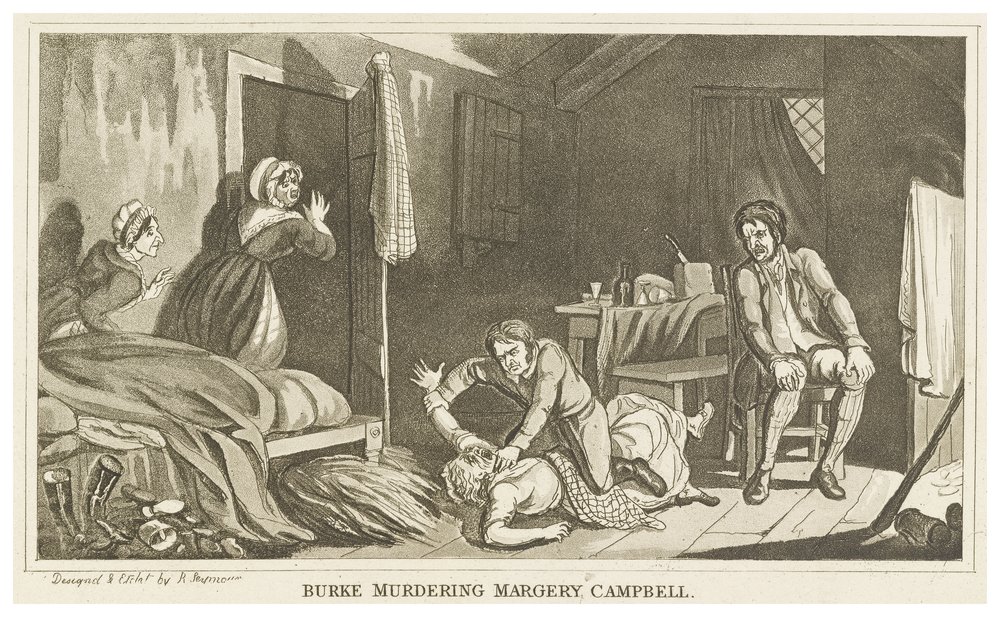


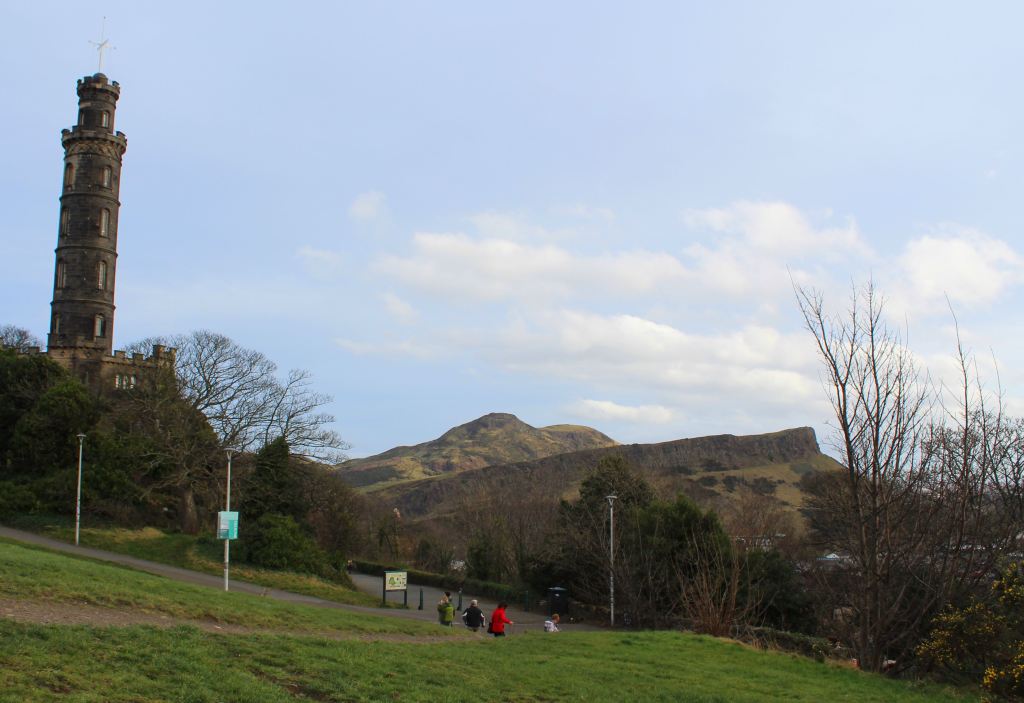
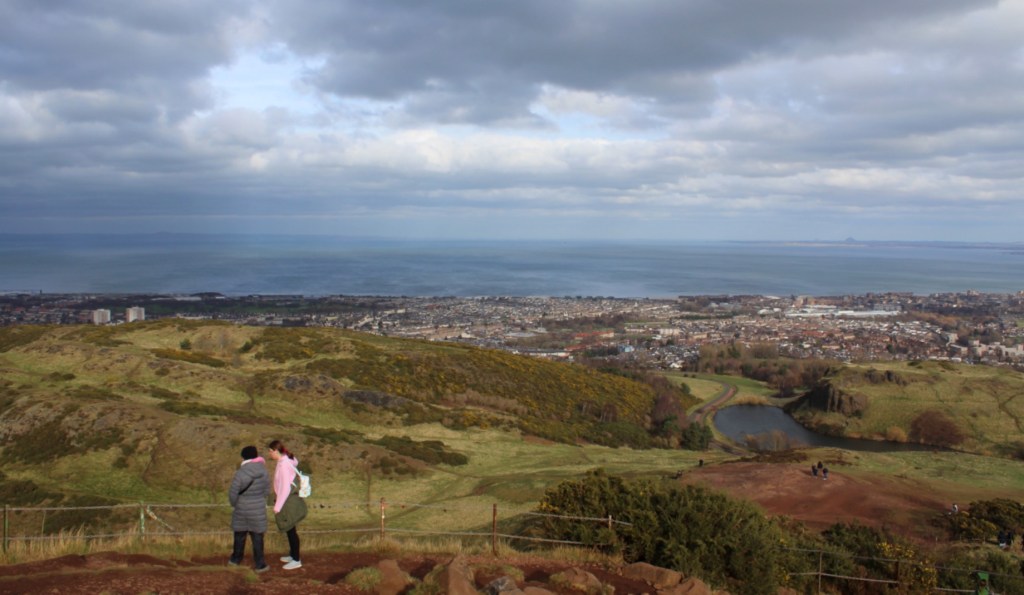
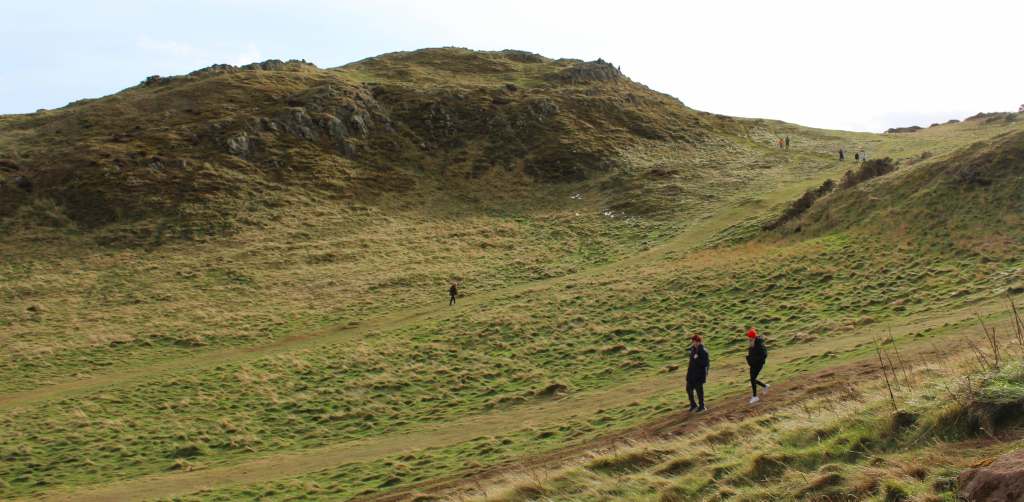


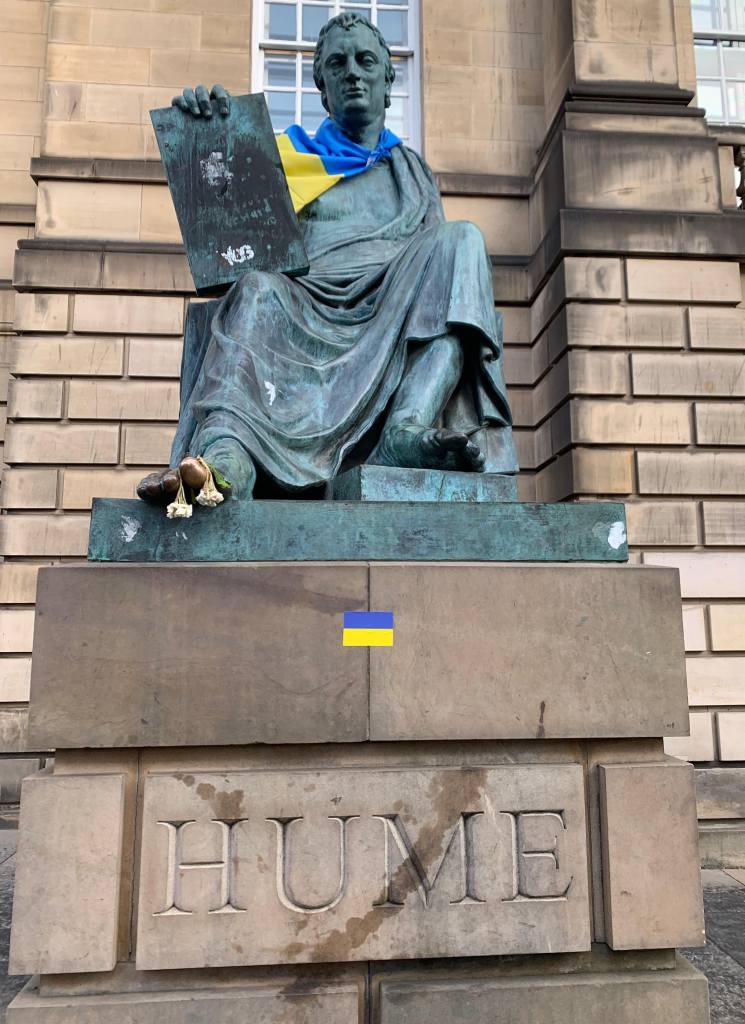

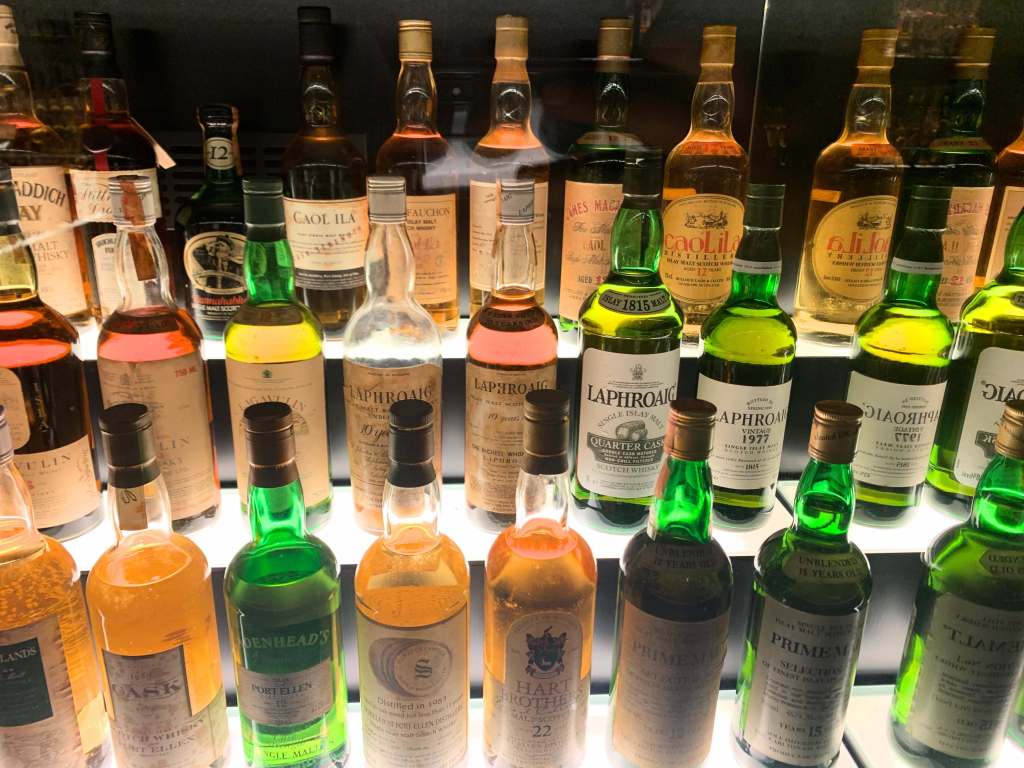


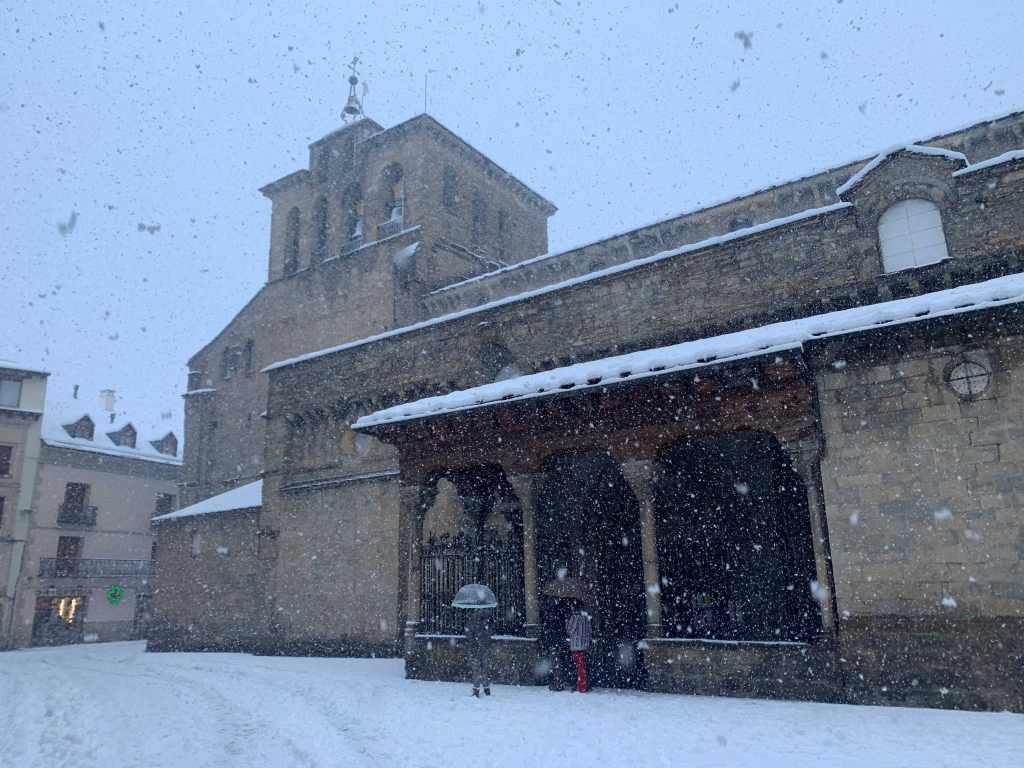


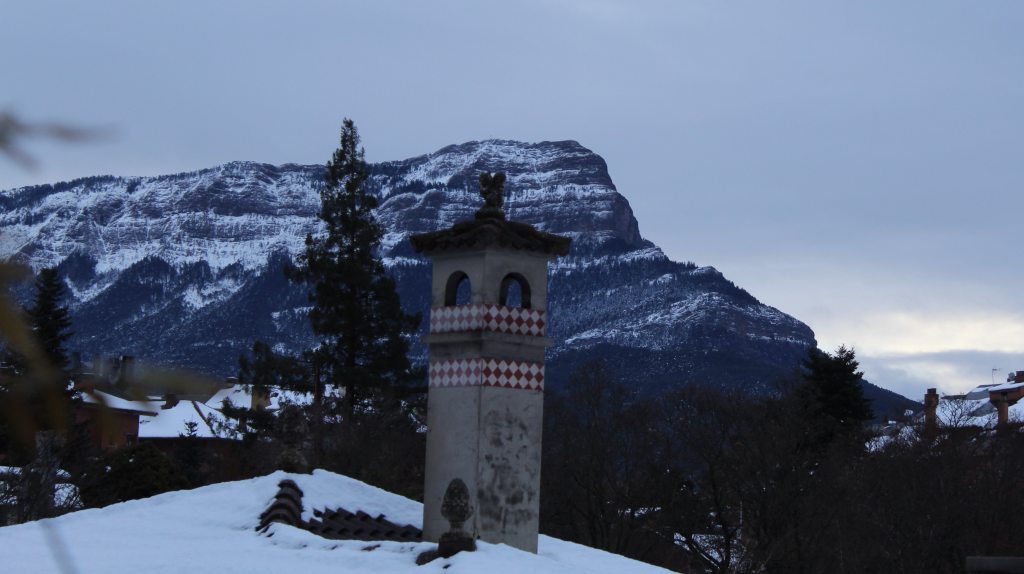
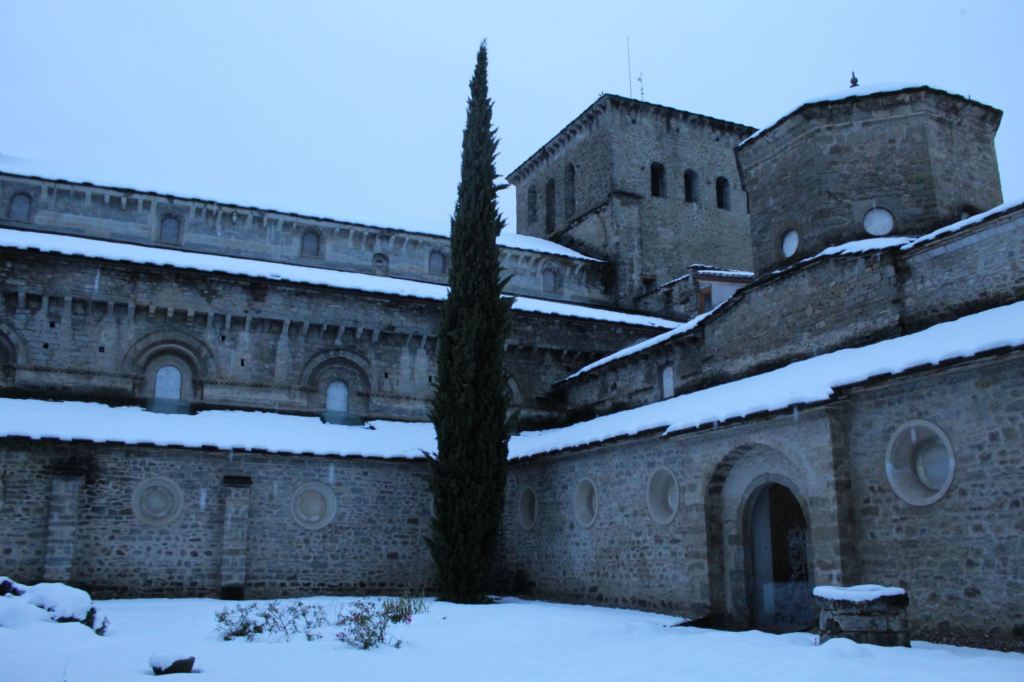
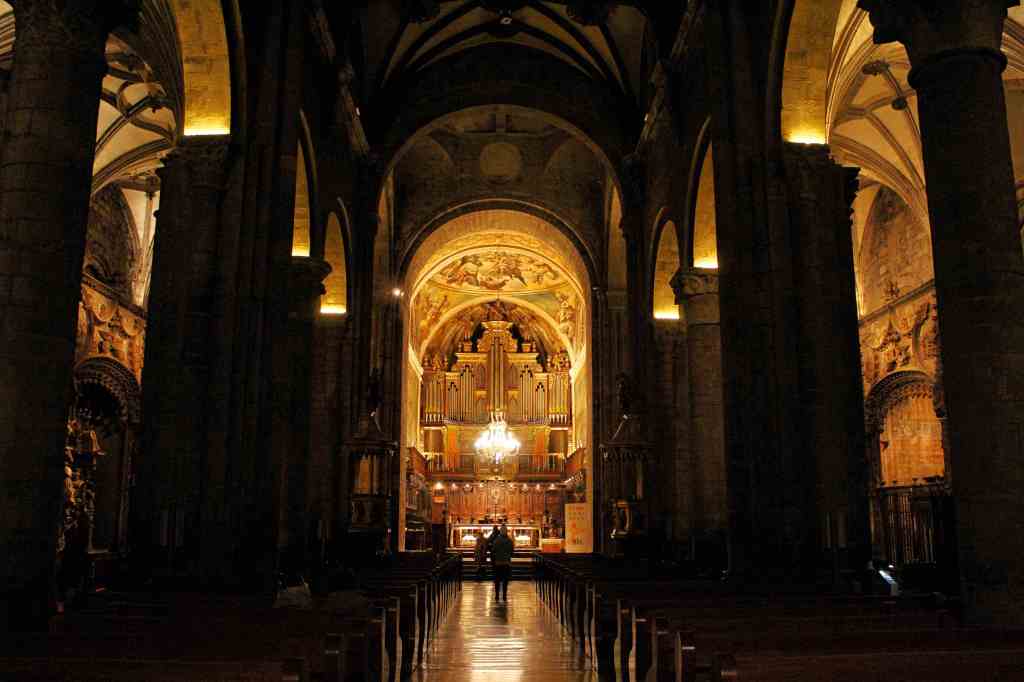
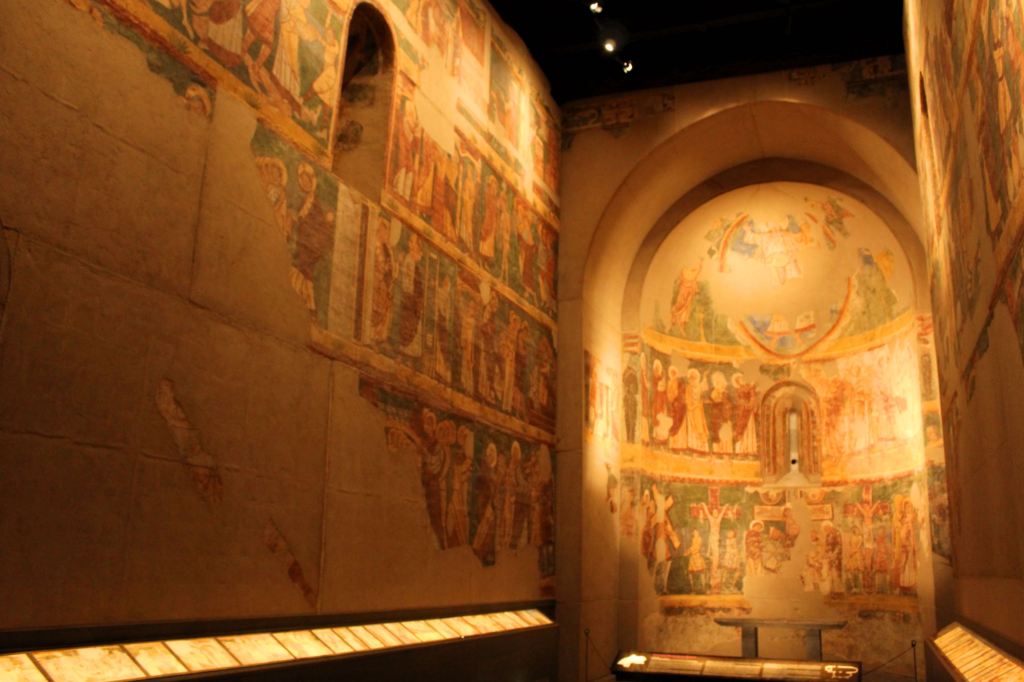


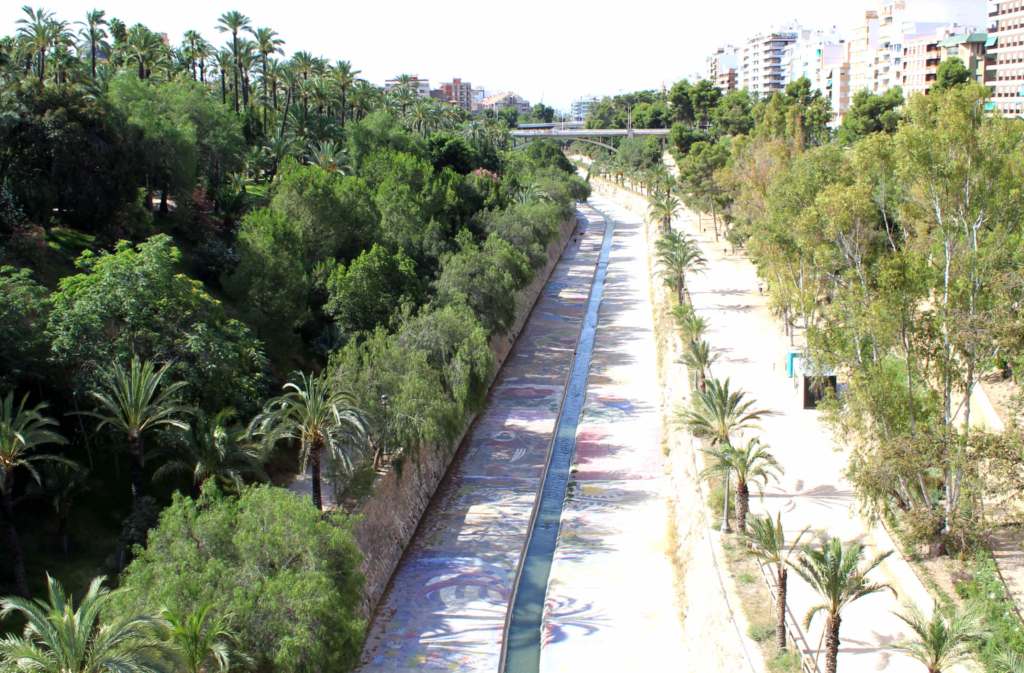
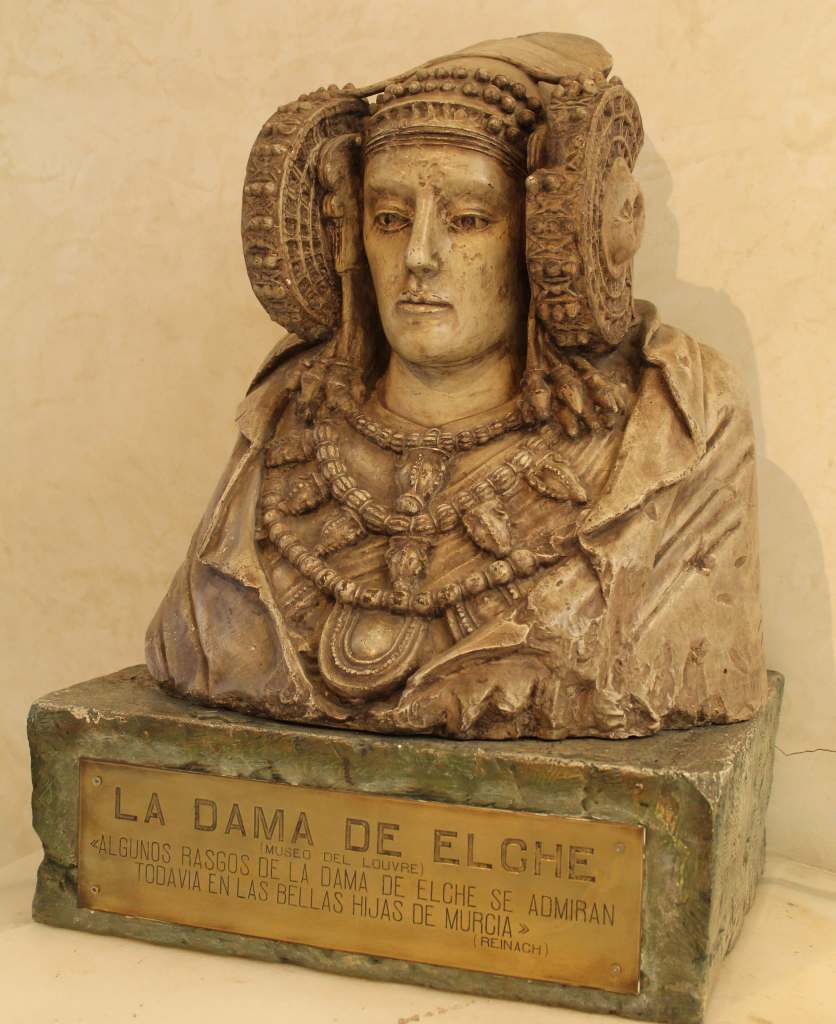


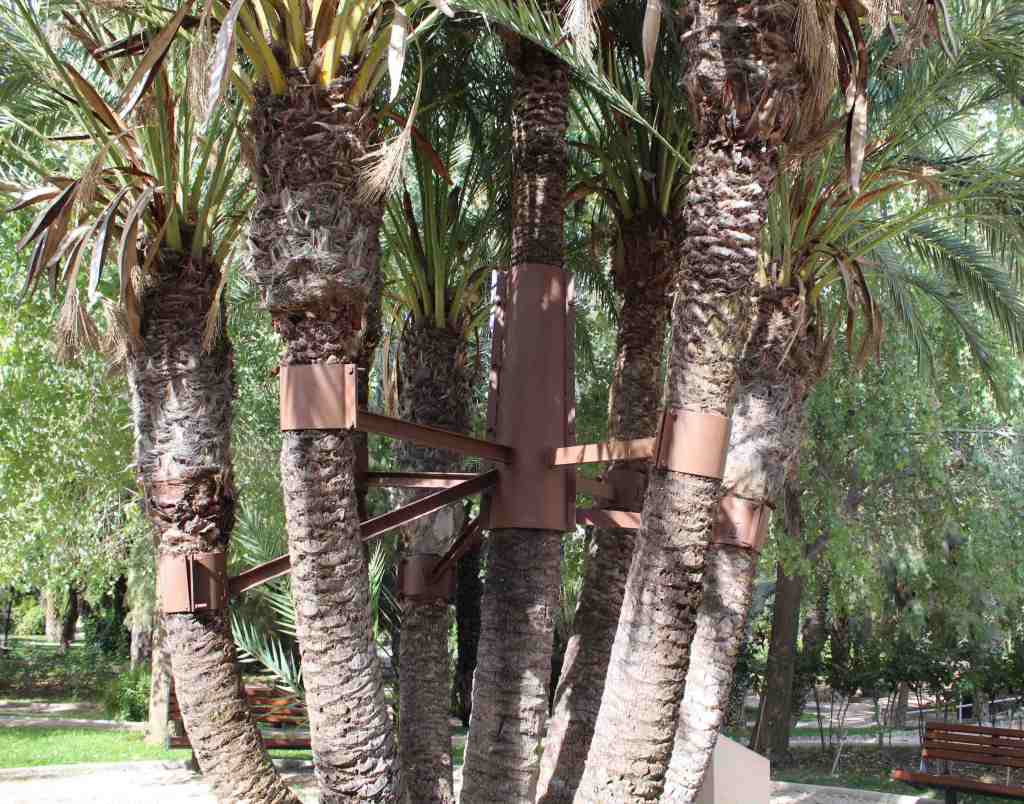







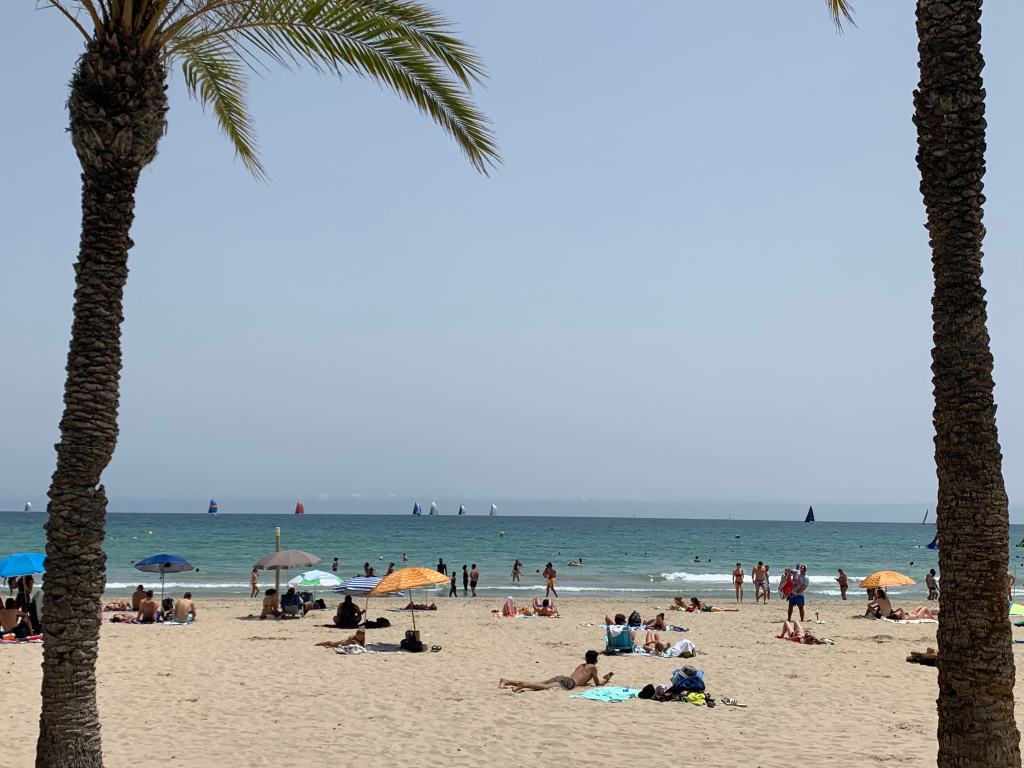

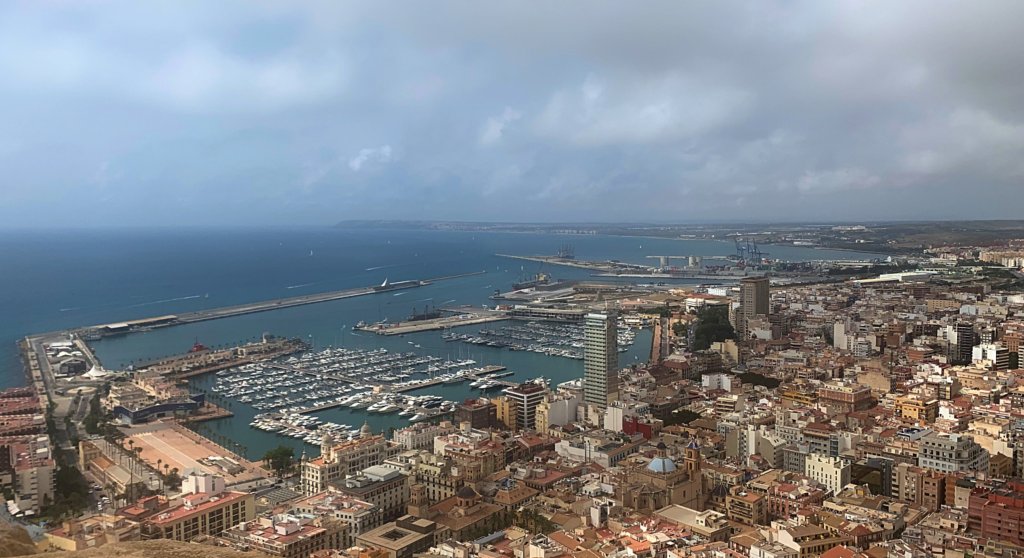
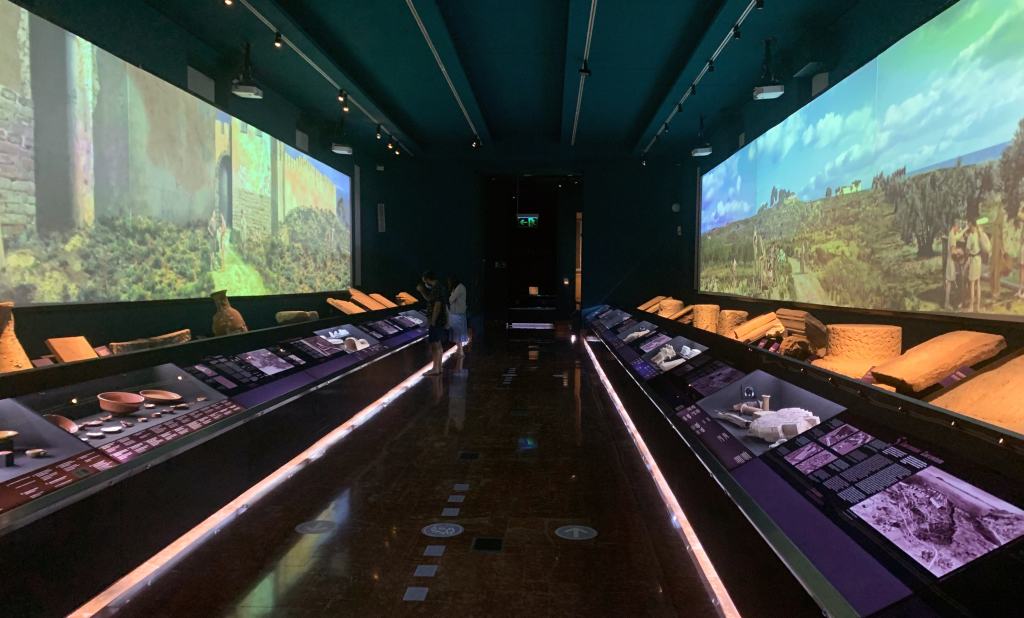

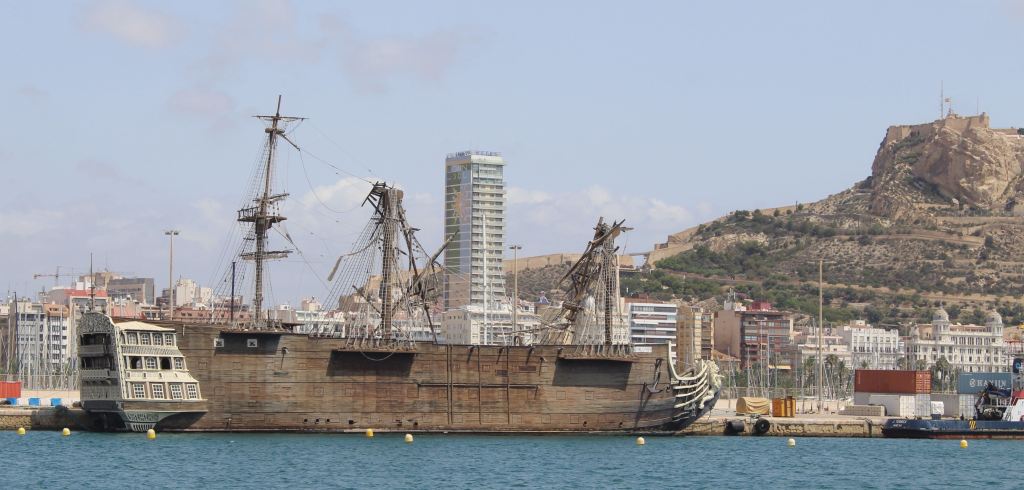
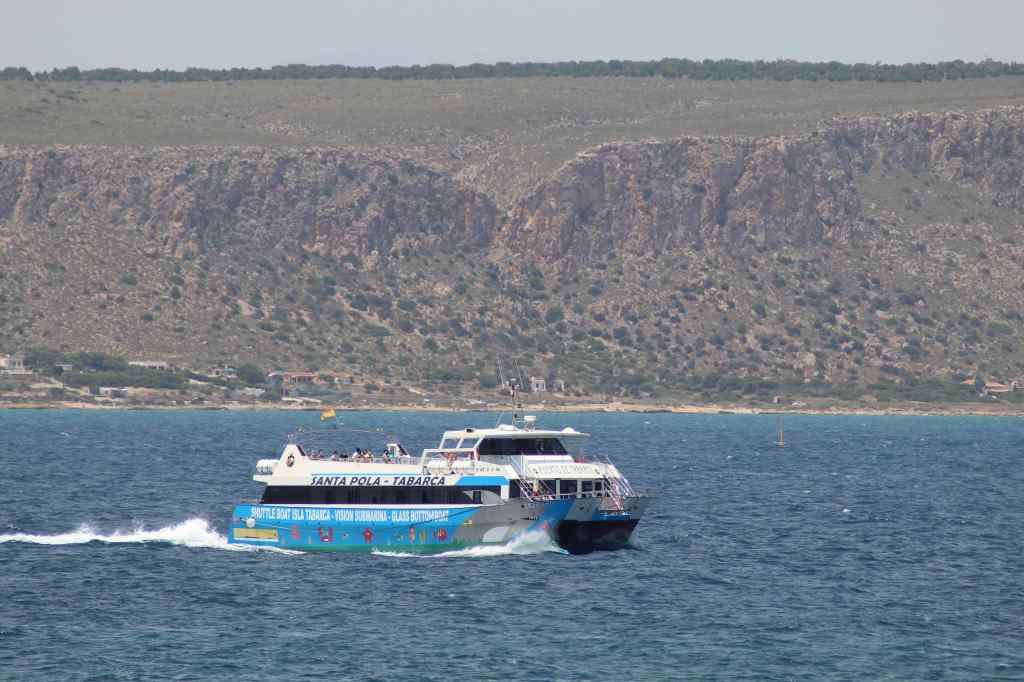


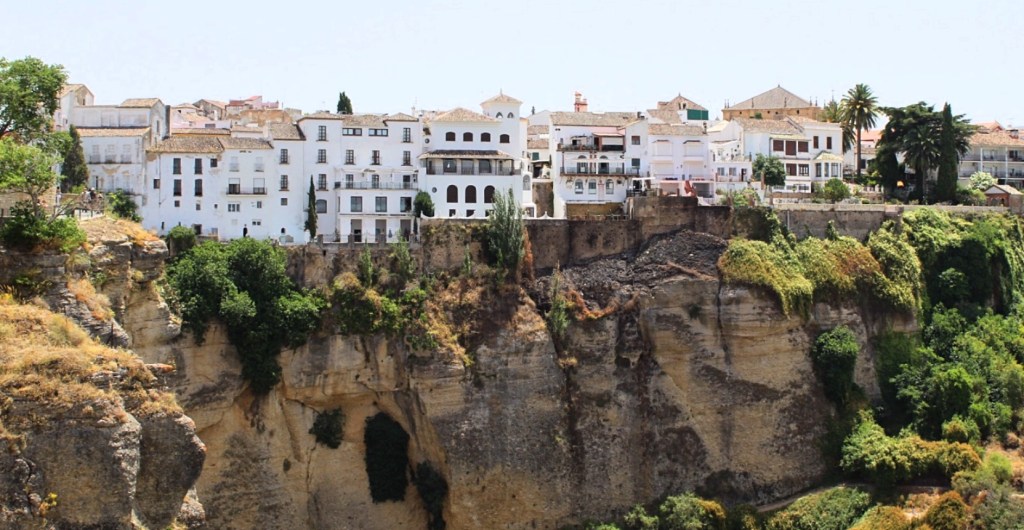
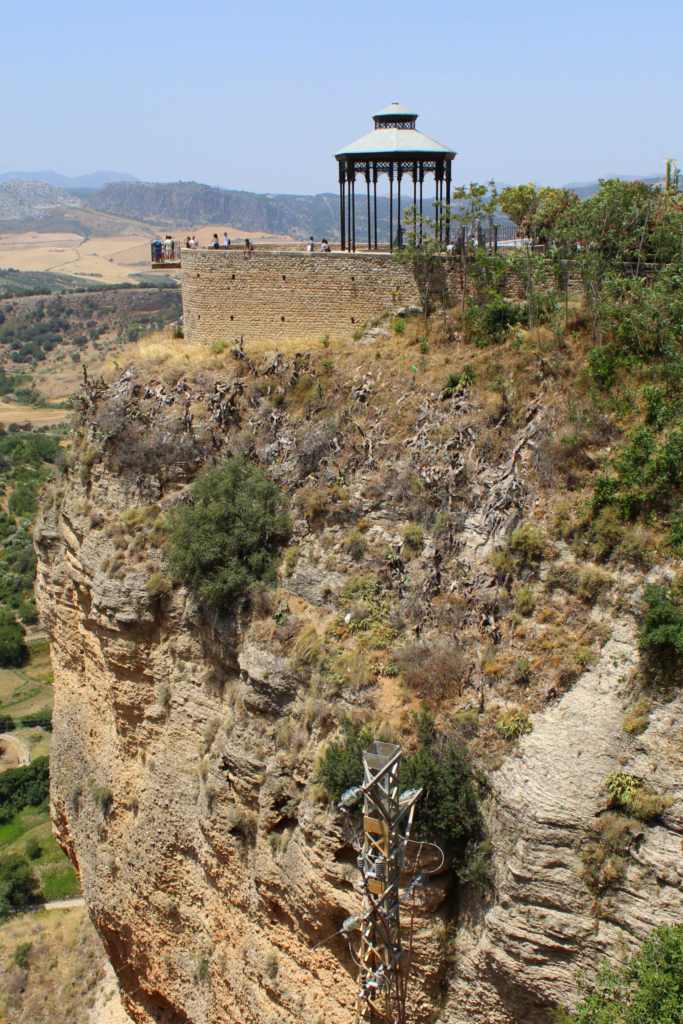


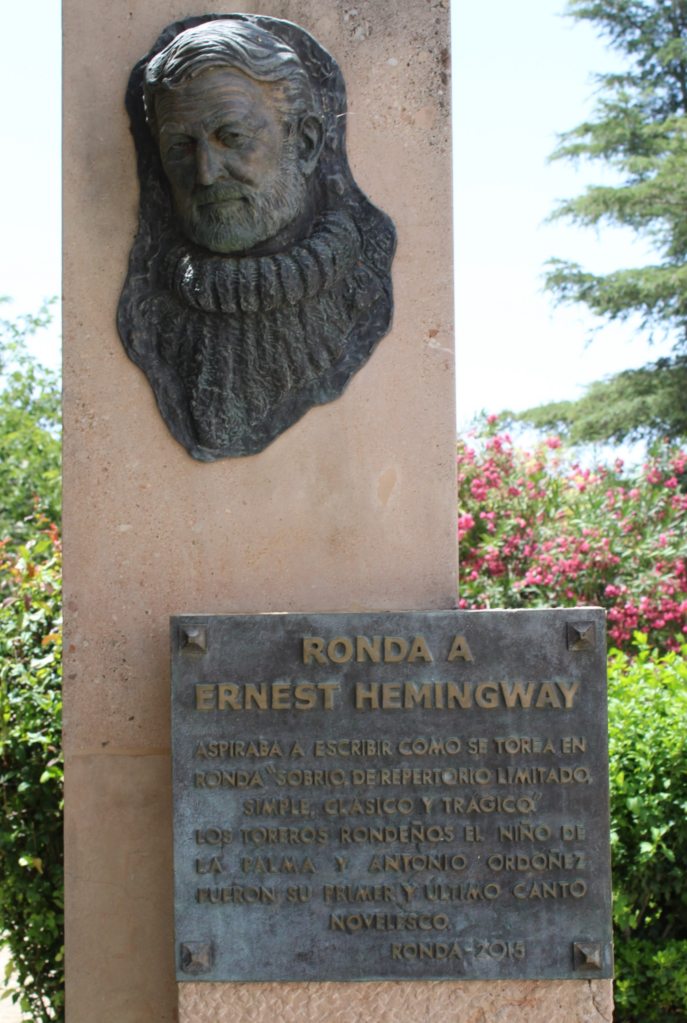


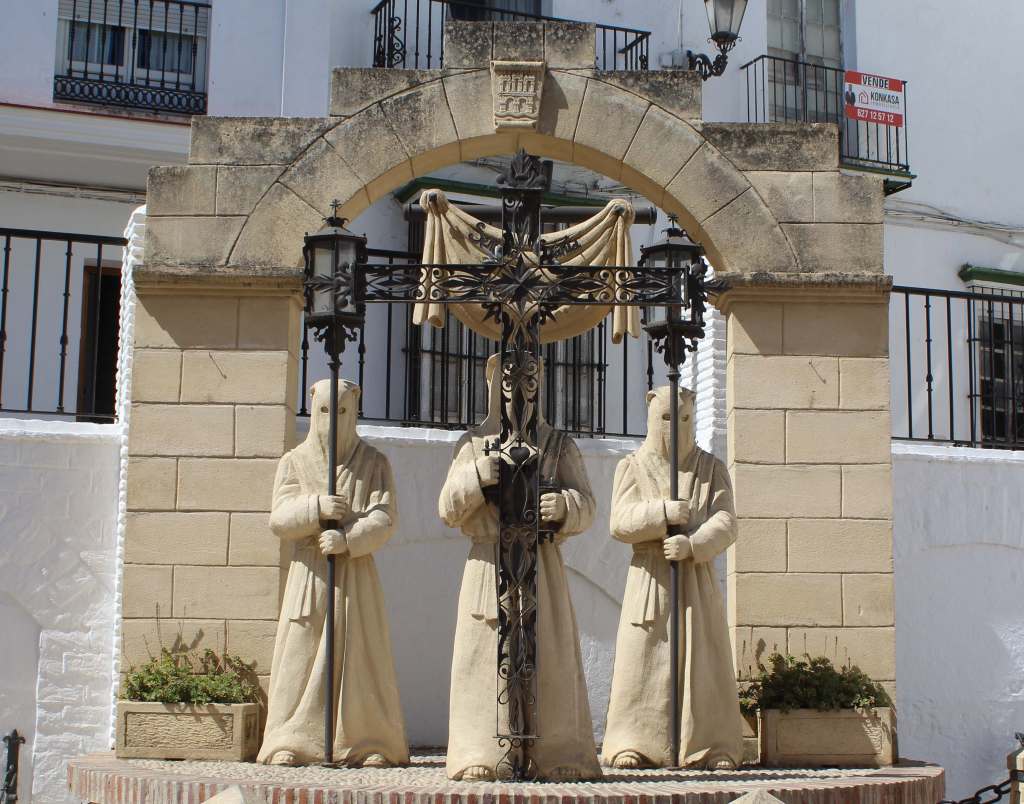
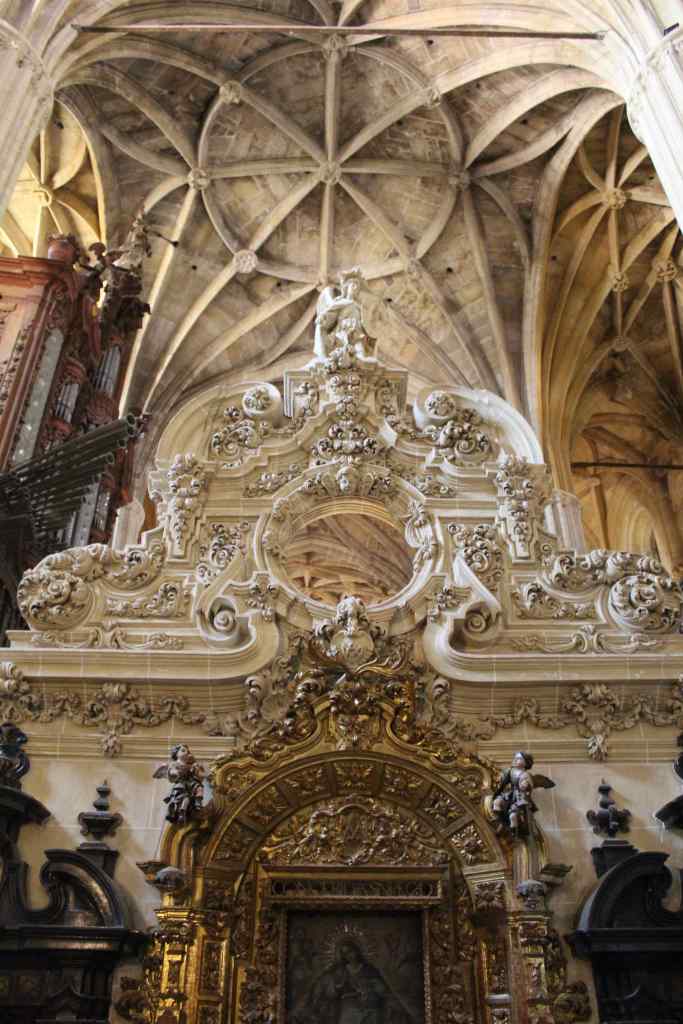

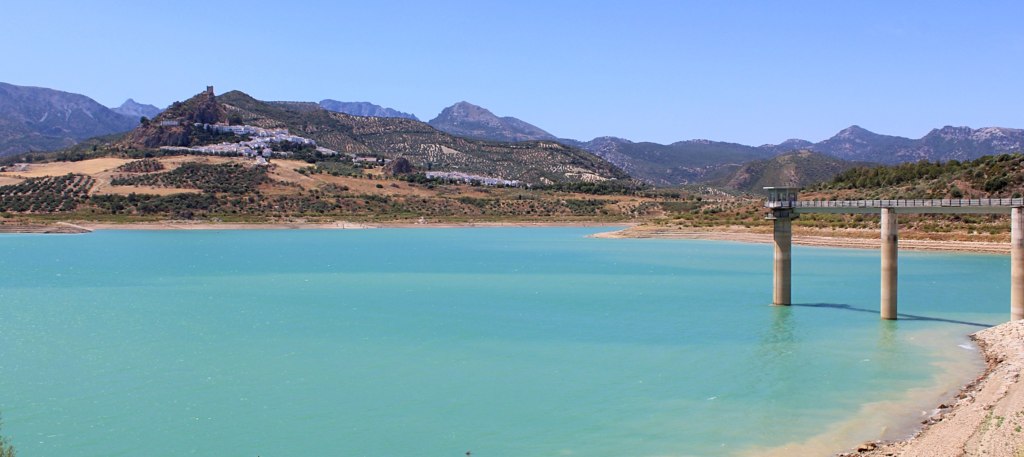
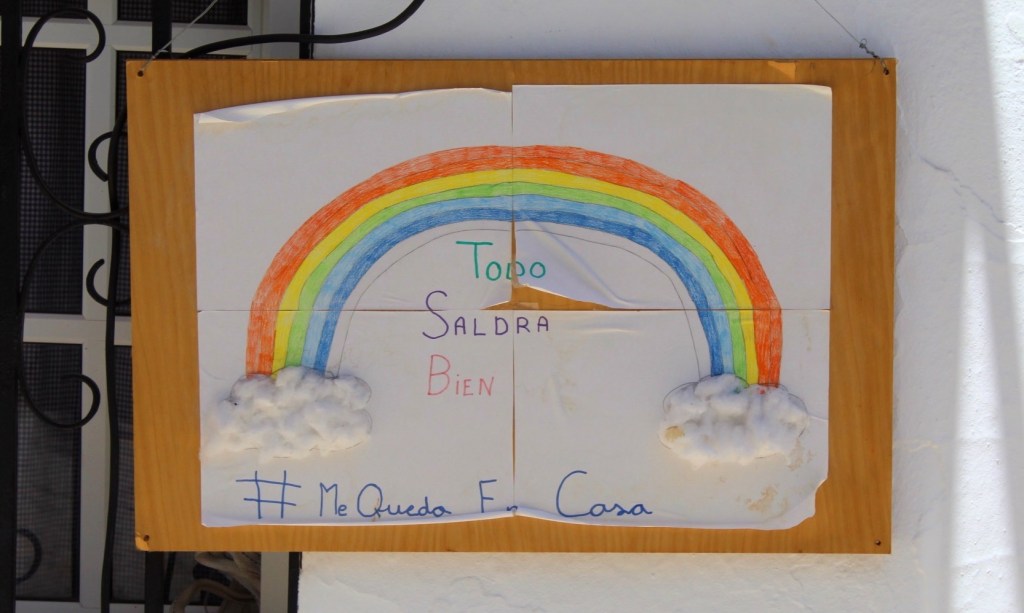
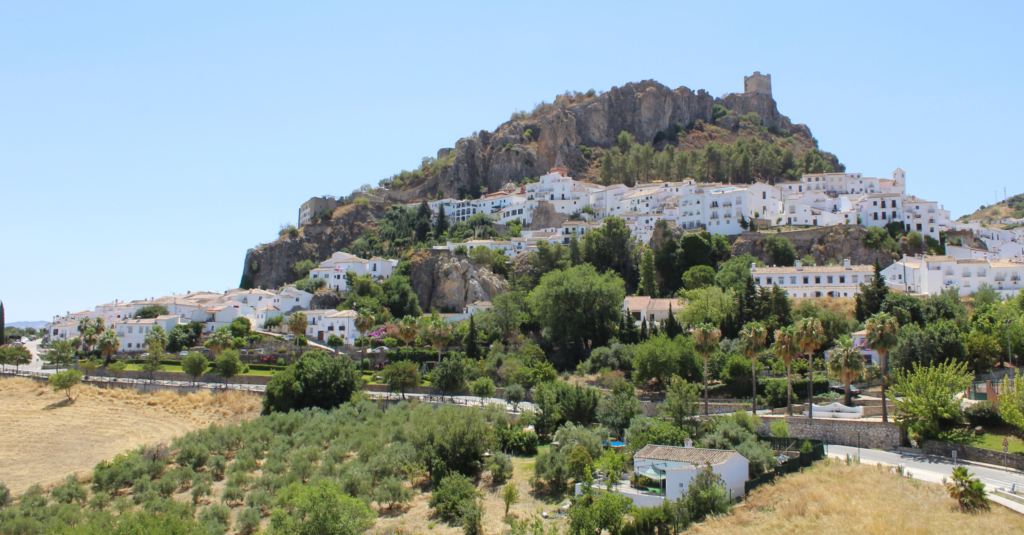
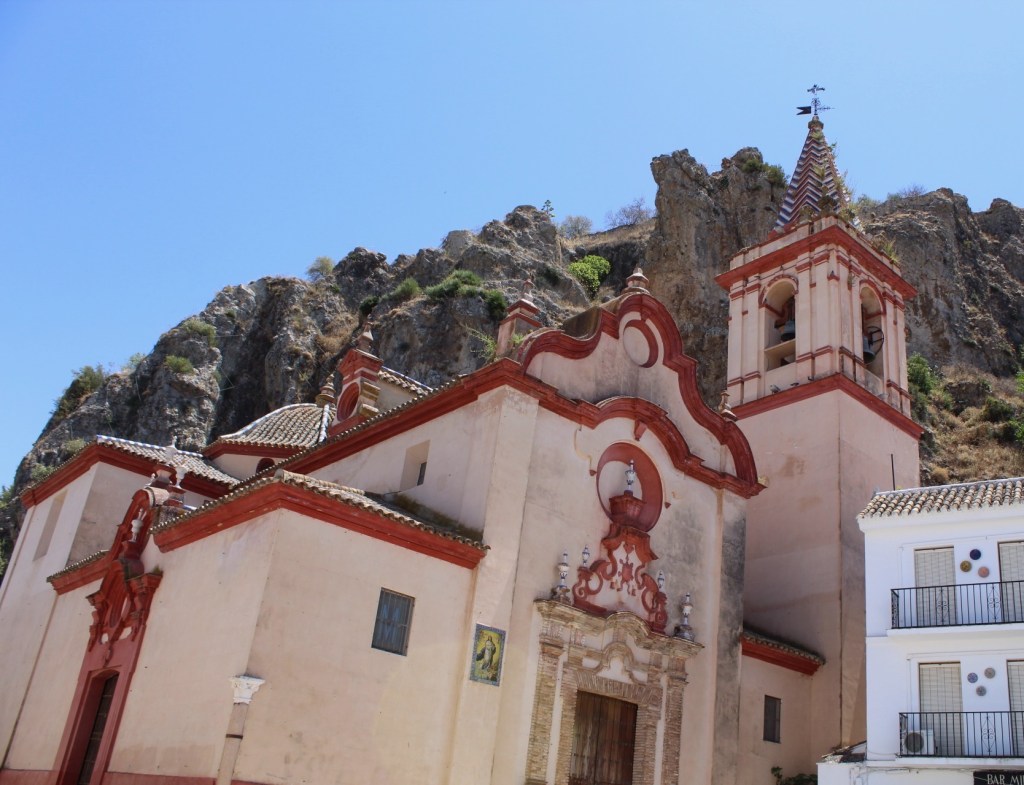

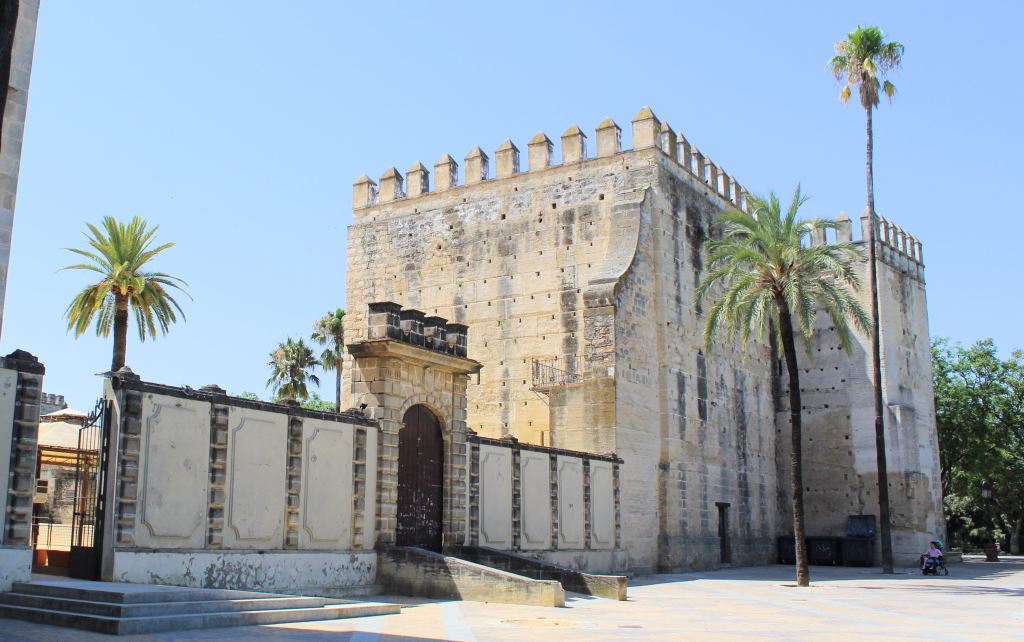
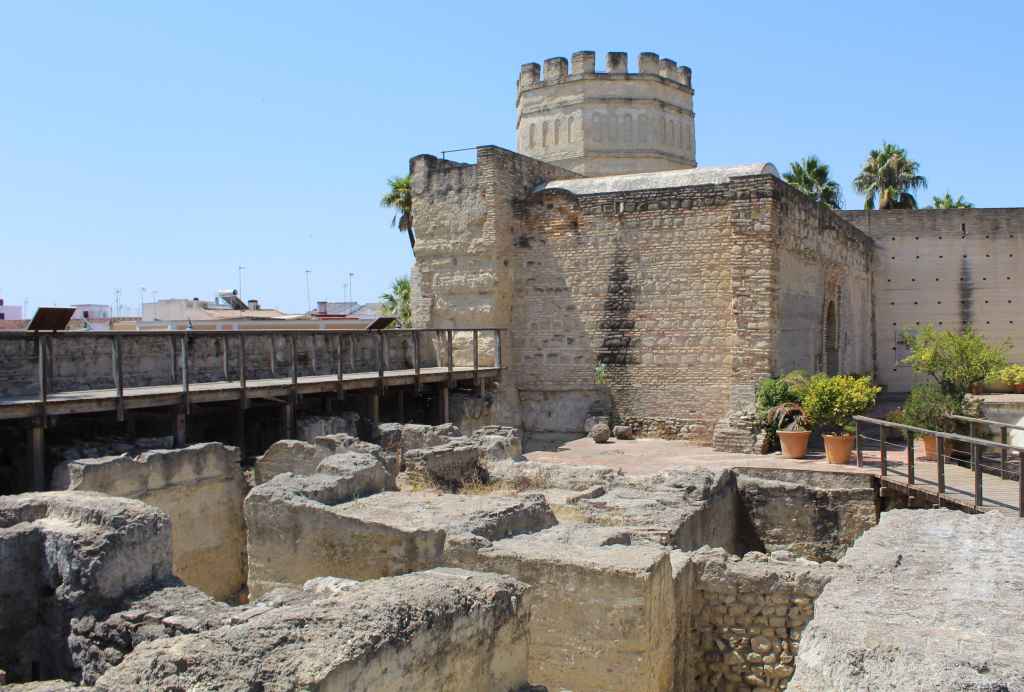
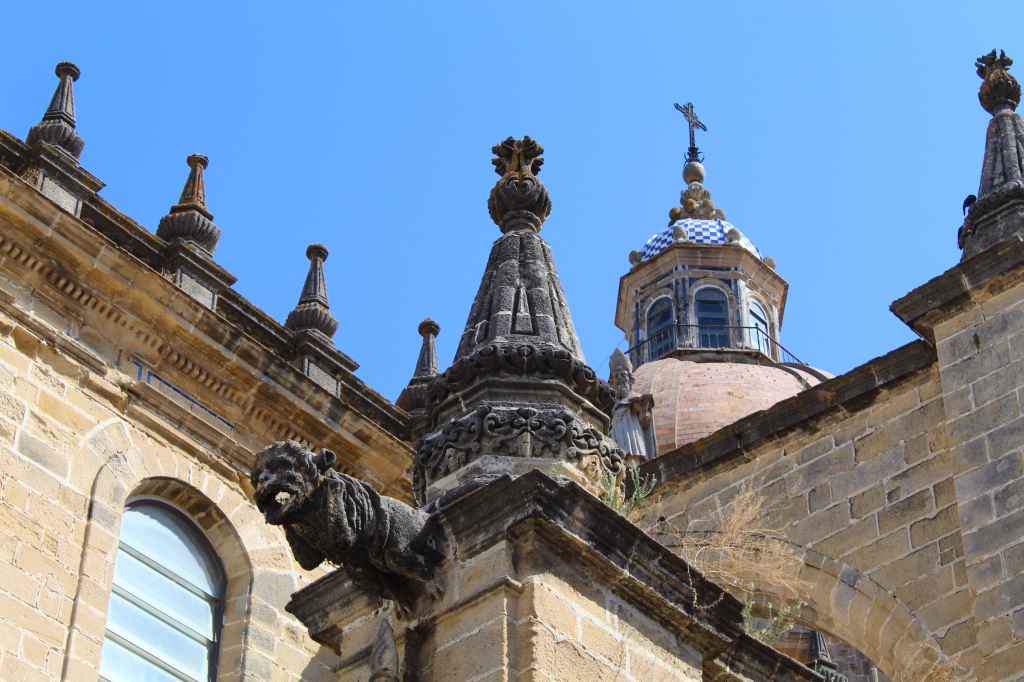
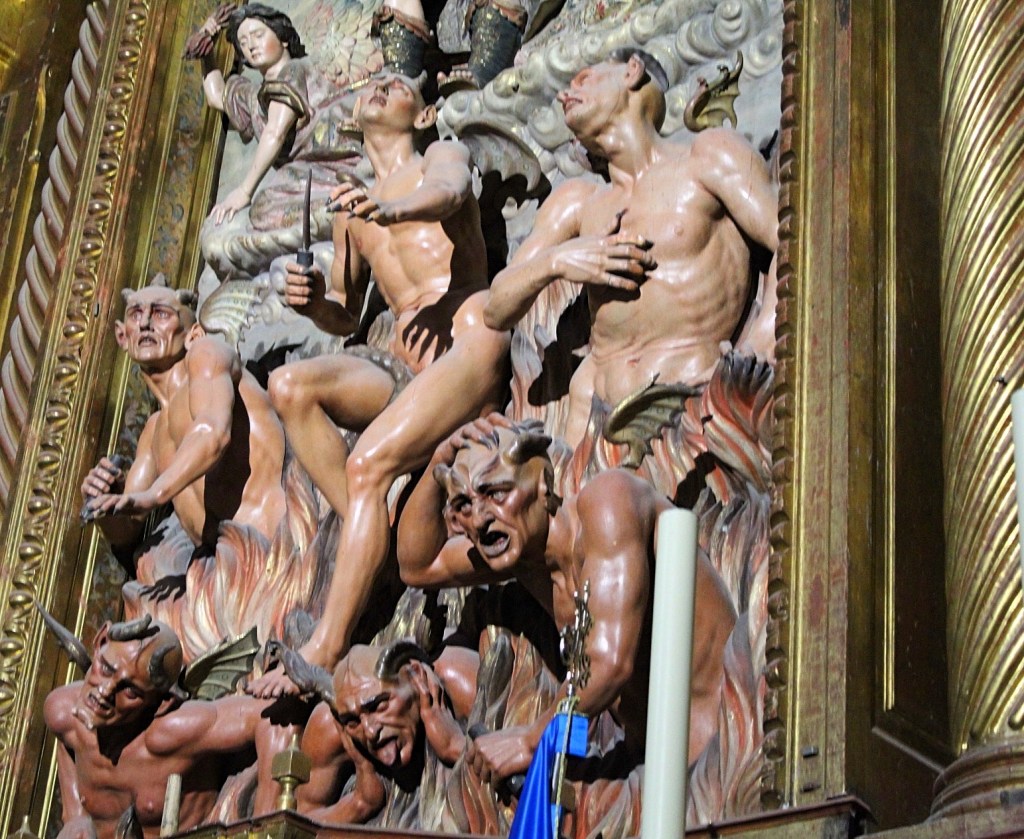
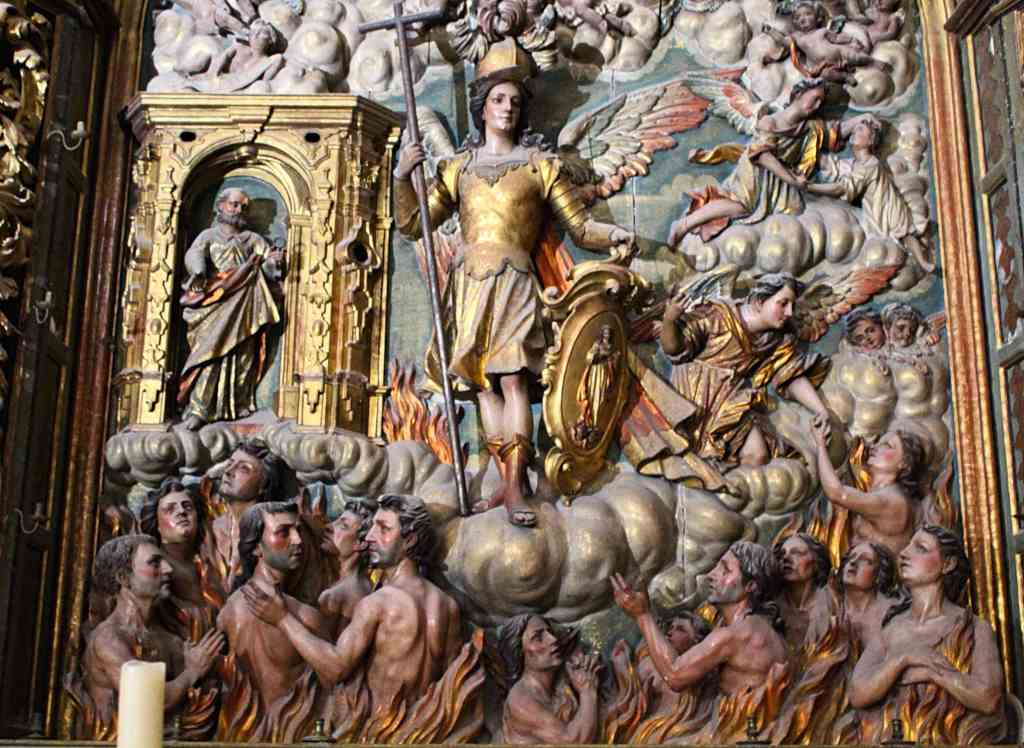
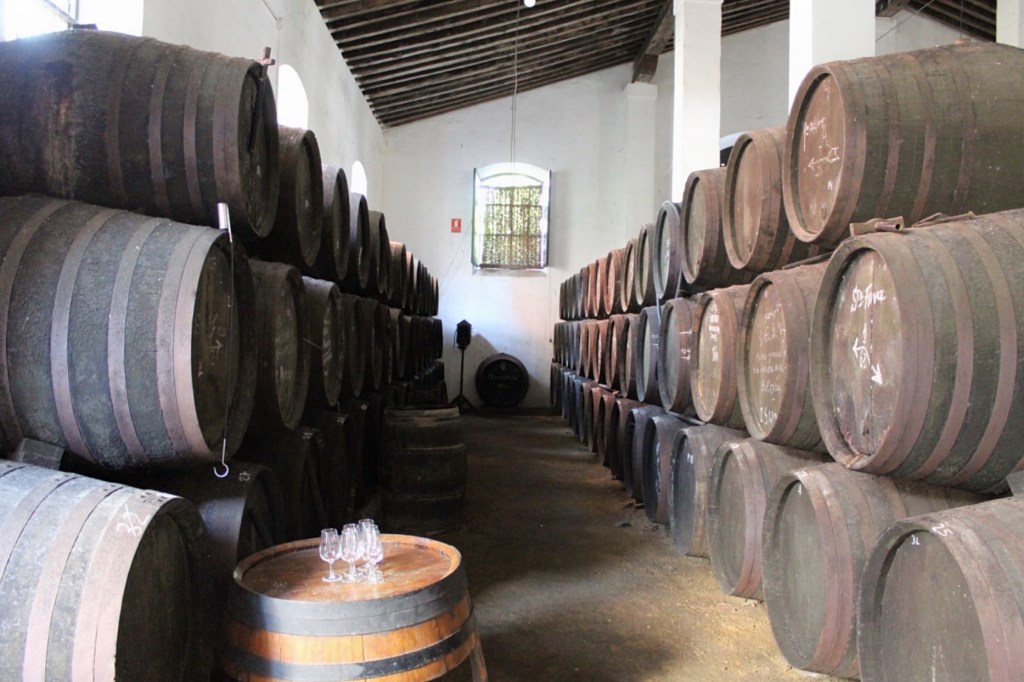

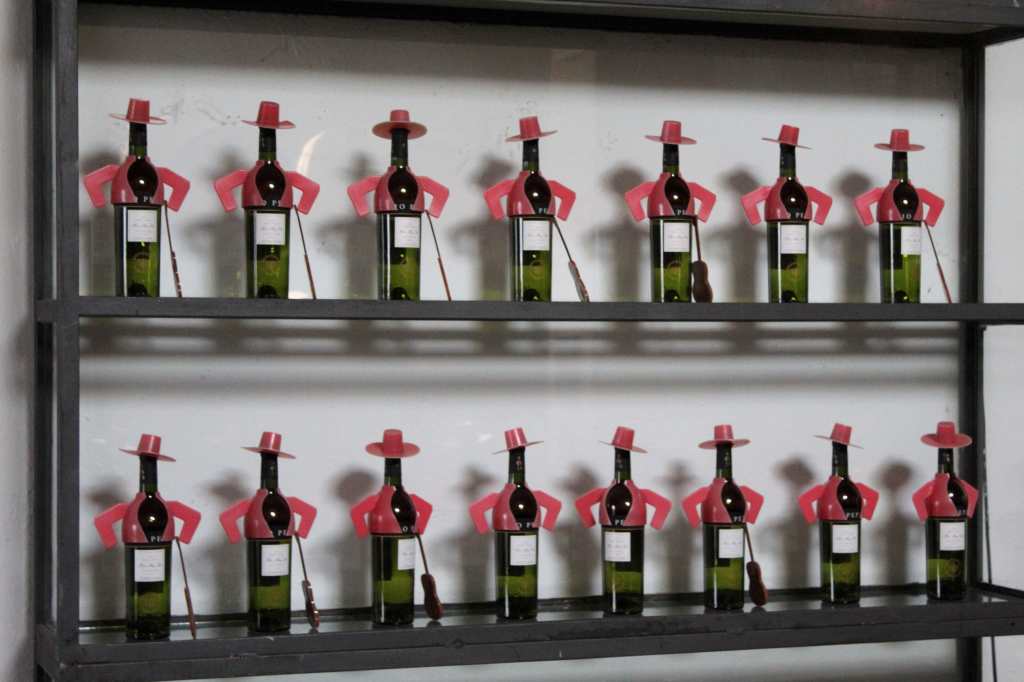


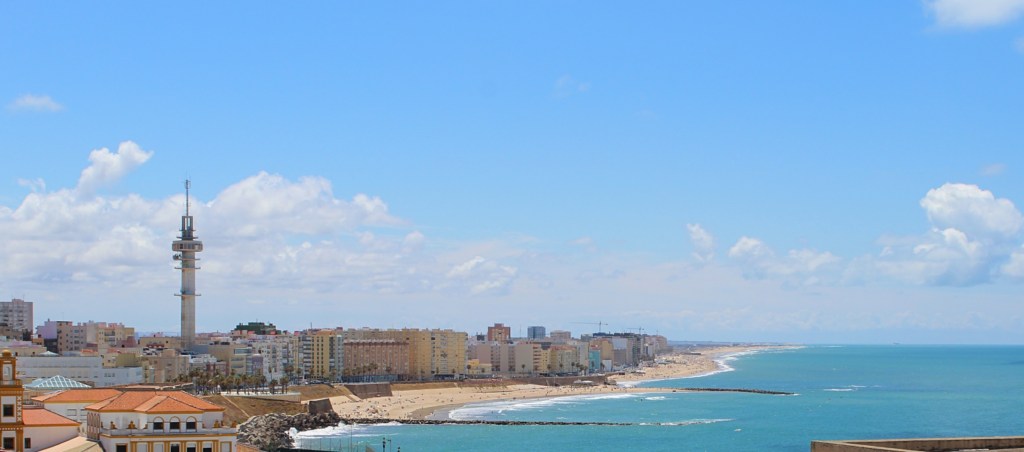
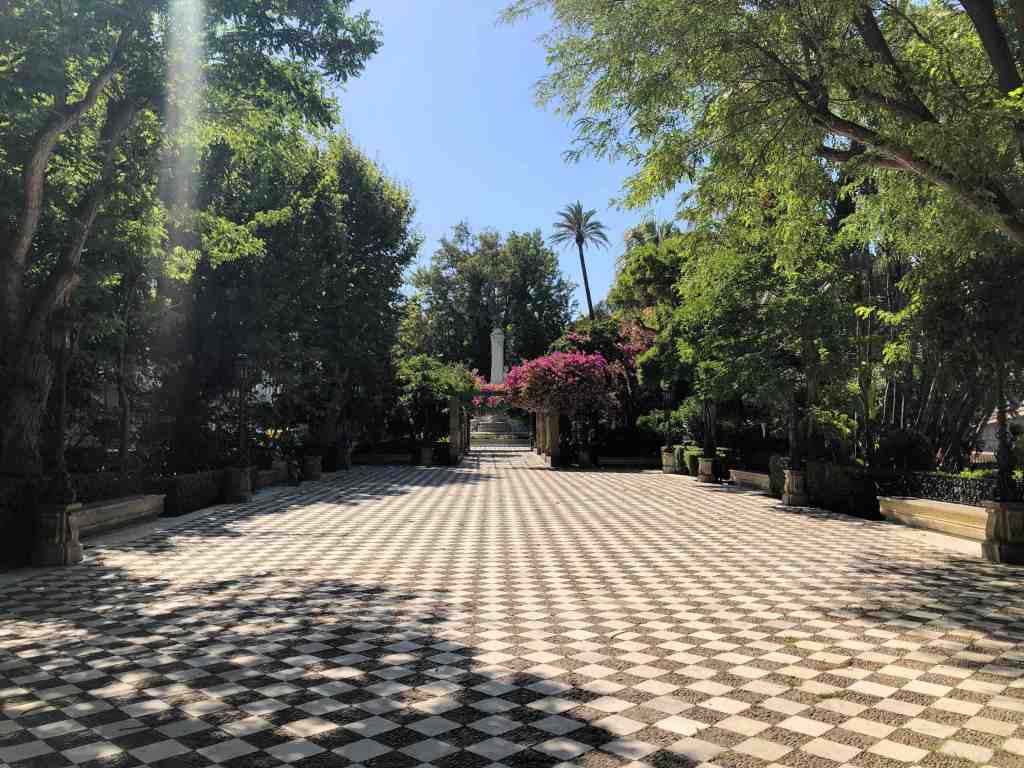
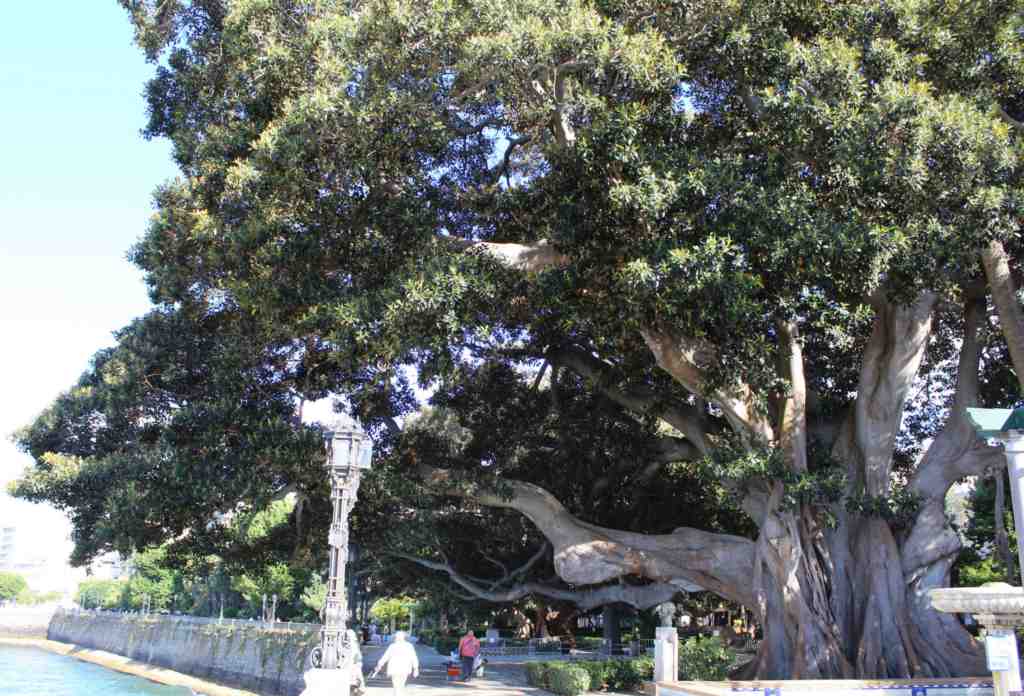
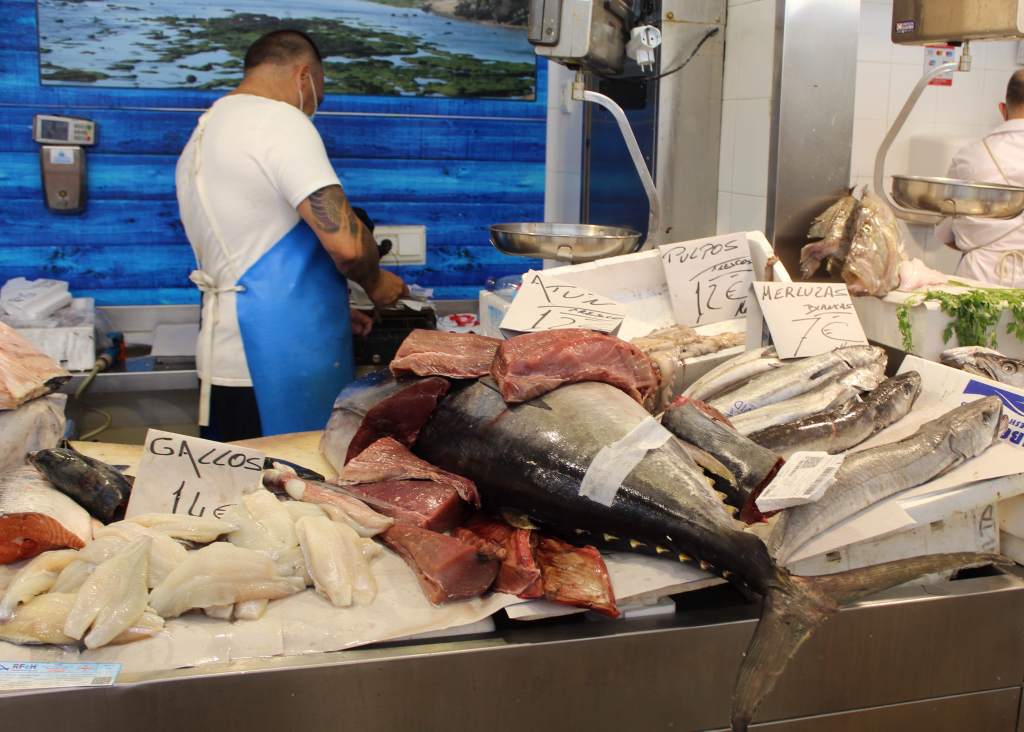


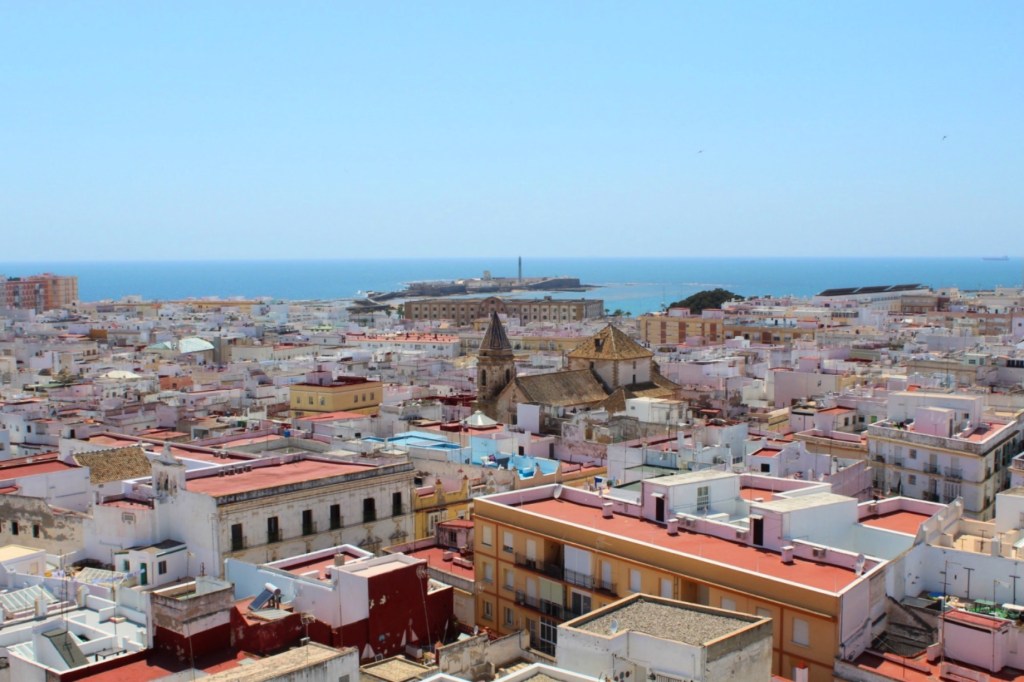


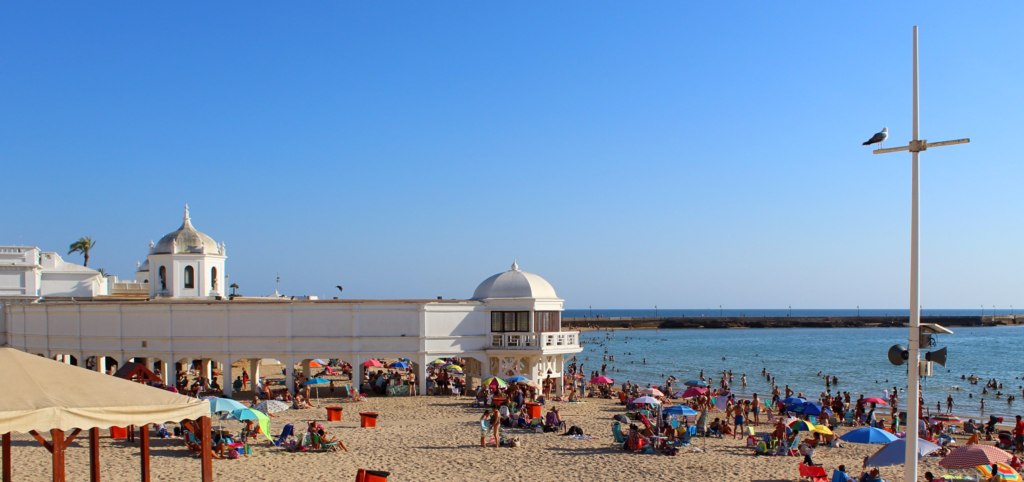


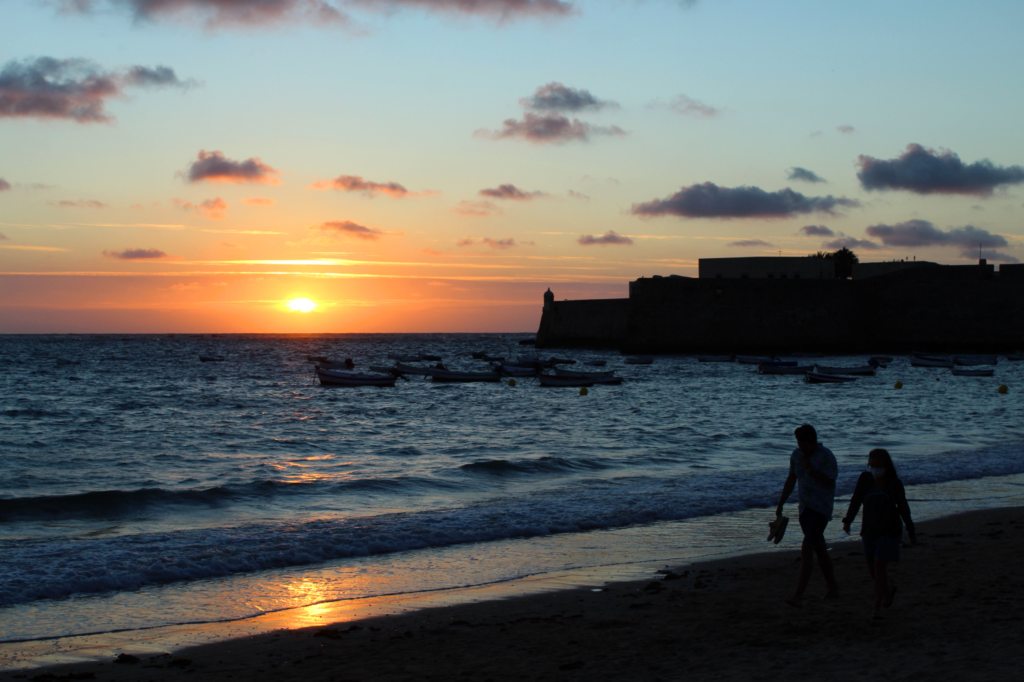
 Lotz in Translation