Review: Opticks

Review: Opticks
Opticks

Opticks by Isaac Newton

My rating: 4 of 5 stars

My Design in this Book is not to explain the Properties of Light by Hypotheses, but to propose and prove them by Reason and Experiment

Newton’s masterwork is, unquestionably, his Principia. But it is neither an easy nor a pleasant book to read. Luckily, the great scientist wrote a far more accessible volume that is scarcely less important: the Opticks.

The majority of this text is given over to descriptions of experiments. To the modern reader—and I suspect to the historical reader as well—these sections are remarkably dry. In simple yet exact language, Newton painstakingly describes the setup and results of experiment after experiment, most of them conducted in his darkened chamber, with the window covered up except for a small opening to let in the sunlight. Yet even if this doesn’t make for a thrilling read, it is impossible not to be astounded at the depth of care, the keenness of observation, and the subtle brilliance Newton displays. Using the most basic equipment (his most advanced tool is the prism), Newton tweezes light apart, making an enormous contribution both to experimental science and to the field of optics.

At the time, the discovery that white light could be decomposed into a rainbow of colors, and that this rainbow could be recombined back into white light, must have seemed as momentous as the discovery of the Higgs Boson. And indeed, even the modern reader might catch a glimpse of this excitement as she watches Newton carefully set up his prism in front of his beam of light, tweaking every variable, adjusting every parameter, measuring everything could be measured, and describing in elegant prose everything that could not.

Whence it follows, that the colorifick Dispositions of Rays are also connate with them, and immutable; and by consequence, that all the Productions and Appearances of Colours in the World are derived, not from any physical Change caused in Light by Refraction or Reflexion, but only from the various Mixtures or Separations of Rays, by virtue of their different Refrangibility or Reflexibility. And in this respect the Science of Colours becomes a Speculation as truly mathematical as any other part of Opticks.

Because I had recently read Feynman’s QED, one thing in particular caught my attention. Here is the problem: When you have one surface of glass, even if most of the light passes through it, some of the light is reflected; and you can roughly gauge what portion of light does one or the other. Let us say on a typical surface of glass, 4% of light is reflected. Now we add another surface of glass behind the first. According to common sense, 8% of the light should be reflected, right? Wrong. Now the amount of light which is reflected varies between 0% and 16%, depending on the distance between the two surfaces. This is truly bizarre; for it seems that the mere presence of second surface of glass alters the reflectiveness of the first. But how does the light “know” there is a second surface of glass? It seems the light somehow is affected before it comes into contact with either surface.

Newton was aware of this awkward problem, and he came up with his theory of “fits of easy reflection or transmission” to explain this phenomenon. But this “theory” was merely to say that the glass, for some unknown reason, sometimes lets light through, and sometimes reflects it. In other words, it was hardly a theory at all.

Every Ray of Light in its passage through any refracting Surface is put into a certain transient Constitution or State, which in the progress of the Ray returns at equal Intervals, and disposes the Ray at every return to be easily transmitted through the next refracting Surface, and between the returns to be easily reflected by it.

Also fascinating to the modern reader is the strange dual conception of light as waves and as particles in this work, which cannot help but remind us of the quantum view. The wave theory makes it easy to account for the different refrangibility of the different colors of light (i.e. the different colors reflect at different angles in a prism).

Do not several sorts of Rays make Vibrations of several bignesses, which according to their bignesses excite Sensations of several Colours, much after the manner that the Vibrations of the Air, according to their several bignesses excite Sensations of several sounds. And particularly do not the most refrangible Rays excite the shortest Vibrations for making a Sensation of deep violet, the least refrangible the largest for making a Sensation of deep red, and the several intermediate bignesses to make Sensations of the several intermediate Colours?

To this notion of vibrations, Newton adds the “corpuscular” theory of light, which held (in opposition to his contemporary, Christiaan Huygens) that light was composed of small particles. This theory must have been attractive to Newton because it fit into his previous work in physics. It explained why beams of light, like other solid bodies, travel in straight lines (cf. Newton’s first law), and reflect off surfaces at angles equal to their angles of incidence (cf. Newton’s third law).

Are not the Rays of Light very small Bodies emitted from shining Substances? For such Bodies will pass through uniform Mediums in right Lines without bending into the shadow, which is the Nature of the Rays of Light. They will also be capable of several Properties, and be able to conserve their Properties unchanged in passing through several Mediums, which is another conditions of the Rays of Light.

As a side note, despite some problems with the corpuscular theory of light, it came to be accepted for a long while, until the phenomenon of interference gave seemingly decisive weight to the wave theory. (Light, like water waves, will interfere with itself, creating characteristic patterns; cf. the famous double-slit experiment.) The wave theory was reinforced with Maxwell’s equations, which treated light as just another electro-magnetic wave. It was, in fact, Einstein who brought back the viability of the corpuscular theory, when he suggested the idea that light might come in packets to explain the photoelectric effect. (Blue light, when shined on certain metals, will cause an electric current, while red light will not. Why not?)

All this tinkering with light is good fun. But the real treat, at least for the layreader, comes at the final section, where Newton speculates on many of the unsolved scientific problems of his day. His mind is roving and vast; and even if most of his speculations have turned out incorrect, it is stunning simply to witness him at work. Newton realizes, for example, that radiation can travel without a medium (like air), and can heat objects even in a vacuum. (And thank goodness for that, for how else would the earth be warmed by the sun?) But from this fact he incorrectly deduces that there must be some more subtle medium that remains (like the famous ether).

If in two large tall cylindrical Vessels of Glass inverted, to little Thermometers be suspended so as not to touch the Vessels, and the Air be drawn out of one of these Vessels thus prepared be carried out of a cold place into a warm one; the Thermometer in vacuo will grow warm as much, and almost as soon as the Thermometer that is not in vacuo. And when the Vessels are carried back into the cold place, the Thermometer in vacuo will grow cold almost as soon as the other Thermometer. Is not the Heat of the warm Room convey’d through the Vacuum by the Vibrations of a much subtiler Medium than Air, which after the Air was drawn out remained in the Vacuum?

Yet for all Newton’s perspicacity, the most touching section was a list of question Newton asks, as if to himself, that he cannot hope to answer. It seems that even the most brilliant among us are stunned into silence by the vast mystery of the cosmos:

What is there in places almost empty of Matter, and whence is it that the Sun and Planets gravitate towards one another, without dense Matter between them? Whence is it that Nature doth nothing in vain; and whence arises all that Order and Beauty which we see in the World? To what end are Comets, and whence is it that Planets move all one and the same way in Orbs concentrick, while Comets move all manner of ways in Orbs very excentrick; and what hinders the fix’d Stars from falling upon one another? How came the Bodies of animals to be contrived with so much Art, and for what ends were their several Parts? Was the Eye contrived without Skill in Opticks, and the Ear without Knowledge of Sounds? How do the Motions of the Body follow from the Will, and whence is the Instinct in Animals?

View all my reviews

Review: Cracking the GRE

Review: Cracking the GRE

Cracking the GRECracking the GRE by The Princeton Review

My rating: 4 of 5 stars

Compared with Europe, America has a strange fixation with standardized tests. Administrators and bureaucrats seems to view these tests as tools of accountability, allowing for standard measurement across the system with no possibility of error. But the result is often quixotic: the attempt to come up with a test that creates a normal curve in scores, a test immune to differences in social and cultural background, and a test that measures something predictive of future success, irrespective of the field or career.

As far as these tests go, the Graduate Record Examinations (GRE) is well done. The math sections only include the most basic techniques, focusing instead on tricky word problems or painstakingly lengthy operations, which theoretically would put all students—regardless of math background—on an equal footing. The essays focus on equally fundamental skills: creating and defending a thesis, and critiquing somebody else’s thesis. The verbal section is a straightforward vocabulary and reading comprehension drill. In sum, as far as possible, I think that the GRE is focused on fundamental skills needed for study.

The catch, of course, is the “as far as possible.” For no matter how much the test-makers try, a physics major and a history major will not be on an even footing in the math and verbal sections. What is more, by making vocabulary such an integral part of the exam, people from more privileged backgrounds—whose well-educated parents work white-collar jobs—have an obvious advantage. This is not to mention the upper hand that the well-off always have in competitions of this sort: the time available for studying (without worrying about multiple jobs or rent), and the resources (private tutors and so on) to prepare adequately.

In any case, can even a well-designed test give valuable information at the graduate school level? For lower-level education, where students are taught the basics of academic skills, a general test seems more plausible. But as students apply to Masters and Doctorate programs—the final steps of vocational and academic specialization—the usefulness of a generalized skill exam is far more questionable. The ability to write an essay in 30 minutes taking a stance on a randomly generated quote (one of the essay tasks) is perhaps hardly related to the ability to, say, write a detailed exploration of the post-Soviet period in Poland.

Granted, I can see why admissions offices like tests such as this one. First, it is a quick and easy to cut down the hefty stack of applications. What’s more, the GRE scores do provide a standard measurement across varying backgrounds (but what is it a measurement of?). And even if the admissions office sees the GRE as purely pro forma—something that is not uncommon—the obstacle of a $205, 4-hour test may help whittle out those less interested in applying.

However convenient it may be for these admissions officers, I personally cannot help being frustrated with exams like this. At present, Educational Testing Services (ETS), its creator, is the Standard Oil of the testing business. To apply to any institution of higher education in the United States, you must pay a toll—in time, stress, and money—to this organization. If I thought that this ritual improved educational quality in any way, I would tolerate it; but I have trouble believing that.

ETS is not the only entity that benefits from this arrangement, since the competition for scores gives rise to innumerable test-prep companies and products, such as this book. I have used the Princeton Review on numerous occasions, and have consistently appreciated their prep-books. This book provides quite a bit of value for the price: including dozens of specific techniques, and 6 full-length practice tests.

Because the Princeton Review can’t use real ETS questions, they must come up with their own. And this is no easy thing, since their questions must replicate exactly the look, difficulty, and type of questions on the real thing. For what it’s worth, in my own experience I have found that the real ETS verbal questions are easier than the Princeton versions, while the ETS math section is more difficult than Princeton’s—though admittedly this difference is fairly small.

A world where we didn’t have to spend months preparing for standard exams would be ideal. But in the world we live in, Princeton Review books are a valuable aid.

View all my reviews

Review: How to Win Friends and Influence People

Review: How to Win Friends and Influence People

How to Win Friends and Influence PeopleHow to Win Friends and Influence People by Dale Carnegie

My rating: 4 of 5 stars

When dealing with people, let us remember we are not dealing with creatures of logic. We are dealing with creatures of emotion, creatures bristling with prejudices and motivated by pride and vanity.

Dale Carnegie is a quintessentially American type. He is like George F. Babbitt come to life—except considerably smarter. And here he presents us with the Bible for the American secular religion: capitalism with a smile.

In a series of short chapters, Carnegie lays out a philosophy of human interaction. The tenets of this philosophy are very simple. People are selfish, prideful, and sensitive creatures. To get along with people you need to direct your actions towards their egos. To make people like you, compliment them, talk in terms of their wants, make them feel important, smile big, and remember their name. If you want to persuade somebody, don’t argue, and never contradict them; instead, be friendly, emphasize the things you agree on, get them to do most of the talking, and let them take credit for every bright idea.

The most common criticism lodged at this book is that it teaches manipulation, not genuine friendship. Well, I agree that this book doesn’t teach how to achieve genuine intimacy with people. A real friendship requires some self-expression, and self-expression is not part of Carnegie’s system. As another reviewer points out, if you use this mindset to try to get real friends, you’ll end up in highly unsatisfying relationships. Good friends aren’t like difficult customers; they are people you can argue with and vent to, people who you don’t have to impress.

Nevertheless, I think it’s not accurate to say that Carnegie is teaching manipulation. Manipulation is when you get somebody to do something against their own interests; but Carnegie’s whole system is directed towards getting others to see that their self-interest is aligned with yours. This is what I meant by calling him the prophet of “capitalism with a smile,” since his philosophy is built on the notion that, most of the time, people can do business with each other that is mutually beneficial. He never advocates being duplicitous: “Let me repeat: The principles taught in this book will work only when they come from the heart. I am not advocating a bag of tricks. I am talking about a new way of life.”

Maybe what puts people off is his somewhat cynical view of human nature. He sees people as inherently selfish creatures who are obsessed with their own wants; egotists with a fragile sense of self-esteem: “People are not interested in you. They are not interested in me. They are interested in themselves—morning, noon and after dinner.”

Well, maybe it’s just because I am an American, but this conception of human nature feels quite accurate to me. Even the nicest people are absorbed with their own desires, troubles, and opinions. Indeed, the only reason that it’s easy to forget that other people are preoccupied with their own priorities is because we are so preoccupied with our own that it’s hard to imagine anyone thinks otherwise. The other day, for example, I ran into my neighbor, a wonderfully nice woman, who immediately proceeded to unload all her recent troubles on me while scarcely asking me a single question. This isn’t because she is bad or selfish, but because she’s human and wanted a listening ear. I don’t see anything wrong with it.

In any case, I think this book is worth reading just for its historical value. As one of the first and most successful examples of the self-help genre, it is an illuminating document. Already in this book, we have what I call “Self-Help Miracle Stories”—you know, the stories about somebody applying the lessons from this book and achieving a complete life turnaround. Although the author always insists the stories are real, the effect is often comical: “Jim applied this lesson, and his customer was so happy he named his first-born son after him!” “Rebecca impressed her boss so much that he wrote her a check for one million dollars on the spot!” “Frank did such a good job at the meeting that one of his clients bought him a Ferrari, and another one offered him his daughter in marriage!” (These are only slight exaggerations.)

Because of this book’s age, the writing is quaint and charming. Take, for example, this piece of advice on how to get the most out of the book: “Make a lively game out of your learning by offering some friend a dime or a dollar every time he or she catches you violating one of these principles.” A lively game! How utterly delightful.

Probably this book would be far more effective if Carnegie included some exercises instead of focusing on anecdotes. But then again, it would be far less enjoyable reading in that case, since the anecdotes are told with such verve and pep (to quote Babbitt). And I think we could all use a little more pep in our lives.

View all my reviews

Review: The Taming of the Shrew

Review: The Taming of the Shrew

The Taming of the ShrewThe Taming of the Shrew by William Shakespeare

My rating: 3 of 5 stars

Talk not to me. I shall go sit and weep
Till I can find occasion of revenge.

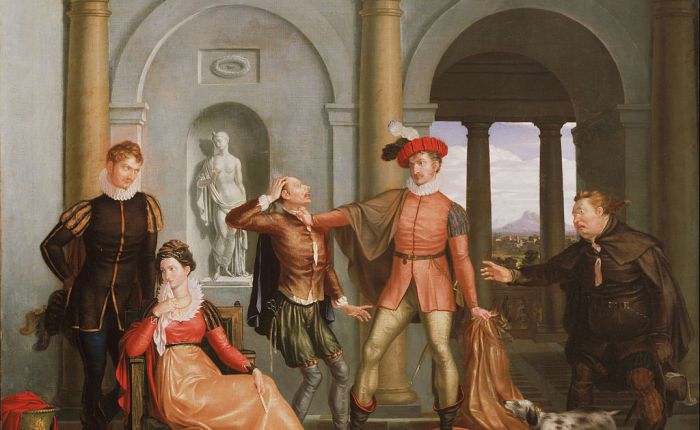
Like The Merchant of Venice, whose anti-Semitism makes us squirm, this play presents a sticky problem to modern audiences: was Shakespeare a misogynist? And it must be said that the misogyny present in this play is more difficult to excuse than the prejudice against poor Shylock, since Shakespeare is not clearly in sympathy with the titular shrew, Katherine, as he is with the Venetian merchant. So just as bardolaters have striven to distance Shakespeare from the badness of Titus Andronicus, so have they tried to complicate Shakespeare’s relationship to the explicit misogyny of the play.

First there is the induction, a seemingly extraneous introductory bit that frames the rest of the work, making it a play-within-a-play. Did Shakespeare do this to distance himself from the misogyny? A rather flimsy shield, if you ask me. Another way to excuse the bard has been historical relativism, noting that misogyny was universal in his day and thus excusable. But this explanation isn’t satisfying, either. The play presents Petruchio’s actions as unusual and noteworthy, so much so that the rest of the characters are awestricken by the end. In the context of Shakespeare’s own plays, too, the relationship between Petruchio and Katherine is far from typical.

But perhaps Shakespeare meant this as a negative example, not to emulate but to scorn? Maybe we are supposed to loathe Petruchio and gasp in horror at Katherine’s submissive ending monologue? This does not seem plausible to me; rather it strikes me as a wholly un-Shakespearean reading—with evil unapologetically triumphant, something that never happens even in his tragedies. Somewhat differently, Harold Bloom frees Shakespeare with irony. As he notes, the ending monologue is far too long, and can easily be read as satire on Katherine’s part. Using evidence such as this, Bloom asserts that Katherine is not tamed at all, but rather learns to dominate Petruchio. Yet avoiding her husband’s temper tantrums through unconditional obedience hardly seems like “dominance” to me.

We are thus left, uneasily, with simple misogyny.* And yet the play did not have a terribly unpleasant effect on me. This is because several factors serve to mitigate the main theme of shrew-taming.

For one, however unhealthy their relationship might be by modern standards, Petruchio and Katherine have undeniable chemistry. From the hilarious sexual raillery of the opening courtship to the “Kiss me, Kate” in the streets of Padua, the couple is electrifying to watch. Then there is the obvious ironic comparison with the relationship between Lucentio and Bianca. Bianca, the sweetly submissive girl who every suitor pursues, ends up deceiving her father and making her own choice of marriage; while Katherine, the infamous shrew, compliantly marries the first suitable suitor who comes along with no deception whatsoever. And it is also worth noting that, all the bizarre torture notwithstanding, Katherine does seem better off with Petruchio, who is deeply fond of her, than with her father, who finds her to be a pestilence.

In any case, this play can take its place alongside A Comedy of Errors as a light comedy with finely-drawn characters, full of life and wit—indeed in many ways it is far better. If only it wasn’t about subjugating a wife!


*Given that this play is very unusual in the context of Shakespeare’s oeuvre—full as it is of strong and compelling women—I doubt that it represented Shakespeare’s own views on the subject.

View all my reviews

Review: Our Lord Don Quixote

Review: Our Lord Don Quixote

Vida De Don Quijote Y Sancho/ the Life of Don Quijote and Sancho (Letras Hispanicas / Hispanic Writings)Vida De Don Quijote Y Sancho/ the Life of Don Quijote and Sancho by Miguel de Unamuno

My rating: 4 of 5 stars

‘For me alone was Don Quixote born, and myself for his sake; he knew how to act and I to write,’ Cervantes has written with his pen. And I say that for Cervantes to recount their lives, and for me to explain and elucidate them, were born Don Quijote and Sancho. Cervantes was born to narrate, and to write commentary was I made.

Miguel de Unamuno defies classification. At once a philosopher, a literary critic, a novelist, a poet, and an essayist—and yet none of them completely—he resembled Nietzsche in his mercurial identity. In this way, too, did he resemble Nietzsche: though he had many themes and central ideas, he had no system. He wrote in short feverish bursts, each one as fiery and explosive as a sermon, going off into the branches (as the Spanish say) and returning again and again to his ostensible subject—only to depart once more. He was a wandering knight errant of a writer.

Unamuno was a member of the so-called Generation of ‘98. The date—1898—alludes to the Spanish-American war, a conflict in which Spain suffered a humiliating defeat and lost nearly all of her colonies. After this, it became impossible to see Spain as a world power; her decline and decadence were incontrovertible. This generation of intellectuals and artists was, therefore, concerned with rejuvenating Spanish culture. In Unamuno’s case, this took the form of finding Spain’s ‘essence’: which he did in the person of Don Quixote. He sees in the knight errant everything profound and important in Spanish culture, as a kind of Messiah of Spanish Catholicism, often comparing Quixote to Iñigo de Loyola and Teresa de Ávila.

This book has, therefore, a quasi-nationalistic aim, which may weary the non-Spanish reader. But it survives as one of the greatest works of criticism written on Spain’s greatest book.

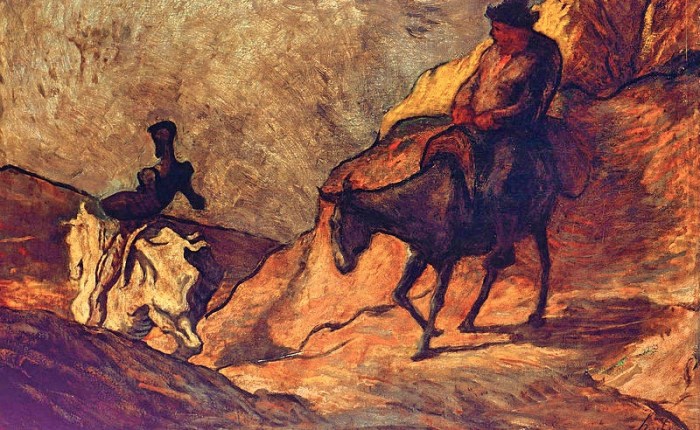
The title of Vida de Don Quijote y Sancho is usually rendered in English as Our Lord Don Quijote; and this title, though not literal, does ample justice to Unamuno’s project. In this work Unamuno undertakes to write a full, chapter-by-chapter commentary on Cervantes’ novel; but his commentary is no conventional literary criticism. Unamuno declares his belief that Don Quixote and his squire were real, and that Cervantes did a grave injustice to their lives by writing it as a farce. In reality, the Don was a hero of the highest order, a saint and a savior, and Unamuno aims to reveal the holiness of the Knight of the Sorrowful Countenance for his readers.

Unamuno is, thus, the most quixotic of interpreters. He claims to see naught but pure nobility and heroism in the great knight from La Mancha. And yet the grandiose and ludicrous claims of Unamuno, and the farcical nature of Don Quixote himself, put the reader on guard: this commentary, like the great novel itself, is laden with delicate irony—an irony that does not undermine Unamuno’s literal meaning, but complements and complicates it.

You might call this Cervantine irony, and it is difficult to adequately describe, since it relies on a contradiction. It is the contradiction of Don Quixote himself: perhaps the most heroic character in all of literature, braver than Achilles and nobler than Odysseus, and yet laughably ridiculous—at times even pitiable and pathetic. We are thus faced with a dilemma: applaud the knight, or ridicule him? Neither seems satisfactory. At times Quixote is undeniably funny, a poor fool who tilts at windmills; but by the end of the novel—an ending more tragic than the darkest of Shakespeare’s tragedies—when he renounces his life as a knight and condemns all his adventures as insanity, we cannot help but feel profoundly sad, and we plead along with Sancho that he continue to live in his fantasy world, if not for his sake than for ours.

This is the paradox of idealism. To change the world you must be able to re-imagine it: to see it for what it might be rather than for what it is. Further, you must act “as if”—to pretend, as it were, that you were living in a better world. How can you hope to transform a dishonest world if you are not honest yourself, if you do not insist on taking others at their word? Quixoticism is thus the recipe for improving the world. Dorothea, from Middlemarch, is a quietly quixotic figure, only seeing pure intentions in those around her. But paradoxically, by presupposing only the best, and seeing goodness where it is not, she creates the goodness that she imagines. Confronted with a person who sees only the most generous motives, those she meets actually become kind and generous in her presence.

We then must ask: Is Dorothea a fool? And if so, does it even matter? And what does it even mean to be a fool? For as Lionel Trilling pointed out, Cervantes posed one of the central questions of literature: What is the relationship between fiction and reality?

Human reality is peculiar: We acknowledge an entire class of facts that are only facts because of social agreement. The value of a dollar, for example, or the rules of football are real enough—we see their effects every day—and yet, if everyone were to change their opinion at once, these “facts” would evaporate. These “social facts” dominate our lives: that Donald Trump is president and that the United States is a country are two more examples. You might say that these are facts only because everyone acts “as if” they are: and our actions constitute their being true.

The reality that Don Quixote inhabits is not, in this sense, less real than this “normal” social reality. He simply acts “as if” he were residing in another social world, one purer and nobler. And in doing so, he engenders his own reality—a reality inspired by his pure and noble heart. What is a queen, after all, but a woman who we agree to treat as special? And if Don Quixote treats his Dulcinea the same way, what prevents her from being a queen? What is a helmet but a piece of metal we choose to put on our heads? And if Don Quixote treats his barber’s bowl as a helmet, isn’t it one? We see this happen again and again: the great knight transforms those around him, making them lords and ladies, monsters and villains, only by seeing them differently.

In this way, Don Quixote opens a gulf for us: by acknowledging the conventional nature of much of our reality, and the power of the imagination to change it, we are left groping. What does it mean for something to be real? What does it mean to be mistaken, or to be a fool? To improve the world, must we see it falsely? Is this false seeing even “false,” or is it profoundly true? In short, what is the relationship between fiction and fact?

To me, this is the central question of Cervantes’ novel. But it remains a dead issue if we choose to see Quixote merely as a fool, as he is so commonly understood. Indeed I think we laugh at the knight partly out of self-defense, to avoid these troublesome issues. Unamuno’s worshipful commentary pushes against this tendency, and allows us to see the knight in all his heroism.

View all my reviews

Review: A World Undone

Review: A World Undone

A World Undone: The Story of the Great War, 1914 to 1918A World Undone: The Story of the Great War, 1914 to 1918 by G.J. Meyer

My rating: 4 of 5 stars

G. J. Meyer set out to write this book to fill a gap in the available literature on the First World War: a popular, holistic account that covered every phase and every front, without presupposing much knowledge from the reader. In this, he was undeniably successful. A World Undone begins at the beginning, with the assassination of Franz Ferdinand, and ends at the end, with the Treaty of Versailles—signed five years to the day of the assassination of the infamous archduke.

Meyer’s scheme is simple but effective: interspersing “background” chapters between his main, military account of the war. These background chapters were inevitably more interesting for me, and provided much-needed relief from the seemingly endless string of battles, divisions, battalions, generals, troop movements, and so on that composed the military history. In these auxiliary sections, Meyer introduces us to war literature, major personalities, political traditions, economic crises, military technology, shell shock, and much else. The wealth of both historical backdrop and military history makes this book an ideal, if somewhat long, introduction to the “Great War.”

Meyer himself is an able and diligent writer, who steers a middle course between rhetorical excess and crass simplicity, keeping his prose lean and tasteful. He has the quintessential skills of the popularizer: the ability to compress information into a tight space, and to explain complex phenomenon without overwhelming the reader. He also wisely avoids speculation himself, leaving the analysis to the reader or the historian, keeping his eye focused on the surface-level events—which is desirable in an introductory text, I believe.

Even with a guide as competent as Meyer, however, the Great War is depressing and deadening. Meyer’s account, perhaps unintentionally, confirmed many stereotypes I had previously imbibed. In his telling, the beginning of the war was due to a combination of poor planning and reckless and incompetent advisors. That Germany could not mobilize its forces without invading Belgium, for example, or that Russia could not choose to mobilize only half of its troops, thus unintentionally threatening Germany—consequences of carefully-drawn plans, an arrangement that virtually guaranteed war—is difficult to believe or forgive.

As for the fighting, the impression one is left with is of remarkably courageous troops heedlessly wasted by monomaniacal generals. Offensive after ineffective offensive, with general after general trying the same tactics and achieving the same failures—leading to endless butchery. One quickly draws the conclusion that the leaders of Europe in this epoch were dim and shortsighted men.

It is this dreary and dreadful aspect that partially accounts for the First World War being overshadowed by its younger brother. The conflict was strikingly non-ideological. There are no Nazis, no Communists, no Fascists, no racial purges (except in Armenia), no freedom fighters, no Resistance—only obsolete Empires fighting for spheres of influence. The fighting, too, has none of the cinematic drama of the Second World War: only interminable shelling campaigns, repeated advances and retreats through no-man’s land, stagnant stalemates and antiquated tactics—there is nothing even vaguely romantic about the bloodshed, despite what Ernst Jünger may have thought.

But even if it is less compelling to learn about than the Second World War, the First World War arguably has even more valuable lessons to teach us. The logic of naked power confrontation is, after all, more historically common than ideological conflict. The comparatively colorless, and often incompetent, quality of the war’s leadership invites us to see the conflict in all its bare, barbaric brutality, without the distorting effects of charismatic chiefs. The manufactured hatred of whole populaces for one another—engineered through strict censorship, outright lies, and strident propaganda—is a case-study in how patriotism can be exploited for deeply cynical ends.

And most important, unlike the Second World War—a sad story that at least ends with the defeat of a genocidal maniac—the First World War has no silver lining, no comforting achievement to offset the millions of lives lost. As the vindictiveness of the victors proved, the winning side wasn’t on a clearly higher moral level than the losers; and in any case, the war didn’t even achieve a resolution to the conflicts brewing within Europe, only a partial deferment. In sum, the First World War is worth learning about because it was a calamitous, unnecessary tragedy that stubbornly resists romanticization or justification—and that is war.

View all my reviews

Review: Postwar

Review: Postwar

Postwar: A History of Europe Since 1945Postwar: A History of Europe Since 1945 by Tony Judt

My rating: 4 of 5 stars


History is a discipline peculiarly impervious to high theoretical speculation: the more Theory intrudes, the father History recedes.

When I was in university, studying anthropology, I always resented the requirement that my essays have thesis statements. Can’t I just collect information and serve it up without taking some ultimate stance? Tony Judt seems to have been of the same mind, since this book is one very large serving of information, absent of any overarching thesis. As he says himself, Judt is rather like the proverbial fox than the hegdehog: he knows many things, and has many valuable observations scattered throughout the text, without any one big idea to tie them together.

There are compelling advantages to this approach. This book is one-stop shopping for many aspects of post-war European life. Economic development, intellectual fashions, architecture, film history, political movements, the Cold War, regionalism, the emergence of the European Union—all this and more is covered in impressive detail. And though multifarious, all of these pieces come together to form an astounding story: a continent nearly destroyed by war, divided by dangerous political tension, slowly emerging from American and Soviet dominance to become the most affluent, most peaceful, and most progressive place in the world.

The main disadvantage of this method is, of course, that this story remains fairly messy and haphazard. Without a thesis to guide him, Judt had to rely on a mixture of interest, instinct, and whim—the latter playing an especially significant role in some sections. What is more, though Judt is an opinionated and assertive guide, the lack of a thesis renders it difficult to point to anything distinctly “Judtean” in his analysis. What ties the narrative together is, rather, a certain mood or sensibility—most notably, Judt’s keen sense of historical irony, which he employs to great effect.

This ironic sensibility is most often directed toward Judt’s political foes. Though he is never explicitly partisan, it is easy to tell where Judt’s sympathies lie: in the center-left, socialist-democratic camp. Thus, depending on where the reader falls on the political spectrum, Judt’s comments will be either gratifying or grating. For me they were usually the former. What irked me, instead, was Judt’s relatively brief treatment of Spain—the Franco era is entirely ignored, and the transition to democracy is covered in just a few pages. But this is admittedly my own prejudice speaking.

If Postwar has one takeaway message, it is this: that Postwar Europe is the anxious construction of a generation wearied and horrified by conflict. After going through the belligerent nationalism of the First World War, the economic depression and intense ideological polarization of the interwar period, the even more gruesome Second World War and the unspeakable Holocaust—all this, coupled with the prolonged armed standoff and Soviet repression of the Cold War—Europeans were intent on creating a world where this could never happen again. Extreme ideological stances fell into disgrace; strong government social safety nets helped to prevent economic crisis and, in so doing, made people less susceptible to demagogues; and governments forged institutional ties with one another, a project that culminated in the European Union.

Without constant reminders of this catastrophe—a European civil war that began in 1914 and whose political aftereffects did not disappear until 1991, if then—we risk falling into the same errors that tore the continent apart one hundred years ago. For this, we need good historians—and Judt is certainly among the best.

View all my reviews

Review: The Guide of the Perplexed

Review: The Guide of the Perplexed

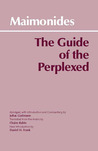
The Guide of the PerplexedThe Guide of the Perplexed by Maimonides

My rating: 3 of 5 stars

This treatise has as its principal object to clarify the meaning of certain terms in the Bible.

Moses Maimonides, born in 1135, was and remains the most famous Jewish theologian in history, and this is his most influential book. Well, this is a part of his most influential book; more specifically, this is about a quarter of the whole work, the other three quarters having been pruned away by the editors of this volume. This was ideal for me, dabbler that I am, especially considering that the abridgement, so far as I can tell, was made with taste and skill.

The first striking aspect of this book is its accessibility. Maimonides writes simply and directly; indeed, sometimes I found the tone a bit pedestrian. The sentence I quoted above, the first sentence of the book, is quite typical of Maimonides. The work is written in the form of a (very long) letter to a perplexed pupil, broken into bite-sized chapters for easy comprehension. The only technical terms are those derived from Aristotle—essence, form, matter, etc.—which posed no problem for me.

The second striking aspect of The Guide is how similar Maimonides’s intellectual approach is to that of Thomas Aquinas. Indeed, the aim of both thinkers was more or less the same: to provide a rational defense and systemization of their respective faiths. Both lean heavily on Aristotle for this task, adopting his doctrines, terms, arguments, and philosophical style.

Of course this isn’t a coincidence. The attempt to harmonize Greek thought, specifically Aristotle, with religious thinking originated, I believe, with Muslim philosophers, and later spread to Europe. Maimonides himself was born in Muslim Spain (Al-Andalus), wrote in Arabic, and was clearly well read in Islamic philosophy. Later on, the works of Aristotle, translated from Greek into Arabic, entered Europe through Toledo, where they were translated from Arabic into Latin so that people like Aquinas could read them. Aquinas also read Maimonides, by the way.

Thus the three Abrahamic religions were engaged in almost the same philosophical project during this time. But of course, being of different faiths, the thinkers reached different conclusions. For example, Maimonides’s conception of God is strikingly different from Aquinas’s. Instead of expounding on all the different perfections of God, as does Aquinas—his omnipotence, omniscience, omnibenevolence, necessary existence—Maimonides holds that God’s essence cannot be described in any satisfactory way. In fact, Maimonides’s conception of God strongly reminded me of, and was perhaps influenced by, the Neo-Platonist conception of The One, the mystical, mysterious, ineffable fountainhead of all existence. Like Plotinus says of The One, Maimonides asserts that we cannot even attribute existence to God, since he holds that existing things are always composite, while there is nothing composite about God.

But for me, Maimonides’s most interesting opinion was his explanation of rituals, worship, and animal sacrifices. As he points out, “what is the purpose of His worship, since God’s perfection is not increased even if everything He has created worships Him and apprehends Him to the utmost possible degree, nor is it at all diminished if there is nothing in existence beside Him?”

For Maimonides the purpose of religious practice is not to please God through worship, but to know Him by training the mind and purifying the soul. The reason that God commanded rituals and sacrifices was only because the original Chosen People were still accustomed to idolatry, and thus they would not have accepted the true religion if they were not allowed to practice their religious customs. The rituals were, therefore, a kind of transitional device, allowing the people to turn their thoughts from idols to the true God. I found this explanation remarkable, since it anticipates the modern, historical approach to religion, while remaining within the bounds of orthodoxy.

Maimonides insists that the exterior forms of a ceremony are totally irrelevant if the practitioner is not thinking of God. It is the mental state of the worshipper, not their ritual actions, that are essential. This doctrine also reminded me of Neo-Platonic mysticism, wherein the final goal is a direct knowledge of the The One through mental discipline. But Maimonides is not so straightforwardly mystical as Plotinus, as he places much more emphasis on rational argument and the holding of the correct metaphysical and theological opinions.

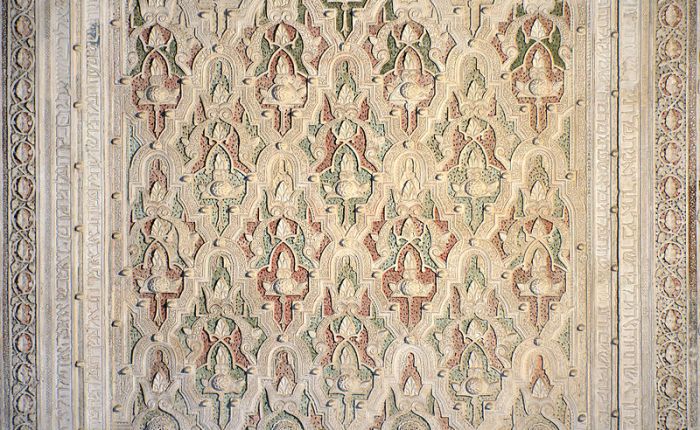
This book was obviously not intended for me, since I am a nonbeliever, and Maimonides considers nonbelievers beneath contempt and not even worth responding to. Thus this book was of purely historical interest for me. This is, of course, not a bad thing, and indeed as a historical document it is rewarding. But I cannot say I found it an exhilarating read, since I not only disagreed with Maimonides’s conclusions but with his methods and his premises. Nevertheless, I am very glad to have read the book, if only because I have been intending to ever since my trip to Córdoba, his birthplace, and stood next to his statue in the Jewish district of that old city. Just like walking through those crooked, cobblestone streets, reading this book is a voyage in time.

(Photo by Selbymay; licensed under CC BY-SA 3.0; taken from Wikimedia Commons.)

View all my reviews

Review: Medieval Islamic Philosophical Writings

Review: Medieval Islamic Philosophical Writings

Medieval Islamic Philosophical WritingsMedieval Islamic Philosophical Writings by Muhammad Ali Khalidi

My rating: 4 of 5 stars

Just as one must protect unskilled swimmers from perilous shores, people must be shielded from reading philosophical books.

For a long time, I’ve been bothered by the tremendous gap in my philosophical reading. Most of the medieval period is simply a blank for me, an intermission that stretches from Boethius (480 – 524) to St. Thomas Aquinas (1225 – 1274). Part of the problem is that, for a variety of reasons, in most of Europe not much notable philosophy was being written in the years following the collapse of the Roman Empire; the major Christian philosophical project, scholasticism, didn’t get on its feet until St. Anselm (1093 – 1109) started writing. But another problem is that, owing to Western provincialism, most of the good philosophy written during these years isn’t read nowadays, because it was written by Muslims.

This collection was expressly put together to rectify this situation, and it does the job admirably. Now, instead of an enormous gap, I can move comfortably from Boethius to Al-Farabi (872 – 950), to Ibn-Sina, or Avicenna (980 – 1037), to Al-Ghazali (1058 – 1111), to Ibn Tufail (1105 – 1185), and finally to Ibn Rushd, or Averroes (1126 – 1198). This progression completes not only the temporal picture, but has the geographic advantage of leading from Baghdad to the Iberian Peninsula. We thus see the trajectory through which the works of Aristotle, preserved in Arabic translation, as well as copious commentary on Aristotle’s works, entered Europe, where they later gained ascendency.

The editor and translator of this volume, Muhammad Ali Khalidi, put it together for non-specialists. He made his selection with the hopes of showing the relevance of these thinkers to contemporary philosophical questions; but he also hoped to show something of the cultural significance of these philosophers. None of the selections is very long, and none is very difficult. It is a mere tasting, not a feast. For me, it was perfect, since I have only a layman’s interest in the subject.

My interest was ignited in medieval Islamic culture through my visits to Andalusia, where I was continually astounded by the beauty of Moorish architecture. If a culture was vibrant enough to build the Great Mosque in Cordoba, I figured, then they must have had some excellent thinkers too—which they certainly did.

In what follows are my brief summaries and reactions to each of the pieces in this collection. But before that, I want to add my reflections on the whole. What most struck me during my reading was how familiar were the styles and ideas. Truly, medieval Islamic philosophy does not represent some alien tradition, or a mere curiosity, nor were these philosophers mere preservers of the Greeks; rather, they should be regarded as an integral part of western philosophical history.

The fact that we still read Aquinas but seldom Maimonides and rarely Averroes has little to do with merit, and more to do with religious allegiance. All three of these traditions were engaged in similar philosophical projects—namely, the harmonization of faith with reason, relying heavily on Aristotle. Incidentally, I can’t help thinking that the persistent Islamophobia (and Anti-Semitism) in the West would be less virulent if history were not taught in such a fashion that the contributions of Jews and Muslims to European culture were not so deemphasized. But I suppose that’s another matter.

Al-Farabi. Like nearly everyone in this collection, Al-Farabi was a polymath, writing not only on philosophy, but on music, math, science, and cosmology. But he is perhaps most important for being one of the first and most prominent Muslim philosophers to elevate Aristotle as the epitome of reason. His work in this collection is taken from The Book of Letters. It puts forward a schematic philosophy of history, during which he lays out what he considers the essential stages of historical development. Most striking is Al-Farabi’s elevation of philosophy. According to him, nearly every other discipline, practical or theoretical, stems from philosophy. Even religion takes second place. In Al-Farabi’s opinion, prophets do not access supernatural knowledge, but merely transform the insights of philosophers into metaphorical garb, so that common people can understand them. Indeed, for Al-Farabi almost all religion is just popularized, allegorized, simplified philosophy—Aristotelianism for the people, you might say.

Avicenna, or Ibn Sina, is the Thomas Aquinas of Islamic philosophy, except perhaps greater. An astounding polymath, he not only wrote encyclopedias of science and philosophy, but an encyclopedia of medicine that was still being used in Renaissance Italy. Like Aquinas, and like Aristotle himself, Avicenna was a great systematizer. He had a prosaic, orderly, and remarkably capacious mind, allowing him to compose encyclopedic works in many disparate subjects. In this collection is the short work, On the Soul, which is an investigation into the capacities of the human mind, with a special emphasis on epistemology. Unlike Al-Farabi, Avicenna didn’t consider prophets to be popularizers, but a kind of super-philosopher whose intellects intuit things faster than other people’s.

Al-Ghazali probably wouldn’t like being called a philosopher. He was, rather, a mystic who wrote against philosophy. Included in this collection is his Rescuer from Errors, which is a sort of intellectual autobiography. In it, he describes a crisis of faith he experienced when he realized that his religion was mere conformity. After doubting everything, he proceeded to study theology, which he found inadequate, and then philosophy, which he found slightly better, and eventually settled on being a mystic. This was by far my favorite work in this collection. Al-Ghazali is an excellent writer, and his procedure of radical doubt can’t help but remind one of Descartes. Indeed, if you’re inclined to doubt the existence of the world, becoming a mystic might be a more rational solution than the one Descartes settled upon.

Ibn Tufail (sometimes called Abubekar) was born in Moorish Spain, near Granada. In addition to being a philosopher, he was a novelist, physician, and court official during his lifetime. (Reading the biographies of these guys makes you really mourn the rise of specialization.) He contributes the longest section to this book, in the form of Hayy bin Yaqzan. Not exactly a work of philosophy, it is rather the description of a man born and raised in social isolation on a deserted island. The titular character, using nothing but his cleverness, manages to deduce the entirety of Aristotelian thought, and eventually becomes a mystic. I suppose this story was meant to demonstrate that revealed religion wasn’t necessary to reach the truth, but that a monotheistic mysticism could be deduced from experience. I found it quite unconvincing.

Averroes, or Ibn Rushd, was born in Córdoba (the same city where Seneca and Maimonides were born), and was perhaps the greatest Muslim philosopher after Avicenna. Interestingly, Averroes’s influence was bigger in Christian Europe than in Islam, because many of his key positions were seen as heretical. After his death came the trend known as Averroism, which held, among other things, that the individual soul is not eternal, only the universal soul which every individual shares. In this collection we find his The Incoherence of the Incoherence, a work written in refutation of Al-Ghazali’s work The Incoherence of the Philosophers. Al-Ghazali attempted to demonstrate that belief in causes and natural laws was heretical; there are no laws, Al-Ghazali held, and no causes except the direct intervention of God. Averroes quotes Al-Ghazali in extenso, and then argues against him point by point. The final effect is of a real debate, since Al-Ghazali anticipated many of the rejections that Averroes brought against him.

Well, that’s it for my review. I hope I’ve at least convinced you that there is a lot of historical and philosophical value in these pages, and in Islamic philosophy generally.

(Cover photo by Timor Espallargas; licensed under CC BY-SA 2.5; taken from Wikimedia Commons.)

View all my reviews

Review: Some Still Live

Review: Some Still Live

Some Still LiveSome Still Live by Frances Smith McCamic Tinker

My rating: 4 of 5 stars

You can’t even surrender in an airplane; your opponent wouldn’t know whether you were joking or not.

I am fortunate enough to have a colleague who studies the Spanish Civil War professionally. And when he heard that I was interested in learning about the conflict, he generously lent me this book, the memoirs of an American pilot who fought during the war. Considering that this book is out of print and hard to get your hands on, this was luck indeed.

Frank Glasgow Tinker, Jr. was an American boy from Louisiana who came to Spain in 1936 to take part in the war. He had learned to fly in the US Navel Academy, and spent some time in the Navy until he was discharged for drinking and brawling (which, if you think about it, is pretty impressive). His main motivation for joining the war, it seems, was just the opportunity to fly combat missions: “When the fighting broke out in Spain in 1936, I was not quite sure which side was fighting for what. I gathered that each was slaughtering the other for being or doing something that the other side did not like.”

After sneaking in by obtaining a fake passport in Mexico, and pretending to be a Spanish citizen—despite his total innocence of the Spanish language—he spent seven months here flying and fighting. Tinker fought on the “loyalist” side, alongside Spaniards, Americans, and Russians, mainly against Italian and German pilots—which shows how international the “civil” war really was. He flew both older biplanes and more modern monoplanes, both of Russian make, against Italian Fiats and German Heinkels and Messerschmitts. And he was good. He shot down at least eight enemy planes, possibly more, making him one of the most successful pilots in Spanish aviation history.

He flew up to three flights a day—responding to alarms, accompanying bombers, strafing trenches, dive-bombing enemy targets, blowing up bridges and trains, driving off enemy bombing squads, and fighting in dogfight after dogfight. The bulk of his fighting took place in the vicinity of Madrid, but he also fought all over the north of Spain. After seven months of this he packed up his bags and went back to the States. Going back wasn’t easy, since he had arrived in Spain with a fake passport and didn’t have any identification; but eventually he succeeded in returning to the States, where he began writing and going on radio programs.

Some mystery still surrounds his death. The accepted explanation is that he suffered from PTSD and ended his own life; but some have suggested that the FBI may have been responsible. As his own tombstone says, ¿Quién Sabe?

Simply as a historical document, this book is invaluable. It contains maps of the air bases used by the government side, photographs by the reporter Robert Capa of wartime Spain, and a vivid picture of the Government Air Force, not to mention reams of information about aviation. Tinker obviously knew what he was doing when it came to flying; the book is filled with aviation jargon—altitude, weather, engines, weapons, rates of climbing and diving, difficulties of landing and taking off.

Even more impressively, this book is successful simply as a book. For somebody who was not a man of letters, Trinker is a strong writer. He sticks to the facts, and relates them with such vividness, candor, and energy that I often had trouble putting the book down. He never overwrites, he never bogs the book down with too many details, and he never uses flowery rhetoric. His time in Spain was so interesting that no embellishment is needed; the bare facts are fascinating enough.

Apart from his doings, Tinker himself is memorable. He is a uniquely American type. He brawls, he jokes, he drinks, he pranks, he gambles, he womanizes, and he drinks some more, and he flies and fights, and he betrays no ideals beyond good-natured hedonism, fierce loyalty, and a kind of warrior’s respect for bravery and skill. There is not a single political statement in this book, and not any indication that his understanding of the war’s causes ever progressed beyond the very basics. He was a soldier.

I will leave you with my favorite paragraph from the book:

Whitey had managed to get the elevator down (it was one of those automatic affairs), but after he got inside he couldn’t reach the control buttons to make it go up again. He was also unable to reopen the door to get out. After about two minutes of this a huge fellow with a mustache came along and wanted to go up on the elevator, too, but as he saw Whitey was already inside he waited awhile, expecting him to go either up or down. When Whitey failed to do either, the large stranger opened the door and asked him, in Spanish, what the hell he thought he was doing. Whitey, not understanding him, asked, in English, why in hell he hadn’t opened the door instead of standing there with his mouth full of teeth. Whereupon the stranger, in perfectly good American, answered that people shouldn’t get into strange elevators unless they were sure they could get out of them. Whitey almost fell on his face when he heard himself answered in English, but soon recovered and explained his predicament and had the stranger do his button-pushing for him. I saw the last part of this act and asked the man at the desk who the stranger was. He proved to be no other than Ernest Hemingway, the famous writer.

View all my reviews