Review: Early Socratic Dialogues

Review: Early Socratic Dialogues

ApologyApology by Plato

My rating: 5 of 5 stars

This is perhaps the most iconic of Plato’s works, the closest thing that philosophy has to a Sermon on the Mount. And just as with our Biblical narratives, the dialogue presents a historical difficulty. To what extent is this speech fact, and to what extent invention? The only other record we have of the trial is from Xenophon, who wasn’t even there. Plato was there—or at least he asserts that he was—and yet it beggars belief that the young, would-be amanuensis could retain the entire speech in his mind after one hearing, or that he could write it down with tolerable accuracy as the events unfolded. It seems far more likely (to me at least) that this speech is more or less a fabrication made well after the fact, attempting to preserve the flavor and impression of Socrates’ final speech but not the exact words themselves.

All speculation notwithstanding, the essential facts are preserved: Socrates was accused of denying the gods and of corrupting the youth, made a bold and waggish defense of himself, was convicted, refused to mitigate the consequences, and triumphantly accepted the death penalty. Yet what really emerges from this speech is not a record of events but the portrait of a man.

Here Plato reveals himself to be a writer of the highest order. Fact or fiction, Plato’s Socrates is one of the great characters of literature. Though Socrates’ life is at stake, he does not falter for a moment. He treats the accusations with amusement, dismissing them with playful arguments that reveal his absolute indifference to the outcome. Far from bowing and scraping to preserve his life, Socrates flaunts his superiority to his accusers, couching his boasts in an ironical humility. He is a man in perfect control of himself and in perfect peace with the world.

Even if the real Socrates was truly this remarkable, it would have taken a writer of exquisite talent to effectively render him in prose. And if this is largely Plato’s invention, we must rank him along with Shakespeare, for Socrates utters now-famous phrases nearly as quickly as Hamlet. Western philosophy could not have asked for a more rousing beginning.


CritoCrito by Plato

My rating: 4 of 5 stars

The saga of Socrates’ trial and death continues. This time his friend, Crito, visits him in his cell to try to persuade him to escape into exile. Socrates is true to form, insisting that nothing—not the reputation of himself or his friend, nor concern for his own life—ought to be considered except reason. Crito must attempt to persuade Socrates to escape. The dialogue ends with the famous personification of the Laws of Athens, in the course of which Plato hits upon one of the earliest formulations of the social contract: by living in Athens, Socrates implicitly agrees to be bound by her laws. Since Socrates’ enjoyed the benefits of the laws, he must accept their penalties.

More so than in the Apology, one feels here that this is Plato’s invention and not something that actually occurred. The dialogue seems especially crafted to rehabilitate Socrates’ reputation, portraying the old philosopher as a dutiful citizen with a patriotic love of Athens. As a piece of drama the dialogue is one of Plato’s finest. It has considerable philosophic importance, too, for its aforementioned prefiguring of the social contract. Nevertheless I confess that I find Socrates’ reasoning extremely thin. Surely laws may be unjust; and a law may be just in itself and yet unjust or mistaken in its execution. If that is so, should the citizen passively accept it simply because it is the law? One senses the fine Socratic irony here, too, arguing playfully rather than sincerely. Socrates surely had compelling reasons to accept his death—but one doubts that pure patriotic regard of law was the whole of it.


CharmidesCharmides by Plato

My rating: 3 of 5 stars

This is one of the early inconclusive Socratic dialogues. Socrates, just come back from fighting in the Peloponnesian War, meets two of Plato’s relatives, Critias and Charmides. The latter of these is portrayed as a handsome youth, graceful of form and pure of mind. (Ironically enough, after the disastrous defeat of Athens in the war, both Critias and Charmides went on to become members of the Thirty Tyrants.) Socrates takes the opportunity to question Charmides about a Greek term that is rather unsatisfactorily translated into English as “temperance.”

The conversation takes many twists and turns, following the normal Socratic procedure: a definition is proposed (in this case, living quietly), an exception to the definition is found, a new one is proposed, and the process continues. As often happens in these early dialogues, the conversants seem to only get further from the point the longer they speak, getting hopelessly lost in the weeds of dialectic. Here we also see a quality that commonly irks readers of Plato, the tendency of Socrates’ interlocutors to give their unwavering assent to whatever rhetorical question, thought experiment, or logical distinction that Socrates poses, even when obviously fallacious. We also see Plato’s early tendency to get wrapped up in merely verbal confusions that hardly make sense when translated.

In any case, the dialogue takes an interesting turn when Critias proposes that temperance is a kind of meta-knowledge, the knowledge of knowledge. But how could we know for sure whether we knew something or not? And besides, how would that knowledge be useful? Merely knowing that we knew the art of medicine, for example, would be inconsequential compared to the knowledge of medicine itself. But how could temperance be inconsequential knowledge, if it is an important and noble attribute? The dialogue proceeds thus, seeming to intentionally confuse the issue through its series of involutions. But Plato will return to these questions with a vengeance.


LachesLaches by Plato

My rating: 3 of 5 stars

Here is another of the inconclusive dialogues. Socrates is asked by a couple of older men, Lysimachus and Melesias, whether to educate their sons in the art of fighting in armor. Socrates characteristically shifts the theme to a more abstract inquiry: What is courage? Commonsense definitions—such as “to stand and fight” or “to endure”—are quickly eliminated as admitting of exceptions. Nicias, a well-educated general, then proposes that courage is a certain kind of knowledge: that of future good and evil. After further dialectical maneuvering, the conversants find that they have gotten too general and have defined all of virtue and goodness, while leaving the specific nature of courage undefined. Socrates shrugs his shoulders and they break for lunch.

Though the question of courage is of somewhat limited philosophical interest, I do think that Plato hits upon the oft-overlooked role of knowledge (or lack of knowledge) in this seemingly physical or emotional virtue. This is characteristic of Plato, of course, for whom knowledge and goodness are tightly linked. Argument aside, the well-drawn characters of this dialogue are yet another example of Plato’s talent as a dramatist.


LysisLysis by Plato

My rating: 3 of 5 stars

This dialogue is normally grouped along with Laches and Charmides as an early, inconclusive dialogue. They are also alike in providing amusing portraits of life in Athens. This dialogue, for example, has a humorous beginning. Ctesippus complains to Socrates that Hippothales is always going on about his great love for the beautiful youth, Lysis, and composing horrid love poems in honor of his beloved. Socrates chides Hippothales and professes to demonstrate the correct way to speak to a beloved. What commences from this, however, is a rather ordinary Socratic interrogation—this time about the relationship of privilege to knowledge—which I doubt was very useful to the would-be wooer.

The topic of the dialogue then abruptly shifts to the nature of friendship. My general impression from reading Ancient Greek writings it that friendship was a far more important institution for the Greeks than it is for us. In any case Socrates and his interlocutors make little headway with this seemingly obvious problem. Is friendship the attraction of like to like? of like to unlike? of good to good? of neutral to good?—and so on, until they call it quits. I do think that the nature of friendship, which we are wont to take for granted, is an interesting topic to explore. But this dialogue contains, at best, only suggestions for future investigation.


MenexenusMenexenus by Plato

My rating: 2 of 5 stars

This work hardly merits the term “dialogue,” being mainly taken up by a lengthy speech. Socrates professes to have learned a funeral oration from a woman named Apia, who was Pericles’ consort. Plato seems to have been simultaneously parodying the practice of giving these speeches, but also proving his superiority to other writers of the genre, particularly Thucydides. If it was Plato’s goal to best the historian, he fell far short; and nowadays the speech reads like a silly rhetorical exercise, albeit of some historic importance.


IonIon by Plato

My rating: 4 of 5 stars

This lovely little dialogue, one of Plato’s shortest works, involves Socrates and the rhapsode, Ion. Ion is a rhapsode, which means that he recites, embellishes, and interprets poetry. In Ion’s case he is specialized in Homer, and admits that he knows nothing about any other poet. Socrates pounces upon this. How is it possible to master the best and most difficult of something, and leave the rest untouched? Also, how can Ion give sensible interpretations of the events of Homer’s poetry, when he does not have any of the skills—fishing, sailing, leading armies, and so on—mentioned in the poems?
Ion is not the brightest fellow, and is not able to give any sensible answer to these questions.

Socrates presses his point that Ion has no real knowledge and instead practices his art through inspiration. This, of course, is a famous Platonic assertion, which reappears many times throughout his works. However, I find his reasoning supremely unconvincing here. There is no absurdity in only understanding Homer and no other poet; poetry is not mathematics, with the more complex manifestations derived from the simpler. Further, there is no absurdity in being able to interpret a poetic passage about fishing while knowing fairly little about fishing itself. These ideas apparently did not occur to Ion (or Plato). But the simplicity of Ion, who is oblivious to Socrates’ irony, is winsome enough to make this a delightful read.


EuthyphroEuthyphro by Plato

My rating: 5 of 5 stars

Euthyphro begins the story of the trial and death of Socrates. It is one of Plato’s best known and, I think, best executed pieces. Here we see the Socratic dialogue form stripped to its bare essentials, with only two speakers, one problem, and minimal framing. Socrates is on his way to his trial; he has been accused, among other things, of impiety. He meets Euthyphro, a soothsayer, who is on his way to his own trial; he is prosecuting his father for murder, after his father’s negligence led to the death of a worker who had, himself, killed a slave. Socrates asks Euthyphro how he can be sure that this prosecution is the right thing to do, which leads to a discussion of piety.

The argument takes many turns, of course, but boils down to the famous Euthyphro dilemma: Is an action pious because it is beloved by the gods, or beloved by the gods because it is pious? While this may seem like mere sophistry, the implications of this question are immensely destructive to theistic ethical codes. For if morality exists independently of God (or, in other words, if we can know what is right or wrong without consulting the divine will) why consider God the fountain of good? And if morality is defined by the will of a God, how can we know what that will is? Perhaps via revelation: but then how distinguish legitimate and fake revelation? For if morality had no existence except the will of God, then no revelation, however apparently abominable, could be discounted. And since eyewitness testimony is nefariously unreliable, virtually no test would be able to unequivocally determine which “revelation” was to be followed. The only way out of the dilemma is to accept that good and bad can be distinguished without any supernatural considerations.

Euthyphro is, thus, of immense philosophical interest. It is also a dramatic masterpiece. Socrates’ ironic demeanor in dealing with the dense Euthyphro is delicious. Perhaps in no other work has Plato so convincingly shown the contrast between the reflective and the non-reflective mind. I continually found myself chuckling as I read. Yet again I am amazed that Plato, who started the Western philosophic tradition, remains its most able writer.

View all my reviews

Review: Gorgias

Review: Gorgias

GorgiasGorgias by Plato

My rating: 4 of 5 stars

… for philosophy, Socrates, if pursued in moderation and at the proper age, is an elegant accomplishment, but too much philosophy is the ruin of human life.

Gorgias is easily one of Plato’s best stand-alone dialogues. Indeed, as others have mentioned, it often reads like a germinal version of the Republic, so closely does it track the same themes. A transitional dialogue, the early know-nothing Socrates of unanswered questions is already gone; instead we get Socrates espousing some of Plato’s key positions on truth and morality.

Socrates descends on a party of rhetoricians, seemingly determined to expose them. He questions Gorgias, a well-known teacher of rhetoric, in the attempt to pinpoint what, exactly, rhetoric consists of. We get the usual Socratic paradoxes: if we ought to be convinced by knowledgeable people—a doctor when it comes to medicine, an architect when it comes to buildings—how can somebody who lacks this knowledge teach the art of convincing?

Gorgias insists that rhetoric is used to accomplish justice. But is Gorgias an expert on justice? No. Are his pupils already just? Neither. And cannot rhetoric be used for unjust ends? Of course. This effectively trips up the old rhetorician. Gorgias’ energetic young pupil, Polus, steps up to defend the old master. He denies what Gorgias said about rhetoric being used to accomplish justice, and instead claims that it is used to gain power.

This brings Socrates to another one of his paradoxes: that powerful orators are actually to be pitied, since inflicting injustice is worse than suffering injustice. Though Polus laughs, Socrates trips him up just as they did his mentor, by getting him to assent to a seemingly unobjectionable proposition and then deducing from them surprising conclusions. (Socrates was not, you see, without his own rhetorical tricks.) Polus finds himself agreeing that tyrants are to be pitied.

At this, Callicles enters the fray, not a rhetorician but an Athenian gentleman and a man of affairs, who plays the same role that Thrasymachus plays in the Republic. He scorns philosophy and insults Socrates. All this highfalutin’ talk of justice and truth and such rubbish. Doesn’t Socrates know that what is right is a mere convention and justice is simply whatever the strong wish? Socrates then embarks on his usual procedure, trying to get Callicles to assent to a proposition that is incompatible with Callicles’ position. Callicles eventually gets confused and tired and gives up, allowing Socrates to finish with a grand speech and a Platonic myth about the judgment of souls.

To the modern reader very little in this dialogue will be convincing. Plato is no doubt right that rhetoric is, at best, neither bad nor good, but is akin to cosmetics or cooking rather than exercise or medicine—the art of pleasing rather than improving people. Yet since we have learned that we cannot trust people to be selfless, disinterested seekers after the truth—as Socrates repeatedly claims to be—we have decided that it’s best to let self-interested parties compete with all the tools at their disposal for their audience’s attention. Heaven knows this procedure is far from perfect and leaves us vulnerable to demagogues. But the world has proven depressingly bereft of pure souls like Socrates.

Also unconvincing is Plato’s moral stance—namely, that those who commit injustice are to be pitied rather than envied. He proves, of course, that the unjust are more deserving of punishment than the just; this was never in doubt. But he does not, and cannot, prove that the unjust are less happy—since a single jolly tyrant would refute his whole chain of reasoning. Indeed, by establishing a moral precept that is so independent of happiness, Socrates falls into the same plight as did Kant in his categorical imperative. This is a serious difficulty, since, if acting justly can easily lead to unhappiness, what is the motivation to do so? The only way out of this dilemma, as both thinkers seemed to realize, was to hypothesize an afterlife where everyone got their just desserts—the good their reward and the bad their castigation. Needless to say I do not find this solution compelling.

Yet you can disagree with all of Plato’s positions and still relish this dialogue. This is because, as usual, the most charming thing about Plato is that he is so much bigger than his conclusions. Though Socrates is Plato’s hero and mouthpiece, Plato also seems to be aware of Socrates’ (and his own) limitations. Callicles is not a mere strawman, but puts forward a truly consistent worldview; and Plato leaves it in doubt whether his own arguments prevailed. He even puts some good comebacks in Callicles’ mouth: “Yes, by the Gods, you are literally always talking of cobblers and fullers and cooks and doctors, as if this had to do with our argument.” By the Gods, he is!

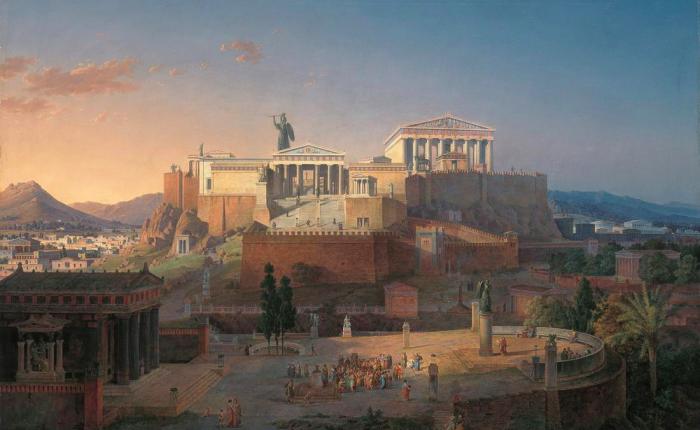
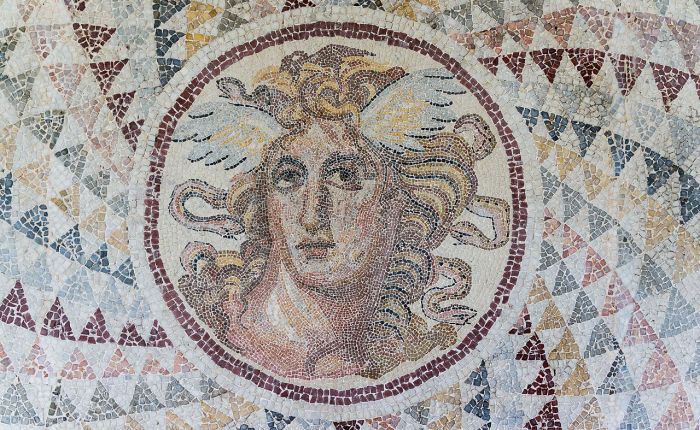
(Cover photo by Jebulon; licensed under CC0; taken from Wikimedia Commons.)

View all my reviews

Review: The Feeling Good Handbook

Review: The Feeling Good Handbook

The Feeling Good HandbookThe Feeling Good Handbook by David D. Burns

My rating: 4 of 5 stars

Unlike with previous Burns books, I read this one while I was feeling relatively normal and untroubled. I did this because I sensed myself relapsing. Cognitive therapy, as you might know, is based on the premise that your thoughts control your moods and emotions. Thus it works by changing your beliefs and even your values in order to alleviate depression, anxiety, and problems with relationships. In my own experience, this can have a remarkably liberating effect. The problem is that, when the relief passes and you once more get sucked into the humdrum world of daily troubles, the original beliefs and values come creeping back.

But why is this? Why are we so prone to adopting irrational and self-defeating patterns of thought? Why do we embrace unrealistic standards, make unjustified assumptions, jump to unwarranted conclusions—only to wallow in misery and fear and loneliness—when a few pen-and-paper exercises is sometimes all we need to feel better? It is peculiar. Robert Wright argues that our cognitive imperfections stem from our evolutionary heritage. A competitive and materialistic culture might also contribute. Burns, for his part, does not offer much in the way of explanation; his aim is therapy, not theory. Yet answering this question seems vital if we are to fight an offensive battle rather than a defensive one.

It seems to me that the most proactive strategy would be to intervene on the social rather than the psychological realm (if that were possible). To pick a simple example, if an obsession with being the best is really self-defeating—at least as far as happiness is concerned—then why the opposite message so passionately embraced in the culture at large?

Perhaps it is because these value systems, which equate happiness with accomplishment, do benefit the group even if they are not psychologically desirable. An office full of perfectionistic over-achievers might out-compete an office full of contented workers with nothing to prove. Advertisements may not have much effect in a world of high self-esteem. And political parties will have trouble getting elected in a world without anxiety. In these and a thousand other ways, society depends on the very thoughts and attitudes that books like this try to combat. No wonder that relapse is common once therapy ceases.

It is also true that there are hidden, and sometimes ugly, benefits to our bad habits. It feels satisfying to think oneself superior to others. Insulting and controlling other people brings a rush. Anxiety helps us to avoid discomfort. Intimacy requires painful vulnerability. And who wants to accept imperfections in oneself? Burns’ methods require that we see ourselves as flawed, that we acknowledge that other people have a point, that our anger is often unjustified, that we face our fears—and who wants to do that? Indeed, sometimes the beliefs that are most precious to us, the beliefs that form our identity and reality, are just what cognitive therapy encourages us to give up—the belief that, for example, your money makes you superior, or that life is rotten, or that your wife is crazy—and these beliefs can seem more important than happiness itself.

Well, I’m not sure I have a solution to this, other than meditating and occasionally dipping into some cognitive therapy books when I feel particularly troubled. For that purpose The Feeling Good Handbook is well suited, since it is a sort of omnibus of Burns’ general approach, with sections on depression, anxiety, and communication. Even though I was not looking for any special relief, I still found the book useful (specifically the section on procrastination, which prompted me to finally begin submitting my novel to agents). As usual, Burns is a heartening voice—compassionate, intelligent, and motivating—who is accessible without descending into tackiness. And it is always a relief to read his anecdotes, since they remind me that these problems, far from hopeless or strange, are part of the human condition.

View all my reviews

Review: Two Books by Henry Adams

Review: Two Books by Henry Adams

The Education of Henry Adams : An AutobiographyThe Education of Henry Adams : An Autobiography by Henry Adams

My rating: 3 of 5 stars

Once more! this is a story of education, not of adventure! It is meant to help young men—or such as have intelligence enough to seek help—but it is not meant to amuse them.

Everyone agrees that this book is difficult and odd. An autobiography of an American man of letters, the son of a diplomat, grandson of a president, historian, journalist, secretary, all told in the third person, written for his private circle of friends. At once claiming to be the story of one man’s life, a critique of the educational methods of the nineteenth century, a parable of the fin de siècle, and a new theory of history, the book is, in reality, none of the above, and is instead the sigh of an old man looking back on his life.

I must admit that I found this book exasperating in the extreme. One quickly gets the impression that, when Adams uses the word “education,” it is meaningless or worse than meaningless. He goes to London with his father, and becomes intimately acquainted with the workings of British politics, all during the difficult years of the American Civil War, and complains that he received no useful “education.” He teaches at Harvard for seven years, a professor of Medieval History, and concludes: “On the whole, he was content neither with what he had taught nor with the way he had taught it. The seven years in teaching seemed to him lost.” He becomes a journalist in the capital, and then works on a seven-volume history of America during Jefferson’s presidency; and still, after all this, he insists he has received no useful “education.” And after every phase of his life, when Adams rings the same gloomy bell, the reader asks: “What on earth would satisfy you, Mr. Adams?”

Another exasperating element is the degree to which Adams assumes a familiarity with the intricacies of 19th century politics. Reading the chapters when he was in England felt like reading a grocer’s shopkeeping books. It was disjointed, jerky, and, worst of all, didn’t explain a thing. At first, I assumed this difficulty resulted from Adams’s originally writing the book for his circle of friends; but the obscurity goes even further: it is as if Adams wrote the book only for himself. The book swings wildly in tone from dry note-taking to half-formed and half-coherent abstractions, all written in a prose style lucidly opaque.

Adams also gives the impression of being a bit muddle-headed. He spends some time talking about Lyell’s geology and Darwin’s evolution, and it soon becomes apparent he understands neither. He goes on long tangents about “force,” while it is obvious that what Adams means by that word is as meaningless as what he means by “education.” He ends the book on a very confused and seemingly pointless attempt to give a mathematical explanation of history, but never reaches above vague commonplaces, endlessly repeated. I seldom came across an insight of his that was insightful.

In short, the impression was that Adams had taken all of the stuff of his life—his doings, his friendships, his thoughts, his career, his background—and left it out to bake in the hot sun, until all the savor and succulence was scorched out of it, leaving only a tough jerky that wearies the jaw in the attempt to chew the husk.

Still, after all this, I must admit that this book has a strange power. There were times I could not put it down, even when I felt I wasn’t understanding a thing. Adams always seemed to be only two steps away from a great insight, an astounding thought; but he never quite reaches it, which is why the book can seem so tragic. He was always searching and never finding; and the reader is left in doubt what he was searching for, and whether anyone will ever find it. In his elegant, knotty prose, he turns out aphorism after aphorism—all apparently insightful, but in reality empty—popping like soap bubbles leaving nothing but air. And what saves the book is that Adams knew this, and yet could do nothing better.


Mont-Saint-Michel and ChartresMont-Saint-Michel and Chartres by Henry Adams

My rating: 3 of 5 stars


Saint Thomas did not allow the Deity the right to contradict Himself, which is one of man’s chief pleasures.

I read this book in preparation for my visit to Chartres, which was just last week. I had not been very fond of Adam’s most famous book, his Education, but I had high hopes that his writing would improve when his focus shifted to something other than his own life. Yet I have found the two books discouragingly similar.

As a stylist Adams appears, at least superficially, quite strong. His sentences are clear and mostly elegant, occasionally epigrammatic. But stylistic problems appear on a higher level of organization. Both Adam’s autobiography and this book were not originally written for publication, but for his close circle of family and friends; and as a result, Adams seems to explain everything except what most needs to be explained. His ideas float against a background that he does not provide, making his train of thought appear out of context. In this he reminds me of George Santayana, who similarly omits to signal where he is going and why he is going there, though Adams lacks the philosopher’s occasionally forays into sublimity to compensate. The result is rather irritating, superficially clear but actually opaque, like overhearing an eloquent old man talk to himself.

But my gravest complaint about Adams, both here and in his autobiography, is his tendency to organize his books around central ideas that I find vague and vapid. In the Education, this takes the form of his armchair theorizing about “force,” the Dynamo, and the laws of physics as applied to history, and even more prominently in his main theme of “education,” his conception of which remains unclear to the very end. In this book it mainly takes the form of his insistence that “The Virgen” was personally involved in the construction of Chartres Cathedral. To be fair, he tends to treat these ideas (and himself) with a considerable amount of irony; but the irony does not amount to full satire, leaving it unclear whether he is merely kidding or if he intends these ideas to be somehow insightful.

Again, just as in his autobiography, here the dominant mood is notalgia. Though extremely successful, Adams apparently felt out of harmony with his world and yearned for a time when society was simpler and more unified. This leads him quite naturally to the Middle Ages, to the poetry, to the great cathedrals, and to the theology of St. Thomas Aquinas, which unite art and science into a seamless whole. Consequently this book, far from being historical analysis, is more of a personal appreciation of the French Medieval period, spinning off into fantasy or speculation wherever it suits him. This self-indulgent tone is grating to somebody trying to learn about Chartres.

Now that I have gotten all this criticism out of the way, I must admit that the book, like his autobiography, has its merits and charms. He is obviously fond of this period, and so writes in a tone of enthusiastic admiration that proves quite infectious. This keen appreciation for the “spirit” of the Medieval period is the book’s most useful attribute, helping to put the reader in the mindset to appreciate the epoch’s art, poetry, and thought. I found Adams’s chapters on architecture, specifically on Chartres, to be stuffy and difficult to follow—for here, as in his chapters on British politics in the Education—he assumes a level of familiarity (specifically about the French royal family) that the reader is unlikely to possess. But when context is provided by an external source, Adams can be quite pleasant. When I visited Chartres, and saw its magnificent stained glass for myself, his chapters ceased to be so vexing.

The chapters I most enjoyed were the final three, about philosophy—specifically, Abelard, St. Francis of Assisi, and St. Thomas Aquinas—since here my background was not so lacking. Yet even here it must be said that Adams’s comments are more in the spirit of an amateurish aficionado rather than a serious student. He interprets Aquinas as an “artist” rather than a thinker, repeatedly disqualifying himself from passing sentence on Aquinas’s arguments (though he says some perceptive things in spite of this).

By contrast I thought the chapters on poetry were the worst, since they mainly consisted of excerpts of poetry, in Latin or Medieval French, with repeated assurances of their high quality and their untranslatable beauty. (His mostly bland translations serve to prove his point.) But in general Adams’s approach to poetry is the same as his approach to architecture and theology, mostly confined to passionate declarations of affection, without much attempt at analysis or insight.

View all my reviews

(Cover photo by Benh LIEU SONG; licensed under CC BY 2.5; taken from Wikimedia Commons.)

Review: The Rural Trilogy (Lorca)

Review: The Rural Trilogy (Lorca)

Bodas de sangreBodas de sangre by Federico García Lorca

My rating: 4 of 5 stars

Bodas de Sangre, or Blood Weddings, is an odd combination of the ancient and the modern. The story could not be more elemental: the conflict of love and duty, the tragedy of death. And yet the style is pure Lorca—symbolic, surrealistic, modern. The play is effective, not for any subtlety or refinement, but for the sheer amount of force that Lorca brings to bear on the main themes. The characters are nameless archetypes, whose speech is poetic passion. Lorca’s use of naturalistic imagery in his poetry—animals, trees, rivers, the moon—reinforces the primeval quality of the story, as if tragedy were a law of the universe. I am excited to read the other two plays of Lorca’s so-called rural trilogy.


La casa de Bernarda AlbaLa casa de Bernarda Alba by Federico García Lorca

My rating: 4 of 5 stars

This is the second of Lorca’s “rural trilogy” I have read, and if anything I liked it even more than Bodas de Sangre. In form and theme the two are quite similar. Like a Greek tragedy, the plot is simplicity itself, with one obvious conflict and one calamitous resolution. Again, Lorca’s power as a dramatist comes, not from subtlety or wit, but from pure passion. The incompatibility between traditional values and human impulses, with all its tragic implications, is laid bare by Lorca, who shows us a culture whose religious mores and gender norms oppress women and deprive them of a fulfilling life. Strikingly, the cast of characters is entirely female, even though the conflict revolves around a male who is always offstage. This allows Lorca to focus on a side of life that was often swept aside, while maintaining an atmosphere of tension and constraint that makes the play so riveting. I am excited for Yerma.


YermaYerma by Federico García Lorca

My rating: 4 of 5 stars

I have enjoyed each play of Lorca’s rural trilogy more than the last. He is such a heartrending writer. Even on the page, the emotion of the play is raw and deeply affecting. He had an acute ear for dialogue, and could write as naturalistically as anyone; and when this naturalism is supplemented by his poetic gifts—at times surrealistic, at times pastoral—the language becomes electric with meaning. The word I keep coming back to is “elemental,” since the plays dramatize basic and timeless tragedies of human life.

In this play the tragedy is the anguish caused by being childless in a time when women were valued as mothers and mostly confined to the house. As in the other two plays in the so-called “trilogy” (they all have distinct plots), the basic conflict is between conservative, religious traditions and spontaneous human impulses. Lorca seems to have felt deeply the suffering caused by an uncompromising Catholic morality, and convincingly shows how it doomed people to lifelong unhappiness. It is fittingly tragic that this same moral code contributed to Lorca’s own death.

View all my reviews
Sorolla-9

Review: King John

Review: King John

King JohnKing John by William Shakespeare

My rating: 3 of 5 stars

And oftentimes excusing of a fault
Doth make the fault the worse by the excuse

King John is normally regarded as one of Shakespeare’s earliest and weakest history plays. The plot mainly concerns the king’s conflict with France over his legitimacy, since John inherited the throne from his brother, Richard the Lionheart, even though the late king’s son, Arthur, was alive and well. This leads to a rather silly confrontation between the two powers, in which they try to get the town of Angiers to recognize one of them as the true king, which the townsfolk resolutely refuse to do. The warring factions finally decide to just destroy Angiers—presumably for the satisfaction—until they receive the timely recommendation to marry the prince of France to the princess of England, thus uniting their houses. This is done, and succeeds in suppressing the conflict for about five minutes, until a Cardinal stirs up the war again (which leads to some notable anti-Catholic blasts from Shakespeare).

Compared to Shakespeare’s more mature works, the characters in this play are mostly stiff and lifeless, with far less individualizing marks than we expect from the master of characterization. As Harold Bloom says, at this point Shakespeare was very much under the influence of Christophe Marlowe, and follows that playwright in his inflated, bombastic speeches. I admit that the swollen rhetoric often had me laughing, especially during the first confrontation between the English and French parties. The pathetic and spiteful King John is somewhat more interesting, if not more lovable, than the rest, but the real star is Philip Faulconbridge (later Richard Plantaganet), the bastard son of Richard the Lionheart, and the only immediately recognizable Shakespearean character. As with Launce in Two Gentlemen of Verona, it is a relief and a delight whenever Philip appears onstage.

As far as notable quotes go, this play is the source of our phrase “gild the lily,” though it misquotes the play, which goes: “To gild refined gold, to paint the lily.” Also notable is this description of grief for a lost child, which many surmise expressed Shakespeare’s grief for his own deceased son, Hamnet, though this is pure speculation:

Grief fills the room up of my absent child
Lies in his bed, walks up and down with me,
Puts on his pretty looks, repeats his words,
Remembers me of his gracious parts,
Stuffs out his vacant garments with his form

View all my reviews

Review: Letters on England

Review: Letters on England

Letters on EnglandLetters on England by Voltaire

My rating: 4 of 5 stars

Time, which alone gives reputation to writers, at last makes their very faults venerable.

Voltaire and Rousseau are usually grouped together as the twin pillars of the 18th century, the first championing reason and reform, the second romanticism and revolution. After reading them back to back, I know who I prefer. Rousseau is arguably a far more original thinker and writer; yet his personality is so irksome and his arguments so irrational that it can be unpleasant to read him. Voltaire, by contrast, is witty, charming, and delightful; and after Rousseau’s lyrical fantasies, Voltaire’s deflating sarcasm is extremely refreshing.

This book is a collection of essays on topics related to England, written after Voltaire’s three-year stay on the island nation. He interviews a Quaker, visits Parliament, goes to the theater, and then expounds the philosophy of Bacon, Locke, and Newton. He skips lightly from topic to topic, a barb here, a jest there, while revealing an impressive range of knowledge—from inoculation to history, from theater to physics. In general his opinion of England is quite positive, arguably idealized, seeing England as a land of toleration and philosophy. Indeed, the only thing that Voltaire shows some reservation towards is Shakespeare, whose dramas struck Voltaire’s Enlightenment taste as lacking refinement.

The book was controversial when published, since many in France saw Voltaire’s praise of England—correctly—as veiled criticism of their own country. Nowadays, this political purpose only adds to the essays’ charms, as we see Voltaire as a champion of an open society, from religion to science to literature, in addition to an omnivorous intellectual. Few books pack so much into so little space.

View all my reviews

Review: Rameau’s Nephew & D’Alembert’s Dream

Review: Rameau’s Nephew & D’Alembert’s Dream

Rameau's Nephew / d'Alembert's DreamRameau’s Nephew / d’Alembert’s Dream by Denis Diderot

My rating: 4 of 5 stars

The best order of things, to my way of thinking, is the one I was meant to be part of, and to hell with the most perfect of worlds if I am not of it.

With this book, I come to the third member of the triumvirate of the French enlightenment. While Diderot’s writing may lack the sharp wit of Voltaire and the soaring lyricism of Rousseau, Diderot is nevertheless just as interesting and perhaps more lovable than his two more famous contemporaries. For Diderot maintained a childlike curiosity and an excitement for ideas that makes his writing straightforwardly pleasant, without any of Voltaire’s satiric malice or Rousseau’s paranoid egotism. It is interesting to note that, though Diderot was a widely respected writer during his lifetime, his most daring and original works, such as these two dialogues, remained unpublished until well after his death. It takes talent to be both a conventional and an unconventional genius.

Rameau’s Nephew, in addition to its philosophical content, is remarkable simply as literature. It consists of a dialogue between a philosopher (who most assume to be Diderot) and the nephew of the famous composer, Jean-Philippe Rameau, who is an eccentric, ne’er-do-well, moocher, bohemian sort of fellow, whose ostensible profession is to give music lessons, but who really makes his living by playing the fool and flattering rich patrons. The conversation takes many twists and turns, which gives Diderot the opportunity to include some barbs against his rivals and enemies. Indeed, it is difficult to say that any topic is the main focus of the conversation, since—as in reality—the speakers break off on tangents, bring up and drop points, interrupt each other and themselves, and so on. This veracity of Diderot’s representation, and the excellent portrait of a hedonist living on the edge of respectable society, give the dialogue a literary value independent of any intellectual considerations. On a philosophical level, what mainly interested me was the confrontation of a virtuous philosopher with a selfish nihilist.

D’Alembert’s Dream is a more strictly philosophical exercise, detailing Diderot’s materialistic theory of biology. His main contention is that all matter is sensitive, or at least potentially sensitive, and thus no mind or soul is needed to explain life, movement, memory, sensation, or thought. Though this hypothesis mainly consists of armchair theorizing, which may sound very facile in the light of serious research, Diderot does put forward a hazy idea of evolution in this dialogue. What is more, in his notion of characteristics disappearing for several generations, and then reappearing, he also hazily hits upon Mendel. Not content to simply write an essay, Diderot puts all this in the mouth of his fellow encyclopedist D’Alembert (who spends most of the dialogue talking in his sleep), Mlle de Lespinasse (a close friend of D’Alembert who hosted a famous salon), and a doctor that serves as Diderot’s mouthpiece. D’Alembert and Mlle de Lespinasse were understandably upset when they heard about this (especially considering that the dialogue ends with a ringing endorsement of masturbation), and even compelled Diderot to burn the manuscript, but another one (in the possession of Grimm) survived.

As I put the book down, I find myself wishing I could spend more time in the company of Diderot, whose writing is warm and direct, witty but not showy, intellectual but not pretentious, daring but not wilfully provocative. It is amazing that one man could find the time to write literary classics while keeping his day job as the editor of the Encyclopédie and a popular playwright.

View all my reviews

Review: Emile

Review: Emile

EmileEmile by Jean-Jacques Rousseau

My rating: 4 of 5 stars

If all the philosophers in the world should prove that I am wrong, and you feel that I am right, that is all I ask.

My reaction to Rousseau is very similar to my reaction to Thoreau, whose back-to-nature ethic owed much to Rousseau’s philosophy. Though constantly impressed with the breadth of their vision and the force of their rhetoric, I find the personalities of these two men—at least as manifested in their books—to be grating and unpleasant. When I am not underlining brilliant passages, I read Rousseau through gritted teeth and with frequent interruptions to roll my eyes.

I see much in common between these two Romantic devotees of nature. While Thoreau’s dour and stern demeanor is not comparable to Rousseau’s sentimental imagination, the two of them are self-involved, prickly, and vain. Both praise wild isolation at the expense of society because neither seemed to fit into the latter. Though the two of them were brilliant in the extreme, neither of them seemed to have reached the level of intellectual maturity that allows feelings to be submitted to reasons and other perspectives to be considered. Both of them fire off opinions with wild abandon, saying what feels good, without taking the trouble to thoroughly argue their points, to consider competing ideas, or even to make their own thoughts consistent.

To pick just one example of this last tendency in Rousseau, at one point he says: “Amid the uncertainty of human life, let us shun that false prudence which seeks to sacrifice the present to the future; what is, is too often sacrificed to what will never be. Let us make man happy at every age lest in spite of our care he should die without knowing the meaning of happiness.” And yet, almost immediately after this pronouncement, he insists that his titular pupil, after having fallen in love and proposed marriage, postpone the delight of union for two years—leaving his beloved to go travel—in order to learn to master his feelings. The book is rife with such inconsistency. And not only that but, as in Thoreau’s case, Rousseau’s manner of life was notoriously inconsistent with the principles he espoused, adding hypocrisy into the bargain. That a man who sent his own children to an orphanage should write a manifesto of education is rich indeed.

But Rousseau must be read and praised, this book above all, since he—as well as his American disciple—contributed a great deal to our common stock of ideas and the expansion of our cultural faculties. Under the guise of a treatise on education, Rousseau has written a universal reflection on human life, comparable to Plato’s Republic or The Brothers Karamazov for its omnidirectional scope. The novelistic device of describing himself as a tutor educating a child allows Rousseau to illustrate his philosophy of society, ethics, government, love, history, travel, religion, literature, and much else along the way, besides to his groundbreaking views on education.

Rousseau begins with his famous dictum that nature makes everything good, and it is human society corrupts our natural goodness into evil. His stated purpose is to illustrate how natural goodness can be preserved in a growing boy destined for life in society—that is, without Thoreau’s recourse of reverting to a state of nature. With this principle in mind, Rousseau blasts mothers for hiring wet nurses to breastfeed their children rather than doing it themselves. And though Rousseau’s reasons are fallacious, this advice probably did the world much good, since, in addition to the emotional bonding, breastfeeding allows important antibodies to be transferred from the mother to the infant.

After infancy gives way to childhood, Rousseau’s real educational work begins. Here he made another important contribution to child-rearing, by insisting that children’s minds are not suited to adult ideas and methods. A child is a different creature altogether and education must be suited to a child’s capacities and predilections. Lectures, sermons, and catechisms must be avoided; and using punishment and reward only corrupt the child. Instead the tutor must find ways to motivate the child to learn without ever seeming to do so. Rousseau the tutor is constantly devising tricks and schemes to get his imaginary pupil, Emile, to learn valuable lessons in a “natural” way—that is, relying on the child’s intrinsic motivation and using no explicit instruction. Everything in Rousseau’s model must simulate life and the child must work on his own conclusions following his own curiosity. The tutor is much more a guide—and, behind the scenes, an impresario—than a real teacher.

Following this procedure, lessons on magnetism and morality are woven into a magician’s act. Geography is taught by getting lost in the forest. Geometry is taught by attempting to draw and map. Botany and agriculture are taught through gardening. And so on, covering sciences, arts, and moral lessons. This way, Emile grows up into a competent, strong, and thoroughly honest boy with no social pretensions and no vanity whatsoever. At least, Rousseau assures us that this would be the result. By the time Rousseau takes Emile into Paris, as a young man, the student is disgusted at the foppery of the men, the arrogance of the philosophes, and the affected manners of the women.

More contentiously, Rousseau would not teach his pupil anything about God or religion until the age of eighteen, considering such subjects too abstruse and profound for a child to understand. He would not even teach Emile to read until shortly before that. And this is not all that occasioned scandal. Rousseau famously interrupts the story of Emile’s education to include the Profession of Faith of a Savoyard Vicar, the most well-known, influential, and controversial section of the book. Though couched in the language of philosophy, the Profession is essentially an argument against both organized religion and atheism in favor of deism, based on feeling alone. Voltaire, a deist himself, considered this the book’s only worthwhile section, only lamenting that it has been written by “such a rascal.” It was largely this trenchant criticism of organized religion that led to the book getting banned and burned in Paris and Geneva. And yet, ironically enough, the idea that inner conviction is a surer basis for faith than logic was to become a pillar of religious thought in the coming centuries.

The last section of the book consists in finding a mate for Emile. This is by far the most unpleasant part of the book. Rousseau’s view on women and their upbringing is reactionary and sexist to the utmost, not to mention unpleasantly marred by Rousseau’s own sentimental (and sexual) fantasies regarding women. Rousseau’s ideal companion for his pupil is named Sophie, and her education differs markedly from Emile’s. Sophie is to be a kind of passive doll, a creature not fit for reason or art, whose job is to caress Emile and to make his life easier. Rousseau describes their courtship with the drama of a novelist and the passion of an onanist. Both the principles and the writing are revolting.

Finally, after enduring a forced separation for his beloved—a very unnatural thing for Rousseau to recommend!—Emile settles down happily in blissful union with Sophie, and prepared to educate his own children along Rousseau’s lines.

This summary does not exactly do justice to Emile, since it omits all of the manifold digressions that Rousseau yields to in the book’s wandering course. Some of these are among the best sections of the work; others are pointless rambling. Even when he is not off in the bushes, Rousseau can be very repetitive, giving us five sentences where one would do, spending three paragraphs harping on a minor point. The final result is a book much longer than it has to be. This is Rousseau’s most conspicuous stylistic flaw, which he excuses in typical Rousseau fashion: “If this book is to be well written, I must enjoy writing it.” Unfortunately the author’s pleasure is often gotten at the expense of the reader’s. Yet the book’s best moments are masterful, rising to heights of power and lyricism that cannot be forgotten. Immanuel Kant famously had to read the book twice, the first time just for the style, the second for the content.

The flaws in Rousseau’s ideas are many and grave. Most obviously, Rousseau’s educational program is impractical in the extreme, relying on a perfectly wise tutor to devote twenty years of his life to a perfectly malleable pupil. This may be excused, however, by treating the arrangement as an explanatory device and not a real proposal to be emulated. More seriously, Rousseau’s conviction that nature is intrinsically good is, I think, incorrect and even incoherent. Natural disasters, such as the Lisbon Earthquake in Rousseau’s own lifetime, demonstrate that nature can be cruel and merciless; and in any case, how can you know what nature is, or where nature ends and human culture begins? Besides, doesn’t Rousseau advocate many “unnatural” things? The level of control exercised by his tutor over his pupil’s reality is far greater than any real parent or teacher.

Yet even when strictly viewed as an educational treatise, there is much to be praised in the book. Rousseau’s emphasis on experiential rather than theoretical learning was quite valuable. And his conviction that education must take into account the child’s development and maturity was a revolution. I also share his suspicion towards using external rewards and punishments to motivate children, since the bad is avoided and the good is sought for artificial, rather than instrinctic, reasons.

Of course the book’s merits extend much further than education. Taken together, Rousseau’s philosophy touched on every aspect of society, from philosophy to fashion, from labor to love. For all his naïveté, Rousseau seemed to have correctly sensed that his society was artificial and could not last. Thirty years before the revolution, he says: “The crisis is approaching, and we are on the edge of a revolution.” And he then goes on in a footnote: “In my opinion, it is impossible that the great kingdoms of Europe should last much longer. Each of them has had its period of splendor, after which it must inevitably decline.” Like Thoreau, Rousseau was a prophet and a true original, embittered by being misunderstood, isolated, and ostracized, whose all-too-obvious faults concealed the revolutionary reach of his vision.

View all my reviews

Review: The Realms of Being

Review: The Realms of Being

Realms of BeingRealms of Being by George Santayana

My rating: 4 of 5 stars

Mind was not created for the sake of discovering the absolute truth.

George Santayana wrote the four volumes of The Realms of Being over a period of about twenty years. The first volume, The Realm of Essence, was published in 1927 after several years of work; and the last volume did not appear until 1942. When published together, the work fills some 850 dense pages, making it comparable in bulk and bearing with The Phenomenology of Spirit, Being and Time, Being and Nothingness, and other metaphysical monsters. And yet the book received a lukewarm reception during Santayana’s lifetime and has not found a more receptive audience since. So what is in here that Santayana found worthy to devote his final years to?

On the surface The Realms of Being is a metaphysical system. Like a philosopher king, Santayana divides up Being into four territories: Essence, Matter, Truth, and Spirit. Each book is devoted to one of these lands, attempting to delineate its borders and chart its geography. Santayana begins with “essence.” For my part I think this term poorly chosen, since his doctrine has nothing to do with essentialism. Rather, Santayana means “form” in the Aristotelian sense. An essence is any form at all—whether given in sensation, defined in thought, or manifested in the universe. Essence is just pure distinction, any and every quality that differentiates one thing from another. So the look of the Mona Lisa under bright lighting is one essence; the look of the same painting under dim lighting is another essence; and so on, for every distinction imaginable.

According to Santayana, essence does not and cannot “exist”—that is, be a part of the physical universe. Yes, an essence can be temporarily manifested in the universe; but its real being consist purely in its qualities, purely in the fact that it can be distinguished. Mathematics and logic, for Santayana, are just systems of essences; they have no existence save their defined qualities. Since essence consists in pure distinction, the realm of essence is infinite and eternal. Form must be possible before any real thing manifests form. Thus essence logically precedes existence, and is unaffected by existence. And since the vast majority of possible forms will neither be manifested nor imagined, the realm of essence is mostly unexplored and unguessed at.

Matter is precisely the opposite. Matter is the very thing that an essence cannot capture, since it consists of substance, change, and duration. Matter takes up space and morphs through time. Matter is not controlled or guided by any essence, though some essences—such as the equations of physics—may help us to understand how matter behaves, at least locally. But why matter exists in the first place is inexplicable; and whether matter might behave otherwise in other circumstances is unknowable. If the realm of essence is like a shop full of empty dresses, matter is like an impatient child who tries on every dress in an unpredictable order, thus momentarily bringing the essence to life. Matter is the principle of existence.

The historical path that matter charts through essence is Santayana’s realm of truth. It is all the essences that have been, are, and will be manifested in the material universe. Again, Santayana’s choice of term is puzzling, since most philosophers would call this “reality,” reserving the name “truth” for the quality of being correct about reality. But Santayana thought it important to use historical terminology, which is why he called his last realm “spirit,” when his meaning is far closer to “consciousness.” Spirit is the awareness of any creature alive in the universe. Now, for Santayana consciousness has no function in the survival of an organism, since spirit is entirely impotent. Thus the task of spirit is merely to observe and enjoy the world.

This is Santayana’s system in a nutshell. I consider the above paragraphs a fair summary of the basic facets of his realms, and they took me about half an hour and barely a page of writing. So why did Santayana need twenty years and 800 pages? This is because the book is not quite what it at first purports to be—that is, a metaphysical system. Santayana himself disavows having written an ontology of the world: “I am not concerned in these Realms of Being with alleged separate substances or independent regions. I am endeavoring only to distinguish the types of reality that I encounter; and the lines of cleavage that I discern are moral and logical, not physical, chasms.”

Putting aside for the moment whether this can be accepted, let us look at what else The Realms of Being might be. Santayana’s style is certainly not that of a Kant expounding his system. As always, he is suave, eloquent, and cultured. The organization of the book is also not exactly systematic—one part building on the other, with appropriate subdivisions and appendixes—but thematic, tackling different subjects chapter by chapter. All together, The Realms of Being seems more like a series of humanistic essays on metaphysical themes rather than a system of ontology itself. Seen in that light, the book has considerable merits. Santayana was a penetrating cultural critic, and here serves as a sort of critic on the highest planes of abstraction.

Aside from the metaphysical and the humanistic, there is a third aspect to this book: the spiritual. In this way, Santayana’s book is comparable to the Enneads of Plotinus, an ontology that serves as the backbone for meditative or mystical practices. Santayana’s own system is entirely secular and naturalistic. For him, spirituality consists in the mind’s absorption in the realm of essence—in the pure contemplation of form. Remember that, for Santayana, consciousness is entirely impotent; consciousness itself has no power to change anything, but is just a kind of byproduct of the brain. Thus all the suffering we go through in our way through the world, and all the worrying and fretting we do about ourselves, is just a waste. Santayana’s solution to this predicament has much in common with Proust’s—the appreciation of essence, stripped of all attachment to the material world—although Santayana does not consider memory vital for this task.

Here are three ways that this book can be read. Yet, though it is rich with ideas and pungent with wit, The Realms of Being is not wholly satisfying either as a metaphysical treatise, a humanistic critique, or a spiritual guide. First, Santayana is difficult to take seriously as a philosopher because he never deigns to argue: “Technical philosophy abounds in unnecessary problems, which the truly wise will not trouble about, seeing that they are insoluble or solved best by not raising them.” While I fully agree with Santayana that the disputatious tone and nit-picking arguments of philosophy can be wearisome, I also think that mere assertion is hardly less irritating. Indeed, for all his literary excellence, Santayana failed to understand the rhetorical purpose of an argument. To give reasons for an opinion is not pure quarrelsomeness. By understanding the author’s reasons for believing something and for finding it worth writing about, the reader better understands both the what and the why of the point.

Santayana seemingly wants to play an impossible double game by writing metaphysics and then disclaiming metaphysics. He scorns professional philosophers and their subject; and yet who else could be interested in this book? And what does he mean by saying that his realms of being are mere logical or moral categories? The definitions that he gives of his realms are undeniably metaphysical in the traditional sense. Thus I see no way that he can escape from the necessity of arguing his points, unless Santayana escapes into pure subjectivism, claiming only to describe his own experience of reality. But then what would be the point of the book, aside from autobiography? And as a spiritual guide, the book hardly fares better. For Santayana’s main insight—to live absorbed in the moment—is widely preached, without all of the ontological baggage Santayana attaches to it.

The Realms of Being is most successful when read as a collection of critical essays. For Santayana does bring an unusual perspective to bear on many traditional problems of philosophy—the nature of logic, truth, mind, and so on—and writes with the polished elegance that is his trademark. As I hope my updates of the book have shown, these pages brim with epigrams and ideas, touching on a vast intellectual territory.

And yet it must be said that, even here, Santayana is not beyond criticism. Bertrand Russell summed up Santayana’s defect as a writer by comparing his style to a river so wide and so placid that you cannot tell you are moving. This is to say that, when reading Santayana, it can be easy to lose track of where he is going or why he is going there. Partly because of the lack of argument, his train of thought is never obvious; and so elegant sentence follows elegant sentence without apparent direction or design. The final result is that it is easy to put the book down without being able to remember what it was about.

For these reasons I would rank this book behind Santayana’s Scepticism and Animal Faith, which was intended as a critical introduction to The Realms of Being but which adequately sums up the system as well as provides an epistemological argument. Nevertheless, I do not regret reading this book. Santayana’s writing is suffused with a kind of infectious calm, bordering on languor, as if he is an ambrosia-sipping god looking down from Olympian heights. It is invigorating to see somebody so sure of himself, so willing to think in his own terms, so careless of approval. I envy his detachment and his self-assurance even if I do not adopt his system.

View all my reviews