Mosquito: A Natural History of Our Most Persistent and Deadly Foe by Andrew Spielman
My rating: 4 of 5 stars
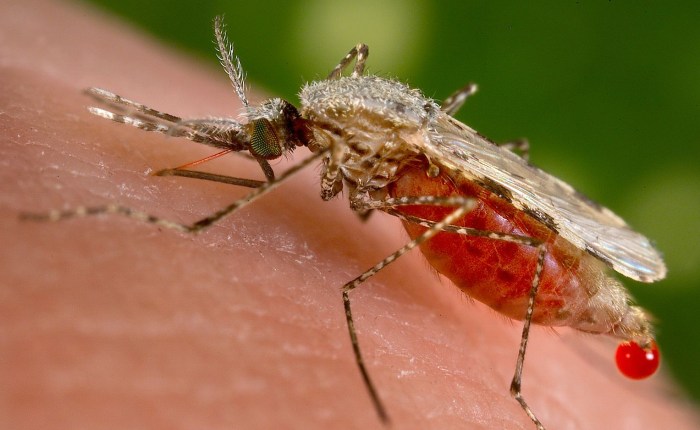
This is a thoroughly fascinating book about one of my least favorite things in the world. And I am one of the lucky ones. Even when those around me are getting eaten alive, I am normally spared the worst of the mosquito onslaught, for reasons that are largely elusive. Indeed, when I was an undergraduate studying in Kenya, one of my classmates did a small study on us, counting our bites and trying to see if they correlated with blood-type or other variables like perfume or shampoo. Since all of us had the same schedule, it seemed a promising study. But, alas, no insight was gained, though I was surprised to find that some of us had well over 60 bites, while I had less than 10.
Yet mosquitoes are more than annoyances; they are major vectors of disease, as I was reminded of daily when I took my malaria prophylactic. And after giving the reader some basic facts of mosquito biology, the book switches focus to disease control. There was much I did not know. For example, I had no idea that malaria was once present in New Jersey and New York, until aggressive government policies in the early 1900s eliminated the scourge. Similarly, I had no notion of the role that the Tennessee Valley Authority had in freeing America’s south from the malarial menace, largely by destroying mosquito nesting sites.
I also learned more about the story of Yellow Fever in the Americas. Though it may seem obvious to us nowadays that a disease can be transmitted by a mosquito bite, this was quite a controversial claim in the year 1900. It took careful work by a team of doctors in Cuba to prove that mosquitoes, not blood or bile, communicated the illness. This insight quickly led to the program of insect control that was instrumental in the building of the Panama Canal—a project that had proven impossible for the French, who labored under ignorance of the disease’s cause, and had to abandon the project as thousands of workers succumbed.
The authors of the book also have much to say on the subject of DDT. Having only read Rachel Carson’s Silent Spring, I had only been exposed to the argument against this popular pesticide. But Spielman and D’Antonio make a good case that, when used responsibly, the potential benefits of DMT far outweighs its health risks. Unfortunately, the pesticide was used to such a huge extent during the anti-malaria wars of the 1950s that it has lost much of its efficacy via accumulated resistance in mosquito populations. Spielman (the book’s entomologist) believes that this effort was ill-conceived, since it aimed for the impossible goal of total vector elimination, and it only resulted in the blunting of DDT, our most powerful weapon (not to mention decreased resistance in the human population from temporary reduction in malaria rates).
Malaria remains a major problem in vast areas of the world. We do not have an effective vaccine, and the plasmodium which causes the disease can evolve in response to drug treatments in just the same way that mosquitoes can evolve in response to DDT. And while those in temperate climates may be inclined to view it as a distant concern, this may soon prove not to be the case, as global warning expands the range of malaria-carrying mosquitoes northward. For my part, I think we are due for another big anti-malaria push, this time using smarter methods. But like the mosquito itself, the malaria parasite is one of our oldest enemies, having evolved with us for millions of years; so it may not be easy.
The authors close with a modern example of a tropical disease making it to a temperate zone: the 1999 West Nile outbreak in the New York City region. Surprisingly, I can remember this, even though I was only eight years old at the time. My mother told me that I had to stay inside on a beautiful summer night because they were spraying for mosquitoes. Soon, the helicopter came roaring by, dusting the area with insecticide. My brother remembers the entire playground in his Kindergarten being covered in a tarp to avoid getting sprayed. Such efforts did not succeed to eliminate West Nile in the United States, and now it circulates in the local bird and mosquito populations, closely monitored.
If the current pandemic helps to spur us to more aggressive public health measures, then I think mosquito control should be close to the top of the agenda. As Spielman himself notes, the mosquito does not serve any crucial functions in ecosystems—not as pollinators or even as prey—and are the most significant animal vectors of disease on the planet. Indeed, the mosquito is so perfectly useless and so perfectly dreadful that you wonder how anyone can maintain their faith in an almighty and infinitely loving God when faced with such a horrid product of blind evolution. They really are awful little things. And though we can never hope to eliminate them entirely, there is hope that we can break the chain of disease transmission long enough to at least make their bites mere itchy annoyances rather than a harbinger of doom.
View all my reviews
Category: Reviews
Review: Plagues and Peoples
Plagues and Peoples by William H. McNeill
My rating: 4 of 5 stars
Looked at from the point of view of other organisms, humankind therefore resembles an acute epidemic disease, whose occasional lapses into less virulent forms of behavior have never sufficed to permit any really stable, chronic relationship to establish itself.
It is risky to write a book like this. When William H. McNeill set out to analyze the manifold ways that infectious diseases have shaped world history, it was almost an entirely novel venture. Though people had been writing history for millennia, specialized works focusing on the ways that civilizations have been shaped by illness were few and far between. This seems rather strange when you consider that it was only in the twentieth century when disease reliably caused fewer casualties than enemy action during war.
Perhaps thinking about faceless enemies like viruses and bacteria simply does not come naturally to us. We personify the heavens readily enough, and do our best to appease it. But it is more difficult to personify a disease: it strikes too randomly, too mysteriously, and often too suddenly. It is, in other words, a completely amoral agent; and the thought that we are at the mercy of such an agent is painful to consider.
This tendency to leave diseases out of history books has come down to our own day. The 1918 flu pandemic is given a fraction of the coverage in standard textbooks as the First World War, even though the former caused more casualties. Curiously, however, that terrible disease did not even leave a lasting impression on those who survived it, judging by its absence in the works of the major writers of the day. It seems that memory of disease fades fast, at least most of the time. The 1968 Hong Kong flu killed 100,000 Americans that year (which would translate to 160,000 today), and yet neither of my parents remembers it.
This is why I think this book was a risky venture: there was not much precedent for successful books written about the history of diseases. Further, since there was not much in the way of prior research, much of this book must perforce consist of speculation using the spotty records that existed. While this does leave the historian open to the criticism of making unfounded claims, as McNeill himself says, such speculations can usefully precede a more thorough inquiry, since at least it gives researchers an orientation in the form of theories to test. Indeed, in my opinion, speculative works have just as important a role as careful research in the advancement of knowledge.
McNeill most certainly cannot be accused of a lack of ambition. He had completed an enormous amount of research to write his seminal book on world history, The Rise of the West; and this book has an equally catholic orientation. He begins with the emergence of our species and ends with the twentieth century, examining every inhabited continent (though admittedly not in equal detail). The result is a tantalizing view of how the long arc of history has been bent and broken by creatures lighter than a dust mite.
Some obvious patterns emerge. The rise of agriculture and cities created population densities capable of supporting endemic diseases, unknown to hunter-gatherers. Living near large masses of domesticated animals contributed much to our disease regimes; and the lack of such animals was decisive in the New World, leaving indigenous populations vulnerable to the invading Europeans’ microbes. Another recurring pattern is that of equilibrium and disturbance. Whenever a new disease breaks in upon a virgin population, the results are disastrous. But eventually stasis is achieved, and population begins to rebound.
One of McNeill’s most interesting claims is that the great population growth that began in the 18th century was partly a result of a new disease regime. By that time, fast overland and sea travel had exposed most major urban centers to common diseases from around the world, thus rendering them less vulnerable to new shocks. I was also surprised to learn that it was only the rise of modern sanitation and medicine—in the mid 19th century—that allowed city populations to be self-sustaining. Before this, cities were population sinks because of endemic diseases, and required constant replenishment from the countryside in order to maintain their numbers.
As I hope you can see, almost fifty years after publication, this book still puts forward a compelling view of world history. And I think it is a view that we still have trouble digesting, since it challenges our basic sense of self-determination. Perhaps one small benefit of the current crisis will be an increased general curiosity about how we still are, and have always been, mired in the invisible web of the microscopic world.
View all my reviews
Review: A Journal of the Plague Year
A Journal of the Plague Year by Daniel Defoe
My rating: 3 of 5 stars
It was a very ill time to be sick in…
My pandemic reading continues with this classic work about one of the worst diseases in European history: bubonic plague. Daniel Defoe wrote this account when the boundaries between fiction and non-fiction were looser. He freely mixes invention, hearsay, anecdote, and real statistics, in pursuit of a gripping yarn. Defoe himself was only a young boy when the Great Plague struck London, in 1664-6; but he writes the story in the person of a well-to-do, curious, if somewhat unimaginative burgher, with the initials “H.F.” The result is one of literature’s most enduring portraits of a city besieged by disease.
Though this account purports to be a “journal,” it is not written as a series of dated entries, but as one long scrawl. What is more, Defoe’s narrator is not the most orderly of writers, and frequently repeats himself or gets sidetracked. The book is, thus, rather slow and painful to read, since it lacks any conspicuous structure to grasp onto, but approaches a kind of bumbled stream-of-consciousness. Even so, there are so many memorable details and stories in this book that it is worth the time one spends with it.
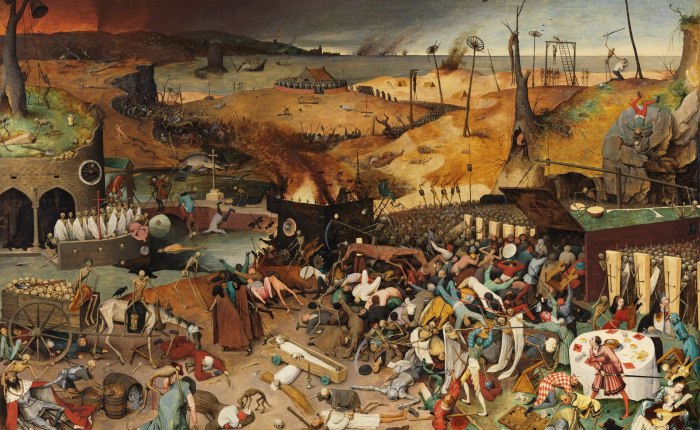
The Great Plague carried off one fourth of London’s population—about 100,000 souls—and it was not even the worst outbreak of plague in the city. The original wave of the Black Death, in the middle ages, was undoubtedly worse. Still, losing a quarter of a city’s population is something that is difficult for most of us to even imagine. And when you consider that the Great Fire of London was quick on the plague’s heels, you come to the conclusion that this was not the best time to be a Londoner.
What is most striking about reading this book now is how familiar it is. The coronavirus is no bubonic plague, but it seems our reactions to disease have not come a long way. There are, of course, the scenes of desolation: empty streets and mass graves. The citizens anxiously read the statistics in the newspaper, to see if the numbers are trending upwards or downwards. And then there are the quacks and mountebanks, selling sham remedies and magical elixirs to the desperate. We also see the ways that disease affects the rich and the poor differently: the rich could afford to flee the city, while the poor faced disease and starvation. And the economic consequences were dreadful—shutting up business, leaving thousands unemployed, and halting commerce.
Medical science was entirely useless against the disease. Nowadays, we can effectively treat the plague with antibiotics (though the mortality rate is still 10%). But at the time, little could be done. Infection with the bacillus causes swollen lymph nodes—in the groin, armpits, and neck—called buboes, and it was believed that the swellings had to be punctured and drained. This likely did more harm than good, and in practice the plague doctors’ only useful purpose was to keep records of the dead.
Quite interesting to observe were the antique forms of social distancing (a term that of course did not exist) that the Londoners practiced. As now, people tried to avoid going out of their homes as much as possible, and if they did go out they tried to keep a distance from others and to avoid touching anything. Defoe describes people picking up their own meat at the butcher’s and dropping their money into a pan of vinegar to disinfect it. There was also state-mandated quarantining, as any house with an infection got “shut up”—meaning the inhabitants could not leave.
Ironically, though these measures would have been wise had the disease been viral, they made little sense for a disease communicated by rat fleas. (Defoe does mention, by the way, that the people put out rat poison—which probably helped more than all of the distancing.)
One more commonality is that the virus outlasted people’s patience and prudence. As soon as an abatement was observed in the weekly deaths, citizens rushed out to embrace each other and resume normal life, despite the warning of the town’s physicians. Not much has changed, after all.
So while not exactly pleasant to read, A Journal of the Plague Year is at least humbling for the contemporary reader, as it reminds us that perhaps we have not come so far as we thought. And it is also a timely reminder that, far from a novel and unpredictable event, the current crisis is one of many plagues that we have weathered in our time on this perilous globe.
[Cover photo by Rita Greer; licensed under FAL; taken from Wikimedia Commons.]
View all my reviews
Review: The Plague
The Plague by Albert Camus
My rating: 5 of 5 stars
Officialdom can never cope with something really catastrophic.
As with all of Camus’s books, The Plague is a seamless blend of philosophy and art. The story tells of an outbreak of plague—bubonic and pneumonic—in the Algerian city of Oran. The narration tracks the crisis from beginning to end, noting the different psychological reactions of the townsfolk; and it must be said, now that we are living through a pandemic, that Camus is remarkably prescient in his portrayal a city under siege from infection. Compelling as the story is, however, I think its real power resides in its meaning as a parable of Camus’s philosophy.
Camus’s philosophy is usually called absurdism, and explained as a call to embrace the absurdity of existence. But this is not as simple as giving up church on Sundays. Absurdism is, indeed, incompatible with conventional religion. Camus makes this abundantly clear in his passage on the priest’s sermon—which argues that the plague is god’s punishment for our sins—an idea that Camus thinks incompatible with the randomness of the disaster: appearing out of nowhere, striking down children and adults alike. But absurdism is also incompatible with traditional humanism.
The best definition of humanism is perhaps Protagoras’s famous saying: “Man is the measure of all things.” In many respects this seems to be true. Gold is valuable because we value it; an elephant is big and a mouse is small relative to human size; and so on. However, on occasion, the universe throws something our way that is not made to man’s measure. A plague is a perfect example of this: an ancient organism, too small to see, which can colonize our bodies, causing sickness and death and shutting down conventional life as we know it. Whenever a natural disaster makes life impossible, we are reminded that, far from being the measure of all things, we exist at the mercy of an uncaring universe.
This idea is painful to contemplate. Nobody likes to feel powerless; and the idea that our suffering and striving do not, ultimately, mean anything is downright depressing. Understandably, most of us prefer to ignore this situation. And of course economies and societies invite us to do so—to focus on human needs, human goals, human values—to be, in short, humanists. But there are moments when the illusion fades, and it does not take a pandemic. A simple snowstorm can be enough. I remember watching snow fall out of an office window, creating a blanket of white that forced us to close early, go home, and stay put the next day. A little inclement weather is all it takes to make our plans seem small and irrelevant.
A plague, then, is an ideal situation for Camus to explore his philosophy. But absurdism does not merely consist in realizing that the universe is both omnipotent and indifferent. It also is a reaction to this realization. In this book, Camus is particularly interested in what it means to be moral in such a world. And he presents a model of heroism very different from that which we are used to. The humanist hero is one who is powerful and free—a person who could have easily chosen not to be a hero, but who chose to because of their goodness.
The hero of this story, Dr. Bernard Rieux, does not fit this mold. His heroism is far humbler and more modest: it is the heroism of “common decency,” of “doing my job.” For the truth is that Rieux and his fellows do not have much of a choice. Their backs are against the wall, leaving them only the choice to fight or give up. An absurdist hero is thus not making a choice between good and evil, but against a long and ultimately doomed fight against death—or death. It is far better, in Camus’s view, to take up the fight, since it is only in a direct confrontation with death that we become authentically alive.
You might even say that, for Camus, life itself is the only real ethical principle. This becomes apparent in the speech of Tarrou, Rieux’s friend, who is passionately against the death sentence. Capital punishment crystalizes the height of absurdist denial: decreeing that a human value system is more valid that the basic condition of existence, and that we have a right to rule when existence is warranted or not. To see the world with clear eyes means, for Camus, to see that life is something beyond any value system—just as the entire universe is. And the only meaningful ethical choice, for Camus, is whether one chooses to fight for life.
This book is brilliant because its lessons can be applied to a natural disaster, like a plague, or a human disaster, like the holocaust. Indeed, before the current pandemic, the book was normally read as a reaction to that all-too-human evil. In either case, our obligation is to fight for life. This means rejecting ideologies that decree when life is or is not warranted, it means not giving up or giving in, and it means, most of all, doing one’s job.
View all my reviews
Review: And the Band Played On
And the Band Played On: Politics, People, and the AIDS Epidemic by Randy Shilts
My rating: 5 of 5 stars
The story of these first five years of AIDS in America is a drama of national failure, played out against a backdrop of needless death.
Though this book has been on my list for years, it took a pandemic to get me to finally pick it up. I am glad I did. And the Band Played On is both a close look at one medical crisis and an examination of how humans react when faced with something that does not fit into any of our mental boxes—not our ideas of civil liberty, not our categories of people, and not our notions of government responsibility. As such, this book has a lot to teach us, especially these days.
Randy Shilts was working as a reporter for the San Francisco Chronicle. This position allowed him to track the spread of this disease from nearly the very beginning. Putting this story together was a work of exemplary journalism, involving a lot of snooping and a lot more interviewing. What emerges is a blow-by-blow history of the crisis as it unfolded in its first five years, from 1980-85. And Shilts’s lens is broad: he examines the gay community, the epidemiologists, the press, the blood banks, the medical field, the research scientists, and the politicians. After all, a pandemic is not just caused by a virus; it is the sum of a virus and a society that allows it to spread.
The overarching theme of this book is individual heroism in the face of institutional failure. There are many admirable people in these pages: epidemiologists trying to raise the alert, doctors struggling to treat a mysterious ailment, gay activists trying to educate their communities, and a few politicians who take the disease seriously. But the list of failures is far longer: from the scientists squabbling over claims of priority, to the academic bureaucracies squashing funding requests, to the blood bankers refusing to test their blood, to the government—on every level—failing to take action or set aside sufficient funding.
A lot of these failures were due simply to the sorts people who normally caught AIDS: gay men and intravenous drug users. Because both of these groups were (and to some extent still are) social pariahs, major newspapers simply did not cover the epidemic. This was crucial in many respects, since it gave the impression that it simply was not worth worrying about (the news sets the worry agenda, after all), giving politicians an excuse to do nothing and giving people at risk an excuse not to take any precautions. The struggle in the gay community over how to proceed was particularly vexing, since it was their very efforts to preserve their sexual revolution which cost time and lives. As we are seeing nowadays, balancing civil liberties and disease control is not an easy thing.
But what made these failure depressing, rather than simply frustrating, was the constant drumbeat of death. So many young men lost their lives to this disease, dying slow and agonizing deaths while baffled doctors tried to treat them. When these deaths were occurring among gay men and drug users, the silence of the country was deafening. It was only when the disease showed the potential to infect heterosexuals and movie stars—people who matter—that society suddenly spurred itself into action. This seems to be a common theme to pandemics: society only responds when “normal” people are at risk.
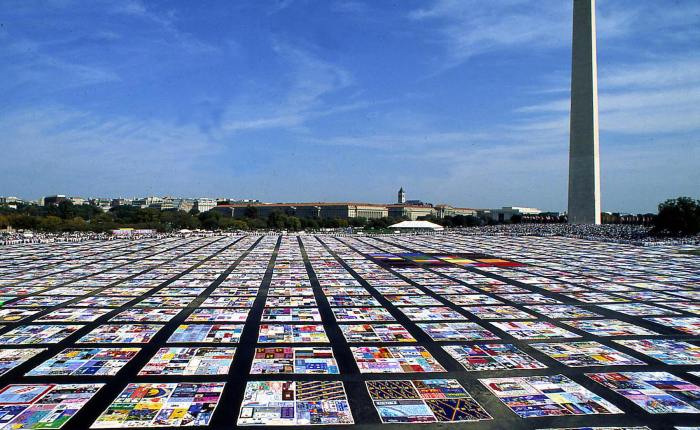
Another common theme to pandemic is the search for a panacea. At the beginning of the AIDS crisis, there were many claims of “breakthroughs” and promises of vaccines. But we still have neither a cure nor a vaccine. Fortunately, treatment for HIV/AIDS has improved dramatically since this book was written, when a diagnosis meant death. Pills are now available (Pre-Exposure Prophylactic, or PrEP) which, if taken daily, can reduce the chance of contracting HIV through sex by almost 99% percent. And effective anti-viral therapies exist for anyone who has been infected, greatly extending lifespans.
Unfortunately, these resources are mostly available in the “developed” world. In Sub-Saharan Africa, where resources are scarce, the disease is still growing, taking many lives in the process. Once again, a disease is allowed to ravage in communities that the world can comfortably ignore.
One day, a hardworking journalist will write a similar book about the current coronavirus crisis and our institutions’ response to it. And I am sure there will be just as much failure to account for. But there will also be just as much heroism.
View all my reviews
Review: The Great Influenza
The Great Influenza: The Story of the Deadliest Pandemic in History by John M. Barry
My rating: 4 of 5 stars
People write about war. They write about the Holocaust. They write about the horrors that people inflict on people. Apparently they forget the horrors that nature inflicts on people, the horrors that make humans least significant.
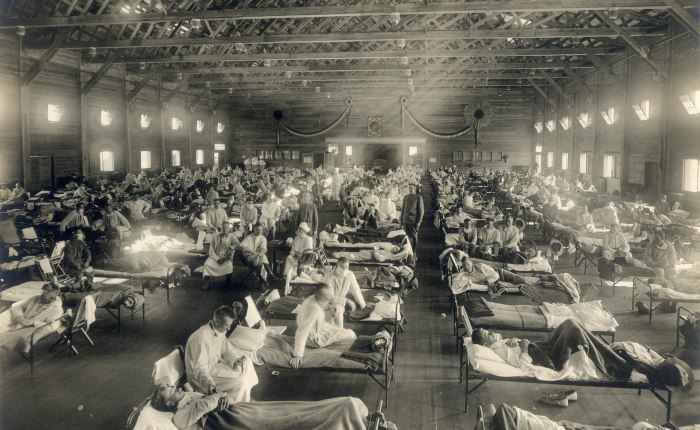
Like so many people nowadays, I have been scrambling to wrap my mind around the current pandemic. This led me, naturally, to the last major worldwide outbreak: the 1918 influenza. I have a distant connection to this disease. My great-grandfather (after whom I was named) was drafted out of Cornell’s veterinary school to work as a nurse in a temporary hospital set up for flu victims. I read the letters he sent to his mother, describing the experience.
John Barry’s account of this virulent flu is sobering to say the least. In a matter of months, the flu spread across the world and caused between 50 and 100 million deaths. More American soldiers died from this flu than from the entire Vietnam War. In most places the mortality rate hovered around two percent, but it struck much more fiercely elsewhere. In the Fiji Islands, 14 percent of its population succumbed; in Western Samoa, twenty-two percent; and in Labrador, a third of the population died. And because the disease mainly struck young people—people in their twenties and thirties—thousands were left orphans.
Barry’s book is not, however, simply a record of deaths. He sets the historical scene by giving a brief overview of contemporary medicine. In the early 1900s, modern medicine was just coming into its own. After centuries in which it was thought that bad air (“miasma”) caused illness, and in which bleeding was the most popular “cure,” researchers were beginning to discover viruses and bacteria, and were beginning to understand how the immune system combats these germs. Major public health initiatives were just getting underway. The John Hopkins School of Public Health had been founded, and the Rockefeller Institute was making new types of research possible. It was not the Dark Ages.
The other major piece of historical context is, of course, the First World War. Undoubtedly this played a major role in the epidemic. Not only did troop movements help to spread the disease, but press censorship virtually guaranteed that communities were unprepared. Barry notes how newspapers all across the country consistently downplayed the danger, which ironically only further increased panic. (The pandemic is sometimes called the “Spanish flu,” because the press in neutral Spain was uncensored, and so reported freely on the disease.) The war effort overrode all of the warnings of disease experts; and by the time the disease struck many communities, most of the available doctors and nurses had been sent to the military.
Barry’s narration mainly focuses on the United States. Partly this is because this is where he believes the disease originated (there are several competing theories), partly this is because the disease’s impact in Europe was overshadowed by the war, and partly this is simply because of the amount of easily available sources. I did wish he had spent more time on other countries—especially on India, which suffered horribly. The sections on science—both on the history of science, and summarizing what we know now about flu viruses—were in general quite strong. What was lacking, for me, were sections on the cultural impact of the disease.
But perhaps there are not so many. As Barry notes, no major novelist of the time—Hemingway, Fitzgerald, Lawrence—mentioned the pandemic in their works. I have noticed the same thing myself. I cannot recall a single mention of this flue in biographies and autobiographies of people who lived through the pandemic, such as John Maynard Keynes or even John D. Rockefeller (who personally funded research on the disease). This is perhaps understandable in Europe, where the deaths from the pandemic were swallowed up in news of the war; but it seems odd elsewhere. What is more, the pandemic did not seem to exacerbate existing racial or class tensions. In many ways the virus seems to have swept through communities and then disappeared from memory.
(Barry does have one fairly controversial claim in the book: that Woodrow Wilson contracted the flu while negotiating the treaty of Versailles, and that it caused him to capitulate to Clemenceau’s demands. If this is true, it would be a major historical consequence.)
It is illuminating to compare the 1918 pandemic to the current crisis. There are many similarities. Both are caused by easily transmissible viruses, and both spread around the world. The H1N1 flu virus and the SARS-CoV-2 virus both infect the respiratory system, causing fever, coughing, and in severe cases pneumonia and ARDS (acute respiratory distress syndrome). In both cases, no vaccine is available and no known treatment is effective. As in 1918, doctors are turning desperately to other therapies and medicines—those developed for other, unrelated diseases like malaria—and as in 1918, researchers are publishing at a frantic pace, with no time for peer review. Police are again wearing masks, hospitals are again overrun, and officials are struggling to catch up with the progress of the virus.
But of course, there are many important differences, too. One is the disease itself. The 1918 flu was almost certainly worse than the novel coronavirus. It was more deadly in general, and it killed younger people in far greater numbers—which resulted in a much bigger dip in life expectancy. (Young people died because their immune systems overreacted in what is called a “cytokine storm.”) The H1N1 flu also had a far shorter incubation period. This meant that the gap between infection and the first symptoms was short—often within 24 hours—and patients deteriorated far more quickly. Barry describes people being struck down within mere hours of showing their first symptoms. The challenge of the SARS-CoV-2 virus, however, is the very long incubation period—potentially up to two weeks—in which people may be infectious and yet not show symptoms. This makes it very difficult to keep track of who has it.
The explanation for this difference lies in the nature of the virus. A virus is basically a free-floating piece of genetic code incased in a protein shell. It needs to highjack animal cells in order to reproduce; and it infiltrates cells using proteins that link up with structures on the cells’ surface. Once inside, the virus begins to replicate until the cell literally bursts, spilling virus into adjacent cells, which in turn get infected, and which in turn burst. Each burst can release thousands of copies. The rate at which the virus replicates within the cells determine the incubation period (between first infection and first symptoms), and coronaviruses replicate significantly more slowly in animal cells, thus explaining the slower onset of symptoms. Their greater speed also means that flu viruses change faster, undergoing antigenic drift and antigenic shift, meaning that new strains of the virus are inevitable. The novel coronavirus is (likely) more stable.
Another potential difference is seasonality. Flu viruses come in seasonal waves. The 1918 virus struck first in spring, receded in summer, and then returned in autumn and one last time in the winter of 1919. Every wave hit very quickly—and then left just as quickly. Most cities experienced a sharp drop-off in cases after about six weeks of the first patients. The seasonality of the 1918 flu was partly a result of the genetic drift just mentioned, as the different waves of this flu were all at least subtly different strains of the virus. Atmospheric conditions—humidity and temperature—also presumably make some difference in the flu virus’s spread. COVID-19 may exhibit a very different pattern. It may, perhaps, be less affected by atmospheric conditions; and if it mutates and reproduces more slowly, it may linger around for one long wave rather than several short ones. This is just my speculation.
Well, so much for the virus. How about us? The world has changed a lot since 1918. However, not all of those changes have made us better prepared. Fast and cheap air travel allowed the virus to spread more quickly. And economic globalization did not help, either, as both medicines and medical equipment are often produced overseas and then imported, thus rendering countries more vulnerable to supply-chain disruption than in the past. As we witness countries and states compete for supplies, this vulnerability is very apparent.
But of course we have many advantages, too. Many of the deaths caused by the flu and the coronavirus are not from the virus infection itself, but because the virus renders us vulnerable to secondary infections by bacteria, causing pneumonia. Antibiotics (which did not exist in 1918) can save many lives. Another advantage is medical care. The most severe patients of both epidemics were struck with ARDS, a condition with an almost 100% mortality rate for those who do not receive intensive medical care (using a ventilator machine). In 1918 they were able to administer oxygen, but far less effectively than we can. Even so, even with the best intensive care, the survival rate of ARDS is between 40-60%. And our ability to administer intensive care is quite limited. The ventilator shortage has become a global emergency in itself, as hospitals are overrun.
Medical science has also advanced considerably. Now we can isolate the virus (which they could not do in 1918), test individuals for it, and work on a vaccine. However, testing has so far been unable to keep up with the virus. And the most optimistic estimate of an available vaccine is in a year. Arguably a much bigger advantage is information technology. The press is not censored—so citizens have a much better idea of the risks involved—and experts can communicate with each other in real time. We can coordinate large-scale societal responses to the pandemic, and can potentially even use technology to track individual cases. As we come to better understand the virus, we will be able to use more sophisticated statistical methods to understand its progress. None of this was possible in 1918.
One thing that we will have to contend with—something that is hardly even mentioned in Barry’s book—is the economic toll that this virus will take. Even in the ugliest days of the 1918 pandemic, governments did not require businesses or restaurants to close. War preparations went on unabated. (In 1918, after years of slaughter and at the height of the war, life was simply cheaper than it is now.) Our societal response will likely mitigate the health crisis but will create a secondary economic crisis that may ultimately be more difficult to solve. The solutions to this crisis could be our most lasting legacies. Already Spain’s government is talking of adopting universal basic income. Though of course it is far too early to predict anything with confidence.
Comparisons with 1918 are partly depressing, and partly uplifting. Depressing, because we knew this was possible and did not prepare. Depressing, because so many governments have gone through the same cycle of early denial and disorganized response as they did back then. Uplifting, because we do know much more than we did. Uplifting, because—after our early fumbles—we are finally coordinating as a global community to deal with the crisis. Perhaps most uplifting of all, despite some ugly stories here and there, the crisis has revealed a basic sense of solidarity in the face of a universal threat. Hopefully, unlike 1918, we will not do our best to forget about this one.
View all my reviews
Review: Deadliest Enemy
Deadliest Enemy: Our War Against Killer Germs by Michael T. Osterholm
My rating: 5 of 5 stars
This is a critical point in history. Time is running out to prepare for the next pandemic. We must act now with decisiveness and purpose. Someday, after the next pandemic has come and gone, a commission much like the 9/11 Commission will be charged with determining how well government, business, and public health leaders prepared the world for the catastrophe when they had clear warning. What will be the verdict?
If I had read this book in more normal circumstances, I do not know how I would have responded. Perhaps I would have been slightly unnerved, but I think I would have been able to sleep soundly by dismissing most of it as alarmist. In fact, I did just this a few months ago, when I read Bill Bryson’s book on the body, and scoffed at his claim that another 1918-style pandemic was easily possible. Nowadays, however, reading this book is more depressing than anything. Those in the field saw this crisis coming from miles away, but few of us listened. The epidemiological community must feel rather like Cassandras right about now: uttering prophecies that nobody pays any attention to.
(As Osterholm was responsible for most of the ideas in this book, and as it is written from his perspective, I will refer to him as the author in this review.)
This book attempted to be the Silent Spring for infectious diseases. That it did not succeed in doing so is attributable just as much to human nature as to the book itself. Limiting the use of pesticides is fairly easy and relatively painless for most of us. But mobilizing the political will necessary to prepare for health crises in the hypothetical future—preparations that would involve a great deal of money and many institutional changes—is not such an easy sell, especially since we had been lulled into a false sense of security. As is the case with climate change, the dangers seemed so remote and theoretical that for most of us it was difficult to even imagine them.
After witnessing what this new coronavirus has done to our entire way of life in a few short weeks, I was quite disposed to take Osterholm seriously. And I think the entire content of the book—not just the warnings about a potential pandemic—are valuable. Osterholm turns his attention to a wide array of threats: Zika, AIDS, Yellow Fever, Typhoid, Malaria, Ebola, MERS. We are vulnerable on many fronts, and we are generally not doing much to prepare.
One example are the many diseases that are transmitted by mosquito bites. As modern transportation has introduced disease-carrying mosquitos into ever-more parts of the world, and global warming expands the geographic range of mosquitos, this will be an increasing concern. (Silent Spring may, ironically, have contributed to this problem.) Another worry is bio-terrorism. Now that we can see how paralyzing even a moderately lethal virus can be, imagine the damage could be inflicted by a genetically-modified virus. And the technology to edit genes is becoming cheaper by the year. We have already experienced bio-terrorism in the US on a relatively small scale with the 2001 anthrax attacks. This is just a taste of what is possible. According to Osterholm, a mere kilogram of the anthrax bacteria could potentially kill more than an atomic bomb. And it would be far cheaper to acquire.
But these are not even the biggest threats. According to Osterholm, we face two virtual certainties: another flu pandemic, and the imminent ineffectiveness of antibiotics.
The latter is quite terrifying to consider. Antibiotics are not easy to discover, and our arsenal is limited. Meanwhile, bacteria constantly evolve in response to environmental pressures, including to the use of antibiotics. It is inevitable that resistance to available antibiotics will increase; and this could have a profound effect on modern medicine. Even routine operations like knee-replacements would be unsafe if we did not have effective antibiotics. Slight injures—a scratch in the garden from a rose-bush—could result in amputations or even deaths. And yet, antibiotics continue to be widely prescribed for ailments they cannot treat, and given indiscriminately to livestock, which only accelerates the impending bacterial resistance.
The other major threat (as we are learning) is a pandemic. Now, Osterholm was not precisely correct in predicting the cause of the next pandemic, since he thought it would be a flu virus (though he does have a good chapter on coronaviruses, and in any case a flu pandemic is still just as possible). But he is certainly correct in identifying our many structural weaknesses. He notes our lack of stockpiles and correctly predicts a shortage in protective gear, face masks, and ventilators in the event of a pandemic. And though medical science has advanced a lot since 1918, in many ways we are even more vulnerable than we were back then, most notably because of our supply chains. Since so many of our medicines and medical equipment—among other things—are produced overseas, shortages are inevitable if trade is disrupted.
Osterholm is quite illuminating in his discussion of pharmaceutical companies and their incentives. As private businesses, they have little to gain by investing in preventative vaccines or in new antibiotics. In the former case, this is because vaccines have to undergo thorough testing and pass FDA approval, requiring millions in investment, only to face the prospect of uncertain demand once the vaccine hits the market. The case of SARS is instructive. After the disease was identified in 2002, companies rushed to make a vaccine; but when SARS receded, interest in the vaccine disappeared and pharmaceutical companies, cutting their losses, stopped work on the vaccine. We still do not have one.
The incentive system is just as ineffective when it comes to antibiotics. Finding new antibiotics is costly; and since there are currently many cheap antibiotics on the market, a new patented antibiotic probably would not turn a large profit. Besides, effective antibiotic stewardship requires that we use them sparingly, thus further limiting profit potential. Drug companies have much more to gain by creating products that would require continuous use, such as for chronic conditions. Letting the free market decide which drugs get developed, therefore, is not the wisest decision. Osterholm advocates the same approach as taken by government in weapons contracts, wherein the government essentially guarantees payment for any product that meets specifications.
Osterholm’s most ambitious idea for government funding is for a new universal flu vaccine. The flu vaccine we are all familiar with is based on old technology, and can only provide protection from a few strains of flu. Scientists essentially must guess what sort of flu will be circulating in a year; and they must do so every year. But Osterholm thinks that there is good reason to believe that a universal flu vaccine is possible, and recommends we devote at least as much money to such a vaccine as we devote to AIDS research. This seems very sensible to me, since the next pandemic will likely enough come from a flu virus.
I am summarizing Osterholm’s book, but I do not think I am doing justice to its emotional power. Now that I am living through the events that Osterholm predicts (in surprising detail), I feel a strange mixture of outrage and fear: outrage that governments did not listen when they had time, and fear that we will repeat the same mistakes when this current crisis is over. I cannot help but be reminded of another situation in which we comfortably ignore the dire warning of scientists: climate change. My biggest hope for the current crisis, then, is that afterwards we will be more willing to heed the warnings of these nerds in lab coats.
View all my reviews
Review: John Maynard Keynes (a Biography)
John Maynard Keynes: 1883-1946: Economist, Philosopher, Statesman by Robert Skidelsky
My rating: 4 of 5 stars
Keynes’s paradox, which few could grasp and which many would find unacceptable today if expressed in ordinary language, is that horrendous events may have trivial causes, and easy remedies.
This is an ambitious and impressive biography of one of the most influential men of the last century. Robert Skidelsky was a pure historian before turning his attention to economics; and in this book he attempts to do justice to Keynes’s moment in history as well as his ideas. It does not make for light reading. After trying to read Keynes’s own General Theory and finding many parts of it impenetrable, I hoped that Skidelsky’s book would provide a gentler introduction to Keynes’s ideas. But this this book is not economics for dummies.
The hardest going sections were not, however, the bits devoted to economic theory, but the detailed reports of negotiations and plans undertaken by Keynes in his many official capacities. Here is just an example:
Keynes’s main effort to get the Stablization Fund to put on the clothes of the Clearing Union was his proposal to monetise unitas. The crucial structural difference between the Clearing Bank and the Stabilization Fund set-ups was that in the Keynes Plan member central banks banked with the central banks. Member central banks would subscribe their quotas to the Fund’s account…
And so on. Probably there are a fair number of readers who could follow this sort of writing with interest, but at the moment I am not one of them.
It would be seriously unfair, however, to suggest that the whole of the book is like this. Many parts are quite entertaining. The beginning years are especially so, when Keynes was in Cambridge and then a member of the famed Bloomsbury Group. I was surprised and amused at the open homosexuality of Keynes’s milieu, and the fluidity of his sexual life. Of more lasting interest, of course, is the intellectual climate in which the young economist was growing up. Skidelsky is wonderful when it comes to intellectual history, and he able shows how the circulating theories shaped Keynes’s attitudes for the rest of his life. I would not have guessed, for example, that Keynes was so deeply influenced by G.E. Moore’s Principia Ethica.
Skidelsky is also very skilled in his ability to trace the growth of Keynes’s major intellectual theories. He does this by pairing the influence of the historical moment with the inner machinations of Keynes’s mind, showing how the economist used, adapted, and discarded the economic orthodoxy he inherited when faced with the Great Depression. The chapter on the General Theory—Keyne’s most important book—is lucid and will greatly aid my further understanding of macro-economics. Thus, in the most essential task of a Keynes’s biography, Skidelsky undoubtedly succeeded.
Apart from the dryness and density of some sections of the book—mostly concentrated in the last chapters, when Keynes was heavily involved in planning for the post-WWII economy—the book has other flaws. The most notable, for me, was probably a consequence of Skidelsky’s intellectual seriousness. That is, he is so focused on Keynes’s ideas that Keynes himself can be left behind. Strangely, though one learns a great deal about Keynes, one seldom feels that one has “met” him. The economist’s personality remains rather vague and distant.
It would be generous to call this biography a page-turner. But Keynes is perhaps not the ideal subject for a readable biography. As Skidelsky repeatedly notes, Keynes was born into privilege and remained there the rest of his life. He was a thoroughbred member of the Establishment. Thus there is no spectacle of a struggling underdog or of rags to riches. Further, much of Keynes’s influence and activity resided in the intricacies of trade arrangements, exchange rates, currency valuations, and so on. He can come across as a hyper-competent civil servant.
There was another side to Keynes, however, which is quite a bit more attractive. As already mentioned, he was a member of the Bloomsbury Group—friends with Lytton Strachey and Virginia Woolf—and deeply valued all of the arts. He spent a great deal of time and money supporting his painter friends, and was heavily involved in the world of ballet and theater through his wife. In spite of his great practical gifts and his flair for finance, Keynes was not a crass materialist and consistently thought that the good life required more than ready cash.
Politically speaking, Keynes appears to have not been particularly ideological. He could not be readily assimilable into the Right or the Left, and instead preached a “middle way” based largely on competence rather than values. As Skidelsky notes, “Keynes was moved to wrath not so much by a ‘fiery passion for justice and equality’, as by ‘an impatience with how badly society was managed’.” This is not an altogether winsome quality, I think; though it does have a certain appeal—a world of ultra-efficient technocrats resolving problems without partisan bickering.
Indeed, as Skidelsky notes, this was largely the promise of the Keynesian Revolution, which more or less collapsed in the 1970s. In the final section of the book Skidelsky includes an even-handed evaluation of the successes and failures of Keynes’s ideas in practice. Certainly I am not qualfied to judge myself. But I do think that, as we look another depression in the face, we will be thinking an awful lot more about Keynes in the coming months.
Review: Sons and Lovers
Sons and Lovers by D.H. Lawrence
My rating: 3 of 5 stars
My reactions to this book veered from extremely positive to quite negative, so it is difficult to know how to begin. If you have an ear for prose, then Lawrence will seldom completely disappoint. At his best, Lawrence’s prose is lush, caressing, and aching. He evokes a kind of aesthetic tenderness that I have seldom experienced elsewhere—an intimacy between the reader and himself, a vulnerability that is disarming. In his strongest passages Lawrence is as meditative as Proust and as lyrical as Keats.
But this book is, unfortunately, not exclusively composed of Lawrence’s strongest passages. And as it wore on, I felt that Lawrence had exhausted his limited emotional range, and was overplaying his thematic material.
The premise of the book is quite simple: a woman in an unsatisfying marriage pours her emotions into her sons, who then become so dependent on her that they cannot form satisfying relationships for themselves. For me, there is nothing wrong with this (arrestingly Freudian) idea; but I did think that Lawrence beats the reader over the head with it. In general, I think it is unwise for any book to be too exclusively devoted to a theme. It does not leave enough room for levity, for spontaneity, for fresh air to blow through its pages. Sons and Lovers certainly suffers from this defect.
But the book’s faults become apparent only in the second half. I thought the beginning of the novel was quite astonishingly beautiful. Lawrence wrote of the sufferings of a young wife with amazing sympathy. He manages to bring out all the nobility and strength of Mrs. Morel, while avoiding portraying Mr. Morel in an unnecessarily harsh light. The miner is a flawed man in a crushing situation, and his wife is a resolute woman with few options. Their tragedy is as social as it is personal, which gives this section of the novel its great power.
When the focus shifts from Mrs. Morel to her son Paul, then the quality generally declines. Paul is not as interesting or as compelling as his mother; and his problems seem like sexual hang-ups or psychological limitations, rather than anything diagnostic of society at large. Perhaps our own social climate is just not ripe for this novel. Nowadays we are little disposed to care about the inability of a young man to find complete satisfaction in his relationships.
In fairness, there are charming and insightful sections in this second part of the novel as well. I liked Miriam as a character and I thought the dynamic between her and Paul was compelling, if a touch implausible. (On the other hand, I disliked the reconciliation between Clara and her pathetic husband.) Even so, I thought that the writing became noticeably worse as the book went on, as Lawrence inclined more and more to repetition. The characters speak, desire, recoil, hate each other, relapse, and so on. It is tiresome and it begins to wear on the reader, who longs for someone to do something decisive and bring all this emotional dithering to an end.
I am hopeful that Lawrence’s later novels have more of his strengths (his sympathy, his lyricism, his tenderness) and fewer of his weaknesses (his lack of range, his lack of humor). As for this one, I will end where I begin, with a confused shrug.
View all my reviews
Review: A Manual of Greek Mathematics
A Manual of Greek Mathematics by Thomas L. Heath
My rating: 4 of 5 stars
In the case of mathematics, it is the Greek contribution which it is most essential to know, for it was the Greeks who first made mathematics a science.
As a supplement to my interest in the history of science, I figured that I ought to take a look into the history of mathematics, since the two are quite intimately related. This naturally led me to the Greeks and to Sir Thomas L. Heath, who remains the most noteworthy translator, divulgator, and commentator in English eighty years after his death. This book is likely the best single volume you can get on the subject, as it covers all of the major mathematicians in some detail while giving a complete overview.
It is also reasonably accessible (“reasonably” being the operative word). Certainly it is no work of popular math in the modern sense; it is not pleasure reading, and Heath assumes a certain amount of knowledge on the reader’s part. A thorough knowledge of algebra and geometry is assumed, and a few words in ancient Greek are not translated. What is more, large sections of the book are essentially extended summaries and explications of Greek treatises, which makes them almost impossible to read without the original text alongside. Personally I would certainly have appreciated more spoon-feeding, as it was quite difficult for me to prevent my eyes from glazing over.
The book is divided primarily by subject-matter and secondarily by chronology. Heath introduces us to notation, fractions, and techniques of calculation, and then on to arithmetic. Geometry, of course, dominates the book, as it was the primarily form of Greek mathematical thought. Heath summarizes the contributions to geometry by Pythagoras and his followers, and the scattered mathematicians we know of in the years between Thales and Euclid. Once Euclid appears, he writes his famous Elements, which encapsulates the entire subject and which rendered many previous works obsolete. After Euclid we come to the divine Archimedes and the great Apollonius, who put the capstone on the tradition. Ptolemy (among others) made great advances in trigonometry, while Diophantus made strides in algebra (as well as inspired Fermat).
Heath’s account of these mathematicians is largely internal, meaning that he is focused on the growth of their ideas rather than anything external to the science. Reading this convinced me—as if further evidence was needed—that I do not have the moral fiber or intellectual temper to appreciate mathematics. Heath writes admiringly of the works of Euclid and Archimedes, finding them not only brilliant but beautiful. While I can normally appreciate the brilliance, the beauty normally escapes me. Ratios, volumes, lines, and equations simply do not make my heart beat.
Indeed, the questions that I find most fascinating are those that are hardly touched upon in this book. Most important, perhaps, is this: What aspect of a culture or a society is conducive to the development of pure mathematics? Though claims of Greek specialness or superiority seem antiqued at best nowadays, it is true that the Greeks made outstanding contributions to science and math; while the Roman contribution to those fields—at least on the theoretical side—is close to nil. The mathematics of Ancient Egypt amount to techniques for practical calculations. Admittedly, as Otto Neugebauer wrote about in his Exact Sciences of Antiquity, the Babylonians had quite advanced mathematics, allowing them to solve complex polynomials; they also had impressive tabulations of the heavenly motions.
Even so, it was the Greeks who created science and math in the modern sense, by focusing on generality. That is, rather than collect data or develop techniques for specific problems, the Greeks were intent on proving theorems that would hold in every case. This also characterizes their philosophy and science: a rigorous search after an absolute truth. This cultural orientation towards the truth in the most general, absolute form seems quite historically special. It arose in one fairly limited area, and lasted for only a few centuries. Most striking is the Greek disdain of the practical—something that runs from Pythagoras, through Plato, to Archimedes.
Of the top of my head, here are some possible factors for this cultural development. The Greek economy was based on slavery, so that citizens often could afford to disdain the practical. What is more, the Greek political model was based on the city-state—a small, close-knit community with limited expansionist aims and thus with limited need for great infrastructure or novel weapons. The relative lack of economic, political, or military pressure perhaps freed intellectuals to pursue wholly theoretical projects, with standards that arose from pure logic rather than necessity. Maybe this seems plausible; but I am sure many other societies fit this description, not just the Greeks. The development of culture is something that we do not fully understand, to say the least.
This has taken me quite far afield. In sum, this book is an excellent place to start—either by itself, or as a companion to the original Greek works—if you are interested in learning something about this astounding intellectual tradition. That the Greeks could get so far using geometry alone—that is, without variables or equations—is a testament to human genius and persistence.
View all my reviews