The Madrid Half-Marathon

The Madrid Half-Marathon

I have been a bad athlete for as long as I can remember. Apart from a brief and embarrassing stint on a soccer team in elementary school (all I can recall is spending an entire game crying my eyes out), I have avoided team sports all my life. And they have avoided me. In gym class I was always one of the last to be picked for a team. For all of middle school and high school I was tall, overweight, and consequently I had all the gawkiness and sluggishness of both conditions. True, I did spend a few years taking taekwondo classes in high school, and I was not so bad at it. But my unpromising career as a martial artist came to an abrupt end when all the stretching and kicking made it necessary to go to physical therapy for my aching, cracking knees.

Of all of the sports that I have failed at, the most conspicuous is running. Every year I dreaded the day in gym class when we would be made to run a mile. I always began with the hope that, this time, I would be able to run the whole thing without stopping. After all, nearly everyone else could. But inevitably, less than halfway through, I would run out of breath and have to walk; and I spent the rest of the time alternating between a wheezing run and a panting walk. Not once did I manage to run a mile in less than ten minutes. Just as bad was the PACER test, when we had to run from one end of the gym to the other within progressively shorter intervals, signalled by an ominous beep. The real studs were able to get to level nine, while I gave up far before that—defeated by the high-pitched tone.

This long and undistinguished experience taught me that I would never be a runner. My knee problems only added to this belief. So, after high school, I never tried. I was pragmatically and philosophically committed to a life of inactivity, with the sole exception of walking (a true intellectual’s sport). But then something happened to break my conviction that I could not run.

Last year, I got into the habit of leaving my apartment at the exact minute needed to catch the bus. Sometimes I left a little late, however, and this put me in a dilemma: walk and miss the bus (and this would mean arriving late to work), or run and catch it. My fear of being fired overcame my combined fears of looking foolish, getting my clothes sweaty, and dying of suffocation. So I ran. It started with only a half of a block, just a short sprint to catch the light. Then it became the whole block, and eventually two blocks—sprinting for the light, stopping, sprinting for the next light, stopping again—until I would run almost the whole way to the bus. And the strangest part is that I did not hate it.

Still, nothing changed. I did not participate in my school’s “Race Against Hunger,” a charity race that we do every year. Instead, I sat by the sidelines feeling bored and useless. I did not even own a pair of sneakers. Nevertheless, circumstances were quietly conspiring to make running a reality. Aside from my bus sprints, living in Europe had left a mark. On all my travels I had tried to walk as much as possible, mostly to avoid paying for taxis and buses and trains; and this had made me a resolute trekker, capable of walking miles under the hottest suns.

All of this unintended athletic experience culminated in a growing curiosity: Could I, finally, after a decade of not running, run a mile without stopping? Sure, I was no athlete; but I was skinnier and in better shape than I was in high school. That adolescent experience had left within me the iron conviction that a mile was an impossibly long distance for me, and that my body was simply unable to do it. Yet in the spirit of science I wanted to test this conviction.

So, one cold February day, I went to a sportswear store with my brother. I could not have felt any more out of place as I looked at sweatpants, recovery gels, and headbands than if I had wandered into an Aztec ritual sacrifice. This was not my world. But I managed to buy myself tights, sneakers, and an armband for my phone, feeling absolutely ridiculous all the while.

That same day I carried my purchases home and prepared for my trial. The tights were, well, tight; the armband was awkward to use. When I walked out into the street, I felt acutely embarrassed, as if everyone was staring at me. I had not worn athletic wear since… actually, I don’t know. What was I doing? Long before I began to run, my body became flushed with adrenaline. I was certain that I was about to make a fool of myself.

The walk to the park, where I would begin my run, seemed endless. But finally I arrived. This was the fateful moment. I opened the app, Runkeeper, and started the tracking function. Then, I fumbled in getting it into the armband holder, and then fumbled again in putting it on my arm. Now the run began—slowly. The first steps felt strange. Retiro Park seemed to bounce up and down. I remember finding it odd that I could enjoy the beauty of the trees while running; I had assumed that I would not be able to think about or appreciate anything.

Sure enough, the tightness in my lungs soon came, that horrible feeling of suffocating. But it was never powerful enough to make me want to stop. I kept going until I got to the artificial lake, and then I turned left and then left again, to complete the circuit. The ground was mostly flat but there was a slight hill near the end, and I thought my chest would explode as I crawled to the top of it. Finally, and unbelievably, I made it back to where I had started. And I had run the entire time. I checked the app—1.12 miles, at a pace of 9:39 per mile. For the first time in my life, at the age of 27, I ran a whole mile.


The months that followed were full of constant surprise. The biggest was that I actually enjoyed running. I did not necessarily enjoy the physical sensation of running; the mythical runner’s high eluded me, and I felt mostly pain and exhaustion. But I did enjoy improving; and I improved with every run—running longer distances at faster paces. Unlike writing or playing music, running can be measured objectively, in simple, cold figures. There can be no dispute over which runner is better or worse. This makes progress very easy to see and, consequently, very satisfying.

I chatted about it incessantly, even getting mildly obsessed with the subject. It felt genuinely surreal to be spending so much time thinking about an athletic activity: this was not me. More important, it felt liberating to see myself as someone who could actually do something physical. My carefully constructed self-image as a delicate intellectual had cracked and crumbled. I felt as if a new continent of experience was now available for exploration.

Eventually, my coworker, Holden, suggested that I do the half-marathon. He had signed up for the marathon and had been preparing for months. At first I dismissed the idea as absurd. The longest I had run at that point was six miles, at a very sluggish pace, and it nearly killed me. Yet, the idea was implanted in my head. I thought of the feeling of triumph, of surpassing even my most ambitious running goals. And, of course, I imagined how much weight I would lose in the process of training (it wasn’t much). So, I paid my 40€ (somewhat indignantly) and signed myself up. Now the serious training would begin.

This consisted of one long run a week, in which I tried to increase my maximum distance by one mile, and several shorter runs wherein I worked on my speed. This regime got me to 13 miles two weeks before the day of the half-marathon, April 27 (it had been moved up a day because of the elections on April 28). On my long runs, I would end up going so slowly that I struggled to pass old ladies with canes. But at least I knew that I could go the distance.

Finally there was only one week until race day. I was nervous. Somehow, I was certain that I was going to do badly and disappoint myself. It did not matter what time I got, of course, but I had decided that I was to run the race in less than two hours—not an easy thing for a beginning runner. I followed all the typical advice, taking a break in the days before the race and stuffing myself with platefuls of pasta. By the time Saturday came around I was well-rested, well-fed, and as prepared as I could have been. Would it be enough?

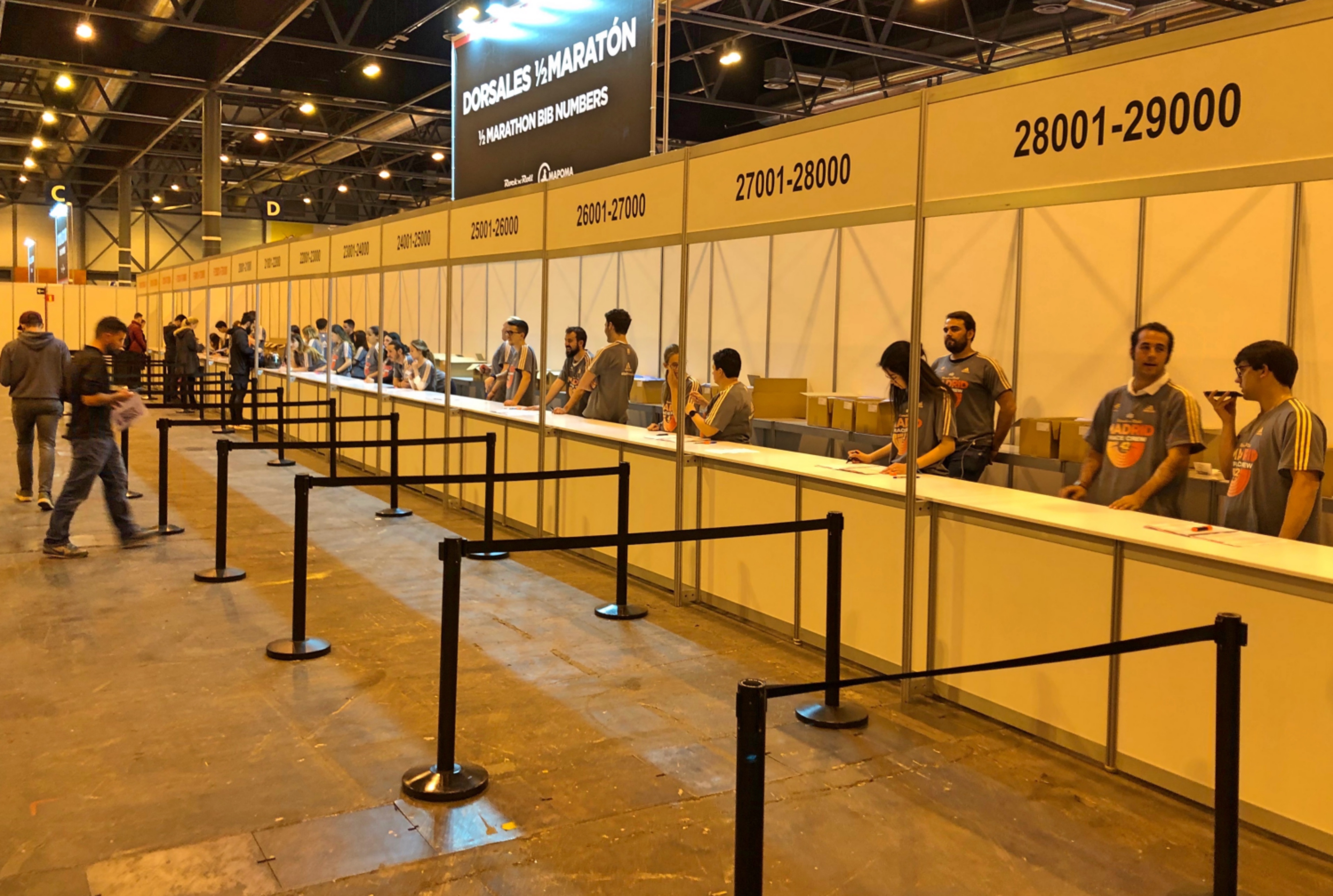
Two day before the race I picked up my bib (the little paper with your number on it, and a chip so they can track your movement). Annoyingly, they put the pick-up location all the way out in Feria de Madrid, a large complex of expo centers on the outskirts of the city. It took some time just to get there; and then it took some time just to walk through the mammoth buildings to the proper hall. There, a series of volunteers in booths gave me a bib, a t-shirt, and a drawstring bag. The rest of the space was full of other booths offering running-related products and services—energy gels, massages, protein powders. Probably many had free samples; but it was late and I wanted to go home.

The next night, I attached the bib to my sleeveless running shirt with safety pins. I was officially ready.


Race day.

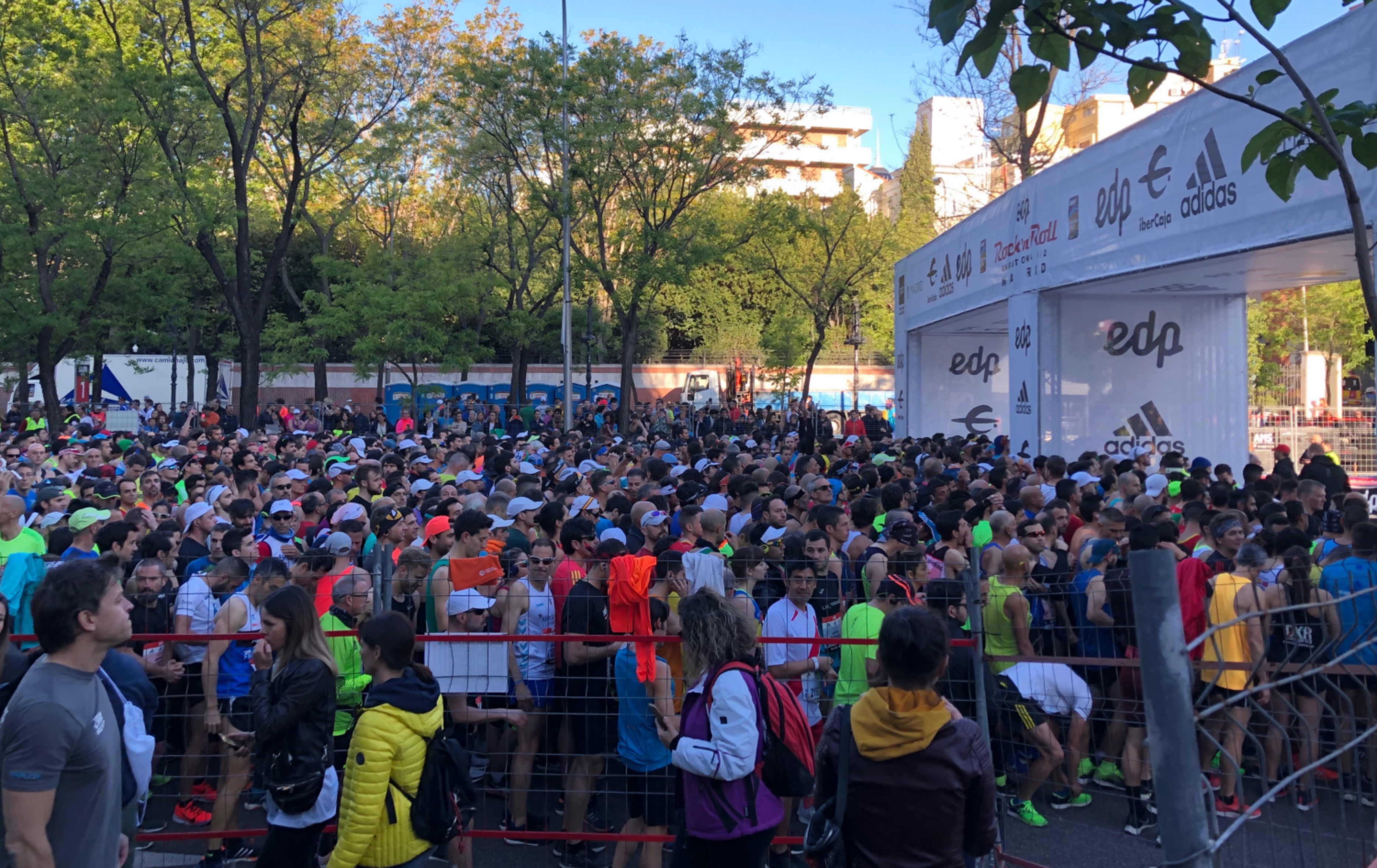
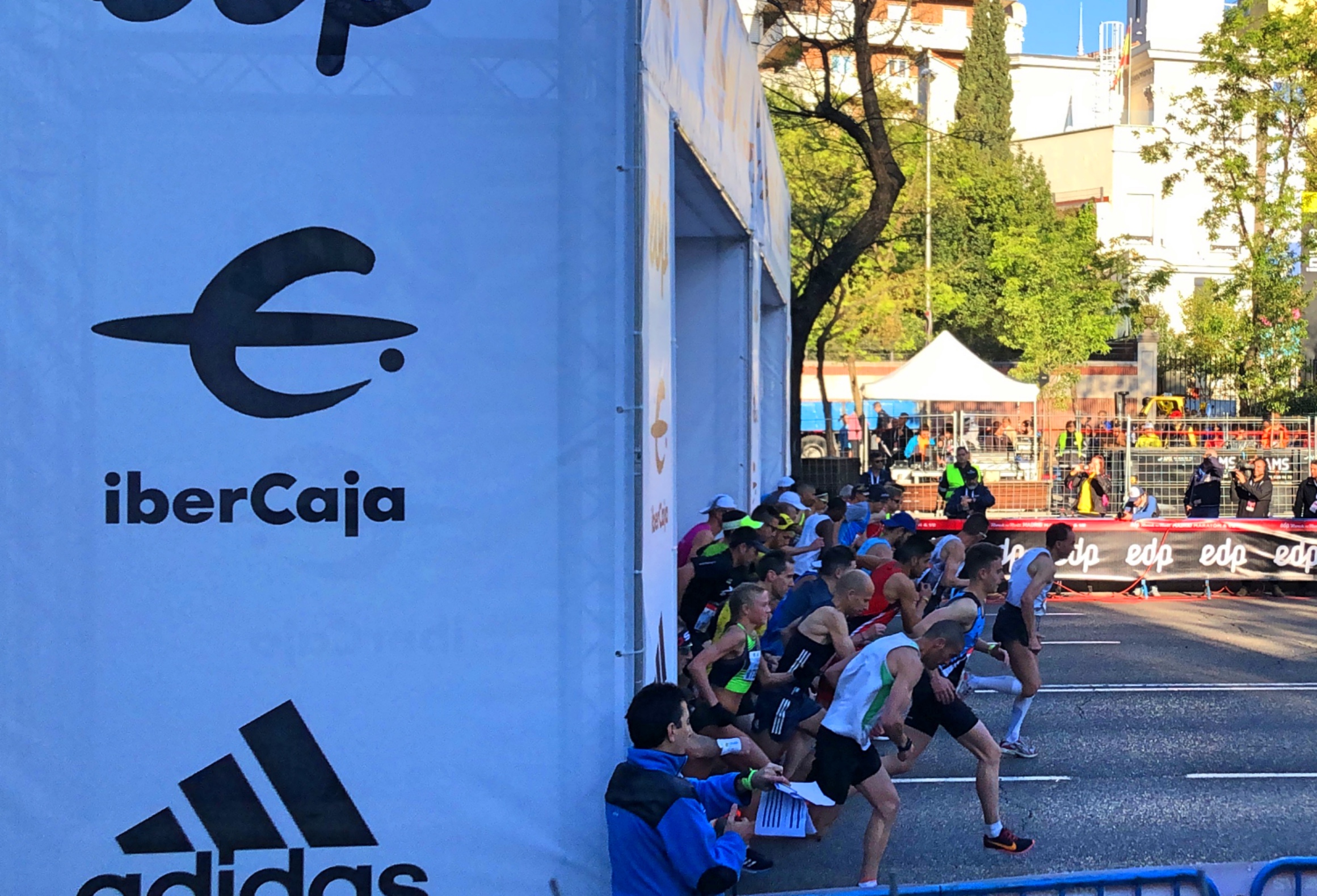
I woke up, ate toast and peanuts, drank water and coffee, and headed out the door. I had been told that it’s best to warm-up a bit before the race, so I jogged about ten minutes to the train station. When I walked out of the train, I was surrounded by thousands of men and women in colorful sports clothes. I did not realize it was such a massive undertaking. Stalls were set up for clothing drop off; hundreds of port-a-potties lined the streets (all without toilet paper); rock music blared from enormous speakers. The closer I got to the running corrals, the more I was awed at the sheer size of the event. 35,000 people were running that day—the 10k, the half-marathon, and the full marathon. William the Conqueror had conquered England with fewer.

I waited, warmed up again, and waited some more. Finally it was time to get into my corral. It was like being in a nightclub—a packed mass of bodies. How could I run through this? Rock music blared. The announcer counted down. Athletic-looking people were dancing (motivationally?) on elevated platforms in the middle of the track. They had spent a lot of money on this thing.

Finally the signal was given. I tensed for the exertion; but it was a bit anticlimactic, since the whole mass of people had to walk to the starting line before they actually began running. There were people holding big blue balloons with times on them; they were professional pacers, and would run the race at exactly the time indicated on their balloon. I struggled to find the 2 hour balloon: it was several hundred meters ahead, and had started before me. Finally I crossed the starting line and found myself jogging in a loose formation.

“Hey man,” I heard a voice say. I turned to see David, a friend I had made in my masters program. He had helped me work on my speed in preparation for the marathon, as I struggled to keep up with him on our weekly runs around Retiro Park. (This is something I discovered during training: running with better runners makes it easier to push your limits.) Soon it was apparent that he was still faster than me, as he pulled away through the crowd of runners. Besides David, I knew four other people running that day, but did not see a single familiar face during the whole race, even though our finishing times were mere minutes apart.

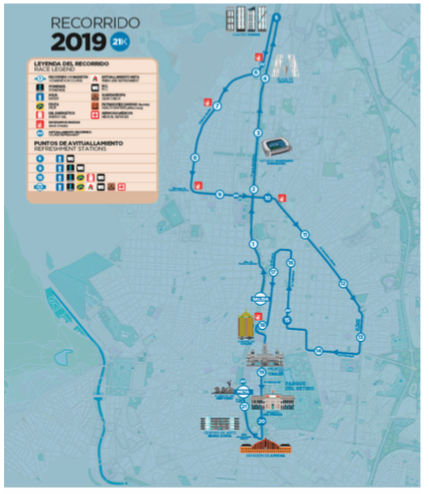
Peter Sagal said that anyone could run the first mile of a marathon, since it gives you the sensation of running with a mob. Unfortunately I did not feel the same way. Most people were fairly quiet, just focused on the long trail ahead; nobody burst forward in a mad dash. Our route took us straight north from the starting line, up towards the four skyscrapers near Chamartín station. The organizers had planned the route well, since these first 5 kilometers was the only stretch that was consistently uphill. After we turned the corner to go back south, it was smooth sailing.

The route

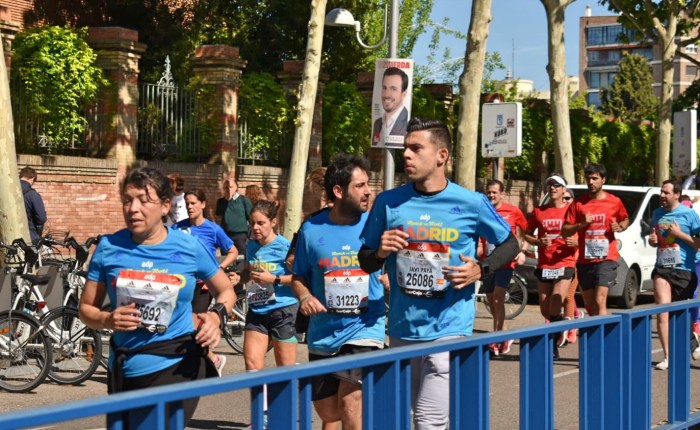
Without the reference of the balloon, I did not know if I was going fast enough. I tried to keep a constant pace, not pushing too hard but not going easy. The presence of so many other people was surprisingly motivating. I felt as if I were being urged ahead by a social force, and all I had to do was to follow the wave. For the most part there were not many onlookers—just a few scattered people cheering us on. I appreciated it. There are few sports more boring to watch than long-distance running.

The pacers in action. Photo by Rebeca López.

Fifty minutes in we passed our first water station, and I felt like a real professional as I drank my bottle on the move. I also took this opportunity to have some of the energy gel that Holden had given me. This is a cocktail of vitamins, sugar, and caffeine that tastes horrible but it has a satisfying effect. Suddenly I felt optimistic—even chipper. The exhaustion lifted and I felt my stride grow longer. Was this the elusive runner’s high? Probably it was just a caffeine rush, but it felt great nonetheless. As I reached a downhill area in the neighborhood of Salamanca, I began passing some runners ahead of me—which is strange for me. Also strange, I began to talk to myself in almost ecstatically encouraging tones: praising myself and egging myself on. Caffeine is an amazing drug.

As is often the case in Madrid, it was a perfect day to run: a clear blue sky, no wind, no humidity, and not too hot. I am not sure that I ever saw so much of Madrid in a single day, and the city looked beautiful in the sunlight. This is one of the great benefits of running: it makes you feel a part of the community. I had already experienced this during my practice runs in Retiro Park and Madrid Río. Because you are outside, covering plenty of ground, surrounded by others, you feel that you are really getting to know a place and to belong in it. That day, I felt like I belonged in Madrid.

Just as we reached the end of the hill, we passed through a small tunnel. There were people cheering on the road above. But the real noise came from the runners, who shouted and whooped as soon as they passed underground, making the space reverberate with a kind of barbaric din—a war cry for amateur athletes. I added my own feeble contribution to the chorus of adrenaline, and felt for a moment as part of something bigger than myself, as just one pulsating cell of an enormous beast. This feeling, I thought, is why people run these ridiculous races.

This sensation soon passed, as did the euphoric effect of the caffeine, and the usual pain and strain came back. Luckily, I soon reached another water station, and then swallowed the rest of my energy gel, which gave me another boost. But I could tell that my reserves were running low.

This particular marathon was a “rock ‘n’ roll” race, which meant that there were stages set up periodically along the course where local rock bands were playing. I must admit that I did not find the music particularly animating, partially because I was able to hear so little of it as I ran by. The cheering of the crowd was somewhat more uplifting, especially when I noticed my friend Monica calling my name. But by far the most motivating factor were the other runners, sweeping me up into a constant forward motion.

Partially because the race was a “rock ‘n’ roll” marathon, I decided to run it without headphones. This was the first time I had ever done a long run without my trusty audiobooks keeping me company, and I was afraid that I would get bored. But it turned out to be a good choice. Free from the distraction, I was able to focus my energy on keeping myself going at a steady pace. Indeed, the extended focus on my breath and my moving limbs made the experience at times rather meditative; I was completely absorbed in the experience of the race. Another advantage to not using headphones is that I did not have my running app telling me how much distance I had covered. This was a very strategic sort of ignorance, since it allowed me to keep pushing without fear of burning out too early.

Photo by Rebeca López

I started to enter more familiar neighborhoods, and I knew that I was in the final stretch. The more I ran, the more impressed I became at the scale of the marathon: they had to shut down half the city for us. Now I knew why I had paid 40€ to run. Still, city life tried to go on—in particular the life of the elderly, who refused to stop for any sweaty army. More times than could possibly be a coincidence I had to stop or swerve to avoid an octogenarian slowly crossing the race course, cane or walker in hand. They were either very brave or quite blind.

Soon I passed several men and women shouting directions at us: those running the full marathon had to turn left, while us half-marathoners continued straight. I knew from the map that this meant that we were in the final stretch. I did my best to push myself to go faster, but my whole body was achy and unresponsive. So I compromised by trying not to slow down. A small woman with a very loud voice started yelling what she meant to be encouraging slogans to us, most of which were about the beer waiting for us at the end. This failed to motivate me, I am afraid, since the thought of drinking beer after getting so dehydrated filled me with disgust.

It was around this time that the thought finally crossed my mind that I would very much like to stop. I had been running for almost two hours by then, and I was tired and even bored, and the finish line was failing to materialize. Luckily the course started taking us downhill, past Retiro Park on the way towards Atocha. At this point I spotted Rebe, to whom I had delegated the task of taking photos of the race for this blog. She was busy at work—so busy, in fact, that she did not notice me until I was right about to kiss her.

Photo by Rebeca López. I am on the far left.

Now it was truly the final stretch. We got to the bottom of the hill, into the Plaza del Emperador Carlos V, and then began up the Paseo del Prado. The finish line finally came into view. I was afraid to look at it, since I thought it would be too discouraging to see how slowly it came nearer; so I looked at the ground. The loud-voiced woman started shouting even more loudly and insistently. The crowd around us started to roar. I could hear music.

Before the race, I had imagined that the sight of the finish line would fill me with a final burst of energy, and I would be able to spring the last few hundred meters. But when I tried to speed up my body rebelled; it hurt too much; so I contented myself with, once again, keeping an even pace.

When I was within 100 meters I looked up and beheld the goal. Again, I tried sprinting, but it was impossible. So I jogged under the gateway and across the finish line, weakly raising my arms in tired triumph. I was done. Again, I had assumed that I would immediately feel transports of joy and accomplishment, but I was too exhausted to feel or to think anything—except, of course, at how exhausted I felt.

After the finish line volunteers were distributing medals, water bottles, and little bags full of food: a banana, an apple, a chocolate croissant, and a bottle of Powerade—for which I was extremely grateful. I started gulping down the water as I limped out of the race area and into the Plaza de Cibeles. Somehow, Rebe immediately found me, and we sat down nearby while I slowly recovered the ability to speak. My face was marked with salty-white streaks of dried sweat, my clothes were completely soaked, and I walked with an awkward limp. But I felt fantastic, and only felt better as the day progressed. Indeed, the sense of accomplishment, blended with complete bodily relaxation, creating one of the most pleasant days I can remember.

My final time was 2:05, which is five minutes above my goal time, but still easily the best I had ever run. I felt completely at peace—with myself and with the world. And I finally discovered the most valuable benefit of running: not losing weight, nor being healthy, nor even the sense of accomplishment, but just feeling good. And I felt good.

Review: The Prussian Officer

Review: The Prussian Officer
The Prussian Officer

The Prussian Officer by D.H. Lawrence

My rating: 4 of 5 stars

This is my first book by Lawrence, and I am greatly impressed. These short stories were published near the beginning of his writing career; yet they show a mature writer with a fully developed voice. Several qualities are immediately apparent. The first is Lawrence’s exquisite sensitivity to nature. The best prose in this volume is to be found in the many passages of natural description:

The air was too scented, it gave no breath. All the lush green-stuff seemed to be issuing its sap, till the air was deathly, sickly with the smell of greenness. There was the perfume of clover, like pure honey and bees. Then there grew a faint acrid tang—they were near the beeches; and then a queer clattering noise, and a suffocating, hideous smell: they were passing a flock of sheep, a shepherd in a black smock, holding his hook.

Lawrence’s primary subject is the rural poor. He is totally convincing in his depiction of the harried mother waiting for her drunkard husband to stumble home, or the sick widow trying to take care of her adult son. Unlike Hemingway, Lawrence has the rare talent of being able to write about people entirely unlike himself. His most memorable characters are consistently women, who normally show themselves to be superior in personality and intelligence to their male counterparts.

Insofar as these stories contain the germ of a philosophy, it is that passionate, sexual relationships allow people to be truly themselves. Thus, in “The Thorn in the Flesh,” the consummation of a relationship gives the couple a strange superiority over their circumstances; and in “Daughters of the Vicar,” the unhappy daughter who settled for a loveless marriage is contrasted with the self-assured daughter who marries for love.

But it would be wrong to call Lawrence a didactic writer, at least in this volume. The stories, for the most part, have no moral. They are concerned with the basic stuff of all prose literature: relationships—with oneself, with others, or with the rest of society. And as Melvyn Bragg says in the introduction, the stories are free of the traditional plot mechanics that are used to propel stories to pre-determined ends; instead Lawrence’s stories develop seamlessly, organically, without any noticeable push from the writer. I am looking forward to reading Lawrence’s novels.

View all my reviews

Soaking in Ourense

Soaking in Ourense

Once again, the December puente was coming around: a long weekend, the first one of the school year. I was exhausted from the last few months of Global Classrooms. I wanted to go somewhere quiet and cheap—somewhere that was not much of a tourist destination and did not have much to see. Thus, after some false starts, I settled on Ourense, one of the most overlooked cities in Galicia.

Galicia has become my favorite corner of Spain. The people are friendly, the landscape is beautiful, the tourists are scanty, the food is delicious, and the cost is low. My plan was, in essence, to go to Ourense with my girlfriend and—apart from stuffing my face with the harty local cuisine—to do as little as possible. In one major respect my plan failed. After eating dozens of unwashed grapes (long story), I got food poisoning during our excursion to Santiago de Compostela, which made eating difficult.

I also failed in my attempt to pick a city without anything to see. Spain is so dense with history that it pervades even its remotest corners. You can’t walk a mile without tripping over a ruin. And, of course, Ourense is not remote; it is the third-largest city in the region, larger than Santiago de Compostela; and its history stretches back to Roman times. This was a fortunate mistake for someone with a travel blog.


As I soon discovered upon leaving our Airbnb, Ourense has maintained an impressive medieval center. The streets are narrow and meandering; and the buildings are appropriately grey and granite, with arcades running underneath. We soon passed by the Igrexa de la Santísima Trindade, or the Church of the Holy Trinity, which is an impressive, almost castle-like gothic church with an enclosed courtyard. In minutes we were in the Plaza Mayor, which had been decorated for Christmas with a giant tree-shaped light.

The Lantern

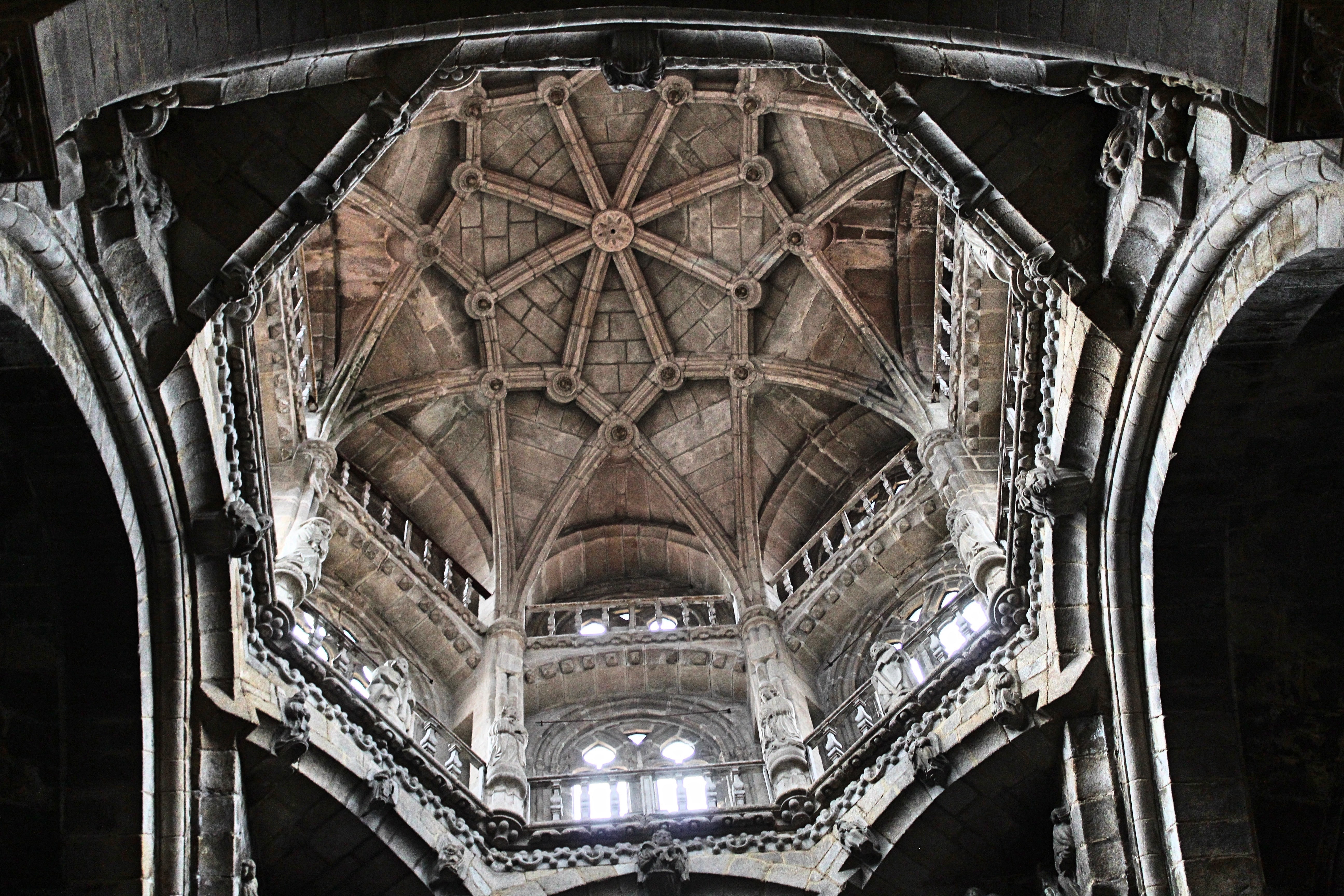
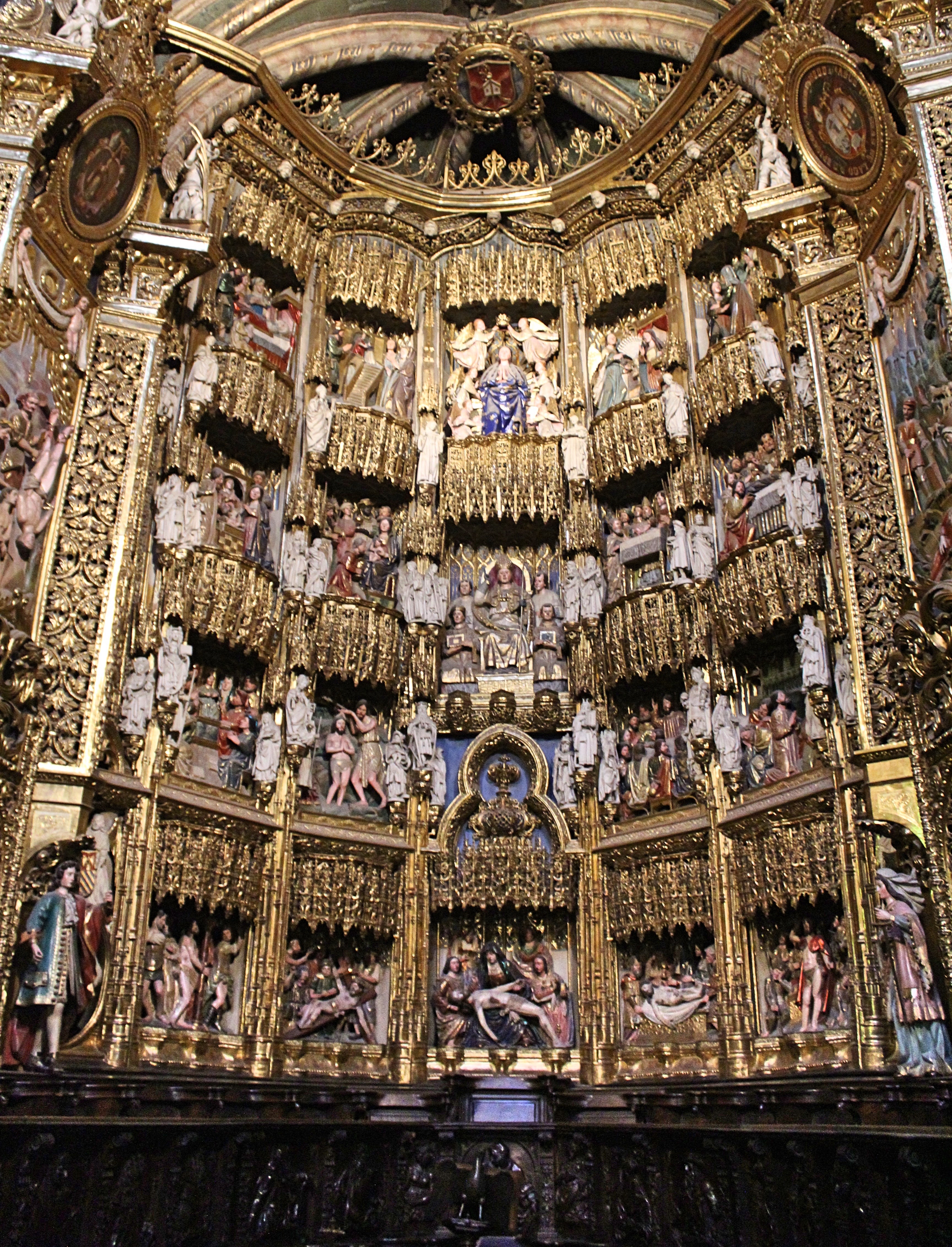
Right next to the plaza is the city’s cathedral, its most important historic site. From the outside it has none of the towering grandeur of the cathedral in Santiago. Indeed, the cathedral presents a heavy, fortified look, like the above-mentioned church. The inside is far more attractive. Apart from the impressive gothic nave and the beautiful central lantern, letting in light from eight sides, the cathedral is full of splendid decoration. The main altar, which sides under the octagonal lantern, is an explosion of flamboyant gothic, somewhat reminiscent of the enormous altar in Seville. In the center is a panel depicting St. Martin of Tours, to whom the cathedral is dedicated.

By far the most arresting chapel is the Capilla del Santo Cristo. One moves from the stark simplicity of gothic to the extravagant flourish of the Baroque. As befitting that era’s horror of empty space, every inch of the chapel is covered in decoration—shadowy paintings surrounded by delicately carved and gilded wood. In the center a realistic Christ with long flowing hair hangs from the cross. The chapel also contains the Renaissance choir stalls which once stood in the main nave. The final effect is one of extravagance. I am not sure that it is beautiful, but it is certainly impressive.

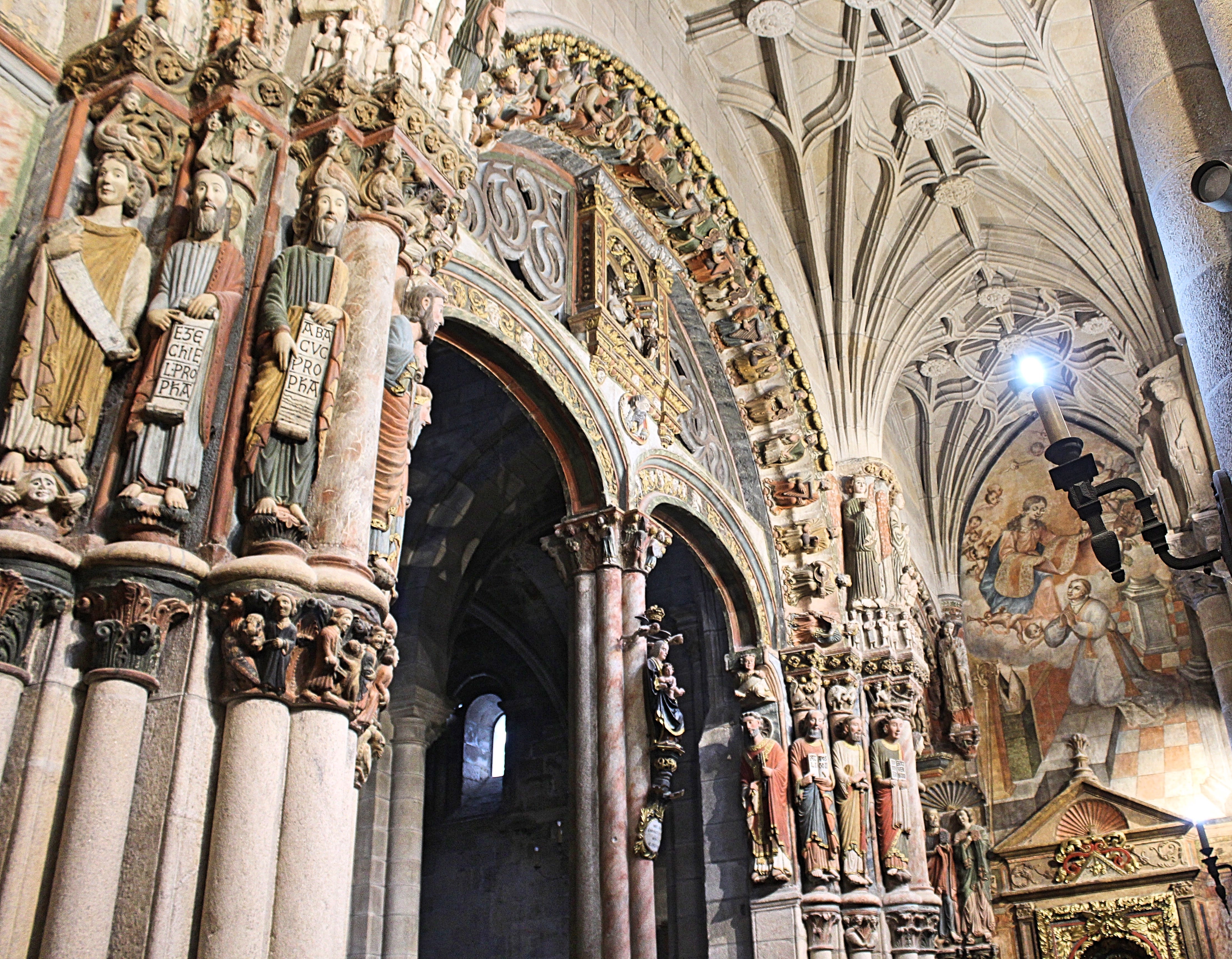
Yet the most famous work of art in the cathedral is the Pórtico del Paraíso. This is an elaborately carved tripartite doorway, which once served as the main entrance to the cathedral (but has since been engulfed by the growing cathedral). It was designed by students of the legendary Master Matteo, who is responsible for the more famous Pórtico da Gloria in Santiago. According to the audio guide the two cities, Ourense and Santiago, had something of a rivalry; and this doorway was an attempt to keep up with the neighboring city. Having seen both doorways, I can confidently say that Matteo’s is the superior. Even so, the Pórtico del Paraíso is an extremely fine piece of sculpture, which has been well preserved (or restored). The pigments of the paint still shine invitingly, filling the entire ensemble with a joyful glow.
I should not neglect to mention the cathedral museum, which is included in the ticket. There relics, treasures, paintings, altars, sculptures, and illuminated manuscripts on display, as well as a few Roman ruins unearthed during excavations and repairs.

Two large churches stand quite near the cathedral. One is the Igrexa de Santa Eufemia, a monumental Baroque church with a concave façade. The other is the Igrexa de Santa María Nai, another fine Baroque church which now stands, it is believed, on the foundation of the original cathedral. However, I mention these churches, not for their beauty, but because I always find it amusing that large churches are placed so close to each other, within a five minute walk of the city’s cathedral. Being a church artisan was a good career in those days; the demand was endless.

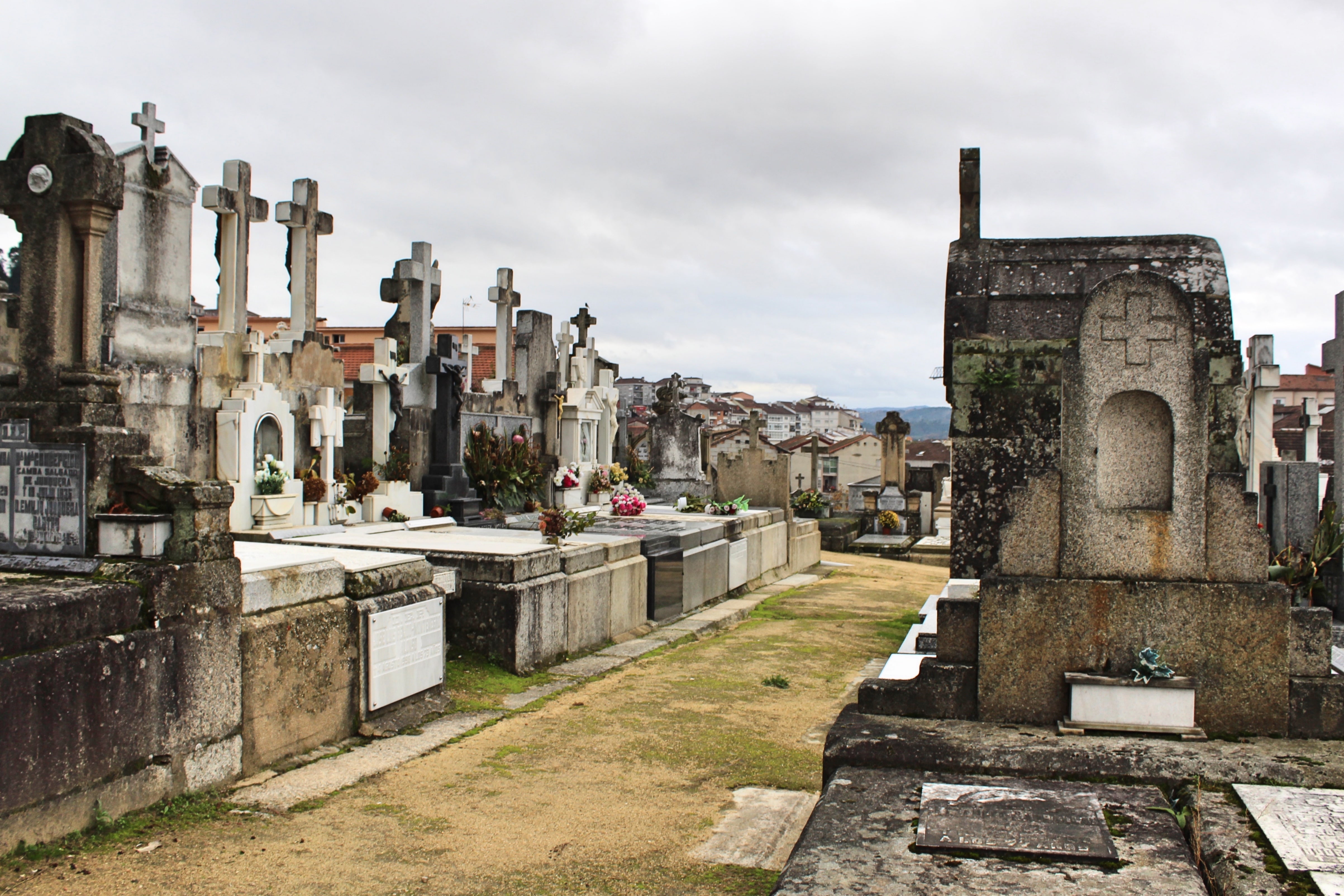
After ascending a staircase up to the hill overlooking the cathedral, I came to my favorite part of the city: the Cemetery of San Francisco. This cemetery goes back to the gothic period, and maintains many beautiful tombs and mausoleums. As usual, I felt a deep sense of calm as I walked through the cemetery, a repose from the temporary and trivial concerns that usual occupy my attention. (Rebe, on the other hand, found it creepy.) The hill also provided an excellent view of the city, the cathedral, and the countryside beyond.

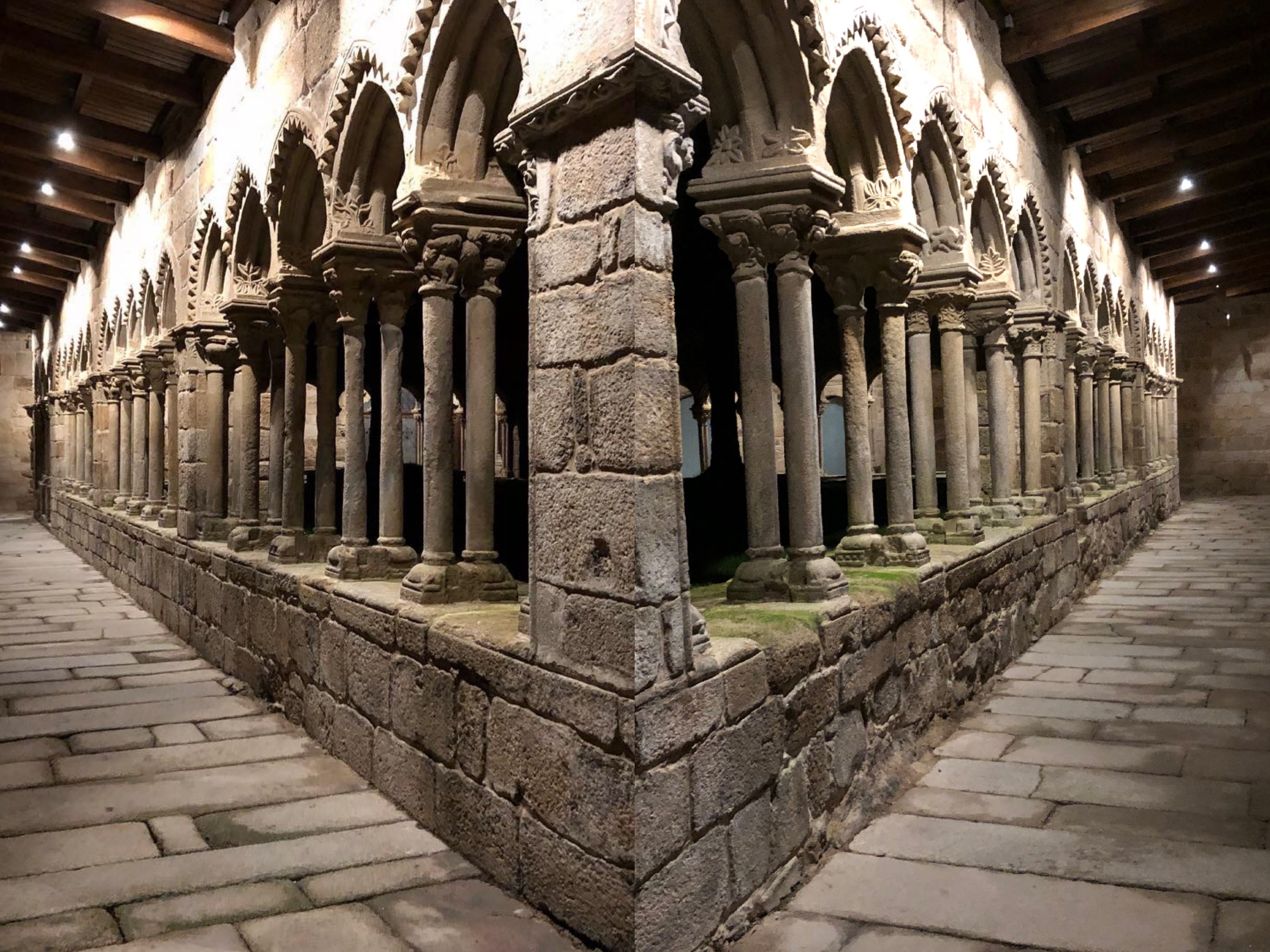
The cemetery used to be attached to an eponymous monastery, which has long since been confiscated and shut down. (For two centuries it was used as a nursery.) However, some artwork from the monastery is on display in a free gallery. And right next-door is the old cloister, the Claustro de San Francisco—now detached and homeless. This is without a doubt one of the great sights in Ourense: the cloister is decorated in the finest gothic fashion, a delicate and harmonious space that transmits the meditative peace of monastic life.

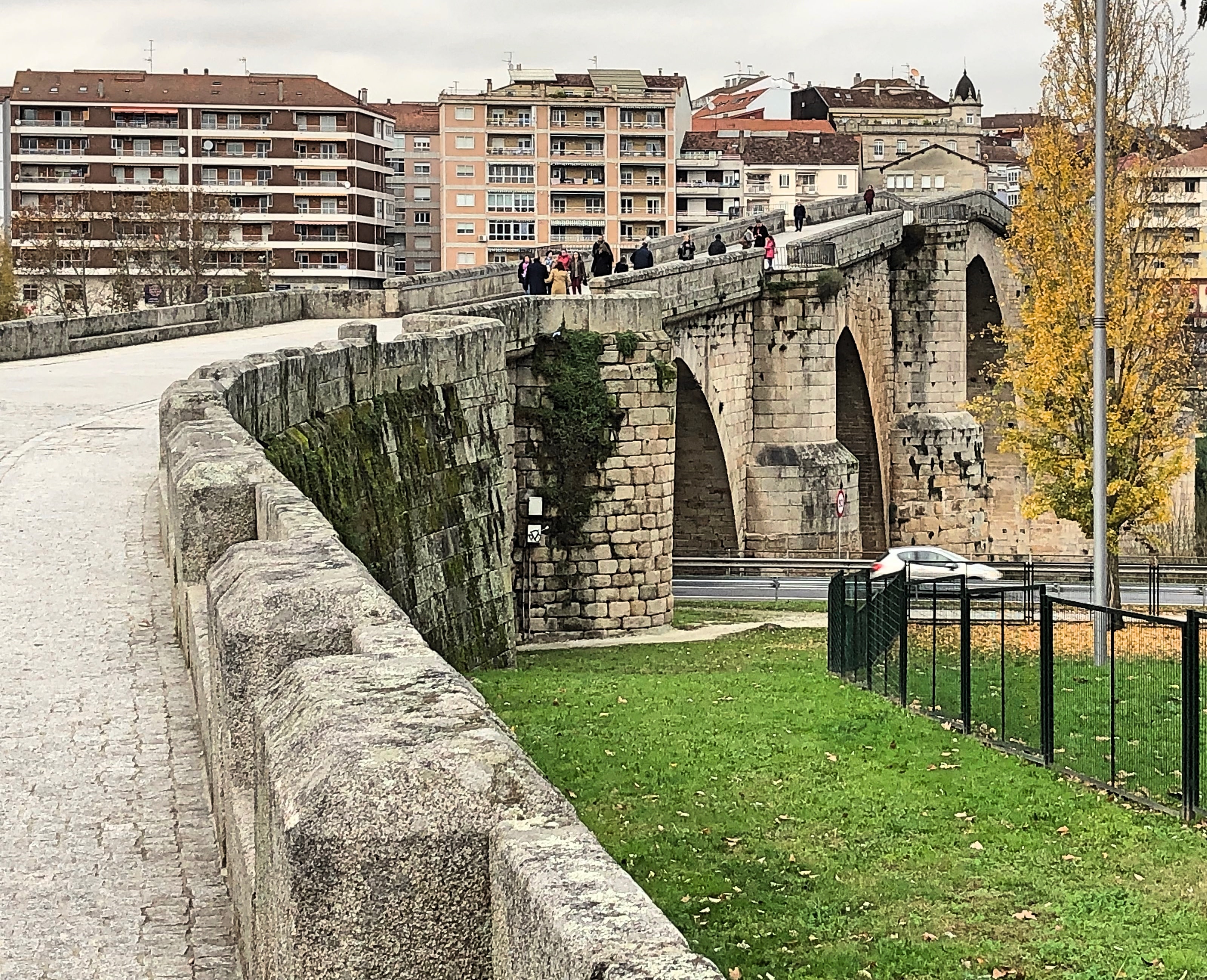
Now it was time to cross the river Miño, which runs through the center of the city. The most convenient walking bridge is the iconic Ponte Vella, or old bridge. The origins of this bridge go back to Roman times, though little remains but some foundation stones from that epoch. The current form of the bridge is medieval. It is an elegant construction, resting on a series of arches that stretches 208 meters (almost 700 feet) from end to end, and rises 33 meters (100 feet) over the water. The bridge has proven so important in the history of Ourense that it is featured on the city’s coat of arms.

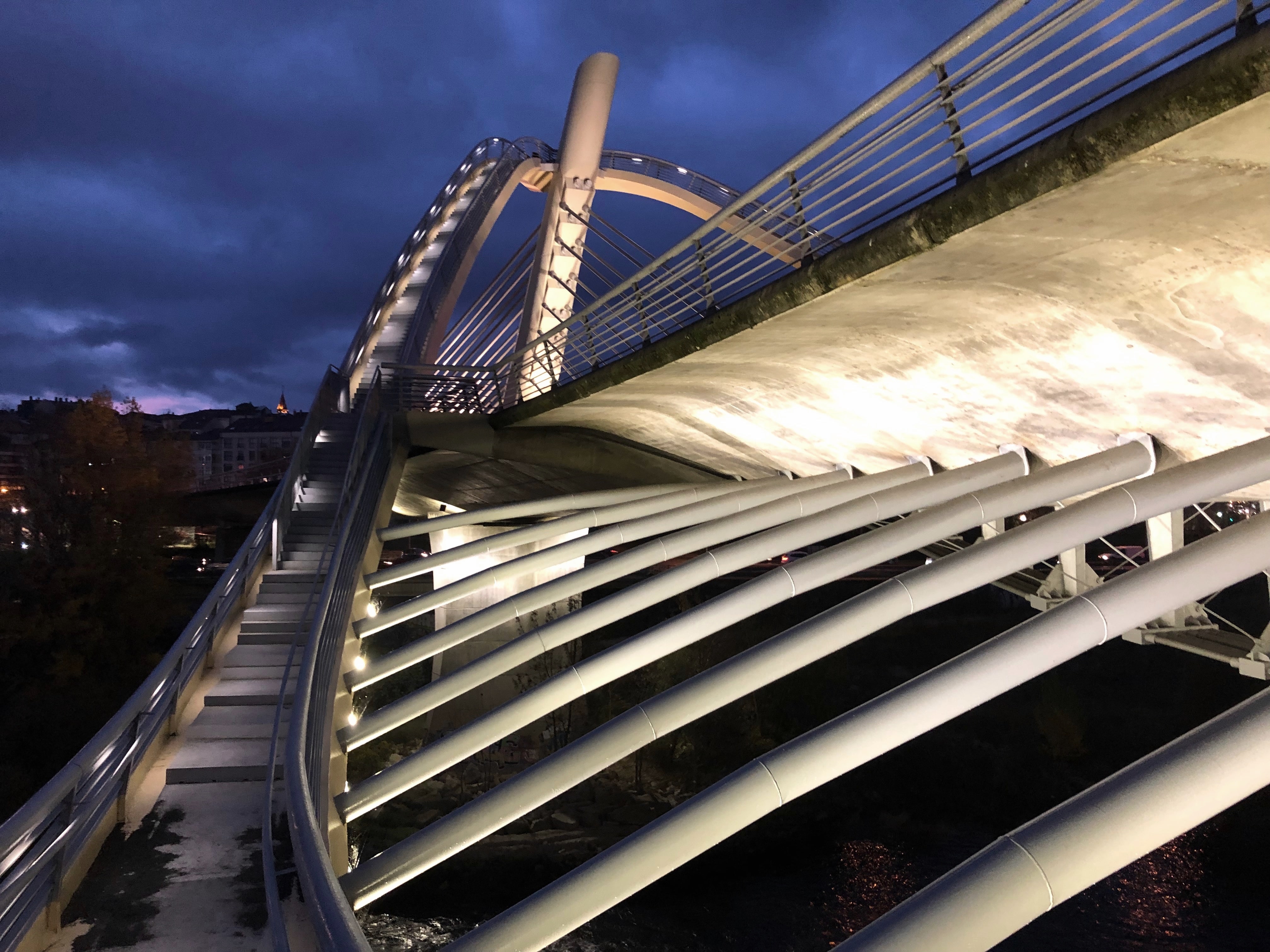
Yet this is not the only attractive bridge in Ourense. Also lovely is the Ponte do Milenio, a strikingly modern construction distinguished by the floating metal outline of a ship, which hangs suspended from the two slanted support beams. This is actually a walkway, on which you can dip down below the main section of the bridge to get closer to the water, or ascend to the top for a view of the river valley. Normally I am not very keen on modern design; but I was very much taken by this bridge, which combines functionality with an unconventional use, while maintaining an attractive overall form.

I have come all this way but I have yet to mention the greatest attraction in Ourense: the thermal baths. Ourense is highly geothermically active; thus the city is filled with steaming pools of water, many of which are free to visit. I admit that I am unclear on the science of this heating; though since Ourense is not volcanically active, I suppose that the water gets heated by the decay of radioactive elements deep underground. The water, however, is perfectly safe; and it reaches the surface at pleasant temperatures—warm, but not dangerous. This, by the way, is why the bath-loving Romans came to Ourense.

Most of the baths are situated outside of the city center, alongside the river Miño. However, one important bath sits right in the heart of Ourense: As Burgas. This bath has been used since Roman times, and it was believed to have both religious and curative properties. The baths were maintained into the Christian epoch, in part because it provided a welcome comfort to weary pilgrims on the Camino de Santiago. Also, according to what I can find, the heat was harnessed by artisans and bakers (though I can’t imagine how).

However, I felt uncomfortable at the prospect of taking a bath right in the center of the city, with pedestrians passing by on every side. So, we headed toward the river to visit the baths of A Chavasqueira. The walk there led us across the Ponte Vella to a path alongside the Miño. The place seems designed as a peaceful escape. There are no crowds and no cars, just the quiet murmuring of the river. Still, I felt apprehensive. I had never been to a thermal bath, and I did not much like the idea of sharing a hot tub with strangers. But, I have a blog to write, and this means I have to experience the typical attractions.

A Chavasqueira thermal baths. Image from Wikimedia Commons; photo by Roberto Chamoso G; licensed under CC BY-SA 3.0

A Chavasqueira, like the other thermal baths, is public and completely free. The baths consisted of four medium sized, shallow pools, rimmed with stone; and each bath is a different temperature. When we arrived, at mid-day, they were moderately full. Now, when it comes to public nudity, Spain is relatively conservative as far as European countries go; you will never encounter naked sunbathers on a stroll around Madrid’s Retiro Park, for example, as you might while exploring Berlin’s Tiergarten. However, they are still less conservative than prudish Americans. It is acceptable for women to be topless; and most people change with a towel rather than retreating to the public bathrooms, as I did. My natural timidity immediately flared up: I felt uncomfortable.

Still, I had come this far, and could not turn back now. Before going into the baths, it is customary to rinse off with the nearby shower. Seldom do I feel more pathetic and exposed than when I am being doused with cold water out in the open. This done, I lowered myself into the least populated pool. The water was quite warm but not scalding. Nearby an older bald man with a potbelly was determinately soaking, his face a serene grimace. I waited to be suffused with the blissful calm of hot mineral water, but felt… quite normal. In fact, I felt a strange combination of anxiety and boredom. The heat made my heart beat more quickly, and I felt my veins flood with adrenaline. What was I doing here? I could be taking a nice hot shower in the comfort and privacy of my own home.

Meanwhile, Rebe was splashing around quite contentedly, seeming to be properly relaxed. I tried to relax, to wait, to adjust. But I felt silly. What was I supposed to be doing, just sitting in water? After ten minutes I gave up, got out, and changed back into my clothes. Rebe wanted to stay longer, so I took a walk further down the Miño. Now, this was relaxing: solitude, cool air, movement, and nature. After thirty minutes I felt properly calmed after enduring the trauma of the hot springs.

After this all-to-typical failure to enjoy myself, I tried the hot springs again on the following day, and had a moderately better experience. Still, I admit that I do not see the appeal and do not find it especially relaxing. Clearly, I am not made for spa life.

But do not let my experience dissuade you. The vast majority of human beings seem to love thermal baths. And, in any case, Ourense is a charming city. Despite my food poisoning, I even managed to stuff myself with delicious Galician food. That is a successful vacation.

The Walk to the End of the World

The Walk to the End of the World

It was 2018, and my Easter break was fast approaching. Leaving the country during Holy Week is always expensive; and, besides, I had already booked two pricey trips—to Prague and to Paris—so I didn’t want to spend more than the bare minimum. Luckily, Spain has one travel option that requires almost no planning and little expenditure: the Camino de Santiago.

Two years had already gone by since my first and last camino, five days from Lugo to Santiago de Compostela. This time I wanted to start up where I had left off, in Santiago itself, in order to walk to the coast. The Romans may have made this pilgrimage before Christ or Christianity; they named the long granite cape that extends into the Atlantic “Finis Terrae,” or the End of the World, because they believed that this was the westernmost extension of the land. Unfortunately they were wrong in two respects: first, they underestimated the world by several continents; and second, Finisterre (as it is now known) is not even the westernmost point of the Iberian peninsula.

The cape has nevertheless continued to attract travelers. After pilgrims began to flock to Santiago during the Middle Ages, many of them decided, after reaching their goal, to keep going to the coast. This may be why the scallop shell became the symbol of the camino: many people wanted a souvenir from the end of the earth. This was my goal, too: to start in Santiago and keep going until the land ran out. I would walk 88 km (or 55 miles) in four days, giving me enough time to be back in Madrid for my birthday.

The best part of this plan was that almost no preparation was necessary. I did not need to book accomodations or even to buy gear, since I already had it. But I did need to obtain a pilgrim’s passport, or I wouldn’t be allowed to use the camino hostels (called “albergues”). This was easy enough. In the Plaza de Santiago in Madrid, at the Parish Church of Santiago and San Juan Bautista, they hand out passports for free (though a donation is recommended). If you go this route, be aware that the hours of availability are a little strange: 10:00 am to 1:00 pm, and then 6:00 pm to 8:00 pm. The other option is to go to the Association of the Friends of the Camino, but they are only open Tuesday through Thursday.

My passport in hand, my flight to Santiago booked, I was ready for my walk to the end of the world.


Arrival

The plane descended through the thick fog until the ground suddenly appeared out the window, moments before landing. With a jolt we had reached the earth. I was sleep-deprived and panicky. Even in the best of times flying makes me nervous; but lack of sleep throws my chemical balance off, and I am consequently much more prone to worry. I thus spent the flight alternating between fear and delirium. Though I had woken up at 4:45 that morning to catch the horridly early (but cheap) flight, I could not sleep a wink on the plane. I was wretched.

It was a wretched day in Galicia, too, and I was happy to be there. A short bus ride brought me to the center of the city, where I had breakfast with some friends who were also doing the camino (but a different route). After some aimless wandering, I made my way to the albergue. I had reserved a room in the Seminario Menor. This is a massive building on a hill across from the cathedral, not to be confused with the Seminario Mayor, which is right next to the cathedral. If the building had indeed been a seminary, it had been a major one: the albergue was large enough to house hundreds of pilgrims, and also had room for a primary school.

Though I had vague ideas of seeing more of Santiago, the bed proved irresistible. I collapsed into a feverish nap. By the time I awoke, hours later, I found that the city was suffering under the wrath of a terrible rainstorm. The water came down in sheets, turning the streets into streams and the sidewalks into puddles of mud. I was glad to be indoors. But if I ran into weather like this on my camino, I would be in for a bad time. The only rain equipment I had brought was a poncho. My shoes were not waterproof, nor was my backpack. The thought of simply going back to Madrid flitted through my head. A tempting idea.

But I had something to accomplish on this camino. My renewal deadline was coming up: I had to decide whether I was going to stay in Spain another year, or finally go back to New York to recommence by suspended adulthood. There were weighty factors on both sides. On the New York side I had my family and friends, and the prospect of a career as a public school teacher—quite a good profession in Westchester. Meanwhile, I was in a long-term relationship with a Spaniard, and had gotten accepted into a masters program for the coming year. I felt torn. The prospect of being away from home yet another year frightened me, especially since I had lately been prone to fits of homesickness. On the other hand, the thought of leaving Spain struck me as tragic: the end of an adventure, the end of a relationship, the beginning of a more conventional life. This seemed like the perfect problem to mull over on a pilgrimage.

When the rain died down, I went out to have dinner and buy some final supplies. That night I went to sleep early. I would need the rest.


Day 1: Santiago to Negreira

I set out as the sun was just beginning to rise. Though I am no enthusiast of the morning, it is advisable to begin walking the camino early: you avoid the hottest part of the day, and reduce the chance that the albergues will fill up. The route out of the city took my past the cathedral for one final look, and soon I was again in the Galician countryside.

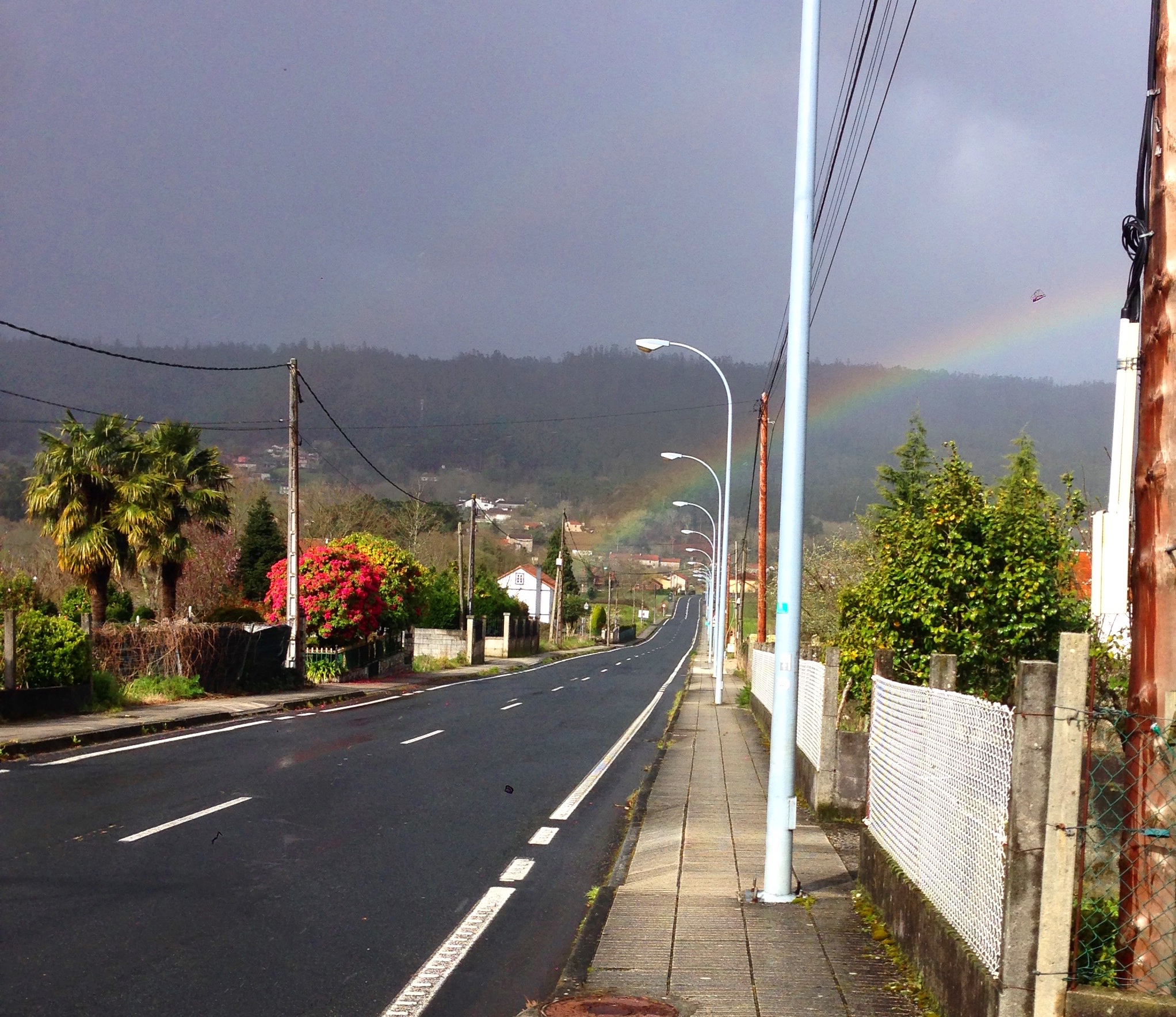
The day was overcast and a little cold. As usual, I found the mossy green of the landscape to be enchanting. I love Madrid, but its sandy soil can leave me longing for the verdant foliage of wetter climates. Coming to Galicia satisfies this yearning. After an hour of walking I looked over my shoulder to see the two spires of the cathedral in the far distance. I was on my way. I passed suburban homes and granite farms. Horses nibbled idly in a grassy field. The sky alternated between shades of grey occasionally broken by blue. Rain fell periodically, mostly in a drizzle. Two hours into the walk a magnificent rainbow appeared up ahead. It looked like it came to an end right in front of me: a good omen.

Before both of my caminos, I had imagined that I would do a lot of thinking as I walked. But this was far from true. Instead, I found myself in a kind of dreamy stupor, merely observing the slowly shifting landscape and the villages that I passed through—a rhythmic repetition of trees, clouds, hills, farms, fences, and fields. Scarcely an articulate thought broke my awareness. At times I feared that I was not properly savoring the moment, and so I attempted a walking meditation, focusing all my attention on my breath. This did little to change my state of mind, however, and soon I began listening to an audiobook (a history of 18th century Europe).

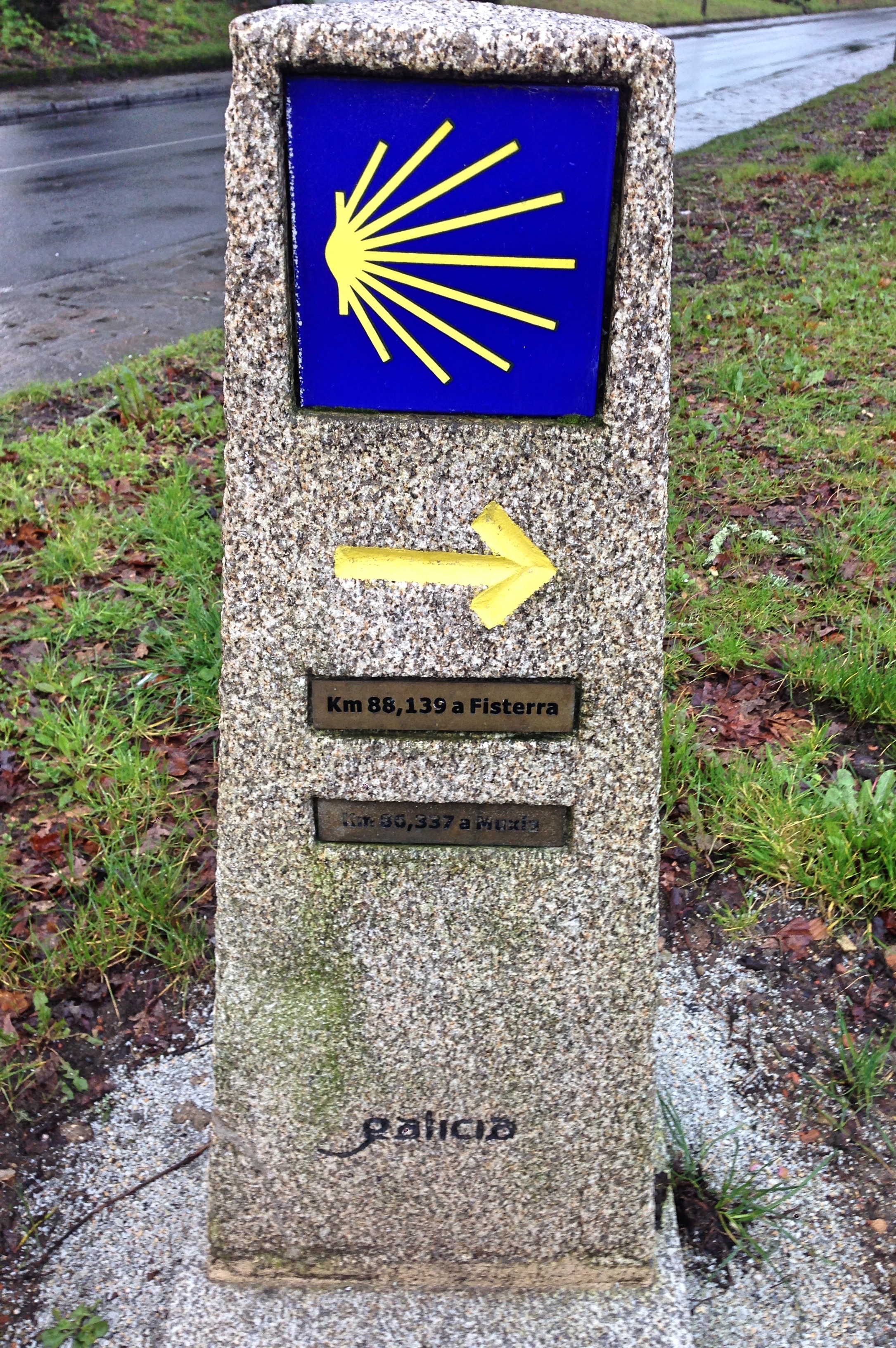
The first trail marker

The camino has a tendency to lull one into a blissful calm. No thinking is required; every turn is marked with a big yellow arrow, and all one has to do is put one foot in front of the other. It did not take a philosophical mind to compare this with my present life conundrum. While I followed this path which so many had walked before, I was trying to make a decision which many had made before: to stay abroad or to go home. Yet a wrong turn on the camino can be easily detected and corrected; but an unwise choice cannot be so easily mended, as time marches steadily forward.

The decisions we make in life are often compared to turns in a road. Yet life, unlike the camino, has no obvious right or wrong turns. Indeed, the whole concept of right and wrong breaks down when it comes to major decisions. Two turns in a road can be easily compared, since one leads to the desired destination and the other does not (or at the very least one is faster). But in life, the question is often not how to get to the final destination, but which destination to choose. Different answers cannot easily be compared.

What is better, to be a doctor or a painter? This depends on your own values, of course. But what are your values? Though we often think of ourselves as defined by what we deem important, it can be difficult to know what is truly important to us. We cannot simply introspect and encounter our values, since our priorities are revealed in actions over the long term. One may, for example, think that one has a passion for playing the piano; but after a year of practicing and giving recitals, this passion may fade into boredom. In any case, even if we could easily find out what is deeply important to us now, this would not necessarily solve the problem, since values change over time.

Most perplexingly, our values change in response to the decisions we make. So when we make a major decision, we are in the paradoxical position of choosing ourselves. Rather than choose something based on our values, we are choosing our values themselves. But then what can we base our decisions on? In other words, we are trying to choose something in the present which will satisfy us in the future—without knowing exactly what we are choosing will be like, or how the choice will change our own preferences. This seems like an intractable problem. If only life had big yellow arrows directing us in the right direction.

As you can tell, I do not like making major life decisions. No approach seems intellectually satisfactory. No criteria or value suffices. As a result, no matter how much I weigh the pros and cons, I always end up feeling as though I were following a kind of gut instinct. An existentialist would say that this proves that I am free; but personally I do not feel free when I am forced to choose something based on non-rational factors, merely following impulse and whim.

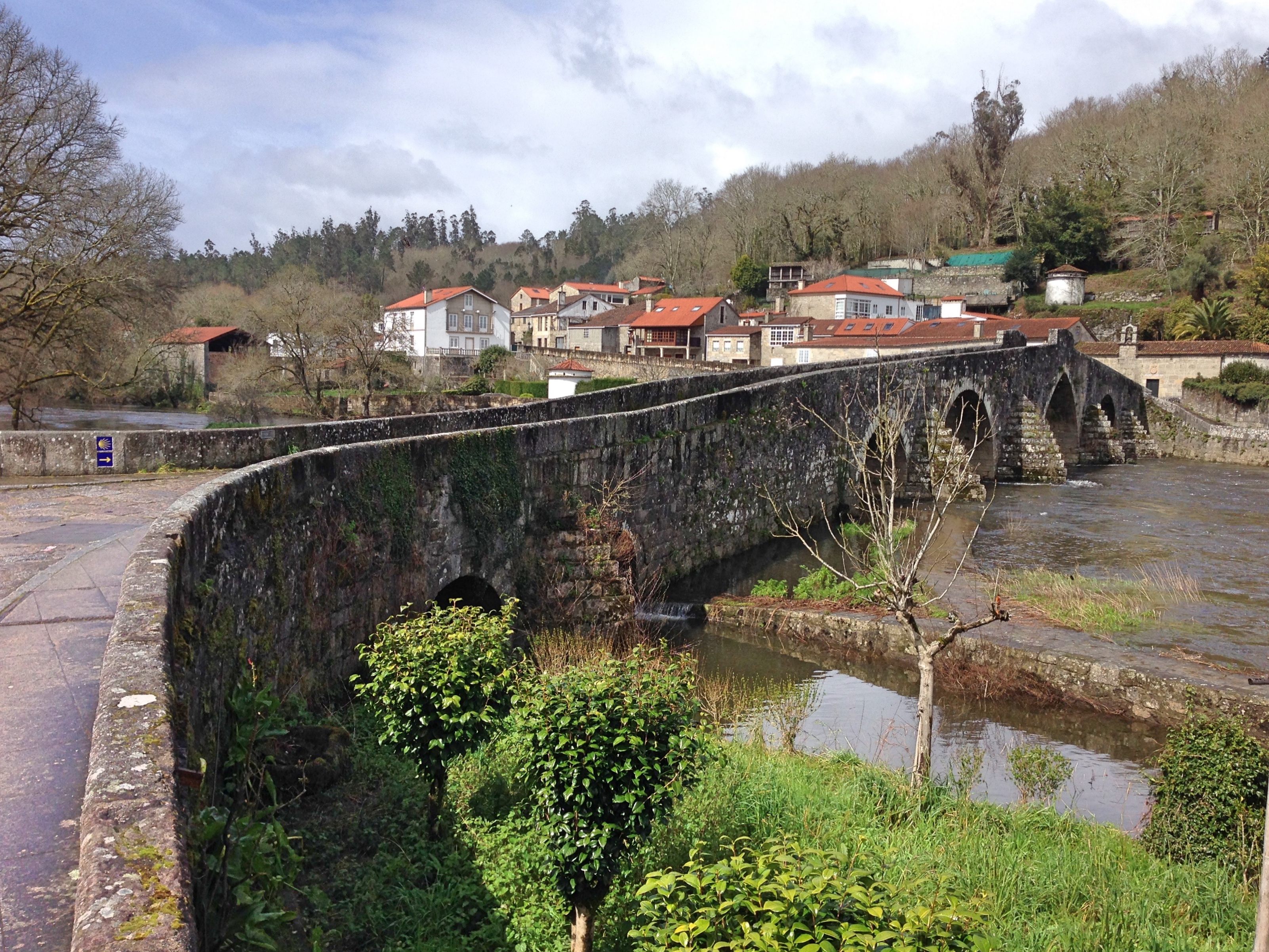
I am writing this now, but I did not think any of this as I trekked the first twenty kilometers of the journey. I merely walked and occasionally worried. The day passed uneventfully. I crossed the Ponte Maceira in Ames, a beautiful medieval stone bridge. The weather was mostly overcast, threatening rain and occasionally delivering. About four hours into the walk it started to rain seriously. I tried to put up with it, but eventually I gave up, rummaged through my backpack for my poncho, and then put it on. The thing wouldn’t fit over my coat, so I had to take off my coat and tie it to my backpack while I wore the blue plastic covering. And, of course, fifteen minutes after going through the trouble, the rain stopped and the skies cleared. This was the last time I used the poncho.

I arrived at Negreira at around one in the afternoon, cold to the bone. After dropping off my bag I went into a restaurant with a menu del día. This is one of the great parts of the camino. Most stopping points have restaurants offering cheap set meals—normally under ten euros—to pilgrims, most of them consisting of plentiful, hardy food. This was no different. I ordered wine, and they gave me a whole bottle, of which I drank more than I should have. It cost me 7.50€. Then I limped and stumbled back to the hostel for a nap.

The host met me at the front desk. He was an older man, with a paunch and a mustache, who was remarkably talkative. I’ll call him Maligno. Normally I do not like to chit chat while I travel, but I was feeling a little lonely just then, so I was glad for the conversation. His mouth rattled on like a freight train, his gravelly voice following the dramatic, sing-song accent common to the region. I got him on the subject of Galicia, on which he was loquacious. He started googling some of the sights to show me: attractive coastal towns, old Celtic ruins, and even a Roman gold mine.

Somehow the subject got changed to people who speak ugly languages. This quickly led him to tell the old joke about how Spanish is for talking to God, Italian for talking to women, and German for talking to horses. He then went on:

“Once I saw this girl, beautiful, just beautiful, I mean everything was perfect. And then she opened her mouth, and it was like—eck! Just the foulest, ugliest language you ever heard. What a shame, I thought. What a shame.”

With this, I excused myself and went to my bunk bed, where I promptly passed out. When I awoke, I decided to do something productive, and I made a pro and con chart of staying in Spain. It didn’t solve anything, of course, but it did occupy some time. After that I wrote a very bad poem, had a light dinner, and went to sleep.


Day 2: Negreira to Olveiroa

This was to be my hardest day—the longest that I had ever walked in my life: 33.6 km, or 21 miles. I had to get going early.

I began before sunrise. The mist was still heavy upon the land. The moon shone out from behind the clouds, and a light breeze blew through the trees. It was almost completely quiet. I felt a keen anxiety grip me as I began walking into the countryside. It was so dark that I was afraid I would get lost. But soon I found the familiar yellow arrows, pointing the way.

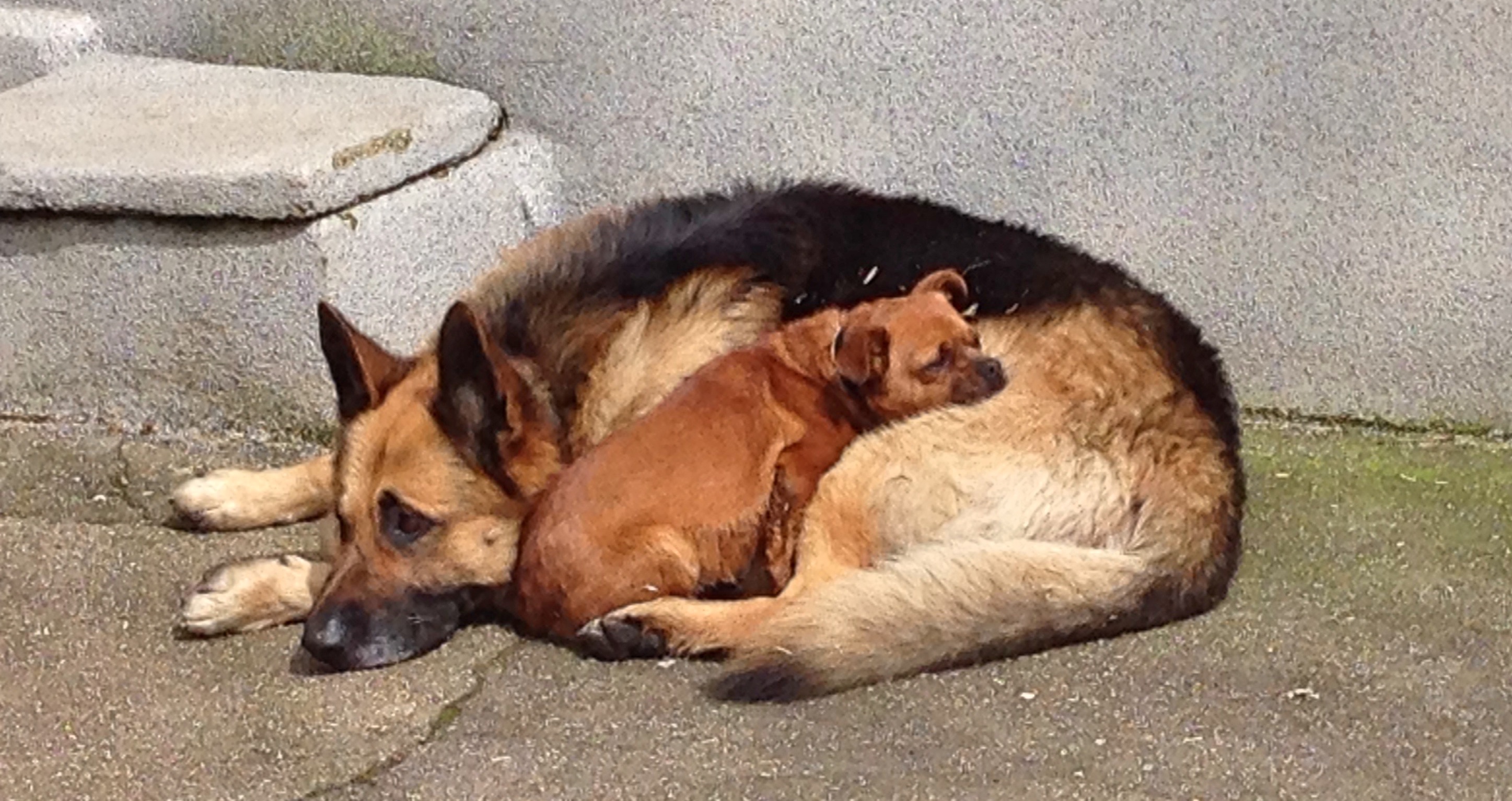
The sun gradually rose and I found myself, once again, in the mossy green countryside of Galicia. The walk that day was especially beautiful, mostly avoiding major roads. As the sun rose I could once again see the farmhouses and the fallow fields. A cow peeked its nose from out a barn window, while two dogs snuggled in the road. Once again I saw a rainbow, and once again it seemed to land right in front of me. I felt that I was on the right track.

It was a much sunnier day than the last, and the heat did not make the long walk any easier. I stopped several times—beside a wooden fence, by a stone church, near a running brook—to rest and eat a little. I had bought pretzels in Santiago, an uncommon snack in Spain, and savored a few handfuls on the way. At one point I stopped at a roadside cafe for a chocolate pastry and a coffee. The exhaustion crept up on me slowly; my feet began to hurt, my legs to tire. But the human body is made to walk. It is one of the hidden benefits of bipedalism: aside from freeing up our hands to carry things, walking on two legs allowed us to be more energy efficient. At least that is the theory.

When it was well past lunch time, the path led into an open field and up a large hill. A plaque informed me that this moderate eminence was the highest point in the county. And in ancient times this had been the site of a fortified settlement (though I could find no traces of it). But the view was valuable enough. The beautiful Galician countryside rolled out in front of me, almost painfully pretty in the sun, with its fields of farmland dotted with patches of pine trees. The grass shone intoxicatingly green in the sunshine, filling me with energy that carried me the remaining distance.

By the time I arrived it was four in the afternoon. Olveiroa is hardly big enough to even be called a village; it mainly exists as a stopping point on the camino. The biggest building in the place is the albergue, where everyone seemed to be concentrated. When I arrived it was absolutely packed, which made me nervous about finding a spot. But it turns out that the vast majority of the people eating in the restaurant where on a kind of bus tour, where they hike different segments of the camino each day and then get bused to back to a hotel. It struck me as a strange concept. In any case, I ordered a gigantic plate of food and ate it with ravenous delight.

The rest of the day was spent in my bunk. My feet were blistered and my knees ached. I limped outside around sundown to see the sky, but quickly gave up and hobbled back to my mattress to read. Very few people were staying at the albergue. Among them was a young German couple, probably around my age. They spent the whole time hugging and whispering to each other. I found it very annoying. Whispering, to me, is far more unpleasant to listen to than speaking, since a whisper conserves only the harsh consonant sounds—the hissing and popping.

Maybe I was feeling cranky, since the more I observed the cuddling couple the more irritated I became. At one point I felt inspired by my distaste of the amorous Germans to write a poem in my journal, which I include here:

Why do humans form pairs,
Like socks or testicles?
We arrange ourselves with mates
Kiss, embrace, quarrel, separate.
The world deems successful
The couples that last until death.
A strange prejudice!
Separation is separation,
In the grave or in the courts;
And an amicable divorce may be
A better way to say goodbye
Than a heart attack.
Monogamy has the worst track record
Of any human institution,
Except for all the other ones.
We relieve ourselves with:
Fantasies, flings, fights,
Affairs, breakups, divorce...
Or just the iron patience
Of the ignored wife or the henpecked husband
Waiting, waiting, waiting,
For the end.

And with this bit of free-verse bile, I went to bed.


Day 3: Olveiroa to Cee

The next morning I fell out of bed, and quickly found myself ascending the steep hills nearby. Again, I got going before before dawn. The landscape was shrouded in morning mist. As I walked up the path I began to feel extremely isolated. Panicky thoughts began to pass through my brain. If a pilgrim-hating murderer was hiding behind one of these rocks, they could kill me and get away with it. My eyes began darting left and right, my body tense.

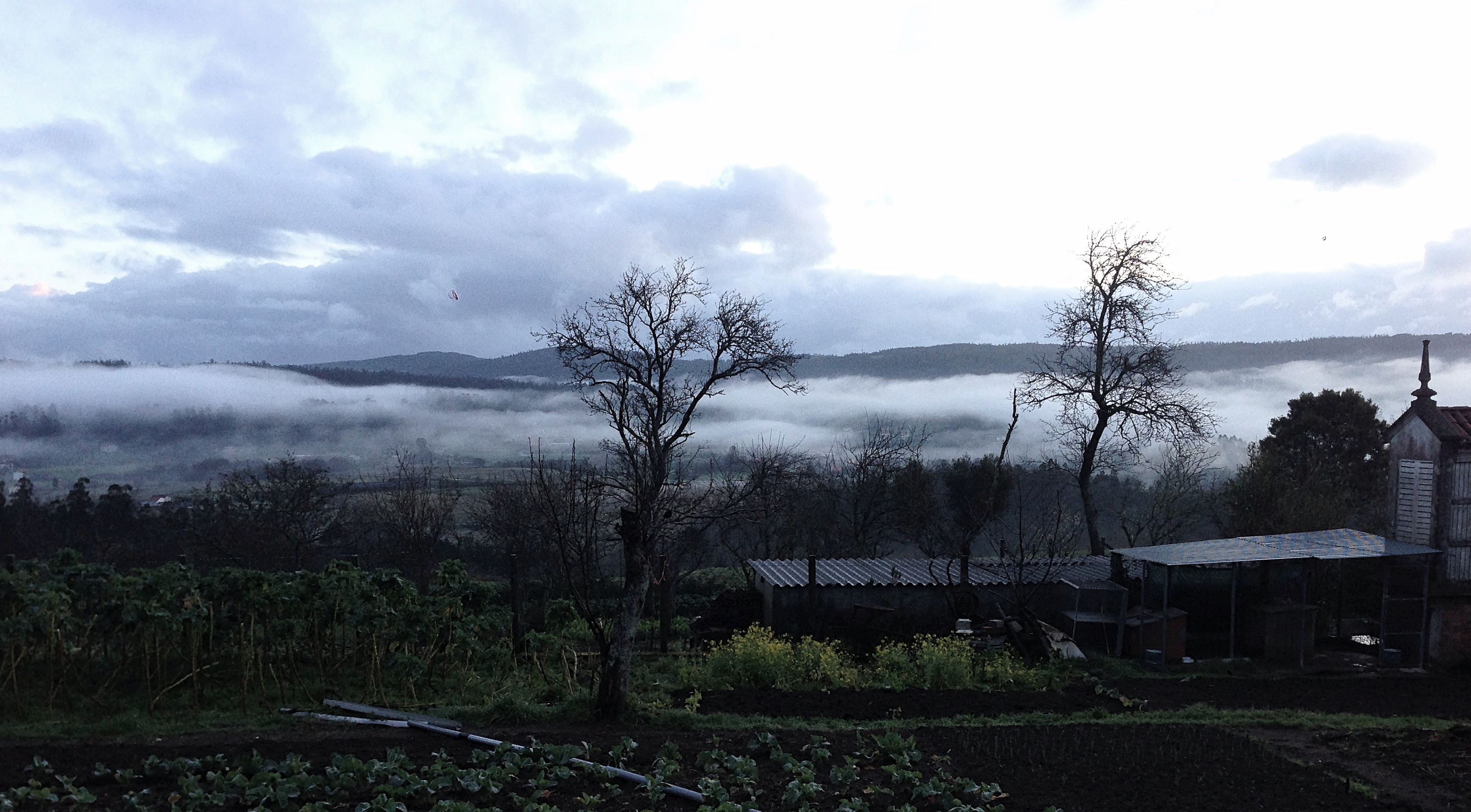
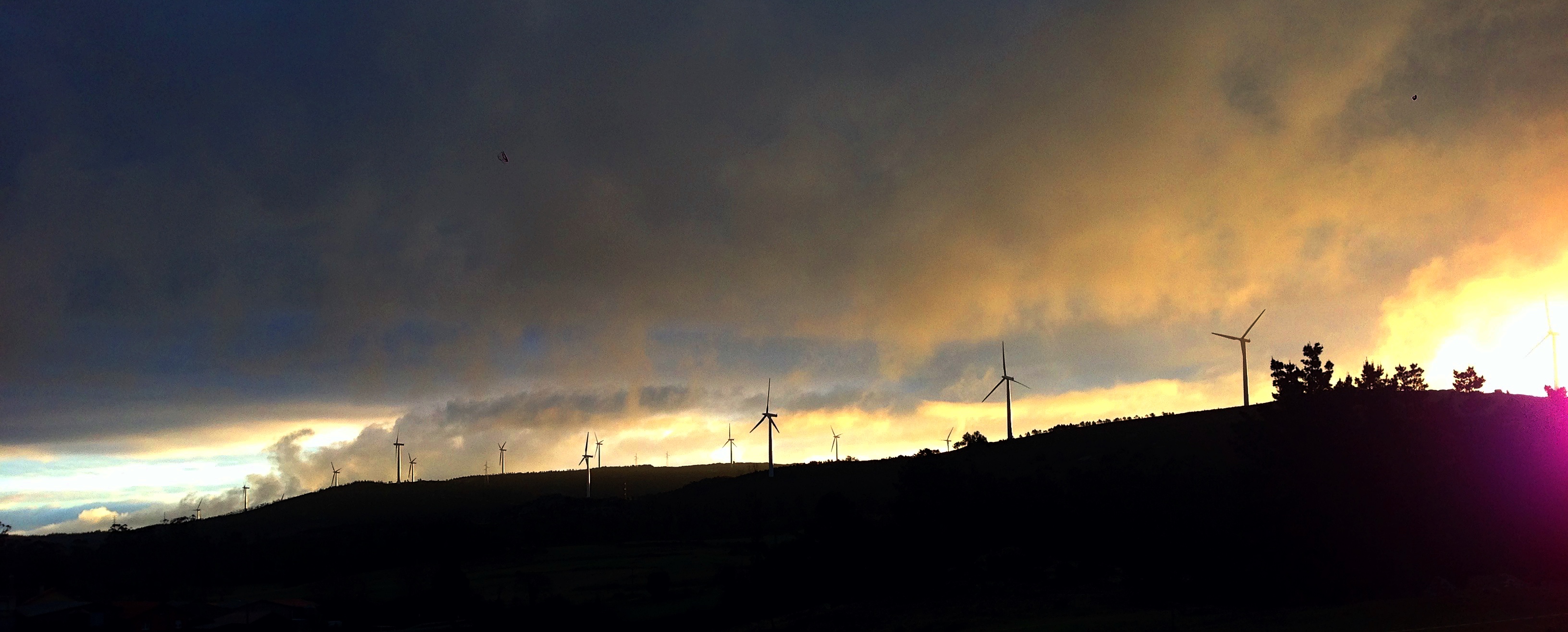
But the beauty of the surroundings, revealed by dawn, eventually calmed my nerves. It was marvelous. The fog opened up below me to reveal a river flowing through the valley. The rising sun cracked through the grey sky, splitting the horizon with yellow light; and in so doing revealed the silhouettes of wind turbines, so common here, immobile on the hilltops. At the time I was reading Don Quixote, and I imagined the old knight making a charge for one of these modern monsters. These power-generating machines are one of our century’s great inventions; their sleek forms make no attempt to counterfeit nature, and yet they blend in so harmoniously with the landscape.

Eventually I reached a fork in the road, where the camino diverges. You see, there are two options for the pilgrimage to Finisterre: the first goes direct, while the second takes a detour to Muxía, another beautiful coastal town somewhat to the north. The second path is considerably more taxing, since there are three days in a row of 30+ km. I chose the first, since I did not have an extra day to spend; but, of course, every road not taken leaves a little residue of regret. Further on, while crossing another field, I caught my first glance of the sea. It was a dreary grey day, and so all the greens and blues looked muted under the brooding sky. But I could smell the ocean, that salty, fresh savor in the air.

I reached Cee by one in the afternoon, a modest coastal town of about 8,000 inhabitants. I found a mostly-empty albergue, dropped off my bags, and then set out to have some lunch. The sight of the ocean put me in the mood for seafood, so I decided to find some of the justly famous pulpo gallego, or Galician octopus. This is one of the finest dishes in Spain. The octopus is extremely tender, without a trace of rubberiness; and the combination of sea salt, olive oil, and the spicy local paprika make it addictively savory.

After a short walk around town I retired to the albergue. The host was another talkative Galician fellow. He was a youngish man, in his mid thirties I guess, and had the air of a tired hippie. He told me that he had gotten addicted to the camino at a young age, when his mother took him for a week on the trail. Eventually he opened up his own albergue, and met his future wife a few years later—a Russian woman who was passing through. She came in the door a few moments later, with their two little lap dogs in tow. It seemed like a happy family. I had a beer while flipping through some of the extensive National Geographic guide books that were shelved in the salon.

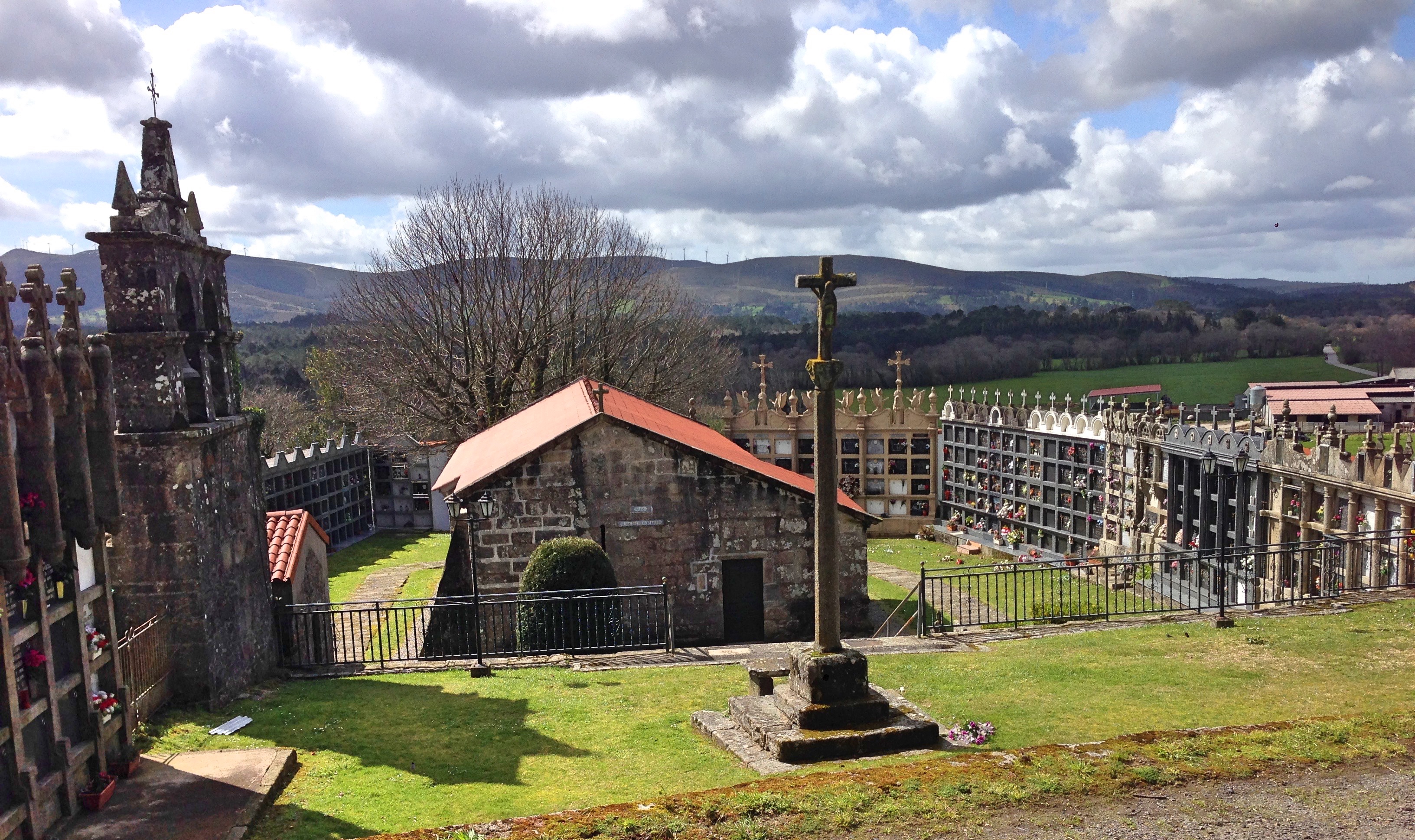
A typical Galician church and graveyard

The only other pilgrims in the albergue were two Frenchmen. I guessed they were father and son, since the younger one looked like he was in his teens. Neither of them spoke much English, though it was not for lack of trying on the teenager’s part. He struggled through a ten minute conversation with me, using plentiful hand gestures to make up for the gaps in his vocabulary. From this mime show I gathered that he had been on the camino for quite three months, having started in Seville. I admit that I find it difficult to imagine spending such a long time on the road, simply walking. Surely one would see many beautiful things. But I am afraid my brain would atrophy from the lack of variety. It had only been three days and I was already looking forward to returning to Madrid.


Day 4: Cee to Finisterre

My final day. I woke up a bit later, knowing that it was going to be a short walk. The path took me through stone alley up into the surrounding hills. The sky was overcast yet again, though the bits of clover covering the ground still glowed with a powerful green. My route followed the coastline towards the peninsula, which jutted out into the sea like a moored ship. As I looked down from the pine-shaded hilltop to the granite shore below, I wished, yet again, that I could properly savor the moment, that I could nestle inside the feeling of being alone in nature and just stay there, hold onto it, and take some piece of the feeling with me. But again the sights came and went, and I was left none the better.

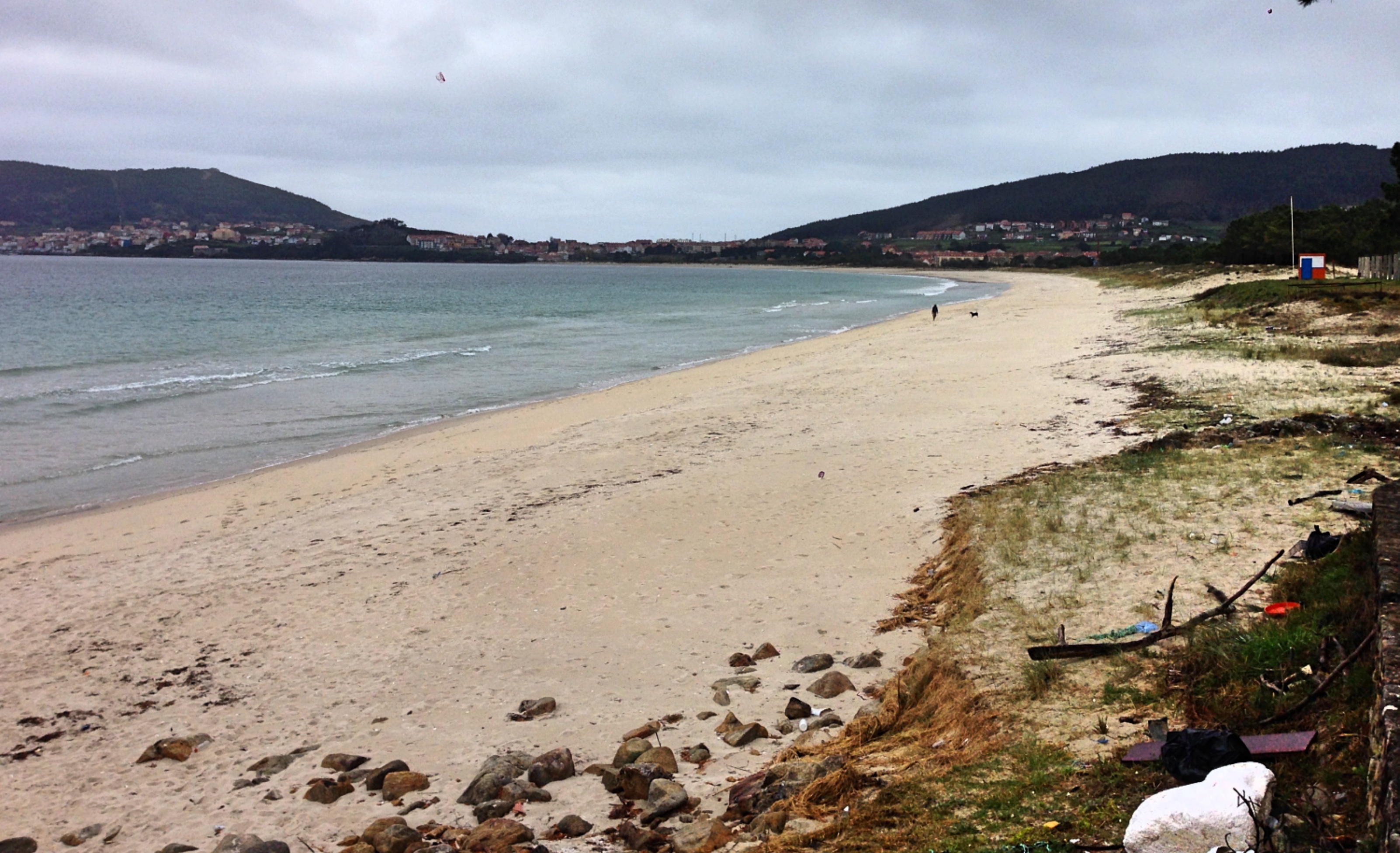
Eventually I walked down the hills onto a long beach. A man was playing with his dog on the sand, some hundred meters away. I snapped a photo. Minutes later, as I sat on a bench re-tying my shoes, he approached me, and asked me if I could email the photo to him. Sadly, I have forgotten to do it—until writing this post. We shall see if he replies.

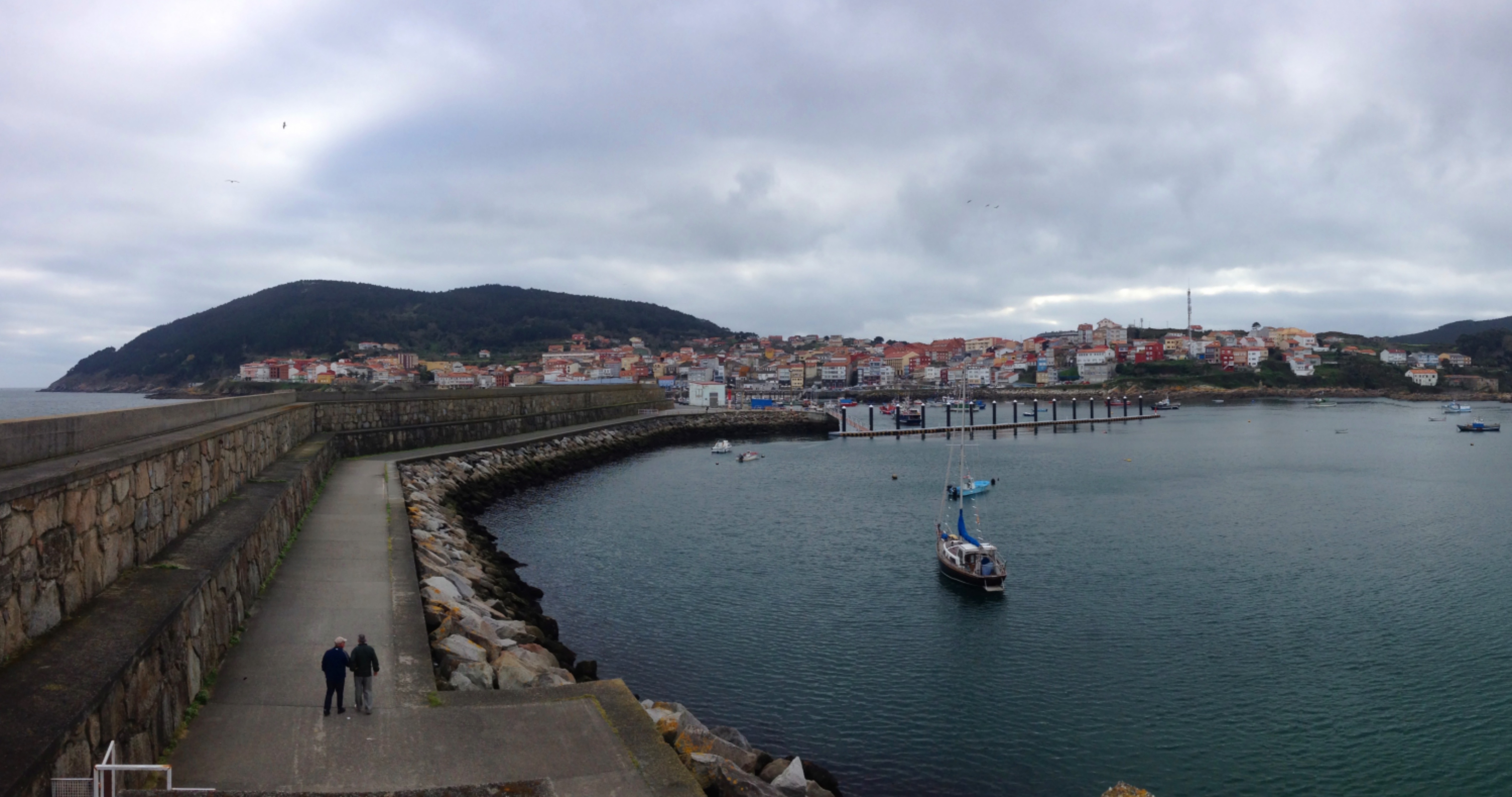
From there I made my way to the town of Fisterra (the Galician name for Finisterre). Like so many places in Galicia, it is dominated by the camino. Half the people walking through the town sported the typical gear of the modern pilgrim: waterproof coat, nylon backpack, collapsible walking stick. Advertisements for albergues were everywhere. Many of the faces I recognized from the past three days; a few recognized me, and we exchanged a wave. I was tempted to stop, but I wanted to see the end of the road first.

The path to the end of the peninsula brought me once again above the Galician shore. Halfway to the end I passed a statue of a windblow pilgrim, dressed in the traditional medieval costume; and I could not help comparing the modern pilgrims (myself included), with their bright neon clothes, unfavorably to this more simply apparelled traveler. After what seemed like an interminably long time, the end came into view.

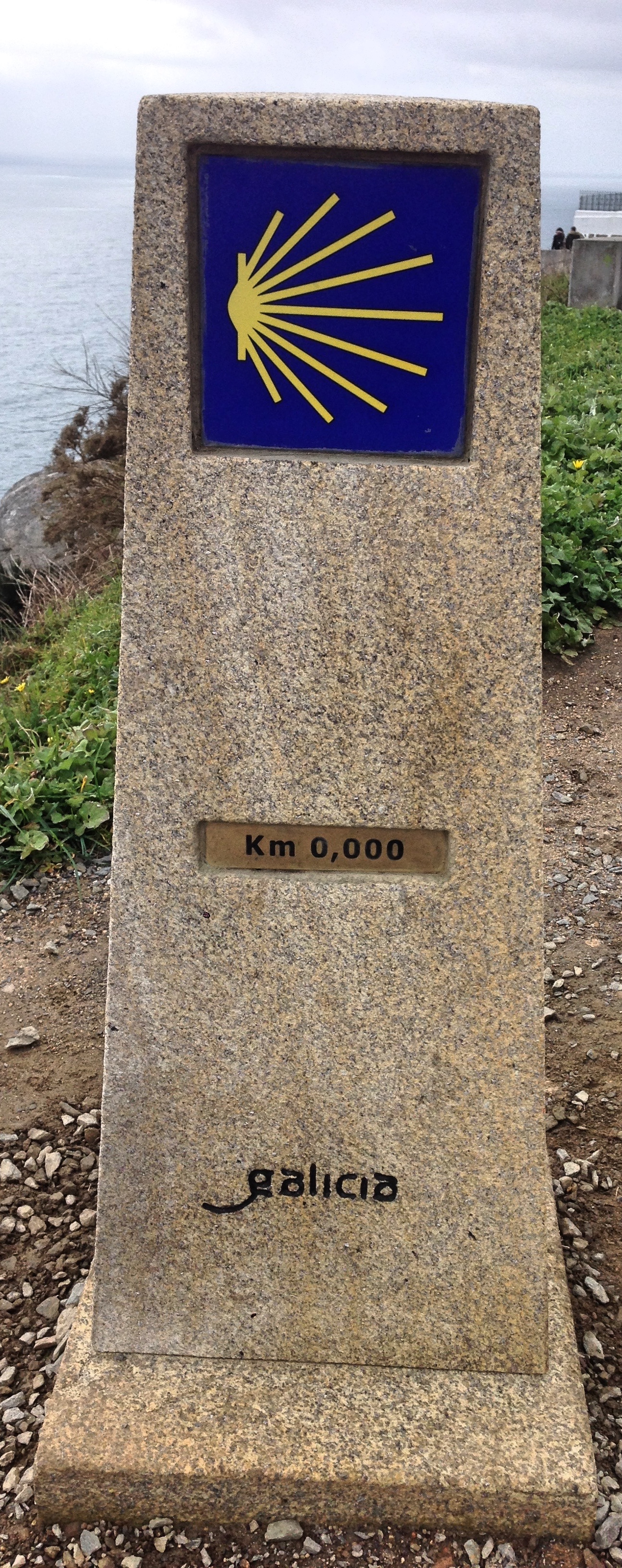
I admit that I was a little deflated, if only because there were so many people about. I wanted to feel alone on the edge of the world; but instead I felt like I was at a moderately popular tourist attraction—which, of course, I was. There was a stone cross on a boulder, where many were gathered. More gratifying, for me, was to see the final trail marker: 0.00 km. Seeing the constant and yet slow diminution of the remaining distance is one of the more satisfying and yet maddening aspects of the camino; so I felt a great surge of relief at finally seeing a zero. I was officially finished.

Further on, I came to the lighthouse. Next to it was one of those signs that shows the direction and distance to several major cities. One of the signs, pointing directly across the sea, was for New York: 5,235 km away. My home was right beyond the horizon. Or was it still my home? Did I belong on this side of the Atlantic, or that one? I still had not made a decision for next year. The camino had not resolved my dilemma.

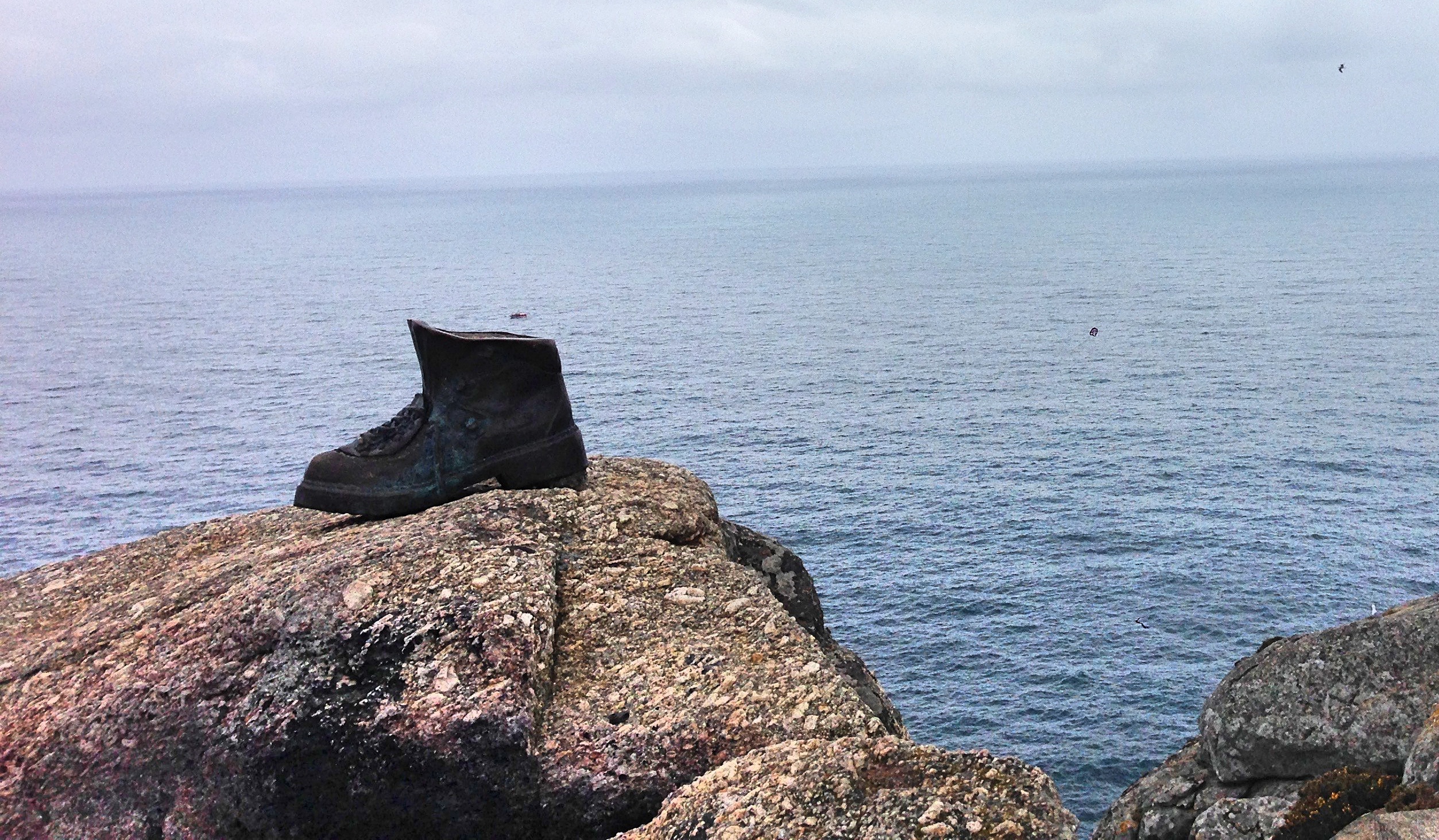
I passed the lighthouse and went down to the rocky tip of the peninsula, where it descends into the sea. The base of a red metal tower had been covered in stickers and paraphernalia—pilgrims wishing to leave their mark. Nearby was a metal statue of a single boot, a trademark camino marker. It seemed to be the perfect memorial for the trail—an anonymous testament to the blisters and bliss of untold walkers. I sat next to it and stared into the ocean, turning over my problem in my head. And I decided, then, that unless something unexpected happened, I would go back to New York to pick up my interrupted life.

And in that moment I felt sad to have to leave such a beautiful place that had given me so much; and I felt relieved at having chosen a path. But mostly, I just felt exhausted and hungry. Little did I know that, just two weeks later, my brother would decide to move to Spain, which would change my calculations completely. And so I now find myself, a year later, writing this long tale of failed self-discovery and unsuccessful soul-searching from Madrid.

I picked myself up and dragged myself back into town, where I found a nice albergue and paid extra to have my own room. The rest of the day was spent in walking idly around the port, eating delicious chipirones (squid sauteed with garlic), and writing in my diary. “Will I ever see this shore again?” I asked myself. “It’s very possible I won’t.” (I would.) My brain was eerily silent. The usual little voices which pop in and out of our heads, telling us things to fret about, were almost entirely gone. I felt empty and free.

Fisterra

The next day I walked to the bus station with a Russian man who was staying in my albergue, and who told me that he had begun his camino by taking ayahuasca in Portugal. The bus left me in Santiago de Compostela, and then a train brought me to Madrid. In five days I had been to the edge of the world and back, and was none the wiser for it.

Review: Henry IV

Review: Henry IV
Henry IV, Part 1

Henry IV, Part 1 by William Shakespeare

My rating: 4 of 5 stars

Food for powder, food for powder. They’ll fill a pit as well as better.

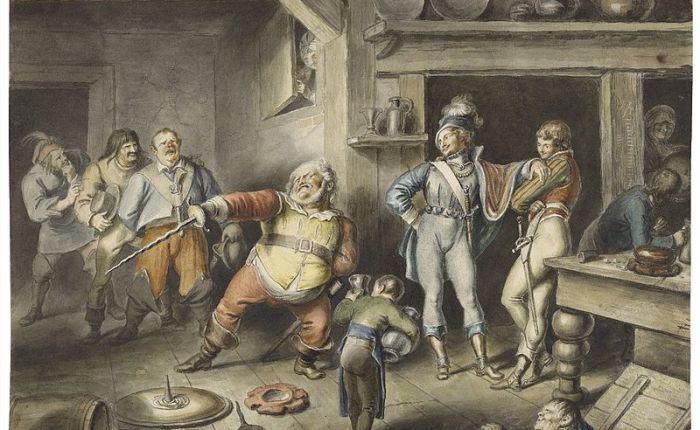
This is undoubtedly one of Shakespeare’s strongest plays. In tone and atmosphere it is far more varied and naturalistic than its predecessor, Richard II. The scenes with Hal amid the low-life of London are fetching, and do much to alleviate the stiff and stuffy courtly atmosphere of some of Shakespeare’s histories. The comedy also helps; and this play contains some of Shakespeare’s highest and lowest comedy, both of which are embodied in the corpulent Falstaff.

Most readers will, I suspect, concur with Harold Bloom in deeming Falstaff one of the bard’s great creations—though we may not go so far as to put him on a level with Hamlet. Bloom is correct, however, in seeing one’s opinion of Falstaff as a defining fact in one’s interpretation of the play. There are those who see in Falstaff the spirit of carnival—the ecstatic embrace of all the pleasures of life and the total rejection of all the hypocrisies of society Others see Falstaff as a corrupter and a lout—a lazy and selfish fool.

For my part I vacillate between these two attitudes. There is no denying Falstaff’s wit; and his soliloquy on the futility of honor is wonderfully refreshing, puncturing through all of the political nonsense that motivates the bloody clashes. Still, I cannot help thinking that, if the Falstaffian attitude were embraced too widely, society itself would be impossible. Some social restraint on our pleasure-loving instincts is necessary if we are not to end up fat drunken thieves. On the other hand, a generous dose of the Falstaffian attitude can be a great antidote to the self-righteous nonsense that leads us into war.

In any case, Falstaff is not the only great character in this play. Hotspur is a mass of furious energy, an electrifying presence every time he is on stage. Prince Hal, though less charismatic, is more complex. From the start, he already has an ambivalent relationship with Falstaff, a kind of icy affection or warm disregard. Indeed, Hal holds everyone at a distance, and one senses a skeptical intelligence that is wary of committing until the circumstances are just right. It is hard to read his character’s evolution as that of a wayward youth who learns to embrace his identity. His actions seem far too deliberate, his timing too perfect. Was he hoping to learn something by keeping company with Falstaff and his lot?

Henry IV, Part 2

Henry IV, Part 2 by William Shakespeare

My rating: 3 of 5 stars

Presume not that I am the thing I was.

Compared with Part 1, this sequel is significantly weaker as a stand-alone play. There is no antagonist to compare with Hotspur. Falstaff wanders about in pointless merrymaking, mostly separated from Hal; and unfortunately his wit is not nearly so sharp outside of his young companion’s company. The same can be said for Hal, whose youthful liveliness fades into a chilling uprightness. And the plot can be frustratingly meandering and abrupt.

The main drama of this play is the progression of Hal from prodigal son to the ideal young king. This transformation is apt to cause some misgivings. On the one hand, I found it genuinely admirable when Hal commends the Justice and bids him to do his work. And even if one loves Falstaff, it is difficult to wish that the King of England would keep such a lawless fellow around, much less lend him influence. On the other hand, the newly-ascended king’s rejection of his former friend and mentor is deeply sad. Perhaps he should have turned Falstaff away, but it need not have been with such cold scorn.

Again, there is a moral conflict here. Falstaff may best be described as amoral: uninhibited, pleasure-loving, devoid of both cruelty and rectitude. He feels no scruples whatsoever at dishonesty and robbery, and acknowledges no ideal as worth pursuing or even respecting. Hal, by contrast, is a moral creature: he wishes to uphold the moral order, but for him this may mean murder or bloody conquest. So one must ask: Which is better, to be a drunken pickpocket or to lead your country on an invasion? Neither the socially subversive nor the socially upstanding can be fully embraced, which is why Hal’s rejection of Falstaff causes such complex reactions.


View all my reviews

Images of Santiago de Compostela

Images of Santiago de Compostela

This academic year I have taken two trips to Santiago de Compostela, one in December and one during Holy Week in April. The first time did not go well. I arrived with an upset stomach, which quickly escalated to full-blown food poisoning. Unfortunately my Airbnb was in Ourense so I was stuck there until our return train in the evening. It was a mediocre day.

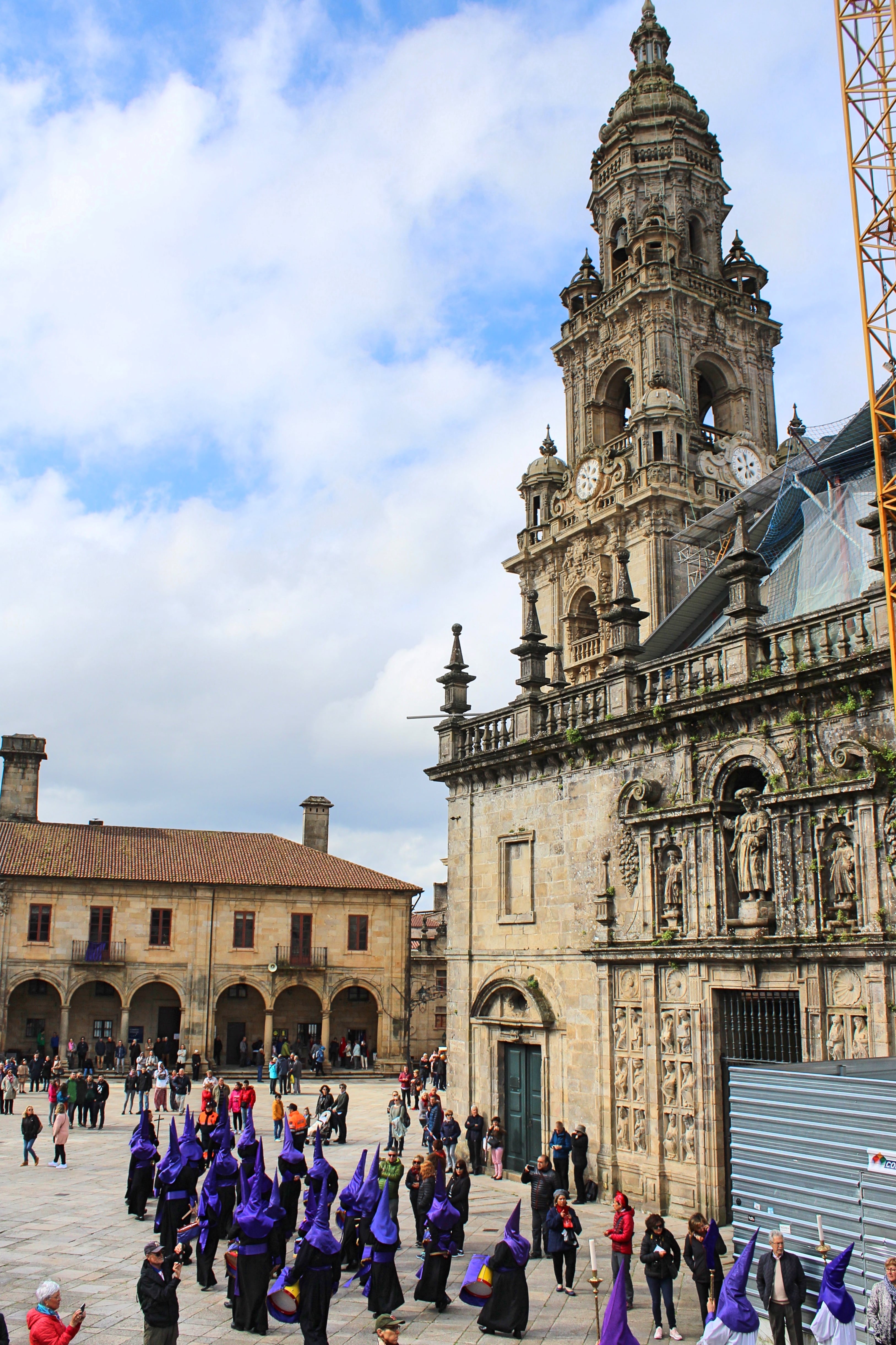
But my recent trip was much more enjoyable. We took the night bus up from Madrid, which leaves at 12:30 at night and arrives at 9:00 the next morning. This is no comfortable way to travel. But it did give us an opportunity to see an Easter procession.

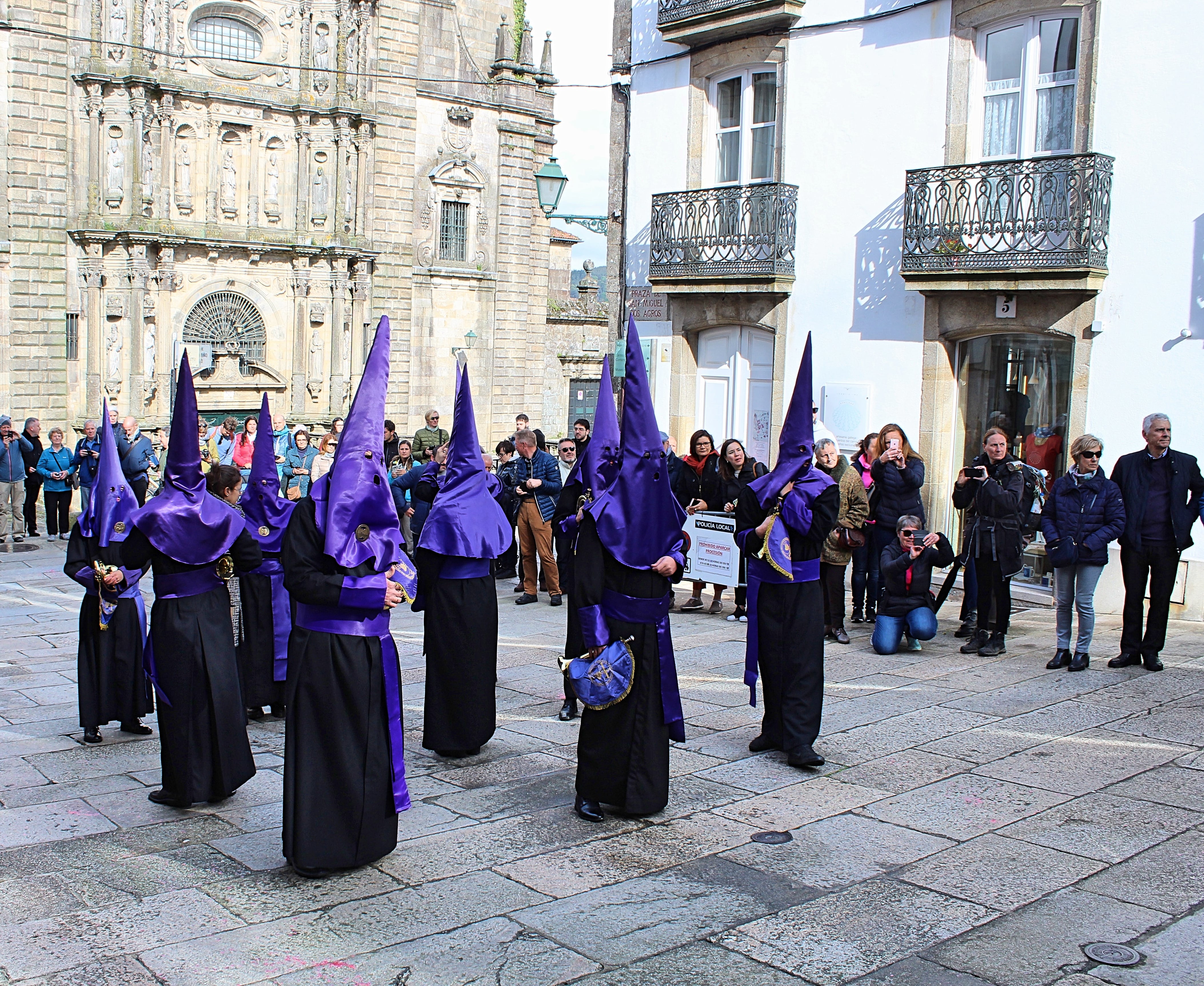
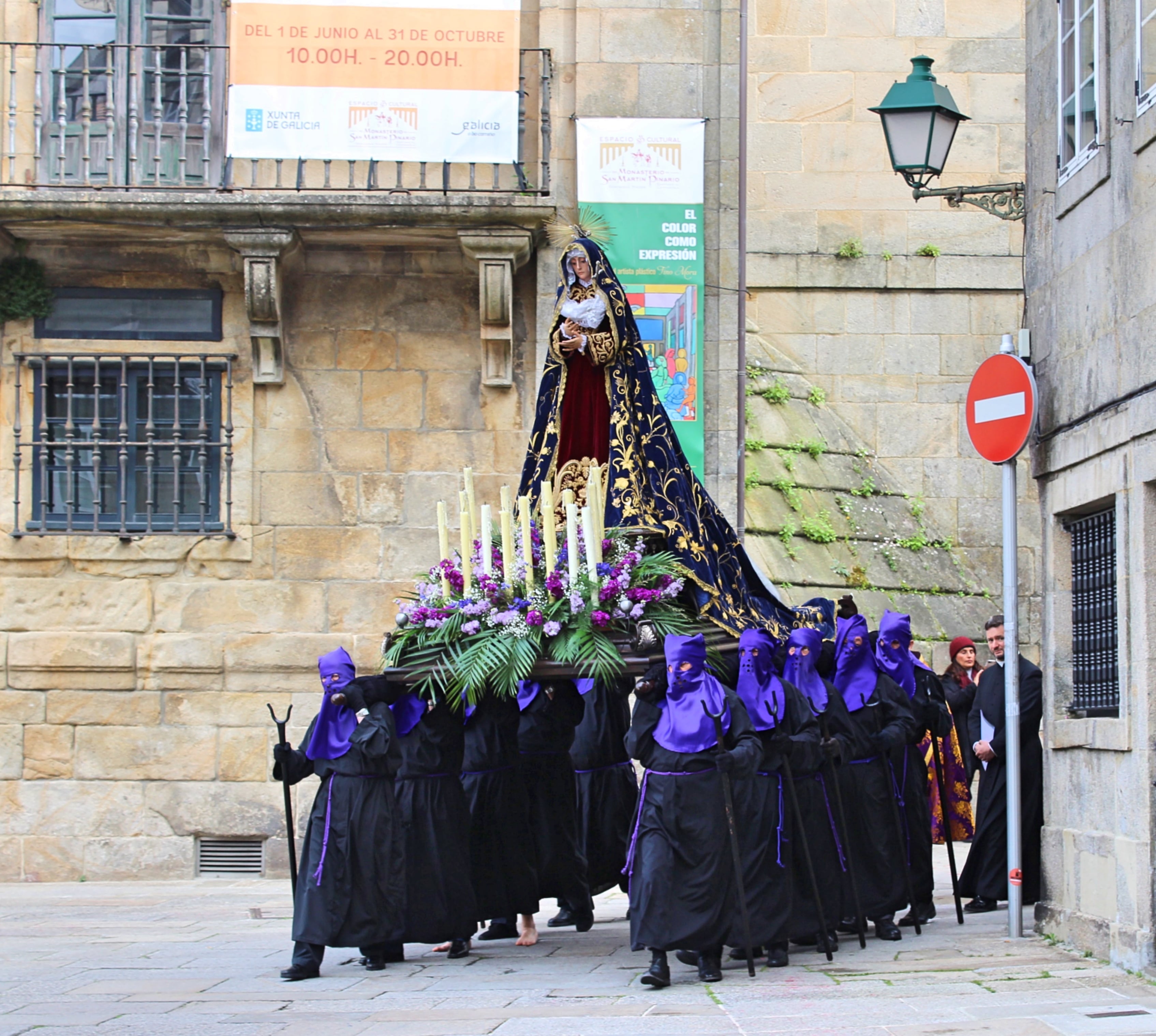
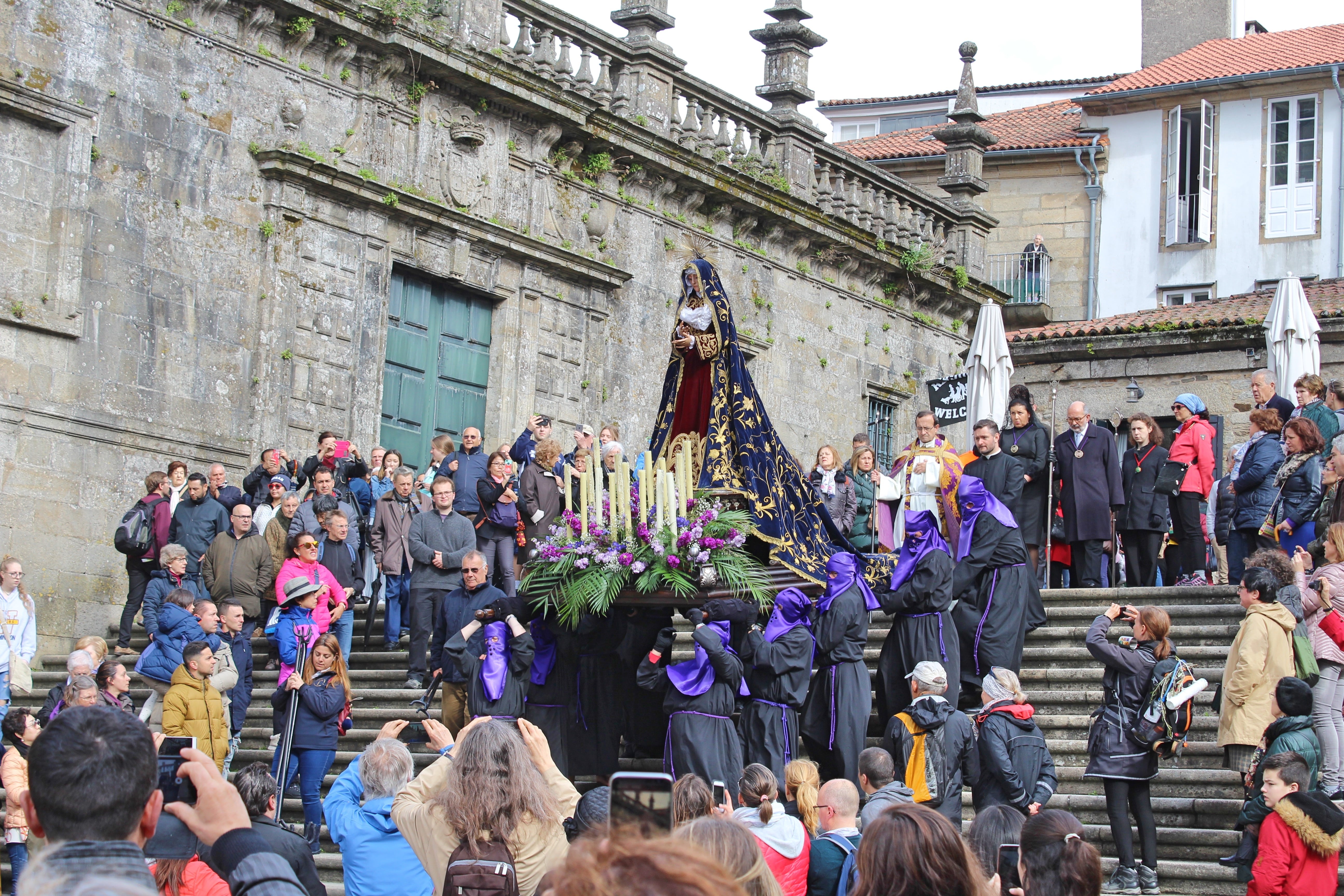
To an American, a Spanish Easter procession initially presents a frightening aspect, since the hoods strongly resemble those worn by the Ku Klux Klan (the Klan took it from the Spanish and not vice versa). But once this initial shock passes, the viewer is presented with an impressive religious spectacle. The hooded figures carry floats with religious figures on their shoulders, marching in unison, pounding walking sticks in a jarring metallic march. A band walks behind them, at times playing mournful and discordant tunes on their trumpets.

The elaborate doorway of the Monastery of San Martín Pinario can be seen in the background
The walking sticks have notches, so that they can be used to support the float when they stop walking
The procession entering the Praza de Quintana for a Good Friday ceremony
The float makes its way down the stairs

No trip to Santiago is complete without a trip to the cathedral. Though I had been to Santiago several times before, December was the first time that I had seen the cathedral without scaffolding. The authorities are engaged in a years-long restoration effort, so that much of the cathedral’s famous façade had been covered up in previous years.

As good as new.
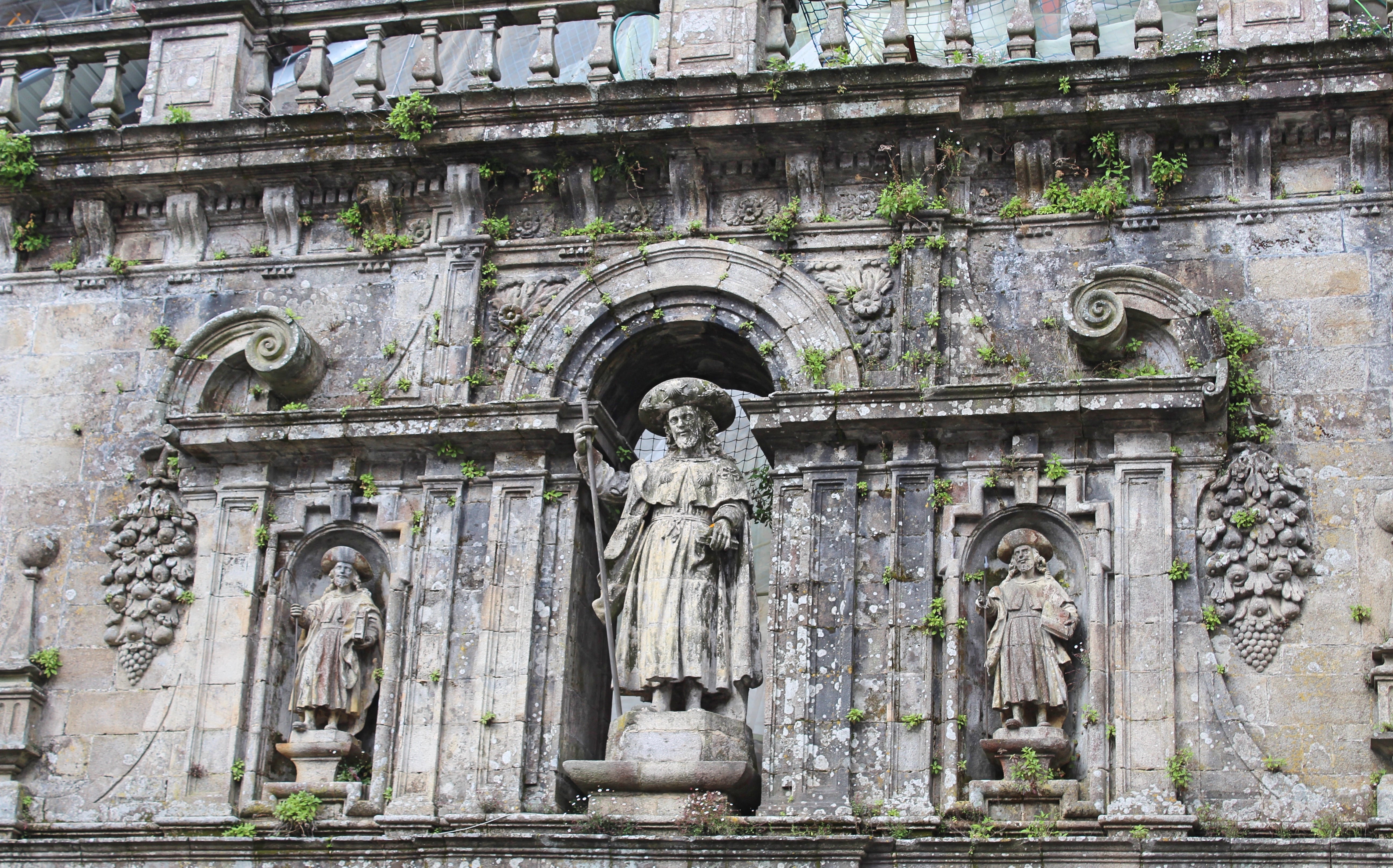
St. James the pilgrim: A detail from another façade

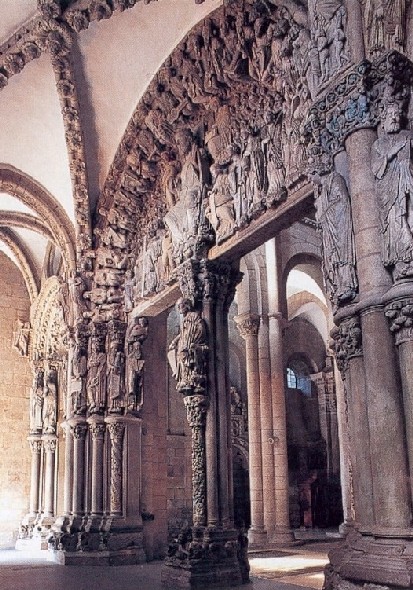
The Pórtico de la Gloria was still undergoing reparations when I visited last December. So it was a relief when, this April, I was finally able to see the iconic doorway. In the past you could just walk into the cathedral and examine the statues for free. But now go through a special entrance, pay a modest fee, and go with a guided tour. And no photographs are allowed.

The money and the trouble are, however, entirely worth it if you enjoy medieval art. For the Pórtico de la Gloria is one of the finest pieces of medieval sculpture that I have ever seen.

An image in the public domain. Recent restoration work has recovered much of the original pigment.

Unfortunately, neither of my two recent trips to Santiago allowed me to see the famous Botafumeiro. This is the immense incensor that the priests swing from the ceilings of the cathedral. I went to a mass in December, on the feast day of the Immaculate Conception, thinking that such a special religious holiday would merit the use of the incensor. But no luck. I sat through the entire mass clutching my stomach, dizzy from the pain, only to walk out disappointed.

I thought that I would have another opportunity during Holy Week. But, again, I had bad luck. Though restoration work is finished outside, now the inside of the cathedral is covered in tarps and scaffolds. There will be no mass held inside the building until 2021, or so I was informed.

We did, however, visit the Cathedral Museum. This is surprisingly large, and contains two of the Botafumeiro incensors, as well as many works of religious art. I was also surprised to find a few tapestries based on Goya’s designs. But the best part of the visit may be the view of the Praza do Obradoiro, the grand square where the Camino de Santiago ends. As on any other day of the year, the square was full of supine pilgrims, resting after a long journey.

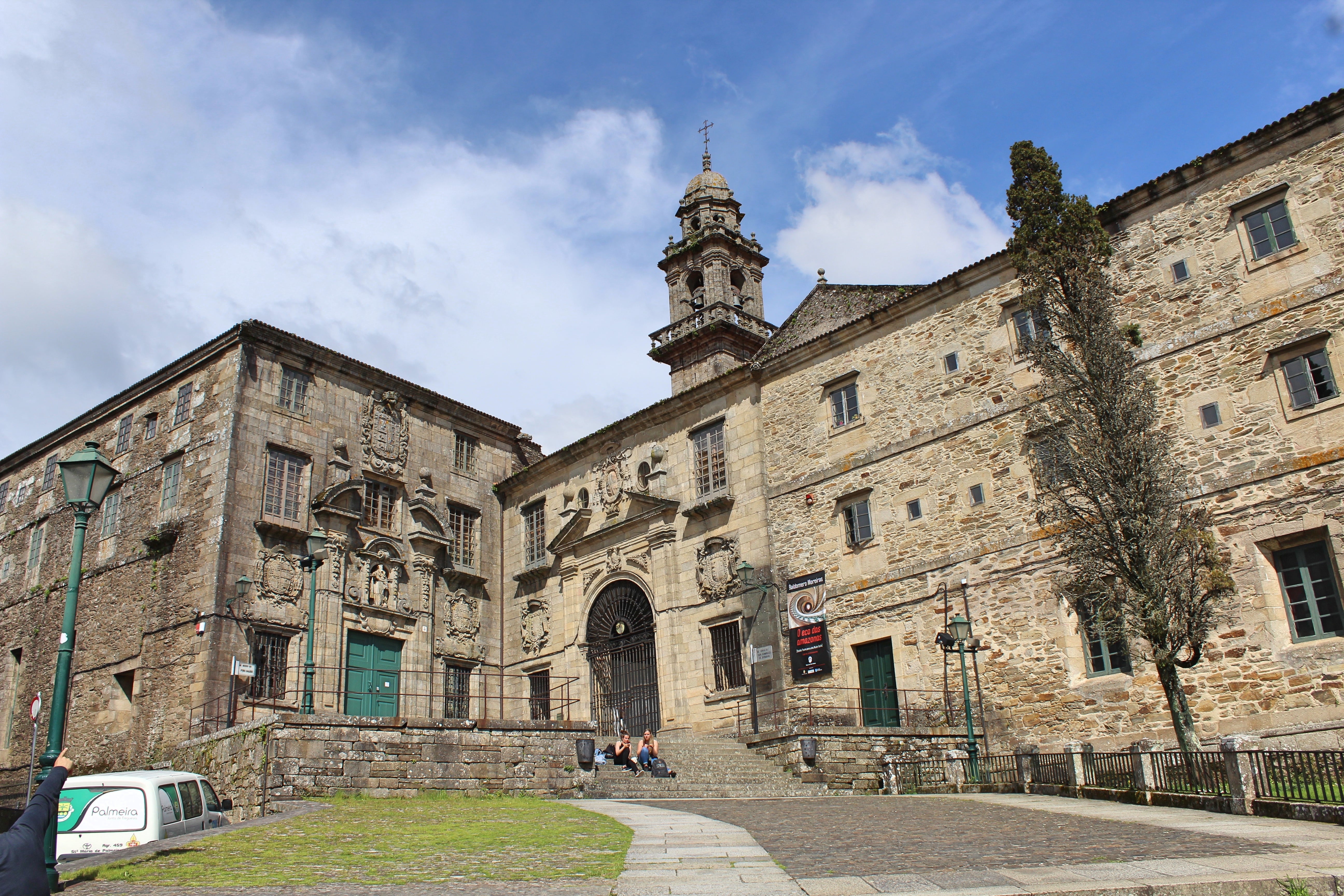
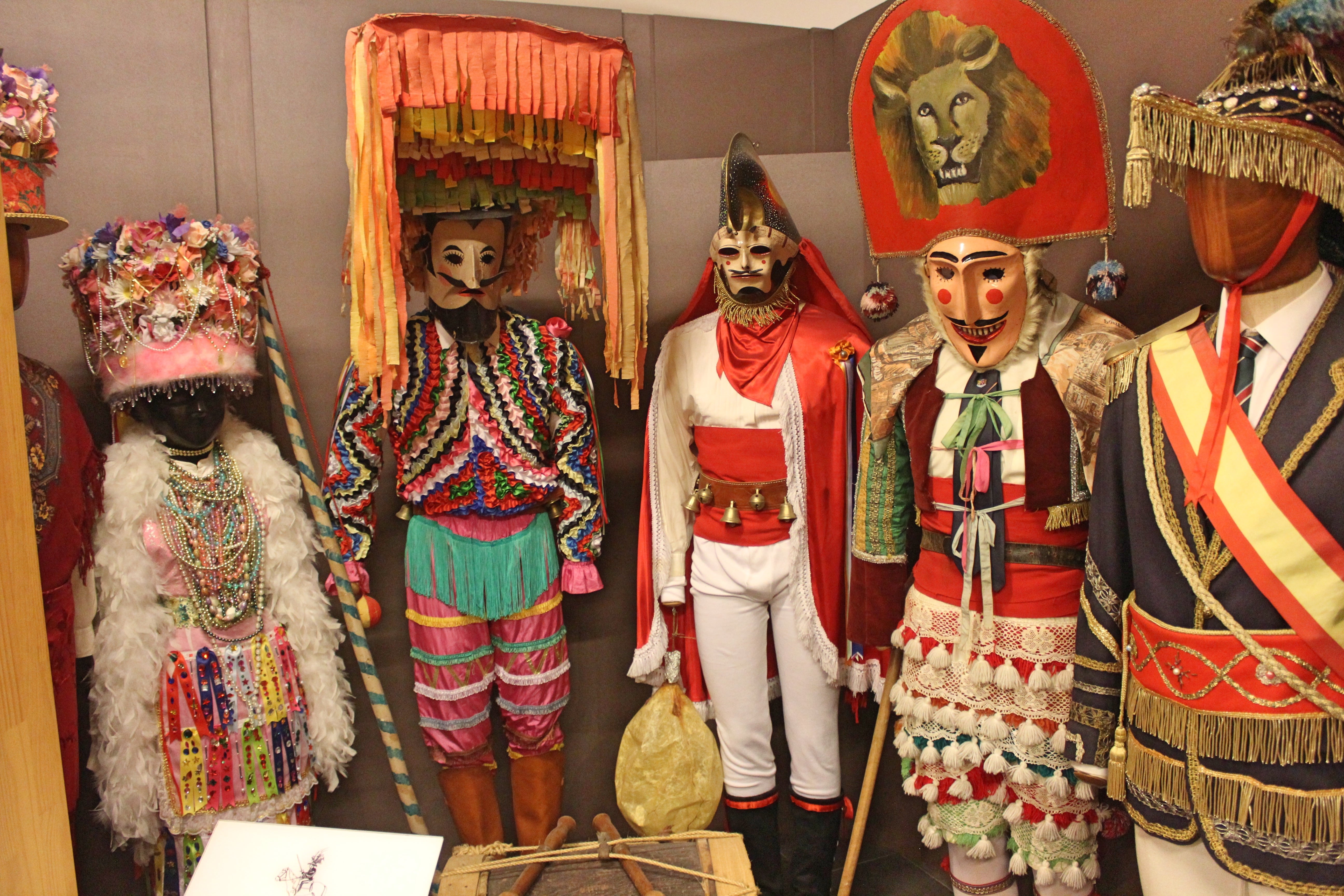
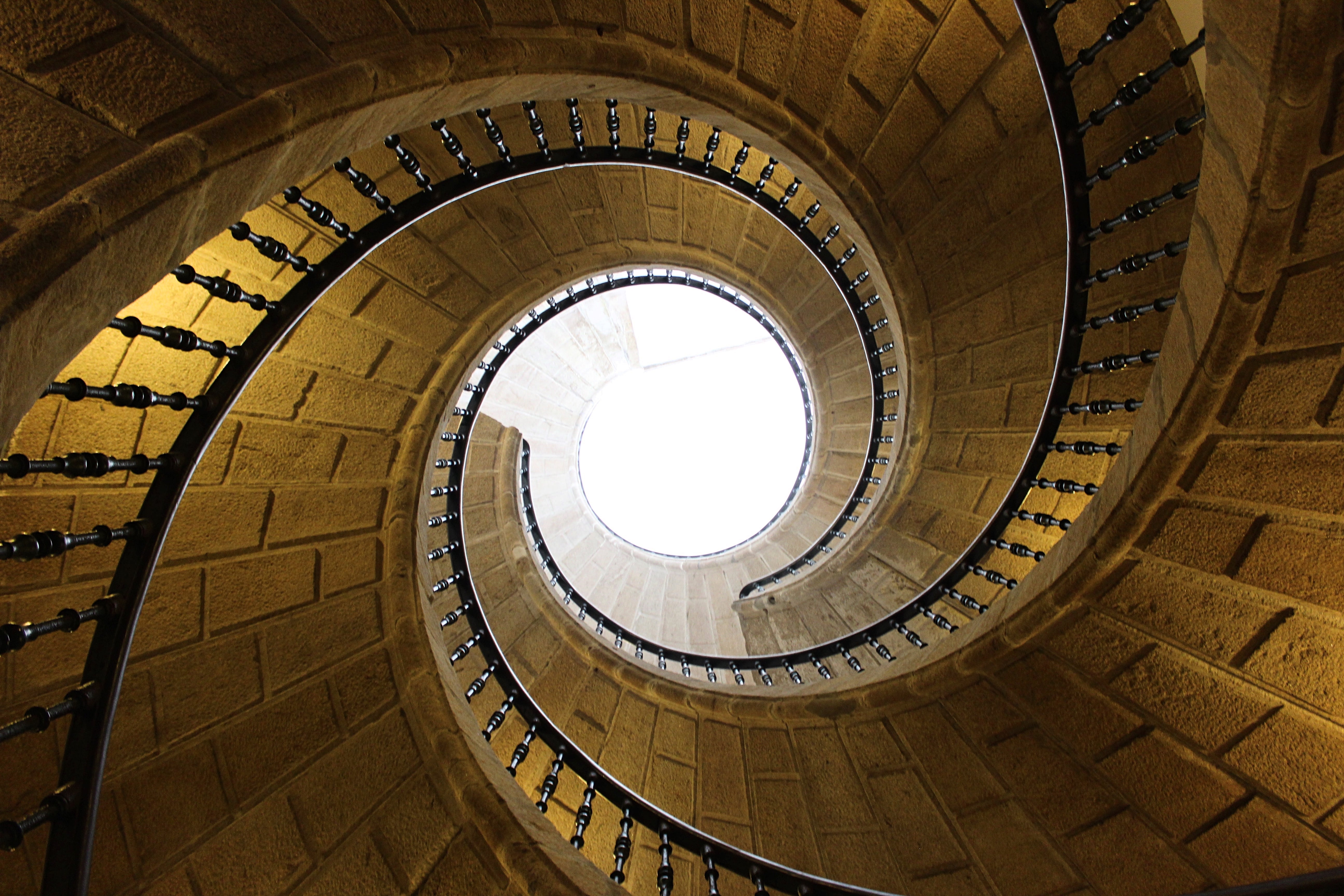
One of my favorite places to visit in the city is the Museo do Pobo Galego, or the Museum of the Galician People. It is a fascinating ethnographic exhibit on the traditional lifeways of the region, housed in an old monastery.

The Museum Entrance
Some traditional carnival costumes
The famous double-helix staircase of the museum

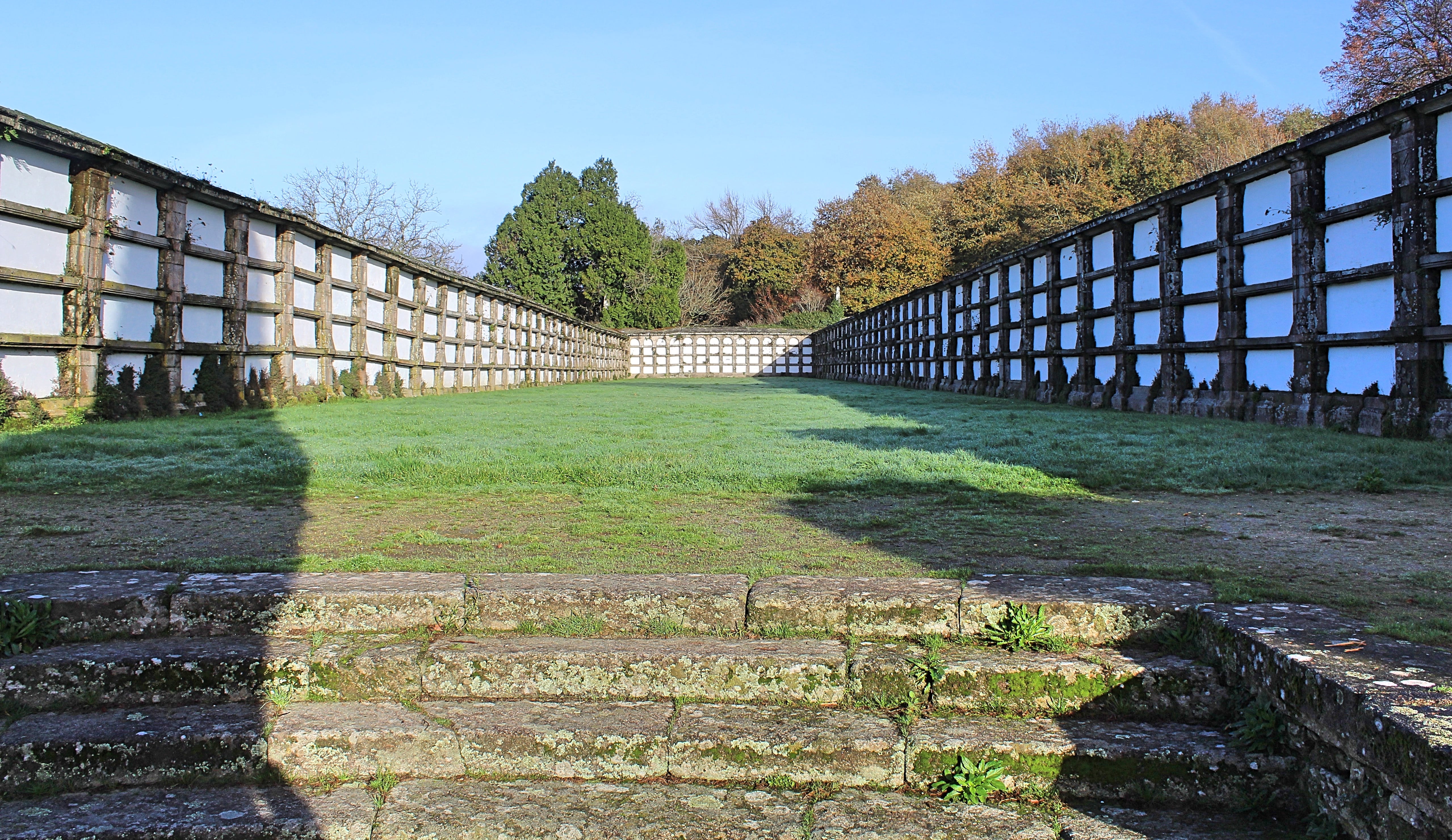
Behind the museum is the Parque de Bonaval, one of my favorite parks in the city. Since this used to be the grounds of a church and a monastery, it is unsurprisingly that grave plots remain, though I am unsure if they still contain bodies.

At the top of the park’s hill the visitor can also find an excellent view of the surroundings of the city.

Notice the arch of the futuristic cultural center in the distance

Another excellent park is the Parque Alameda in the center of the city. It captures the bucolic charm of the Galician forests.

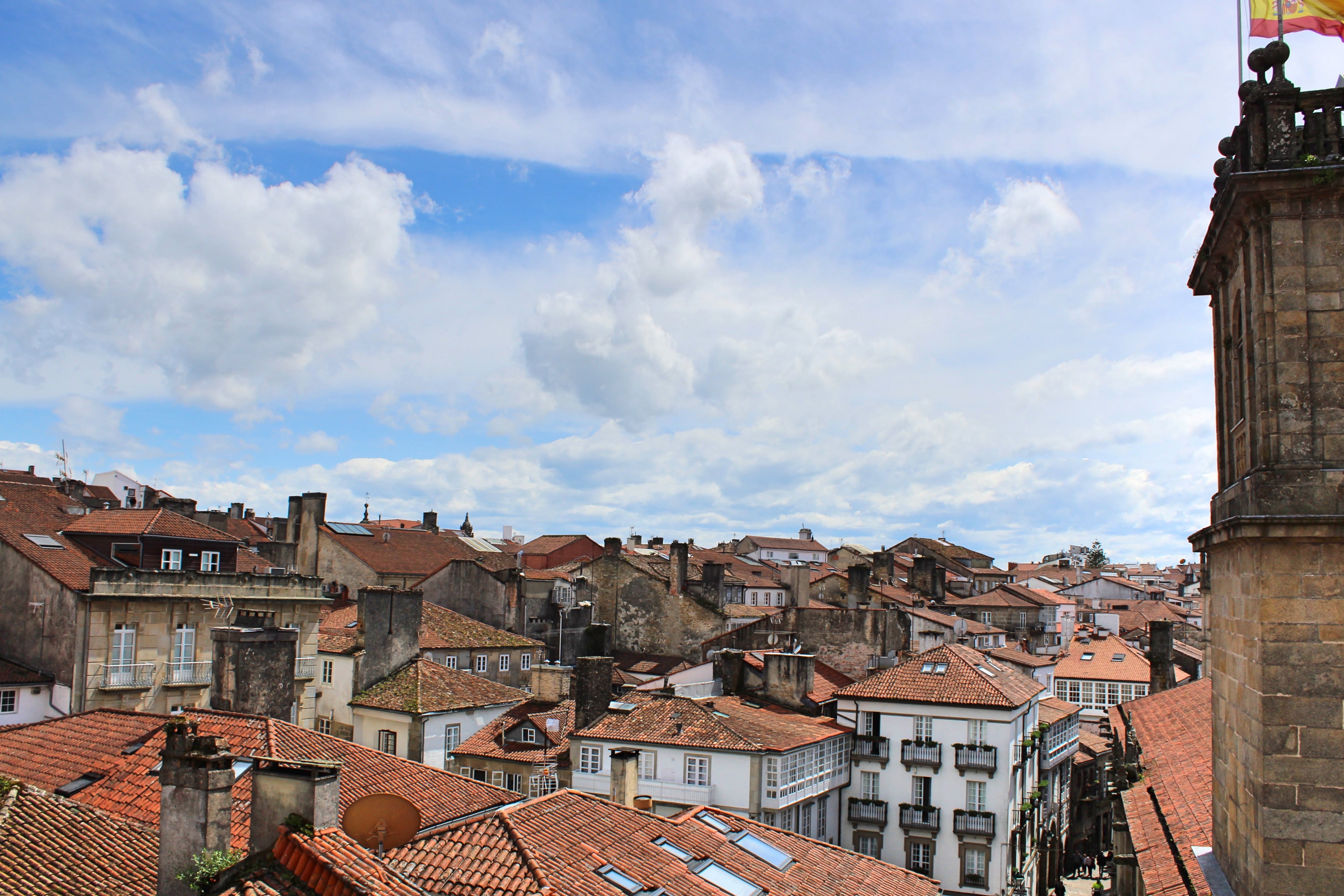
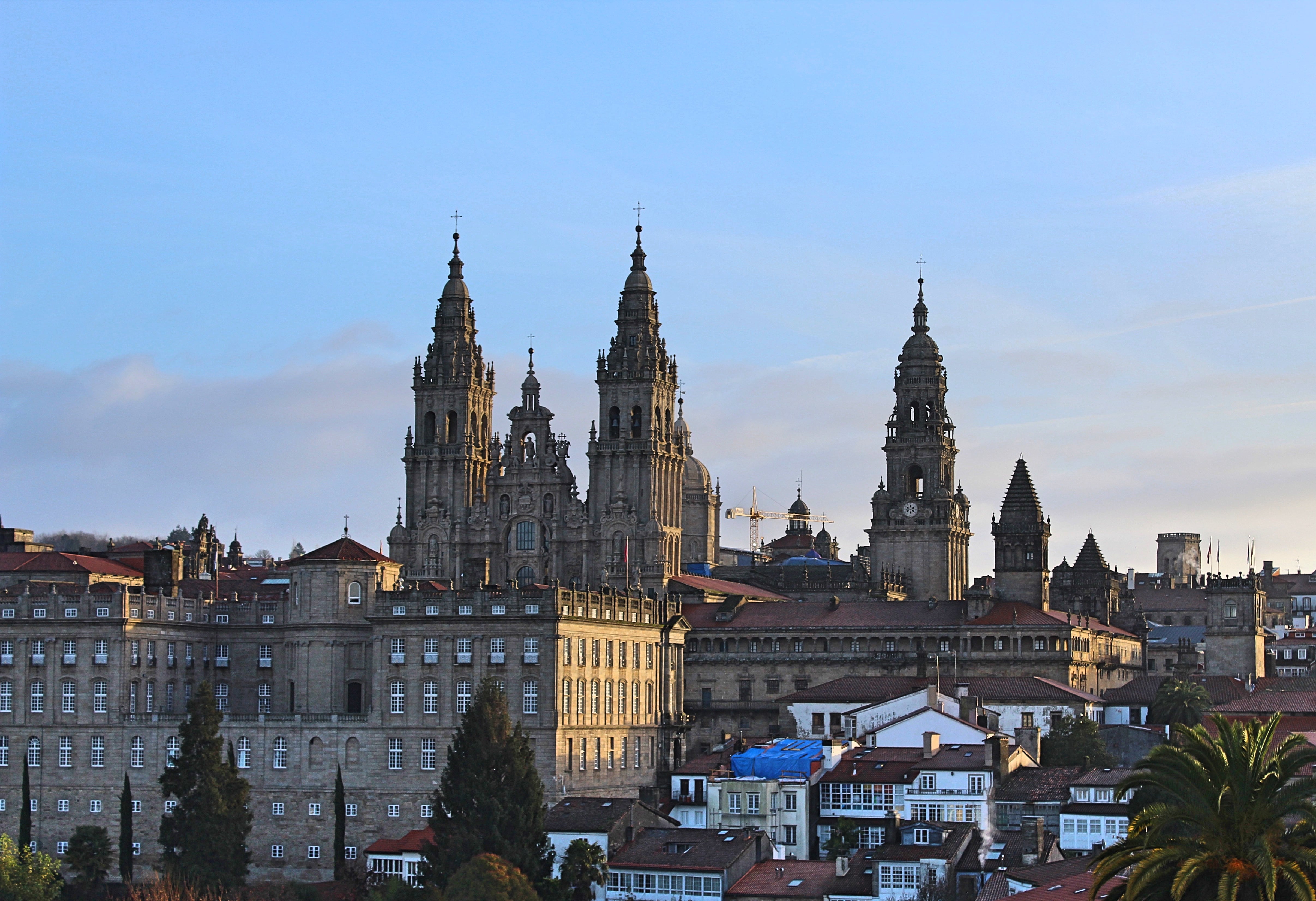
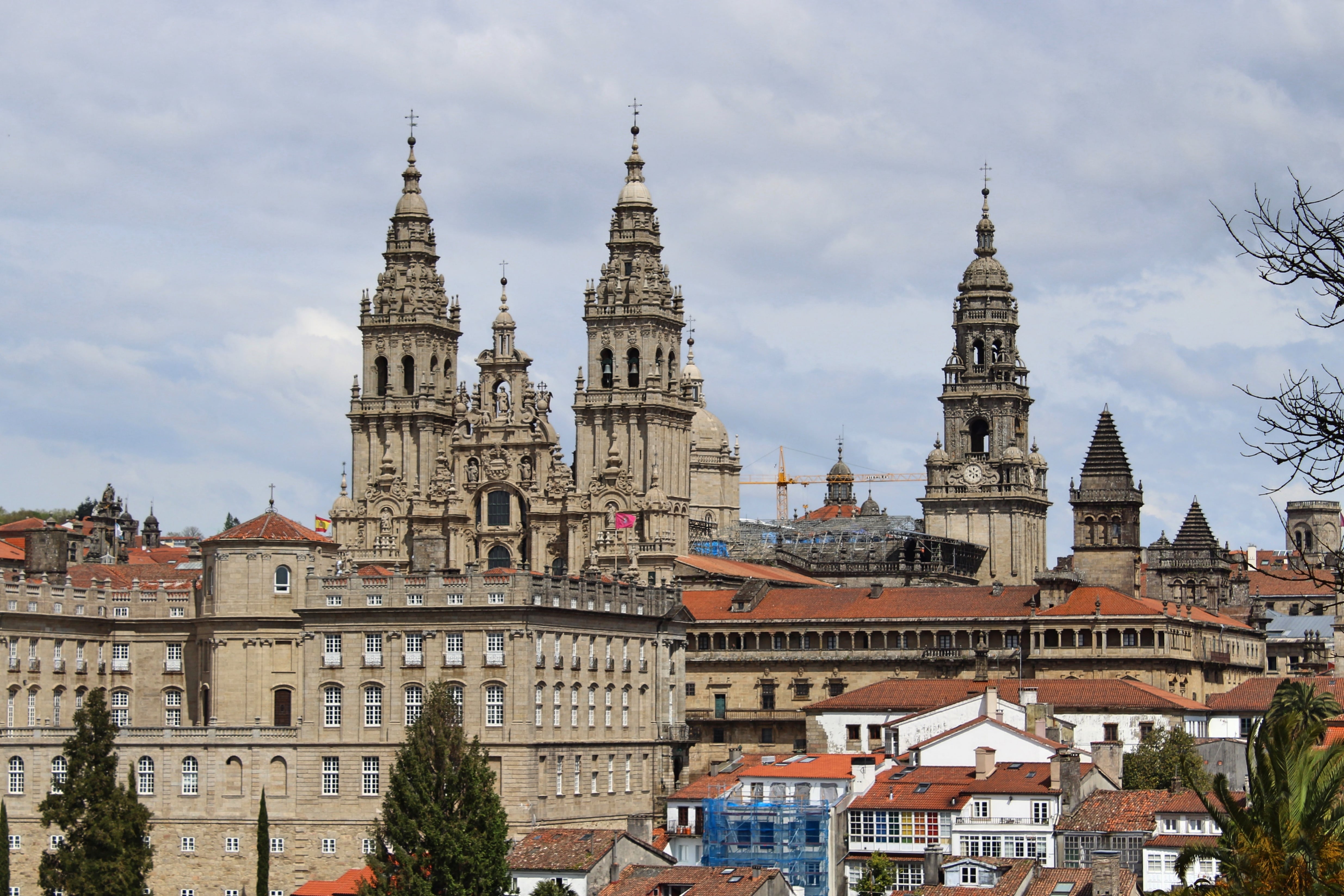
Best of all, this park offers an iconic view of the city and its cathedral. I took two shots with my new camera, one in winter and one in spring.

The view on a December morning
The view on an April afternoon

Review: Our Magnificent Bastard Tongue

Review: Our Magnificent Bastard Tongue

Our Magnificent Bastard Tongue: The Untold History of English by John McWhorter

My rating: 3 of 5 stars

Like many on Goodreads, I decided to read this book because of Manny’s enthusiastic review. And I am glad I did. As a teacher of English as a foreign language, it seemed high time that I understand something of the language’s history. This book was an excellent choice, since it focused on that aspect of English most pesky to foreign speakers—grammar—while avoiding the too-often-told story of the growth of English vocabulary via French and Latin.

McWhorter begins by focusing on two distinctive features of English grammar: the so-called ‘meaningless’ do (as in, “Do you eat rabbits?”) and the use of the progressive in order to talk about the present (as in, “I am going,” rather than simply “I go”). Not coincidentally, these two aspect of English cause some of the most persistent errors in my students. In Spanish, just like in every other European language I know, there is no auxiliary verb needed for negations or questions; you can simply ask “¿Comes conejos?” Similarly, in Spanish, as in German or French, you can use the simple present to refer to what you are doing now; thus, a Spaniard can say “Voy” to express a current movement, and they reserve “Estoy yendo” for special emphasis.

Curiously, no other Germanic languages have these features. Indeed, they are absent (according to McWhorter) from every other European language, with the notable exception of the Celtic languages (specifically, Welsh and Cornish). This leads him to the quite natural supposition that the indigenous Celtic languages exerted an influence on the Old English spoken by the invading Anglo-Saxons. He musters quite a number of evidences and arguments in support of this thesis, to the extent that I was pretty worn out by the end of the chapter.

To be fair, this idea is considered quite controversial in the academic community, so McWhorter felt the need to champion it in full battle array. Nevertheless I think the maxim “Know your audience” applies here. I presume most readers of this book will be, like me, non-specialists, with little reason to be skeptical of the Celtic influence; to the contrary, it struck me as extremely plausible. So McWhorter’s harping on the point was simply taxing. In any case, if he is looking to influence the academic community, a short popular book is not the medium to do it.

McWhorter’s next chapter deals with the Viking influence, which he holds responsible for the jettisoning of much of Old English’s serpentine Germanic grammar, resulting in the relatively “easy” language we have today. And he rounds out the book by making the considerably more speculative argument that Proto-Germanic diverged in such a distinctive way from Proto-Indo-European because a large number of Semitic speakers (Phoenicians who had made it to Denmark) learned the language. At this point, I admit that I began to have reservations about McWhorter’s method. Despite the reasonableness of the Celtic-English and the Scandinavian-English hypotheses, the cumulative effects of McWhorter’s arguments was to weaken each.

McWhorter’s specialty is researching how languages influenced one another historically; and one begins to suspect that this academic orientation leads him to see evidence for this phenomenon everywhere. To me it is unsatisfying to write a history of English as a series of stories, however plausible, of how it was influenced by other languages. This is because, logically, in order for there to be distinct languages capable of mixing there must first be languages capable of transforming without any linguistic contact. It can all begin to sound like a biologist who insists that the reason elephants have tusks is because proto-elephants mated with proto-walruses epochs ago.

This is an unfair comparison, of course; and to repeat I think his Celtic argument is quite strong. However, the more one reads, the more McWhorter’s method can begin to sound unsettlingly like Just-So stories. Some inconsistencies in the arguments make this clear. For example, he brushes aside the paucity of Celtic vocabulary in English, while citing the many Scandinavian loan-words as evidence for Viking influence (not to mention the possible Semitic loan-words in Proto-Germanic). To me it seems prima facie dubious that Welsh and Cornish speakers were able to fundamentally transform English’s grammar without leaving a considerable stockpile of loanwords. Importing words is the most natural thing in the world when learning a foreign language; I do it all the time, as do my students.

To objections like these McWhorter is always able to point to a case where a similar event occurred as the scenario he is describing. But, again, one surmises that the corpus of available examples is large enough to back up any claim he wishes to impose. McWhorter criticizes other linguists for ignoring the causes of language change. But is invoking the influence of other languages a satisfying explanation? To me this is of the same order as arguing that life on Earth originally came from Mars. Perhaps, but how does life arise in the first place?

Now, it may be unfair of me to nitpick what is, after all, a popular book. But if McWhorter saw fit to include so much argument in favor of his uncommonly-held opinions, I think it behooves readers to be somewhat skeptical, especially since the general reader has no specialized knowledge to ground her acceptance or rejection of McWhorter’s conclusions. For my part, I think a more expository and less polemical book on the history of English would have made for far more pleasing reading. Yet McWhorter is an engaging writer and an original thinker, so it was valuable to learn of his approach to linguistics.


View all my reviews

Review: Letters of the Younger Pliny

Review: Letters of the Younger Pliny

The Letters of the Younger Pliny by Pliny the Younger

My rating: 4 of 5 stars

… the work of getting anybody to cheerfully undertake the monotony and drudgery of education must be effected not by pay merely, but by a skillfully worked-up appeal to the emotions as well.

I read this book in preparation for a recent visit to Pompeii; and it was an excellent choice. The ancient letters and the ruined city make for an ideal pairing, as both offer a remarkable look into daily life in ancient Rome. Pliny had a long and eventful career: an orator, magistrate, lawyer, and writer. His correspondence includes mundane details, tender love letters, poetic reflections, philosophical musings, and much else. Whatever the subject, his personality shines through: intelligent, urbane, loyal, if a bit ostentatious and pompous. He is, above all, eloquent; and his letters are without exception written in superb prose.

Though each epistle is a valuable historical document, some are conspicuously noteworthy. Most interesting for me was his description of the eruption of Vesuvius, which resulted in the death of his illustrious uncle, Pliny the Elder. He recounts his uncle’s and his own experience in two letters to his friend the historian Cornelius Tacitus. Here, with an eye to posterity, perhaps, Pliny reaches the height of his literary skill as he relates his escape from the eruption:

We had scarcely sat down when night came upon us, not such as we have seen when the sky is cloudy, or when there is no moon, but that of a room when it is shut up, and all the lights put out. You might hear the shrieks of women, the screams of children, and the shouts of men; some calling for their children, others for their parents, others for their husbands, and seeking to recognize each other by the voices that replied; one lamenting his own fate, another that of his family; some wishing to die, from the very fear of dying; some lifting their hands to the gods; but the greater part convinced that there were now no gods at all, and that the final endless night of which we have heard had come upon the world.

The collection is also invaluable for the correspondence between Pliny and Trajan. In these letters Pliny’s style is more restrained and formal; he takes the part of a supplicant and an apprentice. For the most part he is asking the Emperor for a favor or for advice. Much of it is concerned with the proper way to interpret the law and to distribute punishments, or else asking for permission to erect aqueducts, temples, and the like. Most extraordinary are two letters concerning the practice, spread, and prosecution of Christianity. Even at this early date, it was clear that the religion could grow rapidly: “In fact, this contagious superstition is not confined to the cities only, but has spread its infection among the neighboring villages and country.”

In sum, I recommend this book to anyone and everyone interested in ancient Rome. The letters are at once a model of style and a window into the past. Few books offer so much insight and pleasure for such little drudgery.

View all my reviews

Lost and Found in Dublin

Lost and Found in Dublin

“Landed!” I texted my friend, using the airport wifi. “Where you at?”

I had just stepped off plane and into Dublin Airport, Terminal 1. My friend from home, Durso, had also just arrived—from Scotland.

This trip was months in the making. During the summer of 2017, Durso had asked me if I would like to meet up with him in Dublin for a weekend. Well, he didn’t just ask; he gave me an offer that I could hardly refuse: “If you come, I’ll pay for the hostel.” Free things have always been a weakness of mine; and in any case it sounded like fun, so I said: “Absolutely.”

Now it was December of that year. I hadn’t seen Durso, or anyone from home, in about three months.

In minutes I received a text from him:

“Word, just arrived. What terminal you in?”

“Uh, not sure. Lemme check… It’s terminal 1, I think.”

“OK, be right there.”

“But where are you?”

“Terminal 2.”

“I’ll head your way.”

The walk between the two terminals is short and well-marked. It would be difficult to miss somebody coming the opposite way. Nevertheless, I managed to get to the strikingly more modernistic Terminal 2 without catching sight of my friend. When I reconnected to the wifi, I messaged him.

“I’m here, Terminal 2. Where you at?”

But I could tell from the single, grey checkmark that my message didn’t arrive, which meant that he was off the wifi. I waited. The minutes passed slowly. I was a bit nervous. It’s always somewhat stressful trying to find someone without the use of phones, like people did in olden days. And I was also nervous because, though I’ve known Durso for a long time, I’ve never travelled with him. In fact, it had been about a year since I had travelled with anybody. I had gotten into the habit of solo travel after a breakup, and had gotten so used to it that I was convinced that company only made a trip worse. When I was alone I could do what I wanted, when I wanted; but now I would have to compromise. This was a test.

As I stood there, waiting for Durso in the cavernous hall of the terminal, I felt that this experiment was already failing. But soon enough, the trusty figure of Durso emerged from the crowd of travellers—unshaved, dressed in a collared shirt, a blazer, sunglasses, and brandishing his trademark curly locks.

“Bro!” he said, before we hugged.

Airport Selfie

“Hold on,” I said. “I need to take a selfie for my mom.”

That done, we made our way to the bus.

“Why are you all dressed up?” I asked him.

“Man, whenever I’m in Europe, I feel like I’m so badly dressed, so like everyday I get dressier and dressier. I just feel so ashamed around Europeans.”

“Weird. Well how’s your trip been so far?”

“Oh, dude, it’s been awesome.”

And at this, Durso launched into an impassioned and somewhat rambling account of his previous travels. His younger brother, Zach (whom we were to meet in the center), was studying abroad in Galway, and so Durso’s family took a trip to meet him there. Then, Durso had taken his own trip to Edinburgh and Glasgow (he liked the first and hated the second).

“Dude, so I went on this awesome walk in the highlands, after I took a bus to get there. And I was just walking and walking and it was, like, just so beautiful. But it was also really cold and I totally didn’t dress for it, and there were no people around, and I was just walking and walking, and finally the sun started setting, and I was like ‘Oh my god, I’m lost, I’m lost, I’m totally going to die, I’m going to get lost and freeze to death,’ but in the end it was fine, I just found the bus and went back to the city.”

Durso also had very positive impressions of Galway, which he vastly preferred to Dublin.

“Yeah, so, like Dublin is a nice city, but you don’t get a real feel for Ireland there. In Galway there were all these little boats and fishers and stuff, and the countryside was just so nice, so nice. Man I can’t wait to go back.”

The bus (the Airlink 747, a double-decker) wound its way to the city center, and soon Dublin came into view

I had done absolutely no research beforehand, so my only expectations were shaped by my readings of James Joyce. Needless to say, however, Ulysses did not exactly give me an accurate impression of the city. Like many old but economically successful European cities, Dublin is an arresting mixture of old and somewhat dour heaps of stone, and new and shiny towers of twisting glass and metal. And as with many an old city, it is centered upon a river—in this case, the Liffey.

The Liffey with the Ha’Penny Bridge

The bus deposited us right on the riverside, very near to the hostel that Durso had booked. Zach was there, waiting near a Dunkin Donuts (if memory serves). Though I had known Durso for years, and had been to his house several times, this was the first time I had ever really spoken to Zach. In high school, I passed Zach nearly every day on my walk home, as he rode his scooter in front of his house (he’s several years younger than I am). Sometimes I said “hi,” but that’s about it.

Now he was full grown—an athletic build, square jawline—and stylistically worlds away from Durso: pragmatic and understated clothes, close-cropped hair, clean-shaven. And here he was in Ireland, studying something practical like business or economics. Unlike Durso or I, this boy was going places.

We checked in to the hostel. Durso had splurged, and had booked a room right in the center of the city. When I heard the price, I nearly choked. Immediately I felt very guilty for not paying (but not, of course, guilty enough to offer to pay a part of it). It was three of us in a room with three massive, three-story bunk beds—room for nine.

“Oh man, I wonder if anyone else is gonna come,” Durso said.

“Hope not.”

We left to see the city. It quickly became clear to me that Zach was not simply treating his study-abroad as an opportunity to drink Guinness. He had done his homework about his host country, and was brimming with historical facts that he led drop as we walked. Since I was (and remain) shamefully ignorant of Irish history, many of Zach’s facts were wasted on me. But some managed to stick.

“See that?” he said, pointing to a big neoclassical building with columns in front. “That’s the General Post Office. During the Easter Rising, the rebels used that building as a headquarters, so it got bombarded by the British. Here, you can still see the bullet marks.”

The GPO after the Rising

He pointed to a column and, indeed, the battle scars were unmistakable.

Next we crossed the river Liffey on the famous Ha’Penny Bridge—a very pretty cast-iron bridge, and named for the toll that pedestrians originally had to pay. Nowadays, thankfully, there are no turnstiles.

Our first stop was Trinity College, partly because I had insisted on seeing the Book of Kells. Trinity College is the oldest and most prestigious university in Ireland, and its campus has the distinguished look of academic pedigree. Stately buildings enclose a central square, through which students scurry from class to class like so many industrious ants. The Book of Kells is held in the college library. After a short queue (and about 15€) we were inside.

Well, not all of us. Since Zach had already paid to see it, he preferred to wait outside. Durso and I promptly found ourselves in a room full of backlit displays, explaining the history of illuminated manuscripts in Ireland. I wanted to take some photos for my records, but the staff were very insistent that no photos were allowed.

In his classic documentary, Civilisation, the art historian Kenneth Clarke describes the monasteries in Ireland as one of the last holdouts of Western civilization after the collapse of the Roman Empire—when Germany, France, Spain, and Italy were overrun by various “barbarian” populations. Clarke’s view is doubtless an exaggeration; civilization never stopped. Nevertheless, it is impossible to witness the high artistry and craftsmanship of these illuminated manuscripts without a feeling of awe. The Book of Kells was not the creation of a mighty artistic tradition in its prime, but was the work of a few monks on a far-off island during one of Europe’s lowest moments. As a case in point, the book was once stolen by Vikings during a raid.

I am getting ahead of myself. The Book of Kells is a sumptuously decorated collection of the gospels. As with many books during that time—all handmade and mostly religious—the book was decorated with images and patterns. The Book of Kells is special in that it is, perhaps, the most beautifully illuminated book in existence. What first strikes the viewer is the level of detail. The twisting, shifting shapes seem to curl endlessly around themselves into progressively finer and finer scales; it boggles the mind how anyone could have planned and executed such a thing. Kenneth Clarke reminds us that, in those days, they didn’t have television, so fancy patterns were likely the only visual entertainment available.

The text opening the Gospel of John

“Hey guys,” a voice behind us said.

I turned around to find—Zach.

“You came in after all?”

“I just snuck in through the exit. I remembered where it was from the last time. Nobody stopped me.”

“What a badass.”

We proceeded from the informational exhibit to the book itself. It is displayed in a darkened room (for preservation purposes, I gather) and shown beside other exemplary illuminated manuscripts. The 340 pages of the Book of Kells are bound in four volumes, and two of these are displayed at any one time, turned to different pages.

I peered down at the glass display case with reverence. I remembered first seeing the beautiful book in my Introduction to Art History class in college (taken as a core requirement), and being deeply impressed. Now I could see the masterpiece in person. The only problem was the other people. Specifically, one guy was bent down very close to the glass, and refused to budge. He stayed looking at the page for ten minutes, as the people around him jostled for space around the edges. I fully understand why the man would want to make the best of what may be his only opportunity to closely examine the glorious book. I’d love to do the same. Still, blocking other people’s views did violate Kant’s categorical imperative.

Considering the crowd and the dim lighting, you can probably get a better view of the book by simply going to Trinity College Library’s website, where the entire book has been digitized in high quality. But at least I get to brag about seeing it in person.

The last part of the visit is to the library’s famous Long Room. As one would expect, this is a very long room filled with very old books. Two floors rise upward to meet in the circular vaulted ceiling, creating a kind of tunnel of knowledge. Marble busts of great intellectuals line the lower walkway, including one of the great Irish writer, Jonathan Swift. It is a veritable temple of learning, as a library should be. And there was one more item on display: Brian Boru’s Harp.

“So this harp is supposed to be the oldest harp in the world,” Zach said. “It was made in the…  15h century I think? This was the model for the harp on Ireland’s coat of arms, so it’s like a national symbol.” (It’s also used in the logo for Guinness and Ryanair.)

“Nice.”

(Brian Boru, by the way, was an Irish king of the 10th century. The harp was reputed to have belonged to him, but that’s quite impossible, since it was made five hundred years after he died.)

Notice the harp.

When we re-emerged into the city I found, to my great dismay, that it was already getting dark. I checked the time on my phone.

“4:00?” I said in disbelief. “It’s getting dark at four o’clock?”

“Yep,” Zach said.

“In Madrid, the earliest it gets dark is 6:30!”

“Must be nice.”

“Where are we going?”

“Christ Church Cathedral,” Zach said. “It’s free.”

In minutes we were standing outside of a very pretty medieval church building. But when we stepped inside, we found, to our dismay, that you did have to pay.

Christ Church

“Lame,” Durso said. “I’m not paying to get in there.”

“Me neither,” Zach said.

“Oh well,” I said. “What’s next?”

“Well, we can go see St. Patrick’s.”

This is located right down the street from Christ Church. (If you are wondering how there can be two cathedrals so close together, this is because Christ Church is the cathedral for the local diocese while St. Patricks is the so-called National Cathedral. Both belong to the Church of Ireland.) At the end of a string of red apartment buildings, the more imposing, spired form of St. Patrick’s came into view. But, unfortunately, you have to pay to enter that cathedral, too, and my companions weren’t willing—and in any case it was five minutes to closing time. If I had been alone and the cathedral had been open, I likely would have forked over the money, if only because Jonathan Swift served here as the dean.

St. Patrick’s Cathedral

“Yeah, so apparently these two churches had kind of a rivalry for a while,” Zach explained. “Like dueling congregations. Kinda weird.”

It is indeed strange that two grandiose cathedrals for the same church would be built so very near each other. I was also surprised that there wasn’t a more imposing Catholic cathedral in the city, considering that Catholicism is the most popular religion in the country. But of course the Anglicans (of which the Church of Ireland is a branch) have historically wielded the power.

By now it was five o’clock, cold and dark, and every attraction was closed.

“What should we do?” I asked.

“Drink in the hostel?” Durso suggested.

“Sounds good to me.”

We found, to our relief, that nobody else had moved into our room when we were gone. We had the whole place to ourselves—an interior window, a concrete floor, and three triple-decker bunk beds. The beds had too little headroom to sit down in, so we sat down on the concrete floor, charging our phones. (In Ireland they use the UK-style outlets.)

Durso, as ever, came prepared. He had two bottles of liquor stowed away in his backpack, which we passed around. An hour passed this way, chit-chatting and, in my case, taking small sips (hard alcohol never sits well in my stomach), until I had a brilliant idea.

“Hey guys, let’s make fortresses. We can use the blankets from the other beds.”

Somewhat tipsy, we took the spare sheets and hung them from the upper beds, creating a kind of screen surrounding each of our bunks. I remember doing almost this very thing when I was young, pulling a bunch of chairs together in the living room and draping blankets over them to create a “fortress.” Both back then and in Dublin, it was strangely exhilarating; but why? A Freudian would say that we were recreating the elemental womb, seeking the feeling of being unborn. Well, I don’t know about that, but it did help give us some privacy in the bare room.

Now it was time to go eat. We wandered our way into the center, and wound up in a pub. It was then that I noticed how expensive Dublin is. Indeed, it is scarcely less pricey than London. But the prices seem even worse since they are in euros, making them easier to compare with the cost of Madrid.

“I can’t pay 12€ for a soup!”

“It’s good, bro,” Durso said.

I bit my tongue, since I still felt a bit guilty for not paying for the hostel.

I ordered Irish lamb stew. This is exactly what it sounds like—and it was delicious.

“I think they put Guinness in the broth,” Zach said.

I quickly finished my bowl, and mopped up the remaining broth with black bread. Scrumptious, but not nearly enough. I wanted to order more; but I had to save my money for beer.

We made our way to Temple Bar, the nightlife capital of Dublin. This is basically a zone in the center with a high concentration of attractive bars. Its name does not derive from any previous temple, but from a prominent local family or, perhaps, in imitation of a ceremonial entrance in London—scholars are not sure. The place was buzzing with activity; American accents were common in the air; and some visitors looked like they had had enough to drink already.

We went to the most famous establishment, the Temple Bar Pub (it is named after the street and not vice versa). The outside was decorated festivaly with strings of Christmas lights, and the inside was too. The place was totally packed. On the far end a group was playing traditional Irish music: a guitarist, a fiddler, and a singer. This seems to be a common staple in Irish pubs, and is very popular among the tourists. I was amazed to find that Durso and Zach knew many of the songs well enough to sing along. I was lost. Apart from movies, I had never listened to Irish music. And I must admit that, during my experience in Dublin, it all sounded very similar to me and generally failed to hold my attention.

We watched a couple songs, but eventually decided that the place was too crowded to stay at. We got out into the street, braced by the relative quiet and the cool night air. It was then that I had an unpleasant realization.

“Uh, guys,” I said, tapping my body. “I think I left my bag in the restaurant.”

“Oh shit,” Durso said. “You mean your purse?”

“It’s a messenger bag.”

“Word. Was there anything important in it?”

“Not really. Just my kindle. But I’d prefer not to lose it.”

“Ok let’s go,” Zach said.

“Sorry.”

We walked back towards the restaurant. From the street, however, it was difficult to determine which one we had been in, since several nearly identical establishments were located right next to each other. After first going in the wrong one and realizing our mistake, we found our way to the right spot. There, I asked the waiter if he had seen a small brown bag.

“It looks kinda like a purse,” I explained.

“If there is any lost and found, it’ll be a couple doors down, at the hotel.”

The restaurant, you see, was affiliated with a nearby hotel. I walked inside with Zach and asked the front desk.

“A small brown bag?” he asked.

“Yeah, it’s a messenger bag.”

I waited with some slight anxiety as he went into a back room. Meanwhile, a family arrived to check in, with heavy suitcases in tow. Five minutes later, the man arrived with a familiar brown bag.

“Thanks so much,” I said, checking inside. My kindle was intact.

“Got your purse?” Durso said, as we got back to the street.

“Shut up.”

Next we went to a less crowded pub, right alongside the Liffey. It was quite a sprawling affair, with several floors and bars around every corner. Like true tourists, we ordered three Guinesses and picked a seat. On a screen they were broadcasting a performance downstairs of a man playing more Irish music.

“You know,” I said, after tasting the Guiness, “everyone says that Guinness tastes better in Dublin. But this tastes the same to me.”

“Dude, this is way better,” Durso said.

“We’d have to compare them side by side,” Zach said.

A beer and a half later, I was feeling settled in.

“You know what guys? This is awesome. I can’t believe I’m in Dublin.”

“Yeah man, this is awesome. Though Galway is a lot better.”

“Don’t rub it in.”

It was, indeed, pleasant to be in Dublin. Though we had been friends for years, I had never traveled with Durso, and had hardly spoken to his brother. I was nervous that it would be too much; that I would get sick of them, or them of me. But, in the end, it was just what I needed to feel re-connected to home.

Brothers: Durso and Zach

After all, Dublin wasn’t too far off. Like New York, it was cold and rainy; and like New York, everybody spoke English. Even the people looked familiar. Durso, Zach, and I all hail from Irish stock; so walking around the streets felt like getting lost in a reunion of distant family. Most important, though, was the chance to see an old friend and to be effortlessly myself—something that is difficult when in foreign lands making new friends.

After three rounds, we left to get back to the hostel. But there was a snag.

“Hold on guys,” Durso said. “I wanna get almonds.”

We walked to a SPAR (which, if you don’t know, is a chain similar to 7-Eleven) to search for Durso’s desired snack. The store had an impressive array of nuts on sale. But no almonds.

“This is crazy,” Durso said. “Like, they have everything except almonds.”

“You sure?”

“Yeah, man, I checked everything.”

“Well, want some peanuts?”

“No, no, I want almonds.”

“But they don’t have almonds.”

“I know, I know.”

Durso searched the store with the air of a desperate man.

“Jesus, what should I get? They don’t have almonds. I don’t know.”

He held up a container of California rolls from the fridge.

“Maybe this… Do I want sushi?”

“Dude, don’t get sushi, man,” I said. “It can’t be good.”

“But they don’t have almonds.”

“Look, Durso,” Zach said. “How about this?”

And he handed Durso a pack of rice cakes.

“Hmmm,” Durso said. “Yeah, maybe, maybe this.”

We made it back to the hostel. Our room was at the end of a long hallway, whose walls were painted with cartoonish murals of famous celebrities. We passed Marilyn Monroe, Jimi Hendrix, and the Beatles. Meanwhile, Durso stayed in character.

“Help!” he said loudly. “Help me!”

“Shhhhh,” I said, as Zach laughed.

“I’m going to end it all! Death is the only way!”

Durso has a morbid sense of humor.

Back in our rooms, we had one last drink and a few rice cakes.

“Look what I nabbed,” Durso said, taking a glass out of his backpack.

“Did you take that from the bar?”

“Yep.”

“Dude!”

“What? I always take a glass.”

“You’re a kleptomaniac, bro.”

Then, we showered, brushed our teeth, and went to sleep in our little forts.

§

The next morning was grey, cloudy, and cold. We were headed to the beach.

To get there, we walked along the River Liffey on the north side. This took us through the more modern part of town—where, I suppose, many of the companies which make Dublin an economic powerhouse are located. We also passed by the Irish Emigration museum, which I would have liked to have visited if I had had more time, since at least half of my family line come from Ireland. A more gruesome site was the Famine Memorial, statues of six malnourished and spectral Irish (and an underfed dog), staring with hollow eyes to a hopeless beyond. Last we passed the impressive Samuel Beckett bridge, a cable-stayed bridge designed by Santiago Calatrava (a Spaniard) to look like a harp.

One thing which I barely noticed, but which I most certainly passed, was the Royal Canal. This is a 145 km (90 mile) stretch of water that extends from the Liffey in Dublin all the way to the River Shannon in Longford. It has long since served any serious function in transport or industry; but it has been revived as a kind of vertical park. The reason I mention this humble piece of watery infrastructure is because once, on a flight from New York to Madrid, I found a very short documentary about the canal on the plane’s entertainment system. Well, it was not exactly a documentary: two Irish Olympic athletes, mother and daughter, take a leisurely stroll along the canal while scholars and artists meet them along the way to tell them about its history. You see, I was tired but I couldn’t fall asleep; and this documentary seemed to be the most promising soporific short of chemical aid. So I turned it on and attempted, unsuccessfully, to drift off. In any case, it’s a lovely canal.

Samuel Beckett Bridge

When we neared the mouth of the Liffey we crossed to the southern side and begun making our way through several attractive neighborhood blocks. Yet I am afraid that the quaintness of this part of town only called to mind Monty Python’s “Every Sperm is Sacred” (which, by the way, was not filmed in Dublin at all). Finally, after passing through a small park, we arrived at the beach: Sandymount Strand.

Well, it had sand and an ocean, so I suppose it qualifies as a beach, though I could not imagine happily wading into the water on that stretch of coastline. For one, the looming Poolbeg Generating Station—a gargantuan gas power station with two towering smokestacks—did not inspire confidence. But Durso did look great modelling on the sand.

“The snotgreen sea. The scrotumtightening sea,” I quoted. “James Joyce wrote that. The man was a genius.”

“Did he really write that?” Zach said.

“Yeah, it’s one of my favorite quotes from Ulysses. And now I finally had a chance to use it.”

My outstanding literary taste displayed, we were ready to head back into town. After another long walk (and a stop for sandwiches and coffee) we found ourselves at Dublin Castle. This is more of a government complex than a castle nowadays, although originally it did have that function. Now only one turret remains from the erstwhile medieval fortifications; it is attached to the Chapel Royal, a church used by the British leader of Ireland until the establishment of the Free State in 1922.

“There’s a river running underneath it,” Zach said. “Once on a tour they showed it to us.”

(This would be the River Poddle—which, as it happens, is the source of Dublin’s name. A stretch of the river was known as the “dark pool,” which in Irish is “dubh linn.”)

After this we took a detour through a lovely park—St. Stephen’s Green—to get to our next destination: the National Museum of Archaeology. This is part of the National Museum of Ireland; and like every branch of that institution, entry is free. Walking into a museum without a queue or a fee must be one of life’s great experiences. Other countries should take note.

The museum is housed in a grand, cavernous structure that looks as if it used to be a train station. Its collection spans from prehistory, through the Bronze Age, to the medieval period. And there is quite a lot to see.

There was a logboat made in the early bronze age—a huge hollowed-out log that people would paddle through bogs; indeed, it is only because it got stuck in a bog that the organic material was preserved at all. In the center of the museum there is an extremely fine collection of Bronze Age gold objects. Many of these take the form of body ornaments, buttons, bracelets, or collars, and they are remarkable for the extreme skill of their craftsmanship. Collecting and shaping metal in such a way is no mean technological feat.

Aside from these highlights there were stone tools, clay pots, medieval swords, bronze axes, and information on migrations, diets, burials—the list goes on. But what interested Durso the most was the section on the Vikings. I found him near a replica Viking ship, eagerly reading a timeline.

“Why do you like the Vikings so much?” I said to him, rather rudely.

“Dude, they’re awesome.”

“No, they’re savages. They just went around raiding and raping.”

“But their lifestyle was just so amazing.”

(Durso had seen several Viking television shows.)

Probably I was too hard on the Scandinavian vandals. After all, nobody can doubt that they possessed a civilization of sorts, far outdoing their contemporaries in seafaring skill. Nevertheless, I still remain dubious of the Vikings, if only because I have imbibed the Hollywood image of them as predators on more peaceful and sedentary peoples. I am sure the historical reality is more interesting.

As Durso continued to scan the Viking timeline, I moved on, going through the Middle Ages and eventually finding myself in a small room dedicated to Egypt. Every archaeology museum must have at least a few mummies to be properly legitimate. Then, thinking that I had seen everything, I doubled back to find Durso. But he was nowhere in sight. This was odd, since from my vantage point on the second floor I could see the whole museum. As a case in point, I quickly spotted Zach, and went downstairs to meet him.

“Hey man,” I said, “do you know where your brother went?”

“No idea, I was looking for him too.”

“Alright. I think I’ve seen everything. Wanna find him?”

“Yeah, I’ll check over here.”

“Ok, he’s not upstairs, so I’ll look this way.”

And then we did what every horror movie counsels us not to do: split up to find a missing member of the party.

As I looked, I soon discovered that I had been mistaken about the dimensions of the museum. There was an entire wing that I had missed; and it was the most memorable part.

I found myself in a large space subdivided into little chambers, as in a maze; and in the center of each chamber there was a glass case containing a body. These are the famous bog bodies, corpses that have been preserved in Ireland’s peat bogs, many for over 2,000 years. The common hypothesis is that these people were ritualistically murdered, leading some to hypothesize that they were kings of a sort, since many were found near hills used to inaugurate rulers. Well, king or commoner, they are a morbidly fascinating sight. Their skin is leathery and reddish, their muscles and bones still plainly visible. Some even still have hair and clothes.

I think this was the first time in my life that I had seen a genuine corpse in person, and it was unsettling. It is impossible to examine the bodies without wondering what kind of people they were. Each was an individual, more or less like me, yet living in a radically different world and culture.

I grew so fascinated with the exhibit that I completely forgot that I was supposed to be looking for Durso. Finally I reached the end of the display room and turned around, only to bump into Durso right as I walked out.

“Hey dude, did you see those bog bodies? Totally awesome.”

“Yeah man.”

“Wait, where were you?”

“You know, just looking around.”

“Man, you’re just like my grandma, you have to read all the little signs and captions.”

“I wanna learn, bro.”

We quickly found Zach and then left the museum for our last destination: Glasnevin Cemetery. It was now well past lunch time, and the amount of available daylight was quickly running low. It was about an hour’s walk from the museum to the cemetery, most of it unremarkable, though I do remember passing over the Royal Canal.

On the way there Zach gave us another one of his fun facts:

“The Catholic church prohibited human dissections for a while, so that there was a kind of black market of human bodies. It was a big problem. Right after someone was buried, bodysnatchers would come, dig him up, and then put the body in a barrel of whiskey. This kept it well-preserved, and also it let them move the body without getting caught. Finally, they’d sell the body to whoever wanted it—like medical schools—and then they’d sell the whiskey.”

“Jesus.”

“That’s gross.”

When we arrived, Zach had many other facts to share with us.

O’Connell’s tower

“So, for a while there was a lot of prejudice against the Catholics. This guy, Daniel O’Connell, who was a big nationalist politician, campaigned for the opening of a cemetery where Catholics could perform their rites without being bothered. That’s why he’s buried under that big tower over there.”

He pointed to the round tower, which stands near the entrance to the cemetery. O’Connell must have been quite the figure to merit such a monumental tombstone. Indeed, it would be difficult to overstate his role in Irish emancipation.

Collins’ grave

Another hero of Ireland’s fight for independence was buried near the visitor’s center: Michael Collins.

“So, this guy is a bit more controversial. He fought in the Easter Rising [which is what damaged the post office building], and then he fought in the War of Independence. Eventually the British were like, ‘OK you guys can be free, as long as you swear loyalty to the queen. Collins said that it was a good idea, since it was a step towards being totally free. But other people thought it was like giving up, and then the Irish started fighting each other, and eventually Collins got killed.”

“Jeez.”

“Yeah, but a lot of people think of him as a hero. I did a tour here, and the guide said that there’s a woman who comes once a year with, like, a ton of flowers and leaves them on the grave without saying anything. And they don’t know who she is. She’s been coming for years.”

The last national hero whose grave we visited was Charles Stewart Parnell. I already knew something about Parnell, since he is featured prominently in a Joyce short story, “Ivy Day in the Committee Room,” in which canvassers discuss Parnell’s legacy on Ivy Day, a former holiday that commemorated the politician’s death. He was noteworthy for being an Irish Protestant able to work within the parliamentary system, alongside Catholic nationalists and English Whigs, to advance Home Rule. Yet like so many politicians, his career was cut short by a scandal: in his case, an affair. Joyce, like many, believed that he could have achieved Home Rule without violence had he not been abandoned for frivolous reasons.

Yet even if you don’t know anything about the man, you can tell that he was famous just from his grave, since it reads simply:  “Parnell.”

Aside from its distinguished bodies, the cemetery was lovely in itself. I am, perhaps, inordinately fond of cemeteries, since I grew up near a beautiful one; but I think nearly anyone would find Glasnevin a wonderful place to walk about in. Attractive tombstones were thickly scattered over the green lawn—crosses, busts, weeping angels. In an older section many of the tombstones had tumbled over, making the cemetery look like a ruined battlefield. Crows circled in the air above, one of them landing on a mournful statue of the Virgin Mary. Nothing could have looked more bleak under the grey December skies. Yet even in their most desolate moments, cemeteries possess an alluring tranquility: the peacefulness of our common destiny.

By the time we left the cemetery the sun had almost set. And by the time we made it back to the center the sky was black. As expected, we spent some more time at the hostel, drinking the remains of Durso’s liquor and wine.

“Hey guys,” I said, a few swigs in. “I’m trying to start a religion.”

“Oh yeah?”

“It’s called Lotzism.”

“Lotzism,” Zach said, “I like the name.”

“What, do we just worship you?” Durso said.

“No, no. Well, yes. But it’s more than that. The idea is for everyone in the world to slowly become me.”

“Woah.”

“The first step is to read everything on my blog. It’s the Bible of my new religion. But eventually we could use some kind of genetic technology to literally transform everybody into a clone of myself. ”

“What’s the point of that?”

“Well, then everybody would think like me and nobody would disagree with me, ever.”

“I like it,” Zach said.

“To Lotzism!” Durso said, and we toasted.

For dinner we went to what is supposedly the oldest pub in Dublin, the Brazen Head. According to its website the pub dates back to 1198, though I am somewhat skeptical. In any case, it is an attractive establishment. The seating is something of an exercise in Social Darwinism: survival of the fittest. We were lucky and found a table. I ordered bangers and mash, which seemed too English to be eating in Ireland, but it was absolutely delicious.

After that we made our way to a bar for out final collective drink. I had my flight the next day, and Durso and Zach had to return to Galway, so we couldn’t stay out very late. We found ourselves on the top floor of a rather large establishment, sipping Guinness.

“Man, I still feel so ashamed of my first night here,” Durso said. “I was in Galway with Zach and my mom and my sister and Zach’s roommate, and we went to this bar. But I just drank, like, way too much, way, way too much, and eventually people started going home, and it was just me and my sister and Zach’s roommate. And I think I went to the bathroom, or they did, but somehow I got separated. But I thought that they had, like, just abandoned me, and so I ended up walking out of the pub and into the street, but I went the completely wrong direction and I ended up getting totally lost, and eventually I just called Zach at like 3 in the morning, like so pissed, like ‘You abandoned me!’ And he was like, ‘Where are you?’ And I said, ‘I dunno, I see a McDonalds.’ And I’d gone like a long ways in the wrong direction and Zach and his roommate had to come out and find me.”

“Jesus, dude.”

“Yeah, honestly it was pretty shitty of me.”

We finished drinking and went home, but not without having a long, philosophical, and slightly bitter conversation about love. The next morning we woke up, loaded up on the hostel breakfast, and went our separate ways—Durso and Zach to Galway, me to Madrid. But all of us would meet again, soon, in New York.

Review: Gotham

Review: Gotham
Gotham: A History of New York City to 1898

Gotham: A History of New York City to 1898 by Edwin G. Burrows

My rating: 3 of 5 stars

Time is not a carousel on which we might, next time round, snatch the brass ring by being better prepared.

When I began this book, I thought that I would speed through it in a summer month of dedicated reading, while there was little else to distract me. Yet after four weeks of slogging I had not even gotten a third of the way through. Worse still, I never felt fully engaged; every time I returned to the book it required an act of will; the pace never picked up, the writing never become effortlessly pleasurable. So I put it aside, to finish at the end of summer. When that didn’t work, I put it aside, to finish during Christmas break. And when that didn’t work, I bought the audiobook, to finish the remaining chapters on my runs. Now, 261 days later, I can finally tick it off my list.

Edwin G. Burrows and Mike Wallace set an ambitious goal: to write an authoritative, comprehensive, and accessible history of New York City. In their words, they want to include “sex and sewer systems, finance and architecture, immigration and politics, poetry and crime,” and that list is only the beginning. The amount of research required to assemble this vast and teetering edifice of knowledge is almost nauseating. When you consider that this book, heavy enough to serve as a deadly weapon, is the condensed version of thousands of smaller books, dissertations, papers, and studies, you cannot help but feel admiration for the many hours of sweat and toil that went into this pharaonic task. And in the end they have accomplished at least two of their three goals: the book is authoritative and comprehensive. But is it accessible?

This is where my criticism begins. Burrows and Wallace attempt to gather together so many threads of research that the final tapestry is confused and chaotic. In a single chapter they can pivot wildly from one topic to another, going from department stores to race riots to train lines, so that the reader has little to hold on to as they traverse this whirlwind of information. The final product is an assemblage rather than a coherent story, an encyclopedia disguised as a narrative history. Granted, encyclopedias are good and useful things; but they seldom make for compelling reading. What was lacking was a guiding organizational principle. This could have taken the form of a thesis on, say, the way that the city developed; or it could have been a literary device, such as arranging the information around certain historical figures.

Lacking this, what we often get is a list—which, as it happens, is the author’s favorite rhetorical device. To pick an entirely typical sentence, the authors inform us that, in 1828, the Common Council licensed “nearly seven thousand people, including butchers, grocers, tavern keepers, cartmen, hackney coachmen, pawnbrokers, and market clerks, together with platoons of inspectors, weighers, measurers, and gaugers of lumber, lime, coal, and flour.” Now, lists can be wonderful to read if used sparingly and assembled with care—just ask Rabelais. But overused, they become tedious and exhausting.

This is indicative of what is a more general fault of the book, the lack of authorial personality in its prose. Perhaps this is because Burrows and Wallace edited and rewrote each other’s chapters, creating a kind of anonymous hybrid author. Now, this is not to say that the prose is bad; to the contrary, I think that this book is consistently well-written. If the book is dry, it is not because of any lack of writerly skill, but because the prose limits itself to recounting fact rather than expressing opinion or thought. Again, the book is an encyclopedia without the alphabetical order, and encyclopedias are not supposed to contain any speck of subjectivity. Unfortunately, even the most masterly prose is dead on the page if there is no discernable person behind it.

I am being rather critical of a book which, without a doubt, is a triumph of synthesis and scholarship. If I am disappointed, it is because I felt that I could have retained much more of the information in these pages had it been presented with more coherence—a larger perspective, a sense of overall order, an underpinning structure. As it stands, I do not have that satisfying (if, perhaps, untrustworthy) feeling that an excellent history can provide: that of seeing the past from a high perspective, as a grand and logical unfolding. Though not exactly fair, I cannot help comparing Gotham unfavorably with another massive book about the history of the city, The Power Broker, which forever changed how I look at the city and, indeed, at the nature of power itself. Yet after finishing this, I am not sure if my perspective on the city has been appreciably changed.

But I should end on a positive note. This is a well-written, exhaustive, and thoroughly impressive history of the city. And despite all my complaints and headaches, I liked it enough so that I will, someday, drag myself through its sequel.


View all my reviews