
A new episode of my podcast is out: my review of Isaac Newton’s Opticks. And I have a new microphone!
https://podcasts.apple.com/us/podcast/review-newtons-opticks/id1469809686?i=1000449793940
A new episode of my podcast is out: my review of Isaac Newton’s Opticks. And I have a new microphone!
https://podcasts.apple.com/us/podcast/review-newtons-opticks/id1469809686?i=1000449793940
My new podcast episode is here, and it is my review of Isaac Newton’s Principia. To listen, click below:
https://podcasts.apple.com/us/podcast/review-newtons-principia/id1469809686?i=1000448423201
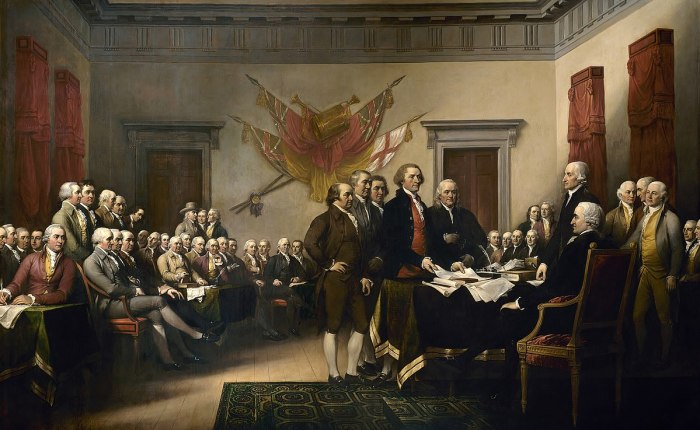

John Adams by David McCullough
My rating: 5 of 5 stars
This is a wholly enjoyable book, which is the secret of its success. Merely flipping through and scanning a couple passages was enough to convince me to abandon everything else I was reading and to go on a pleasure cruise through history. McCullough’s writing is charming to a rare degree—elevated yet folksy, readable without being simple, and filled with personality without being opinionated. I can see why he is so popular.
Yet it must be said that McCullough achieves this charm by relegating much of the tedious, dreary, or ugly side of Adams’s life to the background. A serious intellectual appraisal of Adams would require a much deeper analysis of his political writings; but here they are minor episodes. A serious appraisal of Adams’s presidency would require a far more thorough review of his policies and legistlation, most obviously the Alien and Sedition Acts. Yet here they are just touched upon. Obviously, such a book as I am describing would be both longer and, almost certainly, duller.
Instead of attempting any kind of definitive appraisal, McCullough gives us a literary biography, a portrait of a man in his times. And Adams is well chosen for the subject of such a book. He left a huge correspondence and a copious diary, writing with rare candor and verve throughout his life, which gives the happy biographer a great deal to work with. Further, Adams was a personality of rare proportion: prickly, warm, passionate, brilliant, stubborn, loyal, foolhardy, blunt, obtuse, principled… the list is endless. As are all of us, Adams was a strange inter-mixture of virtues and vices, yet none of his were moderate.
Even if Adams had been devoid of character, however, the events of his life would still attract attention. He was at the forefront of the Continental Congress, instrumental in driving the early stages of the Revolutionary War: creating an army, appointing Washington to head it, declaring independence, and then choosing Jefferson to draft the declaration. Then, Adams had a long and adventurous life in Europe, working in England, France, and the Netherlands—a feast for the biographer. What is more, Adams was intimately involved with many of the leading personalities of the times, not to mention being the father of another president. So you can see that McCullough had plenty of grist for his mill.
Apart from all of this, John Adams was married to perhaps an even stronger character, Abigail. She comes across as truly John’s better half, if not more intelligent than wiser than he, with a personality more stable but no less fascinating. Thus the biography is, quite often, more of a dual biography of these two extraordinary people. Jefferson receives almost as much attention as Abigail, alternately friend and foe, serving as Adams’s foil: calm, reserved, duplicitous, underhanded, and often unwilling to live by the principles he professes—which makes him a far more effective politician. McCullough turns Adams and Jefferson into the twin poles of the Revolution, much as Chernow did with Hamilton and Jefferson. I suppose I should read something about Jefferson now.
Even if the reader will not come away with an understanding of Adams’s politics and policies, there is still a great deal of value in this book. As with every McCullough book, it is a window into a bygone age, illuminated by bright personalities. And in my case, that is all I wanted.
View all my reviews

The Oresteia: Agamemnon, The Libation Bearers, The Eumenides by Aeschylus
My rating: 5 of 5 stars
The Greeks had an intoxicating culture, or at least it seems to us. All of the iniquities and superstitions of the ancient people have been buried or lost, leaving only the perfect skeletons of buildings and the greatest of their literary productions. As a result, they strike us as a race of superpeople. This trilogy certainly furthers this impression, for it is a perfect poetic representation of the birth of justice and ethics out of the primordial law of retaliation.
The most basic ethical principal is loyalty. We are born into a family, establish reciprocal relationships with friends, become a contributing member of a mutually supporting group, and so naturally feel bound to treat this network of people with the proper respect and kindness. But loyalty has several problems. First, one’s family, friends, and group are largely determined by chance—and who is to say that our family and friends are the most worthy? Second, loyalty does not extend outside a very limited group, and so does not preclude the horrid treatment of others. And, as the Greek plays show us, the bounds of loyalty can sometimes cross, putting us in a situation where we must be disloyal to at least one person.
This is the essential problem of Antigone, where the titular character must choose between loyalty to her city or to her dead brother, who betrayed the state. This is also the problem faced by Orestes, who must choose between avenging his father and treating his mother properly. In Sophocles’ play, the problem proves intractable, leading to yet another string of deaths. But Aeschylus shows that by submitting the bonds of loyalty to a higher, impartial court that we can resolve the contradictions and put an end to the endless series of mutual retaliations that loyalty can give rise to.
The rise of judicial procedures, and of concepts of ethics that extend beyond loyalty to fairness, was a crucial step in the rise of complex societies. Aeschylus has given us an immortal dramatization of this epochal step. But, of course, this play is more than a philosophical or historical exercise. It is a work of high drama and poetry, worthy to stand at the first ranks of literature for its aesthetic merit alone. The Greeks continue to enchant.
View all my reviews
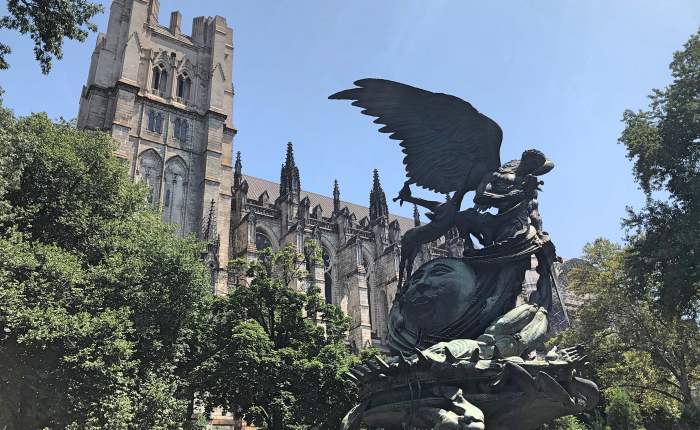
New York provides an architectural feast, especially if you do not mind straining your neck. Not least among the city’s treasures are its many churches. I have already discussed Saint Patrick’s, the city’s Catholic cathedral, easily one of the grandest buildings in the city. But Saint Patrick’s is not the only cathedral in New York.
Further uptown is a cathedral of even grander proportions: Saint John’s. This is a behemoth of a building, certainly the largest church building in New York City and arguably in the entire country. (The Basilica of the National Shrine of the Immaculate Conception, in Washington D.C., covers more area but contains far less volume.) And the building as it exists now falls far short of the original plan. Neither of the cathedral’s front towers has been completed, nor has the enormous tower that was to stand over the midpoint of the building. Indeed, after a fire destroyed the north transept in 2001, the cathedral has even lacked a crucifix floorplan. This has led it to be informally dubbed St. John the Unfinished.

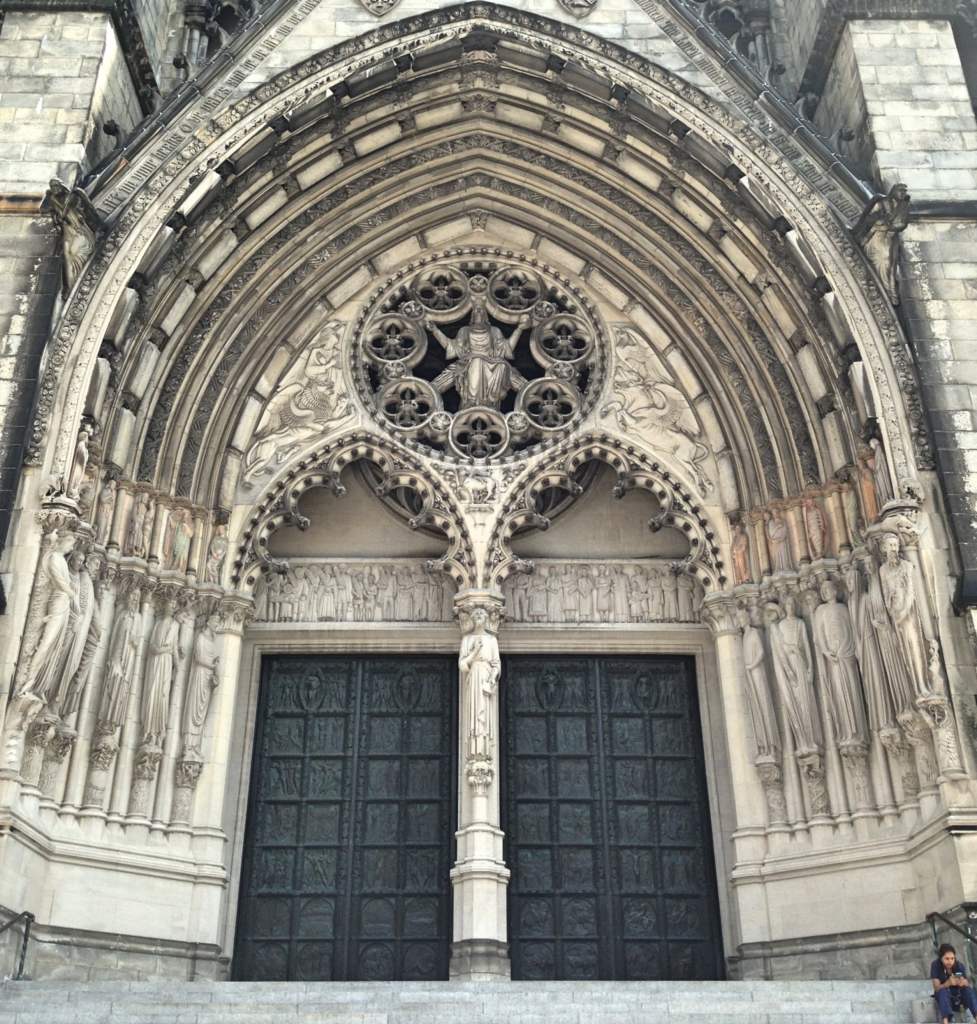
Even with all of these parts missing, however, it is a giant church. Not to be outdone by the Catholics, the Epicopalians conceived the project as a way to rival or even surpass St. Patrick’s. This cathedral, too, is built in an elaborate neo-gothic style that mimics the great cathedrals of France and Spain. Its hulking façade, with its three enormous doors sitting underneath pointed arches, beckons the visitor from the streets of modern Manhattan to a seemingly medieval world. All of the decorations carefully maintain this illusion, from the frilly spires, to the ornamental carvings, to the friezes of Biblical scenes above the doors. Even the monumental brass doors are covered in art, showing scenes from the life of Christ and representations of the four evangelists. Aside from the cathedral’s manifestly incomplete state, the only thing that breaks the illusion is the appearance of grey discoloration from car exhaust.
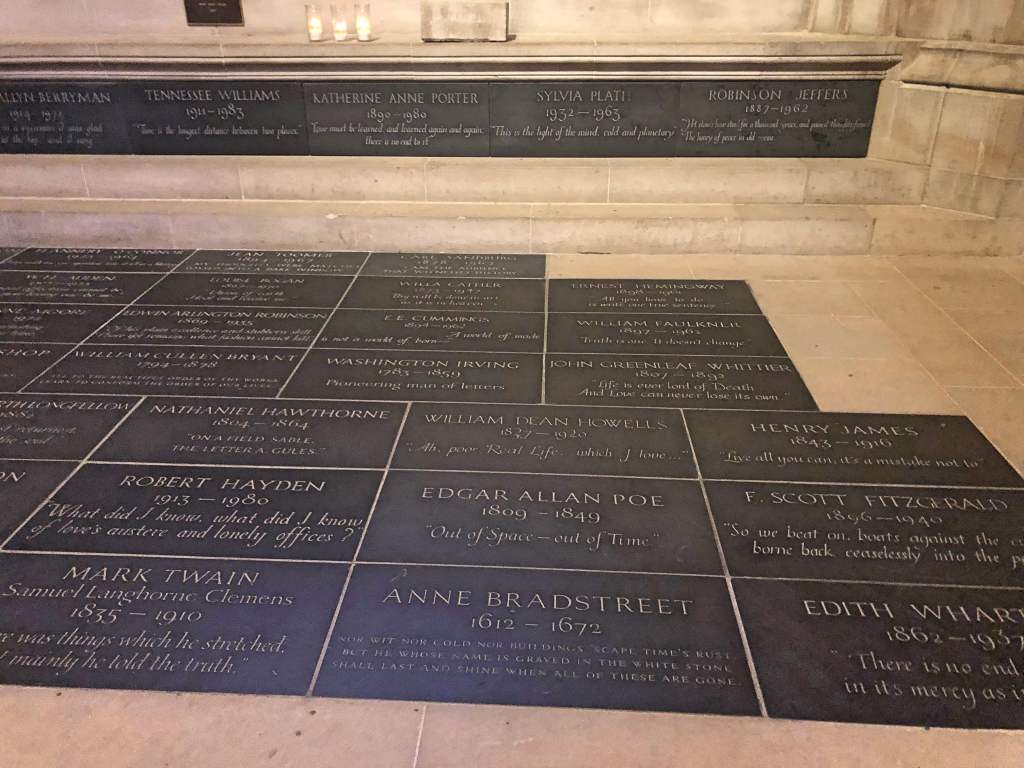
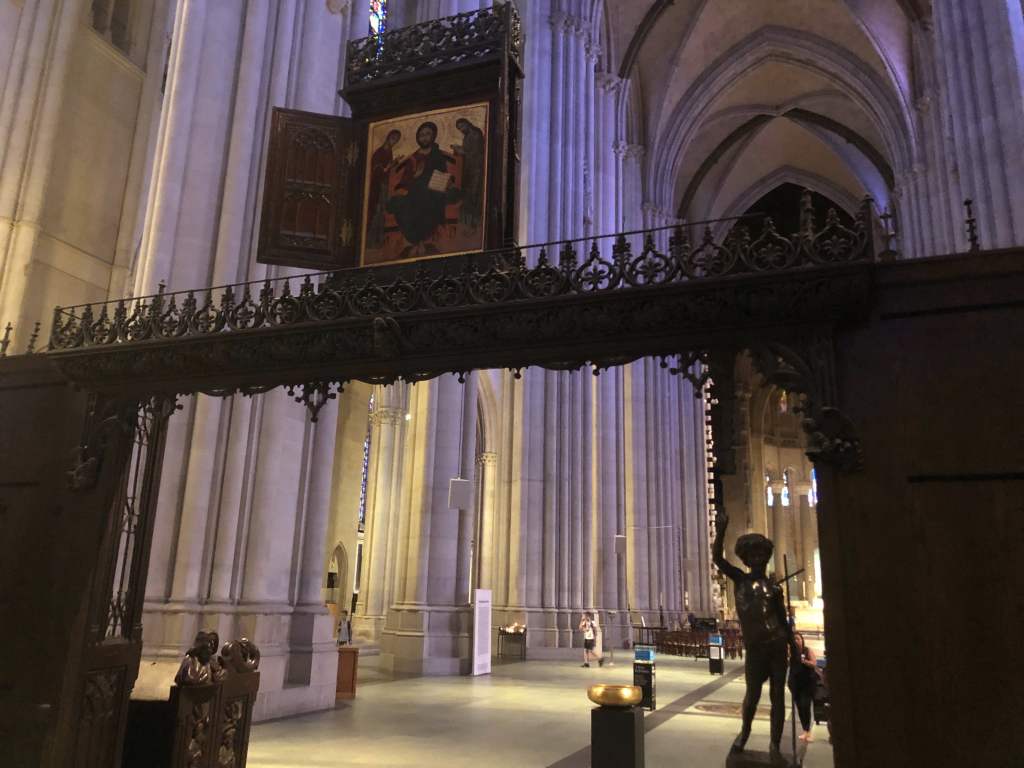
The inside is fully in keeping with this aesthetic. Enormous pillars hold up a vaulted ceiling, while stained glass windows allow colored light to drift inside. The visitor is greeted by a beautifully carved wooden choirstall, holding an image of Christ against a golden background. (This is a real 15th century German work, on loan from the Metropolitan.) The cathedral even has a sort of poor man’s version of the Poet’s Corner in Westminster Abbey. As far as I know, there are no actual poets buried in this section of the church; instead, small tablets bearing the names and brief quotes of famous American authors cover the floor. According to the plaque, the idea was inspired by a rector in the church of Washington Irving in my hometown, Tarrytown.
All this is true to the style of highfalutin European cathedrals. Closer inspection, however, reveals a church very unlike those it imitates, even St. Patrick’s downtown. Saint John the Divine was conceived as a different sort of institution, a “Democratic Church,” as it dubs itself, open to any and all who would like to come. True to form, the rainbow colors of LGBT pride were displayed prominently near one altar. And this is not a pose. To pick just two examples of the church’s progressive tendency, the cathedral hosted a performance by Diamanda Galás meant to raise awareness of the AIDS epidemic, and displayed Edwina Sandys’ statue, Christa, a portrayal of Christ as a woman (unsurprisingly, a very controversial work).
All of this is world’s apart from the staid, traditional activity of St. Patrick’s. On the other hand, it is free to walk into the Catholic cathedral, while visitors of Saint John’s have to pay.
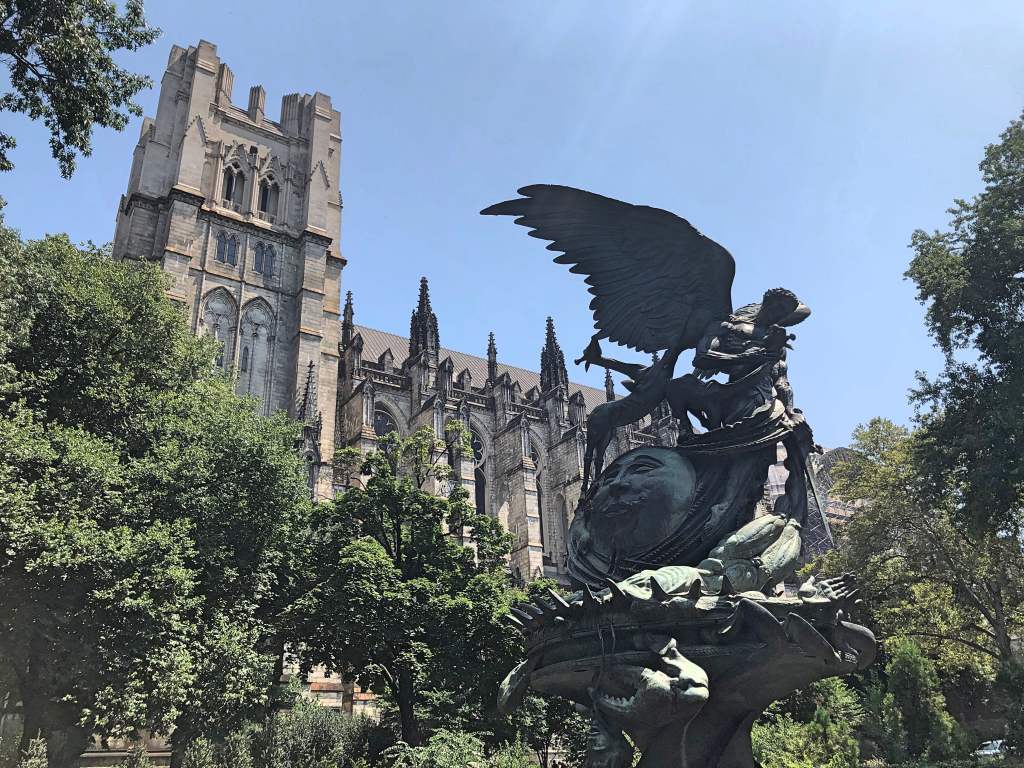
Adjacent to the building is an attractive little green space, known as the West 111th Street People’s Garden. Here is located the building of the Cathedral School, a K–8 school for children of any faith; and during the summer it is common to see flocks of children in summer camp parading by. Nearby is the Peace Fountain, a sculpture by Greg Wyatt supposedly portraying the battle between the Archangel Michael and Satan, and the triumph of good over evil. Yet to me the statue looks like an angel strangling a curious giraffe. In any case, the odd sculpture provides a nice illustration of the cathedral’s less orthodox attitude towards traditional themes.
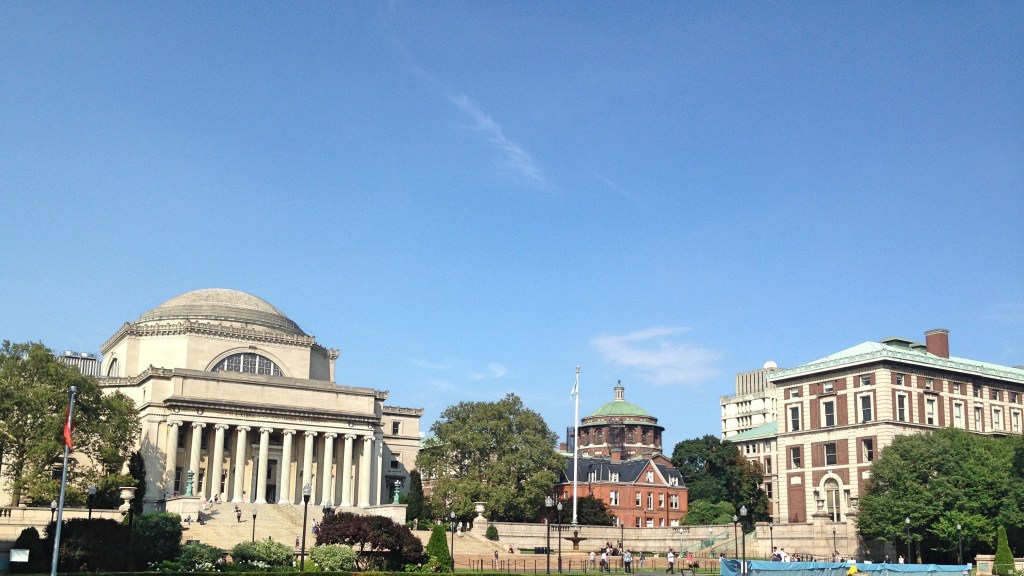
To get to our next church, we must walk a good twenty minutes or so. The pleasantest route takes us directly through the main campus of Columbia University. Founded in 1754 as King’s College, Columbia is the oldest university in New York, and one of the best in the world. Suffice to say that everyone from Alexander Hamilton to Barack Obama have studied there. The campus leaves no doubt as to the honor, splendor, and pretensions of the institution. The grandiose Butler Library, for example, is adorned with the names of great thinkers and writers: Herodotus, Plato, Shakespeare, Tacitus, Voltaire… Directly opposite is the Low Memorial Library, another stately neoclassical edifice; and on the steps leading up to its entrance is the statue of Alma Mater, a symbol of the university, made by the same sculpture who designed the Lincoln Memorial, Daniel Chester French.
The thirsty or hungry traveler may also take a small detour to stop at Tom’s Restaurant, a diner used in the exterior shots of Seinfeld. (Though the outside looks exactly like it does in the show, the inside looks nothing like the fictional Monk’s Cafe.) It is a nice place to have a coffee.

The walk further uptown takes us alongside Riverside Park, and through some quite swanky neighborhoods, with upscale apartments attended by liveried doormen. It is an appropriate setting for a church intimately connected with wealth: Riverside Church.
Riverside Church was the idea of John D. Rockefeller, Jr. Curiously, this was not the first Rockefeller church that I visited. Much closer to my home, Rockefeller helped to establish the Union Church in Pocantico Hills, a lovely stone building with beautiful stained-glass windows by Marc Chagal and Henri Mattise. Riverside Church is much grander in scale, with an enormous bell tower that rises high up above the rest of the building, and which makes Riverside the tallest church building in the United States.

So big is the tower, in fact, that the actual church seems insignificant by comparison, though it is by no means small. The interior consists of a single nave, again neo-gothic in design, filled with pointed arches and stained glass. Architecturally, it is more perfectly composed, more pure of form than Saint John’s, which lends it a rare tranquility and grace. It is simple and beautiful. John D. Rockefeller was motivated to found the church partly out of a dissatisfaction with the Baptism of his youth. He wanted a more modern church, which is why Riverside is nondenominational, and also why great figures of science are carved into the decorations, including Galileo, Newton, and even Darwin.
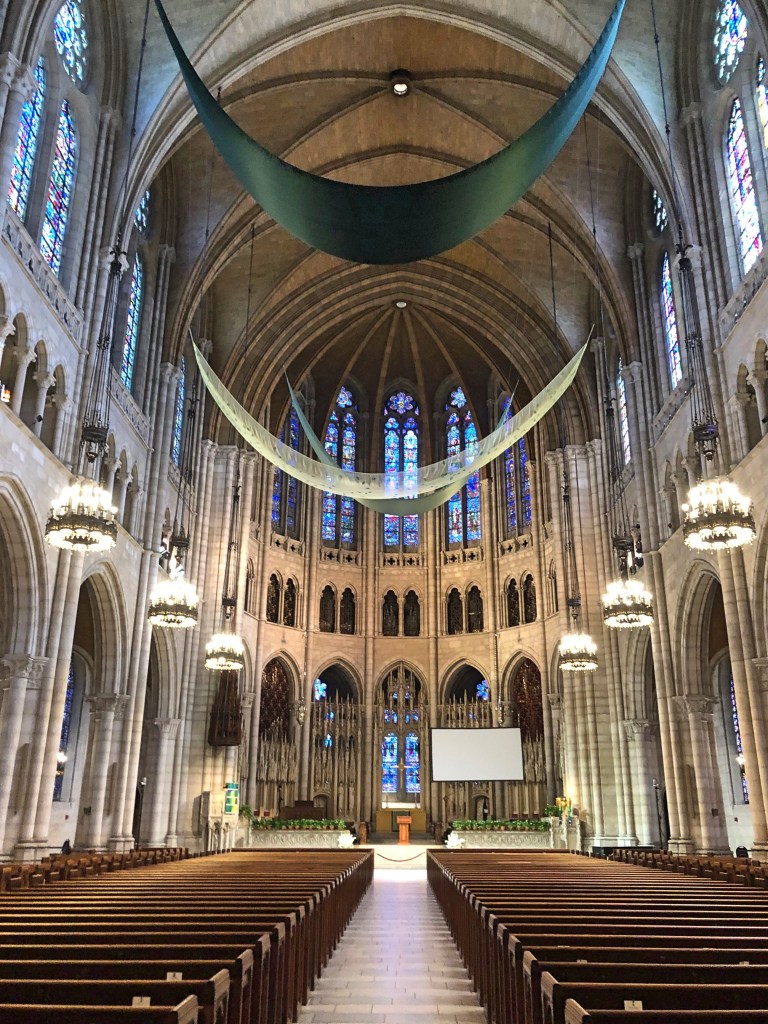
Riverside Church is like Saint John’s in its history of progressive activism. Indeed, the church arguably has an even stronger connection to social reform. Most famously, Martin Luther King, Jr. gave a major speech against the Vietnam War here, in 1967; and there are still photographs of him on the bulletin board. A far more humble mark of the church’s ethos is the bathroom sign, which declares “Anyone can use this restroom regardless of gender identity or expression.” The church is still an epicenter for advocacy on many fronts, from anti-torture, to immigrants’ rights, to support for the HIV-positive. It is a model for a humanitarian church.
It is hardly sensible to visit Riverside Church without visiting the monument next door. Within a few hundred feet of the church doors is the tomb of Ulysses S. Grant, hero of the Civil War and 18th President of the United States. It is the largest and grandest tomb of an American President, an enormous neoclassical structure complete with Greek columns and domed ceiling. Even though his presidency has been widely regarded as a failure, he was an immensely popular figure at the time of his death; his funeral drew one and a half million spectators. This explains the grandiose design of his final resting place, which is highly reminiscent of Napoleon’s tomb in Les Invalides.
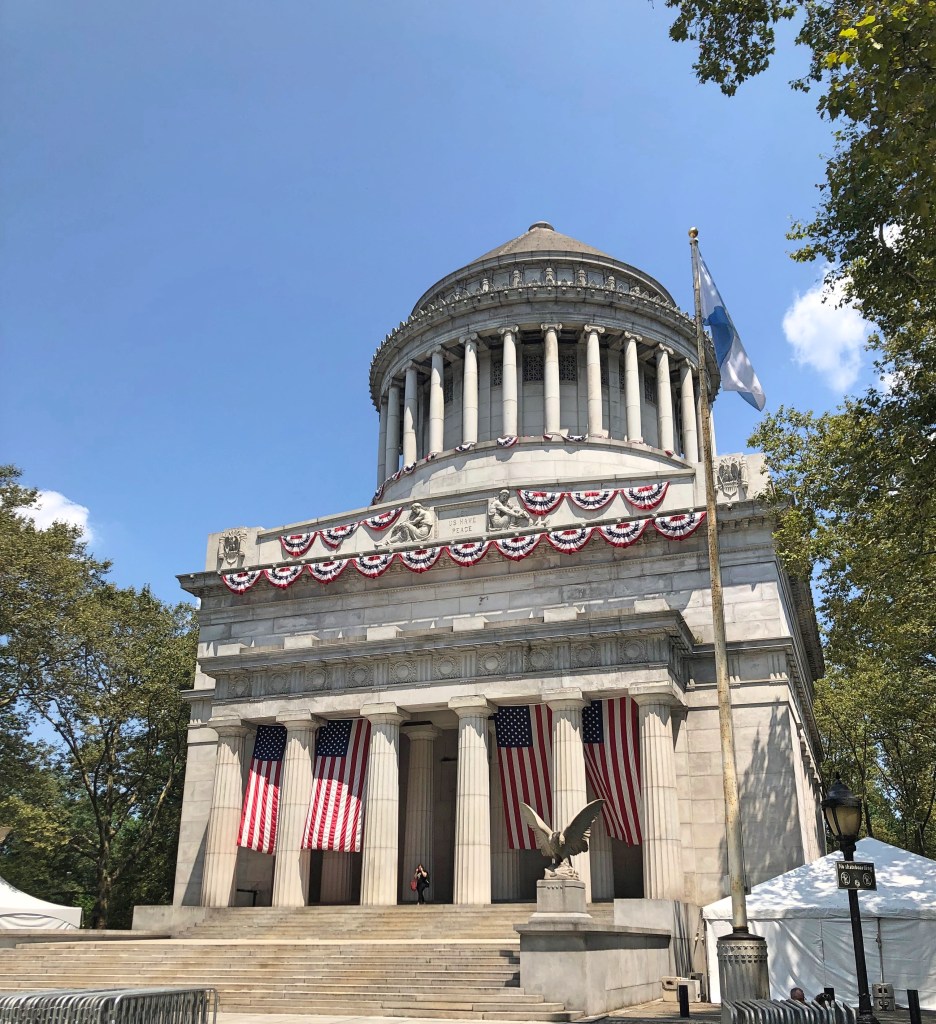
Nowadays, the tomb is a quiet and largely ignored corner of New York, with a handful of tourists respectfully poking about at any one time. Yet it is well worth a visit. Grant is interred in a massive granite coffin, alongside his wife in an identical sarcophagus. The coffins are below the floor level, visible through a hole in the floor, where they rise up from the lower level on a platform—again, much like Napoleon’s tomb. The visitor can descend and walk around the coffins, pausing to admire the busts of other Civil War generals, such as William Tecumseh Sherman. On the upper level, flanking the staircase, are two side chapels with historical flags from the war. And up above a mosaic depicts the surrender of Robert E. Lee to Grant. One could be forgiven for thinking that Grant was a general alone, and not a president, from the evidence of his tomb.


Here is where I will end my little tour, which can take as little as a couple hours. Separated by only a few blocks are the largest and the tallest churches in the United States—not to mention a historic university and an enormous tomb. But Saint John the Divine and Riverside Church are, for me, far more than architectural delights. They are living institutions, still engaged in the proper work of religion: to improve the lives of their congregations.
Here is the next episode of my podcast, a review of two works by Galileo, Sidereal Messenger and Two New Sciences:
https://podcasts.apple.com/us/podcast/review-the-works-of-galileo/id1469809686?i=1000447888527

More people are alive now than ever before, and yet the dead still outnumber the living. Many, perhaps most, of those dead are buried beneath our feet. It is unclear whether there are more interments than inhabitants in all of New York City, but it seems at least possible, considering that over five million people are buried in Queens—over twice that borough’s population. Calvary Cemetery alone holds three million bodies, making it the largest cemetery in the country.
Queens became an epicenter for burials in the 19th century, when land scarcity in Manhattan led citizens to look further afield. The state government took a cue from Pere Lachaise, the magnificent Parisian cemetery located far outside the city center. They eventually decided to convert barren and useland land near the Queens-Brooklyn border into an array of cemeteries. According to Keith Williams, bodies in Manhattan were disentered in the dead of night, to be ferried over to their new home across the river; and many were doubtless destroyed in the process.
The city was badly in need of a park around this time. Neither Central Park nor Prospect Park would be open until the 1870s. It was partly for this reason that the beautiful Green-Wood cemetery, which opened in 1838, became so popular. Indeed, the cemetery was such an attractive place to stroll about that, by the 1860s, it had scarcely fewer visitors than Niagara Falls. Though mostly neglected by tourists nowadays, it is still a lovely respite from the noise of city life, not to mention a repository of the city’s history.
I visited the cemetery on a scorching day in August. The air was humid and heavy. My clothes were soaked through with sweat, and the sun beat down harshly in the open space of the cemetery. Autumn or spring is preferable. I entered through the monumental neo-gothic gate at 25th street—a delightful work of architectural exuberance by Richard Upjohn, one of the founders of the American Institute of Architects.

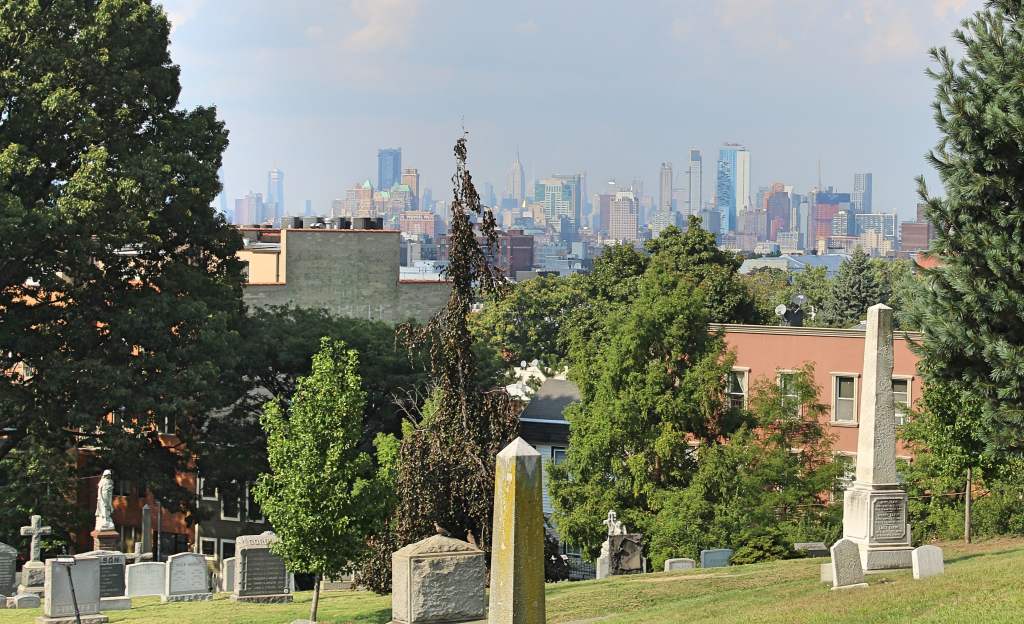
Once inside, the cemetery is as rustic and attractive as a park, with roads winding through grass lawns and scattered trees. The tombstones are distributed somewhat sparsely and unevenly in this immense green space. The majority are simple graves, no more than a foot or two tall, with some more imposing obelisks thrown in. Here and there one finds a statue, in bronze or stone, and some of the wealthier families have their mausoleums built into hillsides. Near the entrance at 25th street is one of the original ponds; and nearby is the cemetery chapel, a noble structure modeled after the work of Christopher Wren. Even more beautiful, perhaps, than the cemetery itself is the view that it provides, with several vantage points offering an excellent look at the Manhattan skyline beyond the river.
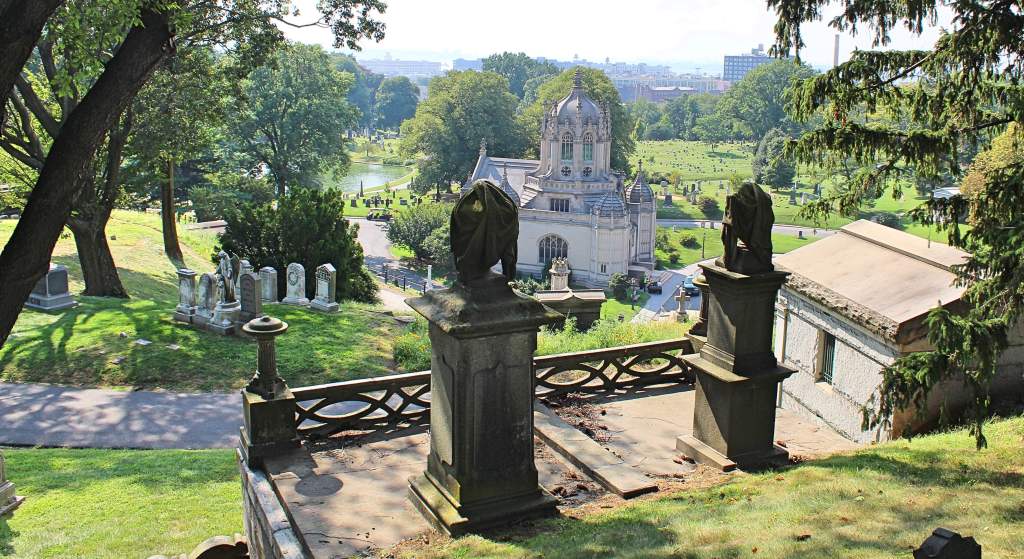
Green-Wood Cemetery holds over 560,000 “permanent residents” (as the website calls them) and a great many of them are famous. Indeed, a list of the prominent burials in the cemetery reads like a who’s who of notable 19th century New Yorkers. We have Henry Ward Beecher (1813 – 1887), a preacher who during his lifetime was among the most famous men in America. Brother of Harriet Beecher Stowe (the author of Uncle Tom’s Cabin), Henry was himself an abolitionist and later on a champion of women’s suffrage. However, his immaculate image became somewhat tarnished during a highly publicized adultery trial.

Another dead titan from this age is William M. Tweed (1823 – 1878), known as “Boss” Tweed, the corrupt and powerful leader of Tammany Hall. After years of stealing millions of taxpayer money, he was exposed and thrown into prison. On the stand, with nothing to lose, his confessions shocked the nation. He hoped for an early release; but that was not to be. Tweed did manage to escape custody once, sneaking across the Atlantic aboard a Spanish vessel; but he was apprehended in Vigo, Spain, by the local police (who had nothing other than a rough sketch to go on). He eventually died in an American jail.
Green-Wood cemetery, though never affiliated with any religion, has prided itself through the years on its respectability, prohibiting all executed criminals, and all who died in jail, from burial within its esteemed grounds. But Tweed, never one to play by the rules, posthumously circumvented this rule and found himself underground for the long sleep.
To discuss all of the notable people sunken in the dirt would take me from now until my own funeral. But I might mention two great musical giants to be found there, Leonard Bernstein (1918 – 1990), most famous for West Side Story, and Elliot Carter (1908 – 2012), one of the pre-eminent American composers of the last century, who lived all of 103 years. Yet another of the cemetery’s residents may have had a greater influence on music than either of these composers: Henry Steinway (1817 – 1871), founder of Steinway & Sons. His son, William (1835 – 1896), is there too, who played an important role in the development of Queens. In fact, the 7 train stills runs under the East River in the so-called Steinway tunnel, which William commissioned for his own shipping and transportation.
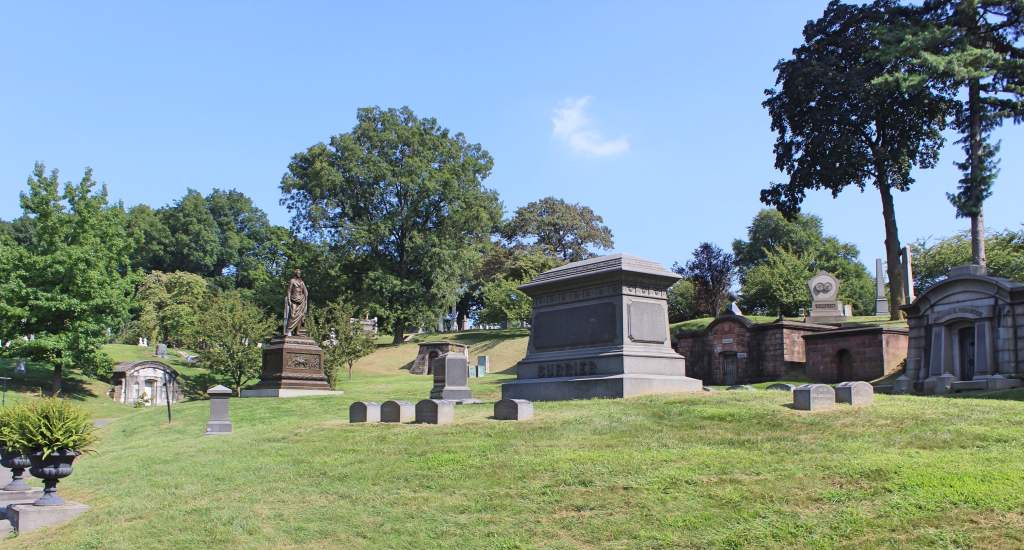
We may also find some men of the Revolutionary era, such as William Livingston (1723 – 1790), a New Jersey governor who signed the Declaration of Independence, and DeWitt Clinton (1769 – 1828), New York governor who oversaw the building of the Erie Canal. Indeed, the cemetery itself has a deep connection to the Revolutionary War, since it occupied a sight of a major engagement in the Battle of Brooklyn during the opening stages of the war—when invading redcoats routed Washington’s ragtag army, in a colossal defeat for the rebels.

But the cemetery is not just a collection of famous bodies. A more somber monument is that raised to the victims of the Brooklyn Theater Fire, a conflagration which killed nearly 300 people in 1876. Of the victims, some 100 whose bodies were scorched beyond identification were interred in a common grave here, marked by an obelisk. About twice as many people died in this disaster as in the more famous Triangle Shirtwaist Factory fire of 1911. It was the third-deadliest fire in American history.
Even if you have no interest in the dead, Green-Wood is worth visiting for its greenery. In fact, Green-Wood is a notable arboretum, and its map also has the location of some notable trees—such as American Chestnuts and large Camperdown Elms. Life prospers where death appears to reign.
On that note, let us leave the Green-Wood cemetery and travel back across the East River, to Manhattan, and then onwards north to the Bronx. Here we will find another enormous and noteworthy cemetery: Woodlawn.

Opened during the Civil War, in 1863, this cemetery received some of bodies removed from overcrowded Manhattan. It has since grown to vast proportions, and is now the resting place of over 300,000 people. While not as inviting and park-like as Green-Wood, and while not providing such an excellent view of Manhattan, the cemetery is quite attractive in its own right. What is more, Greenwood is the final resting place of some of the most iconic figures in American history.
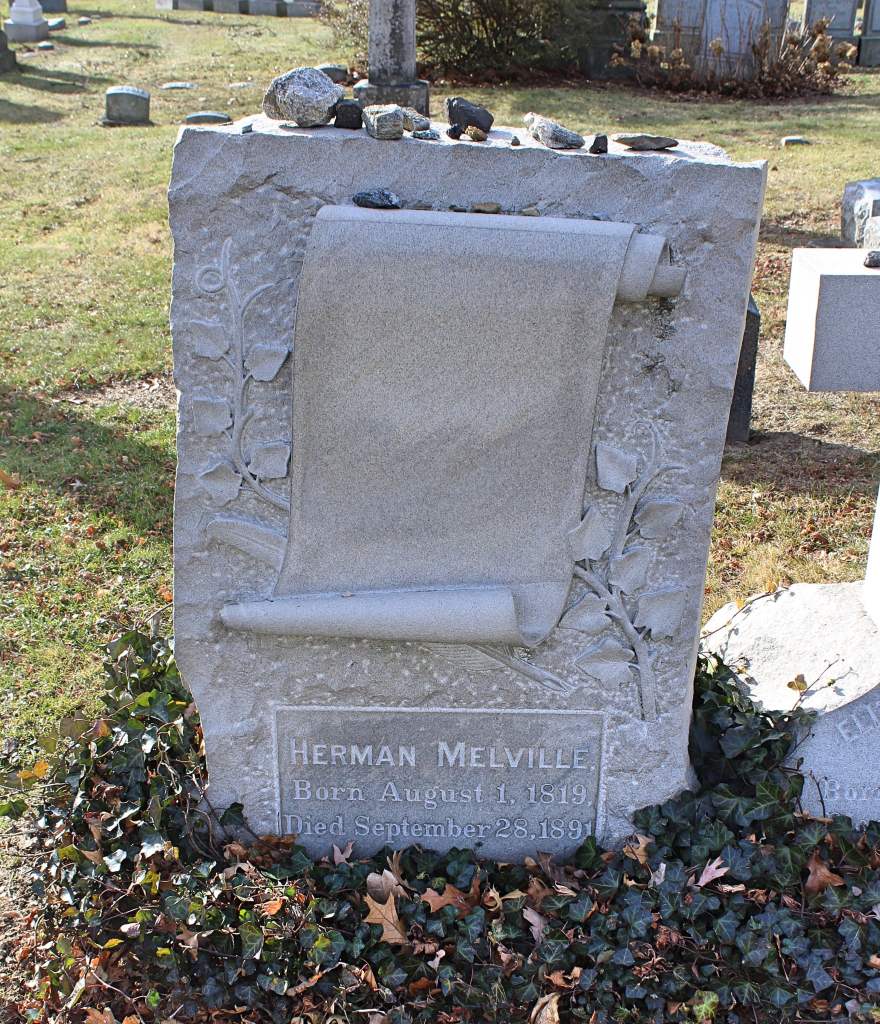
I visited on a cold winter day, last January, with my father. My priority was to see the tomb of Herman Melville (1819 – 1891). It is a simple and indeed humble tombstone, with nothing but an empty scroll of paper as decoration. This was surprising to me. For my money, Moby Dick is the Great American Novel, and Melville our greatest novelist. Yet Melville himself died in relative obscurity. After early success writing potboiler seafaring novels, Melville’s reputation sank once he turned to more serious work; and starting with Moby Dick, he was a critical and financial failure. It was only some decades after his death that his star began to rise again. For any struggling writers (such as myself) his story provides a depressing truth, slightly tempered by the hope that posterity can be kinder than contemporaries.
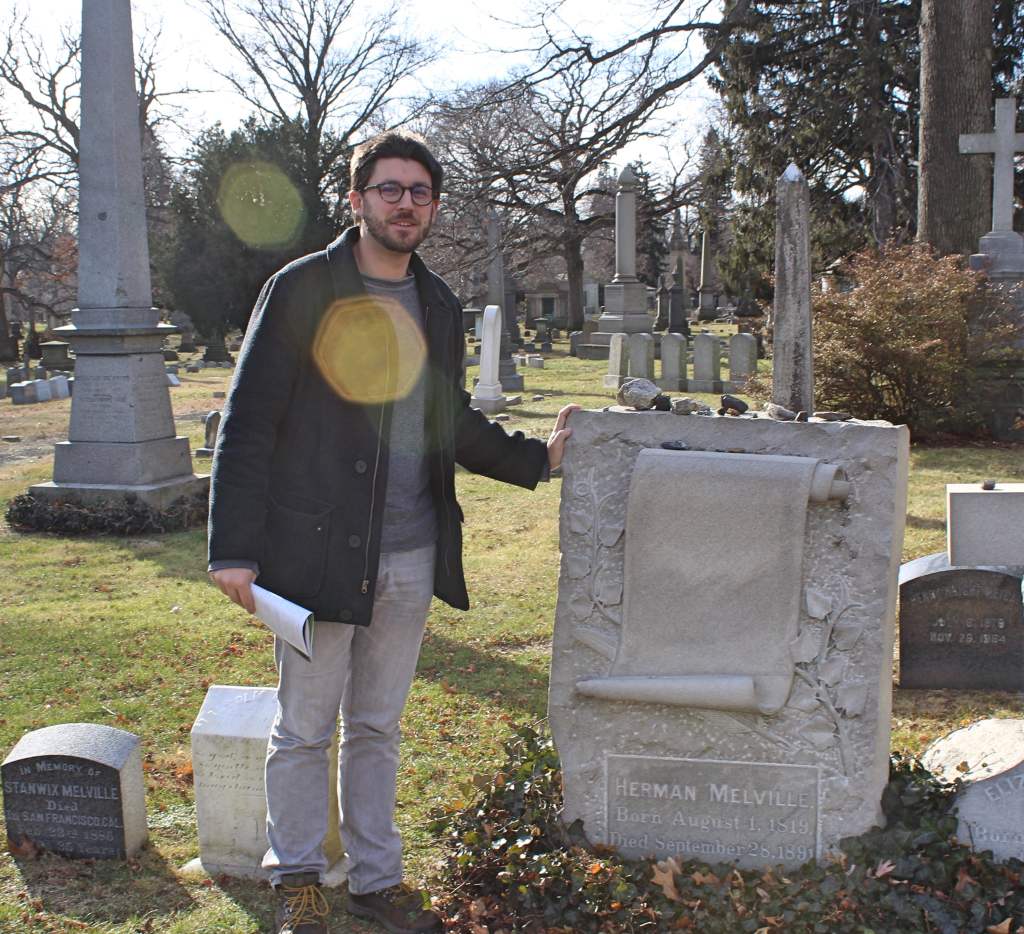
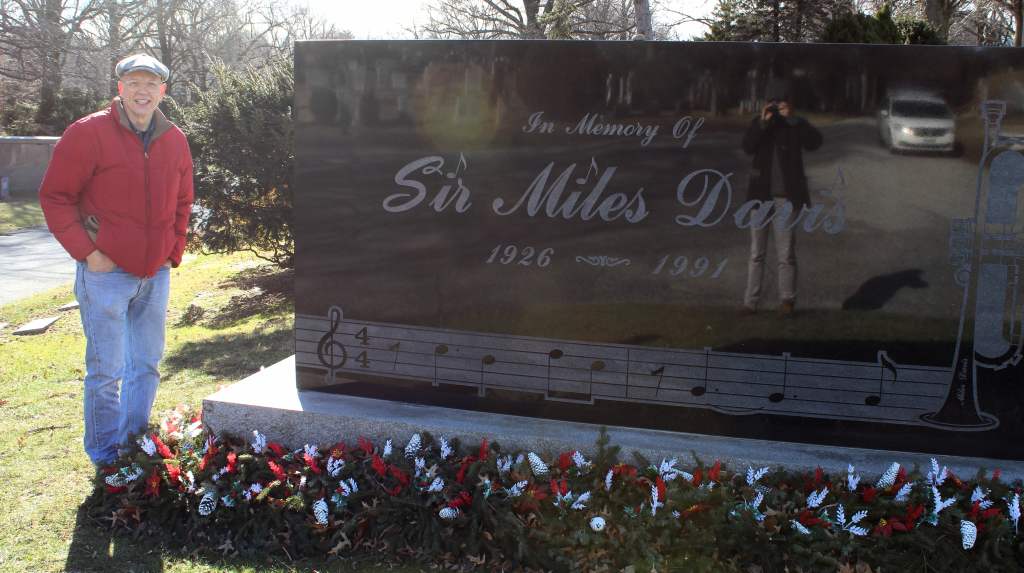
My father’s hero is also in this same cemetery: Miles Davis (1926 – 1991). A bass player and jazz lover, my dad has been talking to me about Miles Davis all my life, especially Davis’s landmark album, Kind of Blue; so it was gratifying for us both to finally visit him. Davis’s grave is a large tombstone, so highly polished as to be almost mirror-like. The first two measures of one of Davis’s compositions, “Solar,” are inscribed on the tombstone. Curiously, Davis is referred to as “Sir,” which as I learned was because he was inducted into the Order of Malta (in a ceremony in the Alhambra in Granada).

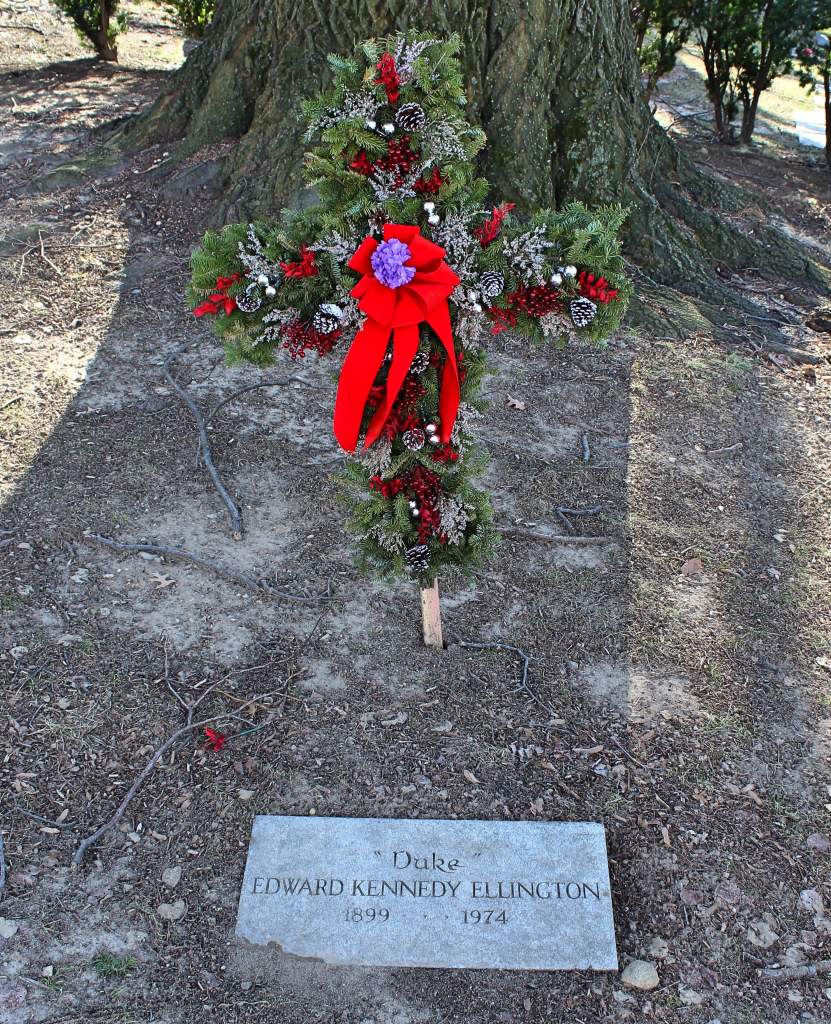
It would be hard to name a musician so influential in the history of jazz. Yet there is one buried right next to Davis: the Edward Kennedy Ellington, better known as “Duke” (1899 – 1974). Ellington has a claim to being the supreme composer of jazz tunes—many of which have become standards in the repertoire—and, indeed, I think he can be justly considered one of the master composers in any genre of the last century, for his music went far beyond the conventional boundaries. His grave is a small plaque in the ground, set before a large tree and flanked by two stone crosses.
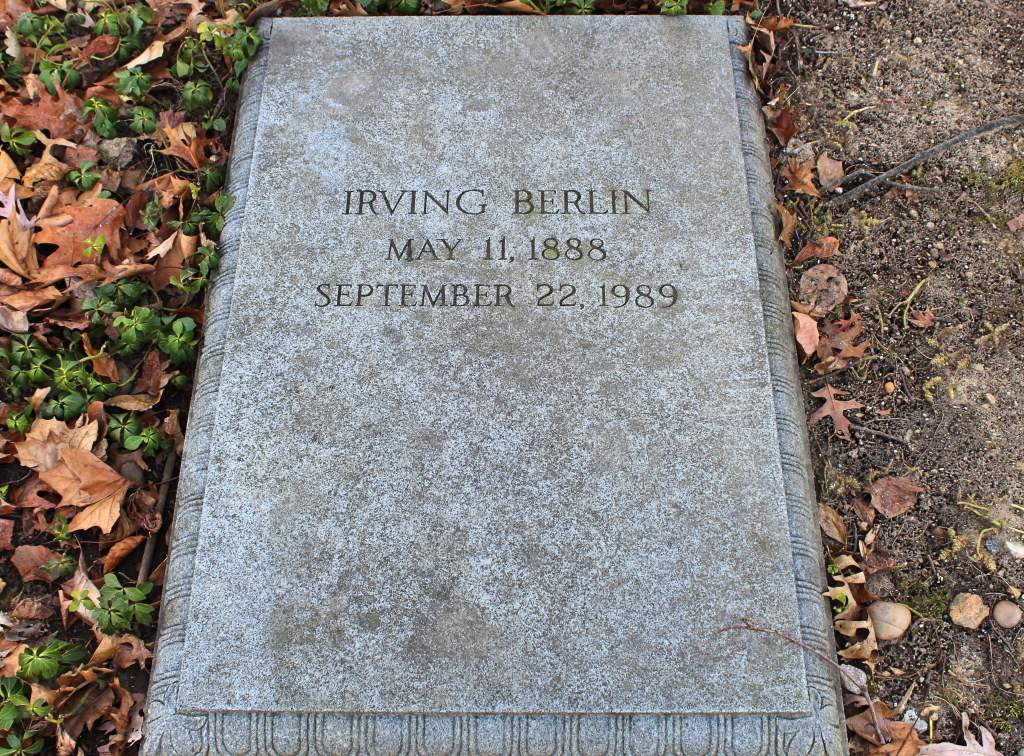
Nearby, up the hill, is the conspicuous grave of Illinois Jacquet (1922 – 2004), an important saxophonist; and not too far off lies Coleman Hawkins (1904 – 1969), another great saxophone player, and further on Max Roach (1924 – 2007), the great bebop drummer. Woodlawn does not, however, cater solely to jazz musicians. Also interred is Irving Berlin (1888 – 1989), the Russian-born Jewish composer who helped to define American music, all while being unable to read music and only being able to play in the key of F sharp. Even if you know nothing of Berlin, chances are you can sing at least one of his songs.
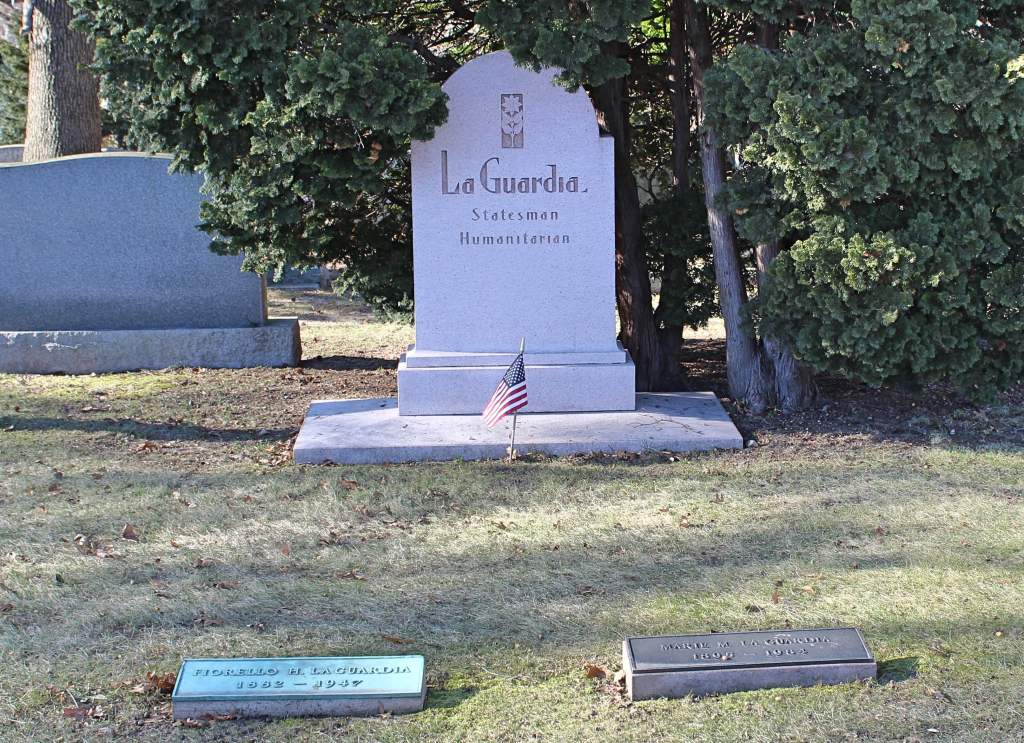
Two major figures from the history of New York City are also here in Woodlawn. Fiorello La Guardia (1882 – 1947), the short Italian sometimes called the “Little Flower” who was arguably the city’s most influential mayor. He sits under an elegant tombstone, which states simply: “Statesman, Humanitarian.” Buried within the community mausoleum is someone perhaps even more influential in the city’s history, Robert Moses (1888 – 1981), the subject of the landmark biography The Power Broker. Moses was a power broker indeed, responsible for the building of parks, roads, public housing projects, and bridges. In the process, Moses displaced hundreds of thousands of the poor and destroyed whole communities. He died with his reputation in tatters, yet having fundamentally shaped New York in the twentieth century.
Woodlawn, too, is an arboretum, with some beautiful trees on its grounds. Unfortunately for me, January was not the best time to appreciate this. Nor was the bracing breeze of that January day any more pleasant than the oppressing heat and humidity of the day in August when I visited Green-Wood.

In spite of this, I greatly loved my visits to these two resting grounds. Indeed, cemeteries are some of my favorite places. They are storehouses of history, and sites of homage to those who have shaped our world. They are also places of peace, an escape from the bustle of the surrounding city, providing us a space to contemplate how our own lives might be remembered. I recommend a visit.

This past Friday I went to Bethel Woods for the fiftieth anniversary of the Woodstock Music Festival. Ringo Starr and his All Starr band was headlining. Each of us had a special connection to the event. My mother grew up nearby, and was able to attend one day of the original concert, seeing Joe Cocker perform “With a Little Help from My Friends.” My brother and I, meanwhile, had gotten into the music from the sixties in high school, and had watched the Woodstock film many times. We had even seen Richie Havens, who opened the original festival, twice—once here in Bethel Woods. Besides that, all of us are devoted Beatles fans.
My mother stressed for months preceding the event. There were so many instructions—parking passes, when to arrive, what you can take in, and so on. She had called the organizers several times in order to make sure that we were properly prepared. Even so, when we arrived (after taking the same back roads my mother had taken, fifty years ago) we were promptly informed by a state trooper that we needed an additional parking pass, the “green one,” even though we already had one they had mailed to us. To get it, we had to drive over a mile to the information tent, asking for directions several times along the way (the original trooper forgot the name of the road, which was Huckle Puddy).
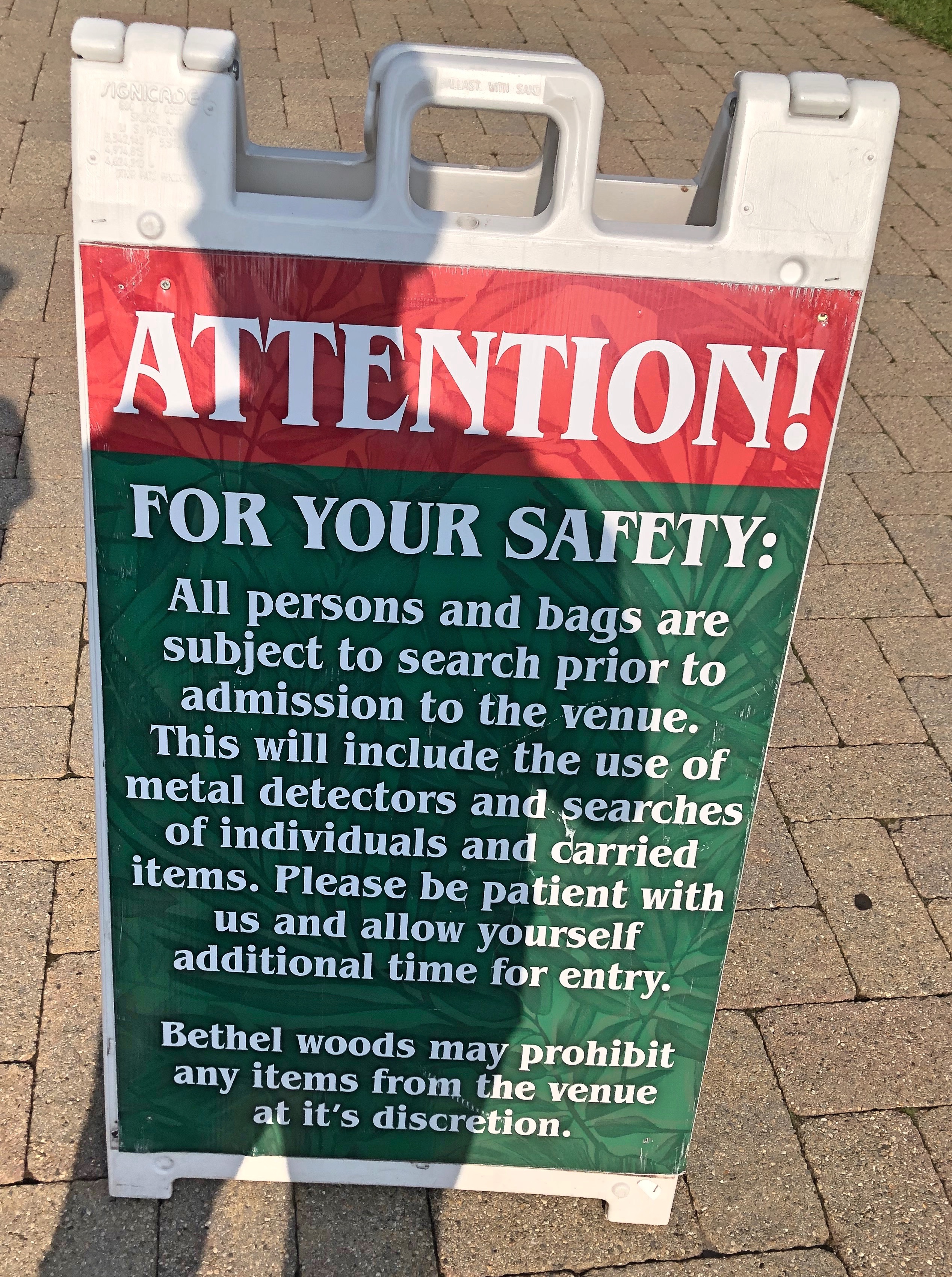
This done, we circled back and were finally allowed into the parking lot, being waved on by dozens of attendants. The walk to the venue took us past a great many signs, each one adding to the ever-increasing list of prohibited items and activities. No weapons, of course, or “any object that may be used as a projectile” (quite a broad category), nor professional cameras, posters, banners, selfie sticks, iPads, or lawn chairs. If you wanted to bring a camera, it could not have an interchangeable lens. If you wanted to bring a bag, it had to be plastic and transparent, allowing the staff to easily see what was inside. Among the list of permitted items were umbrellas, strollers, and “two 20oz. factory sealed bottles of water per person.” On the list of prohibited items were musical instruments.

Before going inside, we had to pass through metal detectors (no precaution can be omitted in the age of mass shootings), and then have our tickets scanned. After a slight wait, we were allowed inside.
The Bethel Woods Center for the Arts is a cultural complex located on the original grounds of the 1969 Woodstock Festival. The site was opened partially to combat the economic downturn of the region. Years ago, the Catskill Mountains were a popular vacation spot for those living in New York City, especially in the summer when the city became unbearably hot. But events conspired to make this option ever less popular. The widespread use of air conditioning made it unnecessary to escape to the mountains, and the rise in cheaper air travel made destinations further afield more popular. Resorts and hotels closed down, leaving the region devoid of an economic heart.
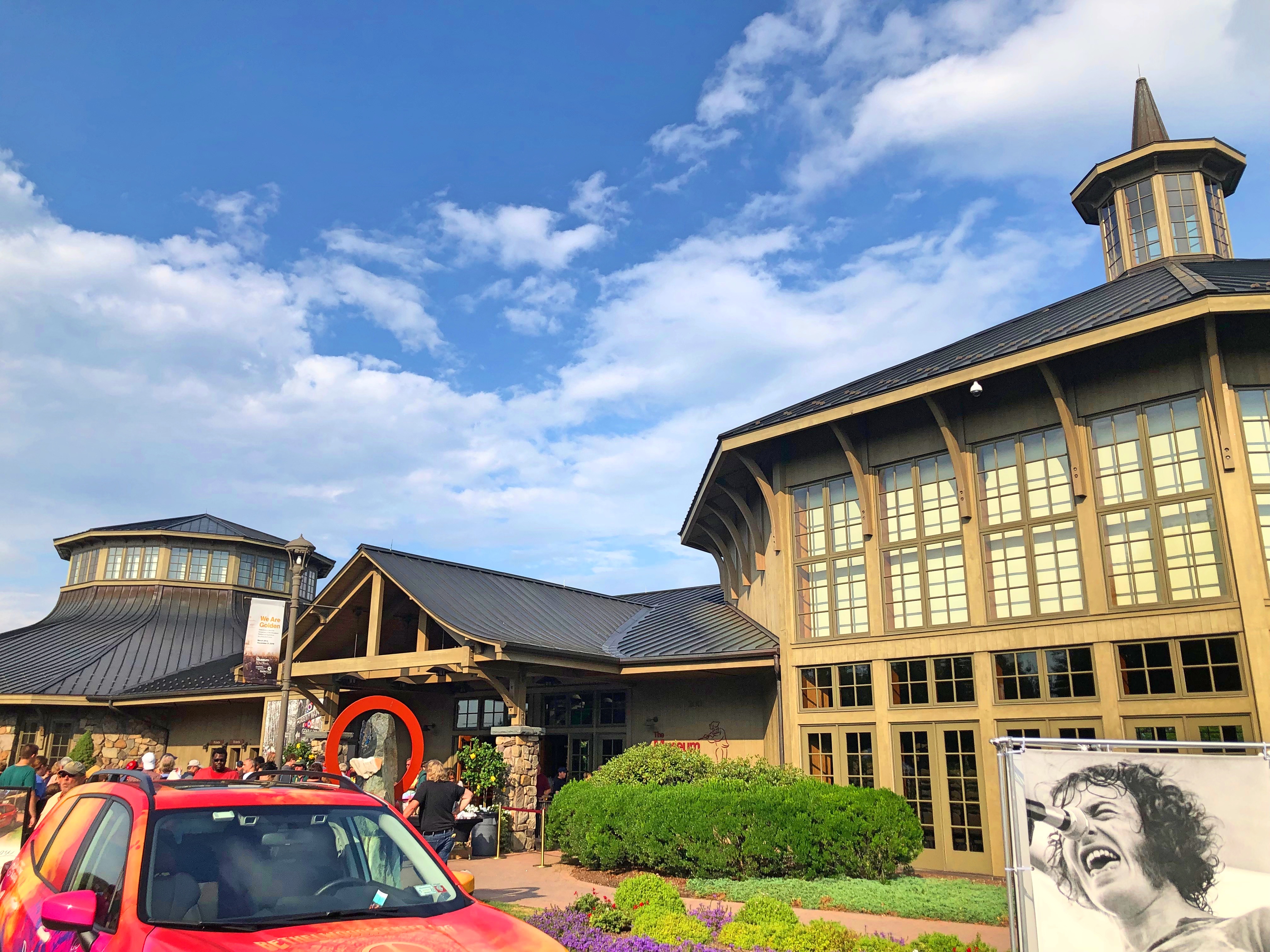
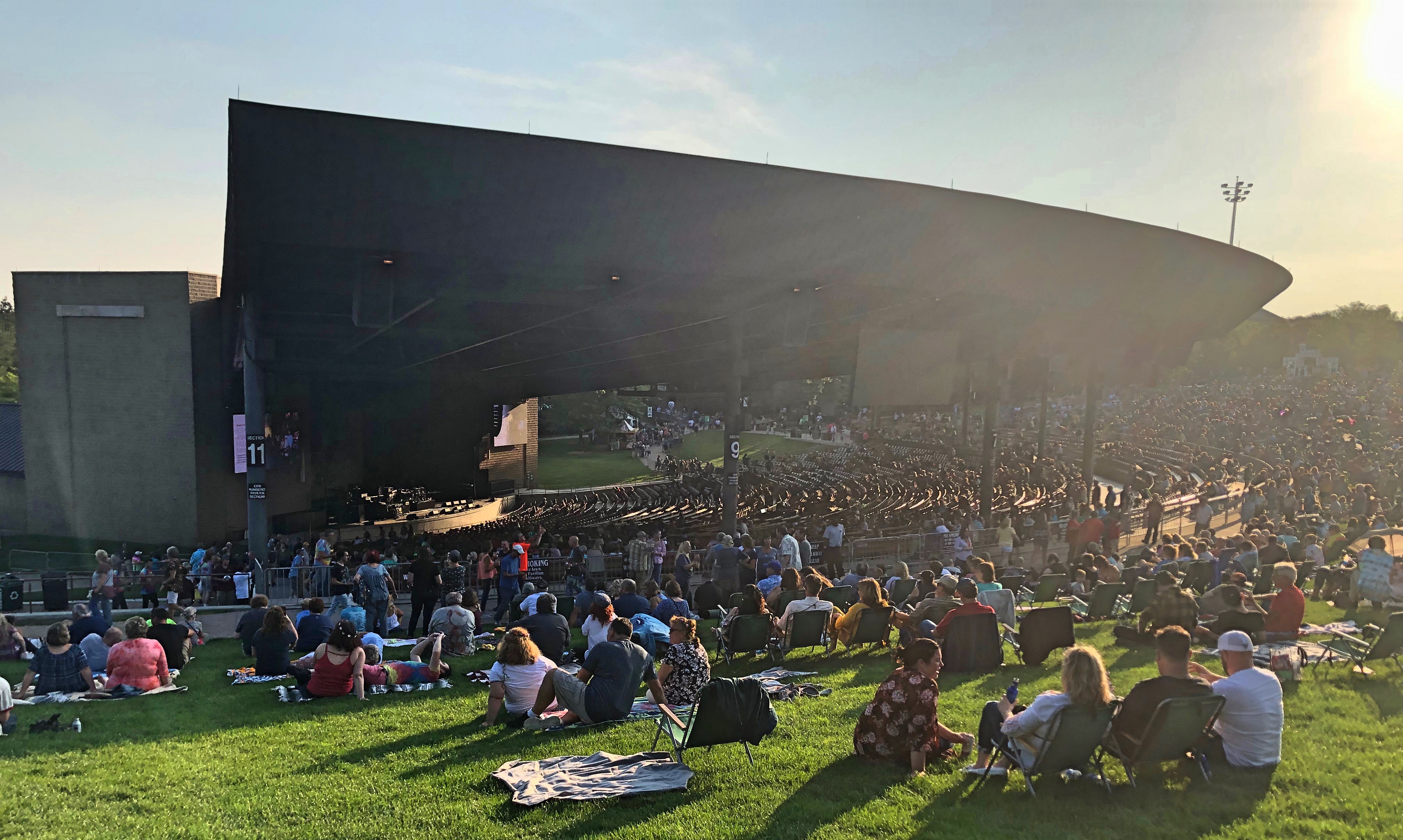
Bethel Woods has several venues, including a small indoor one (where I saw Richie Havens) and the outdoor pavilion, big enough (with lawn space) for around 10,000 people. (Since you cannot bring in your own lawn chair, you must rent one from Bethel Woods if you sit on the lawn.) This is where Ringo was to perform. The complex also has a museum dedicated to the sixties: counterculture, Vietnam War protests, the Civil Rights Movements, and so on. I visited this museum back when I was in high school, and I remember an old Volkswagen Bus on display, as if it were an antique horse-drawn carriage or a space shuttle.
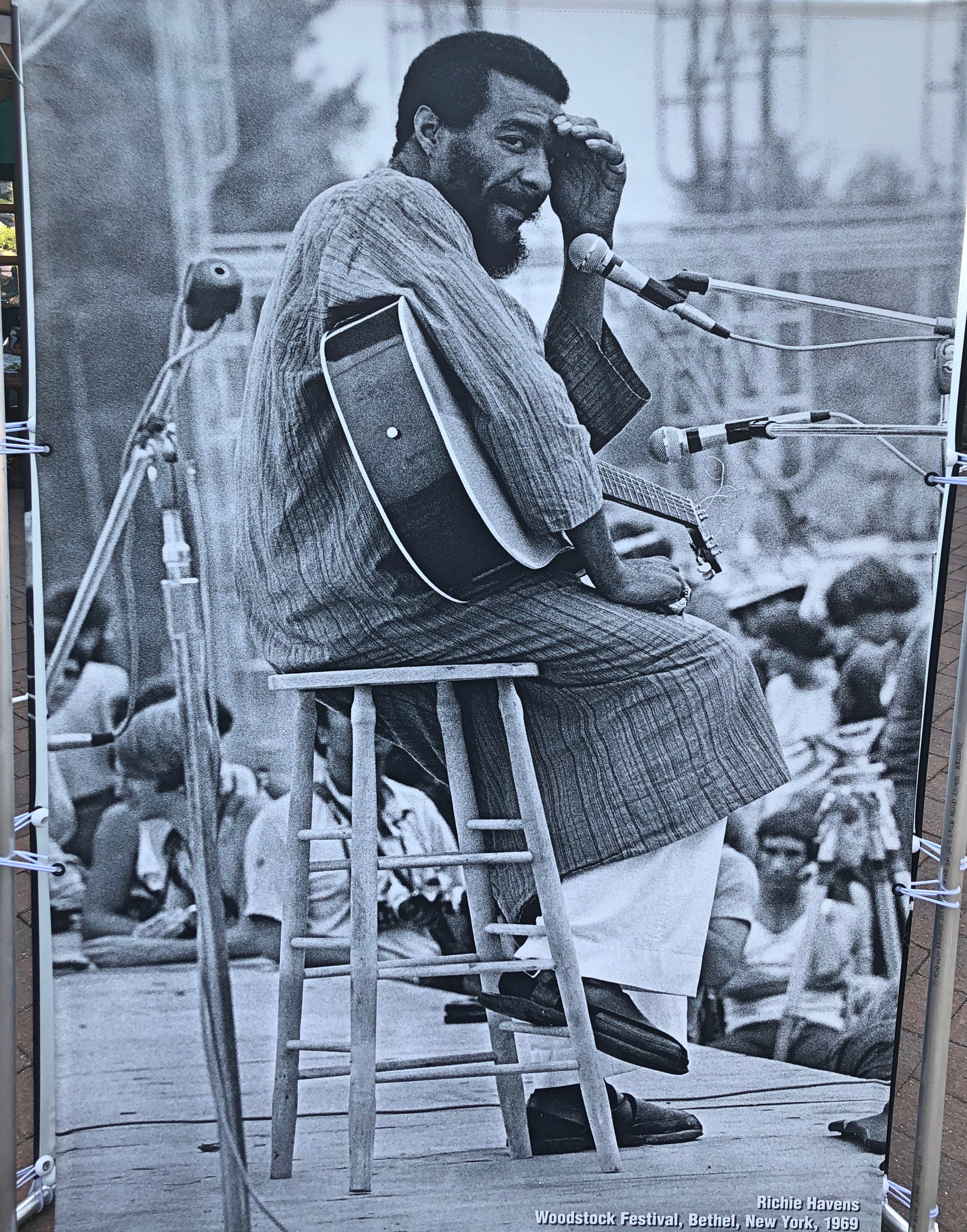
On this day there were tents set up all around the space, selling knick knacks, Woodstock paraphernalia, and overpriced food and drinks. A single can of beer cost $14. There were a couple cordoned-off bar areas that only catered to visitors with special tickets, who sat behind the barrier on plush chairs drinking overpriced drinks. People wearing tie-dye shirts and bell bottom jeans, with flowers sticking out of colorful bandannas, strolled around sporting bags and other merch that featured the iconic Woodstock symbol, a guitar with a dove perched on it. The average age has increased quite a bit since the first festival, though not quite by fifty years. In general the crowd was overwhelmingly white—more so, I suspect, than the original crowd, if I can judge from photos and videos. Despite threatening rain, it was a fine, sunny day.
When the original Woodstock Festival was held, this land was a dairy farm, owned by Max Yasgur. Like the anniversary concert, the original one was planned to make money. In today’s dollars, tickets for all three days cost well over $100. About 200,000 attendees were expected. But the organizers had difficulty finding a venue. The town was opposed to the concert, even though the organizers lied and said that only 50,000 would come. By the time they secured Max Yasgur’s farm, three days before the concert, they did not have enough time to build the fences. The event became, de facto, free; and more than 400,000 people came. Logistically it was a nightmare, with massive traffic jams, insufficient food, water, and toilets, and muddy fields caused by the rain. What prevented the event from becoming a calamity was a spirit of cooperation and camaraderie that prevailed among the concert-goers.
In short, the event became an iconic moment in the counterculture movement of the sixties. And though it was, financially, a disaster for the organizers, the 1970 documentary of the festival more than recouped the expenses.
Nothing I could write would capture the amazing energy of the original festival better than the documentary. While the youth were boiling over with indignation at the horrors of racism and the Vietnam War, they were simultaneously filled with an extraordinary hopefulness, actuated by the belief that music and love could herald in a better world.
No event, then, could be further in spirit from the original festival than the anniversary concert. Hippiedom has passed from counterculture to kitsch. If the original event was a logistical disaster, this one was impeccably planned. If the original event did not turn a profit, this one certainly did. The hippies were filled with a do-it-yourself ethos; they thought that they could escape the perils of commercial culture by creating things by hand, by getting back in touch with nature, by cooperating rather than competing with each other. Now, hippie garb can be bought at the gift shop, for inflated prices; and Bethel Woods transparently squeezes its visitors, by prohibiting them from bringing anything from home into the event.
The original attendees slid around on the mud and bathed in the river; they entertained themselves with drum circles. You cannot bring a guitar or a drum into Bethel Woods, and to see the music you sit on either a rented lawn chair or within the concrete pavilion. The hippies tried to reject capitalism. Now, two jumbo-trons beside the stage play commercials and display ads before, between, and after the show. And the contrasts did not stop there.
The first band to play was Blood, Sweat, and Tears, who in another iteration had played at the original festival. The band’s line-up has changed quite a bit over the years; and nobody currently in the group was present at Woodstock. In fact, the current vocalist, Keith Paluso, was years away from being born in 1969. The 30-year-old singer rose to fame as a contestant on the NBC show, The Voice; before that, he informed us, he had been a park ranger in Tennessee. “So don’t let anyone tell you that you can’t be anything you want,” he said to a cheering crowd. But I wonder if the hippies of 1969 would have thought that being chosen on a corporate TV show by a cast of super-rich celebrity judges was a really inspiring origin-story.
The band played well, sticking to its signature style of jazz-rock—a fusion of exotic harmonies, elaborate solos, and a steady backbeat. Paluso said that they played nearly the same set as the band did fifty years ago (though their set wasn’t captured on the documentary).
The next to perform was Edgar Winter, brother of the famous guitarist Johnny Winter, and famous in his own right for the hit song “Frankenstein” in the seventies. The aging rocker played with a power trio, guitar, bass, and drums, while he switched between synthesizer, saxophone, and timbales, all the while singing in his surprisingly powerful falsetto (he’s 72 years old, after all). His act featured a lot of jamming, with Winter playing call-and-response with each of the instrumentalists in turn, scatting a lick and having the player repeat it. I thought it was a little much.
Finally Ringo came out, accompanied by his All Starr Band. The idea of this band is that Ringo gathers together former members of prominent rock groups, and each of them performs songs from the high points of their careers. It is like a retirement home for aging rockers. The current line-up features Colin Hay, of Men at Work; Hamish Stuart, of Average White Band; Steve Lukather, of Toto; and Gregg Rolie, who played with Santana at the original Woodstock. During their set, then, Colin Hay sang “Land Down Under,” Hamish Stuart sang “Pick up the Pieces,” Steve Lukather sang “Rosanna,” and Gregg Rolie sang “Evil Ways.” Ringo, for his part, sang several of his hits from the Beatles, including “Yellow Submarine” and “With a Little Help from My Friends,” as well as some hits from his solo career, like “Photograph.”
Ringo was charming as ever, effortlessly funny even if occasionally sounding out-of-tune, such as when he asked “Are there any young girls in the audience?” before singing “You’re Sixteen.” In the age of Jeffrey Epstein, this does not sound like an innocent question. The other members played and sang well, too, delivering a crowd-pleasing performance. I was happy to see Ringo, not only since I think he was one of the keys to the Beatles’ success (despite his reputation, his drumming was innovative and crucial to the band’s sound), but also because this meant that I had seen both living Beatles (having seen Paul McCartney in Yankee Stadium, years ago). For a man of 79, he looks and sounds great.
While I do not wish to disparage the music of the anniversary, I think it also illustrates a major shift since the days of Woodstock. Rock music used to be the affair of amateurs, who figured out how to play and sing by themselves. Nowadays, rock music has been professionalized. The musicians at this concert played with a technically immaculate polish that was very different from the original generation of musicians. As a contrast I might offer Richie Havens, a man with no musical education who created an entirely original way to play the guitar, tuning it to an open chord, barring it with his thumb, and strumming like a madman. Or I might mention Jimi Hendrix, whose self-taught style has remained basically inimitable. The guitarists who played at the anniversary, by contrast, were studied professionals, capable of playing flawless blues solos, jazz chords, or funk riffs. They could sound like anyone, in other words, except themselves.
So what are we to make of this immense contrast? In truth, it is not surprising that the youthful hippie culture puttered out. People get older, more successful, more integrated, and more conservative. Besides, such an outpouring of naïve hope was perhaps unsustainable. In any case, as a method of social change, the hippie way was rather self-indulgent and hedonistic, hoping that drugs and dancing was enough to change the world.
The change also illustrates the immense power of the culture to absorb a counter-culture, commercializing everything to the extent that it loses its teeth and even its identity. We actively buy into this commercialization. Money is basically irresistible.
Yet for all the naiveté, the fuzzy thinking, the hedonism, and the self-righteous nonsense of the hippie movement, it is difficult not to regret the disappearance of that immense, hopeful energy, that impossible dream of ushering in a new world. Now we have many of the same problems as the hippies had—foreign wars, racism, exploitative capitalism—but without the spirit of cooperation, inventiveness, and optimism that might allow us to push back. For Woodstock was not about the trappings of hippiedom, or even ultimately about the music. It was about a dream.
My next podcast is my review of Kepler’s works. To listen, click below:
Episode 12 of my podcast is here—my review of Copernicus’s De Revolutionibus. Click below to listen:
 Lotz in Translation