This book did not conform to my expectations, and this is often a cause of bitterness with me. I opened Winesburg, Ohio thinking that it would be a series of carefully-plotted, intersecting short stories illustrating the reality of small-town life in America. And I was excited for this hypothetical book, since it seemed like a wonderful concept. But Anderson had quite different ideas, and his were far less to my taste.
For one, the stories in Winesburg, Ohio have very little in the way of plot, and so they can hardly weave an intricate tapestry. The effect is not that of a carefully worked-out machine, but if a simple accumulation. What is more, this is hardly a work of realism in any meaningful sense. Anderson is not one for sensory details, nor for social analysis; his world is composed of individual souls residing in a shadowy world. The stories could have taken place just as easily in Winesburg as in Warsaw, since Anderson’s fundamental concern is something much more universal.
The insistent message of these stories is that people are bound up within themselves, their inner passions shut off from the world, and they have little idea how to rectify their situation. Thus, the stories follow a characteristic pattern: The protagonist’s frustrated dreams and desires are narrated, and then a crisis follows in which the character tries, unsuccessfully, to disburden herself of this frustration. This usually takes the form of a frantic encounter with George Willard, the young town reporter. The story ends as soon as the crisis is shown to be unsuccessful.
I have many criticisms of these stories. Anderson is as guilty as any author can be of telling and not showing. His stories consist almost entirely of narration. What is worse, I often found the narration unsuccessful, as Anderson seems allergic to the use of vivid, concrete details. We are never in the moment with a character, never able to watch a scene unfold in our mind’s eye. Someone extremely sympathetic to Anderson’s style may argue that this creatures a distance between the reader and the story which mirrors the emotional distance between Anderson’s characters. In my case, however, the result was often apathy or bemusement.
As an example of his style, consider this passage:
There was something biting and forbidding in the character of Kate Swift. Everyone felt it. In the schoolroom she was silent, cold, and stern, and yet in an odd way very close to her pupils. Once in a long while something seemed to have come over her and she was happy. All of the children in the schoolroom felt the effect of her happiness. For a time they did not work but sat back in their chairs and looked at her.
This passage is characteristic in its almost total lack of sensory information. Indeed it seems intentionally vague: “in an odd way,” “something came over her,” “felt the effect”—these phrases suggest that Anderson himself was not interested in really picturing to himself how this strange scene could actually play out. It also shows a kind of curious anti-realism when it comes to describing human behavior. As somebody who has worked as a teacher, I can scarcely imagine the reaction of young pupils to a mysteriously happy teacher being to simply look at her. Has Anderson ever been around a child?
Of course, an author is under no obligation to describe people as behaving realistically. Nevertheless, I think that this oddity is symptomatic of one of the paradoxes in these short stories: though they are about the innermost struggles of different individuals, Anderson seems rather uninterested in his characters as individuals. The persons in this book can hardly be called individuals, in fact, but are mere points of tension. They have problems but no personalities, and once their crisis is over they have no further interest. The way that Anderson writes dialogue is particularly infelicitous—unnatural to the point that it must have been intentional, but which nevertheless struck me as jarring. Luckily, there is not much of it.
What perhaps struck me most about these stories is how strongly they reminded me of a lot of contemporary writing. The idea that we are all silently suffering, or that, in Anderson’s own words, “everyone in the world is Christ and they are all crucified”—and, most importantly, that emotional expression will fix this problem—this strikes me as a profoundly limited worldview. For my part, I do not think that emotional connection alone is enough to solve any problem, unless it is supplemented by a thoughtful empathy—the ability to see humans in the round and not as simply balls of frustrated passions.
Indeed, as Lionel Trilling argues in his excellent essay on Anderson, the paradox of this philosophy is that it can lead to a world just as cold and brutal as one of repressed desires. And yet, this is an idea that I encounter again and again: that all we need is emotional expression. Expression is easy, however, while understanding is infinitely more difficult.
My new podcast is out, this one on European Travel. (Yes, a little silly during the coronavirus crisis, but I didn’t plan it this way.) For the apple podcast, click here:
Well, my podcast this week has been delayed because of a trip. It was my first international trip of the school year, and it was great. My brother and I went to Kraków, Poland—a lovely city, with a well-preserved historical center. Relatively nearby are two major tourist attractions: Auschwitz (very depressing) and the Wieliczka salt mines (very impressive). But maybe the best part of the trip was the food. Every dish was heavy, plentiful, and delicious. Even the coffee and the beer was good. And I was reminded how generally pleasant European travel can be. Arguably, it’s the best part of living here.
Admittedly, it seems like an awkward time to be writing a podcast about traveling, because of the coronavirus outbreak. Just last week, I had a brief layover in Milan, and now Milan is under quarantine, with the rest of Northern Italy. And I just received notice that Madrid will be shutting down schools for the next two weeks. Two weeks! What will I do with myself? Next thing I know, we’ll be under quarantine, too. So I guess it’s not the best time to talk about European travel, now that everyone is cancelling their vacations. However, this crisis will pass, and Europe will once again open its doors to travelers. So here I go!
The major difference between traveling in Europe and in the United States is that Europe is packed with variety. Traveling to another country is like traveling to another state—cheap, easy, and quick. You can get on a plane and, in an hour or two, get out in a place where the people speak an entirely different language, eat different food, where the architecture, music, art, and even the landscape itself is totally different. The whole continent of Europe isn’t bigger than the US. And when you consider that most people travel to Western Europe, you’re talking about an area of land about the size of one American coast.
The main reason why so much cultural variety is packed into such a comparatively small space is, simply, the amount of history that has gone by. America is one big country, and a young country, too; so a lot of the country can seem extremely homogeneous, since it is the result of rapid expansion. And a lot of this expansion happens when means of transport and communication were relatively rapid. Meanwhile, Europe grew out of ancient populations, and virtually every little town and city was relatively isolated for long periods of time. Cultural differences grow and accumulate during all this time; and this is why, in Europe, every region has its own traditional dishes, traditional dances, traditional music, and so on. This is true both within countries and between countries: there is an awful lot of regional variation packed into a relatively small space.
This naturally makes traveling in Europe quite endlessly fascinating. Poland, for example, is not too far away from Spain, but it is absolutely unmistakably distinct. And this goes far deeper than surface features like food and architecture. The two countries have been shaped by quite different historical forces, and so even their cultures have notable contrasts, such as their concepts of personal space and their senses of humor. But I don’t want to overstate my case and argue that they have nothing in common, either. Both Poland and Spain have been heavily influenced by capitalism, for example, and they have both gone through periods of totalitarian rule and repression in the twentieth century.
So the really fascinating thing, then, is seeing Europe as a kind of variation on a theme. Every country has churches, basilicas, and cathedrals, but they all build them somewhat differently. Every country has art museums and monuments to historical events, and these are all intimately interconnected. To give just one example, the beautiful gothic altar in Krakow’s St. Mary’s Basilica was sculpted by a German from Nuremberg, another city that was previously a part of the Habsburg Empire. (The Habsburgs controlled Spain for a while, too, to give you another example of their historical parallels.)
So national borders are real markers of difference, but they’re also fluid. Perhaps the most famous Pole in history, Nicholas Copernicus, studied for a time in Italy, and published his book with the help of German Protestants. Frederic Chopin, born in Poland, spent most of his professional life in French, as did the Spaniard Picasso and the Dutchman Van Gogh. The more you travel around Europe, then, the more you see a rich, interconnected story unfolding across this varied landscape. In short, it’s very cool.
Anyways, even if you don’t care much about history or art, there’s another factor that makes European travel so appealing: it’s cheap. Part of the reason for this cheapness are the low-cost flights. Sometimes you can find good deals are more traditional airlines, like Iberia; and that may be the best option. But often travelers looking to save money fly with EasyJet or Ryanair. I have a lot of experience with Ryanair. I used them for my outbound and inbound flights to Poland. They are far from being my favorite airline, but their prices are pretty irresistible. My flight to Poland, for example, cost me less than 20 euros. And that’s for a three-and-a-half hour flight!
Of course, you get what you pay for. There are no amenities on Ryanair. The seats are uncomfortable, there are no screens to watch movies, no plug to charge your phone, and of course food is not included. Besides this, you need to pay extra if you want to choose your seat or even if you want to take a bag for the overhead compartment. Since I bought the cheapest ticket, I had to fit all of my stuff under the seat in front of me. Worst of all may be the advertising. On every Ryanair flight the airstewarts give long, uninspired, rambling advertisements of various products—food, perfume, lottery tickets, and even model planes —over the plane’s crackling PA system. And they do this in two or three languages, so it takes a long time. I’ve never seen anyone buy any of this junk, so in a way it feels like punishment for paying cheap prices.
As much as I like to rag on Ryanair, the truth is that I wouldn’t have been able to travel so much if it weren’t for this infamous company. There are a couple other companies and services that also help in my eternal quest to save money. A basic one is Skyscanner, a website that reliably tells you the cheapest flights. I also have used Blablacar a lot, which is a ride sharing service. Basically, let’s say I’m planning on driving from Seville to Madrid. I can put up an announcement on Blablacar and charge riders to accompany on this trip. The driver can charge whatever they want, but typically the prices are quite a bit lower than, say, paying for a high-speed train. Of course, I felt a little hesitant at first about the prospect of getting into a car with a stranger. But the website is quite well regulated and I haven’t had any truly bad experiences. It’s also a good way to find people to chat with, if you’re trying to improve your language skills.
There is one more service I use that, I admit, makes me feel a bit guilty: Airbnb. The reason that I have some scruples about Airbnb is that it can have a potentially bad effect on the housing market of wherever you’re visiting. It’s often more profitable for landlords to rent their flats short-term to visitors than long-term to locals, and this limits the supply of available residences and drives prices up. In areas with heavy tourism, this can make it almost unliveably expensive. So there is that downside. On the other hand, hotels and even youth hostels can be much, much more expensive than Airbnbs—prohibitively so, for me. In any case, I hope I am reducing the corrosive effect of Airbnbs by normally renting individual rooms (which couldn’t be rented to locals anyway) rather than whole apartments. In Prague, for example, I stayed in a little room in the apartment of a family, far outside the center. This is not only better for the city, but also in my experience more fun, since the idea is to be with locals anyways.
Well, those are my tips. If you do some searching, you can find ways to travel around Europe on an incredibly short budget. And you get a lot for money, since there are so many things to see and do, all over the place. If you’re young—younger than 26, in most cases—then you can get added discounts on museums and monuments. Added to all this, there is also the convenience of the European Union. Now that I’m being paid in Euros, I don’t have to worry about conversion rates if I go to Italy, Germany, or Ireland. There is also something that’s called the Schengen Zone: a zone of countries where no visa or even passport is needed at the border. Flying from Spain to Italy, then, is legally the same as taking a domestic flight. You just walk right into the country.
Europe’s open borders are something that they should be very proud of, I think. It is a level of international trust and cooperation that is unique in history, I believe. And as a result of this, it is quite common for Europeans to have international experience. Though there is at least one case in which all this may backfire: during an pandemic. Now the virus is in every major European country, with over a thousand cases in Spain. And I’ve just heard that all of Italy is on lock-down. I really hope they don’t lock down Spain…
Anyways, I’m getting a bit off topic. My major point is that Europe is great for travel. There is a lot to see and do, it’s easy and cheap to get around, and borders are almost non-existent. And Europeans themselves take advantage of this. Blessed with lots of vacation time (unlike the United States, where vacation is entirely unregulated), Europeans in general take lots of trips: both within their countries and to neighboring lands. Indeed, one of the big reasons that so many people want to learn English is because of the travel industry. In a continent of so many different nations and languages, English is the only Lengua Franca available.
Now, does all this traveling help to make Europeans wiser, more tolerant, more cosmopolitan? The answer is not immediately clear to me. It’s certainly possible to travel and not learn anything. Go to any touristy area, and you’ll see what I mean. All the food is junk food (a lot of it from America), and everything for sale is junk, too. Many people travel, take a selfie with a famous landmark, stay in a hotel, and then go home. There’s nothing wrong with that, necessarily. It’s fun. But does it lead to anything more? I think it does, or at least I hope it does. Otherwise, what on earth am I doing? Just having fun?
Europe is full of palaces. There are so many, in fact, that the persistent traveler can grow a little weary of them. After all, each palace tends to offer the same sorts of attractions: fine furniture, richly decorated rooms, expansive architecture. You get the idea. But even if you are quite uninterested in the pomp of power or the fineries of royal life, there is one palace that must be visited: Versailles. Built for Louis XIV, the so-called Sun King, it is the prototype of virtually all of the palaces built afterwards. From Spain to Austria, Versailles has been scrupulously imitated. It is, in other words, the palace of palaces.
The palace of Versailles is not within the city of Paris itself, but situated in the suburbs. Like Philip II with El Escorial, Louis XIV wanted to be away from the city, in an environment completely under his control. This decision did make the palace slightly inconvenient for the modern traveler to visit. Fortunately, Versailles is well-connected by all forms of public transportation. The cheapest and easiest way to get to Versailles from Paris is on the RER (Regional Express Trains), which stops quite close to the palace. This was not an option when I visited, however, as there was a train strike that day (hardly a rare occurrence in France). Yet this strike only affected these local trains. Long-distance trains from Montparnasse station also have a stop in Versailles (Versailles – Chantiers). This is the option I used.
Even though the walk from Versailles – Chantiers is slightly longer than from the RER stop, the strike worked to my advantage. There were significantly fewer people in the palace than usual. This is not to say that I had the place to myself. Versailles is typically packed; many visitors complain that the crowds ruin the experience. When I visited there were quite a lot of visitors (aside from the visitors by trains, there are dozens of tour buses lined up in the parking lot outside the palace), but not enough to make the place suffocating or claustrophobic. The palace was just mildly stuffy.
If you spend a few minutes to walk around the town of Versailles, you will notice that it looks rather different from the center of Paris. Partially this is because the streets follow a grid layout—a dead giveaway of the Versailles’ past. Before Louis XIV decided to move his court to this spot, the only thing on the land was a small village and a royal hunting lodge. In other words, it was mainly wilderness. The town took shape quickly around the palace; and like the royal gardens, it has been meticulously planned. This is not unusual for palace towns. The town of Aranjuez in Spain, for example, also follows a grid plan—a striking exception to the normal chaos of Spanish towns.
As you approach the enormous palace, several things come into view. There is Louis XIV heroically mounted on a stallion, sporting appropriately regal headwear. Immediately beyond this image of royal power are the tour buses, which give an even greater image of the power of international tourism. Then there is the line. When I visited, it was several hundred feet long, spanning almost the entire length of the palace’s front. Beyond this impatient mass of humankind there is the ornate fence and the even more ornate façade. Both are bright and gold; Louis XIV did not want to leave any of his wealth to the imagination. On the molded gateway, under a floating crown, there is the sun himself, the French king’s favored symbol. As you can see, he was a flagrantly powerful man. But as I had bought a timed entry ticket—thus allowing me to skip the line—I was feeling flagrantly powerful myself.
Before we go inside, I should give you some of the most basic information about the palace and its maker. Though not always successful in his foreign wars, Louis XIV was arguably the most successful monarch in French history at consolidating power within France itself. At the time, simply being king was not enough by itself. Early in Louis XIV’s long reign, when the monarch was only a boy, the nobles of France attempted a rebellion, called the Fronde. The rebellion was eventually put down; but the threat of unruly aristocrats must have sunk deep within Louis’s consciousness. As soon as he was old enough to take control for himself, Louis set about centralizing the state and making his authority as absolute as possible. Unlike his predecessors, for example, he did not rely on ministers to carry out the real duties of governing, but insisting on acting himself,
The palace of Versailles was part of his scheme. Situating the palace outside of Paris allowed the king to escape many of the conventional pressures of both the populace and the wealthy. Instead, anyone who wished to pay their respects at court had to do so on Louis’s territory. And this meant submitting oneself to a byzantine set of rituals and etiquette that Louis established, which governed everything from what to wear to when to speak to how to eat. Louis’s whole routine was a spectacle. Aristocrats watched as the king dined and dressed, biding their time until, with any luck, they had their chance to access the monarch’s ear. It was a ritual perfectly devised to keep underlings in their place.
Considering this historical background, it is wise to view the palace for what it is: a monumental piece of propaganda. Louis XIV wanted Versailles to send an unambiguous message to every visitor: that he occupies the center of France. Thus, the palace’s architectural scheme irresistibly draws the visitor’s eye to the center of the building, where all of the lines meet. It is here that I began my tour.
The first space which caught my eye was the royal chapel. This is a tall and narrow space; greek columns are supported by a row of arches, leading up to a richly decorated ceiling. Once again, the architecture here is perfectly calculated to convey a message. The narrow width of the space makes the ceiling seem especially tall, seeming to squeeze and dwarf the visitor; and the repeating columns and arches unmistakably communicate a sense of orderliness. We are entering a world where even prayer is subservient to the state, and where even religious worship itself is part of the pomp of power.
Next we enter into the State Apartments. These are sumptuously decorated rooms, used by the king for receiving courtiers and visitors. The walls and ceilings of these rooms are covered with designs and paintings. The most notable of these may be the Meal at the House of Simon the Pharosee, by Veronese—a lovely work of the high Italian renaissance. The color gold is everywhere in these rooms, and the ceilings are full of cherubs, clouds, and crowns. The king himself is ever-present, not least in the magnificent bust by Bernini, which manages to make the king into a truly heroic figure. Next in the visit come the royal apartments, where we can see the luxuriant beds where the king and the queen slept. As usual, no matter the luxury, I did not find envying these places of rest. I would not want to sleep in an enormous, empty room—even if it was on the finest silk.
Note the Veronese painting at the far end.An example of the ornate ceilings.
Then we come to the so-called Grand Gallery, the most opulent rooms in a building full of opulent rooms. In the War Salon we see Louis XIV yet again, in a relief by Antoine Coysevox, looking martial and kingly on his horse. This leads directly to the most famous space of all: the Hall of Mirrors. Nowadays, of course, mirrors are nothing special; but at the time they were extremely expensive, largely because Venice had a monopoly on their production. Louis XIV was committed to using products made in France, but he actually enticed some glass-makers to defect from Venice to France to work for him (whom the Venetians later tried to poison for their betrayal). This hallway served Louis XIV in his endless courtly rituals as a place where he could stroll back and forth, giving underlings a chance to make requests as he passed. Many years later, the Treaty of Versailles—which put an end to WWI, and set the stage for WWII—was signed in this room.
The king presiding over the War Room.Expensive or not, the mirrors do not work very well.
The visit next brings you to a newer part of the palace: the Galerie des Batailles. This was built during the reign of Louis Philip I (1830 – 1848), and it replaced several apartments in the original design. It is modelled on the Grand Gallery of the Louvre (to which it looks remarkably similar), and is full of busts and portraits of famous French military men. Unsurprisingly, Napoleon dominates the scene, as painting after painting represent his martial glories. Unless you are an intensely patriotic Frenchman, this room will likely not excite profound emotions. Yet propaganda is seldom more glorious and more impressive that this display.
This pretty well completes the basic visit to the palace. But the best part of Versailles is still to come: the gardens. Now, gardens come in many varieties; and a major split is between English and French gardens. English gardens are romantic in spirit, seeking to evoke the wildness and grandeur of nature. French gardens are the exact opposite: they represent humanity’s dominance over the natural world. Thus, one finds neat hedge-rows, straight aqueducts, and heroic sculptures. The gardens of Versailles are the most perfect example of this type. Standing at the back of the palace, one sees an entire landscape laid out in perfect symmetry, a harmonious composition that meekly submits to the visitor’s glance. As usual, the environment bespeaks centralized power.
While I normally dislike French gardens (I prefer natural parks to these monuments to neatness), I must admit that walking through the gardens of Versaille is an absolute delight. At every turn there is yet another charming fountain to see, yet another sculpture to please the eye. Most of the imagery used in these gardens comes from ancient Greece and Rome, drawing apparent links between the reign of Louis XIV and these sources of Western culture. Louis XIV seems to invite comparison with Augustus himself. The perfect musical accompaniment to a walk in these gardens is, undoubtedly, the compositions of Jean-Baptise Lully—Louis’s court composer. Like the palace and the gardens, the music conveys pomp and power; it is trim, ornate, and grandiloquent.
This is my alley.
Eventually, the walker comes across the Grand Trianon. This is a chateau that served as a kind of getaway for the king, much as the Generalife served as a getaway for the residents of the Alhambra. The idea of having a smaller, secondary palace within a fifteen-minute walk from the central palace may seem a little silly; certainly it does not seem like much of a vacation. However, the Grand Trianon served an important function for the kings of France: as a place to be with their mistress. Famed for being the country with the highest tolerance of infidelity, the kings have France have long enjoyed the privilege of supplementing their marriage. (This tradition has, apparently, continued into modern times; Françoise Hollande—Macron’s predecessor—made little effort to hide his own dalliances.) The Grand Trianon would be a resplendent residence in another context, and yet when compared with the monstrous Versailles it appears positively humble.
The Grand Trianon.
Nearby is the Petit Trianon, another supplementary palace. This was built during the reign of Louis XIV’s successor, Louis XV, for his mistress and advisor, Madame Pompadour. Unfortunately, that great woman died before she could move in, and so it was used by her own successor as the head mistress, Madame du Barry. Its most famous resident, however, is undoubtedly Marie Antoinette—not a mistress, but a queen. (Louis XVI was one of the few faithful French monarchs.) Like the kings before her, she came here to escape the demands of court life. As such, the palace was designed for as little interaction as possible between the young queen and the servants. As its name suggests, the building itself is fairly small—though, of course, carefully decorated.
The Petit Trianon
Directly next door is the Hameau de la Reine (the Queen’s Hamlet). This is a kind of artificial village, built to give the illusion that the Petit Trianon lay deep in the countryside. Thus, there is a farm, a barn, a dovecote, a watermill, and all the other trappings of country life. The architects succeeded in their design, for the little village is quite beautifully rustic. The gardens surrounding this area are quite distinct from those in the rest of Versailles. The influence of Romanticism is clearly marked here: instead of neat hedgerows, trees are scattered about naturalistically, sheep and cows graze in the grass, and the pond is full of hungry fish. It was quite a visual relief after the relentless parallel lines of Versailles and its gardens.
This brings us to perhaps the most famous scene in the history of the palace. It was in these gardens that, on October 5th, 1789, Marie Antoinette became aware of the crowd approaching the palace. This was the Women’s March, a crowd of Parisians who had walked all the way to Versailles, driven by hunger and scarcity of bread. The king and his ministers ultimately proved unable to pacify the crowd; and a violent confrontation between the citizens and the guards led to the royal family being led away to Paris, where they spent the remainder of their lives as virtual prisoners. It is a myth, by the way, that Marie Antoinette said “Let them eat cake” in response to the demands for bread. (The quotation comes from a passage in Rousseau’s Confessions, which he wrote long before the Revolution.) But she was an unpopular queen in any case, partly because of her taste for extravagant luxury, and partly being a foreigner (she was Austrian by birth).
The mirrors in the Grand Trianon work better.
The revolution proved a major turning-point in the history of Versailles. The monarchy would never return. In the following years, parts of the palace fell into disrepair. Indeed, the cost of maintaining the palace, and supplying the water needed for all of its gardens, is enormous by any standard—a testament to the power wielded by Louis XIV. History has shown, however, that the power was ultimately fragile, since it was not enough to keep the people of France happy.
At present, the palace of Versailles stands as a monument to a dead idea: that one single man should occupy the center of a state. It is an impressive and even a beautiful place. Its beauty, however, is that which can be bought wealth and power; it is the beauty of fine materials, unlimited resources, and exquisite craftsmanship. Lacking anything beyond naked self-aggrandizement to animate it, the palace and its gardens have a certain sterility, as if the glorious exteriors have little of value within. Compare this stone behemoth to the Alhambra, which looks like hardly anything from the outside, but whose interior possesses an otherworldly beauty. Perhaps this is because, instead of having images of a king on its walls, the Alhambra has a line of text: “There is no victor but God.”
In fact, how many theorems in geometry which have seemed at first impracticable are in time successfully worked out!
Many of the most influential and ingenious books ever written possess the strange quality of being simultaneously exhilarating and quite boring. Unless you are among that rare class of people who enjoy a mathematical demonstration more than a symphony, this book will likely possess this odd duality. I admit this is the case for me. Reading this book was a constant exercise in fighting the tendency for my eyes to glaze over. But I am happy to report that it is worth the trouble.
Archimedes lived in the 3rd century BCE, somewhat after Euclid, in Syracuse on the island of Sicily. Apart from this, not much else can be said with certainty about the man. But he is the subject of many memorable stories. Everybody knows, for example, the story of his taking a bath and then running through the streets naked, shouting “Eureka!” We also hear of Archimedes using levers to move massive boats, and claiming that he could move the whole earth if he just had a place to stand on. Even his death is the subject of legend. After keeping the invading Romans at bay using ingenious weapons—catapults, cranes, and even mirrors to set ships afire—Archimedes was killed by a Roman soldier, too preoccupied with a mathematical problem to care for his own well-being.
True or not, good stories tend to accumulate around figures who are worthy of our attention. And Archimedes is certainly worthy. Archimedes did not leave us any extended works, but instead a collection of treatises on several topics. The central concern in these different works—the keystone to Archimedes’s method—is measurement. Archimedes set his brilliant mind to measuring things that many have concerned impossible to reckon. His work, then, is an almost literal demonstration of the human mind’s ability to scan, delimit, and calculate things far outside the scope of our experience.
As a simple example of this, Archimedes established the ratios between the surface areas and volumes of spheres and cylinders—an accomplishment the mathematician was so proud of that he apparently asked for it to be inscribed on his tombstone. Cicero describes coming across this tombstone in a dilapidated state, so perhaps this story is true. Archimedes also set to work on giving an accurate estimation of the value of pi, which he accomplished by inscribing and circumscribing 96-sided polygons around a circle, and calculating their perimeters. If this sounds relatively simple to you, keep in mind that Archimedes was operating without variables or equations, in the wholly-geometrical style of the Greeks.
Archimedes’s works on conoids, spheroids, and spirals show a similar preoccupation with measurement. What all of these figures have in common is, of course, that they are composed of curved lines. How to calculate the areas contained by such figures is not at all obvious. To do so, Archimedes had to invent a procedure that was essentially equivalent to the modern integral calculus. That is, Archimedes used a method of exhaustion, inscribing and circumscribing ever-more figures composed of straight lines, until an arbitrarily small gap remained between his approximations and what he was attempting to measure. To employ such a method in an age before analytic geometry had even been invented is, I think, an accomplishment difficult to fully appreciate. When the calculus was finally invented, about two thousand years later, it was by men who were “standing on the shoulders of giants.” In his time, Archimedes had few shoulders to stand on.
The most literal example of Archimedes’s concern with measurement is his short work, The Sand Reckoner. In this, he attempts to calculate the number of grains of sand that would be needed to fill up the whole universe. We owe to this bizarre little exercise our knowledge of Aristarchus of Samos, the ancient astronomer who argued that the sun is positioned at the center of the universe. Archimedes mentions Aristarchus because a heliocentric universe would have to be considerably bigger than a geocentric one (since there is no parallax observed of the stars); and Archimedes wanted to calculate the biggest universe possible. He arrives at a number is quite literally astronomical. The point of the exercise, however, is not in the specific number arrived at, but in formulating a way of writing very large numbers. (This was not easy in the ancient Greek numeral system.) Thus, we partly owe to Archimedes our concept of orders of magnitude.
Archimedes’s contributions to natural science are just as significant as his work in pure mathematics. Indeed, one can make the case that Archimedes is the originator of our entire approach to the natural sciences; since it was he who most convincingly demonstrated that physical relationships could be described in purely mathematical form. In his work on levers, for example, Archimedes shows how the center of gravity can be found, and how simple principles can explain the mechanical operation of counterbalancing weights. Contrast this with the approach taken by Aristotle in his Physics, who uses wholly qualitative descriptions and categories to give a causal explanation of physical motion. Archimedes, by contrast, pays no attention to cause whatever, but describes the physical relationship in quantitative terms. This is the exact approach taken by Galileo and Newton.
Arguably, the greatest masterpiece in this collection is On Floating Bodies. Here, Archimedes describes a physical relationship that still bears his name: the relationship of density and shape to buoyancy. While everyone knows thpe story of Archimedes and the crown, it is possible that Archimedes’s attention was turned to this problem while working on the design for an enormous ship, the Syracusia, built to be given as a present to Ptolemy III of Egypt. This would explain Book II, which is devoted to finding the resting position of several different parabolas (more or less the shape of a ship’s hull) in a fluid. The mathematical analysis is truly stunning—so very far beyond what any of his contemporaries were capable of that it can seem even eerie in its sophistication. Even today, it would take a skilled physicist to calculate how a given parabola would rest when placed in a fluid. To do so in ancient times was simply extraordinary.
Typical of ancient Greek mathematics, the results in Archimedes’s works are given in such a way that it is difficult to tell how he originally arrived at these conclusions. Surely, he did not follow the steps of the final proof as it is presented. But then how did he do it? This question was answered quite unexpectedly, with the discovery of the Archimedes Palimpsest in the early 1900s. This was a medieval prayer book that contained the remains of two previously unknown works of Archimedes. (Parchment was so expensive that scribes often scraped old books off to write new ones; but the faded impression of the original work is still visible on the manuscript.) One of these works was the Ostomachion, a collection of different shapes that can be recombined to form a square in thousands of different ways (and it was the task of the mathematician to determine how many).
The other was the Method, which is Archimedes’s account of how he made his geometrical discoveries. Apparently, he did so by clever use of weights and balances, imagining how different shapes could be made to balance one another. His method of exhaustion was also a crucial component, since it allowed Archimedes to calculate the areas of irregular shapes. A proper Greek, Archimedes considered mechanical means to be intellectually unsatisfactory, and so re-cast the results obtained using this method into pure geometrical form for his other treatises. If it were not for the serendipitous discovery of this manuscript, and the dedicated work of many scholars, this insight into his method would have been forever lost to history.
As I hope you can see, Archimedes was a genius among geniuses, a thinker of the rarest caliber. His works are exhilarating demonstrations of the power of the human mind. And yet, they are also—let us admit it—not the most exciting things to read, at least for most of us mere mortals. Speaking for myself, I would need a patient expert as a guide if I wanted to understand any of these works in detail. Even then, it would be hard work. Indeed, I have to admit that, on the whole, I find mathematicians to be a strange group. For the life of me I cannot get excited about the ratio of a sphere to a cylinder—something that Archimedes saw as the culmination of his entire life.
Archimedes is the very embodiment of the man absorbed in impractical pursuits—so obsessed with the world of spirals and curves that he could not even avoid a real sword thrust his way. And yet, if subsequent history has shown anything, it is that these apparently impractical, frigid, and abstract pursuits can reveal deep truths about the universe we live in—much deeper than the high-flown speculations of our philosophers. I think this lesson is worth suffering through a little boredom.
He had spoken in the tone of talk for talks sake, and yet with an obscure truth lurking in the loose folds…
One would think that, of all the people living on this good green earth, I would be especially prone to loving this particular work of literature. After all, it is about a young American who moved to Europe, fell in love, and then resisted his family’s entreaties to come back and make more money. If you know anything about me, you will know that this has a special resonance. I am also, as it happens, a lover of fancy prose and classic novels. Clearly, in my case, the book’s prospects were extremely favorable.
It is with mild surprise, then, that I report that my feelings are mixed. This is not a novel that one can easily love. It is, rather, a product of James’s infamous late style, which divided critics at the time and has continued to do so ever since. There are many ways to characterize this style—dense, laborious, obscure—but I think that the keynote here is vague. Both in his descriptive passages and his dialogue, James maintains a kind of studious vagueness that can be either delightful or infuriating, depending on your mood and taste. In everything from his sentence structure, to his dialogue, to his descriptions, to his plotting—vagueness reigns.
To indulge in highfalutin terminology, I would say that this is an aesthetic triumph at the expense of humanistic value.
First, the triumph. James, at his best, achieves something like that achieved by the impressionist painters. The strokes of his pen are suggestive rather than illustrative. He asks much of the reader; and this means that the reader becomes an active part of the story. Virtually nothing—not the book’s resolution, nor the personality of the major characters, nor even the meaning of some knotty sentences—is unambiguous, which means that each reader can make the book her own. In other words, James’s late style is quite like the Ostomachion of Archimedes: a set of puzzle pieces that can be assembled in a myriad of ways.
I say that this is an aesthetic triumph because James achieves an effect that is unique, distinctive, novel, and demanding. He creates, in other words, his own aesthetic realm. The cageyness, the uncertainty, the self-referential quirks of this book—we can clearly see, in retrospect, that James was paving the way for literary modernism. And like much of modernism, I think that this aesthetic triumph comes at a great cost to humanistic value.
To simplify matter somewhat, you can describe this loss at the emphasis of form over content. The novels of Dickens, Dostoyevsky, Elliot, Tolstoy—say what you will about them, but they have an awful lot of content. Putting aside whatever explicit messages these novels may carry, they introduce us to concrete places, to remarkable individuals, to unforgettable stories. They capture, in other words, a human reality; and in so doing they help us to come to grips with life itself. Now, do not get me wrong: all of these authors also have aesthetic merits. If they did not, they would not be artists at all—merely columnists. My point is that their artistic style was entirely compatible with a definite view of the world, a view that is communicated in their works. This I call their humanistic value.
My main criticism of this book, then, is that James’s remarkable aesthetic sense overpowered whatever message he wished to transmit. Based on a straightforward reading, the intended message is this: American culture is narrow and materialistic, and it leads people to give up enjoyment for superficial, conventional reasons. We are, thus, presented with a cast of characters who embody this difference. Strether and Chad are exquisitely sensitive to the charms of Europe, and improve under its influence; while other Americans, such as Waymarsh, insistently stay within their narrow horizons.
The problem is, again, the vagueness. James is insistently vague on every detail. How exactly is life in Europe more liberating than life in America? And how exactly have Strether or Chad improved? These may seem like superficial questions, but the entire weight of the plot hinges on them. We cannot come to any moral conclusion without knowing the details. Indeed, James is so impressionistic in his portrayal of the main characters that we can hardly come to any conclusions at all. Do we even like these people? Even the ending is veiled in vagueness. Will Chad return to America? And why does Strether decide to return? And is his return a failure, or a success, or what? It is simply impossible to answer these questions.
Perhaps I would have been able to stomach all of these irresolutions if I had absolutely adored James’s style. But I do not. Indeed, I confess to finding James’s prose quite ugly—laborious, convoluted, and dry. There is hardly a passage in this book that one can read aloud without sounding like an alien. The following is entirely typical:
Nothing could have been odder than Strether’s sense of himself as at that moment launched in something of which the sense would be quite disconnected from the sense of his past and which was literally beginning there and then. It has begun in fact already upstairs and before the dressing-glass that struck him as blocking further, so strangely, the dimness of the window of his dull bedroom; begun with a sharper survey of the elements of Appearance than he had for a long time been moved to make.
A few sentences of this may be fine; but pages of it are painful. Granted, James is capable of quite lovely writing. I was enchanted, for example, by his description near the end, of Strether’s venture into the French countryside. Yet, all too often, the book is like this passage: opaque. His dialogue is only slightly better—readable, and yet still plagued by the strained and unnatural cadences of James’s prose. Besides this, James’s characters have the same tendency to vagueness as James himself, and never spell out what they mean.
Obviously this will come down to taste. I like things to be clear and unambiguous. That is my taste. James clearly did not agree. That I liked this book in spite of this divergence is a testament to James’s aesthetic power. He was an artist in the highest sense of the word.
I’m back, and the world is here with me. Bernie Sanders is winning the primaries, Harvey Weinstein is going to jail, and coronavirus is in Italy now. To be honest, I am a bit concerned about what’s going on in Italy, if for admittedly selfish reasons. On Thursday my brother and I are going to Poland, and our return flight has a stopover in Milan. So I hope that isn’t affected… I’m not too eager to get stuck in Poland.
Anyway, in this podcast I’d like to talk about a long-overdue topic. Spanish food. Food is a big part of any culture, and of course Spain is no exception. In fact, I’ve found that Spanish people are particularly proud of their food. This is apt to strike an American as very funny, since there are so many amazing things about Spain—its history, culture, weather—that its food probably doesn’t even make it on a tourists top ten attractions of visiting Spain. Many visiting Americans don’t really like Spanish food very much, actually, and this was also true of me at first, too.
Like many visiting Americans, I was absolutely ignorant of what Spanish food would be like. I had the vague notion that it would be sort of like some of the Latin American food I had tried. But that’s totally wrong. It is actually rather amazing how unaffected Spanish food is by the food of its former colonies. It’s not like Great Britain, where curry has become universal and standard. Or like the Netherlands, where Indonesian food is very influential and popular. Spanish people hardly eat chili peppers and eat corn even less. Mexican food is more popular in New York than in Madrid. True, potatoes are from the New World, and Spanish people love potatoes. But in this regard Spanish food isn’t any more similar than Ireland’s or Germany’s to the food of Peru or Argentina.
Anyways, suffice to say that Spanish food isn’t like any Latin American food I’ve tried. In fact, my most persistent sensation was that Spanish food was rather plain and bland. You see, before moving to Spain I had been eating a lot of Chinese food. So I was used to intense flavors: salty, savory, spicy. When you eat really good Chinese food, the effect is overwhelming. In fact, American food in general can have this quality. Whether something is covered in melted cheese, or drenched in barbecue sauce, or packed with sugar, American food is not known for subtle flavors.
Spanish food is very different. For one, there aren’t a lot of spices. Aside from salt and pepper, the most common flavor is paprika. And Spanish paprika is really wonderful stuff—smoky and rich—but it isn’t exactly overwhelming. Indeed, the whole Spanish philosophy of food is diametrically opposed to what you often find in, say, Chinese food. In the latter case, a sauce gives all the ingredients a uniformly wonderful flavor. In Spanish food, however, the focus is on the ingredients. The flavor of the individual meats and vegetables is not covered up. Instead, you’re supposed to enjoy the subtle flavors of each component.
As a result of this, Spanish food can seem sort of simple, plain, and even uninspiring to visiting Americans. In general we Americans expect intense flavors, and in restaurants we expect food that we probably wouldn’t be able to make at home. This is definitely not the case in Spain, where most of the stuff you can order at a restaurant is extremely simple: a sauteed chicken fillet with french fries, a fried egg with a vegetable medley, or simply a plate of sliced ham. It’s as simple as it can possibly be. But on the plus side, it normally doesn’t leave you feeling bloated and sick—like so much American food does.
You can get an idea of the Spanish conception of food from the case of Jamie Oliver. Now, in case you don’t know, Jamie Oliver is an English celebrity chef. A few years ago he released a paella recipe that uses chorizo—the typical red Spanish sausage—and Spanish people freaked out. The whole country rose in rebellion against this foreigner’s handling of the iconic Spanish dish, and it was mainly because of the chorizo. Traditionally, paella is made either with seafood, with chicken (and possibly rabbit), or with both. There are other variations, but the important thing is that it’s never made with chorizo. Spanish chorizo is very greasy and has a strong flavor; so any chorizo could potentially overpower some of the more delicate flavors in paella, such as the saffron that is traditionally used.
Now, to an American—or to an English celebrity chef, presumably—this is not at all how we are used to thinking about food. For us, the more the better. How could you make a dish worse by adding delicious sausage? It doesn’t make sense! Jamie Oliver’s paella is sure to have a stronger, more intense flavor than the traditional variety. But, again, the way Spanish people approach food is different. The point is not to have a kind of out-of-body experience and find god. It’s to have high-quality, traditional flavors. Thus, food culture tends to be a lot more conservative than it is in America, since we have almost no allegiance to any recipe whatsoever. The only thing that matters to us is that it tastes good. In Spain—as in much of the world—there are traditional rules that must be followed if we are going to call something “paella” and not just “rice with chorizo.”
So I already mentioned that most Americans have no idea what Spanish food is. And this especially shows when journalists talk about the Mediterranean diet. The fact that Spanish people eat a Mediterranean diet is often given as the main reason why Spain is such a healthy country whose people enjoy long lifespans. In these articles, they always talk about the fruits, nuts, vegetables, and fish that Spanish people eat—and the low levels of carbs and meat. You’d think that the country is full of people eating salads and munching on mangos. But that’s very far from the case. Let me dispel this image with one example. The most typical dish of Madrid is called cocido madrileño, and this is what it consists of: sausage, blood sausage, panceta, ham, beef, and chicken, boiled for several hours and served with a big serving of potatoes and chick peas. Does that sound like a light meal to you?
(By the way, the other typical meal of Madrid is called callos a la madrileña, which is cow intestine stewed with sausage and bacon.)
In truth, Spanish people eat a lot of meat. I mean, pork is fundamental to Spanish cuisine. Aside from the many varieties of jamón—all of them succulently good—there is the holy trio of chorizo, panceta, and morcilla (blood sausage), which are used as the basis of so many Spanish stews. My understanding is that pork became intensely important to the Spanish identity since eating it was what distinguished Christians from Jews and Muslims, back when Spain had a diverse religious populace. In any case, pork is treasured in all its varieties, from pork chops to little fried bits of pork fat, called torreznos. There is scarcely any part of the animal that isn’t used. And in many small villages in Spain, the annual pig slaughter (matanza) is a big festivity.
Madrid isn’t the only place with heavy food, by the way, It’s everywhere. Maybe the capital is Asturias, where the two most famous dishes are fabada asturiana (a bean stew with lots of sausage) and cachopo (thinly sliced pork with cheese and ham inside, breaded and fried). But heavy food is everywhere. The last time I was in Extremadura, my brother and I tried to order a plate of vegetables to go with our big plate of pork. But the restaurant literally didn’t have any vegetables to offer us. Another time, down in Andalucia, where you’d think the food would be lighter, the closest thing a restaurant could offer us to a salad was a plate of cheese. So where are all of these fruit and vegetable eating Spaniards? You certainly don’t see them in the restaurants. Maybe they eat very well in the privacy of their own homes.
Admittedly, one way that Spanish food is definitely healthier than American food is the popularity of seafood. They eat lots of fish, squid, octopus, shellfish—you name it. Even in Madrid, which is right in the middle of the country, there is a ton of seafood. My personal favorite is pulpo gallego, Galician style octopus. It’s prepared so that its texture is not at all rubbery or chewy, and it is instead tender and succulent. I also love the fried cod that you can get in many bars around the center. And calamares are always good to order. If the Spanish diet is definitely healthier than the American diet, I think the popularity of seafood plays a big role in that. Well, it’s also worth remembering that Spanish portions can be about half the size of American portions. So obesity is comparatively low.
So that’s the basic rundown of Spanish food, the best I can do in the span of a single podcast. But I haven’t explained why I’ve come to like Spanish food. To grasp the beauty of this cuisine, consider one of the most typical Spanish dishes: the tortilla. This has nothing to do with the corn tortillas from Mexico that you use for tacos. Instead, a Spanish tortilla is a potato omelette. There are only three basic ingredients: potatoes, eggs, and onion. In fact, a lot of Spanish people like their tortillas without onions (though I think that’s crazy), which makes it only two ingredients, not counting salt. Like so much Spanish food, it’s as simple as it can be. But when it’s made well, there’s nothing as satisfying as a good tortilla. I personally prefer it when it’s quite salty and when the egg isn’t fully cooked, so the inside is guey.
In fact, I’m so passionate about the tortilla that I think it should be embraced worldwide, much like pizza is. It’s relatively easy to make, it uses cheap ingredients, its filling, and you can eat it for breakfast, lunch, or dinner. You can even put it on a sandwich. What more do you want?
This book is quite wholly unlike what I expected it to be. Judging from its reputation, I expected a fiery tract, an impassioned plea, a manifesto. But this is, rather, an exquisitely calm, delicate, and delightful work of writing. Considering that these adjectives also serve to describe Woolf’s fiction, maybe I should not be so surprised after all. Woolf was above all a writer; and it is the extraordinarily fine quality of its writing that makes this essay a classic work.
Woolf’s fundamental argument is simple: Writing literature requires education, experience, time, privacy, and independence. Historically, women lacked access to all of these things; so it should be expected that there are comparatively few classic women writers. Woolf regards this as a shame—not because of the human suffering involved, but because of the aesthetic privation. Women simply write differently than men, Woolf thinks, and by depriving women of the means to write, we are depriving ourselves of a wholly different sort of literature. Thus, Woolf frames women’s emancipation in rather materialistic terms (“a room of one’s own and 500 pounds a year”), and gives an ultimately aesthetic ground for doing so. It is a curious argument.
For any lovers of reading (and I assume there are lots of us here), it is compelling to think of the many poems, plays, and novels that were never written because huge portions of the population were deprived of the appropriate means to write them. Woolf brings this out with the famous example of Judith Shakespeare, the Bard’s equally talented sister who was never able to write a word.
As poignant as this example is, however, ultimately I do not think it is wise to ground an argument for women’s emancipation along aesthetic lines. If the premise to Woolf’s argument were correct, then we should be simply swimming in masterpieces nowadays. Yet I frankly doubt that the 2020s will, in 100 years, be considered a better decade for literature than the 1920s. After all, Woolf herself lived in the 1920s—and I doubt we can match her.
In any case, I do not think this essay stands or falls on the merit of Woolf’s arguments alone. Better yet, I do not think it should be evaluated as an argument at all. It is, rather, a sort of literary clarion call; and if it has inspired even one woman to take up the pen, then I think it has accomplished its purpose. Personally, I found the writing so intoxicatingly good, and Woolf’s sense of aesthetic value so overpowering, that I was myself driven back to the writing desk. Lucky for me, I have a room of my own, too—though it is rather small.
I realize that I’ve spent the last few podcasts comparing Spain and the United States, usually to show how my own country is lagging behind. But I am afraid that I am painting an overly sunny picture of Spain. It’s not a paradise by any means. But I admit that it is a bit harder for me to talk about Spain’s shortcomings. Like most people, Spaniards are not overly keen on foreigners criticizing their country. And there is a long tradition of foreigners criticizing Spain. Spaniards sometimes refer to the leyenda negra (the “black legend”)—which is a tendency among historians to treat Spain as backward, cruel, conservative, and uncivilized.
As an example of this, many people know that the Jews were expelled from Spain. (This happened in 1492, under the reign of the Catholic monarchs. They were officially given a choice between conversion or exile, or death I suppose.) This is sometimes used as the basis for portraying Spain as particularly intolerant. But you may not know that, in the course of history, the Jews were expelled from nearly every European country, and sometimes multiple times. Of course, a multitude of wrongs doesn’t make a right. Intolerance is always bad. The point, however, is that Spain was not exceptional in its intolerance.
Well, I’m not here to talk about the black legend. Rather, I want to talk about some of the shortcomings of Spain’s economy now. Along with Portugal, Ireland, and Greece, Spain was among the EU countries that took a big hit during the 2008 financial crash. Recovery was long, painful, and slow. But Spain did turn itself around, and now has an economy well ahead of Greece’s, or Italy’s, or Portugal’s. Still, there is cause for concern. I can report some anecdotal evidence. During my time as a teacher, I’ve come across doctors, lawyers, and engineers who couldn’t find work, or at least couldn’t find good work. That’s concerning enough as it is—highly-skilled workers who can’t find a job?! And even now, over ten years later, unemployment is still alarmingly high. While it is now well below 5% in the United States, it is around 14% here. That’s huge. And unemployment among young people (below 25) is about double that. Obviously this is a huge problem for an economy.
I have a pretty distorted picture of Spain’s economy myself, since I work as an English teacher. In general, native English teachers are in high demand in the country, so for me finding a job could hardly be easier. You’re basically hired on the spot. So from my point of view Spain’s economy is just great. But of course, the reason why a lot people want to learn English in the first place is so they can work in international business. In other words, it’s a sign that the best business opportunities are not to be found within Spain itself. But why is this?
The main explanation I’ve heard for Spain’s economic sluggishness—and admittedly it’s an explanation from a particular ideological camp—is that the EU’s economic policies are to blame. For one, because it shares the euro with so many countries, Spain cannot control its own currency, which means it can’t exert the kind of control that the Federal Reserve uses to adjust the American economy. Another commonly-blamed culprit is the economic philosophy of the German-dominated European Union, which insisted on imposing austerity in response to the crisis, and it’s generally preoccupied with keeping the deficit smaller than some pre-ordained limits. Now, please don’t ask me to explain any of this in detail. For this, you can read Joseph Stiglitz’s book The Euro for more. (Or just read my review.) And also, please don’t think that I’m anti-European Union. I love my euros. All I’m saying is that there’s a reason so many young professionals go to Germany and that so many people are out of work. Something isn’t working right.
This very high youth unemployment rate, by the way, is a major reason why so many young Spaniards live with their parents for such a long time. It’s not just because Spanish men are mama’s boys—although that’s true, too—but often from economic necessity that people live with their parents until adulthood. I should also mention that Spain is suffering from the same economic maladies that we often complain about in the United States. Inequality is only growing, while social mobility is not high. According to an OECD report, it would take a low-income family four generations to reach the country’s average income. (What does that mean?) Like most places, if you’re born poor you’re likely to remain poor, and the same goes for people born rich. This is not the society most people want to create.
The most obvious evidence of Spanish poverty are the shanty-towns. For three years, on the bus ride to work, I could see what was unmistakably a shanty-town out my window. It was just like you see in pictures from the great depression: improvised shelters made of bits of metal and wood, all huddled together. This was a settlement on one of the old shepherding trails given a royal license back in the middle ages, called cañadas reales. According to El País, almost 8,000 people were living on this illegally developed land, although admittedly not all of them in a shanty-town. In fact, some of the houses belong to middle-class families; and this wouldn’t be the first time in Madrid’s history that an illegally developed land became a thriving neighborhood. But obviously many of the people living there are abjectly poor, without access to basic services or infrastructure.
For many years, you could also see a shanty town in a bit of undeveloped land behind Madrid’s railroad museum. The authorities were pretty slow in dealing with the situation. From what I’ve read, they came in, performed a census, and then tried to arrange public housing for the residents who qualified. Then, they came in and bulldozed the shelters. This happened in the cañadas reales, too, I believe. Even now, you can see bits of rubbish and blacked concrete left near the railroad museum.
Now, many of the people who were living in these shanty towns were ethnically Romani (they are often called “gypsy,” but that term is now considered offensive). The Romani area substantial ethnic minority in Spain, ultimately originating from India (though they left a long time ago). The word “gypsy,” by the way, comes from the word “Egyptian,” since this is where people thought they were from. Even though the Romani culture has had a great influence on the culture of Spain in general—particularly in the southern province, Andalusia—there is quite a bit of prejudice against the Romani people. They are imprisoned in huge numbers, and the vast majority are living below the poverty line. Many Spaniards are openly hostile to Romani people.
Admittedly the situation is quite complex, since the Romani are traditionally itinerant and thus tend to live outside of the norms of sedentary society. But as usually happens, it is difficult to say what is a cause and what is an effect. Are Romani pushed to the margins by choice, or is it a reaction against the prejudice of society? I suppose you’d have to ask an anthropologist. But I think it’s fair to say that the poor living conditions of so many Romani—and there are over one million in the country—is one of Spain’s most obvious social problems.
Another sort of person often pushed to the margins are migrant workers. Just last week, Philip Alston, an ambassador from the United Nations, visited a migrant workers’ camp in Huelva, in the south of Spain. What he found was yet another shanty town, with people living in what he describes as some of the worst conditions he’d ever seen in Europe. Here’s a little quote from an article in El País: “people cook by the light of their cell phones, fetch water from a tap two kilometers away and store it in plastic bottles that were once used for weedkiller. They shower outdoors with water heated on a stove, and go to the bathroom in the field.” Now keep in mind that some of these people have been living like this for a decade. They are agricultural temp workers, some of them without work permits, who make about six euros a day.
Not too far away from Huelva, in the province of Almeria, there is a huge conglomeration of green houses—so many that you can easily see it from space. (Just try it using Google’s satellite view.) This used to be totally arid land, but the greenhouses have made it incredibly productive. In fact, this relatively small space provides a big chunk of Europe’s fresh produce. But conditions inside the greenhouses are so brutal that the labor is mostly done by migrant laborers from Africa or Eastern Europe; and just like in Huelva, many of these workers live in slums and shanty towns, making much less than the minimum wage. Thirty percent of the workers are undocumented. Now, you can talk about illegal immigrants taking jobs all you want, but the fact is that Spaniards don’t want these jobs. And Europeans are happy to have cheap fruits and vegetables. But someone is paying for those cheap prices. It’s these migrants who are being exploited, and who live and work in unsafe conditions.
To round out this picture of the economic and social woes of Spain, I also have to mention the depopulation of the interior. Many villages in Spain are emptying out. In the least densely populated area in Spain—in the mountains between Cuenca, Guadalajara, and Teruel—the population density is less than it is in Lapland, the northernmost region of Finland. For years, the whole province of Extremadura has been struggling. Almost half of the people in Extremadura are living on less than 700 euros a month. It’s no surprise, then, that young people are trying their best to move into the cities. Meanwhile, in the cities, decent housing is getting harder and harder to find. Rents perpetually rise. Partially this is because so many houses are purchased at a high price and then mostly left empty by wealthy people. According to El País, there are almost three and a half million properties left empty. That’s pretty crazy to think about, when you keep in mind the people living in shanty towns on the edges of the city. In fact, the current socialist government is trying to create legislation to solve this problem.
Well, so there you go. That’s the best I can do in talking about the shortcomings of Spanish society. A sluggish economy, lots of people out of work, inequality and a lack of social mobility, and lots of people living on the margins of society. But I do want to end this podcast on a less gloomy note. As even the UN ambassador noted, Spain’s public healthcare system is working quite well, achieving universal coverage. An immigrant named Eva Costizo recently shared a “symbolic” invoice of what her medical bill would have been had there not been public healthcare. To an American that’s hard to fathom, someone publicly celebrating not paying a medical bill. Meanwhile, I just saw an article in the NYTimes about a person who received a “surprise” medical bill for $145,000. So I don’t think we have much to be gloating about.
Let us have wine and woman, mirth and laughter, Sermons and soda water the day after.
The legend of Don Juan appears to be one of the most productive stories in all of literature. After its first setting by Tirso de Molina—still a classic of the Spanish stage—it has been adapted innumerable times. Molière’s powerful version may be the most famous for the theater, and Mozart’s opera is considered to be among the greatest works of music even sounded. After speaking in French verse and singing in mellifluous Italian, the infamous seducer of Seville lived on—though much altered—to speak iambic pentameter in Lord Byron’s comedic epic.
Nonetheless, Lord Byron’s use of the legend is free to the point that it may as well have been discarded entirely. The protagonist is, indeed, an attractive young man from Seville with a formidable sexual appetite. Byron’s Juan, however, is usually the seducee rather than the seducer. He does not lie to get his way, he does not have a wisecracking servant, he does not kill the fathers of his victims, and he does not meet his end at the hands of a living statue. There is none of that here. Instead, Don Juan is an attractive young boy with a good heart who runs into a lot of trouble, mainly because every woman who sees him wants him. It is a pleasant twist on an old tale.
Though a member of the Romantic age, Byron does not strike me as a Romantic poet. His poetry is witty, snappy, sharp, irreverent, and lean. There is nothing sentimental, meditative, or wistful in this long poem. Indeed, the verse is so prose-like that it is hardly even poetical. His most obvious literary forebear is not Milton or Donne, but Pope—another witty versifier. It seems strange, then, that of all the great English Romantic poets, it was Byron who was arguably the most famous and influential. Perhaps tastes did not change as much as we are prone to believe.
This epic poem has a loose and baggy structure. That is to say that it is full of holes and an awful lot of wind blows through it. Byron appears to have begun with a fairly concrete idea in mind, and the first three or four cantos are brilliant fun. Soon thereafter the poem falls apart, however—dissolving into an endlessly long aside, in which the main action is lost. The poem ceases to be the comic epic of Don Juan and instead becomes a vehicle for Byron’s own endless editorializing. This is still mostly worth reading, for Byron’s wit if not for his logic, but it is not exactly a work of high art.
Poor Don Juan is left in the lurch, and never does get to meet his final end—whatever that may have been. Byron met his own end before he could give one to Don Juan. If not for that, this poem may have gone on for twenty cantos more. But at the rate the story was progressing in the final cantos, twenty more may not even have been enough to bring this sprawling story to a satisfying conclusion. So let us be thankful for what we have. The parts that are weak are readable, and the parts that are strong are delightful.
I’ve come back to work from a rather pleasant weekend. To celebrate our anniversary, Rebeca and I took a little trip to the Madrid mountains. It’s a beautiful place. The geography is dominated by grey granite formations (a material that also forms many of the local buildings) and the landscape is covered in pine trees. There are endless trails for hiking and lots of cute little villages to visit. The pueblo we happened to be in was populated by a bunch of hippies, eating vegetarian meals and drinking craft beer. It was a nice escape from the city center.
Well, anyways, in this podcast I don’t want to talk about Spain’s many vacation possibilities. Instead, I want to talk about something that is a source of envy for many Americans: public education. Specifically, public higher education. As with the cost of medicine, the cost of university in Europe is strikingly lower than it is in America. To give you an extreme example, going to New York University for one year costs (according to the internet) over $70,000. Now, admittedly NYU is one of the most expensive universities in the world. But even if you want to go to a much more modest college in America, like I did, you can still pay quite a lot. In my case, I went to a public university, Stony Brook, and had to pay well over $20,000 a year.
Meanwhile, my girlfriend went to the Universidad Autónoma de Madrid—one of the best universities in Spain—and paid around 3,000 euros per year. And a chunk of that was covered by a scholarship. Needless to say, she didn’t need to go into debt to get an education. Meanwhile, I graduated with well over $20,000 of debt and I’m still paying it off. So what is the deal with this huge price difference? It’s worth remembering that this wasn’t always the case. Every millenial has heard stories of Baby Boomers working their way through college. Just the other day I heard an economics professor say he paid for college by lifting boxes during the summers. Clearly, that’s impossible nowadays in America, so it’s worth asking what the deal is.
Obviously a big difference is how much the state subsidizes higher education. In Spain, as in many European countries, the government foots the bill. You could make the argument, therefore, that in Europe college isn’t really free after all, since the people pay for it in higher taxes. That’s one side to the story—and, of course, it’s a big one. But I think there is another, less-mentioned aspect to the college cost debate, and that is the culture of college.
In America, going to university is a rite of passage. It has been turned into a basic phase of young adulthood. You live away from your parents for the first time, and you live in a dorm with a bunch of other young people. Suddenly you find yourself in a world of young people with very few responsibilities. It’s a crazy time. People go to parties, fall in love, form close friendships, and very occasionally study. And campuses can be very comfortable places. My campus, for example, had free gyms all over the place, and even a pool to use. I joined an a capella club and volunteered in a local rock venue. The point I’m making is that college consisted of a lot more than just going to classes.
In Spain, college is not nearly such a huge personal step. It’s not mythologized like it is in America. I’ve never met a Spanish person who has a lot of pride for where they went to school, or strong nostalgia for their college days, or who has even really talked about their college experience at all. Meanwhile, I know Americans who dreamed of going to specific schools and whose whole friend group is from their college days. Really, university in Spain—and in much of Europe, I think—is a continuation of high school. It’s going to school. Most students don’t even move out of their parents’ house to get their undergraduate degrees. And if they do, it’s quite rare to move onto a dormitory on a college campus.
So one significant reason that college in America is so expensive, I think, is that it has become so much more than just going to school. Think about college sports. Each university in America has its own mascot, its own spirit band, its own star athletes. This doesn’t exist at all in Europe. My girlfriend doesn’t know her school’s animal. (My school’s animal is entirely fictional: it’s the Seawolf. And we had our own cheer: “What’s a Seawolf? I’m a Seawolf.”) In America, we expect a high profile guest to give a speech at our college graduation, where they praise us for being the best and the brightest the world has ever seen. Leaving college is a major ritual, too, after all. Again, nothing of the sort happens in Spain. There are no viral Spanish graduation speeches.
Since moving to Spain, I’ve come to see the American rituals of college as a bit ridiculous. A lot of it is fueled, I think, by our culture of competition. In the United States there are a handful of extremely prestigious schools with a limited number of spots, and where you go to school is a big determiner of your career. It thus becomes a part of your personal journey (and Americans love talking about their careers as personal journeys) and even your identity. This is partly why we demand so much from our college experiences. We don’t just go for the knowledge, but to take our rightful place in the hierarchy of society. We are supposed to emerge transformed, imbued with the prestige of our institution. If you don’t believe me, just talk to anyone who has gone to an Ivy League school. Either they reject it or it’s a part of who they are.
When universities are responsible for providing such an all-inclusive package—dormitories, food, social life, entertainment, psychological and physical health, and a life-defining education—it is no wonder that they cost a lot. What you are paying for is basically the brand itself. Even public universities in the United States pay huge amounts of money in marketing, in order to bolster the university’s brand. The better the brand, the higher the ranking, the more prestigious the university, and the more money it can charge to bestow its prestige on its clients—I mean students.
I’m getting a bit carried away here, but I hope you see my point. In Spain, you are paying for your classes and little else. You emerge from university with a degree—more knowledgeable, hopefully, but not transformed into a vessel of prestige. To me, I think it’s a healthier system, not least because people don’t drive themselves crazy competing to get into the best university possible. Where you go to school does not determine your social status.
I have a limited experience going to a Spanish university. Last year, I completed a masters at the Universidad de Alcalá de Henares, in the Instituto Franklin (which specializes in American studies and courses for Americans abroad). The masters took one year to complete and cost me about $4,000. That’s not a bad deal. As an aside, Alcalá de Henares is worth visiting just to see the historic university buildings, which are quite beautiful. The oldest continuously operating university in the country is in Salamanca, which was founded in the 12th century. If you are in Salamanca—a beautiful city—this is also worth a visit.
Anyways, I didn’t want to talk about higher education the whole time. I also want to mention about the Escuela Oficial de Idiomas (the official school of languages). This is an initiative of the Spanish government to subsidize low-cost language classes outside of the university, mainly for adults. This year I began taking classes at one of the official schools in order to revive my atrophying German skills. And it’s been a great experience. I paid a little more than 200 euros for a whole academic year of classes. That works out to—what… about two euros per hour of class? It’s a very, very good deal. And the classes are quality, with properly qualified teachers and a well-established curriculum. I’m learning a lot this year.
There are dozens of official schools in Madrid alone and about half a million students enrolled in Spain. My particular school has a very wide range of languages on offer. Besides German, there are other major European languages like French, Italian, and English. There is Spanish for foreigners—quite useful for immigrants—and there are also the other three official languages of Spain: Basque, Catalan, and Galician. Aside from this, the school offers Dutch, Danish, Arabic, Greek, Gaelic, and Chinese (to give you the short list). If you want to become a polyglot, this is a place to be. And the school’s resources extend beyond the classroom. There are language exchanges, where you can find someone and “trade” languages, and also lots of cultural talks and events. There’s even a choir!
Of course, being run by the government, there are a few things to be desired. The school is in an ugly old building. One of the two elevator’s has been broken for two months, so I have to walk up the five floors to my class. And enrolling is a pain. But for what you pay, it’s really a great deal. In fact, I think that having a public school for language training is a wonderful idea, and one that we should embrace in the States. At the very least, it would be a great resource for immigrants. And it might help us with our famous monolingualism. I’d go even further, and suggest that the model of the Official School should be extended for other sorts of things. Computer coding, for example, or even photography—any kind of skill that adults might need to learn. Even on purely economic terms, investing in education usually pays off. After all, a multilingual workforce can outcompete a monolingual one.
In general, my experiences in Spain have made me a strong believer in public education, as uninspiring and inefficient as it can admittedly be sometimes. I think we lose a lot more than we gain by conceiving of college as a giant competition for limited amounts of prestige and status. Education should be about equalizing opportunities and not exacerbating differences, which it so often does in America.
And needless to say, graduating with tens of thousands of dollars in debt isn’t ideal. Let me give you a concrete example of the difference that debt makes. A few weeks ago I met a man from Scotland living in Germany. He had begun to study German language and literature, but a few years into his undergraduate he decided he didn’t like it—since he didn’t want to work as a translator or a teacher—and he stopped. Now, in America he would have been deeply in debt and without a college degree to help him get a job to pay for it. He would have to start working like mad to try to pay his loans off, and he’d have a difficult time for sure. (Even the loans we get from the federal government in America can have a high interest rate.) But this guy didn’t have to do that. He didn’t sink under the weight of debt since he didn’t have any. A few years later, he re-enrolled as an undergraduate to study music. And now he’s working his way through college—just like we used to do in America—paying for his living expenses with a part-time job as an audio engineer.
To many millenials in America, stories like that seem too good to be true. But are we willing to give up our mythologized college culture and settle into treating university as just additional schooling?—schooling that isn’t necessarily transformative and which isn’t necessarily the right step for every person? That’s hard to tell.


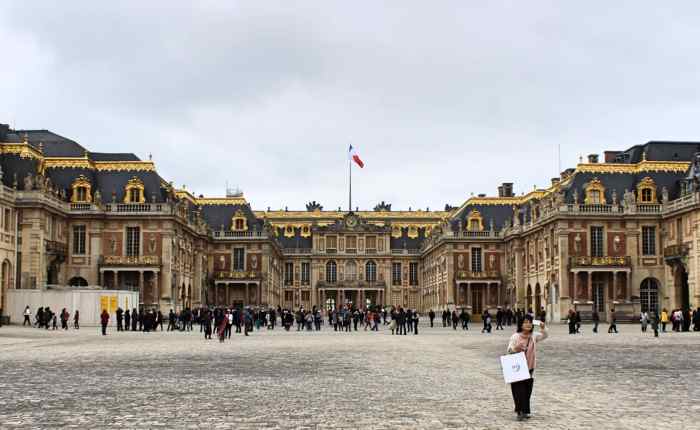

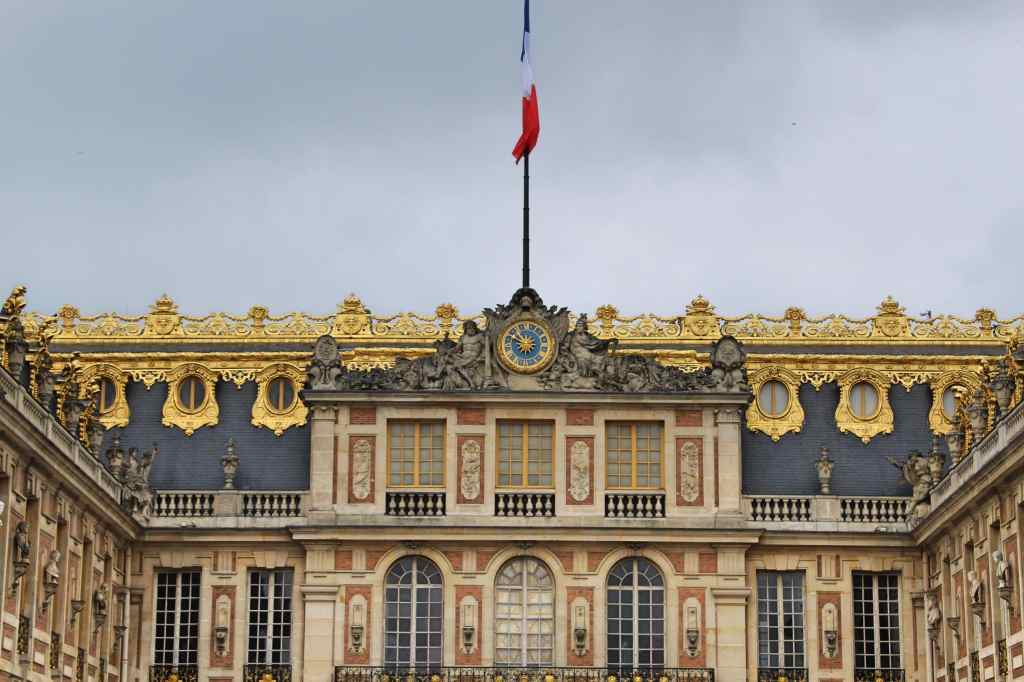
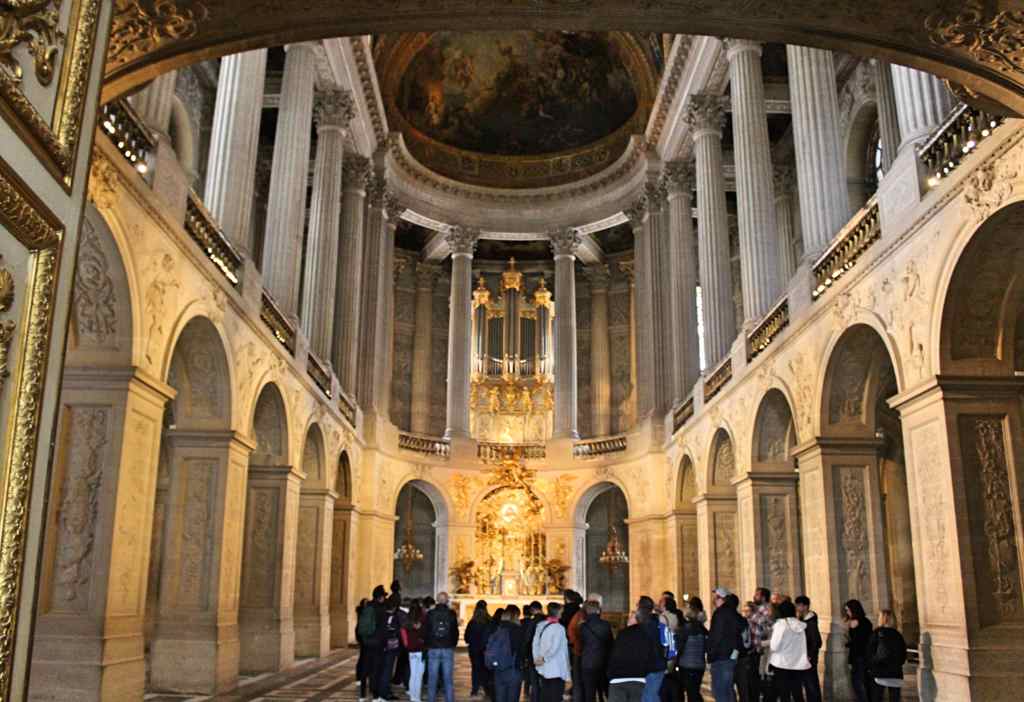
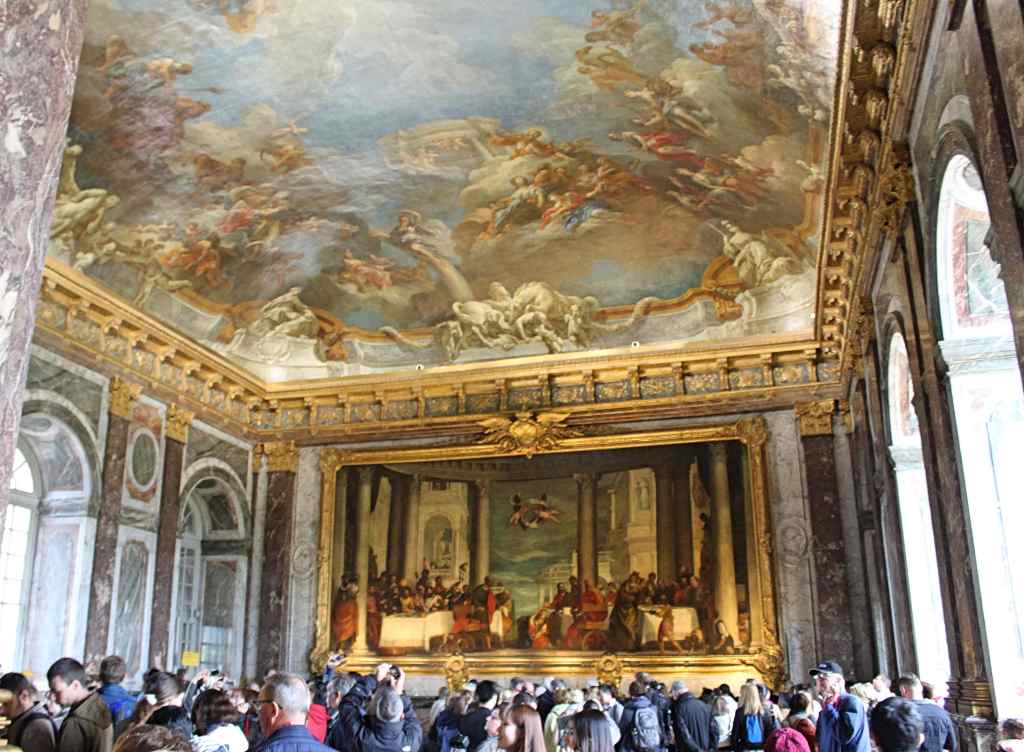

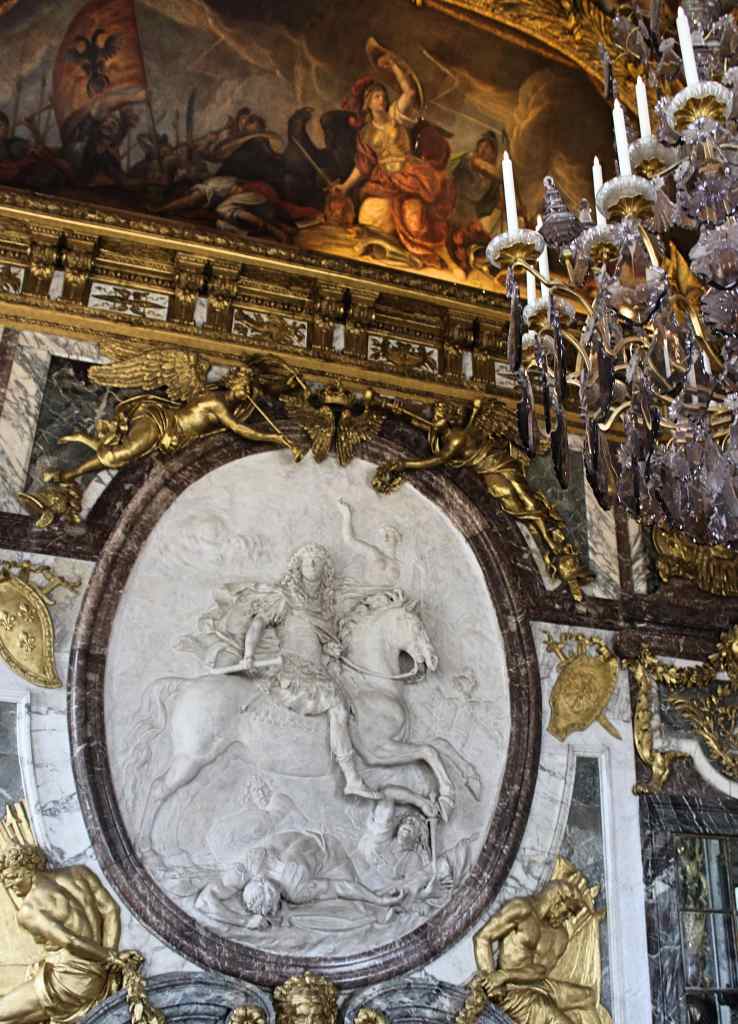


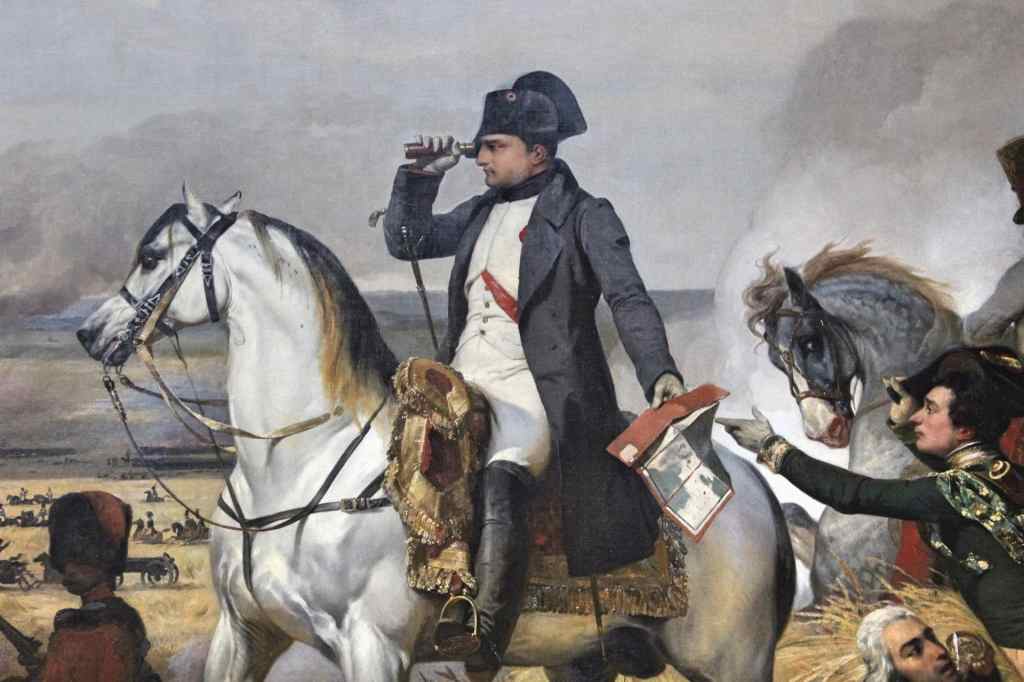

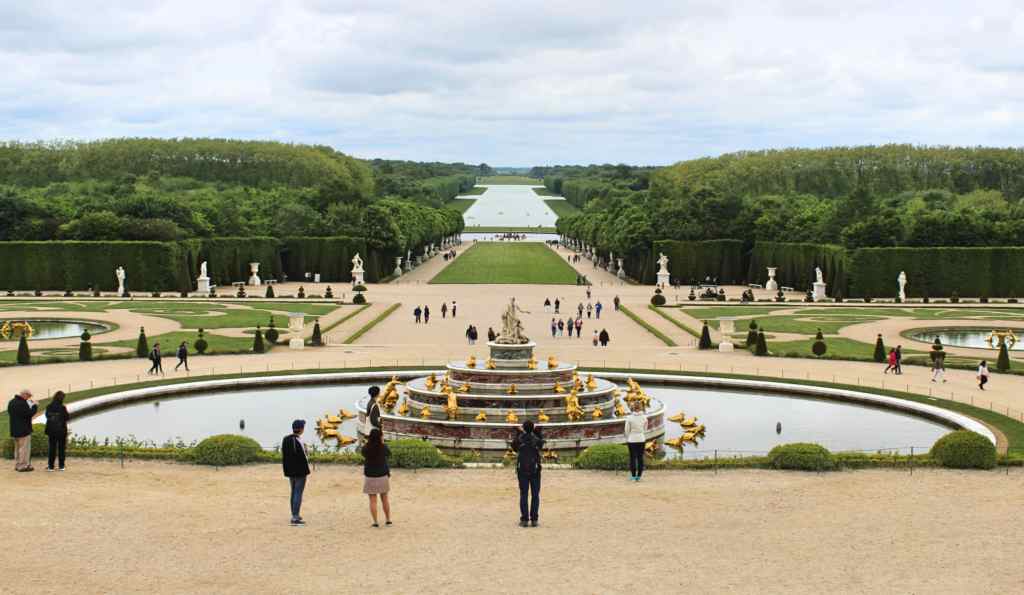
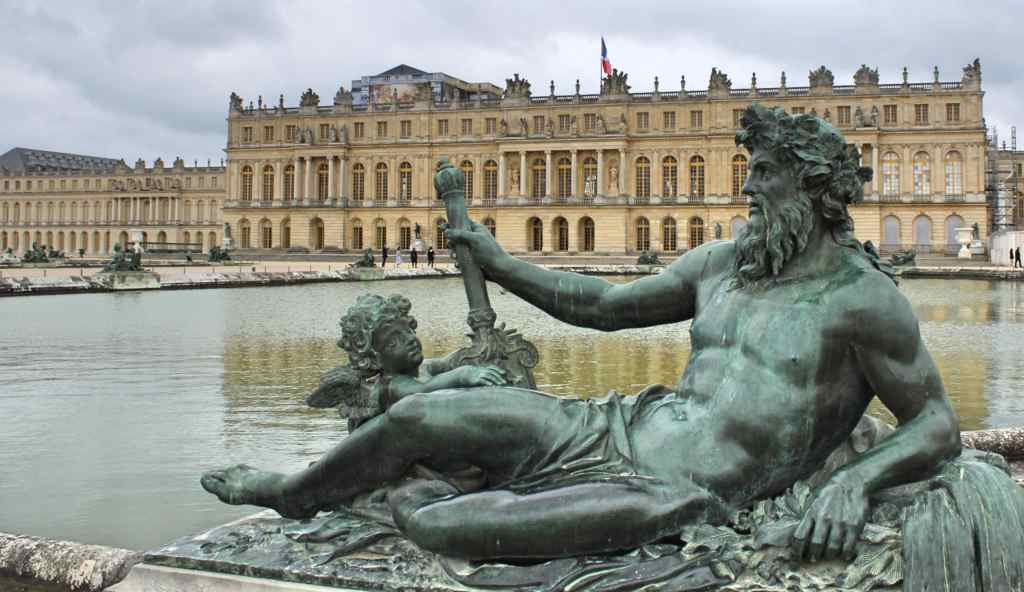
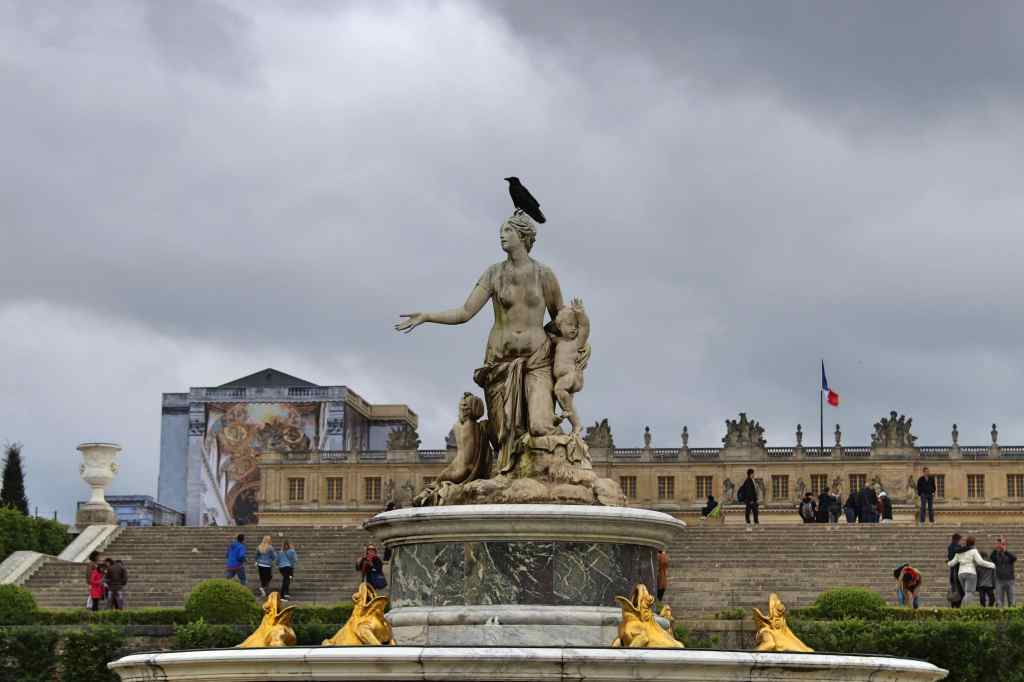

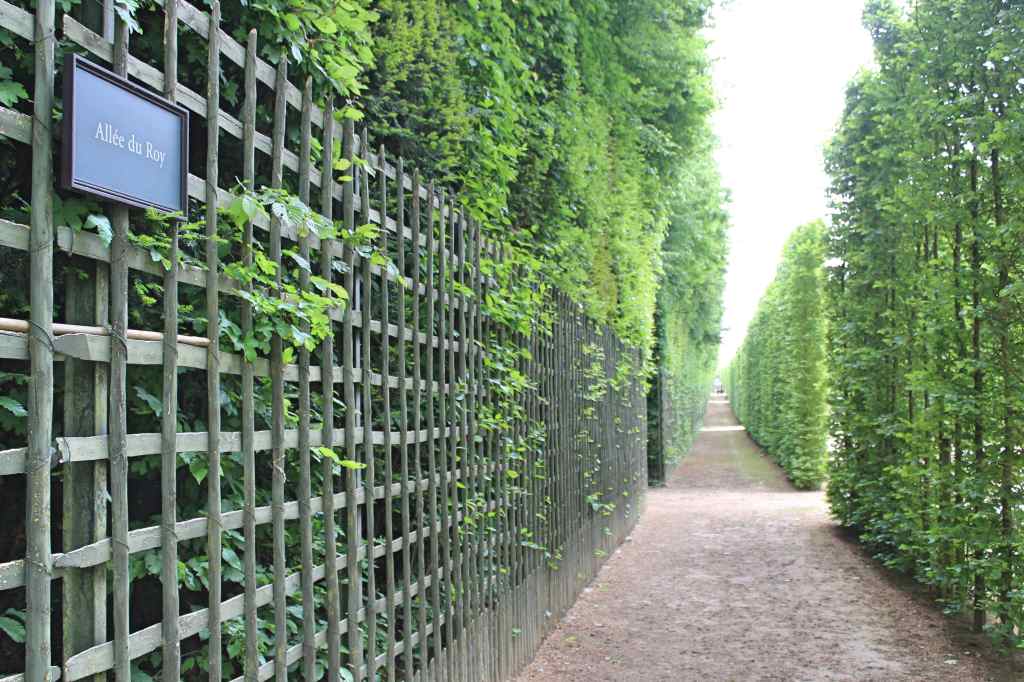
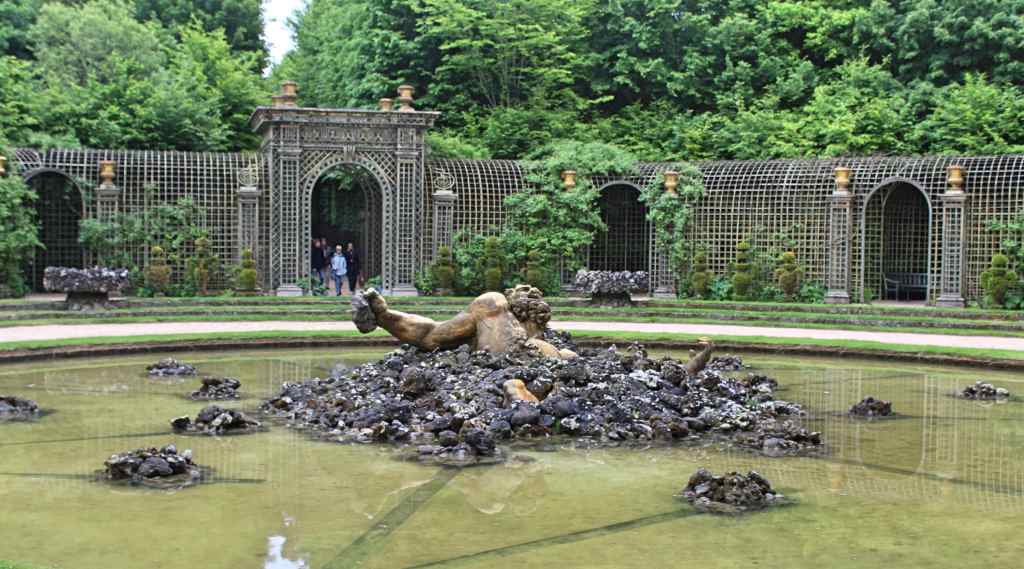
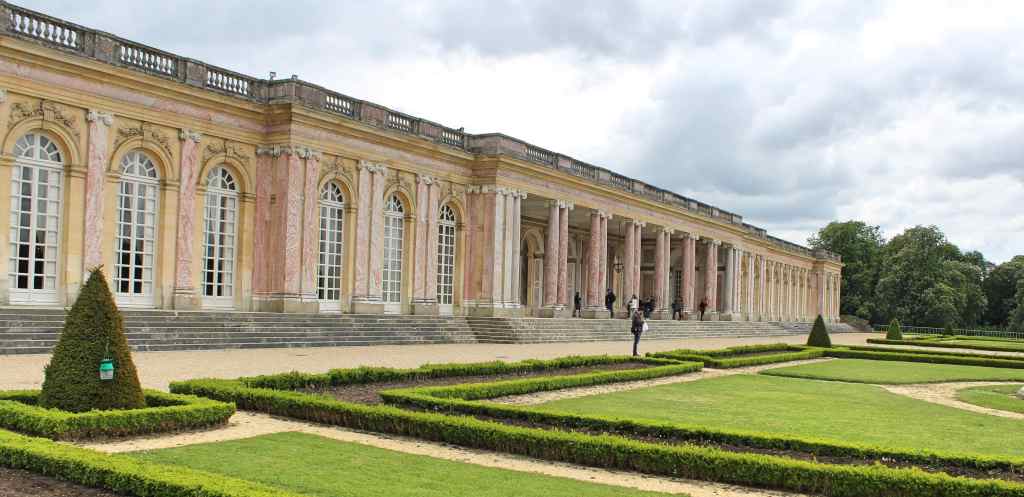
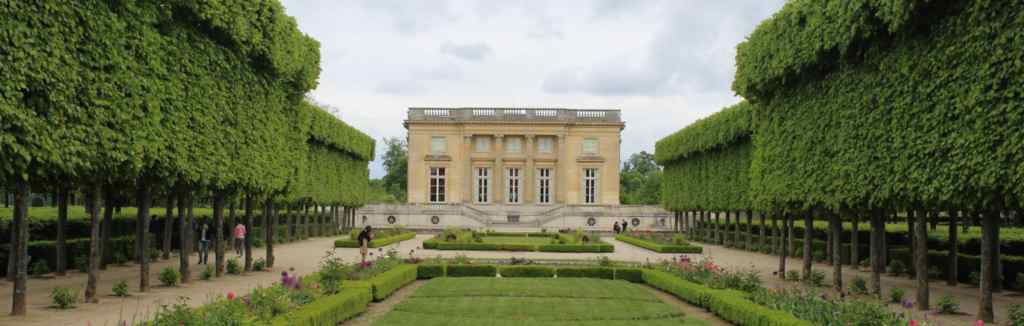
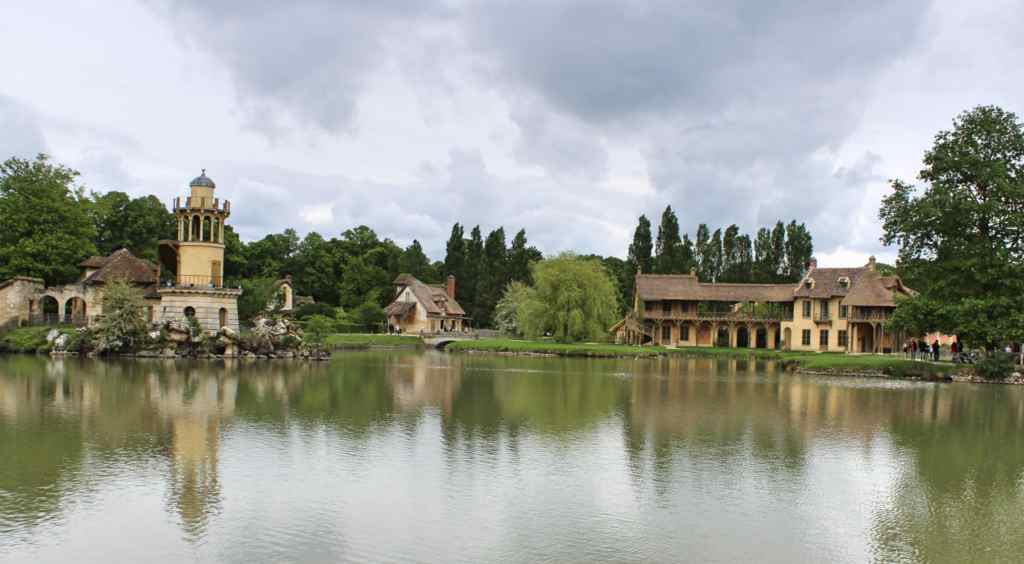
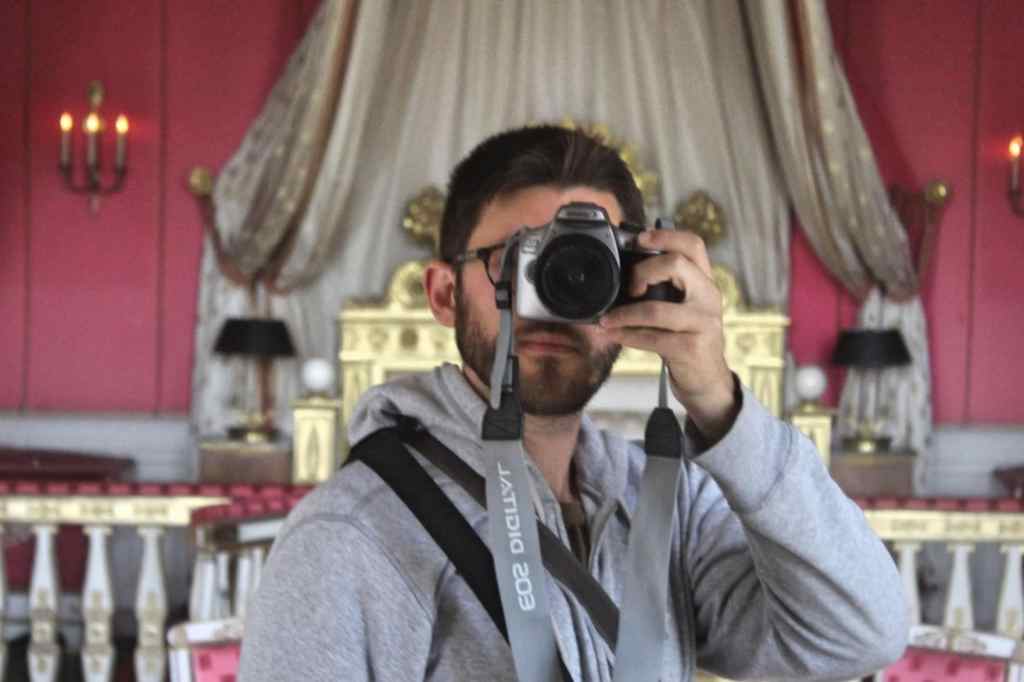



 Lotz in Translation