It is redundant to speak of the “Venetian Islands,” since the entire city is composed of islands. Yet when people speak of “Venice” they are most commonly referring to the cluster of small islands, connected with bridges, that compose the historical city center. This is only a fraction of the Venetian lagoon, however. There are a great many larger islands, further away, that require a boat to get to. That is what this post is about.
If you are standing near the Doge’s Palace, looking out towards the Mediterranean Sea, you will immediately notice the basilica of San Giorgio Maggiore. This is one of the bigger church buildings in the city, and its magnificent shape forms a wonderful profile in the sunset light. None other than Monet immortalized this image in a series of paintings. This basilica sits on an eponymous island, which is not much bigger than the church itself.
One of Monet’s many paintings of the island
The island of San Giorgio Maggiore sits at the far end of a much longer island, Giudecca. This island has served many functions through Venice’s history—as a residence for the wealthy, as a center of industry, and now as a mainly residential area. The most important structure on this island is Il Redentore, another grandiose church (Europe is so full of them). This one was built in the late 16th century, as a way of showing thanks to god for the end of a bad outbreak of the plague. It was designed by none other than Andrea Palladio, who is perhaps the most influential architect of the Italian Renaissance. This church is entirely typical of his style: an elegant blend of Greco-Roman models and Christian influences. During the Festa del Redentore, a pontoon bridge is built between the city center and Il Redentore, so that pilgrims can fill this historical church.
One of Canaletto’s portrayals of Il Redentore
Moving further away from the center, we come to the Lido. Along with the Pellestrina further south, the Lido is one of Venice’s barrier islands—an island formed by the tide, which protects the Venetian lagoon from harsher weather. Historically the Lido has often been used for defense, as it is the ideal place for fortresses. But my image of the island comes from much later in its history, when it became a center for tourism in the late 19th century (partly fueled by the notion that bathing in the waters was therapeutic). The German writer Thomas Mann stayed in the Grand Hotel des Bains, a large luxury resort that later became the setting for his novella Death in Venice. This is how Mann describes the atmosphere:
The gray and even ocean was enlivened by wading children, swimmers, garish figures, others, who were laying on sandbanks with their arms folded under their heads. Some were rowing small boats in red and blue without a keel, capsizing with roaring laughter. In front of the row of beach huts, whose platforms were like little verandas, there was playful motion and lazy rest, visits and chattering, careful early morning elegance but also nudity, which perfectly took pleasure in the freedom of the place.
It quite reminds me of a painting by Sorolla.
One of Sorolla’s many beach scenes (though it is not from a Venetian beach).
This little list hardly scratches the surface, of course. After all, there are literally hundreds of islands in the Venetian lagoon, some of them quite large. But I will focus on the islands that tourists most often go out of their way to visit.
Murano
Like the historical center of Venice, Murano is not a single island but a cluster of islands connected by bridge. Several vaporetto lines (3, 4.1, 4.2, and 12) can get you to this island from many different points in Venice, and the trip is around ten minutes. Architecturally speaking, Murano is certainly not among the most impressive parts of Venice. It is worth the trip, rather, for being the seat of Venice’s legendary glass-making industry.
A Venetian vaporetto
Glass has been made in Venice for well over a millennium. And for centuries Venice was incontestably the source of the finest glass products in Europe. Products ranged from bowls and jars to chandeliers and mirrors. The technique and formula used by the Venetians was a closely-guarded secret. When Louis XIV of France persuaded some Venetian glass-makers to work on the palace of Versailles, agents were sent to poison the defectors. But like all good things, the golden age of Venetian glass faded into history, as the ability to make high-quality glass products became more widespread.
Photo by Naturpurr; licensed under CC BY 4.0; taken from Wikimedia Commons
Although the industry is much shrunken, Murano is still the site of world-class glassmaking. It is also a popular tourist destination, thanks in no small part to places like the Murano Glass Factory, which displays some of the finest historical examples of Venetian glass. Another popular attraction is to see glass being blown by experts. One popular place to do this is Vetreria Murano Arte, which I visited during my class trip in 2007. I highly recommend it. Glass-blowing is an art and a science; it requires careful temperature control, a trained eye, a steady hand, and a deep knowledge of the structural properties of different materials. The assurance with which the artisans handle the flaming-hot glass is wonderful to see.
San Michele
Significantly closer to the city center than Murano is the little island of San Michele. For centuries, the only residents of this island were monks in a small monastery. But now the only residents are the dead. During the Napoleonic invasions, the monastery was suppressed, and the island was turned into a municipal cemetery. The island is easily recognizable for the brick wall going around its perimeter.
Though not a particularly big cemetery, San Michele is the final resting place of some big names. The two biggest are Igor Stravinsky and Ezra Pound. Part of the reason Stravinsky chose this little island is because Sergei Diaghilev—the famous impresario of the Russian ballet—was already buried there. Ezra Pound had lived in Italy since the 1920s, and after the Second World War was forcibly removed to the United States because of his openly fascist views. After his eventual release from a lunatic asylum, Pound made his way back to Italy, where he died in 1972. He is buried near Stravinsky and Diagheliv.
It would be harder to find any three people buried together who exerted a greater influence on the art of the previous century than these two Russians and one American.
Burano
Burano lies significantly further off, past both San Michele and Murano, at the northern corner of the lagoon. To get there, just take the line 12 vaporetto, which will deliver you in under an hour. Or if you prefer spending over 100 euros, you can take a private water taxi. But I do not recommend that route.
Burano from Torcello
Like Murano, Burano was also the home to a fine-arts industry, in this case lacemaking. The island is full of touristy shops selling lace products, though certainly not all of it is made in the time-consuming traditional way. La Scuola del Merletto is a small museum dedicated to this historical art. The fine lace was used in everything from clothes, to furniture, to church decorations, until demand fell off in the 18th century. Eventually, somebody is always going to figure out how to make a cheap and convincing imitation.
Most tourists do not, however, come for the history. They do not even come from the church of San Martino, which has a leaning campanile. Burano is, rather, a heaven for amateur photographers, thanks to its many canals and its brightly colored houses. No two adjacent houses have the same color; and the municipality even regulates what color residents may paint their houses, in order to maintain the aesthetic. Considering that the island’s only industry nowadays is tourism, this is certainly in their self-interest.
While I enjoyed the pretty colors, I have to admit that I lost interest rather quickly. I wanted something more historical. Thankfully, the next island had just that.
Torcello
Like many islands in the Venetian lagoon, Torcello has a long history, dating back at least to Roman times. Torcello is particularly important in the history of Venice, as the first cathedral in the area—before St. Mark’s—was built here. Indeed, for many years Torcello was a more important center of trade than Venice itself. This is not true anymore, of course. Though thousands used to live on this little island, in recent years that number is probably much less than 100. Aside from tourism, Torcello seems to be a place where locals gather to relax. There were dozens of private boats moored to the canal, and several large outdoor restaurants filled to the brim.
The environment of Torcello is quite beautiful. Here you really feel as though you are in a lagoon. Aquatic birds fly overhead, and the tall reeds are abuzz with insects. I took some time to walk along some of the rugged paths in the island, relieved to finally be in a natural space (something that Venice entirely lacks). Eventually I stumbled upon “Attila’s Throne,” an old stone chair that now sits exposed to the elements. Almost undoubtedly, this throne has nothing to do with Attila, and probably belonged to a local political or religious leader. Still, it is an impressive piece of furniture. This chair is located right outside the island’s museum, which displays some of the antique ruins that have been found there.
Torcello’s main attraction is the Church of Santa Maria Assunta, which is sometimes simply called Torcello Cathedral (though it is a cathedral no longer). This is a truly ancient church, dating back to the 7th century, when Torcello still had strong ties to the Byzantine Empire, and when it was still more powerful than Venice itself. The building’s age is quite apparent from a single glance. A relatively simple construction of faded brick, the church is mostly unadorned on the outside. The inside, however, is another story. Here you will find some extremely fine examples of Byzantine mosaics. Unlike the mosaics in St. Mark’s, these retain their original form, and so have all of that naïve charm and grace of early medieval art. The portrayal of the Last Judgment is particularly masterful—a cosmic vision against a gold background.
A public domain image of the church’s mosaic. (Photography is not allowed inside.)
This fairly well wraps up my experience with the islands of Venice. But of course this list leaves out several dozens. There is San Servolo, which once housed a Benedictine monastery (and now is home to a museum). In San Francisco del Deserto, Franciscan monks still pray amid the cloisters and the cypress trees. And this is not all. There is also San Lazzaro degli Armeni, an island where Mekhitarist monks (a type of Armenian Catholic sect) go about their daily rituals. Lord Byron famously stayed at this island, using the time to translate Armenian into English and to author textbooks on the language. This island is still one of the world’s most important centers of Armenian culture.
And there are still more. The biggest island in the lagoon is Sant’Erasmo, which is mainly agricultural nowadays. Two islands have served as quarantine stations, Lazzaretto Vecchio and Lazzaretto Nuovo (named after the Biblical figure with leprosy). During outbreaks of the plague, any incoming ships were required to dock here and wait a mandatory minimum number of days.* And everything aboard was disinfected through fumigation. Aside from this function, these islands also functioned as leper colonies, where those afflicted with leprosy (a bacterial infection) were isolated. But many islands have more cheerful functions, such as the exclusive hotels and resorts scattered throughout the lagoon.
(*The word “quarantine” actually comes from the Venetian dialect, which means “forty days.” This is the time from infection to either death or recovery in the bubonic plague.)
Considering all of this great, unexplored variety, it appears that, one day, I will once again have to return to Venice. Hopefully that day will be soon.
Processing…
Success! You're on the list.
Whoops! There was an error and we couldn't process your subscription. Please reload the page and try again.
My first footsteps in Europe were in the airport in Venice. It was in 2007, when I was a sophomore in high school, some time before my sixteenth birthday. Typical of that age, I was awkward, hormonal, pubescent, immature. During this trip, I was exposed to the most beautiful things that I had ever seen, and was largely unimpressed. Teenagers are too wrapped up in themselves to care much for the outside world. I had a digital camera that my mom had lent me; but over half of the photos I brought back from the trip are of my friends, or cats, or other nonsense. The only thing that roused me to enthusiasm was the food, which was quite excellent.
Eleven years later, I finally returned to the city, to see what I had missed. It was quite a lot.
Me in 2007Me in 2018
As usual, I was travelling on a budget. This pretty much ruled out the possibility of staying on the island of Venice itself. Small, antique, and exclusively devoted to tourism, accommodations are not cheap. Thankfully, there is the Mestre—the mainland of Venice (not the old city), which is generally quite a bit more reasonably priced. I stayed at an Airbnb in a quiet neighborhood and very much enjoyed the experience.
Frankly, I think staying in Mestre was better than staying in Venice itself, partly because I could get away from the crowds at night. And unlike the island of Venice, this quiet neighborhood had a real community of locals, which certainly improved the atmosphere. I had some beautiful mornings sipping coffee at a corner café, while I watched senior citizens come in for their morning glass of wine. And being close to affordable restaurants and supermarkets was also quite nice.
My memories of my first day in Venice, in 2007, are all a blur. We arrived early in the morning, all of us disoriented and jetlagged. Our hotel was right in the city center. Since virtually all of the buildings on the island are old, the rooms were tiny and the elevator only fit for one or two people. Most amusingly, our bathroom fan made a screeching, wailing noise that I will never forget. All of us badly wanted to take a nap, but our Irish tour guide insisted that we stay awake all day in order to adjust to the jet lag. By the time we had dinner, kids were falling asleep at the table. I nearly did the same.
Coming from Spain, at least I did not have to deal with jet lag this time.
The Mestre is very well connected to the city center with public transportation. In my case, all I needed was about a twenty-minute bus ride. Soon I arrived at the train station, stepped off, and confronted the new but strangely familiar profile of Venice.
Now, I have called the center of Venice “an island,” but that is not accurate. Rather, it is a collection of small islands—over 100—which are connected with bridges. The city occupies a lagoon between two rivers. This oddity of location is what gives the city its charm. Though Amsterdam and even New York may have more individual bridges, no city I know of is more dominated by the presence of water. But of course, having a city built on a lagoon entails unique challenges. The foundation of the city has been sinking, partly as a result of settling, and partly as a result of pumping groundwater (causing buildings to sink further into the ground). This, combined with climate change-induced rises in sea-levels, have worsened the periodic floods suffered by the city. Already, many ground floors are uninhabitable.
(In 2003, a massive engineering project was initiated, called MOSE, but it stalled because so much money had been siphoned off due to corruption. Work seems underway again, as global warming exacerbates the flooding problem. The flooding in 2019 was the worst in fifty years, causing widespread damage to the city’s cultural heritage.)
Building a city on a lagoon also entails unique transportation challenges. The lagoon is far too unstable for a subway, and the city is too cramped for either trains or buses; so the only option within the old center is by boat. The Venetian equivalent to a bus is the vaporetto, or water taxi, fair sized ferries that patrol the city in 19 lines. Line 1 is popular with tourists, since it goes down the Grand Canal. The other famous option for water transport is the gondola—operated by a single gondolier, pushing the elegant boat through the water with an oar. Nowadays the gondola exists exclusively for tourists, and the price reflects that: 80 euros for about half an hour, and more at night.
As I walked through the city, I have to admit that my first impressions were rather mixed. Venice is obviously and undeniably beautiful; indeed, judged purely in terms of its buildings, I believe it has a claim to being the most beautiful city in Europe. But the atmosphere of Venice is odd and empty. Keep in mind that I was visiting during the high tourist season, in July, when many locals go on holiday (about 55,000 live in the old center). This meant that whatever local life that Venice may have was largely dead. Instead, the streets were dominated by people carrying cameras, and others dragging suitcases. It felt like being in the world’s most beautiful airport. Or perhaps Venice is better compared to an enormous, open-air museum. This meant that one of the chief charms of travel—taking part in local life—was off the table.
Venice is probably at its most lively in the weeks leading up to carnival. During this time, people dress up in beautiful masks and elaborate costumes, now famous throughout the world. You may be surprised to learn that this is a modern tradition, though it has historical roots. Masks were banned in Venice for about two hundred years, from the 18th to the 20th century. It was only in the 1970s that the tradition was revived. When I visited in 2007 it was mid February, and the streets were full of these disguised Venetians. For the most part these seemed to be street performers, however, who only dressed up so that tourists would pay to take photos with them.
If you look at the old center from the air, you will see an S-shaped gash running through the city. This is the Grand Canal, the largest canal in the city. For many years it was the main artery of Venice, since there was only one bridge which crossed it (the Rialto). As a result, it became something like Fifth Avenue in New York City: a place for the wealthy of the city to flaunt their success. As the canal was the central thoroughfare, the magnificent façades of private palaces face the water, displaying a variety of different architectural styles from the city’s history. The Ponte de Rialto is the oldest of the four bridges that cross the Grand Canal. It provides a lovely view as well as being quite attractive in itself. However, like the Ponte Vecchio in Florence, it is covered in shops, which makes it rather cramped. (For centuries the bridge in this spot was a wooden construction; but multiple collapses convinced the authorities to rebuild it in stone.)
After crossing the bridge, and taking the obligatory photo, I continued making my way to the central square: the Piazza San Marco. This is easily the most famous area of the city. For the most part the plaza is dominated by long buildings composed of many levels of arcades. At the far end is St. Mark’s Cathedral (which I will describe later) and its marvelous campanile, or bell tower. At nearly 100 meters, this tower is the tallest structure in the old city, and quite attractive in spite of its simple form.
Not far off is the clocktower (Torre dell’Orogio), another of the city’s landmarks. Two bronze shepherds with hammers ring the bell on the top, while a winged lion (the symbol of St. Mark) holds an open book below them. (A statue of the Doge once accompanied these lions, but Napoleon had him removed.) Below the lion sits the Virgin and child; and twice a year (on Epiphany and Ascension) mechanical figures of the three wise men emerge from the adjacent door and make their bows as they pass. For the time it was created—during the Renaissance—this was an impressive engineering feat.
The face of the clock itself is also a marvel. The sun travels along the twenty-four hours of the day, against the background of the zodiac. In accordance with Ptolemaic astronomy, the earth sits right at the center of the clock, while the sun, moon, and stars rotate around it. Bad science aside, the clock’s combination of blue and gold is quite pleasing on the eyes.
If you are standing at the end of the square, with the clock tower to your left and the basilica directly ahead, you will see the space open up to your right. This is called the Piazzetta, and it leads directly to the sea. The view is framed by two columns topped with statues—one of St. Theodore (who was one of Venice’s patron saints) and the lion of St. Mark.
Proceeding forward, you arrive at yet another iconic area of the city, the Riva degli Schiavoni, a waterfront promenade. At almost any time of year (except during a pandemic) this place is extremely crowded. Gondolas bounce up and down in the waves, while people sell all sorts of knick knacks from stalls. The waters around this area are typically quite busy, with ferries going back and forth, as this is near one of the mouths of the Grand Canal. The view is characterized by the distant form of San Giorgio Maggiore, an enormous basilica that sits on an eponymous island across the waters. Its campanile looks quite like the San Marco’s, creating a pleasing symmetry.
Now the first major stop on our tour has arrived: the Doge’s Palace. If you are looking out at the water, this palace will be right behind you, though you may not have paid it much attention. In the context of Venice, the building’s exterior is not immediately eye-catching (though I will return to it later). But within is a palace of quite astonishing dimensions. I recommend going early, as there can be long lines to enter. I arrived at around ten in the morning and was basically able to walk right inside. The visit began with a small exhibition space, where I was delighted to find some drawings by John Ruskin. The famous art critic was also a talented draughtsman, and he made dozens of meticulous sketches of the city in preparation for his monumental book, The Stones of Venice. As I happened to be reading the book at the time, this seemed to bode well for my visit.
On display were also the forty-two original capitals of the stone pillars on the palace’s exterior. (Those there now are replacements.) Ruskin considered these capitals—which most of us overlook—to be the most significant artistic statement of the palace, and devoted much attention to their analysis. I will leave my own commentary for the end, and will instead embark now on the palace interior.
But before moving on, it is worth asking: What is a “doge”? This title, sometimes translated as “duke,” is unique to Venice. It is a cross between a king and a president: a ruler given royal prerogatives who was elected for life. The political organization of Venice was somewhat complicated, but suffice to say that it was an aristocracy with a touch of republicanism. The ruling class was basically hereditary; but they were divided into governing bodies—councils, parliaments, senates—and held elections (within their own ranks); and there were some checks on arbitrary power.
If the cases of Athens, Amsterdam, and England can be trusted, there seems to be some connection between a maritime, mercantile orientation and democratic forms of government. This is the case of the Republic of Venice as well, which rose to wealth and power through sea trade rather than conquest (though it was not averse to war). This, perhaps, is one reason why the city’s government—with its separation of powers and its checks on authority—developed the way it did. This also explains the moderate degree of intellectual freedom allowed in Venice, where the censors of the Catholic world could not reach. Venice also had a degree of religious autonomy, as its highest religious figure was the Patriarch of Venice, who himself was elected by the senate (from among its own ranks, of course).
From Venice’s beginnings in the 8th century, as a satellite of the Byzantine Empire, the city-state gradually rose in power and influence. It was a major staging ground during the crusades and profited enormously from trade with Asia along the Silk Road. By the Renaissance, the Republic had the wealth and the means to compete with the Ottomon Empire for control of the Mediterranean. But the “discovery” of America by Europe spelled the end of Venice’s high-point, as trade gradually shifted away from the Mediterranean to the Atlantic. Thus began a long, gradual period of decline which ended in 1797, when Napoleon conquered the city and formally ended the rule of the Doge. All told, the Republic of Venice survived some thousand years.
With this brief history lesson out of the way, let us see how this humble Doge lived. After passing the courtyard (enclosed on the far side by St. Mark’s Basilica), and ascending a flight of stairs, the visitor enters into a succession of brilliantly decorated rooms. The rooms are so ornate, in fact, that it even impressed my fifteen-year-old self. The second time around, I was stunned. Every ceiling is covered with carved engravings and panelling, and every wall is adorned with enormous paintings. Though the palace was built in the 14th century, and thus owes its form to the Venetian gothic, several fires required the interior rooms to be redecorated. Luckily, the great painter Tintoretto was on hand to provide much of the new decoration. The painters Veronese and Tiepolo, and the architect Andrea Palladio, also contributed; so there was no shortage of talent.
A courtyard in the palace
The palace contains some rooms that you would expect to find in any palace: luxuriant apartments for the ruler and antechambers where ambassadors could cool their heels. (Unfortunately, the Doge’s apartments were closed for renovation when I visited.) But there are also many sorts of rooms that you will not find in any other European palace. There is a Council Chamber, a Senate Chamber, a chamber for the Council of Ten, and rooms for the administration of justice. Judging from the size of the room’s alone, they were not built for a single ruler, but for hundreds. This did not stop them from decorating like kings.
There are simply too many rooms and too much decoration to enter into too much detail. I will let the photos do the talking:
One chamber does, however, stand out for special comment. This is the Grand Council Chamber, which is not only the biggest room in the palace, but one of the biggest rooms in all of Europe. It is simply massive: 1325 square meters (over 14,200 square feet!). The room had to be big because the Grand Council included all of the patrician males over age 25 into its ranks, which amounted to well over one thousand men. This may not sound inclusive to us, but for its day this was radical. One of this council’s tasks was the election of the Doge, who sat on the podium at the far end of the room. Behind this podium is one of the largest oil paintings in the world: El Paraiso, by Tintoretto (though largely executed by his son). The painting stretches over 25 meters and includes many dozens of figures. Ruskin thought that it was an artistic masterpiece, though I found its sheer size more impressive than its artistic quality.
The other noteworthy aspect of the room are the portraits of the first 76 Doges running around the top of the room. These, too, were commissioned to Tintoretto, but were mostly done by his son (the painter was quite old at the time). Each of the Doges is present along with a scroll, on which are written their most important achievements. The one exception to this is Marino Faliero, a Doge who attempted a coup d’etat and was beheaded. In place of a portrait, there is a black cloth for this tratorious duke. History is not kind to the subverters of democracy. (Well, perhaps Julius Caesar is a partial exception to this. Napoleon as well, I suppose.)
Note the black shroud
After the grand tour of the regal rooms used by the Venetian government, I entered the prison. This dreary space has been known as the Pozzi (the wells) and the Piombi (lead), and it deserves both names, as it is a damp space with a leaden atmosphere. (You can tell that the Venetians were concerned with laws and their efficacy, since they built the major prison next to the center of government.) The “old” prison is connected to the “new” prison (built several hundred years apart) via the “Bridge of Sighs,” which was so known because it was the last place a prisoner could see a bit of sunlight and utter a weary sight before his long confinement. In 1756, the infamous Giacomo Casanova effected a daring escape from these prisons by climbing onto the roof.
Thus ended my tour. But before moving on, I ought finally to address the columns on the outside of the building. John Ruskin was extremely fond of the sculptures carved into the capitals of these columns, and devoted ample space to them in his book on Venice. Indeed, by common consent they are masterpieces of gothic sculpture. Inspired by Ruskin, I spent a good thirty minutes examining these columns in detail, and I was glad I did (even though, as mentioned before, the columns currently outside the palace are copies of the originals inside). They generally consist of figures interspersed within vegetable patterns, usually demonstrating some allegorical significance. Rather than launching on a giant Ruskinian rant myself, I will be content with a few photos:
Thus ended my tour of the Doge’s Palace. But I did not have time for a break. After all, St. Mark’s Basilica is right next door.
No monument in Venice better illustrates the city’s role as a conduit between the Catholic and Byzantine worlds. St. Mark’s embodies both influences. Neither wholly gothic nor wholly byzantine, the church is an alluring hybrid structure, unlike anything else in the world. At a first glance, the basilica (it is also a cathedral, though more commonly called a basilica) presented a chaotic forest of towers, domes, and semi-domes. It bears very little resemblance to the towering gothic spires that are so common elsewhere in Europe. Rather than awe the viewer with harmony or height, the basilica is profuse in details of decoration. Mosaic scenes from the life of Jesus—quite lovely in its bright colors and gold backgrounds—adorn the surface, while statues of saints stand guard above.
The most famous figures on the cathedral are the four bronze horses that adorn the roof, right above the entrance. They are Roman copies of Greek originals, supposedly designed by the famed Greek sculptor Lysippos (more probably they adorned a Roman triumphal arch). Certainly they are wonderful works of art. The reason they are here is because the Fourth Crusade went sour, and culminated in the sacking of Constantinople (a Christian city) by the Catholic forces. Napoleon had the horses taken to Paris in 1797, but they were eventually returned after his defeat, in 1815.
The other famous decorations are the tetrarchs. This is a rather odd and unsettling sculpture, made in the fourth century and, like the horses, taken from Constantiple during the Fourth Crusade. By the time this work was made, the Roman Empire was in disarray, and the Emperor Diocletian decided that he needed to divide power between three additional co-rulers in order to maintain order. This sculpture represents the co-dependence of these four rulers. But the four men do not seem like confident allies; rather, they seem scared out of their wits. Certainly it is not a work that inspires confidence—they clutch each other in fearful desperation. The sculpture is also remarkable for the degree of abstraction. The great Roman tradition of realistic sculpture (as epitomized by the horses) had already been lost by this time.
Saint Mark’s owes its name to a Venetian trick. According to the story, two wily Venetian merchants smuggled the saint’s body from Alexandria to Venice in the 9th century. (Supposedly, they covered the body with pork to prevent Muslims from investigating.) The story is extremely difficult to believe, if only because the body would have already been nine centuries old and unrecognizably decayed. However, standards of evidence were not very high in the Middle Ages; and in any case the city had much to gain by being the home of the evangelist’s relics. The story seemed doubly dubious when one considers that, according to legend, the saint’s relics could not be found when construction began on the basilica; Mark himself had to appear to direct the Venetians to his mortal remains.
Well, eternal resting place of St. Mark or not, the basilica is an immortal work of art. Entrance to St. Mark’s is free. All one has to do is stand in a long line and wait. Once inside, you will find yourself in a space quite unlike any other European cathedral. The floorplan is a Grecian rather than a Latin cross, meaning that the building is as wide as it is long. But St. Mark’s is not like a gothic cathedral, which impresses with its architectural majesty. Rather, basilica’s outstanding feature is its decoration. The overwhelming impression is of light, gold, and color. Every inch of the interior is covered in mosaics with gilded backgrounds. Unfortunately, many of these have been retouched or restored, most often with a definite loss in quality. Even so, the whole has a power greater than the sum of its parts—hypnotic in its use of color.
My next stop was the Scuola Grande di San Rocco. Even though this building is called a “school,” it is really the historical seat of a powerful religious confraternity. (A confraternity is essentially a private club that promotes a religious cause. San Rocco—”Saint Roch”—was a saint commonly invoked against the plague.) Though magnificent enough, the façade of this building does not attract attention in the context of Venice. But the inside is special indeed. As in the Doge’s Palace, there are several enormous rooms, all of them richly decorated. Unlike the Doge’s Palace, however, much of the decoration in the Scuola Grande was provided by one man: Tintoretto.
After Titian, Tintoretto is probably the most highly-regarded painter of the Venetian school. Nicknamed “il furioso” for the energy of his brushwork, he was known for working fast and rough. He was no perfectionist. By general consent, the quality of his work is highly uneven. But his style was very well-suited to the semi-darkness of these enormous rooms, where his figures could dazzle with their suggestiveness rather than their perfection of form. His paintings are notable for the drama and movement of their subject, rather than the typical Renaissance solidity and harmony. I would be lying if I ranked Tintoretto among my own personal favorites, though Ruskin was quite wildly fond of him. For me, the wooden carvings in the seats along the walls were, if anything, more charming than Tintoretto’s great pictorial spread. But I do admire his productivity.
After this I made my way to one of Venice’s many museums: the Gallerie dell’Accademia. This museum is the Venetian equivalent of the Uffizi in Florence: housing a massive collection of Italian art, from the medieval period to the 19th century. It is housed in another former confraternity building, this one the Scuola della Caritá. When I visited, parts of the museum were undergoing restorations, and so were unavailable. Even so, the museum has an impressive collection.
As usual, I was most captivated by the works of Hieronymous Bosch. There are three major works by this Dutch painter to be seen. One is the triptych The Hermit Saints, which shows three saints resisting temptation in the wilderness. In keeping with his typical, bizarre style, Bosch represents these temptations in a series of absurd little figures—monsters, skeletons, nun’s heads—that surround these simple, pious men. Another triptych is The Crucifixion of St. Julia, which shows us a bearded woman nailed to the cross. Christians explained the beard with a story about a woman who prayed to God to make her repulsive (and thus protect her virginity); but probably the historical reason involves images of Christ from Eastern Europe, in which Christ’s dress was misinterpreted by Westerners as being that of a woman.
My favorite work, however, is a series of four paintings called Visions of the Hereafter. Here, as usual, Bosch sets his vivid imagination to work picturing the world beyond our own. The most captivating of these images is the Ascent of the Blessed, which shows us the infinite white light that leads to paradise. To our modern eyes, the image cannot but remind us of some space exploration movie. We have used the same sort of image to represent portals to other dimensions or accelerations to speeds beyond light. Bosch proves himself, once again, to be one of the modern age’s visual godfathers.
The museum has works by Titian and Tintoretto, of course. But a more elusive Venetian painter is also on display: Giorgione. A few years older than Titian, Giorgione is normally regarded as one of the great innovators of Venetian painting. The trouble is that it has historically been difficult to definitively attribute works to him. Indeed, an air of mystery seems to surround Giorgione, which is apparent in his painting The Tempest. It shows a young woman suckling a baby, while a traveller looks on with a curious expression. In the background we can see an Italian village, while a storm rages overhead (thus the title).
The execution is quite beautiful indeed. Its meaning, however, is difficult to decipher. To my eye it looks like a depiction of the “rest on the flight from Egypt,” when the Virgin Mary escaped Egypt with the infant Jesus, and stopped to suckle him on the road. But the woman—almost completely naked, and staring rather boldly at the viewer—is unlike any other depicting of the Virgin. Contemporaries referred to her as a “gypsy” and the man as a “shepherd,” but art historians, straining for cohesion, have proposed obscure stories from classical mythology and fanciful allegorical meanings. Yet none of these interpretations sheds light on the particular power of this painting, in which the heavy and humid atmosphere of a storm, the grey, shadowy light through the clouds, is so palpable. I can see why it was Lord Byron’s favorite.
I cannot leave the museum without mentioning, if not the greatest, than the painter who did the most to show Venice to the world: Canaletto. This was not his real name, of course; he was called “little canal” because his paintings were so often focused on Venice’s many waterways. His paintings are consistently impressive, capturing the city with photographic accuracy. Personally I cannot fathom how much time it would take in order to create such a scrupulously detailed image. But in a world before photography, this was the only way that wealthy nobles could catch a glimpse of the city from afar. Canaletto was more than a mere technician of monumental patience, however. His paintings have a very charming, wistful emotion running through them, a kind of atmospheric joy. They are absorbing and refreshing works.
My next stop was another church: Santa Maria Gloriosa dei Frari (normally just called the “Frari”). After St. Mark’s itself, this is perhaps the most important church building in Venice. If you only saw the exterior, however, you would be excused for not thinking so. The basilica’s brick façade and relatively plain decoration do not make it stand out in the context of Venice. Nevertheless, it is certainly worth a visit. From the inside, the basilica looks like unlike any church building I have seen. It is an incongruous mixture of dark materials and open windows, of plain surfaces and rich decorations. The entire building does not come together as an organic whole; rather it seems like a warehouse for art and monuments. But it is a beautiful warehouse.
Among the artwork, the best may be the large-scale paintings by Titian. I found the Pesero Madonna especially beautiful for the shimmering effect of the brightly-colored robes. Titian is also responsible for the painting in the main altarpiece, a wonderful depiction of the Assumption of the Virgin. But what really caught my attention were the funerary monuments. The Frari is the resting place of many Doges, as well as some of the city’s most gifted artists. Titian himself is buried here, commemorated by an enormous marble sculpture by Antonio Canova—erected centuries after the artist’s death. Canova himself (arguably the greatest neoclassical sculptor) is buried here, in a stunning pyramidal cenotaph—my favorite work in the whole basilica. I also found myself captivated by the monument to the Doge Giovanni Pesaro (not the same Pesaro as in Titian’s painting). This gruesome monument features black skeletons emerging between African servants, who support the monument’s upper half. It is disturbing for many reasons.
It is worth mentioning another of Venice’s many basilicas, Santi Giovanni e Paolo. In appearance it is quite similar to the Frari, and it likewise is the final resting place of many Doges. However, I think the most impressive thing to see is not inside, but next to this old structure: the equestrian statue of Bartolomeo Colleoni. This was done by Andrea del Verrochio, most famous for being Leonardo da Vinci’s mentor. But he was a great artist in his own right, as this sculpture proves. It is really a marvelous work: the horse is rippling with muscle, and confidently striding forward. The condottiero is both heroic and ruthless: his face is ugly and yet compelling, and his pose one of unquestionable command. It is one of the finest depictions of a military leader.
After all of this glorious art and all of these magnificent monuments, my last stop is rather depressing: the Venetian Ghetto. This is the neighborhood where Jews were forced to live for hundreds of years. In fact, the word “ghetto” itself comes from this area of Venice. The derivation of the word remains rather difficult to pin down. It may come from a German word for street (many of the Venetian Jews spoke a German dialect), or a diminutive form of an Italian word (“borghetto,” or little town), or perhaps from a Hebrew word. We visited the Venetian Ghetto on my school trip, back in 2007; and I still remember our guide explaining that the buildings were taller in this area because the Jews did not have room to build anywhere else.
The Venetian Ghetto is split into two sections, the Ghetto Nuovo and the Ghetto Vecchio (the “new” and “old” ghettos), though this classification refers to when the area was used as foundries, not as a place of Jewish residence. (Indeed, one hypothesis for the word “ghetto” is that it comes from the Italian “getto,” which means to pour molten metal into a mold. Many foundries existed in this area.) Two bridges connect this part of Venice to the surrounding area; and Jews had to be sure to return to the ghetto before the nightly curfew, or face a stiff fine.
One of the two bridges leading into the Venetian Ghetto
Even in my brief time walking through the ghetto, I noticed that there was still a significant Jewish presence here. There are several synagogues, cultural centers, and even a kosher restaurant. There is also several monument to the victims of the holocaust. Fortunately, the Jewish community largely escaped Nazi percesution in Venice, and this was thanks to the heroism of Giuseppe Jona. Jona was a Jewish physician who, like many Jews, was deprived of his profession during the Nazi occupation. He took it upon himself to stay in Venice and to help organize the Venetian Jewish community. In 1943 the Nazis ordered him to help them locate the Jews in the city. Instead of cooperating, Jona burned every document in his possession that could be used, and took his own life. He is memorialized in the Venetian Ghetto, and certainly deserves it.
As I walked through this distinct corner of the city—so strangely marked by tragedy and hope—I reflected on the long history of anti-Semitism in Europe. The Nazis were merely the last and worst in a long line of Jew-haters. Even great works of art are marred by this sentiment. The most obvious example of this is, perhaps, Shakespeare’sThe Merchant of Venice, which reflects many of the worst stereotypes of Jews. (Because Shylock is so compelling a character, some have argued that the play is not actually anti-semitic; however, I think the work is incoherent if you consider Shylock the real hero rather than, as I believe Shakespeare intended, the villain.) It is depressing to think that even a man with as free a mind as Shakespeare’s could not entirely escape prejudice. But prejudice runs very deep. The ramshackle buildings of the Venetian Ghetto are a testimony to this lasting hatred and also to the community’s lasting resilience.
This does it for my return to Venice. But listing the monuments does not do justice to the real experience of visiting the city. Venice is one gigantic work of art. Virtually every angle of the old city is picturesque—from the impressive works of architecture to the forgotten corners of run-down buildings. Venice is palpably an abandoned city, a floating relic, which gives it a kind of romantic charm. But the city is also refreshing—for the ocean breeze that blows through it, for the ever-present sight of water. Admittedly, for all of its beauty, Venice does lack the most charming part of any city: street-life. I cannot say it is my favorite European destination. Even so, the memories Venice evokes—of awkward pubescence, of my first window into a wider world—will always make the city special for me.
Before my flight home, I found a café and sat outside sipping grappa, the strong Italian brandy. I have to admit that I actually had no idea what grappa was. I thought it was some sort of wine, and I winced when I took my first taste (I normally do not drink liquor). Even so, sitting outside in the sunshine, sipping on this flaming beverage, I could not help but feel rather satisfied with the way that my life had turned out. When I visited Venice in 2007, I could never have guessed that I would be living in Europe ten years later.
If you know anything about Venice, you will know that this post has left out virtually everything beyond the city center itself. There are many smaller islands that are also worth visiting. But that will have to wait for another post.
Processing…
Success! You're on the list.
Whoops! There was an error and we couldn't process your subscription. Please reload the page and try again.
As I mentioned in my last podcast, it’s pretty hard to do a podcast about Spanish life when everything has been turned upside down. Normally I take inspiration from what I can see in any given week, or from a recent trip. But I’ve just been seeing the inside of my apartment and, occasionally, of the nearby grocery stores. However, I can’t leave this podcast season incomplete. After all, I just have one episode to go to make a nice, round, even twenty episodes. And since it’s hard to talk about day-to-day Spanish life during the coronavirus times, I thought it would be good to revisit the last time in Spain’s history when daily life was so completely turned upside down.
I’m talking, of course, about the Civil War of 1936-39. Of course, in this podcast I can’t hope to do a real thorough history of this war. If you want that, there are plenty of great books on the market. If I tried to even list the major writers on the war, I’d be here all night. In fact, the Spanish Civil War is only behind World War II in the number of books dedicated to the subject. That is pretty crazy, considering that far more people died in World War I or even the Vietnam War. But the conflict has an enduring fascination, for quite a few reasons.
So here’s the basic background. Spain came out of the 19th century in pretty bad shape. The Napoleonic invasions, in the early 1800s, successfully introduced the idea of constitutional government into the country. After that, things were never quite the same for the Spanish monarchy. There were tensions everywhere: between the monarchy and the church, between the church and the people, between advocates for different branches of the royal family, between the rich and the poor, between liberals, monarchists, carlists, and anarchists, and that’s just the beginning. Spain was steadily losing its overseas colonies, a process that ended in the humiliating defeat in the Spanish-American war in 1898, when the decadence of Spain’s power finally sunk in for a lot of people.
In the early 20th century, Spain was economically backward. Industrialization had come late to the country, and for the most part hadn’t come at all. Spain was still mostly agricultural. Not only that, but the country was highly decentralized, as it is now. Each region had its own organization, its own politics, and many regions had their own languages. In the places where industrialization had taken hold, like in Barcelona and Asturias, organized labor had become a powerful force. Meanwhile, in an attempt to get rid of the corrupt and inefficient government, Miguel Primo de Rivera seized power in a military coup in 1923. (Spain has had a lot of military coups.) He ruled for about seven years, until he too had to renounce power. By then there was popular support for democracy. The king absconded, and the Second Republic was born.
The Second Republic survived for five tense years, 1931 to 1936. As you can imagine, democratic government didn’t exactly heal the rifts in Spanish society. Political tensions spilled into violence all too often. There were street fights, riots, brutality between bosses and workers, and even a violent uprising in Asturias (which was put down by Franco). Basically nobody was satisfied. There were conservative parties, fascist parties, liberal parties, and anarchists and socialists who thought the entire system was broken—which it undoubtedly was. An unsteady and ineffective center-left coalition was in control in 1936. But that was just the beginning.
The military had secretly begun planning an uprising to seize control, as they had done many times in the past. The spark that set off the conflict was the assassination of José Calvo Sotelo, a conservative politician, who was killed by the bodyguards of the socialist party leader. Shortly thereafter, all around the country, military units attempted to seize control. If the plan had gone perfectly, there would have been no war. But it didn’t go as plan—at least not everywhere. In the weeks following the start of the uprising, on July 17, the rebel forces controlled about a third of the country. This included most of Spain’s north, a lot of the center, and a pocket of the southern coast. The government maintained control of Madrid, as well as the prosperous eastern coast—including Valencia and Barcelona.
At this point, the government didn’t seem to be in such a bad position. After all, they had more fighting men. They had the big cities and the big factories. They had the money. Most of the areas that the rebels conquered had a low population density and were mainly agricultural. If no outside party had gotten involved, then I think it fairly probable that the rebellion would have been defeated. But of course that was not to be. Spain, instead, became the laboratory of Europe, where all of the newly radical ideologies came to clash for the first time.
Fascist Italy and Nazi Germany came to the aide of the rebels, while Stalin’s Soviet Russia offered supplies to the government forces. The rest of the world’s governments, however, wanted no part in the conflict. They were understandably wary of being dragged into another world war, after the terrible experience of the last one (though of course they couldn’t avoid it in the end). So England, France, and the United States signed a non-intervention pact, which forbid them to give or even to sell weapons to the Spanish government.
Meanwhile, people from all over the world began to pour into the country. There were lots of Italian and German soldiers, of course. (My girlfriend’s grandfather was one of these Italian soldiers, which is why she has an Italian last name.) On the Republican side, there were volunteers from all over—Ireland, England, the United States, France, and even some Germans and Italians. For the most part, these were inexperienced, idealistic young men who wanted a chance to fight against fasicsm. George Orwell was one of them. They formed the famous International Brigades.
Needless to say, the idealism and heroism of young volunteers wasn’t enough to stop German tanks and fighter planes and bombs. Simply put, the Republic soon found itself outgunned. Meanwhile, the organization of the rebel side soon consolidated under Francisco Franco, who was relatively young at the time, but who made a name for himself by leading the crack African troops in Spain’s wars to suppress its colonial uprisings in North Africa. (In fact, Franco had been sent to the Canary Islands right before the war, but he managed to return with his North African troops.) The Republican side, on the other hand, did not consolidate so easily. There were many different left-wing parties which had their own organizations, and which often did not agree. When George Orwell finally fled Spain, it wasn’t from the fascists, but from the Stalinists which had seized control in Barcelona.
In a series of bloody battles, the rebel forces gradually wore down the Republicans. Life for the civilian population had also taken a dark turn. There were summary executions on both sides of the lines. Neighbors denounced neighbors, and people were taken from their houses, shot, and buried in anonymous graves. The famous poet, Federico García Lorca, was killed, as well as countless others. To this day, Spain is the country with the most mass graves in the world, after Cambodia. Hundreds of thousands still remain buried across the country, many still undiscovered.
To make a very long and sad story short, the rebels won. Franco seized power in 1939, and he didn’t give it up until his death in 1975. His rule effectively kept the country poor and backward for another thirty years. To this day, the people who grew up in the opening years of his reign—people who are senior citizens now—are very noticeably shorter than their children and grandchildren, largely because of the widespread malnutrition in those years. After Franco’s very timely demise, Spain did finally make the transition to democracy, in no small part thanks to King Juan Carlos I, whom Franco had appointed as his successor. The Spanish constitution was voted into being in 1978, thus inaugurating modern Spain.
As you can see, Spain has historically had a lot of tensions running through it. And the same is true today. Spain still has regional tensions, most notably in Catalonia and the Basque Country. And it is still difficult to talk about the Civil War. Franco’s Spain didn’t end that long ago. Many people alive remember it well. Some people actively supported it. There are still living veterans of the Spanish Civil War, on both sides. In any case, Civil Wars are just inherently painful—the sense of betrayal and distrust is everywhere. Even though America’s Civil War happened a long time before Spain’s, it still causes controversy.It will be interesting to see how this current crisis affects Spain. Maybe nothing will really change, and we’ll all go back to normal. Maybe it will strengthen xenophobia and the populist right party, Vox. Or maybe it will engender a new sense of solidarity and unity in its citizens. I really have no idea. Spanish politics, as ever, are difficult to predict. But Spanish culture is a different matter. Spanish culture managed to emerge from a century of conflict, a bloody civil war, and a repressive dictatorship, and I know that Spanish culture will emerge from this crisis, too. It’s only a matter of time.
People write about war. They write about the Holocaust. They write about the horrors that people inflict on people. Apparently they forget the horrors that nature inflicts on people, the horrors that make humans least significant.
Like so many people nowadays, I have been scrambling to wrap my mind around the current pandemic. This led me, naturally, to the last major worldwide outbreak: the 1918 influenza. I have a distant connection to this disease. My great-grandfather (after whom I was named) was drafted out of Cornell’s veterinary school to work as a nurse in a temporary hospital set up for flu victims. I read the letters he sent to his mother, describing the experience.
John Barry’s account of this virulent flu is sobering to say the least. In a matter of months, the flu spread across the world and caused between 50 and 100 million deaths. More American soldiers died from this flu than from the entire Vietnam War. In most places the mortality rate hovered around two percent, but it struck much more fiercely elsewhere. In the Fiji Islands, 14 percent of its population succumbed; in Western Samoa, twenty-two percent; and in Labrador, a third of the population died. And because the disease mainly struck young people—people in their twenties and thirties—thousands were left orphans.
Barry’s book is not, however, simply a record of deaths. He sets the historical scene by giving a brief overview of contemporary medicine. In the early 1900s, modern medicine was just coming into its own. After centuries in which it was thought that bad air (“miasma”) caused illness, and in which bleeding was the most popular “cure,” researchers were beginning to discover viruses and bacteria, and were beginning to understand how the immune system combats these germs. Major public health initiatives were just getting underway. The John Hopkins School of Public Health had been founded, and the Rockefeller Institute was making new types of research possible. It was not the Dark Ages.
The other major piece of historical context is, of course, the First World War. Undoubtedly this played a major role in the epidemic. Not only did troop movements help to spread the disease, but press censorship virtually guaranteed that communities were unprepared. Barry notes how newspapers all across the country consistently downplayed the danger, which ironically only further increased panic. (The pandemic is sometimes called the “Spanish flu,” because the press in neutral Spain was uncensored, and so reported freely on the disease.) The war effort overrode all of the warnings of disease experts; and by the time the disease struck many communities, most of the available doctors and nurses had been sent to the military.
Barry’s narration mainly focuses on the United States. Partly this is because this is where he believes the disease originated (there are several competing theories), partly this is because the disease’s impact in Europe was overshadowed by the war, and partly this is simply because of the amount of easily available sources. I did wish he had spent more time on other countries—especially on India, which suffered horribly. The sections on science—both on the history of science, and summarizing what we know now about flu viruses—were in general quite strong. What was lacking, for me, were sections on the cultural impact of the disease.
But perhaps there are not so many. As Barry notes, no major novelist of the time—Hemingway, Fitzgerald, Lawrence—mentioned the pandemic in their works. I have noticed the same thing myself. I cannot recall a single mention of this flue in biographies and autobiographies of people who lived through the pandemic, such as John Maynard Keynes or even John D. Rockefeller (who personally funded research on the disease). This is perhaps understandable in Europe, where the deaths from the pandemic were swallowed up in news of the war; but it seems odd elsewhere. What is more, the pandemic did not seem to exacerbate existing racial or class tensions. In many ways the virus seems to have swept through communities and then disappeared from memory.
(Barry does have one fairly controversial claim in the book: that Woodrow Wilson contracted the flu while negotiating the treaty of Versailles, and that it caused him to capitulate to Clemenceau’s demands. If this is true, it would be a major historical consequence.)
It is illuminating to compare the 1918 pandemic to the current crisis. There are many similarities. Both are caused by easily transmissible viruses, and both spread around the world. The H1N1 flu virus and the SARS-CoV-2 virus both infect the respiratory system, causing fever, coughing, and in severe cases pneumonia and ARDS (acute respiratory distress syndrome). In both cases, no vaccine is available and no known treatment is effective. As in 1918, doctors are turning desperately to other therapies and medicines—those developed for other, unrelated diseases like malaria—and as in 1918, researchers are publishing at a frantic pace, with no time for peer review. Police are again wearing masks, hospitals are again overrun, and officials are struggling to catch up with the progress of the virus.
But of course, there are many important differences, too. One is the disease itself. The 1918 flu was almost certainly worse than the novel coronavirus. It was more deadly in general, and it killed younger people in far greater numbers—which resulted in a much bigger dip in life expectancy. (Young people died because their immune systems overreacted in what is called a “cytokine storm.”) The H1N1 flu also had a far shorter incubation period. This meant that the gap between infection and the first symptoms was short—often within 24 hours—and patients deteriorated far more quickly. Barry describes people being struck down within mere hours of showing their first symptoms. The challenge of the SARS-CoV-2 virus, however, is the very long incubation period—potentially up to two weeks—in which people may be infectious and yet not show symptoms. This makes it very difficult to keep track of who has it.
The explanation for this difference lies in the nature of the virus. A virus is basically a free-floating piece of genetic code incased in a protein shell. It needs to highjack animal cells in order to reproduce; and it infiltrates cells using proteins that link up with structures on the cells’ surface. Once inside, the virus begins to replicate until the cell literally bursts, spilling virus into adjacent cells, which in turn get infected, and which in turn burst. Each burst can release thousands of copies. The rate at which the virus replicates within the cells determine the incubation period (between first infection and first symptoms), and coronaviruses replicate significantly more slowly in animal cells, thus explaining the slower onset of symptoms. Their greater speed also means that flu viruses change faster, undergoing antigenic drift and antigenic shift, meaning that new strains of the virus are inevitable. The novel coronavirus is (likely) more stable.
Another potential difference is seasonality. Flu viruses come in seasonal waves. The 1918 virus struck first in spring, receded in summer, and then returned in autumn and one last time in the winter of 1919. Every wave hit very quickly—and then left just as quickly. Most cities experienced a sharp drop-off in cases after about six weeks of the first patients. The seasonality of the 1918 flu was partly a result of the genetic drift just mentioned, as the different waves of this flu were all at least subtly different strains of the virus. Atmospheric conditions—humidity and temperature—also presumably make some difference in the flu virus’s spread. COVID-19 may exhibit a very different pattern. It may, perhaps, be less affected by atmospheric conditions; and if it mutates and reproduces more slowly, it may linger around for one long wave rather than several short ones. This is just my speculation.
Well, so much for the virus. How about us? The world has changed a lot since 1918. However, not all of those changes have made us better prepared. Fast and cheap air travel allowed the virus to spread more quickly. And economic globalization did not help, either, as both medicines and medical equipment are often produced overseas and then imported, thus rendering countries more vulnerable to supply-chain disruption than in the past. As we witness countries and states compete for supplies, this vulnerability is very apparent.
But of course we have many advantages, too. Many of the deaths caused by the flu and the coronavirus are not from the virus infection itself, but because the virus renders us vulnerable to secondary infections by bacteria, causing pneumonia. Antibiotics (which did not exist in 1918) can save many lives. Another advantage is medical care. The most severe patients of both epidemics were struck with ARDS, a condition with an almost 100% mortality rate for those who do not receive intensive medical care (using a ventilator machine). In 1918 they were able to administer oxygen, but far less effectively than we can. Even so, even with the best intensive care, the survival rate of ARDS is between 40-60%. And our ability to administer intensive care is quite limited. The ventilator shortage has become a global emergency in itself, as hospitals are overrun.
Medical science has also advanced considerably. Now we can isolate the virus (which they could not do in 1918), test individuals for it, and work on a vaccine. However, testing has so far been unable to keep up with the virus. And the most optimistic estimate of an available vaccine is in a year. Arguably a much bigger advantage is information technology. The press is not censored—so citizens have a much better idea of the risks involved—and experts can communicate with each other in real time. We can coordinate large-scale societal responses to the pandemic, and can potentially even use technology to track individual cases. As we come to better understand the virus, we will be able to use more sophisticated statistical methods to understand its progress. None of this was possible in 1918.
One thing that we will have to contend with—something that is hardly even mentioned in Barry’s book—is the economic toll that this virus will take. Even in the ugliest days of the 1918 pandemic, governments did not require businesses or restaurants to close. War preparations went on unabated. (In 1918, after years of slaughter and at the height of the war, life was simply cheaper than it is now.) Our societal response will likely mitigate the health crisis but will create a secondary economic crisis that may ultimately be more difficult to solve. The solutions to this crisis could be our most lasting legacies. Already Spain’s government is talking of adopting universal basic income. Though of course it is far too early to predict anything with confidence.
Comparisons with 1918 are partly depressing, and partly uplifting. Depressing, because we knew this was possible and did not prepare. Depressing, because so many governments have gone through the same cycle of early denial and disorganized response as they did back then. Uplifting, because we do know much more than we did. Uplifting, because—after our early fumbles—we are finally coordinating as a global community to deal with the crisis. Perhaps most uplifting of all, despite some ugly stories here and there, the crisis has revealed a basic sense of solidarity in the face of a universal threat. Hopefully, unlike 1918, we will not do our best to forget about this one.
This is a critical point in history. Time is running out to prepare for the next pandemic. We must act now with decisiveness and purpose. Someday, after the next pandemic has come and gone, a commission much like the 9/11 Commission will be charged with determining how well government, business, and public health leaders prepared the world for the catastrophe when they had clear warning. What will be the verdict?
If I had read this book in more normal circumstances, I do not know how I would have responded. Perhaps I would have been slightly unnerved, but I think I would have been able to sleep soundly by dismissing most of it as alarmist. In fact, I did just this a few months ago, when I read Bill Bryson’s book on the body, and scoffed at his claim that another 1918-style pandemic was easily possible. Nowadays, however, reading this book is more depressing than anything. Those in the field saw this crisis coming from miles away, but few of us listened. The epidemiological community must feel rather like Cassandras right about now: uttering prophecies that nobody pays any attention to.
(As Osterholm was responsible for most of the ideas in this book, and as it is written from his perspective, I will refer to him as the author in this review.)
This book attempted to be the Silent Spring for infectious diseases. That it did not succeed in doing so is attributable just as much to human nature as to the book itself. Limiting the use of pesticides is fairly easy and relatively painless for most of us. But mobilizing the political will necessary to prepare for health crises in the hypothetical future—preparations that would involve a great deal of money and many institutional changes—is not such an easy sell, especially since we had been lulled into a false sense of security. As is the case with climate change, the dangers seemed so remote and theoretical that for most of us it was difficult to even imagine them.
After witnessing what this new coronavirus has done to our entire way of life in a few short weeks, I was quite disposed to take Osterholm seriously. And I think the entire content of the book—not just the warnings about a potential pandemic—are valuable. Osterholm turns his attention to a wide array of threats: Zika, AIDS, Yellow Fever, Typhoid, Malaria, Ebola, MERS. We are vulnerable on many fronts, and we are generally not doing much to prepare.
One example are the many diseases that are transmitted by mosquito bites. As modern transportation has introduced disease-carrying mosquitos into ever-more parts of the world, and global warming expands the geographic range of mosquitos, this will be an increasing concern. (Silent Spring may, ironically, have contributed to this problem.) Another worry is bio-terrorism. Now that we can see how paralyzing even a moderately lethal virus can be, imagine the damage could be inflicted by a genetically-modified virus. And the technology to edit genes is becoming cheaper by the year. We have already experienced bio-terrorism in the US on a relatively small scale with the 2001 anthrax attacks. This is just a taste of what is possible. According to Osterholm, a mere kilogram of the anthrax bacteria could potentially kill more than an atomic bomb. And it would be far cheaper to acquire.
But these are not even the biggest threats. According to Osterholm, we face two virtual certainties: another flu pandemic, and the imminent ineffectiveness of antibiotics.
The latter is quite terrifying to consider. Antibiotics are not easy to discover, and our arsenal is limited. Meanwhile, bacteria constantly evolve in response to environmental pressures, including to the use of antibiotics. It is inevitable that resistance to available antibiotics will increase; and this could have a profound effect on modern medicine. Even routine operations like knee-replacements would be unsafe if we did not have effective antibiotics. Slight injures—a scratch in the garden from a rose-bush—could result in amputations or even deaths. And yet, antibiotics continue to be widely prescribed for ailments they cannot treat, and given indiscriminately to livestock, which only accelerates the impending bacterial resistance.
The other major threat (as we are learning) is a pandemic. Now, Osterholm was not precisely correct in predicting the cause of the next pandemic, since he thought it would be a flu virus (though he does have a good chapter on coronaviruses, and in any case a flu pandemic is still just as possible). But he is certainly correct in identifying our many structural weaknesses. He notes our lack of stockpiles and correctly predicts a shortage in protective gear, face masks, and ventilators in the event of a pandemic. And though medical science has advanced a lot since 1918, in many ways we are even more vulnerable than we were back then, most notably because of our supply chains. Since so many of our medicines and medical equipment—among other things—are produced overseas, shortages are inevitable if trade is disrupted.
Osterholm is quite illuminating in his discussion of pharmaceutical companies and their incentives. As private businesses, they have little to gain by investing in preventative vaccines or in new antibiotics. In the former case, this is because vaccines have to undergo thorough testing and pass FDA approval, requiring millions in investment, only to face the prospect of uncertain demand once the vaccine hits the market. The case of SARS is instructive. After the disease was identified in 2002, companies rushed to make a vaccine; but when SARS receded, interest in the vaccine disappeared and pharmaceutical companies, cutting their losses, stopped work on the vaccine. We still do not have one.
The incentive system is just as ineffective when it comes to antibiotics. Finding new antibiotics is costly; and since there are currently many cheap antibiotics on the market, a new patented antibiotic probably would not turn a large profit. Besides, effective antibiotic stewardship requires that we use them sparingly, thus further limiting profit potential. Drug companies have much more to gain by creating products that would require continuous use, such as for chronic conditions. Letting the free market decide which drugs get developed, therefore, is not the wisest decision. Osterholm advocates the same approach as taken by government in weapons contracts, wherein the government essentially guarantees payment for any product that meets specifications.
Osterholm’s most ambitious idea for government funding is for a new universal flu vaccine. The flu vaccine we are all familiar with is based on old technology, and can only provide protection from a few strains of flu. Scientists essentially must guess what sort of flu will be circulating in a year; and they must do so every year. But Osterholm thinks that there is good reason to believe that a universal flu vaccine is possible, and recommends we devote at least as much money to such a vaccine as we devote to AIDS research. This seems very sensible to me, since the next pandemic will likely enough come from a flu virus.
I am summarizing Osterholm’s book, but I do not think I am doing justice to its emotional power. Now that I am living through the events that Osterholm predicts (in surprising detail), I feel a strange mixture of outrage and fear: outrage that governments did not listen when they had time, and fear that we will repeat the same mistakes when this current crisis is over. I cannot help but be reminded of another situation in which we comfortably ignore the dire warning of scientists: climate change. My biggest hope for the current crisis, then, is that afterwards we will be more willing to heed the warnings of these nerds in lab coats.
Keynes’s paradox, which few could grasp and which many would find unacceptable today if expressed in ordinary language, is that horrendous events may have trivial causes, and easy remedies.
This is an ambitious and impressive biography of one of the most influential men of the last century. Robert Skidelsky was a pure historian before turning his attention to economics; and in this book he attempts to do justice to Keynes’s moment in history as well as his ideas. It does not make for light reading. After trying to read Keynes’s own General Theory and finding many parts of it impenetrable, I hoped that Skidelsky’s book would provide a gentler introduction to Keynes’s ideas. But this this book is not economics for dummies.
The hardest going sections were not, however, the bits devoted to economic theory, but the detailed reports of negotiations and plans undertaken by Keynes in his many official capacities. Here is just an example:
Keynes’s main effort to get the Stablization Fund to put on the clothes of the Clearing Union was his proposal to monetise unitas. The crucial structural difference between the Clearing Bank and the Stabilization Fund set-ups was that in the Keynes Plan member central banks banked with the central banks. Member central banks would subscribe their quotas to the Fund’s account…
And so on. Probably there are a fair number of readers who could follow this sort of writing with interest, but at the moment I am not one of them.
It would be seriously unfair, however, to suggest that the whole of the book is like this. Many parts are quite entertaining. The beginning years are especially so, when Keynes was in Cambridge and then a member of the famed Bloomsbury Group. I was surprised and amused at the open homosexuality of Keynes’s milieu, and the fluidity of his sexual life. Of more lasting interest, of course, is the intellectual climate in which the young economist was growing up. Skidelsky is wonderful when it comes to intellectual history, and he able shows how the circulating theories shaped Keynes’s attitudes for the rest of his life. I would not have guessed, for example, that Keynes was so deeply influenced by G.E. Moore’s Principia Ethica.
Skidelsky is also very skilled in his ability to trace the growth of Keynes’s major intellectual theories. He does this by pairing the influence of the historical moment with the inner machinations of Keynes’s mind, showing how the economist used, adapted, and discarded the economic orthodoxy he inherited when faced with the Great Depression. The chapter on the General Theory—Keyne’s most important book—is lucid and will greatly aid my further understanding of macro-economics. Thus, in the most essential task of a Keynes’s biography, Skidelsky undoubtedly succeeded.
Apart from the dryness and density of some sections of the book—mostly concentrated in the last chapters, when Keynes was heavily involved in planning for the post-WWII economy—the book has other flaws. The most notable, for me, was probably a consequence of Skidelsky’s intellectual seriousness. That is, he is so focused on Keynes’s ideas that Keynes himself can be left behind. Strangely, though one learns a great deal about Keynes, one seldom feels that one has “met” him. The economist’s personality remains rather vague and distant.
It would be generous to call this biography a page-turner. But Keynes is perhaps not the ideal subject for a readable biography. As Skidelsky repeatedly notes, Keynes was born into privilege and remained there the rest of his life. He was a thoroughbred member of the Establishment. Thus there is no spectacle of a struggling underdog or of rags to riches. Further, much of Keynes’s influence and activity resided in the intricacies of trade arrangements, exchange rates, currency valuations, and so on. He can come across as a hyper-competent civil servant.
There was another side to Keynes, however, which is quite a bit more attractive. As already mentioned, he was a member of the Bloomsbury Group—friends with Lytton Strachey and Virginia Woolf—and deeply valued all of the arts. He spent a great deal of time and money supporting his painter friends, and was heavily involved in the world of ballet and theater through his wife. In spite of his great practical gifts and his flair for finance, Keynes was not a crass materialist and consistently thought that the good life required more than ready cash.
Politically speaking, Keynes appears to have not been particularly ideological. He could not be readily assimilable into the Right or the Left, and instead preached a “middle way” based largely on competence rather than values. As Skidelsky notes, “Keynes was moved to wrath not so much by a ‘fiery passion for justice and equality’, as by ‘an impatience with how badly society was managed’.” This is not an altogether winsome quality, I think; though it does have a certain appeal—a world of ultra-efficient technocrats resolving problems without partisan bickering.
Indeed, as Skidelsky notes, this was largely the promise of the Keynesian Revolution, which more or less collapsed in the 1970s. In the final section of the book Skidelsky includes an even-handed evaluation of the successes and failures of Keynes’s ideas in practice. Certainly I am not qualfied to judge myself. But I do think that, as we look another depression in the face, we will be thinking an awful lot more about Keynes in the coming months.
My reactions to this book veered from extremely positive to quite negative, so it is difficult to know how to begin. If you have an ear for prose, then Lawrence will seldom completely disappoint. At his best, Lawrence’s prose is lush, caressing, and aching. He evokes a kind of aesthetic tenderness that I have seldom experienced elsewhere—an intimacy between the reader and himself, a vulnerability that is disarming. In his strongest passages Lawrence is as meditative as Proust and as lyrical as Keats.
But this book is, unfortunately, not exclusively composed of Lawrence’s strongest passages. And as it wore on, I felt that Lawrence had exhausted his limited emotional range, and was overplaying his thematic material.
The premise of the book is quite simple: a woman in an unsatisfying marriage pours her emotions into her sons, who then become so dependent on her that they cannot form satisfying relationships for themselves. For me, there is nothing wrong with this (arrestingly Freudian) idea; but I did think that Lawrence beats the reader over the head with it. In general, I think it is unwise for any book to be too exclusively devoted to a theme. It does not leave enough room for levity, for spontaneity, for fresh air to blow through its pages. Sons and Lovers certainly suffers from this defect.
But the book’s faults become apparent only in the second half. I thought the beginning of the novel was quite astonishingly beautiful. Lawrence wrote of the sufferings of a young wife with amazing sympathy. He manages to bring out all the nobility and strength of Mrs. Morel, while avoiding portraying Mr. Morel in an unnecessarily harsh light. The miner is a flawed man in a crushing situation, and his wife is a resolute woman with few options. Their tragedy is as social as it is personal, which gives this section of the novel its great power.
When the focus shifts from Mrs. Morel to her son Paul, then the quality generally declines. Paul is not as interesting or as compelling as his mother; and his problems seem like sexual hang-ups or psychological limitations, rather than anything diagnostic of society at large. Perhaps our own social climate is just not ripe for this novel. Nowadays we are little disposed to care about the inability of a young man to find complete satisfaction in his relationships.
In fairness, there are charming and insightful sections in this second part of the novel as well. I liked Miriam as a character and I thought the dynamic between her and Paul was compelling, if a touch implausible. (On the other hand, I disliked the reconciliation between Clara and her pathetic husband.) Even so, I thought that the writing became noticeably worse as the book went on, as Lawrence inclined more and more to repetition. The characters speak, desire, recoil, hate each other, relapse, and so on. It is tiresome and it begins to wear on the reader, who longs for someone to do something decisive and bring all this emotional dithering to an end.
I am hopeful that Lawrence’s later novels have more of his strengths (his sympathy, his lyricism, his tenderness) and fewer of his weaknesses (his lack of range, his lack of humor). As for this one, I will end where I begin, with a confused shrug.
We are prone to overestimate how much we understand about the world and underestimate the role of chance.
—Daniel Kahneman
Kahneman’s book, Thinking, Fast and Slow is one of the most subtly disturbing books that I have ever read. This is due to Kahneman’s ability to undermine our delusions. The book is one long demonstration that we are not nearly as clever as we think we are. Not only that, but the architecture of our brains makes us blind to our own blindness. We commit systematic cognitive errors repeatedly without ever suspecting that we do so. We make a travesty of rationality while considering ourselves the most reasonable of creatures.
As Kahneman repeatedly demonstrates, we are particularly bad when it comes to statistical information: distributions, tendencies, randomness. Our brains seem unable to come to terms with chance. Kahneman gives the example of the “hot hand” illusion in basketball—when we believe a player is more likely to make the next shot after making the last one—as an example of our insistence on projecting tendencies onto random sets of data. Another example is from history. Looking at the bombed-out areas of their city, Londers began to suspect that the German Luftwaffe was deliberately sparing certain sections of the city for some unknown reason. However, mathematical analysis revealed that the bombing pattern was consistent with randomness.
The fundamental error we humans commit is a refusal to see chance. Chance, for our brains, is not an explanation at all, but rather something to be explained. We want to see a cause—a reason why something is the way it is. We do this automatically. When we see videos of animals, we automatically attribute to them human emotions and motivations. Even when we talk about inanimate things like genes and computers, we cannot help using causal language. We say genes “want” to reproduce, or a computer “is trying” to do such and such.
A straightforward consequence of this tendency is our tendency to see ourselves as “in control” of random outcomes. The best example of this may be the humble lottery ticket. Even though the chance of winning the lottery is necessarily equal for any given number, people are more likely to buy a ticket when they can pick their own number. This is because of the illusion that some numbers are “luckier” than others, or that there is a skill involved in choosing a number. This is called the ‘illusion of control,’ and it is pervasive. Just as we humans cannot help seeing events as causally connected, we also crave a sense of control: we want to be that cause.
The illusion of control is well-demonstrated, and is likely one of the psychological underpinnings of religious and superstitious behavior. When we are faced with an outcome largely out of our control, we grasp at straws. This is famously true in baseball, especially with batters, who are notoriously prone to superstition. When even the greatest possible skill cannot guarantee regular outcomes, we supplement skill with “luck”—lucky clothes, lucky foods, lucky routines, and so on.
The origins of our belief in gods may have something to do with this search for control. We tend to see natural events like droughts and plagues as impregnated with meaning, as if they were built by conscious creatures like us. And as our ancestors strove to influence the natural world with ritual, we imagined ourselves as causes, too—as able to control, to some extent, the wrath of the gods by appeasing them.
As with all cognitive illusions, these notions are insulated from negative evidence. Disproving them is all but impossible. Once you are convinced that you are in control of an event, any (random) success will reinforce your idea, and any (random) failure can be attributed to some slight mistake on your part. The logic is thus self-reinforcing. If, for example, you believe that eating carrots will guarantee you bat a home run, then any failure to bat a home run can be attributed to not having eaten just the right amount of carrots, at the right time, and so on. This sort of logic is so nefarious because, once you begin to think along these lines, experience cannot provide the route out.
I bring up this illusion because I cannot help seeing instances of it in our response to the coronavirus. In the face of danger and uncertainty, everyone naturally wants a sense of control. We ask: What can I do to make myself safe? Solutions take the form of strangely specific directives: stay six feet apart, wash your hands for twenty seconds, sneeze into your elbow. And many people are going further than the health authorities are advising—wearing masks and gloves even when they are not sick, disinfecting all their groceries, obsessively cleaning clothes, and so on. I even saw a man the other day who put little rubber bags on his dog’s paws, presumably so that the dog would not track coronavirus back into the house.
Now, do not get me wrong: I think we should follow the advice of the relevant specialists. But there does seem to be some uncertainty in the solutions, which does not inspire confidence. For example, here in Europe we are being told to stand one meter apart, while in the United States the distance is six feet—nearly twice as far. Here in Spain I have seen recommendations for handwashing from between 40 and 60 seconds, while in the United States it is 20 seconds. It is difficult to resist the conclusion that these numbers are arbitrary.
If Michael Osterholm is to be believed—and he is one of the United States’ top experts on infectious disease—then many of these measures are not based on hard evidence. According to him, it is quite possible that the virus spreads more than six feet in the air. And he doubts that all of our disinfecting has much effect on the virus’s spread, as he thinks that it is primarily not through surface contact but through breathing that we catch it. Keep in mind that, a week or so ago, we were told that we could stop it through handwashing and avoiding touching our own faces.
Telling people that they are powerless is not, however, a very inspiring message. Perhaps there is good psychology in advocating certain rituals, even if they are not particularly effective, since it can aid compliance in other, more effective, measures like social distancing. Rituals do serve a purpose, both psychological and social. Rituals help to focus people’s attention, to reassure them, and to increase social cohesion. These are not negligible benefits.
So far, I think that the authorities have only been partially effective in their messaging to the public. They have been particularly bad when it comes to masks. This is because the public was told two contradictory messages: Masks are useless, and doctors and nurses need them. I think people caught on to this dissonance, and thus continued to buy and wear masks in large numbers. Meanwhile, the truth seems to be that masks, even surgical masks, are better than nothing (though Osterholm is very skeptical of that). Thus, if the public were told this truth—that masks might help a little bit, but since we do not have enough of them we ought to let healthcare workers use them—perhaps there would be less hoarding.
Another failure on the mask front has been due to bad psychology. People were told only to wear masks when they were sick. However, if we follow this measure, masks will become a mark of infection, and will instantly turn wearers into pariahs. (What is more, many people are infectious when they do not know it.) In this case, ritualistic use of masks may be wise, since it will eliminate the shame while perhaps marginally reducing infection rates.
The wisest course, then, may indeed involve a bit of ritual, at least for the time being. In the absence of conclusive evidence for many of these measures, it is likely the best that we can do. I will certainly abide by what the health authorities instruct me to do. But the lessons of psychology do cause a little pinprick in my brain, as I repeatedly wonder if we are just grasping at a sense of control in a situation that is for the most part completely beyond our means to control it.
I certainly crave a sense of control. Though I have not been obsessively disinfecting everything in my house, I have been obsessively reading about the virus, hoping that knowledge will give me some sort of power. So far it has not, and I suspect this is not going to change.
It’s been pretty hard for me to motivate myself to do this podcast lately, now that everything is so crazy. After all, this podcast is about life in Spain, and life in Spain has basically stopped thanks to the coronavirus. The streets are empty, the cafés are closed. Here in Spain, we’re not even allowed to go on walks or exercise in the open air, unlike people are in most other countries. So I can’t say I’ve seen a lot of Spanish life lately.
But all this isolation has given me a lot of time to think. And the lockdowns being carried out all around the world are creating rather interesting conditions to compare countries side by side. The way people will react to them is partly a result of culture, I think. To be honest, I’m quite surprised at how Spain is reacting to the lockdown. In my experience, Spanish people are being quite cooperative. The streets are mostly empty and I haven’t really seen any disobedience with my own eyes. It’s bringing out a sense of solidarity in Spanish culture that I’ve never seen before. Everyone seems quite willing to do their part. And every night, at 8 pm, everyone gathers on their balconies and cheers for the doctors and nurses. Some people are even cheering for the police!
I doubt that Americans will adjust so easily to a lockdown. Though they’re both recognizably Western cultures, I think Americans are more concerned with notions of freedom and rights than people are in Spain (where democracy is younger), and so I doubt many Americans will be comfortable with having police cars patrol their neighborhoods, giving big fines to anyone disobeying the orders. Speaking for myself, I admit that it does make me feel queasy. But maybe I’m wrong, and the crisis will bring out a sense of solidarity and cooperation in America, too. After all, I didn’t predict that Spanish people—who love going outside and being social—would adjust so easily to being inside.
Now that we’re seeing Italy and Spain hit hard by this disease, it makes me wonder if culture has something to do with this. In this podcast I’ve repeatedly talked about the Spaniards love of proximity. This is true on every level. They like high density living, they like getting real close when they talk to each other, they like crowded bars. Spanish people just want to be close. Also, physical contact is much more permissible here, and kissing and handshaking is done ritualistically. Another interesting point to consider is that Spaniards have a lot of cross-generational contact. Lots of people live with their parents well into their twenties, and Spanish people keep in very close touch with their elderly parents and grandparents, often going to visit them every other weekend. Unfortunately, all of these aspects of Spanish culture may have made them more susceptible.
Well, in this podcast I don’t want to speculate about the virus. Rather, I want to pay homage to one of my favorite aspects of Spanish culture: its eating culture. This is one of the things from my daily life that I really miss, and I very much hope that we can beat this virus as quickly as possible, so we can get back to the good life of food and drink.
There are some obvious differences between Spanish and American eating cultures. The most obvious is probably just the schedule. In Spain, you eat late. Typical time for lunch is 2-3, and for dinner it can be from 9 all the way to 11. Another obvious difference is the quantity of food consumed in each meal. In America we have pretty big breakfasts, medium-sized lunches, and big dinners. In Spain, breakfast is usually light, lunch is very big, and dinner is medium-sized. In general, portions in Spain are quite a bit smaller than they are in the US, but that’s not saying much I suppose.
To me, the most important differences in the eating culture aren’t the times or the portions, but the restaurant and bar culture. I think Spain has a claim to having the world’s greatest bar culture, and this is for a few reasons. One reason is that there are just so many. Spanish people love being in public, and the number of eating establishments reflects that. Madrid, for example, has over 15,000 bars and restaurants, which translates to 1 for every 211 residents. This means that everyone in the entire city could literally go to a bar or a restaurant at the same time, and there would be enough space. And the city basically does do that.* On any day, at any given hour, there are tons of people sitting in bars, cafés, and restaurants.
Becauses eating establishments are so common and so fundamental to Spanish life, they have a very different aesthetic as they do in America. In America we go to restaurants or bars on weekends, holidays, or for special occasions. For this reason, they put more effort into creating a special ambience with music and decoration. Many bars and restaurants in Madrid are not like that. They are bare-boned, no-frills (as one well-known website calls them). They’re just for hanging out. A big advantage is that there’s often no music, so you can have a decent conversation. Also, the lights are usually not dimmed, so you can see the people around you. The ambience is more like your own living room.
Another huge difference is the lack of a tipping culture. Americans don’t really realize how much tipping affects our eating experience. Aside from the simple fact of having to calculate and pay the tip—which I find pretty annoying, now that I’m used to not doing it—tipping has a big effect on the entire experience. Waiters are motivated to be ingratiating, accommodating, but also fast. They want you in and out as fast as comfortably possible, since more people in and out translates into more money for them. And they will bend over backwards to give you good service. In Spain, it’s not like that at all. Most places don’t care if you stay there all night. And getting the attention of a Spanish waiter is famously difficult. They don’t have to pretend to love you.
Personally, on the whole, I think it’s much, much better. I don’t like being rushed out of restaurants. And I find this whole ritual of deciding how much a waiter “deserves” to be demeaning. I think waiters should just be paid a living wage so they can do their jobs serving food without having to be actors, too. I can never entirely relax in an American restaurant because of the pressure I feel to finish, the constant questions of “Would you like anything else?” and “Is everything alright?” In a Spanish restaurant, you can be as comfortable as in your own living room.
Another interesting difference between Spanish and American eating establishments is that Spanish bars and restaurants can often be quite generic. Since eating out is sort of a special experience in America, we expect eat restaurant to have something special, something that sets it apart. But in Spain, where eating out is as common as eating in, restaurants can be pretty standard. I like this a lot, since you always know what there is and what you can get, no matter where you are. And it makes ordering a lot easier. For example, you don’t need to specify the beer you want. The beer is standard, and you just specify how big a glass you want. Also, you don’t need to choose the wine from an elaborate wine menu. You can just order “white” or “red” and you get the standard wine. It’s actually kind of liberating not to have to make so many choices. I’m not a connoisseur, after all.
The menus from Spanish restaurants can also be really very similar. That’s because, in Spain, the eating culture is much more based on a national tradition than it is in America. There are national dishes here and that’s what everyone eats most of the time. What sets restaurants apart is not anything special on their menu, but just the quality of a typical Spanish dish. One place might have really good paella, for example, and another place has really good tortilla. The funny thing is, if you haven’t had much Spanish food, you might not be able to appreciate the difference. But once you’ve eaten a lot of it, you realize that it’s worth looking for a really good tortilla.
To sum up, the greatest thing about Spanish eating culture is that it’s for everyone, all the time. It’s a beautiful part of Spanish life, and I think it is an important and even a fundamental part of Spanish life. I loved it before this crisis, and now that I am deprived of it I love it even more. So consider this my homage, my tribute, to a special part of the culture that I hope we will be able to return to as soon as possible.
*I made a mistake in the recorded version of this podcast, saying 1 bar per 21 residents. In reality, not every resident could go to a bar at once.
It is a great fault of symbolic pseudo-mathematical methods of formalizing a system of economic analysis . . . that they expressly assume strict independence between the factors involved and lose all their cogency and authority if this hypothesis is disallowed.
—John Maynard Keynes
I ended my last commentary by swearing to leave off thinking about the coronavirus. Alas, I am weak. The situation is bleak and depressing; it has affected nearly every aspect of my life, from my free-time to my work, my exercise routines and my relationships; but it is also, if one can be excused for saying so, quite morbidly absorbing.
What especially occupies me is how those in charge will weigh the costs and benefits of their policies. Because the threat posed by coronavirus is so novel, because these decisions involve human life, and because it is difficult not to feel afraid, I think there is a certain moral repugnance that many feel toward this kind of thinking. However, as I argued in my previous post, I think truly moral action will require a thorough appraisal of all of the many potential consequences of action and inaction. This will make any choice that much more difficult, and I do not envy those who will have to make it.
As anyone familiar with the famous trolley problem knows, moral dilemmas often involve numbers. If the actor has to choose between a lower and a higher number of victims, one must choose the lower number. However, there are several refinements of the problem which show the limitations of our moral intuition. For example, respondents are willing to divert a runaway trolley onto a track where it will kill one person rather than five; but respondents are unwilling to push an enormously fat bystander onto the tracks to save five people. We seem to be willing to think in purely numerical terms only about those involved ‘in the situation’ and unwilling to do so with those we perceive as ‘outside the situation.’
Well, in case we are facing, virtually everyone is ‘inside the situation’; so this leads us to a numerical treatment. But of course this is not so simple. What should we be measuring and comparing, exactly? I raised the question in my last post about this calculus of harm, and how it seems impossible to compare different types and levels of harm. As hospitals get overwhelmed, however, and care begins to be rationed, doctors are forced to make difficult choices along these lines, giving treatment to patients with the highest chances of recovery. Politicians are now faced with a kind of society-level triage.
One obvious basis of comparison is the number of lives lost. This is how we think of the trolley problem. But I think there is a case for also considering the number of lived years lost. What is ethically preferable: allowing the death of one person, or allowing the lifespans of 10 people to be reduced by 20 years each? I cannot answer this question, but I do think that the answer is not easy or self-evident. Reducing somebody’s lifespan may not be ethically on a par with letting someone die, but it is still quite a heavy consideration.
Further down the line, ethically speaking, is quality of life. Though it seems egregious to weigh death against quality of life issues, in practice we do it all the time. Smoking, drinking, and driving carry a risk, and a certain number of people will die per year by engaging in these activities; but we accept the cost because, as a society, we apparently have decided that it is “worth it” in terms of our quality of life. But of course, this comparison is not exactly appropriate for the case of coronavirus, since we ourselves make the decision to smoke or drive, whereas the risk of coronavirus is not voluntary. Thus, to save lives we should be willing to accept a greater loss in quality of life in this case, since we cannot control our exposure to the risk.
How exactly we choose to weigh or balance these three levels of damage—lives lost, lives shortened, and lives made worse—is not something I am prepared to put into numbers. (I suppose some economist is already doing so.) But I think we are obligated to try to at least take all of them into account.
Now, the other set of variables we must consider are empirical. On the medical side, these are: the lethality of the virus and the percentage of the population likely to get infected. On the economic side there are obvious factors like unemployment and loss in GDP and so forth. There are also factors such as loss in standard of living, homelessness, and the poverty rate; and still more difficult to calculate variables like the rate of suicide and drug addiction likely to result.
One major problem is that we know all of these variables imperfectly, and in some cases very imperfectly. To take an obvious datum, there is the virus’s lethality rate. From the available numbers, in Italy the fatality rate appears as high as 8%, while in Germany it is as low as 0.5%. This huge range contains a great deal of uncertainty. On the one hand, there is a good case that Germany gives a more accurate picture of the virus’s lethality, since they have done the most testing, about 120,000 a day; and logically more testing gives a more accurate result. However, we should remember that the virus’s lethality rate is not a single, static number. It affects different demographics differently, and it also depends on the availability of treatment. All of these factors need to be taken into account to establish the virus’s risk.
Complicating the uncertainty is the fact that the virus can create mild or even no symptoms, thus leaving open the question of the total number of cases—a number that must be known to determine the lethality rate. Asked to offer an estimate of the total number of infected people in Spain (the registered number is about 45,000 as of now), mathematicians offered estimates ranging from 150,000 to 900,000—and, of course, these are little more than educated guesses. If the former figure is correct, it would put the lethality at around 2%, while if the latter is correct the lethality is about 0.4%: another big range.
Now that Spain is receiving a massive shipment of tests from China, our picture of the virus will likely become much more accurate in the coming days and weeks. (Actually, many of these tests are apparently worthless, so nevermind.*) However, one crucial datum is still missing from our knowledge: the total number who have already had the virus. To ascertain this, we will need to test for antibodies. It appears we will begin to have information on this front soon, as well, since the UK has purchased a great deal of at-home antibody tests. I believe other countries are following suit. Not only is this data crucial to accurately estimating the virus’s threat, but it is also of practical value, since those with antibodies will be in far less danger either of catching or of spreading the disease. (In the movie Contagion, those with antibodies are given little bracelets and allowed to travel freely.)
The New York Times has created an interesting tool for roughly estimating the potential toll of the virus. By adjusting the infection and fatality rate, we can examine the likely death toll. Of course, these rough calculations are limited in that they make the mistake Keynes highlights above—they assume an independence of variables. For example, the calculator shows how the coronavirus would match up with expected cancer and heart disease deaths. But of course more coronavirus deaths would likely mean fewer deaths from other causes, since many who would have died from other causes would succumb to coronavirus. (Other causes of death like traffic accidents may also go down because of the lockdown.) The proper way to make a final estimate, I believe, would be to see how many total deaths we have had in a year, and then compare that total with what we would reasonably expect to have had without the coronavirus.
As you can see, the problem of coming up with a grand calculation is difficult in the extreme. Even if we can ultimately ascertain all of the information we need—medical, economic, sociological—we will still have only an imperfect grasp of the situation. Indeed, Keynes’s warning is quite pertinent here, since every factor will be influencing every other. Unemployment affects access to health care, an overwhelmed health care system will be less effective across the board, and the fear of the virus alone has economic consequences. This makes the ‘trolley problem’ model misleading, since there are no entirely independent tracks that the trolley can be moving on. Any decision will affect virtually everyone in many different ways; and this makes the arithmetical approach limited.
Trump has said that the cure cannot be worse than the disease. Obviously, however, the decision is not a simple choice between economic and bodily well-being. This is what makes the decision so very subtle and complicated. Not only must we weigh sorts of damage in our ethical scales, but we also must be able to think synthetically about the whole society—the many ways in which its health and wealth are bound up together—in order to act appropriately.
Once again, I do not envy those who will have to make these choices.

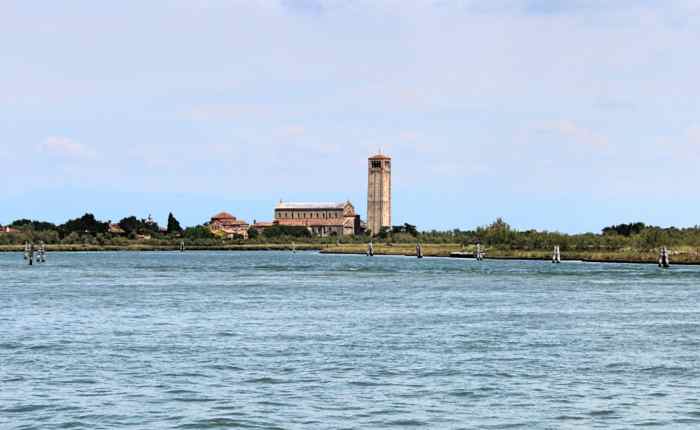
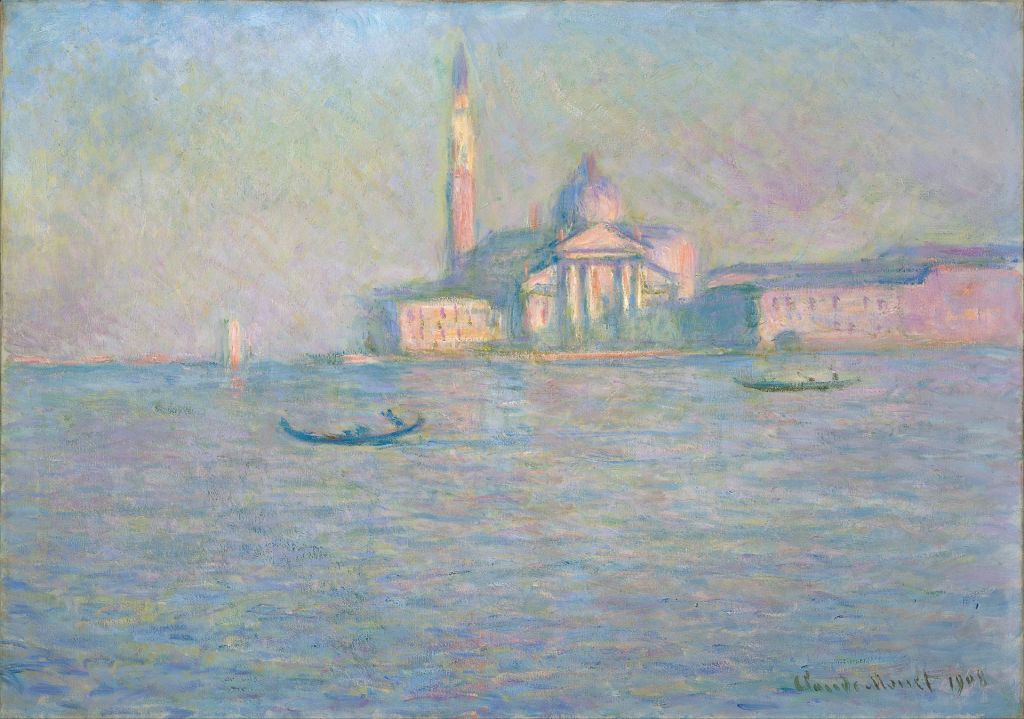


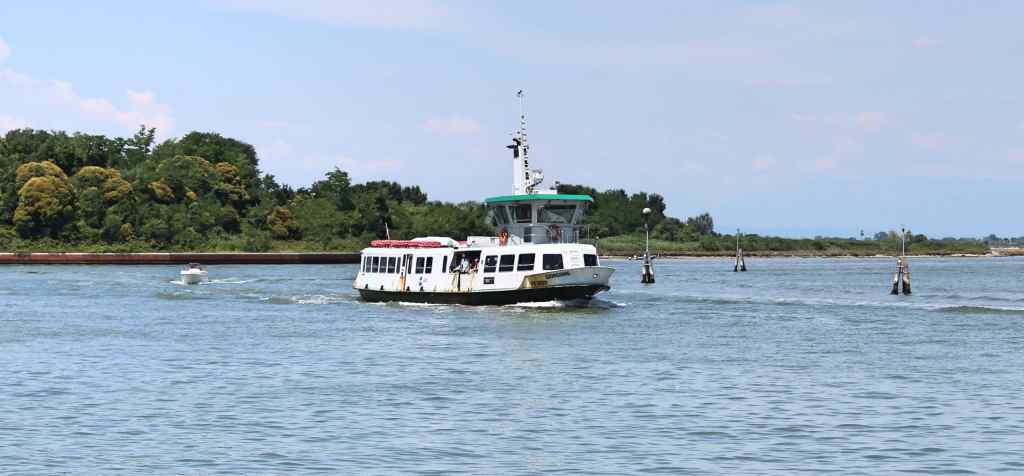
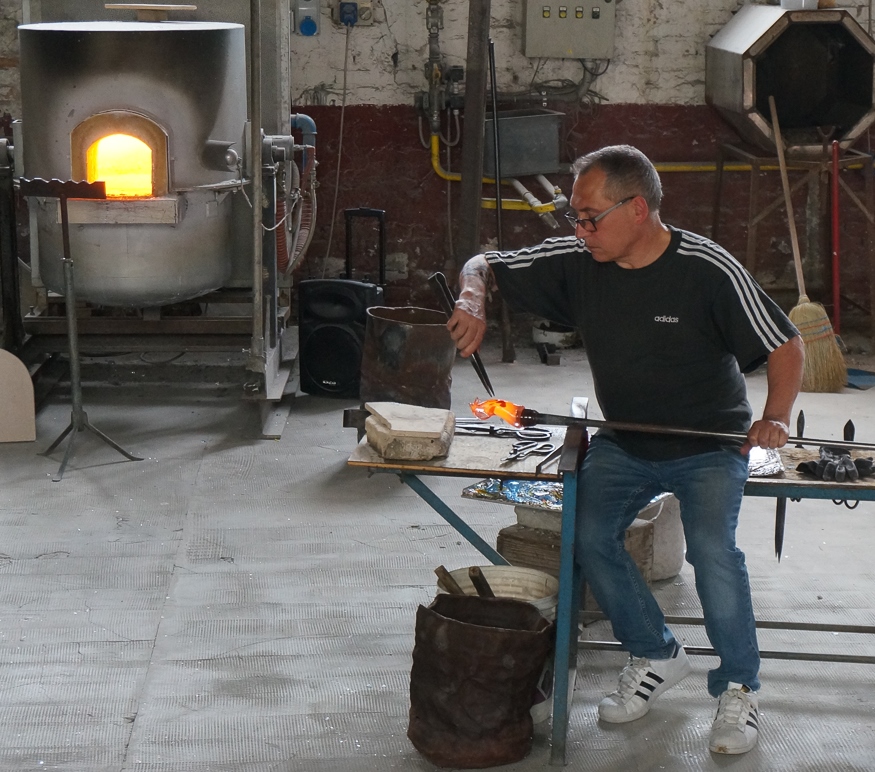

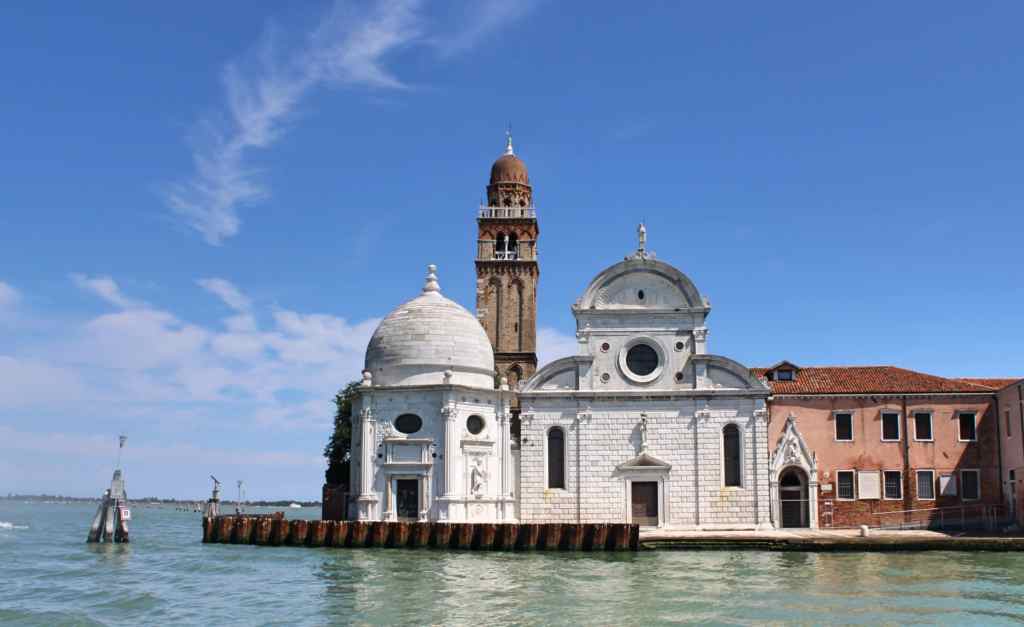
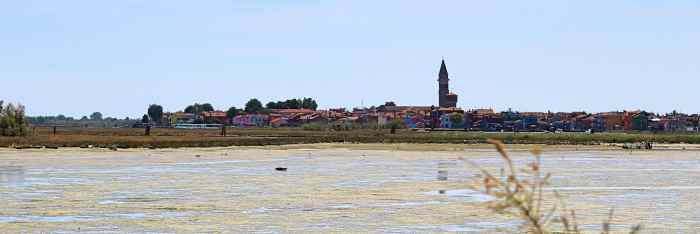
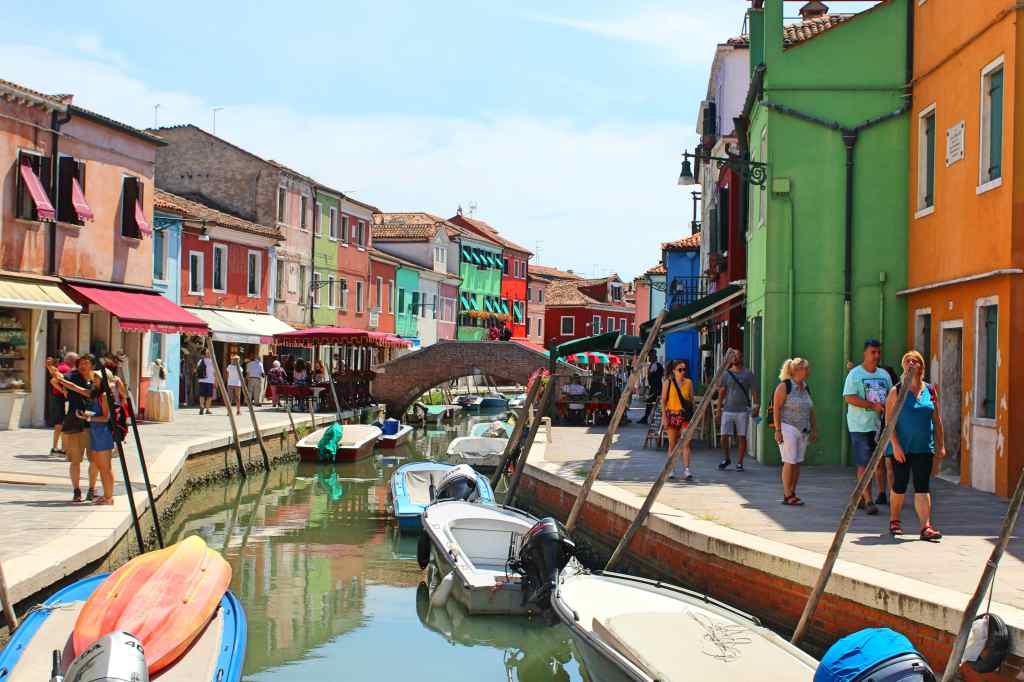

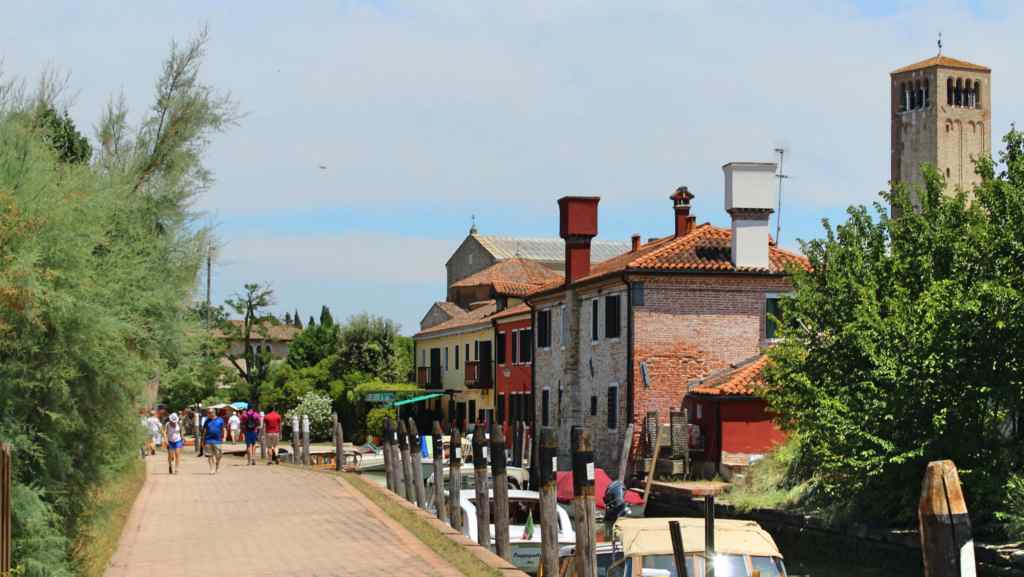

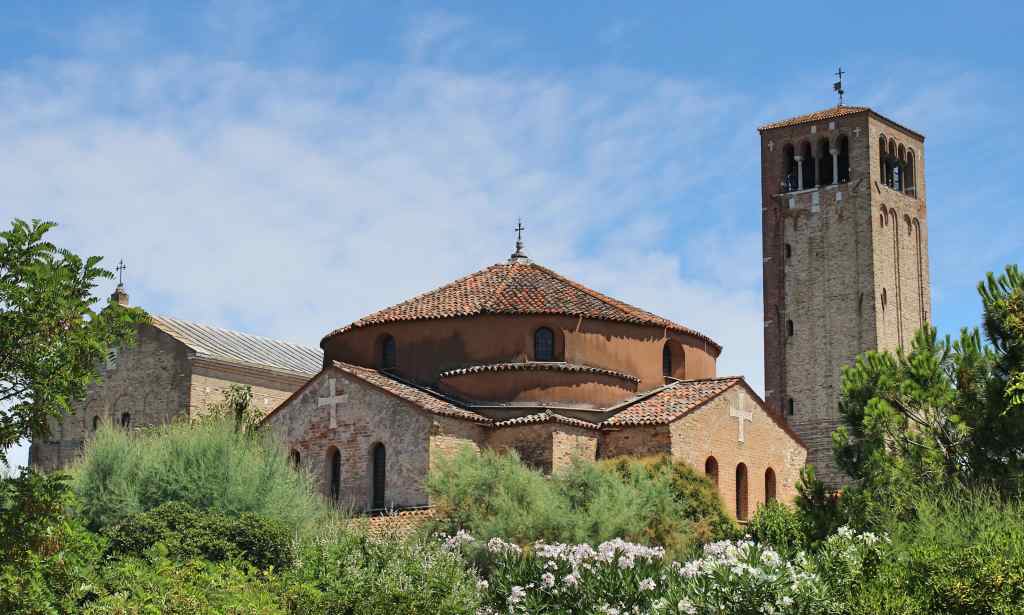
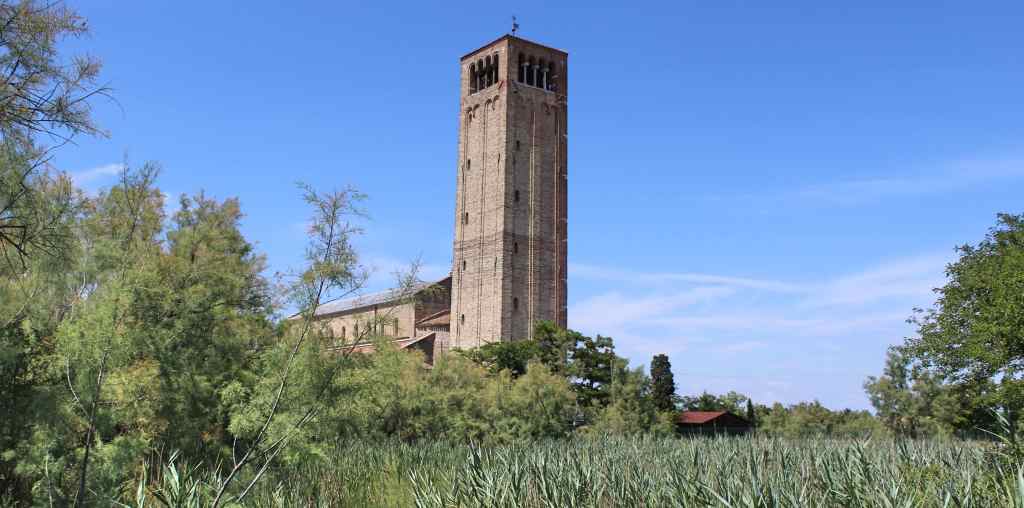
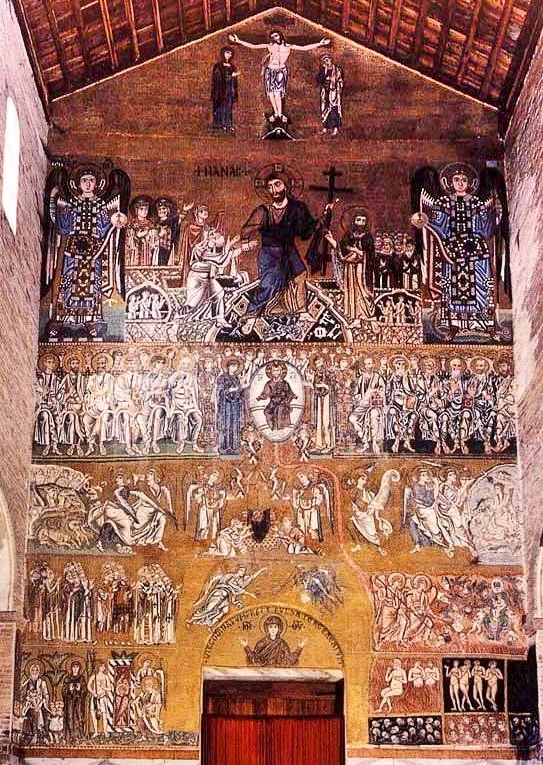


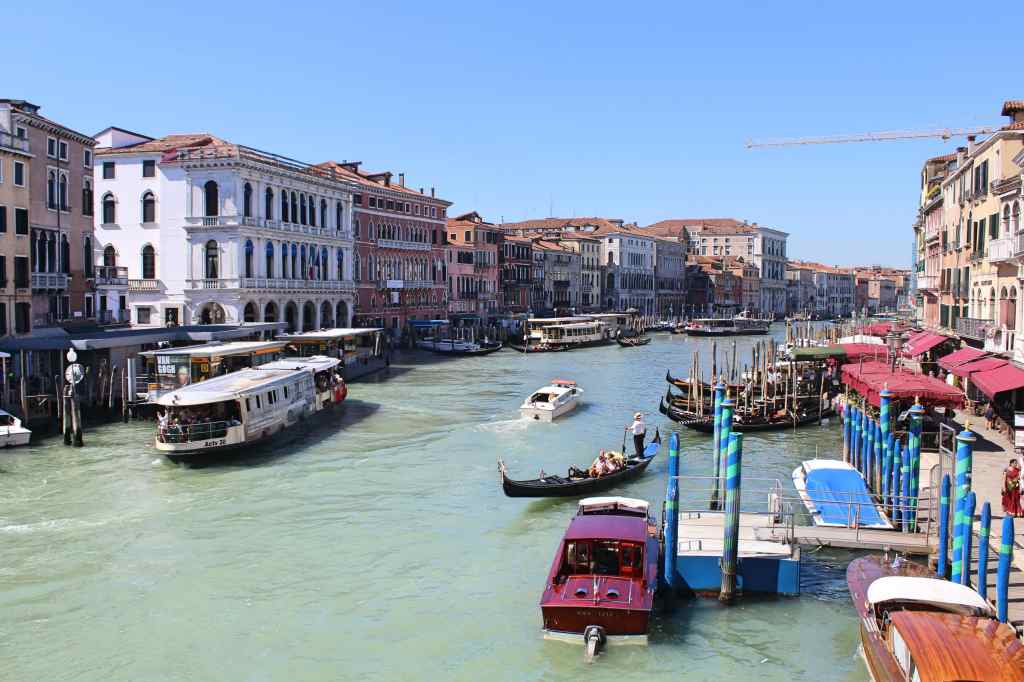


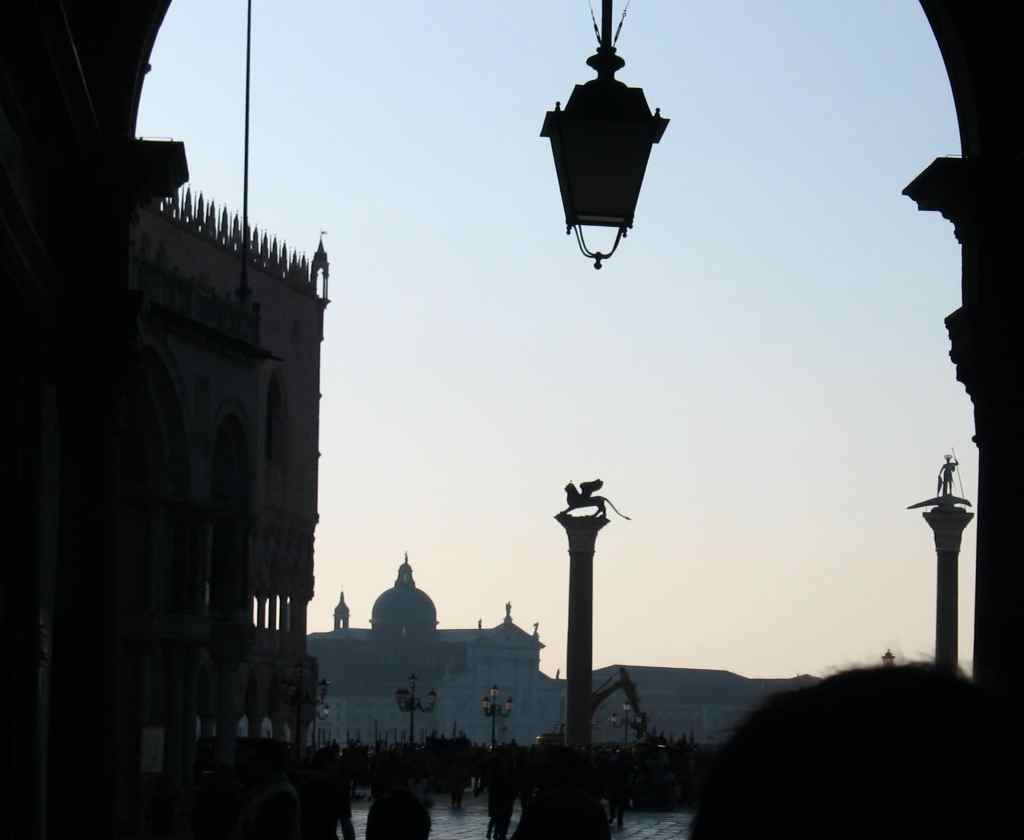


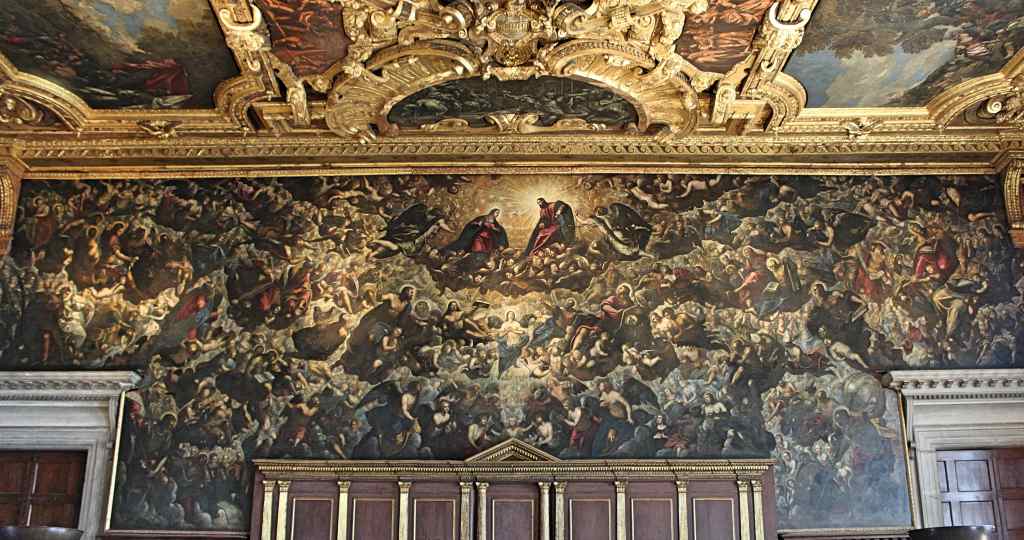


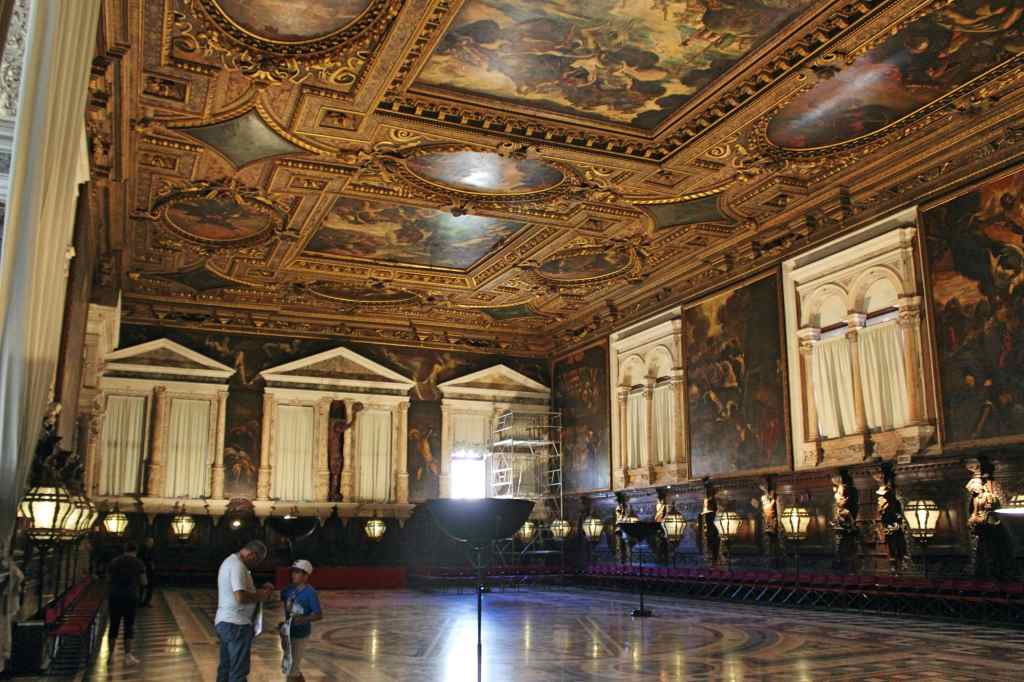


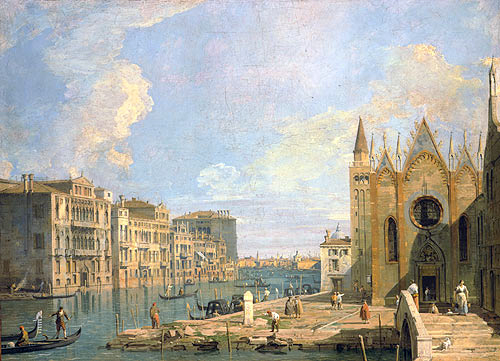
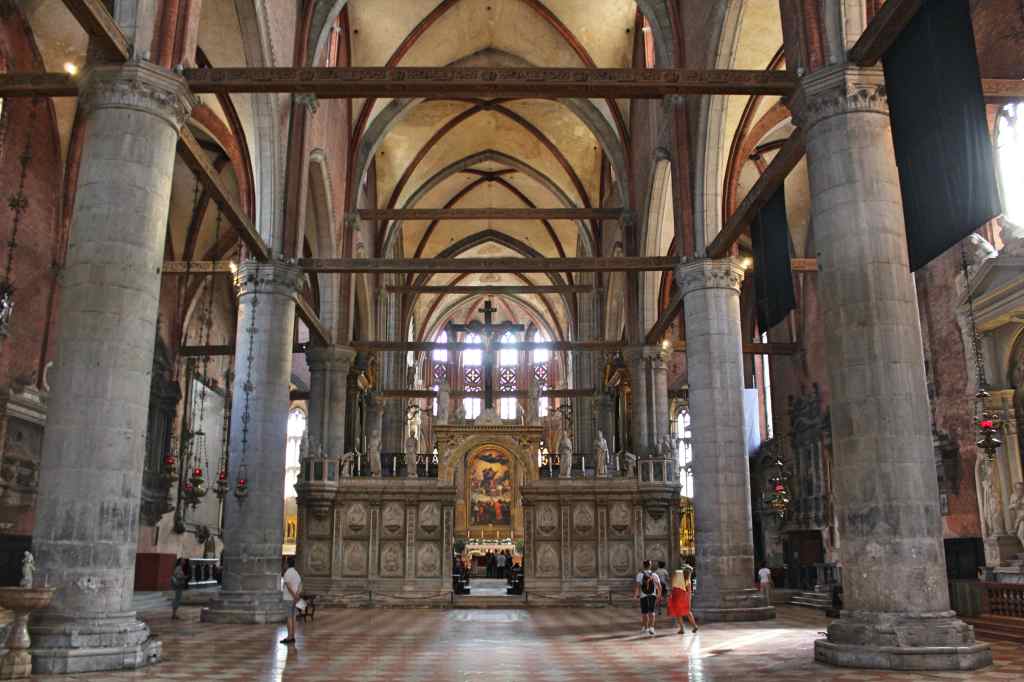


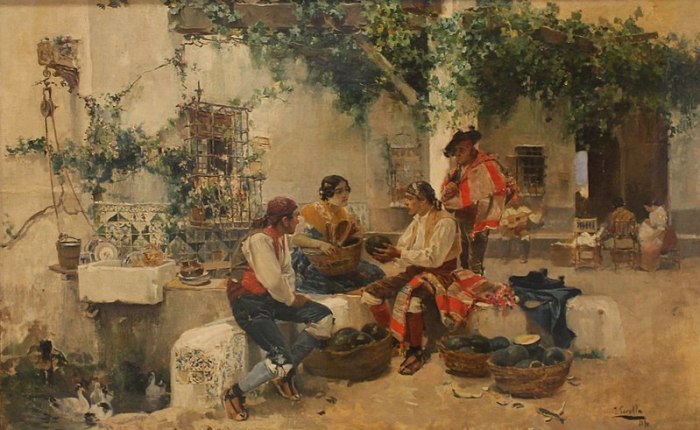
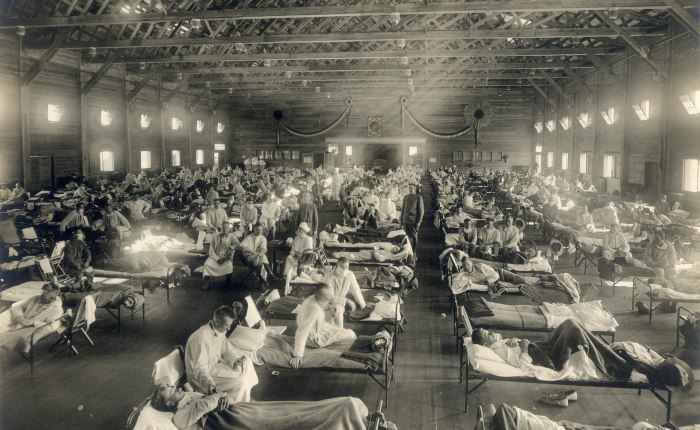
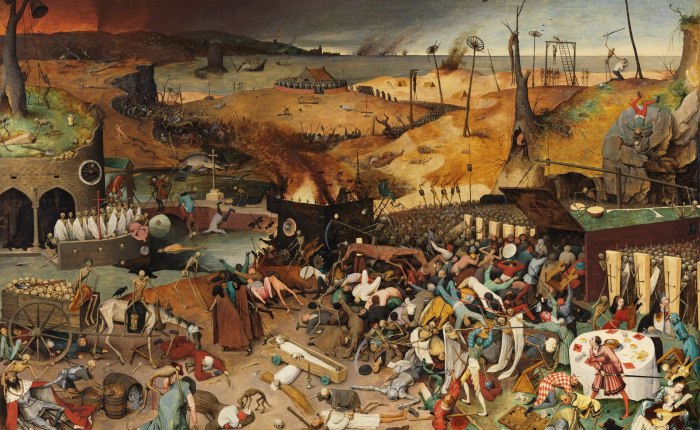


 Lotz in Translation