Really, however, it is doubtful if this could be called a victory. All that could be said was that the disease seemed to be leaving as unaccountably as it had come. Our strategy had not changed, but whereas yesterday it had obviously failed, today it seemed triumphant.
—Albert Camus
We humans are vulnerable to a variety of cognitive illusions, not the least of which is the illusion of control. The idea that an event is completely out of our control is extremely difficult for us to accept, apparently; and so our brain tricks us into thinking that we are the ones pushing the buttons. This can take many benign and amusing forms. For example, many of us repeatedly push the call elevator button or the crosswalk signal while waiting, with the idea that we can somehow speed it up. Or we leave the pit of an avocado in some guacamole, thinking we can prevent it from going bad.
This behavior often leads to superstitions, especially in situations when chance plays a major role. For example, baseball is notorious for the great many superstitions which abound, as players recruit supernatural intervention to reduce the role of chance. Fundamentally, these superstitions all make the mistake of confusing correlation for causation. So if a batter eats sixteen carrots and then hits a home run, he may conclude that the home run was due to the carrots.
And this process can take place on a societal scale. The classic example is, perhaps, the rain dance—an attempt to control weather patterns through ritual. Indeed, the idea that humans can influence the natural order through carefully prescripted and repeated gestures is arguably one of the psychological roots of religion.
The reason that I am bringing all of this up is that I believe we can observe this process quite clearly in our response to the coronavirus. All of us badly want to feel as though we can control the spread of the virus, and this has led to some sensible and, I suspect, some far less sensible solutions. I have observed several people in my neighborhood who put little bags on their dogs’ feet. Only slightly less ridiculous are the shoe disinfectant mats being sold online. Even the practice of wiping down our groceries with bleach strikes me as more ritualistic than sensible.
Indeed, considering that we can get the virus just from breathing in particles, then all this trouble to disinfect surfaces does seem rather suspect to me. I cannot help thinking that, by the time you touch an infected surface, you will have breathed in the virus ten times before. (And by the time you get it from your dog’s paws, you will have gotten it one hundred times before.)
Just as in superstition, irrational virus precautions can take place on a societal as well as an individual scale. The most notorious example of this I have seen was the bleaching of a Spanish beach, in the coastal town of Zahara de los Atunes. While undoubtedly causing significant environmental damage, the benefits to coronavirus control seem doubtful in the extreme. As another doubtful measure, I would offer Governor Cuomo’s decision to disinfect New York City’s subway system every night. Again, if the virus can be breathed in, then the threat from contaminated surfaces may be entirely redundant.
More generally, I think it is fair to say that we do not completely understand the pattern of coronavirus spread. A few days after announcing the nightly subway cleaning—a massive and expensive effort, which displaces the homeless and may impede some people’s commutes—Cuomo announced the results of a study on 600 people who were diagnosed with the virus in a hospital. He was surprised to find that only 4% had used public transportation. The large majority were not working. This result is puzzling. If mere exposure to the virus was enough, then one would expect the essential workers—especially those on public transport—to constitute a far larger portion of cases, since they come into contact with far more people.
Perhaps we have overestimated the importance of mere exposure, then, and underestimated the importance of “viral dose.” (Please keep in mind that I am in no way an expert, and this is pure speculation on my part!) This means that a long amount of time spent with one infected person could matter more than a passing proximity with several. If this is the case, then forcing people to stay in their homes, even if they have symptoms (which was the policy here in Spain), may be somewhat counterproductive, since it would increase the viral dosage of any co-residents.
This would also mean that prohibitions on outdoor exercise were not sensible. Indeed, over two weeks after finally letting children go outside in Spain, no noticeable uptick has been observed (despite complaints that people were not maintaining the correct distance). Other evidence points in this direction as well. This Chinese study could only find one single case of an outdoor transmission, and instead found that the vast majority of outbreaks took place inside the home.
Globally, the data also seems to indicate that we do not fully understand the relevant variables. The virus seems to be striking some countries hard while leaving others mostly untouched, in a pattern that is not easily explained either with governmental action or weather. The case of Spain and Portugal seems especially baffling, as Spain’s small neighbor has so far suffered five times fewer fatalities per habitant as Spain. And this, in spite of never having imposed mandatory stay-at-home orders or closing all non-essential businesses. Though Portugal is given credit for acting early, the two countries entered into a state of alarm at about the same time, closing schools and restaurants the same week. Yet the contrast is striking.
If we are going to effectively combat this virus, then I think this means doing our best to resist the illusion of control. This is because the cognitive illusion blinds us to the real effectiveness of our strategies. If we embark on a maximal strategy—doing everything we can think of to stop the virus—and the virus indeed abates, we may conclude that it takes a maximal strategy to beat the virus. But in that case, we may end up like the carrot-eating batter, drawing false conclusions from a mere correlation. And since so many individual measures are rolled into a maximal strategy, we remain in the dark as to which specific measures are the most helpful, which are basically useless, and which are counterproductive.
This information is vital if we are to achieve anything resembling a functional economy. Our goal should be to uncover which measures have the lowest cost-benefit ratio—inexpensive and minimally inconvenient strategies which effectively curb the virus. If indeed masks work, then widespread mask usage would be such a strategy, since they do not significantly disrupt normal life and cost mere pennies to produce. If it is not too late, increased security measures for senior care homes would be another such strategy, since age is a major risk factor.
Perhaps the easiest way to determine such measures would be surveys. Governor Cuomo has already demonstrated the knowledge that can be gained by surveying incoming hospital patients. Indeed, we probably should have been doing so from the beginning, allowing a more detailed picture to emerge of which activities tend to increase risk. Widespread serological testing for antibody prevalence can also be easily supplemented with detailed surveys. With any luck, certain patterns will emerge from this data, which will point us in the right direction.
Another way to find out more about how and where the virus spreads would be to turn our testing capacity away from patient diagnosis and towards investigative studies. This would mean testing representative samples from relevant populations, to ascertain the prevalence of the virus in different areas and professions. Such testing may reveal useful patterns in the virus’s spread. Contact tracing—once we have the ability to do so—can be similarly used as an investigative tool.
But as it stands now, I often get the impression that officials (here in Spain at least) are like a blindfolded boxer, swinging left and right hopping to connect with the target. The result is rather incoherent. For example, when people were finally allowed outside to walk and run, the officials decided to impose time constraints for these activities. I am not sure what they hoped to gain from this. But the result has been that everyone rushes out the door as soon as the clock strikes, and the streets are consequently packed.
Adding to this, officials decided not to open the parks, so there is less space for walking. To compensate, they tried converting several roads in the city into pedestrian zones. But I cannot help wondering: how is a pedestrian zone any safer than a park? Last weekend we were treated to the absurd spectacle of joggers squeezed into a narrow, tapped-off zone, jogging in one big circle around Madrid’s Retiro park, which remained closed.
Such policy mistakes are harmless enough, I suppose. But I think we need to be very wary of what this blind swinging can lead to. Traumatic events can provoke a panicked response that can do more damage than the threat we are trying to avoid. America’s last traumatic event—the September 11th attacks—provoked some very sensible changes, like increased airport security, but also set off a series of interventionist wars that cost far more lives than the original attacks themselves. Such wars seem rather absurd to many of us now; but at the time, when the threat of terrorism seemed to overshadow every other consideration, we were willing to react with a maximal strategy.
Does this crisis present us with a similar danger? I think it may. And if so, we need to do our best to avoid the coronavirus equivalent of an Iraq War, and focus on finding strategies equivalent to bomb screenings and reinforced cockpit doors—easy, cheap interventions that can save lives, rather than a giant quagmire that only adds another problem on top of the one we already have. If we are the blindfolded boxer, we need to focus on removing the blindfold, rather than swinging as hard as we can.
Looked at from the point of view of other organisms, humankind therefore resembles an acute epidemic disease, whose occasional lapses into less virulent forms of behavior have never sufficed to permit any really stable, chronic relationship to establish itself.
It is risky to write a book like this. When William H. McNeill set out to analyze the manifold ways that infectious diseases have shaped world history, it was almost an entirely novel venture. Though people had been writing history for millennia, specialized works focusing on the ways that civilizations have been shaped by illness were few and far between. This seems rather strange when you consider that it was only in the twentieth century when disease reliably caused fewer casualties than enemy action during war.
Perhaps thinking about faceless enemies like viruses and bacteria simply does not come naturally to us. We personify the heavens readily enough, and do our best to appease it. But it is more difficult to personify a disease: it strikes too randomly, too mysteriously, and often too suddenly. It is, in other words, a completely amoral agent; and the thought that we are at the mercy of such an agent is painful to consider.
This tendency to leave diseases out of history books has come down to our own day. The 1918 flu pandemic is given a fraction of the coverage in standard textbooks as the First World War, even though the former caused more casualties. Curiously, however, that terrible disease did not even leave a lasting impression on those who survived it, judging by its absence in the works of the major writers of the day. It seems that memory of disease fades fast, at least most of the time. The 1968 Hong Kong flu killed 100,000 Americans that year (which would translate to 160,000 today), and yet neither of my parents remembers it.
This is why I think this book was a risky venture: there was not much precedent for successful books written about the history of diseases. Further, since there was not much in the way of prior research, much of this book must perforce consist of speculation using the spotty records that existed. While this does leave the historian open to the criticism of making unfounded claims, as McNeill himself says, such speculations can usefully precede a more thorough inquiry, since at least it gives researchers an orientation in the form of theories to test. Indeed, in my opinion, speculative works have just as important a role as careful research in the advancement of knowledge.
McNeill most certainly cannot be accused of a lack of ambition. He had completed an enormous amount of research to write his seminal book on world history, The Rise of the West; and this book has an equally catholic orientation. He begins with the emergence of our species and ends with the twentieth century, examining every inhabited continent (though admittedly not in equal detail). The result is a tantalizing view of how the long arc of history has been bent and broken by creatures lighter than a dust mite.
Some obvious patterns emerge. The rise of agriculture and cities created population densities capable of supporting endemic diseases, unknown to hunter-gatherers. Living near large masses of domesticated animals contributed much to our disease regimes; and the lack of such animals was decisive in the New World, leaving indigenous populations vulnerable to the invading Europeans’ microbes. Another recurring pattern is that of equilibrium and disturbance. Whenever a new disease breaks in upon a virgin population, the results are disastrous. But eventually stasis is achieved, and population begins to rebound.
One of McNeill’s most interesting claims is that the great population growth that began in the 18th century was partly a result of a new disease regime. By that time, fast overland and sea travel had exposed most major urban centers to common diseases from around the world, thus rendering them less vulnerable to new shocks. I was also surprised to learn that it was only the rise of modern sanitation and medicine—in the mid 19th century—that allowed city populations to be self-sustaining. Before this, cities were population sinks because of endemic diseases, and required constant replenishment from the countryside in order to maintain their numbers.
As I hope you can see, almost fifty years after publication, this book still puts forward a compelling view of world history. And I think it is a view that we still have trouble digesting, since it challenges our basic sense of self-determination. Perhaps one small benefit of the current crisis will be an increased general curiosity about how we still are, and have always been, mired in the invisible web of the microscopic world.
California and New York have a relationship like many siblings. The two have much in common: they are wealthy, cosmopolitan, populous, and mostly liberal. And yet they drive each other crazy with their differences. Whereas New Yorkers are traditionally rude, uptight, stressed, and workaholic, the archetypical Californian is relaxed, gentle, happy, and obsessed with organic food and fair-trade coffee. Who is to say which is better?
I found myself reflecting on these differences as I walked off the plane that had taken me from JFK to the San Francisco airport, in the summer of 2018. The contrast was immediate. Any time you walk into JFK, you soon have someone yelling at you. But the airport here was calm and quiet. All the staff spoke to us in cheerful, polite tones. Of course, I was suspicious.
We were here to celebrate my cousin’s wedding, and to do some sightseeing in our free time. As it happens, all of my mother’s four siblings moved to California when they left home (whether from a hatred of NY or a love of Cali, it is unclear), which means that all of my cousins on my mother’s side were born and raised here in the sunny side of the country. It was inevitable that one of them would get married here.
My aunt picked us up from the airport. We were jet-lagged, tired, and quite hungry, and so we immediately headed to a restaurant. This meant a little bit of driving. Driving is fundamental to the Californian lifestyle; and since so many people live here, that means traffic is as well. But at least there are some nice places to drive. As a case in point, we were soon crossing the Golden Gate Bridge, probably the most famous bridge in our country (the only competition being the Brooklyn Bridge).
Photo taken by my brother, on a less foggy day.
Now, when we were crossing this bridge, I am afraid that I mostly did not get a good look at it, since the bridge and its surroundings were shrouded in a thick fog. As I quickly came to appreciate, this is not unusual in San Francisco during the summer. The reasons for such abundant mist are rather elusive to me. Essentially, the fog forms because the air over land is heated more quickly than the air over the oceans. The hot air, then, rises, which means cold air is sucked in to replace it. And this cold air happens to be foggy, since it comes from the ocean. And as this process works best when the sun is hottest, San Francisco summers are foggy.
(The reason I say that this reasoning is elusive to me is that the same logic would seem to apply to any coastal city; but New York, Valencia, and Hong Kong are not foggy to such a degree.)
The climatic consequences of this are interesting. You can have hot sunny days a few miles inland, but in San Francisco itself it will be cool and misty—even a bit chilly. Indeed, Mark Twain famously wrote: “The coldest winter I ever spent was a summer in San Francisco.” That adage has a few problems, however, the first being that Mark Twain never actually wrote it. Another problem is that it is not true to begin with. Winters in New York are a lot colder, as Twain well knew.
Well, if I could see the bridge on that foggy afternoon, I would have seen one of the great engineering marvels of the world. At the time it was built (in the 1930s), the Golden Gate Bridge was the longest and tallest bridge on earth. The bridge connects the city of San Francisco with Marin County (where we were going to eat), spanning the entrance to the ample San Francisco Bay. It owes its fame, not only to its dimensions, but to its elegant design and bold orange color (the paint is called “international orange”), not to mention its dramatic location at the crossroads of land and sea.
Soon enough, we parked the car in the small town of Sausalito. Like the city of San Francisco, this town’s name preserves its Spanish origins (sauce means “willow tree”; sauzal means “a willow grove”; and sauzalito means “a little willow grove”). In the past, the town was a center of ship construction; but nowadays it is a touristy little town full of nice restaurants and cute shops, with a great view of the bay. We ate in an Italian restaurant and I felt greatly relieved. But our chit chat was interrupted when somebody said: “Is that Santana?” Everyone’s eyes turned to look at someone behind me.
“There’s no way that Santana is in this Italian restaurant,” I thought, and mentally justified not turning around. Then I saw somebody walk out of the restaurant: It was, indeed, the legendary guitarist Santana. This was my welcome to California.
San Francisco is located at the tip of a peninsula enclosing the eponymous bay. In many ways the city’s geography was its destiny. A center of commerce with limited land, the city had little choice but to expand upwards. These same factors determined the history of Manhattan; and, as a result, the two are among the most visually striking cities in the United States—a collection of spires rising out of the blue.
If you have gone to Catholic school, you may have guessed that San Francisco was named after St. Francis of Assisi. To this day, the oldest structure in the city is a small white building topped with a crucifix, a part of the Misión San Francisco de Asís, a holdover of the original Spanish mission to the peninsula. One must realize, then, that a city known for being a center of liberal politics, of the Summer of Love, of the gay rights movement, of the ultra-wealthy Silican Valley technicians, was named after a Catholic monk who took a vow of poverty. History is full of these delightful ironies.
We awoke early the next day (though still groggy from the jetlag) to begin our first day of exploring San Francisco. This time, we entered the city through the Bay Bridge, directly across the bay. This of course meant traffic and a toll. But it did provide a rather dramatic entrance to the city. At four and a half miles long (over 7km), the Bay Bridge is one of the longest bridges in the United States. It is not one continuous span, however, but two separate bridges linked to the Yerba Buena island in the middle of the bay. (“Yerba Buena” is a corruption of hierbabuena, which literally means ‘good herb,’ and is commonly used to refer to spearmint.)
The Bay Bridge, with Yerba Buena island in the distance.
This bridge has been reconstructed fairly recently. The original construction consisted of a suspension bridge on the west, and a cantilever bridge on the east. But an earthquake in 1989 damaged the eastern section, which eventually led to its being rebuilt with another, more stylish, suspension bridge, opened in 2013. Photos of the construction look very much like the construction of the new Tappan Zee bridge in Westchester, quite near my home, where another old cantilever bridge was replaced by a sleek and stylish suspension bridge. And, indeed, the same barge crate was used in both constructions: the Left Coast Lifter, an enormous contraption painted patriotic red, white, and blue, used to heave big pieces of bridge into place.
On a clear day, the Bay Bridge would afford you a magnificent view of the city. On this particular day, however, it gave us a rather less magnificent view of gray fog. But this did lend the city an intriguing air of mystery.
Our first stop was Coit Tower. This tower is not exactly conspicuous amid the skyscrapers now crowding the city; but when it was built, in the 1930s, this was the finest view in town. The tower is of fairly modest dimensions, about 200 feet tall. But it stands on Telegraph Hill, one of the hilly city’s tallest and most ideally situated hills. This makes the tower a wonderful place to enjoy the view—when it is not foggy, that is. In any case, the tower is interesting in itself. Made of unadorned concrete, it has a vaguely industrial shape, perhaps like a sprinkler. Considering that the tower is dedicated to fallen firefighters, many have surmised that it was to look like a fire hydrant. The resemblance is apparently coincidental, however.
Coit Tower owes its name to Lillie Hitchcock Coit, a wealthy dowager who patronized the volunteer fire department, and who left money in her will for the beautification of the city. I would say that the money was well spent, considering the tourists crowded into every inch of the building. We entered, paid the fee, and went up to the top. The building is narrow and there is only one small elevator providing service up and down. In any case, as soon as I reached the roof, I wanted to turn back. It was rainy, the wind was howling, and the fog put a damper on the view.
But Coit Tower has much to offer besides its view. On the bottom floor, there is a continuous mural running across the outer and inner walls of the hallway. It is detailed and impressive work, done during the height of the Great Depression, under the auspices of the Public Works of Art Project. Indeed, Coit Tower was the pilot project of this organization, an experiment in using public funds to employ artists to beautify public buildings. The results are still heartening. The murals are done in a Social Realist style, showing stylized scenes of America.
What makes the art “social realist” is not so much that the paintings are particularly realistic, but that they attempt to encapsulate the everyday American experience. Thus, we see street life, factories, and farms, rather than saints, heroes, or Greek gods. Personally I found the murals both aesthetically pleasing and even vaguely inspiring—showing pride and faith in our sprawling country. Certainly, such a thing seems very distant nowadays. Perhaps we ought to bring back the Public Works of Art Project. I am sure there are still lots of needy artists willing to paint inspirational scenes in public spaces.
After this we headed to the Financial District. Anywhere money is centered, big grey buildings are likely to follow; and so this is where the city’s skyscrapers are found. When you factor in the regular grid pattern of the streets, the final result looks remarkably similar to midtown Manhattan (though not as dirty). The Financial District even has its own Wall Street, in the form of Montgomery Street, one of the country’s great concentrations of capitalist activity.
For over forty years—from 1971 to 2017—the skyline of San Francisco was dominated by the Transamerica Pyramid, a daring modernist triangle of glass and steel. Even now, the building seems futuristic in its design. The same cannot quite be said for its younger brother, the Salesforce Tower, which surpassed the pyramid upon its completion in 2017. It is difficult to find anything positive to say about this building’s design. Its shape calls to mind objects not normally mentioned in polite conversation, and its bloated form does not harmoniously blend in with the San Francisco skyline, but dominates and disrupts the picture. I must admit, however, that the building is an impressive technical achievement, since erecting safe skyscrapers in the seismically-active city is no easy feat.
The Transamerica Pyramid
For lunch, we headed to Yank Sing, a dim sum restaurant in the famous Rincon Center. The building itself has an elegant art-deco design. But it is most notable for the murals inside, which also date from the Federal Arts Project. The best murals are to be found in the old post office, and were painted by the Russian immigrant Anton Refregier. They are also part of the social realist tradition, and treat of the history of San Francisco—covering major events, like the 1848 gold rush, the 1860 completion of the trans-continental railroad, and the horrible 1906 earthquake. Refregier’s sense of injustice and oppression caused some controversy, as it led him to portray some of the less attractive scenes of American history—a choice that got him into trouble as a communist sympathizer during the Red Scare. Thankfully, the murals have escaped destruction by bigots.
After we finished eating and enjoying the art, we got back in the car to head to the most iconic stretch of asphalt in the entire city: Lombard Street. This is a twisting street, consisting of eight hair-pin turns, that leads down one of San Francisco’s many hills. I have never seen anything else like it. The last time I had visited San Francisco was over ten years earlier, when I was quite young, and I still had a vivid memory of this road—so crazily misshaped. On this particular summer day, as the fog began to clear, the street was quite beautiful. Flowers bloomed in the little gardens beside the pavement, and plants even colonized one colorful house nearby.
This seems like an appropriate time to discuss San Francisco’s topography. Like Rome itself, San Francisco claims to have been built on “seven hills,” though there are an awful lot more than seven hills in the city. Indeed, there are six times more: 42 hills, ranging in height from 200 to over 900 feet tall. I can only imagine that the city’s marathon is punishing on one’s knees, and that owning a car means frequent brake repair. It is probably due to this inclination that San Francisco developed its famous cable car system—one of the city’s most identifiable symbols. In its hilliness and its in street cars, this Californian city has an intriguing resemblance to Lisbon, a city with its own big orange bridge.
The city’s famous cable cars.Lombard Street from the bottom.
Now we decided to visit the city’s most famous book store: City Lights. I must confess that I had never heard of it, and I walked out thinking that it was just a particularly nice shop. But my dear mother soon informed me that it was this humble store which published Allan Ginsberg’s iconic collection, Howl and Other Poems, in 1956—a pivotal moment in the Beats movement, as the resulting obscenity trial changed censorship practices and catapulted Ginsberg to national fame. When I found this out, I went right back inside and bought myself a copy of this poem. (Fortunately, after the store’s continued existence was threatened by the coronavirus lockdowns, an online fundraiser helped to save the business.)
After this adventure in literature, we retreated to the nearby Caffe Trieste for some caffeine. This is an elegant little establishment which holds the distinction of being the first Italian-style café on the West coast. As you might expect, having a quality coffee house near a center of the Beats movement meant that this spot also became a meeting-point for literati, like Alan Watts, Jack Keruac, and Alan Ginsberg himself. But I was mostly struck by the prices. Coffee in San Francisco is not cheap! Indeed, ever since we landed, everything I saw seemed absurdly expensive to me; and this is no coincidence.
Though San Francisco was the center of the Beats movement, the setting of the 1967 Summer of Love, and in the 1980s the epicenter of gay liberations, nowadays the city has gone the way of so many major cities—it is simply too expensive for anyone but high-earners to live there. A big part of this is due to the proximity of Silicon Valley, just a few miles south. The influx of big business has made the cost of living shoot up: the typical rent is higher than $4,500, and the typical house costs well over one million. According to this article, homelessness has increased by 17% in the last two years alone (and who knows how the coronavirus depression will affect that!). In short, it is not a great city to visit if you wish to travel on a budget.
Hippiedom and corporations aside, there are some traces of religion left in the coastal city. I have already mentioned the old San Francisco mission. There are some impressive church buildings as well, such as Grace Cathedral. This is the city’s Episcopal cathedral. The structure was completed in a resplendent neo-gothic style, doing a convincing imitation of Paris’s Notre-Dame. Yet the church doors are not gothic, but Renaissance in style; indeed, they are full-scale replicas of the Gates of Paradise. These are a set of bronze doors by Lorenzo Ghiberti, made for the baptistry of Florence, now considered to be great masterpieces of the early Renaissance. The replicas in San Francisco are wonderfully done, and were just as enjoyable to examine. The interior of the cathedral is quite as majestically gothic as the outside, with gilded paintings and stained glass illuminating the stone space. It even has a replica of Chartres’s labyrinth.
Not far off is the city’s catholic cathedral, Saint Mary’s. Completed in 1971, the building is so oddly shaped that you could be forgiven for not thinking it was a place of worship. To me, it resembles an enormous washing machine agitator, ready to rinse off the sky. While I am not an enemy of modern architecture, I do think that churches ought to be a bit more solemn and less, well, ridiculous in appearance. This church was built to replace the original cathedral, which had been standing since 1854. Reduced to the status of a humble church, this building still stands, now called Old St. Mary’s. While no architectural marvel, the simple brick building does have the conspicuous advantage of looking like a church.
The new Saint Mary’sThe old Saint Mary’s
Perhaps the most beautiful catholic church in the city is Saint Peter’s and Saint Paul’s. It is a pale white building with two long, narrow spires. The interior is quite lovely, with a coffered ceiling leading to a semi-dome above the main altar. The church even has a full-scale replica of Michelangelo’s Pietá—and it is extremely well-done. A center of the Italian-American community, the church holds services in Italian as well as in English. Somewhat more surprisingly, the church also holds services in Cantonese!
After some milling about in town, we got back in the car for the day’s final destination: Lands End. As you might have guessed, this is one of the many spots in San Francisco where earth meets water. More specifically, this is a park near the mouth of the bay. It is quite a romantic spot, with shrubby trees clinging to rocky soil, with the wind and the waves crashing in. The visitor’s center sits above a kind of rocky crater, beside which stand some ruins of old structures. This is all that remains of the famed Sutro Baths, an enormous complex of swimming pools that used to attract thousands of visitors.
I took some time to walk along the shoreline. The landscape is beautiful and dramatic, with whitecaps washing over sunbleached rocks, and the rolling hills crawling out from under the screen of fog. As I walked on, the Golden Gate Bridge came into view—still partially shrouded by the mist, but magnificent nonetheless.
I also noticed something strange in the water, a sort of concrete stump in the middle of the bay. I learned from a nearby sign that this is the Miles Rock Lighthouse. It was built after the SS City of Rio de Janeiro ran into a submerged reef and sank in 1901, killing 135 of the 220 on board. Originally, this lighthouse—which is built on a lonely rock—had the recognizable form of a tower, but in the 1960s the top floor was demolished in order to make room for a helicopter landing pad. Nowadays, the lights are automated, so nobody has to sit there, alone, in the middle of the foggy bay.
So ended my first day in San Francisco. We got back into the car and drove by the famous Cliff House restaurant, which overlooks the Seal Rocks (both of these very accurately named). Then, after a pizza dinner, we were on our way back to the suburbs. But I would return.
San Francisco is blessed to have the rail system with the dorkiest name in the country: BART, which stands for Bay Area Rapid Transit. For my next day in the city, I hopped on the BART by my aunt’s house in the suburbs, and disembarked at the Embarcadero. This is the city’s waterfront to the east, facing the bay; and its name is yet another mark of the city’s Spanish heritage (embarcadero is a place where you board a vehicle). With the weather quite clear and sunny, I could see the full span of the Bay Bridge. Infrastructure is inspiring.
I walked along the water, enjoying the gentle breeze and the bright sun, pausing occasionally to examine anything that caught my eye. This certainly included the giant sculpture, Cupid’s Span, which consists of a huge bow and arrow that have been stuck into the ground. Designed by the artist team Claes Oldenburg and Coosje van Bruggen (who are married), the sculpture is meant to pay homage to San Francisco’s history as a city of love. (But to me it looks as though cupid had carelessly lost his weapon, which is not good news for would-be lovers.)
Next I passed the Ferry Building, which looks vaguely like a medieval city hall—with a large clocktower shooting up from a lower structure. This beaux-arts style building actually took its inspiration from the Giralda, the half-Moorish, half-Renaissance bell tower of Seville’s cathedral. As you may imagine, before the construction of the major bridges, ferries were quite important to the life of the city. But as time went on, the building came to be seen more and more as a historical monument, and parts were even rented out for use as office space. Nowadays, however, the building has regained some of its former luster, and is a tourist attraction in its own right—with a food court and a market in the “Grand Nave.” It is still the main ferry hub for the city.
While I walked along, I noticed an interesting presence on the streets: big, hulking streetcars. This is the city’s historic streetcar service. Much like the city’s cable cars, these streetcars now mainly serve a nostalgic purpose, ferrying tourists in creaky wooden and metallic boxes across the city. But they really are quite charming to see, as they scuttle past like big colorful beetles. Incidentally, I also passed by the Fog City Diner, a landmark restaurant with a classic, retro appeal. I later ate here with my family, and the food was fantastic.
One of the city’s historic streetcars, with Coit Tower in the background.
My next stop was Pier 39. This pier is one of the city’s major tourist centers, which means it is crowded and filled with all sorts of touristy junk. But the pier is still worth visiting, if only for the view. From the end of the dock, you can see both the Golden Gate and the Bay Bridge; and behind you there is Coit Tower and the Transamerica Pyramid. What most attracts attention, however, are the Sea Lions. A few decades ago, these animals preferred to lounge on the rocks near Cliff House, but for some reason they moved inside the bay and set up camp here. The sea lions took over these docks and have not budged since. The number of animals present on any given day fluctuated. When I visited, there were probably around 50; but there can be many times that number.
Coit Tower on the left, the Salesforce Tower in the middle, and the Transamerica Building on the right
There are still more things to see from the pier. The SS Jeremiah O’Brien was docked not far off in the bay, a so-called Liberty ship. These were medium-sized cargo ships mass-produced during the Second World War, to ferry goods and men across the Atlantic. This particular ship has quite an impressive record, having been part of the D-Day Armada and seeing use in the Pacific Theater. The ship normally sits in the dock, available for tours; but occasionally it takes tourists on short rides.
Yet by far the most famous thing in the bay is not a ship, but an island: Alcatraz. You may be surprised to learn that this name also dates back to the Spanish occupation. Nowadays, the word alcatraz is used to refer to garrets; but at the time the word was used for pelicans (both are white, coastal birds). Thus, Alcatraz is the island of the pelicans—as it remains, incidentally.
(It is also curious to note that this word—like virtually all the Spanish words that begin with “al-”—is a loan word from Arabic, dating all the way back to Moorish Spain. It most likely comes from al-ḡaṭṭās (in Arabic: الْغَطَّاس), which means “the diver.” So the name of one of the world’s most famous prisons comes from a Spaniard misidentifying a bird, using a word that was misheard from Arabic several centuries earlier. History is a funny thing.)
The last time I had been in San Francisco, I visited this island with my family. Nowadays, unfortunately, you need to have booked tickets in advance in order to visit, so we missed our shot. But I do have a strangely vivid memory of my time on this island. It is an arresting mixture of the wretched and the beautiful—with dark, concrete cells surrounded by ocean and sky. Because of the frigid waters and strong tides of the bay, the prison was considered escape-proof, though three prisoners tested this notion in 1962 (as dramatized in the classic film). The iconic gangster Al Capone was imprisoned here, as well as the famous “Bird Man” of Alcatraz, Robert Franklin Stroud, who did important work on bird diseases during his many years of imprisonment. (Alcatraz, however, did not let him have either birds or equipment.)
By now, I had had enough of the overpriced and gaudy seaside, so I headed to one of San Francisco’s great neighborhoods: Chinatown. San Francisco has a claim to being the most important city in Chinese-American history, as the city’s Chinatown—established in 1848—is the country’s oldest. Though New York City has a higher Chinese population in total, people of Chinese descent make up a greater portion (about a quarter) of San Francisco than NYC or anywhere else in America. As it happens, most of the residents in the Bay Area hail from southern China, where Cantonese rather than Mandarin is spoken (which explains why some services at St. Peter’s and St. Paul’s are offered in that language).
The most recognizable landmark in the neighborhood is the Dragon Gate—a stylized arch (called a pailou), with two fearsome guardian lions on either side. This was actually a gift from Taiwan, and was erected as a kind of PR stunt during the Korean War for the Chinese-American community (since the People’s Republic of China was fighting on North Korea’s side).
Two other notable landmarks are the Sing Fat and Sing Chong buildings, both on Grant Street. These feature an arresting combination of typical Western and Chinese building styles—looking like ordinary buildings that have grown ornamental frills, towers, and swoops. But elaborate architecture is not needed to know that you are in Chinatown. Every surface is covered with Chinese characters, and red lamps hang over the streets.
I had quite a bit of fun simply walking around. I love walking into Chinese grocery stores and food shops, as they are always full of unfamiliar products and brands, all of them wrapped in sparkling colors. As I walked by an alley, I spotted a couple men practicing a dragon dance. And I even paid a short visit to the Golden Gate Fortune Cookie Company, which is exactly what it sounds like: a small factory for fortune cookies. But the best part of visiting Chinatown was the food. I waited online at a dumpling shop and walked out with enough food for three people, all for less than $10. In San Francisco, where a ham sandwich can cost more than that, this is beyond a bargain. And it was delicious.
Next, I wanted to visit a museum. San Francisco has plenty to offer in that regard. There is the San Francisco Museum of Modern Art (SFMOMA), which has a vast collection of 20th century art, all housed in an appropriately daring building. There is the Legion of Honor, an imposing neoclassical building with a wide-ranging collection of (mostly European) art; and the de Young Museum, which mainly focuses on art from the United States. If you are looking for something a little more interactive, the Exploratorium—located on the Embarcadero—is full of participatory exhibits. (The museum was the brainchild of Frank Oppenheimer—a far more beneficent gift to humankind than Frank’s older brother’s gift of the atomic bomb.)
But I only had time for one museum, and the one which interested me the most was the Asian Art Museum. This museum is located right across from San Francisco’s city hall—a lovely Palladian structure with a gilded dome—as well as from the main branch of the San Francisco public library. The museum is an enormous institution in its own right, with one of the country’s great collections of Asian art. As I walked through the galleries—going from India, to China, to Japan—I found myself more and more deeply amazed, both at the quality of the collection and of the art itself, and once again filled with a burning desire to learn more about these cultures. But as I am, alas, still quite deplorably ignorant, I will let my photos do the talking:
This concluded my last full day in San Francisco. It was late and I needed to get back to my Aunt’s house for dinner. So I made my way to the nearest BART station and was whisked back across the bay. But I still had time for a last glimpse of the city.
On one beautifully unfoggy day, I took BART into the city center. I was going to go on a bike ride with my cousins. And to get to our rendezvous-point, I had to walk through one of the most famous neighborhoods in San Francisco: Haight-Ashbury.
Of all the famous cultural moments in the history of San Francisco, the 1967 Summer of Love may be the most iconic. That summer, tens of thousands of hippies—dressed in tie-dye and bell-bottom jeans, taking every type of substance you can imagine—converged on the city in order to protest war, reject capitalism, and in general to imagine a different kind of world. It was one of the high points of the sixties counter-cultural movement, an event that helped to identify an entire generation. The moment was so notable as to even merit its own hit song: “San Francisco,” by Scott McKenzie. It summed up the moment thusly:
All across the nation
Such a strange vibration
People in motion
There’s a whole generation
With a new explanation
And indeed there was.
All hippiedom aside, the neighborhood is quite beautiful in itself, for its array of classic Victorian-style houses. These constitute perhaps the most distinctive buildings in the city—stately, elegant structures of wood and many windows, all scrunched up against one another in the city’s rolling hills. Residents have taken to painting them mellow, contrasting colors, leading to the popular nickname “Painted Ladies.” Personally, I found the neighborhoods quite charming. And I was also taken with the detectable aftershocks of the summer of love in the neighborhood, such as an “anarcho-syndicalist” bookstore (presumably one doesn’t have to pay?), and the coffee shop where I waited, which served a very nice brew in a space dominated by used books.
Finally it was time to assemble with my cousins. Within mere minutes, we had rented bikes and were pedalling our way through Golden Gate Park. If San Francisco’s Painted Ladies are the city’s equivalent to New York City’s brownstones, then the Golden Gate Park is the city’s Central Park. In fact, it is quite a bit larger than Manhattan’s greenspace, which is impressive in a city that is a fraction of NYC’s size. However, the two famous parks could never be confused by a visitor. Whereas Central Park is full of maples and oaks over a gently rolling field of grass, the Golden Gate Park has palm trees, eucalyptus, and cypress, which to me seemed quite beautiful and exotic.
Even more exotic were the bison, which were lounging casually in a field. This was almost certainly the first time I had ever laid eyes on a live bison. (There are stuffed ones in the American Museum of Natural History.) And, of all places, I did not expect it to happen in San Francisco. The park had purchased a herd back in 1899, when the country’s bison population was threatened; and it seems the habit of keeping bison is hard to kick.
We made our way through the patchwork of roads, paths, and bridges, until we came to a large open garden. This is where the de Young Museum (mentioned above) is located, as well as the California Academy of Sciences. But I was more interested in a lovely sculpture of two of my heroes, Don Quixote and Sancho Panza, praying to their creator Cervantes—yet another echo of Spain in this Californian city. We dismounted and walked for a bit, enjoying the sun and the bird calls (most of which were entirely unfamiliar to me), until we came to the park’s end.
Suddenly, the sky opened up and the land expanded into a sandy beach: the very literally-named Ocean Beach. There were a few scattered surfers in the distance (which caused my cousin’s boyfriend, an Australian, keen envy). Behind me, I observed a beautiful Dutch-style windmill, which had been constructed in 1903 as a tasteful way of pumping water into the park.
Three creative names: Ocean Beach, with Cliff House and Seal Rocks in the distance.
My time in the city was quickly coming to an end. We pedalled back to the other side of the parks, returned the bikes, and then had dinner in a bar. Soon, I was on the BART, heading back to the suburbs.
Inevitably, I missed a great deal during my trip. I would have liked to have visited more museums and to have seen Alcatraz once again. I also regret not paying a visit to the Castro District, one of the country’s most important gay neighborhoods. It was here that Harvey Milk became the nation’s first openly gay elected official, before his gruesome assassination. It was also here that the nation first came to grips with the horrible AIDS epidemic of the 1980s.
San Francisco is, without a doubt, one of the great American cities. Its history is fascinating, and its personality is unmistakable. Yet the city I had seen was very different from the city of Allen Ginsberg, Scott McKenzie, and Harvey Milk. Nowadays, San Francisco is the city of Mark Zuckerberg, Steve Jobs, and Elon Musk. Whether or not this is an improvement, I will let its residents decide.
Soon enough I was walking through the airport gate, back into JFK. And it was not long before someone was yelling rudely. It felt good to be home.
Processing…
Success! You're on the list.
Whoops! There was an error and we couldn't process your subscription. Please reload the page and try again.
My pandemic reading continues with this classic work about one of the worst diseases in European history: bubonic plague. Daniel Defoe wrote this account when the boundaries between fiction and non-fiction were looser. He freely mixes invention, hearsay, anecdote, and real statistics, in pursuit of a gripping yarn. Defoe himself was only a young boy when the Great Plague struck London, in 1664-6; but he writes the story in the person of a well-to-do, curious, if somewhat unimaginative burgher, with the initials “H.F.” The result is one of literature’s most enduring portraits of a city besieged by disease.
Though this account purports to be a “journal,” it is not written as a series of dated entries, but as one long scrawl. What is more, Defoe’s narrator is not the most orderly of writers, and frequently repeats himself or gets sidetracked. The book is, thus, rather slow and painful to read, since it lacks any conspicuous structure to grasp onto, but approaches a kind of bumbled stream-of-consciousness. Even so, there are so many memorable details and stories in this book that it is worth the time one spends with it.
The Great Plague carried off one fourth of London’s population—about 100,000 souls—and it was not even the worst outbreak of plague in the city. The original wave of the Black Death, in the middle ages, was undoubtedly worse. Still, losing a quarter of a city’s population is something that is difficult for most of us to even imagine. And when you consider that the Great Fire of London was quick on the plague’s heels, you come to the conclusion that this was not the best time to be a Londoner.
What is most striking about reading this book now is how familiar it is. The coronavirus is no bubonic plague, but it seems our reactions to disease have not come a long way. There are, of course, the scenes of desolation: empty streets and mass graves. The citizens anxiously read the statistics in the newspaper, to see if the numbers are trending upwards or downwards. And then there are the quacks and mountebanks, selling sham remedies and magical elixirs to the desperate. We also see the ways that disease affects the rich and the poor differently: the rich could afford to flee the city, while the poor faced disease and starvation. And the economic consequences were dreadful—shutting up business, leaving thousands unemployed, and halting commerce.
Medical science was entirely useless against the disease. Nowadays, we can effectively treat the plague with antibiotics (though the mortality rate is still 10%). But at the time, little could be done. Infection with the bacillus causes swollen lymph nodes—in the groin, armpits, and neck—called buboes, and it was believed that the swellings had to be punctured and drained. This likely did more harm than good, and in practice the plague doctors’ only useful purpose was to keep records of the dead.
Quite interesting to observe were the antique forms of social distancing (a term that of course did not exist) that the Londoners practiced. As now, people tried to avoid going out of their homes as much as possible, and if they did go out they tried to keep a distance from others and to avoid touching anything. Defoe describes people picking up their own meat at the butcher’s and dropping their money into a pan of vinegar to disinfect it. There was also state-mandated quarantining, as any house with an infection got “shut up”—meaning the inhabitants could not leave.
Ironically, though these measures would have been wise had the disease been viral, they made little sense for a disease communicated by rat fleas. (Defoe does mention, by the way, that the people put out rat poison—which probably helped more than all of the distancing.)
One more commonality is that the virus outlasted people’s patience and prudence. As soon as an abatement was observed in the weekly deaths, citizens rushed out to embrace each other and resume normal life, despite the warning of the town’s physicians. Not much has changed, after all.
So while not exactly pleasant to read, A Journal of the Plague Year is at least humbling for the contemporary reader, as it reminds us that perhaps we have not come so far as we thought. And it is also a timely reminder that, far from a novel and unpredictable event, the current crisis is one of many plagues that we have weathered in our time on this perilous globe.
[Cover photo by Rita Greer; licensed under FAL; taken from Wikimedia Commons.]
Reckless audacity came to be considered the courage of a loyal ally; prudent hesitation, specious cowardice; moderation was held to be a cloak for unmanliness; ability to see all sides of a question inaptness to act on any. The advocate of extreme measures was always trustworthy; his opponent a man to be suspected.
—Thucydides
In my previous post I bemoaned the conversion of a public health crisis into yet another partisan fight—with those on the left for the lockdown, and those on the right against it. In this regard, I think it is striking to reread this passage of Thucydides, as it encapsulates a common occurrence in times of crisis: the preference for extreme measures over moderation, for decisiveness over prudent hesitation.
The reason for this is our very human need to feel safe and secure. Having a plan, especially a drastic plan, is one of the ways we accomplish this. Carrying out extreme measures at least gives us the illusion of control; and control is what everyone craves in an emergency. But I do not think we should let this very human need prevent us from being critical, open-minded, and moderate. These are good qualities in the worst of times as well as in the best of times.
My main concern is that I think that too many people—especially on the left—are advocating long, strict lockdowns as the only possible option. Calls to reopen are being dismissed as irresponsible or even nefarious, and respected epidemiologists like David Katz (who advocates more measured policies) can only get a hearing on Fox News and Bill Maher’s show. This makes me worry that the left is backing itself into an ideological corner, insisting that lockdowns are the only way to fight this virus.
There is certainly a noble impulse in this: valuing human life over profit. But I think that the situation is far more complex than this dichotomy implies. A narrative is starting to emerge that it is our evil corporate overlords (Elon Musk, most notoriously) who want us to return to work in order to satisfy their greed. Already in Georgia, people are compiling lists of businesses which are reopening with the intention of blacklisting them for doing so. But are we really willing to vilify people for reopening when remaining closed would mean bankruptcy, financial ruin, and losing their livelihoods? The anti-corporate, pro-lockdown messaging is ignoring the simple truth that the economic effects of the lockdowns will hurt the poor far, far more than they will hurt the rich.
Granted, we could and should be doing much more to help the poor and disadvantaged during this time. Also granted, our economy was rife with structural inequalities before all of this, which ought not to have been there to begin with. But we must work with the economy we have and with the options that are politically possible—not with the economy we should’ve had and the things we should be able to do. And we also must be sure that our policies are shaped by prudence rather than fear or ideology.
So here is my worry: if the left (of which I consider myself a member) becomes the party of lockdowns, this may not appear so wise in retrospect. This is because the efficacy of our anti-virus measures is still very much an open question; and it is thus very possible that some of our policies will have done more harm than good.
As a prime contender for this, I would submit school closures. As I noted in my previous post, young children seem both safe from, and hardly able to transmit, the virus. The idea that they were major transmitters was an educated guess, and it seems to have been wrong. Keeping children out of school, however, will undoubtedly be harmful to their development and detrimental to their futures. And it will most certainly do the most harm to the poorest among us. Furthermore, keeping children home puts more pressure on parents, and may take some doctors and nurses out of commission.
At the very least, I think it is wrong to close schools in a “better safe than sorry” mentality, without very thorough consideration of the costs and benefits. As a teacher myself, I can say with confidence that virtual learning is no substitute for being in the classroom. If my students must miss class, I want to be sure that it is to protect them, and not simply to make us feel safer. I am not willing to sacrifice their education to satisfy my panic.
Here is the trouble with a total lockdown: it combines so many different measures into one sweeping global approach that we have no opportunity to see which specific parts of the lockdown—closing restaurants, canceling concerts, calling off school—have the highest cost-benefit ratio. It simply cannot be taken for granted that a total lockdown is the single best strategy going forward. In the absence of more data about the virus’s lethality and total spread, we cannot even be confident that it was even a wise strategy to begin with. (A study by the Wall Street Journal—which admittedly has its own biases—found that there was no correlation at all between coronavirus mortality and the speed of lockdown in U.S. states.)
The case of Sweden should give lockdown advocates pause. Sweden has become notorious for its lax coronavirus measures. Shops and restaurants are open, and life carries on without masks or gloves. Meanwhile, most other European countries instituted strict lockdowns. Spain had one of the strictest lockdowns of all. Parks were closed, and people were not allowed to go on walks or to exercise outside. All non-essential businesses were shuttered, and people could only leave the house to go to the pharmacy and the supermarket. Police patrolled the streets, giving out hundreds of thousands of fines, and making hundreds of arrests, in enforcement of the lockdown.
If lockdowns were really an effective way of controlling the virus, then one might expect Spain to have a substantially lower death rate. On the contrary, Spain has suffered twice as many deaths-per-million as Sweden. Indeed, Sweden is in the ballpark of Ireland and Switzerland, two countries that took swift, decisive action to shut down their economies. And Sweden’s “curve” seems to be leveling out anyway. To say the very least, it has not been an unmitigated disaster in the country.
Admittedly, if you compare Sweden to its Scandinavian neighbors, Finland and Norway, you can see that their lax policy seems to have resulted in a higher mortality rate. Does this prove that Sweden has taken the wrong course? I think we should not rush to judgment. First, it is easily possible that, as Finland and Norway open up, their death rates will climb to approach Sweden’s. Furthermore, by minimizing the damage done to their economy, there is a very real possibility that Sweden inflicted less total harm on its society.
(We also should not rush to declare New Zealand’s tough policies a success, which for the moment seems to have eliminated coronavirus from their shores. While this is impressive, it remains to be seen whether this was the best strategy for the long-term, since it is possible that it will only make it that much more difficult to reestablish open channels with the outside world.)
My own personal fear—which apparently is not shared by many—is that the left will put itself in a bad position if it becomes the party of the lockdown. At the present moment, there is an awful lot of fear of this new virus. But in six months, when the elections roll around, what will be at the forefront of people’s minds: the virus, or the economic depression?
My guess is that, as time goes by, fear of the virus will fade, and concern for ruined businesses, blasted retirement accounts, and lost careers will only grow more acute. So far, it seems that Republicans have shifted most decisively in the direction of economic concern, with Independents shifting somewhat in that direction, while Democrats have hardly budged.
Such flagrantly political concerns should not guide our policy. Concern for human welfare should. And I am afraid that we may be developing myopic and unrealistic ideas about the lockdowns in this regard. First, somewhere along the line, many people seemed to have forgotten that our original idea of “flattening the curve” was to prevent the healthcare system from being overwhelmed. The idea was never that we would absolutely prevent people from getting sick. Unless we are willing to stay inside until a vaccine is widely available—an unknown timeline, but still many months away—we are simply going to have to accept some risk from the virus.
Now, perhaps some rich countries could afford to stay shut up indoors until we have a vaccine. And maybe this would benefit these rich countries (though I doubt it). However, I think such a prolonged and severe period of economic inactivity would be horrendous for poorer countries. Telling people to stay inside is simply not feasible where people live in shacks and have no savings. And governments in poor countries could not afford drastic social policies to keep their people fed, especially during a severe depression. (Remember that a depression in richer countries means a depression everywhere.) A months-long lockdown could easily result in food shortages in many parts of the world, which might claim significantly more lives than the virus itself.
What is more, prolonged economic depression has serious political repercussions. Economic instability easily translates into political instability, and political instability easily translates into violence—even war. The 2008 financial crisis has already had an awful effect on worldwide politics, eventually resulting in waves of populist right-wing parties, and a growing polarization which has resulted in increasingly dysfunctional governments. And this is only to speak of rich countries.
In countries already struggling with low standards of living and ineffective governments, what will be the results of an economic crisis much more severe than 2008? Will every government be able to take the pressure? We must keep in mind that, if any government fails, the consequences will be bad for everyone. As we have learned, power vacuums leave the door open for the most dangerous among us to gain control.
For those of us on the left, I think it behooves us to examine the complete picture, and not to fall into easy rhetoric about workers being sacrificed for the economy. These are the hard facts: the virus is here to stay; and if the economy is not working, it will be very, very hard on millions of people—especially poor people all around the world. Our governments could and should do more to alleviate the economic suffering. But many countries around the world simply do not have the resources to do so, and a severe depression will only make this more true. Of all people, we on the left should know that poverty hurts and kills, and we cannot afford to turn this into yet another purity test.
The hardest truth of all, perhaps, is that we are in a horrible situation that requires us to make painful compromises. An ideology that promises easy answers and readily-identifiable villains will not get us very far.
So convenient a thing is it to be a reasonable creature, since it enables one to find or make a reason for everything one has a mind to do.
—Benjamin Franklin
Our brain has an astounding ability to formulate justifications for believing things that we want to believe. As I have already remarked, the current pandemic—a major historical event—seems to have changed nobody’s mind. Socialists are calling for universal healthcare, capitalists are calling for corporate bailouts, and in general the old battle political lines are as strong as ever.
Indeed, at a time one might expect people to turn towards experts, I have observed some even embracing—of all things!—anti-vaccination. Really, if a pandemic cannot convince somebody that viruses really do cause disease and that we ought to prepare for them, then I do not see much hope for reasoned debate.
Considering that our collective response to a novel virus has somehow turned into a partisan fight, then I do think there is ample reason to suspect that many of us are not reacting rationally. And there are powerful emotional reasons for this. Specifically, I think that we have been impaled on the twins horns of fear and foolhardiness.
A part of our brains is terrified of contagion and disease, while another part is prone to wishful thinking. And it seems that these two emotional reactions are coming to dominate the two sides of the political spectrum: the left is fearful, while the right is foolhardy. The problem is that I think both emotions lead to irrational and unsustainable responses.
Giving into fear means embracing long and even indefinite lockdowns. Better to be safe at home than putting oneself and others outside at risk. And of course this is not wholly unreasonable: the coronavirus is real, and it has taken lives. My concern is that the original justification for the lockdowns is being forgotten. The idea of “flattening the curve” was to prevent our healthcare systems from being overwhelmed, which was a real danger in places like Madrid and New York City. The idea was that, if we flatten the curve, we will save lives—not by reducing the total number of infections, but by spreading out the infections so our healthcare system could handle them.
But somehow this thinking got lost, and I am afraid that there are many who think we can somehow eliminate the virus altogether by staying inside. The virus will be there, waiting, whenever we leave our homes. A virus has no timeline and infinite patience. So unless we are willing to wait until a vaccine has been invented, mass-produced, and widely distributed—which will be such a long time that it could cause unprecedented economic harm—then the only reason to wait, as far as I can see, is to make sure our hospitals will be able to handle the influx of patients. In places where the healthcare system is not nearly at maximum capacity, I do not see what would be gained by an extra month of waiting inside, other than allowing people to feel safe a little longer.
Demanding long, strict lockdowns even in areas where the virus is not widespread strikes me as a response motivated primarily by fear. And the problem with fear is that it gives you tunnel-vision, focusing all your attention on the source of danger, and reorienting all of your priorities around the new threat. This can lead to some obviously irrational behavior—in nearly all of us.
For example, a person may refuse to walk across a bridge because of his fear of heights, but may smoke cigarettes and drink heavily (much more serious risk factors for health) on a regular basis. Collectively we may focus frantic attention on a mining disaster that kills dozens—launching inquiries and investigations and instituting reforms—while we completely ignore hospital-acquired infections, which kill tens of thousands year after year. The human brain is wired to respond to immediate threats, and especially the kinds of threats (like violence and disease) that shaped our evolution. Much more serious threats, which kill through slower and less spectacular means, are easier to ignore. (Global warming is probably the best example of this.)
The problem with our great fear of the virus is that I think it may cause us to neglect the costs of our containment measures. The success of a country’s policies cannot be measured in the number of its coronavirus cases and deaths alone. A profound and prolonged economic depression will both reduce lifespans and, directly and indirectly, also cause deaths. But the suffering caused by the depression will be slower, longer, less spectacular, and thus less scary. However, such damage is just as real, and it is just as much a consequence of our policies.
As I have argued before, a truly moral response to the crisis requires that we try to reduce harm as much as possible, all across the board. Fearfully focusing our attention exclusively on the coronavirus will lead us to be not only irrational, then, but potentially immoral.
Let me give a concrete example of this. From what I can tell, there is a growing amount of evidence that young children are in negligible danger from the virus. Moreover, according to this study performed in Australia, children are apparently not even a significant source of contagion. Indeed, in Switzerland they are apparently confident enough that children do not pose a danger that they have given young kids permission to hug their grandparents.
If it is true that children neither pose nor suffer a significant risk, then that would make many of our school closures questionable at best. In Spain, for example, schools will not reopen until the fall. But keeping kids out of school does serious, lasting harm to them—harm that disproportionately falls on poorer students, and harm that must also be taken into account when we make policies. (Also, Spain’s policy of keeping children confined in their homes for 6 weeks also seems hard to justify in this light.)
My point is not to advocate for school reopenings, per se (though it does seem reasonable to me), but to make the more general point that the current environment of fear makes even a rational discussion about school closures impossible. Instead of balancing the risks and rewards to students, many on the left seem to instinctively dismiss such conversations as frivolous and irresponsible. I do not think this is a productive mindset.
The mirror image of fear is foolhardiness, and I can sense it taking hold in certain sections of the right. We see it most clearly in the demonstrations in front of state capitals, in which participants deliberately flout safety guidelines in order to demand an economic reopening, often for pretty superficial reasons (like a haircut). It seems that many people still believe that the virus is not a significant threat and does not require any special action. But judging from what happened both here in Madrid and in my own state of New York, I think there is ample evidence that this virus is, minimally, a significantly greater threat than the seasonal flu. A policy of “do-nothing” is clearly inadequate when bodies are outstripping coffin-production and morgue capacity.
Foolhardiness also leads to another kind of cognitive blindness: wishful thinking. We all have the tendency to grasp at any data which supports our hoped-for conclusions. We can see this at work in a viral video of a certain Dr. Daniel Erickson (since removed from YouTube), who claimed that the data showed that coronavirus was, in fact, already widespread and far less deadly than the flu. But his argument was a product of wishful thinking, and rested on a basic error of statistics—extrapolating from a non-representative sample.
Erickson used our current coronavirus test records to extrapolate to the entire population. This does not take into account the obvious fact that most testing is done on people who are sick or who otherwise suspect they may have the virus. Our testing records, then, will obviously show much higher rates of coronavirus than the general population. Extrapolating from this data is simply nonsense. However, this video gained traction in rightwing circles and was even used on Fox News to argue against the lockdown.
A rational and moral response will be neither fearful nor foolhardy, but will take measures to minimize the total harm to society—both from the virus and the economic downturn. This is easier said than done, of course, especially in the world of politics. Personally, I think this is the ideal time to try out something like Universal Basic Income, which I think would ease the economic pressure and also give us more flexibility in combating the virus. But sadly this does not seem likely.
Given the real possibilities, then, I think that it is our obligation to cut the best path we can through both fear and foolhardiness, balancing the risk posed by the virus against the risk posed by a major economic depression. This means that we cannot let our fear of the virus be the only factor we consider; but we also cannot let wishful thinking cloud our judgment.
Acting rationally means fighting against the universal human tendency to give in to our hopes and fears. Both hope and fear, in different ways, distort the real danger.
Officialdom can never cope with something really catastrophic.
As with all of Camus’s books, The Plague is a seamless blend of philosophy and art. The story tells of an outbreak of plague—bubonic and pneumonic—in the Algerian city of Oran. The narration tracks the crisis from beginning to end, noting the different psychological reactions of the townsfolk; and it must be said, now that we are living through a pandemic, that Camus is remarkably prescient in his portrayal a city under siege from infection. Compelling as the story is, however, I think its real power resides in its meaning as a parable of Camus’s philosophy.
Camus’s philosophy is usually called absurdism, and explained as a call to embrace the absurdity of existence. But this is not as simple as giving up church on Sundays. Absurdism is, indeed, incompatible with conventional religion. Camus makes this abundantly clear in his passage on the priest’s sermon—which argues that the plague is god’s punishment for our sins—an idea that Camus thinks incompatible with the randomness of the disaster: appearing out of nowhere, striking down children and adults alike. But absurdism is also incompatible with traditional humanism. The best definition of humanism is perhaps Protagoras’s famous saying: “Man is the measure of all things.” In many respects this seems to be true. Gold is valuable because we value it; an elephant is big and a mouse is small relative to human size; and so on. However, on occasion, the universe throws something our way that is not made to man’s measure. A plague is a perfect example of this: an ancient organism, too small to see, which can colonize our bodies, causing sickness and death and shutting down conventional life as we know it. Whenever a natural disaster makes life impossible, we are reminded that, far from being the measure of all things, we exist at the mercy of an uncaring universe.
This idea is painful to contemplate. Nobody likes to feel powerless; and the idea that our suffering and striving do not, ultimately, mean anything is downright depressing. Understandably, most of us prefer to ignore this situation. And of course economies and societies invite us to do so—to focus on human needs, human goals, human values—to be, in short, humanists. But there are moments when the illusion fades, and it does not take a pandemic. A simple snowstorm can be enough. I remember watching snow fall out of an office window, creating a blanket of white that forced us to close early, go home, and stay put the next day. A little inclement weather is all it takes to make our plans seem small and irrelevant.
A plague, then, is an ideal situation for Camus to explore his philosophy. But absurdism does not merely consist in realizing that the universe is both omnipotent and indifferent. It also is a reaction to this realization. In this book, Camus is particularly interested in what it means to be moral in such a world. And he presents a model of heroism very different from that which we are used to. The humanist hero is one who is powerful and free—a person who could have easily chosen not to be a hero, but who chose to because of their goodness.
The hero of this story, Dr. Bernard Rieux, does not fit this mold. His heroism is far humbler and more modest: it is the heroism of “common decency,” of “doing my job.” For the truth is that Rieux and his fellows do not have much of a choice. Their backs are against the wall, leaving them only the choice to fight or give up. An absurdist hero is thus not making a choice between good and evil, but against a long and ultimately doomed fight against death—or death. It is far better, in Camus’s view, to take up the fight, since it is only in a direct confrontation with death that we become authentically alive.
You might even say that, for Camus, life itself is the only real ethical principle. This becomes apparent in the speech of Tarrou, Rieux’s friend, who is passionately against the death sentence. Capital punishment crystalizes the height of absurdist denial: decreeing that a human value system is more valid that the basic condition of existence, and that we have a right to rule when existence is warranted or not. To see the world with clear eyes means, for Camus, to see that life is something beyond any value system—just as the entire universe is. And the only meaningful ethical choice, for Camus, is whether one chooses to fight for life.
This book is brilliant because its lessons can be applied to a natural disaster, like a plague, or a human disaster, like the holocaust. Indeed, before the current pandemic, the book was normally read as a reaction to that all-too-human evil. In either case, our obligation is to fight for life. This means rejecting ideologies that decree when life is or is not warranted, it means not giving up or giving in, and it means, most of all, doing one’s job.
The story of these first five years of AIDS in America is a drama of national failure, played out against a backdrop of needless death.
Though this book has been on my list for years, it took a pandemic to get me to finally pick it up. I am glad I did. And the Band Played On is both a close look at one medical crisis and an examination of how humans react when faced with something that does not fit into any of our mental boxes—not our ideas of civil liberty, not our categories of people, and not our notions of government responsibility. As such, this book has a lot to teach us, especially these days.
Randy Shilts was working as a reporter for the San Francisco Chronicle. This position allowed him to track the spread of this disease from nearly the very beginning. Putting this story together was a work of exemplary journalism, involving a lot of snooping and a lot more interviewing. What emerges is a blow-by-blow history of the crisis as it unfolded in its first five years, from 1980-85. And Shilts’s lens is broad: he examines the gay community, the epidemiologists, the press, the blood banks, the medical field, the research scientists, and the politicians. After all, a pandemic is not just caused by a virus; it is the sum of a virus and a society that allows it to spread.
The overarching theme of this book is individual heroism in the face of institutional failure. There are many admirable people in these pages: epidemiologists trying to raise the alert, doctors struggling to treat a mysterious ailment, gay activists trying to educate their communities, and a few politicians who take the disease seriously. But the list of failures is far longer: from the scientists squabbling over claims of priority, to the academic bureaucracies squashing funding requests, to the blood bankers refusing to test their blood, to the government—on every level—failing to take action or set aside sufficient funding.
A lot of these failures were due simply to the sorts people who normally caught AIDS: gay men and intravenous drug users. Because both of these groups were (and to some extent still are) social pariahs, major newspapers simply did not cover the epidemic. This was crucial in many respects, since it gave the impression that it simply was not worth worrying about (the news sets the worry agenda, after all), giving politicians an excuse to do nothing and giving people at risk an excuse not to take any precautions. The struggle in the gay community over how to proceed was particularly vexing, since it was their very efforts to preserve their sexual revolution which cost time and lives. As we are seeing nowadays, balancing civil liberties and disease control is not an easy thing.
But what made these failure depressing, rather than simply frustrating, was the constant drumbeat of death. So many young men lost their lives to this disease, dying slow and agonizing deaths while baffled doctors tried to treat them. When these deaths were occurring among gay men and drug users, the silence of the country was deafening. It was only when the disease showed the potential to infect heterosexuals and movie stars—people who matter—that society suddenly spurred itself into action. This seems to be a common theme to pandemics: society only responds when “normal” people are at risk.
Another common theme to pandemic is the search for a panacea. At the beginning of the AIDS crisis, there were many claims of “breakthroughs” and promises of vaccines. But we still have neither a cure nor a vaccine. Fortunately, treatment for HIV/AIDS has improved dramatically since this book was written, when a diagnosis meant death. Pills are now available (Pre-Exposure Prophylactic, or PrEP) which, if taken daily, can reduce the chance of contracting HIV through sex by almost 99% percent. And effective anti-viral therapies exist for anyone who has been infected, greatly extending lifespans.
Unfortunately, these resources are mostly available in the “developed” world. In Sub-Saharan Africa, where resources are scarce, the disease is still growing, taking many lives in the process. Once again, a disease is allowed to ravage in communities that the world can comfortably ignore.
One day, a hardworking journalist will write a similar book about the current coronavirus crisis and our institutions’ response to it. And I am sure there will be just as much failure to account for. But there will also be just as much heroism.
My years in Madrid have been consumed with the search to find the cheapest possible flights. Within Europe, this is fairly easy, as bargain airlines could bring you from Madrid to Krakow for less than forty euros. But it is more difficult to find similar deals for trans-atlantic flights (which I need to get back to New York). For a few years, the best deals I was able to find were with Icelandair, which allowed me to travel for around $500 with one checked bag. The only inconvenience was having to have a stopover in Keflavik Airport—a large airport near Iceland’s capital, Reykjavik.
I performed this maneuver twice: once in the July of 2017, and once a year later. Both times, I had a few hours to kill between flights, and so I decided to spend some time in Reykjavik. This is easy enough. A shuttle bus leaves the airport about twice an hour, which brings you to the BSI bus terminal in the city. There you can find luggage lockers in which you can leave any heavy luggage while you walk around the city. Neither the bus nor the locker is especially cheap—nothing in Iceland is, unfortunately—but it was still within my limited budget. This was how I visited Iceland.
Stopover 1: July 2017
By the time I arrived in Iceland I was already jetlagged. My flight had left from Madrid late in the day, and had arrived in Iceland in the middle of the night. When I boarded the bus to Reykjavik, it was around three in the morning. And yet it was not dark. Because it is so far north, Iceland enjoys near perpetual daylight in the summer months, and suffers nearly perpetual darkness in winter. The landscape was bathed in a gray twilight, with the sun hovering somewhere near the horizon, as I slumped into my seat on the shuttle bus. A young man checked my printed ticket and, soon, I was on my way to the largest city in Iceland (population: 130,000).
Iceland does not lack for sophistication, as I soon discovered. The bus was comfortable and equipped with wifi. Soon I was using the internet connection to look up an organ piece that I had heard some months earlier, in Munich: the Salva Regina by Olivier Latry. It is an enchanting and unnerving piece of music, built of augmented and diminished chords, that seemed ideally suited for the sort of environment I saw out the window. The road to Reykjavik cut through a barren landscape of amorphous volcanic rock covered with a thin layer of moss—a landscape so bereft of feature or vegetation that it seemed entirely arbitrary where the road was built.
Occasionally, some buildings could be seen in the distance: small prefabricated structures made of steel and fiberglass. I did not know what I expected to find in Iceland, but I did not expect to find such total emptiness and precariousness. Every bit of human life seemed as if it had been eked out in a hostile environment. And, indeed, Iceland is hostile: at such a high latitude, Iceland’s climate is nearly arctic. Even in the middle of July, I needed extra layers to be comfortable (which I had hastily bought at a second-hand store before my trip). Simply looking out the window during this short bus ride opened my eyes to the reality of life in this place. It is a land of a few, hardy people, willing to deal with surroundings that are not especially conducive to comfortable life.
Finally the bus arrived at the station. I put away my extra bags and left to explore the nation’s capital. Once again, I was surprised at how humble and sparse everything was. The bus station itself is little more than a shed, and it stands right next to a neighborhood of residential houses. Even these buildings had the quality of bomb shelters, with thick concrete walls and small windows. I suppose it is difficult to build on permafrost.
Very soon I was standing in front of one of the most famous buildings in the country: the Hallgrímskirkja, a monumental church. I will discuss this church more later (since I experienced more of it during my second visit), but I do want to highlight here that this church is one of the tallest structures in the entire country. Certainly, it is not a miniscule building, but in any other context it would be medium-sized at best. Even provincial churches in Spain are taller—and that is putting aside apartment buildings. Once again, the permafrost creates real limitations.
I did not have much time—only about two hours—so I could not stop to do anything. Besides, it was around five in the morning by this point, so nothing was open. I just wanted to walk as far as I could; and the experience was surreal. Since the jet lag and the sunlight had totally thrown off my own biological clock, I had little sense that it was the middle of the night. So it was shocking to see the many young people still crowding into bars, throwing up into the bushes, or pissing on the sidewalks. Typically, such scenes are mercifully shrouded by the darkness of night. In the twilight, however, it was rather disturbing to see—especially since I was quite painfully sober.
After making my way through the nightlife sections of town, I reached the seaside. Here I got a glimpse of the beauty of the Icelandic landscape. The sky was streaked with low-lying clouds, shining bright yellow from the low-lying sun. Ships sat idle and empty at the docks—coast guard vessels, fishing boats, pleasure barques—their dusky reflections an indistinct shadow in the shady light. I kept going and going, trying to get as far as I could in the peninsula before I ran out of time. This led me to Seltjarnarnes, the township at the very end of the landform. Further on, I could see the distinct, cubic form of the Saltjarnarneskirkja, another architecturally daring church.
I had hoped to get all the way to the Grótta Island Lighthouse, which stands at the extreme end of the land. But, alas, I ran out of time before I could make it. I had to turn back. But I took a few minutes to sit by the sea and gaze into the ocean. The circumstances—the brisk morning air and the unnerving dawn light, combined with my jetlag and exhaustion—produced a strange and memorable feeling: as if I had reached the end of the world, and was gazing into an unknown beyond. This was easily the most north that I had ever travelled, and for all I knew it was the most north I would ever travel in my life. For a moment, I felt the thrill of adventure and, that most wonderful of travel sensations, the endless wonder of the world.
This did not last long, however, as I had to rush back to the bus station if I wanted to make it to New York. Soon, I was once again being driven through the strange volcanic landscape, was making my way through airport security, and was flying thousands of feet through the air. I was seated next to a nice family from Argentina, and chatted with them a bit in Spanish. Out the window, I could see an endless landscape of mountains, rock, and ice: Greenland. It was magnificent, in the way that only nature can be. And I hoped that, someday, I would have the time and the means to experience more of this extraordinary part of the earth.
Stopover 2: July 2018
A year had gone by, and I was not much the wiser for it. But at least I knew that, if I was going to stop in Iceland again, I should at least give myself a little more time to explore. Thus, I gave myself upwards of 10 hours during this second stopover: enough to at least visit a couple things and have a bite to eat. Plus, not all of it would be in the middle of the night.
But some of it would be. My flight arrived at around four in the morning, and of course I was exhausted. Once again, the sun was not quite fully up nor fully set; but this particular night was cloudy, and so it was fairly dark outside. Since nothing in the city would be open yet, I decided to spend some time trying to get a little sleep. So I lay down on one of the benches near my arrival gate and closed my eyes. The sleep was not forthcoming. Though the place was mostly quiet, the lights were blaring brightly, and placing my hoodie over my eyes did not help much. What is more, every ten minutes or so another plane would arrive, flooding the hall with passengers. This did not make for restful sleep.
One way or another, though, the time passed. By around eight, I decided that it was time to go to Reykjavik. The process of arriving was exactly the same as the year before: a coach bus to the city’s bus station. After about an hour, my luggage was stored away in luggage lockers, and I was retracing my steps.
This led me, very soon, to the Hallgrímskirkja (“the church of Hallgrímur”). And now I finally had some time to stop and visit it. From the outside, the church is quite unlike the typical European architecture. It features a central tower flanked by a series of steps which ascend, logarithmically, to the highest point. This gives the building a wonderful energy, as if the entire structure is being swept up towards the sky. Incidentally, this design also helps to accentuate the building’s verticality, helping it to appear taller than it really is (74.5 m, or 244 feet).
In front of the cathedral stands a statue of Leif Erikson, perhaps the most famous Icelander in history: the first European to set foot on the American continent. This statue actually predates the church, as it was given as a gift to Iceland from the United States. It was designed by Alexander Stirling Calder (who also designed the statue of Washington in NYC’s Washington Square), and is quite a heroic piece of work.
One can get some idea of the engineering challenges presented by Iceland’s climate when one learns that this church—which, again, would not be considered particularly big in another European context—took forty years to complete: from 1945 to 1986. In fact, the original plan for this church did not call for it to be so large; but the dimensions were enlarged in order to outshine the country’s Catholic cathedral (located not far off). This church, by the way, belongs to Iceland’s national denomination, which is based on Lutheranism. The inside of the building is quite as geometrically daring as the outside: an unadorned assemblage of gothic vaults and arches.
Next I made my way to the city center—which was very familiar, even though I had seen it only briefly a year ago—and then onwards to the shore. There, I paused to admire the daring form of the Harpa Concert Hall, a modern performance space consisting of glass over a steel frame. Both the windows and the underlying structure were created using various geometrical forms, which make the surface of the building fascinating to see, especially as the variously angled windows catch the shimmering morning light. The Iceland Symphony Orchestra most commonly performs here, and I am sure it is quite a good show.
By now it was still early morning, but I was famished. So I decided to visit one of the most popular cheap restaurants in the city, Icelandic Street Food. When I visited, this establishment had just recently opened, and yet it already was the top-rated cheap restaurant in the city. As soon as I arrived, I could see why they had had such success. The entire staff—an international collection of young men, from Iceland, and Eastern and Northern Europe—were extremely friendly and went far out of their way to create a pleasant atmosphere. Also, their menu was tailor-made to engender satisfaction. They sold soups—two types: lamb and fish. If you paid a little extra, your soup came in a bread bowl. But whatever you got came with unlimited refills. Soon I found myself downing my third bowl of soup, as I chatted with the friendly Polish waiter.
Best of all, my soup came with a free coupon for a beer at the bar next door (which had the same owner). So even though the meal was not exactly cheap by my usual standards, I got quite a lot for my money. And, best of all, it was good.
Now my time in Iceland was running out. I could only visit one of the city’s attractions. There were many options. The Perlan is an impressive exhibition center, built in a former hot-water heater on a hill somewhat outside the city center. But I did not have time to walk so far. The National Museum of Iceland was an intriguing choice, filled with artifacts from the country’s Viking past. And of course there was the famous Iceland Phallological Museum, an exhibition dedicated to the phalluses of the animal kingdom. That was certainly tempting. (By the way, I highly recommend reading the museum’s Wikipedia entry.) But I eventually decided on a new attraction: Tales from Iceland.
To be honest, I did not know what to expect when I paid and walked inside. But I was immediately delighted to find that my ticket came with free coffee and cookies. Iceland was certainly making a good impression this time around. Soon I discovered that Tales from Iceland is an audiovisual exhibit, consisting of dozens of screens and chairs, all set on a standard timer. This way, all the videos end at about the same time, and you have a minute to move on to the next video station. I thought it a very neat idea.
I have to admit, however, that I mostly did not care for the videos on the first floor. These mainly consisted of over-produced, romanticized travelogues by tourists to Iceland, with cheesy commentary about how travel broadens our horizons and deepens our feelings and so forth. But I am sure my girlfriend would have loved it, since traveling around Iceland is one of her dreams. Certainly, judging from these videos, the country is quite beautiful. There are endless fields, cliffs, valleys, rocks, and rivers—not to mention the glaciers and volcanoes—with a few hardy Icelanders living in cozy houses scattered throughout this barren environment. The tourists seemed always to be on an adventure: driving down a dirt road, walking under a waterfall, riding an exotic horse, or camping under the northern lights. Maybe I can go on my honeymoon.
The upstairs was considerably more to my tastes. Here, the videos gave little overviews of many different aspects of this little island nation. I learned a lot in a short time, and much of it surprised me. The most important thing to keep in mind about Iceland is that there are really not many Icelanders. Indeed, there are more sheep than people living in the country: with over 800,000 of the former, and just about 320,000 of the latter. In other words, there are more people living in my county in New York (Westchester)—about three times more, in fact. Considering this, virtually every accomplishment in Iceland seems nearly miraculous.
Consider the book industry, for example. Iceland had a robust and vibrant literary output—novels, nonfiction, journalism—and even a Nobel Laureate, Halldór Laxness. Of course, this is true of nearly every major country; but in a country the size of Iceland, this means that an absurdly high portion of the population must publish a book. In fact, 1 in 10 Icelanders will publish a book in their lifetime—a higher portion than anywhere else in the world. (Icelandic, by the way, is a Nordic language, like Swedish or Danish; but it is distinct for being the most closely related to Old Norse, which allows Icelanders to read the medieval Eddas and sagas in the original.)
The figures on authorship are impressive enough. But consider Iceland’s football team. Somehow, in a country the size of a medium-sized city, they have assembled a team which can compete with and even defeat countries like England (whose population is about 200 times bigger) in the World Cup. Iceland has also had great success in entertainment. A surprising number of successful musicians have come out of Iceland—including, most famously, Björk. (Here’s a charming video of her.)
And all this is not to mention Iceland’s impressive economic success. For most of its existence, Iceland had been primarily a fishing nation. In fact, the closest the thing the country has had to a war were the so-called “Cod Wars”—conflicts over fishing territories waged against the UK. In the wake of the Second World War, however, Iceland emerged as one of the most developed countries in the West, with a standard of living well above many European nations (as well as above the United States). You can get a feel for Iceland’s success by, say, paying for a cup of coffee. It is not a cheap place.
Apart from being culturally exceptional, Iceland is also geologically extreme. Besides its high latitude and cold climate, Iceland is distinct for the very high level of volcanic activity. The entire island was formed from an upsurge of igneous rock from the ocean floor. Volcanic eruptions are not uncommon events in the island, and are occasionally disruptive. As recently as 2010, a volcanic eruption in the south of the country grounded flights in the UK.
Curiously, it is not quite known why Iceland should have so many active volcanoes. Partly this is due to the country’s location between two continental plates; but still there must be other factors at work. The volcanism has certainly been good for tourism, however, powering attractions such as the Blue Lagoon, a famous geothermal spa. In fact, many houses in the country get their heating entirely from the earth.
I finished the museum, and now it was time to go. On my way back, I passed by the Tjörnin, or the little lake in the center of the city. It is a picturesque spot, with the profiles of the buildings reflected in the placid waters, and lots of birds feeding on the plentiful breadcrumbs made available by the residents. There, I snapped a final picture before returning to the station, boarding the bus, and then flying back to New York. It was a wonderful layover; and I suspect it will not be the last time that I set foot in Iceland.
Processing…
Success! You're on the list.
Whoops! There was an error and we couldn't process your subscription. Please reload the page and try again.
Venice certainly does not lack for sights. The entire city is virtually an open-air museum; there are architectural masterpieces on every other corner. And even if you get tired of the historical center of Venice, there are plenty of islands in the Venetian lagoon that are worth visiting. But I think that it is worth going even further afield during your trip. The famous city of Verona is not far off, and the Prosecco wine region is also within reach. But if you are interested in art, then the place to go is Padua.
Trains leave regularly from Venice to Padua. They cost less than 10 euros, and the trip takes substantially less than an hour. In no time I was stepping off the train and walking towards my destination: the Arena Chapel. Also called the Scrovegni chapel, this is the small church where Giotto—known as the father of the Italian Renaissance—did his finest work. Not wishing to leave anything to chance, I booked my ticket online in advance. The chapel is small, and the artwork is delicate; so only 25 people are allowed in during any visit; and a visit lasts about 15 minutes. I certainly did not want to go all the way to Padua to be told that there were no more tours that day.
Indeed, I was so worried about making the tour in time that I arrived substantially early, leaving me an hour to kill. Luckily, the Musei Civici di Padova—the municipal museum—is right next door. This was free to visit and actually quite beautiful. The collection is housed in a former monastery, filling the old cloisters within and without; and this former monastery itself sits in the bucolic monastery gardens (now a public park). The collection was far more impressive than I expected. There are bits of Roman ruins, fine works of ancient pottery, original manuscripts, and prints and drawings.
The old cloisters, which now house the Municipal Museum
But of course, this being Italy, the main attraction were the many sculptures and paintings on display. Both the quality and variety of these works astounded me. In Europe, art is truly endless; every city has its own collection of minor masterpieces. Padua has some fairly major masterpieces in its collection. There were some wonderful examples of religious wood carvings, with faces distorted in grief at the dead Christ. The paintings were quite wonderful as well. There are works by Tiepolo, Bellini, and Tintoretto, and dozens of works by lesser-known masters. By the time that I had to leave for the chapel, I was rather disappointed that I could not spend more time enjoying this charming collection.
Now it was time to visit the chapel. This is a separate building off to the side of the former monastery. We gathered in front of the entrance, just as the previous tour group was exiting through a separate doorway. Soon enough we were being herded inside—all twenty-five of us—to watch a short informative film while the climate adjusted around us. It is a very good system, I think. The film gives us a bit of background, while the air conditioning gradually cools down the temperature and reduces the humidity, so that when we enter we do no harm to the artwork. I must admit, though, that I was a bit cold by the end of the film.
Before we go inside, allow me to give you some background. The chapel was never part of a public church, but was rather built at the behest of a wealthy banker, Enrico Scrovegni (thus the name), who owned a large mansion—now demolished—right next door. The chapel was built over a Roman arena which once occupied the spot (thus the other name), whose ruins can still be seen nearby. Scrovegni must have been quite a wealthy man, since he was able to recruit the great Giotto from Florence, the preeminent painter of his day. Giotto came, and spent about two years on the project. The result was one of the great masterpieces in the history of European art. For his time, Giotto was an extremely innovative figure, pioneering techniques for adding realism, dimension, and form to his paintings. There is a lifelike drama to his work that makes him a forerunner of the entire Italian Renaissance.
Finally it was time to enter. I walked through just one doorway and—I was there. Everyone who entered was reduced to the hushed silence that accompanies any great work of art—the feeling of awe that forces us to speak in reverential whispers. Though composed of dozens of individual works, the Arena chapel is a unified work, with a single aesthetic sensibility and philosophical vision pervading the space. The dominant color is blue—a shade between the bright blue of the sky and the dark violet of the late evening. It helps to give the chapel the lush, cool ambience of a cloudless summer night.
This comparison is quite obvious, when you look up to see the ceiling painted as the night sky. In two panels, Giotto represents Christ and Mary as the center of the universe (earth, in Giotto’s day), with the prophets as planets, against a starry background. Then, in four distinct levels, panels tell the story of Mary and Christ, and then represent the virtues and vices. At the far end is the centerpiece of the program: a magnificent portrayal of the Last Judgment. The entire work has been aptly compared with Dante’s Divine Comedy. Indeed, Giotto, who was a near-contemporary of Dante, may have been directly influenced by that great poem in its images of heaven and hell. In any case, the Scrovegni chapel is a work of comparable ambition and skill: a grand cosmic vision, attempting to encompass the human experience.
The main entrance of the chapel (which is not where the modern visitor enters) is right below the Last Judgment. On the opposite side is a triumphal arch, underneath which the priest would have stood. The grand program of decoration begins right at the top of this triumphal arch and then works its way down tier by tier. The cosmic cycle is set in motion by God the Father, who calls the archangel Gabriel to his side, and instructs the angel to deliver the annunciation to Mary. This is done immediately below, on either sides of the arch—Gabriel on the left and Mary on the right—who form a beautiful pair. Already, we can see some of Giotto’s innovation here. The two figures occupy a convincing architectural space, with balconies that sing to hang into the air. This was something quite new in the history of art. Though still not true perspective (since the lines to not converge on a vanishing point), even this little background is a more convincing three-dimensional representation of space than anything in gothic painting.
The story on the upper tier begins even before the annunciation to Mary, with the story of Mary’s parents, Joachin and St. Anne. Mary herself was the subject of an annunciation, as an angel informed her mother that Mary would be born without original sin (immaculately, in other words). The story of Mary’s birth and marriage takes us back around to the triumphal arch, where Gabriel’s annunciation has its proper chronological setting. This sets in motion the story of Christ, which begins with the birth, the adoration of the Magi, the flight into Egypt, and the rest of the typical scenes of Christ’s childhood. This sequence takes us to the first half of the second tier. Now, Christ’s adulthood begins, with its many scenes: the baptism, the miracles, the betrayal, crucifixion, and resurrection. This takes us all the way to the Last Judgment, the logical end of the series (and, indeed, of the world).
Of course, this is a story often told. You can see it, or part of it, in any church in Europe. Giotto’s excellence is revealed in the execution of this standard program. He was an artist of many talents. One is his sense of dramatic narrative. Rather than a series of disconnected scenes, as is often found in gothic art, the scenes in Giotto’s work all lead very naturally to the next. This is done through simple but effective visual cues, such as having Christ constantly facing in the direction of the next panel, or having the ground seem to continue from one scene to the next. This gives Giotto’s rendition of these classic stories an organic continuity and unity, easy and pleasant to follow.
Giotto was a dramatist in other ways. Whereas emotion is rather abstract or generalized in medieval art, Giotto renders emotion more palpable. This is apparent in many scenes: the tender kiss shared between St. Anne and Joachim at the golden gate of Israel, or the way that the Virgin gently cradles her newborn son, or the passionate grief apparent in those mourning Christ. The emotion in these scenes is shockingly direct; and this is a measure of Giotto’s realism. His figures are not generic or unreal, but solid and substantial. Their emotions are expressed through their very physicality—an embrace, a kiss, a gesture.
Giotto’s realism and his dramatic sensibility are tied together through his gift for composition. Several of the panels are masterpieces of formal study, guiding the viewer’s eye to the central drama, and expressing that drama through shape and line.
The best example of this—and perhaps the best painting in the entire chapel—is the arrest of Christ (or the kiss of Judah). It is a traditional scene, but its execution is far from traditional. Judas is normally shown coming and kissing Christ on the cheek, as Christ looks forward. But in this work, Christ and Judas directly face each other; Judas actually embraces Christ, covering him with the fold of his gown, and appears to kiss him directly on the mouth. The contrast between the stoic, tall Christ and the lowly, cowardly Judas—who looks both timorous and ridiculous, as he puckers—is extreme. And yet the pair, locked together, stand as a kind of anchor for the chaos raging around them. The torches, clubs, and lances of the mob are positioned so that they seem to emerge from the pair, splitting the night sky. On the left St. Peter is cutting off the ear of one of the assailants, while a hooded figure grabs somebody off to the side. On the other side, an official (painted with impressive volume and foreshortening) points menacingly to Jesus, signaling the others to apprehend him.
As impressive as this is, my personal favorite from the chapel is the Last Judgment. Like any typical representation of this awesome event, the scene is divided horizontally and vertically. On the top Christ sits among the saints in heaven, while below him the world is split between the saved and the damned, the former to his right and the latter to his left. Right at the bottom, we can see Scrovegni himself offering his chapel to the angels (presumably to secure his salvation). And we can see that the chapel, as it was when this was painted, is not as it is today. Concretely, the chapel today is smaller and less ornate that this drawing, which has led scholars to conclude that parts of the original chapel were demolished because the local church complained of competition.
Right at the bottom, below Scrovegni, there are a collection of naked, impish figures emerging from coffins. Presumably these are the dead, arising to be judged. Like many great painters, Giotto let his imagination run wild in his depiction of hell. Jets of flame shoot down into the abyss, carrying the damned into the inferno, where Satan and his minions are waiting. Demons pull and push the frightened sinners. Some unfortunates are hanging, while many others are being stuffed into pits at the bottom. In the center, Satan himself chews on a sinner, while others grasped in his hands await the same fate. Serpents emerge from his ears and he sits on a bed of dragons, which also gnaw hungrily on corrupt flesh. If Giotto was not inspired directly by Dante, he was responding to similar cultural currents. Or perhaps both imaginative men just enjoyed picturing the suffering of their enemies.
This more or less brings us to the end of the religious scenes. But I still have not mentioned the exquisite decorative painting that occupies the spaces between these scenes. They are beautiful works of abstract art, with geometrical and floral patterns perfectly imitating the appearance of marble inlays. Individual portraits of Old Testament figures occupy the spaces between the New Testament panels; and the knowledgeable viewer will notice that these, too, are carefully selected, in order to draw connections between the stories of the prophets and the story of Christ. For example, the story of Jonah and the Whale is placed before the resurrection, since Jesus’s death and rebirth were mirrored in Jonah’s being swallowed and then spit out again. (Many theologians spilled a lot of ink trying to prove that the New Testament was prefigured by the Old.)
We come finally to the representations of virtues and vices in the bottom tier. Though not explicitly religious, these only reinforce the message of the chapel: for the virtues lead directly to salvation and the vices to damnation. They are, thus, the abstract lessons to be learned from this great cosmic story, or if you prefer a moral philosophy expressed through personification. The execution of these vices and virtues in monochrome (thus imitating sculpture), only heightens their abstractness.
There are seven virtues, all mirrored by their corresponding vice on the opposite wall: hope with desperation, prudence with folly, justice with injustice, and so on. They are all wonderful, my personal favorite being the portrayal of Envy: standing in flames, clutching a bag of money, with a serpent emerging his mouth and turning around to bite him in the face. There can be no more graphic illustration of the torture and self-destruction inherent in envy. The representation of hope is also justly famous, as winged woman reaching up towards a crown; while her counterpart, desperation, has hung herself.
After fifteen wonderful minutes, we were led out of the chapel. I was exhausted. I had spent the morning rushing to the train, rushing to the museum, and then absorbed in artwork. It was time for lunch. For this, I headed to one of Padua’s better-known cheap eats, Dalla Zita, a small sandwich shop in the center. Dozens of color-coded sticky notes cover one of the walls, informing the visitor of the many sandwich options available, each one with a cute name. Somehow, the staff of the shop have memorized all of these sandwich names, and so you need only say “Steve” or “Babu” to get the sandwich you want. I do not remember what I ordered, but I am sure it involved roast beef and was delicious.
While I sat on the corner, stuffing the assemblage of bread, meat, and sauce into my mouth, I had quite a charming interaction. A woman, who had accidentally cut me in line in the sandwich shop, saw me, realized her mistake, and came over and actually apologized to me. That had never happened to me before. This was only the second act of small kindness that day. When I was in the monastery gardens trying to find the chapel a young man came over and pointed me in the right direction. He did not even want a reward! These things rarely happen in New York.
Now I had a few hours before my return train to Venice. I decided to spend some of it simply walking around the city of Padua. Though not as shockingly beautiful as Venice (no city is), Padua is charming, with an attractive historic center. Its most characteristic feature are the shaded arcades lining the wide, cobblestone streets. The walk along the river Bacchiglione—which runs through the center of the city—is also quite lovely. But the most picturesque spot in the city is, undoubtedly, the massive central square: the Prato della Valle (literally, “meadow of the valley”). At 90,000 square meters, this is the biggest plaza in Italy and among the largest in Europe. But it is not only special for its size. A moat encircles around a grassy central island, with no fewer than 78 neoclassical statues on either side of the canal.
Two of Padua’s most splendid church buildings stand nearby. Within sight of the Prato della Valle is the Abbey of Santa Giustina, a massive brick church building topped with domes. Like so many Italian churches, this church is richly and beautifully decorated. But it is perhaps most notable for holding the remains of St. Luke the Evangelist. Well, at least most of the remains: the evangelist’s body is entombed here, but his head is in Prague, and one of his ribs is in Thebes. In any case, I unfortunately did not have the chance to visit this church, since I was more interested in visiting another one nearby: the Basilica of Saint Anthony of Padua.
This basilica is the largest and, undoubtedly, the most glorious church building in Padua, though it is not the city’s cathedral. (This distinction is held by a far more modest structure, which has a famous fresco cycle by Guisto de’ Menabuoi.) Its profile is difficult to miss. Though the building has few external sculptures or friezes—being mainly composed of red brick—the roof is forest of domes and spires, which gives the building a vaguely Russian appearance.
Before going inside, it is worth pausing to examine an equestrian statue located right next to the building. This is the statue of Gattamelata, by none other than Donatello. Gattamelata is the nickname of Erasmo da Narni—it means “honeyed cat”—a famous condottiero (basically a general for hire). Though this statue lacks the ferocious strength of Andrea del Verrochio’s statue of Bartolomeo Colleoni in Venice, it is perhaps more historically significant in the history of art, if only because it was made earlier. The statue has many of the hallmarks of the early Renaissance: humanism, realism, secularism, classicism. After all, the subject of the sculpture is neither a saint nor a king, but a person famous for his own exploits—an individual. And Donatello obviously paid close attention to the anatomy of horses, as we can see from the careful modeling of the muscles and even the veins in the horse’s head.
The statue’s classicism is not only apparent in its realistic style, but also in the technique used: a bronze sculpture made using the lost-wax technique. Such a large-scale equestrian statue had been beyond the technical abilities of Europeans since the fall of Rome. It was the rediscovery of the statue of Marcus Aurelius (misidentified as Constantine) which showed Renaissance artists the possibilities of bronze sculpture. Donatello was both a pioneer and a master of this technique. It is also worth comparing this statue to one of the masterpieces of medieval sculpture, the Bamberg Horseman. The two works—both beautiful and realistic—reveal a difference in worldview. The Bamberg Horseman is graceful, handsome, and above all royal: a man of elevated status. Gattamelata is a much more imposing presence: self-contained, intelligent, determined, he seems to be a heroic man riding out of history.
Now, let us enter the basilica itself (where Gattamelata is buried, incidentally). Like so many Italian churches, the Basilica of Saint Anthony is lushly decorated. When not covered with fresco, every surface shimmers with gold, silver, or marble, in sharp contrast with the fairly plain walls outside the building. Because one cannot take pictures, my ability to talk about any aspect of the church in detail is limited. What most sticks out in my memory is the palatial shrine of St. Anthony of Padua. When I visited, pilgrims were lined up to receive a blessing and to kneel by the saint’s relics. Indeed, this basilica is an important site of pilgrimage, and is one of the eight international shrines designated by the Catholic Church (two of the three are in Italy, and three are in Poland).
With my visit concluded, I retreated outside to take a final look at the basilica. I had spent far less than a day in Padua, and almost every minute of it was enjoyable. Indeed, I found the city so charming that I wished I could spend far more time there. At the very least, the streets of Padua are more lively than those of Venice. But I had scheduled my train back and I could not stay any longer. One major site I missed was the Palazzo della Ragione, an enormous medieval town hall, decorated with dozens of paintings. I also wish I had visited the University of Padua, one of the oldest universities in Europe, where Galileo himself once taught. I suppose that the next time I return to Venice, I will have to return to Padua as well.
Processing…
Success! You're on the list.
Whoops! There was an error and we couldn't process your subscription. Please reload the page and try again.


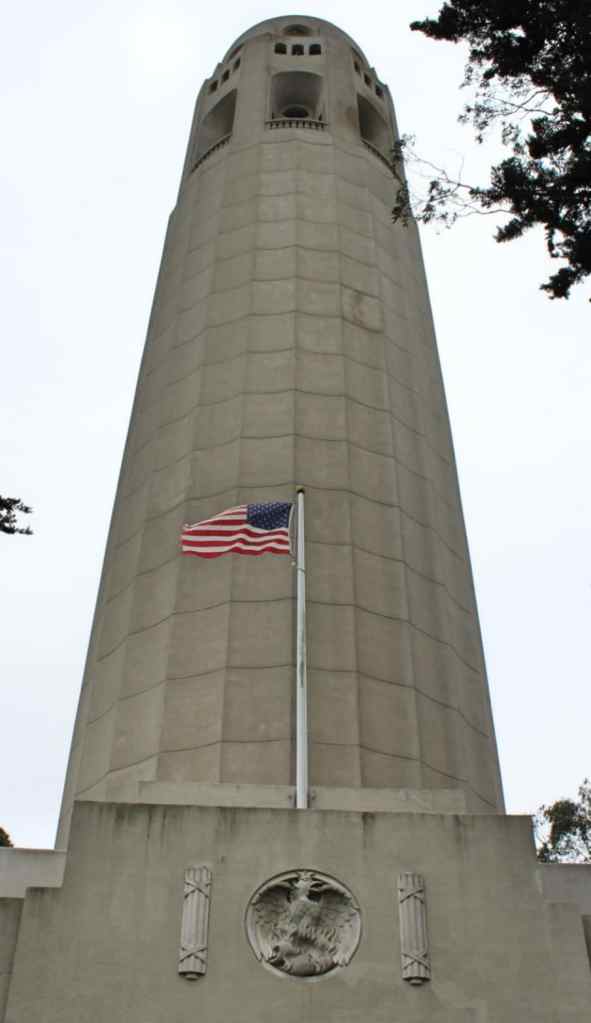
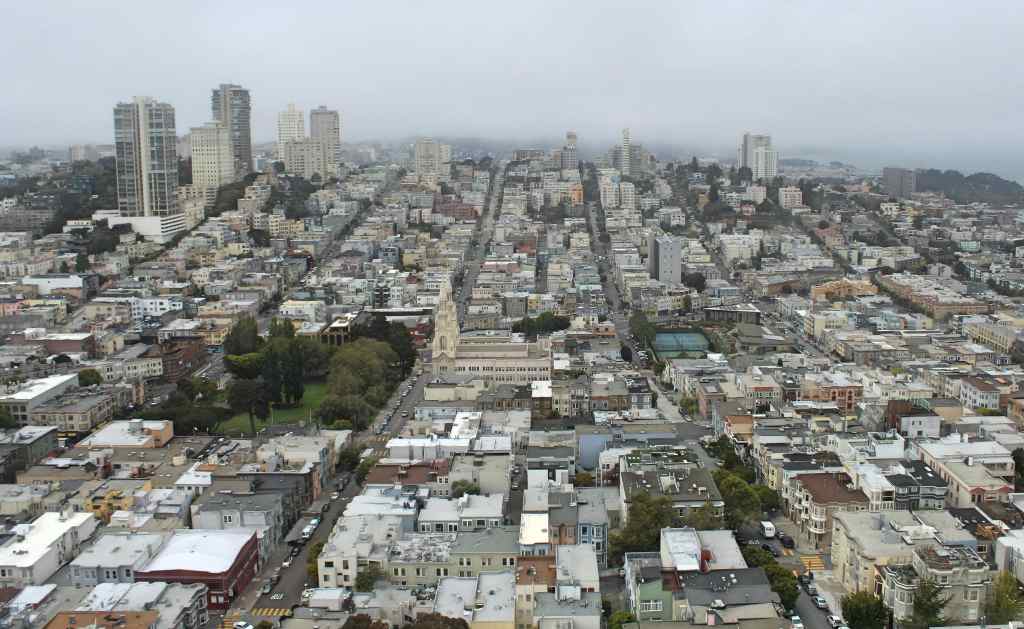
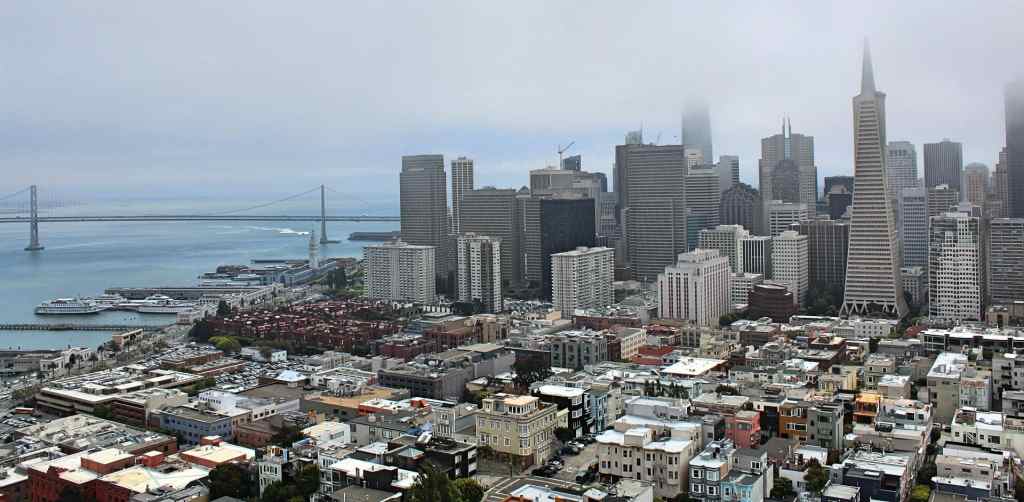


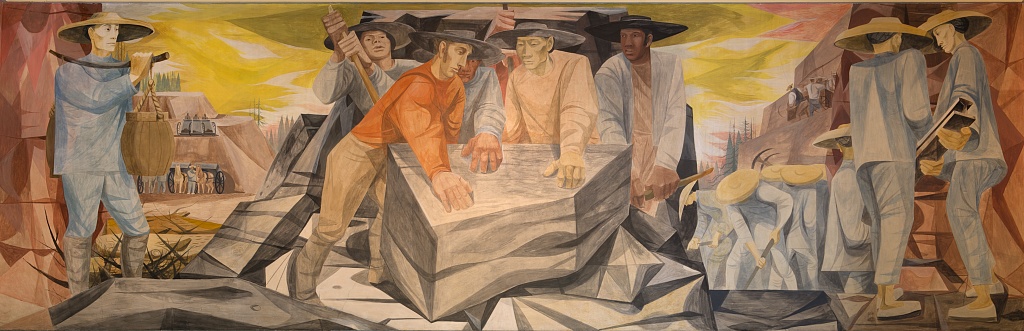
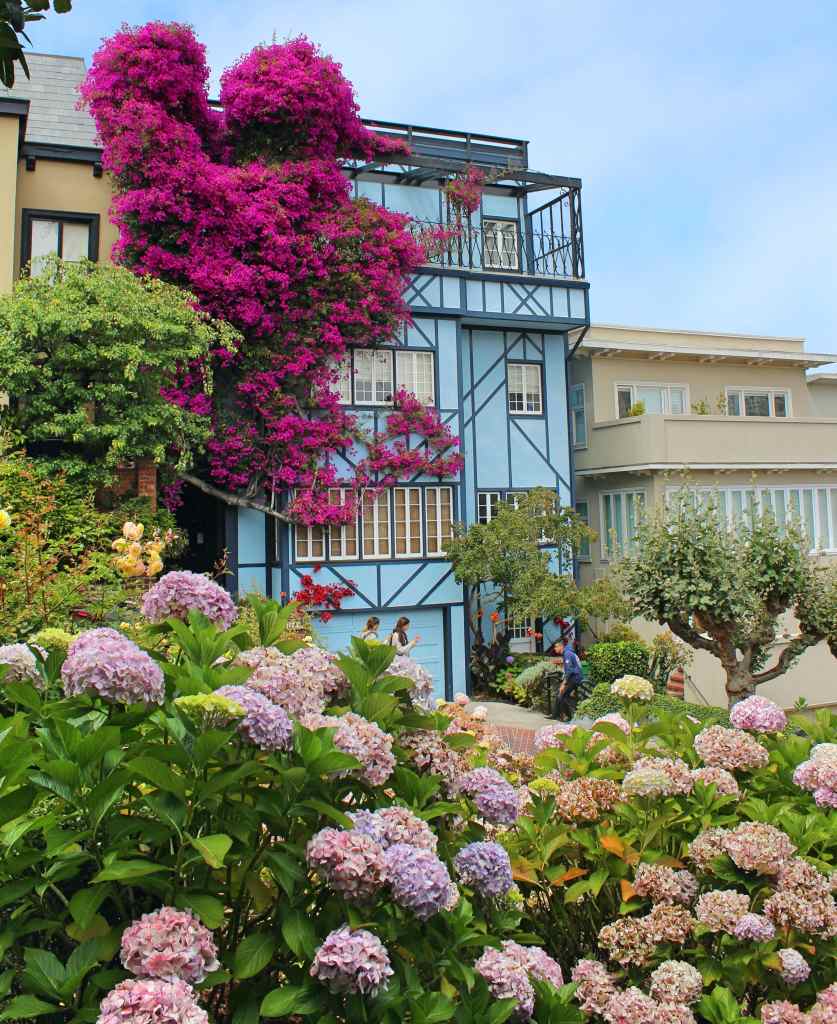


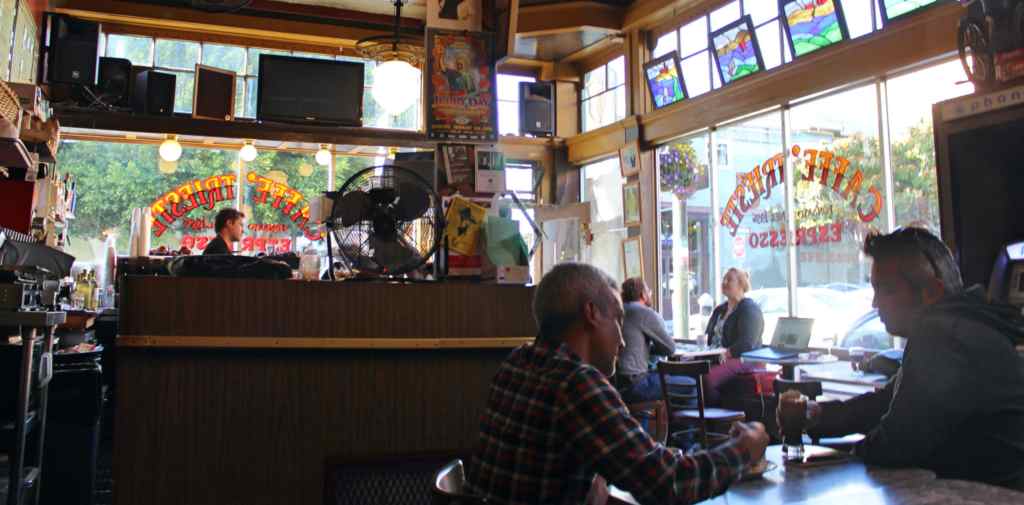


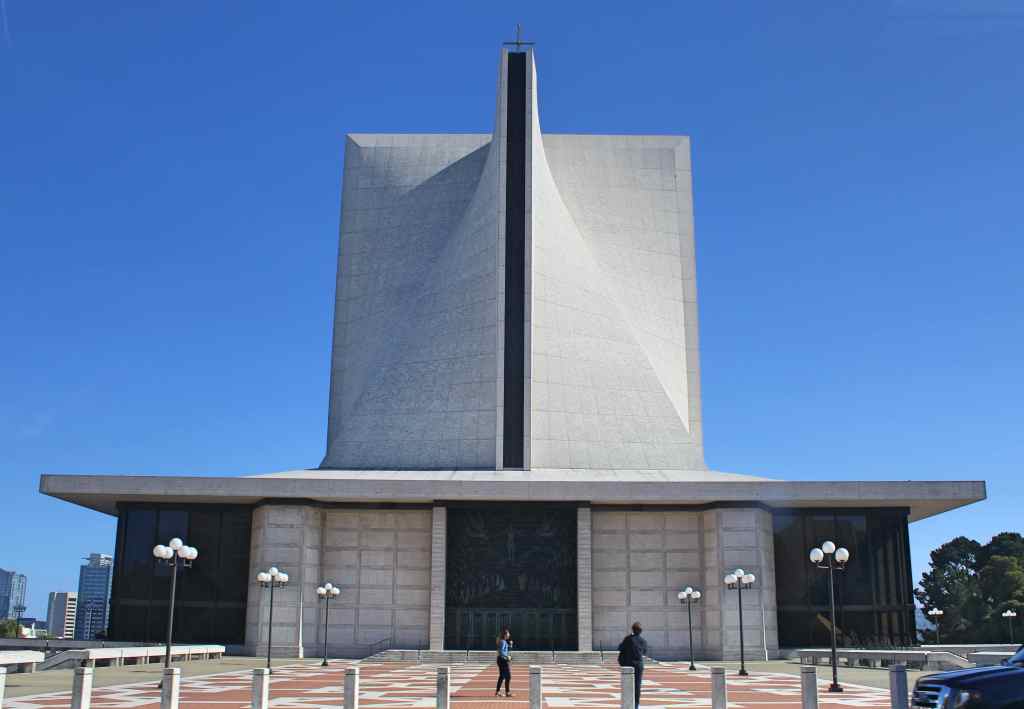
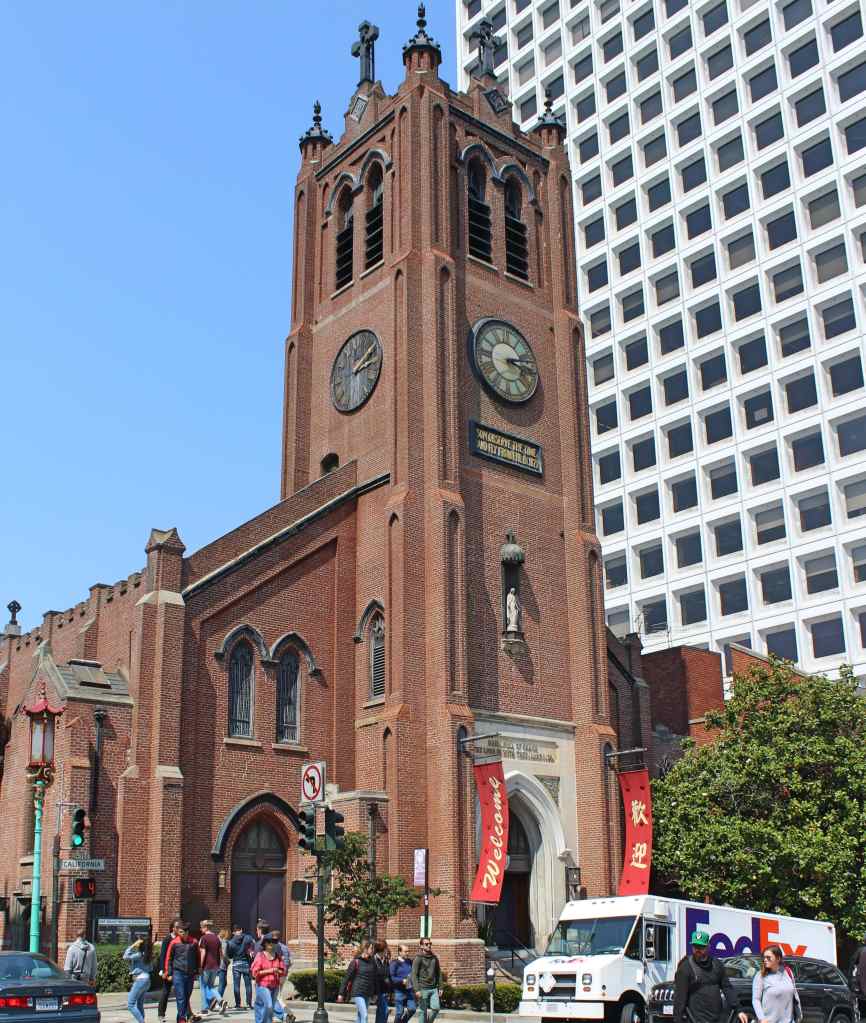


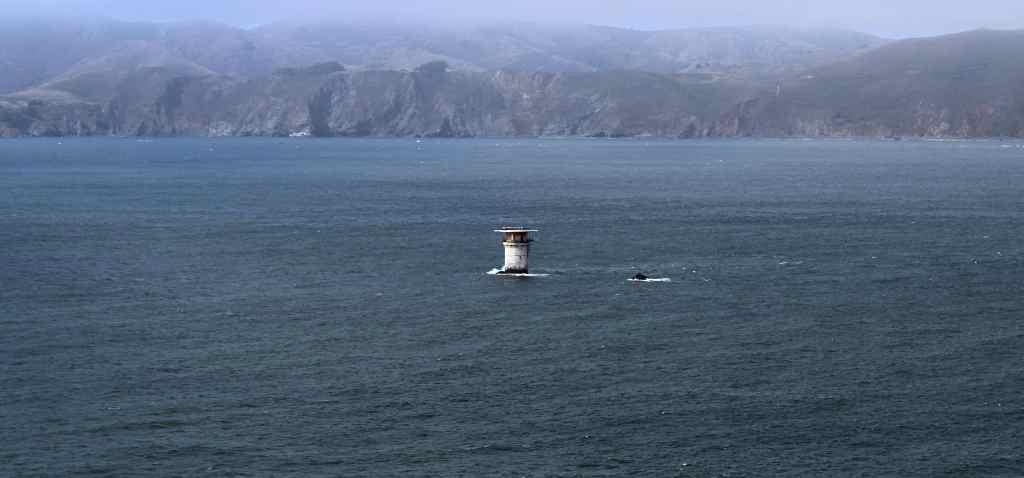
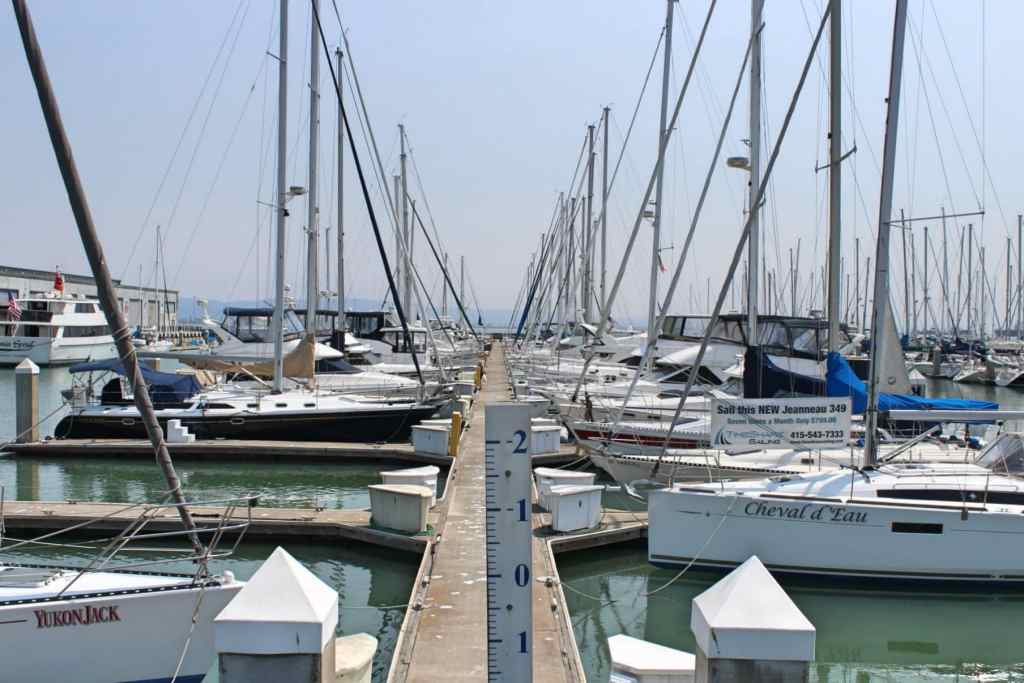

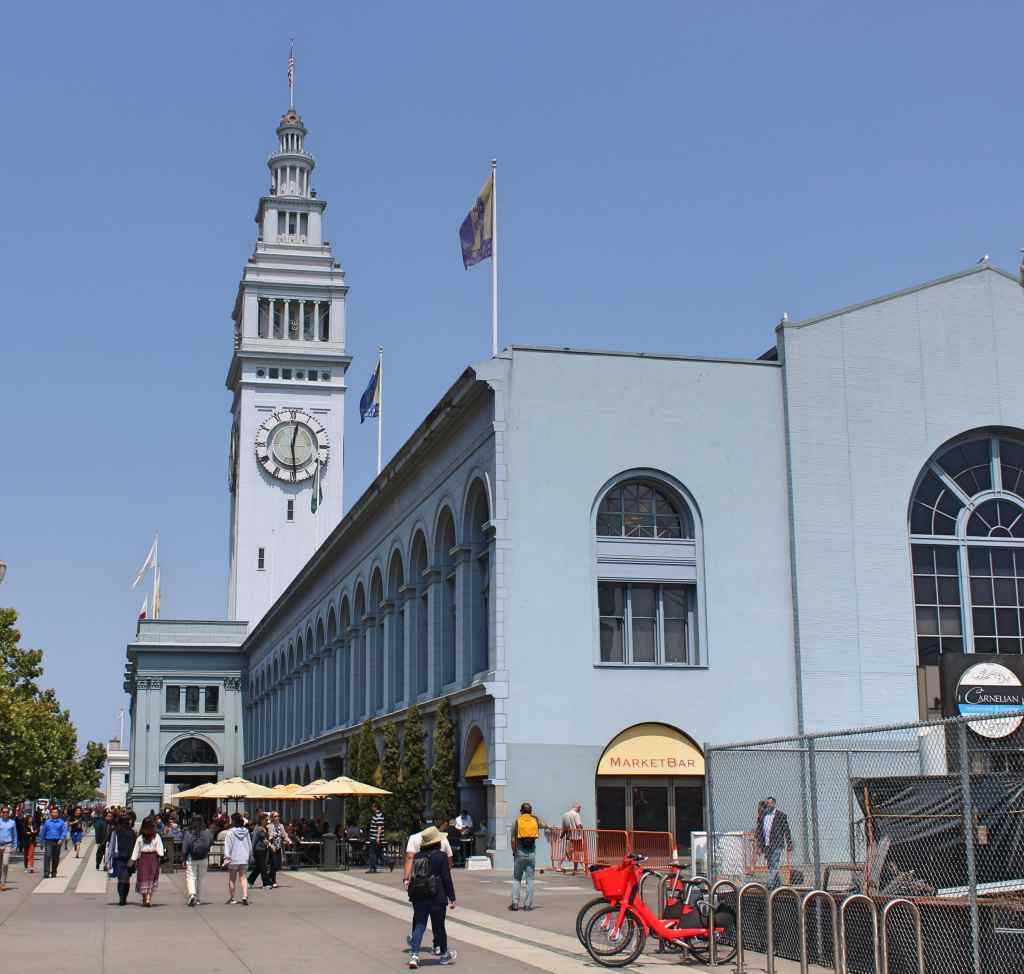
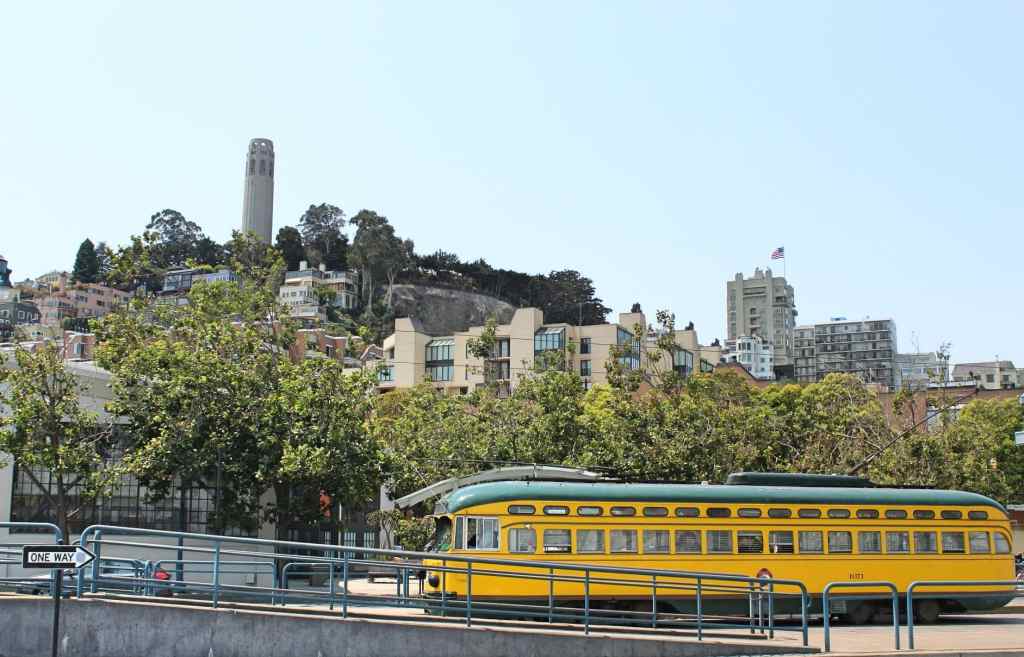
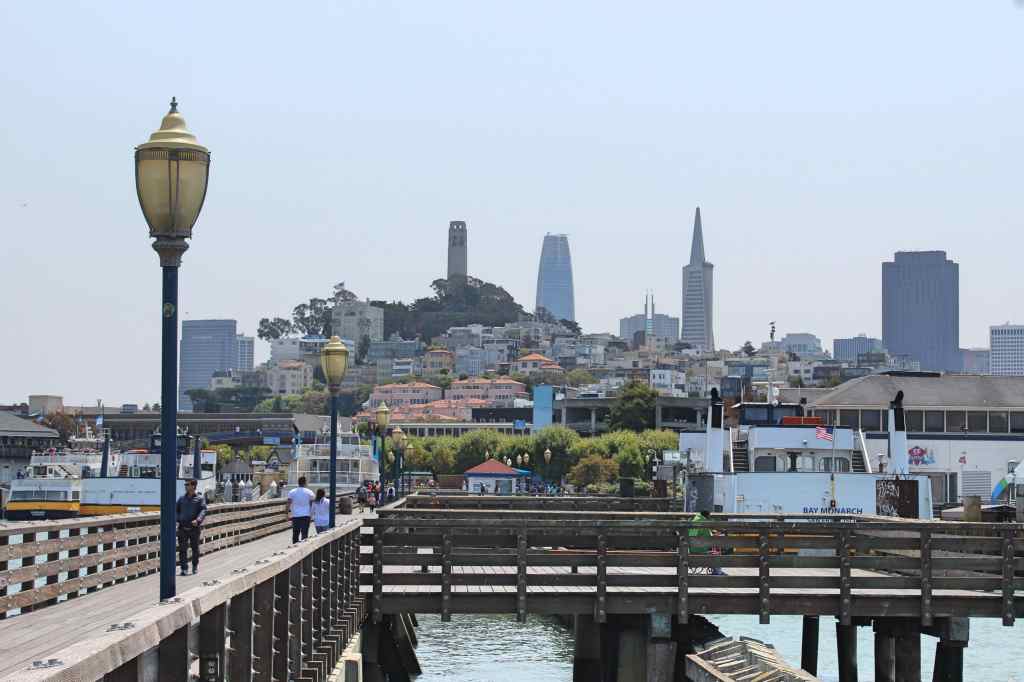
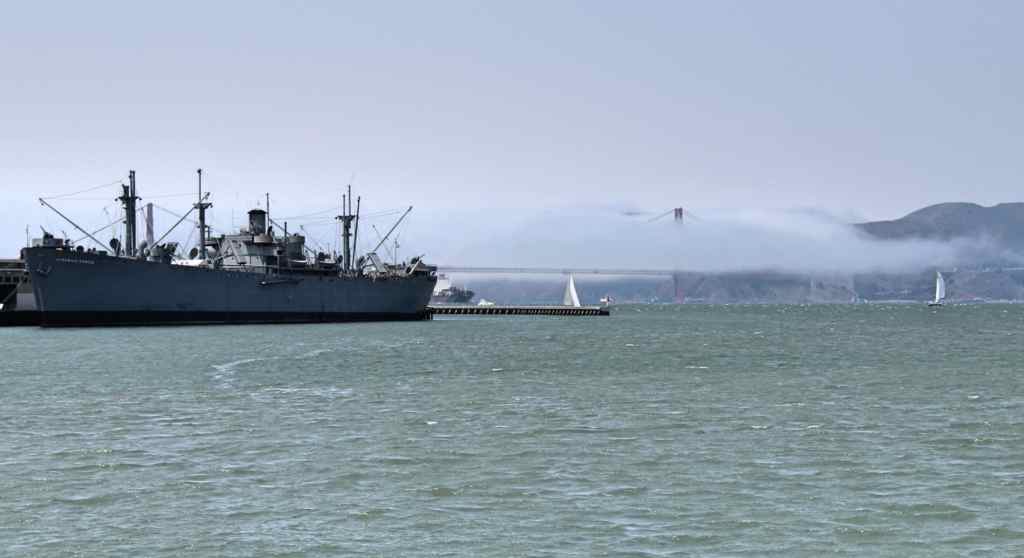
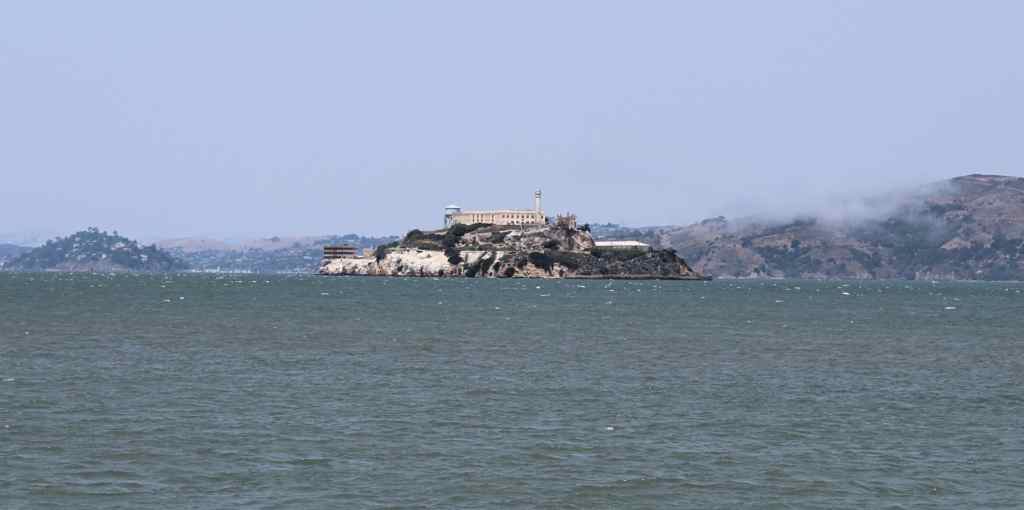

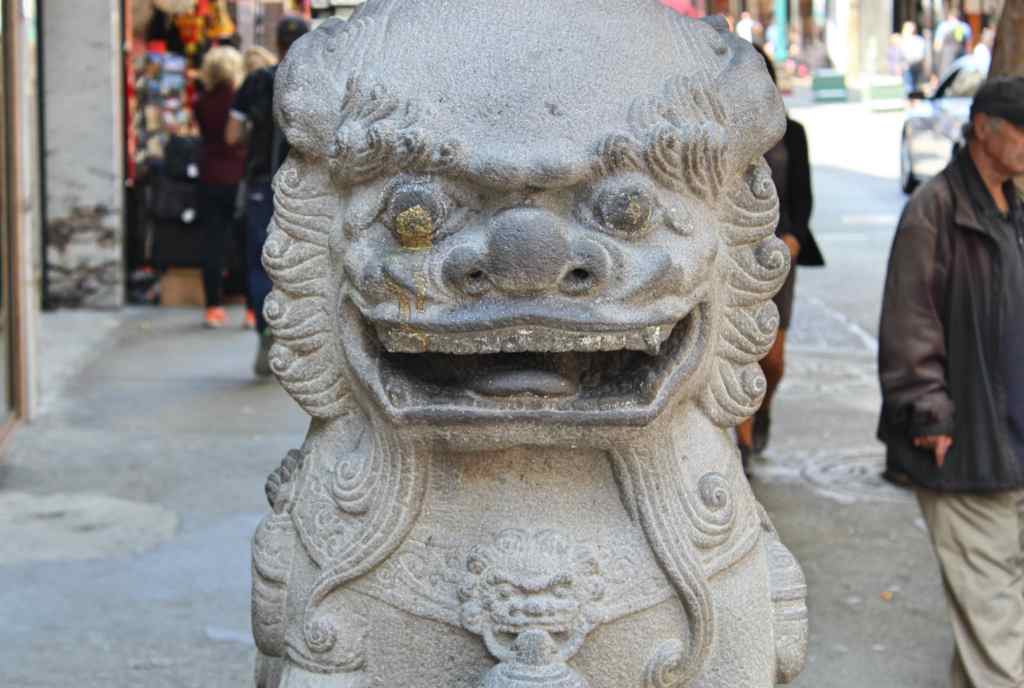
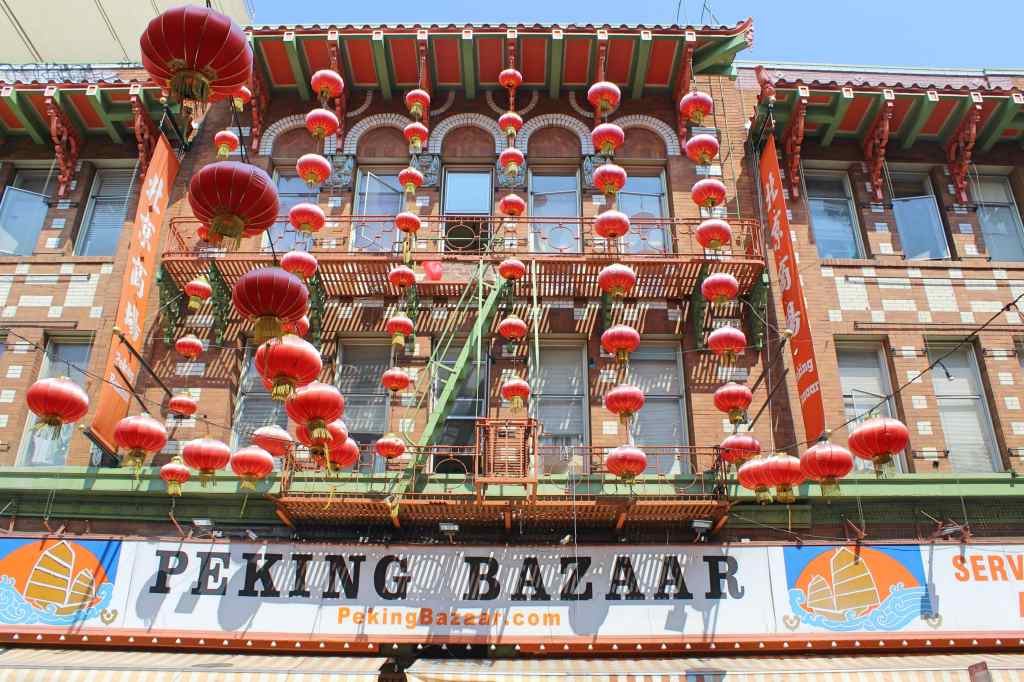
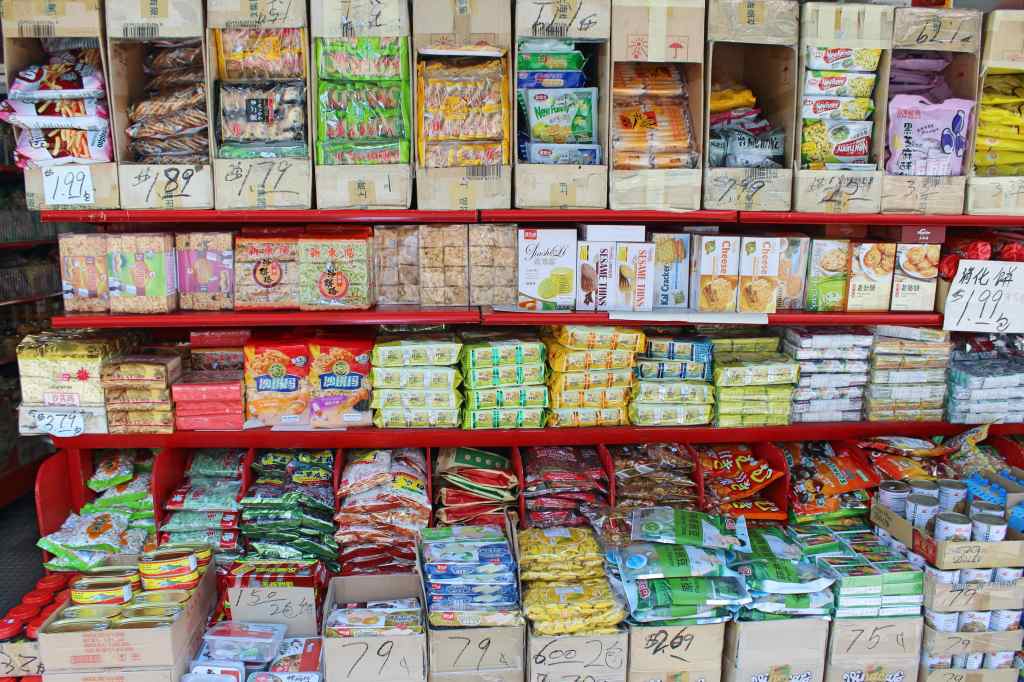
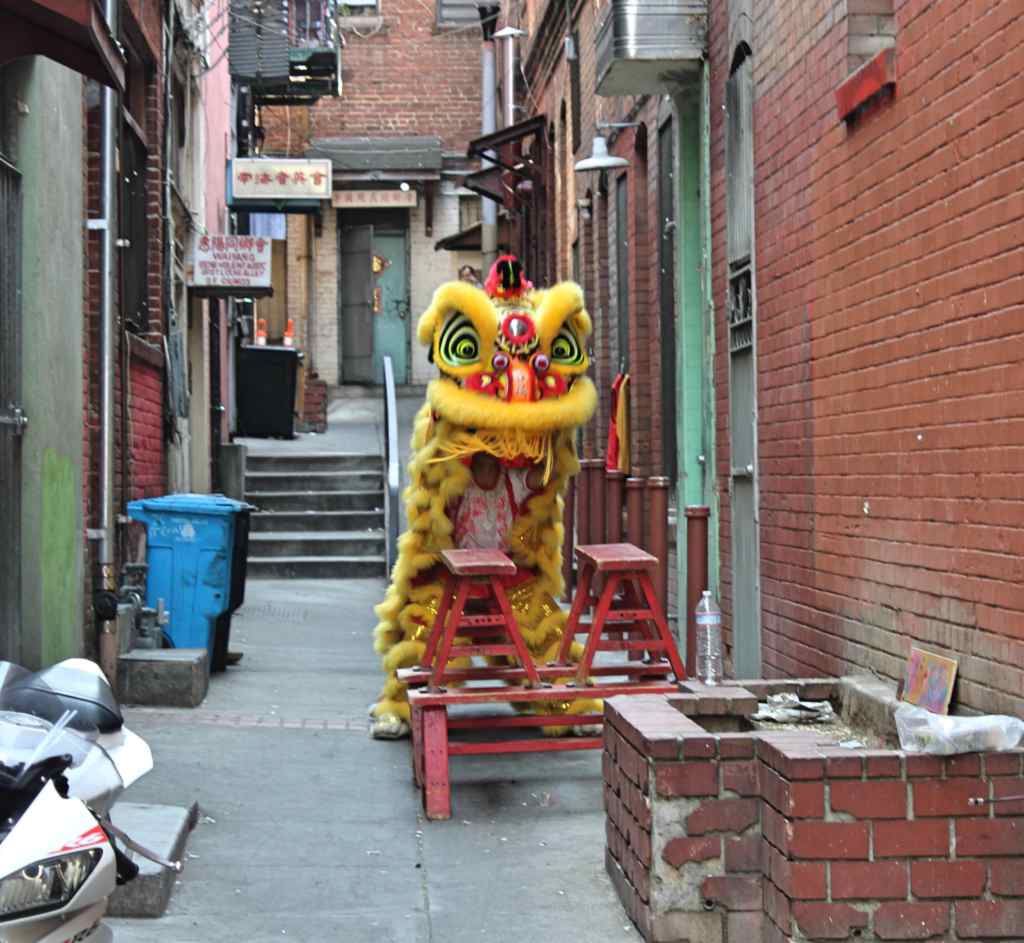
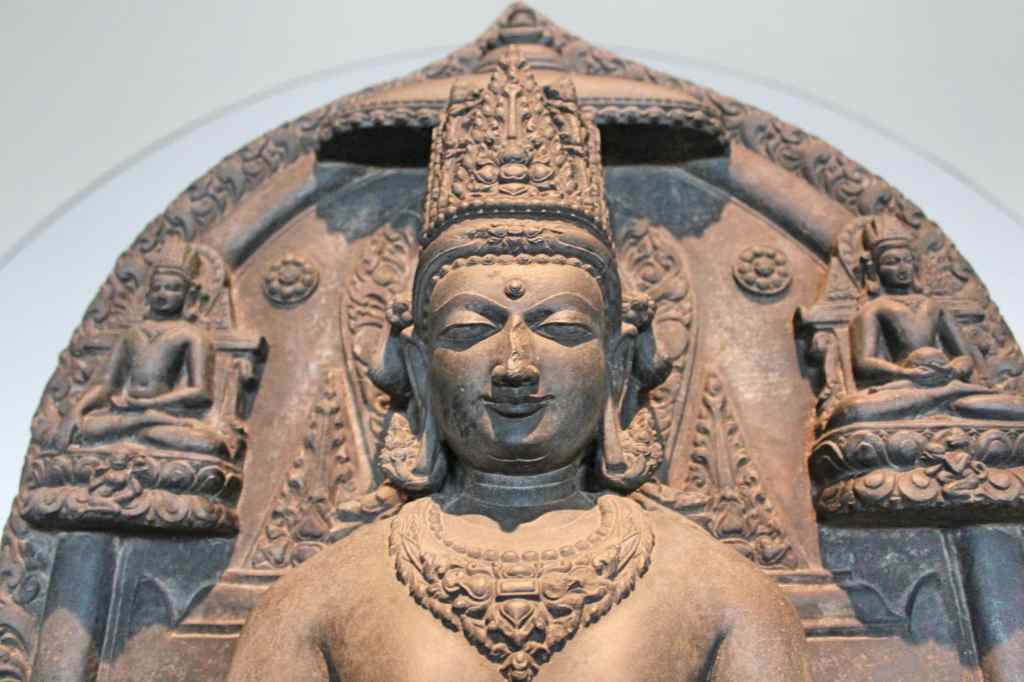
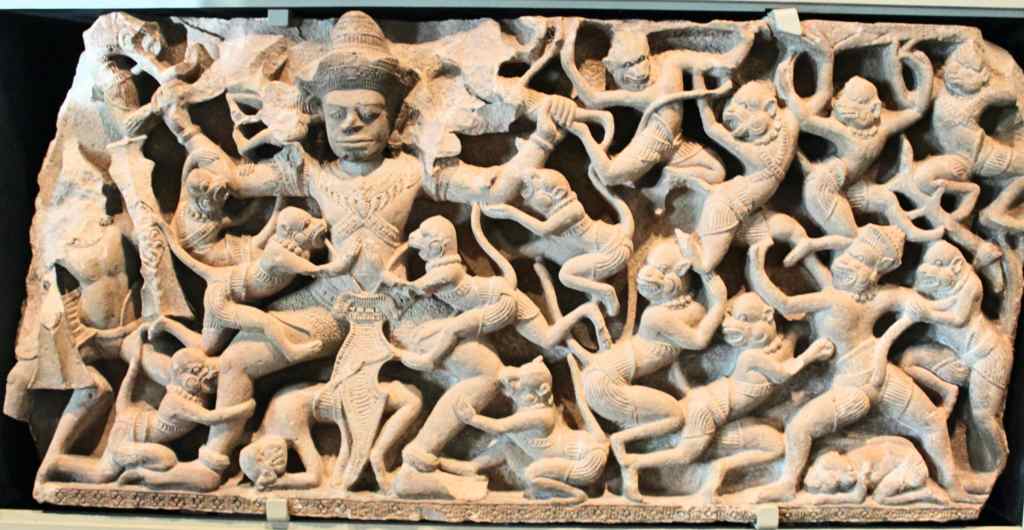
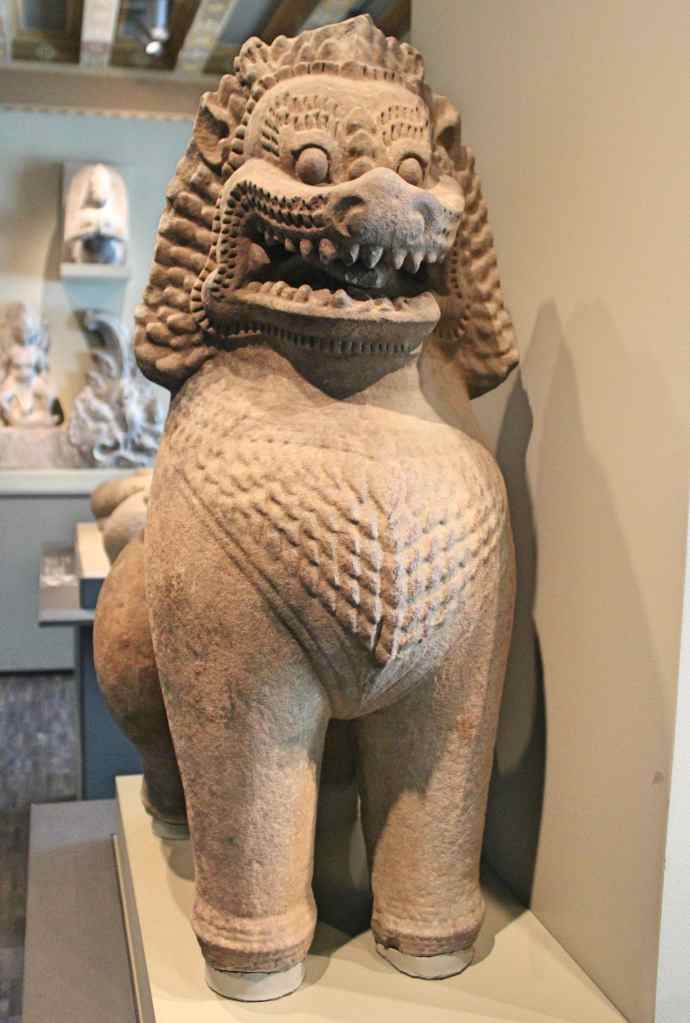

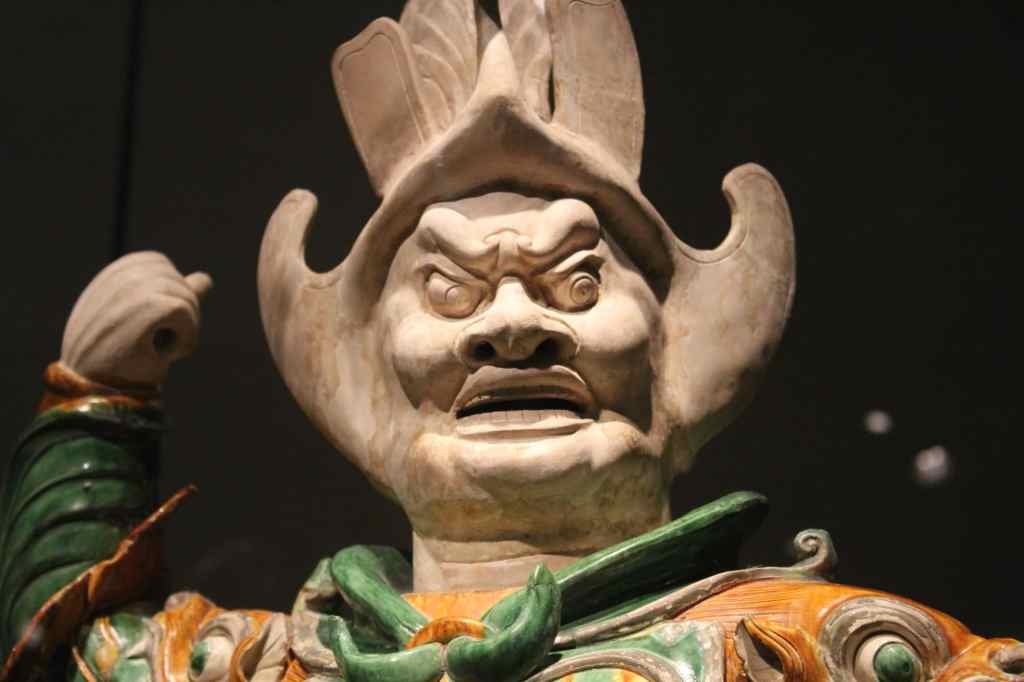
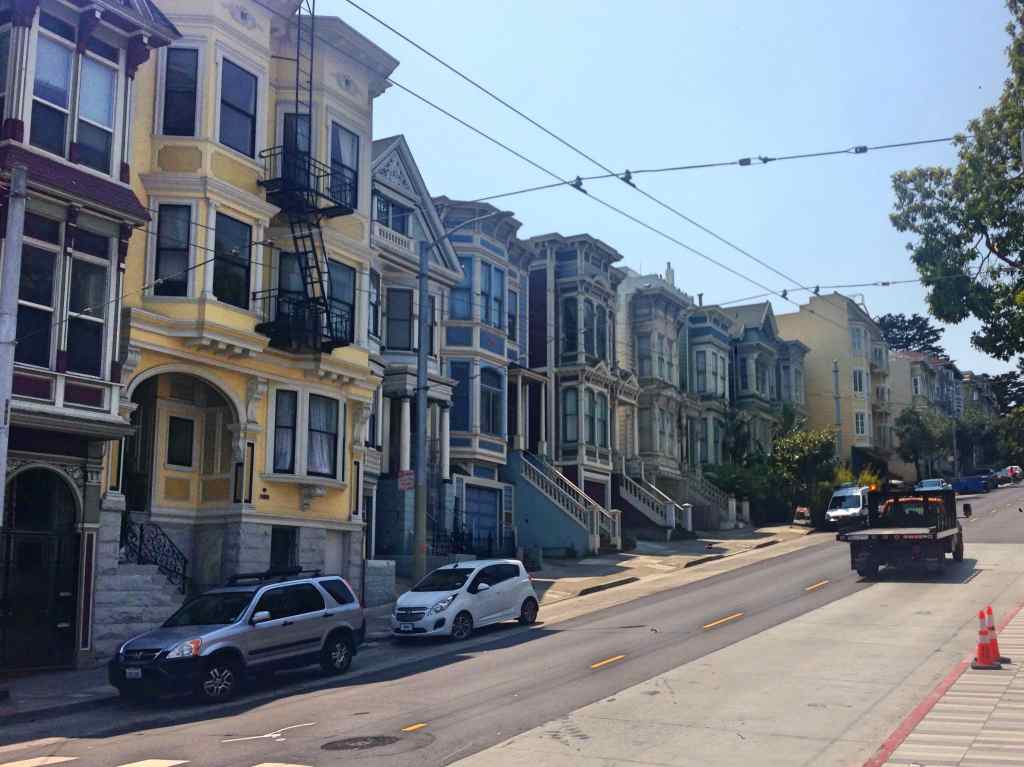

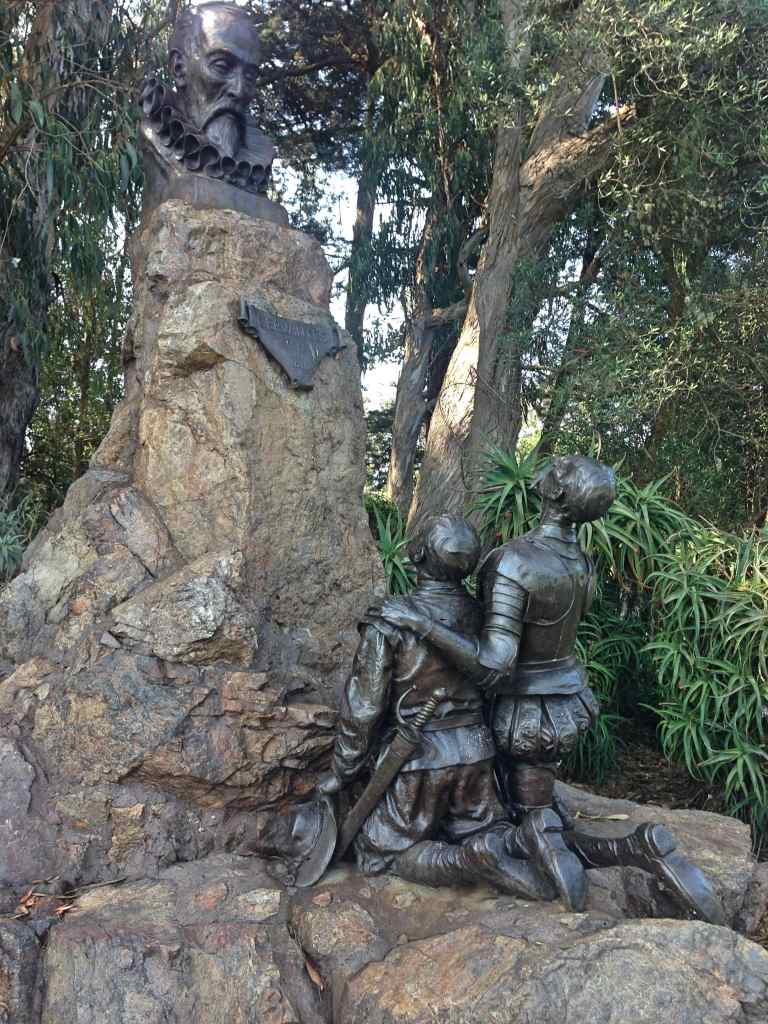
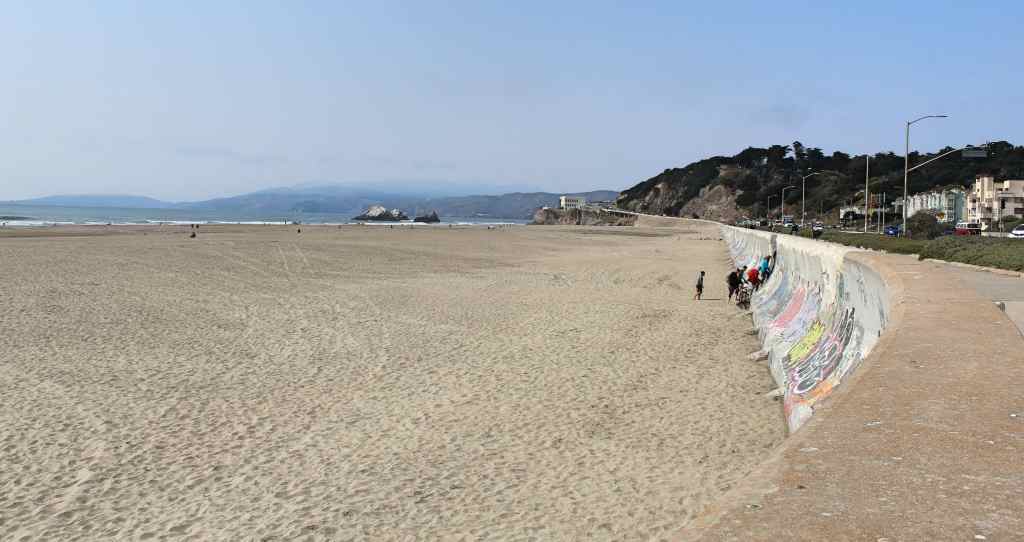


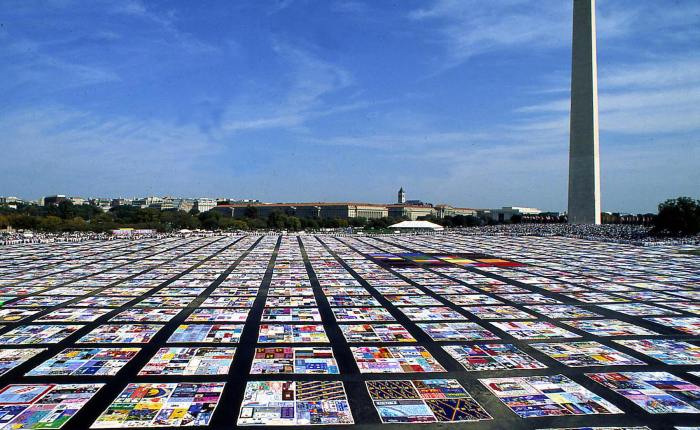

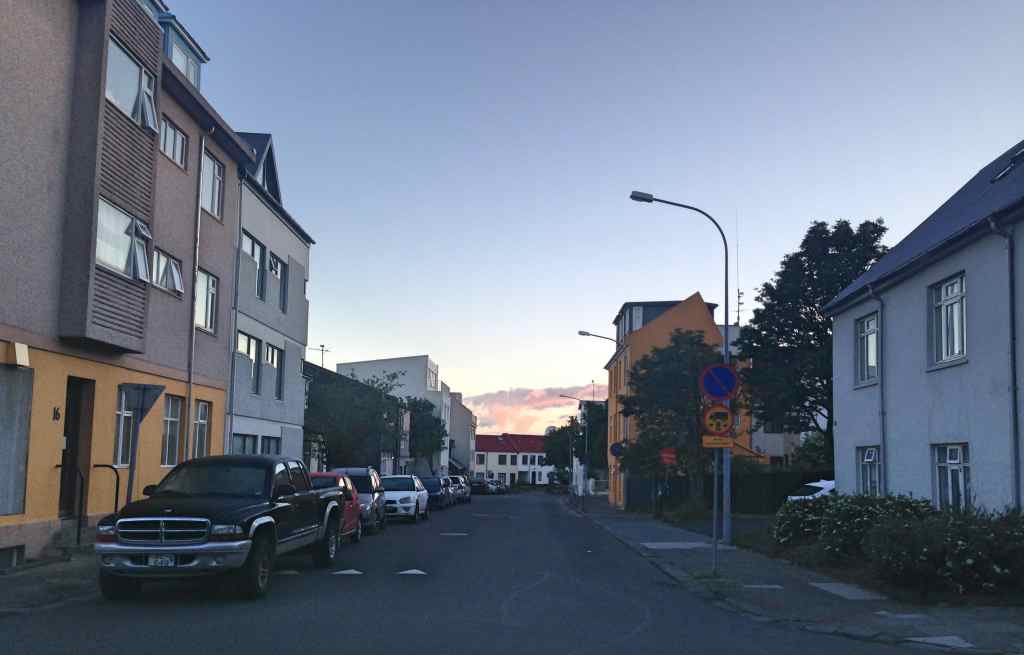
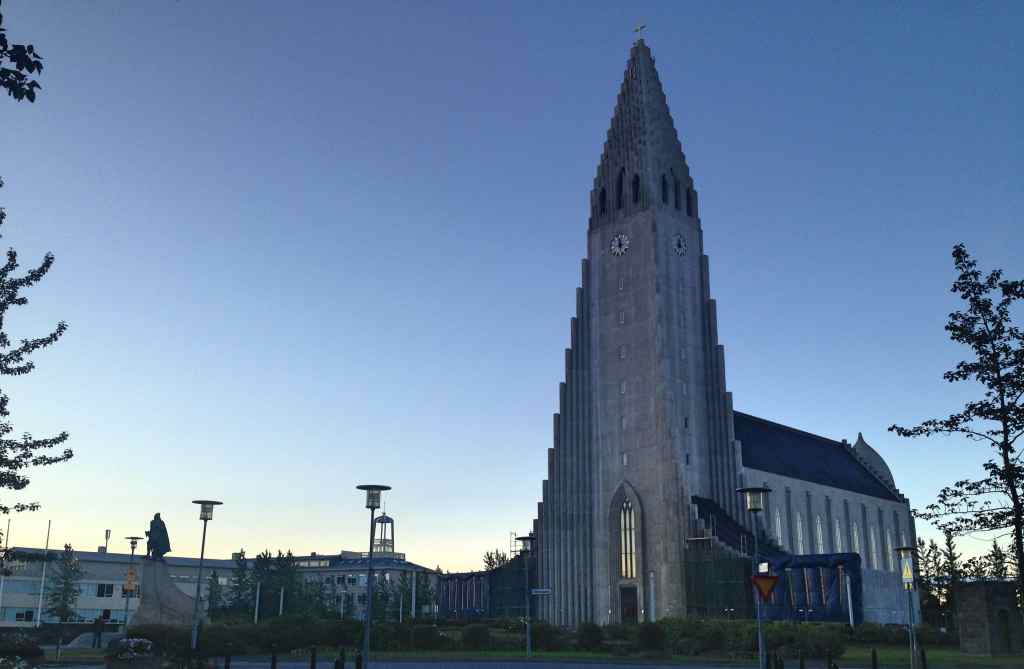
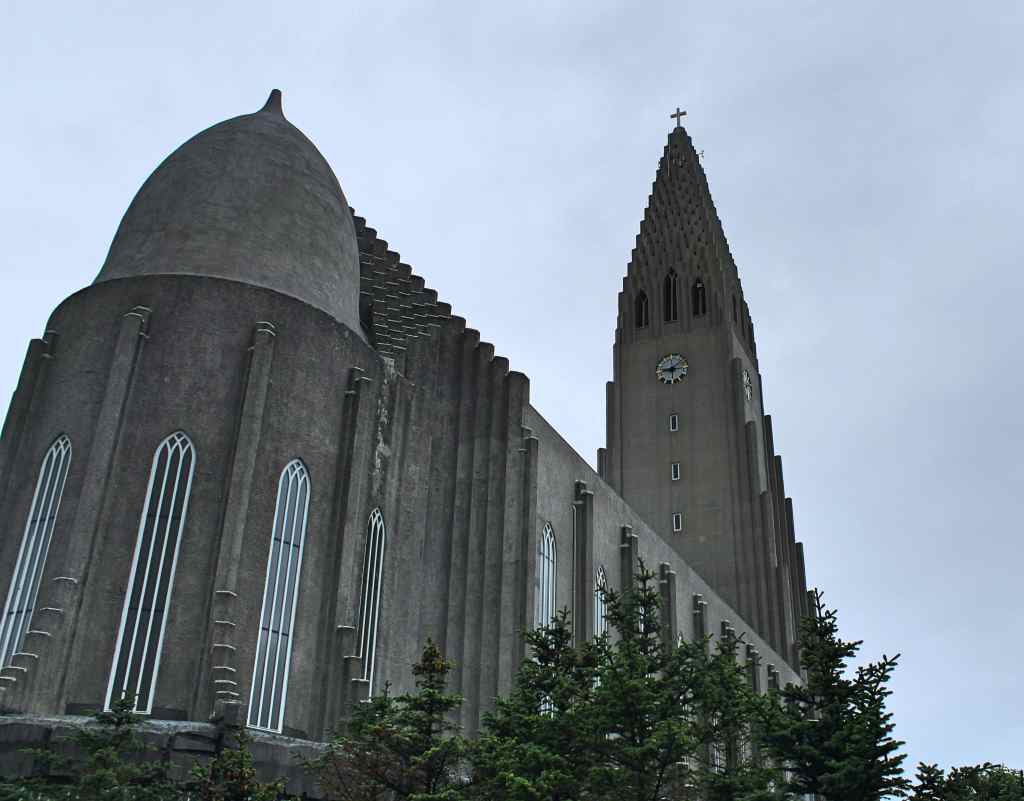




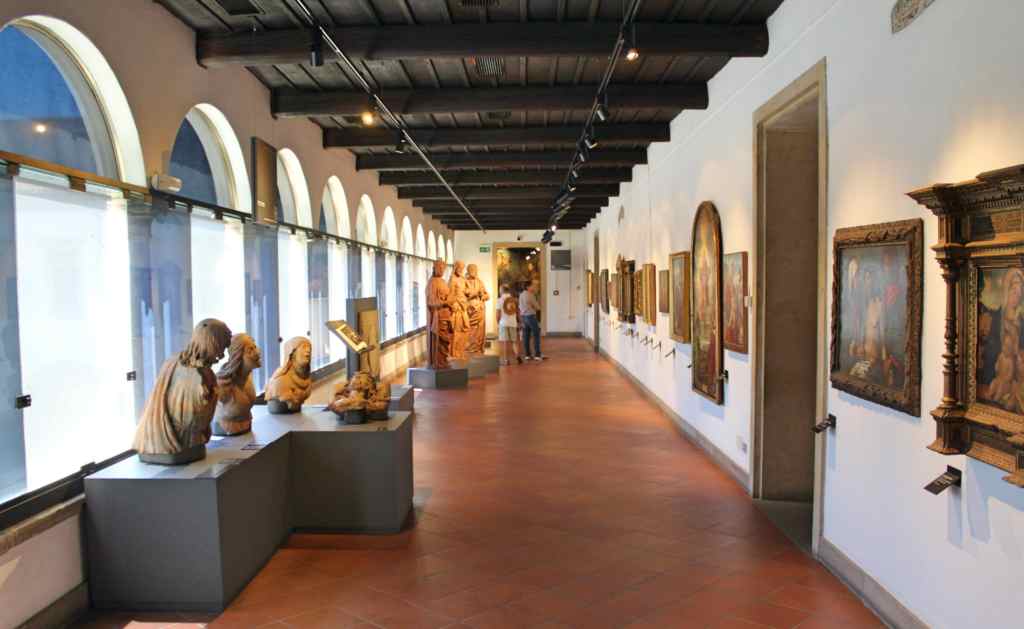


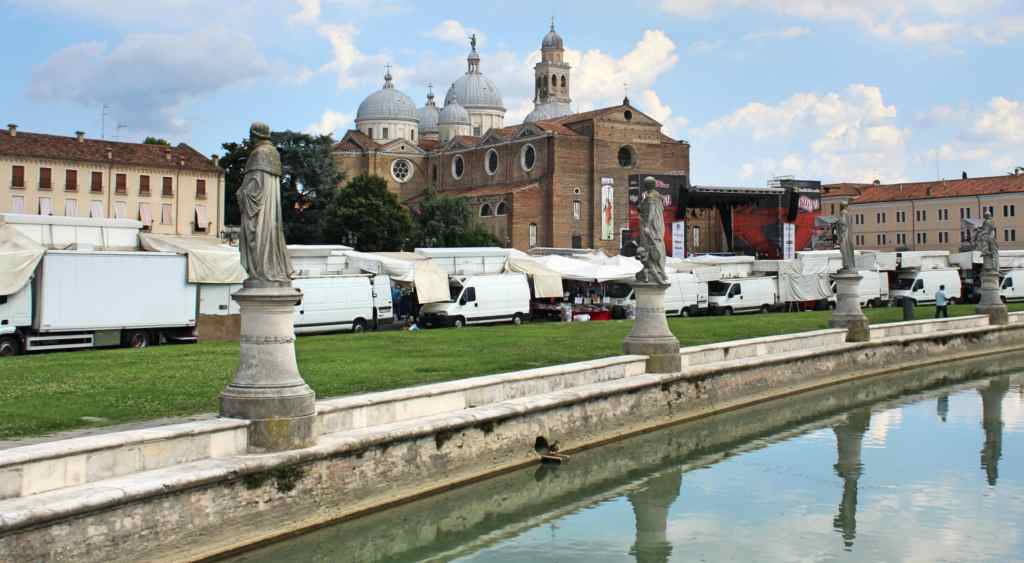


 Lotz in Translation