A few weeks ago I met an interesting Irish writer named Enda at a birthday party. As it turns out, he has a podcast that he co-hosts with an Egyptologist named María, and they very kindly invited me on!
Click here to have a listen. And if you want to know more about their work, here is their website.
When you live in Europe, you notice that certain destinations come up in conversation with surprising frequency. Porto, Budapest, and Normandy are among those which are highly-praised among the well-traveled. Edinburg is another. So although I had no special reason to go—I had not even found an especially cheap flight—I decided that I would use my February vacation to take a little trip up north and see what all the fuss was about.
The plane broke through the gray clouds and touched down in Scotland on a cold, drizzly morning. I found the bus indicated by my Airbnb host and got on the top floor. The double-decker bus afforded me a commanding view of a not-very-exhilarating urban landscape as we traveled from the airport to the suburb where I was to stay. Though there really was nothing interesting to see, the combination of the dreary skies and the (in my eyes) quaint domestic architecture made a powerful contrast with the usual Spanish scenes of sun and walled-in houses.
Soon enough, I was at my destination. It was a rather odd Airbnb experience. My host told me that she had been repeatedly trying to contact me, only to realize that she was thinking of another guest (she managed various properties). Then, I was told, among other things, that the shower was set to the absolute perfect temperature and ought not be changed; also, she insisted that Scotland was just as humid as Florida, so that I ought to leave my window open for a certain amount of time every day to prevent mold. (Unless I am mistaken, the amount of moisture that air can hold is dependent on its temperature, so that cold Scottish breeze can’t hold nearly as much humidity as the scorching soup that is Florida’s atmosphere.) But this sort of thing is par for the course when staying in somebody else’s place. At least it was cheap.
With my bag dropped off, I caught the bus to the city center. I really appreciated the double-decker bus now, as it allowed me a wonderful way to enjoy Edinburgh’s Old Town. But by the time I stepped onto the cobblestone street, I was tired, thirsty, and extremely hungry. The daylight was fading now, and I desperately wanted dinner. This did not put me in the best mood to appreciate the lovely city which now opened up before me. Yet I was sentient enough to notice that the architecture formed a kind of coherent whole, all of the buildings made of the same grayish-brown stone, and constructed in the same heavy style, which seemed somehow suited for this clime.
I wandered up the venerable streets feeling rather sorry for myself, as I peered into window after window to see family and friends having dinner. I did not have the heart or the stomach to walk into a restaurant by myself and eat at a lonely table. I wanted something fast and anonymous, and my prayers were answered when I discovered a quiet kebab shop. I sat down at one of few chairs and, within minutes, my meal was ready. Better than any kebab I had in Spain, and this was not even a well-known spot. And as I ate, I reflected on the stark difference between what I had just observed of Scottish eating culture, huddled up inside, and that of Spain—where patios are overflowing onto every sidewalk. Of course, the weather is the explanation, though I also found it curious that nobody else was in this kebab shop on a Friday night. In Spain, it would have been full to the brim with drinkers.
It was, by now, too late to see any attractions. But it was not too late to enjoy a drink. For this, one of my friends had suggested the famous pub, Sandy’s Bell. Though I was somewhat buoyed by the food, I still felt nervous when I looked through the cloudy windows to see a bar filled with a rowdy crowd. But after pacing back and forth on the frigid street, I mustered enough courage to barge in. The barman immediately asked me for a drink and, like an idiot, I just said “beer.” (In Spain one often just orders “cerveza” and you’re given the only beer on tap.) He wasn’t satisfied with that, and asked me to choose a beer, and I scarcely helped matters when I said “an ale.” One of the regulars at the bar—an older man—took matters into his own hands and said “Try this!” while holding his own drink up to my lips. Too surprised to refuse, I drank a gulp and said, “That one!” The barman returned shortly with a pint of the dark ale.
My troubles were hardly over. The place was packed and every chair and barstool was occupied. I found a corner of the wall I could lean on and sipped my beer rather awkwardly, trying not to be noticed. This was my first Scottish pub experience, and somehow I found it very intimidating. I tried to slow down and enjoy the beer (which was quite good), but I found myself drinking faster and faster, as a part of me was eager to leave. When I realized that I was failing to enjoy the pub, I got rather down on myself—all these years of traveling had not cured me of feeling like a misplaced high school student—but slowly resolved to cut my losses.
Just as I had taken the last sip of beer and I was ready to pay and head out, a man got up to leave from the bar and, like an angel from heaven, offered me his seat. (I really must have looked conspicuously uncomfortable.) I thanked him from the bottom of my heart and got ready for another beer, this time from the commanding position of the bar. A drink sitting down is incomparably better than one standing up, and I felt quickly at ease. The experience was made even better with the purchase of a bag of crisps (salt and vinegar, my favorite flavor, which is rarely available in Spain), which persuaded me that I ought to have a third beer.
Time slowly ticked by. Eventually I remembered that the bar is famous for its live music. I asked a nice young fellow to my left, and he told me that it started at nine. I looked at my watch: about 45 minutes to go, and no beer left. My better judgment told me that I should just stop and come back another night; but my tempting demons—rather convincing, usually—told me that I ought to just tough it out until I heard some music. The decision was instantly made when I spotted a bottle of Laphroaig on an upper shelf. This is my dad’s favorite type of whiskey, and I felt duty-bound as a son to have a glass in his honor. This was ordered, and I could have sworn that I could feel a wave of respect pass over my fellow patrons.
Laphroaig is, you see, not an especially popular single-malt scotch. A single taste will let you know why. Coming from the island of Islay (pronounced “eye-luh”), this scotch is normally described by whisky enthusiasts as “peaty,” though the first words that come to mind of most ordinary people are considerably less kind. It tastes, to me, how I imagine a strong iodine solution would taste (though admittedly I have never tasted iodine). In other words, Laphroaig is harsh—almost chemically harsh. And yet, strangely, the taste grows on you. If you can get past your initial revulsion you will find it has a sort of complex smokiness beneath the initial shocking acrimoniousness. In short, I actually managed to enjoy my glass of Laphroaig.
And luckily for me, the music began right as I was finished. It was a small group of three people, two on guitars and one on violin, playing lively tunes. I took it in for a while, and then caught the bus back to my Airbnb. I had a big day ahead.
I will begin by mentioning the things I did not decide to see. Perhaps most notably, I did not visit Edinburgh Castle. This is probably the most famous and popular monument in the city—perhaps in all of Scotland—and, even from the outside, you can see why. It is an impressive and imposing fortress which towers over the city. However, from what I read about the castle, there was nothing on the inside which I thought merited the steep entry fee. But I did enjoy the sculptures of Scottish heroes Robert the Bruce and William Wallace that adorned the entryway.
Next on my list of negative tourism is the Holyrood Palace. This palace is actually connected to the castle with a broad avenue known as the Royal Mile (though it is really a little longer than a mile). Holyrood is the official residence of the British monarch in Scotland, still used whenever the king or queen is in town. The rest of the year, it is open to tourism. I actually think that Holyrood is likely a rewarding place to visit, but palaces tend to put me in a bad mood.
But I did enjoy seeing the ruins of Holyrood Abbey behind the palace. While I assumed that it had been gutted in a fire, the story of its destruction is quite a bit more interesting. The abbey played an important role in Scottish history for several centuries after its construction in the 12th century. But when its old timber roofs were replaced by stone vaults seven-hundred years later, this proved to be the end of the old church. Its walls could not support the added weight and the roof eventually collapsed. It does make a fine ruin, though.
Photo taken from Wikimedia Commons; taken by Kaishu.
Another major attraction that I did not visit was Her Majesty’s Yacht, Britannia. As its name suggests, this yacht was used by the British royalty from 1954 to 1997, and is now a kind of museum showcasing royal pomp and luxury. Needless to say, this would have put me in a bad mood, too.
An example of a close.
The last attraction I missed was Mary King’s Close. Now, a “close” is just another term for an alley, and there are a lot of alleys in Edinburgh. The historic center used to be enclosed by a wall, requiring high density, and so these closes are highly claustrophobic spaces—hemmed in by neighboring buildings. This particular close (named after a merchant) was, well, closed as neighboring construction both partially destroyed and buried the little alleyway. Nowadays the abandoned close has something of a reputation among ghost hunters and other seekers after the paranormal. But tourists enjoy the tours about daily life in 17th-century Edinburgh. Perhaps I ought to have gone to this one.
So where did I go? My first visit was to the National Museum of Scotland. This is an enormous museum with a collection of virtually anything you might imagine. And best of all, it is free to visit. The central hall is immediately impressive—a large area, full of light, modeled on the original Crystal Palace. There, I was immediately attracted by the skull of a sperm whale (“Moby”) who had washed up on Scottish shores and who, despite rescue attempts, unfortunately perished. Moby was not an especially large male (indeed, slightly below average), but even so, his skull alone is longer than two tall men lying end-to-end.
As I said, the museum has a vast and varied collection. There is an exhibit on space, animals, geography, fashion, Ancient Egypt… But I figured that, if I was in Scotland, I ought to visit the Scottish History wing. This is housed in a separate and rather futuristic building, and it makes for an excellent visit. You are led, chronologically, from the stone age on the ground floor to the industrial revolution at the top. Though Scotland is a small and rather remote country, this exhibit encapsulates all of the glory and interest of its history. As I traveled from a medieval greatsword to James Watt’s steam locomotive, I found myself almost awed by how much had transpired in this soggy northern country.
Right next to the museum is another popular attraction: Greyfriars Kirkyard, a historical cemetery. But before you enter, you might notice the small metal statue of a terrier with a polished nose. This is Bobby, a semi-legendary dog who—according to the story—spent 14 years guarding the grave of his deceased owner, John Gray. The story is understandably quite popular, and Bobby (or his statue) is undeniably cute. But I have to admit that I feel skeptical. Not that I deny the nobility and loyalty of our canine friends, but the story does seem too perfectly calculated to attract tourists. And there are many reasons (free food?) that a dog might be found in a graveyard.
Well, whether or not the Bobby story is perfectly accurate, Greyfriars is worth visiting. I must admit that my knowledge of Scottish history is so spotty that I did not recognize a single name. Yet the grandeur of the tombs is enough to impress upon the visitor the importance of this burying ground. While I strolled around, I noticed two Americans who seemed to be walking with determined step to a particular grave. Thinking that they must know something I didn’t, I followed them as they made their way to the edge of the graveyard. There, I was disappointed to find that they were visiting the grave of a man named Tom Riddle. Now, I have no idea who this man really was, and I am sure my American guides did not either. They were visiting because this name was used by J.K. Rowling as an alias for Voldemort. (Indeed, I think there is quite a lot of Harry Potter tourism to Edinburgh.)
Though I did not know this story at the time, this is the perfect moment to mention one of the more macabre episodes in Edinburgh’s history. There was a time in Scottish history when the medical demand for human cadavers—which doctors used in their lectures—far outpaced the supply, mainly because of strict laws regulating which bodies could be used for such a purpose (paupers and prisoners, mainly). This led to the grotesque practice of “body snatching,” in which grave robbers would dig up the recently buried and sell them to a doctor for a handsome profit. Indeed, this was such a problem that several anti-robbery devices were developed, such as the mortsafe, which is basically a cage placed over the body. (You can see examples of these in Greyfriars.)
But in 1828, two men decided to take this practice one step further, and began murdering people in order to sell their bodies. The men had a very simple system: get a person very drunk, and then smother them to death by laying on top of the victim. After sixteen such murders, they were discovered. One of them, Hare, was inexplicably given a light sentence, while the other, Burke, was hanged for his crimes. With poetic justice, Burke’s body was then dissected before a group of medical students. His skeleton is still on display at Surgeon’s Hall in Edinburgh (I wish I had gone!), as well as—and this strikes me as a tad overboard—a notebook bound with Burke’s skin.
While I am on this morbid topic, I should mention two other tombs I visited during my time in Edinburgh. One was of the great economist Adam Smith, who is buried in the graveyard of Canongate Kirk. The grave is neither big nor particularly elaborate, but its inscription gets right to the point: “Here are deposited the remains of Adam Smith, author of the Theory of Moral Sentiments and the Wealth of Nations.” Nothing more need be said, as those two works will last longer than any tombstone. Next I visited the tomb of the other great pillar of the Scottish Enlightenment, David Hume. This is in Old Calton Cemetery, which is located on Calton Hill, one of the high points of the city. His tomb is slightly more monumental, consisting of a kind of hollow tower, but there is no memorable inscription. Yet merely being close to the mortal remains of this most skeptical of philosophers was a thrill (though he would likely say I was irrational).
Curiously, right next to this tomb is a statue of one of my countrymen, Abraham Lincoln. He stands over a monument to the Scottish American soldiers who died in the American Civil War. The Scottish are an international bunch.
Very close to Hume’s final resting place, right at the crest of the hill, is a park. In addition to providing excellent views over the city, there are a few curiosities to be found here. The most obvious, perhaps, is the Nelson Monument—an enormous tower, dedicated to the memory of the admiral who helped defeat Napoleon (and, thus, a very British memorial).
But I much preferred the other massive stone construction, the National Monument of Scotland. This was intended to be a glorious monument to the Scottish soldiers who died during the Napoleonic wars, modeled after the Parthenon in Athens. (This idea, by the way, was owed to the notorious Earl of Elgin, who stole the Parthenon frieze from Greece and brought it to the British Museum, where it remains to this day.) The final result, however, is comic and slightly pathetic. The campaign ran out of funds when just the portico had been completed, and it has remained that way ever since. Now it is just a collection of massive columns over a base—columns holding up nothing, a glorious doorway leading to nowhere. But it is great fun to climb on.
Even more fun to climb was Arthur’s Seat. This is a hill, formed by an ancient volcano, which looms over the city, and which is to Edinburgh what Central Park is to New York. Nobody quite knows why it is called Arthur’s Seat, as it seems highly unlikely that King Arthur—if he even existed—built Camelot here. Thinking that I ought to maximize my time in Edinburgh, I climbed the hill in a mad rush and got to the top in less than an hour. (What are vacations for, if not to anxiously hurry through?) Once there, I got a taste of the famous Scottish wind—or, as they might say, it was a wee bit blowy. The view of the city and the sea beyond was wonderful. The landscape was impressively rugged and wild. Somehow, for a park right next to the capital of Scotland, Arthur’s Seat transports you instantly to the middle of nowhere.
The Nelson Monument with Arthur’s Seat in the background
I should mention that observation of the geology of Arthur’s Seat helped James Hutton develop his scientific ideas. And this is no small thing, as Hutton is known as the “Father of Modern Geology,” whose work basically initiated the modern discipline. This influential Scot is buried in Greyfriars Kirkyard.
The view from Arthur’s Seat
Now, this does it for my first complete day in Edinburgh, which was long and exhausting. However, as the rest of my sightseeing was done in snatches around a daytrip (mentioned below) and before my flight back, I will mention the remaining sights here without attempting a narrative.
If you walk around Edinburgh, you will undoubtedly notice an infinity of shops selling scarfs and sweaters with what we call, in the US, a plaid design. In Scotland, this is a tartan, and they are often organized according to family names, or “clans.” I was rather excited to find a scarf with the design of my own “clan,” the Johnstons (through my mother’s mother). However, I really did not need a scarf and so decided not to buy one. I am glad I didn’t, as it turns out that this tartan-clan typology is a prime example of what the historian Eric Hobsbawn called an “invented tradition”—as it only goes back to the 19th century and was an intentional way of shaping perceptions of Scottish history. In other words, it is not true that “clans” were proudly displaying their colors back when William Wallace was slicing through Englishmen. Oh well.
John Knox with a friendly greeting card.
If you are in the center of the city, it is certainly worth your while to step into St. Giles’ Cathedral. This is the mother church of Scotland, where John Knox—the Scottish Martin Luther—acted as minister. Now, I must say that I am far too ignorant to give you any more information about this church, so I will only add that it is both beautiful and central to Scottish history. For example, proudly on display is the National Covenant, a document signed in opposition to the king’s attempt to meddle with Scottish religion. If that isn’t a symbol of Scottish independence, then I don’t know what is.
Nearby is a monument to David Hume. The handsome philosopher lounges in a chair, dressed in a toga, and holding a large book. When I visited, however, he was also wearing a Ukrainian flag. This was February 28, 2022, and the Russian invasion of Ukraine had begun just four days earlier. Most commentators had assumed that the battle would be over within the week, perhaps in just three days. So it is stunning to me that, as I sit here over a year later, the war is showing no signs of stopping. I am sure that Hume would have something incisive to say about the folly of mankind in this regard.
There are, of course, monuments and statues all over the capital of Scotland (I’ve already mentioned many), but I think that the grandest is easily that of Walter Scott. It is something of a monstrosity: a neo-gothic spire that ascends 200 feet (60 meters) into the air. This stone needle is covered with statues: 64 characters from Scott’s novels, 8 kneeling druids, and 16 busts of other Scottish poets and writers. Walter Scott and his dog, life sized, sit in the center of this stone carbuncle, almost comically small by comparison. As you may well imagine, an enormous number of stonemasons had to be recruited to put this together; and apparently the hewing came at a steep human cost, as many masons were fatally inflicted with silico-tuberculosis from breathing in the stone dust.
Considering Scott’s fairly modest place in the Western literary canon nowadays, this huge effort seems disproportionate to say the least. But during his lifetime, he was among the most famous and influential authors in the world. As it happens, when I visited, I had just finished reading Ivanhoe; and I think that the monument’s faux-medieval grandeur is quite in keeping with Scott’s style.
I cannot wrap up my time in the Scottish capital without mentioning some Scottish food. Now, when I was younger, my friends and I used to joke (for some reason) about haggis, treating it as an epitome of a disgusting dish. Certainly a description of the food—minced sheep innards cooked in its stomach—does not sound particularly appetizing. But when I ordered a plate of haggis with “neeps and tatties” (rutabaga and mashed potatoes) at the appropriately-named Haggis Box, I found that it was absolutely inoffensive—not only that, but tasty. The meat is minced with onions, oatmeal, and a generous amount of black pepper, and to me was quite reminiscent of Spanish morcilla (blood sausage) in both flavor and texture. In any case, when you stop to consider what goes into an ordinary sausage, then haggis ceases to appear exotic.
Another Scottish classic is the Full Scottish Breakfast. This is rather similar to the English Breakfast, though it is even richer and heavier. Standard components include: bacon, sausage, haggis, eggs, toast, fried tomatoes, mushrooms, baked beans, and potato scones. I had one of these at the Southern Cross Café before my flight back to Madrid, and did not have to eat anything the rest of the day. A wonderful experience.
This pretty well does it for my time in the city of Edinburgh. But I cannot leave off writing without an overview of the whiskey—or, as the Scottish write it, “whisky.” For this, I went to the Scotch Whisky Experience, which is located quite near Edinburgh Castle. It is certainly a touristy place, though I quickly found that it was a worthy visit.
The first part consists of a silly “ride” on a whiskey barrel, during which an animated Scottish ghost (“animated” in both senses) explains the process of making this distilled spirit. In short, this consists of fermenting malted barley, distilling it until the alcohol content is at least 40%, and then aging the result in an oak barrel. The second part was a kind of virtual tour of the Scottish whisky regions, which are: Upland, Lowland, Speyside, Campbeltown, and Islay. We were each given a scratch-off with the distinct aromas of each whisky type—and, sure enough, the Islay sample smelled like Laphroiag.
Along with these single malt types (which must be made from malted barley), there is blended whisky, which is usually both cheaper and milder, and thus comprises most of the market. Blended whisky is made from a mixture of grain alcohol (usually corn) with a bit of single-malt. The grain alcohol is fairly neutral in flavor, so any personality is derived from the single malt that is added.
I was then given a tasting of four single-malt scotches, and thought the Islay whisky was the most interesting (if not necessarily the most drinkable). Indeed, I found the “Experience” to be surprisingly rewarding. Perhaps this is just a romantic notion, but I felt as though Scotland itself was palpable—indeed, tasteable—in each glass. The harsh and smoky flavors somehow called to mind the soggy, grassy, and rocky landscape that I had glimpsed on Arthur’s Seat. Just as it is difficult to imagine such a robust and unforgiving liquor being cultivated in sunny Spain, so is it equally impossible for the rugged landscape of Scotland to yield up anything gentler than this spirit.
During my time writing book reviews on Goodreads, I have “met” many interesting people. One of these is a woman named Karen, who is from Scotland but who has lived in Germany most of her adult life. By chance, she was in Scotland during my visit, and so we agreed to actually, physically meet, as she kindly offered to show me a few sites near Edinburgh.
The drive itself was slightly disorienting, as Karen had brought over her German car but we were driving on the opposite side of the road. Everything was as in a mirror (you pass on the right), but thankfully, Karen did not seem flummoxed. I began to reflect that, even while walking on a sidewalk, an American or a Spaniard will naturally keep to the right side. Do British people naturally keep to the left on the pavement? Somebody must study this.
Our first stop was the Falkirk Wheel. This is a rather odd contraption, designed to unite two canals built at different levels. The Forth and Clyde Canal was opened in 1790, and the Union Canal 32 years later, in 1820. Together they provided a water route between the two major cities of Scotland, Glasgow and Edinburgh; but the problem was that the canals are built at different heights, with the Union Canal 115 feet (35 meters) higher than the Forth and Clyde. This height difference was originally overcome with a series of eleven locks—which is the standard solution. But locks are also expensive and slow, as they take a long time to fill and empty, and require a lot of water and energy for pumps. In any case, the age of canals was soon superseded by the age of the railway, and the canals fell into disuse. Eventually the locks became inoperable and were taken apart, and the canals became rather useless watery ditches.
But as the new millennium approached, the authorities decided that this waterway should be reopened—if not for commercial, at least for symbolic reasons. This beautiful piece of infrastructure was the result. The wheel consists of two troughs of water balanced around a central spoke. By just slightly adjusting the amount of water in each trough, gravity can be used to help turn the wheel and take ships up and down. As such, it is both faster and more efficient than a traditional canal lock, though I am not sure if it could work on a larger scale (such as on the Panama Canal). It is also simply a sleek design.
Karen and I took the canal “cruise,” though to call it a cruise is like calling a walk in the park a “safari.” This is not to say that it was uninteresting. About twenty people got into a boat and we were (very slowly) lifted up to the Union Canal, while a guide explained some of the history of the canal.
I was especially entertained because the guide had a wonderful, classic Scottish accent. Though every word he spoke was recognizable, it was as if he had put a different vowel between the same consonants. (Sance ya can rad a santance wath all the vawals changed, ya can andarstand wan taa.) While on the subject, it is worth noting that Scottish people have a habit of pronouncing names in surprising ways. For example, though Edinburgh seems obviously meant to be pronounced “eh-din-burg,” the Scottish say “eh-din-bruh.” There are also a few characteristic bits of Scottish English I noticed. “Kirk,” for example, is a local word for “church; and on one traffic sign, the reader was instructed not to park “outwith the line”—the preposition meaning “outside of.” A useful word, that.
Our next stop was, for me, wholly unexpected. Karen informed me that we were going to see a big sculpture, but when I laid eyes on The Kelpies I was stunned by their scale. This is a work by Andy Scott and was completed just ten years ago, in 2013. Two horse’s heads—98 feet, or 30 meters, high—emerge from the ground near a section of the Forth and Clyde Canal. A “kelpie” is, apparently, a kind of water spirit that takes the form of a horse. But Scott has stated that the statue was meant more as an homage to the work horses who played an important role in Scottish history, not least by pulling barges on the canals. The sculptures are made of steel and, for something so large, are remarkably dynamic and lifelike. I think it is a wonderful work of public art.
After that, we headed to a little town called Culross (pronounced “coo-riss,” for some reason). This is a little town across the bay from Edinburgh. Our first order of business was lunch, for which we found a serviceable—if rather slow—taco truck. Then we ambled into town, where we found that there was a little market set up. I took the liberty of buying some fudge and coffee, and had yet another experience of Scottish friendliness. Everyone there was talkative and pleasant. Karen and I walked around the town for a bit, enjoying the lovely village architecture and peeking into the abbey, which was closed when we were there.
Our final stop was in the town of North Queensferry, in order to see the bridges which span the Firth of Forth. “Firth” is yet another example of Scottish English; it means an estuary. The Firth of Forth is, as you may expect, on the river Forth, which reaches the ocean near Edinburgh. At this particular junction in the river, three huge bridges span the division.
We parked the car, ascended a staircase, and soon found ourselves on one of these bridges—the Forth Road Bridge. This is perhaps the least visually interesting of the bridges, but it is the only one open to pedestrian traffic. Indeed, there is little else on the bridge. Opened in 1964, it was in service until 2017, when it was replaced by the adjacent Queensferry Crossing Bridge. Since that time, it has only been open to pedestrians, buses, and taxis. Karen and I thus had the bridge almost all to ourselves. I found it to be a wonderful idea, and now I wish the same was done with the old Tappan Zee Bridge, in New York, which was demolished to make way for the new one. (To be fair, the new one does have a pedestrian walkway.)
That’s the Forth Road Bridge in the background.
The Queensferry Crossing Bridge is an attractive piece of infrastructure. But the real star is the original Forth Bridge. Completed in 1890, this railway bridge is a monument to Scottish engineering. Its design was innovative and was especially noteworthy in using steel—a relatively new material for large constructions at the time. The pictures of the bridge do not do it justice. You need to see it up close to get a sense of its massive scale.
Apparently, the bridge was built so robustly because of an earlier disaster. In 1879, the Tay Bridge (spanning the nearby Firth of Tay) collapsed while a train was passing over, killing everybody onboard. This had the effect of scrapping the original plans for the Forth Bridge, as it was designed by the same architect, Thomas Bouch. (Bouch died less than a year after the disaster, his reputation in ruins.) This tragedy is also notable for being the subject of one of the worst poems ever written in English, by the iconic bad poet, William McGonagall. His poem begins:
Beautiful Railway Bridge of the Silv’ry Tay!
Alas! I am very sorry to say
That ninety lives have been taken away
On the last Sabbath day of 1879
Which will be remembered for a very long time.
(He is buried in Greyfriars, if you would like to pay your respects.)
After we finished admiring the bridges, Karen kindly dropped me back off in Edinburgh. My time there, I have already described, so I will bring this long post to a close. As I hope I have conveyed, I had a wonderful time in the Scottish capital. It is a beautiful and fascinating city, and I hope to return one day, and to see even more of Scotland.
One of my vices is the reading of advice columns. The problems of the correspondents are often so bizarre as to be beyond the imagination of even the most lurid novelists. My favorite agony aunt (as the British say) is Carolyn Hax, who writes for the Washington Post. And her advice very often boils down to one simple precept: mind your own business.
This book is one long illustration of the wisdom of this maxim, as the entire tragedy of the plot could have been avoided if any of the major characters (and, indeed, even some of the minor ones) had simply minded their own business. From the aunt who cannot trust her niece—or, indeed, even her own son—to marry the right person, to the rejected suitor who spies, eavesdrops, and meddles, to the two principal characters—Eustacia and Wildeve—who express their dissatisfaction with their own marriage by tarnishing another’s, and finally to the titular “native,” whose love for his own country is tainted by his savior complex, thinking that he ought to “improve” his fellows.
Now, you may think that the injunction to attend to your own affairs is not exactly a profound subject for a novel. But considering how difficult it is, and how often we try and fail to do this, I think that it is worth close examination. Indeed, I would go so far to say that minding one’s own business is a bedrock moral principle.
To mind your own business is, in one sense, a way of showing respect, by trusting that others will have the wisdom to manage their own lives. And even if another person evidently cannot act wisely, to refrain from interfering is still very often the best course. The freedom to screw up one’s own life in one’s own chosen manner is an inseparable part of having personal autonomy. In any case, even the kindest intervention can often backfire, as Hardy illustrates with the case of Diggory Venn, who has enough good intentions to pave several superhighways to the fiery pit, and who gets most everyone except himself there in record speed.
However, the injunction to mind your own business is also, potentially, a profoundly conservative one. And as with many Victorian novels—indeed, as with many stories generally—the message boils down to this: do not tamper with the social order. Except for Thomasin and Venn (not coincidentally, the two characters who have a happy ending), all of the major characters consider the Heath to be, in some way, beneath them. Whether their dreams are financial (Mrs. Yeobright), educational (Clym), or romantic (Wildeve and Eustacia), they want to, somehow, get beyond their social reality. And as often happens in stories, the result is a tragic end for them and a return to statis of the society.
I have got caught up in analyzing what I take to be the moral of this book, but I have not said anything about its quality. Unfortunately, I have to admit I found the novel to be quite mediocre. The story is full of cliches (unread letters, mistimed messages, the lover in disguise) and implausible coincidences. I think a good tragedy should show how the end result is an inevitable consequence of the protagonist’s personality. But with so much seeming bad luck involved in this story, the final impression is that the denouement was just a matter of blind chance.
But it must be admitted that this artificial plot was at least very exciting. Hardy dives right into to the scandalous drama of his story and he never lets up. There is hardly a breath to the ceaseless action, except for the interludes involving the Heath folk, who apparently Hardy conceived of as a kind of Greek chorus to his Sophoclean tragedy. Indeed, as the novel was first serialized in a magazine, I think the experience of reading it must have been remarkably close to that of watching a good soap opera.
Hardy’s characters are only partly successful. His women are more compelling than the men, who are rather stiff, shallow figures. But even the novel’s strongest character, Eustacia, is hampered by Hardy’s penchant for writing dialogue that is pretentious and stuffy, even in moments of great drama. Consider this sample, Eustacia’s reply to her husband during a pivotal scene:
Never! I’ll hold my tongue like the very death that I don’t mind meeting, even though I can clear myself of half you believe by speaking. Yes. I will! Who of any dignity would take the trouble to clear cobwebs from a wild man’s mind after such language as this? No: let him go on, and think his narrow thoughts, and run his head into the mire. I have other cares.
Aside from the strangely epistolary quality of this speech, it is also a good example of a certain psychological implausibility, as Eustacia at key moments withholds explanations which would materially benefit her to provide. That she does this is not a convincing consequence of her character, prideful though she may be, but it is required for the plot to plod onward.
The prose of the novel is not much better. Hardy often seems to be straining for a weighty, literary style that feels both unnecessary and false. He often, for example, includes references to history, literature, and mythology which only prove his own learning, adding nothing to the story. And he gives the impression of choosing words simply to show off. To be fair to Hardy, the writing does improve from the beginning towards the end, which the introduction to this volume attributes to its origin as a serialized novel. Yet even in the final part, we get a sentence like this:
All the known incidents of their love were enlarged, distorted, touched up, and modified, till the original reality bore but a slight resemblance to the counterfeit presentation by surrounding tongues.
Such an ostentatious style may, perhaps, be appropriate in a history of the decline and fall of the Roman Empire, but it is jarring in the context of a novel about rural folks.
In the end, I think this is only a half-successful novel—certainly entertaining, but so uneven as to be ultimately unconvincing as a work of art. But I can say that Hardy would at least have made a first-class agony aunt.
Some years ago, on a trip to Istanbul, I visited the Süleymaniye Mosque with a friend. It was a memorable experience. As we waited outside, a few men washed themselves in the fountains outside the building, purifying themselves before prayer. We went in through another entrance, and found ourselves in an expansive space—light flooding in from the high windows, the geometric designs and arabesques creating an imposing symphony of color. In aesthetic, it was the furthest thing from a gothic cathedral—with its profusion of statues, friezes, sculptures, and gargoyles—but the mosque was, nevertheless, a place of equal spiritual grandeur.
We walked up to the partition that separated the prayer rug from the area reserved for tourists. There, a young Muslim man began to talk to us in good English. He was very polite, asking us where we were from, what we thought of the Mosque, and explaining some of the history and architecture (according to him, the ostrich eggs on the chandeliers were to keep spiders away?). As he spoke to us—so sincere, attentive, and obviously passionate about his faith—I thought of the free copy of the Quran that had been given to me on the previous day, when we visited the equally impressive Blue Mosque, and I quietly resolved to read it.
It took me a while, but I did. This copy is a translation by Saheeh International, first published in 1997 in Saudi Arabia, obviously meant for mass distribution. Now, apparently this organization is a group of three American women who converted to Islam. The translation is widely used but is considered to be both Sunni in flavor and quite conservative. It is certainly possible that it was not the “best” translation for me to read, though I found it to be readable and unpretentious, if not always the most elegant.
This was not my first time attempting to read the Quran. About ten years ago, I tried to read John Medows Rodwell’s translation. But I did something which I rarely do with a book: gave up. The problem was that I did not know how to approach it. Having just finished large chunks of the Old and New Testaments, I thought that the Quran would be at least roughly similar. But it is a very different sort of book. If you skip all the begetting in Genesis, for example, you find that it is, at the very least, an excellent collection of stories. But the Quran is not a collection of stories—indeed, it is not a linear narrative at all. In order to appreciate it, I think that the reader must have some understanding of how somebody born into a Muslim community would first experience the book.
For this, I highly recommend Michael Sells’s excellent book, Approaching the Quran. There, Sells makes the important point that the Quran is heard more often than it is read. Though it may be slightly blasphemous to call Quranic recitation an “artform,” I think that anyone who hears it will recognize that it is a highly developed activity, requiring keen sensitivity to prosody and melody, and following strict rules. Even more striking, this recitation may be heard in rather ordinary situations, almost as one listens to music. Sells, for examples, tells of a driver playing a tape of Quranic recitation on a crowded city bus, while just two weeks ago I ate in a kebab shop with a Quranic recitation playing over the speakers.
This aural quality of the Quran harkens back to its origins. According to Muslim tradition, the Quran was revealed to Muhammed over a period of 23 years by the archangel Gabriel. Muhammed was illiterate and, therefore, did not write down the Quran himself. According to the tradition, it was recited to him and he recited it to his followers, word for word. Indeed, Quran literally means “the recitation.” Unlike in the Christian tradition, then—wherein the works of the Bible are thought to be divinely inspired but not normally considered the direct word of God—the Quran is indeed considered by Muslims to be the actual Divine speech.
Michael Sells points to this difference by referring to how Christian and Muslim missionaries operate in different ways when they come to a new place. The Christians will set about translating their scripture into the local language, while the Muslims will start giving classes in classical Arabic. Martyn Oliver, in his introduction to the Quran, explains the difference in another way. Whereas Christians view the Bible as a human production inspired by God, whereas Jesus is considered to be God incarnate, Muslims consider Muhammad to be divinely inspired but, ultimately, a human, while the Quran is the perfect and miraculous word of God.
I think this background is quite important to know when you attempt to read the Quran. Though of course you can pick up a translation and read it from front to back—which is what I did—this is not how the book was first transmitted, nor how most Muslims first encounter the Quran. Furthermore, the Quran’s organization is baffling unless you understand some of this history.
The book is divided into 114 chapters, called surahs. And these are not organized according to any narrative or obvious internal logic. Rather, they are arranged roughly from longest to shortest. In my edition, Surah 2 (the first is a short opening) is 43 pages long, while Surah 114 consists of six short lines. To confuse matters further, the shorter surahs are normally the ones revealed earlier to Muhammed, before his migration to Medina. Thus the Quran is also in roughly reverse-chronological order—the final revelations coming first. But, again, these features are only puzzling if, like me, you intend to read the Quran from cover to cover.
Despite this seeming disorganization, I think any reader will find that the Quran does have a unified message. The major themes of the book frequently repeat with slight variations from surah to surah, and so the ideas and tenets of the faith are built up in a non-linear fashion from beginning to end.
My first impression was of a powerfully monotheistic faith. True, while Christianity (which is my point of reference, despite not being religious myself) is also monotheistic, I think that if you compare the imagery of the trinity, the angels, the legions of saints, and the Virgin Mary found in any Catholic church with the single emphasis on one omnipotent creator God found in the Quran, you will see a clear difference. Indeed, the Quran repeatedly criticizes both the polytheists and the Christians for thinking that God could have peers or a son.
Another major emphasis of the Quran is the apocalypse. In this, it reminds me of the early Christian church, when the imagery of Christ the judge was far more common than Christ on the cross. Readers are continually warned that God is able to see into their innermost thoughts and that angels record all of their deeds. The terrors of hell and the rewards of heaven are described in far more detail than in the Bible (sometimes even reminding me of Dante) and we are often warned of the final day, when every person will be bodily revived and then judged.
Many Biblical stories are told and retold in the Quran, sometimes in ways that differ considerably from the originals. Rather than the long historical chronicles that one can find in the Bible, however, these stories are told more for their moral point. One obvious theme is that prophets are often rejected by their countrymen, with disastrous results—a clear parallel with Mohammed’s situation.
Yet another common theme of these stories is the importance of faith—of trusting in God’s decrees. Indeed, though there are many sections detailing rules of conduct—such as when to fast, when one can divorce and remarry, or the injunction to go on pilgrimmage (though there is not, I should say, an explicit section on the “Five Pillars” of Islam)—what struck me was how much of the religion is based on the simple act of faith: the belief that God is absolute, all-powerful, all-knowing, and the most merciful. Such a God obviously cannot have any rivals, and no wordly goods can possibly compare with His favor. It is a simple idea, but with deep and far-reaching implications.
I am sure that my impressions will strike both experts and believers as naïve and simplistic. However, I still feel that my understanding of, and appreciation for, this global religion has been deepened by this reading. And that is no small thing.
In the September of 2020, Rebe and I attempted to visit the Pyrenees. I have already written a post about what a disaster it turned out to be, so I will not repeat the story here. But suffice to say, we did not make it to our destination.
It was now December 2021. Over a year had passed, and we decided to make a second attempt. Our plan was to explore the Pyrenees region by car. For our home base, we chose the city of Jaca, which is close to the major sites while still large enough to be a good place to spend the evenings (“large” being a relative term: the population is about 13,000). The car was rented, and we made the four-hour drive up to Jaca on a Friday evening, arriving just before sundown.
We had just enough time to settle into the Airbnb and have dinner. Worn out from working that morning and the trip up, we fell asleep early.
One of the few photos we have of Jaca before the snow. Note the brooding clouds in the background.
“Oh my god!” I said, looking out the window when I woke up.
“What? What?!” Rebe said, still in bed.
“It’s snowing!”
“Oh.” She rolled over, annoyed at being woken up for something like snow.
She may not have been impressed, but I looked out the window completely amazed—and not a little nervous. The snow was raining down in great globs of white. I had seen the previous day that some snow was forecast, but this was a genuine blizzard. And we were not prepared.
Friends had warned me about this. I was told by every Spaniard I knew that I ought to bring chains for the tires. But being perfectly ignorant about cars, I assumed that this would be easy to procure. Indeed, I expected the car to come with chains, or at least the rental agency to have some available. This was not the case, however.
Well, no problem, I figured that we would buy some on the way up to Jaca. When we stopped at an automotive store near Zaragoza, however, I realized that this was going to be more complicated than anticipated. I had reserved a normal-sized car from the agency, but for whatever reason we had been given a Toyota RAV 4—in other words, an SUV, with big tires. The automotive store informed us that, for a car of that size, the tire chains would cost well over 100 euros. With only light snow predicted, and for a vacation of just three days, this seemed to be a waste of money.
Not anymore. The snow was coming down in sheets and I knew there was no way we would be able to use the car that day. The only thing to do was to explore Jaca.
The city had been transformed. Whereas yesterday there had not been a bit of snow on the ground—the grass was green and the surroundings mountains visible—now everything was covered in white, and the air was so thick was snow that you could hardly see 100 meters.
The effect of a winter hat on my hair.
It had been years since I had seen snow like this (probably not since I was in college, in New York), and I was completely transfixed. Rebe and I bundled up and waddled around the city taking photos of everything. But we could tell that snow was a matter of course for the locals, as the shops and cafés were opening up as usual.
Indeed, we were surprised to find the city’s largest monument open for visits: the Ciudadela. As its name indicates, this is a citadel, which sits right in the center of the city. It was constructed in the 17th century as a defensive outpost against the French. (Nearby, just outside the city, there’s another fortress built for the same purpose: Fuerte Rapitán.) The citadel did not perform its function satisfactorily, however, as when the French invaded in 1809 they captured the citadel (without resistance!) and held onto it for five years. Later, as with many fortresses, castles, and other monuments in the country, this citadel was used to hold prisoners during the Civil War—in this case, by Franco’s forces. Apparently the conditions were awful.
Compared with many of the ruined castles scattered over Spain, this fortress is visibly a modern construction. Designed by an Italian (Tiburcio Spanocchi), it was built with a series of low, thick walls arranged concentrically in a star pattern. The tall, flat walls of castles are almost useless against cannon-fire, you see. With this design, it is difficult to hit the walls at a right angle. Further, this design allows the separate corners to defend one another, since the guns can be aimed at the fortress itself.
One of Spain’s elite donkey regimine.
Yet I really can’t say that military history was on my mind as I walked over the defensive ditch and up onto the walls. Rather, the fortress just served as yet another stage for the falling snow to dance across. But we did make it into a few of the building’s exhibitions. The Ciudadela now houses a local military museum. There was information about the history of different military units, special mountain forces, different badges and ranks, and so forth. These exhibits passed briefly through my awareness as I stomped through the halls with my wet boots. It just did not seem like a day to be visiting a museum.
Rebe and I soon finished the visit and were off exploring the town again. I wanted to do a bit of hiking, so we walked the edge of town. Children were building snowmen, families were hurling snowballs, friends were skiing across parks, and plows would occasionally scrape by. Every time a car slowly made its way down the streets, its tires slipping pitifully on the ice, I observed with a pit in my stomach. Unless we could find tires, this was our fate.
But I wanted to enjoy the morning, at least, before we worried about driving. So we made our way through a park and down a path to the Aragón River. With so much snow on the ground, the going was slow and tiring. We decided not to press our luck and turned back at the bridge, returning to town thoroughly worn out from climbing the small hill that leads up from the river. To recover our energy, we went into the nearest café, where I did something I hadn’t done in years: drink a hot chocolate. It was so warm and delicious that I instantly decided I ought to do it more often.
This was the only “eventful” part of the day. We had lunch in some place or other in town and then decided we ought to try to get tired for the car. First, we tried a gas station on the edge of town. Of course, we were out of luck. Half the city was out looking for chains that day and they were completely sold out. We were advised to try a store on the edge of town called Merca Asia. Now, it seems very odd to an American, but there is a type of general goods store in Spain which is usually called some variation of “something-asia,” most commonly “Hiperasia.” The proprietors are normally Chinese immigrants and the enormous stores have virtually anything you can imagine in them.
So Rebe and I walked along the old Jaca Highway, our boots soaked through, wind whipping through our coats, to this store. We were disappointed but not surprised to find it already full of people asking for the exact same thing: tire chains. Without much hope, I asked the man if he had any chains in our size. He said no, but more were soon on the way, and he asked for my number to call me when they arrived. This did not seem very promising but, just in case, I gave him my number anyway. Then we walked back into town, ate dinner, and went to sleep.
The next day we, unfortunately, had plans. Rebe had booked us a ride on a zip-line in a nearby town, and we had to get there by noon. This meant driving. At least the roads were considerably better than they were the previous day, but that is not saying much. There was still ice everywhere. The Spanish do not salt the roads as aggressively as we do in New York, apparently.
We found the car where we had left it after the drive up. It was covered with a thick layer of snow. We needed 10 minutes to clear everything off. Then there was the question of getting out of the parking lot. Unlike the roads, it had not been plowed, and it was not covered with a thick layer of ice. I was really not sure whether the car would be able even to get out of the parking lot.
I should mention at this point that this was my first time driving in snowy or icy conditions, so I had absolutely no idea what I was doing. But I did manage to back up and get on the road. Going slowly, already in a panic, we followed the GPS out of the city. It directed us up a steep hill. But as soon as we began to drive up, I slammed on the breaks. The hill was also covered in a thick layer of ice and I was not sure whether the car would even be able to make it up on road tires. Already half crazed with fear, I slowly backed the car off the hill and got back on the highway, which at least was quite clear.
The problem was that the highway did not lead in the right direction. We had to turn around. The GPS directed us to a place where we could easily make the maneuver. But we had another problem. The little exit ramp where we were instructed to go had been left unplowed, and we ran straight into a snowbank. Now I had to free the car from the snow and merge back onto the highway, with traffic coming from both directions. To make matters worse, cars started appearing behind me, waiting to make the turn.
When the coast was clear I stepped on the gas. The wheels turned but nothing happened. We were absolutely stuck. I tried again, pumping the pedal, with zero result. At this point my panic and shame was extreme. I was convinced that I would either be killed in an accident, killed by angry fellow-motorists, die of a heart attack, or get arrested for incompetent driving. (Rebe, meanwhile, was extremely calm.) When the man in the car behind me stepped out and started walking towards us, I expected the worst.
But he was politeness itself, and he offered to push us out of the snowbank. With just a slight shove, we were freed, and my heart soared in gratitude for this everyday hero. Soon enough, we were on the highway driving toward Hoz de Jaca. The landscape was beautiful in the snow, which made every hill and rocky outcropping look like a mountain in the distance. We took the exit and began to drive on local roads, which were both more crowded and snowier than the highway. Several signs warned that chains were required by law on the road ahead, warning of fines for non-compliant vehicles. I got so nervous that I pulled over and had Rebe call the zipline place. They assured us that chains were unnecessary and, moreover, that there was plenty of parking.
Their assurance did not make the drive any less stressful. The road narrowed and narrowed until—as often happens in rural Spain—it was only about one and a half lanes wide, though it was for both directions of traffic. In normal circumstances, this is managed by having one car pull off into the shoulder, though when the road was hemmed in with snow banks this proved difficult. I nearly had a heart attack when we had to drive over a narrow dam and then through an equally narrow tunnel (I kept wondering how the locals deal with these roads), but finally we arrived in Hoz de Jaca.
Yet the promise of parking was exaggerated. There was, indeed, a parking lot, but it had not been plowed and was completely useless. Instead I drove up a side street, hoping to find something there. This was a poor decision. This road was also not plowed, and after about 50 meters it was completely impassable. I realized that I had to go back down the hill in reverse. This was not easy, as the road was full of parked cars and it twisted around houses and trees. Luckily, another savior appeared at this moment, in the form of an old man from the town. He stood behind us and yelled instructions, allowing us to navigate the treacherous street (though I still bumped into a tree). I thanked the man from the bottom of my heart as he guided us into a parking spot.
We got out and prepared ourselves for a high-adrenaline experience. Rebe went inside to inform the zipline folks we had arrived. She emerged a few minutes later—angry.
“They say there’s too much wind,” she said. “And they don’t know if they’ll be able to do it today.”
“So what do we do?”
“Let’s just go.”
That seemed wise. The thought of waiting around in the cold for an undefined amount of time was not appealing. And our money would be refunded.
Defeated, we got back in the car and made the harrowing drive through the tunnel and over the dam to the highway. Our next destination was the National Park of Ordesa and Monte Perdido. This is perhaps best described as the Spanish Yosemite: a beautiful valley ringed by epic mountains. It is both a national park and a UNESCO World Heritage site, and is doubtless one of the major attractions of the area.
The drive there was fairly easy until, at a turn-off, there was a sign flashing that chains were required past that point. Right beside the exit was a gas station, so we pulled over to have some time to think. I went inside and asked the attendant whether chains were really necessary. He said yes: the road to the park was pretty rough. Surprisingly, the gas station had chains in the correct size for our SUV. But again they cost well over 100 euros, and could not be returned. Rebe and I thought it over and decided, again, that it wasn’t worth it to buy chains for a car that wasn’t ours, for such a short amount of time.
In retrospect, we probably should have just bought the chains we were offered on the way up, and saved ourselves all this hassle. To be fair, however, I think that the Ordesa National Park is best in Fall and Spring, and that visiting after a heavy snowfall would have been difficult and disappointing. But this could easily be a case of sour grapes.
Defeated once again, we got back in the car and decided to call it a day and return to Jaca. Indeed, we felt so discouraged by the turn of events that we decided to cut short our vacation early. This was actually the official advice. All along the highway, lights were flashing, warning everyone to “return home early,” as another big snowstorm was set to hit on the last day of the long weekend (i.e., the day when everybody would be on the road). We decided, after everything we had been through so far, not to tempt fate further.
This just left one evening in Jaca. I took a walk around the city in the waning light, enjoying the distant vistas of snow on the mountains, and then I decided to visit the Cathedral and the attached Diocesan Museum. Both were surprisingly excellent. Indeed, as I have often mentioned on this blog, local museums in Europe can be of astonishingly high quality, and this is yet another example of this principle. Though small, the collection of Romanesque art is of astonishingly high quality, featuring many beautifully-painted naves. If an American museum had this exhibit, it would be justly famous. Yet I was alone as I appreciated the art.
We had our final dinner in Jaca and prepared to leave early the next morning. I should say that I found Jaca to be quite a congenial place to be stuck in. There are plenty of bars and good restaurants and, though small, the center of the city is very attractive. Indeed, for such a small place, the number of interesting places to eat and shop is impressive. There was even an Iranian-Spanish restaurant (Nadali) and a local brewery (Borda). So it really did not feel very disappointing to have to spend so much time in Jaca.
But it did feel somewhat disappointing to be leaving with our metaphorical tail between our legs, without having really seen the Pyrenees. I suppose Rebe and I will have to make yet another attempt to visit this part of the country.
Epilogue: El Monasterio de Piedra
We began driving early, hoping to squeeze in some last-minute sightseeing. First, we took the road north, towards France, hoping for some good views of the mountains. But we were not rewarded with any dramatic vistas, as the highway passed through a relatively flat area. So we turned around and headed back towards Madrid. The weather was brooding and threatening. As the highway led up over a range of hills it began to pour rain. Many other cars were on the road with us, doubtless heeding the same warning about the incoming storm.
By midday we had gone by Zaragoza and soon we arrived at our main stop: El Monasterio de Piedra. I have already written a long post about this place and its history, so I will only say here that it is a kind of romantic landscape garden that is well worth a visit if you are anywhere in the neighborhood. I think the pictures speak for themselves.
Rebe for scale.
After touring the place and having a quick lunch, we got back in the car to complete the drive. The driving conditions soon got significantly worse than before. As darkness fell, we entered a mass of dense fog, making it impossible to see anything except the lights of the other cars on the road. It was quite a dizzying and even a slightly dreamlike experience to be driving without being able to see the road—just intuiting where it must be by the location of the cars in front of me. About halfway through this ordeal, Rebe informed me that cars in Europe are required to have fog lights. We switched them on and they did help quite a bit.
I felt a great sense of relief when we returned the car. Now I would not have to even think about snow chains for the foreseeable future. And despite the many obstacles, it did not have a scratch on it. The next day—our planned day of return—we slept in.
I was feeling rather good about our decision to come back early, until one of my coworkers told me that he had taken a skiing trip to the French Pyrenees, and had no trouble driving back on the day of the storm. Indeed, there was hardly any snow to speak of. Defeated again!
Like many readers of this book, I was led here by the show The Good Place—though my path was indirect. A friend of mine spent months trying to convince me to watch it, arguing that it was “made for me.” But I very rarely watch TV and I never felt compelled to make an exception for the show, however brilliant it may have been.
About a year after my friend moved away, however, I received this book in the mail. Apparently, this relatively obscure philosophy text was referred to multiple times in the show, as the protagonist slowly learned what it means to be a good person. And my friend decided, if she could not get me to watch the show, it would be far easier to get me to read a book. Considering that I am here now, this was a correct surmise.
I really don’t know why the show’s writers chose this, among all of the available philosophy texts, to be featured in the show (an in-joke?). For I really can hardly imagine a work of philosophy less likely to improve a person’s everyday behavior than this one. This is not a criticism of Scanlon, you see, as the book was not written to be exhortatory or uplifting. Rather, this is a work of academic philosophy about the abstract nature of morality. I only point this out to save fans of the show from disappointment.
Scanlon here sets out to give a contractualist account of morality. Well, not quite. He quickly admits that his focus does not include all of what is conventionally thought of as ethics. For some people, saying grace before a meal is morally right, whereas for others preserving a particularly beautiful tree from destruction is something they consider a duty. Indeed, what people consider to be a moral requirement is a large, messy, and varied category. Scanlon here restricts himself to a narrower domain, what he calls “what we owe to each other.” This, in short, has to do with the morality of interpersonal behavior—how we treat one another.
Scanlon begins in a somewhat unusual way, with a delve into the psychology of motivation. He argues that humans, as rational creatures, are better described as being motivated by “reasons” than by “desires.” A desire, in his view, is a kind of short-term motivational urge; and while we do experience such urges, we most often do things because of some larger goal or in accordance with some value. A parent may punish a child, for example, because they think discipline is a necessary part of child-rearing, even if they feel no actual anger—or, indeed, even if they are tired and would rather let it slide.
The fact that humans are motivated by “reasons” and not just “desires” is what makes us, in Scanlon’s views, particularly subject to the laws of morality. This is because we humans, as rational creatures, have a strong motive to care that the reasons for our actions be justifiable to our fellows. Social life would be impossible otherwise. Indeed, for Scanlon, this is the very heart of morality: that we act in a way that no one affected by our action could reasonably reject the principles which guided us.
You might notice that this formula has much in common with Kant’s categorical imperative. Where it differs is in its social (or contractualist) orientation. Morality is not a consequence of a priori rational rules or a special metaphysical category, but rather a consequence of the nature of rationality itself—something we are almost certain to care about, given that we live in communities and act in accordance with broad principles. This account of morality does, however, differ sharply from those along utilitarian lines, and Scanlon argues at length against such views.
I have been trying to present Scanlon’s views fairly, but I have to admit that I did not find this book compelling. For one, his distinction between reasons and desires—an important foundation of his theory—strikes me as particularly fragile. At various points in the book he formulates principles (such as about honesty) which could serve for ethical action. But it is obvious that these principles are so abstract that virtually no ordinary person would think along such lines. Indeed, Scanlon himself admits that most people have rather vague intuitions about their reasons for action, though for him it suffices that the reasons could be formulated.
Worse, while arguing for the primacy of reasons over desires in human motivation, Scanlon does not cite any but “phenomenological” evidence—which is to say, his own experience. To be fair, I have no idea what the state of psychological research into motivation was in 1998, when the book was published. But within a decade, researchers like Jonathan Haidt would make a very strong case that the reasons we profess for acting or thinking in a certain way are not reliable indications of our true motivation.
For example, people often have strong moral feelings (of outrage or disgust, say) without being able to say exactly why they object to something. It seems that our emotional reaction comes first and then our frontal lobe tries to justify the feeling, rather than the opposite. To quote Benjamin Franklin: “So convenient a thing it is to be a reasonable creature, since it enables one to find or make a reason for everything one has a mind to do.”
If Haidt’s model is true, and humans are not primarily motivated by “reasons,” then many of Scanlon’s arguments about morality and why we ought to care about it are considerably weakened. Yet even if we leave this issue to the side, I also found Scanlon’s test of moral validity to be unhelpful. His formula is: Act in such a way that nobody affected by the action could reasonably reject the principles which guided your actions.
To my mind, Scanlon ought to have spent much more time specifying exactly what he meant by “reasonable.” He does not provide any sort of test or easily applicable standards which would show whether a given principle can be reasonably rejected or not, apparently believing that our intuitions about what is reasonable or not would mostly coincide. Perhaps that is true much of the time, but in my experience there is a great deal of disagreement over what is reasonable (and, indeed, what is moral). By the end, I could not help thinking that Scanlon’s formulation was so vague as to be close to useless.
This is related to another fault. Though Scanlon spends a great deal of time explaining the specifics and advantages of his ethical system, he does not show how his way of thinking applies to any tricky areas of morality. He entirely avoids any controversial case—such as abortion, animal rights, the death penalty—and seems content to show that his system forbids murder and most forms of dishonesty. Bertrand Russell once remarked that, in ethics, the philosopher often proceeds by taking the conventional conclusions of morality for granted, and then finding some extra way of justifying them—and this strikes me as precisely the sort of exercise Scanlon is engaged in.
As for the writing style, I notice that many readers found it off-putting. But by the standards of academic philosophy, I would actually say that this book is extremely accessible. That is, of course, not high praise, but at the very least Scanlon avoids formal logic and the impenetrable argot of continental philosophers. Yet it must be admitted that by normal standards the writing is quite dry and lifeless.
But I really do not want to heap so many criticisms upon this book. Scanlon here presents a thoughtful new take on ethics with a minimum of jargon and without being strident or doctrinaire. If I did not find it a rewarding read, it is probably because I am not part of the book’s intended audience (other academic philosophers). Now, after having spent weeks on the book and a lot of time on this review, I wonder if I wouldn’t have been better off just watching the show…
During my trip to Alicante, I decided to visit a part of Spain which I had never been to before: Murcia.
Now, aside from the two cities still under Spanish control in northern Africa (Ceuta and Melilla), Murcia is probably the least popular province in the country—for domestic and international tourism, both. Indeed, I would say that the place has a rather unfortunate reputation. Students of mine used to joke that “nadie vive en Murcia” (“nobody lives in Murcia”). Every time I expressed an interest in visiting, the Spaniards around me would shoot me a look of puzzlement and concern. Needless to say, this only strengthened my resolve to go.
And as luck would have it, the train from Alicante passed through another town which has long been on my list: Elche. I thus had a full and rewarding day trip with hardly any planning required.
The Vinapoló running through Elche.
Elche
With a population of around 200,000, Elche is a medium-sized city, only slightly smaller than nearby Alicante. The vast majority of Spanish cities are built around an obvious geographical landmark—a river, a bay, or a mountain—but Elche seems to be in the middle of nowhere. There is a tiny trickle of a creek (the Vinapoló) that passes through the city, and that is all. Perhaps this is because the city is 10 km distant from its original location to the south (nearer the coast). This was an ancient city of considerable importance, founded by the Greeks and occupied by the Carthaginians and Romans. But, for whatever reason, Elche was moved north to its current location during the Moorish period and has since languished in moderate obscurity.
A replica of the Dama de Elche, on display at the Casino of Murcia (more below).
But Elche remains famous for two reasons. (Well, three if you count its sizable shoe industry.) One is the so-called Lady of Elche, a stone bust discovered near the city. This is one of the most spectacular ruins found in the country, though it is not exactly known who made it nor whom it is supposed to represent. The standard interpretation is that it was made by the ancient Iberians (though not a whole lot is known about them), and it may represent a Carthaginian goddess. In any case, I recommend a trip to the National Archaeology Museum, in Madrid, in order to see it. The workmanship is of astoundingly high quality. And it is so stylistically different from Greco-Roman sculpture that one cannot help but wonder about this ancient people.
Of course, I was not in Elche to see this bust. I was there to visit the Palmeral, or Palm Grove. This is exactly what it sounds like: a collection of palm trees. However, in the case of Elche it is both very large and very old. The tradition of cultivating date palms in the area goes back to Roman times, was greatly expanded during Muslim rule, and was preserved into the Christian period. Today, there are about 70,000 palm trees in the city of Elche with many more just outside the city limits. What is more, this tradition of palm cultivation and water management (mustering enough water in such an arid area is quite the challenge) was deemed historically important enough for UNESCO to declare the Palm Grove a World Heritage Site.
I arrived in Elche early, at around 10 in the morning. But it was already hot. I could tell that it was not a day to be outside. Indeed, the temperature was set to ascend above 40 degrees (well over 100 Fahrenheit) by lunch-time.
The Palm Grove is just a few minutes away from the local train station and, in no time, I was immersed in the thicket. I am not sure exactly what I had been expecting—an enormous, dense jungle of palm trees, perhaps—but the Palmeral appeared to be just a municipal park with all of the trees replaced by palms. Legions of pigeons were hanging around, and geese sat silently in a little pond. Apart from me, there were just a dozen or so people present. It was hard to believe that this was a World Heritage Site.
At the time of my visit, I did not really grasp why so many palms had been planted here. I assumed that it was just for the aesthetic effect (which I found questionable). But of course these palm trees were originally cultivated as a crop.
Dates, as you may know, are an important ingredient in North African cuisine. Indeed, the date has a symbolic importance in Islam. The prophet Muhammad was said to have broken his own Ramadan fast by eating a date, and this has become a common tradition. (Wine can also be made from dates, though this is expressly prohibited in the Quran.) Palm trees also have a significance in Christianity, of course; and the leaves from Elche are still used in Palm Sunday celebrations today. I should also mention that other parts of the tree—the seeds, the sap, and the leaves—also have various uses, such as animal feed or material for baskets. The date palm is, in short, quite a versatile crop.
But I knew virtually none of this as I strolled through the grove, sweaty, thirsty, and snapping the occasional picture. If you are going to visit, read up a little bit on the history first. And don’t go during the hottest part of summer.
Murcia
My train arrived in Murcia at around one o’clock in the evening. The weather by now was blazing. Not having done any research into the main sites of the city, I had no idea what to expect. But my immediate impression was disappointment. The train station itself was undergoing repairs. The area looked like an open construction zone, and the stairway leading to the different tracks was a mere scaffold. What is more, the area immediately around the train station was not particularly welcoming. The streets were dirty, the buildings shabby, and there were many drunkards lolling about. If this was Murcia, I could understand why nobody wanted to come here.
Yet I decided to suspend judgment until I got into the center of town. The walk quickly took me into more seemly parts of the city. I soon passed by an attractive park (La Floridablanca) and arrived at the Segura river. The area surrounding the river was quite lovely, though sadly I felt little inclination to stay and soak in the sights, as by now the sun’s rays were like laser beams on the back of my neck. Rather, I had to get inside, drink some water, and eat something.
For this, I went to Bodegón Los Toneles, a well-rated tapas bar. I was surprised to find the menu full of dishes which I had never heard of (I thought I knew Spanish cuisine pretty well). To order, I had to trust the wisdom of the waiter, who directed me to order three separate dishes. The first was called “michirones,” and it is a bean stew made with fava beans. Next I had zarangollo, which is just scrambled eggs with zucchini and onion. Last was a dish called chapinas, which consisted of little bits of lamb cooked in oil and garlic. All three are typical of Murcia, and all three were extremely delicious. Suddenly I began to feel much better about my choice to visit Murcia.
Murcia, I should mention, is among the larger cities in the country, with a population of almost half a million. Its name goes back to its Muslim heritage, originally being called Mursiyah. Indeed, unusual among Spanish cities, the visitor can find a statue of the city’s Moorish founder, Abd ar-Rahman. Though Murcia is extremely hot, it occupies a fertile valley that has made it a major exporter of produce. This is also partly why the food is so good.
My first visit was to the city cathedral (pictured above). Like many cathedrals in Spain—especially in the south—this one was built over what had been the principal mosque before Christian “reconquest.” Also, like many of the great European cathedrals, this one took quite a long time to build: the better part of a century, from 1394 to 1465. And this does not count the impressive bell tower, which took an additional two centuries—1521 to 1791. Naturally, during such a large span of time, many styles were incorporated: the interior is mainly gothic, while the outside is a mixture of Baroque and Neoclassical.
A detail of a reliquary in the cathedral.
More importantly, however, all of these styles are well done. The cathedral is imposing and impressive from the outside—dominating the entire center of the city—while being quite attractive within. As usual, the church is full of paintings, friezes, sculptures, and other works of art. I was especially impressed with the choir stalls, though these are not gothic originals. The cathedral was gutted by a fire in the 19th century, requiring the organ and the stalls to be replaced. Thankfully, the repair job was done with beautiful taste in a neo-gothic style in keeping with the rest of the cathedral. In short, by the time I concluded my visit, I was convinced that the Murcia Cathedral is among the most beautiful in the country—and that is no small thing.
My next stop was the Casino de Murcia. Now, I normally have no interest in casinos. Indeed, to the best of my knowledge, this was the first time in my life that I stepped foot in such an establishment in my life.
A room imitating the Alhambra.
Yet this casino is not simply a sordid place of gambling. It is, in fact, one of the most beautiful buildings in the city. The self-guided audio tour took me from room to elaborate room, each one fitted out with luxurious decorations. And each of these rooms seemed to be a kind of homage to a Spanish architectural style—with one room fitted out like the Alhambra, another like the Royal Palace, and another like the library in the University of Salamanca. I could not help but picture a posse of paunchy, cigar-smoking men dressed in tuxedos, waddling through these rooms while they casually placed bets and discussed their (legally dubious) business dealings. It is, in short, an evocative space.
The central hallway of the casino.
My next stop was the Museo Salzillo. This is a museum dedicated to the work of the esteemed Murciano, Francisco Salzillo (1707–83), one of the great (though lesser-known) artists of the Baroque period. If you have some sensitivity to language, it may have struck you that his name is not especially Spanish. His father was the Italian artist, Nicolás Salzillo, who moved to Murcia during one of the high points of the city’s history, in the 1700s. The son surpassed the father in both fame and ability. Indeed, Francisco’s work is considered so important that his museum occupies what used to be a large church, as well as some neighboring buildings.
Like his father, Francisco was a sculptor, working in the medium of polychromed wood. The bulk of the museum is given over to his nativity figurines. Now, I normally have little interest in this sort of thing. Spain is absolutely full of nativity figurines around Christmas, and I cannot say I have ever derived much enjoyment from the examination of any of them. But the works of Salzillo are of another order: the level of craftsmanship is so superlative that the tiny scenes become genuine works of art—moving human dramas played out in miniature. The visit culminates in the aforementioned church, where Salzillo’s Holy Week floats are stored. These are just as striking and dramatic as his nativity figures. I emerged onto the street convinced that Salzillo deserves a much larger reputation.
It was around four in the afternoon now, and the temperature was truly unbearable. I had to count every minute I spent outside, wary of dehydration and sunburn. The streets were basically deserted—since the locals are smart enough not to tempt fate with this weather.
My last stop in the city was for an iced coffee. For this, I stepped into a large coffee shop called Cafélab; and although I normally do not go in for fancy coffee, I must admit that it was delicious. But I was originally attracted to the establishment because a (much smaller) café in my hometown has almost the same name: Coffee Labs. It was—nonsensically, perhaps—like a little taste of home. But the baristas seemed very amused when I told them about the coincidence.
Now my visit was over. Sweaty and exhausted, I walked the 20 minutes back to the train through what felt like an actual desert. Even the area around the train station was mostly empty by the time I arrived. There is really no way to exaggerate how punishing a Spanish summer day can be. Stepping onto the train was a sweet relief, and I dozed during the journey back to Alicante. After so many years, I had finally stepped foot in Murcia. And I am sure I will return.
Though I have, by now, spent years exploring Spain—having seen most of the major sights, done most of the deeds, eaten most of the comestibles, and drunk most of the potables—there still remain some corners of the country that have escaped my notice. In the summer of 2021, one of these was Alicante, the second largest city in the province of Valencia. With a bit of spare time on my hands, I set about to remedy this.
The fast train from Madrid deposited me in Alicante early in the morning. My first impression of the city was rather uninspiring. Like many Spanish cities—particularly great tourist destinations on the Mediterranean, of which there are many—the city had a generic look, consisting of medium-sized white or gray apartment blocks looming over streets full of cafés.
I made my way to one of these establishments for a much-needed coffee, and quickly fell under the charm of a busy Spanish café, full of chattering abuelas and well-dressed abuelos reading their newspapers. This older generation was accompanied, as is usual, by several grandchildren, who sat in the chairs with their legs hanging off the ground, their mouths stained with chocolate pastries.
After killing some time this way, I went to the Airbnb, which was a spare room in the apartment of a retired British man. It is quite common (or it was, before Brexit) for English retirees to move to Spain. It is considerably cheaper than the UK, to say nothing of the weather. This particular Brit struck me as very happy in his new home. He mentioned a local girlfriend, and his apartment was full of large photographs he had taken on his travels around the world. I particularly remember one of a mountain he had climbed in China.
“Of course, I’m not stupid,” he said. “I used the proper equipment to climb it.”
I do not think even the most generous traveler could argue that there is very much to do in Alicante. Indeed, sightseeing struck me as contrary to the spirit of the city. It is, rather, a place to relax—preferably, on the beach, or perhaps sitting at a nice café and eating ice cream. But I am not very good at that sort of thing. Besides, I have found that sitting on the beach by yourself—as I was—can invite melancholic thoughts. So I resolved to keep myself reasonably busy.
As with many Spanish cities, Alicante was built around a naturally defensible location. In this case, it was Mount Benacantil (the name comes from Arabic), a rocky hill that looms over the city. This elevation has proven to be such an advantageous feature that humans have been inhabiting it since at least the bronze age. But the castle, as it currently exists, has its roots in the Moorish period of Spanish history. It was captured by Christian forces in 1248 and thereafter dubbed Santa Bárbara, and during the many wars since that time it has been bombarded by the French and occupied by the English—not to mention, used as a concentration camp by Franco.
Approaching the Castle of Santa Bárbara
The walk up to the castle was a bit tiring, but it takes you through the small historical center of Alicante—where the generic streets below give way to the intimate sprawl of medieval living. Despite its bloody past, the castle struck me as a tranquil place. There really is not much to see aside from the old walls; but the views of Alicante and the sea beyond are worth the trek.
Now, at this point I must mention something which has absolutely nothing to do with Alicante. On my way up to the castle I started to feel a sharp pain in my left ear. The sensation was not emanating from deep within my ear, as in an earache. Instead, the outer part of my ear was throbbing as if somebody had hit it. It hurt to turn my head and to touch it. I had to take out my headphones, and wearing a mask (this was 2021, after all) was agonizing.
I was naturally afraid that I had gotten an ear infection. But my symptoms did not seem to fit. Thankfully, the pain subsided after about an hour. In the years since this trip, however, my left ear has periodically flared up with this same painful sensation. There are weeks when it hurts almost constantly, and months when it doesn’t bother me at all. I’ve been to four doctors, but none of them have been able to shed light on the matter. They’ve mostly just assured me that there doesn’t seem to be anything wrong with any part of my ear. Still, it is rather annoying. If anybody reading this perchance has any idea what it might be, let me know.
With my ear still aching, I decided to visit the Archaeological Museum. I was immediately struck by the size and grandeur of the building, which seemed almost excessive for a regional museum. This large, multi-winged structure was actually first constructed as a hospital with multiple wards. The archaeology museum, though founded back in 1932, was not moved here until the year 2000, by which time the hospital had been shut down. (Before this, the museum occupied a space in the Provincial Palace.) As a result of this architectural inheritance, Alicante’s Archaeological Museums is among the largest museums in the country—at least in terms of floorspace.
Once I walked inside, I found that the museum’s collection was also quite impressive—both in terms of quality and quantity. With more than 80,000 pieces, the collection spans prehistory to the modern period; and this extensive treasury is displayed in a series of attractive exhibits, along with audiovisual supplements. There are even a series of large-scale models of major archaeological sites that you can walk through. As I have said before, provincial museums in Europe can often be surprisingly good—and this is yet another example of this general rule. My ear even felt better by the time I finished my visit.
By now it was lunch time, and I wanted to try that most iconic of Valencian dishes: paella. Luckily, quite near the museum is a well-known restaurant called Racó del Pla which specializes in the savory rice. I believe that the place is normally booked solid. Fortunately for me, however, I was given a seat at a high table near the door. I was disheartened to find the smallest amount of paella on the menu was to share between two people. But some skillful begging on my part convinced the waiter to let me order a personal paella. It was among the best I’ve ever had.
This fairly well does it for my sightseeing in Alicante. But before I move on to Tabarca, I wanted to include a note on language. If you know any Spanish, you will probably notice that there are many signs and advertisements in Alicante which don’t seem to be in Castilian. Indeed, the very name of the city is sometimes written as Alacant. This is the Valencian language—more commonly known as Catalan. It is curious to note that, although the same language is spoken here, and although there is a strong regional culture, there is virtually no talk of Valencian separation. Regional Spanish politics is complicated.
The Island of Tabarca
The most popular day trip from Alicante is to the island of Tabarca, which is an hour away by ferry. Tabarca is rather small, with a permanent population of about 50. Most of the year, the primary activity is fishing; but in summer the island is overrun with tourists.
That included me. After booking my ferry ticket online, I walked along the attractive promenade beside the Mediterranean until I got to the dock. The ferry was medium-sized (maybe big enough for 120 people), with two decks. I decided that I would enjoy the views from the top.
The boat rumbled into life and we began our journey.
My attention was immediately arrested by a massive wooden boat that was moored in the city port. This is actually a replica of the famous Spanish galleon, the Santísima Trinidad—the biggest ship of its time, which held 130 canons. It was called the Escorial of the Sea, and was understandably the pride of the Spanish navy. But it was so large that it could not effectively sail during the Battle of Trafalgar (fought between the English fleet and a combined French and Spanish force), and was captured and eventually sunk near Cádiz.
The Santísima Trinidad, with the Castle of Santa Bárbara in the background.
This replica is even more cumbersome than its namesake, since it was never designed to sail at all. Rather, it was meant as a kind of floating tourist attraction—complete with a museum and a restaurant. It was moored in the port of Málaga from 2006 to 2011, when the owner decided that an offer from the city of Alicante seemed more profitable. It was a major attraction in this city until 2017, when the ship suffered a reverse of fortune. That year, it was bought by a company which planned on bringing it to Benidorm. But for whatever reason the entrepreneurs thought better of the idea, and ultimately left this floating hulk to rot in a corner of the port. It was still there in 2021 when I visited.
So much for the flagship of the Spanish armada. Meanwhile, my little ferry did not seem to be faring much better. As soon as the boat reached the open waters, we began to rock side to side from the current. I was surprised by this, since it was hardly a windy day and the seas did not look at all choppy. The problem was that we were traveling south, while the tide was coming in from the east, thus turning the hull into a kind of sail.
The constant swaying, while at first merely annoying, began to be truly distressing about half an hour into the journey. My stomach began to protest at the churning. I did my best to focus on something else, which helped a little. But when people around me began to vomit, this became understandably fairly difficult. By the time that Tabarca came into view, I was covered in sweat and doubled over in pain. My first step onto dry land filled me with relief.
One of the many ferries approaching the island.
But the trauma of the journey faded quickly when confronted with the beauty of this small Mediterranean island. Tabarca has the profile of a melted dumbbell, the two parts connected by a narrow strip of beach in the middle. Virtually all of the human dwellings are on the smaller of these parts. It is quite an attractive little town, though one would be hard pressed to say there is very much to see or do. I contented myself with wandering around and enjoying the different views of the sea and the coast of Spain, until it was time for lunch. This was, of course, seafood—something the Spanish can be relied upon to do well.
After this, I decided to walk around the other, uninhabited half of the island. This is a strangely beautiful and barren landscape of rocks and grass, seagulls perpetually flying overhead. With no obstacles to break the wind, I was buffeted by strong gusts that almost made me shiver on the hot summer day. Yet there is something both exciting and calming about the roar of waves and the rush of wind. I spent an hour just sitting on a rock and enjoying it.
One of the few structures to be found in this part of the island is an imposing square building, called the Tower of San José. This is just one of the many defensive structures which have been built on the island over the centuries. A plaque in the city informed me that this was the site of the execution of 19 Carlist sergeants in 1838, during the so-called Carlist Wars (between factions supporting different claimants to the Spanish throne). They were executed, apparently, as a reprisal for a similar execution of prisoners on the Carlist side.
In any case, I was surprised at the tone of the commemorative plaque, which calls them “martyrs” and proclaims Don Carlos V the “legitimate” king of Spain. For one, Carlos lost the war and never became king. What is more, Carlism is associated with the most fanatically conservative parts of the political spectrum. Pretty heavy stuff for 1996, which is when the plaque was installed.
When you are lucky enough to travel to a place as lovely as Tabarca, it is pretty rich to say that you have “regrets.” Nevertheless, I do wish I had tried snorkeling in the crystalline waters around the island. This area is a “marine reserve” and is considered to be one of the best places for both snorkeling and scuba diving in the country. As somebody who has never done anything similar, I can only imagine how fun it must be to swim amongst the sea life.
Now it was time for the ferry ride back. Dreading the seasickness, this time I figured that I would stay on the lower level, as close to the middle of the boat as possible. My thinking was that this would be the part of the boat which would experience the least movement, in the same way that the best place to avoid turbulence on an airplane is over the wings.
The boat began its journey and my confidence quickly evaporated. If anything, the swaying was worse than before, and this time I had no view to distract me. Instead, I put on an audio book (one by David Attenborough) and stared at the floor. My own physical discomfort was manageable this way—at least for about twenty minutes. But I began to feel real distress when the vomiting started. It was, to say the least, difficult to ignore. The ship’s crew were running back and forth with white paper bags, as the people two rows up, to my left, to my right, and finally right next to me, all began to wretch into these bags. By about 45 minutes into the ride, over half of the passengers had lost their lunch. In retrospect, it was amazing that I did not smell anything.
But the sight alone of all this sickness was strangely contagious. My stomach twisted itself into a tighter knot. Sweat covered my whole body. I curled my fingers into fists and buried my head in my arms, trying to block out my surroundings. When I could not see anything, the swaying actually did not seem too bad. Yet I did not have the discipline to remain like that. I would look up and, when I did, would inevitably witness another victim.
Finally, I decided to get up and walk up to the prow. Here the wind felt like ice and water continually splashed up onto the deck. This cold air was, however, exactly what I needed: I snapped out of the sick feeling and was able to enjoy the final approach to Alicante.
You may think that after such an ordeal, the last thing I would want to do was eat. Yet I had seen a ramen shop that intrigued me that morning, and I arrived back in Alicante just in time to get a table (there was a queue forming even before it opened). Thus, I concluded my final day exploring Alicante hunched over a bowl of hot noodles. And that is certainly the mark of a good vacation.
When I was in the sixth grade I was placed into the “challenge” class. This was a special program for academically “gifted” children, meant (as its name would suggest) to give us more stimulating schoolwork. If memory serves, most of our classes were given over to logic and math problems. But our major project was to read Victor Hugo’s Les Miserables.
We were, of course, assigned a student version of the novel, though even this abridgement seemed immense to me. I am really not sure whether I read the whole thing. If I did, I barely understood even the basic outline. (Maybe I didn’t deserve to be “challenged.”) My only memory of the book is of a description of the streets of Paris, which struck my 11-year-old mind as unbelievably and impenetrably detailed.
The year culminated with a visit to see the musical on Broadway. (Living close to NYC has its perks.) I was stunned that such a long and boring book could be transformed into an exciting performance. Was this what we had been talking about all year? The music was stuck in my mind for days—weeks. And ever since then, I have had the vague intention of making another go at this literary challenge.
The perfect opportunity presented itself when I signed up to run a marathon. If I listened to the audiobook during my training runs, I could tackle two challenges at once. It turned out that Victor Hugo had even more stamina than an endurance runner, since there was still a substantial chunk of the book left by the time I ran my race. But even the longest books submit to persistence!
It is tempting, when finishing a book of this size, to sing its praises. After all, if the book was not brilliant, then spending sixty hours on it hardly seems worthwhile. But I had quite a mixed reaction to Les Miserables. And I think I would be doing my sixth-grade self a disservice if I did not attempt an honest, accurate report.
The book opens with a long and loving portrait of a character who plays a very minor role in the plot: Bishop Myriel. This is Hugo’s version of the thoroughly good man, a living saint, someone who emulates Christ in word and deed. And though this section was (as usual with Hugo) unnecessarily lengthy and (also typical) highly sentimental, I admit that I found this portrait of human goodness thoroughly moving. Bishop Myriel, indeed, is the heart of Les Miserables, the culmination of the sort of humanitarian goodness that Hugo hopes to inculcate.
This high sense of moral obligation is what prevents the novel from devolving into a long exercise in romantic windbaggery. Hugo writes, not just as an entertainer, but as a reformer—even, perhaps, a revolutionary—and he urges his readers to feed the hungry, tend to the sick, clothe the poor, educate the ignorant, to pardon the guilty, and to lift up everyone who has been cast off by society. And Hugo is not merely paying lip service. The most moving parts of the novel are also the places where Hugo illustrates his social vision.
I think this goes a long way to explaining this book’s lasting appeal. The world is still full of Jean Valjeans, born into poverty and then receiving only punishment from the law.
But of course Les Miserable would not have been made into a musical if it were a long sermon. It is also (at times) a cracking good story. At his best, Hugo is able to raise the tension of the novel to a fever pitch, and then hold it there for page after page. I am thinking, in particular, of Jean Valjean’s long ride to attend the trial of the falsely-accused Champmathieu, or when Valjean is taken prisoner by Thénardier in the apartment.
These high points are, however, compensated by many, many slow sections. By modern standards (and probably at the time, too), Hugo is longwinded in the extreme. Partly this is because he does not abide by our strict notions of the novel, simply narrating the deeds of his characters. Rather, he is constantly analyzing, opining, and moralizing, in a rhetorical style which, at its worst, could sound very much like a self-important politician giving a speech to his donors.
Hugo was a romantic in the full sense of the word, and this also made him prone to a kind of sickly sentimentality which the modern reader can scarcely tolerate. There were times when I felt as though I could not roll my eyes hard enough. This is most apparent in Hugo’s characterization of Cosette, who is portrayed as very sweet, very beautiful, very pure, very innocent… very nothing, in other words. She is hardly given any personality at all, which makes both Marius’s infatuation and Jean Valjean’s adoration dramatically dull.
Now, I am probably achieving some sort of apotheosis of stupidity by saying this, but Les Miserable is just too long. This is not just owing to Hugo’s prolixity, but to his roaming digressions. Perhaps a quarter of the novel could be excised without doing any damage to the story. There is, for example, an entire section on monastic life, one on the sewers of Paris, another on slang, and an unbelievably long one which narrates the Battle of Waterloo. Admittedly, some of this material is interesting (I particularly liked the essay on slang). But it struck me as, to say the least, rather clumsy to insert these opinions as essays—and especially at some of the most dramatic turning points in the book.
To put the most generous interpretation on these digressions, however, they can be considered a mark of the book’s great ambition. And this is ultimately a winsome quality. As with many of the great novels of the 19th century, one feels that the author is attempting to reform the whole society, from the sewers to the schools to our very souls. And if the novel can seem a little flabby and bloated, it is also strong enough to confidently take its place among its peers—War and Peace, Bleak House, The Brothers Dostoyevsky, Middlemarch… This is a high bar, to say the least.
One hardly imagine two authors less alike than Leo Tolstoy and Charles Dickens, and yet Victor Hugo somehow manages to combine elements of both writers. He has Tolstoy’s sense of history and his focus on realistic detail, while being just as committed to social reform (and just as prone to sentimentality) as Dickens. If he does not quite reach the artistic heights of either writer, Hugo remains an inspiring figure—intellectually ambitions, socially committed, and dramatically compelling. At the very least, his book presents a worthwhile challenge.
Of all the great classic books, The Book of the Dead has been on my list for the longest time. My interest in the book was first ignited by the 1999 cinematic masterpiece, The Mummy, which was released at just the moment to leave a permanent imprint on my growing brain. Unfortunately, I have discovered that The Book of the Dead does not really allow you to summon an army of ninja mummies or to revive my long-lost love, Anck-su-namun. If anything, I appear to have only resuscitated Brendan Fraser’s acting career…
Some books are far more interesting to read about than to actually read, and this is one of them. The Book of the Dead is not really a book in that it was never intended to be read for pleasure or even for edification. And, in any case, The Book of the Dead is not an accurate translation of what the Egyptians called it, which would be something like: The Book of Coming Forth by Day.
This sounds poetic. But perhaps a more descriptive title would be The Ancient Egyptian Manual for Safely Dying. For despite this text being the product of an ancient religion, filled with supernatural beings and too many gods to keep track of, this is above all a practical text. If you use the spells contained herein, you can be sure of making your way through Duat, the hellish underworld populated by monsters and other perils, to safety in the afterlife.
These powerful spells would be written on a long scroll of papyrus and buried along with the mummified body. These various papyri were not always identical, often containing variations of the same spell and a different total numbers of spells. But in total about 190 different incantations have been identified.
The practice of burying bodies with this “book” began about 1500 BCE, during the so-called New Kingdom, but many of the spells have even older origins. The very oldest funerary spells are known as Pyramid Texts, and they were inscribed inside the burial chamber of the Pharaohs in (you guessed it) the pyramids, during the Old Kingdom. Apparently, the afterlife was the sole privilege of the Pharoah in the beginning of Egyptian history. But this changed during the Middle Kingdom, when officials, courtiers, and otherwise very rich individuals began to be buried with Coffin Texts—spells inscribed on the inside of the sarcophagus or on the linen shroud that wrapped the body. When these spells began to be written on papyrus, their use became even more widespread. Life in Ancient Egypt was still thoroughly monarchical, but the afterlife became a touch more democratic.
Even (or perhaps especially) if you cannot read hieroglyphs, these papyri were often quite lovely, being richly decorated with vignettes. The most beautiful example of these papyri is the Book of Ani, named after the man whom the book was made for, a Theban scribe. It is worth scrolling through the entire papyrus (the full image is on Wikipedia) and just enjoying the many illustrations, including the famous vignette of Anubis weighing the deceased’s heart against the feather of Maat. This papyrus was actually stolen from the Egyptian police (who had confiscated it from antique dealers) and smuggled to England, where it became a prized item in the British Museum. (The man who stole it, E.A. Wallis Budge, is also, as it happens, the author of the most widely read English translation.)
All of this information is, in my opinion, quite fascinating. Unfortunately, the actual experience of reading the book is considerably less stimulating. As I mentioned above, the spells were not written as literature and make for repetitive, dull, and flat reading. I first attempted to tackle a Spanish version that had been given to me, edited by one Luis Tomás Melgar. But after about 100 pages I simply could not stand it, and decided to try the classic Budge version. The same thing happened: after about 100 pages, I could not bear to read another spell.
Indeed, I am a little embarrassed to admit how unpleasant I found this. Normally I can power through when I don’t much like a book. But it felt as though my brain had been dissolved with acid and was being extracted through my nose. Thus, I decided to have mercy on myself and to mark the book as “read,” while I still had some grey matter intact.
In fairness to the Ancient Egyptian priests and scribes who compiled the book, I ought to include a sample of a spell. Here is one allowing the deceased to transform into a hawk:
Hail, Great God, come now to Tattu! Make thou smooth for me the ways and let me go round to visit my thrones; I have renewed myself, and I have raised myself up. O grant thou that I may be feared, and make thou me to be a terror. Let the gods of the underworld be afraid of me, and may they fight for me in their habitations which are therein. Let not him who would do harm to me draw nigh unto me, or injure me, in the House of Darkness, that is, he that clotheth and covereth the feeble one, and whose name is hidden; and let not the gods act likewise towards me.
If you can make it through 200 pages of this, you are a stronger reader than I am.
Even if The Book of the Dead is not exactly great (or good) literature, it does provide an interesting insight into ancient religion. There is a striking difference displayed here in the attitude towards the Egyptian gods and, say, that displayed towards Yahweh in the Old Testament. In the former, the believer uses spells that grant him predictable control over the gods and other supernatural beings, while the psalms are prayers, supplications, thanksgiving, worship, meditations—attempts to approach and understand the divine, rather than command it.
Another noteworthy aspect is how thoroughly focused on death and the afterlife the Egyptian religion appears to have been. Getting to the afterlife was not seen as the reward of a life well-lived. To the contrary, the spells in this book allow the deceased to reach this eternal reward despite whatever sins they may have committed. The judgment of the gods was not inexorable or unavoidable, but open to magical manipulation. Even if you “defrauded the temples of their oblations” or “purloined the cakes of the gods,” there was still hope of escaping divine retribution.
I know it is highly unfair—and, also simply pointless—for me to judge an ancient religion, especially considering that I did not even manage to finish the sacred book. But I couldn’t help thinking that this religion lacked most of the elements which I normally find compelling in a creed: a substantive moral code, consolation for life’s tragedies, acceptance of the inevitable… There is nothing poetic about death, life’s last major transition (if it can be called that). Instead, the final journey is regarded in such a prosaic, literal-minded way that it evokes no strong feeling. The soul must be defended from physical dangers in order to reach a state of physical well-being, and that is all.
Of course, it is quite possible, and perhaps likely, that The Book of the Dead is not perfectly representative document when it comes to Egyptian religion. After all, the book was not meant to be read by the living, so maybe it is no wonder that I did not find much of value. If I can still access Goodreads from beyond the grave, I will update this review at that (hopefully remote) date.



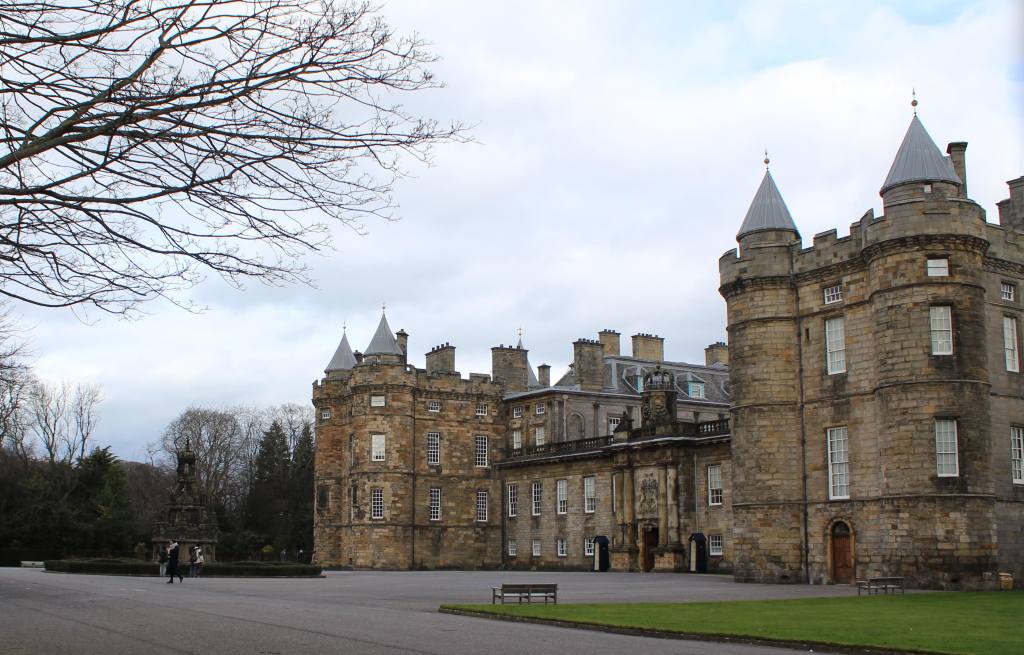
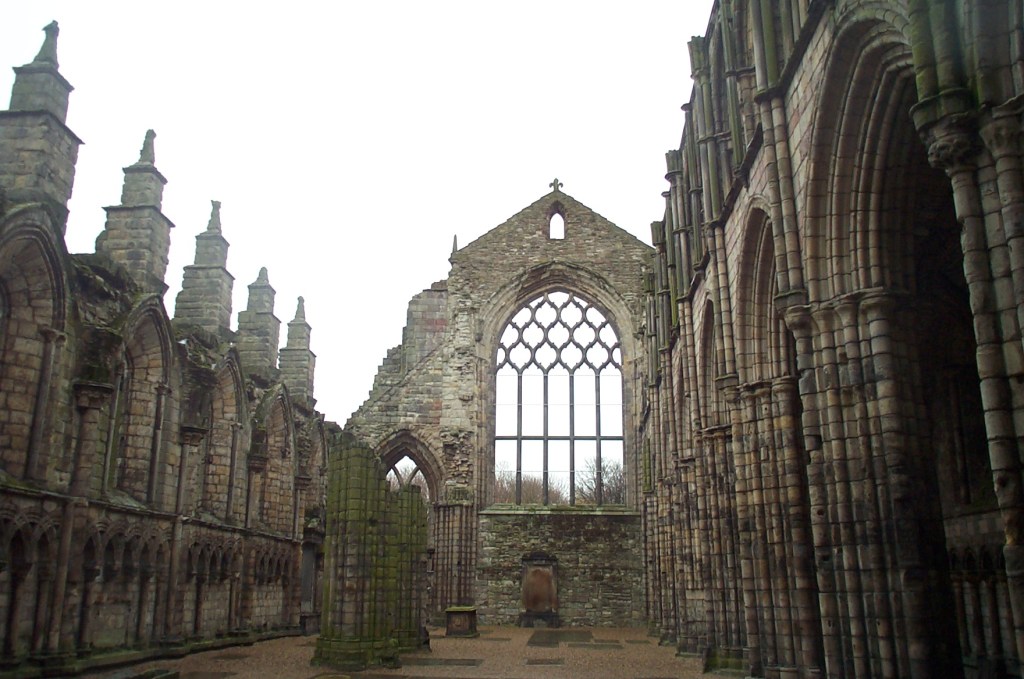
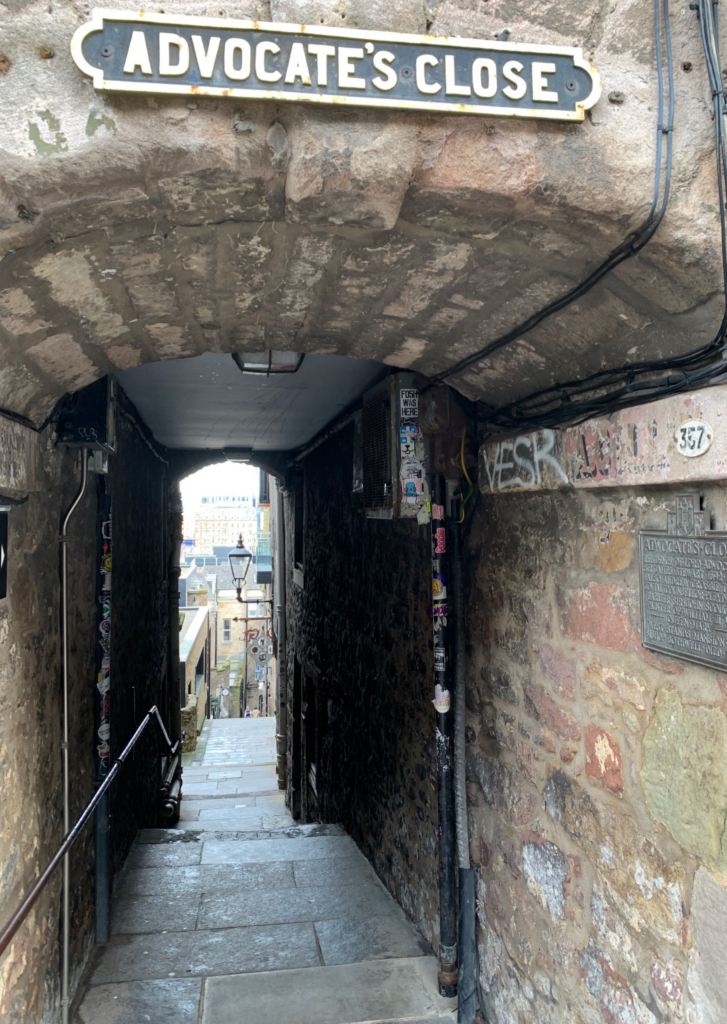
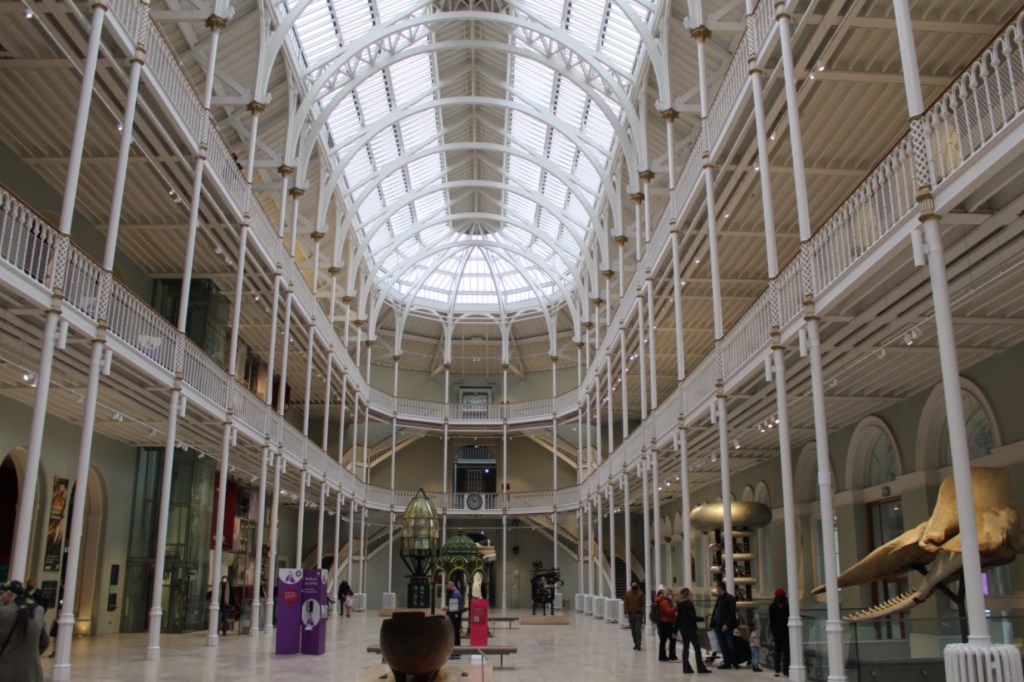


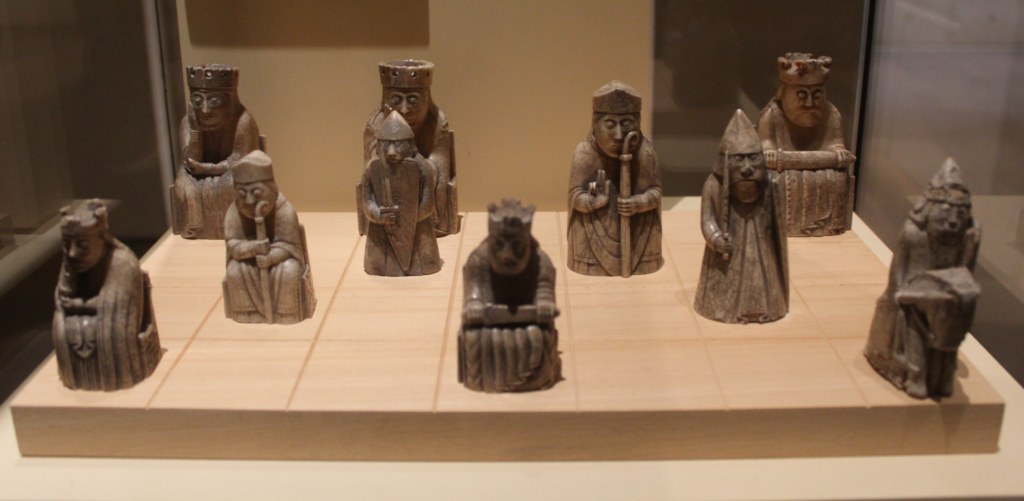
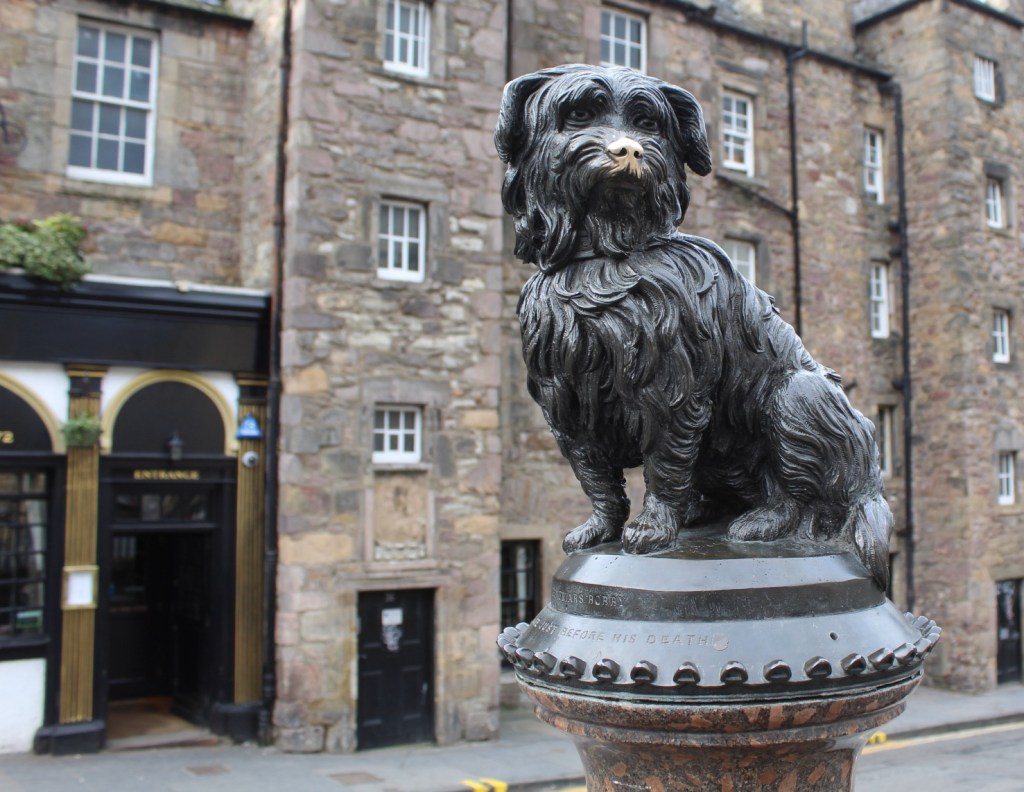

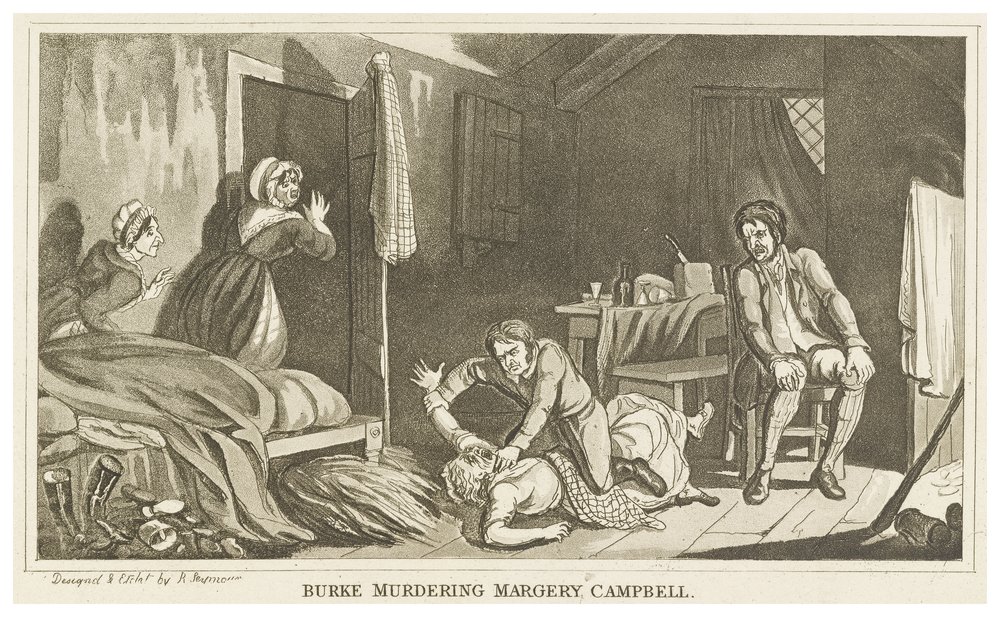


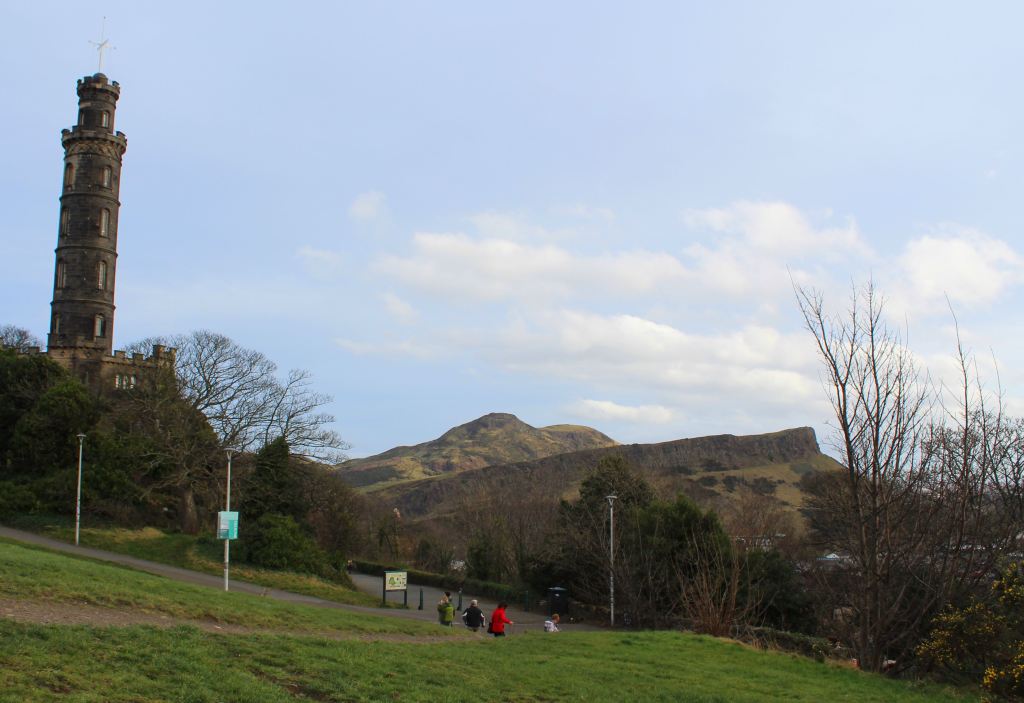
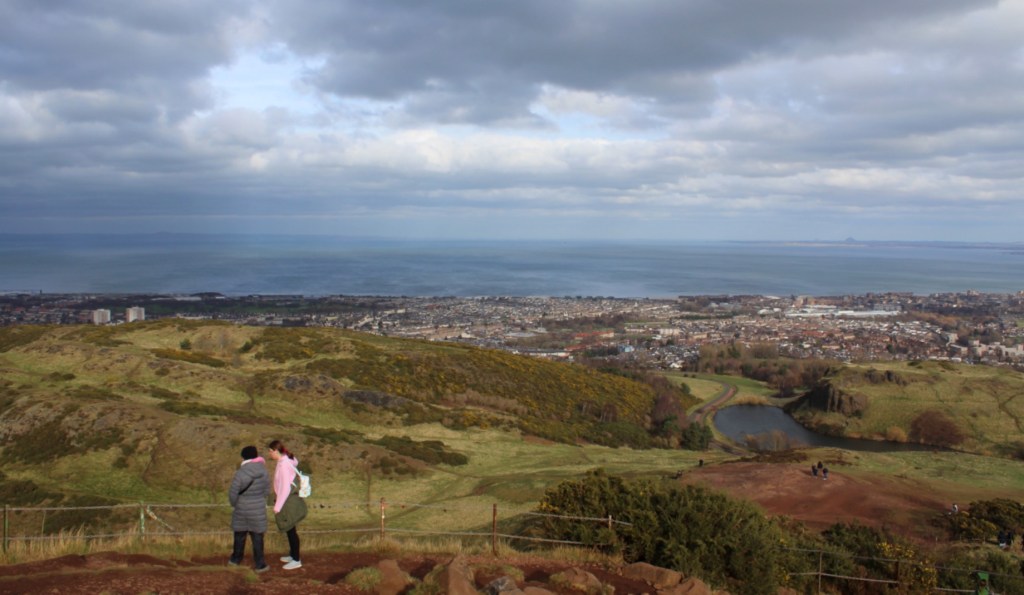
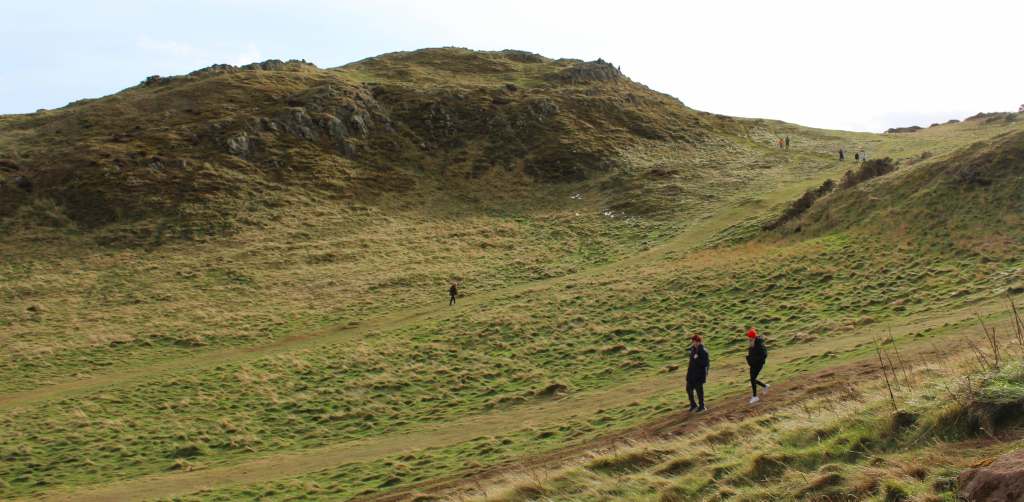


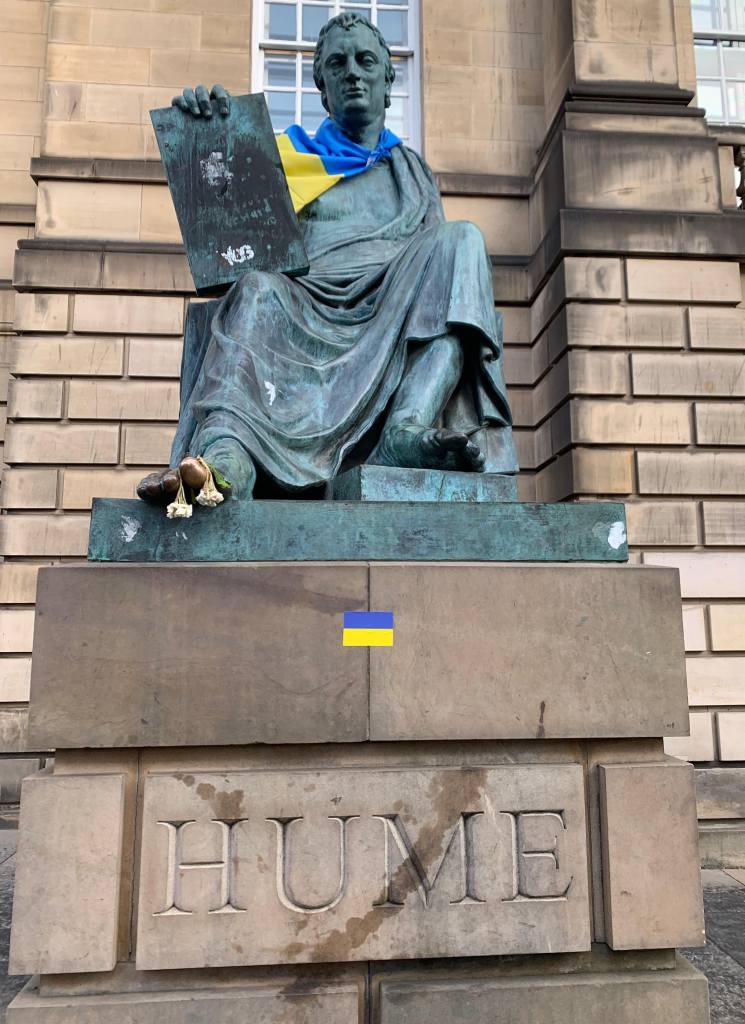




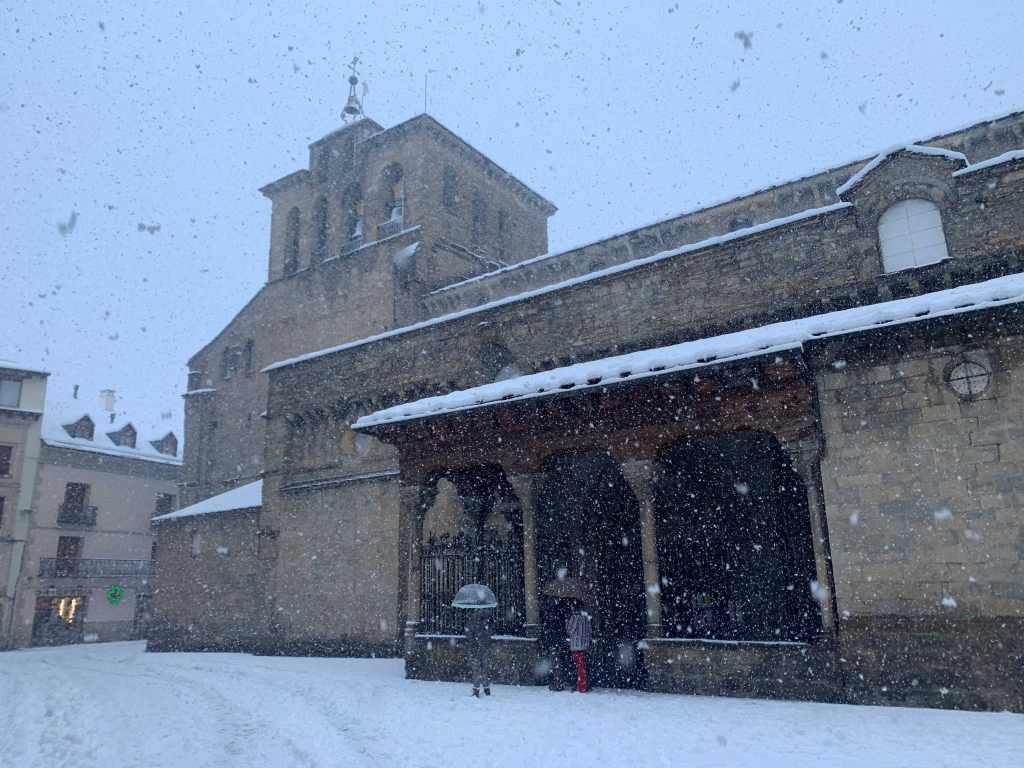


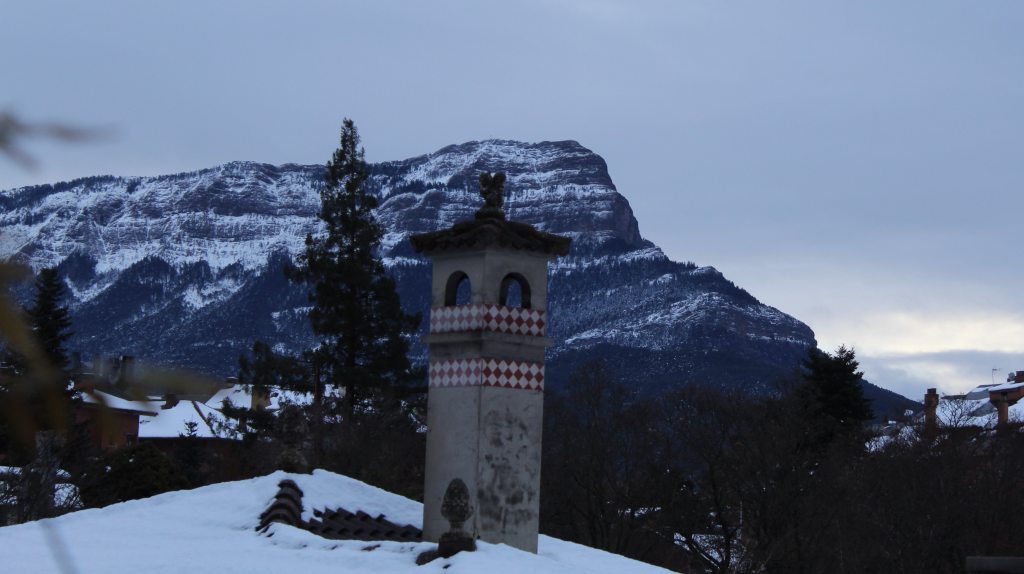
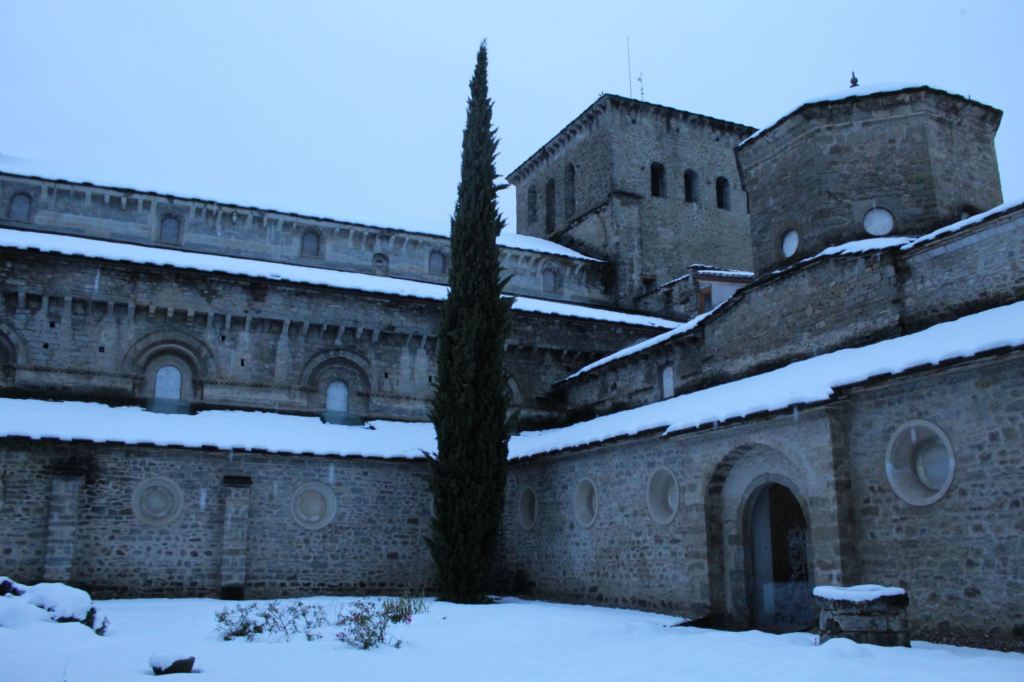
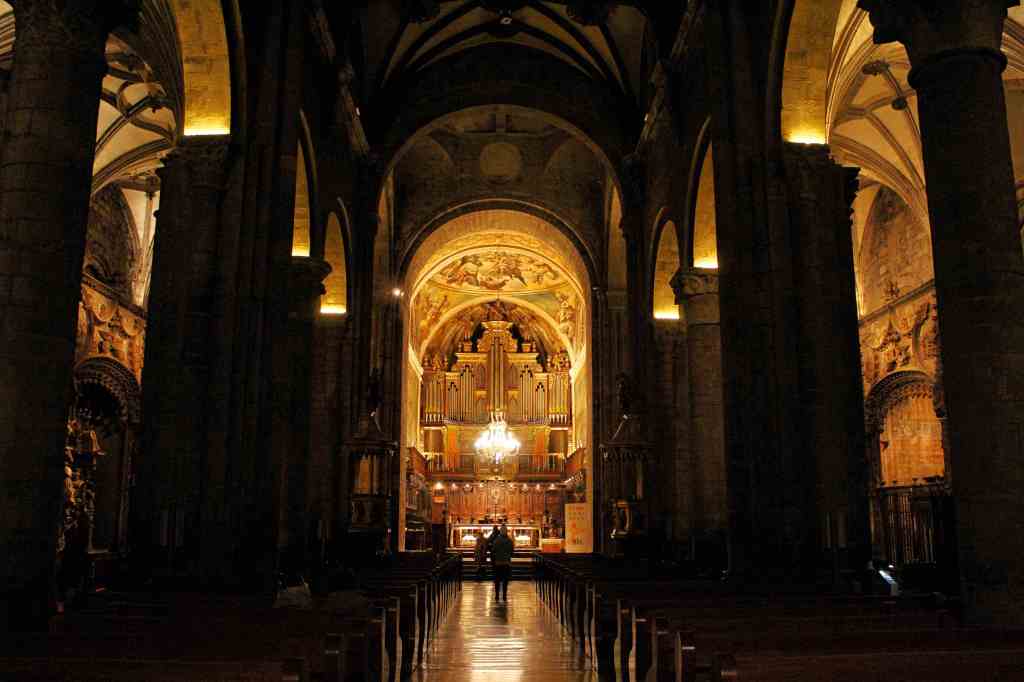
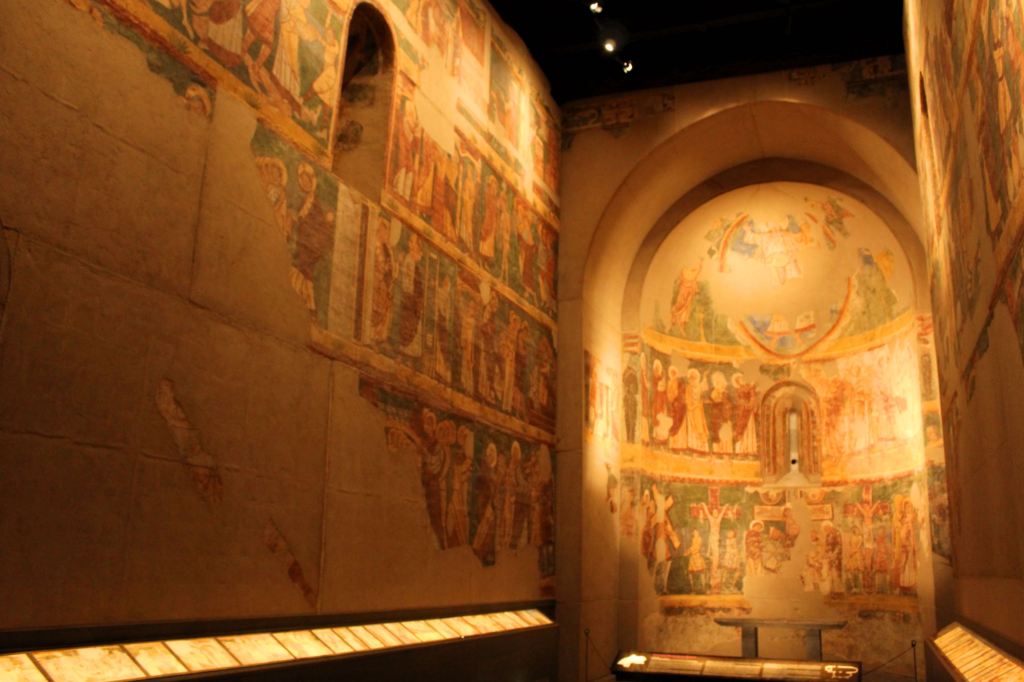


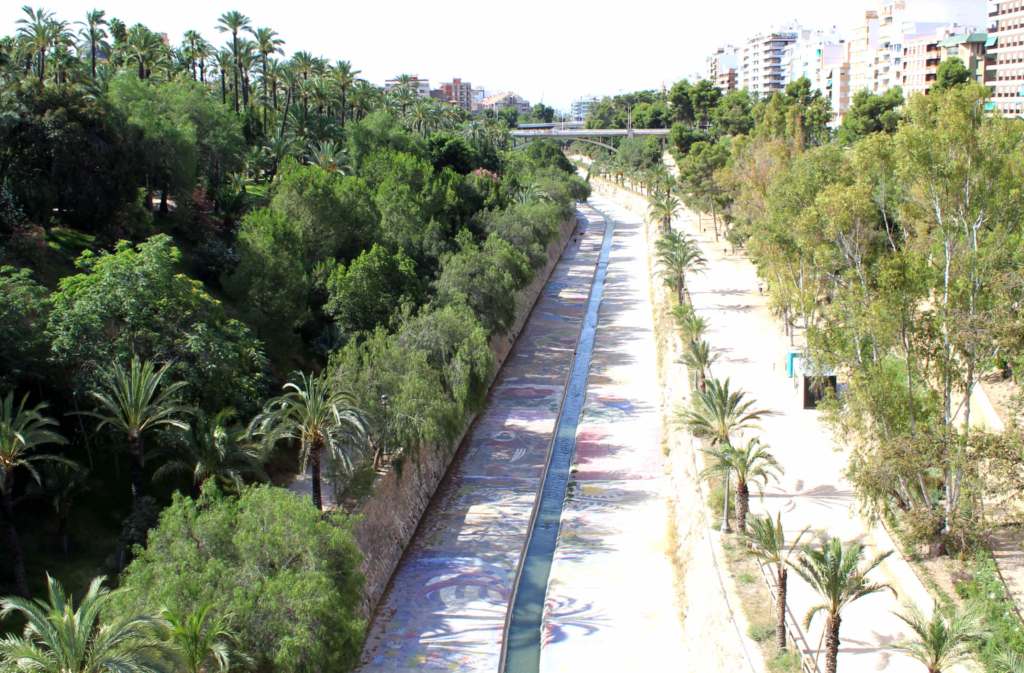
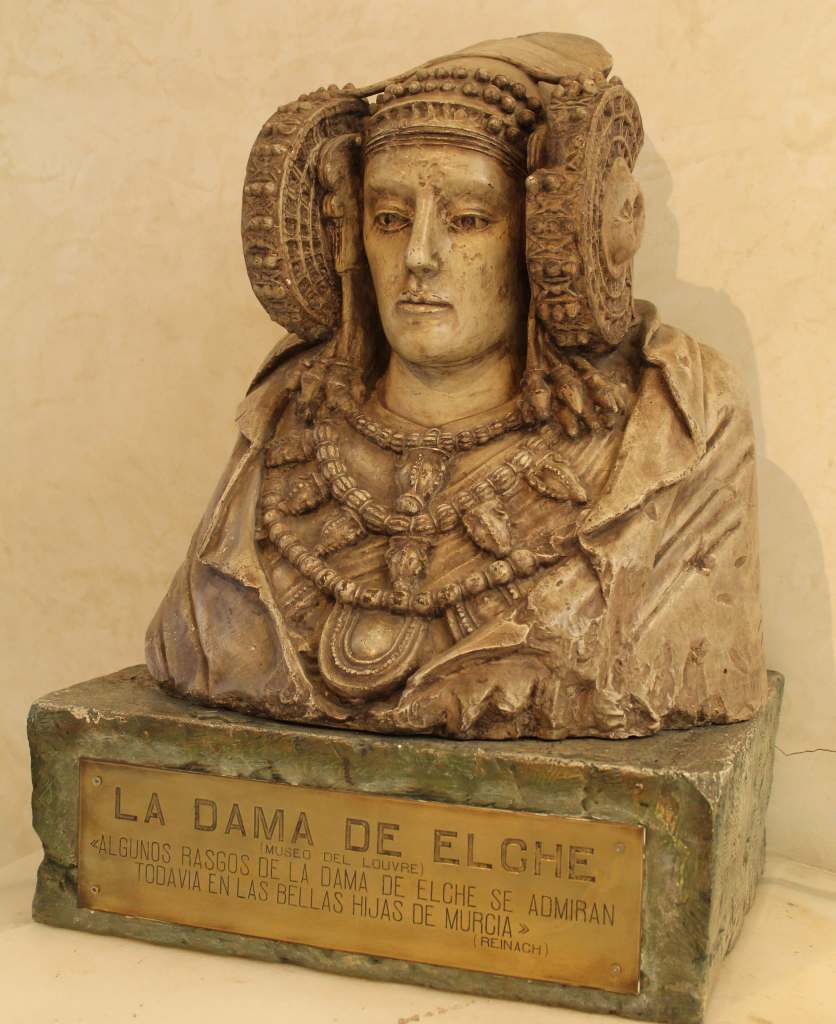


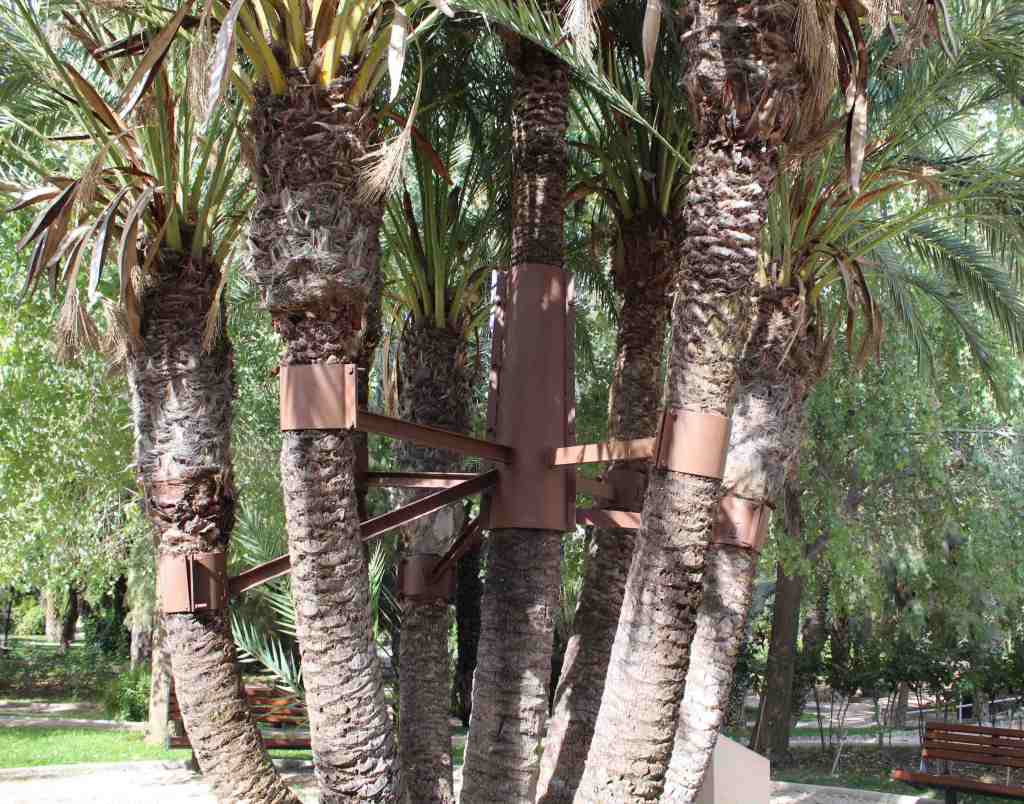


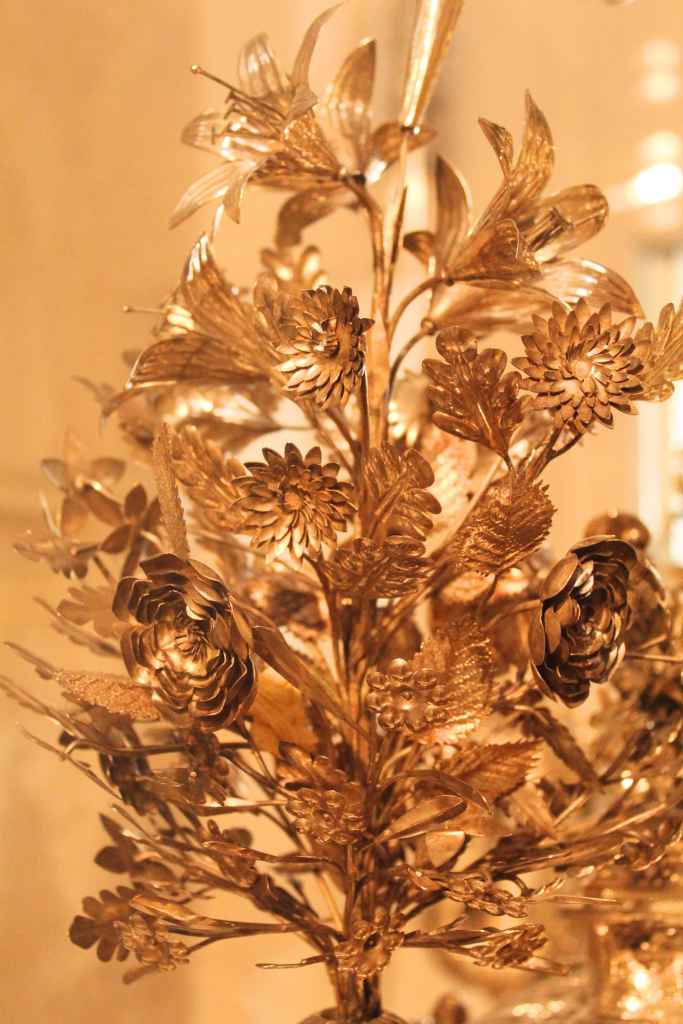
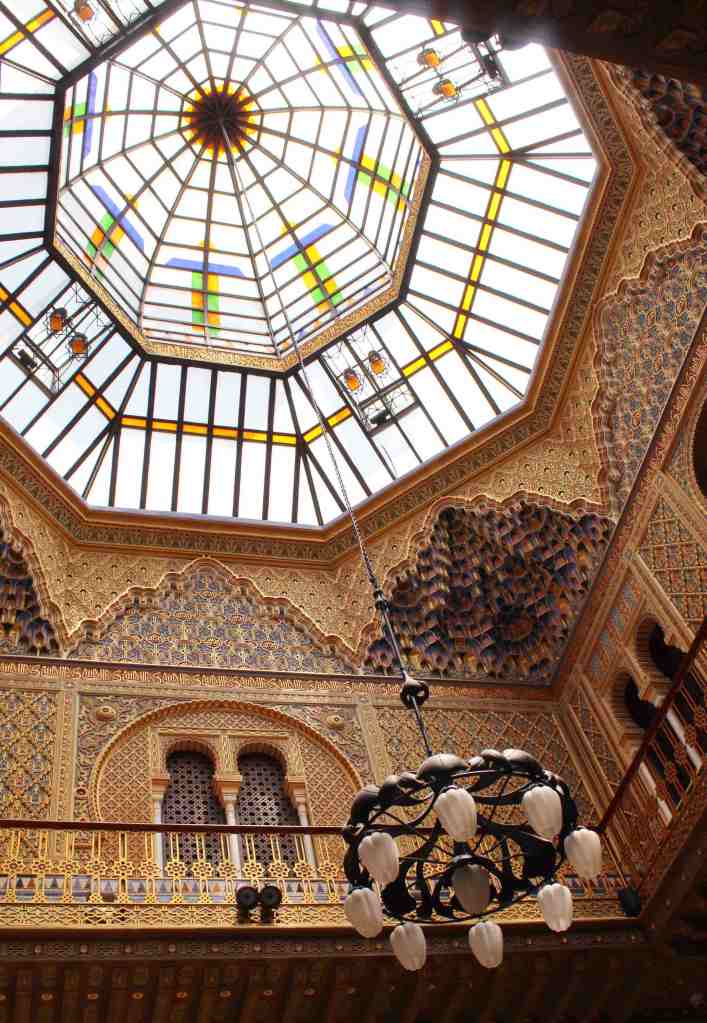


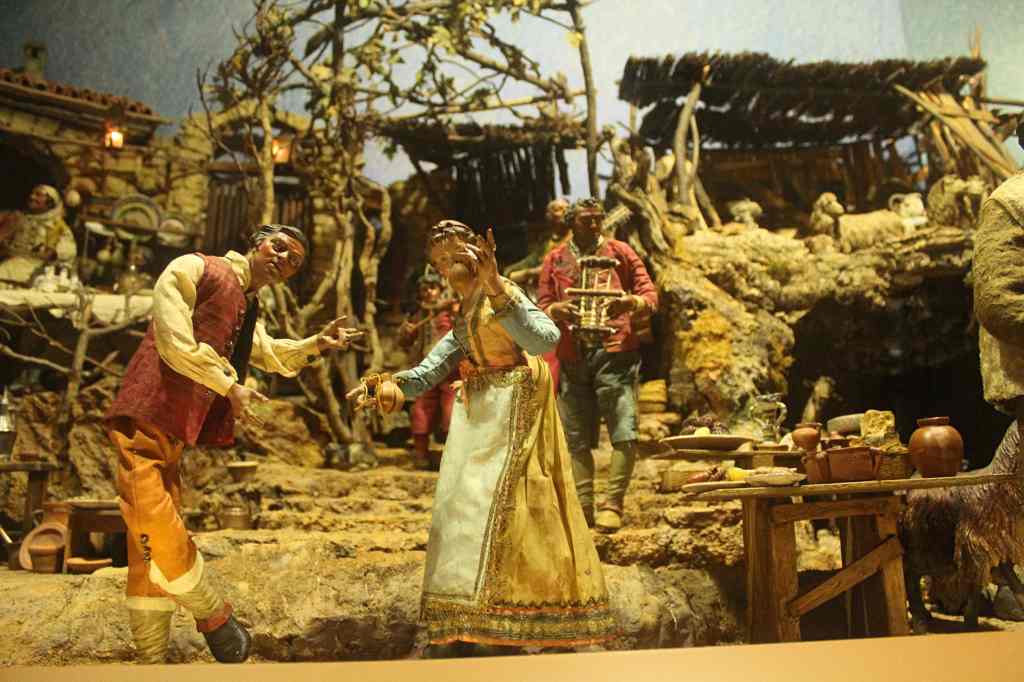

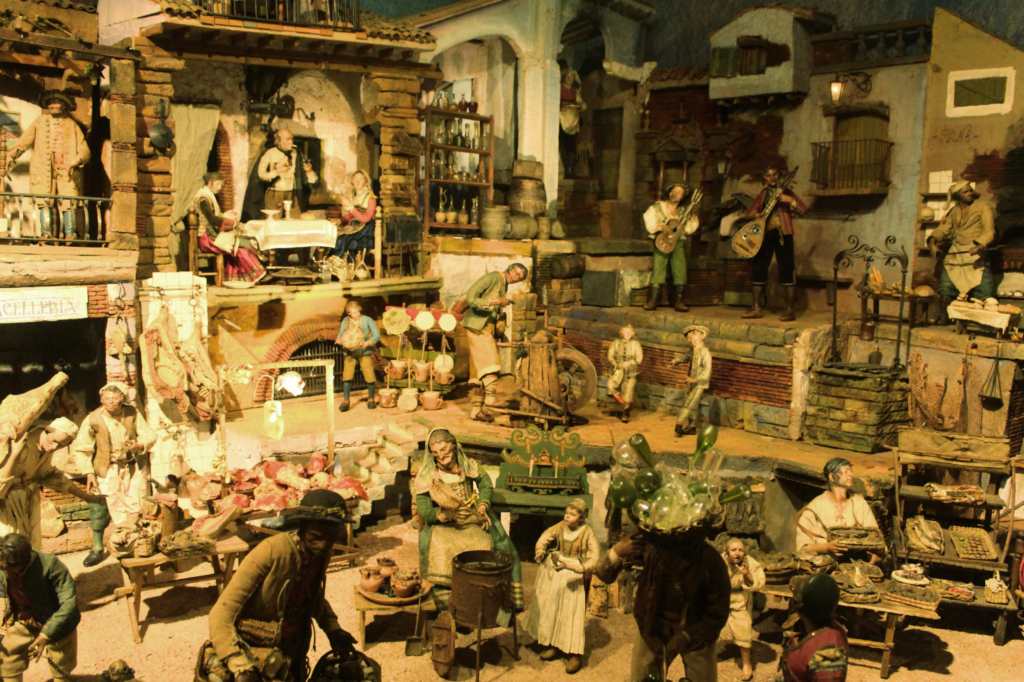


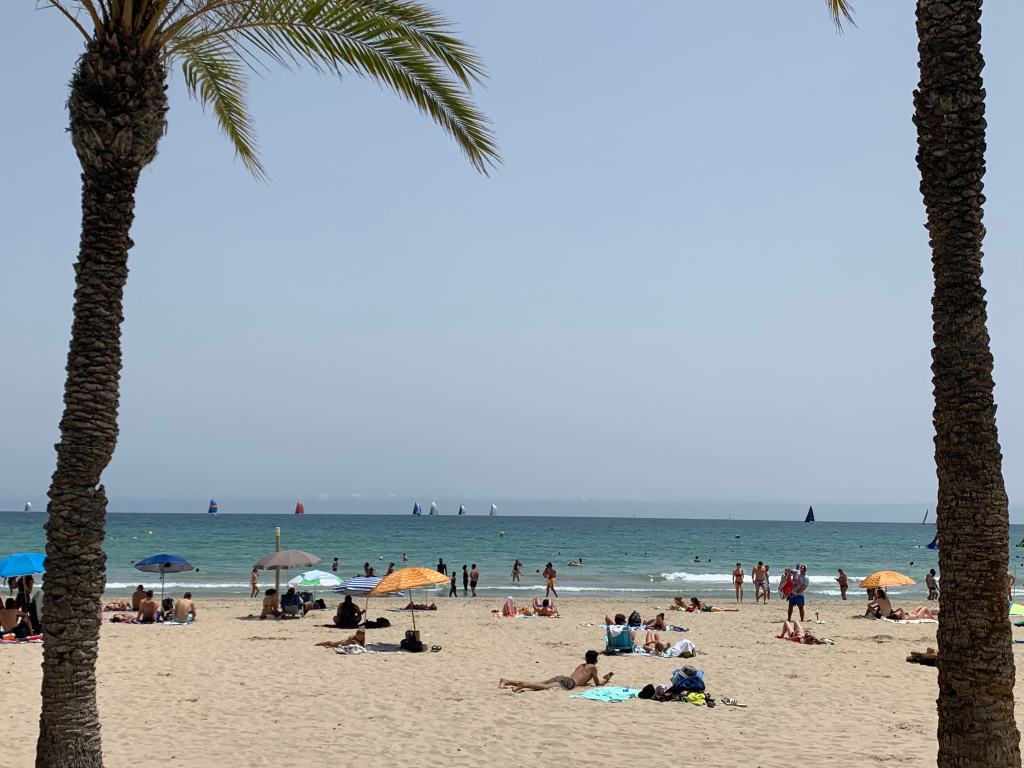

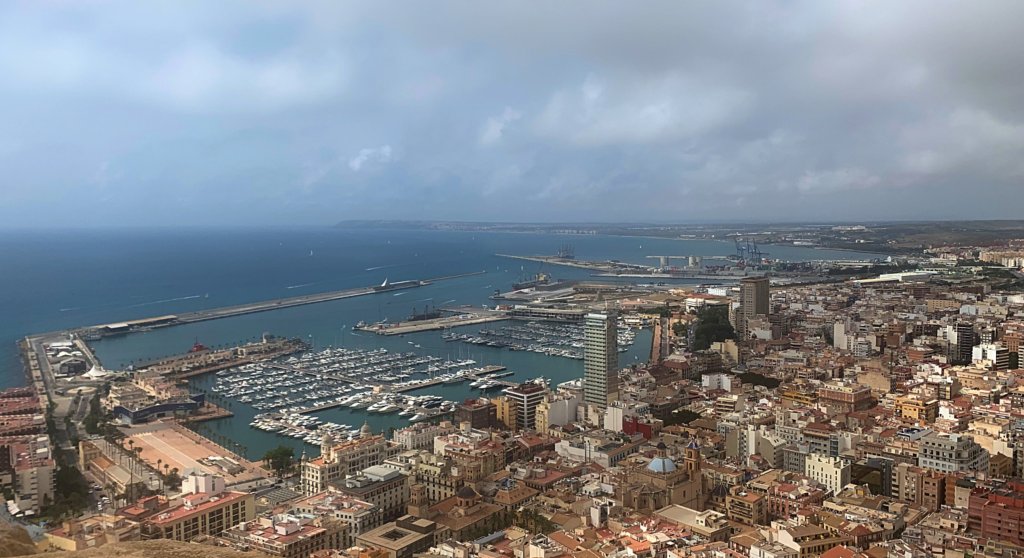
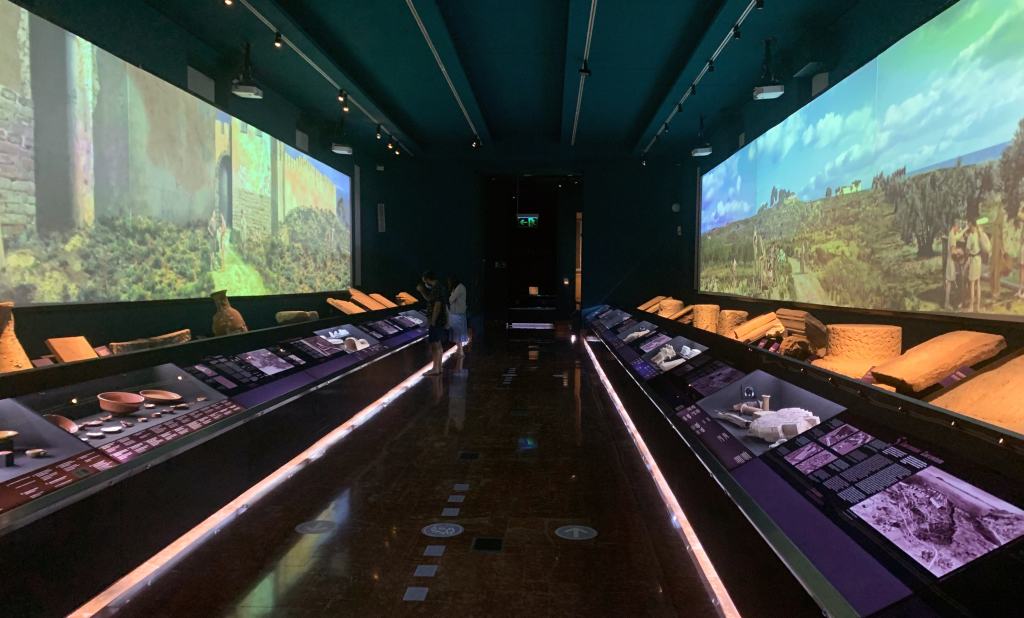

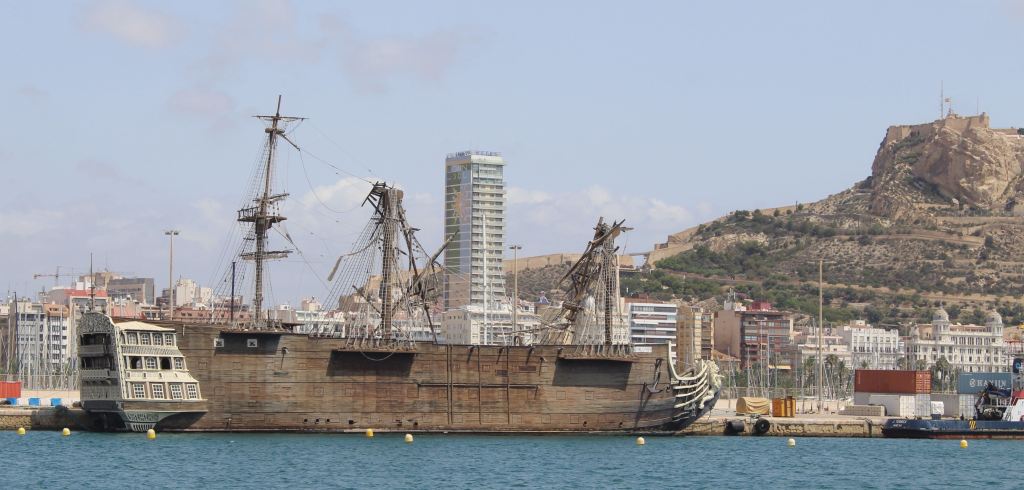



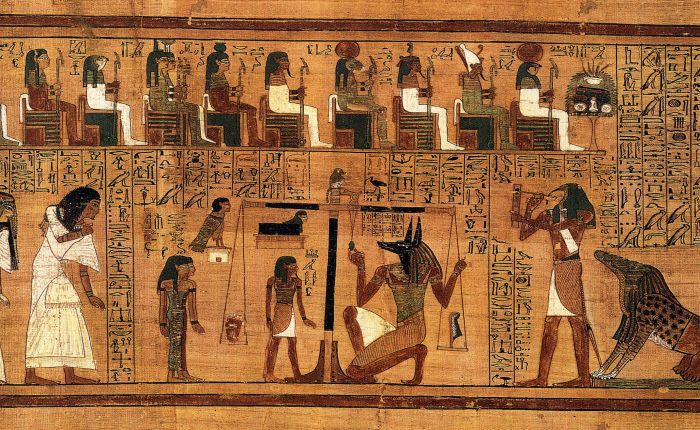
 Lotz in Translation