The bus from the airport dropped us off in front of a monster of a building. We were in Milan, and this was the city’s Centrale train station. Its enormous stone facade looms over the viewer, the pile of stone seemingly poised to crush you. It is, in a word, rather an aggressive structure—with ferocious eagles and lions staring malignantly from its walls. It should come as no surprise, then, that this grandiose design was willed into existence by the Duce himself, who wanted it to represent the power of Fascist Italy.
Rebe and I had come for a little break. It was May—international worker’s day—and the weather was sunny and warm. The first thing we did was to eat some pizza. Within five minutes of walking, we saw a place that looked good and went in. I have no idea if it was special by Italian standards, but the pizza was better than the best you can find in Madrid. Yes, we were in Italy.
This was my second time in Milan. My first had been in high school, on a class trip, when we had seen The Last Supper. Of course, I was too young to appreciate anything about the art (I was far more interested in the airlocks that controlled the atmosphere inside the room than the fresco itself). A decade and a half later, the city looked entirely unfamiliar to me. Not even a shadow of memory remained.
We had a little time to kill before we could check into the Airbnb, so we decided to visit the Castello Sforzesco. This is a lovely Renaissance fortification made of brick, which is free to visit. The castle is named after Francesco Sforza I, an important ruler of the city, who turned the erstwhile medieval castle into the palace we see today. One of his sons, Ludovico, was a great lover of the arts and contributed to the palace’s further beautification—notably, by calling on artists like Bramante and Leonardo da Vinci. Today, this castle is home to several museums, notably the city’s painting gallery.

But we did not have time to visit any museums. Instead, we took a stroll around the lovely Parco Sempione, a large landscaped park. And as it was quite warm, we helped ourselves to some gelato. (Since we had traveled with Ryanair, which charges for carry-on luggage, we only had small backpacks and didn’t need to find a luggage locker.)
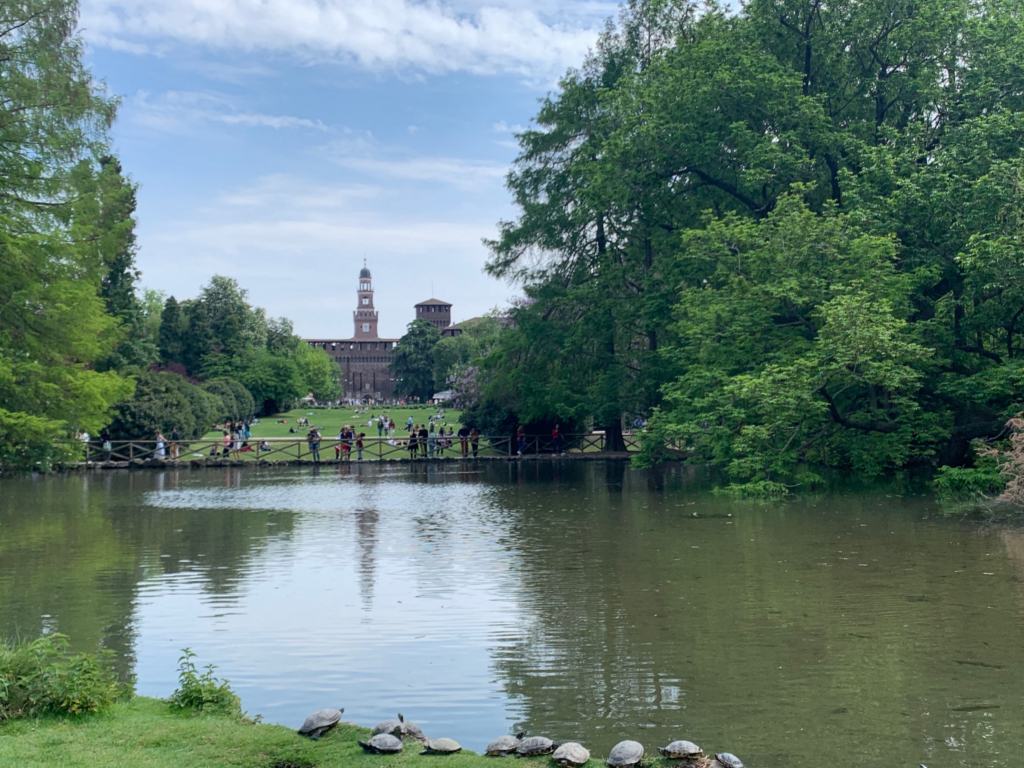
After some time relaxing on the grass, it was time to go. Our Airbnb was not in the city of Milan. We only had three days to spend in Italy, and I decided that it would be more fun to explore the nearby Lago di Como rather than stay in the city of Milan. So we walked over to the Cadorna train station and took a commuter train north. Soon, we were all checked in, and exploring the city of Como, at the southern point of the lake.
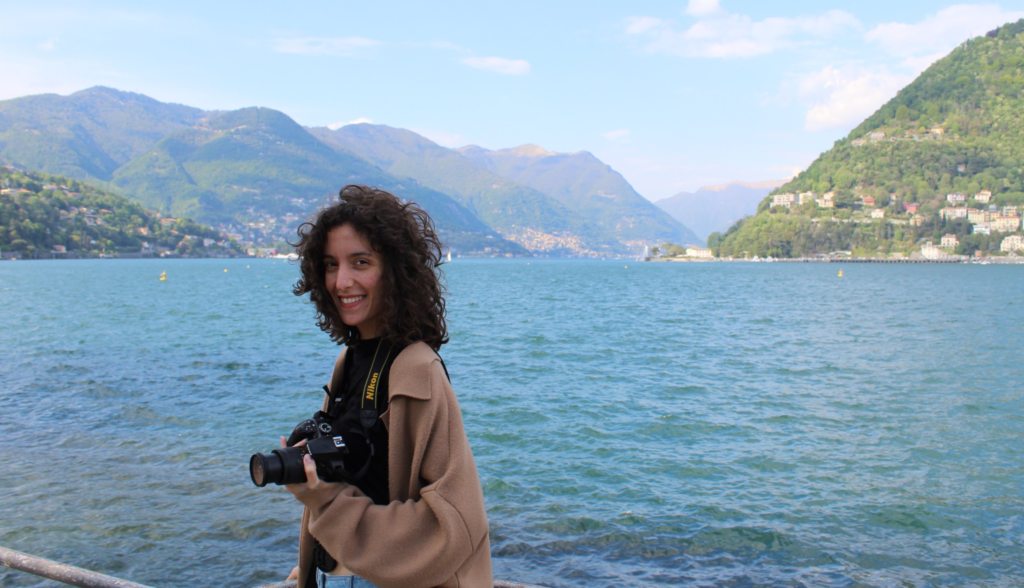
It was a relief to be outside of a big city. A cool breeze blew off the lake and green hills rose up above us. As if hypnotized, we began to walk along the water.
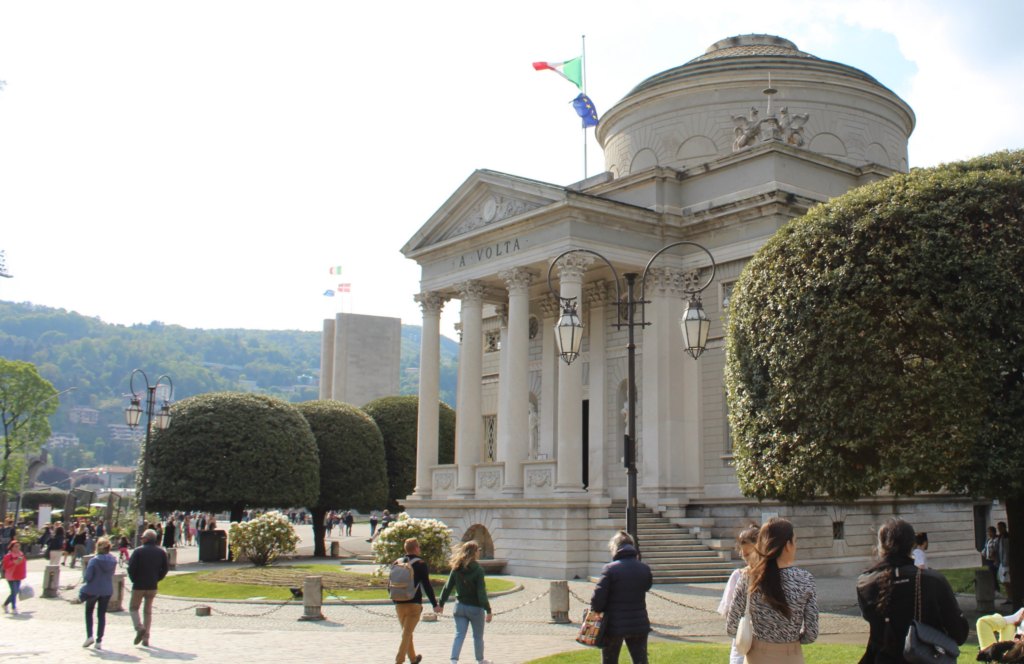
Perhaps I was just sleep deprived and delirious, but I remember this walk with a strange intensity. Everything seemed colorful, new, and interesting. The ferries in the harbor, the blue hangar full of sea planes, the colorful concession stand selling gelato and panini with Italian flags waving on the top… Soon, we came across a large, classical building. This was the Tempio Voltiano, a temple dedicated to Como’s most famous son, Alessandro Volta. It contains some of the great scientist’s devices, including his voltaic piles—the first ever batteries. (Unfortunately, by the time we arrived it was closed.) Nearby is the War Memorial, a large concrete tower dedicated to those who fought and died in World War I. Built in 1933, the memorial looks remarkably more modern than that, perhaps because it was based on a sketch by the Italian futurist Antonio Sant’Elia, who himself was a casualty of the war.
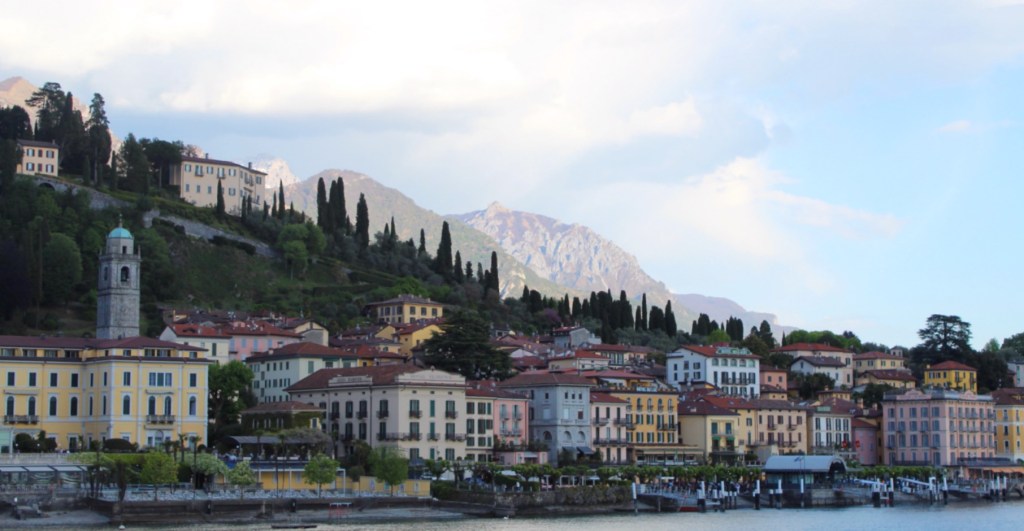
We continued to wander along the lake. With every step, more of the landscape came into view. It seemed too pretty to be real. The deep blue of the water, the dramatic hills, the unobtrusive architecture of the structures, all of it combined to make a kind of living postcard. It is no wonder that this lake has been a favorite resort since Roman times. But it is a minor miracle, at least, that after so many centuries of human habituation the environment seems so pristine, and the human presence remains tasteful and discreet. Sometimes one really has to hand it to the Italians. They may seem stubborn and stuck in their ways, but they know what they’re doing.

Eventually, we came upon the Villa Olmo, one of a seemingly endless number of lovely mansions that dot the lakeside. Now, I normally have scant interest in the ostentatious residences of the very rich; but this villa and its garden—like everything else—fit so perfectly the aesthetic of the lake that I could not possibly object. It was especially charming because, just as we arrived, a troop of people in period costumes walked by. I have no idea what they were doing.

It was getting late now and we needed to find a place for dinner. We decided that we would take the funicular up to Brunate, a small village on top of the nearby hills, and try our luck there. We had to wait in a queue for about ten minutes for it to arrive—a time that was rendered almost intolerable by the presence of a bunch of Erasmus students talking loudly in front of us. (One student, after professing to know “some Spanish,” proceeded to butcher the conjugation of a basic verb in a way I did not think possible.) Finally, the machine arrived and we boarded (as far away as possible from the students). It was a lovely, if crowded, ride, and soon enough we were in the sleepy town of Brunate.
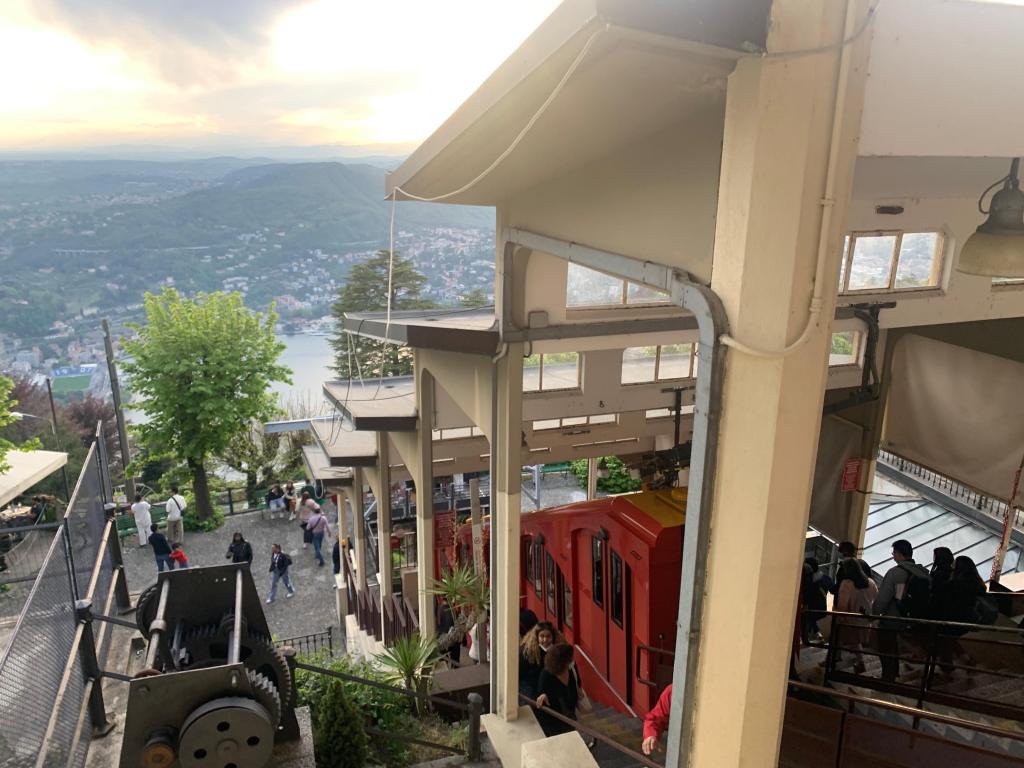
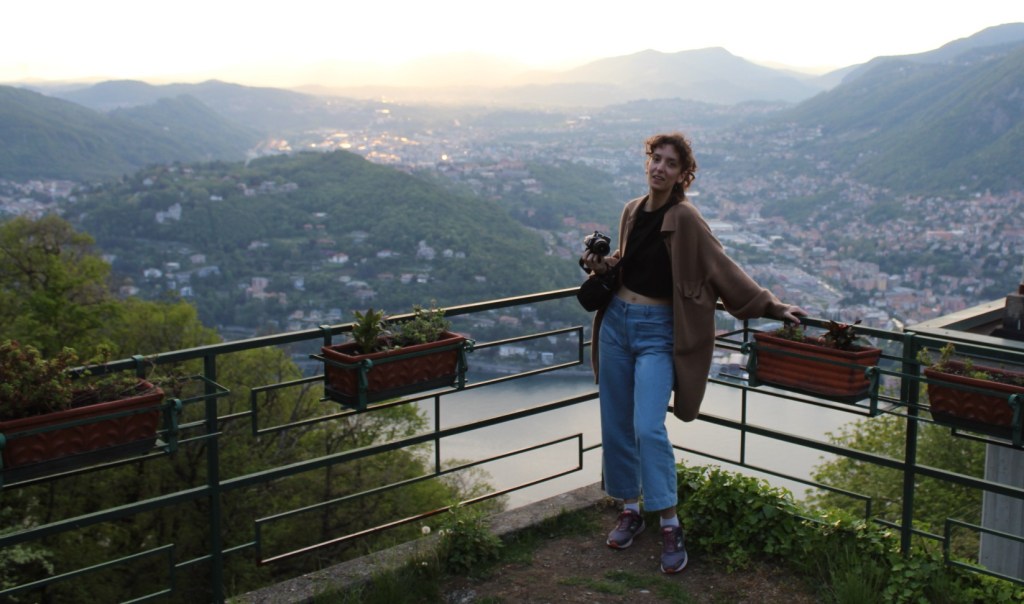
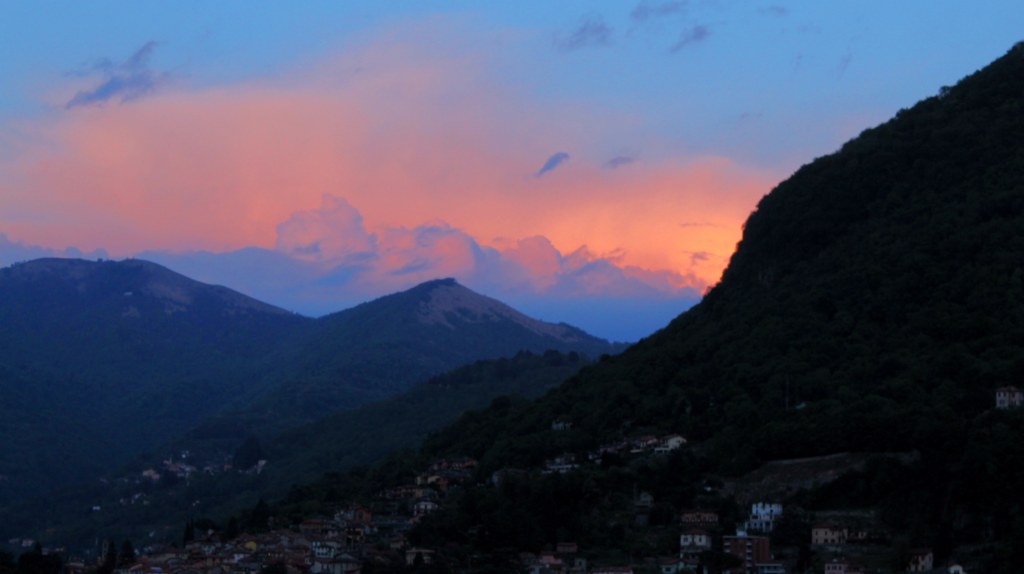
It seemed like a ghost town after Como. Very few people were in the streets, and the light was fading fast. We hadn’t eaten in hours and were starving by now. We had to find a restaurant. After a quick search online, I guided us to the Trattoria del Cacciatore, crossing my fingers that the place wouldn’t be packed. Indeed, we had the opposite problem: the restaurant was completely empty and they hadn’t even opened up the kitchen yet. I suppose Italians dine as late as the Spanish. We were told we would have to wait half an hour, but were invited into the restaurant’s large backyard to have a drink. The view was shockingly nice—the lake and the mountains stretching out before us, the sky red from the setting sun. I drank an aperol spritz before being called in to enjoy a fine meal. It had been a wonderful day in Italy.
The next day we woke up early and returned to Como. This was our big day to explore the lake. The Lago di Como is shaped like an inverted Y, with the city of Como at the southern end of the western branch. Our first destination was Bellagio, which sits right at the center, where the three branches connect. To get there, we had to take a ferry. There are several routes on the lake, some local, and others express. To save time, we elected to take one of the express ferries that go there directly—making the trip in about 40 minutes, instead of over twice that much time.
The trip had a few hiccups. For one, even though surgical masks were acceptable for traveling on trains and planes in Italy (oh, the COVID times!), for some odd reason the ferry company demanded that we use the heavy-duty N95 mask. Unprepared for this requirement, we bought some masks from some entrepreneurs selling them on the street (for a significant mark-up, of course).
Because of this scramble to cover our breathing holes, we were among the last to board the ferry, meaning we had to take a seat below deck. This was quite frustrating, since we knew the views of the lake must be gorgeous. Rebe decided to take matters into her own hands and marched up the stairs to take pictures. I attempted to follow, but was immediately told by an attendant to return to my seat. I went back downstairs feeling defeated—frustrated that Rebe was enjoying the scenery while I had a view of a wall. After about ten minutes I made a second attempt, only to be told by the same young Italian man to go back to my seat. I was flabbergasted by this, since I was standing right next to Rebe, who was entirely ignored by the attendant. Was this Italian machismo, or just chivalry? (Maybe it comes to the same thing.)
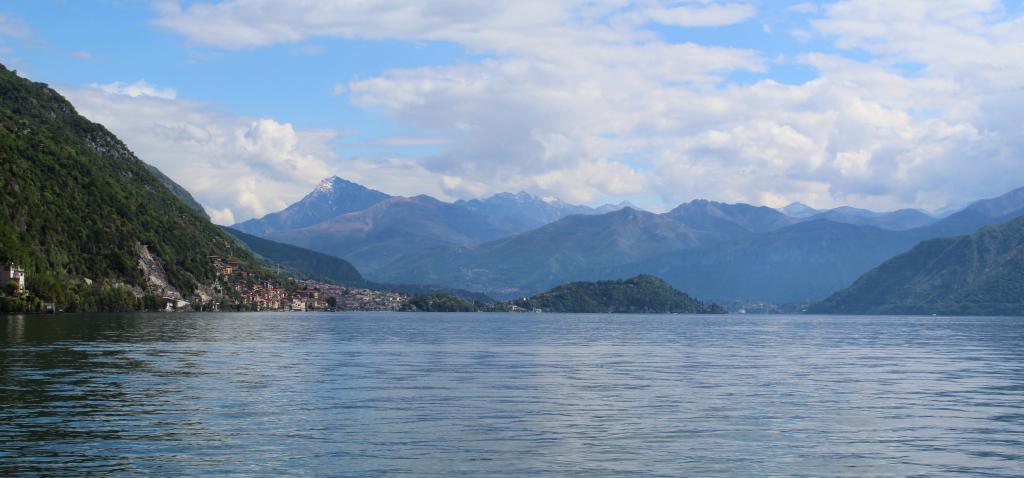
We arrived in Bellagio in good time. Like everything on this lake, but even more so, it was picture-perfect—a kind of Platonic ideal of a lakeside town. If you try to imagine a place where a world-weary Romantic poet would go to recuperate his spirits, or a disenchanted millionaire would go to discover the charms of the simple life, Bellagio is what comes to mind. It is, in short, a gorgeous town. We walked first to the end of the peninsula, which had a wonderful view of the lake with snow-capped mountains beyond. There, a woman was selling a private boat rental, which we briefly considered before we looked at the price. Then, we walked through the center of town. It was crowded with tourists and full of the expected shops selling gelato and trinkets.
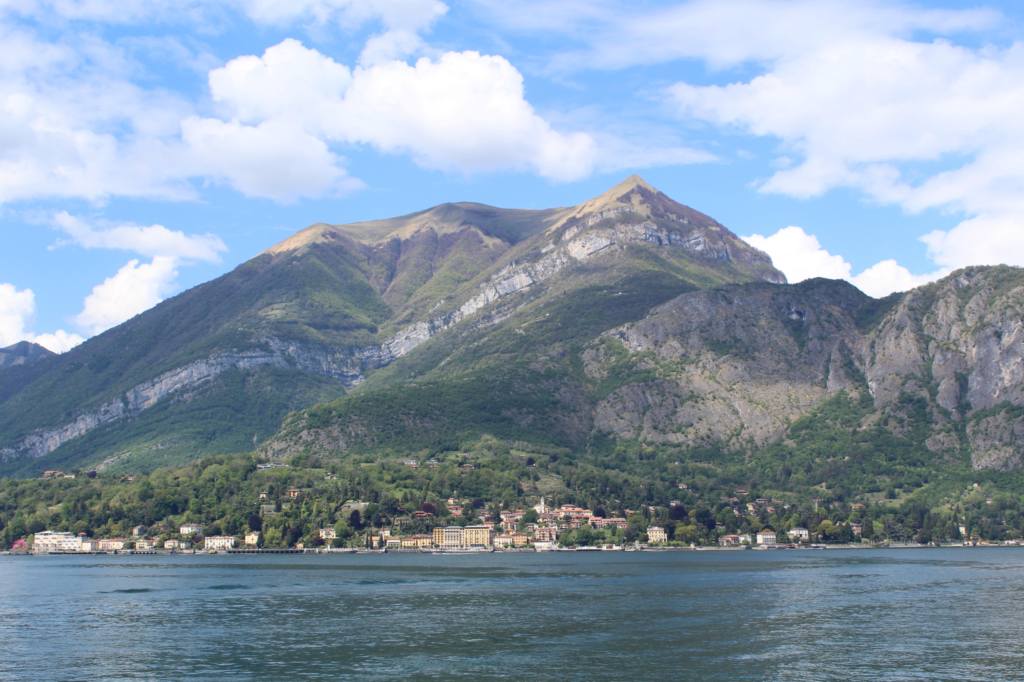
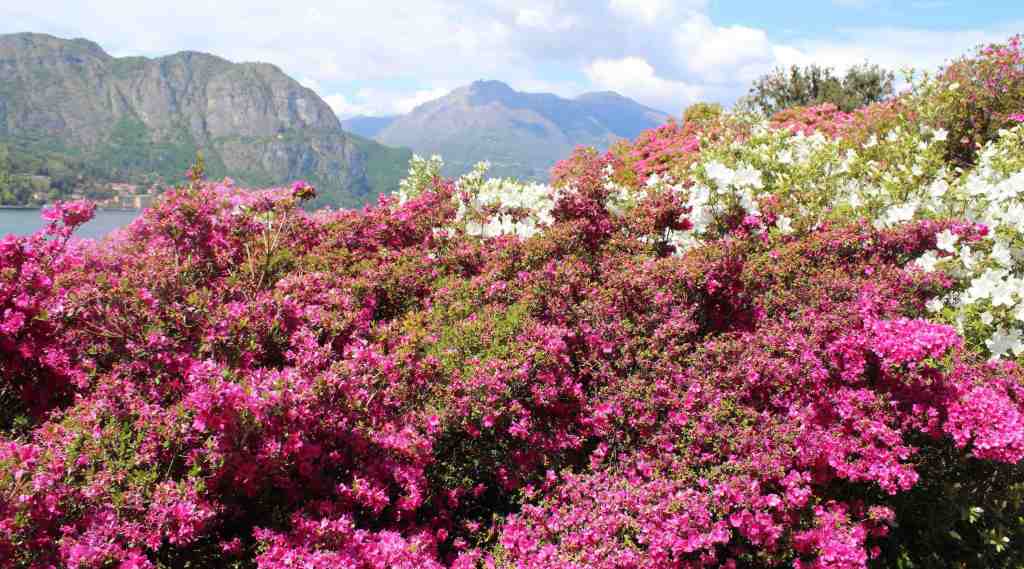
The main site to see in Bellagio is the Villa Melzi d’Eril and its gardens. Melzi, the man, is principally known to history for his brief stint as the Vice President of Italy under Napoleon. But he was also an art collector who was determined to make his villa one of the greatest on the lake. He succeeded. Though we didn’t enter the villa itself, the gardens are as beautifully arranged as any in the world—full of statues, excellent viewpoints, and exotic plants, trees, and flowers. As with everything on the lake, the overall effect was of overwhelming beauty—to the extent that your eyes can hardly take it in. I wonder if the residents of the lake long for brutalist concrete structures and piles of garbage, if only for a contrast.

We went back to the dock to get on the ferry to our next destination: Varenna, which is just across the water. While Bellagio, with a population of about four thousand, feels relatively compact, Varenna is positively tiny: with 800 souls calling it home. And as tiresome as it must be to hear by now, it is another jewel. Indeed, I found myself thinking on the ferry ride that the residents of this place, from Roman times onward, had collectively turned it into a kind of communal work of art—a living landscape painting that they gradually composed.
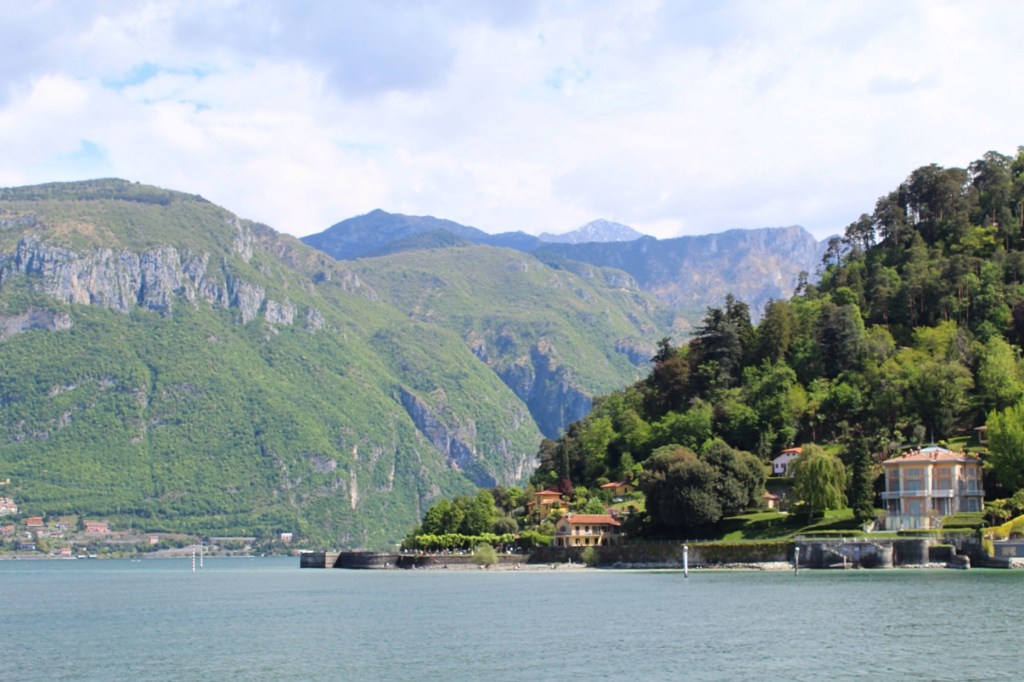
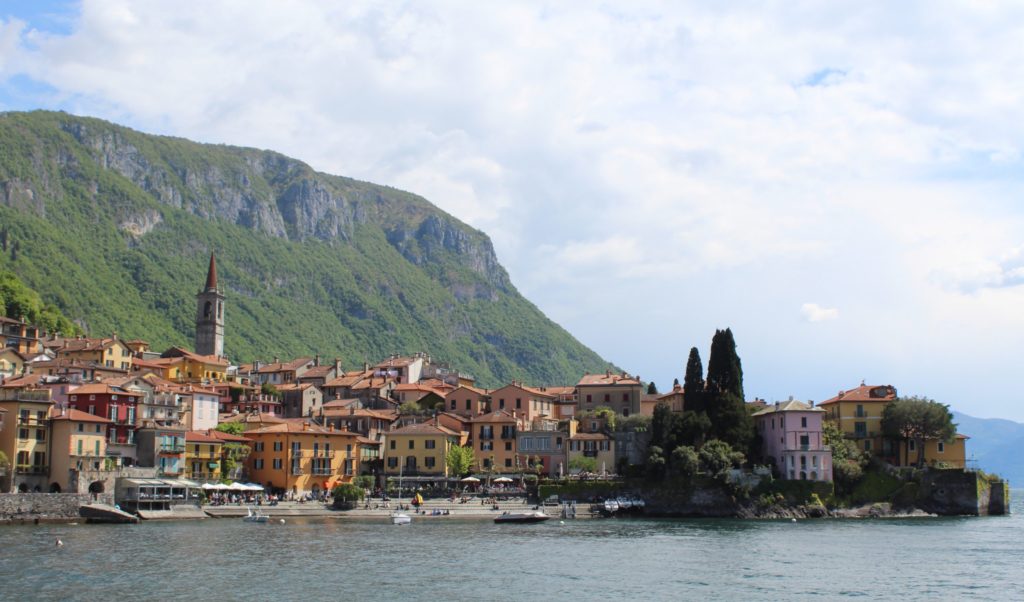
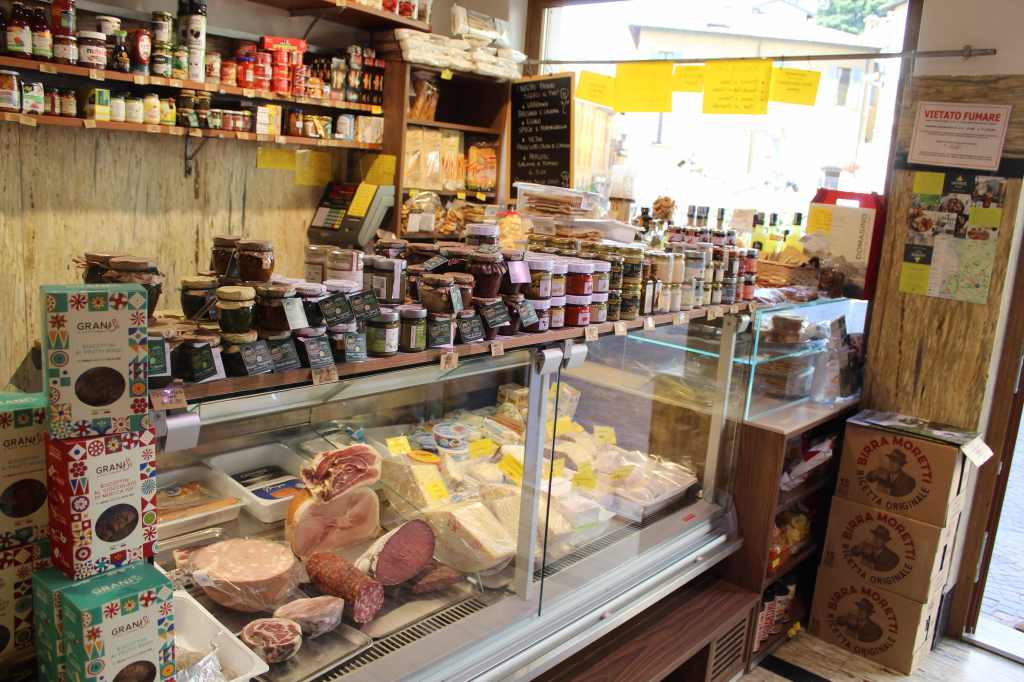
There is really nothing to do in Varenna, which is the best thing about it. There is a kind of plaza that drops off into the water, and at any given time is covered with dazed tourists gazing at the scenery. After our own bit of gazing, we wandered inland, eventually ending up at what we would call in New York a “deli,” but which I believe the Italians would refer to us a salumeria. There, we got a couple sandwiches and then wandered into the local church, Chiesa San Giorgio. This modest bit of sightseeing done, we retreated to a nearby bar for campari sodas.
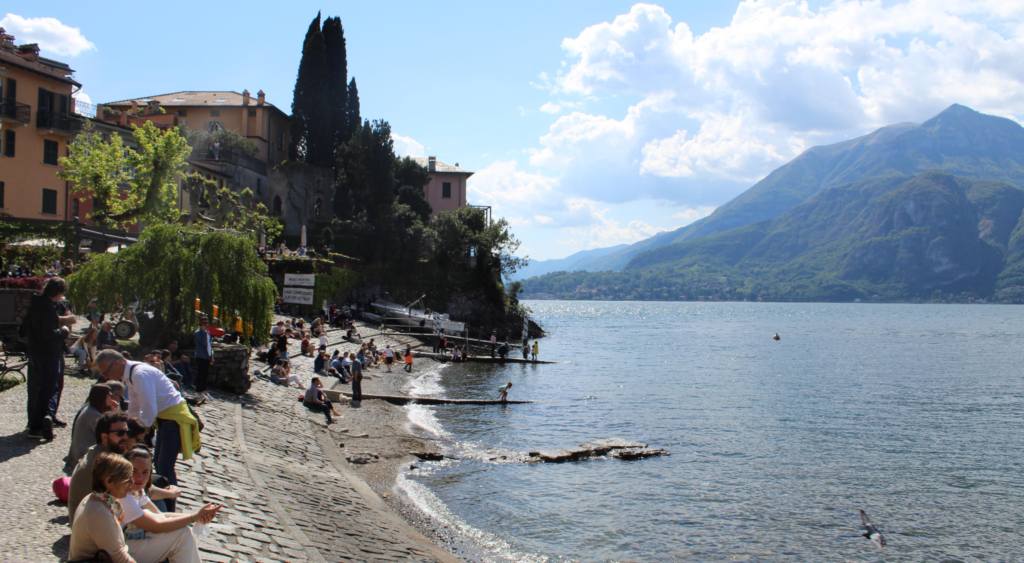


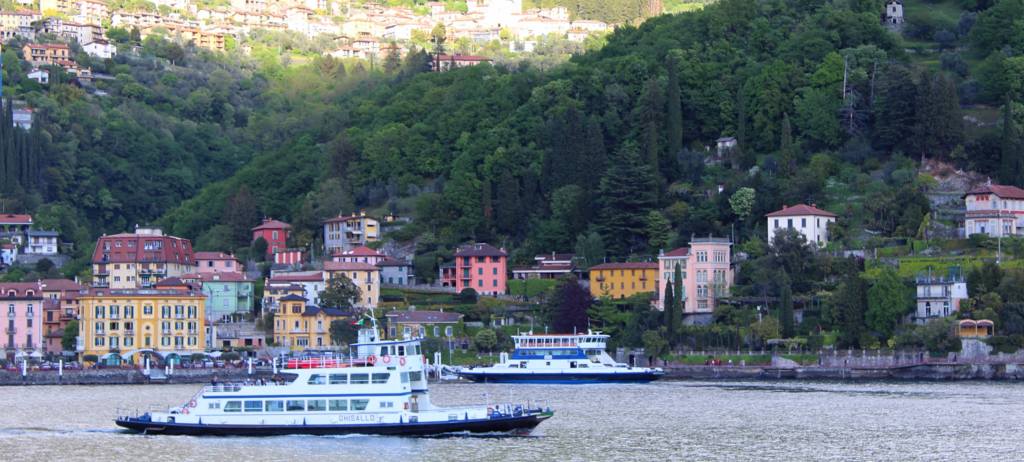
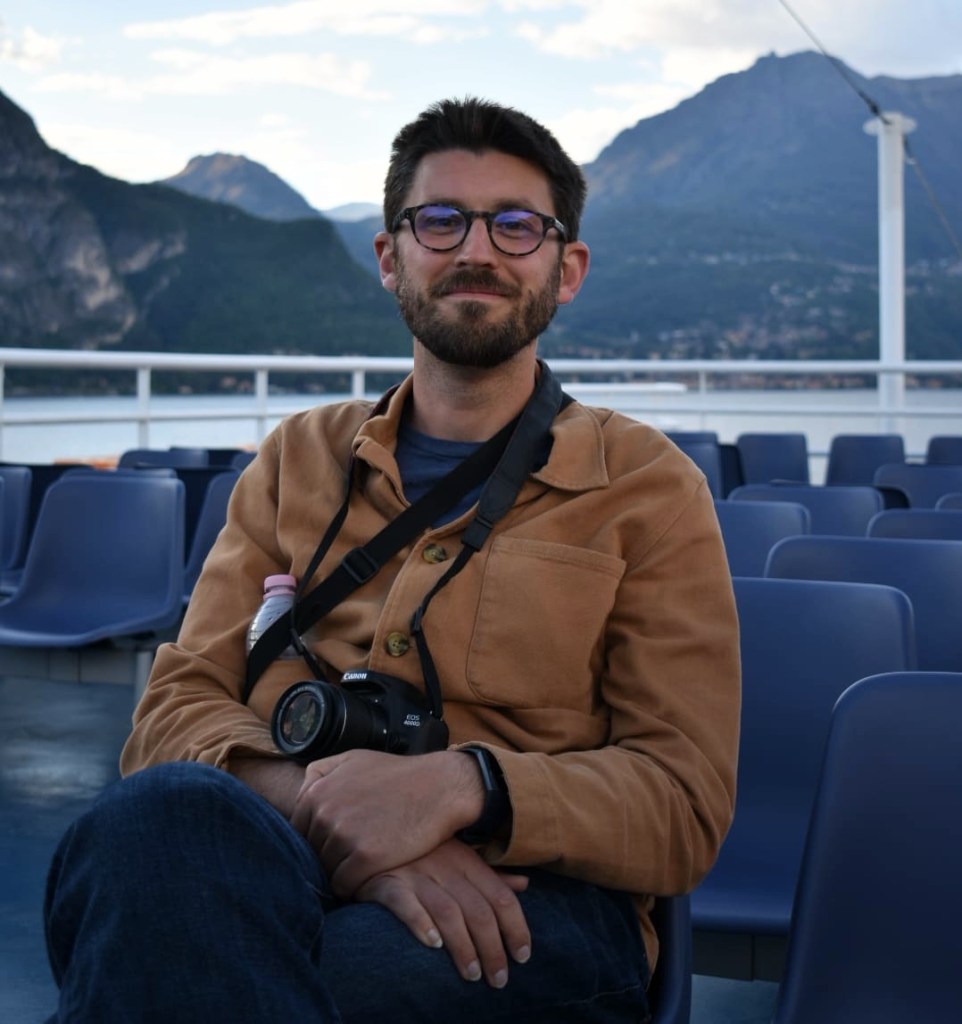
We had had an altogether lovely day on the lake. But the voyage back to Como was perhaps my favorite part. Instead of taking the express ferry, we took the local, which took nearly three hours in its meandering voyage from Varenna back to Como. If I felt deprived of lake scenery on the voyage out, I was absolutely saturated with it by the time we got back. The only thing that would have made it more enjoyable was if the ferry’s bar had been open. A nice glass of wine would have been ideal. But we were still in COVID times, and so I had to get drunk on pure aesthetic pleasure.
Our short vacation was coming to a close. The next day, we had a late flight back to Madrid. This did not leave us much time to explore Milan.
Milan is the second largest city in Italy. A capital of finance and fashion, it does not exactly fit the stereotype that many hold of Italy—neither quaint and full of art, nor chaotic and rugged. Old women aren’t shouting from their balconies and old ruins aren’t dotted the cityscape. It is, rather, a clean and rather posh place.
Our time was extremely limited, so we went to the symbol of the city: the Duomo. When we visited (and this may still be the case) you had to buy a timed ticket in order to go onto the roof. We selected a time two hours hence, and then set about to see something of Milan.
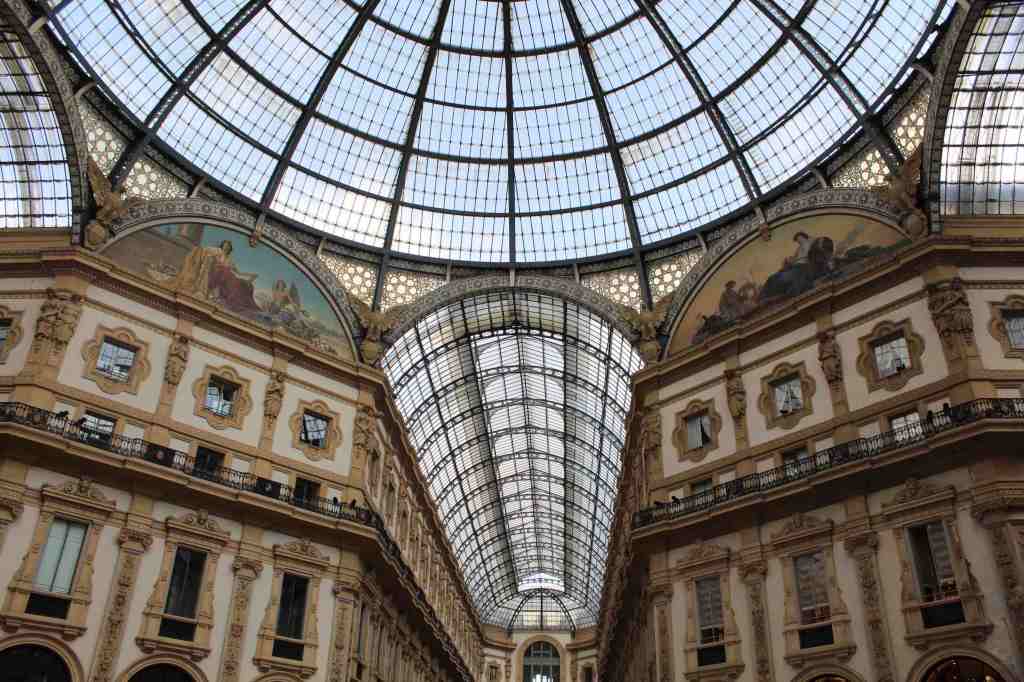
To start, the Duomo is ringed by important buildings. There is the Palazzo dell’Arengario, for example, which now houses the Museo del Novecento (museum of the 1900s). Right nextdoor is the old Royal Palace, which now serves as a cultural center. And across the piazza is the magnificent Galleria Vittoria Emanuele II. This is a beautiful shopping gallery, consisting of two arcades that intersect at a huge glass dome. The place is full of restaurants and shops that we could hardly afford even to look at, but it was a pleasure just to explore this piece of 19th century splendor. The floor mosaic in the center—representing the regions of Italy—is especially lovely. Rome is, of course, represented by a she-wolf, while Florence is a lily. Turin, meanwhile, is a much-abused bull, whose delicate parts have been worn away by visitors spinning on their heel over them. Supposedly, this brings you good fortune. Perhaps I ought to have tried it!

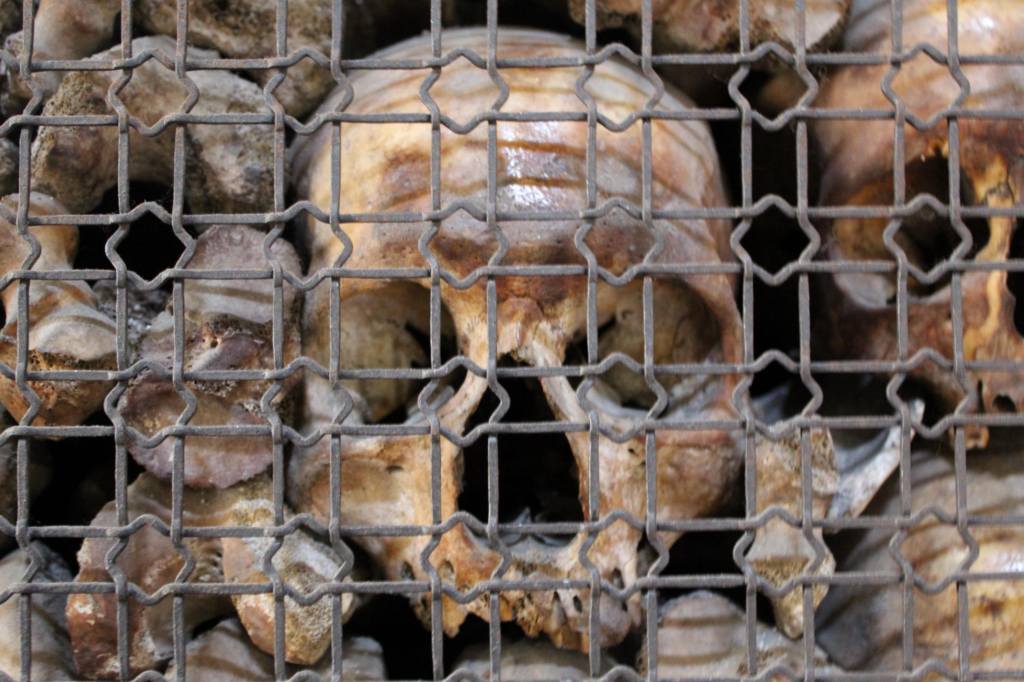
Then, we visited San Bernadino alle Osso, a church nearby famous for its ossuary. This is a small side-chapel that has been extensively decorated with human bones (apparently the cemetery got too full). It is free to visit and is certainly worth your time if you have any taste for the morbid.
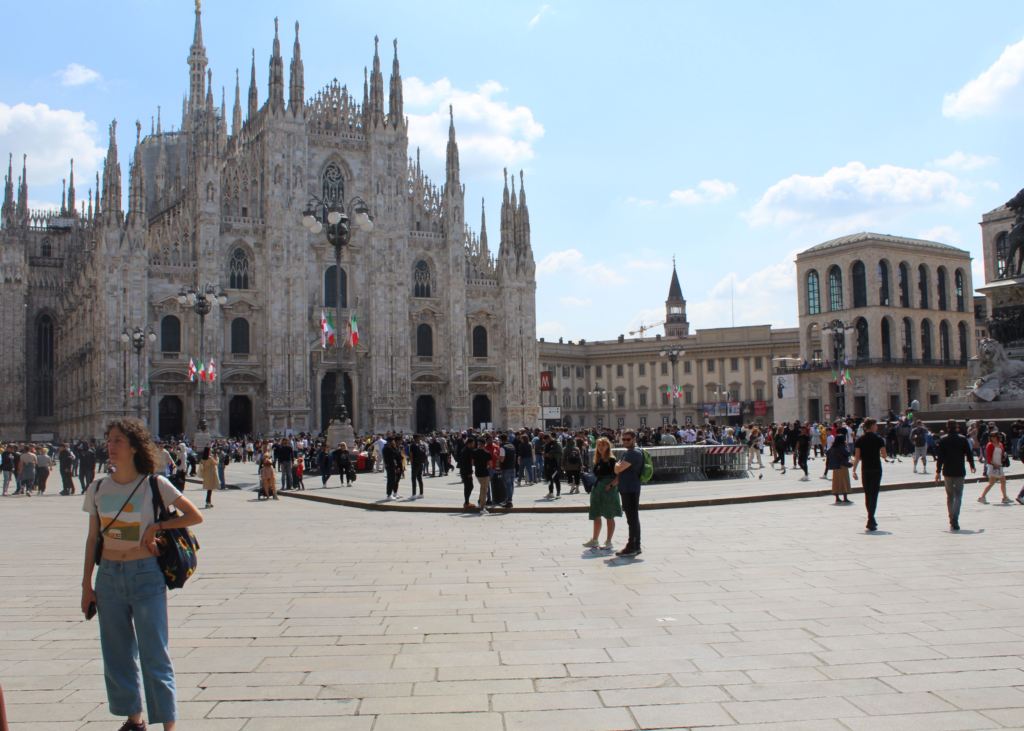
Finally it was time for the Duomo. My first impression was of its sheer size. It is the third largest church in the world, narrowly beating the gargantuan cathedral in Seville. Stylistically, it struck me as odd. Unlike the other great Italian churches, this one is a medley of styles, owing to the ungodly long time it took to complete—from 1386 to 1965. The proliferation of spikes and spires indicates gothic (unusual in Italy, to say the least, where the Renaissance dominates), but the Milan Cathedral does not have the exuberance, the spiritual riot, of a true gothic creation. It is, rather, quite stiff and almost formalistic, the lines in its facade intersecting at right angles, ascending up in a straight line without giving a great impression of height. This sterility is due, I think, to its facade being actually neo-gothic (after all, it was completed in the 19th century).
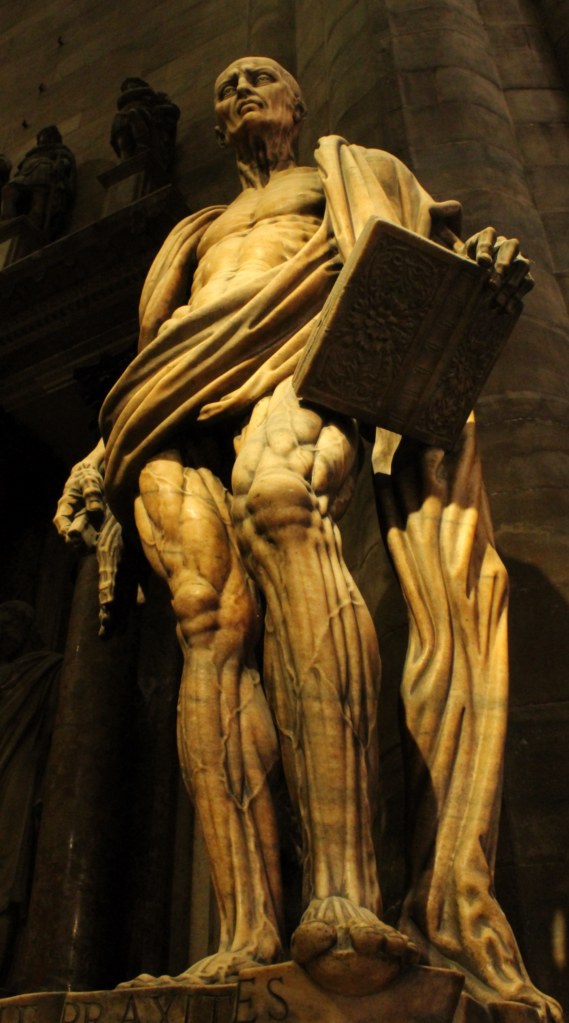
Stepping inside, I was once again astonished by its size. I also thought the interior of the church more restrained and tasteful. The same cannot be said, however, for the cathedral’s most famous statue, Marco d’Agrate’s Saint Bartholemew Flayed. Here we can see the unfortunate saint posing like a Roman senator, his skin wrapped around him like a toga, his muscles, veins, and nerves exposed. It is a kind of tour de force of anatomy, and obviously executed with a great deal of skill. But it is hard to call such a gruesome display a masterpiece.
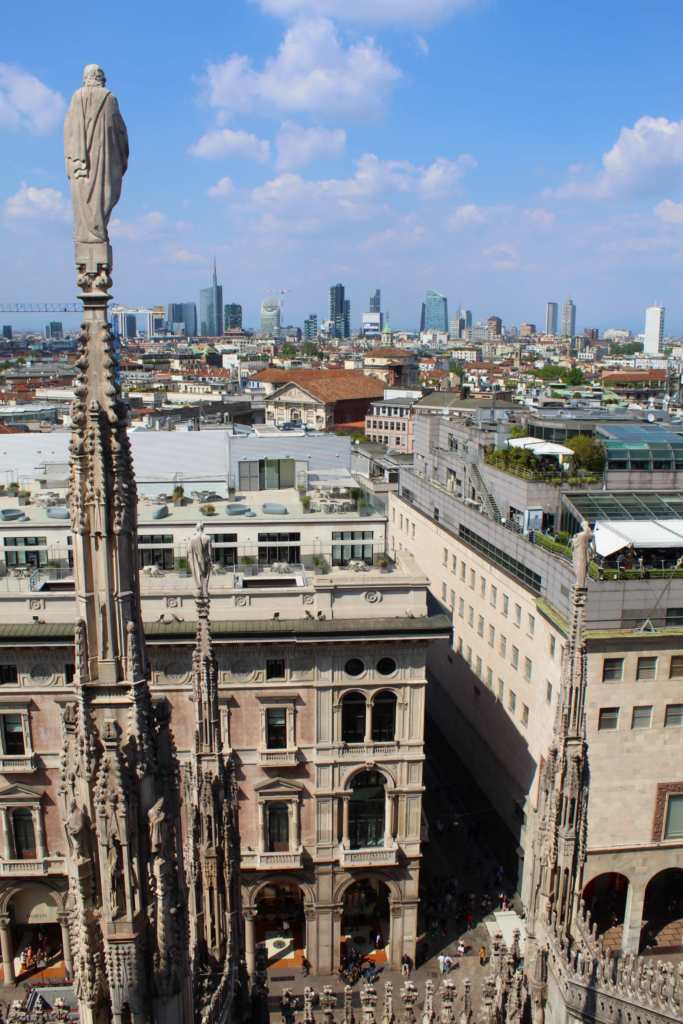
Next, we took an elevator up to the roof. Though it was somewhat expensive (over 30 euros a person, I believe), the visit to the roof proved to be a worthwhile experience. What was nothing but a tangle of statues hanging in the air when viewed from the ground became, from up close, a kind of stone forest. While the decorative statues, judged individually, were rather generic and unremarkable, the sensation of being surrounded by so many floating figures was genuinely uplifting. The visit culminated (pardon the pun) at the top of the roof, where visitors were stretched out on the stone as if it were just another beach.
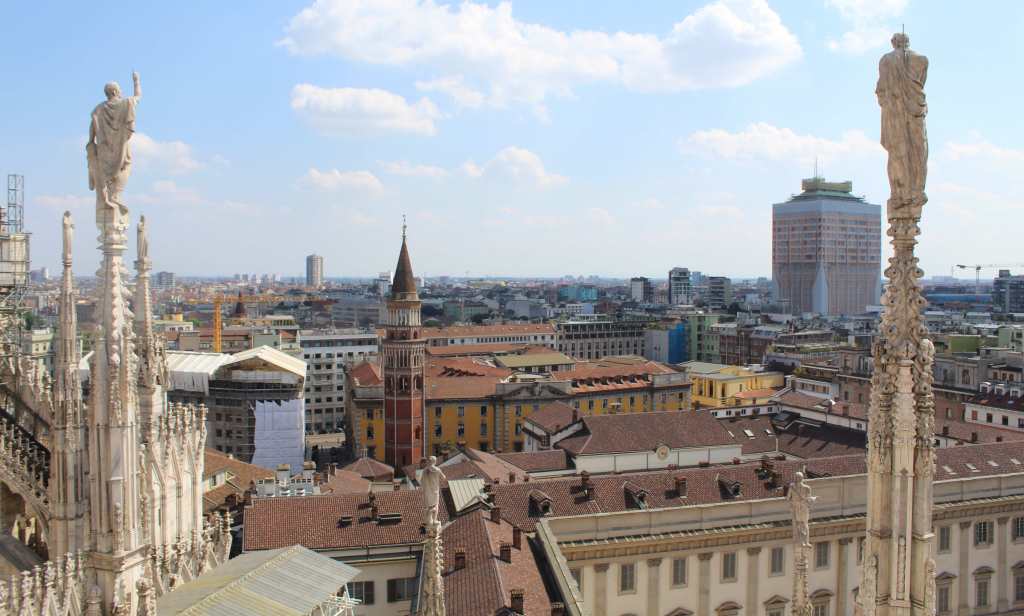
This was it for us. After a quick lunch (more pizza), we made our way to the Centrale train station and caught a bus to the airport. It had been a wonderful trip, though we had left much undone. I was particularly disappointed that we hadn’t had time to visit the Cimetière Monumentale—the city’s massive and beautiful burying ground—or the Pinacoteca di Brera, Milan’s world class art museum. But after having seen so much beauty, it was impossible to have any regrets. Italy never disappoints.

 Lotz in Translation
Having visited Milan last summer and visiting nearly the same spots, this was a delight to read and reminisce over. Thank you!
LikeLiked by 1 person
I’m glad to hear it!
LikeLike