The Blog Turns 10!

The Blog Turns 10!

Today marks the 10-year anniversary of the first ever post on my blog. A lot has changed since then. At the time, I had just moved to Spain for what was supposed to be a single year. I was 24 years old, and immature even for that age. My Spanish was terrible, bordering on non-existent. And Europe was shockingly new.

The idea of starting a blog came from my habit of writing book reviews. That practice began just from a desire to really keep track of what I learned from all of the books I was reading. There is a famous quote, often attributed to St. Augustine: “The world is a book, and those who do not travel read only a page.” Not well-traveled himself, the good saint almost certainly never said this. Still, in that spirit, I decided that I ought to write up my trips, if only to really suck the marrow out of each experience. After all, I was only supposed to be there a year.

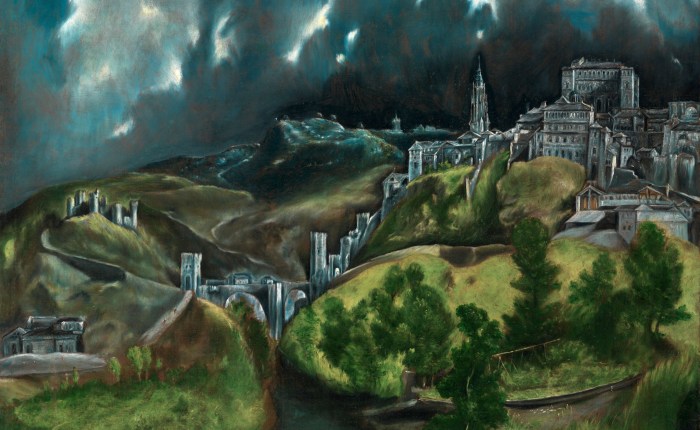
My first post was about Toledo. This was appropriate, as Toledo was the first place I visited in Spain that really astounded me. There is simply nothing in the United States that even remotely resembles the city’s perfectly preserved medieval core—its twisting, narrow streets, its stone bridges and walls, and above all its gothic cathedral.

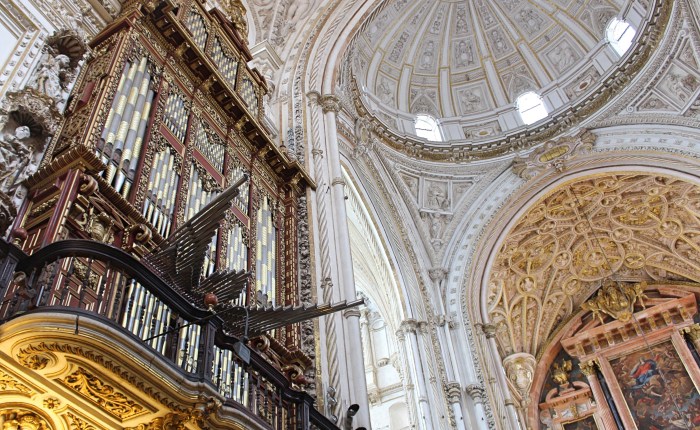
The grand church was a revelation. Inside and out, the building was simply covered in artwork—statues, friezes, frescoes, and paintings—every inch of it made by hand, over centuries. It wasn’t just that the cathedral was beautiful. It gave me a new concept of time. Even the most negligible adornment would have taken hours, days, weeks of painstaking work.

The structure of the building itself, its stone roof seeming to float above me, seemed almost miraculous. That it could be designed without computers and assembled without machines was a testament to human perseverance, if nothing else. It did to me precisely what it was made to do: make me feel like an insignificant, ephemeral nothing in comparison with the world around me. 

It was this experience, above all, that prompted me to write up the visit and to begin this blog. Since then, I’ve published over 700 posts here, including another one about Toledo. Over this time, the purpose and nature of the blog has fluctuated. At first it was meant to be a sort of diary, recording my own experience. Later, I tried to make it more like a travel guide, providing useful information and context to would-be travelers.

Yet I must admit that I haven’t had the discipline to stick to any one concept of this blog. So it is very much a mixed bag—of reviews, essays, short stories, travel pieces, and anything else that I deemed worthy of writing. This lack of an overarching concept has irked me, and I have often chastised myself for being such a self-indulgent writer. But at this point, I can at least say that this blog is an accurate reflection of myself—both my strengths and my shortcomings.

Much has changed during this time. I stayed in Spain far longer than I ever dreamed, spending over a decade in that enchanting country. My Spanish improved to the point where I consider myself nearly bilingual. And Europe went from shocking to comforting, as I saw cathedral after cathedral, city after city, and grew accustomed to the sights, languages, customs, and the different pace of life in that continent.

Change in life can happen so gradually that it is difficult to even notice. But I was given a chance to reflect on my new perspective on a recent visit to Toledo, back in October, nearly ten years after my initial trip. The city was still beautiful, the cathedral still magnificent. Yet I was not transported in the same way as I was. Not that I think any less of Toledo, just that it was no longer an alien world to me. It was home.

Rereading my original post about Toledo is another chance to reflect on this change. Now, I normally avoid reading my old writing, as I find it acutely embarrassing. But I actually came away from this reread with some affection for the Roy of that time. True, he had a lot to learn, and a lot of growing up to do. He was pretentious, often condescending, and took himself far too seriously. But he was curious, he was passionate, and he wanted to improve himself intellectually and even spiritually. He was on the search for wisdom.

I don’t know if the Roy of that time would be pleased with the Roy of today. I’m not always pleased with myself. Certainly I didn’t achieve his dream of becoming a famous writer, though I have gotten a couple books published. In any case, I should thank him; I owe my former self a lot. At a crucial moment in his life, he decided to go on a journey rather than embark on a conventional career. I just hope that I can make proper use of the experience he gave me.

My life changed, once again, on the 20th of October, when I moved back to New York. It was a tough, complicated decision, and of course there is much I miss about Spain. So far, however, it seems to have been the right one. In any case, it does put the future of this blog in doubt. Admittedly, I have a backlog of travel pieces that I want to write up in the coming months. And, hopefully, there are new trips to be taken, and much of the world still to see.

Realistically, though, I imagine that I’ll be doing significantly less traveling in the foreseeable future—especially as I get my career on track here. But, knowing myself, I will find something to write about. I always seem to.

I can’t end this post without thanking everyone who has taken even a passing interest in this blog. Hopefully, we’ll see each other here in another ten years. Until then, cheers!
In the Footsteps of García Lorca

In the Footsteps of García Lorca

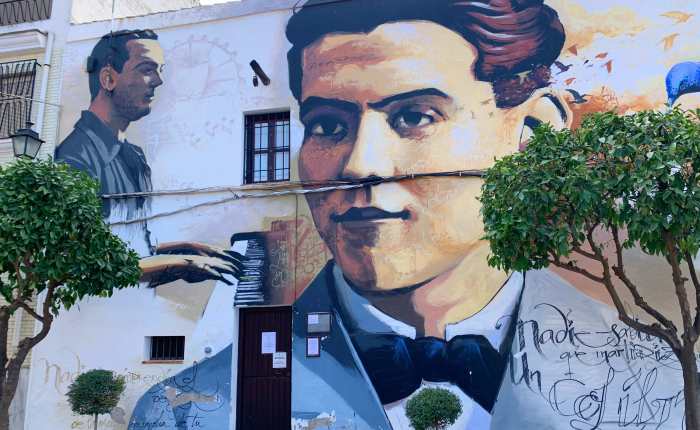
Federico García Lorca is the most famous playwright and poet that Spain produced in the previous century. This is largely owing to undeniable brilliance, as any readers of Bodas de Sangre or Yerma can attest to. Yet his fame is also due, in part, to the tragic story of his death—executed by Nationalist forces during the first few months of the Spanish Civil War. Among the hundreds of thousands dead from that conflict, Lorca remains its most famous victim. And in death, he has become a kind of secular saint to artistic freedom.

The precise details of Lorca’s murder were, for a long while, rather obscure; and it is largely thanks to the Irish writer, Ian Gibson, that it was finally uncovered. Prior to our trip to Granada, Rebe had read Gibson’s book, El asesinato de García Lorca, and so we had a full Lorca itinerary planned.

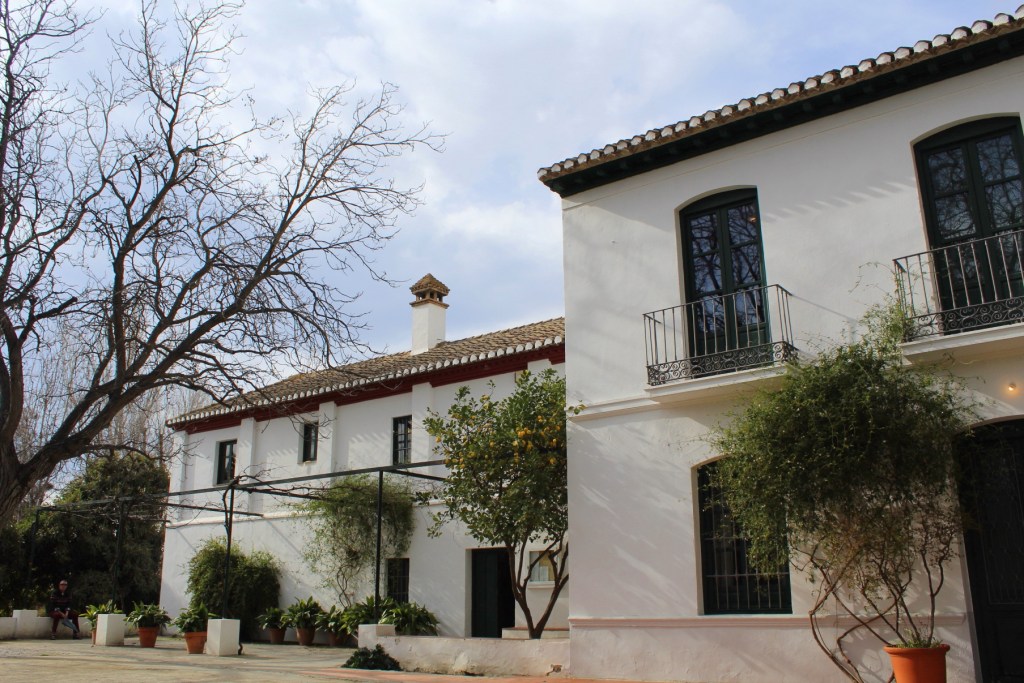
Our first stop was the Huerta de San Vicente. This was the summer house of the García Lorca family for the last ten years of the poet’s life. It is a kind of rustic villa, typical of Andalusia, with large windows and whitewashed walls—ideal for keeping cool. We joined a tour and were shown around the house, which has a piano that Lorca would play on (he was a gifted musician, and friends with Manuel de Falla), as well as a desk at which he wrote.

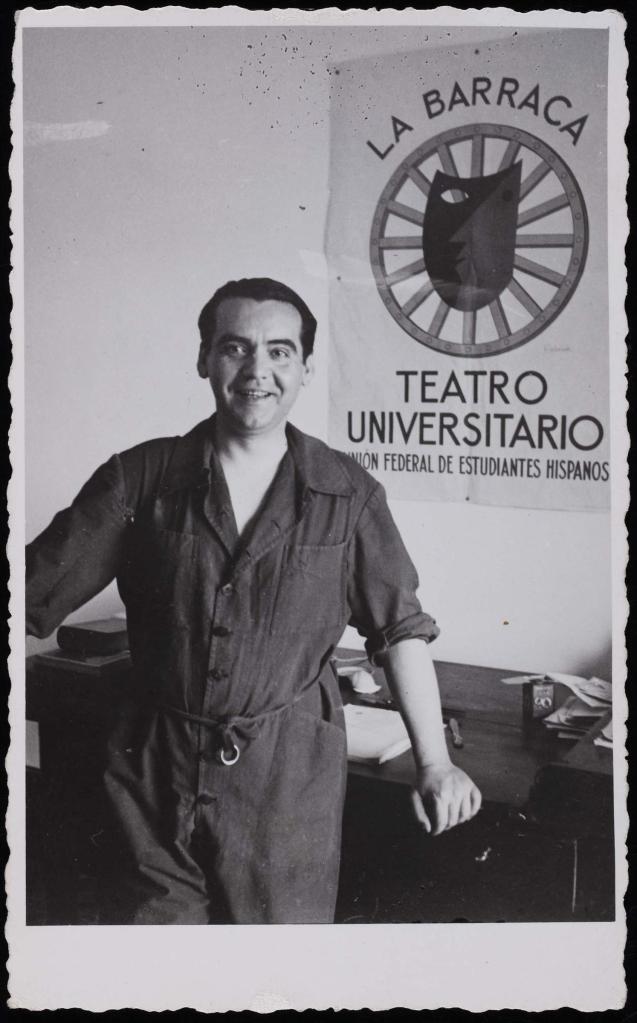
The hour-long visit gave a satisfying overview of the many facets of his short life. Lorca came across as a man wholly devoted to the arts—to music, to poetry, and above all to theater. One of my favorite items on display was a poster for La Barraca, a popular theater group that he helped to direct. They would travel around the countryside and perform for the benefit of the public, putting on avante-garde shows for the masses. It reminds me somewhat of the Federal Theater Project of the American New Deal, and demonstrates that Lorca, while not overtly political, did not shy away from social causes.

Our next stop was the small town of Fuente Vaqueros, which is a short drive from Granada. There, we visited the house where Lorca was born and spent his earliest years. It is a large house with thick walls, ideal for keeping out the heat. We were given a tour—just the two of us—by a local whose grandfather had gone to the same primary school as Lorca himself! He explained that the Lorca family was quite wealthy, having made their fortune in the tobacco business. Indeed, their house was one of the first to receive electricity in the area.

The upstairs of the house was made into a small exhibition space. Among other things, there is the only extant video clip of the poet, as he emerges from a truck used to haul theater supplies. The video has no sound and it lasts for only a few moments. Yet it is a tantalizing glimpse into the past. Also on display are puppets that Lorca made, in order to put on shows for his baby sister.

A short drive from Fuente Vaqueros is the town of Valderrubio, previously known as “Asquerosa” (“Disgusting”). Apparently, this name is a linguistic coincidence, having come from the Latin Aqua Rosae (“Pink Water”), but it led to the unfortunate toponym “asquerosos” for the denizens of this perfectly inoffensive town. Here is yet another house museum of the playwright, this one larger and grander than the one in Fuente Vaqueros. Unfortunately, however, we arrived too late for the tour of this house, and had to content ourselves with a quick walk-through.

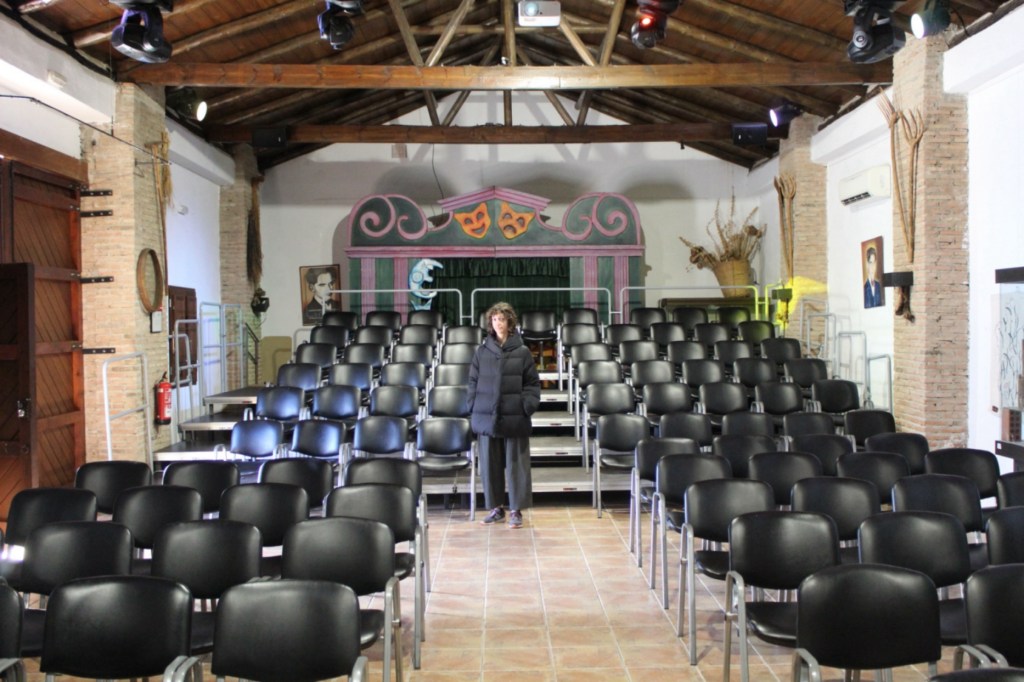
Rebe in the theater attached to the house museum.

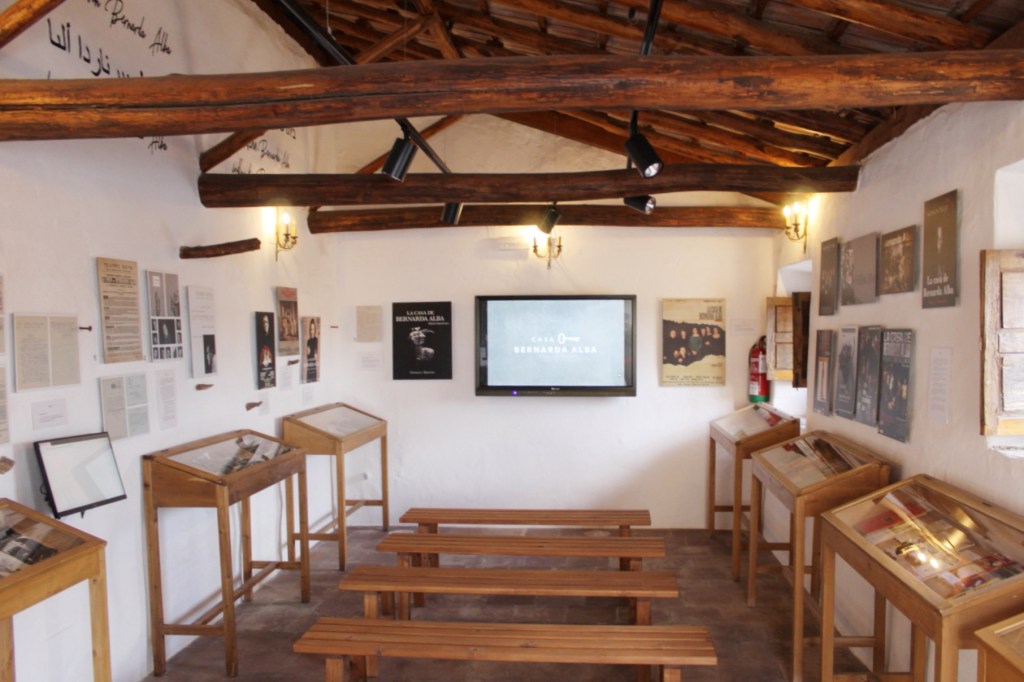
But we were on time for the tour of the House of Bernarda Alba. This is an attractive villa next to the Lorca property, where a widow lived with her daughters. Federico used this family as the basis for one of his best plays, La casa de Bernarda Alba, which is about a tyrannical widow who imposes a decade’s long period of mourning on herself and her daughters after the death of her husband. Apparently, the actual family—who I presume weren’t nearly as monstrous as Lorca portrayed them—were understandably quite offended by this, and cut off contact with the Lorcas. And now, to add insult to injury, their home stands as a museum to the poet’s honor!

Our last stop was rather more somber. On the 19th of August, 1936, Lorca was arrested, taken outside the city, and shot. Against the advice of his friends, on the eve of the Civil War he had traveled to his native city. But as war broke out and violence spread, he realized that he was unsafe and so hid himself in the home of family friends, who were members of the right-wing Falangist party. The political connection didn’t help. Along with three other men, he was taken to a spot on the highway between Vïznar and Alfacar and shot.

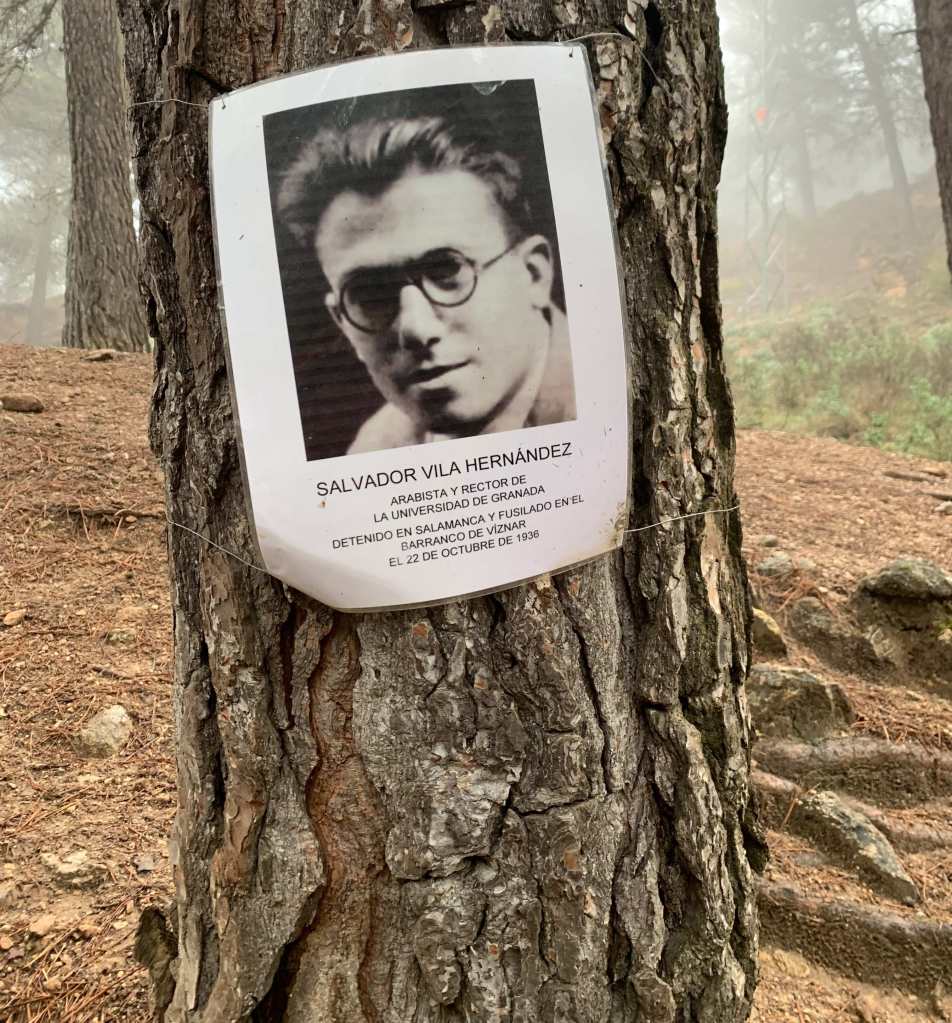
The place where Lorca was executed is hardly recognizable today. At the time it was a barren hillside, completely devoid of vegetation. Today, however, it is a grove of tall pine trees that cover the ground with shade. We parked the car and walked up a hill, not sure what we were looking for. Then we noticed papers tacked onto trees, like ‘Lost Cat’ posters on telephone polls. They were photos of the people believed to be executed here. There were dozens of these photos, each one with a name, profession, and believed date of death.

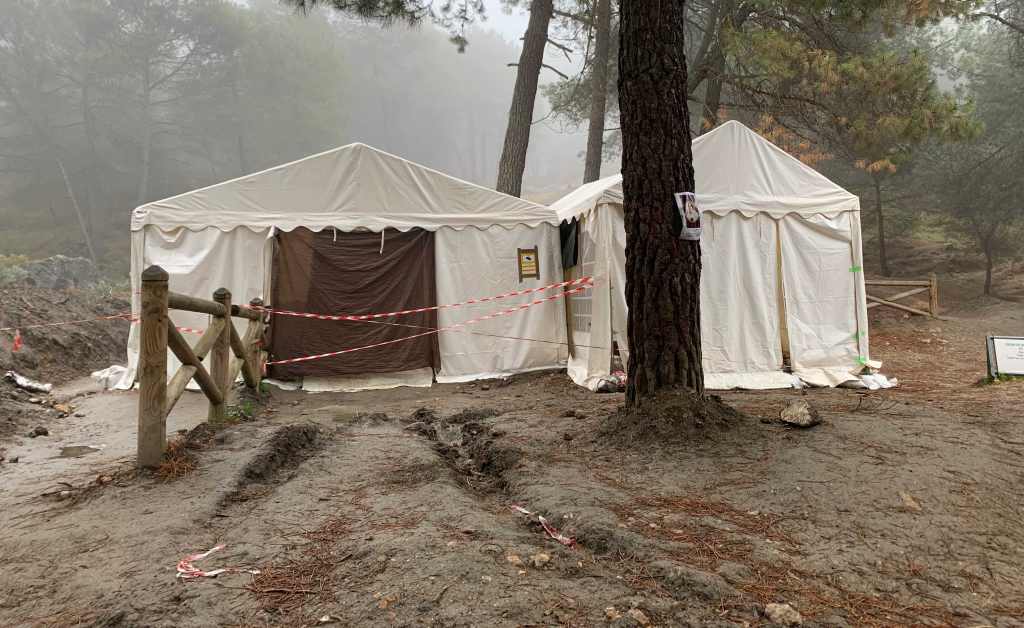
Even more unsettling were the white tents, standing empty and silent. They were covering excavation pits, where investigators are finally unearthing the remains of the hundreds of victims executed here, nearly a century after the Civil War. The investigators are also collecting DNA samples from surviving family members, so as to be able to identify any remains they uncover. Lorca’s body is believed to be here somewhere, though it hasn’t been identified yet. (You can learn more about the effort by following the groups’s Instagram.)

To state the obvious, it is chilling to think that such a harmless man—a gift to the world and an ornament to his country—could be deemed so threatening that he had to be executed this way. His last moments must have been terrifying. His work, however, has outlived Franco and his regime, and perhaps it will outlive the current constitution.

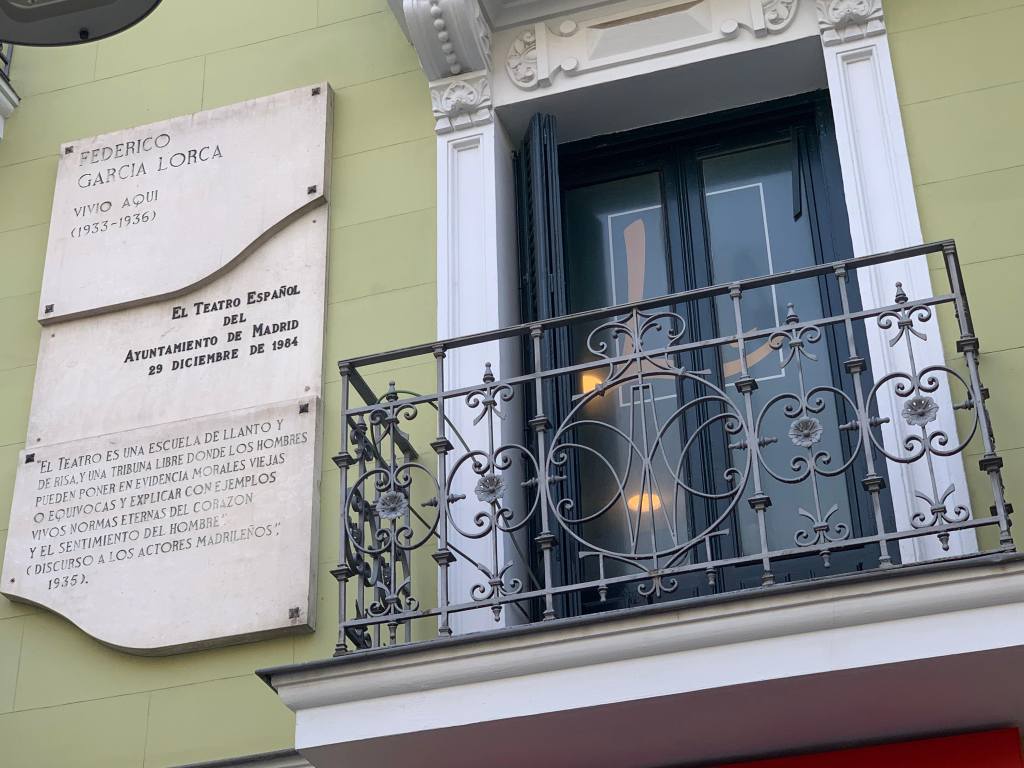
Now, for the very serious Lorca fan, there are also some sites to visit in Madrid. There is a lovely statue of the poet in the plaza de Santa Ana, and on Calle de Alcalá 96 there is a plaque which marks the apartment where Lorca lived for the last three years of his life. Another worthwhile visit is the Residencia de Estudiantes, where Lorca lived as a student along with his Dalí. The two were very close as young men, though many have criticized Dalí’s later reconciliation with the Francoist regime as a betrayal to the memory of his friend. 

But, of course, the most important thing is not to follow in his footsteps, but to keep reading and performing his works. This way, he will remain forever alive. 

2020: New Years Resolutions

2020: New Years Resolutions

I ended my resolutions post last year by promising I would not diet or exercise. Well, I broke the last part of the resolution when I took up running in February. This confirms my suspicion that the best way to motivate yourself is to resolve to do the opposite. So this year I resolve to stop exercising, eat poorly, be very unkind, and just be generally irresponsible and unpleasant.

My travel writing aspirations were only half-successful. Admittedly, I did compensate somewhat by writing long posts on the big NYC museums, but the list of travel writing keeps growing. Here are the big ones:

And this is not all.

In books, I got through most of my resolved reading from last year. My main omissions were the works of Archimedes, Apollonius, and Sir Thomas Heath’s book on Greek mathematics. Apart from this, one of my big goals this year is to read more about economics. I have a large biography of John Maynard Keynes sitting on my shelf. I also have a few scattered books and lectures to guide me. Hopefully I can make some headway in this most dismal of sciences.

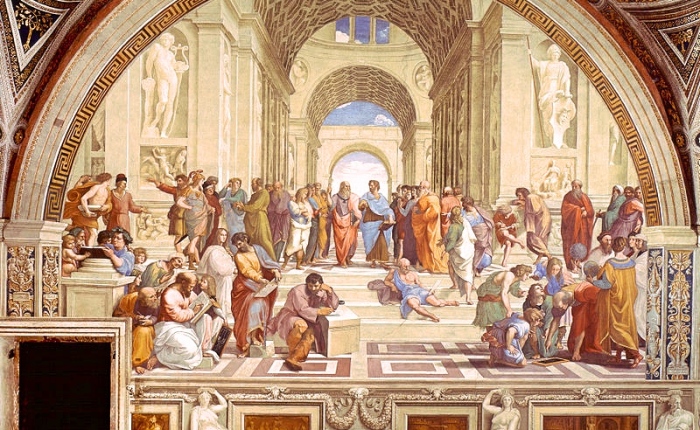
In literature, these are the authors in my sights: Lord Byron, Henry James, D.H. Lawrence. In the history of science, here are the big names: Lavoisier, Lyell, and Faraday. And in philosophy I hope to finish reading the works of Plato.

I will do at least one more season (10 episodes) of my podcast. But my big goal is to put more energy into getting published. This includes short stories, articles, and hopefully my old novel. Wish me luck!

Quotes & Commentary #44: Montaigne

Quotes & Commentary #44: Montaigne

Who does not see that I have taken a road along which I shall go, without stopping and without effort, as long as there is ink and paper in the world?

—Michel de Montaigne

One thing above all attracts me to Montaigne: we both have an addiction to writing.

It is a rather ugly addiction. I personally find those who love the sound of their own voice nearly intolerable—and unfortunately I fall into this category, too—but to be addicted to writing is far, far worse: Not only to I love airing my opinions in conversation, but I think my views are so valuable that they should be shared with the world and preserved for future generations.

Why do I write so much? Why do I so enjoy running my fingers over a keyboard and seeing letters materialize on the screen? What mad impulse keeps me going at it, day after day, without goal and without end? And why do I think it’s a day wasted if I don’t have time to do my scribbling?

In his essay “Why I Write,” George Orwell famously answered these questions for himself. His first reason was “sheer egoism,” and this certainly applies to me, although I would define it a little differently. Orwell characterizes the egoism of writers as the desire “to seem clever, to be talked about, to be remembered after death,” and in general to live one’s own life rather than to live in the service of others.

I would call this motivation “vanity” rather than “egoism,” which is undeniably one of my motivations to write—especially the desire to seem clever, one of my uglier qualities. But this vanity is rather superficial; there is a deeper egoism at work.

Ever since I can remember, I have had the awareness, at times keen and painful, that the world of my senses, the world that I share with everyone else, is separate and distinct from the world in my head—my feelings, imagination, thoughts, my dreams and fantasies. The two world were intimately related, and communicated constantly, but there was still an insuperable barrier cutting off one from the other.

The problem with this was that my internal world was often far more interesting and beautiful to me than the world outside. Everyone around me seemed totally absorbed in things that were, to me, boring and insipid; and I was expected to show interest in these things too, which was frustrating. If only I could express the world in my head, I thought, and bring my internal world into the external world, then people would realize that the things they busy themselves with are silly and would occupy their time with the same things that fascinated me.

But how to externalize my internal world? This is a constant problem. Some of my sweetest childhood memories are of playing all by myself, with sticks, rocks, or action figures, in my room or my backyard, in a landscape of my own imagination. While alone, I could endow my senses with the power of my inner thoughts, and externalize my inner world for myself.

Yet to communicate my inner world to others, I needed to express it somehow. This led to my first artistic habit: drawing. I used to draw with the same avidity as I write now, filling up pages and pages with my sketches. I advanced from drawings of whales and dinosaurs, to medieval arms and armor, to modern weaponry. Eventually this gave way to another passion: video games.

Now, obviously, video games are not a means of self-expression; but I found them addicting nonetheless, and played them with a seriousness and dedication that alarms me in retrospect—so many hours gone!—because they were an escape. When you play a video game you enter another world, in many ways a more exciting and interesting world, a world of someone’s imagination. And you are allowed to contribute to this dream world—in part, at least—and adopt a new identity, in a world that abides by different rules.

Clearly, escapism and self-expression, even if they spring from the same motive, are incompatible; in the first you abandon your identity, and in the second you share it. For this reason, I couldn’t be satisfied for long with gaming. In high school I began learn guitar, to sing, and eventually to write my own songs. This satisfied me for a while; and to a certain extent it still does.

But music, for me, is primarily a conduit of emotion; and as I am not a primarily emotional person, I’ve always felt, even after writing my own songs, that the part of myself I wanted to express, the internal world I still wanted to externalize, was still getting mostly left behind. It was this that led me to my present addiction: writing.

I should pause here and note that I’m aware how egotistical and cliché this narrative seems. My internal world is almost entirely a reflection of the world around me—far, far less interesting than the world itself—and my brain, I’m sorry to say, is mostly full of inanities. I am in every way a product—a specifically male, middle-class, suburban product—of my time and place; and even my narrative about trying to express myself is itself a product of my environment. My feeling of being original is unoriginal. My life story is a stereotype.

I know all of this very well, and yet I cannot shake this persistent feeling that I have something I need to share with the world. More than share, I want to shape the world, to mold it, to make it more in accordance with myself. And my writing is how I do that. This is egoism in its purist form: the desire to remake the world in my image.

A blank page is a parallel world, and I am its God. I control what happens and when, how it looks, what are its values, how it ends, and everything else. This feeling of absolute control and complete self-expression is what is so intoxicating about writing, at least for me. Once you get a taste of it, you can’t stop. Montaigne couldn’t, at least: he kept on editing, polishing, revising, and expanding his essays until his death. And I suspect I’ll do the same, in my pitiful way, pottering about with nouns and verbs, eventually running out of new things to write about and so endlessly rehashing old ones, until I finally succumb to the tooth of time.

After mentioning the egoism of writers, Orwell goes on to mention three other motivations: aesthetic enthusiasm, historical impulse, and political purpose. But I think he leaves two things out: self-discovery and thinking.

Our thoughts are fugitive and vague, like shadows flickering on the wall, forever in motion, impossible to get hold of. And even when we do seem to come upon a complete, whole, well-formed thought, as often as not it pops like a soap bubble as soon as we stretch out our fingers to touch it. Whenever I try to think something over silently, without recording my thoughts, I almost inevitably find myself grasping at clouds. Instead of reaching a conclusion, I get swept off track, blown into strange waters, unable to remember even where I started.

Writing is how I take the fleeting vapors of my thoughts and solidify them into definite form. Unless I write down what I’m thinking, I can’t even be sure what I think. This is why I write these quotes and commentary; so far it has been a journey of self-investigation, probing myself to find out my opinions.

When I commit to write, it keeps me on a certain track. Unless you are like Montaigne and write wherever your thoughts take you, writing inevitably means sticking to a handful of subjects and proceeding in an orderly way from one to the other. Since I am recording my progress, and since I am committed to reaching the conclusion, this counteracts my tendency to get distracted or to go off topic, as I do when I think silently.

This essay is a case in point. Although these are things I have often talked and thought about, I had never fully articulated to myself the reasons why I write, or strung all my obsessions into a narrative with a unified motivation, as I did above, until I decided to write about them. No wonder I’m addicted.