Review: The Hinge of Fate

Review: The Hinge of Fate

The Second World War, Volume IV: The Hinge of Fate by Winston S. Churchill

My rating: 5 of 5 stars


I find that I am liking each one of these volumes more than the last. The pleasure of this history is that, through the eyes of Winston Churchill, the war takes the shape of an enormous board game, played over months and years. Far removed from the gore of the front lines, Churchill sees the conflict as symbols on a map, which he needs to arrange in the most advantageous possible way—a game he plays brilliantly. This is not to say that he is frivolous or superficial. But warfare is far more palatable when experienced from the command chair than from the trenches.

Added to purely military decisions is the messier business of courting allies. Indeed, the best parts of this book describe Churchill’s cultivation of his relationships with Roosevelt and Stalin. Dealing with the Americans was relatively easy, as Roosevelt and Churchill seemed to have gotten along very well. Nevertheless, working so closely together required constant coordination of plans, both short-term and long-term; and Churchill sometimes struggled to get the American command to accept his military vision.

With Stalin, relations were far more tense. The Soviet leader is constantly demanding from Churchill fresh supplies and for a second front in France. Churchill, meanwhile, does his best to placate Stalin while firmly refusing to do what he feels is unwise. This culminates in his 1942 visit to Moscow, narrated in the two best chapters of the book. Churchill, sure that he will not be able to invade France in 1942, decides he must deliver this message personally if he is to maintain his working relationship with the Soviets. Stalin, at first, doesn’t take the news well, but by the end they are up all night, drinking vodka. In virtually any other circumstances, the two men would have been sworn enemies, and it is fascinating to see them try to cooperate.

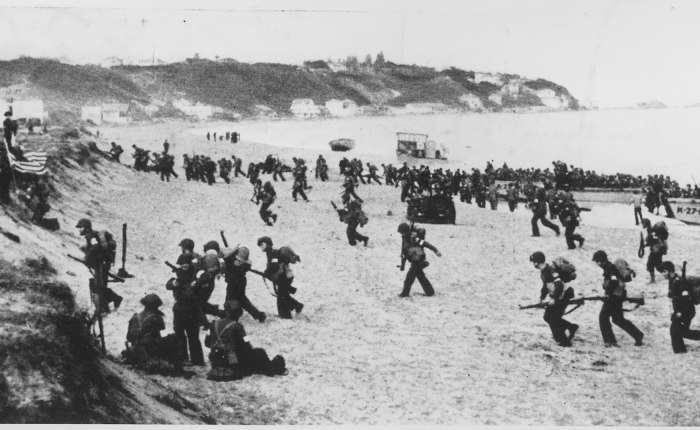
The title of the book is quite apt, as it contains the battles that marked the beginning of the end for both Germany and Japan: Midway, Stalingrad, and Tunisia. These books, it should be remembered, are public memoirs rather than objective history; and so Stalingrad and Midway, being battles Churchill had nothing to do with, get only a cursory treatment. Northern Africa, on the other hand, occupies much of the book, as British and then American forces beat Rommel, invaded the Vichy territories, and finally won a decisive victory in Tunisia.

As a final thought, I am constantly surprised at how much I am learning from these books. Somehow, after a lifetime of World War II media, I knew close to nothing about operation “Torch,” and had no real idea of the significance of the Northern African campaigns. I was also unfamiliar with the Katyn massacres—Russia’s mass executions of Polish prisoners, an issue which Churchill felt he could not raise with the Soviets, for fear of hurting their relationship. Indeed, having been in Dresden just two weeks ago, I’ve had occasion to reflect that it was not only the axis who committed war crimes.


View all my reviews

Review: The World at War

Review: The World at War

The World At WarThe World At War by Mark Arnold-Forster

My rating: 5 of 5 stars

Consisting of 26 episodes, each about 50 minutes long, The World at War traces the history of the Second World War from its pre-War beginnings to its aftermath. The program is remarkable in scope, covering the relevant political history of the United States, England, Germany, and Japan; the war efforts in north Africa and southeast Asia; the Russian and the Western front, as well as the final push against Japan; the bombing campaigns and their effects on civilian life; the struggle of the Allied shipping fleet against the German U-boats; the final peace negotiations in Europe and Asia, and the concomitant haggling between the U.S.S.R. and the West; the horrors of the Holocaust; and much else.

But the series has depth as well as breadth. There are hours and hours of archival footage—of battles, bombings, bombardments, protests, speeches, life on the front line, civilian life, negotiations, military parades, invasions, celebrations, triumphs, massacres, tragedies—much of it never used before, unearthed by the program’s research team.

Even more impressively, there are hours of interview footage, from from Poles, Russians, French, Germans, English, Americans, Japanese. There are interviews of gunners, tank crew, infantrymen, sailors, pilots; interviews of housewives, firefighters, barmen, taxi drivers; as well as from politicians, advisors, generals, and even Hitler’s personal secretary and chauffeur. Considering that these interviews were made specifically for the series, from people directly involved in the action, this makes the raw footage (most of it unused) a valuable primary historical document. And this is not to mention the wonderful narration by Laurence Olivier, which is always tasteful, often moving, and sometimes chilling.

In short, the documentary is a masterpiece, bringing the drama of the war to life while also being supremely informative. If you want to watch any documentary about World War II, make it this one.

To speak personally, watching this documentary had a strange effect on me, because it made me realize how much my perspective has changed since I was a kid. Back then, I used to watch World War II documentaries because the war seemed like a comic book. It was a story with clear bad guys and good guys, and the good guys won in the end. It was a story of personal heroism and bravery, of self-sacrifice and honor, of hardships endured and battles fought for the greater good. I was even fascinated with the military technology, the tanks, war planes, battleships, and guns. I remember going to the military museum at West Point, and seeing replicas of the nuclear bombs used on Hiroshima and Nagasaki. There was something undeniably awe-inspiring about the ability to create so much destruction, to wield so much power.

This time around, I had a different reaction. The more I watched, the more I became overwhelmed with a sense of pointless loss, destruction, and violence. Millions of young men marching off to shoot other young men, and for what? Towns blown to pieces, cities burned to the ground, and, most of all, countless lives lost. People shot, stabbed, drowned, burned; people executed by firing squad, hanging, the gas chamber. Beaches filled with bloated bodies, corpses rotting in the road, the remains grandmothers and children buried under piles of rubble. And it just kept going, the planes kept dropping bombs, the men kept throwing grenades, the tanks kept rolling on. By the end of the series, every episode made me feel sick.

When you see the numbers of the dead, it’s easy to grow numb. The totals become mere, meaningless statistics. But when you realize that those millions were composed of individuals, people with their own favorite song to whistle, shade of blue, local restaurant, people with their own quirks of personality, their own flaws and virtues, people who were loved and who loved in return, people who might have done anything had they survived the war, the enormity of the tragedy dawns on you. No matter what the aggressors hoped to gain from the war, no matter how glorious it seemed, it could not have been worth it.

The documentary does not shy away from the horrors of war, but dwells on them, and for good reason. For if there is any lesson to be learned from World War II, it is simply this: We must do everything in our power to avoid repeating that catastrophe.

View all my reviews