Today marks the 10-year anniversary of the first ever post on my blog. A lot has changed since then. At the time, I had just moved to Spain for what was supposed to be a single year. I was 24 years old, and immature even for that age. My Spanish was terrible, bordering on non-existent. And Europe was shockingly new.
The idea of starting a blog came from my habit of writing book reviews. That practice began just from a desire to really keep track of what I learned from all of the books I was reading. There is a famous quote, often attributed to St. Augustine: “The world is a book, and those who do not travel read only a page.” Not well-traveled himself, the good saint almost certainly never said this. Still, in that spirit, I decided that I ought to write up my trips, if only to really suck the marrow out of each experience. After all, I was only supposed to be there a year.
My first post was about Toledo. This was appropriate, as Toledo was the first place I visited in Spain that really astounded me. There is simply nothing in the United States that even remotely resembles the city’s perfectly preserved medieval core—its twisting, narrow streets, its stone bridges and walls, and above all its gothic cathedral.
The grand church was a revelation. Inside and out, the building was simply covered in artwork—statues, friezes, frescoes, and paintings—every inch of it made by hand, over centuries. It wasn’t just that the cathedral was beautiful. It gave me a new concept of time. Even the most negligible adornment would have taken hours, days, weeks of painstaking work.
The structure of the building itself, its stone roof seeming to float above me, seemed almost miraculous. That it could be designed without computers and assembled without machines was a testament to human perseverance, if nothing else. It did to me precisely what it was made to do: make me feel like an insignificant, ephemeral nothing in comparison with the world around me.
It was this experience, above all, that prompted me to write up the visit and to begin this blog. Since then, I’ve published over 700 posts here, including another one about Toledo. Over this time, the purpose and nature of the blog has fluctuated. At first it was meant to be a sort of diary, recording my own experience. Later, I tried to make it more like a travel guide, providing useful information and context to would-be travelers.
Yet I must admit that I haven’t had the discipline to stick to any one concept of this blog. So it is very much a mixed bag—of reviews, essays, short stories, travel pieces, and anything else that I deemed worthy of writing. This lack of an overarching concept has irked me, and I have often chastised myself for being such a self-indulgent writer. But at this point, I can at least say that this blog is an accurate reflection of myself—both my strengths and my shortcomings.
Much has changed during this time. I stayed in Spain far longer than I ever dreamed, spending over a decade in that enchanting country. My Spanish improved to the point where I consider myself nearly bilingual. And Europe went from shocking to comforting, as I saw cathedral after cathedral, city after city, and grew accustomed to the sights, languages, customs, and the different pace of life in that continent.
Change in life can happen so gradually that it is difficult to even notice. But I was given a chance to reflect on my new perspective on a recent visit to Toledo, back in October, nearly ten years after my initial trip. The city was still beautiful, the cathedral still magnificent. Yet I was not transported in the same way as I was. Not that I think any less of Toledo, just that it was no longer an alien world to me. It was home.
Rereading my original post about Toledo is another chance to reflect on this change. Now, I normally avoid reading my old writing, as I find it acutely embarrassing. But I actually came away from this reread with some affection for the Roy of that time. True, he had a lot to learn, and a lot of growing up to do. He was pretentious, often condescending, and took himself far too seriously. But he was curious, he was passionate, and he wanted to improve himself intellectually and even spiritually. He was on the search for wisdom.
I don’t know if the Roy of that time would be pleased with the Roy of today. I’m not always pleased with myself. Certainly I didn’t achieve his dream of becoming a famous writer, though I have gotten a couple books published. In any case, I should thank him; I owe my former self a lot. At a crucial moment in his life, he decided to go on a journey rather than embark on a conventional career. I just hope that I can make proper use of the experience he gave me.
My life changed, once again, on the 20th of October, when I moved back to New York. It was a tough, complicated decision, and of course there is much I miss about Spain. So far, however, it seems to have been the right one. In any case, it does put the future of this blog in doubt. Admittedly, I have a backlog of travel pieces that I want to write up in the coming months. And, hopefully, there are new trips to be taken, and much of the world still to see.
Realistically, though, I imagine that I’ll be doing significantly less traveling in the foreseeable future—especially as I get my career on track here. But, knowing myself, I will find something to write about. I always seem to.
I can’t end this post without thanking everyone who has taken even a passing interest in this blog. Hopefully, we’ll see each other here in another ten years. Until then, cheers!
For years I had been beguiled by images of Las Cárcavas—a crazy undulation of land, tucked away in the sierra of Madrid. Photos made the place seem otherworldly; and I was dying to see it for myself. Unfortunately, however, there did not seem to be any good way to get there on public transport. Studying the bus routes and the map, I found that the closest that I could get was a tiny village that I’d visited once before: Patones de Arriba.
So early one Saturday morning, I took the metro to Plaza de Castilla, and caught the 197 bus to a small village called Torrelaguna. From there, I caught the 913 bus—a mini-bus, which followed the winding path up a hill to the old and picturesque village of Patones de Arriba. I was the only passenger on board that day. And by the time I arrived, it was still so early that the streets were virtually empty.
Patones de Arriba (unlike its modern cousin, Patones de Abajo down the hill) is a time capsule of a place. It seems to have survived virtually unchanged since antiquity. Stone huts cover an otherwise barren hillside—the town hidden among the foothills of the sierra, in a place that would be naturally defensible should any dare to attack it.
The architecture is a prime example of what the Spanish call arquitectura negra: all of the buildings made out of the distinctive black slate of the area, which naturally breaks off into thin plates. This gives the town a striking uniformity—both between its buildings, and with the landscape. The tallest building is the old church, though nowadays it is used for the tourism office. Indeed, I am not sure that anyone actually lives in Patones de Arriba these days—it is a kind of living museum attached to the modern settlement below.
The town is full of relics of its agricultural past. There are stone threshing floors (for separating the wheat from the chaff), pig pens, and cattle sheds. We can also see signs of village life, in the form of ovens, wine cellars, and laundry basins, all made from the local slate. But the real pleasure of visiting the village is simply enjoying the ambience of the past—and, perhaps, a good lunch. On my first visit, years prior, we went into one of the restaurants and had a hearty meal of good Spanish mountain fare—bean stews and red meat.
But by the time I arrived, there was nothing open and, apparently, nobody there. So I walked through the town and then out into the surrounding hills, on my way to Las Cárcavas.
The countryside here is, like much of the interior of Spain, windswept and bare. In the best of times, the soil and rain could not support luxuriant vegetation; and, in any case, centuries of human habitation have destroyed a large portion of the old forests. The result is that much of Spain, though dramatic in its vistas—the view extending until the horizon—unwinds itself in a patchy surface of rocky ground covered with low shrubs.
The walk was long, winding, and somewhat monotonous—going up and down hill after hill. The only thing to attract the eye were the many pieces of water infrastructure. Large tubes shot out of the hillside, down into valleys and back up again. Further on, stone aqueducts crossed from elevation to elevation. Finally, the explanation for all this came into view: the Pontón de Oliva.
This mammoth construction was the first dam built under the auspices of the Canal de Isabel II, the organization responsible for Madrid’s water supply. And this brings me to a small detour in our hike. Like New York City, you see, Madrid has long struggled to supply its citizenry with clean, safe drinking water. And this is due to the location of both cities: New York is surrounded by brackish, dirty, ocean water, while Madrid has virtually no natural water sources to speak of.
When Madrid was still a relatively small city, local wells and streams were enough to solve this problem. But by 1850, with the city’s population nearing a quarter of a million, the lack of water was becoming a serious issue. The engineers in both NYC and Madrid hit upon the identical solution: dam the rivers in the mountains to the north, and transport the fresh mountain waters to the thirsty city. The Pontón de Oliva was the first step taken in this effort.
It was constructed during the reign of Isabel II, who became the first (and, so far, the only) ruling queen of modern Spain after a succession dispute, which involved a rebellion by her uncle, don Carlos. These wars, called the “Carlist wars,” ended in her victory. This left the new queen with quite a few prisoners of war, whom she put to use building this dam under extremely gruelling conditions. (I tried to look up the number of prisoners who died during the construction, but I couldn’t find it.) To make matters worse, the engineers who designed the dam had chosen a bad location of the river Lozoya, making it all but useless. Today, it stands as a kind of monument of wasted effort—something for hikers and history buffs to appreciate, but dry as a bone.
Just beyond this dam, I finally arrived at my goal: Las Cárcavas. Now, “cárcava” is just the Spanish word for “gully” (though it certainly sounds more attractive); and this one is just a particularly big example of a common phenomenon—namely, water erosion. Though the details are complex, the principle is quite simple: intermittent water flow down steep terrain causes rivulets to form, creating a distinctive undulating pattern as they wear their way through the landscape.
I stood on the lip of this gully and sat down, absolutely exhausted. I had been walking for several hours by then, up and down hills, with no shade from the punishing June sun. Now it was past noon, and the temperature was climbing. I ate my packed lunch (a tuna empanada and a small bottle of gazpacho) as I observed a column of ants make their way through the dusty earth, and amused myself by tossing them little bits of fish. Then, after getting my fill of this alien world, I drained my water bottle and got wearily to my feet.
Water, I have discovered, is a powerful thing. It can move landscapes and determine the destiny of cities. And I found now that I hadn’t brought enough of it. I had well over an hour before I could make my way to civilization, all of it under the merciless Spanish sun. And I was already thirsty. The only choice was to press on. Attempting to distract myself with an audiobook, I walked down the hill, past the dam, and onto a local road.
At just the point when I was risking heat stroke, I arrived in Patones de Abajo and stumbled into the nearest bar. There, I ordered the biggest “clara” they had (beer mixed with lemon soda), and then ordered another one. Then, after another long bus ride back to Madrid, I enjoyed glass after glass of the city’s fine tap water—water that had itself been on a journey from the sierra—which, I found, tasted especially good that day.
I met John Dapolito at the Antón Martín metro stop on a cold autumn night. He was smoking a cigarette and scanning the crowd, and when he recognized me he told me to follow him to a nearby bar. I was nervous, as this was a kind of interview. He was looking for writers to contribute to a new volume, a collection of mini-memoirs of people who have moved to Madrid from elsewhere. He wanted them to answer three questions: How has Madrid changed since you moved here? How have you changed? And how has Madrid changed you?
“Nine years?” he said, mulling over my time in Madrid. “Nine years…” his voice trailing off. To many Americans in Madrid, this is quite a long time. But compared to John’s twenty-five, it seemed rather paltry. So we talked about how I could write my essay, what angle I could take, what I could emphasize about my experience to differentiate from everyone else’s. The next day, I started writing a draft of my essay long-hand, in a notebook—something I seldom do—and now it is a pleasure to see it in print in this collection.
Ironically, in the months since I sent off the final draft to John, I’ve grown to love Madrid more than ever. While I used to feel the need to escape into the sierra every couple of weeks, craving a bit of nature, lately I’ve been content to just stroll around the city, exploring its nooks and crannies, and getting ever-more integrated into its peculiar form of life. In short, now that my nine years are nearing ten, I am finally beginning to feel like a proper madrileño, fully at home in this great Spanish metropolis. And now that I have my story of Madrid in print, I feel now more than ever that I’ve really made a home here.
The stories in this volume have many common themes: learning the language, enjoying the nightlife, resenting the gentrification, and so on—themes that would have appeared had this book been written about Budapest or Bangkok. But beneath these superficial commonalities are what make the essays worth reading—insights into Madrid and, more often, into the person writing about it. And these essays are illustrated by black-and-white photos by the editor, John. I remember him opening a binder of them at the bar, during our first meeting, and admiring their atmosphere, how they really captured an aspect of the beauty of this city. And I thought to myself: “I want to be a part of this project.”
When I first came to Europe I was, like any good American, in search of the very old. We have skyscrapers and Jackson Pollocks in my country, but we don’t have cathedrals, castles, or El Greco. Yet to see Europe as merely a repository of its history is to forget that its residents are just as keen as anyone to advance into the future. And so I recommend any visiting Americans to make time to experience a bit of the more modern side of Spain.
Segovia, for example, is justly famous for its Roman aqueduct and its elegant cathedral. But tucked away in its winding streets is the Museo de Arte Contemporáneo Esteban Vicente. This small museum would be worth your time even if it weren’t free to visit. It is named after an important but lesser-known artist from the 20th century, a member of the famous Generation of 1927 (which also included Lorca and Dalí), who spent time in Paris alongside Picasso, and finally moved to New York City in the wake of the Spanish Civil War. There, he became one of the main representatives of abstract expressionism.
The museum is housed in what used to be a hospital; and the large rooms and austere architecture contrast starkly with the art. Though he began as a figurative painter, Vicente quickly moved into the kind of abstract art that many people turn up their noses at—atmospheric blobs and swirls of color on canvas. I must admit that it isn’t usually my cup of tea, either. Nevertheless, in the context of Segovia, a city of narrow streets, hard angles, and gray stone, his art was wonderfully refreshing—light and playful, almost ethereal in its vagueness.
When I visited, there was a temporary exhibit by the contemporary artist Hugo Fontela—another Spaniard working in the abstract vein, living in New York. He worked in a very restrained color pallet, just green on a white canvas. Yet with the rhythm and intensity of his brush strokes, he managed to evoke clouds, waves, wind, and whole landscapes. It was an impressive performance.
Even deeper into Old Castile is the city of Valladolid. Though often overlooked by tourists, it is a city well worth visiting, especially as it is easily accessible by fast train from Madrid. Among the curiosities of the city is its huge and rather ugly cathedral—a massive pile of stone that looks oddly unfinished. This is because, when it was conceived, Valladolid was serving as the capital of Spain, and so its church was meant to be the biggest in the world. When the capital was moved to Madrid, however, the construction stopped, and now the building trails off into nothingness.
The most famous museum in the city is the Museo Nacional de Escultura, a collection of sculptures from the middle ages onward (mostly religious), housed in an old monastery. However, during my brief time in Valladolid, I found my visit to another museum far more enjoyable: the Museo Patio Herreriano.
The museum is located in the remains of the former monastery of San Benito el Real. Though its name pays homage to the great Spanish architect Juan de Herrera, it was really designed by one of his followers, Juan de Ribero Rada. However, the building was in such disrepair by the time it was decided to create a museum that substantial renovations were necessary. The building now is thus a strange Frankenstein mixture of old and new sections.
The museum’s collection is huge and extensive, containing works by Joan Miró, Salvador Dalí, and even our friend Esteban Vicente, as well as contemporary artists such as Azucena Vieites. I wandered around rather aimlessly, having neglected even to pick up a map, doing my best despite being sleep-deprived and dehydrated to appreciate the art. I would be insincere if I pretended that I liked everything. Indeed, contemporary art often leaves me scratching my head and even vaguely bored.
But any kind of art is largely hit and miss; and contemporary art even more so. Going to a modern art museum, therefore, requires a certain suspension of judgment, a certain amount of patience, until you discover something that pulls you in.
For me, this was an exhibit on Delhy Tejero, a Spanish artist I had never heard of before. What immediately struck me about her work was how varied it was, in both style and content. She could do realistic, figurative drawings or highly abstract paintings; her work can be cartoonish, dreamy, or serious; she can focus on folklore or lose herself in the purity of geometric shapes. Perhaps none of the works on display was a surpassing masterpiece, but taken as a whole her work exemplified such a degree of curiosity, open-mindedness, and fine sensibility that it left me deeply impressed.
These are just two examples of the fine, lesser-known modern art museums to be found all over Spain. And I think that, especially for the weary traveller, traversing the scorched soil of the central Castilian plains, besieged by castles, cathedrals, and ruins of bygone civilizations, a bit of absurdity, playfulness, and abstraction can do much to clear the palette.
Federico García Lorca is the most famous playwright and poet that Spain produced in the previous century. This is largely owing to undeniable brilliance, as any readers of Bodas de Sangre or Yerma can attest to. Yet his fame is also due, in part, to the tragic story of his death—executed by Nationalist forces during the first few months of the Spanish Civil War. Among the hundreds of thousands dead from that conflict, Lorca remains its most famous victim. And in death, he has become a kind of secular saint to artistic freedom.
The precise details of Lorca’s murder were, for a long while, rather obscure; and it is largely thanks to the Irish writer, Ian Gibson, that it was finally uncovered. Prior to our trip to Granada, Rebe had read Gibson’s book, El asesinato de García Lorca, and so we had a full Lorca itinerary planned.
Our first stop was the Huerta de San Vicente. This was the summer house of the García Lorca family for the last ten years of the poet’s life. It is a kind of rustic villa, typical of Andalusia, with large windows and whitewashed walls—ideal for keeping cool. We joined a tour and were shown around the house, which has a piano that Lorca would play on (he was a gifted musician, and friends with Manuel de Falla), as well as a desk at which he wrote.
The hour-long visit gave a satisfying overview of the many facets of his short life. Lorca came across as a man wholly devoted to the arts—to music, to poetry, and above all to theater. One of my favorite items on display was a poster for La Barraca, a popular theater group that he helped to direct. They would travel around the countryside and perform for the benefit of the public, putting on avante-garde shows for the masses. It reminds me somewhat of the Federal Theater Project of the American New Deal, and demonstrates that Lorca, while not overtly political, did not shy away from social causes.
Our next stop was the small town of Fuente Vaqueros, which is a short drive from Granada. There, we visited the house where Lorca was born and spent his earliest years. It is a large house with thick walls, ideal for keeping out the heat. We were given a tour—just the two of us—by a local whose grandfather had gone to the same primary school as Lorca himself! He explained that the Lorca family was quite wealthy, having made their fortune in the tobacco business. Indeed, their house was one of the first to receive electricity in the area.
The upstairs of the house was made into a small exhibition space. Among other things, there is the only extant video clip of the poet, as he emerges from a truck used to haul theater supplies. The video has no sound and it lasts for only a few moments. Yet it is a tantalizing glimpse into the past. Also on display are puppets that Lorca made, in order to put on shows for his baby sister.
A short drive from Fuente Vaqueros is the town of Valderrubio, previously known as “Asquerosa” (“Disgusting”). Apparently, this name is a linguistic coincidence, having come from the Latin Aqua Rosae (“Pink Water”), but it led to the unfortunate toponym “asquerosos” for the denizens of this perfectly inoffensive town. Here is yet another house museum of the playwright, this one larger and grander than the one in Fuente Vaqueros. Unfortunately, however, we arrived too late for the tour of this house, and had to content ourselves with a quick walk-through.
Rebe in the theater attached to the house museum.
But we were on time for the tour of the House of Bernarda Alba. This is an attractive villa next to the Lorca property, where a widow lived with her daughters. Federico used this family as the basis for one of his best plays, La casa de Bernarda Alba, which is about a tyrannical widow who imposes a decade’s long period of mourning on herself and her daughters after the death of her husband. Apparently, the actual family—who I presume weren’t nearly as monstrous as Lorca portrayed them—were understandably quite offended by this, and cut off contact with the Lorcas. And now, to add insult to injury, their home stands as a museum to the poet’s honor!
Our last stop was rather more somber. On the 19th of August, 1936, Lorca was arrested, taken outside the city, and shot. Against the advice of his friends, on the eve of the Civil War he had traveled to his native city. But as war broke out and violence spread, he realized that he was unsafe and so hid himself in the home of family friends, who were members of the right-wing Falangist party. The political connection didn’t help. Along with three other men, he was taken to a spot on the highway between Vïznar and Alfacar and shot.
The place where Lorca was executed is hardly recognizable today. At the time it was a barren hillside, completely devoid of vegetation. Today, however, it is a grove of tall pine trees that cover the ground with shade. We parked the car and walked up a hill, not sure what we were looking for. Then we noticed papers tacked onto trees, like ‘Lost Cat’ posters on telephone polls. They were photos of the people believed to be executed here. There were dozens of these photos, each one with a name, profession, and believed date of death.
Even more unsettling were the white tents, standing empty and silent. They were covering excavation pits, where investigators are finally unearthing the remains of the hundreds of victims executed here, nearly a century after the Civil War. The investigators are also collecting DNA samples from surviving family members, so as to be able to identify any remains they uncover. Lorca’s body is believed to be here somewhere, though it hasn’t been identified yet. (You can learn more about the effort by following the groups’s Instagram.)
To state the obvious, it is chilling to think that such a harmless man—a gift to the world and an ornament to his country—could be deemed so threatening that he had to be executed this way. His last moments must have been terrifying. His work, however, has outlived Franco and his regime, and perhaps it will outlive the current constitution.
Now, for the very serious Lorca fan, there are also some sites to visit in Madrid. There is a lovely statue of the poet in the plaza de Santa Ana, and on Calle de Alcalá 96 there is a plaque which marks the apartment where Lorca lived for the last three years of his life. Another worthwhile visit is the Residencia de Estudiantes, where Lorca lived as a student along with his Dalí. The two were very close as young men, though many have criticized Dalí’s later reconciliation with the Francoist regime as a betrayal to the memory of his friend.
But, of course, the most important thing is not to follow in his footsteps, but to keep reading and performing his works. This way, he will remain forever alive.
In 1492, Christopher Columbus set out from Spain to find a shorter route to Asia. Europeans knew very little about the Far East at that time; but they did know, albeit vaguely, that Asia was where spices grew. Though it is difficult to imagine nowadays, cinnamon, nutmeg, and cloves were more valuable than gold. Anyone who could find a way to get them directly from the source, avoiding all the intermediary merchants, would stand to make a fortune. This is what motivated Columbus’s journey.
Of course, he did not arrive in Asia and did not find cinnamon, nutmeg, or cloves. The only spice his party did stumble upon was allspice, in Jamaica, which tasted vaguely like a blend of all three (thus the name). But the Spaniards who arrived in the so-called New World were introduced to a product that, in the present day, seems infinitely more important: hot chili peppers.
So the rest of the world was introduced to real, proper spice. To a remarkable extent, however, Spanish cuisine remains free of the influence of its former colonies. Hundreds of years of conquest, colonization, and commerce were not enough to convince the Spanish to find a use for chilis, and their food remains almost entirely picante-free.
Judging from my own experience, there is still a deep-rooted hostility to spice in Spain. I have been solemnly assured by many Spaniards that my hot sauce habit will inevitably result in stomach ulcers, if not full-blown cancer. They look on in alarm as I douse the food at the school cafeteria in my personal bottle of Tabasco, day after day. “On everything?” they ask me, dismayed. “Every day?”
Considering this, it appears to be a minor miracle that Adam Mayo has a stand in the Mercado de San Fernando dedicated to nothing but artisanal hot sauces—and properly spicy ones, too.
The Mercado de San Fernando, in the busy barrio of Lavapiés, is an excellent example of a municipal market. In its cavernous interior, green grocers, fishmongers, and butchers sell fresh foodstuffs, and an array of bars and restaurants cater to the greedy public. Like so many Spanish markets, it is a hub of the neighborhood. Regulars play dominoes and chat with bartenders, while children play tag in the labyrinthine space. On my last visit, a group of amateur musicians had set up and were playing through their set list—not for the public, but just for fun.
One of my favorite spots in this market is Mi Casita. This is a food stand run by Julián, who makes food from his native Colombia. The bulk of his business is selling empanadas—Colombian style, with beef and potato on the inside of a soft corn masa. They are cheap, filling, and delicious. Julian has been living in Spain for 24 years. Originally from Bogotá, he studied business administration, specializing in hospitality and tourism; but like many immigrants, he ended up overqualified for the job he ended up doing in his new home.
While I was chatting with Julián, a security guard, Fernanda, said hello as she made her rounds. Also a fan of Julián’s empanadas, Fernanda hails from Ecuador, and has worked in the market for the past nine years. When I asked her about the relationships between the different workers, she replied that “it’s like a community of neighbors.”
For his part, Adam, the chili sauce vendor, was drafted to dress up as Santa for the market’s holiday celebrations. “It wasn’t very good for business,” he said, “but it was fun.”
The path from a London boyhood to hot sauce vendor in the Spanish capital wasn’t exactly straightforward. Adam’s interest in chili was actually sparked on a holiday in Belize, where he tried the legendary sauce made by Marie Sharp’s. All these years later, the astoundingly smoky sauce made by this women-owned Belizean company is still Adam’s best-selling product.
Adam showing off a spicy beer he made in colaboration with a Spanish craft beer company, La Bailandera. It was properly hot.
Yet much of Adam’s personal and professional life has been focused, not in Latin America or Spain, but further east: in China. He has several degrees in Chinese history and spent many years studying the language at the Escuela Oficial de Idiomas (Spain’s public language academy). Even more impressive, he traveled extensively in the country—not only to its most famous attractions, but all over, visiting rural regions seldom seen by outsiders. All of this is documented in his wonderful blog, holachina.com, which is worth perusing for the photos alone.
One would think that a man who, unlike Columbus, actually reached the far east would be possessed of a singular determination. But Adam is the picture of calm and he sits on a stool beside his table of red bottles, seemingly unconcerned whether anyone buys his wares or not. He is a master of the soft sell, letting the sauces speak for themselves. “The most important part of selling hot sauce is letting customers taste it,” he says. “And of course you’ve got to start mild and then get hotter.”
Now, to the uninitiated, the idea of artisanal hot sauces might seem absurd. Aren’t they all the same? A few minutes at Adam’s Chilli Academy dispels one of that notion. Just as beers are measured with IBU (international bitterness units), hot sauces are measured in Scovilles, which indicates the level of capsaicin in the product. And capsaicin is what makes spicy food spicy. While a jalapeño might get to a few thousand on the Scoville scale, superhot varieties like Ghost peppers, Naga Vipers, or Carolina Reapers can top one million. It is the difference between a tickle on your tongue and a trip to the emergency room.
During the pandemic, Adam started growing his own chilis on his balcony.
Yet heat is just one aspect of a good sauce. Some sauces are fermented, and have that characteristic pickled flavor. Vinegar is commonly added, such as in Tabasco, giving the sauces an additional pungency. But anything can be put into a sauce: from common additions like carrots and onions, to more exotic ingredients like mangos and bananas, to offbeat flavors like maple syrup or horseradish. The varieties are really endless, which is why people can become obsessed with it. Adam has clearly fallen down this rabbit hole, as he rummages through his collection of bottles like an alchemist, displaying his encyclopedic knowledge.
It is one thing to have a store, however, and another thing to make a sale. Are people actually buying? “Oh yes,” he says. “Business is swift.” And according to Adam, 80% of his clients are Spaniards. This would seem to indicate a change in attitude. “A lot of young people are interested in hot sauce,” he explains. “They see it on Hot Ones.” If you don’t know, this is a YouTube talk show, wherein celebrities answer questions while trying increasingly spicy hot wings. The show has proven to be such a hit that there are various spinoffs, such as the Spanish version A las Bravas, which uses potatoes rather than chicken wings.
Adam isn’t the only one who believes in the future of hot sauce in Spain. This article was kicked off by a message I received on this blog from a man named Mark, another Londoner in the chili business. He invited me to come see him in the Mercado de Motores, and I agreed.
In addition to the municipal markets which dot Spanish neighborhoods, there are many temporary markets that are set up on weekends all around the city. The Mercado de Motores is one of the biggest and the best. It takes place every other weekend in the Museo Ferrocarril, or Railway Museum—a collection of antique trains in the old Delicias station that is worth visiting in any case. During the market, vendors selling everything from scarves to earrings to handmade jewelry set up inside the old station, while food trucks dish out burgers and tacos outside.
On my way to see Mark, I was stopped in my tracks by a familiar face. The previous spring, I had gone on a trip to Galicia with my mom; and in a little town overlooking the Cañon de Sil we stumbled across a stand where a man was selling artisanal honey. This was the man I encountered now, several hundred kilometers to the south, with the same spread of honeys before him. His name is Óscar, and he is one of the owners of Sovoral. I stopped to have a chat.
Óscar informed me that he got into the honey business through his wife, who comes from a family of beekeepers. Before that, he was a truck driver. Óscar does much of the beekeeping himself now, despite having an allergy to bee stings. “Doesn’t it scare you?” I asked. “No,” he said, shrugging stoically. “Like anything, you get used to it.” Though I love honey, I was more interested in another of his products, a hot sauce made from pimientos de padrón (a Galician variety of pepper), sherry vinegar, and (of course) honey. It is sold in a beautiful, long-necked bottle and has a surprising flavor. It is not just foreigners, then, who are in the hot sauce business.
Notice the tabasco on the bottom left.
Mark’s stand was just further down. Though I arrived at a less-busy time of day, between the midday and afternoon rushes, Mark was still mobbed with customers. Like Adam, he realizes the importance of letting customers try his products. On the left were crackers with cream cheese, ready to be anointed with one of his four styles of chutney. On the right, corn chips were similarly prepared, ready to be covered in one of his four hot sauces.
Mark’s life before becoming the Sauce Man (his brand name) was just as meandering as Adam’s. He worked in a PR company, and as a DJ, and for a long time in the British consulate, helping befuddled countrymen sort out legal problems.
Mark is energetic. Whether in Spanish or English, his speech is rapid fire. As he works, he is in constant motion. If Adam prefers to let the sauces do the talking, Mark fills up the air around him, seeming to grab every passerby and pull them in. And his approach was working, as I could hardly get a word in amid the constant flow of customers.
Catering to the Spanish market, Mark decided not to go in for intense heat. Many of his chutneys are not spicy at all (though they’re quite good), and even his hottest sauce won’t burn your tongue off. Even so, he is quite convinced that hot sauces have a bright future in Spain. “You and me, we have an advantage,” he explained. “Where do food trends come from? Your country. Then they get to the UK, and finally filter into Europe. It’s like craft beer.”
Judging from his success, he seems to be right. Somehow, while three hundred years of colonizing Mexico were not enough to develop a taste for chili peppers in Spain, just a few decades of exposure to American culture have done the trick. When I ran into Mark the following weekend, at the Mercado Planetario near my apartment, he was similarly deluged with customers—and all of them locals.
Mark very kindly invited me to his kitchen in Vallecas, where he personally makes all of his sauces by hand, with only occasional help. I arrived one afternoon, while Mark was putting the finishing touches on one of his chutneys. “When I’m in production, I work 12-hour days,” he said, pouring sugar into the boiling pot. “Don’t you get tired?” I asked. “Not really. When you’re your own boss, it doesn’t really feel like work.”
But it did look like work, as he peeled and diced onions, blitzed garlic and ginger into a paste, and chopped up pineapples. The striking thing about his process was how uncomplicated it seemed. And I suppose a hot sauce is a simple foodstuff, at least in concept: get some chilis together with a few other ingredients, and blend it all up. The key is finding the right balance of flavor and, crucially, the right consistency—neither gloopy nor runny. How does Mark do it? “I don’t use xanthan gum,” he said, “which is what’s normally used to give it viscosity. I have my own way, but it’s a secret.”
Both Mark and Adam would qualify as small-business owners. Thanks to Adam, however, I got a chance to talk to somebody who produces hot sauce on an industrial scale.
Carlos Carvajal is Spanish-American—with a Granadina mother and an American father. Born in Spain, he grew up in California. There, as a young man, he met a Jamaican man named Joel, who introduced him to the magic of jerk sauce. Carlos himself learned the recipe and, in 1994, opened a hot sauced company with another friend called Slow Jerk. The company was relatively small and they eventually sold it, but it was a beginning.
Now, he is the founder and part-owner of Salsas y Especias Sierra Nevada, which sells hot sauces under the brand Doctor Salsa. In just over a decade, his company has grown into a veritable empire of picante, selling chutneys, seasoning mixes, spicy chips and peanuts, and even spicy honey, in addition to his hot sauces. Most dangerously, you can order pure capsaicin extract from the website—aptly called “tears of the devil.” Based in the town of Ogíjares, near Granada, Carlos’s company now sells sauces throughout the country and beyond, exporting them around Europe.
During our phone conversation, I asked Carlos something that I had also asked Adam and Mark: “Is hot sauce a way of life?” A silly question, sure; but there does seem to be something that unites chiliheads together. In Carlos’s case, he is a blackbelt in several martial arts, and in his free time likes to drive high-powered cars. Adam, as we saw, is a world traveler, while Mark spends his scant free time, not relaxing, but playing golf and tennis. If anything unites lovers of spice, I would posit that it is a certain restlessness: a dissatisfaction with the ordinary, a need to take things to the next level. Why else would they need to make their food painful?
And this brings me back to an earlier question. Is hot sauce unhealthy? The answer seems to be a qualified no. Rather than causing stomach ulcers, hot sauce may actually help prevent them—though it can aggravate any ulcers already formed. Chilis are extremely high in Vitamin C, but only a few drops of hot sauce won’t contribute much to your diet. It’s possible that capsaicin has some health benefits, though the evidence is unclear. According to this article, however, if you ingested too much capsaicin it could actually be fatal; but you’d have to eat 2% of your weight in superhot peppers—an unlikely scenario. For most people, then, the quantity of sauce they consume probably proves to be nutritionally insignificant.
This may sound like a letdown, but I find it liberating. As Carlos pointed out to me, just a few drops of a sauce can change the flavor of an entire dish—adding a new element to it—without altering its nutrition. A simple dish of, say, rice and beans can be turned into a memorable meal with the shake of a bottle. So I think I will continue my Tabasco habit at the school cafeteria.
Madrid has some of the finest museum-going in Europe, holding its own against Vienna, London, and even Paris. And this would be true if the city only had its big three: the Prado, the Thyssen, and the Reina Sofia. In addition to these heavyweight picture galleries, however, the city is also home to a great many excellent small museums. The best of these is, without a doubt, the one dedicated to Joaquín Sorolla.
It is somewhat ironic that Sorolla’s museum should be located in Madrid, as he was a valenciano by birth and disposition. His most famous and distinctive paintings are those featuring beach scenes, bathed in a kind of brilliant lucidity, every surface shimmering under the Mediterranean sun. But he was far more than a provincial painter. During his life, he became the most celebrated artist in the country—and, indeed, one of the most famous in the world. This is why he was able to afford such a fine house in the center of the nation’s capital.
The first thing the visitor will notice upon entering the museum is its lovely garden. This was designed after the Andalusian fashion, featuring colorful tiles, little aqueducts, and gurgling fountains. It is such an attractive space that some locals come here just to hang out, as it is free to enter. Sorolla designed the garden himself, and it is easy to picture him sitting here after a long day in his studio, resting his eyes.
The entrance to the ticket office is distinct from that of the museum itself. As it is a state museum, they charge the standard fee of 3€. It is free on Saturdays, but perhaps it is worth it to go on a different day, as the museum is most pleasant with fewer people. While purchasing your ticket, I recommend pausing to admire the Andalusian patio, as well as the painter’s impressive collection of Spanish ceramics. He seems to have had a keen appreciation for the rural, rustic handcrafts of his countrymen.
The first room of the museum is the picture gallery, featuring several excellent, large-scale paintings of the Spanish master. Here the visitor gets a good impression of his style. In his portraits—such as those of his wife or children—Sorolla’s work resembles other painters of his era, such as John Singer Sargent (whom Sorolla met and admired). He was more than capable of painting in a traditional manner.
His brush comes alive, however, whenever he depicts bright, shining light. No other painter has captured the sensation of Spanish sun so successfully. His human figures seem to dissolve into gleam and reflection. In his beach scenes, you can smell the saltwater and hear the waves. If you have ever stayed on a Mediterranean beach long enough to go blind from the reflections and dizzy from dehydration, you can see that, in his paintings, Sorolla captured an experiential truth.
And though Sorolla was the epitome of a bourgeois artist during his lifetime, he was capable of great artistic daring. On my last visit, I was impressed by his work Madre, which depicts a mother in bed with her baby. Their tan faces are the only points of contrast with the white pillows, sheets, and walls, making it seem as if they were floating in a sea of light. There is nothing conventional about it.
The next room features some of Sorolla’s more familial works. Among the portraits we can find Joaquín Sorolla García, his son, who was the museum’s first director. It is largely thanks to him that we have such a fine museum, as he preserved it after his father’s death and left it to a foundation in his will. Unlike so many other house museums, then, nobody else ever lived here before it was turned into a museum. Another notable offspring we may find is Elena Sorolla. She became a talented painter and sculptor in her own right, though she later abandoned art in favor of her family.
The next room, Sala III, is the showstopper of the museum. It is Sorolla’s former studio. The space is ideal for painting, with large windows, a high ceiling, and skylights. Old, dirty paint brushes stand on a table, and a painting sits on the easel, half-finished, as if Sorolla just stepped out for a cigarette. The walls are covered in his paintings—so many and so high up that it is hard to even appreciate them. In the center of the room hangs a large copy of the Portrait of Pope Innocent X, by Velázquez (one of Sorolla’s heroes). Nearby is an ornate bed in one corner, which looks barely big enough for one person, much less Sorolla and his wife. Was it just for siestas?
The visitor next climbs the stairs into the temporary exhibition space. I have been to the museum many times by now, and have consistently been impressed with the quality of these exhibits. The museum has far more paintings in its collection than it can display at any one time (Sorolla was prolific), as well as objects and artwork from Sorolla’s own substantial collections. So there is a lot to choose from.
The last time I visited, they had an exhibit commemorating the 100-year anniversary of his death: “Sorolla en 100 objetos.” This is an attempt to tell the story of his life using Sorolla’s possessions. One gets the impression of a man whose career could hardly have gone any better—of an artist who achieved success early, and was highly respected until the end of his life. He is, in other words, at the other end of the scale from Van Gogh: not the lone, eccentric genius but a pillar of his community. And yet, judging from his massive output, one cannot rate his commitment to painting as any less than the Dutchman’s.
The rest of the museum consists of rooms furnished as they were during his time, whose richness only serves to exemplify the degree of success Sorolla enjoyed. The visitor is then, once again, deposited in the lovely gardens—to either bask in aesthetic pleasure or to be consumed by envy at such a fortunate life.
At the end of your visit, you will have a good idea of both the artist and his work. And yet, to see Sorolla’s most ambitious and monumental paintings, you will have to visit another museum—one on the other side of the ocean.
The Hispanic Society of America is perhaps one of the strangest and least-known museums in New York City. The name itself is misleading in two ways: first, because it isn’t and never was a learned society; and second, because—despite being located in Washington Heights, a “Hispanic” (meaning Latino) part of the city—it is really dedicated to Spanish culture.
In many ways, the museum is a relic from another time. It is the brainchild of Archer Milton Huntington, an eccentric millionaire who had a keen interest in all things Spain. Using his money (inherited) and his many intellectual connections (he was an amateur scholar), he assembled a collection of museums around Audubon Terrace—a monumental complex of ornate Beaux-Arts buildings—and had his wife, Anna Hyatt Huntington, add the sculptures and friezes.
(It is worth noting that Mrs. Huntington was a remarkable artist, who achieved widespread success at a time when it was very rare indeed for women to be sculptors, and who left many attractive monuments all over the Americas and Spain.)
Yet I am afraid that the decoration adorning the outside of the museum will likely rub some people the wrong way nowadays. Above Anna Hyatt Huntington’s wonderful statue of El Cid Campeador—the legendary hero of the Spanish Middle Ages—there are names inscribed on the outside of the building, as if to commemorate heroes. Yet the names include Pizarro, De Soto, Ponce de León, and Cortés—conquistadores, who are now more often reviled as destroyers than celebrated as civilizers.
The museum has a collection of art and rare books from Spain that is unrivaled outside the country. There are paintings by the big three—Velázquez, El Greco, and Goya—and even a first-edition copy of Don Quixote. For many years, however, this collection hasn’t been available to the public, as the museum had to undergo extensive repairs and renovations. I was fortunate enough to see some of this during my first year in Spain, when the Prado had a temporary exhibition showcasing some of the treasures of the Hispanic Society’s collection. But during my one and only visit to the actual museum, last summer, most of its collection was still unavailable.
But I was able to see Sorolla’s magnum opus: Visions of Spain. This is a truly massive series of oil paintings, all about 4 meters in height (12ish feet) and wrapping 70 meters (over 200 feet) around the room. Amazingly, despite this huge scale, Sorolla completed nearly all of these paintings outside, working en plein air at various locations around Spain. He must have needed a stepladder and a team of helpers.
The murals depict the many regions of Spain, focusing on their most distinctive qualities. We can see a Semana Santa procession in Seville, as well as some joyful flamenco dancing; in Aragon they dance the jota and in Galicia they listen to a bagpipe; in the Basque Country they play their distinctive ball game, while in Valencia and Catalonia they prepare the day’s catch of fish. By far the biggest painting depicts a bread festival in Old Castile, with both the famous cities of Ávila and Toledo visible in the background (impossibly, since the two cities are quite distant).
Now, judged purely as paintings, the murals in this series are perhaps not as pleasing as Sorolla’s finest individual works, such as El baño del caballo. They are too busy with detail to make for clean compositions, and do not always showcase Sorolla’s exceptional gift for portraying light. Judged by their scale and ambition, however, the paintings are absolutely remarkable. For such a large work, Sorolla paid exceptional attention to details of costume and custom, attempting to make his paintings as anthropologically informative as possible. And the execution is immaculate. It is no wonder that, after completing this series, the painter felt exhausted. He would die just four years later.
If a visit to the Museo Sorolla in Madrid proves that he was a wonderful painter, then a visit to the Hispanic Society in New York proves that he was something else: a patriot. Admittedly, this is not always an admirable quality in an artist (think of Wagner); but in Sorolla it drove him, not to bigotry, but to celebration of the scintillating beauty of his homeland—and not just its famous landscapes and monuments, but its people. For any who love both fine painting and that sunbaked land, his paintings provide a peculiar delight.
The city of Madrid is divided into 21 “districts,” which are further divided into 131 neighborhoods. Pacífico belongs to the Retiro district, so named for the iconic park which it encompasses. This neighborhood—along with its sister barrio, Adelfas—composes the southernmost part of this district, where some 50,000 reside. And for the last seven years, I have been one of them.
Pacífico is central without being in the center. Extremely well-connected by public transport—the Méndez Álvaro bus station is to the south, Atocha station to the west, the bus hub of Conde de Casal to the north, and two of the most important metro lines running through it—Pacífico is nevertheless quiet and residential, with no tourism to speak of.
I have had occasion to write about my neighborhood before. The beautiful (but obscure) Pantheon of Illustrious Men is located here, along with the Basílica of Atocha, where traditionally the royal family are baptized. Nearby is the Real Fabrica de Tápices, another fascinating place that most visitors overlook. This was built as a “royal factory” in the 18th century to make luxurious tapestries and carpets for the palaces; and it maintains this function to this day, though it is now privately owned. If you reserve in advance, you can visit the factory and see the workers painstakingly assembling enormous and intricate tapestries by hand, thread by thread.
As it is close to Atocha, the neighborhood is also rich in transport history. At the extreme western edge of Pacífico is the Museo La Neomudéjar, a modern art museum with rotating exhibits in a former train workshop. It is still full of decaying industrial ambience and abandoned equipment. Closer to where I live, you can visit the Nave de Motores, where the massive original power generators of the Madrid Metro are stored.
The administrative heart of the neighborhood, where the government offices are located, has a curious history. The building complex was first constructed as warehouses to store goods imported from abroad, for which it was known as “Los Docks” (yes, in English). This business soon failed, and it was turned into a military barracks, a function it maintained until 1981. After its acquisition by the municipal government, however, several historical buildings were demolished to make room for modern offices—a move widely criticized. The surviving original buildings have since been turned into a huge public sports center, with a gym, football and basketball courts, and a gigantic pool.
This sounds quite sunny and uplifting. Yet this sports center—named Daoíz y Velarde, after the Spaniards who instigated the uprising against Napoleon’s invading troops—has been touched by tragedy. For it was very near here, in 2004, where one of the bombs went off in the infamous March 11th terrorist attack (the train tracks run right by the buildings), and the sports center had to be used as a field hospital for the victims. 250 victims were treated there, of whom 10 lost their lives. A commemorative plaque marks the event.
More recently, the Daoíz y Velarde Center has acquired an important music venue: the Real Teatro de Retiro. This is an offshoot of Spain’s royal opera house, where shows are tailored for a younger audience, with the aim of involving a new generation in classical music.
As interesting as all this history may be, it is not the reason I like to live here. Apart from being (for the moment) reasonably affordable and quite well connected by public transport, Pacífico is attractive for the wide variety of small businesses. Indeed, as an American, I am constantly surprised at the number of small, family-owned shops in Madrid. If you want to buy groceries, shoes, sports equipment, or whatever else in the United States, chances are you will find yourself at a strip mall, shopping at one of a small number of chains. Not so here.
Some locals, dressed as chulapos, celebrating San Isidro
My impression over all these years—though, I admit, it is little more than a vague one—is that the business landscape in Spanish cities resembles how American cities were ten or twenty years ago, before gentrification and consolidation took a toll on small business. However, I certainly do not know enough about the economy to argue the point.
Regardless, I think that these sorts of small, family-run neighborhood shops are a precious resource in any city, something worth preserving in the face of economic pressure. Thus, I set out to learn more about some of my favorite local businesses.
My first stop was my local ferretería (a hardware store and not, what some English speakers might think, a store specializing in ferrets). The Ferretería Pacífico has been around since 1995, and—judging by the constant flow of customers that made it difficult to ask questions—it is still going strong. I am a frequent customer myself, as the store sells everything from frying pans to drying racks to power tools. But my favorite service they offer is to sharpen knives.
The staff at the store are knowledgeable and friendly. And when I asked their secret to staying in business, they offered me an explanation that, though cliché, seems quite true: they offer customers personal attention. I have experience of this. When I was ineptly trying to install a curtain in my apartment, they talked me through the process and sold me everything I needed. When I asked what struggles they have remaining afloat as a business, I was given just one word in reply: “taxes.”
Somewhat further up the hill that leads to Retiro Park is my barber, Almudena. She works in the Pelúqueria Félix, a tiny barber shop on a quiet street. The shop is named after her father, who opened the business in 1966. Almudena learned her craft from him. She gives excellent haircuts, mostly eschewing the buzzer and working with a comb and scissors. When I asked about challenges, she also complained about taxes. The IVA (value-added tax) is 21%, meaning that a fifth of what is paid to her is for the government.
In addition, as somebody who is self-employed, Almudena must pay the “autónomo” tariff. This is a flat-rate fee that people who own their own businesses must pay in order to be legitimate. Strangely, this fee is relatively standard, varying only slightly depending on your income. Certainly I am in no position to judge the Spanish tax code, but as a general rule flat taxes are usually harder on the less fortunate.
The heart of the neighborhood, as far as shopping is concerned, is the traditional market—the Mercado de Pacífico. There are mercados del barrio all over the city, and they all have the same basic design: small stands selling high-quality products, often on a subterranean level. (I believe the reason that markets are often relegated to basements is to minimize the smell; fishmongers and pickled products are often present.)
There, while doing some shopping, I spoke with Francisco. He runs a fruit stand in the market, and has been at it for a long time. That’s an understatement: he is 70 now and started working in the market at the age of 13. I was delighted to notice that his scale was not in euros (adopted in 1999), but pesetas! When I offered to email Francisco this article, he showed me his old flip phone and told me that he didn’t use the internet. What a blissful existence!
Down the street is the oldest shop I was able to find, Zapatos San Román. It was opened in 1959 (as a certificate hung on the wall proudly states) by the father of the current owner, José. He has been working in the shop for 40 years, and still mans the cash register. The store is characterized by its giant “escaparate,” or old-fashioned display window. This is not limited, as in most stores, to a small cabinet out front; rather, the escaparate occupies fully half the store, wrapping around the visitor, creating a miniature landscape of shoes.
Down the street is another store devoted to footwear: Reparación de Calzado Alfaro. To be honest, I didn’t know that there were still professional cobblers in the world. The word itself, in English, calls to mind Victorian novels. But Rafael has been there for his whole professional life, following in his father’s footsteps, who opened the store in 1985. And he is doing very good business. When I visited him, so many customers came in that I had to retreat and return at a less busy time. But he does not only serve the locals, and not only the city of Madrid. Indeed, his business is not even limited to Spain. While there, he showed me an order that he had gotten from Belgium!
When I asked why he was doing so well, he said that his was a disappearing profession; and so anyone who needs a shoe fixed must search far and wide for a good cobbler. That search will, apparently, only get harder. Though Rafael inherited his business from his father, who himself learned from his own father, there will be no fourth generation of his shoe repair business. “It ends with me.” In response to my (perhaps silly) question of why people bother to get their shoes repaired, he told me a Spanish saying:“Te quiero más que a mis zapatos viejos.” That is, I love you more than my old shoes. And a pair of well-worn shoes are, indeed, something to cherish.
A bit up the block from my former apartment, on Calle de Cavanilles, there is a shop that holds a special place in my heart. It is Deportes Periso, a small sporting goods store. And it is special to me because, shortly before the Coronavirus Lockdown, I bought a pair of gray sweatpants there that got me through the isolation. Considering its size, the store has a lot of merchandise on offer—tennis rackets, sports jerseys, and lots of running shoes.
It was opened in 1978 by the current owner, Ana, and her father. As it happened, while I was there interviewing for this article, her father walked in. He’s in his 90s now and very personable. He told me about how the neighborhood had changed. Physically, he said, it has remained quite the same as it was decades ago.* But the demographics have changed. Since the 1980s, the neighborhood has gone from being mostly young to predominantly old. And of course there are more immigrants.
(*This isn’t exactly true. The big and unsightly Pedro Bosch bridge, which connects Pacífico with Méndez Álvaro, over the train tracks, was recently shortened and pedestrianized. And in general the neighborhood has become more bike friendly, with special bike lanes installed on Calle Doctor Esquerdo. However, there is still much progress to be made in that department, as evidenced by the death, just last month, of a bike delivery rider around the corner from my apartment. He was hit by a taxi in the early morning.)
But there are signs of encroaching gentrification. Across the street from Deportes Periso, for example, is an artisanal olive oil store; and considering how much the price of even store-brand olive oil has risen in the past year (well over 100%), one can imagine that people must have expendable income if they’re buying the fancy stuff.
Perhaps the most interesting small business I came across was that of Javier Pascual. He owns a merry-go-round that is parked in a small lot on the Avenida del Mediterráneo. He has been at it a long time, having established himself in the neighborhood in 1981. He comes from a family of carnival ride owners. Indeed, in the past, he owned more rides, but now operates just his “tiovivo” (as the Spanish call it, for some reason).
I have to admit that I was surprised that he could stay in business with a single carousel. Certainly it is hard for me to imagine anyone in my country making a living out of a merry-go-round. But again my expectations were disproven, as so many children came during my visit that I had to call off the interview and return later. (I didn’t have a ride myself, but it looked fun.) Javier works very hard. He’s open seven days a week, even Sundays. In the slow season, when Madrid empties out during the unbearable summer months, he packs up and goes to the fair in Cuenca. Then, he has his contraption repaired in August, ready to get back to work in September.
To round out this piece, I thought it right that I interview some of the more recent arrivals to my neighborhood. So I went to Union Frutas, a fruit stand near my house owned by a Chinese immigrant couple. I am a frequent customer, as the shop has very long hours (especially on Sunday, when so many stores close) and has extremely affordable prices. It has been open for 12 years. The husband, Diego (he goes by a Spanish name), moved to Spain in 2003 as a young man, following in the footsteps of his father, who lived in the Canary Islands. His wife, Li Fang, followed a few years later. When I asked Diego about the differences between work in Spain and his homeland, he replied that he had never had a job in China, so he couldn’t compare the experiences.
All of these stores have survived so long, in the face of competition from chains, by forging connections with the locals—something I witnessed in every shop I visited. It is small shops like these that give a neighborhood its flavor and personality, and which make Pacífico a wonderful place to live. And this is not even to mention the bars!
These three villages all lay on the road between Málaga and Cádiz, and make for very easy and pleasant stops along the drive.
Ronda
Of all of the beautiful villages in the south of Spain, Ronda may be the most famous. This is due to its dramatic location—perched high over the edge of a cliff.
Improbably, the two sides of this small town are separated by a massive gulf. For centuries, they were only connected by a relatively small bridge, built at a point where the height and width of the chasm are manageable, but far from the town center. It was only in 1793, after forty-two years of construction, that the massive “New Bridge” was completed, which spans the canyon at its tallest point. This was a major engineering challenge. A previous bridge, built in 1735, had collapsed just six years later, killing fifty people in the process. When the New Bridge was finished, it was the tallest in the world (98 meters, or 322 feet). Even for somebody used to skyscrapers, its dimensions are stupefying to behold in person.
More importantly, the bridge is beautiful. Made of the same rock as the surroundings, it seems to emerge from the landscape, as ancient as the cliffs themselves. The Guadalevín River flowing underneath it seems almost pathetic in comparison to so much towering rock—but, of course, it was the action of this patient little stream which cut this chasm in the first place.
My brother and I took the path down into the gully. The way down is relatively easy, the afternoon sun notwithstanding, and recommended if you want to get a real sense of the size of the bridge. I was disappointed to find that the path leading under the bridge and into the canyon had been closed off. On my previous visit, this was not the case. Once we had gone all the way back up to town, we were thirsty, sunburned, and exhausted, and decided to continue our drive towards Cádiz.
Jay, with mustache and bridge.
Me, with beard and bridge.
But Ronda has more to offer besides its iconic bridge. For one, the oldest bullring in Spain is in the city, and you can visit even if you do not want to see any animals slaughtered. There are ruins dating back to the town’s Muslim past, and lovely views of the surrounding landscape. Even without all of this, the town itself is a charming example of a whitewashed pueblo. No wonder that Orson Walles, Rainer Maria Rilke, and Ernest Hemingway were so fond of the place. Indeed, Hemingway set a major scene in his novel For Whom the Bell Tolls in Ronda; and though he embellished, it is actually true that prisoners were thrown into the canyon during the Civil War.
On that grim note, let us turn our attention to the next pueblo.
Arcos de la Frontera
We visited Arcos de la Frontera on our return journey to Málaga, when we did not have very much time to stay. Even so, it was a memorable visit.
The beginning was harrowing. My brother had innocently set the GPS to take us straight to the center of the village. However, this quickly appeared to be a bad idea as the road narrowed, twisted, and turned, leading us in a crazy labyrinthine path that was constantly diverted due to construction. Convinced I was either going to hit a pedestrian or scrape the side of a building, I was in a panic as we tried to navigate the tiny medieval streets. Finally, with some relief, I saw a sign informing us that only local cars were permitted to park in the center. We escaped the maze and parked the car in a grassy lot right on the edge of town.
The arches of Arcos.
A monument with figures dressed in Holy Week garb.
The walk up was considerably more pleasant than the drive had been. The center of Arcos de la Frontera is impossible, located as it is at the top of a large hill. In just a few minutes we had arrived at the church that crowns the entire village, the Basílica de Santa María de la Asunción. As commonly happens in Spain, this church seems unnecessarily large and ornate for a village of some 30,000 people. The façade is ornately decorated, culminating in an elegant neoclassical tower. Unusually, the building’s massive buttresses extend over the adjacent street. The inside is just as elaborate as the exterior, with several fine altars and beautiful vaulted ceilings.
The plaza in front of the basilica is taken up, rather prosaically, by a parking lot. Next door is the local “parador,” which is the term for a historical building which has been converted into a state-run hotel (normally on the pricier side). Across the square is the town hall and, right behind it, the castle, at the highest point of the city. This castle is not open for visits; but the lookout point at the end of the parking lot is fully satisfying. As in Ronda, you are treated to a wonderful view of the Andalusian landscape—fields of crops, rolling hills, and not a modern building in sight.
As we had to drop the car off and catch our train back to Madrid, our time was limited. I can say with confidence, however, that Arcos de la Frontera is worth a much longer stay.
Zahara de la Sierra
Our next visit was the briefest of all. Indeed, we had not even planned on stopping to see any more pueblos. But the sight of Zahara de la Sierra—perched, like so many Spanish villages, on a rocky hill, presiding over a sapphire-blue reservoir—convinced us to at least stop for lunch.
A rather touching sign, made by a child during the lockdown.
This little town (population just shy of 1,400) is known for its meat stews, and that is what we ordered. Indeed, we had time to do little else. But I think any visitor who is not in a rush ought to climb to the top of the ridge and see the old castle, which still stands guard over the village. And it would not be a Spanish village without a beautiful and historical church—in this case, Santa María de la Mesa, a rather joyful-looking Baroque temple.
Unfortunately for us, we only had time to glance at the main attractions before we got back in the car and kept driving. Yet the drive itself—on the rural highways which connect Jerez de la Frontera with Málaga—was extremely lovely, and a wonderful way to close our long trip to Andalucía.
The view during our drive.
Taken together, this was a special trip in many ways. For one, it was an amazing relief to travel after being trapped in our tiny Madrid apartment for months. And this was probably one of the few times in recent decades that such iconic sites such as the Alhambra, the caves of Nerja, and the beaches of Cádiz could be visited with hardly any crowds. This was also the last trip I took with my brother in Spain, before his return to the United States to study law. As such, it was a little sad—but only just a little, since we really had a wonderful time.
After our stays in Granada and Málaga, our next base of operations was Jerez de la Frontera.
If you know some Spanish, you may recognize that this name translates literally into “Sherry of the Border.” But this has an explanation. For one, sherry wine is named after Jerez, not vice versa; the original name “Jerez” goes all the way back to Phoenician times. And the place is referred to as occupying a “border” because, during the middle ages, this town was on the border between Christian- and Muslim-controled areas.
After dropping off our things, the first thing we did was to visit the city’s Alcázar. Now, there are “alcázars” all over the country. The name—like most Spanish words beginning with “al”—comes from Arabic, in this case from al-Qasr, meaning a castle or a fortress. This one was built in the 11th century, when Jerez was part of a small Muslim kingdom. The conquering Christians added to the fortress. Even so, the fortress—with its horseshoe arches and baths with star-shaped vents—is an excellent example of Moorish architecture. And the walls provide an excellent view over the city.
An ant in the alcázar
Next we visited the city’s cathedral. This is quite a grand building. But if you are used to the scale of European cathedrals, it may strike you as on the smaller side. This is because it was not originally built as a cathedral, but as a collegiate church which was later “promoted” to the status of cathedral in 1980. In any case, it is a lovely building with gothic flying buttresses and baroque decorations on its façade. Even lovelier might be the Church of San Miguel. If memory serves, the opening hours of this church are rather limited (and they aren’t posted online). But if you manage to get in, you will be rewarded with striking gothic vaults and richly-carved altarpieces.
A detail of the cathedral.
Jay navigating a staircast in the cathedral.
A detail from an altarpiece in the Church of San Miguel.
Another detail.
But the highlight of Jerez is not, in my opinion, any monument. Rather, it is the wine. We happened to arrive on a Sunday and most of the major wineries were closed. But after calling several in a row (getting through to a janitor in one of them), I finally reached a man who seemed rather surprised on the phone. He said he had a totally flexible schedule and that we could come any time we liked. Like an ignorant American, I suggested five o’clock, but he quickly told me that it would be too hot then, and that seven would be far better.
We arrived punctually at Bodegas Faustino González. An older man with white hair was waiting for us. He introduced himself as Jaime, and led us inside. It quickly became apparent that this tour was just for the two of us. And it was also quickly apparent that we had inadvertently chosen a beautiful bodega. (In Spain, a “bodega” is a winery, not a corner store.) In a simple white warehouse there were long rows of barrels, stacked three barrels high. Jaime explained that this is the standard way of aging sherry. The bottom barrel is known as the “solera,” from the word for floor (“suelo”). This is the basis for the wine, as the solera is never entirely emptied. Thus, it preserves the distinct character of any particular winery. Then the sherry is moved up to the next barrel, a “criadera” (literally a “breeding ground”), and finally to the last one. This process takes at least two years, often far longer.
(The barrels, by the way, are made of American oak. Once they are too old for sherry, they can be sold to Scottish Whiskey makers, where they continue to age fine spirits.)
Jaime took a device known as a “venencia”(basically, a cup on the end of a stick), stuck it into a barrel, and let us taste the fresh wine. It was fresh and quite tart. He explained that dry sherry is normally made with palomino grapes, which are white. There are several varieties of the wine, which can be divided into two main groups: manzanilla and fino (white, clear, plain), and amontillado, palo cortado, and oloroso. These latter three kinds are oxidized during the aging process, giving them a dark, rusty color and a far more aromatic flavor. (For my money, oloroso is consistently the best.)
The venencia in action.
Many exported sherries are basically sold as cooking wine, and taste like finos with added sugar. But if you really want to taste a sweet sherry, you’ve got to try Pedro Ximenez. This wine is made from the grapes of the same name, which are left to dry into raisins before they are turned into wine. This makes the final product almost black in color and incredibly sweet. The flavor is intense—almost too intense to drink, like maple syrup. In fact, I used the bottle I bought from the winery to pour over vanilla ice cream, and found it to be extravagantly delicious.
As you can probably tell, my brother and I were delighted by the visit. We emerged, about two hours later, very satisfied and quite drunk (we had been given about six glasses of sherry), and wandered off to find something for dinner. I have subsequently bought sherry from Jaime and can attest to its excellent quality.
During our time in Jerez, we managed to visit another winery: González Byass. Its name comes from its founder, Manuel María González, and his English agent, Robert Blake Byass. (There is a charming statue of Manuel near the cathedral.) This is possibly the biggest and certainly the most famous producer of sherry. The iconic Tío Pepe fino sherry—whose mascot is a bottle dressed in a red sombrero and jacket, holding a guitar—is from this company. Any visitor to the Puerta del Sol, in Madrid, will recognize it: an advertisement which has been elevated to a symbol of Spain. (An even more famous symbol of Spain, the Osborne Bull, also originated as an advertisement—for sherry brandy.)
The tour lasted about an hour and was with a group of about twenty people. I imagine that it is more difficult to secure a spot on a tour during normal times. Right after the lockdown, we were given a spot on the very next group. Compared to Faustino González—an artisanal producer, with a single warehouse—this winery was enormous. It is also, obviously, famous. There were bottles dedicated to heads of state and signed by celebrities (notably, Orson Wells). Indeed, according to our guide, the most attractive of the warehouses, La Concha, was designed by none other than Gustave Eiffel, on the occasion of a queen’s visit. (It appears, after looking it up, that this is not really true. Though commonly attributed to Eiffel, “La Concha” was designed by an English firm.)
La Concha
Finally we were ushered into a posh bar for a tasting. Though I can hardly be called an expert in this ancient art, the difference between the handcrafted sherry of the previous visit and this industrially-produced wine was immediately apparent. The sherry from González Byass tasted simple and even bland by comparison. In fairness, the GB products are significantly cheaper and easier to find. And I certainly would not turn down a glass of their oloroso.
The dark one on the right is Pedro Ximénez. The rust-colored one further down is Oloroso. One of the two clear ones is a dry fino, and the other is a sweet one.
Cádiz
Jerez de la Frontera is a delightful city by itself. But one of its best qualities is its close proximity with Cádiz. Indeed, aside from Venice, I would rank Cádiz as the prettiest city in Europe. And unlike that Italian icon, Cádiz is a place where people actually live.
Cádiz is located on a small peninsula that juts out into the Atlantic ocean. It is an extremely old place, inhabited since at least the 7th century BC. Arriving from Jerez is a breeze: the local train takes you right there in about 45 minutes—treating you to some arresting views of the landscape and the ocean along the way.
The first thing any visitor to Cádiz ought to do is to simply walk around. The buildings form a coherent color palette: made of tan stone or painted pastel colors. The inner streets are narrow and winding, like those of any city with a long pedigree. But go too far in any direction and you emerge onto the open sea. Even on a hot day, the breeze makes it tolerably cool, and if it is sunny the ocean shines a kind of delirious turquoise. (You can probably gather that I am fond of Cádiz.)
One of the most attractive parts of the city are the Gardens of Alameda Apodaca, which is located alongside the water on the Northern side of the peninsula. It is a kind of garden walkway, with flowers hanging from trellises. At the end of this garden you reach two strange and enormous trees. These are Australian Banyans, which have special supporting structures known as “buttress roots,” which spread over the ground to support the enormous canopy. An equally lovely park is the Parque Genovés, which is full to the brim with exotic plants, such as a Drago tree (from the Canary Islands), a Metrosideros (from New Zealand), and a Norfolk Island Pine (from Australia).
As you can perhaps tell from these exotic trees, Cádiz is (or was) well connected with foreign lands. Indeed, the city owes its wealth to being the primary port of trade between Spain and her American colonies for several centuries. Of course, this source of revenue abruptly ended when Spain lost her empire in the 19th century, which is one reason the city is still so quaintly beautiful. If that had not happened, then doubtless Cádiz would be full of modern glassy skyscrapers.
After a stroll around, my brother and I were in the mood for lunch. For the hungry or the morbidly curious, the Mercado Central is worth a visit. On the inside you can see an enormous collection of freshly-caught seafood, still covered in ocean brine. There are piles of squids and shrimp, and tuna as heavy as a person. If this whets your appetite, you can get something to eat in any of the dozens of food stalls running along the outside. I would certainly recommend sampling the seafood. Local specialties include tortillitas de camarones (shrimp fritters) and cazón en adobo (marinated dogfish)—both quite tasty, in my opinion.
After our meal, we visited the Cádiz Museum. Normally, this institution has exhibits which range from prehistory to the 20th century. But when we visited, it was under renovation, and the upper floors were closed. This was fine with me, however, as the section on ancient history was still open, and this is what I especially wanted to see.
As I mentioned before, Cádiz has a very long history, and the museum has artifacts dating from well before the era of Socrates and Confucius. But the two most famous artifacts are two Phoenician sarcophagi, carved in the form of a man and a woman, made some time around the year 400 BC. The male sarcophagus was discovered all the way back in 1887, with a well-preserved skeleton still inside. The corresponding female was found almost an entire century later—coincidentally just outside the former home of a museum director—during a routine construction job. The two tombs are quite lovely works of art, showing possible Greek influences but still unlike any Greek statue I have ever seen.
Perhaps the best way to get a tour of Cádiz is to visit the Torre Tavira. This is a former lookout tower, now the second-tallest structure in the city (after the cathedral). The views from the top are worth the fee to go up. But your visit also includes a kind of remote tour using a camera obscura, reflecting light from outside onto a large dish, while a guide points out all of the major landmarks in the city. It is certainly a touristy experience, but one I do not hesitate to recommend.
(The cathedral, I should mention, is also certainly worth a visit. Unfortunately, it had yet to reopen after the lockdown when my brother and I visited.)
The next site I want to mention did not figure on our itinerary. But as I visited two years later, with Rebe, I think it worth including here for the sake of information. This is the Gadir Archaeological Site. Gadir is the original, Phoenician name for the city, and this site takes you directly into the ancient past. As fate would have it, the site is located under a puppet theater. Visits are conducted by guided tour only, which means you must reserve at least a little bit in advance. During my visit, the tour was conducted by one of the archaeologists who actually did work on the site, which made for an especially interesting experience. The ruins are not visually impressive (consisting of the outlines of buildings and streets), but the information revealed about ancient lifeways was fascinating.
But of course, I cannot end a post about Cádiz without mentioning the beach. There is an extremely long beach—Playa de la Cortadura—running along the road that connects Cádiz with the mainland. Far more beautiful and iconic, however, is La Caleta, which is at the very end of the peninsula. My brother and I spent two evenings lounging under the shade of an old spa and taking dips in the ocean, from which I can conclude that it is a thoroughly lovely spot. (This spa building, by the way, is itself an icon of Cádiz. It was built in 1926 with long, sweeping arms suspended over the sand. The spa went out of business, however, and nowadays it is the headquarters of the Underwater Archaeology Center.)
The white structure is the former Balneario de Nuestra Señora de la Palma y del Real (a spa).
Under the spa, looking a little ragged.
La Caleta is made especially picturesque by being flanked by two castles. On the right is the Castle of Santa Catalina, built around the year 1600. There is a small exhibition center inside and a good view of the beach. (I also think there is a hotel somewhere in the castle.) On the left side is the Castle of San Sebastián, which is located on a small island off shore, and connected by a thin walkway to the beach. It is possible that a Greek temple occupied this spot millennia ago, but the castle was built around the year 1700. The last two times I visited Cádiz the castle was closed, though the very first time I went I could go inside (and there was not much to see). In any case, the walkway is attractive enough to merit a visit.
That does it for our trip to Jerez and Cádiz. As great as were Granada, Málaga, and the little towns we visited, these two cities were easily the highlights of the trip. There is little that can compete with a cold glass of exquisite sherry followed by a swim.

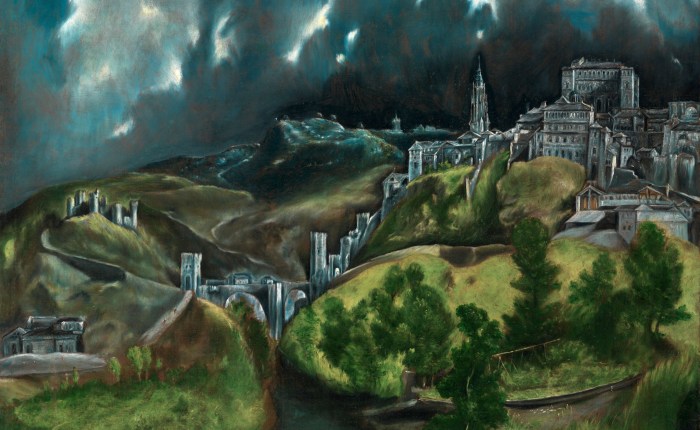
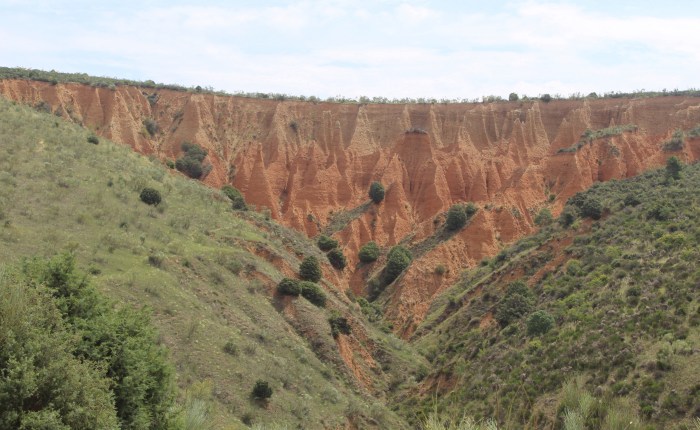
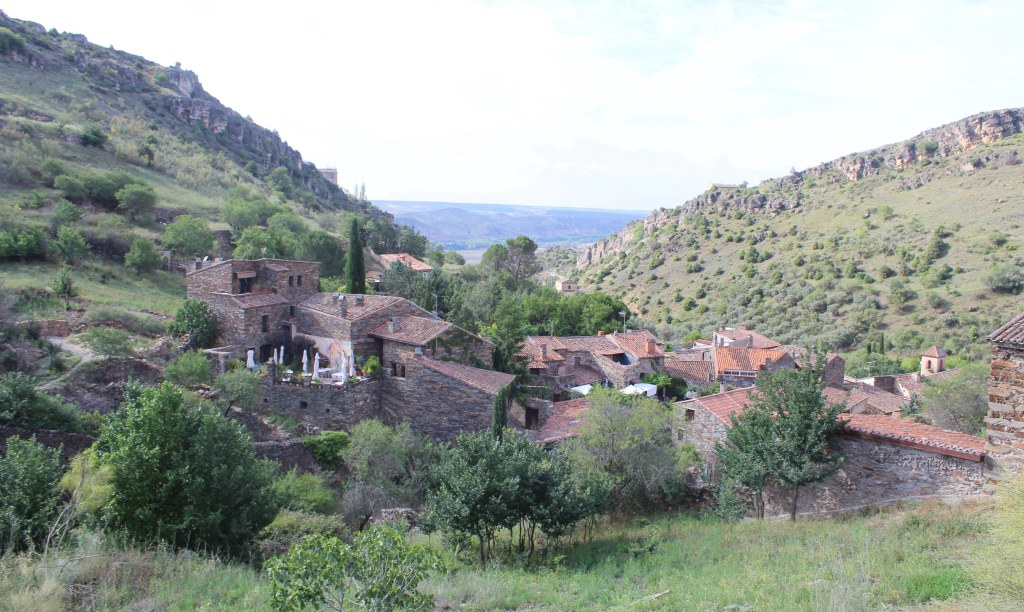
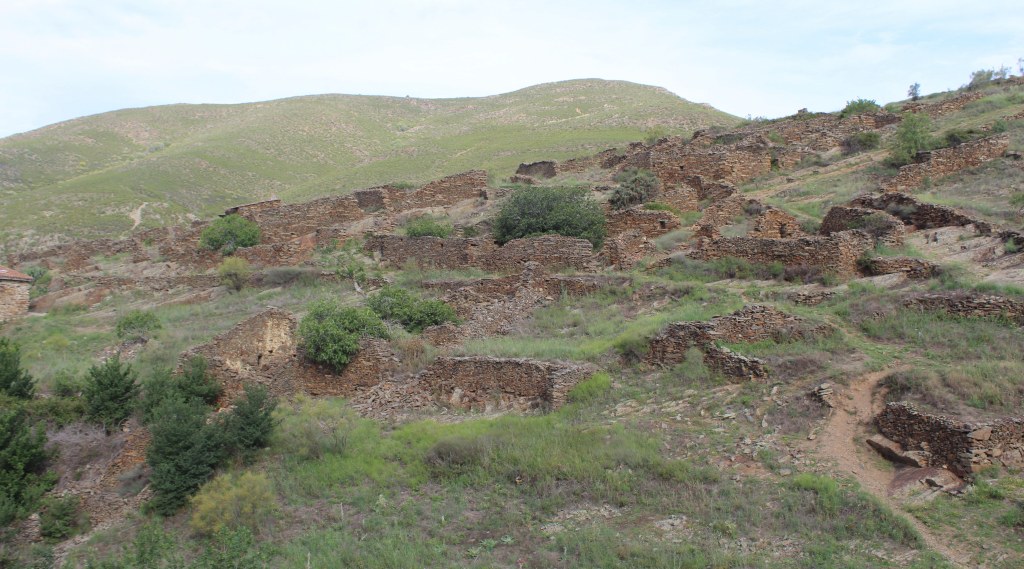
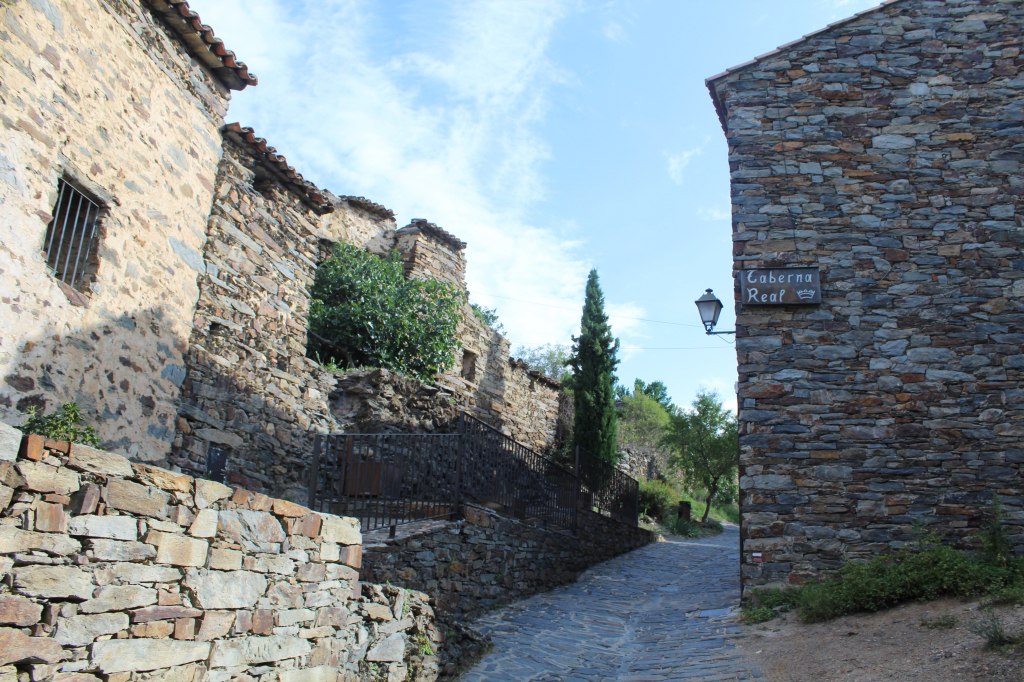
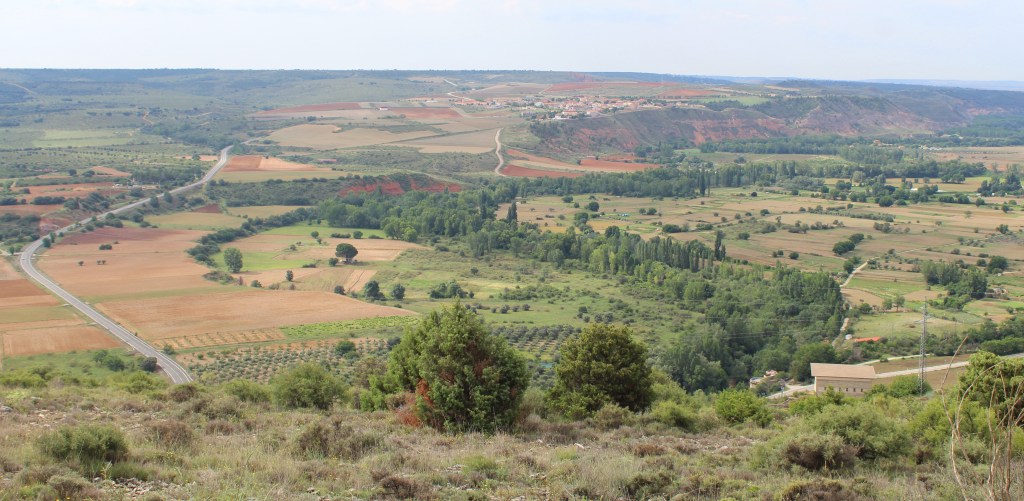
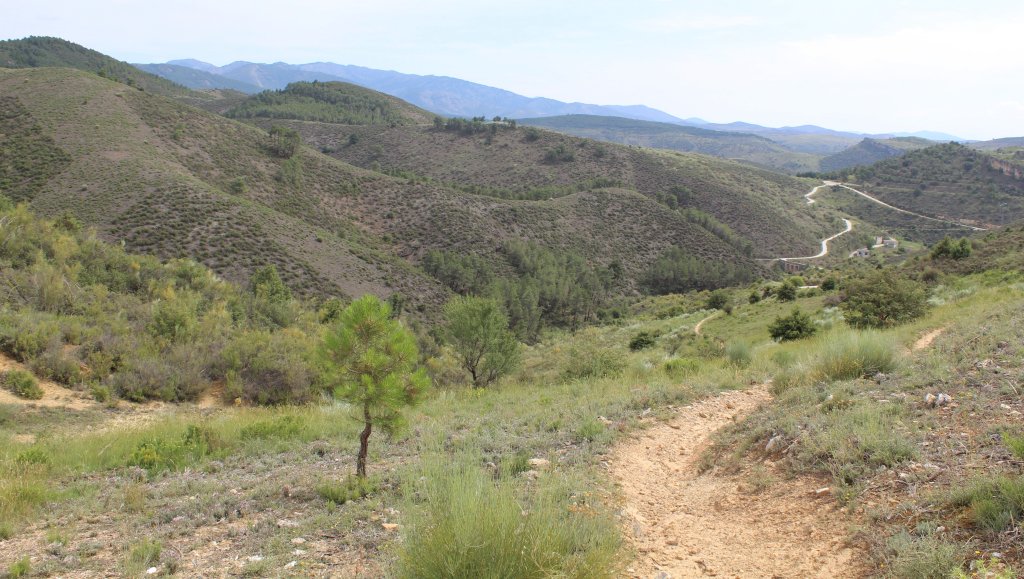
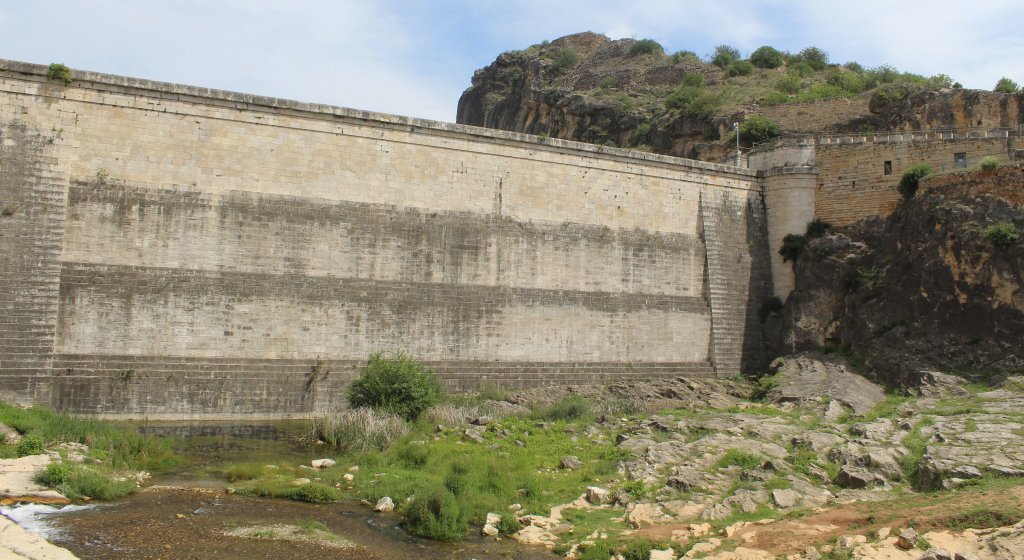
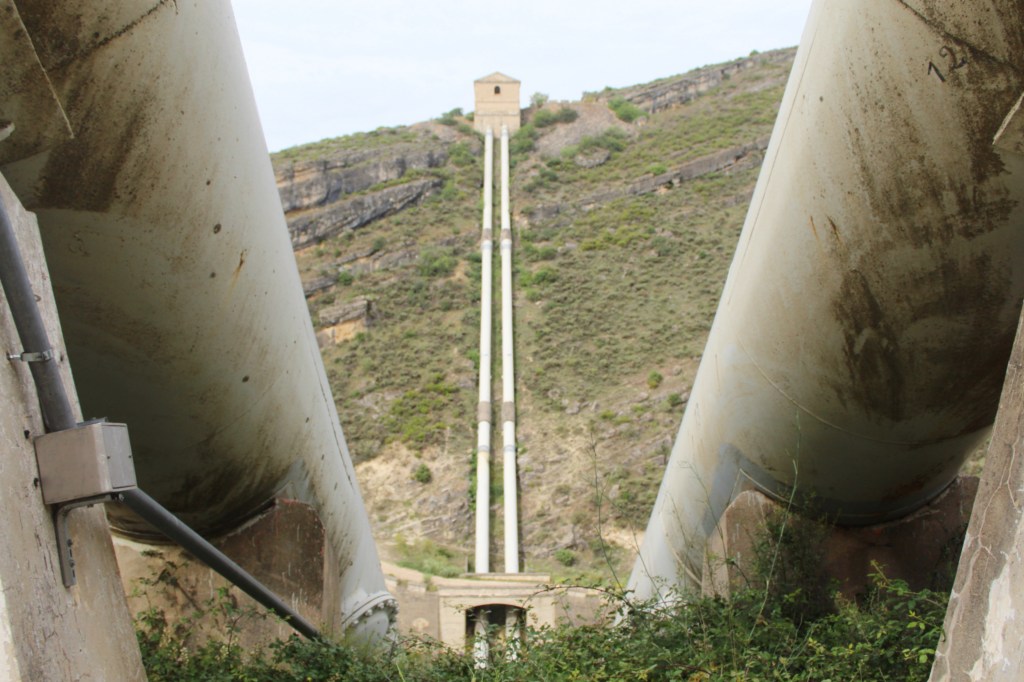
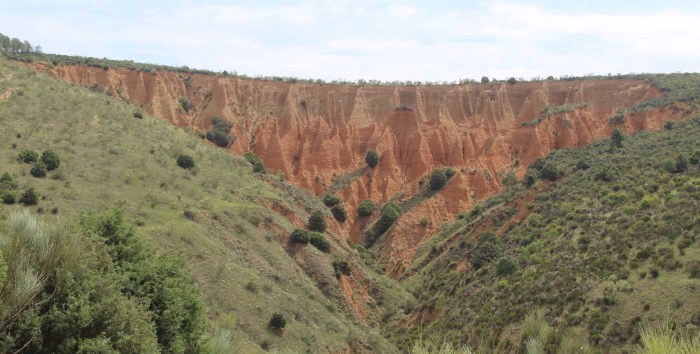
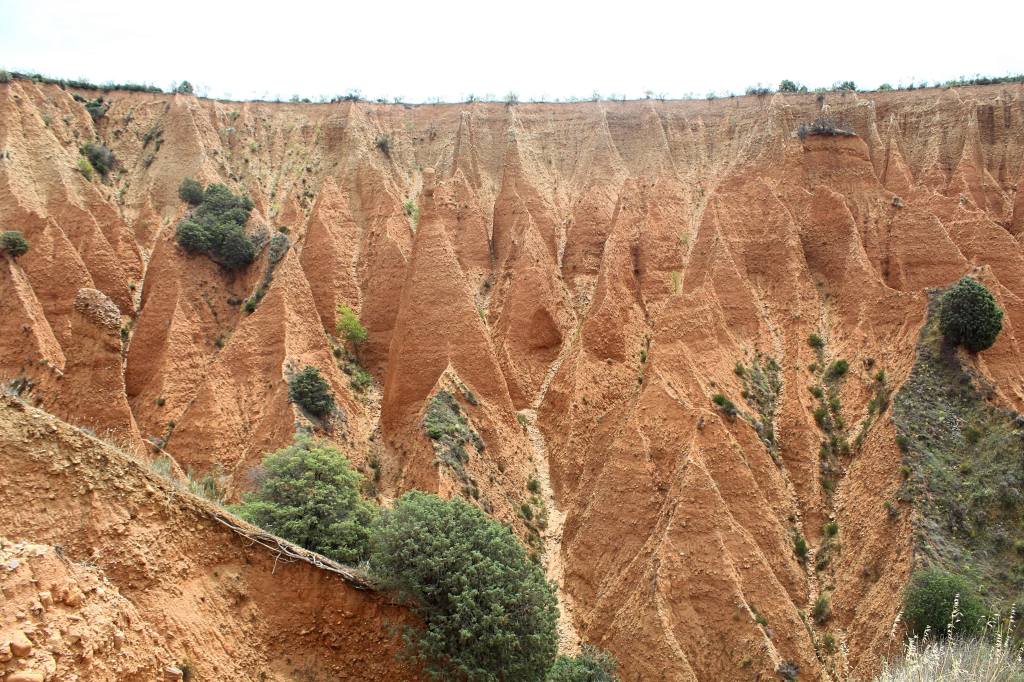
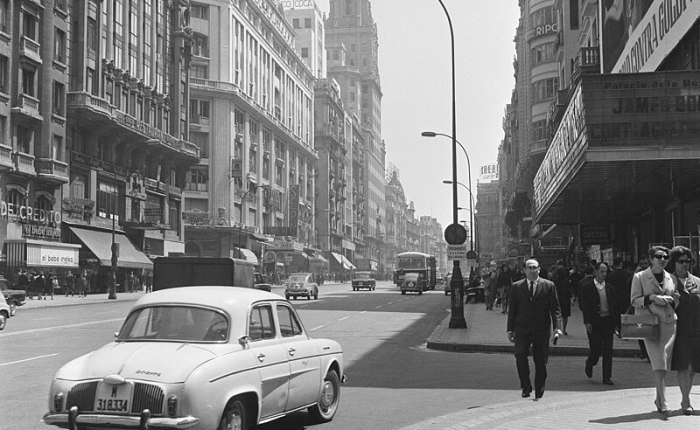
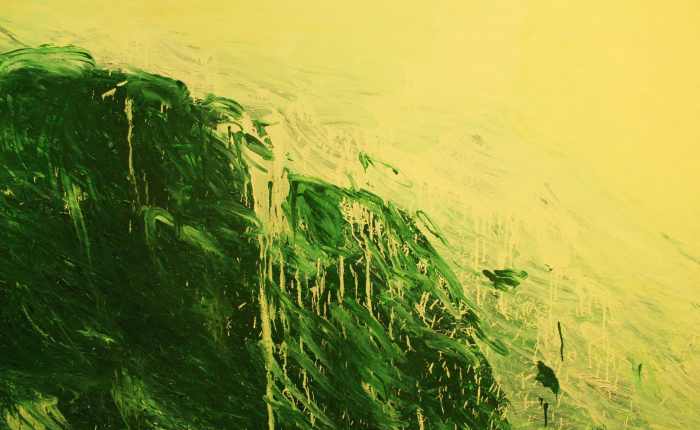
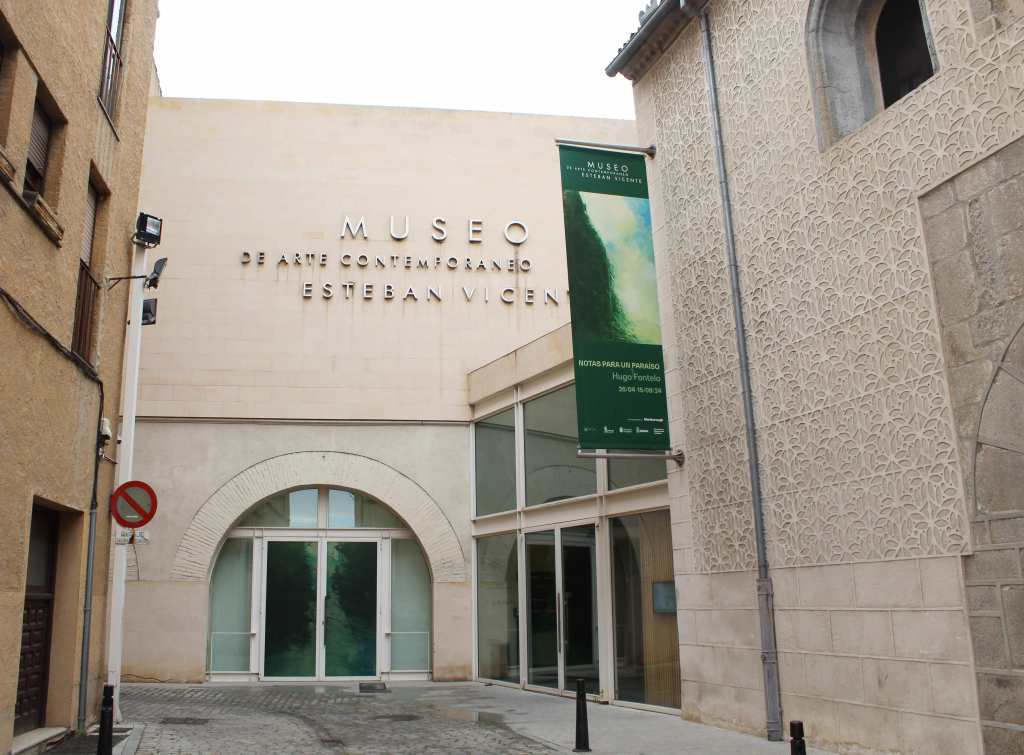
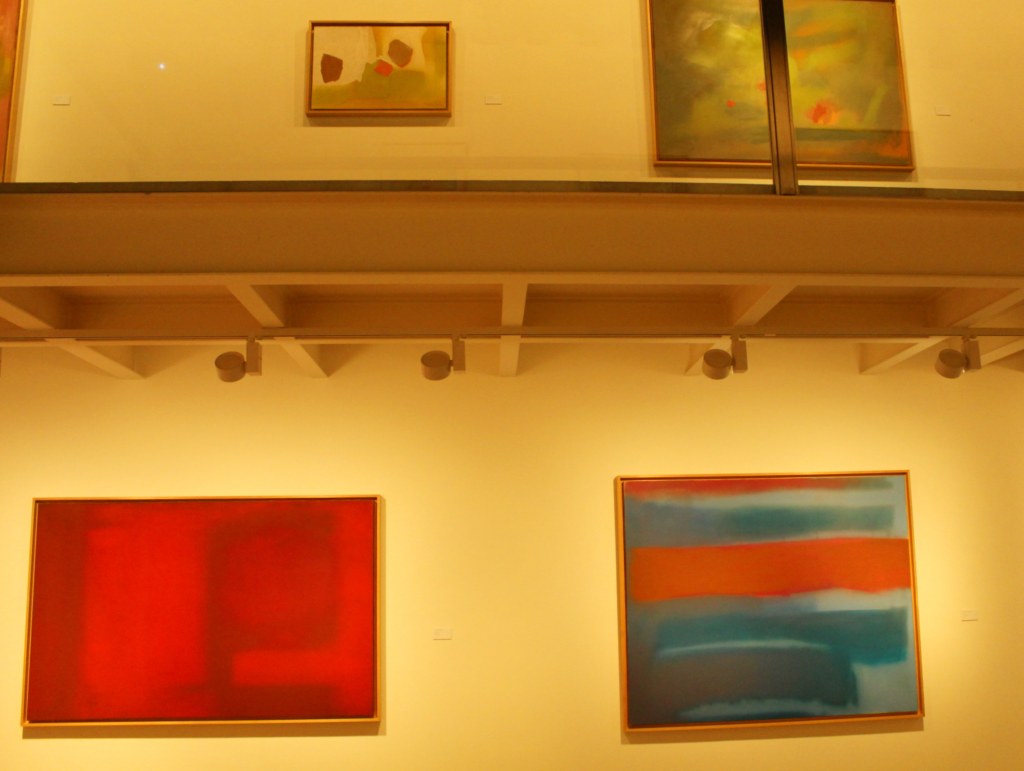
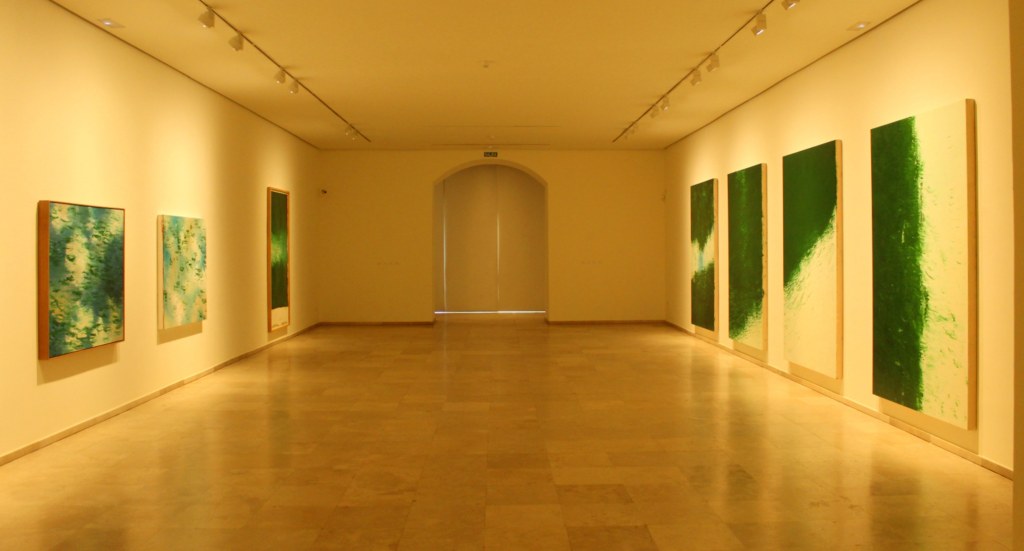
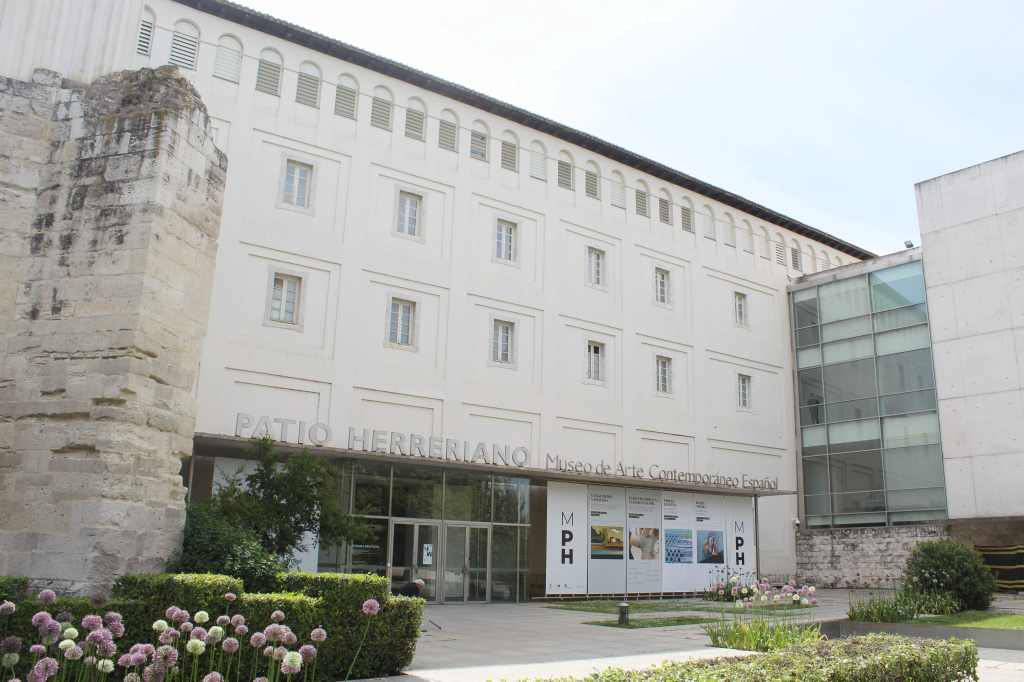
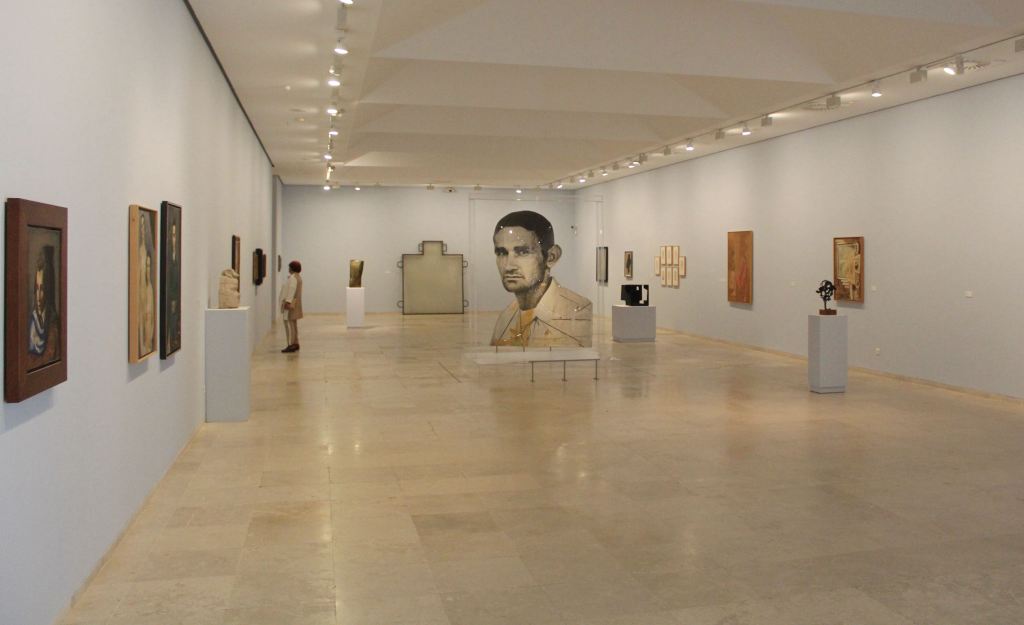
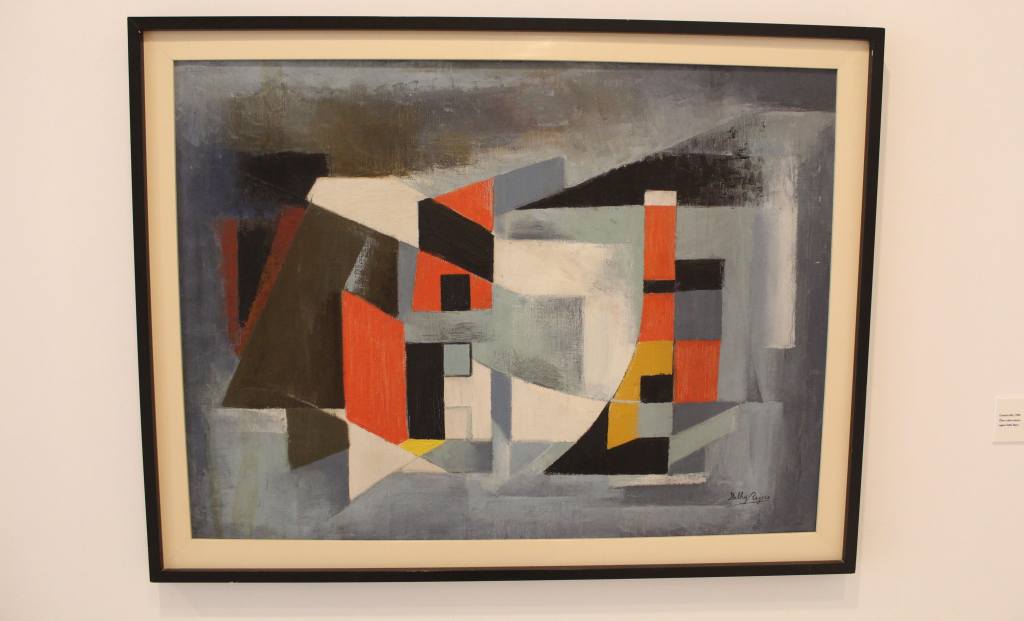
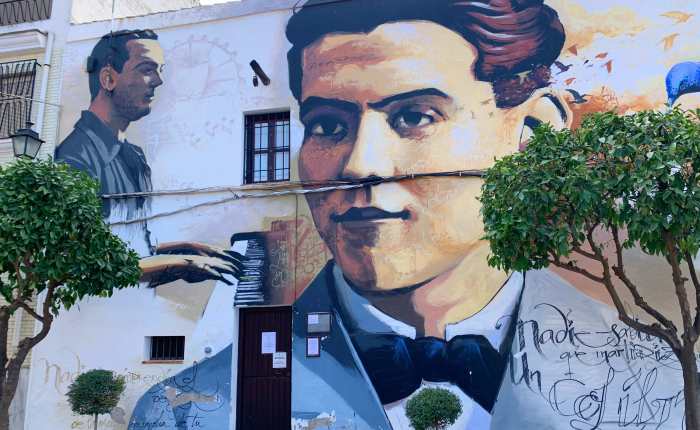
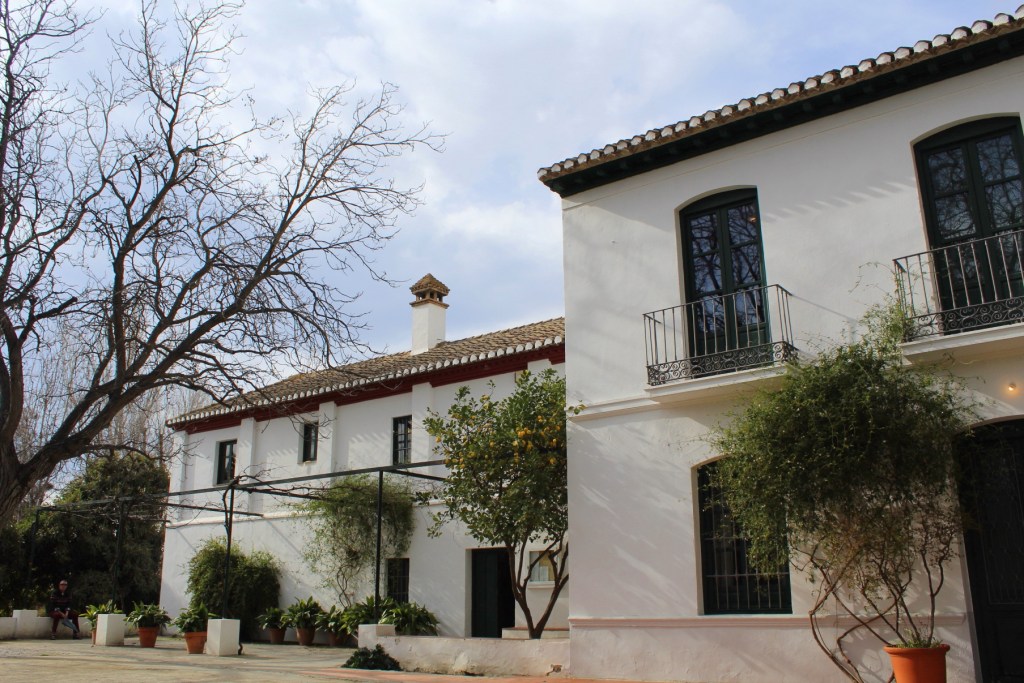
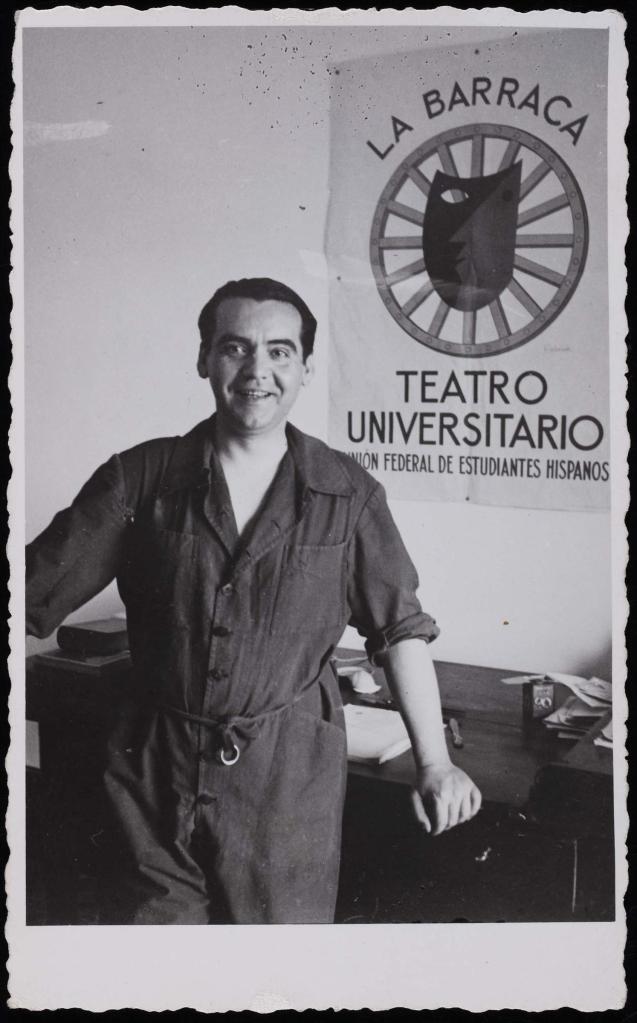
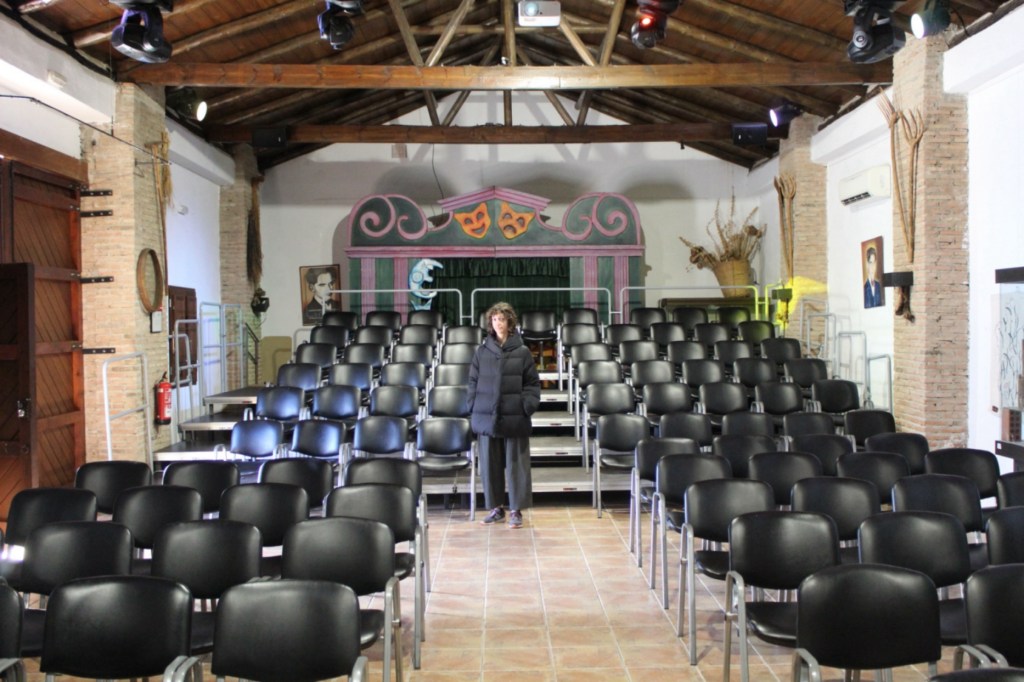
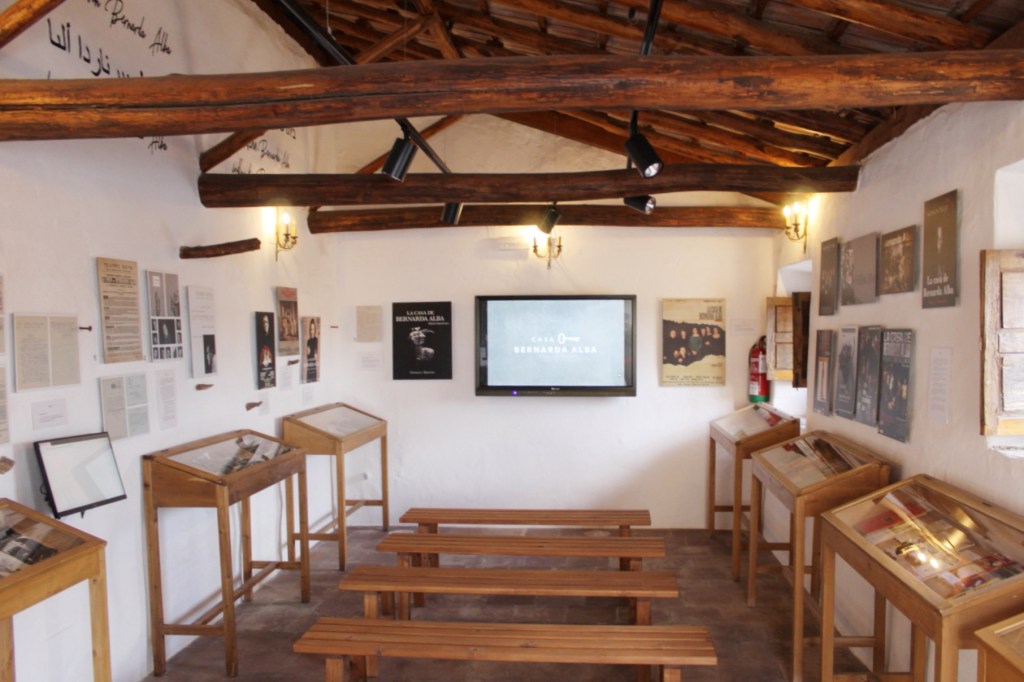
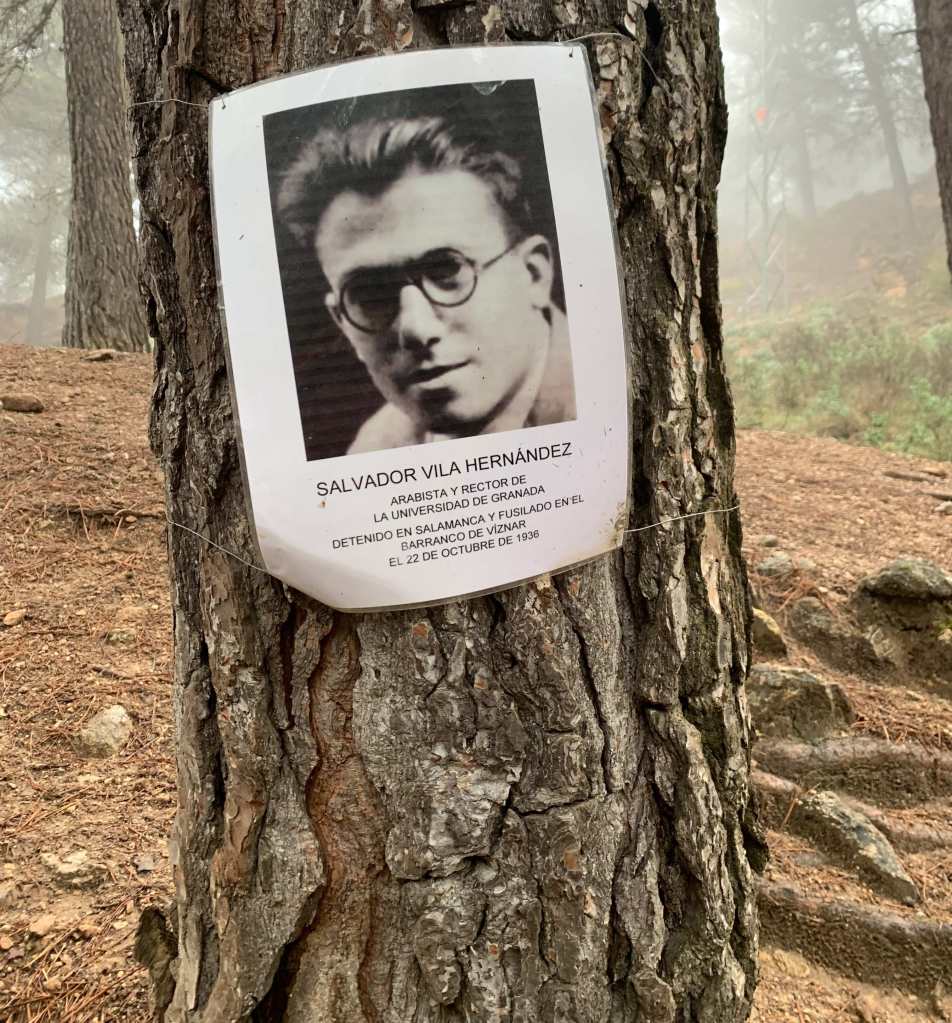
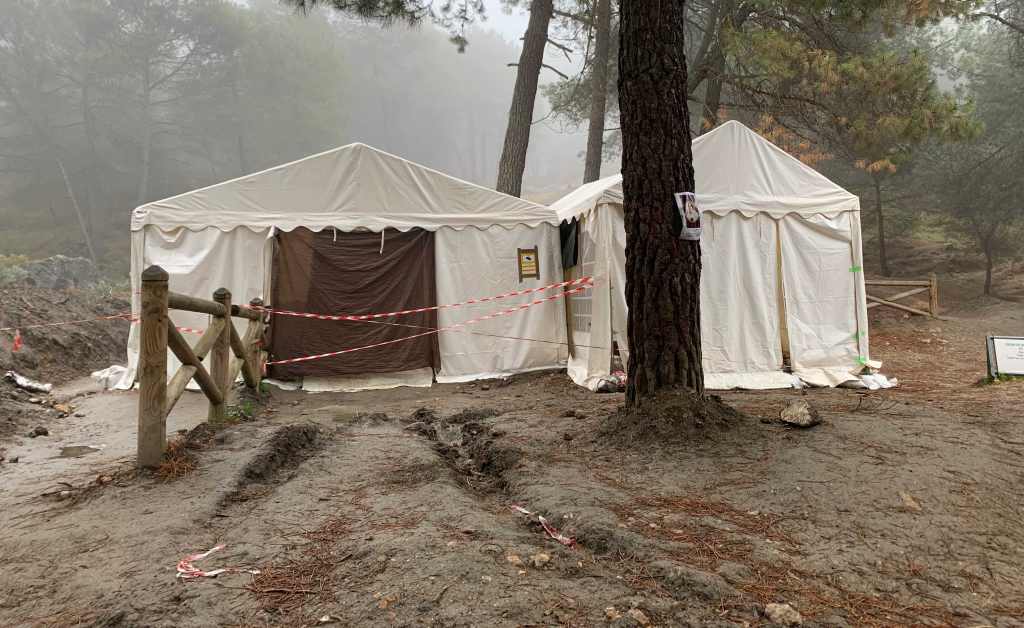
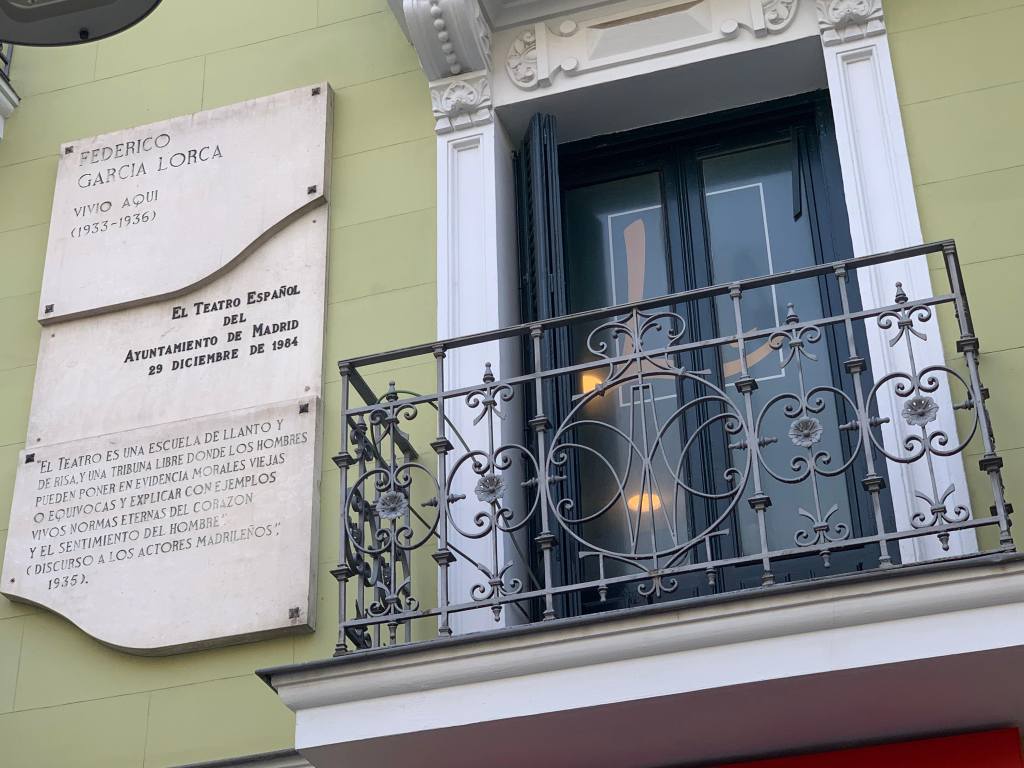
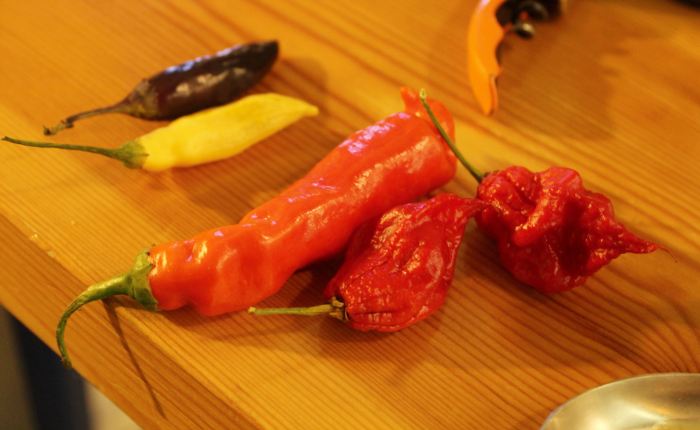
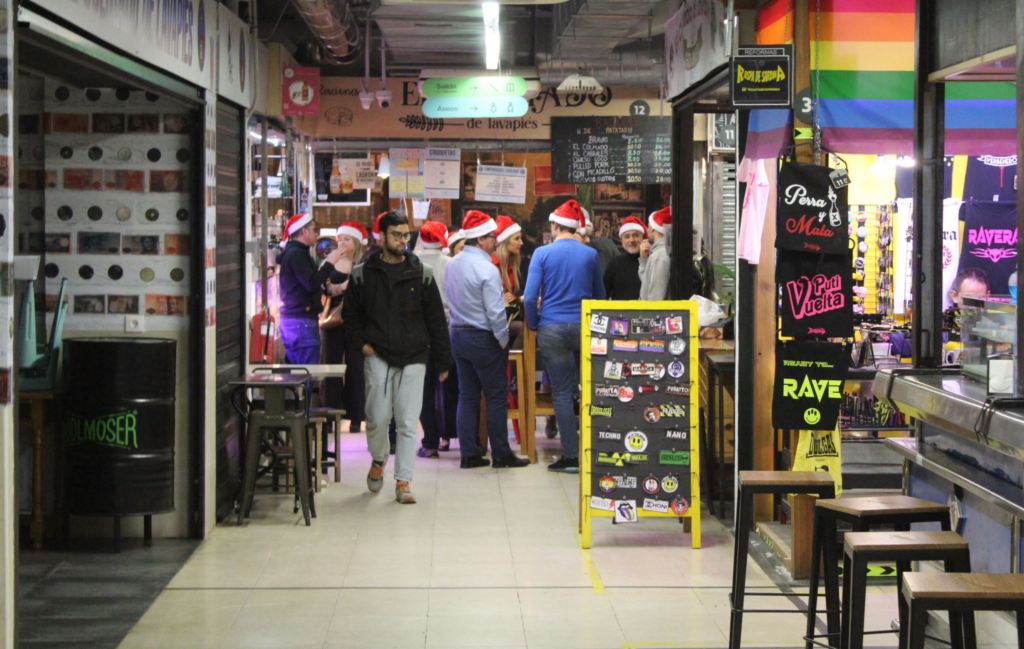
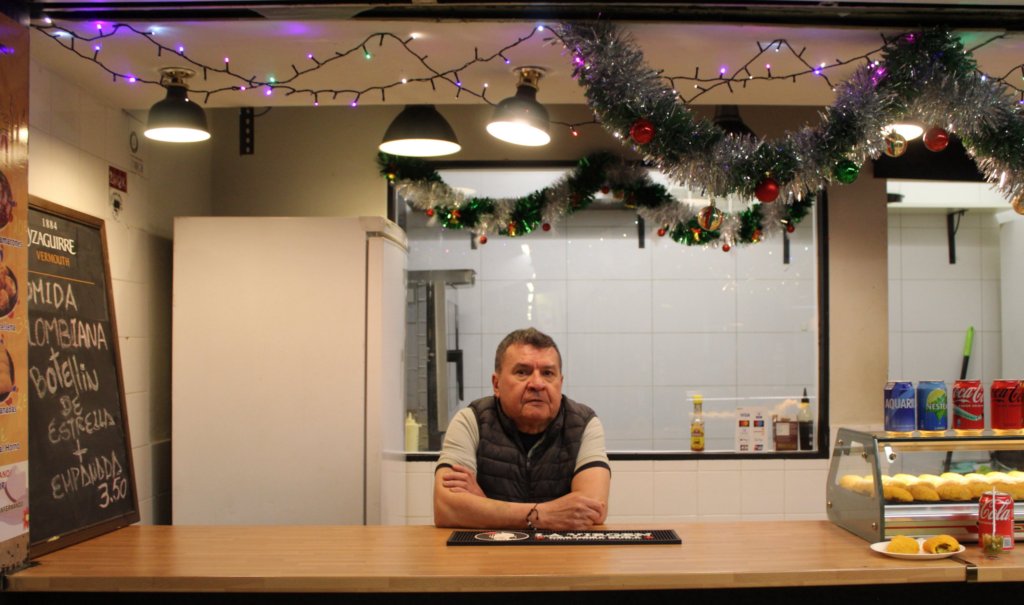
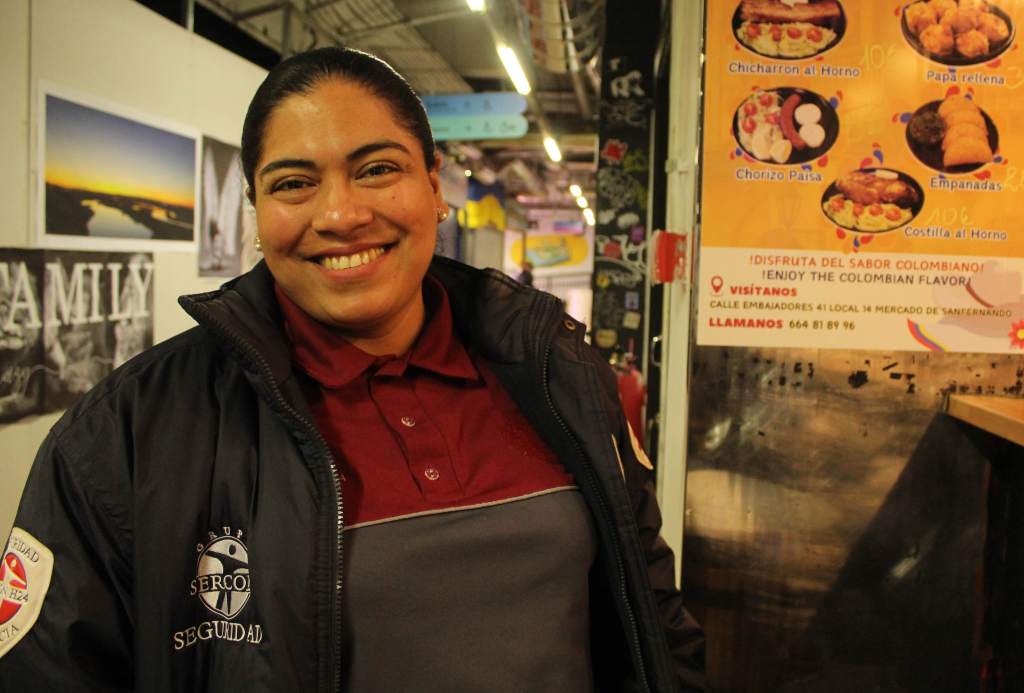
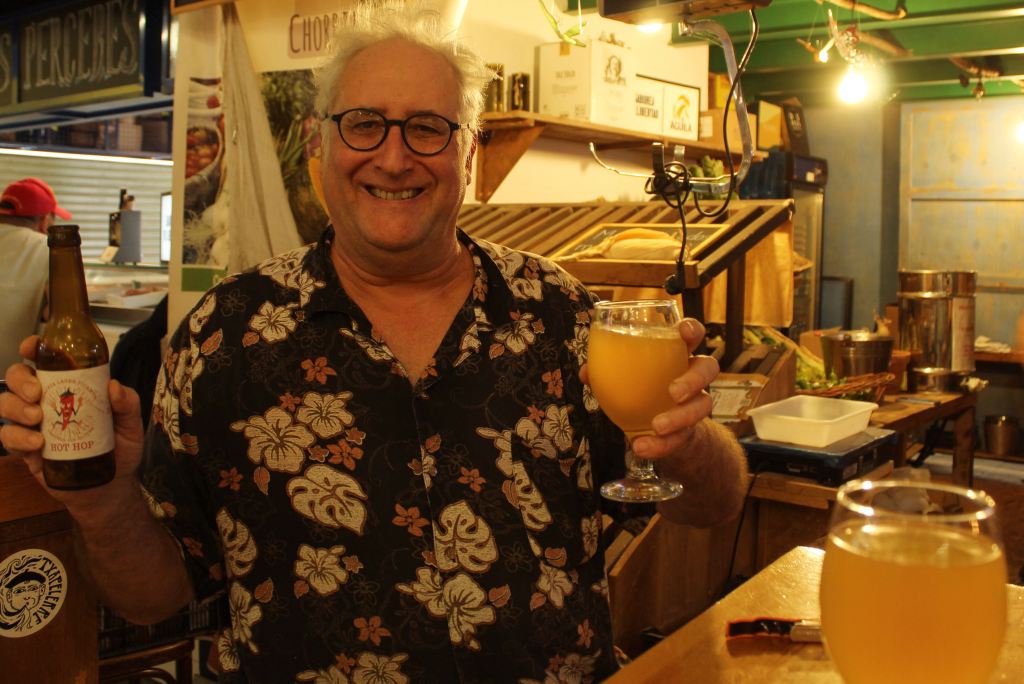
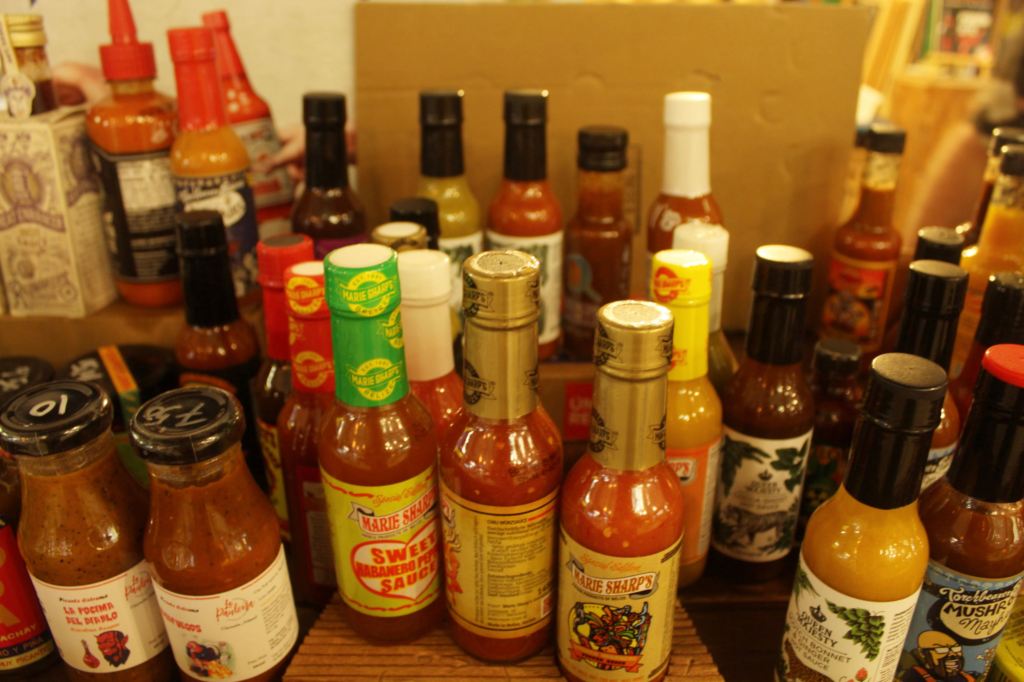
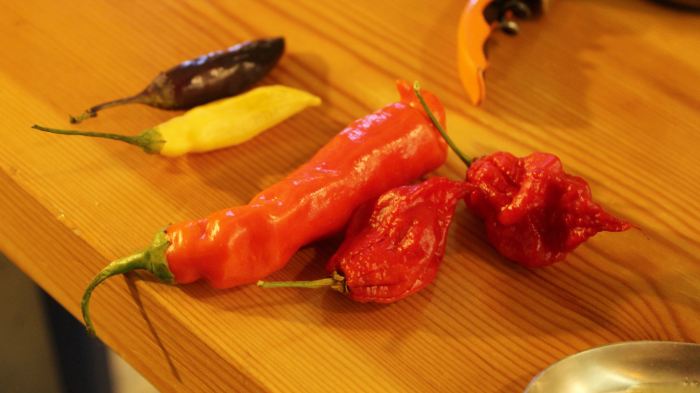
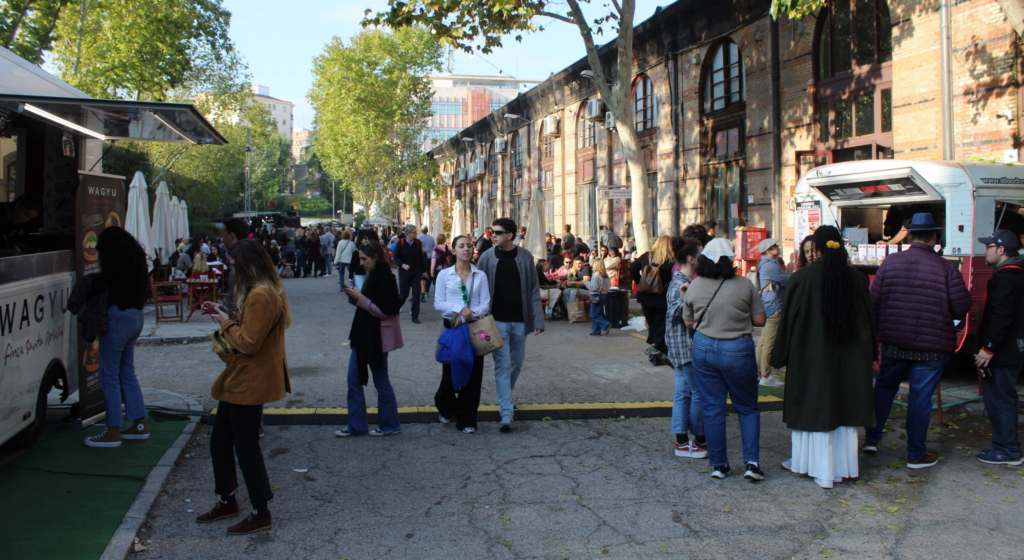
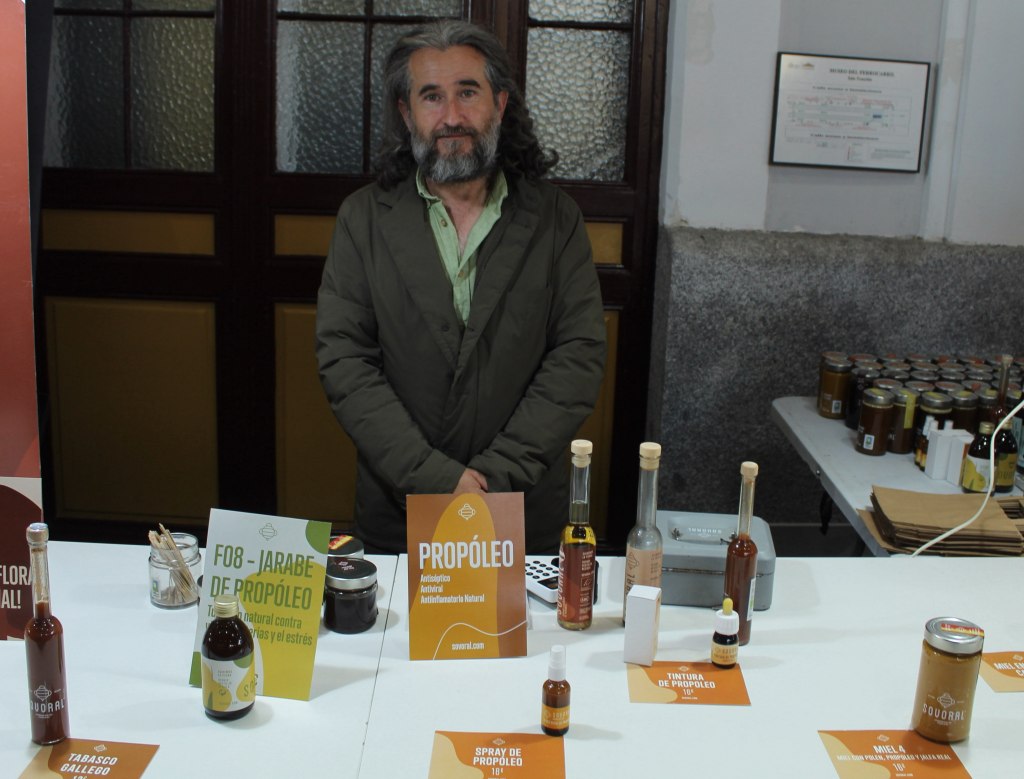
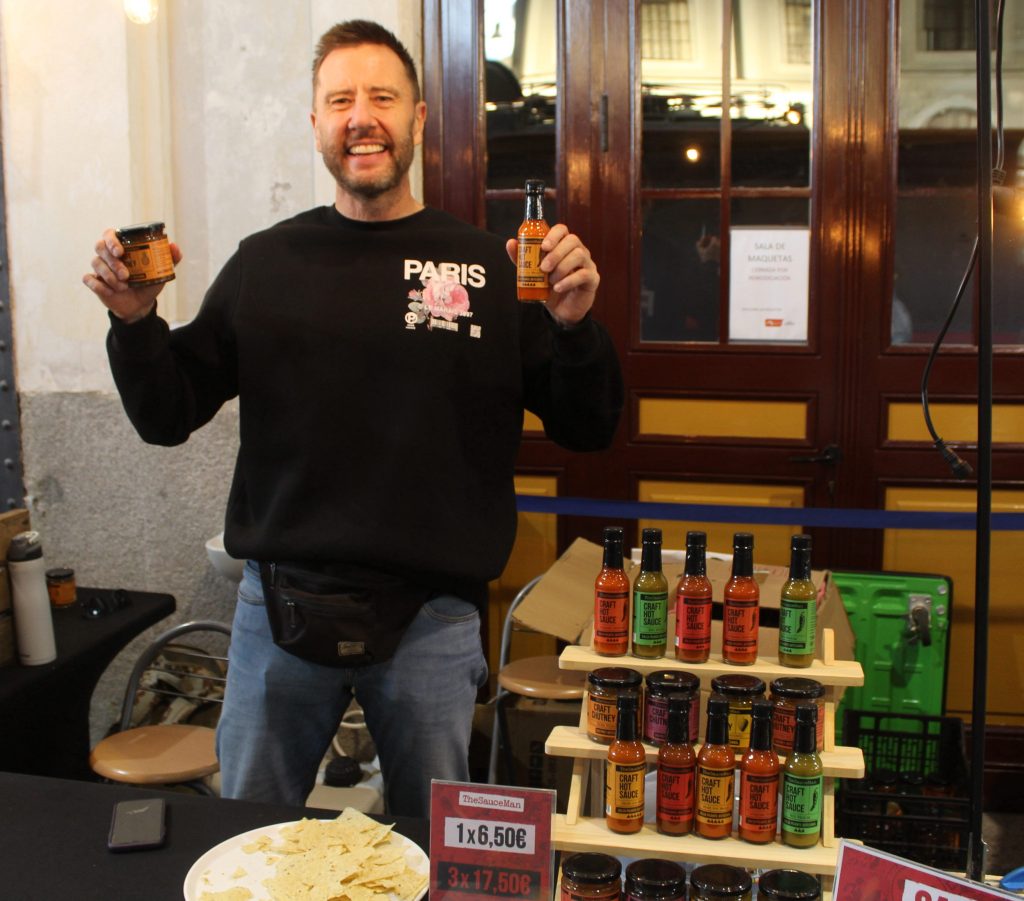
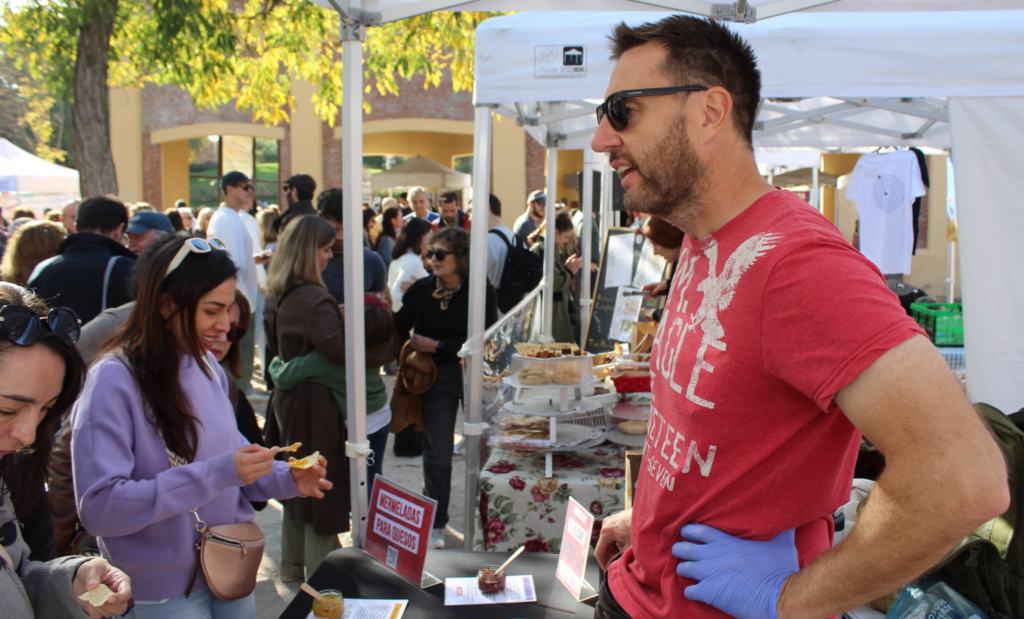
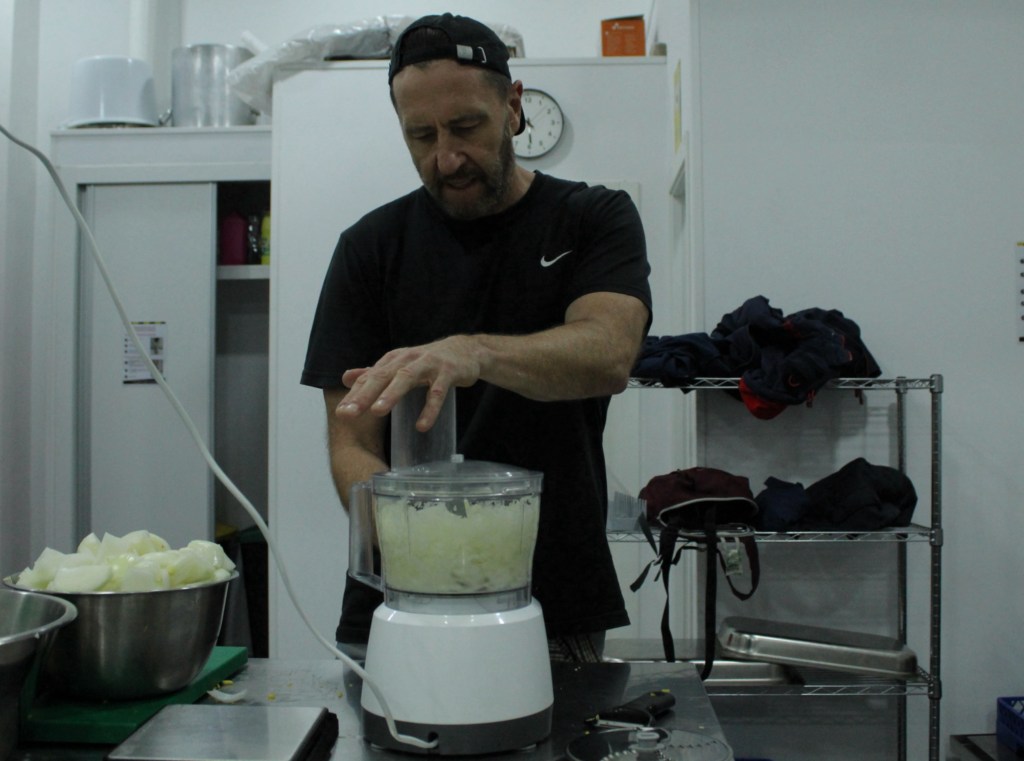
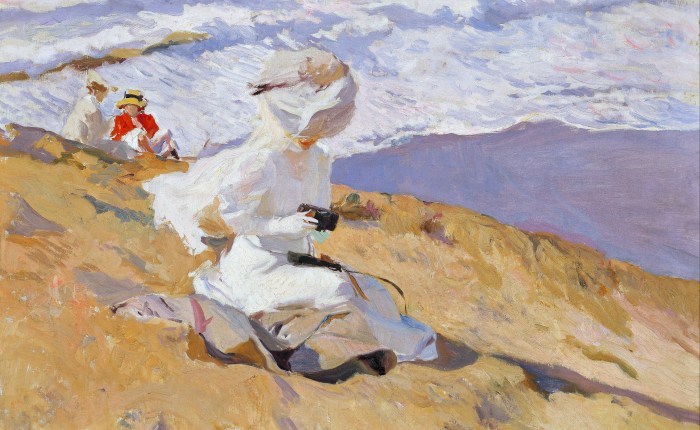
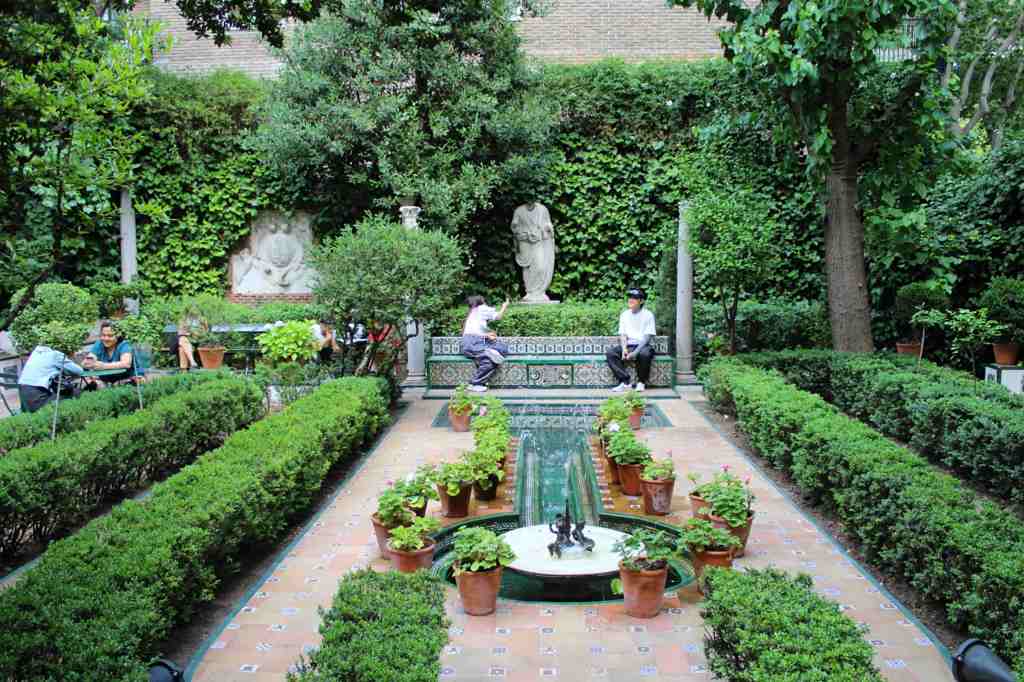
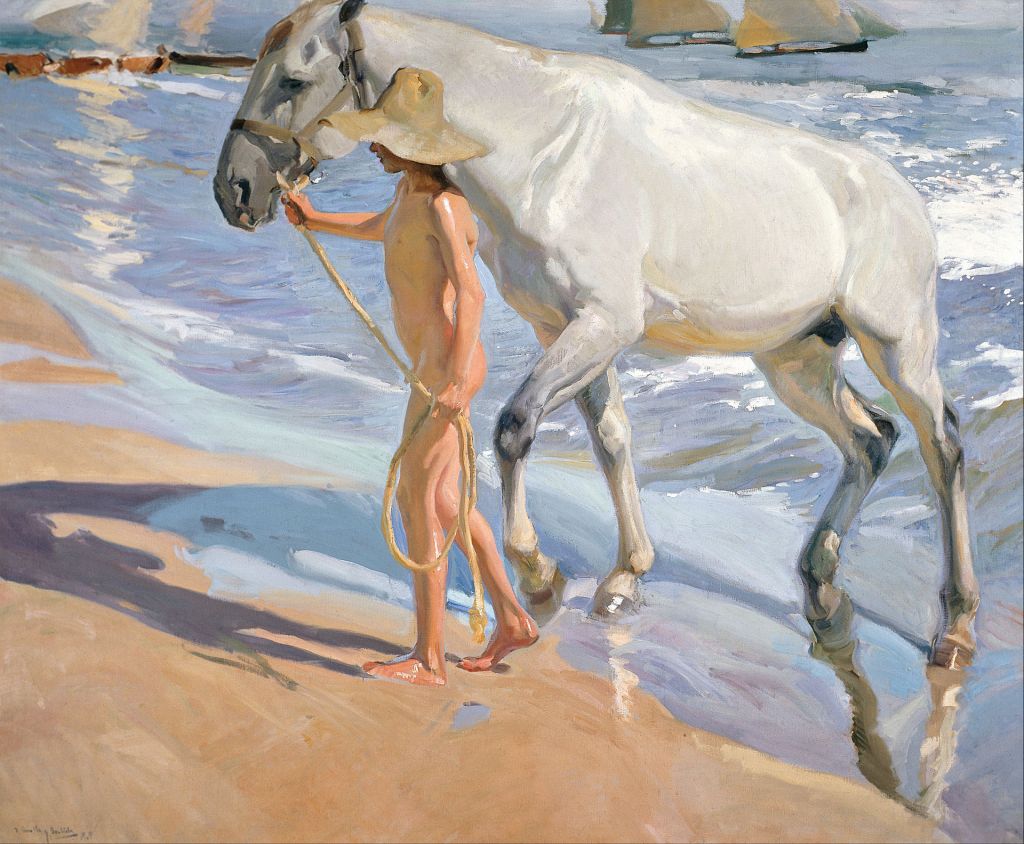
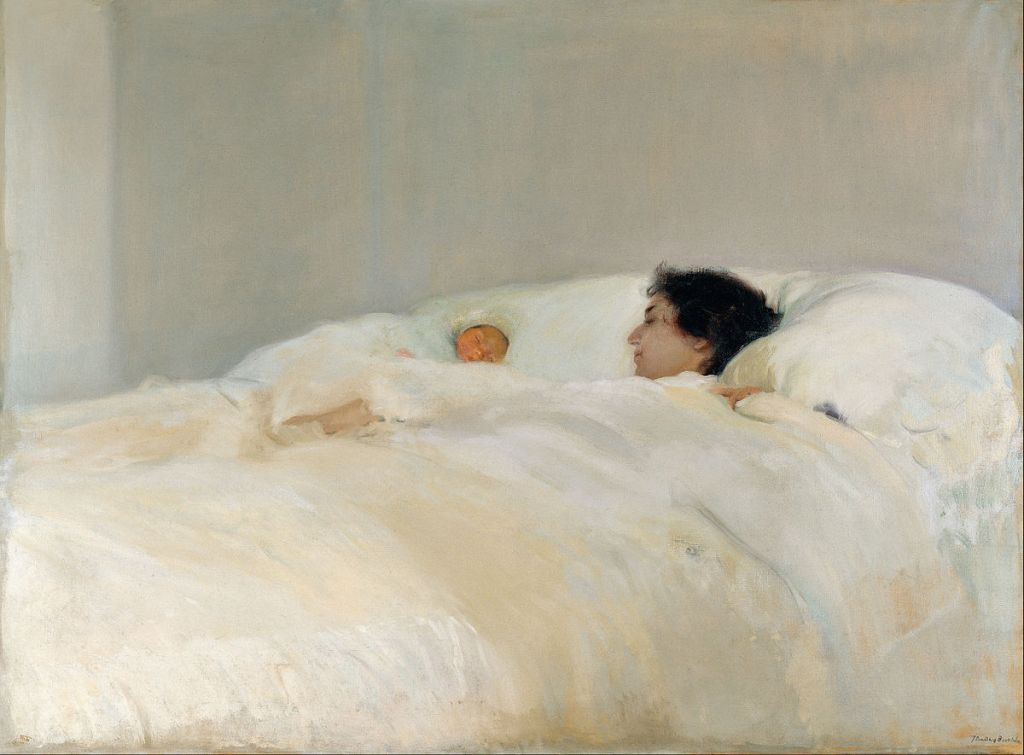
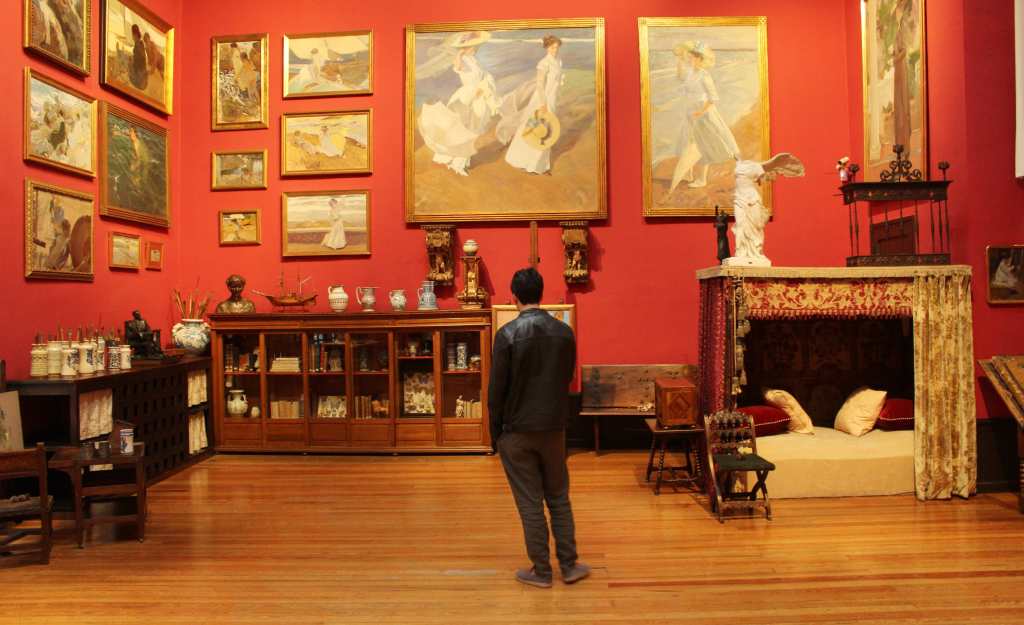
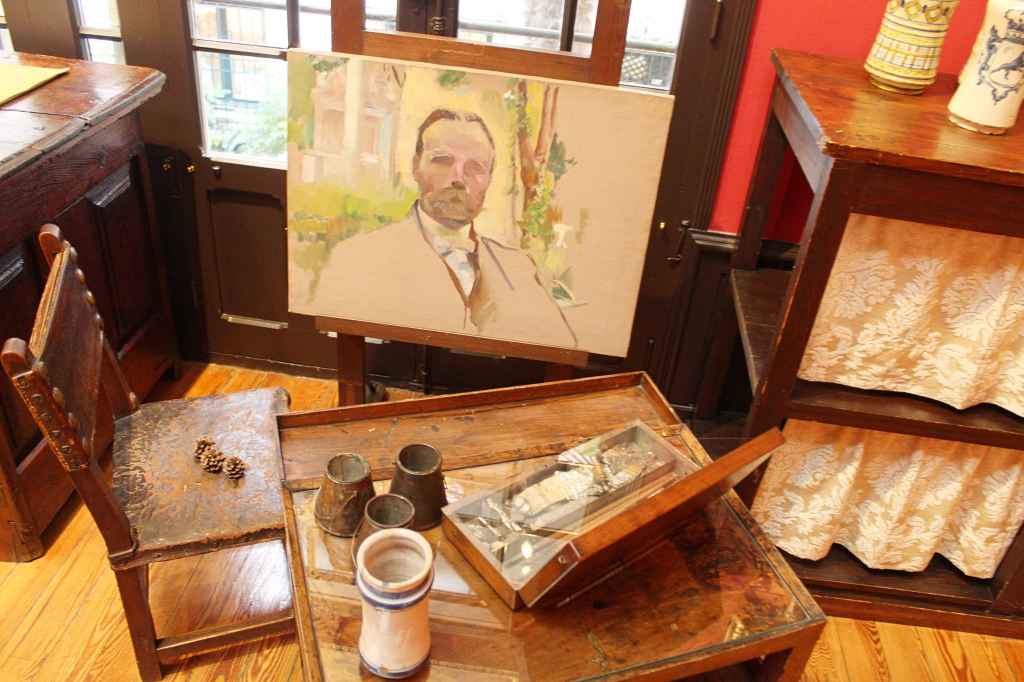
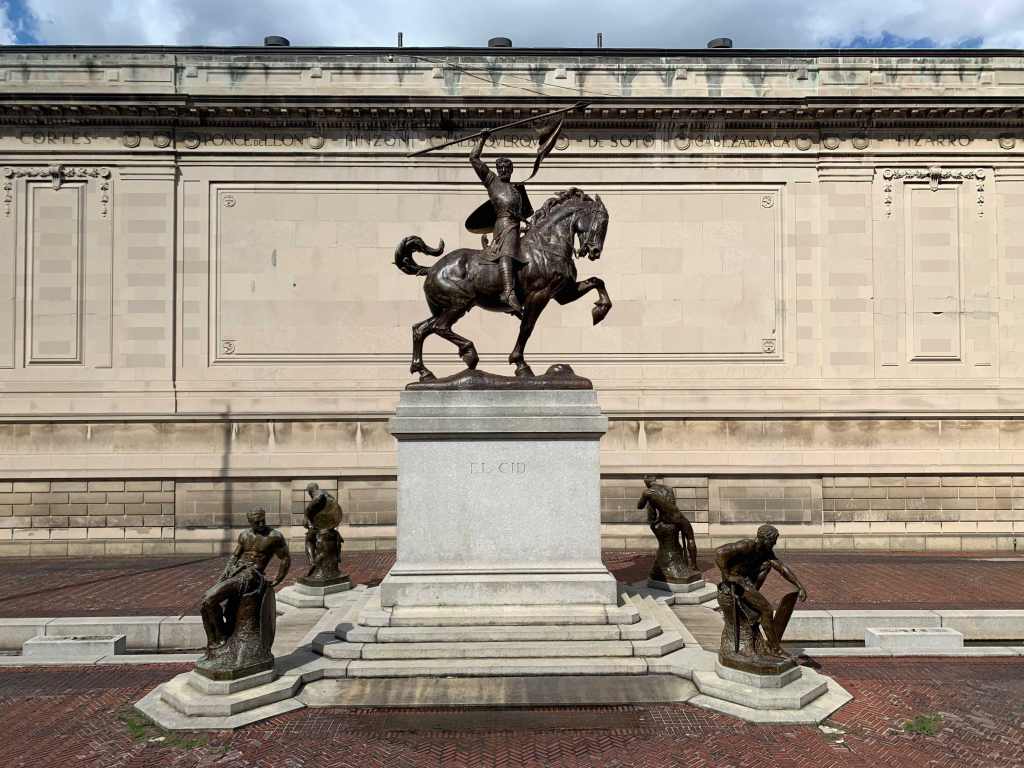
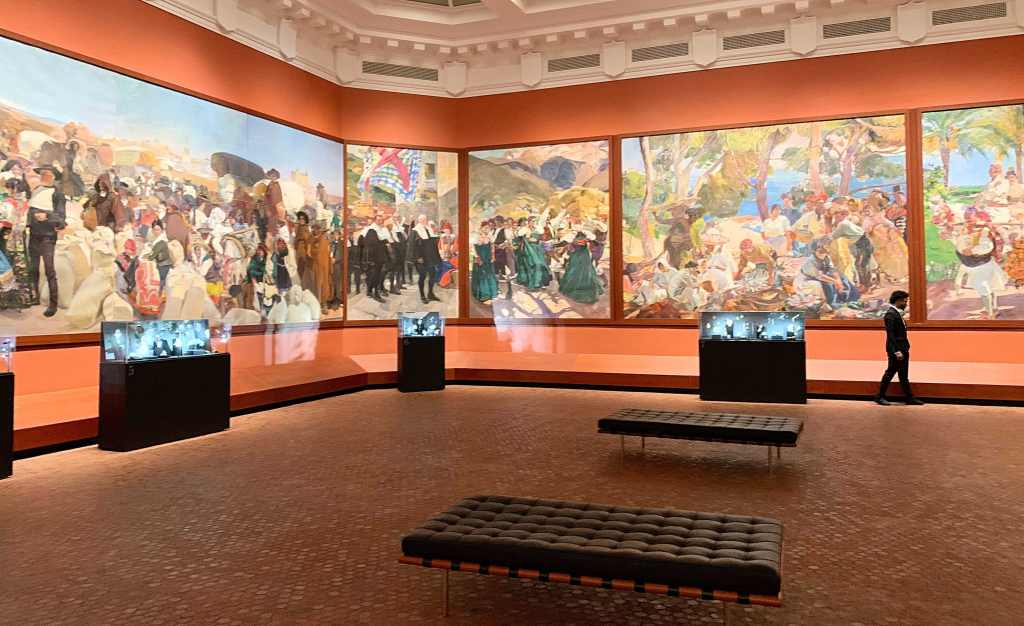
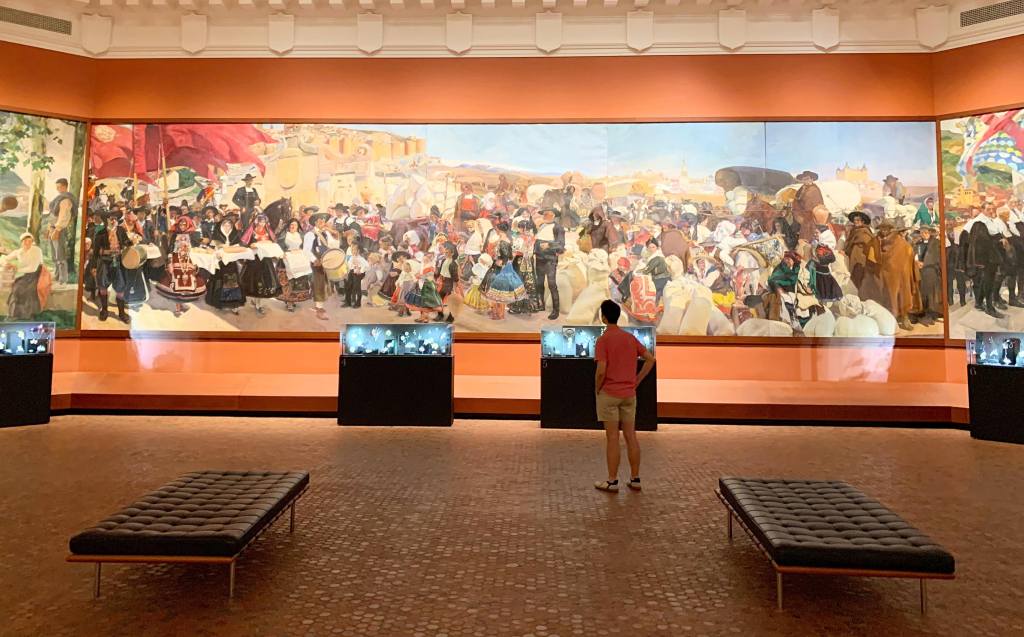

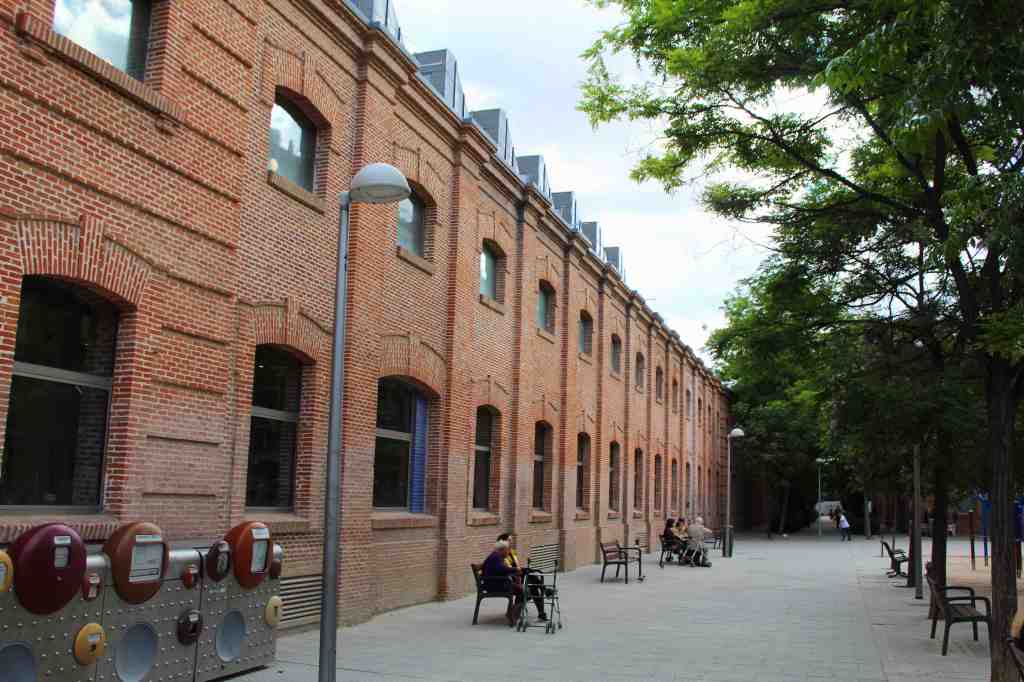
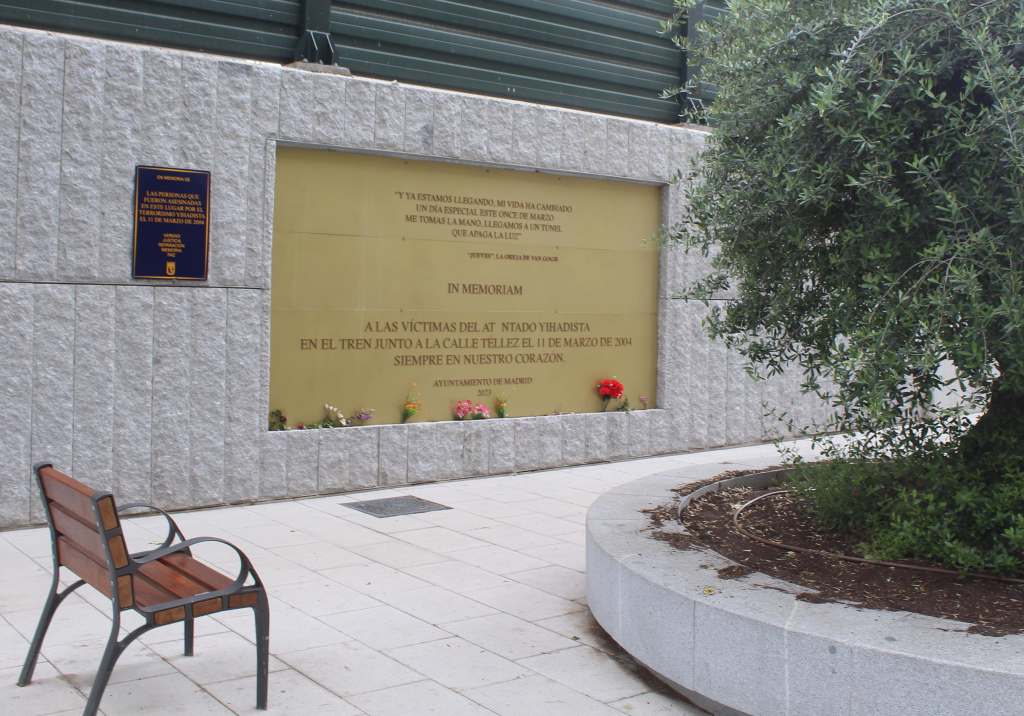

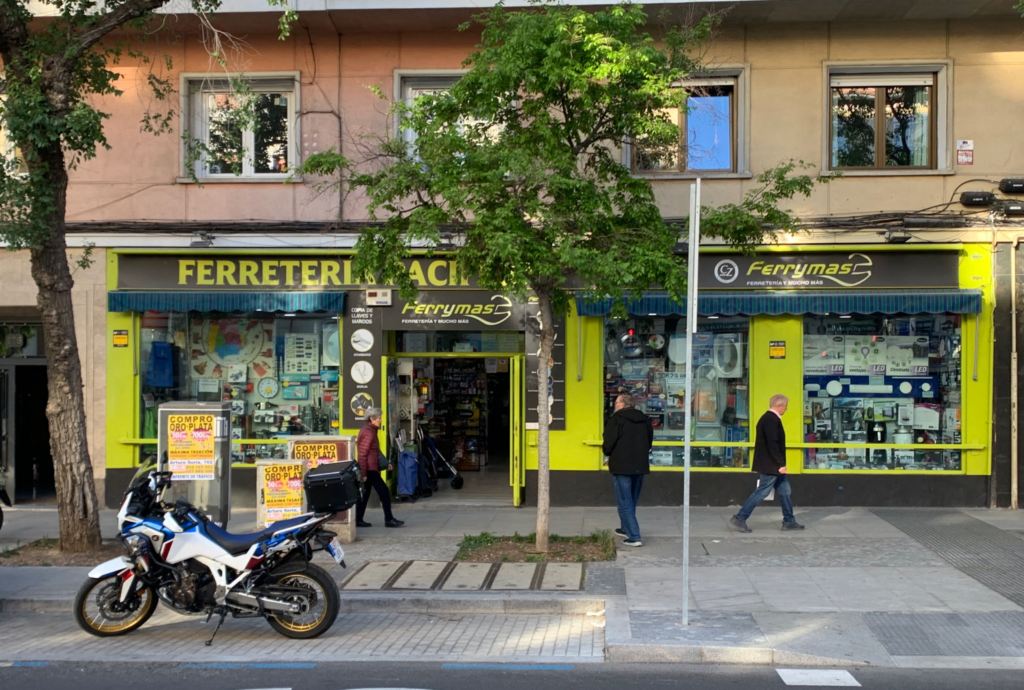
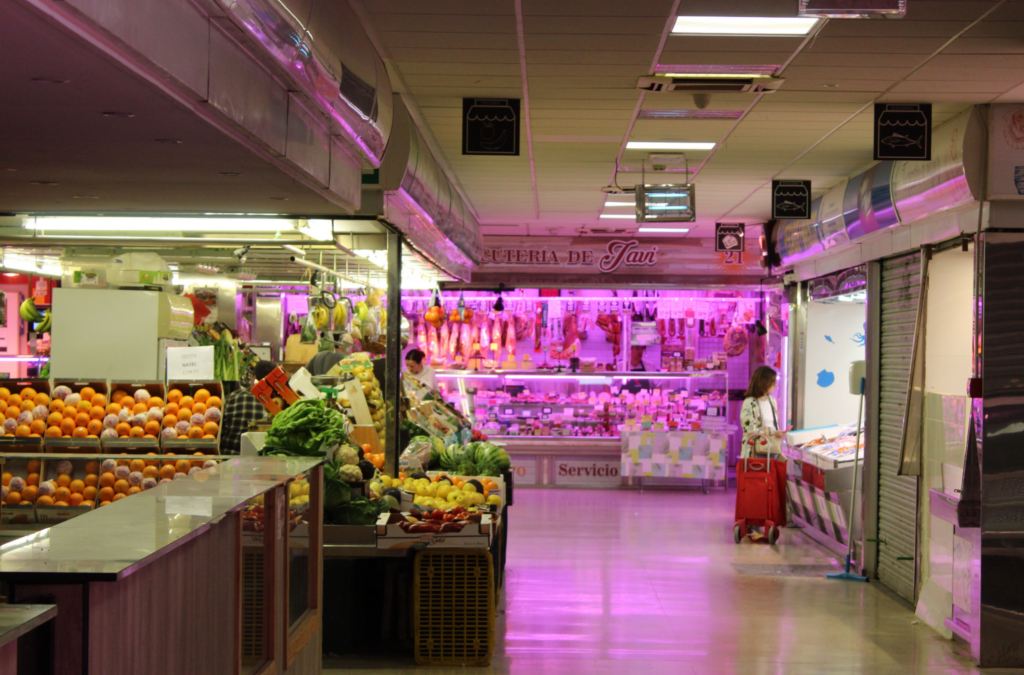
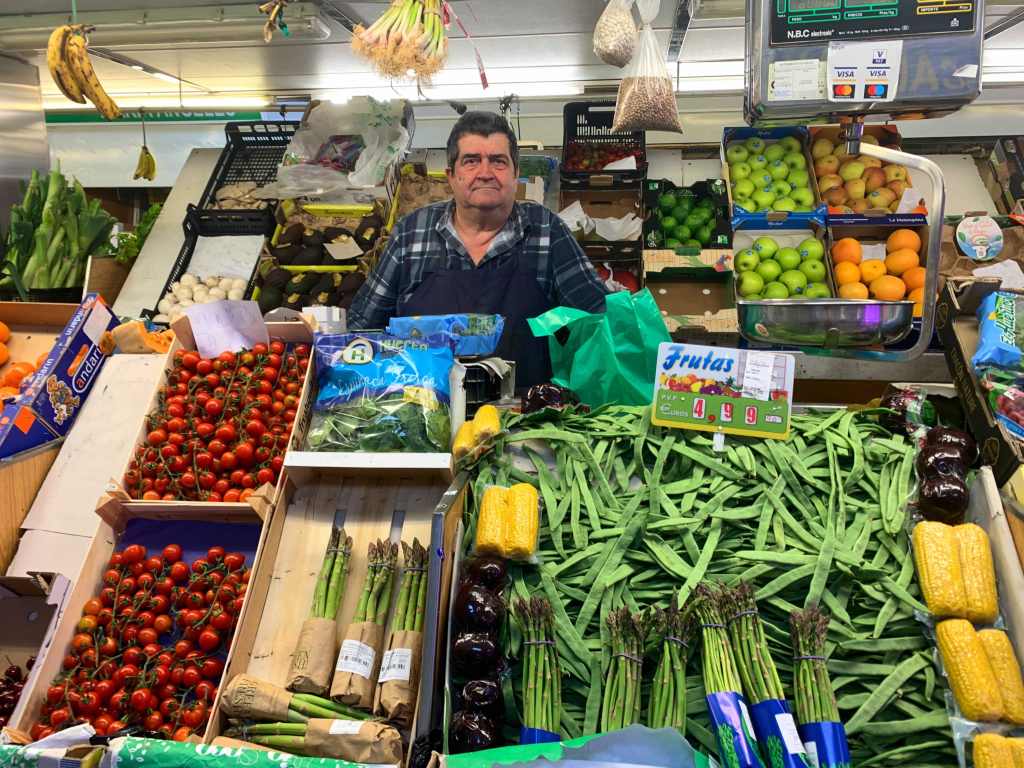
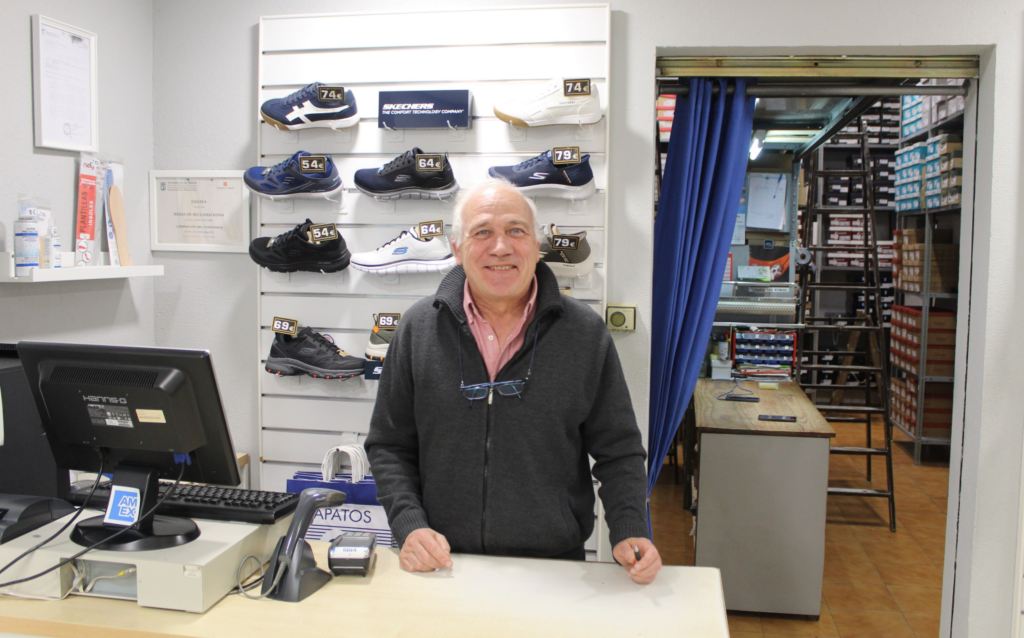


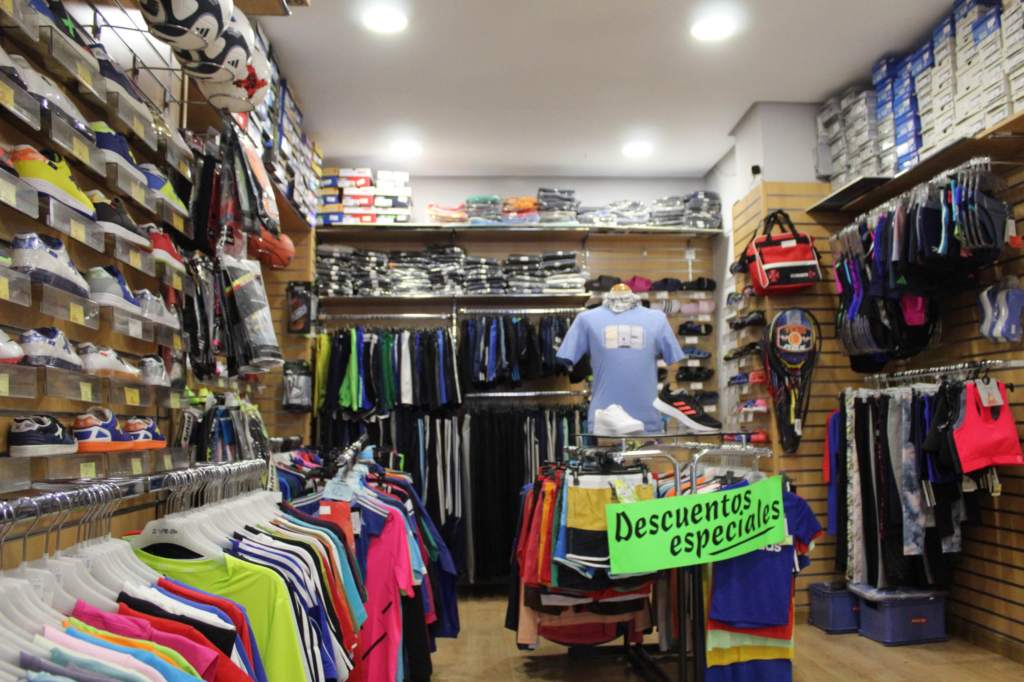


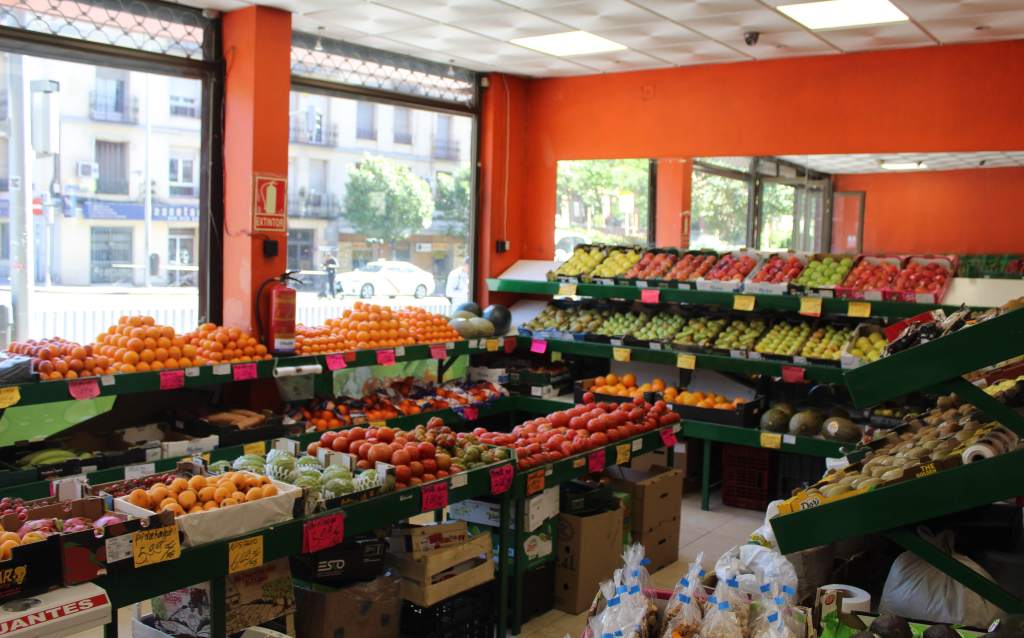
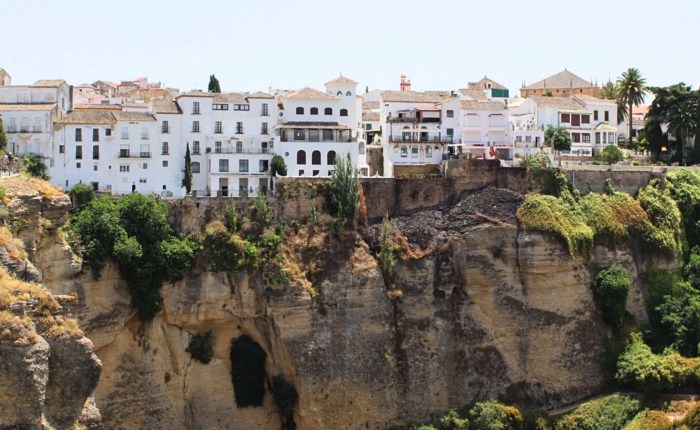
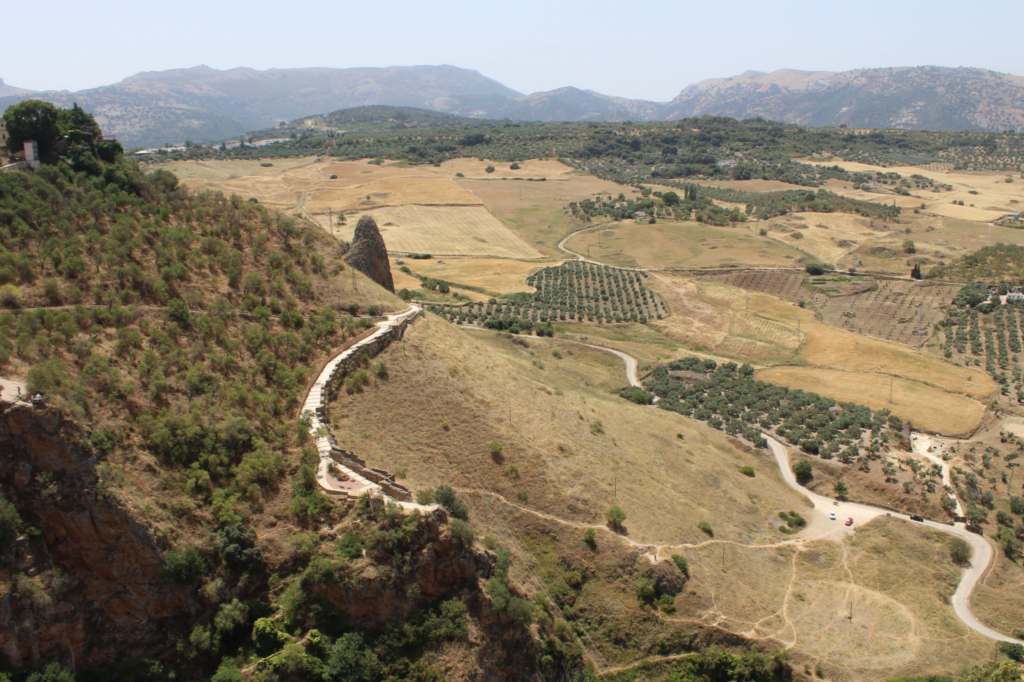
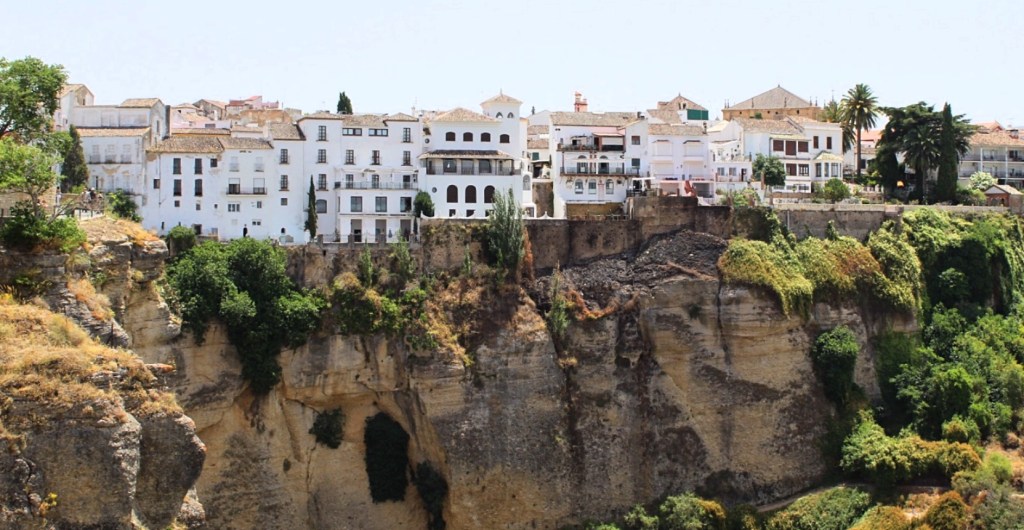
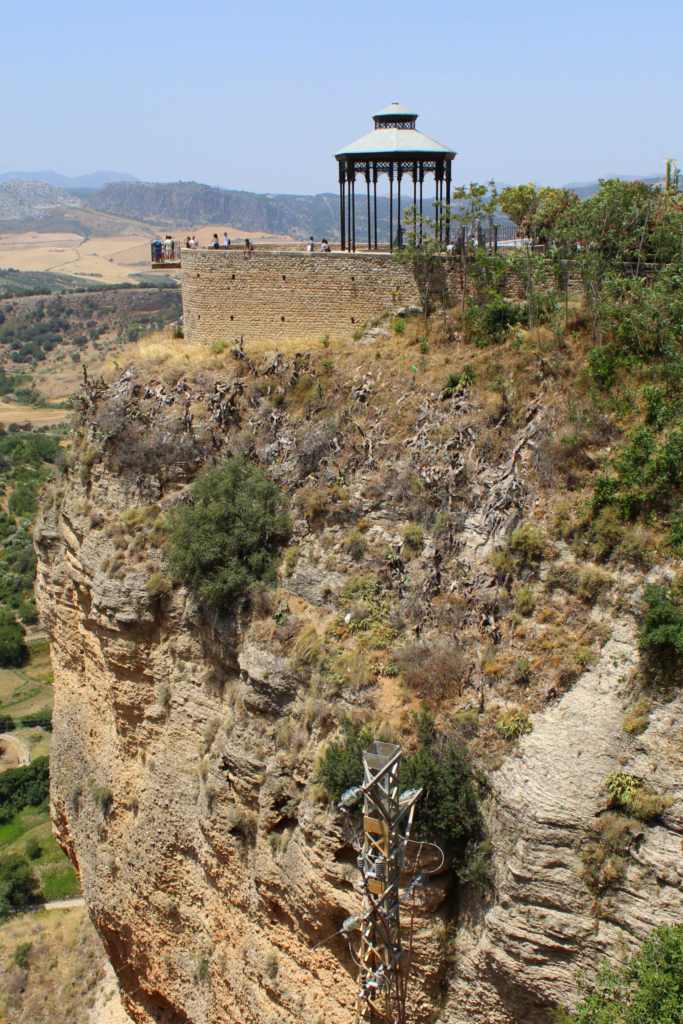


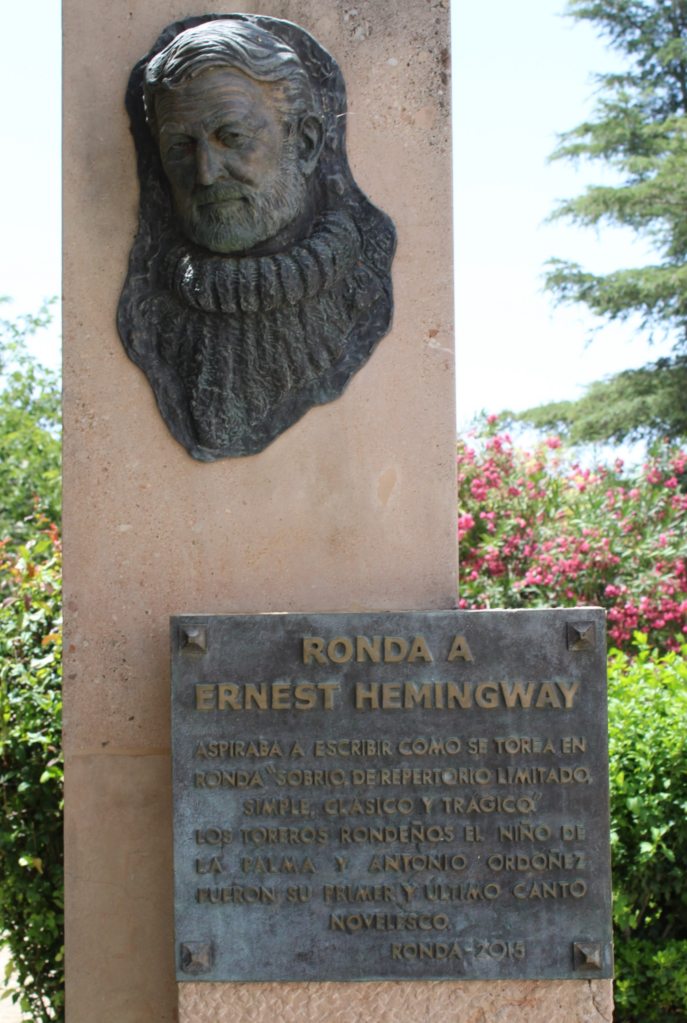


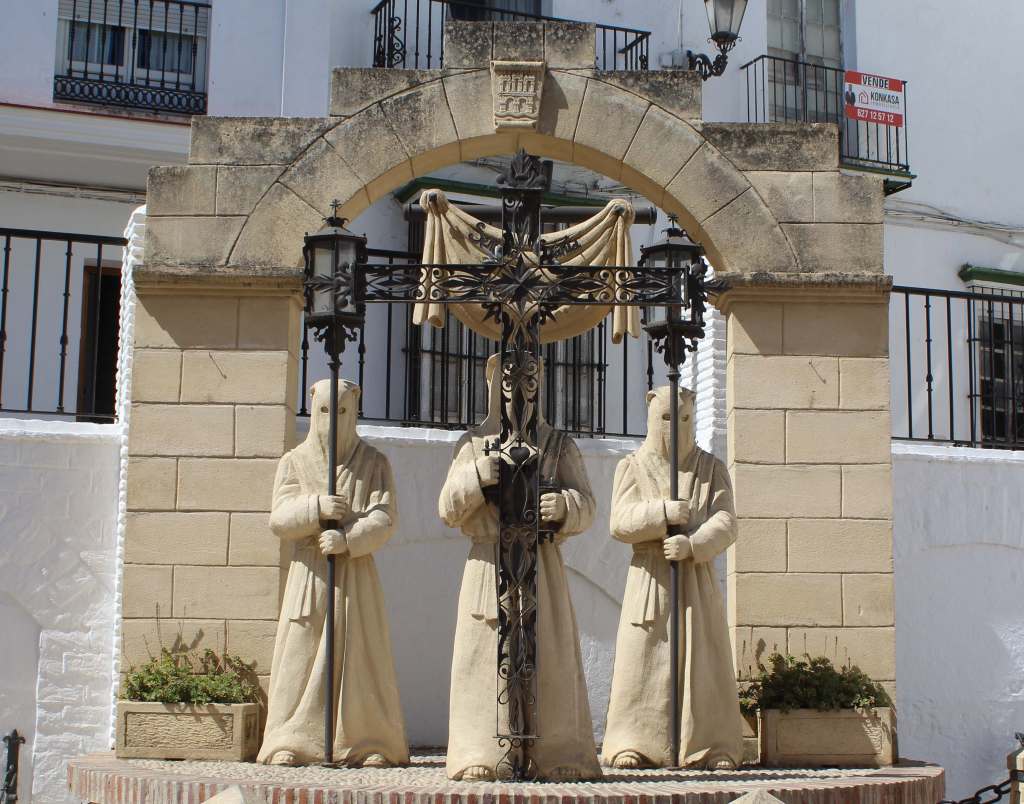
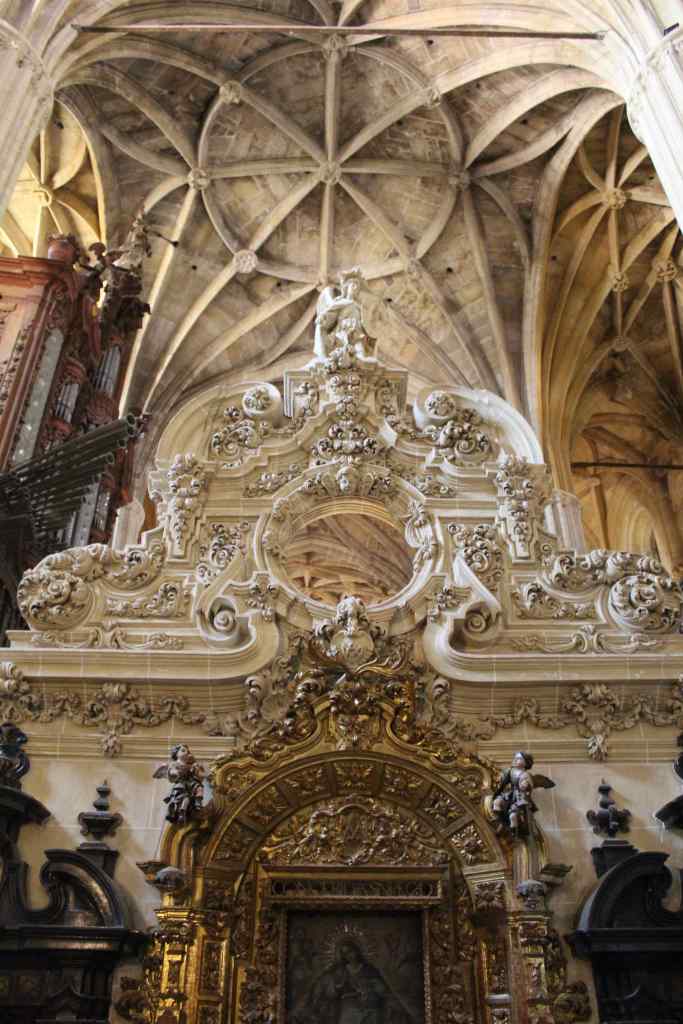

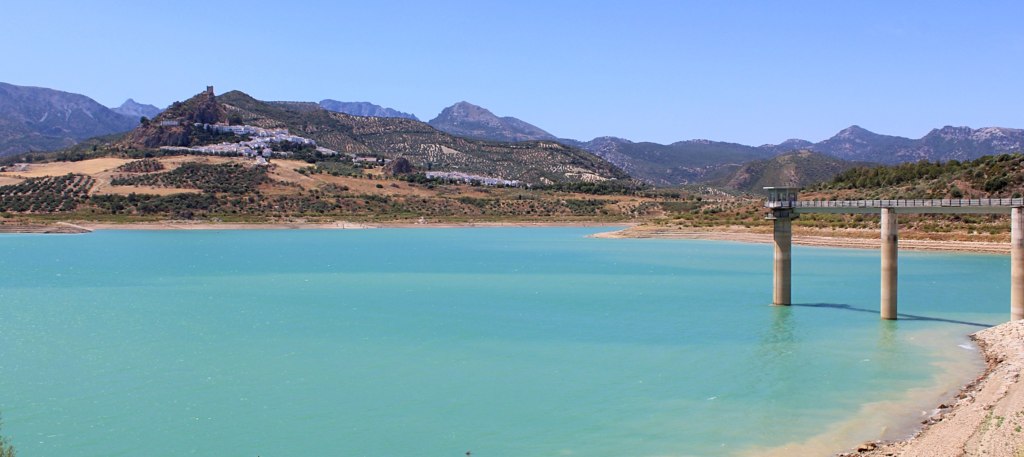
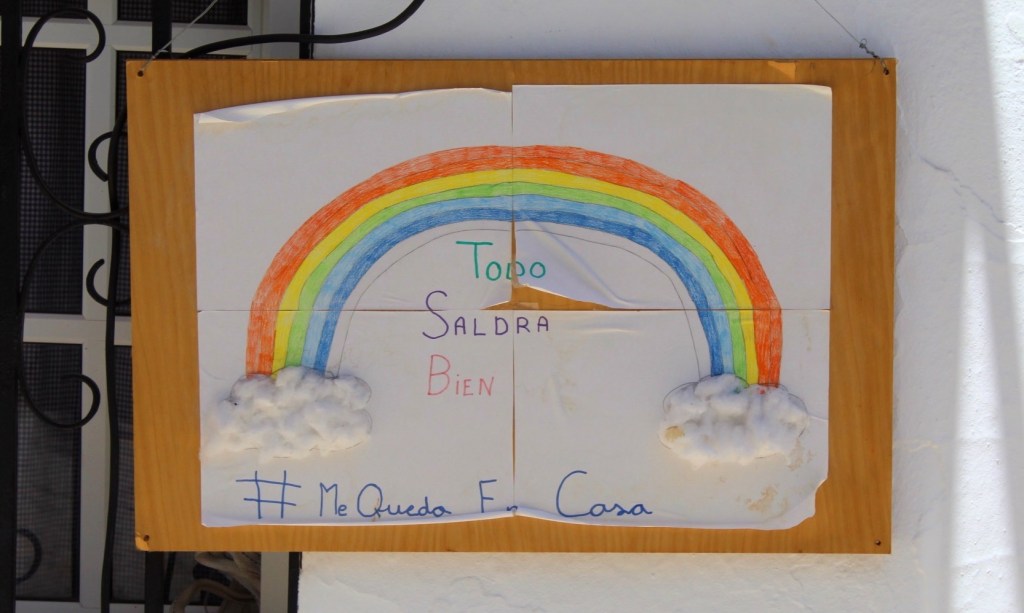
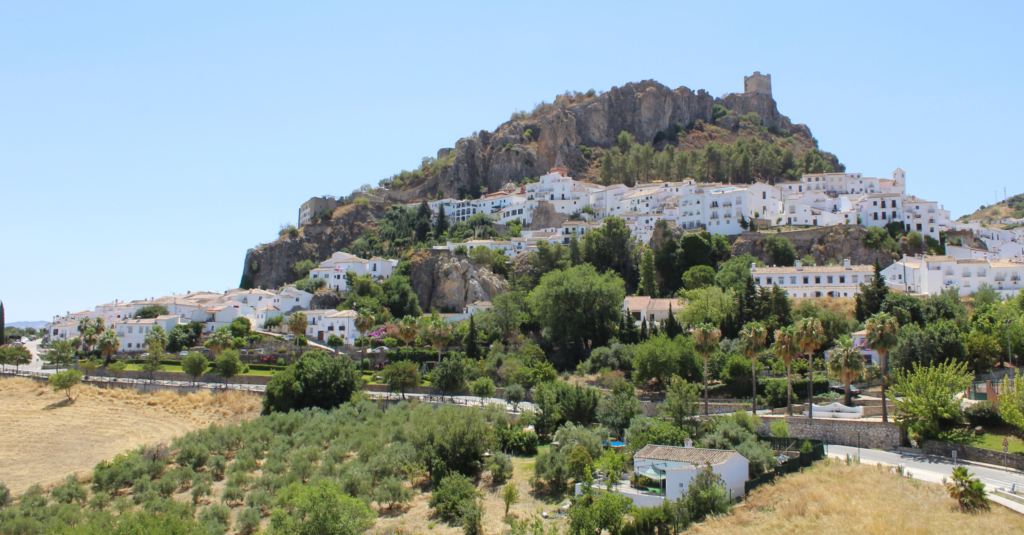
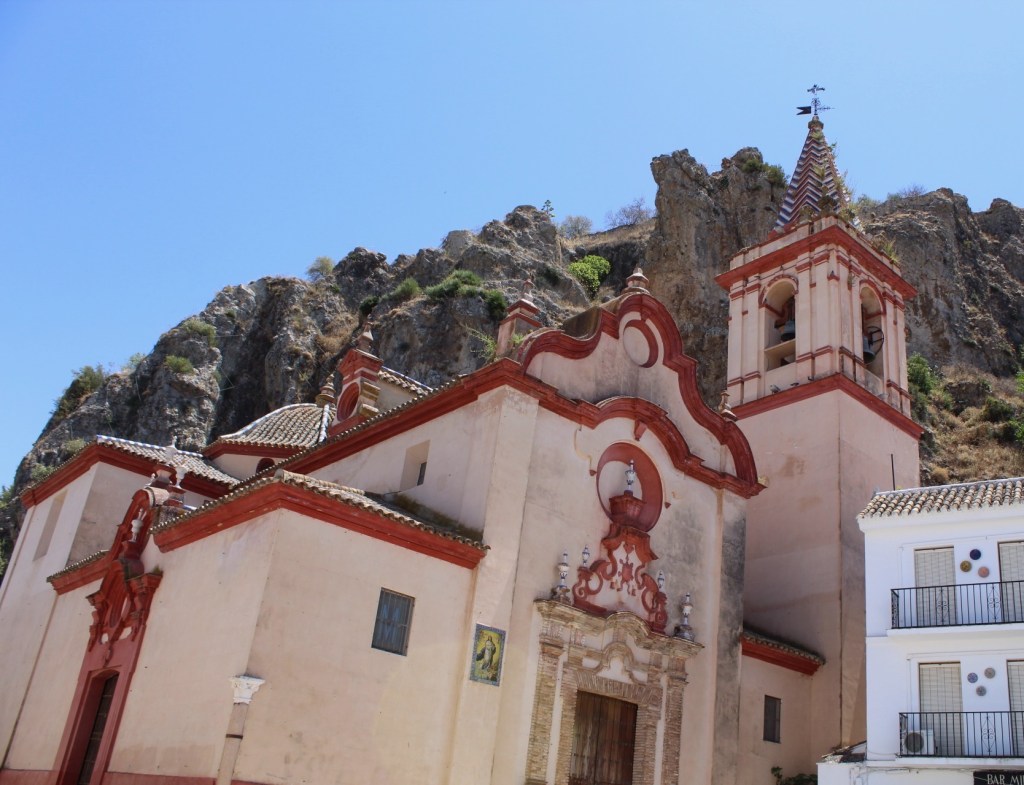

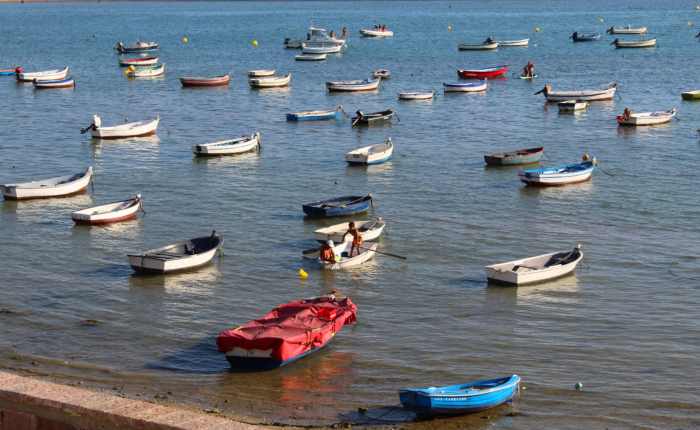
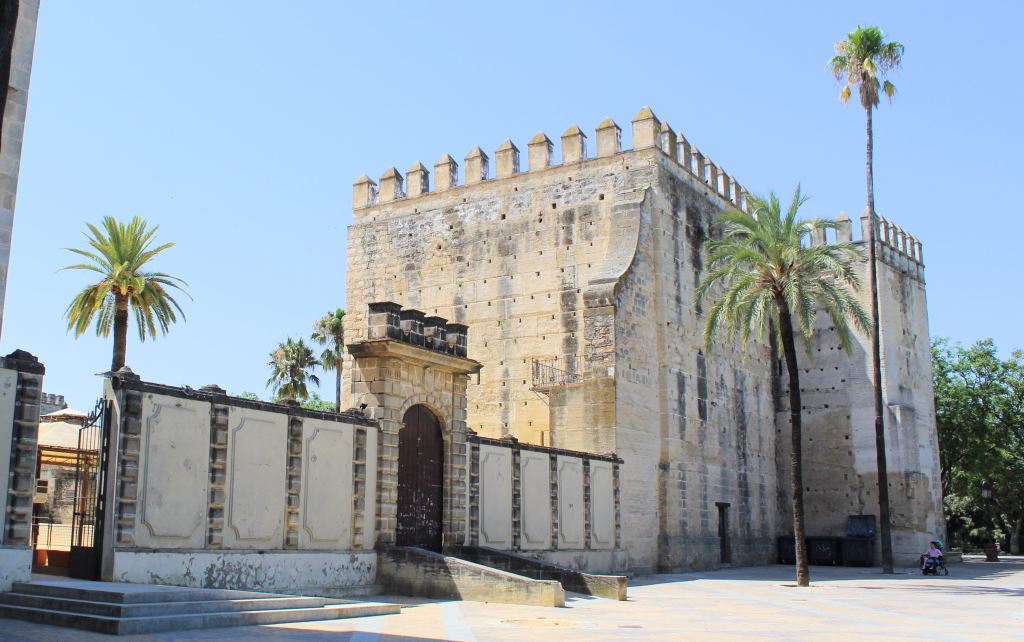
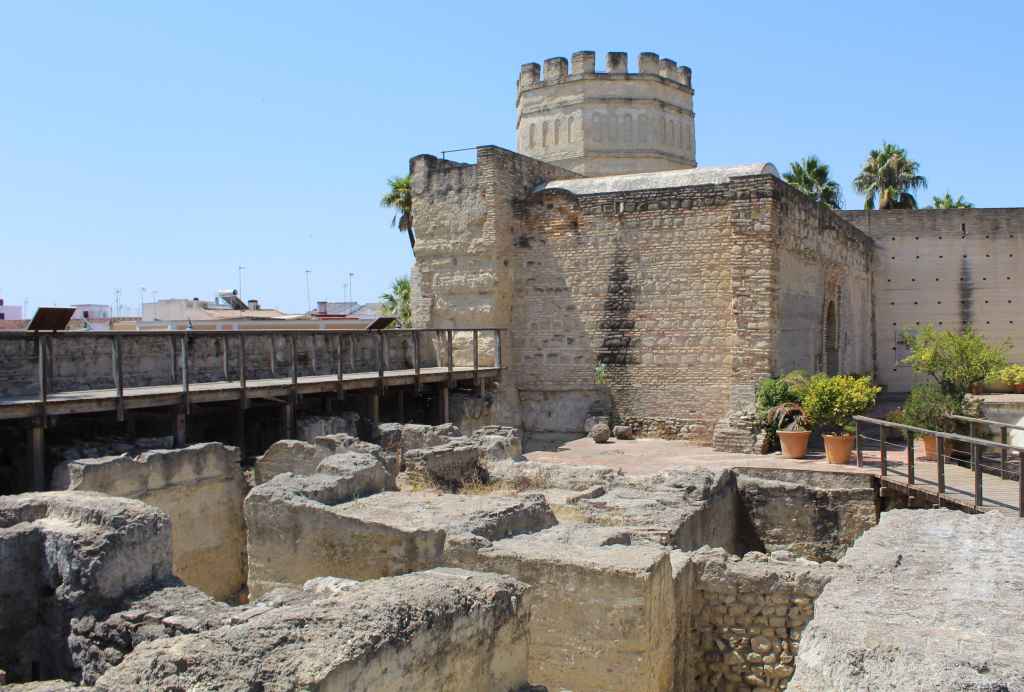
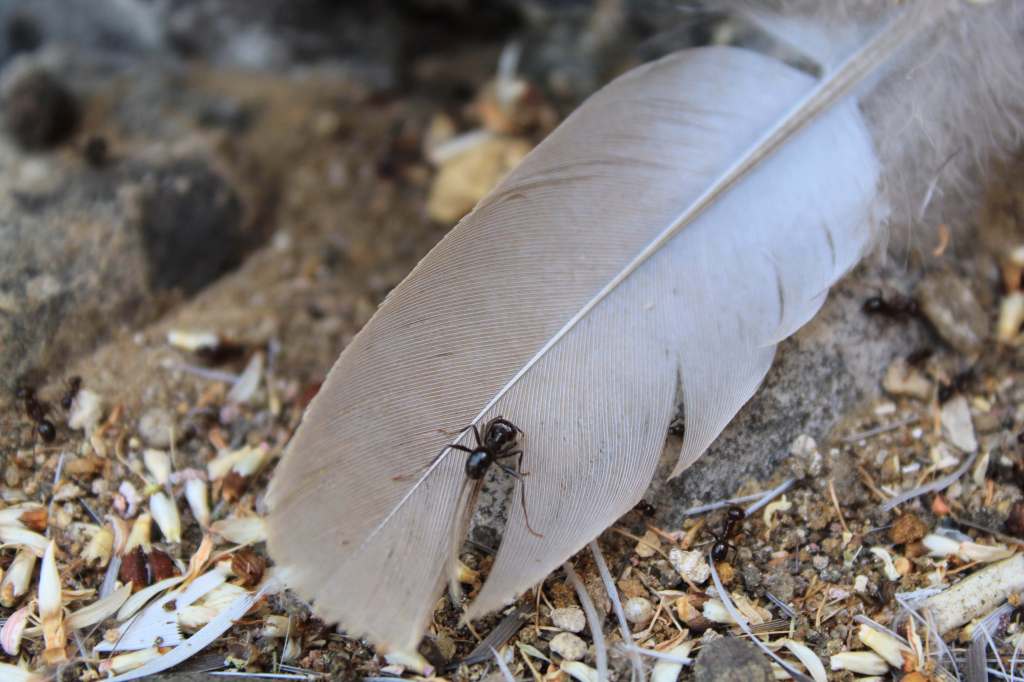
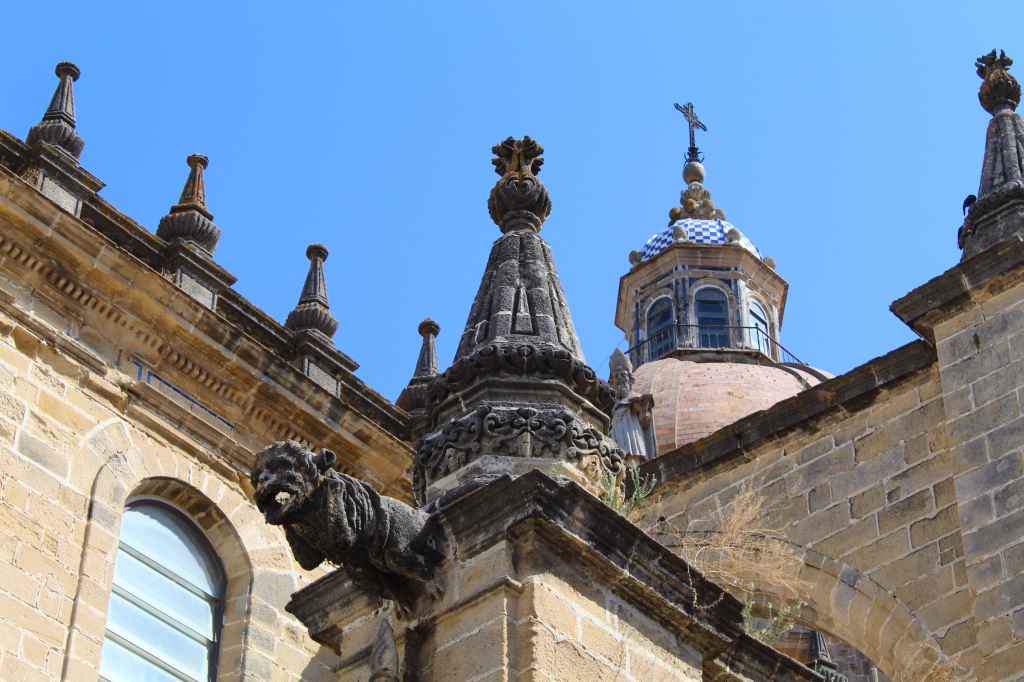
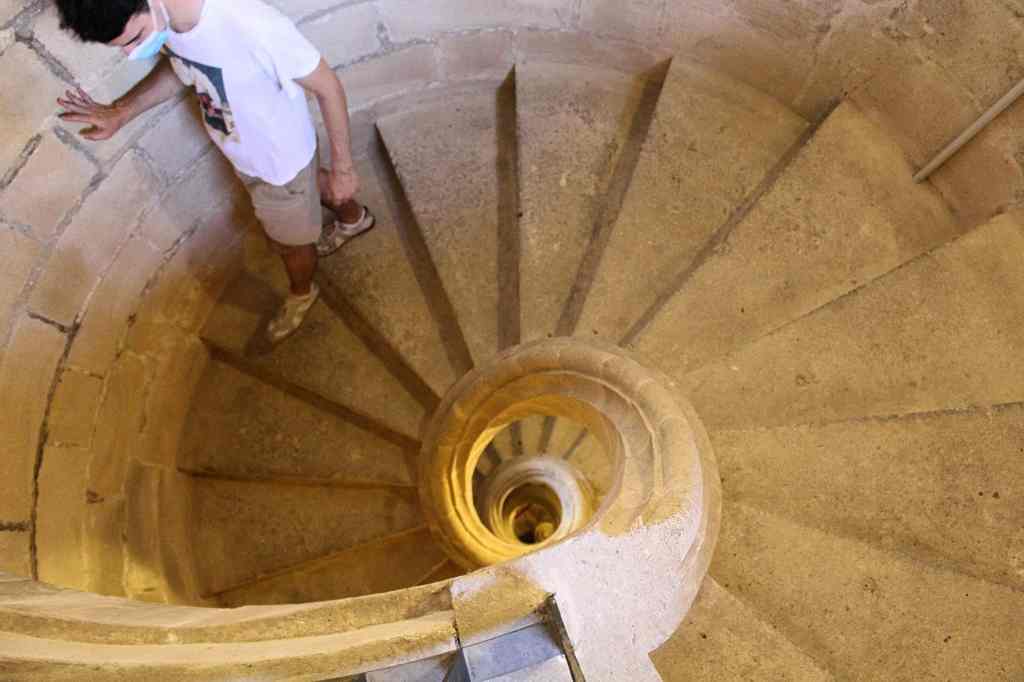
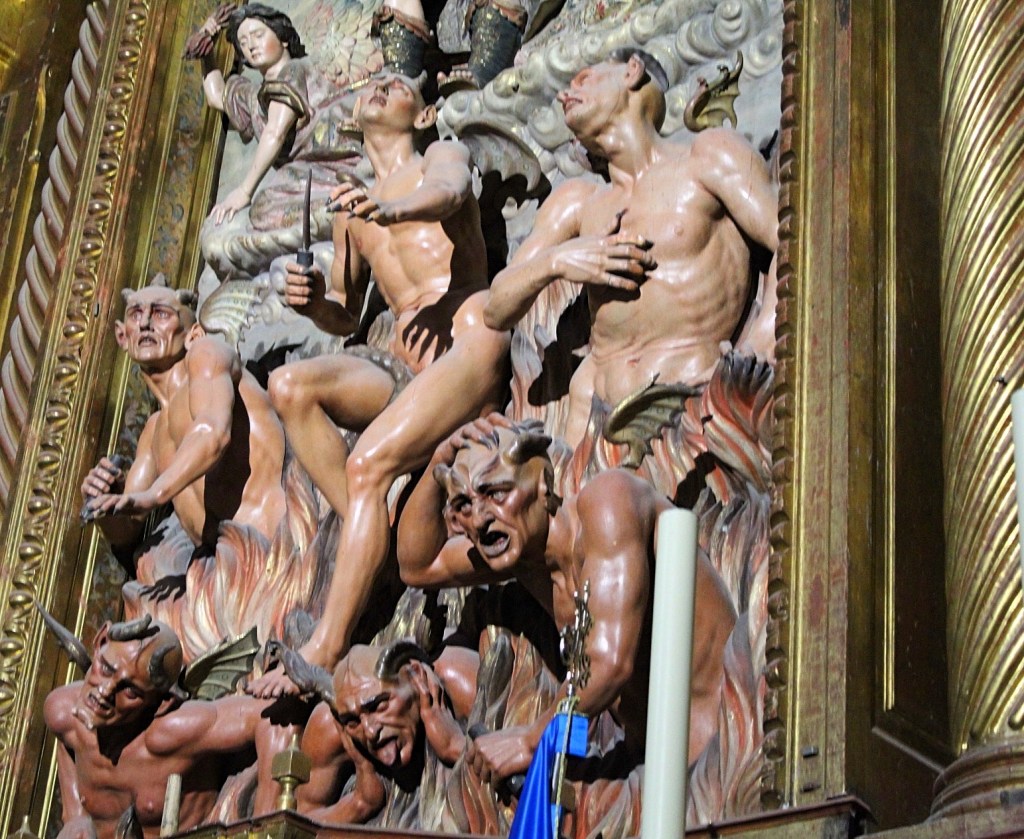
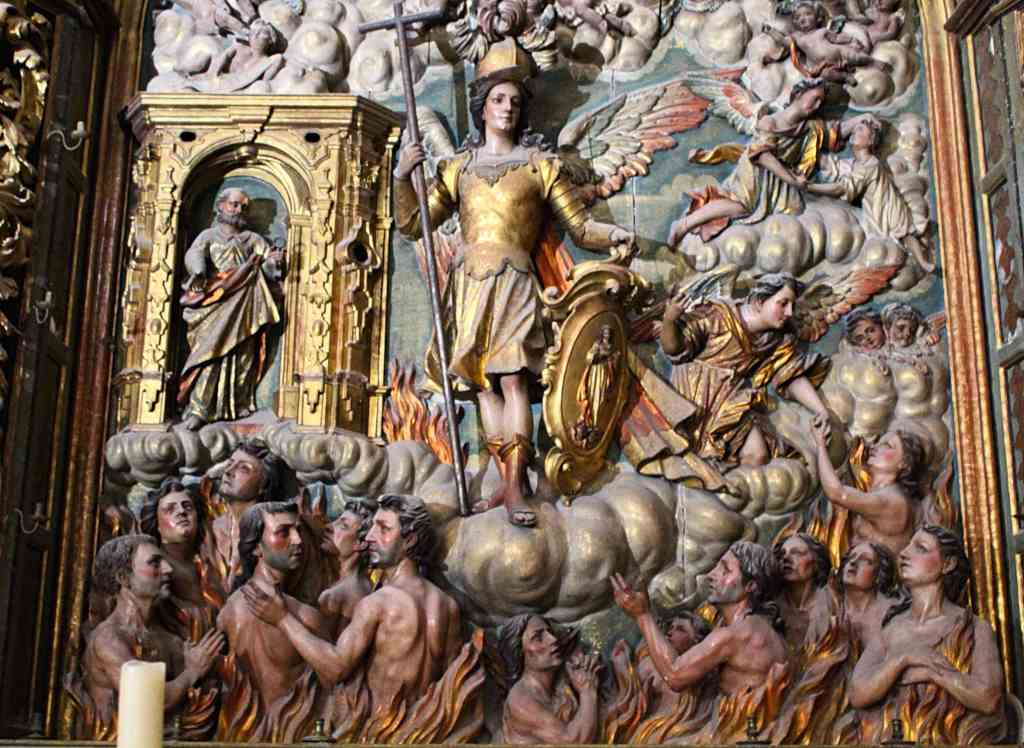
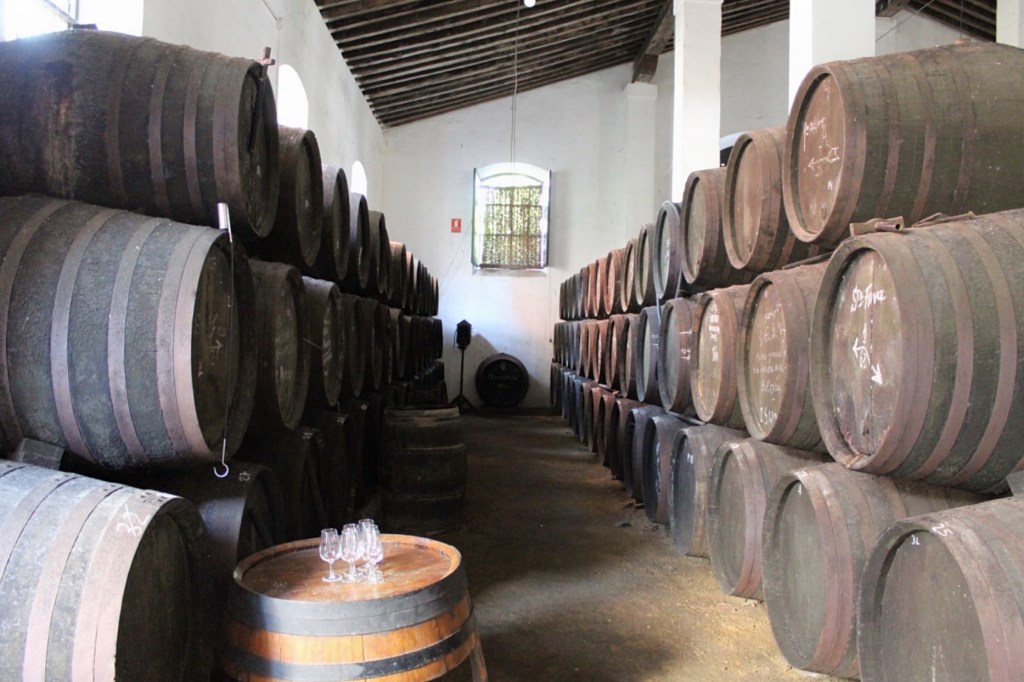

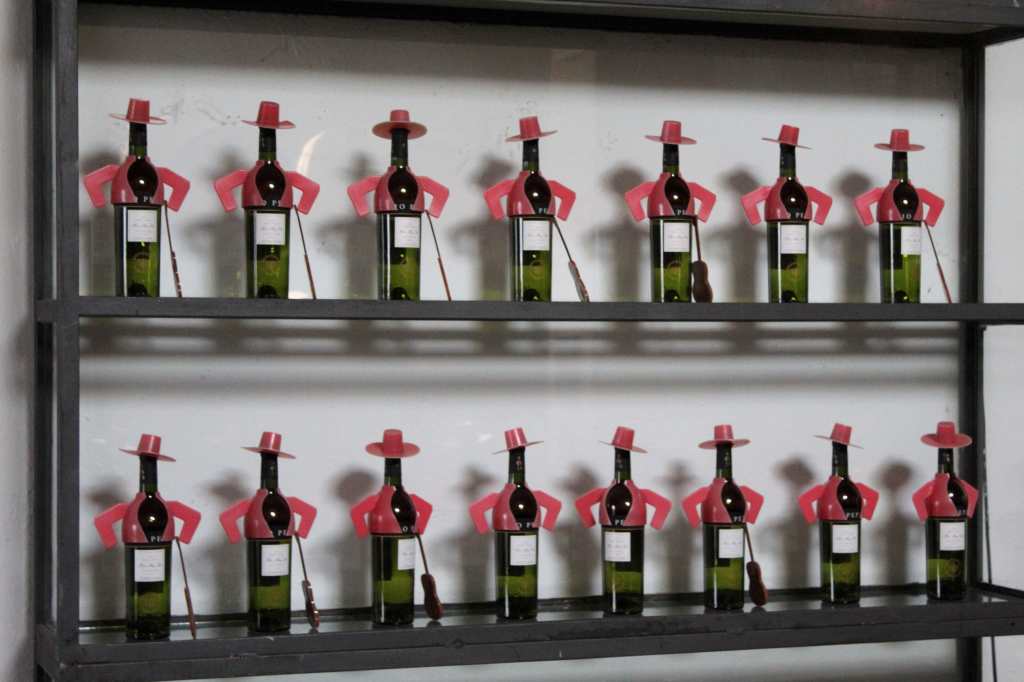


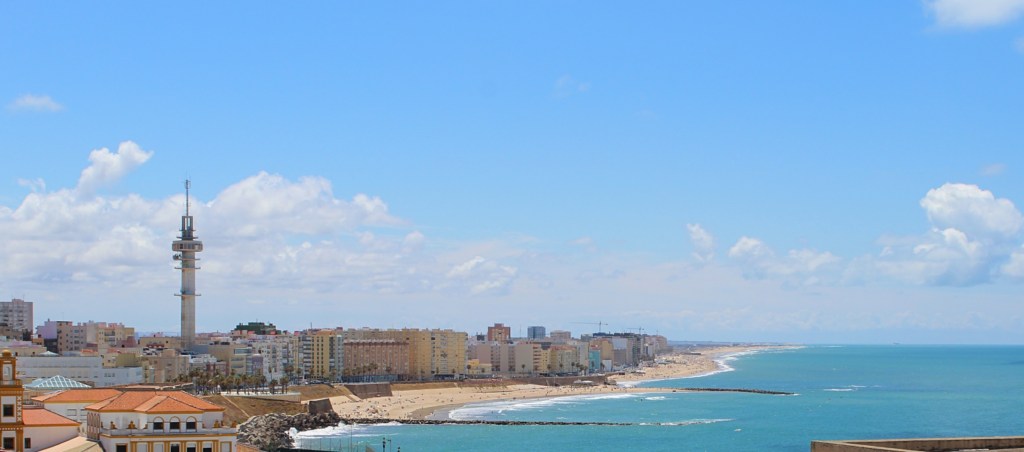
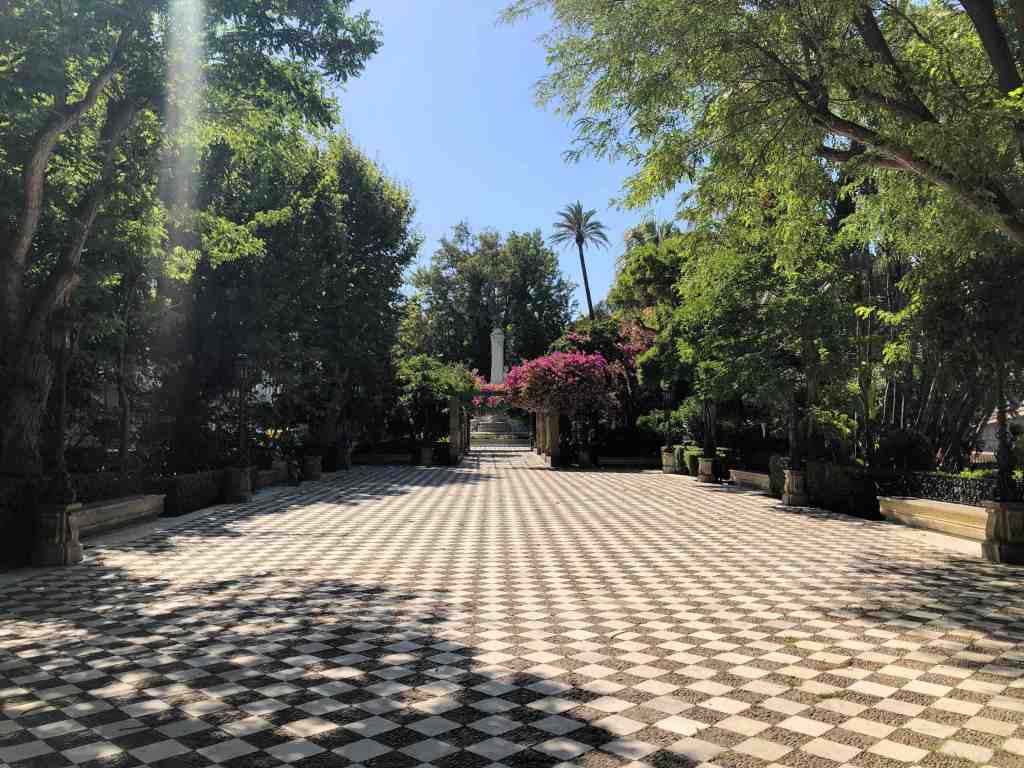
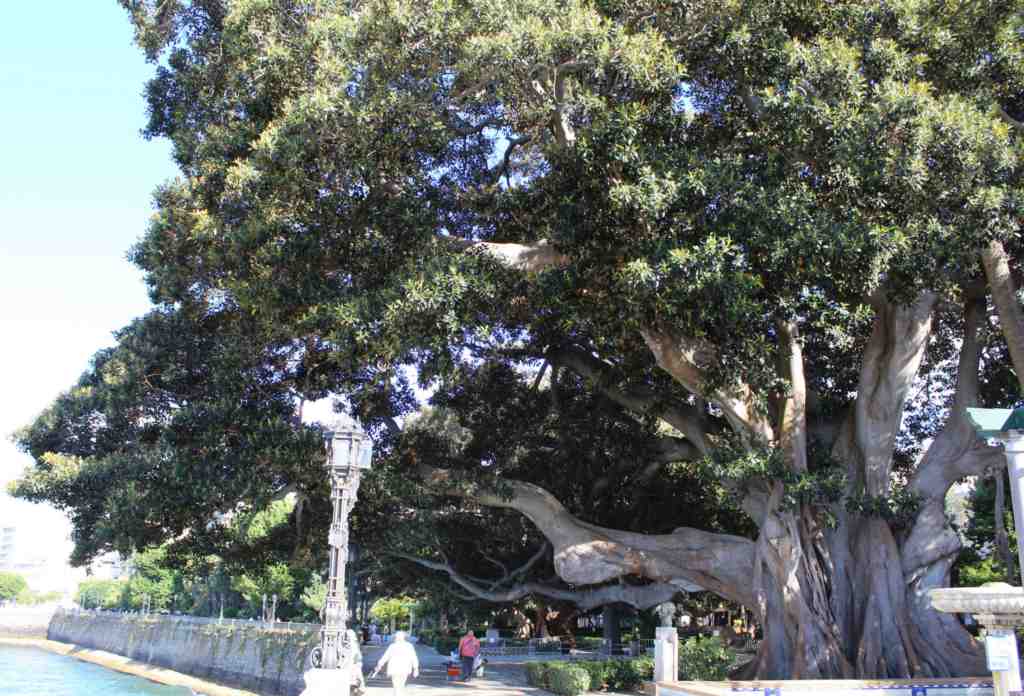
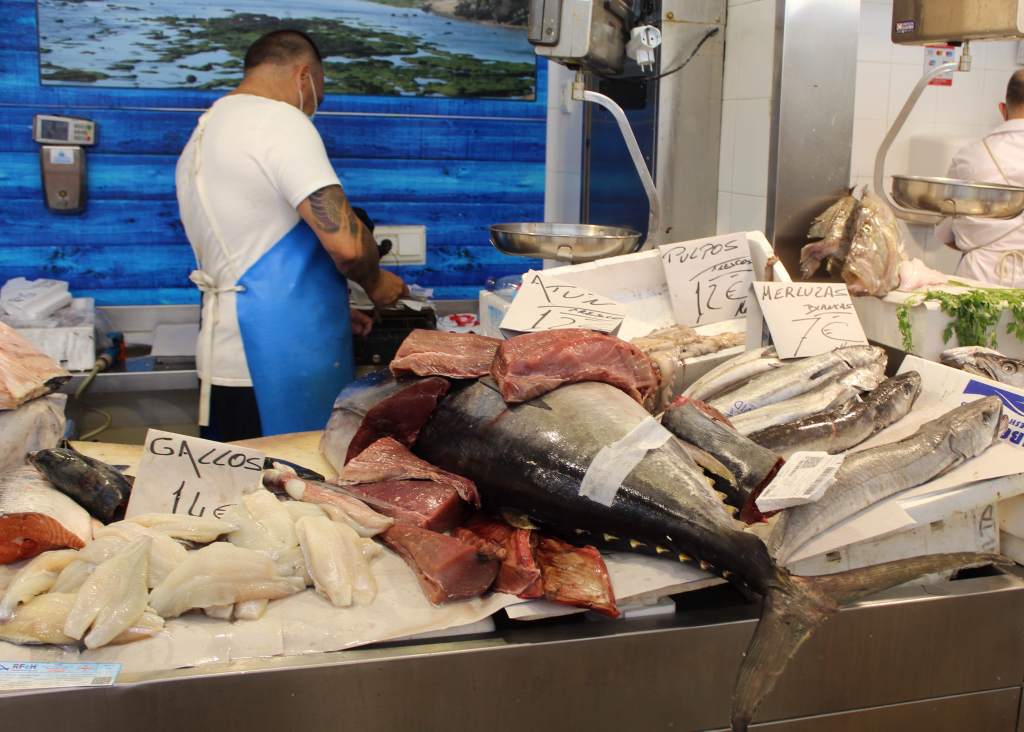


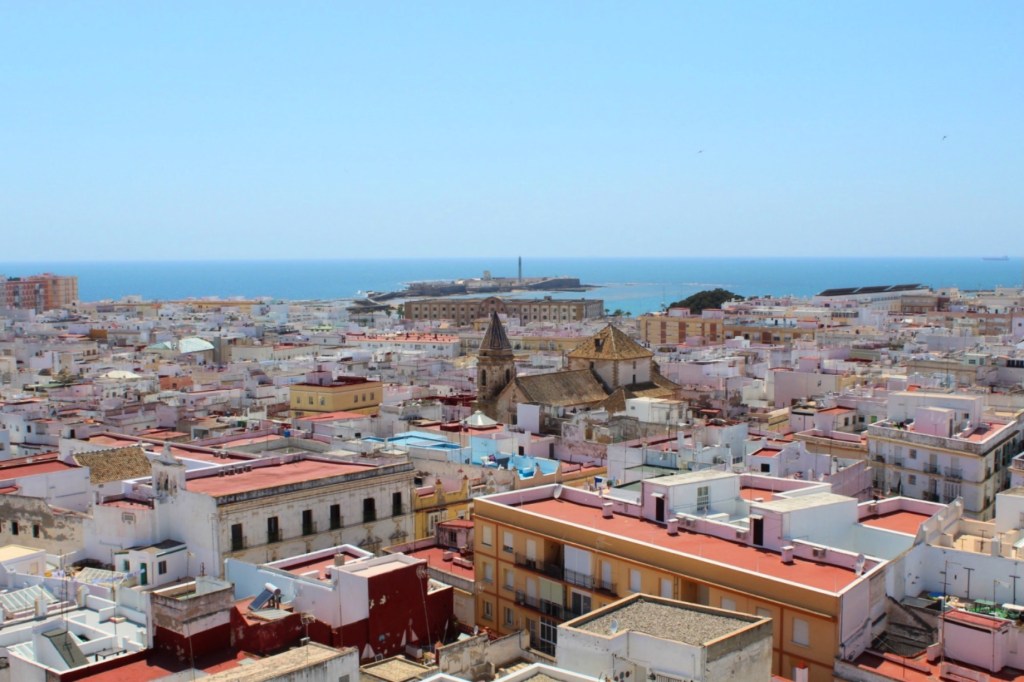


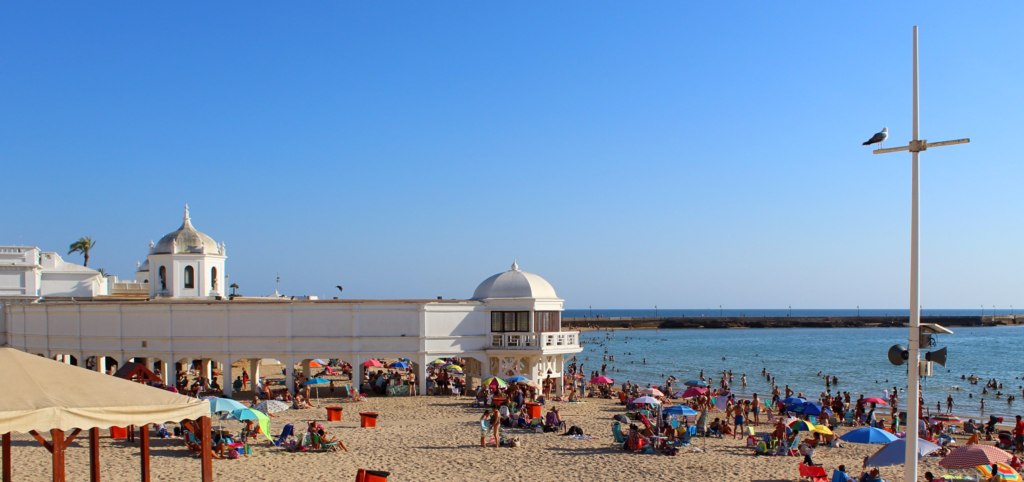


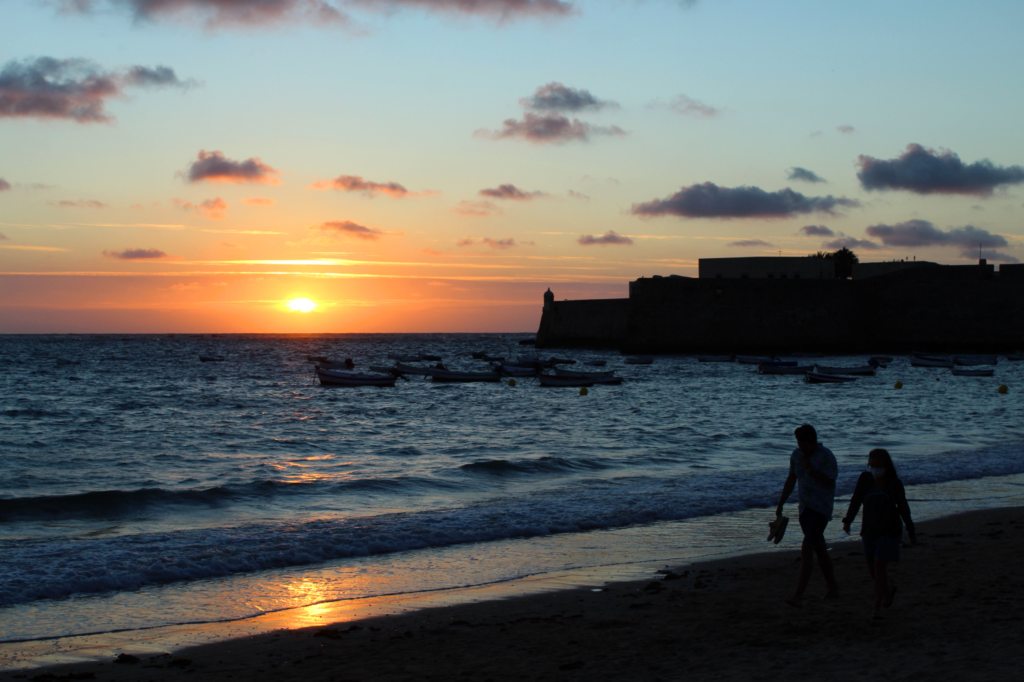
 Lotz in Translation