Krakow and the Wieliczka Salt Mines

Krakow and the Wieliczka Salt Mines

The plane—Ryanair, unfortunately—landed well after dark. My brother and I quickly extracted some złoty from an ATM and then got into a taxi. The driver was a friend of our Airbnb host. Quite polite and charming, he asked us about where we were from, and a halting conversation began.

“Man, it’s really cold,” I observed, lamely, during a lull.

“Yes,” he said in his thick accent. “In Poland, we have winter.”

Indeed, he was right: it was winter. In fact, this was the last weekend of February 2020, right before the pandemic turned the world on its head. Though I was blissfully unaware of it at the time, this trip would prove to be my last gasp of “normalcy”—and, at least until now, my final European trip outside of Spain. But at the time, I only noticed that it was awfully cold compared to Madrid.

We had left for Poland as soon as we had gotten out of work. As a result, by the time we made it into our room, it was past midnight, and we only had the energy to crawl into bed and pass out.


The next day we awoke, dazed and still a little cold, ready to explore Krakow.

But first, breakfast. For this, we stopped by a food stand and got some obwarzanki krakowskie, the so-called Krakow bagel. Unlike the bagels I am used to, this version is thinner, saltier, and crunchier—almost like a cross between a bagel and a soft pretzel. Very tasty and affordable. After this wholesome repast, we wandered toward Krakow’s old center.

Like many cities in Europe, Krakow has a history that stretches back to medieval times, and beyond. And like many beautiful cities, a certain set of circumstances conspired to build up and preserve the place. The first necessary step is to enjoy a golden age of artistic creation—either through commerce, or by being the seat of political power, or preferably both—and it just so happens that Poland’s so-called golden age occurred when Krakow was the capital of the country. Then, importantly, political power shifted elsewhere (to Warsaw), leaving many impressive buildings to weather the centuries, bereft of their original importance. Finally, and crucially, Krakow was lucky enough to survive the desolation of modern warfare. While Warsaw was blown to smithereens, Krakow remained relatively unscathed during the Second World War. Thus it is that the city has the look and charm of a medieval capital.

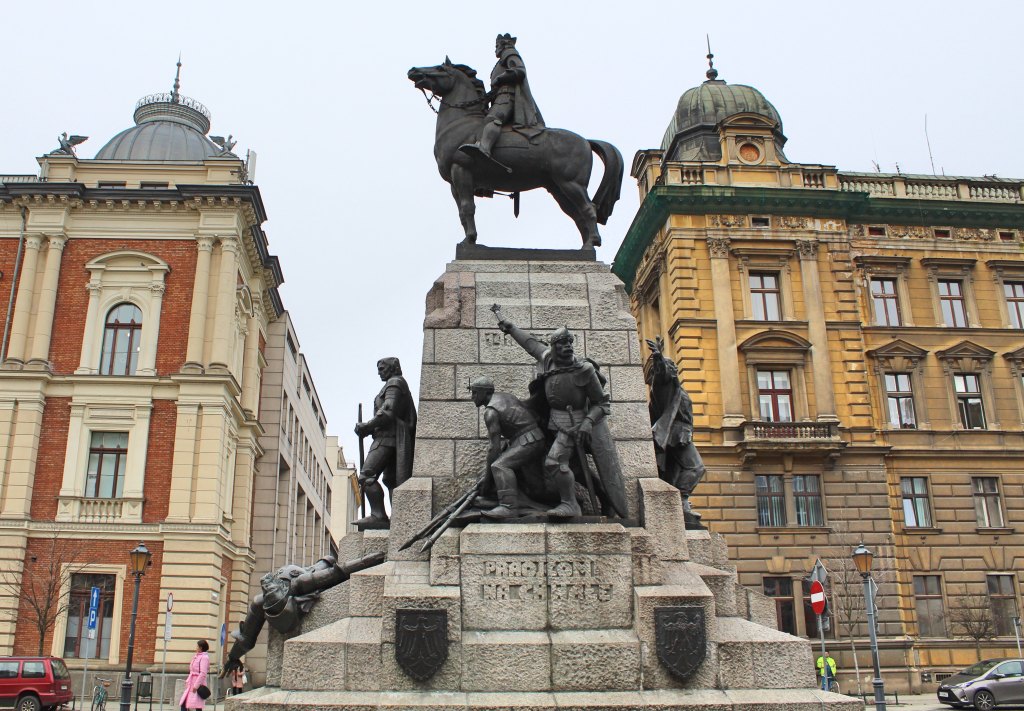
The first thing to catch our eyes was the Grunwald Monument. This is an enormous equestrian statue of the Polish king Władysław II Jagiełło (don’t ask me to pronounce it), who forged an alliance with Lithuania and defeated the Teutons (Germans) in the battle of Grunwald. This epochal battle, which took place in 1410, is said to mark the beginning of Poland’s golden age; and the monument was erected 500 years later, in 1910, to commemorate this symbol of Polish pride. Unsurprisingly, when the Nazis invaded, they could not abide the sight of a monument to a German defeat; so they did what Nazis do, and destroyed it. The monument was rebuilt in 1976—and may it be forever a symbol of Poles triumphing over Germans.
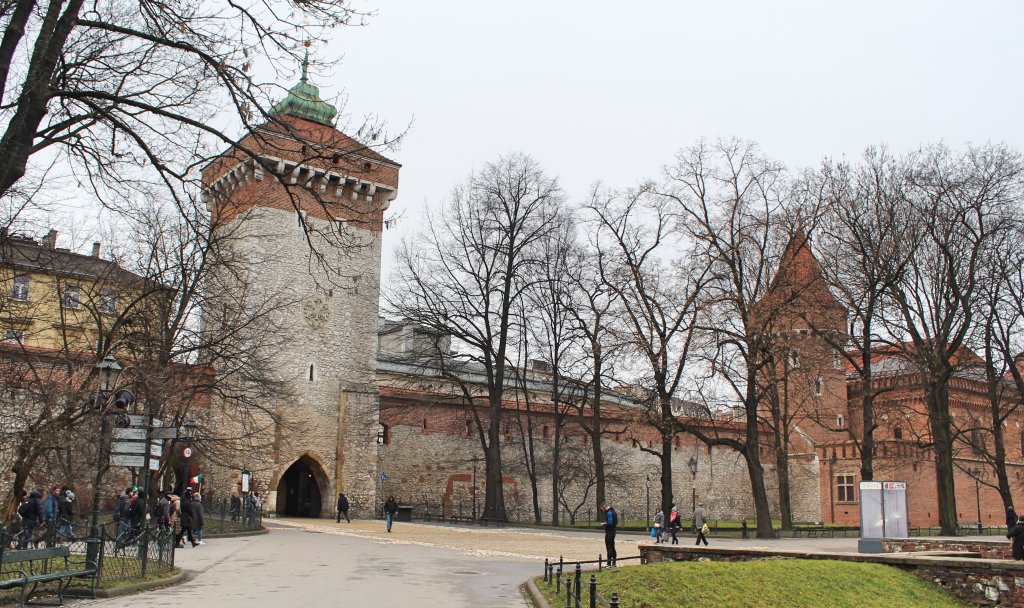
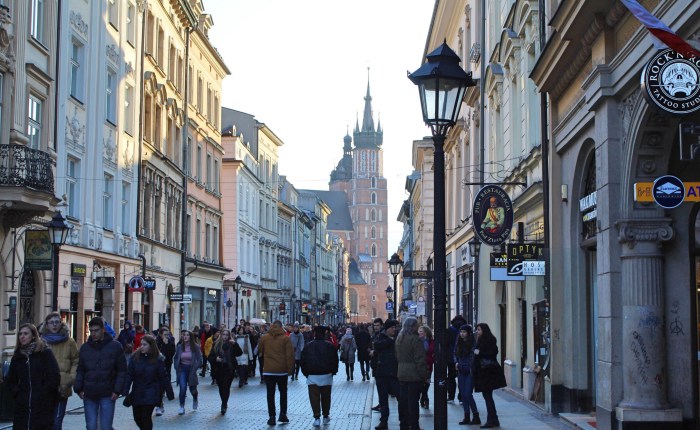
Nearby is the barbican. This is a kind of fortress that once formed an important part of the city’s defenses. Though we did not go inside, a single glance was enough to reveal an imposing and, in a way, a beautiful structure—with gothic spires jutting out over the solid brick walls. I would hate to have been the poor soldier tasked with capturing it. The original medieval walls are also preserved nearby, which encircle the old center of Krakow. We proceeded through the gate, and down a long avenue—Floriańska Street—filled with touristy shops and American fast food, until we reached the Rynek Główny, which is just Polish for “Main Square.” It is a grand, open space, filled with pigeons, tourists, and stately buildings.
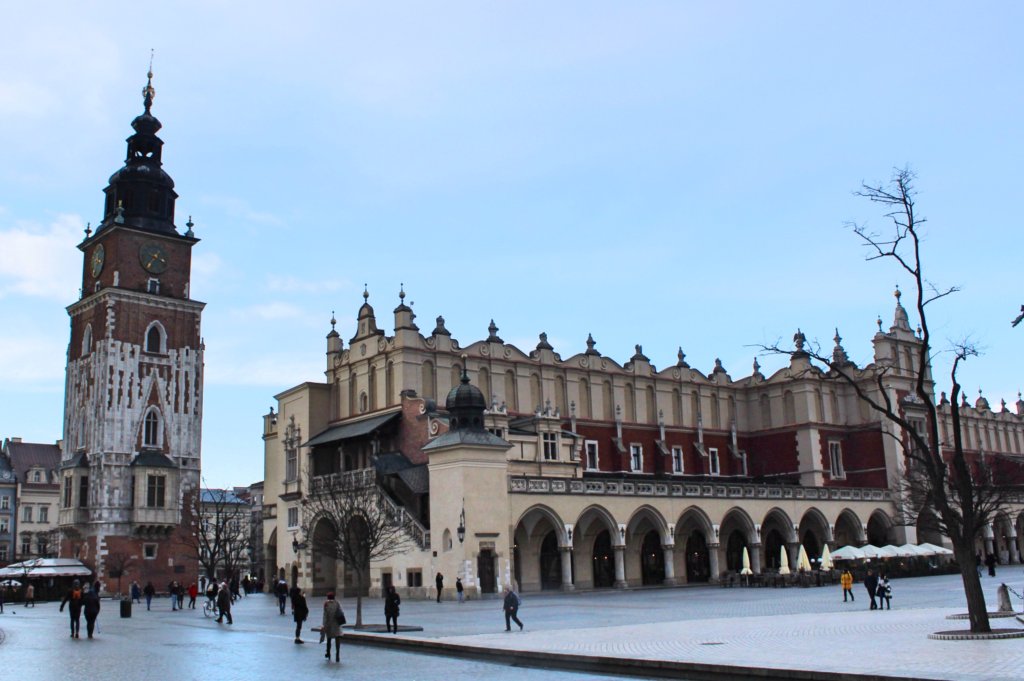
Prominent among these is the Town Hall Tower, a gothic clock tower that—as its name suggests—once formed a part of the town hall. For better or worse, the rest of the town hall was demolished in 1820 in order to open up the Main Square. Much more modest in stature is the Church of St. Adalbert, a relatively small church with modest decorations inside. Yet it is distinguished for being one of the oldest stone churches in the country, having been built in the 11th century. Nearby is the Adam Mickiewicz Monument, a large sculptural assembly that may be the best place to meet somebody if you want an easy-to-find landmark. Adam Mickiewicz, by the way, can perhaps be considered the national bard of Poland. (One day, I hope to read his epic poem, Pan Tadeusz.) Right in the center of the square is Cloth Hall, a lovely Renaissance building that once served as a kind of medieval stock exchange, though for spices and fabrics instead of stocks and bonds. Nowadays it is a touristy market.

Yet the loveliest building of the bunch, for me, is St. Mary’s Basilica. Like the cathedral at Chartres, this basilica has two unmatching towers, which rise splendidly over the main square. The interior is even more impressive than the relatively unadorned façade. Pride of place undoubtedly belongs to the magnificent wooden altarpiece, carved by one Veit Stross. As you may have guessed from his name, Stross was a German; yet his masterpiece has—ironically, perhaps—become an icon of the Polish identity. Even more ironically, this artistic treasure was stolen by the Nazis, only to be found in the basement of the Nuremberg Castle (a city, as it happens, where Stross also lived and worked). Passing over the other lovely works of art in the basilica—most notably, Jan Matejko’s murals—I must mention the hejnał mariacki, a bugle call played every hour, twenty-four hours a day, from the taller tower. It is a beautiful melody that ends awkwardly and abruptly, in honor of a bugler who was, supposedly, shot in the throat by an arrow during an attack by the Mongols, in the 13th century.
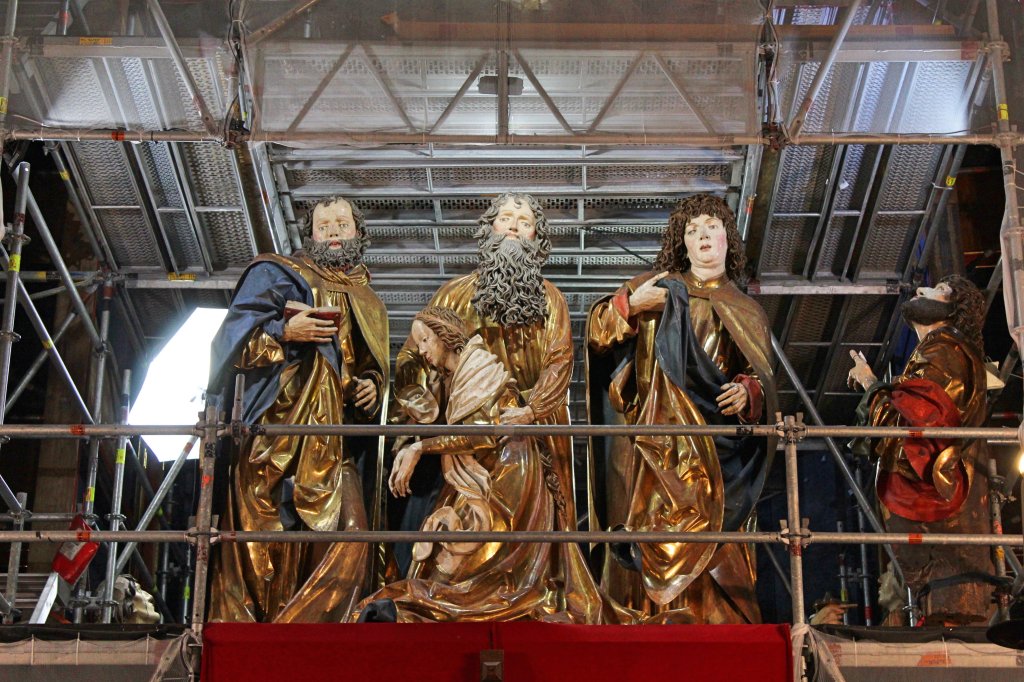
The altar was being restored when I visited.

Next we made our way to another edge of the old town, to a hill overlooking the river Vistula. This is Wawel, a large building complex that includes a castle and a cathedral. It is an architecturally jumbled place, with buildings from every major stage of Poland’s history. One highlight is the arcades in the Italian Renaissance-style courtyard, constructed under the reign of Sigismund the Old (1506 – 1548). This old Sigismund, along with the younger one, are buried in a resplendent chapel in the cathedral. Yet old as he was, Sigismund was not the first king to be buried in this august place, that distinction belonging to Władysław I the Elbow-high, so called because of his short stature. This cathedral, as it happens, also has two unmatching towers; and while not as beautiful as St. Mary’s, Wawel Cathedral makes up for it with its many royal bodies.

Leaving the old town now, we visited the nearby neighborhood of Kazimierz. This part of town is now most famous—partly thanks to the movie Schindler’s List, which was filmed here—for its Jewish culture. But Kazimierz was never exclusively Jewish, as you can see from the many churches, such as the impressively pointy Corpus Christi Basilica.
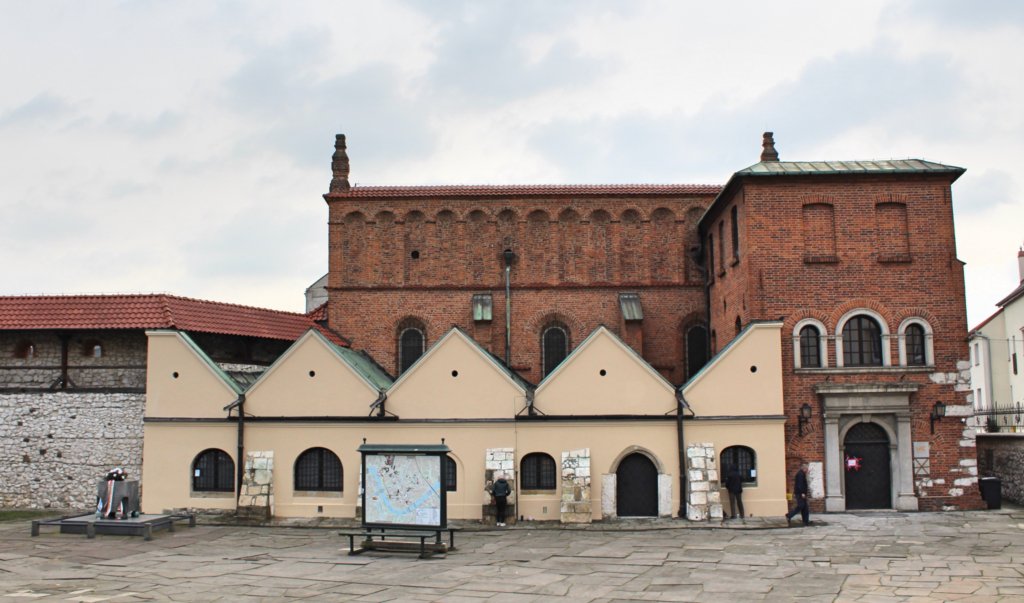
The Old Synagogue.

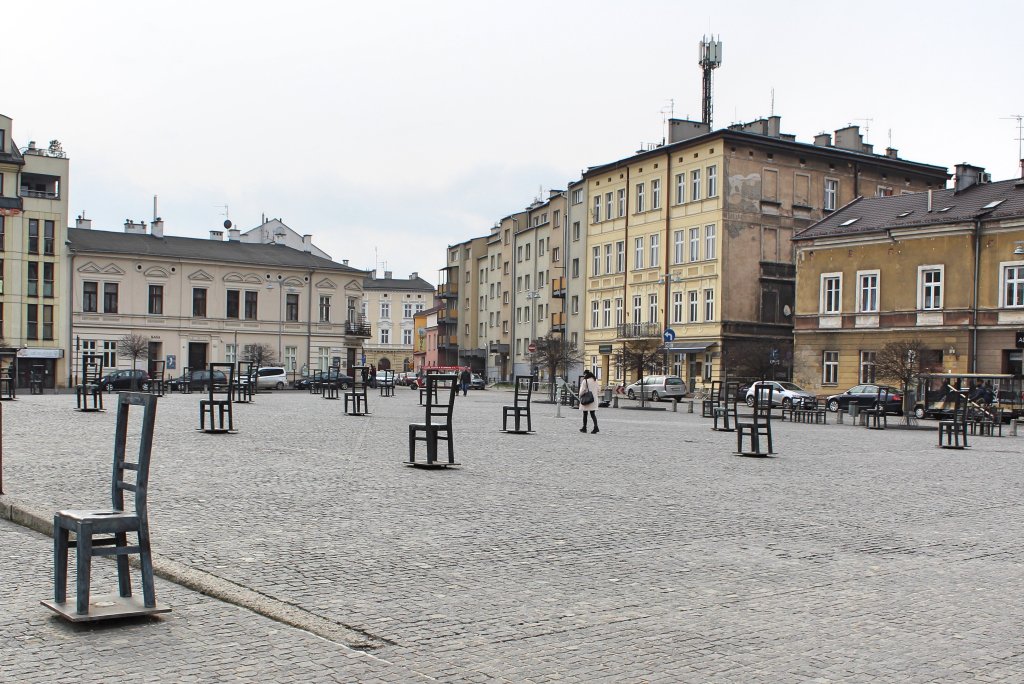
Though this part of the city was looted and destroyed by the Nazis, and then further devasted by the Red Army, many examples of Jewish culture survive. Foremost among these is the Old Synagogue, which is part temple and part fortress, with thick walls built to protect those inside. Constructed in the 15th century, it is the oldest synagogue in the country. Aside from the many synagogues and Jewish restaurants, there are also many reminders of the oppression suffered by this community under the Nazis. A plaque affixed to a stone invites onlookers to meditate on the tens of thousands of Jews from Krakow killed during the Second World War. A short walk across the Vistula brings you to another monument, this one consisting of empty metal chairs, which commemorates the former Jewish ghetto (the Nazis forced the Jewish population to leave Kazimierz and live in this ghetto, where conditions were so bad that most did not survive).
Nearby is the famous factory of Oskar Schindler. If you have seen the movie (I actually haven’t, come to think of it), you know the story: Schindler, a member of the Nazi Party, dedicated enormous resources and energy in order to keep the Jewish workers of his factory safe, thus saving the lives of over 1,000 Jews. The factory is now part memorial, part museum. You can see Schindler’s old desk, examples of the enamelware they produced, as well as exhibits on the history of Krakow—including a good deal of information about World War II and the Holocaust. It is an ideal place to learn about some of the more recent history of the city.

To learn about some more distant history, the place to go is the Rynek Underground. As its name suggests, this is a subterranean museum, to be found below the Main Square (it took us a few minutes to locate the entrance). This museum is situated in an archeological site, where the remains of the medieval city are still visible. Rather than just letting the old bricks and rocks do the talking, however, the curators opted for holograms, wherein daily scenes of medieval life (recreated by actors) are projected onto the scene. I am not sure that it was particularly educational, but it was interesting. My favorite part of the museum, ironically, was near the end of the visit, where a documentary of the history of Krakow is simply played on repeat. It was quite well-made, I thought, and taught me more than the actual exhibits had.

This fairly well did it for our time in Krakow. Yet the Rynek Underground did not prove to be the most interesting thing we saw below the earth that trip.


Wieliczka Salt Mines

The train from Krakow dropped us in the town of Wieliczka in a little under an hour. Having a bit of time to kill before our timed entry, we went on a short stroll of the town. It is quite a pretty place, with brightly colored buildings spread out in the valley—though not particularly exciting. Surely, few tourists would go out of their way to visit this place if not for the enormous mine below the ground.

Finally, it was time for us to enter. For reasons that soon become obvious, it is only possible to visit the mines in a group. For one, the descent to the main level of the mine is long; and there are so many passages that it would be easy to get hopelessly disoriented and lost. For another thing, there are quite a number of precipitous chasms that the unwary traveler could easily trip into. In a word, the Wieliczka Salt Mines are big—over 300 meters (1,000 feet) below the earth, and whose chambers and tunnels, if laid end to end, would cover the same distance between Krakow and Warsaw. The guided tour covers a mere fraction of this enormous extent. Thus, to visit you need a guide.
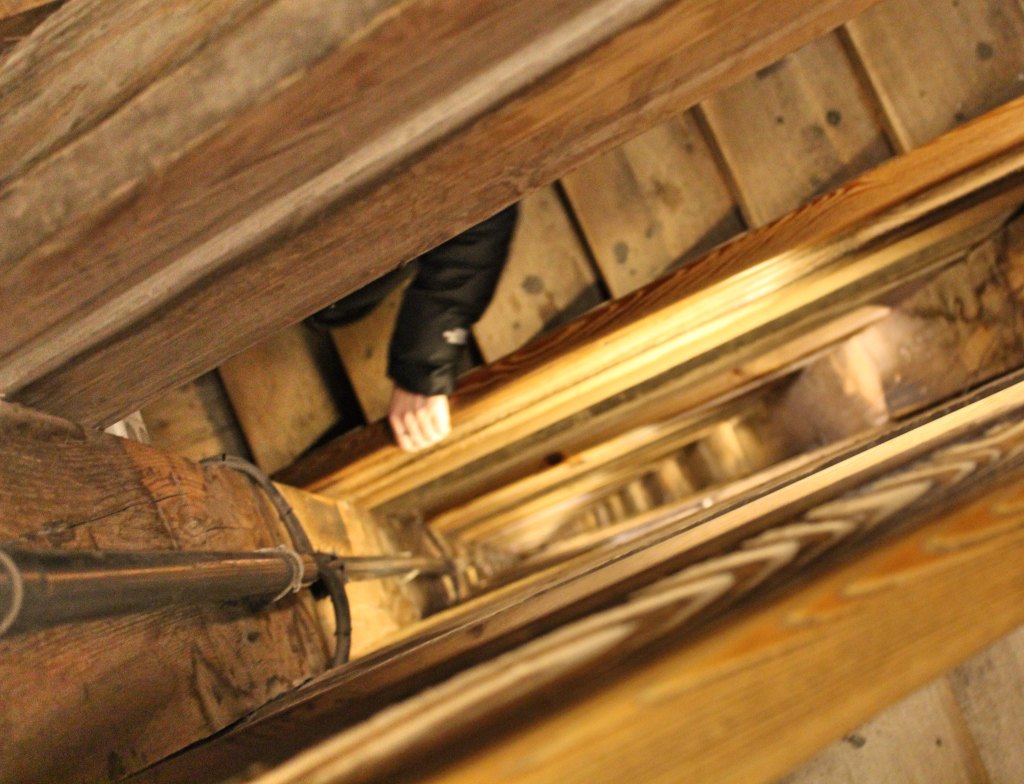
Descending into the mine.

Now, considering that I did not even know beforehand that salt is mined, you can imagine that this experience was a revelation to me. The walls of the tunnels are brownish gray, nothing like the crystalline white familiar to cooks. This salt is truly ancient, having been formed in seabeds eons ago. Through the churning of the earth’s tectonic plates, this oceanic salt has ended up many hundreds of miles from the nearest coast. Apparently sick of bland cabbage and potatoes, Poles have been mining salt here since the 13th century. (The smaller Bochnia Salt Mine, located nearby, is slightly older.) The salt is mined much as anything else might be: by tunneling into rich veins, extracting as much as possible with picks and shovels, and then hurling it back up to the surface where (I presume) it can be processed into something more attractive than its raw, rocky state. For much of its history this work was carried out by man-power alone; but eventually horses were brought down into the tunnels, to perform some of the drudgery in literally abysmal conditions.

Nowadays the horses are just models.

One cannot discuss the history of these mines without mention of Casimir III the Great. One of the most important and pivotal rulers in the country’s history (he ruled from 1333 to 1370), he was instrumental in the development of these mines. This was no disinterested gesture, however, as up to a third of the royal revenues were derived from salt. In the medieval world, salt was big business. Another famous name that must be mentioned is that of Nicolaus Copernicus. (That is the latinized version of his name; in Polish—his country of birth—his name is Mikołaj Kopernik.) He is the first known person to visit the mines as a tourist, and he was followed by many more over the centuries. Thus, even though salt production stopped in 1996, Wieliczka is still a gold mine—pardon the pun—of tourism, with over a million visitors per year. 
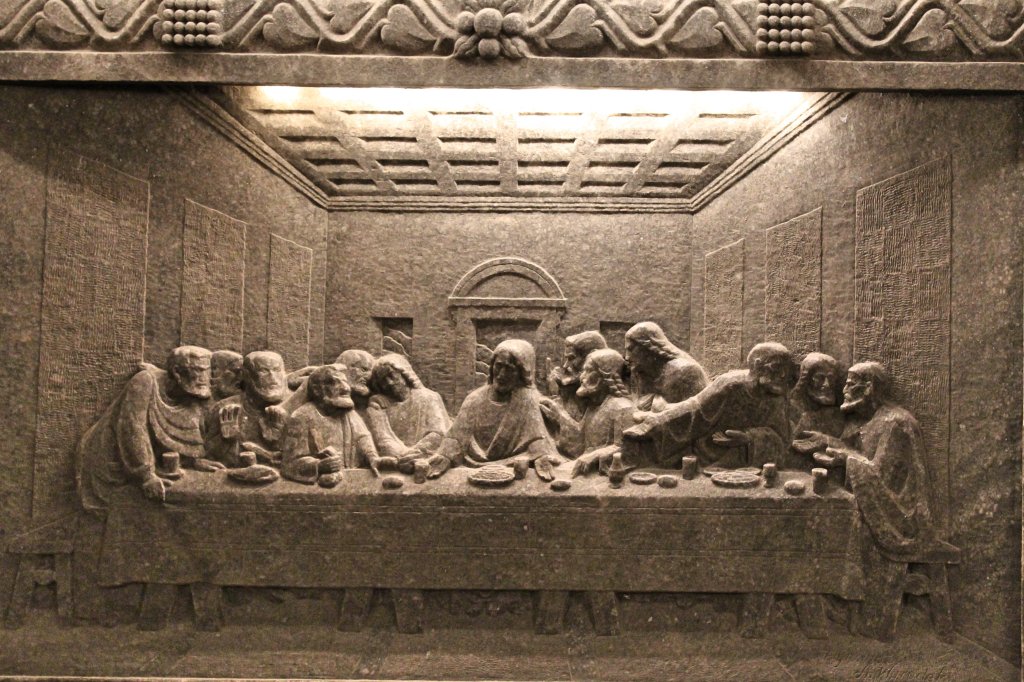
A salty last supper.

Yet the reason that Wieliczka became so popular is not because tunnels and salt are so fascinating. It is, simply, a beautiful place. Over the years, talented miners have carved works of art into the walls—humorous statues, religious figures, historical personages. There are four entire chapels, one of them as impressive as a cathedral, complete with a chandelier adorned with salt crystals. Another highlight is an underground lake, eerily blue in the artificial light of the cavern, whose water is so saturated with salt that it is probably quite toxic. And then there are the massive scaffolds that seem to go endlessly on into the bowels of the earth.
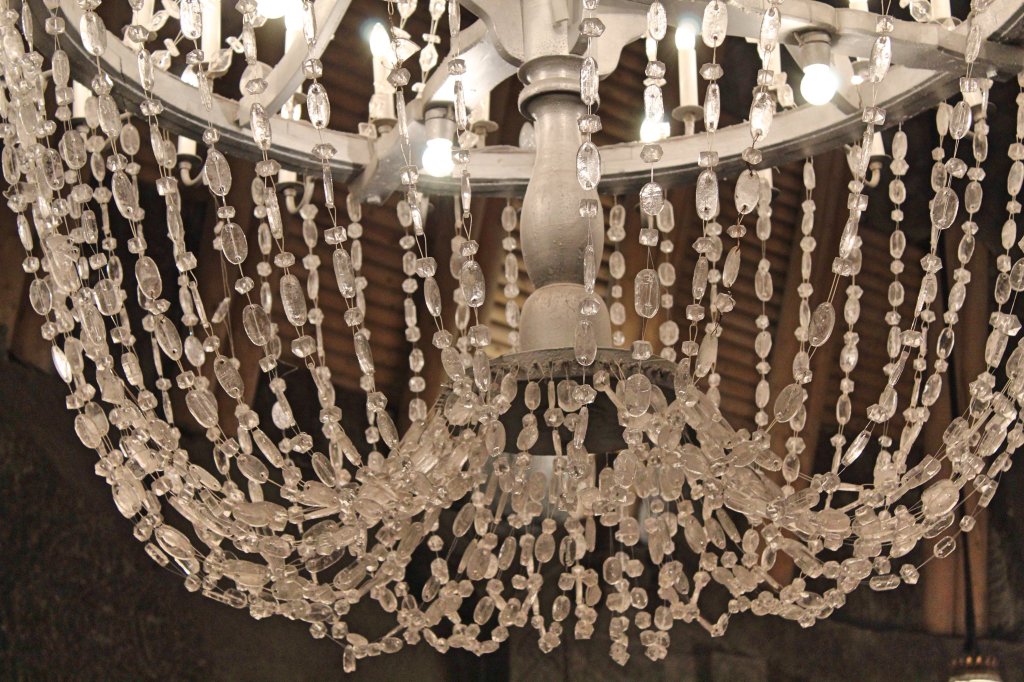
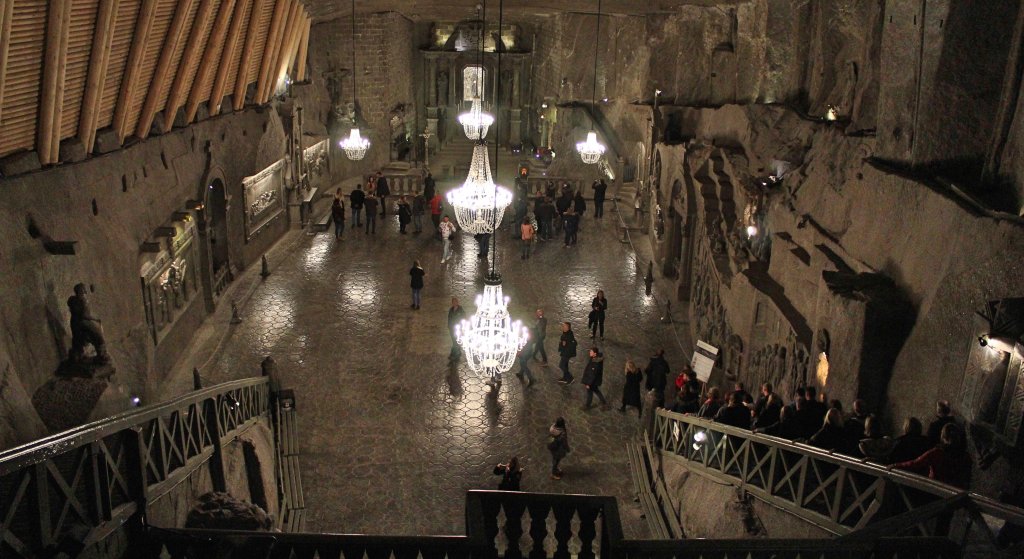
Yes, that is salt.

This fairly well wraps up my trip to Poland. But I would be remiss if I ended this post without mentioning the food. Though most people do not think of Eastern Europe as a garden of culinary delights, I must say that every single thing I ate in Krakow was scrumptious. The pierogies, the soups, the fried pork cutlets, the potato pancakes, and, yes, even the cabbage—it was all terrific. (I would like to single out the restaurant Domowe Przysmaki for special praise.) One night, my brother and I walked out of the center of town to visit a food cart selling nothing but grilled kielbasa, and it was worth the cold and the long line. The fresh ingredients and bright flavors of Mediterranean cuisine get all of the attention, but if you ask me the salty, vinegary, smoky flavors of Poland are just as satisfying.

Considering everything I mentioned in this post, along with the opportunity to visit Auschwitz (detailed in another post), I would say that this is one of the most interesting and rewarding corners of Europe for the traveler. 

Homage to Catalunya: The City of Barcelona

Homage to Catalunya: The City of Barcelona

This is Part Two of a seven-part series on Catalonia, following this plan:

  1. Introduction & Background
  2. The City of Barcelona
  3. Museums of Barcelona
  4. Architecture of Barcelona
  5. The Museum of Dalí
  6. Montserrat
  7. Tarragona

The city of Barcelona is one of the most immediately inviting cities on the planet. Like New York, with its numbered grid of streets, Barcelona is intuitively navigable: you are either travelling towards the eastern coast or away from it, towards the mountains that bound the city’s western edge. Moving around is easy: the city has a clean and efficient metro and train system. Thanks to the Mediterranean, the weather is agreeable: Barcelona has mild winters and warm summers. And, most importantly, Barcelona is stuffed with restaurants and attractions that cater to every taste.

It is no wonder, then, that the place is swarming with tourists. This is a classic case of a city’s strengths becoming its weakness: visited by many times more tourists annually than its 1.7 million inhabitants, the city has—at least in my experience—less local character than many other cities in Spain. Every major street and site is constantly swarming with foreigners, visiting for a week or for a weekend, which can give the city a feeling of artificiality and anonymity. The city’s harbor is partially responsible for this influx: it is the European port most used by cruise liners. But the real culprit are the city’s many treasures, which make it worth visiting despite the crowds and despite the fact that it is the most expensive city in Spain.

Like many cities in Europe, Barcelona is far older than its surrounding country, having been founded by the Romans. But traces of that ancient people are mostly absent from the city. Nowadays the most important division is between the medieval city center and the newer expansions. It was only in the 1850s that the old medieval walls were torn down, which is why there is a sharp contrast between these two sections: the narrow, crooked streets of the old city, and the wide, cuadrangular streets of the new.

The most famous part of this old center is the Barri Gótic, or the Gothic Quarter. Its winding streets, unsuited for automobiles, are now home to one of the most fashionable areas of the city. It is somewhat like Madrid’s Malasaña or even Brooklyn: with trendy restaurants and quirky boutiques. This transformation from dreary old city to tourist haven was far from accidental; the place was heavily refurbished, in a Neo-Gothic style, in preparation for the 1929 International Exhibition in Barcelona.

Barcelona_Cathedral

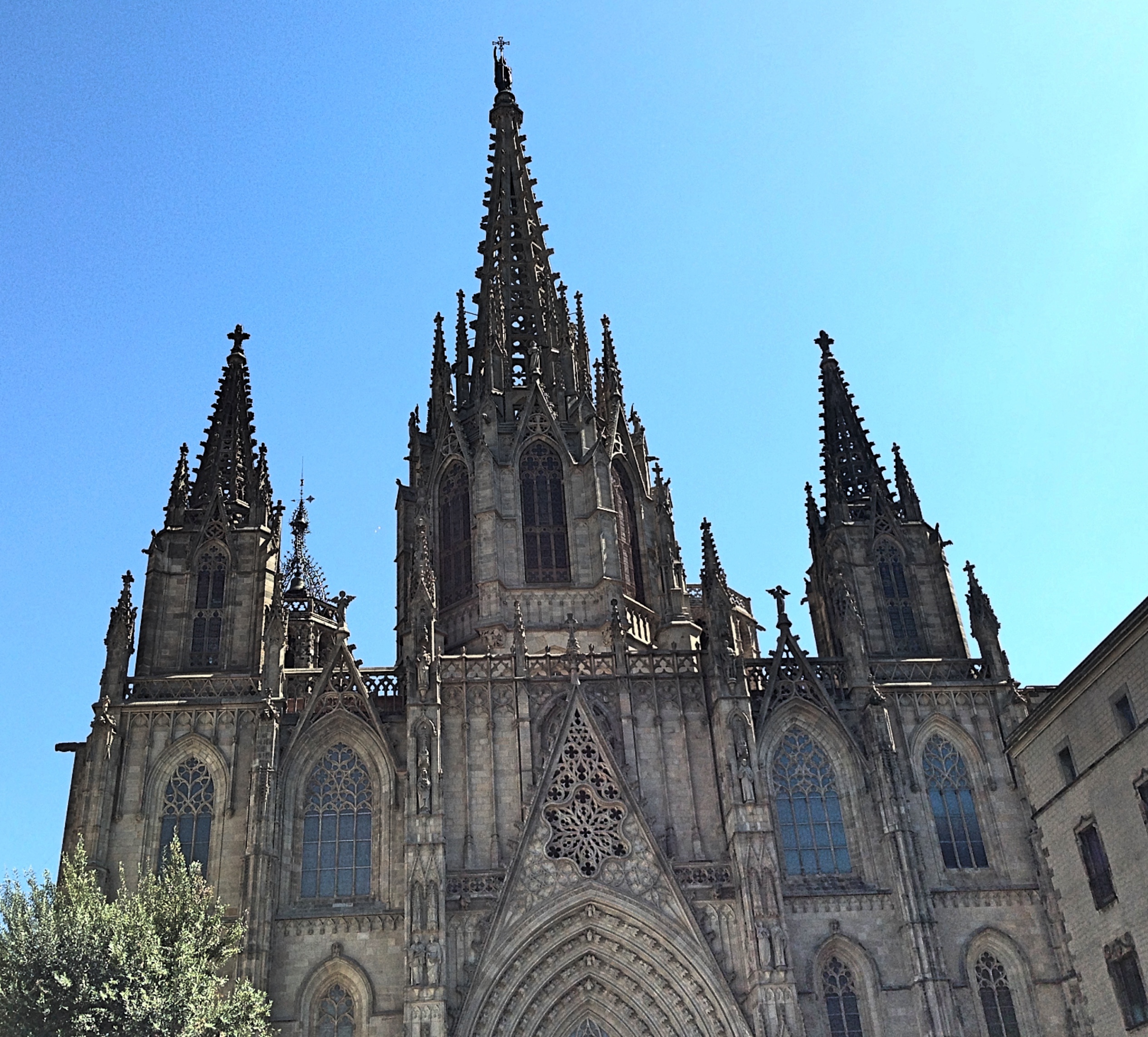
This is true even of one of the Gothic Quarter’s most famous landmarks: Barcelona Cathedral. The church’s magnificently pointy façade is, in fact, neo-gothic; the original exterior was, judging from pictures, quite unremarkable. Authentic or not, however, the cathedral’s façade is beautiful, resembling St. Patrick’s in New York City (which was built around the same time). Part of the old medieval walls (built on top of the ancient Roman walls) were incorporated into one of the cathedral’s sides, and have thus escaped destruction. The church is dedicated to Saint Eulalia, a young girl who was executed for being a Christian during Roman times. There is a magnificent tomb of the saint, with an exquisitely carved sarcophagus, in the cathedral’s crypt. But my favorite part of the cathedral was its peaceful cloister, which is home to 13 white geese (13 being the age when Eulalia was martyred) who mill about to the gurgling sound of a mossy fountain.

Barcelona_Cathedral_Courtyard

I should note here that this building, not the Sagrada Familia, is the true cathedral of Barcelona. The Sagrada Familia is, rather, an “expiatory temple” (by contributing money to its creation you can expiate your sins). A cathedral, by the way, is not a cathedral by virtue of its size or splendor, but because it is the seat of a bishop (the word “cathedral” comes from the Latin word for “chair”), who oversees a diocese (a division of land). Each diocese normally has only one cathedral. This is Barcelona’s.

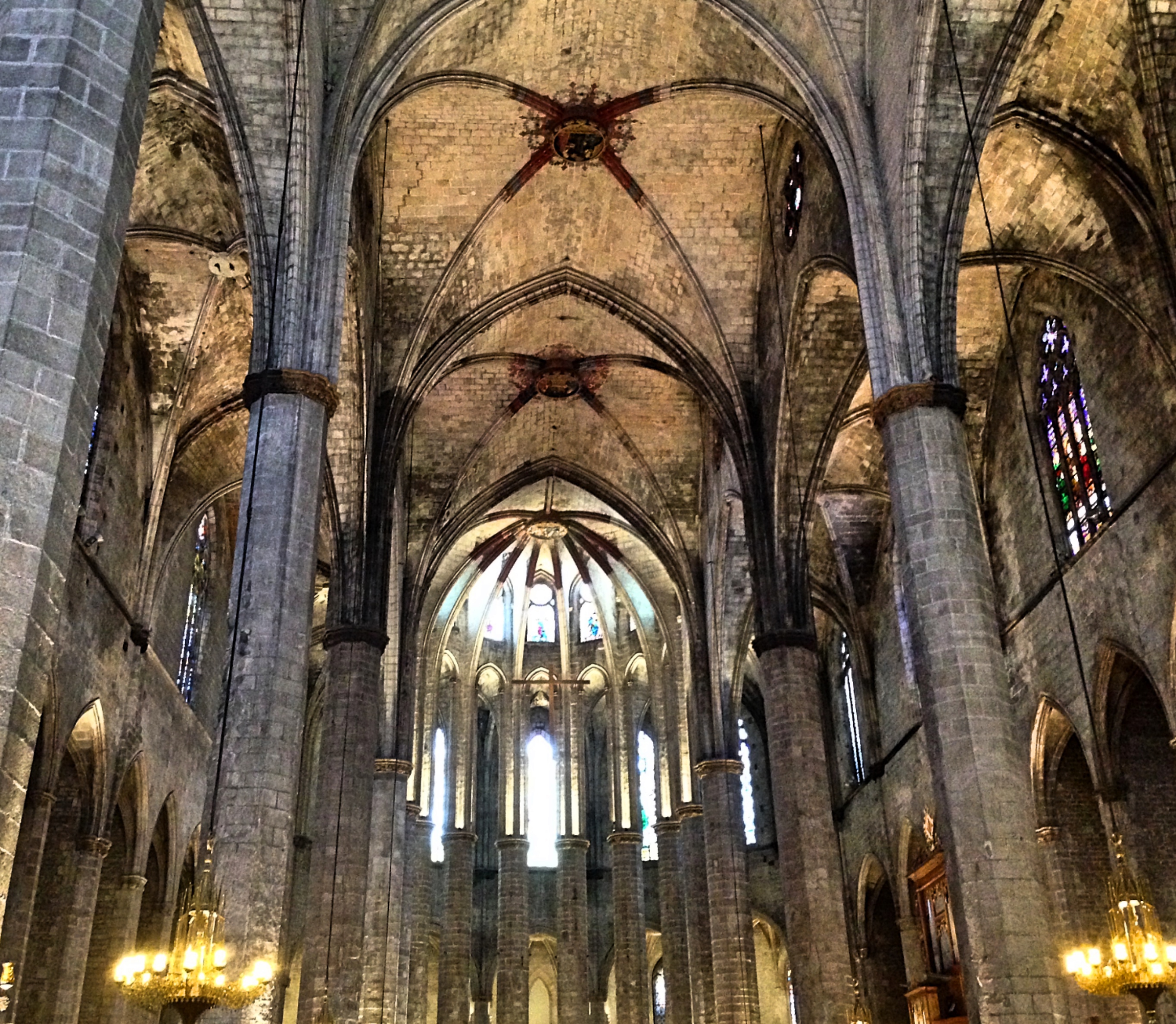
As attractive as is Barcelona’s cathedral, the city’s loveliest gothic church is undoubtedly Santa Maria del Mar. As its name implies, this church is found near the sea, in the Ribera quarter of the old city center. Its imposing outside, formidably stiff and monumental, gives way to an extraordinarily fluid interior. Unlike most churches of this size, Santa Maria del Mar was built relatively quickly, between 1329 and 1383, which means that historical progress did not create an mixture of styles. The word that comes to mind upon entering the church is, instead, “pure.” The curving lines of the columns and vaulted arches flow into one another, creating a shell-like space, liquid but still. This effect is partially the result of historical accident. Upon the outbreak of the Spanish Civil War, in 1936, there was a corresponding outbreak in anticlerical violence. Angry anarchists pilled all the pews and altars and, according to Robert Hughes, lit a fire that burned for 11 days, charing the stone and leaving only the building’s skeleton. The stark simplicity of the empty building allows one to more fully appreciate its noble form.

SantamariadelMar

(A similar fate befell the nearby Santa Maria del Pi, another massive gothic church in the old city center. Anticlericalism seems to have been particularly strong here in Barcelona during the 1930s. On a tour I was once shown photographs of anarchists posing next to the exhumed bodies of saints and firing their rifles at crucifixes.)

The old center of Barcelona gives way to the new section at the Plaça de Catalunya, the true center of the city. This massive plaza is always throbbing with people—mostly tourists—since it stands at the intersection of so many corners of the city. The pigeons also like it, which is why the square’s many neoclassical statues are covered in fine spikes that prevent them from landing.

One of the most eye-catching of these statues, a monument to Francesc Macià, looks like an inverted staircase and is meant to symbolize the difficult road to Catalan independence. Macià was a Catalan separatist, you see, who led the Esquerra Republicana de Cataluyna, a leftist party that favored independence; and when his party gained a majority in the 1931 elections he duly declared Catalonia an independent Republic. This state of affairs lasted for a total of three days, from April 14 to 17, until they settled on partial autonomy within the Spanish Republic. As far as I know, these three days are the only time in modern history that Catalonia has been independent.

The Plaça de Catalunya hasn’t always been such a tranquil tourist haven. On a tour I was once shown bullet marks that remained from infighting between anarchists and communists during the Civil War. It was during this infighting that George Orwell had to go into hiding, after he spent three days posted on a nearby building with a rifle. In the early 1900s, when Barcelona was an industrial center riven by stark inequality, the city was a hotbed of leftist movements among the workers. Anarchism in particular was popular, as Gerald Brenan details in his classic study of the causes of the Spanish Civil War. The idealism of these movements, as well as the machinations which eventually destroyed the anarchists and brought the Stalinists to power, made a deep impression on Orwell, which he describes in his remarkable memoirs of the war. Anyone who wishes to learn more about this can contact Nick Lloyd, who also wrote a book about this chaotic time.

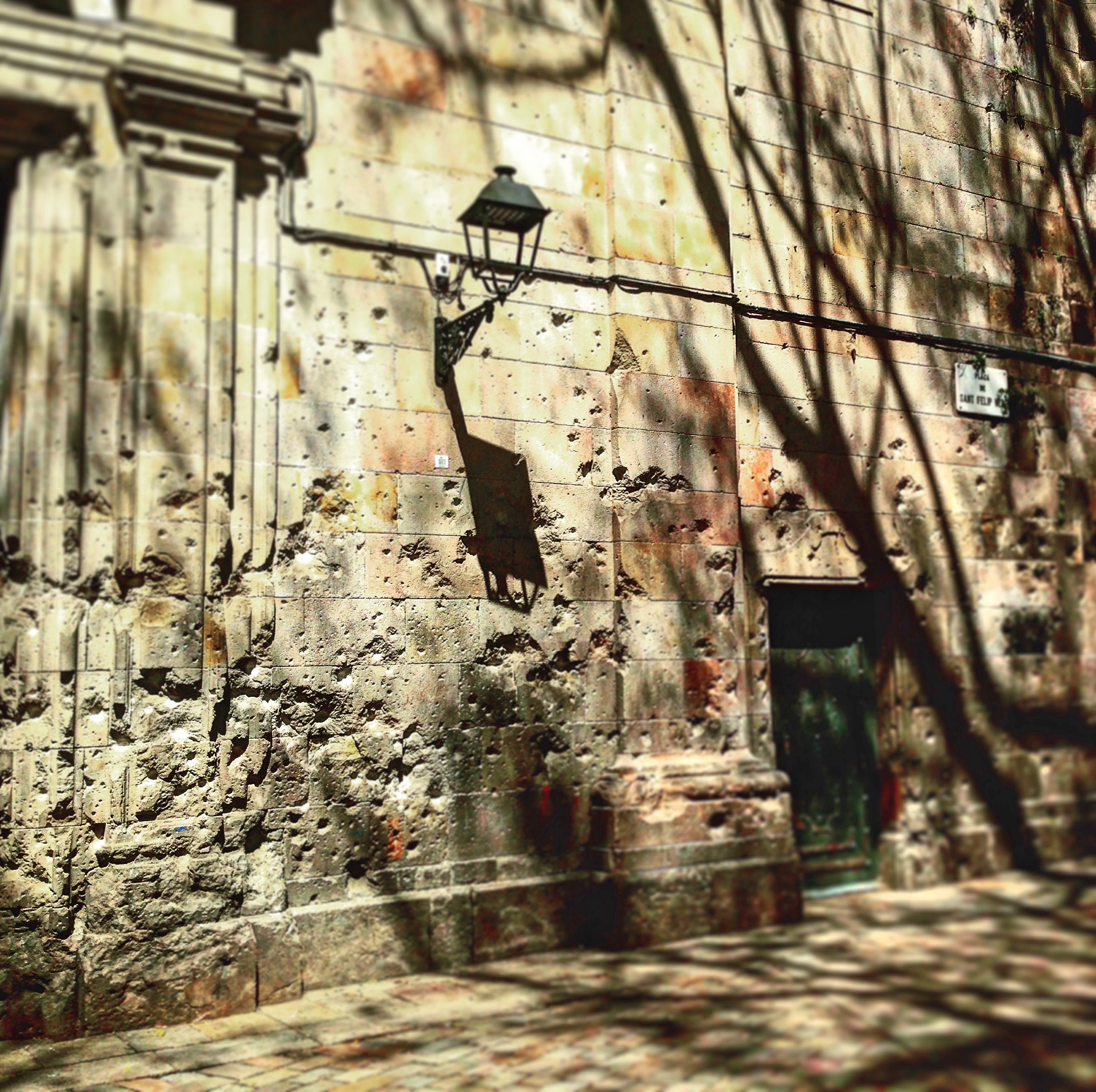
Barcelona_Civilwar(To see another scar from the Civil War, you can visit the Plaça de Sant Felip Neri, near the Cathedral. One side of the eponymous church is deeply pockmarked. During Franco’s time this damage was explained as having been caused by executions committed by the Republic side, as bullets missed their targets. This is a classic case of history being falsified by the victors. For the real explanation for the damage are two bombs that fell on this spot, hitting the church, which was being used as a refugee for children. Forty-two died in the blasts, mostly children, and a plaque now commemorates the spot.)
One of the major paths leading away from the plaza is La Rambla. The word “rambla” originates in the Arabic word for “riverbed,” for that it all it was, originally—a dried river that used to flow into the Mediterranean. Now it leads the tourist in the same direction, towards the beach, in a lovely procession lined with trees. Robert Hughes called the street “one of the great, seedy, absorbing theaters of Spain,” but I think it has changed somewhat since he wrote those words. He speaks of bursting flower stalls and vendors selling exotic caged birds. Nowadays, however, the walker is treated to a series of indistinguishable, gaudy restaurants, with their colorful menus displaying “authentic” cuisine and their chairs and awnings crowding the sidewalk.

Larambla

In other words, tourism has largely eroded whatever distinct character this street once had, leaving it with the nowhere-in-particular quality of so many tourist centers—which, ironically, are travel destinations that all look the same. Another consequence of the huge influx of tourists is that the street is also popular with pickpockets. Indeed, Barcelona in general is one of the great pickpocketing capitals of the world; half of everyone who goes there seems to lose something—though I’ve been lucky so far. If you walk down the Rambla—and any time you are in Barcelona, for that matter—be aware of your belongings. This huge concentration of people also made La Rambla a target of a terrorist attack in 2017, when a man drove a van through the crowd, killing 15 people.

But you cannot let either pickpocket or terrorist dissuade you from walking down this street, at least as far as La Boqueria, Barcelona’s famous market. I am no foodie and not usually captivated by markets. But the Boqueria is undeniably impressive, with stall after stall selling a huge variety of foods—all of it vibrant and delicious. Fish, sausage, fruit, vegetables, beans—cured, dried, pickled, freshly picked—you can find everything here. I didn’t even buy anything but I very much enjoyed just walking around.

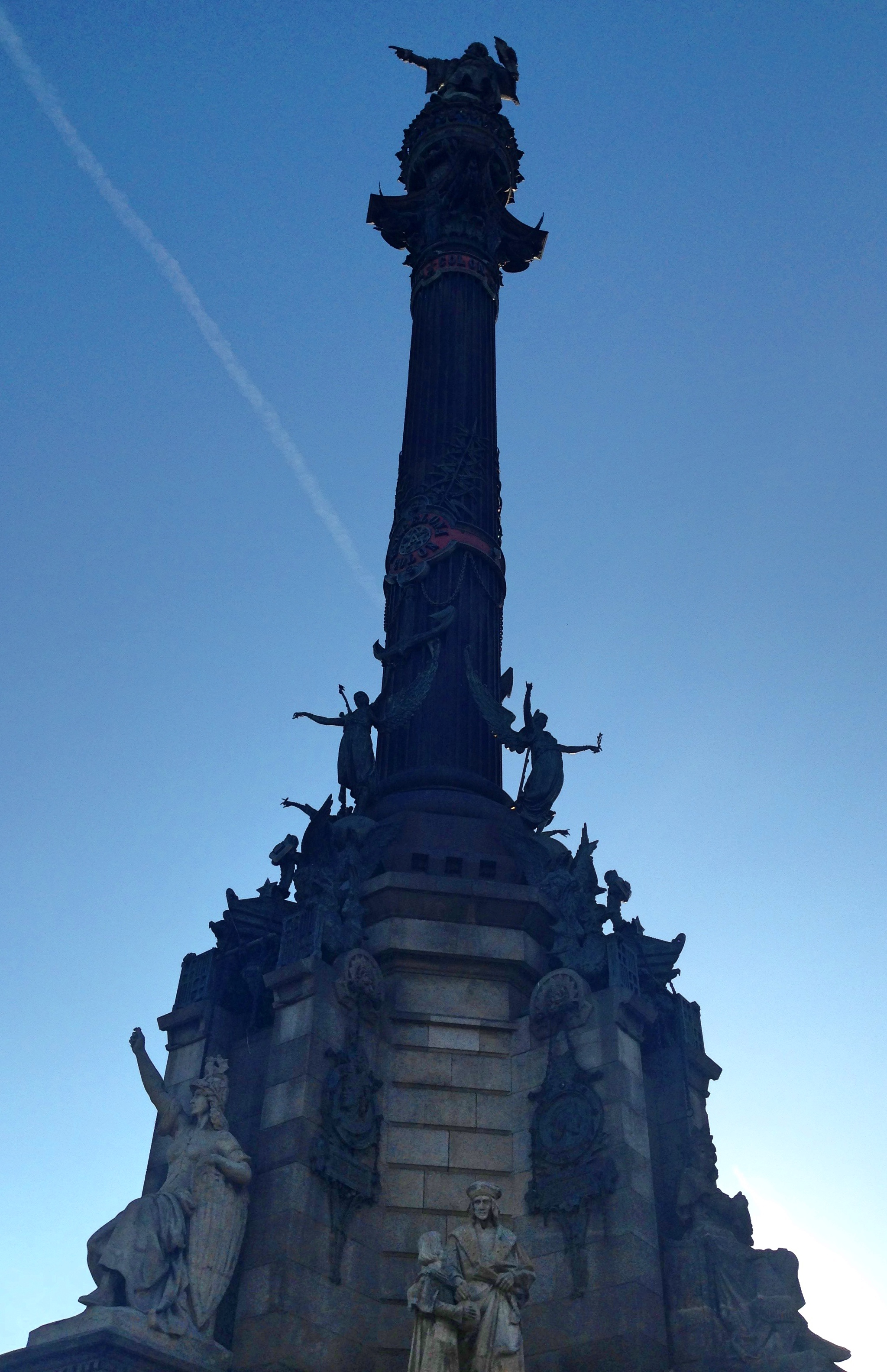
Columbusmonument

The end of La Rambla spills into the sea. Here you can find Barcelona’s gigantic monument to Christopher Columbus. There is a joke that Catalonians like to claim everything; and thus many Catalans believe Columbus wasn’t an Italian at all, but a Catalan. (According to this article, he has also been claimed by the Italians, French, and Scottish.) This may partially explain why Barcelona has such a monumental dedication to the explorer. The main tower, on top of which stands the man himself, rises to almost 200 feet (60 m) tall; and its base is bursting with finely carved statues. But now that Columbus is coming to be seen as a subjugator and even as genocidal, perhaps these different places will stop trying to identify themselves with him. (The irony of Columbus, one of the great claimers of history, being himself claimed, reclaimed, and disclaimed after his death, will not be lost on the reader.)

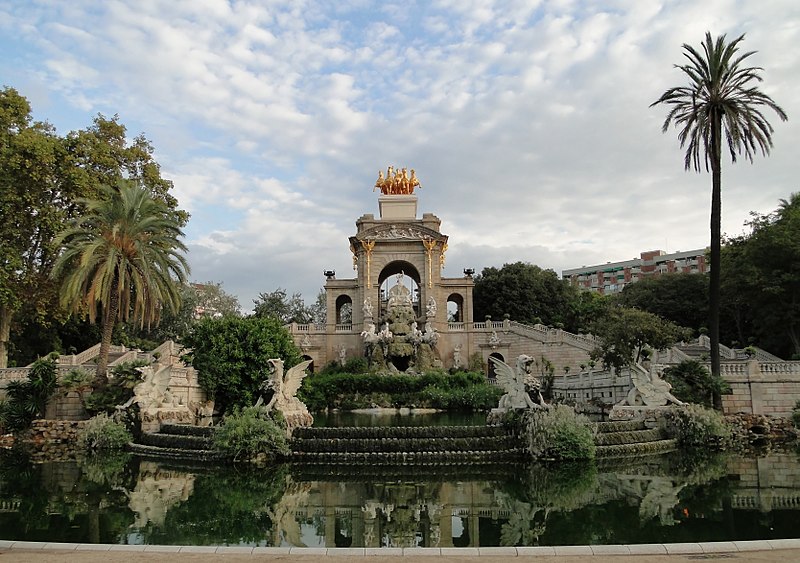
From here you can walk along the seaside towards Barcelona’s finest park (aside from the Park Güell, to be discussed in another post): the Parc de la Ciutadella. The name of the park comes from a huge citadel that used to occupy the spot. This fortress was built after the Spanish forces conquered Barcelona during the War of Spanish Succession, in order to maintain control of the unruly province. Unsurprisingly it became a hated symbol of Spanish dominance, and was eventually destroyed. The park that later emerged was, for a long while, Barcelona’s only stretch of green. But it is not only attractive for its trees and grass. The park’s central fountain is massive and glorious, bursting with the granite and golden forms of horses. The final effect is undeniably impressive, much like the monument to Columbus. This is no coincidence. Both of these works were built for the 1888 Barcelona Universal Exposition (a world’s fair).

800px-Ciutadella_Park_fountain_Bernard Gagnon
Image by Bernard Gagnon; licensed under CC BY-SA 3.0; taken from Wikimedia Commons

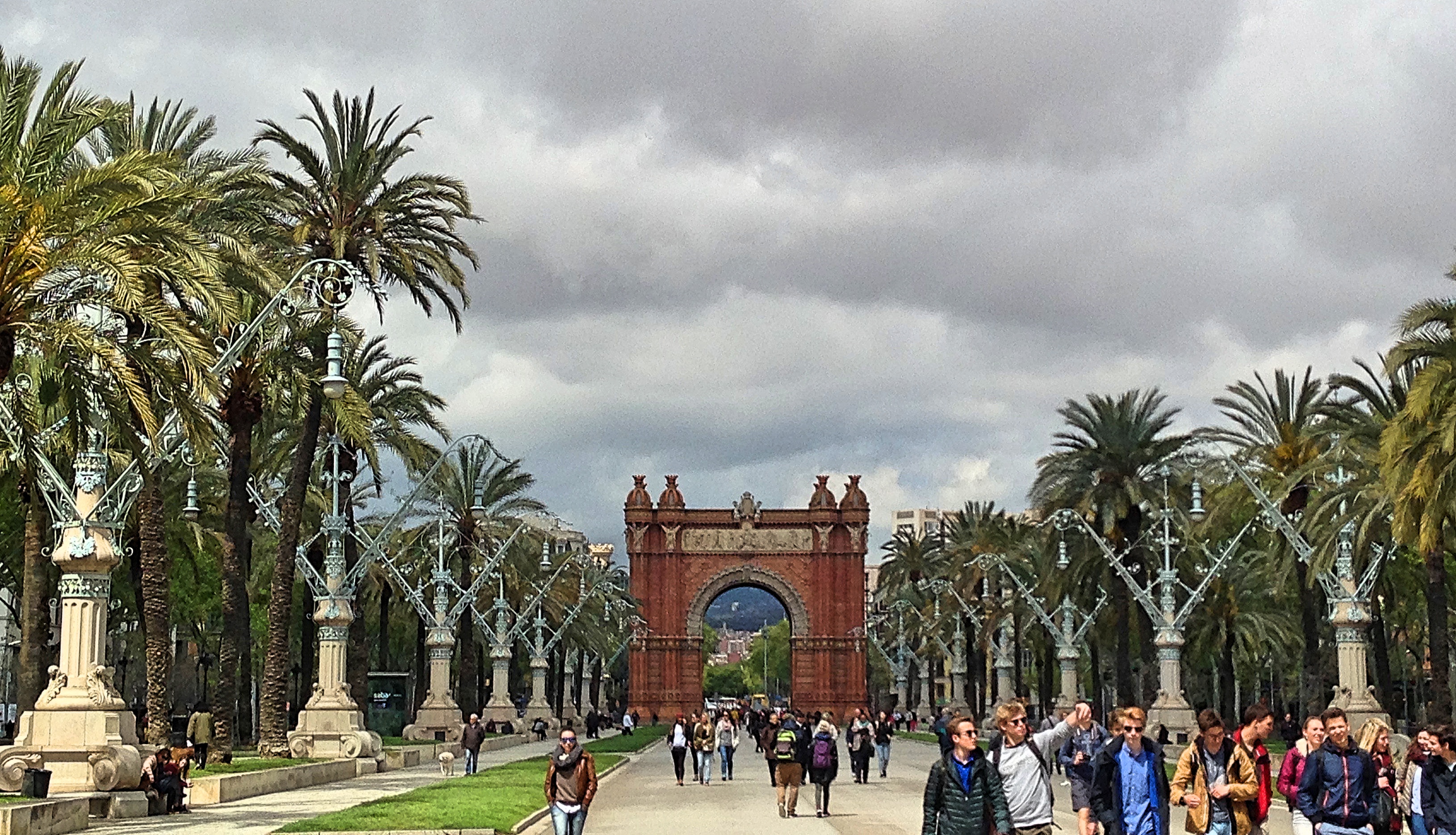
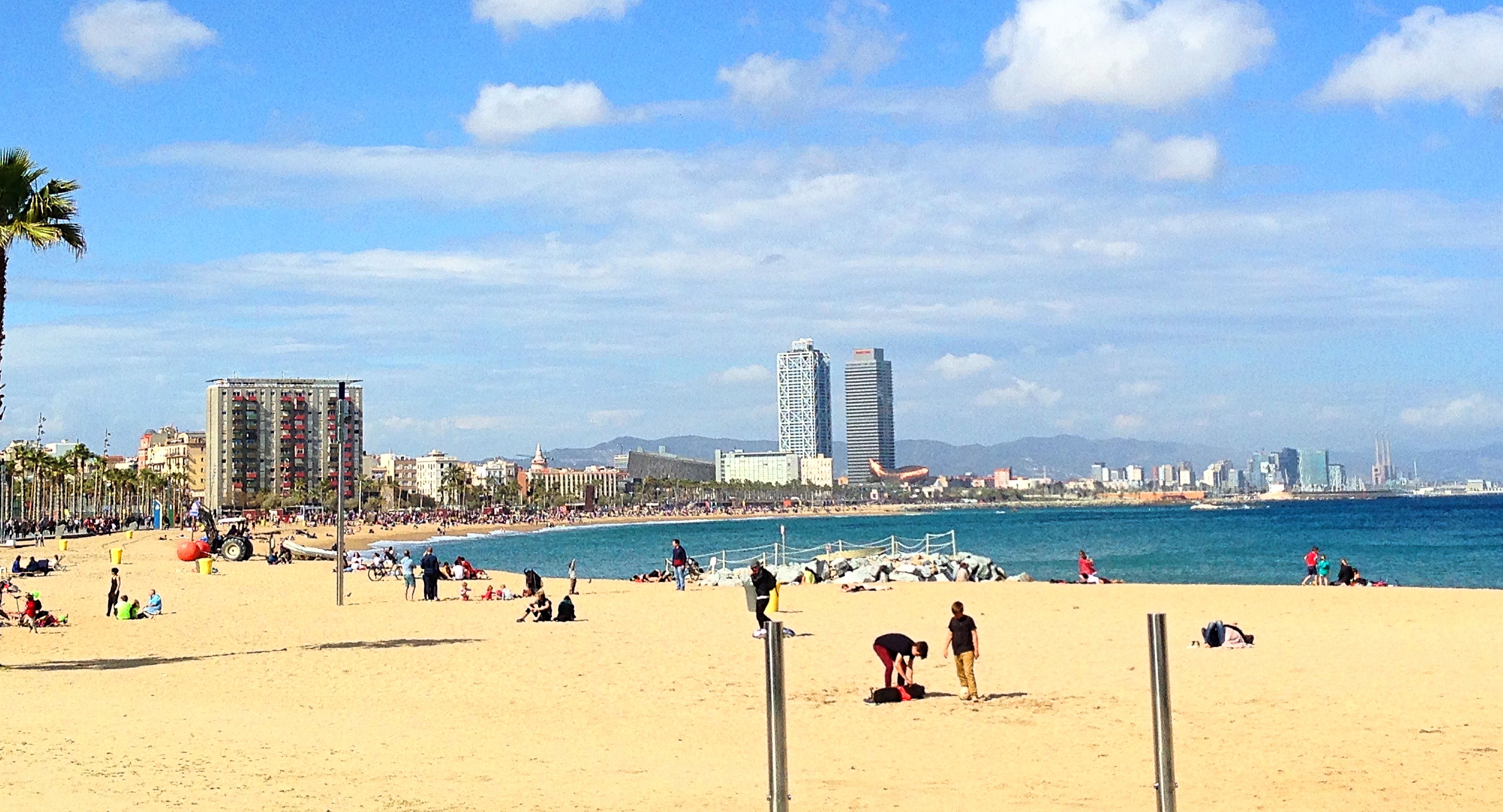
A third surviving monument to this exposition stands right next to the park: the Arc de Triomf, a triumphal arch that served as the fair’s entrance. The arch looks somewhat lonely now, with nothing to lead to or from; but the lovely Neo-Mudejar design retains its sense of excitement. As you can see, then, the 1888 exposition and the 1929 exposition (in the Gothic Quarters) have left their mark on the city. So have the 1992 Summer Olympics, which were hosted here. It is a short walk from the Arc de Triomf to the Olympic Port, where you can see Frank Gehry’s wiry sculpture of a fish made for the event, in addition to some of the hotels erected for the influx of spectators and athletes. From here you can walk onto the sands of Barcelona’s beach—always crowded, of course, but with a bona fide Mediterranean sun.

arcdetriomf

Barcelona_OlympicPort

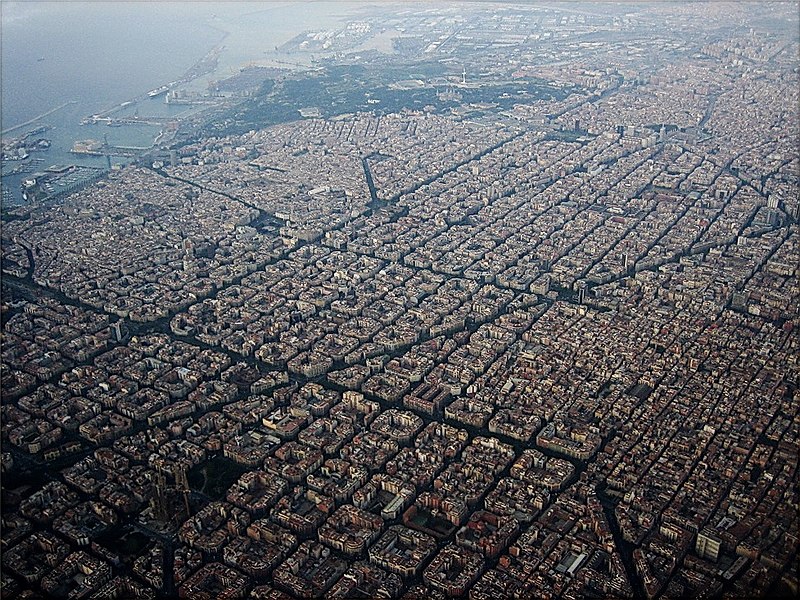
Some years before the 1888 exhibition, an idealistic urban planner (and socialist) named Ildefons Cerdà i Sunyer was laying the foundation for the next phase of Barcelona’s expansion. Up until the mid 19th century the city of Barcelona was still constrained by walls: Roman, medieval, and Spanish Bourbon (such as the citadel). Their destruction meant that the city could now expand into the largely uninhabited areas beyond. And it was Cerdà who was given the task of planning this expansion, from which the resultant Eixample gets its name (Catalan for “enlargement”).

800px-Eixample_aire_Alhzeiia
Image by Alzheii; licensed under CC BY-SA 2.0; taken from Wikimedia Commons

Cerdà was a polymath who had studied urban poverty; appalled by the massive inequality and poor living conditions that plagued the city in his time (and continued to long after his death), he originated a utopian scheme for a city without center or division. If every building and street is identical, in a symmetrical space with no uptown or downtown, then there can be no segregation by class or wealth.

This was the ideology that motivated the Eixample’s grid pattern. Cerdà wanted his new city to be efficient and healthy, and he thought of everything: constraining the heights of buildings to allow sunlight; rounding off the corners of buildings to allow street cars to go by; and dedicating a large portion of the space to patios and parks. But the developers who built up the area were not faithful to this plan: the buildings are taller and there is very little in the way of green space. The final result is not nearly as sunny and open as was Cerdà’s original vision. And far from creating an ideal equality, the Eixample became yet another playground for the rich, with wealthy industrialists paying famous architects to design ostentatious homes. Idealistic plans have little chance against the combined strength of wealth and greed. On the plus side, though, many of these homes are now landmarks.

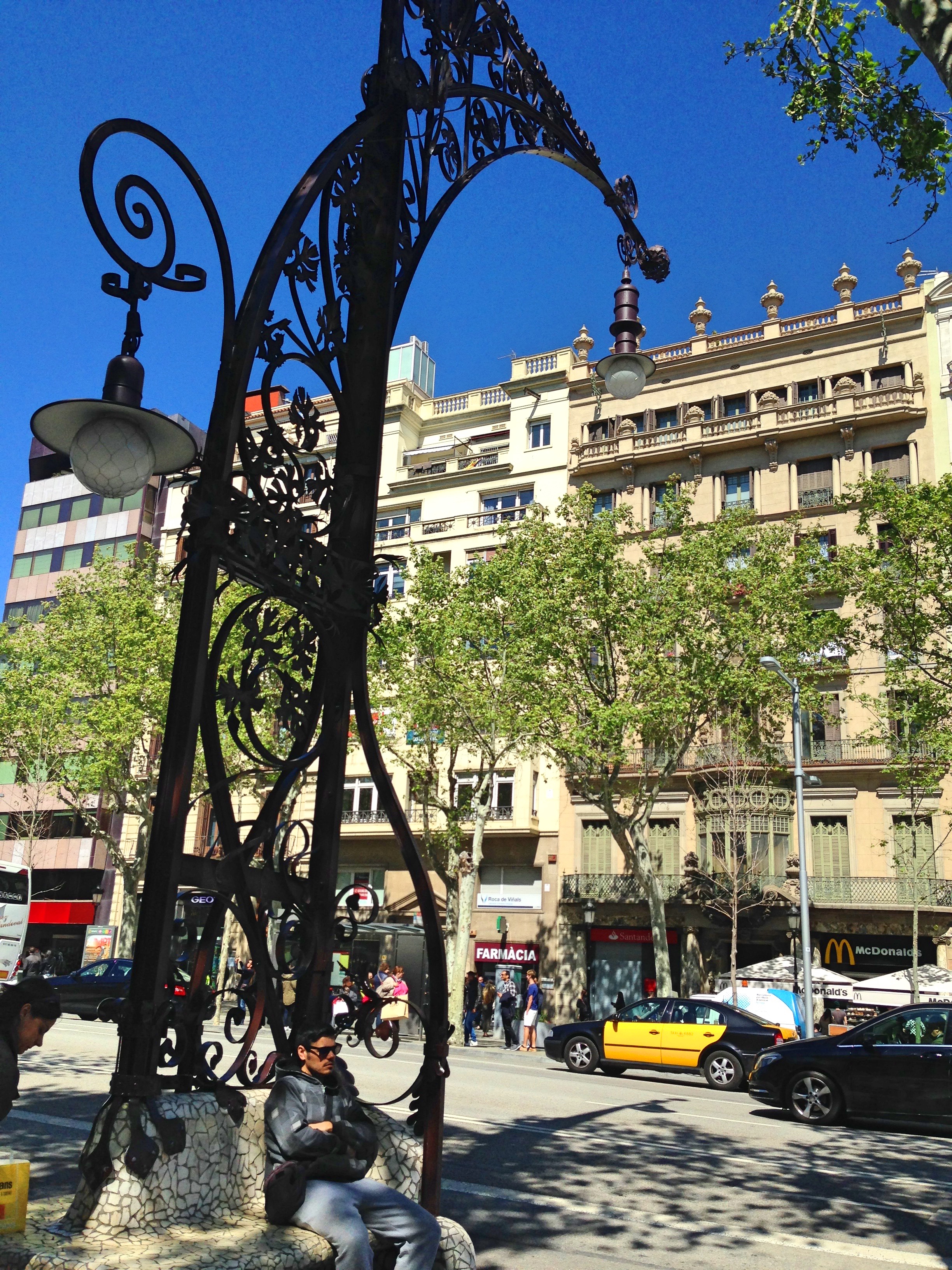
Eixample_Streetlight

The most extraordinary of these houses—including two of Gaudí’s greatest works—are found on the Eixample’s iconic avenue: the Passeig de Gracia. Here one does not miss the narrow, twisting streets of the old city. The wide avenue is bathed in sunlight and warmth. The pedestrian enjoys a grand procession as she walks down the avenue, with beautiful building arranged like paintings in a museum. Even the street lights are lovely: ornate wrought iron that lazily hangs over the pavement; and each of these street lights emanates from a ceramic bench, giving the avenue many places to sit, rest, and enjoy the scenery. But it must be admitted that other parts of the Eixample are not so impressive, but recede into an undifferentiated dullness that seems to prefigure the inhumanity of modernist urban planning. This is the general drawback of grid plans: they lack the spontaneity and surprise of cities that have grown more “organically.”

The next point of interest is also to be found in the Eixample: the Plaça d’Espanya. This square itself is not particularly attractive. It was built on the occasion of the 1929 World’s Fair, and suffers from its monumental aspirations—being inhumanly vast. Admittedly, in the center of the plaza is an impressive fountain, full of sculptures; but so many cars swarm around the roundabout (it is the intersection of four major roads) that it cannot be seen from up close. On one side of the square is Las Arenas, a shopping center built in a beautiful old bullring—its neo-mudéjar design quite similar to Las Ventas in Madrid.

(Bullfighting, by the way, was banned by the Catalonian government in 2011, and hasn’t taken place since. This ban was, however, overturned in the Spanish courts—so I am unclear whether it is now legal or not. In any case, bullfighting is so symbolic of Spanish culture that it now arouses disapproval in Catalonia for political as well as ethical reasons.)

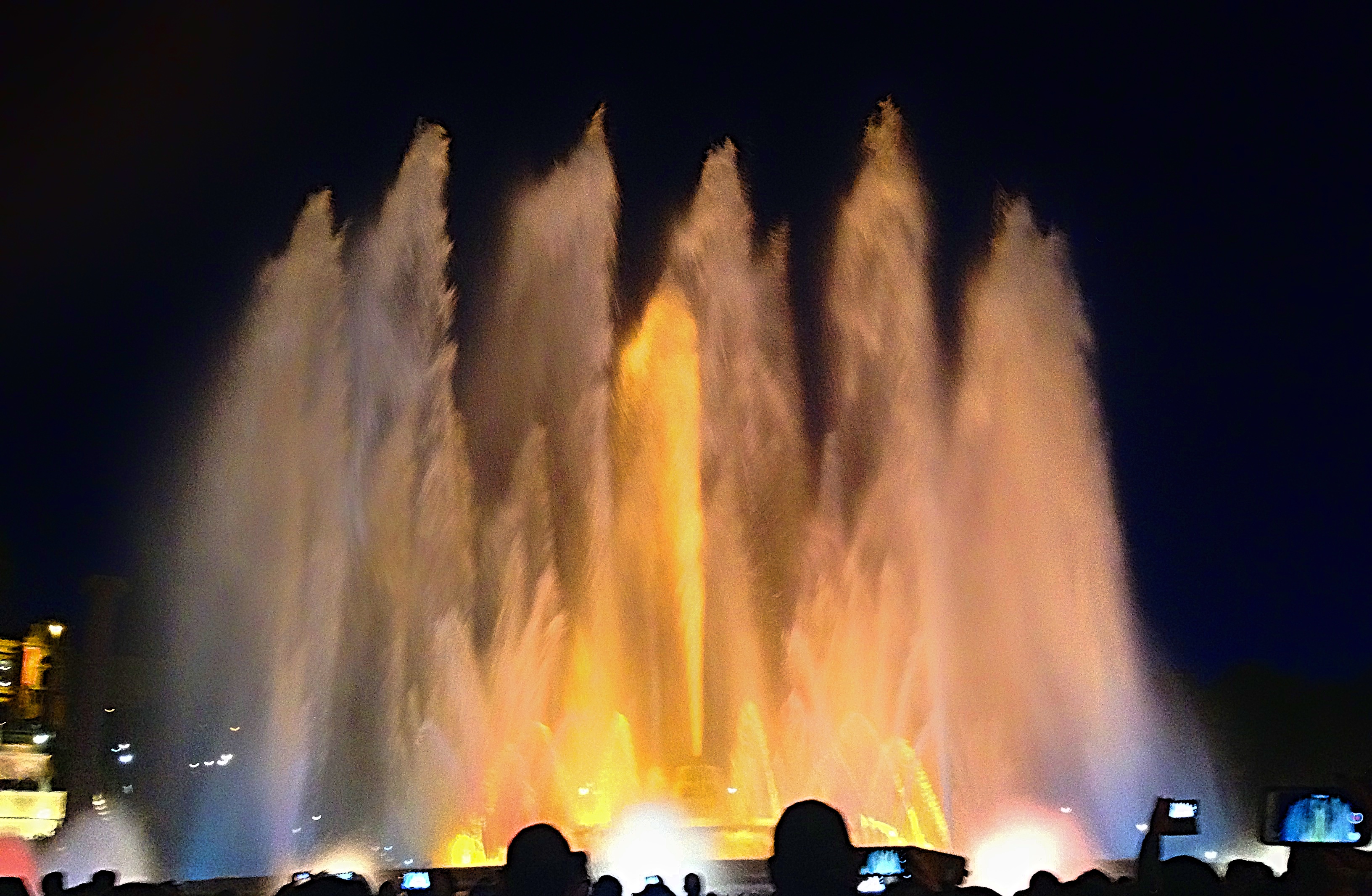
On the other side of this square are the two Venetian towers—also built for the World’s Fair—that welcome the pedestrian towards the famed mountain of Montjuïc. Well, Montjuïc is more of a hill than a mountain; and on it stand two of the city’s finest museums: the National Art Museum of Catalonia and the Miró Foundation (to be discussed in a separate post). In front of this first museum is the so-called Magic Fountain: a large fountain that has been programmed to be part of an audiovisual show. Basically, at a certain time at night the water is  lit up with colored lights while it sprays in rhythm to music played over a speaker system. I did not enjoy the show very much, especially since so many people came to see it, but others may like it.

Magicfountain

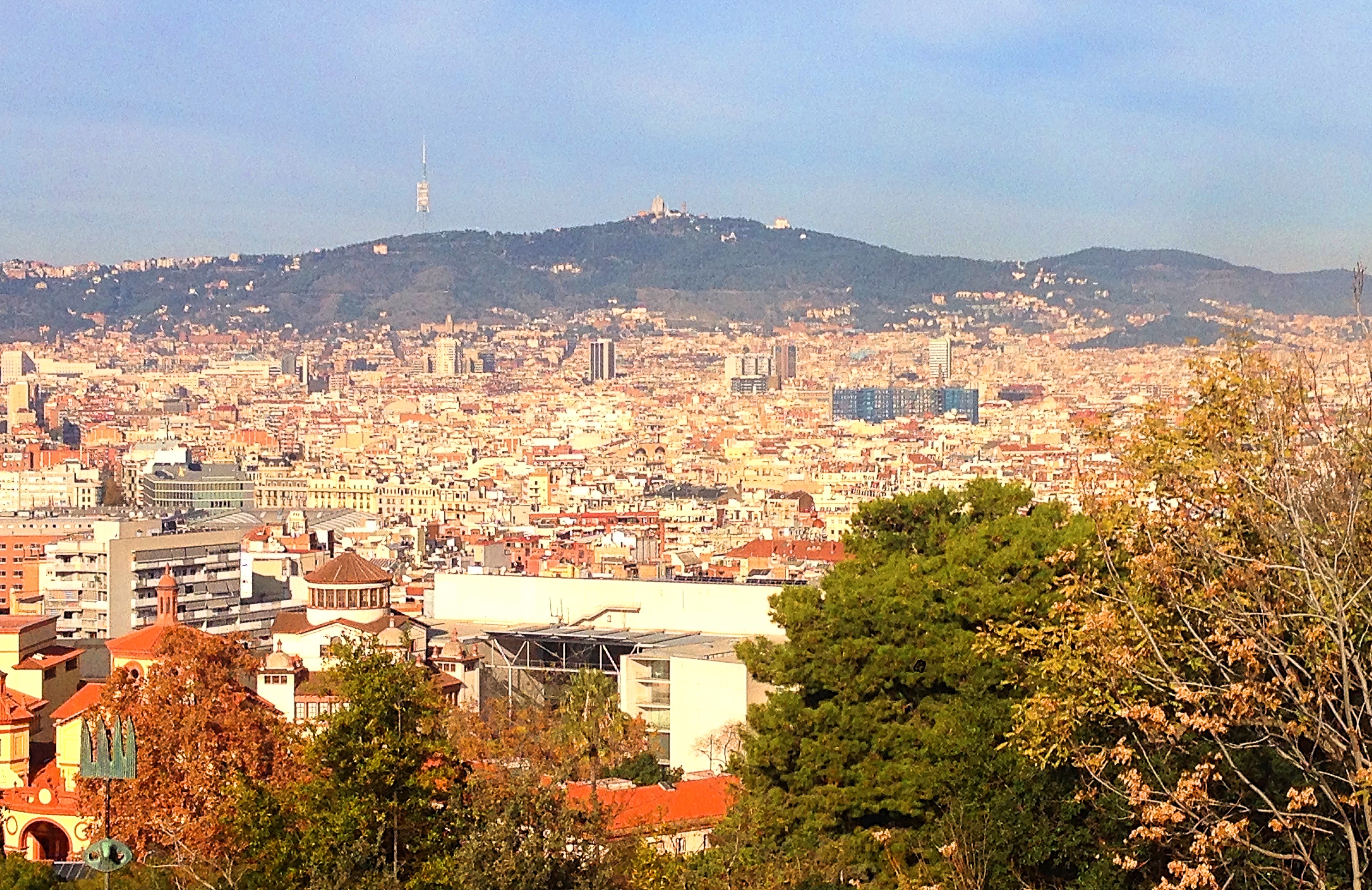
Standing on top of Montjuïc one gets an excellent view of Barcelona, the whole city spread out before you. And in the distance, rising above the city, is Tibidabo, the highest peak of the Collserola range that encloses Barcelona’s western edge. If you squint you may be able to see the pointed form of the Temple Expatriatori del Sagrat Cor, a modernist church designed by Enric Sagnier. Nearby you may also spot the ferris wheel of Tibidabo’s amusement park, the second oldest amusement park in all of Europe, having been opened in 1901. Easier to spot is the Collserola Tower, a huge telecommunications spire that extends almost 1,000 feet into the air.

View_From_Montjuic

This does it for my tour of Barcelona. Next I will visit some of the museums, beginning with the National Art Museum right behind me.