
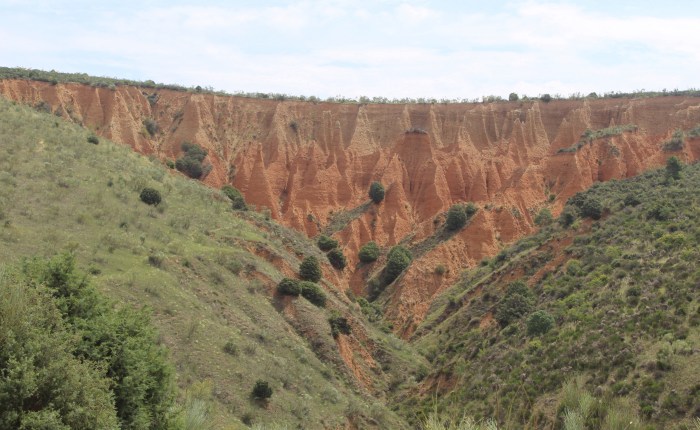
For years I had been beguiled by images of Las Cárcavas—a crazy undulation of land, tucked away in the sierra of Madrid. Photos made the place seem otherworldly; and I was dying to see it for myself. Unfortunately, however, there did not seem to be any good way to get there on public transport. Studying the bus routes and the map, I found that the closest that I could get was a tiny village that I’d visited once before: Patones de Arriba.
So early one Saturday morning, I took the metro to Plaza de Castilla, and caught the 197 bus to a small village called Torrelaguna. From there, I caught the 913 bus—a mini-bus, which followed the winding path up a hill to the old and picturesque village of Patones de Arriba. I was the only passenger on board that day. And by the time I arrived, it was still so early that the streets were virtually empty.
Patones de Arriba (unlike its modern cousin, Patones de Abajo down the hill) is a time capsule of a place. It seems to have survived virtually unchanged since antiquity. Stone huts cover an otherwise barren hillside—the town hidden among the foothills of the sierra, in a place that would be naturally defensible should any dare to attack it.
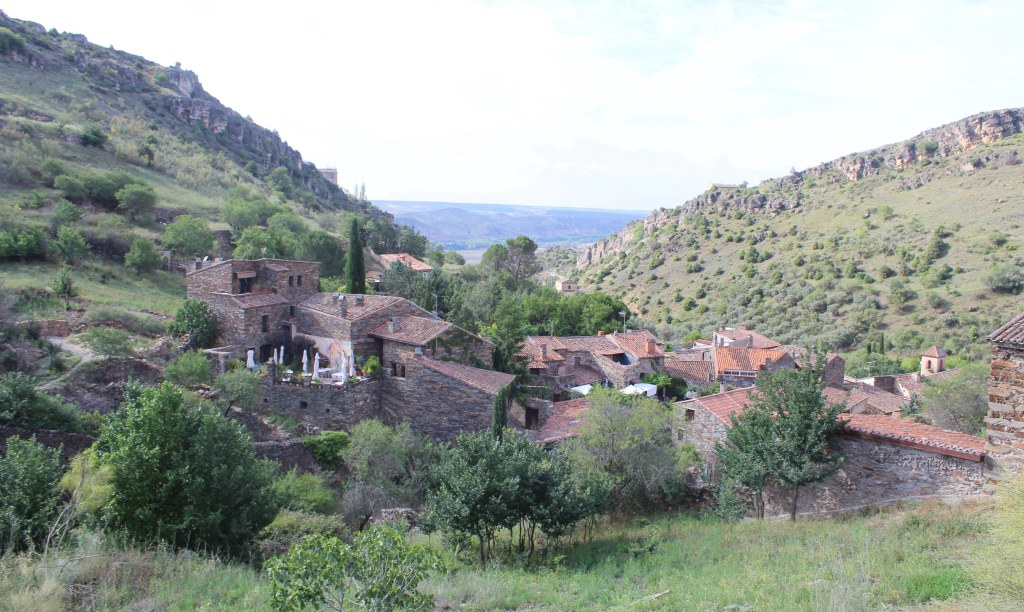
The architecture is a prime example of what the Spanish call arquitectura negra: all of the buildings made out of the distinctive black slate of the area, which naturally breaks off into thin plates. This gives the town a striking uniformity—both between its buildings, and with the landscape. The tallest building is the old church, though nowadays it is used for the tourism office. Indeed, I am not sure that anyone actually lives in Patones de Arriba these days—it is a kind of living museum attached to the modern settlement below.
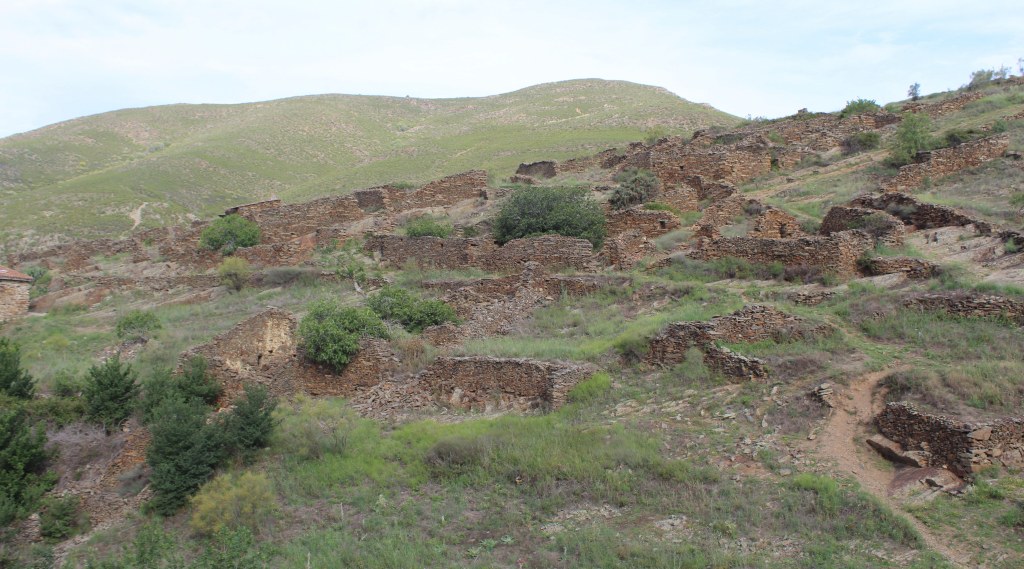
The town is full of relics of its agricultural past. There are stone threshing floors (for separating the wheat from the chaff), pig pens, and cattle sheds. We can also see signs of village life, in the form of ovens, wine cellars, and laundry basins, all made from the local slate. But the real pleasure of visiting the village is simply enjoying the ambience of the past—and, perhaps, a good lunch. On my first visit, years prior, we went into one of the restaurants and had a hearty meal of good Spanish mountain fare—bean stews and red meat.
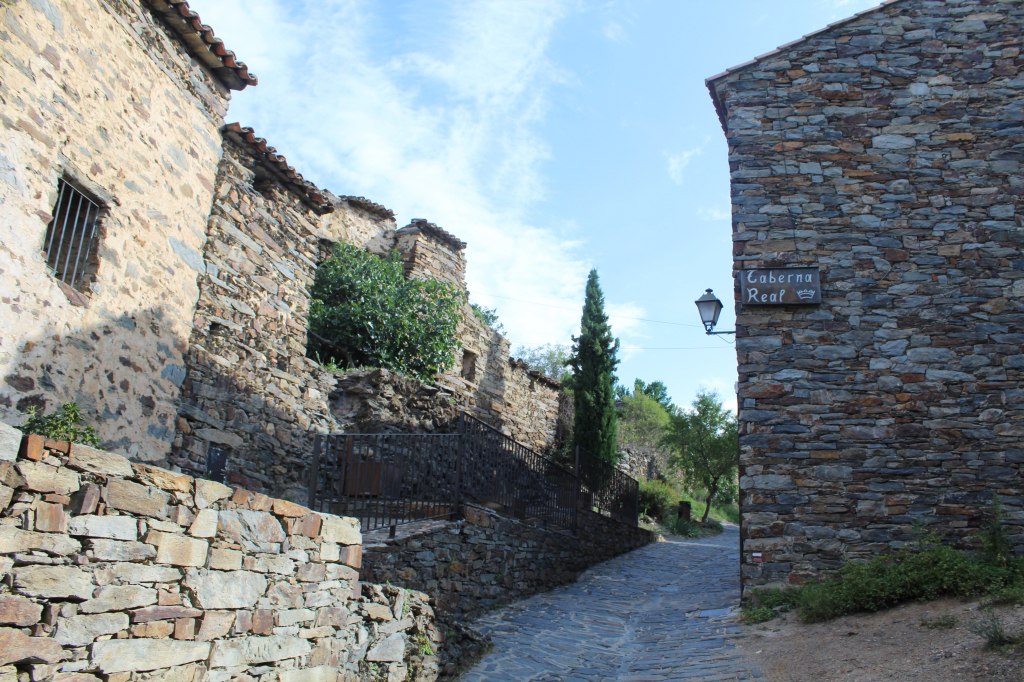
But by the time I arrived, there was nothing open and, apparently, nobody there. So I walked through the town and then out into the surrounding hills, on my way to Las Cárcavas.
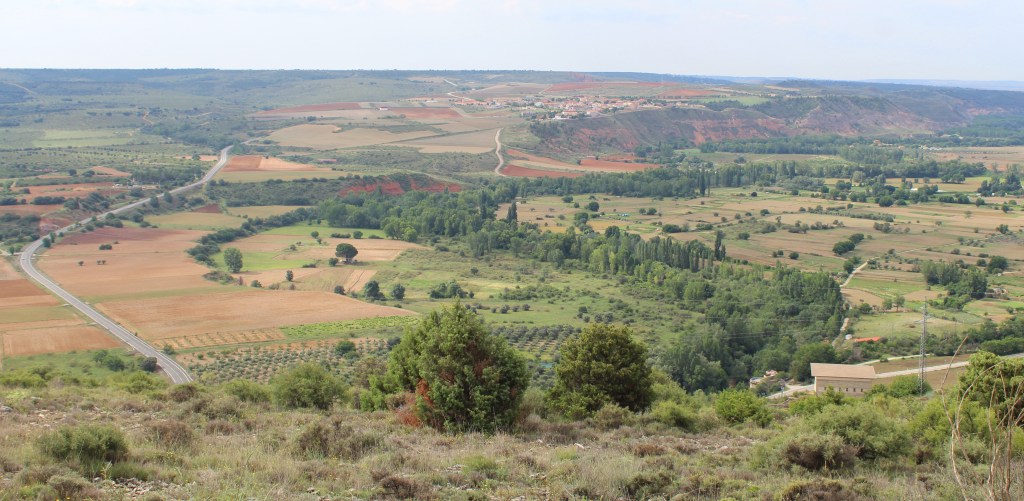
The countryside here is, like much of the interior of Spain, windswept and bare. In the best of times, the soil and rain could not support luxuriant vegetation; and, in any case, centuries of human habitation have destroyed a large portion of the old forests. The result is that much of Spain, though dramatic in its vistas—the view extending until the horizon—unwinds itself in a patchy surface of rocky ground covered with low shrubs.
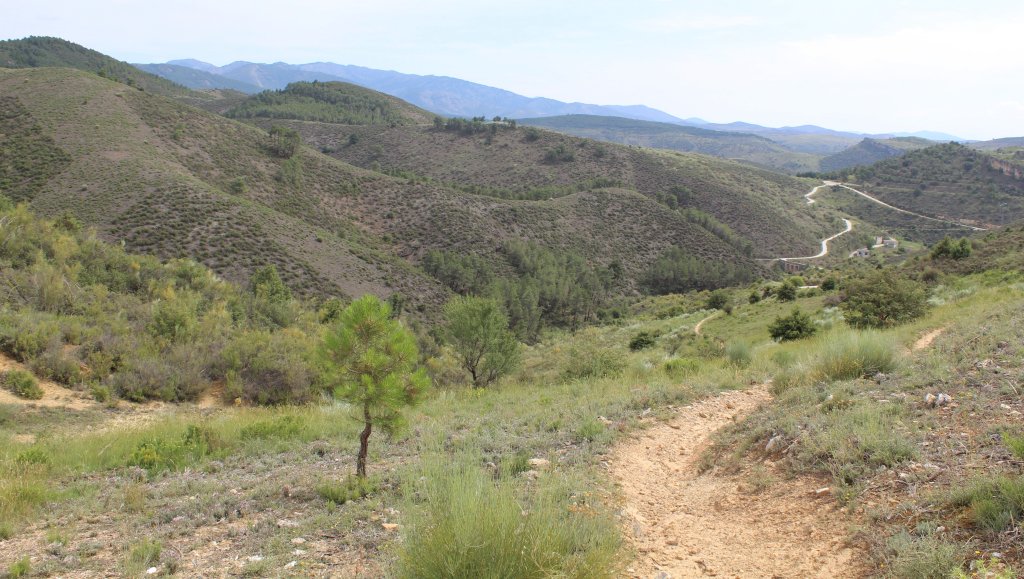
The walk was long, winding, and somewhat monotonous—going up and down hill after hill. The only thing to attract the eye were the many pieces of water infrastructure. Large tubes shot out of the hillside, down into valleys and back up again. Further on, stone aqueducts crossed from elevation to elevation. Finally, the explanation for all this came into view: the Pontón de Oliva.
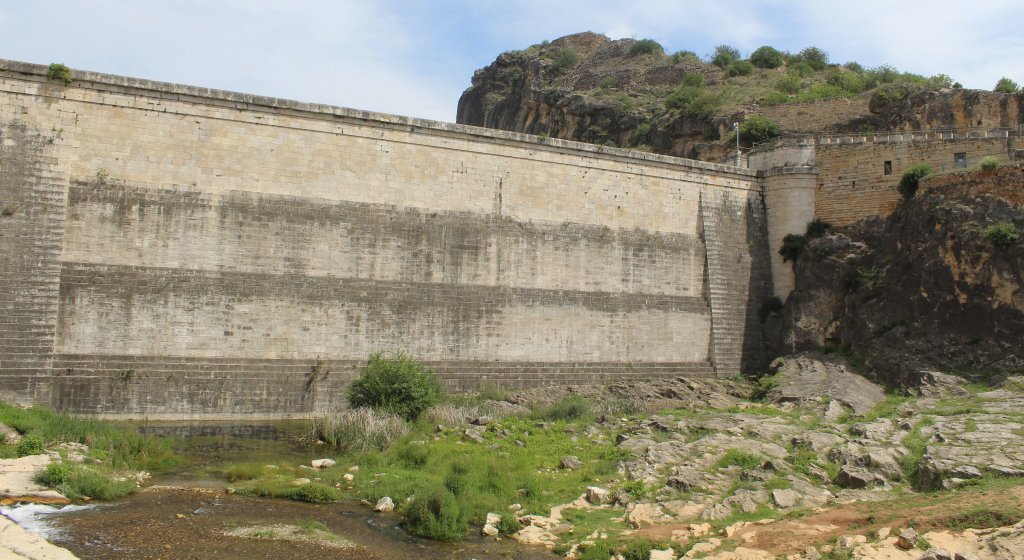
This mammoth construction was the first dam built under the auspices of the Canal de Isabel II, the organization responsible for Madrid’s water supply. And this brings me to a small detour in our hike. Like New York City, you see, Madrid has long struggled to supply its citizenry with clean, safe drinking water. And this is due to the location of both cities: New York is surrounded by brackish, dirty, ocean water, while Madrid has virtually no natural water sources to speak of.
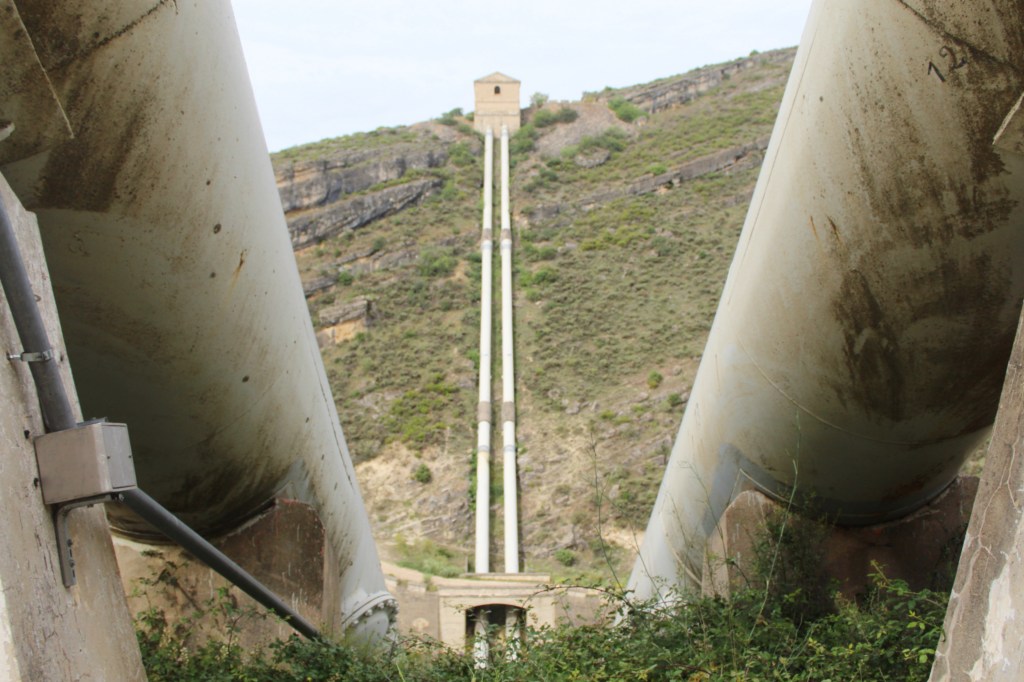
When Madrid was still a relatively small city, local wells and streams were enough to solve this problem. But by 1850, with the city’s population nearing a quarter of a million, the lack of water was becoming a serious issue. The engineers in both NYC and Madrid hit upon the identical solution: dam the rivers in the mountains to the north, and transport the fresh mountain waters to the thirsty city. The Pontón de Oliva was the first step taken in this effort.
It was constructed during the reign of Isabel II, who became the first (and, so far, the only) ruling queen of modern Spain after a succession dispute, which involved a rebellion by her uncle, don Carlos. These wars, called the “Carlist wars,” ended in her victory. This left the new queen with quite a few prisoners of war, whom she put to use building this dam under extremely gruelling conditions. (I tried to look up the number of prisoners who died during the construction, but I couldn’t find it.) To make matters worse, the engineers who designed the dam had chosen a bad location of the river Lozoya, making it all but useless. Today, it stands as a kind of monument of wasted effort—something for hikers and history buffs to appreciate, but dry as a bone.
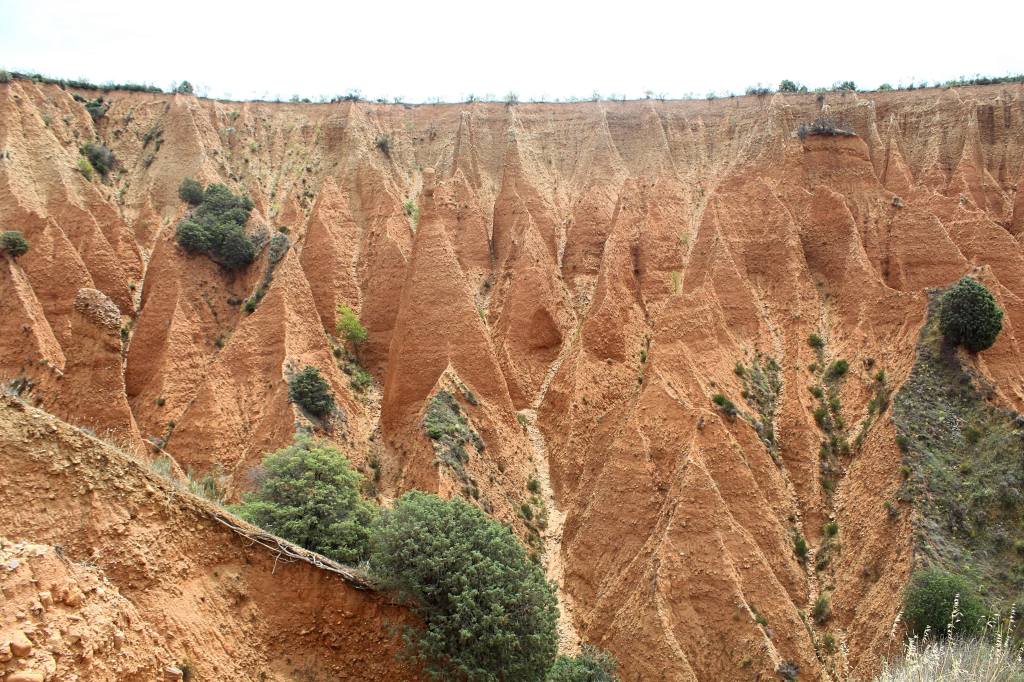
Just beyond this dam, I finally arrived at my goal: Las Cárcavas. Now, “cárcava” is just the Spanish word for “gully” (though it certainly sounds more attractive); and this one is just a particularly big example of a common phenomenon—namely, water erosion. Though the details are complex, the principle is quite simple: intermittent water flow down steep terrain causes rivulets to form, creating a distinctive undulating pattern as they wear their way through the landscape.
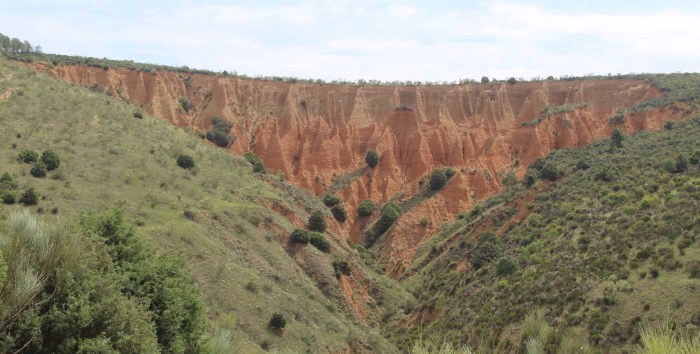
I stood on the lip of this gully and sat down, absolutely exhausted. I had been walking for several hours by then, up and down hills, with no shade from the punishing June sun. Now it was past noon, and the temperature was climbing. I ate my packed lunch (a tuna empanada and a small bottle of gazpacho) as I observed a column of ants make their way through the dusty earth, and amused myself by tossing them little bits of fish. Then, after getting my fill of this alien world, I drained my water bottle and got wearily to my feet.
Water, I have discovered, is a powerful thing. It can move landscapes and determine the destiny of cities. And I found now that I hadn’t brought enough of it. I had well over an hour before I could make my way to civilization, all of it under the merciless Spanish sun. And I was already thirsty. The only choice was to press on. Attempting to distract myself with an audiobook, I walked down the hill, past the dam, and onto a local road.
At just the point when I was risking heat stroke, I arrived in Patones de Abajo and stumbled into the nearest bar. There, I ordered the biggest “clara” they had (beer mixed with lemon soda), and then ordered another one. Then, after another long bus ride back to Madrid, I enjoyed glass after glass of the city’s fine tap water—water that had itself been on a journey from the sierra—which, I found, tasted especially good that day.


 Lotz in Translation