Quotes & Commentary #18: Shakespeare

Quotes & Commentary #18: Shakespeare

The lamentable change is from the best, / The worst return to laughter.

—William Shakespeare, King Lear

This quote has been coming to my mind often, for the simple reason that, nowadays, it is a common joke to call something “the worst.” Saying this is inevitably ironic, if only because, as Shakespeare also pointed out in King Lear, “The worst is not / So long as we can say ‘This is the worst.’”

As long as we have the presence of mind to call something “the worst,” chances are that things could get worse still. In the worst conceivable situation, I don’t think we would have the time, ability, or inclination to be wondering if things could go still more downhill.

All this sounds like a joke; but consider how often we give negative labels to things in our lives. As soon as you say, “I’ve had the worst day,” you begin, intentionally or not, to go through all the things that went wrong: the disappointments, the frustrations, the bad luck, and all the unpleasant moments.

To label something is to reduce a complex object to a supposedly essential quality. In the case of a negative label, whether it is an insult, a vulgarity, or “the worst,” we reduce a varied and textured experience to its most disagreeable elements, and use those elements to define the whole.

Even on the worst days, there are inevitably things that went well—things unnoticed, taken for granted, overlooked. Even in the worst situation you can find things to be thankful for. Nothing in the world is so simple as to be wholly bad or good; and even if there were such things, the badness or goodness would only be a result of our perspective, not inherent in the thing itself. “There is nothing either good or bad, but thinking makes it so.” What is terrible to one may be beautiful to another; and reminding ourselves of this subjectivity is an excellent way to transcend the egotism of judgmental labeling.

But even if all this were untrue, if we found ourselves in a wholly bad situation, bad essentially and objectively, Shakespeare gives us another reason to be optimistic: there is no direction from the bottom but up. All change from the worst is good change.

Right now I am reading Man’s Search for Meaning, by Erich Fromm. In that book the author relates how, once, while living in a concentration camp, he saw one of his fellow prisoners suffering from a terrible nightmare, writhing and moaning in his sleep. Fromm’s natural impulse was to wake the man; but then he reflected that any nightmare would be better than camp life. Thus there are even situations when a nightmare is a desirable change.

It is a story told and told again: about how someone “lost everything,” and after “they had nothing left to lose” they began to rebuild their lives. It is cliché nowadays, but clichés become clichéd for a reason. Most of the things we fear are associated with external things; we fear heartbreak, loneliness, failure, rejection, mediocrity, poverty, humiliation. All these, in one way or another, involve failing in the social world, economically, professionally, romantically, or otherwise.

But after all these external forms of validation are stripped away, you will find that you are no less a living, breathing person, a person of flesh and bone. And all those validations only have meaning in a certain social context, a context that is ultimately superficial and transitory. Thus you are reconnected with the basics of life; and in this state, because everything that could be done has been done to you, and you are nevertheless alive, there is nothing left to fear. Indeed, you may find yourself laughing. The values of society are rather amusing from the outside.

The Writing of Will Durant

The Writing of Will Durant

In my several reviews of Will Durant’s Story of Civilization, I have consistently praised his writing. The more I read, the more I want to read; and the more I digest, the more impressed I become. For this reason, I wanted to collect some samples of Durant’s prose, both for my own benefit, to serve as models for my prose, and to show others why I recommend Durant so highly.

For me, Durant is a writer of rare caliber, capable of being clear, charming, and graceful through thousands of pages. In many ways, Durant epitomized the pedagogical approach William Zinsser suggests in his book, Writing to Learn. Through his writing, Durant explored nearly every subject and epoch. He wrote his way through metaphysics and mercantilism, through paintings and plagues, through English law and ancient engineering. So, without further preface, here is a sampling of Durant’s prose. And mind you that these excerpts are not atypical, but representative of his whole work.

Durant on Religion. He is giving an overview of the Catholic Church; from The Reformation (Volume VI):

Through a formative millennium, from Constantine to Dante, the Christian Church offered the gifts of religion to men and states. It molded the figure of Jesus into a divine embodiment of virtues by which rough barbarians might be shamed into civilization. It formulated a creed that made every man’s life a part, however modest, of a sublime cosmic drama; it bound each individual to in a momentous relation with a God Who had created him, Who had spoken to him in sacred Scripture, Who had descended from heaven to suffer ignominy and death in atonement for the sins of humanity, and Who had founded the church as the repository of His teaching and the earthly agents of His power. Year by year the magnificent drama grew; saints and martyrs died for the creed, and bequeathed their example and their merits to the faithful. A hundred forms—a hundred thousand works—of art interpreted the drama and made it vivid even for letterless minds.

Durant on Home Life. He is painting a portrait of the home in medieval Europe; from The Age of Faith (Volume IV):

There was not much comfort in the medieval home. Windows were few, and seldom glassed; wooden shutters closed them against glare or cold. Heating was by one or more fireplaces; drafts came in from a hundred cracks in the walls, and made high-backed chairs a boon. In winter it was common to wear warm hats and fur indoors. Furniture was scanty but well made. Chairs were few, and usually had no backs; but sometimes they were elegantly carved, engraved with armorial bearings, and inlaid with precious stones. Most seats were cut into the masonry walls, or built upon chests in alcoves. Carpets were unusual before the thirteenth century. Italy and Spain had them; and when Eleanor of Castile went to England in 1254 as the bride of the future Edward I, her servants covered the floor of her apartment at Westminster with carpets after the Spanish custom—which then spread through England. Ordinary floors were strewn with rushes or straw, making some houses so malodorous that the parish priest refused to visit them.

Durant on Visual Art. He is describing the Sistine Chapel; from The Renaissance (Volume V):

[Michelangelo] divided the convex vault into over a hundred panels by picturing columns and moldings between them; and he enhanced the tridimensional illusion with lusty, youthful figures upholding the cornices or seated on capitals. In the major panels, running along the crest of the ceiling, Angelo painted scenes from Genesis: the initial act of creation separates light from darkness; the sun, moon, and planets come into being at the command of the Creator—a majestic figure stern of face, powerful of body, with beard and robes flying in the air; the Almighty, even finer in form than in the previous panel, extends His right arm to create Adam, while with his left arm He holds a very pretty Angel—this panel is Michelangelo’s pictorial masterpiece; God, now a much older and patriarchal deity, evokes Eve from Adam’s rib; Adam and Eve eat the fruit of the tree, and are expelled from Eden; Noah and his sons prepare a sacrificial offering to God; the flood rises; Noah celebrates with too much wine. All in these panels is Old Testament, all is Hebraic; Michelangelo belongs to the prophets pronouncing doom, not to the evangelists expounding the gospel of love.

Durant on Architecture. He is evaluating the palace of Versailles; from The Age of Louis XIV (Volume VIII):

Architecturally, Versailles is too complex and haphazard to approach perfection. The chapel is brilliant, but such flaunting of decoration hardly accords with the humility of prayer. Parts of the palace are beautiful, and the stairways to the garden are majestic; but the compulsion laid upon the designers to leave the hunting lodge intact, merely adding wings and ornament, injured the appearance of the whole. Sometimes the proliferating pile leaves an impression of cold monotony and labyrinthine repetition—one room after another to the spread of 1,320 frontal feet. The internal arrangement seems to have ignored physiological convenience, and to have presumed upon remarkable retentive power in noble vesicles. Half a dozen rooms had to be traversed to reach the goal of desire; no wonder we hear of stairways and hallways serving in such emergencies.

Durant on Literature. He is discussing Shakespeare’s language; from The Age of Reason Begins (Volume VII):

The language is the richest in all of literature: fifteen thousand words, including the technical terms of heraldry, music, sports, and the professions, the dialect of the shires, the argot of the pavement, and a thousand hurried or lazy inventions—occulted, unkenneled, fumitory, burnet, spurring… He relished words and explored the nooks and crannies of the language; he loved words in general and poured them forth in frolicsome abandon; if he names a flower he must go on to name a dozen—the words themselves are fragrant. He makes simple characters mouth polysyllabic circumlocutions. He plays jolly havoc with the grammar: turns nouns, adjectives, even adverbs into verbs, and verbs, adjectives, even pronouns into nouns; gives a plural verb to a singular subject or a singular verb to a plural subject; but there were as yet no grammars of English usage. Shakespeare wrote in haste, and had no leisure to repent.

Durant on Engineering. He is summarizing the Roman techniques for constructing roads; from Caesar and Christ (Volume III):

The consular roads were among their simpler achievements. They were from sixteen to twenty-four feet wide, but near Rome part of this width was taken up by sidewalks (margines) paved with rectangular stone slabs. They went straight to their goal in brave sacrifice of initial economy to permanent savings; they overleaped countless streams with costly bridges, crossed marshes with long, arched viaducts of brick and stone, climbed up and down steep hills with no use of cut and fill, and crept along mountaintops or high embankments secured by powerful retaining walls. Their pavement varied with locally available material. Usually the bottom layer (pavimentum) was a four- to six-inch bed of sand, or one inch of mortar. Upon this were imposed four strata of masonry: the statumen, a foot deep, consisting of stones bound with cement or clay; the rudens, ten inches of rammed concrete; the nucleus, twelve to eighteen inches of successively laid and rolled layers of concrete; and the summa crusta of silex or lava polygonal slabs, one to three feet in diameter, eight to twelve inches thick. The upper surface of slabs was smoothed, and the joints so well fitted as to be hardly discernible.

Durant on Music. He is explaining the development of musical notation; from The Age of Faith (Volume IV):

We owe to our medieval forebears still another invention that made modern music possible. Tones could now be determined by dots placed on or in between the lines of the staff, but these signs gave no hint as to how long the note was to be held. Some system for measuring and denoting the duration of each note was indispensable to development of contrapuntal music—the simultaneous and harmonious procedure of two or more independent melodies. Perhaps some knowledge had seeped from Spain of Arab treatises by al-Kindi, al-Farabi, Avicenna, and other Moslems who had dealt with measured music or mensural notation. At some time in the eleventh century Franco of Cologne, a priest mathematician, wrote a treatise Ars cantus mesurabilis, in which he gathered up the suggestion of earlier theory and practice, and laid down essentially our present system for indicating the duration of musical notes. A square-headed virga or rod, formerly used as a neume, was chosen to represent a long note; another neume, the punctum or point, was enlarged into a lozenge to represent a short note; these signs were in time altered; tails were added; by trial and error, through a hundred absurdities, our simple mensural notation was evolved.

Durant on War. He is describing the aftermath of the Thirty Years’ War; from The Age of Reason Begins (Volume VII):

The towns suffered only less than the villages. Many of them were reduced to half their former population. Great cities were in ruins—Magdeburg, Heidelberg, Wurzburg, Neustadt, Bayreuth. Industry declined for lack of producers, purchasers, and trade; commerce hid its head; once-wealthy merchants begged and robbed for bread. Communes, declaring themselves bankrupt, repudiated their debts. Financiers were loath to lend, fearing that loans would be gifts. Taxation impoverished everyone but generals, tax collectors, prelates, and kings. The air was poisonous with refuse and offal and carcasses rotting in the streets. Epidemics of typhus, typhoid, dysentery, and scurvy ran through the terrified population and from town to town…

Morals and morale alike collapsed. The fatalism of despair invited the cynicism of brutality. All the ideals of religion and patriotism disappeared after a generation of violence; simple men now fought for food or drink or hate, while their masters mobilized their passions in a competition for taxable lands and political power. Here and there some humane features showed: Jesuits gathering and feeding deserted children; preachers demanding of governments an end to bloodshed and destruction. “God send that there may be an end at last,” wrote a peasant in his daybook. “God send that there be peace again. God in heaven, send us peace.”

Durant on Science. Here he explains the consequences of Newton’s work on light; from The Age of Louis XIV (Volume VIII):

When [Newton] passed a small ray of sunlight through a transparent prism he found that the apparently monochrome light divided into all these colors of the rainbow; that each component color emerged from the prism at its own specific angle or degree or refraction; and that the colors arranged themselves in a row of bands, forming a continuous spectrum, with red at the one end and violet at the other. Later investigators showed that various substances, when made luminous by burning, give different spectra; by comparing these spectra with the one made by a given star, it became possible to analyze in some degree the star’s chemical constituents. Still more delicate observations of a star’s spectrum indicated its approximate motion toward or from earth; and from these calculations the distance of the star was theoretically deduced. Newton’s revelation of the composition of light, and its refraction in the spectrum, has therefore had almost cosmic consequences in astronomy.

Durant on Trade. Here he gives us a picture of Roman trade in the first century; from Caesar and Christ (Volume III):

The improvement of government and transport expanded Mediterranean trade to unprecedented amplitude. At one end of the busy process of exchange were peddlers hawking through the countryside everything from sulphur matches to costly imported silks; wandering auctioneers who served also as town criers and advertised lost goods and runaway slaves; daily markets and periodical fairs; shopkeepers haggling with customers, cheating with false or tipped scales, and keeping a tangential eye for the aedile’s inspectors of weights and measures.

Durant on Philosophy. Here he is summarizing Spinoza’s metaphysics; from The Age of Louis XIV (Volume VIII):

We may conclude that in Spinoza substance means the essential reality underlying all things. This reality is perceived by us in two forms: as extension or matter, and as thought or mind. These two are “attributes” of substance; not as qualities residing in it, but as the same reality perceived externally by our senses as matter, and internally by our consciousness as thought. Spinoza is a complete monist: these two aspects of reality—matter and thought—are not distinct and separate entities, they are two sides, the outside and the inside, of one reality; so are body and mind, so is physiological action and the corresponding mental state.

Quotes & Commentary #8: Shakespeare

Quotes & Commentary #8: Shakespeare

There is nothing either good or bad but thinking makes it so.

—Shakespeare, Hamlet

This is one of Shakespeare’s most popular quotes, especially among philosophers. And no wonder: it is moral relativism in a nutshell.

“Goodness,” as a concept, is famously difficult to analyze. Plato conceived of the Good as something external to the human mind, more real than the material world. Aristotle, always more prosaic, said that the ultimate good was happiness, since we desire other things for the sake of happiness but never desire happiness for the sake of other things. Recently I read Epicurus, more naturalistic even than Aristotle, who thought goodness was pleasure, pure and simple.

The concept of goodness obviously plays an important role in religions as well as philosophy. Zoroastrians conceived of life as a cosmic battle between the forces of good and evil. In Judaism, goodness is similarly seen as something objective. Hamlet is prophetically damned in the Book of Isaiah (5.20): “Woe unto them that call evil good, and good evil; that put darkness for light, and light for darkness; that put bitter for sweet, and sweet for bitter!” In Christianity, good is often conceived of as God’s will (leading to Plato’s famous Euthyphro dilemma: does God will things because they’re good, or are they good because God willed them?)

The Christian concept of an objective, ideal good—influenced by Plato—held sway in Europe for a long while. Morality was conceived of as absolute and objective. What is good for me is good for you; what was good in ancient days is still good today.

In Shakespeare’s day, however, the idea of moral relativism began to take hold in the European mind. About sixty years after Hamlet’s aphorism, Spinoza had this to say:

As for the terms good and bad, they indicate no positive quality in things regarded in themselves, but are merely modes of thinking, or notions which we form from the comparison of things one with another, thus one and the same thing can be at the same time good, bad, and indifferent. For instance, music is good for him that is melancholy, bad for him that mourns; for him that is deaf, it is neither good nor bad.

If you physically or chemically analyze an object, you will never find goodness or badness in it. Those are judgments, and thus exist in our perception of objects, not in the objects themselves. We have learned this lesson very well in the modern world, which is why we frequently dismiss things as “subjective.”

There does seem to be a limit to moral relativism, however, and a danger in pushing it too far. I discussed this in regards to Milton’s quote about making a hell of heaven and a heaven of hell. Some situations are quite simply unfair, dehumanizing, exploitative, or painful. Those judgments, too, only exist in the mind; but every mind is attached to a body, and every body has certain limits and needs. The mind, too, is not infinitely flexible; some things we simply cannot accommodate. This is why long-term solitary confinement, for example, is unambiguously bad: it deprives the mind of something it needs.

For this reason, I cannot fully agree with Hamlet. Because of the constitution of our brains and bodies, some things are almost always bad, and others good. Nevertheless, for most of us in daily life, I suspect that our judgments of reality cause us more pain than the reality itself. Of course this is not always so; the world has many genuine problems.

The wise course, it seems to me, is to strike a balance between striving to improve the world around us, and striving to make peace with what we cannot change.

Review: The Power of Myth

Review: The Power of Myth

The Power of MythThe Power of Myth by Joseph Campbell
My rating: 4 of 5 stars

I have bought this wonderful machine—a computer. Now I am rather an authority on gods, so I identified the machine—it seems to me to be an Old Testament god with a lot of rules and no mercy.

Joseph Campbell’s Hero with a Thousand Faces is a book that, for better or worse, will forever change how you see the world. Once you read his analysis of the monomyth, the basic outline of mythological stories, you find it everywhere. It’s maddening sometimes. Now I can’t watch certain movies without analyzing them in terms of Campbell’s outline.

But that book had another lasting effect on me. Campbell showed that these old myths and stories, even if you don’t believe them literally—indeed, he encourages you not to—still hold value for us. In our sophisticated, secular society, we can still learn from these ancient tales of love, adventure, magic, monsters, heroes, death, rebirth, and transcendence.

This book is a transcription of conversations between Campbell and Bill Moyers, made for a popular TV series. It isn’t exactly identical with the series, but there’s a lot of overlap. Moyers is interested in Campbell for seemingly the same reason I am: to find a value for myths and religion without the need for dogmatism or provinciality.

The book is mainly focused on Campbell’s philosophy of life, but many subjects are touched upon in these conversations. Campbell was, in his own words, a generalist, so you will find passages in here that will annoy nearly anybody. (A good definition of a generalist is somebody who can irritate specialists in many different fields.) Personally, I find Campbell most irritating when he talks about how bad the world is nowadays since people don’t have enough myths to live by. It seems obvious to me that the contemporary world, more secular than ever before, is also better off than ever before (Trump notwithstanding).

Campbell sometimes shows himself to be a sloppy scholar, such as his quoting of a letter by Chief Seattle, now widely believed to be fake. And I certainly don’t agree with his adoption of Jung’s psychology, which is hardly scientific. Indeed, to reduce old myths to Jung’s psychological system is merely to translate one myth into another. Perhaps Jung’s myth is easier to identify with nowadays, but I reject any claim of scientific accuracy. In sum, there is much to criticize in Campbell’s scholarly and academic approach.

Yet his general message—that myths and religions can be made valuable even for contemporary nonbelievers—has a special relevance for me. I grew up in an entirely nonreligious household, and I’m thankful for that. Nevertheless, I sometimes wonder whether I have missed out on something precious. Religious is as near to a human universal as you are likely to find, and I have no experience with it. Often I find myself reading religious books, exploring spiritual practices, and hanging around cathedrals. Although many beliefs and practices repel me, some I find beautiful, and I am fitfully filled with envy at the tranquility and fortitude that some practitioners seem to derive from their faith.

Campbell has been most valuable to me in his ability interpret religions metaphorically, and his insistence that they still have value. Reading Campbell helped me to clarify many of the things I have been thinking and wondering about lately, so I can’t help mixing up my own reflections with Campbell’s. Indeed, there might be more of my opinions in this review than Campbell, but here it goes.

One of the main lessons that art, philosophy, and religion teach us is that society imposes upon us superficial values. Wealth, attractiveness, sex, coolness, success, respectability—these are the values of society. And it’s no wonder. The economy doesn’t function well unless we strive to accumulate wealth; competition for mates creates a need for standards of beauty; cultural, political, and economic power is distributed hierarchically, and there are rules of behavior to differentiate the haves from the have-nots. In short, in a complex society these values are necessary—or at any rate inevitable.

But of course, these are the values of the game: the competition for mates, success, power, and wealth. In other words, they are values that differentiate how well you’re doing from your neighbor. In this way they are superficial—measuring you extrinsically rather than intrinsically. One of the functions of art, philosophy, and religion, as I see it, is to remind us of this, and to direct our attention to intrinsic values. Love, friendship, compassion, beauty, goodness, wisdom—these are valuable in themselves, and give meaning and happiness to an individual life.

How many great stories pit one of these personal values against one of the social values? Love against respectability, friendship against coolness, wisdom against wealth, compassion against success. In comedy—stories with happy endings—the intrinsic value is harmonized with the social value. Consider Jane Austen’s novels. In the end, genuine love is shown to be compatible with social respectability. But this is often not true, as tragedy points out. In tragedy, the social value wins against the personal value. The petty feud between the Capulets and the Montagues prevents Romeo and Juliet from being together. Respectability wins over love. But the victory is hollow, since this respectability brings its adherents nothing but pain and conflict.

Art thus dramatizes this conflict to show us what is really valuable from what is only apparently so. Philosophy does this not through drama, but reason. (I’m not claiming this is all either art or philosophy does.) Religion does it through ritual. This, I think, is the advantage of religion: it is periodical, it is tied to your routine, and it involves the body and not just the mind. Every week and every day you go through a procedure to remind yourself of what is really worthwhile.

But these things can fail, and often do. Art and philosophy can become academic, stereotyped, or commercial. And religion can become just another social value, used to cloak earthly power in superficial sanctity. As Campbell points out during these interviews, religion must change as society changes, or it will lose its efficacy. To use Campbell’s terminology, the social function of myth can entirely replace its pedagogical function. In such cases, the myths and rituals only serve to strengthen the group identity, to better integrate individuals into the society. When this is taken too far—as Campbell believes it has nowadays—then the social virtues are taught at the expensive of the individual virtues, and the religion just becomes another worldly power.

Myths can become ineffective, not only due to society co-opting their power, but also because myths have a cosmological role that can quickly become outdated. This is where religion comes into conflict with science. As Campbell explains, one of the purposes of myths is to help us find our place in the universe and understand our relationship to the world around us. If the religion is based on an outdated picture of the world, it can’t do that effectively, since then it forces people to choose between connecting with contemporary thought or adhering to the faith.

For my part, I think the conflict between science and religion is ultimately sterile, since it is a conflict about beliefs, and beliefs are not fundamental to either.

When I enter a cathedral, for example, I don’t see an educational facility designed to teach people facts. Rather, I see a place carefully constructed to create a certain psychological experience: the shadowy interior, the shining golden altars, the benevolent faces of the saints, the colored light from the stained glass windows, the smell of incense, the howl of the organ, the echo of the priest’s voice in the cavernous interior, the sense of smallness engendered by the towering roof. There are beliefs about reality involved in the experience, but the experience is not reducible to those beliefs; rather, the beliefs form a kind of scaffolding or context to experience the divine presence.

Science, too, is not a system of beliefs, but a procedure for investigating the world. Theories are overturned all the time in science. The most respected scientists have been proven wrong. Scientific orthodoxy today might be outmoded tomorrow. Consequently, when scientists argue with religious people about their beliefs, I think they’re both missing the point.

So far we have covered Campbell’s social, pedagogical, and cosmological functions of myths. This leaves only his spiritual function: connecting us to the mystery of the world. This is strongly connected with mysticism. By mysticism, I mean the belief that there is a higher reality behind the visual world; that there is an invisible, timeless, eternal plain that supports the field of time and action; that all apparent differences are only superficial, and that fundamentally everything is one. Plotinus is one of the most famous mystics in Western history, and his system exemplifies this: the principal of existence, for him, is “The One,” which is only his name for the unknowable mystery that transcends all categories.

Now, from a rational perspective all this is hard to swallow. And yet, I think there is a very simple thought buried underneath all this verbiage. Mysticism is just the experience of the mystery of existence, the mystery there is something instead of nothing. Science can explain how things work, but does not explain why these things are here in the first place. Stephen Hawking expressed this most memorably when he said: “Even if there is only one possible unified theory, it is just a set of rules and equations. What is it that breathes fire into the equations and makes universe for them to describe?”

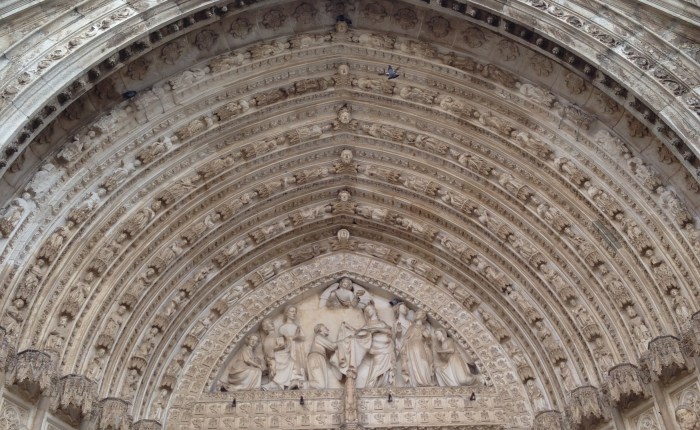
It is arguably not a rational question—maybe not even a real question at all—to ask “Why is there something rather than nothing?” In any case, it is unanswerable. But I still often find myself filled with wonder that I exist, that I can see and hear things, that I have an identity, and that I am a part of this whole universe, so exquisite and vast. Certain things reliably connect me with this feeling: reading Hamlet, looking up at the starry sky, and standing in the Toledo Cathedral. Because it is not rational, I cannot adequately put it into words or analyze it; and yet I think the experience of mystery and awe is one of the most important things in life.

Since it is just a feeling, there is nothing inherently rational or anti-rational in it. I’ve heard scientists, mystics, and philosophers describe it. Yes, they describe it in different terms, using different concepts, and give it different meaning, but all that is incidental. The feeling of wonder is the thing, the perpetual surprise that we exist at all. Campbell helps me to connect with and understand that, and for that reason I am grateful to him.

View all my reviews

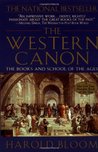
Review: The Western Canon

Review: The Western Canon

The Western Canon: The Books and School of the AgesThe Western Canon: The Books and School of the Ages by Harold Bloom

My rating: 4 of 5 stars

Tradition is not only a handing-down or process of benign transmission; it is also a conflict between past genius and present aspiration, in which the prize is literary survival or canonical inclusion.

As far as I know, Harold Bloom is the last major proponent of the ‘Great Books’ paradigm of higher education. This makes him something of an apocalyptic prophet. With great solemnity, he predicted (this was in 1994) that the Western world was about to enter into a new cultural era, a new Theocratic Age, wherein dogmatism would drive out aesthetic criteria from literature departments. These new dogmatists Bloom dubs the School of Resentment—a catch-all term that includes Marxist, Feminist, and post-structuralist literary critics. All of these approaches, says Bloom, seek to replace an aesthetic motive for a social or political one, and thus miss the point of literature.

Bloom sets out to defend his familiar Western Canon, and does so by analyzing twenty-six writers to see what makes them canonical. Why do we keep reading Shakespeare, Dante, Cervantes, and Tolstoy? The answer, Bloom finds, is because these works are strange: “One mark of an originality that can win canonical status for a literary work is a strangeness that we either never altogether assimilate, or that becomes such a given that we are blinded to its idiosyncrasies.” Canonical works are those that are always beyond us somehow, those that are too rich, deep, and original to fully absorb.

How do artists achieve this exquisite strangeness? Bloom’s answer is that authors creatively misread the works of their predecessors to clear a creative space for themselves. This is Bloom’s famous anxiety of influence. Every writer feels anxiety about what they owe to their predecessors, so they attempt to find a weakness or a shortcoming—a place where there is still room for originality. But almost no author is original enough to outperform every one of their literary forebears. In Bloom’s opinion, there have only been two writers who have done so: Dante and Shakespeare. (I would add a few others to the list, personally.)

While Dante is given his due, Shakespeare is the real center of this book. Bloom is obsessed with Shakespeare: he worships him. For Bloom, Shakespeare invented the modern human. By this he means (I think) that Shakespeare’s characters redefined what we think of as personality and the self. Every writer since Shakespeare has so deeply internalized Shakespeare’s version of human nature that we can’t portray people in any other light. Shakespeare’s mind was too vast, acute, and convincing for us to get beyond it. Thus all writers after Shakespeare are forced to misread and misunderstand him in order to find a space for creativity.

Since Bloom thinks Shakespeare is so inescapably central, he discusses Shakespeare in every chapter—even the chapters on writers who predated Shakespeare: Dante, Chaucer, Cervantes, and Montaigne. But Shakespeare is not the only writer whose influence Bloom discusses. Bloom’s whole model of literary originality consists of reading and misreading, influence and anxiety, so he is constantly comparing and contrasting writers. One of his favorite activities is to trace out literary ancestries, saying which writer descended from which.

It is hard for me to know what to make of all this. I find Bloom’s model of the anxiety of influence really compelling. But it is clearly the theory of an avid reader, not a writer. As is obvious on every page, Bloom is obsessed with reading; so it’s natural for him to reduce the writing process to reading and misreading. Bloom’s approach also leads to a rather inordinate amount of name-dropping. He mentions scores of poets, playwrights, and novelists on every page, often in long lists, and sometimes this seems to be for purposes of intimidation rather than illumination. What is more, Bloom’s approach requires a great deal of comparing and contrasting between different authors, which can make it seem as though he is more interested in connections between authors rather than authors themselves.

Bloom’s writing style, while appealing, can also be off-putting. There is something incantatory about it. He repeats similar observations, drops the same names, inserts the same quotations, and asserts the same points in different contexts and to slightly different purposes. His mind seems always to be swirling and buzzing rather than traveling in a straight line. He also has the bad habit of arguing from authority rather than with reasons. His treatment of the so-called School of Resentment is dismissive at best. He does not address their arguments, but rather talks of them as lost souls, blinded by worldly things. Another fault is that he makes assertions about authors that are not properly substantiated. The most noticeable of these was his claim that all of Freud’s theories are contained in Shakespeare—something he says repeatedly, but never adequately demonstrates.

I found Bloom to be consistently good in his criticism, but not great. There are many excellent and thought-provoking observations about writers and books here. But all too often Bloom’s criticism consists of little more than repeatedly insisting that this author is one of the best. His belief is that aesthetic appreciation can’t be taught; thus if you are not so endowed, you simply have to trust Bloom that certain writers are better than others. To be fair I think it’s impossible to “prove” that Shakespeare is better than Dan Brown. Nevertheless, Bloom’s attitude of authority can be seriously disagreeable. To question the motivation of your opponents (which he does) and to position yourself as an oracle and a prophet (which he also does) are not healthy attitudes for an intellectual.

Despite all of these misgivings, however, I still largely agree with Bloom’s judgments. In my experience the writers in Bloom’s canon are in a league of their own for the depth of literary pleasure they can provide. And although I am not so convinced of the autonomy of the aesthetic, I also think that aesthetic criteria are ultimately the most important in literary judgments.

View all my reviews