Summertime in Andalucía: Three Pueblos

Summertime in Andalucía: Three Pueblos

These three villages all lay on the road between Málaga and Cádiz, and make for very easy and pleasant stops along the drive.

Ronda

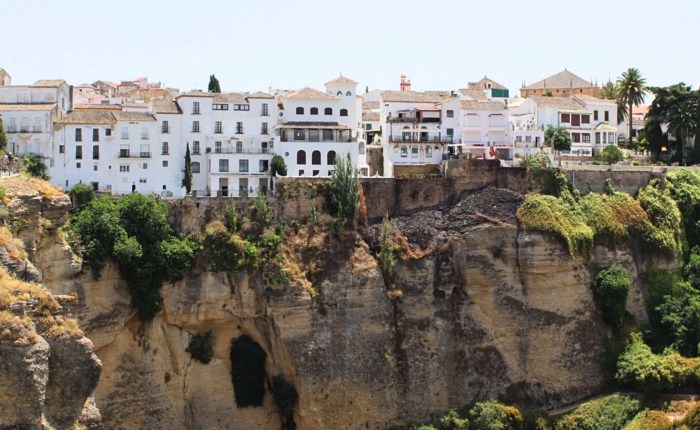
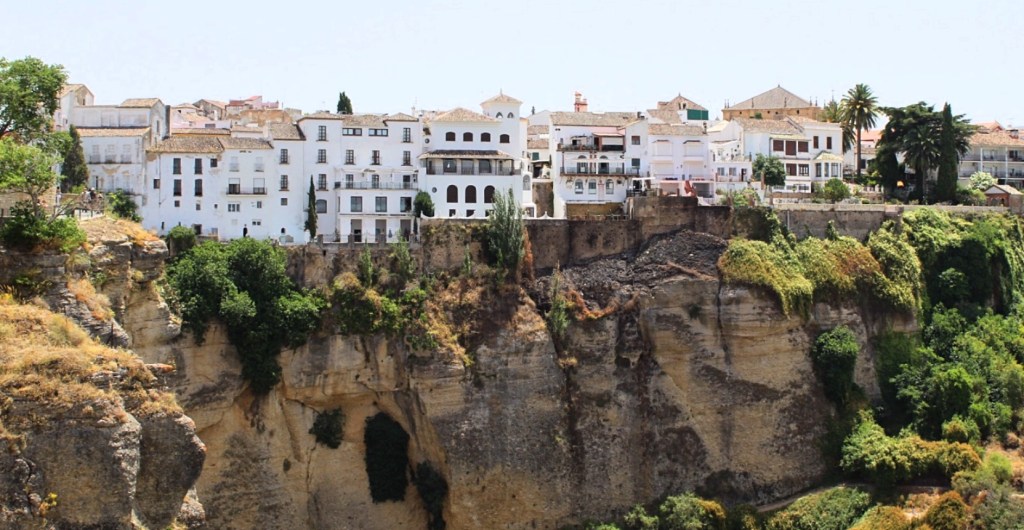
Of all of the beautiful villages in the south of Spain, Ronda may be the most famous. This is due to its dramatic location—perched high over the edge of a cliff.

Improbably, the two sides of this small town are separated by a massive gulf. For centuries, they were only connected by a relatively small bridge, built at a point where the height and width of the chasm are manageable, but far from the town center. It was only in 1793, after forty-two years of construction, that the massive “New Bridge” was completed, which spans the canyon at its tallest point. This was a major engineering challenge. A previous bridge, built in 1735, had collapsed just six years later, killing fifty people in the process. When the New Bridge was finished, it was the tallest in the world (98 meters, or 322 feet). Even for somebody used to skyscrapers, its dimensions are stupefying to behold in person.
More importantly, the bridge is beautiful. Made of the same rock as the surroundings, it seems to emerge from the landscape, as ancient as the cliffs themselves. The Guadalevín River flowing underneath it seems almost pathetic in comparison to so much towering rock—but, of course, it was the action of this patient little stream which cut this chasm in the first place.
My brother and I took the path down into the gully. The way down is relatively easy, the afternoon sun notwithstanding, and recommended if you want to get a real sense of the size of the bridge. I was disappointed to find that the path leading under the bridge and into the canyon had been closed off. On my previous visit, this was not the case. Once we had gone all the way back up to town, we were thirsty, sunburned, and exhausted, and decided to continue our drive towards Cádiz.

Jay, with mustache and bridge.
Me, with beard and bridge.

But Ronda has more to offer besides its iconic bridge. For one, the oldest bullring in Spain is in the city, and you can visit even if you do not want to see any animals slaughtered. There are ruins dating back to the town’s Muslim past, and lovely views of the surrounding landscape. Even without all of this, the town itself is a charming example of a whitewashed pueblo. No wonder that Orson Walles, Rainer Maria Rilke, and Ernest Hemingway were so fond of the place. Indeed, Hemingway set a major scene in his novel For Whom the Bell Tolls in Ronda; and though he embellished, it is actually true that prisoners were thrown into the canyon during the Civil War. 

On that grim note, let us turn our attention to the next pueblo.


Arcos de la Frontera

We visited Arcos de la Frontera on our return journey to Málaga, when we did not have very much time to stay. Even so, it was a memorable visit.

The beginning was harrowing. My brother had innocently set the GPS to take us straight to the center of the village. However, this quickly appeared to be a bad idea as the road narrowed, twisted, and turned, leading us in a crazy labyrinthine path that was constantly diverted due to construction. Convinced I was either going to hit a pedestrian or scrape the side of a building, I was in a panic as we tried to navigate the tiny medieval streets. Finally, with some relief, I saw a sign informing us that only local cars were permitted to park in the center. We escaped the maze and parked the car in a grassy lot right on the edge of town.

The arches of Arcos.
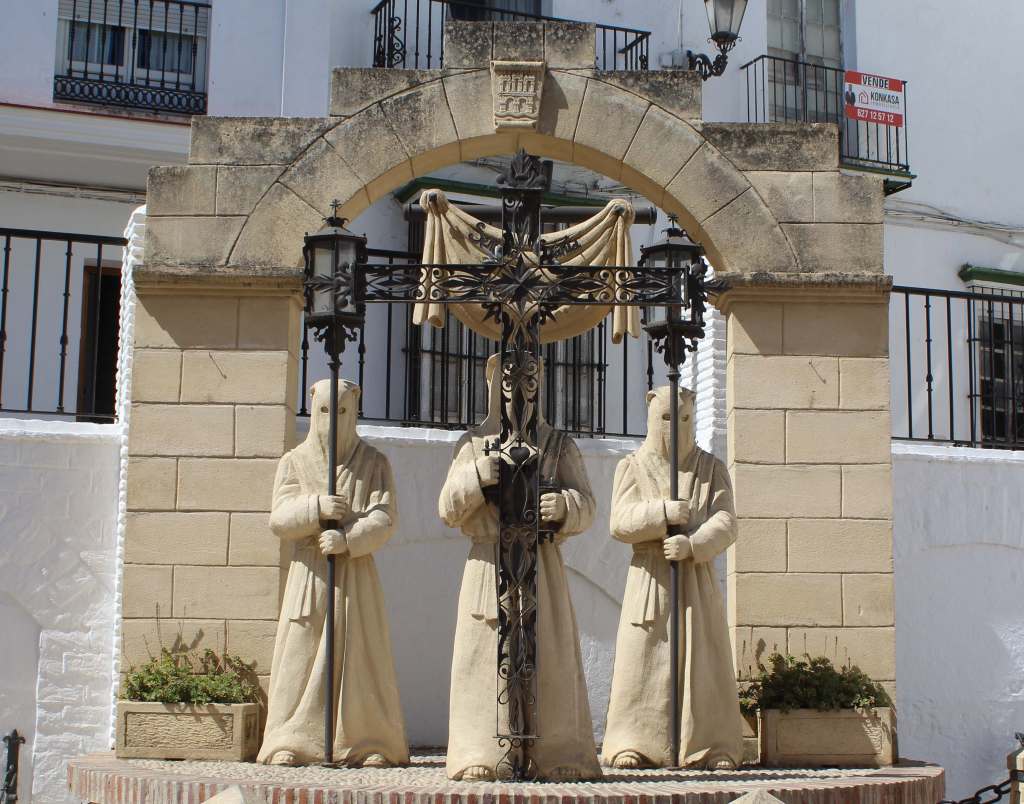
A monument with figures dressed in Holy Week garb.

The walk up was considerably more pleasant than the drive had been. The center of Arcos de la Frontera is impossible, located as it is at the top of a large hill. In just a few minutes we had arrived at the church that crowns the entire village, the Basílica de Santa María de la Asunción. As commonly happens in Spain, this church seems unnecessarily large and ornate for a village of some 30,000 people. The façade is ornately decorated, culminating in an elegant neoclassical tower. Unusually, the building’s massive buttresses extend over the adjacent street. The inside is just as elaborate as the exterior, with several fine altars and beautiful vaulted ceilings.
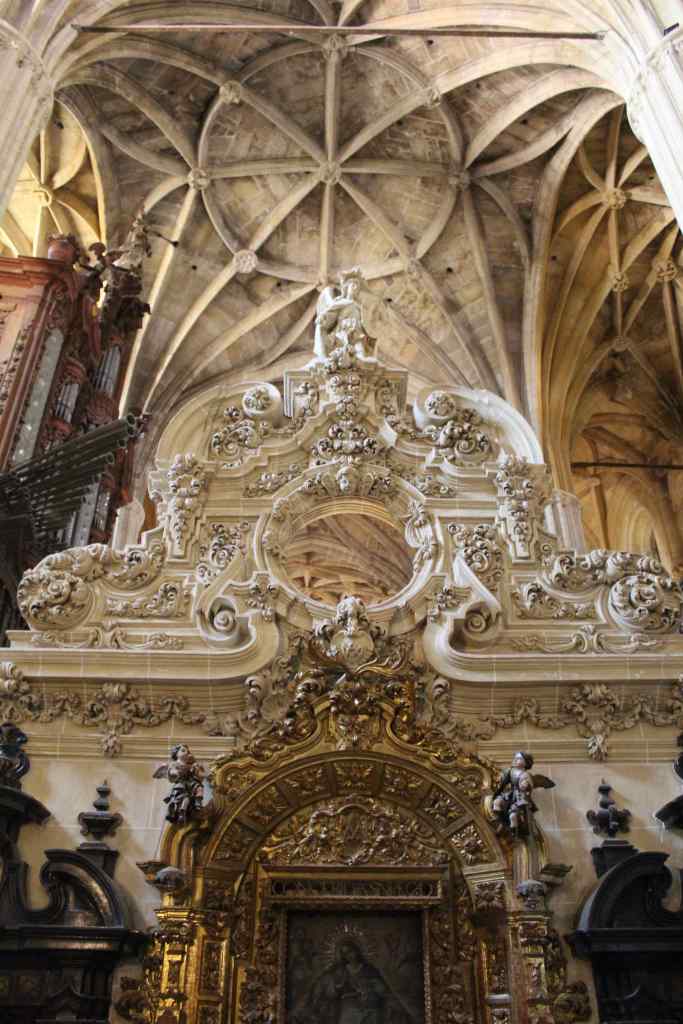
The plaza in front of the basilica is taken up, rather prosaically, by a parking lot. Next door is the local “parador,” which is the term for a historical building which has been converted into a state-run hotel (normally on the pricier side). Across the square is the town hall and, right behind it, the castle, at the highest point of the city. This castle is not open for visits; but the lookout point at the end of the parking lot is fully satisfying. As in Ronda, you are treated to a wonderful view of the Andalusian landscape—fields of crops, rolling hills, and not a modern building in sight.

As we had to drop the car off and catch our train back to Madrid, our time was limited. I can say with confidence, however, that Arcos de la Frontera is worth a much longer stay.

Zahara de la Sierra

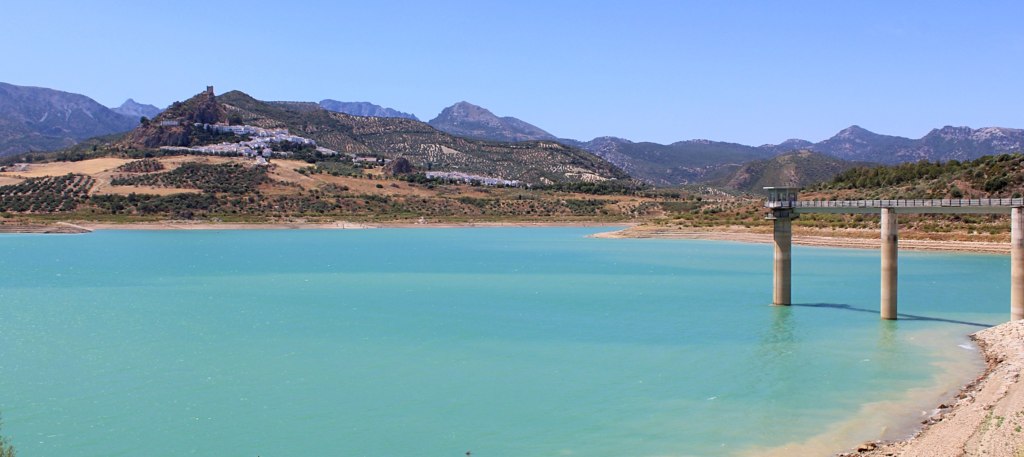
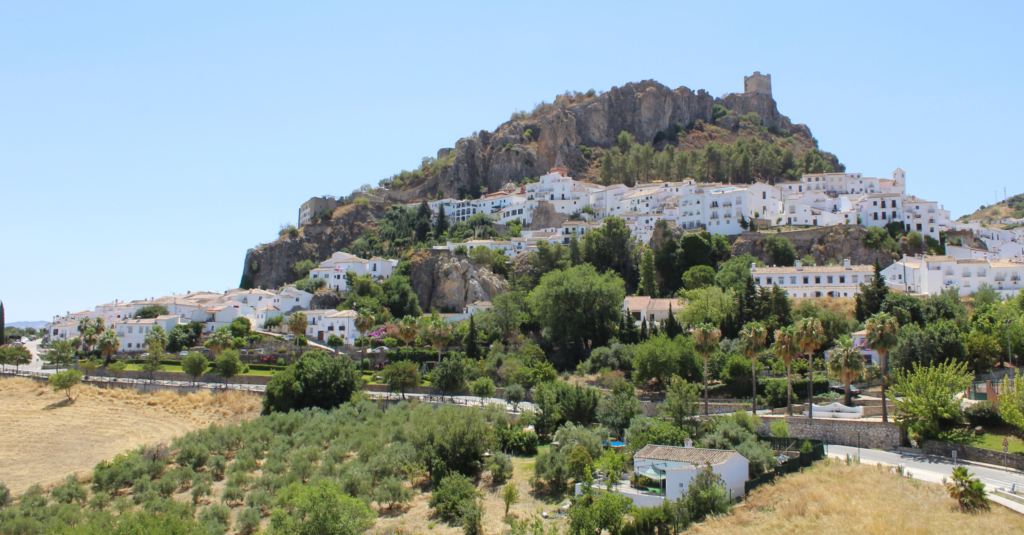
Our next visit was the briefest of all. Indeed, we had not even planned on stopping to see any more pueblos. But the sight of Zahara de la Sierra—perched, like so many Spanish villages, on a rocky hill, presiding over a sapphire-blue reservoir—convinced us to at least stop for lunch.
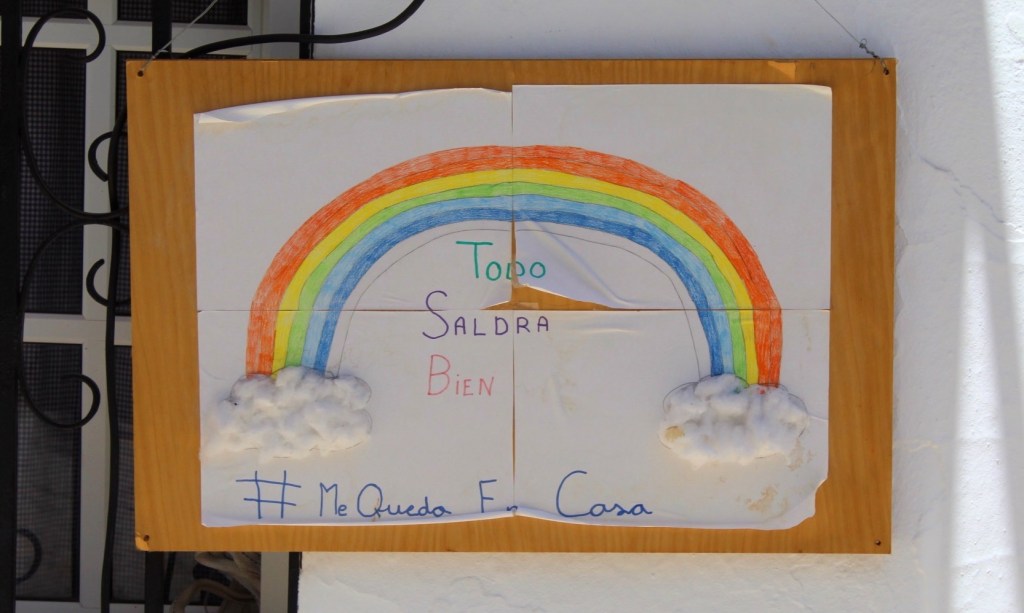
A rather touching sign, made by a child during the lockdown.

This little town (population just shy of 1,400) is known for its meat stews, and that is what we ordered. Indeed, we had time to do little else. But I think any visitor who is not in a rush ought to climb to the top of the ridge and see the old castle, which still stands guard over the village. And it would not be a Spanish village without a beautiful and historical church—in this case, Santa María de la Mesa, a rather joyful-looking Baroque temple.
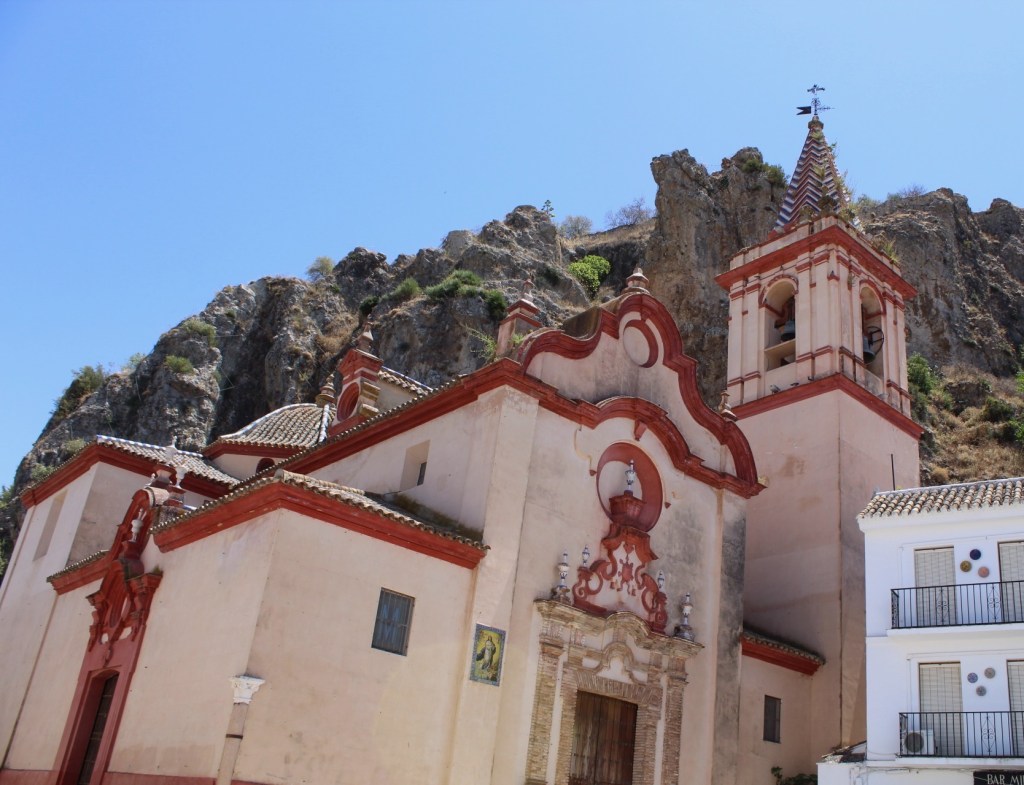
Unfortunately for us, we only had time to glance at the main attractions before we got back in the car and kept driving. Yet the drive itself—on the rural highways which connect Jerez de la Frontera with Málaga—was extremely lovely, and a wonderful way to close our long trip to Andalucía.

The view during our drive.

Taken together, this was a special trip in many ways. For one, it was an amazing relief to travel after being trapped in our tiny Madrid apartment for months. And this was probably one of the few times in recent decades that such iconic sites such as the Alhambra, the caves of Nerja, and the beaches of Cádiz could be visited with hardly any crowds. This was also the last trip I took with my brother in Spain, before his return to the United States to study law. As such, it was a little sad—but only just a little, since we really had a wonderful time.
Christmastime in Andalusia: Ronda

Christmastime in Andalusia: Ronda

(Continued from my posts about Jerez de la Frontera, Cádiz, and Nerja, and continued in my post about Málaga.)

The drive from Málaga to Ronda is one of the pleasantest in Spain. The countryside is exquisitely rustic, with sun-baked fields and tiny towns full of white houses. We took a Blablacar with a nice young woman, on her way to her pueblo nearby. Ronda is about 100 km west of Málaga, and the drive takes about an hour and a half.

(It is a common thing, by the way, for Spaniards to have a “pueblo.” This is the town, not necessarily where they were born or where they grew up, but where their family is from. Work is scarce in these small towns, however, and so many people move to cities to find jobs; yet family ties remain strong and weekend trips to visit parents and relatives in “the pueblo” are ubiquitous.)

We were dropped off in the center of Ronda, and began making our way to Ronda’s most famous landmark: El Puente Nuevo, or the New Bridge.

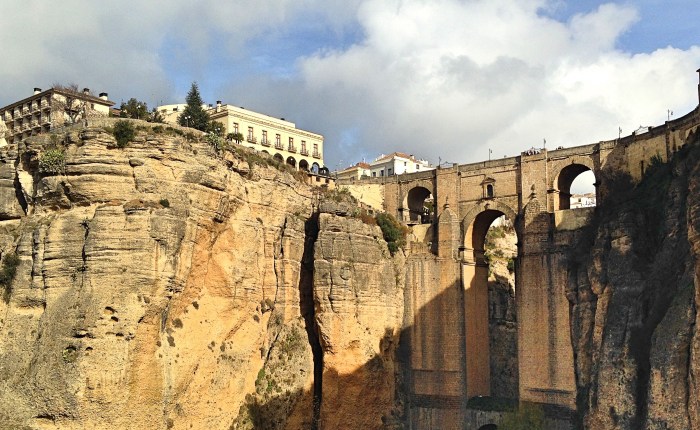
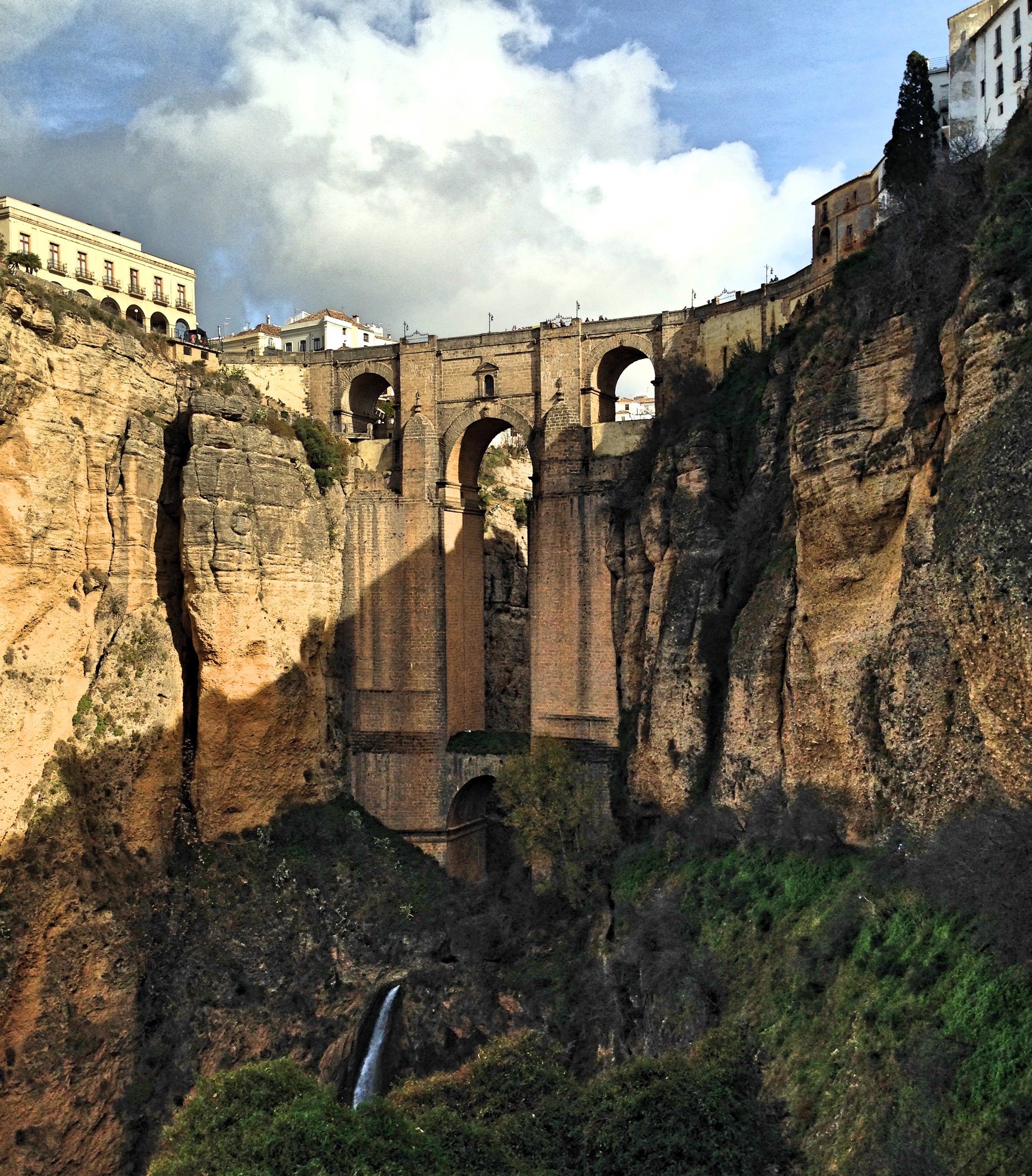
This bridge is eye-poppingly massive—a stone structure standing almost 400 feet (98 m) above the Guadalevín River. Indeed, the huge effort necessary to create a bridge of this size struck me as out of all proportion to the city of Ronda itself, which now is home to about 35,000 people. And I am doubly astounded when I consider that, as the name “New Bridge” suggests, there was already a bridge in Ronda: the Puente Romano—which, despite its name, was probably built by the Moors.

Ronda_Bridge

Looking down from the cliff at the towering structure, I wondered: How on earth was it built? Indeed it almost wasn’t. The bridge that stands today, built between 1751 and 1793, was the second attempt to span this chasm. The first attempt, constructed from 1735 to 1741 with a single arch, was built hastily and poorly, and soon collapsed—resulting in the deaths of 50 people. The bridge which stands now, designed by José Martín de Aldehuela, is not only strong but beautiful—its graceful form tying the whole landscape together.

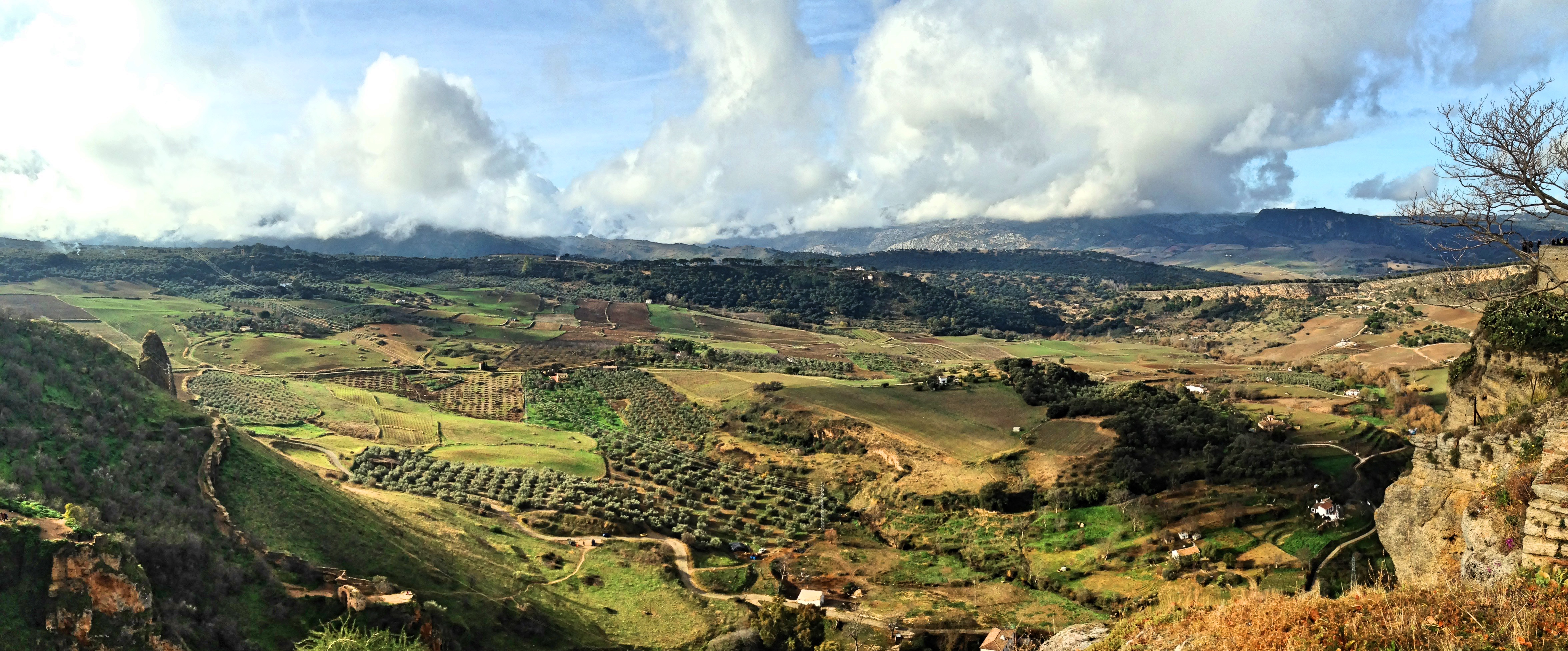
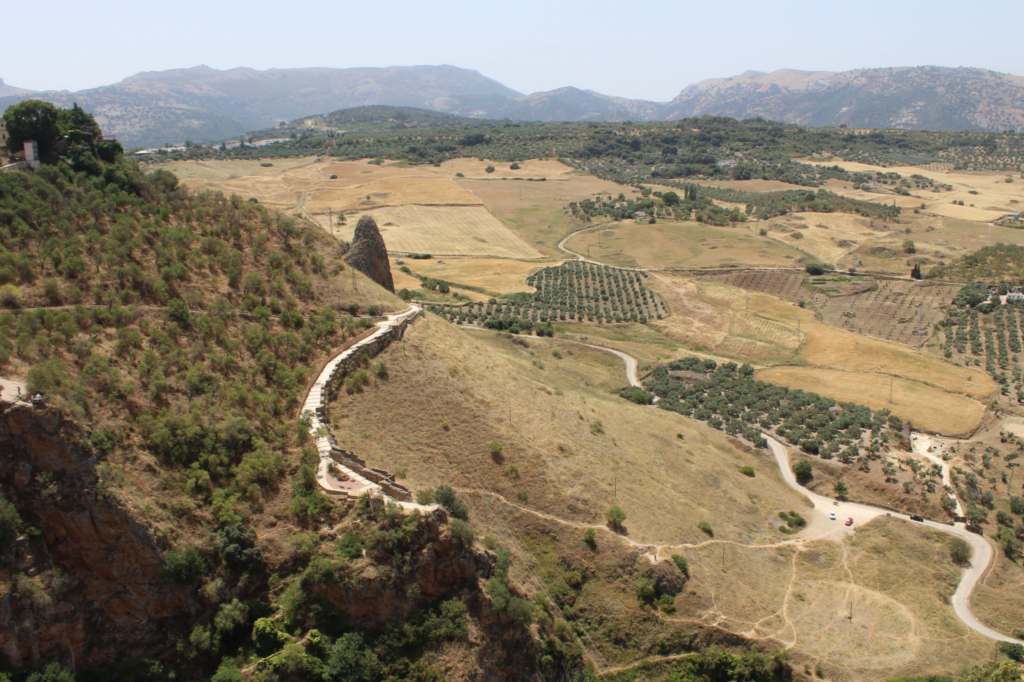
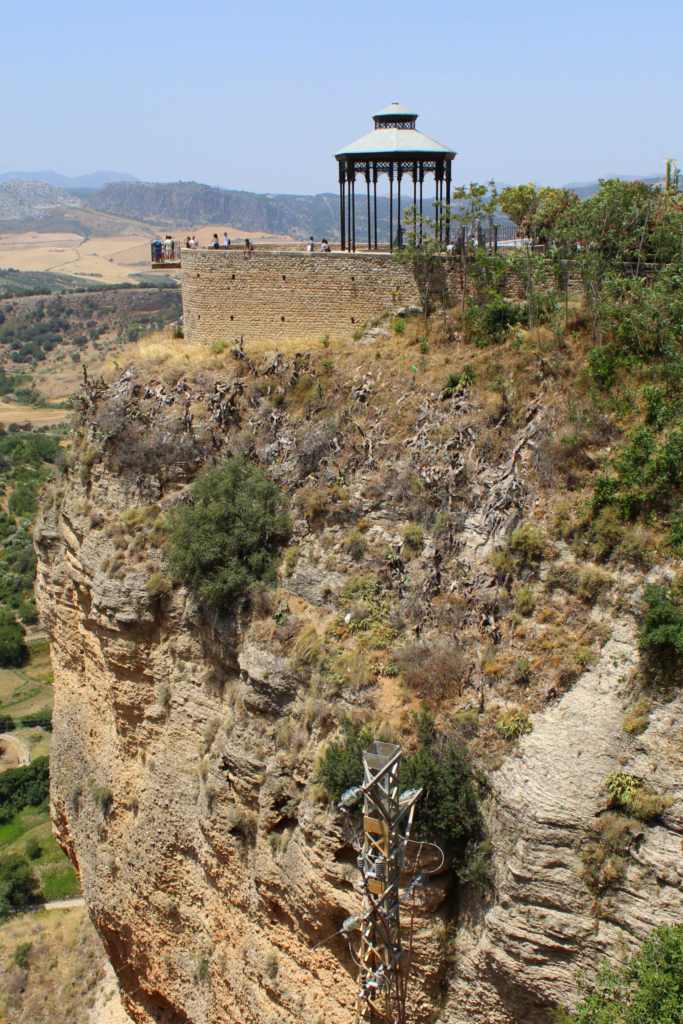
After we had taken our fill of photos, we began to walk around the promenade overlooking the cliff. The view of the countryside was, if possible, even lovelier than the bridge itself. A vast green field was divided into neat patches, some brown, some with rows of bushy plants. Here and there was a farm, looking like doll houses from so far away. And beyond was a patch of forest, which led to the sierra in the distance, the morning fog still sitting on the peaks. On a dirt road a pickup truck was making its way to who-knows-where, throwing up a tiny cloud of dust. Ronda_Countryside

To our left we could see a path leading down into the gorge below. It looked like too much fun to resist. We crossed the bridge, found the path, and soon were carefully edging our way down. The path forked several times, and each time we chose the one that led towards the bridge. At times it was quite steep and slippery, so we proceeded slowly for fear of falling.

We were getting close to the bridge now; it loomed overhead like a skyscraper. The white noise of the waterfall below turned into a steady roar.

After walking down a hazardous rocky path, made slippery by the atmospheric spray of water, we came upon a little shack. It was visibly run-down, obviously hadn’t been used in years. We took a peek inside. It wasn’t terribly interesting: full of old leaves, beer cans, and other garbage. On the walls, above a little hole in the floor, was spray-painted the ominous message: “It’s easy to descend into hell.”

“Wanna go down there?” I asked GF.

“No way.”

“Good idea.”

We turned around and began again to approach to the bridge. In fact, the path went right under it. A staircase that bounced too much to inspire confidence led down to a concrete pathway with a wobbly iron railing that went straight through to the other side. We passed underneath the bridge, and then under some impressively huge boulders sitting at the base of the bridge. Now we were standing between the two cliffs, which stretched hundreds of feet up above. Everything was quiet here.

Though it was broad daylight, and though we were following a public path, we felt like we were sneaking into a place we shouldn’t be. This impression of trespassing was reinforced after we found ourselves in a small working area. There was a concrete hut, empty on the inside, with plants growing on the roof; clearly it hadn’t been used in years. Nearby were all sorts of metal devices—a trough, a wheel used to raise and lower a barrier, and other things I didn’t understand—laying apparently unused and rusted. The place had that sort of eerie, post-apocalyptic feel that all abandoned places have.

Ronda_Beyondbridge

After taking in the scene we started trekking back up. The steep ascent didn’t feel good on my knees, I can tell you.

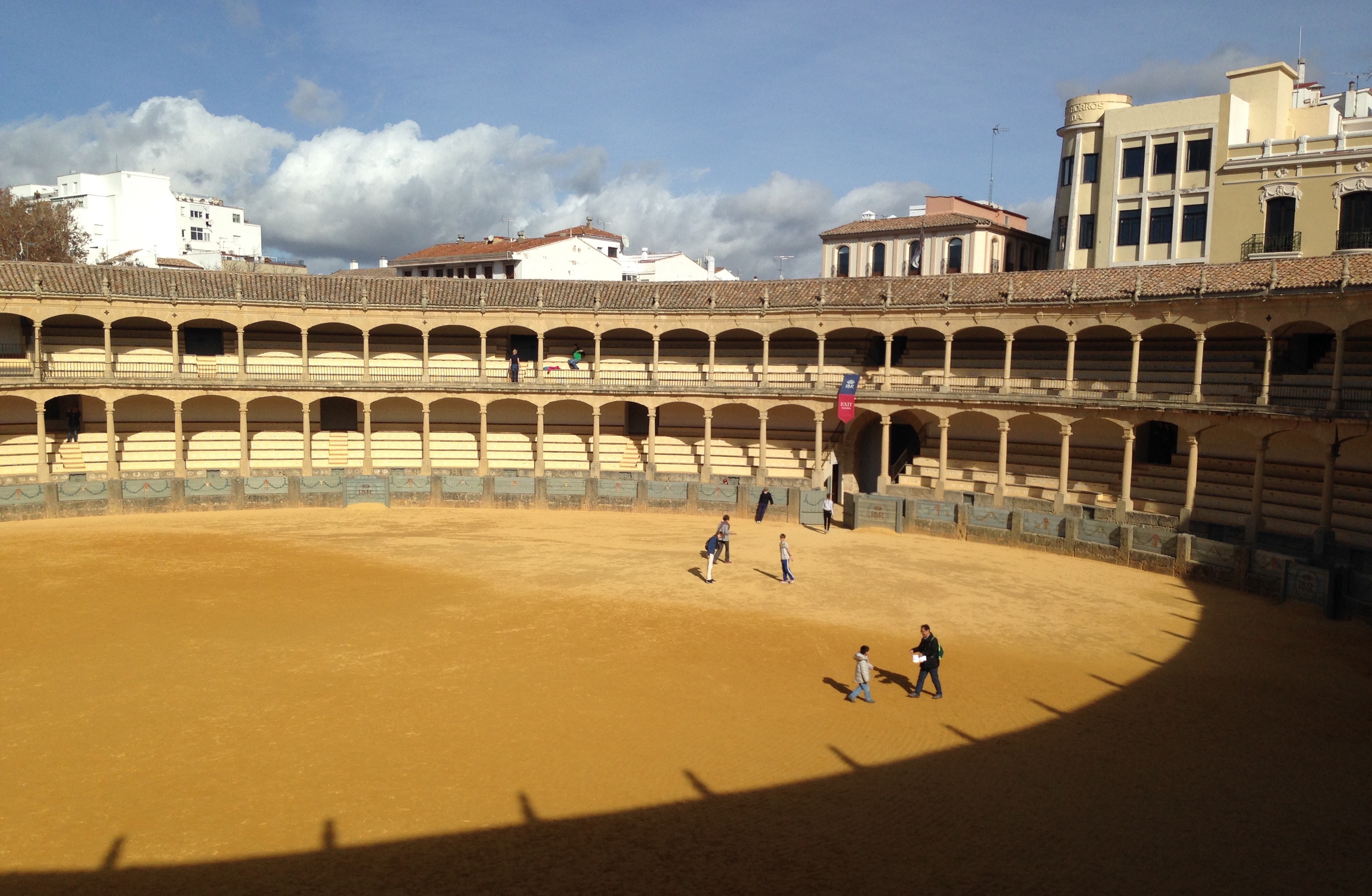
By now we’d had our fill of the bridge. I knew of only one other thing to see in Ronda: the Plaza de Toros, or bull ring. Built from 1779 to 1785, and designed by the same architect who designed the New Bridge, this is the oldest bull ring in Spain. Every year the Corrida goyesca takes place here—a traditional bullfight performed in historical costumes. For most of the year, however, it is a museum—of bullfighting and more.

Ronda_Bullring

I had never seen a bullring before, so I had nothing to compare it with. But it was quite pretty. Martín de Aldehuela designed the ring in a harmonious neo-classical style. Two floors of seats, four rows each, surround a circular area filled with sand. I stood in the center and tried to imagine what it would feel like to be a matador, how absolutely terrified I would be if I was facing a bull, only armed with a cape and a little sword.

The little museum on the inside is about the history of bullfighting and other violent European pursuits, such as hunting and dueling. Most memorable for me were several pairs of ornate dueling pistols, in lush velvet cases, alongside plaques that explained which famous persons had used these weapons on one another. For my part, I cannot imagine any situation in which I would let somebody fire a loaded pistol at me purely for the sake of honor. As the honorable Falstaff said:

Can honour set-to a leg? No. Or an arm? No. Or take away the grief of a wound? No. Honour hath no skill in surgery, then? No. What is honour? A word. What is in that word “honor”? What is that “honour”? Air.

I can’t help feeling that bullfighters would disagree.

After we spent enough time in the museum to get our money’s worth—staring at the rifles and pistols, the elaborate costumes for men and horses on display, and perusing the old bullfighting posters advertising bygone shows—we made our way to the gift shop, where I found a copy of Death in the Afternoon. This is Hemingway’s book on bullfighting, which I would recommend to anyone at all curious about the bloody art.

Hemingway, for his part, was very fond of Ronda. In that book, he says:

[Ronda] is where you should go if you ever go to Spain on a honeymoon or if you ever bolt with any one. The entire town and as far as you can see in any direction is romantic background and there is an hotel there that is so comfortable, so well run and where you eat so well and usually have a cool breeze at night that, with the romantic background and the modern comfort, if a honeymoon or elopement is not a success in Ronda it would be as well to start for Paris and both commence making your own friends.

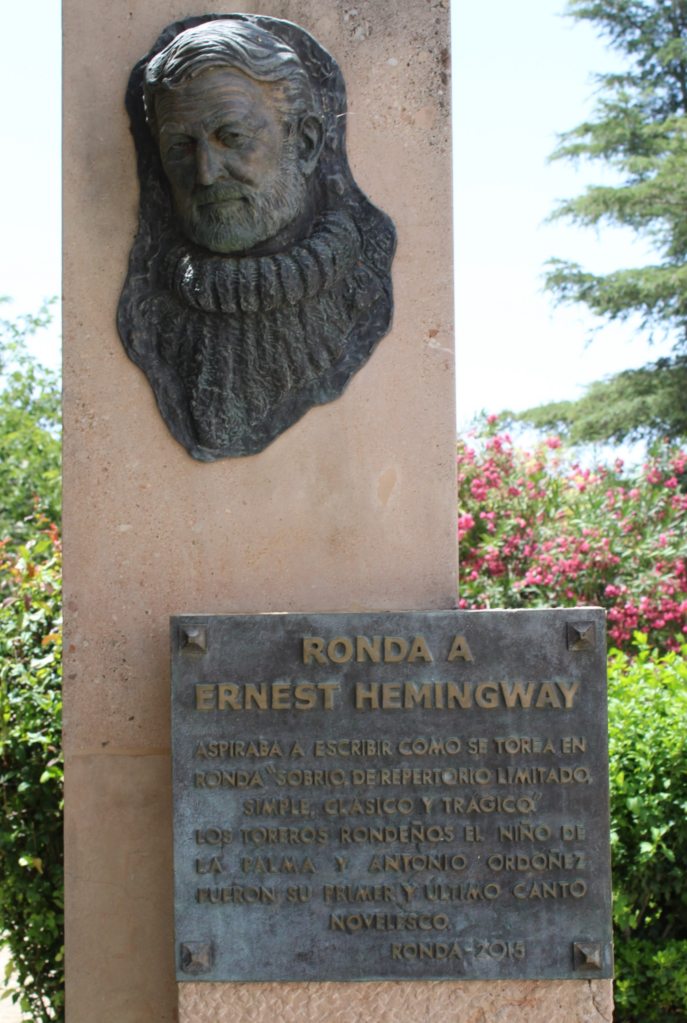
Ronda has repaid the compliment by naming a street after Hemingway.

Ronda_Hemingway

When we left the bullring, it was already time to go back to Málaga. We began to make our way up narrow cobblestone streets, back towards the train station where we would meet our ride. My shoes—cheap sneakers I bought here—have thin soles, so I could feel every stone sticking out from the pavement. Our footsteps made that distinctive thud that footsteps make in quiet, narrow, stone-paved Spanish streets.

Eventually we reached the main road, got to the station, and were again driving through the Spanish countryside. We had only one day left before our trip was over.