Review: Picasso (Masterpieces)

Review: Picasso (Masterpieces)

Picasso (Masterpieces)Picasso by Jose Maria Faerna

My rating: 4 of 5 stars

We all know that Art is not truth.

In the Mediterranean city of Málaga, situated on Spain’s golden coast, on October 25, 1881, a little boy was born who would transform the course of art history.

The name written on the boy’s baptism certificate was Pablo Diego Jośe Francisco de Paula Juan Nepomuceno María de los Remedios Crispiniano de la Santísima Trinidad Ruiz y Picasso. This last name, Picasso, is not Spanish at all. The boy got it from his mother, who inherited it from her Italian grandfather. And it was this name, among a wealth of possibilities, that young Pablo chose as his signature.

To name Picasso as the most influential painter of the previous century is, by now, to merely state the obvious. He may also have been the most versatile. His young training in the academic style culminated in his realist Science and Charity, a painting worthy of a mature master which Picasso finished at the age of 15. After this classicist apotheosis Picasso moved to Paris, fell in with the Bohemian crowd, and then began his stylistic experiments.

His first major phase was the so-called Blue Period, associated with a melancholic period in Picasso’s own life, in which he used different shades of blue to portray poverty, suffering, and death. The influence of El Greco is, I think, particularly marked during this period, as seen in the elongated forms of his figures. This is easily observable in La Vie, an allegorical work that depicts his friend Carlos Casagemas, who had shot himself a few years before because of his unrequited love for Germaine Pichot. (This tragedy, however, did not stop Picasso from going out with her after that.)

Picasso’s mood seems to have lightened the following year, which led to his Rose Period, a similarly monochromatic exploration of pinkish tones. The subject matter changes here, too, as he paints actors in lieu of beggars, acrobats in lieu of dead poets, and harlequins in lieu of prostitutes. Of these, Young Acrobat on a Ball is one of my favorites, a playful scene that also showcases Picasso’s ability to create solidity, as seen in the statuesque seated man.

Picasso’s portrait of Gertrude Stein—an important early supporter and patron—is also classified among the Rose Period, though her angular visage shows clear signs of his African Period. Like many young artists of the time, Picasso was enthralled by the forms of African masks that France’s colonial conquests were bringing into Paris. Picasso’s use of these forms may seem, nowadays, to be yet another example of the colonial gaze, appropriating traditional art for its connotations of primitivism; but it is worth asking whether his use, however uninformed, of these forms was preferable to the high-handed disdain of the traditional art world.

In any case, the abstract and elongated shapes of the masks proved compatible with the jagged, geometrical landscapes of Cézanne, a combination that led down the road to cubism. Picasso pushed formal simplification far past where Cézanne had left it, however, a process which most famously brought him to paint Les Demoiselles d’Avignon.

This work—his greatest after Guernica, I think—retains all its raw energy over 100 years after the paint dried. I once had a memorable disagreement with a friend about what it means. She thought that the stony gazes of the women was meant to empower them, depicting their battered humanity. At the time I was inclined to take the opposite view: I interpreted Picasso’s attitude towards the women to be one of fear and suspicion, and the geometrical treatment intentionally dehumanizing. Nowadays I think that both of these views miss the mark. Like all great works of art, >Les Demoiselles d’Avignon resists final analysis. The women are simultaneously dangerous and in danger, wounded and wounding, a victim of society and the victimizers of their clients. (It is speculated that Picasso has a venereal disease when he painted this.)

At first glance the poses of these figures—so stripped of all sensuality, warmth, and appeal—can be interpreted as an ironic comment, a satire of sex; and indeed Matisse thought the painting little more than a lewd joke. But the emotional impact of the work goes far deeper than parody. Picasso has turned the women into weapons, their curves sharpened into knife-edges; their dead stares neither accuse nor invite. The main feeling, for me, is a kind of horrified fear at sex—at what sex does to both men and to women—and at everything sex entails: animal passion, power and subjugation, and the mystery of life and death.

All questions of social commentary and deeper meaning aside, on a purely formal level the painting is remarkable—and proved to be a herald of things to come. The three women on the left, inspired by Iberian sculpture, have the same stony stares as Gertrude Stein; while the two on the left show the clear influence of the African masks. These methods of abstraction, combined with the fractured spacial planes and juxtaposed perspectives, would shortly be transformed into high analytic cubism.

Picasso developed analytic cubism side-by-side with his friend Georges Braque. Indeed, the paintings they produced during this time are virtually indistinguishable; they proceeded like “mountaineers roped together,” as Braque said. These works are typically in a monochromatic brown or gray, and are ruthlessly abstract. In the beginning the painting’s subject was clearly discernible, as in Girl with Mandolin; but eventually the subject is entirely lost in a jumble of broken lines, as in Countryside of Ceret.

I admit that I do not much enjoy these paintings. Their uniformly drab color and lifeless geometricality combine to produce a sensation of overwrought dullness.The formulaic nature of the technique seems to turn painting into a dry intellectual game. This is not always the case, of course. My favorite work of analytic cubism, in fact, is neither Picasso’s nor Braque’s, but Marcel Duchamp’s Nude Descending a Staircase—a fascinating depiction of motion through time and space (though this work was, at first, rejected by the cubists as too futurist).

But the value of analytic cubism is arguably not dependent on the aesthetic pleasure to be extracted from its paintings. For this period of intense, systematic exploration created a new pictorial language. Picasso and Braque were busy creating cubism’s lexicon and its grammar, so to speak; but cubism’s expressive power, its poetry, was still to come.

Cubism emerges from its analytic phase, at least in Picasso’s case, with the addition of color and the introduction of other media. Besides cubism, you see, Braque and Picasso were also the co-inventors of papier collé, a type of collage in which they would incorporate quotidian objects—newspapers, advertisements, and even chair seats—into their works. I particularly like the still lifes from this period (1913-16 or thereabouts), since they are like aesthetic time-capsules, capturing the private, intimate elegance of Parisian life.

But cubism’s potential can be seen more fully, I think, in a work like Three Musicians. This painting is from the period known as synthetic cubism, and shows the new language’s ability to reorganize reality along unfamiliar lines without dissolving it completely. Fully apparent is Picasso’s unique ability to reduce objects to their most basic form, and to rearrange that form into something striking and new while still preserving its identity. And though it is painted with oil on canvas, the sharp blocks of color—along with the wrapping-paper of the guitarist’s outfit and the musical notes of the accordionist—show the clear influence of his collage phase on his painting.

Shortly after the conclusion of the First World War, however (in which Picasso, being Spanish, was exempted from service), Picasso made a return to the classic style. This was part of a larger trend in the art world, in a phase known as the “return to order,” which followed Europe’s own return to peace. Stravinsky, too, underwent a similar transition during this time, writing neoclassicist serenades and concertos, while Picasso made paintings like his Harlequin with a Mirror—devoid of all cubes and abstraction. This is not to say that his paintings of this time were perfectly realistic; indeed, Picasso’s use of fantastic elements attracted the interest of the surrealists, who in turn exerted an influence on him.

In 1930 Picasso commenced on a series of etchings for an art dealer, Ambroise Vollard. Though sometimes dismissed as the lecherous scribblings of a narcissistic artist, these etchings have a playful vitality and a virtuosic ease that make them worth studying. Thematically, Picasso turns towards more “perennial” subjects: gods, wine, and the minotaur. Robert Hughes was inclined to view these etchings as the last gasp of that dionysian Mediterranean culture which animated the Greeks and the Romans. Without making any claim so grandiose we can, however, note the importance of this shift to mythological subjects in the years preceding Picasso’s greatest work.

This, of course, is Guernica. Few works of any kind can equal the raw power of this painting. I have seen it in person many times, and I can attest to this. Confronting Guernica is comparable to looking up at the Sistine Chapel. All of Picasso’s past, all his stylistic explorations, are at once summed up and perfected in this image.

The spark that set it off was the bombing of the Basque town of Guernica by Germany’s and Italy’s airforces during the Spanish Civil War. This blatant act of terror outraged the entire international community, and led Picasso to create the most searingly memorable anti-war image in history.

Picasso, for all his avant-garde innovation, created a painting with deep historical resonance. The horse, innocent servant and victim of humanity’s violence; the minotaur, symbol of humanity’s animal nature; the fallen warrior, the weeping mother, the candle in the dark—it could almost have been taken from the cave paintings of Altamira. Confronting these eternals symbols is the light bulb, flashing down destruction and death. A more poignant image of the broken promises of modernity could not be conceived.

The slick and sterile language of cubism is finally shown as a complete idiom, with a flexibility and depth equal to any other in Western art. Everything in the style serves a deeper purpose, creating that total unity of form and substance towards which art always aspires. Once seen, it is unseeable; once felt, unshakeable.

This was Picasso’s apotheosis. Though he would live over thirty years after Guernica, he would never achieve anything half so gripping. This is not to say that his later work is uninteresting. I particularly like his variations on Velazquez’s Las meninas, a series of paintings that really reveals Picasso’s mind at work.

Picasso was a virtuoso of the highest order; and drawing any conclusions about somebody who had mastered so many styles is a difficult task. A comparison might help. And though it may seem ludicrous—since two more different painters could hardly be chosen—I find it profitable to compare Picasso with another Spanish painter, Joaquín Sorolla.

Sorolla shows a deep concern for what you might call “prettiness.” His paintings delight and charm the eye, creating an aesthetic pleasure that rolls over the senses. Picasso, on the other hand, rarely produced anything so effortlessly pretty. His paintings challenge, evade, taunt; and at their best they strike the viewer with a solid weight—but they do not wash over the eye. This is connected with another difference. Sorolla was fascinated by color; and his best paintings are vibrantly radiant. Picasso’s interest in color seems to have been relatively limited; indeed he often worked in monochrome. And though Picasso was capable of the finest draughtsmanship, many of his paintings, next to Sorolla’s, seem slapdash in their execution.

This is strange. How can Picasso, the iconic painter, be bested in prettiness, in color, and in draughtsmanship by a relatively minor artist? This is because Picasso’s strength, which served him in all his stylistic acrobatics, is not any of these. It is his absolute mastery of form.

In this he reminds me very much of Michelangelo. These two artists, so different in so many ways, are alike in being primarily interested in form and volume: the shapes of things. And whereas Michelangelo’s eternal theme was the emergence of perfect form from unformed chaos, Picasso’s is the interpenetration of the natural and the personal—of the shapes of the world and the forms of the mind. In this liminal space, where the world meets the eye, Picasso discovered freedom—the freedom to renegotiate the final product. And by producing so many counterintuitive but immensely powerful forms, Picasso’s work opened a window to possibility.

I am quite impressed with this book series. The photos are high-quality, the commentary tact and tasteful, and the coverage surprisingly full. Of course, no book this size could do justice to such a prolific and versatile artist, but it is a good place to start.

View all my reviews

Review: Complete Short Stories (Hemingway)

Review: Complete Short Stories (Hemingway)

The Complete Short StoriesThe Complete Short Stories by Ernest Hemingway

My rating: 4 of 5 stars

One time there was a bull and his name was not Ferdinand and he cared nothing for flowers.

Hemingway’s reputation precedes him: a misogynistic, alcoholic, macho author whose maximum sentence length was five words. Given all this, it is difficult to understand why feminist, vegetarian, and highbrow folks often end up reading and enjoying his work—as I’ve seen happen. Clearly there is more to Hemingway than his myth; but separating the man from his reputation is especially difficult in his case, since the myth, however simplifying, has a substantial grain of truth.

The best place to begin this disentanglement may be his short stories. Hemingway was an excellent writer of short stories, perhaps even better than he was a novelist, and these stories display his style in concentrated form. More than that, the succession of tales allows the reader to see Hemingway in all his favorite attitudes, which makes this an ideal place for the critic to set to work.

The most conspicuous aspect of Hemingway’s writing is his style. He was, above all, a stylist; and his prose has probably been the most influential of the previous century. He uses simple words and avoids grammatical subordination; instead of commas, parentheses, or semicolons he simply uses the word “and.” The final affect is staccato, lean, and blunt: the sentences tumble forward in a series of broken images, accumulating into a disjointed pile. The tone is deadpan: neither rising to a crescendo nor ascending into lyricism. One imagines most lines read in a monotone.

On the level of story and structure, too, Hemingway is a stylist. He developed characteristic ways of omitting material and splicing scenes to disorient the reader. Between two lines of conversation, for example, many minutes may have elapsed. Characters typically talk around the issue, only eluding vaguely to the principle event that determined the story, thus leaving readers to grasp at straws. The most famous example of this may be “Hills Like White Elephants,” a sparse conversation between a couple in which they make (or don’t) a decision to do something (or other).

Hemingway’s most typical plot strategy is to fill a story with atmospheric descriptions and seemingly pointless conversations until everything suddenly explodes right before the end. My favorite example of this is “The Capital of the World,” which is hardly a story at all until the final moments. His protagonists (who are, to my knowledge, exclusively male) are most often harboring some traumatic memory and find themselves drifting towards the next traumatic event that ends the narrative. The uncomfortable darkness surrounding their past creates an anxious sense of foreboding about their future (which the events usually justify)—and this is how Hemingway keeps up the tension that gets readers to the end.

Hemingway is certainly not a writer of characters. An experiment will make this very clear. Read the dialogue of any of his protagonists out loud, and even Hemingway fans will have difficulty saying who is doing the talking. In short, all of his protagonists sound the same—like Hemingway himself. You might say that Hemingway had one big character with many different manifestations. Luckily this character is compelling—damaged but tough, proud but sensitive, capable of both callousness and tenderness—and, most important, highly original. A much underappreciated aspect of this character, by the way, is the humor. Hemingway had a dry and occasionally absurdist comedic sense, which can be seen most clearly in this collection in “The Good Lion” (a story about a lion who only eats Italian food).

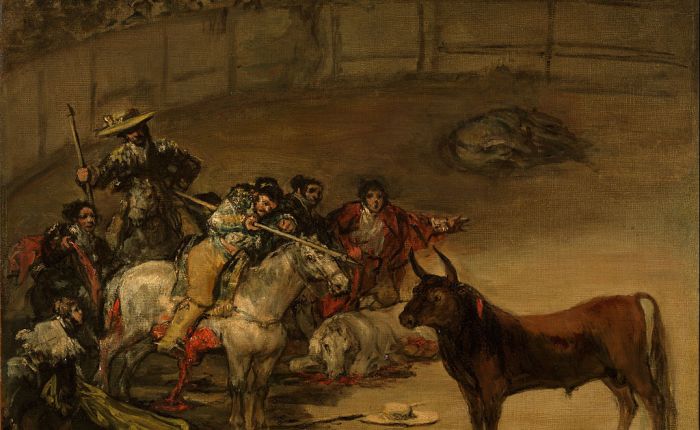
His stories circle tightly around the same subjects: war, boxing, bullfighting, fishing, hunting, and desperate love affairs—with alcohol ever-present. Without doubt Hemingway was attracted to violence. But he is not a Tarantino, an aficionado of the aesthetics of violence. Rather, violence for Hemingway is not beautiful in itself but a kind of necessary crucible to reduce life to its barest elements. For with life, like prose, Hemingway was a minimalist and a purist. And the essential question of life, for him, was what a man did when faced with an overpowering force—whether this came in the form of a bull, a marlin, a war, or nature itself. And the typical Hemingway response to this conundrum is to go down swinging with a kind of grim resolve, even if you’d rather just not bother with the whole ordeal.

Nature plays an interesting double role in Hemingway’s fiction: as adversary and comforter. Sometimes characters escape into nature, like Nick Adams going fishing. Other times they must face it down, like Francis Macomber with his buffalo. Yet nature is never to be passively enjoyed, as a bird watcher or a naturalist, but must always be engaged with—as either predator or prey. Of course you always end up being the prey in the end; that’s not the question. The question is whether these roles are performed with dignity—bravery, resolve, skill—or without. Writing itself, for him, is a kind of hunting, a hunting inside of yourself for the cold truth, and must also be done bravely or the writer will end up producing rubbish. And even the writer ends up prey in the end—eaten by his own demons.

This, as far as I can tell, is Hemingway’s insistent theme—the central thread that ties his other interests together. And one’s final reaction to his work will thus rest on the extent to which one thinks that this view encapsulates reality. For me, and I believe for many, Hemingway at his best does capture an essential part of life, one that is usually missed or ignored. But such a universally cannibalistic world is difficult to stomach in large doses.

Even within the boundaries of his own style, Hemingway has some notable defects. He most often gets into trouble nowadays for his portrayal of women. And it is true that none of them, to my memory, are three-dimensional. What most puts me off is the cloyingly subordinate way that many of the women speak their partners. But what I found even more uncomfortable was Hemingway’s racist treatment of black characters, which was hard to take at times. And as I mentioned in another review, I can also do with fewer mentions of food and drink.

These criticisms are just small sample of what can be lodged at him. Yet even the harshest critic, if they are a sensitive reader, must admit that he is a writer who cuts deeply. When Hemingway’s story and his style hit their stride, the effect is powerful and unforgettable. My personal favorite is the paragraphs in “The Short Happy Life of Francis Macomber,” when the narration switches to the lion’s point of view:

Macomber stepped out of the curved opening at the side of the front seat, onto the step and down onto the ground. The lion still stood looking majestically and coolly toward this object that his eyes only showed in silhouette, bulking like some super-rhino. There was no man smell carried toward him and he watched the object, moving his great head a little from side to side. Then watching the object, not afraid, but hesitating before going down the bank to drink with such a thing opposite him, he saw a man figure detach itself from it and he turned his heavy head and swung away toward the cover of the trees as he heard a cracking crash and felt the slam of a .30-06 220-grain solid bullet that bit his flank and ripped in sudden hot scalding nausea through his stomach.

View all my reviews

Review: Sorolla (Masterworks)

Review: Sorolla (Masterworks)

Sorolla (Masterpieces)Sorolla by Jose Maria Faerna

My rating: 4 of 5 stars

If you go to number 37 of the Calle de General Martínez Campos, in Madrid, and walk inside, you will find one of the most enchanting corners of the city. This is the Museo de Sorolla, a museum situated in the former house of painter Joaquín Sorolla, still furnished much as it was during his lifetime and which now contains the lion’s share of his most famous works.

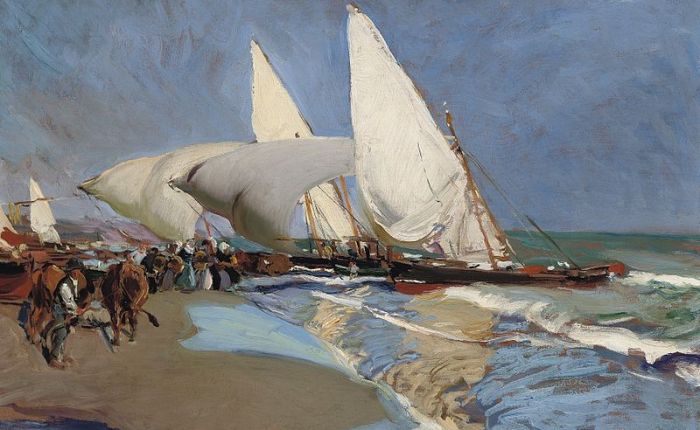
Joaquín Sorolla (1863 – 1923) was Spain’s archetypal gentlemanly bourgeois painter. He achieved fame and fortune during his lifetime. He rubbed elbows with American presidents and businessmen, and finished portraits for philosophers, scientists, and novelists. And yet, for all this, nowadays he is most remembered for his luminescent scenes on the beaches of Valencia.

Sorolla had a miraculous ability to capture the play of light on his canvass. The way that skin gleams in the sun, the way sunlight filters through fabric, the way that rays glisten on the ocean surface. In a time when photography was not much respected in the world of art, Sorolla gave some of his most famous works the seemingly arbitrary boundaries, unstudied poses, and high angles typical of a photograph. He was at his best when his subjects were ordinary people—a young couple, fishermen at work, a group of kids on the sand. The resulting paintings are delightful: intimate and playful swirls of color in which air, water, clothes, and skin melt into one radiant fabric.

One is naturally reminded of the impressionists in Sorolla’s work; but he was not a self-conscious member of the vanguard. He was, rather, firmly rooted in the realist tradition going back to Velazquez. Indeed, during his life he was scorned by many as a commercial artists who adapted his style to conventional taste, and who was merely interested in surfaces. I think this judgment is highly unfair—Sorolla’s style was deeply original and often daring—but it is true that he did not try to self-consciously break with tradition or fashion. And finding unexplored room for growth in a tradition can be a more subtle and difficult task than simply trying to reject it.

Though his beach scenes are his most characteristic and his finest work, Sorolla had an impressive range. He was a capable landscape painter and a gifted portrait artist. I was fortunate enough to see the series of portraits of notable Spaniards that Sorolla undertook at the behest of the Hispanic Society of New York—a series that includes portraits of Unamuno, Pío Baroja, and Ramón y Cajal. What some say is his greatest work remains in the Hispanic Society building (currently closed due to renovations): Visions of Spain—a monumental mural that contains scenes from every region of Spain.

While nobody would mistake Sorolla for a profound artist—his paintings delight but never overwhelm—I find in him an admirable example of the life of the artist. He developed his own highly distinctive style, achieved commercial success without compromising his own vision, practiced his craft obsessively and incessantly—eventually working himself into ill-health—and extended his artistic range to the full. One walk around his house is enough to convince you that he was every inch a painter.

This book is a nice little collection of his work. The pictures are large and high-quality, and the commentary is economical, tasteful, and informative.

View all my reviews

Review: Advice to a Young Investigator

Review: Advice to a Young Investigator

Reglas y consejos sobre investigación científica. Los tónicos de la voluntad.Reglas y consejos sobre investigación científica. Los tónicos de la voluntad. by Santiago Ramón y Cajal

My rating: 4 of 5 stars

Books, like people, we respect and admire for their good qualities, but we only love them for some of their defects.

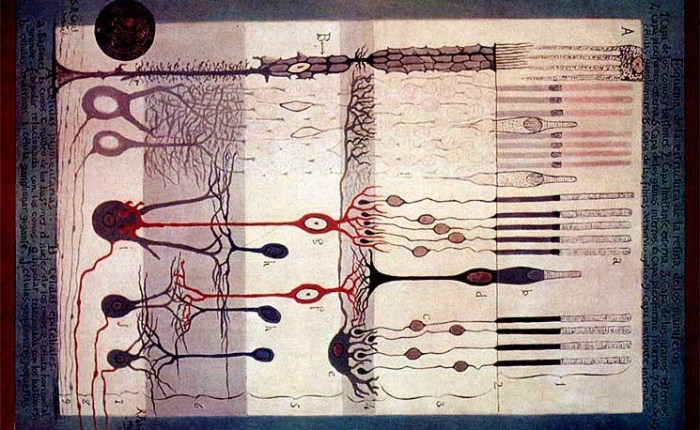
Santiago Ramón y Cajal has a fair claim to being the greatest scientist to hail from Spain. I have heard him called the “Darwin of Neuroscience”: his research and discoveries are foundational to our knowledge of the brain. When he won the Nobel Prize in 1906 it was for his work using nerve stains to differentiate neurons. At the time, you see, the existence of nerve cells was still highly controversial; Camillo Golgi, with whom Ramón y Cajal shared the Nobel, was a supporter of the reticular theory, which held that the nervous system was one continuous object.

Aside from being an excellent scientist, Ramón y Cajal was also a man of letters and a passionate teacher. These three aptitudes combined to produce this charming book. Its prosaic title is normally translated into English—inaccurately but more appealingly—as Advice to a Young Investigator. These originated as lectures delivered in the Real Academia de Ciencias Exactas, Físicas y Naturales in 1897 and published the next year by his colleague. They consist of warm and frank advice to students embarking on a scientific career.

Ramón y Cajal is wonderfully optimistic when it comes to the scientific enterprise. Like the philosopher Susan Haack, he thinks that science follows no special logic or method, but is only based on sharpened common sense. Thus one need not be a genius to make a valuable contribution. Indeed, for him, intelligence is much overrated. Focus, dedication, and perseverance are what really separate the successes from the failures. He goes on to diagnose several infirmities of the will that prevent young and promising students from accomplishing anything in the scientific field. Among these are megalófilos, a type exemplified in the character Casaubon in Middlemarch, who cannot finish taking notes and doing research in time to actually write his book.

While much of Ramón y Cajal’s advice is timeless, this book is also very much of a time and a place. He advises his young students to buy their own equipment and to work at home—something that would be impractical today, not least because the equipment used in laboratories today has grown so much in complexity and expense. He even advises his student on finding the right wife (over-cultured women are to be avoided). More seriously, these lectures are marked by the crisis of 1898, when Spain lost the Spanish-American war and the feeling of cultural degeneration was widespread. Ramón y Cajal is painfully aware that Spain lagged behind the other Western countries in scientific research, and much of these lectures is aimed alleviating at specifically Spanish shortcomings.

In every one of these pages Ramón y Cajal’s fierce dedication to the scientific enterprise, his conviction that science is noble, useful, and necessary, and his desire to see the spirit of inquiry spread far and wide, are expressed with pungent wit that cannot fail to infect the reader with the same zeal to expand the bounds of human knowledge and with an admiration for such an exemplary scientist.

View all my reviews

Review: Gaudí—Visionary Architect

Review: Gaudí—Visionary Architect

Gaudí: Arquitecto visionarioGaudí: Arquitecto visionario by Philippe Thiébaut

My rating: 3 of 5 stars

Beauty is the mirror of truth, and since art is beauty, without truth there is no art.
—Antoni Gaudí

Gaudí has the distinction of being among the few genuinely famous and popular architects in history. Along with Frank Gehry and Frank Lloyd Wright, he is among the handful of architects that decently educated people can be expected to know of. More tourists flock to the Sagrada Familia every year than to the Alhambra—even if many of these gapers mistakenly believe that it is a cathedral (it is an expiatory temple).

And he wasn’t just some popular hack. Gaudí’s stature in the history of art is equally monumental. This wasn’t always the case, however. Both George Orwell and Gerald Brenan, two cultured men, thought that his work was pretentious rubbish. (Orwell regretted that it wasn’t blown up during the Spanish Civil War, and Brenan evinced his work as evidence that Catalonia was culturally behind Spain.) I admit that I had misgivings upon first seeing some of Gaudí’s work. It struck me as exaggerated and theatrical, too mindlessly showy.

But this impression disappears as soon as one begins to inspect Gaudi’s work with any circumspection: for the man was undeniably a genius of the highest order. And it is especially enthralling to encounter a genius architect. For, unlike a painter or a novelist, you can literally step into a world created by Gaudí. You can immerse yourself in his work—see it, hear it, touch it, even smell it.

And Gaudí’s world is incredibly rich. He was the capstone modernisme, the Catalan version of Art Nouveau, an art movement that was preoccupied with rich decoration. Gaudí’s art developed this preoccupation into an explosion; his works burst with ornament. To achieve his typically overwhelming effect, he combined several crafts: sculpture, landscaping, stained glass, ceramics, mosaics, carpentry, blacksmithing, among others. And underlying this passionate drive to beautify was a keen sense of space—the architect’s fundamental aptitude—making his works remarkable on both the macro and micro scale.

His method of working was famously unconventional. He seemed to operate by instinct rather than calculation, even when dealing with complex problems of structure. Gaudí thought spatially: instead of drawing plans he preferred to build models (many of which were burned during the Civil War). Most famously he hung weights from strings to study the optimal angles for weight-bearing arcs. Thus he was a kind of unconscious geometrician, and underneath the seemingly heavy ornaments are beautifully elegant forms.

One of Gaudí’s central passions was nature. A deeply religious man, he considered the natural world to be the work of God; thus he thought that architects should strive to emulate the original creation. Consequently you will look in vain for any straight lines in his works, since perfectly straight lines are seldom found in the natural world. This also helps to explain his use of color: how often are natural landscapes black and white?

A severe and passionate Catholic (not to mention a fervent Catalan nationalist), at first glance it is perplexing that a man so avant-garde in art could be so conservative in every other sphere of life. This is no paradox, of course, and only seems strange because we have come to associate cutting-edge art with the left—a historical and not a logical connection. In any case, Gaudí is yet another example of the truism that great artists manage to be both traditional and innovative in the same moment.

This little book is a nice companion and introduction to the man’s work. For my taste, the text consists too much of dense descriptions of buildings and not enough of biography or history; but any book of this length is bound to leave a lot out. The photos are excellent to have; and the final section, which includes several different interpretations of Gaudí’s work (including Dalí’s Surrealist-Freudian take on it), was very welcome.

View all my reviews

Review: Blake’s Poetry

Review: Blake’s Poetry

Blake: Poems (Everyman's Library Pocket Poets)Blake: Poems by William Blake

My rating: 4 of 5 stars

The Angel that presided o’er my birth
Said, ‘Little creature, form’d of Joy & Mirth,
Go love, without the help of any Thing on Earth.’

As I’ve said before, I feel a bit uncomfortable reviewing poetry. I don’t have the proper tools; I lack the vocabulary. Critiquing poetry, to me, is like critiquing a human body. I don’t know why one face pleases me, and another pleases me not; I simply couldn’t say why I find one shape shapely, and another shape misshapen. When I see a pleasing face or an attractive form, I respond automatically; and the same might be said for my reactions to poetry.

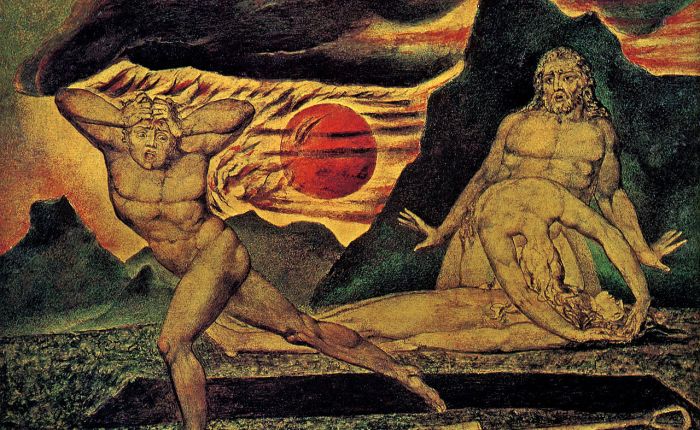
William Blake makes this job even more difficult, as he was, in the truest sense of the word, an individual. How does one evaluate a totally idiosyncratic artist? It seems impossible; all evaluations, either explicitly or implicitly, involve comparison. But when somebody is so aloof and peculiar as was Blake, comparisons seem somehow inappropriate. Well, I’ll stop caviling, and on with it.

There is a childlike innocence to many of Blake’s poems. Some of them have the gentle sing-song rhythm of a lullaby; the words seem to rock you back and forth, lulling you into a dreamy peace. Blake’s early poems, in particular, are totally free of cynicism and disenchantment; rather, they are direct, honest, wide-eyed.

To see the World in a Grain of Sand
And a Heaven in a Wild Flower,
Hold Infinity in the palm of your hand
And Eternity in an hour.

Married to this total innocence, however, is an intense spirituality. Blake is a textbook mystic. Perhaps the closest poet to Blake that I’ve read is Whitman. Like Whitman, Blake is scornful of organized, traditional, Puritanical religion. Rather, he sees God in every blade of grass, and considers the body a source of delight, rather than of sin.

All Bibles or sacred codes have been the causes of the following Errors.
1. That Man has two real existing principles, Viz: a Body & a Soul.
2. That Energy, call’d Evil, is alone from the Body, & that Reason, call’d Good, is alone from the Soul.
3. That God will torment Man in Eternity for following his energies.

In terms of pure poetic skill, Blake is no match for a Milton, a Donne, or a Whitman. Indeed, that sort of thing seems not to interest him. He has not a great talent for aphorism; he is not eminently quotable. The poems are not meant to be unraveled or chewed; you will not be left puzzled or bewildered. Verbal ingenuity is not, in short, Blake’s strength; and if Blake is read with that purpose in mind, you are sure to be disappointed. His aim is instead to disarm you, to make you let down your guard; his poetry is, in fact, almost conversational. Blake knew he was something of an oddball; but he was too wise to think himself any the worse for it. His poetry, then, is a kind of invitation into his personal world.

My mother groan’d! my father wept,
Into the dangerous world I leapt,
Helpless, naked, piping loud,
Like a fiend hid in a cloud.

And indeed, this world gets more odd and fanciful the longer you stay with him. Blake’s later poetry is considerably more obscure than his earlier work. He seems, in fact, to have invented his own mythology; and the poems from this period are little more than tales and visions of his personal gods and heroes and demons. It is certainly odd; but it is oddly alluring.

If the doors of perception were cleansed, every thing would appear to man as it is, infinite.

For man has closed himself up, till he sees all things thro’ narrow chinks of his cavern.

Part of the reason books are so fascinating is because people are so fascinating. Right before reading this collection, I read a collection of Donne’s poetry. The juxtaposition is telling. Both men are mystics, both men are sensualists, both men are aloof individuals. Yet Donne is intellectual, anguished, and strained; Blake is direct, joyful, effortless. At least, this is my impression. It is odd trying to get to know somebody purely through their poetry; it is rather like trying to get to know somebody by rummaging through their trash. We are forced to guess at what’s locked inside by shifting through what’s shed.

View all my reviews
Review: A Farewell to Arms

Review: A Farewell to Arms

A Farewell to ArmsA Farewell to Arms by Ernest Hemingway

My rating: 3 of 5 stars

There were many words that you could not stand to hear and finally only the names of places had dignity.

If Voltaire had read Hemingway’s famous war novel, I’d wager that he would pronounce that it is neither about war nor a novel. Compared to All Quiet on the Western Front, for example, the descriptions of war in this book are ludicrously tame. The vast majority of the time the narrator is not even at the front; and when he is, he is far behind the front lines, driving an ambulance. The bulk of the book is taken up, instead, by a love story. The war forms the backdrop—though admittedly a very conspicuous backdrop—and is not the main thread of the book.

What of the novel? Hemingway is a writer of conspicuous strengths and weaknesses; and the longer the book, the more apparent his shortcomings. Though the novel is slim, it still feels padded. Hemingway, for whatever reason, considered it dramatically necessary to narrate every time his characters ate or drank. Aside from telling us that his characters drank a lot (even while pregnant) and appreciated good wines, we learn very little from these frequent repasts, and the ultimate effect is to make the reader hungry.

The conversations, too, are repetitive—especially between the narrator and Catherine Barkley, his wartime sweetheart. While strikingly tender and frank, especially for Hemingway, the relationship between these two never sparkles with the interplay of personality. There is none of the mutual discovery we find in, say, Jane Eyre and Mr. Rochester. Instead, the two of them talk to each other the way people talk to their dogs—asking cutesie rhetorical questions never meant to be answered.

These two examples are just part of a larger fault: Hemingway’s tendency to get carried away into nostalgic, atmospheric descriptions. At his best moments, admittedly, he creates that wistful, bittersweet, melancholic tone that he is known for, and that forms such a beautiful part of his work. But too often the book becomes pointlessly autobiographical. Hemingway is, after all, one of the strongest proponents of the “write what you know” school of fiction. Though wise advice, there is a danger to this method: Since everyone’s life is interesting to themselves, it can be difficult to know which parts may be interesting to other people. This book definitely suffers in this way.

Of course there are many strong bits. Some scenes are unforgettable—the narrator’s injury, the long retreat, rowing across the Swiss Lake, among others. I also really loved the conversations between the narrator and Rinanldi. Unlike the love story, that friendship has true chemistry. Indeed many episodes, taken by themselves, are remarkable. But do they add up to a coherent book?

I ask this specifically in regards to the ending. Since I had just read A.C. Bradley’s book on tragedy, in which he insisted that tragedy requires that a hero create his own downfall, I was struck by how un-tragic was the end of this book. The fatal stroke is not the inevitable result of any personal flaw or a misguided decision, but pure misfortune. The final effect, therefore, is not tragic, but pathetic. In Hemingway’s novel, the universe itself is malevolent, even sadistic, and humans just confused defenseless creatures caught in its maw.

Thus I am a bit perplexed that some people see this as an anti-war novel. The narrator’s crushing blow is not caused by the war; indeed it is something that could have happened to anyone. You can argue that the novel’s bleak atmosphere reflects the fatalism and the pessimism engendered by the war: a nihilistic perspective that is carried over into every phase of life—even love. Yet the narrator himself is not pessimistic—at least not most of the time; if he were, he would not have embarked on his love-affair. It is neither his perspective nor the war, therefore, that dooms the narrator, but some mysterious malevolency of the world itself that makes lasting happiness impossible, in war or in peace.

Thus, aside from a few explicitly anti-war passages in the book, the general tenor has little to do with pacifism or any other political reflection. Instead, to paraphrase the book’s most famous passage, the final message is: Everyone gets broken in the end no matter what. And I don’t think this notion has any truth or value.

View all my reviews

Review: Shakespearean Tragedy

Review: Shakespearean Tragedy

Shakespearean TragedyShakespearean Tragedy by A.C. Bradley

My rating: 5 of 5 stars

I dreamt last night that Shakespeare’s Ghost
Sat for a civil service post
The English paper for that year
Had several questions on King Lear
Which Shakespeare answered very badly
Because he hadn’t read his Bradley

Analyzing great works of art is always fraught with danger. Whether the critic sets her sights on a portrait, a sonata, or a play, the task is always that of turning poetry into prose. The critic, in other words, must extract content from form—and making content and form inseparable is one of the goals of art. Insofar as art is great, therefore, the critic’s task will prove difficult; and criticism thus reaches its most acute challenge in Shakespeare. His works have eluded minds as powerful as Coleridge and Freud, Goethe and Joyce. The man worthiest to the challenge was not anyone so famous; he was, rather, a retiring Oxford don who published a series of lectures on Shakespeare’s tragedies in 1904.

Bradley’s method has been attacked and dismissed as overly literal, treating Shakespeare’s characters as real people: “How Many Children had Lady Macbeth?” was the derisive title of one critical article, implying that the question (which Bradley never asked) was ludicrous. But I am convinced that Bradley’s method is, on the whole, the right one. For Shakespeare’s tragedies are incomprehensible unless we set our sights on character—the plays’ personalities. If you try the experiment suggested by Bradley himself, you will see this: attempt to narrate the plots of any of these stories without any mention of personality, merely recording the events, and the plot becomes weak and baffling.

The extreme example of this is, of course, Hamlet, whose endless ruminations and procrastinations have been a stumbling block for generations of critics. But the central importance of personality is apparent in all the tragedies. Indeed it must be, as Bradley explains, since a tragedy is tragic only insofar as the events result from a character’s personality. To fall off a building, to catch a deadly disease, to be conscripted into the army—all of these, while remarkably sad, are not tragic in the strict sense because they might happen to anyone. A tragedy may only happen to one person, because it is caused by that person. It does not result from circumstance, accident, or any overwhelming external force. To confirm this, try mentally switching the characters in these tragedies. Othello would have solved Hamlet’s problem in an hour, and Hamlet would have seen right through Iago’s trickery—the plot disappears.

The existence of tragedy, as Bradley also makes clear, seems to suggest a certain sort of universe. The characters must be capable of free action, since the consequences must flow from their personalities. Along with divine determination, the idea of a Christian afterlife is incompatible, too, since if every character ultimately receives their just desserts then the feeling of dreadful finality is lost. For tragedy, as Bradley tells us, always involves the idea of irrecoverable waste—wasted lives, wasted talents, wasted goodness. But the universe in Shakespeare’s plays is not indifferent. Indeed, although good and evil qualities are deeply mixed in all of his most memorable characters, we are never in doubt which is which. And though the hero is inevitably defeated, evil never triumph.

Most difficult to articulate is the odd mixture of inevitability and avoidability that permeates the atmosphere in these tragedies. One is never in doubt that the characters are, in every sense, free and responsible for their destiny; and yet their unhappy fate seems certain. This feeling is caused, I think, by the way that circumstance bleeds into personality. The behavior of Shakespeare’s characters is the reaction of their personality with their environment; and in tragedy this reaction is always fateful. The events correspond exactly with our heroes’ fatal weakness—a weakness which, in any other situation, would not have doomed them. In this sense their personality becomes their prison. They cannot but act otherwise because it is who they are. The final impression is one of cosmic misfortune—by some twist of fate they have been thrown into a predicament which dooms them, and they participate in creating this situation every fateful step of the way.

To fully illustrate this view of tragedy, as springing from a character’s personality, Bradley must analyze Shakespeare’s heroes and villains. And these investigations are absolutely masterful. His dissections of Hamlet and Iago in particular—my two favorite Shakespeare characters, and the two most resistant to analysis—were spectacular. Ever since I first read those plays, I have been beating my head against them in the attempt to make sense of these bottomless personages. The plots of their respective plays are determined by the actions of these two, and yet their motivations are famously difficult to ferret out. What motivates Iago, and what prevents Hamlet from acting? They are mysterious, and yet extremely coherent; one is always sure their actions are of a piece with their nature—and yet their natures are so subtle and complex that they evade understanding. Indeed for some time I was ready to say that the challenge was impossible; but Bradley’s exegesis has convinced me that I was wrong.

This book was, in sum, a revelation: a model of literary criticism that left me thoroughly convinced. And to complete the triumph, Bradley accomplishes his analysis with brevity and charm. There is nothing stifled or academic in his approach; all technical matters are reserved for footnotes and endnotes. He is, rather, a frank and plainspoken man. Nothing could feel more natural than his tone and approach, and no guide could be more friendly and tolerant. However the intellectual winds may blow in the halls of academe, ordinary lovers of Shakespeare will always cherish Bradley, for he performs the office of the critic: to enhance our enjoyment of a work while being true to its spirit.

View all my reviews

Review: Meditations on Quixote

Review: Meditations on Quixote

Meditaciones Del QuijoteMeditaciones Del Quijote by José Ortega y Gasset

My rating: 4 of 5 stars

Like the varnish on a painting, the critic aspires to put literary objects in a purer atmosphere, the high mountain air, where the colors are more vibrant and the perspective more ample.

Ortega published this, his first book, in 1914 when he was 31 years old. It was meant to be only the opening salvo of a continuous barrage. According to his plan, this book was to be followed by nine other “Meditations”: on Azorín, Pío Baroja, the aesthetics of The Poem of the Cid, a parallel analysis of Lope de Vega and Goethe, among others. But, like so many youthful plans, this ambitious scheme was soon abandoned and this brief essay now stands alone.

As is the custom, Ortega fashions himself a follower of Cervantes; but he distinguishes his “quijotismo” by asserting that he worships, not the character Don Quixote, but the book. Ortega sees in this novel a repudiation of an earlier form of literature. By having his titular character rattle his brains by reading romantic tales of knights and adventure, only to go out into the world and make a fool of himself, Cervantes condemned all literature based on unusual people and events, replacing it with the literature of realism.

This is most dramatically portrayed in the episodes involving Maese Pedro, a picaresque character whom Quixote frees in the first part, and who returns in the second part to put on a puppet show for our hero. Unable to distinguish the puppets from his reality, the knight promptly charges and destroys them. This little episode demonstrates that romantic characters, such as Maese Pedro, reside in an imaginative space clearly delineated from the reality we know; but for Don Quixote imagination and reality are one seamless blend.

Apart from this discussion of the novel, Ortega roams far and wide in this essay, comparing Mediterranean and German cultures, discussing the epic form and Charles Darwin, and also including a germ of his later philosophy: “I am myself and my circumstances.” This collection also includes a long essay on Pío Baroja, which I could not properly appreciate since I have yet to read any of Baroja’s novels.

Ortega is his usual charming self. His prose is fluid and clean; his sentences sparkle with epigrams. He scatters his thoughts here and there with youthful zeal, not properly developing, clarifying, or defending any of them, but pushing joyfully on to the next point. I have heard some people describe Ortega as “dense,” but to me he is remarkably readable. Indeed I would describe Ortega as more of an intellectual essayist than a disciplined thinker. And the more I read of him, the more I am impressed.

View all my reviews

Review: The Complete Essays

Review: The Complete Essays

The Complete EssaysThe Complete Essays by Michel de Montaigne

My rating: 5 of 5 stars

e’ssay. (2) A loose sally of the mind; an irregular indigested piece; not a regular and orderly composition.
—From Samuel Johnson’s Dictionary of the English Language.

Now I finally have an answer to the famous “desert island book” question: This book. It would have to be. Not that Montaigne’s Essays is necessarily the greatest book I’ve ever read—it’s not. But here Montaigne managed to do something that has eluded the greatest of our modern science: to preserve a complete likeness of a person. Montaigne lives and breathes in these pages, just as much as he would if he’d been cryogentically frozen and brought back to life before your eyes.

Working your way through this book is a little like starting a relationship. At first, it’s new and exciting. But eventually the exhilaration wears off. You begin looking for other books, missing the thrill of first love. But what Montaigne lacks in bells and whistles, he more than compensates for with his constant companionship. You learn about the intimacies of his eating habits and bowel movements, his philosophy of sex as well as science, his opinion on doctors and horsemanship. He lets it all hang out. And after a long and stressful day, you know Montaigne will be waiting on your bedside table to tell you a funny anecdote, to have easygoing conversation, or to just pass the time.

To quote Francis Bacon’s Essays: “Some books are to be tasted, others to be swallowed, and some few to be chewed and digested.” Montaigne’s essays are to be sipped. This book took me a grand total of six months to read. I would dip into it right before bed—just a few pages. Sometimes, I tried to spend more time on the essays, but I soon gave it up. Montaigne’s mind drifts from topic to topic like a sleepwalker. He has no attention span for longwinded arguments or extended exposition. It’s not quite stream-of-consciousness, but almost. As a result, whenever I tried to spend an hour on his writing, I got bored.

Plus, burning your way through this book would ruin the experience of it. Another reviewer called Montaigne’s Essays the “introvert’s Bible”. This is a very perceptive comment. For me, there was something quasi-religious in the ritual of reading a few pages of this book right before bed—night after night after night. For everything Montaigne lacks in intelligence, patience, diligence, and humility, he makes up for with his exquisite sanity. I can find no other word to describe it. Dipping into his writing is like dipping a bucket into a deep well of pure, blissful sanity. It almost seems like a contradiction to call someone “profoundly down-to-earth,” but that’s just it. Montaigne makes the pursuit of living a reasonable life into high art.

Indeed, I find something in Montaigne’s quest for self-knowledge strangely akin to religious thinking. In Plato’s system, self-knowledge leads to knowledge of the abstract realm of ideals; and in the Upanishads, self-knowledge leads to the conception of the totality of the cosmos. For Montaigne, self-knowledge is the key to knowledge of the human condition. In his patient cataloging of his feelings and opinions, Montaigne shows that there is hardly anything like an unchanging ‘self’ at the center of our being, but we are rather an ever-changing flux of emotions, thoughts, memories, anxieties, hopes, and sensations. Montaigne is a Skeptic one moment, an Epicurean another, a Stoic still another, and finally a Christian.

And isn’t this how it always is? You may take pride in a definition of yourself—a communist, a musician, a vegan—but no simple label ever comes close to pinning down the chaotic stream that is human life. We hold certain principles near and dear one moment, and five minutes later these principles are forgotten with the smell of lunch. The most dangerous people, it seems, are those that do try to totalize themselves under one heading or one creed. How do you reason with a person like that?

I’ve read too much Montaigne—now I’m rambling. To return to this book, I’m both sorry that I’ve finished it, and excited that it’s done. Now I can move on to another bedside book. But if I ever feel myself drifting towards radicalism, extremism, or if I start to think abstract arguments are more important than the real stuff of human life, I will return to my old friend Montaigne. This is a book that could last you a lifetime.

Narcicus Caravaggio

View all my reviews