Much Ado About Nothing is generally held to be one of Shakespeare’s lighter comedies, as the title seems to indicate. Its plot is generally ridiculous—full of meaningless intrigues and manufactured drama—again, as the title seems to indicate. It survives through the charming story of Beatrice and Benedick, whose dueling wit evolves into antagonistic love, preserving all of the fire and (almost) none of the misogyny of Petruchio and Katherina from The Taming of the Shrew. The plot involving Hero and Claudio is silly stuff, and only maintains interest through providing a context for Beatrice and Benedick to further woo and war.
It is difficult to read much Shakespeare without coming to the conclusion that he was a hopeless cynic when it came to love. Both plots in the play reinforce this conclusion. Beatrice and Benedick are fooled into love through appeal to their self-love; they agree to wed without any romantic illusions; indeed, Benedick ends the play with a crude cuckoldry pun. Meanwhile, Claudio is ready to drive his beloved to suicide at the thought that she is not a virgin, and then is ready to marry anyone, even “an Ethiope,” to repent when he finds out she was falsely accused. If only more romantic comedies has such a saving touch of nihilism.
This little book is one of the most read and translated works of the Spanish Golden Age. It has been surprisingly influential. Schopenhauer was a famous devotee, and even learned Spanish so that he could produce a translation (which went on to commercial success). Two English translations have been best-sellers, the first in 1892 and the second in 1992. Advice typically does not age well, but Gracián’s has stood the temporal test.
Yet for the reader of the original Spanish—especially the non-native reader—the book can be perplexing. Gracián was a major writer in the conceptismo movement: a literary style in which a maximum of meaning was compressed into a minimum of words, using every rhetorical trick of the trivium to achieve a style that seems to curl itself into a ball and then to explode in all directions. This can make the experience of reading Gracián quite akin to that of reading poetry—except here, unlike in poetry, you can be sure that there is a sensible meaning laying concealed underneath. When the antiquity of Gracián’s Castilian is added to the mix, the result is literary dish that is difficult to digest.
After a meaning is beaten out of Gracián’s twisted words, however, the result is some surprisingly straightforward advice. “Prudent” is the operative word, for Gracián manages to be idealistic and realistic at once, walking the fine like between cynicism and naïveté. Admittedly, however, the bulk of this advice is directed towards the successful courtier, and so is difficult to apply to less exalted positions. There is, for example, much advice concerned with how to treat inferiors and superiors, but in a world where explicit hierarchies are increasingly frowned upon (or at least tactfully concealed), the poor reader wonders what to make of it.
But much of the advice is timeless and universal. Make friends with those you can learn from (but not those who can outshine you!). Don’t let wishful thinking lead you into unrealistic hopes. Never lose your self-respect. The wise man gains more from his enemies than the fool from his friends. Know how to forget. Know how to ask. Look within… As any reader of Don Quixote knows, Spanish is a language exceedingly rich in proverbs; so it perhaps should come as no surprise that this language—so rhythmic and so easy to make rhymes with—is also an excellent vehicle for maxims. Gracián exploits the proverbial potential of Castilian to the maximum, expressing a sly but respectable philosophy in 300 pithy paragraphs.
Despite all the wit and wisdom to be found in these pages, however, I found myself wishing for amplification. Montaigne, though short on practical advice, is long on examples; so by the end of his essays the reader has a good idea how to put his ideas into practice. Gracián, by contrast, has no time for examples, and so the reader is left with a rather abstract imperative to work with. Needless to say I will not become a successful courtier anytime soon.
As You Like It is unquestionably my favorite of Shakespeare’s comedies. This is mostly due to the love story being, for once, rather enjoyable. In the majority of Shakespeare’s works I find the romantic relationships to be, at best, an easy engine to move the plot along, or a ready vehicle for the poet’s sallies. Seldom do I find myself in sympathy with the lover or the beloved, mostly because Shakespeare’s most lovable or fascinating characters—King Lear, Iago, Hamlet, Falstaff—are usually not of the amorous sort.
But Rosalind is a great exception, for she is both fascinating and lovable. It is very easy for me to sympathize with Orlando’s passion; and though Orlando is no match for Rosalind in wit or wisdom, he is brave, kind, and loyal. As in any Shakespeare play, the lovers expend their great verbal acuity upon one another; though here, for once, the barbs are purely benign, the relationship free of secret malice. For Rosalind and Orlando, raillery becomes a way of showing affection and of keeping attraction alive; and theatricality is not use to deceive or to ensnare, but to enchant.
Shakespeare set his play in the fictitious forest of Arden, thus suggesting a kind of pastoral romance. But the mood of the play is subtly anti-pastoral. Silvius, the poor love-sick shepherd, represents the original pastoral tradition of pinning lovers in an original Eden; thus he speaks exclusively in nauseating verse. Rosalind, by contrast, expresses herself in prose; and her love is never pinning or pathetic, but playful. I would say that ‘play’ characterizes her whole attitude towards life. She does not, like Silvius, fall victim to her emotions; nor does she, like Jacques, cynically deny her feeling. Instead, she indulges in her feelings while staying one step ahead of them, turning every genuine drama into a game. In the process she gives us a model for how to be madly in love without being maddeningly dull.
What else need be said? The plot is absurd and flimsy, of course. Jacques and Touchstone are excellent counterpoises to Rosalind, though neither half so delightful. The music and the natural setting help to make the play itself, like the forest of Arden, a space of escape and delight—a transitional space, where the norms of society are inverted or suspended, and from which we return refreshed and subtly transformed. At the very least, it is impossible for me to watch this play and remain in a sour mood.
Ideas are interesting, but people are vastly more so.
Sarah Bakewell has followed her lovely book about Montaigne with an equally lovely book about the existentialist movement. Comparing the books, one can see an obvious theme emerge in Bakewell’s writing: the interest in practical philosophy. Montaigne and the existentialists share the tendency to write about their own lives and, in various ways, to attempt to live out the tenets of their philosophies. This makes Bakewell’s biographical method especially revealing and rewarding, while at the same time adding a subtle, highbrow self-help aspect to her books—life lessons with the imprimatur of big names and fine prose.
Bakewell attempts to tell the story of the existentialist movement from its twentieth-century beginnings (skipping over precursors such as Dostoyevsky and Kierkegaard) to its apparent end, with the deaths of its principle architects. The four main protagonists are Martin Heidegger, Maurice Merleau-Ponty, Simone de Beauvoir, and Jean-Paul Sartre (who, unsurprisingly, is the dominant personality), along with shorter appearances by other thinkers: Husserl, Camus, Raymond Aron, Karl Jaspers, and Simone Weil, to name the most prominent. When you consider the sheer amount of biographical and philosophical material this list represents, you realize the magnitude of the task set before Bakewell, and the consequent skill she demonstrated in producing a readable, elegant, and stimulating book.
I am sorry to say that I have read very little of the writings of the principle actors, with the exception of Heidegger. Bakewell’s account of him mostly confirmed my own experiences with the infuriating metaphysician, especially in his disturbing lack of character and, indeed, of basic humanity. Sartre comes across as far more human, if not exactly more likable. Few people could hear of Sartre’s enormous philosophical, biographical, journalistic, and literary output, over so many years, without feeling a sense of awe. Nevertheless, Sartre’s opinions rarely struck me as measured or reasonable. Though I often mourn the decline of the public intellectual, Sartre’s example gives me pause, for his influence on contemporary politics was not necessarily salubrious. Perhaps it is true that intellectuals, seeking consistency and clarity, are naturally inclined towards extreme positions. Sartre was, in any case, and it led him into some foolish and even reprehensible positions.
By contrast to these two giants, Beauvoir and Merleau-Ponty come off rather well in this story. The former tempered her political opinions with a greater subtlety, thoroughness, and empathy; while the latter lived a quietly productive and happy life, while creating a philosophy that Bakewell argues constitutes the greatest intellectual legacy of the bunch.
Just as Bakewell argued that Montaigne’s writings are newly relevant for his sense of moderation, so she argues that the existentialists are newly relevant for exploring the questions of authenticity and freedom. Not having read most of their work, I cannot comment on this. But what I found most inspiring was their burning desire to think and to write—and to write like mad, for hours each day, in every genre, for decades on end. Though most of this writing was born today to die tomorrow, each one of them produced a magisterial tome for future readers to beat their heads against. I suppose I will have to pick them up sometime soon.
There are few phrases more annoying or more effective than “I told you so.”
This is my second encounter with Thomas Kuhn, and again I emerge deeply impressed. To do justice to an event so multifaceted as the Copernican Revolution a scholar must have a flexible mind; and Kuhn is fully equal to the task. He moves seamlessly from scientific data, to philosophical analysis, to historical context, and then back again. The result is a book that serves as an admirable introduction to the basics of astronomy and a thorough overview of the Copernican Revolution, while raising intriguing questions about the nature of scientific progress.
Kuhn first makes an essential point: that the conceptual schemes of science serve both a logical and a psychological function. Their logical function is to economically organize the data (in this case, the position and movement of heavenly objects); their psychological function is to make people feel at home in the universe. Belief is only necessary for this second function. A scientist can use a conceptual scheme perfectly well without believing that it represents how the universe ‘truly is’; but people have an obvious and, apparently, near-universal need to understand their place in, and relation to, the cosmos. Thus, scientists throughout history have insisted on the truth of their systems, despite the history of science being littered with the refuse of abandoned theories (to use Kuhn’s expression). Even if this belief cannot be justified philosophically, however, it does provide a powerful emotional impetus to scientific activity.
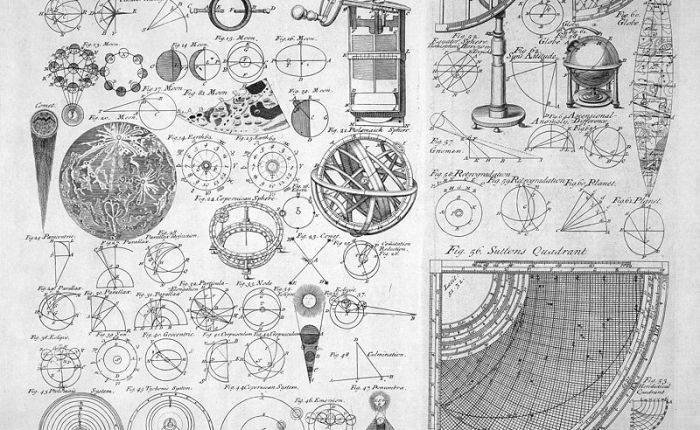
Another question Kuhn raises is when and why scientists decide that an old paradigm is unsustainable and a new one is required. For centuries astronomers in the Muslim and Western worlds worked within the basic approach laid down by Ptolemy, hoping that small adjustments could finally remove the slight errors inherent in the system. During this time, the flexibility of the Ptolemaic approach—allowing for fine-tuning in deferents, equants, and epicycles—was seen as one of its strengths. Besides, the Ptolemaic astronomy was fully integrated within the wider Aristotelian science of the age; and this science blended perfectly with common everyday notions. The fact that the Ptolemaic science broke down is attributable as much, or more, to factors external to the science as to those internal to it. Specifically, with the Renaissance came the rediscovery of Neoplatonism, with its emphasis on mathematical harmonies—something absent from Aristotelianism—as well as its strain of sun-worship.
Copernicus was one of those affected by the new current of Neoplatonism; and it is this, Kuhn argues, that ultimately made him dissatisfied with the Ptolemaic system and apt to place the sun at the center of his system. We often hear of science progressing as a result of new experiments and empirical discoveries; but no such novel observation played a role in Copernicus’s innovation. Rather, the source of Copernicus’s rejection of an earth-centered universe was its inability to explain why the planets’ orbits are related to the sun’s. His system answered that question. But this was only an aesthetic improvement. It did not lead to more accurate predictions—the essential task of astronomy—and, indeed, it did not even lead to more efficient calculations. The oft-reproduced image of the Copernican universe, consisting of seven concentric circles, is a simplification; his actual system used dozens of circles and was cumbersome and difficult to use.
But the most puzzling feature of Copernicus’s innovation is that it achieves qualitative simplification at the expense of rendering it completely incompatible with the wider worldview. Aristotelian physics cannot explain why a person would not fly off of a moving earth. And, indeed, the entire cosmological picture, such as that painted so convincingly by Dante, ceases to make sense in a Copernican universe. For centuries people had understood the earth as a midpoint between the fires of hell and the perfect heavens above. Now, hell was only metaphorically “below” and heaven only metaphorically “above.” Besides that, the universe had to be expanded to mystifying proportions; the earth became only a small and unimportant speck in an unimaginably vast space. Strangely, however, Copernicus seemed blind to most of these consequences of his innovation. A specialist concerned only with creating a harmonious system, his attempt to render it physically plausible or theologically palatable is, at best, half-hearted.
This leads to the irony that one of the greatest intellectual revolutions in history started with a man concerned with technical minutiae inaccessible to the vast majority of the public, who had access to no fundamentally new data, whose system was neither more accurate nor more efficient than its predecessor, and whose main concern was qualitative harmoniousness. Copernicus was no radical and had no notion of upsetting the established authority; he himself would likely have been appalled at the Newtonian universe that was the end result of this process.
Yet this simple innovation, once proposed, had ripple effects. Though the earth’s motion was near universally rejected as a fact, its use in a serious astronomical work kept it alive as an option. And this new option could not be laughed away when, in the next generation under Tycho Brahe, better observations and novel phenomena upset the Ptolemaic world order. The heavens could no longer be seen as perfect and unchanging when Brahe proved that supernovae and comets do not exhibit a parallax (as in, they do not to change location when the observer moves), and thus could not be atmospheric phenomena. Further, Brahe’s unprecedentedly accurate observations of the planets were incompatible with any Ptolemaic system.
This seems to be one of many cases in the history of science when novel observations followed, rather than preceded, a theoretical innovation. us Granted, this incongruence led Brahe to propose his own earth-centered system, the Tychonic, rather than adopt a sun-centered universe. But this new system used Copernican mathematics, and embodied the Copernican harmonies. In any case it is hard to see how the Tychonic system could ever have been anything but a stopgap, since the jump from Ptolemy to Brahe was scarcely easier than the jump from Ptolemy to Copernicus. Besides, it struck many as dynamically implausible that everything in the universe would orbit the sun except the earth and the moon.
Kepler and Galileo were among those unconvinced by the Tychonic system. The two very different men were both of an independent turn of mind, and their work finally made the Copernican universe unequivocally superior. Kepler particularly made the decisive step with his three laws: that planets orbit in ellipses with the sun at a focus, that they sweep out equal areas in equal times, and that they orbit the sun in a ratio of the 3/2 power (the orbital axis to the orbital time). But in Kepler we find further ironies. Far from the dispassionate lover of truth, Kepler was a Neoplatonic mystic, bursting with occult hypotheses. Many parts of his work strike the modern reader as scarcely more rational than the ravings of a conspiracy theorist. Yet the hard core of Kepler’s astronomical work lifted Copernicanism into a league of its own for accuracy of prediction and efficiency of calculation. If the orbits of the planets were related to the sun in such simple, elegant ways, it was difficult to see how earth could be at the center of it all.
This is my best attempt at summarizing the most salient points of the book. But of course there is far more in here, most of it worthwhile. I particularly enjoyed Kuhn’s chapter on the oft-ignored medieval research into physics, such as the impetus theory in the work of Nicole Oresme. The only weak point of the book was the rather brief epilogue to Copernicus. In particular, I would have appreciated an entire chapter devoted to Newton, since it was his Principia that was, in Kuhn’s phrase, the “capstone” of the revolution. But on the whole I think this is a superlative book, serious yet accessible, informative while brief. Kuhn captures the reality of scientific progress, which is far less neat that we may like to believe. Most striking is how a revolution which was guided by many extra-logical considerations—the Neoplatonic belief in celestial harmonies, the desire for mathematical elegance, the weakening of the religious worldview, the need to feel at home in the universe—fueled a process which, taken as a whole, resulted in a science definitively better than the Ptolemaic system it replaced.
Kuhn makes no mistake about this. Here is what the reputed relativist has to say:
The last two and one-half centuries have proved that the conception of the universe which emerged from the Revolution was a far more powerful intellectual tool than the universe of Aristotle and Ptolemy. The scientific cosmology evolved by seventeenth-century scientists and the concepts of space, force, and matter that underlay it, accounted for both celestial and terrestrial motions with a precision undreamed of in antiquity. In addition, they guided many novel and immensely fruitful research programs, disclosing a host of previously unsuspected natural phenomena and revealing order in fields of experience that had been intractable to men governed by the ancient world view.
But sound, as I have said above, only travels 180 toises in the same time of one second: hence the velocity of light is more than six hundred thousand times greater than that of sound.
This little treatise is included in volume 34 of the Great Books of the Western World, which I used to read Newton’s Principia and his Opticks. In this edition the Treatise comes out to about 50 pages, so I decided it was worth combing through. Christiaan Huygens is one of the relatively lesser known figures of the scientific revolution. But even a brief acquaintance with his life and work is enough to convince one that he was a thinker of gigantic proportion, in a league with Descartes and Leibniz. His work in mechanics prefigured Newton’s laws, and his detailed understanding of the physics of pendulums (building from Galileo’s work) allowed him to invent the pendulum clock. His knowledge of optics also improved the technology of telescope lenses, which in turn allowed him to describe the rings of Saturn and discover the first of Saturn’s moons, Titan.
Apart from all this, Huygens was the progenitor of the wave theory of light. This is in contrast with the corpuscular theory of light (in which light is conceived of as little particles), put forward 14 years later in Isaac Newton’s Opticks. Newton’s theory quickly became more popular, partially because of its inherent strength, and partially because it was Isaac Newton who proposed it. But Huygens’s wave theory was revived and seemingly confirmed in the 19th century by Thomas Young and Augustin-Jean Fresnel.
Essentially, Huygens’s idea was to use sound as an analogy for light. Just as sound consists of longitudinal waves (vibrating in the direction they travel) propagated by air, so light must consist of much faster waves propagated by some other, finer medium, which Huygens calls the ether. He conceives of a luminous object, such as a burning coal, as emitting circular waves at every point in its surface, spreading in every direction throughout a space.
Like Newton, Huygens was aware of Ole Rømer’s calculation of the speed of light. It had long been debated whether light is instantaneous or merely moves very quickly. Aristotle rejected the second option, thinking it inconceivable that something could move so fast. Little progress had been made since then, because making a determination of light’s speed presents serious challenges: not only is light several orders of magnitude faster than anything in our experience, but since light is the fastest thing there is, and the bearer of our information, we have nothing to measure it against.
This changed once astronomers began measuring the movement of the Jovian moons. Specifically, the moon Io is eclipsed by Jupiter every 42.5 hours; but as Rømer measured this cycle at different points in the year, he noticed that it varied somewhat. Realizing that this likely wasn’t due to the moon’s orbit itself, he hypothesized that it was caused by the varying distance of Earth to Jupiter, and he used this as the basis for the first roughly accurate calculation of the speed of light. Newton and Huygens both accepted the principle and refined the results.
Huygens gets through his wave theory, reflection, and refraction fairly quickly; and in fact the bulk of this book is dedicated to an analysis of Icelandic spar—or, as Huygens calls it, “The Strange Refraction of Icelandic Crystal.” This is a type of crystal that is distinctive for its birefringence, which means that it refracts light of different polarizations at different angles, causing a kind of double image to appear through the crystal. Huygens delves into a detailed geometrical analysis of the crystal, which I admit I could not follow in the least; nevertheless, the defining property of polarization eludes him, since to understand it one must conceive of light as a transverse, not a longitudinal, wave (that is, unlike a sound wave, which cannot be polarized). In the end, he leaves this puzzling property of the crystal for future scientists, but not without laying the groundwork of observation and theory that we still rely upon.
All together, this little treatise is a deeply impressive work of science: combining sophisticated mathematical modeling with careful experimentation to reach surprising new conclusions. Huygens illustrates perfectly the rare mix of gifts that a scientist must have in order to be successful: a sharp logical mind, careful attention to detail, and a creative imagination. The world is full of those with only one or two of these qualities—brilliant mathematicians with no interest in the real world, obsessive recorders and cataloguers with no imagination, brilliant artists with no gift for logic—but it takes the combination to make a scientist of the caliber of Huygens.
It happened one Pentecost when King Arthur and his knights of the Round Table had all assembled at the castle of Kynke Kenadonne and were waiting, as was customary, for some unusual event to occur before settling down to the feast, that Sir Gawain saw through the window three gentlemen riding toward the castle, accompanied by a dwarf.
I fully expected to dislike this book. The prospect of five hundred pages of jousting knights struck me as endlessly tedious, and I only opened the book out of a sense of respect for its status as a classic. But immediately I found myself entranced. This is a thoroughly engrossing read. And I should not have been surprised, since it delves so heartily into the two staples of popular entertainment: sex and violence. Indeed, one of the most amusing aspects of this book is how completely out of harmony is the chivalric code with the Christian religion; the characters do nothing but mate and slaughter, while the name of “Jesu” is on everybody’s lips.
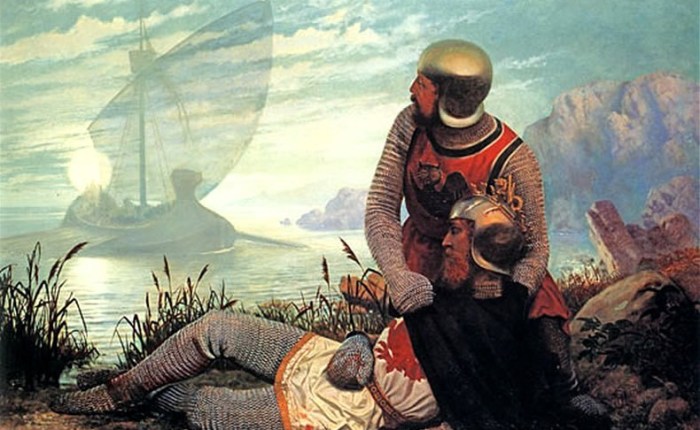
Sir Thomas Malory assembled Le Morte d’Arthur out of several pre-existing legends, some of which he translated from French manuscripts, with a few stories of his invention thrown in. His major innovation was to arrange these traditional tales into a semi-coherent order, beginning with Arthur’s ascension to the throne and ending with his death at the hands of his son. The result is a patchwork of stories nested within stories, all told at a pace which, to a modern reader, can seem ludicrous. Major developments occur on every page, one after the other, in a staccato rhythm which can make the stories appear bluntly humorous, even if it was not Malory’s intention.
The world depicted in these pages is so frankly unreal, the level of violence so constant and gratuitous, that its final impression is that of a cartoon: “They fought once more and Sir Tristram killed his opponent. Then, running over to his son, he swiftly beheaded him too.” Daily life is entirely hidden from view. There are no peasants, no merchants, no artisans; there are no friends or happy families. There are only questing knights, heavily armed men who are obsessed with challenging one another. And though they profess a knightly code of conduct, even the most chivalrous of knights are seen to be unscrupulous murderers and, with few exceptions, unrepentant adulterers. The hero of this book, Sir Launcelot, feels very few pangs of guilt for continuously sleeping with his liege’s wife, Gwynevere; and he is the best of knights.
But the characters are so flat, their actions so stereotyped, their lives so monotonously dramatic, that I found it impossible to view them as moral actors, praiseworthy or damnable. They are, rather, centers of this bizarre world that Malory constructs. And it certainly is an exciting place. Monsters, magicians, enchantresses, prophesies, curses, visions, and of course endless combat and manic love—the small isle of Britain can hardly contain it all. Sure, there are parts of the book that drag, particularly during the tournaments. Malory’s descriptions of combat are heavily stylized, consisting of the same basic elements over and over again; and, as in the Iliad, large engagements are pictured as a series of individual contests between heroic foes. But for the most part Malory combines his traditional motifs together dexterously, enlivening larger stories with innumerable episodes, creating a raucous forward momentum.
As a result of all this, I greatly enjoyed Le Morte d’Arthur, even if it was not for the reasons that Malory intended. I found the book delightfully absurd, almost parody of itself, a sort of whimsical fantasy novel. What Malory hoped to convey with these stories—whether they are supposed to represent a model of heroism, an ironic comment on violence, or a response to the Wars of the Roses—I cannot say; but his book is better than any television show I know.
Finally I have come to the last book in this series. It was four long years ago when I first read The Life of Greece; and these have been the four most educational years of my life, in part thanks to The Story of Civilization. Though I have had some occasions to criticize Durant over the years, the fact that I have dragged myself through ten lengthy volumes of his writing is compliment enough. Now all I need to do is to read the first volume of the series, Our Oriental Heritage, in order to bring my voyage to its end. (I originally skipped it because it struck me as absurd to squeeze all of Asia into one volume and then cover Europe in ten; but for the sake of completion I suppose I will have to read it.)
Durant did not plan to write this volume. His previous book, Rousseau and Revolution, ends with a final bow. But Durant lived longer than he anticipated (he died at 96), so he decided to devote his final years to a bonus book on Napoleon. It is extraordinarily impressive that he and his wife, Ariel, could have maintained the same high standard of writing for so many decades; there is no notable decline in quality in this volume, which makes me think that Durant should have written a book on healthy living, too.
The Age of Napoleon displays all of Durant’s typical merits and faults. The book begins with a bust: Durant rushes through the French Revolution, seeming bored by the whole affair, seeing the grand drama only as a disruptive prelude to Napoleon. This showcases Durant’s inability to write engagingly about processes and events; when there is no central actor on which to focus his attention, the writing becomes colorless and vague. Further, it also shows that Durant, while a strong writer, was a weak historian: he provides very little analysis or commentary on what is one of the most important and influential events in European history.
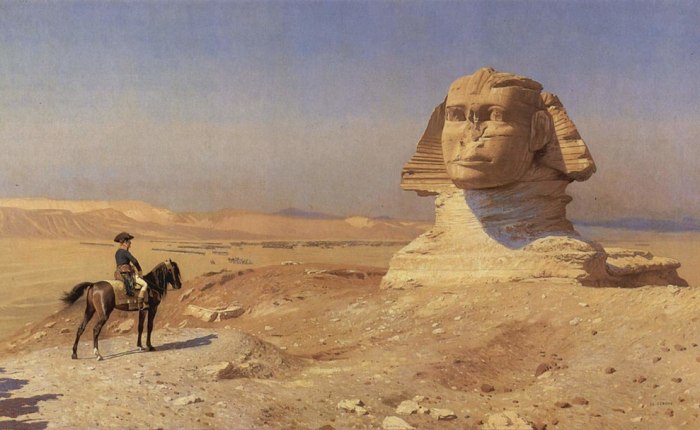
When Napoleon enters the scene, the book becomes appreciably more lively. For reasons that largely escape me, Durant was an unabashed admirer of the diminutive general, and sees in Napoleon an example of the farthest limits of human ability. Though normally uninterested in the details of battles and campaigns, Durant reveals a heretofore hidden talent for military narration as he covers Napoleon’s military triumphs and defeats. Some parts of the book, particularly near the end, are genuinely thrilling—an adjective that rarely comes to mind with Durant’s staid and steady style. Granted, he had an extraordinary story to tell; Napoleon’s rise, fall, rise again, and fall again are as epic as anything in Plutarch.
But as usual Durant shines most brightly in his sections on artists, poets, and philosophers. The greatest section of this book is that on the Romantic poets: Wordsworth, Coleridge, Shelley, and Byron. (For some reason, Durant sees fit to exclude Keats, even though the scope of Keats’ life falls entirely within that of Napoleon.) Less engaging, though still worthwhile, was Durant’s section on the German idealist philosophers; and his miniature biography of Beethoven was a stirring tribute. Many writers who properly belong in this volume were, however, paid their respects in the previous, most notably Goya and Goethe, since Durant thought that this volume would never appear.
Though I am happy to reach the end, I am saddened that I cannot continue the story of Europe’s history any further forward with Durant. He is an inspiring guide to the continent’s cultural treasures.
There is not a single effect in Nature, not even the least that exists, such that the most ingenious theorists can ever arrive at a complete understanding of it.
One of the most impressive aspects of the Very Short Introduction series is the range of creative freedom allowed to its writers. (Either that, or its flexibility in repurposing older writings; presumably a version of this book was published before the VSI series even got off the ground, since its author died in 1993.) This is a good example: For in lieu of an introduction, Stillman Drake, one of the leading scholars of the Italian scientist, has given us a novel analysis of Galileo’s trial by the Inquisition.
Admittedly, in order to contextualize the trial, Drake must cover all of Galileo’s life and thought. But Drake’s focus on the trial means that many things one would expect from an introduction—for example, an explanation of Galileo’s lasting contributions to science—are only touched upon, in order to make space for what Drake believed was the crux of the conflict: Galileo’s philosophy of science.
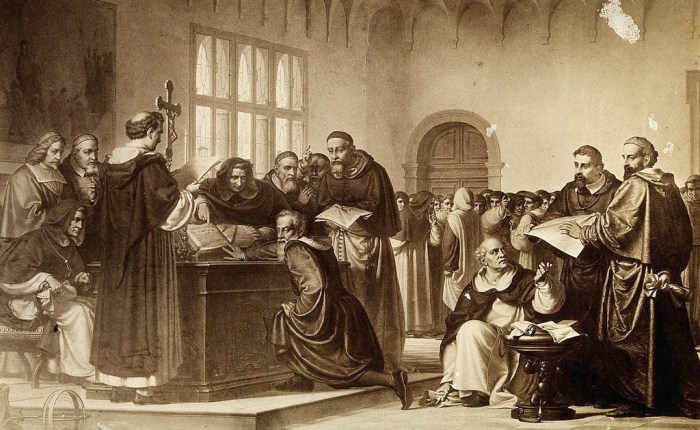
Galileo Galilei was tried in 1633 for failing to obey the church’s edict that forbade the adoption, defense, or teaching of the Copernican view. And it seems that he has been on trial ever since. The Catholic scientist’s battle with the Catholic Church has been transformed into the archetypical battle between religion and science, with Galileo bravely championing the independence of human reason from ancient dogma. This naturally elevated Galileo to the status of intellectual heroe; but more recently Galileo has been criticized for falling short of this ideal. Historian of science, Alexandre Kojève, famously claimed that Galileo hadn’t actually performed the experiments he cited as arguments, but that his new science was mainly based on thought experiments. And Arthur Koestler, in his popular history of astronomy, criticized Galileo for failing to incorporate Kepler’s new insights. Perhaps Galileo was not, after all, any better than the scholastics he criticized?
Drake has played a significant role in pushing back against these arguments. First, he used the newly discovered working papers of Galileo to demonstrate that, indeed, he had performed careful experiments in developing his new scheme of mechanics. Drake also points out that Galileo’s Dialogue Concerning the Two Chief World Systems was intended for popular audiences, and so it would be unreasonable to expect Galileo to incorporate Kepler’s elliptical orbits. Finally, Drake draws a hard line between Galileo’s science and the medieval theories of motion that have been said to presage Galileo’s theories. Those theories, he observes, were concerned with the metaphysical cause of motion; whereas Galileo abandoned the search for causes, and inaugurated the use of careful measurements and numerical predictions in science.
Thus, Drake argues that Galileo never saw himself as an enemy of the Church; to the contrary, he saw himself as fighting for its preservation. What Galileo opposed was the alignment of Church dogma with one very particular interpretation of scripture, which Galileo believed would put the church in danger of being discredited in the future. Galileo attributed this mistaken policy to a group of malicious professors of philosophy, who, in the attempt to buttress their outdated methods, used Biblical passages to make their views seem orthodox. This was historically new. Saint Augustine, for example, considered the opinions of natural philosophers entirely irrelevant to the truth of the Catholic faith, and left the matter to experts. It was only in Galileo’s day (during the Counter-Reformation) that scientific theories became a matter of official church policy.
Drake’s conclusion is that Galileo’s trial was not so much a conflict between science and religion (for the two had co-existed for many centuries), but between science and philosophy: the former concerned with measurement and prediction, the latter concerned with causes. And Drake notes that many contemporary criticisms of Galileo—leaving many loose-ends in his system, for example—mirror the contemporary criticisms of his work. The trial goes on.
Personally I found this book fascinating and extremely lucid. However, I am not sure it exactly fulfills its promise as an introduction to Galileo. I think that someone entirely new to Galileo’s work, or to the history and philosophy of science, may not get as much out of this work. Luckily, most of Galileo’s own writings (translated by Drake) are already very accessible and enjoyable.
It is the little things one bungles at. The big, real ones are nothing when they come.
The last time I reviewed a novel by E.M. Forster, I wound up blubbering with praise; and now I find myself in similar circumstances. As with A Passage to India, I find Howards End exemplary in every respect: the themes, characterization, the prose, the pacing, the plot. I ought also to mention Forster’s versatility. Though rarely funny, Forster is capable of romantic lyricism, gritty realism, and flighty philosophy. Most convincing of all is his control. Nothing is overdone or heavy-handed—which requires a mixture of technique and taste. While exploring social problems, one never feels that the novel is being unduly interrupted; while constructing a character into an archetype, one never feels that the individual is lost; and the story, though carefully plotted, rarely feels predictable or contrived.
Yet Forster is not a great novelist for his skill alone. He is great because of his insight. More than any novelist I know, Forster is able to connect the inner with the outer life (which is the theme of this novel, and the source of its most famous quote: “Only connect”). Forster is able to show, in other words, how social and economic circumstances breed characters; and how even intelligent and well-meaning characters fail to escape the bounds of their class and nation. He shows, for example, how the money inherited by Margaret and Helen allows for their mental freedom; how Mr. Wilcox’s life of business molds him into a well-meaning shell; and how, despite his best efforts, Leonard Bast cannot help but be shaped by his poverty.
However, if the novel has a message, it is this: even if the inner life is powerless to change material circumstances, it is ultimately the more important aspect of life. This is because, when a tragedy strikes, and mere business acumen or worldly knowledge will not suffice, it is emotional fortitude that is required. Mr. Wilcox has a sort of false strength—a fragile ego he hides behind, a sort of masculine bluff which is easily shattered. Margaret, by contrast, is able to endure tragedies because of her self-knowledge. She is not afraid of the darker aspects of her mind; thus she can look with equanimity upon herself and others, accepting their flaws while seeing their potential. This is what Forster means by “connect”: connecting “the beast” with “the monk”—that is, admitting one’s desires instead of hiding behind a false screen of decency. Only so can we achieve self-knowledge.








 Lotz in Translation