Sorolla: A Tale of Two Cities

Sorolla: A Tale of Two Cities

Madrid has some of the finest museum-going in Europe, holding its own against Vienna, London, and even Paris. And this would be true if the city only had its big three: the Prado, the Thyssen, and the Reina Sofia. In addition to these heavyweight picture galleries, however, the city is also home to a great many excellent small museums. The best of these is, without a doubt, the one dedicated to Joaquín Sorolla.

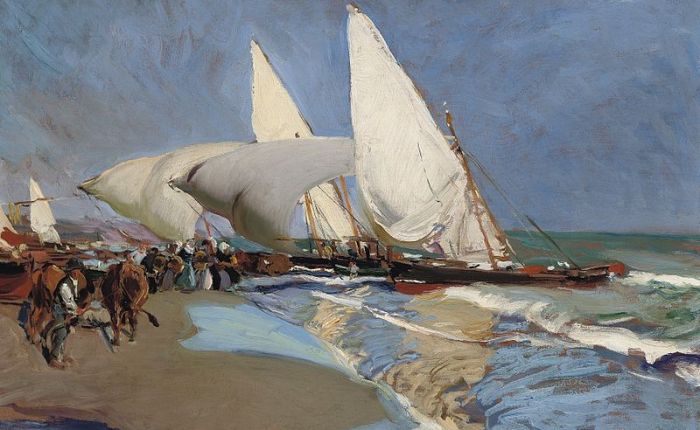
It is somewhat ironic that Sorolla’s museum should be located in Madrid, as he was a valenciano by birth and disposition. His most famous and distinctive paintings are those featuring beach scenes, bathed in a kind of brilliant lucidity, every surface shimmering under the Mediterranean sun. But he was far more than a provincial painter. During his life, he became the most celebrated artist in the country—and, indeed, one of the most famous in the world. This is why he was able to afford such a fine house in the center of the nation’s capital.

The first thing the visitor will notice upon entering the museum is its lovely garden. This was designed after the Andalusian fashion, featuring colorful tiles, little aqueducts, and gurgling fountains. It is such an attractive space that some locals come here just to hang out, as it is free to enter. Sorolla designed the garden himself, and it is easy to picture him sitting here after a long day in his studio, resting his eyes.
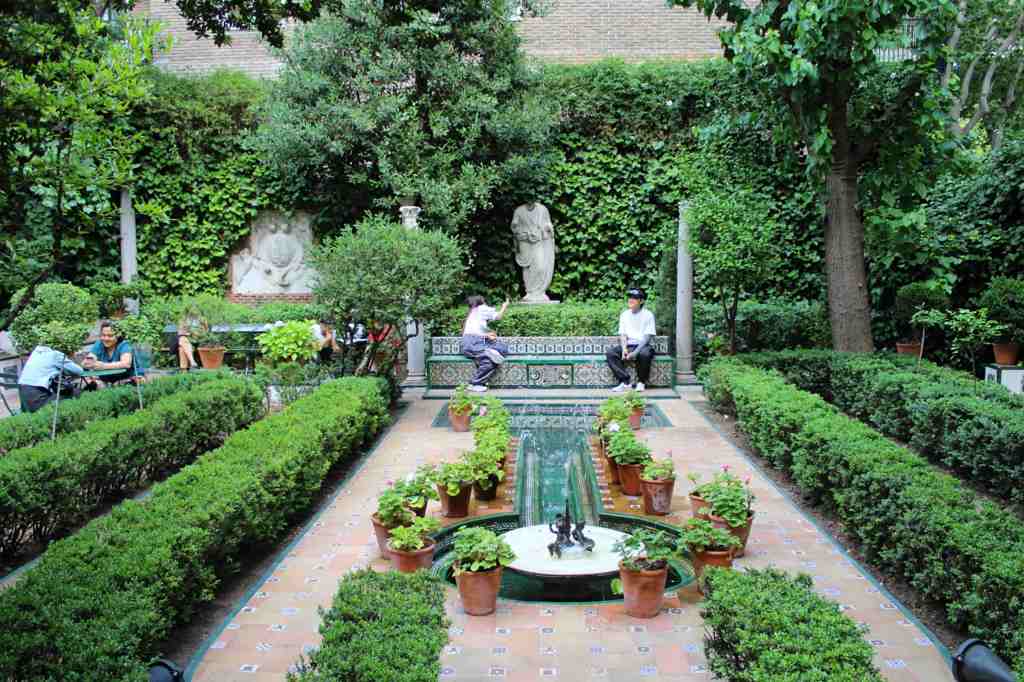
The entrance to the ticket office is distinct from that of the museum itself. As it is a state museum, they charge the standard fee of 3€. It is free on Saturdays, but perhaps it is worth it to go on a different day, as the museum is most pleasant with fewer people. While purchasing your ticket, I recommend pausing to admire the Andalusian patio, as well as the painter’s impressive collection of Spanish ceramics. He seems to have had a keen appreciation for the rural, rustic handcrafts of his countrymen.

The first room of the museum is the picture gallery, featuring several excellent, large-scale paintings of the Spanish master. Here the visitor gets a good impression of his style. In his portraits—such as those of his wife or children—Sorolla’s work resembles other painters of his era, such as John Singer Sargent (whom Sorolla met and admired). He was more than capable of painting in a traditional manner.

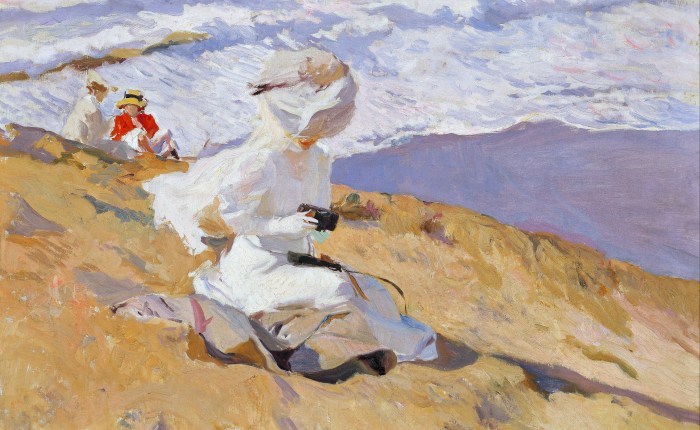
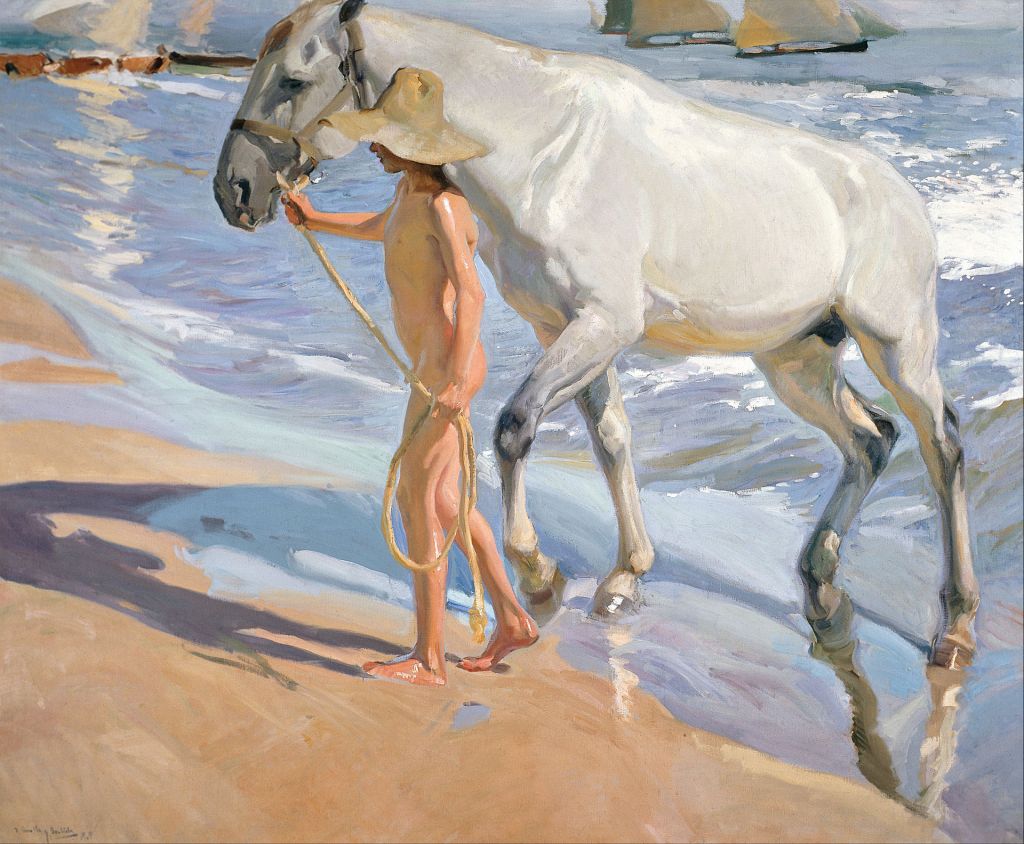
His brush comes alive, however, whenever he depicts bright, shining light. No other painter has captured the sensation of Spanish sun so successfully. His human figures seem to dissolve into gleam and reflection. In his beach scenes, you can smell the saltwater and hear the waves. If you have ever stayed on a Mediterranean beach long enough to go blind from the reflections and dizzy from dehydration, you can see that, in his paintings, Sorolla captured an experiential truth.
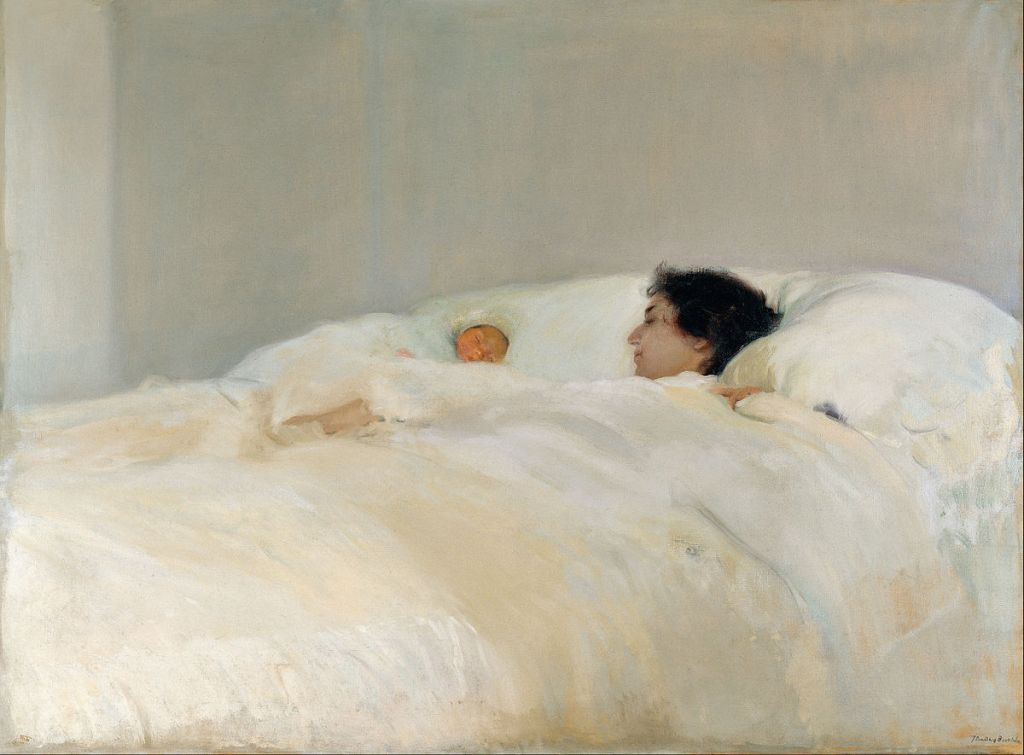
And though Sorolla was the epitome of a bourgeois artist during his lifetime, he was capable of great artistic daring. On my last visit, I was impressed by his work Madre, which depicts a mother in bed with her baby. Their tan faces are the only points of contrast with the white pillows, sheets, and walls, making it seem as if they were floating in a sea of light. There is nothing conventional about it.
The next room features some of Sorolla’s more familial works. Among the portraits we can find Joaquín Sorolla García, his son, who was the museum’s first director. It is largely thanks to him that we have such a fine museum, as he preserved it after his father’s death and left it to a foundation in his will. Unlike so many other house museums, then, nobody else ever lived here before it was turned into a museum. Another notable offspring we may find is Elena Sorolla. She became a talented painter and sculptor in her own right, though she later abandoned art in favor of her family.
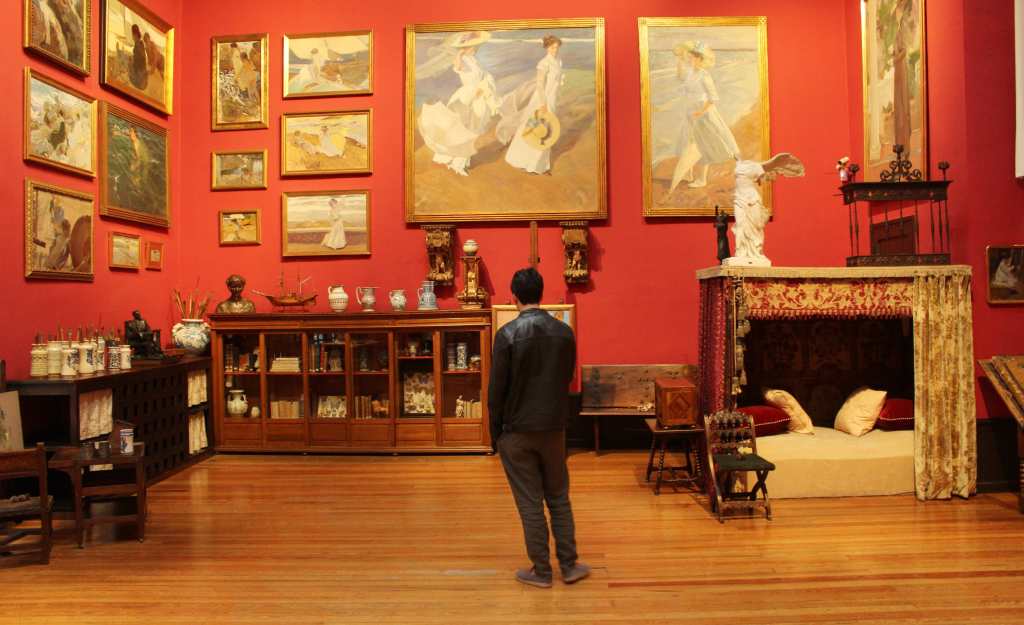
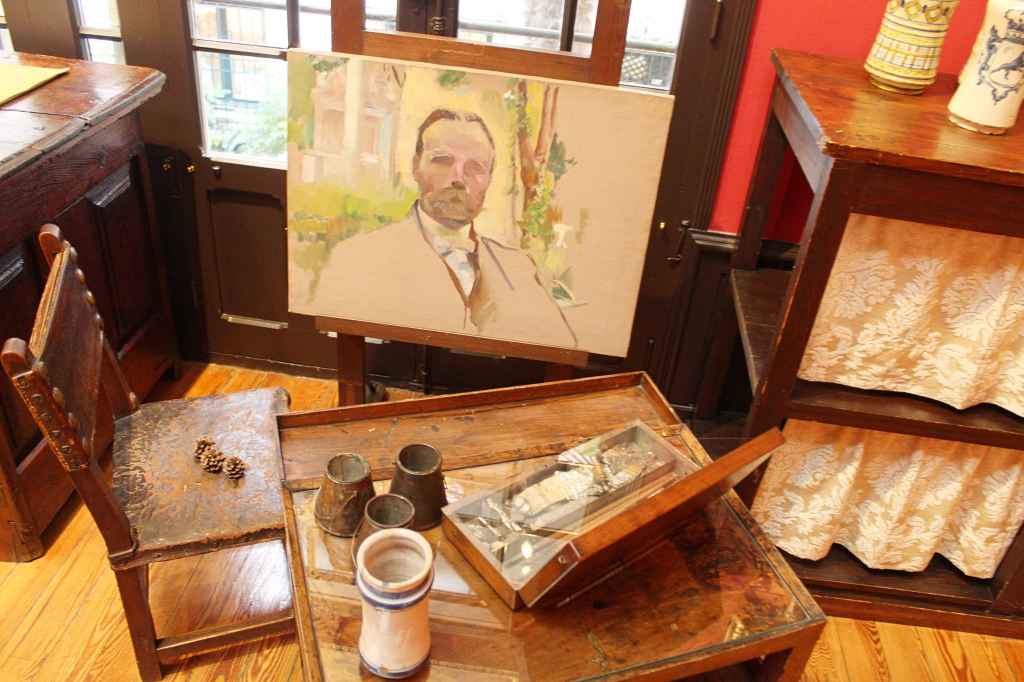
The next room, Sala III, is the showstopper of the museum. It is Sorolla’s former studio. The space is ideal for painting, with large windows, a high ceiling, and skylights. Old, dirty paint brushes stand on a table, and a painting sits on the easel, half-finished, as if Sorolla just stepped out for a cigarette. The walls are covered in his paintings—so many and so high up that it is hard to even appreciate them. In the center of the room hangs a large copy of the Portrait of Pope Innocent X, by Velázquez (one of Sorolla’s heroes). Nearby is an ornate bed in one corner, which looks barely big enough for one person, much less Sorolla and his wife. Was it just for siestas? 
The visitor next climbs the stairs into the temporary exhibition space. I have been to the museum many times by now, and have consistently been impressed with the quality of these exhibits. The museum has far more paintings in its collection than it can display at any one time (Sorolla was prolific), as well as objects and artwork from Sorolla’s own substantial collections. So there is a lot to choose from.

The last time I visited, they had an exhibit commemorating the 100-year anniversary of his death: “Sorolla en 100 objetos.” This is an attempt to tell the story of his life using Sorolla’s possessions. One gets the impression of a man whose career could hardly have gone any better—of an artist who achieved success early, and was highly respected until the end of his life. He is, in other words, at the other end of the scale from Van Gogh: not the lone, eccentric genius but a pillar of his community. And yet, judging from his massive output, one cannot rate his commitment to painting as any less than the Dutchman’s.

The rest of the museum consists of rooms furnished as they were during his time, whose richness only serves to exemplify the degree of success Sorolla enjoyed. The visitor is then, once again, deposited in the lovely gardens—to either bask in aesthetic pleasure or to be consumed by envy at such a fortunate life.

At the end of your visit, you will have a good idea of both the artist and his work. And yet, to see Sorolla’s most ambitious and monumental paintings, you will have to visit another museum—one on the other side of the ocean.

The Hispanic Society of America is perhaps one of the strangest and least-known museums in New York City. The name itself is misleading in two ways: first, because it isn’t and never was a learned society; and second, because—despite being located in Washington Heights, a “Hispanic” (meaning Latino) part of the city—it is really dedicated to Spanish culture. 

In many ways, the museum is a relic from another time. It is the brainchild of Archer Milton Huntington, an eccentric millionaire who had a keen interest in all things Spain. Using his money (inherited) and his many intellectual connections (he was an amateur scholar), he assembled a collection of museums around Audubon Terrace—a monumental complex of ornate Beaux-Arts buildings—and had his wife, Anna Hyatt Huntington, add the sculptures and friezes.
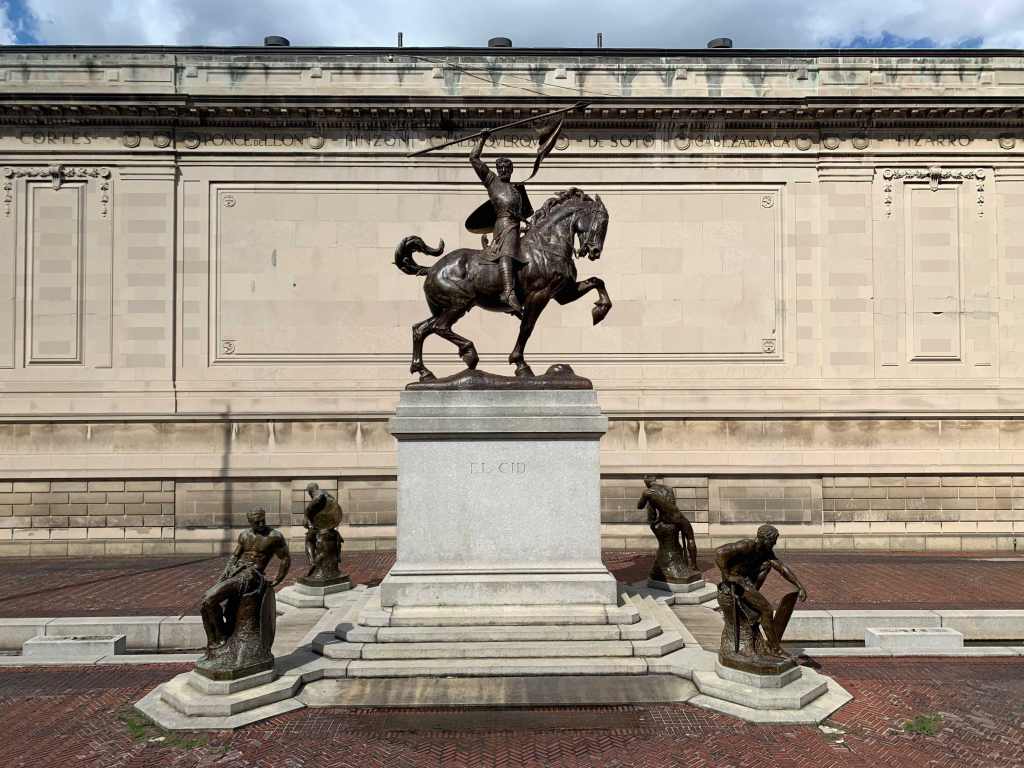
(It is worth noting that Mrs. Huntington was a remarkable artist, who achieved widespread success at a time when it was very rare indeed for women to be sculptors, and who left many attractive monuments all over the Americas and Spain.)

Yet I am afraid that the decoration adorning the outside of the museum will likely rub some people the wrong way nowadays. Above Anna Hyatt Huntington’s wonderful statue of El Cid Campeador—the legendary hero of the Spanish Middle Ages—there are names inscribed on the outside of the building, as if to commemorate heroes. Yet the names include Pizarro, De Soto, Ponce de León, and Cortés—conquistadores, who are now more often reviled as destroyers than celebrated as civilizers. 

The museum has a collection of art and rare books from Spain that is unrivaled outside the country. There are paintings by the big three—Velázquez, El Greco, and Goya—and even a first-edition copy of Don Quixote. For many years, however, this collection hasn’t been available to the public, as the museum had to undergo extensive repairs and renovations. I was fortunate enough to see some of this during my first year in Spain, when the Prado had a temporary exhibition showcasing some of the treasures of the Hispanic Society’s collection. But during my one and only visit to the actual museum, last summer, most of its collection was still unavailable.

But I was able to see Sorolla’s magnum opus: Visions of Spain. This is a truly massive series of oil paintings, all about 4 meters in height (12ish feet) and wrapping 70 meters (over 200 feet) around the room. Amazingly, despite this huge scale, Sorolla completed nearly all of these paintings outside, working en plein air at various locations around Spain. He must have needed a stepladder and a team of helpers.

The murals depict the many regions of Spain, focusing on their most distinctive qualities. We can see a Semana Santa procession in Seville, as well as some joyful flamenco dancing; in Aragon they dance the jota and in Galicia they listen to a bagpipe; in the Basque Country they play their distinctive ball game, while in Valencia and Catalonia they prepare the day’s catch of fish. By far the biggest painting depicts a bread festival in Old Castile, with both the famous cities of Ávila and Toledo visible in the background (impossibly, since the two cities are quite distant).
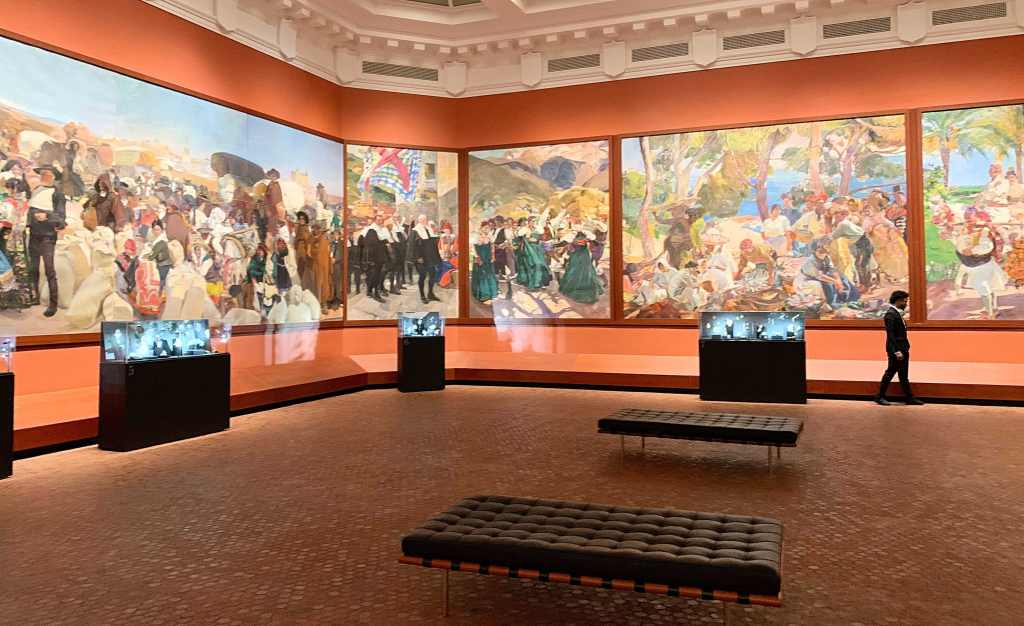
Now, judged purely as paintings, the murals in this series are perhaps not as pleasing as Sorolla’s finest individual works, such as El baño del caballo. They are too busy with detail to make for clean compositions, and do not always showcase Sorolla’s exceptional gift for portraying light. Judged by their scale and ambition, however, the paintings are absolutely remarkable. For such a large work, Sorolla paid exceptional attention to details of costume and custom, attempting to make his paintings as anthropologically informative as possible. And the execution is immaculate. It is no wonder that, after completing this series, the painter felt exhausted. He would die just four years later.
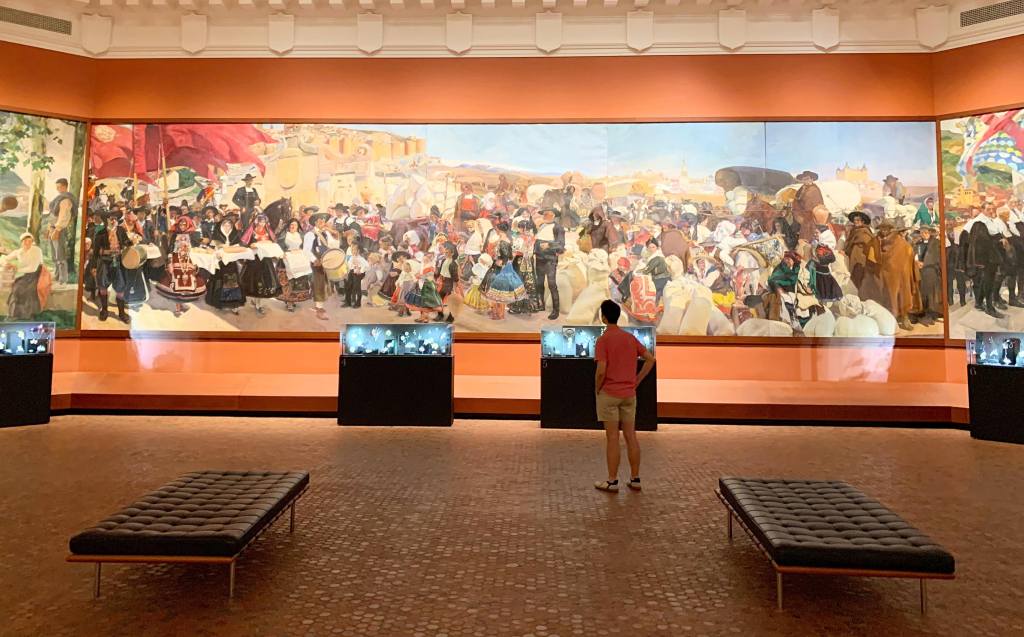
If a visit to the Museo Sorolla in Madrid proves that he was a wonderful painter, then a visit to the Hispanic Society in New York proves that he was something else: a patriot. Admittedly, this is not always an admirable quality in an artist (think of Wagner); but in Sorolla it drove him, not to bigotry, but to celebration of the scintillating beauty of his homeland—and not just its famous landscapes and monuments, but its people. For any who love both fine painting and that sunbaked land, his paintings provide a peculiar delight.

NY Museums: The Frick

NY Museums: The Frick

This is part of a series on New York City museums. For the other posts, see below:


As a child in Manhattan, growing up on the Upper West Side, I visited the Museum of Natural History nearly every week. It is a little boy’s paradise: dinosaur bones, stuffed lions and elephants, and my favorite—the whales. Later, in high school and college, I developed a taste for the Metropolitan Museum of Art. I was first drawn to the Arms and Armor room—swords and guns, another boy’s paradise—and then progressed to the Egyptian and Greek antiquities. It takes little sophistication to enjoy cursed mummies and violent gods.

But it was not until I moved to Europe, and began visiting art museum’s here, that I developed an appreciation for sculpture and painting. Thus it was only during one of my summer trips back home to New York that I finally visited one of the finest art museum’s in the city: the Frick.

The Frick Collection is housed in the former mansion of Henry Clay Frick, who was one of the great robber barons that dominated the Gilded Age of America. He made his fortune by selling coke (the carbon fuel, not the drug), and achieved industrial dominance by partnering and eventually merging with Carnegie’s steel company. Despite his success and wealth, he is a difficult man to admire. Like many tycoons, he was adamantly opposed to organized labor, and played a key role in repressing the Homestead strike—a violent confrontation in which 9 strikers and 3 pinkerton detectives were killed, and which caused a major setback to the labor movement. He was so hated by laborers, in fact, that the anarchist Alexander Berkman tried to assassinate him. The attempt failed (Frick would die in 1919, at the age of 69, of a heart attack) and Berkman spent 14 years in jail as a consequence, where he wrote a famous memoir of his experience.

800px-Henry_Clay_Frick
Henry Clay Frick

But whatever Frick’s defects in the realm of social justice, no one can accuse the man of bad taste. He accumulated superlative works of art during his lifetime; and, fortunately for us, he donated his house and his collection to the public upon his death, to be used as a museum. Along with Rockefeller and Carnegie, Frick is yet another example of a robber baron who managed to be both cutthroat and civic minded.

The museum sits across from Central Park, on 5th avenue and 70th street, about a 10 minute walk south from the Metropolitan. From the outside the mansion is not especially impressive: a squat neoclassical building, the color of granite. It has none of the conspicuous stateliness of Andrew Carnegie’s old mansion, located just up the road (it is a part of Cooper Union now). But the inside is not nearly so restrained: each room is richly decorated, with the finest furniture, chandeliers, mirrors, and wallpaper that money could buy. I have walked through my share of palaces in Europe, so I am used to seeing affluent interiors; but I still found myself gaping as I walked through the house. In the giddy years before income taxes, the robber barons could accumulate more wealth than Old World despots.

320px-Philip_IV_of_Spain_-_Velázquez_1644

But of course the absorbing interest of the museum is not the interior decoration, however sumptuous, but the paintings on display. Though relatively small, the Frick has one of the finest collections of old masters in the city—perhaps in the country. Relatively few works by Velazquez are available outside of Spain. New Yorkers are fortunate: the Metropolitan has a handful, the Hispanic Society has three, and the Frick has one—a portrait of Felipe IV. Typical of Velazquez, it is a masterful work: we feel we are standing right in front of the king. The Spanish monarch’s magnificently regal outfit—painted with such delicacy that it is almost tactile—contrasts sharply with the awkward and gangly figure who wears it, with his monumental Hapsburg chin sticking out below his curled mustache. Most impressive of all, Velazquez manages to imbue this unpromising figure with a certain kingly dignity—his eyes calm, thoughtful, careworn, but in control.

320px-La_fragua

The other two members of the Spanish triumvirate are also in attendance: Goya and El Greco. I especially like the former’s contribution to the collection: The Forge. It is an excellent example of Goya’s ability to convey strenuous action while preserving the harmony of the composition. The stocky figures, contorted with effort, nevertheless combine to form a solid triangle in the center of the painting. I also enjoy the gloomy, almost liquid blackness that engulfs the figures, emphasizing their solitary grandeur.

800px-Johannes_Vermeer_-_De_Soldaat_en_het_Lachende_Meisje_-_Google_Art_Project

The Dutch masters are also here in force. Frick managed to get his hands on three Vermeers. My favorite of these, Officer and Laughing Girl, shows all the hallmarks of his style: an interior room lit from a side window, with a homely girl in the center and a detailed map in the background. In this case the girl is chatting with a soldier, seated with his back to us. Is she being courted, or is there something more scandalous afoot? From a purely technical perspective, the most extraordinary feature of the painting is the map, which is so beautifully and accurately rendered as to beggar belief. Rembrandt is here, too, with two works. One of these is a self-portrait, showcasing himself as a florid gentleman with a sword strapped to his hip. The other paintings is rather more mysterious: The Polish Rider. It shows us an armed man in slightly exotic garb, mounted on horseback. Scholars cannot decide who this person is supposed to be; he is called “Polish” because of the style of his hat and dress; but beyond that there is little but guesses.

800px-Rembrandt_-_De_Poolse_ruiter,_c.1655_(Frick_Collection)

We can also see a work by the greatest of English painters, J.W. Turner. The Harbor of Dieppe is entirely typical of his style: a bright yellow morning, a shimmering sea, and a large perspective with dozens of figures and boats. Nothing about the painting’s content is profound or especially moving. Its appeal is mainly to the eye—it is a joy to behold, since Turner captures so perfectly the warmth and the brilliance of a summer sunrise. Standing in front of the painting, you can almost feel the sun on your skin. How can paint be made to glow so intensely? In this glorious landscape of light—Turner paints the sun twice, in the sky and reflected in the sea—we can also sense the magic of all ports of travel: a place where different corners of the earth mingle, a gateway to the wide world, beckoning us towards the beyond.

800px-Joseph_Mallord_William_Turner_-_The_Harbor_of_Dieppe_-_Google_Art_Project

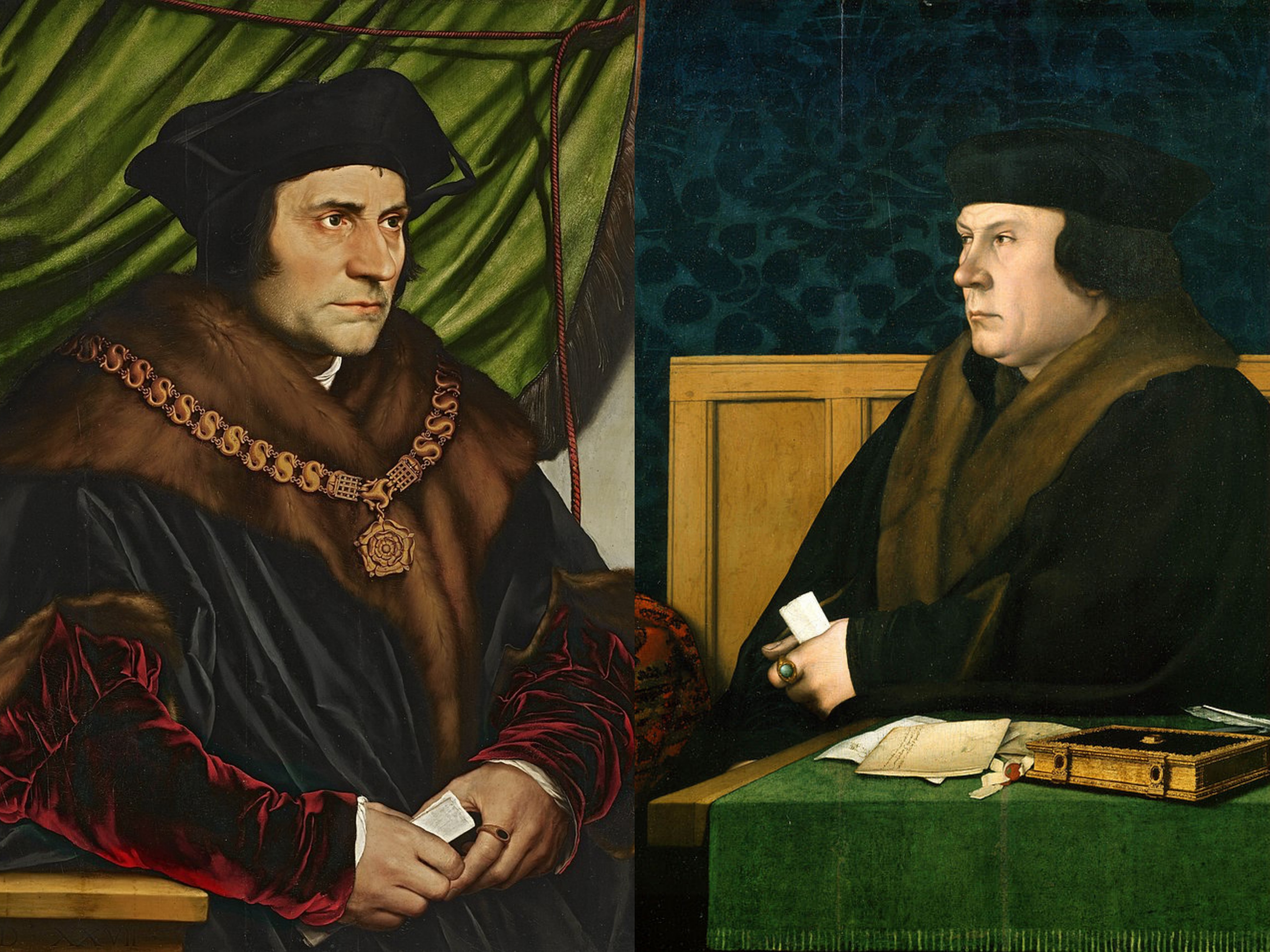
In the interest of brevity, I will skip over many other worthwhile paintings to get to the two great masterpieces of the collection, both by Hans Holbein. They hang on either side of the great fireplace in the center of the mansion. To the right is a portrait of the English politician Thomas Cromwell, and to the left is the Renaissance humanist Thomas More (famous for inventing the word “utopia”). The two were adversaries in life. Cromwell aided Henry VIII in his quest to annul his marriage to Catherine of Aragon in order to marry Anne Boleyn, which resulted in England’s break with the Catholic Church; meanwhile, More remained loyal to the Pope and opposed the new marriage. Despite this opposition, the two men shared the same fate: beheaded by the order of the king. More was beheaded for opposing the establishment of the Church of England, and Cromwell because he helped arrange the king’s next marriage (after Boleyn was duly decapitated) to the German princess Anne of Cleves (who did not please the king, but who escaped execution). These were dangerous times for love.

Holbein_frick

The two portraits are masterful. Each detail is so sharply defined that you can lean in very close without noticing the brushstrokes. Both men sit in sumptuous rooms, and Holbein obviously delighted in painting the fabrics of their gowns, the tablecloth, the cushions. And, as in any great portrait, the personalities of the sitters shine through. Cromwell appears suspicious, scheming, intelligent, and alert; he is a man grasping for power and influence, and wary of all impediments. More’s portrait is a study in contrast. He is dignified and focused. Unlike Cromwell, who gazes sideways with narrowed eyes, More stares straight ahead. His eyes are soft and sensitive, almost like a poet’s, and yet the expression is far from naive; it is, rather, experienced and far-sighted. It is easy to picture such a man dying for his principles, just as it is easy to picture Cromwell plotting to bolster his influence with the king. The two portraits are complemented by Holbein’s portrait of Henry VIII himself, which I have seen many times in the Thyssen in Madrid. As you stare past the corpulent face into his black beady eyes, you can tell that this was not a man to be trifled with.

I left the museum deeply impressed. By any standard the Frick has a marvelous collection of paintings, all the more remarkable for being here in America and for being showcased in a historical mansion. Whether you are a tourist or a New Yorker, I urge you to visit.

Review: Sorolla (Masterworks)

Review: Sorolla (Masterworks)

Sorolla (Masterpieces)Sorolla by Jose Maria Faerna

My rating: 4 of 5 stars

If you go to number 37 of the Calle de General Martínez Campos, in Madrid, and walk inside, you will find one of the most enchanting corners of the city. This is the Museo de Sorolla, a museum situated in the former house of painter Joaquín Sorolla, still furnished much as it was during his lifetime and which now contains the lion’s share of his most famous works.

Joaquín Sorolla (1863 – 1923) was Spain’s archetypal gentlemanly bourgeois painter. He achieved fame and fortune during his lifetime. He rubbed elbows with American presidents and businessmen, and finished portraits for philosophers, scientists, and novelists. And yet, for all this, nowadays he is most remembered for his luminescent scenes on the beaches of Valencia.

Sorolla had a miraculous ability to capture the play of light on his canvass. The way that skin gleams in the sun, the way sunlight filters through fabric, the way that rays glisten on the ocean surface. In a time when photography was not much respected in the world of art, Sorolla gave some of his most famous works the seemingly arbitrary boundaries, unstudied poses, and high angles typical of a photograph. He was at his best when his subjects were ordinary people—a young couple, fishermen at work, a group of kids on the sand. The resulting paintings are delightful: intimate and playful swirls of color in which air, water, clothes, and skin melt into one radiant fabric.

One is naturally reminded of the impressionists in Sorolla’s work; but he was not a self-conscious member of the vanguard. He was, rather, firmly rooted in the realist tradition going back to Velazquez. Indeed, during his life he was scorned by many as a commercial artists who adapted his style to conventional taste, and who was merely interested in surfaces. I think this judgment is highly unfair—Sorolla’s style was deeply original and often daring—but it is true that he did not try to self-consciously break with tradition or fashion. And finding unexplored room for growth in a tradition can be a more subtle and difficult task than simply trying to reject it.

Though his beach scenes are his most characteristic and his finest work, Sorolla had an impressive range. He was a capable landscape painter and a gifted portrait artist. I was fortunate enough to see the series of portraits of notable Spaniards that Sorolla undertook at the behest of the Hispanic Society of New York—a series that includes portraits of Unamuno, Pío Baroja, and Ramón y Cajal. What some say is his greatest work remains in the Hispanic Society building (currently closed due to renovations): Visions of Spain—a monumental mural that contains scenes from every region of Spain.

While nobody would mistake Sorolla for a profound artist—his paintings delight but never overwhelm—I find in him an admirable example of the life of the artist. He developed his own highly distinctive style, achieved commercial success without compromising his own vision, practiced his craft obsessively and incessantly—eventually working himself into ill-health—and extended his artistic range to the full. One walk around his house is enough to convince you that he was every inch a painter.

This book is a nice little collection of his work. The pictures are large and high-quality, and the commentary is economical, tasteful, and informative.

View all my reviews